Lithology-Dependent Evolution of Porosity and Permeability in Fault Fracture Zones: Implications for Sustainable Mine Water Hazard Mitigation and Groundwater Resource Protection


Abstract
1. Introduction
2. Experimental Plans
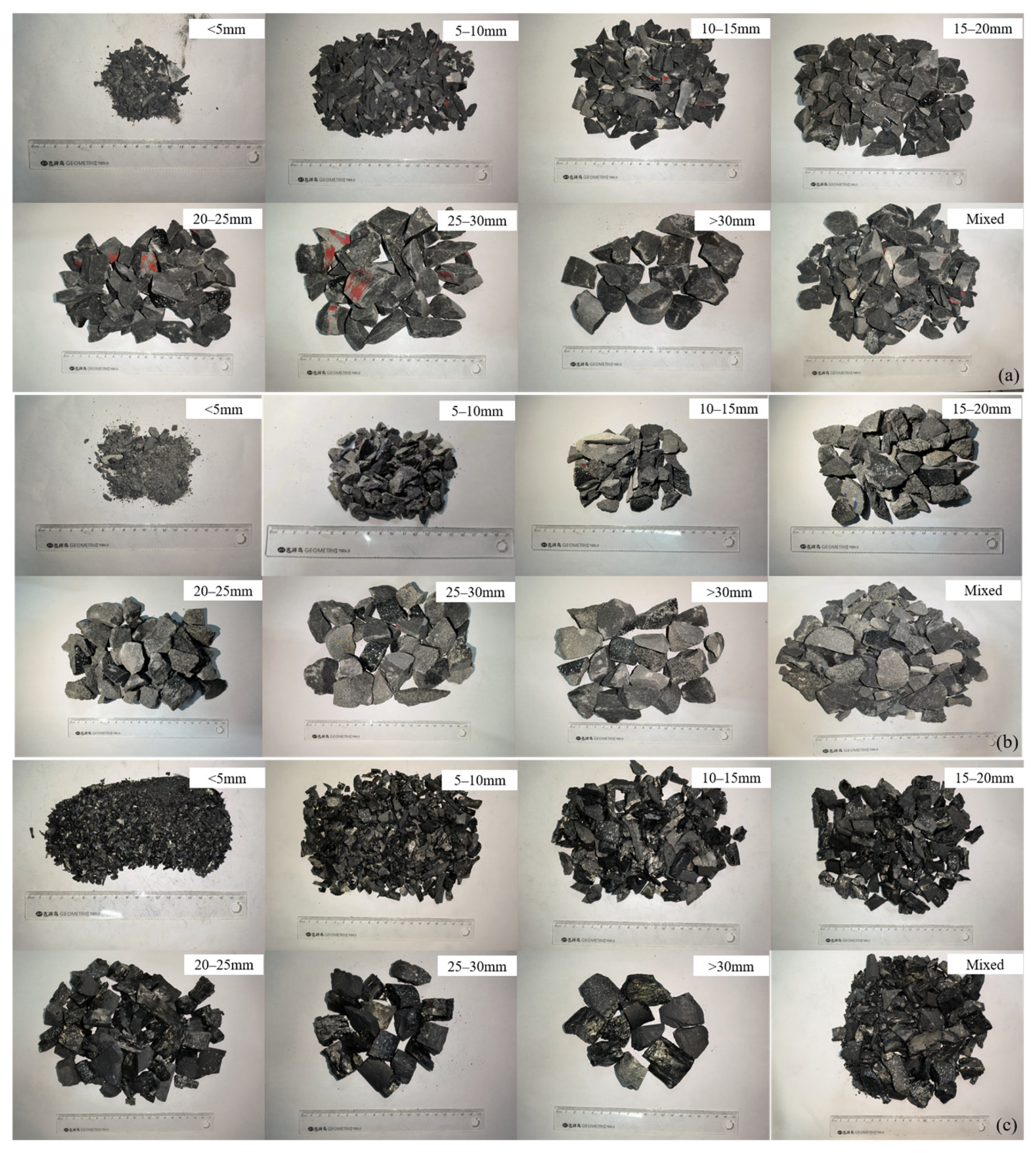
2.1. Experimental Materials
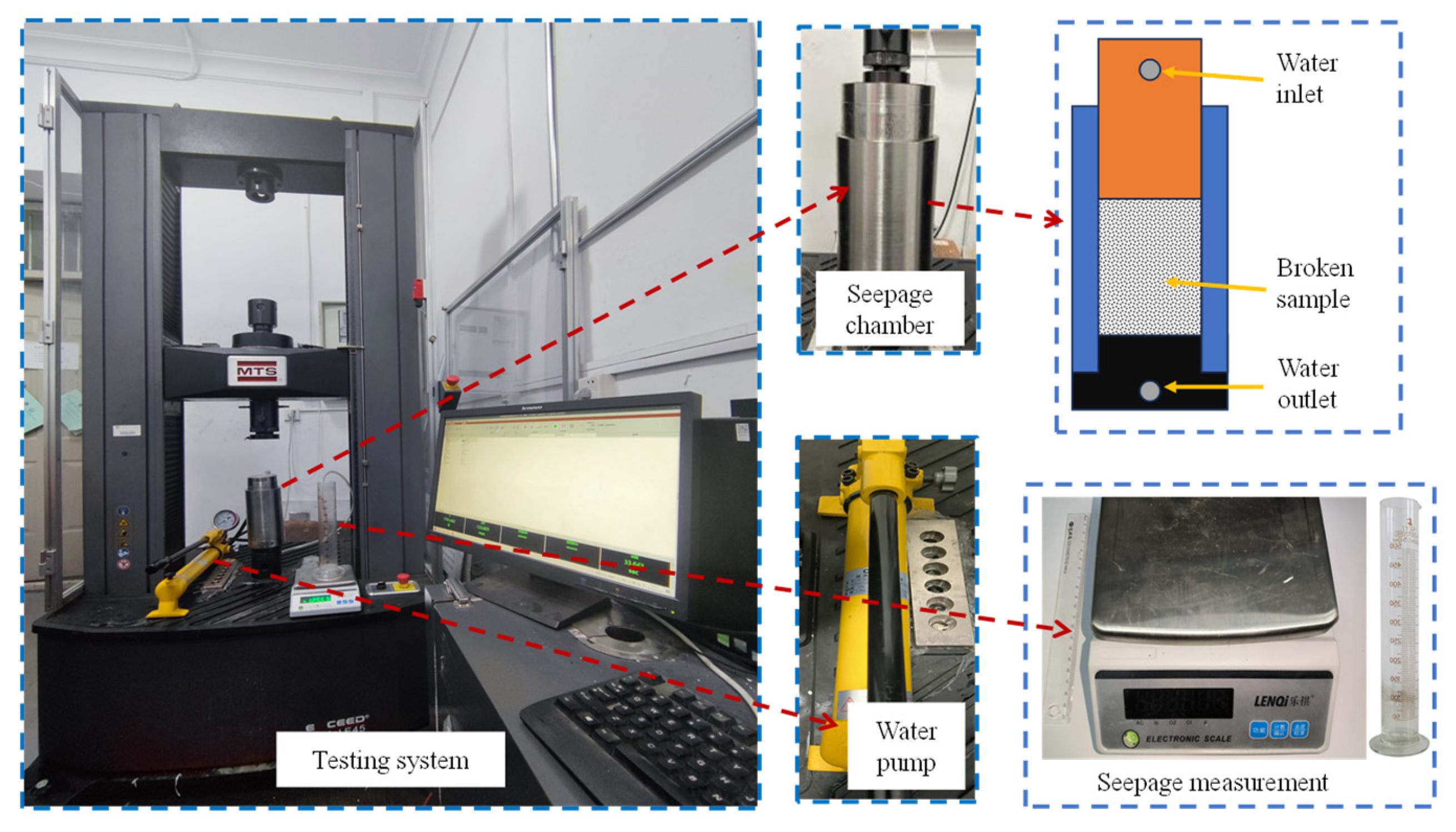
2.2. Experimental Equipment
- (1)
- High-strength seepage chamber: The dimensions comprise a radius of 5 cm and a height of 15 cm. It is made of special alloy steel, which can withstand axial loads of up to 50 MPa and remains without radial deformation.
- (2)
- Sealing and filtration assembly: The bottom of the chamber and the piston are provided with waterproof sealing rings to prevent fluid flow from overflowing from the side walls. Felts are also installed at both ends to prevent the loss of fine particles during the seepage experiment.
- (3)
- Water injection pump: It injects water into the chamber, providing a water injection pressure ranging from 0 to 10 MPa.
- (4)
- Data acquisition terminal: The axial load, displacement and strain data were continuously monitored and recorded using the control and data acquisition software of the MTS universal servo testing machine. The flow data were monitored using a measuring cylinder and a real-time recording balance. During each seepage stage, the raw data were continuously recorded, and the steady-state values were extracted for later analysis.

2.3. Experimental Procedure
- (1)
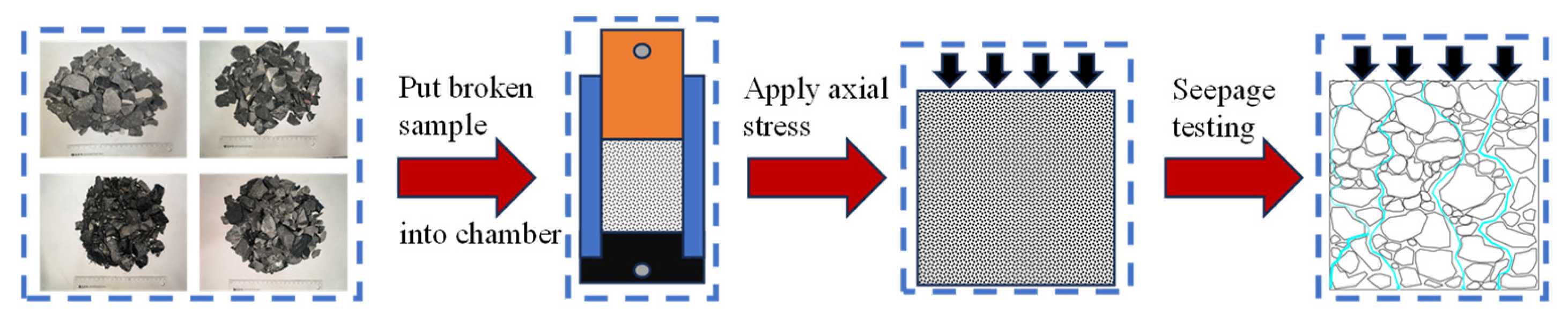
- Preloading stage: A preload of 0.1 MPa was applied to the broken sample in the chamber to ensure sufficient particle contact. Subsequently, the initial height was measured.
- (2)
- Incremental loading stage: The axial stress σz was set incrementally to 1, 3, 5, 7, and 10 MPa. Each level of axial pressure was run for 10 min until the displacement rate dropped below 0.01 mm/min, ensuring stabilization. The deformed height of the chamber was then recorded to calculate the instantaneous porosity of the sample.
- (3)
- Steady-state seepage stage: Under each axial stress level, water was injected in a top-down manner. The injection pressure was applied in five increments ranging from 0.5 to 2.5 MPa, and the steady-state volumetric flow rate was recorded. The steady-state seepage measurement was designed by referring to the constant-head permeability testing principle for granular materials, such as that in ASTM D2434. At room temperature, the water density and dynamic viscosity are taken as 1.0 × 10³ kg/m3 and 1.01 × 10⁻³ Pa·s.
- (4)
- Post-test recovery stage: After completing unloading, the sample was retrieved, oven-dried, and re-sieved to quantify the evolution of the fractal dimension before and after loading.

2.4. Experimental Principle
3. Experimental Results and Analysis
3.1. Experimental Result Parameters
3.2. Seepage Characteristics of Broken Coal and Rock Masses
3.3. Effective Stress and Seepage Velocity
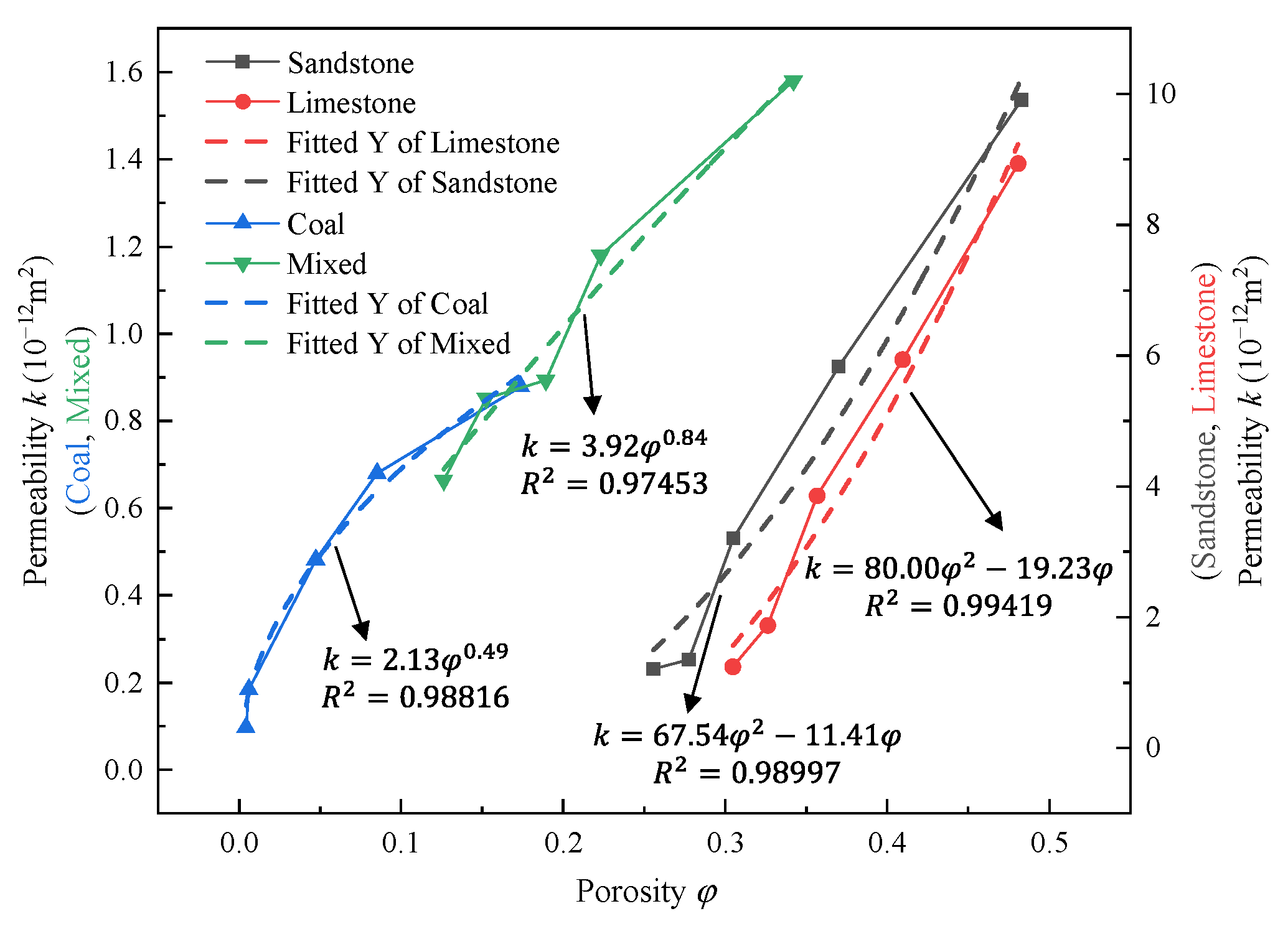
3.4. Porosity and Permeability
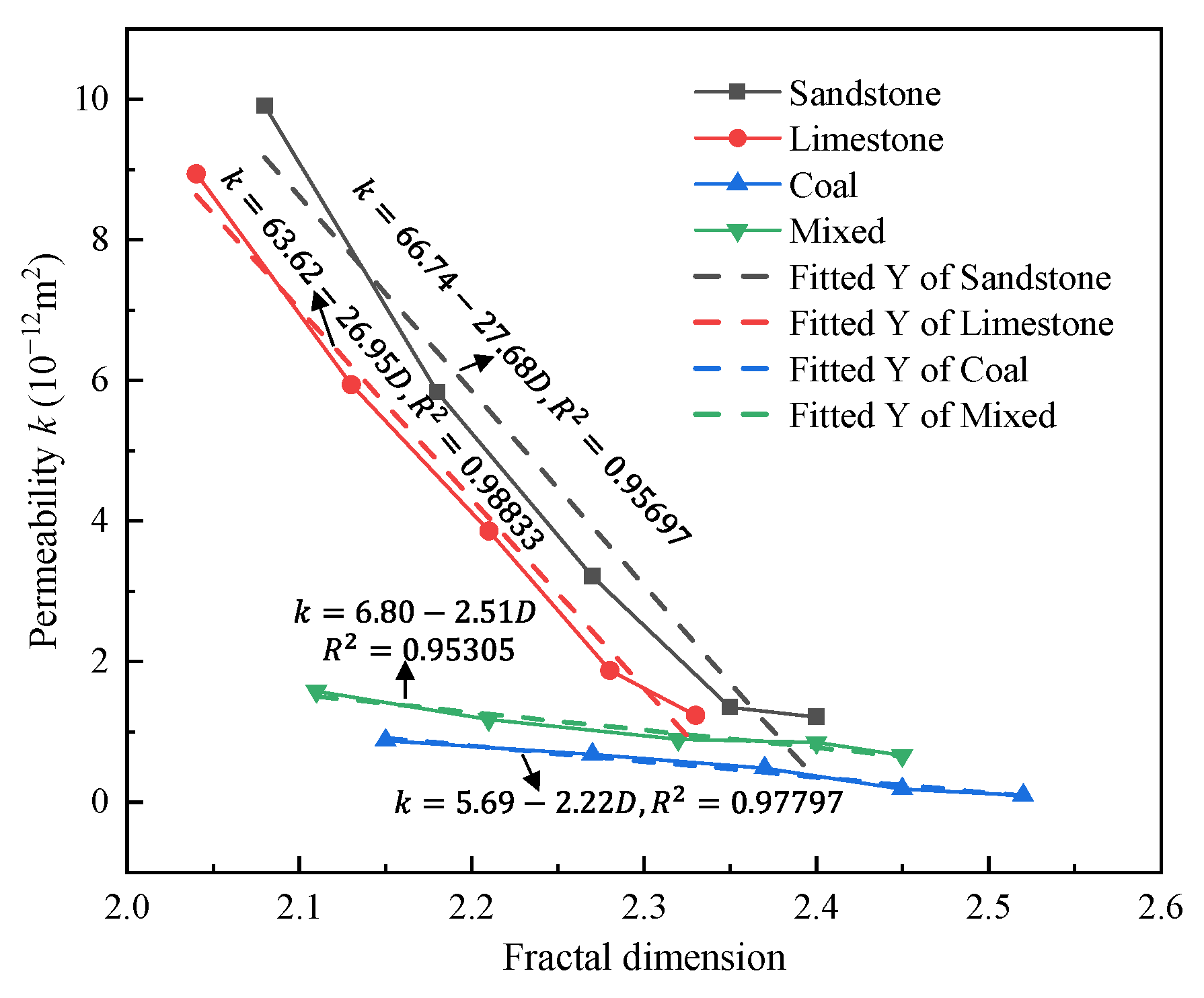
3.5. Fractal Dimension and Permeability
4. Conclusions
- (1)
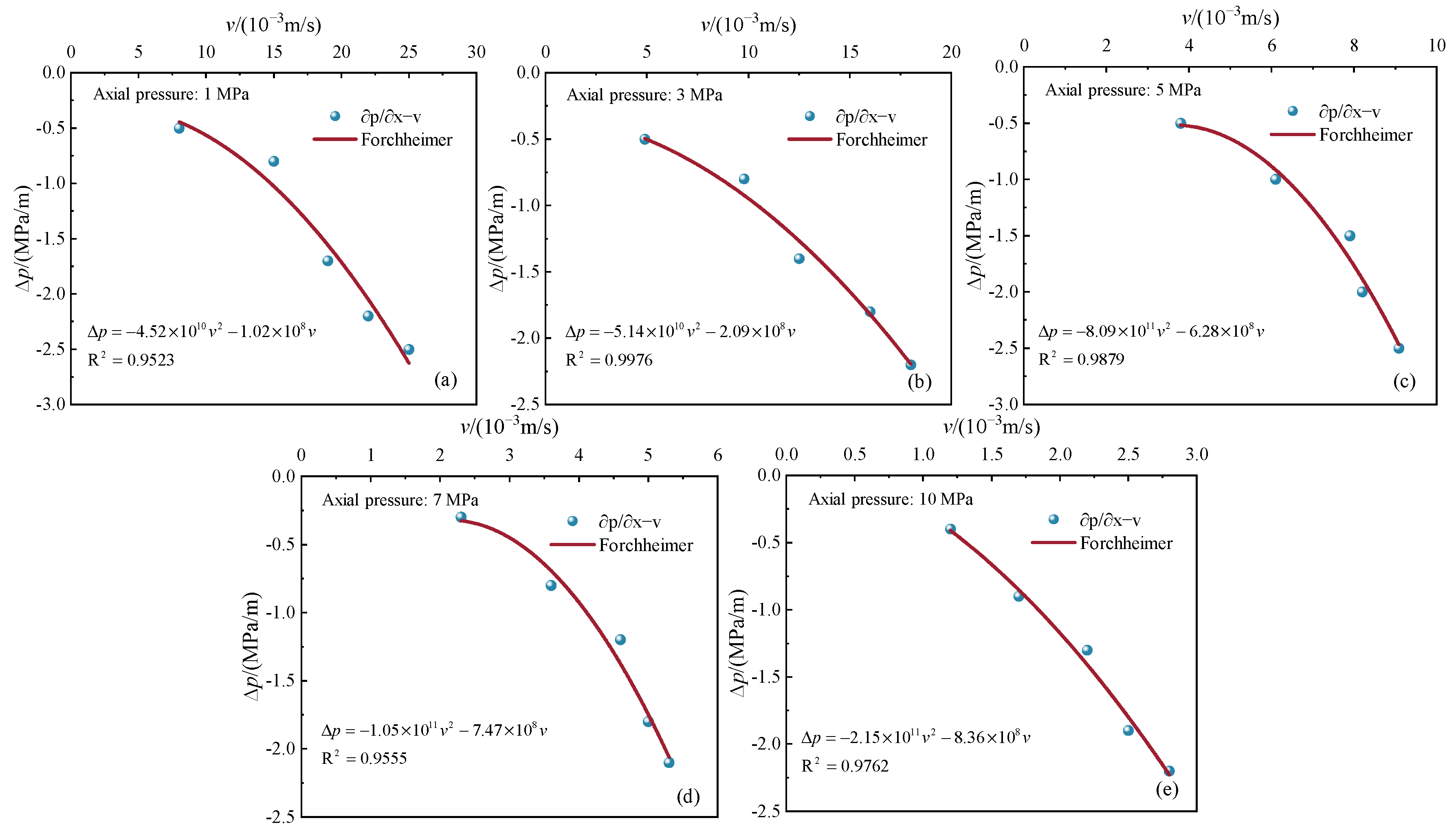
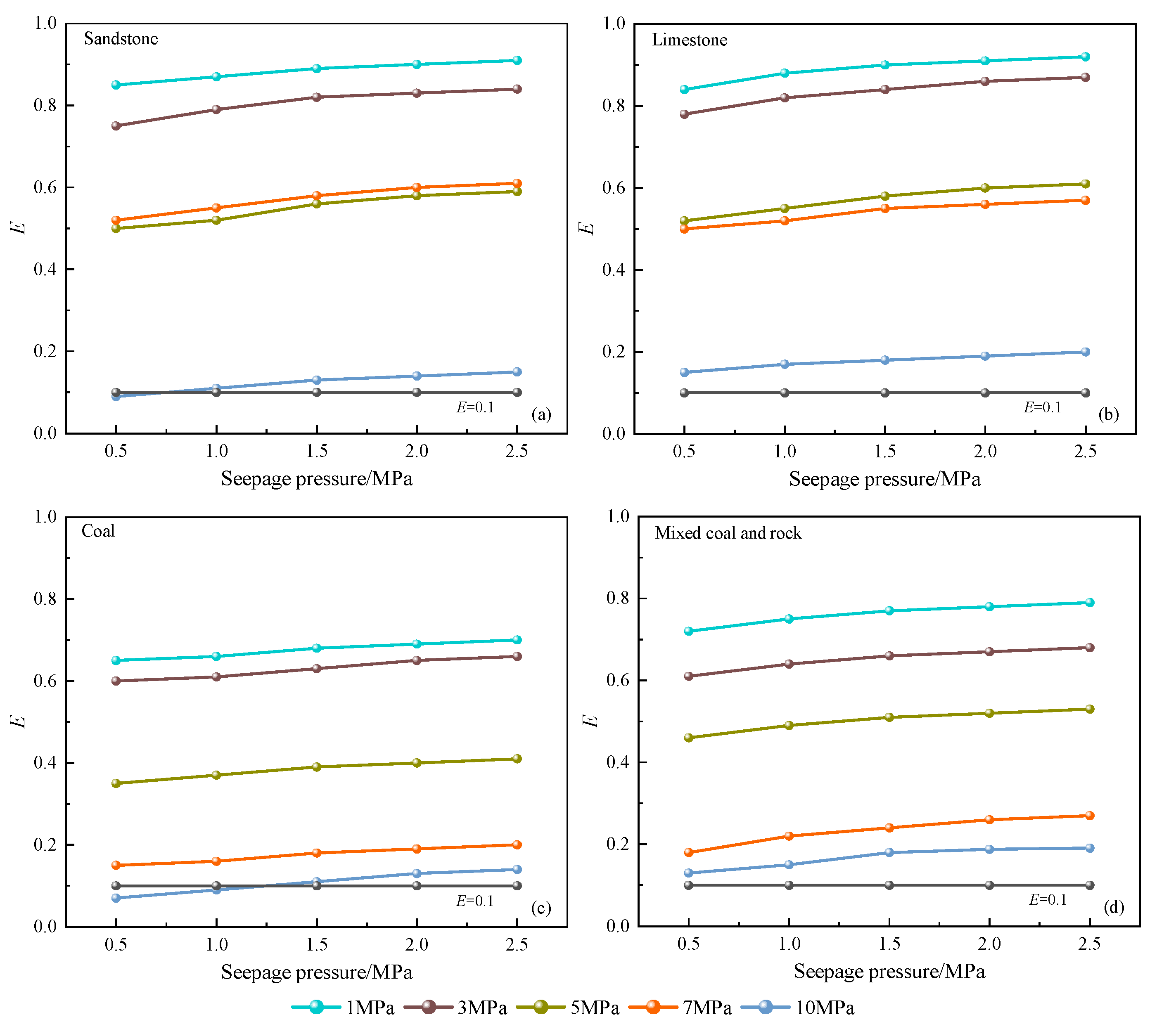
- The seepage characteristics of broken coal and rock masses comply with the Forchheimer law. Through a non-linear regression analysis of the experimental data using the Forchheimer equation, it was found that the equation accurately characterizes seepage behaviors under different axial stress states. The non-linear effect factor E remains between 0.2 and 0.95 during the coupled loading–seepage process, which is higher than the critical threshold of 0.1 for the Darcy-to-non-Darcy flow transition.
- (2)
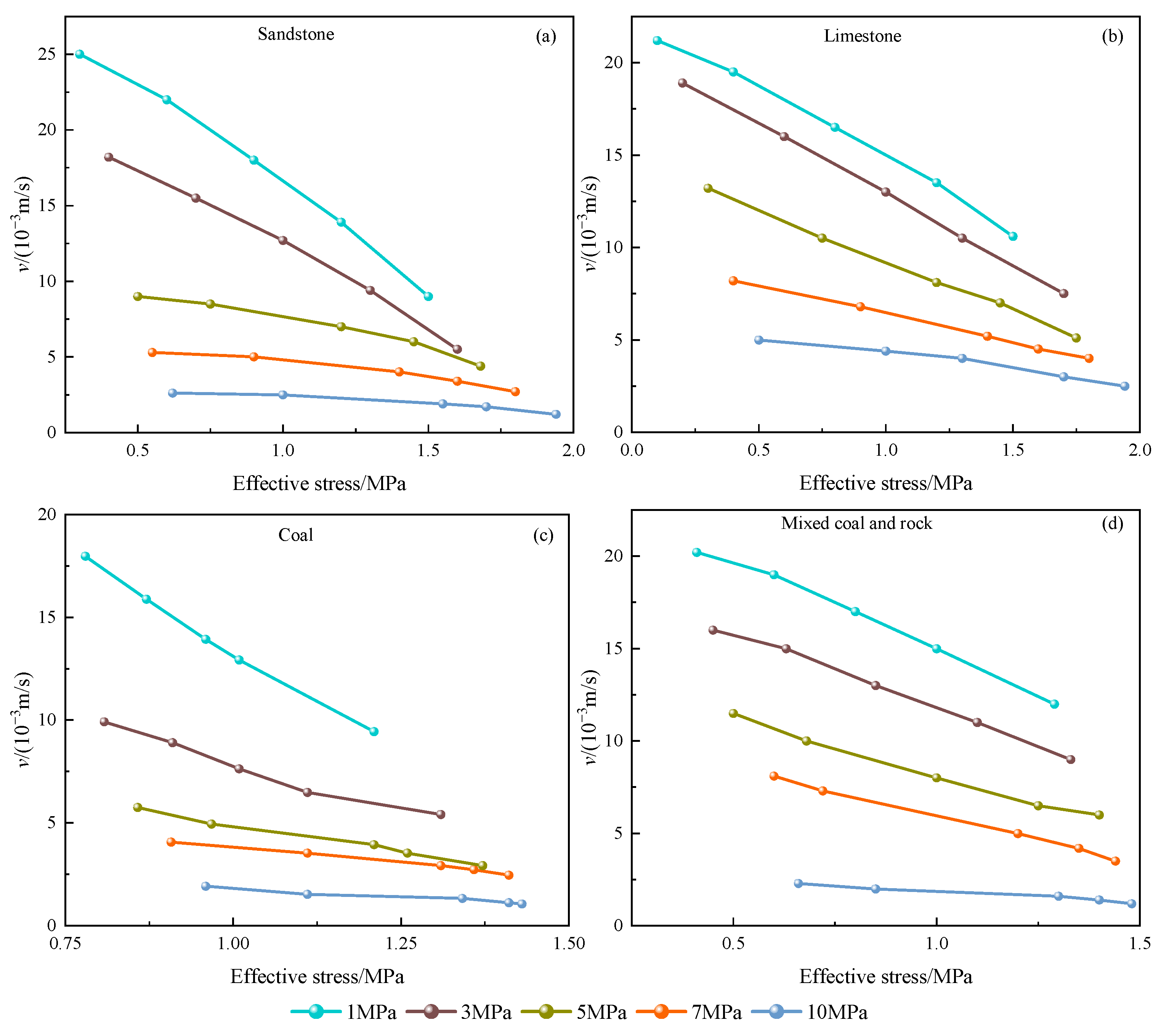
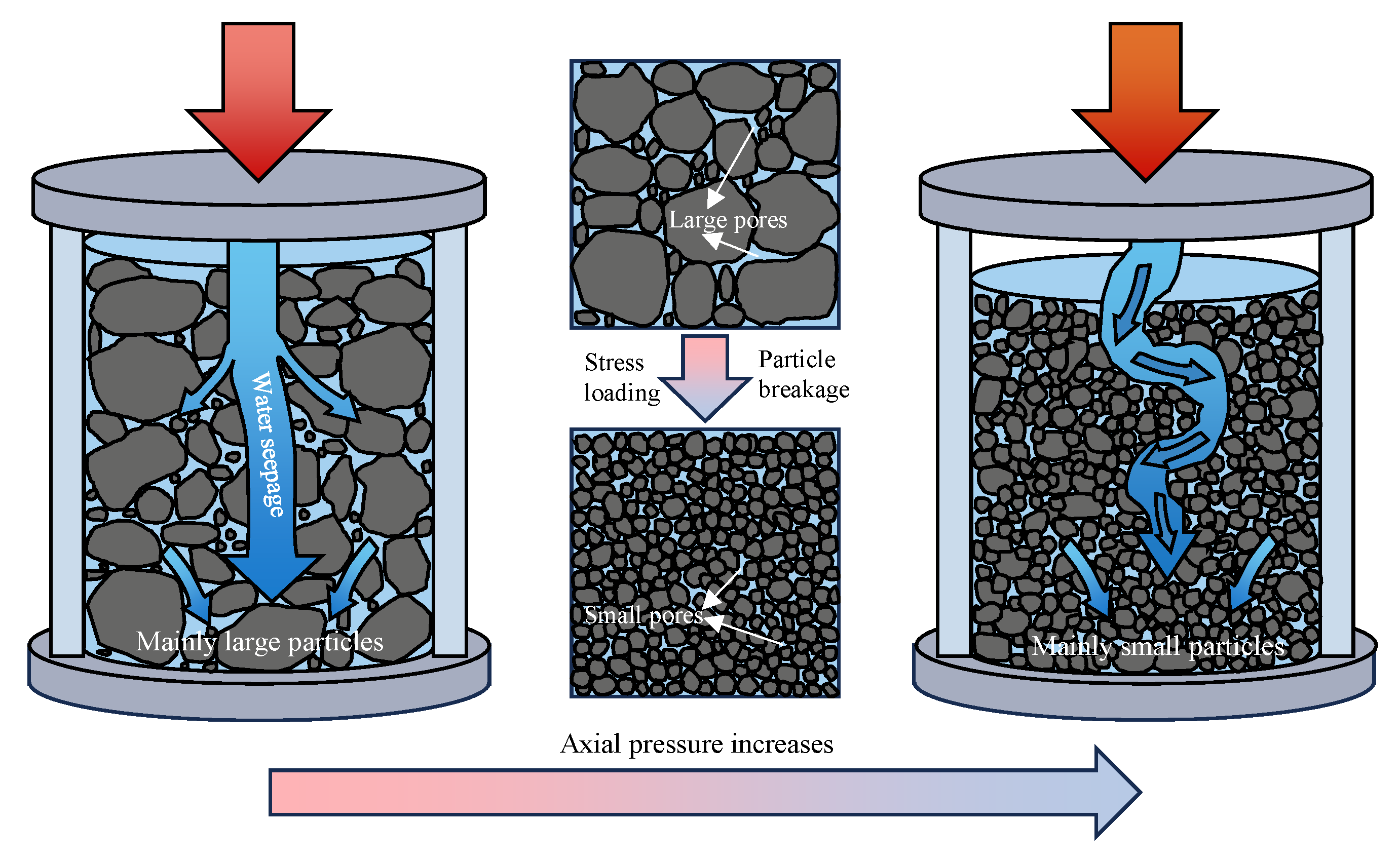
- The voids between broken coal and rock masses gradually become denser with the increase in effective stress, resulting in a decrease in porosity; the seepage velocity shows a monotonically non-linear decrease. As the compressibility of voids between broken coal and rock masses gradually decreases, the internal pores of the particles are poorly permeable, resulting in a gradual decrease in the reduction magnitude of seepage velocity and a flattening of the curve.
- (3)
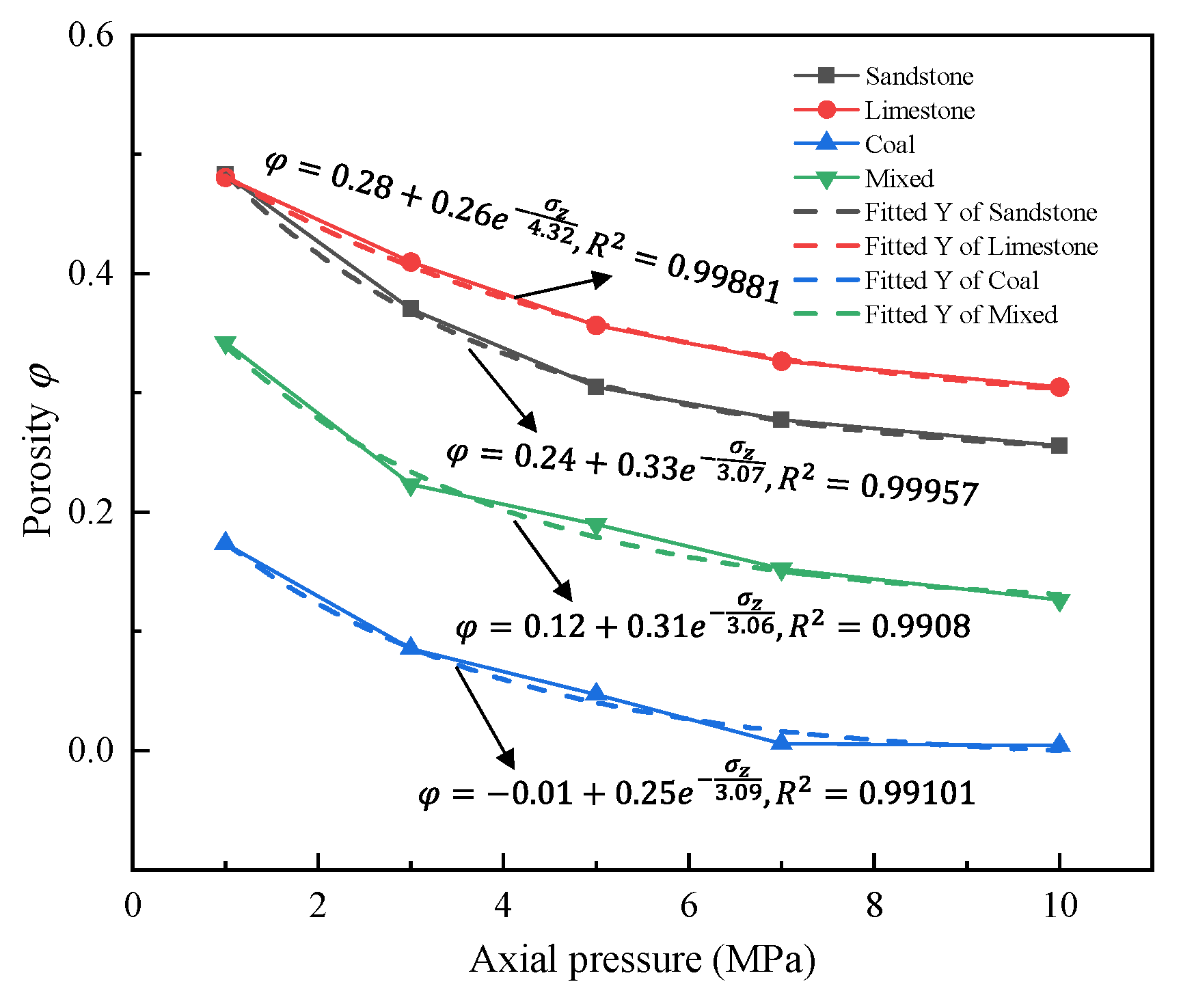
- The porosity of broken coal and rock masses has an exponential negative correlation with axial pressure during the loading process. The porosity reduction rate is influenced by the strength of the rock lithology. This manifests as coal (97.52%) > coal–rock mixtures (63.11%) > sandstone (48.08%) > limestone (29.11%). The relationship between permeability and porosity shows lithological differences. Broken coal and coal–rock mixtures follow an exponential function variation relationship. Broken sandstone and limestone exhibit a quadratic relationship.
- (4)
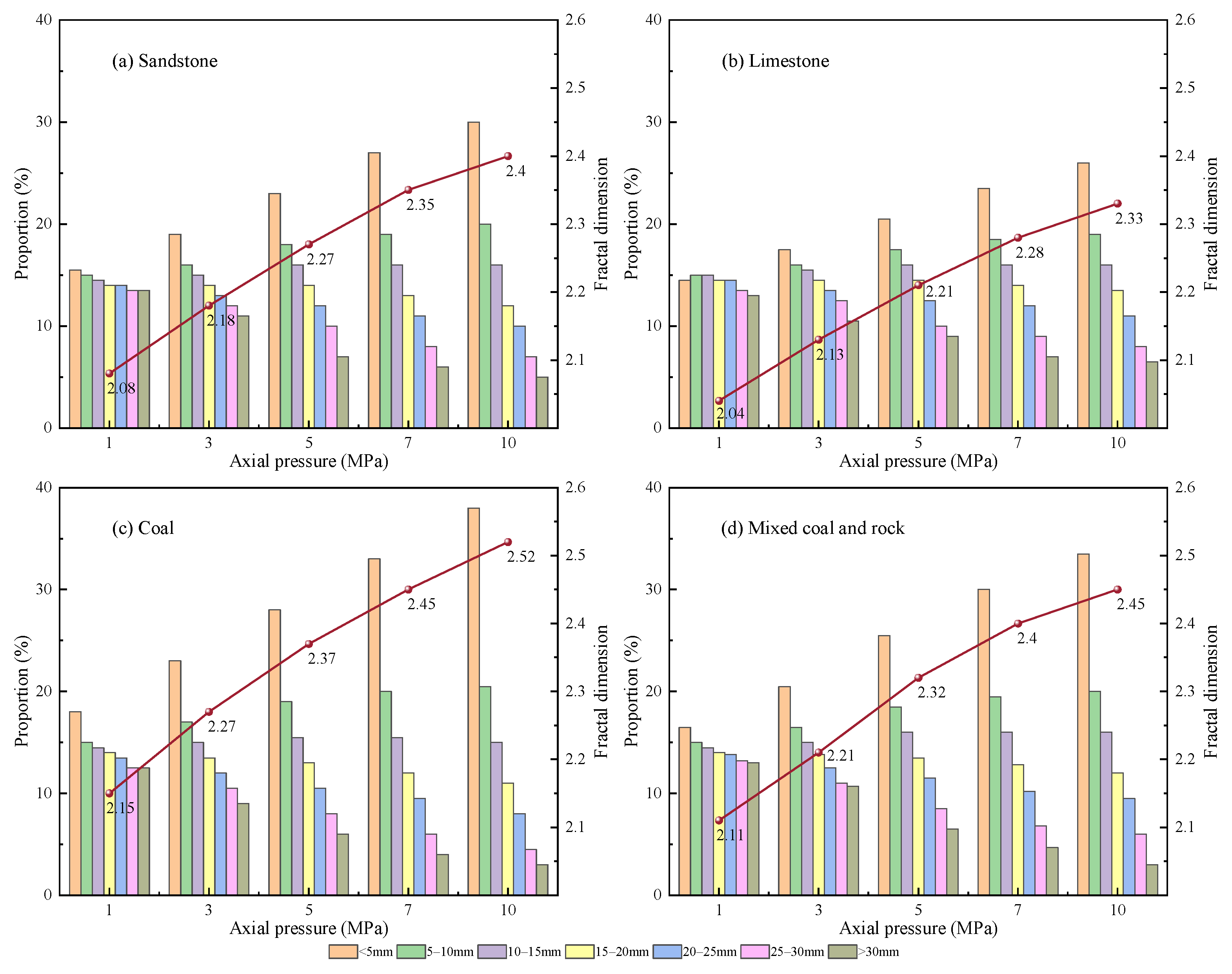
- The fractal dimension D of broken coal and rock masses increases monotonically with the increase in axial pressure. It shows the characteristics of three stages: low axial pressure is stable, medium axial pressure increases sharply, and high axial pressure slows down. The permeability of broken coal and rock masses gradually decreases as the fractal dimension increases, and their relationship basically conforms to a linear negative correlation of a linear function.
- (5)
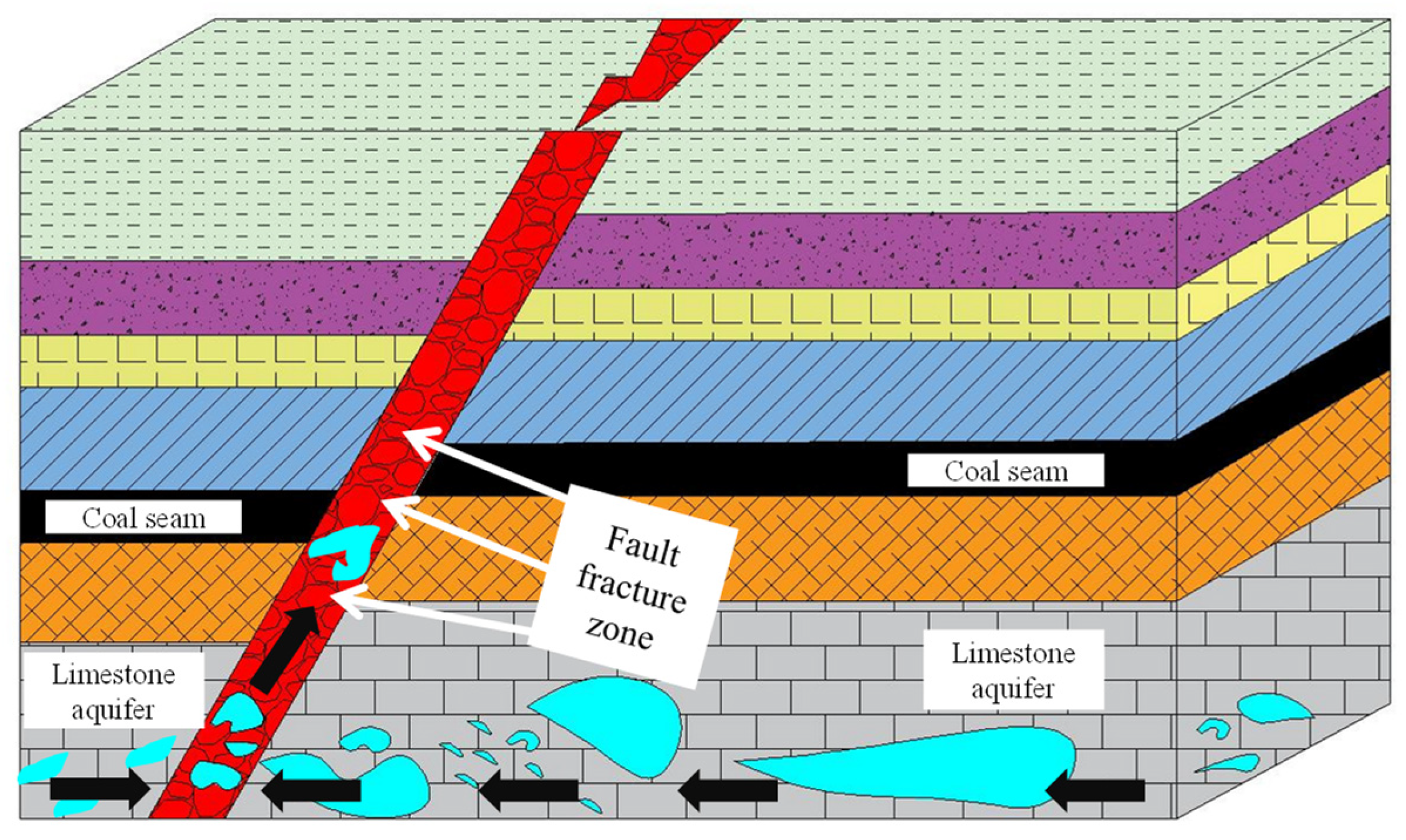
- The obtained lithology-dependent relationships among porosity, permeability, non-Darcy seepage behavior, and the fractal dimension provide useful indicators for mine water hazard prevention and control. In mines, areas with high hydraulic pressure, high fracture connectivity, and significant particle crushing should be regarded as potential water inrush risk zones. Methods including advanced geological probing, borehole water pressure monitoring, grouting reinforcement, and optimization of water-resistant pillars are recommended to reduce hydraulic connectivity and secure mine production.
Author Contributions
Funding
Institutional Review Board Statement
Informed Consent Statement
Data Availability Statement
Acknowledgments
Conflicts of Interest
References
- Xie, H. Research Review of the State Key Research Development Program of China: Deep Rock Mechanics and Mining Theory. J. China Coal Soc. 2019, 44, 1283–1305. [Google Scholar] [CrossRef]
- Zhang, C.; Bai, Q.; Han, P. A Review of Water Rock Interaction in Underground Coal Mining: Problems and Analysis. Bull. Eng. Geol. Environ. 2023, 82, 157. [Google Scholar] [CrossRef] [Scilit]
- Zeng, Y.; Wu, Q.; Zhao, S.; Miao, Y.; Zhang, Y.; Mei, A.; Meng, S.; Liu, X. Characteristics, Causes, and Prevention Measures of Coal Mine Water Hazard Accidents in China. Coal Sci. Technol. 2023, 51, 1–14. [Google Scholar] [CrossRef]
- Liu, C.; Zhang, X.; Qiao, W. Numerical Studies on Mine Water Inrush Mechanism Due to a Large Hidden Karst Collapse Column. Mine Water Environ. 2025, 44, 847–860. [Google Scholar] [CrossRef] [Scilit]
- Shao, J.; Zhang, Q.; Zhang, W. Evolution of Mining-Induced Water Inrush Disaster from a Hidden Fault in Coal Seam Floor Based on a Coupled Stress–Seepage–Damage Model. Geomech. Geophys. Geo-Energy Geo-Resour. 2024, 10, 78. [Google Scholar] [CrossRef] [Scilit]
- Wang, D.; Sui, W.; Ji, Z.; Cheng, Y. Dynamic Hazard Analysis and Mechanism of Groundwater Inrush under Complex Geological Structures. Tunn. Undergr. Space Technol. 2025, 165, 106884. [Google Scholar] [CrossRef] [Scilit]
- Zhu, D.; Griffiths, D.V.; Fenton, G.A.; Huang, J.; Gao, Y. Reliability Analysis of Slopes under Slow Drawdown Conditions. Géotechnique 2026, 76, 835–841. [Google Scholar] [CrossRef] [Scilit]
- Zhang, C.; Wang, F.; Bai, Q. Underground Space Utilization of Coalmines in China: A Review of Underground Water Reservoir Construction. Tunn. Undergr. Space Technol. 2021, 107, 103657. [Google Scholar] [CrossRef] [Scilit]
- Colas, E.; Klopries, E.-M.; Tian, D.; Kroll, M.; Selzner, M.; Bruecker, C.; Khaledi, K.; Kukla, P.; Preuße, A.; Sabarny, C.; et al. Overview of Converting Abandoned Coal Mines to Underground Pumped Storage Systems: Focus on the Underground Reservoir. J. Energy Storage 2023, 73, 109153. [Google Scholar] [CrossRef] [Scilit]
- Hao, D.; Tu, S.; Zhang, L.; Zhao, H.; Xu, S. Experimental Study on Characteristics of Gas Seepage in Broken Coal and Rock. Energy Sci. Eng. 2024, 12, 4737–4752. [Google Scholar] [CrossRef] [Scilit]
- Juganda, A.; Strebinger, C.; Brune, J.F.; Bogin, G.E. Discrete Modeling of a Longwall Coal Mine Gob for CFD Simulation. Int. J. Min. Sci. Technol. 2020, 30, 463–469. [Google Scholar] [CrossRef] [Scilit]
- Teng, Y.; Li, Z.; Chen, C. Review: Pre-Darcy Flows in Low-Permeability Porous Media. Hydrogeol. J. 2024, 32, 1957–1977. [Google Scholar] [CrossRef] [Scilit]
- Wang, J.; Li, X.; Huang, L. Investigation of Pore Structure and Fracture Characteristics of Porous Rock Mass: Computed Tomography Scan and Acoustic Emission Technology. Eng. Fract. Mech. 2025, 321, 111092. [Google Scholar] [CrossRef] [Scilit]
- Zhang, C.; Chen, Y.; Wu, R.; He, J.; Deng, X. Particle Size Effect and Acoustic Emission Characterization of Broken Coal Compaction and Re-Crushing. Nat. Resour. Res. 2026, 35, 553–568. [Google Scholar] [CrossRef] [Scilit]
- Ma, D.; Duan, H.; Li, X.; Li, Z.; Zhou, Z.; Li, T. Effects of Seepage-Induced Erosion on Nonlinear Hydraulic Properties of Broken Red Sandstones. Tunn. Undergr. Space Technol. 2019, 91, 102993. [Google Scholar] [CrossRef] [Scilit]
- Liu, Y.; Zhang, Y.; Cheng, Y.; Zhou, L. Experimental Investigation on Non-Linear Flow and Convective Heat Transfer of Damaged Multi-Fractured Rock. Appl. Therm. Eng. 2025, 264, 125466. [Google Scholar] [CrossRef] [Scilit]
- Li, X.; Zhong, J.; Zhu, Z.; Xiao, W. A Nonlinear Flow Model for 3D Infilled Crossed Fractures Incorporating the Influence of Filling Particles. Comput. Geotech. 2026, 192, 107854. [Google Scholar] [CrossRef] [Scilit]
- Zhao, J.; Yin, L.; Guo, W. Stress–Seepage Coupling of Cataclastic Rock Masses Based on Digital Image Technologies. Rock Mech. Rock Eng. 2018, 51, 2355–2372. [Google Scholar] [CrossRef] [Scilit]
- Yin, Y.; Cui, Y.; Jing, L. Clogging and Unclogging of Fine Particles in Porous Media: Micromechanical Insights from an Analog Pore System. Water Resour. Res. 2024, 60, e2023WR034628. [Google Scholar] [CrossRef] [Scilit]
- Huang, Z.; Zhang, X.; Yao, J.; Wu, Y. Non-Darcy Displacement by a Non-Newtonian Fluid in Porous Media According to the Barree-Conway Model. Adv. Geo-Energy Res. 2017, 1, 74–85. [Google Scholar] [CrossRef] [Scilit]
- Miao, K.; Tu, S.; Wang, Y.; Li, J.; Zhao, H.; Guo, B. Utilization of Broken Rock in Shallow Gobs for Mitigating Mining-Induced Water Inrush Disaster Risks and Environmental Damage: Experimental Study and Permeability Model. Sci. Total Environ. 2023, 903, 166812. [Google Scholar] [CrossRef] [Scilit] [PubMed]
- Wang, Y.; Chen, F.; Li, X.; Yin, X.; Lei, Y. The Variable-Mass Seepage Law of Broken Porous Rock: An Experimental Study. Geomat. Nat. Hazards Risk 2020, 11, 1991–2005. [Google Scholar] [CrossRef] [Scilit]
- Li, B.; Wang, J.; Liang, Y.; Qin, Z.; Li, Y.; Liu, H. Stress Sensitivity of Permeability in the Loading and Unloading Process of Broken Coal-Rock Masses under Different Influencing Factors. Phys. Fluids 2025, 37, 087228. [Google Scholar] [CrossRef] [Scilit]
- Yang, F.; Lin, H.; Shen, L.; Yan, A.; Wu, Y. Water Inrush Mechanism of Karst Collapse Column in Coal Seam Floor Based on a Variable Mass Seepage Mechanical Model. Geofluids 2022, 2022, 8148203. [Google Scholar] [CrossRef] [Scilit]
- Cao, Z.; Xie, Q.; Xu, X.; Sun, W.; Fumagalli, A.; Fu, X. Mass-Loss Effects on the Non-Darcy Seepage Characteristics of Broken Rock Mass with Different Clay Contents. Geomech. Geophys. Geo-Energy Geo-Resour. 2023, 9, 32. [Google Scholar] [CrossRef] [Scilit]
- Xu, Z.; Cao, C.; Chai, J.; Li, Y.; Li, L.L. Study on Non-Darcy Seepage Characteristic and Model of the Broken Rock Mass of Fault Zone. Chin. J. Rock Mech. Eng. 2023, 42, 4099–4108. [Google Scholar] [CrossRef]
- Wu, D.; Guo, W.; Luo, F.; Li, M. Simulation Experimental Investigations on Particle Breakage Mechanism and Fractal Characteristics of Mixed Size Gangue Backfill Materials. J. Mater. Res. Technol. 2023, 24, 125–142. [Google Scholar] [CrossRef] [Scilit]
- Feng, G.; Wang, Z.; Li, Z.; Zhang, Y.; Meng, Q.; Gao, J.; Xue, S.; Zhang, X. Experimental Study on Re-Crushing Behaviour of Crushed Limestone Based on Acoustic Emission Location Method. Nondestruct. Test. Eval. 2024, 39, 2015–2031. [Google Scholar] [CrossRef] [Scilit]
- Xue, S.; Li, Z.; Feng, G.; Zhang, Y.; Gao, J.; Zhang, R.; Liu, Y. Visualization Characterization of Void Structure Evolution in Broken Limestone and Its Influence on Permeability. Fuel 2026, 405, 136412. [Google Scholar] [CrossRef] [Scilit]
- Li, Z.; Ren, H.; Wang, W.; Du, F.; Huang, Y.; Cao, Z.; Wang, L. Multi-Factor Coupled Numerical Simulation and Sensitivity Analysis of Hysteresis Water Inundation Induced by the Activation of Small Faults in the Bottom Plate Under the Influence of Mining. Appl. Sci. 2026, 16, 1051. [Google Scholar] [CrossRef] [Scilit]
- Xue, Y.; Teng, T.; Zhu, L.; He, M.; Ren, J.; Dong, X.; Liu, F. Evaluation of the Non-Darcy Effect of Water Inrush from Karst Collapse Columns by Means of a Nonlinear Flow Model. Water 2018, 10, 1234. [Google Scholar] [CrossRef] [Scilit]
- Xian, M.; Xu, Z.; Chen, B. Numerical Investigation of Variable-Mass Seepage Mechanism of Broken Rock Mass in Faults. Comput. Geotech. 2023, 160, 105527. [Google Scholar] [CrossRef] [Scilit]
- Li, W.; Liu, Y.; Li, S.; Ma, L.; Yue, L.; Wang, J. Experimental and Numerical Studies of Water–Sand Flow in Fractured Porous Media. Rock Mech. Rock Eng. 2024, 57, 6485–6509. [Google Scholar] [CrossRef] [Scilit]
- Cheng, W.; Liu, Z.; Yang, H.; Wang, W. Non-Linear Seepage Characteristics and Influential Factors of Water Injection in Gassy Seams. Exp. Therm. Fluid Sci. 2018, 91, 41–53. [Google Scholar] [CrossRef] [Scilit]
- Shi, W.; Yang, T.; Liu, H.; Yang, B. Numerical Modeling of Non-Darcy Flow Behavior of Groundwater Outburst through Fault Using the Forchheimer Equation. J. Hydrol. Eng. 2018, 23, 04017062. [Google Scholar] [CrossRef] [Scilit]
- Cao, Z.; Miao, C.; Du, F.; Zhu, D.; Teng, T.; Xue, Y. A Bifurcation Dynamical Analysis of a Non-Darcy Seepage System in Post-Failure Rock Based on a Novel Truncated Spectral Method. Processes 2026, 14, 1468. [Google Scholar] [CrossRef] [Scilit]
- Li, M.; Zhang, J.; Guo, Y.; Pu, H.; Peng, Y. Influence of Particle Size Distribution on Fractal Characteristics of Waste Rock Backfill Materials under Compression. J. Mater. Res. Technol. 2022, 20, 2977–2989. [Google Scholar] [CrossRef] [Scilit]
- Zhang, C.; Bai, Q.; Zhu, C. A Methodology for Determining the Size Distribution of Broken Rock Masses in Longwall Mining Goaf. Geomech. Geophys. Geo-Energy Geo-Resour. 2022, 8, 113. [Google Scholar] [CrossRef] [Scilit]
- Tyler, S.W.; Wheatcraft, S.W. Fractal Scaling of Soil Particle-Size Distributions: Analysis and Limitations. Soil Sci. Soc. Am. J. 1992, 56, 362–369. [Google Scholar] [CrossRef] [Scilit]
- Zeng, Z.; Grigg, R. A Criterion for Non-Darcy Flow in Porous Media. Transp. Porous Media 2006, 63, 57–69. [Google Scholar] [CrossRef] [Scilit]
- Li, C.; Zhu, S. Discussion of Dual Effective Stresses in Porous Media -Analysis on the Paper of Re-Recognition of Dual Effective Stresses and the Comprehensive Effect. Pet. Sci. Bull. 2019, 4, 414–429. [Google Scholar] [CrossRef]
- Ma, D.; Duan, H.; Zhang, J.; Bai, H. A State-of-the-Art Review on Rock Seepage Mechanism of Water Inrush Disaster in Coal Mines. Int. J. Coal Sci. Technol. 2022, 9, 50. [Google Scholar] [CrossRef] [Scilit]
- Zhang, C.; Zhang, L. Permeability Characteristics of Broken Coal and Rock Under Cyclic Loading and Unloading. Nat. Resour. Res. 2019, 28, 1055–1069. [Google Scholar] [CrossRef] [Scilit]
- Li, X.; Liu, J.; Li, J. Fractal Dimension, Particle Shape, and Particle Breakage Analysis for Calcareous Sand. Bull. Eng. Geol. Environ. 2022, 81, 106. [Google Scholar] [CrossRef] [Scilit]





| Material Type | Density ρ (kg/m3) | Uniaxial Compressive Strength σc (MPa) | Elastic Modulus Ec (GPa) | Lithological Feature Description |
|---|---|---|---|---|
| Limestone | 2955 | 121.1 | 45.3 | It has a dense structure and high brittleness and produces particles with extremely sharp angularities after crushing. |
| Sandstone | 2980 | 85.4 | 32.8 | It has moderate particle cementation and produces a substantial volume of medium-sized particles after crushing. |
| Coal | 1300 | 21.6 | 2.5 | It has extremely low strength and high stress sensitivity and is highly susceptible to crushing. |
| Coal–rock mixtures | - | 42.5 (estimate) | - | It exhibits strong heterogeneity, with alternating soft and hard phases, and has complex stress transmission channels. The estimated UCS is calculated using the geometric mean model. |
| Sample | Axial Pressure/MPa | Porosity φ | Permeability k/m2 | Fractal Dimension D |
|---|---|---|---|---|
| Sandstone | 1 | 0.4828 | 9.91 × 10⁻¹² | 2.08 |
| 3 | 0.3701 | 5.83 × 10⁻¹² | 2.18 | |
| 5 | 0.3049 | 3.21 × 10⁻¹² | 2.27 | |
| 7 | 0.2774 | 1.35 × 10⁻¹² | 2.35 | |
| 10 | 0.2555 | 1.21 × 10⁻¹² | 2.40 | |
| Limestone | 1 | 0.4806 | 8.94 × 10⁻¹² | 2.04 |
| 3 | 0.4095 | 5.94 × 10⁻¹² | 2.13 | |
| 5 | 0.3566 | 3.86 × 10⁻¹² | 2.21 | |
| 7 | 0.3264 | 1.88 × 10⁻¹² | 2.28 | |
| 10 | 0.3047 | 1.24 × 10⁻¹² | 2.33 | |
| Coal | 1 | 0.1736 | 8.79 × 10⁻¹³ | 2.15 |
| 3 | 0.0854 | 6.81 × 10⁻¹³ | 2.27 | |
| 5 | 0.0473 | 4.82 × 10⁻¹³ | 2.37 | |
| 7 | 0.0059 | 1.85 × 10⁻¹³ | 2.45 | |
| 10 | 0.0043 | 9.75 × 10⁻¹⁴ | 2.52 | |
| Coal–rock mixtures | 1 | 0.3421 | 1.58 × 10⁻¹² | 2.11 |
| 3 | 0.2232 | 1.18 × 10⁻¹² | 2.21 | |
| 5 | 0.1895 | 8.94 × 10⁻¹³ | 2.32 | |
| 7 | 0.1526 | 8.52 × 10⁻¹³ | 2.40 | |
| 10 | 0.1262 | 6.64 × 10⁻¹³ | 2.45 |
Disclaimer/Publisher’s Note: The statements, opinions and data contained in all publications are solely those of the individual author(s) and contributor(s) and not of MDPI and/or the editor(s). MDPI and/or the editor(s) disclaim responsibility for any injury to people or property resulting from any ideas, methods, instructions or products referred to in the content. |
© 2026 by the authors. Licensee MDPI, Basel, Switzerland. This article is an open access article distributed under the terms and conditions of the Creative Commons Attribution (CC BY) license.
Share and Cite
Huang, X.; Zhang, C.; Zhao, R.; Chen, Y.; Shi, X. Lithology-Dependent Evolution of Porosity and Permeability in Fault Fracture Zones: Implications for Sustainable Mine Water Hazard Mitigation and Groundwater Resource Protection. Sustainability 2026, 18, 7459. https://doi.org/10.3390/su18147459
Huang X, Zhang C, Zhao R, Chen Y, Shi X. Lithology-Dependent Evolution of Porosity and Permeability in Fault Fracture Zones: Implications for Sustainable Mine Water Hazard Mitigation and Groundwater Resource Protection. Sustainability. 2026; 18(14):7459. https://doi.org/10.3390/su18147459
Chicago/Turabian StyleHuang, Xuanhao, Cun Zhang, Ruihang Zhao, Yanhong Chen, and Xutao Shi. 2026. "Lithology-Dependent Evolution of Porosity and Permeability in Fault Fracture Zones: Implications for Sustainable Mine Water Hazard Mitigation and Groundwater Resource Protection" Sustainability 18, no. 14: 7459. https://doi.org/10.3390/su18147459
APA StyleHuang, X., Zhang, C., Zhao, R., Chen, Y., & Shi, X. (2026). Lithology-Dependent Evolution of Porosity and Permeability in Fault Fracture Zones: Implications for Sustainable Mine Water Hazard Mitigation and Groundwater Resource Protection. Sustainability, 18(14), 7459. https://doi.org/10.3390/su18147459