1. Introduction
Water reuse is increasingly promoted as a vital strategy to support sustainable development and address urban water scarcity intensified by climate change, population growth, and competing demands on freshwater resources. This paper focuses specifically on urban municipal wastewater reuse—encompassing water originating from domestic and municipal sources (toilet flushing, bathing, laundry, kitchen, and permitted industrial discharges reaching municipal treatment facilities)—as opposed to rural, industrial-only, or agricultural-irrigation-specific systems, which present fundamentally different governance, infrastructure, and social conditions. The urban versus rural distinction matters substantially: urban systems benefit from existing sewage infrastructure, higher population density enabling cluster-scale economies, and more structured governance frameworks, while rural systems face different challenges including informal sanitation and weaker institutional capacity. This paper focuses on urban municipal contexts where the LCSA literature is most developed.
By recovering water and nutrients from wastewater, reuse systems are often presented as exemplars of the circular economy in the urban water sector. However, their sustainability cannot be assumed: real performance depends on complex trade-offs across environmental, economic, and social dimensions throughout the entire life cycle—from collection and treatment to distribution, use, and resource recovery.
Although LCA has been widely applied to evaluate the environmental performance of water reuse, single-pillar approaches are inherently limited: they risk shifting burdens to economic or social domains that remain unexamined. LCSA, which integrates environmental LCA, Life Cycle Costing (LCC), and Social Life Cycle Assessment (S-LCA), has therefore emerged as the most comprehensive framework currently available [
1,
2]. Yet, despite growing interest, full LCSA applications in urban municipal wastewater reuse remain relatively scarce, methodologically uneven, and frequently overly optimistic.
The overarching thesis of this review is that the sustainability of urban municipal wastewater reuse is conditional rather than inherent, shaped by system scale, energy source, reuse type, and local governance capacity. Against this backdrop, the RENEW-LCSA Framework is proposed as a structured operational tool to enable more rigorous, context-sensitive, and policy-relevant sustainability assessments. The analysis is guided by three central research questions:
What works?—Under what conditions and configurations do LCSA studies demonstrate real sustainability value for urban municipal water reuse systems?
What are the pitfalls?—What methodological, conceptual, and contextual weaknesses limit the reliability and usefulness of existing assessments?
How can we strengthen LCSA practice?—What methodological innovations, integration strategies, and policy linkages are needed to enhance its effectiveness as a decision-support tool for safe, equitable, and circular water management? Throughout this paper, ‘equitable’ is used in the sense of fair distributional access to the benefits and costs of water reuse systems across income groups, gender, and geographical location.
These questions are revisited explicitly in the conclusions (
Section 9). The findings are particularly relevant for advancing SDG 6 (Clean Water and Sanitation) and the European Water Reuse Regulation (2020/741) [
3].
The objectives of this paper are: (i) to critically synthesize the current evidence on LCSA applications in urban municipal wastewater reuse; (ii) to identify which reuse-type configurations deliver genuine sustainability benefits and under what conditions; (iii) to document persistent methodological pitfalls; and (iv) to propose the RENEW-LCSA Framework as a practical operational tool to overcome identified limitations. The remainder of this article is structured as follows:
Section 2 presents the conceptual foundations of LCSA.
Section 3 examines successes by reuse type.
Section 4 analyses persistent pitfalls.
Section 5 discusses performance across contextual conditions.
Section 6 introduces the RENEW-LCSA Framework.
Section 7 presents barriers and enabling conditions.
Section 8 outlines a research and policy agenda.
Section 9 presents limitations and conclusions.
1.1. Approach to Evidence Synthesis
This paper presents a critical narrative review and interpretive synthesis of the LCSA literature on urban municipal wastewater reuse, complemented by conceptual framework development. Unlike systematic reviews, the objective is not exhaustive coverage or quantitative meta-analysis, but rather to identify cross-cutting patterns of success and persistent limitations, while advancing a forward-looking operational framework. This article type—a critical narrative review with framework development—is well established in sustainability science for identifying gaps and proposing methodological advances [
4,
5].
The evidence base was assembled through targeted searches in Scopus, Web of Science, and Google Scholar using keyword combinations including: (‘life cycle sustainability assessment’ OR ‘LCSA’) AND (‘water reuse’ OR ‘wastewater reuse’ OR ‘reclaimed water’ OR ‘municipal wastewater’ OR ‘water recycling’). Searches were supplemented by backward and forward snowballing. The temporal scope covered peer-reviewed publications primarily from 2010–2026, with foundational methodological references [
1]. (ISO 14040/14044) [
6] was included regardless of date. Language was restricted to English and Portuguese. This language restriction may introduce bias by excluding relevant studies published in other languages, including Spanish, French, Chinese, and Arabic, and is acknowledged as a limitation of this review (see
Section 9.1). Searches were conducted in Scopus (final search date: 15 March 2026), Web of Science (final search date: 15 March 2026), and Google Scholar (final search date: 15 March 2026). Full search strings are provided in
Supplementary Table S1. Duplicates identified across databases were removed prior to screening (n = 47 duplicates removed). Screening was performed independently by both authors, yielding an inter-reviewer agreement of 89% (Cohen’s κ = 0.76), with remaining disagreements resolved by consensus.
A PRISMA-style flow diagram is provided in
Supplementary Figure S1. The initial search returned over 300 references. After title and abstract screening against relevance to LCSA (requiring coverage of at least two of three pillars) applied to urban municipal wastewater reuse, approximately 80 studies were subjected to full-text review.
Of these, 28 studies (25 peer-reviewed articles and three institutional grey literature sources (Singapore NEWater programme reports, Windhoek operational data, LADWP/OCWD documentation)) were retained for in-depth synthesis. Studies were excluded if they: (a) focused on regions or systems outside the urban municipal wastewater scope; (b) addressed only one LCSA pillar without cross-pillar analysis; or (c) lacked sufficient empirical or methodological grounding for critical synthesis. Because this is a critical narrative review rather than a systematic review, PRISMA 2020 reporting was not fully followed; however, transparent reporting of search and selection criteria is provided in
Supplementary Table S1.
1.2. Analytical Framework: Coding and Categorization of Studies
To ensure methodological transparency and reproducibility, each retained study was qualitatively coded using a structured analytical matrix applied independently by both authors, yielding an inter-reviewer agreement of 91% (Cohen’s κ = 0.79), with disagreements resolved by discussion. Studies were categorized along four main dimensions:
Implementation scale: building-level, cluster, centralized, or hybrid decentralized;
Reuse type: non-potable urban (toilet flushing, urban irrigation, industrial cooling), agricultural, indirect potable, or direct potable;
LCSA pillar coverage: which of the three pillars (LCA, LCC, S-LCA) were included, and how they were integrated;
Geographical and socio-economic context: region, income level, climate zone, and local water alternatives.
Evidence on successes and pitfalls was organized thematically within and across these categories. Directional assessments are explicitly derived from this coding procedure and should be interpreted as heuristic, qualitative syntheses based on patterns in the retained literature rather than as statistical outputs. This coding framework underpins the design of the reuse-type-specific Social LCA indicators and the contextual factor analysis in
Section 5.
Supplementary Table S2 lists all included studies and provides reasons for exclusion of borderline full-text articles reviewed for potential inclusion.
1.3. Case-Comparison Protocol and Scoring Rubric
To ensure transparency of the case comparison in
Section 6.3, a structured case-comparison protocol was developed. Data were extracted following a source hierarchy: (1) peer-reviewed publications; (2) official programme reports and government documentation; (3) grey literature and operational data. Where data were directly measured in primary sources, this is indicated; where inferred from secondary sources, this is noted; missing data are reported as such. Radar chart scores were assigned on a 1–5 scale: 1 = very poor; 2 = below average; 3 = moderate; 4 = good; 5 = excellent. Scores were assigned independently by both authors, yielding an inter-reviewer agreement of 93% (Cohen’s κ = 0.84), and discrepancies resolved by consensus.
4. Pitfalls: Persistent Methodological and Conceptual Weaknesses
Despite conditional successes, a closer examination reveals substantial methodological, conceptual, and contextual weaknesses that significantly limit the reliability, comparability, and practical usefulness of most LCSA studies.
4.1. Integration and Methodological Pitfalls
Weak integration across the three pillars remains a central problem. Although many studies claim to adopt an LCSA approach, LCA, LCC, and S-LCA are often conducted as largely independent exercises with minimal cross-analysis or feedback loops. When integration is attempted (typically via MCDA or AHP), weighting procedures are frequently applied without sufficient justification, stakeholder participation, or sensitivity testing [
2,
9]. Inconsistent functional units and system boundaries further undermine comparability across non-potable urban, agricultural, and potable reuse applications.
4.2. The Underdeveloped Social Pillar (S-LCA)
The S-LCA remains the weakest component across all reuse types and geographical contexts. Most studies either omit it entirely or limit it to generic worker-focused indicators from secondary databases. Critical dimensions—public acceptance, risk perception, distributional equity, governance capacity, and gender—receive marginal or no attention [
21,
22,
23]. This is particularly serious because social factors frequently determine the practical viability of reuse schemes. Without structured inclusion of social indicators, LCSA assessments risk being technically sophisticated but socially uninformed—and therefore of limited practical value in contested governance contexts.
Table 3 responds directly to this gap by presenting a structured set of priority S-LCA indicators differentiated by reuse type, each with a concrete measurement approach. These indicators should be adapted to local contexts and complemented by qualitative methods such as participatory mapping, focus groups, and deliberative polling.
4.3. Conceptual and Analytical Gaps
Most studies focus exclusively on relative sustainability—comparing alternatives against each other—rather than absolute sustainability, which asks whether a system operates within local and planetary carrying capacity thresholds [
8,
24]. Additional gaps include: limited incorporation of circularity metrics; predominantly static analyses that fail to account for future uncertainties (climate change, energy transition, population dynamics); and insufficient explicit acknowledgement of cross-study comparability limitations when quantitative results from studies with different system boundaries and functional units are synthesized.
4.4. Geographical Representativeness and Underrepresented Contexts
The evidence base is heavily concentrated in Europe, China, Israel, and a few Global South countries. Large water-scarce regions in sub-Saharan Africa and South Asia remain severely underrepresented [
25,
26]. This geographical bias has six specific methodological implications for LCSA in underrepresented contexts:
Data scarcity forces reliance on non-representative generic databases (e.g., European ecoinvent data applied to African or South Asian systems);
Informal and non-sewered sanitation systems common in LMIC contexts are incompatible with standard LCSA functional units (which assume formalized collection infrastructure);
Regulatory gaps and weaker institutional structures alter the governance pillar, making it less comparable with European S-LCA frameworks;
Affordability constraints and different social acceptance dynamics make European-derived social indicators inapplicable without significant adaptation;
Climate variability in arid and semi-arid regions creates environmental trade-off profiles that differ substantially from temperate European baselines;
Informal reuse practices—widespread in LMIC urban contexts—are not captured by formal LCSA boundaries.
Future studies must address these specifics explicitly rather than applying Northern-context LCSA frameworks uncritically. Emerging African-context LCA work (e.g., Ogbu et al. [
26]) represents an important step in this direction.
4.5. Nature-Based Solutions (NBSs): Evidence vs. Extrapolation
The integration of Nature-Based Solutions (NBSs)—such as constructed wetlands, green roofs, and soil-aquifer treatment—into water reuse systems shows promise, particularly for lower energy use and biodiversity co-benefits. However, a critical distinction must be maintained between three categories of evidence:
Category 1 (Direct evidence): NBS-based water reuse LCSA studies reporting full three-pillar results—currently the smallest category, limited to a handful of pilot-scale studies;
Category 2 (Adjacent evidence): The broader NBS LCA/LCSA literature (e.g., Larrey-Lassalle et al. [
27]) and NBS performance in related water management contexts—relevant but not directly water-reuse-specific;
Category 3 (Extrapolation): Conceptual claims about NBS performance in water reuse without direct empirical grounding—common in the literature but often overstated.
It is also important to note that ‘grey infrastructure’ in this context refers primarily to conventional centralized wastewater treatment plants, distribution networks, and collection systems. Traditional retention and detention solutions (constructed wetlands, retention basins) occupy a hybrid position, as they can function both as NBS components and as hydraulic infrastructure for local flood management. Their role in flow hydraulics and flood risk reduction—particularly in dense urban settings—is not negligible and should be assessed under the environmental LCA pillar (Step 3) and as a governance dimension (Step 1) of the RENEW-LCSA Framework. In the RENEW-LCSA Framework (Step 3), NBSs are included as assessable options with an explicit requirement to document the evidence category for any NBS performance claim. Where evidence falls primarily into Category 3, NBS integration should be framed as a future research priority rather than a demonstrated performance advantage.
6. The RENEW-LCSA Framework: A Six-Step Operational Approach
To address the successes, persistent pitfalls, and strong context dependency identified in
Section 3,
Section 4 and
Section 5, this paper proposes the RENEW-LCSA Framework (Renewable Water-Oriented Life Cycle Sustainability Assessment Framework)—a practical six-step operational approach specifically tailored for urban municipal wastewater reuse. The framework builds on foundational LCSA principles [
1,
2] while incorporating: stronger pillar integration; reuse-type-specific social indicators (
Table 3); explicit operationalization of absolute sustainability with concrete thresholds; circularity metrics; evidence-based NBS integration; and enhanced applicability to diverse geographical contexts.
The RENEW-LCSA Framework advances beyond three closely related precedents: the generic LCSA approach of Kloepffer and Valdivia et al. [
1,
2], which it extends through reuse-type specificity and absolute sustainability integration; C-LCSA) [
9], which incorporates circularity metrics but does not address water-sector-specific S-LCA indicators or absolute sustainability thresholds; and Bhambhani et al.’s [
24] LCSA framework for water-sector resource recovery, which is the closest precedent but does not include the absolute sustainability dimension, reuse-type-specific S-LCA indicators, or the evidence-category requirement for NBS claims. The RENEW-LCSA Framework integrates all of these elements into a single, modular operational structure.
It is important to note that the RENEW-LCSA Framework is currently conceptual and has not yet been validated through prospective real-world applications. Future empirical studies are needed to test and refine its practical utility across different reuse types and socio-economic contexts.
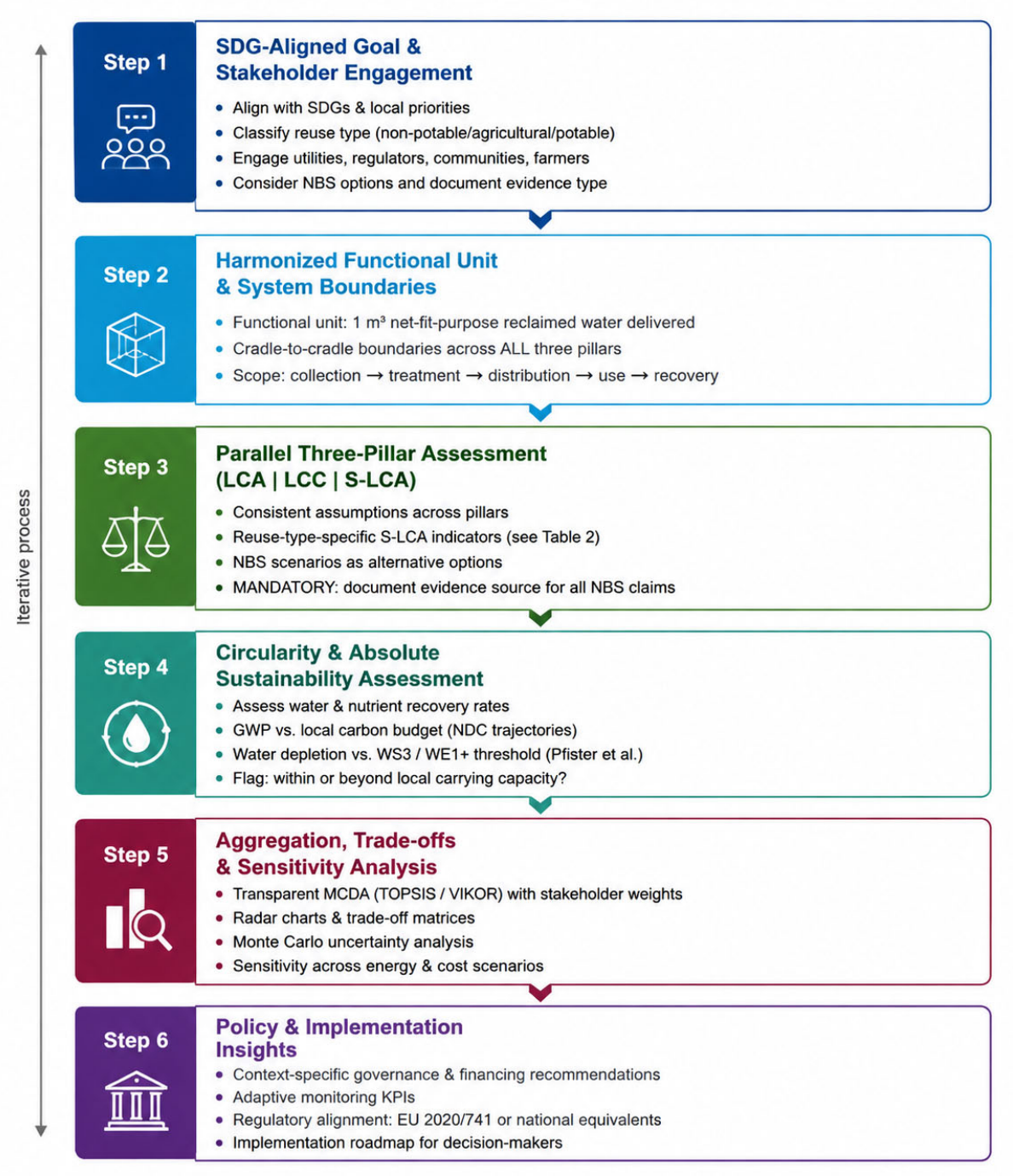
Figure 1 illustrates the six interconnected steps and the iterative feedback loop. The framework is organized into three functional clusters: Steps 1–2 (blue) establish the analytical foundation; Steps 3–4 (green) conduct the core assessment including absolute sustainability; Steps 5–6 (red) synthesize results and translate them into policy insights.
6.1. The Six Steps of the RENEW-LCSA Framework
We propose the RENEW-LCSA framework, a structured six-step approach specifically designed for life cycle sustainability assessment of water reuse systems.
Table 6 presents the six-step RENEW-LCSA Framework, detailing the key actions, outputs, and how each step resolves persistent pitfalls in conventional LCSA.
6.2. Operationalizing Absolute Sustainability: A Worked Example
Step 4 requires assessing whether a reuse system operates within local and planetary carrying capacity thresholds—a requirement that previous reviews have identified as aspirational but operationally vague. We present a concrete worked example for a hypothetical cluster-scale non-potable urban reuse system in a Mediterranean city.
Water dimension—Water Scarcity Index (WSI): The system recovers 500,000 m
3/year of reclaimed water for urban irrigation and toilet flushing, displacing freshwater extraction from a local aquifer. Using the Pfister et al. [
28] WSI = 0.85 for the study region (‘high scarcity’ category), avoided freshwater depletion is 425,000 m
3-equivalent/year. Assessment: the system displaces 12% of current local groundwater abstraction, reducing pressure below the Water Exploitation Index Plus (WEI+) threshold of 0.20 (20% of renewable resources). Conclusion: the system operates within absolute sustainability limits in the water dimension.
Carbon dimension—Climate-related carbon budget: The system’s energy demand is 1.2 kWh/m3, producing 0.6 kg CO2-eq/m3 under the current regional grid (0.5 kg CO2-eq/kWh). Total annual GHG emissions: 300 t CO2-eq. The avoided freshwater treatment at the conventional plant saves 180 t CO2-eq/year. Net emissions: 120 t CO2-eq/year. Assessment: the municipality’s per capita carbon budget (based on national NDC trajectories for 2030) allocates 0.5 t CO2-eq/capita/year to the water sector; at 200,000 inhabitants served, the sectoral budget is 100,000 t CO2-eq/year. The system’s 120 t CO2-eq represents 0.12% of this budget—well within absolute sustainability limits. Under a renewable energy scenario (0.1 kg CO2-eq/kWh), net emissions fall to −36 t CO2-eq/year (net carbon negative).
This example demonstrates that absolute sustainability assessment is operationally tractable using: the Pfister et al. [
28] WSI database; national NDC trajectories; and Eurostat/IEA grid emission factors. Practitioners applying Step 4 should document all threshold references and the conclusions drawn, enabling transparent peer review of absolute sustainability claims.
6.3. Illustrative Systematic Application to Three Paradigmatic Cases
To illustrate how the RENEW-LCSA Framework structures analysis across contrasting contexts, three paradigmatic cases were selected: Windhoek (Namibia) for direct potable reuse under extreme water scarcity; Singapore (NEWater) for advanced large-scale indirect potable reuse; and Los Angeles County (USA) for complex metropolitan-scale potable reuse under prolonged drought. These cases collectively cover a wide spectrum of WSI values, governance maturity levels, income contexts, and technological approaches. Other important cases exist—Cape Town’s ‘Day Zero’ response, Barcelona’s reclaimed water network, Melbourne’s stormwater harvesting integration—but the three selected cases represent contrasting situations with the best documentation for systematic framework application.
For Singapore, the analysis draws additionally on Tan [
29] and Tan, Lee & Tan [
30], which document the long-term water security planning context, phased technology development, policy innovation under Singapore’s ‘Four National Taps’ strategy, and the sustained political will underpinning the NEWater programme since the 1960s.
The comparison across cases confirms that long-term success depends critically on governance quality, social acceptance, local energy conditions, and economic viability—not only on technical and environmental performance. The absolute sustainability assessment (Step 4) reveals context-specific challenges: Windhoek faces a carbon intensity challenge relative to NDC targets that Singapore does not, highlighting the necessity of context-specific rather than universal conclusions.
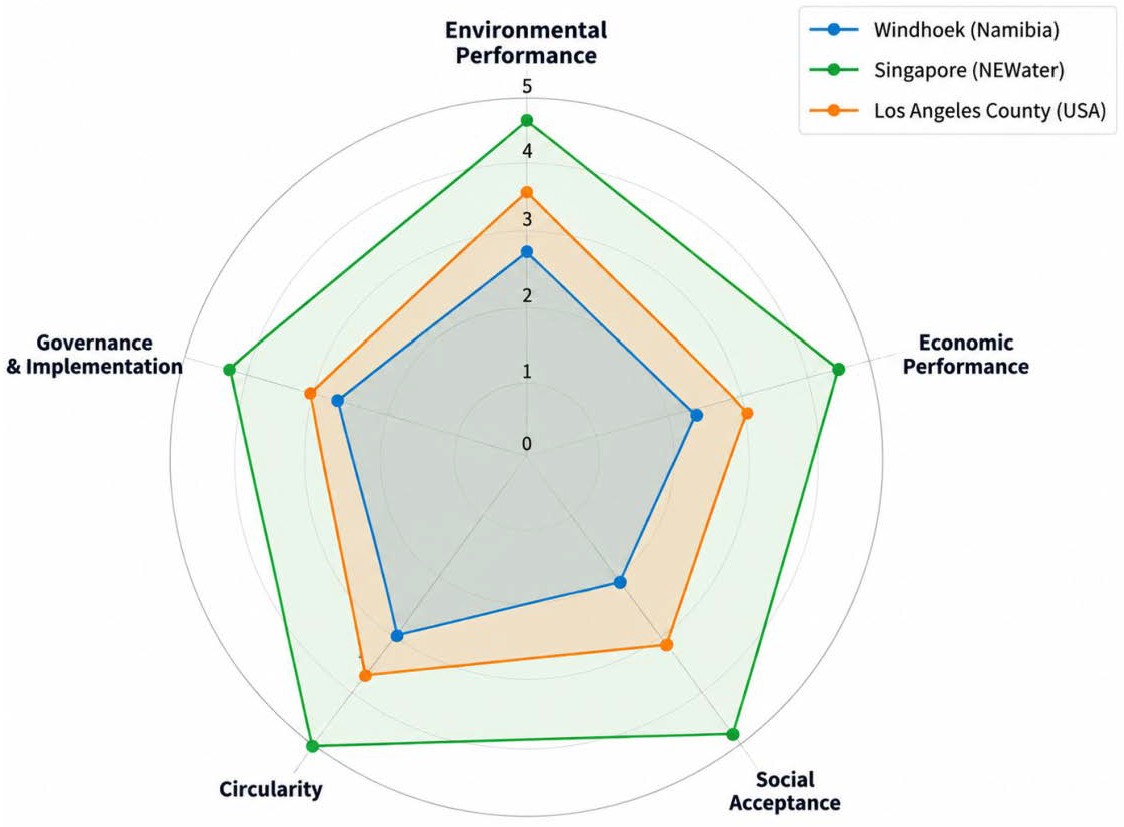
Figure 2 provides an at-a-glance visual comparison of the three cases across the five RENEW-LCSA sustainability dimensions, drawn from the Step 5 coding in
Table 7.
As
Figure 2 illustrates, Singapore achieves the most balanced performance profile, reflecting its mature governance, sustained public engagement, and progressive grid decarbonisation. Windhoek’s asymmetric radar—strong on water security but weak on social acceptance and carbon intensity—reflects the ongoing public trust challenges and diesel-dependent energy grid documented in Lahnsteiner et al. [
31]. Los Angeles occupies an intermediate position, with high uncertainty in the social dimension reflecting variable public acceptance across reuse types. The figure reinforces that no context delivers uniformly high performance across all five dimensions simultaneously—validating the RENEW-LCSA Framework’s emphasis on transparent trade-off analysis (Step 5) over assumptions of universal sustainability benefits. This radar visualization is a heuristic analytical tool; practitioners should construct their own based on site-specific data. A transparent scoring rubric with explicit criteria and weights for each radar dimension is provided in the Case Scoring Protocol subsection. Both authors independently scored each case using this rubric; discrepancies were resolved by consensus.
9. Limitations and Conclusions
9.1. Limitations
This review has several inherent limitations. First, the synthesis is selective and interpretive rather than exhaustive: from over 300 initial references, approximately 25 peer-reviewed studies were retained, prioritizing pattern identification over comprehensive coverage. Second, geographical coverage remains biased toward Europe, Israel, China, and a small number of Global South countries. Third,
Table 4 and
Table 5 present heuristic syntheses from qualitatively coded literature; directional assessments are indicative rather than statistically derived, and cross-study comparisons should be interpreted with caution given differences in system boundaries and functional units. Fourth, the RENEW-LCSA Framework is conceptual and not yet empirically validated; the worked absolute sustainability example (
Section 6.2) uses plausible hypothetical parameters that practitioners must calibrate to site-specific data. Fifth, the search was restricted to English and Portuguese, which may have excluded relevant studies in other languages (e.g., Spanish, French, Chinese, Arabic); this language bias is acknowledged as a limitation of the synthesis. Lastly, a degree of advocacy bias cannot be ruled out given the authors’ prior work in LCSA and water reuse; we have mitigated this through a consistently critical tone and explicit acknowledgement of trade-offs, context dependency, and remaining uncertainties.
9.2. Conclusions
The conclusions distinguish between (a) evidence-derived findings supported by the 25 retained peer-reviewed studies, and (b) the RENEW-LCSA Framework and its components, which represent the authors’ proposed methodological innovation and have not yet been empirically validated in prospective real-world applications.
This review has demonstrated that the sustainability of urban municipal wastewater reuse is conditional rather than inherent, shaped by system scale, energy source, reuse type, and local governance capacity. Revisiting the three guiding research questions:
What works? Cluster-scale and hybrid decentralized systems—particularly those combining greywater treatment with rainwater harvesting—consistently deliver better environmental and economic performance under favourable conditions (low-carbon energy, short transport distances, appropriate reuse-type matching). Non-potable urban reuse provides the most consistent benefits, with hybrid systems achieving up to 4.8× higher overall sustainability scores and cluster-scale systems reducing GWP by 15–40% versus conventional alternatives. Benefits are conditional, not guaranteed, and highly context-dependent.
What are the pitfalls? The field remains constrained by weak pillar integration, an underdeveloped social dimension, inconsistent system boundaries, over-reliance on relative rather than absolute sustainability, strong geographical bias toward high-income countries, predominantly static analyses, and the frequent conflation of evidence categories when NBSs are discussed. Many optimistic conclusions in the literature are highly context-dependent and may not hold under real-world conditions.
How can we strengthen LCSA practice? The proposed RENEW-LCSA Framework addresses these gaps through six operational steps: SDG-aligned scoping, harmonized functional units and cradle-to-cradle boundaries, parallel three-pillar assessment using reuse-type-specific S-LCA indicators (
Table 3), explicit absolute sustainability assessment against WSI and local carbon budgets (
Section 6.2), transparent MCDA aggregation with stakeholder-derived weights, and context-specific policy translation.
Figure 1 and
Figure 2 illustrate the framework’s structure and its comparative application across three paradigmatic cases. The accompanying agenda in
Section 8 sets concrete short- to long-term priorities with explicit responsible actors and an ISO standardization pathway.
The transition to safe, equitable, and genuinely circular urban water management cannot rely on optimistic assumptions. Researchers must adopt more rigorous, reuse-type-specific, and context-sensitive approaches including absolute sustainability assessment. Policymakers and utilities should embed LCSA requirements in planning, permitting, and financing processes, adapted to their regulatory context (EU Regulation 2020/741 or equivalent national frameworks). International standardization bodies should consider the RENEW-LCSA Framework’s S-LCA indicators and absolute sustainability methodology for incorporation into future ISO guidance. Only through such coordinated efforts can LCSA fulfil its potential as a powerful decision-support tool for achieving SDG 6 and advancing sustainable urban water management worldwide.