Article

University–Industry Collaboration and Sustainable Organizational Resilience: The Mediating Role of Relationship Quality and the Moderating Effect of Institutional Alignment

by
Evrim Gemici
Business Administration, Faculty of Economics, Administrative and Social Sciences, Istanbul Health and Technology University, Istanbul 34445, Türkiye
Sustainability 2026, 18(14), 7052; https://doi.org/10.3390/su18147052
Submission received: 26 May 2026 / Revised: 2 July 2026 / Accepted: 7 July 2026 / Published: 10 July 2026
(This article belongs to the Section Economic and Business Aspects of Sustainability)

Abstract

As firms increasingly rely on external partnerships to navigate complex and volatile environments, understanding the distinct pathways through which such collaborations may relate to resilience has become essential. However, despite growing interest in interorganizational collaboration, limited research has explicitly examined how university–industry collaboration relates to organizational resilience, as prior studies have predominantly focused on innovation and performance-related consequences. This study examines whether university–industry collaboration is associated with organizational resilience, conceptualized as a micro-foundation of sustainable development. Specifically, it investigates the mediating role of relationship quality within the university–industry collaboration and resilience nexus and the moderating effect of institutional alignment. The proposed research model and hypotheses were tested using survey data collected from 220 firms operating in science and technology parks (STPs) in Türkiye through partial least squares structural equation modeling (PLS-SEM) with SmartPLS. The results indicate that university-industry collaboration exhibits a significant association with organizational resilience, which is also linked to long-term sustainability at both firm and systemic levels. Furthermore, relationship quality serves as a distinct mediating pathway linking university–industry collaboration with organizational resilience. In addition, institutional alignment shows a significant moderating role in this relationship, such that higher alignment between university and industry partners strengthens the collaboration–resilience linkage. This study offers an early empirical attempt to conceptualize university–industry collaboration as an external driver associated with organizational resilience while delineating the distinct processes of mediation and moderation. Drawing on institutional theory and relational coordination theory, the findings elucidate the distinct institutional and relational pathways through which collaborations are associated with organizational resilience. For managers and policymakers, the study underscores the importance of investing in high-quality relationships and institutional congruence to better leverage collaborative partnerships for sustainable organizational resilience.

1. Introduction

As businesses navigate an environment shaped by AI integration, hybrid work models, shifting consumer behavior, and persistent geopolitical and economic volatility, organizational resilience has evolved into a strategic imperative for maintaining performance and achieving post-crisis growth [1,2]. In such contexts, resilience also appears to play a critical role in supporting firms to sustain long-term viability and adapt to ongoing environmental and socio-economic challenges. Resilient organizations are often characterized by their capacity to withstand external shocks, realign in response to unexpected disruptions, and tend to rebuild with greater agility and robustness [3,4,5]. Scholars have examined a wide range of antecedents of resilience, most of which have been approached from an intra-organizational perspective, such as HRM practices and policies [6], corporate social responsibility [3], social capital, human capital and cognition [7], digital orientation and digital capability [8,9], dynamic capabilities [10], ambidexterity [11], resource configurations [12,13], technology management capabilities [14], digital transformation [15,16] and digital innovation [17]. However, the role of interorganizational collaborations, particularly those between universities and industry, in relation to organizational resilience, remains underexplored. At the same time, prior research (e.g., Abu Sa’a and Asplund [18], Rossi et al. [19], Secundo et al. [20]) has explored how university–industry collaboration (UIC) contributes to various organizational outcomes such as innovation performance, knowledge creation and technological development, yet empirical evidence linking UIC directly to organizational resilience is still limited. Building on this gap, this study argues that UIC is well-positioned to relate to how firms access external knowledge bases, advanced research expertise, and complementary resources [21,22]. In this context, UIC is associated with the development of key organizational capacities, including adaptive capacity, innovative potential, resource flexibility, absorptive capacity, and dynamic capabilities [23,24], which are, in turn, linked to organizational resilience and sustainable organizational performance.
Despite the growing recognition of UIC as a valuable source of knowledge and innovation [18,25,26], empirical insight into the relationship between such collaborations and organizational resilience remains scarce. Existing studies have primarily focused on outcomes such as innovation, including patents, new products, technology commercialization [27,28,29], knowledge transfer [30,31] or firm performance [32,33,34], while the resilience as an outcome has received less systematic attention. Nevertheless, even with relatively few studies, scholars have begun to investigate how networks and collaborations are associated with organizational resilience. For instance, Lin and Fan [16] show that supply chain integration is positively associated with organizational resilience, while Garrido-Moreno et al. [1] highlight the value-creating role of collaboration networks. Ozanne et al. [35] demonstrate in the context of SMEs that business networks can help organizations become more robust, and that internal supply chain mechanisms are positively linked to organizational resilience. The study of Waerder et al. [36] finds that cross-sector partnerships between nonprofit and for-profit organizations play a significant role in supporting organizational resilience by providing stability as well as access to resources, expertise, and emotional support. Similarly, Dimitriadis [37] and Wulandhari et al. [38] show that external and well-structured relational ties support resilience by facilitating knowledge exchange and access to complementary resources. Collectively, these studies suggest that interorganizational networks are associated with organizational resilience by potentially helping organizations to effectively absorb shocks and adapt to turbulent environmental conditions.
Importantly, not all interorganizational collaborations play an equal role in their association with resilience [39]. Compared to other forms of collaboration such as supply chain partnerships, strategic alliances, or transactional inter-firm exchanges, UICs are characterized by a distinct knowledge architecture and institutional logic [40]. UICs typically bridge actors with fundamentally different knowledge bases (scientific/research-oriented and application/industry-oriented), thereby creating a higher degree of epistemic distance and learning potential [18,41]. This structural feature reflects as an ideal alignment for firms in accessing exploratory and frontier knowledge that is less likely to emerge from efficiency-oriented collaborations [19]. Moreover, UICs are often embedded in long-term, trust-based and institutionally supported frameworks, which are expected to facilitate sustained learning, experimentation, and capability development rather than short-term transactional gains [39,42]. These characteristics suggest that UIC may be particularly conducive to building adaptive capacity and absorptive capabilities, which are central to organizational resilience [39]. In contrast, other forms of interorganizational collaboration tend to emphasize coordination efficiency, cost reduction, or supply continuity, which may support operational stability but do not necessarily align with the deeper transformational learning required for resilience under radical uncertainty [43,44].
Moreover, little is known about the institutional and relational conditions that influence how collaborations relate to organizational resilience. Addressing this gap is essential, as not all collaborations are associated with equal benefits [45]; rather, their effectiveness may be shaped by the degree of institutional alignment between partners and the quality of relationships developed in the process.
Building on this gap, the present study examines not only whether UIC is associated with organizational resilience, but also the relational pathway through which this association can be interpreted and the institutional conditions under which this association may differ. Drawing on institutional theory, institutional alignment refers to the degree of compatibility across the regulative, normative, and cognitive structures of collaborating organizations [46]. More specifically, regulative alignment reflects consistency in formal rules, policies, and contractual arrangements; normative alignment captures shared values and expectations regarding appropriate conduct; and cognitive alignment denotes common understandings and interpretive frameworks [47]. When these institutional elements are aligned, partners face fewer conflicts, coordination tends to be more efficient, and mutual expectations are clearer [48]. Such alignment is related to the stability and effectiveness of UIC and is thus associated with collaborative efforts that align with organizational resilience [39,49,50]. Recognizing that alignment alone may not fully account for variance in organizational resilience, relational coordination theory [51] is incorporated to illustrate how relationship quality serves as a separate mediating pathway within this conceptual framework. High levels of trust, communication, and mutual respect are associated with more effective collaboration, potentially supporting firms in leveraging knowledge exchange that aligns with organizational resilience [40,52,53]. By combining these theoretical perspectives, this study offers a nuanced understanding of the conditions and distinct pathways through which UIC is associated with organizational resilience and positions UIC as a potentially important capability supporting organizational adaptation.
Crucially, while established frameworks like dynamic capabilities, absorptive capacity, and interorganizational network theories suggest that external partnerships generally correspond with resilience [16,35,54], these perspectives operate under the implicit assumption of institutional homogeneity, meaning they primarily explain firm-to-firm partnerships with shared commercial configurations [55]. Consequently, they offer limited insight into how relational processes work when organizations face significant differences in their knowledge bases and strategic priorities. This study suggests that the relationship between UIC and resilience hinges on the partners’ capacity to manage and reconcile their organizational difference. By examining relationship quality and institutional alignment together, this study does not merely replicate or confirm these theories in a new setting. Instead, it illustrates how diverse and asymmetric knowledge bases can align with a sustainable capacity for adaptation through structured relational dynamics.
This work offers several distinct contributions that refine current theoretical boundaries. First, it extends the organizational resilience literature by broadening the focus from internal firm resources or typical supply chain partnership to UIC. This study illustrates that UIC serves as a distinctive platform where accessing diverse, exploratory knowledge aligns with long-term organizational adaptation under uncertainty. Second, it advances interorganizational network and dynamic capability theories by exploring their boundary conditions. Rather than merely confirming that networks and capabilities go hand in hand, this study demonstrates how these qualities are jointly built across different institutional backgrounds. It shows that the mere existence of a partnership is insufficient; instead, resilience is closely linked to the relational quality that helps partners manage their differences. Third, by drawing simultaneously on institutional theory and relational coordination theory, this study moves beyond examining isolated variables to examine how structural conditions (institutional alignment) and behavioral dynamics (relationship quality) jointly contextualize and clarify the UIC–resilience association. This approach offers a clearer, context-specific explanation of how asymmetric partnerships navigate their organizational differences alongside resilience manifestations. Finally, the empirical analysis offers valuable insights for managers and policymakers seeking to design and support collaborations. It shifts the focus beyond routine innovation outcomes to show how collaborative arrangements co-exist with long-term organizational resilience and sustainable development.
The subsequent sections of the paper are organized as follows. First, the relevant literature on organizational resilience, UIC, and institutional and relational perspectives is reviewed. Next, the conceptual framework and hypotheses are presented, followed by the research methodology and empirical results. The paper concludes with a discussion of the findings, their implications, and directions for future research.

2. Theoretical Background: An Institutional Perspective with Relational Coordination Insights

Organizational resilience is increasingly recognized as a dynamic, multi-level capability that enables firms to anticipate, absorb, adapt to, and recover from disruptions, with recent research emphasizing its role as both a process and an outcome [56,57,58,59]. Theoretically, resilience has been associated with the dynamic capabilities framework [60], which highlights firms’ abilities to sense, seize, and transform in response to adverse conditions [10,57,61]. In Barney’s [62] formulation of the resource-based view, resilience is rooted in the strategic reconfiguration of valuable, rare, inimitable, and non-substitutable resources [63]. Complementarily, scholars (e.g., Do et al. [12], He et al. [15], Kim et al. [64], Li and Lin [8]) have highlighted internal organizational mechanisms that are expected to facilitate adaptive responses and the reconfiguration of resources during periods of disruption, thereby potentially supporting firms’ long-term viability.
Yet, despite the predominance of this inward-looking perspective, external antecedents of resilience have received comparatively limited scholarly attention. Interorganizational collaborations, in particular, constitute a theoretically salient but underexplored dimension. From the vantage point of institutional theory [65], collaborations not only can provide access to complementary assets and novel knowledge but are also associated with organizational resilience by supporting the development of adaptive routines, the buffering of environmental turbulence, and the maintenance of legitimacy and continuity under conditions of uncertainty [66]. In this context, networks serve as a framework for organizations to share knowledge and produce ideas effectively and efficiently [39,61]. Indeed, some authors (e.g., Aliasghar et al. [54], Bawa et al. [67]) highlight that firms increasingly rely on external sources to access technological knowledge for product and process innovation. Such innovations derived from external technological knowledge are expected to support organizational resilience by potentially allowing firms to reconfigure their offerings and operations in response to environmental shocks [68]. Moreover, relational perspectives illuminate the significance of high-quality, trust-based, and mutually reinforcing relationships in supporting collective adaptability, as demonstrated in recent research by Jubault Krasnopevtseva et al. [59] and You and Williams [66]. Accordingly, collaborations transcend mere transactional exchanges and may be understood through institutional and relational pathways that are associated with organizational resilience and comprehensive adaptation [69].
UIC has traditionally been examined in relation to outcomes such as new product development [24], patent generation [70], technology commercialization [71], knowledge acquisition and absorption [21], innovation outcomes [19,29,72], competitive advantage [73], network expansion [18], improved firm performance [39], market share growth [73] and funding opportunities [74]. Through access to frontier research, scientific expertise, and knowledge-intensive human capital, these collaborations are often associated with an expansion of firms’ knowledge integration capability and innovative potential [75], thereby potentially reinforcing firms’ ability to absorb shocks and adapt to disruptive conditions. For example, academic partnerships have been found to be positively linked to a firm’s potential absorptive capacity, especially by providing access to advanced research and highly skilled personnel [76,77]. Concurrently, UIC may serve as a mechanism that facilitates knowledge spillovers and the integration of scientific expertise, which is often related to a strengthened ability to recognize and exploit new technological opportunities [29]. The presence of specialized human capital such as R&D personnel and highly educated professionals further appears to support the firm’s capacity to leverage external knowledge [78]. Additionally, the quality of relationships and repeated collaborations with universities are linked to higher absorptive capacity and improved innovation performance [72,79]. Despite the considerable insights provided by prior research and the well-established focus on UIC, their link to organizational resilience remains underexplored. This study proposes that collaborations with universities may serve as a critical facilitator of organizational resilience by providing access to diverse knowledge pools [21], enabling the utilization of technical expertise embedded in university partners [71], supporting adaptive problem-solving approaches [73], and facilitating flexible innovation pathways that may help firms navigate disruptions. Conceptualizing UIC as a potential contributor to organizational resilience shifts the literature from a narrow focus on performance outcomes to a broader exploration of the strategic contribution of external partnerships to build resilient organizations and sustain long-term organizational performance. However, a notable limitation within the established frameworks is the implicit assumption of institutional homogeneity, wherein partnerships are primarily evaluated under shared commercial configurations [55]. Consequently, conventional perspectives offer limited insight into relational dynamics when networks are characterized by significant asymmetries in knowledge bases and strategic priorities. In the context of UIC, resilience is therefore better understood not as an inherent property of network proximity, but as a capacity characterized by the effective management and reconciliation of these institutional differences across boundaries.
Institutional theory emphasizes regulative, normative, and cognitive structures that shape organizational behavior [47]. Within this theoretical framework, institutional alignment in UIC captures the extent to which the institutional environments of firms and universities are compatible. A high level of alignment is anticipated to facilitate smoother collaboration by potentially reducing uncertainty, lowering transaction costs, and enhancing the mutual understanding of expectations and practices [13]. Conversely, Ingstrup et al. [48] indicate that misalignment can create barriers such as conflicting priorities, bureaucratic hurdles, or divergent logics that may undermine collaborative effectiveness. In this regard, institutional alignment may shape firms’ ability to harness and integrate knowledge and resources from universities, which in turn may condition the extent to which UIC is associated with organizational resilience. In this institutional context, resilience is also closely related to the development of a sustainable organizational identity. As highlighted by Chomać-Pierzecka [80], modern organizations develop a resilient and sustainable identity through the integration and balancing of economic goals with broader social and environmental considerations. Within university–industry networks, institutional alignment may reduce operational friction while simultaneously fostering the emergence of shared value systems that support responsible and sustainable growth under conditions of environmental volatility [22]. Accordingly, institutional alignment is theoretically posited to moderate the relationship between UIC and organizational resilience by shaping the interpretation, transfer, and application of knowledge across institutional boundaries, and by subsequently influencing the effectiveness of collaborative efforts in building adaptive and sustainable organizational capabilities.
While institutional alignment provides a necessary foundation for collaboration, it is insufficient on its own. Drawing on relational coordination theory, the effectiveness of UIC further depends on the quality of relationships between partners, which systematically supports effective knowledge exchange and coordination. In this context, relationship quality is reflected in trust, mutual respect, shared goals, and high-quality communication [66,81]. Strong relational ties support timely and accurate information sharing, foster mutual problem-solving, and may reduce the risk of opportunistic behavior [82]. Within the realm of UIC, relationship quality is conceptualized as a pivotal mediating pathway linking collaborative potential with organizational resilience. Accordingly, high-quality relationships with university partners may enable firms to respond more effectively to disruptions by reflecting continuous knowledge exchange, joint sense-making, and collaborative experimentation [66], thereby supporting firms in not only absorbing shocks but also reconfiguring their knowledge base in ways that sustain long-term resilience.
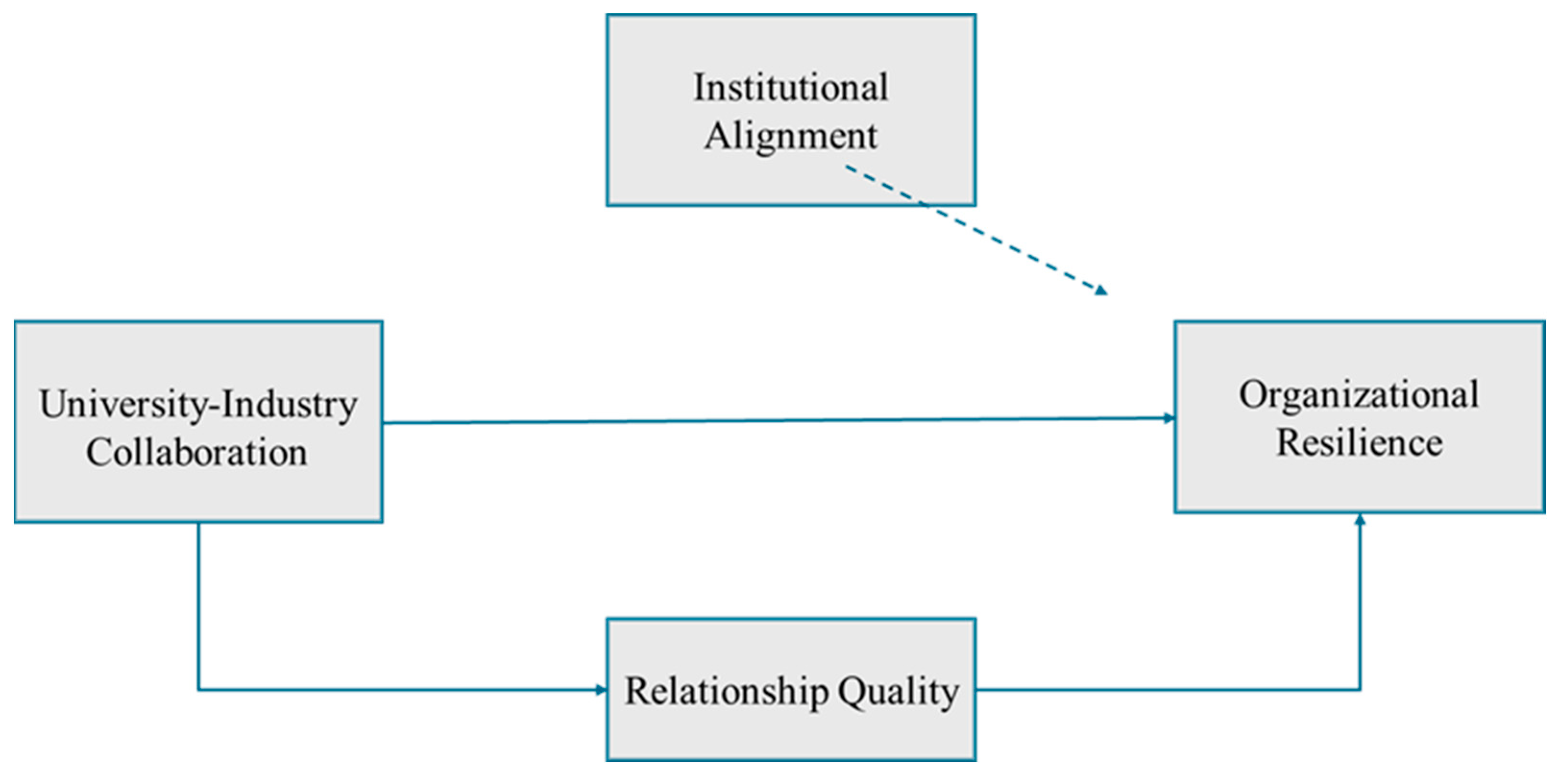
Bringing together these perspectives, this study posits that UIC may be associated with organizational resilience, yet the nature of this relationship is contingent upon distinct pathways. Specifically, institutional alignment operates as a moderating condition that shapes the structural context of collaborations, thereby shaping the strength of the association between UIC and organizational resilience. At the same time, relationship quality acts as a mediating pathway linking the relational attributes of UIC with organizational resilience, ultimately supporting comprehensive organizational adaptation.
Figure 1 presents the conceptual framework of the study. It delineates the direct, mediating, and moderating relationships proposed in this research and visually represents how UIC is associated with organizational resilience through relationship quality and institutional alignment.

3. Hypotheses Development

3.1. University–Industry Collaboration and Organizational Resilience

UIC constitutes a form of structured partnership between universities and businesses that facilitates the reciprocal exchange of knowledge, resources, and expertise [20,22]. Such collaborations encompass a wide range of activities, including joint research initiatives, technology transfer, student internships, and co-created innovation projects [18]. Universities are hubs of frontier knowledge, advanced methodologies, and emerging technologies [34]. Through such collaborations, firms can embed novel scientific knowledge into their processes, thus enriching their knowledge base and supporting their capacity to respond to dynamic environments [49]. By integrating scientific knowledge in this way, firms are likely to become better equipped to develop new products, processes, and services, and to respond creatively and resiliently to market or technological disruptions [83]. For example, Yang et al. [84] state that science-based collaborations are positively linked to innovation resilience by enabling more effective resource allocation, greater operational efficiency, and heightened adaptability. Beyond their immediate role in addressing technical or operational disruptions (e.g., supply chain issues, technological failures), this multifaceted role suggests that UIC is concurrently associated with anticipatory capabilities, potentially supporting firms in anticipating potential shocks, absorbing their impact, and adapting strategically, thereby contributing to comprehensive forms of organizational resilience [21].
UIC tends to nurture a knowledge-rich ecosystem characterized by ongoing learning and interactive knowledge exchange, while aligning with firms’ dynamic capabilities to identify emerging opportunities, capitalize on them, and reconfigure their resource base [21]. Building on these capabilities, exposure to interdisciplinary academic expertise further allows firms to recombine resources in innovative ways, a pathway that appears to be particularly critical for resilience in volatile contexts [39,85]. Beyond this, university–firm dynamics encompass access to talent, including students and researchers, while collaborative arrangements such as joint laboratories, shared infrastructure, or co-funded projects are closely associated with resource redundancy and flexibility [29]. Collectively, these processes are expected to relate to firms’ comprehensive adaptive capacity.
Extending beyond operational and capability-based gains, partnerships with universities may align with a firm’s legitimacy among regulators, investors, and the broader society, rendering such partnerships particularly valuable in times of crisis, when trust and credibility serve as critical assets [86]. Moreover, such alliances often connect firms with governmental programs and funding mechanisms, providing institutional resources that contribute to organizational resilience [72]. Accordingly, the following hypothesis is formulated:
Hypothesis 1. 
UIC is positively associated with organizational resilience.

3.2. The Mediating Role of Relationship Quality

According to relational coordination theory, effective coordination and organizational performance are enhanced through the presence of high-quality relationships grounded in shared goals, shared knowledge, and mutual respect [51]. In the context of UIC, relationship quality represents a critical pathway that is expected to be associated with how firms effectively access, assimilate, and utilize external knowledge and resources. High-quality relational ties are closely associated with timely and accurate communication, lower levels of misunderstanding, mitigated opportunistic behavior, and collective problem-solving [87]. While UIC is often recognized for providing access to complementary assets, technologies, and innovative ideas [25], the mere establishment of these partnerships does not necessarily guarantee the development of organizational resilience. Instead, it is the quality of the relational exchanges, including trust, frequent and accurate communication, and shared understanding, that influences whether knowledge and resources are effectively integrated into organizational processes [51]. Firms that cultivate high-quality relationships with academic partners tend to be better positioned to anticipate and absorb shocks, adapt operational routines, and maintain legitimacy under uncertainty [59]. Recent studies (e.g., Fayezi and Ghaderi [87], Zamboni et al. [88]) have consistently highlighted relationship quality as a key mediating pathway linking collaboration with organizational resilience. Empirical findings further support this mediation effect. For instance, studies (e.g., Carmeli et al. [89], Kim [82]) suggest that high-quality relationships within collaborations tend to be positively associated with organizational resilience, reflecting a shared capacity to navigate environmental shocks. Collectively, these insights indicate that relationship quality serves as a central mediating pathway linking UIC to organizational resilience, potentially relating to comprehensive organizational resilience under conditions of uncertainty. Accordingly, the following hypothesis is formulated:
Hypothesis 2. 
Relationship quality mediates the relationship between UIC and organizational resilience.

3.3. The Moderating Role of Institutional Alignment

When universities and industry partners are not only formally engaged, but also strongly aligned strategically and operationally through shared similar goals, values, norms, and working cultures, the collaborative relationship tends to evolve beyond a mere transactional link [49,90]. Instead, it is expected to evolve into a synergy in which knowledge transfer flows more smoothly, joint innovation may be more readily coordinated, and both parties are likely to be better equipped to respond to uncertainty and change [91]. Such a high level of alignment supports coordination dynamics, potentially reduces coordination cost, and facilitates the effective integration of their objectives [92]. As a result, firms and universities tend to be better positioned to internalize, adapt, and build on new knowledge [93]. The UIC literature (e.g., Alpaydin [94], Mahdad et al. [95]) highlights that bridging the structural divide between academia and industry is often facilitated not only on geographic proximity, but also on other forms of “proximity,” including institutional, cognitive, organizational, and social dimensions. In particular, institutional proximity, defined as the degree of similarity or compatibility in norms, rules, and values, is expected to help mitigate friction and foster smoother and more effective collaboration [94,96]. Conversely, when the level of alignment between universities and industry partners is low, for example, due to cultural mismatch, bureaucratic obstacles, incompatible incentives, or conflicting institutional logics, the potential resilience gains from UIC may not fully materialize. Knowledge may remain tacit and underutilized; trust may be weak; coordination may be inefficient; and the collaborations may remain superficial or even fail [23,97]. Under such conditions, even high-potential collaborations may fail to be reflected in meaningful adaptive capacity. Accordingly, institutional alignment is conceptualized not only alongside the direct links of UIC but also acts as a key moderating condition that is hypothesized to moderate its association with organizational resilience. Accordingly, the following hypothesis is formulated:
Hypothesis 3. 
Institutional alignment moderates the relationship between UIC and organizational resilience.

4. Research Method

4.1. Sample and Data Collection

Türkiye has become a major hub for industrial innovation and technology-driven growth, supported not only by its strong manufacturing sectors but also by a rapidly expanding network of science and technology parks (STPs). Currently, Türkiye hosts over 100 STPs across the country, with more than 12,000 resident firms engaged in R&D, engineering, software development, and university–industry collaborative projects [98]. These STPs serve as strategic interfaces between universities and industry by clustering research institutions, technology-oriented firms, and incubator programs in the same physical and organizational space, supporting the development of a dynamic and increasingly sustainable innovation ecosystem. Within this ecosystem, firms are embedded in dense networks of knowledge exchange, institutional support and collaborative interaction. STPs enable firms to access academic expertise, specialized laboratories, talent pools, and government R&D incentives, while providing universities with real-world problem settings, commercialization opportunities, and industry partnerships [99]. Because STPs are explicitly designed to stimulate UIC, they provide a highly suitable and relevant sampling frame for examining the role of institutional alignment and relationship quality in relation to organizational resilience. For this study, Turkish STPs offer an ideal setting in which UIC dynamics are active, observable, and systematically supported, ensuring that the collected data meaningfully captures the mechanisms connecting collaboration and resilience.
Given the strategic role of STPs in fostering innovation-driven growth in Türkiye, firms located in the country’s five largest STPs were selected as the target population for this study, as these STPs host the highest number of resident firms. These STPs collectively host nearly 2700 firms, representing the most concentrated clusters of R&D-intensive, technology-oriented enterprises in Türkiye. Firms operating in these environments typically rely on advanced technological capabilities, specialized human capital, and sustained collaboration with universities, making them highly relevant for examining UIC and organizational resilience.
A survey-based methodology was utilized for data collection. From the population of 2700 firms, 1300 firms with 10 or more employees were identified, as firms of this size are more likely to possess formalized structures, dedicated managerial roles, and sufficient organizational capacity to initiate and sustain UIC activities [23,100]. In line with the principles of the systematic sampling method [101], the survey was distributed by selecting one firm out of every two, which corresponds to 650 firms. To mitigate common method bias and ensure robust representation, best-practice guidelines were followed by assuring respondents of strict anonymity and emphasizing that responses would not be disclosed to third parties or linked to individual firms or products, following the recommendations of Podsakoff et al. [102].
Following these procedures, a total of 253 complete questionnaires were obtained. After screening for completeness and consistency, 220 valid responses remained and were used for the analysis. These responses represent a diverse set of firms across different technological domains, allowing for rigorous examination of the proposed research model. Table 1 presents the descriptive analysis of the demographic characteristics of the respondents.

4.2. Measurement Scales

Following a comprehensive review of the extant literature, established and previously validated measurement scales aligned with the study’s aims were identified and employed in the construction of the survey instrument. To ensure conceptual and semantic equivalence across languages, the back-translation procedure recommended by Brislin [103] was employed. The original questionnaire was prepared in English and translated into Turkish by a faculty member in the Department of English Language and Literature. Following the initial translation, a bilingual expert in management and organization performed a back-translation of the Turkish version into English to ensure consistency with the original text. The resulting version was later assessed and approved by a second academic in the field.
Once the Turkish draft of the questionnaire was developed with input from domain experts, it was reviewed by two scholars and two practitioners. Their feedback led to revisions of several items to improve clarity. A pilot test was then conducted with three senior managers representing two distinct industries to assess face validity and complete the final version.
All constructs were measured on a five-point Likert scale, with response options ranging from 1 (“strongly disagree”) to 5 (“strongly agree”).
University–industry collaboration: UIC was measured using a three-item scale adapted from prior studies on interorganizational collaboration and learning relationships, following the operationalization by Gretsch et al. [104]. The scale is designed to reflect the extent to which firms maintain close, open, and satisfactory relationships with universities and external research institutions.
Organizational resilience: Organizational resilience was measured using a multi-dimensional scale adapted from Kantur [105]. The scale aims to capture an organization’s capacity to withstand, respond to, and adapt to challenging and adverse conditions through three core dimensions: robustness, agility, and integrity. Within this framework, robustness is conceptualized as the organization’s capacity to remain firm, persistent, and solution-oriented in the face of difficulties; agility refers to the organization’s capacity to act quickly and develop alternative responses; and integrity represents the extent to which employees act cohesively and as a unified whole.
Institutional Alignment: Institutional alignment was measured using a multi-dimensional scale adapted from prior studies (Bjerregaard [106], Das and Teng [107], Pache and Santos [108]) on strategic alignment and institutional fit in UIC. This scale encompasses multiple dimensions of institutional alignment, including the congruence of strategic objectives, alignment of expectations, consistency in decision-making and governance structures, and the compatibility of institutional rules, values, and working norms.
Relationship Quality: Relationship quality was measured using a multi-dimensional scale adapted from Moshtari [109]. The scale reflects the overall quality of interorganizational relationships through three key dimensions: collaborative performance, mutual trust, and reciprocal commitment. Collaborative performance reflects the extent to which the objectives of the collaboration are achieved and the overall satisfaction of the partners with the collaboration outcomes. Mutual trust refers to the degree to which both organizations perceive each other as reliable, fair, and non-opportunistic. Reciprocal commitment represents the extent to which both organizations value the relationship and are willing to devote the necessary effort and resources to sustain it.
In the current study, the approach proposed by Armstrong and Overton [110] was employed to assess potential nonresponse bias. In particular, independent samples t-tests were conducted to compare respondent and non-respondent groups in terms of firm size and firm age. The findings indicated no statistically significant disparities between the two groups, showing that nonresponse bias is unlikely to pose a concern in the present study.
Harman’s one-factor test was conducted using IBM SPSS Statistics 25 to assess the presence of common method bias. The unrotated principal component analysis revealed multiple factors with eigenvalues greater than 1, explaining a cumulative variance of 70.97%. The first factor accounted for only 31.94% of the total variance, which is well below the recommended threshold of 50%. Therefore, the results indicate that common method variance is unlikely to be a serious concern in this study.

5. Data Analysis and Results

5.1. Statistical Technique

The proposed model was assessed using partial least squares structural equation modeling (PLS-SEM) implemented in SmartPLS. The PLS-SEM procedure involves a two-stage analytical process comprising the assessment of the measurement model and the evaluation of the structural model [111]. The initial phase involved the assessment of the reliability and validity of the measurement instruments. In the second stage, the hypothesized structural pathways among the constructs were assessed through structural model analysis, and the research hypotheses were subsequently tested.

5.2. Evaluation of the Reflective Measurement Model

The reflective measurement model was evaluated for internal consistency (Cronbach’s alpha and composite reliability), convergent validity (indicator loadings and average variance extracted), and discriminant validity, in accordance with Hair et al. [111].
Internal consistency of the measurement items was evaluated using Cronbach’s alpha. The alpha values varied from 0.863 to 0.930, surpassing the acceptable cut-off value of 0.70 suggested by Nunnally [112], thereby supporting the reliability of the measures. Composite reliability (CR) ranges between 0 and 1, with values above 0.70 considered acceptable [111]; however, values above 0.95 are not recommended, as they may indicate redundancy among indicators and suggest that the items are measuring the same aspect of the construct rather than capturing its full domain. In the present study, CR values ranged from 0.916 to 0.942, demonstrating satisfactory reliability (Table 2).
Standardized item loadings and average variance extracted (AVE) were analyzed to assess convergent validity. Such validity is generally supported when all loadings are above the recommended threshold of 0.70 and AVE values surpass 0.50, as suggested by Fornell and Larcker [113] and Hair et al. [114].
In line with established PLS-SEM guidelines, indicators exhibiting low factor loadings were eliminated to ensure convergent validity. Consequently, RQ1, RQ5 (relationship quality) and OR9 (organizational resilience) were removed from the measurement model. The remaining indicators demonstrated adequate convergent validity, appropriately reflecting the underlying constructs (Table 2 and Table 3).
Discriminant validity indicates the degree to which a construct is empirically differentiated from other constructs. In accordance with Fornell and Larcker [113], discriminant validity was assessed by examining the shared variance among constructs through comparisons between the square roots of AVE values and inter-construct correlations. The results in Table 4 demonstrate that the square roots of AVE values (bolded) exceeded the corresponding correlation coefficients, thereby supporting adequate discriminant validity. Furthermore, the HTMT criterion was applied, and all values were below the 0.90 cut-off proposed by Henseler et al. [115], as shown in Table 5.
Overall, the results reported in Table 2, Table 3, Table 4 and Table 5 indicate that all constructs demonstrate satisfactory reliability and validity, confirming the adequacy of the measurement model.

5.3. Evaluation of the Structural Model

Evaluation of the structural model involved analyzing collinearity, R2 values (coefficient of determination), Q2 values (predictive relevance), and the statistical significance of the paths between variables. The variance inflation factor (VIF) assesses the collinearity of variables inside a structural model. A VIF value of more than 5 or less than 0.2 suggests the possibility of a multicollinearity problem [114]. VIF values for the variables in the structural model ranged between 1.000 and 1.524, suggesting that multicollinearity was not a concern (Table 6). The robustness of each structural path, as indicated by the R2 value for the dependent variable, reflects the quality of a model. The explanatory power of the structural model is assessed using R2, which shows how much variance in the endogenous variable is explained by the exogenous variable. An R2 of 0.75 is considered substantial, 0.50 moderate, and 0.25 weak. R2 values of ≥0.90 are typically indicative of overfitting [111]. The results in Table 6 indicate that the R2 values meet the specified criteria. Furthermore, predictive relevance was assessed using the PLSpredict procedure in SmartPLS 4.1.1.6. A Q2_predict value greater than zero indicates that the model exhibits predictive relevance. The results indicated that all endogenous constructs exhibited positive Q2_predict values, confirming the model’s predictive power.
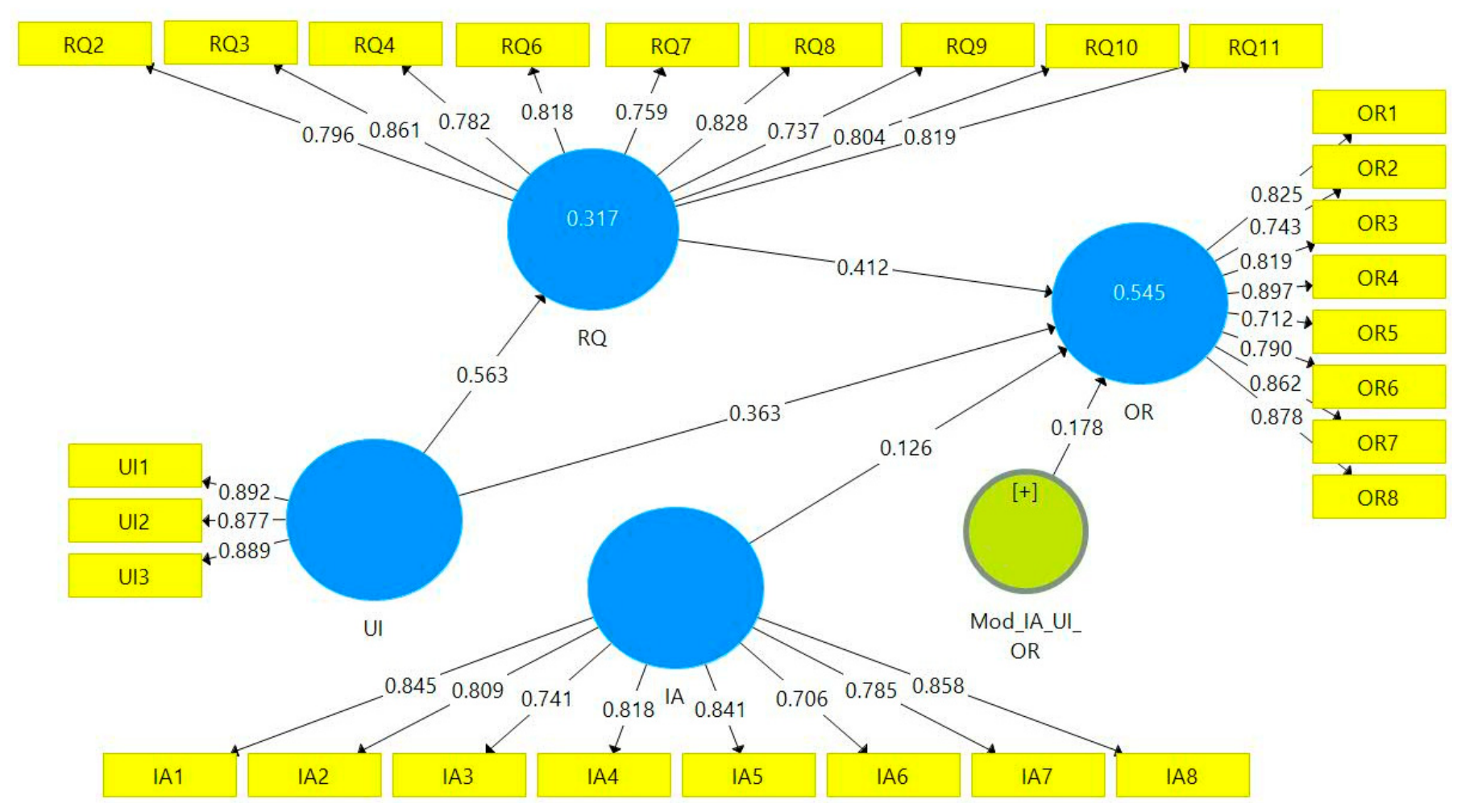
To further assess model fit, the standardized root mean square residual (SRMR) and the normed fit index (NFI) were examined. SRMR values of less than 0.08 are desirable and generally regarded as evidence of the good fit of the model, while values of less than 0.10 are normally expected [116]. The SRMR value achieved in this study was 0.051, signifying an acceptable model fit. The NFI value was 0.893, which is close to the recommended threshold of 0.90, indicating an acceptable model fit. To evaluate the structural framework, the hypotheses were examined to determine the significance of hypothesized pathways. The bootstrapping method employed 5000 sub-samples to ascertain the significance of the structural path coefficients. The results indicate that UI exhibits a positive and significant path coefficient in relation to OR (β = 0.363, t = 5.235, p < 0.000), supporting H1. Additionally, UI is positively associated with RQ (β = 0.563, t = 12.459, p < 0.000) and RQ, in turn, shows a positive and statistically significant relationship with OR (β = 0.412, t = 8.050, p < 0.000) (Table 6). Figure 2 illustrates the SmartPLS model and the results of the PLS algorithm.
Table 6 presents the results of the structural model and hypothesis testing, while Figure 2 provides a visual representation of the estimated pathways using the PLS algorithm. Together, these results offer a comprehensive overview of the empirical associations among the constructs.

5.4. Mediation Analysis

To assess the mediating effect of RQ on the UI-OR relationship, a mediation analysis was conducted. The findings revealed that UI exhibited a significant total effect in relation to OR (β = 0.583, t = 11.929, p < 0.001). When RQ was included in the model, the direct effect of UI on OR decreased but remained statistically significant (β = 0.363, t = 5.235, p < 0.001). The results also showed a significant indirect pathway of UI on OR through RQ (β = 0.247, t = 6.247, p < 0.001), supporting the mediating role of RQ. Since the direct association remained significant after the inclusion of the mediator, the findings indicate that RQ partially mediates the relationship between UI and OR. Therefore, H2 is supported (Table 7). These findings suggest that relationship quality constitutes an important mediating pathway linking which UIC is associated with organizational resilience.

5.5. Moderation Analysis

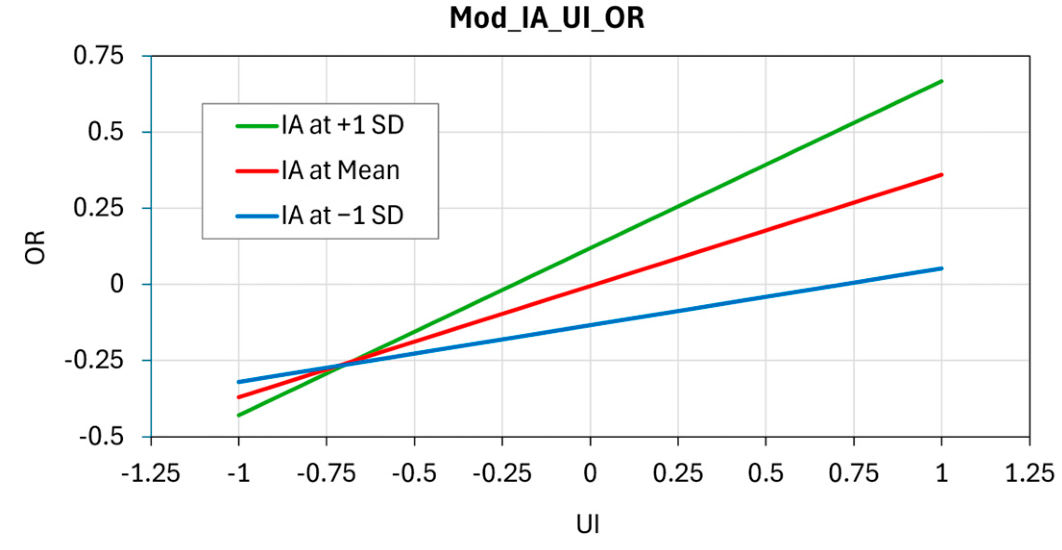
The moderating effect was tested using the product indicator approach in SmartPLS (Figure 2). The interaction term between UI and IA was created and included in the structural model. Bootstrapping results indicated that the interaction term exhibited a significant association with OR (β = 0.178, t = 4.058, p < 0.001), suggesting that IA significantly moderates the relationship between UI and OR. Thus, H3 was supported. Slope analysis revealed that the positive association between UIC and OR becomes more pronounced at higher levels of IA, whereas the relationship weakens at lower levels of the moderator (Figure 3). These findings suggest that the association between UIC and organizational resilience varies depending on the level of institutional alignment. Specifically, higher levels of institutional alignment appear to strengthen this linkage, highlighting the importance of institutional compatibility in collaborative settings.

6. Discussion and Conclusions

The primary contribution of this study lies in deepening the understanding of the distinct pathways through which UIC is associated with organizational resilience by examining the underlying relational and institutional dynamics embedded in collaborative engagements. This inquiry becomes particularly salient in an era of continuous and overlapping disruptions, where more than 90% of organizations have experienced at least one major disruption in recent years [117], a reality that underscores the strategic relevance of UIC as a potential conduit for organizational resilience and long-term adaptability. Importantly, this study moves beyond the dominant innovation- and performance-centric view of UIC by repositioning it as a potential correlate of organizational resilience. In doing so, it offers a novel conceptual shift in the literature, where resilience, rather than immediate innovation output, is treated as a primary strategic attribute linked to collaborative engagement. This reframing represents the core innovative contribution of the study.
Grounded primarily in institutional theory and complemented by relational coordination theory, a conceptual model was developed and tested in which relationship quality was positioned as a mediating pathway, while institutional alignment operated as a contextual moderator that conditions the association between UIC and organizational resilience. This perspective is particularly relevant given that collaboration alone does not necessarily guarantee resilience [45]; rather, its effectiveness appears to depend on the quality of relationships and the degree of institutional alignment between partners. The findings provide empirical support for the conceptual framework formulated in this study, indicating that UIC exhibits a positive association with organizational resilience both directly and indirectly through relationship quality. Moreover, the results suggest that the positive association between collaboration and organizational resilience is stronger under conditions of high institutional alignment between university and industry partners. These findings are theoretically and practically significant, as they illuminate the relational pathways and institutional conditions through which collaborative partnerships align with resilience and more enduring forms of organizational capability in firms. The implications of these results for theory, practice, and future research are discussed in the following sections. In evaluating these dynamics, it is worth noting that the empirical context of this study, STPs in Türkiye, represents a highly innovation-intensive environment characterized by strong university proximity and collaboration propensity. This specific institutional backdrop may have amplified the observed relationships, suggesting that the strength of these pathways could vary in less knowledge-intensive settings or firms operating in different institutional environments.
It is also essential to clarify that these empirical findings do not merely replicate or confirm established tenets of dynamic capabilities or network theories within a new sample. While traditional applications of these frameworks assume institutional homogeneity [55], typically examining partnerships between commercial firms, the UIC context introduces a structural asymmetry between academic and commercial objectives [118]. Therefore, the observed statistical significance indicates that the nexus between collaboration and resilience is not an automatic attribute of network membership. Instead, it illustrates how structured relational configurations align with the management of deep institutional differences, offering a bounded and context-specific perspective under radical uncertainty.

6.1. Theoretical and Practical Implications

One of the key implications of the present findings is that UIC emerges as a significant factor linked to organizational resilience. While resilience literature (e.g., Li and Lin [8], Georgescu et al. [6], Prayag et al. [10], Wang and Sun [17]) has predominantly focused on internal organizational antecedents, considerably less attention has been paid to the role of external sources of resilience. This inward-looking tendency has led resilience to be conceptualized mainly as an internally anchored capacity, underestimating the extent to which firms rely on external knowledge sources and interorganizational relationships to cope with, and adapt to disruptions. By empirically demonstrating that UIC exhibits a meaningful association with organizational resilience, the present study challenges this dominant perspective (e.g., Kim [82], Liu et al. [9], Zhou et al. [69]) and extends resilience research beyond firm boundaries. In doing so, it highlights that organizational resilience is not solely related to internal resources and routines but can be substantially co-developed through sustained collaboration with external partners such as universities, thereby contributing to comprehensive and adaptive forms of organizational capability. Although recent research (e.g., Lin and Fan [16], Ozanne et al. [35]) has highlighted the role of networks and collaborative relationships in supporting firms’ resilience, most of these studies have focused primarily on supply chain resilience. Addressing this limitation, the present study contributes to the literature by shifting attention to UIC and examining how partnerships with universities may relate to organizational resilience. This focus is particularly important because universities constitute unique knowledge partners that provide access to frontier scientific knowledge, advanced problem-solving capabilities, a diverse talent pool, and innovation-oriented support [14]. By illuminating how these resources are positioned alongside greater adaptive capacity, the study advances current understanding of the distinct pathways through which collaborative relationships correspond with a firm’s capacity to cope with uncertainty and navigate disruptive environments.
Second, the findings suggest that institutional alignment is reflected in the positive relationship between UIC and organizational resilience by functioning as a key moderating condition. From an institutional theory perspective, institutional alignment in UIC refers to the degree of compatibility between the institutional environments of universities and firms. Prior conceptual work by Alpaydin [94] suggests that alignment in institutional expectations and practices is closely associated with collective adaptability and resilience potential in interorganizational settings. Similarly, studies in related domains (e.g., Andersson et al. [119], Wu et al. [120]) indicate that resilience-related outcomes are often contextualized by institutional alignment, particularly when institutional contexts are congruent. In the context of university–industry partnerships, prior research (e.g., Nsanzumuhire and Groot [121]) has also emphasized the importance of aligning institutional structures and expectations to support effective collaboration. Building on this perspective, the present study contributes to the literature by empirically demonstrating that institutional alignment acts as a boundary condition for the effectiveness of UIC in relation to organizational resilience. Specifically, when universities and industry actors operate within more aligned institutional frameworks characterized by shared norms, compatible accountability structures, and coordinated governance arrangements, the positive association between collaboration and resilience becomes more pronounced. In such contexts, organizations operating within congruent regulatory, normative, and cognitive environments are better positioned to collectively interpret external demands, coordinate responses, and integrate complementary knowledge and resources across organizational boundaries. Although the moderating effect of institutional alignment is statistically significant (β = 0.178), its practical contribution to the model’s explanatory power appears to be relatively limited, indicating a supportive rather than a dominant role within the UIC–organizational resilience interface. This relatively small but statistically significant moderating effect provides a critical theoretical nuance. It suggests that while institutional alignment establishes a supportive context for collaborative inputs, it is not a primary correlate of resilience on its own but rather functions as a boundary condition. This finding indicates that external networks do not operate in a vacuum; their alignment with organizational adaptation is closely bound to the structural compatibility between the separate institutional frameworks of the partners. In theoretical terms, this magnitude (β = 0.178) clarifies that institutional alignment is not structurally synonymous with resilience. Instead, its role reflects a baseline of reduced operational friction, providing a structural foundation that co-exists with mitigated friction and allows distinct organizational profiles to correspond synergistically during periods of environmental shock. Such collaborative conditions are consonant with organizations’ capacity to adapt to disruptions and sustain functioning under uncertainty, thereby aligning with more sustained organizational resilience, as conceptually suggested by prior research (e.g., Burnard et al. [122], Duchek [57], Tasic et al. [123]).
Third, drawing on relational coordination theory, this study finds that relationship quality operates as a mediating pathway linking UIC with organizational resilience. Prior research (e.g., Bolton et al. [51] and Prayag et al. [10]) suggests that UIC does not automatically correspond with organizational resilience unless relational pathways support how partners jointly interpret, recombine, and apply external knowledge, particularly when collaboration involves actors with distinct organizational logics such as universities and firms. While the literature, predominantly within the supply chain resilience domain, has acknowledged the importance of relational dynamics, relationship quality has rarely been examined as a comprehensive mediating construct. Instead, previous research has tended to focus on isolated relational dimensions, such as trust [124], innovation capability [125] or supply chain collaboration [120], each considered separately as pathways associated with organizational resilience. By contrast, this study conceptualizes relationship quality as a multidimensional construct and highlights its mediating role within the distinct pathways connecting collaboration with organizational resilience. In this sense, collaborative performance, mutual trust, and reciprocal commitment jointly constitute the relational infrastructure linking UIC with organizational resilience. The findings regarding this mediating pathway are theoretically intuitive for several reasons. As noted by Wit-de Vries et al. [31], high-quality relationships, characterized by trust, mutual respect, frequent communication, and shared goals tend to align with the effective exchange and integration of knowledge between universities and firms. From this perspective, the value of UIC for organizational resilience lies in the extent to which relationship quality corresponds with the mobilization and internalization of knowledge across organizational boundaries. Li et al. [126] further argue that strong relationship quality is associated with improved coordination under conditions of uncertainty, as it tracks lower opportunism and transaction costs, which in turn co-exists with a firm’s capacity firms in responding more flexibly to environmental shocks. Accordingly, the findings indicate that relationship quality exhibits a meaningful alignment with the capacity of firms engaged in UIC to coordinate actions and adapt more effectively when facing unexpected disruptions. Empirical studies in interorganizational collaboration (e.g., Aunger et al. [127], Zhang [124]) have similarly shown that trust-based and well-coordinated relationships act as key conduits in collaborative arrangements. Building on this stream of research, the present study extends these insights by highlighting the importance of relationship quality in the context of university–industry relationships and by explaining how such relational dynamics underpin organizational resilience. Consequently, the prominent role of relationship quality demonstrated here underlines that the structural existence of a partnership is insufficient for resilience. By treating relationship quality as a comprehensive mediating pathway, this study illustrates that the capacity to navigate environmental uncertainty is closely linked with the continuous co-construction of mutual trust and shared norms, reflecting key relational processes.
This study yields a number of significant practical implications for managers and business professionals. First, the results underscore that merely joining a university–industry network or establishing a formal partnership is not automatically associated with organizational resilience. Reflecting the inherent asymmetry between academic and commercial objectives, resilience is more closely linked to high-quality, structured relational configurations (grounded in mutual trust, commitment and frequent communication) to bridge these institutional divides rather than relying solely on network proximity. Second, the results suggest that collaboration supported by strong relationship quality is associated with more cost-efficient and sustainable improvement processes, offering an alternative to strict reliance on costly, resource-intensive trial-and-error approaches through the integration of academic knowledge and analytical capabilities. Third, university partners provide an external and independent perspective that holds the potential to assist firms in detecting problems tied to organizational inertia and ‘business blindness’ at an earlier stage. This independent viewpoint can create opportunities to question entrenched routines and dominant assumptions, potentially reflecting more responsible and sustainability-oriented decision-making. Finally, when institutional alignment between universities and industry is high, these collaborative benefits tend to be further optimized, as shared norms and expectations enable smoother coordination, reduce operational friction and allow for more effective translation of knowledge into practice. In practical terms, this underscores the tangible value of proactive alignment within STPs. In knowledge-intensive clusters, compatible administrative norms and expectations between universities and firms provide a pre-established common language. During unexpected disruptions, this compatibility serves as a vital operational buffer, keeping managerial timelines free from bureaucratic gridlock, legal ambiguities, or misaligned procedures. For STP managers, this means that formal governance alignment and shared accountability act as a strategic cushion during crises, ensuring that institutional boundaries do not become operational barriers during rapid collaborative pivots. Accordingly, practitioners should view UIC not merely as an innovation tool, but as a strategic avenue potentially linked to organizational resilience and more robust, enduring development trajectories in increasingly uncertain environments. In this regard, building long-term organizational resilience through such collaborative networks is inherently tied to the formation of a sustainable organizational identity. As demonstrated by Chomać-Pierzecka [80], contemporary organizations cultivate a sustainable identity by successfully integrating and balancing their economic objectives with social and environmental challenges. Consequently, a high degree of institutional alignment within UIC corresponds with both knowledge conversion and a shared commitment to responsible growth. This alignment helps anchor external collaborative inputs within an enduring structural framework, acting as an operational cushion that buffers the firm against multi-dimensional environmental shocks [128].

6.2. Limitations and Future Developments

Although this work contributes to theory and practice in multiple ways, it has several limitations that also provide directions for future research. First, this study contributes to the emerging understanding of UIC as an external factor linked to organizational resilience. While this focus offers valuable insights, it necessarily narrows the range of external influences considered. Moreover, UIC was operationalized using a relatively parsimonious three-item scale. Although consistent with prior research, UIC is a complex and multidimensional construct encompassing activities such as joint research, technology transfer, licensing, consultancy, internships, and incubation programs. Consequently, the measurement approach adopted in this study may not fully capture the breadth and diversity of UIC practices. Regarding the interpretation of the findings, this simplified operationalization means that the observed pathways reflect a broad, macro-level alignment rather than the unique contributions of specific collaborative activities. In practice, the three indicators map onto general strategic partnerships, leaving the distinct roles of student internships, licensing, or business incubation unexamined. Therefore, the findings should be interpreted as a general baseline, as certain types of collaborative engagements might co-exist with organizational resilience more closely than others. Future research is encouraged to develop more comprehensive multidimensional measures of UIC and to examine additional external factors, such as network diversity and dependence on critical partners, that may contribute to organizational resilience and long-term sustainability. Second, the proposed model may not fully capture the specific relational channels and boundary conditions through which UIC is associated with organizational resilience. Although relationship quality was identified as a significant mediator, other mediating processes may also play important roles. Likewise, the strength of this relationship may vary across different organizational and environmental contexts, including environmental turbulence, absorptive capacity, prior collaboration experience, firm characteristics, and national or regional innovation systems. Future studies could enrich the model by examining alternative mediators, moderators, antecedents, and control variables to provide a more comprehensive understanding of both the discrete pathways and specific conditions that align UIC with organizational resilience. Regarding this, the omission of these control variables means that the reported relationships might appear stronger than they would be under controlled conditions. For instance, larger firms or those with high R&D intensity often have more internal resources and prior experience, which naturally co-exist with both higher collaboration and greater resilience. Without isolating these factors, the observed paths reflect a broad alignment rather than the unique role of UIC alone. Future research incorporating these structural characteristics is therefore necessary to clarify these dynamics more precisely. In addition, future research could draw on alternative theoretical perspectives, such as dynamic capabilities or social network theory, to offer complementary explanations of the observed relationships. Third, the empirical context is limited to firms operating in STPs in Türkiye. Firms in STPs typically operate under highly favorable conditions, benefitting from greater proximity to universities, stronger innovation orientation, and higher collaboration readiness than firms in other settings. Consequently, because of these privileged ecosystems, the findings should be generalized with caution to traditional SMEs, firms in less knowledge-intensive sectors, or organizations operating in different institutional settings. Replicating the study across diverse industries, firms of different sizes including SMEs and large enterprises, regions, and countries would strengthen the validity of the findings. Finally, the study is constrained by its cross-sectional design and reliance on a single respondent from each firm. These characteristics limit the ability to draw definitive causal inferences and raise the possibility of common method variance and response bias associated with self-reported measures. Although Harman’s single-factor test did not indicate substantial common method bias, this procedure has recognized limitations and cannot completely rule out its presence. Furthermore, alternative explanations, including reverse causality, remain plausible. For example, organizations with higher levels of resilience may be better positioned to establish and benefit from collaborative relationships with universities. Therefore, the reported relationships should be interpreted as associative rather than causal. Future research employing longitudinal and multi-source data would help address these limitations, validate the temporal dynamics of these relationships, and provide stronger evidence regarding the underlying relational and institutional pathways connecting UIC and organizational resilience.


Funding

This research received no external funding.

Institutional Review Board Statement

The study was conducted in accordance with the Declaration of Helsinki, and the protocol was approved by the Ethics Committee of Istanbul Health and Technology University (meeting no. 2026/08) on 22 April 2026. (Approval No.2026/08-03).

Informed Consent Statement

Informed consent was obtained from all subjects involved in the study.

Data Availability Statement

The data are available upon reasonable request. The data are not publicly available due to privacy considerations.

Conflicts of Interest

The author declares no conflicts of interest.

Abbreviations

The following abbreviations are used in this manuscript:
AVEAverage Variance Extracted
CRComposite Reliability
HRMHuman Resource Management
HTMTHeterotrait–Monotrait Ratio
IAInstitutional Alignment
NFINormed Fit Index
OROrganizational Resilience
PLS-SEMPartial least squares structural equation modeling
R&DResearch and Development
RQRelationship Quality
SPSSStatistical Package for the Social Sciences
SRMRStandardized Root Mean Square Residual
STPsScience and Technology Parks
UIC/UIUniversity–Industry Collaboration
VIFVariance Inflation Factor

References

  1. Garrido-Moreno, A.; Martín-Rojas, R.; García-Morales, V.J. The Key Role of Innovation and Organizational Resilience in Improving Business Performance: A Mixed-Methods Approach. Int. J. Inf. Manag. 2024, 77, 102777. [Google Scholar] [CrossRef]
  2. Buranapin, S.; Limphaibool, W.; Jariangprasert, N.; Chaiprasit, K. Enhancing Organizational Resilience through Mindful Organizing. Sustainability 2023, 15, 2681. [Google Scholar] [CrossRef]
  3. Rodríguez-Sánchez, A.; Guinot, J.; Chiva, R.; López-Cabrales, Á. How to Emerge Stronger: Antecedents and Consequences of Organizational Resilience. J. Manag. Organ. 2021, 27, 442–459. [Google Scholar] [CrossRef]
  4. Xie, X.; Wu, Y.; Palacios-Marqués, D.; Ribeiro-Navarrete, S. Business Networks and Organizational Resilience Capacity in the Digital Age during COVID-19: A Perspective Utilizing Organizational Information Processing Theory. Technol. Forecast. Soc. Change 2022, 177, 121548. [Google Scholar] [CrossRef]
  5. Li, Y.; Zhang, L.; Li, H. Organizational Resilience and Firm Performance: Short- and Long-Term Effects. Sustainability 2026, 18, 1731. [Google Scholar] [CrossRef]
  6. Georgescu, I.; Bocean, C.G.; Vărzaru, A.A.; Rotea, C.C.; Mangra, M.G.; Mangra, G.I. Enhancing Organizational Resilience: The Transformative Influence of Strategic Human Resource Management Practices and Organizational Culture. Sustainability 2024, 16, 4315. [Google Scholar] [CrossRef]
  7. Nikookar, E.; Yanadori, Y. Preparing Supply Chain for the next Disruption beyond COVID-19: Managerial Antecedents of Supply Chain Resilience. Int. J. Oper. Prod. Manag. 2022, 42, 59–90. [Google Scholar] [CrossRef]
  8. Li, X.; Lin, H. Platform Digitization Capability and Organizational Resilience: Examining the Roles of Resource Reconfiguration and Environmental Munificence. Bus. Process Manag. J. 2025, 31, 2732–2754. [Google Scholar] [CrossRef]
  9. Liu, Y.; Guo, M.; Han, Z.; Gavurova, B.; Bresciani, S.; Wang, T. Effects of Digital Orientation on Organizational Resilience: A Dynamic Capabilities Perspective. J. Manuf. Technol. Manag. 2024, 35, 268–290. [Google Scholar] [CrossRef]
  10. Prayag, G.; Jiang, Y.; Chowdhury, M.; Hossain, M.I.; Akter, N. Building Dynamic Capabilities and Organizational Resilience in Tourism Firms During COVID-19: A Staged Approach. J. Travel Res. 2024, 63, 713–740. [Google Scholar] [CrossRef]
  11. Iborra, M.; Safón, V.; Dolz, C. What Explains Resilience of SMEs? Ambidexterity Capability and Strategic Consistency. Long Range Plan. 2019, 53, 101947. [Google Scholar] [CrossRef]
  12. Do, H.; Budhwar, P.; Shipton, H.; Nguyen, H.-D.; Nguyen, B. Building Organizational Resilience, Innovation through Resource-Based Management Initiatives, Organizational Learning and Environmental Dynamism. J. Bus. Res. 2022, 141, 808–821. [Google Scholar] [CrossRef]
  13. Wang, D.; Wu, Y.; Zhang, K. Interplay of Resources and Institutions in Improving Organizational Resilience of Construction Projects: A Dynamic Perspective. Eng. Manag. J. 2023, 35, 346–357. [Google Scholar] [CrossRef]
  14. Gemici, E.; Alpkan, L.; Giglio, C. The Role of Technology Management Capabilities in Building Organizational Resilience Capacity and Product Innovativeness: Evidence From the Turkish ICT Industry. IEEE Trans. Eng. Manag. 2024, 71, 10846–10861. [Google Scholar] [CrossRef]
  15. He, Z.; Huang, H.; Choi, H.; Bilgihan, A. Building Organizational Resilience with Digital Transformation. J. Serv. Manag. 2023, 34, 147–171. [Google Scholar] [CrossRef]
  16. Lin, J.; Fan, Y. Seeking Sustainable Performance through Organizational Resilience: Examining the Role of Supply Chain Integration and Digital Technology Usage. Technol. Forecast. Soc. Change 2024, 198, 123026. [Google Scholar] [CrossRef]
  17. Wang, X.; Sun, M. Enhancing SMEs Resilience through Digital Innovation: A Stage-Based Analysis. Eur. J. Innov. Manag. 2025, 28, 2607–2629. [Google Scholar] [CrossRef]
  18. Abu Sa’a, E.; Asplund, F. Unpacking Social Capital in University–Industry Collaborations: Pathways to Cross-Industry Knowledge Sharing. Technovation 2025, 140, 103160. [Google Scholar] [CrossRef]
  19. Rossi, F.; De Silva, M.; Baines, N.; Rosli, A. Long-Term Innovation Outcomes of University–Industry Collaborations: The Role of ‘Bridging’ vs ‘Blurring’ Boundary-Spanning Practices. Br. J. Manag. 2022, 33, 478–501. [Google Scholar] [CrossRef]
  20. Secundo, G.; De Turi, I.; Garzoni, A.; Posa, M.; Barile, D. Unveiling Knowledge Practices and Microfoundations of Knowledge-Based Dynamic Capabilities for Digital Transformation in SMEs through Industry–University Perspective. J. Knowl. Manag. 2025, 30, 1237–1265. [Google Scholar] [CrossRef]
  21. Melnychuk, T.; Schultz, C.; Wirsich, A. The Effects of University–Industry Collaboration in Preclinical Research on Pharmaceutical Firms’ R&D Performance: Absorptive Capacity’s Role. J. Prod. Innov. Manag. 2021, 38, 355–378. [Google Scholar] [CrossRef]
  22. Gerdsri, N.; Manotungvorapun, N. Systemizing the Management of University-Industry Collaboration: Assessment and Roadmapping. IEEE Trans. Eng. Manag. 2022, 69, 245–261. [Google Scholar] [CrossRef]
  23. Isaeva, I.; Steinmo, M.; Rasmussen, E. How Firms Use Coordination Activities in University–Industry Collaboration: Adjusting to or Steering a Research Center? J. Technol. Transf. 2022, 47, 1308–1342. [Google Scholar] [CrossRef]
  24. Kobarg, S.; Stumpf-Wollersheim, J.; Welpe, I.M. University-Industry Collaborations and Product Innovation Performance: The Moderating Effects of Absorptive Capacity and Innovation Competencies. J. Technol. Transf. 2018, 43, 1696–1724. [Google Scholar] [CrossRef]
  25. El-Ferik, S.; Al-Naser, M. University Industry Collaboration: A Promising Trilateral Co-Innovation Approach. IEEE Access 2021, 9, 112761–112769. [Google Scholar] [CrossRef]
  26. Atta-Owusu, K.; Fitjar, R.D.; Rodríguez-Pose, A. What Drives University-Industry Collaboration? Research Excellence or Firm Collaboration Strategy? Technol. Forecast. Soc. Change 2021, 173, 121084. [Google Scholar] [CrossRef]
  27. Aldabbas, H.; Pinnington, A.; Lahrech, A. The Role of Innovation in the Relationship between University–Industry Collaboration in R&D and ISO 9001. Int. J. Innov. Sci. 2020, 12, 365–383. [Google Scholar] [CrossRef]
  28. Moon, H.; Mariadoss, B.J.; Johnson, J.L. Collaboration with Higher Education Institutions for Successful Firm Innovation. J. Bus. Res. 2019, 99, 534–541. [Google Scholar] [CrossRef]
  29. Messeni Petruzzelli, A.; Murgia, G. University–Industry Collaborations and International Knowledge Spillovers: A Joint-Patent Investigation. J. Technol. Transf. 2020, 45, 958–983. [Google Scholar] [CrossRef]
  30. Rybnicek, R.; Königsgruber, R. What Makes Industry–University Collaboration Succeed? A Systematic Review of the Literature. J. Bus. Econ. 2019, 89, 221–250. [Google Scholar] [CrossRef]
  31. de Wit-de Vries, E.; Dolfsma, W.A.; van der Windt, H.J.; Gerkema, M.P. Knowledge Transfer in University–Industry Research Partnerships: A Review. J. Technol. Transf. 2019, 44, 1236–1255. [Google Scholar] [CrossRef]
  32. Costa, J.; Neves, A.R.; Reis, J. Two Sides of the Same Coin. University-Industry Collaboration and Open Innovation as Enhancers of Firm Performance. Sustainability 2021, 13, 3866. [Google Scholar] [CrossRef]
  33. Lin, J.-Y.; Yang, C.-H. Heterogeneity in Industry–University R&D Collaboration and Firm Innovative Performance. Scientometrics 2020, 124, 1–25. [Google Scholar] [CrossRef]
  34. Tian, M.; Su, Y.; Yang, Z. University–Industry Collaboration and Firm Innovation: An Empirical Study of the Biopharmaceutical Industry. J. Technol. Transf. 2022, 47, 1488–1505. [Google Scholar] [CrossRef] [PubMed]
  35. Ozanne, L.K.; Chowdhury, M.; Prayag, G.; Mollenkopf, D.A. SMEs Navigating COVID-19: The Influence of Social Capital and Dynamic Capabilities on Organizational Resilience. Ind. Mark. Manag. 2022, 104, 116–135. [Google Scholar] [CrossRef]
  36. Waerder, R.; Thimmel, S.; Englert, B.; Helmig, B. The Role of Nonprofit–Private Collaboration for Nonprofits’ Organizational Resilience. Voluntas 2022, 33, 672–684. [Google Scholar] [CrossRef] [PubMed]
  37. Dimitriadis, S. Social Capital and Entrepreneur Resilience: Entrepreneur Performance during Violent Protests in Togo. Strateg. Manag. J. 2021, 42, 1993–2019. [Google Scholar] [CrossRef]
  38. Wulandhari, N.B.I.; Gölgeci, I.; Mishra, N.; Sivarajah, U.; Gupta, S. Exploring the Role of Social Capital Mechanisms in Cooperative Resilience. J. Bus. Res. 2022, 143, 375–386. [Google Scholar] [CrossRef]
  39. O’Dwyer, M.; Filieri, R.; O’Malley, L. Establishing Successful University–Industry Collaborations: Barriers and Enablers Deconstructed. J. Technol. Transf. 2023, 48, 900–931. [Google Scholar] [CrossRef]
  40. Umar, M.; Wilson, M. Supply Chain Resilience: Unleashing the Power of Collaboration in Disaster Management. Sustainability 2021, 13, 10573. [Google Scholar] [CrossRef]
  41. Steinmo, M.; Lauvås, T. The Role of Proximity Dimensions in University-Industry Collaboration: A Review and Research Agenda. In Handbook of Proximity Relations; Edward Elgar Publishing: Cheltenham, UK, 2022. [Google Scholar]
  42. Terán-Bustamante, A.; Martínez-Velasco, A.; López-Fernández, A.M. University–Industry Collaboration: A Sustainable Technology Transfer Model. Adm. Sci. 2021, 11, 142. [Google Scholar] [CrossRef]
  43. Mutambik, I. The Role of Strategic Partnerships and Digital Transformation in Enhancing Supply Chain Agility and Performance. Systems 2024, 12, 456. [Google Scholar] [CrossRef]
  44. Dzhengiz, T. A Literature Review of Inter-Organizational Sustainability Learning. Sustainability 2020, 12, 4876. [Google Scholar] [CrossRef]
  45. da Silva Poberschnigg, T.F.; Pimenta, M.L.; Hilletofth, P. How Can Cross-Functional Integration Support the Development of Resilience Capabilities? The Case of Collaboration in the Automotive Industry. Supply Chain Manag. Int. J. 2020, 25, 789–801. [Google Scholar] [CrossRef]
  46. Ghonim, M.A.; Khashaba, N.M.; Al-Najaar, H.M.; Khashan, M.A. Strategic Alignment and Its Impact on Decision Effectiveness: A Comprehensive Model. Int. J. Emerg. Mark. 2022, 17, 198–218. [Google Scholar] [CrossRef]
  47. Maurer, J.D.; Creek, S.A.; Bendickson, J.S.; McDowell, W.C.; Mahto, R.V. The Three Pillars’ Impact on Entrepreneurial Activity and Funding: A Country-Level Examination. J. Bus. Res. 2022, 142, 808–818. [Google Scholar] [CrossRef]
  48. Ingstrup, M.B.; Aarikka-Stenroos, L.; Adlin, N. When Institutional Logics Meet: Alignment and Misalignment in Collaboration between Academia and Practitioners. Ind. Mark. Manag. 2021, 92, 267–276. [Google Scholar] [CrossRef]
  49. Rossoni, A.L.; de Vasconcellos, E.P.G.; de Castilho Rossoni, R.L. Barriers and Facilitators of University-Industry Collaboration for Research, Development and Innovation: A Systematic Review. Manag. Rev. Q. 2024, 74, 1841–1877. [Google Scholar] [CrossRef]
  50. Clauss, T.; Kesting, T.; Franco, M. Innovation Generation through Formalisation and Fairness in University–Industry Collaboration. Technovation 2024, 134, 103049. [Google Scholar] [CrossRef]
  51. Bolton, R.; Logan, C.; Gittell, J.H. Revisiting Relational Coordination: A Systematic Review. J. Appl. Behav. Sci. 2021, 57, 290–322. [Google Scholar] [CrossRef]
  52. Bellini, E.; Piroli, G.; Pennacchio, L. Collaborative Know-How and Trust in University–Industry Collaborations: Empirical Evidence from ICT Firms. J. Technol. Transf. 2019, 44, 1939–1963. [Google Scholar] [CrossRef]
  53. Choi, O.-K.; Cho, E. The Mechanism of Trust Affecting Collaboration in Virtual Teams and the Moderating Roles of the Culture of Autonomy and Task Complexity. Comput. Hum. Behav. 2019, 91, 305–315. [Google Scholar] [CrossRef]
  54. Aliasghar, O.; Sadeghi, A.; Rose, E.L. Process Innovation in Small- and Medium-Sized Enterprises: The Critical Roles of External Knowledge Sourcing and Absorptive Capacity. J. Small Bus. Manag. 2023, 61, 1583–1610. [Google Scholar] [CrossRef]
  55. Vogel, R.; Göbel, M.; Grewe-Salfeld, M.; Herbert, B.; Matsuo, Y.; Weber, C. Cross-sector Partnerships: Mapping the Field and Advancing an Institutional Approach. Int. J. Manag. Rev. 2022, 24, 394–414. [Google Scholar] [CrossRef]
  56. Chen, R.; Xie, Y.; Liu, Y. Defining, Conceptualizing, and Measuring Organizational Resilience: A Multiple Case Study. Sustainability 2021, 13, 2517. [Google Scholar] [CrossRef]
  57. Duchek, S. Organizational Resilience: A Capability-Based Conceptualization. Bus. Res. 2020, 13, 215–246. [Google Scholar] [CrossRef]
  58. Hollands, L.; Haensse, L.; Lin-Hi, N. The How and Why of Organizational Resilience: A Mixed-Methods Study on Facilitators and Consequences of Organizational Resilience Throughout a Crisis. J. Appl. Behav. Sci. 2024, 60, 449–493. [Google Scholar] [CrossRef]
  59. Jubault Krasnopevtseva, N.; Thomas, C.; Kaminska, R. Organizing for Resilience in High-Risk Organizations: The Interplay between Managerial Coordination and Control in Resolving Stability/Flexibility Tensions in a Nuclear Power Plant. J. Bus. Res. 2025, 189, 115120. [Google Scholar] [CrossRef]
  60. Held, P.; Heubeck, T.; Meckl, R. Boosting SMEs’ Digital Transformation: The Role of Dynamic Capabilities in Cultivating Digital Leadership and Digital Culture. Rev. Manag. Sci. 2025, 20, 1687–1715. [Google Scholar] [CrossRef]
  61. Su, W.; Junge, S. Unlocking the Recipe for Organizational Resilience: A Review and Future Research Directions. Eur. Manag. J. 2023, 41, 1086–1105. [Google Scholar] [CrossRef]
  62. Barney, J. Firm Resources and Sustained Competitive Advantage. J. Manag. 1991, 17, 99–120. [Google Scholar] [CrossRef]
  63. D’Oria, L.; Crook, T.R.; Ketchen, D.J.; Sirmon, D.G.; Wright, M. The Evolution of Resource-Based Inquiry: A Review and Meta-Analytic Integration of the Strategic Resources–Actions–Performance Pathway. J. Manag. 2021, 47, 1383–1429. [Google Scholar] [CrossRef]
  64. Kim, J.; Lee, H.W.; Chung, G.H. Organizational Resilience: Leadership, Operational and Individual Responses to the COVID-19 Pandemic. J. Organ. Change Manag. 2024, 37, 92–115. [Google Scholar] [CrossRef]
  65. DiMaggio, P.; Powell, W. The Iron Cage Revisited: Institutionalized Isomorphism and Collective Rationality in Organizational Fields. Am. Sociol. Rev. 1983, 48, 147–160. [Google Scholar] [CrossRef]
  66. You, J.J.; Williams, C. Organizational Resilience and Interorganizational Relationships: An Exploration of Chinese Business Service Firms. Eur. Manag. Rev. 2023, 20, 591–609. [Google Scholar] [CrossRef]
  67. Bawa, S.; Benin, I.W.; Almudaihesh, A.S. Innovation Networks and Knowledge Diffusion Across Industries: An Empirical Study from an Emerging Economy. Sustainability 2024, 16, 11308. [Google Scholar] [CrossRef]
  68. Browder, R.E.; Dwyer, S.M.; Koch, H. Upgrading Adaptation: How Digital Transformation Promotes Organizational Resilience. Strateg. Entrep. J. 2024, 18, 128–164. [Google Scholar] [CrossRef]
  69. Zhou, J.; Hu, L.; Yu, Y.; Zhang, J.Z.; Zheng, L.J. Impacts of IT Capability and Supply Chain Collaboration on Supply Chain Resilience: Empirical Evidence from China in COVID-19 Pandemic. J. Enterp. Inf. Manag. 2024, 37, 777–803. [Google Scholar] [CrossRef]
  70. Wang, W.; Liu, Y. Does University-Industry Innovation Community Affect Firms’ Inventions? The Mediating Role of Technology Transfer. J. Technol. Transf. 2022, 47, 906–935. [Google Scholar] [CrossRef]
  71. Fernandes, G.; O’Sullivan, D. Project Management Practices in Major University-Industry R&D Collaboration Programs–a Case Study. J. Technol. Transf. 2023, 48, 361–391. [Google Scholar] [CrossRef] [PubMed]
  72. Østergaard, C.R.; Drejer, I. Keeping Together: Which Factors Characterise Persistent University–Industry Collaboration on Innovation? Technovation 2022, 111, 102389. [Google Scholar] [CrossRef]
  73. Bamford, D.; Reid, I.; Forrester, P.; Dehe, B.; Bamford, J.; Papalexi, M. An Empirical Investigation into UK University–Industry Collaboration: The Development of an Impact Framework. J. Technol. Transf. 2024, 49, 1411–1443. [Google Scholar] [CrossRef]
  74. Tseng, F.-C.; Huang, M.-H.; Chen, D.-Z. Factors of University–Industry Collaboration Affecting University Innovation Performance. J. Technol. Transf. 2020, 45, 560–577. [Google Scholar] [CrossRef]
  75. Audretsch, D.B.; Belitski, M. Knowledge Collaboration, Firm Productivity and Innovation: A Critical Assessment. J. Bus. Res. 2024, 172, 114412. [Google Scholar] [CrossRef]
  76. Sawada, N. How Academic and Business Collaborations Enhance Potential and Realized Absorptive Capacities: Evidence from Japanese Firms. Eur. J. Innov. Manag. 2025, 28, 4477–4516. [Google Scholar] [CrossRef]
  77. van Herk, R.P.D.; van Buul, V.J. Using Absorptive Capacity to Optimize Value Creation from University-Industry Partnerships. Res.-Technol. Manag. 2023, 66, 42–52. [Google Scholar] [CrossRef]
  78. Kato, M. Founders’ Human Capital and External Knowledge Sourcing: Exploring the Absorptive Capacity of Start-up Firms. Econ. Innov. New Technol. 2020, 29, 184–205. [Google Scholar] [CrossRef]
  79. Zhang, S.; Han, C.; Chen, C. Repeated Partnerships in University-industry Collaboration Portfolios and Firm Innovation Performance: Roles of Absorptive Capacity and Political Connections. R D Manag. 2022, 52, 838–853. [Google Scholar] [CrossRef]
  80. Chomać-Pierzecka, E. Identity of the Sustainable Organisation. Język. Religia. Tożsamość. 2025, 2, 291–303. [Google Scholar] [CrossRef]
  81. Bartel, C.A.; Rockmann, K. The Disease of Indifference: How Relational Systems Provide the Attentional Infrastructure for Organizational Resilience. Strateg. Organ. 2024, 22, 18–48. [Google Scholar] [CrossRef]
  82. Kim, Y. Building Organizational Resilience through Strategic Internal Communication and Organization–Employee Relationships. J. Appl. Commun. Res. 2021, 49, 589–608. [Google Scholar] [CrossRef]
  83. Lamperti, S.; Cavallo, A.; Sassanelli, C. Digital Servitization and Business Model Innovation in SMEs: A Model to Escape From Market Disruption. IEEE Trans. Eng. Manag. 2024, 71, 4619–4633. [Google Scholar] [CrossRef]
  84. Yang, J.; Zhang, J.; Zeng, D. Scientific Collaboration Networks and Firm Innovation: The Contingent Impact of a Dynamic Environment. Manag. Decis. 2022, 60, 278–296. [Google Scholar] [CrossRef]
  85. Heaton, S.; Siegel, D.S.; Teece, D.J. Universities and Innovation Ecosystems: A Dynamic Capabilities Perspective. Ind. Corp. Change 2019, 28, 921–939. [Google Scholar] [CrossRef]
  86. Añón Higón, D.; Vicente-Chirivella, Ó. University-to-Industry Knowledge Transfers and Firms’ Resilience during the Great Recession: Evidence for Spanish Firms. Ind. Innov. 2025, 32, 828–857. [Google Scholar] [CrossRef]
  87. Fayezi, S.; Ghaderi, H. What Are the Mechanisms through Which Inter-Organizational Relationships Contribute to Supply Chain Resilience? Asia Pac. J. Mark. Logist. 2022, 34, 159–174. [Google Scholar] [CrossRef]
  88. Zamboni, K.; Baker, U.; Tyagi, M.; Schellenberg, J.; Hill, Z.; Hanson, C. How and under What Circumstances Do Quality Improvement Collaboratives Lead to Better Outcomes? A Systematic Review. Implement. Sci. 2020, 15, 27. [Google Scholar] [CrossRef] [PubMed]
  89. Carmeli, A.; Levi, A.; Peccei, R. Resilience and Creative Problem-Solving Capacities in Project Teams: A Relational View. Int. J. Proj. Manag. 2021, 39, 546–556. [Google Scholar] [CrossRef]
  90. Oliver, A.L.; Montgomery, K.; Barda, S. The Multi-Level Process of Trust and Learning in University–Industry Innovation Collaborations. J. Technol. Transf. 2020, 45, 758–779. [Google Scholar] [CrossRef]
  91. Lee, H.; Miozzo, M. Beyond Complementarity and Substitutability? Understanding Relational Governance and Formal Contracts in University-Industry Collaborations for Innovation. Technovation 2024, 138, 103100. [Google Scholar] [CrossRef]
  92. Mayo, A.T.; Woolley, A.W.; John, L.; March, C.; Witchel, S.; Nowalk, A. Coordination in Dynamic Teams: Investigating a Learning–Productivity Trade-Off. Organ. Sci. 2025, 36, 967–992. [Google Scholar] [CrossRef]
  93. Al-Surmi, A.; Cao, G.; Duan, Y. The Impact of Aligning Business, IT, and Marketing Strategies on Firm Performance. Ind. Mark. Manag. 2020, 84, 39–49. [Google Scholar] [CrossRef]
  94. Alpaydin, U.A.R. University-Industry Collaborations (UICs): A Matter of Proximity Dimensions? Ph.D. Thesis, University of Stavanger, Stavanger, Norway, 2021. [Google Scholar]
  95. Mahdad, M.; Minh, T.T.; Bogers, M.L.A.M.; Piccaluga, A. Joint University-Industry Laboratories through the Lens of Proximity Dimensions: Moving beyond Geographical Proximity. Int. J. Innov. Sci. 2020, 12, 433–456. [Google Scholar] [CrossRef]
  96. Zhang, Y. Exploring Interfirm Collaboration Processes of Small- and Medium-Sized Enterprises: An Institutional Logics Perspective. Entrep. Reg. Dev. 2023, 35, 402–423. [Google Scholar] [CrossRef]
  97. Kleiner-Schaefer, T.; Schaefer, K.J. Barriers to University–Industry Collaboration in an Emerging Market: Firm-Level Evidence from Turkey. J. Technol. Transf. 2022, 47, 872–905. [Google Scholar] [CrossRef]
  98. Ministry of Industry and Technology. Available online: https://www.sanayi.gov.tr/arge-tasarim-merkezleri-ve-tgb (accessed on 14 February 2026).
  99. da Silva Martins, J.P.; Rodríguez-Gulías, M.J.; Rios-Rodríguez, R.; Rodeiro-Pazos, D. Do Science and Technology Parks Work as Drivers of Firm Innovation? Empirical Evidence From Portugal. Creat. Innov. Manag. 2025, 34, 721–739. [Google Scholar] [CrossRef]
  100. Gentile-Lüdecke, S.; Torres de Oliveira, R.; Paul, J. Does Organizational Structure Facilitate Inbound and Outbound Open Innovation in SMEs? Small Bus. Econ. 2020, 55, 1091–1112. [Google Scholar] [CrossRef]
  101. Babbie, E. The Practice of Social Research, 15th ed.; Cengage Learning: Belmont, CA, USA, 2021. [Google Scholar]
  102. Podsakoff, P.M.; MacKenzie, S.B.; Lee, J.-Y.; Podsakoff, N.P. Common Method Biases in Behavioral Research: A Critical Review of the Literature and Recommended Remedies. J. Appl. Psychol. 2003, 88, 879–903. [Google Scholar] [CrossRef] [PubMed]
  103. Brislin, R.W. Cross-Cultural Research Methods. In Environment and Culture; Springer: Boston, MA, USA, 1980; pp. 47–82. [Google Scholar]
  104. Gretsch, O.; Salzmann, E.C.; Kock, A. University-industry Collaboration and Front-end Success: The Moderating Effects of Innovativeness and Parallel Cross-firm Collaboration. R D Manag. 2019, 49, 835–849. [Google Scholar] [CrossRef]
  105. Kantur, D. Measuring Organizational Resilience: A Scale Development. Pressacademia 2015, 4, 456. [Google Scholar] [CrossRef]
  106. Bjerregaard, T. Industry and Academia in Convergence: Micro-Institutional Dimensions of R&D Collaboration. Technovation 2010, 30, 100–108. [Google Scholar] [CrossRef]
  107. Das, T.K.; Teng, B.-S. Instabilities of Strategic Alliances: An Internal Tensions Perspective. Organ. Sci. 2000, 11, 77–101. [Google Scholar] [CrossRef]
  108. Pache, A.-C.; Santos, F. Inside the Hybrid Organization: Selective Coupling as a Response to Competing Institutional Logics. Acad. Manag. J. 2013, 56, 972–1001. [Google Scholar] [CrossRef]
  109. Moshtari, M. Inter-Organizational Fit, Relationship Management Capability, and Collaborative Performance within a Humanitarian Setting. Prod. Oper. Manag. 2016, 25, 1542–1557. [Google Scholar] [CrossRef]
  110. Armstrong, J.S.; Overton, T.S. Estimating Nonresponse Bias in Mail Surveys. J. Mark. Res. 1977, 14, 396–402. [Google Scholar] [CrossRef]
  111. Hair, J.F.; Risher, J.J.; Sarstedt, M.; Ringle, C.M. When to Use and How to Report the Results of PLS-SEM. Eur. Bus. Rev. 2019, 31, 2–24. [Google Scholar] [CrossRef]
  112. Nunnally, J.C. An Overview of Psychological Measurement. In Clinical Diagnosis of Mental Disorders; Springer: Boston, MA, USA, 1978; pp. 97–146. [Google Scholar]
  113. Fornell, C.; Larcker, D.F. Evaluating Structural Equation Models with Unobservable Variables and Measurement Error. J. Mark. Res. 1981, 18, 39–50. [Google Scholar] [CrossRef]
  114. Hair, J.F.; Sarstedt, M.; Ringle, C.M.; Gudergan, S.P. Advanced Issues in Partial Least Squares Structural Equation Modeling; SAGE Publications: Thousand Oaks, CA, USA, 2017. [Google Scholar]
  115. Henseler, J.; Ringle, C.M.; Sarstedt, M. A New Criterion for Assessing Discriminant Validity in Variance-Based Structural Equation Modeling. J. Acad. Mark. Sci. 2015, 43, 115–135. [Google Scholar] [CrossRef]
  116. Garson, D. Partial Least Squares (PLS-SEM); Statistical Associates Publishing: Asheboro, NC, USA, 2016. [Google Scholar]
  117. Essuman, D.; Boso, N.; Annan, J. Operational Resilience, Disruption, and Efficiency: Conceptual and Empirical Analyses. Int. J. Prod. Econ. 2020, 229, 107762. [Google Scholar] [CrossRef] [PubMed]
  118. He, V.F.; von Krogh, G.; Sirén, C.; Gersdorf, T. Asymmetries between Partners and the Success of University-Industry Research Collaborations. Res. Policy 2021, 50, 104356. [Google Scholar] [CrossRef]
  119. Andersson, T.; Cäker, M.; Tengblad, S.; Wickelgren, M. Building Traits for Organizational Resilience through Balancing Organizational Structures. Scand. J. Manag. 2019, 35, 36–45. [Google Scholar] [CrossRef]
  120. Wu, Q.; Zhu, J.; Cheng, Y. The Effect of Cross-Organizational Governance on Supply Chain Resilience: A Mediating and Moderating Model. J. Purch. Supply Manag. 2023, 29, 100817. [Google Scholar] [CrossRef]
  121. Nsanzumuhire, S.U.; Groot, W. Context Perspective on University-Industry Collaboration Processes: A Systematic Review of Literature. J. Clean. Prod. 2020, 258, 120861. [Google Scholar] [CrossRef]
  122. Burnard, K.; Bhamra, R.; Tsinopoulos, C. Building Organizational Resilience: Four Configurations. IEEE Trans. Eng. Manag. 2018, 65, 351–362. [Google Scholar] [CrossRef]
  123. Tasic, J.; Amir, S.; Tan, J.; Khader, M. A Multilevel Framework to Enhance Organizational Resilience. J. Risk Res. 2020, 23, 713–738. [Google Scholar] [CrossRef]
  124. Zhang, Z. E-Commerce Logistics Performance and Resilience: The Influence of Inter-Organizational Trust and Organizational Flexibility. Technol. Soc. 2025, 81, 102777. [Google Scholar] [CrossRef]
  125. Haraldseid-Driftland, C.; Billett, S.; Guise, V.; Schibevaag, L.; Alsvik, J.G.; Fagerdal, B.; Lyng, H.B.; Wiig, S. The Role of Collaborative Learning in Resilience in Healthcare—A Thematic Qualitative Meta-Synthesis of Resilience Narratives. BMC Health Serv. Res. 2022, 22, 1091. [Google Scholar] [CrossRef] [PubMed]
  126. Li, S.; Zhou, Q.; Huo, B.; Zhao, X. Environmental Uncertainty, Relationship Commitment, and Information Sharing: The Social Exchange Theory and Transaction Cost Economics Perspectives. Int. J. Logist. Res. Appl. 2024, 27, 1363–1387. [Google Scholar] [CrossRef]
  127. Aunger, J.A.; Millar, R.; Greenhalgh, J. When Trust, Confidence, and Faith Collide: Refining a Realist Theory of How and Why Inter-Organisational Collaborations in Healthcare Work. BMC Health Serv. Res. 2021, 21, 602. [Google Scholar] [CrossRef] [PubMed]
  128. Kets de Vries, M.F.R.; Guillen, L.; Korotov, K. Organizational Culture, Leadership, Change, and Stress. In International Handbook of Work and Health Psychology; Faculty & Research Working Paper Series; John Wiley & Sons Ltd.: New York, NY, USA, 2009. [Google Scholar]
Figure 1. Conceptual Framework.
Sustainability 18 07052 g001
Figure 2. Model resolution by SmartPLS using the PLS algorithm.
Sustainability 18 07052 g002
Figure 3. Simple slope analysis of the moderating effect of institutional alignment.
Sustainability 18 07052 g003
Table 1. Demographic distribution of sample (N = 220).
Frequency (n)Percentage (%) Frequency (n)Percentage (%)Mean Values
Scope of Business OperationsFirm Age (years)220 11.4
Regional3114.09
National11250.91Department
International/Global7735Production3515.91
Industry Sector Accounting135.91
Food & Beverage73.18Research & Development (R&D)7534.09
Apparel & Textile52.27Finance219.55
Furniture31.36Sales & Marketing4620.91
Education125.45Human Resources104.55
Wood, Paper & Printing31.36Other209.08
Machinery, Equipment & Metal Products198.64
Chemicals, Petroleum & Rubber104.55Position/Title
Finance115Top Management4219.09
Pharmaceuticals & Medical Devices2210Middle Management7333.18
Automotive156.82Specialist8739.55
Transportation83.64Other188.18
Technology9543.18
Other104.55Age (by position)
Number of Employees Top Management4245.4
10–4912155Middle Management7337.2
50–2496830.91Specialist8728.7
250–499188.18Other1829.2
500 or more135.91Total Work Experience (years)
Gender Top Management4218.1
Female8237.27Middle Management7312.3
Male13862.73Specialist876.8
Education Level Other185.3
High School and below125.45Tenure in Current Organization (years)
Vocational School2812.73Top Management427.7
Bachelor’s Degree10849.09Middle Management735.4
Master’s Degree5826.36Specialist873.1
Doctorate (PhD)146.37Other182.3
Note. Percentages are based on the total sample size (N = 220). Mean values represent group averages for firm age, total work experience, and tenure in the current organization.
Table 2. Results for reflective measurement model.
VariablesItemsConvergent ValidityInternal Consistency Reliability
LoadingsAVECronbach’s AlphaCR
>0.70>0.50>0.70>0.70
University-Industry Collaboration (UI)UI10.8920.7840.8630.916
UI20.877
UI30.889
Relationship Quality (RQ)RQ20.7960.6420.9300.942
RQ30.861
RQ40.782
RQ60.818
RQ70.759
RQ80.828
RQ90.737
RQ100.804
RQ110.819
Organizational Resilience (OR)OR10.8250.6690.9280.942
OR20.743
OR30.819
OR40.897
OR50.712
OR60.790
OR70.862
OR80.878
Institutional Alignment (IA)IA10.8450.6430.9210.935
IA20.809
IA30.741
IA40.818
IA50.841
IA60.706
IA70.785
IA80.858
Table 3. Four-factor exploratory factor analysis: Loadings and cross-loadings.
University-Industry CollaborationOrganizational ResilienceRelationship QualityInstitutional Alignment
UI10.8920.5610.5310.139
UI20.8770.5260.4810.211
UI30.8890.5280.4810.149
OR10.4920.8250.5010.170
OR20.4040.7430.4120.163
OR30.5120.8190.5100.207
OR40.5670.8970.5830.243
OR50.4100.7120.4470.234
OR60.4160.7900.5250.116
OR70.5480.8620.5320.108
OR80.5890.8780.6040.171
RQ20.4850.5320.796−0.003
RQ30.3830.5210.8610.000
RQ40.4570.5210.7820.065
RQ60.4690.5110.8180.015
RQ70.4290.4360.759−0.024
RQ80.4320.5370.8280.135
RQ90.4140.4700.7370.026
RQ100.4830.5660.8040.047
RQ110.4910.4550.8190.007
IA10.1710.1590.0520.845
IA20.1460.1630.0080.809
IA30.1070.109−0.0270.741
IA40.2280.1860.0450.818
IA50.1420.085−0.0480.841
IA60.0930.155−0.0260.706
IA70.1390.2360.0800.785
IA80.1450.1920.0720.858
Note: Item loadings from SmartPLS are shown in bold.
Table 4. Correlation matrix and average variance extracted (AVE).
1234
(1) University–Industry Collaboration0.8860.6080.5630.187
(2) Organizational Resilience 0.8180.6340.216
(3) Relationship Quality 0.8010.038
(4) Institutional Alignment 0.802
Note: The bold values on the diagonal represent the square root of the average variance extracted (AVE) and are the highest values in each row and column.
Table 5. Heterotrait-monotrait ratio.
1234
(1) University–Industry Collaboration 0.6730.6260.206
(2) Organizational Resilience 0.6760.217
(3) Relationship Quality 0.077
(4) Institutional Alignment
Table 6. Results of structural model and hypothesis testing.
HiStructural PathsVIFPath Coefficient (β)t-Valuep-Value95% CI (Bootstrapped)Result
H1UI→OR1.5240.3635.235<0.0010.201; 0.455Supported
_UI→RQ1.0000.56312.459<0.0010.453; 0.644
_RQ→OR1.4730.4128.050<0.0010.331; 0.544
R2 (RQ) = 0.317 = 31.7%, R2 (OR) = 0.545 = 54.5%
Q2 (RQ) = 0.306 = 30.6%, Q2 (OR) = 0.362 = 36.2%
Note: Paths between UI-RQ and RQ-OR were estimated to assess the mediating pathway, although they were not formally hypothesized.
Table 7. Results of mediation analysis.
Total Effect (UI→OR)Direct Effect (UI→OR)Indirect Effects of UI on OR
Path Coefficient (β)p-ValuePath Coefficient (β)p-ValuePath Coefficient (β)SDt-Valuep-Value95% CI (Bootstrapped)
0.583<0.0010.363<0.0010.2470.0396.247<0.0010.175; 0.328
H2: UI→RQ→OR (Supported)
Disclaimer/Publisher’s Note: The statements, opinions and data contained in all publications are solely those of the individual author(s) and contributor(s) and not of MDPI and/or the editor(s). MDPI and/or the editor(s) disclaim responsibility for any injury to people or property resulting from any ideas, methods, instructions or products referred to in the content.