1. Introduction
As businesses navigate an environment shaped by AI integration, hybrid work models, shifting consumer behavior, and persistent geopolitical and economic volatility, organizational resilience has evolved into a strategic imperative for maintaining performance and achieving post-crisis growth [
1,
2]. In such contexts, resilience also appears to play a critical role in supporting firms to sustain long-term viability and adapt to ongoing environmental and socio-economic challenges. Resilient organizations are often characterized by their capacity to withstand external shocks, realign in response to unexpected disruptions, and tend to rebuild with greater agility and robustness [
3,
4,
5]. Scholars have examined a wide range of antecedents of resilience, most of which have been approached from an intra-organizational perspective, such as HRM practices and policies [
6], corporate social responsibility [
3], social capital, human capital and cognition [
7], digital orientation and digital capability [
8,
9], dynamic capabilities [
10], ambidexterity [
11], resource configurations [
12,
13], technology management capabilities [
14], digital transformation [
15,
16] and digital innovation [
17]. However, the role of interorganizational collaborations, particularly those between universities and industry, in relation to organizational resilience, remains underexplored. At the same time, prior research (e.g., Abu Sa’a and Asplund [
18], Rossi et al. [
19], Secundo et al. [
20]) has explored how university–industry collaboration (UIC) contributes to various organizational outcomes such as innovation performance, knowledge creation and technological development, yet empirical evidence linking UIC directly to organizational resilience is still limited. Building on this gap, this study argues that UIC is well-positioned to relate to how firms access external knowledge bases, advanced research expertise, and complementary resources [
21,
22]. In this context, UIC is associated with the development of key organizational capacities, including adaptive capacity, innovative potential, resource flexibility, absorptive capacity, and dynamic capabilities [
23,
24], which are, in turn, linked to organizational resilience and sustainable organizational performance.
Despite the growing recognition of UIC as a valuable source of knowledge and innovation [
18,
25,
26], empirical insight into the relationship between such collaborations and organizational resilience remains scarce. Existing studies have primarily focused on outcomes such as innovation, including patents, new products, technology commercialization [
27,
28,
29], knowledge transfer [
30,
31] or firm performance [
32,
33,
34], while the resilience as an outcome has received less systematic attention. Nevertheless, even with relatively few studies, scholars have begun to investigate how networks and collaborations are associated with organizational resilience. For instance, Lin and Fan [
16] show that supply chain integration is positively associated with organizational resilience, while Garrido-Moreno et al. [
1] highlight the value-creating role of collaboration networks. Ozanne et al. [
35] demonstrate in the context of SMEs that business networks can help organizations become more robust, and that internal supply chain mechanisms are positively linked to organizational resilience. The study of Waerder et al. [
36] finds that cross-sector partnerships between nonprofit and for-profit organizations play a significant role in supporting organizational resilience by providing stability as well as access to resources, expertise, and emotional support. Similarly, Dimitriadis [
37] and Wulandhari et al. [
38] show that external and well-structured relational ties support resilience by facilitating knowledge exchange and access to complementary resources. Collectively, these studies suggest that interorganizational networks are associated with organizational resilience by potentially helping organizations to effectively absorb shocks and adapt to turbulent environmental conditions.
Importantly, not all interorganizational collaborations play an equal role in their association with resilience [
39]. Compared to other forms of collaboration such as supply chain partnerships, strategic alliances, or transactional inter-firm exchanges, UICs are characterized by a distinct knowledge architecture and institutional logic [
40]. UICs typically bridge actors with fundamentally different knowledge bases (scientific/research-oriented and application/industry-oriented), thereby creating a higher degree of epistemic distance and learning potential [
18,
41]. This structural feature reflects as an ideal alignment for firms in accessing exploratory and frontier knowledge that is less likely to emerge from efficiency-oriented collaborations [
19]. Moreover, UICs are often embedded in long-term, trust-based and institutionally supported frameworks, which are expected to facilitate sustained learning, experimentation, and capability development rather than short-term transactional gains [
39,
42]. These characteristics suggest that UIC may be particularly conducive to building adaptive capacity and absorptive capabilities, which are central to organizational resilience [
39]. In contrast, other forms of interorganizational collaboration tend to emphasize coordination efficiency, cost reduction, or supply continuity, which may support operational stability but do not necessarily align with the deeper transformational learning required for resilience under radical uncertainty [
43,
44].
Moreover, little is known about the institutional and relational conditions that influence how collaborations relate to organizational resilience. Addressing this gap is essential, as not all collaborations are associated with equal benefits [
45]; rather, their effectiveness may be shaped by the degree of institutional alignment between partners and the quality of relationships developed in the process.
Building on this gap, the present study examines not only whether UIC is associated with organizational resilience, but also the relational pathway through which this association can be interpreted and the institutional conditions under which this association may differ. Drawing on institutional theory, institutional alignment refers to the degree of compatibility across the regulative, normative, and cognitive structures of collaborating organizations [
46]. More specifically, regulative alignment reflects consistency in formal rules, policies, and contractual arrangements; normative alignment captures shared values and expectations regarding appropriate conduct; and cognitive alignment denotes common understandings and interpretive frameworks [
47]. When these institutional elements are aligned, partners face fewer conflicts, coordination tends to be more efficient, and mutual expectations are clearer [
48]. Such alignment is related to the stability and effectiveness of UIC and is thus associated with collaborative efforts that align with organizational resilience [
39,
49,
50]. Recognizing that alignment alone may not fully account for variance in organizational resilience, relational coordination theory [
51] is incorporated to illustrate how relationship quality serves as a separate mediating pathway within this conceptual framework. High levels of trust, communication, and mutual respect are associated with more effective collaboration, potentially supporting firms in leveraging knowledge exchange that aligns with organizational resilience [
40,
52,
53]. By combining these theoretical perspectives, this study offers a nuanced understanding of the conditions and distinct pathways through which UIC is associated with organizational resilience and positions UIC as a potentially important capability supporting organizational adaptation.
Crucially, while established frameworks like dynamic capabilities, absorptive capacity, and interorganizational network theories suggest that external partnerships generally correspond with resilience [
16,
35,
54], these perspectives operate under the implicit assumption of institutional homogeneity, meaning they primarily explain firm-to-firm partnerships with shared commercial configurations [
55]. Consequently, they offer limited insight into how relational processes work when organizations face significant differences in their knowledge bases and strategic priorities. This study suggests that the relationship between UIC and resilience hinges on the partners’ capacity to manage and reconcile their organizational difference. By examining relationship quality and institutional alignment together, this study does not merely replicate or confirm these theories in a new setting. Instead, it illustrates how diverse and asymmetric knowledge bases can align with a sustainable capacity for adaptation through structured relational dynamics.
This work offers several distinct contributions that refine current theoretical boundaries. First, it extends the organizational resilience literature by broadening the focus from internal firm resources or typical supply chain partnership to UIC. This study illustrates that UIC serves as a distinctive platform where accessing diverse, exploratory knowledge aligns with long-term organizational adaptation under uncertainty. Second, it advances interorganizational network and dynamic capability theories by exploring their boundary conditions. Rather than merely confirming that networks and capabilities go hand in hand, this study demonstrates how these qualities are jointly built across different institutional backgrounds. It shows that the mere existence of a partnership is insufficient; instead, resilience is closely linked to the relational quality that helps partners manage their differences. Third, by drawing simultaneously on institutional theory and relational coordination theory, this study moves beyond examining isolated variables to examine how structural conditions (institutional alignment) and behavioral dynamics (relationship quality) jointly contextualize and clarify the UIC–resilience association. This approach offers a clearer, context-specific explanation of how asymmetric partnerships navigate their organizational differences alongside resilience manifestations. Finally, the empirical analysis offers valuable insights for managers and policymakers seeking to design and support collaborations. It shifts the focus beyond routine innovation outcomes to show how collaborative arrangements co-exist with long-term organizational resilience and sustainable development.
The subsequent sections of the paper are organized as follows. First, the relevant literature on organizational resilience, UIC, and institutional and relational perspectives is reviewed. Next, the conceptual framework and hypotheses are presented, followed by the research methodology and empirical results. The paper concludes with a discussion of the findings, their implications, and directions for future research.
2. Theoretical Background: An Institutional Perspective with Relational Coordination Insights
Organizational resilience is increasingly recognized as a dynamic, multi-level capability that enables firms to anticipate, absorb, adapt to, and recover from disruptions, with recent research emphasizing its role as both a process and an outcome [
56,
57,
58,
59]. Theoretically, resilience has been associated with the dynamic capabilities framework [
60], which highlights firms’ abilities to sense, seize, and transform in response to adverse conditions [
10,
57,
61]. In Barney’s [
62] formulation of the resource-based view, resilience is rooted in the strategic reconfiguration of valuable, rare, inimitable, and non-substitutable resources [
63]. Complementarily, scholars (e.g., Do et al. [
12], He et al. [
15], Kim et al. [
64], Li and Lin [
8]) have highlighted internal organizational mechanisms that are expected to facilitate adaptive responses and the reconfiguration of resources during periods of disruption, thereby potentially supporting firms’ long-term viability.
Yet, despite the predominance of this inward-looking perspective, external antecedents of resilience have received comparatively limited scholarly attention. Interorganizational collaborations, in particular, constitute a theoretically salient but underexplored dimension. From the vantage point of institutional theory [
65], collaborations not only can provide access to complementary assets and novel knowledge but are also associated with organizational resilience by supporting the development of adaptive routines, the buffering of environmental turbulence, and the maintenance of legitimacy and continuity under conditions of uncertainty [
66]. In this context, networks serve as a framework for organizations to share knowledge and produce ideas effectively and efficiently [
39,
61]. Indeed, some authors (e.g., Aliasghar et al. [
54], Bawa et al. [
67]) highlight that firms increasingly rely on external sources to access technological knowledge for product and process innovation. Such innovations derived from external technological knowledge are expected to support organizational resilience by potentially allowing firms to reconfigure their offerings and operations in response to environmental shocks [
68]. Moreover, relational perspectives illuminate the significance of high-quality, trust-based, and mutually reinforcing relationships in supporting collective adaptability, as demonstrated in recent research by Jubault Krasnopevtseva et al. [
59] and You and Williams [
66]. Accordingly, collaborations transcend mere transactional exchanges and may be understood through institutional and relational pathways that are associated with organizational resilience and comprehensive adaptation [
69].
UIC has traditionally been examined in relation to outcomes such as new product development [
24], patent generation [
70], technology commercialization [
71], knowledge acquisition and absorption [
21], innovation outcomes [
19,
29,
72], competitive advantage [
73], network expansion [
18], improved firm performance [
39], market share growth [
73] and funding opportunities [
74]. Through access to frontier research, scientific expertise, and knowledge-intensive human capital, these collaborations are often associated with an expansion of firms’ knowledge integration capability and innovative potential [
75], thereby potentially reinforcing firms’ ability to absorb shocks and adapt to disruptive conditions. For example, academic partnerships have been found to be positively linked to a firm’s potential absorptive capacity, especially by providing access to advanced research and highly skilled personnel [
76,
77]. Concurrently, UIC may serve as a mechanism that facilitates knowledge spillovers and the integration of scientific expertise, which is often related to a strengthened ability to recognize and exploit new technological opportunities [
29]. The presence of specialized human capital such as R&D personnel and highly educated professionals further appears to support the firm’s capacity to leverage external knowledge [
78]. Additionally, the quality of relationships and repeated collaborations with universities are linked to higher absorptive capacity and improved innovation performance [
72,
79]. Despite the considerable insights provided by prior research and the well-established focus on UIC, their link to organizational resilience remains underexplored. This study proposes that collaborations with universities may serve as a critical facilitator of organizational resilience by providing access to diverse knowledge pools [
21], enabling the utilization of technical expertise embedded in university partners [
71], supporting adaptive problem-solving approaches [
73], and facilitating flexible innovation pathways that may help firms navigate disruptions. Conceptualizing UIC as a potential contributor to organizational resilience shifts the literature from a narrow focus on performance outcomes to a broader exploration of the strategic contribution of external partnerships to build resilient organizations and sustain long-term organizational performance. However, a notable limitation within the established frameworks is the implicit assumption of institutional homogeneity, wherein partnerships are primarily evaluated under shared commercial configurations [
55]. Consequently, conventional perspectives offer limited insight into relational dynamics when networks are characterized by significant asymmetries in knowledge bases and strategic priorities. In the context of UIC, resilience is therefore better understood not as an inherent property of network proximity, but as a capacity characterized by the effective management and reconciliation of these institutional differences across boundaries.
Institutional theory emphasizes regulative, normative, and cognitive structures that shape organizational behavior [
47]. Within this theoretical framework, institutional alignment in UIC captures the extent to which the institutional environments of firms and universities are compatible. A high level of alignment is anticipated to facilitate smoother collaboration by potentially reducing uncertainty, lowering transaction costs, and enhancing the mutual understanding of expectations and practices [
13]. Conversely, Ingstrup et al. [
48] indicate that misalignment can create barriers such as conflicting priorities, bureaucratic hurdles, or divergent logics that may undermine collaborative effectiveness. In this regard, institutional alignment may shape firms’ ability to harness and integrate knowledge and resources from universities, which in turn may condition the extent to which UIC is associated with organizational resilience. In this institutional context, resilience is also closely related to the development of a sustainable organizational identity. As highlighted by Chomać-Pierzecka [
80], modern organizations develop a resilient and sustainable identity through the integration and balancing of economic goals with broader social and environmental considerations. Within university–industry networks, institutional alignment may reduce operational friction while simultaneously fostering the emergence of shared value systems that support responsible and sustainable growth under conditions of environmental volatility [
22]. Accordingly, institutional alignment is theoretically posited to moderate the relationship between UIC and organizational resilience by shaping the interpretation, transfer, and application of knowledge across institutional boundaries, and by subsequently influencing the effectiveness of collaborative efforts in building adaptive and sustainable organizational capabilities.
While institutional alignment provides a necessary foundation for collaboration, it is insufficient on its own. Drawing on relational coordination theory, the effectiveness of UIC further depends on the quality of relationships between partners, which systematically supports effective knowledge exchange and coordination. In this context, relationship quality is reflected in trust, mutual respect, shared goals, and high-quality communication [
66,
81]. Strong relational ties support timely and accurate information sharing, foster mutual problem-solving, and may reduce the risk of opportunistic behavior [
82]. Within the realm of UIC, relationship quality is conceptualized as a pivotal mediating pathway linking collaborative potential with organizational resilience. Accordingly, high-quality relationships with university partners may enable firms to respond more effectively to disruptions by reflecting continuous knowledge exchange, joint sense-making, and collaborative experimentation [
66], thereby supporting firms in not only absorbing shocks but also reconfiguring their knowledge base in ways that sustain long-term resilience.
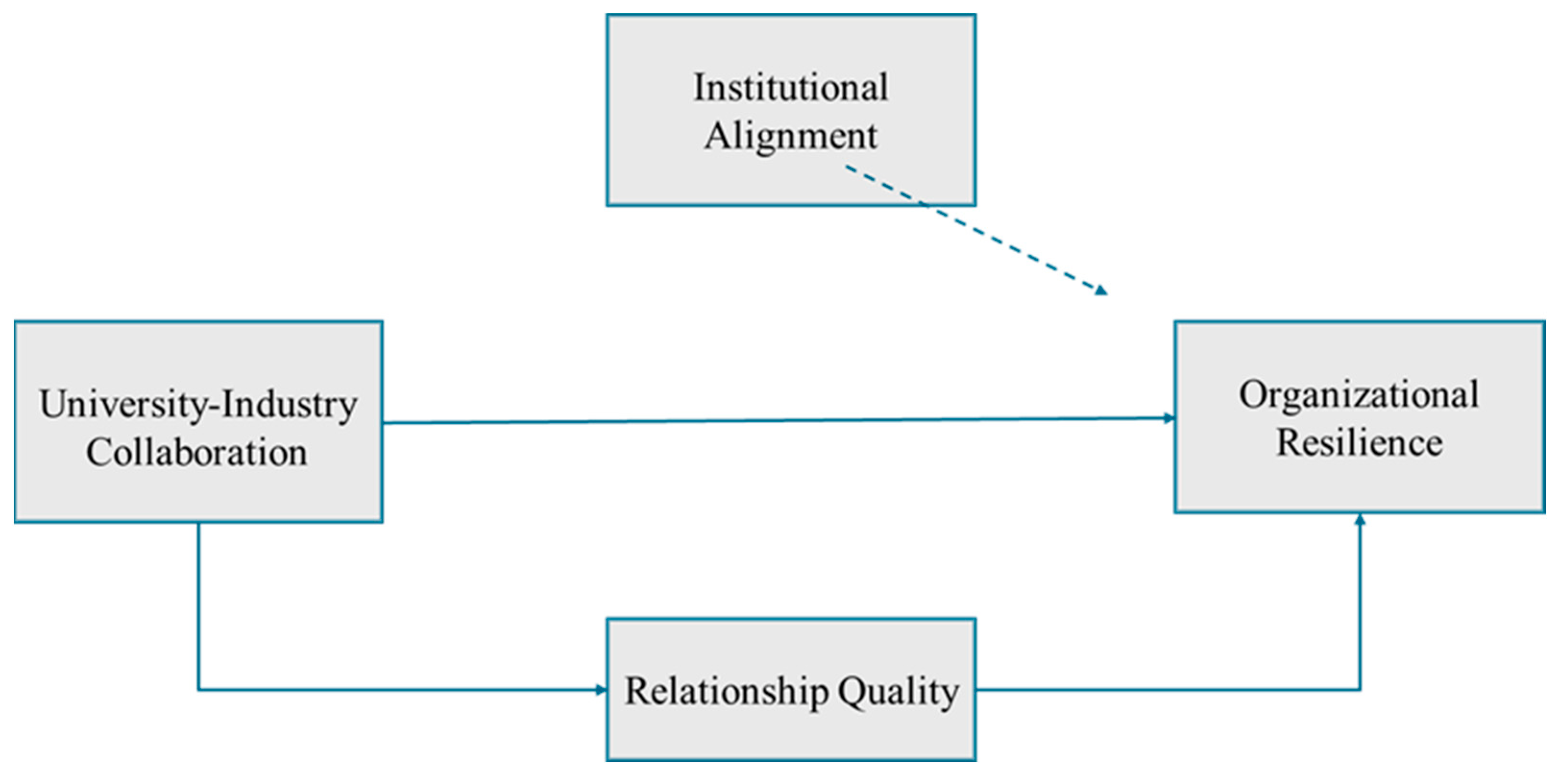
Bringing together these perspectives, this study posits that UIC may be associated with organizational resilience, yet the nature of this relationship is contingent upon distinct pathways. Specifically, institutional alignment operates as a moderating condition that shapes the structural context of collaborations, thereby shaping the strength of the association between UIC and organizational resilience. At the same time, relationship quality acts as a mediating pathway linking the relational attributes of UIC with organizational resilience, ultimately supporting comprehensive organizational adaptation.
Figure 1 presents the conceptual framework of the study. It delineates the direct, mediating, and moderating relationships proposed in this research and visually represents how UIC is associated with organizational resilience through relationship quality and institutional alignment.
6. Discussion and Conclusions
The primary contribution of this study lies in deepening the understanding of the distinct pathways through which UIC is associated with organizational resilience by examining the underlying relational and institutional dynamics embedded in collaborative engagements. This inquiry becomes particularly salient in an era of continuous and overlapping disruptions, where more than 90% of organizations have experienced at least one major disruption in recent years [
117], a reality that underscores the strategic relevance of UIC as a potential conduit for organizational resilience and long-term adaptability. Importantly, this study moves beyond the dominant innovation- and performance-centric view of UIC by repositioning it as a potential correlate of organizational resilience. In doing so, it offers a novel conceptual shift in the literature, where resilience, rather than immediate innovation output, is treated as a primary strategic attribute linked to collaborative engagement. This reframing represents the core innovative contribution of the study.
Grounded primarily in institutional theory and complemented by relational coordination theory, a conceptual model was developed and tested in which relationship quality was positioned as a mediating pathway, while institutional alignment operated as a contextual moderator that conditions the association between UIC and organizational resilience. This perspective is particularly relevant given that collaboration alone does not necessarily guarantee resilience [
45]; rather, its effectiveness appears to depend on the quality of relationships and the degree of institutional alignment between partners. The findings provide empirical support for the conceptual framework formulated in this study, indicating that UIC exhibits a positive association with organizational resilience both directly and indirectly through relationship quality. Moreover, the results suggest that the positive association between collaboration and organizational resilience is stronger under conditions of high institutional alignment between university and industry partners. These findings are theoretically and practically significant, as they illuminate the relational pathways and institutional conditions through which collaborative partnerships align with resilience and more enduring forms of organizational capability in firms. The implications of these results for theory, practice, and future research are discussed in the following sections. In evaluating these dynamics, it is worth noting that the empirical context of this study, STPs in Türkiye, represents a highly innovation-intensive environment characterized by strong university proximity and collaboration propensity. This specific institutional backdrop may have amplified the observed relationships, suggesting that the strength of these pathways could vary in less knowledge-intensive settings or firms operating in different institutional environments.
It is also essential to clarify that these empirical findings do not merely replicate or confirm established tenets of dynamic capabilities or network theories within a new sample. While traditional applications of these frameworks assume institutional homogeneity [
55], typically examining partnerships between commercial firms, the UIC context introduces a structural asymmetry between academic and commercial objectives [
118]. Therefore, the observed statistical significance indicates that the nexus between collaboration and resilience is not an automatic attribute of network membership. Instead, it illustrates how structured relational configurations align with the management of deep institutional differences, offering a bounded and context-specific perspective under radical uncertainty.
6.1. Theoretical and Practical Implications
One of the key implications of the present findings is that UIC emerges as a significant factor linked to organizational resilience. While resilience literature (e.g., Li and Lin [
8], Georgescu et al. [
6], Prayag et al. [
10], Wang and Sun [
17]) has predominantly focused on internal organizational antecedents, considerably less attention has been paid to the role of external sources of resilience. This inward-looking tendency has led resilience to be conceptualized mainly as an internally anchored capacity, underestimating the extent to which firms rely on external knowledge sources and interorganizational relationships to cope with, and adapt to disruptions. By empirically demonstrating that UIC exhibits a meaningful association with organizational resilience, the present study challenges this dominant perspective (e.g., Kim [
82], Liu et al. [
9], Zhou et al. [
69]) and extends resilience research beyond firm boundaries. In doing so, it highlights that organizational resilience is not solely related to internal resources and routines but can be substantially co-developed through sustained collaboration with external partners such as universities, thereby contributing to comprehensive and adaptive forms of organizational capability. Although recent research (e.g., Lin and Fan [
16], Ozanne et al. [
35]) has highlighted the role of networks and collaborative relationships in supporting firms’ resilience, most of these studies have focused primarily on supply chain resilience. Addressing this limitation, the present study contributes to the literature by shifting attention to UIC and examining how partnerships with universities may relate to organizational resilience. This focus is particularly important because universities constitute unique knowledge partners that provide access to frontier scientific knowledge, advanced problem-solving capabilities, a diverse talent pool, and innovation-oriented support [
14]. By illuminating how these resources are positioned alongside greater adaptive capacity, the study advances current understanding of the distinct pathways through which collaborative relationships correspond with a firm’s capacity to cope with uncertainty and navigate disruptive environments.
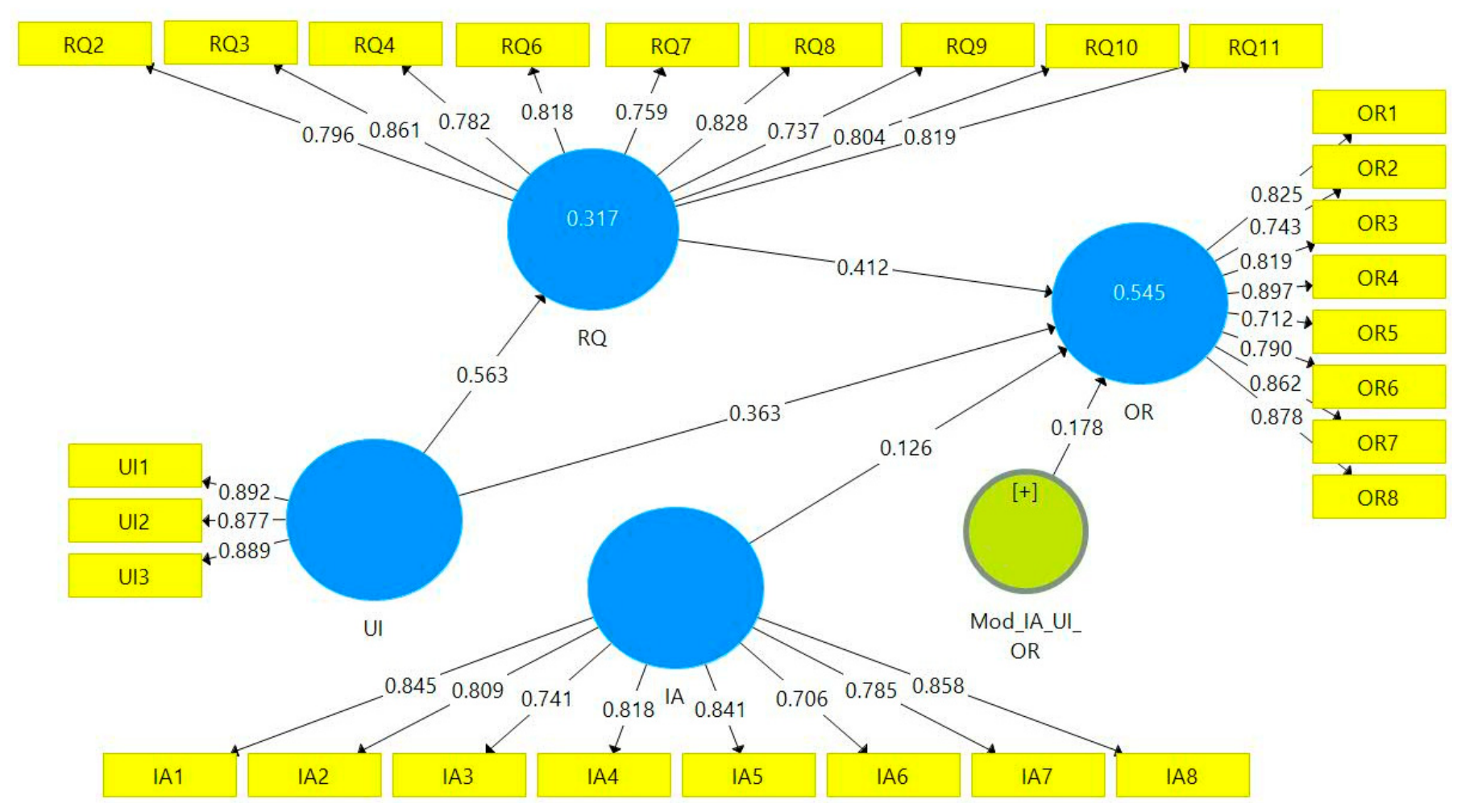
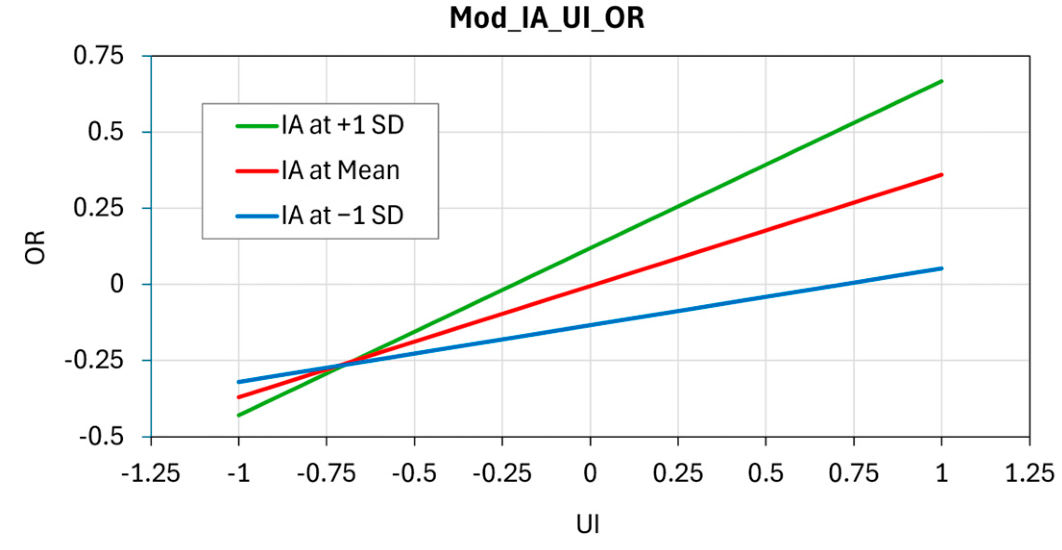
Second, the findings suggest that institutional alignment is reflected in the positive relationship between UIC and organizational resilience by functioning as a key moderating condition. From an institutional theory perspective, institutional alignment in UIC refers to the degree of compatibility between the institutional environments of universities and firms. Prior conceptual work by Alpaydin [
94] suggests that alignment in institutional expectations and practices is closely associated with collective adaptability and resilience potential in interorganizational settings. Similarly, studies in related domains (e.g., Andersson et al. [
119], Wu et al. [
120]) indicate that resilience-related outcomes are often contextualized by institutional alignment, particularly when institutional contexts are congruent. In the context of university–industry partnerships, prior research (e.g., Nsanzumuhire and Groot [
121]) has also emphasized the importance of aligning institutional structures and expectations to support effective collaboration. Building on this perspective, the present study contributes to the literature by empirically demonstrating that institutional alignment acts as a boundary condition for the effectiveness of UIC in relation to organizational resilience. Specifically, when universities and industry actors operate within more aligned institutional frameworks characterized by shared norms, compatible accountability structures, and coordinated governance arrangements, the positive association between collaboration and resilience becomes more pronounced. In such contexts, organizations operating within congruent regulatory, normative, and cognitive environments are better positioned to collectively interpret external demands, coordinate responses, and integrate complementary knowledge and resources across organizational boundaries. Although the moderating effect of institutional alignment is statistically significant (β = 0.178), its practical contribution to the model’s explanatory power appears to be relatively limited, indicating a supportive rather than a dominant role within the UIC–organizational resilience interface. This relatively small but statistically significant moderating effect provides a critical theoretical nuance. It suggests that while institutional alignment establishes a supportive context for collaborative inputs, it is not a primary correlate of resilience on its own but rather functions as a boundary condition. This finding indicates that external networks do not operate in a vacuum; their alignment with organizational adaptation is closely bound to the structural compatibility between the separate institutional frameworks of the partners. In theoretical terms, this magnitude (β = 0.178) clarifies that institutional alignment is not structurally synonymous with resilience. Instead, its role reflects a baseline of reduced operational friction, providing a structural foundation that co-exists with mitigated friction and allows distinct organizational profiles to correspond synergistically during periods of environmental shock. Such collaborative conditions are consonant with organizations’ capacity to adapt to disruptions and sustain functioning under uncertainty, thereby aligning with more sustained organizational resilience, as conceptually suggested by prior research (e.g., Burnard et al. [
122], Duchek [
57], Tasic et al. [
123]).
Third, drawing on relational coordination theory, this study finds that relationship quality operates as a mediating pathway linking UIC with organizational resilience. Prior research (e.g., Bolton et al. [
51] and Prayag et al. [
10]) suggests that UIC does not automatically correspond with organizational resilience unless relational pathways support how partners jointly interpret, recombine, and apply external knowledge, particularly when collaboration involves actors with distinct organizational logics such as universities and firms. While the literature, predominantly within the supply chain resilience domain, has acknowledged the importance of relational dynamics, relationship quality has rarely been examined as a comprehensive mediating construct. Instead, previous research has tended to focus on isolated relational dimensions, such as trust [
124], innovation capability [
125] or supply chain collaboration [
120], each considered separately as pathways associated with organizational resilience. By contrast, this study conceptualizes relationship quality as a multidimensional construct and highlights its mediating role within the distinct pathways connecting collaboration with organizational resilience. In this sense, collaborative performance, mutual trust, and reciprocal commitment jointly constitute the relational infrastructure linking UIC with organizational resilience. The findings regarding this mediating pathway are theoretically intuitive for several reasons. As noted by Wit-de Vries et al. [
31], high-quality relationships, characterized by trust, mutual respect, frequent communication, and shared goals tend to align with the effective exchange and integration of knowledge between universities and firms. From this perspective, the value of UIC for organizational resilience lies in the extent to which relationship quality corresponds with the mobilization and internalization of knowledge across organizational boundaries. Li et al. [
126] further argue that strong relationship quality is associated with improved coordination under conditions of uncertainty, as it tracks lower opportunism and transaction costs, which in turn co-exists with a firm’s capacity firms in responding more flexibly to environmental shocks. Accordingly, the findings indicate that relationship quality exhibits a meaningful alignment with the capacity of firms engaged in UIC to coordinate actions and adapt more effectively when facing unexpected disruptions. Empirical studies in interorganizational collaboration (e.g., Aunger et al. [
127], Zhang [
124]) have similarly shown that trust-based and well-coordinated relationships act as key conduits in collaborative arrangements. Building on this stream of research, the present study extends these insights by highlighting the importance of relationship quality in the context of university–industry relationships and by explaining how such relational dynamics underpin organizational resilience. Consequently, the prominent role of relationship quality demonstrated here underlines that the structural existence of a partnership is insufficient for resilience. By treating relationship quality as a comprehensive mediating pathway, this study illustrates that the capacity to navigate environmental uncertainty is closely linked with the continuous co-construction of mutual trust and shared norms, reflecting key relational processes.
This study yields a number of significant practical implications for managers and business professionals. First, the results underscore that merely joining a university–industry network or establishing a formal partnership is not automatically associated with organizational resilience. Reflecting the inherent asymmetry between academic and commercial objectives, resilience is more closely linked to high-quality, structured relational configurations (grounded in mutual trust, commitment and frequent communication) to bridge these institutional divides rather than relying solely on network proximity. Second, the results suggest that collaboration supported by strong relationship quality is associated with more cost-efficient and sustainable improvement processes, offering an alternative to strict reliance on costly, resource-intensive trial-and-error approaches through the integration of academic knowledge and analytical capabilities. Third, university partners provide an external and independent perspective that holds the potential to assist firms in detecting problems tied to organizational inertia and ‘business blindness’ at an earlier stage. This independent viewpoint can create opportunities to question entrenched routines and dominant assumptions, potentially reflecting more responsible and sustainability-oriented decision-making. Finally, when institutional alignment between universities and industry is high, these collaborative benefits tend to be further optimized, as shared norms and expectations enable smoother coordination, reduce operational friction and allow for more effective translation of knowledge into practice. In practical terms, this underscores the tangible value of proactive alignment within STPs. In knowledge-intensive clusters, compatible administrative norms and expectations between universities and firms provide a pre-established common language. During unexpected disruptions, this compatibility serves as a vital operational buffer, keeping managerial timelines free from bureaucratic gridlock, legal ambiguities, or misaligned procedures. For STP managers, this means that formal governance alignment and shared accountability act as a strategic cushion during crises, ensuring that institutional boundaries do not become operational barriers during rapid collaborative pivots. Accordingly, practitioners should view UIC not merely as an innovation tool, but as a strategic avenue potentially linked to organizational resilience and more robust, enduring development trajectories in increasingly uncertain environments. In this regard, building long-term organizational resilience through such collaborative networks is inherently tied to the formation of a sustainable organizational identity. As demonstrated by Chomać-Pierzecka [
80], contemporary organizations cultivate a sustainable identity by successfully integrating and balancing their economic objectives with social and environmental challenges. Consequently, a high degree of institutional alignment within UIC corresponds with both knowledge conversion and a shared commitment to responsible growth. This alignment helps anchor external collaborative inputs within an enduring structural framework, acting as an operational cushion that buffers the firm against multi-dimensional environmental shocks [
128].
6.2. Limitations and Future Developments
Although this work contributes to theory and practice in multiple ways, it has several limitations that also provide directions for future research. First, this study contributes to the emerging understanding of UIC as an external factor linked to organizational resilience. While this focus offers valuable insights, it necessarily narrows the range of external influences considered. Moreover, UIC was operationalized using a relatively parsimonious three-item scale. Although consistent with prior research, UIC is a complex and multidimensional construct encompassing activities such as joint research, technology transfer, licensing, consultancy, internships, and incubation programs. Consequently, the measurement approach adopted in this study may not fully capture the breadth and diversity of UIC practices. Regarding the interpretation of the findings, this simplified operationalization means that the observed pathways reflect a broad, macro-level alignment rather than the unique contributions of specific collaborative activities. In practice, the three indicators map onto general strategic partnerships, leaving the distinct roles of student internships, licensing, or business incubation unexamined. Therefore, the findings should be interpreted as a general baseline, as certain types of collaborative engagements might co-exist with organizational resilience more closely than others. Future research is encouraged to develop more comprehensive multidimensional measures of UIC and to examine additional external factors, such as network diversity and dependence on critical partners, that may contribute to organizational resilience and long-term sustainability. Second, the proposed model may not fully capture the specific relational channels and boundary conditions through which UIC is associated with organizational resilience. Although relationship quality was identified as a significant mediator, other mediating processes may also play important roles. Likewise, the strength of this relationship may vary across different organizational and environmental contexts, including environmental turbulence, absorptive capacity, prior collaboration experience, firm characteristics, and national or regional innovation systems. Future studies could enrich the model by examining alternative mediators, moderators, antecedents, and control variables to provide a more comprehensive understanding of both the discrete pathways and specific conditions that align UIC with organizational resilience. Regarding this, the omission of these control variables means that the reported relationships might appear stronger than they would be under controlled conditions. For instance, larger firms or those with high R&D intensity often have more internal resources and prior experience, which naturally co-exist with both higher collaboration and greater resilience. Without isolating these factors, the observed paths reflect a broad alignment rather than the unique role of UIC alone. Future research incorporating these structural characteristics is therefore necessary to clarify these dynamics more precisely. In addition, future research could draw on alternative theoretical perspectives, such as dynamic capabilities or social network theory, to offer complementary explanations of the observed relationships. Third, the empirical context is limited to firms operating in STPs in Türkiye. Firms in STPs typically operate under highly favorable conditions, benefitting from greater proximity to universities, stronger innovation orientation, and higher collaboration readiness than firms in other settings. Consequently, because of these privileged ecosystems, the findings should be generalized with caution to traditional SMEs, firms in less knowledge-intensive sectors, or organizations operating in different institutional settings. Replicating the study across diverse industries, firms of different sizes including SMEs and large enterprises, regions, and countries would strengthen the validity of the findings. Finally, the study is constrained by its cross-sectional design and reliance on a single respondent from each firm. These characteristics limit the ability to draw definitive causal inferences and raise the possibility of common method variance and response bias associated with self-reported measures. Although Harman’s single-factor test did not indicate substantial common method bias, this procedure has recognized limitations and cannot completely rule out its presence. Furthermore, alternative explanations, including reverse causality, remain plausible. For example, organizations with higher levels of resilience may be better positioned to establish and benefit from collaborative relationships with universities. Therefore, the reported relationships should be interpreted as associative rather than causal. Future research employing longitudinal and multi-source data would help address these limitations, validate the temporal dynamics of these relationships, and provide stronger evidence regarding the underlying relational and institutional pathways connecting UIC and organizational resilience.