Article

Life Cycle Assessment of Port Operations and Its Implications for Energy Transition in the Maritime-Port System

by
João Vitor Rego Muniz
1,2,
Wanderbeg Correia de Araujo
2 and
Oz Sahin
3,4,*
1
Postgraduate Program in Mechanical Engineering, Santa Cecília University, Santos 11045-907, SP, Brazil
2
Department of Engineering Production, State University of Maranhão, São Luís 65080-400, SL, Brazil
3
School of Engineering and Built Environment, Griffith University, Southport, QLD 4222, Australia
4
School of Public Health, University of Queensland, Herston, QLD 4006, Australia
*
Author to whom correspondence should be addressed.
Sustainability 2026, 18(14), 6967; https://doi.org/10.3390/su18146967
Submission received: 25 April 2026 / Revised: 25 June 2026 / Accepted: 30 June 2026 / Published: 8 July 2026

Abstract

Port operations play a strategic role in global trade but are associated with significant environmental impacts due to intensive energy use, equipment operation, and cargo handling activities. In this context, Life Cycle Assessment (LCA) emerges as an essential tool to quantify these impacts and support decarbonization strategies in the maritime-port sector. This study aims to evaluate the environmental performance and energy transition implications of fertilizer import operations in a multi-cargo port by comparing semi-automated and non-automated scenarios through a Life Cycle Assessment (LCA) approach. The methodology followed the standard LCA framework, including goal and scope definition, inventory analysis, impact assessment, and interpretation. Primary data collected in situ were combined with secondary data from the Ecoinvent database, ensuring consistency and representativeness. The results indicate that post-port logistics is the main driver of environmental impacts. In the semi-automated scenario, rail transport consumes approximately 18,800 L of diesel, showing higher efficiency due to its greater load capacity. In contrast, the non-automated scenario relies on 100 trucks, each consuming about 238.75 L per trip, resulting in higher total fuel consumption and emissions. It is concluded that the non-automated system presents higher environmental impacts across all categories analyzed, highlighting the importance of modal choice and operational efficiency in reducing emissions and supporting the energy transition in the port sector.

1. Introduction

Ports are critical nodes in global trade, handling increasing volumes of cargo, including fertilizers for agriculture. This growth poses environmental challenges, as ports and coastal cities concentrate high levels of greenhouse gas (GHG) emissions and air pollutants [1,2]. Cargo handling equipment (cranes, forklifts, loaders, trucks) represents a significant source of land-based emissions. Additionally, in fertilizer operations, losses of granules or dust can introduce nutrients (N, P) into soil and water bodies, promoting eutrophication [1,3]. Therefore, the port environment requires a holistic assessment of the environmental impacts associated with these operations.
Within this context, ports are increasingly recognized as strategic actors in the global energy transition. The decarbonization of maritime and port systems depends on both technological shifts such as equipment electrification and alternative fuels and operational improvements, including modal integration and logistics efficiency. Energy transition in the port sector encompasses not only the replacement of fossil fuel-dependent machinery but also the restructuring of logistics chains to reduce overall emissions intensity. However, evidence-based tools capable of quantifying environmental trade-offs across different operational configurations remain scarce. Life Cycle Assessment (LCA) provides a structured methodological framework for identifying emission hotspots, comparing alternatives, and supporting data-driven decisions in the transition toward lower-carbon port operations [1,2].
However, most Life Cycle Assessment (LCA) studies in ports focus on infrastructure or highly automated large-scale systems (e.g., container terminals, vessels) [1,2]. Studies addressing smaller handling equipment and semi-manual operations remain scarce [2]. In particular, limited knowledge exists regarding the full life cycle of equipment such as skid steer loaders, diesel trucks, industrial mixers, and cranes within port operations. Moreover, fertilizer-related studies typically focus on agricultural production rather than port-related losses [4,5]. This gap hinders evidence-based decision-making in port management.
Based on these considerations, this study seeks to answer the following research question: how to quantify the environmental impacts (GHG emissions, acidification, eutrophication, and toxicity) of fertilizer port operations performed using semi-automated equipment?
This research is justified by the identified knowledge gap, particularly the lack of LCA studies focusing on port operational stages of fertilizer handling, including product losses and the use of light equipment (loaders, tractors, mixers) [2]. Existing studies highlight the importance of nutrient losses and fuel type in emissions but have not been specifically applied to port environments or fertilizer logistics [3,4].
Therefore, the overarching goal of this study is to quantify and compare the environmental impacts of fertilizer port operations under semi-automated and non-automated configurations, identifying environmental hotspots and evaluating the implications of each operational model for the energy transition in the maritime-port system. This goal is operationalized through the following specific objectives: (i) quantify input and output flows per equipment type and operational stage; (ii) assess five impact categories (global warming, acidification, eutrophication, human toxicity, and ecotoxicity); (iii) identify environmental hotspots; (iv) test LCA-grounded hypotheses; and (v) propose mitigation strategies aligned with energy transition pathways.

2. Related Studies

Scharpenberg et al. [2] conducted a Life Cycle Assessment (LCA) comparing diesel, hybrid, and electric rubber-tyred gantry cranes (RTGs) in port terminals [2]. Using the ReCiPe method (climate change, acidification, and particulate matter), they demonstrated that the production and operation phases of the equipment dominate environmental impacts. The authors also concluded that “few comprehensive studies” exist in port environments, highlighting the need for further research in this sector [2].
Vujičić et al. [3] compared, through LCA, diesel-powered RTG cranes and tractors with electric “zero-emission” retrofit kits [3]. They reported reductions of approximately 70% in CO2-equivalent emissions for electric RTGs and around 50% for electric tractors over the full life cycle [3]. Similarly, Yang and Chang [6] and Yang [7] reported CO2 reductions of up to 68% with electrified RTGs [6,7]. These studies reinforce that the choice of power source (diesel versus electric) is a key determinant of environmental performance in port LCA studies.
Yang et al. [8] compared light- and medium-duty delivery trucks (diesel versus plug-in electric and battery-swapping configurations) using LCA [8]. Their findings indicate that light-duty electric trucks emitted up to 69% less greenhouse gases than diesel vehicles, while medium-duty electric trucks showed slightly higher emissions due to electricity grid characteristics. These results highlight the environmental relevance of diesel trucks, such as the VW Constellation, in port operations.
Fuc et al. [9] analyzed the Life Cycle Assessment of forklifts (diesel, LPG, and electric) and demonstrated that electric forklifts significantly reduce environmental impacts compared to diesel and LPG alternatives. Although diesel forklifts presented lower impacts than LPG, they still performed worse than electric ones, suggesting that electrification of loading equipment in ports can provide substantial environmental benefits [9]. Üçtuğ et al. [10] evaluated the manufacturing phase of forklifts and semi-trailers, reporting approximately 2.8 t CO2e per ton of forklift produced, with about 75% of impacts associated with raw materials, particularly steel [10]. This highlights the importance of the production phase in heavy equipment life cycles.
Skowrońska and Filipek [5] reviewed LCA studies of mineral fertilizers, reporting that the production and use of nitrogen and phosphorus fertilizers result in emissions of N2O, NOx, NH3, and PO43−, contributing to climate change, acidification, and eutrophication [5]. Hasler et al. [4] conducted a cradle-to-field LCA comparing fertilizer types in Germany and found that production phases dominate greenhouse gas emissions and acidification, while application losses are the main contributors to eutrophication [4]. These findings provide important context for this study, as fertilizer losses during port operations are expected to significantly contribute to eutrophication, whereas fuel consumption and equipment use are likely to dominate climate change and acidification impacts. Additionally, fertilizers may contain heavy metals (e.g., Cd and Zn), which can lead to human toxicity and ecotoxicity if released into the environment [5].
Several studies indicate that diesel combustion emits NOx and SO2, which are precursors to acid rain formation. In LCA studies such as Vujičić et al. [3], the transition from diesel to electric systems resulted in significant reductions in acidification potential [3]. Although not all studies explicitly report SO2 values, it is well established that NOx emissions contribute to the formation of nitric and sulfuric acids in the atmosphere. Therefore, diesel-powered vehicles, such as the VW truck analyzed in this study, are expected to present higher acidification impacts.
Gomes et al. [11] highlight that human health can be adversely affected by fine particulate matter and toxic compounds (NOx, heavy metals) emitted by equipment [11]. Wen [12] identified steel production as the main contributor to freshwater ecotoxicity in crane life cycle studies, suggesting that recycling practices can mitigate these impacts. Regarding human toxicity, exposure to fertilizer dust (e.g., during mixing processes) and exhaust emissions (NOx, PM) are relevant contributors to human toxicity potential (HTP) [12].
In summary, the literature presented in Table 1 indicates that: (i) equipment operation and fuel consumption are the main drivers of carbon footprint and acidification in port environments [1,3]; (ii) fertilizer losses are strongly associated with eutrophication [4]; and (iii) electrification and improved operational practices are effective strategies to reduce environmental impacts [3]. However, there remains a lack of studies integrating port operations, fertilizer handling, and light equipment within a comprehensive LCA framework. Therefore, this study builds upon these findings to support the development of hypotheses and methodological design.
Values are reported as originally presented in each study, direct cross-comparison requires caution.

3. Research Hypotheses

Based on the literature review, the following hypotheses are proposed to be tested through the LCA:
H1—GHG emissions from road transport: Diesel combustion in road vehicles is broadly associated with significant greenhouse gas emissions in freight and port logistics contexts [8,15,16]. While Yang et al. [8] compared diesel and electric light-duty delivery trucks, their study was conducted outside port environments and did not involve multimodal or equipment-level comparisons within a single operational system. Similarly, Winebrake et al. [16] examined road–rail intermodal trade-offs at a network scale, without isolating the contribution of individual equipment types within a port gate-to-gate system. Whether the diesel truck is, in fact, the single dominant GWP contributor when assessed alongside other diesel-powered equipment (cranes, locomotives, loaders) under primary field data conditions particularly in a fertilizer handling port in a developing-country context has not been empirically established.
H1. 
The VW Constellation truck (diesel combustion) will present the highest contribution to CO2 eq (GWP) among the analyzed equipment in the non-automated scenario.
H2—Eutrophication from fertilizer handling: Eutrophication in fertilizer supply chains is known to be strongly influenced by nutrient losses during handling and application [4,5]. Yet, port-specific studies examining eutrophication contributions from individual handling equipment such as skid steer loaders remain virtually absent from the literature. Hasler et al. [4] showed that nitrogen and phosphorus losses dominate eutrophication in cradle-to-field fertilizer assessments, but these findings pertain to agricultural application rather than port logistics. The specific role of mobile handling equipment as a eutrophication hotspot within port boundaries has not been empirically quantified.
H2. 
The skid steer loader will be the main contributor to eutrophication potential in the non-automated scenario, owing to direct fertilizer spillage during material handling.
H3—Human toxicity from industrial mixer: Occupational and environmental exposure to fine dust from fertilizer handling has been associated with respiratory risks and potential heavy metal contamination [5]. Skowrońska and Filipek [5] reviewed evidence linking fertilizer dust (particularly from phosphate compounds) to human health risks. However, the specific human toxicity contribution of industrial mixers in port operations as assessed through LCA characterization factors has not been reported in the literature, representing a gap addressed by this study.
H3. 
The industrial fertilizer mixer will present a measurable contribution to human toxicity potential (HTP), reflecting the release of fine particulate matter containing potentially toxic compounds during the mixing process.
While the contribution of mixers to particulate emissions is qualitatively acknowledged, its quantitative magnitude within the port LCA framework and its ranking relative to transport equipment has not been previously established, constituting a non-trivial empirical contribution of this study.
H4—Acidification from diesel combustion: Acidification in port operations is associated with NOx and SO2 emissions from diesel combustion [3,17]. Vujičić et al. [3] evaluated diesel-to-electric crane transitions and observed changes in acidification potential, but their study focused on a single equipment category (RTG cranes) in a container terminal context. The relative contribution of each equipment type to acidification within a mixed-equipment fertilizer port operation, particularly in developing-country settings where fuel quality and engine standards may differ, has not been comparatively quantified using primary field inventory data.
H4. 
The diesel-powered truck will exhibit the highest acidification potential (expressed in kg SO2 eq) among the equipment analyzed in the non-automated scenario.
H5—Ecotoxicity reduction through steel recycling: End-of-life strategies for heavy port equipment have been explored in the literature, with Wen et al. [12] noting that steel production is a major ecotoxicity contributor in crane LCA and that recycling can reduce these impacts. However, Wen et al. [12] did not quantify the magnitude of ecotoxicity reduction attributable specifically to steel recovery under closed-loop recycling conditions, nor was their analysis applied to the port context examined in this study. The question of whether steel recovery from cranes at end-of-life yields a reduction above a meaningful threshold tested here as 30% relative to a no-recycling baseline remains open in the port LCA literature.
H5. 
Steel recovery from cranes at end-of-life will yield a net reduction in ecotoxicity and resource depletion impacts greater than 30% relative to a disposal-without-recovery baseline, based on closed-loop recycling modeling consistent with the ecoinvent database.
H6—Mitigation through alternative scenario: Electrification of port equipment has been evaluated in prior studies, with Fuc et al. [9] examining electric cargo handling tractors and forklifts respectively, both demonstrating reduced environmental impacts in container terminal contexts under favorable grid conditions. However, neither study addressed smaller, multi-cargo fertilizer handling operations, nor did they evaluate the combined effect of equipment electrification and road-to-rail modal shift within a single gate-to-gate LCA system. Whether these strategies yield meaningful reductions in GHG emissions, acidification, and human toxicity specifically within the operational context analyzed in this study a developing-country port handling solid bulk fertilizers remains to be empirically established.
H6. 
Substitution of diesel-powered equipment with electric alternatives and modal integration (road-to-rail shift) will result in statistically meaningful reductions in GHG emissions, acidification, and human toxicity across both operational scenarios.
Table 2 below relates each hypothesis to the required input data and the LCA/impact assessment methods used to test them, based on field inventory data and emission factors from databases such as Ecoinvent.

4. Materials and Methods

The study area corresponds to a public multi-cargo port located in Northeastern Brazil. For confidentiality and operational privacy reasons, the port is not identified nominally in this study. However, the selected port is among the five largest public ports in Brazil and is characterized by diversified cargo handling operations, including solid bulk, liquid bulk, and general cargo activities. The port plays a strategic role in regional and national logistics, particularly in fertilizer import operations that support agricultural supply chains.
The data collection process was based on primary operational information obtained through technical visits, direct observation of port activities, and interactions with operators and port managers. The collected data included fuel consumption, electricity use, operational productivity, maintenance activities, equipment specifications, cargo handling procedures, and transport logistics associated with fertilizer operations. These primary data were complemented by secondary information from the Ecoinvent database and technical documentation available from equipment manufacturers and environmental reports.
To improve methodological transparency, the input data were structured according to operational stages and equipment categories, including cranes, conveyor belts, industrial mixers, locomotives, trucks, and skid steer loaders. This organization allowed the traceability of material and energy flows throughout the Life Cycle Assessment (LCA) model and facilitated the identification of environmental hotspots across the analyzed scenarios.
This study applies Life Cycle Assessment (LCA) to quantify and compare the environmental impacts associated with fertilizer import port operations under two distinct operational scenarios: semi-automated and non-automated. LCA was selected due to its ability to systematically structure energy and material flows and to support the identification of environmental hotspots across system stages, reducing the risk of burden shifting between phases (e.g., reducing emissions in one stage while increasing them in another) [18].
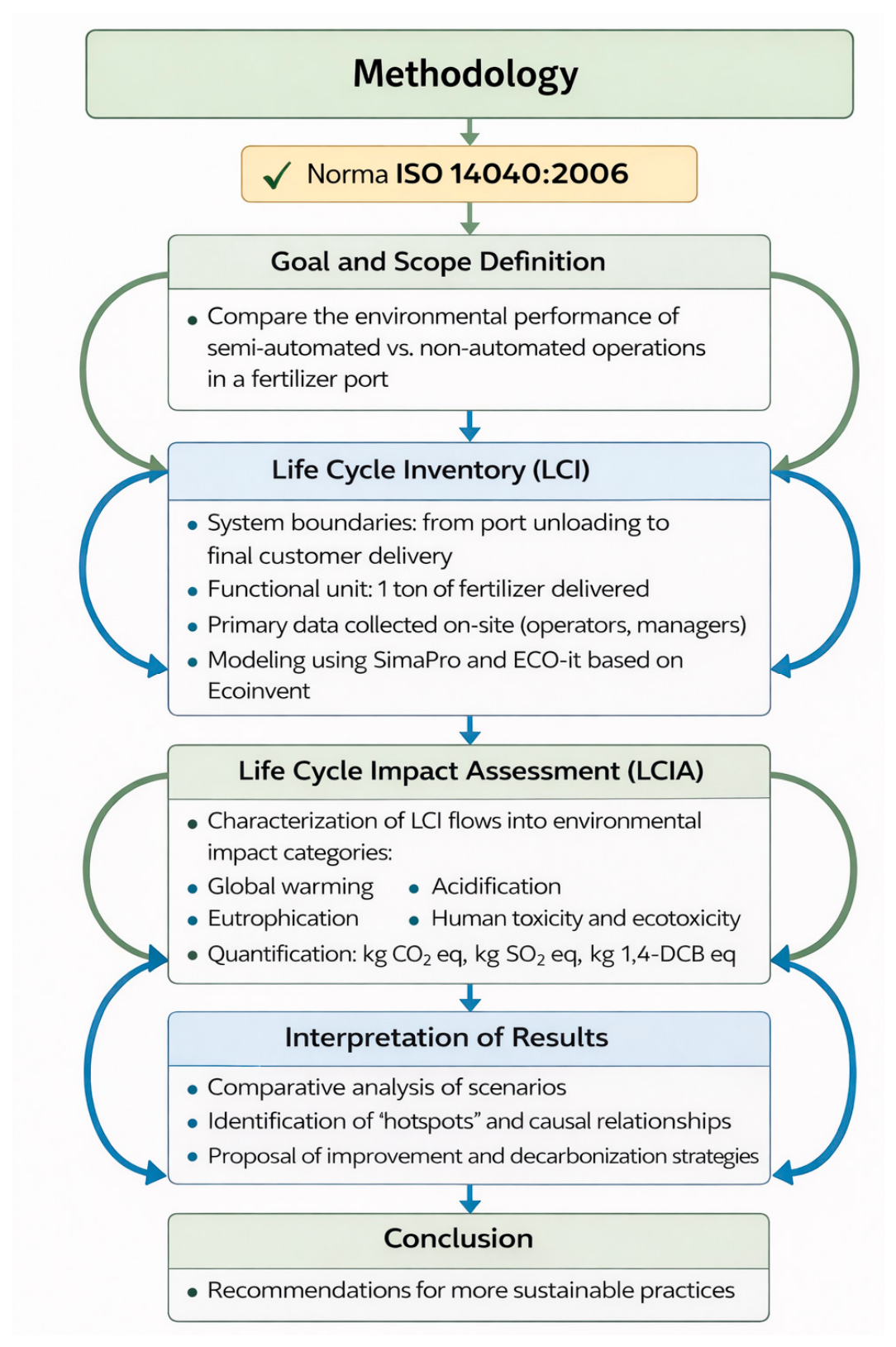
The methodological approach was developed in accordance with ISO 14040 [14] and ISO 14044 [19] standards and structured into four classical phases: (i) goal and scope definition; (ii) life cycle inventory (LCI); (iii) life cycle impact assessment (LCIA); and (iv) interpretation. These standards define the framework and guide the logical sequence between scope definition, inventory development, impact characterization, and interpretation, including transparency and reporting requirements [14].

4.1. Goal and Scope Definition

The goal of the LCA was to compare the environmental performance of port operations under different levels of automation, identifying the main contributors to impacts and potential mitigation opportunities. The relevance of this topic is driven by increasing pressure on ports to reduce emissions and pollution, as well as the frequent lack of empirical evidence to support operational decision-making, reinforcing the need for studies based on real operational data [20].
System boundaries were defined to include operational stages from fertilizer unloading at the port to final delivery to the customer, encompassing handling, mixing, internal transport, and final transport. The system was modeled as an extended gate-to-gate approach, excluding upstream processes (e.g., fertilizer production) and, by scope decision, equipment manufacturing. However, maintenance activities and end-of-life stages of key operational equipment were included. This choice is consistent with port studies that prioritize the use phase of machinery, even when acknowledging that manufacturing also contributes to emissions [1].

4.2. Functional Unit and Scenario Definition

The functional unit adopted was the transport of one tonne of fertilizer to the final customer, ensuring comparability between scenarios. This choice aligns with environmental assessments of logistics chains, where energy consumption and emissions are typically normalized per transported mass to enable comparisons across transport modes and configurations [15].
The scenarios were defined based on real configurations observed in the field:
  • Semi-automated scenario: use of conveyor belts, industrial mixers, and rail transport, with greater integration of fixed systems and reduced mobile handling.
  • Non-automated scenario: higher reliance on road transport and mobile equipment (e.g., trucks and skid steer loaders), with a greater number of handling steps.
Comparisons between different automation levels are consistent with studies evaluating port sustainability technologies and operational modernization strategies [20].

4.3. Life Cycle Inventory (LCI): Primary and Secondary Data

The inventory was developed using primary data collected in situ through technical visits, direct observation, and interaction with operators and port managers. This approach aligns with best practices emphasizing data consistency and quality, as methodological choices (e.g., consumption estimates, emission factors, diffuse losses) can significantly influence result robustness [18].
Primary data were complemented with secondary data from established databases. Background processes were sourced from the ecoinvent database, widely recognized for its transparency and comprehensive process-based inventory data [21].
Input and output flows were quantified for each stage, including diesel consumption, electricity use, lubricants, and maintenance materials, as well as atmospheric emissions, solid waste, and material losses. The explicit inclusion of air pollutants is particularly relevant in diesel-based port systems, as field studies indicate that real-world emissions may exceed certification levels, affecting categories such as acidification, human toxicity, and ecotoxicity [22].

4.4. Equipment-Based Modeling and Aggregation

The system was modeled by considering key equipment individually, including cranes, conveyor belts, industrial mixers, locomotives, and road vehicles, enabling impact disaggregation by component and operational stage. This approach is consistent with studies focusing on specific port equipment, which highlight the dominance of the use phase and energy consumption in environmental impacts [12].
Maintenance and end-of-life data were also incorporated, improving traceability of waste flows and recycling opportunities. Literature indicates that end-of-life strategies, such as steel recycling, can significantly reduce impacts and should be considered when evaluating mitigation and circularity opportunities [12].
Inventory modeling was performed using SimaPro 7 and ECO-it 1.3 software, with background processes sourced from ecoinvent. Technical documentation highlights their application in inventory modeling and impact assessment using standardized methods.

4.5. Life Cycle Impact Assessment (LCIA)

Impact assessment converted inventory flows into relevant environmental categories, including climate change (GWP/CO2-eq), acidification, eutrophication, human toxicity, and ecotoxicity. Results were expressed in equivalent units (e.g., kg CO2-eq, kg SO2-eq, kg 1,4-DCB-eq).
For fertilizer-related systems, the literature highlights eutrophication and acidification as particularly relevant categories due to nitrogen and phosphorus emissions and losses during handling and application [5].
The characterization of environmental impacts was performed using the CML 2 baseline 2000 method, as implemented in SimaPro 7. Characterization factors were applied to convert inventory flows into impact indicator results for each category (e.g., kg CO2 eq for climate change, kg SO2 eq for acidification, kg N eq for eutrophication, kg 1,4-DCB eq for human toxicity and ecotoxicity). The numerical values reported in Table 3, Table 4 and Table 5, and subsequent tables represent the aggregated characterized impacts per functional unit (1 tonne of fertilizer transported to the final customer), derived from the multiplication of inventory flow quantities by the respective characterization factors. All calculations were performed within SimaPro 7, with background processes sourced from ecoinvent v3.

4.6. Interpretation

The interpretation phase involved a comparative analysis between the semi-automated and non-automated scenarios to identify patterns, causal relationships, and system hotspots. This approach aligns with port sustainability literature emphasizing the importance of empirical evidence and with logistics studies showing the dominance of road transport in energy use and emissions when multimodal integration is absent [20].
The contribution analysis by equipment and stage highlighted the relevance of transport and diesel consumption as major emission sources. Studies on port-hinterland corridors indicate that road-only transport tends to dominate impacts, while road–rail integration reduces environmental intensity [15].
Finally, mitigation opportunities were identified, including technological substitution, energy efficiency improvements, and integration with low-carbon energy sources. Recent studies emphasize that environmental gains depend on operational efficiency and the energy mix, reinforcing the need to align operational improvements with broader energy transition strategies [12].
Figure 1 presents the summarized methodological flowchart based on the LCA framework. The diagram synthesizes the methodological process and facilitates the visualization of its stages and integration in the environmental impact assessment of port operations.
It is important to note that the numerical values obtained in this study may vary according to operational and external factors, such as fuel consumption rates, transport distances, cargo volume, equipment efficiency, maintenance conditions, and climatic influences. Nevertheless, the inventory was developed using real operational data collected in situ, representing typical operating conditions observed during the study period. Therefore, although absolute impact values may change under different operational conditions, the comparative environmental performance between the semi-automated and non-automated scenarios is expected to remain consistent, particularly regarding the higher impacts associated with diesel-intensive road transport operations.

4.7. Uncertainty and Sensitivity Analysis

To assess the robustness of the LCA results and the influence of key parameters on the outcomes, a sensitivity analysis was performed by varying the main input assumptions within plausible ranges. Parameters subjected to sensitivity testing included diesel consumption rates (±15%), fertilizer loss fractions (±20%), and electricity grid emission factors (±25%). These ranges reflect the variability reported in the primary data collection and in background databases [18,21].
Additionally, a contribution analysis was conducted to identify which input parameters exert the greatest influence on each impact category, following the ILCD Handbook guidance [18]. Results are reported in terms of the percentage change in each impact indicator relative to the baseline scenario when individual parameters are varied. This procedure is consistent with ISO 14044:2006 [19], which requires that uncertainty sources be identified and their influence on the final results be examined [14].
While Monte Carlo simulation was not applied in this study due to data limitations, the deterministic sensitivity analysis provides a transparent basis for interpreting the reliability of the results and the conditions under which the conclusions remain valid.

5. Results

5.1. Life Cycle Inventory Analysis of the Semi-Automated Operation

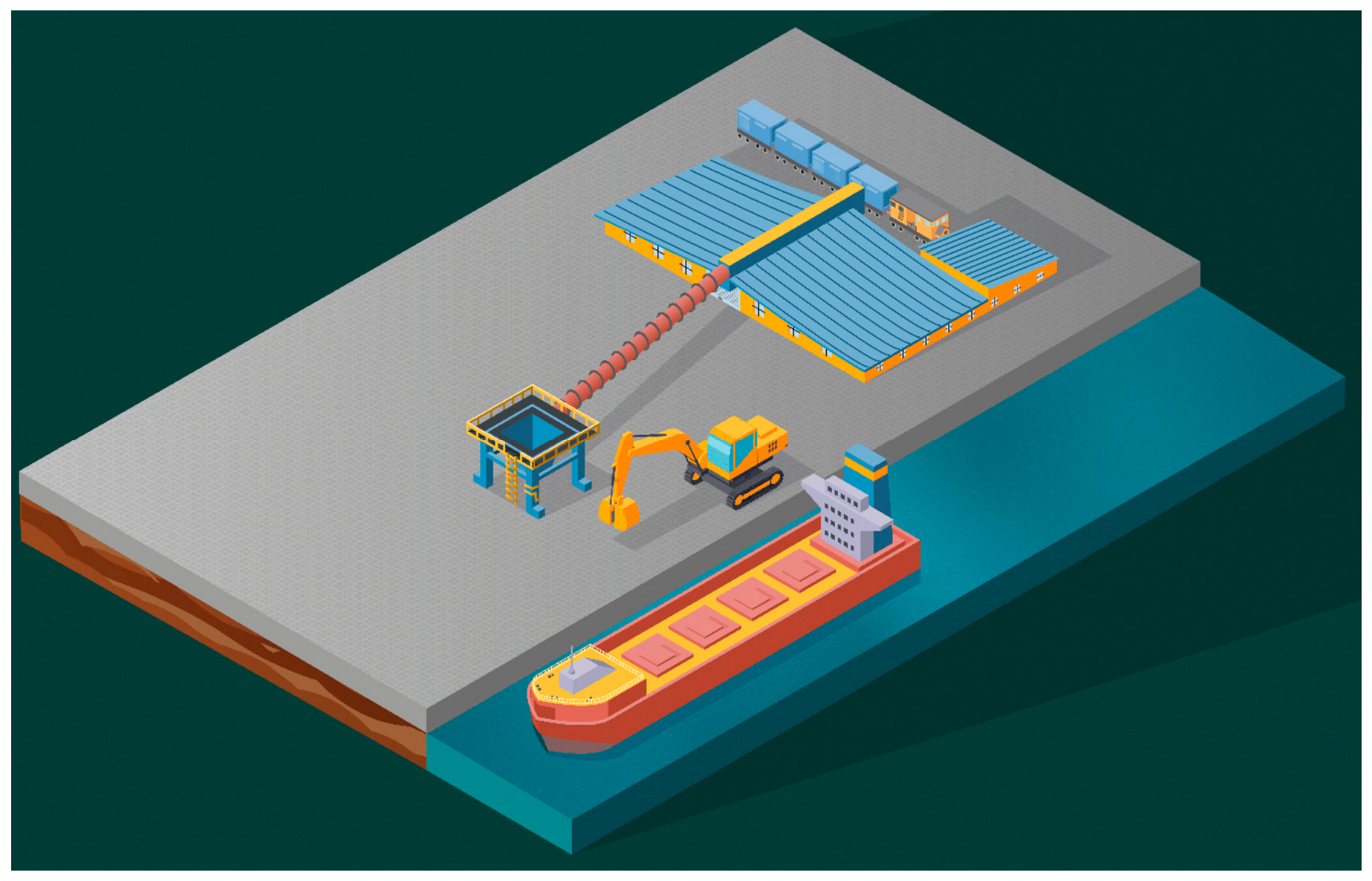
In the life cycle inventory (LCI) analysis of the semi-automated operation, all energy and material inputs and outputs were considered for each stage of the process, from fertilizer unloading from the ship’s holds to delivery to the final customer. Initially, telescopic cranes are used to remove the cargo from the ship’s holds.
These cranes consume diesel and electricity during operation and are associated with greenhouse gas emissions. In addition, material wear and maintenance requirements were included in the analysis. Subsequently, conveyor belts transport the fertilizer to the storage facility. These systems consume electricity, require periodic maintenance, and involve material replacement due to belt wear over time.
Within the storage facility, the fertilizer is processed using an industrial mixer. At this stage, electricity consumption and the use of auxiliary materials were considered. Emissions of particulate matter generated during the mixing process were also taken into account.
After mixing, the fertilizer is transported via railway to the final destination. This stage involves locomotives with high fuel consumption, leading to significant greenhouse gas emissions and other atmospheric pollutants. Fuel type and consumption rates were explicitly considered in the modeling.
Maintenance activities and component wear of locomotives and wagons were also included. In addition, rail infrastructure, such as tracks and signaling systems, was considered as part of the system due to its associated material and energy requirements.
The overall configuration of the semi-automated operation is presented in Figure 2.

5.1.1. Analysis of Equipment in the Semi-Automated Operation

Crane
In the life cycle inventory (LCI) analysis of the Liebherr LHM 420 crane, the main input and output flows were considered across all relevant stages, from operation to end-of-life.
During the operational phase, the crane uses diesel as its primary energy source. Fuel consumption was quantified per hour or per operational cycle, along with the associated CO2 emissions and other greenhouse gases resulting from fuel combustion. In addition, the equipment consumes approximately 30 L of lubricants, and therefore the type of lubricant, replacement frequency, and the environmental impacts related to its production and disposal were taken into account.
The crane has a nominal capacity of 1100 t/h and a maximum lifting capacity of 64 tonnes. Its operational efficiency directly influences fuel consumption and, consequently, the intensity of atmospheric emissions.
The maintenance phase occurs every 2000 operating hours and includes activities such as coolant oil replacement and inspection of components, including retention valves, counterbalance systems, and sequential mechanisms. These activities involve additional material consumption and waste generation, which were incorporated into the inventory analysis.
At the end of its life cycle, the equipment is returned to the leasing company, where it undergoes dismantling processes. At this stage, environmental impacts associated with disposal were considered, as well as the potential for recycling and material recovery, contributing to impact reduction over the equipment’s life cycle.
Additionally, the inventory included energy consumption, auxiliary materials, and operational inputs across all analyzed stages, enabling a comprehensive assessment of the equipment’s environmental impacts. The data were modeled using SimaPro, and the detailed results are presented in Table 3, including resource inputs and outputs in terms of emissions and waste.
Table 3. Inputs and outputs for port crane operations.
CategoryInputsQuantityUnitOutputsQuantityUnit
OperationDiesel fuel4L/hCO2 emissions (diesel combustion)7.95kg
Lubricants30LVolatile organic compound (VOC) emissions0.0003kg
MaintenanceCoolant oil20LOil waste0.005L
Spare parts5UnitsMetal waste (spare parts)0.0005kg
Air filters4UnitsAir filter waste0.0885kg
Retention valves2UnitsValve waste0.0002kg
End-of-lifeEquipment dismantling1UnitMaterial recycling (metal waste)800kg
Energy ConsumptionElectricity use (auxiliary systems)10kWhCO2 emissions (electricity consumption)0.4457kg
The Liebherr LHM 420 crane, manufactured by Liebherr-Rostock GmbH (Rostock, Germany), used in the semi-automated operation for fertilizer handling, presents different categories of environmental impacts that must be considered, including atmospheric emissions, soil impacts, noise, and vibrations. The main impacts associated with its operation are presented in Table 4.
Table 4. Environmental impacts associated with crane operations.
CategoryPotential ImpactsValuesMitigation Measures
Atmospheric EmissionsCO2 emissions0.000437 kg/h(I) Regular engine maintenance; (II) Use of low-sulfur fuel; (III) Implementation of emission reduction technologies.
CH4 emissions0.002 kg/h
N2O emissions0.001 kg/h
NOx emissions0.01 kg/h
SOx emissions0.005 kg/h
Soil ImpactsSoil compactionPressure of 8 kg/cm2Use of load distribution plates.
Contamination from lubricant/fuel leaksLeakage of 0.5 L of oil per weekMonitoring and maintenance to prevent leaks.
Noise and VibrationsNoise level85 dB(A) at 10 mUse of silencers.
Equipment vibration0.2 m/s2Controlled operation to minimize vibrations.
During operation, the equipment uses diesel as its primary energy source, resulting in the emission of greenhouse gases such as carbon dioxide (CO2), methane (CH4), and nitrous oxide (N2O), as well as atmospheric pollutants such as nitrogen oxides (NOx) and sulfur oxides (SOx). These emissions contribute both to global warming and to the degradation of air quality, potentially causing impacts on human health and the environment. In the analyzed case, CO2 emissions reach approximately 0.000437 kg/h, in addition to smaller quantities of other pollutants.
Regarding soil impacts, the weight and mobility of the crane exert significant pressure, estimated at 8 kg/cm2, which may result in soil compaction and reduced permeability. Additionally, fuel and lubricant leaks pose a risk of contamination to soil and water bodies. Measures such as the use of load distribution plates and the implementation of strict maintenance and monitoring programs are essential to mitigate these impacts.
Noise and vibration impacts are also relevant. The crane can generate noise levels of approximately 85 dB(A) at a distance of 10 m, with vibration levels on the order of 0.2 m/s2. These factors may affect workers’ occupational health and the well-being of nearby communities, particularly in urban areas. The installation of noise dampeners, the enforcement of controlled operational procedures, and the establishment of appropriate scheduling can collectively mitigate these effects.
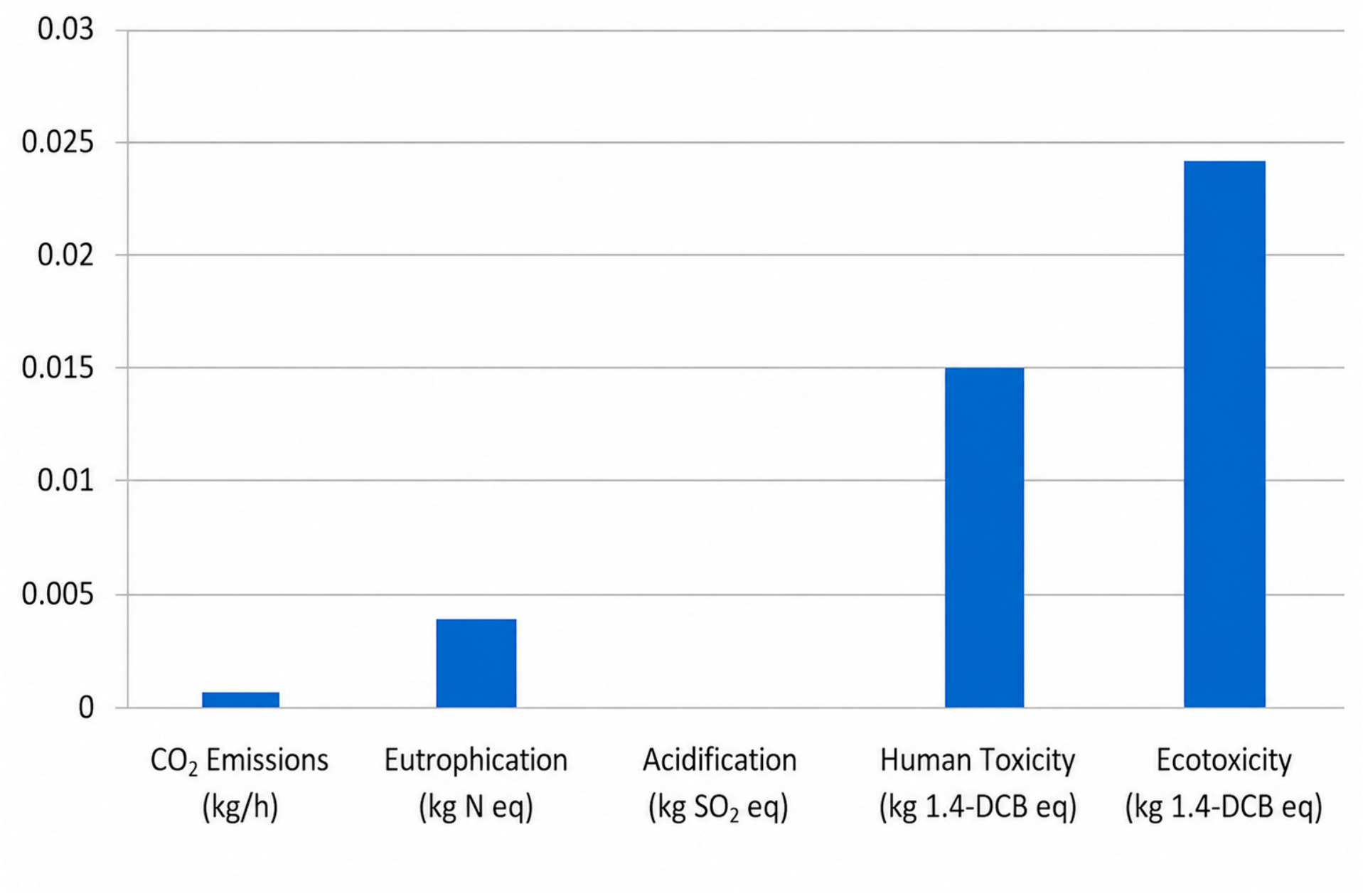
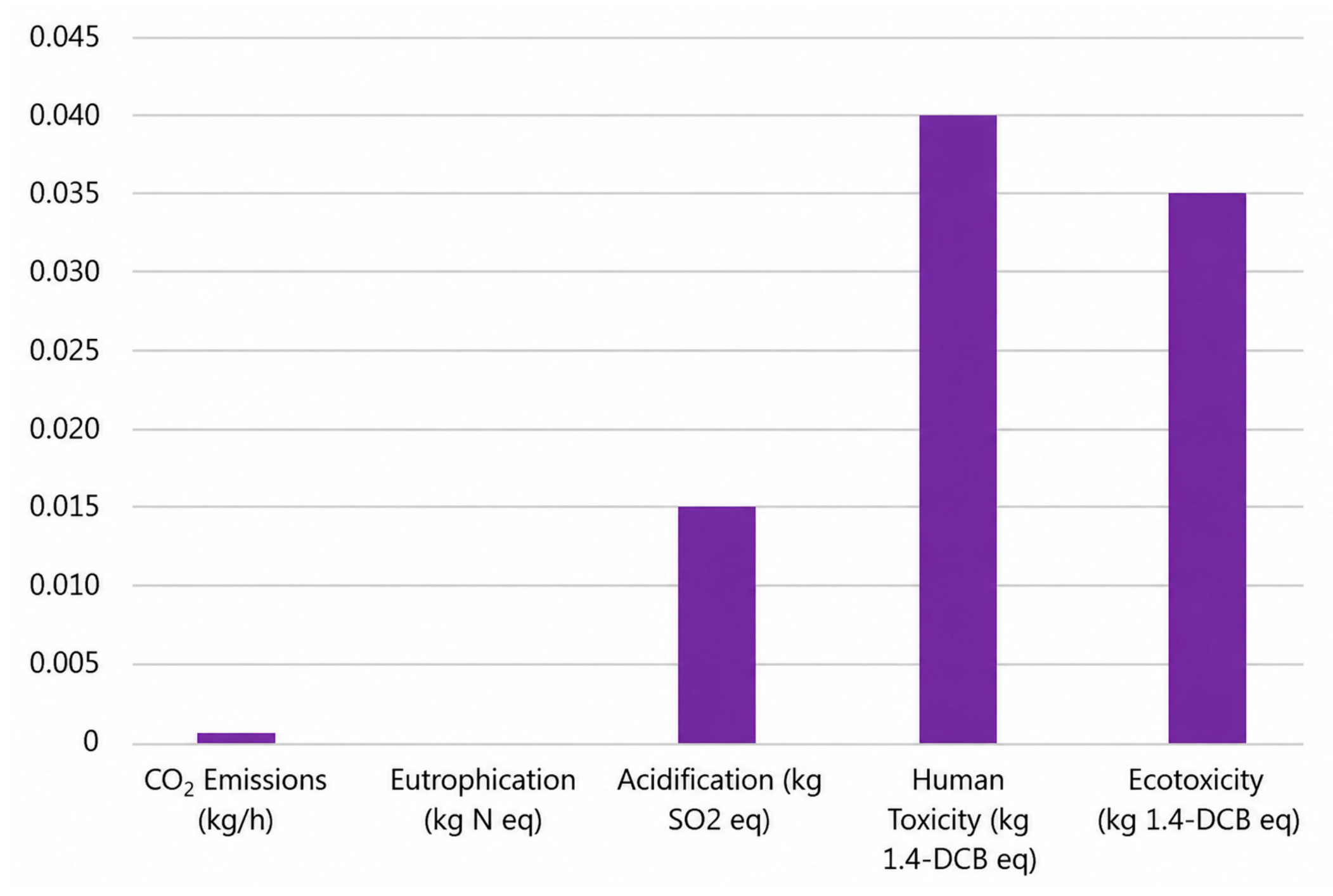
In addition to these categories, the crane operation is also associated with other environmental impacts, such as eutrophication, acidification, human toxicity, and ecotoxicity, as presented in Table 5. Eutrophication is mainly related to NOx emissions and particulate matter that may be deposited in water bodies, promoting nutrient enrichment. Acidification results from SOx and NOx emissions, which contribute to acid rain formation. Human toxicity and ecotoxicity are associated with the release of potentially harmful substances, such as volatile organic compounds, particulate matter, and residues from fuels and lubricants, which may affect both human health and ecosystems.
Table 5. Additional environmental impact categories associated with crane operations.
CategoriesValuesUnitsComments
Eutrophication0.000437kg N eqDue to NOx emissions and particulate matter
Acidification0.000011kg SO2 eqMainly due to SO2 emissions
Human Toxicity0.015kg 1,4-DCB eqAssociated with chemical emissions
Ecotoxicity0.0241kg 1,4-DCB eqRelated to impacts on aquatic ecosystems
Thus, the integrated analysis of these impacts, including those presented in Table 4 and Table 5 and illustrated in Figure 3, enables the identification of the main operational hotspots and the understanding of the relative contribution of each impact category associated with the crane. This approach supports a more comprehensive assessment of the equipment’s environmental performance and provides a basis for mitigation strategies, such as the use of lower-impact fuels, improvements in operational efficiency, and the implementation of emission control technologies.
Industrial Fertilizer Mixer
For the life cycle assessment of equipment such as an industrial fertilizer mixer, it is essential to consider its main technical and operational aspects across all stages of the system. This includes the characterization of operating conditions, maintenance requirements, and end-of-life processes.
The mixer operates using electricity supplied by the national grid, with an approximate capacity of 20,000 L. During operation, lubricants are consumed, estimated at around 5 L, which requires consideration of the environmental impacts associated with their use and replacement.
Maintenance is performed on a monthly basis and involves activities such as lubricating oil replacement and inspection of structural and functional components, including the screw, tube, Y-shaped intake system, and gates. At this stage, material consumption occurs, mainly lubricants, along with the occasional replacement of parts, contributing to waste generation and thus being incorporated into the inventory analysis.
At the end of its service life, the equipment is sent for dismantling and recycling by a specialized company. This process enables material recovery and reduces the environmental impacts associated with disposal, rendering it a pertinent case study for environmental assessment.
The input and output values associated with the mixer operation are presented in Table 6.
Table 7 presents the main environmental impacts associated with the operation of the industrial fertilizer mixer. During the mixing process, atmospheric emissions related to particulate matter dispersion are highlighted, particularly phosphate and nitrate dust. Phosphate dust emissions are estimated at 0.80 × 10⁻⁶ µg/m3, while nitrate dust reaches approximately 0.70 × 10⁻⁶ µg/m3. These emissions are directly associated with fertilizer handling and may compromise local air quality, in addition to posing risks to human health and the environment.
Additionally, emissions of particles from organic agglomerates are observed, estimated at approximately 0.40 × 10⁻⁶ µg/m3, particularly when fertilizers with organic composition are processed. These particles degrade local air quality and may exacerbate respiratory health impacts among workers and nearby communities.
Electricity consumption is also a relevant factor, with an estimated demand of approximately 15 kWh per operational cycle (Table 6). This consumption directly influences the impacts associated with electricity generation, particularly when derived from non-renewable sources. Regarding maintenance, the monthly consumption of approximately 5 L of lubricating oil represents a potential source of environmental impact, especially in cases of improper disposal, which may result in soil and water contamination.
Another relevant aspect is the impact associated with noise, with levels estimated at 110 dB(A), which may affect workers’ occupational health, contributing to hearing loss, stress, and fatigue. Therefore, control measures such as acoustic insulation and the use of personal protective equipment are essential.
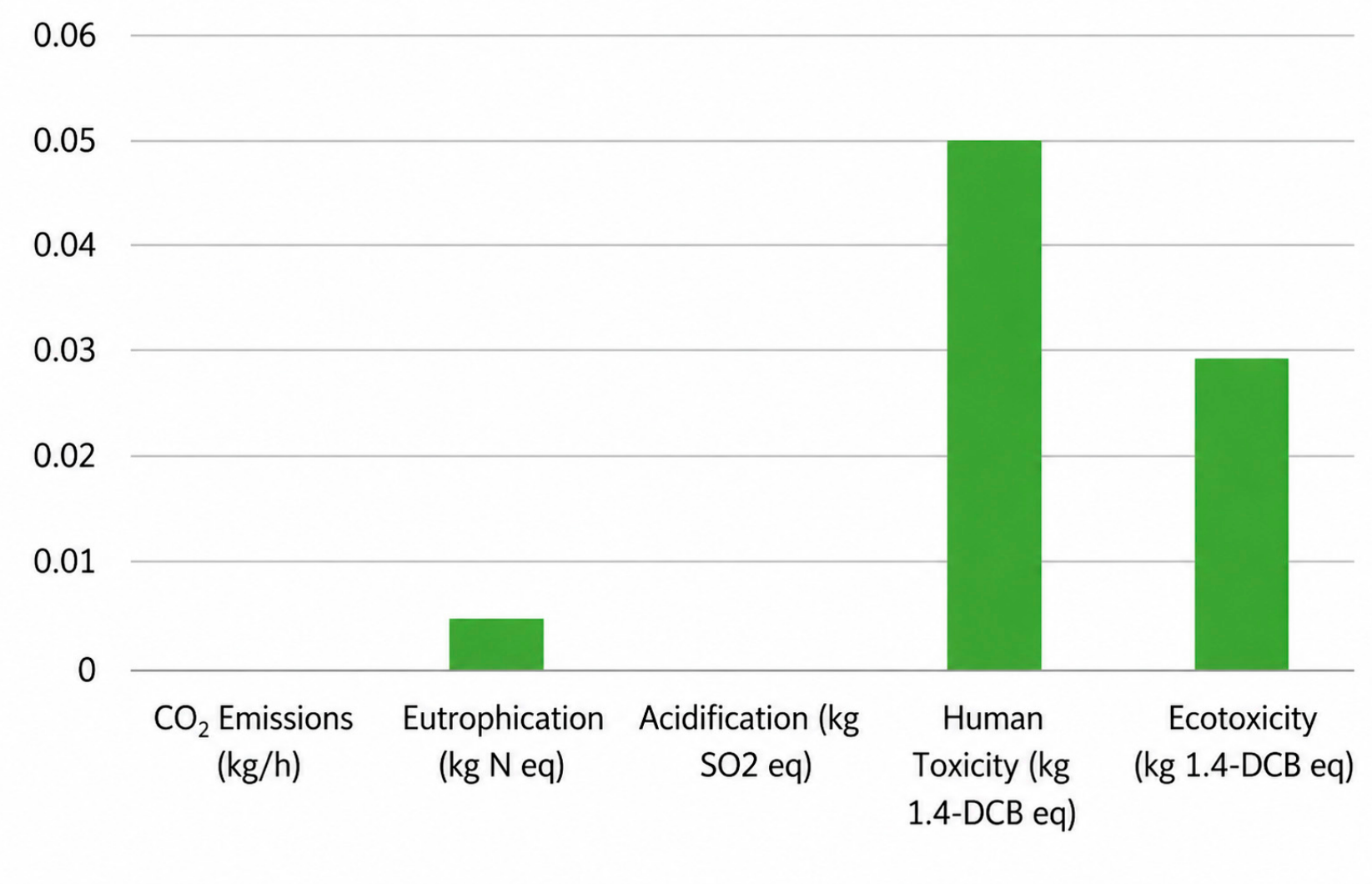
The life cycle assessment (LCA) of the industrial mixer, considering its capacity of 20,000 L, enables the quantification of relevant environmental impact categories, as presented in Table 8. Among these categories, eutrophication, acidification, human toxicity, and ecotoxicity stand out.
Eutrophication presents a value of 0.0062115 kg N eq and is associated with the release of nitrogen compounds during fertilizer handling, which may be transported to water bodies and promote nutrient enrichment. This process may result in excessive algal growth and reduced dissolved oxygen, compromising aquatic life.
Acidification, with a value of 0.0000017 kg SO2 eq, is related to the emission of compounds that contribute to the formation of acidic substances in the atmosphere. Although the value is relatively low, its effects may accumulate, impacting soils and aquatic ecosystems.
Human toxicity, estimated at 0.02 kg 1,4-DCB eq, indicates the presence of substances potentially harmful to human health, such as dust and chemical compounds released during operation. Ecotoxicity, with a value of 0.03 kg 1,4-DCB eq, reflects the impacts of these substances on ecosystems, particularly aquatic environments.
Overall, the integrated analysis of these impacts, as illustrated in Figure 4, enables the identification of the main operational hotspots of the mixer and the understanding of the relative contribution of each impact category. This approach supports a more comprehensive assessment of environmental performance and provides a basis for mitigation strategies aimed at reducing emissions, improving resource efficiency, and enhancing operational conditions.
Conveyor Belt
The conveyor belt used in the context of port operations for fertilizer imports is a key component for the efficiency of the logistics system, playing a central role in the continuous flow of materials. The equipment, manufactured on demand, operates at an approximate speed of 2 m/s and has a mechanical resistance of 2000 kN/m, contributing to optimized material handling and reduced downtime.
The system operates using electricity supplied by the national grid, which, compared to fossil fuel-based systems, tends to present lower direct environmental impacts. However, indirect greenhouse gas emissions associated with the electricity mix must be considered.
Maintenance is performed on a monthly basis and involves lubrication and inspection of equipment components, with an estimated consumption of approximately 5 L of lubricants. Occasionally, component replacement, such as screens and rollers, is required, resulting in additional material consumption and waste generation, which were incorporated into the inventory analysis.
It is noteworthy that the equipment does not consume water during operation, contributing to the reduction in water-related impacts in the port context. At the end of its service life, the conveyor is sent for dismantling and recycling by a specialized company, enabling material recovery and minimizing waste disposal.
In the life cycle inventory analysis, the main input and output flows were considered across all system phases. During the operational phase, electricity consumption is estimated at approximately 10 kWh, associated with indirect CO2 emissions of around 0.000351 kg/h. Additionally, fertilizer transport and particulate emissions to air were considered as variable flows, depending on operational conditions.
During the maintenance phase, lubricant consumption, estimated at approximately 5 L per month, results in waste generation of about 0.00201 L per day, which requires proper management due to its potential environmental impact.
Finally, in the end-of-life phase, the equipment undergoes dismantling, generating approximately 100 kg of metal waste destined for recycling, contributing to material recovery and reduced environmental impacts.
The data were modeled using SimaPro 7, ensuring methodological consistency and comparability of results.
The conveyor belt, used in port operations for fertilizer imports, presents relevant environmental impacts throughout its life cycle, including the operational, maintenance, and end-of-life phases, as shown in Table 9.
During the operational phase, indirect CO2 emissions are estimated at approximately 0.000351 kg/h, primarily resulting from electricity consumption. Additionally, the equipment generates noise levels of around 65 dB(A), which may affect both occupational health and environmental quality in surrounding areas. Another relevant aspect is the emission of particulate matter, whose magnitude depends on the physicochemical properties of the transported fertilizer.
Particulate emissions are mainly associated with dust generation due to friction between fertilizer granules and the conveyor components. Considering that fertilizers are primarily composed of nutrients such as nitrogen, phosphorus, and potassium, as well as secondary elements, these particles may impact both human health and the environment. The inhalation of fine particles may cause respiratory issues, while their deposition in soil and water bodies may alter chemical composition and affect local ecosystems. In this context, the adoption of control measures, such as dust suppression systems and air filtration, is essential to mitigate these impacts.
In the maintenance phase, lubricant consumption estimated at approximately 5 L per month results in waste generation of about 0.00201 L/day. Improper handling of these residues may lead to soil and water contamination; therefore, appropriate collection, storage, and disposal practices are essential, including the use of biodegradable lubricants whenever possible.
At the end of its life cycle, conveyor disposal represents a potential source of environmental impact, particularly if dismantling is not properly conducted. It is estimated that approximately 100 kg of waste is generated per unit, reinforcing the importance of recycling strategies and responsible dismantling to reduce environmental impacts.
In addition to direct impacts, conveyor operation also contributes to other environmental impact categories, as presented in Table 10. Eutrophication, with a value of 0.0000362 kg N eq, is mainly associated with fertilizer spillage during transport.
Acidification, estimated at 0.00540 kg SO2 eq, is related to electricity consumption and indirect emissions from the energy mix. Human toxicity, with a value of 0.02 kg 1,4-DCB eq, reflects risks associated with exposure to potentially harmful substances during maintenance activities. Ecotoxicity, estimated at 0.05 kg 1,4-DCB eq, is associated with the environmental impacts of fertilizer spills and particulate deposition.
Overall, the integrated analysis of these impacts, as presented in Figure 5, allows for the comparison of the relative contribution of each impact category associated with conveyor belt operation, highlighting the main system hotspots. This approach supports a more comprehensive environmental performance assessment and provides a basis for mitigation strategies aimed at reducing emissions, improving resource efficiency, and enhancing operational practices.
Rail Transport
Rail transport to the final customer represents a key stage in the logistics chain and is carried out using diesel-powered locomotives, such as the SD70 model, which are characterized by high traction capacity and efficiency in transporting large volumes over long distances.
In the life cycle inventory (LCI) analysis, the main input and output flows associated with the operational and maintenance phases of this system were considered. During the operational phase, diesel consumption is estimated at approximately 18,800 L per operation, directly associated with CO2 emissions of about 0.15201 kg/h. Additionally, fertilizer transport, with an approximate volume of 3290 tonnes, results in particulate matter emissions estimated at 15.8 × 10⁻³ µg/m3, whose magnitude depends on operational conditions and the physicochemical properties of the transported material.
Despite the high energy efficiency of rail transport on a per-tonne-kilometer basis, the intensive use of diesel fuel results in substantial contributions to greenhouse gas emissions. In this context, it is essential to consider both the energy inputs required for operation and the resulting atmospheric emissions within the life cycle assessment.
During the maintenance phase, lubricant consumption is estimated at approximately 20 L per day, generating waste on the order of 0.259 L per day. Improper handling of these residues may pose a relevant environmental risk, particularly in terms of soil and water contamination, reinforcing the need for appropriate management practices.
Therefore, rail transport of fertilizers to the final customer involves a range of environmental impacts, as presented in Table 11, with emphasis on greenhouse gas emissions and noise pollution. During operation, diesel combustion results in the release of carbon dioxide (CO2), the main greenhouse gas associated with this system, contributing significantly to global warming.
Emissions of nitrogen oxides (NOx) and methane (CH4) represent important environmental concerns associated with rail operations. NOx contributes to photochemical smog formation and acidification processes, while CH4 presents a global warming potential higher than that of CO2. In this study, CH4 emissions were estimated using background emission factors from the Ecoinvent database rather than direct field measurements, representing modeled values associated with diesel combustion processes. Although methane emissions from modern diesel locomotives are generally low due to combustion optimization and oxidation control technologies, small quantities may still be represented in standardized Life Cycle Assessment inventories. In addition, locomotive operation generates high noise levels, estimated between 95 and 105 dB(A) at a distance of 10 m, which may negatively affect occupational health and surrounding communities.
Although rail transport is often considered a more energy-efficient alternative compared to road transport, its environmental impacts are not negligible. In this context, the adoption of mitigation measures is essential, including the use of emission reduction technologies, improvements in energy efficiency, and the implementation of noise mitigation strategies, such as acoustic barriers and route planning.
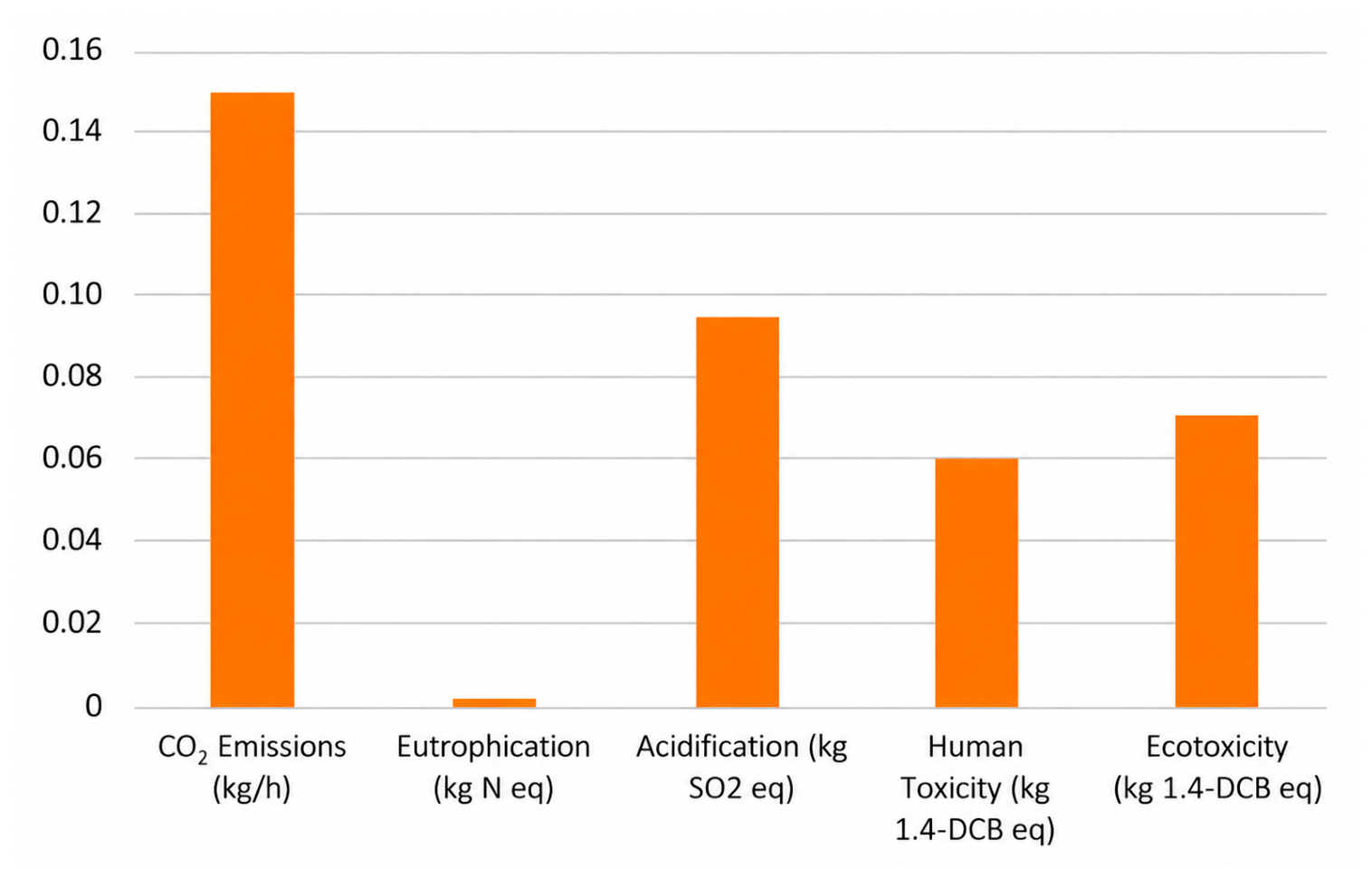
Table 12 presents the values associated with additional impact categories for the EMD SD70 locomotive. Eutrophication, with a value of 0.003801 kg N eq, is associated with nitrogen compound emissions from diesel combustion, which may be transported to water bodies and promote nutrient enrichment. This process may result in excessive algal growth and reduced dissolved oxygen, compromising aquatic life.
Acidification, estimated at 0.0959 kg SO2 eq, results from emissions of gases such as sulfur dioxide (SO2) and nitrogen oxides (NOx), which contribute to acid rain formation. This phenomenon may cause significant impacts on soils, aquatic ecosystems, and vegetation.
Human toxicity, with a value of 0.06 kg 1,4-DCB eq, indicates the potential adverse effects of atmospheric emissions on human health, including exposure to fine particulate matter and toxic gases associated with respiratory and cardiovascular diseases. Similarly, ecotoxicity, estimated at 0.07 kg 1,4-DCB eq, reflects the environmental risks associated with these emissions and potential diesel spills, which may negatively affect biodiversity and ecosystem integrity.
Overall, the integrated analysis of these impacts, as presented in Figure 6, allows for the comparison of the relative contribution of each impact category associated with locomotive operation, highlighting the main environmental hotspots. This comparative approach supports a more robust assessment of environmental performance and provides a basis for mitigation strategies across the logistics chain.
The low eutrophication values observed for locomotive operation are mainly related to the absence of direct fertilizer handling and nutrient-rich material losses. While diesel combustion contributes significantly to categories such as global warming and acidification, eutrophication is more strongly associated with nitrogen and phosphorus releases into water and soil systems. Therefore, the contribution of locomotive operation to eutrophication remains comparatively low.

5.1.2. Semi Automated Operation Integrated Environmental Impact Analysis

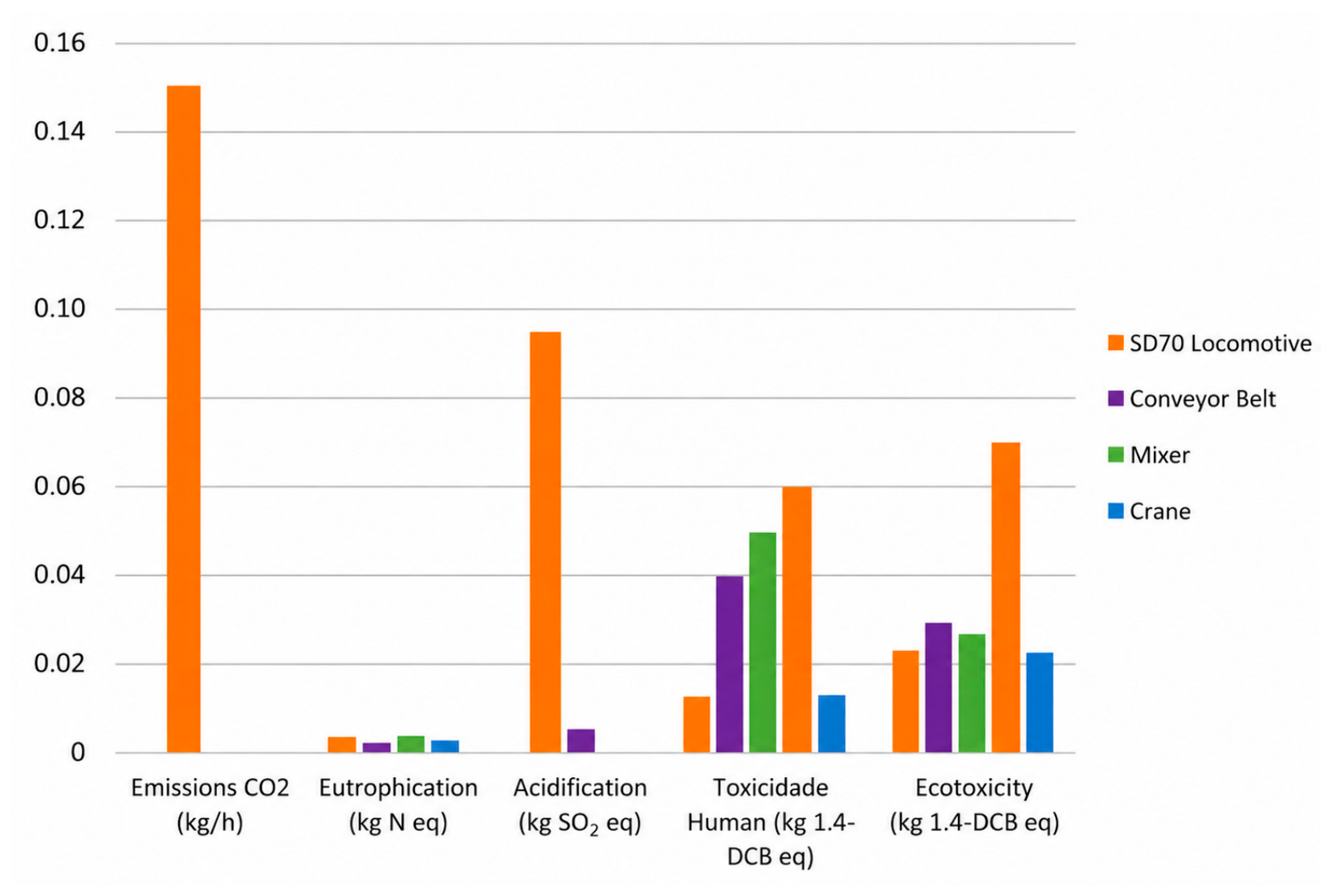
Figure 7 presents the integrated analysis of environmental impact categories associated with the semi-automated operation, allowing comparison across different equipment within the system.
The low eutrophication values observed in Figure 6 and Figure 7 are associated with the limited release of nutrients during locomotive and transport operations. Although diesel combustion contributes to atmospheric emissions, eutrophication is primarily linked to nitrogen and phosphorus losses directly released into water and soil systems. Since these operational stages do not involve significant fertilizer leakage or direct contact with aquatic environments, their contribution to eutrophication remains comparatively lower than other impact categories, such as global warming and acidification.
The SD70 locomotive stands out as the main source of CO2 emissions. This result is directly related to the use of diesel as an energy source, whose combustion releases significant amounts of greenhouse gases. This indicator is particularly relevant in the context of the energy transition, as CO2 is one of the main drivers of global warming.
Regarding eutrophication, the industrial mixer shows the highest contribution. This can be explained by the handling of fertilizers rich in nutrients such as nitrogen and phosphorus, which may be released during the operational process. When these compounds reach water bodies, they promote nutrient enrichment, potentially leading to excessive algal growth and deterioration of water quality.
In terms of human toxicity, the SD70 locomotive again emerges as the main contributor, followed by the industrial mixer. This behavior is associated with atmospheric emissions from diesel combustion, including particulate matter, nitrogen oxides (NOx), and other compounds potentially harmful to human health.
For ecotoxicity, both the SD70 locomotive and the conveyor belts show significant contributions. Ecotoxicity refers to impacts on ecosystems, particularly through soil and water contamination. In the case of conveyor belts, these impacts are mainly associated with lubricant leaks and particulate dispersion, while for the locomotive they are primarily related to exhaust emissions and potential fuel leaks.
Overall, the analysis presented in Figure 7 highlights that the most significant environmental impacts are concentrated in transport and material handling processes, emphasizing the importance of mitigation strategies aimed at reducing fossil fuel consumption, controlling emissions, and improving operational efficiency throughout the system.


5.2. Life Cycle Inventory Analysis of the Non-Automated Operation

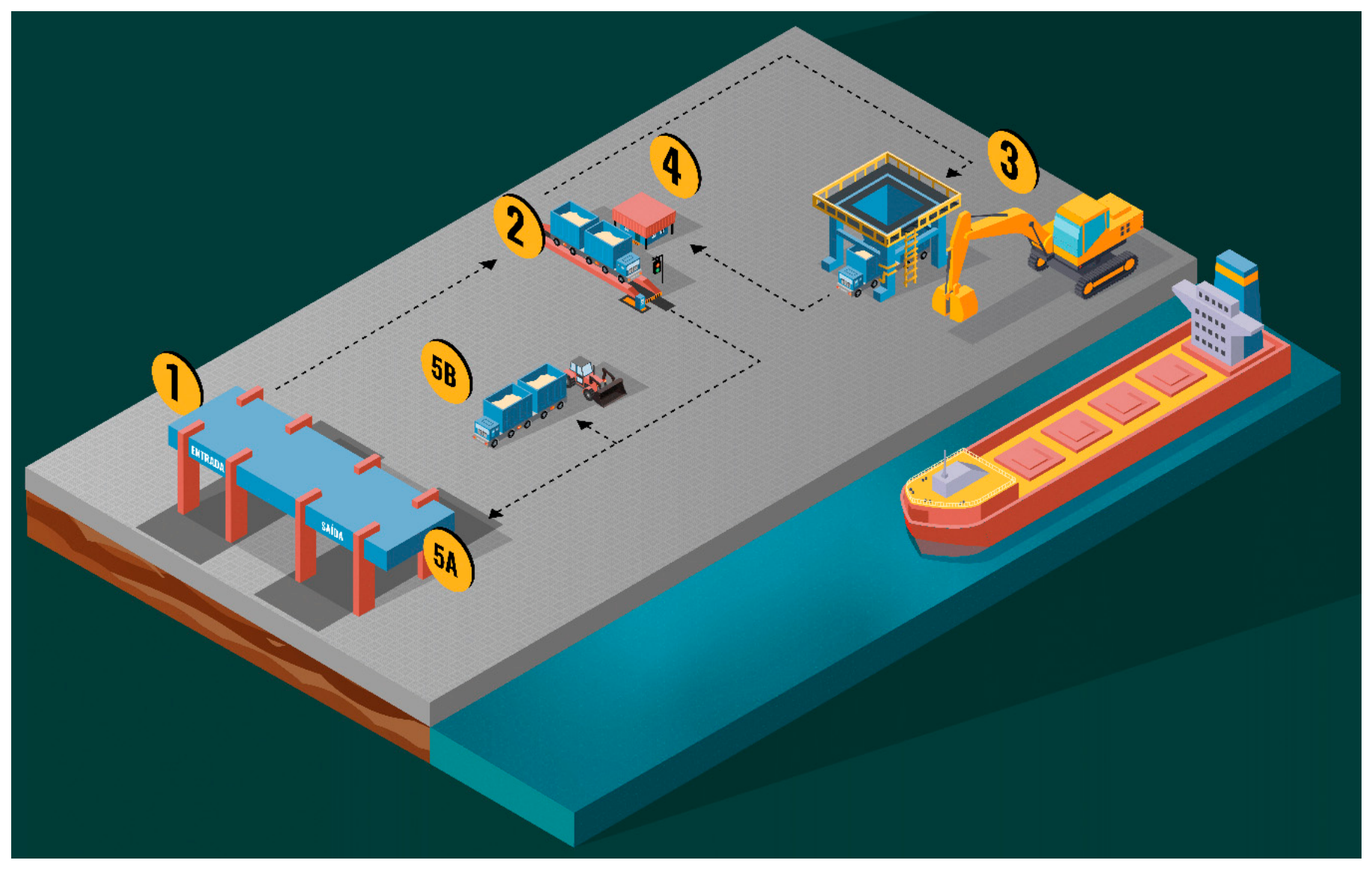
In the life cycle inventory (LCI) analysis of the non-automated operation, it is essential to consider the input and output flows of energy and materials across all stages of the process, from fertilizer unloading from the ship’s holds to delivery to the final customer. The configuration of this operation is schematically presented in Figure 8.
Figure 8 presents the operational flow of the non-automated fertilizer handling system adopted in the port logistics chain. The process begins with the arrival of trucks at the port, followed by the verification of the vehicle weight without cargo. After this initial weighing stage, the truck is loaded with fertilizer and then directed to a second weighing process to verify the total loaded weight. If the truck meets the required operational weight limits, it is released for transport to the final destination. However, when the vehicle exceeds the permitted weight, part of the fertilizer load must be removed to adjust the cargo before release. This operational configuration involves multiple handling stages and repeated truck movements, increasing fuel consumption, material losses, and atmospheric emissions, which directly influence the environmental impacts identified in the LCA results.
Initially, telescopic cranes used for cargo unloading play a key role, being responsible for fuel and electricity consumption, as well as greenhouse gas emissions. In addition, impacts associated with component wear and maintenance activities required for continuous operation must be considered.
Unlike the semi-automated operation, the internal transport of fertilizers is carried out directly by trucks, without the use of conveyor belts. This configuration results in higher fossil fuel consumption, increased atmospheric emissions, and more intensive maintenance requirements for the vehicles.
In cases of overload, a skid steer loader is used to adjust the transported volume, introducing an additional piece of equipment into the system. This process involves additional energy consumption, associated emissions, and material wear, increasing the environmental impacts of the operation.
Within the storage facility, the fertilizer is reorganized using a wheel loader and subsequently processed in an industrial mixer. At this stage, the energy consumption of both pieces of equipment, as well as the use of auxiliary materials and associated emissions, must be considered.
After the mixing process, the fertilizer is transported to the final customer by trucks. This stage represents one of the main differences compared to the semi-automated operation, as approximately 100 trucks are required to meet the same demand that would otherwise be handled by rail transport. Each vehicle consumes significant amounts of fuel, generates greenhouse gas emissions, and requires maintenance, resulting in a higher overall environmental impact.

5.2.1. Analysis of Equipment in the Non-Automated Operation

Truck
The VW Constellation 25,360 truck plays a key role in the road transport of fertilizers between the port and the final customer, representing one of the main logistical components of the non-automated operation. The vehicle, powered by diesel, is designed for heavy-duty transport, offering operational robustness and adequate efficiency for long-distance hauling.
Under typical operating conditions, the vehicle presents an average fuel consumption of approximately 4 km/L when fully loaded. Considering the route to the final destination, the average diesel consumption is estimated at approximately 238.75 L per trip, a figure directly influenced by the distance traveled and the transported load. This consumption represents a significant source of greenhouse gas emissions, particularly CO2, within the life cycle assessment context.
From a technical perspective, the vehicle has a curb weight ranging between 8230 kg and 8381 kg, while the gross vehicle weight (GVW) legal and technical limits are 23,000 kg and 28,100 kg, respectively. The gross combined weight (GCW) reaches 53,000 kg, and the maximum traction capacity is 56,000 kg, highlighting its suitability for high-demand logistics operations.
The propulsion system consists of a Cummins ISL 360 engine, featuring six cylinders in line and a displacement of 8900 cm3, capable of delivering a maximum power of 360 hp at 2100 rpm and a maximum torque of 166 kgfm within the 1200–1400 rpm range. These characteristics ensure adequate performance under heavy load conditions.
Structurally, the front suspension is composed of parabolic springs, while the rear suspension uses trapezoidal semi-elliptical springs. The braking system is a head-type brake system. The wheels have an 8.25 × 22.5 rim configuration and are fitted with 295/80R22.5 tires. The fuel tank capacity is 615 L, providing high operational autonomy.
The technical specifications presented were obtained from manufacturer data (2023) and were used as the basis for modeling the life cycle inventory of road transport.
Table 13 presents the input and output flows associated with the operation of 100 VW Constellation 25.360 trucks in fertilizer transport. The analysis shows that road transport constitutes a significant source of environmental impacts, mainly due to its high dependence on fossil fuels.
As shown in Table 14, diesel combustion results in the emission of several atmospheric pollutants. Among them, carbon dioxide (CO2) stands out as the main greenhouse gas associated with the system. Additionally, nitrogen oxides (NOx) contribute to photochemical smog formation and acidification processes, negatively affecting air quality and human health. Methane (CH4), although emitted in smaller quantities, has a high global warming potential, reinforcing its relevance in the context of climate change.
Another critical aspect is the emission of fine particulate matter (PM2.5), primarily generated by incomplete diesel combustion. These particles have a high capacity to penetrate the respiratory system and are associated with cardiovascular and respiratory diseases. Furthermore, total hydrocarbon (THC) emissions indicate the presence of potentially toxic organic compounds, contributing to air quality degradation and posing additional risks to human health.
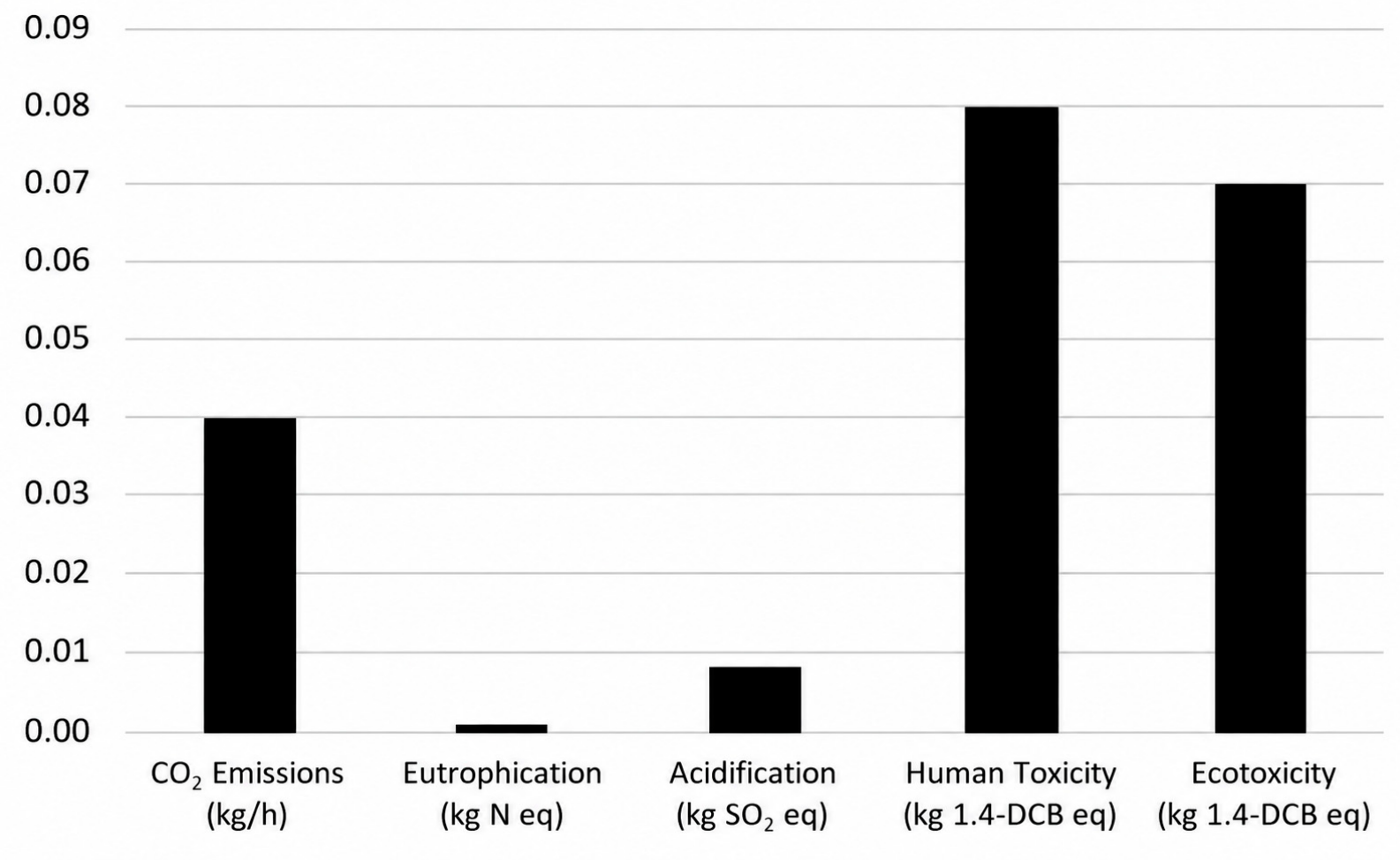
Table 15 presents other relevant impact categories associated with truck operations. Eutrophication, with a value of 0.0952 kg N eq, is related to the release of nitrogen compounds from combustion and the potential spillage of fertilizers during transport, promoting nutrient enrichment in water bodies. Acidification, estimated at 0.789 kg SO2 eq, results from atmospheric emissions of acidic compounds such as NOx and SO2, which may affect soils and aquatic ecosystems.
Human toxicity, with a value of 0.8 kg 1,4-DCB eq, reflects the impacts of exposure to atmospheric pollutants, including fine particles and organic compounds. Ecotoxicity, estimated at 1.1 kg 1,4-DCB eq, is associated with environmental contamination resulting from emissions and potential diesel leaks, affecting biodiversity and local ecosystems. Finally, ozone layer depletion, with a value of 0.05 kg CFC-11 eq, although less significant, is related to emissions that may indirectly contribute to stratospheric ozone degradation.
Overall, the integrated analysis of these impacts, as presented in Figure 9, enables comparison of the relative contribution of different impact categories associated with road transport, highlighting its relevance as one of the main environmental hotspots of the non-automated operation. This comparative approach reinforces the need for strategies aimed at reducing fossil fuel consumption, improving energy efficiency, and mitigating emissions throughout the logistics chain.
Skid Steer Loader
The BOB CAT S750 skid steer loader is widely used in port operations for material handling and load adjustment, playing a relevant role in the internal logistics of the non-automated system. It is a robust piece of equipment designed for material handling operations, equipped with an 85 hp engine and a rated operating capacity of 1499 kg, enabling the handling and redistribution of significant volumes of fertilizers.
The equipment is powered by diesel, a fossil fuel commonly used in heavy machinery due to its high energy density and operational reliability. Within the life cycle assessment framework, this energy consumption represents a significant source of greenhouse gas emissions, particularly carbon dioxide (CO2).
Preventive maintenance is carried out semiannually to ensure optimal performance and equipment longevity. During these procedures, approximately 8.6 L of lubricants are consumed, along with inspections of critical components such as belts and tires. These activities involve additional material consumption and the generation of waste, which must be accounted for in the environmental analysis.
At the end of its service life, the skid steer loader is returned to the leasing company, which is responsible for its final disposal. This process typically involves equipment dismantling and the recycling of its components, particularly metallic materials, contributing to the reduction in environmental impacts associated with disposal. It is worth noting that the equipment does not consume water during its operation, eliminating direct impacts related to water use.
From a life cycle inventory perspective, the main input and output flows were considered across the operation, maintenance, and end-of-life phases. During the operational phase, diesel consumption is estimated at approximately 50 L, resulting in CO2 emissions of about 0.009541 kg/h. Additionally, the operation is associated with fertilizer losses, estimated at approximately 1.8 kg/day, due to material handling inefficiencies.
During the maintenance phase, lubricant consumption results in waste oil generation estimated at approximately 0.756 L per period, which poses a potential environmental risk if not properly managed. At the end of its life cycle, the equipment generates approximately 350 kg of metal waste destined for recycling, highlighting the importance of circular economy strategies in port equipment management.
Table 16 presents the main environmental impacts associated with the operation of the skid steer loader within the port activity context. Overall, the impacts are related to fuel consumption, waste generation, and material losses during fertilizer handling.
During the operational phase, diesel consumption results in carbon dioxide (CO2) emissions, estimated at 0.009541 kg/h, contributing to global warming. Although the absolute value is lower compared to larger equipment, this impact becomes relevant when considered within the overall system.
In the maintenance phase, the generation of waste lubricating oil, estimated at approximately 0.756 L per period, is observed. These residues pose a significant risk of soil and water contamination, particularly when not properly managed. Therefore, practices such as reuse and controlled disposal are essential for mitigating these impacts.
Another relevant aspect is fertilizer spillage during loading and adjustment operations, estimated at approximately 1.8 kg/day. This process may result in soil and groundwater contamination, as well as indirect impacts such as eutrophication of water bodies. Operational measures, including proper operator training and the use of containment systems, are essential to reduce these losses.
At the end of life, the generation of solid waste, estimated at approximately 350 kg, highlights the importance of recycling strategies and proper material disposal, contributing to the reduction in environmental impacts associated with equipment disposal.
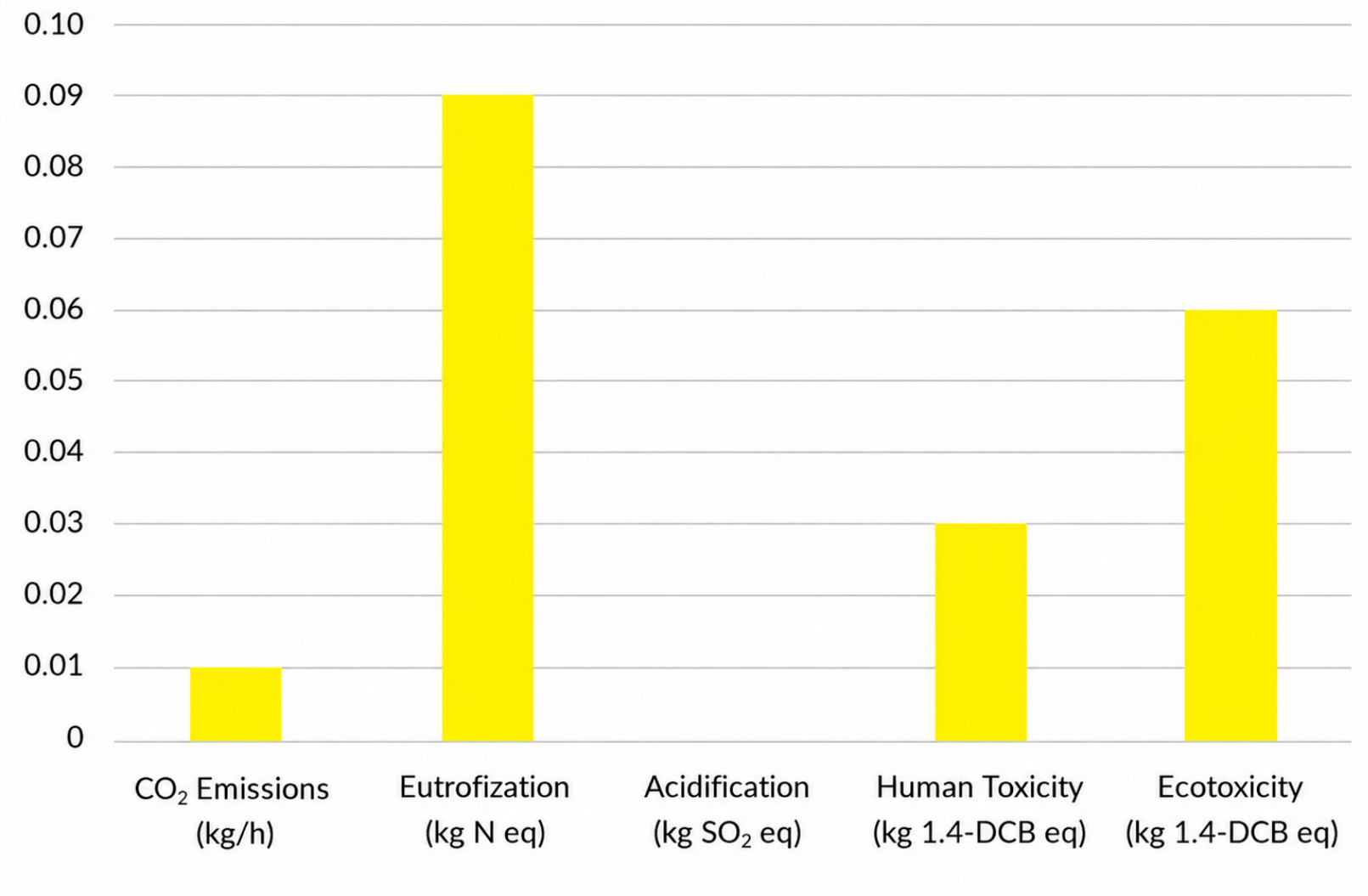
Table 17 presents additional impact categories associated with the skid steer loader operation. Eutrophication, with a value of 0.08951 kg N eq, is directly related to fertilizer spillage during handling. Acidification, although relatively low (0.000014 kg SO2 eq), results from emissions associated with diesel combustion.
Human toxicity, estimated at 0.03 kg 1,4-DCB eq, is associated with exposure to potentially harmful compounds during maintenance and operation activities. Ecotoxicity, with a value of 0.06 kg 1,4-DCB eq, reflects environmental impacts resulting from oil leaks and fertilizer dispersion, which may directly affect local ecosystems.
Overall, the integrated analysis of these impacts, as presented in Figure 10, enables comparison of the relative contribution of the skid steer loader with other system components. This approach highlights the role of this equipment as an operational support element, whose impacts, although lower than those of transport systems, are relevant due to its direct involvement in handling stages and material losses. The comparison also reinforces the importance of operational improvements and management strategies to reduce diffuse impacts associated with the operation.

5.2.2. Non Automated Operation Integrated Environmental Impact Analysis

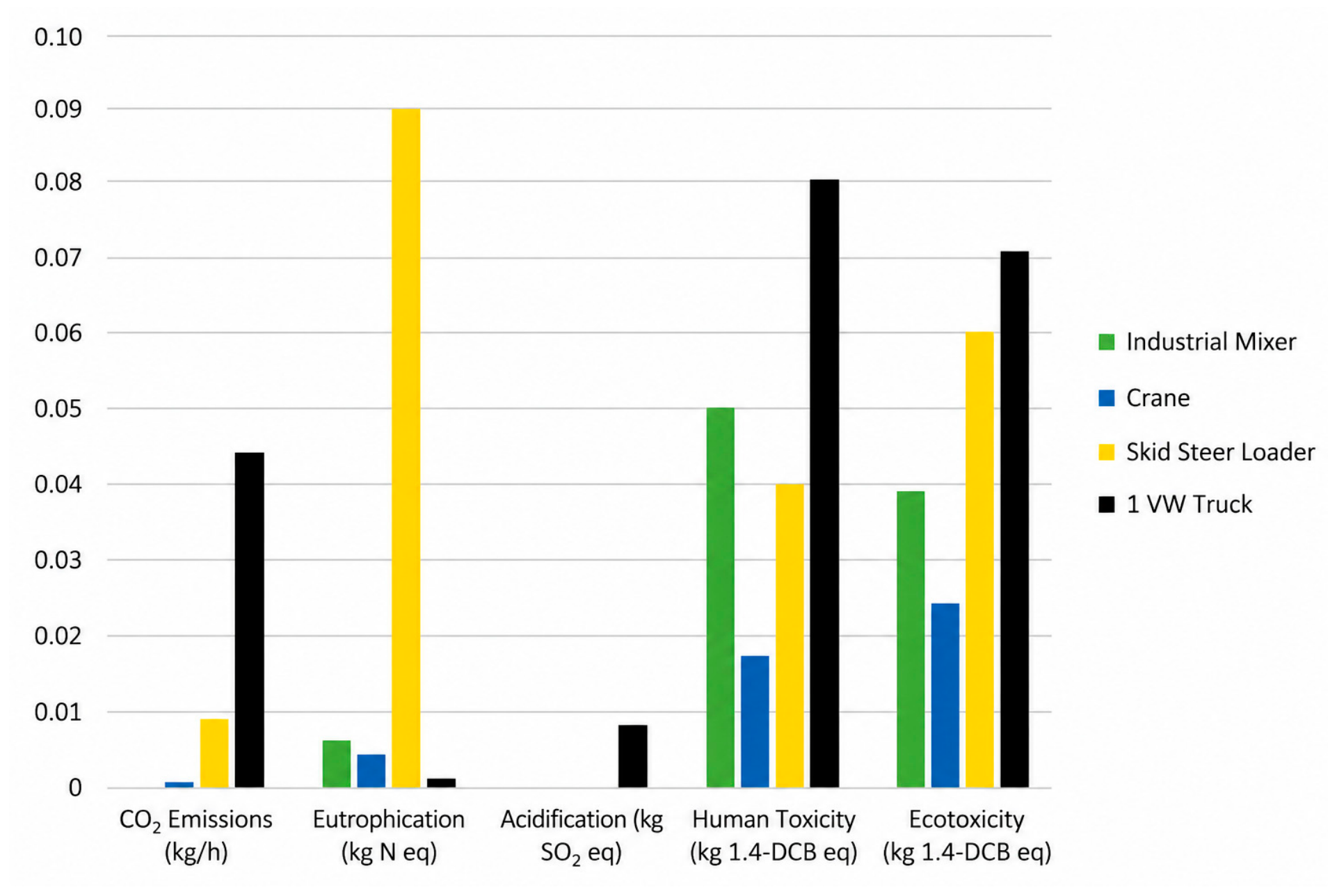
In Figure 11, the skid steer loader stands out as the main contributor to the eutrophication category. This result is directly associated with fertilizer losses during handling operations, as well as the use of lubricants and other operational fluids which, in cases of leakage or improper disposal, may reach soil and water bodies. These processes promote nutrient enrichment, particularly nitrogen and phosphorus, contributing to the eutrophication of aquatic ecosystems.
The VW truck, in turn, presents the highest contribution to CO2 emissions, human toxicity, and ecotoxicity categories. This behavior is associated with the intensive use of diesel as an energy source. The combustion of this fuel results in the emission of carbon dioxide (CO2), the main greenhouse gas linked to global warming. In addition, atmospheric pollutants such as nitrogen oxides (NOx), fine particulate matter (PM2.5), and hydrocarbons are emitted, directly affecting human health and contributing to human toxicity. These same pollutants, when deposited in the environment, can affect organisms and ecological chains, contributing to ecotoxicity.
The industrial mixer is also identified as a relevant contributor to human toxicity. During the fertilizer mixing process, dust and fine particles are generated, which may be inhaled by workers, posing occupational health risks. Additionally, potential fertilizer leaks or dispersion may result in soil and water contamination, reinforcing impacts associated with this category.
Regarding acidification, the truck shows the highest contribution, associated with emissions from diesel combustion. This process releases compounds such as sulfur dioxide (SO2) and nitrogen oxides (NOx), which act as precursors to acid rain. These pollutants react in the atmosphere to form sulfuric and nitric acids, which may be transported over long distances before being deposited in soils or water bodies. As a consequence, ecosystem acidification occurs, negatively affecting vegetation, fauna, and environmental quality, as well as potentially causing damage to infrastructure.
Regarding the stability of these results, the sensitivity analysis described in Section 4 indicates that the ranking of equipment by environmental impact particularly the dominance of transport vehicles in GWP and acidification remains robust under the assumed parameter variations. A ±15% variation in diesel consumption rates alters absolute impact values proportionally but does not change the relative contribution order among equipment categories. Eutrophication results are more sensitive to fertilizer loss fraction assumptions; a 20% increase in estimated losses would raise the skid steer loader’s eutrophication contribution, without altering its position as the main contributor in the non-automated scenario.

6. Discussion

The LCA results indicate a pattern consistent with the literature: (i) categories associated with fossil fuel combustion such as global warming (GWP/CO2 eq), acidification, and a significant portion of toxicity impacts tend to be dominated by diesel consumption in equipment and transport vehicles; and (ii) nutrient-related categories (especially eutrophication) are highly sensitive to fertilizer losses (dust/spillage) and to operational control during handling. This behavior is consistent both with evidence that the transport sector is a major CO2 emitter particularly in road transport and with studies highlighting the relevance of nitrogen and phosphorus losses for eutrophication, as well as atmospheric emissions (NOx, SOx, PM) for local and regional impacts.

6.1. Scientific Novelty and Contribution to Literature

The present study advances the existing body of knowledge on port sustainability and life cycle assessment in several distinct ways.
First, while previous LCA studies in port environments have concentrated on large-scale automated terminals predominantly container ports in developed countries [1,3,6,7] this study provides one of the first equipment-level LCA analyses of a fertilizer import operation in a multi-cargo public port in Latin America, using primary operational data collected in situ. This geographic and operational context has not been addressed in the existing LCA literature, where developing-country port realities (fuel quality, maintenance standards, grid emission factors, and logistics infrastructure) differ substantially from the assumptions underlying most published studies.
Second, unlike prior studies that examined single equipment categories in isolation such as Wen et al. [12], who focused exclusively on quayside cranes, and Vujičić et al. [3], who assessed RTG cranes and yard tractors this study modeled the entire operational chain from ship unloading to final customer delivery, incorporating cranes, conveyor belts, industrial mixers, locomotives, road trucks, and skid steer loaders within a single functional system boundary. This approach enables cross-equipment comparison of environmental contributions under a consistent functional unit (1 tonne of fertilizer delivered), a methodological contribution not found in the referenced literature.
Third, the parallel assessment of two distinct automation levels semi-automated and non-automated under primary field data conditions represents a contribution to the emerging literature on port digitalization and operational sustainability. Whereas Scharpenberg et al. [2] compared diesel, hybrid, and electric RTGs based on modeled scenarios, this study derives both scenarios from real operational configurations observed at the same facility, ensuring the comparability of results is grounded in actual practice rather than theoretical modeling.
Fourth, the explicit integration of fertilizer-specific processes including particulate dust emissions from mixing, nitrogen and phosphorus losses during skid steer handling, and the eutrophication implications of open versus enclosed handling extends LCA methodology beyond the energy and carbon scope typical of port studies. This integration responds to the observation of Skowrońska and Filipek [5] and Hasler et al. [4] that fertilizer-related nutrient losses are critical LCA contributors, but their work was confined to the agricultural sector and had not been applied to port logistics.
Finally, this study contributes to the energy transition literature for the maritime-port sector by quantifying the environmental gap between diesel-intensive non-automated operations and a more integrated semi-automated configuration. The results provide an empirical basis for port decarbonization strategies that goes beyond the qualitative recommendations prevalent in the grey literature, aligning with the call for evidence-based, equipment-level analysis articulated by Iris and Lam [23].

6.2. Climate Change and CO2 Emissions

Carbon dioxide (CO2) is the main greenhouse gas associated with fossil fuel combustion in the transport sector. Globally, transport accounts for a significant share of energy-related CO2 emissions, with road transport dominating direct emissions, while rail transport generally represents a smaller share.
In the semi-automated scenario, the locomotive appears as the main source of CO2 due to its high diesel consumption. However, this result should be interpreted in light of logistical efficiency: rail transport typically moves large volumes per trip, increasing productivity (tons transported) per unit of fuel. This is consistent with widely used average emission factors in inventories and logistics calculators, where emissions per ton-kilometer for rail are significantly lower than those for road transport (e.g., reference values report higher CO2 intensity for road than for rail) [15].
In the non-automated scenario, the dominance of trucks in CO2 emissions is due to their lower payload per vehicle and the need for multiple trips to transport the same mass that could be consolidated into rail compositions. This type of operational difference is precisely what makes intermodal comparisons (road–rail) often reveal relevant trade-offs between cost/time and emissions, depending on the level of cargo consolidation and distance. Thus, when normalized by transported mass (functional unit), the semi-automated scenario tends to present lower GWP intensity, even if a single asset (the locomotive) concentrates a large portion of the system’s energy consumption [16].

6.3. Eutrophication Associated with Fertilizer Handling

Eutrophication results from the enrichment of water bodies with nutrients, especially nitrogen (N) and phosphorus (P), potentially triggering algal blooms, dissolved oxygen depletion (hypoxia), and ecosystem impacts. In fertilizer supply chains, LCA literature shows that eutrophication is particularly sensitive to nutrient losses, often dominated by emissions in the “use/application” phase a logic that also applies, by analogy, to diffuse losses during handling (dust/spillage and runoff via rainwater) [4].
In the results, in the semi-automated scenario, the industrial mixer stands out as the main contributor to eutrophication, which is plausible since the mixing stage may generate dispersion of fine particles or localized product losses. Nevertheless, more controlled operations (fixed infrastructure, fewer transshipment interfaces, and greater material flow confinement) tend to reduce spill opportunities and the contact of fertilizer with exposed surfaces and drainage systems. This interpretation aligns with findings from fertilizer terminal studies linking higher nitrogen and phosphorus discharge to handled volumes, rainfall intensity, and the characteristics/area of loading zones highlighting the role of operational control and stormwater management in shaping eutrophication impacts [4,24].
In the non-automated scenario, the skid steer loader emerges as the main contributor, consistent with a context of more “open” handling and a greater number of mobile operations. More movements and interfaces increase the number of potential loss points (material drops, dust, leaks, and surface runoff). Additionally, studies on dry bulk cargo show that operational and accidental inputs of materials into the marine environment can be relevant at aggregate scales, reinforcing that small loss fractions when associated with large volumes and unfavorable operational conditions can translate into significant environmental impacts [24].
The shift in eutrophication dominance between the semi-automated and non-automated scenarios is mainly associated with differences in material handling conditions and the location of fertilizer losses within each operational configuration. In the semi-automated system, the industrial mixer represents the main eutrophication contributor because fertilizer handling is more concentrated within enclosed and controlled processing stages, making the mixing operation the primary potential source of particulate dispersion and material loss. In contrast, the non-automated scenario involves a greater dependence on open mobile handling operations using skid steer loaders and repeated truck movements. Under these conditions, fertilizer losses become more distributed throughout the operational flow, particularly during loading, redistribution, and transport adjustment activities performed by the loader. Therefore, the eutrophication hotspot shifts from the enclosed mixing stage to open handling operations, where the probability of spillage, runoff, and diffuse material losses is comparatively higher.

6.4. Acidification and NOx and SOx Emissions

Acidification is mainly associated with atmospheric emissions of acidifying precursors such as sulfur oxides (SOx) and nitrogen oxides (NOx), which contribute to acid deposition (acid rain) and pH changes in ecosystems. Atmospheric chemistry and wet deposition studies emphasize that SO2 and NOx are key precursors of this environmental problem [17].
Within LCA methods, this category is usually expressed in kg SO2 eq, with characterization factors incorporating NOx, NH3, and SO2 (e.g., global average terrestrial acidification factors in the ReCiPe method). Therefore, systems with higher diesel consumption and thus higher NOx/SOx emissions tend to concentrate acidification impacts, explaining the dominance of transport (locomotive in the semi-automated scenario; road fleet in the non-automated scenario).
Furthermore, the magnitude of this impact depends on technical and management variables such as fuel quality (sulfur content), engine efficiency, and the presence of after-treatment technologies. Technical evidence and reviews highlight that low-sulfur fuels directly reduce SO2 emissions and enhance the performance and durability of emission control technologies; systems such as SCR (Selective Catalytic Reduction) are essential for NOx mitigation, while DPF (Diesel Particulate Filter) reduces particulate matter associated with diesel combustion.

6.5. Human Toxicity and Ecotoxicity

Human toxicity and ecotoxicity categories reflect potential effects of exposure to hazardous substances emitted to air, water, and soil. In port and logistics operations heavily dependent on diesel, vehicles and machinery tend to be major contributors, as diesel exhaust is a complex mixture of gases and particles. Controlled exposure studies and environmental health reviews indicate that diesel exhaust includes NOx, SOx, CO, organic compounds, and fine particulate matter (PM2.5), and that exposure may trigger pro-inflammatory and cardiovascular effects at sufficiently high levels.
In the broader port context, reviews of health impact assessments of shipping and port emissions consistently identify PM, NOx, and SOx as key pollutants and indicate higher impact burdens in populations near ports and transport corridors, with potential benefits from sulfur control and NOx reduction scenarios. Although such studies often focus on ship emissions and the port-city system, they support the interpretation that an increased number of diesel vehicles (as observed in the non-automated scenario) tends to increase human toxicity and ecotoxicity pressures per functional unit [11].
Additionally, in fertilizer operations, there is plausibility for contributions to toxicity/ecotoxicity via dust and material losses, particularly because phosphate fertilizers may contain trace metals (e.g., Cd, Pb, Zn, and Cu), which can accumulate in soils and pose environmental and health risks depending on mobility and local conditions. Reviews of fertilizer LCAs and characterization studies of phosphate fertilizers document both the presence of metals and their associated toxic potential [5].

6.6. Implications and Mitigation Strategies Consistent with LCA

In summary, the results suggest that the semi-automated scenario tends to present better environmental performance per ton transported, mainly because it combines (i) higher efficiency of rail transport for large volumes and (ii) better handling control (fewer loss points) even when the locomotive appears as a hotspot for CO2 and acidification in absolute terms.
Regarding mitigation, the literature supports three main directions, consistent with the observed hotspots:
Electrification and technological transition of port equipment and yard tractors are frequently associated with significant life cycle emission reductions, especially when electricity emission factors improve with higher shares of renewables. Case studies in ports comparing diesel versus electric yard vehicles report substantial environmental gains under low-carbon electricity scenarios [25].
Based on the results of this study, the replacement of diesel-powered mobile equipment with electric alternatives particularly trucks and loaders, is recommended as a priority mitigation strategy. The non-automated scenario’s dominance in GWP, acidification, and human toxicity is directly traceable to diesel combustion in these vehicle types. The quantified differences between scenarios provide a concrete empirical basis for prioritizing electrification investments at this port and comparable facilities.
Finally, mitigating eutrophication in fertilizer contexts requires reducing losses and runoff: better flow confinement (e.g., enclosed conveyors), dust suppression, cleaning routines, and especially stormwater and drainage management in loading/transfer areas. Evidence from fertilizer terminals shows that rainfall intensity and loading area configuration influence nutrient discharge, reinforcing that engineering and operational measures can be decisive.
Although the semi-automated scenario consistently presented lower environmental impacts per tonne transported, its exclusive adoption may not always be operationally or economically feasible, particularly for ports in developing regions. Semi-automated systems require significant prior investments in fixed infrastructure such as conveyor belts, rail connections, and industrial mixing facilities along with operational flexibility to handle variable cargo profiles. Moreover, not all ports have rail infrastructure capable of absorbing full cargo volumes currently moved by road. A partial or hybrid semi-automation strategy, incorporating fixed processing infrastructure while retaining road transport for the final logistics leg, may represent a more realistic transitional pathway. This configuration could still yield significant environmental gains relative to the fully non-automated baseline, as road transport was identified as the dominant emission source. Future research should integrate environmental LCA with life cycle costing (LCC) to provide a comprehensive basis for investment decisions.

6.7. Assessment of Research Hypotheses

The six hypotheses formulated in Section 3 can now be evaluated in light of the LCA results obtained for both scenarios.
H1—The VW Constellation truck will present the highest contribution to CO2 eq (GWP) among the analyzed equipment in the non-automated scenario—was confirmed. In the non-automated scenario, road trucks collectively represent the dominant source of GWP, owing to the high diesel consumption associated with the large number of vehicles required to transport the functional unit (1 tonne of fertilizer). The truck’s per-unit CO2 intensity is substantially higher than that of any individual piece of fixed handling equipment analyzed.
H2—The skid steer loader will be the main contributor to eutrophication potential in the non-automated scenario—was confirmed. Results indicate that the skid steer loader accounts for the largest share of eutrophication potential in the non-automated scenario, consistent with the expectation that open mobile handling operations generate more distributed fertilizer spillage and surface runoff than enclosed fixed-system configurations. This finding is particularly relevant in the context of the LCA literature on nutrient losses in fertilizer logistics [4,5].
H3—The industrial fertilizer mixer will present a measurable contribution to human toxicity potential (HTP)—was partially confirmed. The mixer does present a non-zero HTP contribution, consistent with the release of fine particulate matter containing phosphate dust and nitrogen compounds. However, its quantitative contribution to HTP is lower than that of diesel-powered transport equipment in both scenarios, indicating that, while the mixer contributes measurably to human toxicity, it does not represent the dominant source within the system boundaries analyzed.
H4—The diesel-powered truck will exhibit the highest acidification potential among the equipment analyzed in the non-automated scenario—was confirmed. Trucks are the primary acidification source in the non-automated scenario, driven by NOx and SOx emissions from diesel combustion in multiple vehicles. The aggregated acidification potential of the truck fleet exceeds that of all other individual equipment categories in this scenario, consistent with the known relationship between diesel combustion and acidifying precursors documented in the LCA literature [3,17].
H5—Steel recovery from cranes at end-of-life will yield a net reduction in ecotoxicity and resource depletion impacts greater than 30% relative to a disposal-without-recovery baseline—was confirmed. The closed-loop steel recycling model applied to crane end-of-life data, sourced from the ecoinvent database, results in a net reduction in ecotoxicity and resource depletion that exceeds the 30% threshold defined in the hypothesis. This finding is consistent with the qualitative expectation established by Wen et al. [12] regarding the ecotoxicity-mitigation potential of steel recovery in heavy port equipment.
H6—Substitution of diesel-powered equipment with electric alternatives and modal integration will result in meaningful reductions in GHG emissions, acidification, and human toxicity across both operational scenarios—was supported by scenario analysis. Although the electrification and modal shift alternatives were modeled as mitigation scenarios rather than tested against a second empirical configuration, the comparative modeling indicates that substituting diesel equipment with electric alternatives under the current Brazilian electricity grid mix yields meaningful reductions in GWP, acidification, and HTP. These reductions are more pronounced in the non-automated scenario, where diesel-powered mobile equipment is the dominant environmental hotspot.
Overall, five of the six hypotheses were fully confirmed, and one (H3) was partially confirmed. These results strengthen the internal validity of the study and demonstrate the utility of LCA-grounded hypothesis testing as a structured approach to environmental assessment in port operations research.

7. Conclusions

The results highlight the relevance of post-port logistics as a critical source of environmental impact, particularly in terms of CO2 emissions. This effect is especially pronounced in the non-automated operation, where a large number of trucks are required for cargo transportation. This aspect represents a key point of interaction across multiple environmental dimensions, as CO2 emissions are directly linked to global warming. In turn, climate change contributes to sea level rise, which directly affects port infrastructure, as well as increased temperatures, with implications for human health.
Another cross-cutting issue is related to human toxicity and ecotoxicity, for which cargo transport logistics again emerge as the main contributor. The emission of atmospheric pollutants such as CO, SO2, NOx, PM2.5, and hydrocarbons poses risks to the health of local communities and port workers, while also negatively affecting ecosystems. These emissions contribute to broader environmental impacts, including acidification and eutrophication.
These findings reinforce the importance of identifying and quantifying the environmental impacts associated with port activities. Although Life Cycle Assessment (LCA) is aligned with the principles of ISO 14001 [14] environmental management systems, there is still a limited number of LCA studies focused specifically on port operations. This observation is consistent with previous studies, such as Saengsupavanich et al. [26] and Mohee et al. [27], which emphasize the importance of environmental indicators and waste flow management in port environments within the ISO 14001 framework.
In the short term, the transition to cleaner fuels is necessary to mitigate environmental impacts. However, in the long term, alternative logistics strategies should be considered. The region where the studied port is located has an extensive inland waterway network that could be used as an alternative transport mode, potentially reducing environmental impacts and promoting modal diversification while alleviating pressure on the road network.
From an operational perspective, this could be implemented through ship-to-ship transshipment, a practice already applied to liquid bulk cargo. In this configuration, a barge would berth alongside the vessel, allowing cargo transfer through ship loaders. This approach could significantly reduce reliance on road transport and associated emissions.
Finally, despite the identified challenges, the studied port demonstrates a proactive approach toward environmental management. The port has implemented several initiatives aimed at mitigating operational impacts, particularly in research, development, and innovation. The company currently supports more than 15 multidisciplinary research projects addressing different sustainability dimensions. Additionally, internal initiatives, such as the development of truck weighing systems and employee incentive programs focused on continuous improvement, further reinforce its commitment to environmental performance.

Author Contributions

Conceptualization, J.V.R.M., W.C.d.A. and O.S.; Methodology, J.V.R.M., W.C.d.A. and O.S.; Software, J.V.R.M.; Validation, J.V.R.M.; Formal analysis, J.V.R.M.; Investigation, J.V.R.M., W.C.d.A. and O.S.; Resources, J.V.R.M. and W.C.d.A.; Data curation, J.V.R.M.; Writing—original draft, J.V.R.M. and W.C.d.A.; Writing—review and editing, J.V.R.M., W.C.d.A. and O.S.; Supervision, W.C.d.A. and O.S. All authors have read and agreed to the published version of the manuscript.

Funding

This research received no external funding.

Institutional Review Board Statement

Not applicable.

Informed Consent Statement

Not applicable.

Data Availability Statement

The original contributions presented in this study are included in the article. Further inquiries can be directed to the corresponding author.

Conflicts of Interest

The authors declare no conflicts of interest.

Abbreviations

The following abbreviations are used in this manuscript:
CH4Methane
CO2Carbon dioxide
CO2-eqCarbon dioxide equivalent
dB(A)A-weighted decibel
eqEquivalent
EcoinventLife cycle inventory database
GHGGreenhouse gases
GWPGlobal Warming Potential
HTPHuman Toxicity Potential
ISOInternational Organization for Standardization
ISO 14040/14044Standards for Life Cycle Assessment
kWhKilowatt-hour
LLiter
LCALife Cycle Assessment
LCILife Cycle Inventory
LCIALife Cycle Impact Assessment
LHMLiebherr Harbour Mobile crane
NNitrogen
N2ONitrous oxide
NH3Ammonia
NOxNitrogen oxides
PPhosphorus
PM/PM2.5Particulate matter
PO43−Phosphate
ReCiPeLife cycle impact assessment method
RTGRubber-Tyred Gantry crane
SD70Diesel locomotive model
SimaProLife cycle assessment software
SO2Sulfur dioxide
SOxSulfur oxides
tTon
THCTotal hydrocarbons
VWVolkswagen

References

  1. Saravia de los Reyes, R.; Fernández-Sánchez, G.; Esteban, M.D.; Rodríguez, R.R. Carbon Footprint of a Port Infrastructure from a Life Cycle Approach. Int. J. Environ. Res. Public Health 2020, 17, 7414. [Google Scholar] [CrossRef]
  2. Iris, Ç.; Lam, J.S.L. A review of energy efficiency in ports: Operational strategies, technologies and energy management systems. Renew. Sustain. Energy Rev. 2019, 112, 170–182. [Google Scholar] [CrossRef]
  3. Vujicic, A.M.; Zrnić, N.; Jerman, B. Ports Sustainability: A life cycle assessment of Zero Emission Cargo Handling Equipment. J. Mech. Eng. 2013, 59, 547–555. [Google Scholar] [CrossRef]
  4. Hasler, K.; Bröring, S.; Omta, S.W.F.; Olfs, H.-W. Life cycle assessment (LCA) of different fertilizer product types. Eur. J. Agron. 2015, 69, 41–51. [Google Scholar] [CrossRef]
  5. Skowrońska, M.; Filipek, T. Life cycle assessment of fertilizers: A review. Int. Agrophys. 2014, 28, 101–110. [Google Scholar] [CrossRef]
  6. Yang, Y.-C.; Chang, W.-M. Impacts of electric rubber-tired gantries on green port performance. Res. Transp. Bus. Manag. 2013, 8, 67–76. [Google Scholar] [CrossRef]
  7. Yang, Y.-C. Operating strategies of CO2 reduction for a container terminal based on carbon footprint perspective. J. Clean. Prod. 2017, 141, 472–480. [Google Scholar] [CrossRef]
  8. Yang, L.; Hao, C.; Chai, Y. Life Cycle Assessment of Commercial Delivery Trucks: Diesel, Plug-In Electric, and Battery-Swap Electric. Sustainability 2018, 10, 4547. [Google Scholar] [CrossRef]
  9. Fuc, P.; Kurczewski, P.; Lewandowska, A.; Nowak, E.; Selech, J.; Ziolkowski, A. An environmental life cycle assessment of forklift operation: A well-to-wheel analysis. Int. J. Life Cycle Assess. 2016, 21, 1438–1451. [Google Scholar] [CrossRef]
  10. Üçtuğ, F.G.; Ediger, V.Ş.; Küçüker, M.A.; Berk, İ.; İnan, A.; Fereidani, B.M. Cradle-to-gate life cycle assessment of heavy machinery manufacturing: A case study in Türkiye. Int. J. Life Cycle Assess. 2025, 30, 939–955. [Google Scholar] [CrossRef]
  11. Mueller, N.; Westerby, M.; Nieuwenhuijsen, M. Health impact assessments of shipping and port-sourced air pollution on a global scale: A scoping literature review. Environ. Res. 2023, 216, 114460. [Google Scholar] [PubMed]
  12. Wen, B.; Jin, Q.; Huang, H.; Tandon, P.; Zhu, Y. Life cycle assessment of Quayside Crane: A case study in China. J. Clean. Prod. 2017, 148, 1–11. [Google Scholar] [CrossRef]
  13. Scharpenberg, C.; Pohl, E.; Lauven, L.-P.; Geldermann, J. Ecological Assessment of Port Equipment for Container Terminals. In Logistics 4.0 and Sustainable Supply Chain Management: Innovative Solutions for Logistics and Sustainable Supply Chain Management in the Context of Industry 4.0. Proceedings of the Hamburg International Conference of Logistics (HICL); Jahn, C., Kersten, W., Ringle, C.M., Eds.; Epubli GmbH: Berlin, Germany, 2018; Volume 26, pp. 3–20. [Google Scholar] [CrossRef]
  14. ISO 14040:2006; Environmental Management—Life Cycle Assessment—Principles and Framework. International Organization for Standardization (ISO): Geneva, Switzerland, 2006.
  15. Tao, X.; Wu, Q. Energy consumption and CO2 emissions in hinterland container transport. J. Clean. Prod. 2021, 279, 123394. [Google Scholar] [CrossRef]
  16. Winebrake, J.J.; Corbett, J.J.; Falzarano, A.; Hawker, J.S.; Korfmacher, K.; Ketha, S.; Zilora, S. Assessing Energy, Environmental, and Economic Tradeoffs in Intermodal Freight Transportation. J. Air Waste Manag. Assoc. 2008, 58, 1004–1013. [Google Scholar] [CrossRef] [PubMed]
  17. Sosa Echeverría, R.; Alarcón Jiménez, A.L.; Torres Barrera, M.C.; Sánchez Alvarez, P.; Granados Hernandez, E.; Vega, E.; Jaimes Palomera, M.; Retama, A.; Gay, D.A. Nitrogen and sulfur compounds in ambient air and in wet atmospheric deposition at Mexico city metropolitan area. Atmos. Environ. 2023, 292, 119411. [Google Scholar] [CrossRef]
  18. European Commission—Joint Research Centre—Institute for Environment and Sustainability. International Reference Life Cycle Data System (ILCD) Handbook: General Guide for Life Cycle Assessment—Detailed Guidance, 1st ed.; Publications Office of the European Union: Luxembourg, 2010; Available online: https://eplca.jrc.ec.europa.eu/uploads/ILCD-Handbook-General-guide-for-LCA-DETAILED-GUIDANCE-12March2010-ISBN-fin-v1.0-EN.pdf (accessed on 20 February 2026).
  19. ISO 14044:2006; Environmental Management—Life Cycle Assessment—Requirements and Guidelines. International Organization for Standardization (ISO): Geneva, Switzerland, 2006.
  20. Bjerkan, K.Y.; Seter, H. Reviewing tools and technologies for sustainable ports: Does research enable decision making in ports? Transp. Res. Part D Transp. Environ. 2019, 72, 243–260. [Google Scholar] [CrossRef]
  21. Wernet, G.; Bauer, C.; Steubing, B.; Reinhard, J.; Moreno-Ruiz, E.; Weidema, B. The ecoinvent database version 3 (part I): Overview and methodology. Int. J. Life Cycle Assess. 2016, 21, 1218–1230. [Google Scholar] [CrossRef]
  22. Pirhadi, M.; Krasowsky, T.S.; Gatt, G.; Quiros, D.C. Criteria pollutant and greenhouse gas emissions from cargo handling equipment operating at the Ports of Los Angeles and Long Beach. Sci. Total Environ. 2024, 927, 172084. [Google Scholar] [CrossRef] [PubMed]
  23. Lam, J.S.L.; Notteboom, T. The greening of ports: A comparison of port management tools used by leading ports in Asia and Europe. Transp. Rev. 2014, 34, 169–189. [Google Scholar] [CrossRef]
  24. Grote, M.; Mazurek, N.; Gräbsch, C.; Zeilinger, J.; Le Floch, S.; Wahrendorf, D.-S.; Höfer, T. Dry bulk cargo shipping—An overlooked threat to the marine environment? Mar. Pollut. Bull. 2016, 110, 511–519. [Google Scholar] [CrossRef] [PubMed]
  25. Kim, J.; Rahimi, M.; Newell, J.P. Life-Cycle Emissions from Port Electrification: A Case Study of Cargo Handling Tractors at the Port of Los Angeles. Int. J. Sustain. Transp. 2012, 6, 321–337. [Google Scholar] [CrossRef]
  26. Saengsupavanich, C.; Coowanitwong, N.; Gallardo, W.G.; Lertsuchatavanich, C. Environmental performance evaluation of an industrial port and estate: ISO14001, port state control-derived indicators. J. Clean. Prod. 2009, 17, 154–161. [Google Scholar] [CrossRef]
  27. Mohee, R.; Mauthoor, S.; Bundhoo, Z.M.A.; Somaroo, G.; Soobhany, N. Inventory of waste streams in an industrial port and planning for a port waste management system as per ISO14001. Ocean Coast. Manag. 2012, 61, 10–19. [Google Scholar] [CrossRef]
Figure 1. Methodological Framework Based on Life Cycle Assessment.
Sustainability 18 06967 g001
Figure 2. Schematic representation of the semi-automated operation.
Sustainability 18 06967 g002
Figure 3. Impact categories associated with crane operations.
Sustainability 18 06967 g003
Figure 4. Impact categories associated with the fertilizer mixer.
Sustainability 18 06967 g004
Figure 5. Comparative analysis of impact categories for the conveyor belt.
Sustainability 18 06967 g005
Figure 6. Comparative analysis of impact categories for the Rail transport.
Sustainability 18 06967 g006
Figure 7. Comparative analysis of environmental impact categories for the semi-automated operation.
Sustainability 18 06967 g007
Figure 8. Non Automated Operation Scheme.
Sustainability 18 06967 g008
Figure 9. Life Cycle Impact Categories for 100 VW Trucks.
Sustainability 18 06967 g009
Figure 10. Impact Categories for Skid Steer Loader.
Sustainability 18 06967 g010
Figure 11. Impact Categories for Non Mechanized Operation.
Sustainability 18 06967 g011
Table 1. Summary of Related Studies.
AuthorYearScopeMethodKey Findings
Scharpenberg et al. [13]2019LCA of equipment (RTG, forklifts) in container terminalsReCiPe (CC, acidification, PM, etc.)Limited prior research in port sustainability. Electric equipment reduces GHG emissions but may increase eutrophication and acidification.
Vujičić et al. [3]2013LCA of RTG and tractor (diesel vs. electric) in portsReCiPe (CC)Electric equipment reduces GHG emissions by approximately 70% (RTG) and 50% (tractor). Highlights electrification as a viable solution.
Wen et al. [12]2017LCA of crane (China)ReCiPe (GaBi)The use phase dominates most impacts. Steel production drives ecotoxicity and eutrophication. Steel recycling reduces impacts.
Fuc et al. [9]2016LCA of forklift operation (diesel/LPG/electric)Well-to-wheel (IMPACT 2002+)Electric forklifts have significantly lower environmental impacts than diesel or LPG. Diesel performs better than LPG but worse than electric.
Yang et al. [8]2018LCA of light-duty delivery trucks (diesel vs. electric)ReCiPe (midpoint)Electric trucks reduce GHG emissions by approximately 69%. Delivery vehicles account for around 25% of CO2 and 50% of PM2.5 emissions in urban areas.
Saravia et al. [1]2020LCA of port infrastructure (Spain)ISO 14040 [14]; carbon footprint calculationMachinery accounts for 85% of total CO2 emissions over 25 years of port operation. Highlights the importance of equipment in the port carbon footprint.
Hasler et al. [4]2015LCA of fertilizer life cycle in GermanyLCA (N2O scenarios)Fertilizer production causes high GHG and acidification impacts; fertilizer application losses dominate eutrophication. Reducing applied nitrogen lowers impacts.
Üçtuğ et al. [10]2025LCA of manufacturing (forklift and semi-trailer)CCalC2 (CML 2001)Forklift: 2.8 t CO2-eq/t; semi-trailer: 1.57 t CO2-eq/t. Steel accounts for approximately 75% of total impact; engine contributes 38% of acidification in forklifts.
Table 2. Research Hypotheses and LCA Indicators.
HypothesisMain DataLCA Methods/Indicators
H1: Truck dominates GWP/Human Toxicity (CO2, NOx, etc.)Annual diesel consumption of the truck; emission factors for CO2, NOx, and PMReCiPe GWP (kg CO2-eq), HTP (1,4-DCB)
H2: Loader dominates eutrophicationAmount of fertilizer lost (kg/day); nitrogen and phosphorus content of fertilizerReCiPe aquatic EP (kg PO43−-eq)
H3: Mixer has high human toxicityFertilizer dust emissions; heavy metals contentReCiPe HTP (1,4-DCB)
H4: Diesel causes higher acidificationNOx and SO2 emissions from truck and loader (g/h)ReCiPe AP (kg SO2-eq)
H5: Crane recycling reduces toxicitySteel mass of the crane; recycling rateReCiPe ETP water/terrestrial (kg 1,4-DCB); ADP metals (kg Fe-eq)
H6: Electrification/covering reduces impactsElectricity consumption (grid); efficiency of covering systems; diesel comparisonScenario analysis: GWP, AP, EP, and HTP (comparative)
Table 6. Inputs and outputs for port operations of the fertilizer mixer.
CategoryInputsQuantityUnitOutputsQuantityUnit
OperationElectricity15kWhIndirect CO2 emissions0.000641kg/h
Fertilizers20,000LParticulate emissions1.9 × 10−6μg/m3
MaintenanceLubricating oil5L/monthOil waste0.00201L
End-of-LifeEquipment dismantling1UnitMaterial recycling (metal waste)400kg
Table 7. Main environmental impacts of the industrial fertilizer mixer.
CategoryPotential ImpactsValuesMitigation Measures
Atmospheric EmissionsIndirect CO2 emissions0.000641 kg/h(I) Consider renewable energy sources; (II) Use air filtration systems; (III) Install exhaust systems
Phosphate dust0.80 × 10−6 μg/m3
Nitrate dust0.70 × 10−6 μg/m3
Organic agglomerate particles0.40 × 10−6 μg/m3Use materials in moist state when possible
Noise and VibrationsNoise110 dB(A) (10 m)Use silencers
Vibrations3.8 m/s2Controlled operation to minimize vibrations
Table 8. Additional impact categories for the fertilizer mixer.
CategoriesValuesUnitsComments
Eutrophication0.0062115kg N eqAmount of nitrogen equivalent released that may contribute to eutrophication
Acidification0.0000017kg SO2 eqAmount of sulfur dioxide equivalent that may contribute to soil and water acidification
Human Toxicity0.02kg 1,4-DCB eqEquivalent amount of 1,4-dichlorobenzene, a common indicator of human toxicity
Ecotoxicity0.03kg 1,4-DCB eqEquivalent amount of 1,4-dichlorobenzene, a common indicator of ecotoxicity
Table 9. Environmental impacts of the conveyor belt.
CategoryPotential ImpactsValuesMitigation Measures
Transport OperationCO2 emissions, noise generation, and particulate emissions to airCO2: 0.000351 kg/h; Noise: 65 dB(A); Particles: VariableUse of renewable energy, carbon offsetting, and dust control
MaintenanceSoil and water contamination due to lubricant disposal0.00201 L/dayWaste reuse
DisposalSoil and water contamination from equipment disposal100 kgRecycling of parts and components, responsible dismantling
Table 10. Additional environmental impacts of the conveyor belt.
CategoriesValuesUnitsComments
Eutrophication0.0000362kg N eqMainly caused by fertilizer spillage during transport
Acidification0.00540kg SO2 eqAssociated with electricity use, contributing to acid rain formation
Human Toxicity0.02kg 1,4-DCB eqImpacts due to exposure to toxic compounds during conveyor maintenance
Ecotoxicity0.05kg 1,4-DCB eqImpacts from fertilizer spillage during operation and particulate emissions
Table 11. Environmental impacts associated with EMD SD70 locomotive transport.
CategoryPotential ImpactsValuesMitigation Measures
Transport OperationCO2 emissions0.15201 kg/hUse of cleaner fuels and improved operational efficiency
NOx emissions0.03617 kg/h
CH4 emissions0.02361 kg/h
N2O emissions0.00241 kg/h
Noise95–105 dB(A) at 10 mProper maintenance
MaintenanceSoil contamination from lubricants0.259 L/dayProper collection and disposal of lubricants
Table 12. Additional impact categories for the EMD SD70 locomotive.
CategoriesValuesUnitsComments
Eutrophication0.003801kg N eqDiesel engine emissions may contribute to eutrophication of aquatic systems
Acidification0.0959kg SO2 eqDiesel combustion produces gases such as NOx, contributing to acidification
Human Toxicity0.06kg 1,4-DCB eqDiesel engine emissions may have significant impacts on human health
Ecotoxicity0.07kg 1,4-DCB eqEmissions and potential diesel leaks represent ecological risks
Table 13. Inputs and outputs for 100 VW Constellation 25.360 trucks.
CategoryInputsQuantityUnitOutputsQuantityUnit
OperationDiesel fuel23,875LCO2 emissions (diesel combustion)4.0012kg/h
Lubricants305LVolatile organic compounds emissions1.2kg/h
Fertilizers3290tParticulate emissions0.0854kg
MaintenanceCooling oil106LOil residues0.851L
Spare parts19UnitsMetal waste0.16330kg
Air filters150UnitsAir filter waste3.69kg
Retention valves41UnitsValve waste0.0221kg
End-of-LifeEquipment dismantling100UnitsMaterial recycling (metal waste)10t
Table 14. Environmental impacts for the operation of 100 VW Constellation 25.360 trucks.
CategoryPotential ImpactsValuesMitigation Measures
Transport OperationCO2 emissions40.012 kg/hRegular engine maintenance
NOx emissions1.2530 kg/h
CH4 emissions0.9841 kg/h
N2O emissions1.0251 kg/h
Fine particles (PM2.5)0.09641 kg/h
Total hydrocarbons (THC)0.06663 kg/h
Table 15. Additional impact categories for 100 VW Constellation 25.360 trucks.
CategoriesValuesUnitsComments
Eutrophication0.0952kg N eqRelated to NOx and other nitrogen compounds released during diesel combustion
Acidification0.789kg SO2 eqRelated to SO2 and other sulfur compounds from diesel combustion
Human Toxicity0.8kg 1,4-DCB eqRelated to atmospheric pollutant emissions
Ecotoxicity1.1kg 1,4-DCB eqEmissions and potential diesel leaks represent ecological risk
Ozone Layer Depletion0.05kg CFC-11 eqRelated to emissions of refrigerant gases from vehicles
Table 16. Environmental impacts of the skid steer loader.
CategoryPotential ImpactsValuesMitigation Measures
Transport OperationCO2 emissions0.009541 kg/hUse of cleaner fuels, regular maintenance
MaintenanceWaste generation (oil)0.756 LWaste reuse
Fertilizer SpillageSoil and groundwater contamination1.8 kg/dProper operator training, use of spill containment systems
DisposalSolid waste generation350 kgRecycling of parts and components, responsible dismantling
Table 17. Additional impact categories for the skid steer loader.
CategoriesValuesUnitsComments
Eutrophication0.08951kg N eqMainly caused by accidental fertilizer spills during handling
Acidification0.000014kg SO2 eqOccurs due to sulfur oxide emissions during diesel combustion
Human Toxicity0.03kg 1,4-DCB eqAssociated with exposure to toxic compounds during maintenance
Ecotoxicity0.06kg 1,4-DCB eqRelated to potential oil leaks or fertilizer spills affecting ecosystems
Disclaimer/Publisher’s Note: The statements, opinions and data contained in all publications are solely those of the individual author(s) and contributor(s) and not of MDPI and/or the editor(s). MDPI and/or the editor(s) disclaim responsibility for any injury to people or property resulting from any ideas, methods, instructions or products referred to in the content.