


Abstract
The global transition toward net-zero emissions has led to the restructuring of labor markets and an intensification of the demand for sustainability-competent business graduates. However, higher-education curricula lack an operationalized, job-competency-based framework, and this gap in knowledge is especially acute in emerging industrial economies that are facing pressures due to the ongoing decarbonization of the global supply chain. In this context, this study addresses two interrelated gaps in the relevant research: the lack of a structured system of criteria to assess competency in sustainability that is specifically geared toward business education, and the insufficient attention that has been paid to causal interdependencies among such criteria in previously developed frameworks. The authors apply a two-stage, hybrid multiple-criteria decision-making design based on the KSAO framework, which classifies professional competency into knowledge (K), skills (S), abilities (A), and other characteristics (O). A modified Delphi method that involved 12 academic and industry experts serving as surrogate assessors of competency requirements for business and management students was first used to consolidate 142 literature-derived items into 26 initial criteria, which were then refined into 12 core competencies in sustainability, identified through cross-domain expert consensus. Following this, fuzzy Decision-Making Trial and Evaluation Laboratory (DEMATEL) was applied to analyze the structure of causal influence among the retained criteria. The results identified interdisciplinary work as the primary driving competency and integrated problem-solving as the central hub with the highest prominence, with the two factors forming a bidirectional feedback dynamic that anchored the competency system. The retention of four “other” criteria (O-dimension)—ethical values, normative orientation, empathy, and adaptive resilience—confirmed that competency concerning sustainability in business education extends beyond technical knowledge into deeper dispositional attributes. These findings provide business schools in Taiwan with a structurally grounded logic of sequencing for their curricula, as well as a reference framework for curriculum design that is aligned with the Association to Advance Collegiate Schools of Business (AACSB) Societal Impact standards. While the findings are grounded in Taiwan’s specific ESG regulatory and industrial context, only the methodological approach is offered as a reference for comparable settings; the substantive findings require cross-national verification.
1. Introduction
Climate-related risks and the global transition toward net-zero emissions have enhanced the importance of sustainability, from a peripheral issue of corporate social responsibility to a central strategic requirement. Since the launch of the European Green Deal in 2019, regulatory and market pressures have accelerated a paradigm shift in business practices, such that firms are now required to reconstruct their value-chain management and workforce capability systems around environmental, social, and governance (ESG) principles [1].
In the above context, the labor market is undergoing a structural transformation that has often been described as the greening of jobs [2]. Sustainability-induced transitions not only generate new green jobs in the energy and environmental sectors, but also reshape existing occupations by changing the task content, knowledge-related requirements, and decision-making logics [3]. The competencies required by this transformation are not confined to technical environmental knowledge: They also involve cross-disciplinary integration, strategic thinking, ethical judgment, and organizational implementation [4].
The demand for green-collar professionals has therefore expanded beyond traditional environmental management. Expertise in sustainability increasingly penetrates into core business functions, including finance, operations, procurement, supply-chain management, and risk governance [5]. Modern organizations require management talent that is capable of connecting environmental regulations, digital tools, and business strategy. However, the growth in the demand for green skills has outpaced the supply of qualified talent, and this has created a structural gap that higher education must address [6,7].
Taiwan provides a particularly representative context for examining the above problem. As an export-oriented economy that is deeply embedded into global supply chains, Taiwan simultaneously faces pressure from the European Union’s Carbon Border Adjustment Mechanism (CBAM) and the requirements of low-carbon procurement from international brand manufacturers—conditions that render the capability for sustainability a matter of market access, rather than one of mere corporate social responsibility [8,9]. Taiwan’s Ministry of Environment and the 104 Job Bank [10] have reported that green collar vacancies grew by 270% between 2018 and 2025, while approximately 59% of these positions no longer specify an academic discipline. This signals a structural shift from credential-based to competency-based hiring. This shift in the labor market has been compounded by a gap in organizational capability: Yao et al. [11] found that Taiwan’s regulator-driven model of ESG has left most manufacturing small and medium-sized enterprises (SMEs) without frameworks of systematic implementation, which has in turn reinforced the urgency of the need for competency-grounded business graduates. Yet, higher-education curricula have yet to systematically respond to this transition.
Despite the growing market demand for sustainability-competent graduates, business schools still face institutional challenges in translating the goals of sustainability into observable and trainable competencies. In its revised accreditation standards, the Association to Advance Collegiate Schools of Business (AACSB) established “Societal Impact” as a core requirement, and called upon business schools to systematically address societal challenges, including those to sustainable development, through curriculum design, scholarly research, and community engagement [12]. Responsible initiatives in management education encourage business schools to integrate sustainability into their curricula, research, and institutional governance [12,13].
This study argues that the core problem in instilling practical knowledge concerning sustainability among university students lies in the conceptual gap between academic competence and job competence. Academic settings tend to emphasize knowledge acquisition and cognitive literacy [14], whereas workplace settings require observable performance on specific tasks and in particular contexts [15]. Current frameworks of competency in sustainability have provided valuable macro-level descriptions, but they rarely operationalize competencies for business and management students through the lens of job competency [16,17].
Accordingly, this study addresses two interrelated gaps in the relevant research. The first gap concerns the lack of an operationalized, business-specific framework of competency in sustainability. While foundational frameworks have been established for general educational contexts (e.g., Wiek et al., 2011 [18]; Redman & Wiek, 2021 [17]; Brundiers et al. [19]), studies that situate sustainability competency within business and management education remain limited. Dias et al. [20] addressed sustainability in business education through conceptual and pedagogical lenses, yet did not provide an empirically validated criterion system for curriculum design. In Taiwan, Li [21] applied the Delphi method to construct sustainability competency indicators, but without business-specific framing or KSAO classification. The second gap concerns the treatment of sustainability competencies as independent, unordered criteria: most prior frameworks assess their relative importance without analyzing directional interdependencies (e.g., Rieckmann [22]; Brundiers et al. [19]; Li [21]), leaving curriculum sequencing without structural grounding. To respond to these gaps, the authors here adopt the KSAO framework and combine the modified Delphi method with fuzzy DEMATEL to construct an operationalized, business-specific criterion system and analyze its causal structure.
This study contributes to the literature at three levels. Theoretically, it extends the KSAO framework from general vocational analysis to the construction of a sustainability competency assessment framework in business education. This helps establish a theoretical dialogue between research on job competency and sustainability education. Methodologically, this work combines the modified Delphi method with fuzzy DEMATEL to move beyond importance rankings toward causal structural analysis, thus offering a methodological demonstration of the application of MCDM for educational assessment. Practically, the resulting hierarchy of competencies and developmental pathway provide business schools with an actionable structural reference for curriculum reform that is aligned with the AACSB Societal Impact standard. While this study is situated within the context of Taiwan’s business and management education, the methodological approach may serve as a reference for other emerging industrial economies that face comparable pressures from the green transition; however, the transferability of the substantive findings requires cross-national verification.
The objectives of this study are threefold: (1) to construct, through expert consensus, a framework of core competencies in sustainability that are required for business and management education via the KSAO framework; (2) to analyze the interrelationships among the criteria of competency, and identify the driving and receiving competencies; and (3) to propose a systematic pathway of curriculum development for business schools under the transformation toward sustainability.
2. Literature Review
2.1. Institutional Challenges of Sustainability Education and Green Collar Talent Development
Education for Sustainable Development (ESD) has become a central agenda in higher education since the United Nations Decade of Education for Sustainable Development. UNESCO has proposed a set of cross-cutting competencies in sustainability, and has encouraged higher-education institutions to shift from knowledge transmission toward competence-oriented learning [23]. Similarly, the Principles for Responsible Management Education (PRME) has encouraged business schools to integrate sustainability into their curricula and institutional governance [12,13]. Recent studies on experiential sustainability education also support application-oriented learning as a pathway for turning knowledge of sustainability into practice [24].
The pressure for transformation also comes directly from labor markets. The greening of jobs has changed the tasks and decision logics of core business functions, including finance, procurement, and operations [2,3]. The competencies required by these roles include interdisciplinary integration, strategic reasoning, ethical evaluation, and the capacity for implementation [4,5]. Because employability refers to an individual’s capacity to develop and adapt over their career, higher education must translate sustainability into trainable competencies rather than abstract awareness [25].
The above challenge is particularly acute in emerging industrial economies. The International Monetary Fund (IMF) [9] has noted that manufacturing-intensive economies face deeper pressures of labor market reallocation during the green transition than advanced economies. Taiwan illustrates this pattern: The dramatic expansion of the demand for green collar workers that has been documented in recent labor market surveys [10] reflects not merely cyclical growth, but a structural reconfiguration of the logic of hiring—away from academic credentials, and toward observable and workplace-relevant competency. This shift places a specific institutional obligation on higher education, as on-the-job training cannot fill the gaps in competency that predate entry into employment [4,5]. Yao et al. [11] further found that Taiwan’s regulator-driven model of ESG has left most manufacturing SMEs without systematic frameworks of implementation, thus creating an organizational gap in capability that trained business graduates are positioned to address.
To identify the competency frameworks most relevant to this institutional context, the literature synthesis in this study followed a purposive thematic approach rather than a full systematic review protocol (e.g., PRISMA), as the objective was to identify representative sustainability competency frameworks for criterion development rather than to exhaustively survey a specific empirical question. This approach is consistent with analogous framework-building studies in sustainability education, such as Redman and Wiek [17], who similarly employed purposive literature synthesis rather than a full PRISMA protocol when constructing their integrated competency framework. Searches were conducted in Google Scholar and Web of Science using the following keywords: “sustainability competency,” “sustainability competence framework,” “education for sustainable development competencies,” “KSAO sustainability,” and “core competencies business management.” Records were screened against three inclusion criteria: the source explicitly proposed a sustainability competency list or framework; it took the form of a peer-reviewed journal article, an international institutional report (e.g., UNESCO, AACSB), or a research report with substantial citation influence; and its scope covered business management education, higher education sustainability competency, or general sustainability competency. Records that did not propose a competency list or framework, were unrelated to sustainability competency or higher/business education, or consisted solely of opinion pieces without a usable competency structure were excluded. Fourteen foundational frameworks were selected based on their conceptual completeness, citation influence, and direct relevance to sustainability competency classification in higher education contexts (Table 1), yielding a total of 142 individual competency items for consolidation.
Table 1.
Synthesis of the core competencies in sustainability that have been investigated in the literature.
2.2. Evolution of Frameworks of Competence in Sustainability, and the Gap in Competency in Business Education
The development of research on competence in sustainability can be traced back to the concept of Gestaltungskompetenz, which emphasizes anticipatory thinking, interdisciplinary collaboration, empathy, and solidarity [26,27]. Later studies consolidated the competencies in sustainability into systems thinking, anticipatory thinking, normative competence, strategic competence, and interpersonal competence [28]. Subsequent frameworks expanded the list of competencies, and highlighted critical thinking, integrated problem-solving, value orientation, and action-oriented learning. A summary of the key frameworks of competence in sustainability is presented in Table 1.
Redman and Wiek synthesized the literature, and defined the key competencies in sustainability as a complex of knowledge, skills, understanding, values, attitudes, and will [17]. This definition is particularly relevant to the work here because it recognizes both visible capabilities, and deeper motivational or value-based characteristics. However, when these frameworks are applied to business education, a limitation emerges: Many frameworks remain limited to a macro-conceptual level, and do not specify how competencies can be observed, trained, and assessed in management tasks [17,33].
Business and management students face sustainability-related decisions that require simultaneous consideration of economic, social, and environmental consequences. Such decisions cannot be supported by isolated knowledge alone. Studies on business and management education suggest that graduates may lack higher-order competencies, such as consequence forecasting, self-critiquing, innovation planning, and applied judgments on sustainability [33]. This suggests that sustainability education in business schools requires a framework of competency that connects the curriculum design with workplace performance. Table 1 maps the prior literature across gap-relevant dimensions, including methodology, educational context and target population, business-education applicability, and causal structure analysis. The first category comprises general sustainability competency frameworks designed for broad educational contexts (e.g., de Haan, 2006 [26]; Wiek et al., 2011 [18]; Redman & Wiek, 2021 [17]; Brundiers et al. 2021 [19]). Although these frameworks are methodologically rigorous, they were not developed within business and management education contexts, and none analyzed the causal interdependencies among competency criteria. The second category comprises studies that address business and management education but do not provide an operationalized, structured criterion system for curriculum design (e.g., McCarthy & Eagle, 2021 [33]; Dias et al. [20]). The third category includes studies conducted in Asia—specifically Taiwan—that apply Delphi methods but without business-specific framing (Li, 2019 [21]). Across all 14 studies reviewed, none applied the KSAO job-competency framework as a classification basis for sustainability competency criteria. The KSAO framework, which distinguishes competencies by their observability and developmental logic—separating surface-level knowledge and skills from deeper abilities and dispositional characteristics—has been extensively applied in job analysis and vocational competency modeling [35,36,37], yet its systematic application to sustainability competency in business education has not been previously attempted. The present study addresses this three-dimensional gap: the absence of business-education specificity, the lack of KSAO-based classification, and the neglect of causal structural analysis.
2.3. Perspective of Employability and the KSAO Framework
To bridge the gap between educational outcomes and workplace requirements, this study adopts the KSAO framework from research on job analysis. KSAO classifies professional competency into knowledge (K), skills (S), abilities (A), and other characteristics (O) [35]. Competency-oriented indicators help translate broad goals of learning into observable curriculum-based outcomes in the assessment of higher education [36,37]. Research on modeling competency has emphasized that professional performance requires not only visible knowledge and skills, but also deeper attributes that support judgment, motivation, values, and sustained behavior [14,15].
The KSAO framework is theoretically suitable for the analysis of competence in sustainability because sustainability management is not only a matter of technical knowledge, but also one of ethical orientation, adaptive capacity, and value-based judgment. The “O” dimension is particularly important because decisions on sustainability often involve conflicts among economic, social, and environmental values. The inclusion of O-related criteria allows the framework of competency to capture attitudes, values, and ethical tendencies that are essential to the practice of sustainability. This four-dimensional (4D) structure maps directly onto Spencer and Spencer’s [15] iceberg model of competence, in which knowledge (K) and skills (S) constitute the visible portion above the surface—observable, trainable, and relatively easy to assess—while abilities (A) and other characteristics (O) form the submerged portion beneath the surface—encompassing cognitive dispositions, values, ethical orientations, and motivational traits that are harder to observe, but ultimately drive sustained behavioral performance. It is precisely this submerged layer—particularly the “O” dimension—that determines whether a graduate can translate knowledge into responsible judgment in real organizational contexts in the domain of sustainability management, where decisions routinely require balancing competing institutional, market-related, and ethical imperatives under uncertainty [33].
This structure is also consistent with educational theory. Bloom’s taxonomy distinguishes between lower-level knowledge, and higher-order analysis and evaluation [38], while Kolb’s experiential learning theory emphasizes that skills and deep characteristics are developed through practice, reflection, and contextualized experience [39]. Therefore, KSAO provides a useful basis of classification for translating competencies in sustainability into criteria for curricula, and for analyzing the causal relationships among the criteria.
To ensure the transparency and theoretical consistency of the dimensional classification applied in this study, the operational definitions of the four KSAO dimensions are specified below, following Harvey [35], Campion et al. [40], and Spencer and Spencer [15].
Knowledge (K) refers to declarative knowledge—factual and conceptual understanding of a domain—and procedural knowledge—understanding of how to perform a task or apply a framework. In the context of sustainability competency, K-classified criteria are those whose primary requirement is the comprehension of sustainability principles, frameworks, or contextual conditions, which can be acquired through formal education and precede their application in skilled performance [35,40].
Skills (S) refer to observable, trainable, and task-specific behavioral capabilities that can be developed through practice and assessed in performance outcomes. S-classified criteria are those that involve the execution of learned procedures—such as communication, coordination, and problem-solving—in concrete organizational or educational settings [35,41].
Abilities (A) refer to relatively stable latent cognitive dispositions that underlie complex reasoning and judgment. Unlike skills, abilities cannot be fully acquired through short-term training; they represent the reasoning capacity to perceive complex interdependencies, construct viable strategies, and deliberate under uncertainty. A-classified criteria reflect this deeper cognitive substrate [15,35,40].
Other characteristics (O) refer to enduring attitudinal, motivational, and value-based traits that drive sustained behavioral performance. Consistent with Spencer and Spencer’s [15] iceberg model, O-classified criteria occupy the submerged layer beneath observable competency: they encompass ethical orientations, motivational dispositions, and relational values that cannot be directly instructed but are essential to the responsible practice of sustainability management [35,40].
This four-level hierarchy—from surface-level knowledge and skills to deeper abilities and other characteristics—provides the theoretical basis for the dimensional classification of all 19 criteria evaluated in the Delphi procedure. The complete classification rationale for each criterion, including both the 12 retained and the 7 excluded criteria, is presented in Table 2.
Table 2.
KSAO classification of core competencies in sustainability.
2.4. Summary
A review of the literature suggests three trends. First, research on competence in sustainability has moved from knowledge-oriented models toward integrated frameworks of competency. Second, research has begun to consider specific educational contexts, but business education remains underexplored. Third, current studies still largely emphasize importance rankings, and have not adequately examined the causal interdependencies among competencies. This study therefore applies KSAO as a framework for classifying competency, and uses a two-stage MCDM-based approach to establish and analyze the core competencies in sustainability for business and management students.
3. Research Methods
This study seeks to construct and analyze a system to assess core competencies in sustainability for business and management students. Methodologically, the work here faces three challenges: The content of competency must be grounded in both academic theory and industrial practice, the competencies may influence one another rather than exist independently, and curriculum design requires not only a list of important competencies, but also a structural understanding of how they drive one another.
To address the above challenges, the authors use a hybrid multiple-criteria decision-making (MCDM) design. The first stage applies the modified Delphi method (MDM) to integrate expert consensus and screen for the key criteria of competency. The second stage applies fuzzy DEMATEL to analyze the relationships of causal influence among the retained criteria. This two-stage design combines content validity with structural interpretation, and follows the broader logic of MCDM used to address complex interdependent decision-making problems, spanning applications from service competitiveness and blogger selection to resource and energy demand forecasting [42,43,44,45,46,47]. Figure 1 presents a flowchart of the research.
Figure 1.
Flowchart of the research reported in this study [35].
The two-stage design reflects a deliberate methodological choice tailored to the distinct research purpose of each stage. In the first stage, the modified Delphi method employs a 0–100 crisp numerical scoring scale to evaluate the importance of individual criteria. This approach is appropriate for two reasons. First, the computation of the consensus deviation index (CDI), which serves as the convergence criterion in the modified Delphi procedure, requires crisp numerical scores; a fuzzy representation would complicate the operationalization of CDI without contributing to the consensus-measurement purpose of this stage [48,49]. Second, the judgment task in Stage 1, evaluating the importance of a given criterion, is sufficiently direct that crisp scores can adequately represent expert opinion without substantial loss of information.
In the second stage, fuzzy DEMATEL is adopted because pairwise causal judgments among criteria involve inherent linguistic uncertainty that crisp values cannot adequately capture. The degree to which one competency influences another is a judgment that falls on a continuum, and triangular fuzzy numbers, which represent the lower, middle, and upper bounds of a linguistic assessment, are specifically designed to model this type of uncertainty [50,51]. The adoption of fuzzy numbers in Stage 2 is therefore directly motivated by the nature of the judgment task. This two-stage combination of Delphi-based criterion identification and fuzzy DEMATEL causal analysis has precedent in the MCDM literature [52].
3.1. Modified Delphi Method
The MDM originates from the traditional Delphi procedure, which applies the results of repeated, anonymous expert consultations and structured feedback to build group consensus [53,54]. Unlike the traditional approach, the modified procedure begins with a preliminary framework that is derived from the literature. This adaptation enhances the efficiency of research while preserving the core principles of anonymity and iterative consensus-building [48].
The authors first extracted 142 items related to competencies in sustainability from the literature, and then consolidated them into 26 initial criteria based on conceptual similarity. Subsequently, a panel of 12 experts evaluated these criteria in terms of the appropriateness of the nomenclature, KSAO classification, definitional clarity, and potential modifications. Following this qualitative refinement, the initial 26 criteria were reduced to 19 for subsequent quantitative evaluation. The qualitative refinement proceeded through three types of modifications. The first type was retention with minor definitional refinement (n = 12): criteria whose core concepts were affirmed by the experts were retained, with nomenclature simplified and definitions updated to incorporate sustainability-specific contexts. The second type was consolidation or renaming (n = 7 criteria adjusted, producing 7 revised criteria): criteria with conceptual overlap or imprecise naming were merged or renamed based on expert feedback. The third type was deletion (n = 7, including one criterion deleted after merging into another): criteria with substantial conceptual redundancy or limited independent construct validity were removed. The item-level disposition of all 26 initial criteria, including the specific criteria retained, consolidated or renamed, absorbed into related criteria, or removed, together with the corresponding rationale for each decision, is reported in Supplementary Material Table S2. Consistent with the anonymity principle of the Delphi method, differences in expert opinion are reported as aggregated consultation outcomes rather than attributed to individually identified experts.
This design, in which an expert panel evaluates competency requirements on behalf of a target population, follows the standard application of the Delphi method in competency research for curriculum development, wherein domain experts serve as surrogate assessors of the knowledge, skills, and attributes required by a specific learner group (Devaney & Henchion [41] and Brundiers et al. [19]). The use of academic and industry experts, rather than students, as evaluators reflects the judgment that practitioners and scholars are better positioned to identify the competencies that graduates will need in the green economy.
Consensus was assessed by using the consensus deviation index (CDI) proposed by Murry and Hammons [48]. The CDI is calculated as follows:
where σ is the standard deviation of the expert scores and is the group mean. A lower CDI value reflects a higher degree of expert consensus. Following Murry and Hammons [48], a CDI threshold of 0.1 was set as the criterion for stable convergence, a standard that has been widely adopted in Delphi-based competency research [49]. The CDI threshold of 0.1 corresponds to a coefficient of variation at which the standard deviation does not exceed 10% of the group mean, indicating that expert scores are sufficiently clustered around the consensus value to discontinue further rounds of scoring. When all criteria in a given round achieved CDI ≤ 0.1, the scoring was discontinued, and mean score ranking was subsequently applied as the primary basis for criterion retention.
Experts were selected through purposive sampling. The inclusion criteria for the academic strand were appointment at a university business school and active engagement in teaching or research in business education or sustainability management. The inclusion criteria for the industry strand were direct responsibility for sustainability-related functions within an organization and a minimum of three years of sustainability practice experience. These criteria ensured that all invited experts possessed the domain-specific knowledge necessary to assess the competency requirements of business and management students in the sustainability transition. (R1–3) Dalkey [55] has recommended expert panels consisting of 15–20 participants for homogeneous groups and five to 10 for heterogeneous groups. Because this study requires integrating the perspectives of theoreticians and practitioners representing distinct knowledge domains, the panel was designed as a cross-functional heterogeneous group, for which Dalkey [55] recommends five to ten members. A panel of 12 was selected to exceed this minimum threshold while maintaining the manageability of the consensus process. This panel size is also consistent with comparable studies applying the modified Delphi method in MCDM-based competency research, which have similarly employed panels of 8 to 15 domain experts [56]. Accordingly, 12 experts were invited, comprising six academic experts, all affiliated with university business schools, including two with direct responsibility for sustainability curriculum design and four with research expertise in business administration or sustainability management; and six industry practitioners drawn from manufacturing and management consulting sectors, including two sustainability-core enterprise specialists (Experts #11 and #12) and four practitioners with dedicated sustainability responsibilities in general industry. Four of the six industry experts hold business school degrees, ensuring familiarity with the business education context that this study addresses. All six academic experts are responsible for teaching core business courses at their respective institutions, and the four industry experts holding business school degrees represent alumni currently applying their business education in sustainability-related roles across several industry sectors, providing a degree of stakeholder diversity in curriculum design, alumni experience, and employer representation. This dual-perspective composition balances theoretical rigor with cross-industry practical representativeness. This composition is consistent with Delphi research practice that emphasizes knowledgeable, cross-functional panels to reduce errors in judgment and the anchoring bias [55]. Table 3 presents the profiles of the experts solicited for this study.
Table 3.
Expert profiles.
3.2. Fuzzy DEMATEL
The Decision-Making Trial and Evaluation Laboratory (DEMATEL) was developed by the Battelle Memorial Institute to analyze causal relationships among elements in complex systems [57,58]. It identifies both the magnitude and direction of mutual influence among the given criteria, and generates values of prominence (D + R) and relation (D − R) that characterize the structural position of each element. Because expert judgments for the evaluation of competence in sustainability are inherently uncertain, this study incorporates fuzzy set theory [50] and triangular fuzzy numbers to translate their linguistic assessments into analyzable numerical values [51]. The suitability of the DEMATEL for sustainability-related evaluations has been demonstrated in prior studies. One of them reported its use to assess the performance of CSR in infrastructure projects [56], where it accurately captured the causal interdependencies among complex criteria.
The questionnaire based on fuzzy DEMATEL used a four-point scale ranging from 0 (no influence) to 3 (high influence). Each of the 12 experts independently evaluated the relationships of pairwise influence among the 12 retained criteria of competency, and generated a 12 × 12 direct influence matrix. Prior to completing the questionnaire, each expert defined their own semantic anchor values A and B (A < B) on a 0–10 continuous scale for the four linguistic influence levels. The individualized semantic scale was adopted because the 12-member expert panel comprised both academic researchers and industry practitioners, who may hold different perceptual anchors for terms such as ‘low influence’ or ‘high influence.’ Imposing a uniform fixed scale across experts with heterogeneous backgrounds risks suppressing genuine cognitive variation and introducing systematic semantic compression bias. The group aggregation procedure—element-wise arithmetic averaging of 12 individual fuzzy matrices—further attenuates the effect of any individual scale deviation on the collective result. Table 4 presents the general conversion rule for the individualized triangular fuzzy numbers, while the expert-specific anchor values were used in the construction of each expert’s fuzzy direct-relation matrix.
Table 4.
Four-point semantic scale for the fuzzy DEMATEL.
3.2.1. Reliability of Expert Judgments
Given the volume of pairwise judgments required of each expert (132 comparisons across the 12 × 12 matrix), the reliability of expert evaluations was assessed through inter-rater agreement, administration design, and acknowledgment of the study’s single-administration scope. Inter-rater agreement was evaluated using the intraclass correlation coefficient (ICC) computed across the 12 experts’ raw pairwise influence scores. The average-measures ICC, corresponding to the group-aggregated matrix used in the subsequent analysis, was 0.691 (one-way random-effects model) and 0.756 (two-way consistency model), both falling within the moderate-to-good range of reliability according to established benchmarks by Koo and Li [59]. This indicates that while individual experts’ judgments naturally reflect some degree of idiosyncratic perspective (single-rater ICC = 0.157), the element-wise averaging procedure used to construct the group fuzzy direct relation matrix yields a reliable composite judgment. The consistency-ratio approach used in AHP was not applied, as it presumes a reciprocal pairwise comparison matrix (aij = 1/aji) and tests for violations of transitivity, a property not defined for DEMATEL’s directionally independent influence judgments. To minimize response fatigue, the questionnaire was administered in a single paper-based session, with experts completing the full pairwise comparison task in approximately 30–45 min, averaging roughly 15–20 s per judgment. The DEMATEL evaluation was also conducted approximately two months after the completion of the three-round Delphi process, ensuring that the cognitive demands of the earlier task did not carry over. The DEMATEL evaluation was administered as a single-round task; a formal test–retest procedure was not conducted because repeated administration of the full comparison task would impose substantial additional burden on the expert panel. As supplementary evidence regarding the stability of the reported findings, the sensitivity analysis reported below indicates that the overall prominence structure shows significant cross-scale association, whereas the causal-role classification of criteria located near the D − R = 0 boundary is more sensitive to scale specification.
The complete fuzzy DEMATEL procedure comprised the following six steps, each described with its input, computation, and output:
Step 1: Construct the group fuzzy direct relation matrix.
Input: Individual pairwise comparison scores from each expert (0–3 linguistic scale) and the group triangular fuzzy number conversion table (Table 4).
The evaluation criteria for this step were the 12 sustainability competency criteria retained from the modified Delphi procedure (Section 3.1). Each criterion was treated as a node in the causal influence network, and all pairwise influence relationships among the 12 criteria were assessed by the same expert panel, ensuring methodological consistency between the criterion-screening and causal-structure stages.
Each expert independently completed a 12 × 12 pairwise comparison matrix, assigning an influence score from 0 (no influence) to 3 (high influence) to each ordered criterion pair (i, j). Diagonal elements were set to zero to exclude self-influence. Each expert’s linguistic scores were converted into triangular fuzzy numbers element-wise using Table 4. The k individual fuzzy matrices were then aggregated by computing the element-wise arithmetic mean, yielding the group fuzzy direct relation matrix :
Each element is a triangular fuzzy number = (lij, mij, uij), where l, m, and u denote the lower bound, middle value, and upper bound, respectively. Diagonal elements = (0, 0, 0).
Output: Group fuzzy direct relation matrix of dimension 12 × 12, in which each element is a triangular fuzzy number.
Step 2: Normalize the fuzzy direct relation matrix.
Input: Group fuzzy direct relation matrix .
To ensure convergence of the subsequent matrix power series, a normalization scalar s was computed as the maximum row sum of the upper-bound (u) layer across all rows:
s = max1 ≤ i ≤ n (Σj uij)
Dividing by s ensures that all elements of the normalized matrix fall within [0, 1), which is the necessary condition for the total-influence matrix series to converge. The normalization was applied independently to the lower (l), middle (m), and upper (u) bound layers:
That is, = (lij/s, mij/s, uij/s). In this study, the maximum row sum of the upper-bound matrix was s = 93.50, corresponding to criterion S4 (Integrated Problem-solving), which exhibited the highest aggregate outgoing influence across all criteria.
Output: Normalized fuzzy direct relation matrix , in which all elements fall within [0, 1), guaranteeing convergence of subsequent matrix inversion.
Step 3: Compute the fuzzy total relation matrix.
Input: Normalized fuzzy direct relation matrix .
The normalized matrix was used to derive the fuzzy total relation matrix , which captures both direct and all indirect influence relationships among criteria. The theoretical basis is that when has elements within [0, 1) and its row sums are less than 1, the matrix power series converges to a zero matrix as k → ∞, ensuring that the following formula has a unique solution:
where I is the identity matrix. In practice, the matrix inversion was performed separately for the lower, middle, and upper bound layers, yielding three bound matrices = (Tl, Tm, Tu):
Tl = Xl(I − Xl)−1
Tm = Xm(I − Xm)−1
Tu = Xu(I − Xu)−1
The three bound matrices together constitute the complete fuzzy total relation matrix , in which each element = (, , ) represents the total (direct plus indirect) influence of criterion i on criterion j.
Output: Fuzzy total relation matrix , capturing cumulative direct and indirect influence among all criterion pairs.
Step 4: Defuzzify the total relation matrix.
Input: Fuzzy total relation matrix (three bound matrices: Tl, Tm, Tu).
The three bound matrices were converted into a single crisp matrix using the center-of-area (COA) defuzzification method, in which the arithmetic mean of the three vertices of each triangular fuzzy number serves as the crisp point estimate:
T_def = (Tl + Tm + Tu)/3
The resulting defuzzified matrix T_def (presented in Table 5) served as the basis for the subsequent computation of prominence and relation values.
Table 5.
Defuzzified total influence matrix (T).
Output: Defuzzified total relation matrix T_def of dimension 12 × 12, in which each element is a single crisp value.
Step 5: Calculate prominence (D + R) and relation (D − R).
Input: Defuzzified total relation matrix T_def
For each criterion i, the degree of influence dispatched to other criteria (row sum Di) and the degree of influence received from other criteria (column sum Ri) were derived from T_def:
Di = Σj tij (row sum of criterion i), Rj = Σi tij (column sum of criterion j)
Prominence (Di + Ri): Reflects the overall centrality and connectedness of criterion i within the competency network. A higher value indicates a more influential structural position in the system.
Relation (Di − Ri): Distinguishes causal roles. When Di − Ri > 0, criterion i functions as a net driver (dispatcher), actively influencing other criteria; when Di − Ri < 0, it functions as a net receiver, primarily driven by other criteria.
Output: D, R, prominence (D + R), and relation (D − R) values for each criterion (see Table 5).
Step 6: Construct the influence–relation map (IRM) and network relation map (NRM).
Input: Prominence (D + R) and relation (D − R) values for each criterion, and defuzzified total relation matrix T_def.
Influence–Relation Map (IRM): Each criterion was plotted with prominence (D + R) on the horizontal axis and relation (D − R) on the vertical axis. The mean prominence value and the D − R = 0 line served as reference thresholds to partition the 12 criteria into four quadrants: (I) high-prominence drivers, (II) low-prominence drivers, (III) low-prominence receivers, and (IV) high-prominence receivers. This quadrant structure provides a structurally grounded basis for prioritizing competency development in business management education curricula (see Figure 2).
Figure 2.
Relational map of the influence of the core competencies in sustainability.
Network Relation Map (NRM): For each criterion, the criterion exerting the highest total influence on it was identified as its primary driver (i.e., the maximum entry in each column of T_def.). Directed links were drawn accordingly; bidirectional links were drawn when two criteria mutually identified each other as primary influencers. The IRM and NRM are presented in Figure 2 and Figure 3, respectively.
Figure 3.
Relational map of the network the core competencies in sustainability.
Output: Influence–relation map (IRM) and network relation map (NRM), providing the structural basis for the competency development pathway proposed.
3.2.2. Sensitivity Analysis
To assess the robustness of the fuzzy DEMATEL results to scale specification, a sensitivity analysis was conducted comparing the personalized fuzzy scale used in the primary analysis against a fixed four-point fuzzy scale common in the literature [60,61], defined as (0, 0, 3), (1, 3, 6), (4, 7, 9), and (7, 10, 10) for the four linguistic levels. All other computational steps—group aggregation, normalization, matrix inversion, and defuzzification—were held identical across the two specifications, ensuring that any differences in outcome are attributable solely to the scale definition rather than to the underlying procedure.
The results indicate that the overall prominence structure of the competency system shows a significant cross-scale association, although it is not entirely invariant to scale specification. D + R rankings under the personalized and fixed scales were significantly correlated (Spearman ρ = 0.685, p = 0.014; Pearson r = 0.696, p = 0.012), and the lowest-ranked criteria—Normative Values and Justice, Responsibility and Ethics—retained the same bottom two positions under both scales. The mean absolute difference in D + R values across the two scales was 0.366, representing a relatively limited average discrepancy.
Seven of the twelve criteria exhibited a different driver/receiver classification under the fixed scale. Closer inspection shows that all seven criteria had a personalized-scale D − R value close to zero (|D − R| < 0.20)—that is, their structural position already sat near the causal boundary, where small shifts in scale boundaries are sufficient to cross the D − R = 0 threshold. This pattern indicates that causal-role classification based on D − R is more sensitive to scale specification than the overall prominence structure based on D + R. Accordingly, the personalized-scale DEMATEL results should be interpreted together with the sensitivity analysis: the overall prominence pattern shows significant cross-scale association, whereas the driver/receiver labels of boundary-positioned criteria should be interpreted with caution.
The personalized scale was retained as the primary analytical approach because it preserves genuine heterogeneity in how academic and industry experts perceive linguistic influence terms, rather than imposing a uniform scale that could itself introduce a systematic semantic-compression bias. The complete comparative output is provided in Supplementary S2.
4. Results
This section presents the empirical results of assessments of the proposed framework in two stages. The first stage reports the results of the modified Delphi method and the screening of the core competencies in sustainability. The second stage presents the results of the fuzzy DEMATEL, including the defuzzified total influence matrix, values of prominence and relation, and the resulting network of influence.
4.1. Results of Modified Delphi Method
4.1.1. Expert Consensus-Building Process
The first stage applied the modified Delphi method to screen and construct the criteria of competency in sustainability through two sequential steps.
In the step of qualitative refinement, a semi-structured interview questionnaire was administered to collect the experts’ opinions on the four dimensions of KSAO and the 26 initial criteria. The experts evaluated the appropriateness of the nomenclature of the criteria, the validity of their dimensional classification, and their definitional clarity, and made recommendations for addition or deletion. Based on their consolidated responses, the main revisions included merging certain criteria with substantially overlapping concepts, removing items with limited relevance to business and management contexts, and adjusting the dimensional classification of several criteria to better conform to the operational definitions of the KSAO framework. Following this step, the number of criteria was reduced from 26 to 19, and this formed the basis of subsequent quantitative evaluation.
In the step of quantitative scoring, the 19 criteria were assessed over three rounds by using a 0–100 scale to measure their necessity for curriculum development. In the first round, all 12 experts scored all criteria independently. From the second round onward, experts whose scores deviated from the group mean by more than one standard deviation received a statistical summary, and were asked to reconsider their evaluations. When the scores of all experts converged to within the range of the group mean ± one standard deviation, the panel’s opinions were considered stable. Consensus was assessed by using the consensus deviation index (CDI). The results of the third round showed that all 19 criteria achieved CDI values ranging from 0.0296 to 0.0961, all of which fell below the convergence threshold of CDI ≤ 0.1 proposed by Murry and Hammons [48] and validated by Deng [49], confirming that stable expert consensus had been reached for all criteria and that no further round of scoring was required (see Table 6).
Table 6.
Modified importance scores from the third round of the Delphi method.
4.1.2. Retained Criteria and KSAO Classification
Having confirmed convergence across all 19 criteria, with all CDI values falling below the 0.1 threshold, mean score ranking was used as the primary basis for criterion retention among the criteria that had already achieved stable expert consensus. A clear natural breakpoint was identified between the 12th criterion (Justice, Responsibility and Ethics; mean = 89.33) and the 13th criterion (Dilemmatic Decision-Making; mean = 87.08), representing a score gap of 2.25 points—the largest interval between any two adjacent criteria in the ranked list. This breakpoint result was submitted to the full expert panel for confirmation, and all 12 experts unanimously agreed to adopt it as the retention cutoff. This procedure, combining CDI-based convergence confirmation with expert-confirmed score breakpoint identification, is consistent with established Delphi practice that employs both statistical thresholds and panel-level consensus as complementary retention criteria [43,53]. Twelve criteria were accordingly retained as an expert-consensus-based system of core competencies in sustainability, while the remaining seven criteria, though equally subject to stable consensus, were not retained on the basis of their comparatively lower mean importance ranking.
In the context of the dimensional distribution of KSAO, the final 12 criteria included two criteria from the K-dimension (Anticipatory Thinking, and Assessment and Evaluation), four from the S-dimension (Interdisciplinary Work, Communication and Collaboration, Implementation, and Integrated Problem-solving), two from the A-dimension (Systems Thinking and Strategic Thinking), and four criteria from the O-dimension (Resilience and Adaptability, Empathy, Compassion and Solidarity, Normative Values, and Justice, Responsibility, and Ethics). All four dimensions were represented, which satisfies Harvey’s [35] requirement that a complete competency system should encompass both the layer of visible competency (K and S dimensions) and the layer of deep characteristics (A and O dimensions). The dimensional classification of each criterion is shown in Figure 4, and the detailed classification rationale and theoretical correspondence are presented in Table 2.
Figure 4.
Twelve criteria for core competency in sustainability that were retained after screening based on the modified Delphi method.
4.2. Results of Fuzzy DEMATEL
4.2.1. Fuzzy Linguistic Scale and Expert Evaluation
In the second stage, the 12 experts evaluated the relationships of pairwise influence among the 12 retained criteria by using a four-point scale (0 = no influence, 1 = low influence, 2 = medium influence, 3 = high influence). To capture cognitive variations in their linguistic judgments, the authors used individualized triangular fuzzy number conversion: Each expert independently set the lower (pessimistic), middle (moderate), and upper (optimistic) bounds of their linguistic ratings to form a personalized scale of conversion of the triangular fuzzy numbers. Table 7 presents each expert’s individualized scale. Following this individualized conversion, each expert’s 12 × 12 influence ratings were transformed into triangular fuzzy numbers. The authors aggregated the matrices of the lower, middle, and upper bounds from all experts by taking their arithmetic mean, and formed the group fuzzy direct relation matrix . The latter served as the basis for subsequent normalization and the computation of the total influence matrix.
Table 7.
Fuzzy linguistic scales for the fuzzy DEMATEL.
4.2.2. Defuzzified Total Influence Matrix
The group fuzzy matrix was separately normalized across the layers of the upper, middle, and lower bounds, with the scaling factor taken as the maximum sum of rows of all elements. The maximum sum of rows of the upper-bound matrix was s = 93.50, corresponding to S4 (Integrated Problem-solving), which exhibited the highest direct aggregated influence across all criteria. After normalization, all elemental values were within [0, 1], which ensured the convergence of the subsequent matrix operations.
The three-layer total influence matrix was computed as = (I − )−1, and defuzzification was performed by using the center-of-area method: Tdef = (Tl + Tm + Tu)/3. The results are presented in Table 5. The matrix shows that S4 (Integrated Problem-solving) had consistently high row values across most columns. Systems Thinking (A1) and Strategic Thinking (A2) also exhibited relatively high influence values. This provides preliminary evidence that criteria of the S-dimension and A-dimension occupied important positions in the competency system.
4.2.3. Analysis of Prominence and Relation
The values of D (degree of influence), R (degree of being influenced), D + R (prominence), and D − R (relation) of each criterion are summarized in Table 8, and are visualized in the IRM scatter plot in Figure 2.
Table 8.
Prominence and relational values of the 12 criteria.
Integrated Problem-solving (S4) recorded the highest value of prominence (D + R) (7.5321), followed by Communication and Collaboration (S2, 7.0699), Strategic Thinking (A2, 7.0611), Systems Thinking (A1, 6.9970), and Interdisciplinary Work (S1, 6.8803). The concentration of high-prominence criteria within the S- and A-dimensions indicates that criteria related to skill and cognitive ability occupied the most central positions in the competency network.
With regard to relation (D − R), three salient patterns emerge. First, Interdisciplinary Work (S1) had the highest positive relational value (D − R = +0.4746), which means that it was the primary driving source of the system. Second, Integrated Problem-solving (S4) had a relational value approaching zero (D − R = +0.0007), indicating that it simultaneously exerted and received influence across the network. Third, Assessment and Evaluation (K2) recorded the lowest relational value (D − R = −0.4047), with the influence from S4 on K2 being particularly pronounced (T = 0.3481; the highest value in the row of S4). A collective examination of the KSAO dimensions showed that both criteria of the A-dimension (A1, A2) were in Quadrant I (high prominence, net driver), while the criteria of the O-dimension (O2, O3, O4) were clustered in Quadrant III (low prominence, net receiver). The two criteria of the K-dimension occupied divergent positions: Anticipatory Thinking (K1) was in Quadrant II (low prominence, net driver), while Assessment and Evaluation (K2) was in Quadrant IV (high prominence, net receiver).
4.2.4. Network Relation Map
The network relation map (NRM) was constructed based on the defuzzified total influence matrix T by identifying, for each criterion, the source criterion corresponding to the maximum entry in each column of Tdef, and by drawing a link of directed influence from this source to the target criterion. The NRM is presented in Figure 3. Three structural findings emerged from the 12 links of influence that were identified.
Finding 1: S4 as a seven-path hub of influence. Among the 12 links, S4 dispatched seven outward-directed connections that pointed to K2 (Assessment and Evaluation), S1 (Interdisciplinary Work), S3 (Implementation), A1 (Systems Thinking), A2 (Strategic Thinking), O2 (Empathy, Compassion, and Solidarity), and O3 (Normative Values). This influence spanned all four KSAO dimensions—the broadest reach among all 12 criteria—and confirms S4’s role as the central hub of the network of influence.
Finding 2: S1 ↔ S4 as the backbone path and the network’s sole bidirectional link. Interdisciplinary Work (S1) was both the primary driving source of the overall network (D − R = +0.4746) and the source with the maximum influence on S4 (T = 0.3610, the highest value in the S4 column). Because each criterion identified the other as its primary influencer, the only bidirectional link in the network was formed between S1 and S4: S1 drove S4, and S4 reciprocally reinforced S1.
Finding 3: The NRM reveals a four-layer developmental hierarchy. Systems Thinking (A1) operated in the upstream layer and projected influence onto Anticipatory Thinking (K1). K1 occupied an intermediate transitional layer. S1 and S4 formed the core integration layer, with their bidirectional link serving as the primary axis from which influence radiated outward. Assessment and Evaluation (K2), and criteria of the O-dimension (O1–O4) resided in the downstream layer, and were progressively activated through the influence of S4. This distribution further confirms that K1 and K2 represented structurally distinct developmental roles: K1 was activated from above by cognitive ability, whereas K2 was elevated from within through integrative practice.
4.3. Discussion
The empirical findings suggest that the development of competency in sustainability in business education should not begin with isolated technical knowledge. Instead, the highest leverage appears in skills that allow students to cross disciplinary boundaries and solve integrated problems of sustainability. This result is consistent with experiential learning theory, which emphasizes that higher-order competencies emerge through action, reflection, and contextualized practice [39].
The role of S4 is particularly important. It not only receives influence from interdisciplinary work, but also dispatches influence to several criteria across the dimensions of knowledge, ability, and other characteristics. In the context of curricula, integrated problem-solving can serve as a core learning module through which students acquire knowledge to assess sustainability, develop systems and strategic thinking, and internalize ethical and normative considerations.
The structural positions revealed by the IRM and NRM have further theoretical significance. The finding that S1 serves as the primary driving source aligns with Redman and Wiek’s [17] positioning of interpersonal competency as the foundational prerequisite for enabling collective action on sustainability. The dual role of S4 as both a receiver and a dispatcher corresponds to Redman and Wiek’s [17] characterization of competency in integration as the coordinating mechanism that drives collective problem-solving. The pronounced influence of S4 on K2 (T = 0.3481) is further consistent with Kolb’s [39] experiential learning theory: Knowledge for assessing sustainability may not be sufficiently acquired through didactic instruction alone, but is deepened through the practice of integrated problem-solving. Finally, the divergent quadrant positions of K1 and K2 echo Bloom’s [38] taxonomy, in which comprehension and evaluation represent qualitatively different cognitive levels. This suggests that anticipatory thinking and knowledge of assessment require fundamentally different pedagogical approaches: The former is activated by building cognitive capacity, while the latter is developed only through applied integrative practice.
It is also worth noting that seven criteria exhibit a different driver/receiver classification when the fixed fuzzy scale is used instead of the personalized scale (Supplementary S2). Closer inspection shows that, under the personalized scale, all seven of these criteria have a D − R value close to zero (|D − R| < 0.20), indicating that their structural position lies near the causal boundary between driving and receiving roles. For criteria in this position, small shifts in the fuzzy scale’s boundary values are sufficient to cross the D − R = 0 threshold—a known sensitivity of the DEMATEL method rather than evidence against the present results. Importantly, the study’s central conclusions remain supported under both scale specifications: Integrated Problem-solving (S4) retains the highest D + R ranking and continues to function as the structural hub of the competency system, and Interdisciplinary Work (S1) remains the strongest driving force by D + R ranking, even though the precise causal-category label assigned to S4 differs between the two scales. This boundary condition is acknowledged as a limitation of the causal-category classification specifically, rather than of the underlying importance structure.
The presence of O-related criteria among the retained competencies also suggests that education in sustainability cannot ignore values, ethics, empathy, and adaptability. These characteristics are not easily cultivated through lectures alone, and require case discussions, field-based projects, reflective writing, and activities to foster stakeholder engagement. Therefore, business schools should design learning environments that make the dilemmas of sustainability visible, and allow students to practice decision-making under uncertainty.
5. Conclusions
5.1. Research Findings
This study addressed two interrelated gaps in the sustainability competency literature: the absence of an operationalized competency framework tailored to business education and the limited attention given to causal interdependencies among competency criteria. Beyond identifying twelve core competencies through cross-domain expert consensus, the findings suggest that sustainability competency in business education is more appropriately understood as an integrated developmental system rather than a collection of discrete capabilities. The DEMATEL results reveal that the retained competencies are linked through a structured network of causal influences, within which Interdisciplinary Work and Integrated Problem-solving form a mutually reinforcing core that shapes the development of the remaining competencies. These findings are grounded in Taiwan’s specific institutional, regulatory, and industrial context; their direct applicability to other educational settings requires further verification.
The findings also extend prior sustainability competency research by demonstrating that dispositional attributes function as an integral structural component of this developmental system, rather than as a residual category external to it. A third of the retained framework belongs to the O dimension, and these criteria occupy a downstream position within the causal network—outcomes that the system’s driving competencies actively cultivate, rather than independent prerequisites for selection. This positions ethical and dispositional development not as a separate strand of the curriculum, but as a structural endpoint toward which the technical and cognitive competencies are oriented.
Taken together, these findings shift the focus of competency development in business education from identifying which competencies should be taught to understanding how competencies are interconnected and in what sequence they may be most effectively developed. This perspective contributes to the sustainability competency literature by introducing a structural view of competency development, while also providing business schools with a theoretically grounded basis for curriculum sequencing and competency cultivation. The following sections discuss the theoretical implications (Section 5.2), managerial implications (Section 5.3), and the study’s limitations and directions for future research (Section 5.4).
5.2. Theoretical Implications
This study makes two theoretical contributions to the literature on competence in sustainability and business education.
First, it provides an operationalized framework that systematically incorporates all four dimensions of KSAO for the construction of a system to assess competence in sustainability in business and management education. Current applications of KSAO in educational research have predominantly focused on three dimensions—knowledge, skills, and abilities—while treating the O-dimension as a criterion for selection rather than a developmental target [15,62]. In technical and vocational contexts, this prioritization may be justifiable; however, sustainability management is fundamentally characterized by ethical decision-making and value-oriented judgments, which renders the systematic inclusion of the O-dimension theoretically necessary rather than optional. The results of the Delphi method here provide empirical support for this argument: The criteria of the O-dimension achieved a high value in expert consensus across both academic and industry panels, which shows that an operationalized framework of competence in sustainability that is intended to guide curriculum design must incorporate ethical characteristics and value orientations as explicit developmental targets—rather than merely as background dispositions. This finding is highly consistent with Redman and Wiek’s [17] definition of competence in sustainability as a complex that integrates knowledge, skills, understanding, values, and attitudes, and responds to MacNeil and Khare’s [63] observation that mechanisms of assessment in management education require structural advancement.
It is also worth clarifying the methodological basis on which the criteria identified in this study are designated as “core competencies.” Consistent with established practice in the sustainability competency literature, this designation rests on convergent, cross-domain expert judgment rather than on outcome-based empirical validation such as employer needs surveys or measured student learning gains. Brundiers et al. [19], for instance, constructed an “agreed-upon reference framework” of key sustainability competencies in higher education through a Delphi process involving an international panel of sustainability education experts; similarly, Redman and Wiek [17], whose framework anchors much of the theoretical positioning of the present study, derived their integrated competency framework through systematic literature synthesis combined with expert consensus rather than direct measurement of student outcomes. The present study’s modified Delphi procedure, in which all 19 evaluated criteria—including the 12 ultimately retained as core—achieved CDI ≤ 0.10 convergence across a dual-perspective academic-industry panel, is therefore consistent with this established methodological tradition for designating competencies as “core” within the field.
Second, by applying the fuzzy DEMATEL to reveal the systematic causal structure of the 12 criteria, this study advances the level of analysis beyond the ranking of criteria by importance that has characterized most prior research. The results showed that skill-related criteria of the S-dimension (S1 and S4) constitute the core axes that activate the overall competency network. The criteria of cognitive ability of the A-dimension, once influenced by S4, assumed an intermediate driving role that subsequently elevated K1 (Anticipatory Thinking) and O4 (Justice, Responsibility, and Ethics). This finding suggests that the developmental sequence of competencies should be determined by the structural position of each criterion within the causal network, rather than by the default order of classification assumed within the KSAO framework. This conclusion is consistent with Kolb’s [39] argument that skills and deeper characteristics must be developed and deepened through application. It also echoes Bloom’s [38] cognitive taxonomy, which posits that learning objectives carry an inherent sequential logic. The divergent positions of K1 and K2 in the network further reveal that knowledge in the system to assess competence in sustainability is not a homogeneous construct, but comprises two qualitatively distinct forms with different conditions of acquisition. This finding enriches the theoretical content of Redman and Wiek’s [17] competency complex, and offers a methodological demonstration for future research on analyzing the logic of development of competency through causal structural approaches.
Beyond discipline-level contributions, the findings here connect to two United Nations Sustainable Development Goals. With respect to SDG 4 (Quality Education), this study provides an operationalized blueprint for curriculum design for implementing Education for Sustainable Development (Target 4.7). The aim is to support students in developing the knowledge and skills needed to contribute to sustainable development. With respect to SDG 8 (Decent Work and Economic Growth), the KSAO framework offers a structured mechanism for reducing the gap in skill between academic preparation and industry requirements, thus enhancing the employability and adaptive resilience of business graduates in the green economy.
5.3. Managerial Implications
The findings of this study have practical implications at three levels: designing individual courses, planning curriculum modules, and aligning with institutional accreditation.
At the level of individual course design, the 12 criteria for core competency in sustainability provide instructors with a structured reference for evaluating the extent to which the learning objectives of current courses cover all four layers of KSAO. The causal sequence identified in this study—from S1 as the entry point through S4 as the integrative hub to the downstream criteria of the A- and O-dimensions—offers a structurally grounded reference for instructional sequencing, with the dispositional criteria of the O-dimension most appropriately embedded within reflective practical components to allow for gradual internalization through authentic situational engagement [39].
At the level of planning curriculum modules, a cross-disciplinary module of integration, driven by S1, and a comprehensive sustainability project module, anchored by S4, can jointly constitute the core axes of a competency-based curriculum. This can enable the development of knowledge, skills, cognitive abilities, and ethical judgment in a mutually reinforcing progression. Knowledge-oriented courses, such as ESG regulations and sustainability accounting, are appropriately paired with S4-anchored modules so that the acquisition of knowledge is situated within applied contexts. The dispositional criteria of the O-dimension are most effectively cultivated through case discussions of ethical dilemmas and structured mechanisms of reflection embedded within practice tasks. This can allow these deeper characteristics to emerge organically, rather than being addressed as standalone course units.
At the level of curriculum design, the 12 criteria and their causal structure provide a reference framework for curriculum design aligned with AACSB Societal Impact standards. The DEMATEL-based structure is intended to inform curriculum-design decisions rather than to serve as an accreditation tool. Prominence values (D + R) can serve as a basis for identifying the primary focus of competency of each curriculum module, while relation values (D − R) can provide information on the logic of articulation between courses. The latter addresses Figueiró’s and Raufflet’s [64] observation that sustainability education in business schools has long remained fragmented and insufficiently integrated into the core curriculum architecture.
5.4. Suggestions for Future Research
This study has several limitations in scope and methodology, each of which points to directions for future research in the field.
First, with regard to the composition of the participants of this research, the same panel of 12 academic and industry experts in sustainability participated in both the modified Delphi and the fuzzy DEMATEL stages. While this consistency ensured methodological coherence across the two stages, the expert panel was drawn from a limited range of sectors and did not include student perspectives, which may have constrained the range of views reflected in both the importance ranking of criteria and the assessment of causal interrelationships among them. As all 19 evaluated criteria achieved stable consensus, this constraint is more likely to have influenced the relative ranking of criteria than the overall reliability of the framework. Future studies should incorporate student samples and a more sector-diverse expert panel to establish a broader comparison of needs and priorities across industry, academia, and learners. This will strengthen the validity of the content of the framework of competence in sustainability.
Second, with regard to the explanatory scope of the theoretical framework, this study applied the KSAO framework as its primary tool of classification. A single framework may not be able to fully capture the complex affective and dispositional dimensions inherent in sustainability education. Future research should thus introduce complementary frameworks, such as Spencer and Spencer’s iceberg model or broader approaches to modeling competency, for cross-validation. This should yield a more inclusive interpretive framework of competence in sustainability.
Third, with regard to the methodological nature of the analysis, the causal structure derived from the fuzzy DEMATEL relies on experts’ subjective linguistic judgments. Although triangular fuzzy number conversion was applied to reduce evaluative uncertainty, the specific backgrounds and domain-related preferences of the experts may still influence the directional determination of the relationships of influence. Future studies should expand the scale and heterogeneity of the expert panel or incorporate data on longitudinal tracking to validate the stability of the identified causal structure and enhance the robustness of the model. Future research may adopt the fuzzy Delphi method as an alternative criterion-screening approach to further validate the robustness of the present findings.
Finally, regarding the external validity of the findings, this study is situated within the context of Taiwan’s business and management education, and the resulting framework of competency reflects the country’s specific ESG regulatory environment and industrial requirements. The cross-national applicability of the proposed framework therefore remains to be verified. Future research should extend the research context to other emerging industrial economies that face comparable pressures from the green transition. This can enable an examination of the commonalities and differences in the core competencies in sustainability across varying educational and industrial environments, and an assessment of the transferability of the proposed framework to different contexts.
Additionally, the present study identifies core competencies through cross-domain expert consensus, which reflects practitioners’ and scholars’ judgments of competency requirements rather than direct measurement of student learning outcomes or employer demand surveys. This expert-based design also means that the panel does not include current business students or AACSB accreditation specialists; the Delphi method adopted here follows standard practice of using domain experts to assess competency requirements on behalf of a target learner population (Devaney & Henchion, [41]), though direct input from these stakeholders would offer a valuable complementary perspective. Future research should conduct external validity verification through employer needs assessments, student learning outcome evaluations, and the perspectives of current students and accreditation specialists, to further strengthen the empirical basis of the proposed criterion framework.
Supplementary Materials
The following supporting information can be downloaded at: https://www.mdpi.com/article/10.3390/su18136846/s1, Supplementary S1: Expert Questionnaire on the Necessity of Sustainability Competency Criteria; Table S1: Sustainability-related competency criteria evaluated in the expert questionnaire; Table S2: Qualitative refinement process: transition from 26 initial criteria to 19 evaluated criteria; Supplementary S2: Sensitivity Analysis: Personalized Fuzzy Scale vs. Fixed Fuzzy Scale; Table S3: Sensitivity analysis: personalized fuzzy scale vs. fixed fuzzy scale; Table S4: Summary Statistics of the Sensitivity Analysis.
Author Contributions
Conceptualization, Y.-C.H., M.-Y.L. and Y.-C.L.; Methodology, Y.-C.H. and Y.-C.L.; Validation, Y.-C.H., M.-Y.L. and Y.-C.L.; Formal analysis, Y.-C.L.; Investigation, M.-Y.L. and Y.-C.L.; Resources, Y.-C.H.; Data curation, Y.-C.L.; Writing – original draft, Y.-C.L.; Writing – review & editing, Y.-C.H., M.-Y.L. and Y.-C.L.; Visualization, Y.-C.L.; Supervision, Y.-C.H. and M.-Y.L.; Project administration, Y.-C.L. All authors have read and agreed to the published version of the manuscript.
Funding
This research received no external funding. The Article Processing Charge (APC) was funded by the corresponding author.
Institutional Review Board Statement
Ethical review and approval were waived for this study by the Institutional Review Board due to legal regulations (Human Subjects Research Act of Taiwan, enacted 2011).
Informed Consent Statement
Informed consent was obtained from all subjects involved in the study.
Data Availability Statement
The original contributions presented in this study are included in the article. Further inquiries can be directed to the corresponding author.
Conflicts of Interest
The authors declare no conflicts of interest.
References
- European Commission. The European Green Deal; European Commission: Brussels, Belgium, 2019; Available online: https://commission.europa.eu/strategy-and-policy/priorities-2019-2024/european-green-deal_en (accessed on 7 May 2026).
- Vona, F.; Marin, G.; Consoli, D.; Popp, D. Environmental regulation and green skills: An empirical exploration. J. Assoc. Environ. Resour. Econ. 2018, 5, 713–753. [Google Scholar] [CrossRef] [Scilit]
- Cedefop. The Green Employment and Skills Transformation: Insights from a European Green Deal Skills Forecast Scenario; Publications Office of the European Union: Luxembourg, 2021. [Google Scholar]
- Haddock-Millar, J.; Sanyal, C.; Muller-Camen, M. Green human resource management: A comparative qualitative case study of a United States multinational corporation. Int. J. Hum. Resour. Manag. 2016, 27, 192–211. [Google Scholar]
- Renwick, D.W.S.; Redman, T.; Maguire, S. Green human resource management: A review and research agenda. Int. J. Manag. Rev. 2013, 15, 1–14. [Google Scholar]
- World Economic Forum (WEF). The Future of Jobs Report 2025; World Economic Forum: Geneva, Switzerland, 2023; Available online: https://www.weforum.org/reports/the-future-of-jobs-report-2025 (accessed on 7 May 2026).
- LinkedIn. Global Green Skills Report 2024; LinkedIn Economic Graph: Sunnyvale, CA, USA, 2024; Available online: https://economicgraph.linkedin.com/research/global-green-skills-report (accessed on 1 May 2026).
- Kuo, Y.H.; Chou, S.C. Analysis of the relationship between international trade and carbon border adjustment mechanism. J. Financ. Econ. 2023, 11, 131–141. [Google Scholar] [CrossRef] [Scilit]
- Tanchangya, T.; Siddiqi, K.O.; Dhar, B.K.; Rahman, J.; Islam, N.; Das, S. Leveraging Green Capabilities and Digital Accounting Under ESG Pressure: Strategic Insights from an Emerging Market’s Global Value Chains. Thunderbird Int. Bus. Rev. 2025, 68, 579–592. [Google Scholar] [CrossRef] [Scilit]
- Taiwan Ministry of Environment; 104 Job Bank. 2025 First-Half Green-Collar Talent Employment Trends Report; Taiwan Ministry of Environment: Taipei, Taiwan, 2025. Available online: https://enews.moenv.gov.tw/page/3b3c62c78849f32f/27ffba6f-129a-488b-8648-d13fa2277ffa (accessed on 7 May 2026).
- Yao, K.-C.; Lai, C.-C.; Shyr, W.-J.; Chou, D.-F.; Huang, K.-M. Exploring key factors influencing ESG commitment: Evidence from Taiwanese listed companies. Sustainability 2025, 17, 6208. [Google Scholar] [CrossRef] [Scilit]
- AACSB International. 2020 Guiding Principles and Standards for Business Accreditation; AACSB International: Tampa, FL, USA, 2020; Available online: https://www.aacsb.edu/-/media/documents/accreditation/2020-aacsb-business-accreditation-standards-feb-28-2025.pdf (accessed on 15 May 2026).
- Haertle, J.; Parkes, C.; Murray, A.; Hayes, R. PRME: Building a global movement on responsible management education. Int. J. Manag. Educ. 2017, 15, 66–72. [Google Scholar] [CrossRef] [Scilit]
- Abelha, M.; Fernandes, S.; Mesquita, D.; Seabra, F.; Ferreira-Oliveira, A.T. Graduate employability and competence development in higher education—A systematic literature review using PRISMA. Sustainability 2020, 12, 5900. [Google Scholar] [CrossRef] [Scilit]
- Spencer, L.M.; Spencer, S.M. Competence at Work: Models for Superior Performance; John Wiley & Sons: New York, NY, USA, 1993. [Google Scholar]
- Bespalyy, S.; Bespalaya, Y. Developing sustainable development competencies in university students: Academic expectations and labor market requirements. In Frontiers in Education; Frontiers Media SA: Lausanne, Switzerland, 2025; Volume 10, p. 1713352. p. 1713352. [Google Scholar]
- Redman, A.; Wiek, A. Competencies for advancing transformations towards sustainability. Front. Educ. 2021, 6, 785163. [Google Scholar] [CrossRef] [Scilit]
- Wiek, A.; Withycombe, L.; Redman, C.L. Key competencies in sustainability: A reference framework for academic program development. Sustain. Sci. 2011, 6, 203–218. [Google Scholar] [CrossRef] [Scilit]
- Brundiers, K.; Barth, M.; Cebrián, G.; Cohen, M.; Diaz, L.; Doucette-Remington, S.; Dripps, W.; Habron, G.; Harré, N.; Jarchow, M.; et al. Key competencies in sustainability in higher education—Toward an agreed-upon reference framework. Sustain. Sci. 2021, 16, 13–29. [Google Scholar]
- Galleli Dias, B.; da Silva Onevetch, R.T.; dos Santos, J.A.R.; da Cunha Lopes, G. Competences for sustainable development goals: The challenge in business administration education. J. Teach. Educ. Sustain. 2022, 24, 73–86. [Google Scholar] [CrossRef] [Scilit]
- Li, S. Constructing Core Sustainability Competencies for Taiwan University Students. Master’s Thesis, National Taiwan Normal University, Taipei, Taiwan, 2019. [Google Scholar]
- Rieckmann, M. Future-oriented higher education: Which key competencies should be fostered through university teaching and learning? Futures 2012, 44, 127–135. [Google Scholar] [CrossRef] [Scilit]
- United Nations Educational, Scientific and Cultural Organization (UNESCO). Education for Sustainable Development Goals: Learning Objectives; United Nations Educational, Scientific and Cultural Organization: Paris, France, 2017. [Google Scholar]
- Yu, C.Y.; Chao, C.M.; Chen, R.J.; Chen, Y.T. Experiential learning for applying green patents in sustainable education. Sustainability 2024, 16, 6591. [Google Scholar] [CrossRef] [Scilit]
- Alimehmeti, G.; Fia, M.; Paletta, A. The sustainability-to-employment pipeline: The impact of SDG-related curricula on graduates’ employability. Stud. High. Educ. 2024, 49, 2328–2342. [Google Scholar] [CrossRef] [Scilit]
- de Haan, G. The BLK ‘21 programme in Germany: A Gestaltungskompetenz-based model for education for sustainable development. Environ. Educ. Res. 2006, 12, 19–32. [Google Scholar] [CrossRef] [Scilit]
- de Haan, G. The development of ESD-related competencies in supportive institutional frameworks. Int. Rev. Educ. 2010, 56, 315–328. [Google Scholar] [CrossRef] [Scilit]
- Sipos, Y.; Battisti, B.; Grimm, K. Achieving transformative sustainability learning: Engaging head, hands and heart. Int. J. Sustain. High. Educ. 2008, 9, 68–86. [Google Scholar] [CrossRef] [Scilit]
- Wiek, A.; Lang, D.J. Transformational sustainability research methodology. In Sustainability Science: An Introduction; Springer: Dordrecht, The Netherlands, 2016; pp. 31–41. [Google Scholar]
- Glasser, H.; Hirsh, J. Toward the development of robust learning for sustainability core competencies. Sustain. J. Rec. 2016, 9, 121–134. [Google Scholar] [CrossRef] [Scilit]
- Lozano, R.; Merrill, M.Y.; Sammalisto, K.; Ceulemans, K.; Lozano, F.J. Connecting competences and pedagogical approaches for sustainable development in higher education: A literature review and framework proposal. Sustainability 2017, 9, 1889. [Google Scholar] [CrossRef] [Scilit]
- Cebrián, G.; Segalàs, J.; Hernández, À. Assessment of sustainability competencies: A literature review and pathways for future research and practice. Cent. Eur. Rev. Econ. Manag. 2019, 3, 19–44. [Google Scholar]
- McCarthy, B.; Eagle, L. Are the sustainability-oriented skills and competencies of business graduates meeting or missing employers’ needs? Perspectives of regional employers. Aust. J. Environ. Educ. 2021, 37, 326–343. [Google Scholar] [CrossRef] [Scilit]
- Bianchi, G.; Pisiotis, U.; Cabrera Giraldez, M. GreenComp: The European Sustainability Competence Framework; Publications Office of the European Union: Luxembourg, 2022. [Google Scholar]
- Harvey, R.J. Job analysis. In Handbook of Industrial and Organizational Psychology, 2nd ed.; Dunnette, M.D., Hough, L.M., Eds.; Consulting Psychologists Press: Palo Alto, CA, USA, 1991; pp. 71–163. [Google Scholar]
- Vargas, H.; Arredondo, E.; Heradio, R.; Torre, L.D.L. Standardizing course assessment in competency-based higher education: An experience report. In Frontiers in Education; Frontiers Media SA: Lausanne, Switzerland, 2025; Volume 10, p. 1579124. [Google Scholar]
- Bull, D.A. Impact of curriculum misalignment and assessment practices on student learning outcomes in higher education: A PRISMA-guided qualitative content synthesis. Int. J. Interdiscip. Res. Innov. 2025, 13, 65–87. [Google Scholar]
- Bloom, B.S. Taxonomy of Educational Objectives: The Classification of Educational Goals; Longmans, Green: New York, NY, USA, 1956. [Google Scholar]
- Kolb, D.A. Experiential Learning: Experience as the Source of Learning and Development; Prentice Hall: Englewood Cliffs, NJ, USA, 1984. [Google Scholar]
- Campion, M.A.; Fink, A.A.; Ruggeberg, B.J.; Carr, L.; Phillips, G.M.; Odman, R.B. Doing competencies well: Best practices in competency modeling. Pers. Psychol. 2011, 64, 225–262. [Google Scholar] [CrossRef] [Scilit]
- Devaney, L.; Henchion, M. Who is a Delphi ‘expert’? Reflections on a bioeconomy expert selection procedure from Ireland. Futures 2018, 99, 45–55. [Google Scholar] [CrossRef] [Scilit]
- Jiang, P.; Hu, Y.C.; Wang, W.; Jiang, H.; Wu, G. Interval grey prediction models with forecast combination for energy demand forecasting. Mathematics 2020, 8, 960. [Google Scholar] [CrossRef] [Scilit]
- Tzeng, G.H.; Huang, J.J. Multiple Attribute Decision Making: Methods and Applications; CRC Press: Boca Raton, FL, USA, 2011. [Google Scholar]
- Si, S.L.; You, X.Y.; Liu, H.C.; Zhang, P. DEMATEL technique: A systematic review of the state-of-the-art literature on methodologies and applications. Math. Probl. Eng. 2018, 2018, 3696457. [Google Scholar] [CrossRef] [Scilit]
- Tsai, J.F.; Wang, C.P.; Chang, K.L.; Hu, Y.C. Selecting bloggers for hotels via an innovative mixed MCDM model. Mathematics 2021, 9, 1555. [Google Scholar] [CrossRef] [Scilit]
- Hu, Y.C.; Lee, P.C.; Chuang, Y.S. Improving the sustainable competitiveness of service organizations via an innovative mixed MCDM model. Sustainability 2018, 10, 2319. [Google Scholar] [CrossRef] [Scilit]
- Jiang, P.; Hu, Y.C.; Yen, G.F.; Jiang, H.; Chiu, Y.J. Using a novel grey DANP model for evaluating the sustainable development of manufacturing and logistics industries. Sustainability 2018, 10, 3456. [Google Scholar] [CrossRef] [Scilit]
- Murry, J.W.; Hammons, J.O. Delphi: A versatile methodology for conducting qualitative research. Rev. High. Educ. 1995, 18, 423–436. [Google Scholar] [CrossRef] [Scilit]
- Deng, J.Y. Multiple Criteria Decision Making: Methods and Applications; Ting Mao: Taipei, Taiwan, 2012. [Google Scholar]
- Zadeh, L.A. Fuzzy sets. Inf. Control 1965, 8, 338–353. [Google Scholar] [CrossRef] [Scilit]
- Chen, S.J.; Hwang, C.L. Fuzzy Multiple Attribute Decision Making: Methods and Applications; Springer: Berlin/Heidelberg, Germany, 1992. [Google Scholar]
- Hosseini, S.M.; Soltanpour, Y.; Paydar, M.M. Applying the Delphi and fuzzy DEMATEL methods for identification and prioritization of the variables affecting Iranian citrus exports to Russia. Soft Comput. 2022, 26, 9543–9556. [Google Scholar] [CrossRef] [Scilit] [PubMed]
- Dalkey, N.; Helmer, O. An experimental application of the Delphi method to the use of experts. Manag. Sci. 1963, 9, 458–467. [Google Scholar] [CrossRef] [Scilit]
- Linstone, H.A.; Turoff, M. The Delphi Method: Techniques and Applications; Addison-Wesley: Reading, MA, USA, 1975. [Google Scholar]
- Dalkey, N.C. An experimental study of group opinion: The Delphi method. Futures 1969, 1, 408–426. [Google Scholar] [CrossRef] [Scilit]
- Hu, Y.C.; Chiu, Y.J.; Yen, G.F.; Ken, Y.W. Incorporation of the DEMATEL into evaluations of CSR performance in BOT projects. Syst. Res. Behav. Sci. 2023, 40, 266–281. [Google Scholar]
- Fontela, E.; Gabus, A. DEMATEL, Innovative Methods; Battelle Geneva Research Institute: Geneva, Switzerland, 1974. [Google Scholar]
- Fontela, E.; Gabus, A. The DEMATEL Observer; Battelle Geneva Research Center: Geneva, Switzerland, 1976. [Google Scholar]
- Koo, T.K.; Li, M.Y. A Guideline of Selecting and Reporting Intraclass Correlation Coefficients for Reliability Research. J. Chiropr. Med. 2016, 15, 155–163. [Google Scholar] [CrossRef] [Scilit] [PubMed]
- Hsu, C.Y.; Chen, Y.H.; Tzeng, G.H. FMCDM with Fuzzy DEMATEL Approach for Customers’ Choice Behavior Model. Int. J. Fuzzy Syst. 2007, 9, 236–246. [Google Scholar]
- Lin, C.J.; Wu, W.W. A Causal Analytical Method for Group Decision-Making under Fuzzy Environment. Expert Syst. Appl. 2008, 34, 205–213. [Google Scholar] [CrossRef] [Scilit]
- Hlavac, J. Knowledge, skills and abilities (KSAs) as a metric to re-conceptualise aptitude: A multi-stakeholder perspective. Interpret. Transl. Train. 2023, 17, 29–53. [Google Scholar] [CrossRef] [Scilit]
- MacNeil, P.; Khare, A. Adopting sustainability competencies in management education—A scoping review of progress. Standards 2025, 5, 13. [Google Scholar] [CrossRef] [Scilit]
- Figueiró, P.S.; Raufflet, E. Sustainability in higher education: A systematic review with focus on management education. J. Clean. Prod. 2015, 106, 22–33. [Google Scholar] [CrossRef] [Scilit]
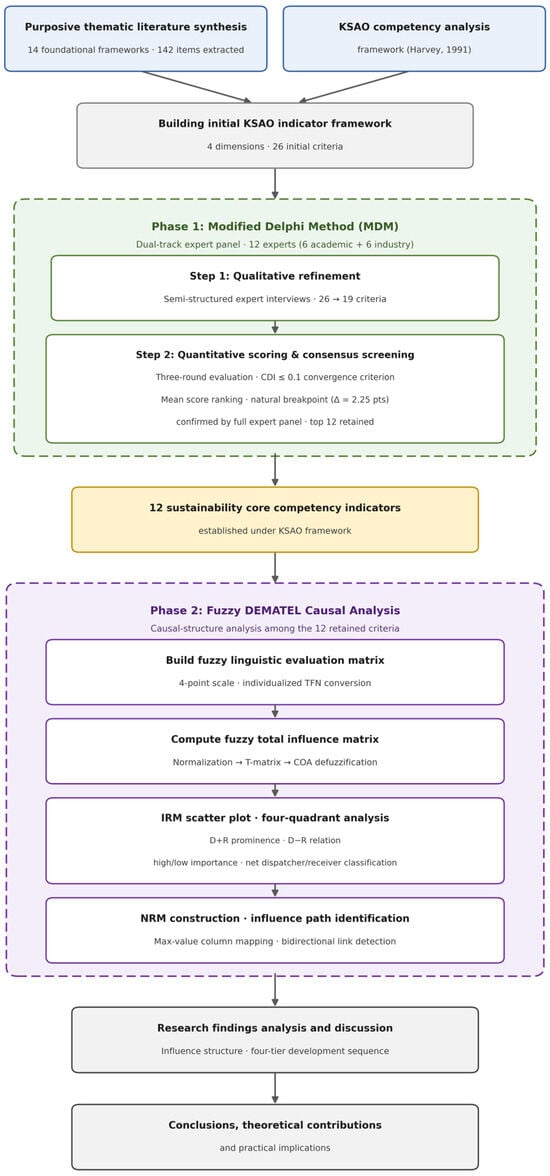
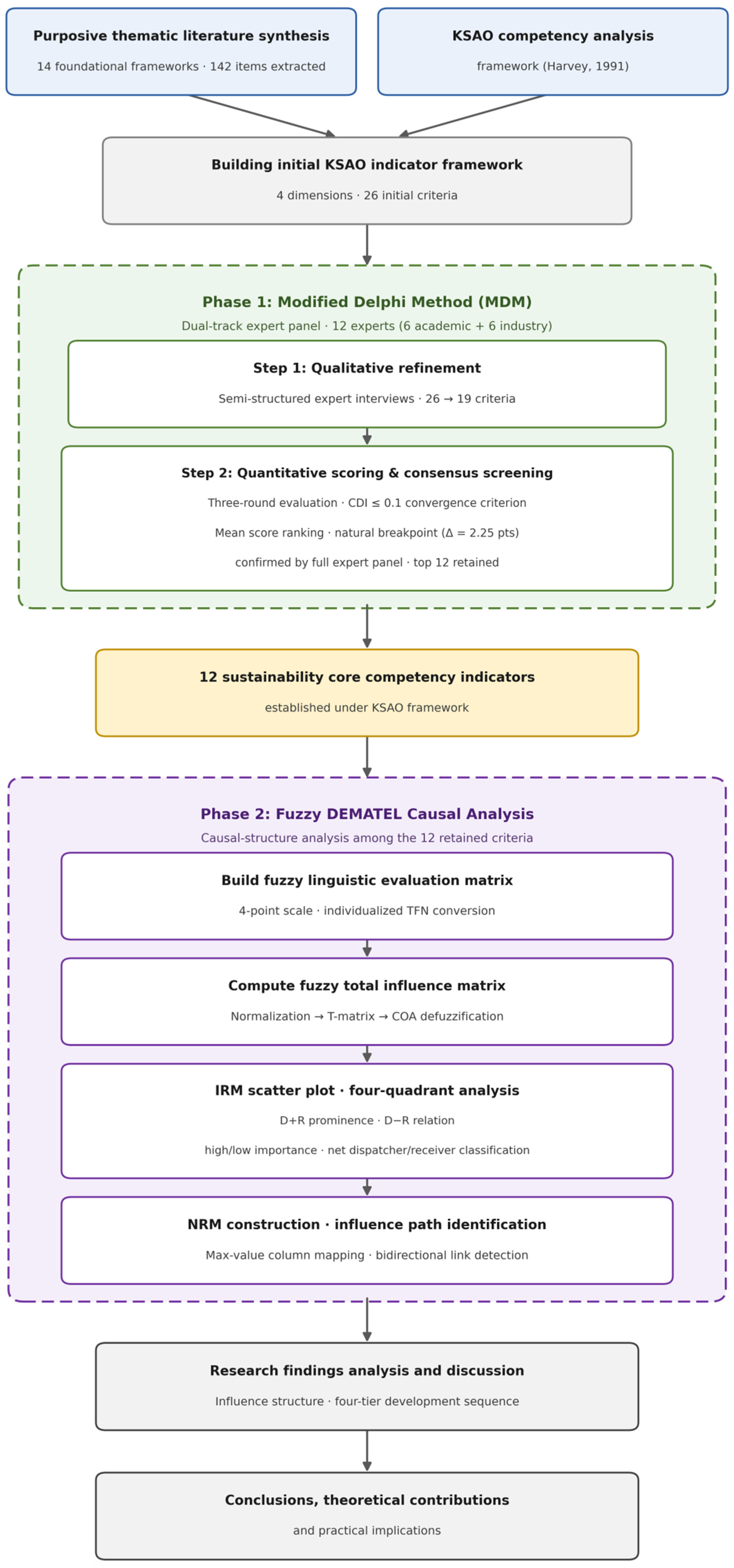
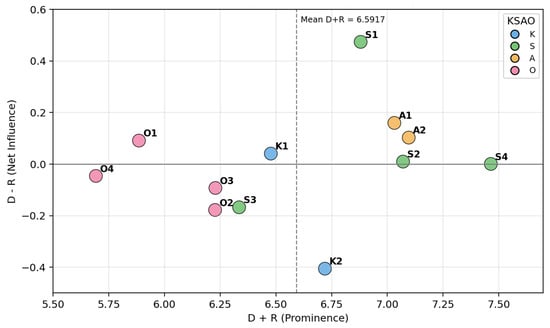
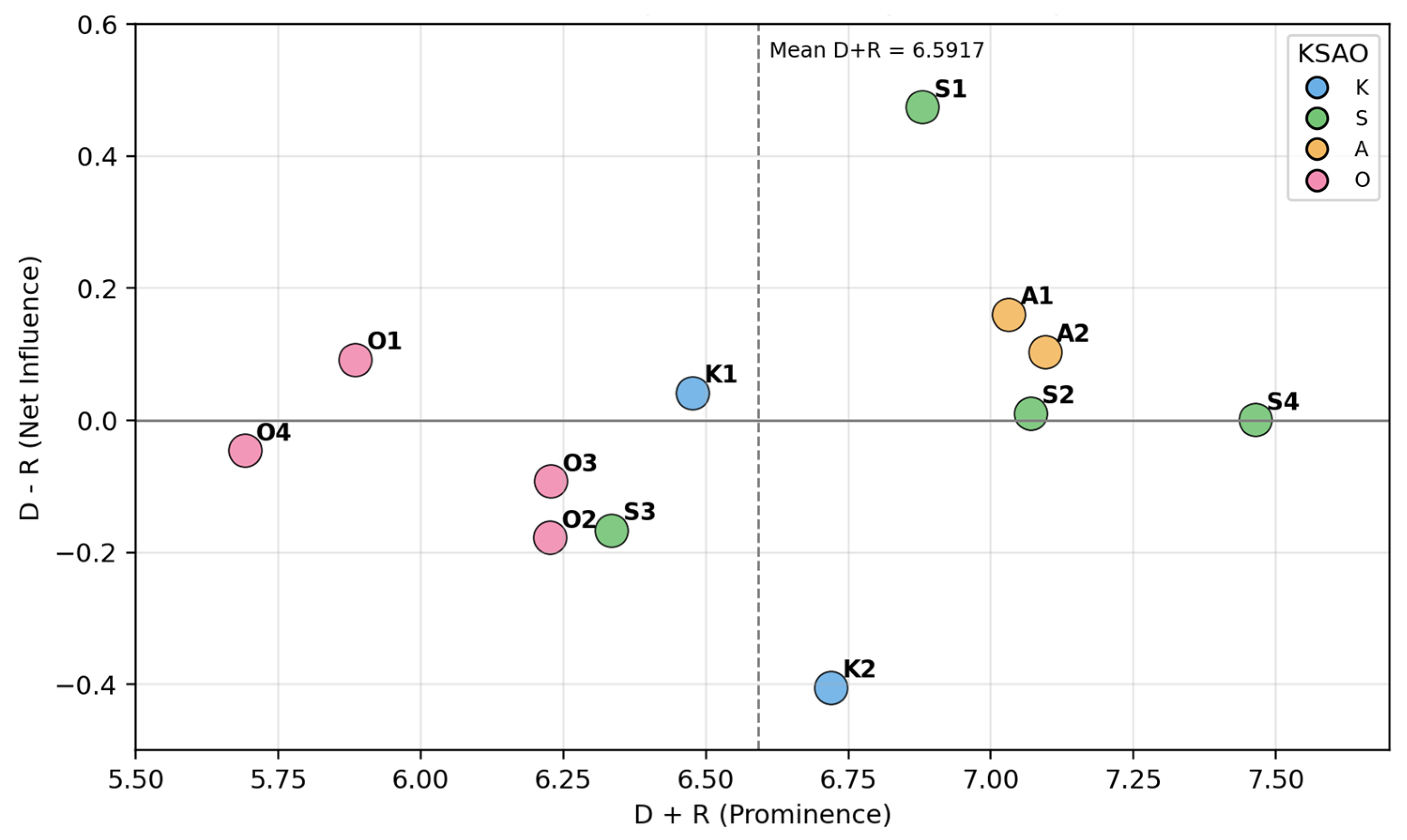
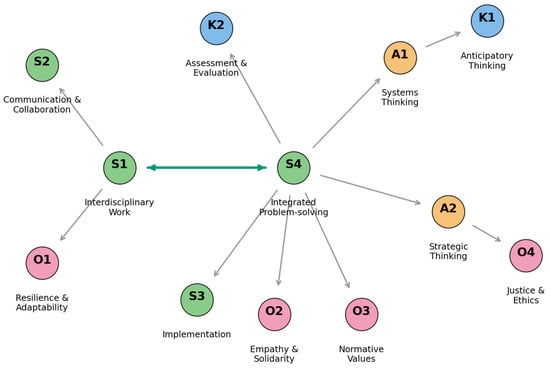
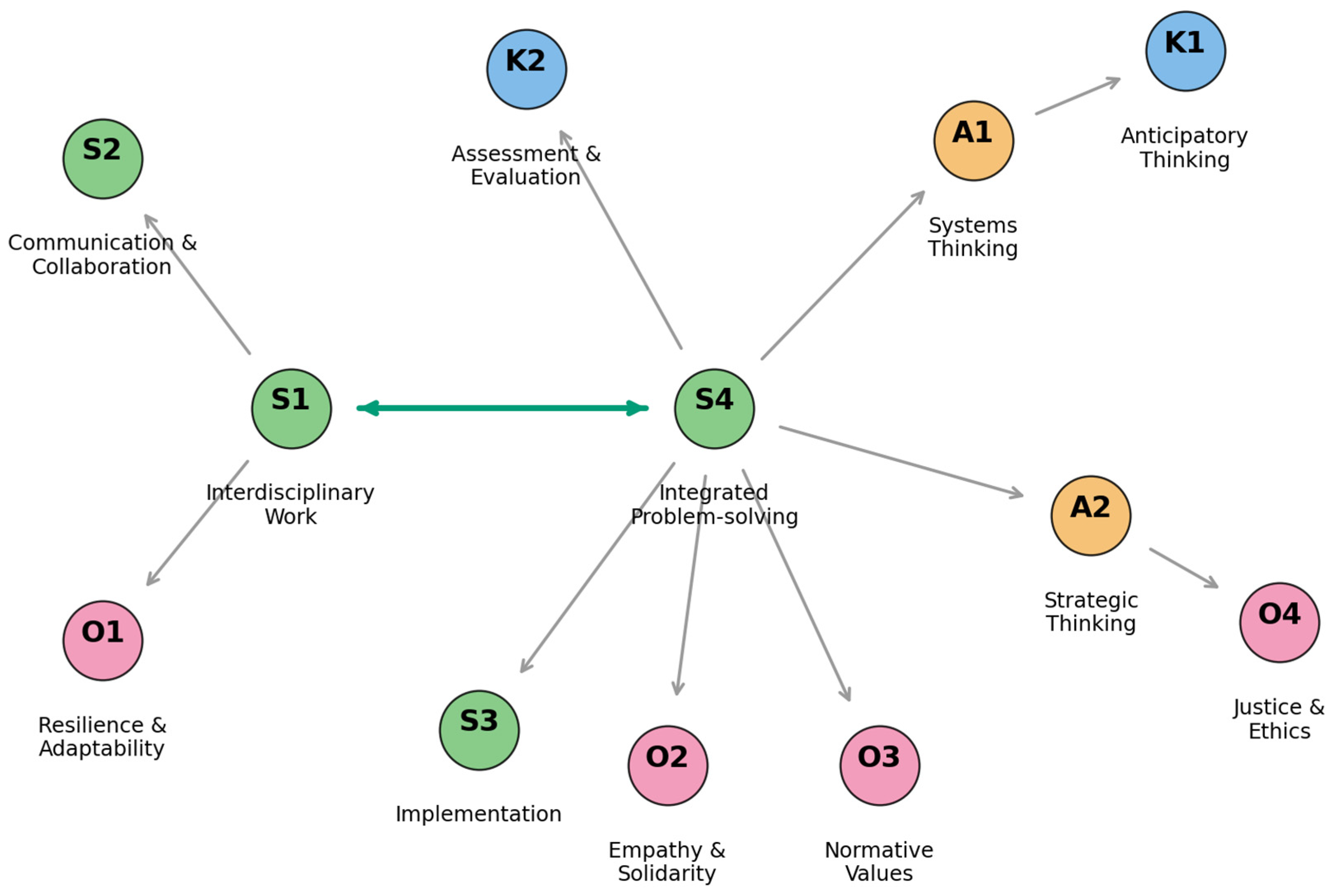
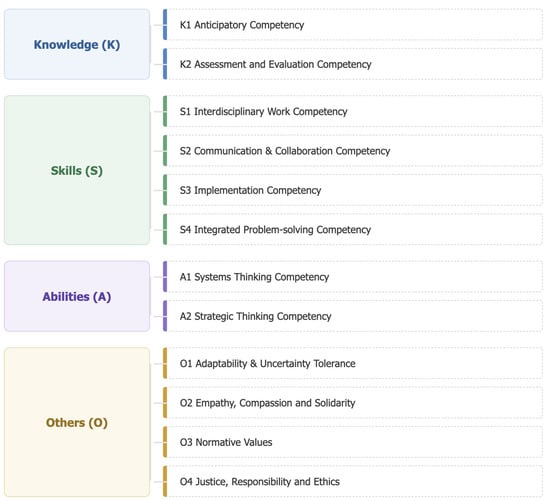
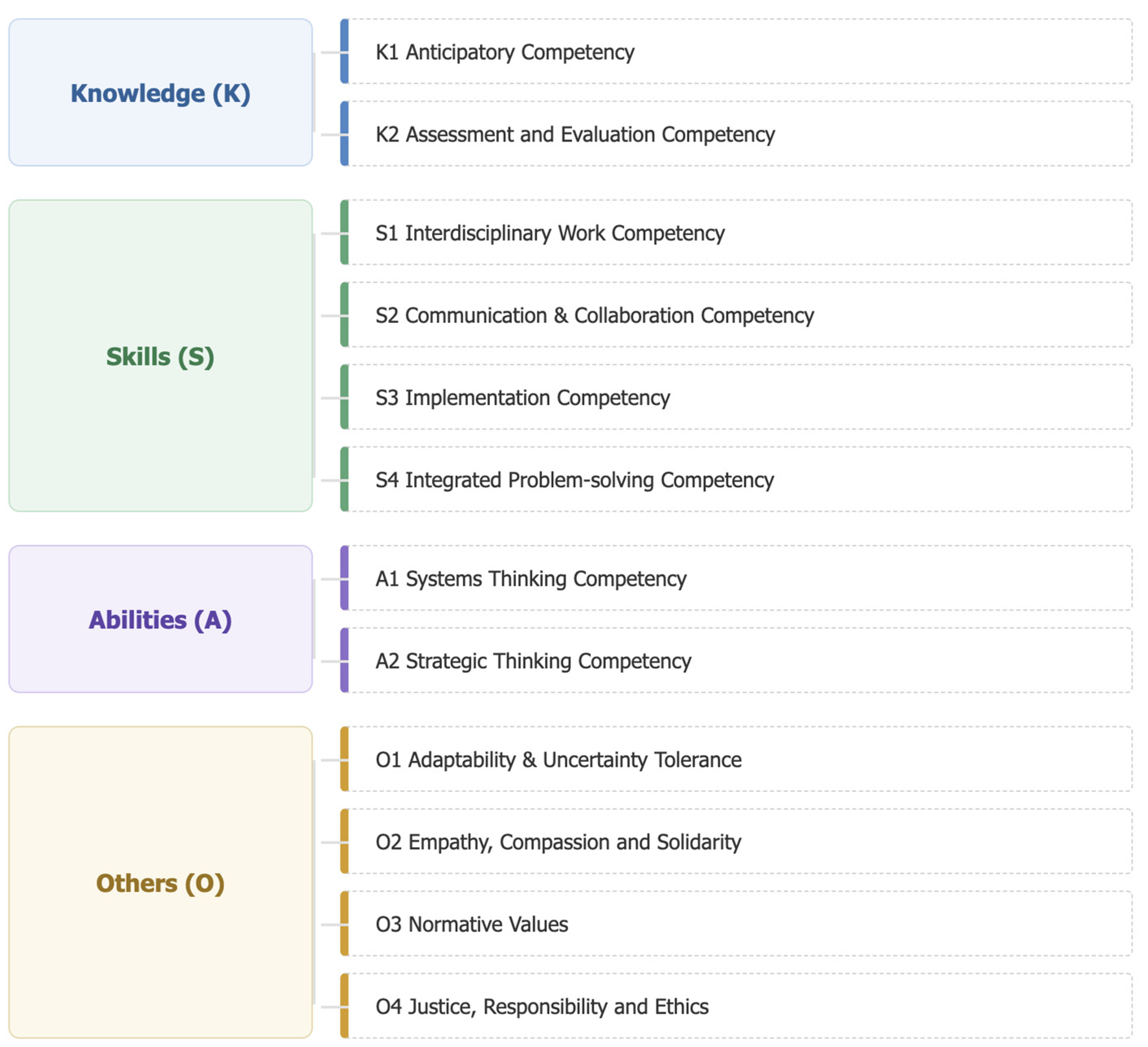

Disclaimer/Publisher’s Note: The statements, opinions and data contained in all publications are solely those of the individual author(s) and contributor(s) and not of MDPI and/or the editor(s). MDPI and/or the editor(s) disclaim responsibility for any injury to people or property resulting from any ideas, methods, instructions or products referred to in the content. |
© 2026 by the authors. Licensee MDPI, Basel, Switzerland. This article is an open access article distributed under the terms and conditions of the Creative Commons Attribution (CC BY) license.