


Abstract
This study investigates the integration of Circular Economy (CE) principles within the upstream beverage supply chain in Thailand, contextualized against a widening global circularity gap where macro rates have declined to 6.9% compared to 12.2% in the European Union. Moving beyond a general focus on underexplored stakeholders, this qualitative exploratory design examines the critical role of informal governance mechanisms in emerging markets. The research is grounded in a multi-theoretic framework integrating the Resource-Based View (RBV), Social Exchange Theory (SET), and Resource Dependence Theory (RDT). Thematic analysis was conducted on in-depth interviews with 23 key informants covering 18 core supply chain activities. The analytical results generated a three-tier hierarchical framework, culminating in a single overarching selective theme: Collaborative Upstream Resource Recirculation for Systemic Resilience. The findings reveal that circular supply chain performance is driven by the dynamic interplay between relational governance and internal resource capabilities, explicitly demonstrated by grassroots tactical innovations such as modifying production boilers to run on 100% biomass fuel. Relational trust and culturally embedded mechanisms (e.g., Sanya Jai) function as vital substitutes for formal institutional frameworks, enabling Supply Chain Collaboration (SCC) to drive adaptive practices and achieve system-level circular resilience.
1. Introduction
Among contemporary sustainability challenges, food loss and food waste (FLW) represent a growing global concern and are increasingly prioritized on the political agenda [1]. In response, the United Nations (UN) introduced the Sustainable Development Goals (SDGs) in 2015, emphasizing sustainable agricultural and food systems, as well as responsible production and consumption (SDG2, SDG11, and SDG12) [2]. At the firm level, companies face increasing pressure to demonstrate environmental responsibility while balancing complex societal, environmental, and economic demands [3].
Within this context, supply chain management (SCM) plays a critical role in addressing FLW and broader sustainability challenges. Sustainable supply chain management (S-SCM) has emerged as a key approach for improving resource efficiency and reducing environmental impact. In particular, circular economy (CE) principles—emphasizing resource efficiency, waste reduction, and closed-loop systems—offer alternative models for production and consumption that are highly relevant to the food and beverage sector, where rising costs and increasing demand for agricultural commodities intensify resource pressures [4,5]. This is particularly critical in upstream agricultural contexts, where transitioning towards a circular economy requires adopting regenerative practices—such as organic recycling—that actively reduce dependence on non-renewable industrial inputs and enhance systemic resilience [6]. Consequently, CE practices are increasingly integrated into SCM, supporting the transition toward circular supply chains (CSC) [7].
Despite the growing global imperative for sustainable resource management, the transition toward a circular economy remains geographically uneven. Recent macroeconomic analyses reveal a widening “circularity gap.” While the European Union has achieved a circular material use rate of 12.2% through robust regulatory frameworks and formal institutional drivers [8], the global circularity rate has paradoxically declined from its initial baseline of 9.1% in 2018 to just 6.9% [9]. This disparity underscores a critical geographic and institutional divide. Existing empirical research on circular supply chains (CSC) has predominantly focused on developed economies and high-value manufacturing sectors, where strict environmental enforcement propels circularity [10,11]. In contrast, emerging economies present a distinct reality characterized by high resource volatility, fragmented informal supply chains, and limited institutional support [12,13].
Within this context, the upstream food and beverage supply chain (FBSC)—comprising raw material suppliers, farmers, and primary processors—remains highly resource-intensive yet severely underexplored. The structural complexity and multiple stakeholders in the FBSC create unique challenges for CE implementation, particularly regarding food loss and environmental impacts [4,7]. Consequently, a critical research question emerges: in the absence of stringent formal regulations and mature technological infrastructures, how do upstream actors in emerging economies, such as Thailand, operationalize circular practices? This study posits that the structural constraints of emerging markets necessitate a shift away from formal institutional reliance toward informal relational governance. Specifically, interpersonal trust and localized supply chain collaboration act as crucial substitutes for formal institutional voids, enabling the resource-constrained upstream nodes to achieve system-level circularity.
Although this study focuses on the beverage supply chain, it is important to distinguish it from broader food supply chains. While both fall under the food industry, they present different sustainability challenges. Food supply chains primarily deal with perishable goods and associated risks such as spoilage and waste [4], whereas beverage supply chains involve resource-intensive production processes, including significant water and energy consumption as well as packaging-related waste [14]. This distinction underscores the relevance of examining CE integration specifically within the beverage context, where opportunities exist to enhance resource efficiency and reduce environmental impact [15,16].
In Thailand’s beverage industry, a significant contributor to the national economy, CE practices offer a promising pathway to address these sustainability challenges. Prior studies, however, have paid limited attention to the role of supply chain collaboration in facilitating circular supply chains [15]. Given the interdependent nature of supply chain actors, collaboration and relational mechanisms are likely to play a critical role in enabling CE integration [7].
Accordingly, there is a need for deeper empirical understanding of how these mechanisms operate in practice, particularly among upstream actors in emerging economy contexts. To address these gaps, this study adopts a qualitative exploratory approach to examine how circular economy practices are implemented within the upstream beverage supply chain in Thailand. While prior research has largely focused on adoption challenges, this study further explores the underlying mechanisms and interactions among firm-level resources and relational factors. While traditional single-lens perspectives, such as Transaction Cost Economics (TCE), are frequently utilized to examine formal supply chain governance, they remain fundamentally limited in explaining informal, relationship-driven collaboration. While contemporary iterations of TCE have expanded to accommodate hybrid governance structures, its foundational premise still conceptualizes trust primarily as a calculative safeguard against opportunism, heavily predicated on the presence of robust legal frameworks [17]. To comprehensively address this explanatory void and capture the nuances of informal collaboration in emerging markets, a more integrative approach is required. Consequently, drawing on the Resource-Based View (RBV) and Social Exchange Theory (SET), and complemented by the relational perspective of Resource Dependence Theory (RDT), the study develops a conceptual framework grounded in empirical insights from upstream stakeholders. The analysis focuses on identifying key factors that influence CE integration and on understanding how resource capabilities, trust, and supply chain collaboration interact to shape the performance of circular supply chains.
Accordingly, the study is guided by the following research questions:
RQ1: What circular economy practices are currently implemented in the Thai beverage supply chain?
RQ2: What key factors influence the integration of circular economy practices in the upstream beverage supply chain?
RQ3: How does supply chain collaboration shape the relationship between these factors and circular supply chain performance?
This study contributes to the existing literature by synthesizing the Resource-Based View (RBV), Social Exchange Theory (SET), and Resource Dependence Theory (RDT) into a novel multi-theoretic conceptual framework. Unlike previous studies that often rely on a single theoretical lens, this integrated approach provides a more holistic understanding of how internal resource capabilities and relational governance interact within the upstream beverage supply chain. Crucially, the study offers empirical evidence that in the context of emerging economies like Thailand, relational trust, strategic resources, and collaborative mechanisms are essential for overcoming systemic resource constraints, thereby enabling the effective operationalization of circular economy practices. By advancing from a firm-centric to a system-level perspective, this research provides a theoretically grounded template for achieving circular supply chain performance through collective resilience.
2. Literature Review
2.1. Integrating Circular Economy into Sustainable Supply Chain Management
Originating from environmental economics, the Circular Economy (CE) paradigm advocates for a closed ecological system wherein resources are continuously reused, fundamentally decoupling economic growth from environmental degradation [18,19,20]. Over time, CE has evolved beyond sheer economic efficiency to encompass comprehensive sustainability goals, formalized through frameworks such as the 3R and 10R principles that prioritize resource recovery and repurposing [21,22]. To operationalize these principles at an industrial scale, Sustainable Supply Chain Management (S-SCM) integrates the triple bottom line—economic, environmental, and social performance—across inter-organizational networks [23,24]. The convergence of CE and S-SCM has subsequently catalyzed the emergence of Circular Supply Chains (CSC). By fundamentally redesigning production processes and restructuring operations, CSCs facilitate the cyclical flow of materials to sustain closed-loop systems [25,26,27].
Implementing a CSC demands a highly coordinated approach spanning multiple operational domains, including sustainable sourcing, green technology adoption, and reverse logistics [28,29]. This transition is primarily propelled by macro-level drivers—such as supportive regulatory frameworks and economic incentives—and inter-organizational drivers, notably supply chain collaboration, which enables resource sharing and joint waste management [16,30,31]. Conversely, firms encounter formidable barriers to circularity, including prohibitive initial capital investments, technological immaturity, regulatory ambiguities, and the inherent friction of coordinating diverse stakeholders [22,32,33].
Importantly, a critical review of the empirical literature reveals profound contextual disparities in how these drivers and barriers are experienced. Existing research focuses disproportionately on developed economies and high-value manufacturing sectors, leaving emerging markets severely underrepresented [10,13]. In developing economies, unique structural vulnerabilities—such as weak environmental enforcement, fragile institutional support, and acute resource constraints—fundamentally alter the trajectory of CE implementation [7,34]. Moreover, the prevailing literature remains largely descriptive, lacking a theoretical synthesis of how underlying relational mechanisms facilitate CE integration when formal institutional drivers are absent. This theoretical void is particularly evident concerning upstream supply chain actors—such as raw material suppliers and primary processors—who operate in highly volatile, resource-dependent environments. Consequently, this study addresses this critical gap by exploring how interdependent upstream actors in an emerging economy navigate systemic constraints, leveraging relational and collaborative mechanisms to achieve circular supply chain performance.
2.2. Circular Economy in the Food and Beverage Industry
The food and beverage industry plays a critical role in sustainable resource utilization, particularly in the context of global population growth and changing consumption patterns [12,35]. Increasing food demand drives agricultural production and intensifies pressure on natural resources, contributing to environmental degradation and waste generation. Notably, food supply chains (FSC) account for approximately one-third of global food waste, leading to significant resource depletion and environmental impacts [36]. Compared to other sectors, the food system therefore presents substantial opportunities to mitigate climate change and reduce emissions through sustainable practices [37].
In response, research has increasingly emphasized the transition of food and beverage supply chains toward sustainability and circular economy (CE) practices [38]. Emerging studies highlight both intra- and inter-organizational dimensions, particularly the role of collaboration and coordination in reducing waste and improving resource efficiency within CE frameworks [39,40]. However, existing literature remains geographically concentrated, with most studies conducted in developed countries such as Italy, Finland, France, and the UK, while research in developing economies is limited and primarily focused on China and India [4,7,34,41,42,43,44]. Additionally, prior studies tend to focus more on adoption challenges than on driving factors and systemic mechanisms.
The food industry, particularly in developing countries, faces structural challenges such as fragmented production systems, small-scale farming, and sustainability constraints [45]. While CE research in FSC has expanded since 2015, it remains heavily oriented toward identifying barriers rather than enabling strategies [46]. Key challenges include limited technological infrastructure, inadequate economic incentives, and insufficient data on food waste [47]. Additionally, cultural resistance, skill gaps, and uncertainty regarding the business value of sustainability further hinder CE adoption [13,48].
Addressing these challenges requires context-specific strategies, including technological innovation, policy support, and improved coordination across supply chain actors [47]. In particular, supply chain collaboration has been consistently identified as a critical enabler for overcoming barriers and facilitating CE implementation in the FSC [7,34,44,48]. This highlights the importance of relational and systemic approaches in advancing circular practices within the food and beverage supply chain.
2.3. Theoretical Background
The transition toward a circular economy in the upstream beverage supply chain represents a complex socio-technical challenge that cannot be adequately explained through a single theoretical lens. Traditional supply chain literature frequently relies on Transaction Cost Economics (TCE) or Institutional Theory to explain inter-organizational governance and environmental integration [49,50]. TCE fundamentally assumes the presence of robust legal structures to govern formal contracts and minimize opportunistic behavior. Consequently, such single-lens approaches exhibit critical theoretical blind spots when attempting to explain relationship-driven collaboration in emerging markets. TCE, for instance, is inherently transaction-centric; it minimizes human interactions to mere calculative safeguards against opportunism, operating under the assumption that robust legal structures and formal contracts are continuously enforceable [17]. This purely economic perspective fundamentally overlooks the socially embedded, informal bonds that drive cooperation when formal governance is absent.
Similarly, Institutional Theory largely relies on formal regulatory pressures, stringent environmental policies, and capital incentives to drive circular practices, a paradigm typical of developed European contexts [11,51]. In the context of Thailand’s upstream beverage sector—characterized by highly fragmented agricultural networks, severe external resource volatility, and the absence of stringent environmental enforcement [7,13,45]—these traditional assumptions fall significantly short. Consequently, survival and circularity in this environment are driven by necessity and relational dynamics rather than formal institutional compliance [12]. Because no single theory can simultaneously address macro-level resource scarcity (RDT), micro-level informal relational bonds (SET), and firm-level strategic adaptations (RBV), relying on a solitary lens leaves a significant explanatory void.
To comprehensively capture the collaborative mechanisms driving circular supply chain performance in this specific emerging economy context, this study adopts a multi-theoretic approach integrating Resource Dependence Theory (RDT), Social Exchange Theory (SET), and the Resource-Based View (RBV). Rather than operating in isolation, these perspectives provide a cohesive and highly contextualized lens. RDT establishes the macro-level context, explaining how severe external resource constraints and systemic vulnerabilities compel interdependent firms to collaborate [52,53]. SET offers the critical micro-level relational perspective; in the absence of formal legal contracts (the traditional domain of TCE), informal governance mechanisms—such as localized trust and affective reciprocity—act as the primary structures sustaining these necessity-driven partnerships across organizational boundaries [54,55,56]. Finally, RBV supplies the firm-level operational view, elucidating how capital-constrained small and medium-sized enterprises (SMEs) mobilize internal strategic capabilities and grassroots tactical adaptations rather than relying on high-cost imported green technologies [57,58]. Together, this multi-theoretic triad effectively addresses the theoretical limitations of formal institutional models, coherently explaining how contextual pressures, relational governance, and internal resources dynamically interact to operationalize circularity.
2.3.1. Resource Dependence Theory (RDT) and Supply Chain Collaboration
Resource Dependence Theory (RDT) posits that firms operate within interdependent networks and rely on external actors to access critical resources necessary for survival [52]. In supply chain contexts, firms engage in exchange relationships to secure resource availability while managing uncertainty and maintaining bargaining power [59]. RDT emphasizes that firm success depends on the ability to manage dependencies and leverage relationships with suppliers and partners [50,60,61].
Importantly, interdependence does not necessarily lead to conflict but can foster cooperative and mutually beneficial relationships [62]. Firms actively build collaborative ties through information sharing and joint strategic actions, reinforcing relational stability and access to resources [61,63].
In the context of circular supply chains (CSC), RDT provides a relevant lens for understanding how firms reduce reliance on finite resources by diversifying resource inputs and engaging in closed-loop systems [53,64]. Collaboration across supply chain actors enables resource circulation, strengthens interdependence, and enhances resilience [65]. Furthermore, transparent information exchange supports trust and coordination, reinforcing the collaborative mechanisms necessary for circularity [64,66]. Thus, RDT explains how inter-organizational dependencies drive collaboration and facilitate the transition toward circular supply chains.
2.3.2. Social Exchange Theory (SET) and Supply Chain Collaboration
Social Exchange Theory (SET) explains relationships based on the evaluation of costs and benefits, where actors engage in exchanges that yield mutual value [54,67]. Significantly, SET provides a direct contrast to the treatment of trust in TCE. While TCE views trust as a mere calculative safeguard against opportunism [17], SET conceptualizes it as a socially constructed bond grounded in long-term reciprocity. This distinction significantly strengthens the logic for integrating SET into the proposed framework, particularly in contexts lacking formal governance. The theory highlights key relational constructs, including trust, commitment, reciprocity, power, and fairness, which shape interactions among partners [68,69].
SET has been widely applied in supply chain research to explain how relationships are formed, maintained, and sustained over time [56,70,71]. Prior studies demonstrate that trust, commitment, and reciprocity are critical in fostering collaboration and improving supply chain performance [56,72]. Trust enhances cooperation and reduces uncertainty, while commitment reflects the willingness of partners to sustain long-term relationships [73,74,75,76]. Power and dependence further shape exchange dynamics within supply chains [56].
Reciprocity, as a central mechanism in SET, reinforces mutual exchange and cooperation among supply chain actors [55]. Through reciprocal interactions, firms develop obligations to share resources, information, and capabilities, fostering collaboration and fairness [70,72]. In circular supply chains, such reciprocal behaviors support joint initiatives such as remanufacturing, material recovery, and waste reduction [77,78].
Overall, SET provides a strong foundation for understanding how relational mechanisms—particularly trust, commitment, and reciprocity—enable supply chain collaboration and support the transition toward circularity.
2.3.3. Resource-Based View (RBV) and Supply Chain Collaboration
The Resource-Based View (RBV) explains how firms achieve competitive advantage through valuable, rare, inimitable, and non-substitutable (VRIN) resources [57]. In supply chain contexts, RBV highlights the strategic importance of both tangible and intangible resources in enabling collaboration and sustainability [58].
Firms can support circular practices by investing in key resources such as recycling infrastructure, financial capacity, and sustainable technologies, as well as intangible assets including knowledge and capabilities [7]. These resources signal commitment to sustainability and create opportunities for collaboration with partners pursuing similar goals.
RBV also emphasizes the value of leveraging complementary resources through collaboration. By sharing knowledge, coordinating activities, and aligning sustainability objectives, firms can improve resource efficiency and reduce waste across the supply chain [58,79]. Long-term relationships further strengthen coordination and enhance collective performance [57].
In addition, RBV highlights the importance of internal capabilities for monitoring and managing environmental performance [58,80]. Through effective tracking of resource flows and sustainability outcomes, firms enhance transparency and accountability, which in turn supports collaboration and shared responsibility across the supply chain [7].
Despite extensive research on circular economy and supply chains, limited attention has been given to upstream stakeholders in emerging economies, particularly in the beverage sector. Moreover, the integration of resource-based and relational perspectives in explaining circular supply chain performance remains underexplored. This study addresses these gaps by developing a conceptual framework grounded in qualitative insights.
3. Conceptual Framework
3.1. Literature-Based Framework
Drawing on prior literature, a range of factors influencing the integration of the circular economy (CE) into sustainable supply chain management (S-SCM) can be identified. These factors are broadly categorized into four interrelated dimensions: (1) resources and capabilities, (2) institutional and stakeholder factors, (3) performance and benefits, and (4) supply chain collaboration. At a macro level, the transition requires a fundamental restructuring of network-wide operations and material flows [26]. Within the food and agricultural sectors, overcoming barriers related to resources and evaluating performance benefits are critical, as actors frequently face severe technical and financial constraints [4]. In addition, in emerging markets, institutional factors present profound regulatory barriers, making traditional CE adoption highly challenging [7].
Resources and capabilities refer to the internal assets and competencies required to support CE implementation, including financial resources, technological infrastructure, and organizational expertise [31,46,81]. Institutional and stakeholder factors encompass external influences such as regulatory frameworks, government policies, and stakeholder engagement, which shape the enabling environment for CE adoption [7,34]. Performance and benefits relate to both financial and non-financial outcomes that motivate firms to adopt circular practices, including cost efficiency, reputation, and long-term sustainability [46,81,82].
Among these dimensions, supply chain collaboration plays a central role by linking internal capabilities with external conditions. Prior studies highlight that collaboration facilitates information sharing, resource integration, and joint problem-solving, which are essential for implementing CE practices, particularly in complex supply chains such as the food and beverage sector [31,83]. To move beyond a purely descriptive list of these barriers and drivers, this study synthesizes these literature-based dimensions into a dynamic, theoretically grounded framework (subsequently illustrated in Figure 1).
Figure 1.
Conceptual Framework of CE Integration in the Upstream Beverage Supply Chain.
3.2. Theoretical Integration: The Dynamic Interplay of RDT, SET, and RBV
To fully capture the socio-technical complexity of circular supply chain integration, this study integrates three complementary perspectives: Resource Dependence Theory (RDT), Social Exchange Theory (SET), and the Resource-Based View (RBV). Rather than functioning independently, this study posits that these theories interact dynamically and sequentially.
First, RDT acts as the foundational contextual trigger. Instead of viewing dependencies merely as constraints [52], this framework positions RDT as an operational catalyst. Faced with severe raw material scarcity, these upstream entities are forced to forge alliances, transforming external vulnerabilities into a shared motivation to secure collective resource access [53,65].
However, interdependence alone does not guarantee successful cooperation. Therefore, SET functions as the vital relational governance mechanism. Within this model, informal social bonds—specifically deep-seated trust, mutual reciprocity, and localized commitment—actively bind the network together [55,68]. Particularly in emerging economies lacking formal enforcement, these social assets bridge organizational boundaries, suppress opportunism, and ensure long-term collaboration without relying on rigid contracts [56,71,72].
Finally, once this relational foundation is secured, RBV serves as the operational capability engine. Rather than viewing assets statically, this model highlights how capabilities are actively mobilized for circularity [84]. Firms embedded in trust-based exchanges are empowered to pool idiosyncratic financial, technical, and intangible strengths—such as localized tactical adaptations—to collaboratively execute joint CE initiatives [7,58,85]. Ultimately, these three theoretical antecedents dynamically converge to drive Supply Chain Collaboration (SCC).
3.3. Conceptual Positioning
By synthesizing the internal focus of RBV with the relational aspects of SET and the external constraints of RDT, this study proposes the conceptual framework illustrated in Figure 1. This model serves as the blueprint for investigating how circularity is operationalized through collaborative mechanisms. Building on the above perspectives, this study conceptualizes supply chain collaboration as a central mechanism through which firm-level resources and relational dynamics jointly influence circular supply chain performance. Rather than decomposing collaboration into multiple dimensions, this study adopts a holistic view, focusing on core collaborative practices such as information sharing, joint decision-making, and resource integration [56,86,87,88].
Within this framework, resource-based factors (e.g., financial, technical, and intangible resources) and relational factors (e.g., trust, reciprocity, and commitment) are understood as key enablers that shape collaborative interactions among supply chain actors. These interactions, in turn, facilitate the implementation of circular economy practices and influence circular supply chain performance outcomes, including both financial and non-financial dimensions [89,90,91].
Importantly, this study adopts a qualitative exploratory approach and does not seek to test predefined causal relationships. Instead, it aims to explore how these elements interact in practice within the upstream beverage supply chain in Thailand.
4. Methodology
This study adopts a qualitative exploratory research design to investigate the integration of circular economy (CE) practices within the upstream beverage supply chain in Thailand.
4.1. Research Context and Scope
The study focuses on the upstream segment of the beverage supply chain, which remains relatively underexplored in sustainability research [92,93]. Three key upstream categories are examined: (1) raw material suppliers, (2) processing and packaging entities, and (3) logistics providers. These actors play a critical role in shaping sustainability outcomes, including resource utilization, waste generation, and environmental impact [94,95].
Thailand’s beverage industry provides a relevant empirical context due to its economic significance, complex stakeholder structure, and increasing emphasis on sustainability and circular economy practices [34,96,97]. The study also acknowledges broader applicability to developing economies, particularly within ASEAN contexts that share similar structural and institutional characteristics.
4.2. Data Collection
Data were collected through semi-structured interviews with key stakeholders across the upstream supply chain. This method enables a comprehensive understanding of participants’ perceptions, experiences, and challenges related to CE practices [98].
A purposive sampling strategy was employed to identify relevant participants from industry networks, including the Thai Beverage Industry Association (TBA), Thai Packaging Association (TPA), and Thai Chamber of Commerce (TCC).
A total of exactly 23 stakeholders were interviewed. This sample size successfully exceeds the recommended threshold of 20 participants, thereby ensuring sufficient depth of insight and data saturation [99,100,101]. To ensure methodological transparency and preserve confidentiality, all participants and their respective organizations were strictly anonymized. Table 1 provides a detailed profile of the 23 key informants across the 18 upstream supply chain nodes (representing 18 unique organizations), categorizing them by their specific supply chain roles, years of experience, and organizational characteristics. This diverse selection ensures a comprehensive and multi-perspective understanding of circular economy practices within the sector.
Table 1.
Informant profiles and supply chain nodes (anonymized).
4.3. Data Analysis and Research Rigor
Data were analyzed using a systematic thematic approach comprising three distinct stages: open coding to extract empirical concepts, axial coding to identify theoretical relationships and aggregate categories, and selective coding to synthesize the overarching themes [102]. To maintain deep immersion in the qualitative data, a manual coding approach was deliberately chosen over automated software; a spreadsheet-based matrix was utilized to systematically cross-tabulate informant responses with emerging codes [103].
To establish robust inter-coder reliability, the transcripts were evaluated by two independent researchers. Consistent with the interpretivist paradigm of qualitative research, inter-coder reliability was established through consensus coding. Methodological scholars emphasize that in interpretive qualitative research, coding is a reflexive process of meaning-making rather than an exact science of variable extraction [103,104]. Therefore, the researchers achieved consensus through iterative dialogic discussions, continuous codebook refinement, and peer debriefing until a firm collaborative agreement on the thematic structure was reached, thereby demonstrating analytical thoroughness [105,106].
To ensure data adequacy, the researchers rigorously monitored for data saturation. Initial thematic saturation—the point where no new basic codes emerge—was observed early in the analysis process, consistent with foundational guidelines [99]. However, to fully capture the complexity of the supply chain, data collection was deliberately extended to achieve “meaning saturation.” This conceptual juncture occurs when the data yields no further depth, and the intricate properties of the core themes are fully comprehended [107]. In the context of this study, such saturation was operationalized as the point at which the nuanced mechanisms of informal governance (e.g., Jai Sue Jai and Sanya Jai)—and their theoretical roles as substitutes for formal regulations—were thoroughly understood. At this stage, no new dimensions, operational nuances, or strategic motivations regarding circular economy implementation could be extracted from the participants’ narratives, confirming that the theoretical relationships among all categories were robustly established [108]. Absolute saturation was reached by the 20th interview; a formal coding audit conducted at this stage confirmed that no new properties of relational mechanisms emerged. Although absolute saturation was reached by the 20th interview, three additional pre-scheduled interviews were conducted with secondary informants from previously sampled organizations (e.g., operations coordinators and supervisors). This purposeful continuation served to establish within-node data triangulation and confirm organizational consistency, verifying that the empirical findings were not isolated to a single management perspective. This final sample size strictly conforms to established methodological parameters, which recommend 20 to 30 interviews to guarantee comprehensive qualitative depth [100,101].
Finally, to guarantee within-node consistency and overall trustworthiness, the study integrated multiple triangulation strategies [98]. First, investigator triangulation was secured via the dual-coder consensus. Second, data triangulation was achieved by cross-verifying specific operational statements across different supply chain categories (e.g., comparing claims from farmers with those from processors and logistics providers) to prevent single-source bias. Additionally, member checking was conducted by returning synthesized qualitative summaries to key informants, allowing them to verify that the extracted interpretations accurately and authentically reflected their operational realities.
4.4. Methodological Positioning
This qualitative exploratory approach provides a rich, context-specific understanding of how circular economy practices are implemented in the upstream beverage supply chain. It is particularly suitable for examining complex, inter-organizational phenomena where limited prior empirical evidence exists.
Rather than testing predefined hypotheses, the study aims to explore relationships among key constructs and to develop a theoretically informed understanding of circular supply chain integration.
5. Findings and Thematic Analysis
The qualitative analysis of this study is structured into a three-tier hierarchical framework, designed to illustrate the analytical transition from empirical observations to theoretical abstraction. By following the systematic coding logic of Strauss and Corbin [102], the researcher processed the data from 23 semi-structured interviews covering 18 core supply chain activities to identify the underlying mechanisms of Circular Economy (CE) integration. The structural logic of this analysis is detailed in Table 2, which maps the high-density open codes into axial theoretical categories, culminating in the selective theme. Importantly, individual informants frequently contributed to multiple categories, reflecting the complex, interconnected nature of circular economy practices.
Table 2.
Thematic coding hierarchy and Representative Informants.
5.1. Relational Dynamics and Cultural Nuances (SET)
Grounding the findings in the Thai context, the results highlight that Relational Determinants serve as the vital “human infrastructure” overcoming market limits. Grounded in Social Exchange Theory (SET), these dynamics operate through three interconnected mechanisms: foundational trust, informal commitment, and affective reciprocity.
At the core of Affective Reciprocity is the deeply rooted Thai cultural concept of Jai Sue Jai. Informants interpreted this not merely as simple exchange, but as “heart can buy another heart,” fostering a genuine win-win empathy crucial for collective survival. A Cold Storage General Manager (S10) emphasized this empathetic bond in preserving product quality. Corroborating this, a Lead Farmer (S01) added: “Jai Sue Jai with our regular consolidator is our survival strategy. When the market crashes, our genuine mutual help keeps us afloat. We return husks, they guarantee buy-backs.” Theoretically, this empirical evidence shows that collaboration in this supply chain goes far beyond simple, one-to-one transactions where actors only look for immediate benefits. Rooted deeply in Thai cultural psychology, mechanisms centered around ‘Jai’ (heart)—such as Sanya Jai (promises of the heart) and Jai Sue Jai (heart buys heart)—represent a profound level of socially embedded trust and mutual obligation [109]. Through the lens of SET, these mechanisms function as “generalized reciprocity” [110]. This means that actors help each other without expecting immediate returns; instead, they prioritize long-term collective survival. Within an upstream agricultural network facing severe external volatility, this culturally ingrained reciprocity functions as an informal collective insurance policy. Rather than merely exchanging physical goods, actors actively invest in a relational safety net. By embedding these indigenous mechanisms into their operations, the supply chain actors organically construct robust ‘systemic resilience,’ effectively substituting the absence of formal institutional support with deeply entrenched social capital.
Fostered by this reciprocal trust, network actors establish an Informal Commitment explicitly described as Sanya Jai. This translates to trust-based “Gentleman’s Agreements,” substituting for formal legal contracts. A Logistics Fleet Owner (S13) explicitly mentioned relying on Sanya Jai to synchronize cross-regional transport, allowing independent firms to operate without the friction of rigid documentation.
5.2. Internal Technical Ingenuity and Tactical Adaptations (RBV)
Beyond relational mechanisms, CE implementation relies heavily on internal strategic resources. Constrained by limited capital, upstream SMEs creatively adapt their existing physical assets. A prominent code identified was Tactical Technical Adaptations, specifically the use of “modded machinery.” A Managing Director (S06) successfully utilized locally modified automated tank washers to reduce water waste. Expanding on this, a Procurement & Processing Owner (S18) noted: “We worked with local mechanics to modify existing boilers into modded machinery that runs 100% on biomass (fruit seeds), bypassing high capital barriers.” Furthermore, localized resource-efficient infrastructure is crucial. A Roastery Manager (S16) highlighted the implementation of “Eco-pulpers,” which radically reduce water consumption during coffee processing.
5.3. Contextual Pressures (RDT) and Network-Wide Collaborative Mechanisms (SCC)
The Interdependence Context (RDT) explains why these adaptations require synchronized action. Operating under severe climate impacts and border volatility, circularity becomes necessity-driven. A Logistics Fleet Owner (S13) explained how operating in a “dead-end” border town creates geographical constraints, forcing independent firms to rely on Collaborative Mechanisms (SCC) as their primary operational bridge.
Driven by these RDT pressures, SCC manifests through tangible joint operations spanning diverse supply chain categories. In the Logistics & Distributor nodes, an Operations Manager (S15) detailed how cross-node logistics pooling and backhaul optimization minimize transport waste and costs. Bridging the Raw Material Supplier and Processor nodes, a Community Enterprise Chairman (S11) and a Fruit Processor (S18) highlighted joint waste valorization, where organic by-products (e.g., pineapple peels) are collaboratively recirculated back to farms as compost. Moreover, within the Processor & Packaging category, an Associate Director of Packaging Solutions (S05) noted co-innovation efforts to design recyclable inputs tailored for SME processors. Finally, to ensure network-wide alignment, actors in the R&D and Support nodes, such as an Agronomist (S22) and an R&D Specialist (S23), provide essential capacity building and agronomic knowledge transfer to upstream farmers.
5.4. Disconfirming Evidence and Theoretical Synthesis
To ensure absolute analytical rigor, collaboration failures (negative cases) were evaluated. The findings revealed that when foundational trust is fragile, circularity breaks down. A Distribution & Warehouse Owner (S09) and a Farm Supervisor (S12) provided disconfirming evidence, noting that severe resource imbalances between small farmers and large consolidators can strain the Jai Sue Jai principle, leading to information hoarding and power friction. This critical observation aligns deeply with the core tenet of perceived fairness in Social Exchange Theory, demonstrating that chronic power imbalances inevitably erode the reciprocal trust required to sustain Jai Sue Jai [111]. The complete dynamic interplay of these theoretical antecedents (SET, RBV, RDT) interacting through SCC is visually synthesized in Figure 2.
Figure 2.
Synthesis of Theoretical and Thematic Findings.
6. Discussion
The findings suggest that while individual firm resources are necessary, they are not sufficient for systemic change without the facilitating role of collaboration. This synthesis of empirical evidence is summarized in Figure 2, highlighting the path from theoretical antecedents to circular performance. The findings demonstrate that Circular Economy (CE) integration within the Thai beverage supply chain is not merely an environmental preference but a sophisticated socio-technical collaborative strategy.
The synthesis of the qualitative data culminated in the core selective theme, “Collaborative Upstream Resource Recirculation for Systemic Resilience.” Notably, systemic resilience was not an a priori hypothesis within the initial conceptual framework; rather, it manifested as a prominent emergent outcome from the empirical data. The findings reveal that interdependence (RDT) and resource sharing (SCC) actively function as indispensable defense mechanisms against raw material shortages and systemic crises. This aligns with recent bibliometric analyses suggesting that sustainability efforts must be closely coupled with circular economy principles and supply chain resilience to navigate growing macroeconomic disruptions [112].
- Integration with Global Macroeconomic Trends
To fully contextualize the significance of these findings, it is essential to position them against global trends. As established in the introduction, the global circularity rate has paradoxically declined to 6.9% [9], largely due to the inability of developing regions to replicate the formal institutional frameworks of high-performing regions like the EU, which boasts a 12.2% circular material use rate [8]. The findings of this study directly address this “circularity gap.” In the absence of stringent EU-style regulations, the Thai upstream supply chain demonstrates that micro-level collaborative mechanisms—driven by social exchange (SET) and resource dependence (RDT)—serve as a critical functional substitute. By leveraging localized trust rather than formal legal compliance, actors actively counteract systemic resource volatility, proving that CE in emerging economies relies profoundly on socio-cultural relational networks to overcome institutional voids.
- The Interdependence Context: A Resource Dependence Theory (RDT) Perspective
From an RDT perspective, this study extends the understanding of interdependence by demonstrating that it functions not only as a structural condition but as a dynamic catalyst for circular adaptation. While Pfeffer and Salancik [52] conceptualize firms as embedded in networks of resource dependence, the findings show that severe contextual vulnerabilities—such as border closures and “dead-end town” logistics—actively shape how firms respond to environmental uncertainty. In contexts with limited institutional enforcement, interdependence creates a form of adaptive pressure, becoming an endogenous governance mechanism that compels firms to engage in circular collaboration. This reinforces prior observations that CE adoption in emerging markets is necessity-driven rather than policy-driven [12].
- Relational Determinants: A Social Exchange Theory (SET) Perspective
Building on this structural foundation, relational determinants serve as the critical mechanism translating interdependence into sustained collaboration. Consistent with SET [54], trust, commitment, and reciprocity govern exchange relationships. However, this study advances SET by demonstrating how these constructs are culturally operationalized. The empirical evidence shows that Jai Sue Jai functions as a profound form of affective reciprocity (“heart can buy another heart”), while Sanya Jai serves as a trust-based informal commitment (Gentleman’s Agreements). These relational assets directly enable circular resource flows—such as waste-compost return guarantees and synchronized logistics—without the friction of formal legal contracts. Relational determinants are thus not peripheral, but central to the operationalization of CE principles. This robust relational foundation aligns with recent empirical evidence on the social economy, demonstrating that social innovation and the creation of shared social value are critically foundational for driving the systemic transition toward a circular economy [113].
- Internal Strategic Resources: A Resource-Based View (RBV) Perspective
From an RBV perspective, the findings reaffirm the importance of firm-level resources while offering a nuanced extension. While RBV emphasizes valuable and rare resources [57], this study shows that in capital-constrained SME environments, competitive advantage is derived from tactical ingenuity. Upstream firms leverage localized innovations—specifically through “modded machinery” tailored for 100% biomass and the implementation of “Eco-pulpers” for water efficiency. These tactical technical adaptations reflect a dynamic resource recombination, allowing firms to achieve circularity without significant capital investment. This extends RBV by emphasizing the role of grassroots capability development in enabling sustainability transitions.
- The Facilitating Role of Supply Chain Collaboration
A key theoretical contribution lies in clarifying the role of supply chain collaboration (SCC) as the central facilitating mechanism linking RDT, SET, and RBV to circular performance. The findings show that SCC manifests through tangible joint operations spanning diverse network nodes—ranging from cross-node logistics pooling and joint waste valorization to co-innovation in packaging and agronomic capacity building. Collaboration acts as an integrative process that aligns dispersed resources into coordinated circular flows.
Importantly, an analysis of disconfirming evidence highlights that collaborative resilience remains highly contingent upon relational maturity. When extreme resource imbalances occur between small farmers and large consolidators, the foundational trust (Jai Sue Jai) is strained, leading to power friction and collaboration failure. This provides a balanced view, indicating that collaborative CE is not immune to network inequities.
- The Co-Constitutive Interplay and Dynamic Feedback Loops
Building upon the facilitating roles and inherent network inequities discussed above, it is crucial to recognize that the empirical reality of the upstream beverage supply chain demands a highly synthesized, dynamic model (as refined in Figure 2). The overarching context of Resource Dependence (RDT)—characterized by external volatility and localized dynamics—does not merely trigger action, but continuously shapes the imperative for systemic survival. Within this volatile macro-context, SET and RBV do not operate as a static, linear sequence. Instead, they function in a synchronized interplay bridged by Supply Chain Collaboration (SCC). Deeply embedded social exchange mechanisms (e.g., Jai Sue Jai) function as a vital risk-mitigating buffer. By substantially reducing the operational risks associated with intense resource dependence [114], this robust relational capital encourages SMEs to mobilize and share their internal resource configurations (RBV).
Through SCC mechanisms—such as information sharing and joint logistics—these trust-enabled resources are translated into joint circular innovations. Crucially, the performance outcomes of these collaborative practices—manifesting as financial and operational efficiency, systemic adaptability, and socio-environmental benefits—are not static endpoints. As illustrated by the theoretical feedback loops, successful circular integration generates dynamic, multi-level effects. First, outcomes cyclically ‘strengthen relational capital’ (SET) by empirically proving that informal reciprocity functions effectively during crises, and ‘upgrade strategic capabilities’ (RBV) as actors continuously refine shared technical assets through developmental learning [115]. Together, these synchronized feedback loops organically stabilize the network, directly feeding back to ‘enhance system survival and adapt to external volatility’ within the overarching RDT context. This cyclical synthesis fundamentally transitions the framework from a multi-theoretic listing into an integrated mechanism of systemic resilience.
Contextual and Theoretical Synthesis of Circular Supply Chain Implementation.
To explicitly highlight the theoretical and practical novelty of the proposed conceptual framework, Table 3 comprehensively contrasts the findings of this study against established models in the literature. By grounding this comparison in foundational literature, the table delineates how the multi-theoretic framework addresses the critical institutional voids present in emerging economies, shifting the paradigm from formal regulatory compliance to informal collaborative resilience.
Table 3.
Comparison of the proposed framework with existing CE models.
As illustrated in Table 3, the proposed framework provides a radical departure from traditional models by theoretically proving that in emerging economies, informal relational bridges and tactical SME adaptations are far more critical than formal regulations in achieving systemic resilience. This supports arguments that achieving true circularity in resource-constrained environments requires deeply contextualized, system-level alignment across interdependent actors [25].
7. Conclusions
This study provides novel empirical insights into the integration of circular economy practices within the upstream beverage supply chain in Thailand, addressing a critical gap in the literature on emerging economy contexts. The findings reveal that circular supply chain performance is not driven by isolated factors, but rather emerges from the dynamic interplay between firm-level resource capabilities and relational mechanisms, particularly trust and supply chain collaboration. By uncovering these interdependencies, the study moves beyond fragmented explanations and offers a more holistic understanding of how circular economy practices are operationalized in complex supply chain environments.
7.1. Theoretical Contributions
The study significantly contributes to organizational theory by synthesizing the Resource-Based View (RBV), Social Exchange Theory (SET), and Resource Dependence Theory (RDT) into a singular exploratory framework. While traditional models often treat these theories in isolation, this research demonstrates their functional interdependence in a circular system. By delivering this multi-theoretic conceptual framework, the study provides a novel model that explains CE integration within the unique constraints of emerging markets far more comprehensively than isolated theoretical approaches.
Specifically, the findings confirm that while firm-level technical and financial resources—consistent with RBV [57]—are foundational for initiating green transitions, they are insufficient for sustaining systemic circularity. The qualitative data reveals that the “soft” dimensions of SET [111], such as trust, reciprocity, and long-term commitment, act as the essential catalysts that transform individual firm capabilities into collective supply chain performance. Furthermore, the inclusion of RDT [52] provides a strategic lens to explain the motivation behind these partnerships; upstream actors engage in circularity not merely for environmental altruism, but as a survival mechanism to mitigate resource scarcity and reduce dependency on volatile external markets. This theoretical triangulation provides a more robust explanation of the “circular transition” than any single theory could offer alone.
7.2. Practical and Managerial Implications
For practitioners and policymakers in the Thai beverage industry, this study underscores that investing in “green technology” or sustainable hardware is only half the battle. To achieve true circularity, organizations must invest equally in “relational capital.” The findings suggest that managers should prioritize the development of transparent information-sharing protocols and synchronized decision-making processes.
A key takeaway for upstream stakeholders is the necessity of “incentive alignment.” Circular practices, such as backhaul logistics or material repurposing, often require shared costs but offer distributed benefits. Therefore, establishing formal and informal mechanisms that ensure mutual gains is critical. For Thai policymakers, the research highlights the need for a supportive ecosystem that encourages cross-sector collaboration, potentially through digital platforms that facilitate real-time resource tracking and waste exchange among interdependent supply chain nodes. To further enhance the effectiveness of these digital platforms and policy interventions, they could be specifically tailored to leverage the unique localized findings of this study. Recognizing the central role of Sanya Jai (informal relational commitments), government platforms could be designed not to replace these informal agreements, but to actively amplify them. For example, rather than an immediate intervention, a compelling direction for future policy exploration involves policymakers developing localized evaluation platforms that convert reputation-based trust and established collaborative track records into semi-formal credit scores. If rigorously validated, this mechanism could bridge the financing gap by allowing capital-constrained SMEs to utilize relational capital as alternative collateral to access formal green finance [121].
To further operationalize this ecosystem, rather than relying solely on generic subsidies, policy initiatives would greatly benefit from proactively supporting grassroots tactical adaptations. Recognizing the ingenuity of “modded machinery” (e.g., localized modifications of biomass boilers) as a form of frugal innovation [122], governments and industry associations could facilitate joint innovation workshops connecting local mechanics, upstream farmers, and industrial engineers. The primary objective of these collaborative platforms would be to drive the safety certification, standardization, and potential export of these appropriate technologies as a new green business model.
Beyond immediate environmental benefits, policymakers and industry leaders must recognize this circular transition as a long-term economic strategy. By formalizing these collaborative mechanisms, the Thai beverage sector can significantly enhance its systemic resilience against global supply chain crises and escalating resource volatility. Furthermore, supporting these circular networks opens new avenues for economic growth, particularly through the creation of “green jobs” in reverse logistics, material repurposing, and specialized resource recovery [66,112].
7.3. Limitations and Future Research
Despite the depth of the qualitative insights provided, this study is subject to certain limitations. The exploratory nature and specific geographic focus on Thailand’s beverage sector mean that findings may not be directly generalizable to other institutional contexts. In addition, the reliance on qualitative stakeholder interviews introduces the potential for retrospective bias in participants’ accounts of collaborative successes, as well as social desirability bias that could artificially inflate narratives surrounding trust and reciprocity. While data triangulation was utilized to mitigate this, these biases remain inherent boundaries of the research. Additionally, although the present analysis highlighted vital disconfirming evidence—specifically where severe power imbalances and resource inequities strained the Jai Sue Jai principle, leading to collaboration failure—this aspect remains underdeveloped. Future qualitative research should explicitly investigate these boundary conditions, exploring how power asymmetries and network inequities disrupt informal governance and relational circularity.
To address these limitations, future research should utilize the conceptual framework developed in this study for large-scale quantitative validation. Specifically, the researchers recommend employing Structural Equation Modeling (SEM) to statistically test whether the conceptual “facilitating role” of supply chain collaboration—as identified in the qualitative findings—functions as a mediating variable on the relationship between the theoretical antecedents (RBV, SET, RDT) and circular supply chain performance. Crucially, this framework should be quantitatively tested to explicitly measure the magnitude of influence that SCC exerts on systemic resilience across a broader, industry-wide population. Such longitudinal or cross-sectional studies would provide the empirical weight necessary to further refine circular economy strategies globally.
Furthermore, to build upon the qualitative foundation established here, future research should incorporate scenario-based forecasting. Projecting how these identified collaboration mechanisms will sustain supply chain resilience under long-term global crises—such as continuously rising resource prices and increasing waste volumes—will be critical for advancing both theoretical and practical models of the circular economy.
Author Contributions
Conceptualization, A.E.; Methodology, A.E. and S.N.; Data curation, A.E. and S.N.; Formal analysis, A.E. and S.N.; Validation, A.E. and S.N.; Writing—original draft, A.E. and S.N.; Writing—review and editing, A.E. and S.N.; Supervision, S.N. All authors have read and agreed to the published version of the manuscript.
Funding
This research project was partially supported by College of Management, Mahidol University.
Institutional Review Board Statement
The study was conducted according to the guidelines of the Declaration of Helsinki, and approved by the Central Institutional Review Board of Mahidol University (protocol code MU-CIRB 2025/415.28811) and date of approval: 28 November 2025).
Informed Consent Statement
Informed consent was obtained from all subjects involved in the study.
Data Availability Statement
The raw data supporting the conclusions of this article will be made available by the authors on request.
Conflicts of Interest
The authors declare no conflicts of interest.
Abbreviations
The following abbreviations are used in this manuscript:
| CE | Circular Economy |
| CSC | Circular Supply Chain |
| RBV | Resource-Based View |
| RDT | Resource Dependence Theory |
| SCC | Supply Chain Collaboration |
| SET | Social Exchange Theory |
| S-SCM | Sustainable Supply Chain Management |
| TCE | Transaction Cost Economics |
References
- Xue, L.; Liu, G.; Parfitt, J.; Liu, X.; Van Herpen, E.; Stenmarck, Å.; O’Connor, C.; Ostergren, K.; Cheng, S. Missing food, missing data? A critical review of global food losses and food waste data. Environ. Sci. Technol. 2017, 51, 6618–6633. [Google Scholar] [CrossRef] [Scilit] [PubMed]
- Dubbeling, M.; Bucatariu, C.; Santini, G.; Vogt, C.; Eisenbeiß, K. City region food systems and food waste management. In Linking Urban and Rural Areas for Sustainable and Resilient Development; Deutsche Gesellschaft für Internationale Zusammenarbeit (GIZ) GmbH: Eschborn, Germany, 2016. [Google Scholar]
- Allen, S.D.; Zhu, Q.; Sarkis, J. Expanding conceptual boundaries of the sustainable supply chain management and circular economy nexus. Clean. Logist. Supply Chain 2021, 2, 100011. [Google Scholar] [CrossRef] [Scilit]
- Sharma, Y.K.; Mangla, S.K.; Patil, P.P.; Liu, S. When challenges impede the process: For circular economy-driven sustainability practices in food supply chain. Manag. Decis. 2019, 57, 995–1017. [Google Scholar] [CrossRef] [Scilit]
- FAO. The State of Food and Agriculture 2023—Revealing the True Cost of Food to Transform Agrifood Systems; FAO: Rome, Italy, 2023. [Google Scholar]
- Boincean, B.; Pacurariu, R.L.; Rhazzali, A.L.; Cebanu, D. Circular economy and sustainable practices in regenerative agricultural productivity. Econ. Ecol. Socium 2025, 9, 1–19. [Google Scholar] [CrossRef] [Scilit]
- Farooque, M.; Zhang, A.; Liu, Y. Barriers to circular food supply chains in China. Supply Chain Manag. Int. J. 2019, 24, 677–696. [Google Scholar] [CrossRef] [Scilit]
- Eurostat. Circular Economy-Material Flows. Available online: https://ec.europa.eu/eurostat/statistics-explained/index.php?title=Circular_economy_-_material_flows (accessed on 28 October 2025).
- Circle Economy. The Circularity Gap Report 2025. Available online: https://www.circularity-gap.world/2025 (accessed on 6 November 2025).
- Bressanelli, G.; Perona, M.; Saccani, N. Challenges in supply chain redesign for the Circular Economy: A literature review and a multiple case study. Int. J. Prod. Res. 2019, 57, 7395–7422. [Google Scholar] [CrossRef] [Scilit]
- Kirchherr, J.; Piscicelli, L.; Bour, R.; Kostense-Smit, E.; Muller, J.; Huibrechtse-Truijens, A.; Hekkert, M. Barriers to the circular economy: Evidence from the European Union (EU). Ecol. Econ. 2018, 150, 264–272. [Google Scholar] [CrossRef] [Scilit]
- Govindan, K.; Hasanagic, M. A systematic review on drivers, barriers, and practices towards circular economy: A supply chain perspective. Int. J. Prod. Res. 2018, 56, 278–311. [Google Scholar] [CrossRef] [Scilit]
- Mangla, S.K.; Luthra, S.; Mishra, N.; Singh, A.; Rana, N.P.; Dora, M.; Dwivedi, Y. Barriers to effective circular supply chain management in a developing country context. Prod. Plan. Control 2018, 29, 551–569. [Google Scholar] [CrossRef] [Scilit]
- Paiano, A.; Crovella, T.; Lagioia, G. Managing sustainable practices in cruise tourism: The assessment of carbon footprint and waste of water and beverage packaging. Tour. Manag. 2020, 77, 104016. [Google Scholar] [CrossRef] [Scilit]
- Sudusinghe, J.I.; Seuring, S. Supply chain collaboration and sustainability performance in circular economy: A systematic literature review. Int. J. Prod. Econ. 2022, 245, 108402. [Google Scholar] [CrossRef] [Scilit]
- Urbinati, A.; Franzò, S.; Chiaroni, D. Enablers and barriers for circular business models: An empirical analysis in the Italian automotive industry. Sustain. Prod. Consum. 2021, 27, 551–566. [Google Scholar] [CrossRef] [Scilit]
- Williamson, O.E. The economics of organization: The transaction cost approach. Am. J. Sociol. 1981, 87, 548–577. [Google Scholar] [CrossRef] [Scilit] [PubMed]
- Boulding, K.E. The economics of the coming spaceship Earth. In Environmental Quality in a Growing Economy; Jarrett, H., Ed.; Johns Hopkins University Press: Baltimore, MD, USA, 1966; pp. 3–14. [Google Scholar]
- Ghisellini, P.; Cialani, C.; Ulgiati, S. A review on circular economy: The expected transition to a balanced interplay of environmental and economic systems. J. Clean. Prod. 2016, 114, 11–32. [Google Scholar] [CrossRef] [Scilit]
- Murray, A.; Skene, K.; Haynes, K. The circular economy: An interdisciplinary exploration of the concept and application in a global context. J. Bus. Ethics 2017, 140, 369–380. [Google Scholar] [CrossRef] [Scilit]
- Kirchherr, J.; Reike, D.; Hekkert, M. Conceptualizing the circular economy: An analysis of 114 definitions. Resour. Conserv. Recycl. 2017, 127, 221–232. [Google Scholar] [CrossRef] [Scilit]
- Korhonen, J.; Nuur, C.; Feldmann, A.; Birkie, S.E. Circular economy as an essentially contested concept. J. Clean. Prod. 2018, 175, 544–552. [Google Scholar] [CrossRef] [Scilit]
- Carter, C.R.; Rogers, D.S. A framework of sustainable supply chain management: Moving toward new theory. Int. J. Phys. Distrib. Logist. Manag. 2008, 38, 360–387. [Google Scholar] [CrossRef] [Scilit]
- Cerqueira-Streit, J.A.; Endo, G.Y.; Guarnieri, P.; Batista, L. Sustainable supply chain management in the route for a circular economy: An integrative literature review. Logistics 2021, 5, 81. [Google Scholar] [CrossRef] [Scilit]
- Centobelli, P.; Cerchione, R.; Esposito, E.; Passaro, R. Determinants of the transition towards circular economy in SMEs: A sustainable supply chain management perspective. Int. J. Prod. Econ. 2021, 242, 108297. [Google Scholar] [CrossRef] [Scilit]
- Farooque, M.; Zhang, A.; Thürer, M.; Qu, T.; Huisingh, D. Circular supply chain management: A definition and structured literature review. J. Clean. Prod. 2019, 228, 882–900. [Google Scholar] [CrossRef] [Scilit]
- Govindan, K.; Soleimani, H. A review of reverse logistics and closed-loop supply chains: A Journal of Cleaner Production focus. J. Clean. Prod. 2017, 142, 371–384. [Google Scholar] [CrossRef] [Scilit]
- Batista, L.; Bourlakis, M.; Liu, Y.; Smart, P.; Sohal, A. Supply chain operations for a circular economy. Prod. Plan. Control 2018, 29, 419–424. [Google Scholar] [CrossRef] [Scilit]
- Sarkis, J.; Zhu, Q. Environmental sustainability and production: Taking the road less travelled. Int. J. Prod. Res. 2018, 56, 743–759. [Google Scholar] [CrossRef] [Scilit]
- Aloini, D.; Dulmin, R.; Mininno, V.; Stefanini, A.; Zerbino, P. Driving the transition to a circular economic model: A systematic review on drivers and critical success factors in circular economy. Sustainability 2020, 12, 10672. [Google Scholar] [CrossRef] [Scilit]
- Hina, M.; Chauhan, C.; Kaur, P.; Kraus, S.; Dhir, A. Drivers and barriers of circular economy business models: Where we are now, and where we are heading. J. Clean. Prod. 2022, 333, 130049. [Google Scholar] [CrossRef] [Scilit]
- De Jesus, A.; Mendonça, S. Lost in transition? Drivers and barriers in the eco-innovation road to the circular economy. Ecol. Econ. 2018, 145, 75–89. [Google Scholar] [CrossRef] [Scilit]
- Tura, N.; Hanski, J.; Ahola, T.; Ståhle, M.; Piiparinen, S.; Valkokari, P. Unlocking circular business: A framework of barriers and drivers. J. Clean. Prod. 2019, 212, 90–98. [Google Scholar] [CrossRef] [Scilit]
- Kumar, A.; Mangla, S.K.; Kumar, P. Barriers for adoption of Industry 4.0 in sustainable food supply chain: A circular economy perspective. Int. J. Product. Perform. Manag. 2024, 73, 385–411. [Google Scholar] [CrossRef] [Scilit]
- Yazdani, M.; Gonzalez, E.D.; Chatterjee, P. A multi-criteria decision-making framework for agriculture supply chain risk management under a circular economy context. Manag. Decis. 2021, 59, 1801–1826. [Google Scholar] [CrossRef] [Scilit]
- Cristóbal, J.; Castellani, V.; Manfredi, S.; Sala, S. Prioritizing and optimizing sustainable measures for food waste prevention and management. Waste Manag. 2018, 72, 3–16. [Google Scholar] [CrossRef] [Scilit] [PubMed]
- Aznar-Sánchez, J.A.; Mendoza, J.M.F.; Ingrao, C.; Failla, S.; Bezama, A.; Nemecek, T.; Gallego-Schmid, A. Indicators for circular economy in the agri-food sector. Resour. Conserv. Recycl. 2020, 163, 105028. [Google Scholar] [CrossRef] [Scilit]
- Palazzo, M.; Vollero, A. A systematic literature review of food sustainable supply chain management (FSSCM): Building blocks and research trends. TQM J. 2022, 34, 54–72. [Google Scholar] [CrossRef] [Scilit]
- Diaz-Ruiz, R.; Costa-Font, M.; López-I-Gelats, F.; Gil, J.M. Food waste prevention along the food supply chain: A multi-actor approach to identify effective solutions. Resour. Conserv. Recycl. 2019, 149, 249–260. [Google Scholar] [CrossRef] [Scilit]
- Solér, C.; Bergström, K.; Shanahan, H. Green supply chains and the missing link between environmental information and practice. Bus. Strategy Environ. 2010, 19, 14–25. [Google Scholar] [CrossRef] [Scilit]
- Irani, Z.; Sharif, A.M. Food security across the enterprise: A puzzle, problem or mess for a circular economy? J. Enterp. Inf. Manag. 2018, 31, 2–9. [Google Scholar] [CrossRef] [Scilit]
- Jurgilevich, A.; Birge, T.; Kentala-Lehtonen, J.; Korhonen-Kurki, K.; Pietikäinen, J.; Saikku, L.; Schösler, H. Transition towards circular economy in the food system. Sustainability 2016, 8, 69. [Google Scholar] [CrossRef] [Scilit]
- Pagotto, M.; Halog, A. Towards a circular economy in Australian agri-food industry: An application of input-output oriented approaches for analyzing resource efficiency and competitiveness potential. J. Ind. Ecol. 2016, 20, 1176–1186. [Google Scholar] [CrossRef] [Scilit]
- Formentini, M.; Secondi, L.; Ruini, L.; Guidi, M.; Principato, L. Enablers and barriers to circular supply chain management: A decision-support tool in soft wheat bread production. J. Enterp. Inf. Manag. 2022, 35, 796–816. [Google Scholar] [CrossRef] [Scilit]
- Meena, S.R.; Meena, S.D.; Pratap, S.; Patidar, R.; Daultani, Y. Strategic analysis of the Indian agri-food supply chain. OPSEARCH 2019, 56, 965–982. [Google Scholar] [CrossRef] [Scilit]
- Mehmood, A.; Ahmed, S.; Viza, E.; Bogush, A.; Ayyub, R.M. Drivers and barriers towards circular economy in agri-food supply chain: A review. Bus. Strategy Dev. 2021, 4, 465–481. [Google Scholar] [CrossRef] [Scilit]
- Gedam, V.V.; Raut, R.D.; de Sousa Jabbour, A.B.L.; Tanksale, A.N.; Narkhede, B.E. Circular economy practices in a developing economy: Barriers to be defeated. J. Clean. Prod. 2021, 311, 127670. [Google Scholar] [CrossRef] [Scilit]
- Ada, N.; Kazancoglu, Y.; Sezer, M.D.; Ede-Senturk, C.; Ozer, I.; Ram, M. Analyzing barriers of circular food supply chains and proposing industry 4.0 solutions. Sustainability 2021, 13, 6812. [Google Scholar] [CrossRef] [Scilit]
- Lambert, D.M.; Cooper, M.C.; Pagh, J.D. Supply chain management: Implementation issues and research opportunities. Int. J. Logist. Manag. 1998, 9, 1–20. [Google Scholar] [CrossRef] [Scilit]
- Prajogo, D.; Chowdhury, M.; Nair, A.; Cheng, T. Mitigating the performance implications of buyer’s dependence on supplier: The role of absorptive capacity and long-term relationship. Supply Chain Manag. Int. J. 2020, 25, 693–707. [Google Scholar] [CrossRef] [Scilit]
- Preston, F. A Global Redesign? Shaping the Circular Economy; World Economic Forum: Geneva, Switzerland, 2012. [Google Scholar]
- Pfeffer, J.; Salancik, G.R. The External Control of Organizations: A Resource Dependence Perspective; Harper & Row: New York, NY, USA, 1978. [Google Scholar]
- Tachizawa, E.M.; Gimenez, C.; Sierra, V. Green supply chain management approaches: Drivers and performance implications. Int. J. Oper. Prod. Manag. 2015, 35, 1546–1566. [Google Scholar] [CrossRef] [Scilit]
- Emerson, R.M. Social Exchange Theory. Annu. Rev. Sociol. 1976, 2, 335–362. [Google Scholar] [CrossRef] [Scilit]
- Molm, L.D.; Takahashi, N.; Peterson, G. Risk and trust in social exchange: An experimental test of a classical proposition. Am. J. Sociol. 2000, 105, 1396–1427. [Google Scholar] [CrossRef] [Scilit]
- Wu, L.; Chuang, C.-H.; Hsu, C.-H. Information sharing and collaborative behaviors in enabling supply chain performance: A social exchange perspective. Int. J. Prod. Econ. 2014, 148, 122–132. [Google Scholar] [CrossRef] [Scilit]
- Barney, J. Firm resources and sustained competitive advantage. J. Manag. 1991, 17, 99–120. [Google Scholar] [CrossRef] [Scilit]
- Shibin, K.; Dubey, R.; Gunasekaran, A.; Hazen, B.; Roubaud, D.; Gupta, S.; Foropon, C. Examining sustainable supply chain management of SMEs using resource based view and institutional theory. Ann. Oper. Res. 2020, 290, 301–326. [Google Scholar] [CrossRef] [Scilit]
- Ocicka, B.; Baraniecka, A.; Jefmański, B. Exploring supply chain collaboration for green innovations: Evidence from the high-tech industry in Poland. Energies 2022, 15, 1750. [Google Scholar] [CrossRef] [Scilit]
- Foerstl, K.; Azadegan, A.; Leppelt, T.; Hartmann, E. Drivers of supplier sustainability: Moving beyond compliance to commitment. J. Supply Chain Manag. 2015, 51, 67–92. [Google Scholar] [CrossRef] [Scilit]
- Touboulic, A.; Chicksand, D.; Walker, H. Managing imbalanced supply chain relationships for sustainability: A power perspective. Decis. Sci. 2014, 45, 577–619. [Google Scholar] [CrossRef] [Scilit]
- Hillman, A.J.; Withers, M.C.; Collins, B.J. Resource dependence theory: A review. J. Manag. 2009, 35, 1404–1427. [Google Scholar] [CrossRef] [Scilit]
- Grimm, J.H.; Hofstetter, J.S.; Sarkis, J. Exploring sub-suppliers’ compliance with corporate sustainability standards. J. Clean. Prod. 2016, 112, 1971–1984. [Google Scholar] [CrossRef] [Scilit]
- Blomsma, F.; Pigosso, D.C.; McAloone, T.C. A theoretical foundation for developing a prescriptive method for the co-design of circular economy value chains. Proc. Des. Soc. Int. Conf. Eng. Des. 2019, 1, 3141–3150. [Google Scholar] [CrossRef] [Scilit]
- Genovese, A.; Acquaye, A.A.; Figueroa, A.; Koh, S.L. Sustainable supply chain management and the transition towards a circular economy: Evidence and some applications. Omega 2017, 66, 344–357. [Google Scholar] [CrossRef] [Scilit]
- Nandi, S.; Sarkis, J.; Hervani, A.; Helms, M. Do blockchain and circular economy practices improve post COVID-19 supply chains? A resource-based and resource dependence perspective. Ind. Manag. Data Syst. 2021, 121, 333–363. [Google Scholar] [CrossRef] [Scilit]
- Homans, G.C. Social behavior as exchange. Am. J. Sociol. 1958, 63, 597–606. [Google Scholar] [CrossRef] [Scilit] [PubMed]
- Cook, K.S.; Cheshire, C.; Rice, E.R.; Nakagawa, S. Social exchange theory. In Handbook of Social Psychology; Springer: Heidelberg, Germany, 2013; pp. 61–88. [Google Scholar]
- Nunkoo, R.; Ramkissoon, H. Power, trust, social exchange and community support. Ann. Tour. Res. 2012, 39, 997–1023. [Google Scholar] [CrossRef] [Scilit]
- Saglam, Y.C.; Çankaya, S.Y.; Golgeci, I.; Sezen, B.; Zaim, S. The role of communication quality, relational commitment, and reciprocity in building supply chain resilience: A social exchange theory perspective. Transp. Res. Part E Logist. Transp. Rev. 2022, 167, 102936. [Google Scholar] [CrossRef] [Scilit]
- Tanskanen, K. Who wins in a complex buyer-supplier relationship? A social exchange theory based dyadic study. Int. J. Oper. Prod. Manag. 2015, 35, 577–603. [Google Scholar] [CrossRef] [Scilit]
- Griffith, D.A.; Harvey, M.G.; Lusch, R.F. Social exchange in supply chain relationships: The resulting benefits of procedural and distributive justice. J. Oper. Manag. 2006, 24, 85–98. [Google Scholar] [CrossRef] [Scilit]
- Welty, B.; Becerra-Fernandez, I. Managing trust and commitment in collaborative supply chain relationships. Commun. ACM 2001, 44, 67–73. [Google Scholar] [CrossRef] [Scilit]
- Kwon, I.W.G.; Suh, T. Factors affecting the level of trust and commitment in supply chain relationships. J. Supply Chain Manag. 2004, 40, 4–14. [Google Scholar] [CrossRef] [Scilit]
- Morgan, R.M.; Hunt, S.D. The commitment-trust theory of relationship marketing. J. Mark. 1994, 58, 20–38. [Google Scholar] [CrossRef] [Scilit]
- Paluri, R.A.; Mishal, A. Trust and commitment in supply chain management: A systematic review of literature. Benchmarking Int. J. 2020, 27, 2831–2862. [Google Scholar] [CrossRef] [Scilit]
- Narasimhan, R.; Nair, A.; Griffith, D.A.; Arlbjørn, J.S.; Bendoly, E. Lock-in situations in supply chains: A social exchange theoretic study of sourcing arrangements in buyer–supplier relationships. J. Oper. Manag. 2009, 27, 374–389. [Google Scholar] [CrossRef] [Scilit]
- Yang, S.; Feng, N. A case study of industrial symbiosis: Nanning Sugar Co., Ltd. in China. Resour. Conserv. Recycl. 2008, 52, 813–820. [Google Scholar] [CrossRef] [Scilit]
- Bowen, F.E.; Cousins, P.D.; Lamming, R.C.; Farukt, A.C. The role of supply management capabilities in green supply. Prod. Oper. Manag. 2001, 10, 174–189. [Google Scholar] [CrossRef] [Scilit]
- Grant, R.M. The resource-based theory of competitive advantage: Implications for strategy formulation. Calif. Manag. Rev. 1991, 33, 114–135. [Google Scholar] [CrossRef] [Scilit]
- Hart, J.; Adams, K.; Giesekam, J.; Tingley, D.D.; Pomponi, F. Barriers and drivers in a circular economy: The case of the built environment. Procedia CIRP 2019, 80, 619–624. [Google Scholar] [CrossRef] [Scilit]
- Liu, Q.; Li, H.-M.; Zuo, X.-L.; Zhang, F.-F.; Wang, L. A survey and analysis on public awareness and performance for promoting circular economy in China: A case study from Tianjin. J. Clean. Prod. 2009, 17, 265–270. [Google Scholar] [CrossRef] [Scilit]
- Wang, J.F.; Li, H.M. The development of circular economy in China. Aquat. Ecosyst. Health Manag. 2006, 9, 99–103. [Google Scholar] [CrossRef] [Scilit]
- Wernerfelt, B. A resource-based view of the firm. Strateg. Manag. J. 1984, 5, 171–180. [Google Scholar] [CrossRef] [Scilit]
- Sarkis, J.; Zhu, Q.; Lai, K.-h. An organizational theoretic review of green supply chain management literature. Int. J. Prod. Econ. 2011, 130, 1–15. [Google Scholar] [CrossRef] [Scilit]
- Cao, M.; Zhang, Q. Supply chain collaboration: Impact on collaborative advantage and firm performance. J. Oper. Manag. 2011, 29, 163–180. [Google Scholar] [CrossRef] [Scilit]
- Fawcett, S.E.; Wallin, C.; Allred, C.; Fawcett, A.M.; Magnan, G.M. Information technology as an enabler of supply chain collaboration: A dynamic-capabilities perspective. J. Supply Chain Manag. 2011, 47, 38–59. [Google Scholar] [CrossRef] [Scilit]
- Suwannaporn, P.; Speece, M.W. Assessing new product development success factors in the Thai food industry. Br. Food J. 2010, 112, 364–386. [Google Scholar] [CrossRef] [Scilit]
- Beamon, B.M. Measuring supply chain performance. Int. J. Oper. Prod. Manag. 1999, 19, 275–292. [Google Scholar] [CrossRef] [Scilit]
- Angerhofer, B.J.; Angelides, M.C. A model and a performance measurement system for collaborative supply chains. Decis. Support Syst. 2006, 42, 283–301. [Google Scholar] [CrossRef] [Scilit]
- Vickery, S.K.; Jayaram, J.; Droge, C.; Calantone, R. The effects of an integrative supply chain strategy on customer service and financial performance: An analysis of direct versus indirect relationships. J. Oper. Manag. 2003, 21, 523–539. [Google Scholar] [CrossRef] [Scilit]
- Stenmarck, Å.; Jensen, C.; Quested, T.; Moates, G. Estimates of European Food Waste Levels; FUSIONS: Geneva, Switzerland, 2016. [Google Scholar]
- Sürücü, E.; Tuna, O. Food loss drivers in the upstream food supply chain: A systematic literature review. Beykoz Akad. Derg. 2019, 7, 277–293. [Google Scholar] [CrossRef] [Scilit]
- Derqui, B.; Fayos, T.; Fernandez, V. Towards a more sustainable food supply chain: Opening up invisible waste in food service. Sustainability 2016, 8, 693. [Google Scholar] [CrossRef] [Scilit]
- Toussaint, M.; Cabanelas, P.; Blanco-González, A. Social sustainability in the food value chain: An integrative approach beyond corporate social responsibility. Corp. Soc. Responsib. Environ. Manag. 2021, 28, 103–115. [Google Scholar] [CrossRef] [Scilit]
- Kittipanya-ngam, P.; Kumar, M. Supply Chain Collaborative (SCC) Measures Cases of Food Manufacturing Firms in Thailand. Thammasat Rev. 2019, 22, 46–63. [Google Scholar]
- Patwa, N.; Sivarajah, U.; Seetharaman, A.; Sarkar, S.; Maiti, K.; Hingorani, K. Towards a circular economy: An emerging economies context. J. Bus. Res. 2021, 122, 725–735. [Google Scholar] [CrossRef] [Scilit]
- Creswell, J.W.; Miller, D.L. Determining validity in qualitative inquiry. Theory Pract. 2000, 39, 124–130. [Google Scholar] [CrossRef] [Scilit] [PubMed]
- Guest, G.; Bunce, A.; Johnson, L. How many interviews are enough? An experiment with data saturation and variability. Field Methods 2006, 18, 59–82. [Google Scholar] [CrossRef] [Scilit]
- Mason, M. Sample size and saturation in PhD studies using qualitative interviews. Forum Qual. Soc. Res. 2010, 11, 8. [Google Scholar]
- Patton, M.Q. Qualitative Research & Evaluation Methods: Integrating Theory and Practice; Sage Publications: London, UK, 2014. [Google Scholar]
- Strauss, A.; Corbin, J. Basics of Qualitative Research; SAGE Publications: London, UK, 1990; Volume 15. [Google Scholar]
- Saldaña, J. The Coding Manual for Qualitative Researchers, 4th ed.; SAGE Publications: London, UK, 2021. [Google Scholar]
- Braun, V.; Clarke, V. One size fits all? What counts as quality practice in (reflexive) thematic analysis? Qual. Res. Psychol. 2021, 18, 328–352. [Google Scholar] [CrossRef] [Scilit]
- Braun, V.; Clarke, V. Successful Qualitative Research: A Practical Guide for Beginners; SAGE Publications: London, UK, 2013. [Google Scholar]
- Lincoln, Y.; Guba, E. Naturalistic Inquiry; SAGE Publications: Beverly Hills, CA, USA, 1985. [Google Scholar]
- Hennink, M.; Kaiser, B.N. Sample sizes for saturation in qualitative research: A systematic review of empirical tests. Soc. Sci. Med. 2022, 292, 114523. [Google Scholar] [CrossRef] [Scilit] [PubMed]
- Hennink, M.M.; Kaiser, B.N.; Marconi, V.C. Code saturation versus meaning saturation: How many interviews are enough? Qual. Health Res. 2017, 27, 591–608. [Google Scholar] [CrossRef] [Scilit] [PubMed]
- Komin, S. Psychology of the Thai People: Values and Behavioral Patterns; Research Center, National Institute of Development Administration (NIDA): Bangkok, Thailand, 1990. [Google Scholar]
- Gouldner, A.W. The norm of reciprocity: A preliminary statement. Am. Sociol. Rev. 1960, 25, 161–178. [Google Scholar] [CrossRef] [Scilit]
- Blau, P.M. Justice in social exchange. Sociol. Inq. 1964, 34, 193–206. [Google Scholar] [CrossRef] [Scilit]
- Haseli, G.; Nazarian-Jashnabadi, J.; Shirazi, B.; Hajiaghaei-Keshteli, M.; Moslem, S. Sustainable strategies based on the social responsibility of the beverage industry companies for the circular supply chain. Eng. Appl. Artif. Intell. 2024, 133, 108253. [Google Scholar] [CrossRef] [Scilit]
- Gorgon, M.I.; Bercea, O.B.; Păcurariu, R.L.; Boscoianu, M. Social economy and the transition towards circular economy: A survey based approach. Econ. Ecol. Socium 2024, 8, 98–110. [Google Scholar] [CrossRef] [Scilit]
- Das, T.K.; Teng, B.-S. Between trust and control: Developing confidence in partner cooperation in alliances. Acad. Manag. Rev. 1998, 23, 491–512. [Google Scholar] [CrossRef] [Scilit]
- Ring, P.S.; Van de Ven, A.H. Developmental processes of cooperative interorganizational relationships. Acad. Manag. Rev. 1994, 19, 90–118. [Google Scholar] [CrossRef] [Scilit] [PubMed]
- Ranta, V.; Aarikka-Stenroos, L.; Ritala, P.; Mäkinen, S.J. Exploring institutional drivers and barriers of the circular economy: A cross-regional comparison of China, the US, and Europe. Resour. Conserv. Recycl. 2018, 135, 70–82. [Google Scholar] [CrossRef] [Scilit]
- Rizos, V.; Behrens, A.; Kafyeke, T.; Hirschnitz-Garbers, M.; Ioannou, A. The Circular Economy: Barriers and Opportunities for SMEs; CEPS Working Document No. 412; Centre for European Policy Studies (CEPS): Brussels, Belgium, 2015. [Google Scholar]
- Wu, F.; Yeniyurt, S.; Kim, D.; Cavusgil, S.T. The impact of information technology on supply chain capabilities and firm performance: A resource-based view. Ind. Mark. Manag. 2006, 35, 493–504. [Google Scholar] [CrossRef] [Scilit]
- Whalen, K.A.; Whalen, C.J. The circular economy and institutional economics: Compatibility and complementarity. J. Econ. Issues 2018, 52, 605–614. [Google Scholar] [CrossRef] [Scilit]
- Stock, J.R.; Boyer, S.L. Developing a consensus definition of supply chain management: A qualitative study. Int. J. Phys. Distrib. Logist. Manag. 2009, 39, 690–711. [Google Scholar] [CrossRef] [Scilit]
- Uzzi, B. Embeddedness in the making of financial capital: How social relations and networks benefit firms seeking financing. Am. Sociol. Rev. 1999, 64, 481–505. [Google Scholar] [CrossRef] [Scilit]
- Zeschky, M.; Widenmayer, B.; Gassmann, O. Frugal innovation in emerging markets. Res.-Technol. Manag. 2011, 54, 38–45. [Google Scholar] [CrossRef] [Scilit]
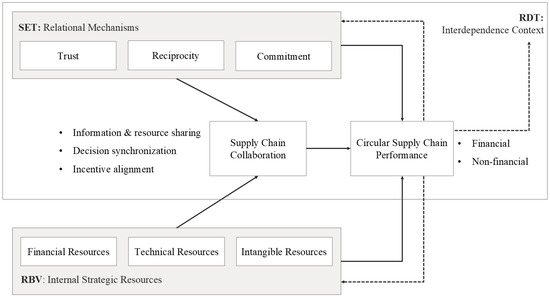
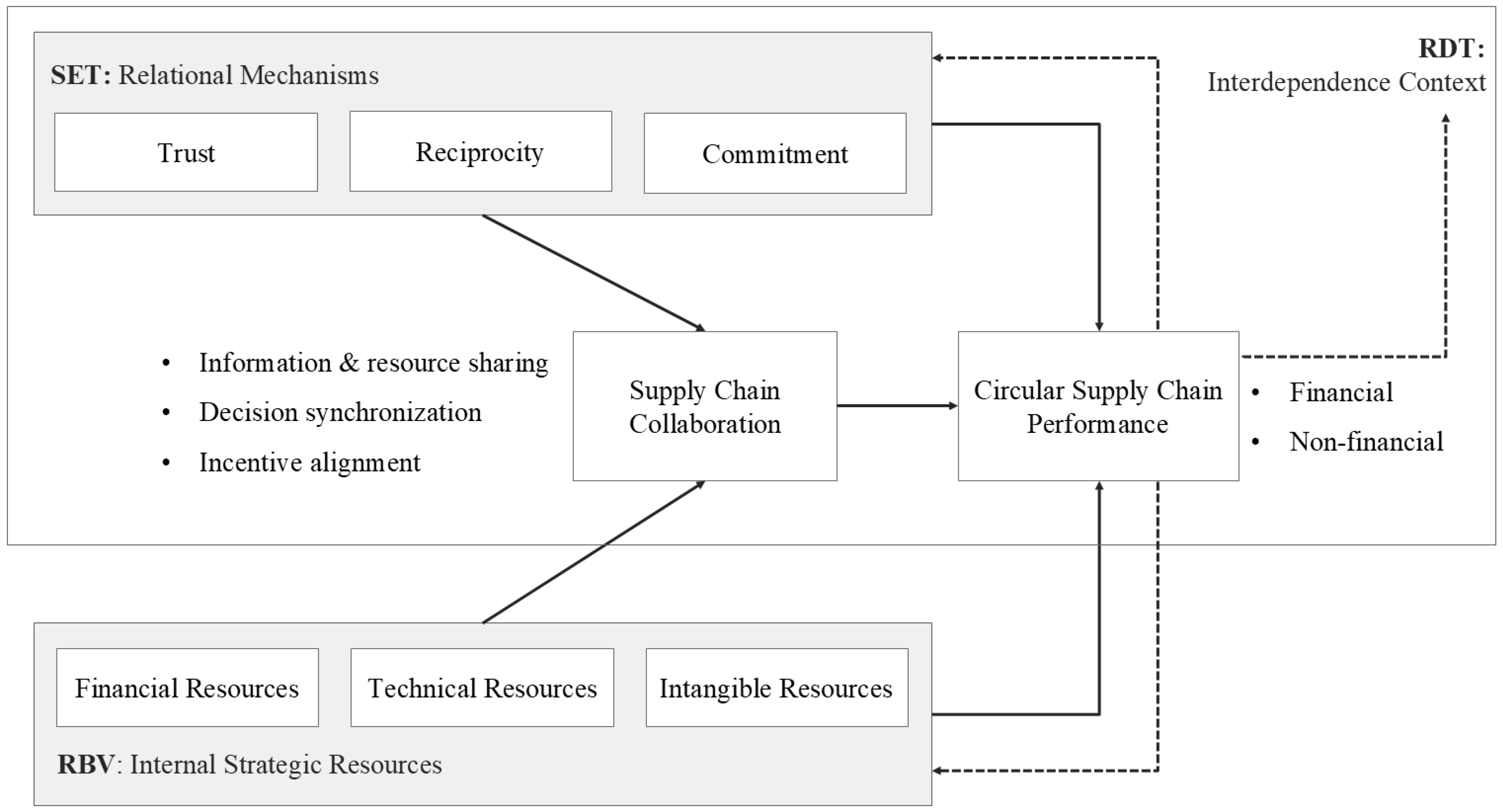
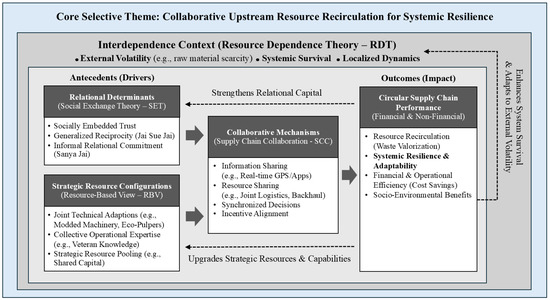
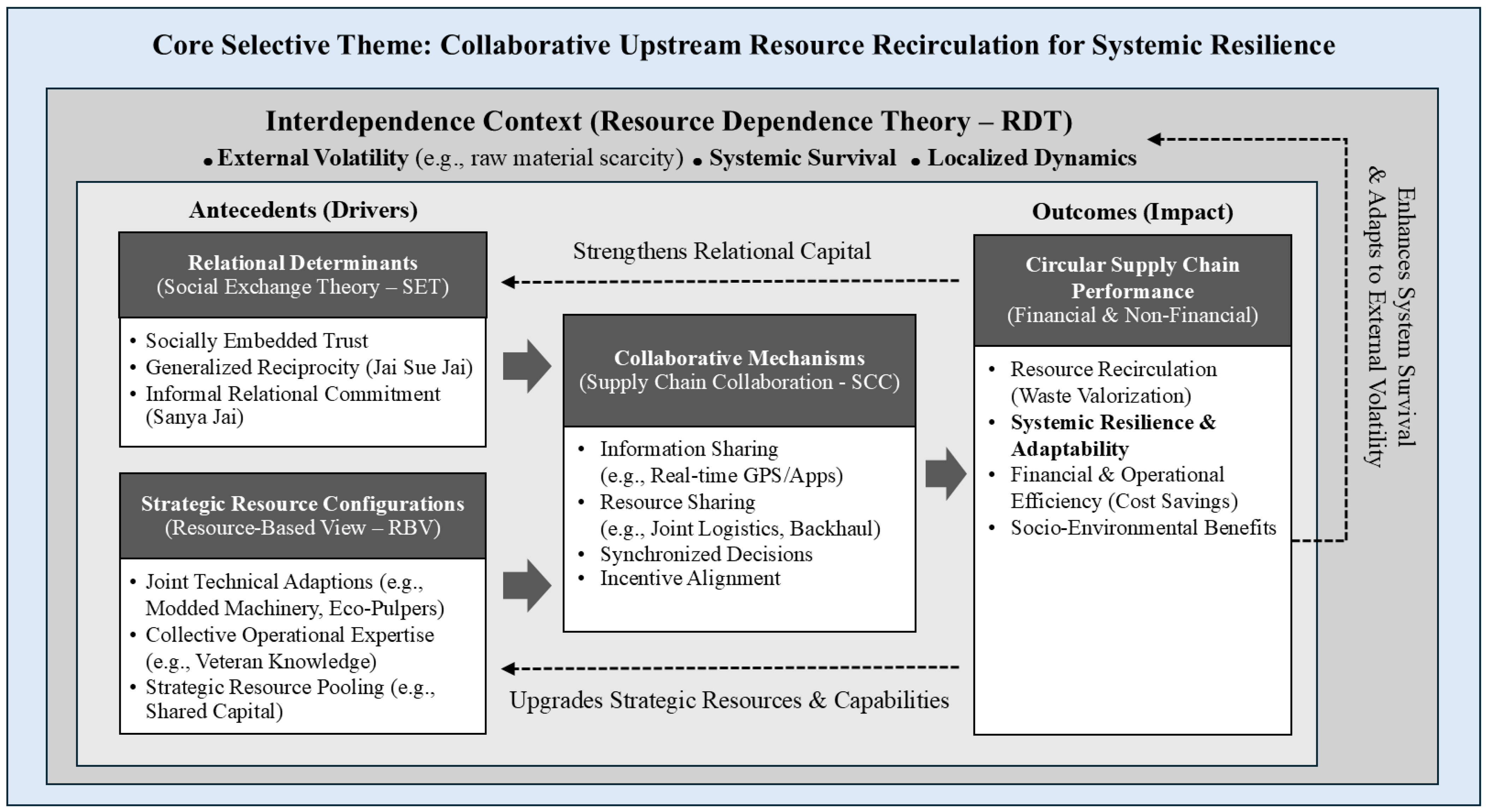

Disclaimer/Publisher’s Note: The statements, opinions and data contained in all publications are solely those of the individual author(s) and contributor(s) and not of MDPI and/or the editor(s). MDPI and/or the editor(s) disclaim responsibility for any injury to people or property resulting from any ideas, methods, instructions or products referred to in the content. |
© 2026 by the authors. Licensee MDPI, Basel, Switzerland. This article is an open access article distributed under the terms and conditions of the Creative Commons Attribution (CC BY) license.