1. Introduction
Transport is one of the major sectors of energy consumption and carbon emissions. In recent years, the global transport sector has recorded the fastest annual growth in carbon emissions, with the most significant correlation with economic growth [
1]. In China, vehicle ownership has grown rapidly at an average annual rate of 8.5%. In particular, the stock of private vehicles has expanded substantially. According to the latest official data, China’s private vehicle ownership reached 323 million in 2025, accounting for 88.32% of total vehicle ownership. However, compared with developed economies, China’s per capita vehicle ownership remains relatively low. With sustained economic development, private vehicle ownership in China is expected to keep growing in the coming decades, becoming a major driver of rising energy consumption and carbon emissions [
2]. At present, major countries worldwide have reached a consensus on actively addressing climate change and have set goals to achieve carbon neutrality. China has pledged to achieve carbon neutrality before 2060. In this context, the decarbonization of road transport has become even more critical. Addressing rising carbon emissions from private vehicles via policies and technologies while meeting growing travel demand represents a core challenge for road transport.
Existing studies have adopted diverse methods to conduct research on decarbonization pathways for China’s road transport. Some studies explored low-carbon transition in the transport sector using top-down integrated assessment models (IAMs) [
3,
4]. By comparing conclusions a decade apart, it was found that under the goal of carbon neutrality, the decarbonization pathway of the transport sector has become clearer, and electricity substitution has become the core of deep decarbonization in transport. More direct and focused studies mostly adopt a bottom-up approach, as it allows analysis of detailed key factors. For instance, early research built a provincial projection model to examine comprehensive policies for peaking the carbon emissions of motor vehicles around 2030 [
5]. Peng et al. [
6] also developed a provincial model incorporating more comprehensive and up-to-date policies for long-term trend analysis, highlighting the rapid growth of private vehicles and regional differences in emission reduction. Other similar studies focus on the impact of specific measures on decarbonization potential [
7,
8] and provide detailed discussions on different segments such as road freight or passenger transport, private and commercial vehicles [
9,
10]. All these studies emphasize the importance of promoting decarbonization through NEVs, especially electric vehicles (EVs), and note that private vehicles can achieve full electrification at a faster pace.
Building on these studies, the additional impacts of vehicle electrification have gradually gained attention, with the power sector as the core focus. Studies based on historical data point out that the decarbonization level of the power grid determines the carbon reduction effectiveness of transport electrification [
11], while research using computable general equilibrium models verifies the synergy between expanding renewable power and end-use electrification in the future [
12]. Wang et al. [
13] integrated IAMs and bottom-up models to analyze the energy and environmental impacts of vehicle electrification policies. The results show that while promoting road transport decarbonization, power demand increases by 5.1–6.7 times, leading to an additional 2.2–16.1 Gt of carbon emissions. Similarly, Ma et al. [
14] quantified the scale of carbon emission transfer caused by vehicle electrification and proposed coping strategies using roadside photovoltaic and grid-side CCUS. From a life-cycle perspective, electric vehicles exhibit notable emission reduction benefits and better environmental performance than conventional gasoline vehicles. In this process, the power generation mix significantly affects the low-carbon performance of electric vehicles over their life cycle, and the results also confirm the strong correlation between the transport and power sectors [
15,
16].
However, current research mostly focuses on carbon emission transfer and extra emission pressure on the power sector caused by vehicle electrification, while neglecting the potential carbon benefits brought by vehicle-to-grid (V2G) technology. Some studies have begun to examine the emission reduction enabling effect of V2G on power systems. Based on expert interviews, Noel et al. [
17] highlight the great potential of V2G in integrating renewable energy, providing emergency backup power for households, and supporting grid frequency regulation. Existing studies have transformed EVs from a single load into distributed flexible energy storage resources through smart charging/discharging and demand response strategies, which not only smooth load fluctuations and reduce electricity costs but also significantly improve the grid’s capacity to accommodate renewable energy [
18]. Meanwhile, the combination of smart charging and bidirectional discharging can effectively reduce operational carbon emissions, and the carbon reduction benefits of V2G will become more prominent as the power structure cleans up in the future [
19]. A V2G model considering residential power mutual aid and rooftop photovoltaic synergy can improve the self-consumption rate, reduce energy storage investment, and achieve win-win economic and environmental benefits [
20]. For microgrids and off-grid systems, using EVs as mobile energy storage in dispatch can simultaneously lower total system costs and carbon emissions, verifying the low-carbon value of V2G in new power systems [
21]. Another study suggests that China could replace 22.2% to 30.1% of energy storage with V2G to accelerate the coal-fired power phase-out. It can also significantly reduce system net load and peak-to-valley differences, smooth electricity market price fluctuations, and enhance grid operational flexibility and overall social benefits [
22].
Overall, existing research has three limitations: (1) Key data and assumptions need to be updated in line with China’s latest information and policies. (2) Impacts on the power sector require comprehensive assessment, weighing both positive and negative benefits. (3) Most evaluations of V2G focus on technical models or local cases, with insufficient macro-scale research from a transport perspective. Therefore, this study conducts a provincial-level study, systematically considering the synergy between the transport and power sectors to explore the carbon reduction potential of private vehicles. Our contributions are as follows: (1) The developed model and scenarios incorporate the latest economic, policy, and market dynamics to reflect more accurate future trends. (2) We establish a provincial-level integrated assessment framework for transport-power coordination, which combines the positive effects of V2G with the indirect carbon emissions from electrification in a unified analysis, avoiding one-sided conclusions. The structure of this paper is arranged as follows:
Section 2 describes the research methods, including data collection procedures, key assumptions, and scenario design.
Section 3 and
Section 4 present the results and discussion, respectively. Finally,
Section 5 concludes with key findings and policy implications.
2. Methodology
2.1. Overview of the Model
This study develops an integrated framework combining multiple methods to assess the decarbonization pathways of road transport and their comprehensive impacts on the power sector. We focus on private vehicles mainly because they account for the largest share of total vehicle ownership, will keep rising in the future, and serve as the core carrier for V2G application.
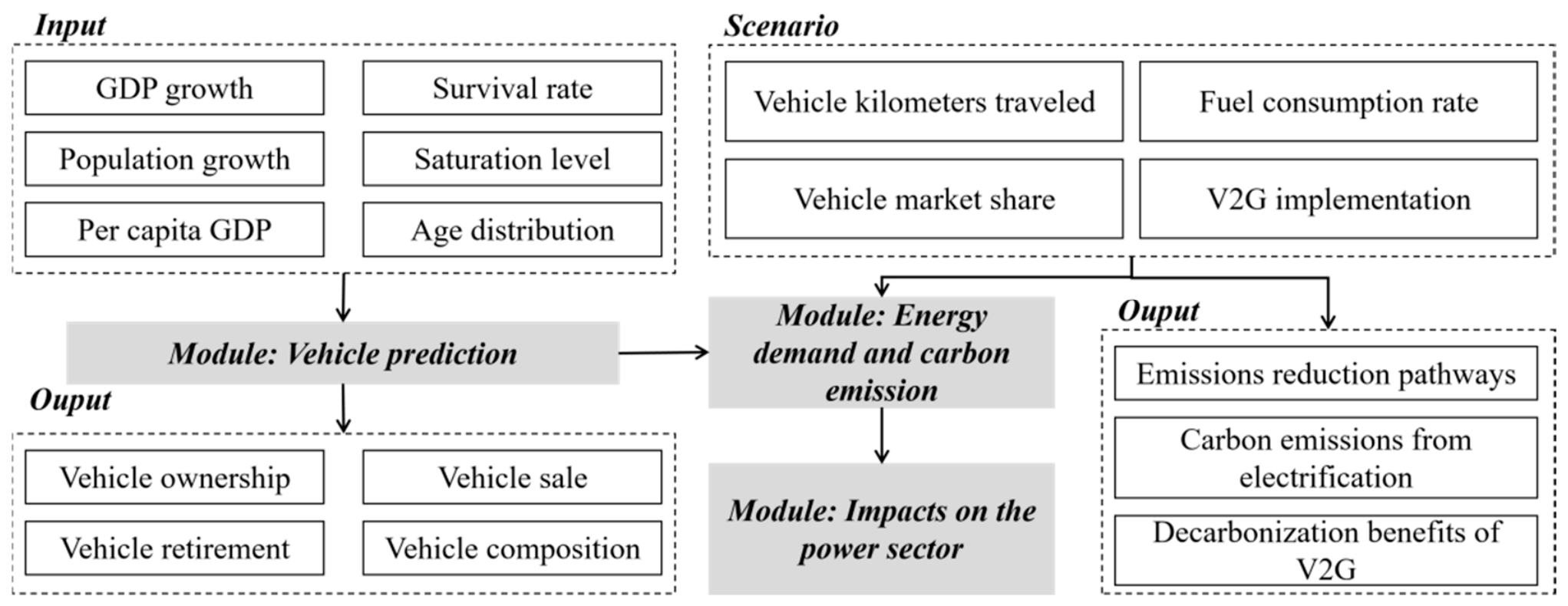
Figure 1 illustrates the technical procedure, which consists of three parts. First, a basic provincial vehicle projection model is constructed to analyze the overall stock and annual new registrations of private vehicles against changes in the economy and population. Second, policy portfolios are designed to evaluate the levels and differences in vehicle electrification, energy demand and carbon emissions under different scenarios. Third, focusing on EVs, the impacts of private vehicle decarbonization on the power sector and regional disparities are explored by comprehensively considering vehicle operation and V2G application.
2.2. Calculation Principles of the Modules
2.2.1. Vehicle Stock
Forecasting vehicle ownership is the foundation for road traffic environmental analysis, and its future trend is mainly determined by economic and population development. As a well-established method, the Gompertz model has been widely adopted to predict vehicle ownership at global, national and provincial scales [
2,
6]. Compared with the simple elasticity coefficient method, this model can better simulate the S-shaped growth curve of vehicle popularization and reflect the degree of market saturation. This study also employs this method to forecast the future private car ownership of 31 provincial-level regions one by one based on their population and GDP data. The specific formula is presented as follows:
where
denotes per capita vehicle ownership and
represents its saturation level.
and
stand for GDP and population, respectively.
and
are constant parameters that characterize the growth rate and inflection point. First, we conduct a regression analysis using the historical data of each region to obtain 31 sets of
and
values. Combined with the projected GDP and population data, we further analyze the changing trends of future vehicle ownership in each region.
Based on the Gompertz function, future annual vehicle sales require further calculation, which is directly correlated with the evolution of energy efficiency and fuel structure. Equations (3) and (4) illustrate the quantitative relationship between vehicle ownership and vehicle lifespan distribution.
where
refers to vehicle ownership in the target year
, and
denotes the vehicle type.
is the total vehicle sales in year
, while
stands for the market share of vehicle type
. Based on historical sales data and projected future vehicle ownership, the number of newly added vehicles of each type in the target year
can be calculated.
represents the survival rate of vehicle type
with the vehicle age of
.
and
W are two constant parameters.
2.2.2. Energy Consumption and Carbon Emissions
Energy consumption is calculated on the basis of vehicle ownership, vehicle structure, annual driving mileage and energy consumption per 100 km. The basic accounting formulas are presented as follows:
where
denotes the annual driving mileage of private cars in the target year
.
refers to the energy efficiency of each vehicle type sold in year
.
represents the energy consumption of category
in the target year
, which can be combined with the corresponding emission factor
to calculate road traffic carbon emissions
for that year. Unlike previous studies, this work considers the energy efficiency of vehicles sold in different years separately rather than adopting a uniform average value, which helps yield more accurate results. By setting diverse policy scenarios, we adjust
and
respectively to observe the resultant changes in energy consumption and carbon emissions, and further assess the decarbonization potential of private vehicles.
2.2.3. The Impact of the Power Sector
During the low-carbon transition of road transportation, the power sector is affected in two ways. The first is the carbon emission transfer caused by vehicle electrification. The second refers to the potential carbon benefits for the power sector brought by V2G technology, which transforms vehicles from traditional energy consumers into entities that both produce and consume energy. The volume of transferred carbon emissions has been calculated in Equations (5) and (6).
The carbon emission reduction benefits of V2G technology stem from the substitution of high-carbon peak power sources on the power grid by the idle battery capacity of electric vehicles. This study adopts the substituted electricity volume × carbon emission factor method for a quantitative assessment. The core formulas are presented as follows.
where
and
represent the electricity substitution volume and carbon emission reduction benefits generated by V2G application, respectively.
denotes the carbon emission factor of electricity.
stands for the proportion of vehicles available for V2G operation.
refers to the annual V2G discharge capacity per single vehicle, which is calculated as the product of battery capacity
, depth of discharge
and annual operating days
.
2.3. Key Assumptions
For provincial GDP and population in China, we collect historical data released by the National Bureau of Statistics. Chen et al. [
23] have conducted continuous research on future GDP and population and published two versions of gridded datasets based on the shared socioeconomic pathways (SSP1-5), covering projected population and economic data under different development scenarios from 2020 to 2100. This study selects the latest dataset released by the team and extracts provincial population and GDP projections under the SSP2 scenario as key input parameters for the model.
Table 1 shows the national overview; detailed results for 31 provincial regions are presented in
Appendix A Table A1 and
Table A2.
The saturation level of private vehicle ownership is affected by socioeconomic development. Drawing on international experience and settings in other studies [
2,
6], and considering China’s carbon emission governance, population aging and public transport development trends, this study sets the saturation level at 385 vehicles per 1000 people for most provinces. As a country with high population density and cities implementing purchase restrictions in large urban areas, the saturation level we set falls within a reasonable and relatively conservative range. Moreover, vehicle sharing, as a new travel mode, will put downward pressure on vehicle ownership [
24]. However, its penetration rate is affected by factors such as technology maturity and policies. Its actual substitution effect is hard to quantify precisely in this study. A sensitivity analysis of the vehicle ownership projections will be conducted to improve robustness. Vehicle survival rates have been extensively studied [
7,
25]. Referring to these findings, this study sets the service life of private vehicles at 15 years and calculates survival rates by vehicle age. The survival rate is close to 1 in the first five years, then declines, with mandatory retirement after 15 years. Considering that public transport will develop more rapidly under carbon governance policies, we project that the vehicle kilometers traveled (VKT) of private vehicles will gradually decrease. Therefore, VKT is assumed to be 12,900 km in 2025, falling by 15% and 30% by 2035 and 2060, respectively. In this study, the baseline fuel consumption of conventional fuel vehicles is set at 8.2 L/100 km; hybrid electric vehicles adopt a non-plug-in route with fuel consumption of 6.2 L/100 km; the baseline power consumption of battery electric vehicles is set at 16 kWh/100 km. In this study, all provinces share the same parameter settings for fuel vehicles and electric vehicles, including survival rate and VKT. In reality, some parameters may vary across provinces due to differences in driving conditions, usage intensity, and other factors. However, owing to the lack of detailed survey data on vehicle usage intensity at the provincial level, it is difficult for us to set differentiated provincial parameters. This simplification may introduce some uncertainty. For example, in eastern regions, well-developed public transportation may suppress private car usage, while the higher economic level and travel intensity may exert an upward effect. The combined effect could make the VKT in these regions deviate more from the national average. This may lead to estimation errors in provincial private car carbon emissions and affect the assessment of regional heterogeneity. Further improvements will be pursued in future research.
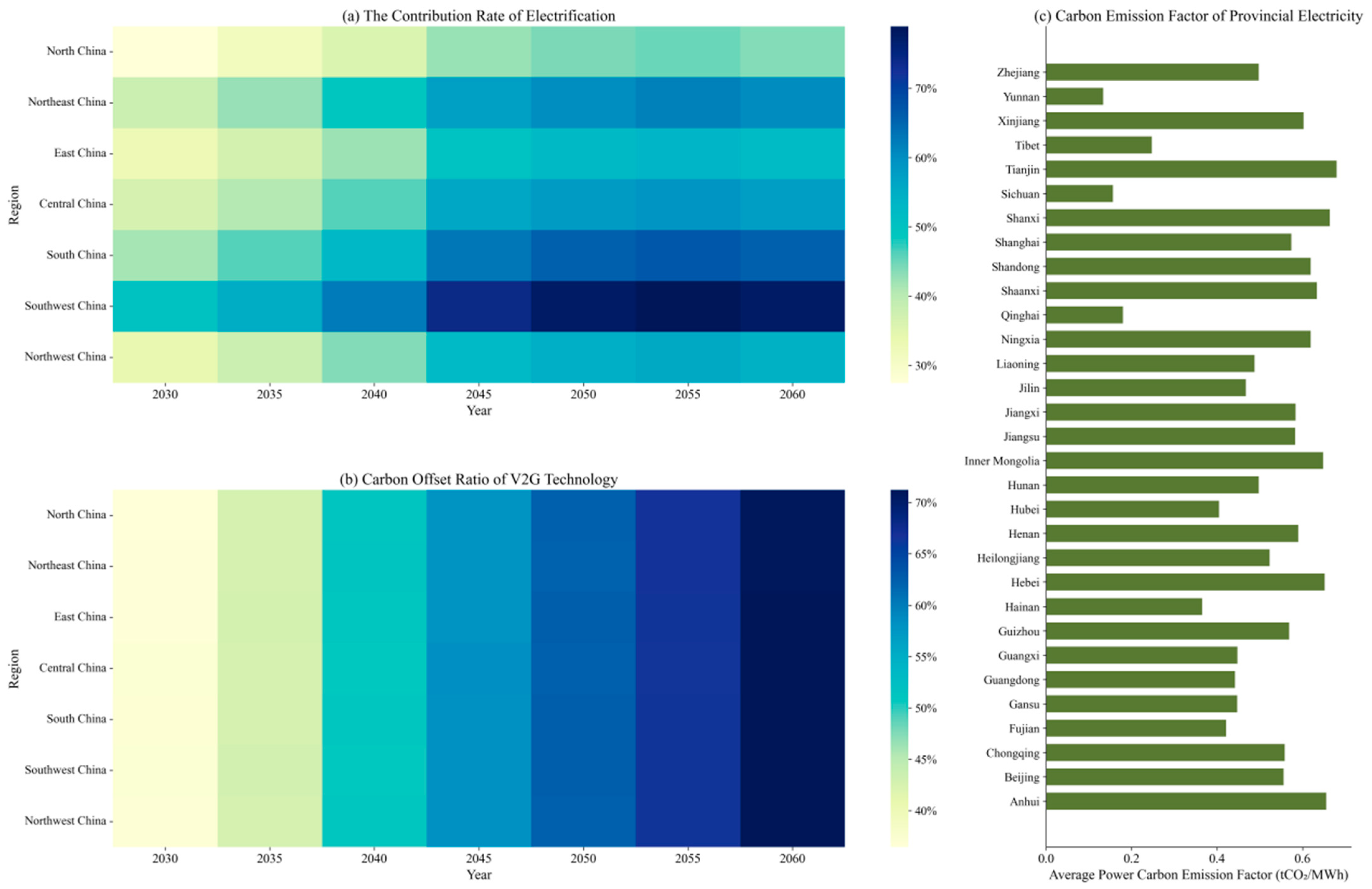
In this study, the impacts of the low-carbon transition in road transport on the power sector generally depend on three factors: vehicle power consumption, discharging volume and corresponding emission factors. Power consumption and discharging volume are projected by vehicle model combined with future electrification scenarios, while power emission factors are set as exogenous variables. The Chinese government authorities have continuously updated and released average power carbon emission factors at different scales in recent years. This study selects the latest official data as parameters (see
Appendix A Table A3), which fully reflect the actual level and regional differences in China’s power carbon intensity. For the further low-carbon development of the power sector in the future, we do not conduct a quantitative assessment but carry out discussion and analysis in combination with other studies. Based on the relevant literature [
17,
19,
22] and the daily travel electricity demand of private vehicles, after reserving electricity for essential travel, this study sets the battery capacity of a single EV at 60 kWh, the share of vehicles available for grid interaction at 0.2, the effective surplus discharge depth at 0.25, and the annual number of days participating in V2G dispatch at 150 days. To simplify scenario setting and model calculation, uniform V2G technical parameters are assumed for the full period 2025–2060. Other differentiated technical possibilities such as electricity intensity, discharging potential and participation duration are discussed in
Section 4.
2.4. Scenario Design
To better analyze the long-term decarbonization pathway and the impacts of private vehicles in China, this study proposes five scenarios: business as usual (BAU), energy efficiency improvement (EI), vehicle electrification (VE), and the comprehensive policy (CP). The BAU scenario assumes that future policies remain largely unchanged, serving as a baseline to evaluate the emission reduction effects of different policy measures.
The EI scenario focuses on the effectiveness of energy efficiency technologies. Through technical measures such as high-efficiency engines, vehicle lightweighting and motor system optimization, the energy efficiency of fuel vehicles and NEVs is continuously improved to reduce energy consumption per 100 km. Before 2040, energy efficiency benchmarks for new vehicles are set in line with the stated goals in the latest Energy Saving and New Energy Vehicle Technology Roadmap 3.0, further adapting to China’s medium- and long-term automotive energy efficiency evolution path compared with existing studies [
2,
6,
7]. From 2040 to 2050, vehicle energy efficiency is assumed to improve by 1% annually; after 2050, the annual improvement rate slows to 0.5% as efficiency gains become more difficult.
The VE scenario, with unchanged energy efficiency, accelerates the penetration of NEVs in the private vehicle market and gradually replaces conventional fuel private vehicles by improving the charging infrastructure network and implementing incentives for NEV purchase and use. In China’s third updated nationally determined contribution (NDC) submitted in 2025, it is clearly stated that “NEVs will become the mainstream of new vehicle sales by 2035”. This study sets the market share of NEV passenger cars at 70% by 2030 and further increases to 80% by 2035, with battery electric vehicles accounting for 60%, consistent with the medium- and long-term goals in the Energy Saving and New Energy Vehicle Technology Roadmap 3.0. Starting from 2035, no new conventional fuel passenger cars will be registered, achieving full hybridization; by 2040, the share of battery electric passenger cars will rise to 80% and hybrid models to 20%. In the long-term scenario toward carbon neutrality, the private vehicle sector is assumed to achieve 100% penetration of battery electric vehicles from 2045, with hybrid models gradually phased out.
The CP scenario integrates two single policy pathways—energy efficiency improvement and vehicle electrification—taking vehicle electrification as the core priority and superimposing efficiency upgrades to jointly drive private vehicle decarbonization. Compared with single-policy scenarios, the CP scenario delivers more significant emission reduction effects. Based on the CP scenario, a sensitivity analysis is conducted by adjusting factors such as the vehicle application ratio, battery capacity and discharging ratio to further explore the application potential of V2G.
3. Results
3.1. Vehicle Stock Projection
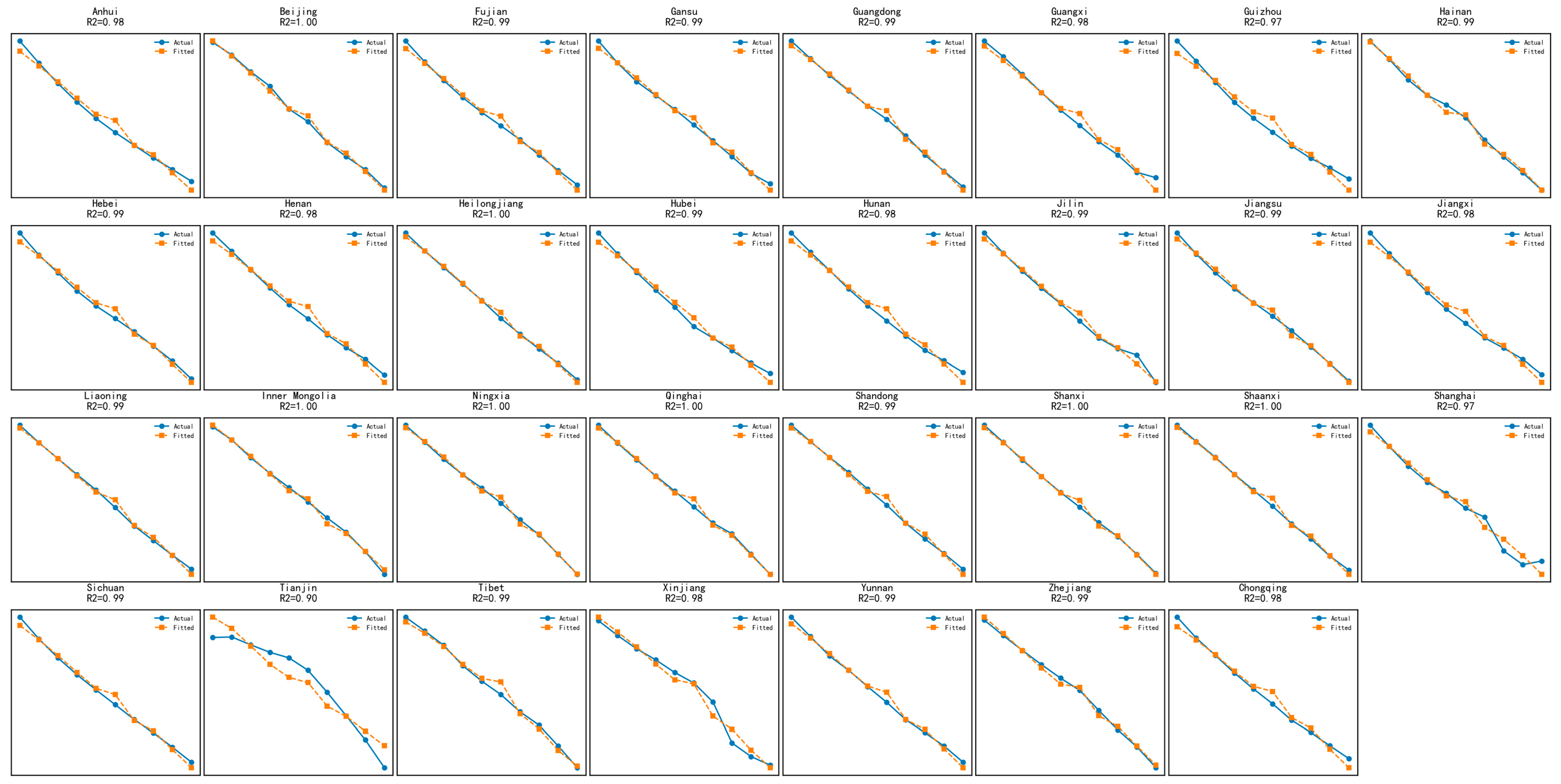
This study uses the Gompertz function to predict private vehicle ownership in 31 provinces.
Appendix A Figure A1 shows the fitting results based on historical data to verify the model’s effectiveness. The R-squared values for all provinces are above 0.9, and most are above 0.95. Only Tianjin has a value of of 0.90. Therefore, the Gompertz function is fully suitable for predicting future vehicle ownership.
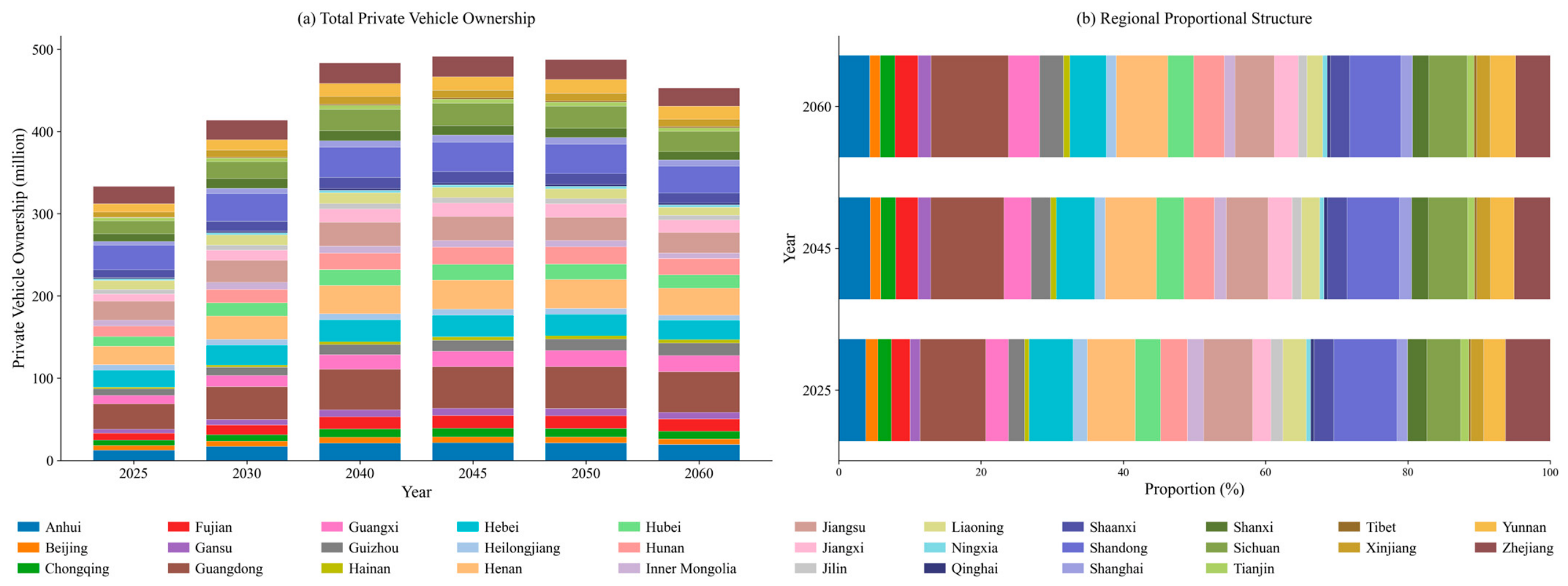
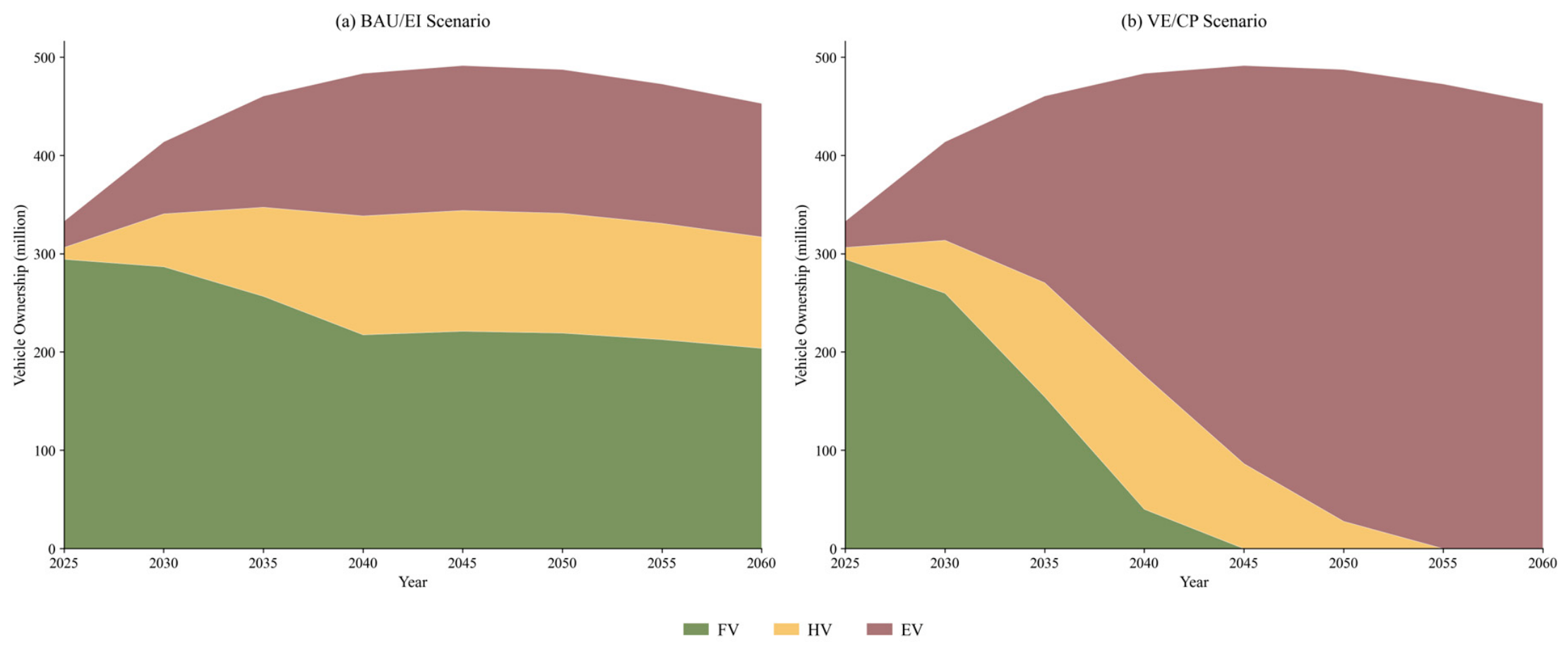
Figure 2 presents projected private vehicle ownership in China and 31 provinces from 2025 to 2060. In aggregate terms, private vehicles grow most markedly before 2030, reaching about 414 million by 2030—an increase of over 24% compared with 2025. Thereafter, as the total population begins to decline, vehicle growth slows, peaking at 491 million in 2045 and falling to 453 million by 2060. During this period, vehicle ownership per 1000 people keeps rising and nearly saturates after 2050. Our projections differ from existing studies [
5,
6,
7], mainly because this study adopts the latest provincial population and economic projections, changing vehicle growth rates and upper limits before 2030.
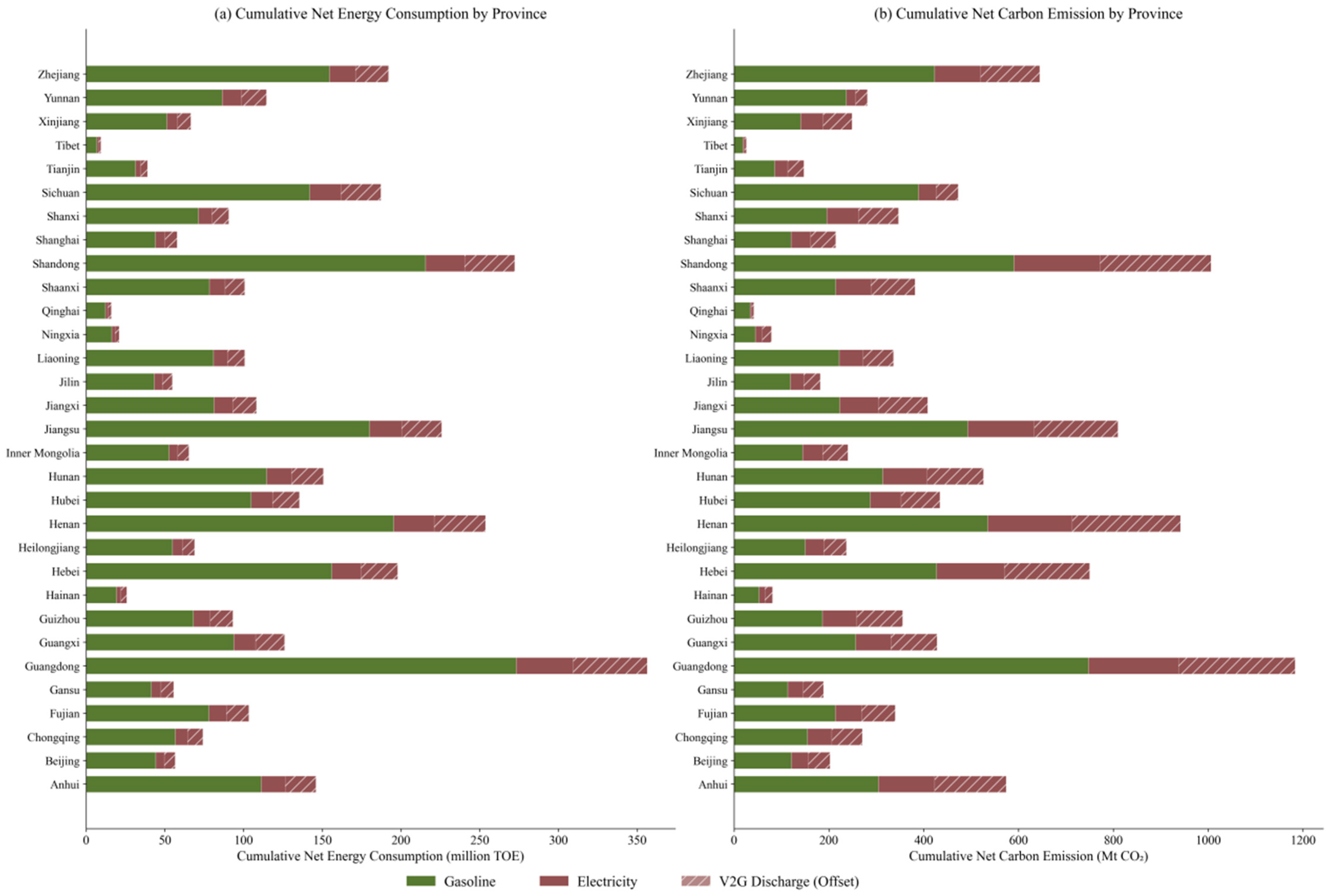
At the provincial level, the growth trends of vehicle ownership differ significantly. All provinces nationwide experience rapid growth before 2030. After 2030, growth slows and gradually declines in most eastern and northern provinces, while the central and western provinces generally see stronger growth. This is because less developed regions have lower ownership bases, larger growth space, and higher sensitivity to market expansion. In terms of regional phased characteristics, eastern provinces and municipalities such as Beijing, Shanghai, Tianjin, Jiangsu and Zhejiang have early-starting and high-base private vehicle ownership, which saturates around 2040 and slowly declines after 2045. Central and southwestern provinces such as Hubei, Hunan, Anhui and Sichuan have longer growth cycles, maintaining steady growth from 2035 to 2045 before slowly declining after peaking. Central and western provinces such as Guizhou, Yunnan, Guangxi and Jiangxi record the most pronounced growth with more sustained momentum. Meanwhile, the annual new registrations of private vehicles first rise and then fall, peaking between 2040 and 2045, and then decline year by year, consistent with the development and life-cycle patterns of China’s private vehicle market.
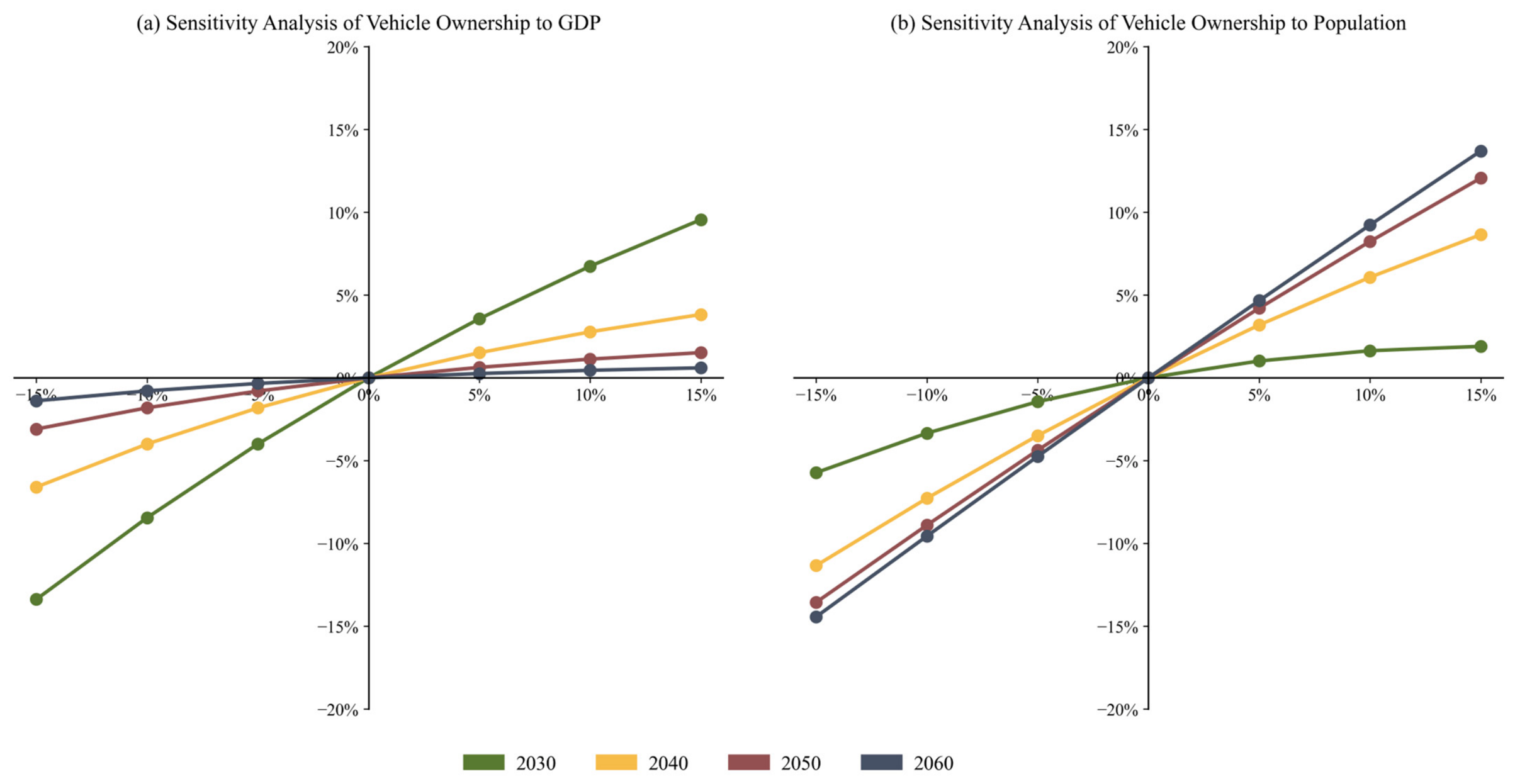
In addition, we also acknowledge that the Gompertz function has limitations. It depends on the accuracy of economic parameters. Therefore, we conduct sensitivity analyses on GDP and population. As shown in
Figure 3a, vehicle ownership changes approximately linearly with GDP disturbances. The magnitude of the change in vehicle ownership gradually narrows over time. In the early years, the sensitivity of vehicle ownership to GDP is significantly higher than in the later years. In the medium and long term, GDP growth slows down gradually. At the same time, the rise in per capita GDP pushes per capita vehicle ownership toward saturation. As a result, the impact of economic variables continues to weaken. In contrast, the impact of population on vehicle ownership keeps increasing over time (see
Figure 3b). In the medium and long term, the scale of vehicle ownership is mainly determined by population size. The long-term forecast results are more sensitive to population parameters.
3.2. Trends in Energy Consumption and Carbon Emissions
Based on vehicle ownership and sales projections, the vehicle structure under different scenarios is further forecast. First, the accuracy of the model is verified by comparing real 2025 data with the model outputs. According to official data, total NEV ownership in China reached 43.97 million in 2025, with battery electric vehicles accounting for 68.74%. Based on the private vehicle share from industry association statistics, private EV ownership is estimated at 25.7–27.2 million, while the model calculates 26.78 million EVs in 2025, falling within the estimated range. In 2025, EV ownership accounts for only about 8%. If the market share remains unchanged in the future (BAU and EI), EV ownership will reach 136 million by 2060, accounting for about 30%. In the VE and CP scenarios, the share of battery electric vehicles will keep rising and fully replace fuel vehicles after 2050 (
Figure 4). It should be noted that both the BAU and EI scenarios assume a constant current market share. Their purpose is not to predict the actual penetration trend of electric vehicles but to serve as a counterfactual reference baseline to reflect the impact of policies. The new Nationally Determined Contributions (NDCs) has explicitly set the goal that “new energy vehicles become the mainstream of new vehicle sales.” The actual development trend of electric vehicles is more aligned with the VE and CP scenarios. Consistent with other studies, private passenger vehicles are easier to fully replace with clean energy than commercial freight vehicles and can serve as a pioneer for decarbonization in road transport [
2,
13].
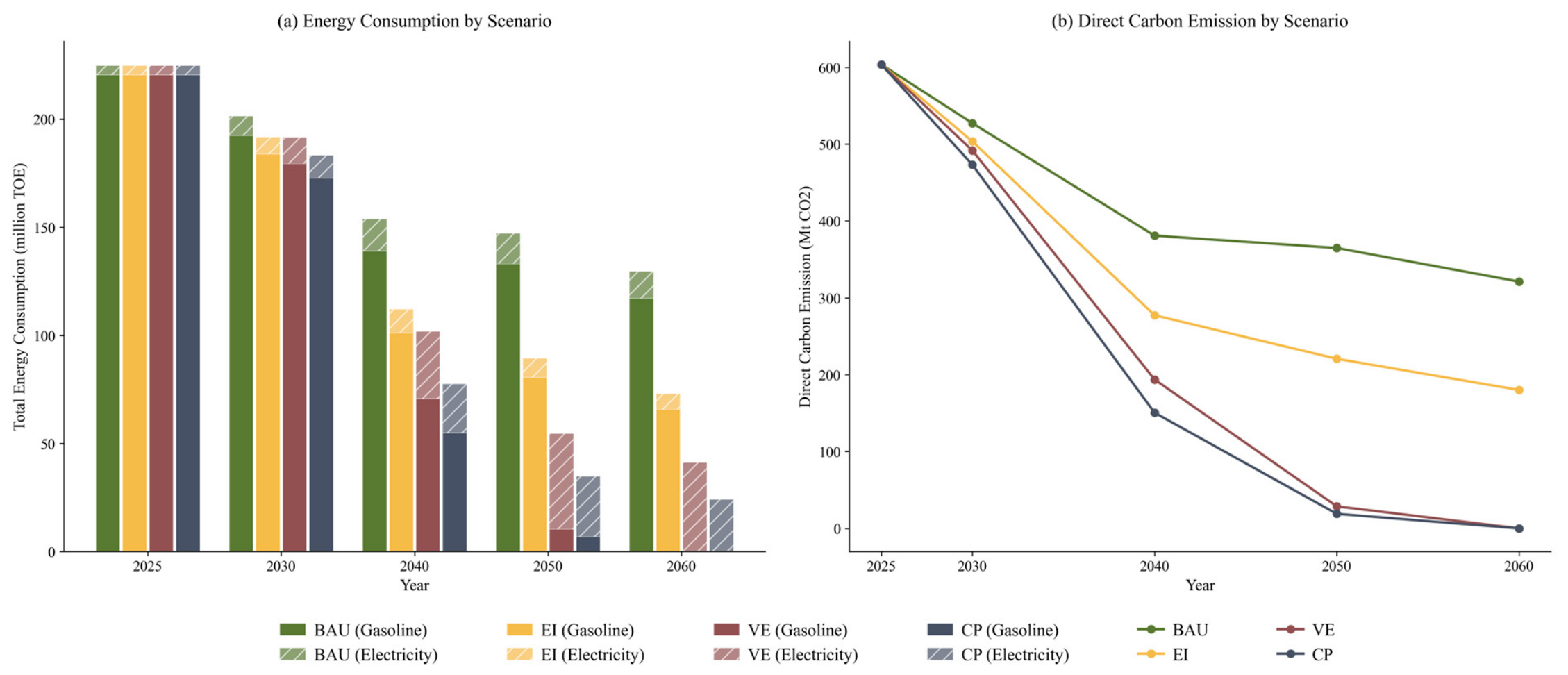
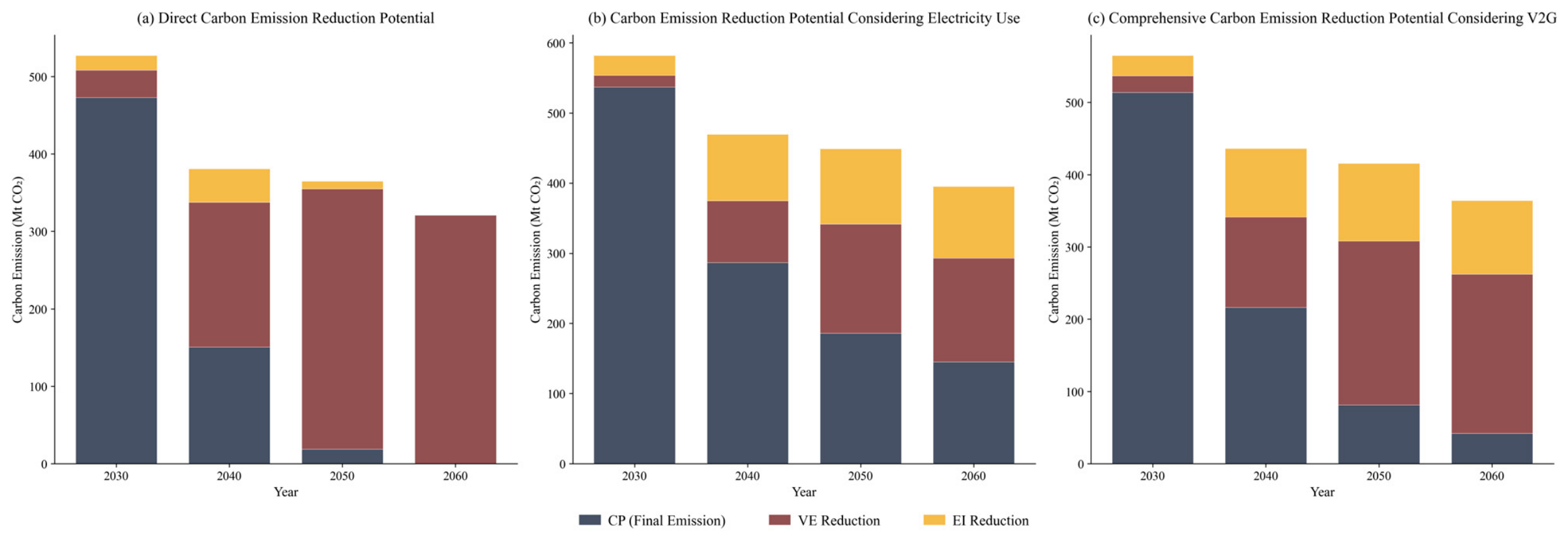
Figure 5 shows the trends of energy demand and carbon emissions of private vehicles in China under different scenarios. Total energy demand and gasoline consumption keep declining. In the EI scenario, with energy efficiency improvement as the core measure, energy demand will reach 73.02 million toe by 2060. In the VE scenario, with vigorous NEV promotion, energy demand will further drop to 41.28 million toe by 2060. In the CP scenario, with the synergy of two key measures, energy demand will be about 24.24 million toe by 2060. The energy-saving potential of the three low-carbon policy scenarios increases sequentially, reducing energy demand by 44%, 68% and 81% respectively by 2060 compared with the BAU scenario. The share of gasoline gradually decreases, reaching about 90% by 2060 in BAU and EI, and falling to zero after 2050 in VE and CP. Corresponding to energy demand, direct carbon emissions show a similar trend. In 2025, carbon emissions from gasoline consumption are about 600 million tonnes. Without further emission reduction measures, direct carbon emissions in BAU will rise due to growing vehicle ownership and fall to about 321 million tonnes by 2060. In the EI scenario, carbon emissions will be about 180 million tonnes by 2060, 44% lower than BAU. In the VE and CP scenarios, fuel vehicles are fully phased out after 2050, with carbon emissions dropping to zero.
3.3. Assessment Results for the Power Sector’s Impact
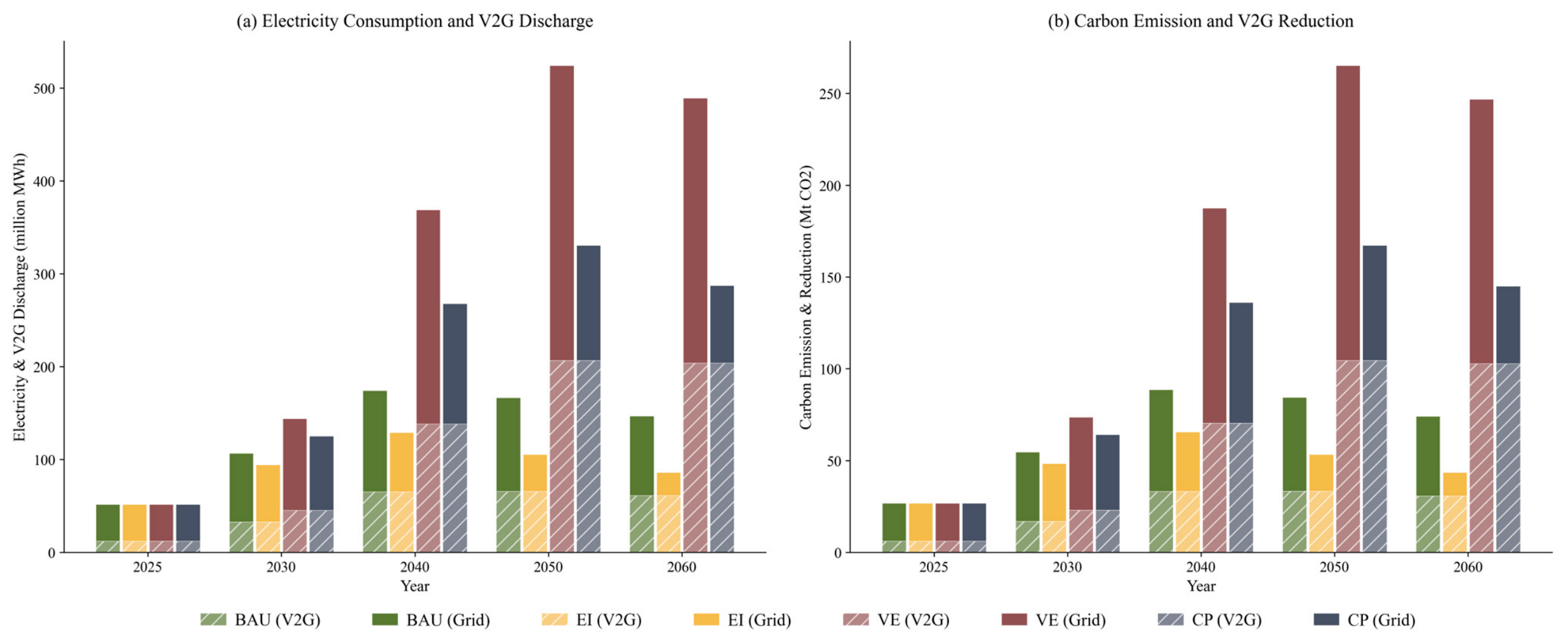
Figure 6 presents the comprehensive impacts of private vehicle decarbonization on the power sector. Final outcomes differ significantly across scenarios. In the BAU scenario, power demand will peak at 174 TWh in 2040 and fall to 146 TWh by 2060. Assuming the average power emission factor remains unchanged, the associated power carbon emissions will first rise and then fall, totaling about 2.7 Gt cumulatively. In the EI scenario, improved EV energy efficiency pushes power demand into a plateau between 2035 and 2040, not exceeding 130 TWh at most, reaching 86.2 TWh by 2060 with cumulative carbon emissions of about 1.9 Gt. In the VE scenario, with a higher EV share and unchanged energy efficiency, power demand grows rapidly before 2045, slowly rises then falls between 2045 and 2060, staying at 474–525 TWh, with cumulative carbon emissions reaching 6.7 Gt by 2060. In the CP scenario, integrated policies follow a similar trend to VE but lower the peak interval, with power demand at about 287 TWh and cumulative carbon emissions at about 4.5 Gt by 2060. By comparison, the EI scenario minimizes carbon transfer from transport to the power sector; cumulative emissions under CP are 2.3 times those under EI.
However, V2G application significantly offsets the negative effect of carbon transfer. Under the set technical parameters, each V2G-participating EV can supply about 2250 kWh of discharging annually, reducing 0.3–1.5 tonnes of carbon emissions by replacing power generation. With fixed technical parameters, EV discharging depends only on EV stock, not energy efficiency. Thus, BAU and EI share the same discharging capacity, as do VE and CP. In the BAU and EI scenarios, the discharging volume and carbon reduction rise then fall in line with EV stock. By 2060, annual discharging will reach about 6.12 TWh, achieving 30.86 million tonnes of indirect carbon reduction. In the VE and CP scenarios, with full NEV promotion, V2G application scales up continuously, reaching annual discharging of about 20.38 TWh and carbon reduction of about 103 million tonnes by 2060. In terms of offset ratio, the CP and EI scenarios—benefiting from energy efficiency improvement—achieve higher offset rates, offsetting 56.8% and 52.2% of cumulative power carbon emissions, respectively, between 2025 and 2060. The BAU and VE scenarios, with unchanged energy efficiency, see lower offset rates at 37.2% and 38.4% respectively. The results confirm that the impact of road transport decarbonization on the power sector is not merely carbon transfer, but enables cross-sector coordinated emission reduction through vehicle-grid interaction.
5. Conclusions and Policy Implications
5.1. Conclusions
This study establishes a bottom-up energy demand and carbon emission analysis model for private transport across 31 provincial regions in China, calculates the emission reduction potential of private vehicles from 2025 to 2060 under multiple scenarios, integrates the indirect carbon emissions from electrification and the positive value of V2G, and clarifies the decarbonization pathway of private transport and its comprehensive impacts on the power industry. The main conclusions are as follows.
China’s private vehicle ownership will grow rapidly and peak at about 491 million in 2045, then decline to 453 million by 2060 due to a shrinking population. With vigorous NEV promotion, fuel vehicles will be fully phased out after 2050, achieving carbon neutrality in private transport. The energy-saving potential of the three low-carbon scenarios increases sequentially, reducing energy demand by 44%, 68% and 81%, respectively, by 2060 compared with BAU. Power demand rises significantly with electrification, reaching 287 TWh by 2060 with sustained energy efficiency improvements, generating 4.5 Gt of cumulative carbon emissions. Meanwhile, the V2G application can significantly offset the carbon transfer effect of electrification. By 2060, under conservative assumptions, annual discharging will reach about 20.38 TWh, offsetting 56.8% of cumulative power carbon emissions between 2025 and 2060; future technological progress will further enhance the emission reduction benefits. In terms of the reduction potential, efficiency improvement contributes more in the short- to medium-term, while long-term decarbonization relies on NEV promotion—especially V2G, which boosts the contribution of electrification. In addition, the spatial distribution of future vehicle ownership, energy demand and greenhouse gas emissions shows an overall east-to-west downward gradient, while growth rates in the eastern provinces are mostly lower than in the central and western provinces. The results confirm that road transport decarbonization is not just a carbon transfer to the power sector but enables cross-sector coordinated emission reduction via vehicle-grid interaction, while highlighting non-negligible regional heterogeneity.
Overall, this study contributes a decarbonization analysis of private transport across 31 provinces. This research may mark the start of addressing more practical issues by providing systematic evidence for a comprehensive understanding of the impacts of private transport decarbonization on the power sector. Further research is warranted on topics such as the effects of widespread shared car use, the economic benefits of V2G, and the systemic decarbonization impacts of the entire road transport sector.
5.2. Policy Implications
The findings suggest that China should implement effective policies to promote the widespread adoption of V2G technology as it advances vehicle electrification in the future. To this end, the following policy implications are proposed:
First, incorporate the V2G discharging of private vehicles into the carbon inclusion system and widen the peak-valley price spread. This dual “carbon-electricity” incentive can effectively mobilize users to participate in demand response, addressing the lack of initial driving forces.
Second, prioritize large-scale V2G commercial pilots in eastern load centers. These areas feature high renewable energy capacity, prominent peak-shaving pressure, and high EV penetration. Pilots can provide a differentiated experience for formulating unified national standards and avoid a one-size-fits-all approach.
Third, accelerate the improvement of the V2G energy efficiency and grid-connection technical standards in the short term. Mandatory market access thresholds and certification systems should be introduced to ensure safe and reliable vehicle–grid interaction, solidifying the technical foundation for large-scale operations.
Finally, proactively build smart grid infrastructure and establish a cross-sectoral data coordination mechanism between the transport and power sectors in the long run. This will address the grid impacts of large-scale charging and enable an early warning and flexible regulation against power supply disruptions and extreme climate events.