


Abstract
Marine ecosystem degradation may reduce state revenues, increase recovery spending, and weaken fiscal sustainability, yet Indonesia does not yet have a routine governance mechanism that links marine natural capital valuation to fiscal-risk assessment in the State Budget Financial Note. This article develops a governance design, Blue Natural Capital Value at Risk (BNC-VaR), to translate changes in marine ecosystem conditions into fiscal-exposure signals for Indonesian public finance. Ecological condition indicators, such as fish-stock status, coral-reef condition, and mangrove extent, are converted into traceable valuation parameters and then into structured outputs, including fiscal-exposure scenarios, budget-relevance notes, and medium-term fiscal-sustainability readings across revenue, expenditure, deficit, and financing channels. The design treats ecological change as affecting the fiscal position through mediated and disclosable pathways rather than automatic causal effects. It adapts Value at Risk as a risk logic for public fiscal governance rather than as a conventional market-based probabilistic measure. Using theory synthesis and a model-paper approach across six analytical stages, the study produces five design principles, four formal propositions, and a five-component institutional architecture, with the Directorate General of State Assets Management positioned as a valuation custodian. As a conceptual contribution, BNC-VaR offers an operational architecture and implementation roadmap for future empirical testing in Indonesia and other archipelagic or marine-resource-dependent fiscal systems.
1. Introduction
The United Nations Sustainable Development Agenda places the protection of marine ecosystems as a core objective through Sustainable Development Goal 14 [1]. For archipelagic states, this objective is not only environmental. Marine ecosystems support revenue bases, coastal livelihoods, food systems, tourism activity, and public spending needs. The fiscal question is therefore whether changes in marine ecosystem conditions can be recognised early enough within planning, fiscal risk, and budget routines. To the best of the authors’ knowledge, the existing literature does not yet offer a governance design that operationally links marine natural capital valuation to fiscal-risk assessment in the state budget cycle, particularly in Indonesia [2]. Without such a mechanism, marine ecological changes that may reduce revenues or increase recovery and adaptation spending remain difficult to trace in fiscal planning documents such as the State Budget Financial Note.
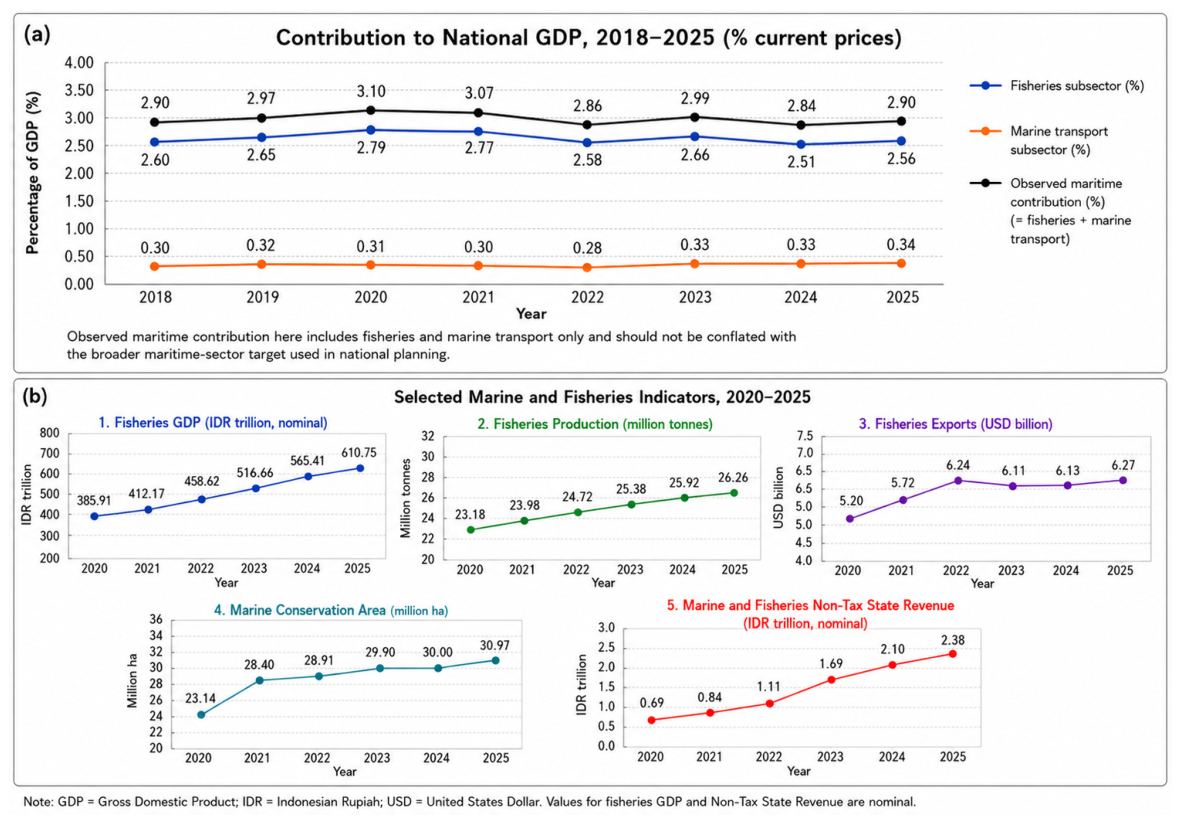
Indonesia is a relevant case due to the scale of its marine territory and the administrative importance of marine resources. The country has 17,504 islands, approximately 108,000 km of coastline, and around 6.4 million km2 of waters [3,4,5]. Yet the economic signal is not straightforward. The fisheries sector is a narrow national-accounts category, contributing around 2.5–2.8% of Gross Domestic Product during 2018–2025, while marine transport contributed around 0.28–0.34% over the same period. Taken together, these two consistently observable subsectors averaged about 2.95% of Gross Domestic Product, reaching 2.90% in 2025. This observed series should not be conflated with the broader maritime-sector target in the 2025–2029 National Medium-Term Development Plan (RPJMN), which refers to a broader aggregate that includes fisheries, marine and coastal tourism, sea transport and ports, offshore energy, and the coastal industry [3,6]. The blue economy, in contrast, is not a national-accounts sector but a sustainable development and governance paradigm for managing marine resources.
Figure 1 shows why the fiscal relevance of marine resources cannot be inferred from a single headline indicator. As depicted, Indonesia’s marine and fisheries sector shows broad economic and administrative expansion between 2020 and 2025. Nominal fisheries Gross Domestic Product, fisheries production, marine conservation areas, and Non-Tax State Revenue all increased over the period, while fisheries exports remained broadly positive despite some year-to-year variation. Non-Tax State Revenue refers to government revenue other than taxes and grants, including natural resource levies, service charges, and administrative receipts. These trends indicate sectoral growth and expanding administrative reach, but they also reveal a critical blind spot: headline performance indicators by themselves do not show whether the ecological pressures underlying marine assets have been translated into accountable fiscal-risk information.
This distinction matters because the ecological foundations of marine economic value remain vulnerable. Official and secondary sources report that about 38% of assessed fish stocks are overfished, that mangrove loss may reach up to 52,000 hectares per year, that around one-third of coral reefs are in poor condition, and that plastic pollution causes estimated economic losses of about USD 450 million per year [3,4]. Coral-reef degradation can affect fisheries productivity and marine tourism by reducing habitat quality, fish-stock support, and tourism attractiveness [7,8,9]. Mangrove loss can increase coastal vulnerability and future restoration or disaster-response spending. These ecological changes do not automatically become fiscal events. They become fiscally relevant only when they affect administratively recognised revenue objects, taxable activities, expenditure obligations, fiscal-risk categories, or financing needs. This is the governance gap addressed in this article.
Figure 1.
Selected trends in Indonesia’s maritime and fisheries economy. Panel (a) presents the contribution of fisheries and marine transport to the national Gross Domestic Product (GDP) for 2018–2025 [10]. Panel (b) presents selected Ministry of Marine Affairs and Fisheries performance indicators for 2020–2025 [11]. Fisheries Gross Domestic Product and Non-Tax State Revenue values are presented in nominal terms. Figure 1 was prepared with the assistance of ChatGPT (OpenAI, GPT 5.5) for data visualisation and layout refinement, using numerical data supplied by the authors from official sources. The authors verified the underlying data, reviewed the visual output, and approved the final figure.
Indonesia already has policy and accounting entry points, but these remain incomplete for use in fiscal risk. The 2025–2029 National Medium-Term Development Plan, stipulated through Presidential Regulation No. 12 of 2025, prioritises the blue economy as part of economic transformation and targets an increase in the broader maritime sector’s contribution to Gross Domestic Product from 8.1% to 9.1% by 2029 [6]. The Wealth Accounting and the Valuation of Ecosystem Services programme also supported the development of natural capital accounting in Indonesia, including land and peat accounts, and strengthened the policy relevance of environmental-economic accounting [12]. However, ecosystem-accounting outputs do not inherently translate into fiscal-risk inputs. A separate translation mechanism is required to determine which ecological indicators matter for fiscal exposure, how valuation parameters should be controlled, and how uncertainty should be disclosed before the information is included in budget documents.
International experience confirms that the gap is not the absence of nature-related finance but the absence of a routine fiscal-risk transmission mechanism. The System of Environmental-Economic Accounting provides standardised ecosystem accounts [13], Ocean Accounts extend accounting logic to the marine domain [14], the Marine Natural Capital Risk Register maps asset-level risks and benefits [15], and green public financial management offers an environmental entry point into public finance [16]. Other archipelagic and island contexts also show partial solutions. Seychelles used a sovereign blue bond to support marine protection and fisheries governance [17]. Belize’s 2021 debt-for-nature arrangement linked debt treatment to marine conservation commitments [18]. The Philippines adopted blue-bond guidance to define eligible blue projects [19]. Pacific small island states generally address climate and disaster exposure through aggregate macro-fiscal risk, contingency, and resilience-financing instruments [20]. These mechanisms matter, but they operate mainly at the accounting, risk-mapping, market-finance, or aggregate macro-fiscal level. They do not provide a recurring process for translating ecosystem-condition change into fiscal-exposure signals within the annual budget cycle.
The data used in this article should therefore be read with two limitations in mind. First, the Indonesian economic series used in the Introduction draws on official sectoral and national accounts indicators, but these indicators do not directly measure ecological fiscal exposure. The nominal growth in fisheries Gross Domestic Product and Non-Tax State Revenue should therefore be interpreted as an administrative and economic trend, not as a direct measure of ecological resilience. Second, no standardised cross-country dataset currently quantifies marine ecological fiscal exposure on a comparable basis across archipelagic and island states. The cross-country comparison in this paper is therefore limited to governance mechanisms rather than harmonised fiscal-impact estimates.
This article proposes a governance design for Blue Natural Capital Value at Risk (BNC-VaR), linking changes in marine ecosystem conditions to fiscal-risk readings in the Indonesian state budget cycle. The proposed design is structured as a five-component institutional architecture covering ecosystem data, valuation and parameterisation, fiscal-risk analysis, budgetary implications, and fiscal sustainability. Within this architecture, the Directorate General of State Assets Management serves as a valuation custodian, responsible for maintaining methodological consistency, parameter traceability, and quality assurance across fiscal functions. The term “Value at Risk” is used as an adaptation of public fiscal-risk logic rather than as a conventional market-risk measure. Its conceptual adaptation is clarified in Section 2.5.
The research question guiding this paper is as follows: how can a governance design enable changes in marine ecosystem conditions to be traced into fiscal-exposure signals relevant to the Indonesian State Budget Financial Note process?
To answer this question, the study uses theory-driven corpus construction, theory synthesis, and a model-paper approach. The analysis follows six linked stages: problem identification, corpus assembly, thematic synthesis, gap-to-requirement mapping, architecture specification, and proposition formulation with internal validation. This design is appropriate because the study does not test a ready-made empirical model. It constructs an institutional architecture from the existing theoretical, accounting, valuation, and fiscal-risk literature, then specifies how the architecture can be evaluated in future empirical work.
The article contributes three elements. First, it provides a gap-mapping matrix that connects the blue economy, marine natural capital valuation, marine accounting, and fiscal-risk literature. Second, it develops five design principles and four evaluable propositions for ecological-to-fiscal translation. Third, it specifies an institutional architecture that can integrate marine ecosystem information into existing fiscal-risk and budgetary routines without creating a parallel administrative infrastructure. The central argument is that fiscal integrity under ecological uncertainty depends not on perfect ecological valuation but on traceable parameters, transparent disclosure of uncertainty, and consistent institutional handoffs from ecosystem data to fiscal risk and budget use.
2. Theoretical Study
This theoretical study positions marine issues as development administration challenges that require interdisciplinary synthesis. As illustrated in Figure 2, the conceptual foundation of the BNC-VaR model spans four functionally distinct literature clusters: the blue economy, marine natural capital valuation, marine accounting and uncertainty, and fiscal risk and budgeting. Rather than reviewing these fields in isolation, this section examines them along a sequential path from ecology to fiscal policy. The progression moves from establishing the policy arena to defining asset and benefit parameters, organising ecological information and uncertainty disclosure, and identifying entry points into public finance.
Figure 2.
Logical progression of the four literature clusters towards the Blue Natural Capital-Value at Risk (BNC-VaR) governance architecture. The figure shows how each literature cluster performs a necessary function while leaving an unresolved gap that requires the next analytical step.
Each transition in Figure 2 reveals a specific functional disconnect. Broad blue-economy commitments do not, by themselves, yield usable valuation parameters. Stand-alone valuations require an accounting and reporting framework to remain traceable across decision processes. Marine-accounting outputs, in turn, require a fiscal-risk interface before they can inform budgetary and fiscal-sustainability decisions. The critical analysis in the following subsections identifies these unresolved gaps and explains why a cross-functional governance design is required.
The critical reading of these four clusters is framed by institutional theory and anticipatory governance. Institutional theory, as developed by North [21], explains how formal rules shape actors’ behaviour and reduce transaction costs in public decision chains. It helps explain why ecology-to-fiscal translation requires separated institutional functions, coordination rules, and stable governance mechanisms. However, institutional stability alone does not explain how public institutions should respond to risks that are not yet recognised by existing rules, particularly gradual and cumulative ecological pressures that fall outside conventional fiscal-risk readings [21]. Anticipatory governance addresses this limitation by emphasising foresight, policy integration, actor engagement, and explicit disclosure of knowledge limits and scenario plausibility [22,23,24]. Together, these perspectives provide the analytical lens for reading the four clusters and deriving the design requirements in the synthesis subsection.
2.1. The Blue Economy as an Arena for Development Governance
A bibliometric review of the blue economy shows that this field has grown rapidly since 2017, with a primary focus on marine sustainability, coastal governance, and blue finance [25]. This growth has led to frameworks such as the sustainable ocean economy [26,27] and blue bonds [28], which aim to link marine activities with financing mechanisms. Recent international market guidance has further extended the use of these instruments. The International Capital Market Association (ICMA) Green Bond Principles provide voluntary process guidelines [29], while ICMA’s Sustainable Bonds for Nature: A Practitioner’s Guide and the International Finance Corporation (IFC) Guidelines for Blue Finance extend this guidance to nature-related objectives [30]. The IFC Guidelines for Blue Finance, including the updated Version 2.0, provide guidance for financing blue-economy activities and marine-related objectives [31,32]. However, these frameworks remain largely finance-oriented. They do not explain how fiscal institutions incorporate marine ecological pressures into the state budget cycle. This blind spot matters because governments that plan, finance, or underwrite blue-economy development without monitoring ecological risks may overlook emerging fiscal burdens during budget preparation.
Because the blue economy lacks a single, universally agreed upon operational definition, effective governance requires a pragmatic approach that links the concept to existing policy frameworks and strengthens institutional coherence [33]. Sustainable blue finance also depends on legal and institutional mechanisms that connect stakeholders and align incentives [28]. More broadly, integrating interconnected sustainability issues requires horizontal and vertical coordination, political leadership, and the involvement of social actors so that blue-economy policies do not remain merely normative statements [34].
The blue-economy literature establishes the policy arena for governing marine sustainability and finance. However, it does not provide a mechanism for translating marine ecological pressures into fiscal parameters that the budget system can process. This limitation creates a need for marine natural capital valuation, which explains how ecological conditions can be translated into valuation parameters for fiscal-governance purposes.
2.2. Marine Natural Capital and Valuation as a Basis for Decisions
Consistent decision-making requires a shared understanding of what constitutes a natural resource asset and how it supports the ecosystem services it provides [35]. Building on this premise, this study conceptualises assets not as neutral biophysical entities but as the material basis of the social, economic, and ecological benefits that public policy seeks to safeguard. Integrated approaches caution against reducing valuation solely to economic efficiency, because public decisions must also consider equity and sustainability within interconnected human and natural systems [36]. Valuation in development administration is therefore not simply a calculation technique but a decision-making infrastructure that helps governments assess what is at stake when asset conditions change.
Within coastal and marine environments, public decisions cannot rely on a single economic value, because values and decision contexts vary [37]. The capacity of natural assets to sustain long-term public benefits is also shaped by governance quality [38]. Marine natural capital asset and risk registers provide a way to map relationships among asset status, associated benefits, and risks to ecosystem service provision [15]. Valuations relevant to public finance must therefore explain not only what is valuable, but also what is fiscally exposed when an asset is stressed.
The valuation literature provides the asset and benefit basis for decision-making, but it remains weak as a recurring system for fiscal parameterisation. Valuations are often point-in-time, location-specific, assumption-dependent, and disconnected from downstream fiscal users. This limitation necessitates a recording framework and explicit disclosure of uncertainty, which are addressed in the marine-accounting cluster.
2.3. Marine Accounting, Uncertainty, and the Risk Register
Ecosystem accounting supports coastal and marine governance by increasing transparency, clarifying material dependencies, and linking natural resource stocks and flows to ecosystem services and broader values [39]. The System of Environmental-Economic Accounting Ecosystem Accounting (SEEA EA) framework provides an integrated statistical basis for organising habitat data, measuring ecosystem services, and linking this information to economic activity [13]. Ocean accounting extends this logic to the marine environment by connecting data on ecosystems, the economy, and human well-being [14,40]. In practice, coupling marine spatial planning with marine accounting can strengthen evidence-based policy decisions [14]. From a development administration perspective, this body of literature provides the state with the information capacity to transform scattered ecological data into policy-relevant information. The National Research and Innovation Agency (BRIN) plays a critical role in providing the scientific evidence base for marine ecosystem-condition indicators, ensuring that the ecological parameters used in BNC-VaR are rooted in the latest scientific standards.
Within the nature-finance domain, measurement, reporting, and verification remain central constraints in connecting natural capital to financial and fiscal decision-making [41]. General sustainability disclosure requirements have been strengthened through standards such as International Financial Reporting Standards Sustainability Disclosure Standard 1 (IFRS S1) [42], while emerging nature-related disclosure frameworks seek to improve the reporting of nature-related risks and dependencies [43]. These developments improve the discipline of disclosure, but they do not, by themselves, provide a layer-by-layer mechanism for translating marine ecosystem conditions, valuation assumptions, and uncertainty into a public fiscal-risk assessment. This limitation reinforces the need for explicit uncertainty disclosure within the BNC-VaR architecture.
A critical reading of marine-accounting practice identifies three structural limitations for fiscal governance. First, uncertainty reporting remains difficult because ocean data are spatially variable, temporally uneven, and often produced across different institutional systems [40,44]. Second, ecosystem accounts do not automatically translate their outputs into parameters that fiscal-risk units can process. Third, accounting and disclosure frameworks do not by themselves provide a fiscal-governance protocol for anticipatory risk disclosure [22,23]. Marine accounting can therefore organise ecological information and improve uncertainty disclosure, but it does not provide a complete transmission path to the fiscal-risk and budget system. This gap leads to the fiscal-risk and budgeting cluster.
2.4. Fiscal Risk, Resilience, and Budget Integration
Environmental shocks, including disasters and climate-related events, can depress growth, reduce revenues, and increase government spending on recovery and adaptation [20,45]. In developing countries, fiscal stress can arise through both physical and transition risks [46]. Adaptive risk management emphasises gradual assessment and sensitivity to high-impact, low-probability events [47,48]. However, these general frameworks have limited explanatory power for the Indonesian marine context. Most fiscal-risk assessments rely on top-down macroeconomic scenarios rather than ecosystem-specific transmission pathways. As a result, fiscal-stress-testing instruments rarely incorporate ecological parameters that are traceable to biophysical data.
Integrating environmental issues into budgeting is also ineffective if they remain treated as a stand-alone function [34,49]. Effective cross-sectoral governance depends on reliable information exchange [50], while successful risk coordination is shaped by formal rules, institutional quality, networks, and bureaucratic hierarchies [51]. Yet this literature does not yet specify a cross-functional architecture capable of connecting ecosystem data providers, valuation nodes, fiscal-risk units, and budget units into a single accountable decision chain.
The fiscal-risk literature shows that ecological stress can affect fiscal variables through exposure pathways, but it does not provide an ecosystem-specific governance design. Without a blue-economy policy arena, ecological fiscal risk lacks a development context. Without valuation, it lacks traceable parameters. Without accounting for and disclosing uncertainty, it relies on opaque assumptions. These four research clusters, therefore, define the architectural requirements synthesised in the next subsection.
2.5. Synthesis of Conceptual Gaps and Design Needs
The four study clusters collectively identify four interdependent gaps. These are the absence of an operational mechanism for translating ecological pressures into fiscal signals, the absence of an institutional parameterisation node linking valuation outputs to fiscal decisions, the absence of adequate uncertainty disclosure for fiscal analysis, and the absence of a cross-functional design connecting ecological data, valuation parameters, fiscal-risk units, and budget documents. Table 1 summarises how these conceptual gaps translate directly into architectural requirements and specific BNC-VaR components.
Table 1.
From literature gaps to Blue Natural Capital Value at Risk (BNC-VaR) architectural requirement.
These requirements provide the foundation for the five design principles and four formal propositions developed in this article. They also clarify that BNC-VaR is not a stand-alone environmental-accounting tool but a governance architecture that links the full ecological-to-fiscal chain from ecosystem data and valuation to fiscal-risk analysis, budgetary implications, and medium-term sustainability.
This synthesis also clarifies the adaptation of the term “Value at Risk”. In the financial literature, Value at Risk is a probabilistic loss threshold or quantile-based estimate of potential loss, within a specified time horizon at a given confidence level [52]. In this article, the term is deliberately adapted for public fiscal governance while retaining its core logic: identifying exposure to potential loss. Within the BNC-VaR framework, “value” refers to the parameterised value of marine natural assets, while “at risk” refers to mediated and conditional fiscal exposure arising from changes in marine natural capital. The framework, therefore, operates as an institutional governance instrument rather than a market-based risk measure.
3. Methods
This research is a conceptual article that uses theory-driven corpus construction, theory synthesis, and a model-paper approach within the social sciences tradition. It does not conduct a systematic literature review, a meta-analysis, a bibliometric review, or a PRISMA-based evidence synthesis. The purpose is not to aggregate empirical findings, but to construct a governance architecture by synthesising concepts, mechanisms, and institutional functions from previously separate domains [53,54,55]. This approach is appropriate because the study develops a conceptual model rather than testing causal relationships or generating primary data [56]. In public administration, theory synthesis is well-suited to problems that cut across institutional domains [57], particularly when the object of analysis spans ecology, valuation, public finance, and governance. The development of conceptual models with internal validation through logical consistency checks is also consistent with the public administration modelling tradition [58].
The analytical corpus was constructed purposively and functionally. A source was included when it defined a core construct, explained an ecological-to-fiscal mechanism, provided valuation, accounting, or uncertainty-disclosure logic, identified a fiscal-risk or budget-governance linkage, supplied an operational benchmark, or established a relevant Indonesian institutional mandate. A source was excluded if it was purely descriptive, sector-specific, lacked transferable governance or fiscal relevance, was unrelated to valuation, accounting, uncertainty disclosure, fiscal risk, or public governance, or could not support any design requirement of the proposed architecture. The final corpus comprised 42 documents: 26 peer-reviewed journal articles, 9 technical reports, normative references and international benchmarks, and 7 official Indonesian policy documents. This analytical corpus is distinct from the full reference list, which also contains foundational works and additional sources. Peer-reviewed sources were retrieved primarily from Scopus, Web of Science, and ScienceDirect, covering publications from 2016 to 2026. Older sources were retained only when they provided foundational concepts or official normative references.
Independent of the purposive corpus assembly, a structured scoping search was conducted strictly to confirm the absence of prior integrated studies and ensure architectural novelty rather than to serve as a systematic retrieval protocol. The search was run using Publish or Perish in April 2026 across the aforementioned databases and timeframe, with three Boolean combinations: “blue natural capital” AND “fiscal risk”, “marine ecosystem” AND “budget governance”, and “VaR” AND “public finance” AND “ecosystem”. This search did not mechanically determine the corpus. Its purpose was to assess whether prior studies had combined marine natural capital valuation, uncertainty disclosure, ecological-to-fiscal translation, fiscal-risk assessment, and budget-cycle relevance within a single institutional governance architecture. The search did not identify a prior study that included this specific combination, although substantial literature exists in each domain.
The BNC-VaR model follows an explicit input–process–output logic. Its inputs are marine ecosystem-condition indicators together with the relevant valuation mandate and fiscal-governance documents. Its process parameterises these inputs into traceable valuation parameters, discloses uncertainty at each step, and translates the parameters into fiscal-exposure scenarios. Its outputs are fiscal-exposure signals, budgetary-implication readings, and fiscal-sustainability readings. The operational details of this logic, including actors, outputs, recipients, and uncertainty disclosure at each layer, are presented in Section 4.1.
The model was constructed through six sequential analytical stages, as summarised in Table 2. Each stage converted a defined input into a documented output under a specific quality-control rule that preserved traceability, internal consistency, and conceptual testability.
Table 2.
Six-stage analytical process for BNC-VaR construction.
Three synthesis instruments supported the six-stage process. The document synthesis matrix mapped each source to its analytical domain, extracted construct, and contribution to model construction. The ecological-to-fiscal chain map specified the logical pathway from changes in ecosystem conditions to valuation parameters and fiscal-exposure signals. The institutional function matrix identified the actors, outputs, and coordination mechanisms associated with each architectural component. The component-level traceability to conceptual, operational, and normative bases is reported in Appendix A Table A1, and the source-level analytical corpus is reported in Appendix B Table A2.
Reliability in this conceptual design rests on transparent inference rather than statistical replication. Beyond the explicit selection criteria and the search boundary set out above, two further safeguards governed inference. Each model component had to draw support from at least two analytical bases. Internal validation also checked the consistency between the identified gaps, architectural requirements, design principles, and formal propositions. Internal falsification was applied by examining whether existing literature or alternative institutional arrangements could challenge the proposed architecture. Where such challenges existed, they were carried into the model as explicit constraints rather than set aside.
This study has three methodological limitations. First, as a purely conceptual architecture, the model requires future empirical testing. Second, the corpus is limited to English-language and Indonesian-language sources available through the selected databases and official repositories, so relevant insights in other languages may be absent. Third, purposive source selection necessarily involves interpretive judgement, which was mitigated by documenting the corpus boundary, the exclusion logic, the synthesis instruments, the quality-control rules, and evidence of traceability. Because one author is affiliated with the Directorate General of State Assets Management, the proposed custodian role should be read as a functionally justified institutional design rather than as an assertion of institutional interest. Alternative institutional placements are considered in Section 4.2.
Another aspect to note is the use of AI-assisted tools in figure preparation. Figure 1 and Figure 4 were prepared or visually refined with the assistance of ChatGPT (OpenAI, GPT-5.5). For Figure 1, the tool was used solely to assist with data visualisation and layout refinement, based on numerical data supplied by the authors from official sources. The authors verified the underlying data, checked the plotted values, reviewed the visual output, and approved the final figure. For Figure 4, the tool was used only to assist the visual preparation of the schematic, including layout refinement, pathway arrangement, and label presentation, based on author-provided conceptual instructions derived from the manuscript’s explanation of ecological-to-fiscal transmission pathways. The tool was not used to generate research data, conduct formal analysis, select references, formulate findings, or determine the model’s interpretation. The authors reviewed, edited, verified, and approved the final figures, including the data labels in Figure 1 and the labels, causal logic, transmission pathways, and analytical meaning in Figure 4. To the best of the authors’ knowledge, the figures do not reproduce any previously published figure, photograph, artwork, logo, third-party dataset visualisation, or copyrighted third-party material.
4. Results and Discussion
4.1. BNC-VaR Operating Architecture and Formal Propositions
The main result of this study is a BNC-VaR governance architecture that embeds marine natural capital valuation into an existing fiscal-risk and budgetary process rather than creating a parallel administrative system. As shown in Figure 3, the model operates through five functional components, namely ecosystem data, valuation and parameterisation, integrated fiscal-risk analysis, budgetary implications, and fiscal sustainability. These components are connected through institutional handovers that convert ecological information into valuation parameters, fiscal-exposure scenarios, budgetary-implication readings, and medium-term fiscal-sustainability readings.
Figure 3.
BNC-VaR operating architecture and institutional handovers within existing fiscal-risk and budgetary processes.
Figure 3 is limited to the operating logic of the model. The operational details of each component, including actors, outputs, recipients, timing, uncertainty disclosure, and responsibility boundaries, are specified in Table 3. This separation keeps the figure uncluttered while still presenting a clear operating scheme.
Table 3.
Core specifications of the BNC-VaR operating architecture.
The five components are derived from the gap-to-requirement logic developed in Table 1. Ecosystem data are required because fiscal analysis cannot begin without a validated ecological entry point. Valuation and parameterisation are required because ecological indicators do not automatically become fiscal parameters. An integrated fiscal-risk analysis is required because valuation parameters must be interpreted through the revenue, expenditure, deficit, financing, and sustainability channels. Budgetary implications and fiscal sustainability are placed at the same level, Layers 4A and 4B, because they are two downstream uses of integrated fiscal-risk analysis rather than a strict hierarchy. The two-way link between them reflects feedback between annual budget relevance and medium-term fiscal resilience. The components draw on established literature on natural capital asset classification and decision-making [35], marine accounting and risk register approaches [15,40], and the blue economy as a cross-sectoral governance paradigm [25]. The synthesis offered here combines these strands into a single ecological-to-fiscal chain designed for fiscal risk and budgetary use.
The architecture is governed by five design principles. Traceability requires each component to map to a distinct analytical function rather than to intuitive relevance. Conditional causality requires the model to treat ecological-to-fiscal links as mediated and context-dependent rather than automatic and to avoid causal claims beyond what the data support. Uncertainty disclosure requires knowledge limits and assumption sensitivity to be stated at each stage. Cross-functional coherence requires risk, budget, and sustainability readings to draw on a common set of parameters. Administrative realism requires the model to operate within existing institutional structures without major restructuring. These principles serve as evaluative standards against which each component and the model as a whole can be assessed.
Building on this architecture, the study formulates four formal propositions. They are framed as claims that future empirical research can evaluate, not as restatements of the model.
P1. In island economies experiencing material marine ecological pressures, ecological fiscal exposure remains hidden when ecological parameters, valuation nodes, and fiscal-risk transmission mechanisms are disconnected.
P2. Effective ecological-to-fiscal translation requires an institutional custodian function that is distinct from ecosystem managers and fiscal-risk users.
P3. Valid ecological-to-fiscal translation depends on explicit uncertainty disclosure across data, parameterisation, fiscal-risk analysis, and budget-use stages.
P4. Traceability, transparency, and consistency can strengthen fiscal integrity even when precise ecological-to-fiscal causal estimates remain unavailable.
Each proposition is bounded. P1 does not hold where a country already has a formal mechanism linking marine ecosystem conditions to fiscal-risk analysis in official budget documents. P2 becomes less institutionally salient where data production, valuation, and fiscal use are performed by a single entity. P3 may require adaptation where ecological data are already highly standardised. P4 is most relevant where precise ecological-to-fiscal causal quantification is not yet feasible.
Table 4 specifies observable indicators, Indonesian data sources, and verification methods for these propositions, distinguishing qualitative from quantitative approaches. The table makes the model evaluable using existing fiscal and administrative records, without requiring a new data bureaucracy.
Table 4.
Methodological roadmap for empirical verification of BNC-VaR propositions.
Future empirical research can collect the data required for Table 4 from existing fiscal documents, valuation records, ecosystem-data metadata, audit reports, and budget-preparation materials. The proposed verification strategy, therefore, evaluates whether ecological information can be traced from ecosystem indicators to valuation parameters, fiscal-exposure scenarios, budgetary implications, and fiscal-sustainability readings within Indonesia’s existing fiscal and administrative records.
4.2. Ecological-to-Fiscal Transmission and Institutional Interpretation
The ecological-to-fiscal transmission logic rests on a simple but consequential distinction. Marine ecosystem degradation is not, in itself, a fiscal event. It becomes fiscally relevant only when ecological change affects an administratively recognised revenue base, an expenditure obligation, a fiscal-risk category, or a financing need. The analytical problem is therefore not whether ecosystems decline but whether the effects of that decline can be recognised, valued, transmitted, and used within the fiscal decision chain. This places ecological information inside existing fiscal-risk, budgetary, and medium-term fiscal planning routines rather than outside them.
Figure 4 illustrates the transmission logic through three stylised maritime-economy pathways. Its purpose is not to assert automatic fiscal effects but to identify where ecological change must be parameterised before it can be read as fiscal exposure. In the fisheries pathway, declining fish-stock biomass becomes fiscally relevant only when measurable changes in stock status, capture volume, production value, or licensing objects narrow the Non-Tax State Revenue base. In the coral-reef pathway, degradation may affect fiscal exposure through tourism-service channels, where live coral cover, habitat quality, tourism attractiveness, and associated service-flow value mediate potential central and local tax receipts. In the mangrove pathway, ecosystem loss operates mainly through the expenditure channel, as increased coastal vulnerability may raise spending on prevention, recovery, restoration, and disaster response [3,5]. The same structure can be adapted to other maritime or environmental contexts by replacing the ecosystem indicator, valuation parameter, fiscal channel, and responsible institution while preserving the sequence of measurement, parameterisation, fiscal interpretation, and budgetary use.
Figure 4.
Illustrative ecological-to-fiscal transmission pathways. This figure was generated with the assistance of ChatGPT (OpenAI, GPT-5.5) based on author-provided conceptual instructions and was reviewed and approved by the authors.
These pathways show that ecological fiscal exposure is mediated rather than automatic. Fiscal relevance depends not only on ecological severity but also on administrative recognition. A severe stock decline can remain fiscally invisible if it is not reflected in reported catch, licensing objects, or fiscal-risk documentation, while a moderate reef deterioration can become fiscally visible once it affects taxable tourism activity or rehabilitation needs. Figure 4 does not claim that ecological decline automatically produces a specific deficit or financing burden. It identifies where causal claims must be tested, because each pathway requires evidence linking the ecological parameter to a production or service effect, that effect to a revenue or expenditure object, and that object to a fiscal outcome, through links that may be delayed, indirect, or conditional on administrative capacity. Crucially, this mediated transmission must also account for confounding macroeconomic variables. A decline in marine non-tax revenue or tourism taxes may stem from exogenous economic shocks, such as demand contraction or price volatility, rather than purely from ecosystem degradation. The framework acknowledges this attribution problem without claiming perfect econometric causality.
To avoid a false sense of precision, BNC-VaR treats valuation outputs as decision-support boundary information rather than deterministic estimates of fiscal loss. Within Layer 3, numerical values are interpreted through sensitivity ranges, documented assumptions, and conditional causality notes to reduce the risk of conflating ecological signals with broader economic noise. The resulting “Value at Risk” therefore functions as a heuristic signal of anticipatory fiscal exposure, not as an exact accounting deficit. This design is reinforced by separating the valuation-custody function from the fiscal-interpretation function. The valuation custodian maintains parameter consistency and quality assurance, while fiscal-risk units translate these parameters into aggregate macro-fiscal exposures. This separation requires budget decision-makers to account for ecological uncertainty in fiscal-risk assessment, rather than treating valuation figures as unquestionable facts.
Institutional uncertainty is part of the transmission problem. Even where ecological and valuation evidence exist, transmission may be weakened by unclear mandates, fragmented data standards, limited data sharing, or differing evidentiary thresholds between technical and fiscal institutions. This administrative-recognition layer is not always robust in practice. Audit findings on licensing-related marine non-tax revenue administration in Indonesia indicate weaknesses in internal controls, compliance, data collection, reference-price setting, and information-system support across fisheries resources, marine-space use, and small-island utilisation. In particular, the Audit Board noted that the Ministry’s information system had not yet supported the identification of all non-tax revenue objects related to capture-fisheries resources, and that the fisheries-vessel database had not been fully synchronised with the vessel database of the Ministry of Transportation. These findings show that administrative-recognition capacity is a present constraint on translating marine resource use into accountable fiscal information [60]. Therefore, actual fiscal exposure strictly depends on whether the fiscal system has a traceable pathway for receiving, validating, interpreting, and using ecological information.
No single organisation controls the whole ecological-to-fiscal chain. Positioning Directorate General of State Assets Management (DGSAM) as the valuation custodian is consistent with its state asset management and government valuation functions. In the BNC-VaR architecture, this role does not require DGSAM to produce ecological data or determine fiscal policy. Its function is to maintain valuation-parameter consistency, document assumptions, apply quality-assurance procedures, and provide traceable parameter handovers to fiscal-risk users. For marine natural capital valuation, this custodian role should be supported by structured scientific and methodological assurance. Technical agencies and research institutions provide ecological evidence, while BRIN, universities, and independent experts support the peer review of parameter protocols, disclosure of uncertainties, and assessment of causality assumptions. This arrangement strengthens methodological credibility without turning academic actors into implementing agencies or replacing the authority of fiscal institutions. The handover points between these functions are analytically decisive because they determine whether ecological information remains isolated within sectoral boundaries or enters the state’s fiscal architecture.
This reframes fiscal integrity as a property of the translation process. The relevant question is not whether ecological fiscal impacts can already be estimated with numerical precision but whether the fiscal system can demonstrate how an ecological signal was identified, translated, interpreted under uncertainty, and used. Fiscal integrity in this sense rests on three operational conditions: traceability of parameters back to ecological data, transparency about assumptions and uncertainty, and consistency of methods across budget cycles. Without these conditions, ecological information may enter policy discussion as a general concern, but it cannot function as accountable fiscal information.
4.3. Comparative Position, Novelty, and Boundary Conditions
The contribution of this study lies in the interface between existing approaches rather than in the invention of a new stand-alone concept. Blue economy, natural capital valuation, ecosystem accounting, green public financial management, fiscal stress testing, and nature-based financing instruments each address part of the problem. Their limitation is functional rather than conceptual. They do not, by themselves, connect the full chain from ecological measurement to budgetary use within a single traceable decision process. The novelty of BNC-VaR is therefore located at the governance-design level. It specifies how outputs from ecological and accounting systems can be translated into fiscal-exposure readings that are usable in existing budget and fiscal-risk processes.
This positioning is consistent with Indonesia’s existing experience in natural capital accounting. The Wealth Accounting and the Valuation of Ecosystem Services (WAVES) supported strengthening of the Integrated System of Environmental-Economic Accounts (SISNERLING) shows that SEEA-based natural capital accounting can provide structured evidence on natural capital, support inter-ministerial data coordination, and inform planning and policy dialogue, including the RPJMN, Nationally Determined Contribution (NDC) strategic planning, and long-term development vision [12]. It also shows that the Ministry of Finance had already been engaged in policy dialogue on the fiscal potential of natural resources, although that engagement had not yet produced a routine fiscal-risk transmission mechanism [12]. The remaining gap is therefore not the absence of natural capital accounting or fiscal-institutional awareness. The gap lies in the absence of a routine governance mechanism that converts ecosystem-condition change into parameterised fiscal-exposure information for budget-cycle fiscal-risk disclosure.
The comparison below uses a functional stopping point as the organising criterion. Rather than treating existing approaches as competitors, it asks what each approach produces, where its output enters public-finance decision-making, and where it stops before becoming a recurrent fiscal-risk reading within the budget cycle. Table 5 benchmarks BNC-VaR against relevant accounting, risk, public-finance, and blue-finance approaches by combining application scenarios, operational costs, departmental adaptability, fiscal-risk limitations, and the specific interface added by BNC-VaR.
Table 5.
Comparative positioning of BNC-VaR against relevant accounting, fiscal, and blue-finance approaches.
The comparison shows that BNC-VaR is not a substitute for these existing frameworks. It is a downstream governance processor. Its function is to receive ecological, accounting, risk, or valuation outputs and convert them into fiscal-exposure information that can be interpreted by fiscal-strategy, budget, and fiscal-sustainability units. This position falls between a comprehensive ecosystem accounting system and a single valuation exercise. It occupies the institutional interface between ecological evidence and fiscal decision-making.
This positioning also clarifies the relationship with nature and blue-finance instruments. As outlined above, these instruments already link environmental commitments to sovereign finance, investor confidence, market eligibility, and debt terms [17,18,19,29,30,32,41]. Their fiscal relevance is therefore recognised. However, they operate primarily at the financing, issuance, guidance, or transaction-design node. They do not themselves determine how a decline in fish-stock biomass, coral-reef condition, or mangrove protection should be converted into a recurrent fiscal-risk signal within a state budget process. BNC-VaR addresses a different node: the in-cycle interpretation of ecosystem condition as fiscal exposure before, or independent of, any financing transaction.
The applicable context is therefore specific. BNC-VaR is most relevant for archipelagic, coastal, or marine-resource-dependent economies that meet three conditions. First, marine degradation has material revenue or expenditure implications. Second, fiscal functions are institutionally separated across data, valuation, risk, budget, and financing units. Third, the government already has a disclosure vehicle, such as a Financial Note, a fiscal-risk statement, a medium-term fiscal framework, or a budget risk report. The ecological context is also bounded. The framework is most applicable where ecosystem change can be linked to an identifiable fiscal channel, such as fisheries revenue, tourism-related taxation, coastal-protection expenditure, rehabilitation spending, disaster-response costs, or financing pressure.
The framework has objective limitations. It depends on the quality, continuity, and spatial resolution of upstream ecosystem data. It requires a legally recognisable valuation-custodian function, because without such authority, parameter consistency across budget cycles cannot be maintained. It adds limited value in highly integrated fiscal systems where data production, valuation, risk analysis, and budget allocation are already performed within one institution. It also identifies fiscal exposure, but by itself, it does not prevent ecological degradation or finance restoration. Finally, the operational-cost comparison in Table 5 is qualitative because no published costing exists for implementing these frameworks in Indonesia on a comparable basis.
These limits do not weaken the contribution. They define its proper scope. The framework should be evaluated not as a universal replacement for existing approaches but as a boundary mechanism that connects their outputs to fiscal governance. Future empirical research can therefore examine which institutional conditions most affect the translation of ecological to fiscal outcomes: the strength of the custodian mandate, the quality of ecosystem metadata, the stability of interdepartmental handovers, the disclosure of uncertainty, and the consistency of valuation parameters across budget cycles.
4.4. Implementation Roadmap and Future Empirical Agenda
The implementation question is administrative rather than conceptual. The preceding sections have specified the operating architecture, the ecological-to-fiscal transmission logic, and the comparative position of BNC-VaR. From a practical perspective, its most immediate entry point is the preparation of the Financial Note, where it can complement existing fiscal-risk analysis by adding ecological exposure signals without replacing established fiscal mechanisms. The National Medium-Term Development Plan 2025 to 2029 prioritises the blue economy as part of economic transformation [6], while Minister of Finance Regulation No. 99 of 2024 provides an initial regulatory basis by including marine natural resources among objects of valuation [61]. These entry points open a pathway for integrating ecological dimensions into fiscal planning, but they do not, by themselves, resolve data fragmentation, weak institutional handovers, or uncertainty disclosure.
Table 6 presents the roadmap in compact form, targeting four administrative failure points: fragmented ecosystem data, discontinuity of valuation parameters, methodological uncertainty, and the absence of a routine budget-cycle entry point. The detailed actor mapping, legal bases, governance instruments, and reference benchmarks are provided in Appendix C Table A3. This separation keeps the main text focused on implementation logic while preserving the operational detail needed for administrative feasibility assessment.
Table 6.
Compact implementation roadmap for BNC-VaR in Indonesia.
The sequencing in Table 6 is deliberately incremental. Fiscal use should not precede minimum data compatibility, and budget-cycle integration should not precede parameter ownership, uncertainty disclosure, and pilot testing. Bypassing these stages risks creating a false sense of fiscal relevance, allowing ecological information to enter policy documents without the traceability, comparability, and uncertainty controls required for accountable fiscal-risk disclosure.
This staged pathway is necessary because the main implementation risk is not technical complexity alone. It is the possibility that ecological information will move through institutions without stable metadata, accountable parameter ownership, or clear decision-use boundaries. Siloed data between ministries can constrain the information exchange required for integrated fiscal analysis [51]. Early implementation should therefore prioritise three safeguards before any fiscal-risk disclosure is made: common metadata standards, a documented parameter register, and an assurance forum, supported by BRIN’s scientific leadership and university-based independent peer review, that reviews traceability, uncertainty, and cross-cycle consistency.
Domestic experience reinforces this caution. The WAVES programme in Indonesia demonstrated the importance of inter-agency coordination, reliable data, and regulatory support for natural capital accounting [12]. Its lesson for this framework is not that ecosystem accounting is insufficient but that accounting outputs do not automatically become fiscal-risk inputs. A translation mechanism is still required to determine which ecological indicators matter for fiscal exposure, how valuation parameters are controlled, and how uncertainty is disclosed before the information is incorporated into fiscal documents.
The future empirical agenda follows directly from the four implementation safeguards embedded in the roadmap. To reduce the risk of empirical overextension, future studies should begin with strict analytical bounding rather than attempting a nationwide assessment of all marine ecosystems and fiscal channels simultaneously. Initial testing should focus on one administratively identifiable ecosystem–fiscal linkage, such as capture-fisheries licensing and non-tax revenue in a selected fisheries management area, reef-based tourism and local tax exposure in a defined marine tourism destination, or mangrove loss and rehabilitation spending in a specific coastal district. Within such bounded settings, research can systematically test the four safeguards. First, it can examine whether stronger ecosystem metadata improves parameter reliability, thereby addressing the data-fragmentation problem in Phase 1. Second, it can assess whether a version-controlled custodian register improves cross-cycle comparability, which corresponds to the parameter-continuity safeguard in Phase 2. Third, it can evaluate whether uncertainty-disclosure protocols are retained during institutional handovers, directly testing the methodological safeguard introduced in Phase 3. Fourth, it can examine whether ecological fiscal-exposure notes improve the quality of fiscal-risk disclosure, which tests the budget-cycle integration objective in Phase 4. Because these questions are expressed in terms of institutional functions rather than country-specific agencies, they can later be examined comparatively across other archipelagic, coastal, or resource-dependent economies. Improvements in ecosystem-data quality, marine spatial planning, and marine accounting could then support a semi-quantitative version of the framework without altering its core role as an institutional governance design [14,63].
5. Conclusions
This article has addressed a persistent disconnect in public administration. Marine ecological degradation is increasingly recognised as an economic and fiscal concern, yet it rarely enters the state budget cycle as a recurring, parameterised fiscal-risk signal. To address this gap, the study developed the BNC-VaR architecture. Rather than adding a parallel environmental-accounting system, BNC-VaR is designed as an institutional boundary mechanism that translates validated ecosystem data into traceable valuation parameters, discloses uncertainty at each stage, and channels the result into existing fiscal-risk, budgetary, and fiscal-sustainability routines. Its central claim is conceptual. Fiscal integrity under ecological uncertainty depends less on perfect ecological valuation than on traceable parameters, transparent disclosure of uncertainty, and consistent institutional handovers.
The framework’s value in archipelagic and coastal states rests on administrative realism as much as on technical precision. The Indonesian analysis indicates that credible ecological-to-fiscal translation requires clear institutional handovers, a formal valuation custodian, and disciplined disclosure of uncertainty. Without these safeguards, implementation could create a false sense of fiscal relevance, allowing ecological data to enter policy documents without the accountability controls that sound public financial management requires. The framework, therefore, identifies fiscal exposure and the institutional conditions for its recognition. It does not, by itself, produce precise ecosystem valuations, halt degradation, or predict specific fiscal outcomes.
These considerations are especially relevant for the Global South. Many developing coastal and archipelagic economies combine a high structural reliance on marine natural capital for revenue and livelihoods with limited fiscal space to absorb ecological and climate shocks. In such economies, unmonitored marine degradation can represent not only an environmental loss but also a latent, largely unrecorded fiscal exposure. By making the translation of ecological stress into fiscal exposure explicit and traceable, BNC-VaR offers an institutional basis for bringing ecological risk into medium-term fiscal planning earlier than current routines allow. Because the architecture is defined by institutional functions rather than by country-specific bodies, other governments can map the same sequence onto their own data, valuation, fiscal risk, and budget institutions.
As a conceptual contribution, the framework is offered as a testable foundation rather than a finished instrument. Its four propositions and five design principles are intended for empirical evaluation in future work, drawing on existing fiscal documents, valuation records, and audit findings. Subject to that evaluation, integrating marine natural capital into fiscal governance is less an environmental accounting exercise than a means of strengthening valuation assurance, fiscal integrity, and public accountability amid accelerating ecological change.
Author Contributions
Conceptualization, R.L.K., F.K. and S.S.; methodology, R.L.K., F.K. and S.; formal analysis, R.L.K., F.K., S.S., S.M. and R.; investigation, R.L.K., F.K., S.S., S.M., R., H.S.F., K.F.U., R.B.S., B.P., S., D.W. and L.W.; resources, R.L.K., S.S., B.P., L.W. and R.; data curation, F.K., H.S.F., B.P. and R.B.S.; writing—original draft, F.K., K.F.U. and S.; writing—review and editing, R.L.K., S.S., S.M., R., H.S.F., R.B.S., B.P., D.W. and L.W.; visualization, D.W. and L.W.; supervision, R.L.K.; project administration, R.L.K., F.K., S.S. and S.M. All authors have read and agreed to the published version of the manuscript.
Funding
This research received no external funding. The article processing charge (APC) for this publication will be paid by the authors.
Institutional Review Board Statement
Not applicable.
Informed Consent Statement
Not applicable.
Data Availability Statement
Data is contained within the article. The original contributions presented in this study are included in the article (specifically, the complete analytical corpus and its sources are documented in Appendix B, Table A2). Further inquiries can be directed to the corresponding authors.
Acknowledgments
We express our appreciation to the Applied Doctoral Program in State Development Administration at Polytechnic STIA LAN Jakarta for its academic support, which contributed to the development of ideas in this paper. The views, analyses, and conclusions expressed in this paper are solely the authors’ responsibility and do not necessarily reflect the official views of any affiliated institution. During the preparation of this manuscript, the authors used the following AI-assisted tools: (1) Perplexity AI for non-substantive manuscript structure suggestions; (2) ChatGPT (OpenAI, GPT-5.5) for assisting the visual preparation and layout refinement of Figure 1 based on author-supplied numerical data from official sources, for generating Figure 4 based on author-provided conceptual instructions, and for language clarity; and (3) Grammarly v1.2.270.1904 for English grammar, spelling, punctuation, and translation refinement. The authors verified the underlying data used in Figure 1, reviewed and edited all AI-assisted outputs, approved the final figures and manuscript text, and take full responsibility for the originality, validity, and integrity of the content of this publication.
Conflicts of Interest
One of the authors (F.K.) is affiliated with the Directorate General of State Assets Management, Ministry of Finance of the Republic of Indonesia, which is functionally positioned as the institutional custodian in the proposed BNC-VaR governance framework. The authors declare that this positioning is based solely on functional and regulatory justification as elaborated in the paper and does not represent an assertion of institutional interest. The remaining authors declare no conflicts of interest.
Abbreviations
The following abbreviations are used in this manuscript:
| APBN | State Revenue and Expenditure Budget |
| Bappenas | Ministry of National Development Planning |
| BNC-VaR | Blue Natural Capital Value at Risk |
| BIG | Geospatial Information Agency |
| BPK | Audit Board of Indonesia |
| BPS | Central Bureau of Statistics |
| BRIN | National Research and Innovation Agency |
| DG-Budget | Directorate General of Budget |
| DG-EFS | Directorate General of Economic and Fiscal Strategy |
| DG-FRM | Directorate General of Financing and Risk Management |
| DGSAM | Directorate General of State Assets Management |
| ICMA | International Capital Market Association |
| IFRS S1 | International Financial Reporting Standards Sustainability Disclosure Standard 1 |
| IFC | International Finance Corporation |
| KEM-PPKF | Macroeconomic Framework and Fiscal Policy Principles |
| LKPP | Central Government Financial Report |
| MoEF | Ministry of Environment and Forestry |
| MoF | Ministry of Finance |
| MoMAF | Ministry of Marine Affairs and Fisheries |
| NDC | Nationally Determined Contribution |
| QA | Quality Assurance |
| RPJMN | National Medium-Term Development Plan |
| SEEA | System of Environmental-Economic Accounting |
| SISNERLING | Integrated System of Environmental-Economic Accounts |
| WAVES | Wealth Accounting and the Valuation of Ecosystem Services |
Appendix A
Table A1.
Detailed traceability matrix for developing the main components of the BNC-VaR architecture.
Appendix B
Table A2.
Analytical corpus matrix of the study.
Appendix C
Table A3.
Implementation assurance and transferability matrix for the BNC-VaR roadmap.
References
- United Nations. Transforming Our World: The 2030 Agenda for Sustainable Development; United Nations: New York, NY, USA, 2015; Available online: https://sdgs.un.org/publications/transforming-our-world-2030-agenda-sustainable-development-17981 (accessed on 1 May 2026).
- Government of the Republic of Indonesia. Buku II Nota Keuangan 2025 Beserta Rancangan Anggaran Pendapatan dan Belanja Negara Tahun Anggaran 2026; Kementerian Keuangan Republik Indonesia: Jakarta, Indonesia, 2025. Available online: https://www.kemenkeu.go.id/informasi-publik/keuangan-negara/uu-apbn-dan-nota-keuangan (accessed on 1 May 2026).
- Sambodo, L.A.A.T. (Ed.) Peta Jalan Ekonomi Biru Indonesia Edisi 2; Kementerian Perencanaan Pembangunan Nasional/Badan Perencanaan Pembangunan Nasional (BAPPENAS): Jakarta, Indonesia, 2024. Available online: https://link.bappenas.go.id/B.5.Peta_Jalan_Ekonomi_Biru_Indonesia_Edisi_2 (accessed on 1 May 2026).
- Ocktaviani, F.; Hidayati, K.; Nuriadi, L. (Eds.) Bijak Mengelola Laut Untuk Ekonomi Biru, Cetakan 1; Direktorat Jenderal Pengelolaan Kelautan dan Ruang Laut, Kementerian Kelautan dan Perikanan Republik Indonesia: Jakarta, Indonesia, 2024. Available online: https://kkp.go.id/unit-kerja/djpkrl/publikasi/materi/bijak-mengelola-laut-untuk-ekonomi-biru67a1d1fb9efb3.html (accessed on 1 May 2026).
- World Bank. Laut Untuk Kesejahteraan: Reformasi Untuk Ekonomi Biru di Indonesia; World Bank: Washington, DC, USA, 2021; Available online: https://www.worldbank.org/in/news/press-release/2021/03/25/sustainable-ocean-economy-key-for-indonesia-prosperity (accessed on 1 May 2026).
- Government of the Republic of Indonesia. Peraturan Presiden Republik Indonesia Nomor 12 Tahun 2025 tentang Rencana Pembangunan Jangka Menengah Nasional Tahun 2025–2029; Pemerintah Republik Indonesia: Jakarta, Indonesia, 2025. Available online: https://peraturan.bpk.go.id/Details/314638/perpres-no-12-tahun-2025 (accessed on 1 May 2026).
- Liu, Y.; Li, Q.; Solow, A.R. Impacts of reef degradation on commercial fisheries. Mar. Resour. Econ. 2025, 40, 23–44. [Google Scholar] [CrossRef] [Scilit]
- Speers, A.E.; Besedin, E.Y.; Palardy, J.E.; Moore, C. Impacts of climate change and ocean acidification on coral reef fisheries: An integrated ecological–economic model. Ecol. Econ. 2016, 128, 33–43. [Google Scholar] [CrossRef] [Scilit]
- D’Orazio, P.; Schäfer, D.; Stephan, A. Macro-financial policy at the crossroad: Addressing climate change, biodiversity loss, and environmental degradation—Introduction to the special issue. Eurasian Econ. Rev. 2024, 14, 1–11. [Google Scholar]
- Badan Pusat Statistik. Distribusi Persentase Produk Domestik Bruto Atas Dasar Harga Berlaku Menurut Lapangan Usaha (Persen), 2018–2025; Badan Pusat Statistik Republik Indonesia: Jakarta, Indonesia, 2026. Available online: https://www.bps.go.id/id/statistics-table/3/T0UxS09GQlBTbk5QWTBNdlVWUmxSMjV3Y3l0VWR6MDkjMw%3D%3D/distribusi-persentase-produk-domestik-bruto-atas-dasar-harga-berlaku-menurut-lapangan-usaha.html (accessed on 12 June 2026).
- Kementerian Kelautan dan Perikanan. Laporan Kinerja Kementerian Kelautan dan Perikanan Tahun 2025; Kementerian Kelautan dan Perikanan Republik Indonesia: Jakarta, Indonesia, 2026. Available online: https://kkp.go.id/publikasi/akuntabilitas-kinerja/pelaporan-kinerja.html (accessed on 12 June 2026).
- Castañeda, J.P.; Raina, L.; Rexhepi, D. Synthesis Report: Natural Capital Accounts and Policy in Indonesia Wealth Accounting and the Valuation of Ecosystem Services (WAVES) Program in Indonesia; World Bank: Washington, DC, USA, 2019; Available online: https://documents1.worldbank.org/curated/en/935331564034831263/pdf/Synthesis-Report-Natural-Capital-Accounts-and-Policy-in-Indonesia.pdf (accessed on 1 May 2026).
- United Nations. Ecosystem Accounting|System of Environmental Economic Accounting; Department of Economic and Social Affairs Statistics Division, United Nations: New York, NY, USA, 2024; Available online: https://seea.un.org/ecosystem-accounting (accessed on 1 May 2026).
- Gacutan, J.; Pınarbaşı, K.; Agbaglah, M.; Bradley, C.; Galparsoro, I.; Murillas, A.; Adewumi, I.; Praphotjanaporn, T.; Bordt, M.; Findlay, K.; et al. The emerging intersection between marine spatial planning and ocean accounting: A global review and case studies. Mar. Policy 2022, 140, 105055. [Google Scholar] [CrossRef] [Scilit]
- Rees, S.E.; Ashley, M.; Cameron, A.; Mullier, T.; Ingle, C.; Oates, J.; Lannin, A.; Hooper, T.; Attrill, M.J. A marine natural capital asset and risk register—Towards securing the benefits from marine systems and linked ecosystem services. J. Appl. Ecol. 2022, 59, 1098–1109. [Google Scholar] [CrossRef] [Scilit]
- Aydin, O.; Battersby, B.; Gonguet, F.; Wendling, C.; Charaoui, J.; Petrie, M. How to make the management of public finances climate-sensitive—“Green PFM”. In IMF How to Notes; IMF: Washington, DC, USA, 2022; Volume 2022, p. 1. [Google Scholar]
- World Bank. Seychelles Launches World’s First Sovereign Blue Bond; Press Release, 29 October 2018; World Bank: Washington, DC, USA, 2018; Available online: https://www.worldbank.org/en/news/press-release/2018/10/29/seychelles-launches-worlds-first-sovereign-blue-bond (accessed on 15 June 2026).
- Olsen, L.; de Mariz, F. Attracting More Capital for Biodiversity Finance: The Case of Debt-for-Nature Instruments. Commodities 2025, 4, 7. [Google Scholar]
- Securities and Exchange Commission. Guidelines on Eligible Blue Projects and Activities for the Issuance of Blue Bonds in the Philippines; Memorandum Circular No. 15, Series of 2023; SEC: Makati City, Philippines, 2023. Available online: https://www.sec.gov.ph/mc-2023/sec-mc-no-15-series-of-2023/ (accessed on 15 June 2026).
- Cabezon, E.; Hunter, L.; Tumbarello, P.; Washimi, K.; Wu, Y. Enhancing macroeconomic resilience to natural disasters and climate change in the small states of the Pacific. Asia Pac. Econ. Lit. 2019, 33, 113–130. [Google Scholar] [CrossRef] [Scilit]
- North, D.C. Institutions, Institutional Change and Economic Performance; Cambridge University Press: Cambridge, UK, 1990. [Google Scholar]
- Urueña, S. Responsibility through anticipation? The ‘future talk’ and the quest for plausibility in the governance of emerging technologies. Nanoethics 2021, 15, 271–302. [Google Scholar] [CrossRef] [Scilit]
- Kallo, J.; Välimaa, J. Anticipatory governance in government: The case of Finnish higher education. High. Educ. 2025, 89, 367–385. [Google Scholar]
- Guston, D.H. Understanding ‘anticipatory governance’. Soc. Stud. Sci. 2014, 44, 218–242. [Google Scholar] [PubMed]
- Martínez-Vázquez, R.M.; Milán-García, J.; de Pablo Valenciano, J. Challenges of the blue economy: Evidence and research trends. Environ. Sci. Eur. 2021, 33, 61. [Google Scholar] [CrossRef] [Scilit]
- Bennett, N.J.; Cisneros-Montemayor, A.M.; Blythe, J.; Silver, J.J.; Singh, G.; Andrews, N.; Calȯ, A.; Christie, P.; Franco, A.D.; Finkbeiner, E.M.; et al. Towards a sustainable and equitable blue economy. Nat. Sustain. 2019, 2, 991–993. [Google Scholar] [CrossRef] [Scilit]
- Bennett, N.J.; Villasante, S.; Espinosa-Romero, M.J.; Lopes, P.F.M.; Selim, S.A.; Allison, E.H. Social sustainability and equity in the blue economy. One Earth 2022, 5, 964–968. [Google Scholar] [CrossRef] [Scilit]
- Shiiba, N.; Wu, H.H.; Huang, M.C.; Tanaka, H. How blue financing can sustain ocean conservation and development: A proposed conceptual framework for blue financing mechanism. Mar. Policy 2022, 139, 104575. [Google Scholar] [CrossRef] [Scilit]
- International Capital Market Association. Green Bond Principles: Voluntary Process Guidelines for Issuing Green Bonds; ICMA: Zurich, Switzerland, 2021; Available online: https://www.icmagroup.org/sustainable-finance/the-principles-guidelines-and-handbooks/green-bond-principles-gbp/ (accessed on 15 June 2026).
- International Capital Market Association. Sustainable Bonds for Nature: A Practitioner’s Guide; ICMA: Zurich, Switzerland, 2025; Available online: https://www.icmagroup.org/assets/documents/Sustainable-finance/2025-updates/Sustainable-Bonds-for-Nature-A-Practitioners-Guide-June-2025.pdf (accessed on 15 June 2026).
- International Finance Corporation. Guidelines for Blue Finance: Guidance for Financing the Blue Economy, Building on the Green Bond Principles and the Green Loan Principles; International Finance Corporation, World Bank Group: Washington, DC, USA, 2022; Available online: https://www.ifc.org/content/dam/ifc/doc/mgrt/ifc-guidelines-for-blue-finance.pdf (accessed on 15 June 2026).
- International Finance Corporation. Guidelines for Blue Finance; Version 2.0; International Finance Corporation, World Bank Group: Washington, DC, USA, 2025; Available online: https://www.ifc.org/content/dam/ifc/doc/2025/guidance-for-blue-finance-v2-0.pdf (accessed on 15 June 2026).
- Voyer, M.; Farmery, A.K.; Kajlich, L.; Vachette, A.; Quirk, G. Assessing policy coherence and coordination in the sustainable development of a blue economy. A case study from Timor Leste. Ocean Coast. Manag. 2020, 192, 105187. [Google Scholar] [CrossRef] [Scilit]
- Breuer, A.; Leininger, J.; Malerba, D.; Tosun, J. Integrated policymaking: Institutional designs for implementing the sustainable development goals (SDGs). World Dev. 2023, 170, 106317. [Google Scholar] [CrossRef] [Scilit]
- Leach, K.; Grigg, A.; O’Connor, B.; Brown, C.; Vause, J.; Gheyssens, J.; Weatherdon, L.; Halle, M.; Burgess, N.D.; Fletcher, R.; et al. A common framework of natural capital assets for use in public and private sector decision making. Ecosyst. Serv. 2019, 36, 100899. [Google Scholar] [CrossRef] [Scilit]
- Costanza, R. Valuing natural capital and ecosystem services toward the goals of efficiency, fairness, and sustainability. Ecosyst. Serv. 2020, 43, 101096. [Google Scholar] [CrossRef] [Scilit]
- De Valck, J.; Jarvis, D.; Coggan, A.; Schirru, E.; Pert, P.; Graham, V.; Newlands, M. Valuing ecosystem services in complex coastal settings: An extended ecosystem accounting framework for improved decision-making. Mar. Policy 2023, 155, 105761. [Google Scholar] [CrossRef] [Scilit]
- Barbier, E.B.; Burgess, J.C. Natural capital, institutional quality and SDG progress in emerging market and developing economies. Sustainability 2023, 15, 3055. [Google Scholar] [CrossRef] [Scilit]
- Chen, W.; Van Assche, K.A.M.; Hynes, S.; Bekkby, T.; Christie, H.C.; Gundersen, H. Ecosystem accounting’s potential to support coastal and marine governance. Mar. Policy 2020, 112, 103758. [Google Scholar]
- Cummins, G.H.; Navarro, M.L.; Griffin, K.; Partridge, J.; Langlois, T.J. A global review of ocean ecosystem accounts and their data: Lessons learned and implications for marine policy. Mar. Policy 2023, 153, 105636. [Google Scholar] [CrossRef] [Scilit]
- Sayn-Wittgenstein, F.; de Mariz, F.; Leijonhufvud, C. Nature Finance: Bridging Natural and Financial Capital Through Robust Impact Measurement. Risks 2025, 13, 213. [Google Scholar] [CrossRef] [Scilit]
- International Sustainability Standards Board. IFRS S1 General Requirements for Disclosure of Sustainability-Related Financial Information; IFRS Foundation: London, UK, 2023; Available online: https://www.ifrs.org/issued-standards/ifrs-sustainability-standards-navigator/ifrs-s1-general-requirements/ (accessed on 15 June 2026).
- Taskforce on Nature-related Financial Disclosures (TNFD). Recommendations of the Taskforce on Nature-Related Financial Disclosures; TNFD: London, UK, 2023; Available online: https://tnfd.global/ (accessed on 15 June 2026).
- Navarro, M.L.; Monk, J.; Cummins, G.H.; Langlois, T.J. Embracing uncertainty in ocean accounts. Mar. Policy 2024, 162, 106040. [Google Scholar] [CrossRef] [Scilit]
- Uribe, J.M.; Chuliá, H. Assessing the joint risks of fiscal crises and climate change. Eur. J. Polit. Econ. 2026, 91, 102784. [Google Scholar]
- D’Orazio, P. Addressing climate risks through fiscal policy in emerging and developing economies: What do we know and what lies ahead? Energy Res. Soc. Sci. 2025, 119, 103852. [Google Scholar]
- Hochrainer-Stigler, S.; Schinko, T.; Hof, A.; Ward, P.J. Adaptive risk management strategies for governments under future climate and socioeconomic change: An application to riverine flood risk at the global level. Environ. Sci. Policy 2021, 125, 10–20. [Google Scholar] [CrossRef] [Scilit]
- Hochrainer-Stigler, S.; Šakić Trogrlić, R.; Reiter, K. Fiscal resilience over time and its management in the context of multi-risks: An application to the Danube Region. Nat. Hazards 2024, 120, 12163–12180. [Google Scholar] [CrossRef] [Scilit]
- Elliott, I.C.; Puppim de Oliveira, J.A.; Wu, A.M. Public administration and development in (historical) perspective. Public Adm. Dev. 2024, 44, 298–314. [Google Scholar] [CrossRef] [Scilit]
- Reyes-Gonzalez, J.A.; Agneessens, F.; Esteve, M. Shaping influence in governance networks: The role of motivations and information exchange. Public Adm. 2024, 102, 601–625. [Google Scholar]
- Hammerschmid, G.; Palaric, E.; Rackwitz, M.; Wegrich, K. A shift in paradigm? Collaborative public administration in the context of national digitalization strategies. Governance 2024, 37, 411–430. [Google Scholar]
- Jorion, P. Value at Risk: The New Benchmark for Managing Financial Risk, 3rd ed.; McGraw-Hill: New York, NY, USA, 2007. [Google Scholar]
- Johannessen, J.A.; Olsen, B. How to Write Conceptual Papers in the Social Sciences: A Practical Guide for Students; Routledge: Oxfordshire, UK, 2023. [Google Scholar]
- Jaakkola, E. Designing conceptual articles: Four approaches. AMS Rev. 2020, 10, 18–26. [Google Scholar] [CrossRef] [Scilit]
- Heinonen, K.; Gruen, T. Elevating conceptual research: Insights, approaches, and support. AMS Rev. 2024, 14, 1–6. [Google Scholar] [CrossRef] [Scilit]
- MacInnis, D.J. A Framework for Conceptual Contributions in Marketing. J. Mark. 2011, 75, 136–154. [Google Scholar] [CrossRef] [Scilit]
- Van der Waldt, G. Theories for research in public administration. Afr. J. Public Aff. 2017, 9, 183–202. [Google Scholar]
- Almeida Prado Cestari, J.M.; de Loures, E.F.R.; Santos, E.A.P.; Panetto, H. A capability model for public administration interoperability. Enterp. Inf. Syst. 2020, 14, 1071–1101. [Google Scholar]
- Cornelissen, J. Editor’s Comments: Developing Propositions, a Process Model, or a Typology? Addressing the Challenges of Writing Theory Without a Boilerplate. Acad. Manag. Rev. 2017, 42, 1–9. [Google Scholar] [CrossRef] [Scilit]
- Badan Pemeriksa Keuangan. Pengelolaan PNBP di KKP Perlu Diperkuat; Badan Pemeriksa Keuangan: Jakarta, Indonesia, 2022. Available online: https://warta.bpk.go.id/pengelolaan-pnbp-di-kkp-perlu-diperkuat/ (accessed on 1 May 2026).
- Kementerian Keuangan. Peraturan Menteri Keuangan Republik Indonesia Nomor 99 Tahun 2024 tentang Penilaian oleh Penilai Pemerintah di Lingkungan Direktorat Jenderal Kekayaan Negara; Kementerian Keuangan: Jakarta, Indonesia, 2024. Available online: https://jdih.kemenkeu.go.id/dok/pmk-99-tahun-2024 (accessed on 1 May 2026).
- Government of the Republic of Indonesia. Presidential Regulation No. 39 of 2019 on One Data Indonesia (Satu Data Indonesia); State Gazette No. 112/2019; Government of the Republic of Indonesia: Jakarta, Indonesia, 2019. Available online: https://peraturan.bpk.go.id/Details/108813/perpres-no-39-tahun-2019 (accessed on 15 June 2026).
- Trueb, L.; Gacutan, J.; Praphotjanaporn, T.; Alarcon Blazquez, M.; Milligan, B. Identifying the institutional modalities for commencing Environmental-Economic Accounting for the ocean. Mar. Policy 2024, 170, 106410. [Google Scholar] [CrossRef] [Scilit]
- Kementerian Keuangan. Peraturan Menteri Keuangan Republik Indonesia Nomor 124 Tahun 2024 Tentang Organisasi dan Tata Kerja Kementerian Keuangan; Kementerian Keuangan: Jakarta, Indonesia, 2024.
- Kementerian Keuangan. Peraturan Menteri Keuangan Republik Indonesia Nomor 70 Tahun 2025 Tentang Rencana Strategis Kementerian Keuangan Tahun 2025–2029; Kementerian Keuangan: Jakarta, Indonesia, 2025.
- International Monetary Fund. Analyzing and Managing Fiscal Risks—Best Practices; IMF: Washington, DC, USA, 2016; Available online: https://www.imf.org/external/np/pp/eng/2016/050416.pdf (accessed on 1 May 2026).
- Kennedy, E.; Xu, D.; Mankad, R.; Heaps, L.; Midgley, A.; Holmes, L.; de Liedekerke de Pailhe, V. Navigating Ocean Risk: Value at Risk in the Global Blue Economy; WWF: Amsterdam, The Netherlands, 2021; Available online: https://www.wwfbaltic.org/newsroom/finance/navigating-ocean-risk-value-at-risk-in-the-global-blue-economy (accessed on 1 May 2026).
- Natural Capital Committee. State of Natural Capital Annual Report 2020; Natural Capital Committee: London, UK, 2020. Available online: https://www.gov.uk/government/publications/natural-capital-committees-seventh-annual-report (accessed on 1 May 2026).
- The Treasury. The Living Standards Framework 2021; The Treasury, New Zealand Government: Wellington, New Zealand, 2021. Available online: https://www.treasury.govt.nz/publications/tp/living-standards-framework-2021 (accessed on 1 May 2026).
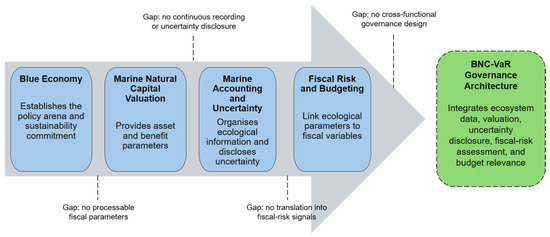
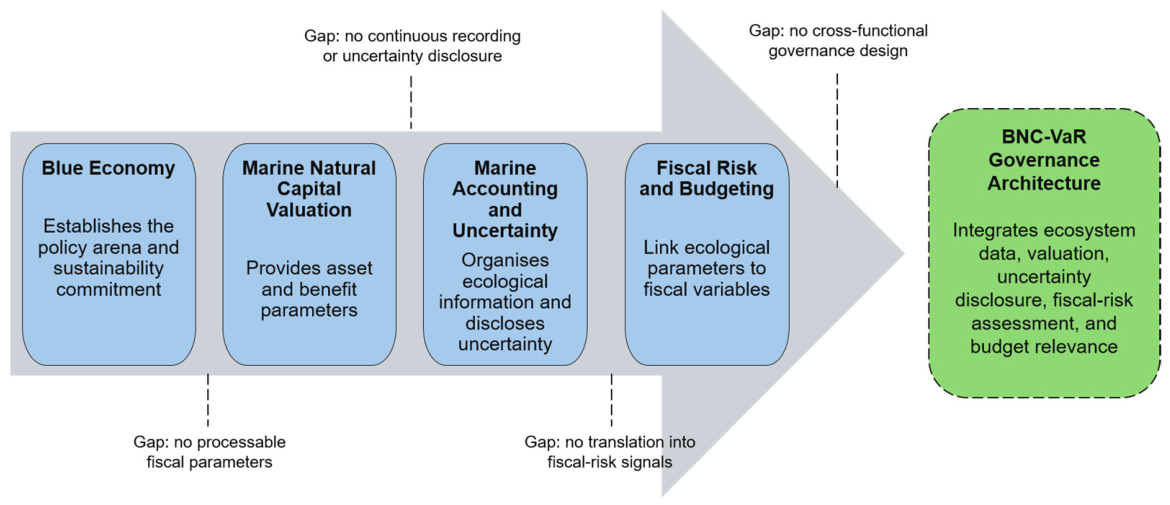
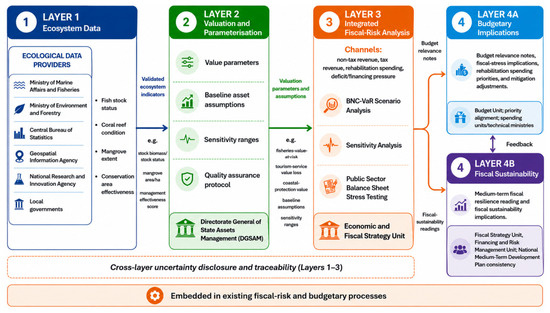
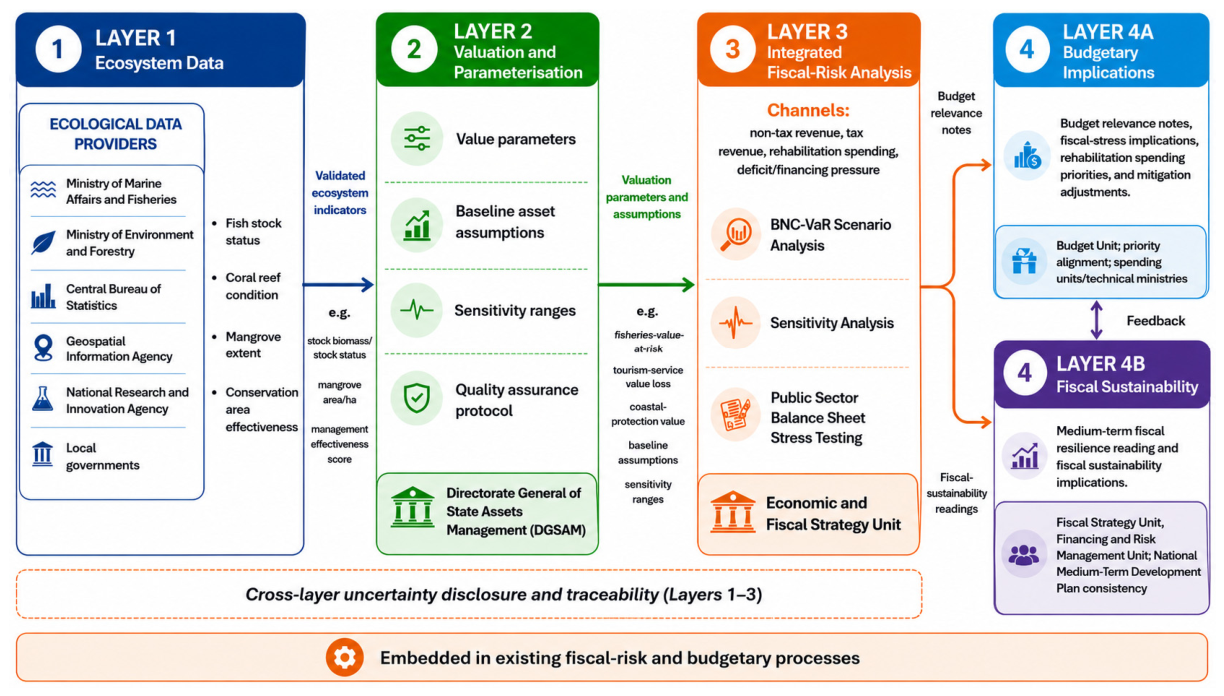
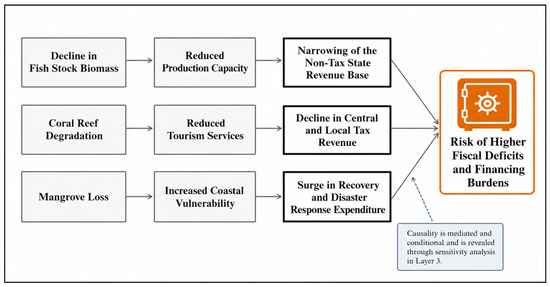
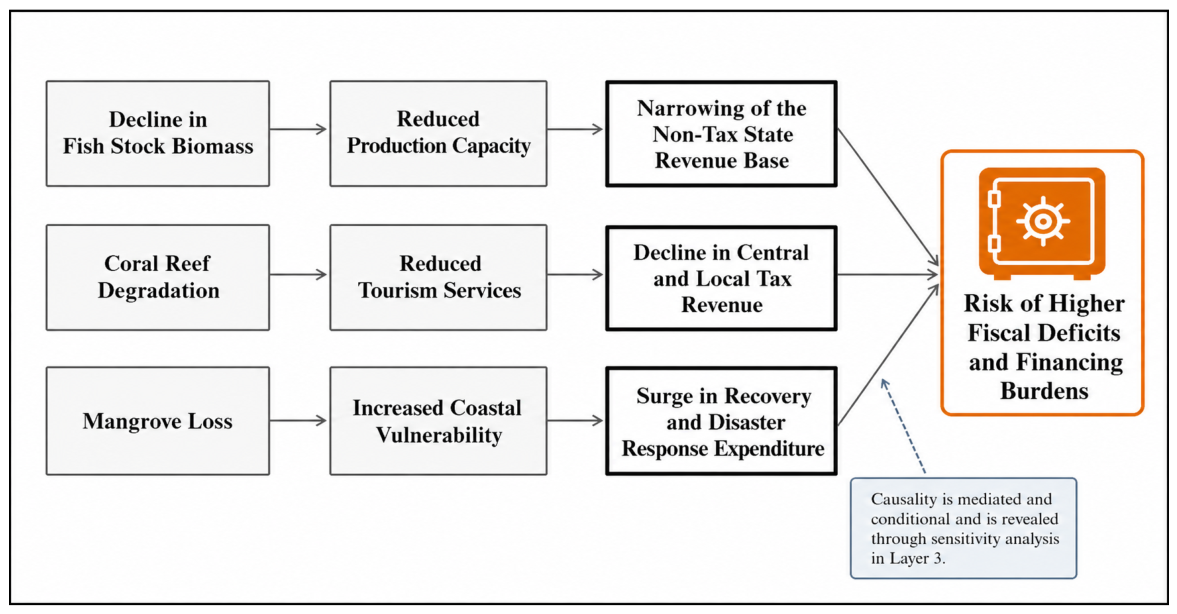

Disclaimer/Publisher’s Note: The statements, opinions and data contained in all publications are solely those of the individual author(s) and contributor(s) and not of MDPI and/or the editor(s). MDPI and/or the editor(s) disclaim responsibility for any injury to people or property resulting from any ideas, methods, instructions or products referred to in the content. |
© 2026 by the authors. Licensee MDPI, Basel, Switzerland. This article is an open access article distributed under the terms and conditions of the Creative Commons Attribution (CC BY) license.