Sustaining Urban Perceived Well-Being Through Routine Park Maintenance: The Roles of Perceived Safety and Restorative Experience



Abstract
1. Introduction
2. Theoretical Background and Hypothesis Development
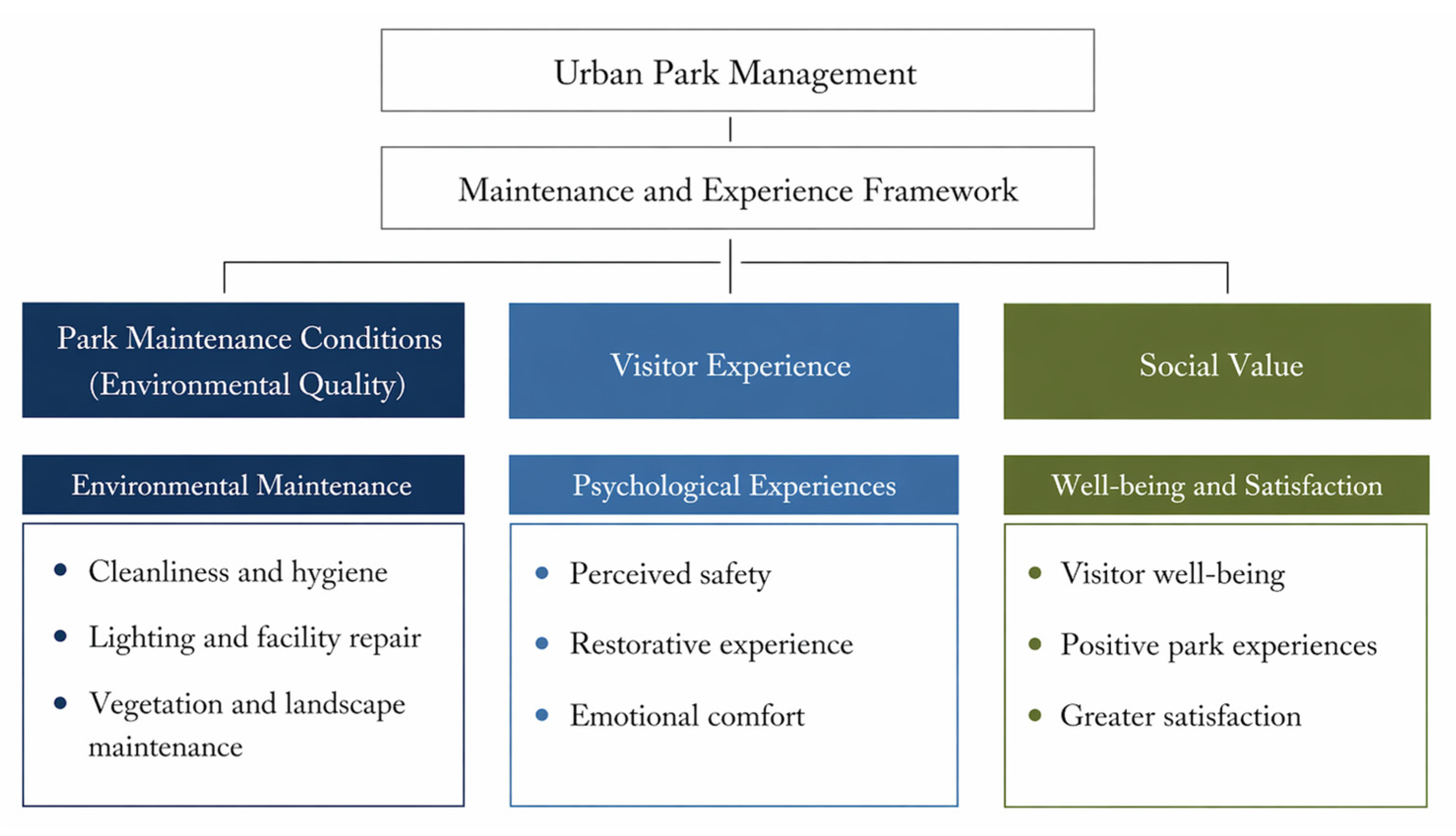
2.1. Theoretical Background
2.2. Hypothesis Development
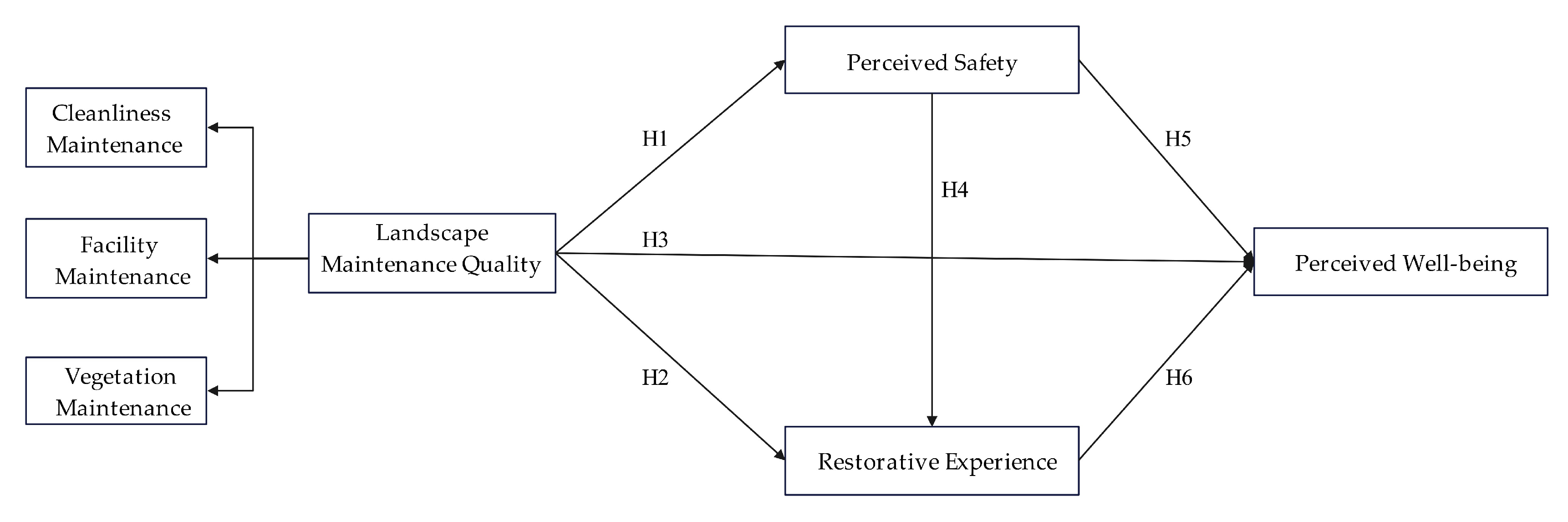
2.2.1. Landscape Maintenance Quality, Perceived Safety, and Restorative Experience
2.2.2. Landscape Maintenance Quality and Perceived Well-Being
2.2.3. Perceived Safety, Restorative Experience, and Perceived Well-Being
3. Materials and Methods
3.1. Research Design
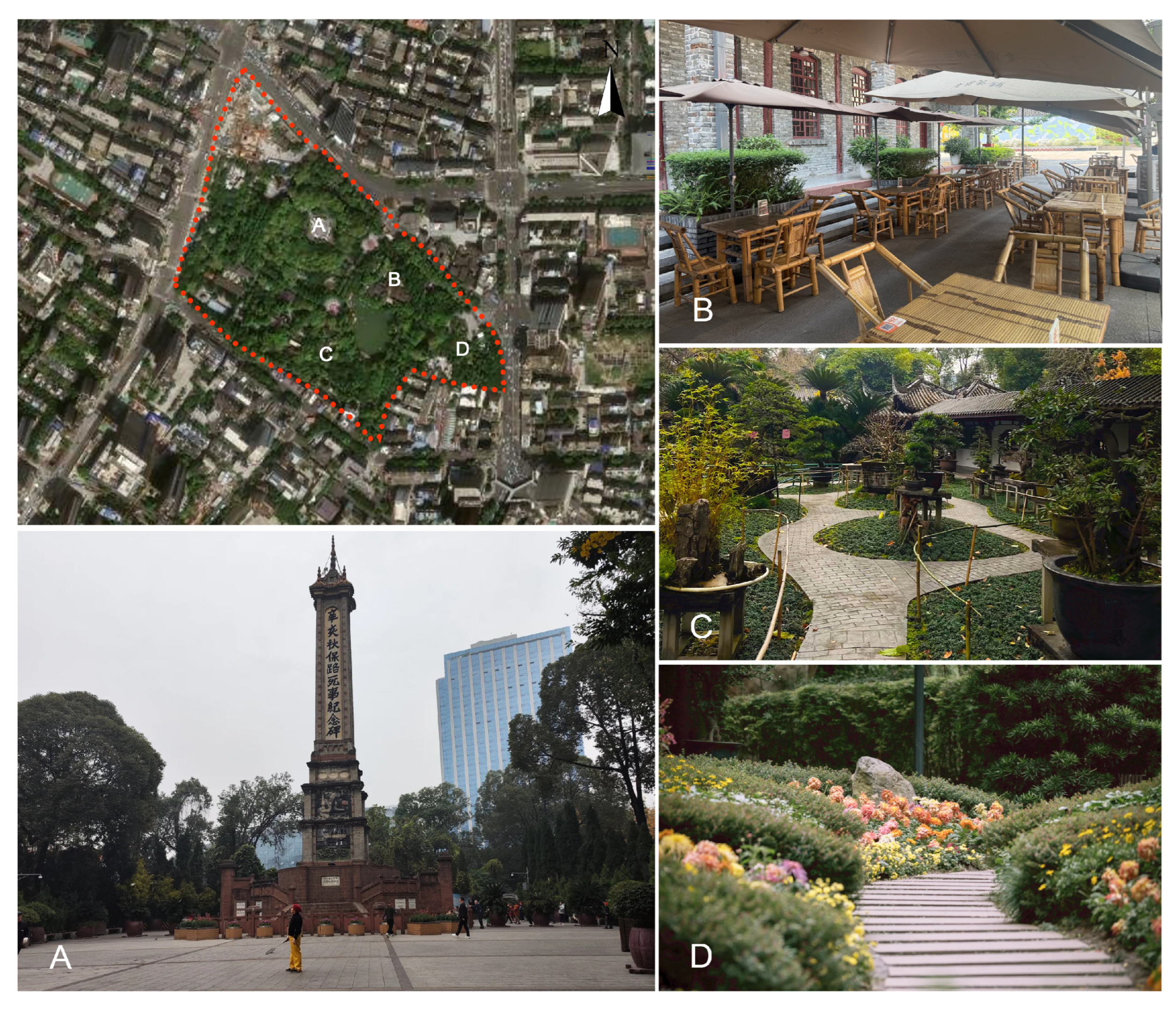
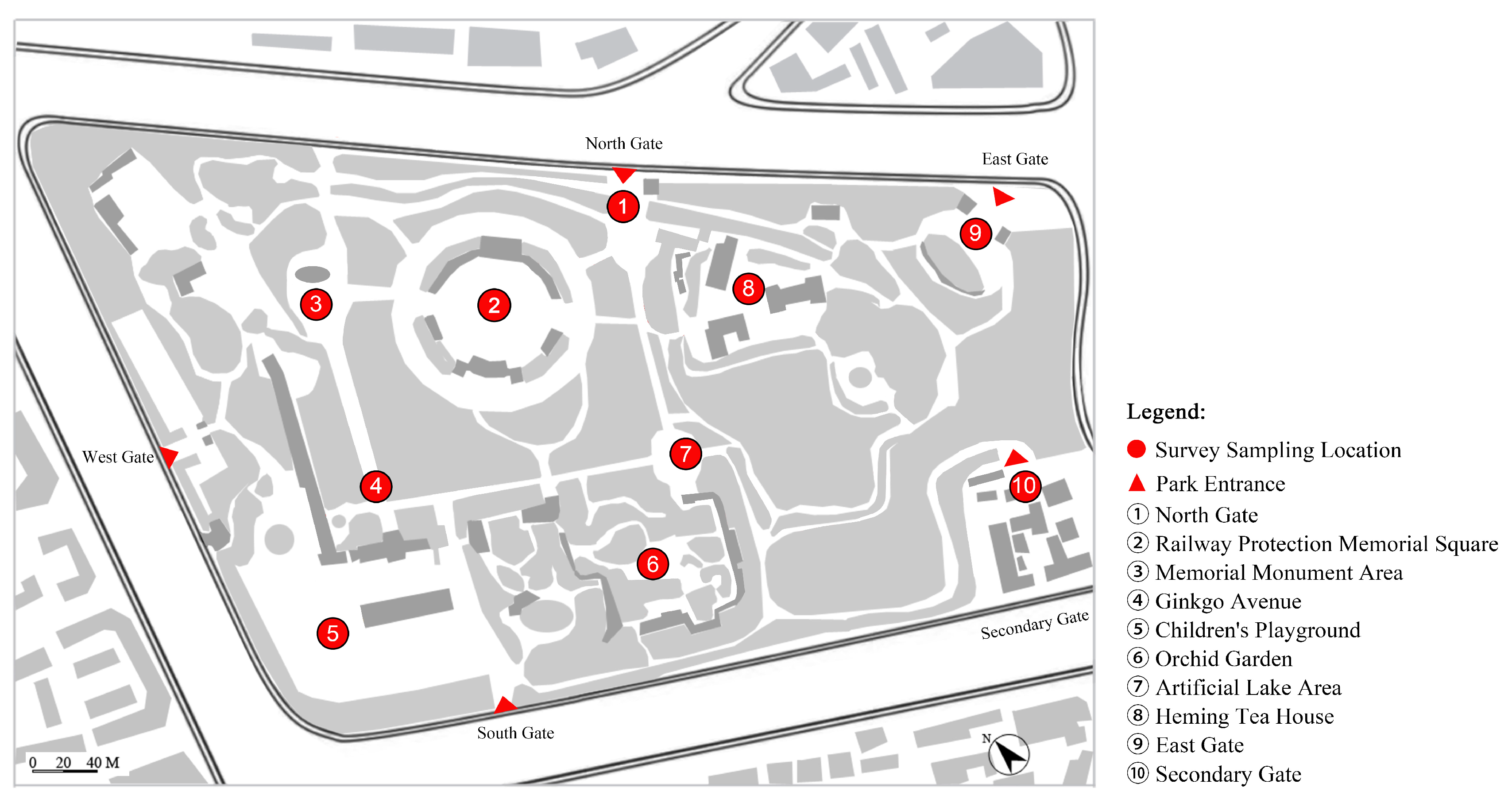
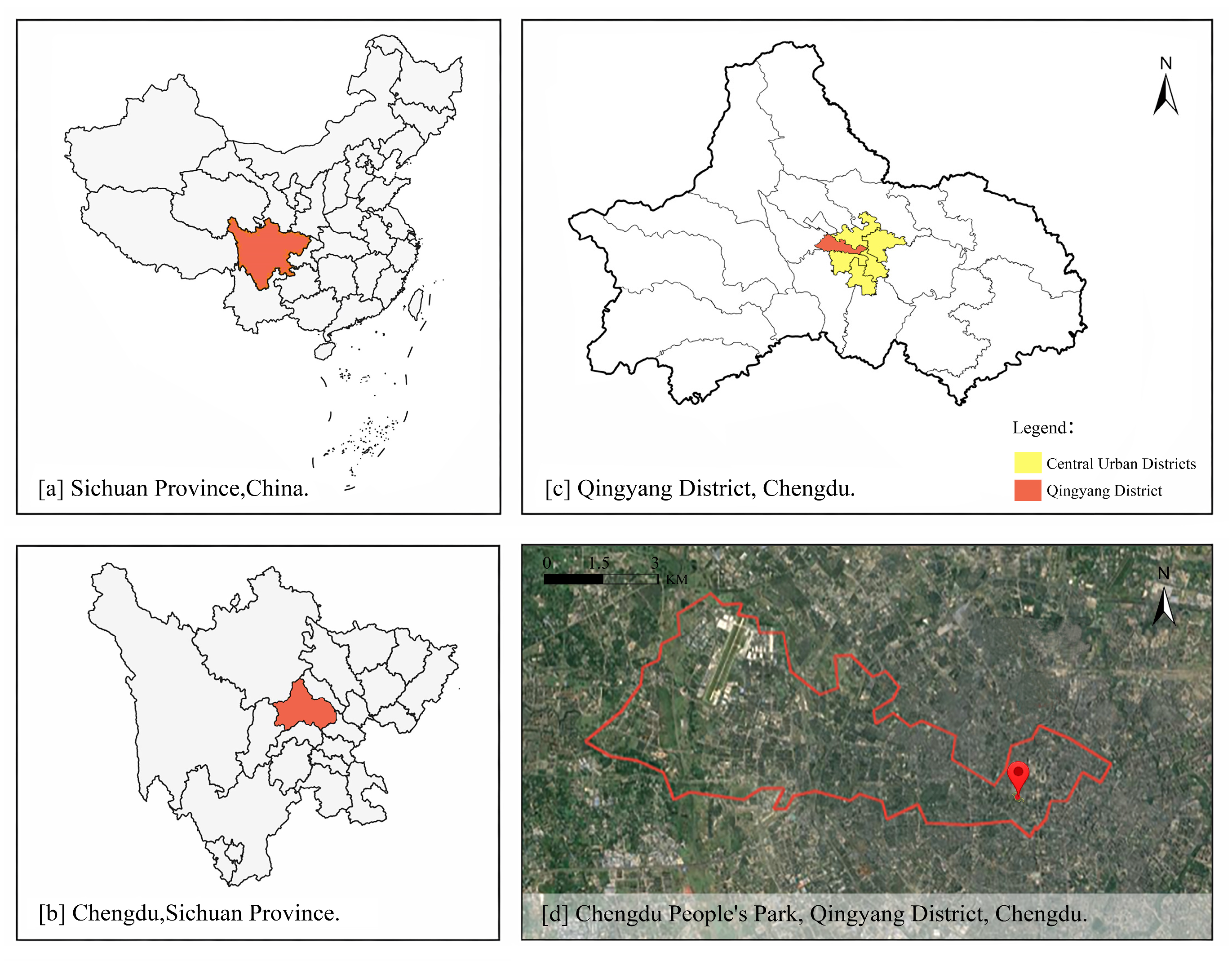
3.2. Study Area
3.3. Participants and Sampling
3.4. Measures
3.5. Data Collection and Analysis
4. Results
4.1. Descriptive Statistics
4.2. Measurement Model Assessment
4.2.1. Common Method Bias
4.2.2. Reliability and Validity
4.3. Structural Model Assessment
4.3.1. Explanatory Power, Predictive Relevance and Effect Size
4.3.2. Hypothesis Testing
4.3.3. Mediation Analysis
4.4. Multigroup Analysis
5. Discussion
5.1. Practical Implications
5.2. Limitations and Future Research Directions
6. Conclusions
Author Contributions
Funding
Institutional Review Board Statement
Informed Consent Statement
Data Availability Statement
Acknowledgments
Conflicts of Interest
References
- United Nations. World Urbanization Prospects: The 2018 Revision; United Nations: New York, NY, USA, 2018; Available online: https://population.un.org/wup/ (accessed on 29 May 2026).
- United Nations. Transforming Our World: The 2030 Agenda for Sustainable Development; United Nations: New York, NY, USA, 2015; Available online: https://sdgs.un.org/2030agenda (accessed on 1 June 2026).
- Shi, J.; Huang, J.; Guo, M.; Tian, L.; Wang, J.; Wong, T.W.; Webster, C.; Leung, G.M.; Ni, M.Y. Contributions of residential traffic noise to depression and mental wellbeing in Hong Kong: A prospective cohort study. Environ. Pollut. 2023, 338, 122641. [Google Scholar] [CrossRef] [PubMed]
- Hahad, O.; Kuntic, M.; Al-Kindi, S.; Kuntic, I.; Gilan, D.; Petrowski, K.; Daiber, A.; Münzel, T. Noise and mental health: Evidence, mechanisms, and consequences. J. Expo. Sci. Environ. Epidemiol. 2025, 35, 16–23. [Google Scholar] [PubMed]
- Wan, C.; Shen, G.Q.; Choi, S. Effects of physical and psychological factors on users’ attitudes, use patterns, and perceived benefits toward urban parks. Urban For. Urban Green. 2020, 51, 126691. [Google Scholar] [CrossRef]
- Crețan, R.; Chasciar, D.; Dragan, A. Forests and their related ecosystem services: Visitors’ perceptions in the urban and peri-urban spaces of Timișoara, Romania. Forests 2024, 15, 2177. [Google Scholar] [CrossRef]
- Jiang, W. Affective resonance and place bonds: The roles of empathy and place attachment for pro-environmental behavior. Front. Psychol. 2026, 17, 1820194. [Google Scholar] [CrossRef] [PubMed]
- Jiang, W.; Marzbali, M.H. Human Needs and Urban Landscape Perception: A Bibliometric Review and Integrative Framework. Eur. J. Sustain. Dev. 2026, 15, 953–972. [Google Scholar] [CrossRef]
- Kendle, T.; Rose, J.E.; Oikawa, J. Sustainable landscape management. In Landscape and Sustainability; Taylor & Francis: Abingdon, UK, 2007; pp. 282–311. [Google Scholar]
- Hye, H.Y.; Liang, T.C.; Yijun, L.; Wei, K.H. Impact of green space configuration on landscape maintenance: Case study of a park in Singapore. Urban For. Urban Green. 2025, 113, 129053. [Google Scholar] [CrossRef]
- Qureshi, S.; Kazmi, S.J.H.; Breuste, J.H. Ecological disturbances due to high cutback in the green infrastructure of Karachi: Analyses of public perception about associated health problems. Urban For. Urban Green. 2010, 9, 187–198. [Google Scholar] [CrossRef]
- Pekovic, S. Quality and environmental management practices: Their linkages with safety performance. Prod. Plan. Control 2015, 26, 895–909. [Google Scholar] [CrossRef]
- Bennetts, H.; Soebarto, V.; Oakley, S.; Babie, P. Feeling safe and comfortable in the urban environment. J. Urban. 2017, 10, 401–421. [Google Scholar] [CrossRef]
- Zhao, J.; Huang, Y. Physical characteristics of urban green spaces in relation to perceived safety. J. Urban Plan. Dev. 2021, 147, 5021032. [Google Scholar] [CrossRef]
- Kwon, M.; Pickett, A.C.; Lee, Y.; Lee, S. Neighborhood physical environments, recreational wellbeing, and psychological health. Appl. Res. Qual. Life 2019, 14, 253–271. [Google Scholar] [CrossRef]
- Gholipour, S.; MahdiNejad, J.-D.; Saleh Sedghpour, B. Security and urban satisfaction: Developing a model based on safe urban park design components extracted from users’ preferences. Secur. J. 2022, 35, 863–892. [Google Scholar] [CrossRef]
- Wang, H.; Ye, J.; Tarin, M.W.K.; Liu, Y.; Zheng, Y. Tourists’ Safety Perception Clues in the Urban Forest Environment: Visual Quality, Facility Completeness, Accessibility—A Case Study of Urban Forests in Fuzhou, China. Int. J. Environ. Res. Public Health 2022, 19, 1293. [Google Scholar] [CrossRef] [PubMed]
- Zhang, Q.; Lee, J.; Jiang, B.; Kim, G. Revitalization of the Waterfront Park Based on Industrial Heritage Using Post-Occupancy Evaluation—A Case Study of Shanghai (China). Int. J. Environ. Res. Public Health 2022, 19, 9107. [Google Scholar] [CrossRef] [PubMed]
- Bhandari, U.; Chang, K.; Neben, T. Understanding the impact of perceived visual aesthetics on user evaluations: An emotional perspective. Inf. Manag. 2019, 56, 85–93. [Google Scholar] [CrossRef]
- Jansson, M.; Lindgren, T. A review of the concept ‘management’ in relation to urban landscapes and green spaces: Toward a holistic understanding. Urban For. Urban Green. 2012, 11, 139–145. [Google Scholar] [CrossRef]
- Mattijssen, T.J.M.; Van der Jagt, A.P.N.; Buijs, A.E.; Elands, B.H.M.; Erlwein, S.; Lafortezza, R. The long-term prospects of citizens managing urban green space: From place making to place-keeping? Urban For. Urban Green. 2017, 26, 78–84. [Google Scholar] [CrossRef]
- Rundle, A.; Quinn, J.; Lovasi, G.; Bader, M.D.; Yousefzadeh, P.; Weiss, C.; Neckerman, K. Associations between body mass index and park proximity, size, cleanliness, and recreational facilities. Am. J. Health Promot. 2013, 27, 262–269. [Google Scholar] [CrossRef] [PubMed]
- Polko, P.; Kimic, K. Condition of urban park infrastructure in the context of perceived security of park users. In IOP Conference Series: Earth and Environmental Science; IOP Publishing: Bristol, UK, 2021; p. 12036. [Google Scholar] [CrossRef]
- Tabrizian, P.; Baran, P.K.; Smith, W.R.; Meentemeyer, R.K. Exploring perceived restoration potential of urban green enclosure through immersive virtual environments. J. Environ. Psychol. 2018, 55, 99–109. [Google Scholar] [CrossRef]
- Ríos-Rodríguez, M.L.; Rosales, C.; Lorenzo, M.; Muinos, G.; Hernández, B. Influence of perceived environmental quality on the perceived restorativeness of public spaces. Front. Psychol. 2021, 12, 644763. [Google Scholar] [CrossRef] [PubMed]
- Wang, R.; Zhao, J. Demographic groups’ differences in visual preference for vegetated landscapes in urban green space. Sustain. Cities Soc. 2017, 28, 350–357. [Google Scholar] [CrossRef]
- Sang, Å.O.; Knez, I.; Gunnarsson, B.; Hedblom, M. The effects of naturalness, gender, and age on how urban green space is perceived and used. Urban For. Urban Green. 2016, 18, 268–276. [Google Scholar] [CrossRef]
- Ulrich, R.S.; Simons, R.F.; Losito, B.D.; Fiorito, E.; Miles, M.A.; Zelson, M. Stress recovery during exposure to natural and urban environments. J. Environ. Psychol. 1991, 11, 201–230. [Google Scholar] [CrossRef]
- Ulrich, R.S. Stress reduction theory. In 100 Key Concepts in Environmental Psychology; Marchand, D., Pol, E., Weiss, K., Eds.; Routledge: New York, NY, USA, 2023; pp. 143–146. [Google Scholar]
- Shaffee, N.; Abd Shukor, S.F. The effect of natural settings on stress reduction. Alam Cipta 2018, 11, 25–33. [Google Scholar]
- Berto, R. The role of nature in coping with psycho-physiological stress: A literature review on restorativeness. Behav. Sci. 2014, 4, 394–409. [Google Scholar] [CrossRef] [PubMed]
- Collado, S.; Staats, H.; Corraliza, J.A.; Hartig, T. Restorative environments and health. In Handbook of Environmental Psychology and Quality of Life Research; Springer: Cham, Switzerland, 2016; pp. 127–148. [Google Scholar] [CrossRef]
- Hami, A.; Suhardi, B.M.; Manohar, M.; Malekizadeh, M. The relationship between landscape planting patterns and perceived safety in urban parks in Tabriz, Iran. Afr. J. Environ. Sci. Technol. 2014, 8, 107–113. [Google Scholar] [CrossRef]
- Lee, S.; Kim, Y.; Koo, B.W. Urban trees and perceived neighborhood safety: Neighborhood upkeep matters. Environ. Behav. 2024, 56, 276–321. [Google Scholar] [CrossRef]
- Crowe, T.; Fennelly, L.J. Crime Prevention Through Environmental Design; Elsevier: Amsterdam, The Netherlands, 2013. [Google Scholar]
- Gooren, J. The logic of CPTED for public space or the social potential of physical security. Crime Law Soc. Change 2023, 79, 417–436. [Google Scholar] [CrossRef]
- Zhang, W.; Yang, B.; Wang, R.; Guo, X. An analysis of the effects of different urban park space environment construction on national health. Front. Environ. Sci. 2024, 12, 1433319. [Google Scholar] [CrossRef]
- Honold, J.; Lakes, T.; Beyer, R.; van der Meer, E. Restoration in urban spaces: Nature views from home, greenways, and public parks. Environ. Behav. 2016, 48, 796–825. [Google Scholar] [CrossRef]
- Sundevall, E.P.; Jansson, M. Inclusive parks across ages: Multifunction and urban open space management for children, adolescents, and the elderly. Int. J. Environ. Res. Public Health 2020, 17, 9357. [Google Scholar] [CrossRef] [PubMed]
- Senna, I.; Iglesias, F.; Matsunaga, L.H. Measuring the effects of Crime Prevention Through Environmental Design (CPTED) on fear of crime in public spaces. Crime Prev. Community Saf. 2025, 27, 1–17. [Google Scholar] [CrossRef]
- Bornioli, A.; Subiza-Pérez, M. Restorative urban environments for healthy cities: A theoretical model for the study of restorative experiences in urban built settings. Landsc. Res. 2023, 48, 152–163. [Google Scholar] [CrossRef]
- Poddar, P.; Banavaram, A.A.; Ramanaik, S.; Jayabalan, M.; Vismaya, S. How city living affects mental health—A qualitative exploration of urban stressors among adults in a megacity in India. BMC Public Health 2025, 25, 1597. [Google Scholar] [CrossRef] [PubMed]
- Ur, Z.; Farooqi, R.; Ahmad, I.; Ditta, A.; Ilic, P.; Amin, M. Types, sources, socioeconomic impacts, and control strategies of environmental noise: A review. Environ. Sci. Pollut. Res. 2022, 29, 81087–81111. [Google Scholar] [CrossRef] [PubMed]
- Leavell, M.A.; Leiferman, J.A.; Gascon, M.; Braddick, F.; Gonzalez, J.C.; Litt, J.S. Nature-based social prescribing in urban settings to improve social connectedness and mental well-being: A review. Curr. Environ. Health Rep. 2019, 6, 297–308. [Google Scholar] [CrossRef]
- Konijnendijk, C.C.; Annerstedt, M.; Nielsen, A.B.; Maruthaveeran, S. Benefits of Urban Parks: A Systematic Review; IFPRA: Copenhagen, Denmark; Alnarp, Sweden, 2013. [Google Scholar]
- Jiang, W.; Marzbali, M.H. Examining the Level of Satisfaction on Environmental Landscape Planning of Urban Fringe. Environ. Ecol. Res. 2024, 12, 281–298. [Google Scholar] [CrossRef]
- Basu, S.; Nagendra, H. Perceptions of park visitors on access to urban parks and benefits of green spaces. Urban For. Urban Green. 2021, 57, 126959. [Google Scholar] [CrossRef]
- Talal, M.L.; Santelmann, M.V. Visitor access, use, and desired improvements in urban parks. Urban For. Urban Green. 2021, 63, 127216. [Google Scholar] [CrossRef]
- Hassan, N.E.; Khalil, S. Visual pollution: Causes, health impacts, and mitigation strategies for enhancing environmental aesthetics and public well-being—A review. Int. J. Multidiscip. Res. Anal. 2024, 7, 5066–5080. [Google Scholar] [CrossRef]
- Lin, H.; Chen, I.; Tseng, C.; Lee, Y.; Lin, J. A study of the impact of river improvement and greening on public reassurance and the urban well-being index during the COVID-19 pandemic. Int. J. Environ. Res. Public Health 2022, 19, 3958. [Google Scholar] [CrossRef] [PubMed]
- Rahm, J.; Sternudd, C.; Johansson, M. ‘In the evening, I don’t walk in the park’: The interplay between street lighting and greenery in perceived safety. Urban Des. Int. 2021, 26, 42–52. [Google Scholar] [CrossRef]
- Gatersleben, B.; Andrews, M. When walking in nature is not restorative—The role of prospect and refuge. Health Place 2013, 20, 91–101. [Google Scholar] [CrossRef] [PubMed]
- Herzog, T.R.; Chernick, K.K. Tranquility and danger in urban and natural settings. J. Environ. Psychol. 2000, 20, 29–39. [Google Scholar] [CrossRef]
- Cozens, P.; Love, T. A review and current status of crime prevention through environmental design (CPTED). J. Plan. Lit. 2015, 30, 393–412. [Google Scholar] [CrossRef]
- Saeedi, I.; Shayesteh, K.; Faraji, T. Urban green infrastructure and safety: Examining the relative effects of socio-economic and environmental factors on perceived safety of users. Secur. J. 2025, 38, 6. [Google Scholar] [CrossRef]
- Bauman, Z. Community: Seeking Safety in an Insecure World; John Wiley & Sons: Cambridge, UK, 2013. [Google Scholar]
- Monadi, A.; Behzadfar, M.; Nikabadi, S.; Farazjou, F. Evaluating the Influence of Facility Maintenance and Aesthetic Quality on Long-Term Sport Participation and User Satisfaction. J. Soc. Stud. 2025, 11, 164–170. [Google Scholar]
- Yan, T.; Leng, H.; Yuan, Q. The role of nostalgia in environmental restorative effects from the perspective of healthy aging: Taking Changchun parks as an example. Land 2023, 12, 1817. [Google Scholar] [CrossRef]
- Peschardt, K.K.; Stigsdotter, U.K. Associations between park characteristics and perceived restorativeness of small public urban green spaces. Landsc. Urban Plan. 2013, 112, 26–39. [Google Scholar] [CrossRef]
- Marrero, R.J.; Carballeira, M. Contact with nature and personal well-being. Psyecology 2010, 1, 371–381. [Google Scholar] [CrossRef]
- Nousiainen, M.; Lindroos, H.; Heino, P. Restorative Environment Design; Kymenlaakso University of Applied Sciences: Kouvola, Finland, 2016. [Google Scholar]
- Kong, L.; Liu, Z.; Pan, X.; Wang, Y.; Guo, X.; Wu, J. How do different types and landscape attributes of urban parks affect visitors’ positive emotions? Landsc. Urban Plan. 2022, 226, 104482. [Google Scholar] [CrossRef]
- Martela, F.; Sheldon, K.M. Clarifying the concept of well-being: Psychological need satisfaction as the common core connecting eudaimonic and perceived well-being. Rev. Gen. Psychol. 2019, 23, 458–474. [Google Scholar] [CrossRef]
- Zhang, Y.; Van den Berg, A.E.; Van Dijk, T.; Weitkamp, G. Quality over quantity: Contribution of urban green space to neighborhood satisfaction. Int. J. Environ. Res. Public Health 2017, 14, 535. [Google Scholar] [CrossRef]
- Hartig, T.; Mitchell, R.; De Vries, S.; Frumkin, H. Nature and health. Annu. Rev. Public Health 2014, 35, 207–228. [Google Scholar] [CrossRef] [PubMed]
- Baran, P.K.; Tabrizian, P.; Zhai, Y.; Smith, J.W.; Floyd, M.F. An exploratory study of perceived safety in a neighborhood park using immersive virtual environments. Urban For. Urban Green. 2018, 35, 72–81. [Google Scholar] [CrossRef]
- Akangbe, O.O.; Makinde, O.O.; Adeyinka, R.; Yunus, S. Influence of landscape maintenance, social value and design principles on users’ perceptions of tourist centres in Nigeria. ISAR J. Econ. Bus. Manag. 2025, 3, 30–50. [Google Scholar]
- Su, C.; Wang, X.; Wang, Y.; Chen, Y.; Dai, F.; Chen, X. Mediating Roles of Cultural Perception and Place Attachment in the Landscape–Wellbeing Relationship: Insights from Historical Urban Parks in Wuhan, China. Land 2025, 14, 1176. [Google Scholar] [CrossRef]
- Han, K.-T. A reliable and valid self-rating measure of the restorative quality of natural environments. Landsc. Urban Plan. 2003, 64, 209–232. [Google Scholar] [CrossRef]
- Hair, J.F.; Risher, J.J.; Sarstedt, M.; Ringle, C.M. When to use and how to report the results of PLS-SEM. Eur. Bus. Rev. 2019, 31, 2–24. [Google Scholar] [CrossRef]
- Podsakoff, P.M.; MacKenzie, S.B.; Lee, J.-Y.; Podsakoff, N.P. Common method biases in behavioral research: A critical review of the literature and recommended remedies. J. Appl. Psychol. 2003, 88, 879. [Google Scholar] [CrossRef] [PubMed]
- Henseler, J.; Hubona, G.; Ray, P.A. Using PLS path modeling in new technology research: Updated guidelines. Ind. Manag. Data Syst. 2016, 116, 2–20. [Google Scholar] [CrossRef]
- Cohen, J. Statistical Power Analysis for the Behavioral Sciences; Routledge: New York, NY, USA, 2013. [Google Scholar]
- Akhir, N.M.; Sakip, S.R.M.; Abbas, M.Y.; Othman, N. Modelling landscape aesthetic of planting composition influencing visual quality and well-being: PLS-SEM approach. In IOP Conference Series: Earth and Environmental Science; IOP Publishing: Bristol, UK, 2019; p. 12021. [Google Scholar]
- Sadeghi, A.R.; Baghi, E.S.M.S.; Shams, F.; Jangjoo, S. Women in a safe and healthy urban environment: Environmental top priorities for the women’s presence in urban public spaces. BMC Women’s Health 2023, 23, 163. [Google Scholar] [CrossRef] [PubMed]
- Phillips, J.; Walford, N.; Hockey, A.; Foreman, N.; Lewis, M. Older people and outdoor environments: Pedestrian anxieties and barriers in the use of familiar and unfamiliar spaces. Geoforum 2013, 47, 113–124. [Google Scholar] [CrossRef]
- Nam, J.; Dempsey, N. Acceptability of income generation practices in 21st century urban park management: The case of city district parks. J. Environ. Manag. 2020, 264, 109948. [Google Scholar] [CrossRef] [PubMed]




| Construct | Dimension | Item | Description |
|---|---|---|---|
| Landscape Maintenance Quality (LMQ) | Cleanliness Maintenance (CM) | CM1 | This park has a clean environment with little litter. |
| CM2 | This park has pathways and plazas kept tidy. | ||
| CM3 | This park has graffiti and vandalism well controlled and rarely seen. | ||
| CM4 | This park has water features kept clean and free of unpleasant smells. | ||
| Facility Maintenance (FM) | FM1 | This park has lighting maintained in good working order. | |
| FM2 | This park has seating, waste bins, and signs kept in good condition. | ||
| FM3 | This park has play and fitness equipment maintained safely. | ||
| Vegetation Maintenance (VM) | VM1 | This park has vegetation pruned regularly to keep sightlines clear. | |
| VM2 | This park has lawns and plantings maintained in healthy condition. | ||
| VM3 | This park has green areas kept orderly rather than overgrown. | ||
| Perceived Safety (PS) | PS1 | In this park, I feel safe during my visit. | |
| PS2 | In this park, I feel safe when walking alone. | ||
| PS3 | In this park, I feel safe across different times of day. | ||
| PS4 | In this park, I feel little threat to my personal safety. | ||
| Restorative Experience (RE) | RE1 | I feel mentally refreshed after being in this park. | |
| RE2 | I feel more relaxed when I spend time in this park. | ||
| RE3 | I feel that my stress has been relieved in this park. | ||
| RE4 | I feel calm and peaceful when I spend time in this park. | ||
| Perceived Well-being (PWB) | PWB1 | Being active in this park contributes to my physical and mental health. | |
| PWB2 | Activities in this park make me feel happy and emotionally uplifted. | ||
| PWB3 | Being active in this park has made me more satisfied with life. | ||
| PWB4 | Experiences in this park make my daily life feel more enjoyable. | ||
| PWB5 | Being in this park gives me a general sense of well-being. | ||
| Variable | Category | Frequency | Percentage (%) |
|---|---|---|---|
| Gender | Male | 131 | 47.1 |
| Female | 147 | 52.9 | |
| Age | 18–29 years | 56 | 20.1 |
| 30–39 years | 70 | 25.2 | |
| 40–49 years | 61 | 21.9 | |
| 50–59 years | 50 | 18.0 | |
| ≥60 years | 41 | 14.7 | |
| Education | Secondary school or below | 28 | 10.1 |
| High school | 70 | 25.2 | |
| College Diploma/Associate Degree | 97 | 34.9 | |
| Master’s degree | 56 | 20.1 | |
| Doctoral degree or above | 27 | 9.7 | |
| Occupation | Employed professionals | 83 | 29.9 |
| Retired | 69 | 24.8 | |
| Self-employed | 56 | 20.1 | |
| Students | 42 | 15.1 | |
| Others | 28 | 10.1 |
| Construct | Mean | SD | Skewness | Kurtosis |
|---|---|---|---|---|
| Cleanliness Maintenance | 4.165 | 0.588 | −0.230 | −0.939 |
| Facility Maintenance | 4.163 | 0.612 | −0.268 | −1.007 |
| Vegetation Maintenance | 4.101 | 0.635 | −0.171 | −1.089 |
| Perceived Safety | 3.951 | 1.099 | −1.001 | 0.008 |
| Restorative Experience | 3.873 | 1.177 | −0.907 | −0.318 |
| Perceived Well-being | 3.619 | 0.761 | −0.681 | 0.430 |
| Construct | Dimensions | Items | Loadings | Cronbach’s α | CR | AVE |
|---|---|---|---|---|---|---|
| Landscape Maintenance Quality (LMQ) | Cleanliness Maintenance (CM) | CM1 | 0.743 | 0.799 | 0.869 | 0.624 |
| CM2 | 0.809 | |||||
| CM3 | 0.778 | |||||
| CM4 | 0.829 | |||||
| Facility Maintenance (FM) | FM1 | 0.918 | 0.768 | 0.866 | 0.684 | |
| FM2 | 0.823 | |||||
| FM3 | 0.857 | |||||
| Vegetation Maintenance (VM) | VM1 | 0.918 | 0.835 | 0.9 | 0.751 | |
| VM2 | 0.822 | |||||
| VM3 | 0.857 | |||||
| Perceived Safety (PS) | - | PS1 | 0.843 | 0.809 | 0.875 | 0.637 |
| PS2 | 0.814 | |||||
| PS3 | 0.770 | |||||
| PS4 | 0.762 | |||||
| Restorative Experience (RE) | - | RE1 | 0.846 | 0.837 | 0.891 | 0.672 |
| RE2 | 0.823 | |||||
| RE3 | 0.805 | |||||
| RE4 | 0.804 | |||||
| Perceived Well-being (PWB) | - | PWB1 | 0.789 | 0.854 | 0.895 | 0.631 |
| PWB2 | 0.773 | |||||
| PWB3 | 0.799 | |||||
| PWB4 | 0.830 | |||||
| PWB5 | 0.780 |
| Construct | CM | VM | FM | PS | RE | PWB |
|---|---|---|---|---|---|---|
| CM | ||||||
| VM | 0.391 | |||||
| FM | 0.406 | 0.512 | ||||
| PS | 0.484 | 0.493 | 0.564 | |||
| RE | 0.365 | 0.342 | 0.327 | 0.586 | ||
| PWB | 0.557 | 0.496 | 0.561 | 0.800 | 0.776 |
| Construct | R2 | Q2 |
|---|---|---|
| Perceived Safety (PS) | 0.301 | 0.292 |
| Restorative Experience (RE) | 0.252 | 0.134 |
| Perceived Well-being (PWB) | 0.637 | 0.341 |
| Predictor | PS | RE | PWB |
|---|---|---|---|
| LMQ | 0.431 | 0.024 | 0.126 |
| PS | - | 0.148 | 0.185 |
| RE | - | - | 0.327 |
| H | Path | β | STDEV | T Value | p Value | VIF | Decision |
|---|---|---|---|---|---|---|---|
| H1 | LMQ → PS | 0.549 | 0.047 | 11.754 | 0.000 | 1.000 | Supported |
| H2 | LMQ → RE | 0.159 | 0.060 | 2.641 | 0.008 | 1.431 | Supported |
| H3 | LMQ → PWB | 0.259 | 0.047 | 5.503 | 0.001 | 1.464 | Supported |
| H4 | PS → RE | 0.397 | 0.064 | 6.200 | 0.000 | 1.431 | Supported |
| H5 | PS → PWB | 0.332 | 0.048 | 6.884 | 0.000 | 1.642 | Supported |
| H6 | RE → PWB | 0.399 | 0.042 | 9.394 | 0.000 | 1.338 | Supported |
| Hypothesis | Path | Indirect Effect | STDEV | T Value | p Value | Decision |
|---|---|---|---|---|---|---|
| H7 | LMQ → PS → PWB | 0.182 | 0.033 | 5.533 | 0.000 | Supported |
| H8 | LMQ → RE → PWB | 0.063 | 0.025 | 2.523 | 0.012 | Supported |
| H9 | LMQ → PS → RE → PWB | 0.087 | 0.019 | 4.599 | 0.000 | Supported |
| Constructs | Gender | Age Group | ||||||
|---|---|---|---|---|---|---|---|---|
| Configural Invariance (Step 1) | Compositional Invariance (Step 2) | Partial Measurement Invariance | Configural Invariance (Step 1) | Compositional Invariance (Step 2) | Partial Measurement Invariance | |||
| Original Correlation | 5.0% Quantile | Original Correlation | 5.0% Quantile | |||||
| CM | Yes | 1.000 | 0.996 | Yes | Yes | 0.999 | 0.996 | Yes |
| FM | Yes | 1.000 | 0.998 | Yes | Yes | 1.000 | 0.998 | Yes |
| VM | Yes | 0.999 | 0.994 | Yes | Yes | 0.994 | 0.992 | Yes |
| LMQ | Yes | 0.998 | 0.995 | Yes | Yes | 0.999 | 0.996 | Yes |
| PS | Yes | 0.998 | 0.997 | Yes | Yes | 0.999 | 0.997 | Yes |
| RE | Yes | 1.000 | 0.997 | Yes | Yes | 0.999 | 0.996 | Yes |
| PWB | Yes | 0.999 | 0.999 | Yes | Yes | 1.000 | 0.998 | Yes |
| Relationships | Female (β) | Male (β) | Difference (Male − Female) | p-Value (2-Tailed) | Decision |
|---|---|---|---|---|---|
| LMQ → PS | 0.657 | 0.430 | −0.227 | 0.010 ** | Supported |
| LMQ → RE | 0.157 | 0.126 | −0.031 | 0.804 | Not supported |
| LMQ → PWB | 0.181 | 0.308 | 0.127 | 0.152 | Not supported |
| PS → RE | 0.523 | 0.270 | −0.253 | 0.045 * | Supported |
| PS → PWB | 0.547 | 0.147 | −0.400 | 0.000 *** | Supported |
| RE → PWB | 0.326 | 0.391 | 0.065 | 0.413 | Not supported |
| Relationships | Older Respondents (β) | Younger Respondents (β) | Difference (Younger − Older) | p-Value (2-Tailed) | Decision |
|---|---|---|---|---|---|
| LMQ → PS | 0.718 | 0.469 | −0.250 | 0.002 *** | Supported |
| LMQ → RE | −0.037 | 0.211 | 0.248 | 0.122 | Not supported |
| LMQ → PWB | 0.268 | 0.235 | −0.032 | 0.778 | Not supported |
| PS → RE | 0.573 | 0.359 | −0.213 | 0.170 | Not supported |
| PS → PWB | 0.424 | 0.291 | −0.133 | 0.335 | Not supported |
| RE → PWB | 0.263 | 0.474 | 0.211 | 0.024 * | Supported |
Disclaimer/Publisher’s Note: The statements, opinions and data contained in all publications are solely those of the individual author(s) and contributor(s) and not of MDPI and/or the editor(s). MDPI and/or the editor(s) disclaim responsibility for any injury to people or property resulting from any ideas, methods, instructions or products referred to in the content. |
© 2026 by the authors. Licensee MDPI, Basel, Switzerland. This article is an open access article distributed under the terms and conditions of the Creative Commons Attribution (CC BY) license.
Share and Cite
Jiang, W.; Marzbali, M.H. Sustaining Urban Perceived Well-Being Through Routine Park Maintenance: The Roles of Perceived Safety and Restorative Experience. Sustainability 2026, 18, 6743. https://doi.org/10.3390/su18136743
Jiang W, Marzbali MH. Sustaining Urban Perceived Well-Being Through Routine Park Maintenance: The Roles of Perceived Safety and Restorative Experience. Sustainability. 2026; 18(13):6743. https://doi.org/10.3390/su18136743
Chicago/Turabian StyleJiang, Wanxia, and Massoomeh Hedayati Marzbali. 2026. "Sustaining Urban Perceived Well-Being Through Routine Park Maintenance: The Roles of Perceived Safety and Restorative Experience" Sustainability 18, no. 13: 6743. https://doi.org/10.3390/su18136743
APA StyleJiang, W., & Marzbali, M. H. (2026). Sustaining Urban Perceived Well-Being Through Routine Park Maintenance: The Roles of Perceived Safety and Restorative Experience. Sustainability, 18(13), 6743. https://doi.org/10.3390/su18136743