


Abstract
Inbound tourism has become an important indicator of destination openness, service capacity, cultural communication, and sustainable governance. However, existing evaluations often separate visitor experience, destination competitiveness, and sustainability, making it difficult to diagnose how service quality supports long-term competitiveness. This study develops a sustainability-oriented framework for evaluating inbound tourism service quality in 10 representative Chinese cities. Nineteen indicators are organized into four dimensions: basic service provision, cultural and experiential perception, safety and emergency response, and sustainable and resilient development. A TIFN-AHP-TOPSIS model is used to integrate official statistics, public tourism information, online-review evidence, and expert judgments while retaining uncertainty and hesitation in qualitative assessments. The results show that Shanghai, Beijing, and Hangzhou form the leading tier; Shenzhen, Chengdu, Guangzhou, Sanya, and Xiamen form the balanced tier; and Xi’an and Chongqing form the potential tier. Robustness checks based on risk-preference adjustment, entropy-weighted TOPSIS, grey relational TOPSIS, and perception-indicator perturbation confirm the stability of the tier classification. The findings suggest that inbound tourism competitiveness depends not only on transport access and reception capacity but also on cultural interpretation, digital convenience, safety governance, ecological quality, and resilience. The framework provides a diagnostic tool for improving sustainable destination competitiveness.
1. Introduction
Inbound tourism has increasingly become a channel through which destinations demonstrate international openness, service capacity, cultural communication, and sustainable governance. Existing studies have shown that air transport, railway connectivity, and trade openness affect international tourism flows [1], while destination competitiveness is shaped by resource endowment, infrastructure, digital readiness, spatial interaction, and governance capacity [2,3]. Sustainable tourism research further indicates that destinations must balance visitor satisfaction and tourism revenue with ecological pressure, resource efficiency, low-carbon transition, and resilience [4,5,6]. These findings suggest that inbound tourism service quality should not be understood only as the supply of facilities or the outcome of tourist satisfaction, but as a multidimensional service-conversion capability that connects access, experience, safety, sustainability, and competitiveness.
From a broader literature perspective, inbound tourism service quality should be understood as a multidimensional issue supported by tourism mobility, destination competitiveness, sustainable tourism, visitor perception, and fuzzy multi-criteria decision-making research. Studies on tourism mobility have shown that air transport, railway connectivity, and trade openness influence international tourism flows [1]. Destination competitiveness research further indicates that a destination’s long-term advantage is shaped not only by tourism resources but also by infrastructure, digital readiness, spatial interaction, service supply, and governance capacity [2,3]. Sustainable tourism studies emphasize that destinations must balance visitor satisfaction and tourism revenue with ecological pressure, resource efficiency, low-carbon transition, and resilience [4,5,6]. Subsequent destination-competitiveness and data-driven tourism studies further show that tourism performance is affected by spatial interaction, destination attributes, online information, and service-related perception factors [7,8,9]. Online review and visitor perception studies indicate that tourist evaluations, online reputation, sentiment signals, and service experience provide important evidence for diagnosing perceived service quality [10,11]. Green service quality and tourism carbon-efficiency studies further deepen the sustainability dimension of tourism service evaluation [12,13]. In addition, fuzzy AHP, TOPSIS, triangular intuitionistic fuzzy information, and related multi-criteria decision-making methods provide methodological support for integrating heterogeneous indicators and uncertain judgments [14,15,16,17]. These studies provide the theoretical basis for integrating service quality, destination competitiveness, sustainability, visitor perception, and uncertainty-aware evaluation into one framework.
If this issue remains insufficiently addressed, the consequences are not only theoretical but also practical.
- Destination managers tend to one-sidedly attribute the sluggish development of inbound tourism to insufficient supply of tangible hardware such as scenic spots, hotels, and transportation facilities. They therefore keep increasing investment in physical infrastructure, while ignoring the shortcomings of soft services, including multilingual services, digital access, payment convenience, cross-cultural interpretation, safety warning, complaint handling, green supporting facilities, and risk resilience.
- Such cognitive bias will reduce the satisfaction and trust of international tourists, damage the online reputation and tourism image of destinations, delay the recovery progress of inbound tourism under various uncertain shocks, raise the pressure of ecological management and carbon emission reduction, and continuously erode the long-term sustainable competitiveness of destinations in the end.
- Accordingly, a diagnostic analysis framework is urgently required to clarify how various urban service conditions and tourist perceptions jointly transform local tourism resources into competitive inbound tourism experiences, as well as identify which service links will become development bottlenecks without targeted optimization.
The motivation of this study is to address the gap between general destination competitiveness evaluation and inbound-tourist-oriented service diagnosis. Existing studies have provided important insights into transport access, tourism resources, sustainability performance, and destination competitiveness, but these elements are often examined separately. For international tourists, service quality also involves multilingual communication, digital access, cross-cultural interpretation, payment convenience, safety information, complaint response, green services, and reliable recovery from unexpected risks. Therefore, a sustainability-oriented evaluation framework is needed to explain how city-level service conditions and visitor perceptions jointly support long-term inbound tourism competitiveness.
Based on this theoretical and practical background, this study addresses three research questions. RQ1: How can inbound tourism service quality be evaluated under a sustainability-oriented framework? RQ2: How can official statistics, online-review evidence, and uncertain expert judgments be integrated into a comparable city-level evaluation model? RQ3: How can evaluation results explain the differentiated competitiveness and service weaknesses of major Chinese inbound tourism destinations?
Against this background, the core innovation of this study is not the routine use of AHP-TOPSIS as a ranking procedure, but the construction of a sustainability-oriented inbound tourism service-quality diagnostic framework and its adaptation to a city-level evaluation problem involving multi-source evidence and uncertain judgments. The study contributes to the literature in four ways:
- It integrates inbound tourism service quality, destination competitiveness, and sustainable destination management into one evaluation framework. Compared with studies that focus mainly on transport access, tourism resources, or aggregate competitiveness [1,2,3], the framework emphasizes how access, experience, safety, digital services, ecological quality, and resilience are converted into long-term inbound tourism competitiveness.
- It develops a 19-indicator system that reflects both objective service supply and subjective visitor perception. This design extends destination-attribute and online-review studies by combining official statistics, public tourism information, platform-based perception evidence, and expert judgments for soft-service indicators.
- It adapts the TIFN-AHP-TOPSIS model to an inbound tourism service-quality problem characterized by linguistic judgment, perception uncertainty, and expert hesitation. Compared with conventional fuzzy AHP-TOPSIS applications in sustainability and service evaluation, TIFNs preserve membership, non-membership, and hesitation information and therefore provide a more explicit representation of uncertain qualitative assessments.
- It compares 10 representative Chinese cities and translates the ranking results into differentiated improvement paths for international gateway cities, cultural destinations, inland destinations, and coastal resort cities. This diagnostic orientation helps explain not only which cities perform better, but also why their service weaknesses differ.
The remainder of this paper is organized as follows. Section 2 reviews the relevant literature and identifies research gaps. Section 3 constructs the evaluation indicator system. Section 4 explains the TIFN-AHP-TOPSIS model. Section 5 presents the case study and empirical results. Section 6 discusses service weaknesses and improvement paths. Section 7 concludes the study.
2. Literature Review
The literature related to inbound tourism service quality and competitiveness can be grouped into four streams: inbound tourism service quality, destination competitiveness, sustainable tourism service quality, and fuzzy multi-criteria decision-making methods. To improve the logical structure of the review, this section follows a progress-limitation-implication logic. Each stream first summarizes the main research progress, then identifies limitations relevant to inbound-tourist-oriented service diagnosis, and finally explains how the literature supports the indicator system and methodological design of the present study.
2.1. Inbound Tourism Service Quality
Inbound tourism service quality refers to a destination’s capacity to provide international visitors with accessible, safe, convenient, culturally adaptive, and sustainable services. It includes both observable service conditions and subjective experience, but it should be distinguished from a simple inventory of facilities. Compared with domestic tourists, international visitors face greater information, language, payment, institutional, and cultural barriers, so service quality must be evaluated through the interaction between service supply and visitor perception.
Transport accessibility is a core foundation of inbound service quality. Hussain [1] shows that air transport, rail transport, and trade openness significantly influence tourism flows in Belt and Road countries. For international tourists, transport convenience is not limited to arrival. It also includes transfer efficiency, airport and port services, multilingual signage, and the connection between entry points and urban tourism spaces. Destination attribute and hotel decision studies further show that safety, local experience, accommodation services, and traveler preferences affect destination choice and service evaluation [7,8].
Visitor perception research has expanded service quality evaluation beyond facility supply. Online reviews, ratings, and text-based perceptions reflect service failures and experiential advantages that official statistics cannot fully observe. Tourist review studies show that location, facilities, price, environmental impact, safety, online reputation, and sentiment signals all affect tourism service evaluation [8,9,10]. These findings support the use of online review data and sentiment classification as supplementary information for subjective indicators. They also show that inbound tourism service quality is not a single facility outcome but a combined result of service supply and visitor perception.
2.2. Destination Competitiveness
Tourism destination competitiveness refers to a destination’s ability to attract visitors, generate tourism value, and maintain long-term advantages in the tourism market. It depends on resource quality, market access, infrastructure, service supply, digital capability, environmental quality, and governance capacity. Research on destination competitiveness increasingly uses asymmetric causal analysis, composite indices, spatial econometrics, machine learning, and multi-source big data to identify the factors that support tourism performance [2,3,11,12,13]. These methods show that competitiveness is not determined by one dominant factor. It is formed through the interaction of resources, service capacity, market openness, and institutional support.
The relationship between service quality and competitiveness is direct. Transport accessibility, hotel capacity, cultural experience, information services, safety, and complaint response affect tourist satisfaction and revisit intention. They also shape the destination’s reputation in international markets. López-Molina and Pulido-Fernández [14] identify management, infrastructure, tourism services, and tourism resources as key elements of destination-level tourism development. Their framework implies that service quality is not only an operational issue but also a structural basis of competitiveness. For inbound tourism, this link becomes stronger because foreign visitors face language barriers, cultural differences, unfamiliar institutions, and higher uncertainty.
2.3. Sustainable Tourism Service Quality
Sustainable tourism service quality requires destinations to improve visitor experience while protecting ecological systems, reducing resource pressure, supporting green services, and maintaining service resilience. Sustainable tourism research has moved from general environmental concern to measurable dimensions such as circular economy coordination, tourism carbon emission efficiency, ESG performance, green hotel service quality, and marine tourism resilience [4,5,6,15,16]. These dimensions are highly relevant to inbound tourism because international tourists increasingly value low-carbon travel, environmental quality, safety, and responsible service provision.
Green services influence tourists’ attitudes and behavioral intentions, while carbon tax and environmental policy affect tourism consumption and destination development conditions [17]. Resilience research further shows that tourism systems must recover from public health incidents, extreme weather, market changes, and transport interruptions [6]. These studies indicate that sustainability should be embedded in service-quality evaluation as a long-term capability, while the detailed indicator formation is specified in Section 3.2.
2.4. Fuzzy Multi-Criteria Decision-Making
Inbound tourism service quality evaluation is a Multi-Criteria Decision-Making (MCDM) problem. It contains multiple indicators, multiple data sources, and both objective and subjective information. AHP can determine the relative importance of indicators in a hierarchy, while TOPSIS can rank alternatives according to their distance from positive and negative ideal solutions. Earlier studies combining AHP, TOPSIS, triangular intuitionistic fuzzy information, grey relation, and intuitionistic fuzzy AHP-DEA provide the methodological basis for handling weighted indicators and uncertain judgments [18,19,20,21,22]. Hybrid AHP-TOPSIS models in climate adaptation and logistics center location also show that this framework can combine heterogeneous indicators into interpretable rankings [23,24].
Tourism and transport service studies also clarify why process reliability and information quality matter for inbound tourists [25,26,27]. Risk and resilience studies show that security shocks and public-health readiness affect tourism flows and service continuity [28,29]. At the methodological level, group decision-making and intuitionistic fuzzy studies show that expert weights, membership, non-membership, and hesitation should be retained carefully in comprehensive evaluation [30,31,32].
Broader AHP-TOPSIS applications in hydrogen storage, project selection, failure mode analysis, health insurance, and renewable energy planning confirm that hybrid MCDM is suitable for complex sustainability problems [33,34,35,36,37]. Recent extensions in uncertainty-aware evaluation, LightGBM-TOPSIS, nTOPSIS, motif-based PageRank-TOPSIS, transport connectivity, PROMETHEE, q-rung orthopair sets, spherical fuzzy systems, QFD-fuzzy TOPSIS, and AHP-entropy weighted TOPSIS-VIKOR further confirm the broad relevance of fuzzy and hybrid ranking methods [38,39,40,41,42,43,44,45,46,47,48,49,50,51,52,53,54,55,56,57,58,59,60,61,62,63,64,65]. These studies support the use of TIFNs in the present evaluation because inbound tourism service quality contains linguistic judgments, uncertain perceptions, and multi-source information.
2.5. Research Gap
Based on the above review, previous studies have made substantial progress in explaining tourism flows, destination competitiveness, sustainable tourism performance, visitor perception, and fuzzy multi-criteria decision-making. However, these studies still leave room for further integration when the research object is inbound tourism service quality. The key issue is not only whether a destination owns tourism resources or transport infrastructure, but whether it can convert these conditions into accessible, multilingual, safe, digital, green, and resilient services for international tourists.
The literature provides a strong foundation, but three research gaps remain. First, the relationship among inbound tourism service quality, sustainable development, and destination competitiveness has not been sufficiently operationalized. Existing studies have separately examined transport access [1], destination competitiveness [2,3,11,12,13], and sustainability or resilience [4,5,6,15,16,17]. However, few studies translate these streams into a single service-quality framework that can explain how immediate visitor experience becomes long-term destination competitiveness.
Second, existing indicator systems still tend to emphasize visible infrastructure and resource endowment, while giving less systematic attention to soft-service dimensions that are particularly important for inbound tourists. Digital information, multilingual risk communication, online reputation, complaint response, green service provision, and tourism resilience are often discussed in separate studies rather than being assessed together in a city-level diagnostic framework.
Third, the uncertainty contained in expert judgments and platform-based perception data requires a method that can retain hesitation instead of forcing all qualitative information into a single crisp score. Conventional fuzzy AHP-TOPSIS methods are useful, but TIFNs are better suited to this study because they preserve lower, modal, and upper assessment bounds together with membership, non-membership, and hesitation degrees. The present framework, therefore, responds to a theoretical gap in service-quality conceptualization and a methodological gap in uncertainty-aware city comparison. The main research streams, their remaining limitations, and their implications for the present study are summarized in Table 1.
Table 1.
Research themes and implications for this study.
3. Evaluation Indicator System
3.1. Indicator Construction Principles
The indicator system is the basis for the comprehensive evaluation. Since inbound tourism service quality covers service supply, visitor experience, risk governance, sustainability, and competitiveness, the indicators must be both theoretically grounded and empirically usable. Five principles guide the construction.
First, the system should be scientific and systematic. Indicators must be supported by studies on inbound tourism, service quality, destination competitiveness, and sustainable tourism. The system should cover the main stages of international tourists’ travel process, including arrival, stay, experience, safety support, and sustainable services.
Second, the system should reflect sustainability. It should include ecological quality, green services, resource use, carbon intensity, and resilience rather than only transport and accommodation.
Third, the system should combine qualitative and quantitative information. Transport accessibility, accommodation capacity, port services, environmental quality, resource efficiency, and carbon intensity can be measured through official data and public information. Cultural experience, destination image, safety perception, green services, and resilience require expert judgment and online review signals.
Fourth, the system should be compatible with fuzzy evaluation. Several indicators are difficult to measure with precise values, especially cultural experience, risk communication, green service quality, and resilience.
Fifth, the indicators should be operable. Each indicator needs a clear meaning, a data source, and an evaluation direction.
3.2. Indicator Selection Logic
Indicator selection follows a process of literature mapping, keyword extraction, dimension induction, and variable formation. The literature review identifies four recurring themes. These are basic service provision, cultural and experiential perception, safety and emergency response, and sustainable and resilient development.
Basic service provision reflects whether international tourists can arrive, move, stay, pay, obtain information, and complete basic tourism activities conveniently. Transport and port services are supported by studies on air transport, rail transport, airline service quality, airport informative service quality, and aviation service assessment [1,25,26,27,42,43]. Accommodation and consumption convenience are supported by hotel recommendation and tourism service studies [8]. Digital information services are included because international tourists rely on online booking, smart guide systems, multilingual web pages, maps, and mobile payment support.
Cultural and experiential perception reflects the subjective value that international tourists place on. Tourism resources, cultural activities, destination image, online reviews, and satisfaction are repeatedly discussed in visitor perception and destination attribute studies [7,9,10]. This dimension is important because cultural resources do not automatically become service quality. A destination with strong historical resources still needs interpretation, participation, service design, and online reputation management. The literature-to-indicator mapping and the indicator construction pathway are illustrated in Figure 1.
Figure 1.
Indicator construction pathway. Note: The theoretical and literature sources underlying destination competitiveness and basic services, online perception and attribute evaluation, safety governance and emergency guarantee, and sustainable tourism and resilience are respectively documented in [1,19,25,26,27,42,43], [10,11,18], [28,29] and [4,5,6,12,21,22].
Safety and emergency response reflect the ability to provide predictable and reliable services under risk. Security risk can reduce inbound tourism flows, and public health readiness affects destination recovery and service continuity [28,29]. For inbound tourists, safety also includes multilingual risk alerts, hotlines, medical access, complaint response, and information transparency. Sustainable and resilient development reflects the long-term quality of tourism services. Circular economy coordination, tourism carbon efficiency, green hotel services, ESG performance, and tourism resilience support the inclusion of ecological quality, green services, resource efficiency, carbon intensity, and resilience [4,5,6,15,16,17].
3.3. Evaluation Indicators
Because destination image (C23), online reputation (C24), and tourist satisfaction (C25) are related perception indicators, their conceptual boundaries and empirical redundancy were clarified before calculation. C23 captures pre-visit and external recognition formed by media attention, brand awareness, and social exposure. C24 captures platform-level reputation reflected in ratings, review activity, positive sentiment, and negative-review share. C25 captures post-experience satisfaction signals after tourists interact with destination services. A redundancy check using normalized city-level scores showed a high correlation between C24 and C25 (Spearman’s rho = 0.936), which is expected for perception variables. These indicators were retained because they represent different stages in the perception chain. To test whether this correlation distorted the ranking, an additional diagnostic check merged C24 and C25 into one composite perception indicator. The three-tier city classification remained unchanged, indicating that the main empirical conclusion was not driven by double-counting of closely related perception variables. The resulting sustainability-oriented evaluation indicator system is presented in Table 2.
Table 2.
Sustainability-oriented indicator system for inbound tourism service quality.
4. Methodology
4.1. Model Framework
The evaluation uses an integrated TIFN-AHP-TOPSIS model. The method contains four linked tasks. First, official statistics, public tourism information, online reviews, and expert judgments are collected and standardized. Second, linguistic information is transformed into TIFNs. Third, indicator weights are calculated by TIFN-AHP and checked for consistency. Fourth, TIFN-TOPSIS is used to calculate distances, relative proximity, rankings, and sensitivity results. The computational sequence of the integrated TIFN-AHP-TOPSIS model is illustrated in Figure 2.
Figure 2.
Computational framework of the integrated model.
This model is used because the empirical problem combines objective city-level values and uncertain subjective judgments. AHP supports hierarchical weighting; TOPSIS supports transparent ranking across multiple cities; and TIFNs retain the hesitation embedded in linguistic judgments. The added value of TIFNs lies in their ability to express support, opposition, and hesitation simultaneously, rather than compressing expert opinions into a single membership value. The model, therefore, forms a complete chain from multi-source data input to uncertainty-preserving weighting, ranking, sensitivity validation, and weakness diagnosis.
Therefore, the methodological value of the model in this study lies in matching the uncertainty structure of the research problem rather than in applying a ranking tool mechanically. Inbound tourism service quality includes objective differences among cities as well as subjective and hesitant judgments about cultural experience, destination image, safety response, green services, and resilience. The TIFN-AHP-TOPSIS framework is used to retain these uncertain judgments and to transform them into interpretable city-level rankings and weakness diagnoses.
4.2. TIFN Representation and Aggregation
Triangular Intuitionistic Fuzzy Numbers (TIFNs) are used to describe linguistic judgments that contain uncertainty and hesitation. Compared with exact values, TIFNs retain the lower, middle, and upper bounds of expert evaluation, as well as the degree of support and opposition in the judgment process. Let a TIFN be defined as follows:
In Equation (1), aL, aM, and aU represent the lower, middle, and upper values of the triangular fuzzy interval. The parameter μ denotes the membership degree, and ν denotes the non-membership degree. To ensure the validity of the intuitionistic fuzzy information, the membership and non-membership degrees satisfy the following constraint:
The remaining part of the evaluation information is expressed as hesitation. It reflects the part of expert judgment that cannot be clearly assigned to either membership or non-membership:
To illustrate the structural characteristics of triangular intuitive fuzzy numbers more intuitively, Figure 3 provides a graphical representation of triangular intuitive fuzzy numbers.
Figure 3.
Graphical representation of triangular intuitive fuzzy numbers.
Score function is then used to convert each TIFN into a comparable numerical value. This step is necessary because the subsequent AHP weighting and TOPSIS ranking require comparisons among fuzzy judgments:
Qualitative judgments were transformed into TIFN values using a predefined linguistic scale. For expert scoring, linguistic terms such as very low, low, medium, high, and very high were assigned triangular lower, modal, and upper bounds together with membership and non-membership degrees. The hesitation degree was calculated as one minus the membership and non-membership degrees. For online-review evidence, ratings and multilingual texts were first coded into positive, mixed, and negative sentiment categories. City-level sentiment signals were then used as supplementary evidence to cross-check perception-related indicators rather than to replace the expert-scored TIFN decision matrix. This procedure improves transparency while preserving the original TIFN-AHP-TOPSIS calculation framework.
For group evaluation, each expert provides a TIFN judgment. These judgments are aggregated according to expert weights so that the final fuzzy value reflects collective assessment rather than a single expert opinion:
where λk is the weight of expert k. In this study, the seven experts are treated with equal importance because they were selected according to the same competence criteria and no independent evidence justified privileging one expert over another. The expert weights satisfy:
Through this aggregation process, individual deviations in expert judgment are reduced, while the uncertainty and hesitation contained in the original linguistic evaluations are retained.
4.3. TIFN-AHP Weighting
After the expert judgments are transformed into TIFNs, the AHP procedure is used to calculate indicator weights. The fuzzy judgment matrix records the pairwise importance comparison among indicators under the same criterion layer:
Each element represents the fuzzy importance of indicator i relative to indicator j. Since a pairwise comparison matrix must be reciprocal, the reverse comparison is expressed as:
The fuzzy geometric mean method is then used to synthesize the comparison information in each row. This step converts the pairwise comparison matrix into a preliminary fuzzy priority vector:
The fuzzy weight of each indicator is obtained by normalizing the fuzzy geometric means:
Because TOPSIS ranking requires crisp weights, the fuzzy weights are converted into numerical weights through the score function. The normalized crisp weight is calculated as:
To ensure that expert pairwise comparisons are logically acceptable, a consistency test is conducted. The maximum eigenvalue is estimated as:
The consistency index and consistency ratio are then calculated as:
A judgment matrix is considered acceptable when CR is less than 0.10. This requirement ensures that the calculated weights are not based on contradictory expert comparisons.
4.4. TIFN-TOPSIS Ranking
After obtaining the global weights of the indicators, the TOPSIS method is used to rank the evaluation objects. Since the indicators have different units and directions, the original data must first be normalized. For positive indicators, a larger value indicates better performance:
For negative indicators, a smaller value indicates better performance. Reverse normalization is therefore applied:
In this study, tourism complaints and negative events, and tourism carbon emission intensity are treated as negative indicators. After normalization, all indicators are converted into the same positive direction. The weighted normalized matrix is then calculated as:
The positive ideal solution represents the best performance among all cities for each indicator:
The negative ideal solution represents the weakest performance among all cities for each indicator:
The risk-preference-adjusted TIFN Euclidean distance is defined as:
where R is the risk preference coefficient and belongs to [0,1]. When R is small, the distance measure emphasizes differences in indicator values. When R is large, it gives more weight to uncertainty differences reflected by membership, non-membership, and hesitation. In this study, R = 0.5 is used as the baseline, while R = 0.3 and R = 0.7 are used for sensitivity analysis.
The distances from each city to the positive and negative ideal solutions are calculated as:
Finally, the relative proximity coefficient is used to obtain the comprehensive ranking result:
A larger CCi indicates better inbound tourism service quality and stronger overall competitiveness. Ranking consistency is examined using Spearman’s rank correlation to test whether the final ranking remains stable under different risk preference settings.
5. Case Study
5.1. Evaluation Subjects and Data Sources
Ten cities are selected as evaluation objects: Beijing, Shanghai, Guangzhou, Shenzhen, Hangzhou, Xi’an, Chengdu, Chongqing, Xiamen, and Sanya. The sample was constructed according to four criteria. First, the cities should have strong relevance to China’s inbound tourism market, including international accessibility, gateway function, tourism reception capacity, or international visibility. Second, the sample should cover different types of tourism destinations, including international gateway cities, historical and cultural destinations, digital and creative tourism cities, inland urban destinations, and coastal resort cities. Third, the cities should represent different regional and functional contexts so that the framework can compare access, cultural experience, safety response, sustainability, and resilience across heterogeneous destinations. Fourth, the selected cities should have relatively complete public statistics, tourism information, online-review evidence, and expert-evaluation feasibility. Based on these criteria, Beijing, Shanghai, Guangzhou, and Shenzhen represent major gateway and high-capacity urban destinations; Hangzhou, Xi’an, and Chengdu represent cultural, digital, and leisure-oriented destinations with strong tourism appeal; Chongqing represents an inland mountainous urban destination; and Xiamen and Sanya represent coastal and resort-oriented destinations. For consistency in the MCDM matrices, ranking tables, robustness checks, and figures, the 10 cities are coded as P1–P10: P1 = Beijing, P2 = Shanghai, P3 = Guangzhou, P4 = Shenzhen, P5 = Hangzhou, P6 = Xi’an, P7 = Chengdu, P8 = Chongqing, P9 = Xiamen, and P10 = Sanya. This sample structure supports comparative diagnosis while keeping the expert-based MCDM evaluation manageable and transparent.
These short codes are retained in the computational tables and figure bodies to keep the matrix presentation compact and readable. During revision, full city-name labels were repeatedly tested inside the figures. However, because several figures contain dense comparative information, placing all complete city names directly inside the figure bodies caused label overlap, reduced font size, blurred labels, and possible encoding or display problems during file conversion and production. Therefore, compact city codes are retained inside the figures to preserve visual clarity, while complete city names are provided in the text, figure captions, figure notes, and narrative interpretation of rankings and tier classifications.
The data come from official statistics, public cultural and tourism information, a balanced online-review corpus, and expert evaluation records. The data collection and verification window was revised to January 2025 to May 2026, and the final access and verification date was 12 May 2026; no future-dated data were used. Official indicators use the latest city-level public records available within or closest to this window. Because complete 2025 city statistical yearbooks were not fully available at the time of revision, official statistics mainly rely on 2025 city statistical bulletins, administrative announcements, airport and port public information, ecological and environmental bulletins, and the latest available yearbook records. When a final 2025 yearbook value was not publicly available, the closest public record was used consistently and the effect of such source differences was checked through robustness analysis. Public tourism data includes scenic-area information, heritage-site records, government tourism portals, and mapping platform information. Online review records were used as auditable supplementary perception evidence for cultural experience, destination image, online reputation, tourist satisfaction, and selected negative-event signals. Expert evaluation was used for indicators requiring professional judgment, especially safety response, multilingual risk advisory services, green services, and resilience. The data sources and processing procedures for the selected indicators are summarized in Table 3.
Table 3.
Data sources and processing methods.
The structure and sentiment distribution of the online-review corpus are reported in Table 4.
Table 4.
Online-review corpus structure and sentiment distribution.
For the online review component, a balanced public-review corpus was constructed for the 10 cities. The corpus contains 500 valid public online review records, with 50 records for each city. For each city, 25 Chinese-language reviews and 25 English-language reviews were retained. The records were collected from Trip.com public review records and Tripadvisor review records accessed through Trip.com. Review publication dates range from 2017 to 2026, and all records were accessed and verified during the revision stage in May 2026. Each retained record includes the city, platform source, language, tourism object, rating, review date, review text, source URL, source review ID, and source locale. Sentiment was coded into positive, mixed, and negative categories using rating information and manual text checking: ratings of 4–5 were coded as positive, ratings of 3 as mixed, and ratings of 1–2 as negative unless the text audit indicated an evident mismatch. The resulting corpus includes 250 Chinese-language records and 250 English-language records; 324 records are from Trip.com, and 176 are Tripadvisor records accessed through Trip.com. The sentiment distribution is 471 positive, 13 mixed, and 16 negative records. The corpus is used as auditable supplementary evidence to support and cross-check perception-related indicators, rather than as an independent replacement for the expert-scored TIFN decision matrix.
The data package used for this revision contains the 500-record online-review corpus, 630 expert response records, final TOPSIS inputs, seven-expert aggregated scores, AHP consistency checks, Kendall coordination tests, sensitivity results, and source-archive information. The expert-response structure equals seven experts multiplied by 10 cities and nine expert-scored indicators. The online-review corpus improves the traceability of C22–C25 and selected negative-event evidence, while the expert scoring records remain the main source for subjective TIFN aggregation. This design allows the study to respond to the reproducibility concern without changing the original ranking figures and tier-classification results.
5.2. Expert Evaluation and Consistency
Experts evaluated nine subjective and perceptual indicators through anonymous scoring sheets. The panel consisted of seven anonymous specialists with more than 10 years of tourism-related research or evaluation experience. To protect privacy under the anonymous questionnaire design, names, specific institutional affiliations, contact information, and other identifiable personal information are not disclosed. At the aggregate level, the panel included three university professors in tourism management and four researchers from tourism-related research institutions located in different Chinese cities. The experts were selected according to three criteria: familiarity with tourism service quality or destination competitiveness, experience with tourism management, cultural-tourism planning, smart tourism, sustainability governance, or emergency-response evaluation, and the ability to compare the 10 cities using the same linguistic scale. The scoring sheet defined the indicator meanings, the 10 evaluation objects, the linguistic evaluation rules, and the TIFN conversion method. Returned scoring records were checked for missing values, duplicated entries, and logical conflicts. The original direction of each expert’s judgment was not changed.
Kendall’s coefficient of concordance was used to examine agreement among experts. The results show high consistency. Cultural and experiential perception has Kendall’s W of 0.9740. Safety and emergency guarantee has Kendall’s W of 0.9797. Sustainable and resilient development has Kendall’s W of 0.9740. The overall expert-scored indicators have Kendall’s W of 0.9778. All significance levels are p < 0.01. This indicates that the seven-expert assessments are suitable for aggregation. The aggregated TIFN evaluations for the key subjective indicators are reported in Table 5.
Table 5.
TIFN raw evaluation matrix for key subjective indicators of 10 cities.
These coordination results, together with the AHP consistency ratios reported below, support the reliability of the expert-derived weights and subjective indicator scores. The corresponding expert coordination statistics are summarized in Table 6.
Table 6.
Expert coordination test.
The AHP consistency results also meet the required threshold. The first-level matrix has a CR value of 0.032. The secondary matrices for B1, B2, B3, and B4 have CR values of 0.047, 0.051, 0.039, and 0.056, respectively. All values are below 0.10. The diagnostic difference Delta CR is also below 0.01 in all matrices. This supports the stability of expert comparisons. The matrix-specific AHP consistency results are reported in Table 7.
Table 7.
AHP consistency test.
Figure 4 visualizes the AHP consistency ratios and expert coordination results reported in Table 6 and Table 7.
Figure 4.
Consistency and expert coordination checks.
5.3. Indicator Weights
The final weights show the relative importance of the 19 secondary indicators. Basic service provision has the largest first-level weight at 0.300. Cultural and experiential perception follows with 0.280. Sustainable and resilient development has 0.240, and safety and emergency response has 0.180. This distribution indicates that inbound tourism service quality depends first on access and reception capacity, but competitiveness also requires experience quality and long-term sustainable support.
At the secondary level, international transport accessibility has the highest global weight, 0.0780. Cultural experience quality follows with 0.0672. Tourism resource attractiveness has 0.0616. Accommodation reception capacity and digital information service level both have 0.0600. Ecological environment quality has 0.0576. These high-weight indicators show that international access, cultural experience, accommodation, digital services, and environmental quality are the main drivers of inbound tourism service quality. The complete global-weight results for the secondary indicators are provided in Table 8.
Table 8.
Global weights of secondary indicators.
The distribution of the global weights across the secondary indicators is illustrated in Figure 5.
Figure 5.
Global weight distribution of secondary indicators.
5.4. Comprehensive Ranking Results
After standardization, weighting, ideal solution calculation, and distance measurement, the relative proximity value of each city was obtained. The ranking results classify cities into three tiers. Shanghai, Beijing, and Hangzhou form the leading tier. Shenzhen, Chengdu, Guangzhou, Sanya, and Xiamen form the balanced tier. Xi’an and Chongqing form the potential tier. The final relative proximity values, ranks, and tier classifications are presented in Table 9.
Table 9.
TOPSIS ranking and tier classification.
Shanghai ranks first with CCi = 0.8639. It shows strong performance in international transport, accommodation, port services, digital information services, destination image, and online reputation. Beijing ranks second with CCi = 0.6617. Its advantages are tourism resources, cultural experience, international recognition, and basic reception capacity. Hangzhou ranks third with CCi = 0.6137. It performs well in cultural experience, online reputation, digital services, ecological quality, and green development. The comparative performance of the ten cities across the four primary dimensions is visualized in Figure 6.
Figure 6.
Performance heatmap across primary dimensions. Note: City codes are used in the figure body to maintain visual compactness and avoid label overlap. P1 = Beijing, P2 = Shanghai, P3 = Guangzhou, P4 = Shenzhen, P5 = Hangzhou, P6 = Xi’an, P7 = Chengdu, P8 = Chongqing, P9 = Xiamen, and P10 = Sanya.
Shenzhen ranks fourth with CCi = 0.6057. It has strong basic service provision and digital service capacity, but its cultural and experiential perception remains weaker than Beijing, Shanghai, and Hangzhou. Chengdu ranks fifth with CCi = 0.4025. It has strong cultural experience and tourism resource attractiveness, but its international transport and port services still require improvement. Guangzhou ranks sixth with CCi = 0.3884. It has gateway and commercial advantages, but cultural conversion, online reputation, and green services are not strong enough to move it into the leading tier.
Sanya ranks seventh with CCi = 0.3353 and Xiamen ranks eighth with CCi = 0.3086. Their ecological and resort resources are clear, but international transport, port services, multilingual information, and emergency response constrain their competitiveness. Xi’an ranks ninth with CCi = 0.2240. Its cultural resource base is strong, but access, digital services, safety governance, and sustainable support reduce its overall ranking. Chongqing ranks tenth with CCi = 0.1591. It does not show a leading advantage in any first-level dimension, and its internationalization, green service level, and emergency response capacity need improvement. The overall ranking and tier classification are further visualized in Figure 7.
Figure 7.
Comprehensive ranking and tier classification. Note: City codes are used in the figure body to maintain visual compactness and avoid label overlap. P1 = Beijing, P2 = Shanghai, P3 = Guangzhou, P4 = Shenzhen, P5 = Hangzhou, P6 = Xi’an, P7 = Chengdu, P8 = Chongqing, P9 = Xiamen, and P10 = Sanya.
5.5. Sensitivity Analysis
Sensitivity analysis was conducted by changing the risk preference coefficient. The rankings remain unchanged when the coefficient is set to 0.3, 0.5, and 0.7. The Spearman rank correlation coefficient is 1.000 for the comparison between 0.3 and 0.5. It is also 1.000 for the comparison between 0.7 and 0.5. This result indicates that the ranking is insensitive to changes in the risk preference parameter within the tested range. The sensitivity-test results under the three risk-preference settings are reported in Table 10.
Table 10.
Ranking stability under different risk preference coefficients.
The sensitivity results also confirm the tier structure. Shanghai, Beijing, and Hangzhou remain the leading cities. Shenzhen, Chengdu, Guangzhou, Sanya, and Xiamen remain in the middle tier. Xi’an and Chongqing remain in the potential tier. The stability of the ranking increases the credibility of the model results and supports the use of the framework for comparative diagnosis.
5.6. Robustness Extension: Method Comparison
To respond to the concern that the empirical result may depend on a single fuzzy decision-making procedure, two additional comparison methods were calculated from the same final TOPSIS input matrix, in addition to the risk-preference sensitivity analysis. The first is entropy-weighted TOPSIS, which replaces subjective AHP weights with dispersion-based objective weights. The second is grey relational TOPSIS, which evaluates relative closeness to the ideal solution through grey relational coefficients while retaining the original indicator directions. In addition, because C24 and C25 were strongly correlated, a diagnostic perception-indicator merger check was conducted by combining online reputation and tourist satisfaction into one composite perception indicator. These comparisons do not replace the baseline TIFN-AHP-TOPSIS model, because the baseline model is better suited to preserving expert hesitation and linguistic uncertainty; rather, they test whether the city ranking remains stable when the weighting mechanism, closeness-measurement mechanism, or closely related perception indicators are adjusted.
The comparison results show that the leading, balanced, and potential tiers remain unchanged. Entropy-weighted TOPSIS and grey relational TOPSIS both produce Spearman rank correlation coefficients of 1.000 against the baseline ranking. The perception-indicator merger check also preserves the three-tier classification, indicating that the high correlation between online reputation and tourist satisfaction does not alter the main conclusion. Shanghai, Beijing, and Hangzhou remain the leading cities; Shenzhen, Chengdu, Guangzhou, Sanya, and Xiamen remain in the balanced tier; Xi’an and Chongqing remain in the potential tier. This result strengthens the credibility of the empirical diagnosis and shows that the main conclusions are not driven only by the selected risk-preference coefficient or by a single specification of perception-related indicators. The method-comparison and rank-robustness results are summarized in Table 11.
Table 11.
Method comparison and rank robustness.
6. Discussion
6.1. Interpretation of City Performance
The ranking results show that high inbound tourism service quality depends on the balance between access, experience, safety, and sustainability. This finding is consistent with transport-accessibility research showing that air and rail connectivity affect tourism flows [1], and with destination-competitiveness studies arguing that resources, infrastructure, spatial interaction, and governance jointly shape tourism performance [2,3,11,12,13]. Shanghai’s top position is not due to one indicator. It reflects strong access, accommodation, digital information, port services, online reputation, and relatively balanced sustainable support. Beijing’s ranking is supported by tourism resource attractiveness and cultural experience, but its challenge is to improve the conversion of cultural resources into online reputation, green services, and low-carbon visitor management. Hangzhou shows that ecological environment, digital cultural tourism, and online reputation can support strong competitiveness even when international gateway functions are weaker than those of Shanghai or Beijing.
Balanced cities show more uneven structures, which extends previous findings that competitiveness is generated through configurations rather than through a single dominant factor [2,11]. Shenzhen has one of the strongest basic service profiles, especially transport, digital services, and urban infrastructure. Its main limitation is cultural and experiential perception. The city needs to translate modern urban innovation into recognizable tourism products and international cultural narratives. Chengdu has stronger cultural experience than many cities, but its basic service and international gateway functions are weaker. Guangzhou has the advantage of being a traditional gateway city, but its destination image and visitor experience need more active conversion from commercial access to tourism appeal.
Sanya and Xiamen have ecological and resort advantages, which support sustainable tourism studies emphasizing environmental quality, green services, and resilience [4,5,6,15,16,17]. However, resort attractiveness alone does not produce high inbound service quality. These cities need stronger international routes, port services, multilingual information, emergency response, and digital guidance. Xi’an has strong cultural resources, but its ranking shows the gap between resource endowment and service competitiveness. Chongqing has landscape uniqueness and online popularity, but the evaluation results show insufficient systemic advantages in basic services, safety support, and sustainable resilience. These cases confirm that tourist resources must be transformed into integrated services before they can become internationally competitive.
6.2. Heterogeneity and Temporal Interpretation
The results should also be interpreted through tourist-market heterogeneity. Regional short-haul visitors are usually more sensitive to route frequency, payment convenience, and short-trip efficiency, while long-haul visitors rely more heavily on cultural interpretation, multilingual guidance, safety information, and integrated itinerary support. English-language platform reviews may emphasize international accessibility and risk communication, whereas Chinese-platform comments may include a mixture of domestic and inbound perceptions. Because the present workbook does not contain origin-country, language, or individual-level traveller variables for every record, this study treats heterogeneity as an explanatory mechanism and policy-relevant interpretation rather than as a separate econometric test.
A temporal interpretation is also necessary. Compared with the pre-pandemic period, inbound tourism recovery places more emphasis on health preparedness, emergency information, service resilience, flexible booking, digital communication, and trust restoration. Therefore, safety and resilience indicators do not merely reflect extreme events; they represent the destination’s capacity to maintain service continuity under uncertainty. This interpretation is consistent with risk and resilience studies showing that security shocks, public-health readiness, and destination recovery capacity affect inbound tourism flows and service continuity [28,29].
6.3. Service Weakness Diagnosis
Weakness diagnosis should not only look at low city scores. It should consider the weight of each indicator and its role in the service chain. High-weight indicators have stronger influence on final rankings. C11, C22, C21, C12, C15, and C41 are the most important indicators. A city with weakness in these indicators will face stronger ranking pressure. This explains why Xi’an and Chengdu cannot rely only on cultural resources, and why Sanya and Xiamen cannot rely only on ecological advantages.
Leading cities face ceiling-type weaknesses. Shanghai should improve differentiated cultural experience, green service depth, and resilience governance. Beijing should strengthen online reputation, low-carbon visitor management, and the conversion of cultural resources into participatory experiences. Hangzhou should improve international access, port services, and multilingual public services so that its digital and ecological advantages can be connected to inbound tourism demand.
Balanced cities face structural weaknesses. Shenzhen needs to build cultural tourism products that match its urban innovation image. Guangzhou should improve destination image, online reputation, and green services. Chengdu should strengthen international access, airport and port services, and multilingual risk alerts. Sanya and Xiamen should improve access, safety support, and public service coordination. Potential cities face baseline weaknesses. Xi’an should improve service-chain support for cultural tourism. Chongqing should improve accommodation standards, risk communication, green services, and international reception capacity.
To further illustrate the structure of service shortcomings across the four primary dimensions in different cities, this study generated radar charts for the service shortcomings of 10 cities by tier and by dimension, as shown in Figure 8.
Figure 8.
Radar charts of service shortcomings by city tier and primary dimension. Note: City codes are used in the figure body to maintain visual compactness and avoid label overlap. P1 = Beijing, P2 = Shanghai, P3 = Guangzhou, P4 = Shenzhen, P5 = Hangzhou, P6 = Xi’an, P7 = Chengdu, P8 = Chongqing, P9 = Xiamen, and P10 = Sanya.
Figure 9 maps the indicators according to their global importance and average benefit-aligned performance in order to identify improvement priorities.
Figure 9.
Importance-performance quadrant analysis.
6.4. Competitiveness Enhancement Pathways
The results suggest four pathways for improving inbound tourism competitiveness.
- First, destinations should build a digital and multilingual service loop. This loop should cover pre-trip information, port arrival, urban transfer, attraction booking, mobile payment, smart translation, emergency assistance, and complaint feedback. For gateway cities, the priority is service refinement. For potential and resort cities, the priority is to repair basic gaps in multilingual guidance, public transport connections, risk alerts, and tourist consultation.
- cultural resources should be transformed into cross-cultural experience products. Historical and cultural cities should develop multilingual interpretation, immersive routes, night cultural experiences, intangible heritage workshops, and city walks designed for international visitors. Modern cities should highlight technology culture, design culture, lifestyle scenes, and event-based tourism. The core task is not to increase the number of attractions. It is to improve tourists’ understanding, participation, and memory of local culture.
- destinations should integrate safety assurance with risk communication. Safety depends on public order, information transparency, emergency accessibility, and multilingual communication. Scenic areas, hotels, transport hubs, commercial districts, hospitals, and online platforms should be linked through multilingual alerts, emergency hotlines, medical support, insurance services, and rapid response to complaints. This is especially important for coastal resort cities, mountain cities, and high-density gateway cities.
- green and low-carbon services should be connected with resilience governance. Coastal resort cities should turn ecological advantages into green transport, green hotels, low-carbon scenic areas, and eco-experience products. Gateway cities should reduce congestion, carbon emissions, and complaint risk under high tourist density. Historical cities should balance heritage protection, visitor carrying capacity, and low-carbon tourism. Through this pathway, inbound tourism competitiveness can shift from traffic growth to service quality, low-carbon value, and long-term trust. The integrated framework for translating diagnostic results into differentiated competitiveness-enhancement paths is summarized in Figure 10.Figure 10. Framework of competitiveness enhancement.
Policy measures should therefore be differentiated by city type. Shanghai can build a digital inbound-tourism demonstration zone that integrates multilingual arrival services, overseas payment, smart guidance, and complaint response. Beijing can strengthen low-carbon visitor management and convert heritage resources into participatory cultural routes. Hangzhou can link ecological quality with international digital cultural-tourism services. Shenzhen can develop technology-culture and design-tourism narratives. Xi’an can build an international cultural experience center that combines multilingual interpretation, night routes, and heritage workshops. Sanya and Xiamen should prioritize route access, emergency response, and green resort governance, while Chongqing should improve international reception standards, multilingual risk communication, and green-service visibility.
7. Conclusions
This study constructed a sustainability-oriented evaluation framework for inbound tourism service quality and applied a TIFN-AHP-TOPSIS model to 10 representative Chinese cities. The model integrates four dimensions: basic service provision, cultural and experiential perception, safety and emergency response, and sustainable and resilient development. It combines official statistics, public tourism information, a 500-record online-review corpus, and seven expert evaluations. It also uses TIFNs to retain uncertainty in linguistic judgments.
The main contribution of this study is the integration of sustainability-oriented service-quality diagnosis with an uncertainty-preserving TIFN-AHP-TOPSIS framework, which allows inbound tourism competitiveness to be interpreted through access, experience, safety, digital service, ecological quality, and resilience rather than through aggregate tourism resources alone.
The empirical results show clear tier differentiation. Shanghai, Beijing, and Hangzhou form the leading tier. Shenzhen, Chengdu, Guangzhou, Sanya, and Xiamen form the balanced tier. Xi’an and Chongqing form the potential tier. Shanghai ranks first with CCi = 0.8639, followed by Beijing with CCi = 0.6617 and Hangzhou with CCi = 0.6137. Sensitivity analysis shows that the rankings remain unchanged under risk-preference coefficients of 0.3, 0.5, and 0.7, and the Spearman rank correlation coefficients are 1.000. Entropy-weighted TOPSIS and grey relational TOPSIS comparisons also confirm that the tier classification is stable. The leave-one-perception-indicator-out perturbation check further shows that the tier classification is not driven by a single perception indicator.
The main contributions are as follows. First, inbound tourism service quality is conceptualized as a compound capability shaped by transport access, accommodation, digital services, cultural experience, safety governance, ecological quality, and resilience. Second, the results show that resource endowment does not automatically become service competitiveness; Xi’an has strong cultural resources, but still needs stronger service-chain support. Third, ecological advantages require international access, multilingual services, safety support, and green governance, as illustrated by Sanya and Xiamen. Fourth, the TIFN-AHP-TOPSIS framework provides an interpretable method for ranking cities and diagnosing service weaknesses, while entropy TOPSIS and grey relational TOPSIS comparisons confirm that the tier classification is robust.
This study also has limitations.
- the sample includes 10 representative Chinese cities, so the findings should be interpreted as a city-comparison diagnosis rather than as a complete assessment of all inbound tourism destinations in China.
- although the 500-record online-review corpus improves traceability and contains balanced Chinese- and English-language records for each city, platform bias may still exist because the records come from Trip.com public reviews and Tripadvisor reviews accessed through Trip.com.
- equal expert weights were used because the seven experts met the same competence criteria and their judgments showed high coordination, but future studies may compare equal-weighted and profile-weighted expert aggregation when richer expert background information is available. When future studies collect expert self-assessed familiarity or authority coefficients, profile-weighted aggregation can be adopted as an extension.
- the study uses a cross-sectional evaluation window and therefore cannot fully capture the dynamic evolution of inbound tourism service quality over time. Future research can expand the city sample, collect larger multilingual review datasets across more platforms, and introduce longitudinal data for dynamic comparison.
Author Contributions
Conceptualization, J.L. and J.H.; methodology, J.L.; validation, J.L. and J.H.; formal analysis, J.L.; investigation, J.L.; resources, J.L.; data curation, J.L.; writing-original draft, J.L.; writing-review and editing, J.H. and J.L.; visualization, J.L.; supervision, J.H.; project administration, J.H.; funding acquisition, J.H. All authors have read and agreed to the published version of the manuscript.
Funding
This research received support from the Humanities and Social Sciences Research Planning Fund of the Ministry of Education of China (Number: 23YJA790060).
Institutional Review Board Statement
This study is a non-interventional social science research based on anonymous questionnaire distribution and expert consultation. No identifiable personal information, sensitive private data, human clinical trials, medical procedures, animal experiments, or biological samples were involved. In accordance with Article 32 of the Measures for Ethical Review of Life Science and Medical Research Involving Human Beings (2023, China) (official website: https://www.gov.cn/zhengce/zhengceku/2023-02/28/content_5743658.htm, accessed on 22 June 2026), ethical review and approval are not required for this type of low-risk, anonymous, non-harmful survey research.
Informed Consent Statement
All participants were fully informed of the research purpose and data usage. Verbal informed consent was obtained from all participants, and all data were collected and processed anonymously to protect personal privacy in compliance with Chinese national ethical regulations. The anonymous expert consultation and questionnaire items were designed and completed independently by the authors. All responses were collected in a fully anonymized manner without any personal identification information.
Data Availability Statement
The datasets generated and analyzed during this study are available from the corresponding author upon reasonable request.
Conflicts of Interest
The authors declare no conflicts of interest.
Abbreviations
The following abbreviations are used in this manuscript:
| AHP | Analytic Hierarchy Process |
| MCDM | Multi-Criteria Decision-Making |
| TOPSIS | Technique for Order Preference by Similarity to Ideal Solution |
| TIFN | Triangular Intuitionistic Fuzzy Number |
References
- Hussain, M.N. Evaluating the impact of air transportation, railway transportation, and trade openness on inbound and outbound tourism in BRI countries. J. Air Transp. Manag. 2023, 106, 102307. [Google Scholar]
- Choi, K. Capturing causal configurations of tourism destination competitiveness conditions for tourism performance: Asymmetric and symmetric application. J. Destin. Mark. Manag. 2026, 39, 101042. [Google Scholar]
- Salinas Fernández, J.A.; Serdeira Azevedo, P.; Martín Martín, J.M.; Rodríguez Martín, J.A. Determinants of tourism destination competitiveness in the countries most visited by international tourists: Proposal of a synthetic index. Tour. Manag. Perspect. 2020, 33, 100582. [Google Scholar] [CrossRef] [Scilit]
- Yang, W.; Tao, L.; Li, Q.; Li, F.; Du, S.; Zhang, Y.; Gao, C.; Fang, X.; Zhang, Z.; Huang, J.; et al. Spatio-temporal evolution of the coordinated development between the circular economy and tourism in eastern China. Socio-Econ. Plan. Sci. 2025, 101, 102283. [Google Scholar]
- Liu, H.; Wang, C.; Tsai, H. Enhancing tourism carbon emission efficiency through industry agglomeration: Evidence from China. Tour. Manag. 2025, 110, 105170. [Google Scholar] [CrossRef] [Scilit]
- Xing, L.; Zhang, S. Evolutionary characteristics of China’s marine tourism resilience and diagnosis of constraining factors. Environ. Sustain. Indic. 2026, 29, 101090. [Google Scholar]
- Yin, Z.; Zhao, X.; Imoto, T. Foreign tourists’ preferences for destination attributes in Japan’s national parks: A best-worst scaling analysis. J. Outdoor Recreat. Tour. 2026, 53, 101014. [Google Scholar]
- Shahab, S.; Alazman, I.; Dutta, A.K.; Anjum, M.; Simic, V.; Stević, Ž.; Alqahtani, N.A. Promoting Tailored Hotel Recommendations Based on Traveler Preferences: A Circular Intuitionistic Fuzzy Decision Support Model. CMES Comput. Model. Eng. Sci. 2025, 143, 2155–2183. [Google Scholar] [CrossRef] [Scilit]
- Li, R.; Liu, D.; Huang, Y. RT-DIFTWD: A novel data-driven intuitionistic fuzzy three-way decision model with regret theory. Inf. Sci. 2025, 689, 121471. [Google Scholar]
- Yang, H.; Xu, G. Tourism attraction selection driven by online tourist reviews: A novel multi-attribute decision-making method based on evidence theory and probabilistic linguistic term sets. Appl. Soft Comput. 2025, 177, 113243. [Google Scholar]
- Jiao, X.; Chen, J.L.; Li, G.; Liu, T. From tourism demand to destination competitiveness: A spatial spillover perspective. Tour. Manag. 2025, 111, 105236. [Google Scholar] [CrossRef] [Scilit]
- Zou, L. A tourism destination competitiveness evaluation model integrating multi-source big data and machine learning. Syst. Soft Comput. 2025, 7, 200223. [Google Scholar] [CrossRef] [Scilit]
- Zhang, J. Does innovative city construction promote tourist destination competitiveness? An analysis of a quasi-natural experiment. J. Destin. Mark. Manag. 2024, 33, 100916. [Google Scholar] [CrossRef] [Scilit]
- López-Molina, D.; Pulido-Fernández, J.I. Proposal to measure tourism development within a destination and segment its different territories. Heliyon 2023, 9, e20496. [Google Scholar] [CrossRef] [Scilit] [PubMed]
- Mohammed, M.; Zhou, S.; Mohammed, A.; Al-Barakanic, A. Understanding revisit intentions toward green hotels among Chinese and international tourists: An empirical examination of service quality and psychological predictors. Soc. Sci. Humanit. Open 2026, 13, 102645. [Google Scholar]
- Zhang, Y.; Huam, H.T.; Zhang, Z.R. Sustainable development in the tourism sector: The impact of environmental, social, and governance performance on operational efficiency—A multilevel analytical approach. Sustain. Futures 2025, 10, 100923. [Google Scholar] [CrossRef] [Scilit]
- Doan, N.; Nguyen, C.P. Carbon tax and tourism consumption. Ann. Tour. Res. 2025, 113, 103974. [Google Scholar] [CrossRef] [Scilit]
- Liu, D.; Teng, M.; Gong, Z.; Alfarraj, O.; Alblehai, F.; Park, J.H. Assessing coastal marine pollution monitoring structures using a combined AHP–TOPSIS decision model. Mar. Pollut. Bull. 2026, 227, 119484. [Google Scholar] [CrossRef] [Scilit] [PubMed]
- Karimi, B.A.; Rahimi, J.; Ahmadullah, A.B.; Irshad, A.S. A strategic multi-criteria decision-making framework for climate change adaptation strategy selection using AHP-TOPSIS: A case study from Afghanistan. Next Res. 2026, 9, 101757. [Google Scholar]
- Yue, Q.; Zou, W.; Hu, W. A new theory of triangular intuitionistic fuzzy sets to solve the two-sided matching problem. Alex. Eng. J. 2023, 63, 57–73. [Google Scholar]
- Zhang, J.; Huang, D.; You, Q.; Kang, J.; Shi, M.; Lang, X. Evaluation of emergency evacuation capacity of urban metro stations based on combined weights and the TOPSIS-GRA method in an intuitionistic fuzzy environment. Int. J. Disaster Risk Reduct. 2023, 95, 103864. [Google Scholar]
- Otay, İ.; Oztaysi, B.; Cevik Onar, S.; Kahraman, C. Multi-expert performance evaluation of healthcare institutions using an integrated intuitionistic fuzzy AHP&DEA methodology. Knowl.-Based Syst. 2017, 133, 90–106. [Google Scholar]
- Haktanır, E.; Kahraman, C. Integrated AHP & TOPSIS methodology using -intuitionistic Z-numbers: An application on hydrogen storage technology selection. Expert Syst. Appl. 2024, 239, 122382. [Google Scholar] [CrossRef] [Scilit]
- Ekici, Ü.; Akay, M.E.; Moslem, S. Determination of logistics center locations in Türkiye using AHP-based TOPSIS methods. Transp. Res. Interdiscip. Perspect. 2026, 37, 101967. [Google Scholar] [CrossRef] [Scilit]
- Yalvaç, G. A bibliometric analysis of airline service quality. Soc. Sci. Humanit. Open 2026, 13, 102417. [Google Scholar] [CrossRef] [Scilit]
- Lin, S. A multiple criteria decision-making model for enhancing informative service quality at airports. Decis. Anal. J. 2024, 12, 100487. [Google Scholar] [CrossRef] [Scilit]
- Liou, J.J.H.; Liu, H.-L.; Lin, Y.-H.; Hsu, C.C.; Chuang, Y.-C. An integrated data mining and multi-criteria decision-making model for assessing service quality in the airline industry. J. Air Transp. Manag. 2026, 135, 103018. [Google Scholar]
- Zhang, K.; Xie, C.; Zhu, H.; Zhang, J.; Yu, J.; Huang, S. Terrorism clusters and inbound tourism flows: Unraveling the complex relationship using panel data and explainable machine learning. Tour. Manag. 2026, 114, 105355. [Google Scholar] [CrossRef] [Scilit]
- Rodrigo, M.; Ajala, I.; Irhanida, A.K. A tourism area life cycle model with an index-dependent growth rate for modeling the post-stagnation stage. Ann. Tour. Res. Empir. Insights 2025, 6, 100177. [Google Scholar] [CrossRef] [Scilit]
- Boix-Cots, D.; Pardo-Bosch, F.; Pujadas, P. A systematic review on multi-criteria group decision-making methods based on weights: Analysis and classification scheme. Inf. Fusion 2023, 96, 16–36. [Google Scholar] [CrossRef] [Scilit]
- Ortiz-Barrios, M.; Jaramillo-Rueda, N.; Espeleta-Aris, A.; Kucukaltan, B.; Cuenca, L. Integrated fuzzy decision-making methodology with intuitionistic fuzzy numbers: An application for disaster preparedness in clinical laboratories. Expert Syst. Appl. 2025, 263, 125712. [Google Scholar]
- Tavana, M.; Zareinejad, M.; Di Caprio, D.; Kaviani, M.A. An integrated intuitionistic fuzzy AHP and SWOT method for outsourcing reverse logistics. Appl. Soft Comput. 2016, 40, 544–557. [Google Scholar] [CrossRef] [Scilit]
- Acar, C.; Haktanır, E.; Temur, G.T.; Beskese, A. Sustainable stationary hydrogen storage application selection using interval-valued intuitionistic fuzzy AHP. Int. J. Hydrogen Energy 2024, 49, 619–634. [Google Scholar]
- Mogbojuri, A.O.; Olanrewaju, O.A. An integrated AHP-GP-GA approach for the public project portfolio selection problem. Ain Shams Eng. J. 2025, 16, 103644. [Google Scholar]
- Zhu, G.-N.; Ma, J.; Hu, J. A fuzzy rough number-extended AHP and VIKOR- s for failure mode and effects analysis under uncertainty. Adv. Eng. Inform. 2022, 51, 101454. [Google Scholar]
- Kumar, A.; Paidipati, K.K.; Ganesh, T. A hybrid Fermat-Z-AHP-TOPSIS model for efficient health insurance policy decision making. Appl. Soft Comput. 2026, 198, 115155. [Google Scholar]
- Jiao, C.; Alfarraj, O.; Tolba, A.; Yu, J.; Park, J.H. Integrated AHP–TOPSIS model for renewable energy planning in low-carbon port cities: Implications for marine pollution mitigation. Mater. Today Sustain. 2026, 33, 101302. [Google Scholar]
- Abbasi, S. Uncertainty-aware evaluation of Ni-rich NCM cathodes for lithium-ion batteries using hybrid AHP–TOPSIS and Monte Carlo simulation. Electrochem. Commun. 2026, 187, 108167. [Google Scholar] [CrossRef] [Scilit]
- Gupta, S.K.; Srivastava, A.; Kumar, V. Integrating predictive machine learning with transparent decision-making: A LightGBM–TOPSIS approach to supplier selection. Frankl. Open 2026, 15, 100519. [Google Scholar]
- Sani, R.; Rabie, T.; Cheaitou, A. nTOPSIS: Developing a multivariate multiclass unsupervised classifier using an ensemble of TOPSIS modules. Intell. Syst. Appl. 2026, 30, 200658. [Google Scholar] [CrossRef] [Scilit]
- Zheng, Z.; Lv, L.; Huang, Y.; Zhou, Y.; Liu, Y. Identifying influential nodes in multilayer networks using motif-based PageRank and TOPSIS. Chin. J. Phys. 2026, 102, 304–319. [Google Scholar]
- Zhang, L.; Yang, H.; Bian, L.; Zhang, J. Beyond direct flights: Higher-order connectivity in China’s international air cargo network. Transp. Res. Part A Policy Pract. 2026, 209, 105013. [Google Scholar]
- Ren, X.; Zeng, G.; Dong, K.; Wang, K. How does high-speed rail affect tourism development? The case of the Sichuan-Chongqing Economic Circle. Transp. Res. Part A Policy Pract. 2023, 169, 103588. [Google Scholar] [CrossRef] [Scilit]
- Tokarchuk, O.; Gabriele, R. Placebo analysis for causal inference in tourism. Tour. Manag. 2026, 114, 105360. [Google Scholar] [CrossRef] [Scilit]
- Tongtep, N.; Binabdullah, K.; Siriphunwaraphon, C. Tailored experiences: Unraveling T–A–P dynamics in activity-driven tourism recommendations for special interest travelers. Egypt. Inform. J. 2026, 33, 100875. [Google Scholar]
- Wu, Y.; Tao, Y.; Zhang, B.; Wang, S.; Xu, C.; Zhou, J. A decision framework for offshore wind farm site selection using the PROMETHEE method under an intuitionistic fuzzy environment: A case study in China. Ocean Coast. Manag. 2020, 184, 105016. [Google Scholar]
- Ghasemi, F.; Rahimi, J. Failure Mode and Effect Analysis of Personal Fall Arrest Systems in an Intuitionistic Fuzzy Environment. Heliyon 2023, 9, e16606. [Google Scholar] [CrossRef] [Scilit] [PubMed]
- Natarajan, E.; Augustin, F. A bipolar fuzzy decision-making system—For assessing high-risk coexisting tuberculosis in pregnant women. Heliyon 2024, 10, e31416. [Google Scholar] [PubMed]
- Kokkinos, K.; Nathanail, E.; Gerogiannis, V.; Moustakas, K.; Karayannis, V. Hydrogen storage station location selection in sustainable freight transportation via an intuitionistic hesitant decision support system. Energy 2022, 260, 125008. [Google Scholar] [CrossRef] [Scilit]
- Özyürek, H.; Kara, K.; Yalçın, G.C.; Baysal, Z.; Türen, U.; Simic, V.; Polat, M.; Pamucar, D. Enhancing fairness and transparency in student project evaluation: A spherical fuzzy alternative prioritization and assessment system-based decision support. Technol. Soc. 2026, 87, 103384. [Google Scholar] [CrossRef] [Scilit]
- Yang, Y.; Ding, X.; Chen, X. 3-T-dimensional modified Shapley values for N-person T-spherical triangular fuzzy cooperative game decision systems. Eng. Appl. Artif. Intell. 2026, 177, 114684. [Google Scholar]
- Mohammadbeigi, O.; Hassani, S.; Mazloumi, S.H. Numerical investigation and hybrid optimization of pin-fin microchannel heat sinks using Taguchi-ANOVA and AHP-TOPSIS methods. Int. Commun. Heat Mass Transf. 2026, 172, 110284. [Google Scholar]
- Ocampo, L.; Aro, J.L.; Evangelista, S.S.; Maturan, F.; Atibing, N.M.; Yamagishi, K.; Selerio, E., Jr. Synthesis of strategies in post-COVID-19 public sector supply chains under an intuitionistic fuzzy environment. Socio-Econ. Plan. Sci. 2023, 85, 101340. [Google Scholar]
- Nugroho, A.; Verikios, G. Tourism-versus-non-tourism-led growth: Which is superior? Ann. Tour. Res. 2025, 114, 104000. [Google Scholar]
- Tudu, P.N.; Mishra, V. Toward smart and green: A sustainable IT-HRM framework. Technol. Forecast. Soc. Change 2025, 218, 124201. [Google Scholar] [CrossRef] [Scilit]
- Gemar, G.; Soler, I.P.; Moniche, L. Exploring the impacts of local development initiatives on tourism: A case study analysis. Heliyon 2023, 9, e19924. [Google Scholar] [CrossRef] [Scilit] [PubMed]
- Ekonomou, G.; Halkos, G. Is tourism growth a driver of environmental ‘de-degradation’? An empirical analysis for the Eurozone economic area. Econ. Anal. Policy 2023, 77, 1016–1029. [Google Scholar] [CrossRef] [Scilit]
- Chakraborty, S.; Raut, R.D.; Rofin, T.M.; Chakraborty, S. A comprehensive and systematic review of multi-criteria decision-making methods and applications in healthcare. Healthc. Anal. 2023, 4, 100232. [Google Scholar]
- Oztas, S. Exploring q-rung Orthopair fuzzy sets based on multi-criteria decision making: A systematic literature review. Egypt. Inform. J. 2025, 31, 100755. [Google Scholar]
- Zang, Y.Q.; Zhao, J.M.; Wen, Y.T. Sustainability evaluation of shared energy storage systems using the q-rung orthopair fuzzy linguistic multi-attribute method. J. Clean. Prod. 2025, 525, 146491. [Google Scholar]
- Xing, C.; Abidin, N.E.Z.; Aman, M.S. Enhancing tourist engagement in Emei martial arts tourism: Examining activities, destination image, and orientalism. Acta Psychol. 2026, 265, 106732. [Google Scholar] [CrossRef] [Scilit]
- Kong, T.T.H.; Zou, R.; Xiao, H. Twenty years of red tourism research: A systematic literature review using the theories-contexts-characteristics-methods framework. Tour. Manag. Perspect. 2025, 58, 101390. [Google Scholar] [CrossRef] [Scilit]
- Ning, J.; Liu, J. Breaking new ground in PE evaluation: A novel QFD-fuzzy TOPSIS fusion model for kindergarten curriculum quality assessment. Stud. Educ. Eval. 2026, 88, 101565. [Google Scholar] [CrossRef] [Scilit]
- Tan, D.; Li, Z.; Ma, G.; Pan, M.; Yin, Z.; Sun, Y.; Chen, Z.; Lin, J.; Zhang, Z. Multi-objective optimization and numerical analysis of ammonia-diesel dual-fuel engine combustion and emissions based on the RSM-NSGA-III-TOPSIS approach. Case Stud. Therm. Eng. 2026, 81, 107996. [Google Scholar]
- Ding, Y.; Liu, G.Z.; Xiang, L.; Ma, S.P.; Sui, C.B. Multi-objective optimization of large cruise ship power plant configuration based on the NSGA-II algorithm and AHP-entropy weighted TOPSIS-VIKOR. Appl. Oceanogr. 2026, 169, 105007. [Google Scholar] [CrossRef] [Scilit]
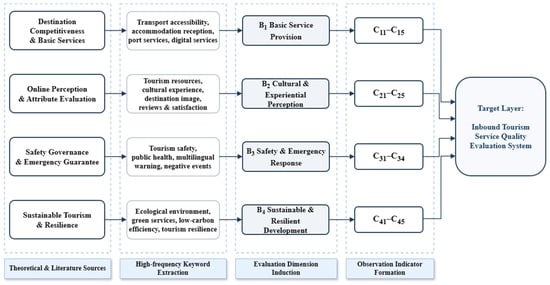
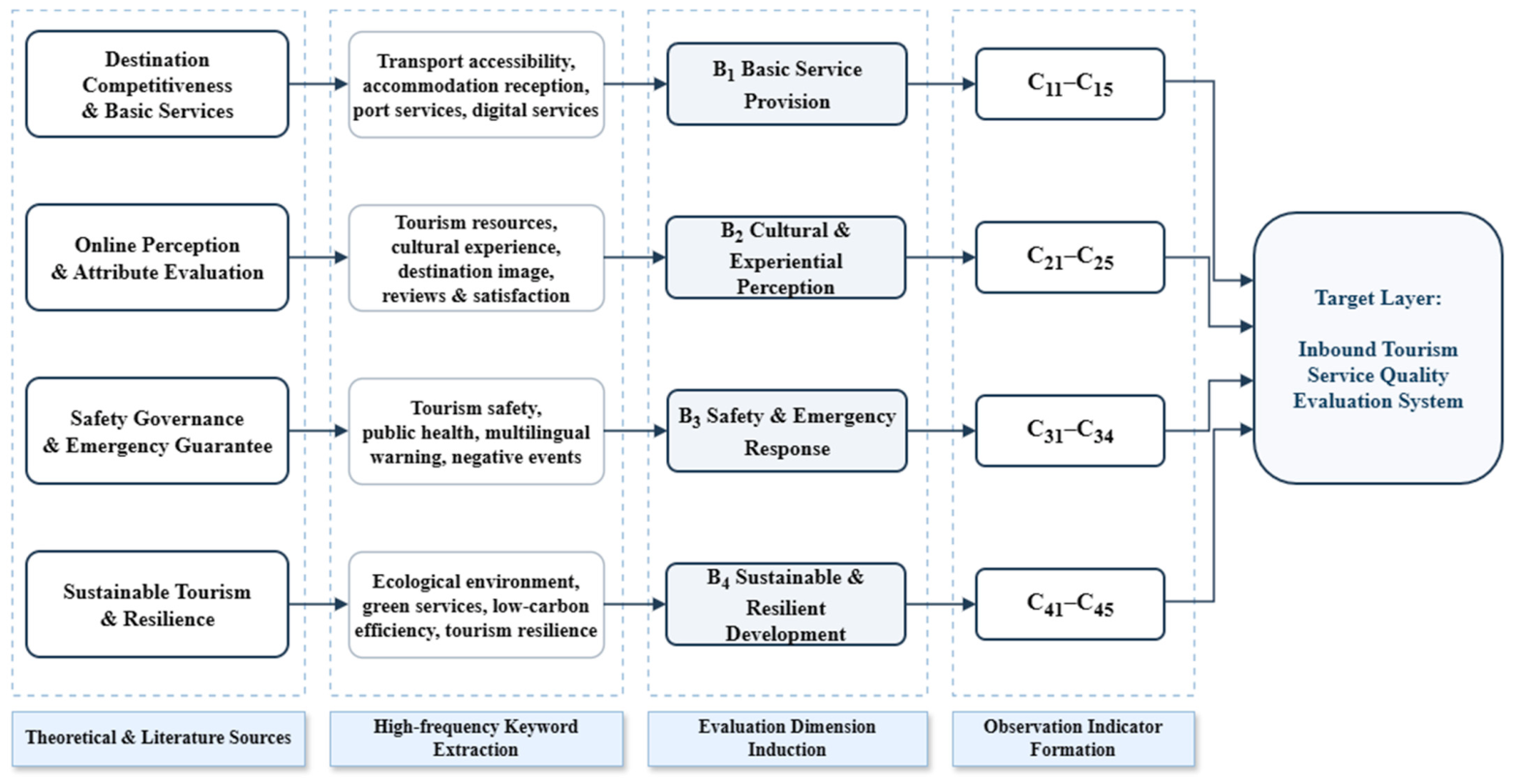
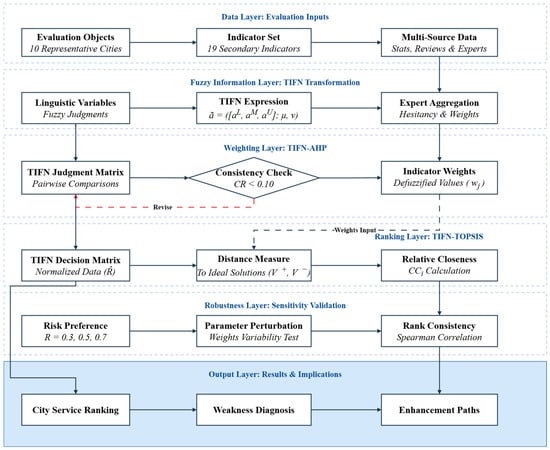
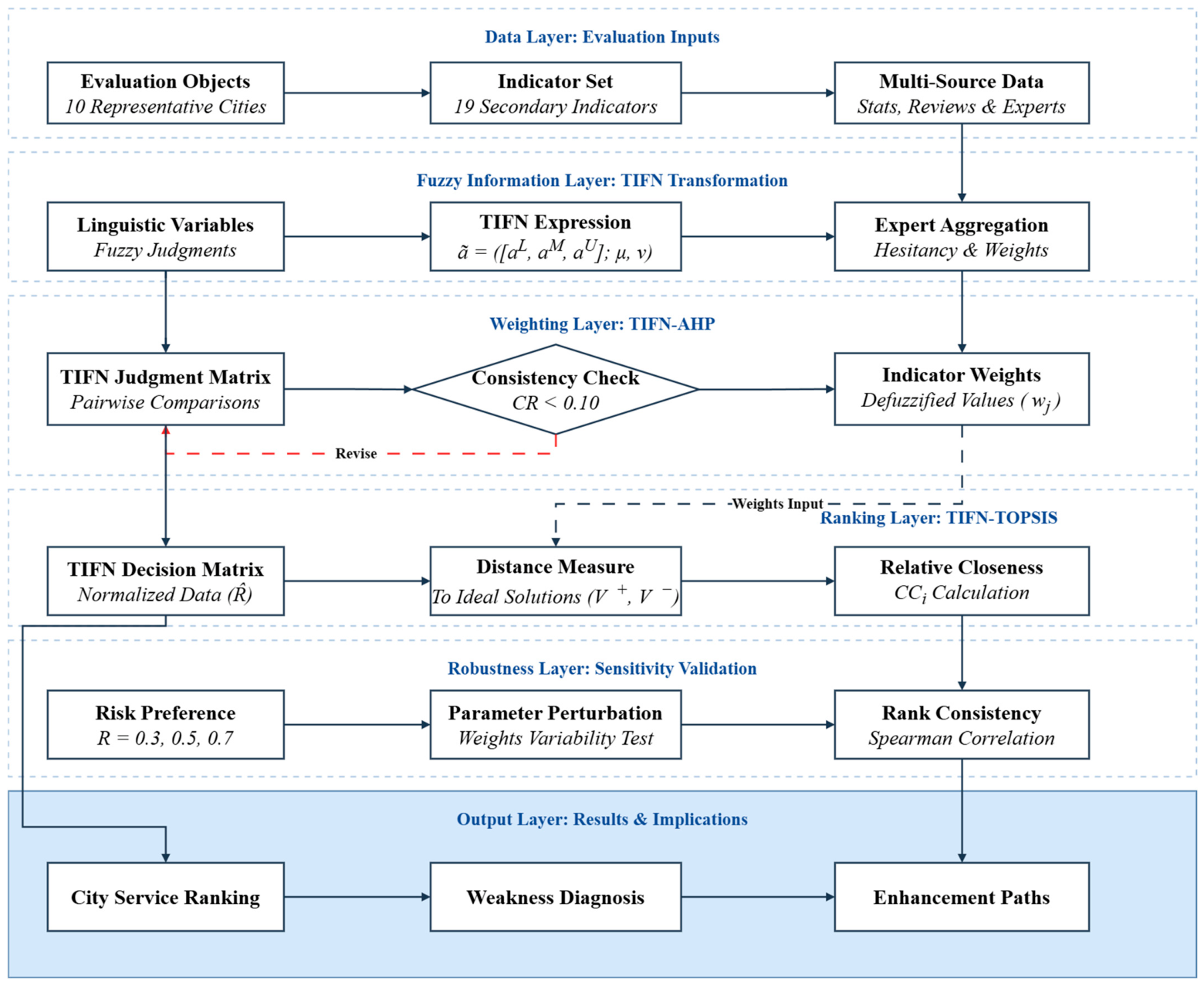
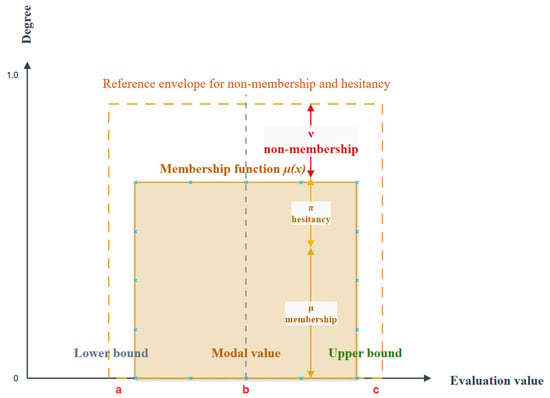
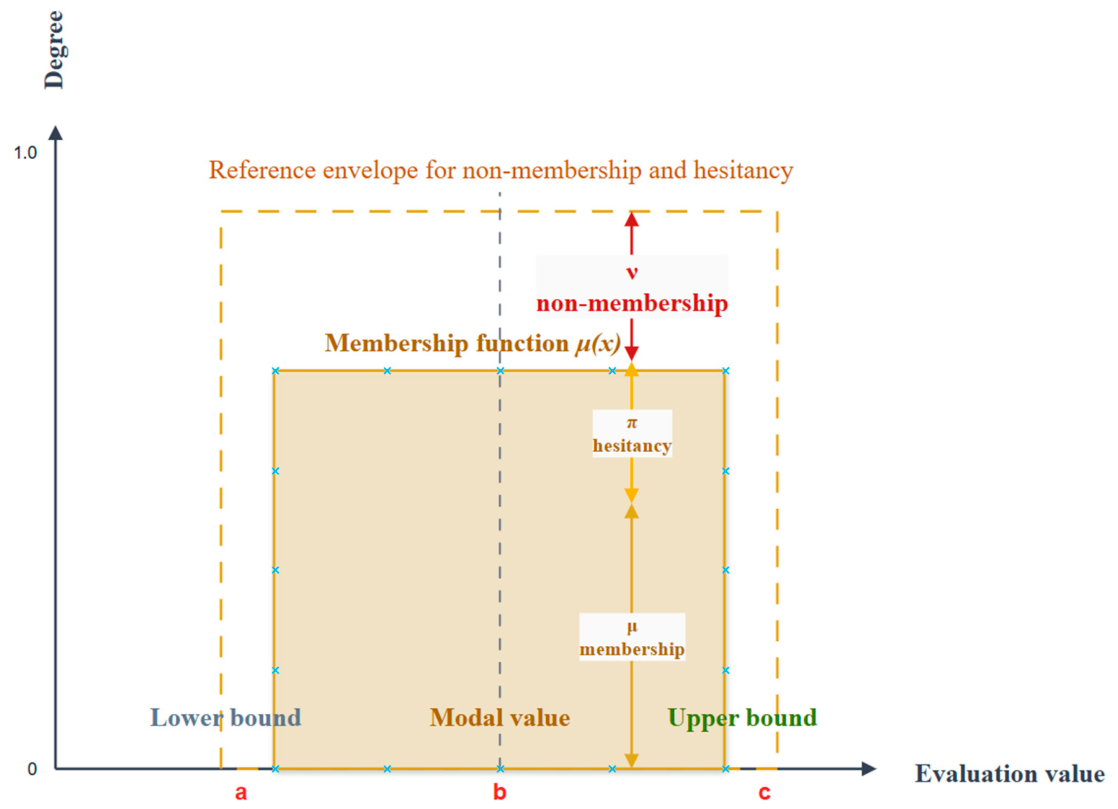
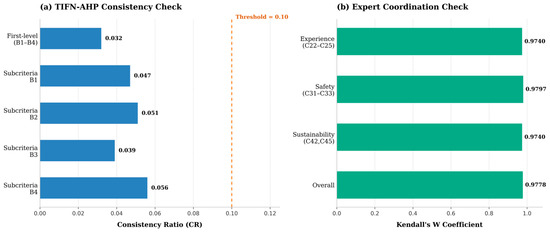
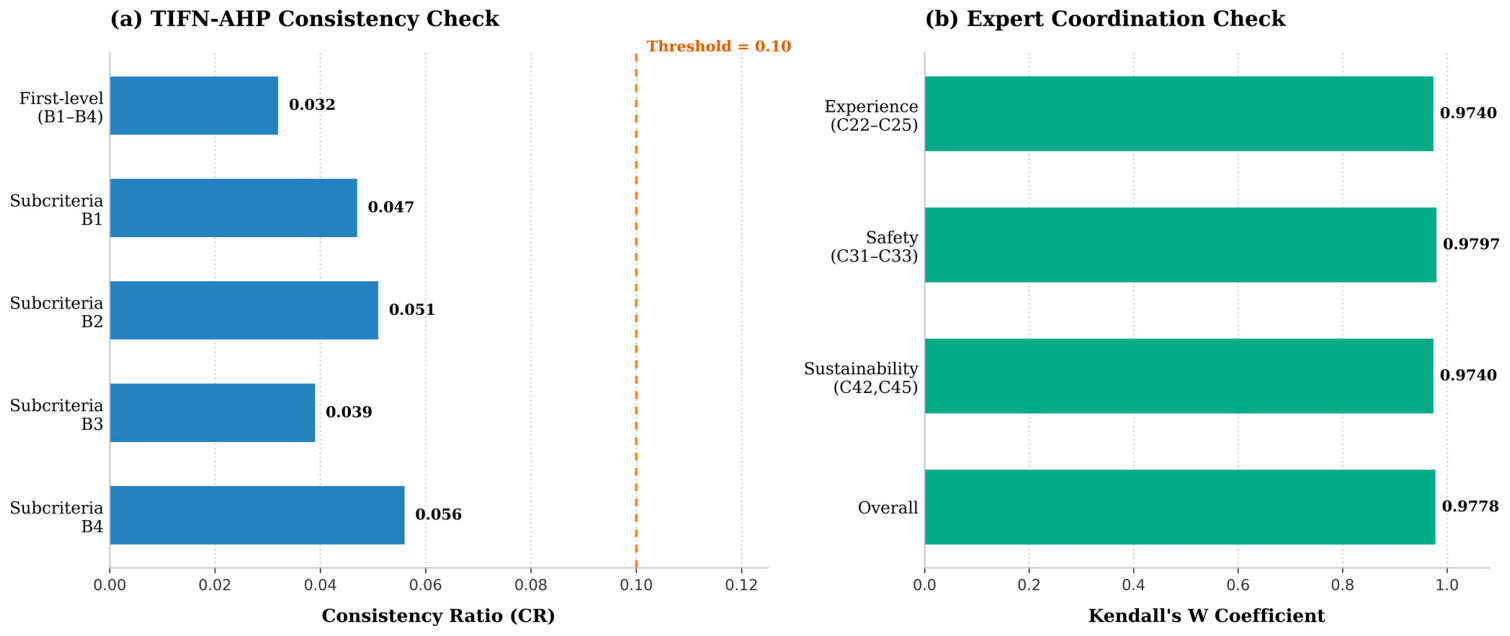
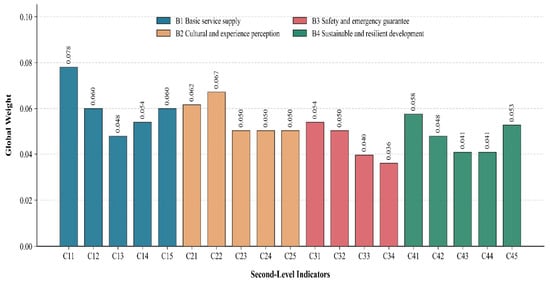
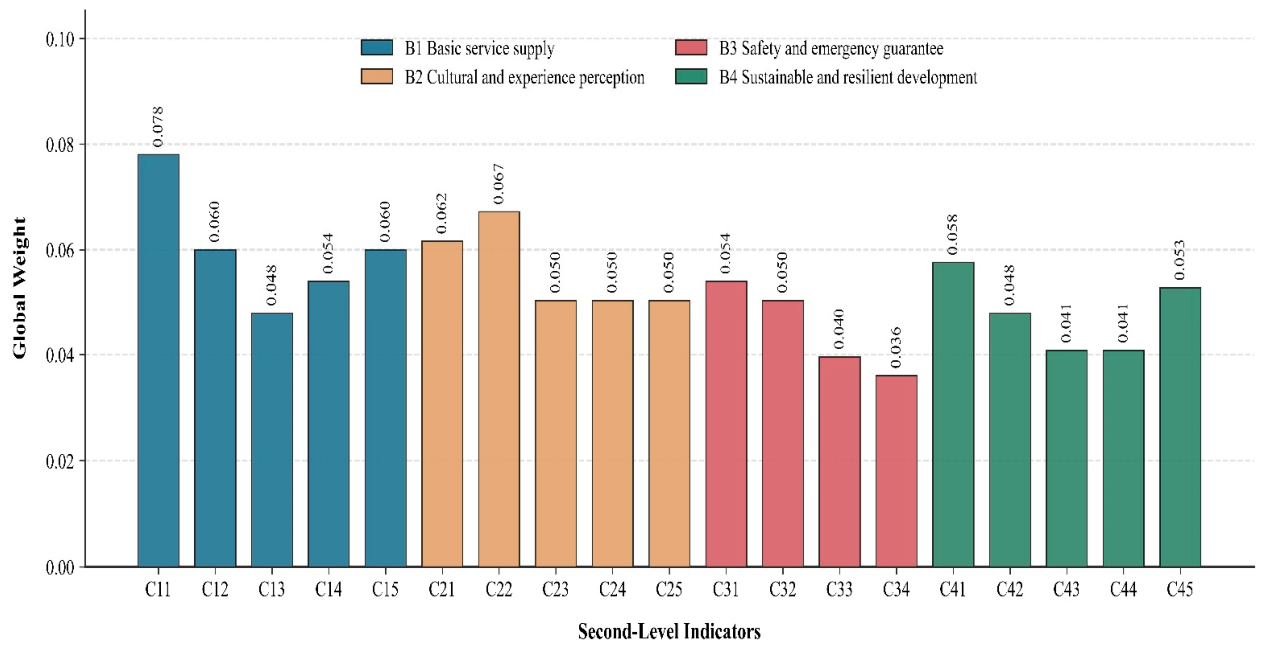
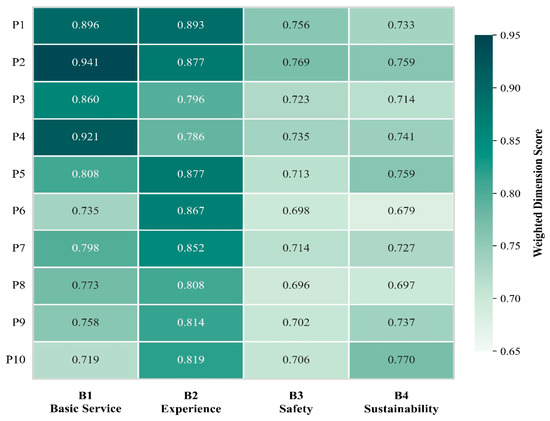
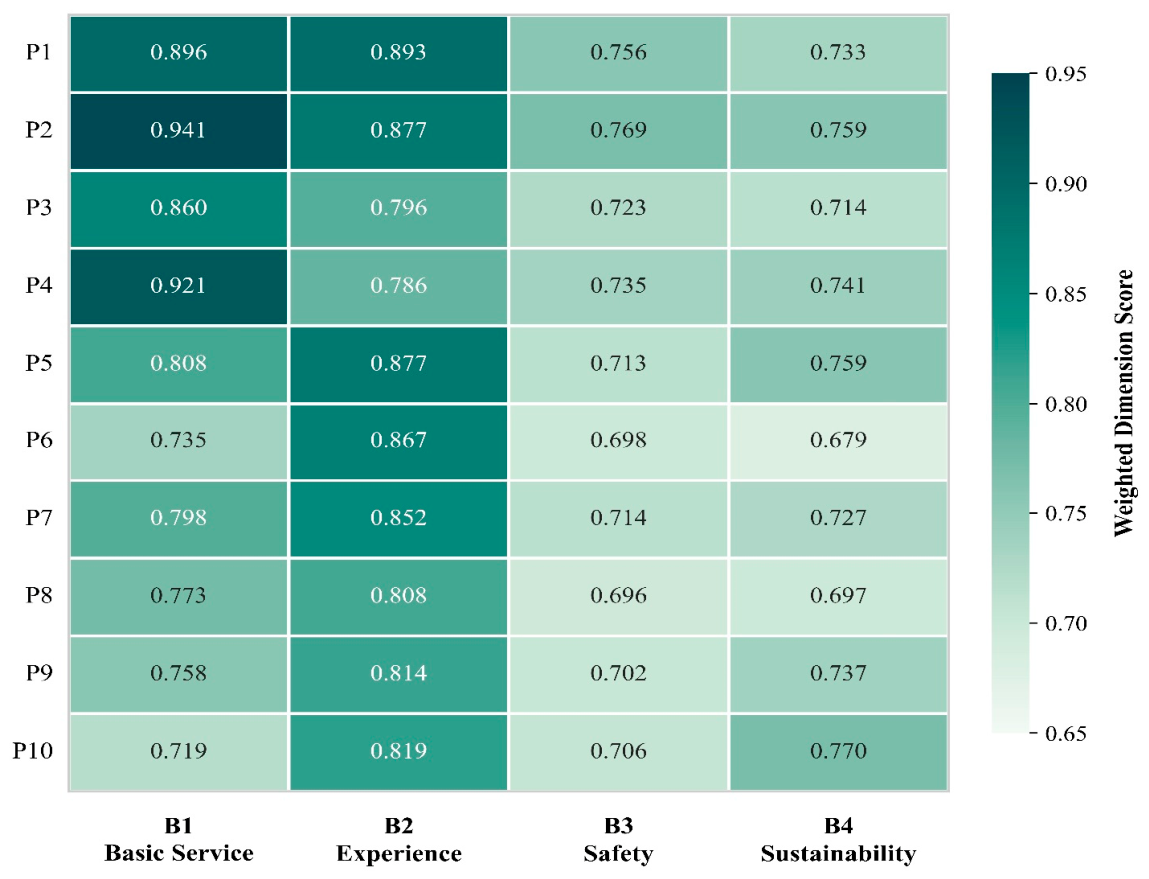
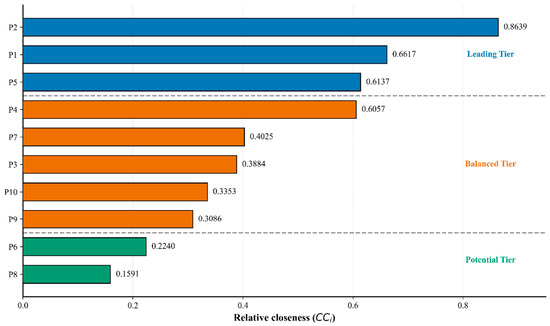
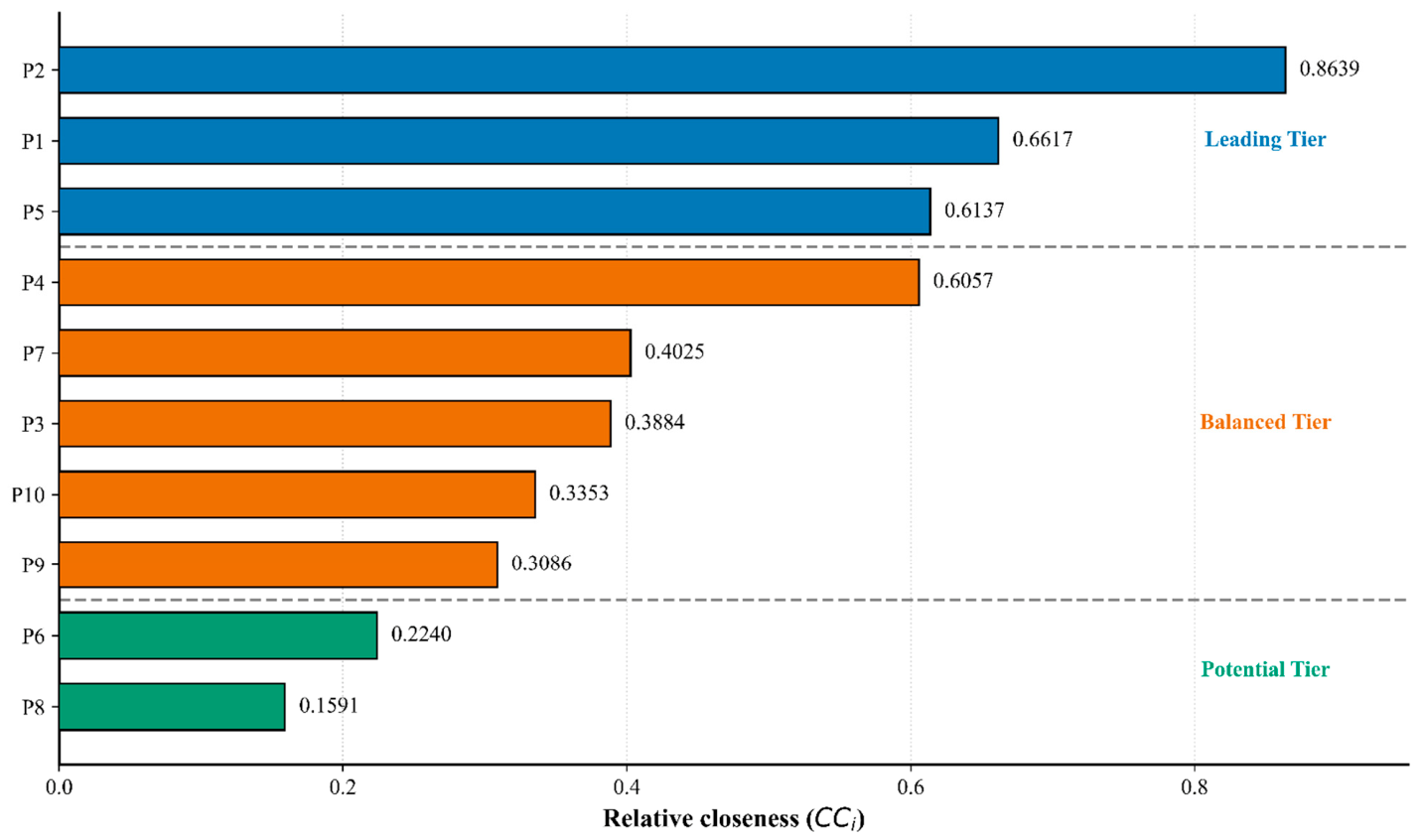
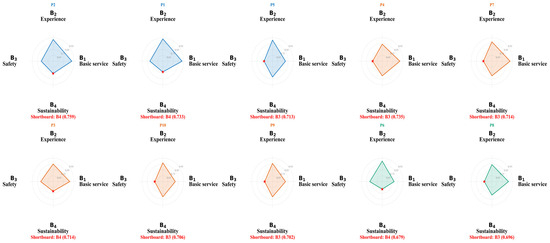
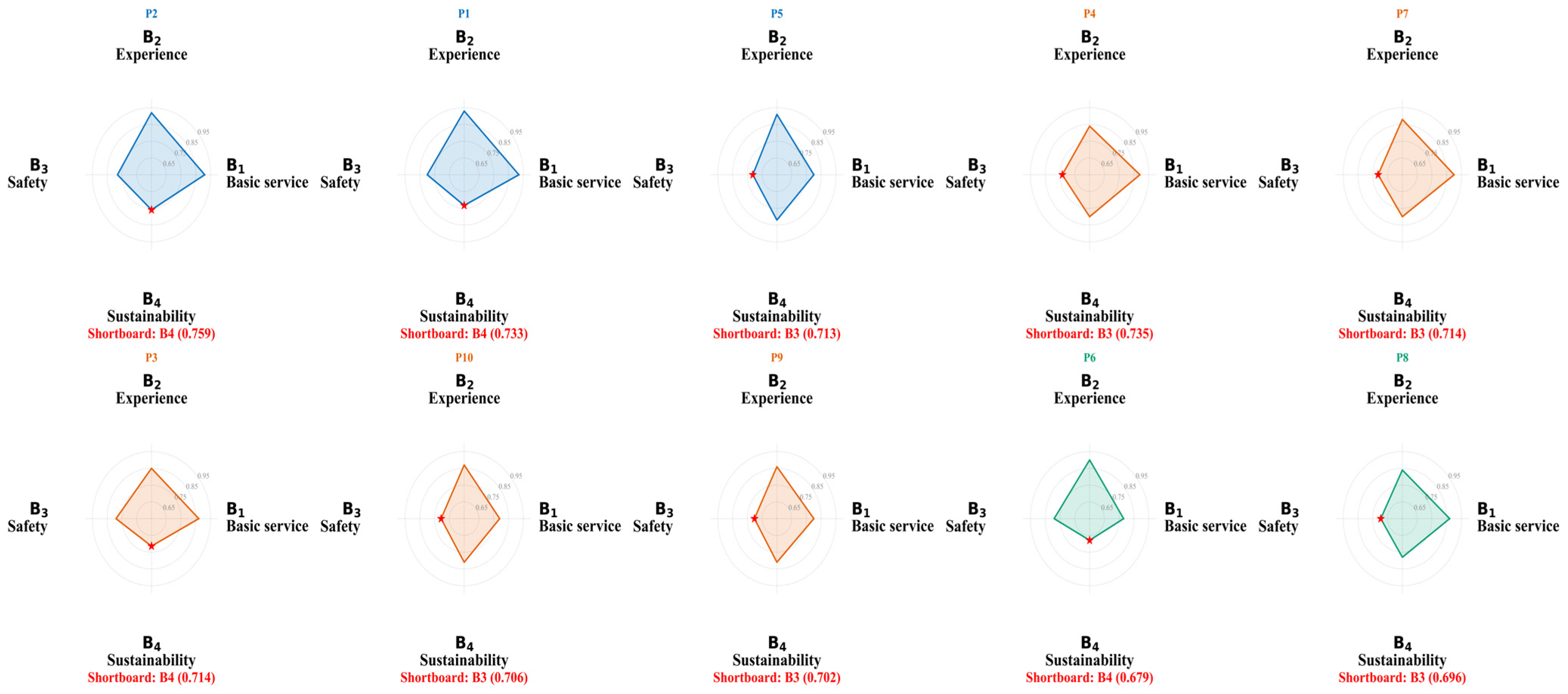
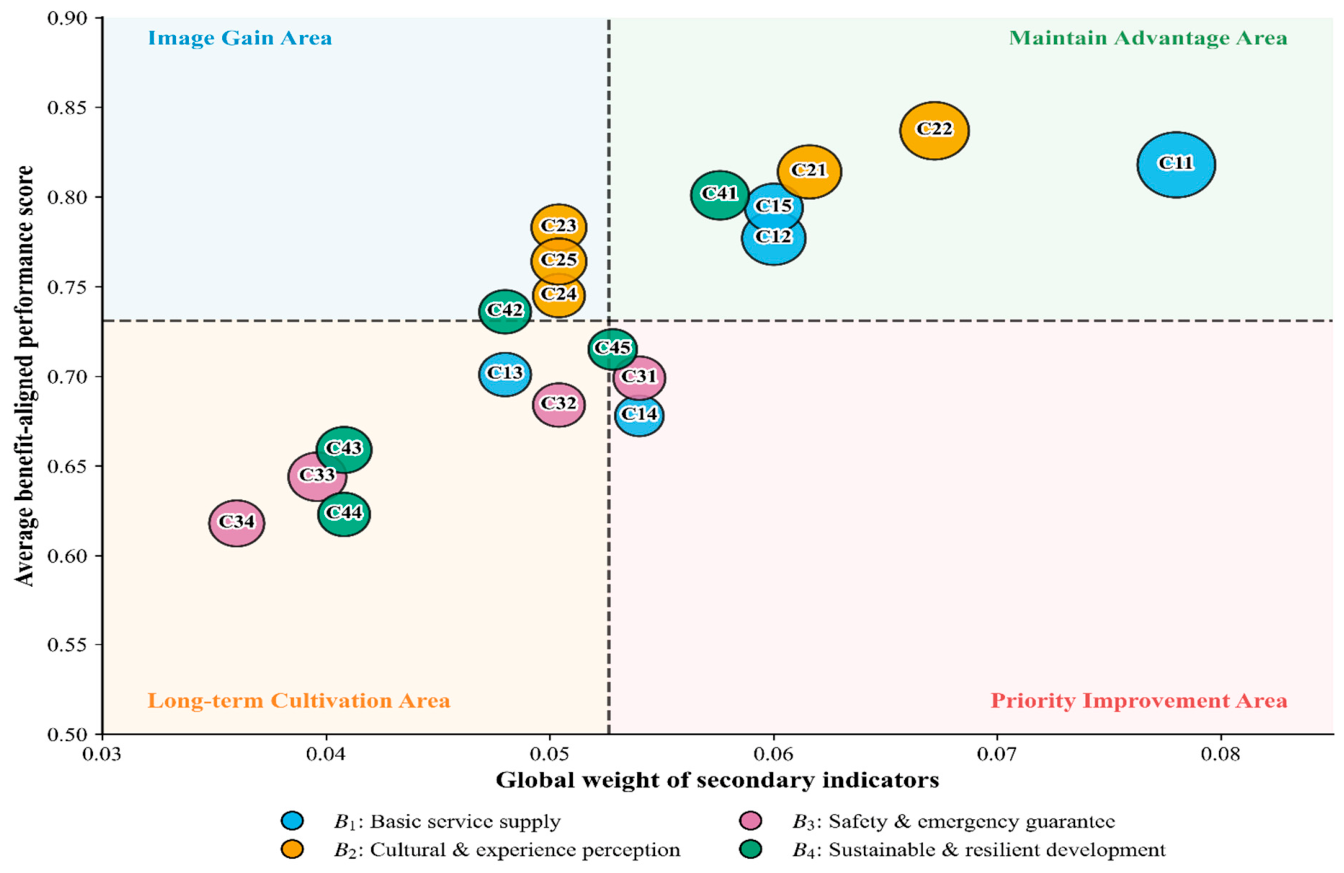
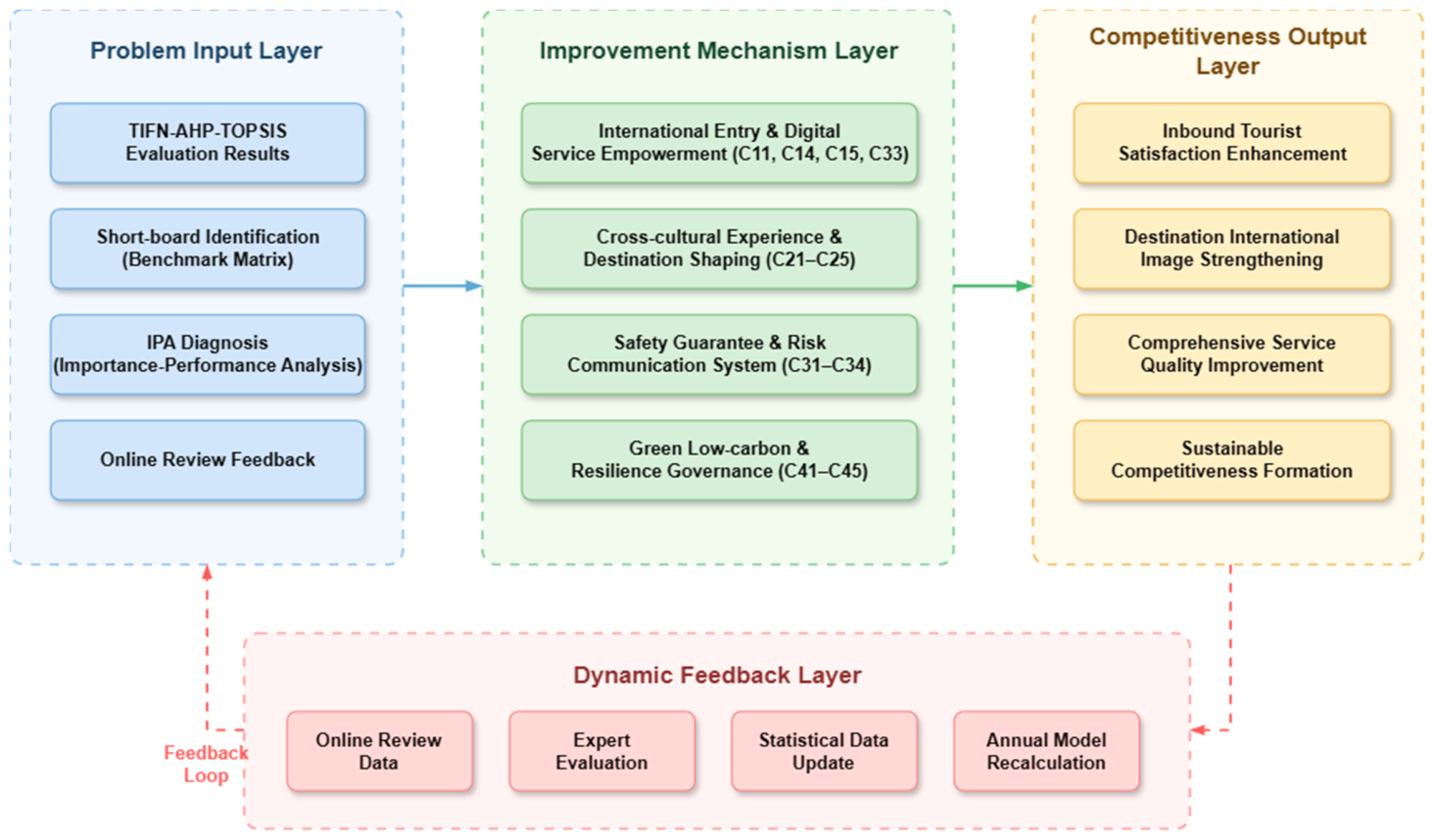

Disclaimer/Publisher’s Note: The statements, opinions and data contained in all publications are solely those of the individual author(s) and contributor(s) and not of MDPI and/or the editor(s). MDPI and/or the editor(s) disclaim responsibility for any injury to people or property resulting from any ideas, methods, instructions or products referred to in the content. |
© 2026 by the authors. Licensee MDPI, Basel, Switzerland. This article is an open access article distributed under the terms and conditions of the Creative Commons Attribution (CC BY) license.