1. Introduction
Urban public spaces are fundamental components of sustainable cities because they support social interaction, pedestrian movement, recreation, cultural expression, economic activity and everyday urban life. Public spaces also contribute to urban liveability by providing opportunities for social encounter, leisure and place experience within the built environment. Public spaces have also been widely understood as urban settings that support everyday interaction, accessibility and collective urban life [
1,
2]. In recent years, sustainable urban development has expanded beyond physical infrastructure and environmental performance to include social well-being, cultural identity, inclusiveness and user experience. This is consistent with Huang et al. [
3], who highlighted that sustainable urban landscape quality can be assessed through users’ perceptions of public space attributes and their contribution to overall place experience. The quality of public spaces is, therefore, closely related to user satisfaction, as accessibility, activities, comfort, visual character and environmental qualities influence how users perceive and use urban environments [
3]. In this study, user satisfaction is positioned not only as a perceptual outcome but also as an indicator of how well public spaces support sustainable urban life. Recent studies further emphasise that public space quality, user perception and social sustainability are closely connected to liveability, comfort, identity and overall public space experience [
3,
4,
5]. User satisfaction is also relevant to broader well-being discussions, as well-being is increasingly understood as multidimensional rather than limited to happiness or life satisfaction alone [
6].
The relationship between public space satisfaction and sustainability can be understood through several dimensions [
4,
7]. This aligns with the well-being literature, which distinguishes between hedonic and eudaimonic dimensions of human experience [
6,
8]. Subjective well-being is also linked to broader quality of life concerns, including health, ageing and everyday public space experience [
5,
9]. In heritage public spaces, satisfaction may reflect cultural sustainability through identity continuity, heritage appreciation and attachment to historic urban form [
10]. It may also support social sustainability by encouraging inclusive pedestrian experiences, social encounter, and community resilience [
7]. In contemporary commercial public spaces, satisfaction is closely related to economic sustainability because active, attractive and accessible public spaces can support retail activity, tourism, night-time economy and commercial vitality [
11,
12]. Environmental and liveability dimensions are also relevant, as green elements, water features, shade, lighting and walkable conditions contribute to comfort and everyday urban quality [
13,
14].
More specifically, user satisfaction in heritage-oriented public spaces can be interpreted as an indicator of cultural sustainability when users positively evaluate historical buildings, cultural ambience, street art and pedestrian-scale heritage character [
10]. Such satisfaction reflects the ability of heritage spaces to sustain cultural identity, maintain identity continuity, strengthen place attachment and support appreciation of historic urban form [
10,
15,
16]. Satisfaction with accessibility, walkability and public life also contributes to social sustainability because inclusive and comfortable public spaces encourage everyday use, social encounters and a liveable urban experience [
7,
14,
17].
In contemporary commercial spaces, satisfaction with activity diversity, media architecture, entertainment functions and nighttime visual experience is linked to economic sustainability because these attributes support commercial vitality, tourism activity, retail engagement and nighttime urban experience [
5,
11,
12]. Environmental comfort attributes, including greenery and water elements, further support liveability by improving comfort, ambience and place attractiveness [
13,
18]. Therefore, this study positions user satisfaction as a context-sensitive indicator that connects urban space attributes with cultural, social, economic and environmental sustainability outcomes [
4,
7].
1.1. Issues in the Malaysian Context
Many Malaysian cities contain historic commercial streets that serve not only as cultural and tourism destinations but also as important everyday public spaces while simultaneously facing increasing commercialisation and rising visitor demand. Heritage-oriented areas such as Melaka’s Jonker Street are widely appreciated for their historical buildings, cultural ambience, street art, pedestrian activity and distinctive local commercial character. However, these areas increasingly face challenges associated with tourism pressure, facade alterations, signage control, overcrowding and the gradual erosion of local identity and heritage character. In Malaysia, rapid urbanisation has intensified the challenge of balancing heritage preservation with contemporary urban development [
19]. Historic urban quarters are increasingly exposed to tourism pressure, commercialisation and physical transformation, which may gradually weaken cultural identity and spatial character [
10,
19]. At the same time, modern commercial districts often prioritise consumption, entertainment and visual attraction, sometimes at the expense of environmental comfort, inclusiveness and place attachment [
5,
12].
This contrast raises important planning and design questions regarding how users evaluate public spaces shaped by different urban identities [
4]. This issue is particularly important because Malaysian cities contain both heritage commercial streets and highly commercialised contemporary districts. In Kuala Lumpur, previous research has shown that street use and liveability are closely associated with pedestrian activity, accessibility and the quality of the street environment [
12]. These spaces may serve similar public functions, such as walking, socialising, shopping and leisure, but they provide different spatial experiences [
4,
11]. Understanding how users evaluate specific urban space attributes can, therefore, help planners and urban designers develop context-sensitive strategies that strengthen liveability, cultural continuity, environmental comfort and commercial vitality.
1.2. Literature Review
Studies on public space have consistently highlighted the importance of physical, social and aesthetic attributes in shaping user experience [
4,
5]. Attributes such as accessibility, activity diversity, greenery, lighting and visual character contribute to the quality and usability of public spaces [
4,
20,
21]. Previous Malaysian public space studies have highlighted the importance of distance, safety, layout design and pedestrian-oriented spatial intervention in shaping public space usability and user experience [
22,
23]. In heritage settings, historical character, cultural symbolism and place identity can strengthen users’ sense of attachment and appreciation, while public space itself remains central to social encounter and urban meaning [
2,
15,
16].
In contemporary commercial spaces, user attraction is often shaped by activity concentration, entertainment functions, visual stimulation and media architecture [
4,
12]. However, the research gap lies in the limited comparative evidence on how different sustainability-related dimensions shape user satisfaction across contrasting public space types, particularly between heritage-oriented and contemporary commercial urban settings [
4,
5]. Recent systematic reviews also show that user perspective, user diversity, perception-based assessment and data acquisition remain important gaps in urban public space research [
4].
The existing studies often assess public space quality in general terms, with less attention to how environmental comfort, cultural heritage, commercial vitality and activity intensity may operate differently in heritage-oriented and contemporary commercial public spaces [
5,
10,
12,
13]. This study addresses this gap by comparing attribute-based satisfaction between MJS and BBKL and by interpreting the results through a satisfaction–sustainability lens. Built environment qualities are also associated with social well-being, as urban form can shape social interaction, public life and personal experience [
17].
1.3. Theoretical Framework
Drawing on public life perspectives that emphasise how people perceive, use and experience urban spaces [
11,
24], public space quality in this study is understood through selected urban space attributes: accessibility, activities, street art walls, light sculptures, art sculptures, media architecture, historical buildings, waterscape lighting, green elements and water elements. These perspectives are relevant because user satisfaction is shaped not only by the presence of physical attributes but also by how users move through, interact with and emotionally respond to the surrounding urban environment [
5,
11,
24]. This is consistent with urban design perspectives that connect city form, public experience and everyday well-being [
17,
25].
In this framework, satisfaction is treated as a holistic user evaluation of how well urban space attributes support public life and sustainable urban experience. For MJS, satisfaction is expected to relate strongly to cultural sustainability through historical buildings, street art walls, pedestrian-scale heritage character and environmental elements. For BBKL, satisfaction is expected to relate more strongly to economic sustainability through activity intensity, media architecture, retail vibrancy and night-time commercial image. Across both sites, accessibility and environmental elements are interpreted as attributes that support social inclusion, liveability and environmental comfort, while lighting-related features are interpreted as part of visual identity and night-time ambience. Based on this theoretical positioning,
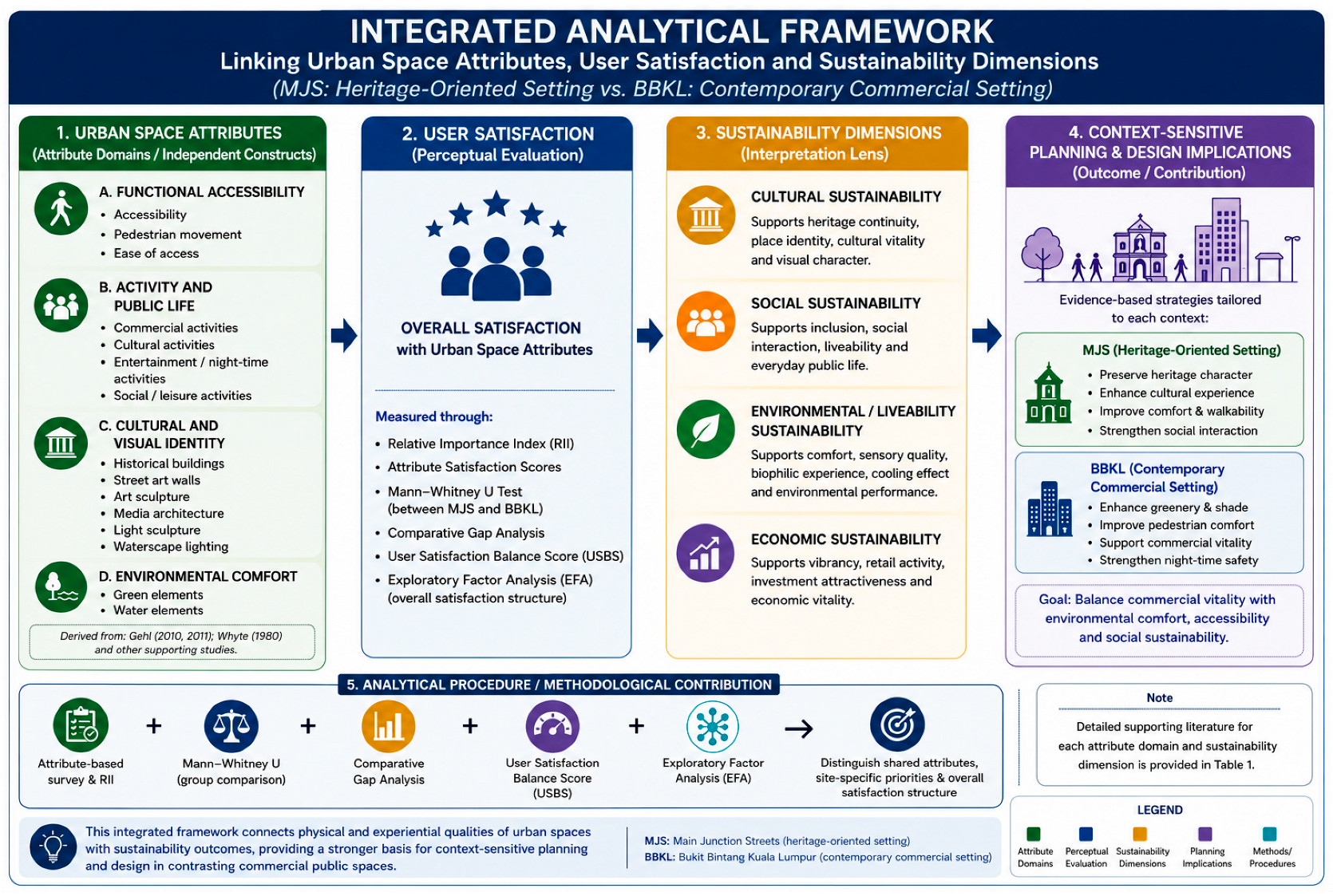
Figure 1 illustrates the integrated analytical framework used in this study. The framework links four urban space attribute domains with user satisfaction as a perceptual evaluation, followed by sustainability dimensions and context-sensitive planning and design implications for heritage-oriented and contemporary commercial public spaces.
Table 1 summarises the analytical framework linking urban space attributes, user satisfaction and sustainability dimensions.
1.4. Study Focus and Objectives
This study focuses on two contrasting public space settings in Malaysia: MJS, which represents a heritage-oriented commercial public space, and BBKL, which represents a contemporary commercial public space. These two sites were selected using a contrasting case logic rather than a matched-case logic. The purpose is not to claim that one public space typology is universally superior but to examine how different spatial identities produce different patterns of attribute-based satisfaction and sustainability-related public space performance.
The objectives of this study are: (1) to identify and rank the urban space attributes most strongly associated with user satisfaction in MJS and BBKL; (2) to compare levels of satisfaction for shared attributes using appropriate non-parametric statistical analysis; (3) to interpret site-specific attributes as indicators of heritage-oriented and contemporary commercial public space identity; and (4) to translate the findings into context-sensitive planning and design recommendations for sustainable public space improvement.
2. Methodology
2.1. Research Approach
This study adopted a quantitative comparative research approach, supported by site inventory and observational documentation, to examine user satisfaction with selected urban space attributes in two contrasting public space settings in Malaysia. The quantitative approach was appropriate because it enabled the systematic measurement of satisfaction and comparison across attributes and locations. A site inventory was conducted to identify and verify the presence of relevant urban space attributes, such as accessibility, activities, street art walls, light sculptures, art sculptures, media architecture, historical buildings, waterscape lighting, green elements and water elements. The comparative design was then used to identify differences in satisfaction patterns between a heritage-oriented commercial public space and a contemporary commercial public space. The study adopted a perception-based evaluation framework in which user satisfaction was interpreted as an indicator of how urban space attributes support broader sustainability dimensions, including cultural sustainability, social sustainability, environmental quality and economic vitality. In this context, the research does not assume that user satisfaction alone fully determines sustainable public space performance. Rather, satisfaction is treated as a subjective experiential indicator that reflects how users perceive and experience the quality, comfort, identity and functionality of urban public spaces.
2.2. Study Areas and Case Selection Justification
This study focused on two contrasting urban public space settings in Malaysia: Melaka Jonker Street (MJS) and Bukit Bintang Kuala Lumpur (BBKL). The two study areas were selected using a contrasting case comparison approach because they represent different spatial identities, urban functions, activity compositions and public space experiences within the Malaysian urban context. MJS was selected as a heritage-oriented public space characterised by historic buildings, cultural identity, tourism activities, pedestrian movement and local commercial activities. BBKL was selected as a contemporary commercial district characterised by retail concentration, entertainment functions, nightlife, transit connectivity and visually dynamic urban features. The two sites differ in urban function, spatial scale, cultural identity and commercial intensity. This difference is intentional because the study applies a contrasting case comparison to examine how different spatial identities shape user satisfaction. Location maps, site photographs and a comparative spatial attributes table were added to strengthen the spatial evidence and clarify the contrasting urban character of MJS and BBKL.
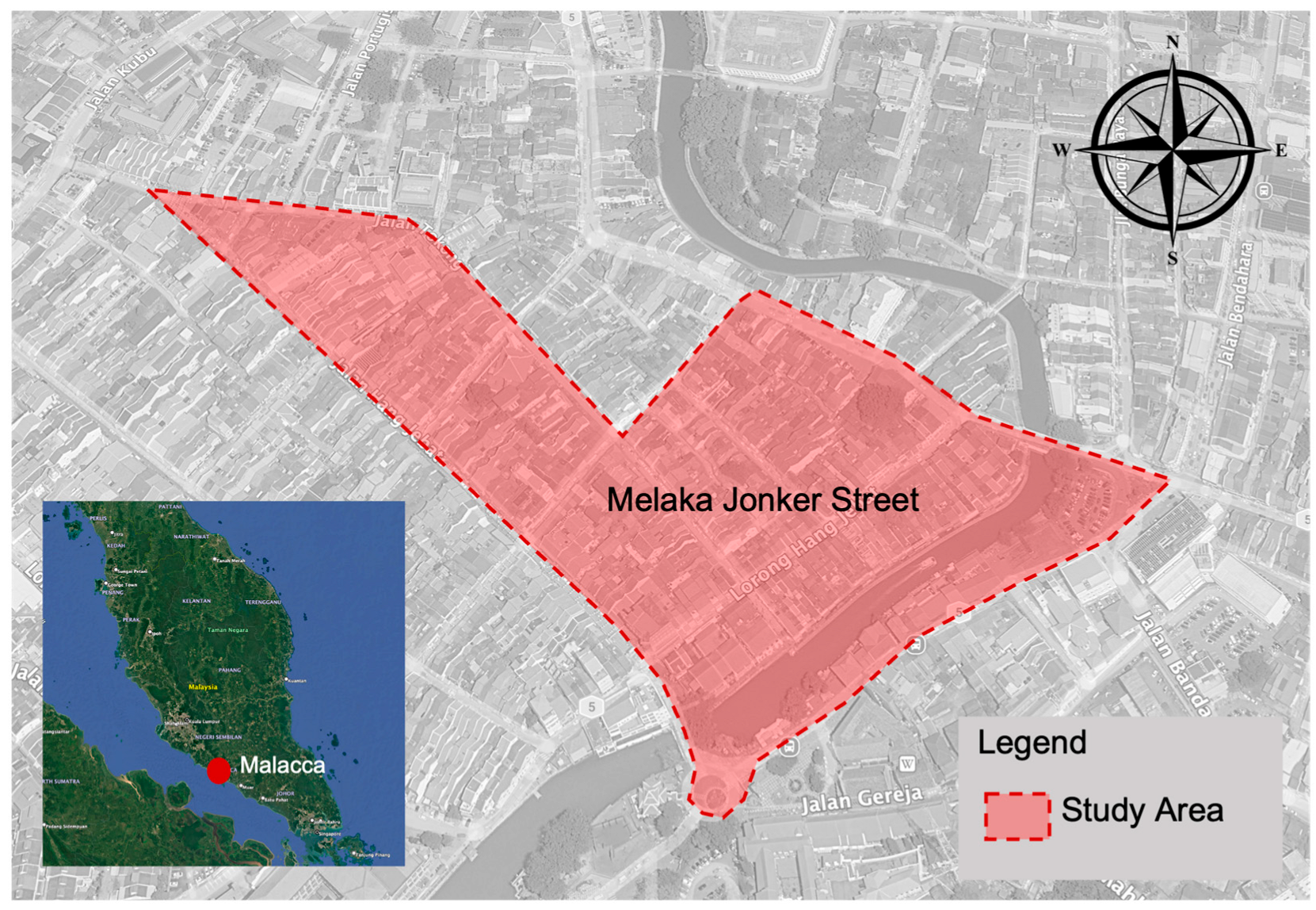
Figure 2 and
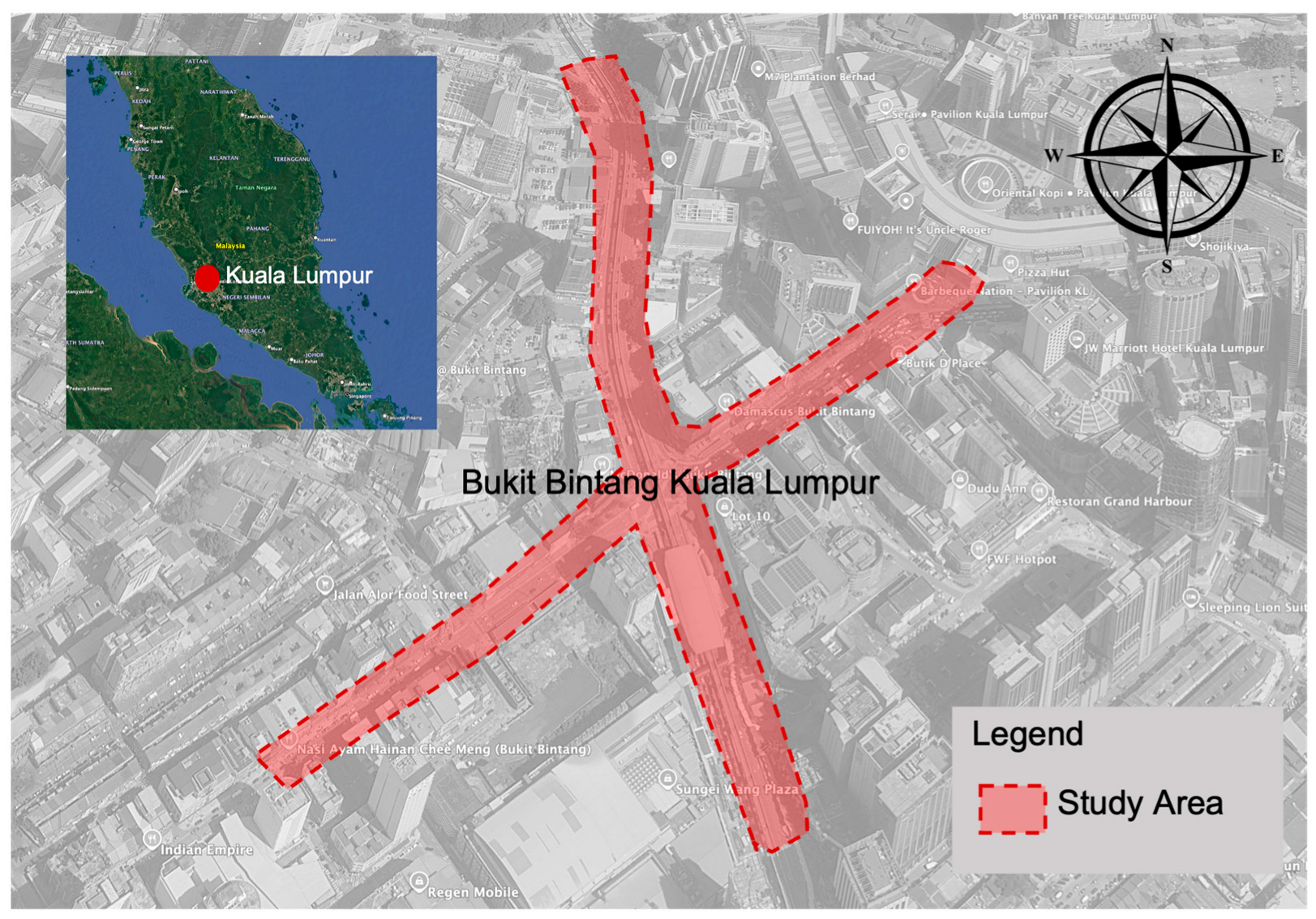
Figure 3 show the location maps of Melaka Jonker Street and Bukit Bintang Kuala Lumpur, respectively.
To strengthen the case selection justification, this study also draws on prior structured observation of Malaysian urban spaces conducted by Hamzah et al. [
28]. The earlier observation identified differences in urban space attributes between Jonker Street Melaka and Bukit Bintang Kuala Lumpur, particularly in terms of accessibility, activity composition, street art wall, media architecture, light sculpture, art sculpture, historical character, waterscape lighting, green elements and water elements. These prior spatial observations support the present study’s contrasting case logic and provide an objective basis for interpreting differences in user satisfaction.
The typical street-view images and spatial attribute comparison in
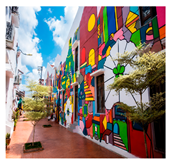
Table 2 illustrate the contrasting spatial character of the two case studies. MJS is visually defined by heritage streetscape elements, historical buildings, street art, pedestrian-oriented activity and cultural ambience. In contrast, BBKL is characterised by contemporary commercial frontage, media architecture, lighting, intensive pedestrian movement and a more visually dynamic urban environment. These visual differences support the contrasting case logic used in this study.
2.3. Data Collection and Fieldwork Context
Primary data were collected through a structured questionnaire survey administered to public space users in both study areas. The questionnaire captured respondents’ satisfaction with selected urban space attributes observed in the two locations. The attributes examined included accessibility, activities, street art walls, light sculpture, art sculpture, media architecture, historical buildings, waterscape lighting, green elements and water elements. The survey was conducted in October 2023 over four weekend fieldwork days, when both study areas typically experienced higher public activity. Data were collected across morning, afternoon, evening and night periods to capture variations in public space use throughout the day. Weather conditions during the fieldwork were generally favourable. The survey was conducted under normal public space conditions, with no COVID-19 movement restrictions in place during the fieldwork period.
2.4. Measurement of Urban Space Attributes
The questionnaire used a five-point Likert scale ranging from 1 (very dissatisfied) to 5 (very satisfied). In this study, “activities” was operationalised as a site-specific public space attribute based on observable activities identified through the site inventory. For Melaka Jonker Street, these included walking, cycling, photography, rickshaw rides, river cruises and street sales booths, while for Bukit Bintang Kuala Lumpur, they included walking, cycling, photography and street sales booths. This distinction is important because MJS and BBKL do not have identical activity compositions. Activities in MJS are more closely related to heritage tourism, cultural retail, food, walking and social/leisure experience, whereas activities in BBKL are more strongly associated with retail, entertainment, nightlife, transit-related movement and commercial engagement. For analytical purposes, these observed activities were grouped into four categories: commercial, cultural, entertainment/night-time and social/leisure activities. This classification clarifies that “activities” was not treated as a homogeneous attribute but as a context-dependent set of public space uses that varied between the two study areas.
Table 3 summarises the operational definition of activities used in this study.
2.5. Respondents and Sampling
The target respondents were on-site public space users present in the selected study areas during the survey period. Respondents used the spaces for walking, leisure, social interaction, recreation, sightseeing and other urban activities. They were approached on-site using convenience sampling to capture real-time perceptions from users directly experiencing the urban environment. A total of 542 respondents participated in the survey, comprising 271 respondents from Melaka Jonker Street and 271 respondents from Bukit Bintang Kuala Lumpur. The sample size was determined based on a 90% confidence level, guided by established sample size determination principles for survey research [
29].
Table 4 summarises the demographic profile, visit purpose and visit frequency of the respondents.
2.6. Data Analysis
The collected data were analysed using descriptive statistics, Cronbach’s alpha, the Mann–Whitney U test, RII, comparative gap analysis, USBS and EFA. The analysis distinguished between shared and site-specific attributes. Shared attributes, including accessibility, activities, light sculpture, art sculpture, waterscape lighting and green elements, were suitable for inferential comparison. Site-specific attributes, such as street art walls, historical buildings and water elements in MJS, and media architecture in BBKL, were interpreted descriptively as identity-specific indicators. USBS was treated as a supplementary descriptive index rather than a statistical threshold. EFA was conducted separately for each study area because the two sites contained different sets of urban space attributes.
To avoid overlap among the analytical techniques, each method was assigned a distinct role in the analysis. Descriptive statistics summarised the general satisfaction profile of each site. Cronbach’s alpha assessed the internal consistency of the satisfaction items. The Mann–Whitney U test examined whether satisfaction distributions differed significantly between the two independent study areas for shared attributes only. The Relative Importance Index ranked the relative strength of each attribute within each site. Comparative gap analysis identified the direction and size of differences between the two sites for shared attributes. The User Satisfaction Balance Score provided a supplementary descriptive indication of the overall direction of satisfaction balance. EFA examined whether the satisfaction attributes were perceived as separate dimensions or as part of a broader integrated public space satisfaction experience.
2.7. Methodological Significance and Limitations
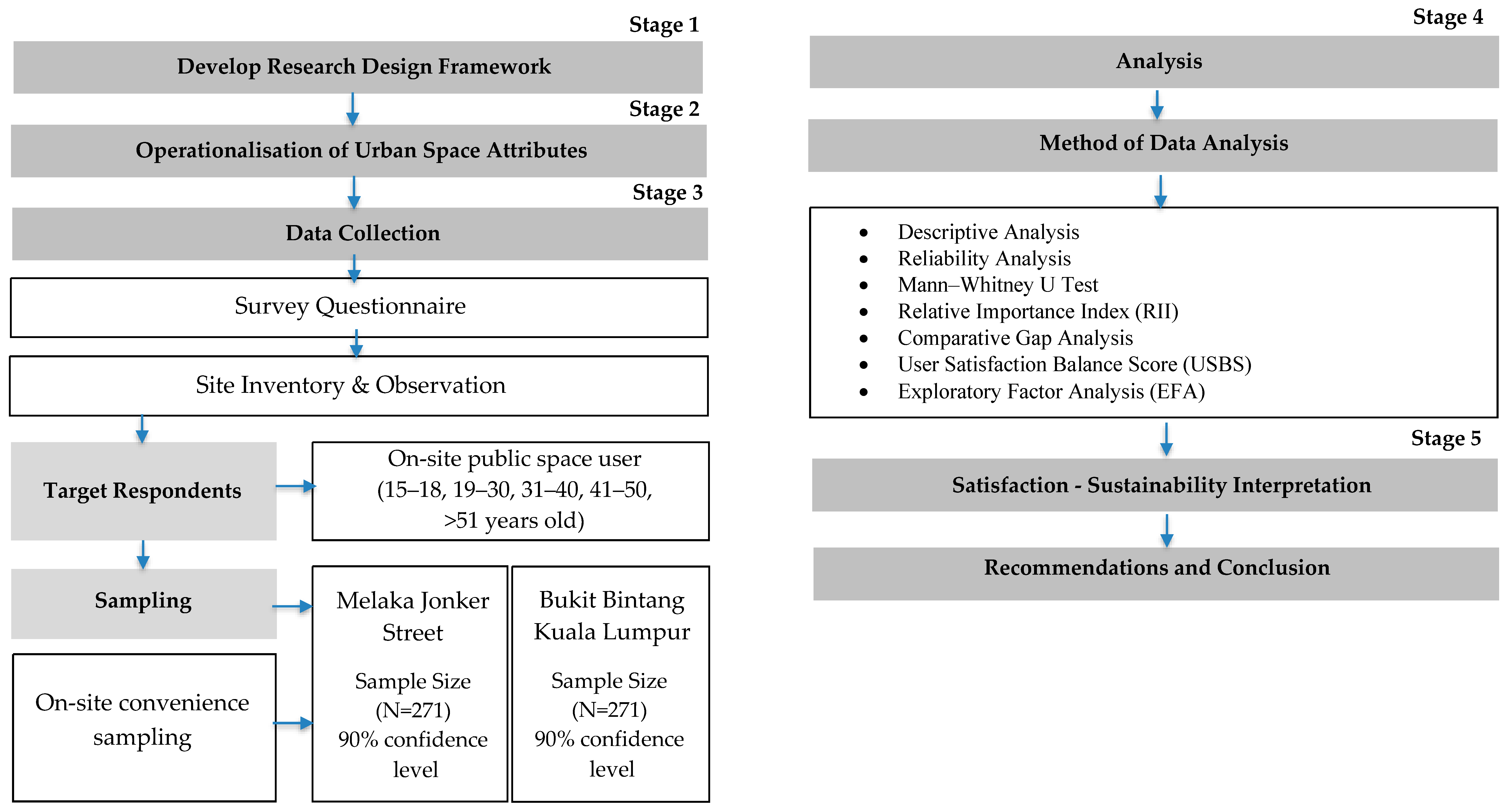
Figure 4 summarises the five-stage research process, covering research design, site selection, site inventory, data collection, data analysis and recommendation interpretation. This study adopted a quantitative comparative approach supported by site inventory and observational documentation. The methodological contribution lies in integrating site inventory, attribute ranking, inferential comparison, comparative gap analysis, USBS and EFA within a satisfaction–sustainability framework. This approach distinguishes shared and site-specific attributes and links user satisfaction to broader public space performance.
3. Results
3.1. Descriptive Analysis of User Satisfaction
Table 5 presents the descriptive statistics of user satisfaction across selected urban space attributes in MJS and BBKL. Overall, users in both study areas reported relatively high satisfaction, with most assessed attributes recording a median value of 4.00. This indicates generally positive user evaluation of the selected public space attributes. However, the high median values should be interpreted cautiously because the use of a satisfaction-only scale may compress responses toward the upper range.
In MJS, the consistently high median values indicate that users perceive the heritage street as a multi-dimensional public space where cultural, aesthetic, functional and environmental qualities collectively support satisfaction. High satisfaction was recorded for accessibility, activities, street art walls, light sculptures, art sculptures, historical buildings, waterscape lighting, green elements and water elements. In BBKL, high median scores for accessibility, activities, light sculptures, art sculptures, media architecture, waterscape lighting and green elements indicate that the contemporary commercial environment also provides positive public space experiences, although through a different spatial logic. The descriptive findings provide the basis for the subsequent comparative analysis.
3.2. Reliability Analysis
Cronbach’s alpha was used to assess the internal consistency of the satisfaction items in each study area. MJS recorded a Cronbach’s alpha value of 0.938 for nine elements, while BBKL recorded a value of 0.966 for seven elements. These values indicate very good internal consistency, showing that the selected items were reliable for measuring user satisfaction within each site-specific context. As shown in
Table 6, Cronbach’s alpha was used to assess the internal consistency of the satisfaction items in each study area.
3.3. Mann–Whitney U Test
A Mann–Whitney U test was conducted to determine whether there were statistically significant differences in user satisfaction between Melaka Jonker Street and Bukit Bintang Kuala Lumpur for the comparable urban space attributes shared by both study areas. Although the overall questionnaire included nine elements in Melaka Jonker Street and seven elements in Bukit Bintang Kuala Lumpur, only six shared attributes were suitable for direct comparison, namely accessibility, activities, light sculpture, art sculpture, waterscape lighting and green elements.
The Mann–Whitney U test compares the distribution of ranks between two independent groups rather than median values alone. Therefore, two attributes may record the same median value but still show statistically significant differences if the distribution of responses differs between groups. For example, one study area may have a higher concentration of responses at the upper satisfaction levels, even though both sites record the same median score.
Table 7 shows that all six comparable attributes recorded statistically significant differences between the two study areas. Accessibility showed the greatest difference, with Melaka Jonker Street recording a higher median score than Bukit Bintang Kuala Lumpur (Median MJS = 5.00; Median BBKL = 4.00; U = 45,937.5, Z = 5.06,
p < 0.001). Significant differences were also found for activities (U = 42,382.5, Z = 3.11,
p = 0.001), light sculpture (U = 41,756.5, Z = 2.84,
p = 0.002), art sculpture (U = 40,862.0, Z = 2.35,
p = 0.012), waterscape lighting (U = 40,305.5, Z = 1.97,
p = 0.036) and green elements (U = 41,687.0, Z = 2.72,
p = 0.004).
These findings indicate that user satisfaction differed significantly between Melaka Jonker Street and Bukit Bintang Kuala Lumpur across all shared urban space attributes examined in this study. Although most attributes recorded the same median value of 4.00 in both locations, the Mann–Whitney U test revealed differences in the distribution of satisfaction responses. This means that similar median values may still represent different patterns of user evaluation across the two public space settings. The results, therefore, show that shared attributes are experienced differently according to the spatial, functional and contextual characteristics of each site. Attributes that were unique to only one study area were interpreted descriptively rather than inferentially.
3.4. Relative Importance Index (RII)
Table 8 presents the Relative Importance Index (RII) for selected urban space attributes in Melaka Jonker Street (MJS) and Bukit Bintang Kuala Lumpur (BBKL). The RII was used to rank the relative importance of each attribute based on users’ satisfaction scores, using five as the highest score weight. This analysis provides a clearer understanding of which urban space attributes are most strongly associated with user satisfaction in each study area and highlights the contrasting spatial priorities of a heritage-oriented setting and a contemporary commercial district.
In Melaka Jonker Street, accessibility recorded the highest RII value (0.848), indicating that ease of movement and pedestrian convenience are central to user satisfaction in this heritage environment. Historical buildings ranked second (0.846), followed by street art walls (0.839), light sculpture (0.828), and activities (0.824). These findings suggest that user satisfaction in Jonker Street is shaped not only by functional qualities such as accessibility but also by heritage character, visual richness, and cultural expression that reinforce the identity of the place. The strong performance of historical buildings and street art walls reflects the importance of identity, authenticity, and aesthetic distinctiveness in enhancing the quality of heritage public spaces.
Other attributes in Jonker Street also recorded relatively high values, including waterscape lighting (0.821), green elements (0.820), water elements (0.816), and art sculpture (0.806). The consistently high RII scores, most of which exceeded 0.80, indicate that Jonker Street offers a balanced urban environment in which environmental qualities, artistic features, and cultural elements collectively contribute to positive user evaluations. This pattern suggests that heritage-oriented public spaces can generate satisfaction through a combination of pedestrian accessibility, cultural continuity, and carefully integrated visual and environmental features.
In Bukit Bintang, Kuala Lumpur, the ranking pattern differs in line with its contemporary and commercially driven character. Activities recorded the highest RII value (0.773), followed closely by accessibility (0.771), art sculpture (0.759), and media architecture (0.758). These results suggest that user satisfaction in Bukit Bintang is influenced primarily by active urban functions, entertainment value, and visually dynamic features associated with a modern commercial district. In this context, activities appear to play a particularly important role, indicating that users are attracted to spaces that offer continuous engagement, social energy, and diverse urban experiences.
Green elements (0.755), light sculpture (0.752), and waterscape lighting (0.752) also recorded relatively positive values in Bukit Bintang, showing that environmental and aesthetic qualities remain important even within a highly commercial setting. However, the RII values in Bukit Bintang were generally lower than those recorded in Jonker Street. This suggests that, while Bukit Bintang performs well as a vibrant and visually stimulating public destination, its user satisfaction profile is more closely tied to activity intensity and contemporary image than to cultural or environmental richness.
A comparison of the two locations highlights both shared and contrasting priorities. Accessibility performed strongly in both MJS and BBKL, indicating that ease of access remains a fundamental requirement for successful public space regardless of context. Activities also ranked highly in both settings, showing that functional vibrancy is important across different urban environments. However, the distinctiveness of each location is reflected in the attributes that differentiate them most clearly. Jonker Street derives its strongest satisfaction values from historical buildings, street art walls, and water elements, all of which reinforce its heritage identity and place character. By contrast, Bukit Bintang performs better through activities, media architecture, and a contemporary visual atmosphere associated with retail and entertainment functions.
Overall, the RII analysis demonstrates that user satisfaction is shaped by different combinations of urban space attributes depending on the spatial identity of the place. In heritage-oriented settings such as MJS, satisfaction is closely linked to accessibility, cultural character and environmental richness. In contemporary commercial districts such as BBKL, satisfaction is driven more by activity concentration, visual stimulation and modern urban features. These findings indicate that public space design should not rely on a single model of success but should respond to the specific identity, function and user expectations of each urban context.
3.5. Comparative Gap Analysis
Table 9 presents the Comparative Gap Analysis between Melaka Jonker Street (MJS) and Bukit Bintang Kuala Lumpur (BBKL) based on the Relative Importance Index (RII). The largest gap was observed for accessibility, where MJS scored 0.848 compared with 0.771 in BBKL, producing a difference of +0.077. This suggests that Jonker Street may offer a more favourable pedestrian experience, possibly due to its compact spatial structure, walkable layout, and stronger pedestrian orientation. In contrast, Bukit Bintang’s more intense commercial environment and heavier urban movement may reduce the overall ease and comfort of access despite its central location.
A similarly notable gap was found for light sculpture, with MJS scoring 0.828 and BBKL 0.752, resulting in a difference of +0.076. This indicates that lighting features in Jonker Street may contribute more positively to ambience, visual character, and nighttime experience as perceived by users. Waterscape lighting and green elements also showed relatively large differences, with gaps of +0.069 and +0.065, respectively, further suggesting that environmental and aesthetic features are more positively perceived in Jonker Street than in Bukit Bintang.
Activities also recorded high satisfaction in both locations, although MJS (0.824) still exceeded BBKL (0.773) with a gap of +0.051. While Bukit Bintang is widely recognised for its commercial vibrancy and entertainment value, the findings indicate that Jonker Street’s combination of cultural activities, tourism appeal, and heritage setting may generate a more satisfying activity experience overall. Art sculpture likewise showed a smaller but still meaningful difference, with MJS scoring 0.806 and BBKL 0.759.
Several attributes were found to be unique to each setting, further reinforcing their contrasting spatial identities. In Melaka Jonker Street, street art walls (0.839), historical buildings (0.846), and water elements (0.816) were present and highly valued, reflecting the importance of heritage character, artistic expression, and environmental richness in shaping user satisfaction. By contrast, media architecture (0.758) was only recorded in Bukit Bintang, highlighting its contemporary and commercially oriented urban image. The absence of these attributes in the other setting shows that user satisfaction is shaped not only by shared design qualities but also by context-specific features that define place identity.
The largest differences were found in accessibility, light sculpture, waterscape lighting and green elements, suggesting that users in this study evaluated MJS more favourably in relation to pedestrian accessibility, visual ambience and environmental quality. However, this interpretation is limited to the shared attributes examined and should not be understood as evidence that MJS is generally superior to BBKL across all aspects of public space performance. BBKL should instead be understood as a contemporary commercial setting where satisfaction is more closely associated with activities, media architecture and commercial visual experience.
3.6. User Satisfaction Balance Score (USBS)
The User Satisfaction Balance Score (USBS) was used as a supplementary descriptive measure to clarify the overall direction of user satisfaction between Melaka Jonker Street (MJS) and Bukit Bintang Kuala Lumpur (BBKL), as shown in
Table 10. Across the six comparable attributes, MJS recorded higher Relative Importance Index (RII) values than BBKL, indicating a stronger satisfaction pattern for these shared attributes within the scope of this study. However, this balance should be interpreted as a descriptive comparison of selected shared attributes, not as a general judgement that one public space performs better than the other in all respects. The sum of the differences between the two sites was 0.385. When averaged across the six attributes shared by both study areas, this produced a USBS value of +0.064.
Although the numerical difference is relatively small, the positive score indicates a consistent pattern in which users evaluated MJS more favourably across shared attributes, including accessibility, activities, light sculpture, art sculpture, waterscape lighting and green elements. The balance score is therefore useful for showing the overall direction of satisfaction between the two locations.
The positive USBS suggests that, for the shared attributes assessed, MJS showed a more favourable satisfaction balance. This may be associated with the interaction between pedestrian accessibility, heritage character, cultural atmosphere and environmental features. Nevertheless, BBKL remains important as a contemporary commercial public space where satisfaction is shaped by activity intensity, retail vibrancy, media architecture and night-time visual experience.
Overall, the USBS does not introduce a separate inferential finding, but it provides a supplementary descriptive summary of the overall direction of satisfaction balance across the shared attributes. It should, therefore, be read together with the RII ranking, Mann–Whitney U test, comparative gap analysis, site-specific attributes and spatial evidence, rather than as repeated evidence for the same conclusion. This clarification helps distinguish the role of USBS from the other analytical methods used in this study.
The USBS value should be interpreted as a supplementary descriptive indicator rather than a statistical threshold. Therefore, the value of +0.064 is used only to indicate the direction of satisfaction balance, while practical interpretation is made together with the RII ranking, Mann–Whitney U results and spatial evidence.
3.7. Exploratory Factor Analysis
An exploratory factor analysis (EFA) was conducted to identify the underlying dimensional structure of user satisfaction with urban space attributes in Melaka Jonker Street (MJS) and Bukit Bintang Kuala Lumpur (BBKL). Since the two study areas contained different sets of urban space attributes, the analysis was performed separately for each location. Melaka Jonker Street included nine elements, while Bukit Bintang Kuala Lumpur included seven elements.
Prior to factor extraction, the suitability of the data for factor analysis was assessed using the Kaiser–Meyer–Olkin (KMO) measure of sampling adequacy and Bartlett’s Test of Sphericity. The results indicated that both datasets were highly suitable for factor analysis. For Melaka Jonker Street, the KMO value was 0.945, while Bartlett’s Test of Sphericity was statistically significant (χ2 = 1734.57, df = 36, p < 0.001). For Bukit Bintang Kuala Lumpur, the KMO value was 0.917, and Bartlett’s Test was also statistically significant (χ2 = 2373.14, df = 21, p < 0.001). These values indicate that the inter-item correlations were sufficient to justify factor extraction.
The factor extraction results showed that only one dominant factor had an eigenvalue greater than 1 in each study area. In Melaka Jonker Street, the first factor had an eigenvalue of 6.03 and explained 67.03% of the total variance. In Bukit Bintang Kuala Lumpur, the first factor had an eigenvalue of 5.81 and explained 83.07% of the total variance. This indicates that the selected urban space satisfaction items in both locations were strongly associated with a single underlying factor.
The results indicate that respondents did not evaluate the urban space attributes as isolated or independent features. Instead, the attributes were perceived holistically as part of an overall public space satisfaction experience. In this sense, accessibility, activities, lighting features, greenery, artistic elements and site-specific attributes were experienced together as a broader evaluation of urban space quality.
In Melaka Jonker Street, the strongest factor loadings were recorded for water elements (0.863), green elements (0.848), waterscape lighting (0.829), street art walls (0.819), and art sculpture (0.812). Accessibility (0.808), light sculpture (0.808), activities (0.800), and historical buildings (0.779) also loaded strongly on the same factor. This indicates that user satisfaction in Melaka Jonker Street is shaped by a highly integrated heritage-oriented public space experience, where environmental quality, cultural character, visual richness, and pedestrian functionality are closely intertwined.
In Bukit Bintang Kuala Lumpur, the strongest loadings were found for waterscape lighting (0.930), media architecture (0.921), light sculpture (0.920), green elements (0.919), art sculpture (0.919), activities (0.908), and accessibility (0.861). These results suggest that satisfaction in Bukit Bintang is also structured around a single integrated dimension but one that is more strongly associated with contemporary visual attraction, activity intensity, and commercial urban vibrancy.
Overall,
Table 11 shows that the factor analysis strengthens the interpretation that user satisfaction in both public spaces is organised around a dominant overall perception of urban space quality rather than multiple separate dimensions. However, the attributes contributing most strongly to this dominant factor differ according to the identity of the place. In Melaka Jonker Street, the dominant satisfaction structure is more strongly defined by heritage and environmental character (
Table 12), whereas in Bukit Bintang Kuala Lumpur, it is more strongly defined by contemporary visual and activity-based qualities (
Table 13). This finding reinforces the importance of context-sensitive urban design, where the integration of place-specific qualities plays a central role in shaping public space satisfaction.
The factor analysis revealed a dominant single-factor structure in both study areas, indicating a holistic perception of urban space quality. This finding shows that users did not evaluate individual attributes in isolation but perceived them as part of an integrated public space satisfaction experience. While this strengthens the interpretation of overall satisfaction, future studies may refine the attribute framework to test more differentiated subdimensions of urban public space experience.
4. Discussion
4.1. Spatial Mechanisms Behind Satisfaction Differences
The findings show that MJS recorded stronger satisfaction across the shared attributes compared with Bukit Bintang Kuala Lumpur (BBKL). These differences suggest that user satisfaction is influenced not only by the presence of individual urban space attributes but also by the broader spatial structure, environmental character and experiential quality of each urban setting. In MJS, the compact urban form and pedestrian-oriented spatial structure contribute to a more coherent and human-scale public space experience. Historical facades, cultural elements and street art strengthen visual continuity and reinforce place identity, while greenery, water elements and waterscape lighting contribute to environmental comfort and sensory quality. Together, these qualities appear to support a culturally distinctive and environmentally comfortable urban experience that enhances user satisfaction.
Several specific spatial conditions may help explain these satisfaction differences. In MJS, the relatively compact street structure, pedestrian-scale frontage and stronger visual continuity may support a clearer walking experience and stronger sense of place. Shading from building edges, small-scale greenery and the presence of water-related elements may also contribute to perceived comfort, especially during walking and leisure activities. Seating opportunities, informal stopping points and visually coherent heritage facades may further encourage users to stay, observe and engage with the public space. In contrast, BBKL may experience higher pedestrian density, greater traffic pressure, wider and more complex street crossings, stronger hardscape dominance, higher visual clutter from commercial signage and more limited shaded resting opportunities. These conditions may affect perceived accessibility, comfort and environmental quality. However, these spatial mechanisms are interpreted from field observation and survey findings rather than objective spatial measurement; future studies should test them using pedestrian counts, street-width measurement, shade mapping, seating audits, visual clutter assessment and microclimate data.
In contrast, satisfaction in BBKL appears to be shaped through a different spatial mechanism associated with contemporary commercial urbanism. BBKL is strongly associated with commercial activity, media architecture, entertainment functions, lighting and contemporary visual stimulation. These qualities support commercial vitality and night-time urban image. However, the comparatively lower satisfaction values for shared attributes may reflect the challenges of a more intense urban environment, including heavier pedestrian flows, traffic pressure, hardscape dominance, noise, visual clutter and fewer opportunities for comfortable staying. These possible constraints should be further examined through behavioural observation and objective spatial measurements. The findings, therefore, indicate that user satisfaction is shaped through different spatial and experiential mechanisms, depending on the identity and function of the public space.
4.2. Sustainability Implications
The findings of this study demonstrate that user satisfaction can provide important insight into how different urban public spaces contribute to sustainable urban development through different spatial and experiential pathways. Rather than reflecting a single model of sustainable public space, the results show that heritage-oriented and contemporary commercial public spaces contribute to sustainability through different combinations of urban space attributes, spatial identities and public experiences. In MJS, satisfaction with historical buildings, street art walls, accessibility and water elements indicates that heritage commercial streets can support cultural sustainability when historic character, public life and environmental quality are experienced together. This aligns with cultural sustainability literature, which emphasises cultural continuity, cultural identity, aesthetic experience and place attachment as important dimensions of sustainable urban places [
1]. Recent heritage studies further show that heritage conservation, place attachment and cultural heritage tourism can strengthen sustainable urban experience and identity continuity [
10,
16,
27]. Therefore, MJS demonstrates how heritage-oriented public spaces can contribute to cultural appreciation, identity continuity and social interaction. However, cultural sustainability also requires careful management of tourism pressure, signage, facade changes and overcrowding to prevent heritage commercialisation from weakening authenticity.
In BBKL, satisfaction with activities and media architecture indicates the importance of contemporary commercial public spaces for economic sustainability. Active and visually dynamic public spaces can support retail activity, tourism, entertainment and the night-time economy. These activity-based experiences also support social sustainability by encouraging public life, pedestrian presence and everyday social interaction within the commercial district. However, economic vitality should be balanced with social and environmental sustainability. This requires improvements in pedestrian comfort, shade, greenery, seating, safety, public facilities and visual order so that commercial intensity does not reduce inclusiveness, liveability or everyday public space quality.
4.3. Context-Sensitive Planning and Design Guidelines
The findings support context-sensitive planning rather than a single model of successful public space. Heritage-oriented public spaces and contemporary commercial districts require different but complementary design strategies.
Table 14 translates the statistical findings into operational planning and design actions for both MJS and BBKL. For BBKL, greening interventions are particularly important because green and blue infrastructure can help mitigate urban heat, improve outdoor thermal comfort and enhance pedestrian liveability in dense commercial environments [
13,
18,
30]. To make the recommendations more operational,
Table 14 also includes priority levels, responsible stakeholders, implementation stages and measurable design indicators. These additions translate the findings into practical actions that can be monitored by local authorities, heritage managers, planning agencies, business operators and relevant urban design stakeholders.
The recommendations in
Table 14 are framed as operational planning and design actions that respond to the empirical findings while remaining aligned with relevant Malaysian urban planning guidelines. For MJS, the recommendations are linked to heritage-sensitive planning, façade and signage control, streetscape management and cultural activity management under the Planning Guideline for the Conservation of Heritage Areas and Buildings (PeWARIS). For BBKL, the recommendations are aligned with national guidance on transit-oriented development, low-carbon and climate-resilient cities, micromobility planning and universal design, particularly in relation to shaded pedestrian networks, public facilities, accessibility, greenery, lighting and safer night-time public environments.
4.4. Theoretical and Methodological Contribution
This study contributes to public space research by proposing an integrated satisfaction–sustainability interpretation for contrasting commercial public spaces. Rather than treating user satisfaction solely as an isolated perceptual outcome, the study connects user satisfaction with cultural sustainability in heritage-oriented streets, economic sustainability in contemporary commercial districts and shared social and environmental sustainability through accessibility, greenery, lighting and public life. Methodologically, the study combines descriptive analysis, reliability testing, Mann–Whitney U test, Relative Importance Index, comparative gap analysis, User Satisfaction Balance Score and exploratory factor analysis to distinguish shared attributes from site-specific attributes and to interpret satisfaction as an integrated public space experience.
The theoretical contribution of this study lies in proposing a context-sensitive satisfaction–sustainability pathway for interpreting public space performance. Instead of treating user satisfaction as a general measure of public space quality, the framework positions satisfaction as a relational construct shaped by the interaction between urban space attributes, spatial identity and sustainability dimensions. This perspective suggests that similar public space attributes may support different sustainability outcomes depending on the context in which they are experienced.
In heritage-oriented public spaces, satisfaction may express cultural–environmental sustainability through heritage identity, pedestrian-scale experience and environmental quality. In contemporary commercial public spaces, satisfaction may express socio-economic-commercial sustainability through activity intensity, commercial vibrancy, media architecture and contemporary visual experience. Therefore, the framework offers a theoretical lens for explaining how public space satisfaction is not universal or typology-neutral but context-dependent and mediated by place identity.
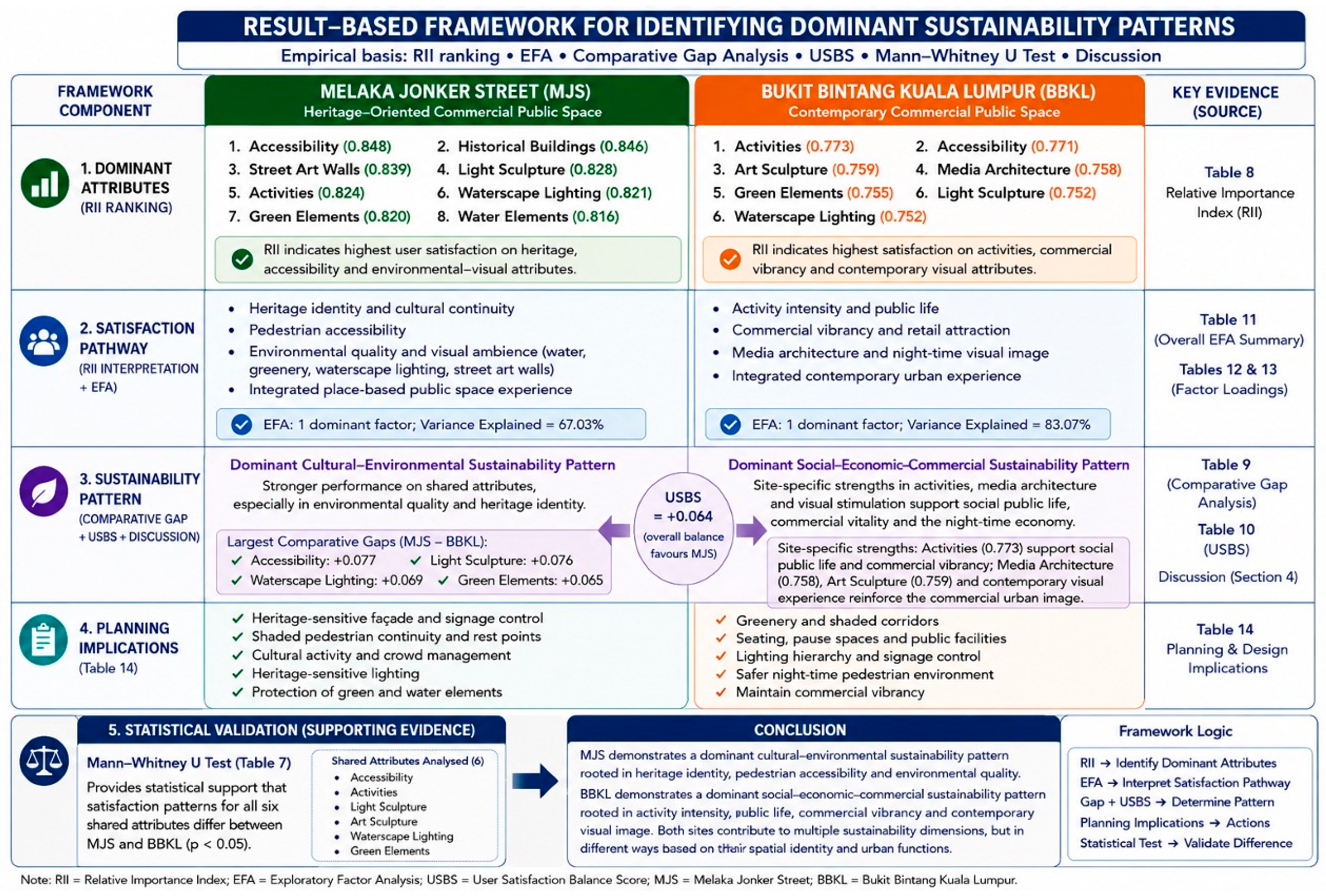
The result-based framework was developed by integrating multiple analytical outputs from the study. RII ranking was used to identify dominant attributes, while RII interpretation and EFA were used to explain the satisfaction pathway as an integrated public space experience. Comparative gap analysis, USBS and discussion-based interpretation were used to identify the dominant sustainability pattern of each site.
Table 14 translates these findings into context-sensitive planning and design implications, while the Mann–Whitney U test provides statistical support that satisfaction patterns differed between MJS and BBKL for the shared attributes. Overall,
Table 15 shows that the framework was developed from multiple analytical outputs rather than a single result, strengthening the link between empirical findings, sustainability interpretation and planning implications.
Figure 5 presents the result-based satisfaction–sustainability framework developed from the empirical findings of this study. The framework integrates the main analytical outputs, including RII ranking, EFA, comparative gap analysis, USBS and Mann–Whitney U test, to explain how different urban space attributes contribute to different sustainability patterns in MJS and BBKL. The RII ranking identifies the dominant attributes associated with user satisfaction in each study area, while EFA explains how these attributes are structured as an integrated public space satisfaction experience. In this framework, EFA supports the satisfaction pathway by showing that users did not evaluate individual attributes in isolation but perceived them as part of a broader overall public space quality experience.
The comparative gap analysis and USBS further clarify the direction of satisfaction differences between the two study areas. The positive USBS value indicates that the overall satisfaction balance favours MJS across the shared attributes, while the Mann–Whitney U test provides statistical support that satisfaction patterns differ between MJS and BBKL for the comparable attributes. Based on these combined findings, MJS is interpreted as demonstrating a dominant cultural–environmental sustainability pattern, rooted in heritage identity, pedestrian accessibility and environmental quality. In contrast, BBKL is interpreted as demonstrating a dominant social–economic–commercial sustainability pattern, rooted in activity intensity, public life, commercial vibrancy and contemporary visual image.
Overall,
Figure 5 shows that sustainable public space performance is context dependent. Both MJS and BBKL contribute to sustainability, but through different combinations of urban space attributes, spatial identities and user experiences. The framework also demonstrates how empirical findings can be translated into context-sensitive planning and design implications for heritage-oriented and contemporary commercial public spaces.
4.5. Limitations and Future Research
Several limitations should be acknowledged. First, the comparison is based on two contrasting cases and should not be generalised to all heritage-oriented or contemporary commercial public spaces. Second, convenience sampling may not fully represent all user groups. Another important limitation is that this study did not distinguish between tourists and local residents. This distinction is particularly relevant because both MJS and BBKL function as tourism and commercial destinations while also serving everyday urban users. Tourists and local residents may evaluate accessibility, activities, heritage identity, commercial vibrancy and environmental comfort differently depending on their familiarity with the place, purpose of visit, length of stay and expectations of public space quality. Future research should therefore include user-group segmentation, particularly between tourists, local residents, workers and repeat visitors, to provide a more detailed understanding of how different users experience heritage-oriented and contemporary commercial public spaces.
Third, the study relies on self-reported satisfaction data and does not include dissatisfaction indicators, which may have contributed to high median scores and potential ceiling effects. Fourth, the cross-sectional design identifies associations rather than causality. In addition, detailed objective spatial metrics, such as street width, street aspect ratio, quantified green coverage, pedestrian density and microclimate conditions, were beyond the available dataset. Therefore, the present study used field-based spatial evidence, location maps, site photographs and comparative spatial attribute interpretation to support the case comparison. Future research should integrate behavioural observation, GIS-based spatial measurements, microclimate assessment, pedestrian density analysis, tourist/local segmentation and dissatisfaction indicators, such as overcrowding, excessive noise, heat exposure, visual clutter, insufficient seating and safety concerns. These additions would provide a more comprehensive evaluation of the relationship between spatial form, user satisfaction and public space performance.
5. Conclusions
This study compared user satisfaction with selected urban space attributes in MJS and BBKL as two contrasting commercial public spaces in Malaysia. The findings show that MJS recorded stronger satisfaction across shared attributes, particularly accessibility, light sculpture, waterscape lighting, green elements and activity experience. MJS also demonstrated strong site-specific satisfaction through historical buildings, street art walls and water elements. BBKL, meanwhile, was more strongly characterised by activities and media architecture, reflecting its contemporary commercial and visual identity. This does not imply that MJS is generally superior to BBKL across all aspects of public space performance; rather, the two sites demonstrate different satisfaction patterns based on their spatial identity, urban function and dominant public space attributes. These findings should be interpreted as context-specific evidence from two contrasting Malaysian case studies rather than as general conclusions about all heritage-oriented and contemporary commercial public spaces. The use of convenience sampling also means that the findings reflect the perceptions of on-site respondents captured during the survey period and should not be assumed to represent all possible user groups.
The study demonstrates that public space satisfaction is shaped not only by individual attributes but also by the relationship between these attributes and the broader identity, function and everyday experience of place. MJS illustrates a cultural–environmental sustainability pattern, where heritage identity, historical buildings, street art walls, pedestrian accessibility, water elements and green elements collectively support cultural continuity, environmental quality, place identity and social interaction. In contrast, BBKL illustrates a socio-economic-commercial sustainability pattern, where activity intensity, media architecture, contemporary visual attraction and commercial vibrancy support public life, retail engagement, tourism activity, entertainment functions and night-time urban experience. However, both types of public space require balanced attention to comfort, inclusiveness, environmental quality and public facilities.
From a practical perspective, the findings highlight the need for context-sensitive planning and design strategies. Heritage-oriented public spaces should prioritise heritage conservation, pedestrian comfort, cultural activity management, environmental ambience and protection of place identity. Contemporary commercial districts should improve greenery, shade, seating, visual order, pedestrian safety and public facilities while maintaining commercial vibrancy and activity intensity. These insights are relevant to sustainable urban development because they show how inclusive, liveable and place-responsive public spaces can support long-term urban quality through different sustainability pathways.
The main contribution of this study is the integration of user satisfaction, urban space attributes and sustainability dimensions into a comparative framework that explains how heritage-oriented public spaces may generate a cultural–environmental sustainability pattern, while contemporary commercial public spaces may generate a socio-economic-commercial sustainability pattern. Future research should extend the comparison to more public space typologies, apply more representative sampling strategies, include objective spatial and environmental measurements, and integrate dissatisfaction indicators to capture both positive and negative dimensions of public space experience.




 ,
,