Systematic Review

Integrating Environmental Sustainability into Strategic Planning in Tourism and Hospitality Industry, Supporting SDG 13: Climate Action: Systematic Review

by
Albadri Albaloula Ali
Department of Management, College of Business Administration in Hawtat Bani Tamim, Prince Sattam Bin Abdulaziz University, Al-Kharj 11942, Saudi Arabia
Sustainability 2026, 18(13), 6506; https://doi.org/10.3390/su18136506 (registering DOI)
Submission received: 6 May 2026 / Revised: 2 June 2026 / Accepted: 16 June 2026 / Published: 25 June 2026

Abstract

The integration of environmental sustainability (ES) into strategic planning (SP) has become more vital in the tourism and hospitality (T&H) sector, due to its significant reliance on natural resources and environmental quality. This study seeks to analyze how ES is systematically integrated into strategic planning processes, identify critical dimensions and challenges, and evaluate the degree of organizational awareness and strategic focus on sustainability. A systematic literature review was conducted using the Scopus and Web of Science databases, covering global studies published between 2024 and 2025, resulting in a final sample of 43 articles. A hybrid deductive–inductive methodology was employed to integrate the data. The findings indicate that ES integration is a complex and iterative process involving governance and leadership, strategic development, resource and environmental management, stakeholder involvement, performance assessment, and the application of analytical and technological instruments. The results also emphasize emergent aspects such as digital innovation and adaptive planning. Despite this advancement, implementation is inconsistent due to capacity limitations, fragmented governance, data deficiencies, and environmental–economic trade-offs. The study illustrates a distinct convergence between ES and SP, signifying a transition towards integrated, evidence-based, and adaptable strategic systems. The study enhances the literature by delivering a thorough synthesis of integration mechanisms and presents practical insights for promoting sustainable strategic planning in the T&H sector.

1. Introduction

Integrating environmental sustainability (ES) into strategic planning (SP) has emerged as a vital priority across various sectors, particularly in tourism and hospitality (T&H), where sustainability considerations are increasingly embedded in strategic decision-making and long-term development planning (Aragón-Correa et al. (2015) [1]; Nurdiansyah et al. (2024) [2]; Roitershtein and Ironside (2025) [3]; Kuniyal et al. (2025) [4]; Titisari and Suryasari (2025) [5]). The T&H sector relies heavily on natural resources and environmental quality (Ziari and Mosleh (2025) [6]; Shang, Zhang, and Liu (2025) [7]; Makoondlall-Chadee et al. (2024) [8]; Baloch et al. (2023) [9]). The rapid expansion of tourism activities has intensified environmental challenges, including increased energy consumption, waste generation, and greenhouse gas emissions. The sector’s contribution to global greenhouse gas emissions is substantial, with earlier estimates suggesting approximately 8% of global emissions (Manfred Lenzen et al. (2018) [10]). More recent evidence indicates that tourism’s total carbon footprint reached approximately 5.2 Gt CO2-e in 2019, accounting for about 8.8% of global emissions and growing faster than the global economy (Sun et al. (2024) [11]).
In this context, integrating ES into SP—referred to as environmental sustainability strategic planning (ESSP)—has emerged as an essential approach for aligning organizational objectives with environmental and societal needs. Strategic planning provides a structured framework for embedding sustainability into long-term decision-making processes, enabling firms to balance economic performance with environmental responsibility (Cvelbar et al. (2013) [12]; Rasit et al. (2019) [13]). Previous studies have demonstrated that effective integration of ESSP can enhance organizational performance, improve resource efficiency, and generate competitive advantage (Lloret (2016) [14]).
Despite its recognized importance, the integration of ESSP is associated with several challenges. These include trade-offs between business performance and sustainability objectives, difficulties in measuring sustainability outcomes through key performance indicators (KPIs), and organizational complexities related to culture and structure (Valcozzena et al. (2025) [15]). In addition, fragmented governance, limited financial resources, and a lack of standardized frameworks further hinder effective implementation. At the same time, organizational awareness of ES has increased significantly in response to growing environmental concerns, regulatory pressures, and stakeholder expectations. Studies indicate that firms are increasingly recognizing the importance of sustainability, with high levels of awareness reported among industry stakeholders (Khan et al. (2020) [16]). Stakeholder engagement, education, and collaboration have been identified as key drivers of innovation and sustainability adoption (Moyle et al. (2018) [17]; Hamzah et al. (2020) [18]; Khatter et al. (2021) [19]; Sargu et al. (2024) [20]). However, this awareness is often reactive rather than strategically embedded, highlighting the need for more structured integration approaches.
In addition, various methods and tools have been proposed to support the integration of ESSP. These include mission-driven strategies, value-based approaches, and the adoption of environmental management practices (Quazi (2001) [21]; Kramer et al. (2011) [22]; Szymczyk et al. (2019) [23]). Analytical tools such as life cycle analysis and stakeholder analysis further support decision-making processes, although they are often applied in isolation and fail to fully integrate economic and environmental dimensions (Moyle et al. (2018) [17]). The literature also emphasizes the importance of stakeholder participation and policy alignment as critical factors for successful sustainability integration. For example, Ruhanen (2004) [24] highlighted the need for stakeholder involvement and coordinated planning processes in tourism destination planning, while Bramwell and Lane (2011) [25] emphasized governance structures and collaborative approaches as essential mechanisms for achieving sustainable tourism development.
Despite the growing body of research, there remains a lack of comprehensive understanding regarding how ES is systematically integrated into SP processes in the T&H sector, particularly in terms of the mechanisms, challenges, and measurable outcomes associated with this integration. This gap highlights the need for a structured synthesis of existing studies. Accordingly, this study investigates the integration of ESSP within T&H firms. It addresses the following research objectives:
  • To examine the processes and key dimensions involved in integrating environmental sustainability (ES) into strategic planning (SP) in T&H firms.
  • To identify the key challenges and barriers to the effective integration of ES into SP.
  • To assess the level of organizational awareness and strategic orientation toward ES integration.
  • To explore the approaches and methods used to embed ES into SP processes.
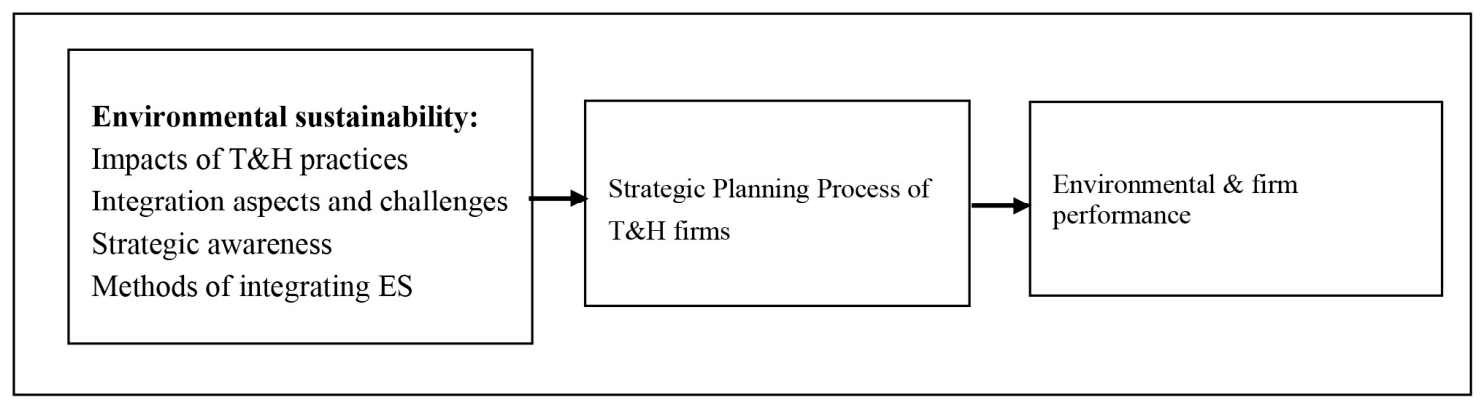
Addressing environmental sustainability (ES) issues within T&H enterprises is considered most effective when sustainability principles are systematically integrated into strategic planning (SP) processes (see Figure 1). Previous studies have consistently emphasized that the integration of environmental sustainability into strategic planning contributes not only to environmental protection but also to long-term organizational competitiveness, resilience, and sustainable value creation (Lloret, 2016 [14]). More recent research further indicates that T&H organizations are increasingly required to incorporate environmental and social sustainability considerations into strategic decision-making processes in response to climate change, stakeholder expectations, regulatory pressures, and sustainability governance requirements (Nurdiansyah et al., 2024 [2]; Roitershtein & Ironside, 2025 [3]; Kuniyal et al., 2025 [4]). These findings suggest that sustainability-oriented strategic planning is progressively evolving from a peripheral operational concern into a core governance and management priority within the T&H sector. In addition, sustainability integration has been associated with improved long-term organizational performance, enhanced destination competitiveness, and greater environmental accountability ([13] Rasit et al., 2019).
Nevertheless, integrating environmental sustainability into strategic planning continues to face several challenges. Recent studies highlight persistent barriers associated with environmental–economic trade-offs, sustainability KPI measurement difficulties, governance fragmentation, and organizational culture complexities ([15] Valcozzena et al., 2025). Despite these obstacles, organizational awareness of environmental sustainability has increased substantially due to growing concerns regarding climate change, environmental degradation, resource scarcity, and sustainability accountability ([16] Khan et al., 2020). The contemporary literature also demonstrates that stakeholder engagement, sustainability education, and collaborative governance mechanisms play an important role in supporting innovation and improving environmental and social sustainability practices within T&H organizations ([20] Sargu et al., 2024; Hamzah et al., 2020; Khatter et al., 2021). Furthermore, increasing stakeholder pressure has compelled organizations to strengthen sustainability integration within strategic planning processes, particularly in response to climate-related risks and the growing emphasis on Sustainable Development Goal 13 (SDG 13: Climate Action).
The literature further reveals growing recognition of resource conservation and sustainability-oriented strategic management practices within the T&H sector. For example, [16] Khan et al. (2020) reported that most respondents strongly acknowledged the importance of environmental sustainability in organizational planning and operational practices. Similarly, [22] Kramer et al. (2011) emphasized the role of value-based strategic approaches in addressing climate change and resource depletion, while [23] Szymczyk et al. (2019) highlighted the transition toward sustainability-oriented strategic management systems aimed at reducing environmental impacts and improving long-term organizational sustainability. Analytical tools such as life cycle analysis, stakeholder analysis, and sustainability assessment frameworks are increasingly utilized to support sustainability integration and evidence-based strategic decision-making processes within T&H organizations (Moyle et al., 2018). However, the literature also indicates that many sustainability planning approaches remain fragmented and continue to experience insufficient integration between environmental, economic, and strategic management dimensions.
Figure 1 illustrates the examined elements of ES, which include aspects and challenges of environmental sustainability, as well as how to address these challenges by integrating them into T&H firms’ SP, the level of awareness of this relationship, and the appropriate methods for integrating ES into this sector’s SP processes.
This article is structured as follows. Section 1 introduces the study, outlining the relationship between environmental sustainability (ES) and strategic planning (SP), and presenting the research questions and objectives. Section 2 is a general overview that reviews the relevant literature, addressing key concepts, challenges of ES, integration dimensions, awareness of sustainable development, approaches to integration, and the associated impacts and challenges of integrating ESSP. Section 3 describes the research methodology. Section 4 presents and discusses the findings of the examined studies. Finally, Section 5 concludes the paper and Section 6 provides recommendations.

2. General Overview: Environmental Sustainability and Strategic Planning in Tourism and Hospitality

2.1. Conceptual Foundations of Environmental Sustainability and Strategic Planning

Environmental sustainability (ES) has emerged as a pivotal concept in tackling global environmental issues, highlighting the responsible utilization of natural resources while maintaining long-term ecological equilibrium. It is widely recognized as a component of the overarching sustainable development framework, which encompasses environmental, economic, and social elements (Brundtland, 1987 [26]; Dyllick and Hockerts, (2002) [27]). In the T&H sector, ES encompasses key dimensions such as energy efficiency, emissions reduction, resource conservation, and biodiversity preservation, reflecting the sector’s strong dependence on natural ecosystems and its contribution to environmental pressures (Shang et al., 2025 [7]; Baloch et al., 2023 [9]; Makoondlall-Chadee et al., 2024 [8]; Ziari & Mosleh, 2025 [6]; Wu et al., (2025) [28]).
Strategic planning (SP) is a systematic process by which organizations establish long-term goals, distribute resources, and synchronize internal competencies with external circumstances (Tapinos et al., (2005) [29]; Weston, (2022) [30]). In this setting, SP functions as an essential method for integrating sustainability into organizational decision-making. The convergence of ESSP is characterized by their mutual focus on long-term orientation, adaptability, and resource optimization. Integrating ESSP allows firms to incorporate ecological considerations into their fundamental plans, thus improving resilience, competitiveness, and long-term value generation (Roitershtein & Ironside 2025 [3], Bassi & Martín 2024 [31], Kuniyal et al. (2025) [4]).

2.2. Impact of Tourism and Hospitality Practices on Environmental Sustainability

The rapid growth of the T&H industry has significantly intensified environmental pressures. Tourism activities contribute to climate change, resource depletion, and environmental degradation through increased energy consumption, transportation emissions, and waste generation. Tourism contributes a larger share of global greenhouse gas emissions than previously thought. Manfred Lenzen et al. 2018 [10] estimated the sector’s impact at around 8%, while more recent findings by Sun et al. 2024 [11] indicate emissions reached about 5.2 Gt CO2-e in 2019 (approximately 8.8% of global emissions), with growth outpacing the global economy.
The literature explores numerous environmental concerns linked to T&H practices, such as climate change, increasing sea levels, biodiversity loss, pollution, and habitat degradation (Khatter (2023) [32]). In addition, the phenomenon of overtourism illustrates how uncontrolled tourism growth can undermine sustainability objectives and negatively affect both environmental quality and residents’ well-being (Alsharif et al., 2025) [33]. These problems are integrated within larger economic systems and consumption trends that influence tourism growth (Hoffman et al., 2012 [34]). Holden (2009) [35] asserts that sustainability in tourism encompasses not only environmental issues but also economic and social aspects, necessitating integrated and systemic methodologies. The environmental impacts of T&H activities highlight the pressing necessity to include ES into strategic planning processes.
The environmental issues are closely linked to SDG 13: Climate Action, which underscores the necessity for immediate action to address climate change and its effects through reduction, adaptation, resilience enhancement, and sustainable governance frameworks. In the T&H sector, the integration of environmental sustainability into strategic planning serves as a crucial mechanism for advancing climate-related sustainability goals, especially through carbon reduction strategies, sustainable resource management, energy efficiency, environmental resilience, and climate-adaptive planning practices.

2.3. Challenges and Barriers to Integrating Environmental Sustainability into Strategic Planning

Despite the acknowledged importance of ES integration, numerous obstacles impede its proper execution in T&H enterprises. The literature identifies organizational, structural, and institutional obstacles, such as insufficient financial resources, inadequate skills, and deficient regulatory frameworks (Engert et al., 2016 [36]; Valcozzena et al. (2025) [15]). The lack of established performance indicators and measurement methods hinders organizations’ capacity to monitor and assess sustainability outcomes (Shields et al., 2015 [37]). In the context of tourism, these challenges are exacerbated by disjointed governance frameworks and coordination issues among stakeholders (Do N. D. et al., 2016 [38]; Soteriou, 2009 [39] & Ruhanen L. (2004) [24]). Firms often encounter trade-offs between economic growth and environmental preservation, which can impede the successful incorporation of sustainability into strategic decision-making. These limits indicate that the incorporation of environmental sustainability is not merely a technology challenge, but also a strategic and organizational matter necessitating alignment at all levels of decision-making. The examined literature indicates that these governance and organizational obstacles may impede the T&H sector’s ability to contribute to the attainment of SDG 13 objectives. Fragmented governance structures, inadequate sustainability coordination, and a lack of robust climate-related performance indicators hinder organizations’ ability to execute effective climate-action strategies and long-term environmental adaption measures within strategic planning frameworks. The literature repeatedly underscores the conflict between economic expansion and environmental conservation as a primary issue (Aragón-Correa et al. (2015) [1] & Valcozzena et al., (2025) [15]).

2.4. Organizational Awareness and Strategic Orientation Toward Environmental Sustainability

Organizational awareness and strategic focus are essential for facilitating ES integration. Heightened environmental concerns, stakeholder expectations, and regulatory challenges have prompted T&H firms to implement sustainability-focused initiatives. Research demonstrates that firms are more aware of the significance of sustainability, acknowledging its capacity to improve competitiveness and long-term performance (Khan et al. (2020) [16]; Moyle et al. (2018) [17]). However, the literature also suggests that this awareness is often reactive rather than proactive, driven by external pressures rather than internal strategic commitment. While some organizations have successfully embedded sustainability into their core strategies, others continue to treat it as an add-on or compliance requirement. This variation reflects differences in organizational capabilities, leadership commitment, and institutional environments, highlighting the need for stronger strategic orientation toward sustainability (Siti et al. 2010 [40]). Moreover, growing organizational awareness of environmental sustainability is increasingly influenced by global climate governance initiatives and SDG 13 requirements, which encourage T&H organizations to strengthen climate adaptation strategies, reduce carbon emissions, and improve sustainability accountability within strategic management and operational practices.

2.5. Methods and Tools for Integrating Environmental Sustainability into Strategic Planning

The literature shows that no singular universal method exists for integrating ecosystem services into strategic planning. Organizations employ various strategies and tools based on their context and strategic aims. Common methods encompass the implementation of mission statements, corporate principles, and strategic decision-making procedures to integrate sustainability into organizational structures (Quazi, 2001 [21]; Khan et al. (2020) [16]). Value-based initiatives are widely acknowledged as effective means for connecting sustainability with business goals. Kramer et al. (2011) [22] underscore the notion of shared value as a strategy for tackling environmental issues while improving competitiveness, whereas Szymczyk et al. (2019) [23] focus on the shift towards sustainable strategic management. Furthermore, analytical instruments including life cycle analysis (LCA), material flow modeling, and environmental stakeholder analysis facilitate decision-making by offering systematic evaluations of environmental implications (Moyle et al. (3018) [17]). In the T&H industry, policy frameworks, certification systems, and stakeholder participation are recognized as crucial tools for enabling ES integration. Comprehensive planning methodologies that integrate environmental, economic, and socio-cultural aspects have been suggested to guarantee sustainable tourism growth (Baros et al., 2007 [41]; Velaoras et al., 2025 [42]; Do, N. D. (2020) [43]). Research underscores the significance of organizational practices, policy alignment, and collaborative governance in facilitating sustainability initiatives (Do et al., 2016 [38]; Aksu, 2025 [44]). These sustainability-oriented planning tools and governance approaches also contribute to supporting SDG 13 implementation by enabling organizations to monitor environmental performance, improve climate resilience, enhance carbon management practices, and integrate climate-related sustainability objectives into long-term strategic planning frameworks. Overall, the literature suggests that integrating ESSP is a multifaceted and context-dependent process, requiring a combination of strategic vision, operational tools, and institutional support.

Transition to Study Objectives

Based on the reviewed literature, it is evident that integrating ESSP in the T&H sector is complex and multifaceted. However, important gaps remain regarding how this integration is operationalized, the challenges that hinder its effectiveness, the level of organizational awareness, and the methods used to embed sustainability into strategic processes. Accordingly, this study is guided by four main objectives:
(1)
To examine the processes and key dimensions involved in integrating ES into SP in T&H firms;
(2)
To identify the key challenges and barriers to effective integration;
(3)
To assess the level of organizational awareness and strategic orientation toward ES;
(4)
To explore the approaches and methods used to embed ES into SP processes.
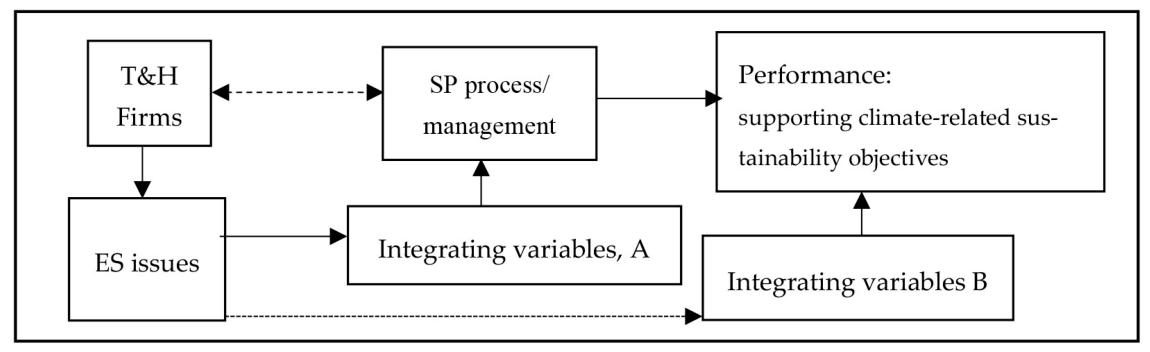
Figure 2 presents a conceptual overview of the relationship between T&H firms’ operational activities, environmental and social issues, and the integration of ESSP. T&H activities encompass a wide range of explicit and implicit operations that support both short- and long-term organizational objectives, as defined by the firm’s strategic vision and mission. These activities are inherently linked to ES issues, representing the starting point of the integration process. Figure 2 illustrates two main pathways through which ES considerations are incorporated into SP. The first pathway represents the direct integration of ES issues into strategic planning processes, whereby sustainability considerations are embedded within strategic objectives and decision-making frameworks. The second pathway reflects indirect integration, in which ES is incorporated through specific organizational functions or managerial activities, such as tourism logistics or functional coordination within the firm (e.g., Aksu C. (2025) [44]; Soteriou, (2009) [39]). Together, these pathways highlight how sustainability considerations can be integrated at different organizational levels, ultimately contributing to both organizational performance and broader environmental outcomes.
Figure 2 also reflects the relationship between environmental sustainability strategic planning and Sustainable Development Goal 13 (SDG 13: Climate Action). The conceptual framework demonstrates how integrating environmental sustainability into strategic planning processes supports climate-related sustainability objectives through carbon reduction strategies, sustainable resource management, climate adaptation practices, environmental resilience, and sustainability-oriented governance mechanisms. In this context, T&H organizations contribute to SDG 13 by embedding climate-action considerations into strategic decision-making, operational activities, stakeholder engagement, and long-term sustainability planning systems.
The conceptual models presented in Figure 1 and Figure 2 were developed through the synthesis of the reviewed literature and constitute an important theoretical contribution of this study. Unlike previous studies that have typically examined environmental sustainability, strategic planning, stakeholder engagement, governance mechanisms, or climate-action initiatives in isolation, the proposed framework integrates these dimensions into a unified environmental sustainability strategic planning (ESSP) perspective. The framework illustrates the relationships among sustainability drivers, strategic planning processes, implementation mechanisms, organizational awareness, governance structures, and sustainability outcomes, thereby providing a more comprehensive understanding of how environmental sustainability can be systematically embedded within tourism and hospitality organizations while supporting SDG 13 (Climate Action).

3. Research Methodology

3.1. Research Design

This systematic literature review was conducted and reported in accordance with the Preferred Reporting Items for Systematic Reviews and Meta-Analyses (PRISMA 2020) guidelines (Page et al., 2021 [45]). The PRISMA approach was selected to ensure methodological rigor, transparency, consistency, and replicability throughout the processes of literature identification, screening, eligibility assessment, and final study selection. Given the multidisciplinary and evolving nature of environmental sustainability strategic planning (ESSP) in the tourism and hospitality (T&H) industry, the SLR approach is appropriate for synthesizing fragmented findings, identifying dominant research themes, and examining recent theoretical and empirical developments related to sustainability integration into strategic planning and management practices.

3.2. Data Sources and Search Strategy

Two major academic databases, namely Scopus and Web of Science, were selected due to their extensive coverage of peer-reviewed and high-quality publications in sustainability, management, tourism, and hospitality research. The literature search was conducted on 16 February 2026 to ensure transparency and replicability of the review process.
The search focused on studies published between 2024 and 2025. This timeframe was intentionally selected to capture the most recent developments in environmental sustainability integration within strategic planning and strategic management in the tourism and hospitality industry. Recent years have witnessed substantial advances in climate governance, ESG implementation, SDG alignment, post-pandemic sustainability transformation, and digital sustainability management practices. Consequently, the selected period reflects the latest theoretical perspectives, managerial approaches, and policy responses associated with SDG 13 (Climate Action). The review was designed as a focused assessment of contemporary developments rather than a historical examination of the field, thereby enabling an in-depth analysis of emerging sustainability-oriented strategic planning practices and implementation mechanisms within the tourism and hospitality sector.
Furthermore, restricting the review period enhanced the manageability of the dataset and enabled a more focused and in-depth qualitative synthesis of the most recent developments in the field.
To ensure comprehensive coverage, the search was conducted within the title, abstract, and keyword fields in both databases. Database-specific search syntaxes were applied while maintaining conceptual consistency across platforms. In Scopus, the TITLE-ABS-KEY field was utilized, whereas the Topic Search (TS) field was applied in Web of Science.
The following Boolean search string was used in Scopus:
TITLE-ABS-KEY ((touris* OR hospitalit*) AND (“strategic planning” OR “strategic manage*”) AND (sustainab* OR climate* OR environment*))
A comparable query was applied in Web of Science using the Topic Search field:
TS = ((touris* OR hospitalit*) AND (“strategic planning” OR “strategic manage*”) AND (sustainab* OR climate* OR environment*))
Only peer-reviewed journal articles published in English were considered to ensure methodological consistency, academic quality, and comparability across studies.

3.3. Inclusion and Exclusion Criteria

The inclusion and exclusion criteria were established prior to the screening process to improve transparency and reduce selection bias.
Inclusion Criteria
Studies were included if they:
  • Were peer-reviewed journal articles;
  • Were published between 2024 and 2025;
Were written in English; Explicitly addressed the integration of environmental sustainability into strategic planning or strategic management within T&H contexts.
Exclusion Criteria
The following documents were excluded:
  • Book chapters;
  • Conference papers and conference review papers;
  • Review articles;
  • Books;
  • Retracted publications;
  • Early-access articles;
  • Letters and editorials;
Non-English publications; Studies lacking a clear focus on sustainability-oriented strategic planning integration within T&H.
The inclusion and exclusion criteria were applied exclusively to the 43 studies selected for the systematic review. Additional references cited in the introduction, literature review, and discussion sections were included solely to provide theoretical and contextual foundations and were not considered part of the final review dataset.

3.4. Study Selection Process (PRISMA 2020 Procedure)

The study selection process was conducted in accordance with the Preferred Reporting Items for Systematic Reviews and Meta-Analyses (PRISMA 2020) guidelines to ensure transparency, rigor, and reproducibility throughout the review process. The PRISMA framework guided the identification, screening, eligibility assessment, and inclusion of studies relevant to the integration of environmental sustainability into strategic planning within the tourism and hospitality industry.
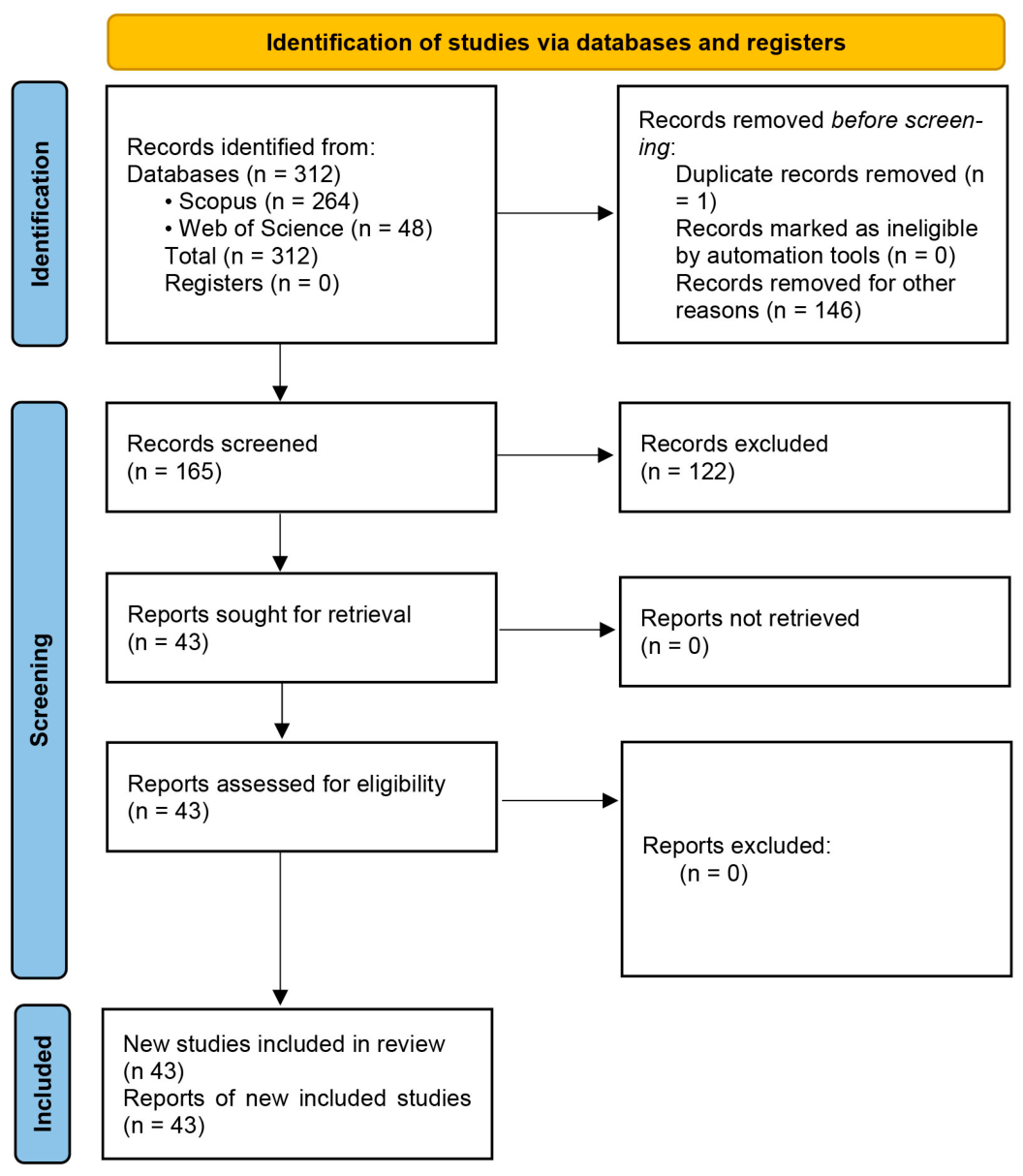
The initial database search identified 312 records, comprising 264 records from Scopus and 48 records from Web of Science. Prior to the screening stage, database filtering criteria were applied to exclude non-eligible document types, including conference papers, editorials, notes, book chapters, and other publications that did not meet the predefined inclusion criteria. As a result, 146 records were removed, leaving 166 records for further consideration.
Subsequently, one duplicate record identified across the two databases was removed manually, resulting in 165 unique records for title and abstract screening. During the screening stage, the titles and abstracts of these records were reviewed against the established inclusion and exclusion criteria. The screening and eligibility assessment processes were conducted by the sole author and subsequently verified by two independent academic experts serving as external auditors. A total of 122 records were excluded because they were not directly related to environmental sustainability integration, strategic planning, strategic management practices, or the tourism and hospitality context.
Following the screening process, 43 potentially relevant articles were retained and their full texts were retrieved for detailed eligibility assessment. All 43 articles were successfully retrieved and evaluated based on their conceptual relevance, methodological suitability, and alignment with the objectives of the review. No additional studies were excluded during the full-text assessment stage.
Consequently, 43 studies satisfied all eligibility criteria and were included in the final qualitative synthesis and thematic analysis. These studies formed the final review dataset and served as the empirical foundation for the qualitative synthesis and thematic analysis.
The complete study selection process is illustrated in Figure 3 using the PRISMA 2020 flow diagram, following the reporting recommendations of Page et al. (2021 [46]) and the PRISMA flow-diagram guidance provided by Haddaway et al. (2022 [47]).
The completed PRISMA 2020 Checklist is provided in the Supplementary Materials. The review was not prospectively registered in a review registry (e.g., PROSPERO), as registration is not commonly required for management- and sustainability-focused systematic literature reviews.
Table 1 summarizes the PRISMA 2020 study selection process. The initial search identified 312 records from Scopus (n = 264) and Web of Science (n = 48). After removing one duplicate record and excluding 146 records based on predefined filtering criteria, 165 records remained for title and abstract screening. During the screening stage, 122 records were excluded for failing to meet the inclusion criteria. The remaining 43 articles were retrieved and assessed for eligibility. All retrieved studies satisfied the eligibility requirements and were subsequently included in the final systematic literature review and thematic analysis.

Study Selection Procedures

The study selection process was conducted by the sole author in accordance with the predefined inclusion and exclusion criteria. Following the database search, all retrieved records were exported and screened systematically. The screening process consisted of two sequential stages. First, titles and abstracts were reviewed to assess their relevance to the research objectives and eligibility criteria. Studies that clearly failed to meet the inclusion criteria were excluded at this stage. Second, the full texts of the remaining articles were retrieved and assessed in detail to determine their conceptual relevance, methodological suitability, and alignment with the focus of the review.
To enhance methodological rigor and reduce the potential risk of selection bias associated with a single-author review, two independent academic experts with recognized expertise in sustainability and strategic management served as external auditors throughout the review process. The auditors separately reviewed the screening criteria, study selection decisions, coding framework, thematic classifications, and interpretation of findings. Their role was not to conduct a separate screening process or recode the studies, but rather to evaluate the consistency, transparency, and appropriateness of the review procedures and analytical framework. Feedback provided by the auditors was incorporated through several rounds of refinement to ensure the accurate application of the eligibility criteria and alignment between the extracted evidence and the resulting themes. No automation tools or artificial intelligence-assisted screening systems were used during the study selection process. One reviewer (the sole author) screened all records and assessed all full-text reports for eligibility, while two independent academic experts reviewed the study selection procedures and eligibility decisions as external auditors.
Although the review was conducted by a sole author, these verification procedures were implemented to strengthen the transparency, credibility, reliability, and trustworthiness of the study selection process and subsequent analysis.

3.5. Data Extraction and Analytical Procedure

The 43 selected studies were analyzed using a systematic data extraction and coding approach to ensure consistency and reliability. The extracted data included study characteristics, integration mechanisms, enabling and constraining factors, and strategic management phases. A hybrid deductive–inductive coding framework was applied, combining theory-driven and emergent themes. The studies were coded by a single author through iterative review and refinement, supported by reviews conducted by two external academic auditors to enhance consistency and reliability.

3.6. Coding Reliability and Validation

As this review was conducted by a single author, formal inter-coder reliability assessment was not applicable. To enhance the rigor, reliability, and validity of the analysis, a standardized coding protocol was developed and consistently applied across all selected studies. The coding procedure comprised five stages: (1) data extraction, (2) open coding of key concepts and findings, (3) thematic categorization, (4) iterative refinement and consolidation of emerging themes, and (5) synthesis of the final thematic framework. A hybrid deductive–inductive approach was adopted, whereby initial coding categories were informed by the sustainability governance and strategic planning literature, while additional themes emerged during the analysis of the reviewed studies.
To strengthen the credibility and trustworthiness of the findings, two external academic experts with recognized expertise in sustainability and strategic management served as independent auditors. Their role was not to conduct a separate coding process but to evaluate the consistency, appropriateness, and transparency of the coding framework, thematic classifications, study categorization decisions, and interpretation of findings. The auditors independently reviewed the coding structure and thematic synthesis and provided detailed feedback regarding theme definitions, classification consistency, and alignment between the extracted evidence and the resulting interpretations.
Because the review was conducted by a single researcher, no formal inter-coder disagreement resolution procedure was required. However, any observations, concerns, or recommendations raised by the external auditors regarding coding decisions, thematic classification, or interpretation were addressed through multiple rounds of review and refinement. The coding framework and thematic structure were revised where necessary to improve clarity, consistency, and conceptual alignment. This validation process enhanced the reliability, credibility, and trustworthiness of the thematic synthesis and strengthened confidence in the study’s findings and conclusions.

4. Findings and Discussions Within Examined Studies

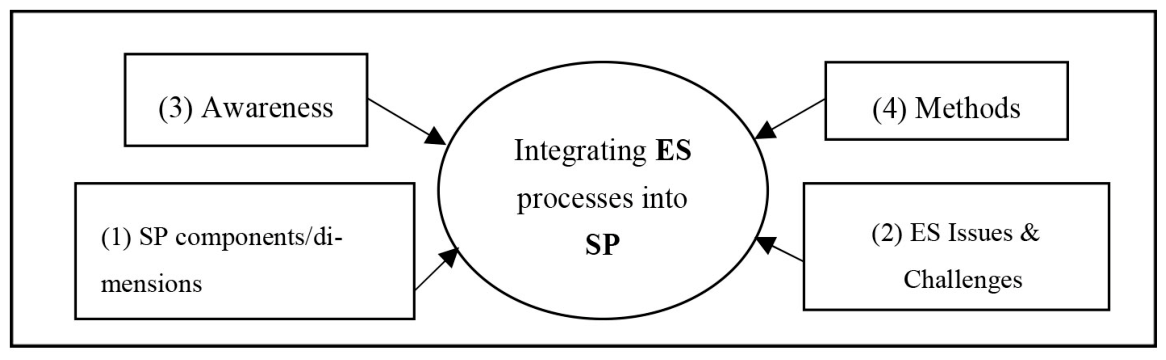
This study investigates the systematic integration of environmental sustainability (ES) into the strategic planning (SP) processes of T&H organizations. Based on a comprehensive review of 43 studies, the integration is characterized as a complex process organized around essential strategic planning components. The integration of ESSP, as illustrated in Figure 4, is influenced by multiple interrelated variables, including strategic planning components, key challenges, organizational awareness, and implementation methods, which correspond to the main objectives of this study. The investigation begins by defining the conceptual consistency between ES and SP, highlighting their synergistic functions in attaining sustained organizational and environmental success. The study outlines interrelated characteristics via which ES is integrated into SP, building upon this foundation. This encompasses governance and leadership, which define sustainability vision and policy direction; strategic formulation, wherein sustainability objectives are integrated into long-term planning; and performance measurements, and resource allocation, which facilitates investment in green technology and sustainable infrastructure.
The findings reveal that ES integration is a complex, multidimensional process deeply embedded in essential strategic planning components, such as governance and leadership, strategic formulation, resource allocation, organizational capabilities, operational implementation, performance measurement, stakeholder engagement, innovation, and adaptation to external environmental factors. The results indicate a significant convergence between ES and SP, signifying a transition from fragmented sustainability practices to more organized and strategic methodologies (Bassi & Martín, 2024 [31]; Roitershtein & Ironside, 2025 [3]; Kuniyal et al., 2025 [4]).
The findings indicate that environmental sustainability is progressively transforming from a compliance-focused activity into a fundamental strategic governance function inside T&H organizations. The intersection of environmental sustainability and strategic planning illustrates significant trends in sustainability governance literature, highlighting the importance of integrated management systems, adaptive governance, and long-term organizational resilience as crucial catalysts for sustainability transformation. The analyzed studies show that the integration of sustainability is most effective when included in organizational vision, leadership frameworks, performance systems, and stakeholder engagement processes, rather than executed as standalone environmental efforts. However, the literature indicates significant discrepancies in the maturity and sophistication of sustainable integration strategies across various tourist and hospitality contexts, highlighting the lack of generally recognized strategic sustainability frameworks within the sector.
Table 2 combines the results of the analyzed studies into 10 interrelated theme characteristics that collectively explain the integration of environmental sustainability (ES) into strategic planning (SP) within the T&H sector. The analysis indicates that ES integration is a multifaceted and dynamic process, not merely a singular strategic activity. The initial dimension, strategic integration, emphasizes the integration of sustainability into the firm’s vision, mission, and long-term planning procedures. This is strongly reinforced by governance and leadership, highlighting the need for managerial commitment, policy alignment, and institutional coordination in advancing sustainability projects. Operational dimensions are evident in resource and environmental management, wherein companies emphasize energy efficiency, waste minimization, and sustainable resource utilization. These practices are intrinsically connected to performance and competitive advantage, as sustainability measures progressively yield cost savings, market distinctiveness, and long-term value generation. The significance of external interactions is highlighted through stakeholder and community involvement, emphasizing collaboration with local communities, legislators, and other stakeholders as a crucial factor for successful implementation. Sustainable tourism models offer systematic strategies for reconciling environmental, social, and economic goals. Technology and innovation are emphasized as facilitating elements that enhance efficiency and promote sustainable practices. The integration process is affected by environmental pressures and limits, such as regulatory requirements, resource limitations, and climate-related issues. Implementation requires measurement and evaluation methods, including key performance indicators (KPIs) and sustainability assessment frameworks, to monitor progress and guide decision-making. The dimension of barriers and implementation issues illustrates the ongoing obstacles encountered by companies, such as financial constraints, organizational complexities, and the absence of standardized frameworks.
The thematic synthesis illustrates that the integration of sustainability within T&H is inherently complex and necessitates concurrent coordination among governance, operational, environmental, technological, and stakeholder dimensions. Sustainability-oriented strategic planning, in contrast to conventional approaches that prioritize economic performance, increasingly emphasizes the equilibrium of environmental preservation, social responsibility, and long-term organizational competitiveness. This discovery corresponds with earlier studies on sustainability governance, emphasizing the increasing significance of integrated and network-oriented governance frameworks in tackling intricate sustainability issues. Nevertheless, the reviewed literature reveals that numerous organizations persist in facing fragmentation between strategic sustainability objectives and operational execution, especially concerning measurement standardization, institutional coordination, and long-term sustainability monitoring systems.
Table 3 provides a systematic synthesis of the essential components of SP and the methods employed to implement ES, illustrating how their interplay yields quantifiable organizational results in the T&H industry. The results indicate that the integration of ES is driven by many strategic elements, starting with human resources and organizational capacity, wherein training, leadership dedication, and a sustainability-focused culture facilitate effective execution. This is enhanced by operational execution, which converts strategic objectives into tangible behaviors such as resource optimization, waste reduction, and sustainable service provision. The function of performance assessment and control is essential for tracking and assessing advancement via sustainability indicators and key performance measures, thus ensuring accountability and ongoing enhancement. Stakeholder engagement promotes collaboration with both internal and external parties, thus bolstering legitimacy and improving the efficacy of sustainability programs. Moreover, innovation and technology integration serve as essential facilitators, promoting digitalization, enhancing efficiency, and fostering environmentally sustainable practices. These initiatives boost market and competitive posture, with sustainability serving as a means of differentiation, reputation development, and long-term value generation. The framework acknowledges the impact of environmental and external factors, such as legal mandates, market demands, and climate-related issues, which influence organizational actions and promote the implementation of sustainability-focused policies.
The findings also suggest that organizational capability and strategic adaptability are central determinants influencing successful sustainability integration within T&H organizations. The increasing reliance on stakeholder engagement, sustainability-oriented organizational culture, and technological innovation reflects a broader transition toward collaborative and data-driven sustainability governance models. Moreover, the dominance of integrated strategic planning approaches indicates that environmental sustainability is no longer treated solely as a marketing or reputational tool, but rather as a strategic mechanism for improving organizational resilience, competitiveness, and long-term operational efficiency. Nonetheless, methodological diversity across the reviewed studies demonstrates the continued lack of consensus regarding the most effective sustainability integration models and implementation frameworks within T&H contexts.
Table 4 presents an evidence-based summary of the utilization of key performance indicators (KPIs) to assess and implement the integration of ESSP in T&H enterprises. It associates measurement focus, integration techniques, and empirical data with the documented organizational and environmental effects. The table indicates that KPIs are predominantly focused on energy consumption, carbon emissions, water usage, waste management, and resource efficiency, highlighting the sector’s principal environmental effects. These indicators are included into SP via multiple integration mechanisms, such as sustainability reporting frameworks, environmental management systems, benchmarking methods, and adherence to international standards. The analyzed studies indicate that the systematic application of KPIs improves decision-making, transparency, and accountability, allowing firms to monitor progress and align operational practices with strategic sustainability objectives. Literature evidence suggests that KPI-driven methodologies promote operational efficiency, diminish environmental impact, yield cost savings, and bolster business reputation. Nonetheless, the table underscores enduring shortcomings, such as inconsistent measuring methodologies, inadequate standardization, and incomplete assessment of indirect effects (e.g., Scope 3 emissions), which hinder the comprehensive efficacy of performance evaluation systems.
The findings related to sustainability performance indicators further reveal the growing institutionalization of environmental accountability within T&H organizations. KPI-based sustainability monitoring systems increasingly support evidence-based strategic planning, organizational transparency, and sustainability reporting practices. However, the literature simultaneously highlights significant methodological fragmentation regarding KPI selection, measurement techniques, and reporting frameworks. This inconsistency reduces comparability across organizations and limits the development of standardized sustainability benchmarking systems within the sector. The reviewed studies therefore suggest an urgent need for more unified and comprehensive sustainability performance frameworks capable of integrating operational, environmental, social, and governance dimensions into strategic planning evaluation systems.
A thorough review of Table 2, Table 3 and Table 4 indicates that the integration of environmental sustainability (ES) into strategic planning (SP) within the T&H sectors is a systematic and multiple-stage process. It is influenced by the interplay of strategic dimensions (e.g., governance, resource management, stakeholder involvement), implementation mechanisms (e.g., organizational competencies, operational practices, and innovation), and performance measurement systems (e.g., KPIs and evaluation tools). The results demonstrate that the integration of sustainability improves operational efficiency, competitiveness, and organizational performance, especially when bolstered by robust leadership, stakeholder collaboration, and technology innovation. Nonetheless, the process is hindered by trade-offs between economic and environmental goals, fragmented governance, and deficiencies in measurement methods, particularly the absence of standardized and comprehensive key performance indicators (KPIs). Effective integration of ES relies on aligning strategy, implementation, and performance evaluation, underscoring the necessity for better coordinated and structured methodologies within tourist and hospitality enterprises.

4.1. Integration Processes and Key Dimensions

The integration of ES into SP is typically regarded as a continuous and multi-level process. Governance and stakeholder involvement are fundamental components, with a growing focus on participatory and collaborative methodologies. The engagement of local communities, governments, and private stakeholders improves strategy alignment and sustainability results, indicating a transition towards network-based governance frameworks (Hazran et al., (2024) [62]; Lestari et al., 2025 [61]; Basyar et al., 2025 [51]; Roitershtein & Ironside, 2025 [3]).
Resource and environmental management constitute another central dimension. Strategic planning is increasingly aligned with ecological constraints, incorporating geospatial analysis, ecosystem monitoring, and biodiversity considerations into decision-making processes (Deputat et al., 2025 [55]; Sarkar et al., (2025) [77]; Widodo & Singgalen, (2025) [48]; Singgalen, (2025) [78]). The adoption of circular economy principles and zero-waste practices further demonstrates the integration of resource efficiency into both strategic and operational levels (Wu et al., (2025) [28]; Alim et al., (2024) [56]). In addition, hybrid strategic tools—such as SWOT combined with multi-criteria decision-making methods (e.g., AHP and QSPM)—are widely used to operationalize ES integration. These approaches enhance analytical rigor and support evidence-based planning (Saragih et al., (2025) [72]; Putria & Salsabila, (2025) [79]; Diepa et al., (2025) [70]; Nurdiansyah et al., (2024) [2]). Performance measurement systems also play a critical role, with sustainability indicators, environmental indices, and carrying capacity metrics enabling continuous monitoring and adaptive management (Anastasopoulos et al. (2024) [53]; Kuniyal et al., 2025 [4]). Advanced tools such as NDVI and NDMI further support real-time environmental assessment (Singgalen, (2025) [78]).
Overall, these findings indicate that ES integration requires systemic alignment across governance, analytical tools, resource management practices, and performance systems, supported by adaptive and data-driven planning processes.

4.2. Challenges and Barriers to Integration

Given the growing focus on sustainability, multiple challenges impede its successful integration into the strategic planning process. The main obstacle is constrained organizational capacity, encompassing inadequate financial resources, insufficient technical skills, and deficient infrastructure, especially in rural and developing locations (Hazran et al., (2024) [62]; Pebrianto et al., (2025) [67]). A lack of cohesive governance and inadequate stakeholder coordination hinder implementation, as discrepancies between policy frameworks and local practices frequently result in uneven outcomes (Basyar et al., (2025) [51]; Roitershtein & Ironside, (2025) [3]). Furthermore, environmental–economic trade-offs continue to pose a significant problem, since tourism expansion leads to environmental deterioration while providing economic advantages (Ziari & Mosleh, (2025) [6]; Wu et al., (2025) [28]). Data constraints and inadequate technical proficiency further hinder evidence-based decision-making, despite the presence of sophisticated analytical tools (Sarkar et al., (2025) [77]; Widodo & Singgalen, (2025) [48]). Moreover, external pressures—especially climate change—create uncertainty and necessitate ongoing adaptation in strategy planning (Deputat et al., (2025) [55]). The findings indicate that the integration of environmental sustainability is hindered by internal organizational constraints and external systemic variables.
This finding is consistent with earlier studies by Engert et al. (2016) and Ruhanen (2004), which emphasized that sustainability integration is fundamentally a governance and organizational challenge rather than a purely environmental or technical issue. The persistence of governance fragmentation and institutional capacity constraints across the reviewed studies suggests that many tourism and hospitality organizations continue to face difficulties in translating sustainability commitments into coordinated strategic actions. These results further support the sustainability governance literature that highlights the importance of institutional alignment, leadership commitment, and cross-sector collaboration in achieving long-term sustainability objectives.
These findings indicate that obstacles in integrating sustainability are not merely technical or financial, but are also significantly linked to governance fragmentation, limitations in institutional capacity, and organizational opposition to strategic change. The interplay between internal organizational limitations and external environmental forces generates a complex governance landscape necessitating adaptive leadership, cross-sectoral collaboration, and sustained institutional commitment. This remark underscores the sustainable governance literature, highlighting that successful sustainability integration relies on environmental awareness, governance quality, institutional alignment, and organizational competency.

4.3. Organizational Awareness and Strategic Orientation

The literature indicates that awareness of environmental sustainability continues to grow throughout the T&H sector, driven by ecological concerns, regulatory frameworks, and evolving tourist tastes (Do, N. D. (2020) [43]; Aragón-Correa et al., (2015) [1]). Numerous organizations are implementing sustainability-focused practices, such as ecotourism and circular economy models (Alim et al., (2024) [78]; Ramírez-Guerrero et al., (2025) [63]). Nonetheless, this awareness does not invariably result in complete strategic integration. Sustainability initiatives sometimes operate in a fragmented manner instead of being integrated into core strategic planning processes (Saragih et al., (2025) [72]; Putria & Salsabila, (2025) [79]). Behavioral studies underscore the increasing impact of visitors and communities in creating sustainability demands, hence exerting further pressure on firms to adjust their policies accordingly (Bassi & Martín, (2024) [31]; Ishac, (2024) [80]).
Furthermore, significant contextual differences exist. Developed destinations tend to adopt more proactive and structured approaches, whereas developing regions often rely on reactive and incremental strategies (Diepa et al., (2025) [70]; Nurdiansyah et al., (2024) [2]). This uneven progression indicates that the transition toward fully integrated sustainability strategies remains incomplete.
The observed gap between sustainability awareness and strategic implementation supports previous findings reported by Khan et al. (2020) and Moyle et al. (2018), who argued that environmental awareness alone does not necessarily result in organizational transformation. While sustainability has become increasingly recognized as a strategic priority, many organizations continue to approach sustainability initiatives as compliance-driven activities rather than as integrated strategic capabilities. This suggests that awareness represents a necessary but insufficient condition for successful ESSP implementation.

4.4. Approaches and Methods for Integration

The literature identifies several effective approaches for embedding ES into SP. Integrated strategic frameworks combining qualitative and quantitative tools are widely used to support structured decision-making. Hybrid models such as SWOT–AHP–QSPM enable systematic prioritization of sustainability strategies (Diepa et al., (2025) [70]; Nurdiansyah et al., (2024) [2]; and Nguyen, A. T., & Tran, B. H. (2024) [65]). Data-driven approaches, including GIS, remote sensing, and spatio-temporal analysis, enhance environmental monitoring and support evidence-based planning, particularly in environmentally sensitive areas (Deputat et al., (2025) [55]; Widodo & Singgalen, (2025) [48]). Participatory and community-based approaches are also critical, ensuring inclusivity and context-specific planning (Lestari et al., (2025) [61]; Hazran et al., (2024) [62]).
Additionally, circular economy and resource-efficiency models—such as zero-waste tourism—provide practical pathways for integrating sustainability into both strategic and operational levels (Wu et al., (2025) [28]; Chaher et al., (2025) [52] & Alim et al., 2024 [56]). Emerging frameworks, including place-based and sustainability-oriented marketing approaches, further link environmental sustainability with destination identity and governance (Ramírez-Guerrero et al., (2025) [67]). Indicator-based monitoring systems and adaptive management approaches enable continuous evaluation and long-term sustainability integration (Anastasopoulos et al. (2024) [53]; Kuniyal et al., (2025) [4]). The diversity of approaches identified across the reviewed studies further demonstrates the absence of a universally accepted ESSP framework within the tourism and hospitality sector. This finding extends previous observations by Kramer et al. (2011) and Szymczyk et al. (2019), who highlighted the growing need for integrated sustainability-oriented management systems capable of linking environmental objectives with strategic decision-making processes. The reviewed literature suggests that organizations increasingly rely on hybrid approaches that combine analytical tools, stakeholder engagement mechanisms, and adaptive governance practices rather than adopting a single integration methodology.

4.5. Synthesis and Implications

Overall, the findings demonstrate a clear transition toward integrated, evidence-based, and adaptive strategic planning in the T&H sector. Sustainability is increasingly embedded within strategic decision-making processes, supported by governance mechanisms, analytical tools, and performance systems (Bassi & Martín, (2024) [31]; Roitershtein & Ironside, (2025) [3]). However, the integration process remains uneven. Persistent challenges—including capacity constraints, governance fragmentation, and environmental–economic trade-offs—continue to limit progress. Moreover, the gap between sustainability awareness and strategic implementation indicates that many organizations have yet to fully institutionalize sustainability within their planning processes (Saragih et al., (2025) [72]; Ziari & Mosleh, (2025) [6]).
These findings highlight the need for a holistic and system-wide approach to ES integration, combining stakeholder engagement, technological innovation, and adaptive planning mechanisms (Holovchuk et al., (2025) [76] & Skordoulis et al., (2024) [45]). This shift reflects the broader transformation of sustainable tourism planning from a conceptual aspiration into a structured, operational, and measurable practice capable of addressing complex environmental and socio-economic challenges.
Overall, the examined studies show that sustainability-focused strategic planning in T&H is shifting toward a more integrated, governance-oriented, and evidence-based management paradigm. However, the literature is still fragmented among methodological approaches, sustainability metrics, governance frameworks, and implementation techniques. While numerous studies emphasize the value of stakeholder engagement, technological innovation, and adaptive governance, there is no agreement on standardized sustainability integration frameworks that can be applied across a wide range of T&H situations. This fragmentation emphasizes the need for more comprehensive and interdisciplinary sustainable governance models that can integrate strategic planning, environmental accountability, operational implementation, and long-term organizational resilience within the sector.
The findings also demonstrate that environmental sustainability strategic planning (ESSP) can serve as an important organizational mechanism for supporting SDG 13 (Climate Action). By integrating climate-related objectives into strategic planning processes, tourism and hospitality organizations can strengthen carbon reduction initiatives, improve resource efficiency, enhance climate resilience, and promote long-term environmental accountability. Consequently, ESSP represents not only a sustainability management approach but also a strategic pathway for advancing climate-action objectives within the tourism and hospitality sector.

4.6. Theoretical Contributions and Research Gaps

This review contributes to the literature by moving beyond the examination of isolated sustainability initiatives and providing an integrated understanding of environmental sustainability strategic planning (ESSP) within the tourism and hospitality industry. The findings suggest that successful ESSP implementation depends on the interaction among organizational awareness, stakeholder engagement, governance structures, sustainability-oriented leadership, strategic planning processes, and environmental performance outcomes.
The review further reveals that the existing literature remains fragmented across sustainability management, strategic planning, environmental governance, and tourism studies. Although many studies acknowledge the importance of sustainability integration, relatively few provide comprehensive frameworks explaining how environmental sustainability can be systematically embedded within strategic planning processes.
From a methodological perspective, the reviewed literature is dominated by qualitative case studies and cross-sectional analyses, while longitudinal, comparative, and mixed-methods studies remain limited. Furthermore, existing studies frequently focus on sustainability initiatives and environmental practices rather than examining the strategic planning mechanisms through which sustainability objectives are formulated, implemented, monitored, and evaluated.
The review also identifies several important research gaps. These include the limited development of standardized sustainability performance indicators, insufficient integration of ESG and climate-governance frameworks into strategic planning models, inadequate examination of sustainability implementation in small and medium-sized tourism enterprises, and a lack of empirical evidence regarding the long-term effectiveness of sustainability-oriented strategic planning practices.
Collectively, these findings contribute to theory by proposing ESSP as an integrated strategic capability that connects environmental sustainability objectives, organizational governance mechanisms, stakeholder engagement processes, and long-term organizational performance within the tourism and hospitality sector.

5. Conclusions

This study examined the integration of environmental sustainability (ES) into strategic planning (SP) within the T&H sector through a systematic review of 43 studies. The findings demonstrate that ES integration is a multidimensional and dynamic process encompassing governance and leadership, strategic alignment, stakeholder engagement, resource and environmental management, organizational capability, technological innovation, performance measurement systems, and adaptive planning approaches. The results further reveal a growing convergence between environmental sustainability and strategic management, indicating that sustainability is increasingly embedded within long-term organizational planning and governance systems rather than being treated as isolated environmental initiatives.
The study also highlights the growing importance of governance quality, stakeholder collaboration, data-driven planning systems, and sustainability performance measurement in facilitating effective sustainability integration. The reviewed studies collectively suggest that organizations adopting integrated and adaptive sustainability-oriented strategic planning approaches are more capable of improving operational efficiency, strengthening organizational resilience, enhancing environmental performance, and achieving long-term competitive advantages. At the same time, the findings reveal that sustainability integration within T&H remains uneven and fragmented across different organizational and geographical contexts. Persistent barriers—including limited organizational capability, fragmented governance structures, insufficient technical expertise, inconsistent sustainability indicators, financial constraints, and environmental–economic trade-offs—continue to hinder the institutionalization of sustainability within strategic planning systems.
The findings further indicate that sustainable tourism planning is progressively transitioning from fragmented operational practices toward integrated, evidence-based, and governance-oriented strategic systems supported by technological innovation, participatory governance, and adaptive management frameworks. This transformation reflects broader developments in sustainability governance literature emphasizing collaborative governance, organizational adaptability, network-based governance systems, and long-term sustainability resilience as essential components of effective sustainability management.
The findings also directly address the four research objectives of this study. First, the review identified governance and leadership, strategic integration, stakeholder engagement, resource management, organizational capability, innovation, and performance measurement as the principal dimensions underpinning the integration of environmental sustainability into strategic planning. Second, the analysis revealed several persistent barriers, including fragmented governance structures, financial constraints, limited organizational capabilities, inconsistent sustainability indicators, and environmental–economic trade-offs. Third, the findings demonstrated increasing organizational awareness of sustainability issues and a growing strategic orientation toward sustainability-driven decision-making, although the degree of integration varies across organizational and geographical contexts. Fourth, the review identified multiple approaches for embedding sustainability into strategic planning, including sustainability governance frameworks, KPI-based monitoring systems, stakeholder participation mechanisms, technology-enabled solutions, adaptive planning approaches, and sustainability-oriented management practices.
From a theoretical perspective, this study contributes to the sustainability-oriented strategic planning literature by providing an integrated thematic synthesis of the major dimensions, implementation approaches, governance structures, and organizational factors influencing ES integration within T&H organizations. The study advances the existing literature by identifying dominant sustainability integration patterns, methodological trends, governance challenges, and implementation gaps across diverse T&H contexts. Furthermore, the findings contribute to sustainability governance and strategic management research by demonstrating the increasing interdependence between environmental governance, strategic planning systems, stakeholder collaboration, and performance evaluation mechanisms. These findings are consistent with earlier sustainability governance and strategic management studies, while extending existing knowledge by providing a unified ESSP framework tailored to the tourism and hospitality context.
From a practical perspective, the findings provide important implications for policymakers, tourism authorities, destination management organizations, hospitality managers, and sustainability practitioners. Consistent with the thematic findings presented in Table 2, Table 3 and Table 4, the study highlights the importance of strengthening governance coordination, institutional capacity, stakeholder engagement, resource and environmental management practices, sustainability reporting systems, technological innovation, and KPI-based performance monitoring frameworks to improve sustainability integration within T&H planning systems. The findings also emphasize the need for more comprehensive and standardized sustainability governance frameworks capable of supporting long-term environmental accountability, adaptive planning, and strategic sustainability implementation across the tourism and hospitality sector.
This study contributes to the literature by developing an integrated ESSP framework that links sustainability drivers, organizational awareness, governance mechanisms, strategic planning processes, implementation approaches, and sustainability outcomes within tourism and hospitality organizations. The framework extends existing sustainability and strategic management literature by providing a holistic perspective on how environmental sustainability can be embedded into strategic planning while supporting SDG 13.
Overall, the study demonstrates that the successful integration of environmental sustainability into strategic planning requires a holistic and system-oriented approach that combines governance quality, stakeholder collaboration, organizational capabilities, technological innovation, and sustainability performance evaluation. As environmental challenges and climate-related risks continue to intensify, the adoption of integrated ESSP frameworks will become increasingly important for enhancing the sustainability, resilience, and long-term competitiveness of tourism and hospitality organizations.
The findings also demonstrate that environmental sustainability strategic planning (ESSP) provides a practical mechanism for supporting SDG 13 (Climate Action) within tourism and hospitality organizations. Through the integration of climate-related considerations into governance systems, strategic planning processes, stakeholder engagement mechanisms, resource management practices, and sustainability performance monitoring, ESSP contributes to carbon-emission reduction, climate adaptation, environmental resilience, and long-term sustainability governance. Consequently, the proposed framework offers both theoretical and practical guidance for aligning organizational sustainability strategies with global climate-action objectives.

6. Recommendations

To improve the integration of environmental sustainability (ES) into strategic planning (SP) in the T&H sector, organizations should embrace a comprehensive and strategic methodology. This entails integrating sustainability into the fundamental organizational vision, mission, and long-term goals, while enhancing governance frameworks through inclusive, multi-stakeholder collaboration. Efforts must prioritize enhancing organizational capacity through investments in technical skills, training, and sustainable capabilities, especially in resource-limited places. Moreover, the implementation of comprehensive data-driven monitoring systems and sustainability metrics is crucial for facilitating evidence-based decision-making. Advancing resource efficiency via circular economy and zero-waste methodologies might enhance the alignment of tourism development with ecological constraints. Furthermore, organizations ought to promote adaptive and resilient planning through integrating climate risk factors and advocating for flexible alternatives. Utilizing technology innovation, such as digital tools and intelligent systems, can improve environmental performance, while increased focus on socio-cultural understanding and responsible tourist conduct will promote long-term sustainability outcomes.

7. Study Limitation

Despite providing a comprehensive synthesis of the recent literature, this study has several limitations. First, the review focused exclusively on studies published between 2024 and 2025, which may limit the generalizability of the findings and exclude earlier foundational contributions related to sustainability-oriented strategic planning within T&H. However, this timeframe was intentionally selected to capture the most recent developments associated with climate governance, ESG integration, post-pandemic sustainability transformation, digital sustainability management, and emerging sustainability governance practices within the sector.
Second, the study relied exclusively on peer-reviewed journal articles indexed in Scopus and Web of Science, thereby excluding gray literature, industry reports, conference proceedings, and unpublished studies that may contain relevant practical insights. Third, methodological diversity across the reviewed studies—including differences in research design, geographical context, sustainability indicators, and analytical frameworks—may affect the consistency and comparability of the synthesized findings.
Fourth, although the study applied a hybrid deductive–inductive thematic analysis approach, a degree of interpretive subjectivity may still exist during the coding and thematic classification processes. In addition, most reviewed studies emphasized conceptual and qualitative perspectives, while limited empirical evidence was available regarding the long-term effectiveness of sustainability-oriented strategic planning practices within tourism and hospitality organizations.
Future research should therefore expand the temporal scope of analysis and include longitudinal and comparative studies examining sustainability integration across different tourism destinations, governance systems, and organizational contexts. Additional empirical research is also needed to develop standardized sustainability indicators, integrated governance frameworks, and sector-specific sustainability performance evaluation systems. Future studies may further investigate the role of digital transformation, artificial intelligence, ESG governance, climate adaptation strategies, stakeholder co-creation, and adaptive governance systems in strengthening sustainability-oriented strategic planning within T&H sectors.

Supplementary Materials

The following supporting information can be downloaded at: https://www.mdpi.com/article/10.3390/su18136506/s1, PRISMA 2020 Checklist.

Funding

The author extends his appreciation to Prince Sattam bin Abdulaziz University for funding this research work through the project number (PSAU/2025/01/33738).

Institutional Review Board Statement

Not applicable.

Informed Consent Statement

Not applicable.

Data Availability Statement

No new data were created or analyzed in this study. Data sharing is not applicable.

Conflicts of Interest

The author declares no conflict of interest.

References

  1. Aragon-Correa, J.A.; Martin-Tapia, I.; de la Torre-Ruiz, J. Sustainability issues and hospitality and tourism firms’ strategies: Analytical review and future directions. Int. J. Contemp. Hosp. Manag. 2015, 27, 498–522. [Google Scholar] [CrossRef]
  2. Nurdiansyah, M.A.; Sabila, G.M.; Alfianny, R.; Abduh, M.Y. Sustainable Strategic Management for the Development of a Stingless Bee Agrotourism Park in Bukit Sandy, West Java, Indonesia. Int. J. Sustain. Dev. Plan. 2024, 19, 4303–4313. [Google Scholar] [CrossRef]
  3. Roitershtein, A.; Ironside, R. Coastal community voices: Strategic planning for sustainable destination development in a small cold-water archipelago. Scand. J. Hosp. Tour. 2025, 25, 260–282. [Google Scholar] [CrossRef]
  4. Kuniyal, J.C.; Maiti, P.; Kanwar, N.; Dhyani, R.; Nand, M. Carrying capacity and strategic planning for sustainable tourism practices in the Char Dham from the Western Himalaya, India. Sci. Rep. 2025, 15, 36340. [Google Scholar] [CrossRef] [PubMed]
  5. Titisari, E.Y.; Suryasari, N. Strategic Planning for Sustainable Historical tourism Development at Sumberawan Temple in Malang, Indonesia: A Visitor-Based Assessment Using Importance-Performance Analysis. Plan. Malays. 2025, 23, 180–195. [Google Scholar] [CrossRef]
  6. Ziari, K.; Mosleh, L. Enhancing environmental sustainability through the sustainable urban tourism: Case study of Northern Tehran, Iran. Geoj. Tour. Geosites 2025, 58, 492–500. [Google Scholar] [CrossRef]
  7. Shang, F.; Goh, H.C.; Masud, M.M. Stakeholder Perceptions of Tourism’s Impacts on the Ecological Environment of Island Destinations Based on a Systematic Review and Meta-Analysis. Sci. Rep. 2025, 15, 23306. [Google Scholar] [CrossRef] [PubMed]
  8. Makoondlall-Chadee, T.; Bokhoree, C. Environmental Sustainability in Hotels: A Review of the Relevance and Contributions of Assessment Tools and Techniques. Adm. Sci. 2024, 14, 320. [Google Scholar] [CrossRef]
  9. Baloch, Q.B.; Shah, S.N.; Iqbal, N.; Sheeraz, M.; Asadullah, M.; Mahar, S.; Khan, A.U. Impact of tourism development upon environmental sustainability: A suggested framework for sustainable ecotourism. Environ. Sci. Pollut. Res. 2023, 30, 5917–5930. [Google Scholar] [CrossRef] [PubMed]
  10. Lenzen, M.; Sun, Y.-Y.; Faturay, F.; Ting, Y.-P.; Geschke, A.; Malik, A. The carbon footprint of global tourism. Nat. Clim. Change 2018, 8, 522–528. [Google Scholar] [CrossRef]
  11. Sun, Y.-Y.; Faturay, F.; Lenzen, M.; Gössling, S.; Higham, J. Drivers of global tourism carbon emissions. Nat. Commun. 2024, 15, 10384. [Google Scholar] [CrossRef] [PubMed]
  12. Cvelbar, L.K.; Dwyer, L. An Importance–Performance Analysis of Sustainability Factors for Long-Term Strategy Planning in Slovenian Hotels. J. Sustain. Tour. 2013, 21, 487–504. [Google Scholar] [CrossRef]
  13. Rasit, Z.A.; Zakaria, M.; Hashim, M.; Ramli, A.; Mohamed, M. Green Supply Chain Management (GSCM) practices for sustainability performance: Empirical evidence of Malaysian SMEs. Int. J. Financ. Res. 2019, 10, 371–379. [Google Scholar] [CrossRef]
  14. Lloret, A. Modeling corporate sustainability strategy. J. Bus. Res. 2016, 69, 418–425. [Google Scholar] [CrossRef]
  15. Valcozzena, S.; Riso, V.; Cantele, S. Managing firm sustainability planning process: Insights on strategic integration complexity. Manag. Decis. 2025. Epub ahead of print. [Google Scholar] [CrossRef]
  16. Khan, U.; HAQUE, M.I.; KHAN, A.M. Environmental sustainability awareness in the Kingdom of Saudi Arabia. J. Asian Financ. Econ. Bus. 2020, 7, 687–695. [Google Scholar] [CrossRef]
  17. Moyle, C.L.; Moyle, B.; Ruhanen, L.; Bec, A.; Weiler, B. Business sustainability: How does tourism compare? Sustainability 2018, 10, 968. [Google Scholar] [CrossRef]
  18. Hamzah, H.; Ab Karim, S.; Ab Aziz, Y.; Kasim, A. Environmental awareness, initiatives and performance in the small-and medium-scale enterprise hotel industry of Malaysia. J. Emerg. Econ. Islam. Res. 2020, 8, 43–68. [Google Scholar] [CrossRef]
  19. Khatter, A.; White, L.; Pyke, J.; McGrath, M. Stakeholders’ influence on environmental sustainability in the Australian hotel industry. Sustainability 2021, 13, 1351. [Google Scholar] [CrossRef]
  20. Sargu, L.; Ignat, G.; Cernavca, M.; Costuleanu, C.L.; Idriceanu, C.I.; Manea, C.; Prigoreanu, I.; Robu, A.D.; Robu, M.; Usturoi, A.; et al. Resilience, Management, Sustainability, and Interdisciplinarity, Pillars in Business; HSSE Publishing Complex: Plovdiv, Bulgaria, 2024. [Google Scholar] [CrossRef]
  21. Quazi, H.A. Sustainable development: Integrating environmental issues into strategic planning. Ind. Manag. Data Syst. 2001, 101, 64–70. [Google Scholar] [CrossRef]
  22. Kramer, M.R.; Porter, M.E. Creating Shared Value; FSG: Boston, MA, USA, 2011; Volume 89, pp. 62–77. [Google Scholar]
  23. Szymczyk, K. Towards sustainable strategic management: A theoretical review of the evolution of management perception. Res. World Econ. 2019, 10, 58–64. [Google Scholar] [CrossRef]
  24. Ruhanen, L. Strategic planning for local tourism destinations: An analysis of tourism plans. Tour. Hosp. Plan. Dev. 2004, 1, 239–253. [Google Scholar] [CrossRef]
  25. Bramwell, B.; Lane, B. Critical research on the governance of tourism and sustainability. J. Sustain. Tour. 2011, 19, 411–421. [Google Scholar] [CrossRef]
  26. World Commission on Environment and Development (WCED). Our Common Future; Oxford University Press: Oxford, UK, 1987. [Google Scholar]
  27. Dyllick, T.; Hockerts, K. Beyond the business case for corporate sustainability. Bus. Strategy Environ. 2002, 11, 130–141. [Google Scholar] [CrossRef]
  28. Wu, J.; Wang, Y.; Chen, G.; Tan, Q.; Duan, L. The road to “zero-waste” in coastal tourism cities—Taking Sanya as an example. Circ. Econ. 2025, 4, 100139. [Google Scholar] [CrossRef]
  29. Tapinos, E.; Dyson, R.G.; Meadows, M. The impact of performance measurement in strategic planning. Int. J. Product. Perform. Manag. 2005, 54, 370–384. [Google Scholar] [CrossRef]
  30. Weston, M.J. Strategic Planning for a Very Different Nursing Workforce. Nurse Lead. 2022, 20, 152–160. [Google Scholar] [CrossRef] [PubMed]
  31. Bassi, F.; Martín, J.A.M. Drivers of sustainable tourism in Europe: How to design efficient business strategies. Qual. Quant. 2024, 60, 8117–8142. [Google Scholar] [CrossRef]
  32. Khatter, A. Challenges and solutions for environmental sustainability in the hospitality sector. Sustainability 2023, 15, 11491. [Google Scholar] [CrossRef]
  33. Alsharif, A.H.; Isa, S.M.; Salleh, N.Z.M.; Abd Aziz, N.; Murad, S.M.A. Exploring the nexus of over-tourism: Causes, consequences, and mitigation strategies. J. Tour. Serv. 2025, 16, 99–142. [Google Scholar] [CrossRef]
  34. Hoffman, A.J.; Georg, S. Introduction to the business and the natural environment. In The Oxford Handbook of Business and the Natural Environment, 1st ed.; Bansal, P., Hoffman, A.J., Eds.; Oxford University Press: Oxford, UK, 2012; pp. 1–58. Available online: https://www.researchgate.net/publication/274250399 (accessed on 16 February 2026).
  35. Holden, A. Tourism and natural resources. In The SAGE Handbook of Tourism Studies; Jamal, T., Robinson, M., Eds.; SAGE Publications Ltd.: London, UK, 2009; pp. 203–214. [Google Scholar] [CrossRef]
  36. Engert, S.; Rauter, R.; Baumgartner, R.J. Exploring the Integration of Corporate Sustainability into Strategic Management: A Literature Review. J. Clean. Prod. 2016, 112, 2833–2850. [Google Scholar] [CrossRef]
  37. Shields, J.; Shelleman, J.M. Integrating Sustainability into SME Strategy. J. Small Bus. Strategy 2015, 25, 59–78. [Google Scholar]
  38. Brendehaug, E.; Aall, C.; Dodds, R. Environmental policy integration as a strategy for sustainable tourism planning: Issues in implementation. J. Sustain. Tour. 2016, 25, 1257–1274. [Google Scholar] [CrossRef]
  39. Soteriou, E.C.; Coccossis, H. Integrating Sustainability into the Strategic Planning of National Tourism Organizations. J. Travel Res. 2009, 49, 191–205. [Google Scholar] [CrossRef]
  40. Siti-Nabiha, A.K.; Abdul Wahid, N.; Kamalul Ariffin, N.S. The Drivers and the Outcomes of Environmental Management Practices in the Hotel Industry: A Proposed Framework. TEAM J. Hosp. Tour. 2010, 7, 13–23. [Google Scholar]
  41. Baros, Z.; David, L. Environmentalism and sustainable development from the point of view of tourism. WIT Trans. Ecol. Environ. 2007, 106, 395–404. [Google Scholar] [CrossRef]
  42. Velaoras, K.; Menegaki, A.N.; Polyzos, S.; Gotzamani, K. The role of environmental certification in the hospitality industry: Assessing sustainability, consumer preferences, and the economic impact. Sustainability 2025, 17, 650. [Google Scholar] [CrossRef]
  43. Do, N.D. Integrating Sustainability into Strategic Management to Gain Competitive Advantage. 2020. Available online: https://urn.fi/URN:NBN:fi:amk-2020052313169 (accessed on 16 February 2026).
  44. Aksu, C. Tourism logistics in the age of sustainability: Challenges, innovations, and strategic integration. Int. J. Sci. Acad. Res. 2025, 6, 9347–9351. [Google Scholar]
  45. Skordoulis, M.; Patsatzi, O.; Kalogiannidis, S.; Patitsa, C.; Papagrigoriou, A. Strategic Management of Multiculturalism for Social Sustainability in Hospitality Services: The Case of Hotels in Athens. Tour. Hosp. 2024, 5, 977–995. [Google Scholar] [CrossRef]
  46. Page, M.J.; McKenzie, J.E.; Bossuyt, P.M.; Boutron, I.; Hoffmann, T.C.; Mulrow, C.D.; Shamseer, L.; Tetzlaff, J.M.; Akl, E.A.; Brennan, S.E.; et al. The PRISMA 2020 Statement: An Updated Guideline for Reporting Systematic Reviews. BMJ 2021, 372, n71. [Google Scholar] [CrossRef] [PubMed]
  47. Haddaway, N.R.; Page, M.J.; Pritchard, C.C.; McGuinness, L.A. PRISMA2020: An R package and Shiny app for producing PRISMA 2020-compliant flow diagrams, with interactivity for optimised digital transparency and Open Synthesis. Campbell Syst. Rev. 2022, 18, e1230. [Google Scholar] [CrossRef] [PubMed]
  48. Widodo, Y.E.; Singgalen, Y.A. Strategic Planning for Sustainable Development Using Spatio-Temporal Analysis. Int. J. Sustain. Dev. Plan. 2025, 20, 1123–1135. [Google Scholar] [CrossRef]
  49. Teng, Y.-M.; Wu, K.-S. Integrating Green Transformational Leadership, Green HRM, and Green Innovation to Enhance Sustainable Performance in Hotels: Insights from PLS-SEM, NCA, and cIPMA. Oecon. Copernic. 2025, 16, 1565–1614. [Google Scholar] [CrossRef]
  50. Yoo, D.Y. Eco-Leadership in Action: Integrating Green HRM and the New Ecological Paradigm to Foster Organizational Commitment and Environmental Citizenship in the Hospitality Industry. Sustainability 2024, 16, 9044. [Google Scholar] [CrossRef]
  51. Basyar, M.R.; Mardiyanta, A.; Setijaningrum, E. Multi-Stakeholder Analysis in Building Tourism Resilience: Collaborative Governance Implementation in the Majapahit House Heritage Area, Indonesia. Tour. Hosp. 2025, 6, 5. [Google Scholar] [CrossRef]
  52. Chaher, N.E.H.; Nassour, A.; Nelles, M. Cross-Mediterranean Insights: Governance in Action for Circular Economy and Sustainable Waste Management Solutions in Tunisia’s Tourism. Recycling 2025, 10, 9. [Google Scholar] [CrossRef]
  53. Anastasopoulos, I.; Georgopoulos, N.; Katsanakis, I.; Klada, N.; Konstantopoulou, C.; Kopanaki, E.; Stroumpoulis, A.; Tsoupros, G.; Varelas, S. Management of sustainable tourism in tourist destination ports: The use of sustainable indicators in the case study of Piraeus port, Greece. WIT Trans. Ecol. Environ. 2024, 263, 23–35. [Google Scholar] [CrossRef]
  54. Flórez, M.; Pacheco, E.T.; Carrillo, E.; Villa, M.; Mendes, F.M.; Rivera, M. Sustainable Tourism Practices and Challenges in the Santurbán Moorland, a Natural Reserve in Colombia. Urban Sci. 2025, 9, 188. [Google Scholar] [CrossRef]
  55. Deputat, M.; Terletska, K.; Zhupnyk, V.; Horishevskyi, P.; Kasiyanchuk, D. Study of the Impact of Climate Change on Tourism Activities using Remote Sensing in the Carpathian Region. Geogr. Tech. 2025, 20, 15–30. [Google Scholar] [CrossRef]
  56. Alim, A.K.; Hadian, M.S.D.; Novianti, E.; Noor, A.A.; Yuliawati, A.K. Towards a small sustainable tourism destination through zero waste: Evidence and development strategy of Udjo Ecoland, Indonesia. Int. J. Sustain. Dev. Plan. 2024, 19, 3537–3546. [Google Scholar] [CrossRef]
  57. Martins, R.; Pereira, E.; Mascarenhas, M. Strategic Environmental Leverage of a Sport Tourism Event: Approaching the Global Challenge Locally. Eur. J. Tour. Res. 2024, 37, 3712. [Google Scholar] [CrossRef]
  58. Hernandez-Maskivker, G.; Nicoara-Popescu, D.; Fornells Herrera, A. Sustainability and Competitive Advantage in Small Restaurants: A Dynamic Resource–Relationship Framework. Acad. Rev. Latinoam. Adm. 2026, 39, 83–106. [Google Scholar] [CrossRef]
  59. Poretti, C.; Blengini, I.; Nicolau, J.L. Sustainability, Innovation, and Competitive Advantage in Tourism: An Event Study of the Inflation Reduction Act. J. Travel Res. 2025. [Google Scholar] [CrossRef]
  60. Zhao, Y.; Shang, W.; Qin, X.; Li, K. Developing an Evaluation Model for Urban Tourism Competitiveness: Combining Community Construction and Sustainable Development Perspectives. Front. Public Health 2024, 12, 1435291. [Google Scholar] [PubMed]
  61. Lestari, A.M.; Khusaini, M.; Sholihah, Q.; Ciptadi, G. The Impact of Community Participation on Tourism Village Management and Sustainability: A Case Study in Wonokitri Village, Pasuruan. Environ. Nat. Resour. J. 2025, 23, 366–378. [Google Scholar] [CrossRef]
  62. Hazran, M.F.R.; Shari, M.A.; Majid, N.A.; Jusoh, A.F.M.; Salleh, K.M. Developing ecotourism community based approach: A sustainable tourism development project on Tanjung Surat Island. J. Tech. Educ. Train. 2024, 16, 328–338. [Google Scholar] [CrossRef]
  63. Ramírez-Guerrero, G.; Fernández-Enríquez, A.; Arcila-Garrido, M.; Chica-Ruiz, J.A. Blue Marketing: New Perspectives for the Responsible Tourism Development of Coastal Natural Environments. Tour. Hosp. 2025, 6, 136. [Google Scholar] [CrossRef]
  64. Moscatelli, M. Heritage as a Driver of Sustainable Tourism Development: The Case Study of the Darb Zubaydah Hajj Pilgrimage Route. Sustainability 2024, 16, 7055. [Google Scholar] [CrossRef]
  65. Nguyen, T.T.; Tran, B.H. Ecotourism Development Strategies for Chua Chan Mountain, Vietnam: A SWOT–QSPM Framework. Asian J. For. 2024, 9, 17–27. [Google Scholar] [CrossRef]
  66. Dorta Rodríguez, A.; Quintela, J.A.; Albuquerque, H. Sustainable Agritourism Heritage as a Response to the Abandonment of Rural Areas: The Case of Buenavista del Norte (Tenerife). Sustainability 2025, 17, 8605. [Google Scholar] [CrossRef]
  67. Pebrianto, M.; Yuliati, Y.; Kustanti, A. Orange agro-edutourism development strategy in Samar Village: An effective and appropriate approach to improve the local economy. Agro Bali Agric. J. 2025, 8, 499–511. [Google Scholar] [CrossRef]
  68. Vukolić, D.; Gajić, T.; Cabral, Ó.; Veljović, S.; Knežević, S. Revolutionizing the Hospitality Industry: The Impact of AI Technologies on Efficient Food Management and Reduction of Food Waste. J. Tour. Futures 2025. ahead-of-print. [Google Scholar] [CrossRef]
  69. Lan, K.; Buranaut, I.; Hsu, W.-L. Sustainable Development Strategies for Historic Building Museumization Based on UGC Data. J. Asian Archit. Build. Eng. 2025. [Google Scholar] [CrossRef]
  70. Diep, T.T.; Ngoc, A.N.T.; Dinh, H.V.; Doan Van, T.; Nguyen Van, M. Strategies and policies for sustainable development of Vietnam’s cultural industries using SWOT, AHP and QSPM approaches: A case study of the cultural tourism sector. Decis. Sci. Lett. 2025, 14, 909–918. [Google Scholar] [CrossRef]
  71. Sánchez-García, E.; Martínez-Falcó, J.; Marco-Lajara, B.; García-Lillo, F.; Úbeda-García, M. Exploring the Economic, Social, and Environmental Impact of Wine Tourism in the Region of Mendoza. Environ. Syst. Decis. 2025, 45, 49. [Google Scholar] [CrossRef]
  72. Saragih, J.R.; Harmain, U.; Sidabukke, S.H. Evaluating Potential Tourist Attractions for Sustainable Tourism Development: A SWOT Analysis Approach. Anu. Inst. Geociênc. 2025, 48, e64485. [Google Scholar] [CrossRef]
  73. Abdo, S.S.; Edgar, D. Nurturing Green Behaviour: Exploring Managerial Competencies for Effective Green Human Resource Management in Hotels. Clean. Prod. Lett. 2025, 9, 100102. [Google Scholar] [CrossRef]
  74. Loedphacharakamon, N.; Worakittikul, W. TQM and Sustainable Hospitality: Unpacking the Link between Green Culture, Employee Behavior, and Hotel Performance. Cogent Bus. Manag. 2025, 12, 2499948. [Google Scholar] [CrossRef]
  75. Atasheva, D.; Junussova, D.; Alimkulova, E.; Batyrova, N.; Mustafayeva, B.; Hajiyev, H.; de Velazco, J.J.H.G. The Role of Socio-Economic Factors in Sustainable Urban Development. Int. J. Sustain. Dev. Plan. 2024, 19, 3927–3933. [Google Scholar] [CrossRef]
  76. Holovchuk, Y.; Dybchuk, L.; Tsilnyk, O. The Concept of Regional Tourism Systems in the Context of Sustainable Development. Balt. J. Econ. Stud. 2025, 11, 231–238. [Google Scholar] [CrossRef]
  77. Sarkar, A.; Alam, S.; Sarkar, P.; Barman, P.; Gayen, S.K. Identification of geodiversity in Kalimpong District, India: A geospatial assessment using geodiversity index and multi-criterion decision analysis approach. Int. J. Geoheritage Park. 2025, 13, 372–387. [Google Scholar] [CrossRef]
  78. Singgalen, Y.A.; Suharsono. Strategic planning for sustainable development of mangrove eco-tourism areas: A geospatial analysis approach using NDVI and NDMI differencing. Int. J. Sustain. Dev. Plan. 2025, 20, 2889. [Google Scholar] [CrossRef]
  79. Putria, U.; Salsabila, F.F. Developing Islamic-Based Tourism Strategies for Sustainable Rural Independence: A Case Study of Kutawaringin Village, Indonesia. Al-Muamalat J. Ekon. Syariah 2025, 12, 318–338. [Google Scholar] [CrossRef]
  80. Ishac, W. Examining sport tourism role in fostering social sustainability: Qatar youth perceptions. Front. Sports Act. Living 2024, 6, 1388123. [Google Scholar] [CrossRef] [PubMed]
Figure 1. Integrating environmental sustainability into strategic planning in T&H (conceptual model) (source: developed by author).
Sustainability 18 06506 g001
Figure 2. Relationship between the integration process and performance outcomes (author’s conceptual illustration).
Sustainability 18 06506 g002
Figure 3. PRISMA flow chart. Note: While the study is a systematic review, prior review articles were excluded to focus on primary empirical studies that examine the integration of ESSP within the T&H industry. This approach allowed the paper to synthesize direct evidence and identify mechanisms, factors, and theoretical contributions without replicating prior secondary analyses.
Sustainability 18 06506 g003
Figure 4. Identified components and areas complementing integrating environmental sustainability process.
Sustainability 18 06506 g004
Table 1. Showing PRISMA 2020 diagram numbers.
PRISMA ItemN
Records identified from Scopus264
Records identified from Web of Science48
Duplicate records removed1
Records marked as ineligible by automation tools0
Records removed for other reasons146
Records screened165
Records excluded122
Reports sought for retrieval43
Reports not retrieved0
Reports assessed for eligibility43
Reports excluded0
Studies included in review43
Table 2. Thematic synthesis grouping findings into analytical themes.
ThemeDescriptionExamples of Key StudiesKey FindingsSynthesis Insight
1. Strategic Integration of ES into SPEmbedding sustainability into long-term planning and decision-makingBassi & Martín (2024) [31]; Roitershtein & Ironside (2025) [3]; Kuniyal et al. (2025) [4]; Nurdiansyah et al. (2024) [2]; Titisari & Suryasari (2025) [5]; Widodo & Singgalen (2025) [48]ES is increasingly incorporated into strategic frameworks and planning toolsES is no longer operational—it is strategic and central to decision-making
2. Governance and LeadershipRole of institutions, leadership, and policy in sustainability implementationTeng & Wu (2025) [49]; Yoo (2024) [50]; Basyar et al. (2025) [51]; Chaher et al. (2025) [52]; Anastasopoulos et al. (2024) [53]Leadership and governance structures drive ES adoption and coordinationEffective ES integration depends on multi-level governance and leadership commitment
3. Resource and Environmental ManagementOperational sustainability practicesWu et al. (2025) [28]; Flórez et al. (2025) [54]; Deputat et al. (2025) [55]; Alim et al. (2024) [56]; Martins et al. (2024) [57]Focus on energy, waste, emissions, and ecosystem protectionResource management is the foundation of ES implementation
4. Performance and Competitive AdvantageOutcomes of sustainability integrationHernandez-Maskivker et al. (2025) [58]; Poretti et al. (2025) [59]; Teng & Wu (2025) [49]; Zhao et al. (2024) [60]ES enhances competitiveness, innovation, and performanceSustainability is a strategic asset, not just compliance
5. Stakeholder and Community EngagementRole of local communities and collaborationLestari et al. (2025) [61]; Hazran et al. (2024) [62]; Skordoulis et al. (2024) [45]; Ramírez-Guerrero et al. (2025) [63]Participation improves sustainability outcomes and acceptanceES requires inclusive, participatory approaches
6. Sustainable Tourism ModelsApplication of sustainability in tourism typesMoscatelli (2024) [64]; Nguyen & Tran (2024) [65]; Dorta Rodríguez et al. (2025) [66]; Pebrianto et al. (2025) [67]Growth of ecotourism, agro-tourism, heritage tourismSector is shifting toward alternative sustainable models
7. Technology and InnovationUse of digital tools and innovation for sustainabilityVukolić et al. (2025) [68]; Lan et al. (2025) [69]; Diepa et al. (2025) [70]AI and data-driven tools improve efficiency and decision-makingTechnology acts as an enabler of sustainability integration
8. Environmental Pressures and ConstraintsExternal challenges affecting sustainabilityKuniyal et al. (2025) [4]; Ziari & Mosleh (2025) [6]; Deputat et al. (2025) [55]; Sánchez-García et al. (2025) [71]Climate change, overuse, and resource limits threaten sustainabilityES integration is driven by increasing environmental pressures
9. Measurement and Evaluation ToolsTools used to assess sustainabilitySaragih et al. (2025) [72]; Zhao et al. (2024) [60]; Anastasopoulos et al. (2024) [53]Use of SWOT, indicators, and evaluation modelsMeasurement tools are essential for operationalizing ES in SP
10. Barriers and Implementation ChallengesConstraints to effective ES integrationAbdo & Edgar (2025) [73]; Loedphacharakamon & Worakittikul (2025) [74]; Atasheva et al. (2024) [75]Skill gaps, organizational resistance, and resource limitsES integration remains uneven and context-dependent
Table 3. Mapping strategic planning components to ES integration methodologies and outcomes in T&H.
Strategic Planning ComponentIntegration Methodologies Evidence from Examined StudiesOutcomes
Governance & Leadership- Inter-ministerial coordination—Policy frameworks—Circular economy governance—Zero-waste strategiesChaher et al. (2025) [52]; Wu et al. (2025) [28]; Basyar et al. (2025) [51]; Dorta Rodríguez et al. (2025) [66]- Improved waste management systems—Stronger policy coordination—Enhanced environmental governance—Long-term sustainability transitions
Strategic Formulation- SWOT, QSPM, AHP strategic tools—Ecotourism and cultural tourism strategies—Integration of sustainability into long-term planningNguyen & Tran (2024) [65]; Saragih et al. (2025) [72]; Diepa et al. (2025) [70]; Nurdiansyah et al. (2024) [2]- Clear strategic direction—Balanced economic–environmental goals—Improved planning effectiveness
Resource Allocation- Investment in green innovation—AI and digital technologies—Infrastructure and capacity developmentTeng & Wu (2025) [49]; Vukolić et al. (2025) [68]; Holovchuk et al. (2025) [76]- Reduced waste and emissions—Improved efficiency—Enhanced sustainable performance
Human Resource & Organizational Capability- Green HRM (GHRM)—Employee training and eco-leadership—Managerial competency developmentYoo (2024) [50]; Abdo & Edgar (2025) [73]; Loedphacharakamon & Worakittikul (2025) [74]- Increased employee environmental behavior—Stronger organizational commitment—Improved environmental performance
Operational Implementation- Waste management systems—Zero-waste initiatives—Eco-friendly operations—Sustainable service designFlórez et al. (2025) [54]; Wu et al. (2025) [28]; Alim et al. (2024) [56]; Anastasiopoulos et al. (2024) [53]- Reduced environmental footprint—Improved operational sustainability—Resource-efficiency gains
Performance Measurement & Control- Sustainability indicators (ETIS, GSTC)—Monitoring systems—Data-driven evaluation modelsZhao et al. (2024) [60]; Anastasiopoulos et al. (2024) [53]; Iannaccone et al. (2024)- Improved decision-making—Measurable sustainability outcomes—Enhanced transparency
Stakeholder Engagement- Community participation—Public–private partnerships—Multi-stakeholder collaborationLestari et al. (2025) [61]; Hazran et al. (2024) [62]; Roitershtein & Ironside (2025) [3]; Basyar et al. (2025) [51]- Increased local support—Social sustainability—Improved project success
Innovation & Technology Integration- AI for waste reduction—Digital tourism systems—Green innovation strategiesVukolić et al. (2025) [68]; Poretti et al. (2025) [59]; Holovchuk et al. (2025) [76]- Enhanced competitiveness—Improved efficiency—Sustainable innovation outcomes
Market & Competitive Positioning- Eco-certification—Branding and differentiation—Sustainable marketing (e.g., Blue Marketing)Hernandez-Maskivker et al. (2025) [58]; Ramírez-Guerrero et al. (2025) [63]; Bassi & Martín (2024) [31]- Competitive advantage—Market differentiation—Increased customer trust
Environmental & External Pressures- Climate adaptation strategies—Environmental risk management—Policy-driven sustainability transitionsDeputat et al. (2025) [55]; Sarkar et al. (2025) [77]; Atasheva et al. (2024) [75]- Increased resilience—Adaptive tourism strategies—Long-term sustainability alignment
Table 4. Key environmental performance indicators (KPIs) and evidence from reviewed studies in T&H.
KPIMeasurement FocusIntegration MechanismsEvidence from Reviewed Studies (Representative)Reported Effects
CO2 EmissionsCarbon emissions from transport and hotel operationsEnergy efficiency strategies; renewable energy; sustainable infrastructureTeng & Wu (2025) [49]; Deputat et al. (2025) [55]; Atasheva et al. (2024) [75]Reduced emissions; improved environmental performance; climate adaptation
Energy ConsumptionElectricity and fuel usage in tourism facilitiesSmart energy systems; green technologies; eco-efficient infrastructureTeng & Wu (2025) [49]; Holovchuk et al. (2025) [76]; Zhao et al. (2024) [60]Lower operational costs; increased efficiency; sustainability gains
Water UsageWater consumption in hotels and destinationsConservation systems; reuse technologies; sustainable resource managementFlórez et al. (2025) [54]; Nguyen & Tran (2024) [65]; Atasheva et al. (2024) [75]Improved water efficiency; reduced environmental pressure
Waste GenerationSolid waste, food waste, and plastic wasteWaste management systems; circular economy; AI-based waste tracking; zero-waste strategiesChaher et al. (2025) [52]; Wu et al. (2025) [28]; Vukolić et al. (2025) [68]; Alim et al. (2024) [56]Reduced landfill waste; improved recycling; circular resource use
Resource EfficiencyUse of materials and natural resourcesSustainable procurement; circular economy practices; eco-designChaher et al. (2025) [52]; Holovchuk et al. (2025) [76]; Sarkar et al. (2025) [77]Reduced resource depletion; improved sustainability performance
Environmental CertificationsAdoption of eco-labels and standardsISO standards; eco-certification programs; sustainability reportingHernandez-Maskivker et al. (2025) [58]; Hazran et al. (2024) [62]; Nguyen & Tran (2024) [65]Enhanced reputation; market differentiation; stakeholder trust
Stakeholder Engagement IndicatorsCommunity participation and stakeholder involvementPublic–private partnerships; community-based tourism; collaborative governanceLestari et al. (2025) [61]; Hazran et al. (2024) [62]; Roitershtein & Ironside (2025) [3]; Basyar et al. (2025) [51]Increased social sustainability; improved local support; better implementation outcomes
Innovation and Technology IndicatorsAdoption of AI, digital tools, and green innovationAI-based systems; digital tourism platforms; green innovation strategiesVukolić et al. (2025) [68]; Poretti et al. (2025) [59]; Holovchuk et al. (2025) [76]Enhanced efficiency; competitive advantage; sustainability innovation
Sustainable Performance IndicatorsOverall environmental and organizational performanceIntegrated SP–ES strategies; green HRM; leadership-driven sustainabilityYoo (2024) [50]; Abdo & Edgar (2025) [73]; Loedphacharakamon & Worakittikul (2025) [74]; Teng & Wu (2025) [49]Improved environmental performance; employee engagement; long-term value creation
Disclaimer/Publisher’s Note: The statements, opinions and data contained in all publications are solely those of the individual author(s) and contributor(s) and not of MDPI and/or the editor(s). MDPI and/or the editor(s) disclaim responsibility for any injury to people or property resulting from any ideas, methods, instructions or products referred to in the content.