


Abstract
The primary objective of this article is to examine the organizational, economic, and sustainability-related implications of implementing artificial intelligence (AI) systems in small and medium-sized enterprises (SMEs) in Poland. The study combines a survey of 112 SMEs in the Kuyavian–Pomeranian region, including 70 AI-using firms, with 13 in-depth interviews with managers. The quantitative analysis applies logit models to identify determinants of perceived AI effects on internal processes: working time and workload reduction, automation, cost effects, and creativity. The qualitative component explains how AI is adopted and embedded in business practice. The results show that AI adoption in SMEs is increasingly common but remains uneven and mostly operational. The strongest effects concern workload reduction and time efficiency, particularly in service firms and where AI is used intensively. Advanced AI adoption increases the probability of perceiving workload and cost-related effects. However, these effects should not be interpreted simply as direct cost reduction. Rather, AI improves productivity and work capacity while creating new costs related to paid tools, data preparation, integration, output verification, and governance. The interviews show that AI implementation follows a staged path: from curiosity-driven experimentation, through cognitive work augmentation, to workflow integration and, in selected cases, AI-enabled business model innovation. The transition from ad hoc use to strategic implementation depends less on firm size alone and more on process maturity, capabilities, and data readiness. Barriers also change with maturity: early-stage firms face a lack of knowledge, time, and clear use cases, whereas advanced users encounter data quality, hallucinations, security, integration, and governance problems. The study finds that sustainability considerations, particularly environmental impacts and ESG-related implications of AI, remain largely unperceived in SME decision-making. Entrepreneurs primarily interpret sustainability through the lenses of organizational resilience, long-term competitiveness, adaptability, and responsible digital transformation rather than through formal environmental metrics. The findings suggest that SME managers should implement AI gradually, link adoption to measurable process-level outcomes, and invest in AI literacy and governance. They should also integrate responsible AI principles into organizational strategy to support sustainable digital transformation. The study contributes to the literature by showing that AI adoption in SMEs should be understood not only as a productivity-enhancing process but also as a broader organizational transition shaping long-term sustainability and resilience.
1. Introduction
The market for artificial intelligence (AI) tools is changing rapidly, particularly in the case of generative artificial intelligence (GenAI), which is no longer a niche technology. It now encompasses thousands of applications and tools across various domains, ranging from content and image creation to business intelligence. Since the launch of ChatGPT in 2022, which rapidly captured the market by reaching a record 100 million active users in approximately two months and becoming one of the most popular technology products worldwide, numerous major players and many smaller entrants have emerged. In 2025 alone, approximately 4800 new GenAI tools were introduced. Although ChatGPT remains the market leader, Microsoft Copilot and GitHub Copilot currently lead in the business and developer segments, respectively, while Midjourney and Stable Diffusion dominate in creative visual applications. In addition, Google Gemini, Claude, and Perplexity AI are strengthening their positions and steadily increasing their market shares.
The rapid development of AI technologies generates considerable optimism regarding their widespread and effective economic application. However, we are still in the early stages of building a comprehensive understanding of the implications of AI implementation, which can be multifaceted. Applying AI in business requires not only technological implementation but also deeper integration with existing internal and external organizational processes. This implies a comprehensive transformation of business processes, organizational structures, and infrastructure. However, this process faces numerous internal and external challenges that can hinder progress and undermine the long-term effectiveness of AI implementations [1]. Research indicates that financial constraints and the need to engage highly skilled personnel are the main factors limiting AI implementation in small and medium-sized enterprises (SMEs) [2]. Furthermore, many enterprises struggle with outdated technological infrastructure incompatible with advanced AI applications, compromising their adaptability and slowing the pace of implementation [3]. At the same time, the implementation of artificial intelligence (AI) is increasingly raising questions about sustainable digital transformation, including organizational resilience, responsible management, environmental externalities, and the long-term socioeconomic consequences of algorithmic decision-making. This issue is particularly relevant in the SME sector, where companies often prioritize operational survival, competitiveness, and adaptability under intense market pressures. In such environments, sustainability is often interpreted through the lens of long-term organizational resilience rather than through formal environmental or ESG frameworks. Therefore, implementing AI in SMEs can contribute to a company’s sustainable development, even if managers are not yet aware of the environmental impact.
Despite the gradually increasing number of publications devoted to the use of AI in the SME sector, a review of the existing literature reveals considerable fragmentation and the absence of a coherent, comprehensive perspective [4,5]. Researchers also emphasize that many analyses focus on selected aspects, most frequently technological or organizational, while overlooking the broader economic, environmental, and institutional contexts that are crucial for understanding the consequences of AI implementation in SMEs [6].
The present study focuses on AI-related technologies from the business perspective of SMEs in Poland. One of the key applications of AI in SMEs is automating routine administrative processes. AI systems reduce the time devoted to data entry, invoicing, and document handling, thereby lowering costs and minimizing errors. Virtual assistants and chatbots enhance customer service by shortening response times, while in marketing, AI-based tools personalize offers and optimize campaigns, increasing sales performance. In finance, this technology supports invoicing, forecasting, and fraud detection, whereas in human resources (HR), it accelerates recruitment processes and strengthens data security [7].
Effective AI implementation requires a focus on clearly defined business problems in which the technology delivers measurable benefits. Initiating adoption in areas characterized by high task repetitiveness or strong analytical potential facilitates the development of organizational acceptance and maximizes return on investment [8,9].
The primary objective of this article is to assess the impact of implementing AI tools on the functioning of small and medium-sized enterprises in Poland, with particular emphasis on organizational efficiency, resource utilization, sustainable digital transformation, and the economic, governance-related, and sustainability implications of AI adoption.
The following specific objectives were formulated in support of the main research objective:
- To assess the areas and level of advancement in the use of AI tools in SMEs in Poland.
- To identify technological, organizational, financial, and competence-related barriers limiting AI implementation in SMEs.
- To identify the determinants of perceived effects of AI implementation in SMEs, including its impact on workload reduction, time efficiency, cost reduction, and creativity enhancement.
- To explore the role of sustainability in the context of AI implementation in SMEs.
The study employs a triangulation of research methods. The empirical basis of the article is a study conducted among SMEs located in the Kuyavian–Pomeranian Voivodeship, Poland. The first method relied on primary data collected through a standardized survey questionnaire, and the second method consisted of in-depth interviews (IDIs) conducted with representatives of enterprises, from different sectors and the same region, where the quantitative study was carried out.
The originality of the research conducted lies in its focus on SMEs. Limiting the study to the Kuyavian–Pomeranian Voivodeship ensured a relatively homogeneous economic, spatial, and cultural environment for all respondents. Within the SME sector, the study identified the level of awareness among managers and employees regarding the opportunities and risks associated with implementing AI tools. The adopted approach enables an assessment of AI perception in SMEs and the factors influencing decisions on its implementation within companies.
The article begins with an introduction to the research issues related to AI use in enterprises, outlining the objective, significance, and economic and technological context of the analysis. It then presents a concise review of the scientific literature and industry reports, covering the definition and typology of AI, prior empirical studies, a comparative assessment of AI adoption levels in Polish SMEs against selected international markets, the stages of technology implementation, and key barriers and challenges. Subsequently, the research methodology and data sources are described, followed by a discussion of the findings in relation to the existing literature. The article concludes with final remarks and implications for practice and future research.
2. Literature Review
2.1. Artificial Intelligence and Its Typology
AI, as a component of the business ecosystem, encompasses a set of technologies, tools, models, organizational practices, and infrastructural solutions that enable process automation, data analysis, decision support, and the generation of new content and products. Contemporary AI is understood as a family of computational methods that allow systems to analyze their environment and undertake autonomous actions aimed at achieving specified objectives [10,11].
The development of AI technologies has shifted the emphasis from rule-based systems and fuzzy logic toward data-driven solutions, such as machine learning, deep neural networks, and natural language processing [12,13,14]. In business practice, these techniques form the foundation for automating information processing, pattern detection, and the prediction of business phenomena, which is crucial for SMEs.
A central component of the contemporary AI ecosystem consists of GenAI models, including advanced language models such as ChatGPT and BERT [15,16]. These models enable the creation of new data, including text, images, video, audio, and code, based on patterns learned from large-scale datasets [17,18]. Their functionality became widely accessible only after the proliferation of intuitive interfaces such as ChatGPT [19], which significantly lowered the entry barrier for businesses [20]. At the same time, an important limitation remains the phenomenon of so-called hallucinations, that is, the generation of content that is inconsistent with factual reality [21,22].
The commercial AI ecosystem currently comprises numerous tools available in cloud-based and as-a-service models, offered by leading technology companies, enabling firms to leverage advanced models without investing in costly computational infrastructure.
AI agents are increasingly important in business applications. These agents are autonomous modules that perform tasks within a defined scope based on generative models, machine learning (ML), or deep learning (DL). They can interact with users and other agents and, in many cases, learn and optimize their performance in real time [23,24,25]. AI agents serve as the foundation for automating complex processes and are perceived as a key driver of organizational efficiency growth. Therefore, the contemporary AI ecosystem for business encompasses the following:
- the technology and model layer, including ML, DL, and GenAI,
- the tools and cloud services layer provided by global vendors; the application layer, comprising solutions implemented within companies, such as automation, content generation, data analysis, and forecasting,
- and the agent layer, which enables the development of autonomous systems supporting operational and decision-making processes.
Consequently, the AI ecosystem is becoming an integral component of contemporary management and a source of competitive advantage, including for SMEs, which can adopt these technologies in a flexible and scalable manner without incurring high implementation costs.
2.2. Research on the Application of Artificial Intelligence in Enterprises
In recent years, AI has been dynamically transforming the way enterprises operate, affecting all key areas of business activity [26]. The most widely recognized and currently most intensively explored form of AI is GenAI. As noted by Giuggioli and Pellegrini [27], GenAI refers to the capability of machines to perform tasks requiring advanced cognitive processes, enabling computer systems to execute operations and solve problems that previously exceeded human capabilities.
However, the capabilities of these systems remain limited, as AI continues to struggle with more complex tasks [28]. The latest report from Stanford Human-Centered Artificial Intelligence confirms that although AI is rapidly improving its performance in standard benchmark tests, complex reasoning remains a key challenge [29]. This problem had already been identified in the 1980s, when Hans Moravec, Marvin Minsky, and Rodney Brooks observed that tasks perceived as difficult for humans, such as playing chess or performing complex calculations, are relatively simple for computers. Conversely, tasks that humans find trivial, such as navigating unfamiliar environments, interpreting social context, or performing simple object manipulation, are extremely complex for AI, a phenomenon known as Moravec’s Paradox [30]. This paradox continues to explain why AI systems struggle with tasks requiring “common sense.” A similar argument is advanced by Gary Marcus, a psychologist and AI researcher who has long cautioned that AI is essentially “statistics on steroids,” as articulated in his 2019 book Rebooting AI [31].
Some studies on the application of AI in SMEs suggest positive outcomes of this process. Virtual assistants and chatbots provide round-the-clock customer service by automating responses to inquiries and problem resolution, reducing response times by 40–50% [7]. Moreover, in marketing and sales, recommendation systems personalize offers based on behavioral data, increasing sales conversion rates by 20–30%, while AI tools optimize advertising campaigns [7]. Another area of application concerns financial operations, where AI automates invoicing, cash-flow forecasting, and fraud detection, reducing errors and accounting costs by 30–40%. In human resource management and security, AI-based tools accelerate recruitment through curriculum vitae (CV) analysis and candidate screening, saving up to 50% of time, while monitoring systems detect data security anomalies [7].
This issue is particularly significant, as the current widespread enthusiasm for GenAI simultaneously leads to numerous disappointments among entrepreneurs. Despite the broad adoption of these technologies, most companies struggle to translate pilot initiatives into tangible financial gains. Recent reports suggest that 70–85% of AI projects fail to deliver the expected outcomes, especially when they are not properly planned [1]. The latest research conducted by the Massachusetts Institute of Technology (MIT) in August 2025 indicates that as many as 95% of GenAI initiatives fail, while only 5% achieve significant revenue growth [32].
The World Economic Forum (WEF) report on GenAI emphasizes that this technology has become permanently embedded in the digital economy’s infrastructure, exerting a significant impact across industries and society as a whole. From healthcare to finance, GenAI is transforming the way we live and work, presenting both opportunities and challenges [33]. At present, the influence of GenAI cannot be underestimated, even though it remains an evolving technology. The WEF report highlights, above all, that AI must be developed fairly and transparently, ensuring equal access and non-discrimination. It further indicates that GenAI is reshaping production systems, as companies train employees and implement new technologies within networks such as the Global Lighthouse Network. At the same time, occupational structures are transforming: certain jobs will disappear, while new roles will emerge, making it essential to prepare the workforce for these changes.
GenAI performs different roles depending on the context, ranging from a tool supporting creativity in business-to-consumer (B2C) settings to a technology transforming productivity and operational models in business-to-business (B2B) environments (Table 1).
Table 1.
The Use of Generative AI by Businesses and Consumers (State of Knowledge 2024–2025).
The majority of GenAI-related revenues are generated in business applications; consumer adoption accounts for scale but not for economic value. Enterprise applications are characterized by greater implementation maturity, stronger process integration, and more stringent quality and accountability requirements. Model-related risks constitute a limiting factor in the scaling of business solutions, thereby driving the development of guardrails, retrieval-augmented generation (RAG), and AI governance frameworks [1,43].
Various theories explain technology adoption across different contexts [44,45]. Implementing AI in the context of SMEs requires a theoretical framework that comprehensively captures its complexity and multidimensionality [46].
2.3. The Maturity of AI Adoption by SMEs in Poland in Comparison with Selected International Markets
The analysis of AI utilization in enterprises increasingly requires a comparative perspective that enables the assessment not only of the level of adoption itself but also of the pace of technology diffusion and the degree of user maturity. In this context, international studies on GenAI are particularly important, as they allow Poland’s situation to be compared with markets with a longer history of digital technology development, such as the United States and the United Kingdom.
According to the Generative AI Adoption (2025) report prepared by the Human + AI Institute [47], the process of GenAI tool adoption follows a relatively universal temporal pattern that is only marginally dependent on national context. The average period between first exposure to the technology and its regular use is approximately six months, a conclusion also supported by empirical studies conducted across various sectors and countries, including the United States, the United Kingdom, and Poland [48]. This suggests that differences between markets stem primarily from the pace of technology diffusion and the timing of its entry into mainstream professional practice, rather than from distinct user learning curves.
Against this background, Poland stands out with a relatively high level of regular use of GenAI tools. According to data from the Human + AI Institute, 63% of respondents in Poland declare systematic use of GenAI, exceeding the results recorded in the United States, the United Kingdom, and Spain [47]. The high pace of adoption in Poland is further confirmed by research conducted by the National Bureau of Economic Research (NBER), which indicates that GenAI is spreading more rapidly than earlier breakthrough technologies, such as the personal computer or the internet. One of the key factors differentiating markets is therefore the speed of diffusion rather than users’ cognitive barriers [49].
At the same time, the relatively high level of adoption in Poland may be associated with institutional and infrastructural progress in the field of AI. Reports by the Organization for Economic Co-operation and Development (OECD) point to growing investments in so-called AI enablers, including data infrastructure and data governance frameworks, which position Poland as one of the leaders within the European Union (EU) in this area [50]. These factors facilitate the rapid incorporation of AI tools into organizational practice, even in contexts characterized by limited formalization of implementation strategies. At the same time, these findings require cautious interpretation, as a high level of declared use does not necessarily translate into advanced, systemic integration of AI within business processes.
The Generative AI Adoption study focuses on declarative, individual use of GenAI tools rather than on the level of their formal implementation within enterprises. The data obtained are therefore not fully comparable with official EU statistics, including the Digital Economy and Society Index (DESI) indicators, which place Poland relatively low in terms of AI adoption at the level of companies and institutions, at 5.9% [51]. The observed discrepancy suggests that Poland’s high ranking in the Generative AI Adoption report primarily reflects the intensity of bottom-up, often informal use of generative tools by employees, rather than the systemic maturity of AI implementation within organizations. In this sense, the report’s findings do not contradict EU data but instead describe a different dimension of AI adoption: the rapid diffusion of consumer-oriented tools that do not necessarily translate into structured, strategic corporate deployments.
The picture of a high level of individual, often informal use of AI tools is also confirmed by research conducted by KPMG. According to the report Artificial Intelligence in Poland: A Landscape Full of Paradoxes [52], 69% of respondents in Poland use AI on a regular basis, exceeding the global average of 66%. Such differences in perspective are typical in analyses of AI adoption. Declarative data may indicate high awareness and widespread popularity of generative tools among employees, whereas DESI/EU statistical data point to a lower level of actual integration of AI within business operations [51]. Both perspectives are valuable; however, they refer to distinct dimensions of adoption and should therefore be interpreted appropriately in the context of research on AI implementation.
A comparison of the report findings reveals a significant paradox within the Polish market. On the one hand, a very high level of AI utilization is observed, particularly at the individual level; on the other hand, there is a relatively low degree of formalization in terms of strategy, competencies, and regulatory awareness. In contrast to markets such as those in the United States, the Polish model appears more bottom-up and democratic. This is largely because AI adoption in the United States is strongly associated with a readiness to invest in commercial solutions and with well-developed managerial structures. Another particularly noteworthy feature of Poland concerns the demographic structure of AI users. While in the United Kingdom and the United States, the intensity of AI use clearly declines with age, in Poland, a relatively balanced level of regular usage is observed across all age groups. This phenomenon facilitates the faster diffusion of technology into the workplace and increases its potential for broad application within enterprises.
In summary, the international comparative analysis indicates that Poland occupies a unique position in the global landscape of AI adoption. A high proportion of regular individual users, a rapid pace of growth, and the absence of pronounced demographic barriers make the Polish market a particularly compelling reference point for further research on AI utilization in enterprises. At the same time, comparison with markets such as the United States, the United Kingdom, and Spain demonstrates that leadership in AI does not necessarily stem solely from technological primacy; it may also result from the speed of adaptation, user openness, and a pragmatic approach to innovation.
2.4. Stages of AI Adoption in Polish Enterprises
The process of AI adoption in Polish enterprises has undergone a marked evolution in recent years, shifting from incidental technological experiments toward increasingly structured implementations aligned with the operational and strategic objectives of organizations. At the same time, the landscape of AI utilization in Poland remains highly heterogeneous, which is characteristic of technologies undergoing intensive market growth. This phenomenon is confirmed by both national studies and international analyses, which indicate the coexistence of different stages of adoption maturity within a single market [47,53].
Based on the available empirical evidence, several distinct phases of AI adoption can be identified among Polish enterprises. The earliest of these is the exploratory phase, encompassing approximately one-quarter to one-third of companies. Organizations at this stage recognize the potential of the technology but do not yet possess clearly defined use cases or a coherent implementation vision. This phase is characterized by unsystematic testing of widely available generative tools, often conducted outside core business processes, which corresponds with observations from other countries and sectors [47,48,53].
The subsequent stage is the pilot phase, characteristic of approximately 30% of enterprises. At this level, organizations implement proof-of-concept projects, focusing on applications with a relatively low entry threshold and easily measurable business value, such as data analytics, the automation of repetitive processes, or conversational solutions. This stage serves as an intensive learning phase, during which enterprises develop initial internal competencies and confront their expectations with the actual costs and technological limitations involved [47,53].
The phase of regular AI utilization encompasses approximately one-fifth of enterprises and marks the transition from experimentation to stable operational applications. AI solutions are integrated into core business processes, and isolated initiatives gradually give way to a more holistic approach. At this stage, there is a visible increase in investment in in-house competencies, the emergence of specialized teams, and the recognition of AI as an infrastructure component supporting multiple areas of activity simultaneously. These trends are also reflected in the findings of KPMG [52,53].
A distinct group consists of enterprises planning their first AI implementations within the next 12 months. These entities already possess preliminarily defined budgets, timelines, and strategic frameworks, with the process of formulating an AI strategy proceeding in parallel with implementation planning. This phenomenon may be interpreted as an indication of increasing managerial maturity, in which AI ceases to be treated solely as an experimental tool and begins to be perceived as a component of the organization’s long-term development [48,53].
The analysis of AI implementation stages in enterprises indicates that a company’s business profile significantly determines both the selection of AI application areas and the manner of its utilization. According to the findings of the report How Polish Companies Implement AI?, prepared by Ernst and Young (EY), organizations do not implement AI solutions in a uniform manner. On the contrary, they adapt them to the specific nature of their core activities, treating AI as a tool that enhances key business competencies rather than as a universal technological solution. From a cross-sectional perspective, the largest share of AI implementations, approximately half, is concentrated in the area of customer service. This confirms that AI is primarily deployed where it can directly influence the quality of market interactions, the scalability of customer contact, and operational efficiency. Other significant areas include sales, as well as information technology (IT) and cybersecurity, indicating the growing role of AI in both revenue generation and safeguarding enterprises’ digital infrastructure (Figure 1).
Figure 1.
Functions of AI Implementation in Enterprises in Poland in 2023. Source: own elaboration based on [54].
Based on the findings [54,55], it can be inferred that a company’s business profile significantly determines the dominant functional areas of AI tool implementation. In particular, it may be assumed that manufacturing enterprises deploy AI primarily in areas directly related to production processes, commercial enterprises mainly in sales and customer service, and service-oriented enterprises in customer service, IT support, and cybersecurity. This hypothesis assumes that AI solutions are implemented selectively and functionally aligned with the key business processes characteristic of a given sector, rather than deployed uniformly regardless of the company’s operational profile.
At the same time, EY [54] data reveal clear differentiation in the functions of AI implementations depending on the organization’s business profile. Manufacturing enterprises deploy AI-based solutions primarily in areas directly related to the production process. More than half of production-oriented companies (55.5%) use AI in manufacturing, where it supports, among other things, production planning optimization, predictive maintenance, quality control, and performance management. At the same time, significant implementation activity is observed in customer service (36.3%) and in supply chain management and logistics (33.5%), demonstrating that even within the manufacturing sector, AI spans the entire value stream rather than being confined solely to factory operations [54]. In the case of commercial enterprises, sales constitute the dominant area of AI application. As many as 64.2% of respondents identify sales as the primary domain for AI-driven projects. These solutions include demand forecasting, dynamic pricing, product recommendation systems, and sales team support. Other significant areas include customer service (54.7%) and finance (36.8%), reflecting the commercial sector’s focus on revenue maximization, margin improvement, and financial risk control [54]. Service enterprises, in turn, predominantly use AI in customer service, with 64.0% of companies in this sector identifying it as the key implementation area. This reflects the fact that customer interaction quality is a central component of value creation in the service sector. The second most frequently indicated area is IT and cybersecurity, at 42.3%, followed by marketing and market analysis, at 36.6%, indicating that service organizations treat AI both as a tool for operational stabilization and as a means of enhancing service development and market communication.
The juxtaposition of these findings leads to an important hypothesis: the maturity of AI implementation does not depend on the breadth of its applications but rather on the degree to which these applications are aligned with the company’s business model. Organizations use AI most effectively when they focus on functions critical to achieving their strategic objectives. The business profile thus acts as a decision-making filter, determining both the starting point of AI implementation and its subsequent developmental trajectory within the organization.
2.5. Barriers and Challenges
Despite the clear acceleration of AI adoption in Polish enterprises, the process continues to encounter a range of significant economic, competence-related, technological, organizational, and social barriers. An analysis of 2025 data indicates a notable shift in the nature of the dominant challenges. The emphasis is moving away from a simple lack of knowledge or low technological awareness toward more complex issues related to scaling solutions, implementation architecture, and integrating AI with existing organizational systems.
The most frequently cited barrier remains the cost of implementing and maintaining AI solutions, which, in 2025, once again ranked at the top of the list of constraints. Approximately 39% of enterprises identify costs as the primary factor limiting further implementation, and in the case of GenAI solutions, this share remains comparable. Year-on-year analysis confirms that high implementation costs became the leading barrier in 2025, with their significance increasing by 11 percentage points compared with 2024. This increase should be directly associated with the dynamic growth of GenAI, which has raised the technological entry threshold through new licensing models, rising computational power costs, and heightened security and regulatory compliance requirements [51]. While in previous years infrastructure costs were gradually reduced due to the widespread adoption of cloud solutions, the expansion of GenAI has shifted the economic burden toward the application and competence layers. These include, among others, licenses for GenAI models, fees for real-time computational use, costs of integrating AI tools into existing business processes, and rising expenditures for developing and maintaining specialized competencies, including data science and machine-learning operations (MLOps). As a result, the economic barrier to implementation is shifting from one-time infrastructure investments toward recurring, less predictable operational costs, which increasingly determine the scalability of AI-based solutions (Table 2).
Table 2.
Barriers to AI Implementation in Enterprises in Poland in 2025.
In 2025, the second most frequently indicated barrier is the shortage of competencies and training, at 29%; however, its significance has declined markedly compared with 2024, by 13 percentage points, which may indicate the gradual professionalization of the market and increasing availability of basic AI-related skills. This decline does not imply that the problem has been fully resolved, but rather that it has undergone a qualitative transformation, from a deficit of general knowledge toward a shortage of highly specialized competencies related to scaling, architectural design, and model lifecycle management. The lack of a formal AI strategy remains relatively stable at 26%, suggesting that some enterprises continue to implement solutions in a fragmented manner, without firmly embedding them within their core business models (Table 2).
A newly identified and clearly significant barrier concerns data-related problems, at 23%, reflecting the transition of the market into a more advanced stage of adoption, in which data quality, interoperability, and governance become critical. As the complexity of solutions increases, particularly in the case of generative systems, the importance of information security and regulatory compliance grows correspondingly. At the same time, the perceived significance of legal regulations, at 19%, and employment-related concerns, at 17%, is declining, with the particularly marked decrease in the latter suggesting a normalization of AI perception within organizations.
Overall, the structure of barriers indicates the maturation of the AI ecosystem in Poland: a shift from constraints rooted in uncertainty and lack of knowledge toward challenges associated with the economics of scaling, data governance, and the development of sustainable competitive advantage.
The analysis of barriers to AI implementation in enterprises indicates that the obstacles identified in industry and empirical studies remain fully consistent with the classical Technology–Organization–Environment (TOE) model, which is widely applied in research on digital technology adoption [56]. Within the technological dimension, dominant barriers include implementation costs, system complexity, data quality, and the level of information technology (IT) infrastructure readiness. A study published in APTISI Transactions on Management [57], examining AI adoption in the SME sector, demonstrates that technological factors, particularly high costs and solution complexity, constitute the most strongly perceived implementation barriers, regardless of industry or organizational size. Similar conclusions emerge from analyses of AI agent implementation in enterprise resource planning (ERP) systems, where insufficient data quality and limited compatibility with legacy systems frequently determine project failure at an early stage [58].
The organizational dimension encompasses barriers related to human capital, governance structures, and the level of strategic maturity of enterprises. The literature indicates that a shortage of qualified personnel, a low level of digital competencies, and the absence of a coherent AI strategy significantly limit companies’ ability to effectively leverage technology, even when appropriate tools are available. Research conducted within the TOE framework further confirms that the lack of clearly defined decision-making structures and AI governance mechanisms fosters the emergence of fragmented, non-scalable implementation initiatives. This is directly reflected in market reports describing so-called “island” AI deployments [56,58].
Environmental barriers, in turn, arise from external conditions such as regulatory uncertainty, limited institutional support, and dependence on technology providers. Research published in APTISI Transactions on Management indicates that the absence of stable legal frameworks and insufficient public support constitute significant factors inhibiting AI adoption, particularly in the SME sector [57]. Concurrently, analyses of AI implementations in corporate systems emphasize the importance of vendor lock-in risk and the growing complexity of the regulatory environment, both of which slow down decision-making processes and constrain the scale of technological investments [58].
The juxtaposition of the above findings leads to the conclusion that barriers to AI implementation are systemic and multidimensional in nature, and that their structure remains consistent with the assumptions of the TOE model. Technological factors determine the feasibility of implementation, organizational factors influence its effectiveness and sustainability, and environmental factors shape the pace and scope of adoption. Consequently, the TOE framework constitutes an appropriate and empirically validated theoretical lens for analyzing barriers to AI implementation in enterprises, including in the Polish context [56].
An additional factor intensifying the cost pressure associated with AI implementation is the rising cost of computational infrastructure, driven by increasing global demand for resources required to train and deploy AI models [59,60]. This phenomenon particularly affects enterprises planning on-premise or hybrid deployments, where hardware expenditures constitute a significant share of the overall digital transformation budget [61]. The increase in infrastructure costs also indirectly affects cloud-based models, as service providers gradually incorporate rising resource expenses into the pricing of their solutions. Consequently, the entry threshold for organizations seeking to scale AI-based solutions increases, which is particularly relevant given the financial constraints characteristic of the SME sector [53].
One of the significant barriers to AI implementation remains the lack of competencies and adequate training, although its importance has clearly declined compared with the previous year. The proportion of enterprises identifying this factor decreased from 42% in 2024 to 29% in 2025, suggesting a gradual narrowing of the skills gap due to intensified recruitment and training efforts [53]. At the same time, the barrier related to the absence of a coherent AI strategy remains relatively stable, indicated by approximately one-quarter of surveyed companies, suggesting its structural rather than transitional character [53]. As AI solutions move from the pilot phase into production environments, technological barriers associated with data quality and availability become increasingly evident, particularly at the stage of scaling implementations [53].
Changes in the structure of barriers to AI implementation indicate that the AI market in Poland is entering a phase of higher maturity, in which access to competencies is no longer the primary challenge, while strategic, cost-related, and organizational issues are gaining increasing importance. Although the skills gap is gradually narrowing, the absence of a coherent AI strategy and the growing economic pressure associated with scaling implementations remain structural barriers, limiting the full integration of AI with business processes [53]. Against this background, socio-organizational barriers are becoming more pronounced, particularly those related to data security, accountability, and the manner in which AI tools are used in everyday work. A high proportion of employees using publicly available AI tools without formal organizational guidelines fosters the emergence of the so-called “AI blind spot,” understood as a low level of transparency, result verification, and reflection on the consequences of using this technology [52].
A low propensity to verify the accuracy of AI-generated content, combined with limited awareness of its limitations and ethical risks, leads to the accumulation of threats that may only become visible at the stage of erroneous decisions, regulatory breaches, or reputational crises. From this perspective, the “AI blind spot” constitutes one of the key barriers to the further scaling of AI, primarily organizational and cultural in nature. Overcoming it requires not much further expansion of tool adoption as the implementation of clear governance principles, standards for responsible AI use, and a culture of transparent reporting regarding its application [52,53].
In summary, in 2025, the main barrier to further AI adoption in Poland is no longer the technology itself but rather a triad of interrelated factors: costs, competencies, and data. The conclusions drawn from recent reports clearly indicate that the maturity of AI adoption cannot be assessed solely through the scale of tool usage. It must also take into account the level of responsibility, reflexivity, and ethical awareness among users. Paradoxically, as many as 90% of respondents in Poland are unaware of existing AI-related regulations, despite expressing high expectations regarding clear legal frameworks and accountability standards [52]. Without systematically addressing the “AI blind spot”, rapid technological adoption may become a source of new, difficult-to-control risks rather than a foundation for sustainable competitive advantage. Organizations that effectively manage these areas through the development of competence centers, the implementation of mature MLOps platforms, and the formalization of AI strategies are more likely to achieve a durable competitive advantage. These evolving barriers increasingly extend beyond purely technological implementation problems and involve broader questions of organizational responsibility, governance, and long-term sustainability. The recent literature increasingly views AI adoption not only as a technological or productivity-oriented process, but also as an element of sustainable digital transformation. From this perspective, sustainable AI implementation encompasses a balance between operational efficiency and organizational resilience, responsible governance, transparency, employee adoption, cybersecurity, and long-term social and environmental impacts [3,56,62,63]. At the same time, it can be observed that SMEs’ sustainability orientation differs significantly from that of large corporations. Previous research shows that SMEs often approach development pragmatically and with a survival mindset, prioritizing long-term competitiveness, organizational resilience, and business continuity over formal environmental or broader ESG frameworks [64,65]. Due to limited financial and managerial resources, SMEs often perceive environmental requirements and sustainability reporting obligations as an additional organizational burden rather than a strategic opportunity [66,67]. As a result, sustainability decisions in SMEs are often driven by immediate operational pressures and market competition rather than explicit environmental goals. This creates a significant gap between growing regulatory and societal expectations regarding ESG and the actual level of awareness within SMEs.
2.6. Research Questions
Based on the literature review, this study adopts an exploratory and explanatory approach rather than a hypothesis-testing framework. This choice is justified by the still-emerging character of AI implementation in SMEs, the heterogeneity of adoption patterns, and the limited empirical evidence concerning the organizational and sustainability-related consequences of AI use in this sector. The research questions are therefore formulated to capture not only the determinants of AI adoption, but also its perceived effects on internal business processes and managerial decision-making.
First, previous studies indicate that the effects of AI adoption may differ across firms, depending on firm characteristics such as company size, sectoral profile, and the nature of business processes. Although larger firms often have stronger resources and infrastructure for advanced AI implementation [68,69], the spread of low-threshold GenAI tools may reduce the traditional importance of company size. At the same time, sectoral differences remain important, as AI applications tend to align with the dominant processes of a given industry, such as customer service, sales, production, IT support, or marketing [54,55]. Therefore, the first research question is as follows:
RQ1:
Do firm characteristics, such as size and sector, condition the effects of AI implementation on internal business processes in SMEs?
Second, the literature emphasizes that AI implementation is constrained by technological, organizational, and environmental barriers. Within the TOE perspective, these barriers include implementation costs, insufficient infrastructure, lack of competencies, poor data quality, regulatory uncertainty, and limited organizational readiness [56,57]. More recent studies also show that as AI implementation becomes more advanced, barriers shift from basic awareness and skills toward data governance, integration, security, and the economic costs of scaling [53,58]. This leads to the second research question:
RQ2:
What are the main barriers preventing SMEs from achieving the positive effects of AI implementation on their internal business processes?
Third, the reviewed literature suggests that the economic effects of AI depend not only on whether a firm uses AI, but also on the maturity and depth of its implementation. AI may contribute to productivity gains, time savings, automation, and better decision-making, but these effects often require integrating AI into repeatable processes rather than isolated experimentation [8,35,49]. At the same time, the scaling of AI may generate new costs related to paid tools, data preparation, infrastructure, and governance [1,53]. Accordingly, the third research question is as follows:
RQ3:
Does the level of advancement of AI implementation influence the perceived economic effects of AI use in SMEs?
Fourth, although AI is increasingly discussed in relation to sustainable development, the link between AI adoption and sustainability in SMEs remains empirically underexplored. Existing studies suggest that AI may support sustainability by improving resource efficiency, decision-making, and organizational resilience [3]. However, responsible and sustainable AI also requires governance, transparency, and attention to ethical and regulatory standards [56,62]. Since SMEs often make technology decisions primarily on pragmatic and efficiency-oriented grounds, it is important to examine whether sustainability considerations are actually included in their AI-related decisions. This leads to the fourth research question:
RQ4:
Do SME entrepreneurs and managers take sustainability issues, including environmental aspects, into account when making decisions about AI implementation?
Consumer research indicates that societal expectations regarding the environmental responsibility of new digital technologies are growing [70], creating an increasing gap between external pressure and the actual level of environmental awareness among SME managers implementing AI. This makes RQ4 particularly timely, as SMEs operating under intensifying ESG-related societal pressure may be largely unaware of the environmental dimension of their AI-related decisions.
Together, these research questions structure the empirical analysis around four interrelated dimensions: firm characteristics, implementation barriers, economic effects, and sustainability-related considerations. This approach allows us to examine AI adoption in SMEs not only as a technological phenomenon but also as an organizational process shaped by resources, capabilities, managerial perceptions, and the practical conditions of implementing AI in everyday business operations.
3. Research Methodology and Data Sources
The empirical basis of this article was a study conducted among SMEs located in the Kuyavian–Pomeranian Voivodeship. Primary data were collected between November 2025 and January 2026 using the Computer-Assisted Web Interviewing (CAWI) method. A standardized survey questionnaire was addressed to enterprise managers, enabling the collection of strategic and decision-making information. The questionnaires were distributed, inter alia, through business support institutions, including the regional Chamber of Industry and Commerce and the Regional Development Agency, thereby facilitating access to a broad and diverse spectrum of economic entities. A total of 112 enterprises participated in the study, of which 70 reported using AI and completed the extended questionnaire. The sample thereby facilitates access to a broad, diverse, random, and regional sample, which limits the possibility of fully generalizing the findings to the entire population of SMEs in Poland. At the same time, the regional scope of the study enabled the analysis of enterprises operating within a relatively homogeneous institutional and market environment, thereby enhancing the internal coherence of the results and allowing for a more precise identification of relationships between AI adoption levels and the barriers encountered.
Utilizing encompassed both enterprises with a high level of AI tool adoption, using a broad range of solutions and proprietary agents, and entities with basic adoption levels, primarily limited to the use of publicly available tools such as ChatGPT. The survey instrument enabled the collection of information regarding the extent of AI utilization, the types of solutions employed, and managerial awareness of the opportunities and risks associated with AI implementation. The table below presents the main descriptive statistics for the key variables characterizing the research sample, including industry sector, company size, and the organizational role of the respondent (Table 3).
Table 3.
Sample characteristic.
The originality of the study lies in its focus on the SME sector in the Kuyavian–Pomeranian region and in the simultaneous analysis of organizational, competence-related, and strategic factors influencing decisions to implement AI. The collected data provide a basis for a multidimensional assessment of AI utilization in enterprises, including evaluating readiness to adopt paid tools, the level of adoption maturity, and the impact of industry profile and company size on implementation decisions. The results derived from the analysis of these data are presented in Section 4.
In addition to the quantitative analysis, a qualitative component was conducted to complement and deepen the interpretation of the results. A total of 13 in-depth interviews (IDIs) were conducted with representatives of firms operating across different sectors in the same region covered by the survey. This ensured contextual consistency between the qualitative and quantitative parts of the research.
The interview protocol was designed to reflect the key dimensions of AI adoption included in the quantitative analysis, allowing for direct comparability of findings across methods. At the same time, particular emphasis was placed on exploring aspects not fully captured in the survey, especially the level of awareness of the relationship between AI implementation and sustainability.
Several methodological decisions were adopted to improve the study’s internal consistency and analytical robustness despite the relatively limited sample size. First, multiple logit models were estimated separately for different dimensions of perceived AI impact, allowing the analysis to capture heterogeneous organizational effects rather than assuming a single aggregated outcome. Second, robust standard errors (HC1) were applied to reduce the influence of potential heteroskedasticity. Third, an additional robustness check, all baseline logit models were re-estimated using probit specifications. Fourth, the quantitative findings were triangulated with qualitative evidence obtained from in-depth interviews, which enabled cross-validation of the identified mechanisms and reduced the risk of overinterpreting purely statistical relationships.
4. Data Analysis and Discussion of Empirical Findings
4.1. General Determinants of AI Utilization by Enterprises
The results of the conducted study indicate that the level of AI tool utilization is relatively similar across enterprises of different sizes. The proportion of entities declaring AI use amounts to 58% among micro-enterprises and 66% among SMEs employing 10 or more workers. The observed differences are moderate and do not allow for unequivocal confirmation of a strong relationship between company size and the use of AI per se. These findings challenge the widely cited conclusions in the earlier literature, according to which the adoption of advanced digital technologies, including AI-based solutions, has primarily been the domain of large enterprises possessing substantial financial and human resources. In the examined sample, micro-enterprises and SMEs also report AI use to a significant extent, which may indicate the progressive democratization of access to these technologies.
Contemporary research consistently demonstrates that although AI can significantly enhance innovation and competitiveness in SMEs, the intensity and maturity of its implementation remain noticeably higher in bigger enterprises. These organizations possess superior resources, infrastructure, and investment capacity to deploy advanced AI solutions [68,69,71].
The relatively high level of AI adoption among the smallest business entities may be interpreted as a consequence of the widespread availability of publicly accessible GenAI tools characterized by a low entry threshold, intuitive usability, and limited implementation costs. As a result, company size ceases to function as a key determinant of AI utilization as such, giving way to competence-related factors, such as managerial knowledge, experience, and openness, as well as strategic considerations linked to perceiving AI as a tool supporting decision-making and operational processes. At this stage of the analysis, the obtained results should be treated as a starting point for further, more in-depth research, particularly with regard to the intensity of AI utilization, the scope of its applications, and implementation barriers. It may be assumed that although the use of AI does not significantly differentiate enterprises by size, substantial differences may emerge at the level of maturity and the manner in which these tools are employed. These aspects will be examined in the subsequent sections of the study.
In contrast, significant differences in the overall scope of AI utilization are observed across the industry sectors in which SMEs operate (Table 4). In the service sector, 70% of enterprises reported using at least one AI tool, while manufacturing companies exhibited a similarly high level of adoption at 68%. By comparison, fewer than half of enterprises in the trade sector reported using any AI systems at the time of the study, with 48% reporting use. These findings suggest a strong influence of industry-specific characteristics, particularly the nature of processes carried out within enterprises, on the pace of AI adoption.
Table 4.
Use of AI by SMEs.
To deepen the earlier analyses, which focused solely on whether AI was adopted, the authors segmented enterprises by the intensity and maturity of AI tool utilization (Table 5). The proposed segmentation is functional and technological, as it is based not on declared attitudes but on the actual scope of the platforms and tools employed.
Table 5.
Segmentation of Enterprises by Intensity of AI Use.
In the analyzed sample, the largest share is enterprises classified in the “office use” segment, at 39%, followed by entities characterized by low AI usage, at 37%. The smallest yet most cognitively interesting group is the “intensive office use” segment, comprising 24% of enterprises that utilize AI. The structure of the segments themselves indicates that as technological advancement increases, the number of entities capable of absorbing more complex AI-based solutions decreases. This observation is consistent with findings reported in studies conducted among medium-sized and large enterprises. The low AI usage segment is characterized by a clear concentration on a single dominant tool, most frequently ChatGPT, with only marginal use of other solutions. These enterprises treat AI primarily as support for isolated, ad hoc tasks, reflected in the low diversification of the platforms they employ. From the perspective of digital maturity, they may be described as being at an early exploratory stage of AI utilization, without a clearly defined strategy for further development in this area. The “office use” segment represents a more advanced, although still relatively conservative, model of AI adoption. While ChatGPT remains the primary platform, there is a noticeable increase in the use of tools such as Gemini and Copilot. This suggests the gradual institutionalization of AI within everyday office processes, particularly in areas such as information analysis, content creation, and collaborative work support. In this segment, AI already performs an operational function rather than serving merely as an experimental add-on. The most advanced segment, intensive office use, despite its relatively small size, provides particularly significant analytical insights. Enterprises in this group not only utilize popular generative platforms but also adopt specialized solutions such as AI agents, Perplexity, Claude, and Midjourney. The high share of agent-based systems and proprietary on-premise tools suggests that these entities exhibit greater competence and autonomy and a higher propensity for technological experimentation.
Particular attention should be paid to the use of AI agents, which may signal a new stage in AI adoption within enterprises at 29%. Although in 2025 these solutions remain largely experimental, their presence within the intensive use segment suggests that some companies are beginning to perceive AI not merely as a tool supporting isolated tasks but as a component of more complex, partially autonomous decision-making and operational processes. The alignment of these observations with findings from studies of medium-sized and large organizations suggests that the SME sector, despite its more limited resources, is following a similar technological development trajectory, albeit on a smaller scale. The segmentation results, therefore, confirm that the key challenge lies not in access to AI tools per se but in enterprises’ capacity to integrate them, experiment with their applications, and develop the competencies necessary to transition from simple forms of use to more advanced adoption models. At the same time, identifying the intensive use segment provides an important foundation for further analysis of AI’s impact on enterprise performance, as the effects of implementation are expected to be most pronounced and multidimensional within this group, an issue examined in the subsequent sections of this chapter.
The analysis of the data presented in Figure 2 indicates that the economic sector significantly differentiates the scale and nature of AI tool adoption. In contrast to earlier findings, in which company size did not constitute a strongly differentiating factor, a sectoral perspective reveals clear disparities among the examined industries.
Figure 2.
Differentiation in the Level of AI Tool Adoption by Enterprise Sector. Source: Authors’ own SME survey; responses provided by AI users; n = 70.
Among manufacturing enterprises, the dominant form of AI use is basic adoption, primarily limited to ChatGPT, according to 52% of respondents. At the same time, 33% of manufacturing companies report not using any AI tools. Specialized adoption, encompassing more advanced solutions such as agent-based systems and dedicated tools, is declared by only 14% of entities. This distribution indicates a cautious and selective approach to AI implementation in the manufacturing sector, focused more on individual, proven solutions with clearly defined functionality than on broad experimentation with multiple tools simultaneously. The lowest level of AI activity was observed in the trade sector. As many as 73% of commercial enterprises report no AI tool use, making this sector the least technologically advanced in the analyzed sample. Only 7% of trade companies use specialized AI solutions, while 20% report intensive, horizontal adoption involving multiple tools. These findings suggest a relatively low readiness of the trade sector for the implementation of systemic AI, which may result from the specificity of business processes and a limited perception of the direct operational benefits arising from their use. The most diversified adoption profile is observed in the service sector. Accordingly, 50% of service enterprises use basic AI tools, mainly ChatGPT, while 10% report specialized adoption and 9% report intensive, horizontal usage. At the same time, 32% of service companies do not use AI at all. This structure indicates that the service sector is in a transitional phase, in which non-adopting entities coexist with enterprises gradually experimenting with increasingly advanced forms of AI application.
The obtained results clearly suggest that industry profile influences not only the mere fact of AI tool utilization but also the level of advancement of the implemented solutions. The manufacturing and service sectors demonstrate a greater propensity to adopt AI than the trade sector; however, manufacturing companies tend to prefer specialized and functionally targeted solutions, whereas service enterprises exhibit greater openness to experimenting with a variety of tools. In this context, the findings provide an important premise for further in-depth research on the relationship between industry profile and the effects of AI implementation, particularly with regard to its impact on operational efficiency, work organization, and enterprises’ readiness to transition from basic adoption toward more intensive and specialized forms of AI utilization.
4.2. Barriers to AI Implementation in SME Operations
The data presented in Table 6 allow identification of three clearly distinct segments of enterprises, differing in their perceptions of barriers to AI implementation. The resulting segmentation indicates that barriers to AI adoption are heterogeneous and strongly linked to the level of awareness, competencies, and organizational maturity of the analyzed entities.
Table 6.
Segmentation of Enterprises by Perceived Barriers to the Implementation of AI Tools.
The first segment, comprising more than half of the sample (51%), is characterized by a low perception of barriers or by their complete absence. Within this group, the most frequently reported obstacle is data security (50%), while other barriers are reported only sporadically. Particularly noteworthy is that no respondent in this segment indicated a lack of knowledge about AI capabilities (0%). On the surface, this may suggest a high level of competence and technological awareness among managers; however, this result should be interpreted with considerable caution. The absence of a declared knowledge gap does not necessarily imply an in-depth understanding of AI’s potential for business processes. As qualitative observations and discussions with practitioners indicate, such knowledge is often superficial and intuitive, reduced to a general belief in the “universal capabilities” of generative tools, without a clear awareness of their actual operational and strategic applications. In this sense, the low-barrier-perception segment may include enterprises that do not perceive barriers. However, this is not because they have overcome them, but because they are not yet fully aware of the complexity of the AI implementation process.
The second segment, 27%, clearly concentrates on competence-related barriers. All enterprises within this group indicate a lack of knowledge regarding AI capabilities (100%), and more than half (53%) point to the absence of employees with adequate competencies. Cost-related barriers and concerns regarding data security are of secondary importance in this segment. Such a profile suggests that these entities recognize the potential of AI, yet simultaneously identify a significant skills gap that prevents them from moving from technological interest to actual implementation.
The third segment, 21%, represents the most complex and multidimensional profile of AI adoption barriers. In addition to a lack of knowledge about AI capabilities (80%), these enterprises very frequently indicate the absence of employees with appropriate competencies (80%) and express concerns regarding data security (100%). Moreover, compared with other segments, strategic and institutional barriers are more common, such as a perceived lack of need to implement AI or employee resistance to change. It may be assumed that these organizations are at a stage of strategic reflection, recognizing the potential benefits of AI while simultaneously being aware of the scale of organizational, legal, and competence-related challenges associated with its implementation.
Particular attention should also be paid to the relatively low aggregated share of responses indicating the barrier related to the lack of employees with appropriate competencies, 41% across the entire sample, and especially the mere 19% recorded within the low-barrier-perception segment. This result stands in clear contrast to the findings of most industry reports and international studies, which identify skills deficits as one of the key obstacles to AI adoption. A possible explanation for this discrepancy lies in differing interpretations of AI competencies among respondents, who may equate them with a basic ability to use generative tools rather than with advanced analytical, engineering, or integration skills. In summary, the barrier segmentation results suggest that the core challenge does not lie solely in financial or technological constraints, but rather in the uneven, often superficial level of managerial awareness of AI’s actual capabilities and limitations. The identified segments form a logical continuum: from the apparent absence of barriers, through consciously recognized competence-related barriers, to complex strategic and institutional constraints. This continuum provides an important reference point for further analysis of AI’s impact on enterprise functioning and enterprises’ readiness to adopt more advanced forms of implementation.
4.3. Determinants of Impact of AI Adoption on Internal Processes in Small and Medium-Sized Enterprises
The analysis is based on a set of binary dependent variables capturing different dimensions of AI impact on firm operations, as perceived by company representatives. These include reductions in working time, decreased workload, automation of repetitive processes, cost reduction, and increased employee creativity. Given the dichotomous nature of these variables, logistic regression was employed as the appropriate econometric approach.
Initially, a broader set of dependent variables was considered, including impacts on content creation, customer service quality, and task quality. However, the corresponding models did not achieve satisfactory goodness-of-fit or predictive performance and were therefore excluded from further analysis.
All estimated models share a common set of predictors reflecting key organizational characteristics and perceptions: perceived barriers to AI implementation, concerns related to AI use, employee attitudes toward AI, sector affiliation, firm size, and the level of AI adoption within the enterprise. This unified specification enables consistent comparison across different dimensions of AI impact. A logit model estimation [64] was applied, and the results are presented in Table 7.
Table 7.
Definitions of Variables and Their Statistical Characteristics.
Overall, the presented models demonstrate good and analytically meaningful fit. Discriminatory power, measured by the Area Under the ROC Curve (AUC), ranges approximately from 0.79 to 0.85, indicating solid classification performance. Likelihood ratio (LR) tests confirm that all models are globally statistically significant (p < 0.05 or better), while McFadden’s pseudo-R2 values fall between 0.20 and 0.30, which is considered relatively strong for logistic regression models.
Among all specifications, the model for impact on working time (impact_time) exhibits the best fit, with high explanatory power (pseudo-R2 ≈ 0.30), excellent discrimination (AUC ≈ 0.85), and balanced predictive performance (accuracy ≈ 80%, F1 ≈ 0.84). Models for workload reduction (impact_work) and automation (impact_automatization) also show solid performance, with slightly lower but still robust fit statistics. The model for creativity (impact_creativity), while somewhat weaker (pseudo-R2 ≈ 0.20, AUC ≈ 0.79), remains stable and analytically reliable.
Finally, the use of heteroskedasticity-robust standard errors (HC1) does not materially alter the main conclusions. Core effects—particularly those related to R&D activity and the level of AI adoption—remain statistically significant, whereas some marginal effects (e.g., knowledge barriers) lose significance, suggesting limited robustness and warranting cautious interpretation. The detailed model fit table is available in Appendix A.
The set of logit models indicates which enterprise characteristics determine which effects of AI implementation are perceived as most significant (Table 8). The results show that the perception of AI effects does not stem from a single universal mechanism, but rather results from the interaction of technological, organizational, and perceptual factors. However, their importance differs clearly depending on the type of effect considered, with the strongest and most consistent patterns observed in relation to AI’s impact on work and time, and the weakest in the case of creativity.
Table 8.
Logit Model Estimation: Determinants of Advanced AI Adoption in SMEs.
An additional robustness check, all baseline logit models were re-estimated using probit specifications—presented in Table A2 in the Appendix A. The probit estimations produced results highly consistent with the original logit models. The key predictors retained both their direction and substantive interpretation across specifications. In particular, the effects associated with AI adoption level, service-sector affiliation, firm size, labor attitudes toward AI, and the perceived usefulness of AI for research and development activities remained stable or marginally stable across models. Model performance indicators, including AUC and McFadden pseudo-R2, also remained broadly comparable across link functions, indicating satisfactory discriminatory power despite the relatively small sample size. Overall, the results suggest that the substantive conclusions are robust to alternative binary-response specifications and are not driven by the specific choice of the logistic link function.
The clearest and most multidimensional picture emerges in the case of the perceived impact of AI on reducing work-related burdens, for example, by lowering time pressure through the provision of additional information or by reducing the number of burdensome minor tasks (impact_work). This model demonstrates strong explanatory power, with both technological and organizational factors playing an important role. A higher level of AI adoption increases the probability of perceiving a reduction in workload by approximately +32 percentage points (AME ≈ 0.32), indicating the fundamental role of the actual use of technology. In addition, operating in the service sector increases this probability by approximately +25 percentage points (AME ≈ 0.25), while a positive attitude among employees raises it by approximately +22 percentage points (AME ≈ 0.22). The knowledge barrier has a similar effect (+22 percentage points, AME ≈ 0.22), which represents an interesting finding: enterprises that perceive the potential of AI in reducing work-related burdens simultaneously identify competency gaps as a constraint on the further use of this technology. This may indicate a transitional stage: from adoption toward the full integration of AI.
The second strongest area concerns AI’s impact on reducing working time and process duration (impact_time). In this case, the structural characteristics of the enterprise play a key role. Operating in the service sector increases the probability of perceiving a reduction in working time by approximately +23 percentage points (AME ≈ 0.23), while a larger scale of operations (size_3) increases this probability by approximately +19 percentage points (AME ≈ 0.19) when moving to a higher category. These results suggest that the time-efficiency effects of AI become particularly visible where economies of scale can be leveraged. In contrast to the perceived reduction in work-related burdens, the perceived impact on shortening working time has a more structural than perceptual character.
Another significant area concerns the impact of AI on costs (impact_costs), where the most important predictor is the level of AI adoption, which increases the probability of perceiving a cost-related effect by approximately +34 percentage points (AME ≈ 0.34). An equally strong effect is observed for concerns related to AI hallucinations (+33 percentage points, AME ≈ 0.33), indicating that the perception of costs is associated not only with expected benefits but also with awareness of technological risks. In addition, larger enterprises more frequently perceive this effect (+13 percentage points, AME ≈ 0.13), which may be interpreted as a result of greater operational complexity and the higher visibility of cost-related outcomes. Taken together, these findings suggest that the perceived impact of AI on costs is characteristic of a more mature stage of technology utilization.
In the case of process automation (impact_automatization), technological factors play a key role. The lack of infrastructure strongly reduces the probability of indicating automation as an observed effect (−31 percentage points, AME ≈ −0.31), whereas a positive assessment of AI usefulness in research and development activities increases this probability by approximately +17 percentage points (AME ≈ 0.17). Automation, therefore, appears to be an outcome of more advanced, competence-based AI utilization, requiring both appropriate technical resources and experience in working with the technology. At the same time, the negative correlation between AI’s impact on automation and employees’ positive attitudes toward AI use may suggest that effective automation raises concerns about potential job displacement.
In the case of AI’s impact on creativity (impact_creativity), the only clearly identifiable factor is employees’ positive attitude, which increases the probability of perceiving AI’s impact on creativity by approximately +16 percentage points (AME ≈ 0.16). The remaining variables do not exert a significant effect, suggesting that creativity is a more subjective domain and is less directly associated with measurable organizational characteristics or the level of technology adoption.
4.4. Conditions Shaping the Use of Artificial Intelligence in Small and Medium-Sized Enterprises: Insights from In-Depth Entrepreneurial Interviews
In this subsection, the results of the authors’ own research are presented, based on individual interviews conducted with representatives of SMEs. The interviews were carried out using the Individual In-Depth Interview (IDI) method in April 2026. The sample was described using codes identifying each interview conducted with a specific participant, as presented in Table 9.
Table 9.
Categorizations of SME Entity Representatives in the In-Depth Interviews.
The sample also includes one case of a large manufacturing enterprise [IDI 12], which was treated as a contrasting case. Its analysis indicates that organizational scale and access to financial resources alone do not constitute sufficient conditions for the full integration of AI solutions into key operational processes, highlighting the importance of organizational and strategic factors.
Importantly, the inclusion of firms representing different sectors, sizes, and levels of AI maturity makes it possible to reconstruct a typical trajectory of AI adoption and development. The interviews reveal a staged process, ranging from non-adoption or exploratory use, through ad hoc and task-specific applications, to more advanced forms of process integration and strategic utilization of AI. This progression reflects increasing organizational learning, data readiness, and alignment between technology and business processes. The general pattern of this development path is illustrated in Table 9.
The qualitative study, based on individual in-depth interviews (IDIs) with SME representatives, complements and deepens the quantitative analysis by providing a better understanding of the mechanisms underlying the observed statistical relationships. The findings indicate that, in the analyzed enterprises, artificial intelligence primarily serves as a tool for cognitive and operational augmentation, which in some cases constitutes a transitional stage leading to the automation of selected processes.
The most common applications of AI include content creation, document analysis, communication, and customer service. These findings directly support the results of the logit models, which show that the strongest perceived impact of AI relates to reductions in working time and workload. Respondents consistently emphasized time savings in routine cognitive tasks (e.g., drafting texts, summarizing information, searching for data), which translates into increased productivity without reducing employment. The relatively high level of engagement and elaboration in the interviews suggests that entrepreneurs have already formed clear opinions in this area and strongly perceive the impact of AI on work.
In contrast, the impact on costs appears more nuanced in light of the qualitative evidence, as firms perceive costs in a multidimensional way. These include not only potential time savings but also expenditures related to IT infrastructure, data preparation, access to models, quality control, and system integration. This suggests that AI leads rather to a reconfiguration of the cost structure than to a straightforward cost reduction. This may explain the relatively weaker fit of the model addressing cost impacts—since cost effects can be perceived as both positive and negative, the influence of some predictors may partially offset each other.
Similarly, the issue of employee attitudes proves more complex than suggested by the quantitative results. While a positive attitude facilitates the perception of AI’s impact on efficiency and creativity, the interviews do not indicate significant resistance to the technology. Instead, attitudes of curiosity and willingness to learn dominate, suggesting that skills and adaptive capacity, rather than mental barriers, are the key factors.
The interviews also indicate that process automation is gradual and conditional. In many cases, it begins with support for individual tasks, and only in more advanced organizations does it evolve into process integration. The key barriers are structural in nature: data quality, system integration, lack of standardized solutions, and governance challenges. This confirms the importance of organizational and technological factors as determinants of the actual impact of AI.
The link between environmental aspects and the implementation of artificial intelligence (AI) remains largely unnoticed by companies, despite the fact that AI technologies inherently involve the consumption of energy and other resources. Companies do not measure the resource consumption or energy intensity associated with AI, and the environmental dimension of these technologies remains virtually invisible at the organizational level. The limited visibility of environmental aspects in management decisions related to artificial intelligence (AI) seems consistent with broader research indicating that small and medium-sized enterprises often prioritize operational continuity, market survival, and economic resilience over formal environmental management or ESG-focused management [66,67]. In this context, sustainability is primarily interpreted as a company’s ability to remain competitive and adapt to changing market conditions over the long term. Qualitative results confirm this: SME managers often perceive AI as a tool supporting organizational sustainability in this broader, strategic sense, even if the environmental consequences of AI implementation remain poorly understood or insufficiently measured. From this perspective, AI contributes to sustainability primarily through economic and organizational dimensions—increasing efficiency, enabling the implementation of new business models, and improving responsiveness to market changes.
Thus, while AI does have a material environmental footprint, this connection is rarely acknowledged or incorporated into managerial decision-making. Awareness of the environmental implications of AI appears only sporadically and does not translate into formal metrics or evaluation criteria.
The study also highlights a paradox characteristic of many SMEs undergoing digital transformation. While AI systems are increasingly associated with organizational efficiency, competitiveness, and strategic resilience, their environmental impacts—including energy consumption, computational intensity, and indirect resource use—remain largely invisible at the managerial level. This suggests that sustainability-related aspects associated with AI implementation are not intentionally overlooked, but rather remain weakly institutionalized within SME decision-making processes.
Cause-and-effect analysis of decisions made by entrepreneurs in the process of AI adoption in SMEs follows to develop a staged causal path (Figure 3): from curiosity-driven experimentation, through operational augmentation and routine use, to process integration and, in selected cases, strategic business transformation; movement along this path depends less on firm size than on process maturity, implementation capabilities, and the ability to transform internal data into a controlled AI working environment.
Figure 3.
AI adoption path in SMEs: a causal mechanism. Source: Authors’ elaboration based on qualitative interviews with SMEs. Note. The diagram synthesizes a staged mechanism of AI adoption in SMEs: initial experimentation, routine cognitive augmentation, process integration, rising data and governance requirements, and potential strategic transformation. Environmental consequences are shown as a side mechanism because they are rarely part of SME decision-making despite being acknowledged by some respondents.
5. Conclusions
5.1. Summary of Results and Verification of Research Questions
The findings of this study suggest that AI implementation in SMEs should be understood not only as a process of technological adoption or productivity enhancement, but also, more broadly, as a form of sustainable digital transformation that shapes organizational resilience, long-term competitiveness, and adaptive capacity under conditions of growing market and technological uncertainty. In the analyzed firms, AI adoption frequently emerged as a mechanism supporting business continuity, operational flexibility, and the ability to maintain a competitive position in increasingly digitalized markets. In this sense, the study contributes to the sustainability literature by demonstrating that SMEs often approach AI not through environmental or ESG-oriented frameworks, but through the broader logic of sustaining organizational viability and long-term development capacity.
The revised empirical analysis provides answers to the four research questions formulated in Section 2.6 by combining quantitative survey results with qualitative evidence from in-depth interviews. This mixed-method approach enabled not only the identification of statistical relationships among firm characteristics, barriers, AI adoption levels, and perceived effects of AI, but also the explanation of the organizational mechanisms underlying these relationships.
With regard to RQ1, the results show that firm characteristics condition the perceived effects of AI implementation, though not uniformly. The quantitative models indicate that sectoral affiliation is particularly relevant. Operating in the service sector significantly increases the probability of perceiving AI-related reductions in workload and process duration. Firm size also matters, but its role is more selective: larger enterprises are more likely to perceive time-related and cost-related effects, probably because greater operational scale makes such effects more visible. At the same time, the qualitative interviews nuance this finding. They show that company size alone does not determine the depth or effectiveness of AI use. Some micro firms developed advanced, strategically oriented AI applications when they had strong owner-manager engagement, process readiness, digital competencies, and access to relevant data. Conversely, larger organizations may remain at the experimental stage if they cannot translate AI into stable, measurable, process-level applications.
In response to RQ2, the study identifies several barriers that limit SMEs’ ability to obtain positive effects from AI implementation. The quantitative models show that the lack of appropriate infrastructure significantly reduces the probability of perceiving AI-driven automation. Knowledge barriers also appear relevant, but their interpretation is more complex. In some models, the knowledge barrier coexists with perceived reductions in workload, suggesting that firms already experiencing AI benefits may simultaneously become more aware of their competence gaps. Concerns about hallucinations are strongly associated with perceived cost-related effects, indicating that firms that use AI more consciously also recognize the costs of verification, control, and risk management. The qualitative interviews provide greater depth to these patterns. At early stages of adoption, the main barriers are a lack of knowledge, a lack of time, and uncertainty about concrete use cases. At more advanced stages, the dominant barriers shift toward data quality, hallucinations, integration costs, cybersecurity, regulatory uncertainty, and AI governance.
With regard to RQ3, the findings confirm that the level of AI implementation advancement influences the perceived economic effects of AI use, but this influence is multidimensional. In the quantitative models, a higher level of AI adoption significantly increases the probability of perceiving workload reduction and cost-related effects. However, it does not significantly explain all types of outcomes, such as creativity or process duration. This suggests that AI maturity does not automatically translate into every possible benefit. The qualitative findings further clarify that the most visible economic effects are usually time savings, improved output quality, greater work capacity, and improved customer service. Direct cost reduction or employment reduction is much less frequently observed. More mature AI use may increase productivity, but it also creates new costs related to paid tools, token usage, data preparation, system integration, output verification, and security. Therefore, the economic impact of AI in SMEs should be understood not simply as cost reduction, but as a broader set of perceived cost and productivity implications.
Finally, in relation to RQ4, the qualitative study provides the most important evidence. The interviews show that sustainability considerations, particularly environmental factors, are rarely incorporated into SME decision-making regarding AI implementation. Most entrepreneurs and managers do not measure or even explicitly consider the environmental consequences of AI use, such as energy consumption, water use, or the carbon footprint of digital infrastructure. When sustainability appears in their reasoning, it is usually understood in organizational and strategic terms: competitiveness, resilience, operational continuity, better use of human resources, and long-term adaptability. Only a few respondents were aware of the environmental costs of AI, but this awareness did not translate into formal decision criteria or measurement practices.
Nevertheless, the lack of explicit environmental awareness in SMEs does not necessarily imply a lack of organizational behavior focused on sustainability. Sustainability appears implicit, woven into strategic considerations related to organizational survival, resilience, adaptability, and the ability to maintain long-term market position under intense competitive pressures. This finding is consistent with broader research showing that SMEs often implement sustainability pragmatically and cost-effectively, rather than through formal ESG frameworks or environmental reporting systems [65].
Overall, the study results suggest that the implementation of artificial intelligence (AI) in SMEs follows a phased organizational process. It typically begins with curiosity-driven experiments and simple GenAI applications, then progresses toward routine support for cognitive and communication tasks. Only in more informed organizations is it integrated into workflows or new business models. The main observed effects relate to time, workload, quality, and customer service, rather than immediate automation or direct cost reduction. The transition from ad hoc AI use to strategic implementation depends less on company size and more on process maturity, implementation capabilities, data readiness, and managerial acumen.
At the same time, although SMEs are increasingly adopting artificial intelligence (AI) to strengthen competitiveness and organizational resilience, most respondents demonstrate limited awareness of the environmental impact, ESG dimensions, and management challenges associated with digital transformation. This skills gap may become increasingly problematic in the future. In the long term, insufficient awareness of the environmental and ESG-related dimensions of AI may expose SMEs not only to regulatory risks but also to declining legitimacy within digitally integrated, sustainability-oriented supply chains. As European regulatory frameworks, investor expectations, supply chain standards, and stakeholder pressures become increasingly ESG-focused, SMEs lacking the knowledge and competencies for responsible digital transformation may face increasing barriers to maintaining competitiveness and long-term strategic adaptation. Therefore, the sustainability challenge of implementing AI in SMEs concerns not only environmental externalities but also the organization’s ability to effectively participate in an economy that is simultaneously becoming digital and sustainability-oriented.
5.2. Managerial Implications
The findings suggest that SME managers should treat AI implementation as a staged organizational process rather than a one-off technological purchase. The qualitative evidence indicates that adoption usually begins with curiosity-driven experimentation and simple GenAI use, then moves toward routine support for cognitive tasks, and only later—if firms identify repeatable processes and develop adequate capabilities—becomes integrated into workflows or new business models. Managers should therefore avoid starting with broad and abstract AI strategies. Instead, they should first identify concrete, repetitive, and knowledge-intensive processes in which AI can produce visible benefits, such as sales follow-up, customer communication, document preparation, product descriptions, recruitment support, or internal reporting. This approach is consistent with the literature emphasizing the importance of starting AI implementation with clearly defined business problems and measurable use cases [8,35,49].
The quantitative results show that the most visible effects of AI concern workload reduction, time savings, and process efficiency. Therefore, managers should define simple performance indicators before implementation, such as time saved per task, number of documents processed, response time to customers, error reduction, or the number of follow-up actions completed after meetings. Such indicators are particularly important because the qualitative interviews showed that many SMEs perceive AI benefits intuitively but rarely measure them systematically. Without measurement, firms may overestimate the value of simple AI to use or fail to recognize where more advanced integration is justified.
The study also shows that the economic effects of AI should not be interpreted only as direct cost reduction. More mature AI use may increase productivity and improve work capacity, but it also generates new costs related to paid tools, token usage, data preparation, integration, cybersecurity, and verification of AI-generated outputs. Managers should therefore evaluate AI projects in terms of broader cost and productivity implications rather than expecting immediate labor cost savings. In more advanced implementations, budgeting should include not only software licenses but also employee training, process redesign, data cleaning, output validation, and governance mechanisms.
The findings further indicate that the transition from ad hoc use to workflow integration depends strongly on process maturity, implementation capabilities, and data readiness. SMEs should therefore invest in internal AI literacy and practical training for managers and key employees. Training should not be limited to prompt writing, but should also cover the limitations of GenAI, hallucinations, data confidentiality, intellectual property, regulatory compliance, and responsible verification of outputs. This is especially important because the study shows that knowledge barriers may coexist with visible AI benefits: firms that already experience positive effects often become more aware of their competence gaps.
For firms seeking automation, infrastructure, and data governance are critical. The quantitative models show that a lack of appropriate tools and infrastructure significantly reduces the probability of perceiving AI-driven automation. The qualitative interviews confirm that automation requires more than access to ChatGPT or similar tools. It requires structured data, integration with existing systems, clear process ownership, and rules for validating AI outputs. SMEs should therefore develop basic AI governance procedures, including guidelines on which data may be entered into AI systems, who is responsible for checking outputs, how errors are reported, and when paid or enterprise-grade tools should replace free public applications. These recommendations are consistent with the TOE-based literature on AI barriers and with the growing importance of data quality, interoperability, and governance in AI implementation [56,57,58].
Employee attitudes also matter. The results indicate that positive employee attitudes are associated with perceived workload reduction and creativity effects. Managers should therefore communicate AI as a tool for augmenting human work rather than as an immediate substitute for employees. In practical terms, this means emphasizing how AI can reduce burdensome minor tasks, support creativity, improve information access, and allow employees to focus on judgment, customer relationships, and decision-making. At the same time, in areas where automation becomes more advanced, managers should address employment-related concerns transparently and include employees in the redesign of workflows.
The qualitative findings also show that sustainability considerations remain weakly embedded in SME decision-making. Managers should therefore broaden their understanding of responsible AI beyond productivity alone. Even if environmental impacts are difficult for individual SMEs to measure, firms should at least consider whether AI implementation contributes to better resource use, lower error rates, reduced unnecessary work, improved resilience, and responsible data practices. AI initiatives should be aligned with the principles of trustworthy and human-centric AI, including transparency, accountability, and risk awareness [63]. This is particularly important in the context of the EU AI Act and the broader European framework for responsible digital transformation [51].
Finally, public policy and business support institutions should differentiate their support according to the stage of AI maturity. Early-stage SMEs need awareness-building, examples of practical use cases, and assistance in identifying repeatable processes. Firms at the routine-use stage require training, templates for internal AI policies, and support in evaluating paid tools. More advanced SMEs need advisory services related to data governance, integration, cybersecurity, compliance, and cost management. European Digital Innovation Hubs, regional development agencies, and SME support organizations can play an important role in providing such staged support. This direction is consistent with the recommendations of the European DIGITAL SME Alliance, which emphasizes the need for Europe to invest in practical AI capabilities among SMEs [62].
The results suggest that SMEs should gradually expand their understanding of sustainability, extending beyond direct operational efficiency. While many companies already associate AI with organizational resilience and competitiveness, future competitive conditions may increasingly require the integration of ESG-related competencies, responsible AI management, and sustainability-focused digital strategies. Managers who continue to treat environmental and ESG aspects solely as external administrative burdens may face increasing strategic constraints in the evolving European regulatory and market environment. Therefore, responsible AI management should be considered a component of organizational sustainability, not simply a matter of technology implementation. For SMEs, responsible AI management encompasses not only impact on financial performance but also the development of organizational competencies related to responsibility, data management, ethical risk management, and strategic adaptation that integrates sustainability across all ESG dimensions.
5.3. Limitations and Future Research
In summary, the conducted study demonstrates that AI is becoming an increasingly common element of business practice; however, its utilization remains fragmented and uneven. The key challenge is no longer access to AI tools but rather the ability of enterprises to integrate them consciously, strategically, and securely into organizational processes.
Certain limitations of the research methodology employed in this study should be acknowledged. First, the survey used a purposive sampling method to select SMEs for inclusion in the research sample. Second, the study was conducted in a single region of the EU, namely the Kuyavian–Pomeranian Voivodeship in Poland. Although this approach ensured relatively homogeneous research conditions, enabling the elimination of location-specific factors and reducing the influence of systemic institutional differences on AI implementation processes, it significantly limits the possibility of generalizing the findings to the broader population of SMEs in the EU. Therefore, future research should focus on expanding the research sample to include a much larger population of enterprises across diverse geographical locations and should employ random sampling methods to enhance the generalizability and robustness of the results.
The obtained results also indicate that the further development of AI utilization in enterprises will increasingly depend on the level of managerial competencies, the quality of reflection on implementation outcomes, and the ability of organizations to transition from basic adoption to more advanced and systemic forms of AI integration. Therefore, future research should focus more closely on factors related to sustainable development in enterprises, the competencies of managerial staff, and a deeper exploration of data concerning training methods, as well as the diversity of knowledge and skills among employees within organizations.
The study also highlights the broader structural challenge of sustainable transformation in the SME sector. The limited awareness of environmental impact, ESG-related governance, and responsible digitalization observed among respondents is consistent with previous studies that have shown that SMEs often lack the competencies, resources, and institutional readiness necessary to systematically integrate sustainability into strategic decision-making [64,66]. Although many companies view AI primarily as a competitiveness tool, the ability to adapt to the environmental and ESG aspects of digital transformation could become a significant source of future competitive disadvantage. SMEs that fail to develop competencies in sustainable digital transformation, including the use of AI, may face increasing difficulties in maintaining market position and establishing business partnerships. In this sense, the sustainability challenge of implementing AI in SMEs concerns not only the environmental impact itself but also the long-term ability of the organization to remain competitive in a sustainable economy that addresses all ESG issues.
Author Contributions
Conceptualization, M.P. and M.C.; methodology, M.P.; software, A.M. and M.C.; validation, M.C., M.P. and W.Ś.; formal analysis, M.P., M.C. and B.B.; investigation, M.C., W.Ś., B.B. and A.M.; data curation, M.C., W.Ś. and A.M.; writing—original draft preparation, M.C., B.B., and W.Ś.; writing—review and editing, M.C., B.B. and W.Ś.; visualization, B.B.; supervision, M.P.; project administration, B.B.; funding acquisition, M.P. All authors have read and agreed to the published version of the manuscript.
Funding
This research was funded by “Excellence Initiative—Research University” Nicolaus Copernicus University in Toruń, under project “DigiTech4SELE Digital Technologies for Society, Economy, Laws and Ethics”, grant number 39/2025/POB_2.
Institutional Review Board Statement
The Research Ethics Committee of Nicolaus Copernicus University, Torun, Poland, concludes that in the case of the submitted research proposal “The impact of implementing artificial intelligence systems in small and medium-sized enterprises in Poland: scale of use, productivity and sustainable development” ethical approval is not required due to the fact that the research is not-interventional and does not have a clinical nature. The ethical clearance document can be found in the unpublished materials.
Informed Consent Statement
Informed consent for participation was obtained from all subjects involved in the study.
Data Availability Statement
The data may be made available from the corresponding author upon reasonable request, and subject to approval by the affiliated institution.
Acknowledgments
Our study was conducted within the framework of consultations with members of the DEFINe—Digital Economy Finance and Innovation Network, to whom we express our gratitude for their conceptual and substantive support.
Conflicts of Interest
The authors declare no conflicts of interest.
Appendix A
Table A1.
Models fit summary.
Table A2.
Robustness of Predictor Significance Across Logit and Probit Models.
References
- McKinsey & Company. The State of AI in 2025; McKinsey: Sydney, Australian, 2025; pp. 1–32. Available online: https://www.mckinsey.com/capabilities/quantumblack/our-insights/the-state-of-ai (accessed on 7 January 2026).
- Mohd Rasdi, R.; Umar Baki, N. Navigating the AI landscape in SMEs: Overcoming internal challenges and external obstacles for effective integration. PLoS ONE 2025, 20, e0323249. [Google Scholar] [CrossRef] [Scilit] [PubMed]
- Nishant, R.; Kennedy, M.; Corbett, J. Artificial intelligence for sustainability: Challenges, opportunities, and a research agenda. Int. J. Inf. Manag. 2020, 53, 102104. [Google Scholar] [CrossRef] [Scilit]
- bin Ahmad, A.M.; Masri, R.B.; Lee, C.A. Future challenges to the entrepreneur in relation to the changing business environment. Glob. Bus. Manag. Res. 2019, 11, 197–205. [Google Scholar]
- Le Dinh, T.; Vu, M.C.; Tran, G.T.C. Artificial Intelligence in SMEs: Enhancing Business Functions Through Technologies and Applications. Information 2025, 16, 415. [Google Scholar] [CrossRef] [Scilit]
- Chatterjee, S.; Chaudhuri, R.; Vrontis, D.; Basile, G. Digital transformation and entrepreneurship process in SMEs of India: A moderating role of adoption of AI-CRM capability and strategic planning. J. Strateg. Manag. 2022, 15, 416–433. [Google Scholar] [CrossRef] [Scilit]
- Opeyemi, O.O.; Odukale, B. Leveraging Predictive Analytics and AI for SME Growth: A Data-Driven Approach to Business Optimization. World J. Adv. Res. Rev. 2025, 25, 1830–1841. [Google Scholar] [CrossRef] [Scilit]
- Eastwood, B. Scaling AI for Results: Strategies from MIT Sloan Management Review. MIT Sloan Management Review. 7 January 2026. Available online: https://mitsloan.mit.edu/ideas-made-to-matter/scaling-ai-results-strategies-mit-sloan-management-review (accessed on 8 January 2026).
- Segarra-Blasco, A.; Tomàs-Porres, J.; Teruel, M. AI, robots and innovation in European SMEs. Small Bus. Econ. 2025, 65, 719–745. [Google Scholar] [CrossRef] [Scilit]
- Boucher, P. Artificial Intelligence: How Does It Work, Why Does It Matter, and What Can We Do About It? 2020. Available online: https://www.europarl.europa.eu/RegData/etudes/STUD/2020/641547/EPRS_STU(2020)641547_EN.pdf (accessed on 7 January 2026).
- Daszkiewicz, J.; Gajda, M.; Radzikowski, K. Przewodnik po AI 2.0. 2025. Available online: https://www.iab.org.pl/wp-content/uploads/2026/01/Przewodnik-po-AI-2.0_IAB-Polska_2026.pdf (accessed on 7 January 2026).
- Varshney, A.K.; Torra, V. Literature Review of the Recent Trends and Applications in Various Fuzzy Rule-Based Systems. Int. J. Fuzzy Syst. 2023, 25, 2163–2186. [Google Scholar] [CrossRef] [Scilit]
- Ciresan, D.; Meier, U.; Schmidhuber, J. Multi-column deep neural networks for image classification. In 2012 IEEE Conference on Computer Vision and Pattern Recognition; IEEE: New York, NY, USA, 2012; pp. 3642–3649. Available online: http://ieeexplore.ieee.org/document/6248110/ (accessed on 7 January 2026).
- Raposo, V.L. The fifty shades of black: About black box AI and explainability in healthcare. Med. Law Rev. 2025, 33, fwaf005. [Google Scholar] [CrossRef] [Scilit] [PubMed]
- Devlin, J.; Chang, M.W. Open Sourcing BERT: State-of-the-Art Pre-Training for Natural Language Processing. Google Research Blog. 2018. Available online: https://research.google/blog/open-sourcing-bert-state-of-the-art-pre-training-for-natural-language-processing/ (accessed on 27 December 2025).
- Wolf, T.; Debut, L.; Sanh, V.; Chaumond, J.; Delangue, C.; Moi, A.; Cistac, P.; Rault, T.; Louf, R.; Funtowicz, M.; et al. Transformers: State-of-the-Art Natural Language Processing. In Proceedings of the 2020 Conference on Empirical Methods in Natural Language Processing: System Demonstrations; Association for Computational Linguistics: Stroudsburg, PA, USA, 2020; pp. 38–45. Available online: https://www.aclweb.org/anthology/2020.emnlp-demos.6 (accessed on 28 December 2025).
- Pasick, A. Artificial Intelligence Glossary: Neural Networks and Other Terms Explained. The New York Times. 27 March 2023. Available online: https://www.nytimes.com/article/ai-artificial-intelligence-glossary.html (accessed on 5 January 2026).
- Griffith, E.; Metz, C. Anthropic Said to Be Closing in on $300 Million in New A.I. Funding. The New York Times. 27 January 2023. Available online: https://www.nytimes.com/2023/01/27/technology/anthropic-ai-funding.html (accessed on 27 January 2023).
- OpenAI. OAI Podcast—Episode 2. 2023. Available online: https://openai.com/pl-PL/podcast/#oai-podcast-episode-2 (accessed on 15 November 2025).
- Fiszer, J. Od Środka: Jak Powstał ChatGPT i Dokąd Zmierza. ITT.pl. 1 July 2025. Available online: https://itt.pl/2025/07/01/od-srodka-jak-powstal-chatgpt-i-dokad-zmierza/ (accessed on 27 December 2025).
- Mácha, J. Language Without Propositions: Why Large Language Models Hallucinate. Philosophies 2026, 11, 42. [Google Scholar] [CrossRef] [Scilit]
- Zmyślony, I. Halucynacje w AI: Dlaczego LLM-y Zmyślają i będą Zmyślać? MIT SMR. 10 October 2025. Available online: https://mitsmr.pl/dane-i-sztuczna-inteligencja/halucynacje-w-ai-dlaczego-llm-y-klamia-i-beda-klamac/ (accessed on 10 October 2025).
- Eapen, T.T.; Finkenstadt, D.J.; Folk, J.; Venkataswamy, L. How Generative AI Can Augment Human Creativity. Harvard Business Review. 2023. Available online: https://hbr.org/2023/07/how-generative-ai-can-augment-human-creativity (accessed on 7 January 2026).
- Emory, T.S.; Grossman, R.M. The Next Generation of AI: Here Come the Agents! The National Law Review. 11 January 2025. Available online: https://web.archive.org/web/20250111192703/https:/natlawreview.com/article/next-generation-ai-here-come-agents (accessed on 10 April 2025).
- Thakur, T. Generative AI Statistics 2026: Tools, Usage, Market & ROI. TechKV. 21 July 2025. Available online: https://techkv.com/generative-ai-statistics/?utm_source=chatgpt.com (accessed on 27 December 2025).
- Budhwar, P.; Chowdhury, S.; Wood, G.; Aguinis, H.; Bamber, G.J.; Beltran, J.R.; Boselie, P.; Cooke, F.L.; Decker, S.; DeNisi, A.; et al. Human resource management in the age of generative artificial intelligence: Perspectives and research directions on ChatGPT. Hum. Resour. Manag. J. 2023, 33, 606–659. [Google Scholar] [CrossRef] [Scilit]
- Giuggioli, G.; Pellegrini, M.M. Artificial intelligence as an enabler for entrepreneurs: A systematic literature review and an agenda for future research. Int. J. Entrep. Behav. Res. 2023, 29, 816–837. [Google Scholar] [CrossRef] [Scilit]
- Liang, D. The Reality of Vibe Coding, Why AI Still Fails at Complex Projects. Medium. 5 March 2025. Available online: https://dongliang.medium.com/the-reality-of-vibe-coding-why-ai-still-fails-at-complex-projects-dc3caaddf190 (accessed on 8 December 2025).
- Standford University. Artificial Intelligence Index Report 2025. Human-Centered Artificial Intelligence. 2025. Available online: https://hai.stanford.edu/assets/files/hai_ai_index_report_2025.pdf (accessed on 7 January 2026).
- Moravec, H. Mind Children: The Future of Robot and Human Intelligence; Harvard University Press: Cambridge, MA, USA, 1990; 224p, Available online: https://www.amazon.pl/dp/0674576187?tag=sketchplana0d-21&geniuslink=true (accessed on 30 June 2025).
- Marcus, G.; Davis, E. Rebooting AI: Building Artificial Intelligence We Can Trust; Pantheon Books: New York, NY, USA, 2019; 288p. [Google Scholar]
- Estrada, S. MIT Report: 95% of Generative AI Pilots at Companies Are Failing. Fortune. 18 August 2025. Available online: https://fortune.com/2025/08/18/mit-report-95-percent-generative-ai-pilots-at-companies-failing-cfo/?utm_source=chatgpt.com (accessed on 27 December 2025).
- WEF. Leveraging Generative AI for Job Augmentation and Workforce Productivity: Scenarios, Case Studies, and a Framework for Action. 2024, pp. 1–35. Available online: https://www.weforum.org/publications/leveraging-generative-ai-for-job-augmentation-and-workforce-productivity/ (accessed on 7 January 2026).
- de Bellefonds, N.; Charanya, T.; Franke, M.R.; Apotheker, J.; Forth, P.; Grebe, M.; Luther, A.; de Laubier, R.; Lukic, V.; Martin, M.; et al. Where’s the Value in AI? Boston Consulting Group: Boston, MA, USA, 2024; Available online: https://www.bcg.com/publications/2024/wheres-value-in-ai (accessed on 7 January 2026).
- Brynjolfsson, E.; Li, D.; Raymond, L.R. Generative AI at Scale. 2023, pp. 1–67. Available online: http://www.nber.org/papers/w31161 (accessed on 28 December 2025).
- Gartner Research. Hype Cycle for Artificial Intelligence, 2024; Gartner: Stamford, CT, USA, 2024; Available online: https://www.gartner.com/en/documents/5505695 (accessed on 7 January 2026).
- Ji, Z.; Lee, N.; Frieske, R.; Yu, T.; Su, D.; Xu, Y.; Ishii, E.; Bang, Y.J.; Madotto, A.; Fung, P. Survey of Hallucination in Natural Language Generation. ACM Comput. Surv. 2023, 55, 3571730. [Google Scholar] [CrossRef] [Scilit]
- Chui, M.; Hazan, E.; Roberts, R.; Singla, A.; Smaje, K.; Sukharevsky, A.; Yee, L.; Zemmel, R. The Economic Potential of Generative AI; McKinsey Co.: New York, NY, USA, 2023; pp. 1–68. [Google Scholar]
- Johnson, C. Applying AI at Scale: How Microsoft Adopted Copilot for Microsoft 365; Microsoft Corporation: Redmond, WA, USA, 2024; Available online: https://adoption.microsoft.com/files/copilot/Applying-AI-at-scale-whitepaper.pdf (accessed on 7 January 2026).
- PwC. AI Jobs Barometer. 2024. Available online: https://www.pwc.de/de/workforce-transformation/pwc-ai-jobs-barometer-2024.pdf (accessed on 7 January 2026).
- Simon, F.M.; Nielsen, R.K.; Fletcher, R. Generative AI and News Report 2025: How People Think About AI’s Role in Journalism and Society; Reuters Institute for the Study of Journalism: Oxford, UK, 2025. [Google Scholar] [CrossRef]
- Stanford University. Introduction to the AI Index Report 2024. 2024, p. 502. Available online: https://hai.stanford.edu/ai-index/2024-ai-index-report (accessed on 7 January 2026).
- Smith, D. MIT Report: AI Can Already Replace Nearly 12% of the U.S. Workforce. Fortune. 27 November 2025. Available online: https://fortune.com/2025/11/27/mit-report-ai-can-already-replace-nearly-12-of-the-us-workforce/ (accessed on 7 January 2026).
- Rogers, E.M. Diffusion of Innovations, 5th ed.; Free Press: New York, NY, USA, 2003; pp. 1–236. [Google Scholar]
- Venkatesh, V.; Morris, M.G.; Davis, G.B.; Davis, F.D. User acceptance of information technology: Toward a unified view. MIS Q. 2003, 27, 425–478. [Google Scholar] [CrossRef] [Scilit]
- Khan, N.A.; Khan, A.N.; Bahadur, W.; Ali, M. Mobile payment adoption: A multi-theory model, multi-method approach and multi-country study. Int. J. Mob. Commun. 2021, 19, 467. [Google Scholar] [CrossRef] [Scilit]
- Human+AI Institute. Generative AI Adoption. In Generative AI Adoption: The Report; Human+AI Institute: Warszawa, Polska, 2025; Volume 1, Available online: https://generativerevolution.ai/wp-content/uploads/2025/04/GenerativeAI_Adoption_The_Report.pdf (accessed on 7 January 2026).
- Mohammadi, E.; Thelwall, M.; Cai, Y.; Collier, T.; Tahamtan, I.; Eftekhar, A. Is generative AI reshaping academic practices worldwide? A survey of adoption, benefits, and concerns. Inf. Process. Manag. 2026, 63, 104350. [Google Scholar] [CrossRef] [Scilit]
- Bick, A.; Blandin, A.; Deming, D.J. The Rapid Adoption of Generative AI. Manag. Sci. 2026. [Google Scholar] [CrossRef] [Scilit]
- OECD. Progress in Implementing the European Union Coordinated Plan on Artificial Intelligence (Volume 1): Member States’ Actions; OECD Publishing: Paris, France, 2025; Volume 1, Available online: https://www.oecd.org/content/dam/oecd/en/publications/reports/2025/11/progress-in-implementing-the-european-union-coordinated-plan-on-artificial-intelligence-volume-1_bb04a5b6/533c355d-en.pdf (accessed on 8 January 2026).
- European Commission. Digital Decade 2025—DESI AI Adoption Indicators. 2025; Available online: https://digital-decade-desi.digital-strategy.ec.europa.eu/datasets/desi/charts/desi-indicators?period=desi_2025&indicator=desi_ai&breakdown=ent_all_xfin&unit=pc_ent&country=AT,BE,BG,HR,CY,CZ,DK,EE,EU,FI,FR,DE,EL,HU,IE,IT,LV,LT,LU,MT,NL,PL,PT,RO,SK,SI,ES,S (accessed on 8 January 2026).
- KPMG. Sztuczna Inteligencja w Polsce: Krajobraz Pełen Paradoksów. 2025. Available online: https://assets.kpmg.com/content/dam/kpmgsites/pl/pdf/2025/07/pl-Raport-KPMG-w-Polsce-KPMG-AI-Trust-2025-web.pdf.coredownload.inline.pdf (accessed on 28 December 2025).
- Kierzek-Mechło, K.; Mechło, R. Power of AI: Rewolucja GenAI w Biznesie. Volume 3. Poland. 2025. Available online: https://buzzcenter.pl/raporty-i-publikacje/raport-power-of-ai-edycja-iii/ (accessed on 28 December 2025).
- Jak Polskie Firmy Wdrażają AI? 2023. Available online: https://www.ey.com/pl_pl/insights/ai/raport-ey-jak-polskie-firmy-wdrazaja-ai (accessed on 28 December 2025).
- Michalski, J.; Horton, R.; Wira, T.; Sopek, M.; Bartuskova, A. Zwrot z Inwestycji w AI: Polska Perspektywa. 2026. Available online: https://pl.register-deloittece.com/forms/registration.html?docid=594 (accessed on 28 December 2025).
- Satyro, W.C.; Contador, J.C.; Gomes, J.A.; Monken, S.F.d.P.; Barbosa, A.P.; Bizarrias, F.S.; Contador, J.L.; Silva, L.S.; Prado, R.G. Technology-Organization-External-Sustainability (TOES) Framework for Technology Adoption: Critical Analysis of Models for Industry 4.0 Implementation Projects. Sustainability 2024, 16, 11064. [Google Scholar] [CrossRef] [Scilit]
- Susetyono, E.; Adiwijaya, A.; Madani, M.; Mustafa Kareem, Y. AI Adoption Barriers in SMEs Analyzing Through the Technology Organization Environment TOE Framework. APTISI Trans. Manag. 2025, 9, 278–289. [Google Scholar] [CrossRef]
- Duran, H.; Kalle, P. How do the Dimensions of the TOE Framework Influence the Challenges of Implementing AI Agents into ERP-systems? Uppsala University, Information Systems: Uppsala, Sweden, 2025; 53p, Available online: https://urn.kb.se/resolve?urn=urn:nbn:se:uu:diva-562618 (accessed on 28 January 2025).
- Laurent, A. RAM Shortage 2025: How AI Demand Is Raising DRAM Prices; IntuitionLabs: San Jose, CA, USA, 2025; pp. 1–18. Available online: https://intuitionlabs.ai/articles/ram-shortage-2025-ai-demand (accessed on 28 December 2025).
- TBS News. The AI Frenzy Is Driving a Memory Chip Supply Crisis. TBS News. 3 December 2025. Available online: https://www.tbsnews.net/world/global-economy/ai-frenzy-driving-memory-chip-supply-crisis-1300721 (accessed on 28 December 2025).
- DropReference. Increase in DDR5 RAM Prices in December 2025: Shortage sets in. DropReference Blog. 24 December 2025. Available online: https://dropreference.com/en/blog/news/increase-price-ddr5-ram (accessed on 28 December 2025).
- Schuck, F. The Apply AI Strategy: Ensuring Europe Invests in Itself. European DIGITAL SME Alliance. 8 October 2025. Available online: https://www.digitalsme.eu/the-apply-ai-strategy-ensuring-europe-invests-in-itself/ (accessed on 7 January 2026).
- European Commission. Ethics Guidelines for Trustworthy AI. 2019. Available online: https://www.aepd.es/sites/default/files/2019-12/ai-ethics-guidelines.pdf (accessed on 28 December 2025).
- Johnson, M.P. Sustainability Management and Small and Medium-Sized Enterprises: Managers’ Awareness and Implementation of Innovative Tools. Corp. Soc. Responsib. Env. Manag. 2015, 22, 271–285. [Google Scholar]
- Bos-Brouwers, H. Corporate sustainability and innovation in SMEs: Evidence of themes and activities in practice. Bus. Strateg. Environ. 2010, 19, 417–435. [Google Scholar]
- Hillary, R. Environmental management systems and the smaller enterprise. J. Clean. Prod. 2004, 12, 561–569. [Google Scholar] [CrossRef] [Scilit]
- Revell, A.; Stokes, D.; Chen, H. Small businesses and the environment: Turning over a new leaf ? Bus. Strateg. Environ. 2010, 19, 273–288. [Google Scholar]
- Ayinaddis, S.G. Artificial intelligence adoption dynamics and knowledge in SMEs and large firms: A systematic review and bibliometric analysis. J. Innov. Knowl. 2025, 10, 15. [Google Scholar] [CrossRef] [Scilit]
- Huang, Y.; Tu, Y.; Zhu, Q. Corporate artificial intelligence investment and employment structure adjustment: A heterogeneity analysis from the perspective of financial constraints. Int. Rev. Financ. Anal. 2026, 109, 104818. [Google Scholar] [CrossRef] [Scilit]
- Piotrowska, A.I.; Piotrowski, D. Green FinTech: A Consumer Awareness Study. Sustainability 2025, 17, 3701. [Google Scholar] [CrossRef] [Scilit]
- Metzger, M.; O’Reilly, S.; Mac an Bhaird, C. Generative artificial intelligence augmenting SME financial management. Technovation 2025, 147, 103313. [Google Scholar] [CrossRef] [Scilit]
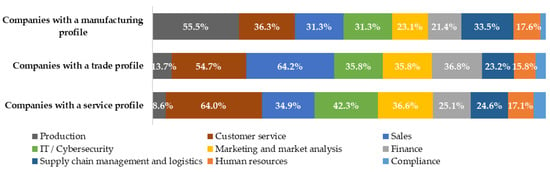
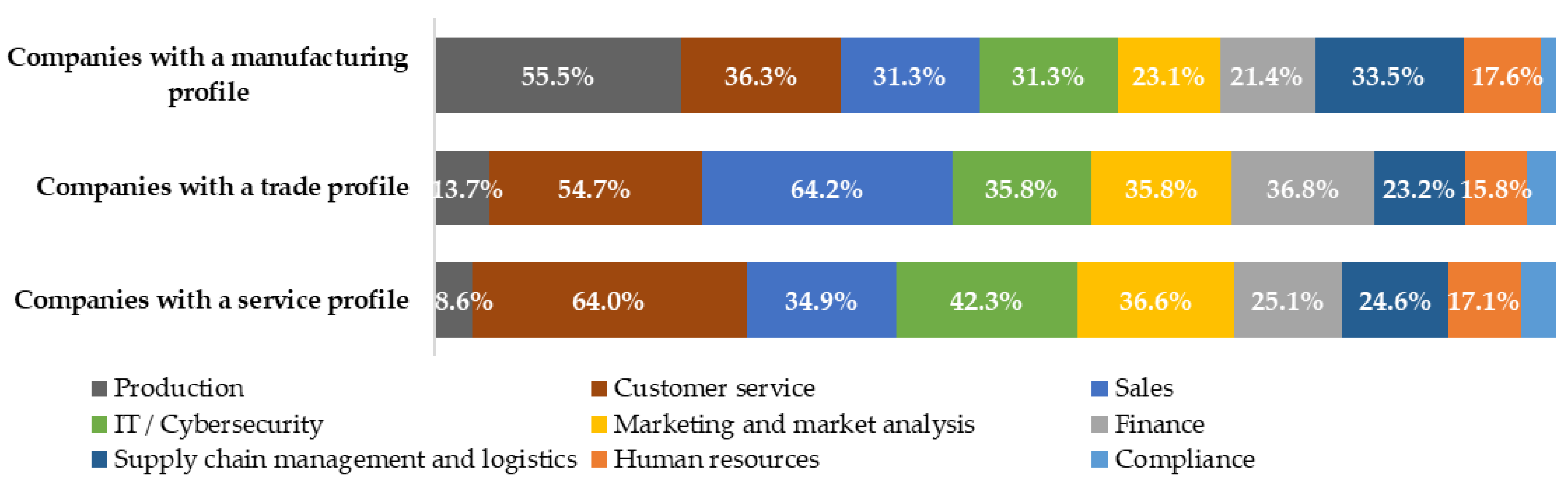
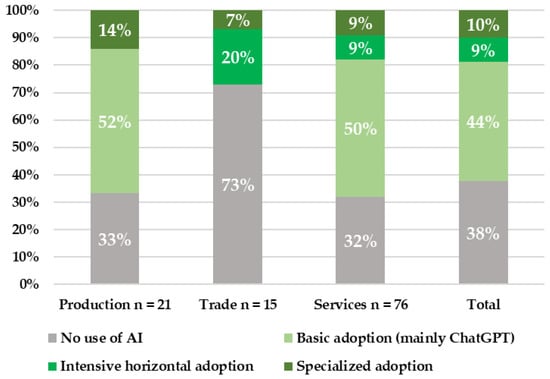
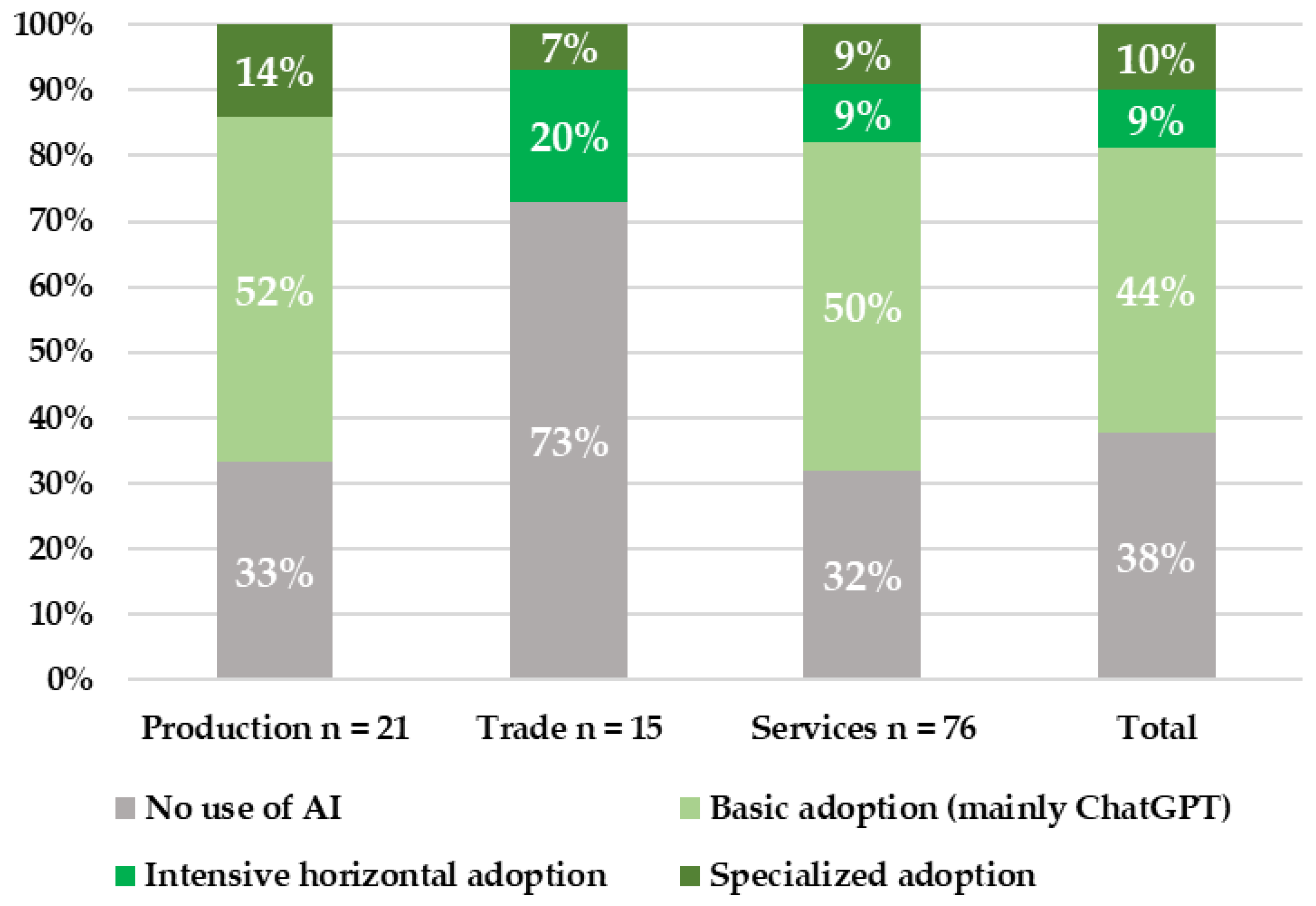
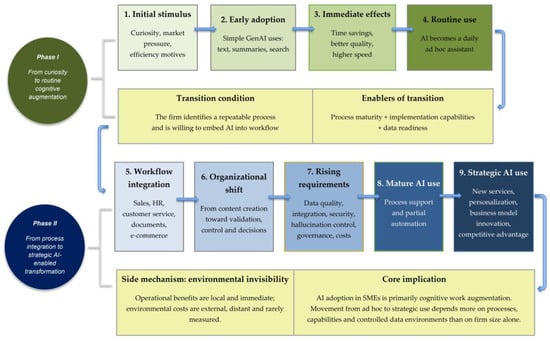
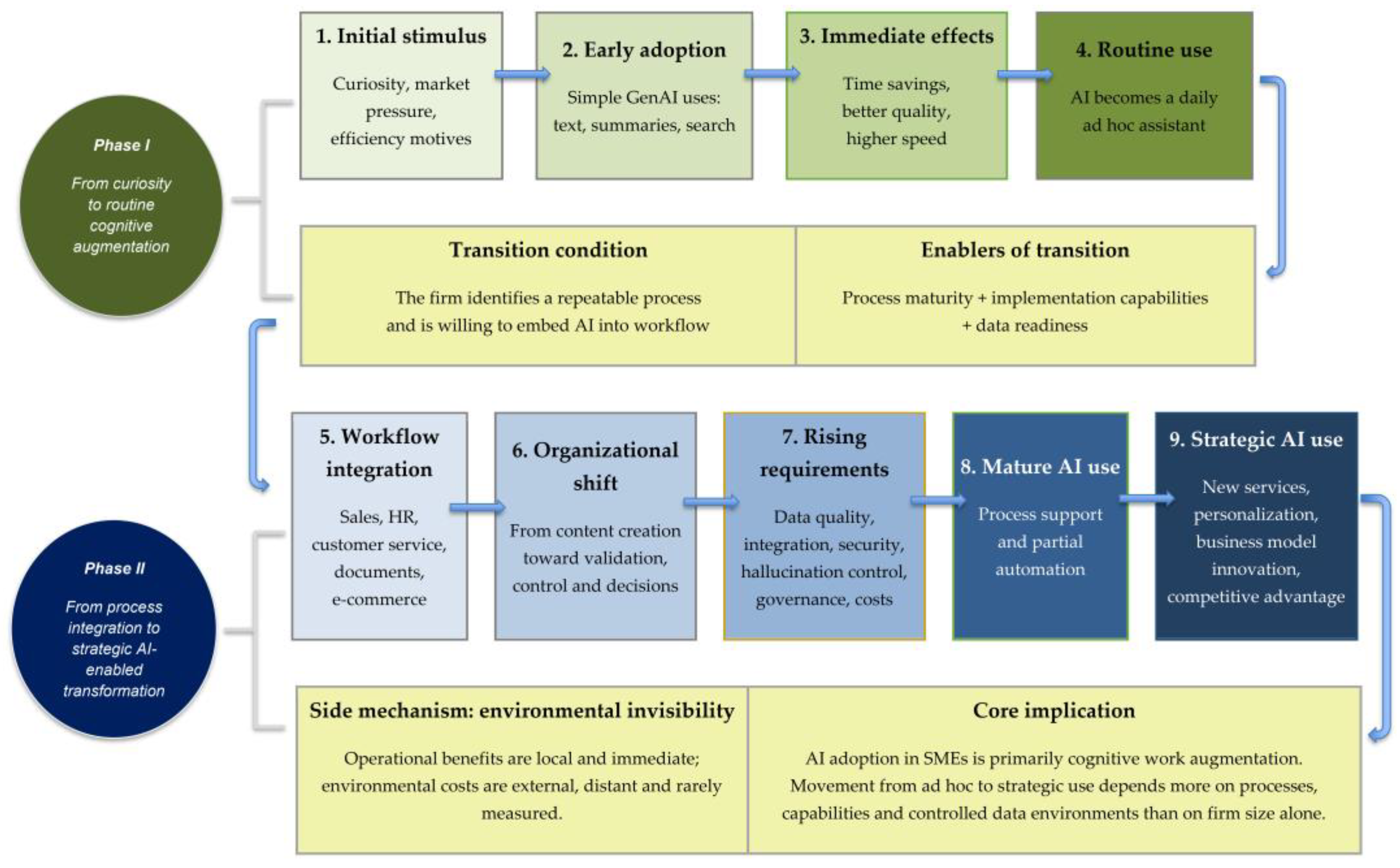

Disclaimer/Publisher’s Note: The statements, opinions and data contained in all publications are solely those of the individual author(s) and contributor(s) and not of MDPI and/or the editor(s). MDPI and/or the editor(s) disclaim responsibility for any injury to people or property resulting from any ideas, methods, instructions or products referred to in the content. |
© 2026 by the authors. Licensee MDPI, Basel, Switzerland. This article is an open access article distributed under the terms and conditions of the Creative Commons Attribution (CC BY) license.