


Abstract
Cultural heritage assets in seismic metropolitan regions are increasingly exposed to interacting natural hazards, yet disaster risk assessments for historic buildings often remain limited to single-hazard interpretations. This study addresses this gap by developing a Geographic Information Systems (GIS)-based multi-hazard risk assessment for Ferhatpaşa Mosque, a sixteenth-century Ottoman heritage asset located in Çatalca, Istanbul. Eight spatial parameters were evaluated at the neighborhood scale: slope, elevation, aspect, precipitation, distance to fault lines, distance to hydrological features, land use, and soil capability. The model was developed through Weighted Overlay analysis and interdisciplinary expert-based weighting. Distance to fault lines and precipitation received the highest weights, each accounting for 17.22% of the model, followed by distance to hydrological features and soil capability, each weighted at 13.89%. The final risk map classified 71.99% of the study area as medium risk, 28% as low risk, and 0.02% as high risk. Ferhatpaşa Mosque was located within the medium-risk zone, approximately 29,600 m from active fault lines, 250 m from the nearest dry streambed, 800 m from the nearest stream, and 320 m from the nearest high-risk zone. These findings demonstrate that the mosque’s risk profile is shaped not by seismic proximity alone, but by the cumulative interaction of topography, precipitation, hydrology, soil conditions, and land-use characteristics. The proposed model provides a spatial decision-support framework for integrating cultural heritage conservation into sustainable disaster risk reduction and local risk mitigation planning.
1. Introduction
Cultural heritage is increasingly exposed to complex and interconnected risks arising from natural, technological, environmental, and human-induced hazards. In this context, identifying threats that may lead to the deterioration, damage, or loss of heritage assets requires a clear understanding of disaster risk management concepts, including hazard, vulnerability, risk analysis, and risk assessment [1]. These concepts are particularly important for heritage studies, as cultural assets are not only physical structures but also carriers of collective memory, identity, and historical continuity.
At the global level, previous studies have increasingly used Geographic Information Systems (GIS), remote sensing, multi-criteria decision analysis, and weighted overlay techniques to assess spatial exposure to hazards such as earthquakes, floods, landslides, erosion, and urban vulnerability. These studies demonstrate the value of GIS-based approaches for integrating heterogeneous spatial datasets, visualizing risk patterns, and supporting preventive planning. However, much of this literature has focused on regional, watershed, district, or urban-scale hazard mapping rather than on the spatial exposure of individual cultural heritage assets within their immediate neighborhood context [2,3,4,5,6,7].
In Türkiye, disaster-risk studies have been shaped primarily by the country’s high seismicity and by the destructive consequences of major earthquakes [3]. Existing research has generally addressed earthquake scenarios, building damage estimation, urban vulnerability, emergency planning, and macro-scale hazard mapping. Although these studies provide important information for disaster risk management, cultural heritage assets are often treated as part of the general building stock or urban fabric rather than as focal elements requiring heritage-specific spatial assessment [3,4,5].
Istanbul represents one of the most critical contexts for this discussion because it combines high seismic exposure, dense urbanization, complex environmental conditions, and a large concentration of registered cultural heritage assets. Studies on the Marmara region and Istanbul have highlighted the potential consequences of a major earthquake scenario, including building damage, infrastructure disruption, population exposure, and emergency shelter needs. Nevertheless, there remains a need for neighborhood-scale GIS-based models that connect metropolitan disaster risk studies with the site-specific conservation needs of historic buildings.
Within this research gap, the present study focuses on Ferhatpaşa Mosque in Çatalca, Istanbul, and develops a GIS-based multi-hazard assessment model at the neighborhood scale. Rather than evaluating the mosque only in relation to its distance from active fault lines, the study integrates eight spatial parameters: slope, elevation, aspect, precipitation, distance to fault lines, distance to hydrological features, soil capability, and land use. In doing so, the study contributes to the literature by linking cultural heritage conservation, sustainable disaster risk reduction, and GIS-based spatial decision support within a single methodological framework.
This study contributes to the literature in three ways. First, it shifts cultural heritage risk assessment from a single-hazard perspective to a spatially integrated multi-hazard framework. Second, it bridges GIS-based environmental risk modeling with sustainable heritage management. Third, it offers a replicable neighborhood-scale decision-support model that can inform local governments, conservation authorities, and disaster risk reduction agencies in identifying priority areas for preventive conservation and risk mitigation.
2. Materials and Methods
2.1. Study Area: Çatalca and Ferhatpaşa Mosque
The study area is Ferhatpaşa Neighborhood, located in Çatalca District on the European side of Istanbul, Türkiye. The spatial investigation area was defined by the administrative boundary of Ferhatpaşa Neighborhood rather than by a fixed-radius buffer around the mosque. This boundary was selected because the study aims to evaluate the immediate environmental and spatial conditions that may affect the disaster-related exposure of Ferhatpaşa Mosque at the neighborhood scale. All GIS-based parameters, including slope, elevation, aspect, precipitation, distance to fault lines, distance to hydrological features, soil capability, and land use, were clipped and analyzed within this boundary. The total area of the spatial investigation boundary is 26 km2. Ferhatpaşa Mosque is located within this defined neighborhood-scale analysis area and was used as the focal heritage asset for interpreting the final multi-hazard risk model.
Çatalca is situated within the broader Marmara region, which is characterized by high seismic exposure and has been repeatedly addressed in earthquake-risk scenarios developed for Istanbul. Ertürk [8] developed a possible Mw 7.6 earthquake scenario for Istanbul by mapping seismicity data, rupture probabilities, and the spatial distribution of risk across the city. The study discusses in detail the high seismic potential of the Marmara region and the possible scale of destruction that such an earthquake may generate in Istanbul [8]. Similarly, the Istanbul Metropolitan Municipality Directorate of Earthquake and Ground Investigation prepared the “Istanbul Province Probable Earthquake Loss Estimation Update Project” based on a Mw 7.5 scenario earthquake [9]. This project estimates expected building damage, infrastructure losses, casualties, injuries, and temporary shelter needs under 15 different earthquake scenarios.
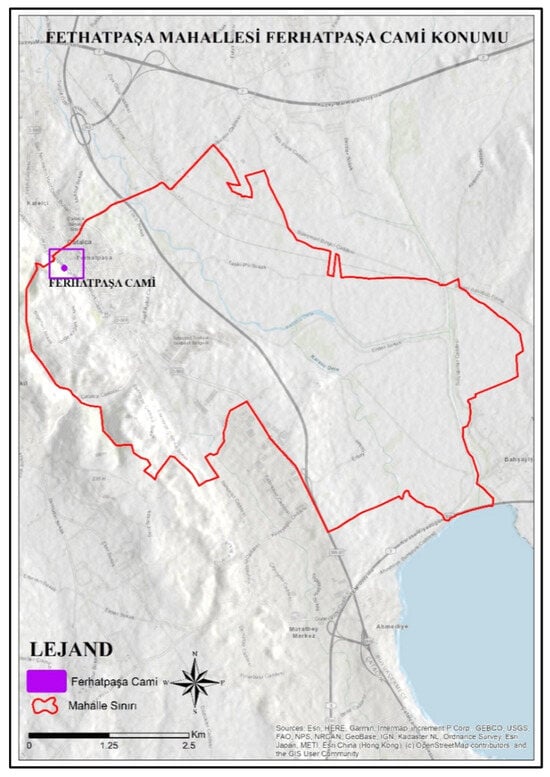
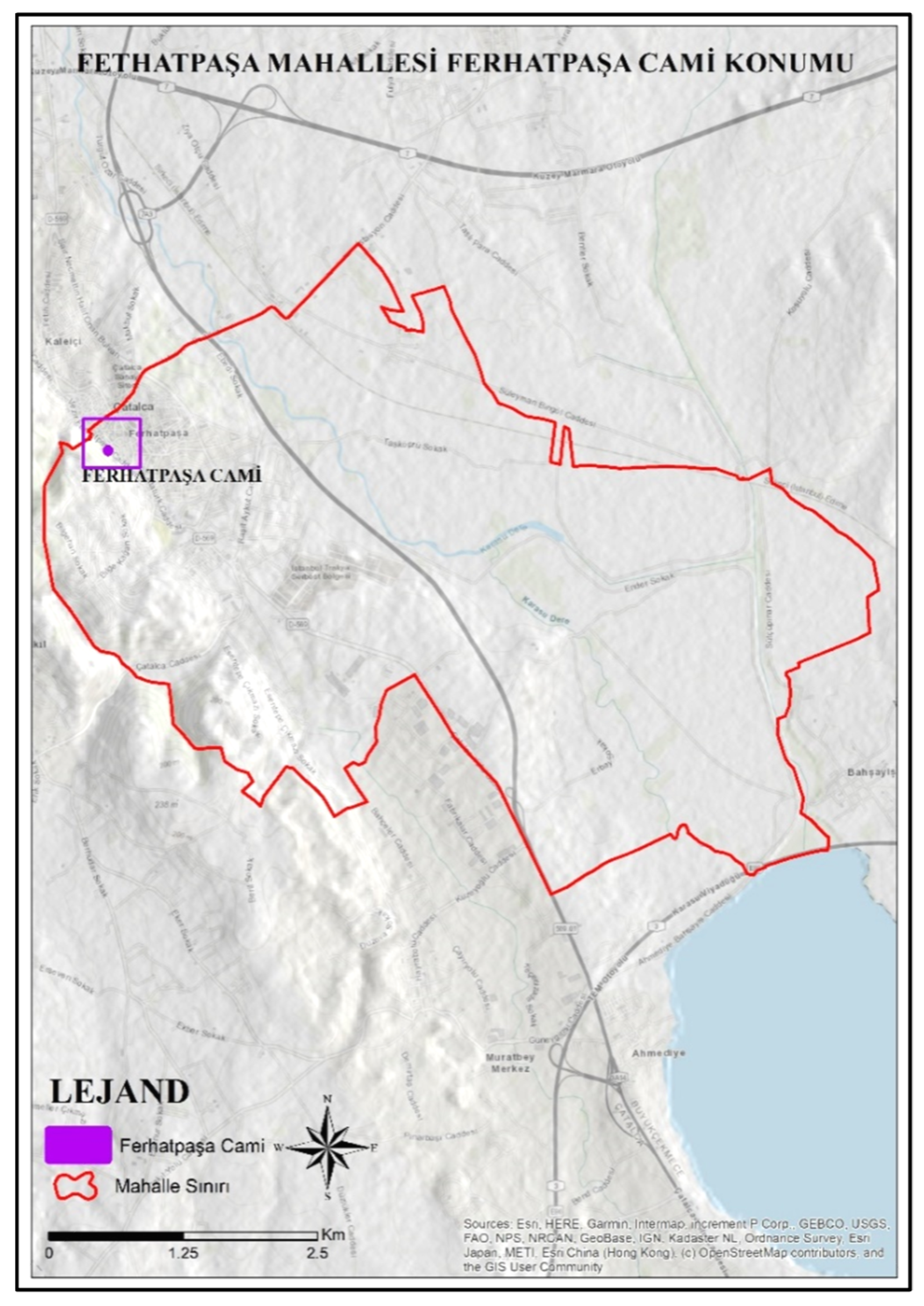
Due to its large surface area, relatively low-rise settlement pattern, and strategic position within the metropolitan periphery, Çatalca is also significant for post-disaster planning, temporary shelter potential, and spatial risk management. Ferhatpaşa Neighborhood (Figure 1) was selected as the spatial investigation area because it contains both environmental risk factors and a notable concentration of registered cultural heritage assets. According to heritage inventory data, the neighborhood includes 39 registered cultural heritage assets. This makes the area suitable for examining how GIS-based multi-hazard assessment can support heritage-oriented disaster risk reduction at the neighborhood scale.
Figure 1.
Location of the study area and spatial investigation boundary (The legend shows the Ferhatpaşa Mosque and the neighborhood boundary) (by authors, 1 November 2024).
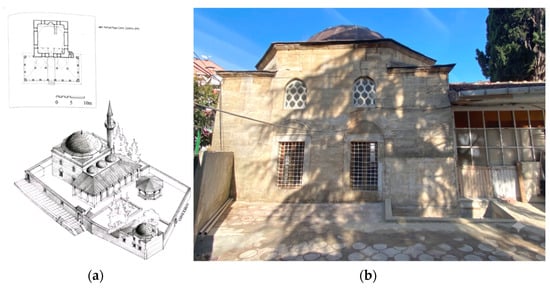
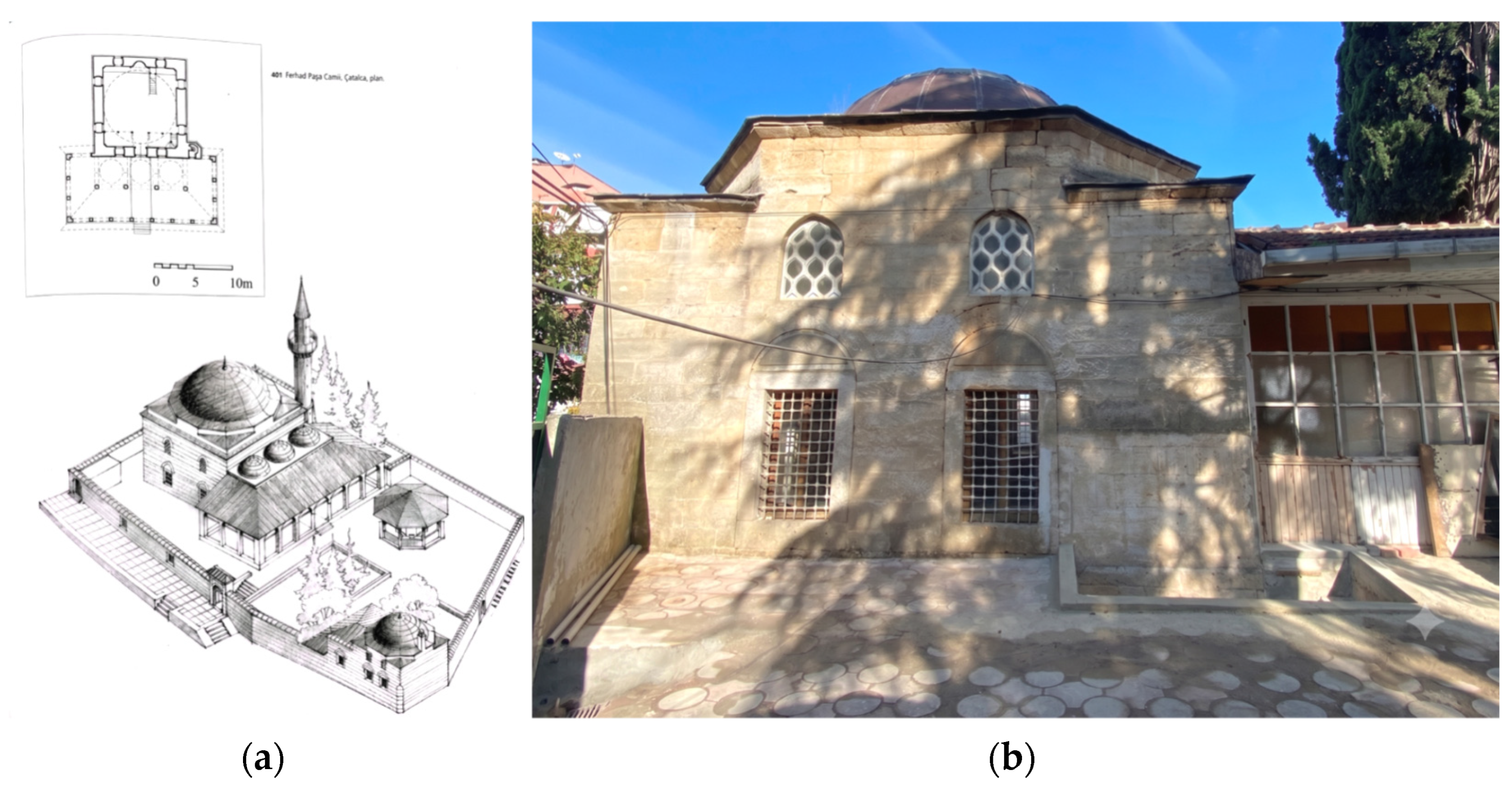
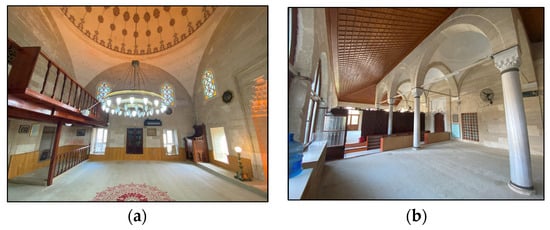
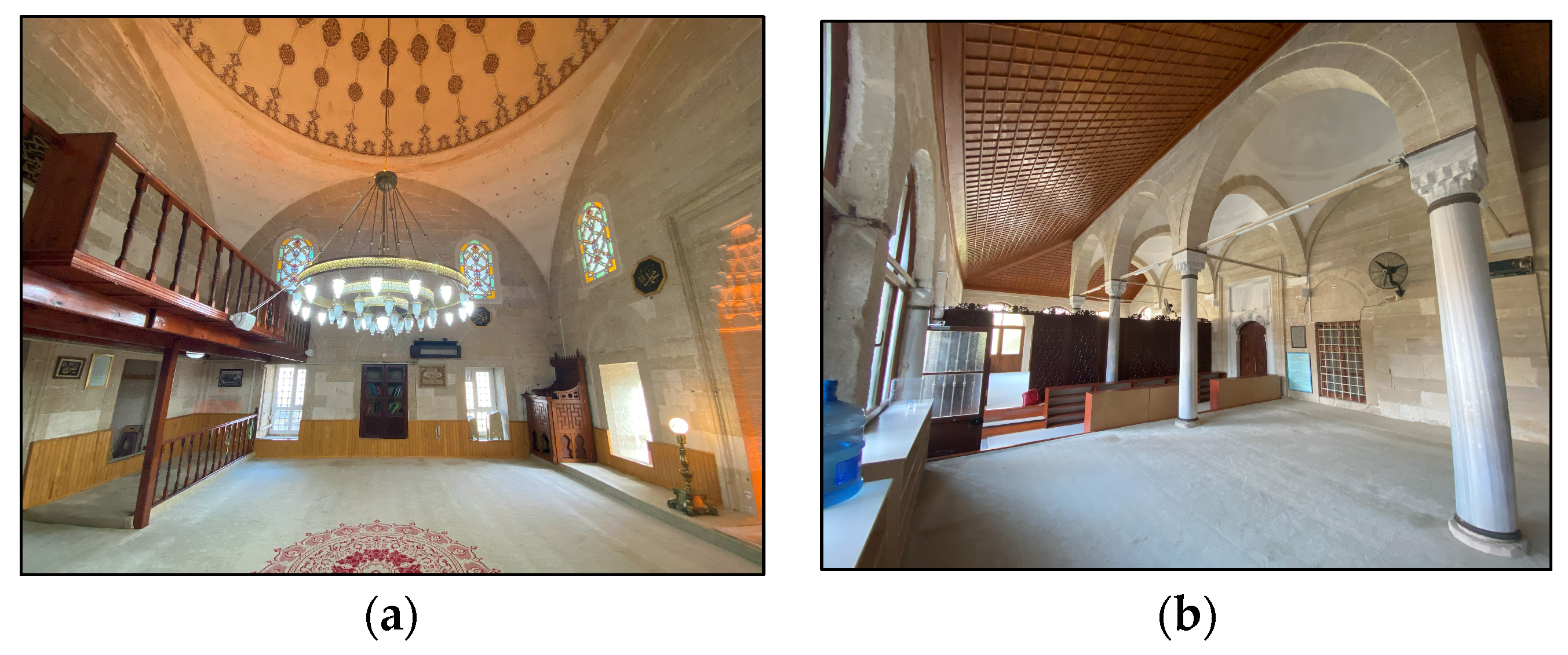
Ferhatpaşa Mosque was selected as the focal heritage asset of the study. Built in the sixteenth century by Mimar Sinan, the mosque is one of the most important historic buildings in Ferhatpaşa Neighborhood and has preserved the architectural characteristics of the classical Ottoman period [10]. The mosque (Figure 2 and Figure 3) was registered as a cultural heritage asset by the decision of the High Council of Immovable Antiquities and Monuments dated 8 January 1983 and numbered 14541. Its registered status was later confirmed by the decision of the High Council for the Conservation of Cultural and Natural Assets dated 14 November 1985 and numbered 1566.
Figure 2.
Architectural documentation of Ferhatpaşa Mosque and its courtyard structures: (a) Ferhatpaşa Mosque plan and axonometric perspective [10]; (b) Primary school (by authors, 1 November 2024).
Figure 3.
Interior details (by authors, 1 November 2024) (a) Prayer Hall; (b) Narthex.
Although no detailed structural damage assessment or earthquake-specific damage report for Ferhatpaşa Mosque was identified within the scope of the documents used in this study, the building has historically been exposed to destructive events affecting Çatalca and the wider Istanbul region. Secondary historical sources report that Ferhatpaşa Mosque was damaged during the Balkan Wars and was subsequently repaired; its decorative paintings were also renewed after the 1990s [11]. This historical damage and repair background indicates that the mosque has already experienced destructive external events and that its present conservation condition should be evaluated within a broader risk-management perspective.
In addition to this building-specific historical context, the wider Marmara and Istanbul region has repeatedly experienced destructive earthquakes that affected historic buildings. The 1894 Istanbul earthquake caused damage to several historic mosques and public buildings in Istanbul, while the 1999 Marmara earthquake demonstrated the vulnerability of the metropolitan building stock and increased awareness of seismic risk for cultural heritage assets. Although these events do not provide direct evidence of earthquake damage to Ferhatpaşa Mosque itself, they show that historic masonry buildings in Istanbul and the Marmara region have been repeatedly threatened by major seismic events. Therefore, the present study treats Ferhatpaşa Mosque not as an isolated monument, but as a registered cultural heritage asset located within a historically hazard-prone metropolitan region.
The mosque is located on sloping terrain in the western part of the district. Since it stands at a higher elevation than the street level to the east, its ablution courtyard is enclosed by retaining walls on three sides. These site conditions make the mosque a relevant case for evaluating the interaction between topography, hydrology, soil capability, precipitation, land use, and distance to active fault lines. Therefore, the study area was defined at the neighborhood scale rather than only at the parcel or building scale, allowing the immediate environmental context of the mosque to be incorporated into the GIS-based multi-hazard assessment.
A study area map showing the location of Ferhatpaşa Neighborhood, the boundary of the spatial analysis area, and the position of the mosque is provided in Figure 1.
2.2. Data Sources, Criteria Selection, and GIS Database Development
Assessing the vulnerability of a region to disasters requires the collection, analysis, updating, and spatial mapping of detailed information on both the study area and relevant natural hazards. Disaster risk reduction depends on the capacity to transform such information into preventive and risk-informed planning measures. Since natural hazards are spatial phenomena and their impacts vary according to topography, land use, soil characteristics, hydrology, and built environment conditions, GIS provides an effective tool for conducting multi-parameter risk analyses.
In this study, a GIS-based disaster risk assessment was conducted at the neighborhood scale for a historic cultural heritage asset. The Weighted Overlay method was used as the main analytical procedure. Factor maps obtained from different sources and at different spatial scales formed the basis of the analysis. Based on these maps, eight spatial parameters were processed and evaluated: slope, aspect, elevation, precipitation, distance to hydrological features, distance to fault lines, soil capability, and land use.
This article builds upon a graduate research project entitled GIS-Based Disaster Risk Analysis for the Protection of Cultural Heritage: The Case of Ferhatpaşa Mosque, a Work of Mimar Sinan, in Çatalca, Istanbul,” prepared at Istanbul Gelişim University. In the first stage of the research, relevant literature on disaster risk assessment, cultural heritage vulnerability, and GIS-based spatial analysis was reviewed. Based on this review, the criteria to be included in the disaster risk model were identified. The rationale for selecting these criteria is presented in Table 1.
Table 1.
Rationale for selecting the criteria.
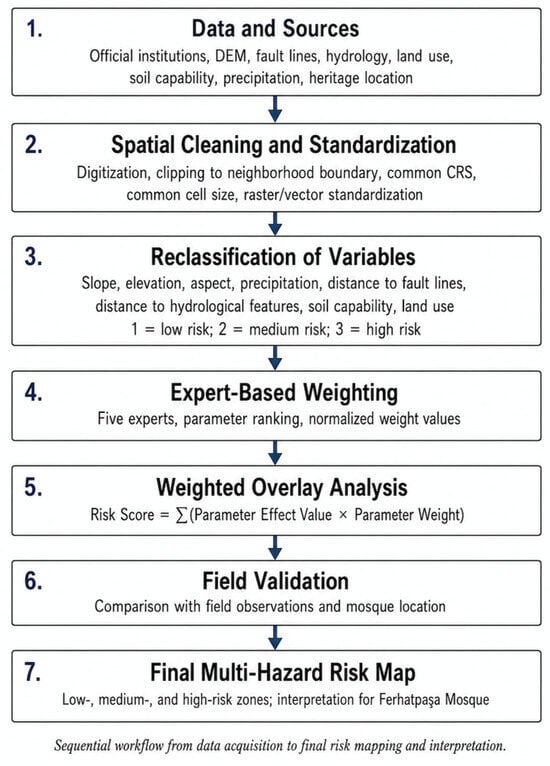
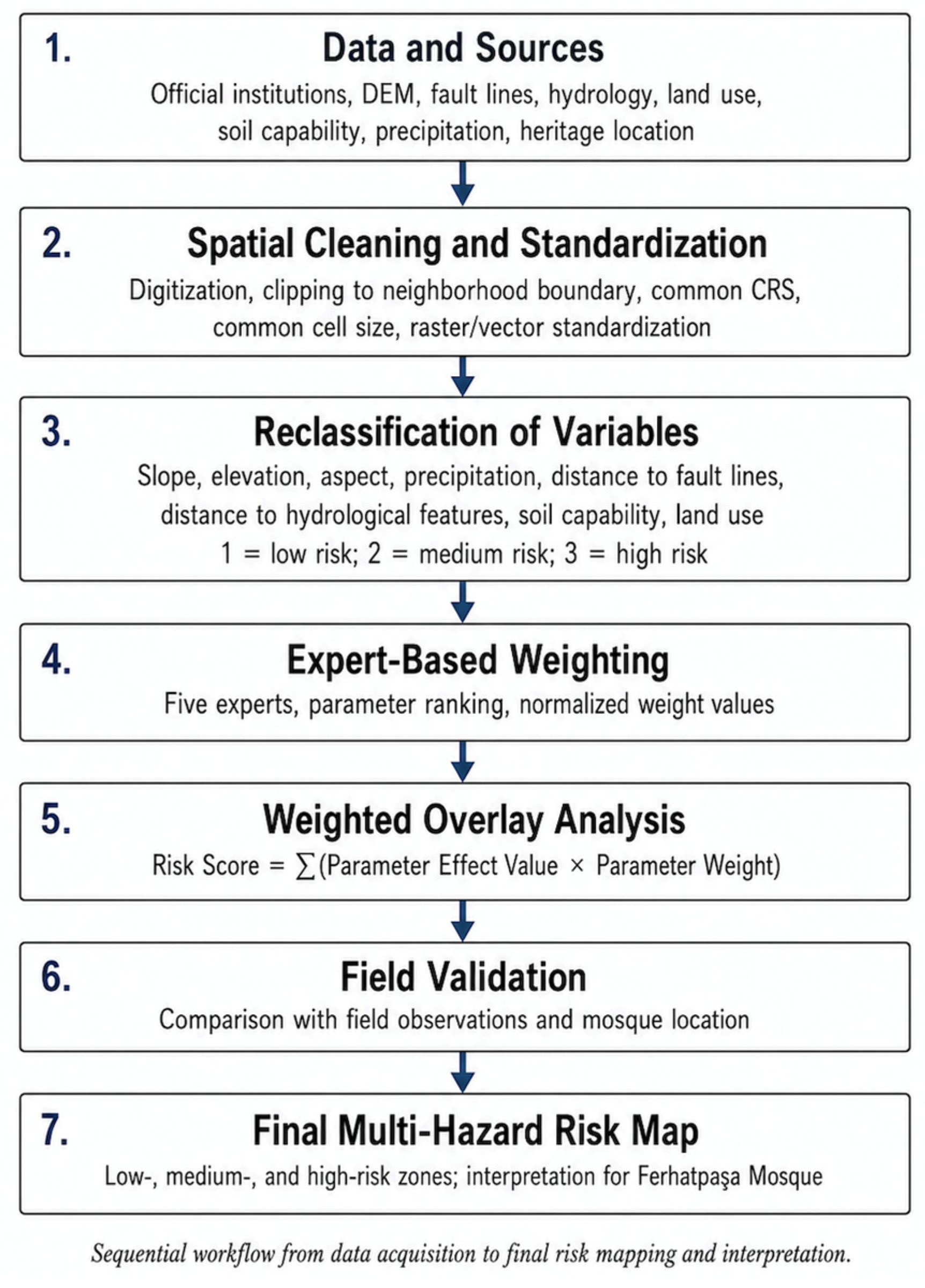
The methodological workflow was structured as a sequential and reproducible GIS-based process. First, spatial and non-spatial datasets were collected from official institutions and open-access geospatial platforms. Second, the datasets were cleaned, digitized where necessary, clipped to the Ferhatpaşa Neighborhood boundary, and standardized in terms of coordinate reference system, raster resolution, and analysis extent. Third, each spatial parameter was reclassified into a common three-level disaster risk scale: 1 = low risk, 2 = medium risk, and 3 = high risk. Fourth, the relative importance of the parameters was determined through an expert-based weighting process. Fifth, the reclassified layers and their corresponding weights were integrated through the Weighted Overlay method to generate the composite multi-hazard risk map. Finally, the resulting risk map was compared with field observations and the spatial location of Ferhatpaşa Mosque in order to evaluate the plausibility of the model outputs and support their interpretation.
The datasets used in the GIS database were organized according to their source institution, exact layer content, spatial data type, date/year of production, download/access date, and analytical role in the model. This data inventory was prepared to clarify the provenance of each layer used in the multi-hazard assessment and to ensure that the spatial data layers were created as part of the methodology. Accordingly, slope, elevation, aspect, precipitation, distance to hydrological features, distance to fault lines, soil capability, and land use were not treated as results in themselves, but as methodological input layers developed within the GIS database. The data inventory used for GIS database development and multi-hazard assessment is presented in Table 2.
Table 2.
Data inventory used for GIS database development and multi-hazard assessment.
After the GIS database was established, all spatial data were digitized and processed in ArcGIS 10.5 within the Ferhatpaşa Neighborhood boundary. The eight parameters—slope, aspect, elevation, precipitation, distance to hydrological features, distance to fault lines, soil capability, and land use—were converted into spatial data layers. These layers were clipped to the same analysis boundary, standardized in terms of coordinate reference system, spatial resolution, and analysis extent, and prepared for reclassification and Weighted Overlay analysis.
In the second stage of the study, all spatial data were digitized in ArcGIS 10.5 within the boundaries of the study area. The eight parameters—slope, aspect, elevation, precipitation, distance to hydrological features, distance to fault lines, soil capability, and land use—were converted into spatial data layers (Table 3). These layers were standardized in terms of coordinate reference system, spatial resolution, and analysis boundary before being used in the weighted overlay model. To improve the reproducibility of the GIS-based analysis, all spatial datasets were processed in ArcGIS 10.5 using a common spatial reference, raster resolution, and analysis extent. The coordinate reference system used for all spatial layers was ‘WGS 84/UTM zone 35N and EPSG 32635’. Raster-based layers were standardized to a cell size of 12.5 m, corresponding to the spatial resolution of the ALOS PALSAR Digital Elevation Model (DEM). When resampling was required, continuous raster layers were processed using ‘bilinear interpolation’, whereas categorical layers such as land use and soil capability were processed using ‘nearest neighbor resampling’ in order to preserve class values. All spatial layers were clipped to the Ferhatpaşa Neighborhood boundary before reclassification and weighted overlay analysis (Table 4).
Table 3.
Structure and type of data layers.
Table 4.
Technical parameters used for spatial standardization and reproducibility.
The DEM of the study area was downloaded from the ALOS PALSAR EarthData platform with a spatial resolution of 12.5 m. Using this DEM, slope, aspect, elevation, and hydrological structure maps were generated through GIS-based tools. The hydrological map produced from the DEM was compared with the hydrological data provided by the Istanbul Water and Sewerage Administration (ISKI). The hydrological component of the analysis was developed by using both DEM-derived hydrological modeling and institutional hydrological data obtained from the Istanbul Water and Sewerage Administration (ISKI). The ISKI dataset was used as an official reference layer for identifying documented hydrological features and for comparing the terrain-derived drainage pattern with institutionally recorded watercourse information. In parallel, a hydrological structure map was generated from the ALOS PALSAR DEM through GIS-based hydrological tools, including Fill, Flow Direction, Flow Accumulation, Stream Order, and Stream to Feature.
The purpose of comparing the DEM-derived hydrological map with the ISKI dataset was to evaluate whether the terrain-derived drainage pattern corresponded to the official hydrological network and to determine which dataset provided a more detailed representation of local hydrological conditions within Ferhatpaşa Neighborhood. The comparison showed that the DEM-derived hydrological analysis represented local drainage tendencies and minor hydrological features in greater detail than the institutional network. Therefore, the DEM-derived hydrological layer was used as the primary basis for the final distance-to-hydrological-features analysis, while the ISKI dataset was retained as an official reference and comparison layer.
After the final hydrological input layer was defined, distance classes to hydrological features were generated and reclassified into five distance intervals: 10 m, 50 m, 90 m, 130 m, and 170 m. Areas located closer to existing streambeds and drainage lines were interpreted as having higher flood- and inundation-related exposure. Although no large river or major water body passes through Ferhatpaşa Neighborhood, the presence of local drainage lines and dry streambeds makes hydrological proximity an important parameter in the multi-hazard assessment. Distance analysis for fault lines and hydrological features was carried out using a raster-based distance calculation procedure rather than a simple buffer-only approach. The active fault-line layer and the hydrological features layer were first prepared as polyline datasets within the Ferhatpaşa Neighborhood analysis boundary. For each dataset, a Euclidean Distance raster was generated in ArcGIS 10.5 to calculate the shortest planar distance from each raster cell to the nearest fault line or hydrological feature. The resulting continuous distance rasters were then clipped to the Ferhatpaşa Neighborhood boundary, standardized to the common 12.5 m cell size, and reclassified into risk classes before being integrated into the Weighted Overlay model. In this workflow, distance classes functioned as reclassification intervals of the continuous distance raster, not as independent buffer polygons used directly in the overlay analysis. Land use and soil capability data were mapped by selecting the relevant attribute data within the neighborhood boundary.
Precipitation data obtained from the Turkish State Meteorological Service were used to estimate the annual precipitation distribution across the study area. Since there was no meteorological station located directly within Ferhatpaşa Neighborhood, annual precipitation values were first evaluated at the district scale and then spatially refined for the neighborhood boundary. To account for the relationship between elevation and precipitation, the Schreiber formula was used together with DEM-derived elevation data. The formula is expressed as follows:
Ph = Po ± 54 h
In this formula, Ph represents the estimated annual precipitation value at the target point, Po represents the observed annual precipitation value at the reference meteorological station, and h represents the elevation difference between the target point and the reference station in hectometers. The coefficient 54 indicates an increase or decrease of 54 mm in annual precipitation for each 100 m of elevation difference. If the target point is located at a higher elevation than the reference station, the correction is added; if it is located at a lower elevation, the correction is subtracted.
In the present study, DEM-derived elevation values were used to calculate elevation differences within the Çatalca District and Ferhatpaşa Neighborhood boundary. The Schreiber formula was therefore applied as an elevation-correction procedure for estimating precipitation values in areas without direct station measurements. The elevation-corrected precipitation values were then interpolated using the IDW method in ArcGIS 10.5 to create a continuous annual precipitation raster. The resulting precipitation raster was clipped to the Ferhatpaşa Neighborhood boundary, standardized to the common 12.5 m cell size, and reclassified into three risk classes before being integrated into the Weighted Overlay model.
This procedure ensured that precipitation was not treated as a uniform district-level value, but was spatially adjusted according to elevation differences within the study area.
2.3. Expert Opinions and Criteria Weighting Process
In the disaster risk analysis, the selected parameters were reclassified into three risk levels based on the literature: 1 = low risk, 2 = medium risk, and 3 = high risk. The classification intervals and effect values were determined by referring to Disaster and Emergency Management Presidency (AFAD)’s local ground investigation guidelines and the literature on seismic risk mitigation for cultural heritage, including Istanbul Seismic Risk Mitigation and Emergency Preparedness Project (ISMEP) [19], while considering the structural tolerance limits of historic buildings.
To reduce uncontrolled subjectivity in assigning the relative importance of the eight parameters, a structured expert-based ranking procedure was applied. Five senior experts were selected according to four criteria: disciplinary relevance to disaster risk assessment and/or cultural heritage conservation; professional or academic experience in spatial planning, structural safety, geospatial analysis, or heritage management; familiarity with the Istanbul/Marmara disaster-risk context; and the absence of any direct conflict of interest with the study. The expert group included specialists in architecture and heritage conservation, urban and regional planning, civil engineering, GIS-based spatial analysis, and geodesy/photogrammetry.
The expert assessment consisted of one structured ranking round. Each expert independently evaluated the direct and indirect contribution of the eight parameters—slope, elevation, aspect, precipitation, distance to fault lines, distance to hydrological features, soil capability, and land use—to the disaster-related vulnerability of a historic building within its surrounding terrain. The parameters were ranked on a scale from 1 to 8, where 8 represented the highest perceived contribution to disaster risk and 1 represented the lowest perceived contribution. The individual scores were then summed for each parameter and normalized by dividing each parameter score by the total score of all parameters. The resulting normalized values were converted into percentage weights and used as input values in the Weighted Overlay model.
A procedural consistency control was applied before the scores were used in the model. First, each expert form was checked to ensure that all eight parameters had been scored. Second, the ranking structure was checked to avoid missing or duplicate scores within each expert response. Third, the total score of each expert form was checked against the expected total score of 36, corresponding to the sum of scores from 1 to 8. Finally, the normalized weights were checked to ensure that the total weight equaled 100%. Since the procedure was based on ranking rather than pairwise comparison, an Analytic Hierarchy Process consistency ratio was not calculated. The individual response matrix and the weighting protocol are provided in Appendix A.
2.4. Reclassification of Spatial Parameters
After the GIS database was created and all layers were standardized within the same analysis boundary, each spatial parameter was reclassified into three disaster risk classes: low risk, medium risk, and high risk. The reclassification was carried out before expert-based weighting so that all parameters could be integrated into the Weighted Overlay model using a common ordinal scale. The effect values were defined as follows: 1 = low risk, 2 = medium risk, and 3 = high risk. The reclassification intervals were determined according to the spatial distribution of each parameter in Ferhatpaşa Neighborhood, the relevant disaster-risk literature, AFAD’s local ground investigation guidelines, and the risk implications of each parameter for historic buildings.
To ensure the traceability of the model, all reclassification intervals were revised as mutually exclusive and non-overlapping ranges. The slope classification was corrected so that the 0–10% interval is assigned only to the low-risk class, while the 10.01–20% interval is assigned to the medium-risk class and values above 20% are assigned to the high-risk class (Table 5). Distance-based parameters were also expressed as continuous ranges rather than point values, allowing each raster cell to be assigned to a single and clearly defined risk class before the Weighted Overlay analysis.
Table 5.
Reclassification information on parameters.
These reclassification rules were used to convert all spatial layers into a common risk scale prior to the Weighted Overlay analysis. Continuous variables such as slope, elevation, precipitation, distance to fault lines, and distance to hydrological features were reclassified according to value ranges. Categorical variables such as aspect, soil capability, and land use were reclassified according to their expected contribution to disaster-related vulnerability and exposure. This procedure ensured that heterogeneous spatial datasets could be compared and combined within a single composite risk model.
2.5. Weighted Overlay Modeling and Field Validation
In the third stage of the study, the reclassified spatial layers and their corresponding weight values were integrated into the Weighted Overlay model. The layers were overlaid to identify and map areas with different disaster risk levels. After the Weighted Overlay analysis was completed, the final composite risk map was evaluated through field validation. Field observations conducted in and around Ferhatpaşa Mosque were used to compare the modeled risk zones with observable site conditions, including slope configuration, surrounding retaining walls, proximity to hydrological features, land-use characteristics, and the position of the mosque within the neighborhood terrain. This validation step did not constitute a structural or geotechnical assessment; rather, it functioned as a field-based plausibility check to support the interpretation of the GIS-based risk model (Figure 4).
Figure 4.
Reproducible workflow of the GIS-based multi-hazard risk assessment model, showing the sequential process from data acquisition and spatial standardization to reclassification, expert-based weighting, weighted overlay analysis, field validation, and final risk mapping.
The Weighted Overlay method was selected because it enables the integration of multiple spatial criteria with different weights into a single composite risk surface. In this approach, input layers are scored, normalized, weighted, and overlaid in order to evaluate the combined spatial distribution of risk. All layers were standardized within the same coordinate system, cell size, and study area boundary before the analysis was performed.
The risk score was calculated using the following formula:
Risk Score = Σ(Parameter Effect Value × Parameter Weight)
This formulation allowed the model to combine both the classified risk level of each parameter and its relative importance in relation to the vulnerability of the heritage asset.
3. Results
To improve the clarity of the empirical findings, the results are presented in a sequential order that follows the analytical logic of the GIS-based model. Section 3.1 summarizes the spatial patterns observed in the reclassified risk-parameter maps. Section 3.2 reports the normalized expert-based weights assigned to the eight parameters. Section 3.3 presents the final composite multi-hazard risk map and interprets the risk class assigned to Ferhatpaşa Mosque. Methodological steps related to data acquisition, GIS database development, reclassification, expert-based weighting, and Weighted Overlay modeling are explained in the Section 2 and are not repeated here.
3.1. Spatial Distribution of Reclassified Risk Parameters
The reclassified parameter maps show that the disaster-related spatial exposure of Ferhatpaşa Neighborhood is shaped by the combined effects of topography, hydrology, soil characteristics, precipitation, land use, and distance-based hazard indicators.
3.1.1. Slope Factor
Slope was evaluated as a topographic parameter because it influences surface runoff, erosion potential, and local site exposure. In heritage risk assessment, steeper terrain may increase vulnerability when combined with soil conditions, precipitation, and retaining-wall configurations.
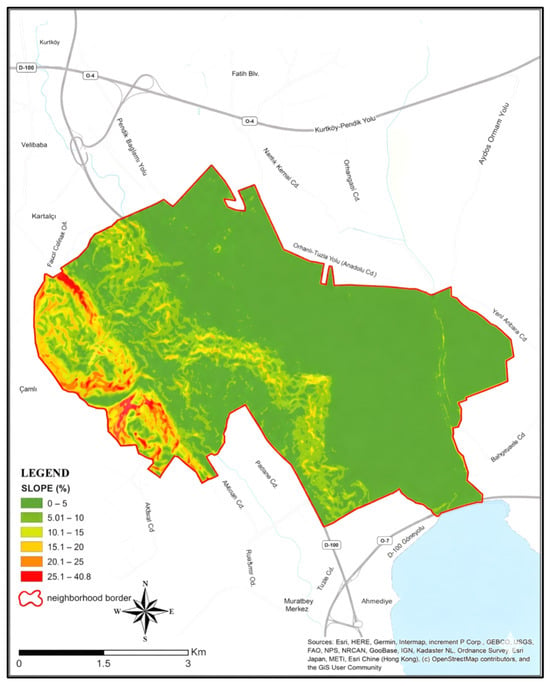
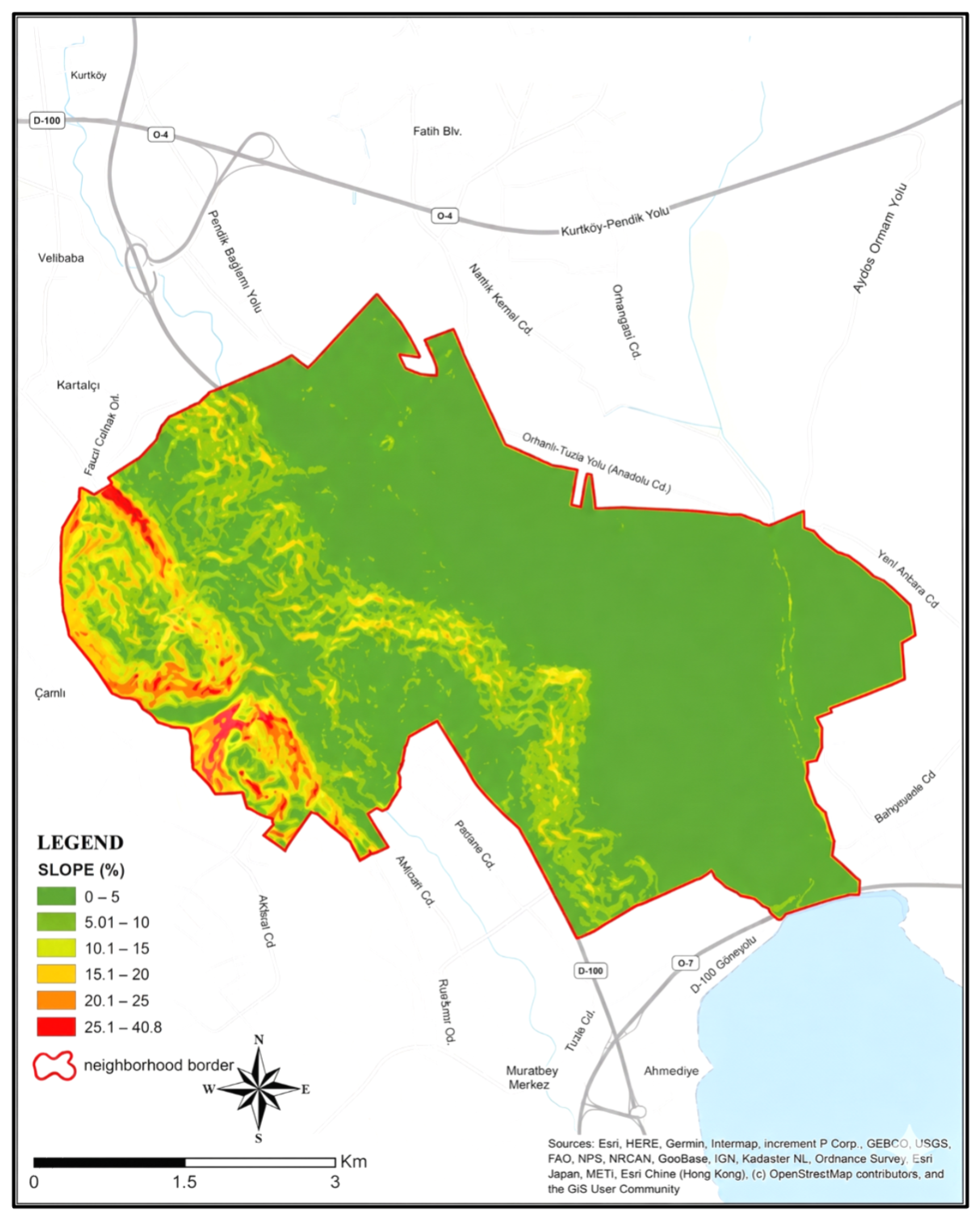
According to the slope map produced from the Digital Elevation Model (DEM) of the study area, slope values range between 0% and 41%. The slope factor was classified into six categories: 0–5%, 5.01–10%, 10.01–15%, 15.01–20%, 20.01–25%, and above 25% (Figure 5). Areas with higher slope values are located mainly in the western part of the neighborhood. Approximately 88.59% of the neighborhood falls within the 0–10% slope range, while 9.17% lies within the 10–20% range. Therefore, most of the study area has low to moderate slope-related exposure, although local steeper areas remain relevant for the interpretation of site-level risk.
Figure 5.
Slope classification map of Ferhatpaşa Neighborhood derived from the DEM (by authors).
3.1.2. Elevation Factor
Elevation was included in the analysis because it affects local topographic exposure and may influence precipitation, runoff behavior, and erosion processes when evaluated together with slope. It was therefore considered as a supporting parameter in the neighborhood-scale multi-hazard model.
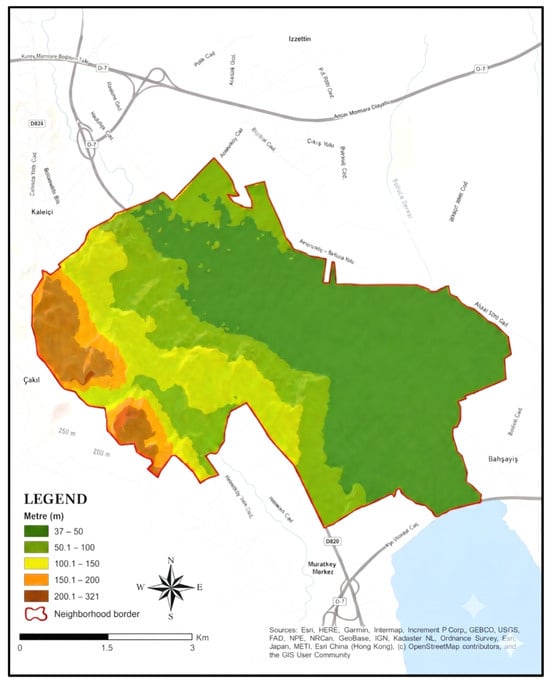
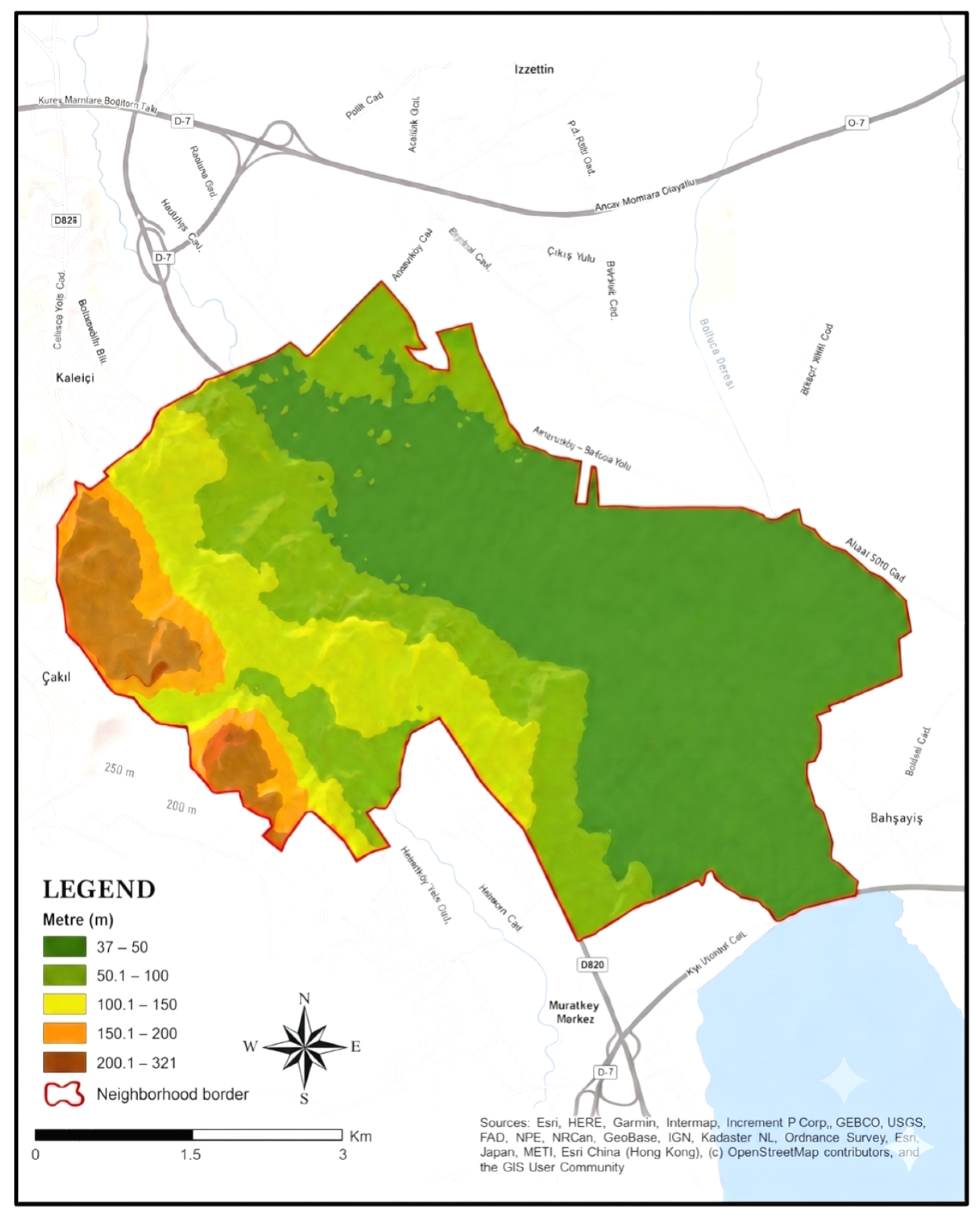
According to the elevation map of the study area, elevation values range between 37 and 321 m. Approximately 63.27% of the area lies within the 37–75 m range, 26.8% within the 75–150 m range, and 9.93% within the 150–321 m range (Figure 6). Higher-elevation areas are mainly associated with the western and southwestern parts of the neighborhood. When considered together with slope and hydrological conditions, the elevation profile contributes to the interpretation of local environmental exposure around Ferhatpaşa Mosque.
Figure 6.
Elevation classification map of Ferhatpaşa Neighborhood derived from the DEM (by authors).
3.1.3. Aspect Factor
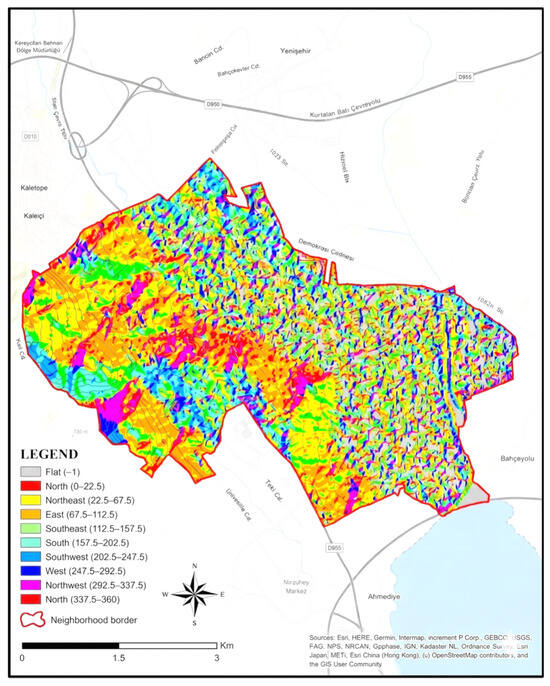
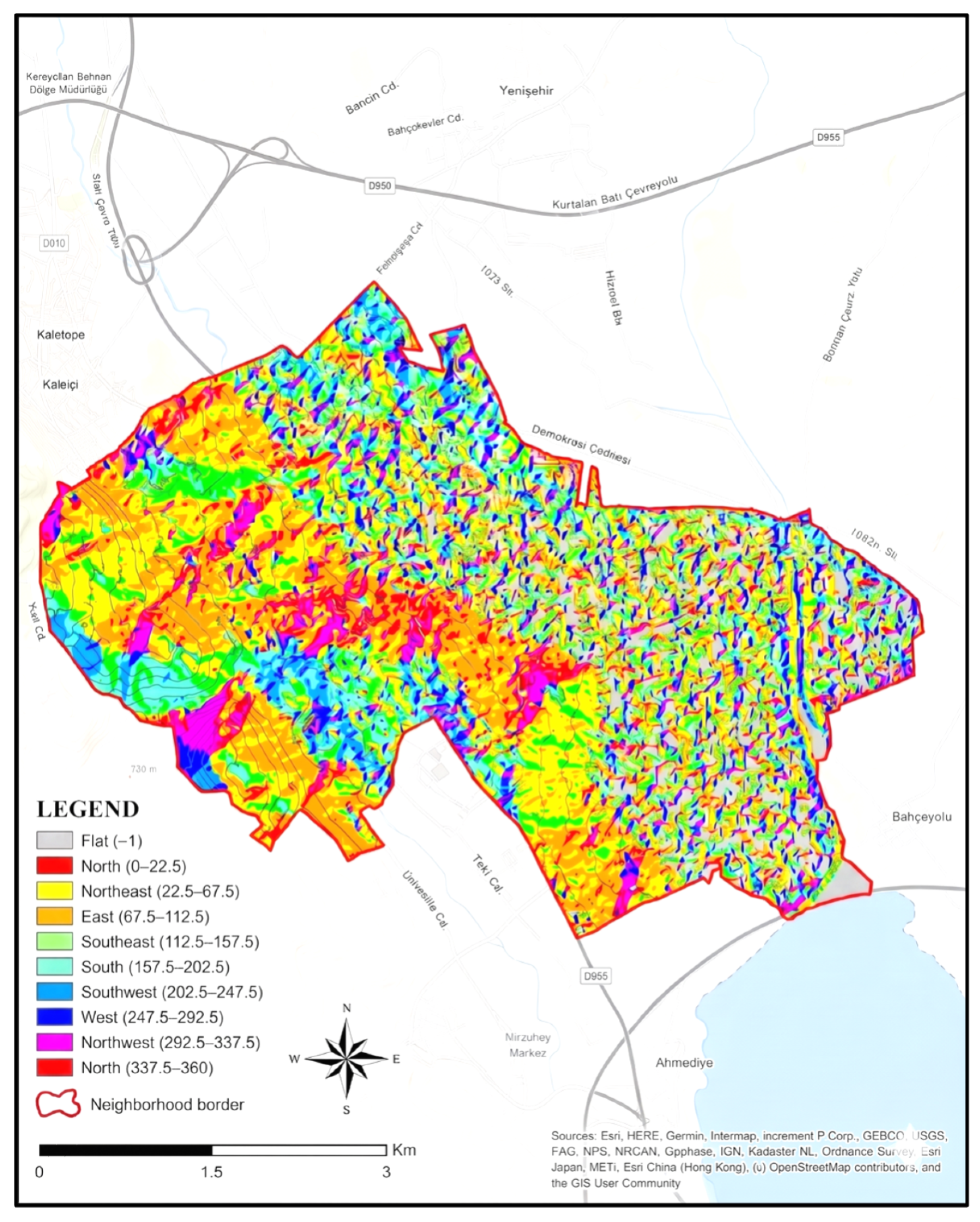
According to the aspect map generated using the Digital Elevation Model (DEM) of the study area, 34.86% of the area faces north, northeast, and northwest, while 27.25% faces south, southeast, and southwest. North-facing slopes are therefore considered high-risk areas in terms of flood and inundation risk (Figure 7).
Figure 7.
Aspect classification map of Ferhatpaşa Neighborhood derived from the DEM (by authors).
3.1.4. Precipitation Factor
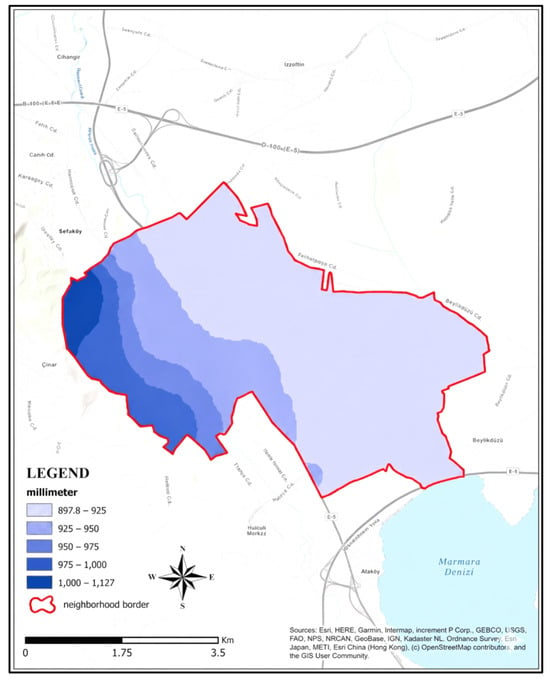
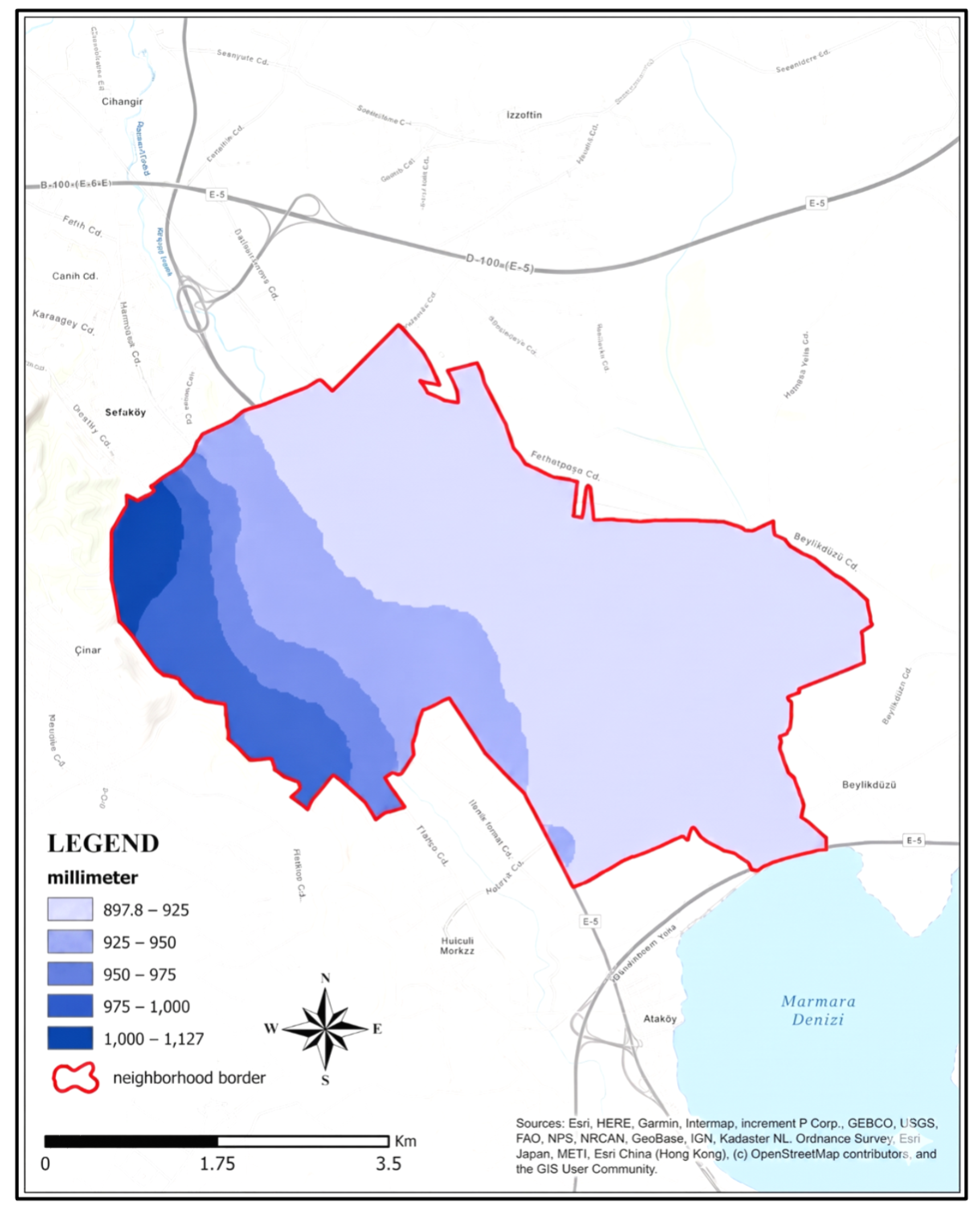
According to the annual precipitation analysis map of the study area, since there is no meteorological station directly measuring precipitation within the neighborhood, the analysis was first conducted at the district scale. Annual precipitation in the district ranges between 897.8 mm and 1127 mm. At the district scale, annual precipitation was classified into the following intervals: 897.8–930 mm, 930–960 mm, 960–990 mm, 990–1120 mm, and 1120–1127 mm.
For a more detailed analysis, the neighborhood boundary was then delineated and the annual precipitation data were reclassified at the neighborhood scale. Within the boundaries of Ferhatpaşa Neighborhood, annual precipitation was observed to range between 897.8 mm and 1027 mm. The annual precipitation classes determined for the neighborhood are as follows: 897.8–925 mm, 925–950 mm, 950–975 mm, 975–1000 mm, and 1000–1027 mm.
The results show that 64.47% of the area falls within the 897.8–925 mm range, 23.39% within the 925–975 mm range, and 12.14% within the 975–1027 mm range. Increasing precipitation is considered a factor that intensifies the risks of flooding, inundation, and erosion (Figure 8).
Figure 8.
Yearly precipitation amount analyses of Ferhatpaşa Neighborhood (by authors).
3.1.5. Distance to Fault Lines Factor
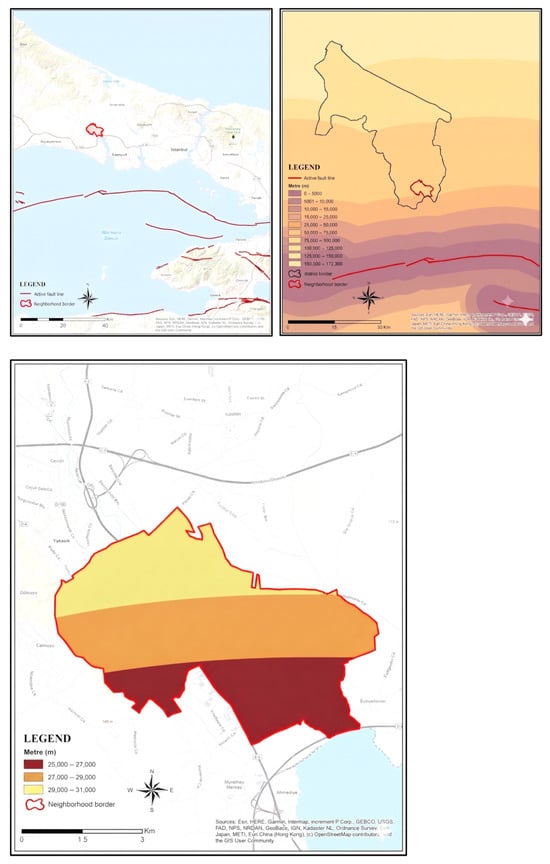
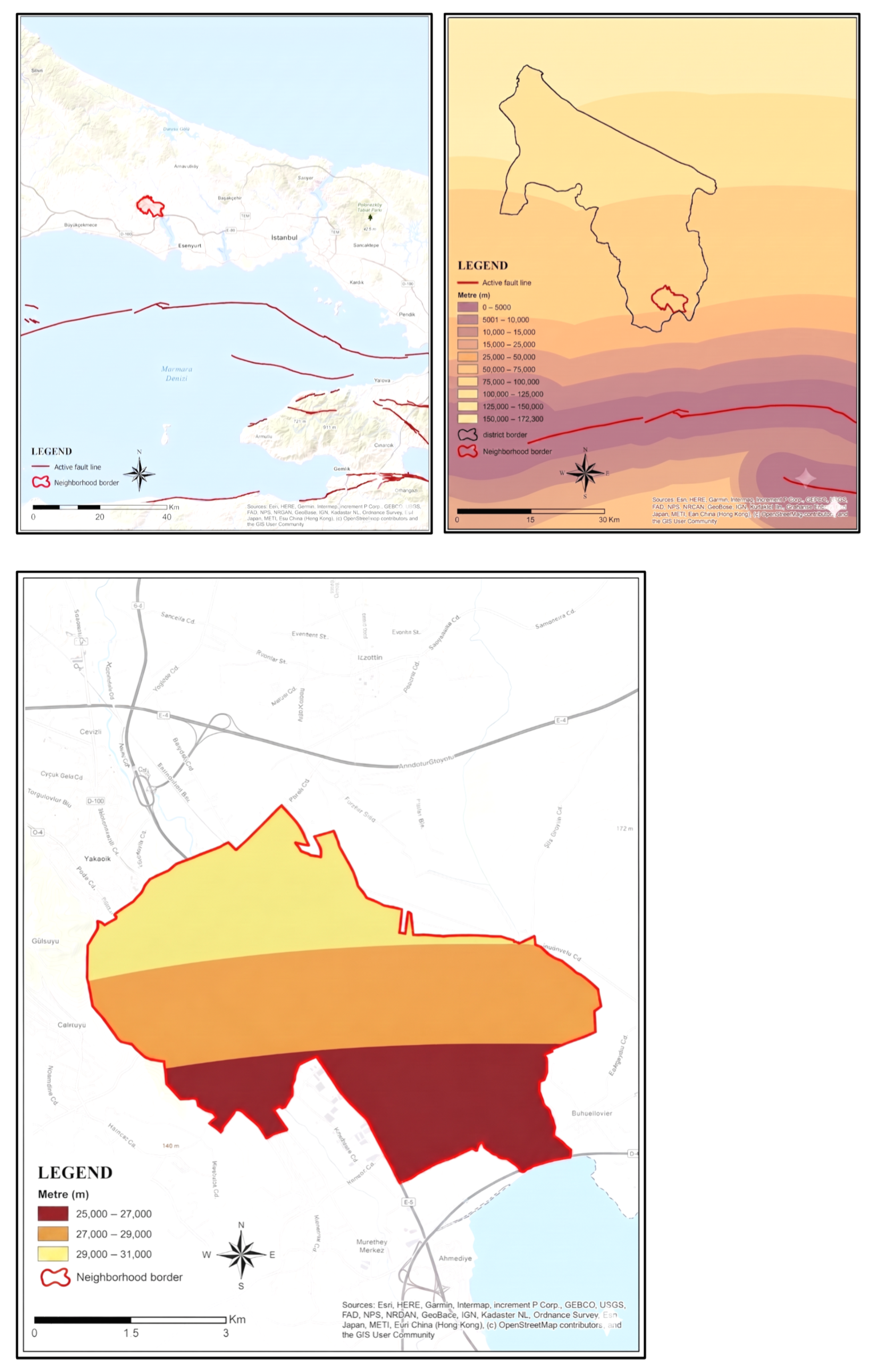
According to the fault-line distance analysis map of Ferhatpaşa Neighborhood, the study area is located within the 25,000–31,000 m distance range from the fault line. Accordingly, fault-line distance was evaluated under three classes for the neighborhood-scale analysis: 25,000–26,999 m, 27,000–28,999 m, 29,000–31,000 m.
As proximity to the fault line increases, seismic hazard increases, and this may also intensify secondary hazards such as slope instability and mass movements (Figure 9).
Figure 9.
Active fault lines and distance-to-fault-line analysis of Ferhatpaşa Neighborhood (by authors).
3.1.6. Distance to Hydrological Features Factor
According to the hydrological analysis map of the study area, the area contains streams, tributaries, watercourses, and dry streambeds. Based on the data obtained from the Istanbul Water and Sewerage Administration (ISKI), there are no watercourses in the region that can be classified as rivers or streams of significant size. The watercourses in Çatalca District are relatively short, and the hydrological network mainly consists of small-scale streams.
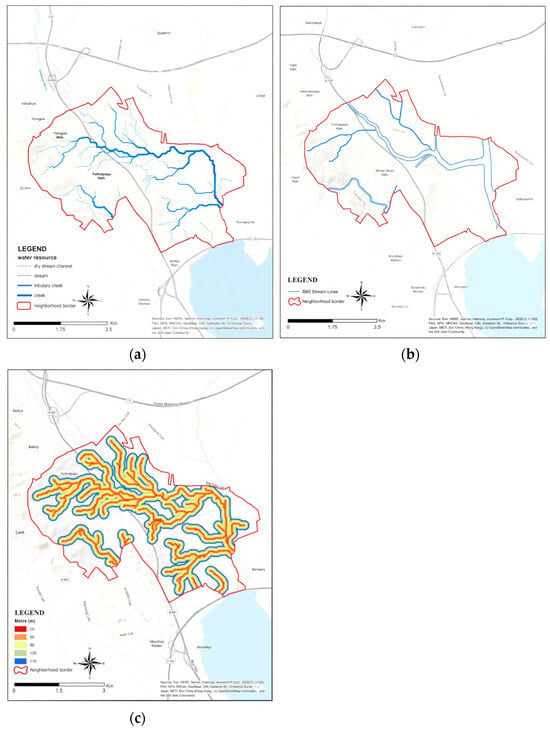
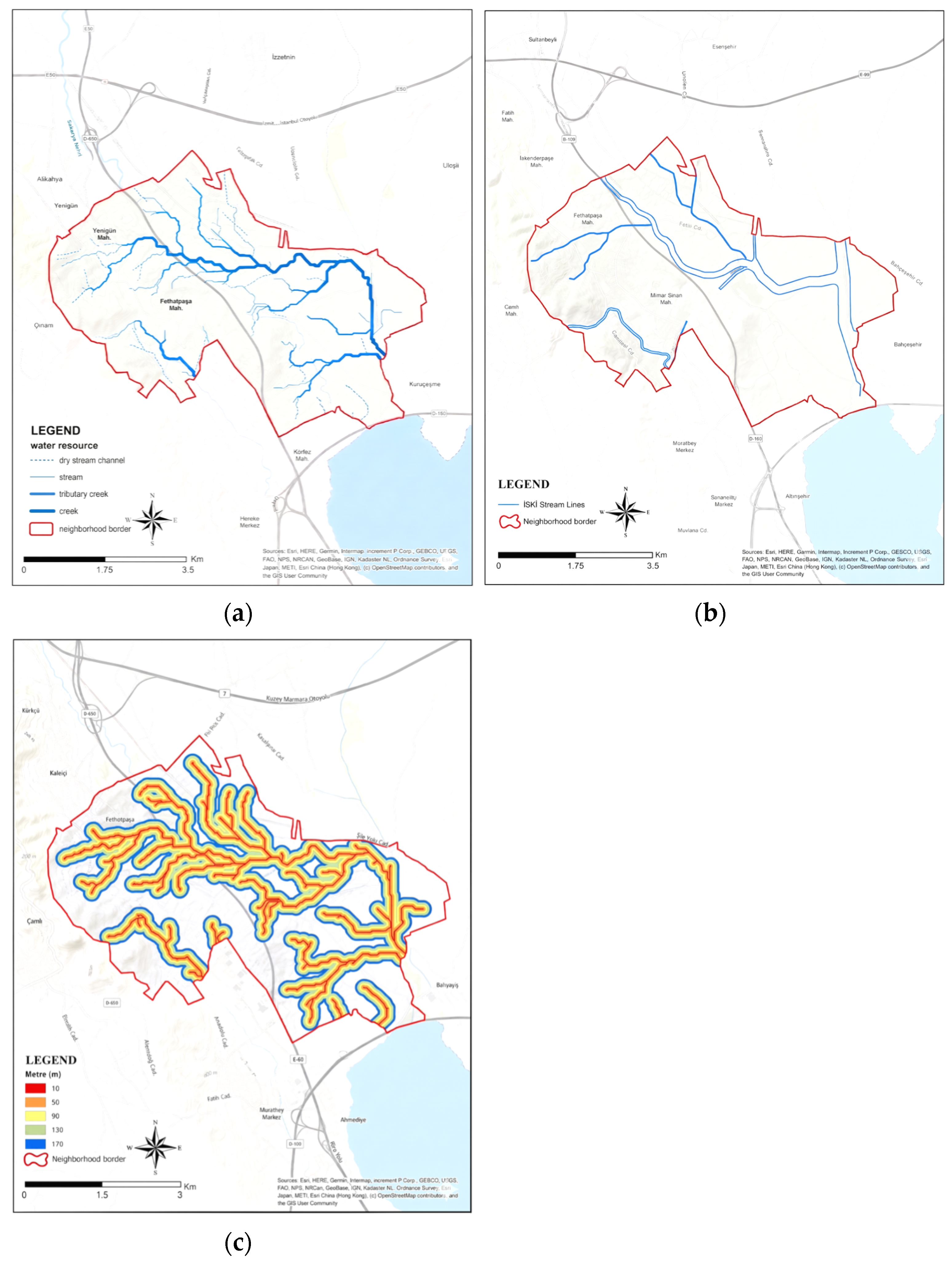
The first analysis of the study area was conducted using Geographic Information Systems (GIS) tools based on the Digital Elevation Model (DEM). A second analysis was then carried out using the hydrological map generated from the data obtained from ISKI. ISKI defines the 10 m buffer zone surrounding stream lines as a “risky protection area.” When the ISKI data and the DEM-based analysis were compared, the DEM-based analysis was found to provide a more detailed representation of local hydrological conditions. Therefore, distances to hydrological features were calculated based on the DEM-derived analysis.
According to the hydrological distance analysis for Ferhatpaşa Neighborhood, the area was classified into five distance classes: 0–10, 10.01–50, 50.01–90, 90.01–130, and 130.01–170 m. Areas located close to existing streambeds are considered to have higher flood and inundation risk depending on their distance from these hydrological features (Figure 10).
Figure 10.
(a). Hydrology analysis with DEM data for Ferhatpaşa Neighborhood (b) Hydrology analysis with ISKI data (c). Distance analysis to hydrological features in Ferhatpaşa Neighborhood (by authors).
3.1.7. Land Use Factor
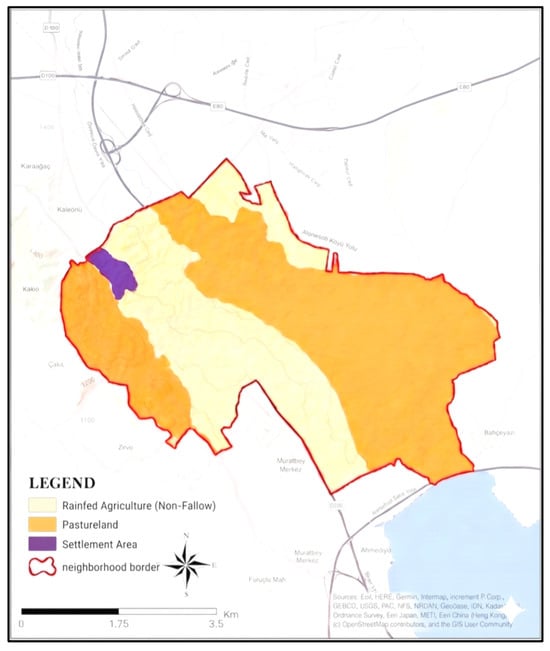
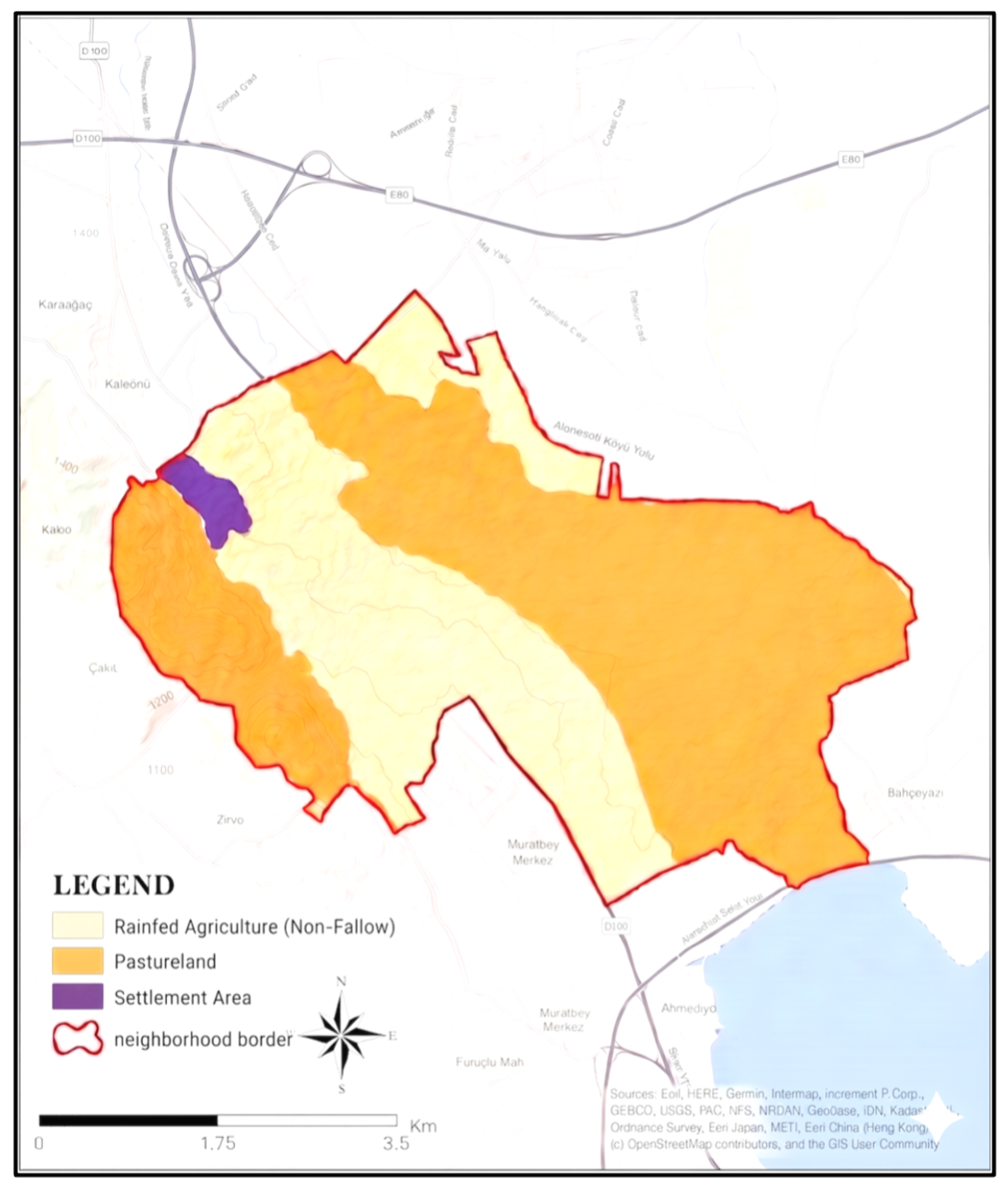
According to the land-use analysis map of the study area, three different land-use types were identified: non-rotational dry farming areas, pasturelands, settlement areas.
The analysis revealed that 37.61% of the area is used for dry farming, while 60.99% consists of pastureland. Settlement areas were classified as high-risk zones in terms of disaster risk (Figure 11).
Figure 11.
Land use map of Ferhatpaşa Neighborhood (by authors).
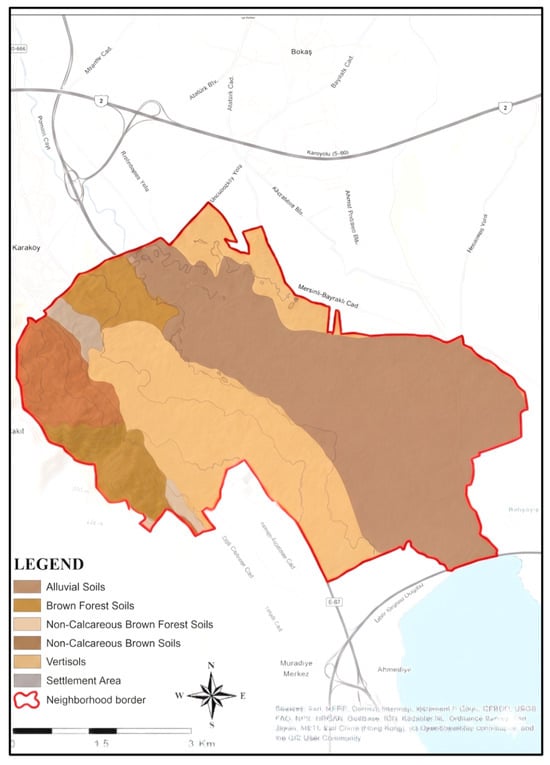
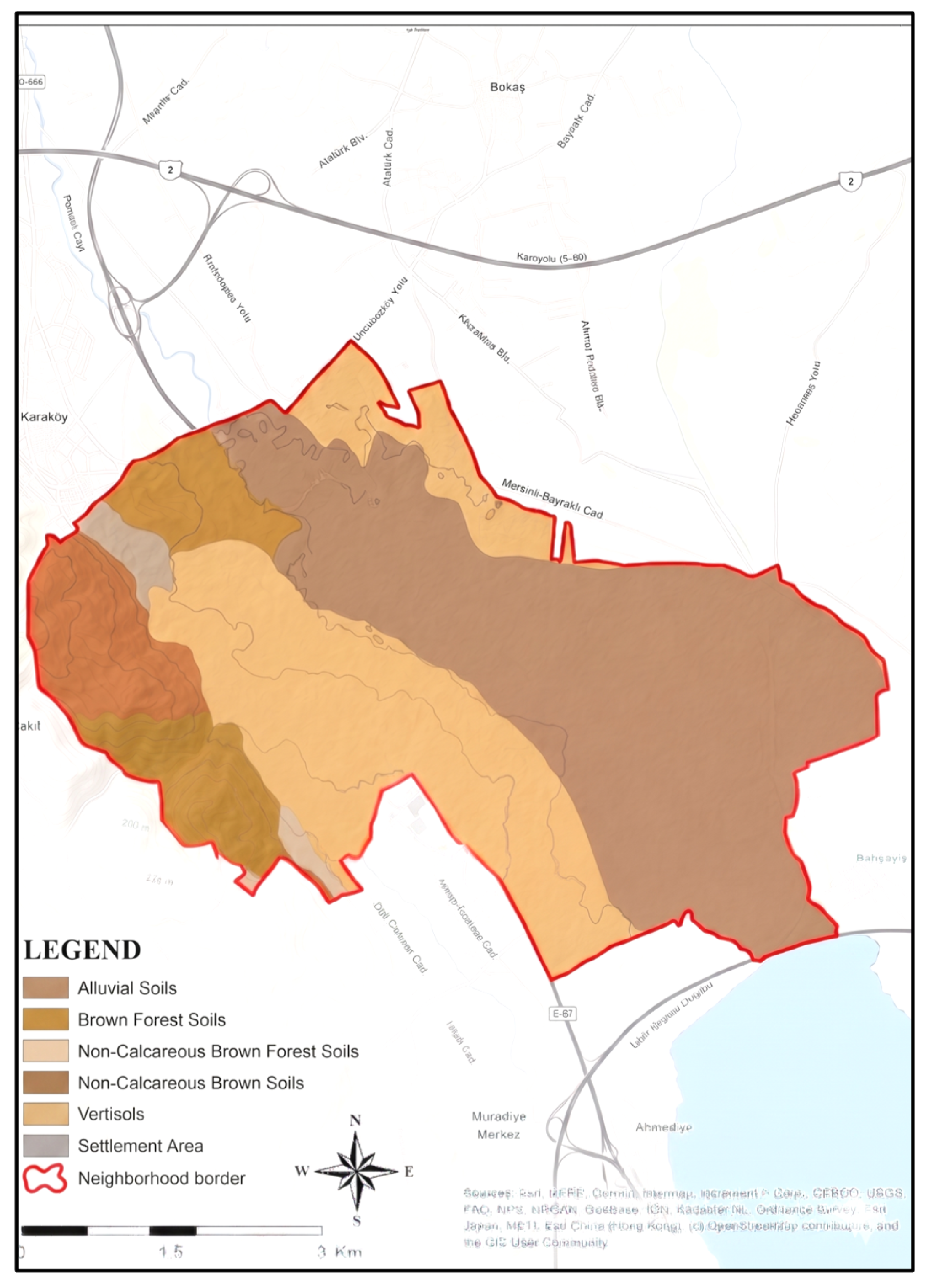
3.1.8. Soil Capability Factor
The analysis results indicate that 56.44% of the area consists of alluvial soils, non-calcareous brown soils, and settlement areas. Compared with the other soil types, these three categories present a higher level of risk in terms of erosion, flooding, and inundation (Figure 12).
Figure 12.
Soil capability analysis of Ferhatpaşa Neighborhood (by authors).
Overall, the reclassified parameter maps indicate that the spatial exposure pattern of Ferhatpaşa Neighborhood cannot be explained by a single variable. Instead, the observed pattern reflects the combined influence of topographic conditions, precipitation distribution, hydrological proximity, soil capability, land use, and distance to active fault lines. This combined spatial pattern provides the basis for interpreting the expert-based weight distribution and the final composite multi-hazard risk map presented in the following subsections.
3.2. Expert-Based Weight Distribution
Within the scope of the Weighted Overlay method, after the reclassification stage, it is necessary to determine the relative weight of each parameter. In this study, the weight values of eight factors—slope, elevation, aspect, soil capability, land use, distance to fault lines, distance to hydrological features, and precipitation amount—were calculated based on expert opinions for the purpose of disaster risk analysis.
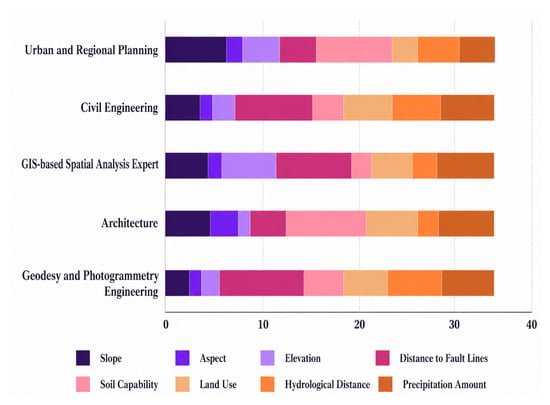
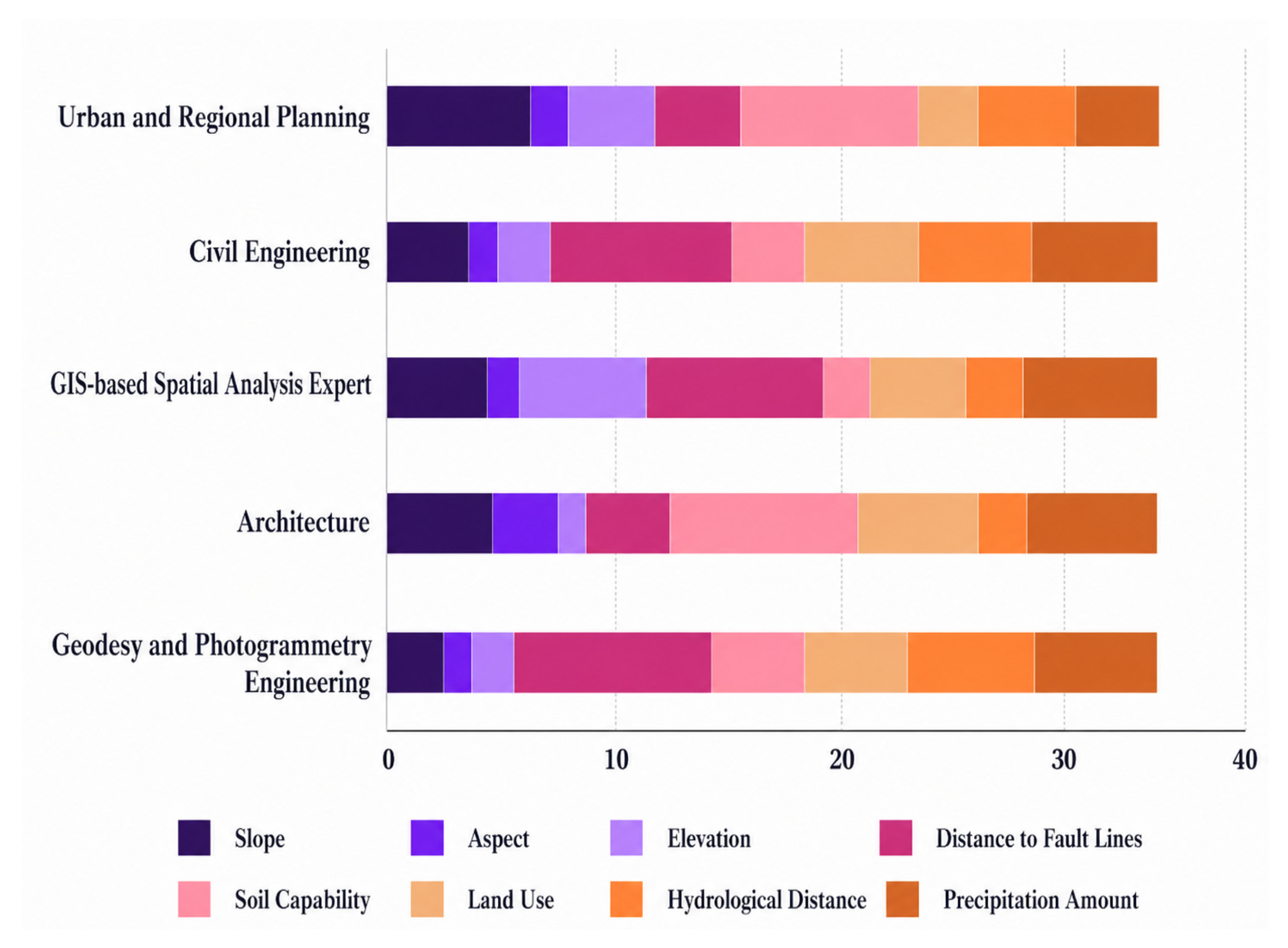
The experts evaluated the priority level of these eight parameters in terms of disaster risk, considering the location of a historic building within its surrounding terrain. The individual expert scores, selection criteria, ranking protocol, and consistency-control procedure are presented in Appendix A to improve the transparency and traceability of the expert-based weighting process. Each parameter was ranked and scored on a scale from 1 to 8, with the highest score assigned to the factor considered to have the highest priority (Figure 13).
Figure 13.
Expert opinions on the prioritization of parameters (by authors).
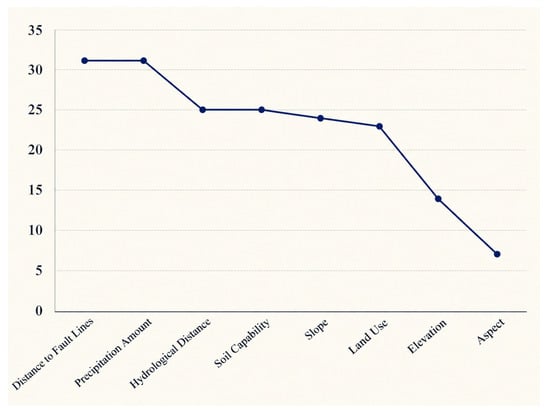
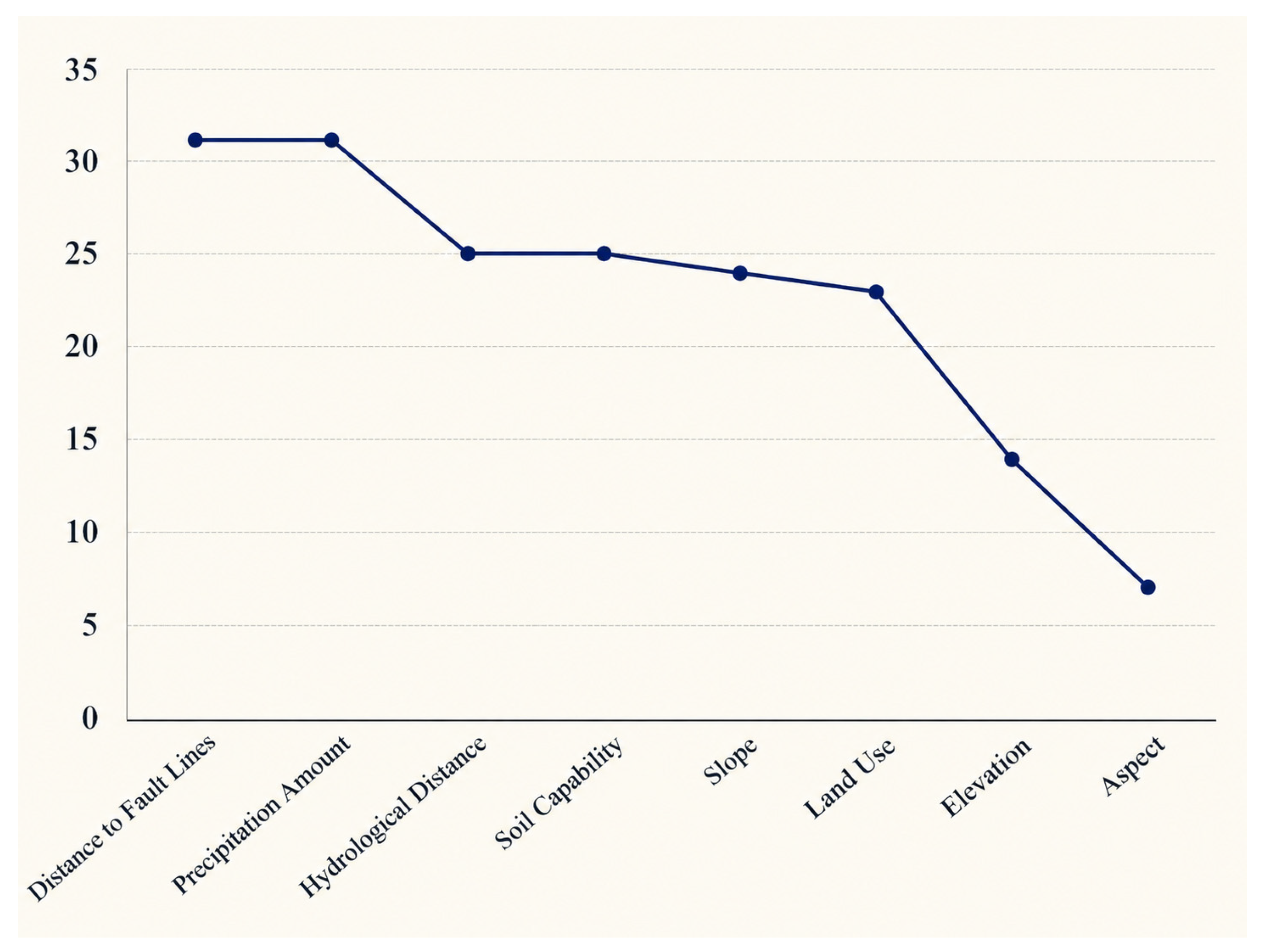
The expert-based weighting results indicate that distance to fault lines and precipitation received the highest weights, each accounting for 17.22% of the total model weight. These were followed by distance to hydrological features and soil capability, each with 13.89%. Slope accounted for 13.33%, land use for 12.78%, elevation for 7.78%, and aspect for 3.89%. This distribution shows that the experts assigned the greatest importance to seismic proximity and precipitation-related exposure, while also recognizing the contribution of hydrological, soil, topographic, and land-use parameters to the overall multi-hazard risk model (Figure 14).
Figure 14.
Total score values in parameters after expert opinions (by authors).
The location of the historic building within its terrain was evaluated according to the total score values of the eight parameters considered in the disaster risk assessment, and percentage distributions were calculated based on expert opinions (Table 6). The reclassified parameters were normalized using their assigned weight values and overlaid through the Weighted Overlay method to produce the final disaster risk analysis.
Table 6.
Weight values of parameters.
According to the expert-based weighting process, distance to fault lines and precipitation amount received the highest weight values, each accounting for 17.22% of the total. These were followed by distance to hydrological features and soil capability, each with 13.89%. Slope accounted for 13.33%, land use for 12.78%, and elevation for 7.78%, while aspect had the lowest weight value at 3.89%.
3.3. Composite Multi-Hazard Risk Map and Risk Level of Ferhatpaşa Mosque
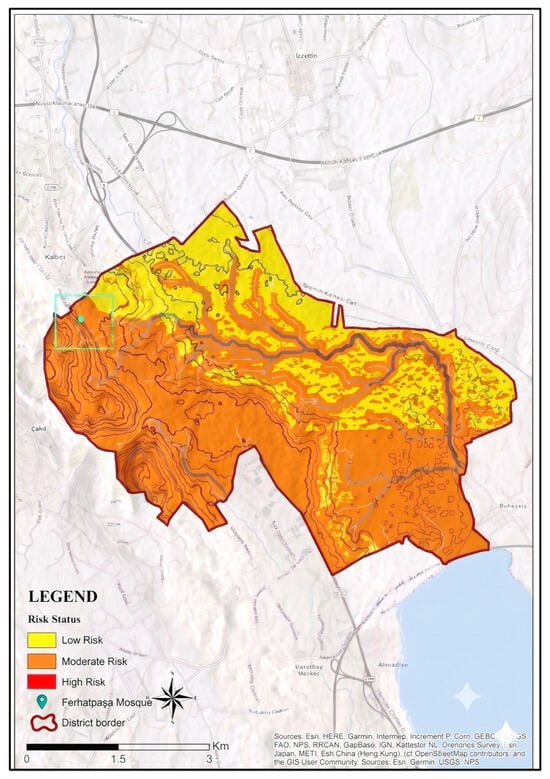
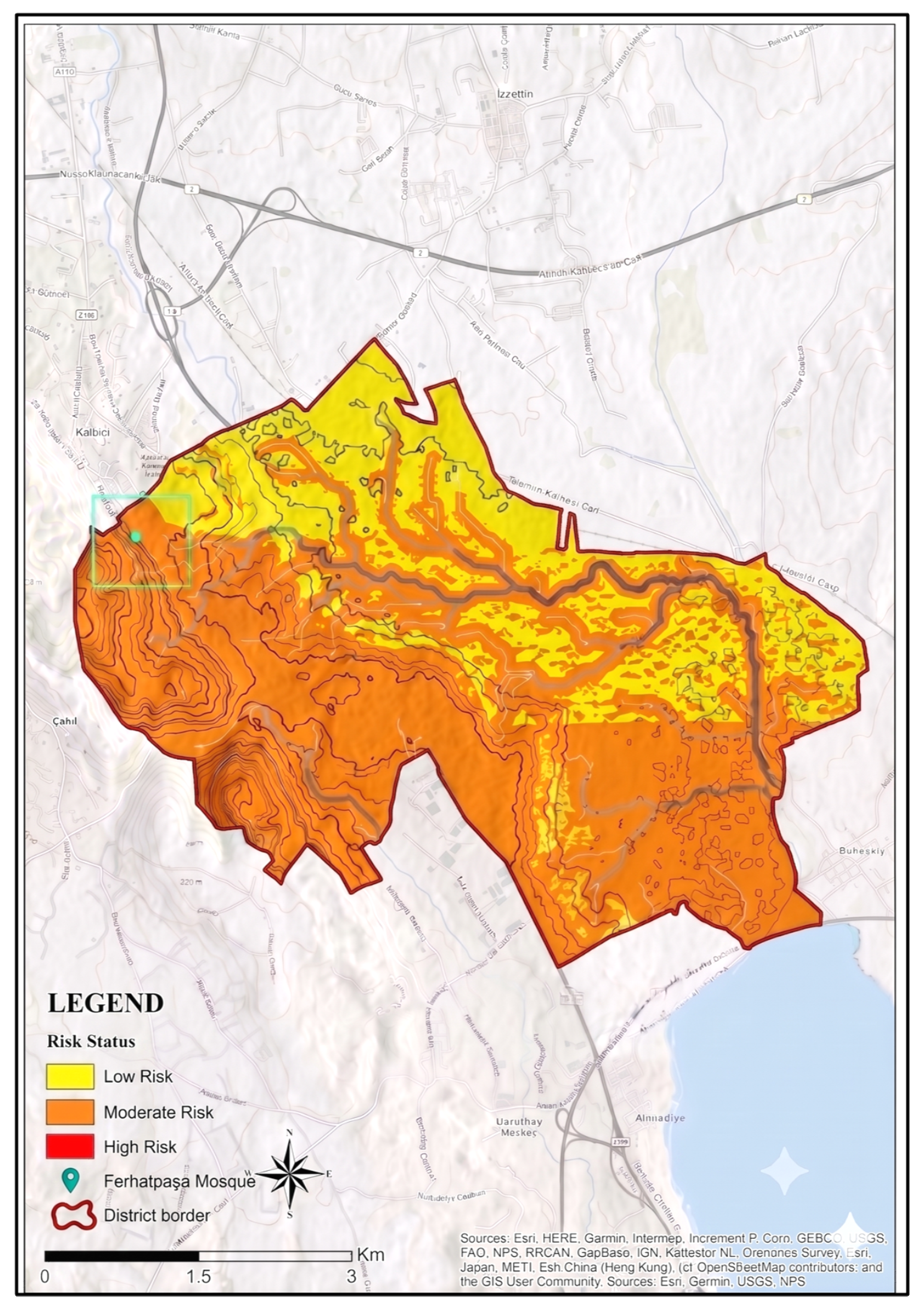
The final Weighted Overlay analysis classified 71.99% of the study area as medium risk, 28% as low risk, and 0.02% as high risk. Ferhatpaşa Mosque was located within the medium-risk zone (Figure 15). The nearest low-risk area is approximately 310 m from the mosque, while the nearest high-risk zone is located approximately 320 m to the south.
Figure 15.
Disaster risk analysis of Ferhatpaşa Neighborhood (by authors).
At the location of Ferhatpaşa Mosque, the local slope ranges between 5% and 15%, and the elevation ranges approximately between 120 and 160 m. The mosque is positioned on northeast-facing terrain, approximately 29,600 m from active fault lines. It is also approximately 250 m from the nearest dry streambed and approximately 800 m from the nearest stream within the hydrological system. The annual precipitation value at the mosque’s location is approximately 1005 mm.
These findings indicate that the medium-risk classification of Ferhatpaşa Mosque is not determined by seismic distance alone. Rather, the mosque’s risk level results from the combined influence of local slope conditions, aspect, soil characteristics, precipitation, hydrological proximity, land use, and distance to active fault lines. The final risk map, therefore, demonstrates the importance of an integrated multi-hazard approach for heritage-oriented disaster risk reduction at the neighborhood scale.
4. Discussion
Ferhatpaşa Mosque’s main walls, which are 1.20 m thick, together with its 9.20 m diameter dome and pendentive transition elements, indicate a certain level of inherent structural robustness derived from its historical construction system. However, the GIS-based analysis shows that the mosque is located on terrain with a local slope of 5–15%. In addition, since the mosque is positioned at a higher elevation than the street level to the east, its ablution courtyard is enclosed by retaining walls on three sides.
Ferhatpaşa Mosque’s main walls, which are 1.20 m thick, together with its 9.20 m diameter dome and pendentive transition elements, indicate a certain level of inherent structural robustness derived from its historical construction system. However, the GIS-based analysis shows that the mosque is located on terrain with a local slope of 5–15%. In addition, since the mosque is positioned at a higher elevation than the street level to the east, its ablution courtyard is enclosed by retaining walls on three sides. Within the scope of the present GIS-based model, these conditions should be interpreted as indicators of potential site-level exposure rather than as direct evidence of structural instability.
The results suggest that the medium-risk classification of Ferhatpaşa Mosque is not determined by distance to active fault lines alone. Although the mosque is located approximately 29,600 m from active fault lines, the combined presence of local slope conditions, northeast-facing aspect, calcareous brown soil, high annual precipitation, and proximity to a dry streambed contributes to a cumulative multi-hazard exposure profile. These findings support the need to evaluate earthquake-related heritage risk through an integrated spatial framework that considers soil, topography, hydrology, precipitation, and land-use conditions together.
However, the present study does not include geotechnical testing, retaining-wall stability analysis, structural performance assessment, or site-specific seismic response modeling. Therefore, statements regarding seismic amplification, hydrostatic pressure, retaining-wall behavior, or foundation-level structural response should be understood as potential mechanisms that require further engineering verification, not as direct findings of this GIS-based analysis. Future building-scale studies should combine geotechnical investigation, structural assessment, and local seismic response analysis to verify how the identified environmental and spatial risk factors may affect the physical performance of Ferhatpaşa Mosque. Although the mosque’s massive wall system and domed structural configuration point to a certain degree of historical construction resilience, the slope conditions and the necessity of retaining walls increase the overall risk level of the site to a medium-risk category. Since this study does not provide a detailed building-scale structural performance analysis, the seismic safety level of the mosque should be further examined through engineering-based assessments.
According to the analysis results, Ferhatpaşa Mosque is located approximately 29,600 m from active fault lines, which may be considered a relatively safe distance in seismic terms. Nevertheless, its classification within the medium-risk zone demonstrates that the risk level is not determined by seismic hazard alone, but by the cumulative effects of soil and meteorological parameters. The annual precipitation value of approximately 1005 mm in the area and the soil characteristics around the mosque help explain this condition.
The surrounding brown soil is sensitive to erosion and leaching processes. When combined with high precipitation, this may cause the slope soil to become water-saturated, may indicate a potential hydro-seismic interaction that requires further verification. This finding indicates that earthquake risk should not be assessed only in relation to proximity to fault lines, but through an integrated multi-hazard approach that considers soil, topography, hydrology, and climatic conditions together.
According to DEZİM [9], under a possible Mw 7.5 Istanbul earthquake scenario, 8 buildings in Ferhatpaşa Neighborhood are expected to suffer severe damage, while 40 buildings are expected to experience moderate damage. The neighborhood is also identified as one of the vulnerable areas in terms of potential population loss and building stock fragility. This urban vulnerability directly affects the post-disaster management of the historic Ferhatpaşa Mosque. Possible building collapses and infrastructure damage in the surrounding settlement areas may obstruct access to the historic structure after a disaster, particularly for fire brigades and emergency response teams.
On the other hand, Çatalca District has potential relevance for post-earthquake spatial planning in Istanbul due to its low-rise settlement pattern and extensive pasturelands. The immediate surroundings of Ferhatpaşa Mosque are also characterized by relatively open land-use patterns, which may support local gathering or emergency access functions after a disaster. However, this potential should not be interpreted as a direct functional recommendation for the mosque or its courtyard. Rather, the medium-risk classification identified by the GIS-based model indicates that any post-disaster public or logistical use of the area should first be evaluated through more detailed site-specific studies. In particular, the retaining walls surrounding the courtyard, drainage conditions, and access routes should be examined through engineering-based and conservation-oriented assessments before any disaster-management role is assigned to the historic site.
Limitations and Future Research
This study has several methodological limitations that should be acknowledged in order to clarify the scope of the findings. First, the analysis was conducted at the neighborhood scale. Therefore, the results provide a spatial decision-support framework for identifying relative multi-hazard exposure around Ferhatpaşa Mosque, rather than a building-scale diagnosis of structural performance. Although the model indicates that the mosque is located within a medium-risk zone, this classification should not be interpreted as a direct measurement of structural vulnerability or expected physical damage.
Second, the weighting procedure was based on expert judgment. Although the use of experts from different disciplines strengthened the interdisciplinary character of the model, the assigned weights remain partly dependent on professional interpretation. For this reason, the results should be understood as an expert-informed spatial assessment rather than an entirely objective or deterministic risk calculation. Future studies should expand the expert panel, apply multi-round evaluation procedures, and test alternative weighting scenarios to improve the robustness of the model.
Third, the accuracy of the model depends on the quality, spatial resolution, temporal currency, and thematic precision of the input datasets. The analysis integrated data layers derived from official institutions, DEM-based processing, hydrological data, precipitation data, soil capability, land use, and fault-line information. However, differences in data scale, production date, spatial resolution, and classification detail may influence the final risk map. Future research should use higher-resolution and more frequently updated datasets, particularly for micro-topography, drainage patterns, land-use change, and local soil conditions.
Fourth, this study did not include geotechnical field testing, soil sampling, laboratory analysis, retaining-wall stability assessment, or site-specific seismic response modeling. Consequently, the study cannot directly confirm mechanisms such as seismic amplification, hydrostatic pressure, settlement, liquefaction, or retaining-wall failure. These mechanisms are discussed only as potential processes that may require further investigation in relation to the spatial risk indicators identified by the GIS-based model.
Fifth, no detailed structural evaluation of Ferhatpaşa Mosque was carried out within the scope of this research. The study did not include material testing, structural modeling, damage assessment, dynamic analysis, or performance-based seismic evaluation of the historic building. Therefore, the findings should be used as a preliminary spatial screening tool to guide conservation priorities, not as a substitute for engineering-based structural assessment.
Future research should proceed in three directions. First, long-term monitoring should be established for Ferhatpaşa Mosque and its immediate surroundings, including crack monitoring, moisture observation, retaining-wall condition assessment, and periodic documentation of drainage and surface runoff conditions. Second, local seismic analysis should be conducted by integrating site-specific geotechnical investigation, microzonation data, and structural performance assessment of the mosque. Third, the proposed GIS-based multi-hazard model should be validated through application to other registered cultural heritage assets in Ferhatpaşa Neighborhood, Çatalca District, and other seismic historic urban areas. Such comparative validation would make it possible to test the transferability of the model and refine its use as a heritage-oriented disaster risk reduction tool.
A further methodological limitation concerns the absence of a full GIS-based weight sensitivity analysis. Although the parameter weights were derived from a structured expert-based ranking procedure and normalized before integration into the Weighted Overlay model, the final risk map could not be recalculated under alternative weighting scenarios. The original GIS project files and the full set of reclassified raster layers required for scenario-based model recalculation were not available at the revision stage. Therefore, the percentage distribution of low-, medium-, and high-risk areas under ±10% weight variation scenarios could not be reliably derived.
It should be emphasized that revised risk percentages cannot be calculated from parameter weights alone. Such values require re-running the Weighted Overlay model for each scenario using the full set of reclassified raster layers and then calculating the number of raster cells assigned to each risk class. For this reason, the present study reports the baseline model results and identifies systematic weight sensitivity testing as a priority for future research. Future studies should recalculate the model under alternative weighting scenarios, such as ±10% or ±20% variation in the most influential parameters, to evaluate the stability of the final risk classification and the risk class assigned to Ferhatpaşa Mosque.
5. Conclusions
This study developed a GIS-based multi-hazard assessment model to evaluate the disaster-related spatial exposure of Ferhatpaşa Mosque, a registered sixteenth-century Ottoman cultural heritage asset located in Çatalca, Istanbul. By integrating slope, elevation, aspect, precipitation, distance to fault lines, distance to hydrological features, soil capability, and land use through the Weighted Overlay method, the study moved beyond a single-hazard interpretation and produced a composite neighborhood-scale risk map for heritage-oriented disaster risk reduction.
The results showed that 71.99% of the study area was classified as medium risk, 28% as low risk, and 0.02% as high risk. Ferhatpaşa Mosque was located within the medium-risk zone. This finding indicates that the mosque’s risk profile cannot be explained only by its distance from active fault lines. Instead, the spatial risk pattern is shaped by the combined effects of local slope conditions, soil characteristics, precipitation, hydrological proximity, aspect, land use, and seismic context. In this respect, the study demonstrates the value of an integrated multi-hazard approach for cultural heritage conservation and risk-sensitive planning.
The main contribution of the study is the development of a reproducible GIS-based decision-support framework that can help local authorities, conservation bodies, and disaster risk management agencies identify priority areas for preventive action. The revised workflow clarifies the sequence from data acquisition and spatial standardization to reclassification, expert-based weighting, weighted overlay analysis, field validation, and final risk interpretation. The study, therefore, offers a transferable methodological structure for assessing heritage assets located in hazard-prone historic urban environments.
However, the conclusions of this study should be interpreted within the methodological scope of the research. The findings are supported by the baseline GIS-based Weighted Overlay model, the expert-based weighting procedure, and the spatial classification results reported in this study. They demonstrate the neighborhood-scale multi-hazard exposure of Ferhatpaşa Mosque, but they do not provide a deterministic measurement of structural vulnerability, expected physical damage, retaining-wall stability, or site-specific seismic performance. Therefore, the medium-risk classification of the mosque should be read as a spatial screening result that can guide conservation priorities and further investigation, rather than as a direct engineering diagnosis.
Accordingly, future research should combine GIS-based risk mapping with building-scale monitoring, geotechnical testing, structural performance assessment, retaining-wall stability analysis, and comparative validation across other registered cultural heritage assets. Such an integrated research agenda would strengthen the evidential basis of heritage-oriented disaster risk reduction and support more proactive conservation planning in seismic metropolitan regions.
While many disaster risk analysis studies generally focus on macro-scale analyses at the provincial or district level, this study differs by placing a registered cultural heritage asset at the center of a neighborhood-scale, micro-level analysis. Unlike conventional seismic risk maps, which mainly focus on ground-shaking intensity, the Weighted Overlay method applied in this study enabled the normalization and integration of eight different parameters, including slope, hydrology, precipitation, and land use, into a composite risk score.
The fact that distance to fault lines and precipitation received the highest weight values, based on the evaluations of an interdisciplinary expert panel, supports the relevance of a multi-hazard approach. This finding indicates that the disaster risk affecting cultural heritage cannot be explained through seismic proximity alone, but should instead be assessed through the combined effects of environmental, topographical, hydrological, and climatic parameters.
The findings of this study are expected to contribute to central and local governments, non-governmental organizations, the private sector, academic research, and international institutions working on cultural heritage protection. By proposing a GIS-based, neighborhood-scale, and heritage-oriented decision-support model, the study aims to address a gap in the integration of cultural heritage conservation with disaster risk reduction and sustainable urban resilience planning.
Author Contributions
Conceptualization, I.C. and H.O.; methodology, I.C. and H.O.; literature review, H.O.; fieldwork, H.O.; data collection and compilation, H.O.; data processing and analysis, H.O.; visualization, H.O. and I.C.; interpretation of findings, I.C. and H.O.; writing—original draft preparation, I.C. and H.O.; writing—review and editing, I.C. and H.O.; supervision, I.C. All authors have read and agreed to the published version of the manuscript.
Funding
This research received no external funding.
Institutional Review Board Statement
Not applicable. This study did not involve human subjects, human biological material, human tissue, human clinical data, animal subjects, or animal data. The research was based on publicly available geospatial and environmental datasets, literature-based data, field-based architectural/urban observation, and a GIS-based multi-hazard assessment model. The expert-based component was limited to anonymized professional judgment for the technical weighting of assessment criteria; no personal, sensitive, identifiable, biomedical, clinical, psychological, demographic, or behavioral data were collected. The study was conducted in accordance with the relevant national ethical framework, including the Higher Education Institutions Scientific Research and Publication Ethics Directive of Türkiye, particularly Articles 4(2)(c), 4(2)(g), and 5(1), with respect to ethical compliance, explicit consent, anonymization, and the responsible use of data.
Informed Consent Statement
Informed consent was obtained from all experts who participated in the expert-based weighting process. No personal or identifiable information was collected or reported in this study.
Data Availability Statement
The data presented in this study are available from the corresponding author upon reasonable request. Some datasets were obtained from public institutions and are subject to third-party restrictions.
Acknowledgments
The authors would like to thank the Istanbul Gelişim University Institute of Graduate Studies, the Head of the Department of Artworks and Construction Affairs, and the Directorate of Artworks and Construction Affairs for their support in providing the necessary documents for the realization of this study.
Conflicts of Interest
The authors declare no conflict of interest.
Correction Statement
This article has been republished with a minor correction to the Institutional Review Board Statement. This change does not affect the scientific content of the article.
Abbreviations
The following abbreviations are used in this manuscript:
| AFAD | Disaster and Emergency Management Presidency |
| ISKI | Istanbul Water and Sewerage Administration |
| ISMEP | Istanbul Seismic Risk Mitigation and Emergency Preparedness Project |
| GIS | Geographic Information Systems |
| DEM | Digital Elevation Model |
| IDW | Inverse Distance Weighted |
Appendix A. Expert-Based Weighting Protocol and Individual Response Matrix
Table A1.
Expert selection criteria and disciplinary contribution.
Table A2.
Individual expert response matrix used for parameter weighting.
Table A3.
Consistency-control procedure.
References
- Nirupama, N. Disaster risk management. In Encyclopaedia of Natural Hazards; Bobrowsky, P.T., Ed.; Springer: Dordrecht, The Netherlands, 2013; pp. 164–170. [Google Scholar] [CrossRef] [Scilit]
- Pedersoli, J.L., Jr.; Antomarchi, C.; Michalski, S. A Guide to Risk Management of Cultural Heritage; ICCROM: Rome, Italy; Government of Canada, Canadian Conservation Institute: Ottawa, ON, Canada, 2016. Available online: https://www.iccrom.org/ (accessed on 17 October 2024).
- AFAD, Afet (Disaster) (n.t) Açıklamalı Afet Yönetimi Terimleri Sözlüğü (An Annotated Glossary of Disaster Management Terms). Available online: https://www.afad.gov.tr/aciklamali-afet-yonetimi-terimleri-sozlugu (accessed on 17 October 2024).
- Gökçe, O.; Tetik, Ç. Teoride ve Pratikte Afet Sonrası Iyileştirme Çalışmaları. (Post-Disaster Recovery Efforts in Theory and Practice). Ankara: T.C. Prime Ministry Disaster and Emergency Management Presidency. 2012. Available online: https://www.afad.gov.tr/kurumlar/afad.gov.tr/3479/xfiles/afet_sonrasi_iyilestirme_calismalari-1.pdf (accessed on 19 October 2024).
- Varol, N.; Gültekin, T. Afet Antropolojisi. (Anthropology of Disaster). Electron. J. Soc. Sci. 2016, 15, 1431–1436. [Google Scholar] [CrossRef]
- UNDRR. GAR Special Report 2024 Forensic Insights For Future Resilience: Learning From the Past Disasters. 2024. Available online: https://www.undrr.org/gar/gar2024-special-report (accessed on 24 November 2025).
- UNDRR. Resilience Pays: Investing and Financing For Our Future. 2025. Available online: https://www.undrr.org/gar/gar2025 (accessed on 24 November 2025).
- Ertürk, A.T. Seismicity Potential Risk of Istanbul and Possible Scenario of a 7.6 Magnitude Earthquake. Master’s Thesis, Technological University Dublin, Dublin, Ireland, 2024. [Google Scholar]
- IBB Deprem ve Zemin İnceleme Müdürlüğü (Istanbul Metropolitan Municipality Directorate of Earthquake and Geotechnical Investigations), Project to Update Estimates of Potential Earthquake Losses in Istanbul Province (Mw 7.5 Scenario Earthquake). 2019. Available online: https://depremzemin.ibb.istanbul/tr/istanbul-ili-olasi-deprem-kayip-tahminlerinin-guncellenmesi-projesi (accessed on 24 November 2025).
- Necipoğlu, G. Sinan Çağı: Osmanlı İmparatorluğu’nda Mimarî Kültür (Age of Sinan Architectural Culture in the Ottoman Empire); Istanbul Bilgi University Publications: Istanbul, Turkey, 2017. [Google Scholar]
- Sarrafoğlu, F. Architect Sinans’s Signature at Catalca, Istanbul’un Sırları (The Secrets of Istanbul). 2024. Available online: https://www.istanbulunsirlari.net/2024/01/12/catalcada-mimar-sinan-imzasi/?utm_source=chatgpt.com (accessed on 12 June 2026).
- Bahadır, M.; Ocak, F.; Şen, H. Determination of the development of settlements above earthquake susceptibility classes in Atakum district (Samsun/Türkiye). Int. J. Eng. Geosci. 2024, 9, 390–405. [Google Scholar] [CrossRef] [Scilit]
- Esmael, S.S. Seismic Risk Assessment Using Geographical Information System (GIS) with Analytic Hierarchy Process (AHP). Master’s Thesis, Department of Remote Sensing and Geographic Information Systems, Institute of Natural Sciences, Anadolu University, Eskişehir, Turkey, 2018. Available online: https://tez.yok.gov.tr/ (accessed on 24 October 2025).
- Ocak, F.; Bahadır, M. Örnek taşkın risk modeli oluşturulması ve Ünye şehrindeki derelere ait taşkın risk analizleri. (Creation of a sample flood risk model and flood risk analysis of streams in Ünye city). J. Acad. Soc. Sci. Stud. 2020, 80, 499–524. [Google Scholar] [CrossRef] [Scilit]
- Ocak, F. Ünye Şehir Sellerinin Zarar Görebilirlik Yöntemi ile Incelenmesi. (Investigation of Ünye City Floods by Vulnerability Method). Master’s Thesis, Department of Geography, Institute of Social Sciences, Ondokuz Mayis University, Samsun, Turkey, 2018. Available online: https://tez.yok.gov.tr/ (accessed on 24 October 2025).
- T.C. Ministry of Agriculture and Rural Affairs; Research Planning and Coordination Board; Edirne Agricultural Provincial Directorate. Support Project for the Preparation of Provincial Agriculture and Rural Development Master Plans—Edirne Agriculture Master Plan. (Updated by Tuncay Sarı); 2005. Available online: https://www.tarimorman.gov.tr/sgb/belgeler/master/edirne.pdf (accessed on 24 October 2025).
- Taş, E. Coğrafi Bilgi Sistemleri Teknikleri kullanılarak taşkın risk potansiyelinin değerlendirilmesi: Afyonkarahisar Çay Deresi Havzası. (Assessment of flood risk potential using Geographic Information Systems Techniques: Afyonkarahisar Çay Stream Basin). Clim. Change Environ. 2018, 3, 68–74. [Google Scholar]
- Özdemir, H. Havran Çayı Havzası’nın (Balıkesir) CBS ve Uzaktan Algılama Yöntemleriyle Taşkın ve Heyelan Risk Analizi. (Flood and landslide Risk Analysis of Havran Stream Basin (Balıkesir) Using GIS and Remote Sensing Methods). Doctoral Dissertation, Department of Geography, Institute of Social Sciences, Istanbul University, Istanbul, Turkey, 2007. Available online: https://nek.istanbul.edu.tr/ekos/TEZ/42817.pdf (accessed on 24 October 2025).
- İSMEP Guidebooks. Protection of Cultural Heritage. Istanbul. (ISMEP Guidebooks Published within the Scope of “Istanbul Seismic Risk Mitigation and Emergency Preparedness Project” (ISMEP) Conducted by Istanbul Governorship, Istanbul Project and Coordination Unit (IPKB), Prepared by Beyaz Gemi Social Project Agency). 2014. Available online: https://www.ipkb.gov.tr/e-kutuphane/kulturel-mirasin-korunmasi_65/ (accessed on 24 October 2025).

Disclaimer/Publisher’s Note: The statements, opinions and data contained in all publications are solely those of the individual author(s) and contributor(s) and not of MDPI and/or the editor(s). MDPI and/or the editor(s) disclaim responsibility for any injury to people or property resulting from any ideas, methods, instructions or products referred to in the content. |
© 2026 by the authors. Licensee MDPI, Basel, Switzerland. This article is an open access article distributed under the terms and conditions of the Creative Commons Attribution (CC BY) license.