1. Introduction
Rainfall is a fundamental component of the hydrological cycle and plays a critical role in shaping regional water availability, flood generation, drought development, agricultural production, and ecosystem stability [
1]. Under climate change, rainfall patterns are changing not only in terms of total amount but also in terms of frequency, intensity, duration and seasonal distribution [
2]. Such changes can alter the timing and magnitude of water inputs to river basins and may further affect the balance between water supply and water demand. In many monsoon-influenced regions, rainfall tends to become more unevenly distributed, with heavy rainfall events occurring over shorter periods and dry intervals becoming more pronounced [
3]. Increases in heavy rainfall intensity and the clustering of rainfall events can enhance flood-related hazards, whereas prolonged rainfall deficits and longer dry spells can intensify meteorological drought [
4]. These two types of hazards are not independent, as the same basin may experience both concentrated rainfall and seasonal precipitation deficits under a more variable climate [
5]. Therefore, understanding changes in rainfall patterns is essential for assessing both flood and drought hazards and for supporting sustainable water resources management under a changing climate.
Previous studies have widely examined changes in extreme precipitation, rainfall concentration, and drought conditions at global, national, and regional scales [
6,
7]. Extreme rainfall indices such as annual maximum precipitation, heavy rainfall days, and consecutive wet days have been commonly used to evaluate flood-related rainfall hazards, while drought indices such as the standardized precipitation index (SPI) have been used to characterize meteorological drought variability [
8]. These studies have provided important insights into how rainfall extremes and drought events respond to climate variability and long-term climate change [
9]. However, flood and drought hazards are typically investigated separately, with extreme rainfall studies mainly emphasizing heavy precipitation and drought studies mainly focusing on precipitation deficits.
Recent research has increasingly recognized that floods and droughts should not always be treated as independent hydroclimatic phenomena. Compound-event studies have shown that multiple hazards may interact across variables, locations, or time, while drought-to-flood and wet-to-dry transitions can create management challenges that are not captured by conventional single-hazard assessments [
10]. International studies have therefore developed compound-event typologies, transition-based analyses, multivariate probability models, and spatially compounding frameworks to characterize the dependence and sequencing of hydrological extremes [
11]. For example, Götte and Brunner examined hydrological drought-to-flood transitions across different hydroclimatic regions and demonstrated that transition characteristics vary substantially among climatic settings [
12]. In China, increasing attention has been given to drought–flood abrupt alternation in the Huaihe, Huang–Huai–Hai, Yangtze, and other monsoon-dominated basins [
13,
14]. These studies demonstrate that strong rainfall seasonality and rapid shifts between precipitation deficits and excesses can produce complex hydroclimatic conditions, particularly in climatic transition zones.
Despite these advances, most existing studies have focused on abrupt drought–flood transitions, individual extreme events, or separate assessments of precipitation extremes and drought. Comparatively fewer studies have integrated rainfall pattern indicators, flood-related rainfall extremes, and SPI-based drought indicators to examine their long-term coexistence and spatial differentiation within the same basin. This limitation is particularly relevant in climatic transition regions, where strong rainfall seasonality and spatial heterogeneity may produce flood-dominated, drought-dominated, and compound conditions in different parts of the basin. A simple and transparent classification framework is therefore needed to improve the regional interpretation of hydroclimatic variability and support differentiated water resources management.
The Huaihe River Basin is a typical climatic transition zone between northern and southern China and has long been affected by both floods and droughts [
15]. The basin is characterized by strong monsoon influences, large interannual precipitation variability, uneven seasonal rainfall distribution, and a clear north–south precipitation gradient. A large proportion of annual rainfall occurs during the flood season from June to September, while prolonged precipitation deficits outside or within the rainy season may lead to meteorological drought [
16]. The basin also contains extensive plains, lakes, and low-lying depressions in its middle and lower reaches, which increases its sensitivity to heavy and persistent rainfall [
17,
18]. At the same time, the spatial contrast between the relatively drier northern areas and wetter southern mountainous areas makes drought and flood hazards highly uneven across the basin [
19]. This combination of climatic transition, seasonal rainfall concentration, and complex terrain creates a typical setting in which flood- and drought-related hazards may coexist and vary substantially in space [
20]. Therefore, the Huaihe River Basin provides a representative region for investigating how long-term changes in rainfall patterns affect flood- and drought-related hazards.
To address these gaps, this study develops an integrated rainfall-based framework to assess the long-term temporal evolution and spatial differentiation of flood- and drought-related hydroclimatic conditions in the Huaihe River Basin. Specifically, the objectives are to (1) characterize long-term changes in rainfall amount, frequency, intensity, and dry–wet persistence; (2) evaluate the spatial and temporal evolution of flood-related rainfall extremes and SPI-based drought conditions; and (3) construct a simple compound flood–drought hazard classification framework to identify flood-dominated, drought-dominated, and compound hazard zones. By identifying spatial differences in flood- and drought-related rainfall hazards, this study can provide a scientific basis for more targeted and climate-adaptive water resources planning. Such information is relevant to sustainability because it can support the efficient allocation of water resources, improve preparedness for hydroclimatic extremes, and help balance flood protection, drought preparedness, and long-term water-security objectives in climatic transition regions.
2. Materials and Methods
2.1. Study Area
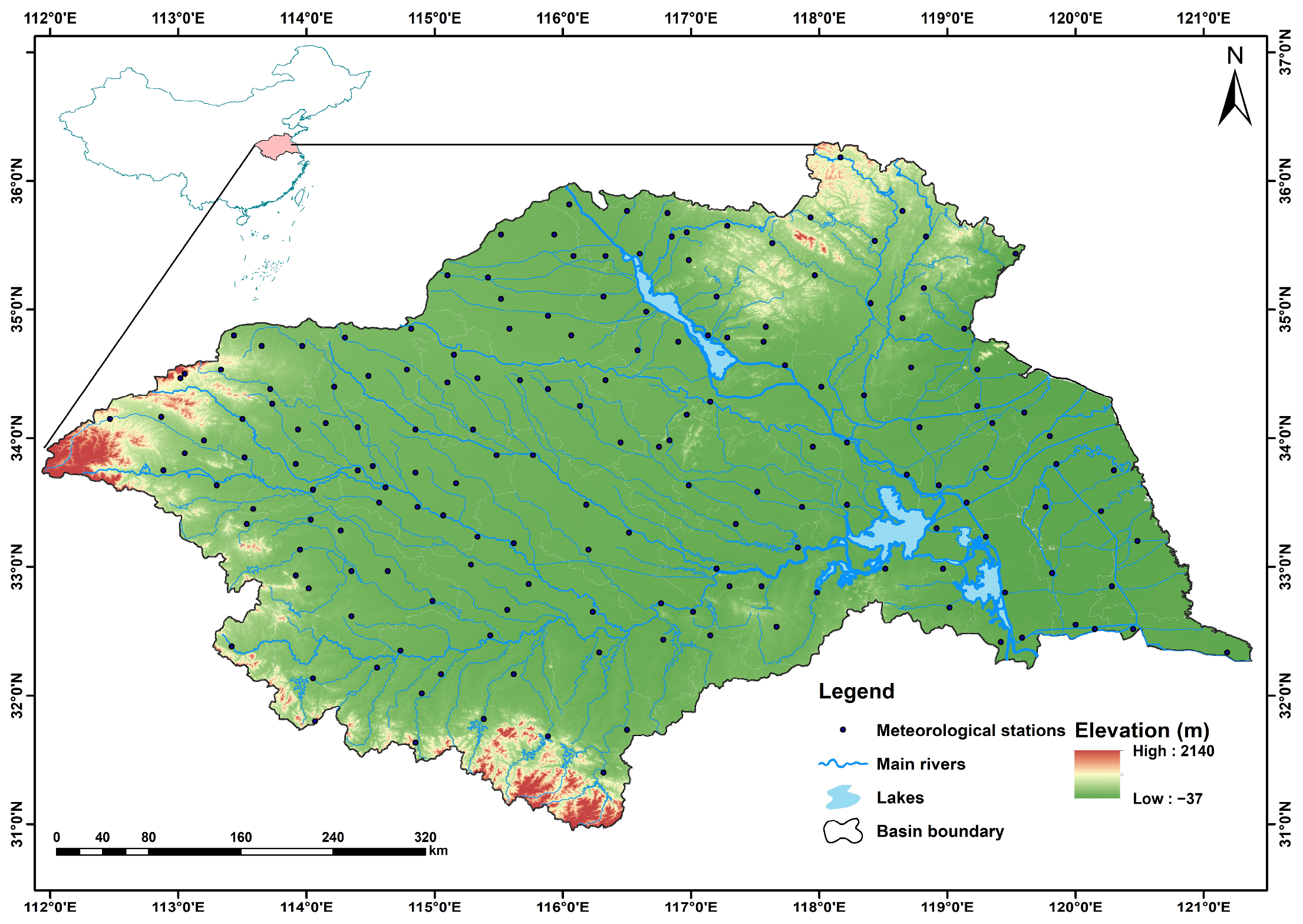
The Huaihe River Basin is located in east–central China, extending from 111°55′ E to 121°20′ E and from 30°55′ N to 36°20′ N, with a total drainage area of approximately 270,000 km
2. The basin is bounded by the Yangtze River Basin to the south and the Yellow River Basin to the north, forming an important transitional region between northern and southern China. Its western, southern, and northeastern parts are mainly hills and mountains, accounting for about one-third of the total area, whereas the remaining areas are dominated by plains, lakes, and low-lying depressions that form part of the Huang-Huai-Hai Plain. The distribution of the Huaihe River Basin and the 174 rainfall stations used in this study is shown in
Figure 1.
The basin lies in a climatic transition zone, with a warm temperate semi-humid monsoon climate in the north and a subtropical humid monsoon climate in the south. Influenced by East Asian monsoon systems, precipitation in the basin is characterized by strong interannual variability, distinct seasonality, and pronounced spatial heterogeneity [
21]. The multi-year average annual precipitation is approximately 878 mm, with a clear north–south gradient from about 600–700 mm in the northern part of the basin to 1400–1500 mm in the southern mountainous areas. Rainfall is mainly concentrated during the flood season from June to September, which accounts for approximately 50–75% of the annual precipitation [
22]. Such a seasonal concentration of rainfall is an important hydrometeorological feature affecting both water availability and flood generation in the basin.
These geographical and climatic conditions make the Huaihe River Basin sensitive to both excessive rainfall and precipitation deficits. Heavy and persistent rainfall during the flood season can increase flood-related hazards, especially in plains, low-lying areas, and regions with dense river–lake networks, whereas prolonged rainfall deficits may lead to meteorological drought and water supply stress. The coexistence of flood and drought hazards makes the basin a representative region for assessing changes in rainfall patterns and their implications for compound flood–drought hazard. Therefore, this study focuses on the Huaihe River Basin to investigate the spatiotemporal evolution of rainfall characteristics and identify areas vulnerable to flood- and drought-related hazards.
2.2. Data Sources and Preprocessing
The precipitation dataset used in this study was derived from ERA5-Land reanalysis data, with total precipitation (tp) selected as the target variable [
23,
24,
25]. The dataset consists of daily total precipitation data for China from 1950 to 2025 and is stored in NetCDF format. The 174 rainfall station coordinates within and around the Huaihe River Basin were used only as spatial reference points to extract ERA5-Land grid-cell precipitation. Therefore, the resulting series represent ERA5-Land precipitation values extracted at station coordinates rather than direct in situ rain-gauge observations. Throughout this study, these locations are referred to as spatial sampling locations unless direct reference to the original station coordinates is necessary. ERA5-Land precipitation data have a spatial resolution of 0.1° × 0.1°, and the precipitation value of the nearest ERA5-Land grid cell was extracted for each spatial sampling location according to its longitude and latitude.
The purpose of using these coordinates was to provide a consistent set of spatial sampling locations for long-term basin-scale comparison, Thiessen-weighted basin averaging, and sampling-location-scale indicator calculation. Daily ERA5-Land precipitation values were extracted at the 174 coordinates and converted into a unified date-by-location matrix, in which rows represent dates and columns represent spatial sampling locations. The daily series were then checked for temporal continuity, missing values, negative values, and abnormal precipitation values. The complete daily sequence from 1 January 1950 to 31 December 2025 was retained for all 174 spatial sampling locations. No missing daily records or negative precipitation values were found. Abnormal values were screened by checking the maximum daily precipitation at each location, and no physically unrealistic values requiring removal were detected. Therefore, no interpolation, gap filling, or exclusion of months or years was applied.
Annual precipitation series were aggregated from complete daily records to calculate rainfall pattern and flood-related indicators, including PRCPTOT, WD, SDII, CDD, CWD, RX1day, RX3day, RX5day, R10mm, R25mm, and R50mm. Monthly precipitation series were aggregated from complete daily records and used to calculate SPI-based drought indicators. No station-based bias correction was applied because this study aimed to analyse a temporally consistent ERA5-Land-based precipitation record rather than construct a gauge-corrected dataset. The main temporal aggregations and their analytical purposes are summarized in
Table 1, and a complete list of abbreviations is provided in
Table S1.
2.3. Rainfall and Flood-Related Indicators
Rainfall pattern and flood-related indicators were calculated from the daily precipitation series for each spatial sampling location. These indicators were selected to characterize rainfall amount, frequency, intensity, persistence, and extreme rainfall conditions associated with potential flood hazards [
26,
27]. A wet day was defined as a day with precipitation equal to or greater than 1 mm. Annual indicators were calculated for each year during 1950–2025.
Rainfall pattern indicators included annual total precipitation (PRCPTOT), wet days (WD), simple daily intensity index (SDII), maximum consecutive dry days (CDD), and maximum consecutive wet days (CWD). PRCPTOT was used to represent the total amount of annual rainfall, whereas WD reflected the annual frequency of rainfall occurrence. SDII was calculated as the ratio of PRCPTOT to WD and was used to describe the mean precipitation intensity on wet days. CDD and CWD were used to characterize the persistence of dry and wet spells, respectively.
Flood-related rainfall indicators included annual maximum 1-day precipitation (RX1day), annual maximum consecutive 3-day precipitation (RX3day), annual maximum consecutive 5-day precipitation (RX5day), and the number of days with precipitation exceeding selected thresholds, including R10mm, R25mm, and R50mm [
28]. RX1day reflects short-duration extreme rainfall, while RX3day and RX5day represent persistent heavy rainfall events that may contribute to flood generation. R10mm, R25mm, and R50mm describe the annual frequency of moderate-to-heavy, heavy, and very heavy rainfall days, respectively. These indicators were used to characterize rainfall conditions associated with potential flood hazards rather than observed flood events.
The definition of indicators are listed in
Table 2.
2.4. SPI-Based Drought Indicators
The standardized precipitation index (SPI) was used to characterize meteorological drought conditions in the Huaihe River Basin. SPI is based only on precipitation and is widely used to evaluate precipitation deficits at different accumulation time scales [
29]. In this study, daily precipitation series were first aggregated into monthly precipitation series for each spatial sampling location. Considering the strong seasonality of rainfall in the Huaihe River Basin and the objective of identifying drought-related conditions associated with seasonal rainfall variability, SPI-3 was selected as the primary drought indicator [
30].
SPI-3 reflects precipitation anomalies over a three-month accumulation period and is suitable for characterizing seasonal-scale meteorological drought. SPI-1 mainly represents short-term monthly precipitation anomalies and is more sensitive to transient rainfall fluctuations, whereas SPI-6 reflects longer accumulated precipitation deficits that may be more closely related to hydrological or agricultural drought processes. Because this study focuses on rainfall-based flood and drought hazards rather than streamflow, soil moisture, groundwater, or crop-response drought, SPI-3 was considered more consistent with the seasonal meteorological-drought focus and the integrated hazard-classification framework. Therefore, the subsequent drought analysis and drought-related hazard index were based on the monthly SPI-3 series.
Drought months, severe drought months, and drought-related indicators were defined based on the monthly SPI-3 series. Specifically, DF, SDF, and DI were used to describe the occurrence frequency and average severity of meteorological drought conditions, as shown in
Table 3.
2.5. Trend Analysis, Composite Hazard Indices, and Classification
2.5.1. Thiessen-Weighted Basin Averaging and Trend Analysis
To obtain basin-averaged time series, Thiessen polygons were constructed based on the 174 spatial sampling locations and clipped to the boundary of the Huaihe River Basin. The area proportion of each polygon within the basin was used as the spatial weight of the corresponding location. For a given indicator, the Thiessen-weighted basin average at time
t was calculated as:
where
is the basin-averaged indicator at time
t,
is the indicator value at spatial sampling location
i,
Ai is the area of the corresponding Thiessen polygon within the basin boundary,
wi is its normalized area weight, and
n is the number of spatial sampling locations contributing to the basin average. The weights sum to 1. This procedure was applied to construct basin-averaged rainfall pattern, flood-related rainfall, and SPI-based drought indicator series for temporal trend analysis.
Trend analysis was conducted to examine long-term changes in rainfall pattern, flood-related, and drought-related indicators during 1950–2025. The Mann–Kendall (MK) test was used to detect monotonic trends in rainfall pattern indicators and drought-related variables. In addition to the MK test statistic (Z), the corresponding p-value was calculated to assess the statistical significance of each trend. Trends were considered statistically significant at the 0.05 level when (p < 0.05), and highly significant when (p < 0.01). Sen’s slope estimator was further applied to quantify the magnitude of the trend. Therefore, the direction, significance, and rate of change in each indicator were jointly interpreted based on the MK test statistic, p-value, and Sen’s slope. The lag-1 serial autocorrelation of each basin-averaged annual indicator series was examined, and the robustness of the Mann–Kendall significance results was checked using trend-free pre-whitening where necessary. Because location-scale trend tests were conducted at multiple spatial sampling locations, the resulting point-level significance patterns were interpreted cautiously, with emphasis placed on spatially coherent trend directions rather than isolated significant points.
2.5.2. FHI and DHI Construction
To identify spatial differences in flood- and drought-related hazards, a compound flood–drought hazard classification framework was established based on two composite indices: the flood-related rainfall hazard index (FHI) and the drought-related hazard index (DHI). The FHI was constructed using flood-related rainfall indicators, including RX1day, RX5day, R25mm, and R50mm. These indicators represent both the magnitude and frequency of heavy rainfall events. The DHI was constructed using drought-related indicators, including CDD, DF, SDF, and DI. These indicators represent dry spell persistence, drought occurrence frequency, severe drought occurrence frequency, and average drought severity, and meteorological drought occurrence. These indicators represent dry spell persistence and meteorological drought occurrence.
Before index construction, all indicators were normalized to a dimensionless range from 0 to 1 using min–max normalization:
where
X is the original value of a given indicator at spatial sampling location
i, and
Xmin and
Xmax are the minimum and maximum values of that indicator among all spatial sampling locations, respectively, and X
i’ is the normalized value. Higher normalized values indicate higher flood- or drought-related hazard.
The flood-related rainfall hazard index (FHI) and drought-related hazard index (DHI) were then calculated as follows:
where
,
,
,
,
,
,
, and
are normalized values at spatial sampling location
i.
DF represents SPI-3 drought frequency,
SDF represents SPI-3 severe drought frequency, and
DI represents SPI-3 drought intensity.
2.5.3. Sensitivity Analysis and Hazard Classification
A sensitivity analysis was conducted to examine whether the compound flood–drought hazard classification was affected by the weighting scheme used to construct FHI and DHI. The equal-weight scheme was used as the baseline. Two alternative schemes were designed to emphasize different hazard components: rainfall magnitude versus rainfall frequency for FHI, and dry spell persistence/drought severity versus drought-occurrence frequency for DHI. The resulting classifications were compared with the baseline using classification agreement and Spearman’s rank correlation coefficients. The sensitivity analysis results are provided in
Table S2.
The median values of FHI and DHI were used as basin-specific thresholds to distinguish comparatively high and low flood- and drought-related conditions. The median was selected because it is relatively insensitive to extreme values, does not require externally prescribed thresholds, and provides a transparent basis for four-quadrant classification. Therefore, the resulting categories represent relative spatial differences within the Huaihe River Basin rather than absolute levels of flood or drought hazard.
Based on the median values of FHI and DHI, the spatial sampling locations were divided into four compound flood–drought hazard types, as shown in
Table 4. Locations with FHI and DHI both below their median values were classified as low compound hazard areas. Locations with high FHI and low DHI were classified as flood-dominated hazard areas, while locations with low FHI and high DHI were classified as drought-dominated hazard areas. Locations with both high FHI and high DHI were classified as compound flood–drought hazard areas. This classification was used to identify regional differences in rainfall-related flood and drought hazard patterns and to support differentiated water-management strategies.
3. Results
3.1. Temporal Evolution of Rainfall Patterns
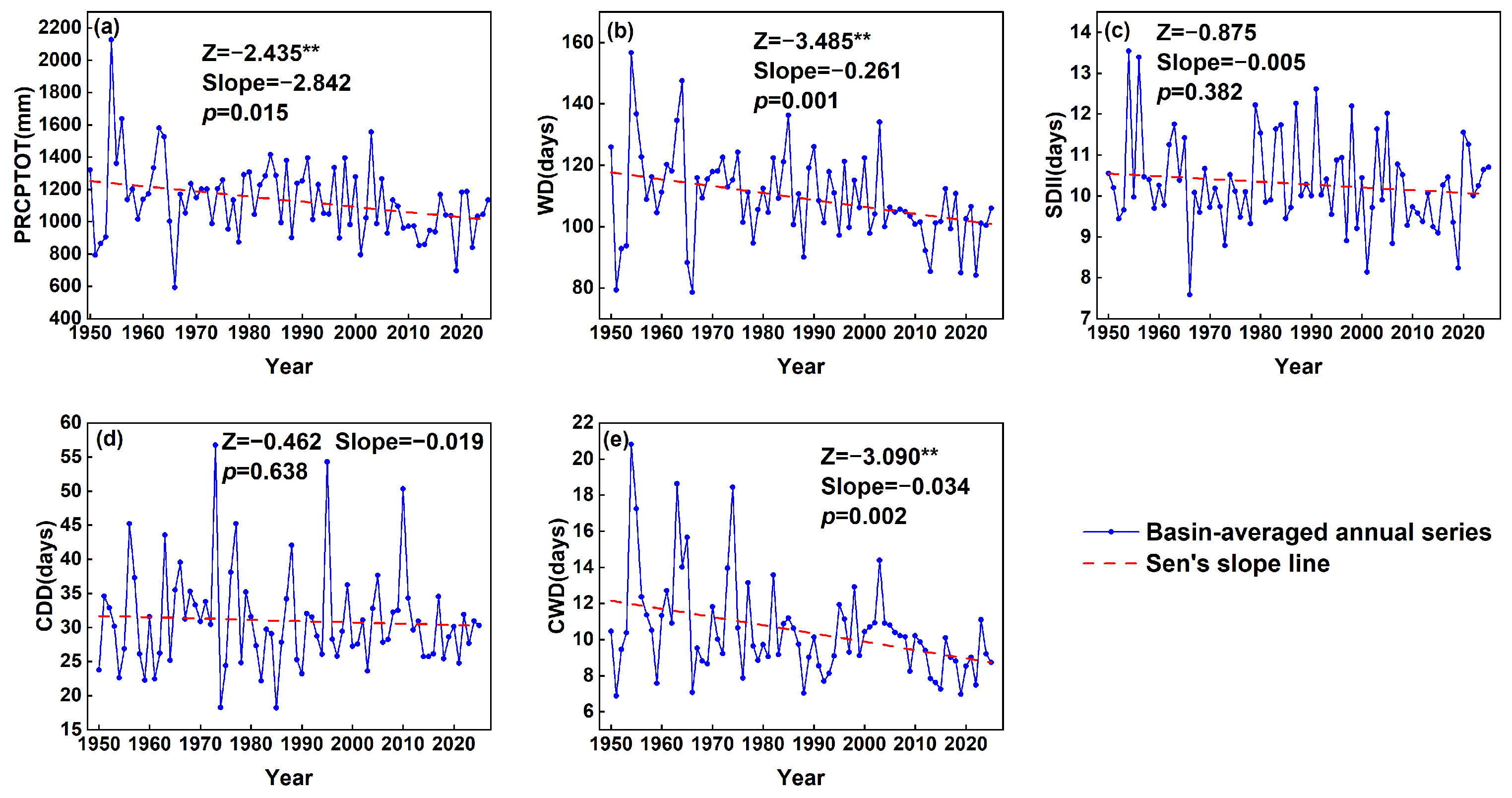
The temporal evolution of Thiessen-weighted basin-averaged rainfall pattern indicators during 1950–2025 is shown in
Figure 2. Overall, the Huaihe River Basin exhibited strong interannual variability in annual precipitation conditions, reflecting the highly variable monsoon-dominated rainfall regime. The Mann–Kendall test and Sen’s slope estimator showed that long-term rainfall pattern changes were mainly characterized by decreases in annual total precipitation, rainfall occurrence frequency, and wet spell persistence, whereas mean rainfall intensity and maximum dry spell duration showed no statistically significant monotonic trends.
Annual total precipitation (PRCPTOT) showed a significant decreasing trend during 1950–2025 (Z = −2.435,
p = 0.015; Sen’s slope = −2.842 mm yr
−1) (
Figure 2a). The basin-averaged PRCPTOT fluctuated strongly among years, with several wet years exceeding 1500 mm and several dry years falling below 800 mm. The maximum value occurred in 1954, reaching approximately 2126 mm. Despite strong interannual fluctuations, the significant downward trend indicates a gradual reduction in basin-averaged annual precipitation.
The number of wet days (WD) also decreased significantly (Z = −3.485,
p < 0.001; Sen’s slope = −0.261 days yr
−1;
Figure 2b), suggesting a steady reduction in the annual frequency of days with precipitation ≥ 1 mm. In contrast, SDII showed only a weak and non-significant decreasing tendency (Z = −0.875,
p = 0.382; Sen’s slope = −0.005 mm day
−1 yr
−1;
Figure 2c). Therefore, the decrease in annual precipitation was more closely related to fewer wet days than to a significant change in average wet-day rainfall intensity.
The dry and wet spell indicators showed different long-term behaviors. CDD exhibited large interannual fluctuations but no significant long-term trend (Z = −0.471,
p = 0.638; Sen’s slope = −0.014 days yr
−1;
Figure 2d), indicating that the maximum duration of dry spells did not change systematically at the basin scale. By contrast, CWD decreased significantly (Z = −3.090,
p = 0.002; Sen’s slope = −0.034 days yr
−1;
Figure 2e), indicating a weakening of wet spell persistence.
Taken together, the basin-averaged rainfall pattern indicators suggest that the Huaihe River Basin experienced fewer rainfall days, shorter wet spells, and a significant decrease in annual total precipitation during 1950–2025. However, mean wet-day rainfall intensity and maximum dry spell duration did not show significant long-term change. These results provide an important background for further analysis of flood-related rainfall extremes and drought-related variability.
3.2. Spatial Characteristics of Rainfall Pattern Indicators
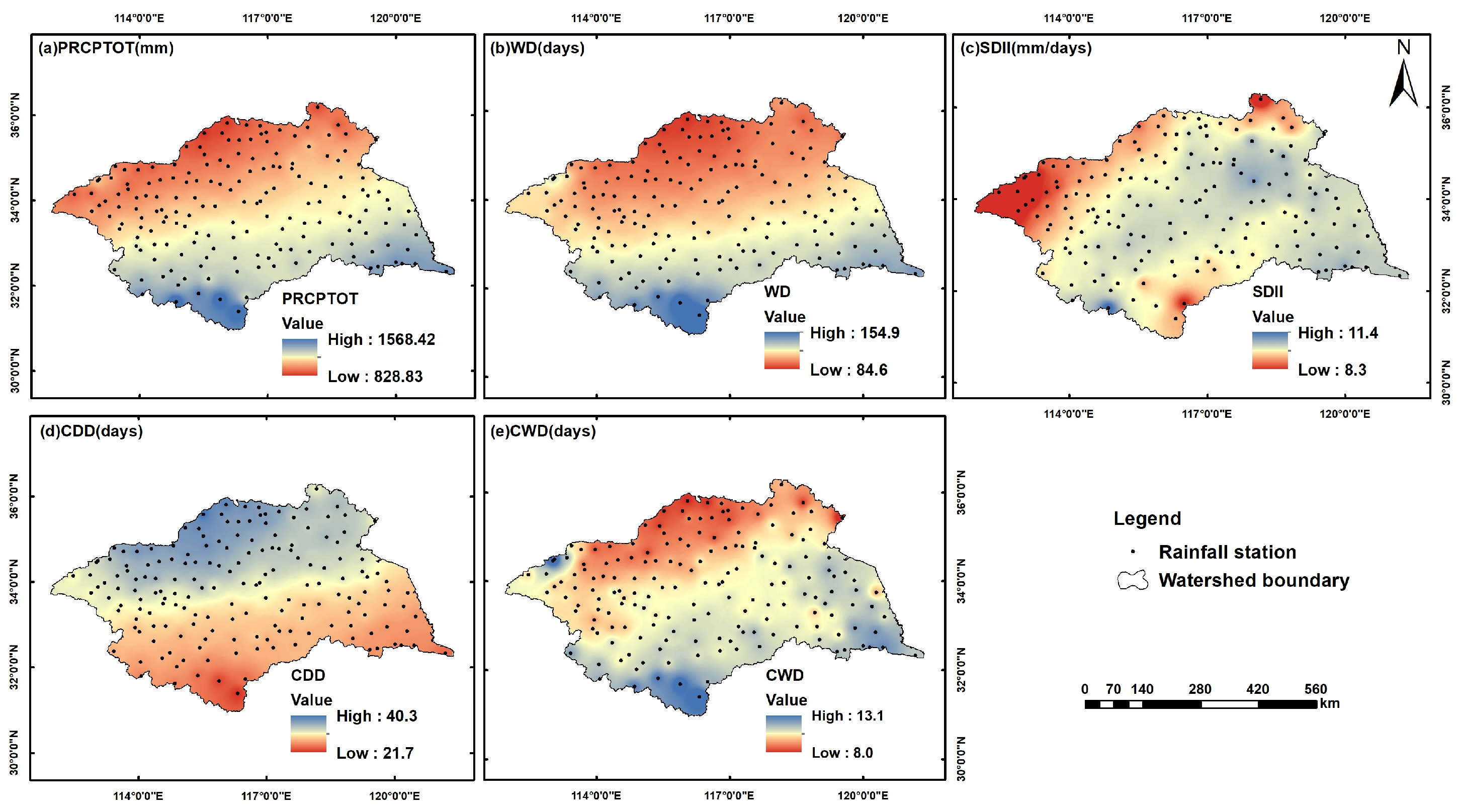
The spatial characteristics of multi-year mean rainfall pattern indicators during 1950–2025 are shown in
Figure 3. Overall, the Huaihe River Basin exhibited marked spatial heterogeneity in rainfall amount, rainfall frequency, rainfall intensity, and dry–wet spell persistence. PRCPTOT and WD showed broadly similar spatial patterns. In contrast, SDII showed a more localized distribution, while CDD and CWD displayed opposite spatial characteristics, reflecting regional differences in dry– and wet–spell persistence.
Multi-year mean PRCPTOT ranged from 828.83 to 1568.42 mm across the 174 spatial sampling locations, with an average value of approximately 1104.90 mm. Spatially, PRCPTOT showed a clear gradient, with higher values mainly distributed in the southern and southeastern parts of the basin and lower values in the northern and northeastern areas (
Figure 3a). WD displayed a similar spatial pattern, with values ranging from 84.6 to 154.9 days and a basin-wide station mean of approximately 106.85 days (
Figure 3b).
Compared with PRCPTOT and WD, SDII showed a more localized spatial pattern, with values ranging from 8.3 to 11.4 mm day
−1 and a mean value of approximately 10.27 mm day
−1 (
Figure 3c). Relatively high SDII values were mainly found in local parts of the western, southern, and eastern basins, whereas lower values appeared in some central and northern areas.
The spatial distribution of CDD differed from that of PRCPTOT and CWD. The multi-year mean CDD ranged from 21.7 to 40.3 days, with an average value of approximately 31.77 days (
Figure 3d). Higher CDD values were mainly located in the northern and north–central parts of the basin, whereas lower values were found in the southern and southeastern areas. By contrast, CWD ranged from 8.0 to 13.1 days, with an average value of approximately 10.31 days (
Figure 3e). Higher CWD values were mainly distributed in the southern and southeastern parts of the basin, while lower values appeared in the northern and northwestern areas.
Overall, the spatial characteristics of the five rainfall pattern indicators reveal clear regional differences in rainfall regimes across the Huaihe River Basin. The southern and southeastern parts of the basin were generally characterized by higher annual precipitation, more wet days, and longer wet spells, whereas the northern and north–central areas showed longer dry spell persistence.
3.3. Spatiotemporal Changes in Flood-Related Rainfall Extremes
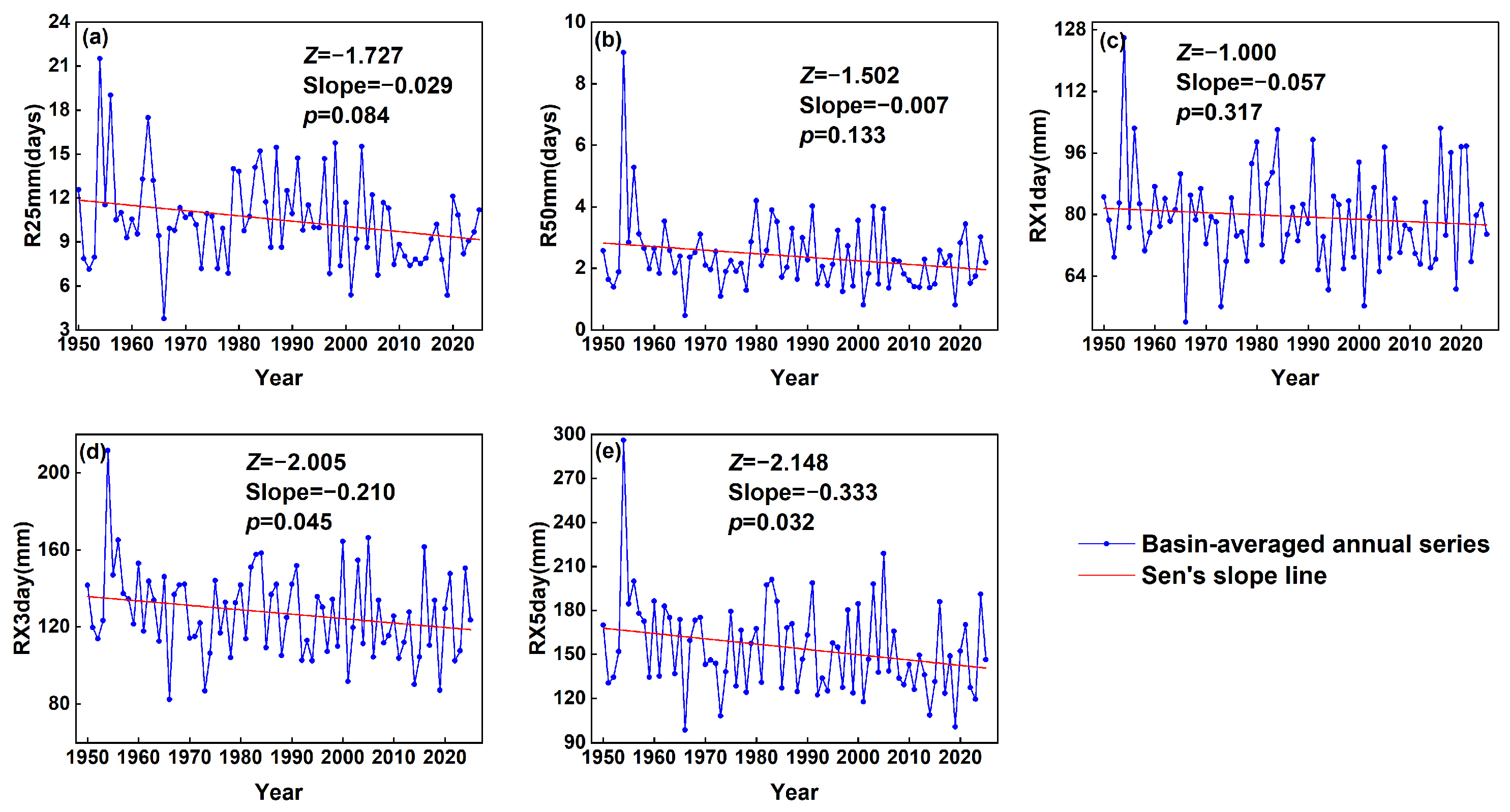
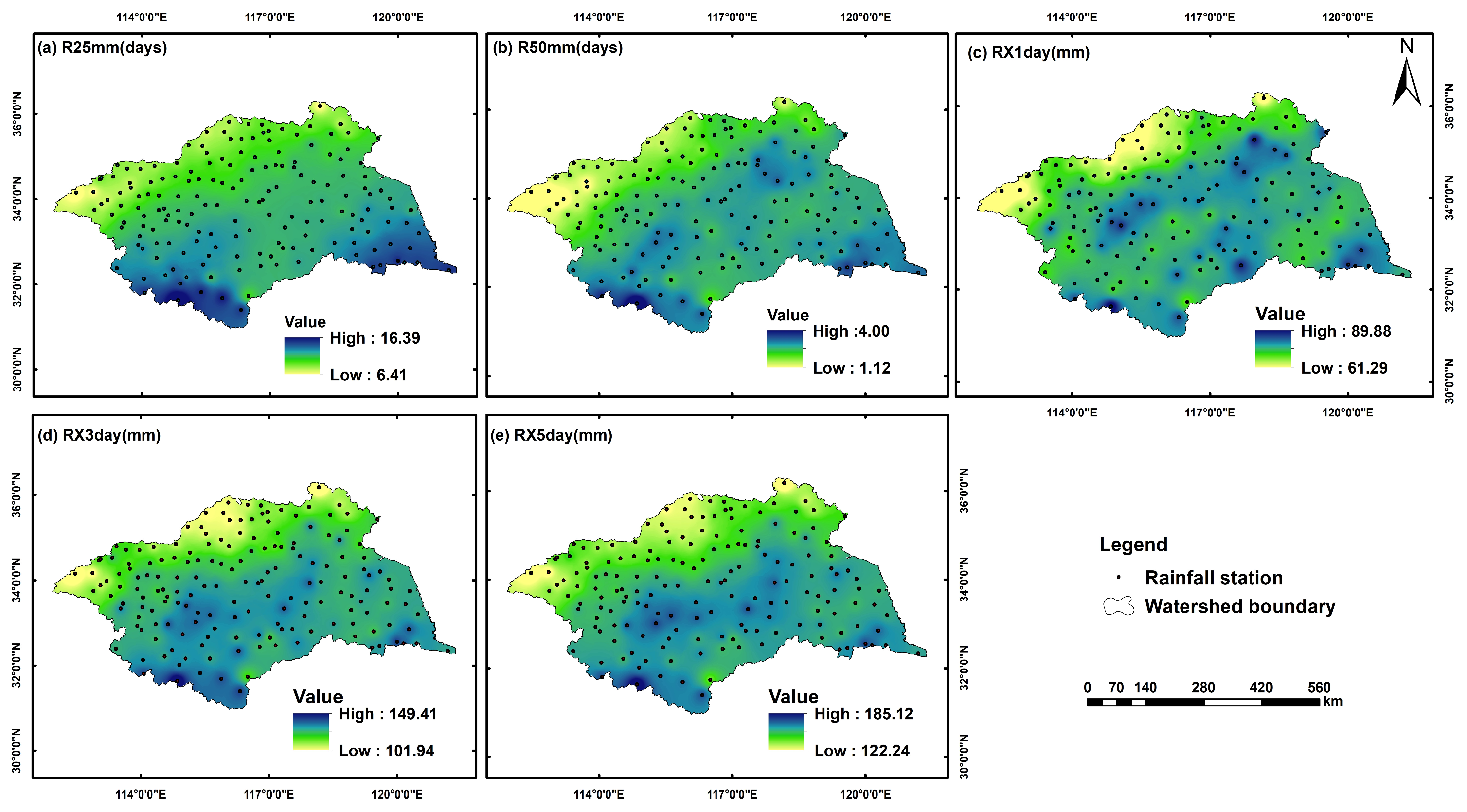
To further characterize rainfall conditions associated with potential flood hazards, five flood-related rainfall indicators were analyzed, including R25mm, R50mm, RX1day, RX3day, and RX5day. These indicators represent both the frequency of heavy rainfall days and the magnitude of short-duration and persistent extreme rainfall events. The temporal evolution of Thiessen-weighted basin-averaged indicators is shown in
Figure 4, and the spatial characteristics of their multi-year mean values are shown in
Figure 5.
The frequency of heavy rainfall days showed decreasing tendencies during 1950–2025. R25mm decreased with a Sen’s slope of −0.029 days yr
−1, but the trend was not statistically significant (Z = −1.727,
p = 0.084;
Figure 4a). Similarly, R50mm showed a non-significant decreasing tendency (Z = −1.502,
p = 0.133; Sen’s slope = −0.007 days yr
−1;
Figure 4b).
The annual maximum rainfall indicators showed different levels of statistical significance. RX1day exhibited a weak and non-significant decreasing tendency (Z = −1.000,
p = 0.317; Sen’s slope = −0.057 mm yr
−1;
Figure 4c). In contrast, RX3day and RX5day decreased significantly, with Sen’s slopes of −0.210 and −0.333 mm yr
−1, respectively (RX3day: Z = −2.005,
p = 0.045; RX5day: Z = −2.148,
p = 0.032;
Figure 4d,e).
Spatially, the multi-year mean flood-related rainfall indicators showed clear regional heterogeneity (
Figure 5). R25mm ranged from approximately 6.4 to 16.4 days, while R50mm ranged from approximately 1.1 to 4.0 days, indicating substantial spatial differences in the frequency of heavy and very heavy rainfall days. Areas with relatively high R25mm and R50mm values were mainly located in the eastern, southeastern, and some southern parts of the basin, suggesting more frequent heavy rainfall occurrence in these regions.
The spatial distribution of extreme rainfall magnitude was broadly consistent with the heavy rainfall frequency pattern. RX1day ranged from approximately 61.3 to 89.9 mm, with higher values mainly distributed in the eastern and northeastern parts of the basin. RX3day and RX5day ranged from approximately 101.9 to 149.5 mm and from 122.2 to 185.2 mm, respectively. Their high-value areas were mainly located in the central–eastern and southern parts of the basin, indicating stronger persistent heavy rainfall potential in these areas.
Overall, the flood-related rainfall indicators exhibited strong interannual variability and clear spatial heterogeneity. At the basin scale, most indicators showed decreasing tendencies during 1950–2025, with the decline being more evident for persistent multi-day extremes than for single-day rainfall. Spatially, high-value areas of heavy rainfall frequency and extreme rainfall magnitude were mainly concentrated in the eastern, southeastern, and locally southern parts of the basin, indicating that these areas had relatively stronger heavy rainfall magnitude or frequency.
3.4. SPI-Based Drought Variability and Drought-Related Conditions
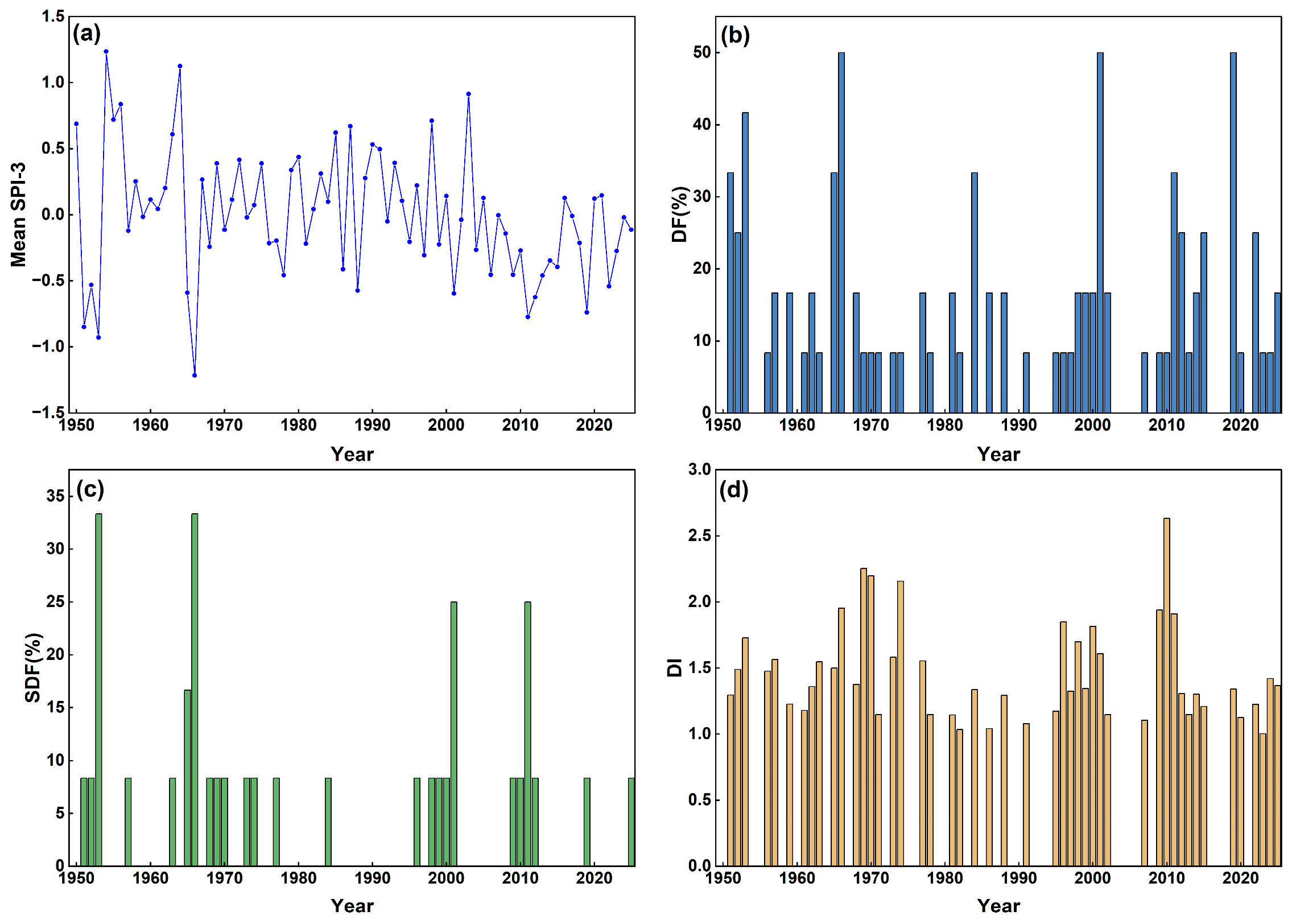
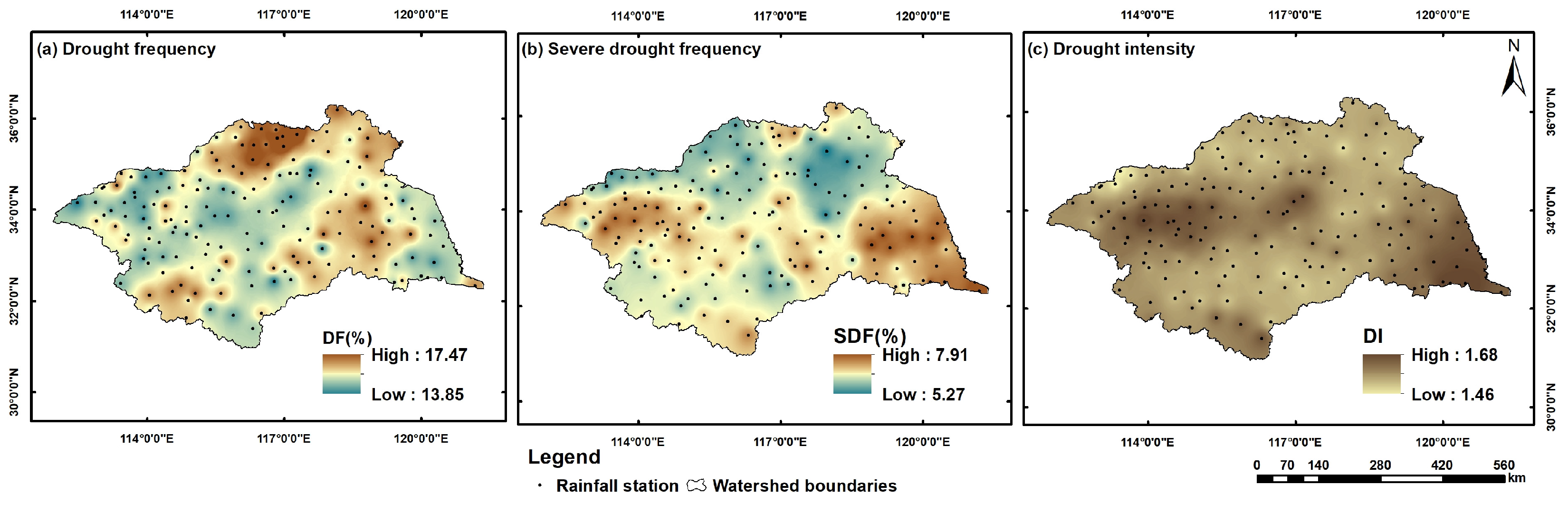
SPI-3 was used to further evaluate seasonal-scale meteorological drought conditions in the Huaihe River Basin. Based on the Thiessen-weighted basin-averaged monthly SPI-3 series, four annual drought-related indicators were derived, including mean SPI-3, DF, SDF, DI. The temporal evolution of these indicators during 1950–2025 is shown in
Figure 6, and their spatial characteristics are shown in
Figure 7.
The basin-averaged mean SPI-3 exhibited strong interannual variability and a significant decreasing trend during 1950–2025 (
Figure 6a). The MK test showed a Z value of −2.453, with a Sen’s slope of −0.0068 yr
−1, indicating a gradual shift toward drier seasonal precipitation conditions. Several years showed markedly negative mean SPI-3 values, including 1951, 1953, 1966, 2001, 2011, 2019, and 2023. Among these, 1966 was one of the most pronounced drought years, with the annual mean SPI-3 falling below −1.0. In contrast, positive SPI-3 values were observed in several wet years, such as 1954, 1965, and 2003, reflecting the strong year-to-year variability of seasonal precipitation deficits.
Drought frequency showed clear episodic fluctuations rather than a significant monotonic trend (
Figure 6b). The annual DF ranged from 0 to 50%, meaning that some years had no drought months, while in several drought-prone years up to half of the months reached the drought threshold of SPI-3 ≤ −1. The years 1966, 2001, and 2019 showed particularly high DF values, reaching approximately 50%. However, the MK test indicated no significant long-term trend in DF, suggesting that drought occurrence was mainly characterized by intermittent high-drought years rather than a steady increase over time.
Severe drought frequency was lower and more intermittent than DF (
Figure 6c). Many years had SDF values of 0, indicating that severe drought months were absent in those years. High SDF values mainly occurred in several specific drought years, such as 1953, 1966, 2001, and 2011. The large number of zero values is reasonable because SDF is based on a stricter threshold of SPI-3 ≤ −1.5 and severe drought events are expected to occur less frequently than moderate drought events. The trend test showed that SDF did not exhibit a significant long-term increase or decrease during the study period.
Drought intensity also showed episodic changes, with higher DI values concentrated in years when drought months occurred (
Figure 6d). Because DI was calculated as the mean absolute SPI-3 value during drought months, years without drought months had DI values of 0. Relatively high DI values appeared in years such as 1969, the early 1970s, 1998–2001, and 2011, indicating stronger drought severity during these periods. Nevertheless, DI did not show a statistically significant monotonic trend, suggesting that drought severity was dominated by interannual variability rather than persistent long-term intensification.
Spatially, the SPI-3-based drought indicators showed clear but moderate spatial differences across the basin (
Figure 7). DF ranged from 13.85% to 17.47%, indicating that drought months accounted for about 14–17% of the long-term monthly SPI-3 series across different spatial sampling locations. Higher DF values were mainly distributed in parts of the central, northern, and eastern basin, whereas lower values appeared in some western and southeastern areas (
Figure 7a). SDF ranged from 5.27% to 7.91%, with relatively high values mainly occurring in the eastern and southeastern parts of the basin (
Figure 7b). This indicates that severe drought occurrence was spatially uneven, although the overall range of SDF was not very large.
The spatial variation in DI was smaller than that of DF and SDF, with values ranging from 1.46 to 1.68 (
Figure 7c). Higher DI values were mainly found in the eastern part of the basin, while lower values were distributed in some western and central areas. This suggests that although the basin experienced spatial differences in drought occurrence frequency, the average intensity of drought months was relatively stable across stations. The spatial patterns of DF, SDF, and DI indicate that drought-related conditions were not controlled only by annual precipitation amount but also by the temporal distribution and persistence of precipitation deficits.
Overall, SPI-3 results suggest that the Huaihe River Basin experienced a significant drying tendency in terms of mean SPI-3, while drought frequency, severe drought frequency, and drought intensity did not show significant monotonic changes. The large number of zero values in DF, SDF, and DI reflects the intermittent nature of drought occurrence, especially for severe drought events. Spatially, drought-related indicators showed moderate heterogeneity, with relatively higher drought frequency or intensity in the central, eastern, and southeastern parts of the basin. These results provide the drought-related basis for the construction of the drought-related hazard index in subsequent compound flood–drought hazard classification.
3.5. Compound Flood–Drought Hazard Classification
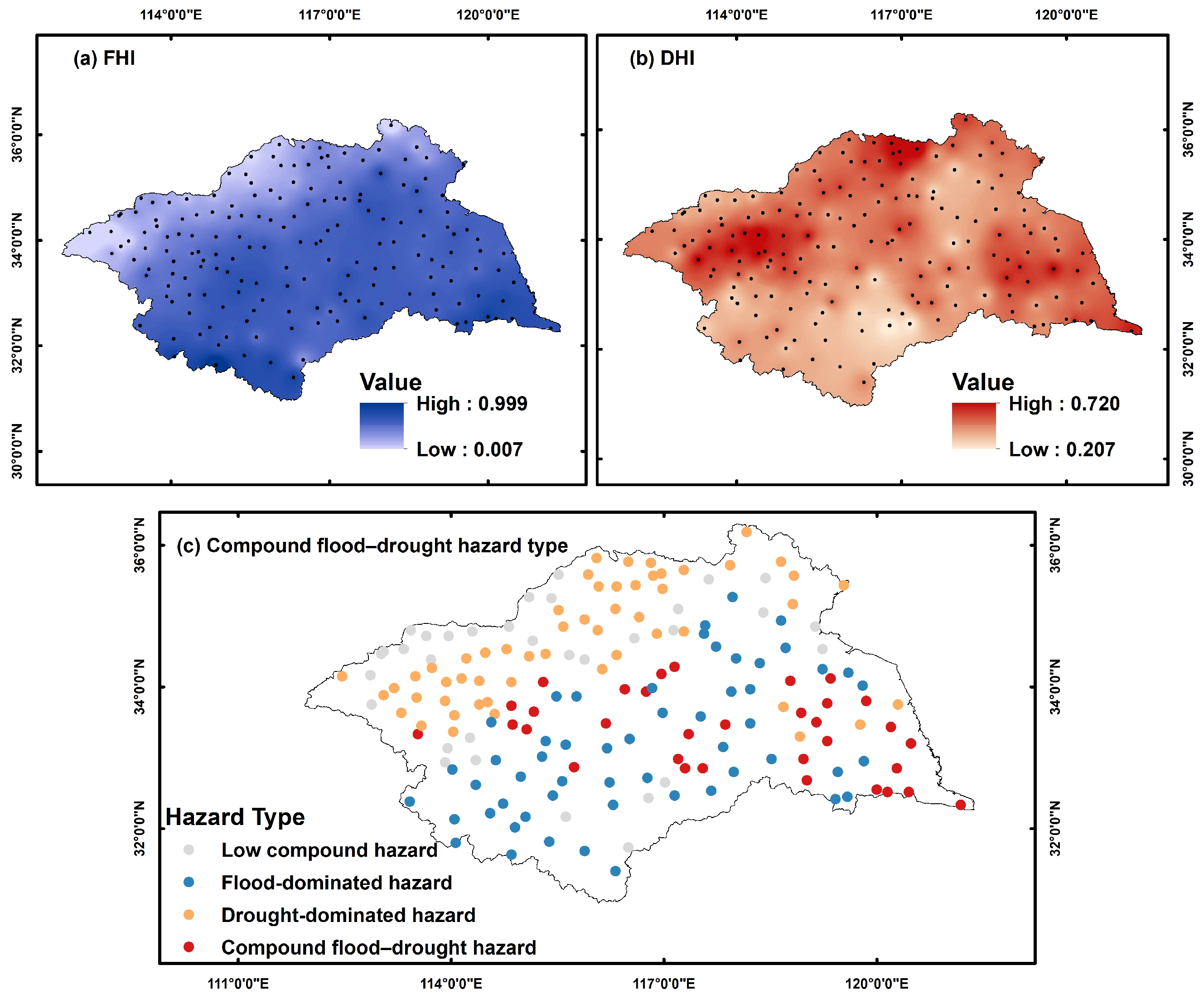
To further integrate flood-related rainfall conditions and drought-related characteristics, the flood-related rainfall hazard index (FHI) and drought-related hazard index (DHI) were calculated at the spatial sampling location scale. FHI was constructed from normalized RX1day, RX5day, R25mm, and R50mm, while DHI was constructed from normalized CDD, DF, SDF, and DI. Based on the median values of FHI and DHI, the 174 spatial sampling locations were classified into four compound flood–drought hazard types, including low compound hazard, flood-dominated hazard, drought-dominated hazard, and compound flood–drought hazard. The spatial distribution of FHI, DHI, and the final hazard classification is shown in
Figure 8, and the statistical characteristics of different hazard types are summarized in
Table 5.
The FHI values ranged from 0.007 to 0.999, indicating large spatial differences in flood-related rainfall hazard across the basin (
Figure 8a). High FHI values were mainly distributed in the southern, central, and eastern parts of the basin, where relatively high RX1day, RX5day, R25mm, and R50mm values were observed. This suggests that these areas were more strongly influenced by heavy rainfall magnitude and frequency. In contrast, low FHI values mainly appeared in the northern and northwestern parts of the basin, indicating relatively weaker flood-related rainfall conditions.
The DHI values ranged from 0.207 to 0.721, showing a different spatial pattern from FHI (
Figure 8b). High DHI values were mainly distributed in the northern, north–central, and locally eastern parts of the basin, reflecting the combined influence of longer dry spells, higher SPI-based drought occurrence, severe drought occurrence, and drought intensity. Low DHI values were mainly found in the southern and central–southern basin. The different spatial patterns of FHI and DHI indicate that flood-related rainfall hazard and drought-related hazard were not fully consistent across the basin and that their spatial overlap was limited to specific areas.
The final compound flood–drought hazard classification showed clear spatial differentiation (
Figure 8c). The median thresholds of FHI and DHI were 0.518 and 0.446, respectively. Flood-dominated hazard and drought-dominated hazard were the two most common types, each including 54 spatial sampling locations and accounting for 31.0% of the total (
Table 5). Flood-dominated hazard areas were mainly distributed in the southern and central parts of the basin, where the mean FHI reached 0.592 and the mean DHI was relatively low at 0.376. These areas were characterized by higher heavy rainfall magnitude and frequency but relatively lower drought-related hazard conditions. In contrast, drought-dominated hazard areas were mainly located in the northern and north–central parts of the basin, with a mean DHI of 0.542 and a lower mean FHI of 0.370. These areas were mainly characterized by stronger dry spell persistence, higher drought occurrence, higher severe drought occurrence, and greater drought intensity, but weaker flood-related rainfall indicators.
Low compound hazard and compound flood–drought hazard areas each included 33 spatial sampling locations, accounting for 19.0% of the total. Low compound hazard areas had both low FHI and low DHI, with mean values of 0.372 and 0.381, respectively. These areas were characterized by relatively low heavy rainfall magnitude/frequency and relatively weak drought-related hazard conditions. Compound flood–drought hazard areas had concurrent high FHI and DHI, with mean values of 0.579 and 0.520, respectively. These locations were mainly distributed in the central and eastern parts of the basin, with some degree of localized clustering, indicating that some areas may face both strong flood-related rainfall conditions and relatively high drought-related stress.
The sensitivity analysis further showed that the compound hazard classification was generally robust to alternative weighting schemes (
Table S2). Compared with the equal-weight baseline, the magnitude/severity-oriented and frequency-oriented schemes produced classification agreement rates of 92.0% and 87.4%, respectively, with high rank correlations for both FHI and DHI.
Overall, the classification results reveal that flood- and drought-related hazards in the Huaihe River Basin are spatially heterogeneous and partially overlapping. The basin is not dominated by a single type of hydroclimatic hazard; instead, flood-dominated and drought-dominated areas coexist, while compound flood–drought hazard occurs mainly in localized parts of the central and eastern basin. These results highlight the need to consider regional differences in flood- and drought-related characteristics when developing basin-scale hazard assessment and water-resource management strategies.
4. Discussion
4.1. Hydroclimatic Implications of Changing Rainfall Patterns
The results indicate that rainfall pattern changes in the Huaihe River Basin were not limited to changes in annual precipitation amount. The significant decreases in PRCPTOT, WD, and CWD suggest that the basin experienced fewer rainfall days and shorter wet spells during 1950–2020. Meanwhile, SDII did not show a significant increasing trend, indicating that the decline in annual precipitation was more closely associated with reduced rainfall occurrence and wet spell persistence than with a clear intensification of wet-day rainfall. From a hydroclimatic perspective, this implies a weakening of rainfall continuity, which may affect soil moisture replenishment, runoff generation, and seasonal water availability [
31,
32]. These temporal changes may be related to the transitional monsoon climate of the Huaihe River Basin. Variations in East Asian summer monsoon intensity and shifts in the position and duration of the mei-yu rain belt can alter rainfall frequency and wet spell persistence [
33,
34]. Therefore, the decreases in PRCPTOT, WD, and CWD may mainly reflect fewer rainfall days and shorter wet periods, whereas the non-significant trends in SDII and CDD indicate that rainfall intensity and maximum dry spell duration remained highly variable.
The flood-related rainfall indicators also showed decreasing tendencies at the basin scale, especially for RX3day and RX5day [
35]. This suggests that persistent multi-day heavy rainfall did not intensify over the study period; instead, it tended to weaken slightly. However, strong interannual variability remained evident, meaning that individual years could still experience intense rainfall events despite the overall downward trend [
36]. Therefore, the absence of a basin-wide increasing trend in heavy rainfall indicators should not be interpreted as a disappearance of flood-related rainfall hazards. Rather, it suggests that flood-related hazards in the basin are likely shaped by regional spatial differences and episodic extreme years rather than by a uniform long-term increase.
In contrast, the significant decreasing trend in mean SPI-3 indicates a shift toward drier seasonal precipitation conditions, although drought frequency, severe drought frequency, and drought intensity did not show significant monotonic trends. This combination suggests that the basin has experienced a gradual drying tendency in seasonal moisture conditions, but drought events remain intermittent and strongly variable among years. Taken together, these findings highlight a complex hydroclimatic signal: rainfall occurrence and wet spell persistence decreased, persistent heavy rainfall weakened at the basin scale, and seasonal drought tendency became more evident. Such changes support the need to assess flood- and drought-related hazards jointly rather than treating them as completely separate issues [
37].
4.2. Spatial Heterogeneity and Coexistence of Flood and Drought Hazards
The spatial patterns of FHI, DHI, and compound hazard types indicate that flood- and drought-related hazards are not uniformly distributed across the Huaihe River Basin [
38]. Flood-dominated hazard areas were mainly associated with higher heavy rainfall magnitude and frequency, as reflected by RX1day, RX5day, R25mm, and R50mm [
39]. In contrast, drought-dominated hazard areas were characterized by higher CDD, DF, SDF, and DI, indicating stronger dry spell persistence and more frequent SPI-3-based meteorological drought. This spatial contrast suggests that flood-related hazards are more closely associated with heavy and persistent rainfall, whereas drought-related hazards are primarily linked to rainfall absence and seasonal precipitation deficits.
It should be noted that FHI represents flood-related rainfall hazard rather than observed flood occurrence. The index was constructed from heavy rainfall magnitude and frequency indicators, which describe rainfall conditions that are conducive to flood generation. However, actual flood occurrence also depends on antecedent soil moisture, catchment storage, drainage capacity, river regulation, reservoir operation, land use, and exposure conditions. Therefore, the flood-related hazard patterns identified here should be interpreted as precipitation-based indications of potential flood-producing rainfall conditions rather than direct evidence of realised flood impacts.
The coexistence of flood- and drought-related hazards within the same basin reflects the transitional climatic setting and uneven rainfall organization of the Huaihe River Basin [
40]. Areas with relatively high annual precipitation may still experience drought stress when rainfall is concentrated in a limited number of events or interrupted by prolonged dry periods. Conversely, areas without exceptionally high annual totals may experience intense short-duration rainfall. Therefore, annual precipitation alone cannot adequately explain the spatial differentiation of hydroclimatic hazards. The combined consideration of rainfall extremes, dry spell persistence, and SPI-3-based drought provides a more complete representation of the basin’s hydroclimatic conditions.
The observed spatial differentiation may be further explained by East Asian summer monsoon dynamics and regional geographic conditions [
41]. The southern and central parts of the basin are more strongly influenced by monsoon moisture transport and rain-bearing systems, resulting in higher flood-related rainfall exposure, whereas the northern basin receives less persistent moisture supply and is more sensitive to seasonal precipitation deficits. In the central and eastern basin, intra-seasonal shifts in the monsoon rain belt may generate both concentrated heavy rainfall and prolonged rainfall interruptions. Low-relief plains, dense river networks, agricultural land use, and local water-storage conditions may further modify flood sensitivity and drought stress. Consequently, compound hazard areas located within or adjacent to flood-dominated regions can be interpreted as transition zones where flood-related rainfall exposure and drought-related susceptibility overlap.
The coexistence of relatively high FHI values and decreasing trends in some rainfall indicators should not be interpreted as a contradiction. The hazard classification is based on relative spatial contrasts in long-term average flood-related rainfall conditions among spatial sampling locations, whereas the trend analysis describes temporal changes during 1950–2025. Therefore, an area can remain relatively flood-dominated compared with other parts of the basin even if some rainfall indicators show a decreasing trend over time. This means that the classification reflects relative spatial contrasts and persistent rainfall-hazard hotspots, rather than a uniform temporal aggravation of flood hazard.
Although compound flood–drought hazard zones accounted for a smaller proportion of stations than flood-dominated and drought-dominated zones, they remain important because both types of rainfall-related hazards may occur. Flood-dominated areas require greater attention to drainage capacity, flood control, and short-term rainfall warning, whereas drought-dominated areas require improved drought monitoring and water supply preparedness. Compound hazard areas require more flexible and integrated management strategies capable of addressing both heavy rainfall hazards and seasonal drought stress.
4.3. Implications for Water Management and Climate Resilience
The compound flood–drought hazard classification provides useful information for differentiated water management in the Huaihe River Basin. The results show that flood-dominated and drought-dominated hazard areas account for the largest proportions of stations, indicating that different parts of the basin face different dominant hydroclimatic pressures.
The findings also highlight the importance of strengthening climate resilience through integrated monitoring and adaptive planning [
42]. Rainfall amount alone cannot fully explain regional flood and drought hazards, because rainfall frequency, intensity, wet spell persistence, dry spell duration, and SPI-based drought occurrence jointly shape hydroclimatic hazard patterns [
43]. Therefore, the results should be used as preliminary rainfall-based information for differentiated hazard assessment and basin-scale water-resource planning, rather than as a direct evaluation of flood or drought impacts.
4.4. Limitations and Future Research
Several limitations should be acknowledged. First, this study focused on rainfall-related indicators derived from ERA5-Land precipitation series extracted at spatial sampling locations and did not directly include observed streamflow, water level, soil moisture, reservoir operation, or disaster loss data. Because exposure, vulnerability, adaptive capacity, observed flood damage, and socioeconomic losses were not included, the results should be interpreted as rainfall-based flood and drought hazard patterns rather than comprehensive disaster risk estimates [
44]. Therefore, the flood-related results should be interpreted as rainfall-based potential flood hazard indicators rather than direct measurements of flood occurrence or flood damage. Similarly, SPI-based drought indicators mainly reflect meteorological drought conditions and may not fully represent hydrological drought, agricultural drought, or water-supply drought.
Second, the spatial representation of precipitation should be interpreted with caution. Although 174 station coordinates were used to extract ERA5-Land precipitation series, these series represent reanalysis-based precipitation at selected spatial sampling points rather than direct in situ rain-gauge observations. Given the strong spatial heterogeneity of precipitation in the Huaihe River Basin, the spatial density of the sampling points and the effective resolution of ERA5-Land may smooth or obscure localized rainfall features. The influence of this limitation may differ among precipitation indicators. RX1day is likely to be particularly sensitive because annual maximum daily precipitation is often generated by highly localized rainfall events with strong spatial variability. In contrast, R25mm represents the frequency of rainfall events exceeding a fixed threshold over multiple days and may therefore be comparatively less sensitive to the representation of an individual localized event. The fine-scale spatial pattern of RX1day should consequently be interpreted more cautiously than that of frequency-based indicators such as R25mm. Future studies should validate and refine these spatial patterns using denser rain-gauge observations, radar-based precipitation products, or multi-source merged precipitation datasets.
Future research could further improve the assessment by integrating multi-source hydrological and socio-economic data. Streamflow, reservoir storage, soil moisture, land use, population, and economic exposure could be combined with rainfall indicators to evaluate the full chain from rainfall anomaly to flood or drought impact. In addition, because the present classification is based on relative median thresholds rather than physically fixed hazard thresholds, future studies could compare median-based classification with alternative approaches, such as quartile-based methods, clustering algorithms, or thresholds derived from observed flood and drought impacts. Different weighting methods and drought time scales, such as SPI-1, SPI-6, or SPEI, could also be tested to further evaluate the robustness of compound hazard patterns. Climate model projections could be incorporated to assess whether the identified flood-dominated, drought-dominated, and compound hazard areas may shift under future warming scenarios. These extensions would help provide stronger scientific support for long-term climate adaptation and basin-scale water resources planning.
5. Conclusions
This study assessed long-term changes in rainfall patterns and compound flood–drought hazard in the Huaihe River Basin using ERA5-Land-derived daily precipitation series at 174 spatial sampling locations during 1950–2025. The results showed that basin-averaged rainfall patterns changed notably during the study period. Annual total precipitation, wet days, and consecutive wet days decreased significantly, suggesting reductions in rainfall amount, rainfall occurrence frequency, and wet spell persistence. In contrast, SDII and CDD did not show significant long-term trends, indicating that the observed decline in annual precipitation was mainly related to fewer rainfall days and shorter wet spells.
Flood-related rainfall indicators generally exhibited decreasing tendencies at the basin scale. The decline was more evident for persistent multi-day rainfall extremes, especially RX3day and RX5day, than for single-day extreme rainfall. SPI-3 results showed a significant decreasing trend in the mean SPI-3, implying a gradual shift toward drier seasonal precipitation conditions. Nevertheless, drought frequency, severe drought frequency, and drought intensity did not show significant monotonic trends.
The compound flood–drought hazard classification revealed substantial spatial differences in hazard types. Flood-dominated and drought-dominated hazard areas were the two major categories, each accounting for 31.03% of the spatial sampling locations, whereas low compound hazard and compound flood–drought hazard areas each accounted for 18.97%. These results indicate that flood- and drought-related hazards coexist in the Huaihe River Basin but are spatially heterogeneous and only partially overlapping. The proposed framework provides a simple and transparent approach for identifying dominant and compound hydroclimatic hazard zones. Although the assessment is based on precipitation-derived indicators, the resulting spatial typology can provide preliminary scientific information for climate-adaptive water resources planning, differentiated flood and drought preparedness, and the sustainable management of regional water resources. By supporting the identification of areas facing different hydroclimatic pressures, the study contributes to long-term water security and regional sustainability in climatic transition zones.