


Abstract
Large-scale location-based virtual reality (LBE VR) has become an important form of immersive cultural tourism, but its role in supporting sustained value transformation remains insufficiently understood. In this study, “sustained value transformation” refers to the extension, reinterpretation, and circulation of cultural, educational, social, and engagement-related value across physical venues, embodied virtual narratives, and digital platforms. Rather than assessing economic performance, environmental impact, or long-term operational viability, this study focuses on the cultural and social circulation of experiential value. It examines how physical venues, embodied virtual narratives, and digital platforms jointly mediate visitor experience in LBE VR-based cultural tourism. It compares representative LBE VR projects in museums and heritage institutions, emerging public cultural spaces, and commercial venues in China. A total of 10,862 project-related textual items and 464 visual samples were collected from Xiaohongshu and Douyin and analyzed through comparative content and visual analyses. The findings show that visitor choices are shaped by both the spirit of place in physical venues and platform-visible experience labels. In museums and heritage institutions, institutional knowledge authority and embodied narrative depth help visitors recognize interactive educational value. In emerging public cultural spaces, the intertwining of historical narratives and commercial operations produces more ambiguous experience labels. In commercial venues, platform discussions focus more strongly on value-for-money judgment, sensory stimulation, product quality, and service experience. The study argues that sustained value transformation in LBE VR-based cultural tourism cannot rely solely on platform traffic. Instead, it depends on collaboration among cultural institutions, tourism enterprises, platform content creators, educational actors, and community stakeholders to preserve cultural distinctiveness, improve experience quality, and extend cultural and social value beyond the immediate on-site experience.
1. Introduction
Digital technologies are changing how cultural experiences are staged, encountered, and shared. In museums, heritage settings, public cultural spaces, and commercial venues, cultural content is increasingly delivered through immersive interfaces that combine physical movement, multisensory engagement, and digital mediation. These developments challenge the understanding of cultural sites as fixed physical containers. Such sites are better understood as hybrid environments in which media technologies, embodied participation, and cultural interpretation are mutually constituted [1,2]. In China, this shift has also been supported by national policy. The Domestic Tourism Enhancement Plan (2023–2025) encourages the application of digital technologies in tourism settings and the cultivation of new spaces and scenarios for smart tourism and immersive experiences [3]. The State Council’s 2024 policy on promoting the high-quality development of service consumption also calls for the development of new immersive consumption scenarios in cultural and tourism-related sectors [4].
Within this policy and market context, large-scale location-based virtual reality (LBE VR) has rapidly entered cultural tourism settings. In China, related projects are often described in industry discourse as “large-space VR”; hereafter, the term “LBE VR” refers to this broader category of location-based immersive VR experiences. Unlike home-based VR or single-user headset experiences, LBE VR is staged in dedicated physical venues and combines embodied movement, real-time interaction, and social co-presence within a shared spatial environment [5,6]. It can be embedded in museums, scenic areas, and heritage institutions, while also being replicated and operated through commercial venues across different cities. This flexibility has made LBE VR a key format through which cultural content is translated into immersive and site-based experiences [7].
However, the rapid expansion of LBE VR has also raised concerns about content homogenization. Industry reports suggest that historical and cultural themes account for a considerable share of LBE VR projects in China and have been identified as one of the most prominent categories among more than 200 emerging projects [8,9]. Although the integration of immersive technologies with cultural and heritage intellectual property (IP) has accelerated market expansion, repeated adaptations of similar historical themes may weaken users’ motivation for repeat visits. The Sanxingdui cultural IP, for example, has been adapted into several immersive projects in recent years. This phenomenon raises a further question: when LBE VR projects draw on comparable cultural materials, do different physical sites shape how users judge the meaning and cultural value of the experience? In other words, does sustained value transformation within LBE VR experiences mainly depend on recognizable cultural IP and technological novelty, or on a more complex relationship among physical sites, platform communication, and visitor needs?
Existing research on immersive cultural experience has largely focused on technological affordances, narrative design, virtual presence, destination image, brand memory, and visit intention. These studies have provided important explanations of how immersive environments generate psychological engagement, embodied participation, and behavioral outcomes [10,11]. Yet the physical sites in which LBE VR projects are staged have received less sustained attention. Sites are not neutral containers for technological experience. Museums and heritage institutions, emerging public cultural spaces, and commercial venues each carry distinct institutional meanings, spatial orders, audience expectations, and consumption logics. These conditions may shape how users interpret VR content, evaluate cultural value, and share their experiences on digital platforms. Understanding LBE VR therefore requires moving beyond the internal design of virtual environments alone and examining the relationship among physical sites, embodied experience, and platform-mediated communication.
To address this gap, this study understands LBE VR as a mediated practice that moves across physical sites, virtual storyworlds, and digital platforms. It develops an analytical framework that brings together Lefebvre’s theory of the production of space, embodied narrative, and research on perceived value in VR tourism to examine how physical sites and digital media jointly participate in the formation of cultural meaning and sustained value transformation [12,13,14]. In this study, “sustained value transformation” refers to the process through which cultural, educational, social, and engagement-related value generated during an on-site immersive experience is extended, reinterpreted, and circulated across physical sites, embodied virtual narratives, and digital platforms. Accordingly, the sustainability discussed in this article primarily concerns cultural and social sustainability in immersive cultural tourism, rather than a comprehensive assessment of environmental impact, economic viability, or long-term operational sustainability. From this perspective, LBE VR is not merely a technological product, nor is it virtual content detached from place. Rather, it is a composite cultural tourism experience shaped by site identity, bodily participation, narrative structure, platform visibility, and visitor evaluation. Empirically, this study compares representative LBE VR projects located in three types of sites in China: museums and heritage institutions, emerging public cultural spaces, and commercial venues. Based on 10,862 project-related textual items and 464 visual samples collected from Xiaohongshu and Douyin, the study adopts comparative case-based content analysis and visual analysis to examine how users narrate, evaluate, and circulate immersive experiences across different spatial contexts. Xiaohongshu and Douyin are used as data sources because they not only record user feedback but also participate in shaping project visibility, consumption expectations, and public evaluation. By comparing platform narratives across different sites, this study observes how LBE VR experiences are continuously transformed across on-site participation, digital expression, and subsequent circulation.
This study addresses three research questions:
RQ1: How do different physical sites shape users’ expectations of LBE VR experiences?
RQ2: How do users construct and circulate embodied narratives across physical sites, virtual storyworlds, and digital platforms?
RQ3: How do museums and heritage institutions, emerging public cultural spaces, and commercial venues differ in their capacities to support the sustained transformation of cultural and social value in immersive cultural tourism?
By answering these questions, this study makes three contributions. First, it extends research on immersive cultural experience by shifting attention from virtual content design and technological effects to the relationship among site-based conditions, platform-mediated communication, and experiential value. Second, it advances the discussion of embodied narrative by showing that bodily experience is not only produced within virtual environments, but also framed by physical sites and recirculated through digital platforms. Third, by providing empirical evidence from LBE VR projects in China, it shows that sustained value transformation in immersive cultural tourism depends not only on cultural IP and technological novelty, but also on the coordination among site identity, platform visibility, and visitor needs. The analysis suggests that museums and heritage institutions are more likely to generate recognition of educational value through the alignment of institutional knowledge authority and embodied narrative; emerging public cultural spaces produce relatively ambiguous experience labels because historical narratives coexist with commercial operations; and user narratives of commercial venues are more often organized around value-for-money judgment, sensory stimulation, product quality, and service processes. Therefore, sustained value transformation in LBE VR-based cultural tourism cannot rely solely on platform traffic or influencer-based visibility. It requires a more stable alignment among cultural content, spatial settings, visitor needs, and platform-mediated circulation, so that cultural and social value can continue beyond the immediate on-site experience.
2. Literature Review and Analytical Framework
2.1. LBE VR, Embodied Narrative, and Platform-Mediated Experience
LBE VR refers to large-scale location-based virtual reality experiences that take place within defined physical environments. Unlike screen-based viewing, home-based VR, or single-user headset experiences, LBE VR relies on spatial positioning, multi-user co-presence, embodied movement, and real-time interaction. These technological features allow participants to engage with virtual content through multisensory perception and bodily navigation rather than through static viewing alone [15]. In this sense, LBE VR does not simply present a virtual scene. It organizes a spatial experience in which users move, perceive, interact, and communicate within a technologically mediated environment.
Existing research has largely focused on how immersive experiences are constructed within virtual environments. One line of scholarship examines the design of spatial routes, narrative units, interaction points, and experiential procedures, showing how designers construct storyworlds that guide users’ participation and movement [16,17]. Another line of research emphasizes users’ active production of meaning during and after the experience, suggesting that immersive VR can function as a form of “writing space” in which digital environments acquire cultural meaning through users’ participation and interpretation [18]. These studies provide important insights into the internal design logic of virtual space. However, they tend to focus on how virtual environments generate immersion, while paying less attention to how the physical sites in which VR experiences are embedded shape users’ expectations, interpretations, and evaluations.
The concept of embodied narrative provides a useful perspective for understanding this process. The broader embodied approach challenges disembodied models of perception and meaning-making by emphasizing the role of bodily states, sensorimotor experience, and environmental interaction in cognition [19,20,21]. In narrative theory, embodied narrative similarly shifts attention from narrative as something merely told or represented to narrative as something generated through interaction between the body and its environment. Menary argues that narrative is not simply organized around an abstract self, but is produced through ongoing bodily engagement with the surrounding world [13]. From this perspective, users of immersive VR are not only viewers of a predesigned storyworld but also participants whose bodily trajectories, gestures, and affective responses become part of the narrative process [22,23]. In virtual environments, embodied narrative can therefore be understood through cognitive embodiment, experiential co-presence, and environmental embeddedness [24].
This perspective is particularly important for cultural tourism. As tourism becomes increasingly mediated by digital images, short videos, online reviews, and platform-based sharing, embodied experience is no longer limited to on-site participation. Users also reinterpret and circulate their experiences through digital media after the visit. Studies of metaverse tourism and short-form travel videos have shown that digitally mediated experiences can shape users’ sense of presence, mental imagery, destination attitudes, sharing intentions, and subsequent travel intentions [25,26]. Social media further turns tourism experience into a form of self-presentation, documentation, and social interaction. In this process, the boundary between personal sharing and commercial promotion often becomes blurred, as cultural industries and digital platforms encourage users to produce visually appealing and shareable content [27]. Research on location-based augmented reality (AR) similarly shows that users often demonstrate a strong willingness to share their experiences on social media after participation [28]. Therefore, the meaning of LBE VR is produced not only inside the headset, but also through users’ subsequent narration, visualization, and circulation of their experiences on digital platforms.
Physical sites also play an important role in this process. Studies of museums and heritage institutions have shown that architectural space, sensory design, and institutional setting can stimulate embodied and affective forms of interpretation [29]. Yet in many early LBE VR projects, physical sites were treated mainly as operational containers. To maximize spatial efficiency and visitor throughput, some projects adopted small-scale storefront models or pop-up formats, relied heavily on influencer marketing and social media check-ins, or were shaped by price-based competition. Such models often reduced opportunities for leisure and interpretation before and after the VR experience, weakening the connection between immersive content and its physical setting. Existing studies of VR in specific spatial settings have likewise tended to treat material space as a transitional bridge or as a constraint to be overcome by technological content [30]. As a result, insufficient attention has been paid to how LBE VR can be adapted to cultural tourism settings and how immersive experiences can support sustained value transformation through the alignment of content, physical sites, and platform-mediated communication [31]. This study therefore approaches LBE VR as a site-embedded and platform-mediated cultural experience, in which meaning is produced through the interaction among physical sites, embodied narrative, and the circulation of users’ experiences on digital platforms. In this process, platform-mediated circulation should not be understood only as the online dissemination of visitor feedback. It also involves the textual and visual organization of experience, including bodily posture, spatial scenes, cultural symbols, device presentation, and consumption-related information. These platform materials are therefore used in this study to examine how visitors narrate, evaluate, and circulate immersive experiences, rather than to assess a project’s environmental impact, economic viability, or long-term operational sustainability.
2.2. From the Production of Space to an Analytical Framework for Immersive Cultural Tourism
Building on the discussion of embodied narrative and platform-mediated experience, this study further draws on Lefebvre’s theory of the production of space. Lefebvre argues that space is not a static physical background, but is continuously produced through social relations, bodily practices, institutional arrangements, and symbolic representations [12]. This perspective is particularly useful for analyzing LBE VR. Recent studies of digital platforms have also shown that digital technologies participate in the production of space through multilayered spatial organization, platform rules, and symbolic flows [32]. Therefore, LBE VR should not be understood only as a technological experience occurring within a virtual environment. It should also be examined within the spatial relations formed among physical sites, virtual storyworlds, and platform-mediated communication.
Lefebvre’s spatial triad—spatial practice, representations of space, and representational spaces—provides an analytical basis for this process. Spatial practice refers to perceived and practiced space, emphasizing everyday movement, bodily activity, and practical engagement. Representations of space refer to conceived space produced by planners, designers, institutions, and managers, reflecting institutional arrangements, design logics, and organizational power. Representational spaces refer to lived space, in which users give meaning to space through everyday experience, affective projection, and symbolic practice [12]. In the context of LBE VR, users move within physical sites, act within virtual storyworlds, and later reinterpret and circulate their experiences on digital platforms. The theory of the production of space therefore helps explain how different sites shape users’ modes of entering, interpreting, and evaluating VR content. In this study, Lefebvre’s spatial theory is used as a sensitizing framework rather than as a complete Lefebvrian analysis of spatial production. Its main function is to clarify why physical sites, designed virtual environments, and platform-mediated representations should be examined together. Spatial practice draws attention to users’ bodily movement and practical engagement in physical venues and virtual storyworlds. Representations of space help explain how institutions, operators, designers, and commercial venues organize spatial order, narrative routes, and expected modes of participation. Representational spaces point to the lived and symbolic meanings that users attach to the experience when they interpret, evaluate, and later narrate it on digital platforms. In this way, Lefebvre’s framework provides the spatial basis for the first analytical dimension of this study, namely site-based prefiguration, while also showing how this prefiguration continues to interact with embodied narrative construction and platform-mediated circulation.
Adams offers a related spatial perspective from the viewpoint of media and communication geography. In first space, communication is grounded in bodily practice and the appropriation of material space. In second space, communication is shaped by institutional symbols, planning logics, and systems of spatial control. In third space, bodily experience and media technologies become intertwined, producing hybrid spaces in which physical action, symbolic representation, and mediated interaction are mutually constitutive [33]. This perspective is especially relevant to LBE VR because such experiences are simultaneously located in physical venues, structured by designed virtual storyworlds, and recirculated through digital platforms. In other words, the meaning of LBE VR is not formed only at the moment when users “enter” a virtual world, but continues to shift among on-site movement, narrative participation, and platform-based recirculation. In the digital cultural industries, platforms are not merely channels for distributing content. They also function as productive environments that shape visibility, interaction, and value judgments [34]. Digital tourism studies have shown that users transform physical landscapes into visible, shareable, and reproducible visual symbols through platform affordances, and that these symbols can be detached from their original spatial contexts and reassembled into new narrative materials [35,36]. In this sense, platform-mediated tourism experience can be read as a form of third space. It is neither a simple extension of physical sites nor an external display of virtual content, but a media field produced through the interaction of bodily practice, visual representation, and experiential feedback [37]. For LBE VR, this means that cultural meaning does not end when the immersive experience is completed. It continues to be negotiated, amplified, and revised when users post reviews, images, short videos, and reflections on digital platforms.
From this perspective, physical sites are not neutral containers for LBE VR. The institutional identity, spatial order, symbolic atmosphere, and consumption logic of a site can prefigure users’ expectations before they enter the experience and continue to shape how they interpret and evaluate virtual narrative content. Museums and heritage institutions may lead users to expect knowledge authority, cultural interpretation, and educational value. Emerging public cultural spaces may combine historical memory with leisure and cultural consumption. Commercial venues may foreground entertainment value, sensory stimulation, service quality, and value-for-money judgment. These differences enter users’ experiential narratives and influence how they describe, evaluate, and circulate LBE VR projects on digital platforms.
The three theoretical strands used in this study therefore play distinct but connected roles. Lefebvre’s production of space explains why the physical venue itself is not a neutral container, but a prior condition that shapes expectations, evaluative standards, and symbolic orientations. Embodied narrative explains how users’ bodily movement, sensory engagement, and affective responses turn virtual storyworlds into lived experience rather than merely viewed content. Research on perceived value in VR tourism and platform-mediated communication further explains how users evaluate, compare, and circulate these experiences after participation, particularly in relation to educational value, entertainment value, emotional response, service quality, and value-for-money judgment. Together, these perspectives support the three analytical dimensions of this study: site-based prefiguration, embodied narrative construction, and platform-mediated circulation. These dimensions correspond to three moments in sustained value transformation: the pre-structuring of value expectations, the generation of experiential meaning, and the extension and reinterpretation of cultural and social value through platform-mediated circulation.
On this basis, this study proposes an analytical framework composed of three interrelated dimensions. The first dimension is site-based prefiguration, which examines how physical sites establish prior expectations, evaluative standards, and symbolic orientations before users enter the VR experience. The second dimension is embodied narrative construction, which analyzes how users’ bodily movement, sensory engagement, and affective responses within virtual storyworlds generate experiential meaning. The third dimension is platform-mediated circulation, which explores how users, operators, and content creators transform immersive experiences into public texts, images, and interactional narratives on digital platforms. This framework guides the empirical analysis that follows. Specifically, it examines how the alignment or mismatch between physical sites and virtual storyworlds shapes user experience; how users adjust their narratives when institutional, commercial, or platform logics are involved in the experience; and how different types of sites produce different patterns of cultural meaning-making. By integrating physical sites, embodied participation, and platform-mediated communication, this framework provides a basis for understanding how immersive cultural tourism experiences support sustained value transformation across physical sites, virtual storyworlds, and digital platforms.
3. Materials and Methods
3.1. Research Design
This study adopts a qualitative research design that combines content analysis, visual analysis, and comparative case analysis. The research does not aim to test a single causal relationship between predefined variables. Instead, it examines how site conditions, user experience narratives, and platform-mediated communication jointly shape sustained value transformation in LBE VR projects in cultural tourism settings. A qualitative approach is therefore appropriate for tracing this process. Content analysis was used to systematically categorize textual content, narrative focus, affective expression, and interaction patterns in platform texts. Visual analysis was used to examine visual presentation, spatial cues, and experiential scenes in image-text notes and short video samples. Comparative case analysis was used to explain how technological logic, operational logic, and user experience interact differently across physical sites. By combining these methods, the study captures the relationships among textual narratives, visual expression, and site-based contexts.
3.2. Case Selection
Four LBE VR projects launched in 2025 and with visible platform circulation were selected as cases. The selection followed four criteria. First, all cases adopted an offline large-scale location-based VR format in which visitors entered an immersive narrative environment through head-mounted devices and embodied movement. Second, all cases were cultural or heritage-related projects rather than purely game-based or entertainment-only VR products. Third, all cases had observable circulation on both Xiaohongshu and Douyin, which ensured the consistency of platform-based data sources. Fourth, the cases covered different physical site types, making it possible to compare how museums and heritage institutions, emerging public cultural spaces, and commercial venues shaped user expectations, experience narratives, and value judgments. To ensure comparability and site coverage, the cases were classified according to their physical locations into three types: museums and heritage institutions, emerging public cultural spaces, and commercial venues. They were coded as A1, A2, B, and C. A1 and A2 are both located in museum settings. A1 refers to Mapping the World: Kunyu Wanguo Quantu Large-Scale VR Immersive Exhibition at the Nanjing Museum. Centered on the Kunyu Wanguo Quantu, the project translates a traditional two-dimensional map display into an immersive exhibition involving maritime narratives and spatiotemporal experience [38]. A2 refers to Traveling through the Bronze Age: Digital Cultural Relics VR Experience at the Hubei Provincial Museum. The project is organized around representative collections such as the Zenghouyi Chime Bells and the Sword of Goujian, aiming to transform core museum resources into immersive cultural experiences [39]. Case B, Dreaming Back to Yuanmingyuan VR Immersive Exhibition, was first staged at Haitang Academy in Yuanmingyuan. Located near the ruins of Yuanmingyuan, this site combines local historical memory, public cultural service, and cultural consumption. Case C, The Horizon of Khufu VR Immersive Experience, was staged at the Boxin Universe Immersive Exploration Center, a commercial venue that operates multiple immersive exploration projects covering historical, natural, and artistic themes. Although the four cases differ in cultural theme, intellectual property (IP) source, institutional background, and operational model, they are comparable because they share the same basic experiential form: offline LBE VR, headset-based participation, embodied navigation, and platform-visible user circulation. These differences were not treated as external noise, but as part of the site-based conditions examined in the comparative analysis. The basic information on the selected cases is summarized in Table 1.
Table 1.
Basic information on the selected cases.
3.3. Data Sources, Sampling, and Cleaning
Xiaohongshu and Douyin were selected as the main data sources. The two platforms organize user expression in different ways. Xiaohongshu is centered on image-text notes and comments, where users often record travel, consumption, and experiential processes in relatively detailed forms. It is therefore suitable for observing experience narratives, affective expression, and visual presentation. Douyin is centered on short videos and comment interactions, making it suitable for observing project circulation, immediate feedback, and value judgment. The names of the four projects were used as search keywords, including their full project names, commonly used shortened names, and platform-visible tags when applicable. Data were collected through Python 3.10 scripts and the Octoparse 8.7.7 web-scraping tool. The collection period covered platform content available up to 17 December 2025. The search and collection process focused on publicly accessible image-text notes, short videos, captions, post texts, and user comments related to the four selected projects. A total of 505 image-text notes and short video samples were initially collected as the core platform sample set. These samples served two functions in the study. First, they provided the sampling frame from which related captions, post texts, and user comments were extracted for textual analysis. Second, they constituted the initial pool for visual analysis. The core samples were classified according to platform and posting actor, including official accounts, visitor accounts, and collaborator/operator accounts. When influencer accounts are discussed in the later analysis, they are treated as a specific subset of visitor accounts and were identified through account self-description, stable content orientation, posting style, and explicit guide- or recommendation-oriented content functions, rather than follower count alone. Collaborator/operator accounts were identified when the account profile, posting content, or project-related information indicated a clear association with the project organizer, operator, promotion partner, or venue-related communication activity. The distribution of the 505 initially collected core platform samples across cases, platforms, and posting actors is presented in Table 2.
Table 2.
Distribution of initially collected core platform samples across cases and platforms (n = 505).
After the 505 core samples were collected, two levels of data cleaning were conducted. The first level concerned visual samples. After screening the 505 samples, 41 samples were excluded from the visual analysis because they had limited visual analytical value, consisted mainly of ticketing information, poster-only or merchandise-only materials, invalid links, repeated reposts, or content weakly related to the selected projects. The remaining 464 samples were retained as valid visual samples for visual analysis.
The second level concerned textual data. The textual dataset was not limited to the 505 core platform samples themselves. Rather, these 505 image-text notes and short video samples served as entry-point samples from which associated textual materials were collected, including Xiaohongshu post texts, Douyin video captions, and user comments attached to these posts and videos. In this study, a valid textual item refers to one independent Xiaohongshu post text, one Douyin video caption, or one user comment collected from Xiaohongshu or Douyin. A textual item was retained only when it contained substantive expression related to the selected project. Substantive expression refers to evaluative, descriptive, affective, interpretive, or interactional content, including comments on spatial experience, bodily sensation, narrative understanding, cultural value, service process, price or value-for-money judgment, visit intention, or responses to other users. Pure emojis, simple check-in phrases, duplicated reposts, irrelevant advertisements, and comments without evaluative or descriptive content were excluded.
After cleaning, the final textual dataset contained 10,862 valid textual items, including 5038 Xiaohongshu post texts and comments and 5824 Douyin video captions and comments. By case, A1 contained 2306 valid textual items, A2 contained 3555, B contained 1385, and C contained 3616. The museum and heritage institution group, which included A1 and A2, therefore contained 5861 valid textual items.
All data used in this study were collected from publicly accessible posts, captions, comments, and visual materials on Xiaohongshu and Douyin. To protect user privacy, usernames, profile images, facial information, and other identifiable information were removed or anonymized during data cleaning and figure preparation. The study reports only aggregated analytical results and selected anonymized quotations. No private messages, closed-group content, or non-public user information were collected. Although the same search and collection window was applied to all four cases, the projects differed in launch timing, platform visibility, posting intensity, and actual platform circulation. Therefore, the comparison in this study should be understood as an analytical comparison rather than a statistically balanced comparison. Differences in the number of core platform samples, textual items, visual samples, and coded references may reflect not only site type, but also project visibility, promotional intensity, user participation, and platform recommendation dynamics.
3.4. Visual Analysis
The 464 valid visual samples were coded according to dominant visual focus, spatial relation, and recording perspective. Two coders participated in the visual coding and category calibration process. Before formal classification, they discussed the visual coding criteria and jointly reviewed a subset of samples to clarify category boundaries. Because some visual materials contained more than one visual feature, the coding followed a dominant-feature principle: each sample was assigned to the category that best represented its primary visual function in platform presentation. Uncertain or overlapping cases were checked against the original visual context, and the final classifications were resolved through discussion and consensus.
Three visual categories were identified. The first category, spectacle-oriented gaze, refers to visual records that mainly present physical venues, exhibition scenes, or purely virtual digital images, including first-person in-headset recordings, empty shots of exhibition spaces, and large-scale digital scenes. The second category, embodied presence, refers to third-person visual records of visitors’ physical bodies during the experience, such as exploratory movements, tentative gestures, collision avoidance, or headset-wearing postures. The third category, virtual–physical overlap, refers to visual records that present the visitor’s physical body and the virtual scene together through camera movement, split-screen composition, picture-in-picture editing, or other forms of juxtaposition.
The boundary between embodied presence and virtual–physical overlap was determined by whether the visual record mainly foregrounded the visitor’s body in the physical experience space or explicitly juxtaposed the visitor’s physical action with the virtual scene. For example, a third-person image showing visitors wearing headsets, walking, dodging, or interacting in the venue was coded as embodied presence when the virtual scene itself was not presented in the same frame. By contrast, a split-screen, picture-in-picture, or edited image that presented both the visitor’s bodily action and the corresponding virtual scene was coded as virtual–physical overlap. The distribution of the three visual categories is presented in Table 3.
Table 3.
Visual analysis categories and valid visual samples (n = 464).
3.5. Textual Coding Procedure and Reliability
Before formal coding, the full textual dataset was repeatedly read to identify its overall features, modes of expression, and semantic distribution. The coding process was conducted using NVivo 15. All textual data were anonymized before coding, and original platform identifiers were removed.
To improve coding reliability, two coders participated in the coding and calibration process. Before coding the full dataset, 55 sample groups were selected for pilot coding through a random selection process that considered case and platform coverage. Each sample group included one core platform sample and its associated textual materials, such as post texts, video captions, and user comments. This procedure ensured that the pilot sample covered the four cases and the two platforms as far as possible.
Both coders independently coded these 55 pilot sample groups at the coding-dimension level. For the purpose of the reliability calculation, each pilot sample group was assigned to its dominant coding dimension according to the main meaning of the associated textual materials. The reliability test covered the four coding dimensions used in the calibrated coding framework: spirit of place and consumption positioning cognition, spatial practice and bodily experience, narrative involvement and plot experience, and operational service and platform communication. Among the 55 paired coding decisions, the two coders agreed on 49 cases. The observed agreement was 0.8909, the expected agreement was 0.3312, and Cohen’s kappa was 0.84, indicating an acceptable level of intercoder reliability.
After this reliability check, the coding criteria were further calibrated and applied to the full textual dataset. During the coding process, the coders repeatedly checked ambiguous cases, overlapping nodes, high-frequency categories, and boundary cases against the original textual context and, where necessary, associated visual materials. Coding disagreements or uncertain classifications were resolved through discussion and consensus in order to maintain consistency across the dataset.
In the full coding process, the unit of analysis was a single post text, video caption, or comment. Meaning units were extracted item by item from the 10,862 valid textual items, with attention to the original textual context, and analytically relevant meaning units were coded in NVivo 15. After multiple rounds of comparison, merging, and revision, 10,561 valid coded references were generated. These coded references, rather than the number of textual items themselves, formed the basis for the descriptive frequency analysis reported below.
On the basis of open coding, the study further developed a codebook according to the analytical framework proposed above, namely site-based prefiguration, embodied narrative construction, and platform-mediated circulation. Dimensions such as spatial perception, bodily experience, affective expression, and comment interactions were included in the coding instructions. The final coding generated 28 higher-order coding concepts, referred to here as axial concepts. To clarify the relationship between these concepts and the analytical framework, they were further organized into four coding dimensions: spirit of place and consumption positioning cognition, spatial practice and bodily experience, narrative involvement and plot experience, and operational service and platform communication. Spirit of place and consumption positioning cognition corresponded mainly to site-based prefiguration; spatial practice and bodily experience, together with narrative involvement and plot experience, corresponded to embodied narrative construction; and operational service and platform communication corresponded to platform-mediated circulation. The main coding dimensions, representative axial concepts, and their analytical mapping are presented in Table 4. For transparency, a complete codebook of the 28 axial concepts is provided in Supplementary Table S1.
Table 4.
Coding dimensions, representative axial concepts, and analytical mapping.
To test the stability of the category system, a subset of texts from each case group was further re-examined for saturation testing after the preliminary category system had been formed. The results showed that the existing category system was able to explain the additional empirical materials, and no substantively new concepts or logical relationships emerged.
For the descriptive frequency analysis, the validated coded node data were exported from NVivo 15 and counted by case group. The museum and heritage institution group, including A1 and A2, contained 5288 coded references; the emerging public cultural space group, represented by Case B, contained 853 coded references; and the commercial venue group, represented by Case C, contained 4420 coded references. Unless otherwise specified, the percentages reported in Section 4 refer to the proportion of coded references in a given axial concept within the total number of coded references for the corresponding case group. These percentages are used only as descriptive evidence to support qualitative comparison and are not intended for statistical inference.
Because the denominators differ across case groups, these within-group proportions should be read as indicators of relative prominence within each group, rather than as directly comparable statistical rates or stable site-type effects.
4. Results
4.1. Site-Based Prefiguration: How Physical Venues Shape Expectations
The first pattern identified in the data is that LBE VR experience does not begin only when users put on headsets. Different physical venues establish distinct meaning expectations and evaluative standards before the immersive experience starts. Although museums and heritage institutions, emerging public cultural spaces, and commercial venues are all connected with cultural content and digital technologies, they differ in institutional identity, spatial order, and consumption logic. Museums and heritage institutions are usually associated with knowledge authority, cultural interpretation, and public education. Emerging public cultural spaces often combine historical memory, leisure consumption, and local cultural display. Commercial venues are more likely to be interpreted through the frameworks of entertainment consumption, service experience, and price comparison. In this sense, physical venues are not merely containers for VR experience. They also function as contextual anchors through which users understand and evaluate immersive content.
Cases A1 and A2 are both located in museum settings, where the venues provide a strong knowledge framework for the VR content. A1 is staged in the Grand Hall of the Art Gallery at the Nanjing Museum, adjacent to the exhibition space displaying the Kunyu Wanguo Quantu. Some visitors first viewed the original cultural relic and then entered the LBE VR experience, forming a continuous path from static object viewing to immersive narrative participation. One visitor described this process as “walking into the map” (A1-593). A2 is located in the VR Theater on the first floor of the West Hall of the Hubei Provincial Museum. Visitors reported that they “traveled back to the Spring and Autumn and Warring States periods more than 2400 years ago within 30 min” (A2-230), and then returned to the physical exhibition hall to view original objects such as the Zenghouyi Chime Bells and the Sword of Goujian. This spatial route created a visible connection between VR experience and the museum’s existing exhibition structure.
The coded references further demonstrate the role of site-based expectations. The percentages reported here are descriptive proportions within each case group, not results of statistical testing. Because the denominators differ across groups, these figures indicate relative prominence within each group and should not be interpreted as directly comparable statistical rates or stable site-type effects. In the coding dimension of “spirit of place and consumption positioning cognition”, coded references accounted for 15.15% within the museum and heritage institution group, including A1 and A2. The corresponding within-group proportions were 7.81% in the commercial venue group represented by Case C and 6.68% in the emerging public cultural space group represented by Case B. In the related coding concept of “site-type judgment and boundary negotiation”, the museum and heritage institution group generated 532 coded references, accounting for 10.06% of coded references in this group. In the museum cases, users more frequently connected VR experience with knowledge acquisition, exhibition sequence, and content professionalism. For example, one user asked, “What historical preparation should I do before playing the VR?” (A2-201). Another wanted to know, “After entering the museum, should I first visit the permanent exhibition or the VR?” (A2-142). At the same time, the museum context also led some visitors to evaluate historical accuracy more strictly. One user questioned the temporal relationship among the Kunyu Wanguo Quantu, Zheng He’s voyages, and Nieuhoff’s account of the Porcelain Tower of Nanjing in A1 (A1-1083). These comments suggest that the museum setting raises users’ expectations of knowledge, professionalism, and curatorial fit.
In contrast, users of Case C tended to place the VR experience within a consumer decision-making framework. In the same coding concept, Case C generated 248 coded references, accounting for 5.61% of coded references in the commercial venue group. Comments focused on price, discounts, reservations, refunds, and service experience. For example, one user calculated whether the combined ticket was actually discounted: “The combined ticket is now 346, which is just 148 for the entrance ticket plus 198 for VR. There is no discount at all” (C-397). Another compared the project with similar experiences in other cities, arguing that “The Horizon of Khufu is about 100 yuan per person elsewhere, but it is expensive here” (C-347). Some comments also expressed consumer rights concerns, such as “After buying the ticket, I could not make a reservation, and they would not refund it” (C-82). These responses indicate that in commercial venues, users’ evaluations of the VR experience are more strongly influenced by price and value-for-money judgments, service procedures, and consumption risk. This does not mean that venue type alone determines user evaluation; rather, ticket pricing, service procedures, project visibility, and promotional strategies become especially salient when the experience is encountered as a commercial product.
Case B is located at Haitang Academy in Yuanmingyuan, an emerging public cultural space where historical memory and cultural consumption intersect. Compared with museums and heritage institutions, Case B does not carry the same level of institutional knowledge authority. Compared with commercial venues, however, it is not fully separated from the historical atmosphere of the Yuanmingyuan ruins. As a result, users’ evaluations of Case B show a more mixed pattern. In the coding dimension of “spirit of place and consumption positioning cognition”, Case B accounted for 6.68% of coded references in the emerging public cultural space group. Some comments still connected the experience with the historical memory of Yuanmingyuan, while others focused on ticket price and service cost. For example, one user commented that “A ticket of more than 100 yuan is still quite expensive. It would be better if it were 30 yuan” (B-482). This suggests that LBE VR projects in emerging public cultural spaces may produce relatively ambiguous evaluative boundaries between public cultural value and consumer experience.
Overall, physical venues establish a prior meaning framework before users enter the VR experience. Museums and heritage institutions strengthen expectations of knowledge, education, and cultural interpretation. Emerging public cultural spaces position the experience between historical memory and cultural consumption. In the commercial venue case, users more often evaluated the experience through price, service, and product quality. Users therefore do not enter virtual storyworlds from a neutral space. They bring with them prior understandings of site identity, which shape how they interpret and evaluate VR content. Site-based prefiguration thus forms the first mechanism through which the cultural and social value of LBE VR is initially framed before being further negotiated through embodied narrative and platform circulation.
4.2. Embodied Narrative Construction: From Physical Anchors to Virtual Storyworlds
The second pattern identified in the data is that the virtual storyworld in LBE VR is not entirely detached from the physical venue. After users put on headsets, the focus of experience shifts from the external site to a technologically constructed virtual narrative space. However, users still enter the storyworld with prior understandings of the physical venue. In other words, the orchestration of experience in the virtual storyworld does not start from a blank slate. It is built upon expectations, knowledge backgrounds, and action paths already shaped by the physical site.
In the museum cases, A1 and A2 both created relatively smooth transitions between real cultural objects and virtual narratives. A1 digitally reconstructs details of the Kunyu Wanguo Quantu and organizes the experience along a “day and night” timeline, transforming map viewing into a combined narrative of spatial travel and intellectual encounter. In the “setting sail” scene, users board a reconstructed “Zheng He treasure ship” and interact with navigation-related objects such as star boards, measuring rulers, and water compasses to trigger changes in the virtual scene. A2 is organized around the Sword of Goujian and the Zenghouyi Chime Bells. Through narrative segments such as sword casting, restoration, musical tuning, and moral resolution, the project transforms cultural relic details into participatory story actions. The interactive scene of striking the chime bells became a key moment in both project promotion and user narratives.
In user-generated visual materials, this transition from physical venue to virtual storyworld is further transformed into embodied narrative. Some visitors deliberately presented their bodily postures in the physical venue, aligning them with dramatic actions required by the virtual story. For example, in a user-generated video of A2, when the virtual space presented crises such as fire and structural collapse, the visitor instinctively lowered their body, dodged, and stepped back in the real venue. At the narrative climax, the visitor knelt in the physical space to complete the task of presenting the Sword of Goujian to the king. These images show that LBE VR does not merely allow users to watch a virtual story. It incorporates users into the narrative process through bodily action. This type of material corresponds mainly to the “embodied presence” and “virtual–physical overlap” categories identified in the visual analysis.
Textual comments also support the formation of embodied narrative. For cultural relics that are difficult to observe closely in conventional exhibitions, VR experiences can enlarge object details in virtual space and strengthen users’ memory of cultural relics. For example, one user wrote that they “not only struck the bells, but also went inside them” (A2-122). Another noticed that “even the casting traces on the bronze vessels were clearly visible” (A2-797). These comments indicate that when cultural objects, storyworlds, and bodily actions are strongly connected, users are more likely to interpret the technological experience as a new way of approaching history and understanding cultural relics. The coding results further show that the museum and heritage institution group, including A1 and A2, accounted for 30.86% of coded references in the coding dimension of “narrative involvement and plot experience”. Users not only emphasize immersion, but also connected the experience with cultural understanding and educational value. One user commented that A2 “really liberated cultural relics from the display case” (A2-616). Another stated that cultural relics were “no longer distant top students behind the glass, but time travel companions that talk to you face to face” (A2-798). Such expressions suggest that in museum settings, embodied narrative can transform knowledge-based content into perceptible, actionable, and memorable experiential processes.
Although Case B is not located in a formal museum setting, its content is strongly connected to the historical memory of Yuanmingyuan. The project uses a virtual engine to digitally reproduce the landscape of Yuanmingyuan in its heyday, enabling visitors to reimagine the “Garden of Gardens” after encountering the ruins. The coding results show that, in Case B, 35.52% of coded references were associated with the coding dimension of “narrative involvement and plot experience”, suggesting that narrative engagement was particularly visible in this case. This indicates that even when a project is not staged in a museum with strong institutional authority, a virtual storyworld can still generate strong narrative involvement if it forms a meaningful contrast with surrounding historical memory. However, across the cases, real cultural objects or historical sites do not automatically guarantee a strong narrative experience. Some comments also suggested that when the internal plot of the storyworld lacked coherence, users still perceived narrative weakness. For example, one user commented that “the later part about the Zenghouyi Chime Bells felt a little thin, and the two stories were not connected” (A2-658). Another described A1 as having “no story, no plot, and no dramatic ups and downs” (A1-117). These responses indicate that cultural resources and site background can provide an entrance into the VR experience, but the virtual storyworld still requires coherent narrative organization and plot development.
Compared with the museum cases and Case B, the storyworld of Case C had a weaker historical or cultural transition from its commercial venue. Although the project introduction emphasized that its content had received academic guidance from Harvard University’s Giza Project team, users did not mainly discuss knowledge authority or cultural interpretation. Instead, they focused more on immediate bodily reactions. For Case C, 17.49% of coded references were associated with “narrative involvement and plot experience”, while 22.17% were associated with “spatial practice and bodily experience”. This pattern suggests that user narratives around Case C were more concentrated on bodily stimulation and immediate sensory response than on plot-based narrative involvement. Users more often described tension, fear, and bodily hesitation in virtual scenes such as tomb chambers, cliffs, and moving stones. One user wrote, “I went in alone. When I entered the interior, I did not dare to explore around. It was too real and a little scary” (C-176). Another stated, “I knew it was virtual, but I still did not dare to move, as if I might fall” (C-2798).
These results suggest that virtual storyworlds were orchestrated differently across the examined site contexts. In museums and heritage institutions, real cultural objects, exhibition routes, and virtual narratives are more likely to connect bodily experience with knowledge understanding and educational recognition. In emerging public cultural spaces, the contrast between historical ruins and digital reconstruction strengthens narrative involvement. In commercial venues, LBE VR experience is more concentrated on bodily stimulation and immediate sensory response. Whether the virtual storyworld can effectively connect with the physical venue shapes how users interpret VR experience as cultural learning, historical imagination, or entertainment consumption.
4.3. Platform-Mediated Circulation: Influencers, Visibility, and Experience Exchange
The third pattern identified in the data is that LBE VR experience does not end on site. It continues to be narrated, filtered, and amplified on digital platforms. Xiaohongshu and Douyin not only record visitor feedback but also influence project visibility and potential users’ consumption expectations through post titles, short video images, comment interactions, and recommendation mechanisms. As noted in Section 3.5, the following percentages are within-group descriptive proportions. They are calculated against the total number of coded references in each corresponding case group. These figures indicate the relative prominence of this coding dimension within each group and should not be interpreted as statistically tested differences across site types. Among the four coding dimensions, “operational service and platform communication” accounted for the largest proportion of coded references in all three case groups: 41.77% in the museum and heritage institution group, 41.85% in the emerging public cultural space group, and 52.53% in the commercial venue group. This suggests that platform communication was a prominent coding dimension across the dataset. It also became an important part of how users understood projects, decided whether to visit, and exchanged experiential information.
Different posting actors played different roles in platform circulation. Official accounts usually emphasized project themes, technological highlights, and cultural value. Collaborator/operator accounts tended to focus on project promotion, event information, and brand cooperation. Ordinary users more often recorded personal experience, bodily feelings, and specific service issues. Influencer accounts, by contrast, produced content with clearer guidance and promotional functions. In this study, influencer accounts were identified through account self-description, stable content orientation, posting style, and explicit guide- or recommendation-oriented content functions, rather than follower count alone. Through image–text combinations, short video editing, and detailed visit guides, influencers could reduce potential visitors’ information search costs and transform the projects into platform content that could be viewed, saved, and reposted. In Case B, influencers played a particularly visible role in shaping the experience label of the project. These accounts usually had stable content orientations, such as travel, local exploration, parent–child trips, family activities in Beijing, and weekend recommendations. Related Xiaohongshu posts often combined promotional images, on-site photographs, and visit guides, focusing on target audiences, reservation methods, child-friendliness, ticket prices, and suggested routes. By contrast, posts by the official account and ordinary users generally showed more limited visible interaction, with some comment sections remaining in single digits. This suggests that in platform communication, influencer accounts may provide stronger visibility than institutional accounts and create an extended space in which potential visitors ask questions, compare options, and exchange experiences.
One influencer account related to Case B was mainly positioned around travel and parent–child local exploration, with post categories focusing on family travel guides, places to take children in Beijing, and parent–child hotels or homestays. Therefore, when introducing the project, the influencer emphasized that “parents should really take their children here”, that “children like it very much”, and that it is “suitable for families and history or culture lovers” (B-314). In the comment section, users mainly asked about ticket prices, child-friendliness, and whether the project was suitable for family visits. The influencer repeatedly responded that “children like VR the most”, “take your children there quickly”, and that it is “very suitable for patriotic education with children” (B-314). This indicates that platform-based experience circulation is not merely an objective record of project content. It is also shaped by account positioning, target audiences, and comment interactions.
The titles of posts and videos further show that influencer content related to A1, A2, and B generally emphasized educational value, parent–child participation, and cultural learning. For example, one post about A1 described the experience as “a journey through time with my son, a cultural feast” (A1-250). A video title about A2 stated that this “hands-on ‘living classroom’ is more vivid than reading 100 history books, and parents must take their children there” (A2-840). Posts about B used titles such as “Beijing exhibition | Light and shadow recreate the Eastern miracle of Yuanmingyuan” (B-231) and “A small back, a great shock” (B-251). These expressions suggest that LBE VR experiences in museums and emerging public cultural spaces are often transformed by platform content producers into a form of educational cultural consumption. Users are concerned not only with whether the experience is exciting, but also with whether it can serve as a resource for parent–child learning, historical education, and cultural capital accumulation.
Case C showed a different pattern of platform circulation. Content sharers were more inclined to highlight sensory stimulation, personal experience, and consumption advice. Their titles and captions often carried stronger emotional intensity and immediacy. For example, one Douyin video title described the experience as “traveling to the Fourth Dynasty 4500 years ago” (C-2927), while a Xiaohongshu post stated, “The DNA of an Egypt fan is awakened! The Horizon of Khufu experience is so exciting” (C-2786). In visual presentation, users often emphasized their own bodily postures, other visitors’ actions in the VR space, headset use, and the venue environment, using these visual elements to encourage other platform users to visit offline. These visual records correspond mainly to the “embodied presence” category identified in the visual analysis, as users foregrounded bodily postures, headset use, and other visitors’ movements as evidence of the experience.
Further statistics show that, in the axial concept of “price and value-for-money judgment”, coded references accounted for 5.29% within the commercial venue group, 3.05% within the emerging public cultural space group, and 2.34% within the museum and heritage institution group. These within-group proportions suggest that value assessment was relatively more salient in the commercial venue group. Beyond price-related comments, users of Case C also exchanged practical advice about device use, service details, and consumption risk. For example, one user offered a tip: “If your vision is blurry, adjust the headset strap” (C-57). Another reminded others that “the VR lenses and one’s own glasses may fog up, affecting image clarity” (C-264). A further comment suggested that “if you have hygiene concerns, you can try asking about it” (C-215). These comments indicate that in commercial venues, users exchanged information mainly about how to experience the project better, whether it was worth the price, and how to avoid unpleasant experiences. Compared with the attention to cultural content and knowledge meaning in museum settings, platform communication around commercial venues more closely resembled an exchange of experience about products, services, and consumption risks.
Overall, digital platforms played a clear mediating role in the continued circulation of LBE VR experience. For museums and emerging public cultural spaces, platform content often framed VR experience as a resource for family learning, cultural education, and historical imagination. For commercial venues, platform content focused more on sensory excitement, price, service details, and practical advice. Influencer accounts did not merely disseminate project information. Through titles, image selection, narrative tone, and comment responses, they participated in shaping the experience labels of the projects. Platform communication therefore forms the third mechanism of value transformation in LBE VR: it turns on-site experience into public content that can be searched, compared, discussed, and re-engaged with.
5. Discussion
5.1. Media Mechanisms for Sustained Value Transformation in Immersive Cultural Tourism
The results show that LBE VR is not only a technological means of reorganizing the use of physical venues, but also a content form that can be displayed, exchanged, and valorized on digital platforms. Its value is not produced solely inside the headset. Rather, it circulates continuously among physical sites, virtual storyworlds, and digital platforms. For immersive cultural tourism projects, digital media are not merely external channels of promotion. They also participate in the formation, selection, and redistribution of experiential value. This circulation is closely related to the cultural and social sustainability of immersive cultural tourism. In this study, sustainability concerns whether such projects can maintain cultural distinctiveness, public relevance, visitor engagement, and stakeholder collaboration after the initial novelty of immersive technology has weakened. In an information-overloaded platform environment, potential visitors often search, read, save, and compare other users’ notes or videos before deciding whether a project is worth visiting. Some users who continuously collect, organize, label, and interpret new experiences therefore perform a role similar to experience curation. They are neither simply consumers nor passive receivers of project promotion. Instead, they mediate personal experience into public information, visit references, and cultural judgments on digital platforms. This role becomes especially important when platform content begins to shape not only how a project is seen, but also how it is categorized, compared, and remembered by later users.
Following this logic, this study refers to such users as “experience curators”. The concept emphasizes that users’ posting practices on digital platforms are not merely personal records after the visit. They involve curatorial operations such as selection, organization, evaluation, and recommendation. In this study, the term describes how users translate a completed visit into a reference point for later users. Their posts and comment replies do not simply express personal impressions; they also organize practical information, attach experience labels to projects, and guide other users’ expectations before the visit. Influencer accounts represent a more visible form of this role, while ordinary visitors may also perform similar curatorial functions when their shared experiences become part of other users’ decision-making processes.
This concept differs from several related terms. Prosumers emphasize the overlap between consumption and production, whereas experience curators emphasize the organization, labeling, evaluation, and recommendation of completed experiences for future users. Micro-influencers are usually defined by follower-based influence, while experience curators may also include ordinary visitors whose shared experiences shape later users’ decisions. General UGC creators produce platform content, but experience curators highlight the mediating work through which on-site experiences become searchable, comparable, and reusable platform materials. Tourism co-creation emphasizes joint production between firms and consumers, whereas experience curation focuses on how platform users reorganize experiential value after the visit. In this sense, “experience curator” is used here not as a fixed identity category, but as a functional concept for describing users’ mediating role in platform-mediated value circulation.
For project designers and operators, digital platforms are important environments for reorganizing spatial symbols, displaying project value, and gaining visibility. For experience curators, platforms are media fields for exchanging experiences, accumulating influence, and reinforcing identity positioning. The relationship between the two is not one-way communication, but a continuous feedback process formed through platform interaction. Designers and operators guide users’ understanding through project packaging, visual materials, and promotional discourse. Experience curators then redefine the project’s experience labels through titles, images, guides, comment replies, and affective expression, thereby influencing subsequent circulation and visitor composition.
This media mechanism can be summarized through three connected stages. First, project designers and operators use digital technologies to transform physical sites into experiential storyworlds. In this process, the spirit of place becomes an important material for storyworld construction, providing visitors with memory orientation, value judgment, and a basis for cultural identification. For example, the Nanjing Museum adopted a relatively strong museum-led development model in the Kunyu Wanguo Quantu LBE VR exhibition, which helped strengthen its control over curatorial orientation, collection-based content transformation, technological integration, and future project iteration [40]. The project at the Hubei Provincial Museum reflects a more collaborative relationship between museum resources and creative enterprises. Case B was able to be staged at Haitang Academy in Yuanmingyuan partly because the renovated site already carried functions of cultural consumption, leisure experience, and local memory. By contrast, although Case C emphasized ancient Egyptian cultural content and academic support, its commercial immersive exploration center was still mainly understood by users as a cultural-creative technology consumption space. Visitors therefore tended to enter the experience with expectations regarding value-for-money, service quality, and sensory stimulation.
Second, visitors experience the storyworld through bodily action on site, while experience curators further transform this bodily experience into platform content after the visit. The results above show that visitors in museum settings tended to connect VR experience with knowledge acquisition, parent–child education, and cultural learning. Visitors in emerging public cultural spaces more often formed mixed judgments between historical memory and cultural consumption. Visitors in commercial venues focused more on excitement, price, service procedures, and practical advice. These differences indicate that physical sites shape not only how users experience LBE VR, but also how they reorganize experiential narratives on digital platforms. For influencers focused on parent–child activities, travel, and local exploration, posting about VR experiences is not only a record of personal travel. It also provides practical visit guides for potential users. Such content can reduce information search costs for audiences while helping creators maintain account positioning and influence.
Third, digital platforms further affect value transformation through recommendation mechanisms, visible interaction indicators, and visibility allocation. Research on online influencer marketing has shown that influencers affect consumer perception and choice through trust relationships and content styles established with their audiences [41]. Studies of platform visibility also indicate that content creators must continuously adapt to platform algorithms, visible interaction indicators, and follower expectations in order to maintain influence [42]. In the cases examined in this study, experience curation on platforms not only brought visibility to projects but also placed them into specific consumption contexts. A1, A2, and B were more easily framed as resources for parent–child learning, cultural education, and historical experience. Case C was more often framed as an object of sensory excitement, entertainment consumption, and service evaluation. This difference indicates that platforms do not neutrally present projects. Instead, they participate in the reclassification of project value through creators’ account positioning, image selection, title writing, and comment interactions. This mechanism is particularly visible in the Chinese platform environment represented by Xiaohongshu and Douyin. On these platforms, cultural tourism experiences are often encountered through searchable notes, short videos, algorithmic recommendations, and guide-style posts before users arrive at the physical site. Platform visibility is therefore closely connected with how a project is named, visualized, categorized, and discussed. For LBE VR cultural tourism projects, this means that cultural value is not only communicated by institutions or embedded in content design, but is also continuously organized through users’ everyday practices of searching, saving, comparing, asking, and recommending.
Therefore, the sustained value transformation of immersive cultural tourism projects cannot rely only on technological upgrading or platform traffic. Designers and operators need to recognize that users’ experience curation on digital platforms has become part of value transformation. For museums and public cultural spaces, the key is not simply to attract users to “check in”, but to ensure that platform content can extend cultural interpretation, public education, and local memory. For commercial venues, the key is not only to create sensory stimulation, but also to sustain users’ discussion of project value through service procedures, experience quality, and content differentiation. Sustained value transformation therefore requires a mutually supportive relationship among cultural content, site identity, bodily experience, and platform communication. This study summarizes this process as a media mechanism in which site-based prefiguration, embodied narrative construction, and platform-mediated circulation form a feedback loop of value renewal (Figure 1).
Figure 1.
Media mechanism for sustained value transformation in LBE VR cultural tourism projects. The diagram summarizes the feedback loop among three main nodes: site-based prefiguration, embodied narrative construction, and platform-mediated circulation. Experiential value is first shaped by the physical site and institutional setting, generated through bodily participation in the virtual narrative, and then extended, reinterpreted, and fed back into public expectations through digital platform circulation. The solid arrows indicate the main directions of interaction, communication, and value circulation among the actors, platforms, and experience sites, while the dashed arrows between VR space and the physical site indicate the reciprocal linkage between the virtual storyworld and the spirit of place.
5.2. Practical Implications for Culturally and Socially Sustainable Immersive Cultural Tourism
The findings of this study offer three practical implications for the cultural and social sustainability of immersive cultural tourism projects. First, LBE VR should not be understood merely as a new technology or a new consumption scenario. It should be considered an experiential system jointly shaped by cultural content, physical sites, virtual narratives, and digital platforms. For museums and public cultural spaces, the key to introducing immersive technologies is not simply to increase sensory immersion, but to ensure that digital experience extends the site’s existing knowledge structure, cultural memory, and public educational function. If the VR experience lacks a clear connection with site identity, the project may gain short-term platform traffic but is unlikely to generate stable recognition of cultural value.
Second, immersive cultural tourism projects need to balance cultural expression and experiential service quality. The cases examined in this study show that visitors are not only cultural learners or narrative participants; they are also users of specific products and services. They pay attention to ticket prices, reservation procedures, device comfort, hygiene, and service quality. For projects centered on cultural IP, emphasizing knowledge and education does not mean that experiential fluency and perceived value can be neglected. On the contrary, only when cultural narrative, bodily participation, and service procedures are well aligned are users more likely to transform a one-time experience into content that can be shared, recommended, and re-engaged with on digital platforms.
Third, high visibility on digital platforms should not be equated with stable demand or long-term cultural value. Parent–child-oriented, check-in-oriented, and guide-style content currently circulates strongly on platforms, but this does not mean that all immersive cultural tourism projects should converge toward the same content type. If project design relies too heavily on already visible platform labels, it may reduce the differentiated expression of cultural IP. For museums, emerging public cultural spaces, and commercial operators, it is more important to understand how platform content is produced, which user groups are sufficiently represented, and which experiential needs remain less visible. This understanding can support more segmented content development and service design strategies.
Therefore, the long-term development of immersive cultural tourism requires a shift from single-project operation to multi-stakeholder collaboration. Public cultural institutions can provide cultural resources, knowledge interpretation, and value guidance. Cultural technology enterprises can contribute technical implementation, content development, and operational capacity. Platform content creators can help projects enter users’ everyday processes of information search, comparison, and visit planning. Social organizations, schools, families, and community actors can further extend the educational, communal, and public cultural functions of immersive projects. Only when cultural content, spatial settings, technological systems, service procedures, platform communication, and user expression form continuous feedback can LBE VR move beyond short-term traffic and become an immersive cultural tourism form with long-term cultural and social value.
6. Conclusions
This study examined four LBE VR cultural tourism projects in China and analyzed how experiential value is formed and circulated across physical sites, virtual storyworlds, and digital platforms. Based on 10,862 textual items and 464 visual samples collected from Xiaohongshu and Douyin, the study shows that the value of LBE VR is not produced solely inside the headset. It is shaped before, during, and after the on-site experience through site-based expectations, embodied narrative participation, and platform-mediated circulation.
The findings indicate that physical sites provide the initial interpretive framework for LBE VR experiences. Museums and heritage institutions tend to strengthen expectations of knowledge, education, and cultural interpretation; emerging public cultural spaces position the experience between historical memory and cultural consumption; and commercial venues make ticket prices, service quality, and sensory stimulation more salient. Virtual storyworlds then transform these expectations through embodied action. When real cultural objects, exhibition routes, and virtual narratives are closely connected, bodily participation can support cultural understanding and memorable experiences. When this connection is weaker, users are more likely to interpret the project through immediate stimulation, entertainment value, or service quality. Digital platforms further extend the on-site experience into public content that can be searched, compared, discussed, and re-engaged with. Platform communication can expand project visibility, but it may also compress cultural differences into familiar consumption labels.
The theoretical contribution of this study lies in understanding LBE VR as a mediated cultural tourism practice rather than as a purely technological format. The proposed analytical path—site-based prefiguration, embodied narrative construction, and platform-mediated circulation—shows how experiential value is generated through the interaction among site identity, bodily experience, platform visibility, and visitor interpretation. Together, these processes form a feedback loop of value renewal. Within this framework, sustainability is discussed primarily in cultural and social terms. It concerns whether immersive cultural tourism projects can continue to generate cultural recognition, public relevance, visitor engagement, and meaningful platform circulation after the novelty of immersive technology has weakened. Economic performance, environmental impact, and long-term operational efficiency remain important issues, but they require different forms of evidence and are beyond what the present platform-based analysis can directly assess.
In practical terms, this study suggests that designers and operators should not treat platform traffic as the endpoint of innovation. For museums and public cultural spaces, LBE VR should extend cultural interpretation, public education, and local memory rather than merely attract check-in behavior. For commercial venues, sensory stimulation needs to be supported by service quality, content differentiation, and credible value communication. More broadly, culturally and socially sustainable immersive cultural tourism requires collaboration among cultural institutions, technology enterprises, platform content creators, educational institutions, families, and local communities.
This study also has several limitations. First, the four cases examined here do not constitute a statistically representative sample of all LBE VR cultural tourism projects in China. The museum and heritage institution group includes two cases, while the emerging public cultural space and commercial venue groups each include one case. This asymmetry reflects the availability, platform visibility, and cultural relevance of the selected projects during the data collection period, but it also means that the findings should be understood as analytical rather than statistically generalizable. Future research could include a more balanced number of cases across site types and compare projects with different levels of platform visibility. Second, the study relies mainly on publicly accessible platform texts and visual materials. These materials are useful for observing how users narrate, evaluate, and circulate immersive experiences, but they cannot fully reveal visitors’ long-term learning outcomes, repeat-visit behavior, project revenue, environmental costs, or backstage operational decisions. The user demographics and content cultures of Xiaohongshu and Douyin may also have influenced the prominence of parent–child learning, guide-style sharing, and cultural consumption labels in the findings. Future studies could combine interviews, on-site observation, platform backend data, financial or operational data, and longitudinal tracking to examine whether the cultural and social value identified in platform circulation can be sustained over a longer period.
Third, the findings are situated in China’s specific platform ecosystem and cultural tourism context. Xiaohongshu and Douyin are recommendation-driven platforms where searchable notes, short videos, visible interaction indicators, and guide-style content play an important role in shaping project visibility and visitor expectations. At the same time, the rapid development of immersive cultural tourism in China is closely related to policy support for digital cultural consumption, smart tourism, and new immersive experience scenarios. These conditions help explain why platform-mediated circulation is especially visible in the cases examined here. However, they also limit the direct transferability of the findings to other countries or platform systems with different regulatory environments, cultural tourism policies, and user practices. Comparative studies across different national and platform contexts would help test the broader applicability of the proposed analytical path.
Supplementary Materials
The following supporting information can be downloaded at: https://www.mdpi.com/article/10.3390/su18136413/s1, Table S1: Full codebook and distribution of the 28 axial concepts.
Funding
This research was funded by the Shanghai Philosophy and Social Science Planning Youth Project, “Research on Strategic Innovation for Shanghai’s Digital Culture Going Global from the Perspective of Cluster Governance”, grant number 2024EWY009; and the Organized Research/Teaching Project of the School of Journalism and Communication, Shanghai International Studies University, “Research on Collaborative Innovation among Multiple Narrative Actors in ‘Cultural Heritage Diplomacy’ in the Context of Digital Intelligence”, grant number 2025XC10/001. The APC was funded by the author.
Institutional Review Board Statement
Ethical review and approval were waived for this study because the research used only publicly accessible online posts, comments, and visual materials and did not involve intervention with human participants or the collection of private personal information.
Informed Consent Statement
Not applicable. The study was based on publicly accessible online materials, and all identifiable information was anonymized in the analysis and presentation.
Data Availability Statement
The raw data are not publicly available due to platform terms of service and privacy considerations. An anonymized coding scheme and aggregated analytical results are available from the author upon reasonable request.
Conflicts of Interest
The author declares no conflicts of interest. The funders had no role in the design of the study; in the collection, analysis, or interpretation of data; in the writing of the manuscript; or in the decision to publish the results.
References
- Buhalis, D.; Harwood, T.; Bogicevic, V.; Viglia, G.; Beldona, S.; Hofacker, C. Technological disruptions in services: Lessons from tourism and hospitality. J. Serv. Manag. 2019, 30, 484–506. [Google Scholar] [CrossRef] [Scilit]
- Neuhofer, B.; Buhalis, D.; Ladkin, A. A typology of technology-enhanced tourism experiences. Int. J. Tour. Res. 2014, 16, 340–350. [Google Scholar] [CrossRef] [Scilit]
- Ministry of Culture and Tourism of the People’s Republic of China. Domestic Tourism Promotion Plan (2023–2025). Available online: https://www.gov.cn/zhengce/zhengceku/202311/content_6914996.htm (accessed on 8 March 2026). (In Chinese)
- State Council of the People’s Republic of China. Guideline on Boosting High-Quality Development of Service Consumption. Available online: https://www.gov.cn/zhengce/zhengceku/202408/content_6966275.htm (accessed on 8 March 2026). (In Chinese)
- Bec, A.; Moyle, B.; Timms, K.; Schaffer, V.; Skavronskaya, L.; Little, C. Management of immersive heritage tourism experiences: A conceptual model. Tour. Manag. 2019, 72, 117–120. [Google Scholar] [CrossRef] [Scilit]
- Flavián, C.; Ibáñez-Sánchez, S.; Orús, C. The impact of virtual, augmented and mixed reality technologies on the customer experience. J. Bus. Res. 2019, 100, 547–560. [Google Scholar] [CrossRef] [Scilit]
- Trunfio, M.; Campana, S.; Magnelli, A. Measuring the impact of functional and experiential mixed reality elements on a museum visit. Curr. Issues Tour. 2020, 23, 1990–2008. [Google Scholar] [CrossRef] [Scilit]
- OFweek. Annual 200+ New Projects: Where Will XR Large Space Go in 2026? Available online: https://vr.ofweek.com/news/2026-01/ART-81500-8420-30679493.html (accessed on 8 March 2026). (In Chinese)
- Xinhua News Agency. Large-Space VR Is Reshaping Urban Cultural Tourism Consumption. Available online: http://www.news.cn/ent/20260108/2507048f7d8244b0ab4e8fba44e97a0a/c.html (accessed on 8 March 2026). (In Chinese)
- Anaya-Sánchez, R.; Rejón-Guardia, F.; Molinillo, S. Impact of virtual reality experiences on destination image and visit intentions: The moderating effects of immersion, destination familiarity and sickness. Int. J. Contemp. Hosp. Manag. 2024, 36, 3607–3627. [Google Scholar] [CrossRef] [Scilit]
- Kostyk, A.; Cowan, K.; Dessart, L.; Schyns, M. Memories of tourism brands in virtual reality. Ann. Tour. Res. 2024, 109, 103824. [Google Scholar] [CrossRef] [Scilit]
- Lefebvre, H. The Production of Space; Nicholson-Smith, D., Translator; Blackwell: Oxford, UK, 1991. [Google Scholar]
- Menary, R. Embodied narratives. J. Conscious. Stud. 2008, 15, 63–84. [Google Scholar]
- Zhu, Y.; Li, J.; Han, X.; Wang, R.; Wang, C.; Pu, C. Embracing the future: Perceived value, technology optimism and VR tourism behavioral outcomes among Generation Z. Int. J. Hum.-Comput. Interact. 2024, 41, 2337–2351. [Google Scholar] [CrossRef] [Scilit]
- Sánchez-Fernández, M.; Borda-Mas, M.; Mora-Merchán, J. Problematic internet use by university students and associated predictive factors: A systematic review. Comput. Hum. Behav. 2023, 139, 107532. [Google Scholar] [CrossRef] [Scilit]
- Shin, J.-E.; Kim, H.; Park, H.; Woo, W. Investigating the design of augmented narrative spaces through virtual-real connections: A systematic literature review. In Proceedings of the 2024 CHI Conference on Human Factors in Computing Systems; Association for Computing Machinery: New York, NY, USA, 2024; p. 86. [Google Scholar] [CrossRef] [Scilit]
- Vega, E.; Camarero, C.; Hamari, J.; Xi, N. What leads to better immersive experiences? The role of guidance and mobility in virtual reality museums. Int. J. Hum.-Comput. Stud. 2026, 209, 103739. [Google Scholar] [CrossRef] [Scilit]
- Jang, S.-Y.; Park, J.; Engberg, M.; MacIntyre, B.; Bolter, J.D. RealityMedia: Immersive technology and narrative space. Front. Virtual Real. 2023, 4, 1155700. [Google Scholar] [CrossRef] [Scilit]
- Barrett, L.; Stout, D. Minds in movement: Embodied cognition in the age of artificial intelligence. Philos. Trans. R. Soc. B Biol. Sci. 2024, 379, 20230144. [Google Scholar] [CrossRef] [Scilit] [PubMed]
- Corballis, M.C. Mirror neurons and the evolution of language. Brain Lang. 2010, 112, 25–35. [Google Scholar] [CrossRef] [Scilit] [PubMed]
- Gallese, V. Bodily selves in relation: Embodied simulation as second-person perspective on intersubjectivity. Philos. Trans. R. Soc. B Biol. Sci. 2014, 369, 20130177. [Google Scholar] [CrossRef] [Scilit] [PubMed]
- Pascoe, J.; Segundo-Ortin, M. The role of narrative practices in embodied and affective change. J. Philos. Emot. 2024, 6, 29–36. [Google Scholar] [CrossRef] [Scilit]
- Ruszev, S. Tracing embodied narrative in VR experiences. Cinergie II Cine. Altre Arti 2021, 19, 97–109. [Google Scholar] [CrossRef] [Scilit] [PubMed]
- Jiang, L.; Chen, Y.; Sun, Y. Influences of VR technology on the effect of museum narrative based on embodied cognitive theory: A case study of the Opium War Museum. J. Hosp. Tour. Technol. 2025, 16, 269–285. [Google Scholar] [CrossRef] [Scilit]
- Shin, H.; Kang, J. How does the metaverse travel experience influence virtual and actual travel behaviors? Focusing on the role of telepresence and avatar identification. J. Hosp. Tour. Manag. 2024, 58, 174–183. [Google Scholar] [CrossRef] [Scilit]
- Yuan, Y.; Surachartkumtonkun, J.; Shao, W. Playful TikTok videos: Investigating the role of mental imagery in customers’ social media sharing and destination attitude. Asia Pac. J. Mark. Logist. 2025, 37, 1871–1893. [Google Scholar] [CrossRef] [Scilit]
- Wunderlich, A.; Zillich, A.F. Multilayered social media self-presentation practices: How German adolescents present themselves on Instagram and Snapchat. J. Child. Media 2025, 19, 634–651. [Google Scholar] [CrossRef] [Scilit]
- Hirsch, L.; Mueller, F.; Kruse, M.; Butz, A.; Welsch, R. Social MediARverse: Investigating users’ social media content sharing and consuming intentions with location-based AR. Virtual Real. 2025, 29, 110. [Google Scholar] [CrossRef] [Scilit]
- Tzortzi, K. Museum architectures for embodied experience. Mus. Manag. Curatorship 2017, 32, 491–508. [Google Scholar] [CrossRef] [Scilit]
- Saker, M.; Frith, J. Coextensive space: Virtual reality and the developing relationship between the body, the digital and physical space. Media Cult. Soc. 2020, 42, 1427–1442. [Google Scholar] [CrossRef] [Scilit]
- Ezzatian, S.; Toghraee, M.T.; Farsani, N.T. Branding tourism destinations in the metaverse: Insights from professionals and researchers. J. Tour. Futur. 2025, 1–25. [Google Scholar] [CrossRef] [Scilit]
- Kango, U.; Gupta, A.; Sharma, D.; Singh, A. Digital platforms as co-producers of space: A Lefebvrian analysis of tensions in digital platforms. ACM SIGMIS Database DATABASE Adv. Inf. Syst. 2025, 56, 11–43. [Google Scholar] [CrossRef] [Scilit]
- Adams, P.C. Geographies of Media and Communication: A Critical Introduction; Wiley-Blackwell: Chichester, UK, 2009. [Google Scholar]
- Poell, T.; Nieborg, D.B.; Duffy, B.E. Platforms and Cultural Production; Polity Press: Cambridge, UK, 2021. [Google Scholar]
- Stepchenkova, S.; Zhan, F. Visual destination images of Peru: Comparative content analysis of DMO and user-generated photography. Tour. Manag. 2013, 36, 590–601. [Google Scholar] [CrossRef] [Scilit]
- Lo, I.S.; McKercher, B. Ideal image in process: Online tourist photography and impression management. Ann. Tour. Res. 2015, 52, 104–116. [Google Scholar] [CrossRef] [Scilit]
- Tan, Y. “Capturing the shining moments”: Performing liminoid Seichi Junrei on social media. Curr. Issues Tour. 2024, 27, 1959–1972. [Google Scholar] [CrossRef]
- Cui, X.; Zhang, X. Bowuguan VR da kongjian chenjinshi zhanlan de kuajie tiaozhan yu cezhan luoji: Yi Nanjing Bowuyuan “Guan tianxia: Kunyu wanguo quantu” zhan wei li [Cross-Disciplinary Challenges and Curatorial Strategies for VR Large-Scale Immersive Exhibitions: Mapping the World: Kunyu Wanguo Quantu of Ming China Case at the Nanjing Museum]. Southeast Cult. 2025, 4, 149–155. (In Chinese) [Google Scholar]
- Zhang, X. Hubei Sheng bowuguan “shiwuwu” guihua tan [Talking about the “15th Five-Year Plan” of Hubei Provincial Museum]. Wenbo Xuekan 2025, 5, 86–89. (In Chinese) [Google Scholar]
- Xu, X. Bowuguan VR da kongjian zhanlan lujing tanxi: Jiyu Nanjing Bowuyuan “Guan tianxia: Kunyu wanguo quantu” zhan de tiaoyan ji sikao [Exploring pathways for VR large-scale exhibitions in museums: Insights from Mapping the World: The Kunyu Wanguo Quantu case at the Nanjing Museum]. Southeast Cult. 2025, 4, 140–148. (In Chinese) [Google Scholar]
- Leung, F.F.; Gu, F.F.; Palmatier, R.W. Online influencer marketing. J. Acad. Mark. Sci. 2022, 50, 226–251. [Google Scholar] [CrossRef] [Scilit]
- Cotter, K. Playing the visibility game: How digital influencers and algorithms negotiate influence on Instagram. New Media Soc. 2019, 21, 895–913. [Google Scholar] [CrossRef] [Scilit]
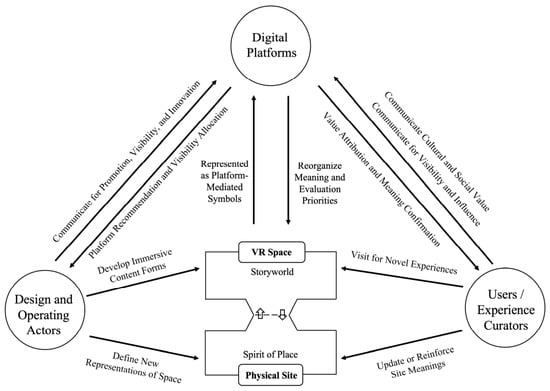
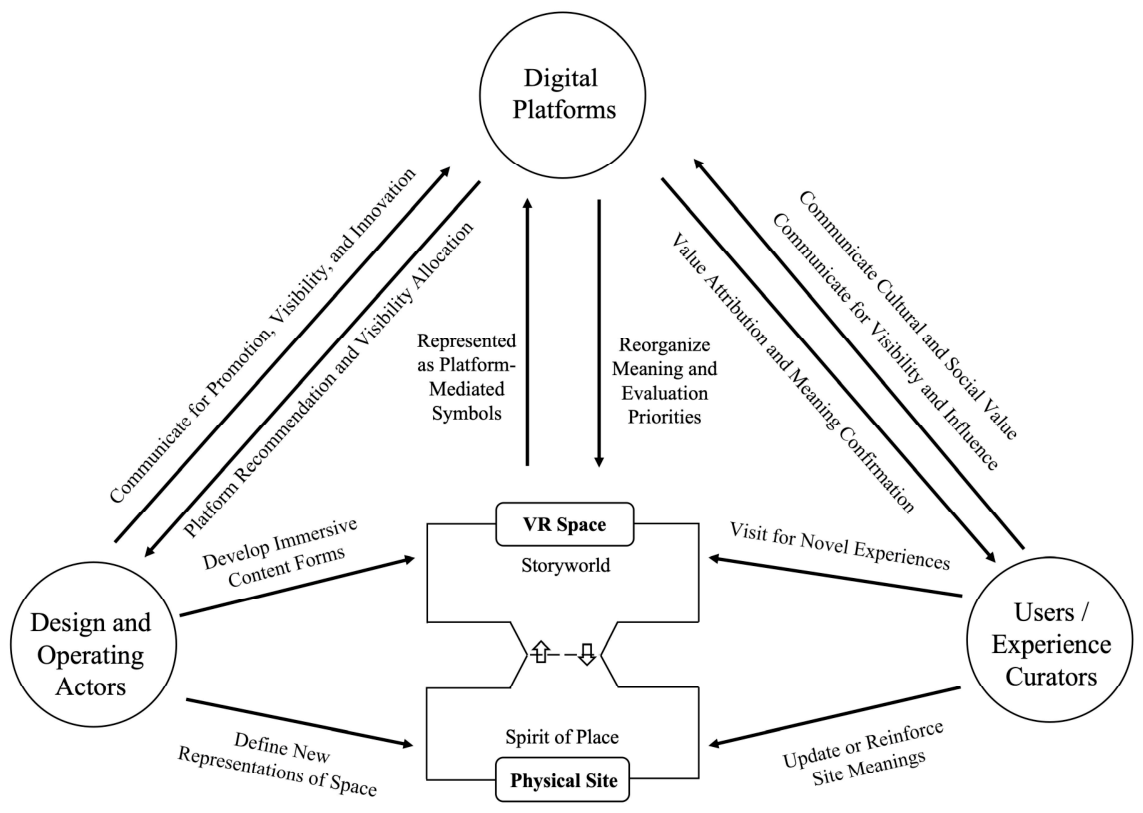

Disclaimer/Publisher’s Note: The statements, opinions and data contained in all publications are solely those of the individual author(s) and contributor(s) and not of MDPI and/or the editor(s). MDPI and/or the editor(s) disclaim responsibility for any injury to people or property resulting from any ideas, methods, instructions or products referred to in the content. |
© 2026 by the author. Licensee MDPI, Basel, Switzerland. This article is an open access article distributed under the terms and conditions of the Creative Commons Attribution (CC BY) license.