Adaptive Reuse of Idle Building Stock for Low-Carbon Regeneration: A Multi-Scalar Sustainable Built Environment Framework of Green Rural Centers (GRCs)

 ,
,
Abstract
1. Introduction
2. Literature Review and Theoretical Framework
2.1. Overview of Global Research on Adaptive Reuse and Sustainability
2.2. Sustainable Rural Development Paradigm
2.3. Low-Carbon Transitions and Nature-Based Solutions (NBS)
2.4. Conceptual Framework
- Spatial Layer: Building typology, accessibility, integration with natural resources
- Functional Layer: Community services, educational uses, economic productivity
- Carbon Layer: Emission baselines, renewable integration, reduction potential
- Institutional Layer: Governance structures, policy levers, financing models
2.5. Theoretical Contribution of This Study
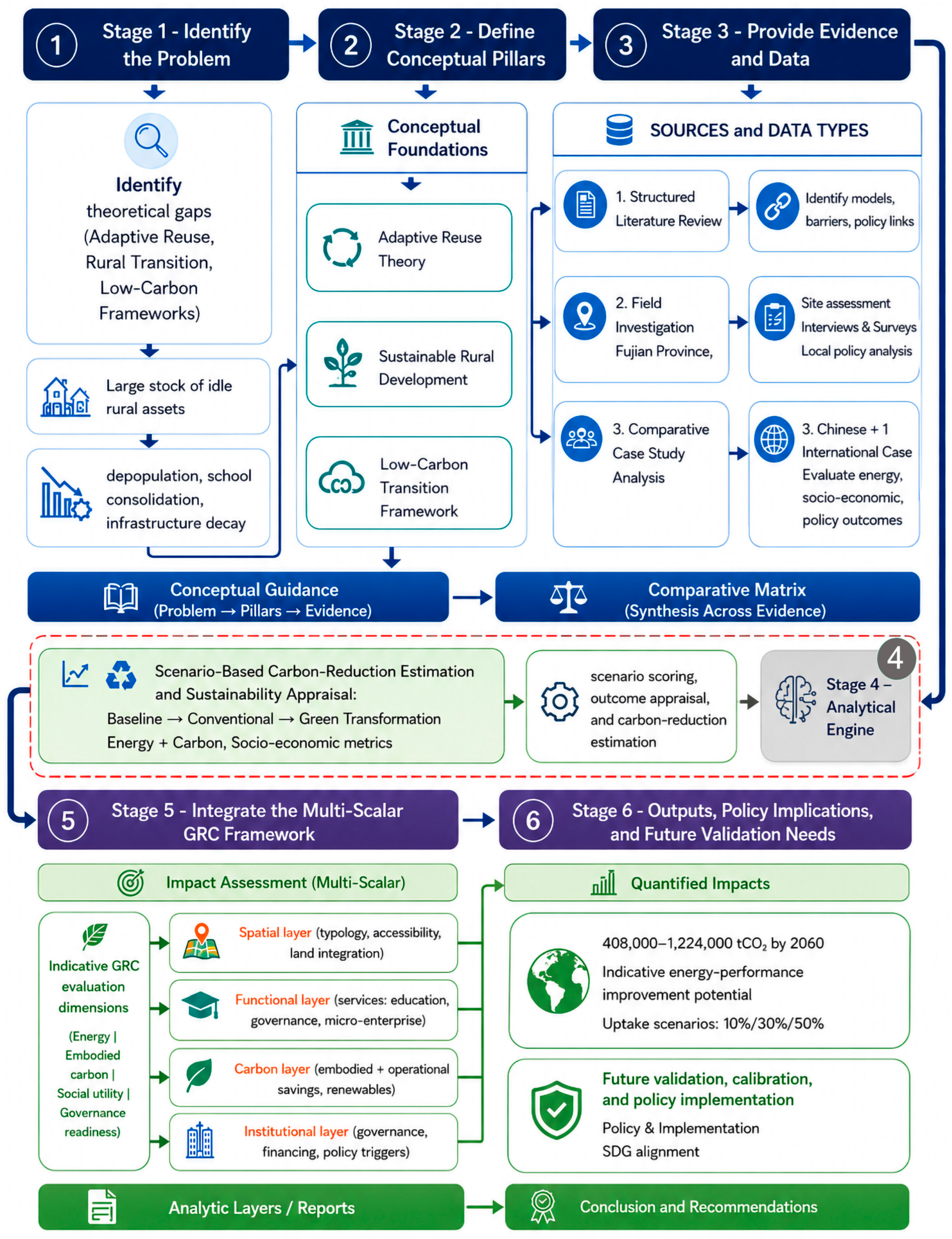
3. Methodology
- Baseline Scenario: Idle buildings remain abandoned and underutilized.
- Conventional Reuse Scenario: Buildings are converted into standard community facilities without integrated sustainability measures.
- GRC-Oriented Transformation Scenario: Buildings are adaptively reused as multifunctional Green Rural Centres (GRCs) incorporating energy-efficiency strategies, renewable energy integration, and sustainability-oriented community functions.
4. Results
4.1. Contextual Analysis: Rural Transformation Challenges and Opportunities in China-Fujian Province
4.1.1. Contextual Analysis Procedures
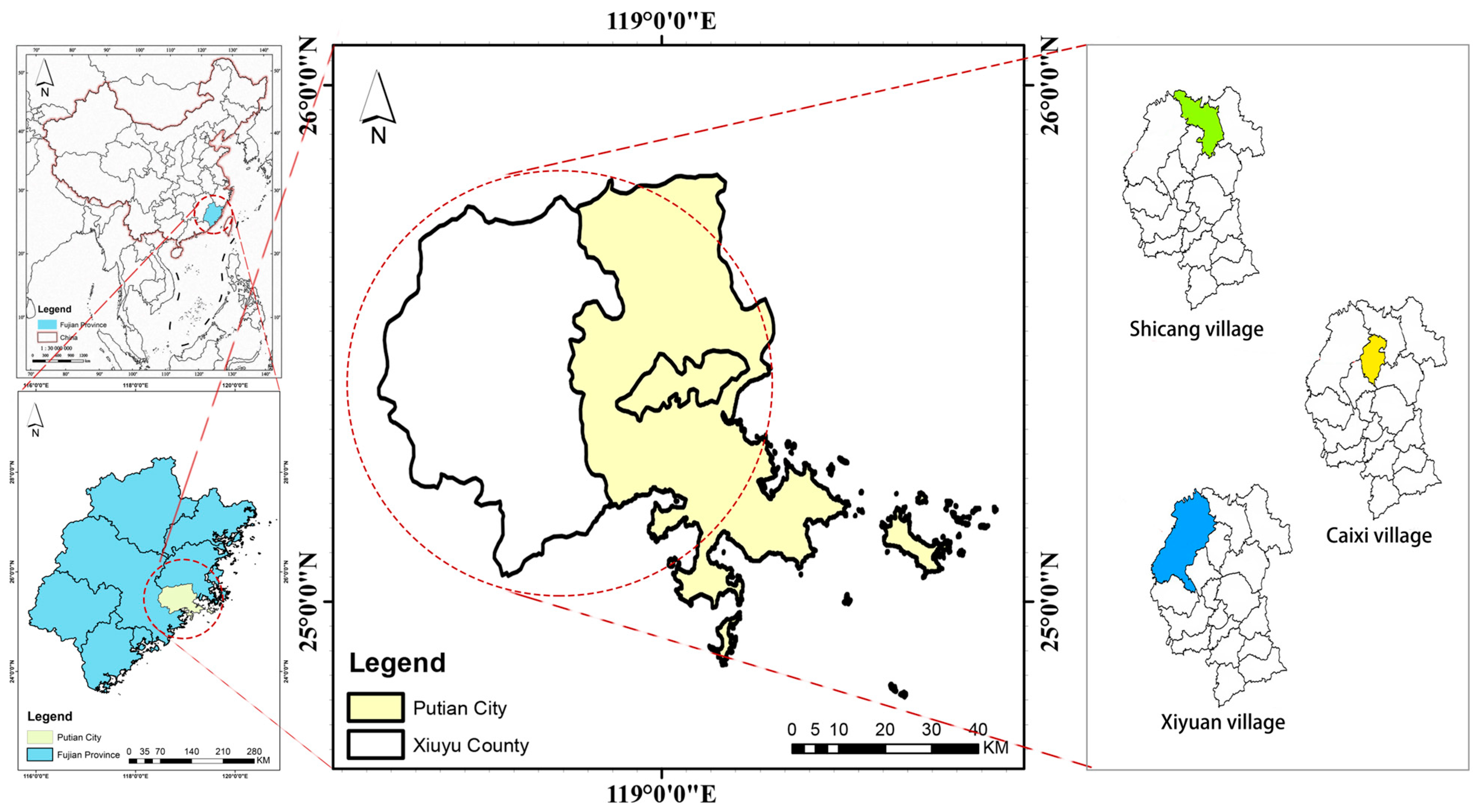
Field Investigation
Adaptive Reuse and Sustainability-Oriented Rural Development Perspectives
4.1.2. Contextual Analysis Results and Indicators
4.2. Case Study Analysis of Revitalizing and Adaptive Reuse of Idle Schools
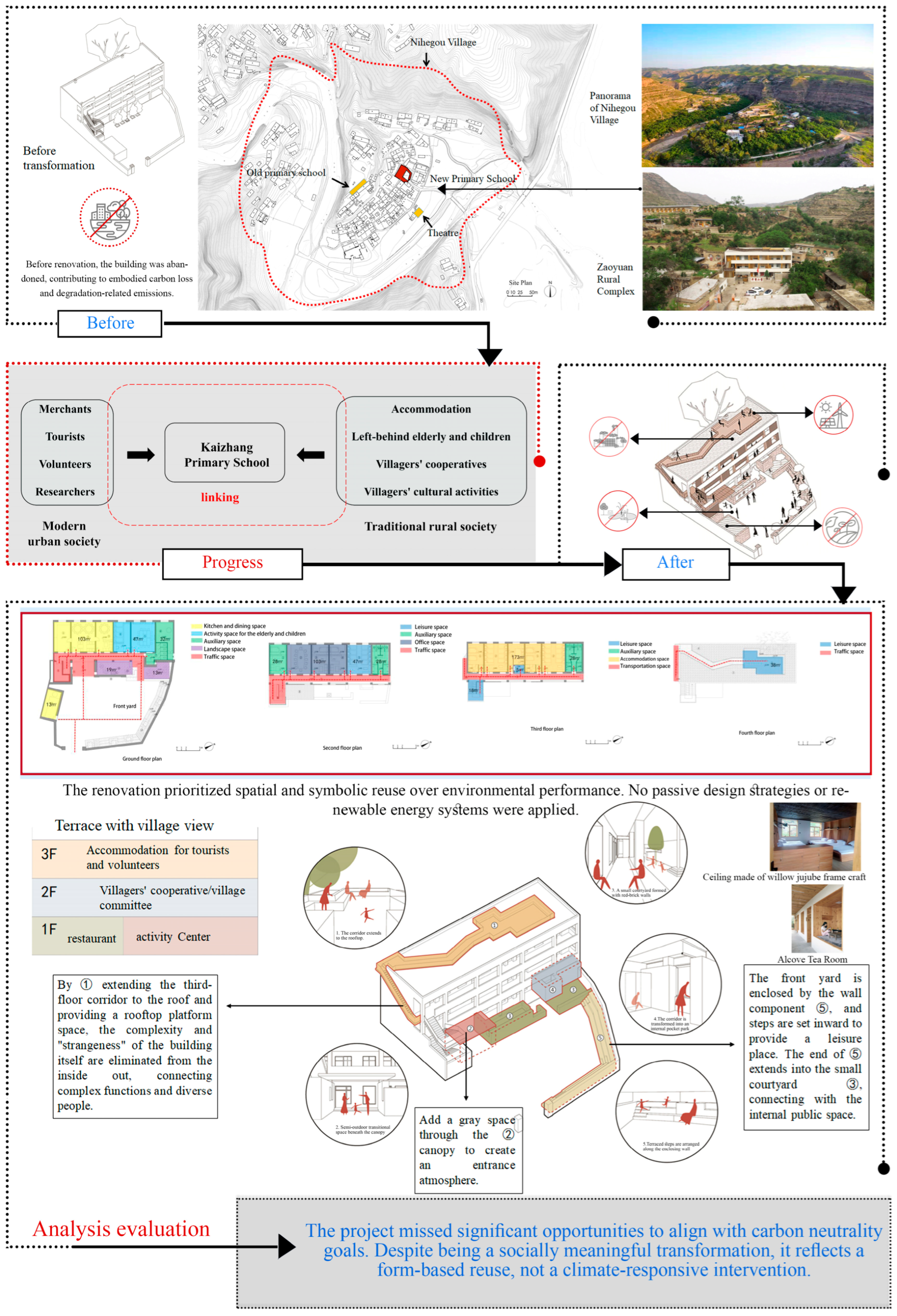
4.2.1. Case Study One: Kaizhang Primary School—Nihegou Village, Shaanxi
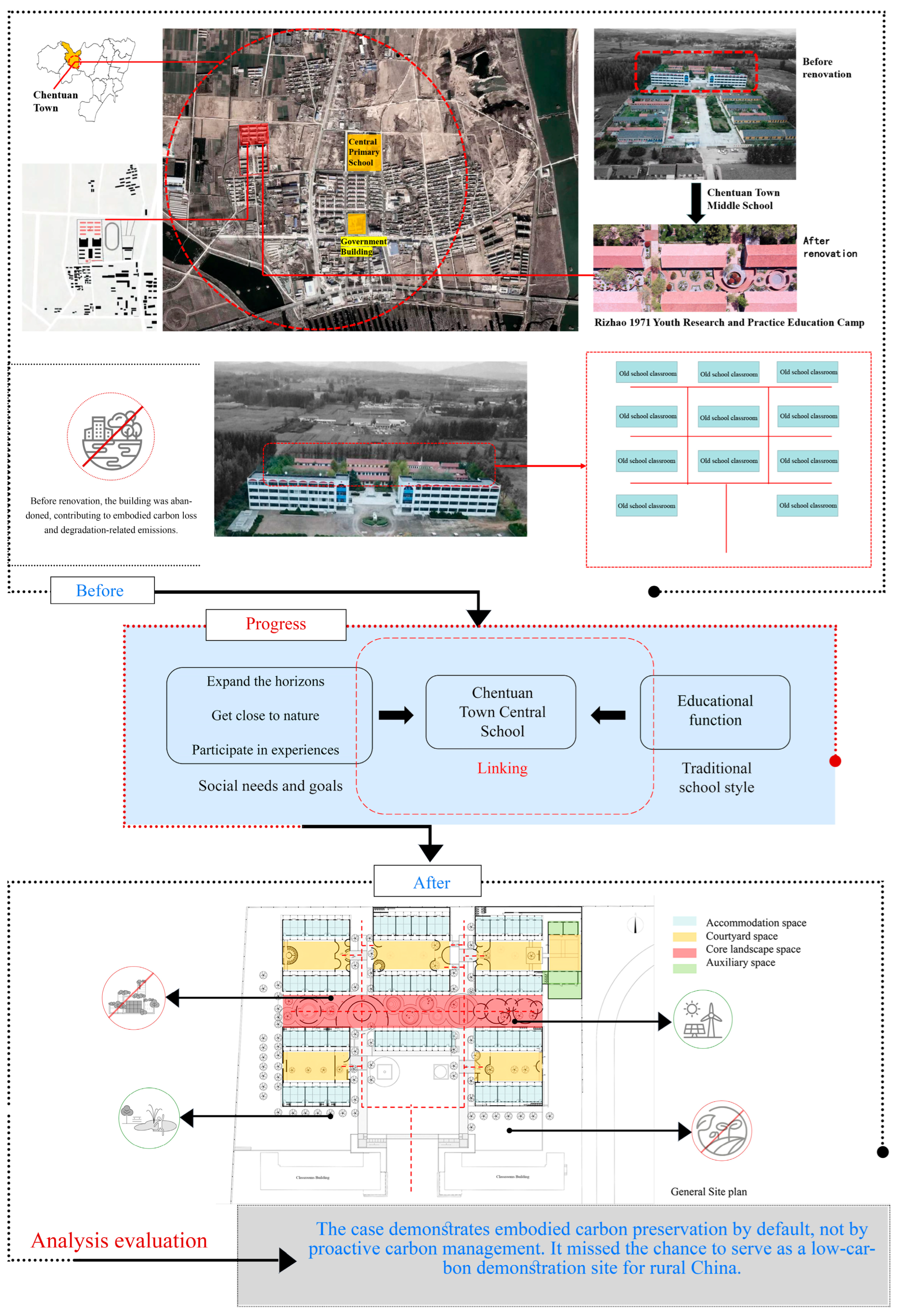
4.2.2. Case Study Two: 1971 Youth Education Camp—Chentuan Town, Shandong
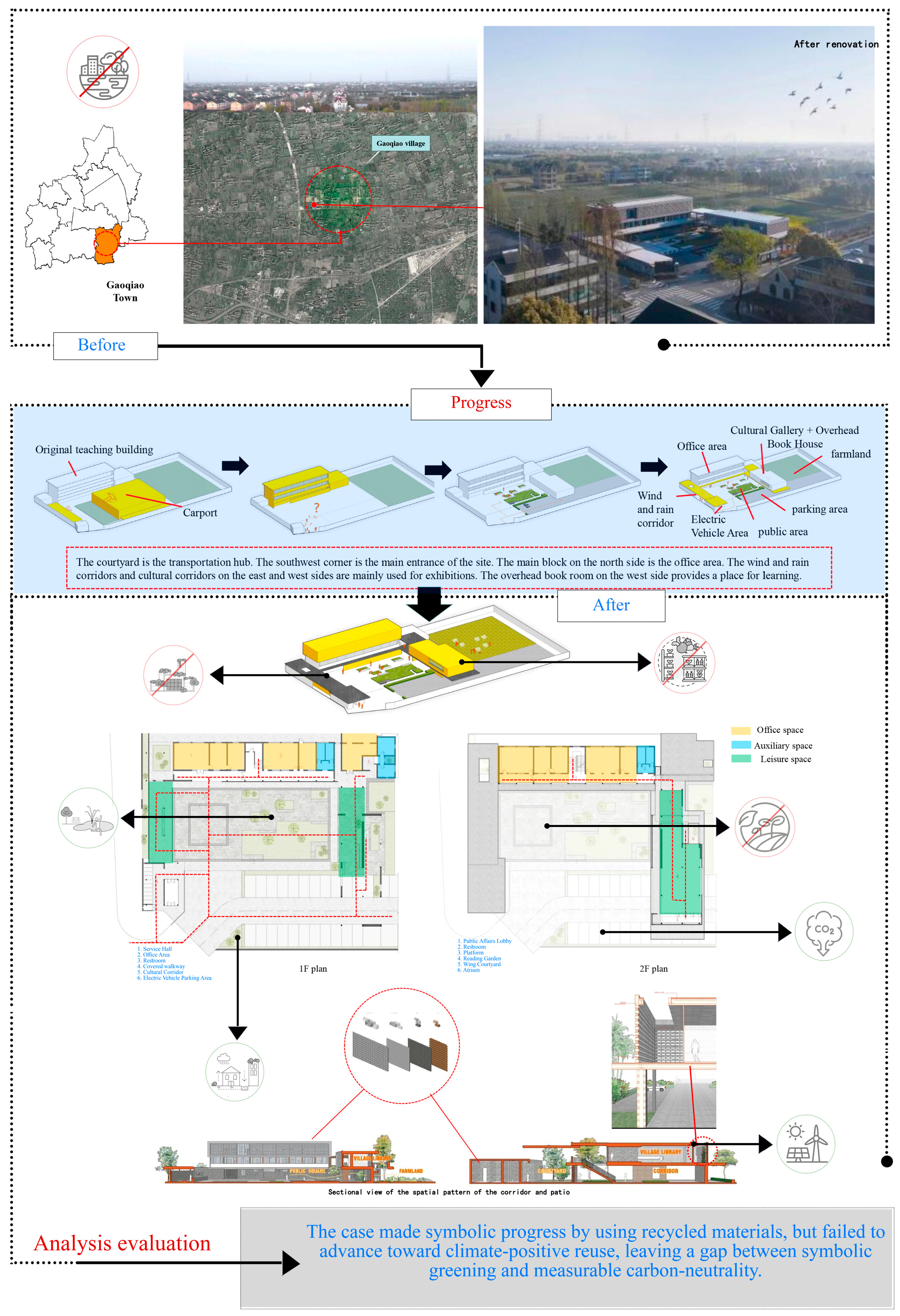
4.2.3. Case Study Three: Qili Village Party and Community Centre—Zhejiang
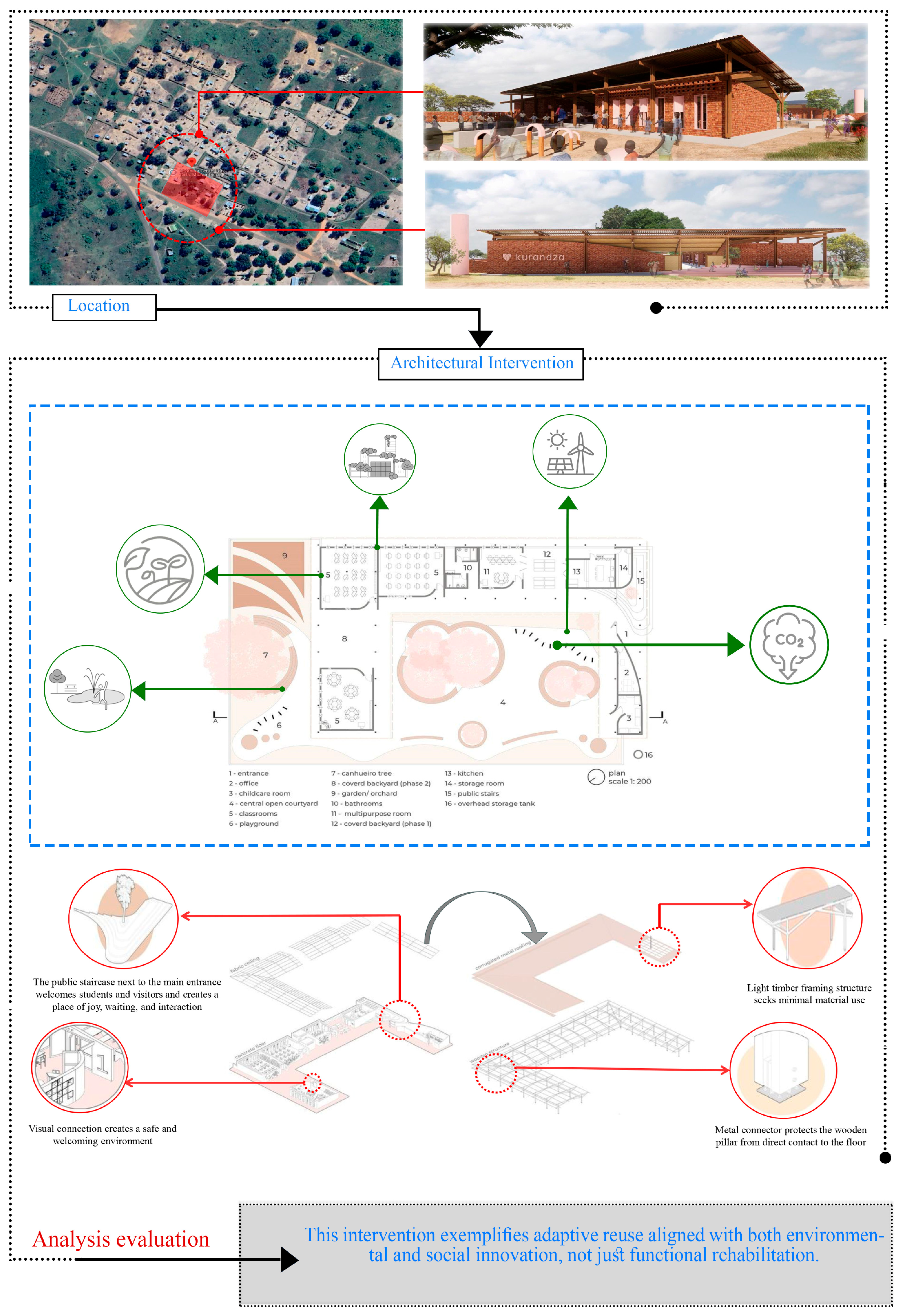
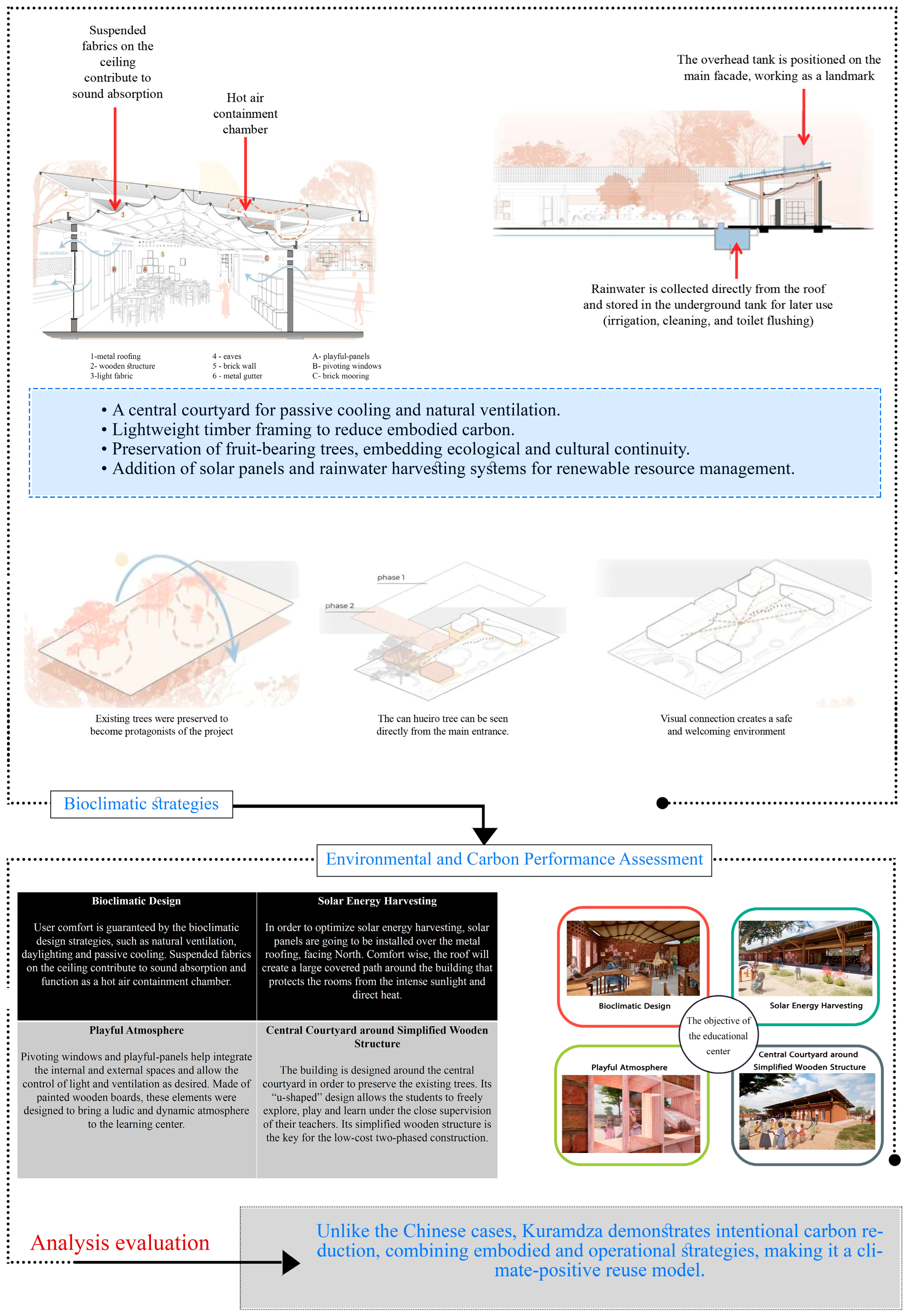
4.2.4. Case Study Four: Kuramdza Educational Centre—Chivonguene, Mozambique
4.2.5. Comparative Insights and Lessons Learned
4.3. Scenario Analysis-Based Appraisal of Green Rural Centre (GRC) Development
4.3.1. Purpose and Relevance
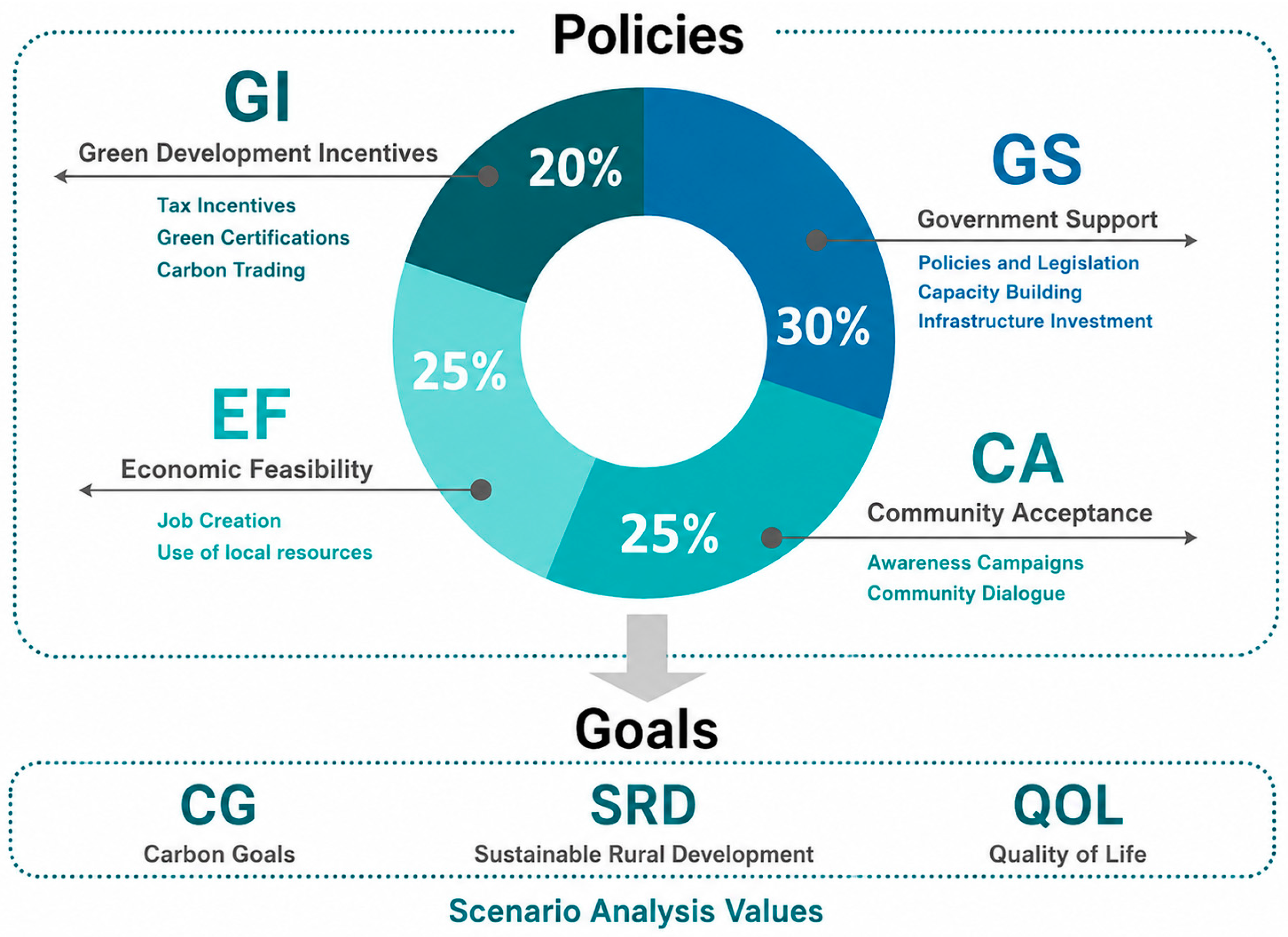
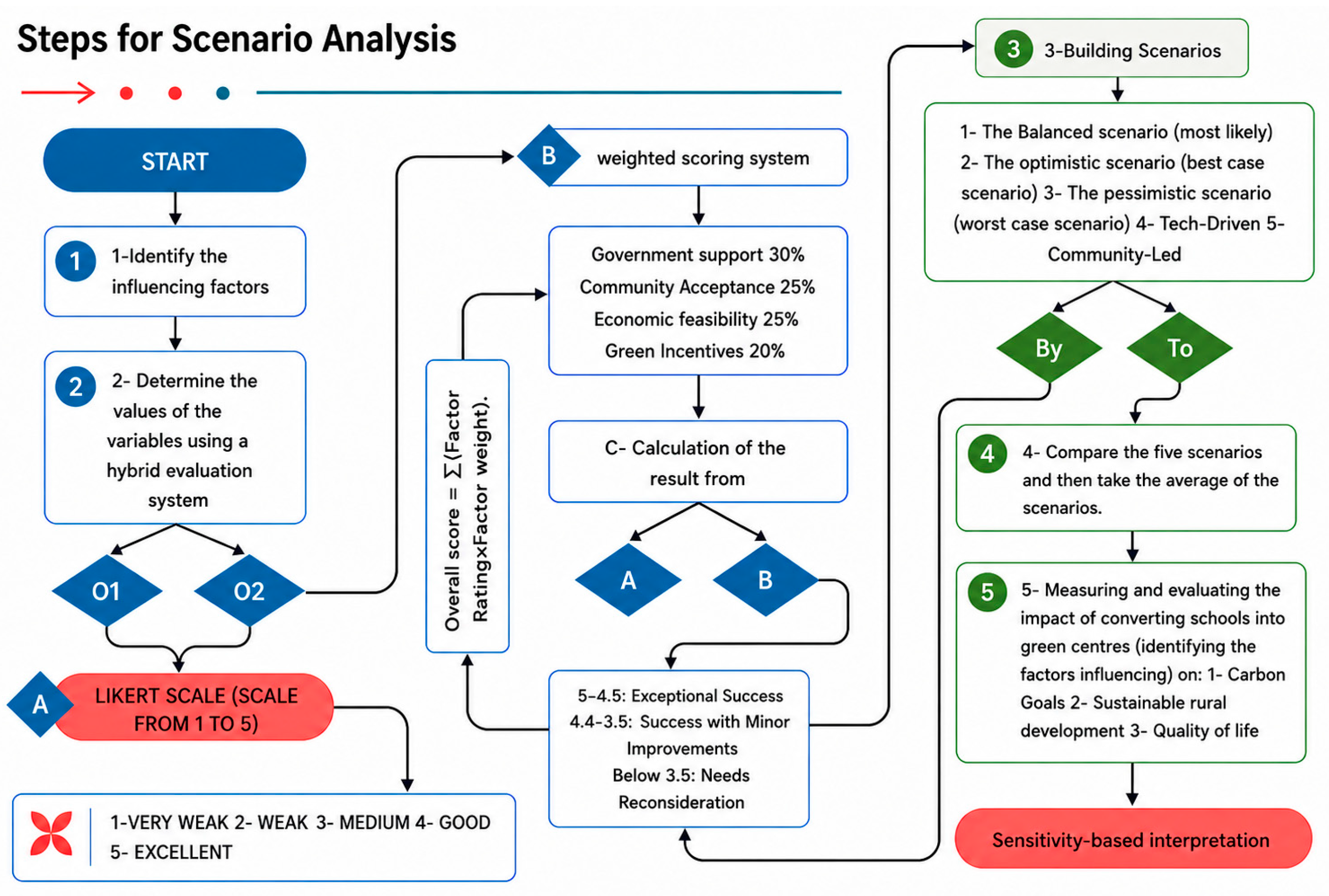
4.3.2. Key Influencing Factors and Weighting Scheme
- Government Support (GS)—30%
- Reflects the importance of central and local government policies, financial subsidies, land-use permissions, and political will.
- Community Acceptance (CA)—25%
- Represents the level of local engagement, resident buy-in, and cultural appropriateness of the reuse strategy.
- Economic Feasibility (EF)—25%
- Captures the cost–benefit profile, operational viability, and long-term financial sustainability of the GRC conversion.
- Green Development Incentives (GI)—20%
- Includes environmental certifications, carbon credit eligibility, and access to green finance mechanisms.
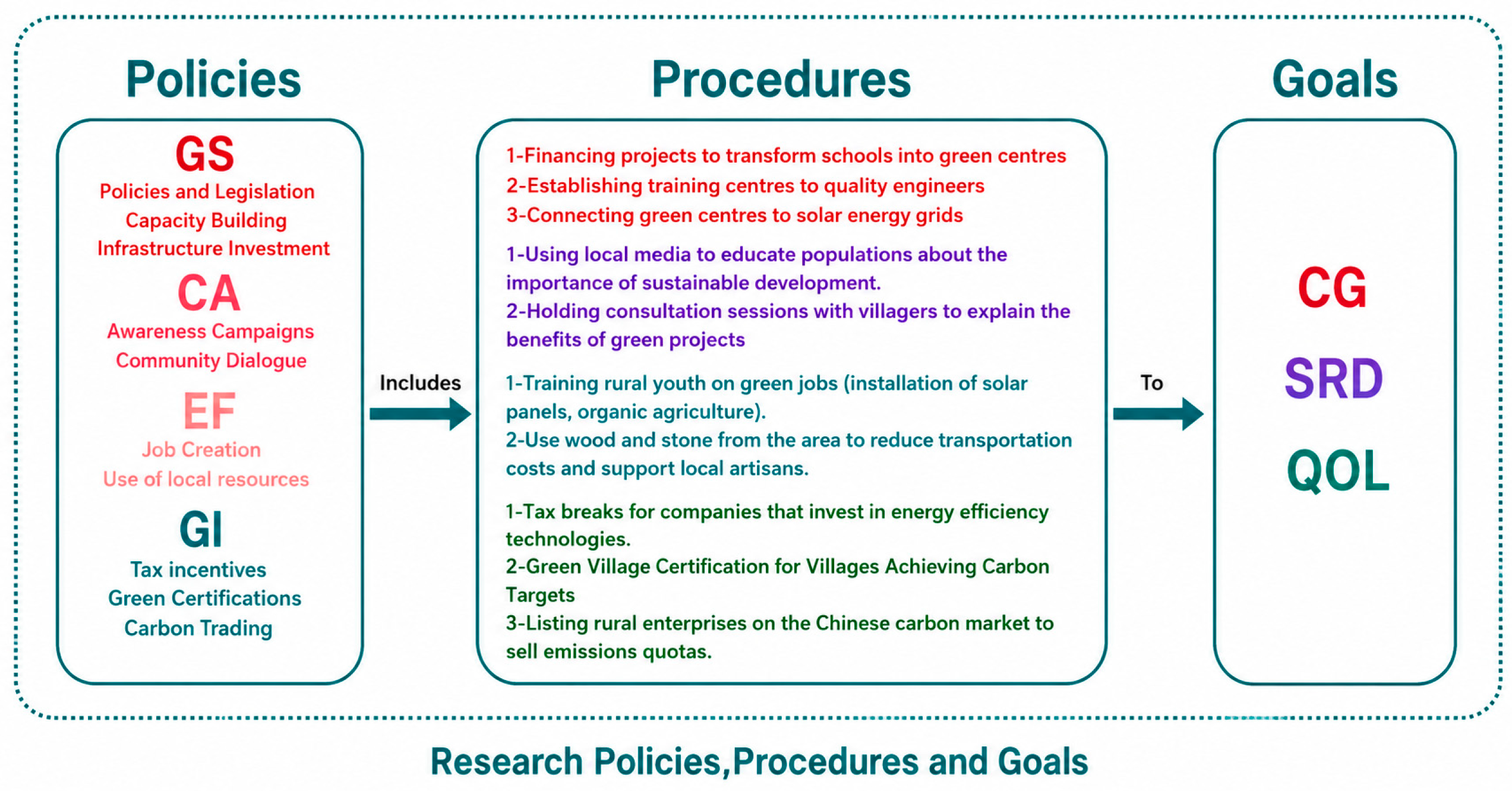
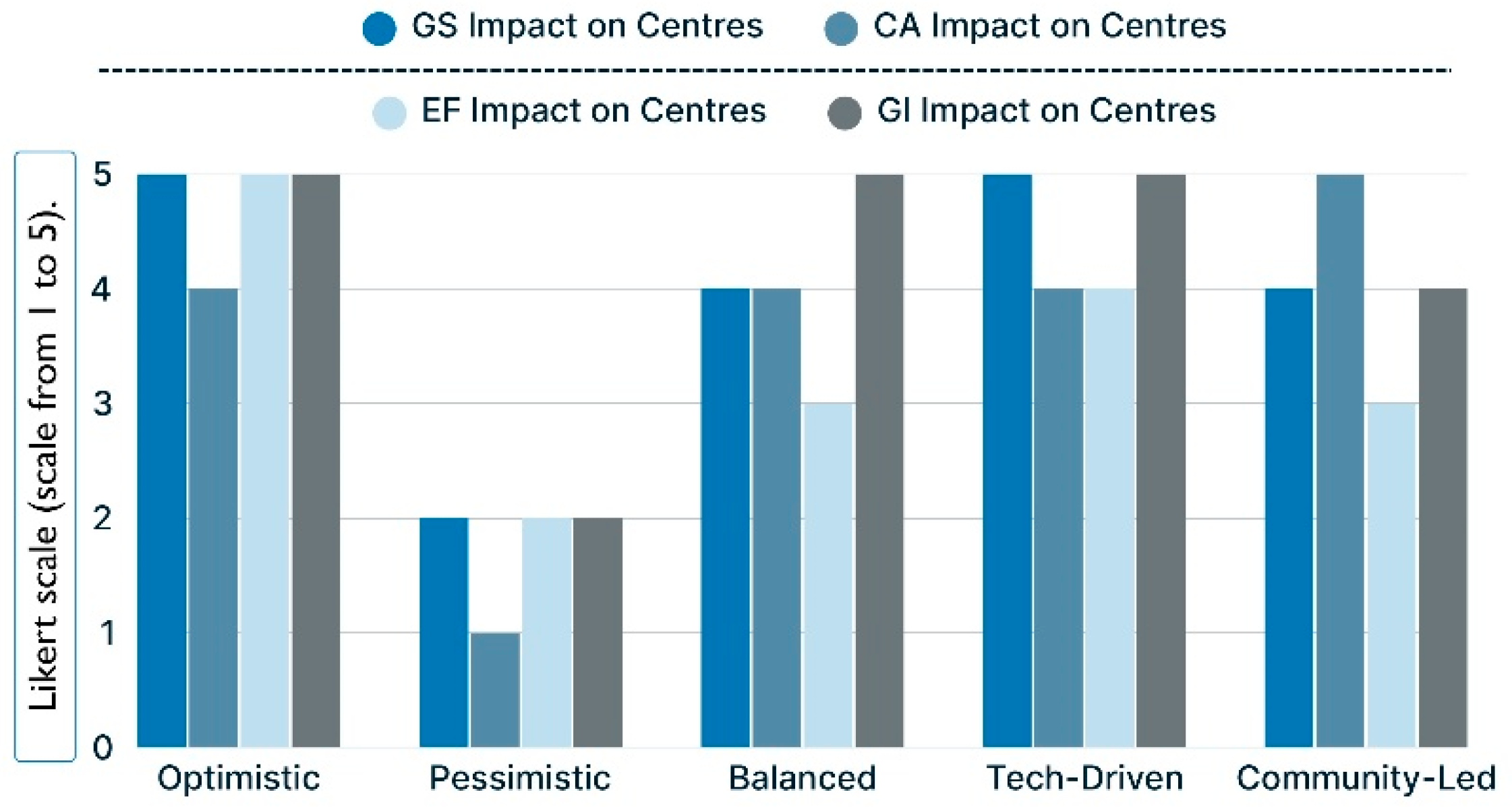
- Relative weighting values were used as structured analytical inputs to support comparative interpretation across scenarios rather than statistically calibrated coefficients. An exploratory comparative evaluation approach was used, combining literature-informed weighting logic with Likert-scale assessments across five scenarios (Figure 16).
4.3.3. Scenario Construction and Scoring
- Balanced Scenario—steady-state conditions and gradual support growth
- Optimistic Scenario—full government alignment and strong public buy-in
- Pessimistic Scenario—policy rollback, limited funding, low engagement
- Tech-Driven Scenario—driven by innovation and external funding
- Community-Led Scenario—bottom-up mobilization with modest policy alignment
- ≥4.5: Strong implementation potential
- 3.5–4.4: Feasible with moderate adjustments
- <3.5: Indicates implementation constraints
4.3.4. Scenario Outcome Appraisal
4.3.5. Interpretation of Implementation Pathways
4.3.6. Linkage to Forward Carbon-Reduction Estimation Toward 2060
4.4. Estimating the Carbon Reduction Potential of Green Rural Centers
4.4.1. Estimation Parameters and Scenario Conditions
- Number of idle rural schools across China: ~68,000 (based on Ministry of Education data)
- Potential conversion rate: 30% by 2060 = 20,400 centers
- Average building area per site: 200 m2
- Baseline energy profile of idle sites: zero active usage, but opportunity cost in terms of underutilized land and deteriorating infrastructure
- Post-conversion conditions include improved insulation: passive environmental design strategies, and partial integration of renewable energy systems.
- Indicative annual carbon reduction estimate per site: approximately 1.2 metric tons CO2-equivalent under the baseline scenario conditions (from improved energy systems, reduced transportation, and local service provision)
- Timeframe: 2025–2060
4.4.2. Carbon Impact Estimation
- N = Number of converted centers = 20,400
- A = Annual CO2 reduction per center = 1.2 tons
- R = Realization rate (progressive implementation)
- Y = Years of operation = average 30 years
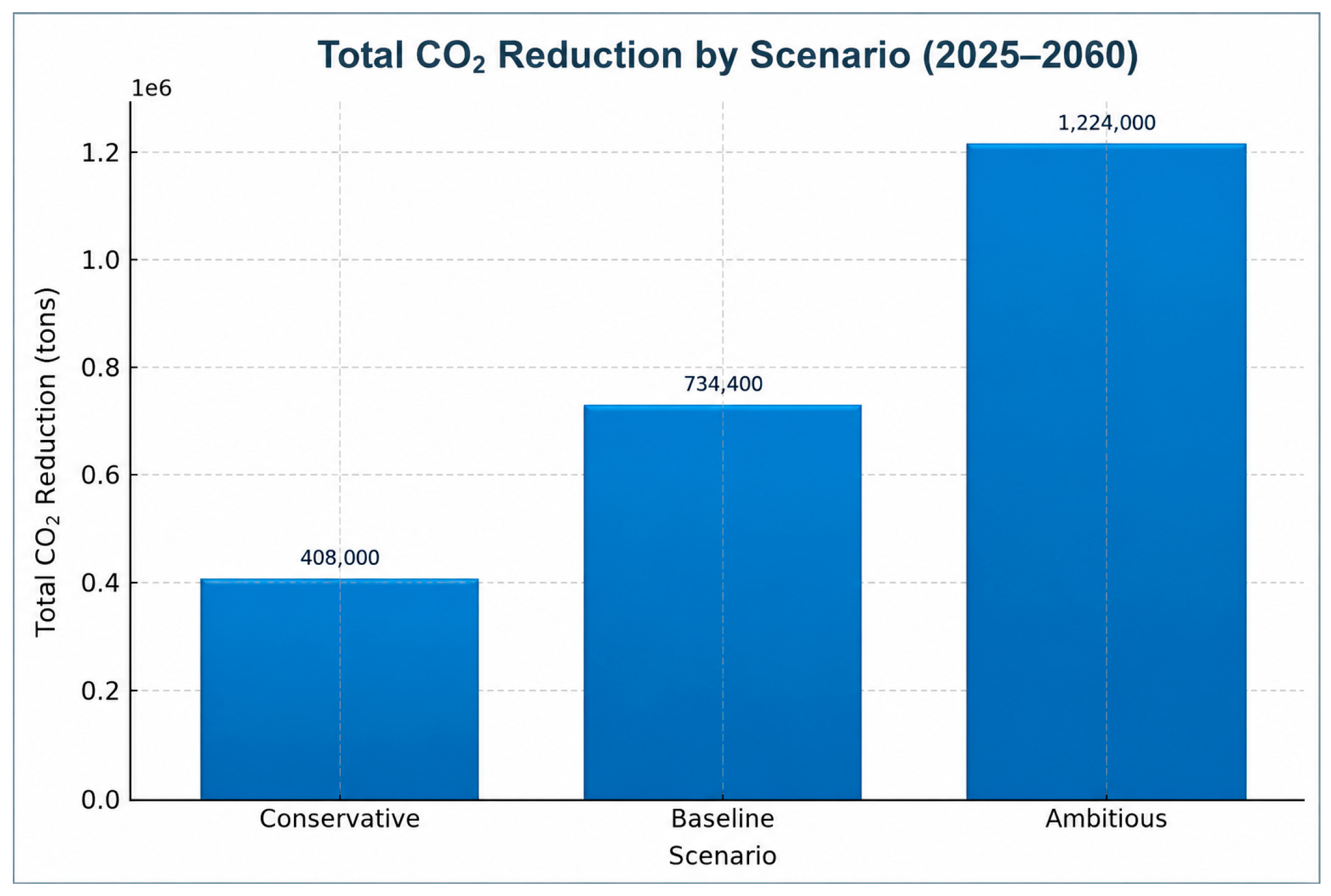
- Conservative Scenario: 408,000 tons CO2
- Baseline Scenario: 734,400 tons CO2
- Ambitious Scenario: 1,224,000 tons CO2
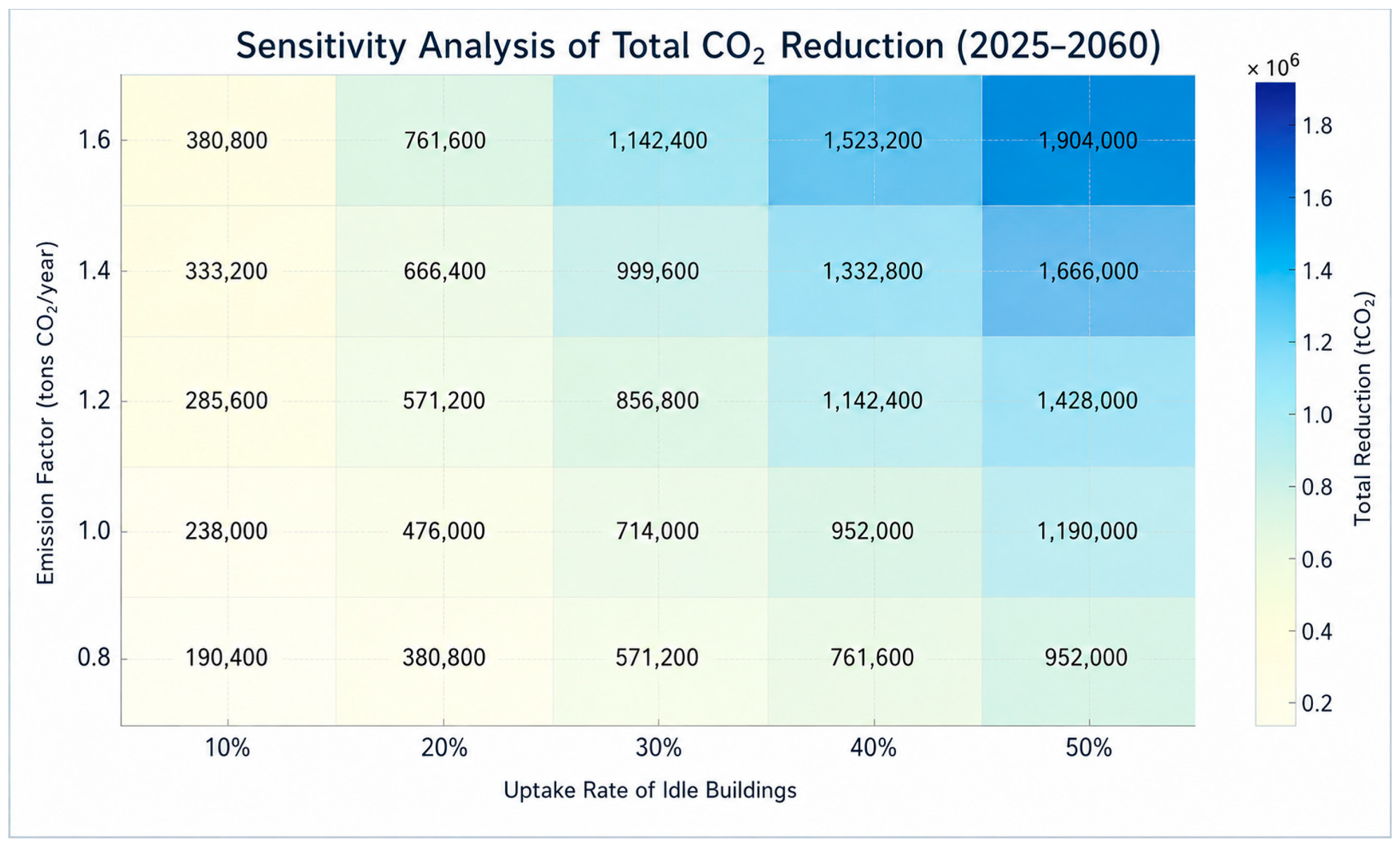
Sensitivity Analysis of CO2 Reduction Estimates
4.4.3. Secondary and Systemic Benefits
- Renewable energy adoption: Rooftop PV systems reduce reliance on fossil-fuel grid electricity.
- Urban–rural transport mitigation: Localizing services (e.g., health, education) reduces travel-related emissions.
- Green economy stimulation: Community-oriented training and local agricultural initiatives may contribute to reduced transport and material-related emissions.
- Carbon sequestration potential: Initiatives such as community gardens and tree planting enhance biogenic carbon sinks.
- Educational impact: Schools repurposed as GRCs embed sustainability awareness among future rural generations, creating long-term behavioral change.
- The comparative scenario interpretation suggests that improvements in rural quality of life and local development conditions may extend beyond the direct technical impacts of building retrofitting alone.
4.4.4. Policy Implications and Scaling Potential
4.5. Proposed Strategic Framework for the Transformation of Idle Buildings into Green Rural Centers
4.5.1. Objectives of the Framework
- Provide a structured planning-oriented approach for converting idle school buildings into multifunctional, low-carbon community hubs.
- Integrate energy-efficient retrofitting, environmental education, and community development into a single spatial platform.
- Support alignment with China’s 2030 carbon peak and 2060 carbon neutrality strategies.
- Offer an indicative planning reference for local governments, planners, and development agencies.
4.5.2. Five-Phase Strategic Framework
4.5.3. Enabling Conditions and Policy Supports
- Policy Instruments: Integration into rural construction codes and national low-carbon planning schemes.
- Green Finance Tools: Access to climate funds, green bonds, and carbon credit schemes for retrofitting and operational support.
- Cross-sectoral Partnerships: Collaboration between education bureaus, planning departments, environmental agencies, and civil society.
- Capacity Building: Training rural construction teams, local officials, and community volunteers on sustainable retrofitting and management.
- Digital Platforms: Use of GIS-based mapping, energy performance dashboards, and data sharing systems to monitor progress and ensure transparency.
4.5.4. Adaptability and Replicability
4.6. Policy Implications and Roadmap for National Implementation
4.6.1. Policy Implications
- Integration with Dual Carbon Governance
- GRCs -oriented reuse strategies may be incorporated into national and provincial carbon neutrality plans as certified low-carbon infrastructure projects.
- Their contributions to emission reductions, energy efficiency, and ecological services can potentially recognized within carbon accounting systems.
- Synergy with Rural Revitalization and Land Reform
- The transformation of idle school assets can be aligned with the goals of the Rural Revitalization Strategy, particularly in promoting local services, employment, and spatial equality.
- Land-use flexibility and institutional coordination may support to legally enable the multifunctional reuse of public-school properties.
- Embedding in Green Finance Ecosystems
- Converted GRCs could serve as eligible recipients of green bonds, rural carbon credits, and environmental public–private partnerships (PPPs).
- Clearer assessment guidelines may help to measure and verify their carbon benefits and social value.
- Institutional and Human Capacity Development
- Policymakers may ensure that rural governments and community actors are trained in planning, retrofitting, and managing GRCs in a participatory and accountable manner.
- National academic institutions could play a role in developing technical toolkits and training curricula.
4.6.2. Three-Phase Roadmap for Policy and Implementation
4.6.3. Opportunities for Policy Innovation
- Carbon-linked Incentives: Introduce reward mechanisms for towns or counties achieving GRC-related carbon savings.
- Circular Economy Synergies: Combine GRC development with local resource cycles (e.g., composting, reuse of demolition waste).
- Resilience Planning: Position GRCs as rural resilience hubs capable of disaster response, health education, and social protection.
5. Discussion and Limitations
5.1. Discussion
5.2. Limitations and Uncertainty and Future Research
- Estimates outcomes are influenced by scenario conditions related to retrofit performance, energy baselines, and uptake rates; actual performance varies with building condition, climate, user behavior, and construction quality.
- Climate conditions may influence operational performance and carbon-reduction potential; future applications of the framework require local climatic calibration.
- The 30% uptake scenario is plausible but optimistic; political, financial, or technical barriers may lower conversion rates.
- Results are sensitive to ±30% variation in emission factors and retrofit effectiveness.
- Secondary impacts reduced transport, local job creation, and carbon sequestration from greening were qualitatively discussed but not fully quantified.
- The contextual field investigation was conducted in Fujian Province; therefore, broader application requires calibration to different rural, climatic, institutional, and socio-economic conditions.
- Long-term projections to 2060 face macro-level uncertainties: energy price shifts, technological change, policy continuity, and funding stability.
6. Conclusions
Author Contributions
Funding
Institutional Review Board Statement
Informed Consent Statement
Data Availability Statement
Acknowledgments
Conflicts of Interest
References
- Zhang, Q.; Yin, Z.; Lu, X.; Gong, J.; Lei, Y.; Cai, B.; Cai, C.; Chai, Q.; Chen, H.; Dai, H.; et al. Synergetic roadmap of carbon neutrality and clean air for China. Environ. Sci. Ecotechnol. 2023, 16, 100280. [Google Scholar] [CrossRef] [PubMed]
- Gorain, S.; Dutta, S.; Balo, S.; Malakar, A.; Choudhury, M.R.; Das, S. Harnessing green wealth: A two-decade global assessment of forest carbon sequestration and credits and the economic implications of sustainable forest management practices. J. Environ. Manag. 2025, 393, 126987. [Google Scholar] [CrossRef] [PubMed]
- Yang, C.; Tan, S.; Zhou, H.; Zeng, W. Towards Sustainable Rural Development: Assessment Spatio-Temporal Evolution of Rural Ecosystem Health through Integrating Ecosystem Integrity and SDGs. Land 2024, 13, 1672. [Google Scholar] [CrossRef]
- Xu, Y.; Li, H.; Zhang, R.; Wang, T.; Sui, P.; Sheng, J.; Gao, W.; Chen, Y. Balancing the development and carbon emissions in rural areas of China. J. Clean. Prod. 2024, 454, 142338. [Google Scholar] [CrossRef]
- Ye, L.; Liu, Z.; Liang, Y. Development path of a modern rural power grid under dual carbon target based on data analysis. Int. J. Low-Carbon Technol. 2024, 19, 217–226. [Google Scholar] [CrossRef]
- Yan, S.; Li, B.; Xu, R. A Demand-Oriented Design and Integration Study of Idle Rural Schools—A Case Study of Five Provinces in Central China. J. Hubei Inst. Fine Arts 2015, 2, 96–101. [Google Scholar]
- Wei, W.; Cui, Q.; Sheng, Y. Dual carbon goals and the impact on future agricultural development in China: A general equilibrium analysis. China Agric. Econ. Rev. 2022, 14, 664–685. [Google Scholar] [CrossRef]
- Khan, R.; Alabsi, A.A.N.; Muda, I. Comparing the effects of agricultural intensification on CO2 emissions and energy consumption in developing and developed countries. Front. Environ. Sci. 2023, 10, 1065634. [Google Scholar] [CrossRef]
- Yu, C.; Zheng, H. Efficiency of green and low-carbon coordinated development for mega urban agglomerations: An empirical study. Front. Environ. Sci. 2024, 12, 1336322. [Google Scholar] [CrossRef]
- Xu, F.; Chi, G.; Wang, H. Scenario Analysis of Carbon Emission Changes Resulting from a Rural Residential Land Decrement Strategy: A Case Study in China. Land 2024, 13, 51. [Google Scholar] [CrossRef]
- Yatsenko, V.; Osychenko, H.; Tyshkevych, O.; Toporkov, V. Adaptive Reuse of Historic Rural School Buildings in Ukraine in the Poltava Region. Int. J. Conserv. Sci. 2024, 15, 73–88. [Google Scholar] [CrossRef]
- Harrell, M.; Thompson, W.; Horn, E.; Koehn, A.; Ianchenko, A.; Prosksch, G. Adaptive Reuse as Carbon Adaptation: Urban Food Production in the Underused Parking Garages of the Future. In Proceedings of the 2020 AIA/ACSA Intersections Research Conference: CARBON; Griffin, C.T., Hameen, E.C., Eds.; ACSA: Sacramento, CA, USA, 2020. [Google Scholar] [CrossRef]
- Mérai, D.; Veldpaus, L.; Pendlebury, J.; Kip, M. The Governance Context for Adaptive Heritage Reuse: A Review and Typology of Fifteen European Countries. Hist. Environ. Policy Pract. 2022, 13, 526–546. [Google Scholar] [CrossRef]
- Li, H. Exploring the Path to Integrating Dual Carbon Goals with Rural Revitalization. Rural Econ. Technol. 2022, 33, 41–44. [Google Scholar]
- Plevoets, B.; Van Cleempoel, K. Adaptive reuse as a strategy towards conservation of cultural heritage: A literature review. In Proceedings of the WIT Transactions on the Built Environment; WIT Press: Billerica MA, USA, 2011; pp. 155–164. [Google Scholar] [CrossRef]
- Aigwi, I.E.; Duberia, A.; Nwadike, A.N. Adaptive reuse of existing buildings as a sustainable tool for climate change mitigation within the built environment. Sustain. Energy Technol. Assess. 2023, 56, 102945. [Google Scholar] [CrossRef]
- Lundgren, R. Social lifecycle assessment of adaptive reuse. Build. Cities 2023, 4, 334–351. [Google Scholar] [CrossRef]
- Shen, Y.; Xiao, Z.; Huang, J.; Deng, Y.; Yu, J. Impact of low-carbon energy structure transition on rural revitalization. Int. Rev. Econ. Financ. 2025, 102, 104289. [Google Scholar] [CrossRef]
- Tsai, Y.; Dewancker, B.J.; Ardhyanto, A. Urban-Rural Revitalization Space for Sustainable Social Value: An Evaluation in Redesigning Built Environment in Taiwan. Land 2023, 12, 634. [Google Scholar] [CrossRef]
- Vardopoulos, I. Adaptive Reuse for Sustainable Development and Land Use: A Multivariate Linear Regression Analysis Estimating Key Determinants of Public Perceptions. Heritage 2023, 6, 809–828. [Google Scholar] [CrossRef]
- Cardellino, P.; Woolner, P. Designing for transformation—A case study of open learning spaces and educational change. Pedagog. Cult. Soc. 2019, 28, 383–402. [Google Scholar] [CrossRef]
- Duveskog, D.; Friis-Hansen, E.; Taylor, E.W. Farmer field schools in rural kenya: A transformative learning experience. J. Dev. Stud. 2011, 47, 1529–1544. [Google Scholar] [CrossRef]
- Yawson, D.O.; Adu, M.O.; Asare, P.A.; Armah, F.A. Transforming Urban Idle Spaces into Green, Productive and Aesthetic Landscapes the Case of Cape Coast, Ghana An AgriFoSe2030 Final Report from Theme 2-Multifunctional Landscapes for Increased Food Security. 2019. Available online: www.slu.se/agrifose (accessed on 1 August 2024).
- Fabi, V.; Vettori, M.P.; Faroldi, E. Adaptive reuse practices and sustainable urban development: Perspectives of innovation for european historic spa towns. Sustainability 2021, 13, 5531. [Google Scholar] [CrossRef]
- Vardopoulos, I. Critical sustainable development factors in the adaptive reuse of urban industrial buildings. A fuzzy DEMATEL approach. Sustain. Cities Soc. 2019, 50, 101684. [Google Scholar] [CrossRef]
- Davis, J.-M.; Reyes, M.; Abrogar, J.; Bourgoin, J.; Brown, M.; Kellum, E.; Polito, F.; Jiusto, S. Puerto Rico’s Rescued Schools: A Grassroots Adaptive Reuse Movement for Abandoned School Buildings. Soc. Sci. 2023, 12, 662. [Google Scholar] [CrossRef]
- Shahi, S.; Esfahani, M.E.; Bachmann, C.; Haas, C. A definition framework for building adaptation projects. Sustain. Cities Soc. 2020, 63, 102345. [Google Scholar] [CrossRef] [PubMed]
- Armstrong, G.; Wilkinson, S.; Cilliers, E.J. A framework for sustainable adaptive reuse: Understanding vacancy and underuse in existing urban buildings. Front. Sustain. Cities 2023, 5, 985656. [Google Scholar] [CrossRef]
- Horzela-Miś, A.; Semrau, J. The role of renewable energy and storage technologies in sustainable development: Simulation in the construction industry. Front. Energy Res. 2025, 13, 1540423. [Google Scholar] [CrossRef]
- Xue, W.; Lei, Y.; Liu, X.; Shi, X.; Liu, Z.; Xu, Y.; Chen, X.; Song, X.; Zheng, Y.; Zhang, Y.; et al. Synergistic assessment of air pollution and carbon emissions from the economic perspective in China. Sci. Total Environ. 2022, 858, 159736. [Google Scholar] [CrossRef] [PubMed]
- Li, Z.; Hou, X. Research on Sustainable Reconstruction of Rural Idle Primary Schools Based on Light Intervention: A Case Study of Nanqiang Primary School in Kaiping Tangkou Town. In Proceedings of the Frontiers in Artificial Intelligence and Applications; IOS Press: Amsterdam, The Netherlands, 2024; pp. 530–539. [Google Scholar] [CrossRef]
- Wang, Q.; Zhou, L.; Zheng, L.; Li, J.; Li, X.; Zhou, H. Research on the Design of Carbon-Neutralized Building in Rural China: A Case Study of “Impression of Yucun”. Energies 2023, 16, 5870. [Google Scholar] [CrossRef]
- Xu, F.; Chen, Y. The study on the reuse for the rural idle school building in northwest China under the layout of the structural adjustment. Shanxi Archit. 2017, 43, 1–3. [Google Scholar] [CrossRef]
- Chen, Z. Functional Reuse of Teaching Space in Rural Ideal Schools—Taking Henan as an Example. Master’s Thesis, Xi’an University of Architecture and Technology, Xi’an, China, 2021. [Google Scholar]
- Zhu, H.; Gao, X.; Tian, W.; Wei, M.; Zhang, X.; Chen, Y. Investigating the mechanisms of sustainable urban land renewal: A perspective of spatial development rights. Sustain. Cities Soc. 2024, 109, 105536. [Google Scholar] [CrossRef]
- Cheng, Y.; Yang, M.; Tao, Z.; Kong, J.; Liu, Z. Access and cost of primary educational services in plateau areas: A case study in Tibet, China. Appl. Geogr. 2023, 152, 102874. [Google Scholar] [CrossRef]
- Li, K.; Wang, L.; Yue, L.; Li, K. Spatial Heterogeneity and Gradient Governance of Idle Rural Homesteads in Megacities: Evidence from Shanghai. Land 2026, 15, 246. [Google Scholar] [CrossRef]
- Guan, Y.; Li, B.; Xiao, Y.; Qiang, Y.; Zhang, N.; Shi, R. Identifying the interactions between the Beautiful China Goals: An analytical localization of the Sustainable Development Goals. Environ. Impact Assess. Rev. 2025, 114, 107945. [Google Scholar] [CrossRef]
- Tao, Z.; Guanghui, J.; Wenqiu, M.; Guangyong, L.; Yanbo, Q.; Yingying, T.; Qinglei, Z.; Yaya, T. Dying villages to prosperous villages: A perspective from revitalization of idle rural residential land (IRRL). J. Rural Stud. 2021, 84, 45–54. [Google Scholar] [CrossRef]
- Szopińska-Mularz, M.; Prokop, A.; Wikiera, M.; Bukowy, W.; Forsman, F.; Vikström, S. Adaptive Reuse of Urban Structures as a Driver of Sustainable Development Goals: A Systematic Literature Review. Sustainability 2025, 17, 4963. [Google Scholar] [CrossRef]
- Zhang, J.; Wang, Y. Study on the Elderly-oriented Improvement of Rural Idle Schools. In Proceedings of the 2019 International Conference on Architecture: Heritage, Traditions and Innovations (AHTI 2019); Atlantis Press: Dordrecht, The Netherland, 2019. [Google Scholar] [CrossRef]
- Renting, H.; Marsden, T.K.; Banks, J. Understanding alternative food networks: Exploring the role of short food supply chains in rural development. Environ. Plan. A 2003, 35, 393–411. [Google Scholar] [CrossRef]
- Zhu, Y.; Wang, S.; Li, Q.; Sheng, Q.; Liu, Y.; Zhu, Z. Research on the Construction and Application of Rural Digital Design Ecosystem under the “Dual Carbon” Goal—Take the Carbon Sequestration Benefits of Street Trees in Nanjing’s Bulao Village as an Example. Forests 2024, 15, 315. [Google Scholar] [CrossRef]
- Ouyang, Y. Rural Revitalization and Realistic Challenges under the ‘Dual Carbon’ Vision. Sustain. Dev. 2024, 14, 488–495. [Google Scholar] [CrossRef] [PubMed]
- Barbier, E.B. Is green rural transformation possible in developing countries? World Dev. 2020, 131, 104955. [Google Scholar] [CrossRef]
- Hwang, H.; Kim, D.; Kim, S.; Kim, J.Y.; Kim, E.S.; Yang, T.; Lee, N.; Piao, Y.; Park, B.J.; Lee, D.K. Optimizing urban green spaces using a decision-support model for carbon sequestration and ecological connectivity. J. Environ. Manag. 2025, 384, 125058. [Google Scholar] [CrossRef] [PubMed]
- Yu, L.; Lu, W.; Choguill, C.; Li, M. Liangshan Bank, A hybrid model of payment for ecosystem services governance in rural development: The case of Baofu, China. Habitat Int. 2023, 138, 102879. [Google Scholar] [CrossRef]
- Lin, S. Quantifying future smart village transformation: An assessment of Zhejiang’s future villages under carbon peaking and carbon neutrality goals. J. Asian Arch. Build. Eng. 2024, 24, 4172–4194. [Google Scholar] [CrossRef]
- Xinfa, T.; Guozu, H.; Yonghua, W.; Dan, L.; Yan, L. Research on an equilibrium development model between urban and rural areas of Henan including carbon sink assets under the dual carbon goal. Front. Environ. Sci. 2023, 10, 1037286. [Google Scholar] [CrossRef]
- Yin, S.; Liu, L.; Li, J.; Ju, R.; Mahmood, T. Collaborative research on rural distributed photovoltaic development and new energy vehicles moving to the countryside under the background of dual carbon. Insight-Energy Sci. 2023, 6, 603. [Google Scholar] [CrossRef]
- Tian, W.; Yang, L.; Jiang, J. Estimating and analyzing China’s agricultural environmental efficiency from a low-carbon perspective: Based on the SBM model of undesirable outputs (carbon emission). China Rural Surv. 2015, 5, 59–95. [Google Scholar]
- Wu, H.; Yang, J. Whether School Merger Programs Improved Academic Performance of Students: Based on the Case Study of Middle School Merger in Heqing County, Yunnan Province. China Rural Surv. 2021, 6, 120–141. [Google Scholar]
- Liu, H. Study on Regional Disparities of Rural Development in China. Geogr. Land Stud. 2002, 18, 71–75. [Google Scholar]
- Ye, L.; Wei, Y.; Xu, X. An analysis of the development trend and impact of the aging population in Fujian’s rural areas—An analysis based on national census data. Southeast Acad. 2015, 6, 114–121. [Google Scholar] [CrossRef]
- Zhao, M. The Impact of Rural Labor Transfer on my country’s Rural Economic Development. Agric. Mech. Synth. Study 2022, 7, 174–177. [Google Scholar] [CrossRef]
- Xu, X. Research on the Aging of Rural Population in China. Master’s Thesis, Xi’an Technological University, Xi’an, China, 2018. [Google Scholar]
- Du, J. Rural left-behind elites and their organized public participation paths under the background of rural revitalization. China Rural Surv. 2022, 5, 140–152. [Google Scholar]
- Ding, C. Theory, Practice, and Policy: A Three-Dimensional Perspective on Achieving the ‘Dual Carbon’ Goals in Rural my country. Guangxi Soc. Sci. 2022, 4, 322. [Google Scholar] [CrossRef]
- Geng, D. A Study on Raising the Farmer’s Cultural Level and Professional Standards During the Drive to Build a New Socialist Countryside in China. Master’s Thesis, Graduate School of Chinese Academy of Agriculture Sciences, Beijing, China, 2007. [Google Scholar]
- Wang, W. Study on Development problem of Fujian Province Rural Education. Master’s Thesis, Fujian Agriculture and Forestry University, Fuzhou, China, 2009. [Google Scholar]
- Huang, C. Present status, problems and countermeasures of agriculture and rural economy development in Fujian Province. Fujian Agric. Sci. Technol. 2017, 5, 49–51. [Google Scholar] [CrossRef]
- Jiang, L. Research on Activation and Utilization of Idle Space in Xiamen Rural Primary Schools. Master’s Thesis, Xia’men University, Xia’men, China, 2019. [Google Scholar]
- Schafft, K.A. Rural Education As Rural Development: Understanding the Rural School–Community Well-Being Linkage in a 21st-Century Policy Context. Peabody J. Educ. 2016, 91, 137–154. [Google Scholar] [CrossRef]
- Su, J.; Dong, S. Investigation of the Existing Rural Idle Schools in Anhui Province and Research on Their Adaptability to the Renovation of Elderly Care Facilities. Urban Rural Plan. 2022, 215, 101–103. [Google Scholar] [CrossRef]
- Mohamed, S.A.; Ismail, W.A.W.; Hamid, N.H.A.; Kurzi, N.S.; Hasan, R.; I Othmani, N.; Bak, Y.L.; Ramlee, N. Greening strategy through implementation of sustainable landscape design towards low carbon school. In Proceedings of the IOP Conference Series: Earth and Environmental Science; Institute of Physics: London, UK, 2023. [Google Scholar] [CrossRef]
- Hua, K.; Pang, X. Investigation into the Factors Affecting the Green Consumption Behavior of China Rural Residents in the Context of Dual Carbon. Sustainability 2024, 16, 5797. [Google Scholar] [CrossRef]
- Siciliano, G.; Wallbott, L.; Urban, F.; Dang, A.N.; Lederer, M. Low-carbon energy, sustainable development, and justice: Towards a just energy transition for the society and the environment. Sustain. Dev. 2021, 29, 1049–1061. [Google Scholar] [CrossRef]
- Mou, B.; Lee, J.-K. Relevant Research on Effective Reuse Scheme of China’s Rural Idle Schools–Taking Perfecting Rural Public Facilities as an Example -. J. Educ. Environ. Res. 2014, 13, 35–43. [Google Scholar] [CrossRef]
- Yin, S.; Zhai, J.; Li, M.; Fu, T. Research on the Mechanism and Development Path of Green Finance Enabling Rural Revitalization under the Goal of “Double Carbon”. Front. Sci. Eng. 2025, 5, 6–13. [Google Scholar] [CrossRef]
- Yang, J.; Zhang, X. A Study on Carbon-Reduction Strategies for Rural Residential Buildings Based on Economic Benefits in the Gannan Tibetan Area, China. Sustainability 2024, 17, 131. [Google Scholar] [CrossRef]
- Liao, H.; Mi, Z. Guest editorial: Agricultural and rural development under the goal of carbon neutrality. China Agric. Econ. Rev. 2022, 14, 661–663. [Google Scholar] [CrossRef]
- Yuan, Z.; Wen, B.; He, C.; Zhou, J.; Zhou, Z.; Xu, F. Application of Multi-Criteria Decision-Making Analysis to Rural Spatial Sustainability Evaluation: A Systematic Review. Int. J. Environ. Res. Public Health 2022, 19, 6572. [Google Scholar] [CrossRef] [PubMed]
- Xu, M.; Hong, S.; Wei, X.; Cao, D. Research on the Path of Revitalization and Utilization of Idle School Buildings in China’s Rural Areas. Open J. Soc. Sci. 2025, 13, 124–135. [Google Scholar] [CrossRef]








| Dimension | Indicative Planning-Oriented Evaluation Dimensions | Analytical Basis | Assessment Focus | Expected Contribution |
|---|---|---|---|---|
| Energy and Environmental Performance | Reduced operational energy demand through passive and renewable strategies | Building energy-efficiency, passive design, and low-carbon retrofit literature [18,50]; scenario-based carbon-reduction appraisal | Environmental performance integration | Contribution to operational carbon reduction and environmental resilience |
| Renewable Energy Integration | Partial integration of renewable-energy systems appropriate to rural contexts | Renewable-energy integration and rural low-carbon transition studies [9,51] | On-site renewable-energy adoption | Contribution to decentralized low-carbon rural transition |
| Material Reuse and Circularity | Preference for material reuse, local sourcing, and reduced construction waste | Adaptive reuse, embodied-carbon reduction, and circular construction literature [52,53] | Resource-efficiency integration and embodied-carbon reduction | Reduced construction-related environmental impacts |
| Water Conservation | Water-saving and reuse-oriented environmental measures | Sustainable rural infrastructure and environmental resource-management literature [2] | Water-resource efficiency and environmental adaptation | Improved ecological resilience and resource sustainability |
| Multifunctional Community Use | Integration of multiple community-oriented functions within a shared rural facility | Rural regeneration, multifunctional community facilities, and adaptive reuse literature [54] | Functional adaptability and service integration | Strengthened multifunctional rural service provision |
| Community Accessibility | Community-oriented accessibility and inclusive spatial organization | Rural service accessibility, public facility distribution, and social sustainability studies [17,19] | Social inclusion and accessibility integration | Improved local accessibility and inclusive community participation |
| Cultural and Architectural Continuity | Retention and adaptive interpretation of locally significant architectural characteristics | Heritage conservation, rural architectural continuity, and adaptive reuse literature [15,55] | Contextual continuity and rural identity preservation | Preservation of local identity and rural character |
| Economic Feasibility | Basic long-term operational and implementation feasibility considerations | Life-cycle cost, reuse feasibility, and rural regeneration implementation studies [36,52] | Operational viability and adaptive implementation capacity | Improved long-term implementation feasibility |
| Governance and Institutional Support | Alignment with local governance structures and rural policy priorities | Rural revitalization policy, governance coordination, and implementation-capacity literature [13,39,48] | Governance coordination and implementation support | Strengthened policy integration and implementation potential |
| Community Participation | Community engagement, participatory activities, and local involvement | Participatory planning, community engagement, and social acceptance literature [17,19,56] | Community participation and local acceptance | Strengthened community ownership and social inclusion |
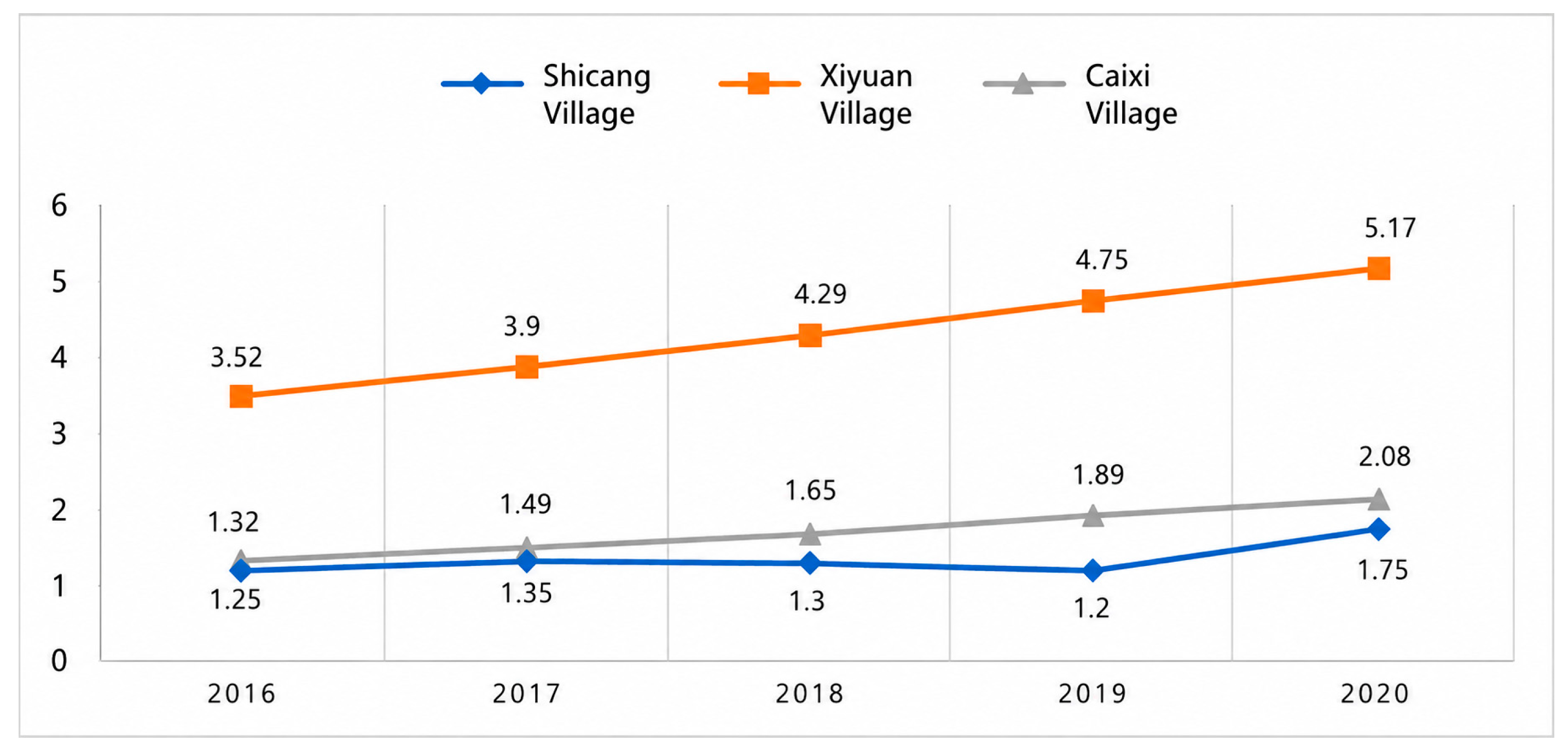
| Village | Total Area/Square Kilometers | Arable Land/Hectare | Area of Woodland/Hectare | Proportion of Cultivated Area/% | Whether There Are Tourism Resources |
|---|---|---|---|---|---|
| Shicang | 141.87 | 518.6 | 11,700 | 36.6 | None |
| Xiyuan | 334.3 | 851.27 | 27,900 | 25.5 | Yes |
| Caixi | 76.21 | 413.87 | 6593.33 | 54.31 | Yes |
| Village | Year | Developments |
|---|---|---|
| Xiyuan | 2016 | Introduced understory economic crops such as golden-threaded herbs and dendrobium, developed the Xianshuiyang Scenic Area, promoted the rural tourism industry, explored the “cooperative + household” model, and attracted household investments. |
| 2017 | Established poverty alleviation industrial base, enhanced school infrastructure, established environmental education base, improved grassroots medical conditions, strengthened afforestation and ecological construction, developed modern characteristic agriculture through “company + household” and “cooperative + household” forms. | |
| 2019 | Advanced high-standard farmland construction, established village-level science and technology envoy workstations, and achieved full coverage of village-level science and technology envoys, promoted health and wellness tourism projects, and focused on environmental protection. | |
| 2020 | Focus on education-driven poverty alleviation, improved healthcare system, enhanced ecological protection, high-standard farmland construction, and wellness tourism. | |
| Shicang | 2017 | Increased surplus labour force post introduction of agricultural production responsibility system, with young people engaging in migrant labour, entrepreneurship, and factory establishment as the main source of economic income. Elderly residents engaged in mountain development and diversified business ventures. Mushrooms, shiitake mushrooms, wood ear mushrooms, and processed crafts such as bamboo, wood, rattan, and grass became pivotal industries for rural economic income. |
| 2019 | Developed agricultural technology, understory economy, high-standard farmland construction, agricultural industrialisation, engineering afforestation, and explored rocky soil resources. | |
| 2020 | Continued focus on agricultural technology development, collaboration with universities, utilisation of forest resources to transform mountain forest advantages into economic strengths, strengthened elderly care and medical services, promoted cooperative societies, and explored tourism resources. | |
| Caixi | 2016 | Introduced camellia industry, improved agricultural service facilities, enhanced education and teaching environment, integrated internet with tourism. |
| 2017 | Strengthened scenic area facilities and services, enhanced camellia industry, improved education, and upgraded tourism service facilities. | |
| 2019 | Enhanced camellia industry, developed modern sightseeing agriculture. | |
| 2020 | Provided guidance for camellia industry planting, added health and educational tourism functions to scenic tourism. |
| Year | Total Number of Tourists/Ten Thousand | Ticket Revenue/Ten Thousand |
|---|---|---|
| 2017 | 6 | 98 |
| 2019 | 12.39 | 276.05 |
| Year | Total Number of Tourists/Ten Thousand | Ticket Revenue/Ten Thousand |
|---|---|---|
| 2015 | 16.87 | 297 |
| 2016 | 19.3 | 481 |
| 2017 | 21 | 503 |
| 2019 | 22.37 | 571.6 |
| Year | Village | Population | Number of People Engaged in Agriculture | Number of People over 60 Years Old |
| 2015 | Xiyuan | 23,340 | 3567 | 3028 |
| Shicang | 17,763 | 925 | 2432 | |
| Caixi | 11,100 | 4420 | 1432 | |
| 2016 | Xiyuan | 23,685 | 3611 | 3165 |
| Shicang | 18,080 | 1851 | 2556 | |
| Caixi | 11,377 | 4342 | 1496 | |
| 2018 | Xiyuan | 24,129 | 3623 | 3518 |
| Shicang | 18,012 | 162 | 2775 | |
| Caixi | 11,671 | 1840 | 1659 | |
| 2019 | Xiyuan | 24,135 | 3617 | 3616 |
| Shicang | 17,940 | 153 | 2809 | |
| Caixi | 11,726 | 1803 | 1721 | |
| 2020 | Xiyuan | 24,113 | 3137 | 3653 |
| Shicang | 17,854 | 148 | 2880 | |
| Caixi | 11,710 | 1130 | 1794 |
| Case | Location | Functions | Low-Carbon Features | Energy Source | Community Role | Weaknesses | Relevance to GRC Framework |
|---|---|---|---|---|---|---|---|
| Nihegou | Shaanxi | Lodging, cultural, admin | None | Grid-based | Moderate | No energy efficiency, cultural loss | Limited environmental integration |
| Chentuan | Shandong | Education-tourism | None | Grid-based | High | High energy demand not addressed | No explicit energy-retrofit strategy identified |
| Qili Village | Zhejiang | Governance, culture | Limited reuse of materials | Grid-based | Moderate | No energy strategy, low accessibility | No explicit energy-retrofit strategy identified |
| Kuramdza | Mozambique | Education, eco-design | Solar, rainwater, passive cooling | Renewable | High | None significant | Passive design and renewable-energy integration |
| Optimistic | Pessimistic | Balanced | |||||||||
|---|---|---|---|---|---|---|---|---|---|---|---|
| Pointer | weights | Evaluation (1–5) | Total | Pointer | weights | Evaluation (1–5) | Total | Pointer | weights | Evaluation (1–5) | Total |
| GS Impact on Centres | 0.3 | 5 | 1.5 | GS Impact on Centres | 0.3 | 2 | 0.6 | GS Impact on Centres | 0.3 | 4 | 1.2 |
| CA Impact on Centres | 0.25 | 4 | 1 | CA Impact on Centres | 0.25 | 1 | 0.25 | CA Impact on Centres | 0.25 | 4 | 1 |
| EF Impact on Centres | 0.25 | 5 | 1.25 | EF Impact on Centres | 0.25 | 2 | 0.5 | EF Impact on Centres | 0.25 | 3 | 0.75 |
| GI Impact on Centres | 0.2 | 5 | 1 | GI Impact on Centres | 0.2 | 2 | 0.4 | GI Impact on Centres | 0.2 | 5 | 1 |
| Final result | 4.75 | Final result as a percentage | 95 | Final result | 1.75 | Final result as a percentage | 35 | Final result | 3.95 | Final result as a percentage | 79 |
| Tech-Driven | Community-Led | Arithmetic average | |||||||||
| Pointer | weights | Evaluation (1–5) | Total | Pointer | weights | Evaluation (1–5) | Total | Pointer | weights | Evaluation (1–5) | Total |
| GS Impact on Centres | 0.3 | 5 | 1.5 | GS Impact on Centres | 0.3 | 4 | 1.2 | GS Impact on Centres | 0.3 | 4 | 1.2 |
| CA Impact on Centres | 0.25 | 4 | 1 | CA Impact on Centres | 0.25 | 5 | 1.25 | CA Impact on Centres | 0.2 | 3.6 | 0.72 |
| EF Impact on Centres | 0.25 | 4 | 1 | EF Impact on Centres | 0.25 | 3 | 0.75 | EF Impact on Centres | 0.25 | 3.4 | 0.85 |
| GI Impact on Centres | 0.2 | 5 | 1 | GI Impact on Centres | 0.2 | 4 | 0.8 | GI Impact on Centres | 0.2 | 2.6 | 0.52 |
| Final result | 4.5 | Final result as a percentage | 90 | Final result | 4 | Final result as a percentage | 80 | Final result | 3.29 | Final result as a percentage | 65.8 |
| Phase | Action Component | Description | Carbon/Development Impact |
|---|---|---|---|
| 1. Identification & Prioritization | Asset Mapping | Identify and document idle school buildings and surrounding community conditions. | Target high-potential areas for energy savings and service gaps. |
| 2. Feasibility & Scenario Assessment | Multi-criteria Evaluation | Apply comparative evaluation criteria (e.g., government support, economic feasibility, community need) to assess transformation potential. | Enables selection of cost-effective and high-impact sites. |
| 3. Green Retrofit & Adaptive Design | Energy-Climate Design | Apply passive cooling, rooftop solar, natural ventilation, and insulation based on site-specific needs and regional climate. | Reduces operational carbon emissions and heat stress. |
| 4. Programmatic Integration | Community Activation | Introduce community programmes such as environmental education, digital literacy, agri-training, elderly care, and green entrepreneurship. | Enhances quality of life and generates co-benefits. |
| 5. Monitoring & Scale-Up | Impact Evaluation | Monitor indicative environmental and socio-economic outcomes (CO2 savings, service use, livelihoods created) and feed results into policy optimization. | Supports broader adaptation and policy learning. |
| Phase | Period | Strategic Goals | Key Actions |
|---|---|---|---|
| Phase I: Policy Recognition & Demonstration | 2025–2027 | Establish policy framework and pilot sites | • Develop indicative national guidance for GRC-oriented rural reuse. • Identify and convert 5–8 pilot sites in diverse climatic regions. • Develop technical manuals and carbon benchmarking tools. • Build institutional partnerships with universities, planning bodies, and local governments. • Launch awareness and capacity-building programmers for stakeholders. |
| • Integrate GRC concept in national rural and carbon policies | |||
| • Launch pilot conversions in 5–8 provinces | |||
| • Develop technical guidelines and carbon benchmarking systems | |||
| • Build partnerships with universities and planning institutes | |||
| Phase II: Scaling and Institutionalization | 2028–2035 | Expand conversion and finance ecosystem | • Establish a national rural low-carbon renovation fund. • Integrate GRC projects into green bond issuance and climate finance frameworks. • Enforce rural building retrofit standards across provinces. • Train 10,000+ practitioners in green design, construction, and community programming. • Develop monitoring systems for environmental and socio-economic assessment. • Promote private sector participation through incentives and public–private partnerships. |
| • Create rural low-carbon renovation fund | |||
| • Include GRCs in green bond issuance portfolios | |||
| • Implement rural building retrofit standards | |||
| • Train 10,000+ local practitioners in green design and community programming | |||
| Phase III: National Integration and Evaluation | 2036–2060 | Institutionalize GRCs and optimize impact | • Embed GRCs in national and regional spatial plans and carbon neutrality roadmaps. • Establish and maintain a national GRC carbon registry and performance dashboard. • Provide ongoing incentives for innovation in multifunctional GRC programmers. • Conduct periodic national reviews of GRC environmental, social, and economic impacts. • Integrate GRC results into national climate reporting to international bodies. • Ensure continuous improvement via policy feedback loops and adaptive governance. |
| • Embed GRCs in regional spatial planning and carbon roadmaps | |||
| • Establish a national GRC carbon registry and impact dashboard | |||
| • Incentivize innovation in multifunctional GRC programmers | |||
| • Monitor and report cumulative carbon and socio-economic outcomes |
Disclaimer/Publisher’s Note: The statements, opinions and data contained in all publications are solely those of the individual author(s) and contributor(s) and not of MDPI and/or the editor(s). MDPI and/or the editor(s) disclaim responsibility for any injury to people or property resulting from any ideas, methods, instructions or products referred to in the content. |
© 2026 by the authors. Licensee MDPI, Basel, Switzerland. This article is an open access article distributed under the terms and conditions of the Creative Commons Attribution (CC BY) license.
Share and Cite
Alabsi, A.A.N.; Cai, T.; Xu, Y.; Hu, Y.; Du, F.; Chen, X.; Liu, H.; Saeed AL-Mowallad, E.A.M.; Alzagani, M. Adaptive Reuse of Idle Building Stock for Low-Carbon Regeneration: A Multi-Scalar Sustainable Built Environment Framework of Green Rural Centers (GRCs). Sustainability 2026, 18, 6414. https://doi.org/10.3390/su18136414
Alabsi AAN, Cai T, Xu Y, Hu Y, Du F, Chen X, Liu H, Saeed AL-Mowallad EAM, Alzagani M. Adaptive Reuse of Idle Building Stock for Low-Carbon Regeneration: A Multi-Scalar Sustainable Built Environment Framework of Green Rural Centers (GRCs). Sustainability. 2026; 18(13):6414. https://doi.org/10.3390/su18136414
Chicago/Turabian StyleAlabsi, Akram Ahmed Noman, Tangsheng Cai, Yaqian Xu, Yiqun Hu, Feng Du, Xu Chen, Hui Liu, Ezzaddeen Ali Mohammed Saeed AL-Mowallad, and Marwa Alzagani. 2026. "Adaptive Reuse of Idle Building Stock for Low-Carbon Regeneration: A Multi-Scalar Sustainable Built Environment Framework of Green Rural Centers (GRCs)" Sustainability 18, no. 13: 6414. https://doi.org/10.3390/su18136414
APA StyleAlabsi, A. A. N., Cai, T., Xu, Y., Hu, Y., Du, F., Chen, X., Liu, H., Saeed AL-Mowallad, E. A. M., & Alzagani, M. (2026). Adaptive Reuse of Idle Building Stock for Low-Carbon Regeneration: A Multi-Scalar Sustainable Built Environment Framework of Green Rural Centers (GRCs). Sustainability, 18(13), 6414. https://doi.org/10.3390/su18136414