Article

A Shift Toward Industry 5.0: A Practical Assessment Framework for Human-Centric, Sustainable, and Resilient Industry


1
Department of Communication and Economics, University of Modena and Reggio Emilia, viale Antonio Allegri, 9, 42121 Reggio Emilia, Italy
2
Department of Sciences and Methods for Engineering, University of Modena and Reggio Emilia, via Giovanni Amendola, 2, 42122 Reggio Emilia, Italy
3
Enzo Ferrari Department of Engineering, University of Modena and Reggio Emilia, via Pietro Vivarelli, 10, 41125 Modena, Italy
*
Author to whom correspondence should be addressed.
Sustainability 2026, 18(12), 6330; https://doi.org/10.3390/su18126330 (registering DOI)
Submission received: 11 May 2026 / Revised: 12 June 2026 / Accepted: 16 June 2026 / Published: 20 June 2026

Abstract

This study aims to address the need to operationalize Industry 5.0 (I5.0) by developing a comprehensive Assessment Framework for the adoption of the Human Centricity, Environmental Sustainability, and Industrial Resilience pillars. While existing models largely focus on technological maturity, they fail to provide measurable tools for evaluating I5.0 adoption. To bridge this gap, the paper proposes an Assessment Framework based on a structured set of Key Performance Indicators (KPIs) developed within the EU-funded PROSPECTS 5.0 project. The methodology combines an extensive literature review, a workshop with relevant stakeholders, a Delphi survey with experts, and empirical refinement conducted through workshops involving 14 companies across multiple sectors and of varying sizes. The results highlight that organizations predominantly measure traditional indicators such as health and safety, energy consumption, and supply chain robustness, while underestimating emerging dimensions such as human empowerment, social inclusion, circularity, and advanced human–machine collaboration. The framework introduces a set of KPIs for each of the I5.0 pillars, supporting structured assessment across different industrial contexts while allowing sector-specific adaptation. The findings reveal a gap between the perceived importance of several sustainability and human-centric metrics and their actual implementation. This framework allows organizations to self-assess their practices, guide strategic decisions, and align technological growth with societal and environmental goals.

1. Introduction

Industry 5.0 (I5.0) evolves from the foundations laid by Industry 4.0 (I4.0), building on advanced automation and digitalization while shifting the focus toward Human Centricity, Environmental Sustainability, and Industrial Resilience [1,2]. I4.0 transformed traditional factories into digitalized, smart environments through the integration of sensors, actuators, and autonomous systems [3,4,5]. Enabled by AI, cloud computing and machine learning [6,7,8,9,10,11,12], these cyber–physical systems maximized efficiency through real-time monitoring, autonomous decision-making, and automated control of machines [13,14,15,16,17]. Modern manufacturing systems are also progressively decentralized and interconnected through the Internet of Things (IoT) [18,19], enabling a seamless data exchange between suppliers, production systems, and management levels. Here, cloud technologies support this transformation by providing centralized platforms for data collection, transmission, storage, and processing [20,21,22]. While these advancements facilitated individualized products [23,24], decentralized and self-organizing production, they often prioritized technological optimization over human and environmental factors [25,26,27,28,29,30,31].
Recent global disruptions, including pandemics and geopolitical tensions, revealed that efficiency-driven I4.0 systems were not sufficiently resilient [32,33,34,35]. Furthermore, rising consciousness of society for sustainable and ethical production has motivated a shift toward the emerging Industry 5.0 paradigm [36,37,38,39,40,41]. I5.0 reframes digital technologies as enablers for three core pillars in technology and production processes: Human Centricity, Environmental Sustainability, and Industrial Resilience. This approach prioritizes human–machine collaboration and upskilling rather than worker substitution [42,43,44,45,46,47,48], while promoting ergonomic and ethical work environments [49,50,51]. The risk of loss of human control is mitigated by focusing on more ethical and human-guided technology systems [52,53,54,55], while human judgment in very complex decision-making remains essential [56,57,58]. Environmental Sustainability encompasses the need for resource efficiency, decarbonization, circular production, and the development of adaptive systems capable of withstanding systemic shocks [59,60,61,62,63,64,65]. Industrial Resilience enhances the ability of production systems to adapt to disruptions through flexible human–machine collaboration, predictive maintenance, and AI-driven monitoring [66,67,68]. These technologies improve operational continuity, infrastructure reliability, and cybersecurity while enabling more effective management of complex industrial environments [69,70,71].
Despite the strategic relevance of I5.0, its operationalization remains limited. The existing assessment models focus mainly on technological maturity or isolated metrics, failing to provide a comprehensive tool that integrates all three pillars into measurable indicators [72]. There is a notable shortage of validated operational frameworks that enable companies—particularly Small- and Medium-sized Enterprises (SMEs)—to systematically assess their transition toward I5.0 [50,73,74].
To address this research gap, the present paper introduces an I5.0 Assessment Framework (AF) developed within the PROSPECTS 5.0 project [75]. A structured review of existing evaluation frameworks—Environmental, Social, Governance (ESG) reporting standards (e.g., GRI, SASB, EFFAS), United Nations Sustainable Development Goals (SDG) indicator sets, and sector-specific or EU-funded project frameworks (e.g., SHOP4CF, FACTORY2FIT, BRIDGES 5.0)—confirmed that established tools address the constituent dimensions of Industry 5.0 only partially, each capturing a distinct subset of the human centricity, sustainability, and resilience triad without operationalizing it as an integrated whole. ESG standards frame the social dimension as disclosure and governance rather than human empowerment; SDG indicators target macro-level monitoring rather than firm-level assessment; sector frameworks typically address a single pillar; and Industry 4.0 maturity models privilege technological and efficiency-oriented criteria, omitting the human-centric and resilience concerns that define Industry 5.0. Unlike ESG reporting systems, Industry 4.0 maturity models, or resilience-specific assessment tools, the proposed framework does not evaluate these dimensions separately. Instead, it operationalizes the simultaneous integration of Human Centricity, Environmental Sustainability, and Industrial Resilience within a single assessment architecture, consistent with the Industry 5.0 vision of human-centric, sustainable, and resilient industrial systems. Beyond this integrative perspective, the novel contribution of the proposed framework lies in its ability to translate all three pillars into actionable and measurable practices, introducing specific constructs such as human–machine collaboration that are absent from traditional ESG and SDG schemes. The development of the AF followed a multi-step methodology, including a structured literature review of reporting standards, a stakeholder workshop, and a Delphi survey with industry experts [76]. This survey helped identify priority areas, potential barriers, and key enabling factors, thereby complementing the theoretical findings with practical perspectives. In particular, by defining core elements such as triggers, strategic objectives, and enablers, the survey bridged the gap between theoretical discussion and real-world application [77,78]. Building on these foundations, a preliminary set of research questions and related assessment criteria and Key Performance Indicators (KPIs) was developed. This preliminary AF was empirically refined with 14 companies across multiple sectors, including consumer goods, life sciences, and heavy industries.
The paper is organized as follows. Section 2 describes the assessment criteria and the preliminary KPIs. Section 3 details the empirical refinement process and research design, Section 4 presents the consolidated AF, and Section 5 discusses the results, theoretical and practical implications, and future research directions.

2. Development of the Industry 5.0 Assessment Framework

As a result of the extensive literature review, a comprehensive set of assessment criteria was developed for each Industry 5.0 pillar. At this stage, the preliminary AF was further refined through an interactive workshop involving key EU-level stakeholders, including industry representatives, policymakers, researchers, and delegates from the European Factories of the Future Research Association (EFFRA), European Institute of Innovation and Technology (EIT) Manufacturing, and the European Commission. This workshop represented a critical framework-development and refinement step in the initial design of the AF. In the moderated session, participants provided feedback to identify gaps, verify assumptions, and align the framework with practical expectations. To complement the findings from the systematic literature review and the EU-level stakeholder workshop, a Delphi survey was conducted to refine and prioritize the preliminary Industry 5.0 dimensions and KPIs. The qualitative insights gathered from the experts were subsequently incorporated into the framework, enhancing its applicability and flexibility across diverse organizational contexts. A detailed description of the methodology of the literature research, of the workshop, and of the Delphi survey is provided in Herkenrath et al. [78] and Gutiérrez et al. [77]. Together, the results of the workshop and the Delphi survey enabled the identification of the main conceptual criteria and their operationalization into a structured set of preliminary KPIs (pKPIs). These criteria were carefully designed to enable a comprehensive evaluation of the key dimensions of I5.0 and to be applicable across different industrial sectors, as well as diverse company sizes and characteristics. The resulting framework is intended to serve as an adaptable tool for European companies, from small start-ups to large enterprises, capturing the multifaceted nature of the I5.0 paradigm.

2.1. Human Centricity

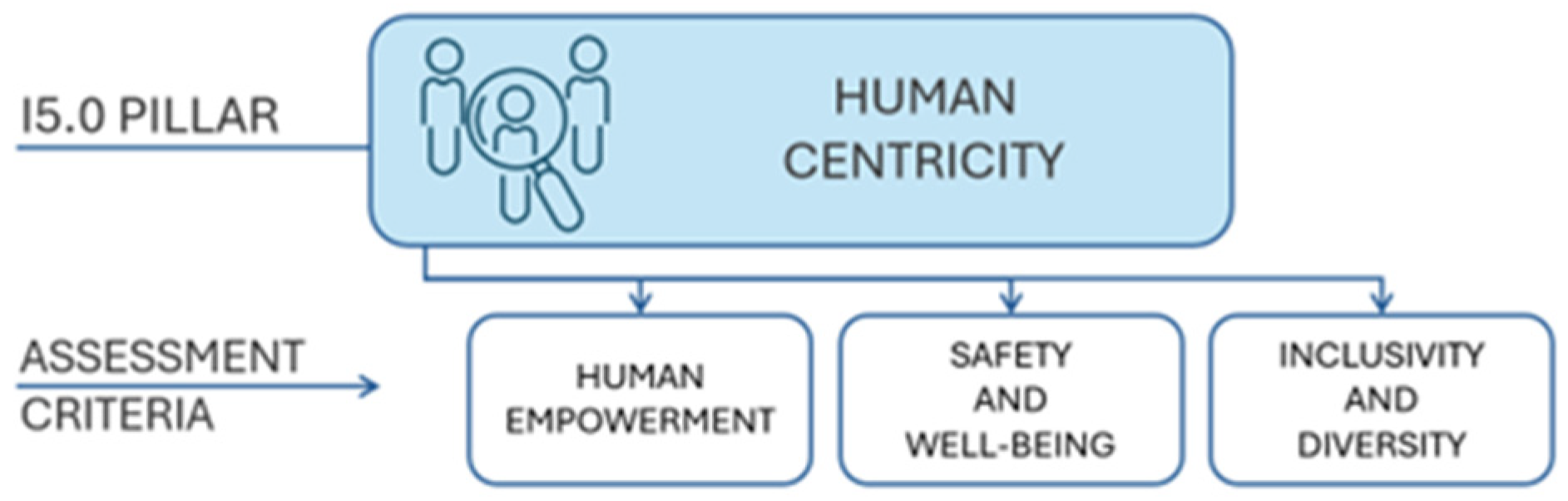
Human Centricity places the well-being and development of employees at the core of industrial systems. Unlike earlier models that prioritized technological efficiency, this approach emphasizes the design of production environments that enhance job satisfaction, promote autonomy, and encourage personal growth. Within the preliminary AF, Human Centricity was primarily operationalized through indicators related to employee well-being, safety, training, and inclusiveness. At this stage, technology adoption was regarded mainly as an enabling factor associated with digital transformation, rather than as an intrinsic dimension of Human Centricity. The following assessment criteria capture the key dimensions of Human Centricity within the I5.0 paradigm. Each criterion represents a conceptual dimension, operationalized through a set of preliminary KPIs (pKPIs), enabling the systematic assessment of organizational practices and outcomes. The specific assessment criteria are presented in Figure 1 and described hereafter.
The questions regarding Human Centricity were structured into the following assessment categories:
  • Human Empowerment. This assessment criterion looks at how organizations encourage the empowerment of employees as active contributors to organizational performance and innovation. Consistent with the human-centric vision of I5.0, it evaluates whether employees are provided with opportunities to develop their skills, participate in decision-making processes, and adapt their roles in response to evolving technological and organizational contexts. The criterion prioritizes accessible training and upskilling so employees can engage effectively with advanced technologies and new production models. Furthermore, the criterion considers the degree to which employees are involved in the development of improvement initiatives, collaborative problem-solving processes, and continuous improvement activities within the organization.
  • Safety and Well-Being. This criterion evaluates the extent to which organizations ensure safe, healthy, and supportive working environments that prioritize employee protection and well-being. Within the I5.0 paradigm, safety and well-being are considered fundamental components of sustainable and human-centric industrial systems. Accordingly, this criterion focuses on both preventive safety measures and broader organizational practices aimed at promoting physical, mental, and psychosocial well-being. This includes the presence and effectiveness of occupational safety policies, risk management procedures, and monitoring systems for workplace incidents, as well as initiatives aimed at enhancing employee health, work–life balance, and overall quality of working conditions.
  • Inclusivity and Diversity. This assessment criterion measures the extent to which organizations promote Diversity, Equity, and Inclusion (DE&I) within their workforce and organizational culture. Consistent with the principles of Industry 5.0, DE&I are recognized as key drivers of creativity, innovation, and social sustainability. The criterion examines the representation of diverse demographic groups within the workforce, as well as the effectiveness of policies and practices designed to ensure equal opportunities, fair participation, and inclusive career development pathways. It also considers the extent to which organizational culture and management practices foster a working environment in which individuals from different backgrounds feel respected, valued, and able to contribute fully to organizational objectives.
The specific KPIs associated with each criterion are described in Section 3 and reported in Appendix A.

2.2. Environmental Sustainability

Environmental Sustainability is one of the key elements of I5.0, underscoring the urgent need for industry to tackle the global climate crisis and operate within ecological boundaries. I5.0 emphasizes the importance of minimizing environmental impact, preserving natural resources, and embracing circular economy principles that promote waste minimization, reuse, and recycling. The specific assessment criteria are illustrated in Figure 2 and described hereafter.
The following assessment criteria capture key dimensions of Environmental Sustainability within the I5.0 paradigm. Each criterion represents a conceptual dimension, operationalized through a set of preliminary KPIs (pKPIs), enabling the systematic assessment of organizational practices and environmental performance:
  • Innovation in sustainable technologies. This assessment criterion focuses on how organizations invest in and develop technologies that enhance Environmental Sustainability. Within the I5.0 framework, technological innovation plays a central role in enabling more resource-efficient, low-impact, and environmentally responsible industrial systems. Accordingly, this criterion examines the strategic prioritization of sustainability within Research and Development (R&D) activities, including the allocation of resources to technologies aimed at reducing environmental impacts, improving resource efficiency, and supporting greener production processes. It also considers the organization’s ability to develop, adopt, and integrate sustainability-oriented technological solutions as part of its broader innovation strategy.
  • Energy efficiency. This assessment criterion evaluates the efficiency with which organizations consume energy in relation to their operational output. Energy efficiency represents a critical lever for reducing environmental impacts and enhancing the sustainability of industrial systems. Accordingly, this criterion assesses the extent to which organizations monitor energy consumption and implement strategies to optimize energy use across production processes, facilities, and supporting operations. Attention is given to the measurement of energy consumption in relation to production output or operational performance, as well as to the adoption of energy-efficient technologies, management practices, and energy optimization initiatives.
  • Water usage efficiency. This assessment criterion assesses how effectively organizations manage and optimize water consumption within their operations. Water efficiency represents an increasingly important dimension of Environmental Sustainability, particularly in sectors characterized by high water demand or located in regions exposed to water stress. This criterion therefore focuses on the extent to which organizations monitor water consumption and implement practices and technologies aimed at reducing water use and improving water management across production processes. It also considers the degree to which water consumption is optimized relative to production output, as well as the implementation of initiatives such as water recycling, reuse systems, and process efficiency improvements.
  • Circularity and product traceability. This assessment criterion looks at how organizations integrate circular economy principles into product design, manufacturing processes, and lifecycle management. Within the I5.0 context, circularity supports the transition from linear production models to systems that prioritize resource efficiency, product longevity, and material recovery. More specifically, this criterion examines whether products are designed to facilitate modularity, repairability, reuse, or repurposing, thereby extending product lifecycles and reducing waste generation. In addition, it considers the implementation of product traceability mechanisms that enable the tracking of materials, components, and products across the value chain, thereby supporting transparency, responsible sourcing, and effective lifecycle management.
  • Carbon footprint and GHG emissions intensity. This assessment criterion evaluates the organization’s capacity to measure, monitor, and reduce Greenhouse Gas (GHG) emissions associated with its activities. It focuses on the systematic quantification of emissions and the implementation of strategies aimed at reducing the carbon footprint of operations. Particular attention is given to the normalization of emissions relative to production output, revenue, or other operational indicators, enabling meaningful performance comparisons. The criterion also considers the presence and effectiveness of carbon reduction initiatives, including measures related to energy transition, process optimization, and the adoption of low-emission technologies.
  • Regulatory compliance. This assessment criterion measures the extent to which organizations comply with environmental regulations, as well as the degree to which they implement initiatives that go beyond mandatory requirements. Within the I5.0 context, regulatory compliance constitutes a foundational element of responsible environmental management, while proactive engagement in voluntary sustainability initiatives reflects a stronger commitment to environmental stewardship. In particular, it examines both the effectiveness of mechanisms that ensure compliance with applicable environmental laws and standards and the organization’s participation in voluntary schemes, certifications, and sustainability programs that demonstrate leadership in environmental responsibility.
The specific KPIs associated with each criterion are described in Section 3 and reported in Appendix A.

2.3. Industrial Resilience

Industrial Resilience is critical in a context increasingly characterized by unpredictable disruptions, including economic crises, pandemics, and geopolitical conflicts. I5.0 underscores the need to develop flexible and adaptive systems capable of withstanding such shocks and recovering effectively, while ensuring continued operational stability. The specific assessment criteria are illustrated in Figure 3 and described hereafter.
Questions related to Industrial Resilience were grouped under the following criteria. As with the other pillars, each criterion represents a conceptual dimension that is operationalized through a set of preliminary KPIs (pKPIs), enabling the systematic assessment of organizational capabilities to anticipate, withstand, and recover from disruptions:
  • Risk management. This assessment criterion evaluates the organization’s ability to systematically identify, assess, and mitigate risks that may affect operational stability and long-term resilience. Within the I5.0 framework, effective risk management is essential for enabling organizations to anticipate potential disruptions and implement timely preventive or corrective measures. Accordingly, this criterion examines the robustness and comprehensiveness of risk assessment processes. This includes identifying operational, environmental, technological, and strategic risks. It also considers the effectiveness with which risk mitigation strategies are implemented, monitored, and continuously updated to address evolving threats and uncertainties.
  • Supply chain alternatives. This assessment criterion evaluates the resilience and flexibility of the organization’s supply chain, with particular attention to the availability of alternative sourcing options for critical inputs and components. Supply chain diversification constitutes a key element of Industrial Resilience, enabling organizations to reduce vulnerabilities associated with supplier concentration, geographic dependencies, or disruptions affecting specific regions or partners. Accordingly, this criterion evaluates the diversity of the supplier base and the extent to which sourcing strategies incorporate local, regional, or alternative suppliers capable of ensuring continuity in the event of disruptions. It also considers the organization’s capacity to adapt procurement strategies in response to supply chain shocks.
  • Business continuity planning effectiveness. This assessment criterion evaluates the organization’s preparedness to respond to operational disruptions and its capacity to maintain or rapidly restore critical activities. Business continuity planning plays a central role in strengthening organizational resilience by establishing structured procedures and recovery strategies for potential crisis scenarios. Accordingly, this criterion focuses on the existence, comprehensiveness, and operational effectiveness of business continuity plans, including the mechanisms in place to minimize operational downtime and restore normal operations following disruptions. Particular attention is given to the organization’s recovery capabilities and its ability to ensure the continuity of essential functions under adverse conditions.
  • Innovation and continuous improvement. This assessment criterion evaluates the organization’s capacity to innovate and continuously improve its products, services, and operational processes in response to evolving market conditions and emerging disruptions. Within the I5.0 paradigm, adaptability and innovation are fundamental to maintaining competitiveness and resilience in dynamic industrial environments. Accordingly, this criterion examines the organization’s ability to introduce new products, services, or technological solutions, as well as its commitment to continuous improvement practices that enhance efficiency, responsiveness, and long-term adaptability. It also considers the frequency and effectiveness with which innovation activities translate into tangible outcomes such as new offerings, patents, or improvements in operational processes.
  • Cybersecurity. This assessment criterion evaluates the robustness of the organization’s measures to protect digital infrastructures, operational technologies, and data systems against cyber threats. As industrial systems become increasingly digitalized and interconnected, cybersecurity represents a critical component of organizational resilience. Accordingly, this criterion examines the existence and effectiveness of cybersecurity policies, protection mechanisms, and monitoring systems designed to prevent, detect, and respond to cyber incidents. It also considers the frequency of cybersecurity audits, risk assessments, and updates to security protocols aimed at strengthening digital resilience and safeguarding the continuity of operations.
  • Quality of communication. This assessment criterion evaluates the effectiveness of internal and external communication mechanisms during periods of operational disruption or crisis. Effective communication is a key component of organizational resilience, as it supports coordinated responses, timely decision-making, and the maintenance of stakeholder trust. Accordingly, this criterion examines the clarity, timeliness, and reliability of communication processes within the organization, as well as the mechanisms used to inform external stakeholders, including suppliers, partners, customers, and authorities. Particular attention is given to the existence of structured communication protocols and the organization’s capacity to ensure transparent and coordinated information flows during disruptive events.
The specific KPIs associated with each criterion are described in Section 3 and reported in Appendix A.

3. Empirical Refinement of the Preliminary Assessment Framework

3.1. Research Design

The empirical refinement of the preliminary AF adopted a qualitative multiple case-study approach to investigate whether and to what extent organizations operationalize I5.0 principles. This methodology is particularly well suited to exploring the transition toward I5.0 in real-world contexts. Given the emerging nature of this paradigm, the approach enables an in-depth understanding of how organizations interpret, evaluate, and implement the core dimensions of I5.0 within actual organizational settings. This empirical phase is an exploratory refinement, not a formal validation. The workshops were designed to assess the relevance, feasibility, and practical applicability of the proposed KPI architecture. Consequently, the study does not claim psychometric validation, construct validation, or statistical generalizability of the framework.

3.2. Case Selection

The preliminary AF has been empirically refined through a series of workshops involving industrial use cases. A total of 14 companies from diverse sectors and countries participated in the PROSPECTS 5.0 use-cases for this research [76]. Consequently, the sample should be interpreted as purposive and exploratory rather than statistically representative. To capture sector-specific differences, the companies were grouped according to their production or service models. This classification relied on detailed information regarding each company’s products and services. Three main sectors were identified:
  • Consumer Goods: 4 companies producing items such as safety footwear, hair color, firefighter protective clothing, and jewelry.
  • Life Sciences: 5 companies engaged in healthcare production, laboratory and scientific equipment, IT services, energy storage solutions, and consulting focused on digital transformation and sustainability.
  • Heavy Industry: 5 companies specializing in precision engineering, friction stir welding, marine and automotive components, and lifting systems.
The companies were also categorized by size. Specifically, the sample included:
  • 5 small companies;
  • 6 medium-sized companies;
  • 3 large companies.
Each company was invited to participate in a workshop focused on the three pillars of I5.0: Human Centricity, Environmental Sustainability, and Industrial Resilience. The workshops were conducted in various formats—in person, online, and hybrid—to accommodate diverse organizational needs. Each session was facilitated by a trained moderator who had been thoroughly briefed on the workshop procedures. Moderators were provided with comprehensive guidelines, a clear outline of the workshop objectives, a standardized agenda template, and the necessary ethical documentation, including consent forms.
A large proportion of the workshops were conducted on-site, providing valuable insights grounded in the companies’ day-to-day operations and enabling a deeper understanding of real-world challenges and opportunities related to the implementation of the I5.0 framework. In most cases, workshops were held in the local language to ensure clarity and foster open, engaging discussions, while English was employed only in a limited number of sessions. Each use case was responsible for selecting participants with relevant expertise, ensuring that discussions were grounded by appropriate knowledge and diverse perspectives on the three pillars of I5.0. This collaborative approach allowed each workshop to be tailored to the specific context of the organization while maintaining methodological consistency across the project. The study involved 77 participants, comprising 29 women (38%) and 48 men (62%). Participants represented a wide range of roles within their organizations. The most frequently represented positions were Project Managers (17%), Chief Executive Officers (15%), and Human Resources Managers (15%), reflecting both the strategic and operational focus of the discussions. Other roles included Research and Development Managers (7%), Chief Operating Officers (5%), Chief Technical Officers (5%), Product Managers (5%), Innovation Managers (5%), Chief Marketing Officers (2%), Chief Financial Officers (2%), and Stakeholders (2%). This composition ensured a comprehensive perspective on the implementation and feasibility of the framework, integrating leadership insights with practical expertise.
The workshops were conducted between July and October 2024. Prior to participation, informed consent was obtained from all participants. Moderators explained the objective of the workshops, assured participants of the anonymity and confidentiality of their responses, and informed them of their right to withdraw from the study at any time without penalty. Participants were subsequently presented with the set of pKPIs, comprising 13 pKPIs for Human Centricity, 11 pKPIs for Environmental Sustainability, and 9 KPIs for Industrial Resilience. For each pKPI, participants were asked, after a discussion, to indicate whether it was currently measured within their organization, to assess its relevance, and to rank its importance for the company. In addition, moderators were instructed to identify and document the key aspects emerging from the discussions, capturing participants’ key observations and perspectives. To ensure data completeness and accuracy, all workshops were audio recorded. Audio recordings were used solely for transcription purposes and were anonymized prior to analysis. Each workshop had a duration of approximately 60 to 90 min.

3.3. Measures

Participants were invited to evaluate each pKPI in relation to their company’s operations and, following a structured discussion, to indicate:
  • Whether the KPI was measured within the organization, using a dichotomous scale (1 = Yes; 2 = No);
  • The relevance of each KPI on a Likert scale ranging from 1 (Not at all important) to 5 (Very important);
  • The six most important KPIs for each pillar, ranked in order of importance (from 1 to 6);
  • Any additional KPIs not included in the provided list. Specifically, they were asked to identify, according to their opinions, any missing or redundant KPIs. Moreover, they were asked to indicate if there were potential challenges or barriers in implementing the KPIs.
Once consensus was reached among participants, the trained moderator recorded the responses using a structured questionnaire. Each KPI is reported on its native response scale as collected in the workshops: a binary indicator of whether it is currently measured within the organization and a five-point relevance rating. The framework deliberately does not combine objective operational metrics (e.g., accidents, energy, waste) and perception-based constructs (e.g., social connectedness, inclusivity effectiveness) into a single composite score, because the underlying constructs are not assumed to be commensurable. Results are presented as per-KPI and pillar-level diagnostic profiles—highlighting where measurement is present, absent, or misaligned with perceived relevance—rather than as an aggregate maturity index. The complete set of research questions is provided in Appendix B to ensure the reproducibility of this study. The study was conducted in accordance with the ethical principles of the Declaration of Helsinki, ensuring informed consent, confidentiality, and voluntary participation of all respondents.

3.4. Results

The collected data were analyzed using both quantitative and qualitative methods. Quantitative analyses were conducted by calculating descriptive statistics, including means and percentages, based on the questionnaire responses collected during the workshop. Qualitative analyses were performed using a thematic approach, with a particular focus on the identification of additional or redundant KPIs. The investigation of the three pillars is presented hereafter.

3.4.1. Human Centricity

The analyses revealed notable trends in how organizations monitor and prioritize workforce-related metrics. As shown in Table 1, companies invest significantly in health and safety: they track the number of workplace accidents and incidents (pKPI_HC5), monitor employee health (pKPI_HC6), design ergonomic workplaces (pKPI_HC7), and promote the use of ergonomic tools (pKPI_HC8). This pattern highlights a clear focus on occupational safety and risk management, as well as a strong commitment to physical well-being and ergonomic standards. In addition, organizations actively measure employee turnover (pKPI_HC1), the employee satisfaction rate (pKPI_HC2), and assess the effectiveness of training and development initiatives (pKPI_HC3), all of which are critical for workforce stability and skills development. Differences across company size were observed for some KPIs: 100% of large companies reported measuring training and development and workplace ergonomic design, compared to 83% of the SMEs. No significant differences emerged across sectors. These findings are further supported by the relevance ratings and ranking results, which show strong convergence: companies consistently regarded KPIs related to health, safety, and employee well-being as highly relevant and assigned them high priority within their performance measurement systems.
The workshops revealed that several social dimensions—such as diversity across workforce demographics (pKPI_HC9), employees’ perception of social connections (pKPI_HC13), representation in decision-making roles (pKPI_HC11), and work–life satisfaction (pKPI_HC4)—are generally undermeasured by the organizations. Another dimension that receives limited attention is job crafting (pKPI_HC12), defined as the organization’s ability to provide flexibility in job roles to better align with employees’ skills and aspirations. Notably, these KPIs are not only less frequently measured, but are also perceived as less relevant compared with more traditional indicators (e.g., turnover rates and employee satisfaction). In some cases, they do not appear among the top-ranked priorities for assessing Human Centricity. An interesting exception concerns pKPI_HC13, which relates to employees’ perception of social connectedness. Although many organizations recognize the importance of this dimension for workplace climate, they report difficulties in its measurement and operationalization. To address this gap, several companies reported adopting informal practices aimed at fostering interpersonal relationships—e.g., organizing social activities and creating informal communication spaces to encourage peer interaction. However, the impact of these activities is rarely monitored or evaluated with structured metrics. Differences also emerged across company size: all large companies (100%) reported monitoring representation in decision-making roles, compared to a lower proportion among smaller ones.
Finally, the implementation of the inclusivity program (pKPI_HC10) emerged as the least measured dimension. Although inclusivity is increasingly recognized as a critical aspect of human resource management, the analysis indicates that this KPI is primarily implemented by larger companies (66%), which tend to have more structured governance systems and the resources required for systematic monitoring. In contrast, smaller organizations often report limited capacity to formalize inclusivity initiatives or to translate them into measurable indicators.
In many cases, the gap between intended adoption and the actual implementation of Human Centricity KPIs can be attributed to factors such as time constraints, limited resources, and the complexity associated with analyzing large volumes of data.
Beyond the predefined pKPIs, the open-ended discussions revealed a recurring insight across companies: while many human-centric aspects are currently addressed through safety, health, and ergonomics, the role of advanced technologies in actively empowering workers is rarely assessed in a structured manner. Several participants noted that digital tools, AI-based systems, and collaborative technologies are often introduced without explicitly evaluating their contribution to human autonomy, skills development, and usability from the workers’ perspective. This observation highlights a conceptual gap between existing measurement practices and the human-centric ambitions of I5.0.

3.4.2. Environmental Sustainability

The results on Environmental Sustainability KPIs reveal variability in measurement practices across companies. As shown in Table 2, energy consumed per unit (pKPI_SU2), waste generated (pKPI_SU5) and regulatory compliance rate (pKPI_SU11) are the most frequently monitored dimensions. In particular, energy consumption and waste generation are consistently regarded as highly relevant KPIs and are regularly ranked among the top priorities by the companies. An interesting finding concerns the percentage of investment in innovative technologies (pKPI_SU10): despite being perceived as highly relevant, this KPI is only moderately adopted and it is ranked among the top three by only a minority of organizations.
A broader set of environmental pKPIs appears to be significantly undermeasured, with only a minority of the companies actively tracking them. These include the use of renewable energy (pKPI_SU3), water usage (pKPI_SU4), percentage of waste diverted from disposal (pKPI_SU6) and percentage of products with traceability (pKPI_SU9), reduction of raw material consumption (pKPI_SU7) and percentage in design modularity (pKPI_SU8). Some differences across the organizations were observed. Notably, 100% of large companies reported monitoring GHG emissions (pKPI_SU1), whereas lower adoption rates were found among smaller ones. Among the less frequently measured KPIs, the reduction of raw material consumption (pKPI_SU7) and the percentage in design modularity (pKPI_SU8) received high relevance scores, indicating a significant mismatch between perceived importance and actual monitoring practice. A similar pattern emerges for pKPI_SU6 (percentage of waste diverted from disposal), which is frequently ranked among the top three priorities and considered highly relevant, yet is measured by only a limited number of organizations.
In some cases, companies are actively working to bridge the gap between intended adoption and the actual implementation of Environmental Sustainability KPIs. However, particularly among small companies, limited resources remain a significant barrier.

3.4.3. Industrial Resilience

As shown in Table 3, the analysis of the Industrial Resilience pillar revealed that most indicators are widely measured by companies, while only a limited number remains marginal. Local sourcing ratios (pKPI_RE4) and the number of new products/services (pKPI_RE8) emerged as the most frequently monitored KPIs. Notably, 100% of large companies reported systematically measuring local sourcing ratios. Both indicators are also considered highly relevant and are frequently ranked among the top priorities. These findings suggest that organizations view supply chain diversification and innovation capacity as central components of the transition to I5.0. The importance attributed to supply chain diversification is further reinforced by the measurement of the number of alternative sourcing options (pKPI_RE5), which highlights companies’ efforts to enhance flexibility and reduce vulnerability within their supply networks.
Similarly, other dimensions –such as key risks (pKPI_RE1), effectiveness of risk identification (pKPI_RE2), and average operational downtime and recovery time (pKPI_RE6)—represent important aspects monitored by several companies. The number of risk mitigation strategies (pKPI_RE3) also constitutes a relevant dimension, although it is measured to a lesser extent. These indicators are consistently perceived as highly relevant, receiving a substantial proportion of first-place rankings. This evidence suggests that companies recognize the importance of risk identification and rapid operational recovery, reflecting the strategic priority attributed to risk preparedness.
Conversely, average cybersecurity incident response time (pKPI_RE7), despite reflecting an increasingly significant risk for organizations, appears to be less developed within current measurement practices. Only a limited number of companies systematically monitor this KPI, and its perceived relevance remains comparatively lower than that of other indicators.
Finally, personnel/stakeholder satisfaction on communication during/after disruptions (pKPI_RE9) is the least measured KPI and is associated with the lowest relevance score. This finding suggests that communication-related aspects of resilience receive limited systematic attention, despite their importance during crisis situations.
The workshops revealed that the pandemic represented a turning point in strengthening organizational resilience. The COVID-19 outbreak underscored the need to identify alternative suppliers and diversify sourcing strategies, forcing companies to reorganize their supply chain models and invest in more adaptive and flexible approaches.

3.5. From Empirical Evidence to the Consolidation of the Preliminary Assessment Framework

The results of the use cases workshops represent a critical step in bridging the gap between the theoretically grounded initial set of KPIs for the three I5.0 pillars and the consolidated preliminary version of the I5.0 AF. While the quantitative analysis of pKPI relevance and adoption provided clear insights into which dimensions are currently measured and prioritized by companies, the qualitative discussions conducted during the workshops played an equally important role in identifying conceptual gaps and emerging needs that are not yet systematically captured by existing metrics.
In particular, the open-ended discussion phase (“additional aspects to be considered”) revealed that several organizations tend to frame Human Centricity primarily in terms of occupational safety, health, and ergonomic design. However, multiple participants explicitly noted that this perspective does not fully capture the transformative ambition of I5.0. They emphasized that the adoption of advanced technologies specifically designed to enable human–machine collaboration, such as collaborative robotics, AI-based decision support systems, Extended Reality (XR) tools, and digital assistants, constitutes a distinct and foundational dimension of Human Centricity, rather than merely an extension of ergonomic tools or workplace design.
This insight led to the explicit formulation of Technology adoption for human–machine collaboration as a standalone KPI (KPI_HC1). This clarification also allowed to explicitly reposition technology not merely as an external enabling factor, but as a core dimension of Human Centricity, directly linked to human empowerment, autonomy, and meaningful participation in industrial processes.
Although this dimension did not emerge directly from the frequency-based analysis of predefined pKPIs, it was consistently identified by workshop participants as a missing yet essential element for enabling worker empowerment, skill development, and meaningful human involvement in increasingly digitalized production systems. Furthermore, following the analysis of the workshop outcomes, this dimension informed the introduction of a dedicated assessment criterion (Technology adoption for worker support), which, in addition to KPI_HC1, also encompasses a KPI related to ergonomic design and supporting tools, thereby capturing a broader perspective on how technologies can effectively enhance worker conditions and performance. Its inclusion reflects the need to capture not only current measurement practices, but also the strategic direction required for a genuine transition towards I5.0.
In parallel, during the KPI refinement process, not all indicators initially included in the preliminary KPI set were retained in the final version of the I5.0 AF. KPI inclusion and exclusion decisions were guided by a combination of theoretical and practical considerations, including alignment with Industry 5.0 principles, perceived relevance, measurability, implementation feasibility, and comparability across organizations. One notable example is pKPI_RE9: Personnel/stakeholder satisfaction on communication during/after disruptions, associated with the assessment criterion Quality of communication. While this KPI was recognized by workshop participants as conceptually relevant for assessing organizational resilience, particularly in terms of transparency, trust, and crisis management, its practical implementation proved to be highly challenging across most use cases. Companies consistently reported difficulties in defining clear measurement boundaries, identifying appropriate data sources, and systematically collecting reliable data, especially in contexts where disruptions are infrequent, heterogeneous, or involve multiple external stakeholders. As a result, despite its theoretical relevance, pKPI_RE9 showed limited feasibility and comparability across organizations. In line with the framework’s objective of balancing conceptual completeness with practical applicability, this KPI was therefore excluded from the final set. As a direct consequence, the related assessment criterion Quality of communication was also not retained in the final version of the framework, as its operationalization relied exclusively on that single pKPI_RE9 that did not meet the required standards of measurability and comparability. Nevertheless, it remains a relevant qualitative dimension that may be addressed through contextual analysis or complementary assessment tools in organizations with sufficient maturity and data availability. Future research may explore simple proxy indicators for communication quality, such as communication response timeliness and the frequency of stakeholder updates during disruptions.
Consequently, the final structure of the I5.0 AF results from an iterative consolidation process that combines empirical evidence, expert consultation, and reflective inclusion of dimensions that remain underrepresented in organizational monitoring systems but are central to the I5.0 paradigm. Consistent with the exploratory nature of the study, stakeholder workshops and Delphi activities were used to refine, prioritize, and consolidate the framework components rather than to formally validate the framework.

4. Assessment Framework for the Implementation of the I5.0 Pillars

4.1. KPI Prioritization Through Use Case Engagement

The results of the workshops with the project’s industrial use cases were disaggregated by company size and sector to support prioritization. The analysis of the relevance scores enabled the development of KPI rankings by pillar—Human Centricity, Environmental Sustainability and Industrial Resilience—and provided tailored insights for specific industrial domains. For example:
  • Human Centricity: training and reskilling opportunities consistently emerged as top priorities. Additionally, the workshops revealed a strong qualitative consensus on the strategic importance of technology adoption aimed at enabling human–machine collaboration. Although this dimension is not yet systematically measured by most organizations, it was repeatedly identified as a critical enabler of I5.0 during open discussions and expert consultation sessions.
  • Environmental Sustainability: investment in green technologies and regulatory compliance were consistently rated as highly relevant across participating organizations.
  • Industrial Resilience: risk assessment effectiveness and availability of alternative sourcing options were particularly emphasized, especially in sectors characterized by complex supply chains.

4.2. Structure of the Human Centricity Impact Area

Within the Human Centricity pillar, a set of KPIs has been defined to capture both universal and enabling aspects of I5.0. As outlined in the previous section, these KPIs were selected based on their alignment with current measurement practices observed across organizations, as well as the identification of critical gaps between existing human-centric approaches and the requirements of a human-centric and technology-enabled industrial paradigm. Of particular relevance is the KPI related to the adoption of technologies for human–machine collaboration, which represents a conceptual shift from I4.0 to I5.0 and was identified as a key gap during the empirical refinement phase. According to this perspective, technology is explicitly considered not as a purely efficiency-driven or automation-oriented factor, but as a socio-technical enabler of human empowerment, supporting human agency, learning, and decision-making.
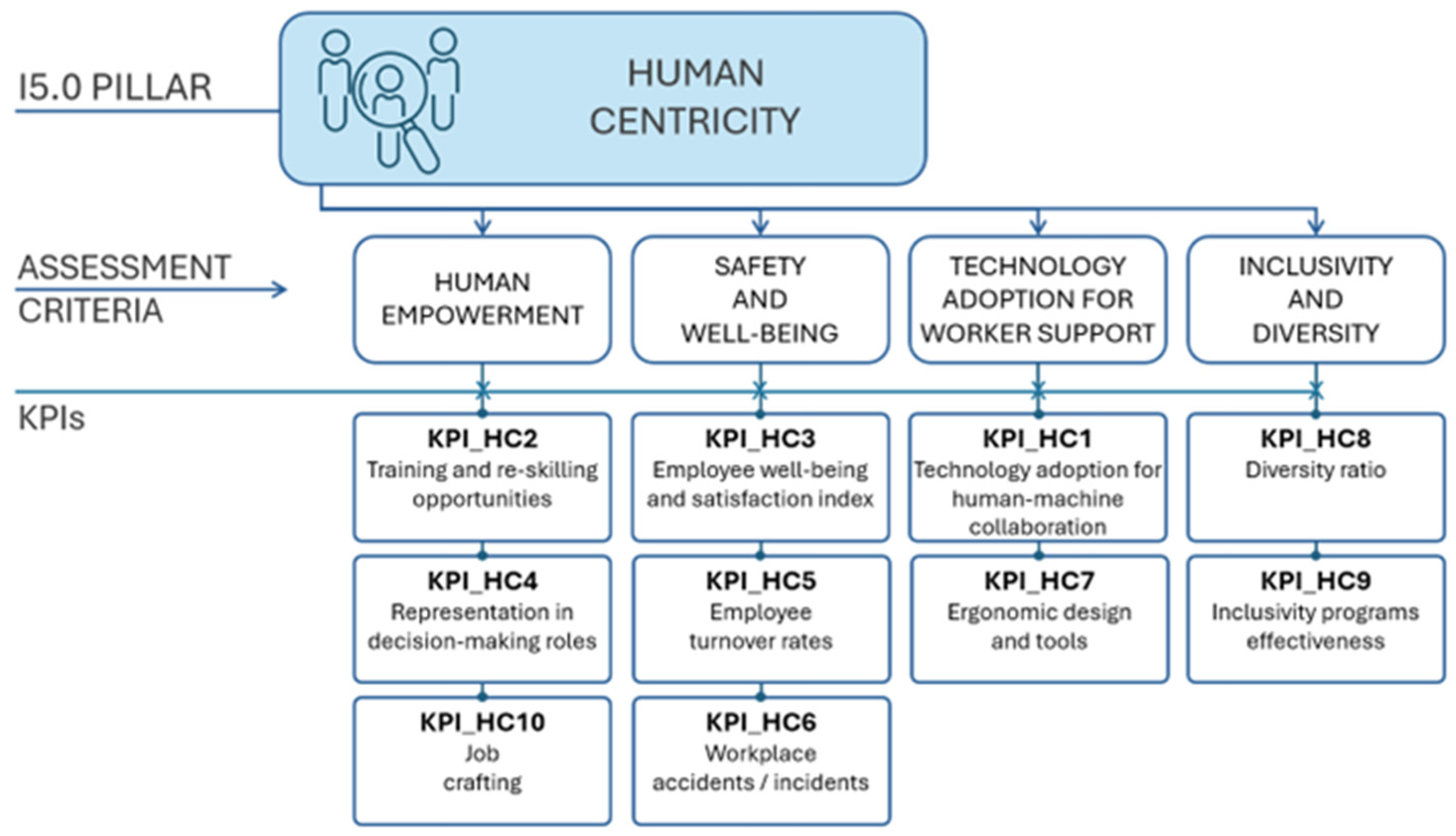
Additional KPIs address dimensions such as employee turnover, workplace accidents, ergonomic design, diversity, inclusivity programs, and job crafting. Those dimensions can vary significantly depending on industry characteristics and workforce profiles, as highlighted by the workshops’ findings. This approach ensures a balance between enabling comparability across companies and providing the flexibility required to capture industry-specific human-centric dynamics. Human Centricity is operationalized as four bounded sub-dimensions or criteria—human empowerment, safety and well-being, technology adoption for worker support, and inclusivity and diversity. These are treated as distinct constructs rather than indicators of a single latent factor; generic organizational-climate attributes not captured by the four sub-dimensions are considered outside the pillar’s scope. The KPIs are classified according to the relevant assessment criteria, as shown in Figure 4, providing a clear overview of their contributions to the broader Human Centricity framework.
The KPIs designed to assess the Human Centricity pillar are:
  • KPI_HC1—Technology adoption for human–machine collaboration: in the early phases of the framework development, technology adoption was primarily associated with I4.0, focusing on automation, digitalization, and efficiency gains. Consequently, technology adoption was initially excluded from the Human Centricity KPIs. However, insights from the use case workshops—particularly from open-ended discussions and reflective exchanges—highlighted that what fundamentally characterizes I5.0 is not merely the presence of advanced technologies, but their intentional adoption to enable effective human–machine collaboration. Participants consistently emphasized that technologies such as collaborative robots, AI-based decision-support systems, XR, and digital assistants become human-centric only when they actively support human agency, learning, and decision-making, rather than replacing or constraining human roles. This insight led to the explicit reformulation of technology adoption as a Human Centricity KPI, capturing a dimension that was largely absent from existing monitoring practices but widely recognized as essential for the transition to I5.0. Stakeholders clearly distinguished this KPI from traditional ergonomic or safety-oriented tools, framing human–machine collaboration as a socio-technical capability that enhances empowerment, adaptability, and meaningful human involvement in digital production systems. Accordingly, KPI_HC1 is designed to assess not only the deployment of enabling technologies, but also their effective contribution to human empowerment. It integrates three complementary components: (i) the extent and typology of technologies adopted for human–machine collaboration; (ii) the level of employee training and upskilling specifically related to their use; and (iii) workers’ perceived usability and perceived benefits of these technologies in supporting their tasks, autonomy, and decision-making. These are intended to be assessed and reported individually and combined conjunctively: a technology contributes to a human-centric outcome only when it is adopted, accompanied by enablement, and perceived as beneficial. In Industry 5.0, technology is human-centric only when deployment, worker capability, and perceived value co-occur. Therefore, these components are measured as a single, joint KPI. By combining technological, organizational, and perceptual dimensions, KPI_HC1 captures a defining feature of Industry 5.0: the transformation of advanced technologies from efficiency-driven tools into enablers of human-centric, collaborative, and resilient industrial systems. Importantly, stakeholders clearly distinguished this dimension from traditional ergonomic design or safety-oriented technologies, framing human–machine collaboration as a socio-technical capability that enables shared decision-making, adaptability, and meaningful human agency within digital production systems.
  • KPI_HC2—Training and re-skilling opportunities: the workshops highlighted that continuous learning is a fundamental prerequisite for effective human–machine collaboration and organizational adaptability. This KPI assesses the extent to which training opportunities are offered and accessed within the organization, as well as their effectiveness in equipping employees with the skills required to navigate technological change. As such, it represents a core measure of human-centric capacity building.
  • KPI_HC3—Employee well-being and satisfaction index: participants emphasized that I5.0 should enhance workers’ physical, mental, and social well-being. This KPI captures the dimensions by aggregating indicators related to the work environment, job satisfaction, and work–life balance, thereby providing a holistic measure of human-centric conditions within the organization.
  • KPI_HC4—Representation in decision-making roles: ensuring meaningful employee participation in decision-making was identified as a foundational principle of Human Centricity. This KPI assesses the extent to which organizations involve diverse employees in governance, continuous improvement initiatives, and strategic discussions, thereby reflecting levels of inclusiveness and empowerment.
  • KPI_HC5—Employee turnover rates: turnover rates vary strongly across industries and company sizes. This KPI captures workforce stability and organizational attractiveness, providing insights into employee retention challenges within specific operational context.
  • KPI_HC6—Workplace accidents/incidents: occupational safety is fundamental, although it varies significantly across sectors. This KPI measures the frequency and severity of workplace accidents, enabling organizations—particularly those operating in high-risk environments—to assess the effectiveness of their safety practices in protecting workers.
  • KPI_HC7—Ergonomic design and tools: the relevance of ergonomics varies considerably across different operational contexts, including office-based, manufacturing, and logistics environments. This KPI evaluates the extent to which workplaces and tools are designed to enhance comfort, reduce physical strain, and prevent musculoskeletal diseases.
  • KPI_HC8—Diversity ratio: different sectors and organizational sizes are characterized by distinct diversity challenges. This KPI measures workforce representation across dimensions such as gender, age, ethnicity, and disability to assess inclusiveness relative to the specific context of each organization.
  • KPI_HC9—Inclusivity programs effectiveness: the maturity and impact of inclusivity initiatives differ among companies. This KPI evaluates both the implementation and the perceived effectiveness of programs aimed at promoting fairness, psychological safety, and equal opportunities within the workplace.
  • KPI_HC10—Job crafting: job-crafting practices –through which employees actively shape their tasks, relationships, and the meaning of their roles—are more mature in some sectors than in others. This KPI measures the extent to which such practices are adopted within the organization and their contribution to employee motivation, autonomy, and engagement.
In the present study, the subjective dimensions included in the last two KPIs were captured by assessing whether they are measured within the organization and the extent to which they are perceived as relevant (Appendix B), consistent with the exploratory aim of identifying measurement gaps. To strengthen their operationalization in future applications, we propose measurement scales that distinguish the objective presence of a practice from its perceived effects, drawing where appropriate on established constructs.

4.3. KPI Structure of the Environmental Sustainability Impact Area

The Environmental Sustainability pillar includes KPIs that address sustainability-oriented investments and regulatory compliance, which are universally relevant across sectors. In addition, the framework incorporates KPIs related to energy, water, materials, emissions, and waste, which are strongly influenced by company size, industrial processes, and sector-specific environmental pressures. Environmental KPIs are assessed in two tiers. Investment and regulatory KPIs (KPI_SU1, KPI_SU2) are universally relevant and directly comparable across organizations. Resource and emissions-based KPIs, by contrast, are highly sector-dependent; as defined in Appendix A, they are already expressed as intensity ratios (e.g., per unit of output, per employee, per revenue, or per facility area) and are best benchmarked within sector cohorts rather than across them. We explicitly note that absolute environmental footprints are not comparable between, for example, heavy industry and consumer-goods firms, nor between SMEs and large firms; the framework compares relative efficiency rather than absolute levels. This approach ensures that the framework remains both robust and adaptable, providing a common baseline while accommodating the diverse environmental contexts in which organizations operate.
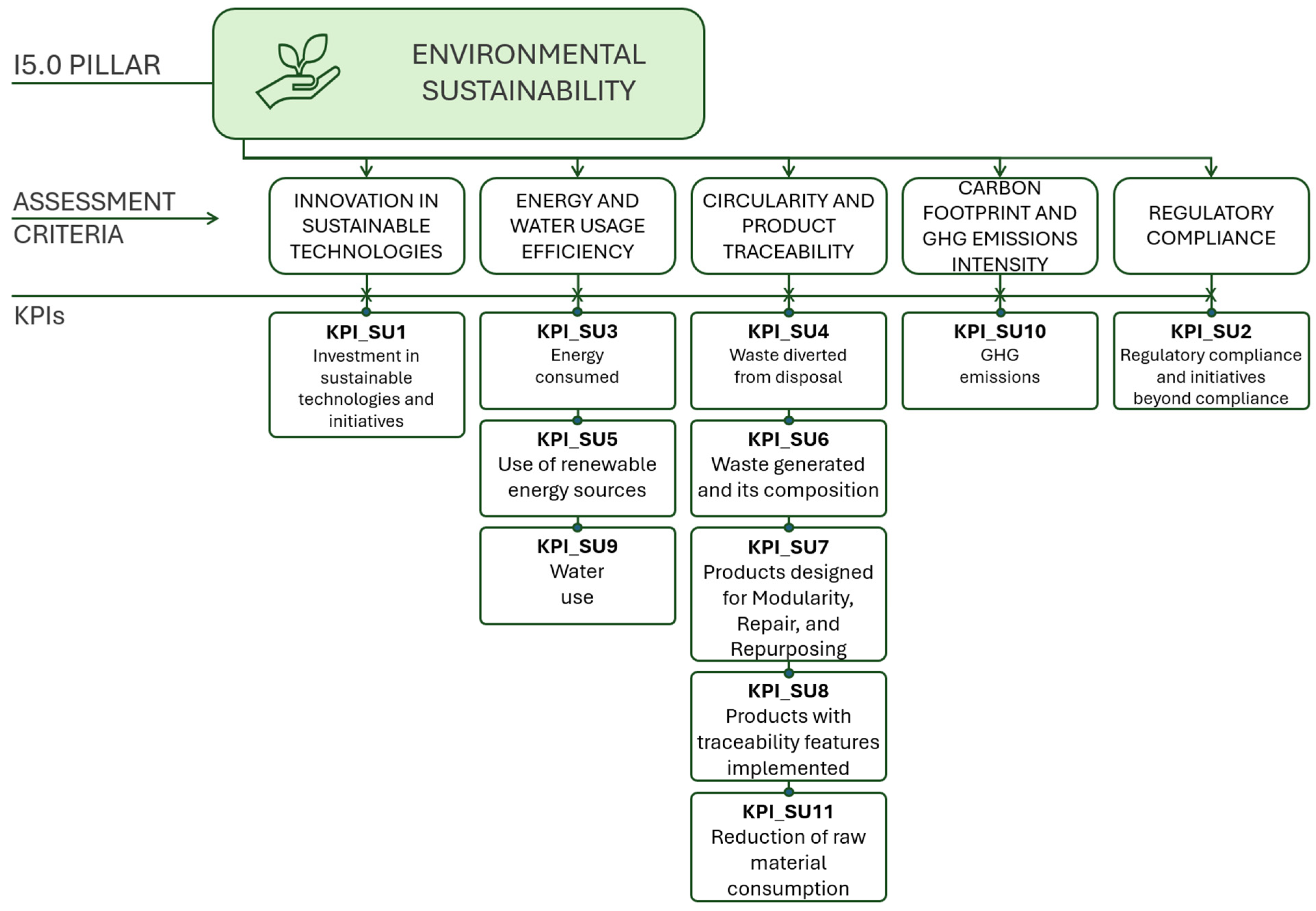
The KPIs are classified according to their respective assessment criteria, providing a structured overview of how each KPI contributes to the broader sustainability framework, as shown in Figure 5. The framework’s Industry 5.0 contribution is framed as revealing whether an organization’s measured sustainability activity concentrates on the compliance end or extends to transformative indicators, such as Investment in sustainable technologies (KPI_SU1) and initiatives beyond compliance (KPI_SU2). Based on the feedback collected during the workshops with industrial use cases, energy and water usage efficiency were consolidated into a single assessment criterion. Participants highlighted strong interdependencies between the two resources within production processes, as well as similarities in measurement approaches and optimization strategies. Their integration therefore enhances the coherence and usability of the framework, reducing complexity while preserving the ability to capture resource efficiency in a comprehensive and integrated manner.
The KPIs designed to assess the Environmental Sustainability pillar are:
  • KPI_SU1—Investment in sustainable technologies and initiatives: this KPI measures the extent to which organizations allocate resources to environmentally sustainable technologies and projects, reflecting commitment to long-term environmental responsibility.
  • KPI_SU2—Regulatory compliance and initiatives beyond compliance: this KPI assesses the degree of adherence to environmental regulations, as well as the implementation of proactive measures that exceed minimum legal requirements, thereby signaling organizational leadership in sustainability.
  • KPI_SU3—Energy consumed: this KPI tracks total energy use, providing a baseline for assessing efficiency improvements and supporting sustainable energy management practices.
  • KPI_SU4—Waste diverted from disposal: this KPI measures the proportion of waste redirected to recycling or recovery, highlighting the adoption of circular economy practices.
  • KPI_SU5—Use of renewable energy sources: this KPI evaluates the share of energy derived from renewable sources, indicating progress toward decarbonization and reduced environmental impact.
  • KPI_SU6—Waste generated and its composition: this KPI monitors total waste generation and its material breakdown, enabling the identification of targeted waste reduction and resource optimization strategies.
  • KPI_SU7—Products designed for Modularity, Repair, and Repurposing: this KPI captures the extent to which product design practices support extended lifecycles, waste reduction, and circularity.
  • KPI_SU8—Products with traceability features implemented: this KPI assesses the extent to which products incorporate traceability mechanisms, enabling transparency and sustainable sourcing.
  • KPI_SU9—Water use: this KPI tracks water consumption, emphasizing efficiency and conservation in production processes.
  • KPI_SU10—GHG emissions: this KPI measures greenhouse gas emissions, serving as a key indicator of climate impact and progress toward decarbonization.
  • KPI_SU11—Reduction of raw material consumption: this KPI evaluates efforts to minimize raw material use, thereby promoting resource efficiency and Environmental Sustainability.

4.4. KPI Structure of the Industrial Resilience Impact Area

The Industrial Resilience dimension focuses on an organization’s capacity to anticipate, adapt to, and recover from disruptions. Resilience indicators are classified as capacity/practice measures (the presence and quality of resilience-oriented management practices) or performance/outcome measures (realized resilience during disruptions). This impact area identifies key KPIs—such as risk assessment effectiveness and alternative sourcing options—that are foundational to resilience across organizations. In addition, other KPIs address dimensions such as cybersecurity, operational downtime and recovery, local sourcing, traceability, and innovation, reflecting operational characteristics that vary significantly depending on digital maturity, supply chain complexity, and sector-specific characteristics. This approach ensures that the framework can assess critical resilience capabilities while remaining adaptable to the diverse needs and challenges faced by different organizations.
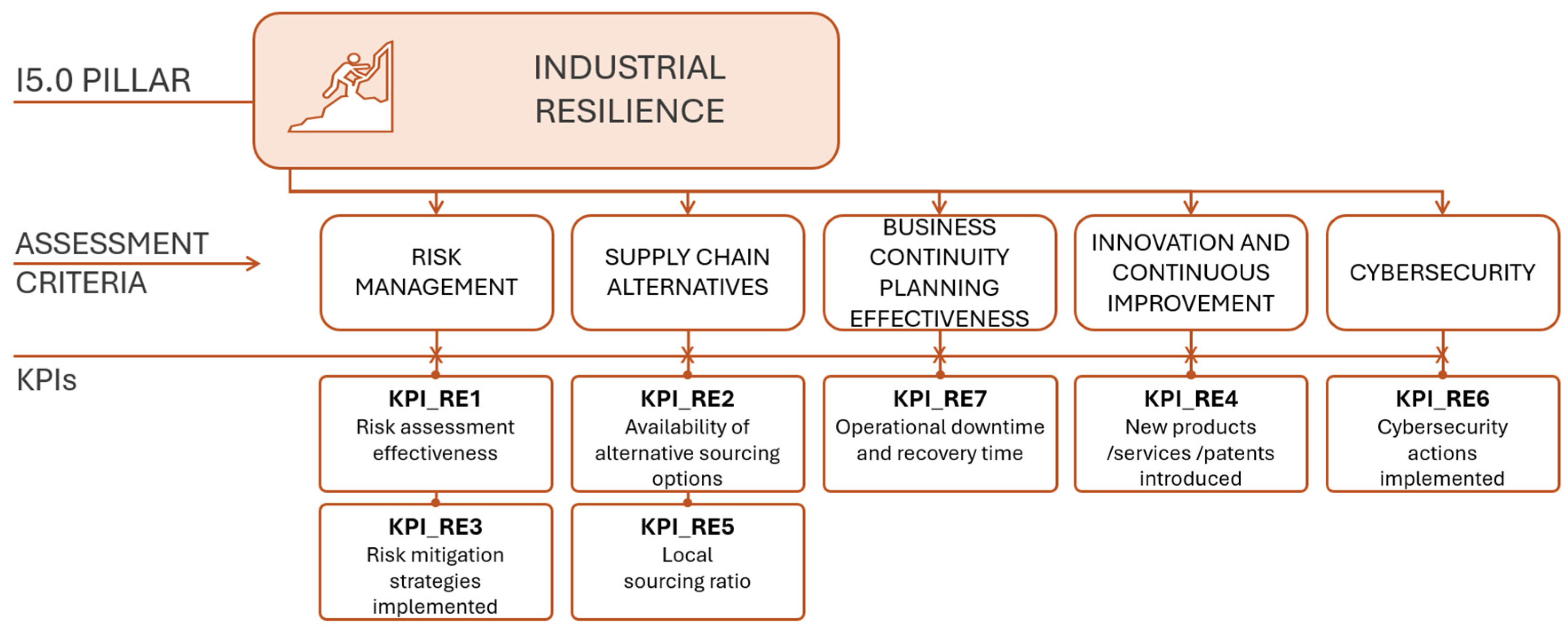
The KPIs are organized according to their respective assessment criteria, as shown in Figure 6, providing a clear overview of their contributions to the broader resilience framework.
The KPIs designed to assess the Industrial Resilience pillar are:
  • KPI_RE1—Risk assessment effectiveness: this KPI evaluates the extent to which organizations systematically identify, assess, and prepare for potential disruptions, forming a foundational element of organizational resilience.
  • KPI_RE2—Availability of alternative sourcing options: this KPI assesses the presence of backup suppliers or sourcing strategies, ensuring continuity during supply chain disruptions.
  • KPI_RE3—Risk mitigation strategies implemented: this KPI tracks the implementation of concrete measures aimed at reducing exposure to risks, reflecting a proactive approach to resilience planning.
  • KPI_RE4—New products/services/patents introduced: this KPI measures innovation capacity as a driver of resilience, enabling organizations to adapt to evolving market conditions and emerging challenges.
  • KPI_RE5—Local sourcing ratio: this KPI evaluates the extent to which organizations rely on local suppliers, thereby reducing exposure to global disruptions and strengthening regional supply networks.
  • KPI_RE6—Cybersecurity actions implemented: this KPI assesses the robustness and effectiveness of measures adopted to protect digital infrastructures and operations against cyber threats.
  • KPI_RE7—Operational downtime and recovery time: this KPI measures the duration of operational disruptions and the speed of recovery, directly reflecting the organization’s resilience and capacity to restore normal operations.

5. Discussion and Conclusions

The transition towards Industry 5.0 requires operational tools capable of translating its core principles into measurable and actionable practices. In this context, this paper presents and empirically refines an exploratory I5.0 AF, developed within the EU-funded PROSPECTS 5.0 project, with the aim of supporting organizations in aligning with the core principles of I5.0. The proposed AF operationalizes the three core pillars of I5.0—Human Centricity, Environmental Sustainability, and Industrial Resilience—into a structured and measurable set of KPIs. The I5.0 AF was developed through a rigorous multi-step approach, integrating an extensive literature review, a workshop with stakeholders, a comprehensive Delphi survey involving expert consultation, and empirical refinement through workshops conducted with 14 industrial use cases across different countries, sectors, and company sizes. This co-creation approach ensures both scientific grounding and practical relevance.
Organizations tend to prioritize established and traditionally monitored metrics, such as health and safety indicators, turnover rates, and training initiatives. However, several social and empowerment-related dimensions remain significantly undermeasured. Indicators such as diversity ratios, representation in decision-making roles, work–life satisfaction, job crafting, and employees’ perception of social connectedness are less frequently assessed and often perceived as less critical compared to more conventional metrics. This suggests Human Centricity still focuses on traditional safety rather than the broad socio-technical transformation required by Industry 5.0 [42,43,44,45]. In particular, the structured assessment of advanced technologies as enablers of human empowerment remains limited. Workshop discussions highlighted the need to explicitly evaluate technologies that facilitate meaningful human–machine collaboration, moving beyond the focus on efficiency-driven automation typical of I4.0 [44,48]. The introduction of the KPI “Technology adoption for human–machine collaboration” captures this paradigm shift, recognizing technology as a socio-technical enabler of empowerment, adaptability, and shared decision-making.
The findings suggest a relatively structured approach to resilience-related measurement among participating organizations, which is primarily interpreted through supply chain robustness and risk management. In particular, local sourcing ratios and the number of new products/services emerged as the most frequently measured KPIs, highlighting that organizations view supply chain diversification and innovation capacity as central pillars of I5.0 resilience. High efforts are dedicated toward enhancing flexibility and reducing vulnerability within supply networks. Similarly, strong attention is dedicated to risk identification and mitigation practices. However, certain resilience dimensions remain underdeveloped. For instance, cybersecurity response time is monitored by only a minority of companies and is assigned comparatively lower relevance scores. This suggests that, despite the increasing importance of digital threats in highly interconnected industrial systems, cybersecurity is not yet fully integrated into organizational resilience strategies [67,70].
Environmental Sustainability is mainly framed in terms of regulatory compliance and operational efficiency, whereas broader I5.0 ambitions—such as circular product design, decarbonization strategies, the transition to renewable energy, and resource optimization—are acknowledged as important but not yet fully embedded in corporate monitoring systems. Organizations tend to approach sustainability primarily through efficiency improvements and adherence to regulatory requirements rather than as a strategic and systemic transformation aligned with the I5.0 paradigm [26,36,37,38,39,40,41]. However, several other environmental KPIs remain significantly undermeasured. These include the use of renewable energy, water usage, waste diverted from disposal, product traceability, reduction of raw material consumption, and modular product design. Despite their relatively low levels of adoption, some of these indicators are perceived as highly relevant, revealing a clear mismatch between strategic awareness and practical implementation.
The empirical refinement also revealed practical challenges. Certain KPIs addressing social dimensions and communication during disruptions proved difficult to operationalize due to limited data availability, resource constraints—especially for SMEs—and the inherent complexity of measurement. These challenges emphasize the importance of carefully considering the implementation feasibility when designing assessment tools.
Overall, this research adds to existing literature in several ways. First, it operationalizes the I5.0 paradigm by proposing a comprehensive and adaptable KPI-based framework that supports organizations in addressing the challenges of I5.0. Second, it provides empirical evidence, based on cross-sectoral industrial use cases, of the existence of a persistent gap between the perceived importance of several sustainability and human-centric dimensions and their actual implementation in organizational practices. Third, it proposes an integrated assessment architecture that brings together traditionally fragmented human, environmental, and resilience-related perspectives within a common Industry 5.0-oriented framework.
Despite these contributions, this study has some limitations. First, the analysis is based on a relatively limited and potentially non-representative sample of companies, which may affect generalizability and external validity of the findings. Moreover, the sampling strategy may also introduce self-selection bias, as participating organizations may already exhibit greater awareness of, or interest in, Industry 5.0-related topics than the broader population of firms. Consequently, the results should be regarded as exploratory and not statistically generalizable. Second, not all industrial sectors were included in the study. Although the framework was refined across consumer goods, life sciences, and heavy industry organizations, the relevance and feasibility of specific KPIs may differ substantially across sectors. For example, occupational safety and ergonomic indicators may be particularly salient in manufacturing organizations, whereas service-oriented organizations may be more interested in workforce-related dimensions such as human empowerment and skill development. Therefore, sector-specific implementation guidelines may be required in future applications. Third, the framework has not yet undergone formal statistical validation; consequently, its reliability, validity, and broader applicability remain to be established. Fourth, the workshop findings may have been influenced by group dynamics and collective processes. The interactive nature of the workshop may have affected participants’ responses, as discussions and exchanges among group members could have influenced individual viewpoints and facilitated the emergence of shared interpretations. Finally, although moderators were trained to limit the influence of group dynamics and followed a structured protocol designed to encourage balanced participation, the potential influence of group processes cannot be entirely excluded.
Future research should explore longitudinal applications of the AF to monitor transition pathways over time, conduct broader quantitative validation across larger and more heterogeneous samples, and further refine user-friendly measurement instruments for emerging human-centric, resilience, and sustainability-related dimensions. In addition, future studies should investigate implementation requirements across organizations with different levels of maturity, assess data availability constraints, and evaluate the scalability and practical applicability of the framework across diverse industrial contexts. Future research should also develop validated measurement scales and interpretation guidance for the heterogeneous KPI categories combined in the framework, so that objective operational indicators and perception-based constructs can be operationalized and compared consistently across contexts—building on the diagnostic, non-composite logic adopted here rather than forcing commensurability between intrinsically different constructs.
Notwithstanding these limitations, the findings suggest that the proposed I5.0 AF may provide a structured and empirically refined basis for supporting organizations in reflecting on their Industry 5.0 transition and identifying potential areas for improvement. From a managerial perspective, the I5.0 AF provides actionable insights for organizations navigating the transition towards I5.0. Its function is threefold. First, it can be employed as a diagnostic tool to support reflection on Industry 5.0-related organizational practices. Second, it supports managerial decision-making by helping them to prioritize investments and strategic actions. Third, it serves as a monitoring system to track progress over time. Overall, the framework is intended to support organizations in identifying gaps, defining strategic priorities, and reflecting on how technological transformation may be aligned with broader societal and environmental objectives.
Ultimately, these findings highlight that the successful implementation of I5.0 relies on the active involvement of employees and alignment between technological investments and organizational practices.

Author Contributions

Conceptualization, A.R.G., G.C. and M.D.; methodology, A.R.G., G.C.; formal analysis, A.R.G. and G.C.; investigation, A.R.G., G.C. and F.P.; resources, A.R.G., A.V. and M.D.; data curation, A.R.G., A.V., F.P. and G.C.; writing—original draft preparation, A.R.G., A.V., F.P. and G.C.; writing—review and editing, A.R.G. and A.V.; supervision, G.C. and M.D.; project administration, G.C. and M.D.; funding acquisition, A.R.G., A.V. and M.D. All authors have read and agreed to the published version of the manuscript.

Funding

This research was conducted within the project PROSPECT 5.0—Progress Towards Industry 5.0: a smart study on the analysis and identification of practices, drivers, success factors and obstacles of transitions towards Industry 5.0 which has received funding from the European Union’s Horizon Europe research and innovation program under grant agreement No. 101135948. The APC was funded by the same project.

Institutional Review Board Statement

The study was reviewed by the Ethics Committee of the University of Modena and Reggio Emilia, which confirmed that it is exempt from formal ethical approval. This exemption is due to the absence of personal data collection (in accordance with Regulation (EU) 2016/679—GDPR), the use of aggregated and non-identifiable organizational data, and the non-invasive nature of the research.

Informed Consent Statement

All participants provided informed consent prior to participation.

Data Availability Statement

The data presented in the study are available on request from the corresponding author due to industrial confidentiality restrictions.

Acknowledgments

The authors would like to thank the companies for making this study possible and the project partners for collecting the data. We would like to thank our colleagues from Flanders Make, Tecnalia, Aethon, INEGI and FIR at RWTH Aachen for their contributions to the I5.0 preliminary framework.

Conflicts of Interest

The authors declare no conflicts of interest.

Appendix A

The preliminary KPIs (pKPIs) and the corresponding assessment criteria were developed based on the literature review, the workshop with relevant stakeholders, and the Delphi survey with experts.
Table A1. Preliminary KPIs.
pKPIsDefinitionAssessment Criteria
Pillar: Human Centricity
pKPI_HC1Employee turnover ratesSafety and well-being
pKPI_HC2Employee satisfaction ratesSafety and well-being
pKPI_HC3Training and development opportunitiesHuman Empowerment
pKPI_HC4Work–life balance satisfactionSafety and well-being
pKPI_HC5Number of workplace accidents/incidentsSafety and well-being
pKPI_HC6Employee health and wellnessSafety and well-being
pKPI_HC7Workplace ergonomic designSafety and well-being
pKPI_HC8Use of ergonomic toolsSafety and well-being
pKPI_HC9Diversity ratios across workforce demographicsInclusivity and diversity
pKPI_HC10Implementation of specific inclusivity programsInclusivity and diversity
pKPI_HC11Representation in decision-making rolesHuman Empowerment
pKPI_HC12Job CraftingHuman Empowerment
pKPI_HC13Employees’ perception of social connectionSafety and well-being
Pillar: Environmental Sustainability
pKPI_SU1GHG emissions per unit of production/output, per employee, or per unit of revenueCarbon footprint and GHG emissions intensity.
pKPI_SU2Energy consumed per unit of production output/per function or per service/per monetary unit of salesEnergy efficiency.
pKPI_SU3Use of renewable energy sources as a percentage of total energy consumptionEnergy efficiency.
pKPI_SU4Water use per unit of production output/or per square meter of facilityWater usage efficiency.
pKPI_SU5Waste generated per unit of production/output or per employee, and its compositionCircularity and product traceability.
pKPI_SU6The percentage of waste diverted from disposalCircularity and product traceability.
pKPI_SU7Reduction of raw material consumption, normalized against production levelsCircularity and product traceability.
pKPI_SU8Percentage of products designed for Modularity, Repair, and RepurposingCircularity and product traceability.
pKPI_SU9Percentage of products with traceability features implementedCircularity and product traceability.
pKPI_SU10Percentage of investment in and development of new technologies aimed at improving sustainability on the total amount of investmentsInnovation in sustainable technologies.
pKPI_SU11Regulatory compliance rate and number of initiatives beyond complianceRegulatory compliance.
Pillar: Industrial Resilience
pKPI_RE1Number of times risks occurred in the last 5 yearsRisk management
pKPI_RE2Effectiveness of risk identification and assessment processesRisk management
pKPI_RE3Number of new risk mitigation strategies implemented annuallyRisk management
pKPI_RE4Local sourcing ratioSupply chain alternatives.
pKPI_RE5Number of alternative sourcing optionsSupply chain alternatives.
pKPI_RE6Average operational downtime and recovery timeBusiness continuity planning effectiveness.
pKPI_RE7Average cybersecurity incident response timeCybersecurity
pKPI_RE8Number of new products/services introducedInnovation and continuous improvement.
pKPI_RE9Personnel/Stakeholder satisfaction score on communication during and after disruptionsQuality of communication.

Appendix B

This appendix presents the instrument used to collect data on the adoption and perceived relevance of Human Centricity, Environmental Sustainability, and Resilience-related key performance indicators (KPIs). The questionnaire is structured into three sections corresponding to the main analytical dimensions of the study: Human Centricity, Environmental Sustainability, and Resilience. Each section includes a set of preliminary KPIs (pKPIs) capturing key organizational practices and performance metrics. For each KPI, respondents were asked to:
(1)
indicate whether the KPI is currently measured within their organization (binary variable: 1 = Yes; 0 = No);
(2)
assess its perceived relevance using a five-point Likert scale (1 = not at all important; 5 = extremely important)
In addition, respondents were invited to identify the six most relevant KPIs for their organization, as well as to report potential barriers to implementation and provide suggestions for improvement. These open-ended responses were used to enrich quantitative analysis and provide contextual insights. The survey instrument was pre-tested with a small group of practitioners to ensure clarity, content validity, and relevance. Minor adjustments were made based on the feedback received.
Table A2. Human centricity.
CodeKPI DescriptionMeasured (Yes/No)Relevance (1–5)
pKPI_HC1Employee turnover ratesYes/No1–5
pKPI_HC2Employee satisfaction ratesYes/No1–5
pKPI_HC3Training and development opportunitiesYes/No1–5
pKPI_HC4Work–life balance satisfactionYes/No1–5
pKPI_HC5Number of workplace accidents/incidentsYes/No1–5
pKPI_HC6Employee health and wellnessYes/No1–5
pKPI_HC7Workplace ergonomic designYes/No1–5
pKPI_HC8Use of ergonomic toolsYes/No1–5
pKPI_HC9Diversity ratios across workforce demographicsYes/No1–5
pKPI_HC10Implementation of specific inclusivity programsYes/No1–5
pKPI_HC11Representation in decision-making rolesYes/No1–5
pKPI_HC12Job craftingYes/No1–5
pKPI_HC13Employees’ perception of social connectionYes/No1–5
Open-ended QuestionsResponse
Which KPIs are most important for your company (max 6)?
What are the main barriers to implementation?
Suggestions for improvement
Table A3. Environmental sustainability.
CodeKPI DescriptionMeasured (Yes/No)Relevance (1–5)
pKPI_SU1GHG emissions per unit of production/output, per employee, or per unit of revenueYes/No1–5
pKPI_SU2Energy consumed per unit of production output/per function or service/per monetary unit of salesYes/No1–5
pKPI_SU3Use of renewable energy sources as a percentage of total energy consumptionYes/No1–5
pKPI_SU4Water use per unit of production output or per square meter of facilityYes/No1–5
pKPI_SU5Waste generated per unit of production/output or per employee, and its compositionYes/No1–5
p_KPI_SU6Percentage of waste diverted from disposalYes/No1–5
pKPI_SU7Reduction of raw material consumption, normalized against production levelsYes/No1–5
pKPI_SU8Percentage of products designed for modularity, repair, and repurposingYes/No1–5
pKPI_SU9Percentage of products with traceability features implementedYes/No1–5
pKPI_SU10Percentage of investment in and development of new technologies aimed at improving sustainabilityYes/No1–5
pKPI_SU11Regulatory compliance rate and number of initiatives beyond complianceYes/No1–5
Open-ended QuestionsResponse
Which KPIs are most important for your company (max 6)?
What are the main barriers to implementation?
Suggestions for improvement
Table A4. Resilience.
CodeKPI DescriptionMeasured (Yes/No)Relevance (1–5)
pKPI_RE1Number of times key risks occurred in the last 5 yearsYes/No1–5
pKPI_RE2Effectiveness of risk identification and assessment processesYes/No1–5
pKPI_RE3Number of new risk mitigation strategies implemented annuallyYes/No1–5
pKPI_RE4Local sourcing ratioYes/No1–5
pKPI_RE5Number of alternative sourcing optionsYes/No1–5
pKPI_RE6Average operational downtime and recovery timeYes/No1–5
pKPI_RE7Average cybersecurity incident response timeYes/No1–5
pKPI_RE8Number of new products/services introducedYes/No1–5
pKPI_RE9Stakeholder satisfaction on communication during disruptionsYes/No1–5
Open-ended QuestionsResponse
Which KPIs are most important for your company (max 6)?
What are the main barriers to implementation?
Suggestions for improvement

References

  1. Martín-Gómez, A.M.; Agote-Garrido, A.; Lama-Ruiz, J.R. A framework for sustainable manufacturing: Integrating industry 4.0 technologies with industry 5.0 values. Sustainability 2024, 16, 1364. [Google Scholar] [CrossRef]
  2. Peças, P. Industry 5.0 Challenges for Manufacturing Systems: Evidence Mapping and Research Agenda. Sustainability 2026, 18, 3323. [Google Scholar] [CrossRef]
  3. Brarda, P.G.; Ayala, N.F.; Mendes, G.H.S. Roadmap to Digital Factories in Industry 4.0: Insights from Multiple Case Studies. Int. J. Prod. Econ. 2025, 292, 109829. [Google Scholar] [CrossRef]
  4. Kalsoom, T.; Ramzan, N.; Ahmed, S.; Ur-Rehman, M. Advances in sensor technologies in the era of smart factory and industry 4.0. Sensors 2020, 20, 6783. [Google Scholar] [CrossRef] [PubMed]
  5. Lasi, H.; Fettke, P.; Kemper, H.G.; Feld, T.; Hoffmann, M. Industry 4.0. Bus. Inform. Syst. Eng. 2014, 6, 239–242. [Google Scholar] [CrossRef]
  6. Aceto, G.; Persico, V.; Pescapé, A. Industry 4.0 and health: Internet of things, big data, and cloud computing for healthcare 4.0. J. Ind. Inf. Integr. 2020, 18, 100129. [Google Scholar] [CrossRef]
  7. Chen, B.; Wan, J.; Shu, L.; Li, P.; Mukherjee, M.; Yin, B. Smart factory of industry 4.0: Key technologies, application case, and challenges. IEEE Access 2017, 6, 6505–6519. [Google Scholar] [CrossRef]
  8. Hozdić, E. Smart factory for industry 4.0: A review. Int. J. Mod. Manuf. Technol. 2015, 7, 28–35. [Google Scholar]
  9. Kim, J.H. A review of cyber-physical system research relevant to the emerging IT trends: Industry 4.0, IoT, big data, and cloud computing. J. Ind. Integr. Manag. 2017, 2, 1750011. [Google Scholar] [CrossRef]
  10. Liu, Y.; Xu, X. Industry 4.0 and cloud manufacturing: A comparative analysis. J. Manuf. Sci. Eng. 2017, 139, 034701. [Google Scholar]
  11. Lucke, D.; Constantinescu, C.; Westkämper, E. Smart factory-a step towards the next generation of manufacturing. In Proceedings of the 41st CIRP Conference on Manufacturing Systems, Tokyo, Japan, 26–28 May 2008. [Google Scholar]
  12. Thames, L.; Schaefer, D. Software-defined cloud manufacturing for industry 4.0. Procedia CIRP 2016, 52, 12–17. [Google Scholar] [CrossRef]
  13. Bellavista, P.; Bicocchi, N.; Fogli, M.; Giannelli, C.; Mamei, M.; Picone, M. Requirements and design patterns for adaptive, autonomous, and context-aware digital twins in industry 4.0 digital factories. Comput. Ind. 2023, 149, 103918. [Google Scholar] [CrossRef]
  14. Domínguez, L.G.I. Digital Twins in Industry 5.0—A systematic literature review. Eur. Public Soc. Innov. Rev. 2024, 9, 1–21. [Google Scholar] [CrossRef]
  15. Lee, J.; Bagheri, B.; Kao, H.A. A cyber-physical systems architecture for industry 4.0-based manufacturing systems. Manuf. Lett. 2015, 3, 18–23. [Google Scholar] [CrossRef]
  16. Jazdi, N. Cyber physical systems in the context of Industry 4.0. In Proceedings of the 2014 IEEE International Conference on Automation, Quality and Testing, Robotics, Cluj-Napoca, Romania, 22–24 May 2014. [Google Scholar]
  17. Tao, F.; Qi, Q.; Wang, L.; Nee, A.Y.C. Digital twins and cyber–physical systems toward smart manufacturing and industry 4.0: Correlation and comparison. Engineering 2019, 5, 653–661. [Google Scholar] [CrossRef]
  18. Lampropoulos, G.; Siakas, K.; Anastasiadis, T. Internet of things in the context of industry 4.0: An overview. Int. J. Entrep. Knowl. 2019, 7, 4–19. [Google Scholar] [CrossRef]
  19. Malik, P.K.; Sharma, R.; Singh, R.; Gehlot, A.; Satapathy, S.C.; Alnumay, W.S.; Pelusi, D.; Ghosh, U.; Nayak, J. Industrial Internet of Things and its applications in industry 4.0: State of the art. Comput. Commun. 2021, 166, 125–139. [Google Scholar] [CrossRef]
  20. Duan, L.; Da Xu, L. Data analytics in industry 4.0: A survey. Inf. Syst. Front. 2024, 26, 2287–2303. [Google Scholar]
  21. Özdemir, V.; Hekim, N. Birth of industry 5.0: Making sense of big data with artificial intelligence, “the internet of things” and next-generation technology policy. OMICS J. Integr. Biol. 2018, 22, 65–76. [Google Scholar] [CrossRef] [PubMed]
  22. Raptis, T.P.; Passarella, A.; Conti, M. Data management in industry 4.0: State of the art and open challenges. IEEE Access 2019, 7, 97052–97093. [Google Scholar] [CrossRef]
  23. Pech, M.; Vrchota, J. The product customization process in relation to industry 4.0 and digitalization. Processes 2022, 10, 539. [Google Scholar] [CrossRef]
  24. Wang, Y.; Ma, H.S.; Yang, J.H.; Wang, K.S. Industry 4.0: A way from mass customization to mass personalization production. Adv. Manuf. 2017, 5, 311–320. [Google Scholar] [CrossRef]
  25. Agolla, J.E. Human capital in the smart manufacturing and industry 4.0 revolution. Digit. Transform. Smart Manuf. 2018, 2, 41–58. [Google Scholar]
  26. Dixon-Declève, S.; Balland, P.-A.; Bria, F.; Charveriat, C.; Dunlop, K.; Giovannini, E.; Tataj, D.; Hidalgo, C.; Huang, A.; Isaksson, D.; et al. Industry 5.0, a Transformative Vision for Europe—Governing Systemic Transformations Towards a Sustainable Industry; European Commission: Brussels, Belgium, 2022; pp. 1–28. [Google Scholar]
  27. Ghobakhloo, M. Industry 4.0, digitization, and opportunities for sustainability. J. Clean. Prod. 2020, 252, 119869. [Google Scholar] [CrossRef]
  28. Huang, S.; Wang, B.; Li, X.; Zheng, P.; Mourtzis, D.; Wang, L. Industry 5.0 and Society 5.0—Comparison, complementation and co-evolution. J. Manuf. Syst. 2022, 64, 424–428. [Google Scholar] [CrossRef]
  29. Kinzel, H. Industry 4.0—Where does this leave the Human Factor? J. Urban Cult. Res. 2017, 15, 70–83. [Google Scholar] [CrossRef]
  30. Neumann, W.P.; Winkelhaus, S.; Grosse, E.H.; Glock, C.H. Industry 4.0 and the human factor—A systems framework and analysis methodology for successful development. Int. J. Prod. Econ. 2021, 233, 107992. [Google Scholar] [CrossRef]
  31. Sindhwani, R.; Afridi, S.; Kumar, A.; Banaitis, A.; Luthra, S.; Singh, P.L. Can industry 5.0 revolutionize the wave of resilience and social value creation? A multi-criteria framework to analyze enablers. Technol. Soc. 2022, 68, 101887. [Google Scholar] [CrossRef]
  32. Costa, J.; Amorim, I.; Reis, J.; Melão, N. User communities: From nice-to-have to must-have. J. Innov. Entrep. 2023, 12, 25. [Google Scholar] [CrossRef]
  33. El-Breshy, S.; Elhabashy, A.E.; Fors, H.; Harfoush, A. Resiliency of manufacturing systems in the Industry 4.0 era—A systematic literature review. J. Manuf. Technol. Manag. 2024, 35, 624–654. [Google Scholar] [CrossRef]
  34. Sarfraz, Z.; Sarfraz, A.; Iftikar, H.M.; Akhund, R. Is COVID-19 pushing us to the fifth industrial revolution (society 5.0)? Pak. J. Med. Sci. 2021, 37, 591. [Google Scholar] [CrossRef] [PubMed]
  35. Zizic, M.C.; Mladineo, M.; Gjeldum, N.; Celent, L. From industry 4.0 towards industry 5.0: A review and analysis of paradigm shift for the people, organization and technology. Energies 2022, 15, 5221. [Google Scholar] [CrossRef]
  36. Breque, M.; De Nul, L.; Petridis, A. Industry 5.0—Towards a Sustainable, Human-Centric and Resilient European Industry; European Commission: Brussels, Belgium, 2021; pp. 1–46. [Google Scholar]
  37. Communication from the Commission to the European Parliament, the Council, the European Economic and Social Committee and the Committee of the Regions, Closing the Loop—An EU Action Plan for the Circular Economy (COM/2015/614 Final). Available online: https://eur-lex.europa.eu/legal-content/EN/TXT/?uri=CELEX:52015DC0614 (accessed on 23 March 2026).
  38. Communication from the Commission to the European Parliament, the Council, the European Economic and Social Committee and the Committee of the Regions, Closing the Loop—The European Green Deal (COM/2019/640 Final). Available online: https://eur-lex.europa.eu/legal-content/EN/TXT/?uri=CELEX:52019DC0640 (accessed on 23 March 2026).
  39. Hofmann, E.; Sternberg, H.; Chen, H.; Pflaum, A.; Prockl, G. Supply chain management and Industry 4.0: Conducting research in the digital age. Int. J. Phys. Distrib. Logist. Manag. 2019, 49, 945–955. [Google Scholar] [CrossRef]
  40. Industry 5.0—What This Approach Is Focused on, How It Will Be Achieved and How It Is Already Being Implemented. Available online: https://research-and-innovation.ec.europa.eu/research-area/industrial-research-and-innovation/industry-50_en (accessed on 23 March 2026).
  41. Rorato Fogaça, D.; Grijalvo, M.; Sacomano Neto, M. What are Industry 4.0 and Industry 5.0 all about? An integrative institutional model for the new industrial paradigms. Adm. Sci. 2025, 15, 118. [Google Scholar] [CrossRef]
  42. Adel, A. Future of industry 5.0 in society: Human-centric solutions, challenges and prospective research areas. J. Cloud Comput. 2022, 11, 40. [Google Scholar] [CrossRef] [PubMed]
  43. Al Mubarak, M. Sustainably Developing in a Digital World: Harnessing artificial intelligence to meet the imperatives of work-based learning in Industry 5.0. Dev. Learn. Organ. 2023, 37, 18–20. [Google Scholar]
  44. Demir, K.A.; Döven, G.; Sezen, B. Industry 5.0 and human-robot co-working. Procedia Comput. Sci. 2019, 158, 688–695. [Google Scholar] [CrossRef]
  45. Lu, Y.; Zheng, H.; Chand, S.; Xia, W.; Liu, Z.; Xu, X.; Wang, L.; Qin, Z.; Bao, J. Outlook on human-centric manufacturing towards Industry 5.0. J. Manuf. Syst. 2022, 62, 612–627. [Google Scholar] [CrossRef]
  46. Oeij, P.R.A.; Lenaerts, K.; Dhondt, S.; Van Dijk, W.; Schartinger, D.; Sorko, S.R.; Warhurst, C. A conceptual framework for workforce skills for industry 5.0: Implications for research, policy and practice. J. Innov. Manag. 2024, 12, 205–233. [Google Scholar] [CrossRef]
  47. Panagou, S.; Neumann, W.P.; Fruggiero, F. A scoping review of human robot interaction research towards Industry 5.0 human-centric workplaces. Int. J. Prod. Res. 2024, 62, 974–990. [Google Scholar]
  48. Tomašević, A.N. Reshaping the future of work: Navigating the impacts of lifelong learning and digital competences in the era of 5.0 industry. Soc. Inform. J. 2023, 2, 1–6. [Google Scholar] [CrossRef]
  49. Maccarini, M.; Pura, F.; Piga, D.; Roveda, L.; Mantovani, L.; Braghin, F. Preference-based optimization of a human-robot collaborative controller. IFAC-PapersOnLine 2022, 55, 7–12. [Google Scholar] [CrossRef]
  50. Nahavandi, S. Industry 5.0—A human-centric solution. Sustainability 2019, 11, 4371. [Google Scholar] [CrossRef]
  51. Ramasamy, V.; Balamurugan, S.; Peng, S.L. Intelligent Robots and Cobots: Industry 5.0 Applications; John Wiley & Sons: Hoboken, NJ, USA, 2025; pp. 19–42. [Google Scholar]
  52. Leng, J.; Zhu, X.; Huang, Z.; Li, X.; Zheng, P.; Zhou, X.; Mourtzis, D.; Wang, B.; Qi, Q.; Shao, H.; et al. Unlocking the power of industrial artificial intelligence towards Industry 5.0: Insights, pathways, and challenges. J. Manuf. Syst. 2024, 73, 349–363. [Google Scholar] [CrossRef]
  53. Niţu, E.L.; Gavriluţă, A.C.; Ionescu, N.; Necşoi, M.L.; Schutz, J. Engineering for Industry 5.0: Developing Smart, Sustainable Skills in a Lean Learning Ecosystem. Sustainability 2026, 18, 1855. [Google Scholar] [CrossRef]
  54. Rožanec, J.M.; Novalija, I.; Zajec, P.; Kenda, K.; Tavakoli Ghinani, H.; Suh, S.; Bian, S.; Veliou, E.; Papamartzivanos, D.; Giannetsos, T.; et al. Human-centric artificial intelligence architecture for industry 5.0 applications. Int. J. Prod. Res. 2023, 61, 6847–6872. [Google Scholar]
  55. Sahan, A.M.; Kathiravan, S.; Lokesh, M.; Raffik, R. Role of cobots over industrial robots in industry 5.0: A review. In Proceedings of the 2023 2nd International Conference on Advancements in Electrical, Electronics, Communication, Computing and Automation (ICAECA), Coimbatore, India, 16–17 June 2023. [Google Scholar]
  56. Martini, B.; Bellisario, D.; Coletti, P. Human-centered and sustainable artificial intelligence in industry 5.0: Challenges and perspectives. Sustainability 2024, 16, 5448. [Google Scholar] [CrossRef]
  57. Rane, N. ChatGPT and similar generative artificial intelligence (AI) for smart industry: Role, challenges and opportunities for industry 4.0, industry 5.0 and society 5.0. Chall. Oppor. Ind. 2023, 4, 10–17. [Google Scholar]
  58. Reis, M.S. On the Opportunities and Limitations of Artificial Intelligence and Machine Learning on Industry 4.0 and 5.0 Applications. In Proceedings of the 5th IFSA Winter Conference on Automation, Robotics & Communications for Industry 4.0/5.0 (ARCI’ 2025), Granada, Spain, 19–21 February 2025. [Google Scholar]
  59. Agrawal, S.; Agrawal, R.; Kumar, A.; Luthra, S.; Garza-Reyes, J.A. Can industry 5.0 technologies overcome supply chain disruptions?—A perspective study on pandemics, war, and climate change issues. Oper. Manag. Res. 2024, 17, 453–468. [Google Scholar]
  60. Arputharaj, J.V.; Pal, S.K. Transforming Industry 5.0: Real time monitoring and decision making with IIOT. In Sustainability in Industry 5.0 CRC Press; Kumar Reddy, C.K., Anisha, P.R., Khan, S., Mohd Hanafiah, M., Pamulaparty, L., Madana Mohana, R., Eds.; CRC Press: Boca Raton, FL, USA, 2024; pp. 76–106. [Google Scholar]
  61. Azmat, M.; Yaqzan, S.; Mokhtar, N.B.; Nazir, S. Digitalized and decarbonized: Navigating AI-enabled supply chains into the future with industry 5.0. In Technological Innovations and Industry 5.0; Vilko, J., Nazir, S., Ali, M., Torkkeli, M., Eds.; Elsevier: Kouvola, Finland, 2025; pp. 95–116. [Google Scholar]
  62. Jamil, M.A.; Mustofa, R.; Hossain, N.U.I.; Rahman, S.A.; Chowdhury, S. A structural equation modeling framework for exploring the industry 5.0 and sustainable supply chain determinants. Supply Chain Anal. 2024, 6, 100060. [Google Scholar] [CrossRef]
  63. Kravchenko, M.; Kopishynska, K.; Trofymenko, O.; Pyshnograiev, I.; Boiarynova, K. A Framework for Modeling the Decarbonization of the Economy Based on Energy Innovations in the Context of Industry 5.0 and Sustainable Development: International Perspective. Probl. Ekorozwoju 2025, 20, 207–220. [Google Scholar] [CrossRef]
  64. Scolaro, A.M. The “Industry 5.0” paradigm: Opportunities and barriers to industrial decarbonization. TECHNE J. Technol. Archit. Environ. 2025, 29, 346–348. [Google Scholar] [CrossRef]
  65. Wang, X.; Xue, Y.; Zhang, J.; Hong, Y.; Guo, S.; Zeng, X. A sustainable supply chain design for personalized customization in Industry 5.0 era. IEEE Trans. Ind. Inform. 2024, 20, 8786–8797. [Google Scholar] [CrossRef]
  66. Aheleroff, S.; Huang, H.; Xu, X.; Zhong, R.Y. Toward sustainability and resilience with Industry 4.0 and Industry 5.0. Front. Manuf. Technol. 2022, 2, 951643. [Google Scholar] [CrossRef]
  67. Ivanov, D. The Industry 5.0 framework: Viability-based integration of the resilience, sustainability, and human-centricity perspectives. Int. J. Prod. Res. 2023, 61, 1683–1695. [Google Scholar]
  68. Leng, J.; Zhong, Y.; Lin, Z.; Xu, K.; Mourtzis, D.; Zhou, X.; Zheng, P.; Liu, Q.; Zhao, J.L.; Shen, W. Towards resilience in Industry 5.0: A decentralized autonomous manufacturing paradigm. J. Manuf. Syst. 2023, 71, 95–114. [Google Scholar] [CrossRef]
  69. Abuhasel, K.A. A linear probabilistic resilience model for securing critical infrastructure in industry 5.0. IEEE Access 2023, 11, 80863–80873. [Google Scholar] [CrossRef]
  70. Urrea, C. Artificial Intelligence-Driven and Bio-Inspired Control Strategies for Industrial Robotics: A Systematic Review of Trends, Challenges, and Sustainable Innovations Toward Industry 5.0. Machines 2025, 13, 666. [Google Scholar] [CrossRef]
  71. Wu, H.; Liu, J.; Liang, B. AI-driven supply chain transformation in Industry 5.0: Enhancing resilience and sustainability. J. Knowl. Econ. 2025, 16, 3826–3868. [Google Scholar]
  72. Ali, I.; Nguyen, K.; Oh, I. Systematic literature review on Industry 5.0: Current status and future research directions with insights for the Asia Pacific countries. Asia Pac. Bus. Rev. 2025, 1–28. [Google Scholar] [CrossRef]
  73. Madhavan, M.; Sharafuddin, M.A.; Wangtueai, S. Measuring the Industry 5.0-readiness level of SMEs using Industry 1.0–5.0 practices: The case of the seafood processing industry. Sustainability 2024, 16, 2205. [Google Scholar] [CrossRef]
  74. Longo, F.; Padovano, A.; Umbrello, S. Value-oriented and ethical technology engineering in industry 5.0: A human-centric perspective for the design of the factory of the future. Appl. Sci. 2020, 10, 4182. [Google Scholar] [CrossRef]
  75. PROSPECTS 5.0: Smart Study on Analysis and Identification of Practices, Drivers, Success Factors and Obstacles of Transitions Towards Industry 5.0 (Grant Agreement No. 101135948). Available online: https://prospects5-0.eu/ (accessed on 23 March 2026).
  76. Ionescu, A.M.; Ionescu, A.C. Exploring the Future of Manufacturing: An Analysis of Industry 5.0’s Priorities and Perspectives. Sustainability 2025, 17, 7842. [Google Scholar] [CrossRef]
  77. Gutiérrez, I.N.; Morella, P.; Lapuente, G.A.; Irazustabarrena, A.; Sierra, E.; Cantini, G.; Pini, F.; Graziani, A.R. Measuring Industry 5.0: A KPI-Based Approach to Resilience, Sustainability, and Human Centricity. Appl. Sci. 2026; accepted for publication. [CrossRef]
  78. Herkenrath, C.; Hoeborn, G.; Boos, W.; Bareuther, S.; Linhoff, J. Driving Industry 5.0 Success: How Theory Meets Practice in Europe’s Industrial Evolution. In Proceedings of the 2025 IEEE International Conference on Engineering, Technology, and Innovation (ICE/ITMC), Valencia, Spain, 16–19 June 2025. [Google Scholar]
Figure 1. Structure of the assessment criteria for the Human Centricity pillar of I5.0.
Sustainability 18 06330 g001
Figure 2. Structure of the assessment criteria for the Environmental Sustainability pillar of I5.0.
Sustainability 18 06330 g002
Figure 3. Structure of the assessment criteria for the Industrial Resilience pillar of I5.0.
Sustainability 18 06330 g003
Figure 4. Structure of KPIs classified according to the assessment criteria for the Human Centricity pillar of I5.0.
Sustainability 18 06330 g004
Figure 5. Structure of KPIs classified according to the assessment criteria for the Environmental Sustainability pillar of I5.0.
Sustainability 18 06330 g005
Figure 6. Structure of KPIs classified according to the assessment criteria for the Industrial Resilience pillar of I5.0.
Sustainability 18 06330 g006
Table 1. Empirical refinement of the preliminary AF: Human Centricity preliminary KPIs (pKPIs).
pKPIMeasurement %M KPI Relevance
(1–5 Likert)
1st 2nd 3rd Ranking Position
pKPI_HC1 Turnover rate71.4%4.0757.1%
pKPI_HC2 Employee satisfaction rate57.1%4.2171.5%
pKPI_HC3 Training and development64.3%3.8342.8%
pKPI_HC4 Work–life balance satisfaction35.7%3.0014.3%
pKPI_HC5 Number of workplace accidents/incidents85.7%4.3842.8%
pKPI_HC6 Employee health64.3%4.0050%
pKPI_HC7 Workplace ergonomic design64.3%3.5028.6%
pKPI_HC8 Use of ergonomic tools57.1%3.0014.3%
pKPI_HC9 Diversity ratios across workplace demographics42.9%2.750%
pKPI_HC10 Implementation of inclusivity programs14.3%2.507.1%
pKPI_HC11 Representation in decision-making roles35.7%3.180%
pKPI_HC12 Job crafting42.9%3.1814.3%
pKPI_HC13 Employees’ perception of social connections42.9%4.0014.3%
Table 2. Empirical refinement of the preliminary AF: Environmental Sustainability preliminary KPIs (pKPIs).
pKPIMeasurement %M KPI Relevance
(1–5 Likert)
1st 2nd 3rd Ranking Position
pKPI_SU1 GHG emissions35.7%3.5828.6%
pKPI_SU2 Energy consumed per unit57.1%3.8657.1%
pKPI_SU3 Use of renewable energy35.7%3.3028.5%
pKPI_SU4 Water usage35.7%2.4028.5%
pKPI_SU5 Waste generated50.0%3.5164.3%
pKPI_SU6 % of waste diverted from disposal35.7%3.9042.8%
pKPI_SU7 Reduction of raw material consumption35.7%4.3335.7%
pKPI_SU8 % of products designed for modularity35.7%4.0021.4%
pKPI_SU9 % of products with traceability35.7%3.7328.6%
pKPI_SU10 % of investment in new technologies42.9%4.2714.2%
pKPI_SU11 Regulatory compliance rate and number of initiatives beyond compliance50.0%4.0014.2%
Table 3. Empirical refinement of the preliminary AF: Industrial Resilience KPIs (pKPIs).
KPIMeasurement %M KPI Relevance
(1–5 Likert)
1st 2nd 3rd Ranking Position
pKPI_RE1 Key risks57.1%3.7528.6%
pKPI_RE2 Effectiveness of risks identification50.0%3.6742.8%
pKPI_RE3 Number of risks mitigation strategies42.9%3.6435.7%
pKPI_RE4 Local Sourcing Ratios64.3%3.7742.8%
pKPI_RE5 Number of alternative sourcing options42.9%3.9250%
pKPI_RE6 Average operational downtime and recovery time50.0%3.7342.9%
pKPI_RE7 Average cybersecurity incident response time35.7%3.3621.4%
pKPI_RE8 Number of new products/services64.3%4.0042.8%
pKPI_RE9 Personnel/stakeholder satisfaction on communication during/after disruptions21.4%3.2521.4%
Disclaimer/Publisher’s Note: The statements, opinions and data contained in all publications are solely those of the individual author(s) and contributor(s) and not of MDPI and/or the editor(s). MDPI and/or the editor(s) disclaim responsibility for any injury to people or property resulting from any ideas, methods, instructions or products referred to in the content.