1. Introduction
Globally, children face major health challenges, including high rates of preventable deaths under age 5, malnutrition, obesity, infectious diseases, lack of access to vaccines, and rising threats from climate change, conflict, and mental health issues [
1]. These problems are interconnected and continue to hinder progress toward SDG 3: Good Health and Well-being. Childhood obesity, being overweight, and malnutrition are among the most serious public health challenges of the 21st century [
2,
3,
4,
5,
6]. Therefore, in recent years, the challenge of fostering sustainable and healthy nutritional preferences among children has become increasingly urgent [
7,
8,
9]. Rising rates of childhood obesity, nutrient deficiencies, and unsustainable food consumption patterns highlight the need for innovative educational approaches that go beyond traditional classroom instruction. Childhood is a period of rapid growth and an important phase for developing eating habits [
10,
11,
12,
13] because the nutritional behaviors acquired during the early years of life can extend to adulthood [
14,
15,
16,
17]. Children who learn healthy and sustainable eating choices, are encouraged to be physically active, avoid unhealthy behaviors like smoking and learn to manage stress have the potential for reduced impact of chronic diseases in adulthood [
18]. Moreover, adequate nutrition in childhood contributes to improving the well-being of children and their potential learning ability, thus contributing to better school performance. Establishing healthy eating habits from early childhood can help prevent the onset of diseases later in life, such as being overweight and obesity, along with related conditions like diabetes, atherosclerosis, and certain cancers [
19,
20,
21]. Therefore, nutrition education is a key element in promoting lifelong healthy eating and exercise behaviors and should start from the early stages of life [
18,
22,
23,
24,
25]. It is necessary to implement educational programs that supplement preschool education and school health education [
26].
Improving children’s sustainable and healthy nutritional preferences through education represents a promising intersection of nutrition, sustainability, and experiential learning. School-based programs represent an ideal setting to promote good health habits, as children attend school regularly [
27,
28,
29,
30]. However, traditional classroom approaches often fail to connect children with the origins of their food, leaving them disengaged from both dietary health and ecological responsibility [
31,
32,
33]. One promising approach to developing children’s sustainable and healthy eating choices can be school gardening or greenhouse-based education because it can integrate hands-on agricultural experiences with nutritional learning. By directly involving children in the process of growing fruits, vegetables, and plants in controlled greenhouse environments, teachers can help them make connections between abstract concepts of nutrition and real-world agricultural practices. Experiential learning in the greenhouse allows children to understand the origin of food and ecological sustainability, develop positive attitudes towards plant-based nutrition, and make environmentally conscious choices [
34,
35,
36,
37,
38,
39,
40,
41,
42,
43]. Greenhouse-based education presents a hands-on environment for students. Thus, it can develop students’ understanding of healthy nutrition and sustainability by enabling them to actively participate in food cultivation. Furthermore, children can grasp food production cycles and sustainable cause-and-effect dynamics through greenhouse-based education. Therefore, garden-based education in schools is one of the effective teaching methods in terms of developing children’s knowledge of sustainable nutrition and encouraging them to adopt healthier eating habits compared to traditional teaching methods like textbook-based instruction [
44].
On the other hand, greenhouse-based education not only improves sustainable and healthy eating choices in students but also supports achieving the Sustainable Development Goals (SDGs). Integrating food farming in schools enhances sustainable and healthy nutrition practices, weakens the hold of industrialized food systems, and develops sustainability awareness. Greenhouse-based education enables children to learn both the nutritional benefits of consuming fresh fruits and vegetables and the ecological consequences of their dietary choices, such as less waste and lower carbon emissions. More importantly, greenhouse-based education fosters children’s lifelong behavioral changes. By engaging in planting, harvesting, and tasting, children develop stronger preferences for nutrient-rich foods and internalize values of environmental responsibility. By integrating both health and sustainability, greenhouse-based programs emerge as powerful instruments for cultivating future generations that are mindful of nutrition and committed to ecological stewardship. Therefore, this study seeks to examine how greenhouse education influences children’s choices regarding sustainable and healthy eating choices. In this manner, the research question (RQ) was as follows:
RQ 1: How can students’ sustainable and healthy eating choices be developed through greenhouse-based instruction, including sustainable agriculture?
2. Literature Review
2.1. SDG 3: Good Health and Well-Being
Sustainable Development Goal 3 (Good Health and Well-Being) focuses on ensuring healthy lives and promoting well-being for all people at all ages by managing preventable diseases, combating epidemics (e.g., tuberculosis, HIV/AIDS, malaria, etc), promoting mental health and well-being, reducing premature deaths worldwide, protecting maternal and child health and improving universal healthcare access [
45,
46]. By 2030, the goal envisions a world where healthcare is accessible to all, preventable suffering is minimized, and individuals can live longer, healthier lives in environments that support their well-being [
47].
Children’s health is at the very core of SDG 3: Good Health and Well-Being, as early life experiences and access to healthcare shape long-term physical and mental outcomes [
48]. Ensuring preventive care, adequate nutrition and vaccination during childhood supports achieving the goal of SDG 3 [
47]. Healthy children are more likely to succeed academically, socially, and emotionally, and this strengthens communities and future generations. Societies that prioritize children’s health and well-being through equitable health systems, secure living conditions, and education on healthy lifestyles not only contribute to the progress of SDG 3 but also create a foundation for achieving many other SDGs [
47].
2.2. Education for Sustainable and Healthy Eating Choices
Children’s sustainable and healthy eating choices can be affected by many important factors like role models, food education, dietary habits, local and environmentally friendly products, and nutrient-rich foods [
49,
50,
51]. Developing children’s sustainable and healthy eating choices through education is a crucial step toward raising healthy individuals and environmentally conscious, responsible global citizens [
52]. If children learn the importance of nutritious foods and grasp the environmental effects of their choices, they can be individuals who respect both their own health and well-being and the planet’s resources [
4]. Encouraging children to eat more plant-based meals, reduce food waste, and support locally sourced produce helps children connect personal health with global sustainable development. As a result of education, children can be aware of how their daily decisions contribute to global issues such as climate change, food security, and responsible consumption. Fostering mindful eating is not just about raising healthier individuals; it is about shaping future generations who act with care, responsibility, and solidarity in a shared world.
Schools can encourage sustainable and healthy eating choices by teaching children about nutrition, plant-based foods (e.g., vegetables, fruits, legumes, nuts, and whole grains), and eco-friendly choices. Therefore, children can learn about being healthy and having a lower ecological footprint for a more sustainable world. Teachers act as important role models for children, influencing their eating habits and the development of healthy eating choices. Incorporating food education into the curriculum can help children understand the connection between food systems and sustainable practices, promoting positive changes in their diets. Moreover, teaching children to appreciate local, natural, and unpackaged foods supports sustainable practices. Focusing on foods rich in essential nutrients, such as protein, fruits, vegetables, and whole grains, helps children meet their nutritional needs while limiting overall calorie intake [
50].
Greenhouse-based education is a powerful educational innovative tool that connects theoretical knowledge with real-world applications. As living laboratories, students can engage directly with concepts in nutrition, sustainability, and agriculture in greenhouses [
53]. Learners can gain practical experience about plant growth, soil health, climate control, and renewable water and energy systems in a controlled environment. These hands-on experiences help students strengthen their understanding of growing healthy nutrition and environmental responsibility. Moreover, students can engage with the sustainable growing techniques of plants and observe the effects of human activity on ecosystems.
3. Materials and Methods
3.1. Research Design
This research focuses on developing a portable rooftop greenhouse (RTG) and examining its impact as an educational innovation on children’s sustainable and healthy dietary choices. Put differently, the study investigates how a portable RTG model can serve as a tool to foster children’s sustainable and nutritious eating choices. In the scope of this aim, the study employed an educational design-based research approach (EDR)—a systematic methodology used to develop educational practices, technological tools, activity frameworks, curriculum sequences, and assessment strategies through cycles of design, implementation, and iterative evaluation in authentic contexts [
54,
55,
56,
57,
58]. EDR, as an empirical inquiry with theory-driven learning environment design, enables researchers to comprehend why, when, and how educational innovations function in practice. The research was conducted through (1) analysis and exploration, (2) design and construction, and (3) evaluation and reflection guided by McKenney and Reeves’ [
59] three-phase framework. According to this framework, in the first phase, a literature review was conducted to identify effective approaches for greenhouse-based education that could strengthen children’s sustainable and healthy nutritional preferences. The second phase involved designing and implementing a portable RTG as a practical intervention in sustainable agriculture and urban environmental education. Finally, in the third phase, children’s evolving nutritional preferences were evaluated through semi-structured interviews conducted before and after the intervention.
Greenhouse Design Process
In current research, portable Rooftop Greenhouse (RTG) has been developed and designed as an architectural and spatial solution to the lack of accessible green areas in school buildings located within dense urban fabric [
60]. The main starting point of the structure is to create a space that can support experiential learning based on healthy nutrition and sustainable agriculture, while achieving this without pushing the physical and legal boundaries of existing school buildings. In this respect, the greenhouse is not conceived as a permanent agricultural production facility; rather, it is considered as a lightweight, temporary, and portable superstructure element that can be integrated into school buildings without requiring structural intervention. In this way, based on the “Tactical Urbanism” strategy theorized by Lydon and Garcia [
61], it aims to create long-term spatial transformations through short-term and scalable interventions.
The design process was shaped in accordance with the principles of safety, adaptability, and sustainability [
62,
63]. According to Karaburun et al. [
62], the average garden area per student in the European side of Istanbul is 2.46 m
2, which is below the 5 m
2 per student standard set by the Turkish Standards Institute for school gardens. Therefore, the terraces/flat roofs of school buildings, which are mostly unused, were evaluated as areas with the potential to support such lightweight systems from a structural perspective. The greenhouse system adds an additional load of 112.10 kg/m
2 to the existing load-bearing system, along with the weight of the soil, thus providing a solution fully compliant with the TS 498 (Turkish Standards Institution (TSE) 2021) [
64] structural load standards in Türkiye. In this way, the greenhouse model can serve both on terrace roofs and at ground level.
Furthermore, this model proposal, which can be quickly assembled and disassembled, is based on the principles of “Flexible Architecture” and portable structures as defined by Kronenburg [
63]. To comply with these principles, Wikihouse [
65], an open-source and modular building system, was used in the construction of the structure. A modular system was developed using digital fabrication, thus reducing material waste in the production and application process and enabling the structure to be disassembled and reused in different contexts. The use of sustainable materials such as birch plywood and the lightweight shell made of transparent polycarbonate sheets was designed to optimize the thermal comfort conditions and plant growth cycle of the structure. In this respect, the model demonstrates the potential of small-scale, temporary, and replicable architectural interventions for sustainability-oriented spatial transformation in urban educational buildings.
Another issue is the children’s interest in and involvement in the installation. This enables children to be more enthusiastic and interested in participating in the installation and in the activities that are carried out within the interesting architectural structures. This is more effective than carrying out the desired activities in a conventional space and makes the children voluntary participants.
3.2. Participants
The study involved 20 third-grade students enrolled in a private school in Istanbul, Türkiye, all aged between 8 and 9 years. This age group of students was selected as the research group because, among the schools in Istanbul, the school attended by students at this educational level possessed an area suitable for establishing a portable greenhouse design in its yard. The participants shared comparable socio-economic backgrounds and were experiencing the course for the first time, with no prior knowledge or experience related to greenhouse-based education or sustainable agriculture. The science teacher, who had 15 years of teaching experience, received training from the researcher prior to the implementation of the study.
3.3. Implementation
At the outset of the greenhouse-based education program, semi-structured interviews were carried out with all students to assess their sustainable and healthy eating choices. Then, the science teacher started to introduce weekly activities designed to provide hands-on learning experiences in alignment with the Turkish science curriculum while also considering the physical, cognitive, and social development of third-grade learners (
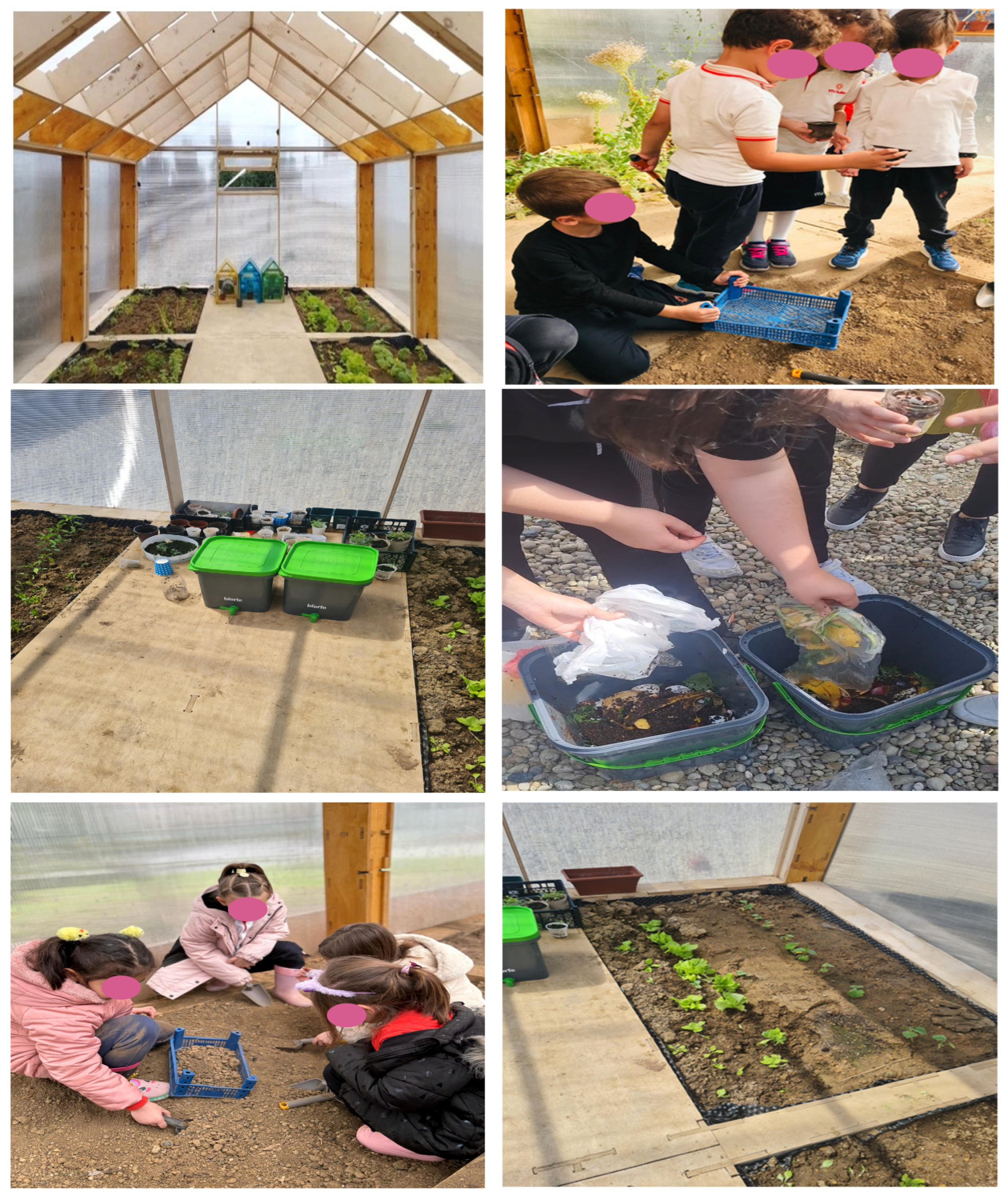
Table 1). In addition to theoretical instruction, students made practical applications such as exploring plant growth and development, examining factors influencing seed germination, determining dependent, independent, and controlled variables, and learning about main elements affecting plant care and growth (
Figure 1). During the implementation, students participated actively in these activities. Activities included the principles of the green classroom concept, which focuses on direct observation of nature and multisensory exploration in a modular format [
66,
67,
68]. After the implementation, to assess children’s sustainable and healthy nutritional eating choices, semi-structured interviews were conducted again with each student.
3.4. Data Collection and Analysis
The data for the current research were collected from third-grade students through semi-structured interviews both prior to and following the greenhouse-based educational activities. The interview questions were prepared by the researcher (
Appendix A) and administered individually to each child. Each interview lasted around 20 min.
In data analysis, content analysis was employed. This approach can be applied in both quantitative forms—emphasizing measurement and frequency—and qualitative forms—focusing on interpretation and meaning. In either case, words, themes, and concepts are categorized or coded and then examined systematically. In the current research, the collected data was transformed into frequencies according to pre-defined categories presented in the results. These categories were pre-defined during data collection. That is, when conducting interviews with students, certain categories (e.g., 1–2 per week, every day, rarely, often, etc.) were presented to them (
Appendix A). In this way, students’ sustainable and healthy nutritional preferences were evaluated [
69,
70,
71,
72].
3.5. Ethical Issues
Ethical approval for the study was granted by the Ethics Committee of Yıldız Technical University, Istanbul, Türkiye. Informed consent forms, emphasizing the voluntary participation of children and requiring parental authorization, were collected from all participants. In the current study, children’s assent was obtained through a ‘Child Consent Form for Research Study’ in addition to parental consent, ensuring that ethical standards were upheld. Data collection was implemented through structured procedures that were clearly communicated to participants, thereby enhancing transparency. Furthermore, detailed protocols for data protection and secure storage were followed, guaranteeing confidentiality and reinforcing the robustness of the research process. Comprehensive details regarding the research procedures were provided to students. Children were clearly informed that their involvement was optional and that they could withdraw at any stage. They were also briefed on data management practices to ensure confidentiality. To preserve anonymity, no personal identifiers or children’s names were recorded or disclosed.
4. Results
In the current study, a portable greenhouse was designed, and the effect of this educational innovation on children’s sustainable and healthy eating choices was explored. The results on students’ sustainable and healthy nutritional preferences are presented under separate headings below.
4.1. Results About Students’ Consumption of Fresh/Seasonal Fruits and Vegetables
In order to explore students’ sustainable and healthy nutritional preferences, the open-ended question “
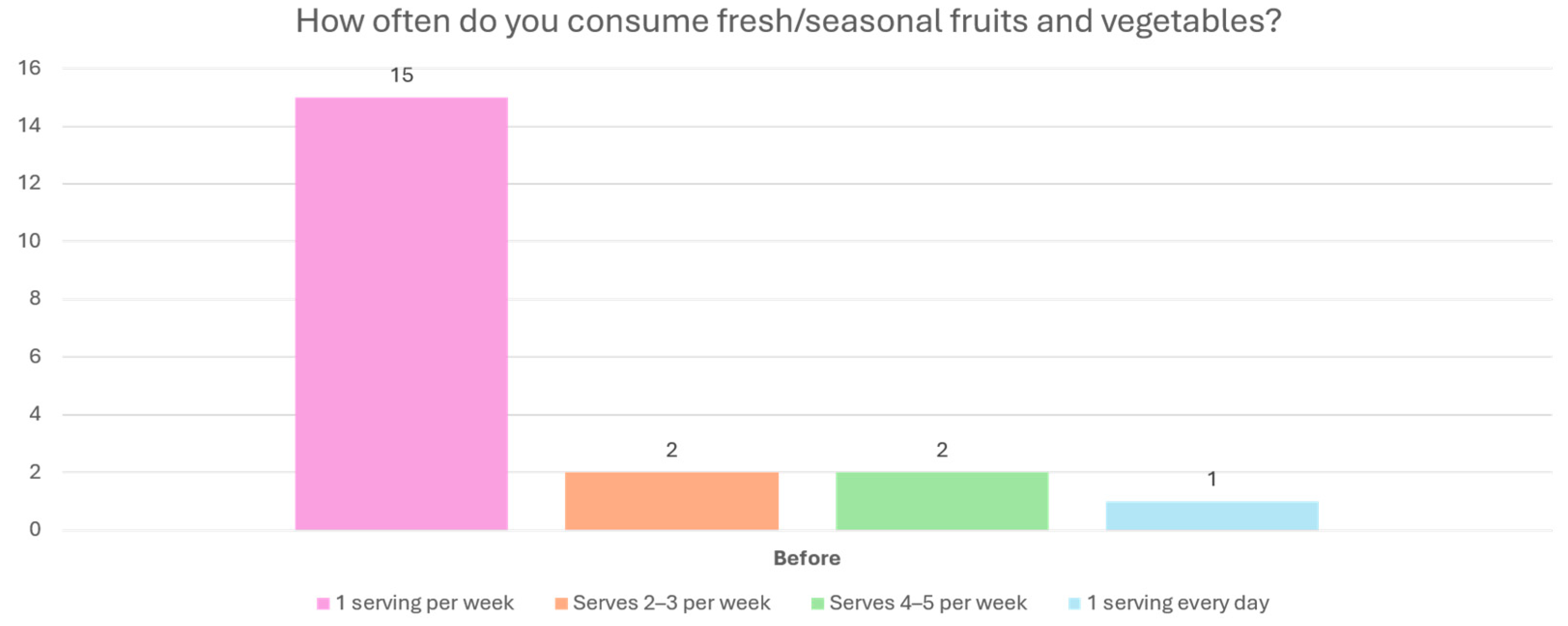
How often do you consume fresh/seasonal fruits and vegetables” was asked before and after the implementation. Results showed that the majority of children (15 students) do not consume fresh/seasonal fruits and vegetables enough at the beginning. They stated that they only consume one portion of fresh/seasonal fruits and vegetables per week (
Figure 2).
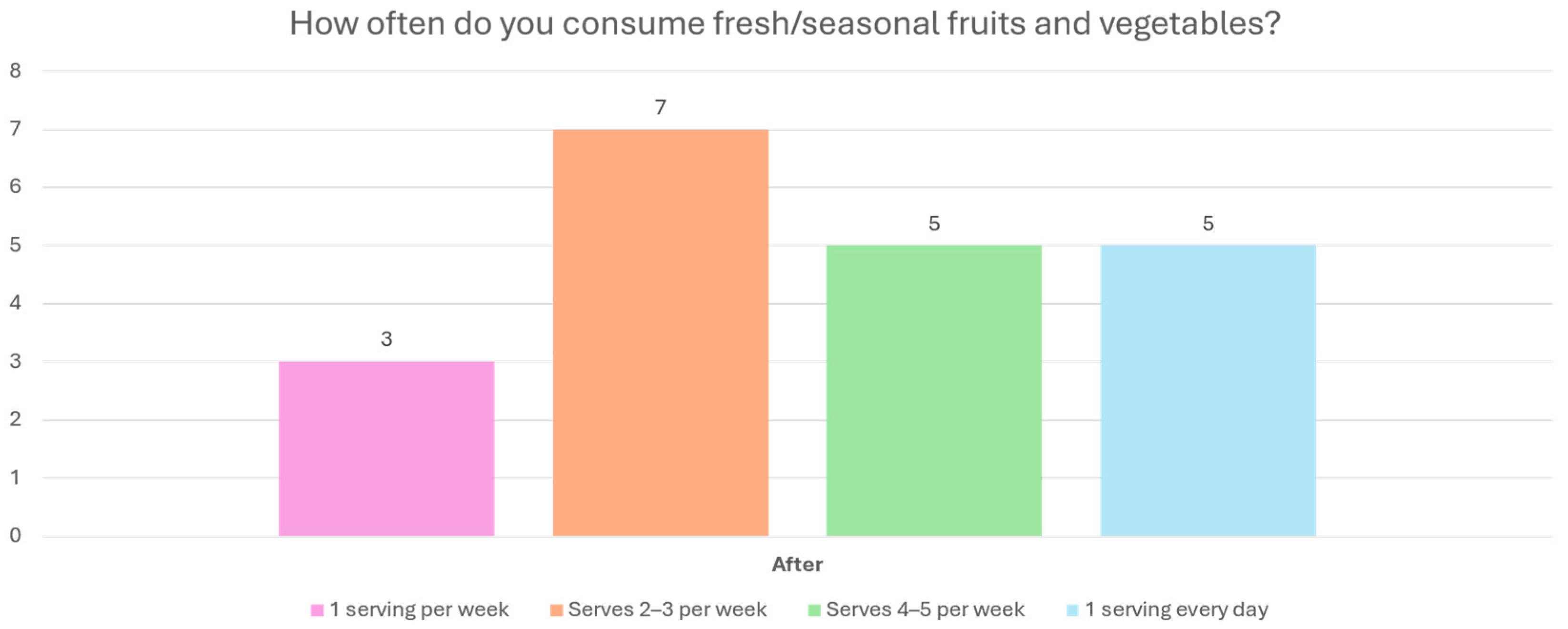
Many children’s choices developed throughout the course. At the end of the course, seven students reported beginning to consume 2–3 servings of fresh/seasonal fruits and vegetables per week, five of them reported eating 4–5 servings of fresh/seasonal fruits and vegetables weekly, and another five students stated they were having one serving of fresh/seasonal fruits and vegetables daily (
Figure 3).
4.2. Results About Students’ Consumption of Dishes Made with Fresh/Seasonal Vegetables
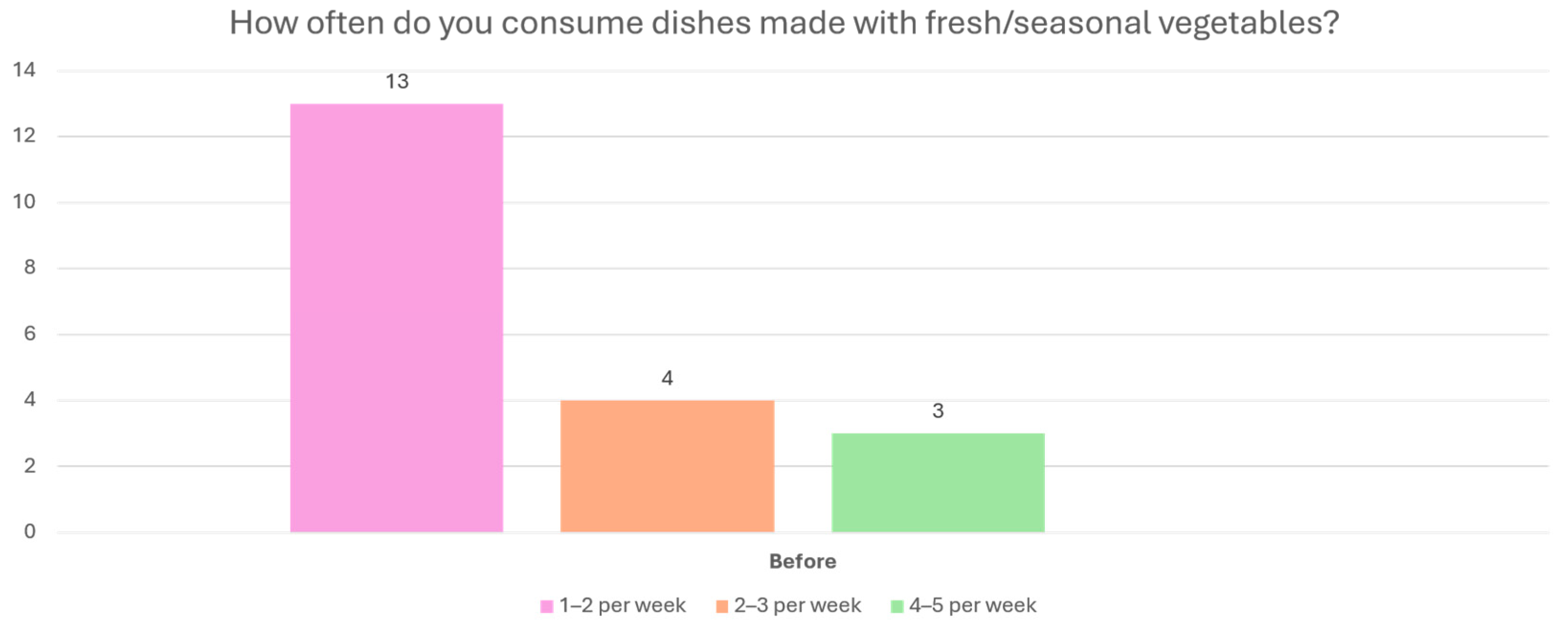
In order to explore students’ sustainable and healthy nutritional preferences, the open-ended question “
How often do you consume dishes made with fresh/seasonal vegetables?” was asked before and after the implementation. Results showed that the majority of children (13 students) do not consume dishes made with fresh/seasonal vegetables at the beginning of the course (
Figure 4).
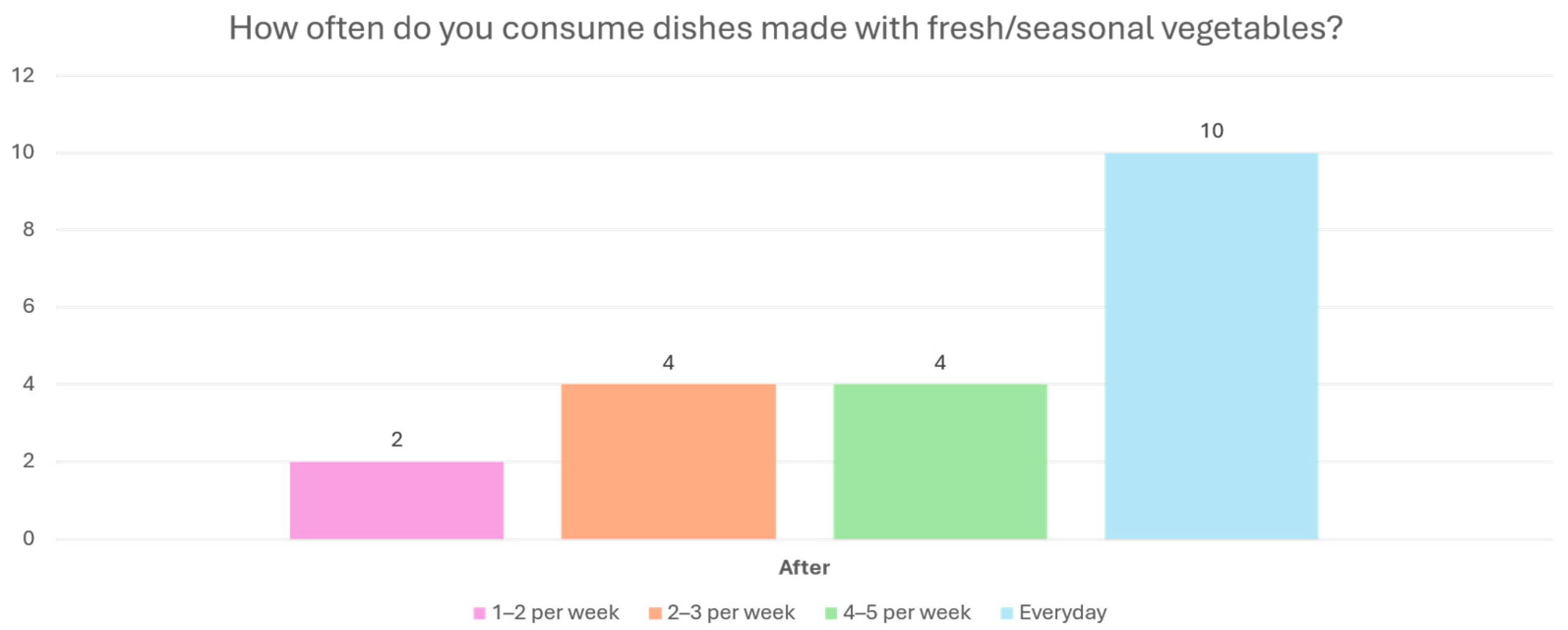
After the course, many children’s preferences developed. At the end of the course, half of the students reported beginning to consume dishes made with fresh/seasonal vegetables every day, four students reported eating dishes made with fresh/seasonal vegetables 4–5 times per week, and another four students stated they were having dishes made with fresh/seasonal vegetables 2–3 times per week (
Figure 5).
4.3. Results About Students’ Consumption of Whole Grain Products
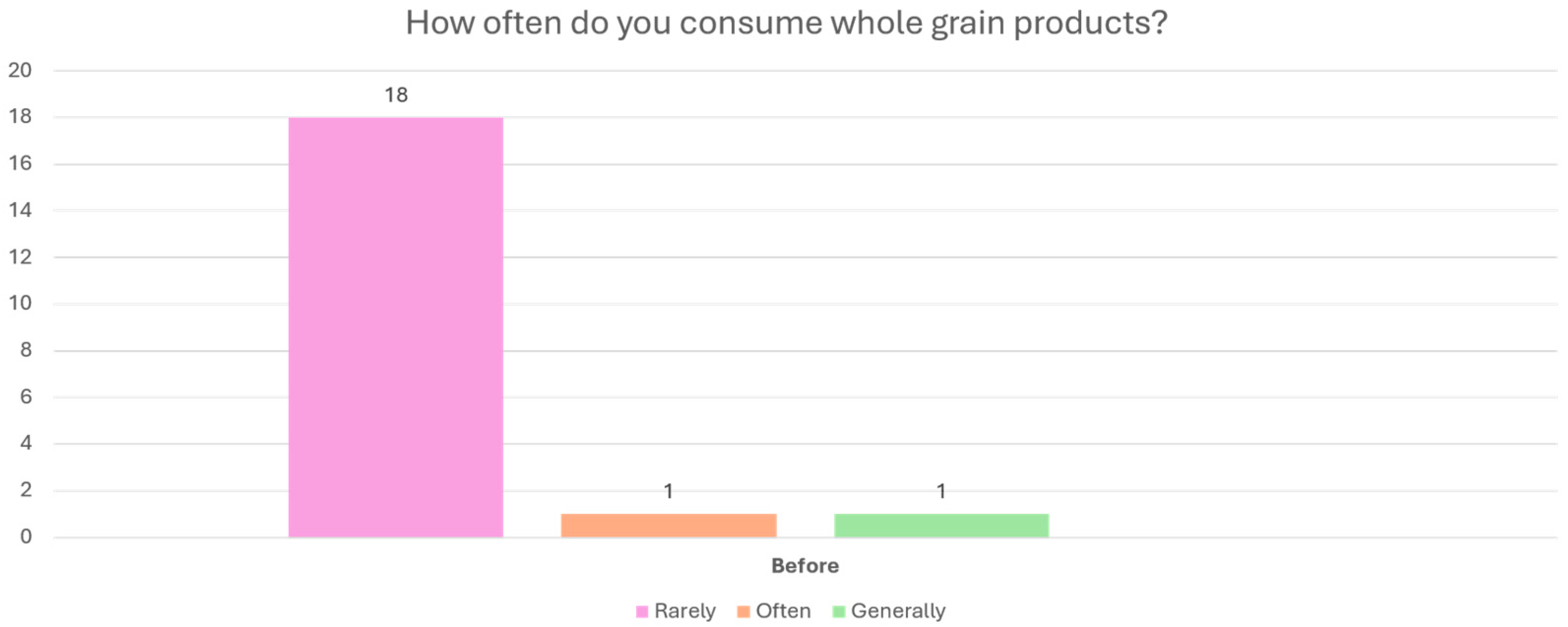
In order to explore students’ sustainable and healthy eating choices, the open-ended question “
How often do you consume whole grain products?” was asked before and after the course. Results showed that the majority of students (18 students) do not generally consume whole grain products at the beginning of the course (
Figure 6).
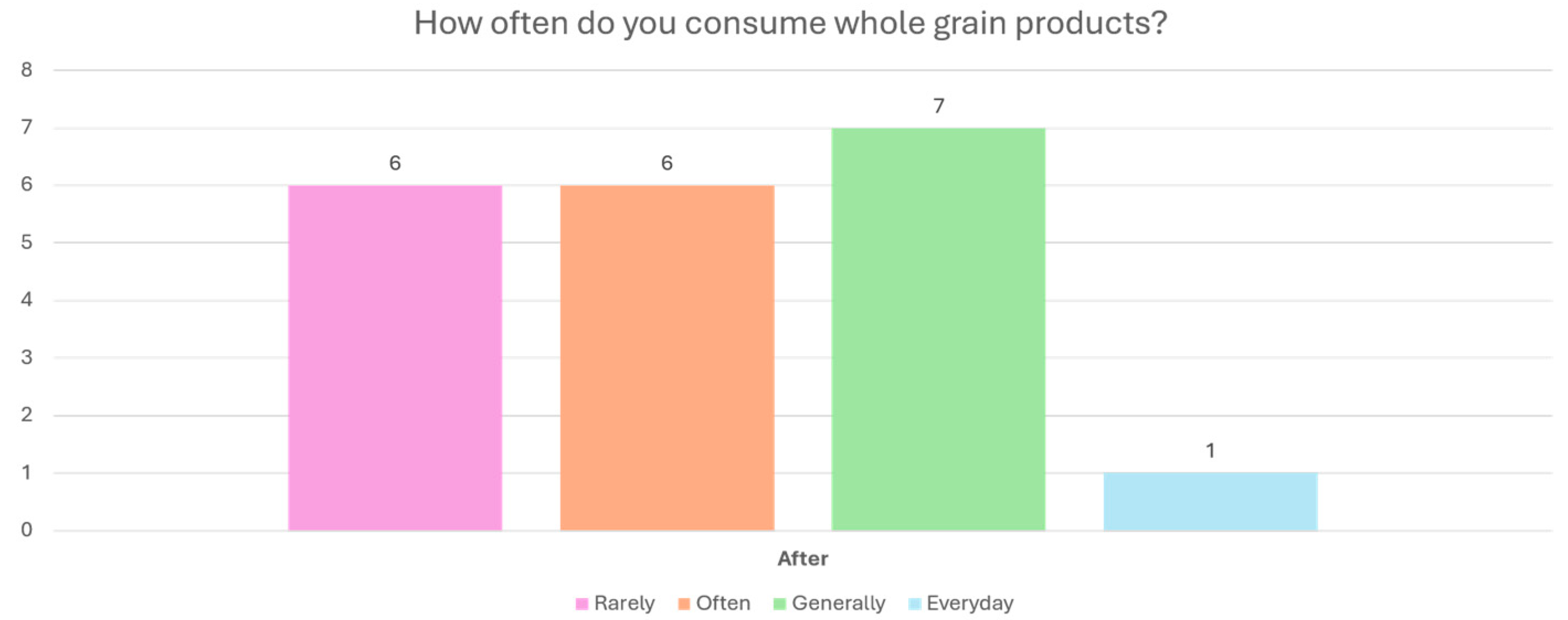
Many children’s choices developed throughout the course. At the end of the course, seven students reported beginning to consume whole grain products generally, six of them reported eating whole grain products often, and one student stated they were having whole grain products every day (
Figure 7).
4.4. Results About Students’ Reuse of Food Waste
In order to explore students’ sustainable and healthy eating preferences, the open-ended question “
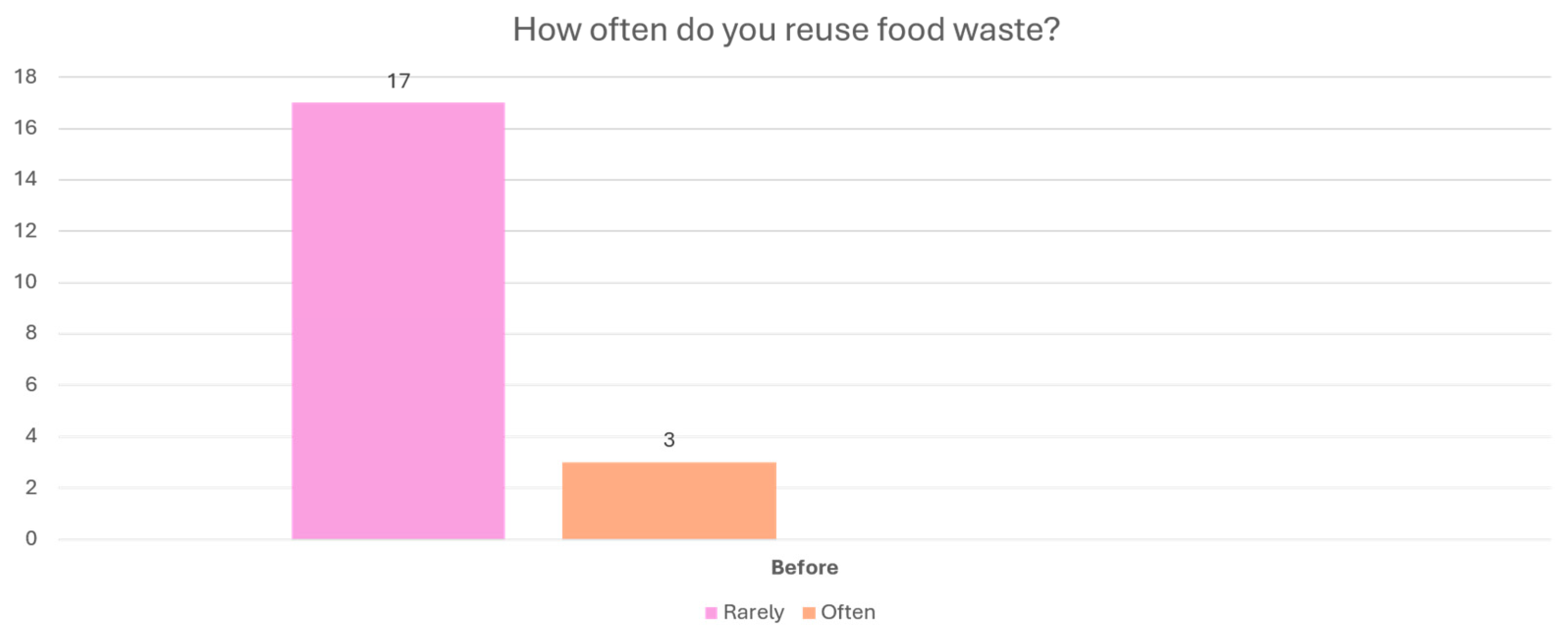
How often do you reuse food waste?” was asked before and after the course. Results showed that the majority of students (17 students) rarely reuse food waste at the beginning of the course (
Figure 8).
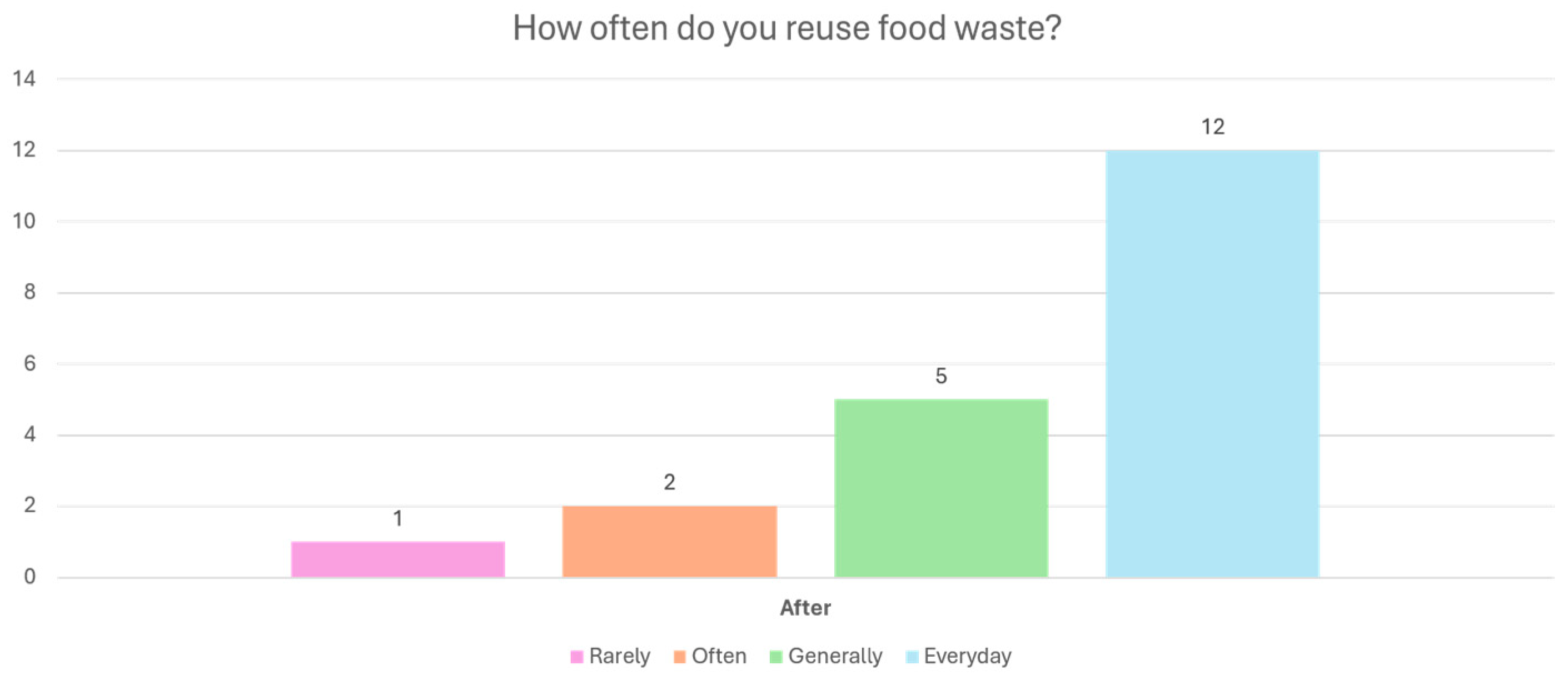
Many students’ choices developed throughout the course. At the end of the course, more than half of the students (12) reported beginning to reuse food waste every day, five students reported reusing food waste generally, and another two students stated they often reuse food waste (
Figure 9).
4.5. Results About Students’ Choices of Foods Consisting of Natural Ingredients
In order to explore students’ sustainable and healthy nutritional preferences, the open-ended question “
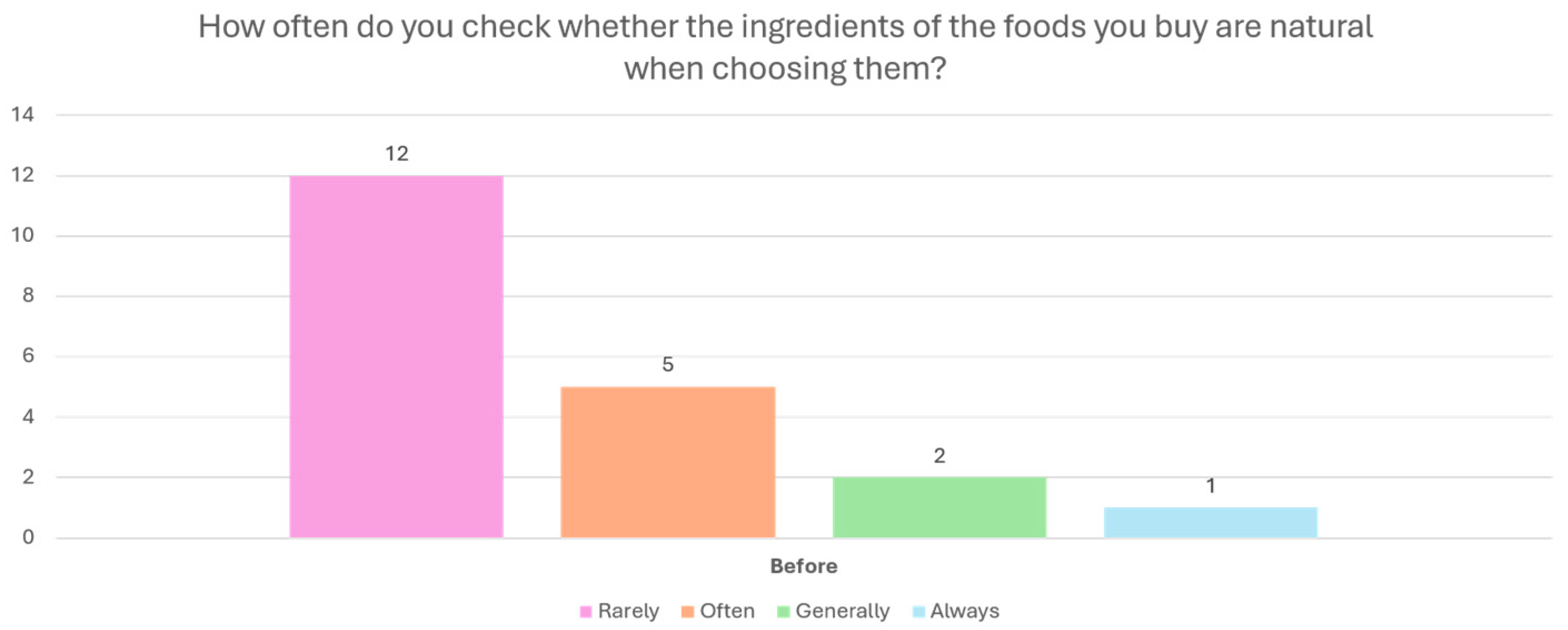
How often do you check whether the ingredients of the foods you buy are natural when choosing them?” was asked before and after the implementation. Results showed that the majority of children (12 students) check rarely whether the ingredients of the foods they buy are natural when choosing them at the beginning of the course (
Figure 10).
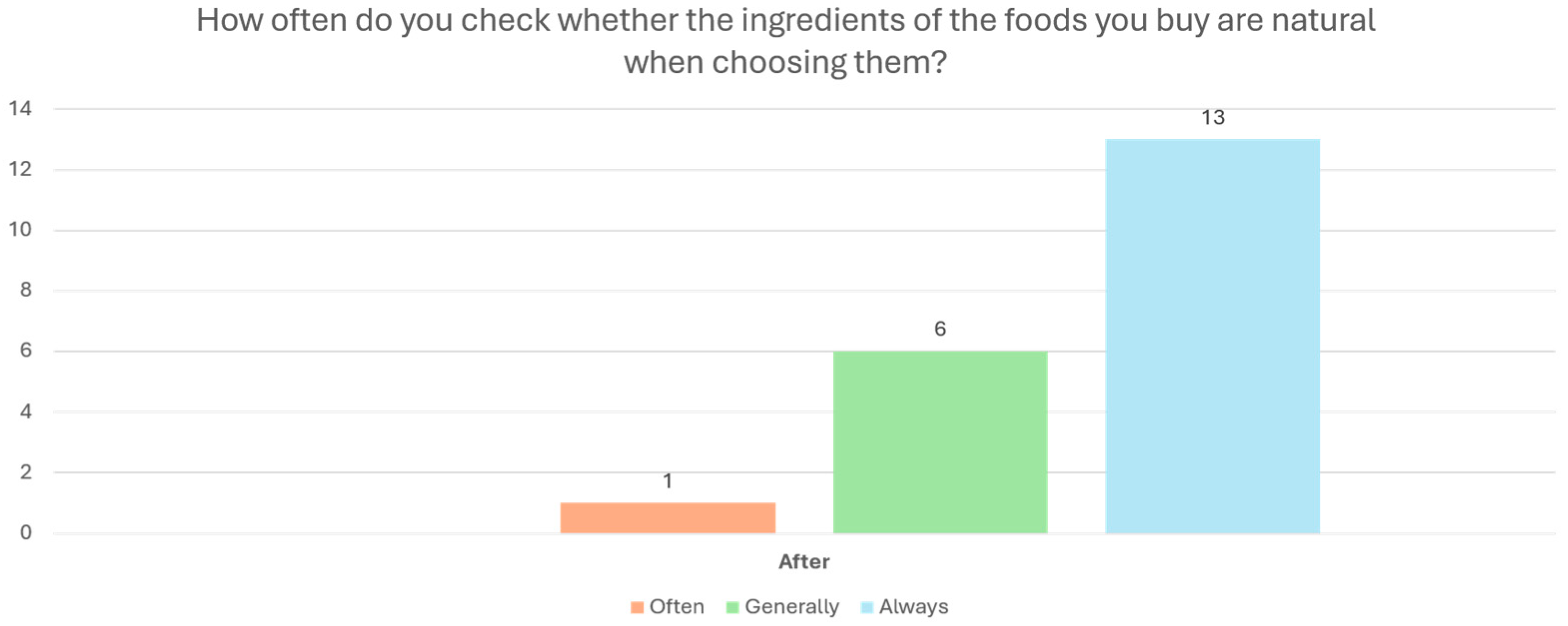
Many students’ choices developed after the intervention. At the end of the course, most students (13 students) emphasized that they always check whether the ingredients of the foods they buy are natural when choosing them every day, six of them reported checking generally whether the ingredients of the foods they buy are natural when choosing them, and one student stated they often check whether the ingredients of the foods are natural when choosing them (
Figure 11).
4.6. Results About Students’ Choices of Foods Produced Using Environmentally Friendly Methods
In order to explore students’ sustainable and healthy eating choices, the open-ended question “
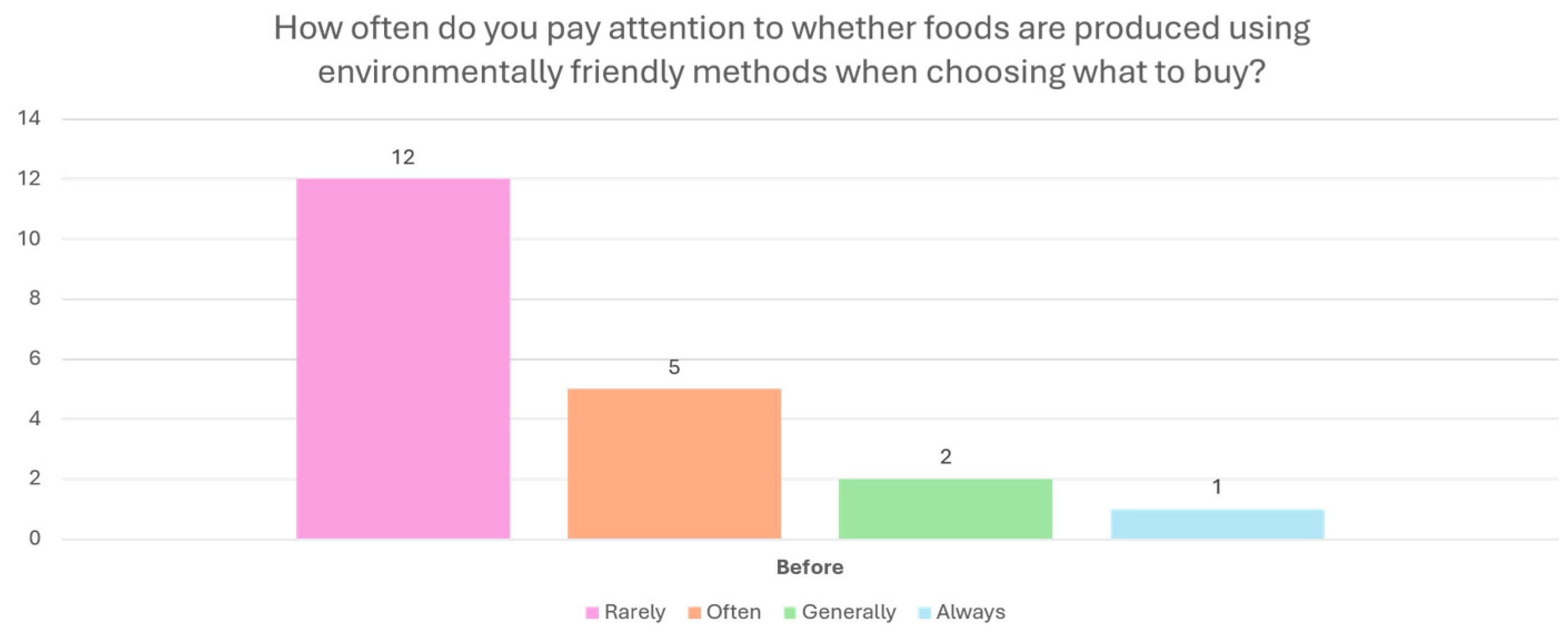
How often do you pay attention to whether foods are produced using environmentally friendly methods when choosing what to buy?” was asked before and after the course. Results showed that the majority of children (12 students) rarely pay attention to whether foods are produced using environmentally friendly methods when choosing what to buy at the beginning of the course (
Figure 12).
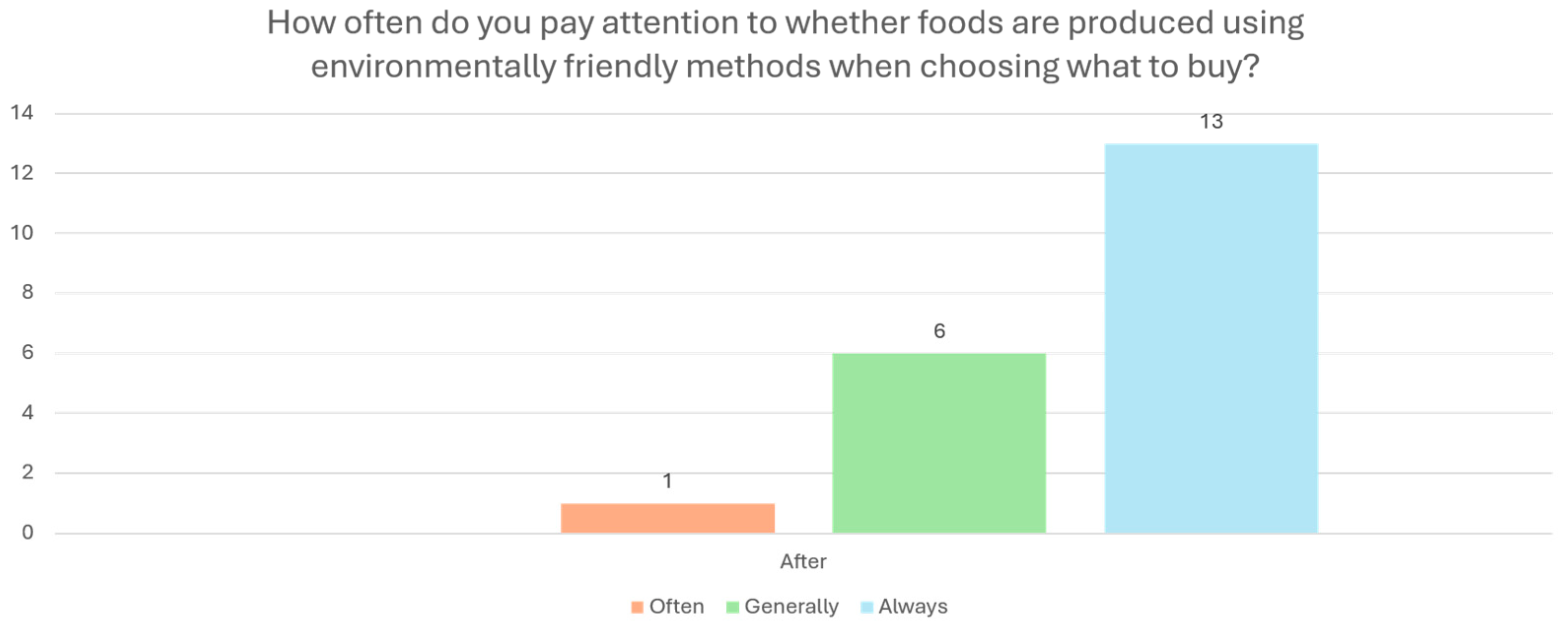
After the course, many children’s eating choices developed. At the end of the course, more than half of students (13) stated that they always pay attention to whether foods are produced using environmentally friendly methods when choosing what to buy, six of them reported that they generally pay attention to whether foods are produced using environmentally friendly methods when choosing what to buy, and one student stated they often pay attention to whether foods are produced using environmentally friendly methods when choosing what to buy (
Figure 13).
4.7. Results About Students’ Choices of Foods That Are Nutrient-Dense and Good for Health
In order to explore students’ sustainable and healthy eating preferences, the open-ended question “
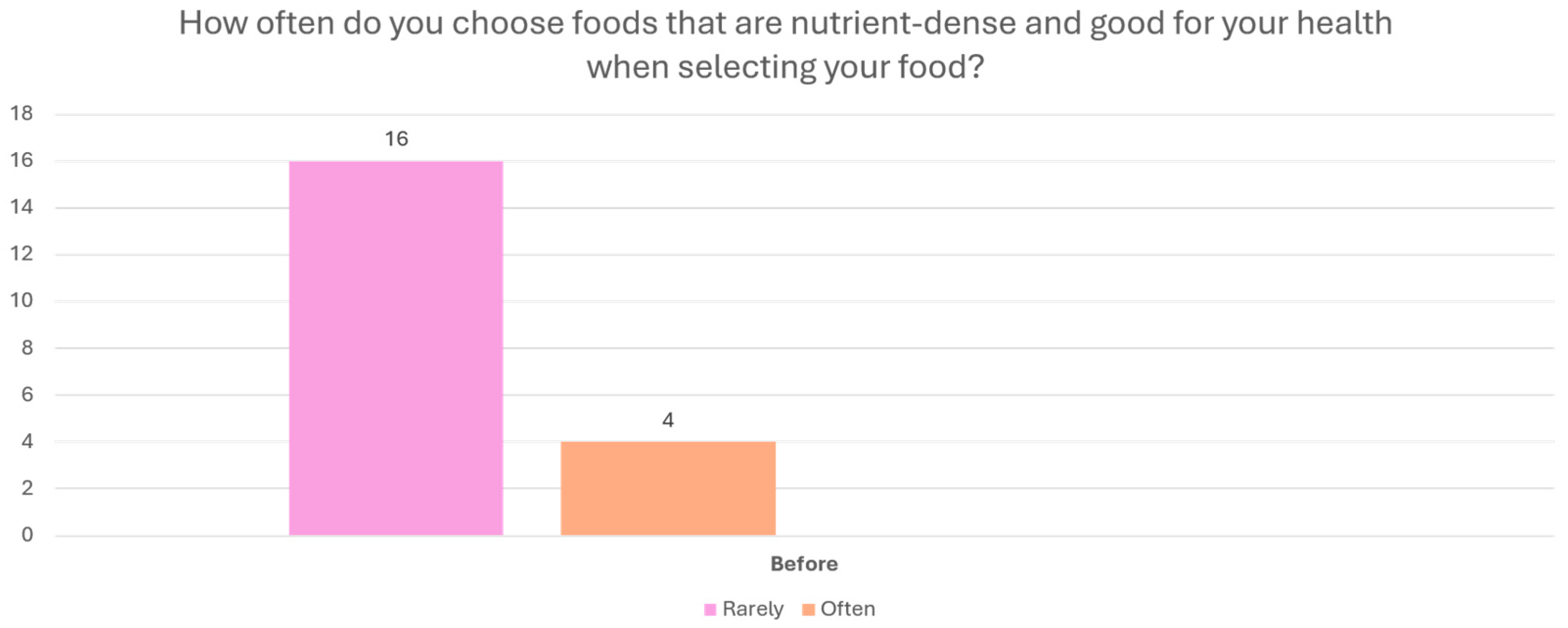
How often do you choose foods that are nutrient-dense and good for your health when selecting your food?” was asked before and after the course. Results showed that many children (16 students) rarely choose foods that are nutrient-dense and good for their health when selecting their food at the beginning of the course (
Figure 14).
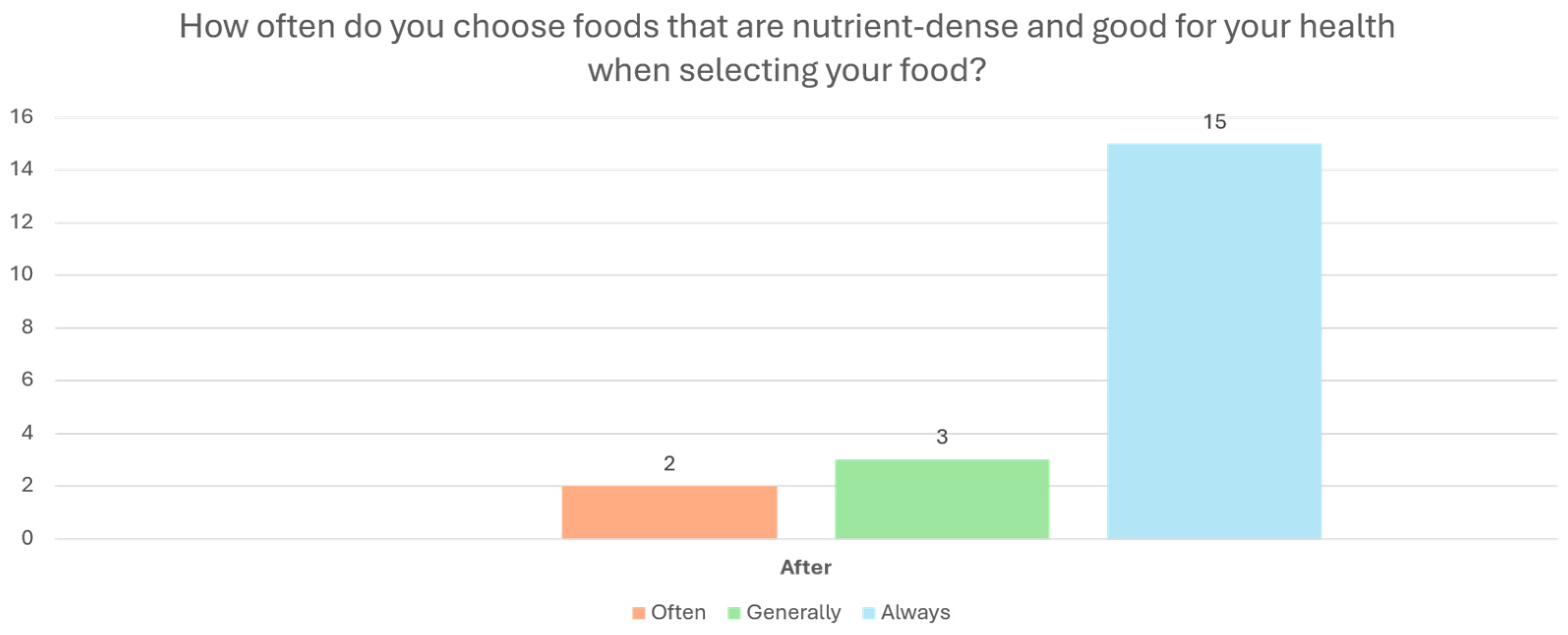
Greenhouse-based education developed many children’s eating choices. At the end of the course, many students (15) stated that they always choose foods that are nutrient-dense and good for their health when selecting their food, three students reported that they generally choose foods that are nutrient-dense and good for their health when selecting their food, and another two students stated they often choose foods that are nutrient-dense and good for their health when selecting their food (
Figure 15).
4.8. Results About Students’ Choices of Fruits and Vegetables Produced Locally Through Organic Farming
In order to explore students’ sustainable and healthy nutritional choices, the open-ended question “
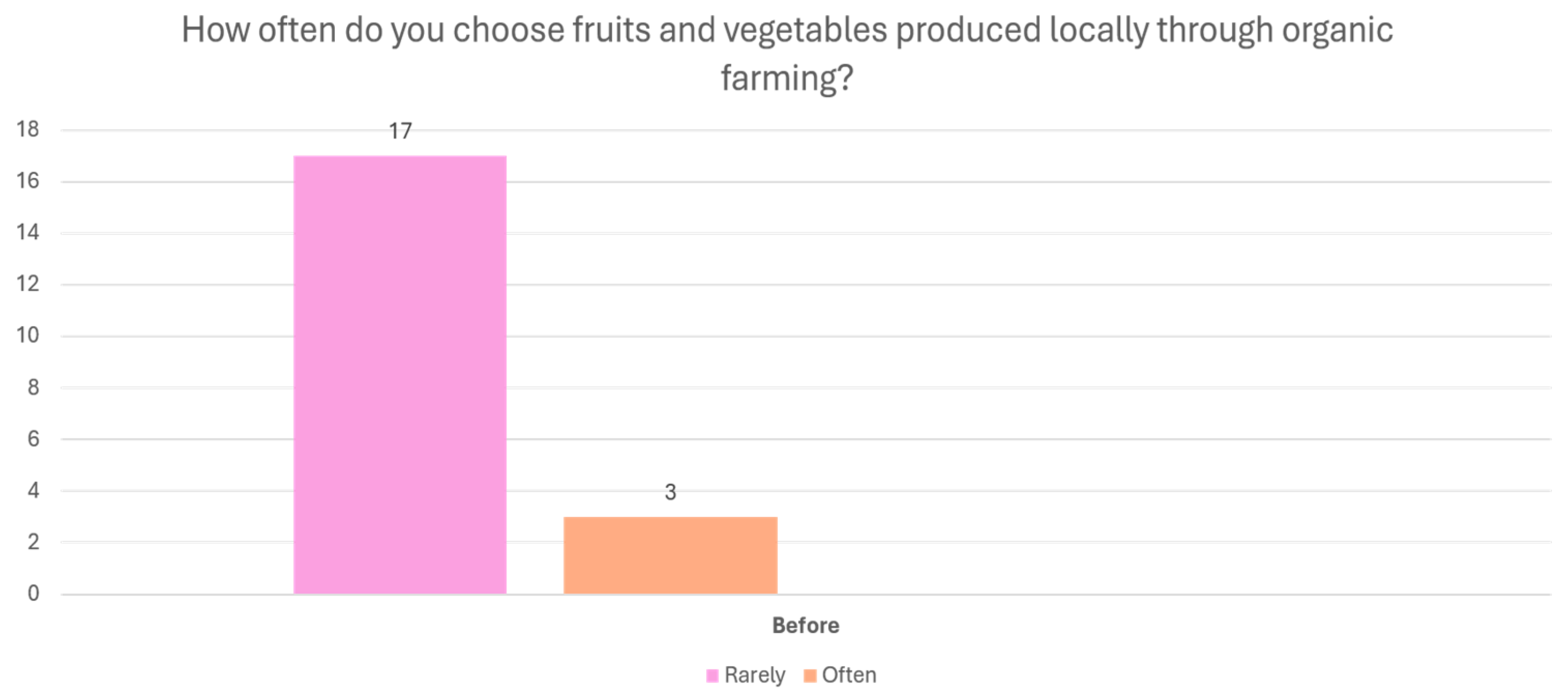
How often do you choose fruits and vegetables produced locally through organic farming?” was asked before and after the course. Results showed that the majority of children (17 students) infrequently choose fruits and vegetables produced locally through organic farming at the beginning of the course (
Figure 16).
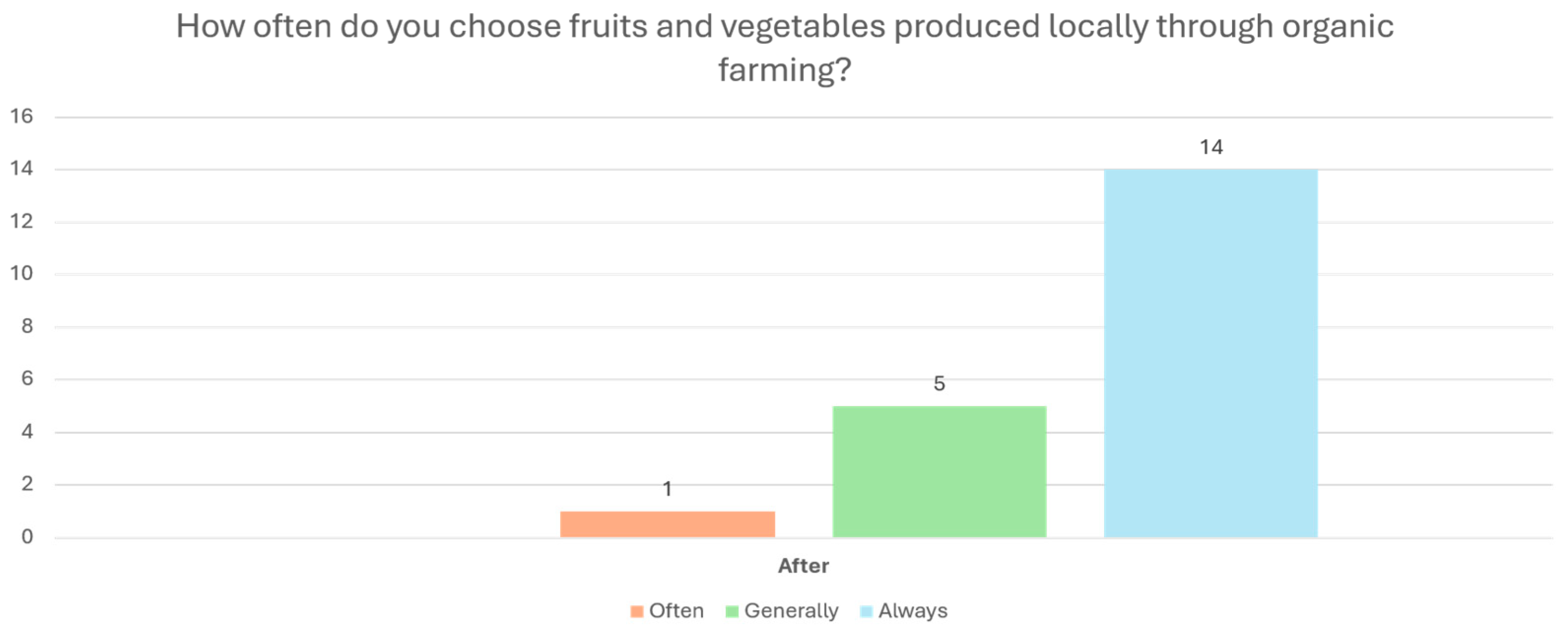
Many children’s eating preferences developed throughout the course. At the end of the course, 14 students stated that they always choose fruits and vegetables produced locally through organic farming, five students reported that they generally choose fruits and vegetables produced locally through organic farming, and one student stated that they often choose fruits and vegetables produced locally through organic farming (
Figure 17).
4.9. Results About Students’ Consumption of Packaged and Processed Foods
In order to explore students’ sustainable and healthy nutritional preferences, the open-ended question “
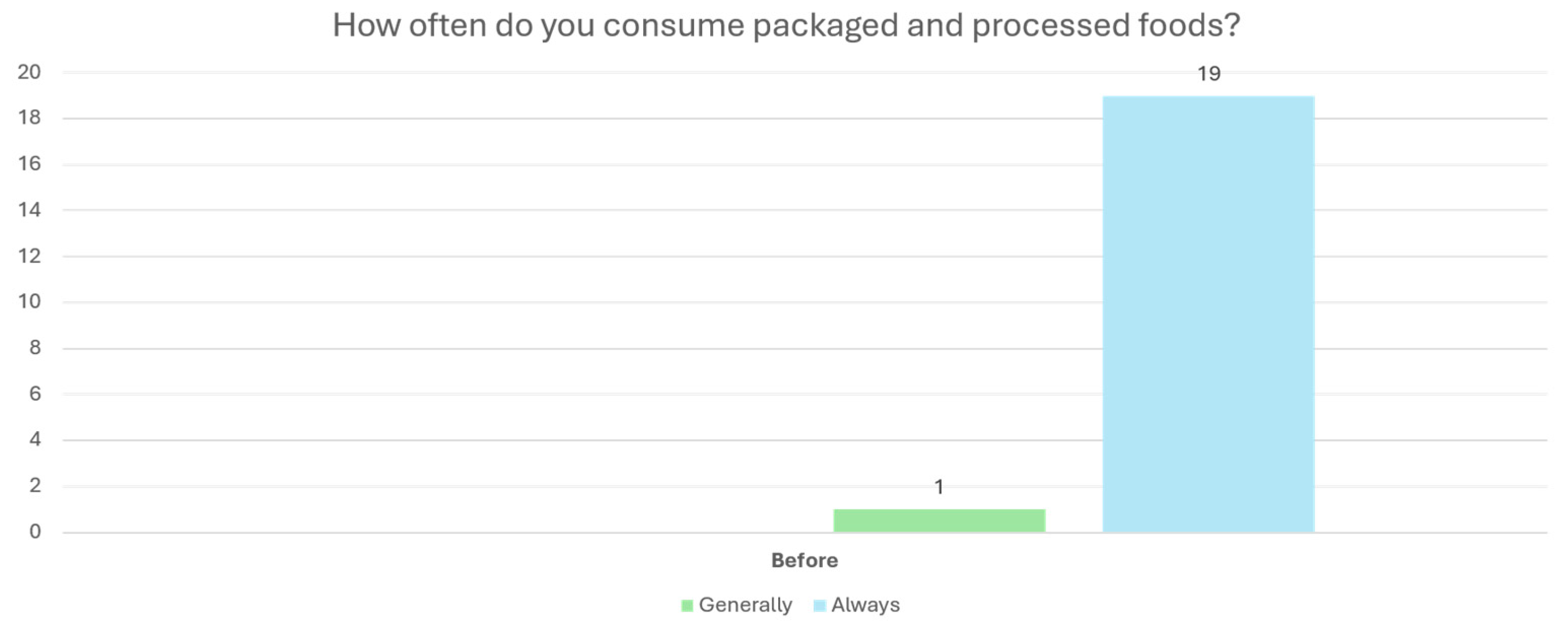
How often do you consume packaged and processed foods?” was asked before and after the intervention. Results showed that most children (19 students) always consume packaged and processed foods at the beginning of the course (
Figure 18).
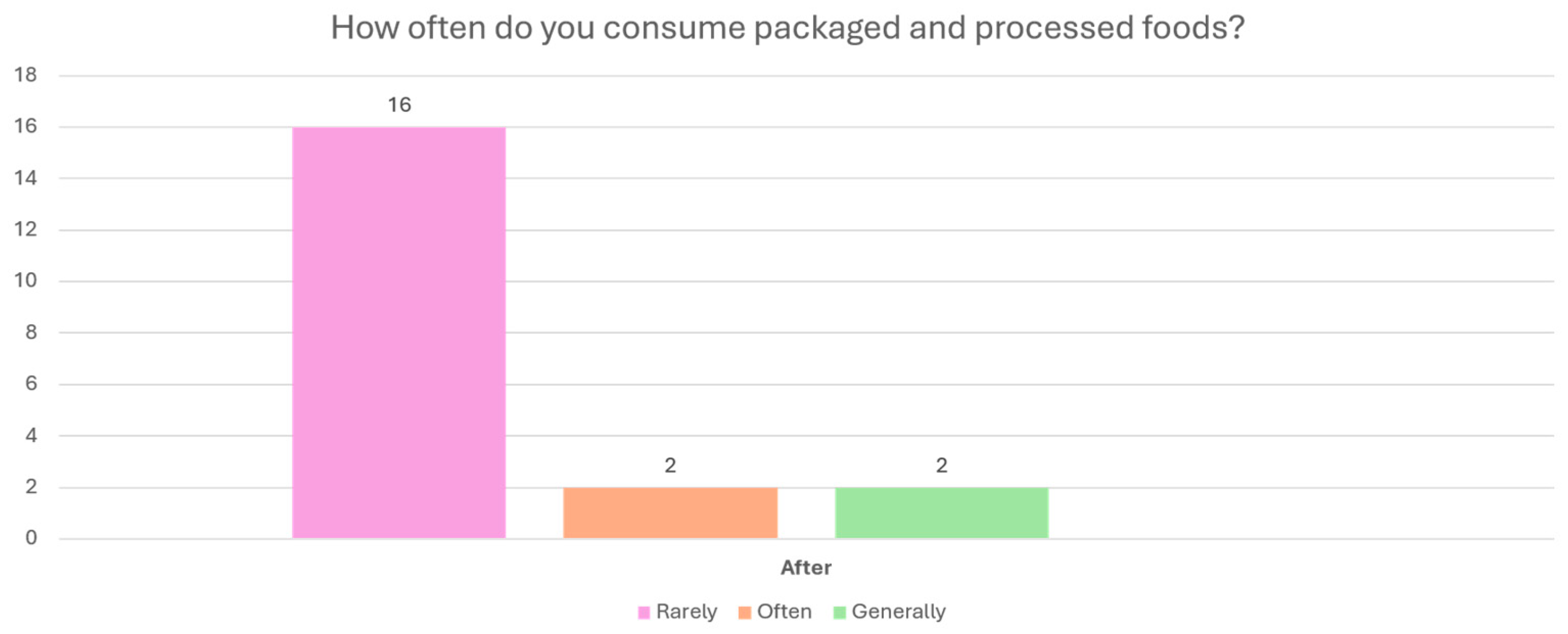
After the greenhouse-based course, many children’s eating choices developed, and their consumption of packaged and processed foods decreased. At the end of the course, 16 students stated that they rarely consume packaged and processed foods, two students reported that they often consume packaged and processed foods, and another two students stated they generally consume packaged and processed foods (
Figure 19).
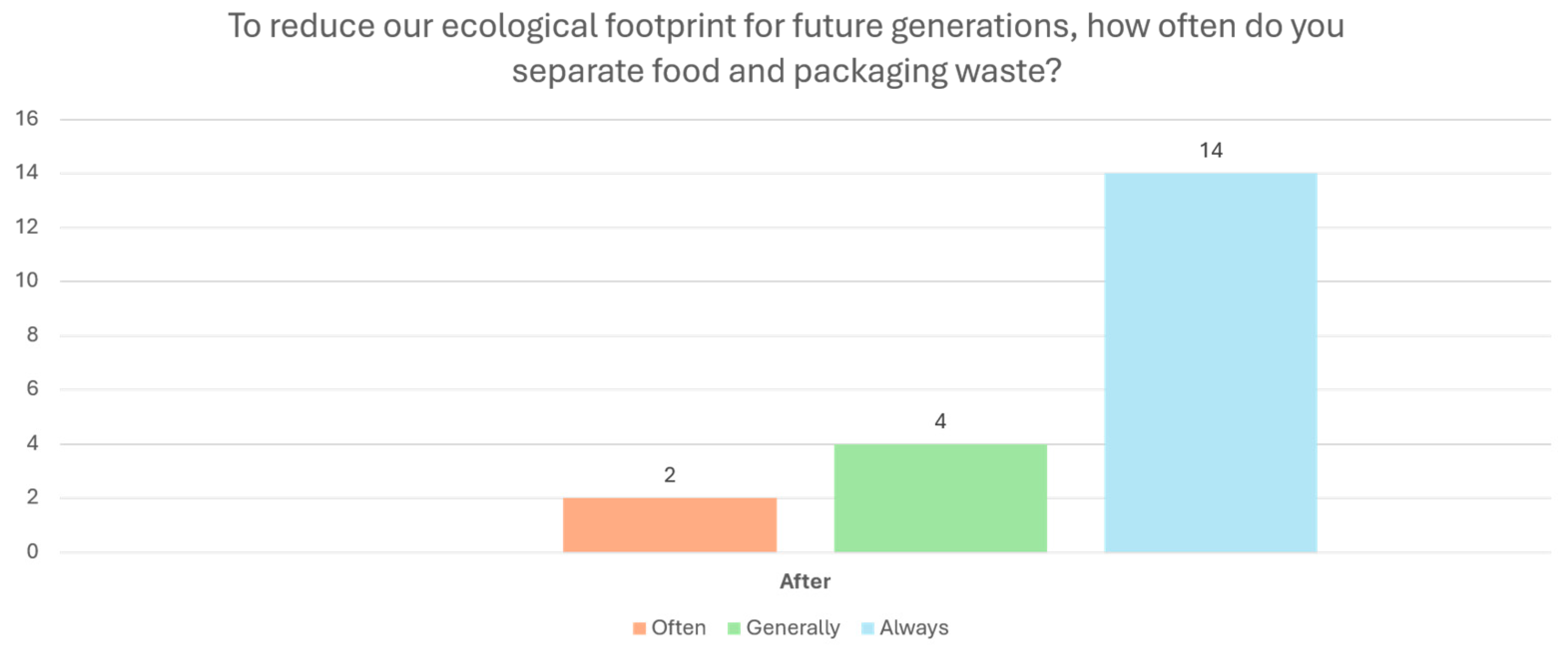
4.10. Results About Students’ Choices of Separating Food and Packaging Waste
In order to explore students’ sustainable and healthy eating choices, the open-ended question “
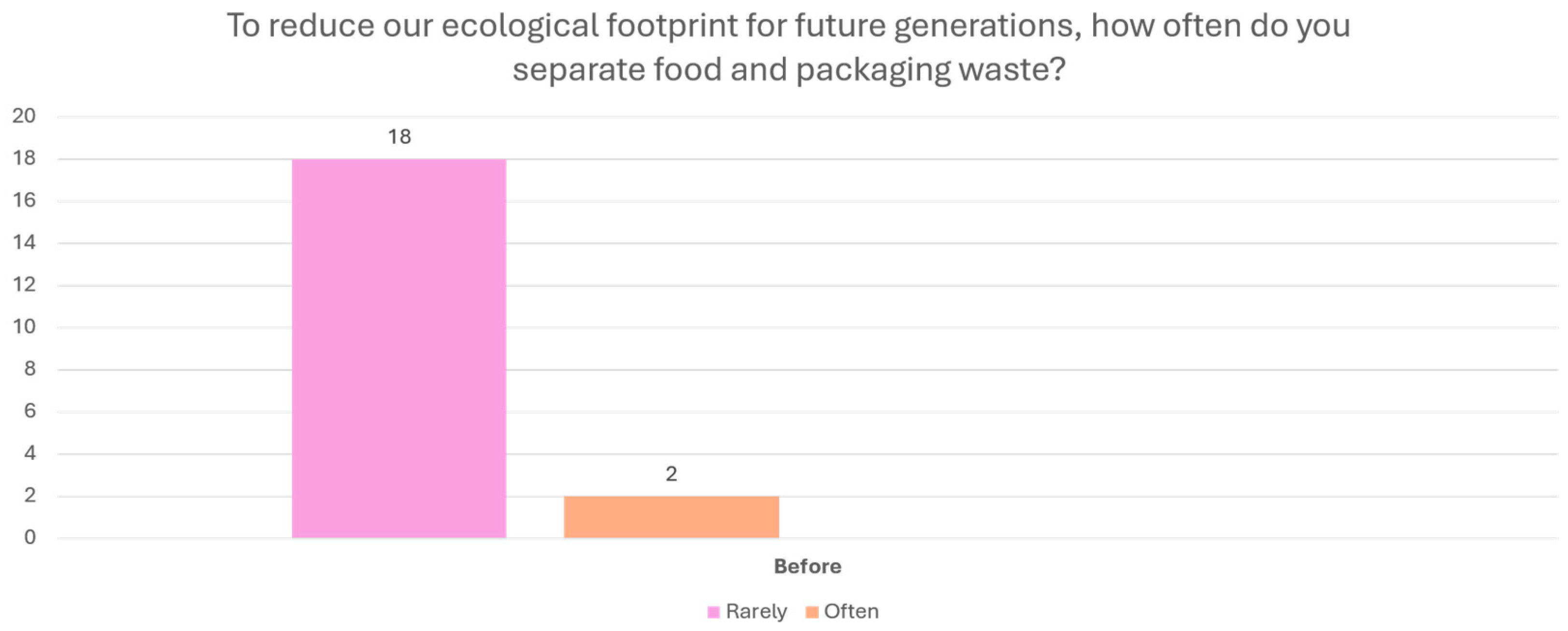
To reduce our ecological footprint for future generations, how often do you separate food and packaging waste?” was asked before and after the course. Results showed that many students (18) separated food and packaging waste rarely at the beginning of the course (
Figure 20).
Many children’s eating choices developed throughout the course. At the end of the implementation, 14 students stated that they always separate food and packaging waste to reduce their ecological footprint for future generations, four students reported that they generally separate food and packaging waste to reduce their ecological footprint for future generations, and another two students stated they often separate food and packaging waste to reduce their ecological footprint for future generations (
Figure 21).
5. Discussion
In the current study, the effect of greenhouse-based education, including sustainable agriculture, on the development of students’ sustainable and healthy eating choices was examined. The results revealed that greenhouse-based education is effective for developing children’s sustainable and healthy eating preferences. Velpini et al. [
73] emphasized that effective interventions for improving children’s nutrition literacy typically include technological elements, multiple modes of engagement, a duration exceeding four weeks, and face-to-face sessions. The current study included these characteristics using a portable greenhouse, which provided technological components, multimodal involvement, extended duration (6 weeks), and direct interaction. As a result, children improved their sustainable and healthy eating choices. This emphasizes the potential of greenhouse-based education to enhance lasting improvements, contributing to healthier school environments worldwide and supporting both the short- and long-term health and well-being of children.
In literature, there are several studies that support the results of the current study. For example, Jung et al. [
74] revealed in their study that a school-based nutrition education program improved students’ healthy eating literacy in their daily eating habits. In another study, Menor-Rodriguez et al. [
75] showed that educational interventions on healthy lifestyle habits carried out in children during their early years can improve and correct unhealthy habits. Li and Chang [
76] revealed in their study that the nutrition intervention, which utilized simulation videos and encouraged parental involvement, had significant effects on improving children’s knowledge about tips for making healthy choices and the necessity of a balanced diet, and on attitudes toward healthy eating. Park and Kim [
77] demonstrated that the educated group improved dietary attitude, nutrition knowledge and qualitative nutrient intakes compared to the non-educated group. In addition, Chaudhary et al. [
78] proved that school-based interventions (including multicomponent interventions) can be an effective and promising means for promoting healthy eating, improving dietary behavior, attitude and anthropometry among young children. Dudley et al. [
79] showed that educational interventions with outdoor teaching strategies can lead to positive changes in primary school children’s healthy eating behaviors. In another study, Gallotta et al. [
80] revealed that children’s healthful dietary practices and active lifestyles can be developed through nutritional intervention. Moreover, Llargues et al. [
81] showed that the educational intervention in healthy eating choices and physical activity in the school could contribute to lessening the current increase in child obesity. In another study, Prell et al. [
82] showed that school-based interventions are promising for targeting a change in obesity-related behaviors in children. Furthermore, Räihä et al. [
83] found that pupils in experimental schools gained greater knowledge of nutrition during the educational intervention. These students also developed healthier eating habits and consumed school lunches more consistently compared to those in control schools.
A wide body of literature shows that school-based interventions, whether through nutrition education programs, lifestyle habit training, parental involvement, or especially outdoor teaching strategies—consistently improve children’s dietary knowledge, attitudes, and behaviors. Prior studies have highlighted the importance of multimodal engagement, technological components, extended duration, and direct interaction, all of which were incorporated into the greenhouse-based model. By combining these proven elements with hands-on agricultural experiences, the current intervention not only enhanced children’s nutrition literacy and healthy eating practices but also contributed to long-term improvements in dietary behavior and obesity prevention. Overall, the results emphasize the potential of greenhouse-based education to create healthier school environments worldwide, supporting both immediate and lasting benefits for children’s health and well-being.
To sum up, greenhouse-based education can present a holistic approach to developing children’s sustainable and healthy eating choices. It can help to bridge the gap between abstract dietary guidelines and lived experience, fostering both healthier eating choices and sustainable mindsets. Similar to the results of the current study, through active participation in planting, harvesting, and tasting, children can develop stronger preferences for fresh, nutrient-rich foods while simultaneously internalizing values of sustainable development. Such programs can have the potential to transform dietary behaviors, instill lifelong healthy habits, and cultivate a generation that is both nutritionally conscious and environmentally responsible. As schools increasingly adopt these practices, they can contribute not only to individual well-being but also to collective planetary health [
84,
85,
86,
87].
6. Conclusions
In conclusion, the current study showed that greenhouse-based learning can be an innovative way of shaping children’s sustainable and healthy eating choices. If children actively participate in planting, harvesting and nurturing vegetables and fruits in a greenhouse environment, they can understand where food comes from and the effort required to produce it. The hands-on experience through greenhouse-based education helps children appreciate fresh, organic produce and encourages them to make healthier eating choices by making healthy foods more appealing. Moreover, greenhouse-based education can integrate lessons on sustainable development, such as composting, eco-friendly farming practices and water conservation, helping children internalize the importance of caring for the environment while building eating habits. By linking nutrition education with experiential learning, schools and communities can improve lifelong preferences for wholesome foods, reduce reliance on processed meals, and inspire a generation that values both personal and public health and ecological responsibility.
7. Limitations and Future Studies
A key limitation of the present study lies in the relatively small sample size and lack of a control group. In this study, there is no control group because there was only a single class available at this age level in the school. Without a comparison group, it is difficult to exclude other explanations for the results found, such as family habits, school environment, natural developmental changes, etc. Therefore, future research could involve a larger number of students or include different participant groups, thereby improving both the validity and the generalizability of the findings. Another limitation of the current study involves potential confounding factors like family dietary practices, household food availability, parental decision-making and external exposure to nutrition education, which may have influenced children’s eating behaviors independently of the intervention. Thus, future research can focus on these factors to improve the results.
The present study reports the outcomes of a 6-week greenhouse-based educational program. To build on these findings, longitudinal research designs could be employed, allowing researchers to repeatedly assess the same individuals over time and thereby capture potential changes in eating behavior [
88,
89,
90]. Follow-up evaluations are particularly necessary to determine the extent to which students modify their eating habits and implement strategies for sustainable and healthy eating in their daily lives. This consideration should be prioritized in future investigations to enhance the depth and applicability of the results.
Despite these limitations, the present study represents an initial pioneering attempt and makes a valuable contribution to literature by offering important insights for researchers, educators, and curriculum specialists regarding the development of sustainable and healthy eating habits among students, who are expected to play a crucial role in shaping a sustainable future.
Author Contributions
Conceptualization, A.K.; methodology, A.K., B.K. and K.M.; validation, A.K.; formal analysis, A.K.; investigation, A.K. and B.K.; writing—original draft preparation, A.K. and B.K.; supervision, writing—review and editing, K.M. All authors have read and agreed to the published version of the manuscript.
Funding
This research received no external funding.
Institutional Review Board Statement
The study was conducted in accordance with the Declaration of Helsinki, and approved by the institutional review board of Yıldız Technical University (Protocol code 2021/07 and date of approval 16 September 2021).
Informed Consent Statement
Informed consent was obtained from all subjects involved in the study.
Data Availability Statement
The data presented in this study are available on request from the corresponding author.
Conflicts of Interest
The authors declare no conflicts of interest.
Abbreviations
The following abbreviations are used in this manuscript:
| RTG | Rooftop Greenhouse |
| SDG | Sustainable Development Goals |
| RQ | Research Question |
| EDR | Educational Design Research |
| TS | Turkish Standards |
Appendix A
Semi-structured Interview Questions
How often do you consume fresh/seasonal fruits and vegetables? 1 serving per week/serves 2–3 per week/serves 4–5 per week/1 serving every day?
How often do you consume dishes made with fresh/seasonal vegetables? 1–2 per week/2–3 per week/4–5 per week/every day?
How often do you consume whole grain products? Rarely/Often/Generally/Ever day?
How often do you reuse food waste? Rarely/Often/Generally/Ever day?
How often do you check whether the ingredients of the foods you buy are natural when choosing them? Rarely/Often/Generally/Always?
How often do you pay attention to whether foods are produced using environmentally friendly methods when choosing what to buy? Rarely/Often/Generally/Always?
How often do you choose foods that are nutrient-dense and good for your health when selecting your food? Rarely/Often/Generally/Always?
How often do you choose fruits and vegetables produced locally through organic farming? Rarely/Often/Generally/Always?
How often do you consume packaged and processed foods? Rarely/Often/Generally/Always?
To reduce our ecological footprint for future generations, how often do you separate food and packaging waste? Rarely/Often/Generally/Always?
References
- Lobstein, T.; Jackson-Leach, R. Planning for the worst: Estimates of obesity and comorbidities in school-age children in 2025. Pediatr. Obes. 2016, 11, 321–325. [Google Scholar] [CrossRef] [Scilit] [PubMed]
- Naderer, B.; Matthes, J.; Binder, A.; Marquart, F.; Mayrhofer, M.; Obereder, A.; Spielvogel, I. Shaping children’s healthy eating habits with food placements? Food placements of high and low nutritional value in cartoons, children’s BMI, food-related parental mediation strategies, and food choice. Appetite 2018, 120, 644–653. [Google Scholar] [CrossRef] [Scilit] [PubMed]
- Ng, M.; Fleming, T.; Robinson, M.; Thomson, B.; Graetz, N.; Margono, C.; Mullany, E.C.; Biryukov, S.; Abbafati, C.; Abera, S.F.; et al. Global, regional, and national prevalence of overweight and obesity in children and adults during 1980–2013: A systematic analysis for the Global Burden of Disease Study 2013. Lancet 2014, 384, 766–781. [Google Scholar] [CrossRef] [Scilit] [PubMed]
- Patra, E.; Kokkinopoulou, A.; Pagkalos, I. Focus of Sustainable Healthy Diets Interventions in Primary School-Aged Children: A Systematic Review. Nutrients 2023, 15, 2460. [Google Scholar] [CrossRef] [Scilit] [PubMed]
- Reviani, N.; Riany, Y.E. Establishing healthy eating habits during child development to reduce the prevalence of obesity. J. Fam. Sci. 2022, 7, 88–101. [Google Scholar] [CrossRef] [Scilit]
- World Health Organization. Global Nutrition Monitoring Framework: Operational Guidance for Tracking Progress in Meeting Targets for 2025; WHO: Geneva, Switzerland, 2017; Available online: https://www.who.int/publications/i/item/9789241513609 (accessed on 20 January 2026).
- Hamulka, J.; Wadolowska, L.; Hoffmann, M.; Kowalkowska, J.; Gutkowska, K. Effect of an Education Program on Nutrition Knowledge, Attitudes toward Nutrition, Diet Quality, Lifestyle, and Body Composition in Polish Teenagers. The ABC of Healthy Eating Project: Design, Protocol, and Methodology. Nutrients 2018, 10, 1439. [Google Scholar] [CrossRef] [Scilit] [PubMed]
- Hoque, K.E.; Kamaluddin, M.A.; Razak, A.Z.A.; Wahid, A.A.A. Building healthy eating habits in childhood: A study of the attitudes, knowledge and dietary habits of schoolchildren in Malaysia. PeerJ 2016, 11, e2651. [Google Scholar] [CrossRef] [Scilit]
- Małgorzewicz, K.; Wasilewski, A.; Myśliwczyk, D.; Myśliwiec, M.; Małgorzewicz, S.; Wasilewska, E. Knowledge of Obesity and the Elements of a Healthy Diet Among Secondary School Students. Children 2025, 12, 1628. [Google Scholar] [CrossRef] [Scilit] [PubMed]
- Ares, G.; De Ross, S.; Mueller, C.; Phillippe, K.; Pickard, A.; Nicklaus, S.; van Kleef, E.; Varela, P. Development of food literacy in children and adolescents: Implications for the design of strategies to promote healthier and more sustainable diets. Nutr. Rev. 2023, 82, 536–552. [Google Scholar] [CrossRef] [Scilit] [PubMed]
- Birch, L.; Jennifer, S.; Savage, J.S.; Ventura, A. Influences on the development of children’s eating behaviours: From infancy to adolescence. Can. J. Diet. Pract. Res. 2007, 68, S51–S56. [Google Scholar]
- De Cosmi, V.; Scaglioni, S.; Agostoni, C. Early taste experiences and later food choices. Nutrients 2017, 9, 107. [Google Scholar] [CrossRef] [Scilit] [PubMed]
- Mazzocchi, A.; de Cosmi, V.; Milani, G.P.; Agostoni, C. Health and Sustainable Nutritional Choices from Childhood: Dietary Pattern and Social Models. Ann. Nutr. Metab. 2022, 78, 21–27. [Google Scholar] [CrossRef] [Scilit] [PubMed]
- Niškanović, J.; Stojisavljević, D.; Stojisavljević, S.; Djikanovic, B.; Manigoda, D. Exploring possibilities for the development of healthy eating habits in preschool settings: Parent’s and teacher’s perspectives. Food Sci. Nutr. 2023, 12, 1616–1626. [Google Scholar] [CrossRef] [Scilit] [PubMed]
- Ventura Alison, K.; Worobey, J. Early influences on the development of food preferences. Curr. Biol. 2013, 23, R401–R408. [Google Scholar] [CrossRef] [Scilit] [PubMed]
- Harris, G. Development of taste and food preferences in children. Curr. Opin. Clin. Nutr. Metab. Care 2008, 11, 315–319. [Google Scholar] [CrossRef] [Scilit] [PubMed]
- Nekitsing, C.; Hetherington, M.M.; Blundell-Birtill, P. Developing healthy food preferences in preschool children through taste exposure, sensory learning, and nutrition education. Curr. Obes. Rep. 2018, 7, 60–67. [Google Scholar] [CrossRef] [Scilit] [PubMed]
- Pérez-Rodrigo, C.; Aranceta, J. School-Based Nutrition Education: Lessons Learned and New Perspectives. Public Health Nutr. 2001, 4, 131–139. [Google Scholar] [CrossRef] [Scilit] [PubMed]
- Amaya-Castellanos, C.; Shamah-Levy, T.; Escalante-Izeta, E.; del Morales-Ruán, C.M.; Jiménez-Aguilar, A.; Salazar-Coronel, A.; Uribe-Carvajal, R.; Amaya-Castellanos, A. Development of an educational intervention to promote healthy eating and physical activity in Mexican school-age children. Eval. Program Plan. 2015, 52, 159–168. [Google Scholar] [CrossRef] [Scilit] [PubMed]
- Pérez-Ferra, M.; Quijano-López, R.; García-Martínez, I. Impact of Educational Habits on the Learning of 3–6 Year Old Children from the Perspective of Early Childhood Education Teachers. Sustainability 2020, 12, 4388. [Google Scholar] [CrossRef] [Scilit]
- Skouteris, H.; Edwards, S.; Rutherford, L.; Cutter-MacKenzie, A.; Huang, T.; O’Connor, A. Promoting Healthy Eating, Active Play and Sustainability Consciousness in Early Childhood Curricula, Addressing the Ben10TM Problem: A Randomised Control Trial. BMC Public Health 2014, 14, 548. [Google Scholar] [CrossRef] [Scilit] [PubMed]
- Contento, I.R.; Balch, G.I.; Bronner, Y.L.; Lytle, L.A.; Maloney, S.K.; Olson, S.M.; Swadener, S.S. Nutrition education for school-aged children. J. Nutr. Educ. 1995, 27, 298–311. [Google Scholar] [CrossRef] [Scilit]
- Contento, I.R. Improving the diets and eating patterns of children and adolescents: How can nutrition education help? Adolesc. Med. State Art Rev. 2012, 23, 471–492. [Google Scholar] [CrossRef] [Scilit]
- Haines, J.; Haycraft, E.; Lytle, L.; Nicklaus, S.; Kok, F.J.; Merdji, M.; Fisberg, M.; Moreno, L.A.; Goulet, O.; Hughes, S.O. Nurturing Children’s Healthy Eating: Position Statement. Appetite 2019, 137, 124–133. [Google Scholar] [CrossRef] [Scilit] [PubMed]
- McBride, B.A.; Dev, D.A. Preventing Childhood Obesity: Strategies to Help Preschoolers Develop Healthy Eating Habits. Young Child. J. Natl. Assoc. Educ. Young Child. 2014, 69, 36–42. [Google Scholar]
- Szczepańska, E.; Bielaszka, A.; Janion, K.; Słoma, M.; Stanuch, B.; Stefaniak, A.; Szeja, N.; Grochowska-Niedworok, E. Creating and using nutrition education program as example of developing proper eating habits among children. Ann. Acad. Medicae Silesiensis 2018, 72, 156–163. [Google Scholar] [CrossRef] [Scilit]
- Franciscato, S.J.; Janson, G.; Machado, R.; Lauris, J.R.P.; de Andrade, S.M.J.; Fisberg, M. Impact of the nutrition education Program Nutriamigos® on levels of awareness on healthy eating habits in school-aged children. J. Hum. Growth Dev. 2019, 29, 390–402. [Google Scholar] [CrossRef] [Scilit]
- Oostindjer, M.; Aschemann-Witzel, J.; Wang, Q.; Skuland, S.E.; Egelandsdal, B.; Amdam, G.V.; Schjøll, A.; Pachucki, M.C.; Rozin, P.; Stein, J.; et al. Are school meals a viable and sustainable tool to improve the healthiness and sustainability of children’s diet and food consumption? A cross-national comparative perspective. Crit. Rev. Food Sci. Nutr. 2017, 57, 3942–3958. [Google Scholar] [CrossRef] [Scilit] [PubMed]
- Peralta, L.R.; Dudley, D.A.; Cotton, W.G. Teaching Healthy Eating to Elementary School Students: A Scoping Review of Nutrition Education Resources. J. Sch. Health 2016, 86, 334–345. [Google Scholar] [CrossRef] [Scilit] [PubMed]
- Ramos, S.; Vale, S.; Pinto, A.; Rodrigues, P.; Barbot, A. Sustainability and healthy habits in school: Eating and physical activity. Int. J. Curric. Instr. 2020, 12, 1–15. Available online: https://ijci.net/index.php/IJCI/article/view/333 (accessed on 20 January 2026).
- De-Magistris, T.; Uldemolins, P. What foods might kids eat in the future? Using plant-based games to educate about sustainable healthy diet. In Future Foods; Elsevier: Amsterdam, The Netherlands, 2022; pp. 499–514. [Google Scholar] [CrossRef] [Scilit]
- Kim, K.A.; Lee, Y.K. The effect of nutrition education using animations on the nutrition knowledge, eating habits and food preferences of elementary school students. Korean J. Community Nutr. 2010, 15, 50–60. Available online: https://www.koreamed.org/SearchBasic.php?RID=2258916 (accessed on 20 January 2026).
- Kostecka, M. The effect of the “colorful eating is healthy eating” long-term nutrition education program for 3- to 6-year-olds on eating habits in the family and parental nutrition knowledge. Int. J. Environ. Res. Public Health 2022, 19, 1981. [Google Scholar] [CrossRef] [Scilit] [PubMed]
- Blair, D. The child in the garden: An evaluative review of the benefits of school gardening. J. Environ. Educ. 2009, 40, 15–38. [Google Scholar] [CrossRef] [Scilit]
- Berezowitz, C.K.; Bontrager Yoder, A.B.; Schoeller, D.A. School Gardens Enhance Academic Performance and Dietary Outcomes in Children. J. Sch. Health 2015, 85, 508–518. [Google Scholar] [CrossRef] [Scilit] [PubMed]
- Davis, J.N.; Spaniol, M.R.; Somerset, S. Sustenance and sustainability: Maximizing the impact of school gardens on health outcomes. Public Health Nutr. 2015, 18, 2358–2367. [Google Scholar] [CrossRef] [Scilit] [PubMed]
- Savoie-Roskos, M.R.; Wengreen, H.; Durward, C. Increasing Fruit and Vegetable Intake among Children and Youth through Gardening-Based Interventions: A Systematic Review. J. Acad. Nutr. Diet. 2017, 117, 240–250. [Google Scholar] [CrossRef] [Scilit] [PubMed]
- Charlton, K.; Comerford, T.; Deavin, N.; Walton, K. Characteristics of successful primary school-based experiential nutrition programmes: A systematic literature review. Public Health Nutr. 2021, 24, 4642–4662. [Google Scholar] [CrossRef] [Scilit] [PubMed]
- Rochira, A.; Tedesco, D.; Ubiali, A.; Fantini, M.P.; Gori, D. School Gardening Activities Aimed at Obesity Prevention Improve Body Mass Index and Waist Circumference Parameters in School-Aged Children: A Systematic Review and Meta-Analysis. Child. Obes. 2020, 16, 154–173. [Google Scholar] [CrossRef] [Scilit] [PubMed]
- Ozer, E.J. The effects of school gardens on students and schools: Conceptualization and considerations for maximizing healthy development. Health Educ. Behav. 2007, 34, 846–863. [Google Scholar] [CrossRef] [Scilit] [PubMed]
- Qi, Y.; Hamzah, S.H.; Gu, E.; Wang, H.; Xi, Y.; Sun, M.; Rong, S.; Lin, Q. Is School Gardening Combined with Physical Activity Intervention Effective for Improving Childhood Obesity? A Systematic Review and Meta-Analysis. Nutrients 2021, 13, 2605. [Google Scholar] [CrossRef] [Scilit] [PubMed]
- Varman, S.D.; Cliff, D.P.; Jones, R.A.; Hammersley, M.L.; Zhang, Z.; Charlton, K.; Kelly, B. Experiential Learning Interventions and Healthy Eating Outcomes in Children: A Systematic Literature Review. Int. J. Environ. Res. Public Health 2021, 18, 10824. [Google Scholar] [CrossRef] [Scilit] [PubMed]
- Holloway, T.P.; Dalton, L.; Hughes, R.; Jayasinghe, S.; Patterson, K.A.E.; Murray, S.; Soward, R.; Byrne, N.M.; Hills, A.P.; Ahuja, K.D.K. School Gardening and Health and Well-Being of School-Aged Children: A Realist Synthesis. Nutrients 2023, 15, 1190. [Google Scholar] [CrossRef] [Scilit] [PubMed]
- Waliczek, T.M.; Zacjicek, J.M. School gardening: Improving environmental attitudes of children through hands-on learning. J. Environ. Hortic. 1999, 17, 180–184. [Google Scholar] [CrossRef] [Scilit]
- Howden-Chapman, P.; Siri, J.; Chisholm, E.; Chapman, R.; Doll, C.N.H.; Capon, A. SDG 3 Ensure healthy lives and promote well-being for all at all ages. In A Guide to SDG Interactions: From Science to Implementation; Griggs, D., Nilsson, M., Stevance, A.-S., McCollum, D., Eds.; International Council for Science (ICSU): Paris, France, 2017; pp. 81–124. [Google Scholar]
- Joosse, I.R.; Wirtz, V.J.; van Mourik, A.T.; Wagner, B.A.; Mantel-Teeuwisse, A.K.; Suleman, F.; van der Ham, H. SDG indicator 3.b.3—An analysis of its robustness and challenges for measuring access to medicines for children. BMC Health Serv. Res. 2023, 23, 574. [Google Scholar] [CrossRef] [Scilit] [PubMed]
- United Nations (UN). Transforming Our World: The 2030 Agenda for Sustainable Development; UN: New York, NY, USA, 2015; Available online: https://sdgs.un.org/2030agenda (accessed on 10 January 2026).
- Taylor, S.; Williams, B.; Magnus, D.; Goenka, A.; Modi, N. From MDG to SDG: Good news for global child health? Lancet 2015, 386, 1213–1214. [Google Scholar] [CrossRef] [Scilit] [PubMed]
- Laureati, M. Determinants of Preference and Consumption of Healthy Food in Children. Foods 2022, 11, 203. [Google Scholar] [CrossRef] [Scilit] [PubMed]
- Doetse, S.H. Effectiveness of Health Education Programs in Promoting Healthy Eating Habits Among Primary School Children. J. Educ. 2025, 8, 158–173. [Google Scholar] [CrossRef] [Scilit]
- Xu, X.; Cai, H.; Zhang, J.; Xia, T. The Effects of Parental Food Education on Children’s Food Literacy: The Mediating Role of Parent–Child Relationship and Learning Motivation. Nutrients 2024, 16, 2564. [Google Scholar] [CrossRef] [Scilit] [PubMed]
- Carvalho, N.A.; Martins, M.d.C. Education to Promote Healthy and Sustainable Eating Habits: A Bibliometric Analysis. Sustainability 2024, 16, 9750. [Google Scholar] [CrossRef] [Scilit]
- Lakin, L.; Littledyke, M. Health promoting schools: Integrated practices to develop critical thinking and healthy lifestyles through farming, growing and healthy eating. Int. J. Consum. Stud. 2008, 32, 253–259. [Google Scholar] [CrossRef] [Scilit]
- Anderson, T.; Shattuck, J. Design-based research: A decade of progress in education research. Educ. Res. 2012, 41, 16–25. [Google Scholar] [CrossRef] [Scilit]
- Bell, P. On the theoretical breadth of design-based research in education. Educ. Psychol. 2004, 39, 243–253. [Google Scholar] [CrossRef] [Scilit] [PubMed]
- Reimann, P. Design-based research. In Methodological Choices and Research Designs for Educational and Social Change: Linking Scholarship, Policy and Practice; Markauskaite, L., Freebody, P., Irwin, J., Eds.; Springer: New York, NY, USA, 2010; pp. 37–50. [Google Scholar]
- Wang, F.; Hannafin, M.J. Design-based research and technology-enhanced learning environments. Educ. Technol. Res. Dev. 2005, 53, 5–23. [Google Scholar] [CrossRef] [Scilit]
- The Design-Based Research Collective. Design-based research: An emerging paradigm for educational inquiry. Educ. Res. 2003, 32, 5–8. [Google Scholar] [CrossRef] [Scilit]
- McKenney, S.; Reeves, T. Conducting Educational Design Research: What It Is, How We Do It, and Why; Routledge: London, UK, 2012. [Google Scholar]
- Manisa, K.; Koltukoğlu, B.; Koçulu, A.; Topçu., M.S. Model Proposal for a Portable Rooftop Greenhouse: Improving Middle School Students’ Environmental Consciousness and Attitudes. New Des. Ideas 2025, 9, 195–226. [Google Scholar] [CrossRef] [Scilit]
- Lydon, M.; Garcia, A. Tactical Urbanism: Short-Term Action for Long-Term Change; Island Press: Washington, DC, USA, 2015. [Google Scholar] [CrossRef] [Scilit]
- Karaburun, A.; Demirci, A.; Saka, E. Spatial assessment of the schoolyards in the European side of Istanbul: A sufficiency analysis based on the number of students. Marmara Geogr. Rev. 2015, 31, 20–47. [Google Scholar] [CrossRef] [Scilit]
- Kronenburg, R. Portable Architecture; Birkhäuser: Basel, Switzerland, 2008. [Google Scholar]
- Turkish Standards Institution (TSE). TS 498; Design Loads for Buildings (Yapı Elemanlarının Boyutlandırılmasında Alınacak Yüklerin Hesap Değerleri). Turkish Standards Institution: Ankara, Türkiye, 2021.
- WikiHouse Community. 2024. Available online: https://wikihouse.cc/ (accessed on 12 July 2025).
- Artun, H. Investigating Effectiveness of Environmental Education Modular Instruction Curriculum Designed for Grade 7th Students. Ph.D. Thesis, Karadeniz Technical University, Institute of Education Sciences, Trabzon, Türkiye, 2013. [Google Scholar]
- Artun, H.; Özsevgeç, T. The effect of environmental education modular instruction curriculum on academic achievement. HAYEF J. Educ. 2015, 12, 13–32. Available online: https://www.proquest.com/openview/fa408a4aec667e2563fe4e6d0f0d11fd/1?pq-origsite=gscholar&cbl=1796367 (accessed on 20 January 2026).
- Uzun, N.; Sağlam, N.; Uzun, F.V. The effect of the green class model based applied environmental education project on environmental consciousness and its retention. Ege J. Educ. 2008, 9, 59–74. [Google Scholar] [CrossRef] [Scilit]
- Büyüköztürk, Ş. Data Analysis Handbook for Social Sciences: Statistics, Research Design, SPSS Practices and Interpretation, 22nd ed.; Pegem Academy Publishing: Ankara, Türkiye, 2016. [Google Scholar]
- Cohen, L.; Manion, L.; Morrison, K. Research Methods in Education, 6th ed.; Routledge: New York, NY, USA, 2007. [Google Scholar]
- Creswell, J.W.; Creswell, J.D. Research Design: Qualitative, Quantitative, and Mixed Methods Approaches; Sage Publications: New York, NY, USA, 2017. [Google Scholar]
- Fraenkel, J.R.; Wallen, N.E.; Hyun, H.H. How to Design and Evaluate Research in Education; McGraw-Hill: New York, NY, USA, 2012. [Google Scholar]
- Velpini, B.; Vaccaro, G.; Vettori, V.; Lorini, C.; Bonaccorsi, G. What Is the Impact of Nutrition Literacy Interventions on Children’s Food Habits and Nutrition Security? A Scoping Review of the Literature. Int. J. Environ. Res. Public Health 2022, 19, 3839. [Google Scholar] [CrossRef] [Scilit] [PubMed]
- Jung, T.; Huang, J.; Eagan, L.; Oldenburg, D. Influence of school-based nutrition education program on healthy eating literacy and healthy food choice among primary school children. Int. J. Health Promot. Educ. 2019, 57, 67–81. [Google Scholar] [CrossRef] [Scilit]
- Menor-Rodriguez, M.J.; Cortés-Martín, J.; Rodríguez-Blanque, R.; Tovar-Gálvez, M.I.; Aguilar-Cordero, M.J.; Sánchez-García, J.C. Influence of an Educational Intervention on Eating Habits in School-Aged Children. Children 2022, 9, 574. [Google Scholar] [CrossRef] [Scilit] [PubMed]
- Li, S.R.; Chang, Y.J. Effectiveness of a nutrition education intervention using simulation videos and encouragement of parental involvement for elementary school students. J. Nutr. Sci. 2024, 13, e35. [Google Scholar] [CrossRef] [Scilit] [PubMed] [PubMed Central]
- Park, M.R.; Kim, S.B. Effects of nutrition education using dietary guidebook in higher grade elementary students of Jeonbuk area. Korean J. Community Nutr. 2018, 23, 13–27. [Google Scholar] [CrossRef] [Scilit]
- Chaudhary, A.; Sudzina, F.; Mikkelsen, B.E. Promoting Healthy Eating among Young People—A Review of the Evidence of the Impact of School-Based Interventions. Nutrients 2020, 12, 2894. [Google Scholar] [CrossRef] [Scilit] [PubMed]
- Dudley, D.A.; Cotton, W.G.; Peralta, L.R. Teaching approaches and strategies that promote healthy eating in primary school children: A systematic review and meta-analysis. Int. J. Behav. Nutr. Phys. Act. 2015, 12, 28. [Google Scholar] [CrossRef] [Scilit] [PubMed]
- Gallotta, M.C.; Iazzoni, S.; Emerenziani, G.P.; Meucci, M.; Migliaccio, S.; Guidetti, L.; Baldari, C. Effects of combined physical education and nutritional programs on school children’s healthy habits. PeerJ 2016, 4, e1880. [Google Scholar] [CrossRef] [Scilit] [PubMed]
- Llargues, E.; Franco, R.; Recasens, A.; Nadal, A.; Vila, M.; Pérez, M.J.; Manresa, J.M.; Recasens, I.; Salvador, G.; Serra, J.; et al. Assessment of a school-based intervention in eating habits and physical activity in school children: The AVall study. J. Epidemiol. Community Health 2011, 65, 896–901. [Google Scholar] [CrossRef] [Scilit] [PubMed]
- Prell, H.C.; Berg, M.C.; Jonsson, L.M.; Lissner, L. A School-Based Intervention to Promote Dietary Change. J. Adolesc. Health 2005, 36, 529–530. [Google Scholar] [CrossRef] [Scilit] [PubMed]
- Räihä, T.; Tossavainen, K.; Turunen, H.; Enkenberg, J.; Kiviniemi, V. Effects of nutrition health intervention on pupils’ nutrition knowledge and eating habits. Scand. J. Educ. Res. 2012, 56, 277–294. [Google Scholar] [CrossRef] [Scilit]
- Koçulu, A. Developing Secondary School Students’ Sustainable Living Awareness to Help Achieve the Sustainable Development Goals. Sustainability 2025, 17, 4757. [Google Scholar] [CrossRef] [Scilit]
- Koçulu, A. Promoting Sustainable Life Through Global Citizenship-Oriented Educational Approaches: Comparison of Learn–Think–Act Approach-Based and Lecture-Based SDG Instructions on the Development of Students’ Sustainability Consciousness. Sustainability 2025, 17, 9026. [Google Scholar] [CrossRef] [Scilit]
- Koçulu, A. Preparing Future Science Teachers to Build a Sustainable World: Supporting Pre-Service Science Teachers’ Competencies in Instructional Planning for Teaching the Sustainable Development Goals (SDGs) in K-12 Classrooms. Sustainability 2025, 17, 10427. [Google Scholar] [CrossRef] [Scilit]
- Koçulu, A.; Topçu, M.S. Development and Implementation of a Sustainable Development Goals (SDGs) Unit: Exploration of Middle School Students’ SDG Knowledge. Sustainability 2024, 16, 581. [Google Scholar] [CrossRef] [Scilit]
- Villanueva, X.; Villarroel, J.D.; Antón, A. Environmental Awareness and Its Relationship with the Concept of the Living Being: A Longitudinal Study. Sustainability 2018, 10, 2358. [Google Scholar] [CrossRef] [Scilit]
- Margett-Jordan, T.; Falcon, R.G.; Witherington, D.C. The Development of Preschoolers’ Living Kinds Concept: A Longitudinal Study. Child Dev. 2017, 88, 1350–1367. [Google Scholar] [CrossRef] [Scilit] [PubMed]
- Coskun, A.; Zimmerman, J.; Erbug, C. Promoting sustainability through behavior change: A review. Des. Stud. 2015, 41, 183–204. [Google Scholar] [CrossRef] [Scilit]
Figure 1.
Photos from Activities at Greenhouse.
Figure 1.
Photos from Activities at Greenhouse.
Figure 2.
Students’ distributions related to consumption of fresh/seasonal fruits and vegetables before greenhouse-based education.
Figure 2.
Students’ distributions related to consumption of fresh/seasonal fruits and vegetables before greenhouse-based education.
Figure 3.
Students’ distributions related to consumption of fresh/seasonal fruits and vegetables after greenhouse-based education.
Figure 3.
Students’ distributions related to consumption of fresh/seasonal fruits and vegetables after greenhouse-based education.
Figure 4.
Students’ distributions related to consumption of dishes made with fresh/seasonal vegetables before greenhouse-based education.
Figure 4.
Students’ distributions related to consumption of dishes made with fresh/seasonal vegetables before greenhouse-based education.
Figure 5.
Students’ distributions related to consumption of dishes made with fresh/seasonal vegetables after greenhouse-based education.
Figure 5.
Students’ distributions related to consumption of dishes made with fresh/seasonal vegetables after greenhouse-based education.
Figure 6.
Students’ distributions related to consumption of whole grain products before greenhouse-based education.
Figure 6.
Students’ distributions related to consumption of whole grain products before greenhouse-based education.
Figure 7.
Students’ distributions related to consumption of whole grain products after greenhouse-based education.
Figure 7.
Students’ distributions related to consumption of whole grain products after greenhouse-based education.
Figure 8.
Students’ distributions related to reuse of food waste before greenhouse-based education.
Figure 8.
Students’ distributions related to reuse of food waste before greenhouse-based education.
Figure 9.
Students’ distributions related to reuse of food waste after greenhouse-based education.
Figure 9.
Students’ distributions related to reuse of food waste after greenhouse-based education.
Figure 10.
Students’ distributions related to choices of foods consisting of natural ingredients before greenhouse-based education.
Figure 10.
Students’ distributions related to choices of foods consisting of natural ingredients before greenhouse-based education.
Figure 11.
Students’ distributions related to choices of foods consisting of natural ingredients after greenhouse-based education.
Figure 11.
Students’ distributions related to choices of foods consisting of natural ingredients after greenhouse-based education.
Figure 12.
Students’ distributions related to choices of foods produced using environmentally friendly methods before greenhouse-based education.
Figure 12.
Students’ distributions related to choices of foods produced using environmentally friendly methods before greenhouse-based education.
Figure 13.
Students’ distributions related to choices of foods produced using environmentally friendly methods after greenhouse-based education.
Figure 13.
Students’ distributions related to choices of foods produced using environmentally friendly methods after greenhouse-based education.
Figure 14.
Students’ distributions related to choices of foods that are nutrient-dense and good for health before greenhouse-based education.
Figure 14.
Students’ distributions related to choices of foods that are nutrient-dense and good for health before greenhouse-based education.
Figure 15.
Students’ distributions related to choices of foods that are nutrient-dense and good for health after greenhouse-based education.
Figure 15.
Students’ distributions related to choices of foods that are nutrient-dense and good for health after greenhouse-based education.
Figure 16.
Students’ distributions related to choices of fruits and vegetables produced locally through organic farming before greenhouse-based education.
Figure 16.
Students’ distributions related to choices of fruits and vegetables produced locally through organic farming before greenhouse-based education.
Figure 17.
Students’ distributions related to choices of fruits and vegetables produced locally through organic farming after greenhouse-based education.
Figure 17.
Students’ distributions related to choices of fruits and vegetables produced locally through organic farming after greenhouse-based education.
Figure 18.
Students’ distributions related to consumption of packaged and processed foods before greenhouse-based education.
Figure 18.
Students’ distributions related to consumption of packaged and processed foods before greenhouse-based education.
Figure 19.
Students’ distributions related to consumption of packaged and processed foods after greenhouse-based education.
Figure 19.
Students’ distributions related to consumption of packaged and processed foods after greenhouse-based education.
Figure 20.
Students’ distributions related to choices of separating food and packaging waste before greenhouse-based education.
Figure 20.
Students’ distributions related to choices of separating food and packaging waste before greenhouse-based education.
Figure 21.
Students’ distributions related to choices of separating food and packaging waste after greenhouse-based education.
Figure 21.
Students’ distributions related to choices of separating food and packaging waste after greenhouse-based education.
Table 1.
Greenhouse-based Education.
Table 1.
Greenhouse-based Education.
| Weeks/Hours | Activities |
|---|
Week 1/
2 lesson hours | Soil contact and preparation, preparation of vegetable beds, pots and different soil mixtures (peat soil, peat soil with added clay balls, peat soil with added agricultural perlite, peat soil with added vermiculite), planting of seedlings (tomatoes, cucumbers, peppers, strawberries according to planting season) and seeds (parsley, lettuce, arugula, watercress, purslane, spinach, basil according to season). |
Week 2/
2 lesson hours | Composting from household waste such as vegetable and fruit scraps, eggshells and sawdust etc. |
Week 3/
2 lesson hours | Observing, caring for, and fertilizing seedlings grown in the same area, under the same temperature, light, and humidity conditions, but in different pots and with different soil types. |
Week 4/
2 lesson hours | Explanation of rainwater systems, water conservation methods, and the balance of nature, and how to harvest rainwater if it rains. |
Week 5/
2 lesson hours | Seedling care and creating art projects from waste materials. |
Week 6/
2 lesson hours | Harvesting, cleaning, and subsequently examining the aromas, flavors, and distinctive characteristics of the harvested products. |
| Disclaimer/Publisher’s Note: The statements, opinions and data contained in all publications are solely those of the individual author(s) and contributor(s) and not of MDPI and/or the editor(s). MDPI and/or the editor(s) disclaim responsibility for any injury to people or property resulting from any ideas, methods, instructions or products referred to in the content. |