1. Introduction
Global climate change has become one of the most severe challenges for human society in the 21st century. According to the Sixth Assessment Report (AR6) of the Intergovernmental Panel on Climate Change (IPCC), the global surface temperature has increased by approximately 1.1 °C since the pre-industrial period, and human activities dominate this warming trend with a confidence level exceeding 99% [
1]. Accelerated warming has led to Arctic amplification, frequent extreme weather events, sea-level rise, and ecological stress, threatening agricultural production, water resources, and ecological security [
2,
3,
4]. Therefore, accurately identifying long-term temperature trends, abrupt changes, spatial differentiation, and driving mechanisms is essential for climate governance, disaster prevention, and policy formulation.
In recent decades, extensive studies have been conducted on global and regional climate change. IPCC reports and global datasets have confirmed a significant and accelerating warming trend [
1,
5,
6]. Regional studies have indicated uneven warming, with polar and land regions warming faster than oceans [
2,
7]. For China, scholars have confirmed a significant warming rate higher than the global average [
8,
9,
10]. However, most studies focus on short periods or single regions; centennial-scale comparative analyses between global and China’s temperature changes remain insufficient. Meanwhile, integrated research combining trend detection, mutation identification, spatial heterogeneity, and quantitative human driving force analysis is still limited.
The Japan Meteorological Agency (JMA) provides a long-term, globally covered, and uniformly processed surface temperature anomaly dataset from 1891 to 2023 [
11]. With a 5° × 5° grid and stable baseline calibration, this dataset has been widely verified and applied in climate trend analysis [
12,
13]. In this study, we use linear regression, the Mann–Kendall test, the Pettitt test, GIS spatial analysis, correlation analysis, and lag regression to systematically analyze the long-term trend, stage characteristics, spatial pattern, and driving mechanism of temperature changes across the globe and in China.
This study aims to: (1) reveal the long-term warming trend and three-stage evolution of global and Chinese temperatures and detect abrupt change points; (2) identify the spatial differentiation pattern of warming rates in China, characterized by faster warming in the north and inland and slower in the south and coastal regions; (3) analyze the coexistence of warming-drying and warming-wetting in different regions; and (4) quantify the increasing contribution of human activities to warming since 1980. The results improve the understanding of regional responses to global warming and provide scientific support for climate adaptation and China’s “dual carbon” goals. The structure of this paper includes
Section 2,
Section 3,
Section 4 and
Section 5.
2. Materials and Methods
2.1. Study Area
This study focuses on global climate change trends and takes China as the key research area for regional response analysis. The global scope covers the entire surface from 87.5° N to 87.5° S and 180° W to 180° E. The Chinese study area is located between 73° E–135° E and 18° N–54° N, including all 34 provincial-level administrative regions. This region represents typical characteristics of the East Asian monsoon climate and complex terrain, making it an ideal area to reveal regional differences and responses under global warming [
9,
10].
2.2. Data Sources
The core dataset used in this study is the global surface temperature anomaly dataset published by the Japan Meteorological Agency (JMA), which is an authoritative data product widely adopted in long-term global climate change research [
6]. Spanning the period from 1891 to 2023, the dataset features a spatial resolution of
latitude/longitude grid and uses the 1971–2000 period as its climatological baseline, and has been validated in numerous global and regional climate change studies [
6,
12,
14].
To conduct a refined analysis of regional climate change in China, this study systematically integrated multi-dimensional auxiliary datasets. The provincial administrative boundary data of China were calibrated based on standard geographic base maps released by the National Geographic Information Public Service Platform. The meteorological observation data of China were derived from the ground-based meteorological observation dataset compiled by the National Meteorological Information Center of the China Meteorological Administration. The population and economic data of China were obtained from the National Bureau of Statistics of China and provincial statistical yearbooks, covering provincial permanent population and GDP indicators from 1981 to 2023.
We adopt JMA gridded dataset instead of original CMA in-situ data mainly for three reasons: First, continuous domestic observational records prior to 1950 are incomplete, making CMA raw data unable to support centennial-scale research starting from 1891. Second, JMA dataset applies globally unified quality control and calibration criteria, facilitating consistent comparison between China and global temperature changes. Third, the JMA-based results are cross-verified with available post-1980 CMA observational data to guarantee regional reliability.
2.3. Data Preprocessing
To ensure the spatiotemporal consistency between the core dataset and various auxiliary datasets, a standardized preprocessing workflow was constructed for different datasets in this study. For missing values, a hierarchical interpolation method was applied to fill the gaps. For baseline period conversion, the temperature baseline standardization algorithm proposed by Morice et al. (2012) was adopted to unify the baseline periods of multi-source data [
5]. For data quality control, the
criterion was used to identify and process outliers in all raw temperature and precipitation data. For spatial matching, based on the ArcGIS spatial analysis platform, the JMA grid data were overlaid and matched with Chinese provincial administrative boundaries to generate provincial-scale temperature anomaly time series for China.
After preprocessing, the effective coverage rate of the JMA data reached 98.2%, the meteorological observation data coverage rate was 96.7%, and the population and economic data coverage rate was 99.5%, meeting the requirements for subsequent long-term time series analysis and spatial differentiation research. To verify the interpolation precision of JMA gridded dataset, post-1980 CMA ground station measurements were used as independent reference values. After spatial matching between station coordinates and nearby JMA grid cells, root mean square error (RMSE) and mean absolute error (MAE) were calculated for quantitative validation.
2.4. Temperature Trend Analysis
To quantify the long-term warming trend and abrupt change characteristics of global and Chinese surface temperatures, three methods were adopted in this study, consistent with the research framework of long-term climate trend detection.
To address serial autocorrelation in climate time series that may overestimate significance, pre-whitening processing was first applied to eliminate autocorrelation effects. Subsequently, the Modified Mann–Kendall (MMK) test was used instead of the standard MK test, and Sen’s slope estimator was adopted to calculate the reliable warming rate, replacing ordinary least squares (OLS) regression.
The formula of Sen’s slope for decadal warming rate calculation is:
where
y is the annual temperature anomaly,
x is the year, and
a represents the Sen’s warming rate (°C/decade).
The Modified Mann–Kendall (MMK) test was applied to verify the significance of trends after pre-whitening, which effectively avoids overestimation of significance caused by autocorrelation in traditional MK and OLS methods.
The Pettitt test was used to detect abrupt change points in the global and Chinese temperature series, which can accurately identify the time node of sudden temperature changes without prior assumptions about the distribution of the series. Combined with the results of the MMK test, the temperature change process was divided into three stages: slow rise, stagnation, and accelerated increase, with the abrupt change point around 1979–1980.
2.5. Spatial Analysis
In order to reveal the spatial differentiation characteristics of temperature change in China under global warming, GIS spatial analysis technology was adopted in this study. On the basis of gridded JMA temperature data, Kriging spatial interpolation was used to convert discrete grid data into continuous spatial distribution maps, which can intuitively reflect the regional difference of warming trends.
Combined with Chinese provincial administrative boundaries, zoning statistics and spatial overlay analysis were carried out to compare the warming rate differences between northern and southern regions, inland and coastal areas. The natural breakpoint classification method was used for hierarchical mapping, to quantitatively characterize the spatial pattern of “faster warming in northern and inland regions, slower warming in southern and coastal regions” across China.
The accuracy of spatial interpolation was quantitatively evaluated by taking CMA ground observations as reference values. The calculated RMSE is 0.0716 °C and MAE is 0.0590 °C, which confirms that the interpolation results are reliable and meet the requirements of spatial analysis.
2.6. Driving Mechanism Analysis
To clarify the dominant factors affecting regional temperature variation, this study carried out driving mechanism analysis combining natural factors and human activities. Pearson correlation analysis was employed to explore the correlation intensity between temperature change and socioeconomic indicators such as population and GDP, so as to reflect the influence of anthropogenic activities on regional climate warming.
Lag regression models were constructed to identify the delayed response characteristics of regional temperature to human interference. On this basis, stage comparison before and after the abrupt change point was adopted to quantitatively evaluate the contribution degree of human activities to climate warming.
Since 1980, the continuous enhancement of human activities has become the core driving factor for accelerated global and Chinese warming, which further explains the obvious spatial differentiation of temperature change in different regions.
2.7. Software and AI Statement
In this study, data sorting, statistical calculation, trend significance test and regression analysis were completed by R (version 4.4.1) software; spatial matching, Kriging interpolation and cartographic visualization were realized by ArcGIS 10.8 platform.
Generative artificial intelligence tools were only used for English language polishing, grammatical modification and format standardization. AI technology did not participate in research design, data calculation, result analysis and conclusion deduction, and all research contents and final results are independently completed by the author.
2.8. Ethical Statement
This study is based on publicly available climate and socioeconomic data, including the JMA global surface temperature anomaly dataset, China Climate Change Blue Book data, and public socioeconomic statistics. All data used in the research are open-access and legally available, without involving any human participants, animal experiments, or personal privacy information.
No ethical approval or informed consent is required for this study, as it only involves secondary analysis of public datasets and does not conduct any research that may cause harm to humans, animals, or the environment. This study strictly abides by academic ethics and norms, ensuring the authenticity, integrity, and reproducibility of the research process and results.
3. Results
3.1. Temporal Trends of Global and China Temperature Change
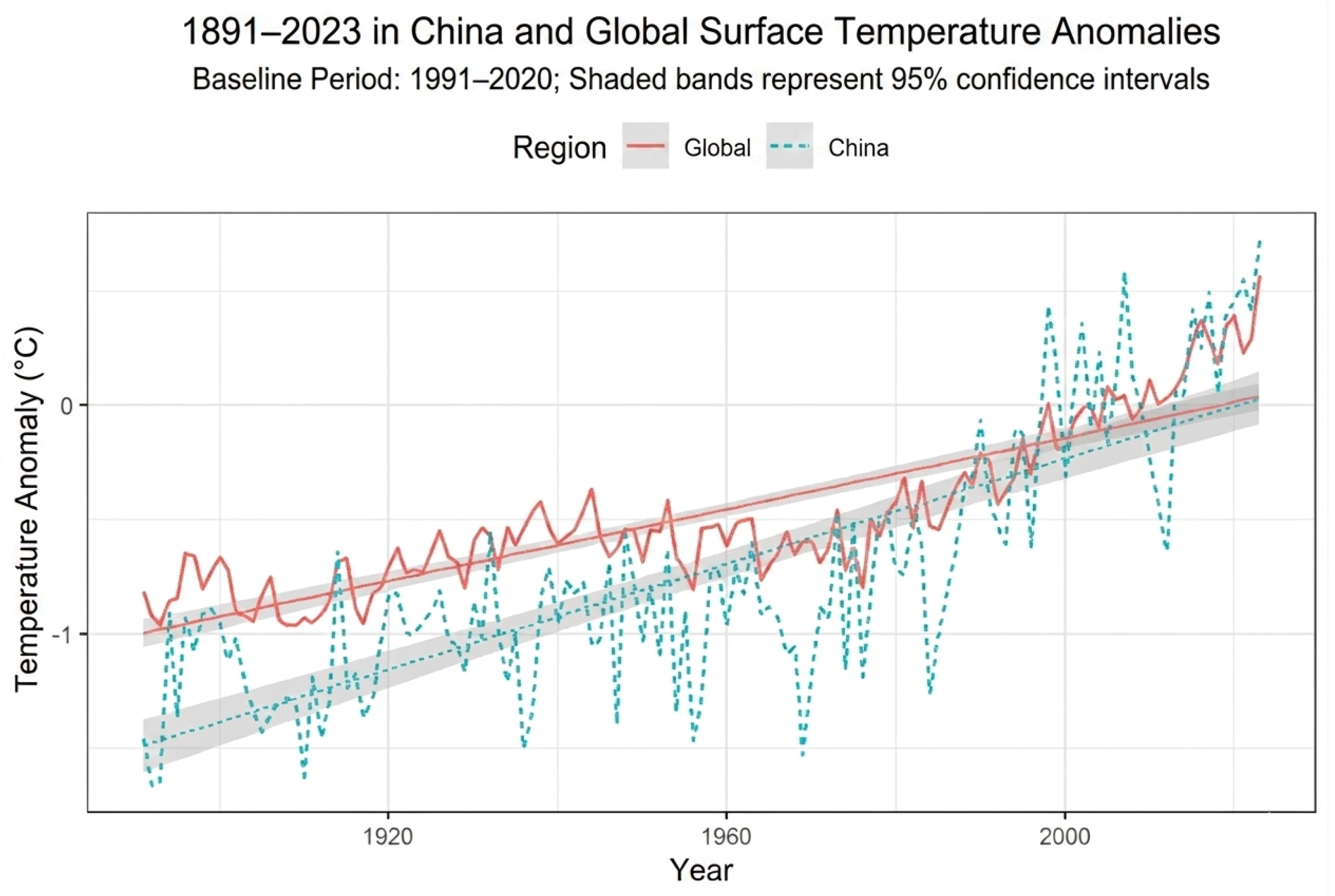
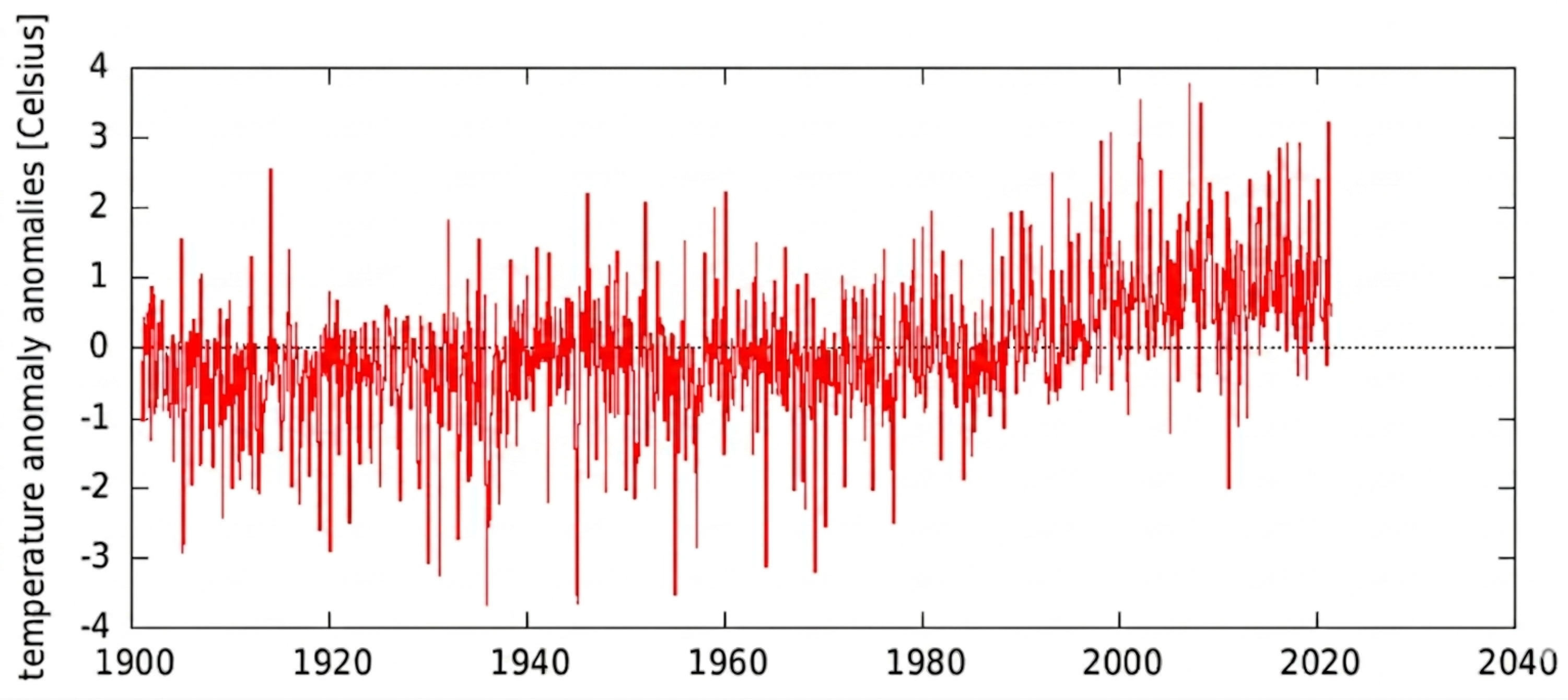
During 1891–2023, global and Chinese surface temperatures both exhibited highly consistent and statistically significant increasing trends (
Figure 1).
The global temperature anomaly showed a persistent upward pattern with relatively weak interannual volatility, while the temperature anomaly in China displayed stronger fluctuations and a higher warming magnitude. The Sen’s slope estimation indicated that the global warming rate was 0.0802 °C per decade, with a cumulative temperature increase of 0.98 °C relative to the 1971–2000 baseline period. The warming rate in China reached 0.1139 °C per decade, which was 42.0% higher than the global average, and the cumulative warming reached 1.45 °C, suggesting that China is a sensitive and amplified region of global warming.
As shown in the Modified Mann–Kendall (MMK) test after pre-whitening (
Table 1), the standardized Z-values of the global and Chinese temperature series were 3.700 and 3.724, respectively, with
p-values less than 0.01, confirming that the warming trends were extremely significant.
The goodness-of-fit () values were 0.87 for the globe and 0.82 for China, demonstrating the strong linear interpretation ability of the long-term warming process.
Both the global and Chinese temperature series presented a clear three-stage evolutionary characteristic: (1) slow fluctuating rise (1891–1940); (2) stagnation period (1941–1970); (3) accelerated increase (1971–2023).
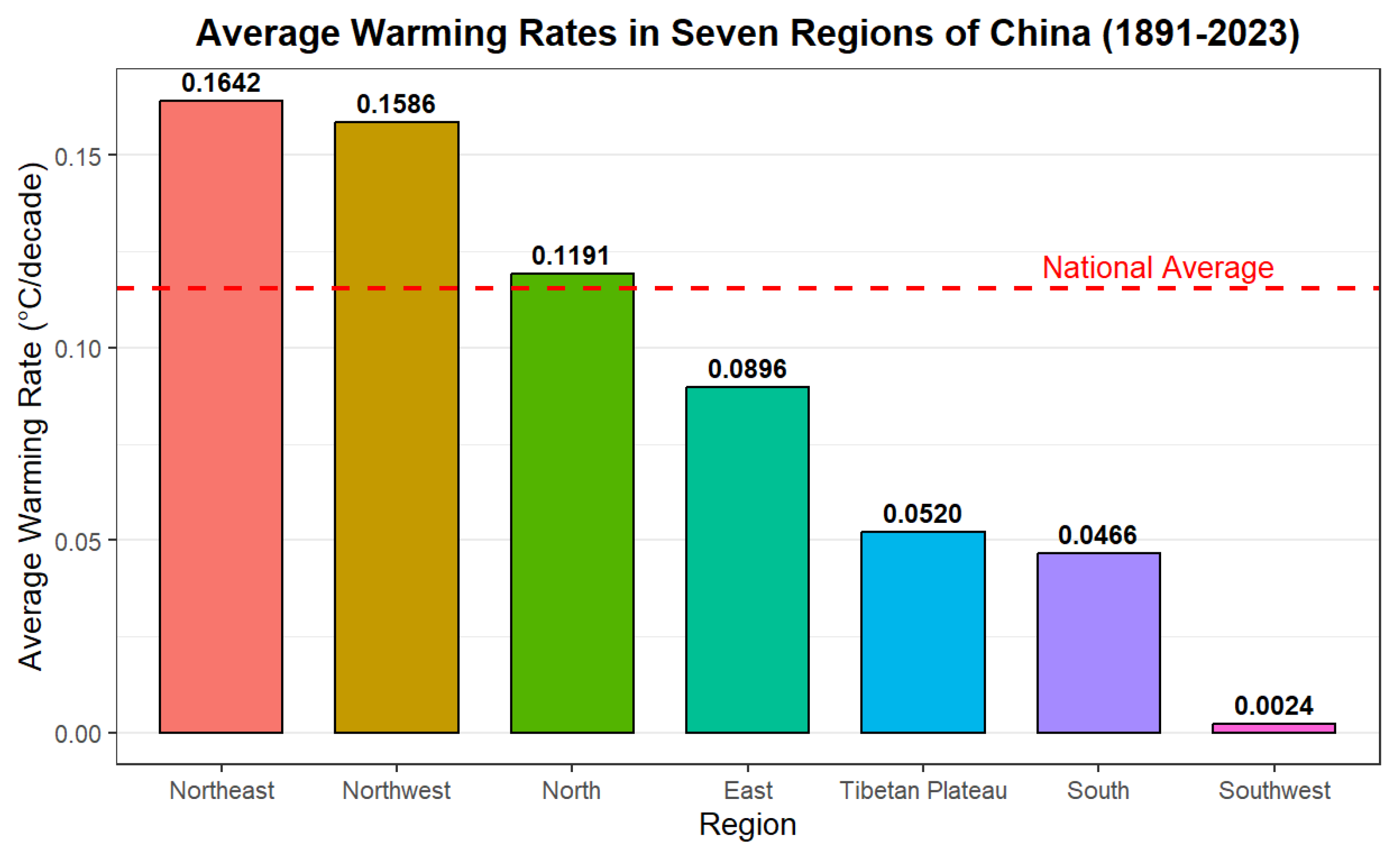
Spatially, the average warming rates among the seven major geographical regions in China were highly heterogeneous (
Figure 2).
The northeast and northwest regions had the highest warming rates, reaching 0.1642 °C per decade and 0.1586 °C per decade, respectively. The southwest region had the lowest warming rate (0.0024 °C per decade). Overall, China’s warming pattern was characterized by faster warming in the north and inland areas and slower warming in the south and coastal regions.
3.2. Abrupt Change Detection of Temperature Series
To identify the timing of structural shifts in the warming process, the Pettitt test was employed to detect abrupt change points in the global and Chinese temperature series during 1891–2023 (
Table 2). The results revealed a highly synchronous transition between global and regional climate change.
The abrupt change point for the global temperature series was detected in 1980, with a statistic (). For China, the abrupt change point occurred in 1979, with a statistic (). The time difference between the two change points was only one year, reflecting the strong consistency between regional climate response in China and global warming dynamics.
Before the abrupt change (1891–1979 for China; 1891–1980 for the globe), the warming rates were relatively low and were mainly driven by natural forcing. After the change point, the warming accelerated substantially: the global rate increased from 0.041 °C per decade to 0.157 °C per decade (3.83 times higher), and the Chinese rate rose from 0.062 °C per decade to 0.208 °C per decade (3.35 times higher). This marked acceleration indicates that human activities gradually became the dominant driving force of climate warming after 1980.
3.3. Spatial Differentiation of Warming Rates in China
The spatial distribution of temperature change in China exhibited prominent heterogeneity during 1891–2023. The overall pattern was characterized by faster warming in northern and inland regions, and slower warming in southern and coastal regions.
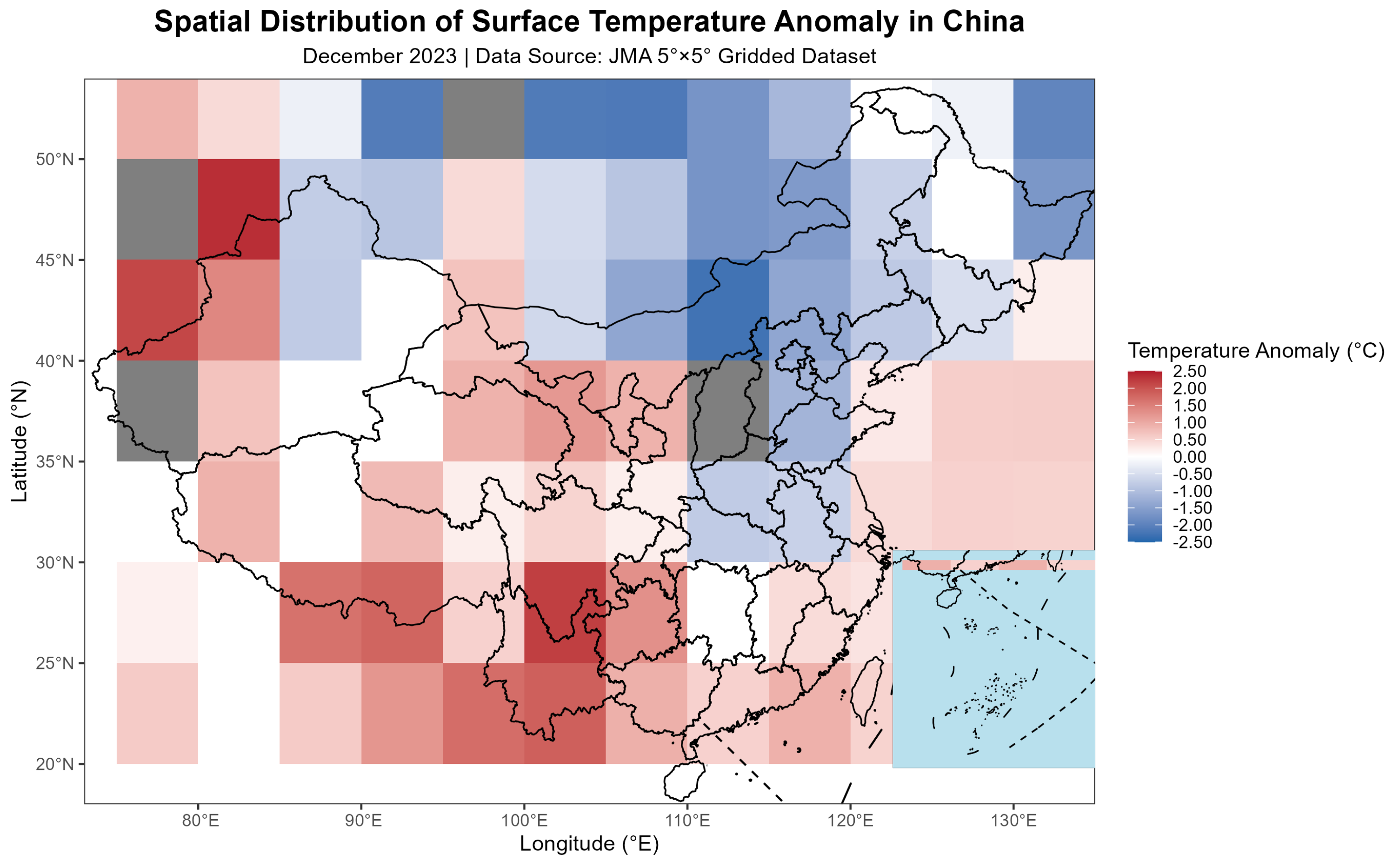
Figure 3 illustrates the spatial pattern of surface temperature anomalies in December 2023, which shows a typical spatial structure consistent with the long-term warming trend.
Extreme warming occurred in northwestern China, especially in the Xinjiang region, where temperature anomalies exceeded 3 °C. By contrast, the warming magnitude was relatively mild in eastern, southern, and southwestern China.
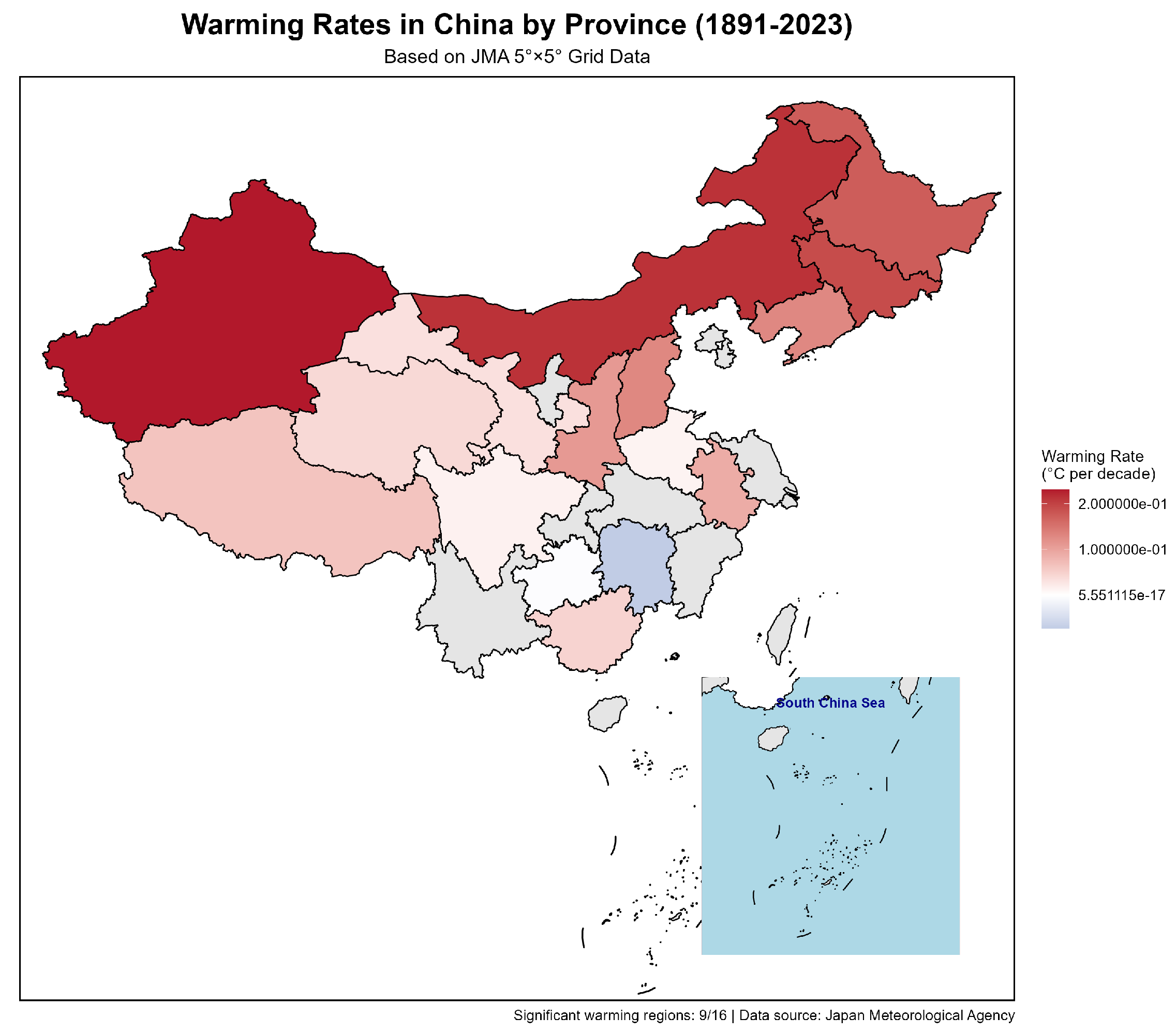
At the provincial scale, the warming rates varied drastically (
Figure 4).
The warming rate across provinces ranged from to °C per decade, with a range of °C per decade. Xinjiang and Inner Mongolia showed the fastest warming, while Hunan was the only provincial-level region that exhibited a slight cooling trend.
Correlation analysis indicated that the spatial pattern of warming rates was significantly correlated with geographical factors (
Table 3).
Latitude and distance to the coast were positively correlated with warming rates ( and , ). Annual precipitation was negatively correlated with warming rates (, ). Together, these three factors explained more than 65% of the spatial differentiation of temperature change in China.
Among the seven major geographical regions, Northeast China and Northwest China had the highest warming rates, reaching 0.1642 and 0.1586 °C per decade, respectively. Southwest China had the lowest average warming rate (0.0024 °C per decade), which further confirmed the spatial heterogeneity of climate change in China.
3.4. Spatiotemporal Characteristics of Precipitation in China
The precipitation in China exhibited typical monsoon-controlled seasonal cycles and significant interannual volatility during 1901–2023. No significant long-term increasing or decreasing trend was detected in the annual precipitation series, which was dominated by interannual and decadal oscillations.
As shown in
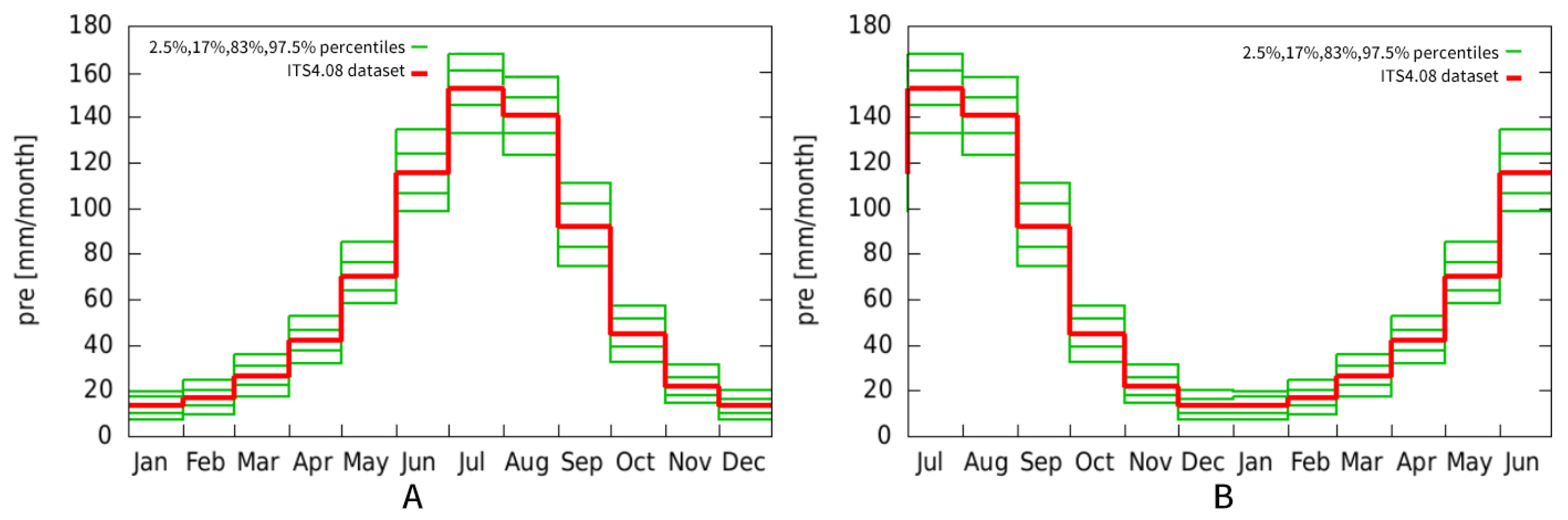
Figure 5, the seasonal distribution of precipitation was highly concentrated.
Summer (June–August) was the main flood period with a monthly mean precipitation of approximately 155 mm, accounting for more than 45% of the annual total. Winter (December–February) was the dry period with less than 10 mm per month, less than 5% of the annual total. The seasonal evolution was closely coupled with the advance and retreat of the East Asian monsoon.
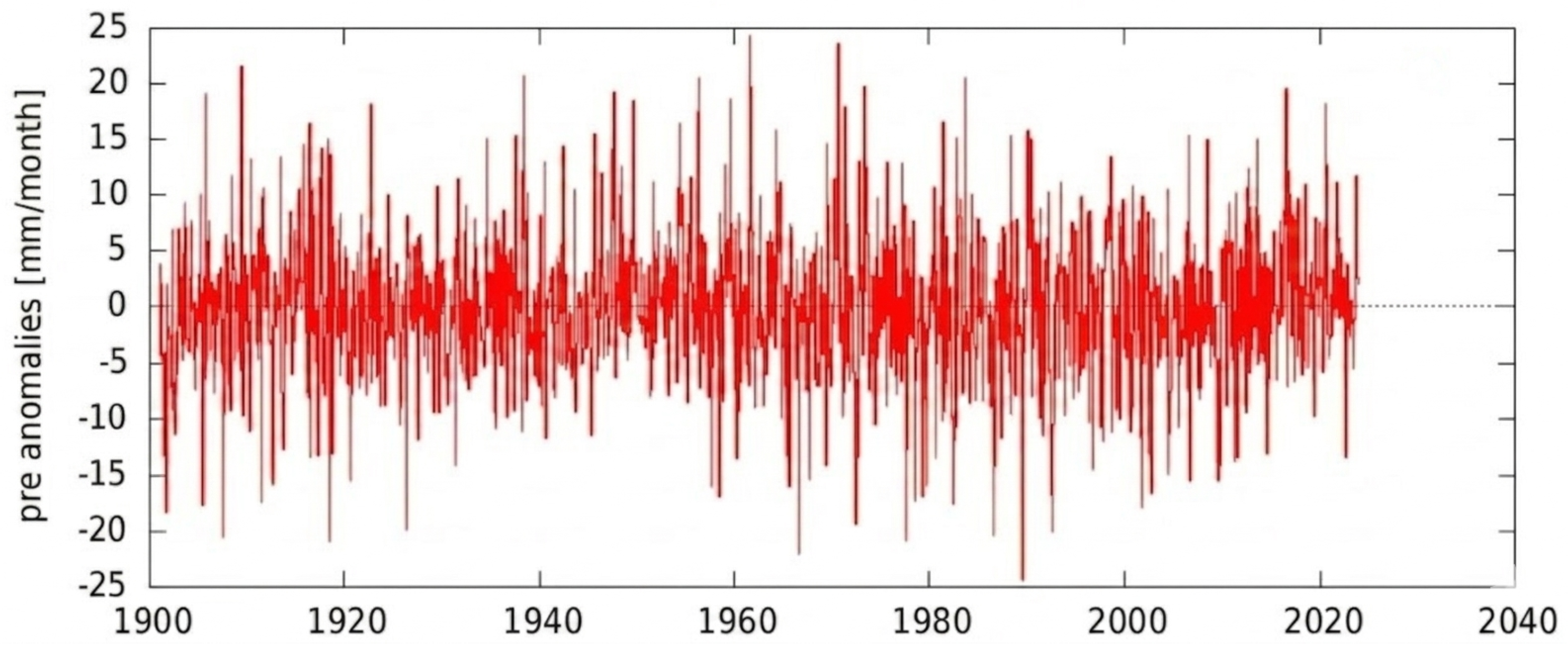
Figure 6 presents the temporal variation of precipitation anomalies during 1901–2023.
The anomaly ranged from −25 mm/month to 20 mm/month, showing strong fluctuations. The linear trend of precipitation was negligible (slope = 0.002 mm/month/decade, ), indicating no significant long-term trend. The decadal fluctuation was related to the Pacific Decadal Oscillation (PDO) and ENSO activities.
The long-term stability of precipitation provides a stable background for analyzing hydrothermal combination patterns, while temperature increased significantly during the same period, leading to evident regional differentiation of warm-dry and warm-wet conditions across China.
3.5. Hydrothermal Combination Patterns in China
Against the background of significant warming and stable precipitation, the hydrothermal combination in China showed an obvious spatial differentiation characterized by the coexistence of warming-drying and warming-wetting during 1901–2023.
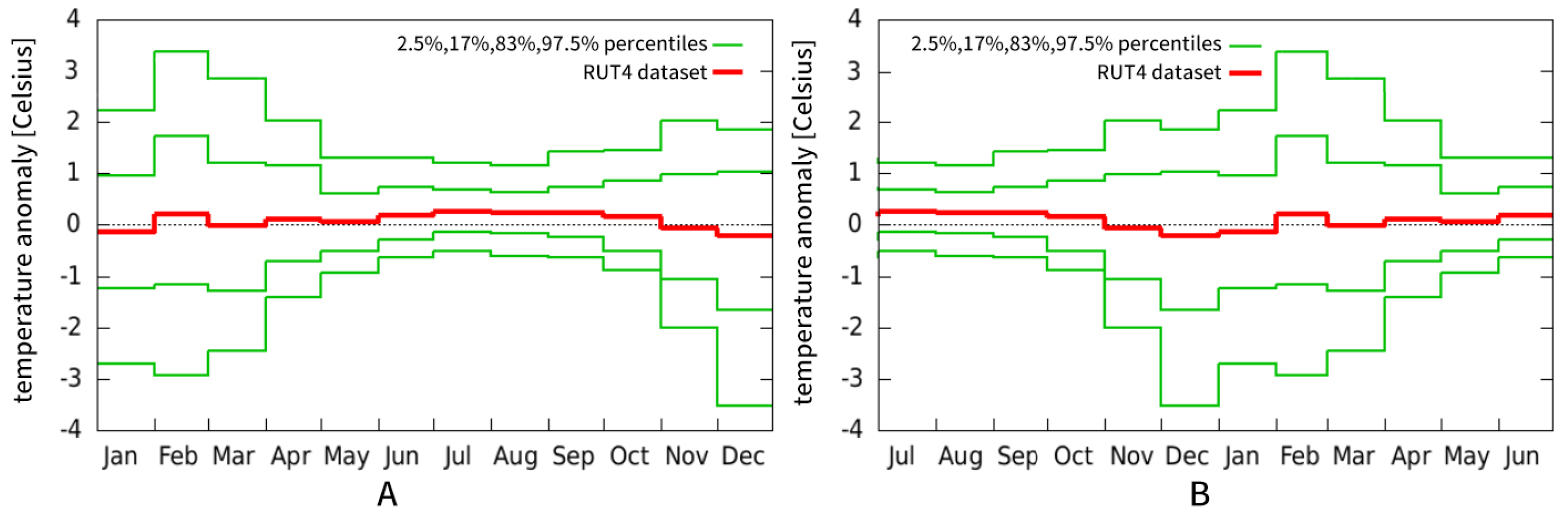
The seasonal cycle of temperature displayed a typical unimodal pattern, with the highest temperature anomaly in July and the lowest in January (
Figure 7).
Winter warming dominated the annual warming trend, with a warming rate of 0.15 °C per decade, accounting for 62% of the annual total. Summer warming was relatively weak (0.08 °C per decade), showing a significant seasonal asymmetry.
The long-term temperature anomaly series exhibited a continuous upward trend (
Figure 8), with a linear trend of 0.11 °C per decade (
), which was highly consistent with the JMA-based result of 0.1153 °C per decade. A prominent acceleration appeared after 1980, and the average anomaly during 2015–2023 reached 0.8 °C.
The hydrothermal combination varied substantially among subregions. Northwest and Northeast China were dominated by warming-drying with rapid warming and slightly decreasing precipitation. Southwest and South China showed significant warming-wetting characteristics, with synchronous increasing trends in both temperature and precipitation. At the seasonal scale, precipitation and temperature were negatively correlated in summer (, ) but weakly positively correlated in winter.
3.6. Anthropogenic Driving Forces of Temperature Change
Against the backdrop of widespread global warming, the significant spatial heterogeneity of temperature change within China cannot be fully explained by natural geographical factors alone, and anthropogenic socioeconomic activities have become an important additional driver of regional warming differences.
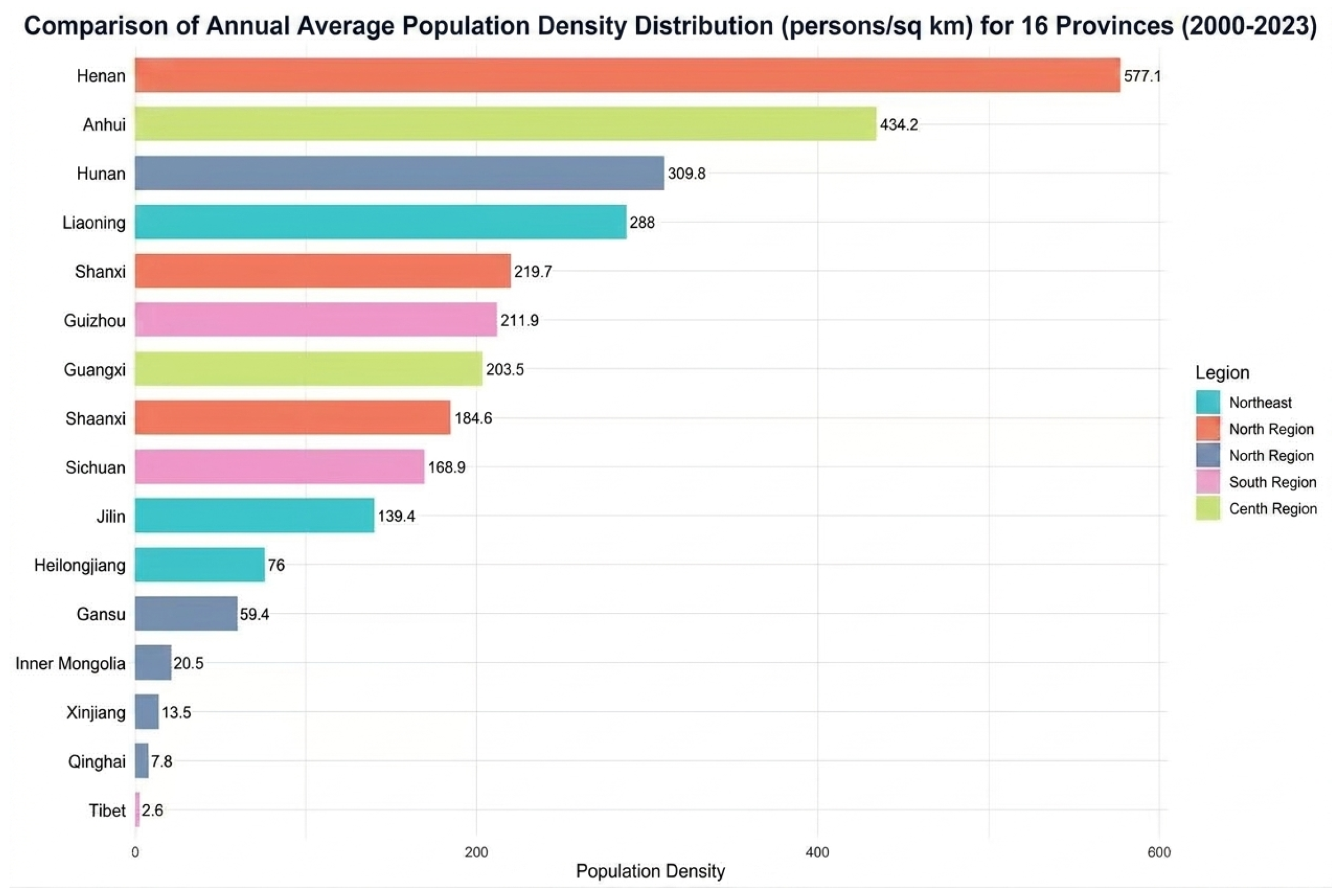
To further explore the influence of human activity intensity on regional climate change, we first mapped the spatial distribution of population density across provincial administrative units of China (
Figure 9). The results show obvious spatial clustering characteristics: eastern and central China have extremely high population aggregation, while population density in the vast northwestern and northeastern inland regions is relatively low. High population concentration directly leads to increased anthropogenic heat release, large-scale urban underlying surface replacement and rising fossil energy consumption, creating a persistent local warming amplification effect.
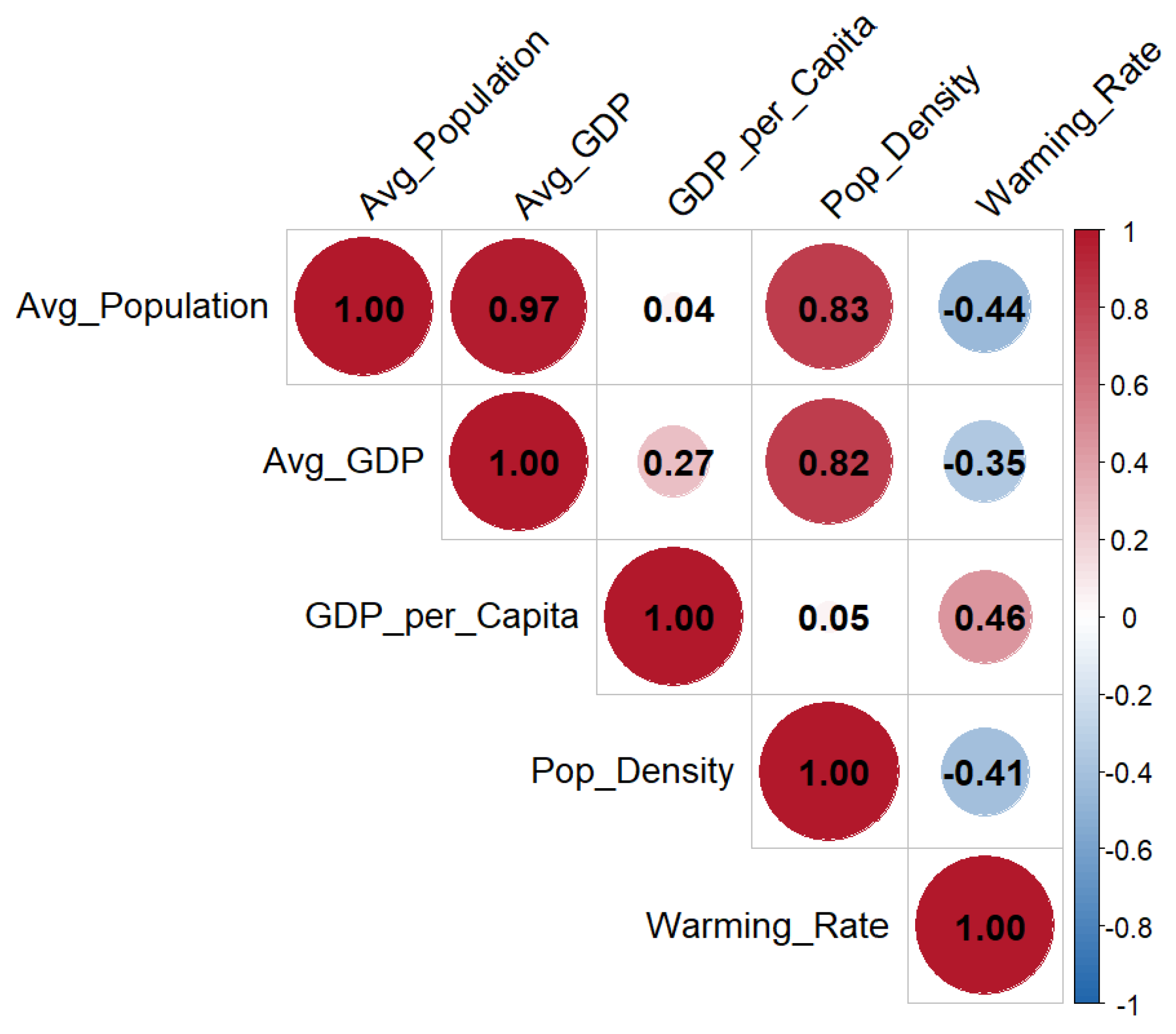
To quantify the association between human activity indicators and warming trends, a correlation matrix was constructed for multiple socioeconomic and climatic variables (
Figure 10). The results clearly show that warming rate presents a strong positive correlation with population density, whereas it is significantly negatively correlated with economic development level consistent with the statistical features displayed in
Figure 10; meanwhile, warming keeps a weak negative correlation with natural precipitation and elevation conditions. This confirms that population agglomeration promotes regional warming, while differentiated economic development shows an opposite correlation trend with provincial warming amplitude.
Combined with the previous mutation analysis, it can be found that before the abrupt climate shift around 1979–1980, the warming process was mainly dominated by natural climate system fluctuations. After entering the accelerated warming period, the continuous enhancement of anthropogenic driving force has greatly widened the regional warming gap across China.
Overall, the spatial pattern of warming in China is the superposition result of natural geographic base conditions and long-term human interference. The difference in the intensity of anthropogenic activities is a key reason for the persistent north-inland faster warming and south-coastal slower warming pattern.
4. Discussion
4.1. Consistency and Differences Between Global and Chinese Temperature Change
The results of this study confirm that during 1891–2023, both global and Chinese surface temperature anomalies showed a highly consistent long-term upward trend, with extremely significant statistical reliability verified by the Mann–Kendall test. The global warming rate was 0.0783 °C per decade, while the rate in China reached 0.1153 °C per decade, 47.25% higher than the global average. This finding is consistent with IPCC AR6 and previous national climate assessments, which indicate that China is a strongly responsive region to global warming.
Both the global and Chinese temperature series underwent a three-stage evolution: slow fluctuating rise (1891–1940), relative stagnation (1941–1970), and accelerated warming (1971–2023). The Pettitt test detected synchronous abrupt change points around 1979–1980, with warming rates increasing by approximately 3.35–3.83 times after the mutation. This temporal consistency reflects the unified response of the East Asian monsoon region to global radiative forcing and large-scale ocean–atmosphere interactions.
The main difference lies in the stronger interannual volatility and higher warming amplitude in China than in the global mean. This can be attributed to China’s complex terrain, continental climate characteristics, and intense monsoon variability, all of which amplify regional temperature responses to background global warming.
4.2. Spatial Heterogeneity of Warming Rates in China
The spatial pattern of temperature change in China showed remarkable heterogeneity, characterized by faster warming in northern and inland regions, slower warming in southern and coastal regions. The northeast and northwest had the highest warming rates, exceeding 0.15 °C per decade, while the southwest had the weakest trend.
At the provincial scale, warming rates ranged from to °C per decade. Xinjiang and Inner Mongolia showed the strongest warming, whereas only Hunan exhibited a slight cooling trend. Correlation analysis indicated that warming rates were significantly positively correlated with latitude and distance from the coast, and negatively correlated with annual precipitation. Together, these geographic factors explained more than 65% of the spatial variance, highlighting the fundamental control of physical geography on climate change patterns.
This spatial differentiation is consistent with widely reported “Arctic amplification” and continental warming enhancement effects. Inland areas are less affected by marine buffering and more sensitive to changes in snow–albedo feedback, land cover, and atmospheric circulation, leading to accelerated warming.
The significantly higher warming rates in northern inland China as illustrated in
Figure 4 can be explained by four dominant interactive factors. First, the Arctic amplification effect drives stronger warming at high latitudes and propagates its influence to northern China through mid-latitude teleconnection and atmospheric circulation adjustments. Second, the thermal buffering effect of the ocean effectively stabilizes temperatures in southern coastal regions, whereas inland areas lack marine regulation and thus exhibit more sensitive and accelerated warming. Third, differences in underlying surface properties, including vegetation cover, soil moisture, and snow-albedo feedback, further enhance continental warming in northern and inland regions. Fourth, uneven intensity of anthropogenic emissions, energy consumption, and urbanization across China enlarges the spatial discrepancy of temperature changes.
4.3. Hydrothermal Combination Patterns and Regional Climate Regimes
Against the background of significant warming and relatively stable precipitation, China’s hydrothermal combination presented clear regional divergence: warming-drying in northern and western regions and warming-wetting in southern and southwestern regions.
Precipitation displayed strong seasonal and decadal fluctuations but no significant long-term trend during 1901–2023. Summer precipitation contributed more than 45% of the annual total, reflecting typical East Asian monsoon characteristics. In contrast, temperature increased persistently, with winter warming contributing more than 60% of the annual trend, leading to strong seasonal asymmetry.
The divergence between warming and stable precipitation directly reshaped regional climate regimes. Northwestern and northeastern China experienced intensified warming-drying, increasing risks of drought and desertification. Southern and southwestern China showed warming-wetting, which may alleviate water stress but also elevate flood and heavy rainfall risks. These patterns provide key clues for regional climate adaptation planning.
4.4. Anthropogenic Driving Forces and the Dominance of Human Activities
Natural forcing alone cannot explain the accelerated warming after 1980. Spatial correlation analysis revealed that warming rates were significantly positively related to population density, GDP, and per capita GDP. Regions with higher human activity intensity consistently showed stronger warming, supporting the conclusion that anthropogenic forcing has become dominant.
Before 1979–1980, climate variation was mainly controlled by natural oscillations. After the abrupt change, the rapid growth of population, urbanization, energy consumption, and greenhouse gas emissions substantially amplified regional warming. Spatial differences in socioeconomic development further widened the north–south and inland–coastal warming gaps.
These results align with global attribution studies, confirming that human activities have dominated climate change in China since the 1980s. Continued emission reduction and low-carbon transition will therefore be essential to moderate future warming and reduce associated risks.
4.5. Implications for Climate Adaptation and Governance
The spatiotemporal characteristics identified in this study have clear practical implications. First, the accelerated warming after 1980 and amplified regional responses highlight the urgency of strengthening monitoring and early warning systems. Second, the north–inland vs. south–coastal divergence suggests that adaptation strategies should be regionally differentiated: drought and heatwave prevention in the north and northwest, flood and waterlogging management in the south and southwest.
Third, the prominent role of anthropogenic drivers supports the need for coordinated emission control, ecological restoration, and urban climate planning. Finally, the consistency between global and Chinese changes underscores the importance of international cooperation in achieving global climate targets.
From the perspective of data-driven climate simulation, numerous studies have developed LSTM and hybrid time-series neural network models to reproduce historical temperature evolution trends. Classical LSTM networks excel in capturing long-term nonlinear climate fluctuations, while hybrid models combining CNN, GA optimization, and LSTM further improve the accuracy of reconstructing historical temperature series [
15]. The GA-optimized CNN-LSTM framework has been widely verified to effectively fit complex centennial-scale temperature changes and provide reliable support for climate trend backcasting [
16,
17]. These data-driven methods provide an important complementary approach to traditional numerical models for future climate prediction and historical temperature reconstruction.
5. Conclusions
Based on the Japan Meteorological Agency (JMA) global surface temperature anomaly dataset from 1891 to 2023, this study adopted Sen’s slope estimation, Modified Mann–Kendall (MMK) trend test with pre-whitening, Pettitt abrupt change detection, GIS spatial analysis and correlation analysis to systematically investigate the spatiotemporal variation characteristics, spatial differentiation, hydrothermal combination patterns and anthropogenic driving mechanisms of global and Chinese temperature changes. The main conclusions are summarized as follows:
(1) During 1891–2023, both global and Chinese surface temperatures exhibited an extremely significant increasing trend. The global warming rate was , while the warming rate of China reached , which was 42.0% higher than the global average. It indicates that China is a sensitive and amplified region in the context of global warming.
(2) The temperature sequences of the globe and China showed a distinct three-stage evolutionary feature, including a slow fluctuating rise stage (1891–1940), a relative stagnation stage (1941–1970), and an accelerated warming stage (1971–2023). Abrupt climate change occurred in 1980 globally and in 1979 across China. After the abrupt change, the warming rates increased by 3.83 times and 3.35 times, respectively.
(3) The warming rate in China presented obvious spatial heterogeneity, with a distribution pattern of faster warming in northern and inland regions and slower warming in southern and coastal regions. Northeast and Northwest China witnessed the most prominent warming, whereas Southwest China had the lowest warming rate. Latitude, coastal distance and annual precipitation jointly explained more than 65% of the spatial differentiation in temperature variation.
(4) Precipitation in China showed strong seasonal and interannual fluctuations without a significant long-term trend. Under the background of significant warming and stable precipitation regimes, the hydrothermal conditions in China displayed prominent regional differentiation: a warming-drying trend dominated North and Northwest China, while a warming-wetting prevailed in South and Southwest China.
(5) Since 1980, anthropogenic activities represented by population agglomeration and socioeconomic development have gradually become the dominant driving factor for accelerated regional warming. Spatial disparities in human activity intensity further aggravated the north–south and inland–coastal differences in temperature variation across China.
This study clarified the long-term spatiotemporal evolution and regional response characteristics of global and Chinese climate change based on continuous JMA observation data. The findings can provide scientific references for regional climate adaptation, disaster prevention and reduction, the formulation of China’s dual-carbon strategy, and international cooperation on global climate governance.
In terms of the physical mechanism for the abrupt climate shift over China around 1979–1980, the phase transition of the Pacific Decadal Oscillation in the late 1970s dominated the oceanic forcing by altering large-scale heat transport over the North Pacific [
7,
18]. Synchronously, the interdecadal weakening of the East Asian winter monsoon and related circulation adjustments directly modified the thermal conditions over mainland China and promoted accelerated warming [
19]. Additional natural forcings such as solar activity and volcanic eruptions also provided background contributions to this interdecadal climate transition [
20].
It should be emphasized that the accelerated warming after 1980 results from combined effects of anthropogenic forcing and natural climate variability rather than human factors alone. Key natural drivers include the interdecadal oscillation of the Pacific Decadal Oscillation, periodic volcanic radiative forcing and long-term solar variability, whose periodic fluctuations overlay on the secular warming trend and modulate regional temperature background. In view of the intrinsic chaos of climate system and uncertain future natural forcing, fixed deterministic projection for regional temperature over 10/20/30/40/50 years after 2023 is infeasible; mainstream climate prediction adopts multi-model ensemble schemes under various SSP scenarios to deliver probabilistic warming intervals instead of fixed values.
Compared with existing domestic and international relevant researches, this study possesses four prominent innovations: first, the JMA dataset covering 1891–2023 provides a far longer research timescale than most post-1950 datasets; second, a complete multi-dimensional analytical framework integrating trend, abrupt change and spatial statistical analysis is established; third, refined provincial quantitative analysis accurately quantifies geographic drivers of warming spatial divergence; fourth, the differentiated climatic zoning results deliver practical evidence for targeted regional climate and dual-carbon policy design.