1. Introduction
Rapid population growth and urbanization have intensified housing demand and increased pressure on urban land and infrastructure worldwide [
1,
2]. As a result, housing policies have become central to achieving sustainable urban development, social equity, and quality of life. Adequate housing contributes to social stability, economic well-being, and long-term improvements in living standards, while homeownership remains a key aspiration for many households [
3].
In Saudi Arabia, housing has been a major priority under Saudi Vision 2030 and previous national development plans. Despite substantial government support, the housing sector continues to face challenges related to population growth, urban expansion, rising housing costs, and limited housing affordability, all of which affect homeownership rates and quality of life [
4]. At the same time, Saudi cities are experiencing rapid spatial transformation characterized by increasing demand for housing, infrastructure, and urban services. These pressures have renewed interest in identifying urban growth patterns that promote sustainability, land-use efficiency, and infrastructure optimization.
Analysis of housing patterns in Saudi Arabia reveals significant regional variations linked to socio-economic conditions and housing preferences. Dano [
5], using data from the 2022 Saudi Census, reported a strong preference among Saudi households for villas, reflecting the continued dominance of horizontal housing. However, this preference increasingly conflicts with land scarcity, rising housing prices, and growing demand in major metropolitan areas, creating pressure for higher-density housing alternatives, including apartments and multi-story residential developments.
These challenges are particularly evident in the Dammam Metropolitan Area (DMA), one of the Kingdom’s most rapidly urbanizing regions. The DMA has experienced substantial population concentration and urban expansion, reaching an urbanization rate of 93.2%, the highest in Saudi Arabia between 1950 and 2015 [
6]. Continued horizontal expansion increases the costs of infrastructure provision and service delivery, making urban densification and vertical growth increasingly attractive planning options [
7].
Consequently, vertical growth has become a prominent feature of recent housing development in the DMA. Vertical housing offers opportunities to increase land-use efficiency, accommodate population growth, and reduce pressure on developable land. However, its sustainability depends on more than simply increasing housing supply. Alhamoudi and Dano [
8] found that while nearly 90% of surveyed experts observed a growing apartment market in the DMA, 70.5% reported limited willingness among residents to own apartments due to concerns related to family size, design quality, and cultural suitability. Similarly, Alhajri [
9] identified access to affordable and adequate housing as a major challenge to achieving Sustainable Development Goal (SDG) 11 in the metropolitan area.
Although vertical housing can improve housing provision, it has also been associated with concerns regarding privacy, design quality, green space availability, elevator provision, maintenance, governance, and shared-service management [
10,
11]. These issues are interconnected and influence both residential satisfaction and the long-term sustainability of multi-owner residential buildings. At the same time, local studies highlight that urban growth challenges in the DMA require assessment approaches that extend beyond physical development to incorporate dimensions of urban resilience, livability, governance, and management efficiency [
9,
12].
Despite the growing importance of vertical housing in Saudi cities, there remains a lack of comprehensive frameworks that evaluate vertical growth from an integrated sustainability perspective. Existing studies often address individual aspects of housing supply, affordability, planning, or management, without fully examining the interactions among planning, infrastructure, governance, operations, and quality of life. This gap is particularly important in the DMA, where rapid urban growth, changing housing demand, and increasing reliance on apartment ownership create new challenges for sustainable urban development.
Accordingly, this study develops a conceptual framework for assessing the sustainability of vertical growth in the housing sector in the DMA. The framework examines vertical housing not merely as a mechanism for increasing housing supply, but as a multidimensional urban system in which planning, infrastructure, governance, operation, and quality-of-life considerations interact. The study also aligns with national efforts to improve housing-sector efficiency and quality of life under Saudi Vision 2030 and reflects the importance of effective shared-property management, homeowners’ associations, and operational sustainability in multi-story residential developments [
13]. Furthermore, the proposed framework is consistent with local sustainability assessment initiatives, including Mostadam, which emphasize operational performance, resource efficiency, and built-environment quality [
14].
The study aims to analyze the reality and determinants of vertical growth in the DMA, examine its planning, operational, governance, and infrastructure challenges, and propose a framework that can guide sustainable vertical housing development while balancing density, livability, and management effectiveness.
2. Materials and Methods
The methodological framework of this study is based on a systematic qualitative literature review and conceptual synthesis aimed at developing an integrated framework for assessing the sustainability of vertical growth in the housing sector. This approach was designed to ensure analytical rigor, transparency, and replicability in the process of selecting and analyzing literature related to urban densification.
The research process began with a structured and comprehensive exploration of the literature using major academic databases, including Scopus, Web of Science, and Google Scholar. To ensure relevance and diversity, the review focused on studies addressing high-density housing models (apartments) and vertical growth across different geographical contexts, emphasizing transferable insights and the identification of research gaps rather than conducting a purely global survey. This was further complemented by key institutional publications from international organizations such as UN-Habitat and the World Bank, ensuring the inclusion of a public policy perspective.
The search strategy relied on a combination of keywords and logical operators to ensure comprehensive coverage. Key terms included vertical housing, sustainable urban growth, real estate governance, economic resilience, shared facilities management, and residential quality of life. The review primarily focused on recent publications (2005–2026) to capture contemporary sustainability debates, while also incorporating foundational works to establish the necessary theoretical grounding.
To enhance methodological transparency and reduce selection bias, the literature screening process followed predefined inclusion and exclusion criteria. Studies were included if they (1) addressed vertical housing, urban densification, or sustainable vertical growth; (2) examined environmental, social, economic, governance, or operational dimensions of sustainability; (3) were peer-reviewed journal articles or official institutional reports; and (4) provided empirical, theoretical, or policy-relevant insights applicable to urban housing sustainability. Studies were excluded if they lacked methodological clarity, focused solely on unrelated engineering or architectural aspects, or did not directly address sustainability or vertical housing.
Hence, the literature selection process followed multiple stages to enhance transparency. An initial screening of approximately 130 documents was conducted, followed by title and abstract review, and subsequently full-text analysis. Ultimately, 65 documents were selected for in-depth analysis. The analytical phase involved a thematic synthesis of the selected literature using a combined deductive–inductive approach. In the deductive phase, existing theoretical frameworks, such as sustainable development models and shared ownership governance, were used to establish initial analytical categories. In the inductive phase, these categories were refined through iterative coding, allowing new themes and relationships to emerge. Each study was analyzed based on key variables, including governance structures, economic systems, infrastructure provision, environmental sustainability, and quality of life.
This comparative analysis led to the identification of five core pillars forming the foundation of the proposed conceptual framework: institutional governance (homeowners’ associations), local economy, smart infrastructure, environmental sustainability, and residential community quality of life. These pillars were derived from empirical evidence and theoretical gaps identified in previous studies. A systems thinking approach was adopted in developing the framework, emphasizing interdependencies and feedback mechanisms among these pillars rather than treating them as isolated components. Therefore, the final framework was developed through iterative thematic coding and comparative synthesis of recurring concepts, relationships, and sustainability dimensions identified across the selected literature.
To improve analytical objectivity, the Dammam Housing Project was evaluated using the proposed framework dimensions and corresponding sustainability indicators. This enabled a structured assessment of observed conditions and facilitated the interpretation of sustainability challenges across environmental, economic, social, governance, and technical–operational dimensions. Validation was conducted through theoretical triangulation by comparing the proposed relationships with empirical findings from previous studies, ensuring consistency in causal linkages, such as the impact of governance quality (homeowners’ associations) on infrastructure efficiency and building economic performance. Finally, the study acknowledges its limitations, as it relies primarily on secondary data and qualitative analysis. This highlights the need for further quantitative field-based research to validate and generalize the framework across diverse vertical growth models.
Literature Review and Conceptual Synthesis Approach
This study adopts a systematic qualitative literature review combined with conceptual synthesis to examine sustainable vertical growth in the housing sector and develop an integrated evaluation framework applicable to the Dammam Metropolitan Area (DMA). The review process involved structured searches across major academic databases using keywords related to vertical housing, urban densification, sustainability, governance, livability, and homeowners’ associations. Relevant studies were screened based on thematic relevance, conceptual contribution, and applicability to vertical housing sustainability.
Unlike review studies that strictly follow PRISMA protocols for quantitative meta-analysis, this research employs a conceptual and interpretive synthesis approach aimed at integrating fragmented environmental, economic, social, governance, and technical–operational perspectives into a unified analytical framework. The methodology therefore focuses on identifying relationships, recurring themes, and contextual gaps within the literature rather than statistical aggregation of findings.
The selected studies were categorized into thematic dimensions, including spatial and environmental impacts, housing affordability, governance and operational management, quality of life, and technical performance. These themes informed the development of the proposed conceptual framework and the formulation of sustainability indicators relevant to the DMA context.
3. Theoretical Background
3.1. Concept of Housing and Vertical Housing
Housing has evolved from a basic form of shelter into a complex socio-economic and spatial necessity shaped by social, cultural, religious, and economic factors [
15,
16]. In urban studies, housing generally refers to a residential unit occupied by one or more individuals for shelter and daily living activities, including detached houses, apartments, or groups of rooms intended for independent occupancy [
17,
18,
19,
20,
21]. Beyond physical shelter, housing also reflects social stability, access to services, and connections between households and the wider urban environment [
22,
23].
Housing patterns are broadly categorized into horizontal and vertical forms, with their adoption influenced by national housing policies, urban growth pressures, land values, and socio-cultural preferences. Vertical housing, also referred to as multi-story or high-rise housing, consists of apartment buildings accommodating multiple households within a single structure [
24,
25,
26,
27,
28,
29,
30,
31]. This form of development has become increasingly prominent in high-density urban areas as a response to population growth, land scarcity, and rising land prices [
17,
25,
26,
27,
28,
29,
32].
Vertical housing is generally associated with more efficient land use and infrastructure utilization, particularly in cities where horizontal expansion is constrained by spatial, environmental, or regulatory limitations [
25,
26,
27,
28,
29]. Residential units in such developments are typically concentrated within compact urban clusters and often share common services and facilities [
30,
31,
33]. However, apartments usually have limited opportunities for spatial expansion and reduced access to private outdoor spaces compared to detached housing.
3.2. Nature of Life in Vertical Housing and Its Determinants
Life in vertical housing differs from horizontal housing across social, economic, cultural, and environmental dimensions. In many societies, particularly Islamic contexts, privacy remains a major factor influencing residential design and housing preferences [
34,
35]. Housing preferences are also shaped by location, accessibility to services, household size, financial capacity, neighborhood safety, and socio-cultural background [
36,
37,
38,
39]. Although vertical housing can provide affordable and accessible accommodation, it is often perceived as a temporary housing option due to concerns related to privacy, social isolation, maintenance quality, noise, and limited private space [
37,
38].
Economic factors strongly influence the adoption of vertical housing, as high-density development accommodates larger populations within smaller land areas while potentially reducing infrastructure and service costs [
40]. Consequently, apartments are frequently promoted as practical responses to rising land prices and housing affordability challenges, particularly for young and lower-income populations [
40,
41].
The growth of vertical housing is primarily driven by population increase, land scarcity, and urban densification policies [
26,
42,
43]. Urban policies, regulatory frameworks, and planning strategies play a central role in shaping vertical development patterns [
44,
45]. Recent studies increasingly employ GIS, three-dimensional urban models, and cellular automata simulations to assess vertical growth patterns and support sustainable urban decision-making [
28,
42]. Effective vertical development therefore depends on integrated planning approaches that align density levels with infrastructure capacity, environmental constraints, and social equity considerations [
25,
27,
29].
3.3. Vertical Growth in the Housing Sector in the Context of Sustainable Development
Vertical growth in the housing sector refers to the development of multi-story or high-rise residential buildings in response to rapid urbanization, population growth, and land scarcity [
26,
42,
43,
45]. Unlike horizontal expansion, which often contributes to urban sprawl and higher infrastructure costs, vertical growth enables more efficient land use by accommodating larger populations within limited urban areas [
27,
28,
29]. As a compact urban form, it is frequently promoted for its potential to reduce land consumption, preserve natural and agricultural areas, improve infrastructure efficiency, support public transportation systems, and lower per capita energy consumption and transportation-related emissions [
27,
28,
29,
46,
47].
Despite these potential benefits, the sustainability of vertical growth depends largely on the capacity of urban systems to manage increased density. Rapid and poorly coordinated vertical expansion may overload water, energy, sewage, and transportation networks, leading to operational inefficiencies and service disruptions [
48]. It may also intensify environmental pressures, including urban heat island effects, surface runoff, noise pollution, and reduced environmental quality [
42,
49]. In addition, high-density housing can affect livability through reduced ventilation, thermal discomfort, limited privacy, and declining visual quality of the urban environment [
50].
From a socio-economic perspective, vertical growth can improve land-use efficiency, strengthen agglomeration economies, and enhance service delivery efficiency, particularly when supported by adequate infrastructure and transportation investments [
25,
27,
28]. However, its relationship with housing affordability remains complex and context-dependent. In some cases, vertical development increases housing supply and accessibility, while in others it may contribute to higher housing prices and social exclusion [
51,
52,
53].
Within the framework of sustainable development, vertical growth is increasingly associated with Sustainable Development Goal 11 (SDG 11), which promotes inclusive, safe, resilient, and sustainable cities [
12,
54,
55]. Vertical housing supports several sustainability principles, including compact urban form, efficient resource utilization, reduced transportation dependency, and improved infrastructure efficiency [
46,
47]. Nevertheless, recent studies emphasize that sustainable vertical development requires more than increasing building height or density. Its success depends on integrated planning approaches that address environmental quality, infrastructure capacity, governance systems, maintenance, operational efficiency, social cohesion, and residential livability [
56,
57,
58,
59,
60,
61,
62].
Table 1 summarizes the major positive and negative impacts of vertical growth across urban, infrastructure, economic, social, and environmental dimensions. While vertical development can enhance land-use efficiency, infrastructure utilization, and housing provision, it may also generate environmental stress, infrastructure overload, and social challenges if not supported by effective planning and governance systems. In rapidly urbanizing contexts such as the DMA, evaluating these interconnected dimensions is essential for understanding the trade-offs associated with density, housing equity, infrastructure capacity, and environmental sustainability.
4. Global Literature Review on Vertical Growth in the Housing Sector
Global literature on vertical growth in the housing sector can generally be categorized into five interrelated themes: (1) spatial modeling and technical approaches, (2) livability and environmental quality, (3) social sustainability and urban justice, (4) operational and maintenance dimensions, and (5) densification and vertical extension strategies. These studies collectively examine the implications of vertical growth on urban form, infrastructure, environmental performance, social interaction, and housing sustainability.
The first stream focuses on spatial modeling and technical approaches used to analyze and predict vertical urban growth patterns. Lin et al. [
42] developed a GIS- and Cellular Automata-based model to simulate vertical urban growth in Guangzhou, China, demonstrating how high-rise development concentrates in central urban areas while lower-rise expansion spreads toward peripheral zones. Similarly, Yin et al. [
32] analyzed the spatio-temporal evolution of vertical growth in the Yangtze River Delta, identifying strong relationships between building height, GDP growth, population density, and economic policies. Wang et al. [
50] further integrated three-dimensional urban modeling and Computational Fluid Dynamics (CFD) simulations to assess ventilation, thermal comfort, and air quality in dense high-rise environments in Hong Kong. The study introduced the Vertical Urban Housing Livability Index (VUHI), emphasizing the importance of balancing urban density with environmental performance and livability.
The second stream addresses livability, environmental quality, and social sustainability within vertical housing environments. Tania and Lianto [
2] explored biophilic design approaches that reconnect residents with nature in vertical housing to improve psychological well-being and residential quality of life. Likewise, Maharani et al. [
31] examined socio-spatial challenges in vertical housing and highlighted the role of accessibility, adaptability, and shared spaces in strengthening social interaction and reducing residential isolation. These studies emphasize that successful vertical housing depends not only on density efficiency, but also on residents’ comfort, social cohesion, and quality of life.
The third stream focuses on urban justice, housing affordability, and socio-economic impacts associated with vertical development. López-Morales and Herrera [
53] investigated the relationship between vertical development and residential displacement in Chilean cities, demonstrating how density-driven land value increases may contribute to social exclusion and housing inequality. Similarly, Dash [
63] examined vertical housing in Dhaka as a response to land scarcity and rapid urbanization, finding that while vertical expansion can alleviate land pressure and accommodate population growth, it may also create challenges related to affordability, infrastructure capacity, and community adaptation.
The fourth stream emphasizes operational efficiency, maintenance, and building performance as essential components of sustainable vertical housing. Ng et al. [
64] demonstrated the importance of elevator maintenance efficiency and vertical transportation reliability in high-rise residential buildings in Hong Kong, highlighting the role of operational management in sustaining residential quality and building performance.
The fifth stream addresses densification and vertical extension strategies as alternatives to horizontal urban expansion. Sanei et al. [
65] reviewed 119 studies on vertical building extensions and identified a strong research focus on structural reinforcement and construction technologies to support urban densification and housing provision.
Despite the richness of this literature, existing studies remain largely fragmented, often addressing environmental, social, technical, or economic dimensions separately. Limited attention has been given to governance systems, shared-service management, and homeowners association mechanisms that are essential for maintaining long-term livability and operational sustainability in ownership-based vertical housing developments. These gaps highlight the need for integrated and context-sensitive evaluation frameworks that combine environmental, economic, social, governance, and operational dimensions within a unified approach applicable to rapidly urbanizing contexts such as DMA.
5. Local Studies on Vertical Growth in the Housing Sector
The local literature on vertical growth and housing sustainability in Saudi Arabia can generally be categorized into four main themes: (1) housing quality and operational management, (2) housing policies and affordability, (3) urban growth and densification, and (4) social acceptance and sustainability of apartment housing. Although some studies do not directly examine vertical housing, they address broader issues related to urban densification, land-use efficiency, and housing sustainability that are highly relevant to the current study.
The first group of studies focuses on housing quality, operational efficiency, and shared-service management in multi-owner residential buildings. Al-Qurashi [
11] identified key barriers facing owner-occupied apartment projects in Makkah, including poor construction quality, complex governmental procedures, and weak compliance with maintenance fee payments. Similarly, Baharetha et al. [
56] proposed a post-occupancy evaluation framework for multi-story residential buildings in Saudi Arabia and found that long-term resident satisfaction depends heavily on maintenance quality, operational services, safety, and management systems. These studies highlight the importance of governance and operational efficiency in sustaining vertical housing environments.
The second group addresses housing policies, affordability, and the housing objectives of Saudi Vision 2030. Alqahtany [
66] examined housing policies in the DMA and emphasized the importance of aligning housing strategies with the socio-economic characteristics of Saudi households. In a related study, Alqahtany [
67] analyzed affordable housing policies within the framework of Vision 2030 and identified major challenges, including land scarcity, rising costs, and limited housing supply. Likewise, Alhajri [
9] highlighted structural constraints affecting housing affordability, including financing limitations, land tenure systems, and regulatory requirements. Collectively, these studies support the need for higher-density and land-efficient housing solutions while emphasizing the importance of affordability and effective implementation mechanisms.
The third group focuses on urban growth, densification, and land-use sustainability. Aljaddani et al. [
1] analyzed urban growth patterns in 13 Saudi cities using remote sensing techniques and demonstrated the increasing pressure of horizontal expansion on land and infrastructure systems. Similarly, Shouly [
68] evaluated the compact city model in Jeddah and found that densification strategies alone may not achieve sustainability without adequate transportation systems, mixed-use development, and public spaces. Almulhim and Cobbinah [
12] further emphasized that low-density horizontal expansion in the DMA reduces land-use efficiency and increases pressure on urban resources, highlighting planned density and vertical growth as important sustainability strategies. Although these studies are not exclusively focused on vertical housing, they provide important planning and sustainability contexts directly related to urban densification and vertical development.
The fourth group addresses housing preferences, social acceptance, and sustainability considerations associated with apartment housing in Saudi Arabia. Dano [
5] found strong cultural preferences among Saudi households for villas over apartments, reflecting socio-cultural barriers that may limit the transition toward vertical housing. Similarly, Alhamoudi and Dano [
8] identified concerns related to apartment design quality, household suitability, and cultural compatibility as major factors affecting willingness to own apartment units in the DMA. These findings emphasize the need to improve design quality, operational systems, governance mechanisms, and residential services to enhance the attractiveness and long-term sustainability of vertical housing.
Collectively, local studies indicate that the sustainability of vertical housing in Saudi Arabia depends not only on increasing density but also on integrating governance systems, operational management, affordability, infrastructure capacity, and socio-cultural considerations within a comprehensive planning framework. However, existing research remains fragmented and rarely integrates planning, environmental, social, operational, and governance dimensions within a unified evaluation model. In particular, limited attention has been given to homeowners’ associations, shared-service governance, and long-term operational sustainability in ownership-based vertical housing developments. These gaps highlight the need for integrated and context-sensitive frameworks capable of evaluating sustainable vertical housing growth in the DMA and similar rapidly urbanizing contexts.
6. Vertical Growth in the Housing Sector in the DMA
Vertical growth in the residential sector of the DMA is characterized by distinctive features shaped by the interaction of multiple strategic and geographical factors. The city’s strategic location in the Eastern Province, combined with its role as a major economic hub and its proximity to critical infrastructure such as King Abdulaziz Port, has significantly influenced its urban growth pattern. This pattern is notably concentrated in specific areas, particularly the city center and coastal zones, with a marked trend toward high-density residential developments and mixed-use projects [
69,
70]. These distinctive characteristics can be attributed to a combination of interrelated economic, demographic, policy, and environmental drivers. Economically, investment incentives have played a decisive role in accelerating high-rise development, as the city’s strategic position has attracted major real estate investments, supported by government policies aimed at economic diversification and sustainable urban development [
69,
70]. Demographically, rapid population growth, driven by internal migration and an increase in expatriate labor, has placed increasing pressure on the housing market, prompting the development of high-rise buildings as a strategic response to accommodate this growth [
71,
72].
This trend is further reinforced by policy factors, as urban planning authorities have adopted strategies aimed at promoting high-density development in central and coastal areas, thereby encouraging vertical growth [
69]. Environmentally, the coastal nature of the city and the need to protect natural habitats have guided the adoption of sustainable development practices, including the integration of green building technologies and energy-efficient design in vertical residential projects. These practices have contributed to shaping a modern and environmentally responsive urban character [
73,
74]. The phenomenon of vertical growth in the housing sector has also had a profound impact on the local real estate market, influencing property values, urban density, and investment dynamics. With the rapid increase in demand for housing units, particularly in densely populated urban areas, vertical expansion has emerged as a necessary strategic response to land scarcity, thereby reshaping market trends and altering consumer preferences.
In terms of property values, vertical growth in Dammam has generated what is referred to as “height premiums,” similar to patterns observed in coastal cities, where higher-floor units are often perceived as more desirable due to panoramic views and reduced noise levels [
75]. Moreover, the strong relationship between land prices and housing prices has positioned vertical development as a tool for creating competitive advantages within the real estate market, ultimately contributing to increased consumer surplus and improved market conditions [
76]. From the perspective of urban density and sustainability, this development pattern enables more efficient and responsible use of limited land resources, allowing cities to accommodate significant population growth without resorting to horizontal expansion that may harm local ecosystems [
77]. However, despite its role in limiting unplanned urban sprawl, vertical growth raises important concerns regarding resource efficiency and long-term sustainability, thereby necessitating careful and strategic urban planning to manage this transition effectively [
77].
In terms of investment and economic growth, the strong economic momentum in Saudi Arabia, driven by the expansion of non-oil sectors, has created a favorable environment for increased investment in vertical development projects. This has reinforced the position of DMA as a leading real estate and investment destination. Furthermore, the promotion of vertical development has stimulated competition among real estate developers, contributing to improvements in housing quality and the provision of services and amenities. Nevertheless, despite its positive impacts on property values and urban efficiency, vertical growth may also entail certain negative externalities, such as rising living costs and the risk of market saturation in certain phases. These challenges may affect affordability and limit access to adequate housing for low-income groups.
In the DMA context, vertical housing, particularly multi-story apartment buildings, represents not merely an increase in building height but a strategic response to land management and housing demand dynamics. On the one hand, recent evidence indicates a growing apartment market in the metropolitan area in response to rising housing costs, accompanied by variations in household preferences for apartment ownership. These variations are largely attributed to factors such as household size, design quality, and the cultural suitability of housing products [
8]. On the other hand, understanding regional characteristics of the housing stock is essential to situating Dammam within broader national transformations in housing patterns and characteristics [
5]. In the context of urban expansion and resilience pressures, addressing low-density growth patterns and their associated infrastructure costs has driven the need to enhance land-use efficiency within the existing urban footprint through more compact development alternatives, provided that infrastructure systems are capable of accommodating increased density [
12].
Accordingly, the sustainability of vertical growth in the DMA is closely tied to the effectiveness of shared services, such as operation, maintenance, elevators, and safety systems, as well as the level of governance within residential buildings. This includes the role of homeowners’ associations, financial collection mechanisms, dispute resolution processes, and compliance with regulatory frameworks. These aspects are supported by the Saudi regulatory system governing property ownership and the management of jointly owned properties, as well as the Mulak platform, which facilitates the establishment and management of homeowners’ associations and shared facilities [
13].
6.1. Dammam Housing Project as a Model of Vertical Growth in the DMA
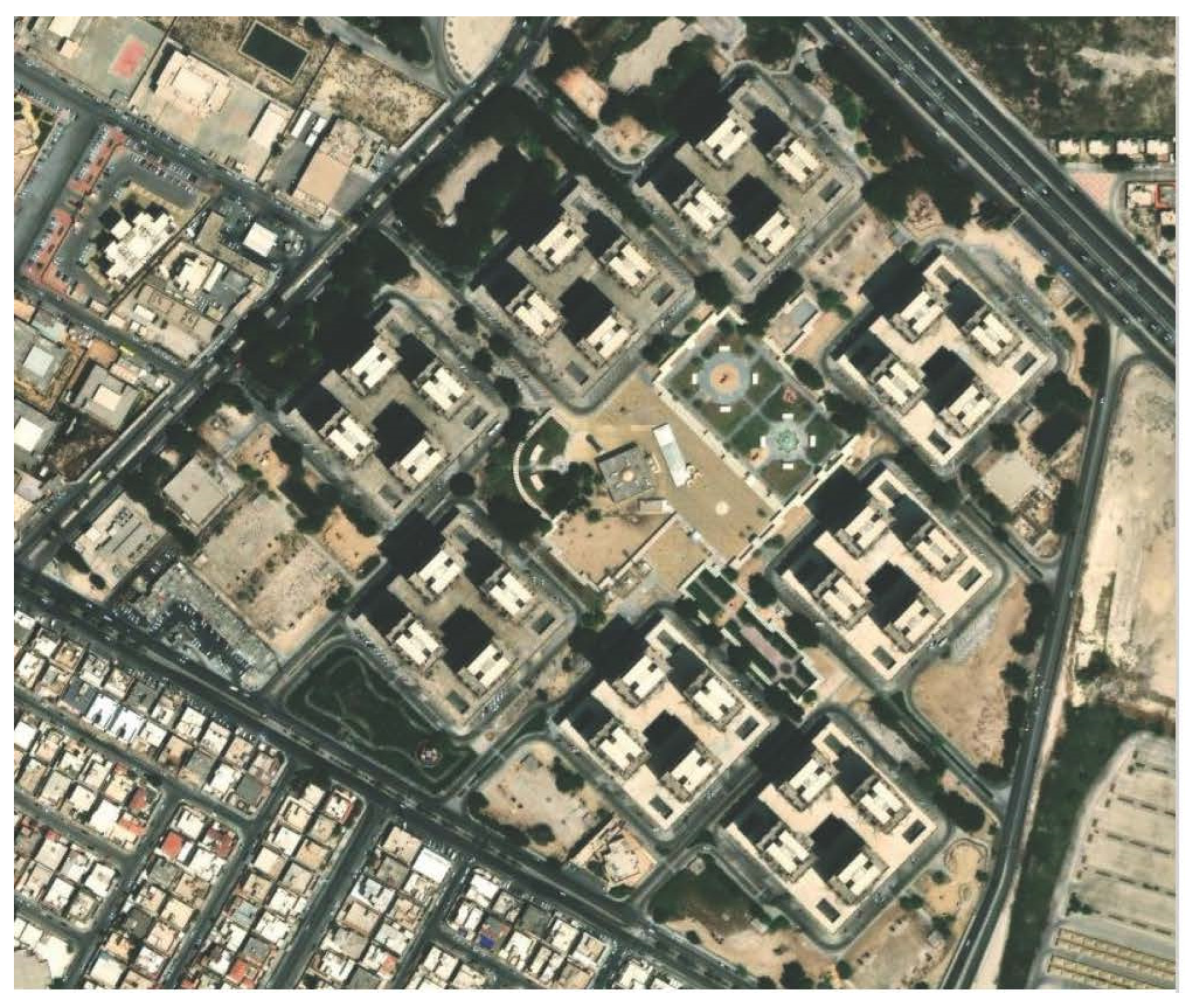
The Dammam Housing Project (
Figure 1) represents one of the earliest organized models of vertical housing in the DMA. It is located in eastern Dammam within the Abdullah Fouad district and was established in 1979, making it a suitable case for examining the long-term sustainability of vertical growth in terms of operational efficiency, building conditions, and the capacity of management systems to maintain the quality of the residential environment. The project covers an area of approximately 349,000 m
2 and is estimated to accommodate around 10,000 residents. It consists of 32 residential buildings comprising approximately 1664 apartments. This represents a relatively high residential density compared to the predominantly horizontal housing patterns in the city, thereby justifying its selection as an applied case for analyzing vertical growth in the housing sector of DMA.
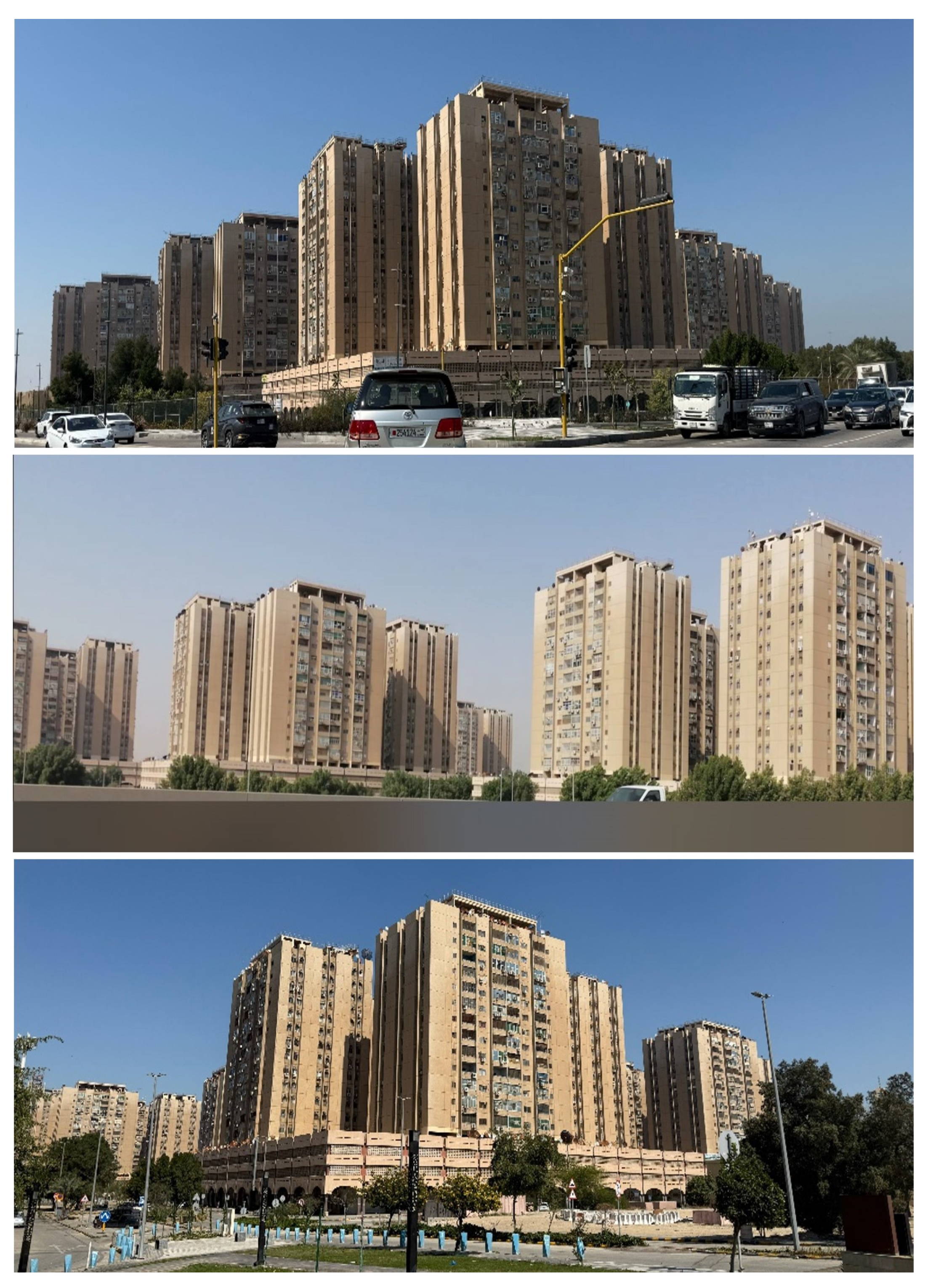
The project includes the Dammam Housing Towers complex (
Figure 2), developed during the 1980s to provide residential units for families and employees. At the time of its construction, the project reflected a modern urban design approach, offering a variety of unit sizes and benefiting from a strategically important location within the neighborhood, with access to educational, healthcare, retail, and transportation services. This indicates that the main challenges are not related to location, but rather to the long-term management and operation of the vertical residential environment. Although the project was developed several decades ago, it remains a valuable case for examining the sustainability implications of vertical housing in the Saudi context. The project highlights recurring issues related to governance, maintenance, infrastructure capacity, shared-service management, and residential livability that continue to influence contemporary multi-story housing developments. Therefore, the case study is not intended to represent future housing models directly, but rather to provide an analytical basis for understanding sustainability risks and management requirements associated with vertical urban growth in the DMA and similar rapidly urbanizing contexts.
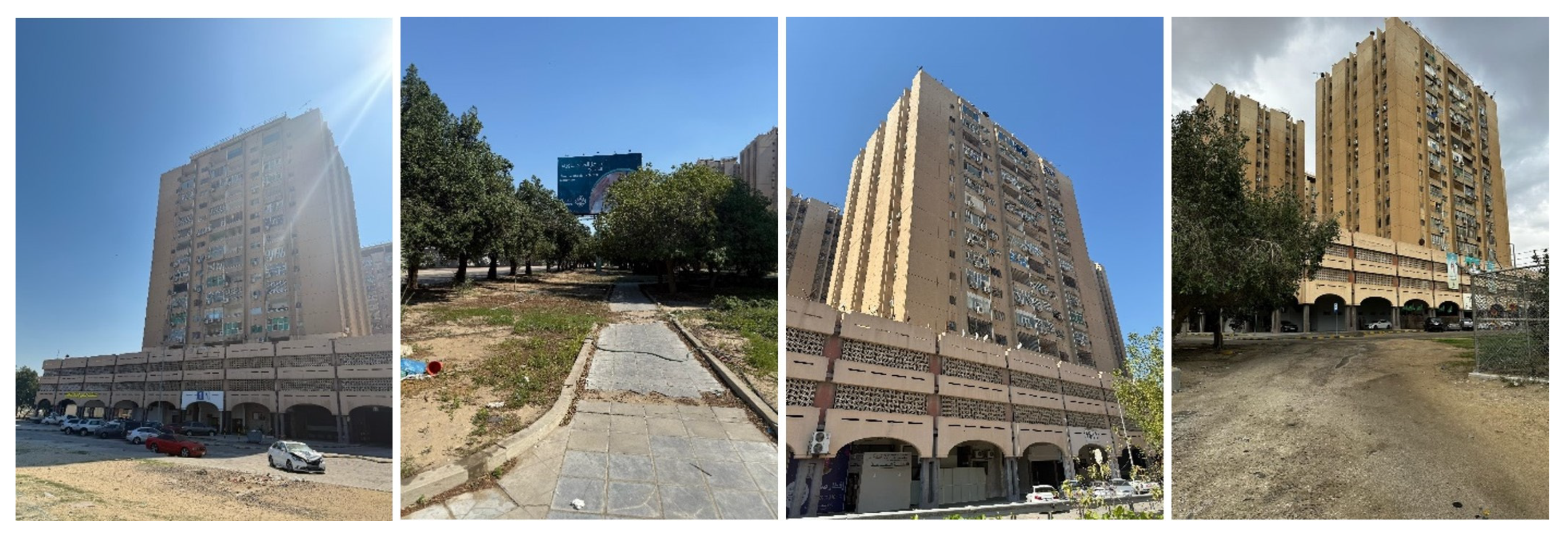
However, the Dammam Housing area also exhibits clear indicators of sustainability challenges associated with vertical housing (
Table 2). Chief among these is visual pollution, which negatively affects both quality of life and the overall urban landscape. This is reflected in several observable manifestations, including unregulated individual modifications to balconies, resulting in inconsistent forms and materials; the widespread and uncoordinated placement of external air-conditioning units; the presence of random signage and advertisements; and the irregular installation of satellite dishes. These issues are compounded by maintenance-related challenges, such as the deterioration of internal corridors and secondary streets, as well as inadequate upkeep of paint finishes, façades, signage, and traffic indicators, as illustrated in
Figure 3.
As illustrated in
Figure 3, the experience of vertical housing in the Dammam Housing Project is confronted with a set of fundamental challenges that directly affect core operational and governance processes. The unregulated proliferation of air-conditioning units on building façades represents a prominent manifestation of visual pollution. From a governance perspective, this reflects the absence of unified standards or weak enforcement of shared property regulations. From an operational and maintenance standpoint, it increases the likelihood of system failures and raises operational burdens, ultimately undermining the quality of the residential environment. This visual disorder is further compounded by the random distribution of satellite dishes, which disrupt the coherence of the urban façade and highlight deficiencies in collective decision-making mechanisms within the building, as well as the absence of unified policies governing attachments and external modifications. Consequently, managing façades as shared property components becomes a significant challenge for homeowners’ associations.
At the level of internal spaces, the deterioration of paint finishes and inadequate lighting in corridors serve as direct indicators of declining operational efficiency and insufficient funding for shared service fees. This, in turn, adversely affects residents’ quality of life, sense of safety, and overall satisfaction, reinforcing the notion that the challenges of vertical housing are not merely design-related but fundamentally operational in nature. This deterioration extends to the external environment, where the neglect of internal pathways and secondary streets impedes residents’ mobility and increases pressure on facilities due to high density. This highlights the critical need to align residential density with the operational capacity of infrastructure systems.
Moreover, deteriorated roads, poor cleanliness, and the absence of pedestrian sidewalks and adequate lighting exacerbate visual degradation and reduce safety levels. These conditions establish a strong linkage between walkability, social sustainability, and urban sustainability. The sustainability of vertical growth, therefore, cannot be achieved without integrating efficient internal building operations with improvements in the surrounding external environment. Accordingly, the sustainability of this urban model in Dammam is not determined solely by residential density, but rather by the effectiveness of building governance, particularly the capacity of homeowners’ associations to regulate individual behaviors and maintain shared components. Thus, façade control, maintenance efficiency, and effective governance in decision-making and financial management emerge as critical pillars shaping the trajectory of sustainable vertical growth and addressing its existing challenges.
In summary, the observed challenges in the Dammam Housing Project confirm that the key issues associated with vertical growth in the DMA can be structured around four principal dimensions:
First, façade control and the mitigation of visual pollution: this requires the implementation of strict regulations to prevent the unregulated proliferation of building attachments, such as air-conditioning units and satellite dishes, in order to preserve urban coherence and maintain the visual identity of residential developments.
Second, the efficiency of operation and maintenance of shared components: this necessitates the establishment of clear operational plans to ensure the sustainability of facilities, elevators, and circulation spaces, and to prevent the physical and aesthetic deterioration of buildings resulting from intensive and continuous use.
Third, the adequacy of internal infrastructure and services: this involves ensuring that surrounding facilities, including roads, sidewalks, lighting systems, and drainage networks, are proportionate to the level of residential density in vertical developments, thereby guaranteeing mobility, accessibility, and safety for residents.
Fourth, the effectiveness of homeowners association governance in decision-making, financing, and regulatory compliance: this represents the cornerstone of successful vertical housing, requiring management systems capable of ensuring consistent fee collection, efficient maintenance contract management, and the enforcement of regulations that prevent individual violations.
6.2. Urban Sustainability Dimensions of Vertical Growth in the Housing Sector in the DMA
Evaluating the sustainability of vertical housing in the Dammam Metropolitan Area (DMA) is essential for understanding the city’s capacity to accommodate population growth within existing urban boundaries while maintaining infrastructure efficiency and quality of life. In recent years, rising land values, increasing housing costs, and homeownership pressures have contributed to a gradual shift toward apartments and multi-story housing as more affordable alternatives to low-density housing patterns in the DMA [
5,
8]. This transition aligns with broader urban development objectives under Saudi Vision 2030, which promote land-use efficiency, higher residential density, and improved housing accessibility.
At the same time, the DMA faces challenges associated with rapid urban growth, infrastructure demand, and urban resilience as a coastal metropolitan area [
12]. Consequently, the sustainability of vertical growth in the DMA extends beyond physical densification to include governance efficiency, infrastructure capacity, operational performance, and residential livability. In this context, the role of homeowners’ associations and regulatory platforms such as the Mulak system under the supervision of the Real Estate General Authority has become increasingly important for managing shared services, maintenance, and operational sustainability in multi-owner residential buildings [
13].
6.2.1. Environmental Dimension: Land-Use Efficiency and Climate Impacts
In the DMA, vertical housing is increasingly viewed as a strategy to improve land-use efficiency and limit continued horizontal expansion toward peripheral areas. Given the high infrastructure costs associated with urban sprawl, compact residential development can support more efficient utilization of land, transportation networks, and public services [
25,
28,
48]. However, environmental sustainability in the DMA is closely linked to the city’s climatic conditions, particularly high temperatures and humidity, as well as the increasing pressure on drainage infrastructure during extreme weather events.
Higher-density development may intensify urban heat accumulation, increase impervious surfaces, and place additional pressure on stormwater systems if climate-responsive urban design measures are not adequately implemented [
42]. Therefore, environmental sustainability in the DMA requires integrating building density controls with ventilation strategies, shading systems, green infrastructure, and infrastructure upgrades capable of accommodating higher urban loads [
28,
32].
In the DMA context, environmental sustainability is further influenced by coastal climatic conditions characterized by high humidity, salinity, heat exposure, and seasonal stormwater accumulation. These conditions directly affect building materials, façade durability, maintenance cycles, and the long-term operational performance of shared systems. Moreover, increased vertical density may intensify urban heat accumulation and infrastructure pressure if not accompanied by climate-responsive urban design, adequate ventilation corridors, shading strategies, and efficient drainage systems. Accordingly, evaluating vertical sustainability in the DMA requires integrating environmental performance indicators with operational resilience and climate adaptation considerations.
6.2.2. Economic Dimension: Housing Affordability and Market Transformation
The economic significance of vertical growth in the DMA is strongly associated with rising housing costs and changing housing demand patterns. Increasing land prices and affordability pressures have encouraged greater interest in apartments and shared residential developments as alternatives to detached housing [
5,
8]. Vertical housing may improve land-use efficiency and increase housing supply within limited urban land; however, the relationship between density and affordability remains complex [
51,
52,
53].
While higher-density development can reduce land consumption per housing unit, it may also increase operational and maintenance costs, particularly in multi-owner residential buildings that depend on elevators, shared facilities, and continuous service management. In the DMA, the long-term affordability of vertical housing therefore depends not only on construction costs but also on effective governance, fee-collection systems, and operational efficiency that ensure service sustainability without imposing excessive financial burdens on residents.
6.2.3. Social Dimension: Livability and Residential Quality
The sustainability of vertical housing in the DMA is closely connected to residents’ quality of life and the social acceptance of apartment living. Despite the growing apartment market, Saudi households in the DMA continue to show strong preferences for detached housing due to cultural expectations related to privacy, family size, and residential independence [
5,
8]. As a result, the success of vertical housing depends on its ability to provide socially and culturally responsive living environments.
Livability challenges in high-density residential environments may include limited privacy, noise, inadequate shared spaces, thermal discomfort, and reduced environmental quality [
49,
50]. In the DMA, these challenges are further influenced by climatic conditions and the operational quality of shared facilities. Therefore, improving vertical housing sustainability requires attention to ventilation, building maintenance, shared amenities, accessibility, and neighborhood-level service provision to enhance resident satisfaction and long-term social acceptance.
6.2.4. Governance Dimension: Shared Services and Institutional Management
Governance represents one of the most critical sustainability dimensions for vertical housing in the DMA. Unlike detached housing, multi-story residential buildings require continuous coordination of shared services, including elevators, cleaning, safety systems, maintenance, and utility management. Weak governance structures may lead to declining building conditions, operational failures, disputes among residents, and deterioration in the quality of life.
In Saudi Arabia, the governance of jointly owned residential buildings is regulated through the Law of Ownership of Real Estate Units, Subdivision, and Management, alongside digital governance mechanisms such as the Mulak platform supervised by the Real Estate General Authority [
13]. In the DMA context, evaluating sustainability therefore requires assessing homeowners’ association performance, fee collection efficiency, preventive maintenance practices, transparency, and dispute-resolution mechanisms. These factors directly influence operational continuity and resident satisfaction in vertical housing developments.
6.2.5. Technical and Operational Dimension: Infrastructure and Building Performance
The sustainability of vertical housing in the DMA also depends heavily on technical performance and infrastructure readiness. Multi-story residential buildings rely extensively on electromechanical systems such as elevators, pumps, fire protection systems, ventilation, and water storage facilities. Any deficiencies in maintenance or operational management can quickly affect safety, comfort, and service continuity.
At the city level, increasing residential density may place additional pressure on electricity, water supply, sewage, and drainage networks if infrastructure upgrades do not keep pace with vertical expansion [
42,
48]. This issue is particularly relevant in the DMA, where rapid urban growth and climatic conditions require resilient infrastructure systems capable of supporting higher-density residential environments [
12].
Operational sustainability, therefore, requires not only compliance with the Saudi Building Code and technical regulations issued by the Saudi Standards, Metrology and Quality Organization, but also effective preventive maintenance systems, reliable service contracts, and rapid response mechanisms for system failures [
64,
78]. In the DMA, the long-term success of vertical housing is closely tied to the integration between building-level operational performance and city-wide infrastructure capacity, making technical management a central component of sustainable urban densification.
7. Conceptual Framework for Sustainable Vertical Growth in the DMA
In this study, the conceptual framework is defined as an interpretive system that organizes the relationships between the characteristics of vertical growth in the housing sector and sustainability outcomes. This framework aims to move beyond conventional perspectives that reduce verticality to merely “building height” or “number of floors,” toward a more comprehensive understanding of vertical growth as an integrated urban–housing pattern. Such a pattern generates multidimensional impacts extending from the scale of the housing unit and building to the street, neighborhood, and the metropolitan area as a whole.
Accordingly, the role of the framework extends beyond describing the phenomenon; it functions as a methodological tool that guides empirical analysis, supports the interpretation of findings, and links results to their broader planning and institutional context. Ultimately, it facilitates the development of policy recommendations, operational mechanisms, and a proposed model for sustainable vertical housing.
Although previous studies have extensively examined vertical growth from environmental, spatial, economic, and social perspectives [
42,
50,
53,
63,
64,
65], the existing literature remains fragmented in its treatment of sustainability dimensions. Most frameworks focus on isolated aspects such as urban density, land-use efficiency, livability, or housing affordability, while limited attention has been given to the integration of governance structures, operational sustainability, and shared-service management within multi-story residential environments. Furthermore, many existing models are developed in global contexts without sufficient adaptation to the socio-cultural, regulatory, and housing-market conditions of Gulf cities and Saudi Arabia specifically.
In contrast, the framework proposed in this study adopts an integrated and context-sensitive approach by combining five interrelated dimensions: environmental, economic, social, governance, and technical–operational sustainability. The framework extends beyond conventional density-based assessments by incorporating homeowners’ association governance, maintenance systems, operational efficiency, and shared-service management as central determinants of sustainable vertical growth. Moreover, the framework links building-level performance with neighborhood-scale infrastructure capacity and urban resilience considerations within the DMA. This multi-scalar integration represents a conceptual advancement over previous studies and contributes to the localization of sustainable vertical housing assessment in rapidly growing Gulf metropolitan contexts.
Table 3 presents a comparative synthesis of major studies on vertical growth and sustainable housing. The table demonstrates that most existing studies address specific and fragmented dimensions of vertical housing, such as spatial modeling, livability, operational maintenance, social sustainability, or housing displacement. In contrast, the proposed framework in this study integrates environmental, economic, social, governance, and technical–operational dimensions within a unified and context-sensitive model tailored to DMA.
Therefore, the framework is particularly relevant in light of the ongoing transformation of the Saudi housing market, where increasing reliance on multi-story residential developments has emerged as a strategic response to rising housing demand, escalating land prices, and the spatial limitations of horizontal urban expansion.
7.1. Structure of the Conceptual Framework
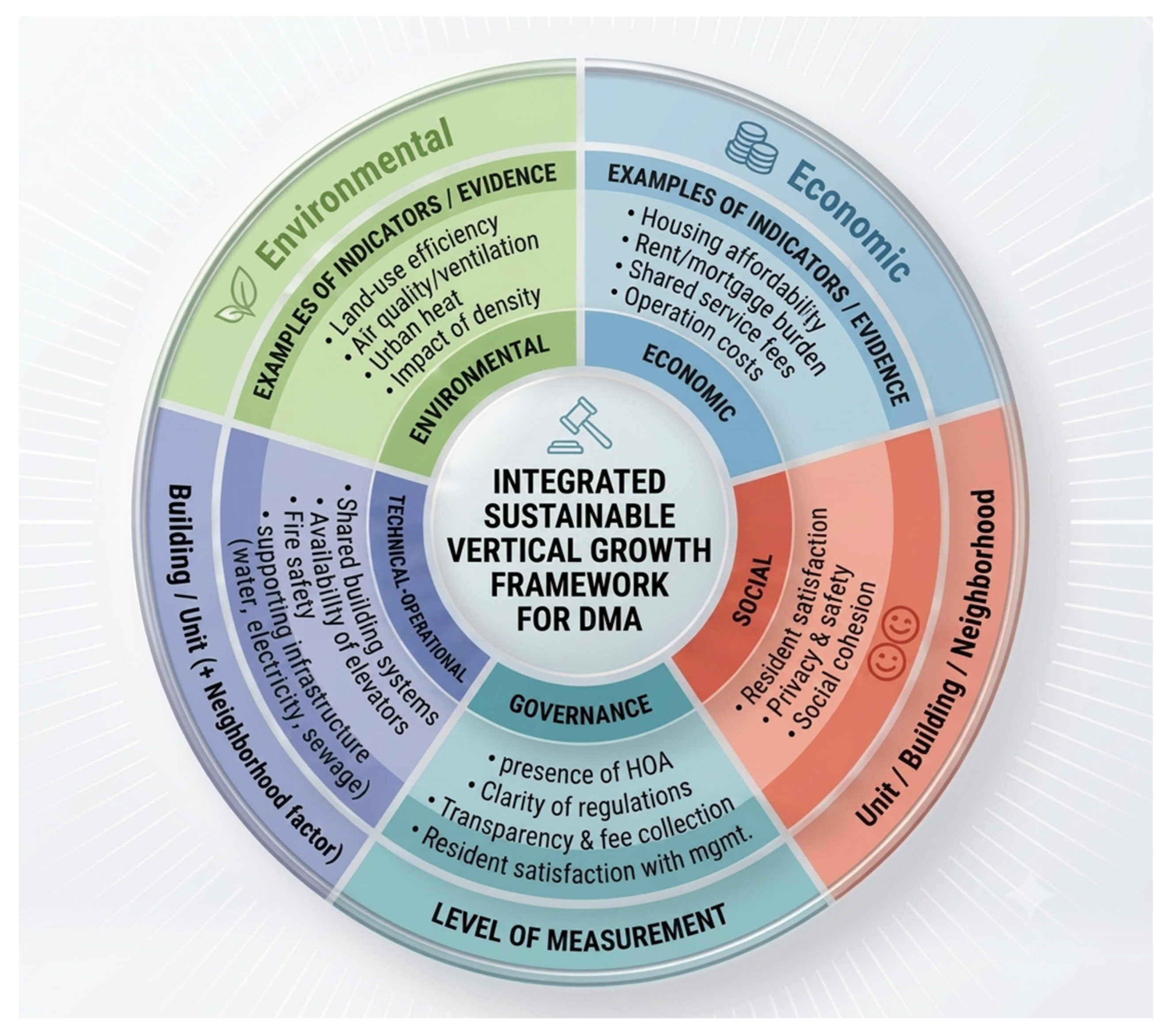
Based on the preceding analysis, this study develops a conceptual framework structured around five sustainability dimensions, as illustrated in
Figure 4: environmental, economic, social, governance, and technical–operational dimensions. The framework establishes a systematic linkage between sustainability principles and measurable indicators relevant to vertical housing growth in the DMA.
To operationalize the framework, the proposed indicators are evaluated across multiple analytical and spatial levels, including the unit, building, neighborhood, infrastructure, and urban levels, depending on the nature of each indicator (
Table 4). This multi-level structure allows the framework to capture the interconnected impacts of vertical growth on the built environment, infrastructure systems, governance performance, and residents’ quality of life.
Environmental Dimension: Includes indicators related to land-use efficiency, environmental quality, ventilation, urban heat effects, noise, flooding risks, and the environmental impacts of increased density.
Economic Dimension: Focuses on housing affordability, operational and maintenance costs, shared service fees, and the economic implications of vertical housing for residents and the housing market.
Social Dimension: Addresses livability, privacy, crowding, accessibility, safety, social interaction, and overall residential satisfaction within vertical housing environments.
Governance Dimension: Examines the effectiveness of homeowners’ associations, regulatory compliance, fee collection systems, transparency, dispute resolution, and management efficiency in shared residential buildings.
Technical–Operational Dimension: Evaluates the operational performance of shared building systems and supporting infrastructure, including elevators, fire safety systems, preventive maintenance, water and electricity reliability, waste management, and service continuity.
The theoretical contribution of this study lies in developing an integrated conceptual framework that connects sustainability dimensions often treated separately in existing vertical housing literature. Unlike previous studies that primarily focus on environmental performance, housing density, or affordability in isolation, the proposed framework integrates environmental, economic, social, governance, and technical–operational dimensions within a unified structure tailored to rapidly urbanizing contexts such as DMA. The framework further introduces governance and shared-service management as central sustainability determinants in ownership-based vertical housing, thereby extending conventional urban sustainability approaches beyond physical planning and design considerations.
7.1.1. Environmental Dimension
The environmental dimension is associated with the impacts of multi-story buildings on energy and water consumption, emissions, and waste management, in addition to the quality of the “urban microclimate” at both the building and street levels. This includes elements such as thermal comfort, airflow and natural ventilation, air quality (particularly in narrow streets or areas surrounded by high-rise structures), natural lighting, shading, noise, and site sensitivity to climatic conditions. In a coastal metropolitan context such as Dammam, this dimension extends to include site-specific environmental considerations, such as stormwater accumulation, elevated groundwater levels in certain areas, and the effects of humidity and salinity on building materials and façade maintenance. It also encompasses risks associated with heat waves and outdoor thermal comfort in public spaces. The Mostadam Rating System (Design + Construction) serves as a national reference for translating this dimension into measurable requirements at the levels of site, building, and operation, thereby enabling the integration of standardized national indicators into the analytical framework [
14].
7.1.2. Economic Dimension
The economic dimension encompasses factors related to market dynamics, financial affordability, and the life-cycle costs of multi-story residential buildings. These include ownership or rental costs, construction costs, and long-term operation and maintenance expenses, as well as asset value stability or volatility, shared service fees, and mechanisms for cost allocation. In vertical housing, particular sensitivity arises in relation to operational costs, including elevator maintenance, electromechanical system upkeep, energy consumption in shared spaces, cleaning and security contracts, façade repairs, parking management, and equipment replacement. These factors may become significant financial burdens if not managed efficiently, thereby affecting owners’ financial compliance, service quality, market value, and overall resident satisfaction. In the Dammam context, findings by Alhamoudi and Dano [
8] indicate that preferences for apartment ownership are strongly influenced by rising housing costs. This highlights that the economic sustainability of vertical growth depends not only on purchase prices but also on operational efficiency, fee structures, and maintenance costs over time.
7.1.3. Social Dimension
The social dimension focuses on the quality of life within multi-story buildings and their surrounding urban environments. It includes factors such as privacy, perceived safety, noise levels, crowding in entrances and elevators, the quality of semi-public spaces within buildings, accessibility, particularly for elderly individuals and people with disabilities, residential satisfaction, and the availability of daily services. This dimension also extends to issues of equity in access to services and facilities at the neighborhood level, as well as the dynamics of coexistence within shared spaces, which may result in either social cohesion or conflict. Within this context, the quality of shared services, particularly elevators, maintenance, cleaning, and security, plays a pivotal role in shaping the relationship between vertical density and residential satisfaction. Service failures or poor management can transform vertical housing from a solution into a source of daily stress and reduced livability.
7.1.4. Governance Dimension
The governance dimension is a critical component of multi-story housing due to the shared nature of building components and the associated need for structured decision-making processes, financial transparency, responsibility allocation, fee collection mechanisms, contract management, and dispute resolution, all within a framework of regulatory compliance. Weak governance is often identified as a structural cause of recurring operational problems. Ambiguities in authority, lack of transparency, and irregular financial contributions may lead to maintenance failures, accumulation of defects, and deterioration in building quality. In Saudi Arabia, the “Law of Ownership of Real Estate Units, Subdivision, and Management” provides a conceptual and regulatory framework for this dimension by defining homeowners’ associations and governance instruments such as bylaws and charters, linking them to annual budgets and the management of shared components such as elevators [
13]. Furthermore, executive regulations emphasize the mandatory registration of homeowners’ associations and the establishment of governance charters as prerequisites for formal recognition, thereby strengthening institutional governance and accountability mechanisms [
13].
7.1.5. Design–Technical Dimension
The design–technical dimension relates to the architectural, structural, and electromechanical characteristics of multi-story residential buildings and their suitability for local climatic conditions and long-term operational requirements. It includes aspects such as building massing and spatial configuration, and their impact on ventilation and natural lighting, façade quality and material durability, particularly in coastal environments exposed to humidity and salinity, efficiency of critical systems such as elevators, water pumps, and ventilation systems, safety standards and emergency exits, accessibility, construction quality, durability, and maintainability, including the adoption of preventive maintenance strategies. This dimension does not function as an independent outcome of sustainability; rather, it operates as an enabling and mediating layer that links building density and height to environmental, social, economic, and governance outcomes. Poor design or inadequate construction can lead to increased maintenance costs, service disruptions, reduced resident satisfaction, and degradation of the urban environment. Conversely, high-quality design and efficient systems enhance operational reliability, reduce service pressures, and improve quality of life and property value stability.
8. Integrated Framework for Assessing Sustainable Vertical Housing Growth in the DMA
DMA represents a rapidly growing coastal metropolitan area characterized by increasing urban density, expanding residential development, and growing pressure on housing, infrastructure, and shared services. These conditions make DMA an important local context for evaluating the sustainability of vertical housing growth, particularly in relation to operational efficiency, infrastructure capacity, governance systems, and quality of life. In addition, the coastal environmental conditions in the DMA, including humidity, salinity, and climate-related pressures, create additional challenges affecting building performance, maintenance requirements, and long-term livability.
Accordingly, the proposed framework integrates five interconnected dimensions of sustainable vertical housing growth in the DMA: environmental, economic, social, governance, and technical–operational. The framework links characteristics of vertical expansion, such as building height, density, location, and urban accessibility, with infrastructure and service capacity, including elevators, parking, water supply, electricity, sewage systems, and waste management. It also incorporates governance factors related to homeowners’ associations, including regulatory compliance, fee collection, financial transparency, maintenance management, and dispute resolution mechanisms.
The framework assumes that sustainability outcomes are shaped by the interaction between building density, infrastructure performance, governance quality, and technical efficiency. In this context, the technical–operational dimension functions as a mediating factor that explains how density and building characteristics translate into either sustainable performance or operational failure. Likewise, governance quality directly affects the continuity of maintenance services, resident satisfaction, and the long-term sustainability of shared facilities.
To operationalize the proposed framework,
Table 5 presents the indicator matrix, measurement dimensions, data sources, and analytical methods used to assess the sustainability of vertical housing growth in the DMA. These include official statistical data, spatial analysis, resident and expert surveys, technical inspections, and governance document analysis. Spatial analysis supports the identification of density patterns, distribution of multi-story buildings, proximity to services, and infrastructure pressures. Resident and expert surveys evaluate livability, operational efficiency, maintenance quality, privacy, safety, and satisfaction with shared services, while technical inspections assess system reliability, safety conditions, and maintenance performance.
The framework also incorporates governance document analysis, including homeowners association regulations, budgets, meeting records, maintenance contracts, fee collection practices, and dispute management procedures. Integrating these evidence sources enables a multidimensional evaluation of vertical housing sustainability rather than reliance on isolated indicators.
Table 5 presents the proposed indicator matrix and corresponding sources of evidence for assessing sustainable vertical housing growth in the DMA.
Finally, the framework supports both descriptive and analytical assessment of causal relationships between governance, technical performance, infrastructure capacity, and residential quality of life. It assumes that effective governance, reliable shared services, and sound technical performance contribute directly to livability, operational sustainability, and long-term residential satisfaction in vertical housing developments within the DMA.
9. Discussion of Key Findings
The theoretical literature confirms that housing is not merely a shelter but encompasses social, cultural, economic, and environmental dimensions that directly affect quality of life. Understanding the differences between horizontal and vertical housing is crucial in urban planning, as cultural preferences often incline residents toward detached villas, while practical pressures, such as population growth and land scarcity, make vertical housing a strategic option to meet growing demand while maintaining land-use efficiency. This study indicates that the success of vertical growth depends on integrating design quality, infrastructure, shared services, and effective governance to ensure building sustainability and community acceptance. Global studies align on the presence of significant gaps in vertical housing models, particularly regarding the integration of economic, social, environmental, and governance dimensions. Many studies have focused on the technical and structural aspects of vertical growth without adequately considering social dimensions, such as cultural acceptance and family compatibility, as well as operational processes that maintain service continuity.
The proposed conceptual framework in this study addresses these gaps by integrating these dimensions into a cohesive system, with governance, particularly homeowners association management and shared service governance, serving as the cornerstone for building sustainability and ensuring resident satisfaction. International experiences further confirm that vertical housing solutions must be tailored to the local characteristics of residents and the real estate market to ensure flexibility and effective implementation. Local studies indicate additional complexities within the Saudi context, where government policies, investment support, and construction quality are essential factors for the adoption of vertical housing. However, cultural and behavioral preferences among Saudi families remain a barrier to fully transitioning from horizontal to vertical housing solutions. These studies highlight that densification or vertical housing expansion without the provision of necessary infrastructure and services leads to declining resident satisfaction and increasing operational issues. This reflects the need for a comprehensive approach that links urban planning, service management, and financial governance to ensure the sustainability of multi-story developments and quality of life.
In the case of DMA, vertical growth has proven to be a practical response to rapid population growth and limited land availability, resulting in increased urban density and more efficient land use. This type of development has created economic opportunities by improving land utilization and generating urban agglomeration effects. However, the study’s findings revealed significant challenges related to design quality, cultural compatibility, and the efficiency of shared service management. The study further emphasizes the critical role of institutional governance in homeowners’ associations to ensure the sustainability of buildings and the continuity of operational services, making success contingent on the ability to manage the interactions between residents, infrastructure, and services.
The proposed conceptual framework provides a tool for assessing and guiding vertical growth comprehensively, focusing on five interconnected pillars: governance, local economy, infrastructure, environmental sustainability, and quality of life. The framework offers a practical approach to integrating the different dimensions of vertical growth, highlighting the interactions between weak governance, infrastructure efficiency, economic performance, and social satisfaction. It also enables the inclusion of local considerations such as culture, household size, and real estate market characteristics, making it a useful tool for sustainable urban planning and evidence-based decision-making in the Saudi context. Moreover, integrating the results of theoretical, global, and local studies with field experience in Dammam confirms that vertical growth is not merely a design or technical issue but an integrated system where urban policies, planning, governance, service management, and community acceptance intersect. The study demonstrates that achieving sustainability in vertical housing depends on the ability to balance urban density, the quality of the built environment, infrastructure sustainability, and providing a socially and culturally acceptable living environment for residents. This reflects the importance of using the conceptual framework to guide planning policies and practices.
The study also provides insight into the advantages of the proposed framework, as it is comprehensive and applicable, with the ability to analyze the relationships between the five pillars and their impact on quality of life and sustainability outcomes across economic, social, and environmental dimensions. The framework also offers the potential for developing measurable indicators to monitor performance, contributing to evidence-based strategic decisions, and considering local characteristics. However, practical implementation faces challenges related to institutional capacity, financial resources, data availability, and cultural and social differences. These challenges necessitate the adoption of flexible management approaches, community engagement, and coordination between different governance levels to overcome these obstacles. The contribution of this study lies in offering an integrated and practically applicable framework that connects theory with field practice. It highlights how vertical housing can be a sustainable and socially acceptable option when effective management, precise urban planning, and the integration of economic, social, environmental, and governance dimensions are present. The framework provides a practical tool for decision-makers and urban planners to analyze priorities, evaluate projects, and align urban development with the goals of Saudi Vision 2030 and the 2030 Sustainable Development Agenda, ensuring more resilient, sustainable, and livable cities.
Limitations of the Study
This study is primarily conceptual and relies on a qualitative synthesis of the international and local literature combined with a contextual analysis of the DMA. Although the proposed framework provides an integrated structure for evaluating sustainable vertical housing growth, it has not yet been fully validated through large-scale empirical field application. In addition, variations in data availability, governance practices, and operational systems across residential developments may affect the generalizability of some indicators. Future research is therefore recommended to apply the framework empirically using quantitative surveys, spatial analysis, post-occupancy evaluations, and longitudinal assessments to test indicator reliability and causal relationships between governance, operational performance, and residential sustainability outcomes.
10. Conclusions and Recommendations
This study highlights the phenomenon of vertical growth in the housing sector in Saudi Arabia, with a particular focus on the DMA as an urban model that presents unique challenges and opportunities in managing population density and land scarcity. The findings reveal that vertical growth is a strategic option to meet the increasing housing demand in major urban centers, offering more efficient land use, reducing unplanned horizontal expansion, and alleviating the economic and social burdens associated with traditional urban sprawl. However, the study underscores that the success of vertical growth depends not only on increasing building height or providing additional housing units, but also on integrating urban, social, economic, and environmental dimensions with effective governance and operational management of shared services and facilities. The theoretical review showed that vertical housing should be understood as an integrated system that includes urban design quality, the suitability of housing units for family needs, infrastructure efficiency, environmental sustainability, and the provision of shared services managed effectively. The absence of any of these dimensions leads to a decline in vertical housing livability, limits project sustainability, and negatively impacts residents’ quality of life. Therefore, successful vertical growth evaluation requires a multi-dimensional approach capable of measuring the interactions between these five pillars and highlighting the strengths and weaknesses in planning and implementation.
Global studies suggest a continuous gap between theory and practical application, as much of the research has focused on the technical and structural feasibility of vertical growth, while neglecting social and operational governance aspects, such as the ability of homeowners’ associations to manage maintenance and ensure resident satisfaction, and the impact of density on the quality of the built environment and services. These gaps have contributed to the development of the proposed conceptual framework in this study, which integrates the five key dimensions: governance, local economy, infrastructure, environmental sustainability, and quality of life, offering a comprehensive model for assessing and guiding vertical growth in the DMA and similar cities. Local studies review also reveals that the transition to vertical housing in Saudi Arabia faces multiple challenges, primarily related to cultural preferences for detached villas, large family sizes, and concerns regarding privacy and shared services. Moreover, weak operational management and a lack of financial commitment to maintenance directly affect project sustainability. In this context, the study asserts that any successful strategy for vertical growth must account for these factors and be designed to meet local residents’ needs while integrating with governmental housing policies and the Saudi Vision 2030.
Regarding the DMA case, the study finds that vertical growth has contributed to more efficient land use, enhanced urban agglomeration, and positive economic impacts. However, it has also revealed practical challenges related to design quality, apartment suitability, shared service management, and ensuring resident privacy. The results emphasize that the operational effectiveness of multi-story buildings is closely linked to the ability of homeowners’ associations to organize maintenance and manage shared services, highlighting the decisive role of governance in the sustainability of vertical growth and quality of life. From an infrastructure perspective, the study finds that vertical housing increases pressure on water, electricity, sewage, and elevator networks if not accompanied by effective operational plans and continuous upgrades. However, proper planning and smart infrastructure enhance the sustainability of buildings and improve service efficiency for residents. This indicates that investment in infrastructure must be synchronized with any vertical building development program, considering continuous maintenance capacity and the optimal operation of essential facilities.
Regarding environmental sustainability, the study shows that vertical growth can reduce unplanned horizontal sprawl, improve land use efficiency, lower carbon emissions from individual transportation, and enable the preservation of green spaces and surrounding natural environments. However, the findings also highlight the need for building designs that improve ventilation, thermal comfort, and mitigate urban heat island effects, thus enhancing livability and ensuring long-term environmental sustainability. Concerning quality of life, the results indicate that residents’ acceptance of vertical growth is influenced by multiple factors, including privacy, shared spaces, service quality, unit design, and the level of social interaction within buildings and the local community. The study points out that improving building design, providing high-quality shared services, and ensuring transparent and fair governance of operational processes can enhance resident satisfaction and increase project sustainability.
The economic pillar remains central, as vertical growth boosts property value, enhances urban agglomeration, and creates new investment opportunities. However, rising prices may lead to social exclusion if policies are not paired with mechanisms that ensure affordable housing and provide suitable units for low- and middle-income households. The role of government policies and support programs, including housing initiatives and Saudi Vision 2030, is crucial in ensuring that economic dimensions are integrated with social sustainability and urban development goals. Based on these findings, the study offers several practical and research-based recommendations:
Enhancing governance in multi-story buildings by developing effective homeowners association management systems, including financial collection mechanisms, regular maintenance, and resident communication to ensure satisfaction and service sustainability.
Cultural and social compatibility should be considered in apartment design, with the provision of appropriate shared spaces and privacy features to ensure the acceptance of vertical housing by Saudi families.
Investment in smart and sustainable infrastructure, including water, electricity, sewage systems, and elevators, with continuous operational and maintenance plans to ensure service continuity and resource efficiency.
Promoting environmental sustainability by designing vertical buildings to improve natural ventilation, reduce urban heat island effects, preserve green spaces, and support public transportation to reduce dependence on private vehicles.
Addressing economic and social justice by integrating affordable housing programs and providing suitable units for low- and middle-income families, while regulating the real estate market to avoid excessive price hikes and social exclusion.
Additionally, quality of life can be enhanced by developing maintenance programs, providing social spaces, and encouraging interaction between residents within housing complexes. The study also recommends implementing assessment tools such as the Vertical VUHI to monitor the impact of density on the built environment and residents’ comfort levels. From a research perspective, the study suggests conducting further field studies based on primary data collection to evaluate residents’ experiences in vertical housing and to explore the relationships among design quality, shared services, and social satisfaction, thus refining the conceptual framework and its application to other Saudi cities. It also emphasizes expanding research to examine the impact of government policies and affordable housing programs on the adoption of vertical housing and how to integrate social, economic, and environmental considerations into future urban planning strategies. Moreover, future studies could focus on evaluating the role of digital innovation and smart transformation in improving the operational efficiency and sustainability of multi-story buildings, thus supporting the achievement of Saudi Vision 2030 and global sustainable development goals.