1. Introduction
Recent advancements in digital technologies have profoundly influenced environmental policymaking and sustainability initiatives [
1,
2]. Digital technologies comprise intelligent systems that provide solutions for collecting, storing, processing, and analyzing data to automate processes and facilitate well-informed decision-making [
3,
4]. Notable examples of these technologies include the Internet of Things (IoT), cloud computing, big data, artificial intelligence (AI), blockchain, 3D printing, digital applications, geospatial technologies, open and crowd-based platforms, and robots [
1,
2,
5]. These technologies play a critical role in environmental sustainability policymaking, since they underpin evidence-based policy, efficient resource allocation, and improved integration within the environmental management process [
6]. Additionally, they can enhance the economic and environmental performance of organizations when addressing the challenges and issues associated with sustainable development [
7].
Government institutions increasingly leverage digital technologies to establish policies that mitigate environmental degradation. This digital transformation assists policymakers in gaining a clearer understanding of current and future environmental challenges, which enables them to make more informed decisions. Furthermore, digital technologies such as crowd-based platforms foster effective communication among governments, the private sector, and civil society. Accordingly, they support information exchange and facilitate collaborative efforts in developing sustainable policies and participatory environmental governance [
8].
Although a growing body of research has focused on specific uses of digital technologies such as big data analytics for resource management [
9], AI for climate modeling [
10], and the IoT for pollution monitoring [
11], the findings are fragmented and confined within disciplinary boundaries.
Although technical studies frequently concentrate on technological capabilities [
12], they do not sufficiently consider governance complexities. Moreover, policy literature discusses digital governance at a general level [
13,
14], without examining the specific tools and contexts relevant to environmental policy. Consequently, policymakers are left without a consolidated, evidence-based framework to guide strategic decision-making for environmental sustainability.
Leveraging these technologies presents significant challenges for policymakers, as they lack a clear framework that defines prerequisites, implementation barriers, and critical success factors (CSFs) [
15,
16]. Therefore, the present study addresses the absence of a cohesive synthesis that can organize the fragmented academic findings into an applicable framework for environmental governance.
To establish a precise analytical boundary, this study distinguishes itself from both purely technical literature and general digital governance scholarship by focusing exclusively on the application of digital technologies within the specific and complex domain of environmental sustainability policymaking. While prior studies have predominantly examined either isolated digital technologies (e.g., AI for climate modeling) or environmental policy frameworks with limited technological integration, this research addresses a critical literature gap by synthesizing these fragmented dimensions into a cohesive, multidimensional framework tailored specifically for environmental sustainability governance. The study’s primary theoretical contribution, therefore, lies in providing an integrated framework that explicitly links technological capabilities with the fundamental processes and inherent multi-stakeholder complexities of environmental sustainability policy formulation and implementation.
Additionally, this study makes a significant contribution by providing policymakers with a structured, evidence-based foundation to help them with the development, implementation, and assessment of digitally enabled environmental policies. Accordingly, this study seeks to answer the following questions:
RQ1: What are the prerequisites for applying digital technologies in environmental sustainability policymaking?
RQ2: What are the challenges of applying digital technologies in environmental sustainability policymaking?
RQ3: What opportunities exist for applying digital technologies in environmental sustainability policymaking?
RQ4: Which digital technologies have been emphasized in existing research?
RQ5: In which areas have digital technologies been applied to environmental sustainability policymaking?
RQ6: What are the CSFs for effectively using digital technologies in environmental sustainability policymaking?
1.1. Theoretical Foundations
1.1.1. Digitalization
Digitalization has not only changed the way services are provided in the public and private sectors, but has also revolutionized the interaction between these sectors and citizens [
17]. It has triggered a worldwide managerial revolution, leading to the evolution of bureaucratic and hierarchical structures into more networked and participatory governance frameworks. This transformation has enhanced organizational capacities to gather, analyze, and utilize data. At its core, this digital shift involves leveraging information and communication technologies (ICT) to improve production, service delivery, and administrative processes. Policymaking in the digital age focuses on innovative decision-making methods that increase efficiency and transparency through the use of digital technologies [
18]. In this transformation, public and private sectors can utilize digital tools to disseminate information related to their projects, regulations, and performance [
19]. Furthermore, organizations can employ AI, big data, IoT, machine learning, and other emerging technologies in organizational decision-making to accomplish their goals and achieve optimal outputs. By analyzing large datasets, AI and machine learning enable enterprises to uncover hidden patterns and trends. They can facilitate risk identification, internal process optimization, and stakeholder behavior prediction. The use of machine learning algorithms in analyzing user data can help organizations better understand citizen and consumer preferences, enabling them to offer more personalized and effective services [
20].
1.1.2. Environmental Sustainability
Environmental sustainability involves managing and conserving natural resources and ecosystems in a manner that fulfills current needs while ensuring that future generations can also meet their requirements. Hence, it is essential to recognize that nature and the environment possess intrinsic value and should be respected as living entities, not just because of the financial gains they provide [
21].
In this perspective, humans are viewed as stewards of the Earth rather than passive and destructive consumers [
22]. The purpose of environmental sustainability is to promote a greater awareness of ethical responsibilities toward the environment and the challenges posed by human activities. Numerous issues, including climate change, pollution, resource mismanagement, poverty, and inequality, pose significant barriers to achieving environmental sustainability [
23].
To manage the complex dynamics of the Earth system and ensure a sustainable future, achieving environmental sustainability requires global stewardship, effective policies, and revolutionary changes in collective behavior [
24]. Environmental sustainability policies refer to a collection of principles and practices aimed at maintaining and improving environmental quality while optimizing the use of natural resources. As part of their corporate social responsibility, organizations need to implement various environmental sustainability-related policies.
These policies include education and awareness, pollution monitoring and control, and the development of a green economy [
25]. Governments also play a crucial role by supporting the participation of local communities and civil society organizations, thereby creating the necessary frameworks for environmental activities. The active participation of civil institutions and local communities is crucial in this situation. By boosting awareness and encouraging sustainable lifestyles, these organizations make a substantial contribution to environmental protection. Local initiatives aimed at environmental sustainability, such as waste management and the encouragement of sustainable consumption practices, not only reduce pressure on ecosystems but also foster a sense of solidarity and environmental awareness among community members [
26].
1.1.3. Evidence-Based Policymaking
In effective governance, the emphasis on evidence-based policymaking (EBP) is essential for adeptly navigating the complexities, ambiguities, and uncertainties inherent in social systems to achieve optimal outcomes. EBP refers to the decision-making process that employs credible evidence and data to design, implement, and evaluate policies. This approach aims to decrease uncertainty while improving the efficiency and effectiveness of policies [
27,
28]. As a governance approach, EBP transcends conventional methods that frequently rely on political pressure, anecdotes, or ideology. Rather, it institutionalizes the integration of rigorous research and empirical data to strengthen public accountability and policy effectiveness. By adopting validated scientific knowledge, similar to what has been accomplished in engineering and medicine, EBP addresses complex social and economic challenges, enhances understanding of human behavior and institutions, and reduces stakeholder conflicts to yield better results [
29].
Modern EBP has evolved from a linear “what works” model to a nuanced paradigm that recognizes the political and social settings in which policies are entrenched. Various forms of evidence, including quantitative data, qualitative insights, and expert testimonies, compete for influence. This perspective emphasizes the value of co-production and brokerage, where researchers, policymakers, and stakeholders collaborate to interpret evidence and define issues. The aim shifts from imposing evidence rigidly to an “evidence-informed” approach that merges scientific knowledge, professional expertise, and societal values for more legitimate outcomes [
2,
30].
While the application of EBP to environmental and sustainability issues offers policymakers numerous opportunities, it also introduces unique challenges, particularly in addressing wicked problems characterized by profound uncertainty and conflicting values. Adaptive management frameworks, integrating predictive models, and local knowledge are critical to foster resilience and advance long-term sustainability amid scientific uncertainty and political tensions [
29,
31].
2. Materials and Methods
To address the research questions posed (RQ1–RQ6), a systematic review was employed in this study. A systematic review involves a rigorous analysis of the relevant literature aimed at identifying, synthesizing, and evaluating the findings of previous studies concerning the topic of interest [
32]. This systematic review adheres to the PRISMA 2020 statement [
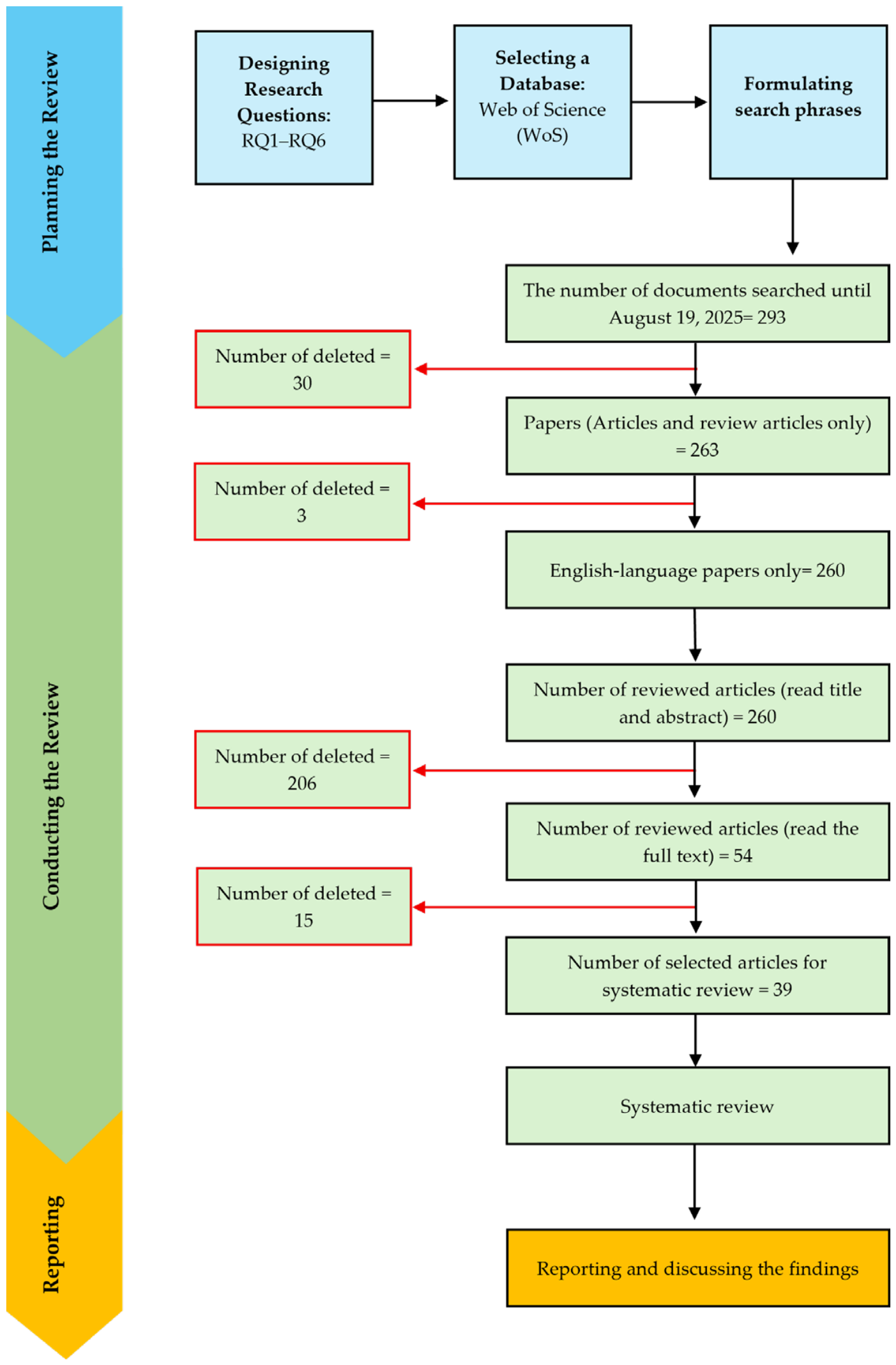
33], utilizing the main 27-item checklist to ensure transparent and comprehensive reporting. The systematic review process is also structured based on the three-stage method of Tranfield et al. [
34], which includes stages of planning the review, conducting the review, and reporting and dissemination (see
Figure 1). This integrated approach ensures a robust, evidence-based methodology, with details such as search phrases, the research process diagram (
Figure 1), and bibliographic recording explicitly outlined below. A formal review protocol was not registered in an external registry; however, all methodological procedures are transparently documented within this section. Additionally, the completed PRISMA 2020 Checklist is provided in the
Supplementary Materials (Table S6).
Initially, studies related to environmental sustainability policymaking and digital technologies were searched in the Web of Science (WoS) Core Collection. WoS is widely recognized as a highly selective database that indexes peer-reviewed journals according to rigorous quality and citation-impact criteria, including journals evaluated through Journal Impact Factors. We purposefully selected WoS as our primary source because its stringent indexing standards ensure that the retrieved literature represents the most rigorous and influential peer-reviewed research in the field. By focusing on this high-impact repository, we aimed to ensure that our systematic review is built upon a foundation of top-tier academic contributions, prioritizing methodological excellence and scholarly significance.
The selection of search terms was a systematic and iterative process. It was formulated through expert brainstorming among the authors, a thorough review of keywords in seminal papers, and mapping the core concepts of our research questions (i.e., Digital Technologies, Environmental Policy, and Sustainability Policy). To ensure comprehensive coverage, we conducted several pilot searches to validate and refine the search string. The final search string, applied to the “Topic” field (which includes title, abstract, and keywords) in WoS, was as follows:
(“sustainable environment” or “environmental sustainability” or “environmental support” or “green environment”) and (“policy”) and (“data science” or “digital transformation” or “artificial intelligence” or “AI” or “big data” or “digital governance” or “internet of things” or “IoT” or “blockchain” or “machine learning” or “ML”)
As shown in
Figure 1, the research process began with an initial search of the WoS up to 19 August 2025, which yielded 293 documents. This initial pool was then refined through two screening criteria. First, publication types such as conference proceedings and book chapters were excluded, narrowing the selection to 263 relevant peer-reviewed articles and review articles. Second, a language filter was applied to retain only English-language papers, which resulted in the removal of three non-English documents. This left a total of 260 papers for title and abstract screening.
The 260 papers subsequently underwent title and abstract screening, collaboratively conducted by all authors to determine their relevance. Any initial disagreements regarding inclusion were resolved through discussion until a consensus was reached. Following this screening, 206 papers were excluded as they did not meet the predefined inclusion criteria:
The paper must relate to environmental sustainability.
The paper must utilize digital tools.
The paper must focus specifically on environmental policymaking or governance (excluding purely technical coding, corporate-level reports, or non-environmental public policy).
The full texts of the remaining 54 papers were then assessed for eligibility by all authors. This comprehensive evaluation led to the exclusion of 15 additional papers deemed irrelevant to the study’s scope. Ultimately, a final set of 39 papers was selected for data extraction.
The data extraction and synthesis phase commenced with the final set of 39 papers, each meticulously reviewed to address the research questions. To ensure methodological rigor and consistency, the first and second authors manually and independently coded all 39 articles in full. Every instance of coding discrepancy was first discussed directly between the two coders; where immediate agreement could not be reached, the third author acted as an arbitrator, examining the contested codes against the original text excerpts until a unanimous decision was reached. Through this iterative adjudication process, full consensus was achieved on every code and theme across the complete dataset, thereby eliminating any unresolved disagreement from the final analytical base. Since this qualitative review relied on full independent double-coding and complete consensus-building, a conventional inter-coder reliability coefficient was not employed. Instead, reliability was ensured through the transparent and systematic resolution of all coding differences.
Once this complete agreement was established, the codes were systematically organized to correspond with each research question. Codes addressing conceptually similar issues or displaying recurrent patterns were grouped into distinct subthemes, and these subthemes were subsequently consolidated, through iterative discussion among all authors, into the broader, cohesive themes that structure the synthesis. This stepwise thematic development process—from codes through subthemes to themes (main themes)—ensured a comprehensive and structured synthesis of the data, providing the foundation for the thematic synthesis reported in the following sections.
To address potential biases and ensure methodological rigor, the aforementioned procedures served as built-in control measures. Specifically, selection bias was minimized through the collaborative screening and eligibility assessment conducted by all three authors. Furthermore, cognitive and data extraction biases were mitigated during data extraction through independent double-coding by the first and second authors, along with arbitration by the third author, thereby ensuring a more transparent, consistent, and reliable thematic synthesis.
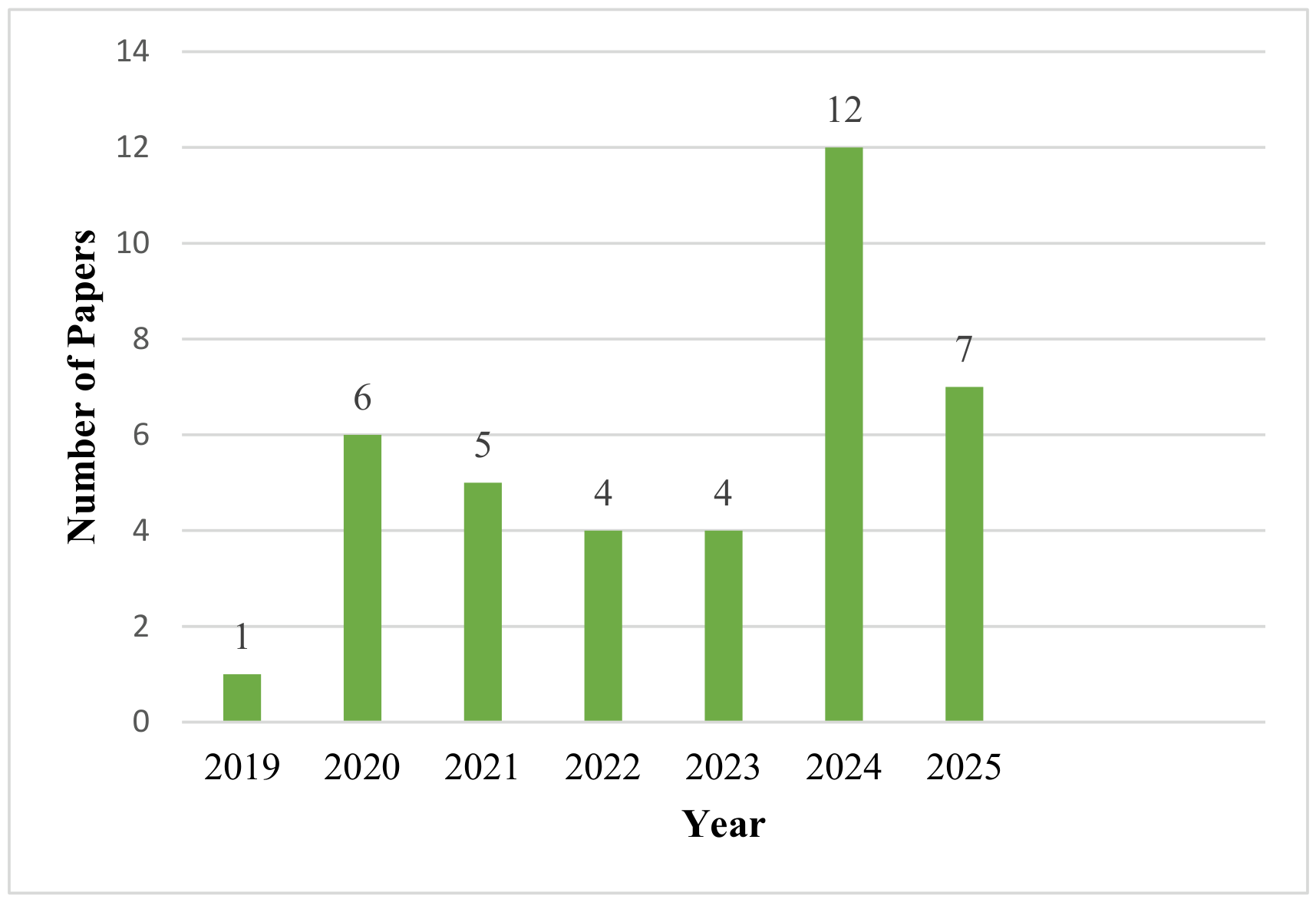
According to
Figure 2, the publication years of the selected papers span from 2019 to 2025, with a noticeable increase in the quantity of papers published in recent years, especially in 2024. This trend shows the growing academic interest and relevance of the research topic in the past few years, aligning with advancements in digital technologies and their applications in environmental sustainability policymaking. Furthermore, the distribution shows the dynamic nature of the field, with a consistent increase in publications over time. The comparatively lower number of papers published in 2025, as shown in
Figure 2, can be attributed to the cutoff date of the database search (19 August 2025), which naturally limited the inclusion of articles published later in the same year.
3. Results
This section presents the findings from our systematic review. The complete list and details of the included studies are provided in
Supplementary Table S1. This analysis is used to build a framework that clarifies the complexities of employing digital technologies in environmental sustainability policymaking. As a first step, we identify and analyze the essential prerequisites for this policymaking to be successful. We then examine the major challenges and transformative opportunities, address the key digital technologies and their diverse application areas, and present a comprehensive framework of CSFs.
3.1. Prerequisites for Digitally Supported Environmental Sustainability Policymaking
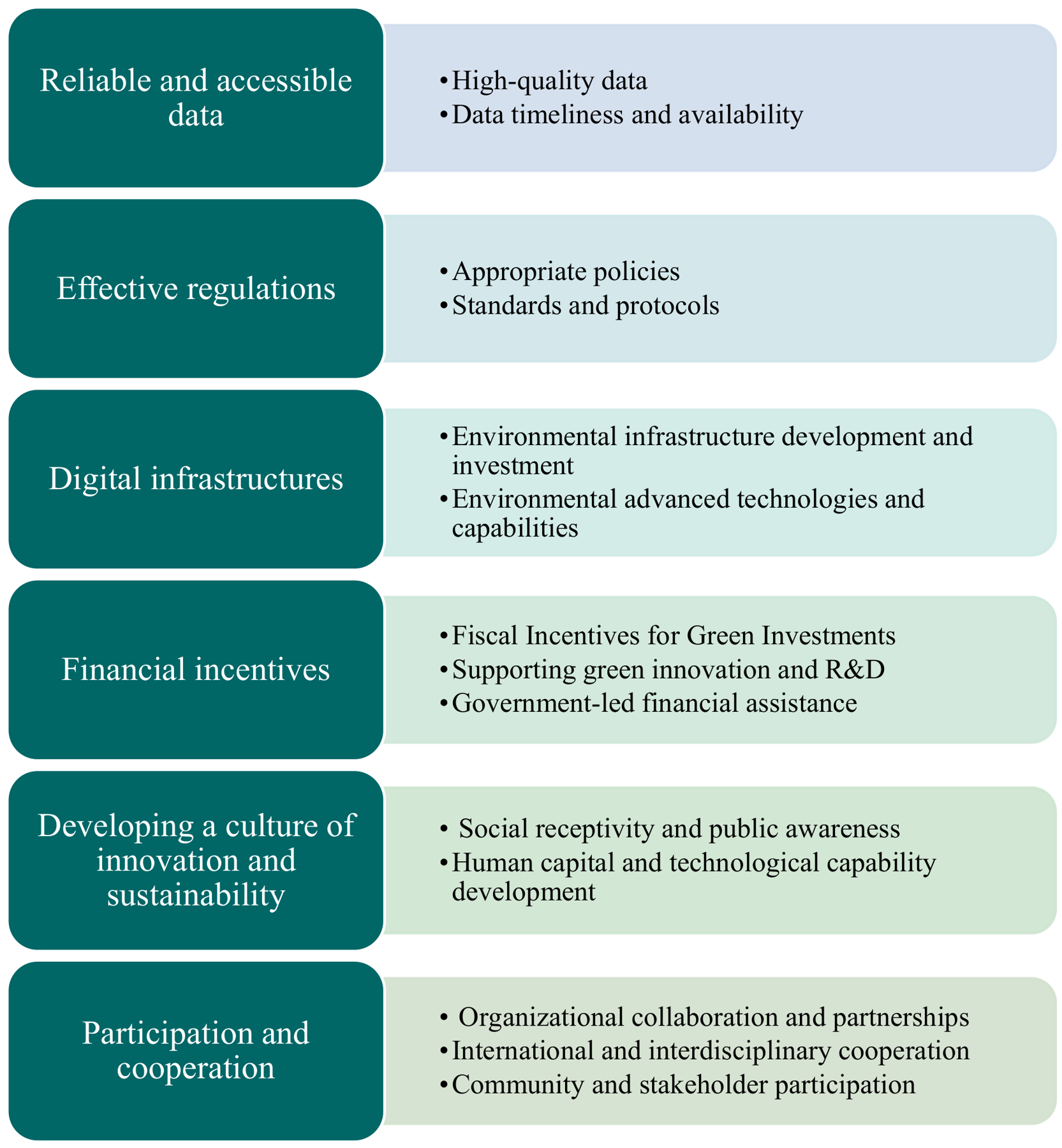
To address RQ1, this study identifies six primary themes as the necessary prerequisites for the successful application of digital technologies in environmental sustainability policymaking, as shown in
Figure 3: reliable and accessible data, effective regulations, digital infrastructures, fiscal incentives for green investments, the development of a culture of innovation and sustainability, and participation and cooperation. These prerequisites represent the foundational conditions that must be met before digital tools can be effectively integrated into governance.
In the digital age, data are regarded as a fundamental prerequisite and a critical fuel for applying digital technologies in policymaking. For effective data-driven environmental sustainability policymaking, access to high-quality, reliable, consistent, and timely data is essential [
35,
36,
37,
38,
39,
40,
41]. Without high-quality datasets and rigorous safeguards for data integrity, the evidentiary basis of models and policy recommendations quickly erodes [
35,
37,
38,
40]. Higher-quality data strengthens the quality of policy design and reduces the likelihood of implementation problems. Equally important, drawing on fine-grained observations allows analysts to trace ecological dynamics with greater nuance and sensitivity to context [
41,
42]. For policymakers to respond swiftly to environmental issues, data availability, systematic accessibility, and frequent updating are critical [
39,
41,
42].
Regulations aligned with environmental sustainability are another essential requirement. Policies lacking appropriate regulation are unlikely to achieve favorable outcomes [
43]. Therefore, standards must be established in the implementation of environmental policies, allowing deviations to be identified and addressed through appropriate mechanisms in the case of non-compliance [
44,
45]. These standards include privacy protection [
46], data security [
47,
48], environmental standards [
49,
50], e-waste regulations [
50], and benchmarking standards for digital technologies [
49].
Furthermore, establishing appropriate and advanced digital infrastructures is identified as a critical prerequisite [
35,
46,
47,
50,
51]. These infrastructures include information technology systems, networks, advanced software and hardware, and IoT infrastructure [
35,
39,
47,
50,
52,
53,
54,
55,
56]. The availability of AI algorithms, 5G networks, and data centers further enhances the capacity to implement evidence-based policies [
57,
58,
59]. Some scholars (e.g., [
46,
60]) believe that continuous investment in the refinement and development of digital infrastructures is essential to meet evolving environmental needs.
Fiscal incentives for green investments are also crucial. These include tax breaks, government subsidies, and financial assistance to encourage companies and organizations to adopt digital technologies aligned with environmental sustainability [
43,
58,
59,
61,
62]. Fiscal support not only facilitates the establishment and maintenance of digital infrastructures but also promotes research and development efforts aimed at green innovation [
43,
63].
Another essential prerequisite is the development of human capital and a digital culture that supports innovation and sustainability, since the presence of digital infrastructures alone is insufficient for effective environmental policymaking. Human capital development through continuous training tailored to environmental needs is vital [
43,
55]. Training programs must focus on enhancing cultural awareness [
41], digital competencies, and the ability to utilize digital technologies effectively [
40,
42,
51]. A digital culture within organizations also plays a pivotal role in fostering innovation and sustainability. This can be achieved by restructuring hierarchical frameworks, promoting organizational networking, enhancing agility, and strengthening teamwork [
55].
Participation and cooperation among government, private companies, NGOs, and local communities are indispensable [
43,
50,
56,
63,
64]. Transparent and democratic processes increase public acceptance and stakeholder collaboration [
39,
60,
65]. This collaboration should prioritize networked and participatory structures over hierarchical ones to ensure balanced contributions across all sectors [
45,
58]. Despite these enabling factors, the path to adoption is often fraught with significant challenges that can impede progress.
Overall, the synthesis of these six prerequisites suggests that the effective use of digital technologies in environmental sustainability policymaking depends on an enabling ecosystem rather than on isolated technical conditions. The reviewed studies indicate that data quality and digital infrastructures provide the technical foundation for EBP, but their effectiveness is shaped by regulatory clarity, financial support, stakeholder collaboration, and the development of human capital and digital culture. Therefore, the prerequisites identified in this review should be understood as mutually reinforcing conditions: technical capacities enable data-driven action, while institutional, organizational, and cultural capacities determine whether such action can be translated into legitimate and sustainable policy outcomes.
3.2. Challenges of Applying Digital Technologies in Environmental Sustainability Policymaking
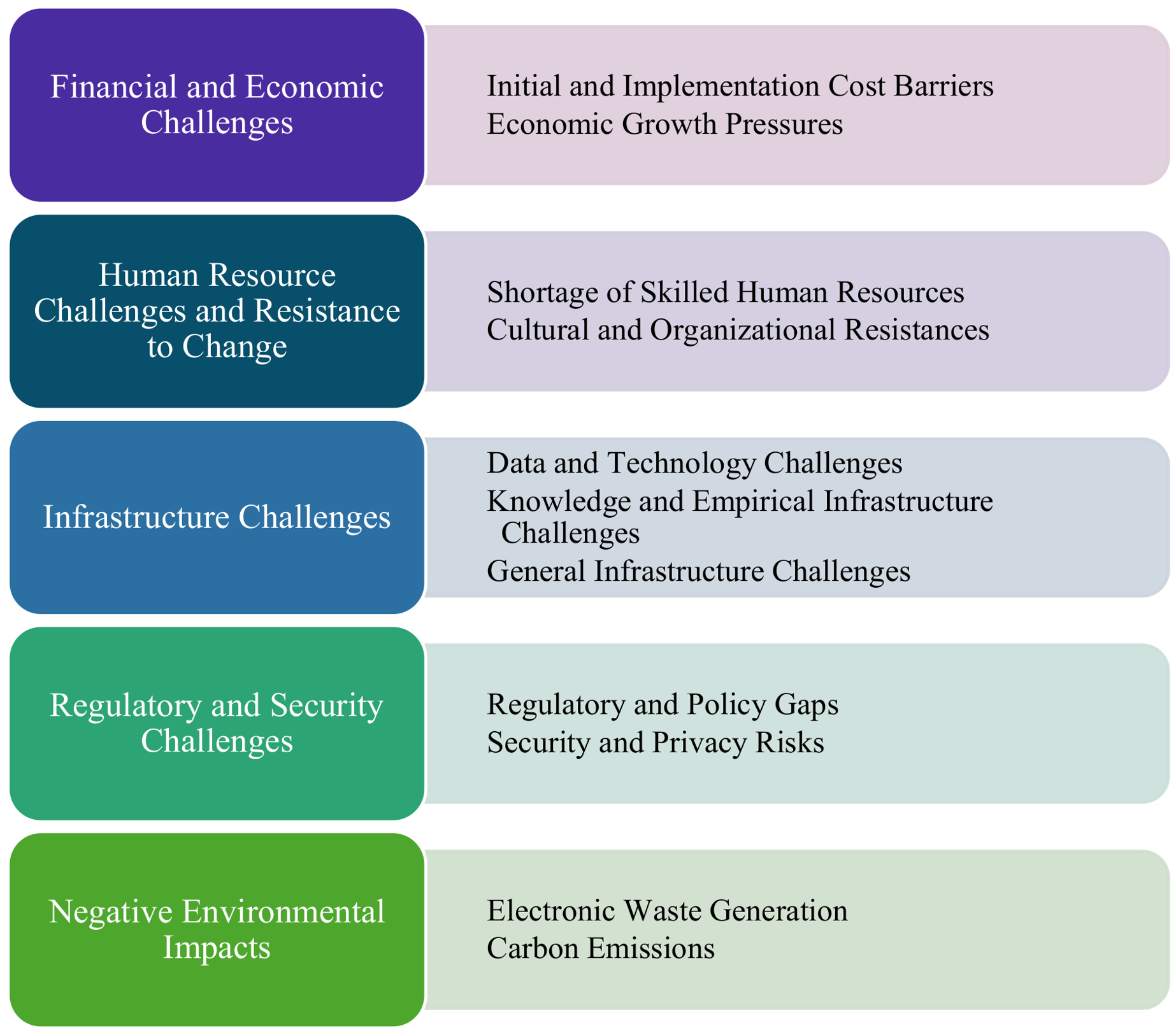
To answer RQ2, which investigates the barriers to applying digital technologies in environmental sustainability policymaking, the identified challenges have been synthesized into five key areas. As detailed in
Figure 4, these encompass financial constraints, human resource barriers, infrastructural limitations, regulatory and security gaps, and environmental impacts.
High initial and implementation costs remain among the most critical barriers to adopting digital technologies, particularly for small organizations and underfunded municipalities. These costs include expenditures on equipment, software, and training programs, all of which impose considerable financial constraints [
55,
61,
62]. In contrast, larger organizations may benefit from economies of scale, allowing them to absorb these costs more effectively and improve the feasibility of digital adoption [
43]. Nevertheless, the financial burden associated with implementing technologies such as AI, IoT, and blockchain remains substantial, especially in resource-constrained contexts [
57,
58].
The significant energy consumption of digital technologies, especially AI systems, presents a further financial challenge by complicating the trade-off between economic efficiency and environmental sustainability [
54,
66]. Li et al. [
65] contend that overcoming this issue requires a dual focus on enhancing digital system efficiency and mitigating their environmental footprint.
The successful adoption of digital technologies relies heavily on skilled human resources; yet many organizations face a significant shortage of expertise in areas such as AI, IoT, and blockchain [
58]. This shortage is particularly evident in regions with lower technological advancement, leading to disparities in the adoption of digital technologies [
40]. Therefore, there is a critical need for targeted education and training programs to develop the necessary expertise, which remains challenging to cultivate [
55].
A significant complication in the implementation process is cultural and organizational resistance, rooted in uncertainty about the future and fears surrounding job displacement, as well as general skepticism toward technological innovations [
35,
41]. Moreover, failing to consider the cultural, social, and historical context during decision-making may result in the rejection of digital technologies, thereby impeding the implementation process [
60]. To overcome these obstacles, Wu et al. [
67] contend that fostering trust, adapting technologies to the socio-cultural fabric, and ensuring that stakeholders recognize tangible benefits are indispensable.
Data and technology infrastructure challenges, including constraints in integrating AI and IoT with legacy systems, the rigidity of current digital frameworks, and the absence of reliable datasets for training AI models, exacerbate the complexity of implementing digital solutions [
37,
39].
Recent studies have shown that knowledge- and experience-related infrastructure challenges highlight the scarcity of theoretical and empirical literature that provides precise scientific frameworks for the application of digital technologies [
42,
52]. This gap hinders organizations in formulating robust strategies for employing digital technologies in environmental sustainability policymaking. Moreover, general infrastructure challenges, such as disparities in access to digital infrastructure and insufficient connectivity in rural areas [
58], further exacerbate inequities in access to digital technologies [
59], constituting an additional challenge that must be addressed.
In addition, the absence of cohesive regulatory frameworks is evident in regulatory and policy gaps; this includes problems related to data ownership and insufficient privacy protection mechanisms [
44,
49]. Moreover, security and privacy risks pose significant threats as the prevalence of cyberattacks and concerns about personal data collection grow [
63,
68]. Therefore, governments must close regulatory gaps and strengthen cybersecurity measures to rebuild public trust in digital technologies [
47,
69].
Digital technologies, however, are not without drawbacks. They are likely to create environmental consequences. The generation of electronic waste from discarded devices, such as broken IoT equipment, poses severe threats due to the presence of hazardous materials like lead, cadmium, and mercury [
50,
54]. To mitigate these risks, electronic waste needs to be recycled properly by reducing pollution and conserving valuable resources such as gold, silver, and copper. Similarly, Samuel et al. [
69] believe that recycling decreases the demand for raw material extraction, which conserves both energy and materials.
In addition, the use of digital technologies requires substantial energy and contributes significantly to carbon emissions [
45]. Solutions such as relying on renewable energy sources and developing more energy-efficient technologies can help reduce emissions and align technological innovation with environmental sustainability.
Overall, synthesizing these five categories suggests that the challenges of applying digital technologies in environmental sustainability policymaking are not isolated barriers, but interdependent socio-technical and institutional constraints. Financial pressures can limit investment in infrastructure and training; skill shortages and cultural resistance can reduce institutional readiness; inadequate data and digital infrastructures can weaken evidence-based decision-making; and regulatory and security gaps can undermine trust, accountability, privacy protection, data ownership, and responsible data use. Moreover, the environmental footprint of digital technologies, particularly e-waste generation, energy consumption, and carbon emissions, complicates the assumption that digitalization is inherently sustainable. Therefore, addressing these challenges requires an integrated governance approach that combines investment in infrastructure and human capital with adaptive regulation, cybersecurity safeguards, inclusive stakeholder engagement, and life-cycle management of digital systems. From this perspective, these challenges do not negate the transformative potential of digital technologies; rather, they define the governance conditions under which such technologies can contribute to legitimate, equitable, and sustainable environmental policymaking.
3.3. Opportunities for the Application of Digital Technologies in Environmental Sustainability Policymaking
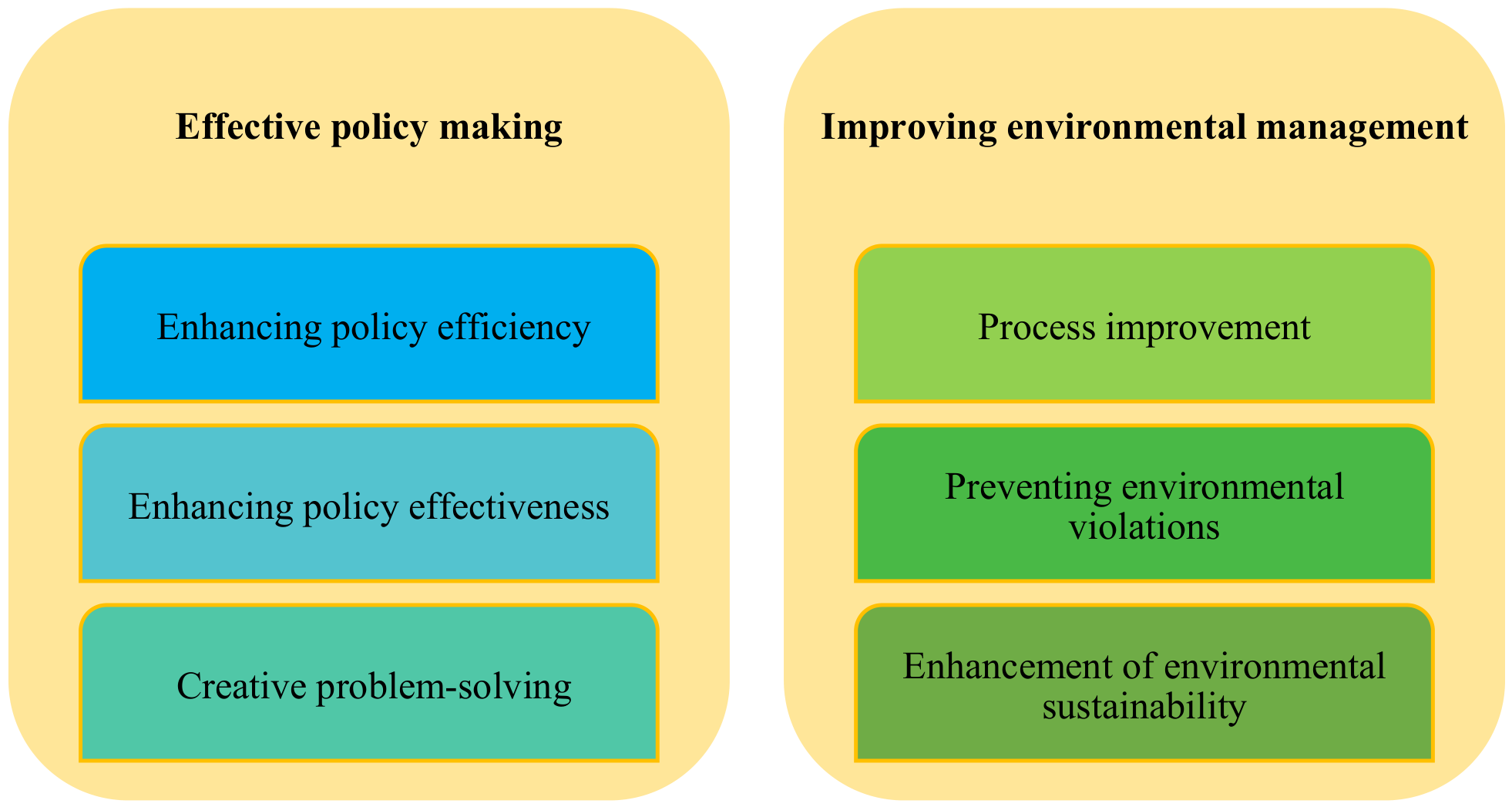
To address RQ3, which focuses on the opportunities for applying digital technologies in environmental sustainability policymaking, the findings were structured into two primary themes: effective policymaking and improving environmental management. As depicted in
Figure 5, each theme comprises three subthemes, offering a comprehensive framework for understanding how digital technologies can enhance policymaking processes, foster innovation, increase transparency, and strengthen environmental sustainability.
In the category of effective policymaking, digital technologies deliver targeted enhancements across three subthemes. Enhancing policy efficiency centers on optimizing operational workflows to obtain cost savings and resource optimization [
58,
70]. These technologies have proven effective as they automate workflows while reducing human errors; they further accelerate task execution and minimize expenditures on environmental protection initiatives [
35,
41,
55]. They also increase the accuracy and efficiency of data collection while assisting in the analysis of large datasets, thereby boosting productivity and facilitating rapid communication for collective decision-making [
37,
42,
53,
57,
59,
71]. Scenario modeling further empowers organizations to identify environmental risks and devise proactive management strategies, streamlining overall policy implementation.
Enhancing policy effectiveness, the second subtheme, refines the decision-making process to yield more precise and impactful outcomes [
37,
54,
56,
65]. In this regard, digital technologies play a major role; they enable the collection and analysis of vast environmental data volumes, and thus assist policymakers in identifying trends, forecasting changes, and making informed, sustainability-oriented decisions [
42,
45,
56,
57]. This includes improving environmental monitoring, enhancing the quality of services and products, and fostering financial and environmental performance while mitigating managerial biases and promoting social justice [
54,
57,
62]. Such capabilities ensure that policies are not only accurate but also aligned with broader societal and ecological needs.
The third subtheme, creative problem-solving, harnesses digital technologies to stimulate innovation and novel approaches to environmental problems [
46,
69,
70]. By equipping stakeholders with advanced analytical tools, these technologies enable the exploration of extensive data, broadening decision-making options and encouraging green innovations [
46,
69]. For example, AI acts as a guiding mechanism for human decision-making, unveiling new horizons and adaptive solutions. Moreover, the need for specialists to monitor, modify, and update these systems generates new job opportunities and entrepreneurial ventures, thereby amplifying creativity in sustainability efforts [
46].
To improve environmental management, digital technologies offer robust mechanisms for oversight and optimization across three subthemes. The first subtheme, process improvement, emphasizes greater transparency and efficiency in management operations [
41,
50,
53,
71]. In this regard, technologies such as blockchain enhance traceability in natural resource management, recording stages from extraction to consumption to reduce abuses and bolster EBP [
41,
42,
56,
72]. Big data analytics further increase public awareness and governance transparency, facilitating precise environmental monitoring and operational flexibility.
Preventing environmental violations, the next subtheme, leverages digital technologies for proactive monitoring and control [
38,
47]. This includes real-time oversight to detect infractions such as land grabbing or unauthorized resource use, thereby enhancing accountability and responsiveness amid public demands for transparency [
38]. Greater operational flexibility in dynamic environments ensures that violations are minimized, contributing to more resilient governance structures.
The enhancement of environmental sustainability, the third subtheme, focuses on achieving long-term ecological balance and sustainable development [
46,
59,
70]. Digital technologies offer innovative methods for monitoring, analyzing, and optimizing natural resources, such as using satellites and smart sensors to track changes in vegetation cover, assess soil erosion, and predict hazards like floods or wildfires [
47,
73]. Big data analytics, leveraging AI, not only identifies consumption patterns but also plays a significant role in tracking recycled materials from collection to repurposing, thereby promoting widespread waste recycling [
50].
Synthesizing these dual domains reveals that the true opportunity of digital technologies extends beyond mere operational automation; they fundamentally reconfigure the policy cycle. By simultaneously augmenting internal policy design and strengthening external environmental enforcement, these tools facilitate a paradigm shift from reactive, compliance-driven management to proactive, anticipatory governance. Crucially, however, these technologies offer latent policy capacities rather than guaranteed solutions; their realization demands a deliberate alignment between digital tools and institutional structures.
3.4. Key Digital Technologies for Environmental Sustainability Policymaking
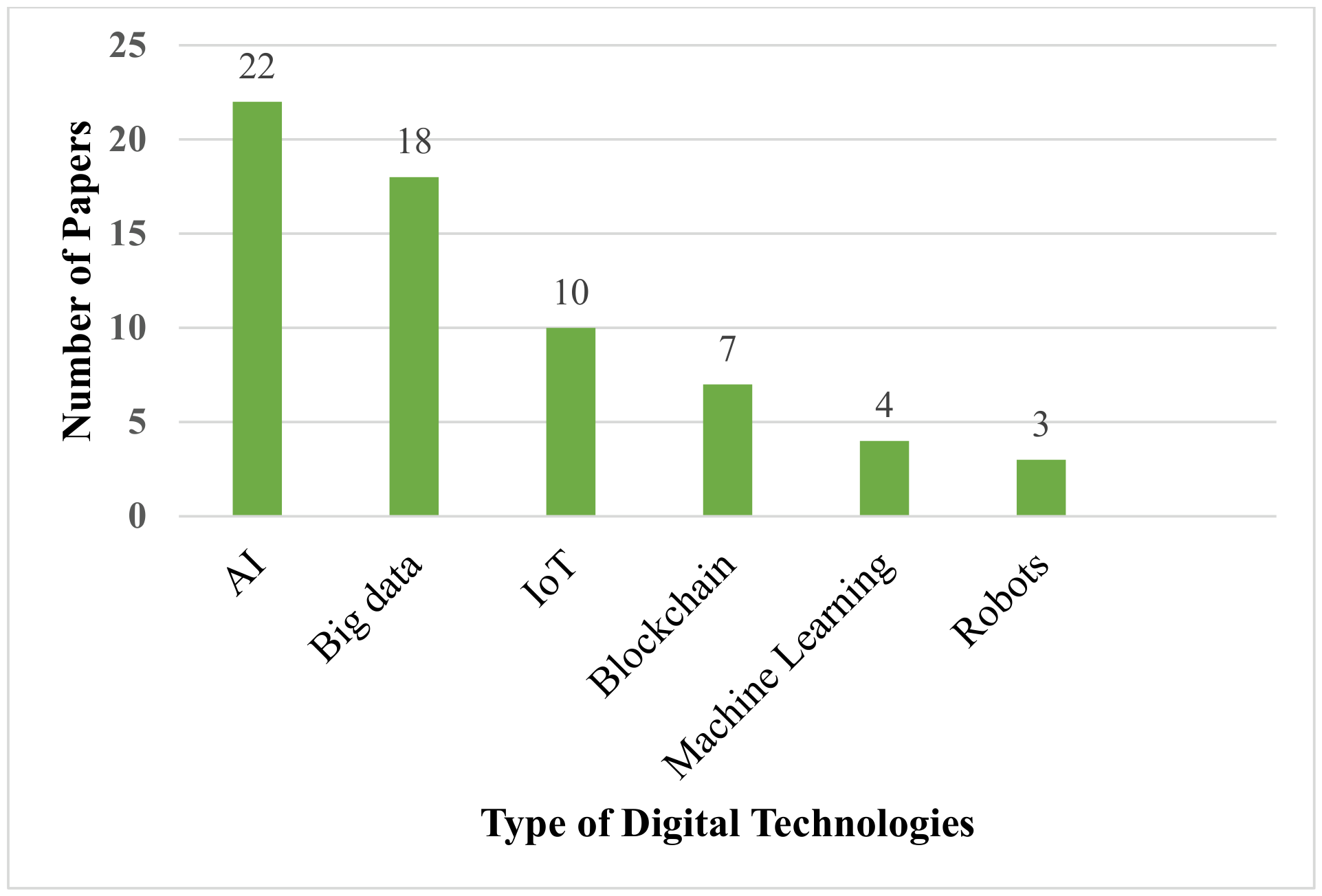
The fourth research question examines which digital technologies have received the greatest emphasis in the existing literature on environmental sustainability policymaking. As illustrated in
Figure 6, AI (n = 22), big data (n = 18), and IoT (n = 10) emerge as the most frequently referenced technologies, followed by blockchain, machine learning, and robots. At the same time, this distribution should be interpreted with caution, since frequency of mention does not necessarily correspond to practical relevance or policy effectiveness. It may instead reflect prevailing research priorities and the varying maturity of technological discussions within the field.
The reviewed studies show that AI applications include predictive analysis, machine learning, and computer vision for improving ecological quality [
71], as well as automation and decision-making support in corporate green innovation [
57]. Green AI is utilized for monitoring pollution, issuing alerts [
63,
65,
66,
67], achieving climate balance objectives [
46], and optimizing renewable energy systems [
39,
70]. AI-driven neural networks and optimization algorithms have supported dynamic load management in power systems [
70] and predictive maintenance for renewable energy infrastructure [
39,
70]. Furthermore, AI plays a pivotal role in the digital revolution [
41], significantly shaping the future of environmental management [
45] and fostering the creation of innovative jobs [
42]. However, effective AI regulation [
49] and appropriate system design [
69,
72] remain crucial to ensure efficiency, transparency, and accountability in its application.
Big data is recognized across the studies as one of the essential components of the digital age, particularly for modeling and policy support systems [
38,
63,
68]. Its applications include policy forecasting [
74], intelligent management [
47,
48], and detecting policy deviations [
38]. Big data analytics also facilitates EBP [
58] and provides insights into sustainability in waste and energy management [
39,
53]. Moreover, big data platforms provide market sensing capabilities and improve decision-making processes in supply chains [
39,
59]. These technologies enable organizations to optimize resource allocation, reduce environmental impact, and develop sustainable solutions tailored to real-time challenges [
57].
The IoT has been utilized to collect, transmit, and exchange environmental data, thereby supporting EBP [
47,
48,
49,
58,
64]. IoT applications include real-time monitoring for optimizing resource use [
39,
53] and enabling dynamic load management systems in renewable energy [
70]. It also facilitates smart waste management solutions, such as GPS-enabled vehicles, smart bins, and real-time sensors for waste collection, sorting, and recycling [
53,
71]. Additionally, IoT plays a crucial role in integrating AI and big data to deliver scalable and adaptive solutions in energy systems [
39] and waste lifecycle management [
53].
Blockchain has been employed to enhance the security, integrity, and transparency of environmental data [
41,
58,
64,
68]. It ensures traceability and fraud prevention in financial systems [
57] and supports transparency across supply chains in the adoption of green technologies [
39]. Specific applications of blockchain include facilitating traceability in waste lifecycle management [
71] and providing secure data storage for green technological innovations [
57]. Blockchain’s decentralized nature aligns with the demands of distributed ledger systems, making it an essential tool in achieving sustainable development goals (SDGs) [
1].
Robots have generally been utilized as executive tools for environmental policies, playing a significant role in reducing industrial and urban pollution [
43,
71]. These technologies contribute to automated waste sorting and recycling in material recovery facilities [
71], ensuring operational efficiency in sustainability efforts. Similarly, machine learning, as a subset of AI, has been applied to identify patterns in environmental data for improved policymaking [
58,
65]. It supports predictive analysis and resource optimization, enhancing the overall effectiveness of green initiatives.
Synthesizing the roles of these diverse technologies reveals a fundamental insight for public administration: their true value in environmental policymaking lies not in isolated deployment, but in synergistic convergence. In a comprehensive policy framework, IoT acts as the sensory layer gathering real-time ecological data, big data provides the infrastructure for integration, AI and machine learning serve as the analytical engine translating raw data into predictive foresight, and blockchain ensures the systemic trust required for multi-stakeholder governance. Consequently, policymakers must transition from adopting single-point technological solutions toward architecting integrated digital ecosystems capable of addressing complex, non-linear environmental challenges.
3.5. Areas of Environmental Sustainability Policies with Digital Technology
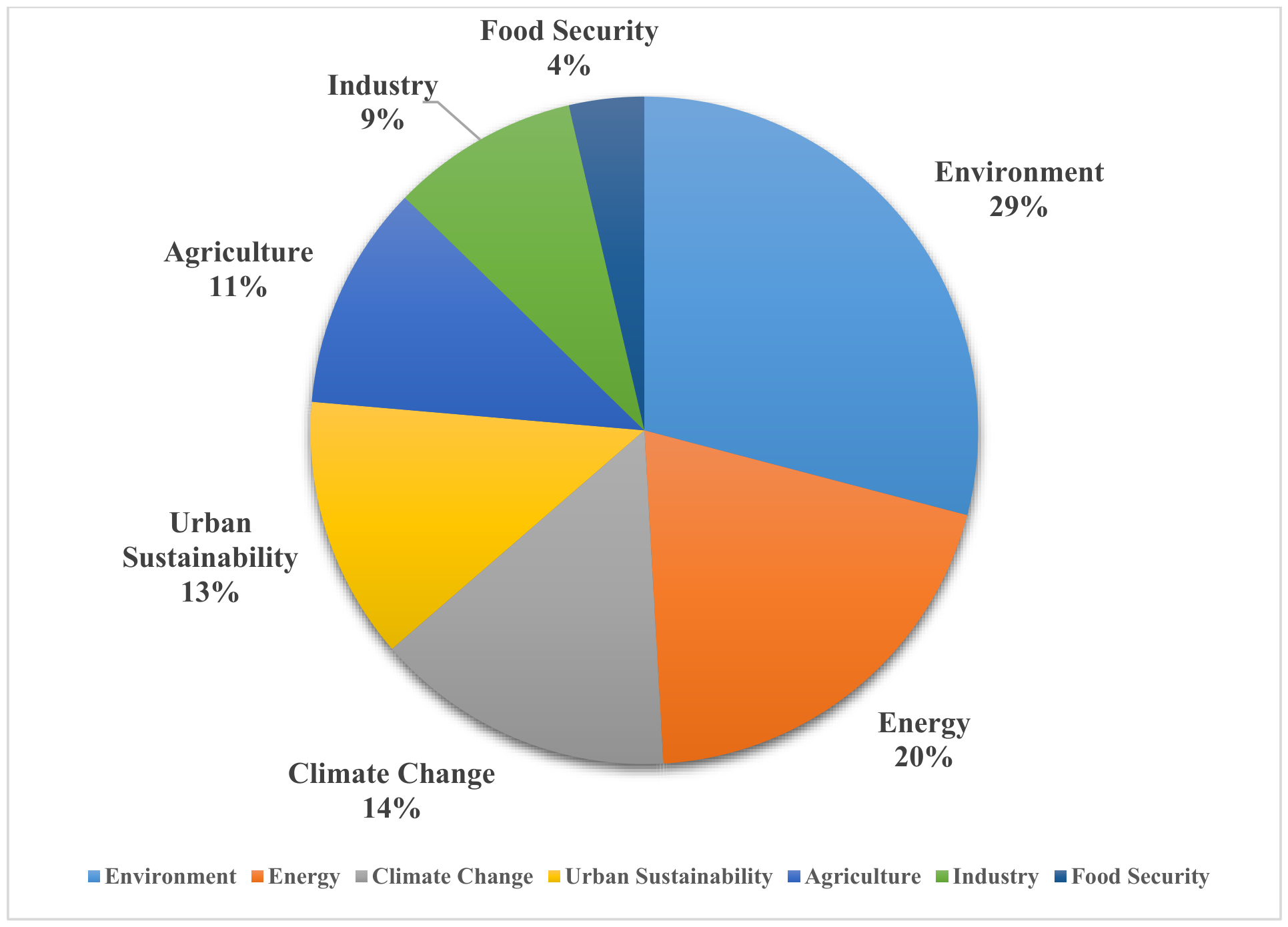
RQ5 seeks to identify the specific policy domains where digital technologies have been most effectively integrated. As illustrated in
Figure 7, these applications span a diverse range of sectors, reflecting the cross-cutting nature of digital transformation in environmental governance. While individual studies often focus on a single domain, the collective body of literature identifies 55 distinct application areas across 39 reviewed papers, indicating a high degree of thematic overlap and interdisciplinary focus.
A significant portion of the research adopts a systemic perspective, focusing on the foundational elements of digital environmental governance. This includes the development of digital infrastructures [
37,
51,
63], the articulation of institutional requirements [
69], and the exploration of strategic opportunities and challenges [
38,
45,
54,
74]. These studies emphasize how digital tools can forecast future environmental conditions and mitigate pollution by fostering innovation within the broader policy ecosystem [
41].
Beyond these general frameworks, the literature reveals specialized applications within critical sectors. In climate change policymaking, digital tools are primarily leveraged to curb greenhouse gas emissions [
35,
43,
53,
70,
74], design green policy frameworks [
46,
67], and monitor pollutant levels with high precision [
65,
68]. Similarly, in the energy sector, the focus has shifted toward enhancing energy efficiency [
46,
64], facilitating decarbonization [
47,
57,
58,
71], and analyzing consumer behavior to support renewable energy transitions [
39,
72].
The agricultural and industrial sectors also demonstrate targeted technological integration. Research in agriculture emphasizes the adoption of digital tools for futures studies [
74] and the establishment of the necessary policy infrastructures [
44,
65,
69]. In the industrial context, digital technologies are utilized to reduce industrial pollution [
41], meet carbon reduction targets [
68], and align industrial operations with evolving environmental expectations [
50,
59,
62]. Furthermore, in urban sustainability, the discourse is centered on the evolution of smart cities [
48,
52,
60,
70], the optimization of urban transportation [
35], and the reduction in localized urban pollution [
65]. Finally, a specialized niche focuses on food security, particularly in improving food production efficiency and managing fisheries through data-driven approaches [
56,
61].
Synthesizing these findings reveals that digital technology is not merely an add-on to existing policies, but a catalyst for “policy intelligence” across the sustainability spectrum. The concentration of research in the “Environment” and “Energy” sectors suggests that digital tools are currently most mature where data is most quantifiable. However, the emerging focus on urban and agricultural sustainability indicates a shift toward more complex, socio-technical policy environments. This sectoral diversity underscores the necessity for cross-sectoral policy integration, where digital data from one domain (e.g., energy) can inform and optimize interventions in another (e.g., urban planning or climate mitigation).
3.6. CSFs for the Application of Digital Technology in Environmental Policymaking
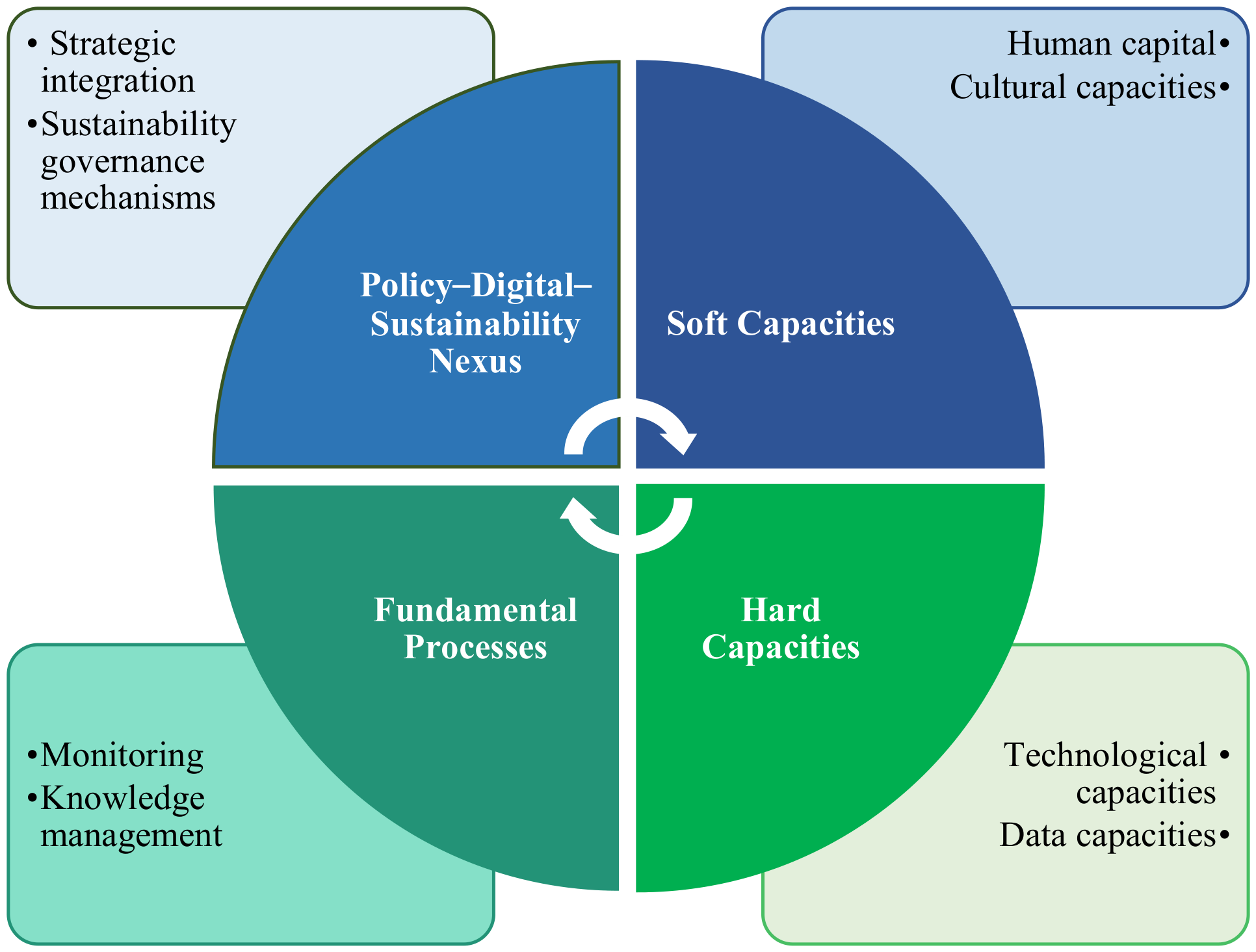
RQ6 identifies the CSFs essential for the effective application of digital technologies within environmental sustainability governance. These factors are organized into four overarching themes that illustrate the dynamic interaction between digital integration, sustainability objectives, and the requisite institutional capacities, as summarized in
Figure 8.
Our study reveals four critical and intertwined dimensions of CSFs that collectively form a comprehensive framework for successful implementation: the Policy–Digital–Sustainability Nexus, Fundamental Processes, Soft Capacities, and Hard Capacities.
The Policy–Digital–Sustainability Nexus represents a transformative approach to integrating digital tools, sustainability principles, and policy frameworks into a cohesive governance model. This CSF emphasizes the strategic embedding of digital strategies into the decision-making fabric [
45,
57], rather than treating technology as a supplementary tool. Key applications include connecting emerging technologies with core sustainability principles [
45,
52,
58], addressing public environmental concerns through innovative solutions [
71], and enhancing governance agility by augmenting human expertise with AI capabilities [
42]. Furthermore, robust governance mechanisms—comprising public–private partnerships [
58], active stakeholder engagement [
41,
69], and multi-sectoral collaboration [
53]—are essential. These are supported by green regulatory frameworks [
63] and AI-specific sustainability regulations [
57,
74] to ensure long-term policy viability.
Operationalizing this nexus requires Fundamental Processes that serve as the operational engine for data-driven policymaking. This domain comprises Monitoring, which functions as the system’s “watchful eye,” enabling the continuous tracking of environmental changes [
35,
37] and establishing a dynamic feedback loop for timely strategic adjustments [
69]. Complementing this is Knowledge Management, which transforms raw data into institutional wisdom [
51]. By systematically storing and sharing environmental information, organizations can prevent the repetition of past mistakes [
48] and foster collaborative environments that drive innovation and efficiency [
74]. Together, these processes ensure that environmental governance remains adaptive and resilient over time.
The third dimension, Soft Capacities, addresses the human and cultural factors that determine the success of digital transformation. Technology remains inert without human agency and institutional adoption. This domain emphasizes Human Capital—specifically the development of specialized skills for AI implementation [
57,
58,
73], the presence of committed leadership [
40,
67,
69], and continuous training to keep pace with technological shifts [
51,
64]. Parallel to this are Cultural Capacities, which necessitate a profound organizational shift toward digitalization [
60] and the cultivation of an “innovation-ready” mindset [
37,
41].
Finally, Hard Capacities encompass the tangible technological and data infrastructures required to realize digital policy ambitions. This theme includes Technological Capacities—referring to coherent information systems [
35,
68] and advanced hardware [
71]—which must be strategically aligned with intangible resources [
62] and user characteristics [
61]. Success also depends on Data Capacities, the lifeblood of the system, which requires high-quality, granular, and diverse data [
35,
38,
42]. Moreover, ensuring data integrity [
48], security [
53], and privacy [
45] is a non-negotiable prerequisite for building systemic trust.
The framework presented in
Figure 8 suggests that the success of digital environmental policymaking is not a linear technological progression, but a socio-technical orchestration. The cyclic arrows in the model indicate a hierarchical interdependence: Hard Capacities and Fundamental Processes provide the “empirical backbone,” yet they remain functionally dormant without the “intellectual and cultural engine” provided by Soft Capacities. Ultimately, the Policy–Digital–Sustainability Nexus serves as the “normative compass,” ensuring that technological efficiency remains aligned with ecological values. For policymakers, this implies that failure in digital transition is rarely a result of technological insufficiency, but rather a lack of “soft–hard alignment.” Consequently, effective governance requires a holistic transition where infrastructure development is synchronized with cultural readiness and strategic institutional mandates.
4. Discussion
This systematic review synthesized the fragmented literature on the use of digital technologies in environmental sustainability policymaking. Moving beyond a descriptive inventory of digital tools, this section interprets how these technologies support evidence generation, policy formulation, implementation, monitoring, and policy learning, while also highlighting the institutional, ethical, empirical, and inclusion-related conditions that shape their policy value.
4.1. Moving Beyond Technological Determinism in Environmental Sustainability Policymaking
A key insight from this study is that digital technologies are unlikely to improve environmental sustainability policymaking in isolation. The identified prerequisites (
Figure 3) suggest that “Hard Capacities”, such as digital infrastructure, reliable data, and analytical tools, provide an important technical foundation for evidence generation and policy support. However, their value remains limited without “Soft Capacities”, including human capital, digital literacy, organizational readiness, regulatory clarity, innovation culture, and stakeholder participation.
This finding is important because environmental policymaking requires more than data availability or computational capacity. Policymakers also need institutional capacity to interpret evidence, translate it into feasible policy options, coordinate stakeholders, and ensure accountability during implementation. Therefore, weaknesses in digitally supported environmental policymaking should not be understood merely as technical problems. They often reflect misalignment between technological capacity, institutional arrangements, human capabilities, and sustainability objectives.
4.2. Digital Technologies Across the Environmental Policy Cycle
The reviewed literature indicates that digital technologies can support different stages of the environmental policy cycle. At the agenda-setting stage, tools such as remote sensing, big data, and AI can help identify emerging environmental problems. During policy formulation, predictive analytics, scenario modeling, and decision-support systems can assist in comparing policy alternatives. In implementation and enforcement, IoT, blockchain, digital platforms, and automated monitoring can support compliance tracking and regulatory responsiveness. At the evaluation stage, digital data systems can facilitate continuous monitoring, feedback, and policy learning.
However, these opportunities are accompanied by important risks. Technologies designed to support environmental sustainability may also generate environmental and governance burdens, including energy consumption, e-waste, cybersecurity risks, privacy concerns, unequal access, and possible misuse of environmental data [
45,
54]. Thus, digital policy instruments should not be evaluated only by efficiency or data-processing capacity, but also by their institutional feasibility, lifecycle impacts, accountability, and social legitimacy. Their contribution depends on whether they generate credible and usable evidence for environmental decision-making.
4.3. Technological Visibility and Uneven Policy Attention
The analysis of technologies (
Figure 6) shows a clear concentration of research on AI and big data. While these technologies are important for prediction, automation, and decision support, high research frequency should not be interpreted as evidence of greater policy effectiveness. Their visibility may partly reflect current research trends, market attention, data availability, and academic path dependency.
This is important because different environmental policy problems require different digital tools. For example, AI and big data may be useful for large-scale analysis, while Digital Twins, Geospatial Data Cubes, sensor networks, participatory mapping tools, and citizen-data platforms may be more suitable for localized monitoring, participatory planning, or context-sensitive implementation. Therefore, the selection of digital technologies for environmental sustainability policymaking should be guided by policy purpose, ecological context, institutional capacity, data quality, and implementation feasibility.
The mapping of technologies against policy areas (
Figure 7) also suggests uneven scholarly attention. Climate change, energy, urban sustainability, agriculture, industry, and corporate green innovation receive more attention, whereas biodiversity conservation and water resource management appear comparatively less represented. This suggests that the current literature does not yet fully cover the range of environmental policy domains in which digital technologies may be useful.
4.4. Theoretical Contribution: A Nested Architecture for Digital Sustainability Policymaking
The main theoretical contribution of this review is the integration of digital technologies, EBP, and environmental sustainability into a nested architecture of four CSFs (
Figure 8). Rather than treating success factors as separate or linear elements, the framework conceptualizes them as interdependent layers shaping digitally supported environmental sustainability policymaking.
Within this architecture, the Policy–Digital–Sustainability Nexus functions as the normative and strategic core. It clarifies why digital technologies are used and how they should align with sustainability objectives. Soft Capacities provide the human, organizational, and participatory conditions required to interpret digital evidence and translate it into policy action. Hard Capacities provide the technical foundation for data generation, monitoring, and analysis. Fundamental Processes, such as environmental monitoring, knowledge management, evidence use, and policy learning, connect digital capacities to actual policymaking practices.
This framework suggests that the policy value of digital technologies depends on the alignment among these layers. Advanced technologies may have limited impact if data are unreliable, institutions lack implementation capacity, or stakeholders are excluded from decision-making. In this sense, digital transformation in environmental sustainability policymaking should be understood as a socio-technical and institutional process, not merely as technological adoption.
4.5. Gaps in the Current Literature
Despite growing scholarship on digital technologies and environmental sustainability policymaking, several gaps remain.
Epistemological and policy-process gap: Much of the literature remains technology-oriented and tends to frame digital tools as instruments for efficiency, monitoring, and data-driven decisions. Less attention is given to how digital evidence is produced, interpreted, contested, and translated into policy action. Issues such as data ownership, algorithmic authority, political use of environmental data, power asymmetries, and the legitimacy of digitally supported decisions remain insufficiently examined.
Empirical and longitudinal gap: Many of the 39 reviewed studies are conceptual, review-based, sector-specific, or focused on pilot applications. There is still limited longitudinal and ex-post evidence showing whether digitally supported policy interventions generate measurable and durable environmental improvements. Economic feasibility, institutional implementation, lifecycle impacts, energy consumption, and e-waste also remain insufficiently integrated into empirical assessments.
Inclusion and environmental justice gap: The literature gives more attention to macro-level institutional, corporate, technological, and urban perspectives than to the lived experiences of local communities, indigenous groups, smallholder farmers, fishers, rural populations, and ordinary citizens. This is important because environmental sustainability policymaking is also a matter of justice, participation, and legitimacy.
Taken together, these gaps indicate that the use of digital technologies in environmental sustainability policymaking should not be assessed only through technical efficiency or automation. Its broader value depends on whether digital tools improve evidence quality, support policy learning, enhance accountability, include affected stakeholders, and contribute to measurable and equitable environmental sustainability outcomes.
5. Conclusions
This systematic review addressed the lack of an integrated and policy-oriented framework for understanding how digital technologies can be applied in environmental sustainability policymaking. Drawing on 39 articles selected from 293 WoS records in accordance with PRISMA 2020, this study synthesized fragmented evidence into a multidimensional framework that clarifies the conditions, barriers, opportunities, technologies, application areas, and success factors associated with digitally supported environmental sustainability policymaking.
To provide a comprehensive synthesis of the current state of knowledge, this review summarizes the answers to the six primary research questions by identifying their key constituent elements. In addressing the foundational requirements, the study establishes six essential prerequisites (RQ1) for digital policy integration: fiscal incentives, a culture of innovation and sustainability, effective regulations, robust digital infrastructures, active stakeholder participation, and reliable and accessible data. Conversely, it maps five critical challenge clusters (RQ2) that hinder this transition: financial constraints, human resource barriers, infrastructural limitations, regulatory and security gaps, and the adverse environmental impacts of the technologies themselves, including electronic waste and high energy consumption. Amidst these barriers, the review identifies two distinct opportunity domains (RQ3) for policy enhancement, namely effective policymaking and improved environmental management. Regarding the technological landscape, the study highlights six key digital tools (RQ4) emphasized in the literature—comprising AI, big data, the IoT, blockchain, machine learning, and robots—which are predominantly deployed across seven core policy application areas (RQ5): the environment, energy, climate change, urban sustainability, agriculture, industry, and food security. Finally, to ensure successful implementation, the study synthesizes four interdependent CSFs (RQ6): the Policy–Digital–Sustainability Nexus, Fundamental Processes, Soft Capacities, and Hard Capacities.
Beyond identifying these elements, the review shows that digital technologies do not contribute to environmental sustainability policymaking in isolation. Their policy value depends on the interaction between technical infrastructures, institutional arrangements, human capacities, and governance processes. In other words, digital transformation in this field is not simply a matter of adopting tools; it requires an enabling ecosystem in which reliable data, regulatory clarity, organizational readiness, stakeholder cooperation, and adaptive learning processes reinforce one another.
The main theoretical contribution of this study lies in systematically connecting digital technologies, EBP, and environmental sustainability within a coherent multidimensional framework. By establishing this framework, the study does not merely catalog prerequisites, challenges, opportunities, CSFs, or digital tools; rather, it conceptualizes the use of digital technologies in environmental sustainability policymaking as a socio-technical and institutional process. In this process, digital tools can support policy formulation, implementation, monitoring, and learning, but their value depends on the institutional, human, technical, and governance conditions in which they are embedded. The framework also recognizes the digital–environmental paradox, namely that technologies used to support environmental sustainability may themselves generate ecological burdens, such as electronic waste, high energy consumption, and resource-intensive data infrastructures. This balanced perspective moves the study beyond a descriptive literature synthesis and provides a policy-relevant framework for aligning digital capabilities with environmental sustainability objectives, institutional accountability, and public responsibility.
The review also highlights an important imbalance in the current literature. Existing studies tend to place greater emphasis on the efficiency, monitoring, and predictive potential of digital technologies than on the institutional, ethical, and political complexities that shape their use in environmental sustainability policymaking. Issues such as algorithmic bias, digital inequality, surveillance concerns, political misuse of environmental data, data ownership, and concentration of technological power receive comparatively less sustained attention. In addition, much of the literature remains conceptual or pilot-based, with limited longitudinal and post-implementation evidence on whether digital interventions actually improve environmental policy outcomes over time. The evidence base is also uneven across policy domains: climate change, energy, and urban sustainability are relatively well represented, whereas areas such as biodiversity conservation and water resource management remain comparatively less developed.
Environmental sustainability policymaking must also be understood as systemic and transboundary. Environmental disruption in one location can generate consequences beyond the territory in which it originates, as climate instability, pollution, resource depletion, and ecological degradation are not contained by political borders. For that reason, international cooperation, regional capacity building, and more equitable forms of digital empowerment are essential if digital technologies are to support sustainability in a meaningful and globally responsible way. Digital tools can strengthen this collective effort by enabling shared monitoring, coordinated response, and cross-border learning, but only if countries and regions are not reduced to passive recipients of externally controlled technologies.
Building on the synthesized findings, this study offers several policy implications for strengthening the use of digital technologies in environmental sustainability policymaking, with relevance to the SDGs:
Institutional Mapping for Stronger Governance: One important implication of this review is the need for institutional mapping in environmental sustainability policymaking. This involves identifying the organizations, institutions, and stakeholder groups involved in policymaking, clarifying their responsibilities and interrelationships, and making visible the overlaps, gaps, and parallel functions that can weaken policy coordination. Such mapping can support more coherent and digitally enabled policymaking and is closely aligned with SDG 16 on effective, accountable, and inclusive institutions. Its progress can be assessed through the extent to which institutional responsibilities, inter-organizational relationships, and areas of overlap or fragmentation are clearly identified in digitally supported environmental policymaking arrangements.
Capacity Building for a Just Digital Transition: The study also shows that digital transformation requires sustained investment in human capabilities. Policymakers, technical staff, and other users need more than basic digital literacy; they require interdisciplinary competence that links environmental knowledge, public policy, data analysis, and ethical judgment. This recommendation aligns with SDG 4 and SDG 8 by supporting lifelong learning and a just green and digital transition. Its progress can be assessed through indicators such as the digital competence of policy actors and the presence of interdisciplinary teams capable of supporting digitally enabled environmental sustainability policymaking.
Ensuring Data Integrity with Independent Oversight: Digital technologies can strengthen EBP only if the data that feed them are trustworthy and not selectively produced to justify predetermined decisions. Independent oversight is therefore essential to protect data integrity, public trust, and accountability in line with SDG 16. Relevant indicators include the existence of independent review or audit mechanisms for environmental data and the use of transparent procedures for validating digitally generated evidence in policymaking.
Promoting Digital Sovereignty to Reduce Inequalities: Heavy dependence on externally controlled digital infrastructures or imported technological solutions may reproduce new forms of dependency and inequality. Without sufficient local capacity, such dependence may also reinforce asymmetric forms of digital governance, sometimes described as digital colonialism. Strengthening local digital ecosystems and supporting fair technology partnerships are therefore important for reducing asymmetries and advancing SDG 10 and SDG 17. This implication can be assessed through indicators such as the share of digital solutions developed locally and the level of local capacity for maintaining, adapting, and governing environmental digital systems.
Developing Context-Specific Models of Digitally Supported Environmental Sustainability Policymaking: The findings suggest that universal templates are unlikely to work equally well across different institutional, cultural, economic, and ecological contexts. More context-sensitive models are needed to ensure that the use of digital technologies in environmental sustainability policymaking remains both effective and legitimate. Particular attention should be given to the inclusion of local communities, indigenous groups, and smallholder farmers, whose perspectives remain underrepresented in the current literature.
Designing Secure and Inclusive Environmental Information Systems: Another implication concerns the need for secure, interoperable, and inclusive environmental information systems that can balance timely access to data with privacy and security requirements. This recommendation is closely related to SDG 9 and SDG 16. Its implementation can be assessed through the existence of interoperable environmental data systems and the extent to which those systems combine security safeguards with meaningful stakeholder access.
Reinforcing Policymaker Accountability in the Digital Age: Finally, digital technologies should be treated as analytical and organizational tools, not as substitutes for public responsibility. Responsibility for environmental decisions remains with policymakers and cannot legitimately be shifted to algorithms, models, or automated systems. Accordingly, the use of advanced digital systems in environmental policymaking should remain subject to human oversight, clear accountability arrangements, and transparent reporting procedures.
This study is subject to several limitations. First, it relied exclusively on the WoS Core Collection, which was deliberately selected for its high-quality and high-impact coverage, but this choice may have excluded relevant studies indexed in other databases. Second, the review included only peer-reviewed English-language journal articles and review articles, thereby excluding non-English studies, gray literature, conference proceedings, and book chapters that may contain relevant policy experiences or regional insights. Third, although the review followed PRISMA 2020 and applied systematic coding with inter-coder reliability checks, the synthesis of themes necessarily involved interpretive judgment.
Future research should move in four directions. First, it should broaden the empirical base by incorporating additional sources such as Scopus and relevant policy-oriented documents, including gray literature where appropriate, so that the current evidence can be tested against a wider and more interdisciplinary body of scholarship and practice. Second, it should give greater attention to ethical, institutional, and governance issues, including algorithmic accountability, data justice, cross-border data governance, and the social legitimacy of digitally supported environmental decisions. Third, it should prioritize longitudinal and post-implementation studies capable of assessing whether digital policy interventions produce measurable and lasting environmental improvements. Fourth, it should further examine the economic feasibility and contextual adaptation of green AI, digital infrastructures, and secure environmental information systems, particularly in developing and resource-constrained contexts, and should better incorporate the perspectives of local communities, indigenous groups, smallholder farmers, fishers, rural populations, and other affected actors.
Overall, this review shows that digital technologies can support environmental sustainability policymaking only when they are embedded in an enabling governance ecosystem. Their contribution lies not simply in technical sophistication, but in the extent to which they are integrated with reliable data, responsive institutions, human capacity, ethical safeguards, policy learning mechanisms, and collaborative forms of governance.





 ,
,