A Multi-Time-Scale Energy Allocation Strategy Considering Start–Stop Characteristics of Electrolyzers for Electricity–Hydrogen Coupling Systems
 ,
,
Abstract
1. Introduction
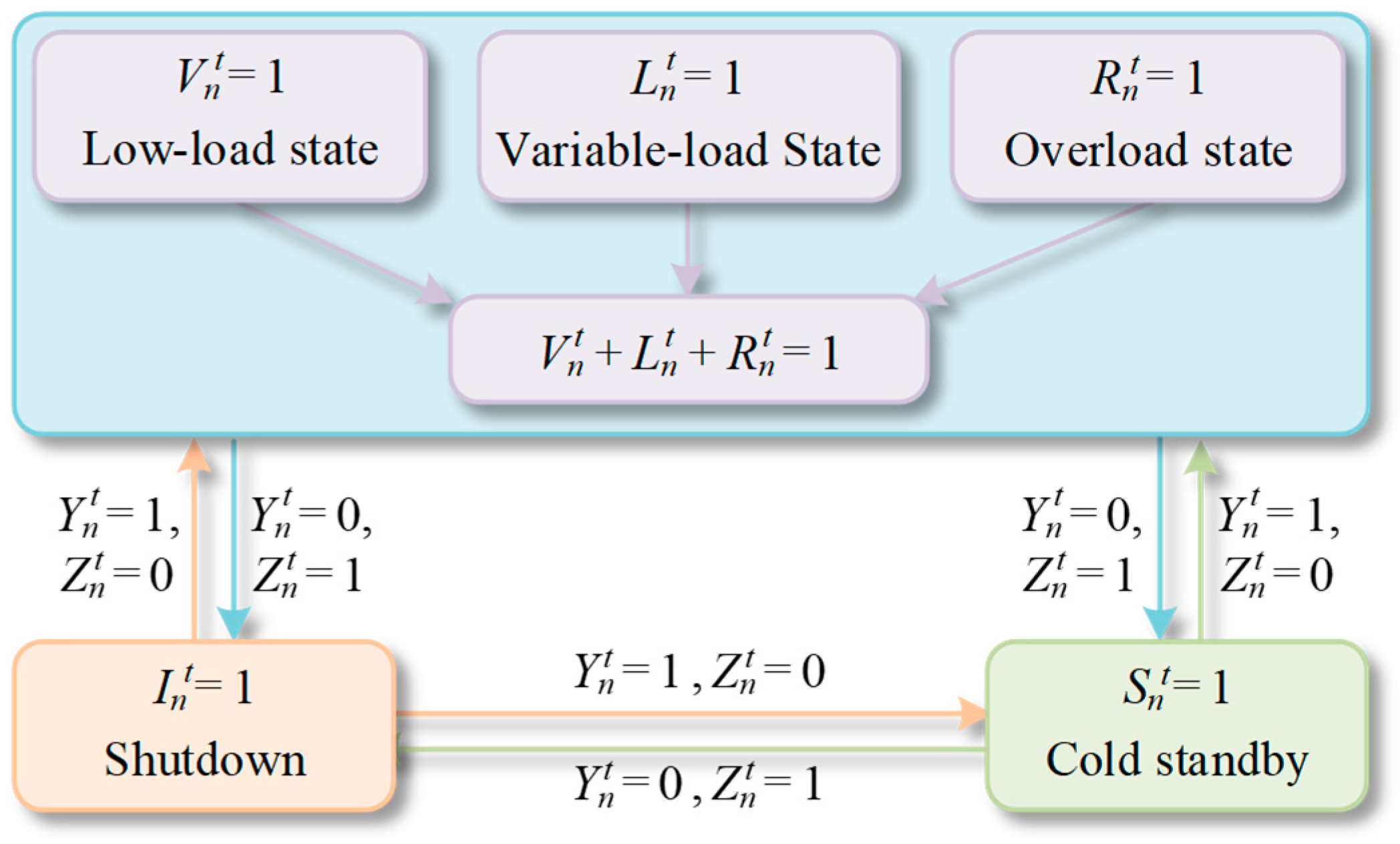
- Refined state modeling of ELs: Five operating states (shutdown, cold standby, low-load, variable-load, and overload) are formulated as mixed-integer constraints and embedded into the system-level optimization model, which can improve the fidelity of EL behaviors compared with existing simplified or on/off models.
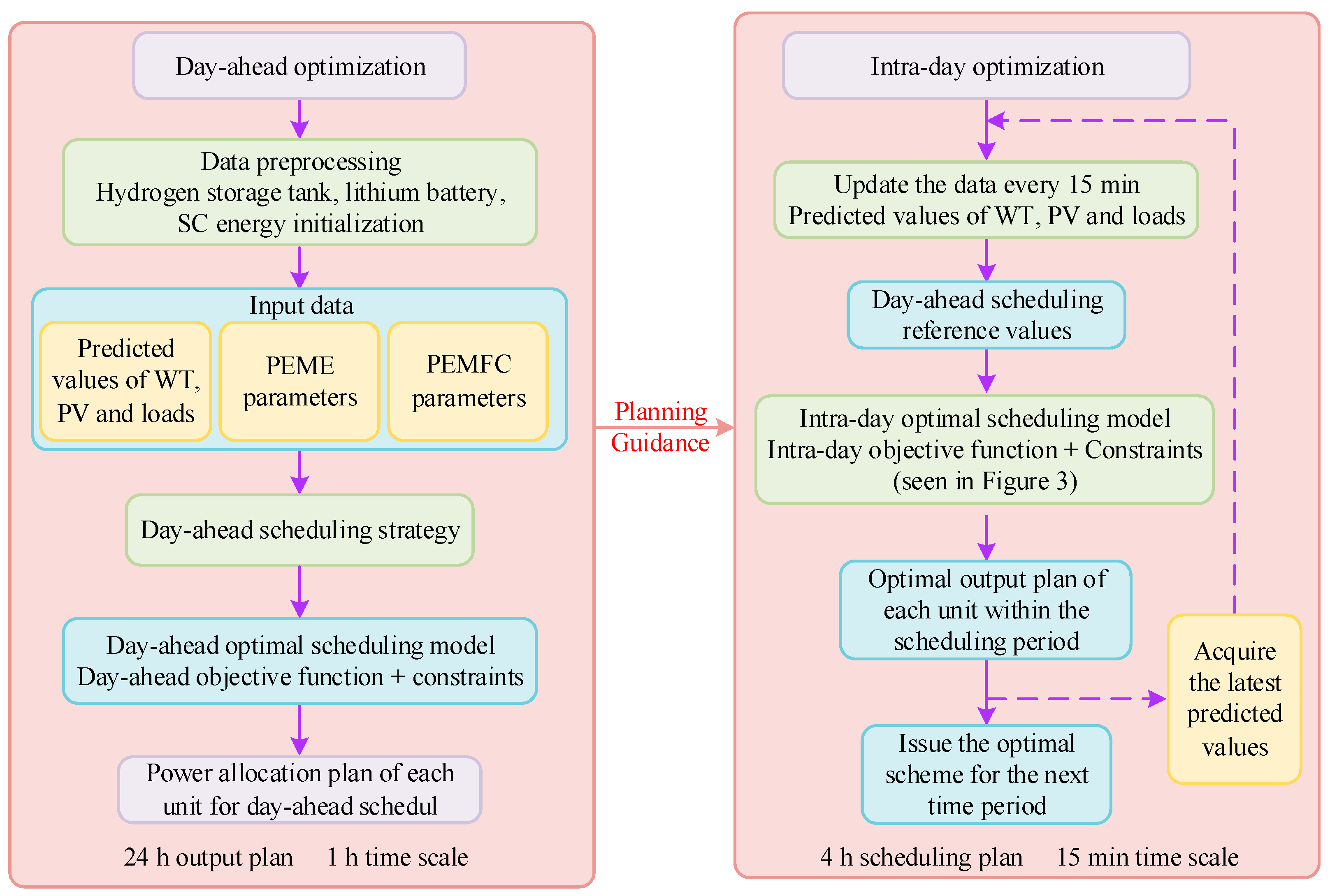
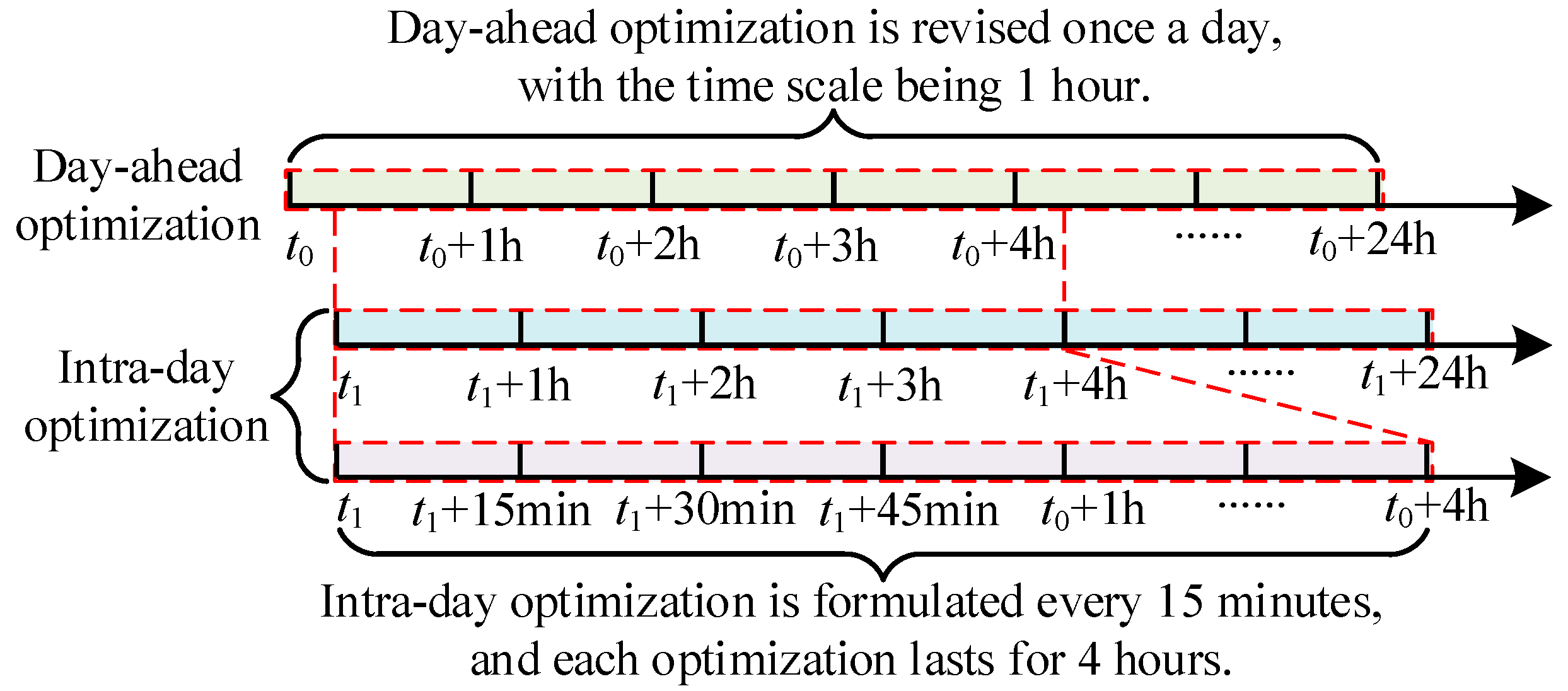
- Two-stage multi-time-scale framework: A day-ahead optimization plan with a 1 h step is coordinated with an intra-day rolling optimization with a 4 h window and 15 min step. This coordination can mitigate the REG uncertainty in the day-ahead stage, and re-optimize the operating states and power outputs of ELs, lithium batteries, fuel cells, and the grid in the intra-day stage.
- Flexible combined operation of multiple ELs: By enabling multiple ELs to flexibly operate in a combined mode, power-sharing mode, and switching mode, the proposed MSEAS can reduce the start–stop frequency of ELs and mitigate the adverse impacts of REG uncertainty. Comparative case studies verify that the proposed MSEAS contributes to extending the service life of ELs and reducing the system operating cost.
2. System Structure and Mathematical Model
2.1. System Structure
2.2. System Model
2.2.1. Wind Turbine Model
2.2.2. Photovoltaic Model
2.2.3. Lithium Battery Model
2.2.4. Start–Stop Model of PEME
- (1)
- Shutdown state: During the shutdown process, the PEME needs to perform a series of operations such as reducing the current, cutting off the power, venting pressure and cooling down. So, PEMEs require an interval of 30 min~1 h to fully start up from the shutdown state.
- (2)
- Cold standby state: The PEME is shut down while its control unit and anti-freezing unit still need to be kept in operation. In this state, the PEME will consume 0%~10% of . The transition time from the cold standby state to the normal operating state takes approximately 5 min to 10 min.
- (3)
- Hot standby state: The PEME is shut down but still requires low power to keep the necessary temperature and pressure. Note that the hot standby state is not separately modeled in this paper. Since its transition time to normal operation is extremely short (from seconds to a few minutes) and power consumption is negligible, its impact is insignificant within the 1 h time step. For this reason, the hot standby state is merged into the cold standby state for modeling.
- (4)
- Normal operation state: If the PEME is operated at the low or high current density for a long time, it may be at risk of explosion or cause damage to the stack materials. Therefore, considering the safety, the PEME should operate within the power range of 30%~100% of for a long time. Additionally, the PEME can also operate in the low-load state (10%~30% of ) and the overload state (100%~150% of ) for a short time.
2.2.5. PEMFC Model
2.2.6. Hydrogen Storage Tank Model
2.2.7. Electricity Demand Response Model
3. Multi-Time-Scale Optimization Model
3.1. Optimization Model Design Ideas
3.2. Day-Ahead Optimization Model
3.2.1. Objective Function
3.2.2. Constraints
- (1)
- System Power Balance Constraint:
- (2)
- WT and PV power constraints:
- (3)
- PEMFC power constraint:
- (4)
- Lithium battery power constraints:
- (5)
- Hydrogen storage tank capacity constraints:
- (6)
- PEME operating state constraints:
3.3. Intra-Day Optimization Model
3.3.1. Objective Function
3.3.2. Constraints
4. Case Study
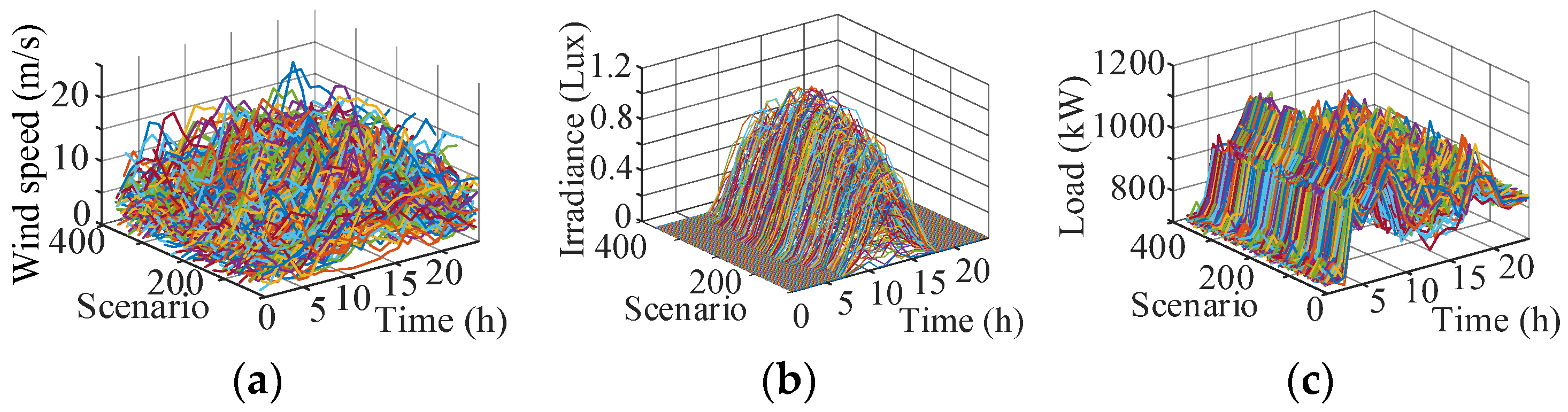
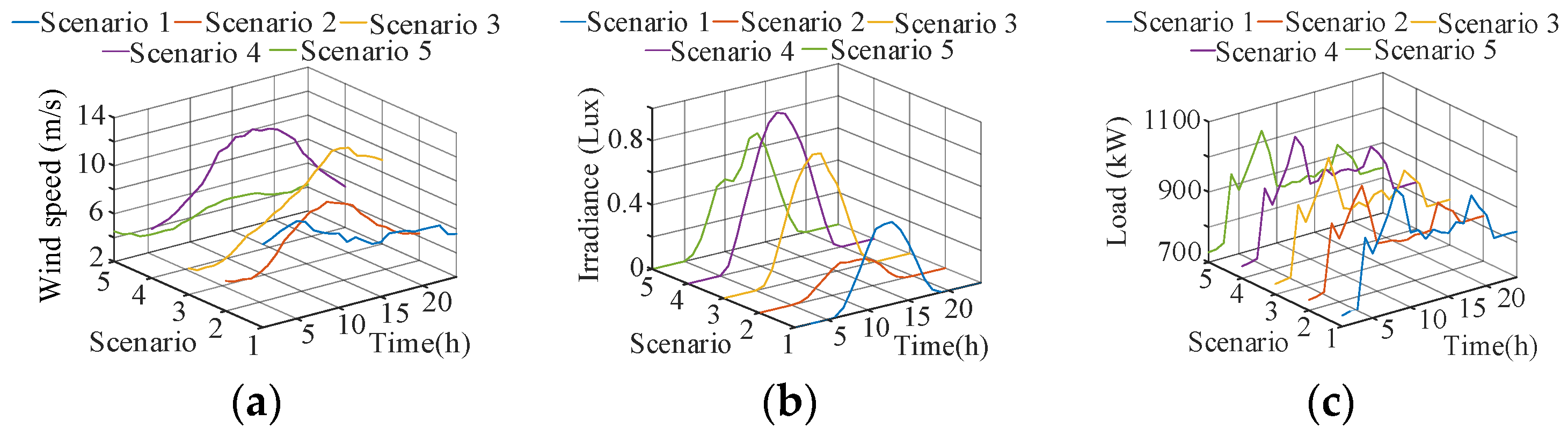
4.1. Data Preprocessing
4.2. Off-Grid and Grid-Connected Operation Study
4.2.1. Case Study Under Off-Grid Conditions
- (1)
- Scheduling cost analysis: After simulating the three described cases, the scheduling cost of the EHCS is presented in Table 2. Under off-grid conditions, there is no electricity purchasing or selling with the grid, and the demand response does not need to be considered; thus, both CBS and CDR are zero. Based on the results in Table 2, the combined operation mode and state switching among PEMEs exert an impact on the system’s scheduling cost. For these three cases, the CT in Case III is the lowest, which indicates that the economy of the system is improved by flexibly adjusting the operating states and combined operation modes of the PEMEs.
- (2)
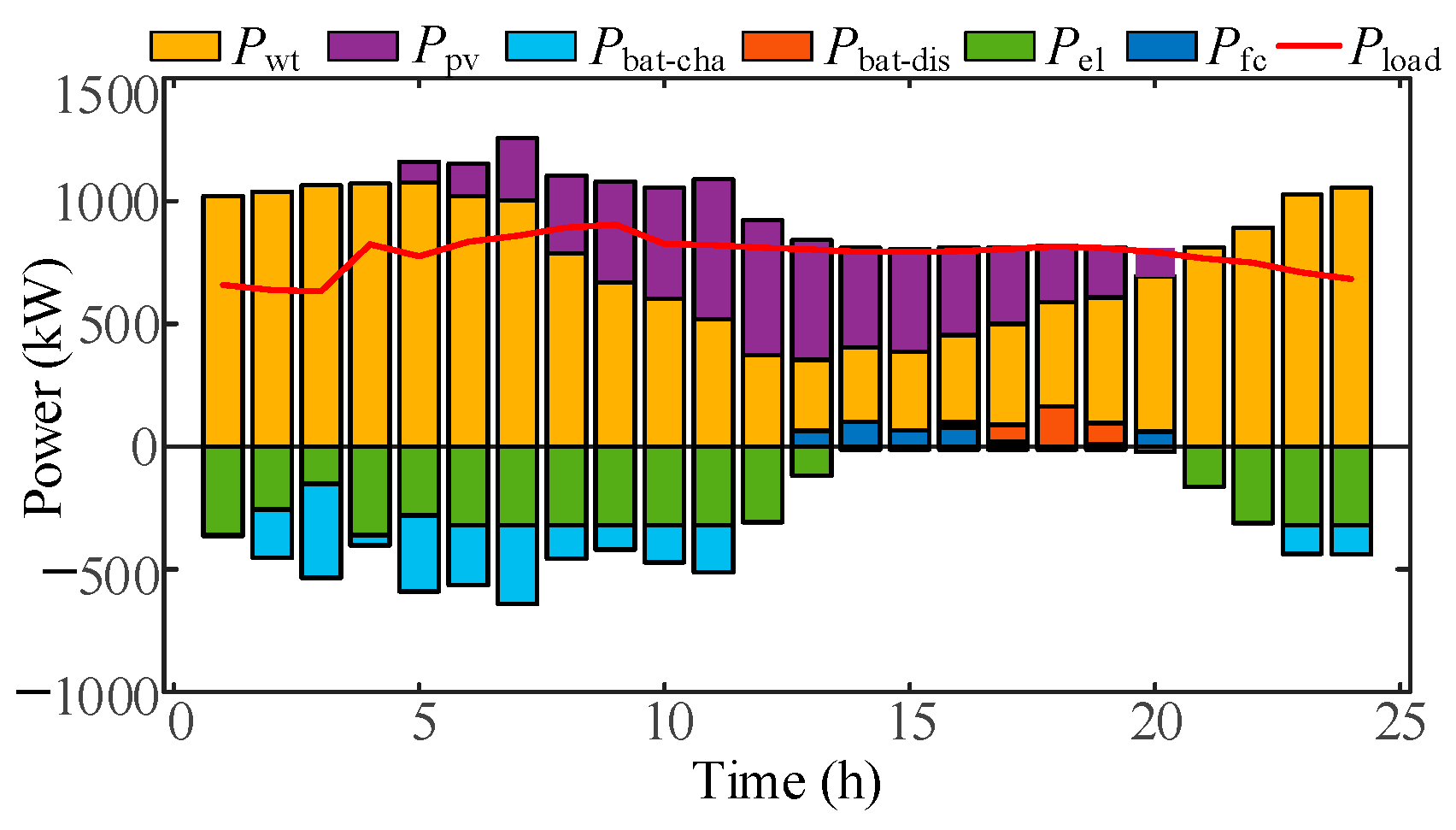
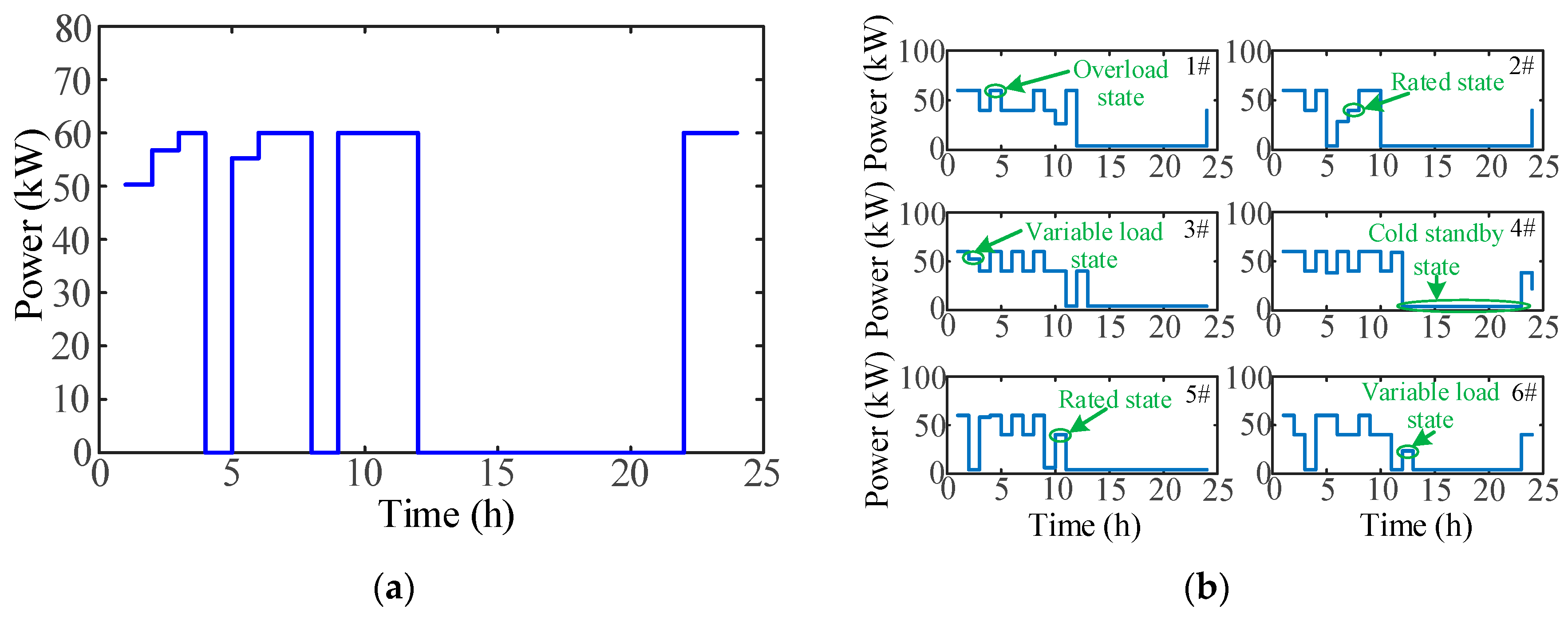
- Power allocation analysis: The output powers of WT and PV are first used to supply the loads; the surplus powers can be absorbed by lithium batteries and PEMEs, while the deficit powers can be supplemented by lithium batteries and PEMFCs. In this section, taking Case III with the lowest CT as an example, the power allocation of the EHCS under off-grid conditions is discussed, and the power allocation results are presented in Figure 7.During the period from 0 to 13 h, the output powers of WT and PV exceed the load power demand, so the surplus power is utilized for hydrogen production by PEMEs and charging the lithium batteries. During the period from 14 h to 20 h, the output powers of WT decrease significantly due to the decrease in wind speed, resulting in an insufficient power supply for the loads. To this end, lithium batteries and PEMFCs work collaboratively to supply the deficient power required by the loads. Based on the results from Figure 7, it can be found that PEMEs and lithium batteries can enhance the accommodation capacity of the system for wind and solar energy.
- (3)
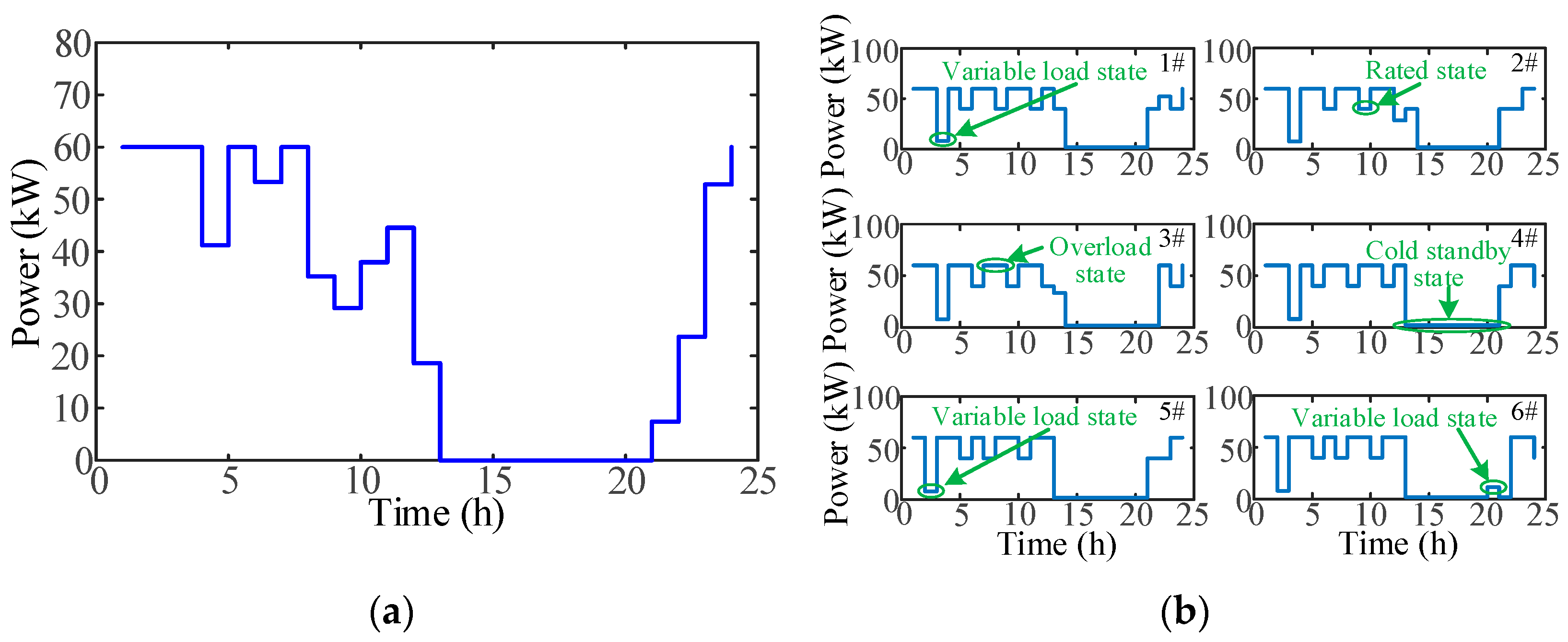
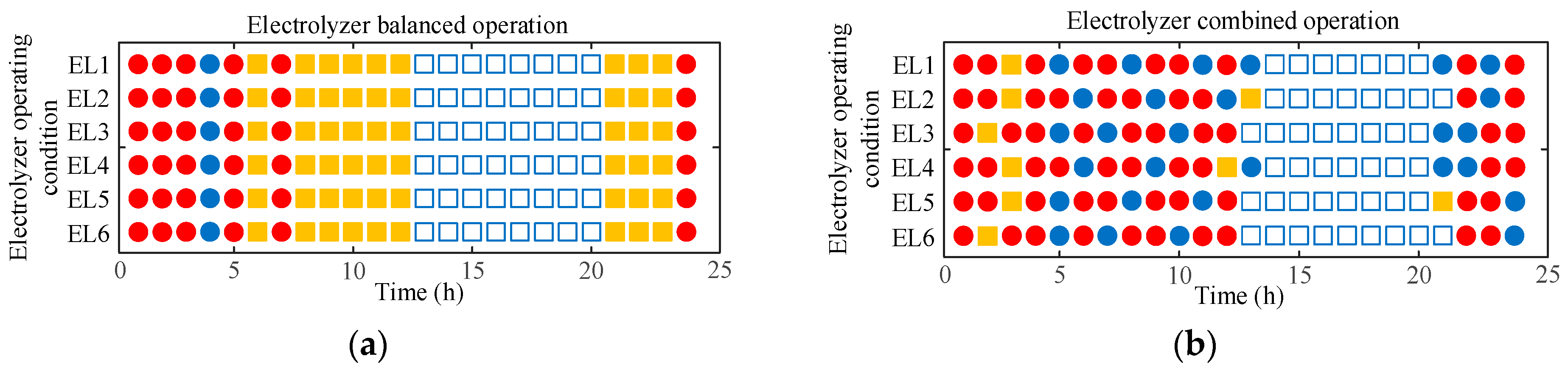
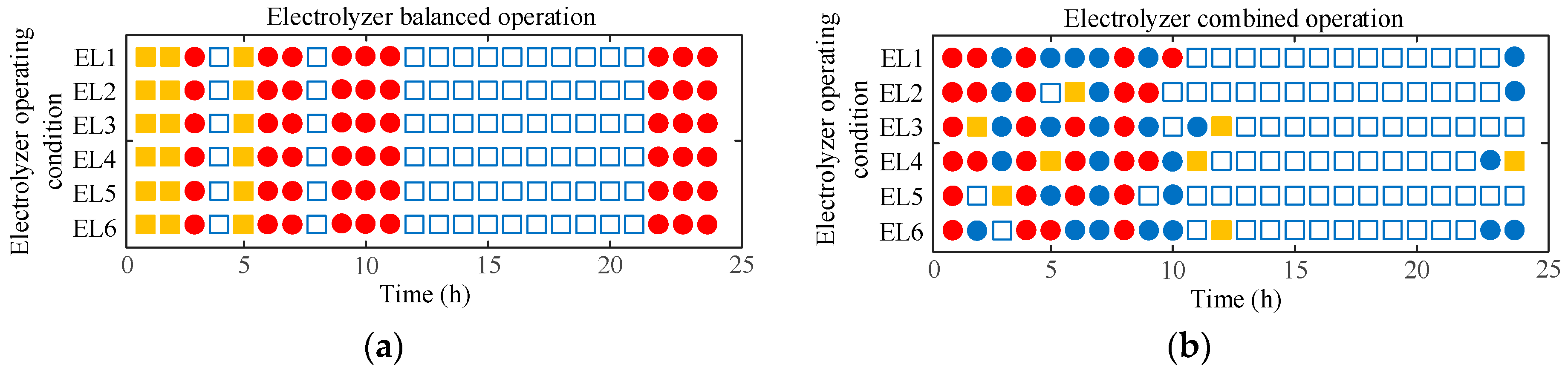
- PEME operating states analysis: The operating duration under variable load states is a critical factor determining the service life of PEMEs. To illustrate that the flexible combined operation mode can reduce the duration of PEMEs operating under variable load states, a comparative analysis of Case II and Case III is conducted based on the power allocation results in Figure 7. Figure 8 shows the PEME power curves for Case II and Case III, respectively, where 1#~6# represent the six PEMEs. Figure 9 shows the operating states of PEMEs during one scheduling cycle for Case II and Case III, respectively, where the correspondence between operational states and color symbols is depicted in Table 3.
4.2.2. Case Study Under Grid-Connected Conditions
- (1)
- Scheduling cost analysis: After simulating the three described cases, the scheduling cost of the EHCS is presented in Table 5. Under grid-connected conditions, the surplus power will be delivered to the grid when the output powers of WT and PV exceed the load power demand, which can effectively reduce the waste of wind and PV power. Based on the costs from Table 5, the CT in Case III is the lowest, and that of Case II is the highest. This indicates that under grid-connected conditions, the economic performance of the system is improved by flexibly adjusting the operating states and combination modes of PEMEs.
- (2)
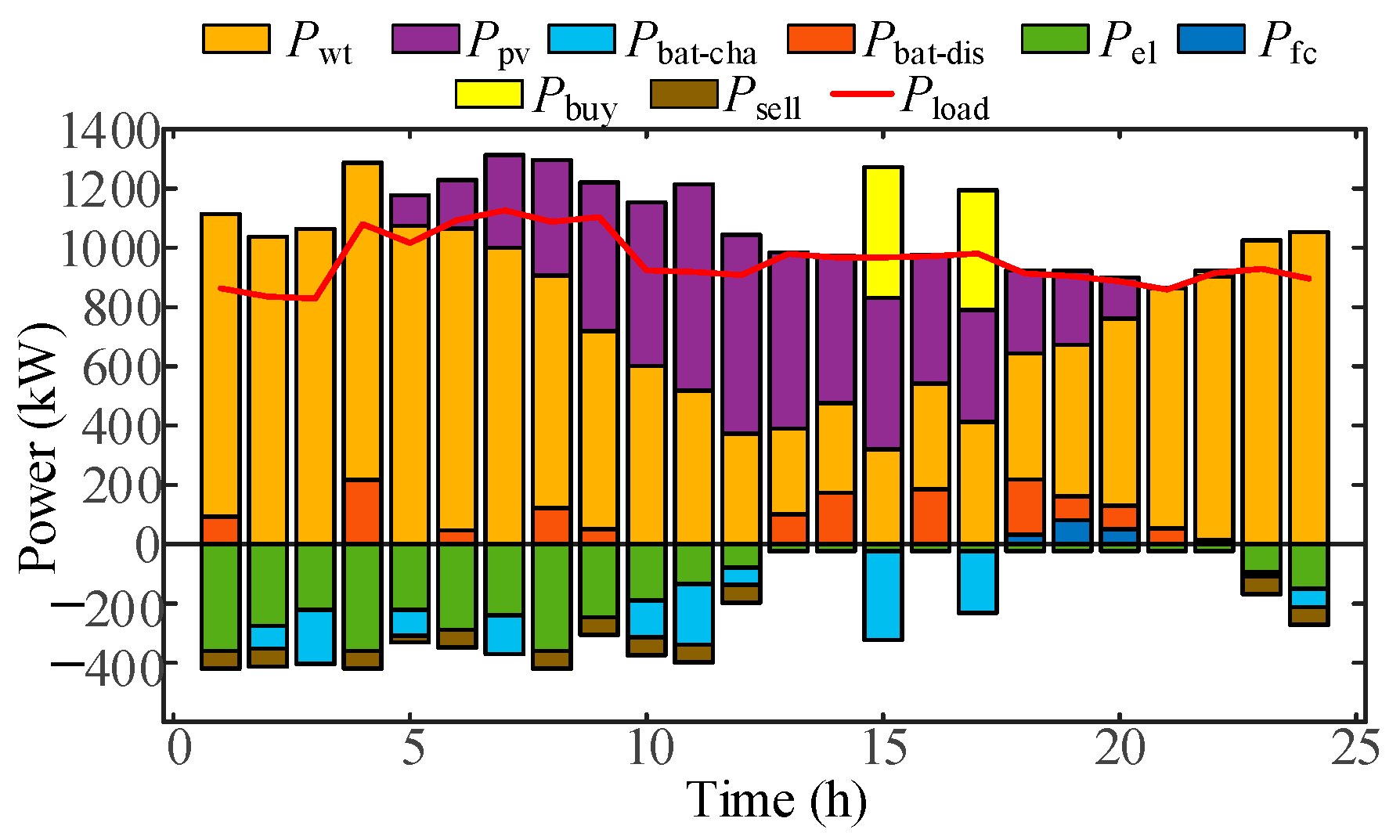
- Power allocation analysis: Figure 10 shows the power allocation of Case III under grid-connected conditions. When the output powers of the lithium batteries and PEMFCs are unable to satisfy the load power demand, or cbuy is low, the EHCS will be permitted to purchase electricity from the grid. When the output powers of the lithium batteries and PEMFCs exceed the load power demand, or csell is high, the EHCS will sell the electricity to the grid.For the convenience of analysis, the power of WT, PV and loads under grid-connected conditions is the same as that under off-grid conditions. From Figure 10, when the output powers of WT and PV exceed the load power demand, the EHCS sells the surplus power to the grid, resulting in the reduction of CT. During the 15 h~17 h period, since the SOC of the lithium batteries is low and csell is in the price parity period, the EHCS purchases the electricity from the grid to satisfy the load power demand and charge lithium batteries, thereby restoring it to a healthy SOC.
- (3)
- PEME operating states analysis: Under grid-connected conditions, Case I and Case III also adopt the combined operation mode, so a comparative analysis of Case II and Case III is conducted in the same manner. As shown in Figure 11a and Figure 12a, since the grid can exchange power with the EHCS under grid-connected conditions, the PEMEs in Case II operate in the power sharing mode with different state switching strategies. Compared with off-grid conditions, the number of variable load shifts in the PEMEs is reduced, and the operating states of the six PEMEs remain consistent.
5. Conclusions
- (1)
- Refined state modeling of PEMEs improves the accuracy of the system optimization model. Five operating states (shutdown, cold standby, low-load, variable-load, and overload) are formulated as mixed-integer constraints and incorporated into the system-level model. This refined modeling enables the optimization results to more accurately reflect the actual operating behaviors of PEMEs.
- (2)
- The proposed two-stage multi-time-scale framework mitigates the REG uncertainty to a certain extent. Guided by the objectives of minimizing the system operating cost and the power adjustment from the day-ahead stage to the intra-day stage, the power allocation among lithium batteries, PEMEs, PEMFCs, and the grid is planned at a 1 h time step in the day-ahead stage and re-optimized through a 4 h/15 min rolling scheme in the intra-day stage. Under off-grid conditions, the total operating cost of Case III is 3.604 million USD, which is 6.25% and 5.00% lower than that of Case I (3.845 million USD) and Case II (3.794 million USD), respectively. Under grid-connected conditions, the total operating cost of Case III is 3.736 million USD, which is 21.86% and 31.39% lower than that of Case I (4.781 million USD) and Case II (5.443 million USD), respectively. These results confirm that the proposed MSEAS can improve the economic benefits in both off-grid and grid-connected conditions.
- (3)
- The flexible combined operation of multiple PEMEs reduces the start–stop frequency and prolongs the service life. Comparative analyses of three case studies demonstrate that, by enabling PEMEs to operate flexibly in a combined mode, a power sharing mode, and a mode of switching between different operational states, the start–stop frequency of PEMEs is effectively reduced, which in turn extends their service life and lowers the system operating cost. Specifically, the proportion of unhealthy operating states of PEMEs in Case III ranges from 4.17% to 8.33% under off-grid conditions, compared with 37.50% in Case II. Under grid-connected conditions, this proportion ranges from 0.00% to 12.50% in Case III, compared with 12.50% in Case II. These results verify that the combined operation mode can alleviate the adverse impact of REG uncertainty on the PEME service life.
Author Contributions
Funding
Institutional Review Board Statement
Informed Consent Statement
Data Availability Statement
Conflicts of Interest
Abbreviations
| EHCSs | Electricity–Hydrogen Coupling Systems |
| REG | Renewable Energy Generation |
| RES | Renewable Energy Source |
| EL | Electrolyzer |
| MSEAS | Multi-Time-Scale Energy Allocation Strategy |
| MPC | Model Predictive Control |
| PEME | Proton Exchange Membrane Electrolyzer |
| PEMFC | Proton Exchange Membrane Fuel Cell |
| HST | Hydrogen Storage Tank |
| WT | Wind Turbine |
| PV | Photovoltaic |
References
- Jayachandran, M.; Gatla, R.K.; Rao, K.P.; Rao, G.S.; Mohammed, S.; Milyani, A.H.; Azhari, A.A.; Kalaiarasy, C.; Geetha, S. Challenges and opportunities in green hydrogen adoption for decarbonizing hard-to-abate industries: A comprehensive review. IEEE Access 2024, 12, 23363–23388. [Google Scholar] [CrossRef]
- Zhao, P.; Gu, C.; Cao, Z.; Xie, D.; Ai, Q. Volt-VAR-pressure optimization of integrated energy systems with hydrogen injection. IEEE Trans. Power Syst. 2021, 36, 2403–2415. [Google Scholar] [CrossRef]
- Sayed-Ahmed, H.; Toldy, Á.I.; Santasalo-Aarnio, A. Dynamic operation of proton exchange membrane electrolyzers—Critical review. Renew. Sustain. Energy Rev. 2024, 189, 113883. [Google Scholar] [CrossRef]
- Cozzolino, R.; Bella, G. A review of electrolyzer-based systems providing grid ancillary services: Current status, market, challenges and future directions. Front. Energy Res. 2024, 12, 1358333. [Google Scholar] [CrossRef]
- Gulraiz, A.; Al Bastaki, A.J.; Magamal, K.; Subhi, M.; Hammad, A.; Allanjawi, A.; Zaidi, S.H.; Khalid, H.M.; Ismail, A.; Hussain, G.A.; et al. Energy advancements and integration strategies in hydrogen and battery storage for renewable energy systems. iScience 2025, 28, 111945. [Google Scholar] [CrossRef]
- Tebibel, H. Methodology for multi-objective optimization of wind turbine/battery/electrolyzer system for decentralized clean hydrogen production using an adapted power management strategy for low wind speed conditions. Energy Convers. Manag. 2021, 238, 114125. [Google Scholar] [CrossRef]
- Dawood, F.; Anda, M.; Shafiullah, G.M. Hydrogen production for energy: An overview. Int. J. Hydrogen Energy 2020, 45, 3847–3869. [Google Scholar] [CrossRef]
- Fang, R.; Liang, Y. Control strategy of electrolyzer in a wind-hydrogen system considering the constraints of switching times. Int. J. Hydrogen Energy 2019, 44, 25104–25111. [Google Scholar] [CrossRef]
- Fang, R. Multi-objective optimized operation of integrated energy system with hydrogen storage. Int. J. Hydrogen Energy 2019, 44, 29409–29417. [Google Scholar] [CrossRef]
- Huang, C.; Zong, Y.; You, S.; Træholt, C. Analytical modeling and control of grid-scale alkaline electrolyzer plant for frequency support in wind-dominated electricity-hydrogen systems. IEEE Trans. Sustain. Energy 2023, 14, 217–232. [Google Scholar] [CrossRef]
- Wang, X.; Meng, X.; Nie, G.; Li, B.; Yang, H.; He, M. Optimization of hydrogen production in multi-electrolyzer systems: A novel control strategy for enhanced renewable energy utilization and electrolyzer lifespan. Appl. Energy 2024, 376, 124299. [Google Scholar] [CrossRef]
- Han, L.; Wang, S.; Cheng, Y.; Chen, S.; Wang, X. Multi-timescale scheduling of an integrated electric-hydrogen energy system with multiple types of electrolysis cells operating in concert with fuel cells. Energy 2024, 307, 132707. [Google Scholar] [CrossRef]
- Tang, Y.; Zheng, Z.; Min, F.; Xie, J.; Yang, H. An optimization framework for component sizing and energy management of hybrid electrolyzer systems considering physical characteristics of alkaline electrolyzers and proton exchange membrane electrolyzers. Renew. Energy 2025, 243, 122555. [Google Scholar] [CrossRef]
- Barati, A.; Karimi, H.; Jadid, S. Multi-objective operation of interconnected multi-energy systems considering power to gas and gas to power systems. Int. J. Electr. Power Energy Syst. 2024, 158, 109986. [Google Scholar] [CrossRef]
- Teng, Y.; Wang, Z.; Li, Y.; Ma, Q.; Hui, Q.; Li, S. Multi-energy storage system model based on electricity heat and hydrogen coordinated optimization for power grid flexibility. CSEE J. Power Energy Syst. 2019, 5, 266–274. [Google Scholar] [CrossRef]
- Li, J.; Lin, J.; Zhang, H.; Qi, Y.; Jiang, T.; Song, Y. Optimal investment of electrolyzers and seasonal storages in hydrogen supply chains incorporated with renewable electric networks. IEEE Trans. Sustain. Energy 2020, 11, 1773–1784. [Google Scholar] [CrossRef]
- Abdelghany, M.B.; Al-Durra, A.; Zeineldin, H.H.; Gao, F. A coordinated multitimescale model predictive control for output power smoothing in hybrid microgrid incorporating hydrogen energy storage. IEEE Trans. Ind. Inform. 2024, 20, 10987–11001. [Google Scholar] [CrossRef]
- Liang, T.; Chen, M.; Tan, J.; Jing, Y.; Lv, L.; Yang, W. Large-scale off-grid wind power hydrogen production multi-tank combination operation law and scheduling strategy taking into account alkaline electrolyzer characteristics. Renew. Energy 2024, 232, 121122. [Google Scholar] [CrossRef]
- Yu, L.; Yue, D.; Chen, Z.; Zhang, S.; Xu, Z.; Guan, X. Online operation optimization for hydrogen-based building energy systems under uncertainties. IEEE Trans. Smart Grid 2024, 15, 4589–4601. [Google Scholar] [CrossRef]
- Modu, B.; Abdullah, M.P.B.; Alkassem, A.; Garni, H.Z.A.; Alkabi, M. Optimal design of a grid-independent solar-fuel cell-biomass energy system using an enhanced salp swarm algorithm considering rule-based energy management strategy. IEEE Access 2024, 12, 23914–23929. [Google Scholar] [CrossRef]
- Zhang, N.; Yan, J.; Hu, C.; Sun, Q.; Yang, L.; Gao, D.W.; Guerrero, J.M.; Li, Y. Price-matching-based regional energy market with hierarchical reinforcement learning algorithm. IEEE Trans. Ind. Inform. 2024, 20, 11103–11114. [Google Scholar] [CrossRef]
- Wan, C.; Zhang, K.; Zhao, C.; Liu, H.; Ju, P. An integrated probabilistic forecasting and robust optimization method for AC-OPF under high-penetration renewable energy. IEEE Trans. Sustain. Energy 2026, 17, 756–771. [Google Scholar] [CrossRef]
- He, M.; Nie, G.; Yang, H.; Li, B.; Zhou, S.; Wang, X.; Meng, X. A generic equivalent circuit model for PEM electrolyzer with multi-timescale and stages under multi-mode control. Appl. Energy 2024, 359, 122728. [Google Scholar] [CrossRef]
- Li, J.; Lin, J.; Song, Y.; Xing, X.; Fu, C. Operation optimization of power to hydrogen and heat (E) in ADN coordinated with the district heating network. IEEE Trans. Sustain. Energy 2019, 10, 1672–1683. [Google Scholar] [CrossRef]
- Chen, Y.; Jiang, Y. Interval energy flow calculation method for electricity-heat-hydrogen integrated energy system considering the correlation between variables. Energy 2023, 263, 125678. [Google Scholar] [CrossRef]
- Pan, G.; Gu, W.; Lu, Y.; Qiu, H.; Lu, S.; Yao, S. Optimal planning for electricity-hydrogen integrated energy system considering power to hydrogen and heat and seasonal storage. IEEE Trans. Sustain. Energy 2020, 11, 2662–2676. [Google Scholar] [CrossRef]
- Li, Q.; Xiao, X.; Pu, Y.; Luo, S.; Liu, H.; Chen, W. Hierarchical optimal scheduling method for regional integrated energy systems considering electricity-hydrogen shared energy. Appl. Energy 2023, 349, 121670. [Google Scholar] [CrossRef]
- Wang, J.; Xue, K.; Guo, Y.; Ma, J.; Zhou, X.; Liu, M.; Yan, J. Multi-objective capacity programming and operation optimization of an integrated energy system considering hydrogen energy storage for collective energy communities. Energy Convers. Manag. 2022, 268, 116057. [Google Scholar] [CrossRef]
- Tang, Y.; Zheng, Z.; Yang, H.; Min, F.; Xie, J.; Cao, J. An optimization framework for component sizing and energy management in electric-hydrogen hybrid energy storage systems. IEEE Trans. Sustain. Energy 2025, 16, 2182–2196. [Google Scholar] [CrossRef]
- Niu, M.; Li, X.; Sun, C.; Xiu, X.; Wang, Y.; Hu, M.; Dong, H. Operation optimization of wind/battery storage/alkaline electrolyzer system considering dynamic hydrogen production efficiency. Energies 2023, 16, 6132. [Google Scholar] [CrossRef]
- Li, Z.; Xia, Y.; Bo, Y.; Wei, W. Optimal planning for electricity-hydrogen integrated energy system considering multiple timescale operations and representative time-period selection. Appl. Energy 2024, 362, 122965. [Google Scholar] [CrossRef]
- Errami, Y.; Maaroufi, M.; Ouassaid, M. Modelling and control strategy of PMSG based variable speed wind energy conversion system. In Proceedings of the 2011 International Conference on Multimedia Computing and Systems (ICMCS), Ouarzazate, Morocco, 7–9 April 2011; IEEE: New York, NY, USA, 2011; pp. 1–6. [Google Scholar] [CrossRef]
- Skoplaki, E.; Palyvos, J.A. On the temperature dependence of photovoltaic module electrical performance: A review of efficiency/power correlations. Sol. Energy 2009, 83, 614–624. [Google Scholar] [CrossRef]
- Wang, W.; Ma, Q.; Liu, Y.; Yao, N.; Liu, J.; Wang, Z.; Li, H. Clustering analysis method of power grid company based on K-means. J. Phys. Conf. Ser. 2021, 1883, 012072. [Google Scholar] [CrossRef]





| Scenario 1 | Scenario 2 | Scenario 3 | Scenario 4 | Scenario 5 | |
|---|---|---|---|---|---|
| Wind speed | 25.75% | 10.68% | 20.55% | 18.90% | 24.11% |
| Irradiance | 29.40% | 27.47% | 19.51% | 17.03% | 6.59% |
| Loads | 14.25% | 17.26% | 15.62% | 24.38% | 28.49% |
| CELEN | CBS | CPE | CDR | CT | |
|---|---|---|---|---|---|
| Case I | 3.785 | 0 | 0.020 | 0 | 3.845 |
| Case II | 3.765 | 0 | 0.22 | 0 | 3.794 |
| Case III | 3.656 | 0 | 0 | 0 | 3.604 |
| Symbols | Operating States |
|---|---|
 | overload state |
 | rated state |
 | variable load state |
 | cold standby state |
| Overload (h) | Rated (h) | Variable Load (h) | Cold Standby (h) | Proportion of Unhealthy Operating | ||
|---|---|---|---|---|---|---|
| Case II | 6 | 1 | 9 | 8 | 37.50% | |
| Case III | PEME1 | 10 | 6 | 1 | 7 | 4.17% |
| PEME2 | 10 | 4 | 2 | 8 | 8.33% | |
| PEME3 | 10 | 5 | 1 | 8 | 4.17% | |
| PEME4 | 10 | 6 | 2 | 6 | 8.33% | |
| PEME5 | 10 | 4 | 1 | 8 | 4.17% | |
| PEME6 | 10 | 4 | 1 | 8 | 4.17% | |
| CELEN | CBS | CPE | CDR | CT | |
|---|---|---|---|---|---|
| Case I | 3.725 | 0.733 | 0 | 0.307 | 4.781 |
| Case II | 5.101 | 0 | 0 | 0.310 | 5.443 |
| Case III | 2.548 | 0.861 | 0 | 0.297 | 3.736 |
| Overload (h) | Rated (h) | Variable Load (h) | Cold Standby (h) | Proportion of Unhealthy Operating | ||
|---|---|---|---|---|---|---|
| Case II | 9 | 0 | 3 | 12 | 12.50% | |
| Case III | PEME1 | 5 | 6 | 0 | 13 | 0.00% |
| PEME2 | 5 | 3 | 1 | 15 | 4.17% | |
| PEME3 | 4 | 5 | 2 | 13 | 8.33% | |
| PEME4 | 6 | 4 | 3 | 11 | 12.50% | |
| PEME5 | 4 | 3 | 1 | 16 | 4.17% | |
| PEME6 | 4 | 7 | 1 | 12 | 4.17% | |
Disclaimer/Publisher’s Note: The statements, opinions and data contained in all publications are solely those of the individual author(s) and contributor(s) and not of MDPI and/or the editor(s). MDPI and/or the editor(s) disclaim responsibility for any injury to people or property resulting from any ideas, methods, instructions or products referred to in the content. |
© 2026 by the authors. Licensee MDPI, Basel, Switzerland. This article is an open access article distributed under the terms and conditions of the Creative Commons Attribution (CC BY) license.
Share and Cite
Zhao, X.; Yun, Z.; Dang, H.; He, Z.; Jember, A.G.; Li, S. A Multi-Time-Scale Energy Allocation Strategy Considering Start–Stop Characteristics of Electrolyzers for Electricity–Hydrogen Coupling Systems. Sustainability 2026, 18, 5977. https://doi.org/10.3390/su18125977
Zhao X, Yun Z, Dang H, He Z, Jember AG, Li S. A Multi-Time-Scale Energy Allocation Strategy Considering Start–Stop Characteristics of Electrolyzers for Electricity–Hydrogen Coupling Systems. Sustainability. 2026; 18(12):5977. https://doi.org/10.3390/su18125977
Chicago/Turabian StyleZhao, Xiaojun, Zhiwei Yun, Haodong Dang, Zixian He, Adugna Gebrie Jember, and Shiwei Li. 2026. "A Multi-Time-Scale Energy Allocation Strategy Considering Start–Stop Characteristics of Electrolyzers for Electricity–Hydrogen Coupling Systems" Sustainability 18, no. 12: 5977. https://doi.org/10.3390/su18125977
APA StyleZhao, X., Yun, Z., Dang, H., He, Z., Jember, A. G., & Li, S. (2026). A Multi-Time-Scale Energy Allocation Strategy Considering Start–Stop Characteristics of Electrolyzers for Electricity–Hydrogen Coupling Systems. Sustainability, 18(12), 5977. https://doi.org/10.3390/su18125977