An Integrated Conceptual Framework for the Sustainable Adoption of the Mediterranean Diet: The Mediating Role of Plant-Based Foods


Abstract
1. Introduction
2. Methodology
2.1. Study Design
2.2. Search Strategy and Data Sources
2.3. Eligibility Criteria and Study Selection
2.4. Analytical Approach
2.5. Methodological Considerations
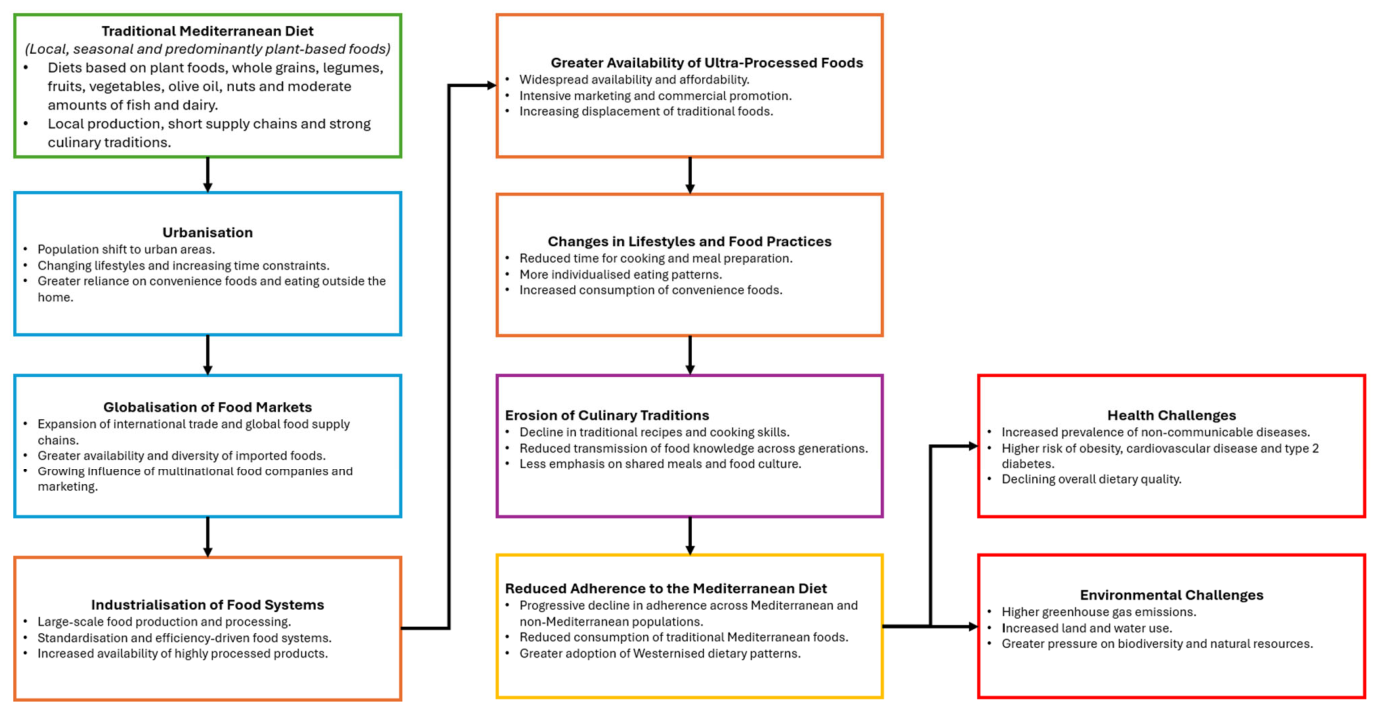
3. Mediterranean Diet and Sustainability
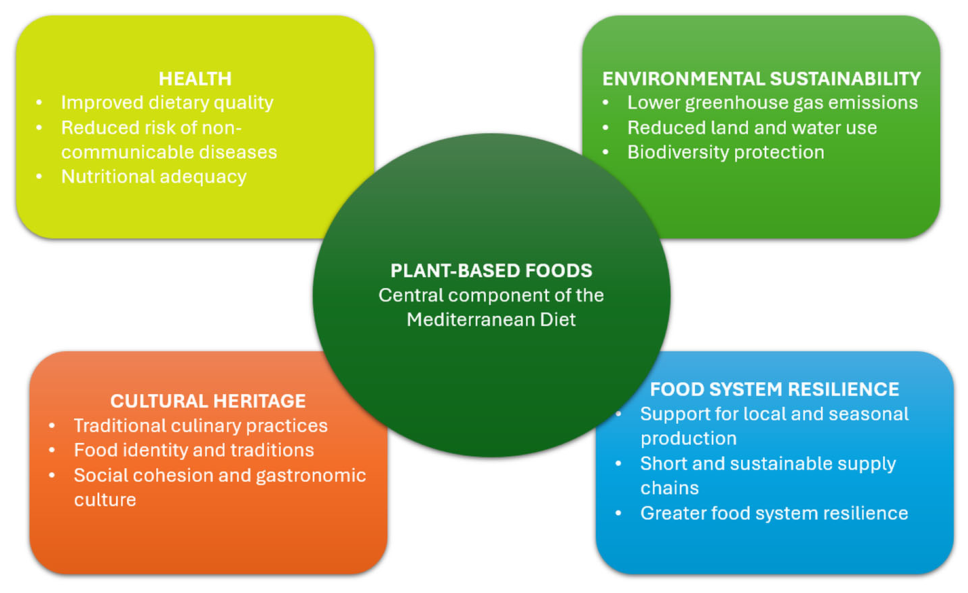
4. Role of Plant-Based Foods in the Mediterranean Diet
5. Determinants of Sustainable Adoption
5.1. Individual Determinants
5.2. Social and Cultural Determinants
5.3. Structural and Economic Determinants
5.4. Environmental Awareness and Perception
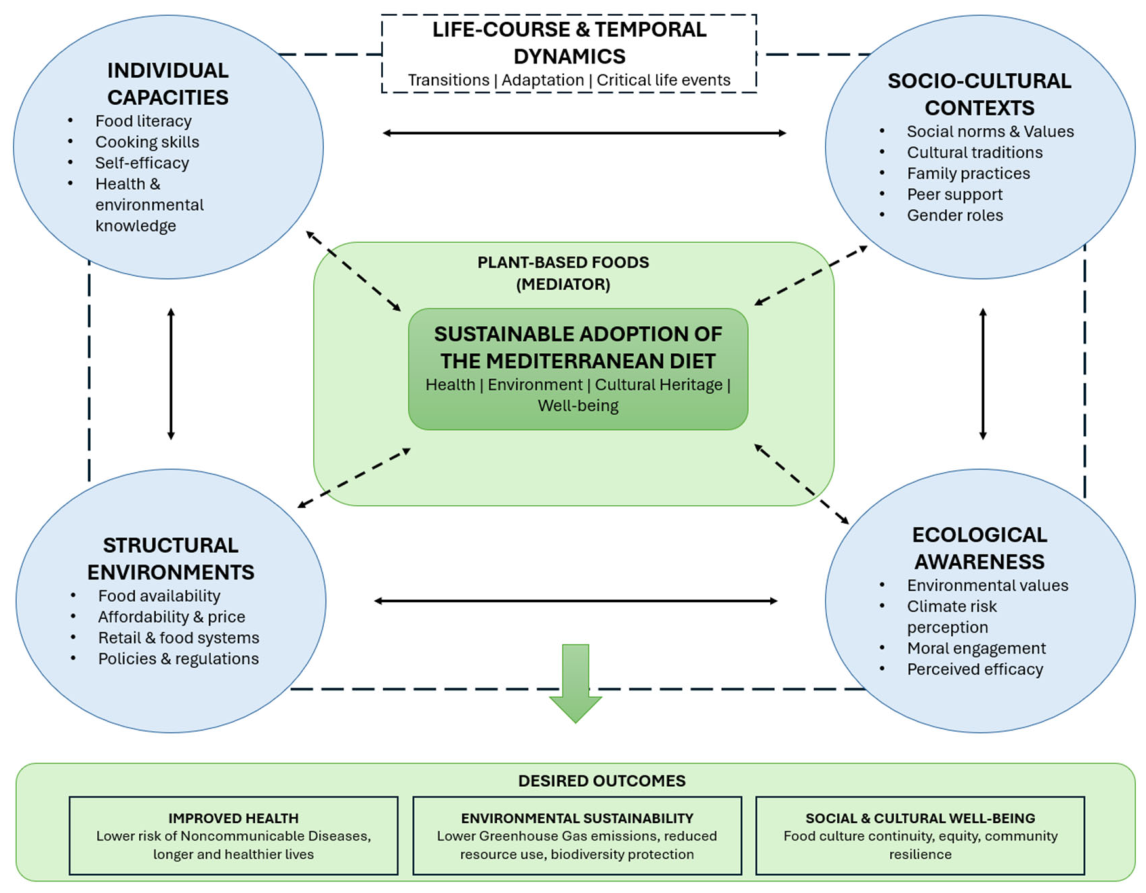
6. The Conceptual Framework for Sustainable Adoption
6.1. Core Domains of the Framework
6.1.1. Individual Capacities
6.1.2. Socio-Cultural Contexts
6.1.3. Structural Environments
6.1.4. Ecological Awareness
6.2. Dynamic Interactions and Feedback Mechanisms
6.3. Mediating Role of Plant-Based Foods
6.4. Temporal Dynamics and Life-Course Transitions
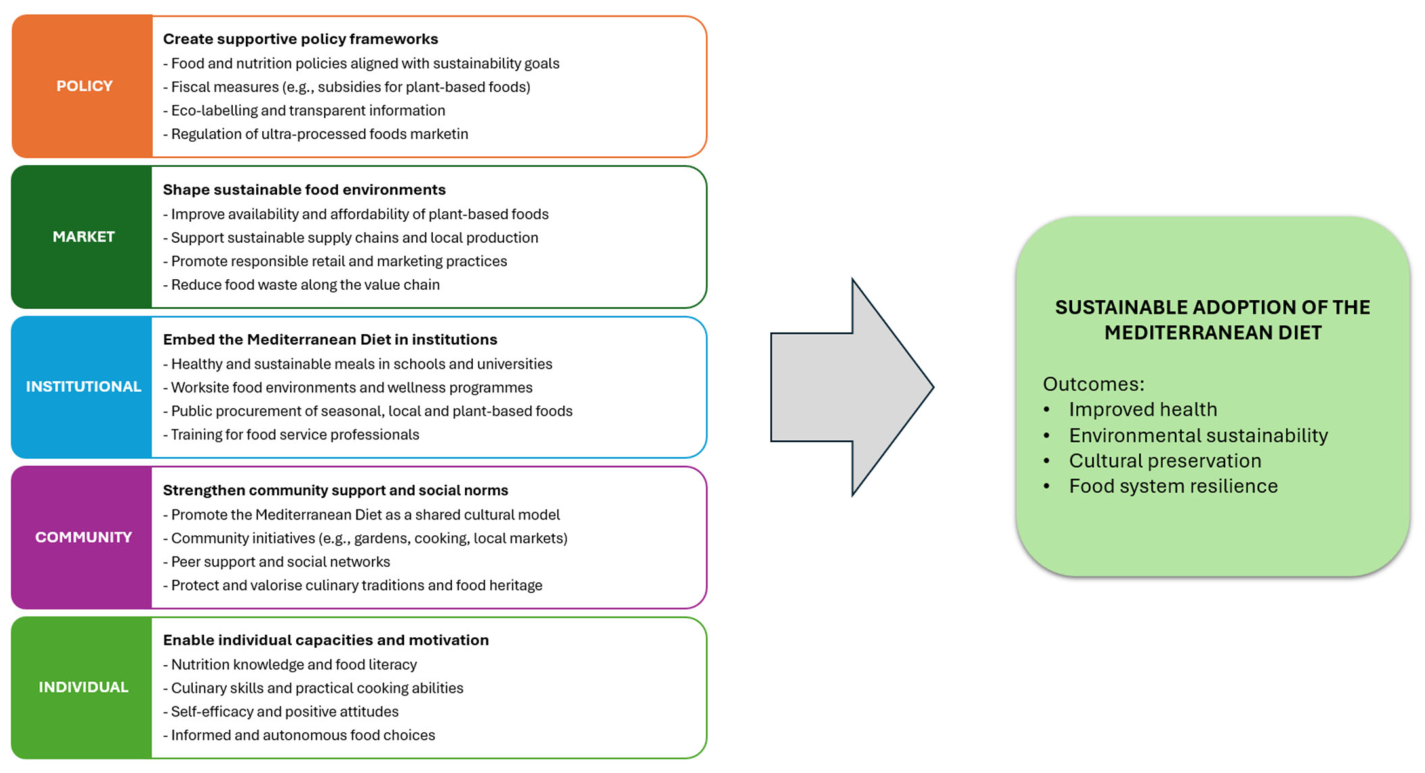
6.5. Implications for Intervention Design
6.6. Conceptual Validation and Theoretical Positioning
7. Implications for Policy and Practice
8. Research Agenda
9. Limitations
10. Conclusions
Supplementary Materials
Author Contributions
Funding
Institutional Review Board Statement
Informed Consent Statement
Data Availability Statement
Conflicts of Interest
Abbreviations
| CE | Circular Economy |
| FAO | Food and Agriculture Organization |
| GHG | Greenhouse Gas |
| HLPE | High Level Panel of Experts on Food Security and Nutrition |
| MD | Mediterranean Diet |
| PRISMA | Preferred Reporting Items for Systematic Reviews and Meta-Analyses |
| SDGs | Sustainable Development Goals |
| WHO | World Health Organization |
References
- Saccone, D.; Vallino, E. Global food security in a turbulent world: Reviewing the impacts of the pandemic, the war and climate change. Agric. Food Econ. 2025, 13, 47. [Google Scholar] [CrossRef]
- Varzakas, T.; Smaoui, S. Global Food Security and Sustainability Issues: The Road to 2030 from Nutrition and Sustainable Healthy Diets to Food Systems Change. Foods 2024, 13, 306. [Google Scholar] [CrossRef]
- Willett, W.; Rockström, J.; Loken, B.; Springmann, M.; Lang, T.; Vermeulen, S.; Garnett, T.; Tilman, D.; DeClerck, F.; Wood, A.; et al. Food in the Anthropocene: The EAT-Lancet Commission on healthy diets from sustainable food systems. Lancet 2019, 393, 447–492. [Google Scholar] [CrossRef]
- Crippa, M.; Solazzo, E.; Guizzardi, D.; Monforti-Ferrario, F.; Tubiello, F.N.; Leip, A. Food systems are responsible for a third of global anthropogenic GHG emissions. Nat. Food 2021, 2, 198–209. [Google Scholar] [CrossRef] [PubMed]
- Monteiro, C.A.; Cannon, G.; Levy, R.B.; Moubarac, J.-C.; Louzada, M.L.C.; Rauber, F.; Khandpur, N.; Cediel, G.; Neri, D.; Martinez-Steele, E.; et al. Ultra-processed foods: What they are and how to identify them. Public Health Nutr. 2019, 22, 936–941. [Google Scholar] [CrossRef] [PubMed]
- Poore, J.; Nemecek, T. Reducing food’s environmental impacts through producers and consumers. Science 2018, 360, 987–992. [Google Scholar] [CrossRef]
- Springmann, M.; Wiebe, K.; Mason-D’Croz, D.; Sulser, T.B.; Rayner, M.; Scarborough, P. Health and nutritional aspects of sustainable diet strategies and their association with environmental impacts: A global modelling analysis with country-level detail. Lancet Planet. Health 2018, 2, e451–e461. [Google Scholar] [CrossRef]
- Galli, A.; Moreno Pires, S.; Iha, K.; Alves, A.A.; Lin, D.; Mancini, M.S.; Teles, F. Sustainable food transition in Portugal: Assessing the Footprint of dietary choices and gaps in national and local food policies. Sci. Total Environ. 2020, 749, 141307. [Google Scholar] [CrossRef]
- Lorca-Camara, V.; Bosque-Prous, M.; Bes-Rastrollo, M.; O’Callaghan-Gordo, C.; Bach-Faig, A. Environmental and Health Sustainability of the Mediterranean Diet: A Systematic Review. Adv. Nutr. 2024, 15, 100322. [Google Scholar] [CrossRef]
- Ahmad, S.; Moorthy, M.V.; Lee, I.M.; Ridker, P.M.; Manson, J.E.; Buring, J.; Demler, O.V.; Mora, S. The Mediterranean Diet, Cardiometabolic Biomarkers, and Risk of All-Cause Mortality: A 25-Year Follow-Up Study of the Women’s Health Study. medRxiv 2023. [Google Scholar] [CrossRef]
- Dinu, M.; Pagliai, G.; Casini, A.; Sofi, F. Mediterranean diet and multiple health outcomes: An umbrella review of meta-analyses of observational studies and randomised trials. Eur. J. Clin. Nutr. 2018, 72, 30–43. [Google Scholar] [CrossRef]
- Bach-Faig, A.; Berry, E.M.; Lairon, D.; Reguant, J.; Trichopoulou, A.; Dernini, S.; Medina, F.X.; Battino, M.; Belahsen, R.; Miranda, G.; et al. Mediterranean diet pyramid today. Science and cultural updates. Public Health Nutr. 2011, 14, 2274–2284. [Google Scholar] [CrossRef] [PubMed]
- Schwingshackl, L.; Morze, J.; Hoffmann, G. Mediterranean diet and health status: Active ingredients and pharmacological mechanisms. Br. J. Pharmacol. 2020, 177, 1241–1257. [Google Scholar] [CrossRef]
- Aleksandrowicz, L.; Green, R.; Joy, E.J.M.; Smith, P.; Haines, A. The Impacts of Dietary Change on Greenhouse Gas Emissions, Land Use, Water Use, and Health: A Systematic Review. PLoS ONE 2016, 11, e0165797. [Google Scholar] [CrossRef]
- Hallström, E.; Carlsson-Kanyama, A.; Börjesson, P. Environmental impact of dietary change: A systematic review. J. Clean. Prod. 2015, 91, 1–11. [Google Scholar] [CrossRef]
- Üstün, G.E.; Can, T.; Demir, Ç.E.; Güldaş, M. Comparison of Environmental Impacts of Mediterranean and Western Diets Through Life Cycle Assessment. Sustainability 2026, 18, 2356. [Google Scholar] [CrossRef]
- Dernini, S.; Berry, E.M.; Serra-Majem, L.; La Vecchia, C.; Capone, R.; Medina, F.X.; Aranceta-Bartrina, J.; Belahsen, R.; Burlingame, B.; Calabrese, G.; et al. Med Diet 4.0: The Mediterranean diet with four sustainable benefits. Public Health Nutr. 2017, 20, 1322–1330. [Google Scholar] [CrossRef] [PubMed]
- Ammar, A.; Uyar, A.M.; Salem, A.; Álvarez-Córdova, L.; Boujelbane, M.A.; Trabelsi, K.; Orhan, B.E.; Heydenreich, J.; Schallhorn, C.; Grosso, G.; et al. Adherence to Mediterranean Healthy Lifestyle Patterns and Potential Barriers: A Comparative Study of Dietary Habits, Physical Activity, and Social Participation Between German and Turkish Populations. Nutrients 2025, 17, 3338. [Google Scholar] [CrossRef] [PubMed]
- Antonelli, M.; Basile, L.; Gagliardi, F.; Isernia, P. The future of the Mediterranean agri-food systems: Trends and perspectives from a Delphi survey. Land Use Policy 2022, 120, 106263. [Google Scholar] [CrossRef]
- Bonaccio, M.; Di Castelnuovo, A.; Costanzo, S.; De Lucia, F.; Olivieri, M.; Donati, M.B.; de Gaetano, G.; Iacoviello, L.; Bonanni, A. Nutrition knowledge is associated with higher adherence to Mediterranean diet and lower prevalence of obesity. Results from the Moli-sani study. Appetite 2013, 68, 139–146. [Google Scholar] [CrossRef]
- Voinea, L.; Badea, A.M.; Dina, R.; Popescu, D.V.; Bucur, M.; Negrea, T.M. Perspectives in the Scientific Literature on the Barriers and Benefits of the Transition to a Plant-Based Diet: A Bibliometric Analysis. Foods 2025, 14, 2942. [Google Scholar] [CrossRef]
- Clark, M.A.; Domingo, N.G.G.; Colgan, K.; Thakrar, S.K.; Tilman, D.; Lynch, J.; Azevedo, I.L.; Hill, J.D. Global food system emissions could preclude achieving the 1.5° and 2 °C climate change targets. Science 2020, 370, 705–708. [Google Scholar] [CrossRef]
- World Health Organization. Plant-Based Diets and Their Impact on Health, Sustainability and the Environment: A Review of the Evidence; WHO Regional Office for Europe: Copenhagen, Denmark, 2021. [Google Scholar]
- Capurso, A. The Mediterranean diet: A historical perspective. Aging Clin. Exp. Res. 2024, 36, 78. [Google Scholar] [CrossRef]
- Godos, J.; Scazzina, F.; Paternò Castello, C.; Giampieri, F.; Quiles, J.L.; Briones Urbano, M.; Battino, M.; Galvano, F.; Iacoviello, L.; de Gaetano, G.; et al. Underrated aspects of a true Mediterranean diet: Understanding traditional features for worldwide application of a “Planeterranean” diet. J. Transl. Med. 2024, 22, 294. [Google Scholar] [CrossRef]
- Bôto, J.M.; Rocha, A.; Miguéis, V.; Meireles, M.; Neto, B. Sustainability Dimensions of the Mediterranean Diet: A Systematic Review of the Indicators Used and Its Results. Adv. Nutr. 2022, 13, 2015–2038. [Google Scholar] [CrossRef] [PubMed]
- Lorca-Camara, V.; Bach-Faig, A.; Bes-Rastrollo, M.; Jurado-Gonzalez, P.; O’Callaghan-Gordo, C.; Bosque-Prous, M. Adherence to the Mediterranean Diet and Its Association with Sustainable Eating Knowledge, Attitudes, Habits, and Cooking Self-Efficacy Among Spanish Adults: A Cross-Sectional Study. Sustainability 2025, 17, 8580. [Google Scholar] [CrossRef]
- Swinburn, B.A.; Kraak, V.I.; Allender, S.; Atkins, V.J.; Baker, P.I.; Bogard, J.R.; Brinsden, H.; Calvillo, A.; De Schutter, O.; Devarajan, R.; et al. The Global Syndemic of Obesity, Undernutrition, and Climate Change: The Lancet Commission report. Lancet 2019, 393, 791–846. [Google Scholar] [CrossRef]
- Mollabagher, M.; Hassanzadeh, A.; Sepehri, M.M.; Habibelahi, A.; Sarabadani, A. Towards an Integrated Framework for Health Surveillance Systems: A Systematic Literature Review of Design Components and Implementation Challenges. Health Sci. Rep. 2026, 9, e71652. [Google Scholar] [CrossRef]
- Snyder, H. Literature review as a research methodology: An overview and guidelines. J. Bus. Res. 2019, 104, 333–339. [Google Scholar] [CrossRef]
- Torraco, R.J. Writing Integrative Literature Reviews: Guidelines and Examples. Hum. Resour. Dev. Rev. 2005, 4, 356–367. [Google Scholar] [CrossRef]
- Page, M.J.; McKenzie, J.E.; Bossuyt, P.M.; Boutron, I.; Hoffmann, T.C.; Mulrow, C.D.; Shamseer, L.; Tetzlaff, J.M.; Akl, E.A.; Brennan, S.E.; et al. The PRISMA 2020 statement: An updated guideline for reporting systematic reviews [Declaración PRISMA 2020: Una guía actualizada para la publicación de revisiones sistemáticas]. Rev. Panam. Salud Publica 2022, 46, e112. [Google Scholar] [CrossRef]
- Tosti, V.; Bertozzi, B.; Fontana, L. Health Benefits of the Mediterranean Diet: Metabolic and Molecular Mechanisms. J. Gerontol. A Biol. Sci. Med. Sci. 2018, 73, 318–326. [Google Scholar] [CrossRef] [PubMed]
- Srambikkal Vinesh, D.; Syed Altaf, R.R.; Mohan, A.; Palani, N.; Mendonce, K.C.; Selvan, S.; Surya, P.; Rajadesingu, S. The Mediterranean diet as a metabolic strategy for healthy aging and non-communicable disease prevention. J. Nutr. Physiol. 2026, 5, 100015. [Google Scholar] [CrossRef]
- Tilman, D.; Clark, M. Global diets link environmental sustainability and human health. Nature 2014, 515, 518–522. [Google Scholar] [CrossRef]
- Oliveira, L.; Saraiva, A.; Lima, M.J.; Teixeira-Lemos, E.; Alhaji, J.H.; Carrascosa, C.; Raposo, A. Mediterranean Food Pattern Adherence in a Female-Dominated Sample of Health and Social Sciences University Students: Analysis from a Perspective of Sustainability. Nutrients 2024, 16, 3886. [Google Scholar] [CrossRef]
- Perrone, P.; Landriani, L.; Patalano, R.; Meccariello, R.; D’Angelo, S. The Mediterranean Diet as a Model of Sustainability: Evidence-Based Insights into Health, Environment, and Culture. Int. J. Environ. Res. Public Health 2025, 22, 1658. [Google Scholar] [CrossRef]
- Öngün Yilmaz, H.; Arslan, S.; Tari Selçuk, K.; Bayram, H.M.; Ozturkcan, A. From knowledge to action: How nutrition knowledge shapes sustainable eating and Mediterranean diet adherence. Front. Nutr. 2025, 12, 1684438. [Google Scholar] [CrossRef]
- López-Moreno, M.; Marrero-Fernández, P.; Galiana, C.; Aguilar-Navarro, M.; Muñoz, A.; Gutiérrez-Hellín, J.; Fresán, U. Environmental and economic impact of a vegan versus traditional mediterranean diet: OMNIVEG study. Eur. J. Nutr. 2026, 65, 97. [Google Scholar] [CrossRef]
- Morsella, A.; Veronese, N.; Gianfredi, V.; Limongi, F.; Saverio Ragusa, F.; Nucci, D.; Maggi, S.; Silano, M.; Randazzo, C.; Romiti, G.F.; et al. Economic evaluations of the Mediterranean diet: A systematic review. Nutrition 2026, 148, 113183. [Google Scholar] [CrossRef]
- Aznar de la Riera, M.D.C.; Ortolá, R.; Kales, S.N.; Graciani, A.; Diaz-Gutierrez, J.; Banegas, J.R.; Rodríguez-Artalejo, F.; Sotos-Prieto, M. Health and environmental dietary impact: Planetary health diet vs. Mediterranean diet. A nationwide cohort in Spain. Sci. Total Environ. 2025, 968, 178924. [Google Scholar] [CrossRef] [PubMed]
- Yassıbaş, E.; Bölükbaşı, H. Evaluation of adherence to the Mediterranean diet with sustainable nutrition knowledge and environmentally responsible food choices. Front. Nutr. 2023, 10, 1158155. [Google Scholar] [CrossRef]
- Serra-Majem, L.; Tomaino, L.; Dernini, S.; Berry, E.M.; Lairon, D.; Ngo de la Cruz, J.; Bach-Faig, A.; Donini, L.M.; Medina, F.X.; Belahsen, R.; et al. Updating the Mediterranean Diet Pyramid towards Sustainability: Focus on Environmental Concerns. Int. J. Env. Res. Public Health 2020, 17, 8758. [Google Scholar] [CrossRef]
- Hirvonen, K.; Bai, Y.; Headey, D.; Masters, W.A. Affordability of the EAT–Lancet reference diet: A global analysis. Lancet Glob. Health 2020, 8, e59–e66. [Google Scholar] [CrossRef]
- FAO; IFAD; UNICEF; WFP; WHO. The State of Food Security and Nutrition in the World 2023: Urbanization, Agrifood Systems Transformation and Healthy Diets Across the Rural–Urban Continuum; FAO: Rome, Italy, 2023. [Google Scholar]
- Cavaliere, A.; De Marchi, E.; Frola, E.N.; Benfenati, A.; Aletti, G.; Bacenetti, J.; Banterle, A. Exploring the environmental impact associated with the abandonment of the Mediterranean Diet, and how to reduce it with alternative sustainable diets. Ecol. Econ. 2023, 209, 107818. [Google Scholar] [CrossRef]
- Bonaccio, M.; Di Castelnuovo, A.; Bonanni, A.; Costanzo, S.; De Lucia, F.; Persichillo, M.; Zito, F.; Donati, M.B.; de Gaetano, G.; Iacoviello, L. Decline of the Mediterranean diet at a time of economic crisis. Results from the Moli-sani study. Nutr. Metab. Cardiovasc. Dis. 2014, 24, 853–860. [Google Scholar] [CrossRef] [PubMed]
- da Silva, R.; Bach-Faig, A.; Raidó Quintana, B.; Buckland, G.; Vaz de Almeida, M.D.; Serra-Majem, L. Worldwide variation of adherence to the Mediterranean diet, in 1961–1965 and 2000–2003. Public Health Nutr. 2009, 12, 1676–1684. [Google Scholar] [CrossRef]
- FAO; WHO. Sustainable Healthy Diets—Guiding Principles; FAO: Rome, Italy, 2019. [Google Scholar]
- HLPE. Food Security and Nutrition: Building a Global Narrative Towards 2030. A Report by the High Level Panel of Experts on Food Security and Nutrition of the Committee on World Food Security; FAO: Rome, Italy, 2020. [Google Scholar]
- Lázaro, A.; Delnoij, J.; Alpízar, F.; van Leeuwen, E.; Cremades, R. Policy entry points and associated interventions for sustainably transforming urban food systems. Environ. Sci. Policy 2025, 171, 104186. [Google Scholar] [CrossRef]
- Lundberg, K.; Moragues-Faus, A.; Thornton, L.; Cohen, N.; Diekmann, L.; De Regil, L.M. Paving the way: Urban Health, Food Systems, and the Imperative for Holistic City-Led Action. F1000Research 2025, 14, 513. [Google Scholar] [CrossRef]
- Aune, D.; Giovannucci, E.; Boffetta, P.; Fadnes, L.T.; Keum, N.; Norat, T.; Greenwood, D.C.; Riboli, E.; Vatten, L.J.; Tonstad, S. Fruit and vegetable intake and the risk of cardiovascular disease, total cancer and all-cause mortality—A systematic review and dose-response meta-analysis of prospective studies. Int. J. Epidemiol. 2017, 46, 1029–1056. [Google Scholar] [CrossRef] [PubMed]
- Satija, A.; Bhupathiraju, S.N.; Rimm, E.B.; Spiegelman, D.; Chiuve, S.E.; Borgi, L.; Willett, W.C.; Manson, J.E.; Sun, Q.; Hu, F.B. Plant-Based Dietary Patterns and Incidence of Type 2 Diabetes in US Men and Women: Results from Three Prospective Cohort Studies. PLoS Med. 2016, 13, e1002039. [Google Scholar] [CrossRef]
- Fanzo, J.; Haddad, L.; Schneider, K.R.; Béné, C.; Covic, N.M.; Guarin, A.; Herforth, A.W.; Herrero, M.; Sumaila, U.R.; Aburto, N.J.; et al. Viewpoint: Rigorous monitoring is necessary to guide food system transformation in the countdown to the 2030 global goals. Food Policy 2021, 104, 102163. [Google Scholar] [CrossRef]
- Anastasiou, K.; Baker, P.; Hadjikakou, M.; Hendrie, G.A.; Lawrence, M. A conceptual framework for understanding the environmental impacts of ultra-processed foods and implications for sustainable food systems. J. Clean. Prod. 2022, 368, 133155. [Google Scholar] [CrossRef]
- Popkin, B.M.; Ng, S.W. The nutrition transition to a stage of high obesity and noncommunicable disease prevalence dominated by ultra-processed foods is not inevitable. Obes. Rev. 2022, 23, e13366. [Google Scholar] [CrossRef]
- Micheloni, G.; Cocchi, C.; Sinigaglia, G.; Coppi, F.; Zanini, G.; Moscucci, F.; Sciomer, S.; Nasi, M.; Desideri, G.; Gallina, S.; et al. Sustainability of the Mediterranean Diet: A Nutritional and Environmental Imperative. J. Sustain. Res. 2025, 7, e250036. [Google Scholar] [CrossRef]
- Balaji, M.; Vashishth, R.; Das, U. Plant-based functional foods for healthy aging: Current trends, bioactive compounds, and future perspectives. J. Funct. Foods 2026, 138, 107155. [Google Scholar] [CrossRef]
- Cianciabella, M.; Predieri, S.; Tamburino, R.; Medoro, C.; Volpe, R.; Maggi, S. Health-Promoting Potential of the Mediterranean Diet and Challenges for Its Application in Aging Populations. Nutrients 2025, 17, 3675. [Google Scholar] [CrossRef]
- Farias-Pereira, R.; Zuk, J.B.; Khavaran, H. Plant bioactive compounds from Mediterranean diet improve risk factors for metabolic syndrome. Int. J. Food Sci. Nutr. 2023, 74, 403–423. [Google Scholar] [CrossRef] [PubMed]
- Moreira, A.B.; da Fonseca, P.G.; Lisboa Pereira, S.C.; Guimarães, N.S. Recent evidence on plant-based diets and risk of chronic noncommunicable diseases in adults: A systematic review and meta-analysis. Diabetes Metab. Syndr. Clin. Res. Rev. 2026, 20, 103403. [Google Scholar] [CrossRef] [PubMed]
- Mazzola, G.; Rondanelli, M.; Cabrini, C.; Perna, S. Metabolic, Adherence, and Sustainability Outcomes of Plant-Based Low-Carbohydrate and Ketogenic Diets: A Systematic Review of Clinical Evidence. Nutrition 2026, 148, 113222. [Google Scholar] [CrossRef] [PubMed]
- Wang, X.J.; Voortman, T.; Bos, D.; Kavousi, M.; Ghanbari, M.; Conrad, N.; Schram, M.T.; Steur, M. Association between healthy plant-based diet-lifestyle (hPDI-Lifestyle) score and incidence of coronary heart disease, and effect modification by genetic predisposition: A prospective analysis in a population-based cohort. Lancet Reg. Health—Eur. 2026, 64, 101619. [Google Scholar] [CrossRef]
- Santo, R.E.; Kim, B.F.; Goldman, S.E.; Dutkiewicz, J.; Biehl, E.M.B.; Bloem, M.W.; Neff, R.A.; Nachman, K.E. Considering Plant-Based Meat Substitutes and Cell-Based Meats: A Public Health and Food Systems Perspective. Front. Sustain. Food Syst. 2020, 4, 134. [Google Scholar] [CrossRef]
- Trichopoulou, A.; Martínez-González, M.A.; Tong, T.Y.N.; Forouhi, N.G.; Khandelwal, S.; Prabhakaran, D.; Mozaffarian, D.; de Lorgeril, M. Definitions and potential health benefits of the Mediterranean diet: Views from experts around the world. BMC Med. 2014, 12, 112. [Google Scholar] [CrossRef]
- Fischler, C. Commensality, society and culture. Soc. Sci. Inf. 2011, 50, 528–548. [Google Scholar] [CrossRef]
- Sobal, J.; Bisogni, C.A. Constructing Food Choice Decisions. Ann. Behav. Med. 2009, 38, s37–s46. [Google Scholar] [CrossRef]
- Woodside, J.; Young, I.S.; McKinley, M.C. Culturally adapting the Mediterranean Diet pattern—A way of promoting more ‘sustainable’ dietary change? Br. J. Nutr. 2022, 128, 693–703. [Google Scholar] [CrossRef]
- Ferreira, A.F.; Abreu, S.; Liz Martins, M. Determinants of adherence to sustainable healthy diets among Portuguese adults. NFS J. 2024, 37, 100200. [Google Scholar] [CrossRef]
- Abrantes, P.; Viana, C.; Costa, E.M.; Gomes, E.J. Understanding sustainable dietary transitions in Portugal: The role of individual and territorial drivers. Clean. Food Syst. 2026, 3, 100033. [Google Scholar] [CrossRef]
- Figueroa, C.; Echeverría, G.; Villarreal, G.; Martínez, X.; Ferreccio, C.; Rigotti, A. Introducing Plant-Based Mediterranean Diet as a Lifestyle Medicine Approach in Latin America: Opportunities Within the Chilean Context. Front. Nutr. 2021, 8, 680452. [Google Scholar] [CrossRef]
- Sallis, J.F.; Owen, N.; Fisher, E.B. Ecological models of health behavior. In Health Behavior and Health Education: Theory, Research, and Practice, 4th ed.; Jossey-Bass/Wiley: Hoboken, NJ, USA, 2008; pp. 465–485. [Google Scholar]
- Bandura, A. Health Promotion by Social Cognitive Means. Health Educ. Behav. 2004, 31, 143–164. [Google Scholar] [CrossRef]
- Spronk, I.; Kullen, C.; Burdon, C.; O’Connor, H. Relationship between nutrition knowledge and dietary intake. Br. J. Nutr. 2014, 111, 1713–1726. [Google Scholar] [CrossRef]
- Lo Dato, E.; Gostoli, S.; Tomba, E. Psychological Theoretical Frameworks of Healthy and Sustainable Food Choices: A Systematic Review of the Literature. Nutrients 2024, 16, 3687. [Google Scholar] [CrossRef]
- Vidgen, H.A.; Gallegos, D. Defining food literacy and its components. Appetite 2014, 76, 50–59. [Google Scholar] [CrossRef]
- Özata-Uyar, G.; Aslan, S.; Çamli, A.; Arslan, M.; Bozkurt, O.; Kocaadam-Bozkurt, B. Adherence to the mediterranean diet in adults: The role of environmental and sustainable food literacy. BMC Public Health 2025, 25, 4171. [Google Scholar] [CrossRef]
- Gardner, B. A review and analysis of the use of ‘habit’ in understanding, predicting and influencing health-related behaviour. Health Psychol. Rev. 2015, 9, 277–295. [Google Scholar] [CrossRef]
- Glenisson, L.; Hallez, L.; Smits, T. “Thought for food”: A systematic review of how psychological state factors affect sustainable food outcomes. Sustain. Prod. Consum. 2025, 57, 277–291. [Google Scholar] [CrossRef]
- Michie, S.; van Stralen, M.M.; West, R. The behaviour change wheel: A new method for characterising and designing behaviour change interventions. Implement. Sci. 2011, 6, 42. [Google Scholar] [CrossRef]
- Elliott, P.S.; Devine, L.D.; Gibney, E.R.; O’Sullivan, A.M. What factors influence sustainable and healthy diet consumption? A review and synthesis of literature within the university setting and beyond. Nutr. Res. 2024, 126, 23–45. [Google Scholar] [CrossRef]
- Annunziata, A.; Agovino, M.; Mariani, A. Sustainability of Italian families’ food practices: Mediterranean diet adherence combined with organic and local food consumption. J. Clean. Prod. 2019, 206, 86–96. [Google Scholar] [CrossRef]
- Shavit, Y.; Tepper, S.; Teodorescu, K. Exploring culinary diversity to enhance Mediterranean diet adherence: A randomized controlled trial. Appetite 2024, 201, 107597. [Google Scholar] [CrossRef]
- Downs, S.M.; Barlow, S.; Staromiejska, W.; Tannous, M.; Policastro, P.; Schoolman, E.; Elnakib, S. Shifting New Jersey Adolescents Toward Sustainable Diets: Factors that Influence Their Food Choices and Views on Environmental Sustainability. J. Nutr. Educ. Behav. 2026, 58, 310–325. [Google Scholar] [CrossRef]
- Stewart, C.; Davis, T.; Papies, E.K. Plant-based diets among young women in Scotland: ‘Unless it’s affordable, convenient, healthy, and familiar, it’s a no’. Appetite 2026, 220, 108442. [Google Scholar] [CrossRef]
- Principato, L.; Pice, G.; Pezzi, A. Understanding food choices in sustainable healthy diets—A systematic literature review on behavioral drivers and barriers. Environ. Sci. Policy 2025, 163, 103975. [Google Scholar] [CrossRef]
- Vermeir, I.; Verbeke, W. Sustainable Food Consumption: Exploring the Consumer “Attitude—Behavioral Intention” Gap. J. Agric. Environ. Ethics 2006, 19, 169–194. [Google Scholar] [CrossRef]
- Hartmann, C.; Siegrist, M. Consumer perception and behaviour regarding sustainable protein consumption: A systematic review. Trends Food Sci. Technol. 2017, 61, 11–25. [Google Scholar] [CrossRef]
- Béné, C.; Oosterveer, P.; Lamotte, L.; Brouwer, I.D.; de Haan, S.; Prager, S.D.; Talsma, E.F.; Khoury, C.K. When food systems meet sustainability—Current narratives and implications for actions. World Dev. 2019, 113, 116–130. [Google Scholar] [CrossRef]
- Allen, T.; Prosperi, P. Modeling Sustainable Food Systems. Environ. Manag. 2016, 57, 956–975. [Google Scholar] [CrossRef]
- Jayasinghe, S.; Byrne, N.M.; Hills, A.P. Cultural influences on dietary choices. Prog. Cardiovasc. Dis. 2025, 90, 22–26. [Google Scholar] [CrossRef]
- Bisogni, C.A.; Connors, M.; Devine, C.M.; Sobal, J. Who we are and how we eat: A qualitative study of identities in food choice. J. Nutr. Educ. Behav. 2002, 34, 128–139. [Google Scholar] [CrossRef]
- Fanzo, J.; Rudie, C.; Sigman, I.; Grinspoon, S.; Benton, T.G.; Brown, M.E.; Covic, N.; Fitch, K.; Golden, C.D.; Grace, D.; et al. Sustainable food systems and nutrition in the 21st century: A report from the 22nd annual Harvard Nutrition Obesity Symposium. Am. J. Clin. Nutr. 2022, 115, 18–33. [Google Scholar] [CrossRef]
- Laiou, E.; Rapti, I.; Markozannes, G.; Cianferotti, L.; Fleig, L.; Warner, L.M.; Ribas, L.; Ngo, J.; Salvatore, S.; Trichopoulou, A.; et al. Social support, adherence to Mediterranean diet and physical activity in adults: Results from a community-based cross-sectional study. J. Nutr. Sci. 2020, 9, e53. [Google Scholar] [CrossRef]
- Chen, P.J.; Antonelli, M. Conceptual Models of Food Choice: Influential Factors Related to Foods, Individual Differences, and Society. Foods 2020, 9, 1898. [Google Scholar] [CrossRef]
- Quigley, M. Nudging for health: On public policy and designing choice architecture. Med. Law. Rev. 2013, 21, 588–621. [Google Scholar] [CrossRef][Green Version]
- Hertwig, R. The citizen choice architect in an ultra-processed world. Behav. Public Policy 2023, 7, 906–913. [Google Scholar] [CrossRef]
- Voulvoulis, N.; Giakoumis, T.; Hunt, C.; Kioupi, V.; Petrou, N.; Souliotis, I.; Vaghela, C.; binti Wan Rosely, W.I.H. Systems thinking as a paradigm shift for sustainability transformation. Glob. Environ. Change 2022, 75, 102544. [Google Scholar] [CrossRef]
- de Costa, R.; Ferrara, I.; Toplak, M.; Alam, A.; Bowie, R.; Burnett, A. Behavioural insights and environmental sustainability: Key findings and policy implications from a systematic review. J. Environ. Manag. 2025, 390, 126118. [Google Scholar] [CrossRef] [PubMed]
- Hussain, A.; Kanwel, S.; Erum, N.; Pasha, U.; Asad, M.; Khan, S.N.; Zakaria, N.B.; Sanusi, Z.M. The role of environmental awareness, renewable energy, and green innovation in shaping climate change perceptions. Sci. Rep. 2025, 15, 40933. [Google Scholar] [CrossRef]
- Jang, J.; Park, J.-W.; Chung, S. The influence of environmental knowledge, awareness, and concern on corporate sustainability performance by the mediating variable of ecological behavior—A case study of airlines in Korea. PLoS Sustain. Transform. 2025, 4, e0000204. [Google Scholar] [CrossRef]
- Kokthi, E.; Guri, F.; Dafku, Z. Climate Change Awareness and Urban Food Choices: Exploring Motivations for Short Food Chain Engagement. Urban Sci. 2025, 9, 142. [Google Scholar] [CrossRef]
- Hochachka, G. When concern is not enough: Overcoming the climate awareness-action gap. Ambio 2024, 53, 1182–1202. [Google Scholar] [CrossRef]
- Vieira, J.; Castro, S.L.; Souza, A.S. Psychological barriers moderate the attitude-behavior gap for climate change. PLoS ONE 2023, 18, e0287404. [Google Scholar] [CrossRef]
- Devine, C.M. A Life Course Perspective: Understanding Food Choices in Time, Social Location, and History. J. Nutr. Educ. Behav. 2005, 37, 121–128. [Google Scholar] [CrossRef] [PubMed]
- Lytle, L.A.; Sokol, R.L. Measures of the food environment: A systematic review of the field, 2007–2015. Health Place 2017, 44, 18–34. [Google Scholar] [CrossRef]
- Werner, A.; Risius, A. Motives, mentalities and dietary change: An exploration of the factors that drive and sustain alternative dietary lifestyles. Appetite 2021, 165, 105425. [Google Scholar] [CrossRef] [PubMed]
- Mesch, A.; Raghoebar, S.; Wesselink, R.; Gulikers, J.; Winkens, L.H.H.; Haveman-Nies, A. Integrating health and sustainability: Food and nutrition programmes in the Dutch secondary school context. Environ. Educ. Res. 2025, 1–26. [Google Scholar] [CrossRef]
- Story, M.T.; Duffy, E. Supporting Healthy Eating: Synergistic Effects of Nutrition Education Paired with Policy, Systems, and Environmental Changes. Nestle Nutr. Inst. Workshop Ser. 2019, 92, 69–82. [Google Scholar] [CrossRef]
- Mahmoudi, S.; Damghani, A.M.; Mahmoudi, H.; Kambouzia, J. Towards a research framework for food and nutrition system sustainability: A systematic scoping review of post-2015 evidence. Meas. Food 2026, 22, 100282. [Google Scholar] [CrossRef]
- Metin, Z.E.; Mengi Çelik, Ö.; Duque-Estrada, P.; Petersen, I.L. Exploring the relationship between ecological footprint awareness, attitudes toward healthy eating, and adherence to the Mediterranean diet. Nutr. Food Sci. 2025, 55, 1138–1152. [Google Scholar] [CrossRef]
- Almansouri, M.; Bajrai, M.W.; Al Sarraj, M.M.; Al Muhanna, M.; Mohamed, H.A.; Alshammari, G.M.; Alhelal, A.; Hakeem, M.J. Culinary innovation, sustainable agriculture, and gastronomic heritage in Northern Saudi Arabia: Pathways toward food security, tourism, and vision 2030. Int. J. Gastron. Food Sci. 2026, 43, 101396. [Google Scholar] [CrossRef]
- Heart, D.; Anderson, C.; Lokuge, S.; Soar, J. Plant-based foods in healthcare sustainability policy: A scoping review of policy tools, gaps, and implementation challenges. Health Policy 2026, 168, 105580. [Google Scholar] [CrossRef]
- Dixon, B.N.; Ugwoaba, U.A.; Brockmann, A.N.; Ross, K.M. Associations between the built environment and dietary intake, physical activity, and obesity: A scoping review of reviews. Obes. Rev. 2021, 22, e13171. [Google Scholar] [CrossRef]
- Johnston, J.L.; Fanzo, J.C.; Cogill, B. Understanding sustainable diets: A descriptive analysis of the determinants and processes that influence diets and their impact on health, food security, and environmental sustainability. Adv. Nutr. 2014, 5, 418–429. [Google Scholar] [CrossRef] [PubMed]
- Noyes, J.; Booth, A.; Moore, G.; Flemming, K.; Tunçalp, Ö.; Shakibazadeh, E. Synthesising quantitative and qualitative evidence to inform guidelines on complex interventions: Clarifying the purposes, designs and outlining some methods. BMJ Glob. Health 2019, 4, e000893. [Google Scholar] [CrossRef] [PubMed]
- Giabbanelli, P.J.; Crutzen, R. Using Agent-Based Models to Develop Public Policy about Food Behaviours: Future Directions and Recommendations. Comput. Math. Methods Med. 2017, 2017, 5742629. [Google Scholar] [CrossRef] [PubMed]



| Category | Examples | Health Implications | Environmental Impacts | Key Limitations | Policy and Practice Implications |
|---|---|---|---|---|---|
| Fresh Seasonal Produce | Fruits, vegetables | Rich in micronutrients, fibre and antioxidants; associated with reduced risk of chronic diseases [11,53]. | Low environmental footprint when locally and seasonally produced; reduced emissions and resource use [6,49]. | Seasonality constraints, price variability, limited access in urban settings [44]. | Strengthen local supply chains, support short food circuits and seasonal consumption [49]. |
| Legumes and Whole Grains | Beans, lentils, chickpeas, oats, barley | High in plant protein, fibre and low glycaemic index; support metabolic health [11,54]. | Low land, water and carbon footprint compared to animal protein sources [6,35]. | Declining consumption, longer preparation time, cultural shifts [47]. | Promote culinary education, dietary guidelines and public procurement inclusion [55]. |
| Minimally Processed Plant Foods | Olive oil, nuts, seeds, dried fruits | Source of healthy fats and bioactive compounds; cardioprotective effects [13]. | Moderate environmental impact depending on production systems [15]. | Risk of overconsumption due to high energy density [3]. | Promote balanced consumption through nutrition education and labelling [49]. |
| Imported Plant-Based Products | Avocados, quinoa, exotic fruits | Nutrient-dense foods contributing to diet diversity [22]. | Higher environmental impact due to transport, storage and global supply chains [4]. | High carbon footprint, supply chain inequalities [50]. | Encourage transparent labelling, sustainable sourcing and consumer awareness [55]. |
| Ultra-Processed Plant-Based Products | Meat substitutes, plant-based snacks | Highly variable nutritional quality; may contain additives, refined ingredients [5,54]. | High energy use, processing intensity and packaging waste [4,56]. | Misperception as “healthy”, high cost, ultra-processing concerns [5]. | Strengthen marketing regulation, front-of-pack labelling and reformulation policies [28]. |
| Domain | Key Determinants | Main Barriers | Policy and Practice Implications |
|---|---|---|---|
| Individual Capacities | Food literacy, culinary skills, motivation, self-efficacy, health and environmental knowledge [27,55,74,77,94]. | Time constraints, low confidence, limited cooking skills, fragmented or inconsistent information [27,28,50,75]. | Nutrition education, culinary training, experiential learning and behaviour-change interventions [28,81,94,113], |
| Socio-Cultural Contexts | Family practices, social norms, cultural traditions, peer influence, gender roles [55,67,68,92]. | Conflicting household preferences, erosion of traditions, social pressure, reduced shared meals [5,36,47,58]. | Community-based interventions, social marketing strategies, family-oriented and culturally adapted programmes [28,50,94,96]. |
| Structural Environments | Food availability, affordability, pricing systems, retail infrastructure, public procurement, regulation [44,82,114]. | High cost of fresh foods, unequal access, dominance of ultra-processed products, market concentration [5,40,50,57]. | Subsidies for healthy foods, sustainable public procurement, food environment regulation and fiscal policies [45,50,94]. |
| Ecological Awareness | Environmental values, climate risk perception, moral engagement, perceived behavioural efficacy [3,88,94]. | Low perceived individual impact, information overload, competing priorities and habitual behaviours [28,50,88]. | Sustainability communication, eco-labelling, behavioural nudges and public awareness campaigns [49,89,94]. |
| Level | Target Area | Recommended Actions | Expected Impact |
|---|---|---|---|
| Individual | Food literacy, skills and behaviour | Culinary education, experiential learning, personalised nutrition counselling and behaviour-change interventions [77,81,94]. | Increased self-efficacy, improved dietary quality and sustained adherence to Mediterranean dietary patterns. |
| Community | Social norms, cultural practices and support networks | Community cooking programmes, peer support networks, social marketing and culturally adapted local initiatives [28,50,55]. | Strengthened social reinforcement, improved acceptability and long-term maintenance of dietary change. |
| Institutional | Schools, workplaces and public settings | Healthy catering standards, sustainable menus, public procurement policies aligned with Mediterranean principles [28,49,50]. | Normalisation of plant-based dietary patterns and increased population-level exposure to healthy and sustainable foods. |
| Market | Food environments and supply chains | Regulation of food marketing, incentives for local and seasonal products, support for short supply chains and retail environment redesign [5,28,50]. | Improved availability and accessibility of sustainable foods and reduced exposure to ultra-processed products. |
| Policy | Governance, regulation and food systems | Integrated food policies, agricultural incentives, fiscal measures, eco-labelling and cross-sectoral policy alignment [49,50,94]. | System-level alignment between health, environmental and socio-economic objectives and reduction of structural barriers. |
| Healthcare | Primary care and public health services | Integrated dietary counselling, interdisciplinary support, preventive care strategies and sustainability-oriented nutrition guidance [3,50,94]. | Improved prevention and management of diet-related diseases and reinforcement of sustainable dietary behaviours |
Disclaimer/Publisher’s Note: The statements, opinions and data contained in all publications are solely those of the individual author(s) and contributor(s) and not of MDPI and/or the editor(s). MDPI and/or the editor(s) disclaim responsibility for any injury to people or property resulting from any ideas, methods, instructions or products referred to in the content. |
© 2026 by the authors. Licensee MDPI, Basel, Switzerland. This article is an open access article distributed under the terms and conditions of the Creative Commons Attribution (CC BY) license.
Share and Cite
Oliveira, L.; Lucas, M.R. An Integrated Conceptual Framework for the Sustainable Adoption of the Mediterranean Diet: The Mediating Role of Plant-Based Foods. Sustainability 2026, 18, 5938. https://doi.org/10.3390/su18125938
Oliveira L, Lucas MR. An Integrated Conceptual Framework for the Sustainable Adoption of the Mediterranean Diet: The Mediating Role of Plant-Based Foods. Sustainability. 2026; 18(12):5938. https://doi.org/10.3390/su18125938
Chicago/Turabian StyleOliveira, Leandro, and Maria Raquel Lucas. 2026. "An Integrated Conceptual Framework for the Sustainable Adoption of the Mediterranean Diet: The Mediating Role of Plant-Based Foods" Sustainability 18, no. 12: 5938. https://doi.org/10.3390/su18125938
APA StyleOliveira, L., & Lucas, M. R. (2026). An Integrated Conceptual Framework for the Sustainable Adoption of the Mediterranean Diet: The Mediating Role of Plant-Based Foods. Sustainability, 18(12), 5938. https://doi.org/10.3390/su18125938