Article

Can Digital–Green Synergy Enhance Tourism Carbon Emission Efficiency? Evidence from Chinese Coastal Cities

1
School of Resources and Environmental Engineering, Ludong University, Yantai 264025, China
2
School of Business, Ludong University, Yantai 264025, China
*
Author to whom correspondence should be addressed.
Sustainability 2026, 18(12), 5935; https://doi.org/10.3390/su18125935 (registering DOI)
Submission received: 15 May 2026 / Revised: 5 June 2026 / Accepted: 8 June 2026 / Published: 10 June 2026
(This article belongs to the Section Tourism, Culture, and Heritage)

Abstract

As the core driving force behind the new wave of technological revolution and industrial transformation, digital–green synergy (DGS) has become a crucial pathway of low-carbon development in the tourism industry. On the basis of panel data from 54 coastal cities in China from 2011 to 2023, this study employs baseline regression models, moderation effect models, threshold effect models, and spatial spillover effect models to empirically examine the impact mechanisms of DGS on tourism carbon emission efficiency (TCEE), and its spatial spillover effects. The results indicate that (1) DGS can effectively enhance TCEE. (2) Environmental regulation (ER) and tourism industry agglomeration (TIA) play positive moderating roles in the relationship between DGS and TCEE. (3) The effect of DGS on TCEE exhibits nonlinearity, with a double-threshold characteristic, which leads to leap-like changes. (4) DGS has spatial spillover effects on TCEE, facilitating coordinated emission reductions across regions. (5) The results of the heterogeneity analysis indicate that the promoting effect of DGS on TCEE is more pronounced in the southern marine economic circles and economically advanced regions. The present study offers theoretical evidence and policy insights for promoting the deep integration of digitalization and greening development and for achieving high-quality development of the tourism industry in Chinese coastal regions.

1. Introduction

Global climate change has become one of the most significant challenges faced by humanity to date, characterized by its unprecedented scale, extensive scope, and profound impacts [1]. Amid the rapid expansion of the tourism sector, energy consumption and greenhouse gas emissions associated with tourism activities have emerged as progressively significant drivers of climate change [2]. Tourism, for many years, has been regarded as a “smokeless industry” because of its perceived characteristics of low energy consumption, low emissions, and sustainability. However, existing studies indicate that the global tourism sector accounts for approximately 8.8% of greenhouse gas emissions [3], and its carbon emissions are projected to increase by as much as 1.5 times by 2035 [4]. Therefore, breaking the path dependence of tourism-driven carbon emissions and exploring low-carbon development models suited to the tourism industry have become urgent issues for the sustainable development of tourism in China and worldwide.
Since Chinese reforms and opening up, China’s tourism industry in coastal regions has developed rapidly. In 2021, the total tourism revenue in Chinese coastal urban agglomerations accounted for 11.3% of the gross domestic product, progressively emerging as a pivotal catalyst for regional economic growth [5]. Meanwhile, coastal cities combine multiple functions, including marine tourism, cruise economy, port logistics, and cross-border visitor flows, resulting in tourism activities that are highly dependent on transportation and energy-intensive [6]. In addition, the high concentration of population and industry, along with extensive tourism infrastructure and service provision, further exacerbates energy demand and environmental pressure. Accordingly, focusing on Chinese coastal cities is of great significance for clarifying the nexus between tourism economy and carbon emissions.
Currently, digitalization and greening have become core drivers of the global digital revolution and technological transformation. China’s 14th Five-Year National Informatization Plan explicitly emphasizes the development of a green and intelligent digital ecosystem and promotes the synergistic advancement of digitalization and greening. However, digital–green synergy (DGS) is not merely a simple aggregation of the two, but rather a process of mutual reinforcement and deep integration [7]. By leveraging next-generation information technologies, DGS enhances green management, services, and consumption, improves resource-use efficiency, and generates new drivers of economic growth [8,9]. As a resource-intensive and comprehensive industry, tourism generates complex environmental impacts throughout its production and consumption processes, creating an urgent need to harness DGS to facilitate its green and low-carbon development.
However, most existing studies examine the effects of digitalization and greening on tourism carbon emissions in isolation, overlooking their potential synergistic effects and providing limited insights into the mechanisms through which their interaction influences tourism-related carbon emissions. Digitalization can reduce energy consumption and carbon emissions in tourism operations by optimizing resource allocation, enabling intelligent scheduling, and strengthening environmental monitoring [10,11]. Greening guides digital technologies toward low-carbon applications and encourages tourists’ low-carbon behaviors, reducing demand-side emissions [12,13]. Treating digitalization and greening as independent factors, however, fails to capture their joint contribution and limits understanding of the mechanisms involved. Moreover, while prior research has identified a nonlinear relationship between digitalization and tourism carbon emissions [14], the role of DGS remains largely unexplored. Consequently, the boundary conditions, intrinsic logic of their nonlinear interaction, and potential spatial spillover effects of their collaborative impact remain unclear.
The incremental contributions of the present study are summarized below. First, this paper develops an analytical framework for DGS that moves beyond the limitations of single-dimensional analyses and systematically examines the combined effects of digitalization and greening on TCEE. Second, the present study empirically reveals the moderating roles of environmental regulation (ER) and tourism industry agglomeration (TIA) in the relationship between DGS and TCEE. Third, the present study employs a threshold model to test the nonlinear effects of DGS on TCEE. Finally, the present study is the first to identify the spatial effects of DGS on TCEE from a spatial perspective, providing empirical evidence to support coordinated carbon emission reduction strategies in coastal regions.
The remainder of the present study is organized as follows: Section 2 reviews the relevant literature. Section 3 presents the theoretical analysis. Section 4 describes the research methodology and data sources. Section 5 and Section 6 present an analysis of the empirical results. Section 7 concludes this paper and proposes targeted and feasible policy recommendations.

2. Literature Review

2.1. The Connotation and Interactive Logic of DGS

DGS promotes the deep integration of digital technologies and green development concepts. By leveraging digital empowerment to optimize resource allocation and enhance the effectiveness of green governance, it facilitates the transformation of economic and social development towards a low-carbon, efficient, and sustainable trajectory. Some earlier studies have explored the synergistic relationship between digitalization and greening from a theoretical perspective [15]. At present, the literature on digitalization and greening has focused mainly on three areas. The first strand examines the impact of digitalization on greening. Sareen and Haarstad (2021) [16] report that digitalization serves as a key driver of environmental transformation and significantly positively affects green innovation efficiency. Using panel data from 21 Asian countries, Pradhan et al. (2015) [17] investigate the technological contribution of digital development to green economic growth in Asia. The second strand explores the integrated development of digitalization and greening. DGS is widely regarded as a core engine for achieving dual carbon goals and advancing high-quality development [18]. Existing studies have constructed indicator systems based on the core concepts of digitalization and greening and have employed methods such as the entropy weighting approach and the coupling coordination model to measure the level of DGS. Using panel data from 284 Chinese cities, She et al. (2024) [19] quantitatively analyze the spatiotemporal evolution patterns and driving factors of DGS.
In addition, scholars have examined the conceptual connotations and underlying mechanisms of DGS, providing in-depth analyses of its effects on employment [20], environmental performance [21] and economic growth [22].
Overall, the existing literature has largely clarified the macroeconomic and environmental benefits associated with DGS. However, current studies predominantly adopt a macro-level perspective and pay insufficient attention to industry-specific contexts. In particular, research focusing on the tourism sector remains limited, making it difficult to directly explain the mechanisms through which DGS facilitates green transformation in tourism-related activities.

2.2. Overview of TCEE

TCEE is a core indicator that reflects the input–output relationship between tourism economic activities and carbon emissions, and it aims to measure the economic value generated per unit of carbon emission cost [23]. In this field, existing studies focus on its measurement and influencing factors.
In terms of methodology, previous works predominantly adopted simple ratio approaches, using tourism-related carbon emissions and tourism revenue as the primary indicators to evaluate efficiency. Subsequently, scholars have progressively introduced more advanced methods, including the game cross-efficiency model [24], data envelopment analysis (DEA) models [25], and the superefficiency SBM model [26]. Among these approaches, DEA models have become widely used analytical tools in tourism research because of their nonparametric nature and strong adaptability to complex systems of tourism-related variables [27]. Jiang et al. (2022) [28] employed a DEA model to measure TCEE in China and found that the TCEE of coastal regions exhibited an N-shaped evolutionary pattern, accompanied by significant regional disparities.
With respect to the factors influencing TCEE, researchers have employed methods such as index decomposition analysis [29], baseline regression models [30], spatiotemporally weighted regression [31], and spatial Durbin model [32] to analyze the linear relationships between various factors and TCEE. Existing research has revealed that technological innovation [33], economic development level [34], tourism industry agglomeration [35], and Urbanization [36] affect TCEE. For instance, Ghosh (2022) [37] finds that the adoption of clean technologies contributes to improving energy and resource use efficiency, which, in the long term, can reduce carbon emissions from tourism activities. Zhou and Lin (2022) [38] further reveal an inverted U-shaped relationship between tourism industry agglomeration and carbon emission efficiency, indicating significant regional heterogeneity in this effect. Moreover, studies have also demonstrated that cultural-tourism integration [4] and technology embedding [39] are important determinants of TCEE.
While the existing literature has advanced the measurement framework and understanding of the influencing mechanisms of TCEE, most studies focus on single-factor effects, and few have incorporated the perspective of DGS into the analytical framework. Additionally, systematic investigations into the interactive effects and nonlinear relationships between DGS and TCEE remain scarce.

2.3. The Impact of DGS on TCEE

The effects of digitalization and greening on TCEE have attracted extensive scholarly attention. Regarding digitalization, studies show that digital technologies increase energy efficiency in tourist attractions and hotels [40] and help reduce carbon emissions from tourism transportation [16]. In addition, Digitalization also strengthens environmental governance: governments can monitor emissions more accurately, tourism enterprises can implement low-carbon management using big data, and tourists are more likely to engage in pro-environmental behaviors, forming a collaborative emission-reduction system [41]. Nevertheless, some studies suggest that the impact of digitalization on tourism carbon emissions is not linear but instead follows an inverted U-shaped trajectory [42], due to potential energy rebound effects and high technological investment costs. Overall, the literature has not reached a consensus on digitalization’s emission-reduction effects.
Research on greening focuses on its effects through green technological innovation, green finance, and green consumption. Green technological innovation significantly enhances green total factor productivity in tourism by optimizing energy structures and improving resource-use efficiency, thereby effectively reducing the sector’s carbon footprint [43]. Financial instruments such as green credit and green bonds alleviate the financing constraints faced by tourism enterprises and promote the adoption of renewable energy and improvements in energy efficiency at the firm level [44]. Moreover, shifts in tourists’ environmental awareness encourage the selection of low-carbon products, reducing energy consumption in tourism activities [45].
Although existing studies have provided valuable insights into the relationship between digitalization, greening, and tourism carbon emissions, most of the current literature focuses on the individual effects of either digitalization or greening, while largely overlooking the theoretical foundations and underlying mechanisms of their synergy. Furthermore, research examining the mechanisms and empirical effects of DGS on TCEE remains limited. In particular, the nonlinear effects and spatial spillover impacts of DGS on TCEE have not been systematically investigated and therefore warrant further exploration

3. Theoretical Hypotheses

3.1. The Logical Mechanism of Enhancing TCEE Through the DGS

DGS is reshaping the operational paradigm of the tourism industry. This collaborative mechanism optimizes tourist flow management in scenic areas through digital technologies [46], thereby enabling the precise allocation of public service facilities and accurate energy control [47].
DGS significantly enhance the efficiency of tourism factor allocation. By facilitating more rational destination-wide tourism planning, it redistributes tourists towards areas with higher ecological carrying capacity, thereby avoiding premature carbon emission peaks caused by excessive spatial concentration. DGS promotes the integration of intelligent algorithms with low-carbon transportation systems. Big data-driven route optimization helps tourists avoid detours and empty trips [48], while shared mobility options increasingly substitute for private travel, effectively reducing carbon emissions associated with tourism activities [49]. Additionally, the swift progress of new technologies such as VR/AR applications and digital interpretation services is gradually encouraging tourists to replace certain physical experiences with virtual alternatives. This mode of innovation reduces carbon emissions generated by cross-regional mobility at the source and facilitates the transition of tourism consumption patterns towards a low-carbon and environmentally sustainable trajectory [13,50].
H1. 
DGS can effectively enhance TCEE.

3.2. The Moderating Mechanisms of DGS in Enhancing TCEE

According to the Porter hypothesis, ER initially exerts a constraining effect on firm development through compliance costs [51]. In response to environmental standards, firms typically invest in pollution-control equipment, undertake pollution abatement, and implement energy-efficiency retrofits. These measures increase end-of-pipe treatment costs in the short term and thereby hinder improvements in production efficiency [52].
However, as the stringency of ER increases, it can drive the tourism industry to adopt digital technologies and achieve low-carbon transformation through the dual mechanisms of a forcing effect and an innovation compensation effect [53,54]. Formal regulatory instruments—such as stringent carbon emission quotas and environmental taxes—raise firms’ compliance costs, forcing tourism enterprises to intensify their investments in digital technologies, including intelligent monitoring systems and energy management platforms. This process fosters synergy between environmental objectives and digital technologies [55]. On the other hand, under regulatory pressure, firms seek to offset compliance costs by developing low-carbon tourism products and promoting the integration of digital technologies with green production processes, thus enhancing production efficiency and reducing long-term costs, and accordingly, generating an innovation compensation effect [56,57].
H2. 
ER enhances the promoting effect of DGS on TCEE.
TIA provides both a spatial carrier and a systemic impetus for DGS through knowledge spillovers and economies of scale. When tourism enterprises are highly concentrated within a specific geographical area, such agglomeration not only facilitates interfirm information exchange and collaboration but also accelerates the diffusion and application of green innovation technologies and digital tools, thereby driving technological upgrading among surrounding firms [58]. This knowledge spillover effect reduces the costs and risks associated with individual firms’ adoption of digital and green technologies, creating favorable conditions for the large-scale implementation of DGS. Moreover, tourism industry agglomeration can coordinate the division of labor along upstream and downstream value chains, promote the rational distribution and improved efficiency of tourism resource utilization, and consequently generate economies of scale [5]. Agglomeration-driven scale effects allow regions to coordinate the centralized provision of digital–green infrastructure, which in turn promotes a shift in the tourism sector toward activities characterized by higher value creation and reduced environmental burdens [35].
H3. 
TIA enhances the promoting effect of DGS on TCEE.

3.3. The Nonlinear Effects of DGS on TCEE

The impact of DGS on TCEE may not be linear, but rather exhibits characteristics of increasing marginal benefits. In the early stages of development, tourism enterprises often face dual cost pressures. Substantial upfront investments are required for digital infrastructure and intelligent monitoring systems, while environmental retrofits and the adoption of clean energy further increase operational costs. At this stage, the potential for cost reduction and efficiency gains through digitalization, as well as the long-term benefits of green transformation, have yet to materialize. As a result, the short-term effect on TCEE may be limited, or even negative [59].
As DGS deepens, the synergistic effects gradually break down inter-departmental data silos, enabling large-scale implementation of big data–based visitor flow management and smart energy control, while the marginal costs of digital and clean technologies are reduced [60]. Moreover, leveraging the “Metcalfe’s law” of information networks, the increase in the number of collaborative actors within a region enhances network effects, accelerates knowledge spillovers and experience sharing, and promotes the rapid iteration of green and low-carbon technologies. Consequently, the marginal benefits of DGS progressively increase.
H4. 
DGS has a nonlinear effect on TCEE.

3.4. The Spatial Spillover Effects of DGS on TCEE

DGS exhibits typical characteristics of technological spillovers and pathway diffusion, enabling its effects to transcend spatial and temporal boundaries. Consequently, DGS not only enhances TCEE in the local region but also generates spatial spillover effects. DGS levels. On the one hand, according to knowledge spillover theory, knowledge and technology are non-rival and exhibit externality characteristics. Digital governance experience, green technology achievements, and low-carbon development models developed in a city can diffuse and be shared with neighboring regions through tourist flows, industrial linkages, corporate collaboration, and information networks, thereby promoting improvements in TCEE in surrounding cities [61]. On the other hand, based on regional competition theory, local governments engage in performance-based competition. Regions with a high level of DGS development often create demonstration and benchmarking effects, encouraging neighboring areas to enhance their digital management experience and green governance capacity through policy imitation and institutional learning, which in turn improves tourism competitiveness [62]. Moreover, digital infrastructure networks shape patterns of interregional tourism flows, reduce the costs of factor mobility, and allow green technologies and digital innovations to overcome spatial constraints, further supporting improvements in TCEE in neighboring regions.
H5. 
DGS has spatial spillover effects on TCEE.
Figure 1 shows a mechanistic diagram of the effect of DGS on TCEE.

4. Research Design

4.1. Model Setting

4.1.1. Super-SBM Model

The present study introduces the Slack-Based Measure (SBM) model proposed by Tone (2001) [64] to analyze TCEE. Compared with traditional DEA models, the SBM approach overcomes the limitation of input–output slack neglect and allows for nonradial and nonangular treatment of undesirable outputs, thereby producing more accurate efficiency estimates. The model is specified as follows:
ρ =   min 1 1 m i = 1 m s i x i 0 1 + 1 s 1 + s 2 r = 1 s 1 s r g y r 0 g + r = 1 s 2 s r b y r 0 b s . t . x 0 = X λ + s y 0 g = Y g λ + s g y 0 b = Y b λ + s b s 0 , s g 0 , s b 0 , λ 0
In the model, ρ* denotes tourism carbon emission efficiency, with values ranging from 0 to 1; s-, sg, and sb represent the slack variables of inputs, desirable outputs, and undesirable outputs, respectively; and λ denotes the weight vector.

4.1.2. Baseline Regression Model

On the basis of the theoretical analysis above, this study employs a baseline regression model to examine the direct effect of DGS on TCEE. The model is specified as follows:
T C E E i t = β 0 + β 1 D G S i t + β 2 M i t + λ t + σ i + ε i t
In the model, TCEEit denotes tourism carbon emission efficiency; DGSit represents digital–green synergy; Xit is a vector of control variables; β0 is the constant term; β1 and β2 are the coefficients of the explanatory variables; λt captures time fixed effects; σi represents regional fixed effects; and εit is the random error term.

4.1.3. Moderation Effect Model

To examine the roles of ER and TIA in the process through which the DGS affects TCEE, this study follows the work of Mittal and Kamakura (2001) [65] and constructs the following moderation effect model:
T C E E i t = α 0 + α 1 D G S i t + α 2 M i t + α 3 D G S i t × M i t + α 4 X i t + λ t + σ i + ε i t
In this model, Mit denotes the moderating variable, which is represented by environmental regulation and tourism industry agglomeration, respectively; DGSit × Mit represents the interaction term between digital–green synergy and the moderating variable; α0 is the constant term; α3 is the coefficient of the interaction term between digital–green synergy and the moderating variable, and its sign and statistical significance are used to determine the direction and effectiveness of the moderating effect; and α1, α2, α4 represent the coefficients of digital–green synergy, the moderating variable, and the control variables on tourism carbon emission efficiency, respectively. The definitions of the remaining variables are the same as those in Equation (2).

4.1.4. Threshold Effect Model

Following the threshold effect model proposed by Hansen (1999) [66], the present study further examines the nonlinear relationship between DGS and TCEE by taking DGS itself as the threshold variable. The threshold effect model is specified as follows:
y i t = α x i t I ( q i t γ ) + β x i t I ( q i t > γ ) + ε i t
In the model, qit denotes the threshold variable; γ represents the threshold value; I(•) is an indicator function such that I(•) = 1 when qit γ and I(•) = 0 when qit >γ; α and β are the parameters to be estimated; εit~Iid(0, δ2) denotes the random disturbance term.
Considering the possibility of multiple threshold effects in practice, a multiple-threshold model is constructed based on the single-threshold model as follows:
y i t = α x i t I ( q i t γ 1 ) + β x i t I ( γ 1 < q i t γ 2 ) + η x i t I ( q i t > γ 2 ) + ε i t
In the model, γ1 < γ2, indicating the presence of two threshold values.

4.1.5. Spatial Durbin Model

Following the work of Pang et al. (2023) [61], a Spatial Durbin Model is constructed to examine the spatial spillover effects of DGS on TCEE:
T C E E i t = θ 0 + ρ 1 W × T C E E i t + θ 1 D G S i t + ρ 2 W × D G S i t + ρ 3 W × C o n t r o l i t + λ t + σ i + ε i t
In the model, θ and ρ denote the regression coefficients; W represents the economic–geographic nested spatial weight matrix; and the definitions of the other variables are consistent with those in Equation (2).

4.2. Variable Selection

4.2.1. Explained Variable

TCEE refers to the maximum achievable level of tourism revenue alongside the minimum attainable carbon emissions generated throughout tourism activities, conditional on a given set of production inputs. A higher level of efficiency indicates stronger decoupling between tourism economic growth and carbon emissions, as well as a higher level of low-carbon development. Taking environmental pollution and resource consumption into account, the present study adopts an undesirable output perspective to construct an indicator system for TCEE (Table 1). Building on the approaches proposed by Li et al. (2022) [23], Liu et al. (2025) [35], and Wu and Liang (2023) [57], tourism fixed asset investment, employment in the tourism industry, and tourism-related energy consumption are selected as input indicators, while total tourism revenue is used as the desirable output. Owing to the lack of official statistics on tourism-related carbon emissions at the regional level in China, this study follows the ‘bottom-up’ approach proposed by Becken (2002) [67] and estimates carbon emissions from tourism transportation, accommodations, and tourism activities using carbon emission coefficients and energy consumption coefficients. The aggregated tourism-related carbon emissions are then treated as undesirable outputs. The emission factors and detailed calculation formulas for tourism-related carbon emissions are provided in Supplementary Material S1.
In addition, to comprehensively assess the robustness of the TCEE estimates, a sensitivity analysis was conducted. Specifically, the SBM–DEA model was used as an alternative to the super-efficiency SBM model for efficiency measurement. The results show that the spatiotemporal distribution patterns and annual trends of TCEE across cities are highly consistent with the original estimates, indicating that the TCEE measurements in this study are robust.
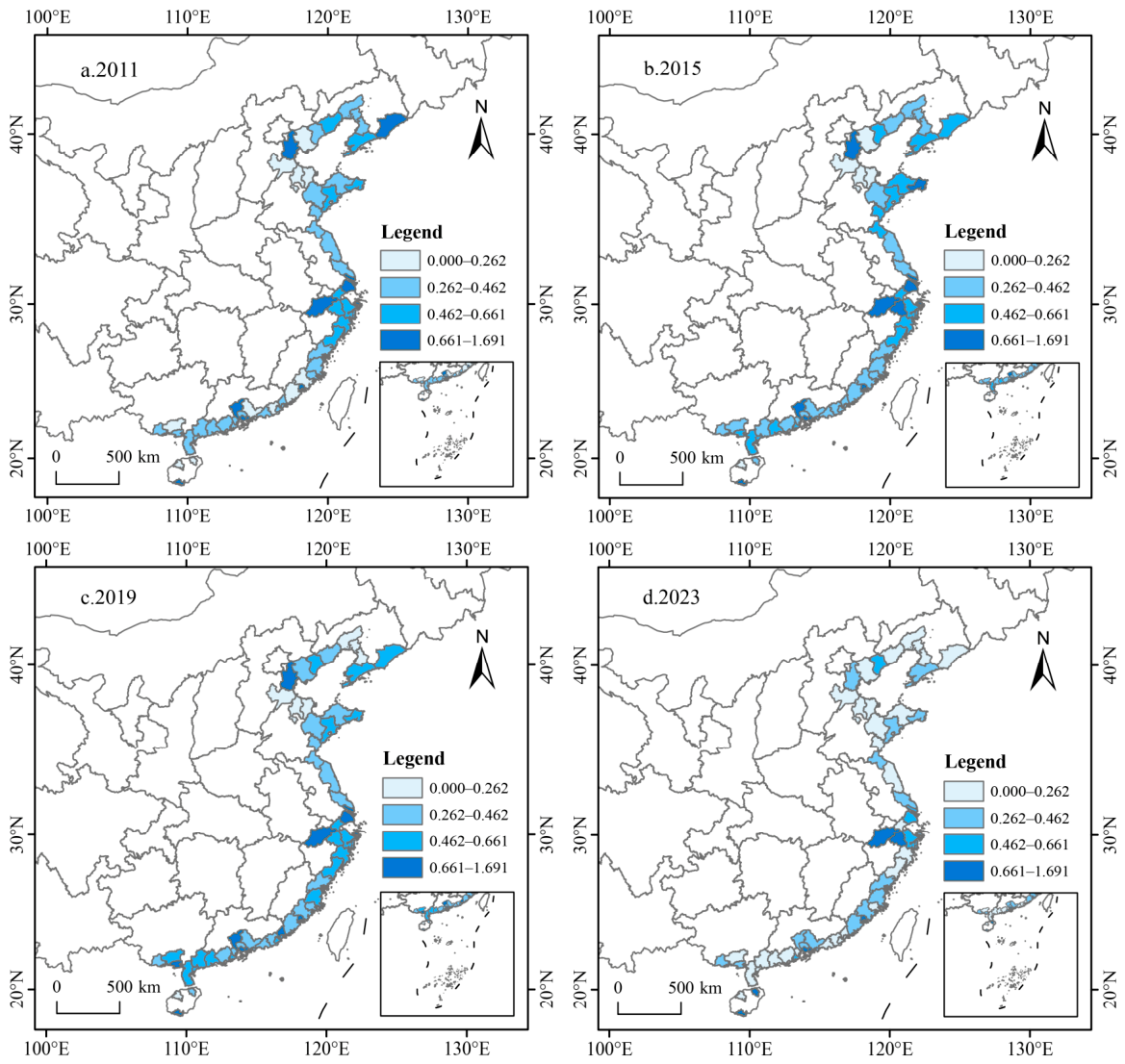
Figure 2 depicts the spatiotemporal evolution of TCEE in Chinese coastal cities from 2011 to 2023. In terms of the temporal trend, TCEE exhibited a sustained upward trajectory from 2011 to 2019, driven by tourism industry transformation and the promotion of low-carbon governance in the coastal regions. However, the outbreak of the COVID-19 pandemic in 2020 caused a systemic shock to the tourism market. Factors such as restrictions on interregional mobility and sudden changes in business operations disrupted the existing dynamic balance between carbon emissions and economic output, leading to an overall decline in TCEE by 2023 compared to pre-pandemic levels.
First, travel restrictions and limitations on visitor flows led to a sharp contraction in tourism demand, while tourism infrastructure and energy consumption remained rigid in the short term, resulting in higher carbon emissions per unit of tourism output. Second, many tourism enterprises faced operational pressures during the pandemic, which forced delays in green technology retrofits, energy-efficient equipment upgrades, and low-carbon management investments, thereby weakening the progress of the tourism industry’s green transition. In addition, substantial heterogeneity exists across cities in terms of industrial structure, pace of tourism recovery, and low-carbon governance capacity, which further exacerbates the spatial differentiation of TCEE.
To address the structural break caused by this exogenous shock, this study will conduct a robustness check by excluding the pandemic period (2020–2023) from the sample, ensuring that the core conclusions are not affected by this extraordinary event.

4.2.2. Core Explanatory Variable

DGS consists of two subsystems: digitalization and greening. Drawing on the studies of Brynjolfsson and Collis (2019) [68], Li et al. (2024) [69], and Liu et al. (2025) [70], this study constructs a digitalization indicator system from four dimensions: digital infrastructure, digital technology application, digital industry development, and the digital innovation environment. Greening is evaluated from three dimensions, namely, ecological governance, environmental pollution, and green lifestyles. The specific indicators for digitalization and greening are presented in Table 2.
To avoid information redundancy and subjective weighting bias, the entropy method is employed to quantify the levels of digitalization and greening. The coupling coordination degree model effectively captures the extent of interactive influence and the dynamic interrelationships between two systems, offering advantages in terms of comprehensiveness and intuitive interpretability. Accordingly, this study employs this model to quantify the level of DGS [4]. Detailed computational procedures are provided in Supplementary Materials S2.
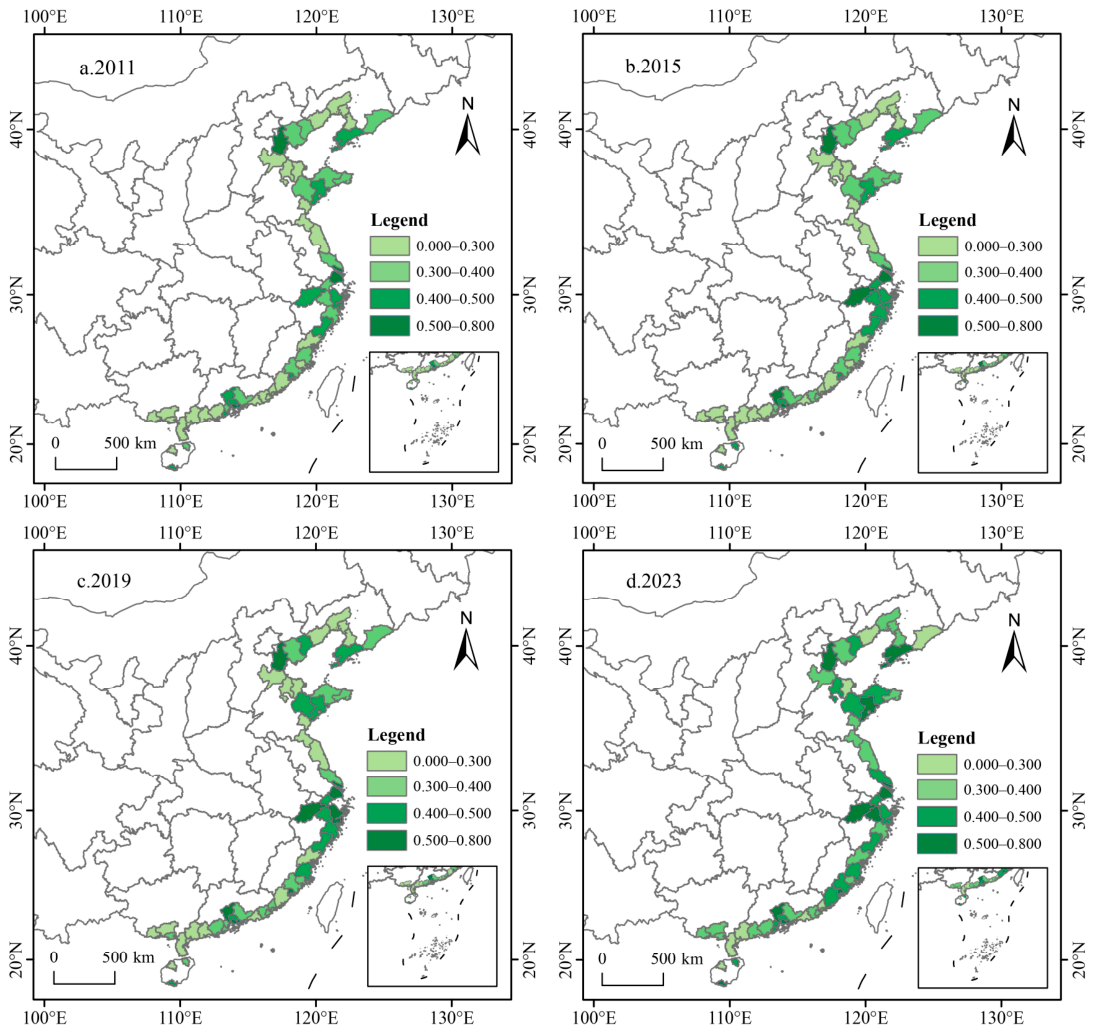
Figure 3 illustrates the spatiotemporal evolution of DGS levels in Chinese coastal cities from 2011 to 2023. From a temporal perspective, DGS exhibited a sustained upward trend throughout the study period. The spatial extent of high-value areas continuously expanded, while the proportion of medium- and low-value areas gradually declined, indicating a substantial improvement in the overall DGS level across coastal regions. From a spatial perspective, high-value clusters were consistently concentrated in the core cities of the Yangtze River Delta, Pearl River Delta, and Bohai Rim regions. Over time, these high-value areas evolved from isolated growth poles into contiguous clusters, accompanied by a gradual convergence in the disparities of regional coordination levels. This evolutionary pattern suggests that DGS is not a static development state but rather a dynamic process of synergistic advancement. Its role in empowering green transformation through data-driven resource allocation, enhancing efficiency via digital technologies, and fostering digital innovation under green development principles has become increasingly prominent. Consequently, DGS provides sustained momentum for overcoming carbon-emission constraints in the tourism industry and improving TCEE, demonstrating substantial potential as a catalyst for sustainable tourism development.

4.2.3. Moderating Variables

For ER, it is proxied by the frequency of environment-related keywords in government work reports [71].
For TIA, the location quotient index effectively mitigates the bias caused by cross-regional scale disparities, while delivering a more impartial depiction of the spatial distribution patterns of geographic attributes [5]. The present study employs the location quotient to measure the level of tourism industry agglomeration, which is calculated as follows:
T I A i t = t o u r i t / g d p i t t o u r t / g d p t
where TIAit denotes the level of tourism industry agglomeration; tourit and gdpit represent the total tourism revenue and gross domestic product of prefecture-level city i in year t, respectively; and tourt and gdpt denote national total tourism revenue and gross domestic product in period t, respectively.

4.2.4. Control Variables

To avoid potential biases in the empirical results due to omitted variables, the following control variables were selected for model testing. (1) Population density (POP). The population density is represented by the ratio of the resident population to the land area of the administrative region, with logarithmic transformation applied [72]. (2) Transportation accessibility (TA). This study measures transportation accessibility using the ratio of road mileage to urban area [73]. (3) Human capital (HC). Human capital is represented by the ratio of students enrolled in higher education institutions to the total population at the end of the year [48]. (4) Urbanization level (URL). Urbanization is measured as the proportion of the urban population [4]. (5) Government intervention (GOV). Government intervention is represented by the ratio of general public budget expenditure to GDP [70]. To avoid multicollinearity that could distort the model, a collinearity test was performed on the above control variables. All VIF values are less than 10, indicating that multicollinearity is not a concern in this study.

4.3. Data Sources

Owing to the unavailability of tourism statistics after 2024, the present study selects 54 coastal cities in China as the research sample for the period 2011–2023, excluding the city of Sansha. The sample data are primarily obtained from the China City Statistical Yearbook, China Culture and Tourism Statistical Yearbook, China Environment Statistical Yearbook, provincial and municipal statistical yearbooks, and annual China Digital Economy Development Reports. In addition, logarithmic transformations are applied to selected nonratio variables to mitigate the impact of heteroskedasticity. Descriptive statistics for all variables are reported in Table 3.

5. Result Analysis

5.1. Baseline Regression

Table 4 presents the baseline regression results. As evidenced in Columns (1) to (6), the coefficient of DGS is significantly positive at the 1% level regardless of whether control variables are included, indicating that DGS can effectively enhance TCEE. Thus, H1 is supported. This study employs the adjusted R2 to assess model goodness-of-fit. Unlike the traditional R2, the adjusted R2 penalizes for the number of included variables, effectively mitigating the inflation of fit that occurs with the addition of predictors. As control variables are sequentially introduced, the adjusted R2 increases gradually from 0.816 to 0.832, remaining at a relatively high level and exhibiting a smooth upward trend. This pattern indicates that the newly added control variables contribute stable marginal explanatory power, and that the model does not suffer from artificially inflated fit due to multicollinearity or omitted variable bias. These results provide preliminary support for the robustness of the baseline regression outcomes.
Regarding the control variables, the coefficients of TA, POP, and URL are significantly positive. This indicates that well-developed transport infrastructure, an appropriate population scale, and a higher level of urbanization contribute positively to improvements in TCEE. In contrast, the coefficient of GOV is significantly negative. A possible explanation is that local government regulatory policies lack dynamic adjustment mechanisms, resulting in a mismatch between low-carbon development demands and actual policy implementation, thereby constraining the improvement in TCEE. The coefficient of HC is statistically insignificant, which may be attributed to a misalignment between human capital allocation and the emission reduction needs of the tourism sector, thereby preventing knowledge and skills from being effectively transformed into tangible improvements in TCEE.
The modest variation in control-variable coefficients across model specifications is mainly attributable to the moderate intercorrelations among explanatory variables. With the sequential inclusion of additional covariates, the marginal effects of previously included variables are re-evaluated, leading to adjustments in their estimated coefficients. This phenomenon reflects the model’s progression toward a more comprehensive and less biased specification rather than estimation instability, and therefore does not affect the robustness of the baseline results.

5.2. Moderation Effect Result

Table 5 presents the moderating effects of ER and TIA on the relationship between DGS and TCEE. As presented in Column (1), the interaction term between ER and DGS is significantly positive at the 5% level, with a coefficient of 3.344, indicating that environmental regulation strengthens the positive effect of DGS on TCEE. Under stricter environmental regulatory constraints, tourism enterprises are incentivized to increase investment in the research, development, and application of digital and green technologies, thereby facilitating the low-carbon and green transformation of the tourism sector and ultimately enhancing TCEE [74]. These results provide empirical support for H2.
According to the results reported in Column (2), the interaction term between TIA and DGS is significantly positive at the 1% level, with a coefficient of 0.744, suggesting that TIA positively moderates the impact of DGS on TCEE. TIA promotes spatial proximity among tourism enterprises and related institutions, thus helping to foster an innovation-friendly environment and facilitate the innovation and diffusion of digital and green technologies [35]. This, in turn, effectively reduces carbon emissions in the tourism sector, thereby validating H3.

5.3. Robustness Test

To examine the stability of the results, four different robustness-checking methods are applied in this study, as presented in Table 6. First, all continuous variables are winsorized at the 1% level, and the regressions are re-estimated. The results are presented in Column (1). Second, considering that municipalities directly under the central government may exhibit systematically higher levels of DGS because of their unique advantages in economic scale and resource allocation, Tianjin and Shanghai are excluded from the sample, and the model is re-estimated. The results presented in Column (2). Third, given that the outbreak of the COVID-19 pandemic may have resulted in substantial shocks to the global tourism industry, observations from 2020–2022 are removed, and the model is re-estimated. The results presented in Column (3). Finally, double machine learning is known to be robust to model misspecification and high-dimensional settings and can effectively mitigate specification bias arising from nonlinear relationships. Accordingly, random forest and lasso regression algorithms are employed to further examine the robustness of the empirical findings, with the results presented in Columns (4) and (5). Overall, the above estimates consistently indicate that DGS significantly enhances TCEE, thereby confirming the robustness of the baseline regression results.

5.4. Endogenous Test

Regions with higher TCEE generally possess stronger economic foundations and governance capacities, which may enable them to adopt DGS strategies earlier, potentially leading to biased estimates. To mitigate possible endogeneity issues in the baseline estimations, following Pang et al. (2025) [61], we construct an instrumental variable (IV) for DGS as the interaction between the number of fixed-line telephones per 100 persons in each city in 1984 and the share of environmental fiscal expenditure. First, the number of fixed telephones per 100 people in 1984 serves as an early indicator of communication infrastructure during the initial stage of Chinese reform and opening-up and is exogenous to the current economic system. Early infrastructure deployment may affect the subsequent evolution of digital technologies through historical inertia and network effects, while the share of environmental fiscal expenditure reflects local governments’ commitment to green development. The interaction of these two variables effectively captures the degree of DGS. Second, the 1984 telephone stock is a historical variable that is not influenced by contemporary tourism activity or carbon emission policies, thus satisfying the exogeneity requirement. The results reported in Table 7 indicate that the instrumental variable (IV) does not suffer from issues of overidentification or weak identification, confirming the validity of the selected instrument. The results in Column (1) and (2) reveal that DGS significantly improves TCEE, thereby providing further support for H1.

5.5. Heterogeneity Test

5.5.1. Regional Heterogeneity

The levels of DGS and TCEE exhibit heterogeneous spatial distribution patterns across Chinese coastal regions. Following Tian and Xie (2025) [75], the present study divides Chinese coastal areas into three major marine economic zones and conducts separate regression analyses for the Northern Marine Economic Circle, the Eastern Marine Economic Circle, and the Southern Marine Economic Circle. The regression results are reported in Table 8.
Columns (1) to (3) in Table 8 indicate that the regression coefficients of DGS on TCEE are 2.727, 3.146, and 4.148 for the Northern, Eastern, and Southern Marine Economic Circles, respectively, all statistically significant at the 1% level. This suggests that DGS exerts a positive effect on TCEE across all three economic circles, consistent with the results from the full sample of coastal cities in China. Notably, the coefficient in the Southern Marine Economic Circle is larger than those in the Northern and Eastern Circles. To formally compare the inter-group differences in coefficients, we employ a bootstrap-based Fisher combination test, repeating the sampling 500 times to assess the significance of differences across groups, thereby mitigating small-sample bias inherent in traditional Wald tests. The results show that the empirical p-values for all inter-group comparisons are below 0.05, indicating that the effect of DGS on TCEE exhibits significant spatial heterogeneity, with the Southern Marine Economic Circle displaying the strongest enabling effect.
The underlying reasons can be attributed to several factors. The Southern Marine Economic Circle, anchored by national-level digital economy and green development demonstration zones such as the Guangdong–Hong Kong–Macao Greater Bay Area, possesses a dense and mature technological innovation system and abundant human capital. It is also more advanced in the deployment of digital infrastructure, including 5G networks and big data platforms, while local governments have established more comprehensive policy support for the green transformation of the cultural and tourism industry, creating favorable conditions for the practical implementation of digital-enabled green tourism. Moreover, the Southern Circle is dominated by high-end tourism sectors, such as coastal resorts and wellness/leisure tourism, where visitors demonstrate stronger willingness to pay for low-carbon, green, and smart tourism products.
In contrast, the Northern and Eastern Circles are primarily oriented toward sightseeing and business tourism, which exhibit relatively higher carbon intensity. The Northern Circle is more dependent on traditional industries and energy, while the Eastern Circle faces pressures from partially saturated tourism resources and a relatively high carbon emission base. Consequently, the marginal effect of DGS on TCEE is comparatively weaker in the Northern and Eastern Circles than in the Southern Marine Economic Circle.

5.5.2. Heterogeneity of Economic Development Levels

Regions with different levels of economic development may adopt distinct approaches to reduce carbon emissions in the tourism industry. Accordingly, this study calculates the median per capita GDP of the 54 coastal cities in China and uses it as a benchmark to divide the sample into regions with high and low levels of economic development, followed by separate regression analyses. The corresponding results are reported in Columns (4) and (5) of Table 8.
The results indicate that DGS exerts a significant positive effect on TCEE in both economically developed and less-developed regions; however, the magnitude of the effect is more pronounced in regions with higher levels of economic development. To further examine whether the difference in coefficients between the two groups is statistically significant, a bootstrap-based Fisher combination test was employed, with 500 resampling iterations conducted to assess inter-group differences. The results show that the empirical p-value for the coefficient difference is 0.030, indicating that the promoting effect of DGS on TCEE is significantly stronger in economically developed regions.
A plausible explanation is that regions with higher levels of economic development possess stronger technological foundations and greater innovation capacity, which provide favorable conditions for the synergistic advancement of digitalization and greening. In contrast, less-developed regions often face constraints in technological investment, human capital accumulation, and infrastructure construction, limiting their ability to implement effective data-driven and energy management practices. As a result, the potential benefits of DGS cannot be fully realized, leading to a relatively weaker contribution to improvements in TCEE.

6. Further Analysis

6.1. Threshold Effect Results

Using a threshold effect model, this study examines whether the impact of DGS on TCEE exhibits nonlinear characteristics. Taking DGS as the threshold variable, a panel threshold test was conducted using the Bootstrap method with 300 replications to assess the existence and number of threshold effects. The corresponding F-statistics, p-values, and critical values are reported in Table 9 and Table 10. The results indicate that the F-statistics for the single-threshold and double-threshold models are 52.57 and 30.24, respectively, both of which pass the significance tests at the 1% and 10% levels. In contrast, the F-statistic for the triple-threshold model is 20.88, which fails to reach statistical significance. These findings suggest that the effect of DGS on TCEE exhibits a double-threshold effect, with estimated threshold values of 0.323 and 0.442, respectively.
Table 10 reports the regression results for the threshold model. When the threshold variable is below the first threshold value, the regression coefficient of DGS is 0.974 and fails to pass the significance test, indicating that the effect of DGS on TCEE is not statistically significant at this stage. When the threshold variable lies between the first and second threshold values, the regression coefficient of DGS increases to 2.351 and is significant at the 1% level, suggesting that the promoting effect of DGS on TCEE begins to emerge. Once the second threshold is exceeded, the positive impact of DGS on TCEE is further strengthened. Therefore, Hypothesis 4 is supported.
These findings demonstrate that the effect of DGS on TCEE is nonlinear. At relatively low levels of DGS, constraints arising from industrial structure, institutional support mechanisms, and technological innovation capacity may lead to the fragmented application of digital and green technologies, insufficient financing for low-carbon transformation, and limited penetration of advanced technologies into major carbon-emitting segments of the tourism industry, such as transportation and accommodation. Consequently, the contribution of DGS to improving TCEE remains insignificant. As DGS surpasses the first and second threshold values, however, the cumulative effects of technological innovation and synergistic interactions become increasingly pronounced, while the share of the tertiary sector—represented by tourism—continues to expand and green production systems become more mature. Under these conditions, DGS provides data-driven empowerment and technological support across the entire tourism industry value chain, enhancing the efficiency of tourism resource allocation and facilitating the adoption and implementation of clean and low-carbon technologies in key carbon-emitting activities. As a result, DGS exerts a significantly positive effect on TCEE.

6.2. Spatial Spillover Effect

6.2.1. Preliminary Tests for Spatial Econometrics

Before examining the spatial spillover effects between DGS and TCEE, a spatial autocorrelation test was conducted using Moran’s I index. The results are reported in Table 11. The findings indicate that the Moran’s I values for both DGS and TCEE are statistically significant at the 1% level across all sample years, suggesting the presence of significant spatial autocorrelation in both variables during the study period. Therefore, the spatial dependence characteristics of DGS and TCEE satisfy the prerequisites for the application of spatial econometric models.

6.2.2. Spatial Model Selection and Regression Results Testing

To determine the appropriate spatial econometric model, LM tests, LR tests, Wald tests, and Hausman tests were conducted, with the corresponding results reported in Table 12. In this study, based on an economic-geographical nested spatial weight matrix, a two-way fixed-effects Spatial Durbin Model was employed to further analyze the spatial spillover effects of DGS on TCEE, as shown in Table 13. The results indicate that the spatial autoregressive coefficient ρ is positive and statistically significant at the 1% level, suggesting a strong spatial dependence between DGS and TCEE. Further, the direct, indirect, and total effects of DGS were calculated using the partial derivative approach in the SDM framework (Table 13).
The findings reveal that all three effects are significantly positive, indicating that DGS not only promotes TCEE within the local region but also enhances TCEE in neighboring regions through spatial spillovers. This may be attributed to several factors. First, coastal cities are closely linked through tourism flows, as visitors often travel across multiple cities in the region. During these cross-regional trips, tourists may transmit low-carbon consumption behaviors—such as green travel, online booking, and environmentally conscious preferences—to neighboring areas. This, in turn, pressures local tourism firms in those regions to optimize digital services and adopt green operation models, thereby improving TCEE in adjacent cities.
Second, as a city advances in digital services, smart scenic spots, and virtual tour technologies, its low-carbon tourism practices and experiences naturally diffuse to neighboring cities via knowledge spillovers, technology transfers, and collaborative development, accelerating the adoption of green and clean technologies and promoting TCEE growth in the surrounding areas.
Finally, there exists a spatial correlation in tourism governance and green development policies among coastal local governments, driven by policy learning and competition. When a coastal city successfully implements pilot programs such as smart tourism initiatives or low-carbon tourism subsidies, neighboring cities often emulate these policies through observation, experience sharing, and performance benchmarking, resulting in regional policy coordination that collectively promotes the enhancement in DGS levels. Overall, Hypothesis 5 is supported.

7. Conclusions and Policy Implications

7.1. Conclusions

First, based on the construction of the DGS and TCEE indicator systems, this study employed a coupling coordination model to measure DGS and TCEE for 54 coastal cities in China from 2011 to 2023. Second, building on the theoretical analysis, a series of econometric models—including the baseline regression model, moderation effect model, threshold effect model, and Spatial Durbin Model—were applied to investigate the impact mechanisms of DGS on TCEE in Chinese coastal cities, as well as its spatial spillover effects. The main findings are as follows:
(1)
DGS can effectively enhance TCEE in coastal cities of China. This conclusion remains robust after performing robustness and endogeneity tests. Economically, a 1% increase in DGS corresponds to a 3.184% increase in TCEE, indicating that the deep integration of digitalization and green development can effectively reduce carbon emissions per unit of tourism economic output. Mechanistically, DGS enhances TCEE primarily through three pathways: technological empowerment, process optimization, and paradigm innovation, which together reduce energy consumption and improve resource allocation efficiency.
(2)
ER and TIA play positive moderating roles in the relationship between DGS and TCEE. Specifically, ER promotes the adoption of green digital technologies by tourism enterprises through a “pressure effect” and an “innovation compensation effect,” while TIA lowers the cost of technology application via knowledge spillovers and economies of scale, thereby amplifying the positive effect of DGS on TCEE.
(3)
The impact of DGS on TCEE exhibits a nonlinear threshold effect. When DGS is below the threshold value, its effect on TCEE is positive but not statistically significant. Once DGS surpasses the first and second threshold values, the cumulative effects of technological innovation gradually emerge, and the positive impact on TCEE strengthens progressively.
(4)
DGS exhibits spatial spillover effects on TCEE. DGS not only enhances TCEE within the local region but also promotes TCEE in neighboring regions through tourism flows and policy diffusion.
(5)
Heterogeneity analysis indicates that the positive effect of DGS on TCEE is more pronounced in the Southern Marine Economic Zone and economically developed regions. These areas feature more advanced digital infrastructure, stronger policy support, and high-end tourism industries, alongside a higher willingness of tourists to engage in low-carbon consumption, enabling the carbon reduction benefits of DGS to be more fully translated into improvements in TCEE.

7.2. Policy Implications

First, DGS transformation should be promoted prudently based on a cost–benefit perspective. When facilitating the integration of digital and green technologies across tourism transportation, accommodation, scenic attractions, and other tourism-related sectors, local governments should consider infrastructure investment, maintenance costs, and firms’ financial capacities. Priority should be given to lightweight and cost-effective digital management tools in carbon-intensive segments such as transportation, hotels, and scenic areas to achieve precise carbon monitoring while improving energy efficiency and reducing operating costs. For inland and non-coastal regions, where digital infrastructure is relatively underdeveloped and fiscal resources are limited, a gradual and targeted transformation strategy should focus on key emission-reduction activities to maximize environmental benefits and avoid resource misallocation caused by excessive investment.
Second, environmental regulation and industrial agglomeration policies should be strengthened while balancing incentives and corporate costs. Governments should implement dynamic and differentiated environmental regulations by linking green technology innovation and low-carbon performance to environmental access standards, tax incentives, and other supportive measures. This can generate innovation–compensation effects that help offset compliance costs. In addition, economies of scale arising from tourism industry agglomeration can facilitate technology sharing and joint infrastructure development, reducing DGS adoption costs and lowering barriers for small and medium-sized tourism enterprises. For non-coastal regions, regulatory and agglomeration policies should be adapted to local tourism development levels and industrial structures to ensure effectiveness and equity.
Third, differentiated policy support should be implemented and regional demonstration effects should be strengthened. Regions within the Southern Marine Economic Zone and economically advanced areas should further deepen DGS pilot programs and enhance their leading roles. In contrast, regions within the Northern and Eastern Marine Economic Zones, as well as less-developed areas, should prioritize digital infrastructure improvement and green technology adoption to unlock DGS-related carbon-reduction potential. Policymakers should also leverage the positive spatial spillover effects of DGS by promoting technology sharing, policy coordination, and regional collaboration among coastal cities. Mature DGS practices and successful policy experiences can then be transferred to other coastal and inland tourism destinations, fostering a low-carbon tourism development pattern characterized by demonstration, diffusion, and coordinated regional development, thereby contributing to sustained improvements in TCEE.

7.3. Research Limitations and Future Work

(1)
Limitations related to spatial scale: This study examines the impact of DGS on TCEE primarily at the city level. Future research could employ more granular spatial units, such as counties, firms, or industrial parks, and integrate remote sensing and night-time light data to capture spatial heterogeneity and better identify the effects of DGS on TCEE.
(2)
Constraints on the quality of tourism carbon emission accounting: This study adopts a bottom–up approach combined with uniform emission coefficients to estimate city-level tourism carbon emissions. Such estimation inevitably generates empirical bias and restricts the accuracy of carbon data due to limited official segmented statistical data. Future research can improve accounting precision by integrating micro-enterprise accounting records and field survey datasets.
(3)
Unresolved potential reverse causality: Although the instrumental variable approach is employed to mitigate endogeneity, higher tourism carbon emission efficiency may incentivize local governments to accelerate DGS construction with sufficient fiscal resources. Such reverse causal linkage cannot be fully eliminated by the existing IV design. Subsequent studies can adopt quasi-natural experiments based on exogenous policy shocks to achieve more rigorous causal identification.

Supplementary Materials

The following supporting information can be downloaded at: https://www.mdpi.com/article/10.3390/su18125935/s1. Supplementary S1: Methodology for Calculating Tourism Carbon Emissions; Supplementary S2: Construction of the Coupling Coordination Degree Model.

Author Contributions

Methodology, software, formal analysis, investigation, data curation, visualization, writing—original draft: R.L.; conceptualization, funding acquisition, validation, writing—review and editing, supervision: P.D.; data curation, software, P.Y.; data curation, visualization, Y.L. All authors have read and agreed to the published version of the manuscript.

Funding

This research was funded by the Humanity and Social Science Foundation of the Ministry of Education of China (Grant No. 23YJCZH043).

Institutional Review Board Statement

Not applicable.

Informed Consent Statement

Not applicable.

Data Availability Statement

The data that support the findings of this study are available on reasonable request from the corresponding author.

Conflicts of Interest

The authors declare no conflicts of interest.

References

  1. Scott, D.; Hall, C.M.; Gössling, S. Global tourism vulnerability to climate change. Ann. Tour. Res. 2019, 77, 49–61. [Google Scholar] [CrossRef]
  2. Koçak, E.; Ulucak, R.; Ulucak, Z.S. The impact of tourism developments on CO2 emissions: An advanced panel data estimation. Tour. Manag. Perspect. 2020, 33, 100611. [Google Scholar] [CrossRef]
  3. Sun, Y.Y.; Faturay, F.; Lenzen, M.; Goessling, S.; Higham, J. Drivers of global tourism carbon emissions. Nat. Commun. 2024, 15, 10384. [Google Scholar] [CrossRef] [PubMed]
  4. Qiu, M.Z.; Wang, Z.F.; Chen, Q.C.; Wang, J. Enhancing tourism carbon emission efficiency through cultural and tourism industry integration in china: Empirical evidence from industrial structure upgrading. Environ. Dev. Sustain. 2025, 1–29. [Google Scholar] [CrossRef]
  5. Liu, J.; An, K.K.; Jang, S. Threshold effect and mechanism of tourism industrial agglomeration on green innovation efficiency: Evidence from coastal urban agglomerations in China. Ocean Coast. Manag. 2023, 246, 106908. [Google Scholar] [CrossRef]
  6. Fang, X.Y.; Bai, Y. Spatial correlation of carbon emissions in China’s coastal areas: The spatiotemporal nonlinear characteristics and spatial heterogeneity. Urban Clim. 2026, 65, 102823. [Google Scholar] [CrossRef]
  7. Chen, D.F.; Wang, J.P.; Li, B.; Luo, H.H.; Hou, G.M. The Impact of Digital-Green Synergy on Total Factor Productivity: Evidence from Chinese Listed Companies. Sustainability 2025, 17, 2200. [Google Scholar] [CrossRef]
  8. Ding, D.; Cao, Z.X.; Ma, B. Spatio-temporal evolution and driving mechanism of the dual transformation and coordination between digitalization and greening. J. Environ. Manag. 2024, 371, 123110. [Google Scholar] [CrossRef]
  9. Shan, Z.D.; Han, X.Y.; Huang, D.; Xu, G. Regional digital-green synergy transformation and enterprise new quality productive forces. Financ. Res. Lett. 2025, 79, 107349. [Google Scholar] [CrossRef]
  10. Myrovali, G.; Tzanis, G.; Morfoulaki, M. Sustainable Tourism Through Digitalization and Smart Solutions. Sustainability 2025, 17, 5383. [Google Scholar] [CrossRef]
  11. Varolgünes, F.K.; Maldonado-Erazo, C.P.; Bollain-Parra, L. Impact of digitalization on sustainable tourism: Emerging trends and future perspectives. Manag. Decis. 2025, 1–28. [Google Scholar] [CrossRef]
  12. Wang, Y.P.; Cui, L.B.; Zhou, J. The impact of green finance and digital economy on regional carbon emission reduction. Int. Rev. Econ. Financ. 2025, 97, 11. [Google Scholar] [CrossRef]
  13. Talwar, S.; Kaur, P.; Nunkoo, R.; Dhir, A. Digitalization and sustainability: Virtual reality tourism in a post pandemic world. J. Sustain. Tour. 2023, 31, 2564–2591. [Google Scholar] [CrossRef]
  14. Chen, C.; Wu, W.P. Threshold Effects of Digital Economy on Tourism Carbon Emissions: Empirical Evidence from the Yangtze River Economic Belt in China. Pol. J. Environ. Stud. 2025, 34, 43–56. [Google Scholar] [CrossRef]
  15. Qian, L.; Fang, Q.; Lu, Z. Research on the synergy of green economy and digital economy in stimulus policies. Southwest Financ. 2020, 413, 3–13. [Google Scholar]
  16. Sareen, S.; Haarstad, H. Digitalization as a driver of transformative environmental innovation. Environ. Innov. Soc. Trans. 2021, 41, 93–95. [Google Scholar] [CrossRef]
  17. Pradhan, R.P.; Arvin, M.B.; Norman, N.R. The dynamics of information and communications technologies infrastructure, economic growth, and financial development: Evidence from Asian countries. Technol. Soc. 2015, 42, 135–149. [Google Scholar] [CrossRef]
  18. Jiang, J. Sustainable digital era: High-quality integrated development of green economy and digital economy. Enterp. Econ. 2021, 7, 23–30. [Google Scholar]
  19. She, Q.; Qian, J.; He, L. Research on the relationship of coupling coordination between digitalization and green development. Sci. Rep. 2024, 14, 19569. [Google Scholar] [CrossRef]
  20. Li, Q.Y.; Ge, J.X.; Fan, H.B. Unveiling the impact of synergy between digitalization and greening on urban employment in China. Sci. Rep. 2024, 14, 27773. [Google Scholar] [CrossRef]
  21. Raman, R.; Sreenivasan, A.; Ma, S.; Patwardhan, A.; Nedungadi, P. Green supply chain management research trends and linkages to UN sustainable development goals. Sustainability 2023, 15, 15848. [Google Scholar] [CrossRef]
  22. Zeng, L.; Wen, M.; Li, C.; Nie, Y.; Wang, S. Impact of digital greening synergistic transformation on urban economic resilience in China: Evidence from quasi-natural experiments. Hum. Soc. Sci. Commun. 2025, 12, 85. [Google Scholar] [CrossRef]
  23. Li, S.; Cheng, Z.; Tong, Y.; He, B. The interaction mechanism of tourism carbon emission efficiency and tourism economy high-quality development in the Yellow River Basin. Energies 2022, 15, 6975. [Google Scholar] [CrossRef]
  24. Liang, L.; Wu, J.; Cook, W.D.; Zhu, J. The DEA game cross-efficiency model and its Nash equilibrium. Oper. Res. 2008, 56, 1278–1288. [Google Scholar] [CrossRef]
  25. Si, X.; Tang, Z. Assessment of low-carbon tourism development from multi-aspect analysis: A case study of the Yellow River Basin, China. Sci. Rep. 2024, 14, 4600. [Google Scholar] [CrossRef] [PubMed]
  26. Gökgöz, F.; Macit, G. Assessing the Effect of Transportation Investments on Efficiency and Sustainability of EU Roads. Transp. Policy 2025, 175, 103873. [Google Scholar] [CrossRef]
  27. Assaf, A.G.; Josiassen, A. Frontier analysis: A state-of-the-art review and meta-analysis. J. Travel Res. 2016, 55, 612–627. [Google Scholar] [CrossRef]
  28. Jiang, G.H.; Zhu, A.D.; Li, J. Measurement and Impactors of Tourism Carbon Dioxide Emission Efficiency in China. J. Environ. Public Health 2022, 2022, 9161845. [Google Scholar] [CrossRef] [PubMed]
  29. Haibo, C.; Ke, D.; Fangfang, W.; Ayamba, E.C. The spatial effect of tourism economic development on regional ecological efficiency. Environ. Sci. Pollut. Res. 2020, 27, 38241–38258. [Google Scholar] [CrossRef]
  30. Nunkoo, R.; Ramkissoon, H. Structural equation modelling and regression analysis in tourism research. Curr. Issues Tour. 2012, 15, 777–802. [Google Scholar] [CrossRef]
  31. Zhang, Y.; Li, Y. Regional Differences in Tourism Eco-Efficiency in the Beijing–Tianjin–Hebei Region: Based on Data from 13 Cities. Sustainability 2023, 15, 2907. [Google Scholar] [CrossRef]
  32. Wang, L.G.; Jia, G.D. Spatial Spillover and Threshold Effects of High-Quality Tourism Development on Carbon Emission Efficiency of Tourism under the “Double Carbon” Target: Case Study of Jiangxi, China. Sustainability 2023, 15, 4797. [Google Scholar] [CrossRef]
  33. Balsalobre-Lorente, D.; Driha, O.M.; Leitão, N.C.; Murshed, M. The carbon dioxide neutralizing effect of energy innovation on international tourism in EU-5 countries under the prism of the EKC hypothesis. J. Environ. Manag. 2021, 298, 113513. [Google Scholar] [CrossRef]
  34. Paramati, S.R.; Alam, M.S.; Chen, C.-F. The effects of tourism on economic growth and CO2 emissions: A comparison between developed and developing economies. J. Travel Res. 2017, 56, 712–724. [Google Scholar] [CrossRef]
  35. Liu, H.; Wang, C.; Tsai, H. Enhancing tourism carbon emission efficiency through industry agglomeration: Evidence from China. Tour. Manag. 2025, 110, 105170. [Google Scholar] [CrossRef]
  36. Xiong, G.B.; Deng, J.H.; Ding, B.G. Characteristics, decoupling effect, and driving factors of regional tourism’s carbon emissions in China. Environ. Sci. Pollut. Res. 2022, 29, 47082–47093. [Google Scholar] [CrossRef]
  37. Ghosh, S. Effects of tourism on carbon dioxide emissions, a panel causality analysis with new data sets. Environ. Dev. Sustain. 2022, 24, 3884–3906. [Google Scholar] [CrossRef]
  38. Zhou, Y.; Lin, B. Does tourism industry agglomeration improve China’s energy and carbon emissions performance? Sci. Prog. 2022, 105, 00368504221126790. [Google Scholar] [CrossRef] [PubMed]
  39. Nitti, M.; Pilloni, V.; Giusto, D.; Popescu, V. IoT Architecture for a Sustainable Tourism Application in a Smart City Environment. Mob. Inf. Syst. 2017, 2017, 9201640. [Google Scholar] [CrossRef]
  40. Horner, N.C.; Shehabi, A.; Azevedo, I.L. Known unknowns: Indirect energy effects of information and communication technology. Environ. Res. Lett. 2016, 11, 103001. [Google Scholar] [CrossRef]
  41. Eom, S.-J.; Lee, J. Digital government transformation in turbulent times: Responses, challenges, and future direction. Gov. Inf. Q. 2022, 39, 101690. [Google Scholar] [CrossRef]
  42. Wang, L.; Zhao, H.; Liu, J.; He, T.; Zhu, H.; Liu, Y. How does the digital economy affect carbon emissions from tourism? Empirical evidence from China. J. Clean. Prod. 2024, 469, 143175. [Google Scholar] [CrossRef]
  43. Lu, C.-W.; Huang, J.-C.; Chen, C.; Shu, M.-H.; Hsu, C.-W.; Bapu, B.T. An energy-efficient smart city for sustainable green tourism industry. Sustain. Energy Technol. Assess. 2021, 47, 101494. [Google Scholar] [CrossRef]
  44. Wang, P.; Wu, X. Green credit and environmental protection investment for the high-quality development of the tourism industry. Financ. Res. Lett. 2025, 85, 107972. [Google Scholar] [CrossRef]
  45. Moon, H.; Yu, J.; Chua, B.-L.; Han, H. Impact of green brand authenticity on warm glow, green satisfaction, and willingness to pay more. J. Travel Tour. Mark. 2023, 40, 326–344. [Google Scholar] [CrossRef]
  46. Lu, Y.; Xu, R.; Shi, L.; Ma, W. Digital economy and cultural-tourism integration: Synergistic effects of financial agglomeration. Financ. Res. Lett. 2025, 88, 109125. [Google Scholar] [CrossRef]
  47. Irfan, M.; Ullah, S.; Razzaq, A.; Cai, J.Y.; Adebayo, T.S. Unleashing the dynamic impact of tourism industry on energy consumption, economic output, and environmental quality in China: A way forward towards environmental sustainability. J. Clean. Prod. 2023, 387, 135778. [Google Scholar] [CrossRef]
  48. Wu, L.; Duan, X.M.; Yang, F.; Guo, L.; Zhou, H.T. Does digital economy help reduce carbon emissions from tourism? Evidence from China. Curr. Issues Tour. 2025, 28, 2998–3015. [Google Scholar] [CrossRef]
  49. Perkumiene, D.; Vienazindiene, M.; Svagzdiene, B. The Sharing Economy towards Sustainable Tourism: An Example of an Online Transport-sharing Platform. Sustainability 2021, 13, 10955. [Google Scholar] [CrossRef]
  50. Yoon, H. Virtual tourism experience as a substitute: The role of tourist experience phases. Curr. Issues Tour. 2025, 1–17. [Google Scholar] [CrossRef]
  51. Rubashkina, Y.; Galeotti, M.; Verdolini, E. Environmental regulation and competitiveness: Empirical evidence on the Porter Hypothesis from European manufacturing sectors. Energy Policy 2015, 83, 288–300. [Google Scholar] [CrossRef]
  52. Xu, Y.J.; Liu, S.G.; Wang, J.Y. Impact of environmental regulation intensity on green innovation efficiency in the Yellow River Basin, China. J. Clean. Prod. 2022, 373, 10. [Google Scholar] [CrossRef]
  53. Acemoglu, D.; Aghion, P.; Bursztyn, L.; Hemous, D. The Environment and Directed Technical Change. Am. Econ. Rev. 2012, 102, 131–166. [Google Scholar] [CrossRef]
  54. Zhang, W.; Li, G.X.; Uddin, M.K.; Guo, S.C. Environmental regulation, Foreign investment behavior, and carbon emissions for 30 provinces in China. J. Clean. Prod. 2020, 248, 119208. [Google Scholar] [CrossRef]
  55. Guo, X.Y.; Yang, J.Y.; Shen, Y.; Zhang, X.W. Impact on green finance and environmental regulation on carbon emissions: Evidence from China. Front. Environ. Sci. 2024, 12, 1307313. [Google Scholar] [CrossRef]
  56. Li, Y.T.; Guo, J.Q. How does low-carbon development of tourism contribute to high-quality economic development in China? Curr. Issues Tour. 2025, 29, 1849–1869. [Google Scholar] [CrossRef]
  57. Wu, X.Y.; Liang, X.C. Tourism development level and tourism eco-efficiency: Exploring the role of environmental regulations in sustainable development. Sustain. Dev. 2023, 31, 2863–2873. [Google Scholar] [CrossRef]
  58. Wang, Z.; Gao, Y.W. Tourism industry agglomeration, digital finance, and high-quality development of regional economy. Financ. Res. Lett. 2025, 85, 108228. [Google Scholar] [CrossRef]
  59. Jin, W.B.; Wang, Y.M.; Yan, Y.; Zhou, H.Y.; Xu, L.Y.; Zhang, Y.; Xu, Y.; Zhang, Y.Q. Digital Economy, Green Finance, and Carbon Emissions: Evidence from China. Sustainability 2025, 17, 5625. [Google Scholar] [CrossRef]
  60. Ma, Z.Y.; Xiao, H.; Li, J.; Chen, H.T.; Chen, W.H. Study on how the digital economy affects urban carbon emissions. Renew. Sustain. Energy Rev. 2025, 207, 114910. [Google Scholar] [CrossRef]
  61. Pang, G.; Li, L.; Guo, D. Does the integration of the digital economy and the real economy enhance urban green emission reduction efficiency? Evidence from China. Sustain. Cities Soc. 2025, 122, 106269. [Google Scholar] [CrossRef]
  62. Wei, L.L.; Xiu, H.Y.; Hou, Y.Q. Digital economy and low-carbon transformation of economy in China: Analyzing spatial spillover effects and pathways. Inf. Technol. Dev. 2025, 31, 992–1016. [Google Scholar] [CrossRef]
  63. Liu, Y. Coupling and coordination evaluation of digital economy and green development efficiency in eight urban agglomerations in China. Sci. Rep. 2025, 15, 26829. [Google Scholar] [CrossRef] [PubMed]
  64. Tone, K. A slacks-based measure of efficiency in data envelopment analysis. Eur. J. Oper. Res. 2001, 130, 498–509. [Google Scholar] [CrossRef]
  65. Mittal, V.; Kamakura, W.A. Satisfaction, repurchase intent, and repurchase behavior: Investigating the moderating effect of customer characteristics. J. Mark. Res. 2001, 38, 131–142. [Google Scholar] [CrossRef]
  66. Hansen, B.E. Threshold effects in non-dynamic panels: Estimation, testing, and inference. J. Econom. 1999, 93, 345–368. [Google Scholar] [CrossRef]
  67. Becken, S. Analysing international tourist flows to estimate energy use associated with air travel. J. Sustain. Tour. 2002, 10, 114–131. [Google Scholar] [CrossRef]
  68. Brynjolfsson, E.; Collis, A. How should we measure the digital economy. Harv. Bus. Rev. 2019, 97, 140–148. [Google Scholar]
  69. Li, G.; Cheng, Y.; Chen, Y.N.; Zhang, Q. Can the Synergy of Digitalization and Greening Boost Manufacturing Industry Chain Resilience? Evidence from China’s Provincial Panel Data. Sustainability 2024, 16, 9866. [Google Scholar] [CrossRef]
  70. Liu, X.; Zuo, Z.; Han, J.; Zhang, W. Is digital-green synergy the future of carbon emission performance? J. Environ. Manag. 2025, 375, 124156. [Google Scholar] [CrossRef]
  71. Pei, Y.; Zhu, Y.M.; Liu, S.X.; Wang, X.C.; Cao, J.J. Environmental regulation and carbon emission: The mediation effect of technical efficiency. J. Clean. Prod. 2019, 236, 117599. [Google Scholar] [CrossRef]
  72. Jiang, L.L.; Lv, Z.K. Digitalization means green? Linking the digital economy to environmental performance in the tourism industry. Tour. Econ. 2025, 31, 593–610. [Google Scholar] [CrossRef]
  73. Lu, X.; Wang, M.; Tang, Y. The spatial changes of transportation infrastructure and its threshold effects on urban land use efficiency: Evidence from China. Land 2021, 10, 346. [Google Scholar] [CrossRef]
  74. Guo, T.T.; Wang, J.C.; Tao, R.; Yang, L.; Lan, X. Effects of environmental regulation on tourism industry development: Evidence from China. Econ. Anal. Policy 2025, 88, 1036–1044. [Google Scholar] [CrossRef]
  75. Tian, J.; Xie, J. Industrial intelligence and marine pollution in coastal cities: A Chinese city-level study. Ocean Coast. Manag. 2025, 264, 107621. [Google Scholar] [CrossRef]
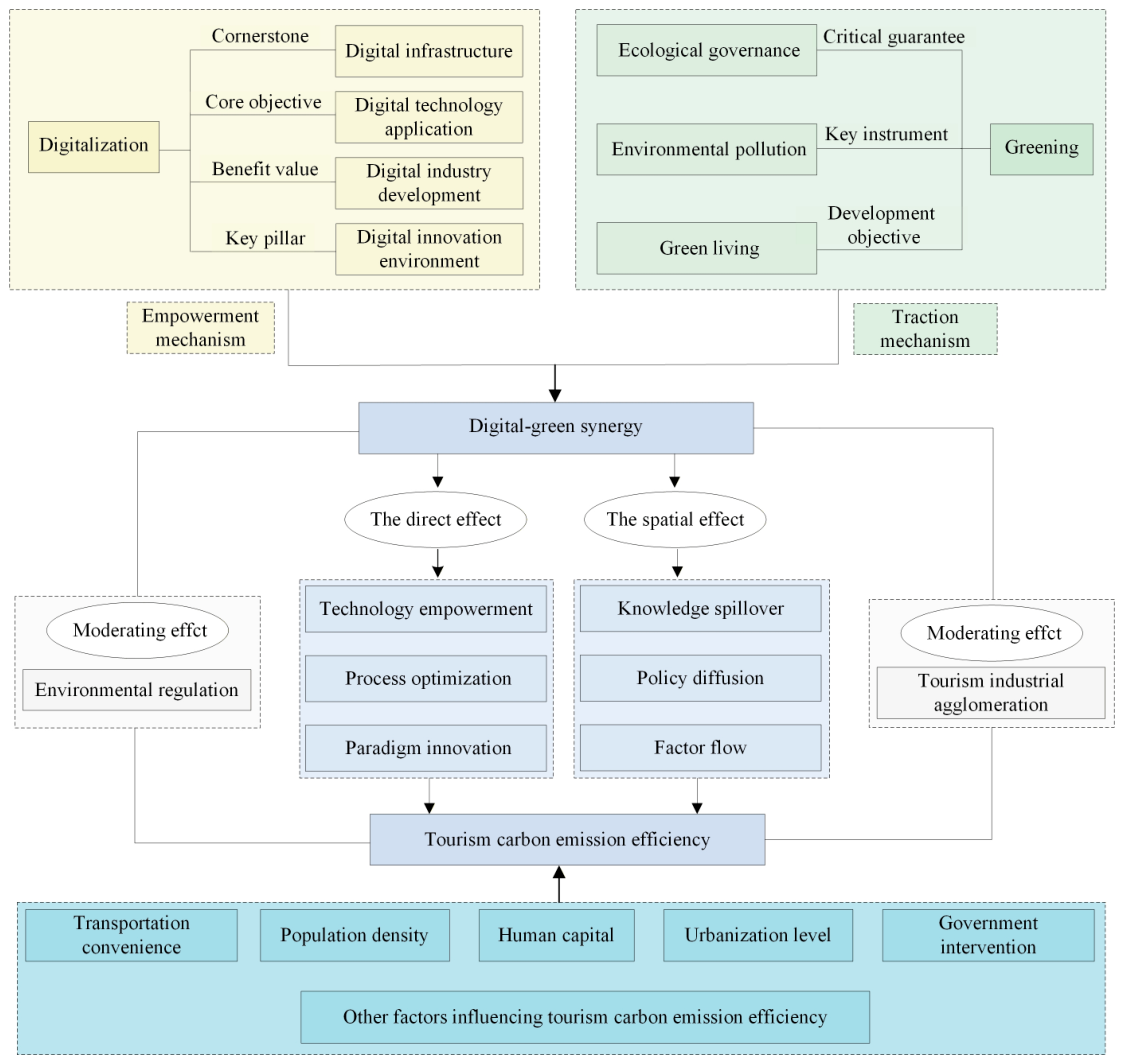
Figure 1. Theoretical analysis of DGS on TCEE Note: The figure is based on the work of Wei et al. (2025) [62] and Liu (2025) [63], and was developed with reference to the theoretical analysis presented in Section 3.
Sustainability 18 05935 g001
Figure 2. Spatiotemporal Evolution of TCEE in Coastal Cities of China.
Sustainability 18 05935 g002
Figure 3. Spatiotemporal evolution of DGS in Chinese coastal cities.
Sustainability 18 05935 g003
Table 1. Evaluation Indicator System for the TCEE.
Indicator CategoryIndicator NameDescriptionData Source
Input IndicatorsCapital InputFixed asset investment in the tourism industryChina Tourism Statistical Yearbook, China Culture and Tourism Statistical Yearbook, China City Statistical Yearbook
Labor InputNumber of employees in the tourism industryChina Tourism Statistical Yearbook, China Culture and Tourism Statistical Yearbook
Energy InputEnergy consumption of the tourism industryChina Tourism Statistical Yearbook, China Culture and Tourism Statistical Yearbook, China Energy Statistical Yearbook
Output IndicatorsDesirable OutputTotal tourism revenueChina Tourism Statistical Yearbook, China Culture and Tourism Statistical Yearbook
Undesirable OutputCarbon emissions from the tourism industry China Energy Statistical Yearbook, IPCC Guidelines for National Greenhouse Gas Inventories
Table 2. Comprehensive evaluation index system for DGS.
System LevelDimensionIndicator InterpretationIndicator AttributesWeight
DigitalizationDigital InfrastructureInternet penetration rate+0.021
Optical fiber cable density+0.128
Mobile communication base station density+0.139
Digital Technology ApplicationNumber of broadband Internet subscribers+0.034
Digital Financial Inclusion Index+0.008
Number of smart tourism portals+0.118
Tourism e-commerce sales +0.119
Digital Industry
Development
Total tourism revenue+0.047
Digitalization level of tourism enterprises+0.018
Number of websites per 100 tourism enterprises+0.079
Digital Innovation EnvironmentNumber of employees in the tourism industry+0.048
Number of authorized tourism industry patents+0.074
Internal expenditure on tourism R&D+0.080
Number of tourism research institutions+0.087
GreeningEcological GovernanceAnnual average PM2.5 concentration0.032
Utilization rate of tourism solid waste+0.239
Share of energy conservation and environmental protection expenditure in fiscal expenditure+0.106
Investment in tourism environmental pollution control+0.164
Environmental
Pollution
Tourism wastewater discharge0.109
Tourism waste gas emissions0.047
Tourism energy consumption0.060
Green LifestyleGreen Coverage Rate of Built-up Areas+0.073
Per Capita Residential Water
Consumption
0.045
Number of Private Cars per 10,000 People0.125
Note: The symbol “+” stands for positive indicator, and “−” denotes negative indicator.
Table 3. Descriptive statistics.
VarNameObsMeanSDMinMax
TCEE7020.4820.3020.0611.691
DGS7020.4250.1300.2050.793
ER7020.1380.0720.0100.504
TIA7022.9231.0430.4265.303
POP7026.3430.5894.9908.176
TA7021.2480.4160.3592.829
HC7020.0290.0270.0010.144
URL7020.6580.1380.3251.000
GOV7020.1460.0490.0600.336
Table 4. Benchmark regression results.
Variables(1)
TCEE
(2)
TCEE
(3)
TCEE
(4)
TCEE
(5)
TCEE
(6)
TCEE
DGS3.454 ***3.245 ***3.237 ***3.235 ***3.255 ***3.184 ***
(0.356)(0.351)(0.351)(0.360)(0.341)(0.337)
POP 0.329 ***0.342 ***0.350 ***0.430 ***0.393 ***
(0.099)(0.095)(0.099)(0.102)(0.100)
TA 0.165 ***0.165 ***0.163 ***0.169 ***
(0.047)(0.046)(0.046)(0.045)
HC 0.4230.210−0.045
(1.060)(1.021)(0.980)
URL 0.762 ***0.604 **
(0.236)(0.235)
GOV −1.130 ***
(0.295)
Constant−0.497 ***−2.523 ***−2.812 ***−2.871 ***−3.875 ***−3.357 ***
(0.100)(0.621)(0.614)(0.654)(0.716)(0.725)
N702702702702702702
Id-fixedYesYesYesYesYesYes
Year-fixedYesYesYesYesYesYes
Adjusted R20.8160.8210.8260.8260.8280.832
Note: ***, and ** denote significance at the 1% and 5% levels, respectively. Robust standard errors in parentheses.
Table 5. Moderation effect estimation results.
Variables(1)(2)
TCEETCEE
DGS3.403 ***3.264 ***
(0.328)(0.336)
DGS × ER3.344 **
(0.328)
ER0.602 ***
(0.155)
DGS × TIA 0.744 ***
(0.273)
TIA 0.267 ***
(0.115)
Constant−3.177 ***−5.073 ***
(0.688)(0.968)
N702702
ControlsYesYes
Id-fixedYesYes
Year-fixedYesYes
Adjusted R20.8390.834
Note: ***, and ** denote significance at the 1% and 5% levels, respectively. Robust standard errors in parentheses.
Table 6. Regression results of robustness test.
Variables(1)(2)(3)(4)(5)
TCEETCEETCEETCEETCEE
DGS3.468 ***3.897 ***2.082 ***1.729 ***2.934 ***
(0.334)(0.384)(0.496)(0.273)(0.342)
Constant−3.451 ***−2.667 ***−3.022 ***−0.012−0.002
(0.802)(0.705)(0.952)(0.005)(0.005)
N702676540702702
ControlsYesYesYesYesYes
Id-fixedYesYesYesYesYes
Year-fixedYesYesYesYesYes
Adjusted R20.8400.8380.848//
Note: *** denote significance at the 1% levels, respectively. Robust standard errors in parentheses. Columns (4)–(5) employ the double machine learning approach, where the model does not output the conventional R2 statistic, hence marked as “/”.
Table 7. Endogeneity test results.
Variables2sls Model
(1)
First Stage
(2)
Second Stage
DGS 3.153 ***
(0.337)
IV0.614 ***
(0.011)
Constant−3.319 ***
(0.071)
−3.693 ***
(0.745)
N702702
ControlsYesYes
Id-fixedYesYes
Year-fixedYesYes
Kleibergen–Paap rk LM 85.972 ***
Kleibergen–Paap rk Wald F 299.934 ***
R-squared 0.849
Note: *** denote significance at the 1% levels, respectively. Robust standard errors in parentheses.
Table 8. Results of regional heterogeneity and economic development levels heterogeneity tests.
Variables(1)(2)(3)(4)(5)
Northern
Economic Circle
Eastern
Economic Circle
Southern
Economic Circle
High
Economic Level
Low
Economic Level
DGS2.727 ***3.146 ***4.148 ***4.160 ***2.731 **
(0.449)(0.800)(0.561)(0.896)(1.210)
Constant−3.648 *−2.008−1.602 *−8.384 ***−4.230 ***
(2.087)(1.670)(0.902)(1.922)(0.856)
N221143338351351
ControlsYesYesYesYesYes
Id-fixedYesYesYesYesYes
Year-fixedYesYesYesYesYes
Adjusted R20.7760.8400.8620.7840.880
Bootstrap p-value0.0140.0560.0380.030/
Note: ***, **, and * denote significance at the 1%, 5%, and 10% levels, respectively. Robust standard errors in parentheses. The Bootstrap p-values in Columns (1)–(4) correspond to cross-group coefficient tests across the three marine economic circles and two subgroups categorized by economic development level; Column (5) is marked as “/” since no matched intergroup test is implemented.
Table 9. Threshold effect test results.
Threshold
Variable
Threshold TestF-Statisticp-ValueCritical Value
10%5%1%
DGSSingle threshold52.57 ***0.00017.74821.57026.651
Double threshold30.24 *0.05018.59926.76846.919
Triple threshold20.880.37036.13146.46661.691
Note: *** and * denote significance at the 1% and 10% levels, respectively.
Table 10. Regression results of the threshold model.
VariablesDGS
DGS·I(TH ≤ γ1)0.974
(1.233)
DGS·I(γ1 < TH ≤ γ2)2.351 ***
(0.327)
DGS·I(TH > γ2)3.564 ***
(0.485)
Constant−3.728 ***
(1.229)
N702
Threshold value γ10.323
Threshold value γ20.442
ControlsYes
Id-fixedYes
Year-fixedYes
R-squared0.503
Note: *** denote significance at the 1% levels, respectively. Robust standard errors in parentheses.
Table 11. Spatial autocorrelation test results.
YearMoran’s I
DGSTCEE
20110.105 ***0.092 ***
20120.085 ***0.093 ***
20130.080 ***0.108 ***
20140.072 ***0.106 ***
20150.098 ***0.099 ***
20160.092 *** 0.117 ***
20170.074 ***0.091 ***
20180.059 ***0.099 ***
20190.050 ***0.093 ***
20200.110 ***0.082 ***
20210.146 ***0.092 ***
20220.143 ***0.077 ***
20230.161 ***0.040 ***
Note: *** denote significance at the 1% levels, respectively.
Table 12. Spatial model specification test.
TestStatisticp-Value
LM-Lag test47.501 ***0.000
Robust LM-Lag test31.178 ***0.000
LM-Error test152.117 ***0.000
Robust LM-Error test105.794 ***0.000
LR-Lag test53.14 ***0.000
LR-Error test52.41 ***0.000
Wald-Lag test50.18 ***0.000
Wald-Error test23.24 ***0.000
Hausman test37.07 ***0.000
Note: *** denote significance at the 1% levels, respectively.
Table 13. Estimation Results of the Spatial Durbin Model.
VariablesTCEE
Main3.129 ***(0.199)
Wx0.436 ***(0.110)
Direct3.138 ***(0.202)
Indirect0.577 ***(0.152)
Total3.715 ***(1.075)
ρ0.390 ***(0.028)
σ20.013 ***(0.001)
N702
ControlsYes
Id-fixedYes
Year-fixedYes
Note: *** denote significance at the 1% levels, respectively. Robust standard errors in parentheses.
Disclaimer/Publisher’s Note: The statements, opinions and data contained in all publications are solely those of the individual author(s) and contributor(s) and not of MDPI and/or the editor(s). MDPI and/or the editor(s) disclaim responsibility for any injury to people or property resulting from any ideas, methods, instructions or products referred to in the content.