1. Introduction
Contemporary architecture is currently experiencing a period of transition, during which the relationship between design and building materials is being redefined. In the context of mounting environmental constraints, materials are increasingly regarded as dynamic components of a project, rather than as passive entities. In this context, material properties increasingly influence not only environmental performance, but also architectural expression and design decisions. In this context, the concept of the circular economy assumes particular significance, involving the maintenance of materials in circulation and their utilisation as a fully-fledged design resource [
1,
2].
The extant literature emphasises that the implementation of circular design principles in architecture is not merely a substitution of primary materials for secondary ones, but rather a paradigm shift towards design for reuse and design for disassembly. This suggests that the design process should take into consideration the material’s life cycle and its potential for future reuse. This has led to the development of new strategies for shaping architectural form [
3,
4,
5].
Concurrently, the construction sector continues to be a major consumer of natural aggregates, thereby generating substantial environmental burdens and contributing to an escalation in the volume of construction and demolition waste (C&DW). In response to the challenges posed by the management of concrete and ceramic waste, there is an ongoing development of technologies that facilitate the processing of these materials into secondary aggregates. These aggregates are then utilised in cementitious composites, as evidenced by numerous studies [
6,
7,
8].
However, research indicates that recycled aggregates possess different properties compared to natural materials due to their complex microstructure, the presence of mortar residues, and increased porosity. The factors under discussion have been shown to exert influence on parameters such as water demand, workability and the mechanical properties of composites, as well as their durability [
9,
10,
11]. These characteristics make recycled aggregates particularly sensitive to mix design strategy and particle grading.
Ceramic aggregates are distinct from other aggregate types due to their porous structure, which results in higher water absorption and greater variability in parameters when compared with concrete aggregates. This characteristic restricts their use in elements with high strength requirements. However, it simultaneously creates new design possibilities in terms of material expression [
12,
13,
14].
In response to the variability of the properties of recycled materials, methods for designing mixtures based on particle packing theory are being developed. These methods enable the optimisation of the composite structure by controlling the particle size distribution. This approach, developed in the context of the use of recycled aggregates, has been shown to facilitate enhanced material density, a reduction in binder content, and a more efficient utilisation of available fractions [
15,
16].
From an architectural perspective, however, it is particularly significant that the material properties translate not only into technical parameters, but also into the material’s perceptual and aesthetic qualities (material expression, aesthetics of reuse). The visible grain structure, colour variation and heterogeneity of recycled materials can be treated as a design asset, forming part of strategies to highlight materiality and the trace of the material life cycle. This approach is being developed within the context of research that investigates the integration of recycled materials in the fields of architectural design and public space [
17,
18,
19].
Despite the growing body of research into the material properties of recycled aggregates, there remains a clear gap in their direct integration into the architectural design process. The majority of studies concentrate on the analysis of technical parameters, while fewer endeavour to translate these into design decisions and form-giving (performance-driven design vs. design-driven material use) [
5,
20].
Existing studies on recycled aggregates are primarily focused on structural concrete performance, mechanical parameters, and durability assessment. Comparatively less attention has been given to the use of particle packing methods as a support tool for architectural material selection at the early design stage, particularly in relation to small-scale elements where material expression and fabrication logic are also relevant design factors.
Street furniture constitutes a particularly intriguing domain of research, as its scale facilitates experimentation with recycled materials in a manner that is more accommodating than that permitted with large-scale building structures. Elements such as street benches or public space modules can serve as a platform for integrating material and design approaches, thereby enabling the testing of circular construction strategies in real-world conditions. In the present study, the bench functions primarily as a demonstrative architectural scenario enabling the interpretation of material behaviour within a defined design context.
In view of the aforementioned considerations, the objective of this study is to evaluate the viability of selected recycled, concrete and ceramic aggregates in the context of their utilisation in street furniture, with consideration for their physical properties and gradation characteristics. The present study focuses on analysing the influence of particle size distribution and material parameters on the degree of compaction of cementitious mixtures. An approach based on particle packing theory was used, including the Modified Andreasen model and the EMMA (Elkem Materials Mix Analyzer) tool. The methodology adopted facilitates a comparison of mixtures comprising recycled and natural aggregates in terms of their grain structure, water and binder requirements, and the resulting material potential. The study should therefore be understood as a comparative pre-design assessment framework rather than as a full experimental validation of structural performance.
The study aims to relate material analysis and particle packing modelling to the architectural design process through a demonstrative street furniture application. In this way, recycled aggregates are evaluated not only as secondary construction materials, but also as potential components of material-based and circular design strategies.
2. Materials and Methods
2.1. Research Framework and Methodological Approach
The methodology adopted was developed as a sequential research model combining material analysis, mix design modelling and design interpretation in the context of street furniture. The objective of the present study was to conduct a comparative evaluation of recycled and natural aggregates in terms of their suitability for small-scale architectural applications through particle packing analysis and mix design modelling. In this sense, the study is of a material-design nature and is based on an analysis of the physical properties of aggregates, their particle size distribution, and the modelling of the compaction degree of cement mixtures.
The research procedure comprised four main stages:
The initial step is the selection of materials and the subsequent determination of their fundamental physical parameters.
The second element of the study was a granulometric analysis of the fractions that were examined.
The third element of the study involved the design of three comparative mixtures. These were designed using EMMA (3.5.2, Elkem Materials Mix Analyzer) software with the Modified Andreasen model.
The fourth point pertains to the interpretation of the results obtained in relation to a single model architectural application. To illustrate this, consider a seating panel in a modular bench structure.
2.2. Architectural Case Study
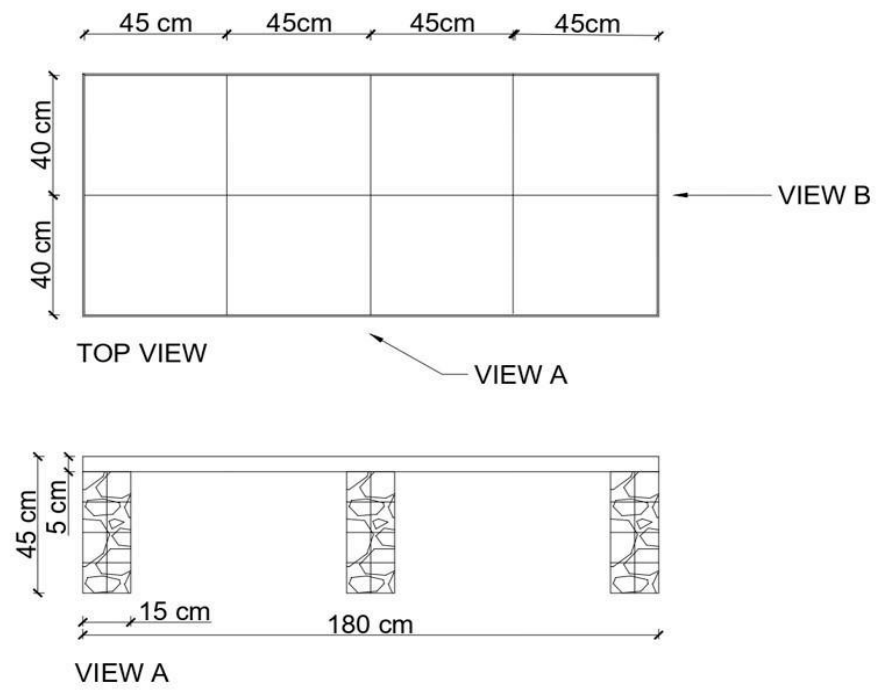
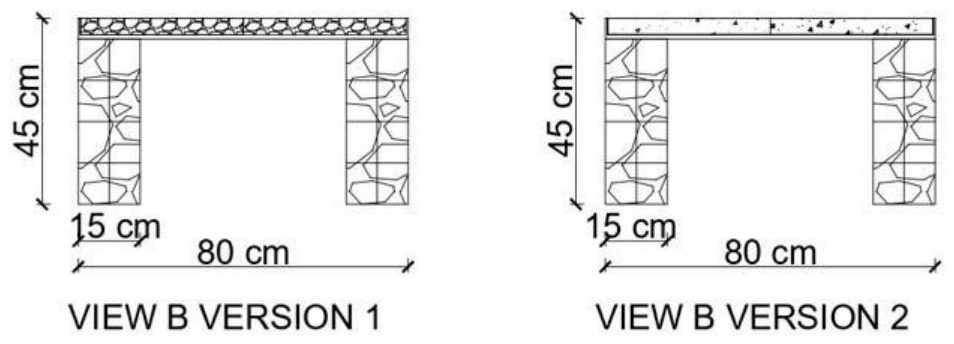
The study was set within the context of a specific, deliberately simplified design case. The application model that was adopted was that of a steel-framed street bench supported by gabion baskets filled with concrete rubble and comprising eight rectangular panels forming the seating surface. This element was not selected at random; street furniture represents an intermediate scale between material experimentation and actual design implementation, allowing the properties of the material to be linked to functional requirements, aesthetics and assembly logic.
In all variants of the study, the geometry of the analysed element remained constant. The sole variable was the material composition of the seating panels. This methodological approach enabled a comparison of materials not at an abstract level, but within the framework of the same design task, whilst maintaining constant formal and functional conditions. Consequently, the disparities observed among the variants could be ascribed directly to the characteristics of the aggregate, as opposed to alterations in the geometry or construction of the object.
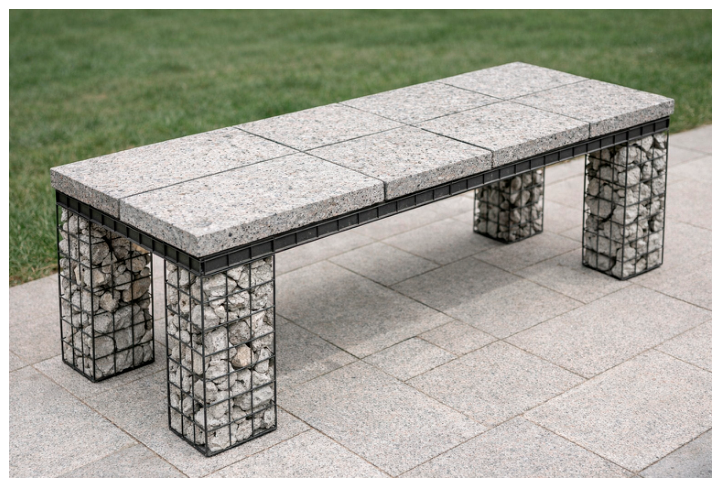
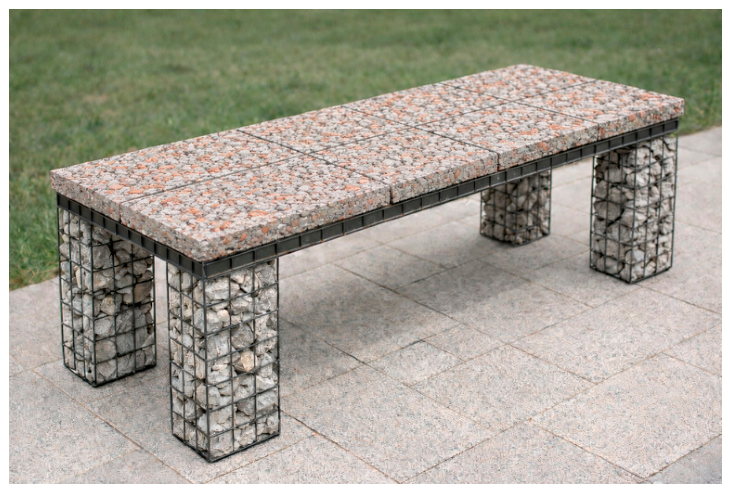
The bench is conceived as a modular piece of urban furniture that combines recycled construction waste with a simple steel support system. Its main structure is based on a dark steel frame that acts as the primary load-bearing element and supports the seating surface along the full length of the bench. This steel grate forms the general structural concept of the piece, creating a clean and rational framework for the recycled components.
The bench is supported by gabion legs made of steel mesh cages filled with ordinary concrete rubble sourced from demolition waste. These gabions provide both structural stability and a strong material identity, expressing the idea of reuse in a direct and honest way.
Resting on the steel frame, the seat is composed of eight rectangular panels made from crushed brick aggregate bound with cement. The resulting surface has a compact, solid character in which the brick fragments remain visible, giving the bench a textured appearance that highlights the material’s recycled origin.
Altogether, the design brings together steel, concrete rubble, crushed brick and cement in a single coherent system, where the industrial clarity of the frame contrasts with the irregularity of the reclaimed aggregates, creating a functional object that also communicates a broader idea of circularity and material reuse (
Figure 1).
2.3. The Sitting Panels
The seating panels are designed as modular composite elements made from recycled construction materials combined with cementitious binders. Two material variants are proposed. The first consists of crushed brick aggregate bound with cement-based products, such as cement, creating a compact slab with a warm, reddish tone and a clearly visible granular texture. The second variant uses recycled concrete rubble as the aggregate, also combined with cementitious binders, resulting in a more neutral, grey appearance that emphasises the raw character of the material. In both cases, the panels are solid, durable, and suitable for outdoor use, while maintaining a visible expression of their recycled origin. The possible aggregate size selections are described further (
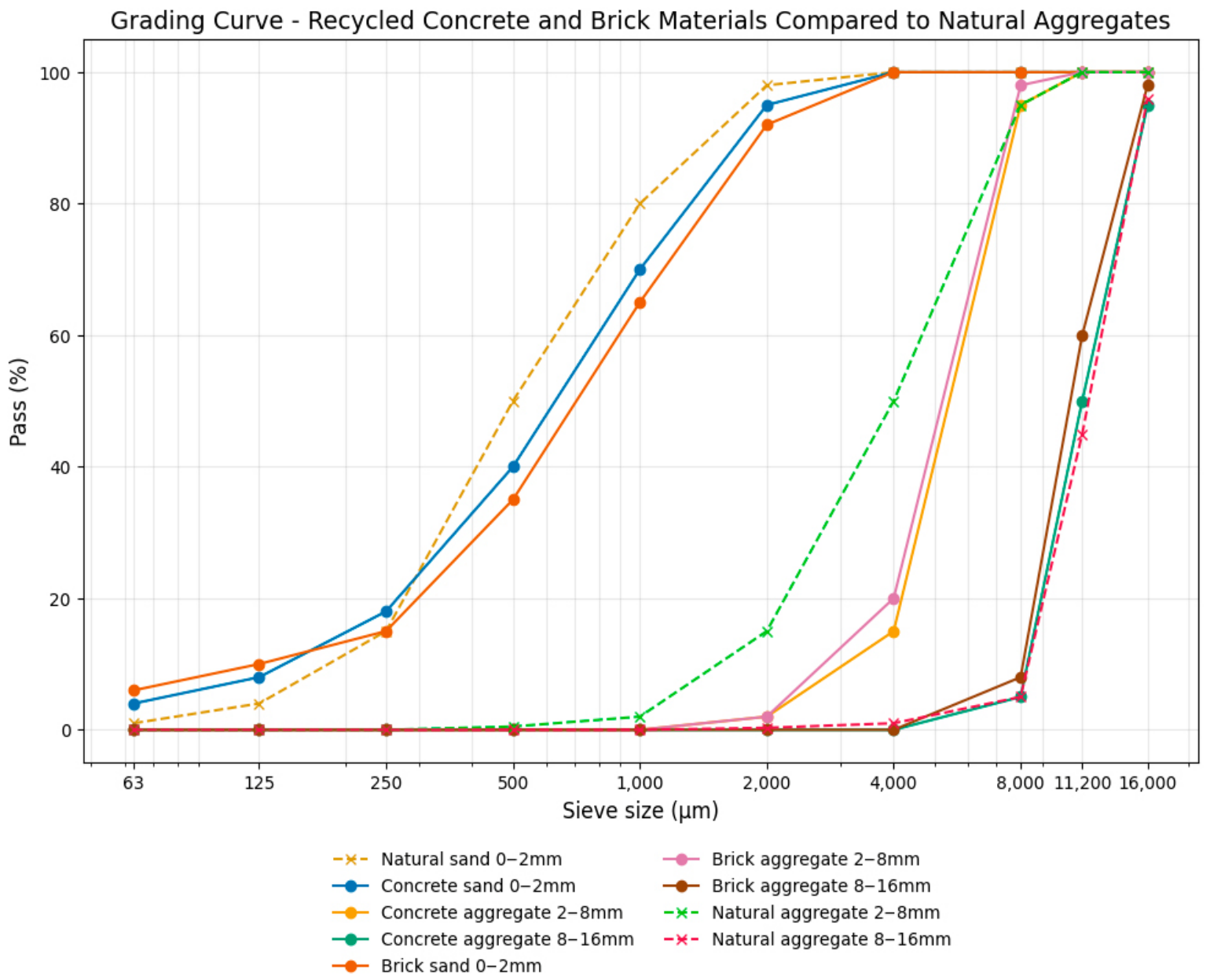
Figure 2,
Figure 3 and
Figure 4).
2.4. Materials and Research Variables
The analysis encompassed recycled materials derived from construction waste, and for the purpose of comparison, new materials in the form of natural aggregates. The set of materials that were tested comprised three size groups:
The following aggregate sizes from concrete rubble are documented: 0–2 mm, 2–8 mm, 8–16 mm.
The following aggregate sizes are available for brick rubble: 0–2 mm, 2–8 mm, 8–16 mm.
The natural aggregates comprise sand measuring 0–2 mm, as well as aggregates ranging from 2 to 8 mm and 8 to 16 mm.
For each material, a set of input parameters necessary for further modelling was adopted. These parameters included particle density, particle porosity, indicative environmental indicators relating to CO2 emissions and energy consumption, and grain size distribution. These data constituted the foundation for a comparative analysis of the properties inherent in both recycled and natural materials, and were further utilised in the formulation of the mixture design.
It was evident that there were substantial discrepancies between the aggregate groups with regard to material characteristics. The recycled materials exhibited a lower density than natural aggregates, whilst simultaneously displaying higher porosity; this was most evident in the ceramic fractions, particularly brick sand. From a methodological perspective, these parameters were of paramount importance, as they determined both the behaviour of the mixtures in the compaction model and their predicted water demand.
2.5. Granulometric Analysis
The subsequent stage of the research programme involved the compilation and comparison of the particle size distributions of the materials under investigation. The analysis was conducted utilising a series of sieves with mesh sizes ranging from 16,000 µm to 63 µm, thereby enabling the determination of the distribution of particles within each fraction and the subsequent plotting of the particle size curves.
The particle size analysis performed a dual function in the study. Firstly, it enabled the description of the actual particle structure of the input materials. Secondly, it provided a direct basis for modelling mixtures in the EMMA programme. The identification of the proportion of very fine fractions was of particular importance, given the influence of dust and particles passing through the smallest sieves on the continuity of the particle size distribution curve, the density of compaction and the water demand of the mixtures.
A higher content of fine fractions was clearly evident in recycled materials than in natural materials, as evidenced by the analysis of the set of materials under consideration. This phenomenon was most evident in the case of brick sand, which demonstrated the highest proportion of particles passing through the 63 µm sieve. Concurrently, both fine brick and concrete aggregates demonstrated higher levels of dust content in comparison to natural sand. From a methodological perspective, this observation was significant as it provided a basis for further interpretation of the behaviour of mixtures designed using these materials.
2.6. Mix Design Procedure and Simulation Tool
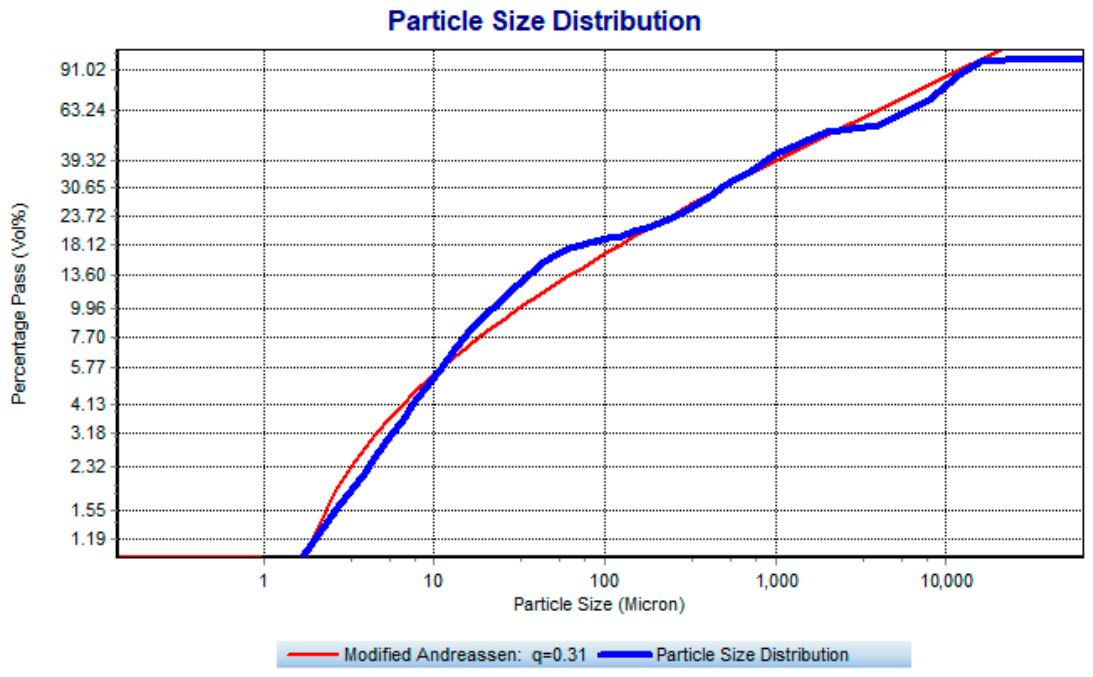
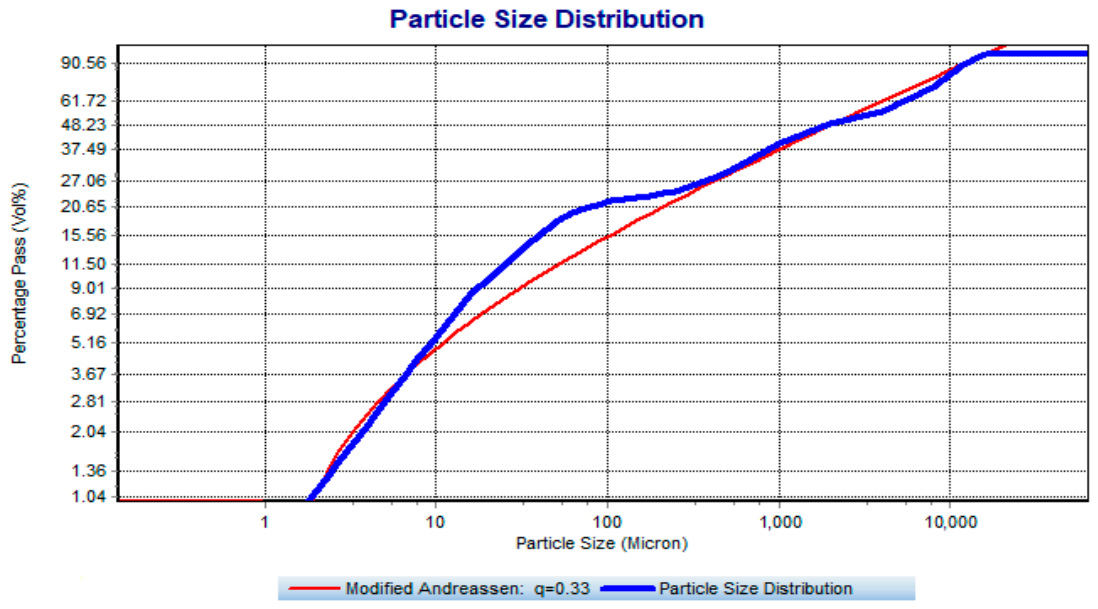
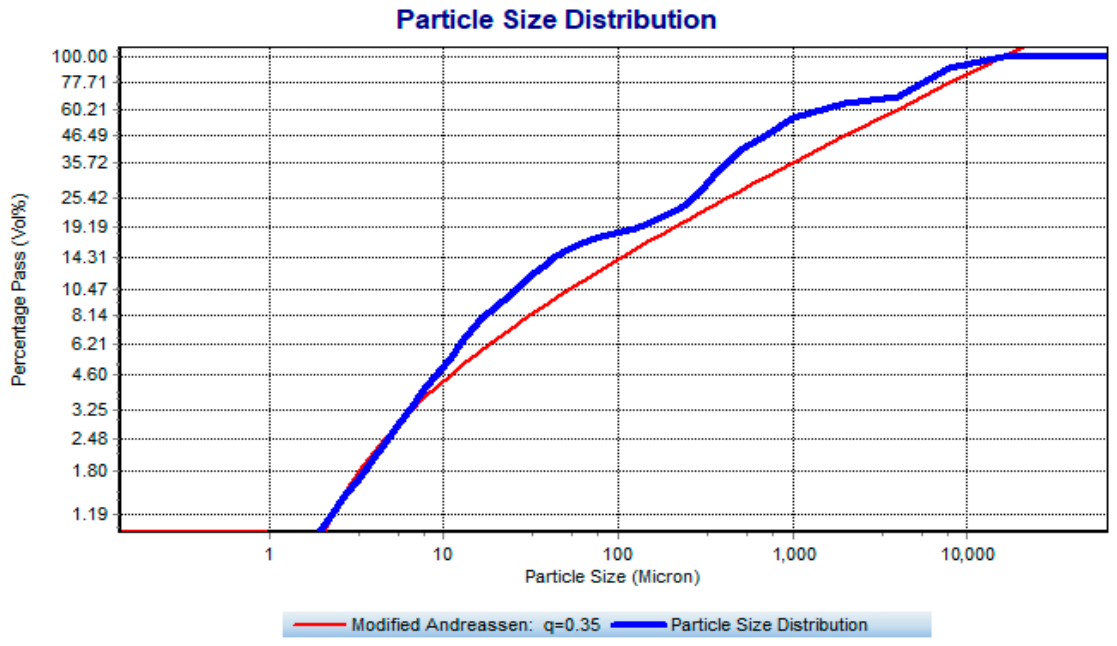
The mixture design was conducted utilising the EMMA software (Elkem Materials Mix Analyzer, employing the Modified Andreasen model). The tool was utilised to evaluate the extent of particle packing and to compare the designed particle size distribution curve with the target curve. This approach enables an assessment of the extent to which a given set of fractions constitutes a compact structure, and is therefore potentially advantageous in terms of binder and water requirements and the anticipated density of the material.
Three comparative mixtures were utilised in the study:
Mixture 1 is composed of concrete rubble aggregate.
Mixture 2 is composed of brick rubble aggregate.
Mixture 3 constitutes a reference mixture that is derived from natural aggregates.
In each of the mixture formulations, CEM I cement was utilised as the primary binder, with water serving as the fundamental parameter. The design of the mixtures was thus reduced to the controlled selection of the proportions of fine, intermediate and coarse fractions. This enabled a comparison of the behaviour of the three material variants within an identical calculation scheme.
2.7. Composition of Analysed Mixtures
The composition of each mix was determined as follows.
Mix 1—aggregate from concrete rubble:
CEM I cement—360 kg/m3;
0–2 mm concrete sand—680 kg/m3;
2–8 mm concrete aggregate—320 kg/m3;
8–16 mm concrete aggregate—660 kg/m3;
Water—180 kg/m3.
In this mix, the 0–2 mm fraction acted as the fine component, also containing dust from the old mortar. The 2–8 mm fraction functioned as an intermediate ‘wedging’ layer; the 8–16 mm fraction formed the primary grain skeleton of the mix.
Mix 2—aggregate from brick rubble:
CEM I cement—380 kg/m3;
Brick sand 0–2 mm—520 kg/m3;
Brick aggregate 2–8 mm—340 kg/m3;
Brick aggregate 8–16 mm—480 kg/m3;
Water—200 kg/m3.
In this variant, brick sand served as a filler for the finest particles, the 2–8 mm fraction formed an intermediate layer, and the 8–16 mm fraction was responsible for creating the coarse-grained skeleton. The water content adopted was a baseline figure, although it was assumed from the outset that the actual requirement might increase due to the higher absorbency of the ceramic material.
Mix 3—natural aggregate (reference):
CEM I cement—340 kg/m3;
Natural sand 0–2 mm—820 kg/m3;
Natural aggregate 2–8 mm—450 kg/m3;
Natural aggregate 8–16 mm—170 kg/m3;
Water—170 kg/m3.
The reference mix was conceived as a benchmark variant, representing a system based on new materials with a more predictable grain structure and lower porosity.
2.8. Assessment Criteria
The comparative assessment of the mixtures was based on a set of parameters derived directly from the modelling methodology adopted. The primary criteria for the analysis encompassed the following:
The congruence of the particle size distribution curve with the target curve is of paramount importance.
The packing index, denoted by the letter Q.
The base water content of the mixture is hereby defined as such.
The cement content is of paramount importance.
The following calculation has been made: the water-to-cement ratio.
The density and porosity of coarse aggregate material parameters have been identified as influential factors in the interpretation of results.
The q index was treated as a comparative parameter describing the continuity and packing efficiency of the particle size distribution. Concurrently, analysis of the PSD curves facilitated the identification of local excesses or deficiencies of specific fractions, a factor that proved significant for the assessment of the stability of the designed mixture.
From a methodological perspective, it is imperative to underscore that the study did not encompass direct strength tests or durability tests on finished specimens. Consequently, the interpretation of the mixtures’ potential was of a predictive nature, with this prediction being based on the input properties of the materials, the results of packing modelling, and the calculated relationships between the components. Nevertheless, this approach allows for early-stage material evaluation before proceeding to experimental prototyping and structural verification. In the present study, model performance was interpreted comparatively through the fit of the PSD curves to the target curve and through q values obtained for each mixture.
2.9. Comparative Analytical Logic
The logic of the comparison was structured around a single research question: to what extent does a change in the origin and nature of the aggregate affect the structure of mixtures suitable for use in seating panels of the same geometry? Consequently, all three variants were analysed in the same order: from material characteristics, through grain size analysis, to the modelling of the degree of compaction.
This methodological framework enabled the delineation of three distinct levels of assessment. The initial study focused on the material level, that is to say, the physical distinctions between natural, concrete, and ceramic aggregates. The second of these factors pertains to the mixture level, that is to say, the manner in which these discrepancies influence the grain structure and the demand for water and binder. The third level was design-oriented, with the results obtained being interpreted from the perspective of the materials’ suitability for a specific architectural application.
In this context, the methodology was not solely intended for the conventional optimisation of concrete composition. The objective of this initiative was to establish a connection between material analysis and the process of making design decisions. The intention was that this would enable the architectural assessment of a material to consider not only its appearance or origin, but also its technically predicted performance.
2.10. Scope and Limitations of the Method
The methodology adopted facilitated a reliable comparison of the potential of the three material groups; however, its scope was deliberately limited. The present study encompassed the preliminary analysis and computational modelling stages, as opposed to the entire experimental cycle. Consequently, conclusions pertaining to the strength, durability, or behaviour of components in service should be regarded as the outcome of indirect interpretation, as opposed to laboratory confirmation.
This limitation does not detract from the value of the study, but rather serves to delineate its position within the research process. The methodology was conceived as a preliminary stage preceding the construction of physical models and subsequent load tests. The objective of this study was to ascertain which material variants exhibited the greatest potential for further testing and which relationships between grain structure and architectural application could be considered the most promising.
4. Discussion
The analysed mixtures showed clear differences related to aggregate type, particularly in terms of porosity, fine particle content, and water demand. The observed disparities between the concrete aggregate-based mix and the ceramic aggregate-based mix suggest that the heterogeneity of recycled materials is not merely a technological limitation, but rather a parameter that necessitates deliberate modelling in the design process. In this sense, the results are consistent with current research highlighting the necessity of individual characterisation of recycled aggregates prior to their utilisation in cementitious composites [
6,
8].
The higher content of fine fractions and greater porosity of ceramic aggregates was observed, leading to increased water demand and a deterioration in the continuity of the gradation curve. This is consistent with the results of the latest research on the behaviour of recycled ceramic aggregates in mortars and concretes [
13,
14]. Consequently, these materials require more precise composition design, particularly in terms of controlling the fine particle fraction and the relationship between fine and coarse components.
Conversely, the mixture based on concrete aggregate demonstrates parameters analogous to the reference mixture, a phenomenon that can be ascribed to the presence of cement paste residues and a more advantageous grain structure. The RCA-based mixture differed from the reference mixture by only 10 kg/m
3 in water demand and maintained the same water-to-cement ratio (0.50), whereas the ceramic aggregate mixture required 30 kg/m
3 more water and a higher cement dosage. This outcome is consistent with observations that recycled concrete aggregate (RCA), despite its increased porosity, can achieve properties similar to those of natural aggregates with the appropriate selection of mix composition [
7,
9].
The analyses indicate that the particle packing-based approach enabled comparison of mixtures with q values ranging from 0.31 to 0.35 and differentiated water demand between 170 and 200 kg/m
3 depending on aggregate type. The application of the Modified Andreasen model and the EMMA tool enabled the identification of deviations from the optimal curve and the assessment of the packing potential of mixtures, which is consistent with the latest trends in research on the design of concrete using recycled materials [
15,
16].
From an architectural perspective, the study demonstrates how material parameters such as particle grading, porosity, colour variability, and surface texture may influence the selection of recycled aggregates in small-scale urban elements. In the analysed bench scenario, differences in mixture composition translated not only into different predicted packing behaviour and water demand, but also into distinct material expressions visible in the seating panels. In this context, the architectural application served as a framework linking comparative material assessment with design interpretation [
1,
5].
Concomitantly, it is imperative to emphasise that the results presented are of a predictive nature and are derived from model-based analysis. The absence of direct mechanical and durability testing precludes the possibility of an unambiguous assessment of the material’s behaviour under service conditions. Consequently, further research should include laboratory verification and analysis of actual components, which is in line with current recommendations regarding the implementation of recycled materials in construction [
2].
In this context, the results obtained should be interpreted as an intermediate stage, enabling the rational selection of materials and grain size distributions prior to proceeding to experimental testing and project implementation.
From a sustainability perspective, the results highlight the potential of integrating recycled aggregates into architectural applications as a means of reducing environmental impact and promoting resource-efficient construction practices.
5. Conclusions
The study demonstrates that recycled aggregates can be considered a viable alternative to natural aggregates in selected small-scale architectural applications, provided that their physical properties and particle size distribution are taken into account during mix design. The results indicate clear differences between recycled concrete and ceramic aggregates in terms of porosity, fine particle content, and water demand, all of which directly influenced the behaviour of the analysed mixtures.
Among the recycled materials examined, the mixture containing recycled concrete aggregate showed the closest performance to the reference mixture based on natural aggregates. It maintained the same water-to-cement ratio (0.50) while requiring only a slightly higher water content (180 kg/m3 compared with 170 kg/m3). In contrast, the ceramic aggregate mixture exhibited higher porosity (15–18%), increased water demand (200 kg/m3), and lower stability of the particle size distribution, which indicates the need for more precise control of mixture proportions and fine fractions.
The analyses also confirmed that the application of particle packing methods, including the Modified Andreasen model and the EMMA tool, can support comparative assessment of recycled aggregates at the early design stage. Within the adopted methodological scope, the mixtures achieved q values ranging from 0.31 to 0.35, allowing differences in packing behaviour and material structure to be identified and compared.
From an architectural perspective, the study highlights the possibility of integrating material analysis with design considerations in the context of circular construction strategies. In this approach, recycled aggregates are treated not only as secondary construction materials, but also as components influencing the visual and material character of small-scale urban elements.
The presented results should be interpreted as predictive and modelling-based rather than as experimentally verified structural performance. Future work will therefore include the preparation of physical prototypes and laboratory verification of selected mechanical and durability parameters for the most promising mixtures.
In summary, recycled concrete aggregate demonstrated the greatest compatibility with the reference mixture, whereas ceramic aggregate required more careful control of water demand and particle grading. The study confirms that particle packing-based assessment can provide useful support for material selection in small-scale circular architectural design.




 ,
,