Article

Impact of Continuous Rainfall on the Performance of LID Facilities in Different Climate Regions

1
College of Hydraulic Science and Engineering, Yangzhou University, Yangzhou 225009, China
2
Huai’an Water Conservancy Survey and Design Institute Limited Company, Huai’an 223001, China
*
Author to whom correspondence should be addressed.
Sustainability 2026, 18(12), 5925; https://doi.org/10.3390/su18125925 (registering DOI)
Submission received: 24 March 2026 / Revised: 29 April 2026 / Accepted: 15 May 2026 / Published: 10 June 2026

Abstract

Low-impact development (LID) facilities can significantly mitigate runoff and purify pollutants. However, their operational efficiency is highly influenced by regional rainfall characteristics, posing challenges to sustainable development in urban water management. This study investigates the degradation of runoff control efficacy in two LID installations located in Xi’an (semi-humid region) and Yangzhou (humid region) and examines the impact of continuous rainfall across different climatic zones. The results reveal that in both study areas, over 75% of annual rainy days experienced continuous rainfall, accounting for more than 80% of total rainfall volume. During continuous rainfall, the declining infiltration capacity of LID facilities reduces their performance, and the operational effectiveness of the LID facilities may deviate to some extent from the design goals. The lower attenuation coefficients observed in Yangzhou indicate that its LID facilities were more strongly affected by continuous rainfall than those in Xi’an. Regarding the designed annual runoff control targets, Xi’an achieved an average effectiveness of 83.7% at 60–85% design levels, outperforming Yangzhou by 12.09%. When increasing design rainfall, Xi’an exhibited increments of 41.0–200.7% for targets ranging from 60% to 80%, whereas Yangzhou required substantially larger increases for targets of 60–70%. Notably, achieving control targets above 85% in Xi’an and 75% in Yangzhou solely through increased design rainfall proved unfeasible. The study highlights that continuous rainfall affects LID performance in both humid and semi-humid regions, with facilities in more humid climates being particularly susceptible. These findings underscore the need for climate-adaptive LID design strategies to support long-term sustainable urban development goals.

1. Introduction

Rapid urbanization has increased impervious surfaces and intensified urban runoff, waterlogging, and non-point-source pollution [1,2,3]. To address these challenges, low impact development (LID) and sponge city strategies have been widely adopted to promote source control, infiltration, detention, and pollutant removal [4,5,6]. The total annual runoff control rate is a core indicator for designing sponge-city systems, and its corresponding design rainfall should be adapted to local climate and rainfall characteristics [7,8,9,10].
In the “Sponge City Construction Technical Guide-Low Impact Development Rainwater System Construction (Trial)” (hereafter referred to as the Guide), the total annual runoff control rate and the design rainfall calculation require the daily rainfall data spanning at least 30 years. This process involves excluding rainfall events of 2 mm or less, organizing the remaining daily rainfall values from lowest to highest, and computing the cumulative sum of rainfalls below a specific threshold to determine their proportion of the total rainfall. This proportion represents the total annual runoff control rate, with the corresponding threshold value defined as the design rainfall. The calculation of the total annual runoff control rate in the Guide is based on daily rainfall data, treating consecutive rainfall days as separate events without considering the impact of continuous rainfall on the operational effectiveness of LID facilities. The infiltration capacity of LID facilities tends to decline during continuous rainfall, which may cause the groundwater level near the surface to rise. This increase directly restricts the infiltration of surface stormwater runoff and thereby affects the runoff control performance of LID systems [11,12]. In particular, LID practices may induce the formation of groundwater mounds, which can further limit both surface infiltration and exfiltration into the native soil. A key factor influencing this process is the minimum separation distance between the bottom of the LID facility and the groundwater table, together with the type of media and in situ soil. Therefore, the performance of concentrated infiltration systems, such as rain gardens, is controlled by a combination of environmental conditions, including rainfall intensity, rainfall duration, groundwater conditions, and soil type. Moreover, the runoff control effect of LID facilities is directly affected by the distribution of rainfall characteristics [13,14,15,16]. Therefore, segmenting continuous rainfall into discrete daily events introduces potential inaccuracies in the calculations for total annual runoff control rate and design rainfall.
Li et al. compared and analyzed three methods for calculating the total runoff control rate, both domestically and internationally. They also divided and explained the target area of total rainfall runoff control. It was found that the complex topography and changeable climate in China led to the formation of regional distribution characteristics of design rainfall [17,18]. Relevant studies have shown that determining the target value of the annual runoff control rate is closely related to the local natural geography and climatic conditions [19,20,21]. The effectiveness of LID facilities decreases with increasing rainfall intensity, amount, or duration [22,23,24,25]. By calculating the total annual runoff control rate using the rainfall data, it was found that the rainfall data more accurately reflected the characteristics of the rainfall. However, using daily rainfall data could lead to underestimating the overall design rainfall, revealing significant regional variations in total annual runoff control rates and corresponding design rainfall across China [26,27]. Therefore, further studies are needed to quantify the impact of continuous rainfall on annual runoff control rates in different climatic regions.
In this study, a humid region, Yangzhou, and a semi-humid region, Xi’an, were selected as study areas to investigate how continuous rainfall characteristics influence LID performance across different climatic regions. Using field monitoring data, an attenuation coefficient was quantitatively derived to represent the decline in runoff reduction performance of LID facilities under continuous rainfall. Based on a long-term historical rainfall dataset, this study further examined how regional climatic characteristics affect annual runoff control rates and design rainfall depth. The novelty of this study lies in its quantitative characterization of LID performance attenuation under continuous rainfall and its comparison between different climatic regions. These findings provide practical design insights for adapting LID planning to local rainfall patterns, thereby improving the reliability of runoff control strategies and promoting the long-term sustainability of low-impact development practices across diverse climatic zones.

2. Materials and Methods

2.1. Description of the Study Areas

The geographical settings and configurations of the experimental LID facilities are illustrated in Figure 1. Xi’an is located in central China at approximately 34.26° N, 108.94° E, within a semi-humid temperate continental climate zone. It has an average annual rainfall of 551.0 mm and a groundwater table generally deeper than 3.5 m. The experimental facility in Xi’an, established in 2013, collects runoff from an adjacent rooftop and is located in a loess/silty-soil setting with relatively deep groundwater and moderate infiltration conditions. Yangzhou is located in eastern China at approximately 32.39° N, 119.42° E, in a humid subtropical monsoon climate. It has an average annual rainfall of 1002.0 mm and a shallower groundwater table of about 0.5 to 1.5 m. The Yangzhou facility, constructed in 2017, collects rooftop runoff from a nearby office building and is located in an alluvial plain with silty to clayey soils and comparatively lower natural drainage capacity. During natural rainfall events, both LID facilities employed v-notch weirs and pressure sensors to monitor inflow and outflow. The two sites were selected as contrasting field cases representing humid and semi-humid climatic conditions; they are not intended to represent all LID facilities or all climatic regions in China.

2.2. Sources and Statistics of Rainfall Data

According to the statistical method of the Guide, there is a direct correlation between the total annual runoff control rate of an LID facility and the design rainfall depth. Daily rainfall data were used because this is the official temporal resolution required by the Guide for setting annual runoff control targets, and because daily records provide the longest continuous and quality-controlled rainfall series for both cities. The 2 mm threshold was retained following the Guide to exclude trace rainfall and very small events that generally produce little effective runoff. In order to assess the influence of rainfall characteristics in different climate regions on the performance of LID facilities, it is necessary to analyze the differences in continuous rainfall characteristics between Xi’an and Yangzhou. The 51-year historical daily rainfall dataset (1955–2005) was retrieved from the China Meteorological Data Network. This period was chosen because it provides a consistent, complete, and comparable record for the two stations and exceeds the minimum 30-year length required for design-rainfall statistics. Concurrently, the operational performance of LID facilities in Xi’an and Yangzhou was evaluated based on hydrological monitoring data. The meteorological data were quality controlled by the data provider, and the field monitoring data were screened to remove events with missing sensor records, abnormal flow signals, or inconsistent inflow-outflow processes. This analysis allowed for the precise quantification of continuous rainfall, which influenced the runoff control effectiveness of LID facilities.

2.3. Calculation of Runoff Reduction Attenuation Coefficient

During continuous rainfall, both the surface water storage depth and the drainage volume of the soil profile in the LID facility decreased steadily, leading to a reduction in the facility’s effective storage capacity. The 6 h inter-event time interval, which is widely adopted in current research, is used to separate two independent rainfall events. To quantify the influence of continuous rainfall with different degrees of duration, the rainfall events in this paper are classified according to their duration into single-day rainfall, continuous 2-day, and rainfall lasting three or more days. This classification links directly to the daily data basis of the Guide, separates short wet spells from prolonged wet periods, and allows the effect of antecedent wetness to be evaluated.
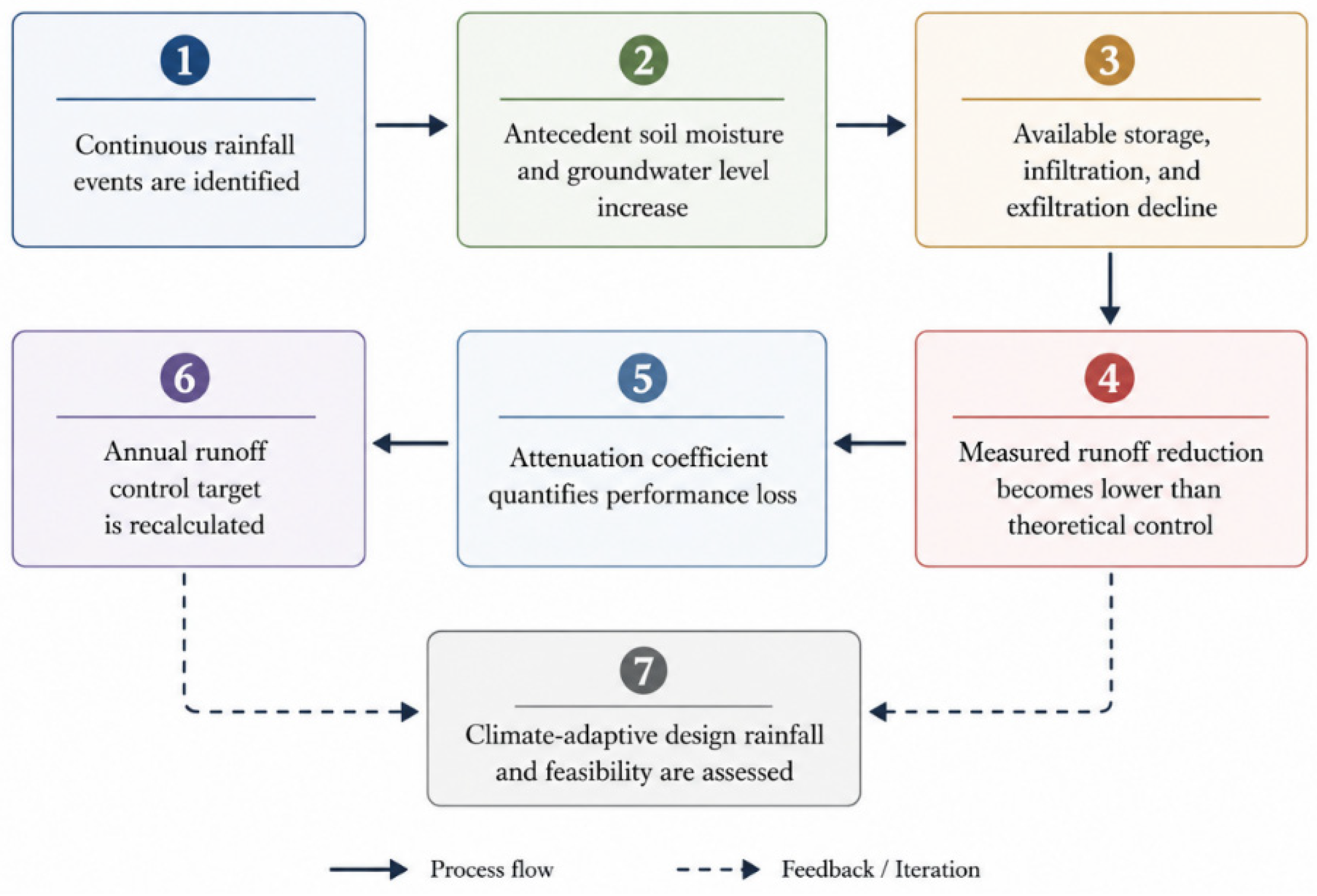
The physical mechanism of attenuation is summarized in Figure 2. Continuous rainfall increases soil moisture and reduces capillary suction in the LID media. As wetting continues, the infiltration rate approaches a stable low value, the available pore storage decreases, and the local groundwater level may rise. These processes reduce exfiltration into the surrounding soil and increase outflow from the facility. Therefore, LID facilities mainly relying on temporary surface storage and soil infiltration show lower runoff reduction efficiency under continuous rainfall.
The Guide divides continuous rainfall into independent daily events based on rainy days, disrupting the continuity of the original rainfall event. This segmentation results in discrepancies between the measured and theoretical runoff control rates because of the overlooking of the attenuation effects on runoff reduction. Considering the influence of continuous rainfall, this paper employs data from experimental LID facilities to determine the attenuation coefficient of runoff control reduction under continuous rainfall and to normalize the design standards of LID facilities in different regions. The measured runoff reduction rate is calculated as follows:
R A = V o u t V i n × 100 %
where R A is the measured runoff reduction rate, %; V o u t is the outflow from the LID facility, m3; V i n is the inflow from the LID facility, m3.
The theoretical control rainfall for the LID facility design is calculated as follows:
h = 1000 ( K T + H ) α ( S + 1 )
where h is the theoretically controllable rainfall, mm; K is the soil infiltration rate, m/h; T is the rainfall duration, h; H is the surface storage depth of the LID facility, m; α is the runoff coefficient; S is the catchment area ratio.
Under a certain theoretical design rainfall, facing varying rainfall intensities, the theoretical runoff reduction rate ( R T ) of the LID facility is calculated as follows:
R T = 100 % , P h h P , P > h
where P is the daily rainfall depth, mm.
The attenuation coefficient (φ) of the runoff reduction effect due to continuous rainfall is calculated as follows:
φ = R A R T
where φ ranges between 0 and 1 and reflects the reduction in runoff control effectiveness under continuous rainfall; a smaller value indicates more severe attenuation. The coefficient is an event-class average rather than a full process-based simulation parameter. Its use is justified here because it normalizes monitored performance against theoretical design performance and enables a consistent comparison between two facilities with different local conditions. Nevertheless, the coefficient should be interpreted together with rainfall class, antecedent wetness, and site hydrogeology.
The total amount of rainfall ( P C ) that can be controlled by an LID facility after considering the influence of continuous rainfall is calculated as follows:
P C = P s + P c φ
where Ps is the amount of rainfall that can be controlled according to the total annual runoff control target for the single-day rainfall, mm; Pc is the amount of rainfall that can be controlled according to the total annual runoff control target for continuous rainfall, mm.
The actual total annual runoff volume control rate ( R ) considering the influence of continuous rainfall is calculated as follows:
R = P C P × 100 %
where P is the daily rainfall depth, mm.
After considering the influence of continuous rainfall, the achievement degree ( η ) of the annual total runoff control target is calculated as follows:
η = P C P × 100 %
where P is the cumulative rainfall less than or equal to the design rainfall in the daily rainfall, mm.

3. Results and Discussion

3.1. Analysis of Rainfall Characteristics in the Study Area

Based on the rainfall data in Xi’an and Yangzhou over 51 years (1955–2005), the average annual rainfall depths in Xi’an and Yangzhou were 551.0 mm and 1002.0 mm, and the average annual rainfall days were 86 and 105 days, respectively. The average daily rainfall depth was 6.4 mm in Xi’an, which is 67.37% of that in Yangzhou (9.5 mm). The maximum annual rainfall depths were 903.2 mm in Xi’an in 1983 and 1820.3 mm in Yangzhou in 1991, while the minimum values were 315.0 mm in Xi’an in 1995 and 472.7 mm in Yangzhou in 1978. The standard deviation of annual rainfall was 136.05 mm in Xi’an and 1.96 times higher in Yangzhou. Interannual rainfall variability is a determining factor for LID sizing because it controls the design storm distribution, antecedent wetness, and the probability that a facility will experience consecutive wet events before it has recovered its storage capacity.

3.1.1. Distribution Characteristics of Rainfall Intensity

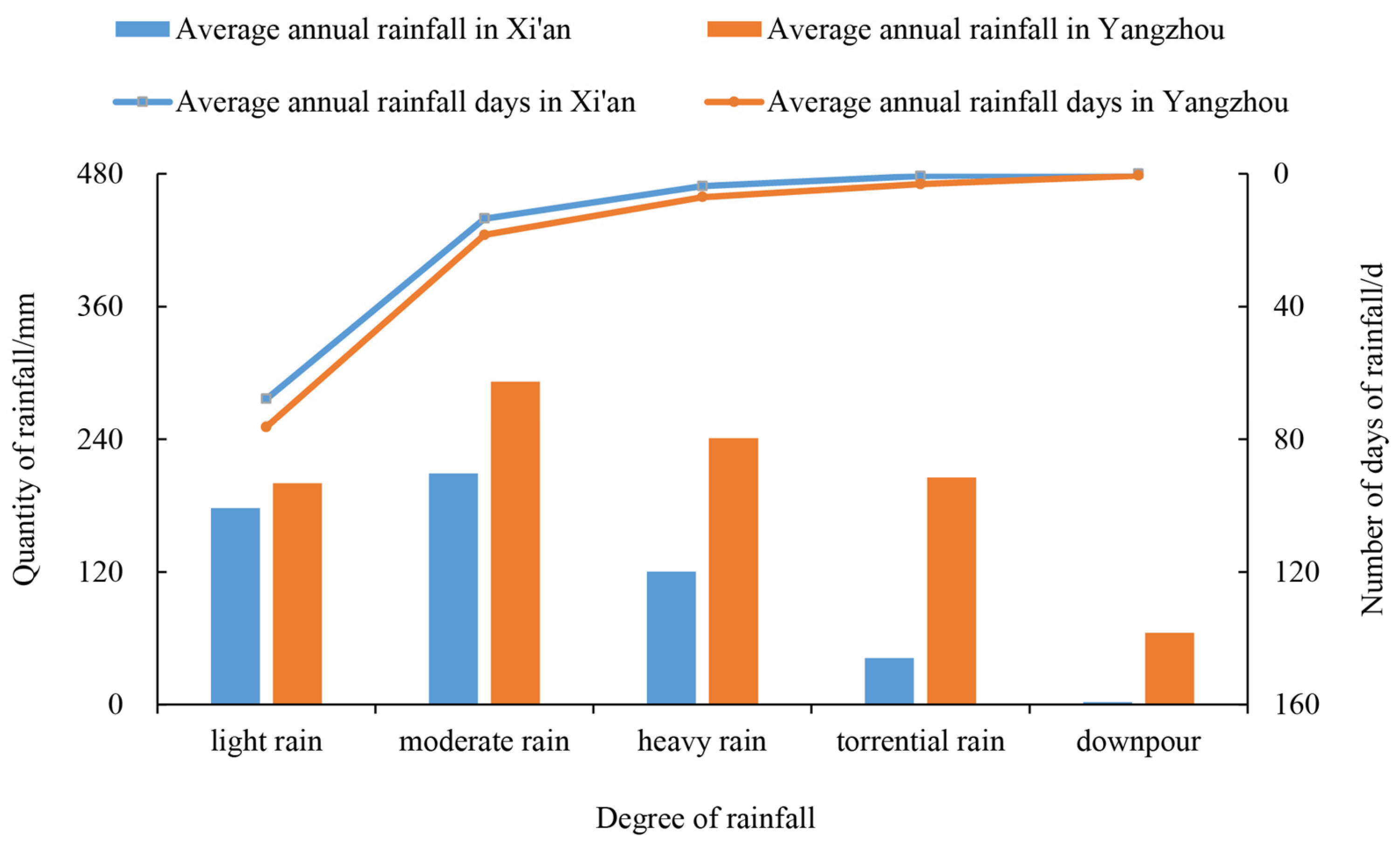
Figure 3 shows the statistical analysis of rainfall volume and number of rainfall days by rainfall intensity in Xi’an and Yangzhou from 1955 to 2005. Rainfall classes followed the commonly used Chinese daily precipitation grading system: light rain (<10 mm), moderate rain (10–24.9 mm), heavy rain (25–49.9 mm), rainstorm (50–99.9 mm), and heavy rainstorm (≥100 mm). In Xi’an, the annual average rainfall volumes for light rain, moderate rain, heavy rain, rainstorm, and heavy rainstorm were 177.7 mm, 208.9 mm, 120.0 mm, 41.8 mm, and 2.2 mm, respectively, constituting 32.27%, 37.94%, 21.80%, 7.60%, and 0.39% of the annual rainfall, which indicated that most rainfall in Xi’an was of light to moderate intensity, comprising 70.21% of the total rainfall and 94.86% of the rainy days. This predominance is consistent with Xi’an’s semi-humid continental climate, limited moisture transport, and frequent small-to-medium rainfall events. In Yangzhou, the average annual rainfall for light rain, moderate rain, heavy rain, rainstorm, and heavy rainstorm was 200.3 mm, 292.1 mm, 240.8 mm, 205.4 mm, and 64.7 mm, respectively. These values represented 19.96%, 29.11%, 24.00%, 20.47%, and 6.45% of the total annual rainfall. The corresponding average annual rainfall days were 72.46%, 17.50%, 6.63%, 2.92%, and 0.48% of the total annual rainfall days. Excluding heavy rainstorms, the precipitation volumes across other categories in Yangzhou are relatively similar. Comparatively, the proportion of light rain in Xi’an was higher than in Yangzhou, while the proportions of heavy rain and rainstorms were greater in Yangzhou, where high-intensity rainfall occurred more frequently than in Xi’an. High-intensity rainfall negatively affects LID performance because inflow volume and peak inflow rise faster than infiltration and storage capacity, causing more rapid overflow and lower runoff reduction efficiency.

3.1.2. Distribution Characteristics of Continuous Rainfall

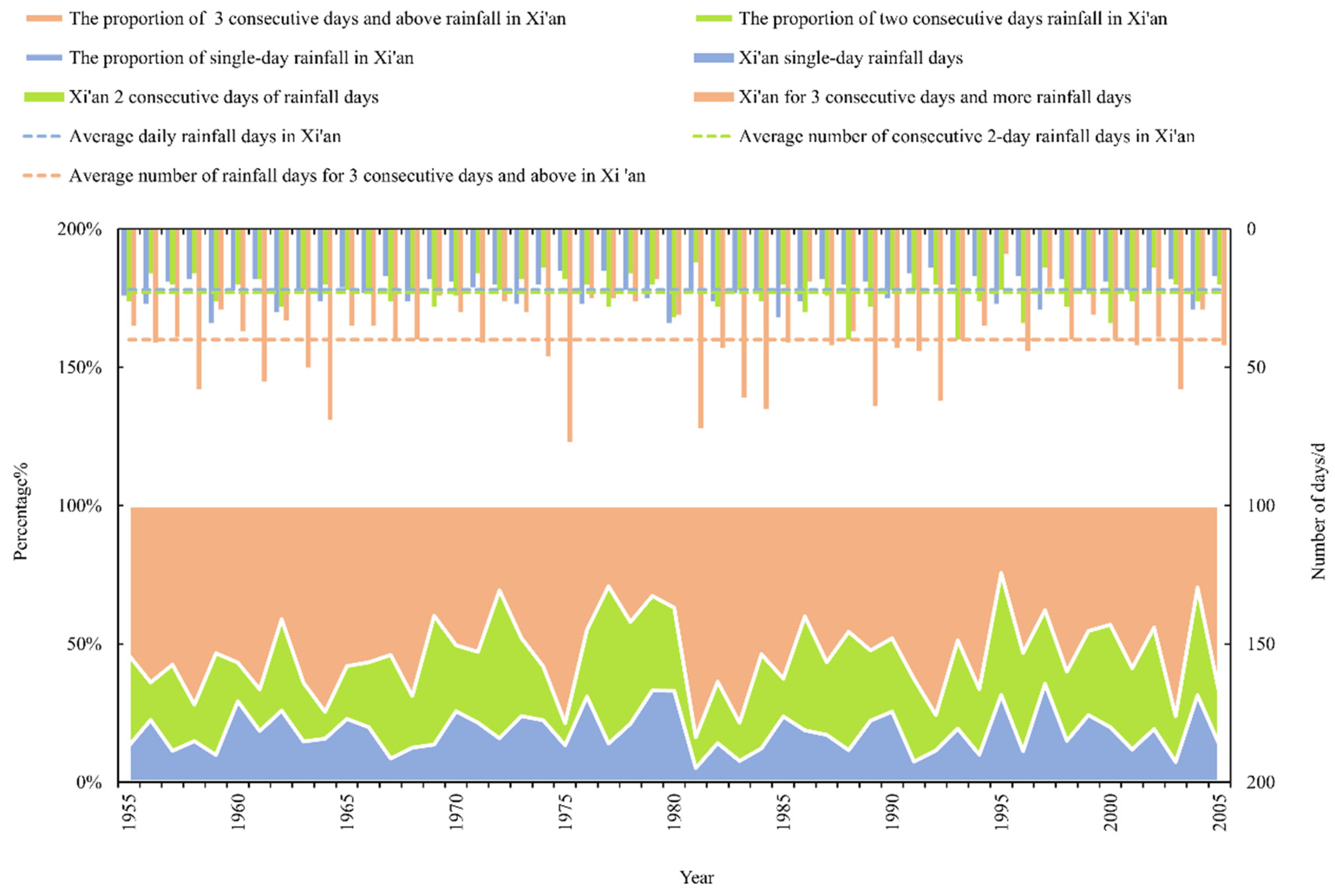
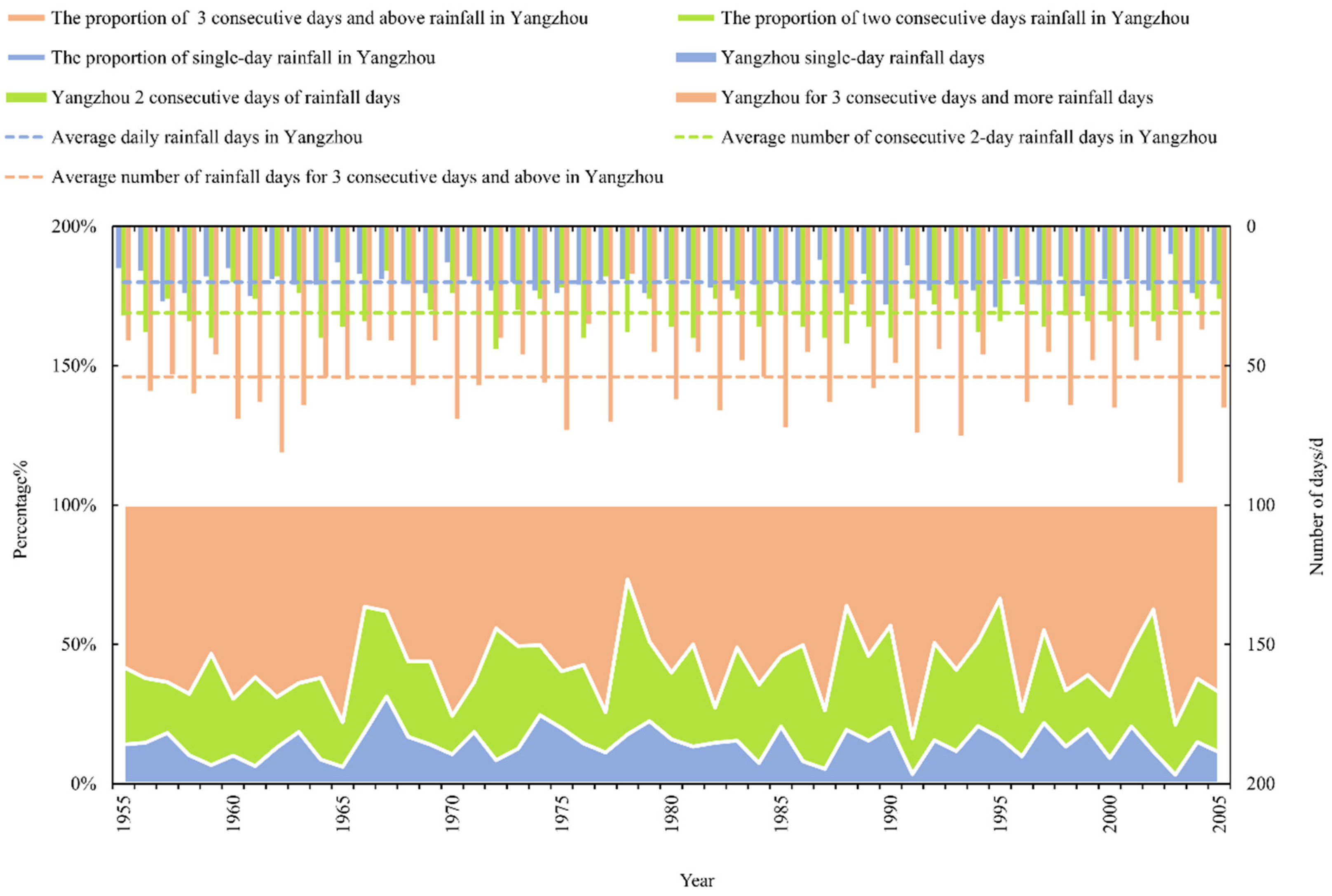
In order to further study the influence of continuous rainfall on the operational effectiveness of LID facilities in Xi’an and Yangzhou, rainfall events were classified into three categories based on duration: single-day rainfall, continuous 2-day rainfall, and continuous rainfall lasting 3 days or longer. As shown in Figure 4 and Figure 5, analysis of the 51-year period from 1955 to 2005 revealed that Xi’an experienced annual averages of 22, 23, and 40 days for these three categories, respectively. In contrast, Yangzhou recorded corresponding averages of 20, 31, and 54 days annually. While both cities exhibited similar frequencies of single-day rainfall events, Yangzhou demonstrated significantly higher occurrences of both continuous 2-day rainfall and extended rainfall events lasting 3 days or more. Notably, in Yangzhou, continuous 2-day rainfall events accounted for 29.47% of annual rainfall days, while prolonged rainfall events (≥3 days) represented 51.28% of the total.
In Xi’an, the average annual rainfall volumes for single-day, continuous 2-day, and prolonged rainfall events (≥3 days) were 96.96 mm, 143.41 mm, and 310.27 mm, respectively. These accounted for 18.39%, 27.47%, and 54.14% of the city’s total annual rainfall. However, Yangzhou received significantly higher rainfall volumes for the same categories—136.5 mm, 267.5 mm, and 598.0 mm, respectively—which were approximately 1.4, 1.9, and 1.9 times greater than those in Xi’an. These rainfall events contributed 14.27%, 28.02%, and 57.72% of Yangzhou’s annual precipitation. In both cities, the rainfall volumes and event frequencies followed the same ascending order: Prolonged rainfall (≥3 days) > continuous 2-day rainfall > single-day rainfall.
To assess the rainfall variability across these event types, the standard deviations of their proportions in annual rainfall were computed. In Xi’an, these values were 7.71, 11.23, and 14.15, which were 34.10%, 6.55%, and 10.82% higher than those in Yangzhou. This suggests that Xi’an experiences more pronounced interannual fluctuations in rainfall distribution. In general, the two study areas are located in the semi-humid area and the humid area. The proportion of continuous rainfall days accounts for over 75% of total rainfall days and contributes to more than 80% of total rainfall volume. However, there are significant differences in the distribution characteristics of continuous rainfall between the two areas. Given the direct influence of rainfall characteristics on runoff infiltration processes, a detailed analysis of continuous rainfall’s impact on LID facility performance is crucial for region-specific stormwater management strategies.

3.2. Runoff Reduction Effect and Attenuation Coefficient of LID Facilities

3.2.1. Runoff Reduction Efficiency of LID Facilities

The runoff reduction effectiveness of LID facilities is highly influenced by rainfall distribution patterns. Continuous rainfall events were found to diminish their operational efficiency. To quantitatively assess the impact of continuous rainfall on LID performance, field-monitored data were analyzed by comparing theoretical and actual runoff reduction rates. In Xi’an, the LID facility was monitored from 2016 to 2018, capturing 35 rainfall events with precipitation ranging from 2.0 to 98.2 mm; no monitored event reached the heavy rainstorm class. In Yangzhou, monitoring was conducted from 2018 to 2021, recording 88 rainfall events with precipitation between 2.0 and 100.8 mm. The larger number of events in Yangzhou reflects both its longer monitoring period and more humid rainfall regime. Although the two monitored sites cannot represent all LID facilities in China, they provide field evidence from two contrasting climatic settings. The use of normalized runoff reduction indicators and attenuation coefficients helps reduce the influence of site-specific facility dimensions when comparing performance.
Table 1 presents the number of monitored events and the average runoff reduction rates observed for LID facilities in Xi’an and Yangzhou under varying rainfall intensities. The results demonstrate that LID facilities in both cities were highly effective in mitigating runoff under light and moderate rainfall events. However, as rainfall intensity increased, runoff reduction efficiency generally declined because rainfall input increasingly exceeded the available infiltration and storage capacity. The lack of Xi’an observations in some high-intensity categories reflects the rarity of such events during the monitoring period and is therefore treated as a data limitation in the coefficient estimation.

3.2.2. Determination of Attenuation Coefficient

Continuous rainfall leads to increased soil moisture content and elevated groundwater levels, resulting in reduced soil infiltration capacity and an intensified groundwater mounding effect. These combined factors diminish the runoff control effectiveness of LID facilities. To address the attenuation of the runoff reduction effect under continuous rainfall conditions, an attenuation coefficient was introduced. Although the test LID facilities in the two study areas differ in design size and geographical location, the attenuation coefficient was normalized based on the design standard, as detailed in Section 2.3. To precisely quantify the impact of continuous rainfall on the total annual runoff reduction rate of LID facilities, we analyzed the relationship between the measured runoff reduction rate and the theoretical runoff control rate across continuous rainfall events of varying intensities. However, because the daily rainfall attenuation of continuous rainfall could not be accurately divided and quantified, the attenuation coefficient for the runoff reduction effect of continuous rainfall was adopted across different rainfall intensities.
The attenuation coefficient of the runoff reduction effect is defined as the ratio of the actual runoff reduction rate to the theoretical runoff control rate of LID facilities. This metric quantifies the influence of multiple factors on the runoff reduction performance of LID facilities under continuous rainfall conditions. By analyzing the measured runoff reduction data and rainfall data from LID facilities in Xi’an and Yangzhou, the actual runoff reduction rate and theoretical runoff control rate of continuous rainfall were calculated. These values were then used to determine the attenuation coefficient for continuous rainfall. The mean attenuation coefficients for different rainfall intensity levels were subsequently derived, providing location-specific attenuation coefficients for Xi’an and Yangzhou.
The long-term precipitation data for Xi’an (1955–2005) included 34 days classified as rainstorms and only one day as a heavy rainstorm. Given the limited number of high-intensity rainfall events, their influence on the study’s findings was negligible. During the monitoring period, the LID facility in Xi’an recorded just one rainstorm event and no heavy rainstorms. Consequently, the attenuation coefficient for heavy rain in Xi’an was estimated by scaling the corresponding ratio from Yangzhou’s data. This approach allowed the derivation of Xi’an’s attenuation coefficients for heavy rainstorms based on Yangzhou’s observed values. This estimate was used only for the rare heavy-rainstorm category and should be interpreted cautiously as an uncertainty rather than as a directly observed coefficient.
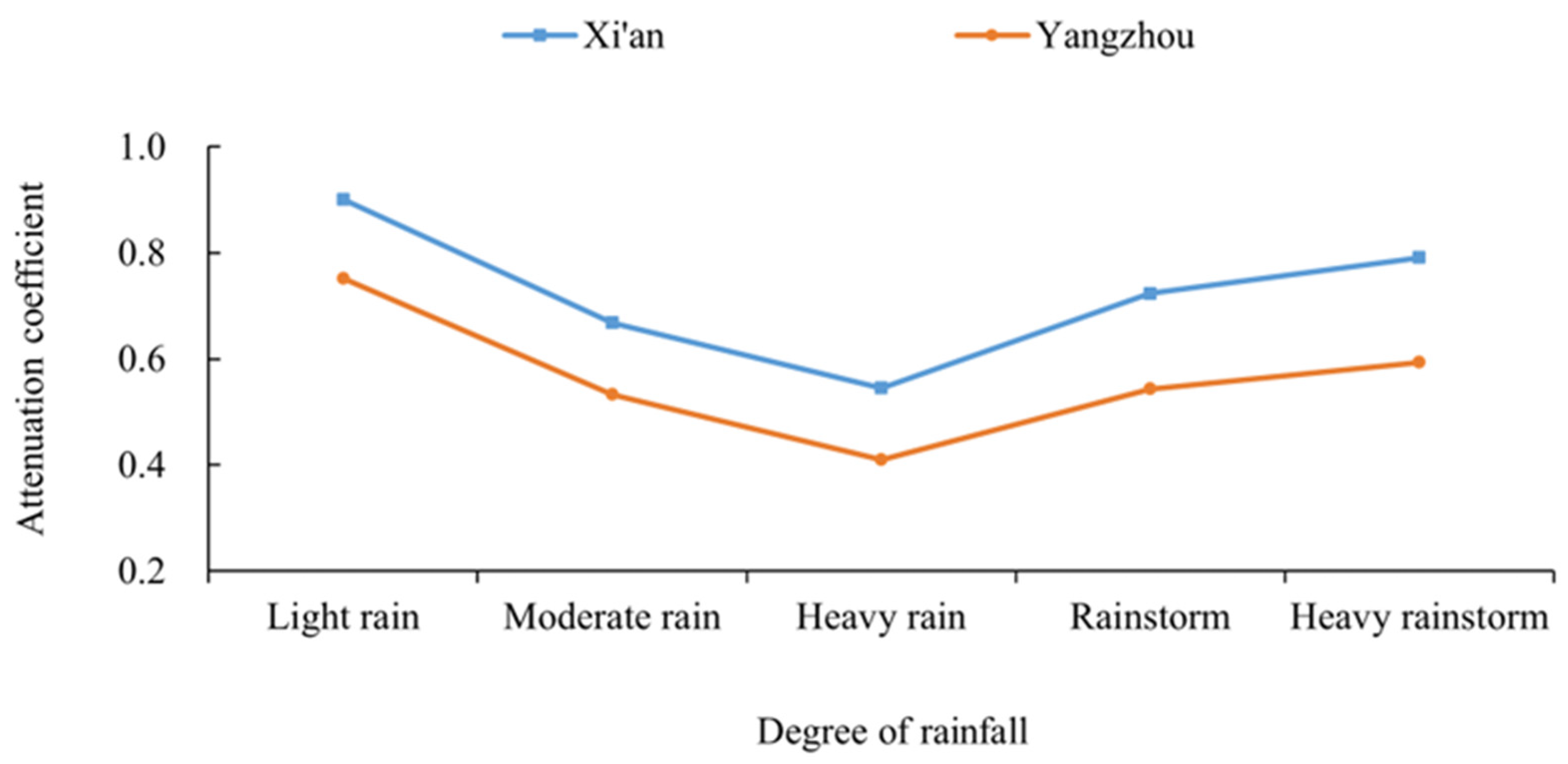
As illustrated in Figure 6, the attenuation coefficients of runoff reduction during continuous rainfall events showed distinct trends with increasing rainfall intensity in both Xi’an and Yangzhou. Under light, moderate, and heavy rainfall conditions, the attenuation coefficients decreased as rainfall intensity increased. Specifically, in Xi’an, the coefficients were 0.90, 0.67, and 0.55 for light, moderate, and heavy rain, respectively, while in Yangzhou, the corresponding values were 0.75, 0.53, and 0.41. Notably, the coefficients in Yangzhou were consistently lower than those in Xi’an for all three rainfall levels. This decreasing trend can be explained by the hydrological behavior of LID systems: as rainfall intensity increased, the precipitation volume rose substantially, whereas the soil infiltration capacity remained relatively constant, resulting in a disproportionate increase in both inflow and outflow runoff. Consequently, the difference between the observed and theoretical runoff reduction performance became larger. For engineered soil media with higher permeability, the attenuation coefficient caused by the decline in permeability during continuous rainfall may not decrease sharply at the initial stage, because of their stronger hydraulic conductivity. However, prolonged wetting under continuous rainfall can still lead to the gradual saturation of the soil, a decrease in capillary pressure, and ultimately a greater likelihood of groundwater accumulation.
However, when rainfall intensity further increased to rainstorm and heavy rainstorm levels, the attenuation coefficients increased again. In Xi’an, the coefficients rose to 0.72 and 0.79 for rainstorm and heavy rainstorm, respectively, which were higher than the corresponding values of 0.54 and 0.59 in Yangzhou. This reversal was likely due to the fact that the theoretical runoff control effect of LID facilities under extreme rainfall conditions was already low, making the actual performance closer to the theoretical situation and thus resulting in higher attenuation coefficients.
Under rainstorm and heavy rainstorm conditions, two key mechanisms may explain this counterintuitive increase in attenuation coefficients. First, when rainfall intensity greatly exceeds the infiltration and storage capacities of LID facilities, the systems rapidly become saturated or overwhelmed, and their marginal runoff reduction efficiency declines sharply. Second, under such extreme rainfall conditions, the theoretical runoff control effect calculated under ideal assumptions is already low, leaving limited room for further attenuation. As a result, the actual runoff reduction effect becomes closer to the theoretical value, leading to a higher attenuation coefficient. The more pronounced increase in Xi’an than in Yangzhou may be related to differences in antecedent soil moisture conditions. In Yangzhou, the relatively humid climate maintains higher antecedent soil moisture, so attenuation effects remain evident even under extreme rainfall. In contrast, the drier antecedent conditions in Xi’an may lead to a more rapid transition to infiltration-excess runoff, causing the actual performance to more closely approach the theoretical prediction at very high rainfall intensities. Overall, the attenuation coefficients in Xi’an were higher than those in Yangzhou across all rainfall intensities, indicating that the performance of LID facilities in Yangzhou was more strongly affected by continuous rainfall.

3.3. Attenuation Effects on Annual Runoff Control Performance

3.3.1. Achievement Rate of Annual Runoff Volume Control Target

The total annual runoff control rate serves as a key performance indicator for evaluating the effectiveness of LID facilities. Based on a long series of historical data (1955–2005), this study investigated the attenuation of runoff control efficacy under continuous rainfall events in Xi’an and Yangzhou. Specifically, the research focused on the actual operational performance of LID facilities when targeting annual runoff control objectives ranging from 60% to 85%.
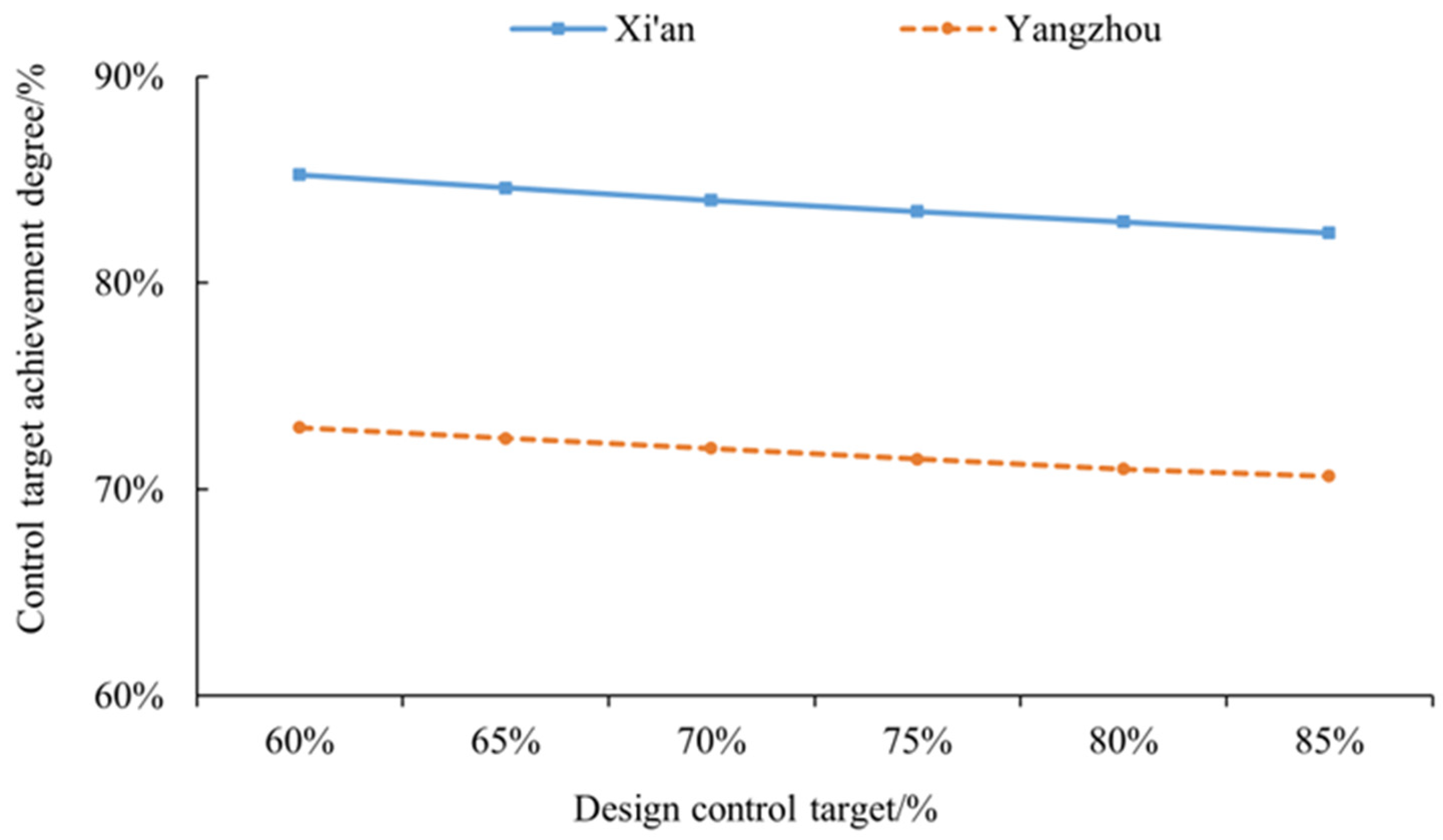
As illustrated in Figure 7, for designed annual runoff control targets of 60%, 65%, 70%, 75%, 80%, and 85%, accounting for the effects of continuous rainfall, the corresponding total annual runoff reductions in Xi’an were 51.15%, 54.99%, 58.81%, 62.60%, 66.36%, and 70.06%, and the achieved control rates in Xi’an under these targets were 85.25%, 84.60%, 84.01%, 83.47%, 82.95%, and 82.42%, respectively. Similarly, for the same set of designed control targets, Yangzhou exhibited total annual runoff reductions of 43.78%, 47.10%, 50.38%, 53.59%, 56.78%, and 60.02%, with achieved control rates of 72.97%, 72.46%, 71.97%, 71.46%, 70.97%, and 70.61%, respectively. Notably, under identical conditions, Xi’an outperformed Yangzhou by an average margin of 12.09% across all target levels. The total annual runoff control rate exhibited a discernible decline following continuous rainfall events, with this reduction being particularly pronounced. Moreover, the operational efficiency of LID facilities in Yangzhou was significantly more susceptible to the impacts of continuous rainfall compared to those in Xi’an.

3.3.2. Achievement Levels of Annual Runoff Control Target in Different Years

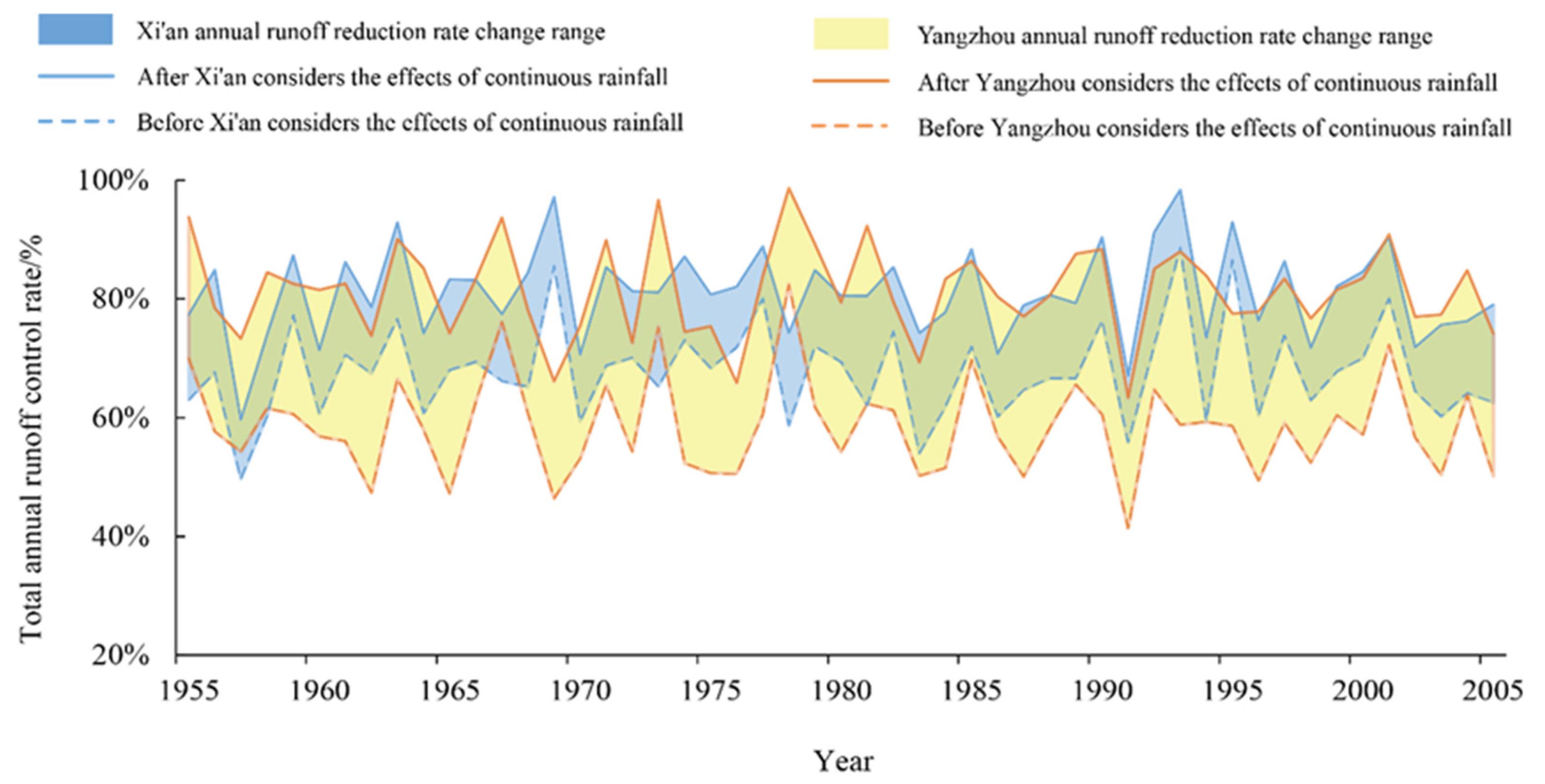
In the Guide, the total annual runoff control rate is categorized into five zones. Xi’an is designated as Zone II, requiring a runoff control rate of 80–85%, while Yangzhou falls under Zone III, with a target range of 75–85%. For this study, an 80% annual runoff control rate was selected as the benchmark target. Based on the comprehensive dataset from 1955 to 2005, accounting for the effects of continuous rainfall events, the runoff control performance of LID facilities in both cities was evaluated year by year. Figure 8 illustrates the annual runoff reduction rates before and after considering the impact of continuous rainfall, with the shaded area representing the variation range induced by these rainfall conditions.
The total annual runoff control target was determined based on daily rainfall data spanning 51 years (1955–2005). Under the 80% runoff control target, both Xi’an and Yangzhou achieved the target in 29 out of 50 years. However, when accounting for the effects of continuous rainfall attenuation, Yangzhou met the 80% target in only one year, whereas Xi’an achieved it five times. The sharp decline in Yangzhou’s runoff control target under continuous rainfall conditions can be physically attributed to the frequent rainfall events that keep the soil and LID media near saturation for extended periods, substantially reducing the available storage capacity for subsequent storms. This sharp reduction in control performance under continuous rainfall conditions implies that for humid regions like Yangzhou, relying solely on a static annual runoff control target based on historical daily rainfall may significantly overestimate system reliability. In practice, the frequent and closely spaced storm events limit the recovery of soil moisture and LID storage capacity, making the system more vulnerable to failure during wet spells. Therefore, for regions with high rainfall frequency, it is crucial to incorporate continuous rainfall and inter-event drying period conditions into the design and performance assessment of runoff control systems.
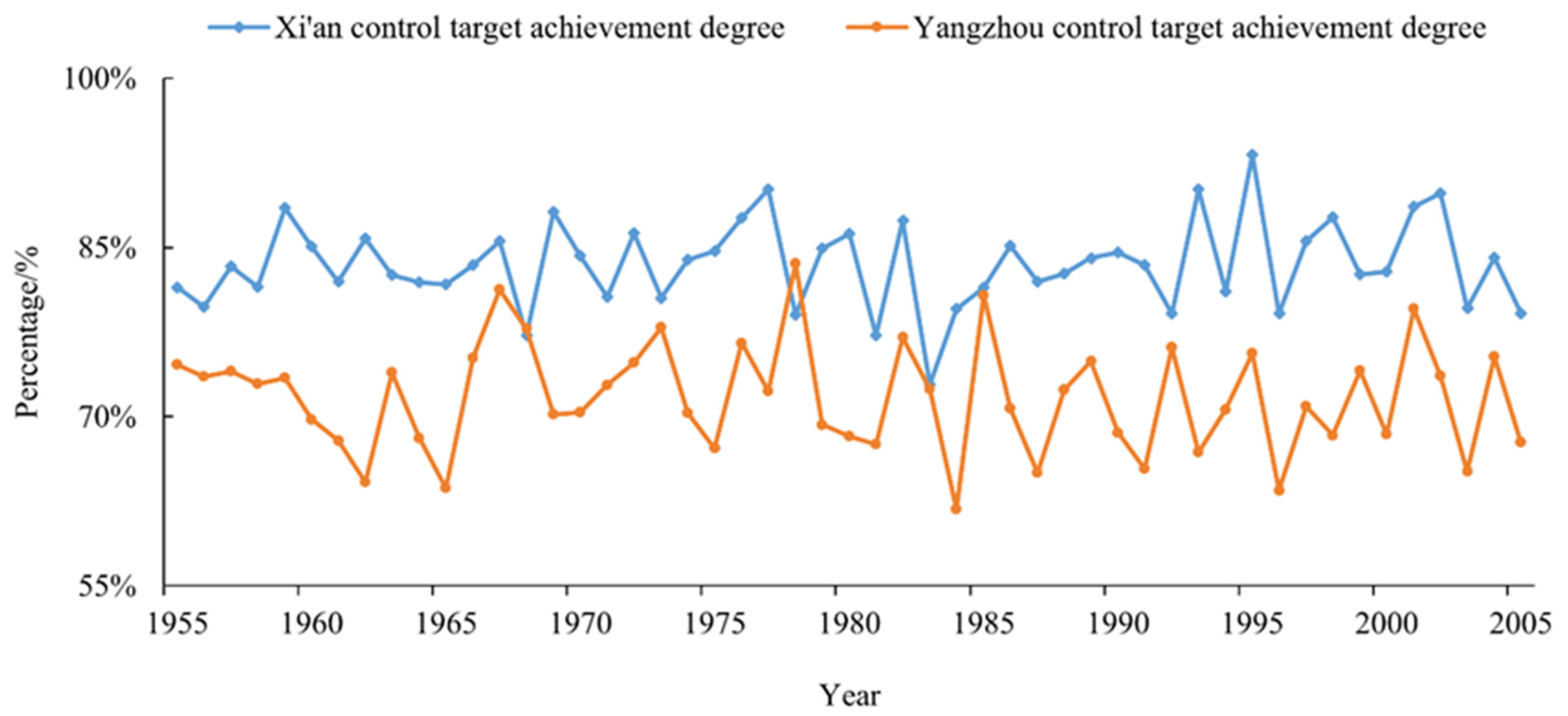
Figure 9 illustrates the annual performance of the LID facility in meeting the runoff control target after incorporating the influence of continuous rainfall. In Xi’an, the annual runoff reduction rate ranged from 49.72% to 88.69%, and the average total annual runoff reduction rate was 67.72%. The average achievement rate for the control target was 83.53%. Notably, Yangzhou exhibited a lower performance, with rates ranging from 41.42% to 82.46%, an average total annual runoff reduction rate of 58.53%, and an average control target achievement rate of 71.70%. When continuous rainfall effects were considered, Xi’an outperformed Yangzhou in both maximum annual runoff reduction and target achievement rates. Specifically, Xi’an’s mean annual runoff reduction rate was 9.22% higher than Yangzhou’s, and its average control target achievement rate was 11.83% higher. Additionally, the standard deviation of the control target achievement was lower in Xi’an (3.87) than in Yangzhou (4.91), indicating more stable inter-annual performance of the LID facility with less fluctuation. The lower inter-annual variability in Xi’an reflects the region’s more predictable dry–wet seasonality and more consistent recovery periods between rainfall events. In Yangzhou, the greater variability may result from year-to-year fluctuations in the timing and clustering of rainy periods. In some years, more isolated storms allow partial recovery of soil storage capacity, whereas in other years, prolonged wet spells overwhelm LID capacity, leading to highly variable annual performance.
A Pearson Type III (P-III) curve was fitted to the 51-year rainfall series in the study area, with years at frequencies of 25%, 50%, and 75% classified as wet, normal, and dry years, respectively. After accounting for continuous rainfall effects, the actual annual runoff control targets in Xi’an were 84.70%, 80.54%, and 84.56% for wet, normal, and dry years, respectively, compared to 70.22%, 73.93%, and 72.83% in Yangzhou. The lowest degree of achievement in Xi’an occurred during normal years, primarily due to the higher proportion of moderate and heavy rainfall events, which reduces LID facility efficiency under continuous rainfall. Overall, Xi’an’s LID facilities achieved higher runoff control performance than Yangzhou’s. After considering the impact of continuous rainfall, the achievement of annual runoff control objectives was higher for the LID facilities in Xi’an than in Yangzhou, where continuous rainfall had a more pronounced impact on annual runoff control.

3.4. Influence of Runoff Reduction Attenuation on Design Rainfall

3.4.1. The Distribution Characteristics of Rainfall in the Study Area

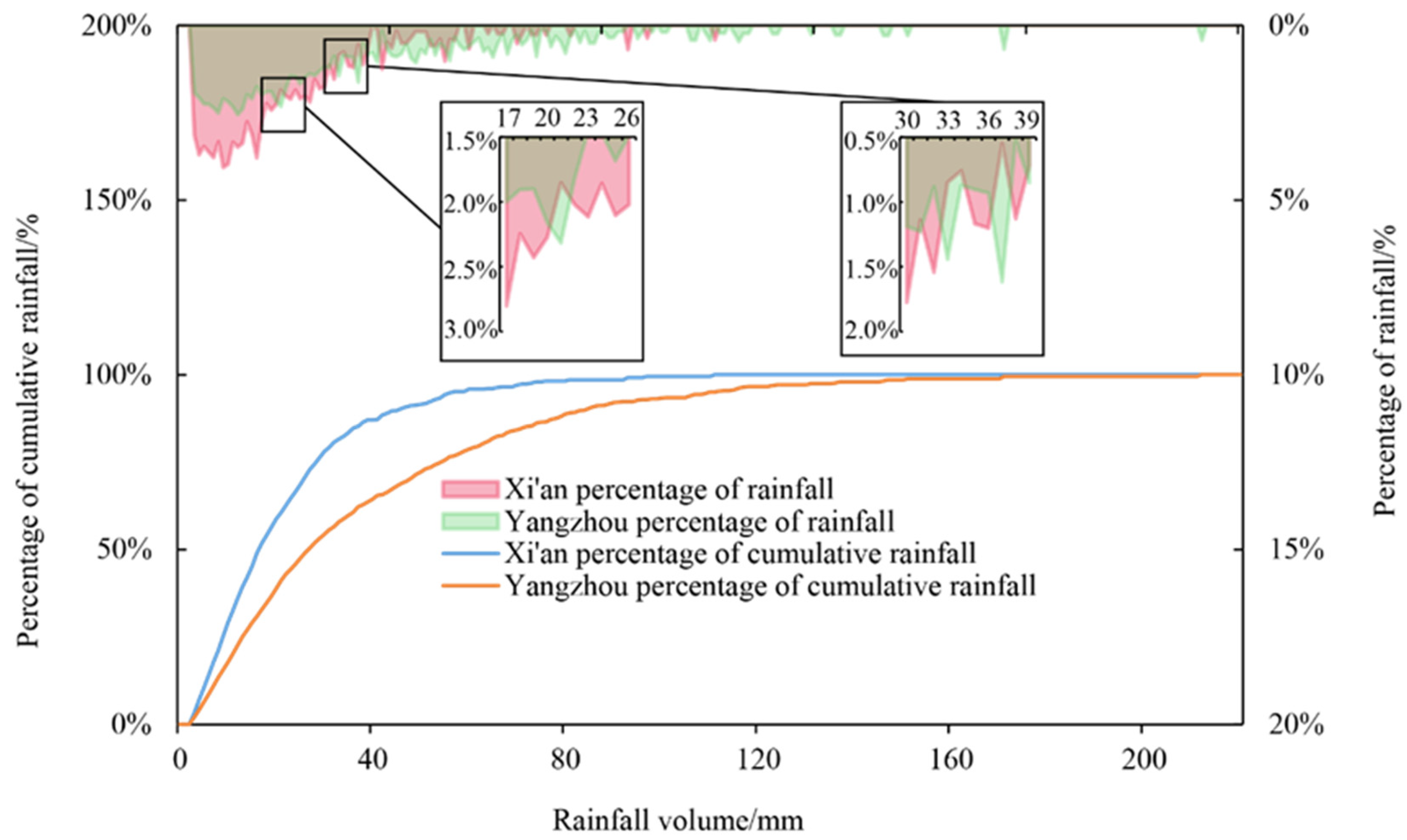
Due to the attenuation of runoff control effectiveness under continuous rainfall, the actual annual runoff reduction rate of LID facilities consistently fell short of the original design targets. To achieve the intended control objectives, it is necessary to increase the design rainfall intensity. Based on 51 years of rainfall data (1955–2005), we analyzed the rainfall distribution characteristics in both study areas and investigated the variation characteristics of design rainfall under the influence of continuous rainfall in the two areas. Figure 9 illustrates the ratio of rainfall in different magnitudes to total rainfall and the cumulative proportions of each rainfall. Rainfall proportions were calculated in 1 mm increments. For example, the proportion for 9 mm represents the ratio of rainfall falling within the >8 mm and ≤9 mm range to the total rainfall. The cumulative proportion refers to the ratio of rainfall less than or equal to a given threshold to the total rainfall amount.
Figure 10 demonstrates that as rainfall amounts increased, both study areas exhibited a general decreasing trend in rainfall proportion. At lower rainfall levels, Xi’an showed a significantly higher proportion than Yangzhou. However, a notable shift occurred at 20–21 mm, where Yangzhou’s rainfall proportion surged to 2.32% and 1.85%, respectively—exceeding Xi’an for the first time—with cumulative proportions reaching 41.13% and 60.60%. When the rainfall reached 31 mm, Xi’an regained a slight advantage, with proportions of 1.14% versus Yangzhou’s 1.23%, and the cumulative proportion of 79.19% and 55.63%. Beyond this threshold, Yangzhou’s rainfall proportion consistently surpassed Xi’an. The temporary crossover near 31 mm reflects the upper bound of Xi’an’s typical storm depth distribution under its prevailing rainfall patterns. Extreme rainfall events in Xi’an are mostly produced by short-duration, high-intensity thunderstorms with limited total depth due to rapid dissipation. In Yangzhou, persistent moisture transport associated with the East Asian monsoon can support longer-lasting rainfall processes, producing a greater frequency of events exceeding 31 mm.
The cumulative proportion curves further highlight these distributional differences. Initially, Xi’an’s curve had a steeper slope, reflecting its dominance in small-to-medium rainfall events. Between 31 mm and 42 mm, the slopes for both cities were similar. Above 42 mm, Yangzhou’s slope became steeper, and the cumulative percentages of rainfall were 88.51% for Xi’an and 65.68% for Yangzhou at 42 mm. These patterns indicate that Xi’an’s rainfall was concentrated in small-to-medium events, whereas Yangzhou’s rainfall was more dispersed, with a greater contribution from heavier events. Each region exhibited distinct inflection points in rainfall distribution, which critically influenced the design rainfall calculations for annual runoff control targets. The inflection points, including 20–21 mm for the rapid increase in Yangzhou, 31 mm for the crossover, and 42 mm for the slope change, serve as natural breakpoints for selecting design storms. Using a single design storm depth for both cities, as commonly applied in standard guidelines, would ignore these physical differences and could lead to underperformance in one region.

3.4.2. Influence of Continuous Rainfall on the Design Rainfall of LID Facilities

According to the zoning of annual runoff volume control rates outlined in the Guide, target control rates of 60%, 65%, 70%, 75%, 80%, and 85% were selected to analyze the variation in design rainfall. This analysis was based on long-term rainfall data (1955–2005) for Xi’an and Yangzhou, examining differences both before and after accounting for the impact of continuous rainfall events.
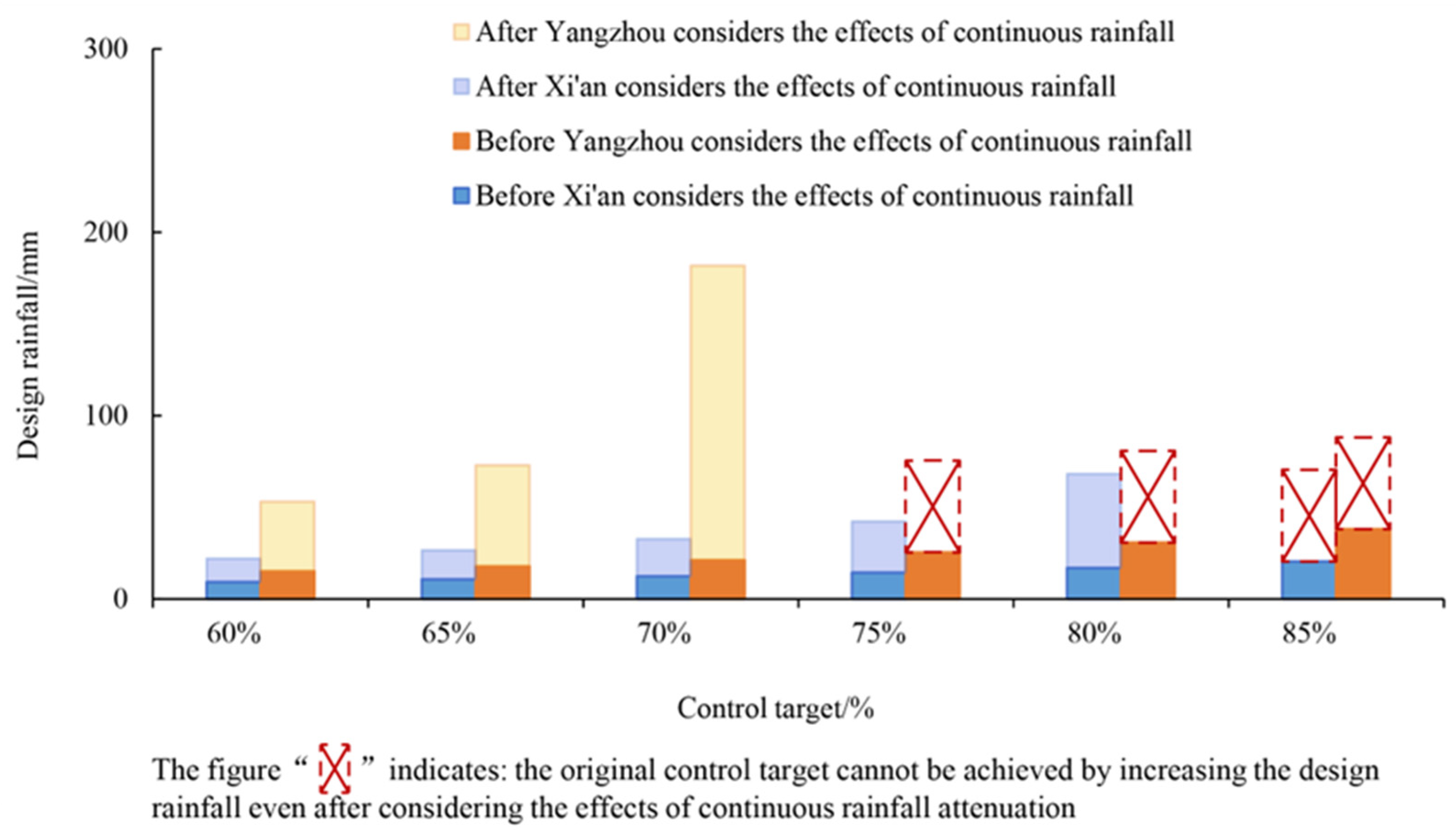
Figure 11 illustrates the influence of continuous rainfall events on design rainfall calculations across different annual runoff control targets in Xi’an and Yangzhou. In Xi’an, without considering the impact of continuous rainfall, the initial design rainfall values for control targets of 60%, 65%, 70%, 75%, and 80% were 9.19 mm, 10.63 mm, 12.35 mm, 14.41 mm, and 17.01 mm, respectively. After accounting for continuous rainfall, these values rose significantly to 12.96 mm, 15.98 mm, 20.4 mm, 27.83 mm, and 51.14 mm, representing increases of 41.0%, 50.3%, 65.2%, 93.1%, and 200.7%, respectively. However, even with these adjustments, the 85% control target remained unattainable in Xi’an due to rainfall attenuation effects. In Yangzhou, without considering the impact of continuous rainfall, the baseline design rainfall values for targets of 60%, 65%, and 70% were 15.21 mm, 17.9 mm, and 21.17 mm. When continuous rainfall was factored in, these values surged to 37.95 mm, 55.16 mm, and 160.58 mm—marking increases of 149.5%, 208.2%, and 658.5%, respectively. Despite these substantial increases, higher control targets of 75%, 80%, and 85% could not be achieved under the same conditions in Yangzhou.
Considering the effects of continuous rainfall attenuation, certain runoff control objectives could theoretically be met by increasing design rainfall values. However, achieving the target annual runoff control rates of 85% in Xi’an (semi-humid climate) and above 75% in Yangzhou (humid climate) proved unfeasible through this approach alone, as the impact of rainfall attenuation is significantly more pronounced in humid regions than in semi-humid areas. Even where control targets were attainable, the required design capacities for LID facilities would need to increase substantially, inevitably resulting in higher construction costs. For example, in Xi’an, design rainfall increased by 200.7% for the 80% control target, and in Yangzhou, a staggering 658.5% increase was needed for the 70% target. The increase in design rainfall was used here as a diagnostic measure to quantify the gap between static design targets and field performance; it should not be interpreted as the only practical solution. In engineering practice, increasing design rainfall must be balanced with additional measures such as improved soil media, underdrain optimization, overflow routing, distributed storage, and economic feasibility. Such dramatic escalations in design requirements are neither economical nor practical if applied alone.
Moreover, the challenge is further compounded by changes in precipitation patterns under climate change, including more frequent short-duration, high-intensity storms and longer dry intervals between rainfall events. These changes alter the initial abstraction and antecedent soil moisture conditions, thereby reducing the effective storage available for runoff control between storms. In humid regions such as Yangzhou, where soils remain close to saturation for extended periods, even moderate rainfall can rapidly generate runoff, making it increasingly difficult to achieve high control targets solely by increasing the design rainfall standard. In semi-humid regions such as Xi’an, although attenuation effects are less severe, the increasing occurrence of extreme rainfall events may disrupt the assumed rainfall-runoff relationship, causing LID facilities to underperform relative to static design targets. Therefore, when setting annual runoff control targets for different climatic regions, it is essential to balance hydrological objectives with economic feasibility. Therefore, when establishing annual runoff control targets for different climatic regions, it is essential to strike a balance between hydrological objectives and economic feasibility through comprehensive consideration of both factors.

3.5. Applicability, Uncertainty, and Limitations

The main contribution of this study is the use of field-monitored LID performance to derive an attenuation coefficient that links continuous rainfall with annual runoff control targets. Compared with approaches based only on daily rainfall statistics, this framework explicitly accounts for the loss of storage and infiltration capacity during wet spells and provides a practical way to compare humid and semi-humid regions. The results should be generalized with caution. Xi’an and Yangzhou were selected as representative contrasting cases, not as a complete sample of all climatic regions in China. Facilities with different media composition, permeability, catchment ratio, underdrain configuration, groundwater depth, and maintenance conditions may exhibit different attenuation coefficients. Therefore, local monitoring or calibration is recommended before applying the coefficients to other regions.
Several uncertainties remain. First, the analysis uses daily rainfall data because this is the basis of the current design guide, but sub-daily rainfall intensity can further influence peak inflow and overflow. Second, the Xi’an high-intensity coefficients are uncertain because few rainstorms and no heavy-rainstorm events were captured during the monitoring period. Third, the attenuation coefficient simplifies a complex hydrological process into an event-class average and therefore cannot fully represent dynamic soil moisture, groundwater response, and maintenance effects. Future work should combine longer field monitoring with process-based hydrological modelling and climate-projection scenarios.

4. Conclusions

This paper employed a combined approach of outdoor monitoring and theoretical calculation to investigate the attenuation patterns of runoff control effectiveness in Low Impact Development (LID) facilities under continuous rainfall conditions, comparing two climatic regions: Xi’an (semi-arid) and Yangzhou (humid). Specifically, the research evaluated how continuous rainfall affected the achievement of annual runoff control targets and how design rainfall thresholds changed before and after accounting for continuous rainfall effects. The key findings are summarized as follows:
(1)
The performance of LID facilities in Xi’an and Yangzhou was attenuated by continuous rainfall. Attenuation coefficients decreased under light-to-moderate rainfall but increased under heavy-to-extreme rainfall. Xi’an showed higher coefficients than Yangzhou, indicating that the runoff control performance of LID facilities in Yangzhou was more substantially affected by continuous rainfall events.
(2)
As the annual runoff control target increased, the degree of target achievement in both locations showed a decreasing trend. Yangzhou was more sensitive to continuous rainfall than Xi’an. After accounting for continuous rainfall, the average achievement rates ranged from 60% to 85%, with Xi’an being 12.09% points higher than Yangzhou.
(3)
After accounting for the impact of continuous rainfall, the required design rainfall in Xi’an increased by 200.7% to meet an 80% annual runoff control target, whereas Yangzhou required a 658.5% increase to achieve a 70% control target. These findings highlight the need for a comprehensive evaluation of both hydrological performance and economic feasibility when implementing LID facilities. Such an approach would help identify optimal annual runoff control targets for different climatic conditions, thereby advancing sustainable urban stormwater management by balancing environmental effectiveness, resource efficiency, and long-term resilience.

Author Contributions

S.T.: Conceptualization, Methodology, Investigation, Writing—Original draft preparation, Writing—Reviewing and Editing; Z.Y.: Methodology, Investigation; Z.L.: Investigation and Software; Y.W., Z.J. and X.G.; Formal analysis: Writing—Original draft preparation; T.L.: Writing—Reviewing and Editing. All authors have read and agreed to the published version of the manuscript.

Funding

Funding for this research was partially supported by the Natural Science Foundation of Jiangsu Province (Grant No. BK20170504) and the Priority Academic Program Development of Jiangsu Higher Education Institutions (PAPD).

Institutional Review Board Statement

Not applicable.

Informed Consent Statement

Not applicable.

Data Availability Statement

The datasets used in the current study are available from the corresponding author on reasonable request.

Acknowledgments

The authors would like to thank the editors and referees for their constructive comments on this paper.

Conflicts of Interest

Author Yani Wang was employed by the company Huai’an Water Conservancy Survey and Design Institute Limited Company. The remaining authors declare that the research was conducted in the absence of any commercial or financial relationships that could be construed as a potential conflict of interest.

References

  1. Liu, M.; Wang, Z.; Wang, M.; Li, X.; Zhang, Y.; Yang, B.; Lai, C. A framework for optimization and assessment of long-term urban stormwater management scenarios under climate change and performance challenges. J. Environ. Manag. 2025, 390, 126298. [Google Scholar] [CrossRef] [PubMed]
  2. Wang, X.; Ma, Y.; Li, H.; Qin, J.; Xiao, Y.; Yan, Y.; Zhang, T.; Gao, S.; Li, J.; Li, J.; et al. Multi-objective Optimization of Sponge City Storage Tank Considering Inlet and Outlet Water Conditions-based on NSGA-II Algorithm. Water. Resour. Manag. 2026, 40, 129. [Google Scholar]
  3. Nguyen, T.; Ngo, H.; Gao, W.; Wang, X. A new model framework for sponge city implementation: Emerging challenges and future developments. J. Environ. Manag. 2020, 253, 109689. [Google Scholar] [CrossRef] [PubMed]
  4. Sharma, R.; Malaviya, P. Management of stormwater pollution using green infrastructure: The role of rain gardens. WIREs Water 2021, 8, e1507. [Google Scholar] [CrossRef]
  5. BursztaAdamiak, E.; BiniakPieróg, M.; Dąbek, P.B.; Sternik, A. Rain garden hydrological performance—Responses to real rainfall events. Sci. Total Environ. 2023, 887, 164153. [Google Scholar] [CrossRef] [PubMed]
  6. Rosenberger, L.; Leandro, J.; Pauleit, S.; Erlwein, S. Sustainable stormwater management under the impact of climate change and urban densification. J. Hydrol. 2021, 596, 126137. [Google Scholar] [CrossRef]
  7. Li, H.; Luan, Q.; Liu, J.; Zhou, H.; Gao, C. Multi-objective phased optimization framework of gray-green-blue infrastructure for synergistic runoff control in data-scarce regions. J. Environ. Manag. 2026, 399, 128618. [Google Scholar] [CrossRef]
  8. Liu, Z.; Li, K.; Jia, H.; Wang, Z. Refining assignment of runoff control targets with a landscape statistical model: A case study in the Beijing urban sub-center, China. Water 2022, 14, 1466. [Google Scholar] [CrossRef]
  9. Zhang, Z.; Hu, B.; Li, J.; Wang, W.; Wang, S. Influence of spatial variation in daily rainfall on volume capture of rainfall by source control facilities in China. Adv. Water. Sci. 2018, 29, 465–472. [Google Scholar]
  10. Yuan, Y.; Zhang, Q.; Chen, S.; Li, Y. Evaluation of comprehensive benefits of sponge cities using meta-analysis in different geographical environments in China. Sci. Total Environ. 2022, 836, 155755. [Google Scholar] [CrossRef]
  11. Zhang, K.; Chui, M.; Yang, Y. Simulating the hydrological performance of low impact development in shallow groundwater via a modified SWMM. J. Hydrol. 2018, 566, 313–331. [Google Scholar] [CrossRef]
  12. Zhao, L.; Li, J.; Zhang, T.; Feng, P.; Wang, X.; Shen, J. Multi-method combined analysis of urban flood risks and its influencing factors under low impact development. J. Hydrol. 2024, 632, 130927. [Google Scholar] [CrossRef]
  13. Li, P.; Zhuang, L.; Lin, K.; She, D.; Wang, Q.; Luo, W.; He, J.; Xia, J. Impact on nonlinear runoff of LID facilities and parameter response in the TVGM model. J. Hydrol. 2025, 653, 132780. [Google Scholar] [CrossRef]
  14. Qi, W.; Ma, C.; Xu, H.; Xu, K.; Lian, J. Flood mitigation performance of low impact development practice in a coastal city from the perspective of catchment scale. J. Hydrol. 2025, 649, 132466. [Google Scholar] [CrossRef]
  15. Liu, W.; Engel, B.; Qi, F. Modelling the hydrological responses of green roofs under different substrate designs and rainfall characteristics using a simple water balance model. J. Hydrol. 2021, 602, 126786. [Google Scholar] [CrossRef]
  16. Liu, C.; Xie, T.; Yu, Q.; Niu, C.; Sun, Y.; Xu, Y.; Luo, Q.; Hu, C. Study on the response analysis of LID hydrological process to rainfall pattern based on framework for dynamic simulation of urban floods. J. Environ. Manag. 2024, 351, 119953. [Google Scholar] [CrossRef]
  17. Li, J.; Lin, X.; Wang, W.; Liu, C. Comparison of statistical methods of runoff volume control indexes at home and abroad. China Water Wastewater 2018, 34, 11–16. (In Chinese) [Google Scholar]
  18. Li, J.; Wang, W.; Che, W.; Liu, C.; Zhao, Y. Explanation of sponge city development technical guide: Regional division for total rainfall runoff volume capture target. China Water Wastewater 2015, 31, 6–12. [Google Scholar]
  19. Guo, X.; Guo, Q.; Zhou, Z.; Du, P.; Zhao, D. Degrees of hydrologic restoration by low impact development practices under different runoff volume capture goals. J. Hydrol. 2019, 578, 124069. [Google Scholar] [CrossRef]
  20. Li, H.; Wei, Y.; Ishidaira, H.; Commey, N.; Yang, D. Integrated urban and riverine flood risk management in the Fujiang River Basin-Mianyang city. J. Hydrol. 2024, 645, 132150. [Google Scholar] [CrossRef]
  21. Guo, Z.; Zhang, X.; Winston, R.; Smith, J.; Yang, Y.; Tao, S.; Liu, H. A holistic analysis of Chinese sponge city cases by region: Using PLS-SEM models to understand key factors impacting LID performance. J. Hydrol. 2024, 637, 131405. [Google Scholar] [CrossRef]
  22. Qin, H.; Li, Z.; Fu, G. The effects of low impact development on urban flooding under different rainfall characteristics. J. Environ. Manag. 2013, 129, 577–585. [Google Scholar] [CrossRef] [PubMed]
  23. Yang, W.; Zhang, J.; Mei, S.; Krebs, P. Impact of antecedent dry-weather period and rainfall magnitude on the performance of low impact development practices in urban flooding and non-point pollution mitigation. J. Clean. Prod. 2021, 320, 128946. [Google Scholar] [CrossRef]
  24. Wang, K.; Wang, L.; Huang, D.; Wang, Z. Thinking and practice of implementing annual runoff total control rate according to local conditions. China Water Wastewater 2024, 40, 1–6. (In Chinese) [Google Scholar]
  25. Wang, E.; Gong, Y.; Zhou, G. Simulation on runoff and water quality control effects in a sponge reconstruction community of TianJin by SWMM. Environ. Eng. 2023, 41, 48–53, 115. [Google Scholar]
  26. Yang, M.; Pan, X.; Liu, H.; Yu, L.; Di, S. Accurate calculation of the volume capture ratio of annual rainfall considering the field rainfall evolution. J. Hydraul. Eng. 2019, 50, 1510–1517, 1528. (In Chinese) [Google Scholar]
  27. Zhu, J.; Peng, Y.; Liu, X.; Li, H.; Fang, Y. Study on the spatial pattern of runoff volume capture in Hubei province from the perspective of sponge city. Environ. Sci. Technol. 2024, 47, 35–42. [Google Scholar]
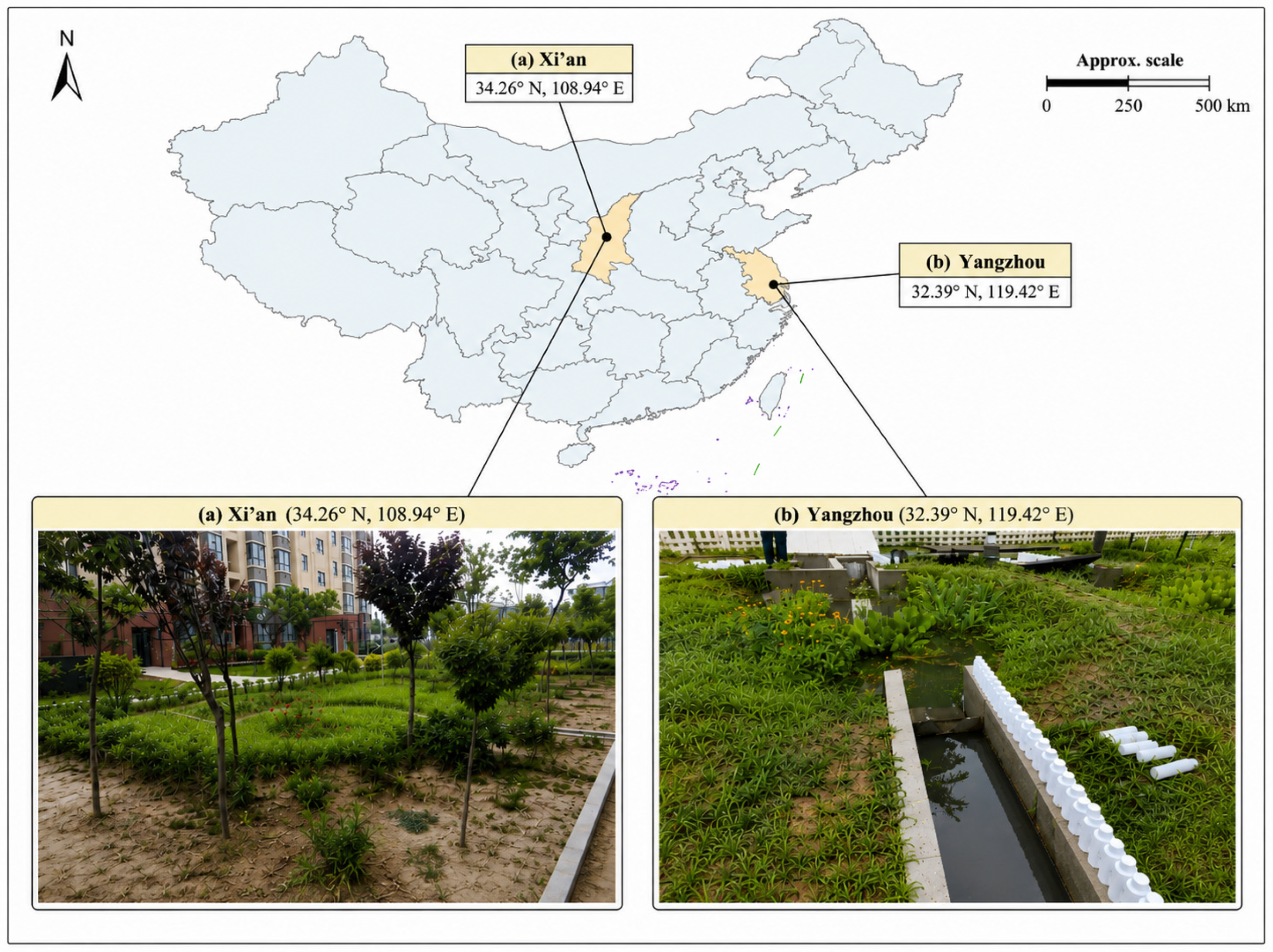
Figure 1. Geographic location and configuration of LID facilities: (a) LID facility in Xi’an; (b) LID facility in Yangzhou.
Sustainability 18 05925 g001
Figure 2. Conceptual diagram of runoff reduction attenuation under continuous rainfall.
Sustainability 18 05925 g002
Figure 3. The average annual accumulation and average annual rainfall days of different types of rainfall in Xi’an and Yangzhou.
Sustainability 18 05925 g003
Figure 4. Rainfall days and rainfall statistics of annual continuous rainfall in Xi’an.
Sustainability 18 05925 g004
Figure 5. Rainfall days and rainfall statistics of annual continuous rainfall in Yangzhou.
Sustainability 18 05925 g005
Figure 6. Attenuation coefficients of the continuous rainfall runoff reduction effect of LID facilities in the study areas.
Sustainability 18 05925 g006
Figure 7. The total annual runoff control target achievement degree in Xi’an and Yangzhou based on a long series of data.
Sustainability 18 05925 g007
Figure 8. The total annual runoff reduction rate before and after considering the influence of continuous rainfall in the two study areas under the control target of 80%.
Sustainability 18 05925 g008
Figure 9. The control target achievement degree of the two study areas considering the influence of continuous rainfall under the control target of 80%.
Sustainability 18 05925 g009
Figure 10. The ratio of rainfall in different magnitudes to total rainfall and the cumulative proportion in Xi’an and Yangzhou.
Sustainability 18 05925 g010
Figure 11. The design rainfall under different total annual runoff control targets before and after considering the effect of continuous rainfall.
Sustainability 18 05925 g011
Table 1. Number of events and average runoff reduction rate of LID facilities for different grades of rainfall.
Light
Rain
Moderate
Rain
Heavy
Rain
RainstormHeavy
Rainstorm
Xi’annumber of events141551
runoff reduction rate/%85.8167.1756.2332.40/
Yangzhounumber of events47251051
runoff reduction rate/%84.4457.2330.3232.2126.62
Disclaimer/Publisher’s Note: The statements, opinions and data contained in all publications are solely those of the individual author(s) and contributor(s) and not of MDPI and/or the editor(s). MDPI and/or the editor(s) disclaim responsibility for any injury to people or property resulting from any ideas, methods, instructions or products referred to in the content.