1. Introduction
The rapid diffusion of generative artificial intelligence (GenAI), particularly tools such as ChatGPT, has begun to transform educational practices across the globe. These technologies enable students to generate text, solve problems, and support learning processes with unprecedented efficiency, thereby reshaping traditional notions of knowledge production, authorship, and academic effort. While GenAI has been associated with opportunities for personalized learning, increased accessibility, and reduced cognitive workload, it has simultaneously raised critical concerns regarding academic integrity, ethical use, and the long-term adaptation of educational systems [
1,
2].
At the same time, growing concerns have emerged regarding excessive reliance on AI-supported learning tools. Recent discussions have highlighted the potential erosion of critical thinking, reduced engagement in problem-solving processes, cognitive outsourcing, and the normalization of academically inappropriate uses of AI in higher education [
2,
3]. In this context, some forms of non-disclosure may reflect not only uncertainty regarding acceptable AI use, but also attempts to avoid negative academic evaluation or accusations of academic dishonesty. These tensions illustrate the complex and contested role of GenAI within contemporary educational environments.
Within higher education, the integration of GenAI remains uneven and contested. Institutions have struggled to establish clear policies regulating its use, resulting in a context of normative ambiguity in which students must navigate uncertain expectations regarding what constitutes acceptable academic behavior [
4]. This ambiguity is particularly evident in assessment contexts, where the use of AI tools is often implicitly discouraged yet insufficiently regulated, generating tensions between innovation and integrity [
3]. As a result, students may experience conflicting pressures, including the need to leverage AI tools to enhance productivity while avoiding potential accusations of academic dishonesty.
Emerging evidence suggests that these tensions are not only institutional but also social. Beyond formal rules, peer perceptions and informal norms can influence how students engage with GenAI. In many contexts, the use of AI is associated with negative judgments, including perceptions of laziness, unfair advantage, or lack of authentic learning [
5]. Under such conditions, students may regulate not only their use of AI but also the visibility of that use, leading to patterns of selective disclosure. This dynamic reflects broader processes of technological adoption in which social acceptance may lag behind actual practice.
These dynamics may be particularly salient in under-researched educational contexts such as the Peruvian Andes. Universities in Andean regions operate within socio-cultural frameworks characterized by strong values of individual effort, communal accountability, and educational merit. At the same time, these regions face structural challenges related to digital inequality, access to technological resources, and uneven levels of digital literacy [
6,
7,
8]. In such settings, the introduction of GenAI may not only transform learning practices but also interact with locally embedded notions of academic legitimacy.
From the perspective of responsible educational adaptation, discrepancies between AI use and its disclosure are relevant because they may affect transparency, institutional alignment, and assessment practices. Educational sustainability is therefore used in this study as a cautious contextual frame rather than as a direct outcome measured empirically. Within this frame, discrepancies between AI use and disclosure are treated as reporting-related tensions that may inform how institutions understand and govern emerging AI practices [
9].
Specifically, the gap between personally reported and declared AI use, here conceptualized as the AI Use Gap, can be cautiously interpreted as an exploratory indicator of reporting-related tensions relevant to transparency, institutional alignment, and assessment governance. From a transparency perspective, discrepancies in disclosure may limit what instructors and institutions can observe about students’ use of AI tools. From an institutional perspective, misalignment between actual practices and formally reported behavior may indicate uncertainty between emerging student practices and existing academic integrity frameworks. From an assessment governance perspective, limited visibility of AI use may complicate the interpretation of student work and the consistent application of evaluation criteria.
In this sense, the AI Use Gap is not presented as a validated construct or as a direct measure of concealment. Rather, it is used as an exploratory discrepancy indicator that offers a context-specific indication of how issues of transparency and institutional alignment may appear in everyday academic practices. This framing allows the study to examine observable reporting patterns without extending the findings beyond what the data can support.
Theoretical Background: Visibility Management and AI Disclosure
The present study is conceptually informed by perspectives on visibility management, self-presentation, and social regulation of behavior in institutional settings. Classical work on impression management suggests that individuals regulate not only their actions, but also how those actions are presented and interpreted within socially evaluative environments [
10]. In educational contexts, behaviors perceived as socially sensitive, normatively ambiguous, or potentially illegitimate may become selectively disclosed depending on anticipated judgment and contextual expectations.
Within higher education, the use of generative artificial intelligence (GenAI) may represent one such behavior. Although AI tools are increasingly integrated into academic practices, their legitimacy remains socially contested and institutionally uneven. Students may therefore navigate tensions between the practical usefulness of AI tools and concerns regarding authenticity, academic integrity, peer evaluation, or institutional sanctions. Under such conditions, the visibility of AI use may become socially regulated rather than fully transparent.
From this perspective, discrepancies between personally reported and declared AI use can be interpreted as forms of differential reporting shaped by social and contextual dynamics. The concept of visibility management is particularly relevant in this regard, as it emphasizes how individuals selectively regulate disclosure depending on perceived norms, risks, and evaluative contexts [
10,
11]. Rather than assuming that disclosure is determined by a single latent psychological trait, visibility management frameworks suggest that reporting practices emerge through interactions between institutional ambiguity, social expectations, and situational judgments.
Although related to concepts such as self-presentation, social desirability, concealment, and disclosure regulation, visibility management is adopted here as the most appropriate analytical lens because it emphasizes the context-dependent regulation of when, where, and to whom behaviors become socially visible. Unlike traditional social desirability frameworks, which primarily focus on response bias or impression enhancement, visibility management highlights the situational negotiation of disclosure under conditions of normative ambiguity and anticipated evaluation.
The psychosocial dimensions examined in this study were selected as contextual indicators associated with these dynamics. Perceived stigma refers to anticipated negative social evaluation associated with AI use, including perceptions of reduced competence or unfair advantage. Concealment reflects the tendency to regulate the visibility of AI-assisted practices through selective disclosure. Normative ambiguity captures uncertainty regarding acceptable AI use in academic contexts, particularly where institutional expectations remain unclear. Peer pressure refers to the influence of perceived peer attitudes and social expectations on disclosure-related decisions.
Taken together, these dimensions are not conceptualized as fixed latent traits, but rather as interconnected contextual conditions that may shape how students negotiate the visibility of AI use within academic environments. In this sense, the AI Use Gap is approached not as a direct measure of hidden behavior, but as an exploratory operational indicator of differential reporting across socially evaluative contexts.
Despite the growing body of literature on GenAI in education, there remains limited understanding of how personally reported use and declared use may diverge, particularly in Global South contexts. Most existing studies focus on technological capabilities, pedagogical applications, or ethical frameworks in highly digitized environments, leaving underexplored the discrepancy between practice and disclosure of AI use [
12,
13]. Empirical evidence from Latin America, and especially Andean regions, remains scarce.
Given the exploratory nature of the study and the limited empirical evidence regarding discrepancies between personally reported and declared AI use in higher education contexts, the present research was guided by the following research questions:
RQ1. To what extent does a discrepancy exist between personally reported and declared use of generative artificial intelligence among university students in the Peruvian Andes?
RQ2. How is the AI Use Gap associated with psychosocial and contextual indicators related to visibility management, including perceived stigma, concealment, normative ambiguity, and peer pressure?
RQ3. How do students interpret, negotiate, and manage the visibility and disclosure of AI use within academic contexts?
Accordingly, the present study operates at three complementary analytical levels. First, descriptively, it examines the extent of discrepancies between personally reported and declared AI use. Second, exploratorily, it examines whether these discrepancies are associated with contextual indicators related to visibility management. Third, conceptually, it interprets the AI Use Gap as a potential indicator of differential reporting shaped by socially evaluative academic environments.
To address this gap, the present study examines discrepancies between personally reported and declared AI use, conceptualized as the AI Use Gap, and explores how this discrepancy relates to the social management of visibility in academic contexts. Rather than assuming that such discrepancies can be directly explained by stable individual-level factors, the study adopts a mixed-methods exploratory perspective to examine whether commonly used psychosocial indicators adequately capture variation in reporting behavior. In doing so, the study treats the AI Use Gap primarily as an exploratory discrepancy indicator, while considering its possible relevance for transparency and institutional alignment in the governance of GenAI use in higher education.
2. Materials and Methods
2.1. Research Design
This study adopts a sequential explanatory mixed-methods design to examine patterns of generative artificial intelligence (GenAI) use and disclosure behavior among university students in the Peruvian Andes [
14,
15]. The design consists of a quantitative phase followed by a qualitative phase aimed at providing contextual interpretation of the observed patterns.
The quantitative phase focuses on assessing the prevalence of GenAI use, discrepancies between personally reported and declared use, and the extent to which these discrepancies vary in relation to selected psychosocial indicators.
To complement direct survey measures and mitigate social desirability bias, the study incorporates an experimental vignette component to capture normative perceptions of AI use [
16]. These components are intended to provide an exploratory characterization of both reported behavior and perceived social norms.
The qualitative phase is designed to deepen the interpretation of these findings by exploring how students understand, justify, and manage the use and disclosure of GenAI in academic contexts. Semi-structured interviews are used to examine perceptions of peer judgment, institutional norms, and strategies of selective disclosure, with particular attention to how students regulate the visibility of their AI use.
Integration occurs at the interpretative stage, where qualitative insights are used to explain and contextualize quantitative results [
17]. This approach is particularly suitable for examining discrepancies between behavior and disclosure, as well as the social dynamics surrounding emerging technologies in higher education. In this study, integration specifically focuses on interpreting the AI Use Gap as a form of differential reporting shaped by social and contextual factors rather than as a direct measure of hidden behavior.
2.2. Context and Participants
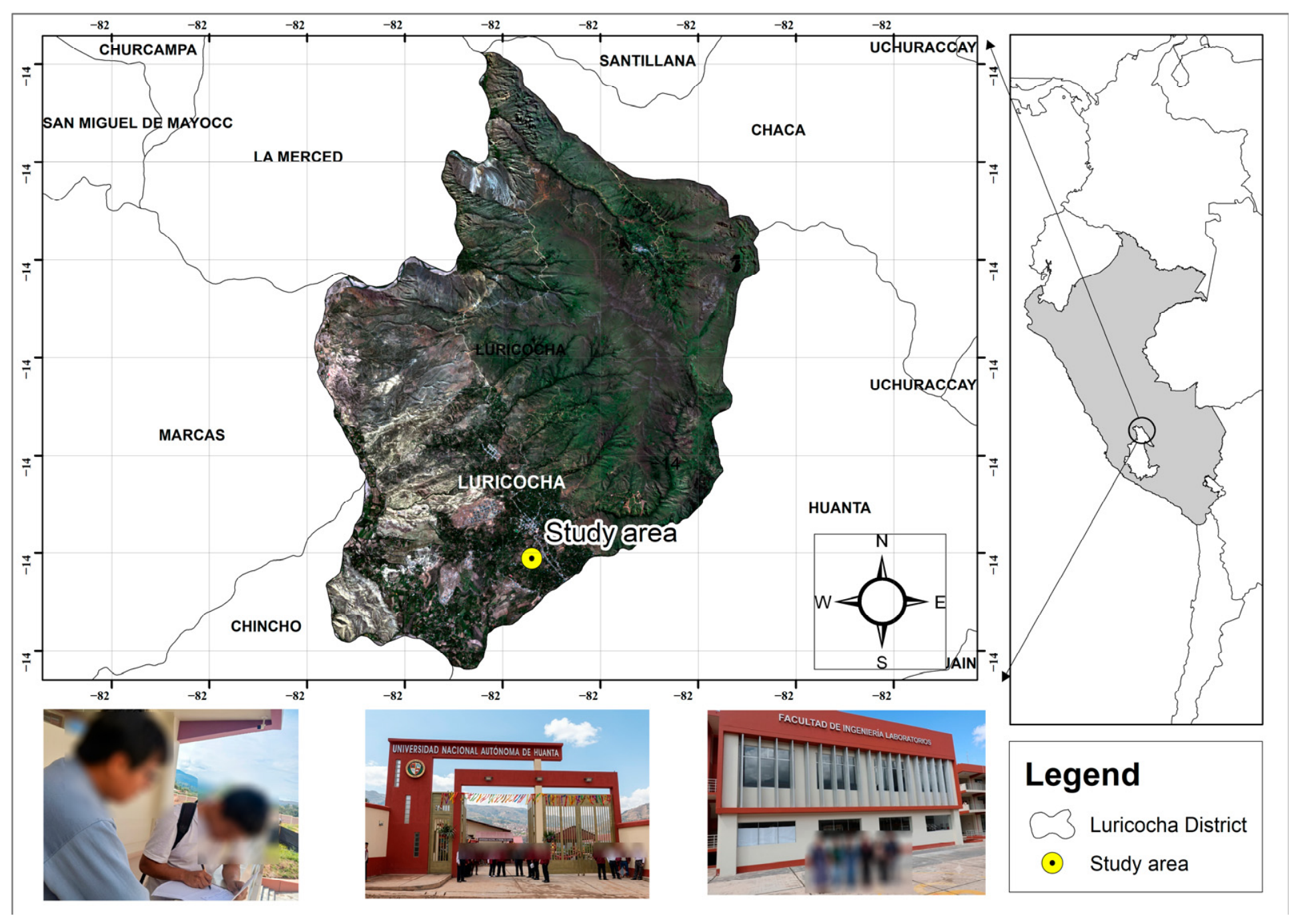
The study was conducted at a public university located in the Peruvian Andes, specifically at the Universidad Nacional Autónoma de Huanta (See
Figure 1). This institution operates within a context characterized by heterogeneous access to digital technologies and ongoing adaptation to emerging tools such as generative artificial intelligence (GenAI). As such, it provides a relevant setting for examining how technological practices and their social regulation develop under conditions of uneven digital access.
The target population consisted of undergraduate students enrolled in the Environmental Engineering program. This program offers a suitable context for examining AI use in higher education, as students engage in both technical and academic tasks that may involve the use of digital tools.
A non-probabilistic sampling strategy was employed, combining convenience and snowball sampling through academic networks and digital communication platforms. This approach was appropriate given the exploratory nature of the study and the aim of capturing variation in reporting behaviors rather than achieving statistical representativeness [
18].
The quantitative phase included a sample of 150 students. For the qualitative phase, a purposive subsample of 20 participants was selected to capture variation in AI use and disclosure patterns, particularly across different levels of the AI Use Gap and concealment [
19]. This strategy enabled the inclusion of diverse reporting profiles and experiences related to the visibility of AI use in academic contexts.
All participants were at least 18 years old. Participation was voluntary, and informed consent was obtained prior to data collection. A profile of the qualitative subsample is provided in
Table S5 in the Supplementary Material. The demographic characteristics of the study participants are summarized in
Table 1.
2.3. Quantitative Data Collection
Quantitative data were collected through a structured survey administered to undergraduate students. The survey was designed to capture patterns of generative artificial intelligence (GenAI) use, disclosure behavior, and related perceptions in academic contexts. All items were measured using a five-point Likert scale ranging from 1 (strongly disagree) to 5 (strongly agree) [
20].
In addition to direct self-report measures, the survey incorporated an experimental vignette component to assess normative perceptions of AI use. Participants were presented with short scenarios describing academic uses of AI under varying conditions of assistance and disclosure.
The vignette component consisted of three short academic scenarios varying in the extent of AI assistance and disclosure. Scenarios were developed to represent situations involving academically acceptable assistance, normatively ambiguous use, and potentially contested use of AI-generated content.
Following each scenario, they evaluated AI use in terms of perceived acceptability, perceived dishonesty, and expected peer judgment using five-point Likert scales. For the purposes of this study, these evaluations were treated as single-item vignette-based indicators, consistent with their role as contextual and scenario-specific assessments rather than as psychometric scales.
The inclusion of vignette-based evaluation allowed for the assessment of implicit norms and social expectations while reducing the influence of direct self-report bias. This approach is particularly relevant for examining discrepancies between reported behavior and its disclosure, as it captures evaluative contexts that may shape how students regulate the visibility of AI use.
Importantly, the survey was designed to provide an exploratory characterization of both reported behaviors and context-dependent perceptions, rather than to develop or validate psychometric scales. As such, the quantitative component is intended to capture patterns and tendencies in AI use and disclosure within a context of emerging and potentially heterogeneous norms.
The survey was administered electronically, and responses were collected anonymously. Data collection was conducted during the 2026 academic year.
2.4. Quantitative and Qualitative Measures
The study included a set of measures designed to capture key dimensions associated with generative artificial intelligence (GenAI) use and disclosure behavior in academic contexts. All quantitative variables were assessed using Likert-type items ranging from 1 (strongly disagree) to 5 (strongly agree).
Four psychosocial dimensions were examined as contextual indicators: perceived stigma, concealment, normative ambiguity, and peer pressure. Perceived stigma refers to the extent to which students believe that the use of AI is negatively evaluated by peers or associated with reduced ability or effort. Concealment reflects the tendency to regulate the visibility of AI use in academic contexts, including reluctance to openly disclose such use depending on perceived expectations. Normative ambiguity captures uncertainty regarding what constitutes acceptable AI use within academic settings, while peer pressure refers to the perceived influence of classmates’ attitudes and behaviors on individual decisions regarding AI use and disclosure.
Each dimension was operationalized using three conceptually related items. Given the exploratory nature of the study and the context-specific development of the instrument, these dimensions are treated as composite indices of related indicators rather than as psychometrically validated scales [
21]. Composite scores were calculated by averaging the corresponding items for each dimension. Importantly, these aggregated scores were not intended to operationalize stable reflective latent constructs, but rather to provide exploratory summaries of contextually related perceptions associated with AI visibility and disclosure practices.
Internal consistency estimates (Cronbach’s alpha) were examined as a diagnostic reference [
22]. The resulting values were low (Perceived Stigma: α = 0.42; Concealment: α = 0.45; Normative Ambiguity: α = 0.30; Peer Pressure: α = 0.15), indicating limited internal coherence among items within each dimension. These values should be interpreted in light of the exploratory and context-sensitive nature of the indicators used in this study. Rather than representing psychometrically validated latent constructs, the variables were operationalized as composite indices capturing heterogeneous and situationally contingent aspects of AI-related perceptions. In this context, low internal consistency does not necessarily indicate measurement error alone, but may also reflect the multidimensional and context-dependent nature of perceptions in emerging technological environments.
Accordingly, the limited internal consistency of these indices may have attenuated potential associations with the AI Use Gap and reduced the ability to detect stronger relational patterns within the present dataset. In line with exploratory approaches using heterogeneous contextual indicators [
21,
23], these indices are therefore not interpreted as reflective scales of a single underlying latent dimension, but rather as descriptive composites intended to capture variation across related but non-redundant indicators. The analytical focus is consequently placed on patterns of variation and exploratory relational tendencies rather than on scale reliability or latent variable inference.
These results suggest that the indicators capture context-dependent and heterogeneous aspects of AI-related perceptions rather than stable latent constructs, which is consistent with the exploratory aim of the study in an emerging domain.
Accordingly, these indices should not be interpreted as measurements of stable latent psychosocial constructs. Rather, they are used as exploratory aggregations of contextually related indicators intended to characterize patterns of perception and disclosure within an emerging and socially heterogeneous domain. Inferential analyses involving these indices should therefore be interpreted strictly as exploratory pattern-detection procedures rather than as tests of psychometric construct relationships.
AI use was assessed through two complementary single-item indicators: personally reported use and declared use. Personally reported use refers to the extent to which students acknowledge using AI tools in their academic work, whereas declared use captures the extent to which such use is openly reported in academic contexts.
The item was intended to capture the extent to which students openly acknowledged AI use across formal academic situations, including assignments, coursework, and interactions with instructors.
Based on these measures, the AI Use Gap was computed as the difference between personally reported use and declared use (actual minus declared). This indicator represents a discrepancy between two forms of self-reported behavior collected within the same survey framework and is interpreted as a measure of differential reporting across contexts, rather than as a direct measure of objectively verified underreporting or concealment.
To complement the quantitative component, qualitative data were collected through semi-structured interviews aimed at capturing students’ interpretations and experiences related to AI use and disclosure. The qualitative component focused on identifying recurring themes associated with perceived stigma, academic legitimacy, and strategies of selective disclosure, with particular attention to how students manage the visibility of AI use.
Qualitative analysis followed a reflexive thematic analysis approach informed by Braun and Clarke [
24]. Interview transcripts were analyzed iteratively, beginning with open coding to identify recurring concepts and patterns related to AI use, disclosure practices, perceived stigma, and academic legitimacy. Coding focused on capturing context-dependent meanings and participants’ interpretations rather than on applying predefined categorical structures.
Interviews were conducted using a semi-structured guide focused on experiences of AI use, perceptions of academic norms, and disclosure practices. Each interview lasted approximately 20 to 30 min and was conducted in Spanish.
The coding process was conducted by members of the research team through iterative rounds of review and discussion. Initial codes were progressively refined, compared, and grouped into higher-order themes using constant comparison and consensus-based interpretation. Discrepancies in interpretation were resolved through discussion and collective refinement of thematic categories until agreement was reached regarding the final thematic structure.
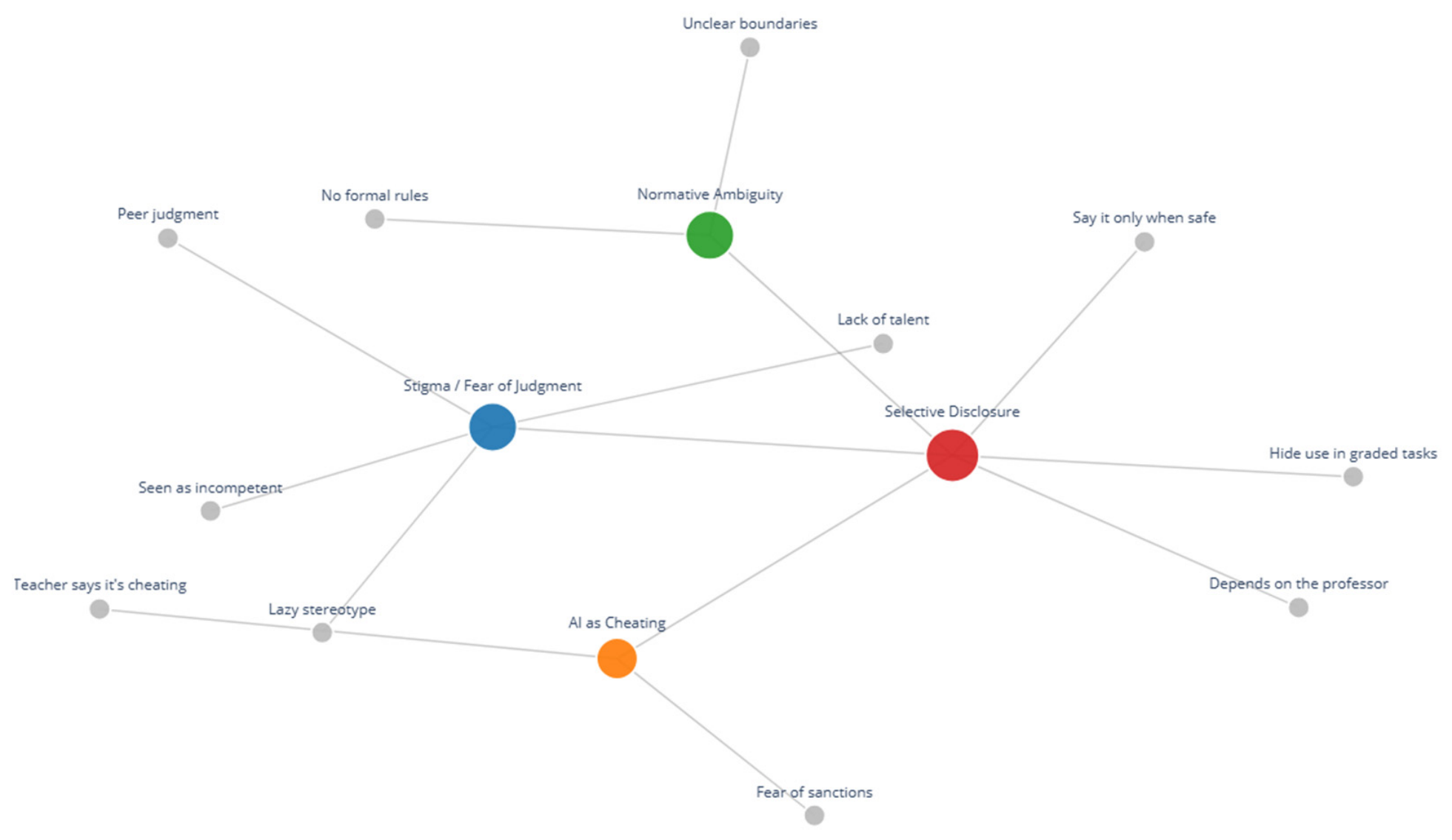
The resulting themes, including stigma and fear of judgment, normative ambiguity, AI use as cheating, and selective disclosure, were subsequently used to contextualize and interpret quantitative findings.
Personally reported AI use was assessed through the item: “I use AI tools for academic tasks.” Declared AI use was assessed through the item: “I openly report when I use AI in my academic work.”
2.5. Data Analysis
Data analysis was conducted using Python 3.12.13 (Python Software Foundation, Wilmington, DE, USA), employing the libraries pandas, SciPy, statsmodels, Plotly, and semopy for data processing, statistical analysis, visualization, and structural equation modeling. Prior to analysis, the dataset was screened for completeness and consistency. No missing data were identified across the variables included in the study.
Composite indices for perceived stigma, concealment, normative ambiguity, and peer pressure were computed by averaging the corresponding items for each dimension. Consistent with the exploratory nature of the study, these indices were treated as descriptive composite indicators of related aspects rather than as psychometrically validated constructs or latent variables.
The AI Use Gap was calculated for each participant as the difference between personally reported AI use and declared AI use (actual minus declared). It was analyzed strictly as an exploratory discrepancy indicator derived from two self-reported measures, rather than as a validated construct or a direct measure of concealment.
Descriptive statistics, including means, standard deviations, and distributional properties, were computed to summarize patterns of AI use and disclosure behavior. Particular attention was given to the distribution of the AI Use Gap, including its frequency distribution, in order to assess the extent and variability of discrepancies across participants.
To examine variation across levels of disclosure-related tendencies, participants were categorized into three groups (low, medium, and high) based on tertiles of the concealment index. This classification was used as an exploratory profiling strategy to facilitate comparison across relative levels of concealment, rather than as evidence of discrete or latent group structures.
Group differences were examined using one-way analysis of variance (ANOVA), followed by Tukey’s honestly significant difference (HSD) test for pairwise comparisons [
25]. These analyses were conducted with an exploratory purpose, focusing on identifying patterns of variation across groups rather than on confirmatory hypothesis testing.
Bivariate relationships among variables were examined using Pearson correlation coefficients, with associated
p-values reported to identify exploratory covariation patterns rather than to support confirmatory inferential claims [
26]. A correlation matrix was computed to evaluate the strength and direction of associations between AI use indicators, contextual indices, and vignette-based evaluations. Given the limited internal consistency of the composite indicators, these associations were interpreted cautiously as indicative of exploratory relational tendencies rather than as evidence of relationships among well-defined constructs.
Additionally, exploratory descriptive regression procedures were used to examine relational patterning between psychosocial/contextual indicators (concealment, perceived stigma, normative ambiguity, and peer pressure), personally reported AI use, and the AI Use Gap. Given the exploratory nature of the indicators and their limited internal coherence, these models were interpreted as descriptive assessments of relational patterning rather than as predictive or explanatory models. None of the examined contextual indicators showed statistically robust associations with the AI Use Gap across models. Accordingly, the regression analyses were interpreted cautiously as exploratory examinations of contextual variation rather than as evidence of stable inferential relationships.
Given the exploratory and non-psychometric nature of the contextual composites, inferential outputs were interpreted descriptively and heuristically rather than as evidence of stable explanatory relationships. The analytical emphasis was therefore placed on identifying provisional patterns of covariation and contextual differentiation rather than on testing stable latent psychosocial mechanisms.
Qualitative data were analyzed using an inductive thematic approach. Interview transcripts were coded iteratively, starting with open coding to identify recurring concepts, followed by the grouping of codes into broader thematic categories through constant comparison. The resulting themes were used to interpret and contextualize quantitative findings, particularly those related to discrepancies between AI use and its reporting.
All analyses were conducted with an explicitly exploratory focus, emphasizing observed patterns, distributions, and relational tendencies rather than causal inference or latent construct modeling. The integration of quantitative and qualitative components enables the examination of both measurable discrepancies in reporting and the social meanings that shape how such reporting is managed in academic contexts, particularly in relation to the visibility of AI use.
2.6. Ethical Considerations
The study was conducted in accordance with the Declaration of Helsinki [
27] and approved by the Ethics Committee of the Universidad Nacional Autónoma de Huanta (approval code: UNAH-CEI-2026-001; date: 15 February 2026).
The study adhered to established ethical guidelines for research involving human participants. Participation was voluntary, and informed consent was obtained from all participants prior to data collection. Participants were informed about the purpose of the study, the anonymity of their responses, and their right to withdraw at any time without consequence [
28].
No personally identifiable information was collected, and all data were treated confidentially and used exclusively for research purposes. Given the sensitivity of the topic, particular care was taken to minimize potential discomfort and to ensure that participation did not involve any form of risk.
Indirect measurement strategies, including vignette-based evaluation and neutral question framing, were employed to reduce social desirability bias and to encourage more candid responses. These procedures were intended to support the collection of data on potentially sensitive behaviors, particularly those related to the reporting and visibility of AI use in academic contexts.
3. Results
3.1. Prevalence and Distribution of AI Use and Discrepancy
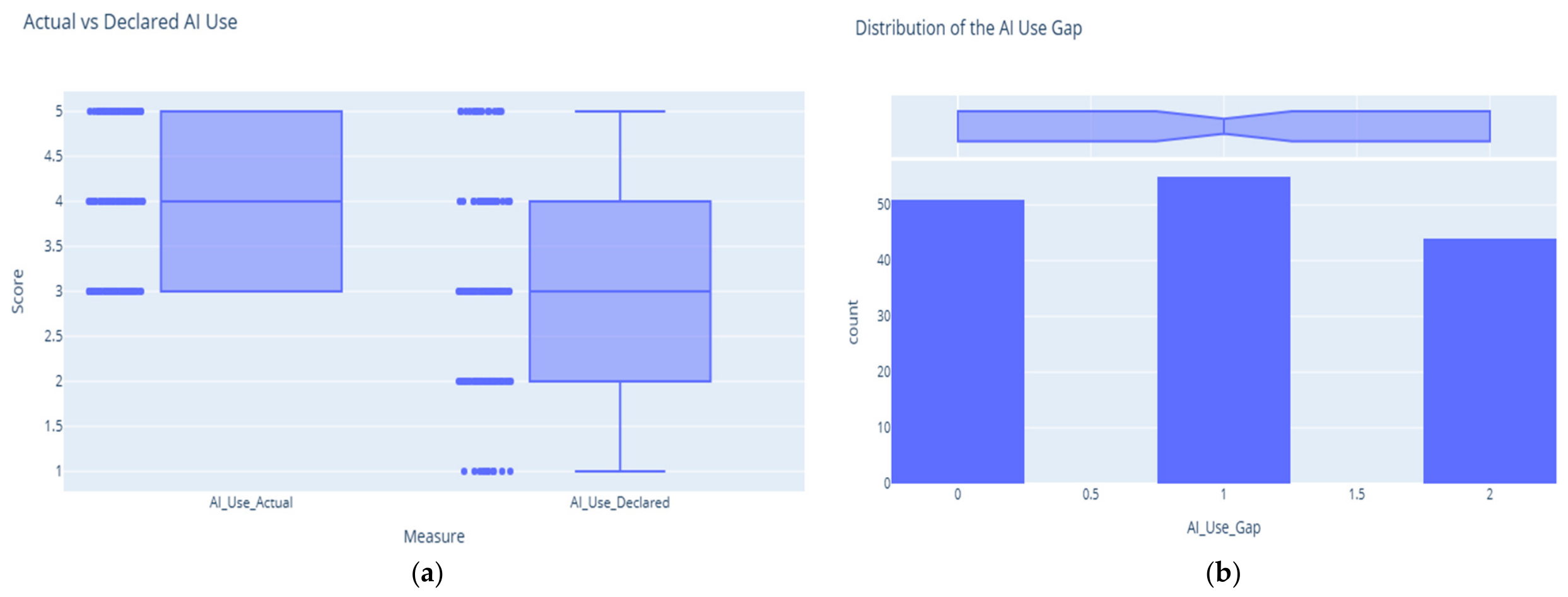
Descriptive statistics indicate relatively high levels of generative AI use among students, with a mean score of 3.92 (SD = 0.84) for personally reported use, compared to a lower mean of 2.97 (SD = 1.11) for declared use (
Table 2). This difference reflects a consistent discrepancy between personally reported and declared AI use.
The AI Use Gap shows a mean of 0.95 (SD = 0.80), with a median of 1.00 and values ranging from 0 to 2 (
Table 2), indicating that differences between personally reported and declared use are present across a substantial portion of the sample.
This pattern is illustrated in
Figure 2a, where personally reported use consistently exceeds declared use. The distribution of the AI Use Gap (
Figure 2b) is concentrated above zero, with most observations indicating positive differences between use and disclosure. The distribution shows a clear peak around a gap value of 1, suggesting a common pattern of moderate discrepancy across participants.
Importantly, discrepancies were not limited to isolated cases. Overall, 66.0% of participants exhibited a positive AI Use Gap: 36.67% showed a gap of 1 point and 29.33% showed a gap of 2 points, whereas 34.0% reported no discrepancy. These results indicate that divergence between use and disclosure is widespread rather than exceptional within the study sample, suggesting that discrepancies in reporting may reflect a systematic pattern in how AI use is differentially expressed across contexts.
Cases with no discrepancy (gap = 0) are comparatively less frequent, indicating that alignment between personally reported and declared use is less common than divergence. Taken together, these results provide descriptive evidence of a systematic difference between AI use and its declaration across participants.
3.2. Concealment Profiles and Behavioral Differences
Participants were categorized into low, medium, and high concealment groups based on tertiles of the concealment index. Descriptive comparisons indicate that mean levels of perceived stigma, normative ambiguity, peer pressure, and AI use are broadly similar across groups (
Table 3).
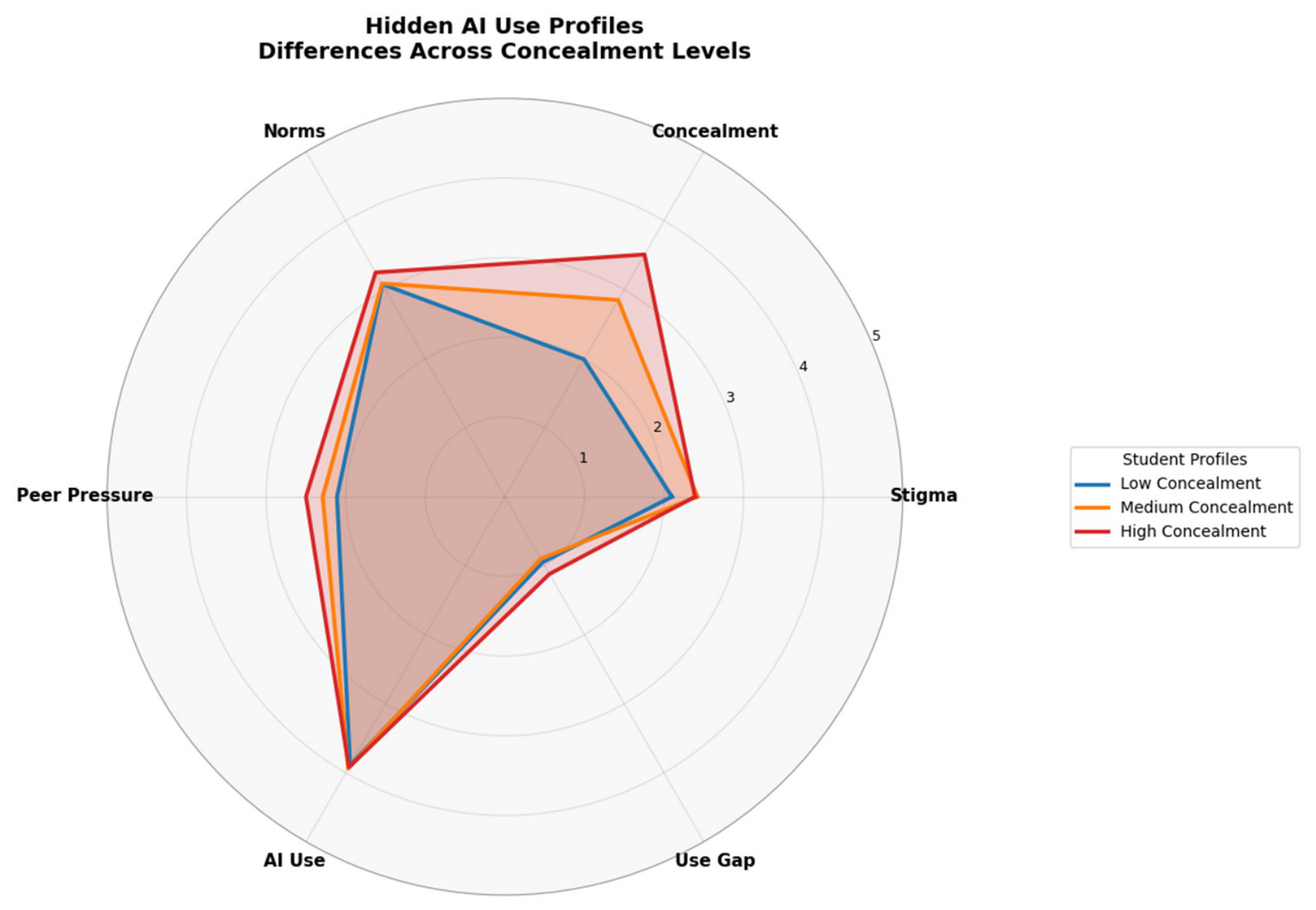
Differences in the AI Use Gap across concealment levels are modest in magnitude. The high concealment group shows a slightly higher mean gap (M = 1.12, SD = 0.85) compared to the low (M = 0.95, SD = 0.79) and medium concealment groups (M = 0.90, SD = 0.79), although these differences remain small.
These patterns are illustrated in
Figure 3, where profiles across concealment levels display largely comparable values across most dimensions, including the AI Use Gap.
A one-way analysis of variance (ANOVA) was conducted to examine group differences. Results indicate that the AI Use Gap does not differ significantly across concealment profiles, F(2, 147) = 0.718,
p = 0.489. Similarly, no significant differences were observed for normative ambiguity or personally reported AI use. In contrast, statistically significant differences were observed for perceived stigma, F(2, 147) = 4.486,
p = 0.0129, and peer pressure, F(2, 147) = 3.770,
p = 0.0253 (
Table 4).
Post hoc comparisons using Tukey’s HSD test indicate that perceived stigma differs between the medium and low concealment groups, with higher values in the medium group (mean difference = 0.316,
p = 0.0129). Peer pressure differs between the high and low concealment groups, with higher values in the high concealment group (mean difference = 0.389,
p = 0.0229). No significant pairwise differences are observed for the AI Use Gap (
Table 5).
Overall, these results indicate that differences across concealment profiles are primarily reflected in certain contextual perceptions (perceived stigma and peer pressure), whereas discrepancies between personally reported and declared AI use remain relatively stable across groups within the present measurement framework.
3.3. Relationship Between Concealment and AI Use Discrepancy
Bivariate correlation analysis revealed several statistically significant associations among the main study variables (
Table 6). A strong positive correlation was observed between personally reported AI use and declared use (r = 0.700,
p < 0.001), indicating that both measures tend to move in the same direction despite the presence of discrepancies between them.
Declared AI use was strongly and negatively correlated with the AI Use Gap (r = −0.659, p < 0.001). This relationship reflects the mathematical structure of the AI Use Gap, which is derived from these two measures, and should therefore be interpreted as a structural association rather than as an independent empirical finding.
In contrast, concealment did not show a statistically significant association with the AI Use Gap (r = 0.069, p = 0.399). Within the present exploratory measurement framework, concealment-related composites did not display clearly differentiated exploratory covariation with the AI Use Gap. This pattern suggests that discrepancies between personally reported and declared AI use were not clearly differentiated across the contextual composites examined in the present dataset.
To further examine these exploratory relational patterns, exploratory descriptive regression procedures were conducted with AI Use Gap as the dependent variable [
29]. Results indicate that no stable or clearly differentiated exploratory relational patterns were observed within the present measurement framework. In particular, concealment-related composites did not display clearly differentiated exploratory covariation with the AI Use Gap (β = 0.066,
p = 0.556), and this pattern remained broadly similar when additional contextual indicators and personally reported AI use were included in the models. Across analyses, the contextual composites showed limited and weakly differentiated exploratory covariation patterns with the AI Use Gap.
The overall explanatory power of the models was very limited (R2 ≈ 0.01–0.02), indicating that the variables included in the analysis accounted for only a negligible proportion of variation in the AI Use Gap. Given the limited internal consistency of the contextual indicators, these findings should be interpreted cautiously, as measurement limitations may have attenuated potential associations between the indicators and the AI Use Gap. Accordingly, the observed patterns should not be interpreted as evidence regarding stable psychosocial relationships, but rather as provisional exploratory indications within a context-sensitive and non-psychometric measurement framework.
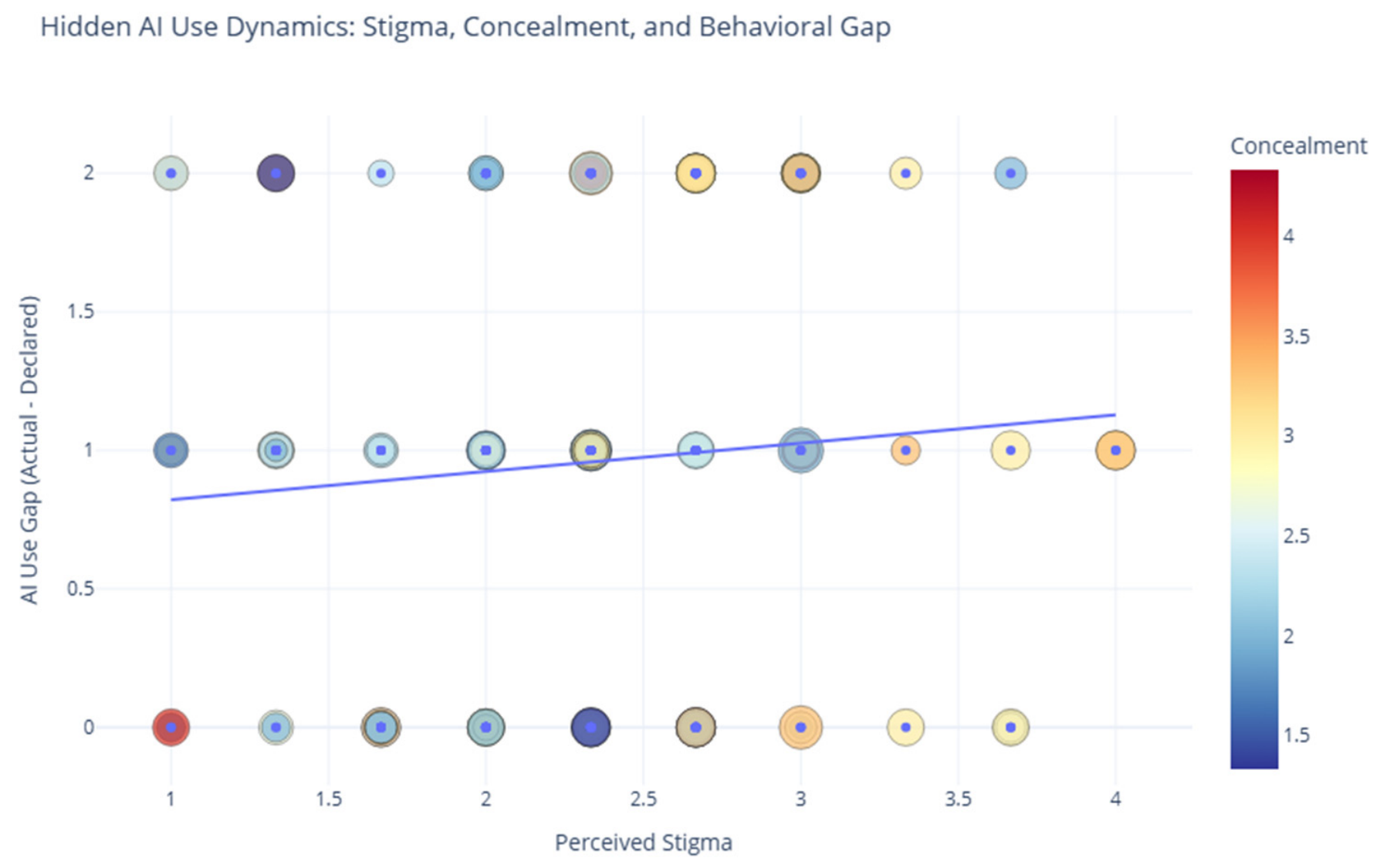
Figure 4 provides a complementary visualization of the relationship between perceived stigma and the AI Use Gap, with concealment represented through color variation. No clear linear association is observed, and discrepancies appear across a range of stigma levels without a consistent pattern linked to concealment.
Associations involving perceived stigma, normative ambiguity, and peer pressure were generally weak and close to zero (see
Table S1 in the Supplementary Material), indicating limited differentiation across these contextual composites within the present exploratory framework.
3.4. Social and Normative Perceptions of AI Use
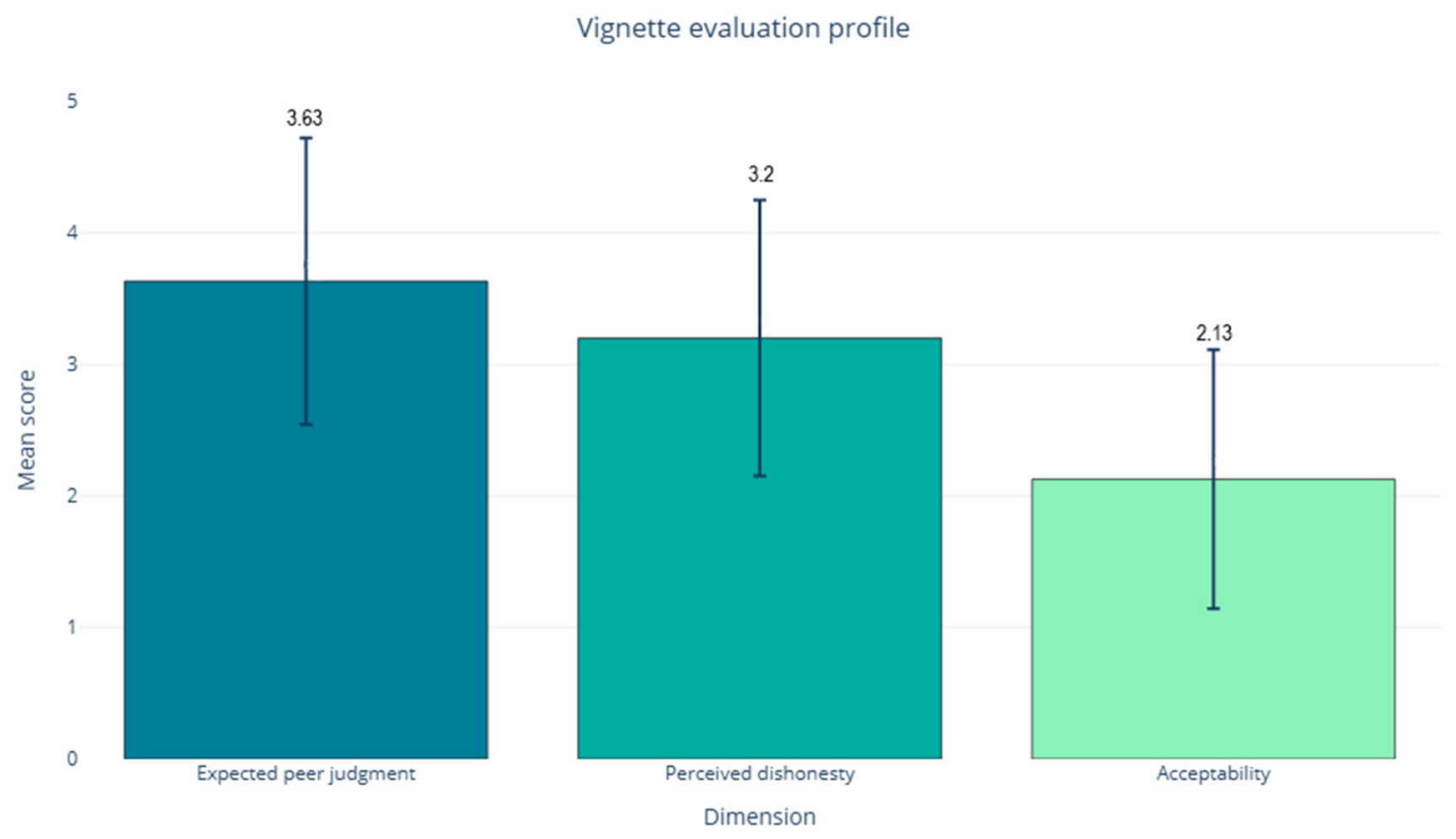
Results from the vignette-based evaluations indicate variation across normative dimensions of AI use (
Figure 5). Expected peer judgment shows the highest mean score (M = 3.63), followed by perceived dishonesty (M = 3.20) and acceptability (M = 2.13).
These results indicate that participants anticipate relatively strong peer evaluation in response to AI use scenarios, while assessments of dishonesty are moderate and perceived acceptability is comparatively low. This pattern suggests that AI use is not only socially evaluated, but also viewed as relatively less acceptable in academic contexts.
Overall, the vignette findings indicate that AI use is subject to social evaluation, characterized by relatively high expected peer judgment and lower perceived acceptability. Notably, these evaluative patterns do not correspond to clear differences in reported behavior across groups, suggesting a potential disconnect between normative perceptions and actual reporting practices. This reinforces the interpretation that discrepancies between use and disclosure may emerge not from stable attitudinal differences, but from context-dependent processes shaping how AI use is socially evaluated and selectively reported.
3.5. Qualitative Insights on AI Use Disclosure and Concealment
3.5.1. Perceived Stigma and Fear of Academic Judgment
Qualitative findings revealed that many students perceived the use of generative artificial intelligence (GenAI) as socially sensitive within academic environments. Participants frequently described concerns about being negatively judged by peers or instructors if their use of AI tools became visible. In several interviews, students associated disclosure of AI use with perceptions of reduced competence, laziness, or insufficient academic effort.
As one participant explained, “If I say I used AI, they think I don’t know anything” (P01). Another participant stated, “Sometimes it feels like using AI means you didn’t really do the work yourself” (P11).
These accounts suggest that AI use is not evaluated solely in functional or technical terms, but also through moral and social interpretations associated with academic legitimacy. The anticipation of negative evaluation appears to shape not only attitudes toward AI use, but also decisions regarding whether such use should be openly disclosed.
Importantly, these perceptions emerged across participants with different reported levels of AI use and concealment, suggesting that stigma-related concerns may operate as relatively shared contextual conditions rather than as isolated individual tendencies.
3.5.2. Normative Ambiguity and AI Use as Academically Contested
Participants also described substantial uncertainty regarding what constitutes acceptable AI use in academic settings. Several students indicated that institutional expectations were inconsistent or unclear, particularly across instructors and assessment contexts.
One participant explained, “Some teachers allow it, others say it’s cheating, so nobody really knows what is acceptable” (P07). Similarly, another student stated, “There are no clear rules, so we just try to avoid problems” (P14).
In many interviews, AI use was described as existing within a gray area between legitimate academic assistance and academically inappropriate behavior. Participants frequently referred to concerns about being accused of cheating even when AI tools were used for support rather than direct content generation.
As one participant noted, “Some teachers say it’s cheating, so I don’t mention it” (P02).
These findings suggest that disclosure practices are shaped not only by personal attitudes, but also by institutional ambiguity and uncertainty regarding evaluative expectations. Under such conditions, students appear to regulate disclosure strategically depending on perceived academic risk and contextual interpretation.
3.5.3. Selective Disclosure and Visibility Management
A recurring theme across interviews was the normalization of selective disclosure practices. Participants consistently described AI use as widespread among students, yet simultaneously characterized open disclosure as relatively uncommon.
This dynamic was reflected in one participant’s statement: “Everyone uses it but no one says it” (P17). Another participant similarly commented, “People use AI all the time, but they only admit it with close friends” (P05).
These accounts indicate that students actively manage the visibility of AI use depending on the audience, context, and perceived consequences of disclosure. In this sense, concealment does not necessarily imply complete secrecy, but rather selective visibility management across different academic and social situations.
Importantly, participants often described these practices as adaptive responses to socially evaluative environments characterized by ambiguity and anticipated judgment. AI use itself appeared functionally normalized in everyday academic work, while disclosure remained socially regulated.
Taken together, these findings suggest that discrepancies between personally reported and declared AI use may emerge through context-dependent processes of visibility management rather than through stable individual-level dispositions alone. This interpretation is consistent with the limited differentiation observed in the quantitative analyses and reinforces the view that AI disclosure practices are shaped by broader social and institutional conditions. The thematic relationships identified through the qualitative analysis are summarized in
Figure 6.
Aggregated frequencies of qualitative themes are provided in
Table S3 in the Supplementary Material. Stigma and normative ambiguity were identified in 90% of interviews, and AI use was perceived as academically inappropriate or as cheating in 65%, with selective disclosure across all participants. Aggregated participant characteristics are reported in
Table S4 to preserve confidentiality within the local institutional context.
4. Discussion
4.1. Main Findings and Interpretation
This study identifies a consistent discrepancy between personally reported and declared use of generative artificial intelligence (GenAI) among university students in the Peruvian Andes. While levels of personally reported use are relatively high, declared use remains lower, indicating that AI use is not always fully disclosed in academic contexts. This discrepancy is captured through the AI Use Gap, conceptualized as the difference between two forms of self-reported behavior. Beyond its descriptive relevance, this discrepancy can be cautiously interpreted as an exploratory indication of reporting-related tensions associated with transparency, institutional alignment, and evaluation practices within higher-education settings.
Importantly, the AI Use Gap should not be interpreted as a direct measure of hidden or unobserved behavior. Rather, it reflects differences in how students report their use of AI across contexts and is therefore best understood as an exploratory indicator of differential reporting and visibility management rather than of objectively verified concealment [
30]. At the same time, it is important to acknowledge that some forms of differential reporting may also reflect concerns related to academic integrity, fear of sanctions, or attempts to avoid negative evaluation associated with AI-assisted work. The present study was not designed to disentangle these different motivations, and the observed discrepancy may therefore reflect multiple overlapping processes associated with both visibility management and concerns about academically inappropriate AI use. In this sense, the AI Use Gap provides an exploratory lens for examining how AI use becomes differentially reported within academic settings, with possible implications for transparency and institutional alignment.
The findings further indicate that this discrepancy was not clearly differentiated by the psychosocial indicators examined in this study within the present exploratory measurement framework. Although descriptive patterns suggest slightly higher AI Use Gap values among students with higher levels of concealment, these differences were not statistically robust, and concealment-related composites did not display clearly differentiated exploratory covariation with discrepancies between personally reported and declared AI use. Similarly, perceived stigma, normative ambiguity, and peer pressure showed limited and inconsistent differentiation across groups.
Importantly, given the exploratory nature and limited internal coherence of the contextual indicators, the absence of robust relational patterns should be interpreted cautiously and may reflect both contextual complexity and measurement limitations. Within the present exploratory measurement framework, discrepancies between AI use and its disclosure were not clearly differentiated by the psychosocial composites examined. This pattern suggests that the AI Use Gap may emerge within shared institutional and social environments characterized by ambiguous norms and uneven expectations regarding AI use and disclosure. Rather than isolating stable individual-level predictors, the findings point to the importance of examining how broader contextual conditions may shape the visibility and reporting of AI use across academic settings.
At the same time, the low internal consistency observed across several contextual indicators may have reduced the ability to detect stronger statistical associations. Consequently, the absence of robust relationships should not be interpreted as definitive evidence that these psychosocial dimensions are unrelated to disclosure behavior, but rather as an indication that the present exploratory indicators may not fully capture the complexity and situational variability of these dynamics. This limitation is particularly relevant in emerging technological contexts, where perceptions and disclosure-related behaviors may be socially heterogeneous and context dependent.
Rather than indicating the absence of these contextual dynamics, the findings suggest that these processes may operate as relatively shared environmental conditions within which students navigate the use and disclosure of AI. Within the present exploratory measurement framework, variation in the AI Use Gap was not clearly differentiated by the contextual composites examined. Under such conditions, variation in reporting behavior may reflect context-dependent judgments and situational interpretations rather than stable individual-level dispositions, which may not be fully captured by the provisional exploratory indicators employed in this study. The contextual composites used in this study should therefore be understood as provisional exploratory indicators, not as stable psychometric measures of psychosocial constructs.
Taken together, these findings suggest that the key issue may not be the prevalence of AI use per se, but its visibility within academic contexts. The observed discrepancy between use and declaration indicates a potential misalignment between technological practices and their social reporting. Such discrepancies may have implications for transparency and institutional alignment, particularly in contexts where expectations regarding acceptable AI use remain ambiguous or inconsistently communicated.
In this regard, the study contributes to the literature by introducing the AI Use Gap as an exploratory empirical indicator of differential reporting and by suggesting that the social organization of visibility may play a relevant role in shaping how emerging technologies are adopted, evaluated, and disclosed in higher-education contexts [
1,
2,
5,
11,
13,
31]. Rather than validating stable psychosocial mechanisms, the study explores a difficult and emerging phenomenon using provisional contextual indicators intended to capture heterogeneous patterns of perception and disclosure. By framing this discrepancy as an observable exploratory indicator, the study also contributes to discussions regarding transparency, reporting practices, and institutional adaptation associated with GenAI use in higher-education contexts.
4.2. Social Dynamics of Visibility Management
The findings indicate that the use of generative artificial intelligence (GenAI) in higher education is not solely an individual or technological practice, but a socially situated behavior shaped by norms of visibility and disclosure. The discrepancy between personally reported and declared AI use reflects how students differentially manage the visibility of their AI use across contexts [
10,
11].
Within this framework, concealment is better understood not as a discrete act of hiding behavior, but as a broader disposition to regulate the visibility of AI use. The AI Use Gap captures how this regulatory tendency is expressed in reporting behavior, rather than directly measuring concealment itself [
10].
Importantly, variation in disclosure is not meaningfully differentiated by the psychosocial indicators examined in this study within the present measurement framework. Rather than indicating that these factors are absent, this pattern suggests that they may function as relatively shared contextual conditions within which students adopt different strategies for managing disclosure.
This interpretation is supported by qualitative findings. Participants consistently described concerns about being perceived as less capable or as engaging in dishonest practices when using AI tools, indicating that anticipated social evaluation plays a central role in shaping disclosure decisions. Several participants described AI use as widespread but implicitly concealed (e.g., “everyone uses it but no one says it”), suggesting that use may be normalized in practice while remaining selectively regulated in terms of its visibility.
These accounts are consistent with vignette-based results showing relatively high levels of expected peer judgment and relatively low perceived acceptability. Taken together, these findings indicate that social evaluation is salient in shaping how AI use is disclosed, even where quantitative indicators do not show strong differentiation across groups.
Normative ambiguity further contributes to this dynamic. In the absence of clear and consistent guidelines regarding acceptable AI use, students appear to rely on informal norms and situational judgment. As institutional policies often lag behind technological adoption, students operate within perceived boundaries rather than explicit rules, adjusting their disclosure depending on context and perceived risk [
3,
32].
Taken together, these findings suggest that GenAI use in higher education is characterized by a tension between functional normalization and social contestation. Students engage with AI tools as part of routine academic practice while simultaneously regulating how and when such use is disclosed. In this sense, the integration of GenAI involves not only technological adoption, but also the ongoing social negotiation of its legitimacy and visibility within academic contexts.
4.3. Potential Implications for Transparency and Institutional Alignment
The findings of this study may have implications for how higher-education institutions navigate the integration of generative artificial intelligence (GenAI) under conditions of rapid technological change. While GenAI may support learning efficiency and accessibility, discrepancies between AI use and its reporting may also introduce challenges related to transparency, institutional alignment, and evaluation practices [
1,
9,
33].
A first implication concerns transparency in academic practices. The observed discrepancy between personally reported and declared AI use suggests that part of student activity may remain only partially visible within formal evaluation processes. This limited visibility may complicate the interpretation of student work, as instructors may not always have complete information regarding the role of AI in its production. In this context, the issue is not only whether AI is used, but whether its use is disclosed in ways that support more informed and consistent evaluation practices [
3,
34].
A second implication relates to institutional equity and consistency in educational environments. When AI use is widespread but unevenly disclosed, differences in access, familiarity, or willingness to use AI tools may become less visible within academic processes. In contexts characterized by uneven technological access, this limited visibility may complicate efforts to identify and address disparities associated with the use of emerging technologies [
6,
13,
35,
36].
A third implication concerns institutional adaptation. The coexistence of widespread AI use and normative ambiguity suggests possible tensions between formal regulations and actual student practices. In the absence of clear and consistent guidelines, students may rely more heavily on informal norms and context-dependent disclosure strategies. Consistent with the exploratory findings of this study, these discrepancies were not clearly differentiated by the provisional contextual composites examined, suggesting that broader institutional and social conditions may influence how AI use becomes visible or remains selectively undisclosed [
2,
4,
32].
Taken together, these findings suggest that the responsible integration of GenAI in higher education may benefit not only from technological adoption, but also from clearer expectations regarding transparency and disclosure practices. Addressing discrepancies between use and declaration may therefore require not only institutional guidelines, but also the development of academic practices that acknowledge the socially mediated and context-dependent nature of AI disclosure.
Within this exploratory framework, the AI Use Gap is not interpreted as a validated construct or as a direct measure of concealment. Rather, it is used as an exploratory discrepancy indicator that may help identify reporting-related tensions associated with transparency and institutional alignment in higher-education contexts. By focusing on observable discrepancies between personally reported and declared AI use, the study contributes to discussions regarding how institutions may better understand and manage emerging AI-related practices within academic environments.
4.4. Limitations and Future Research
This study has several limitations that should be considered when interpreting the findings. First, the use of a non-probabilistic sampling strategy limits the generalizability of the results beyond the specific institutional context of the Peruvian Andes. Although the sample captures variation across years of study, it may not fully represent the broader population of university students in other educational or regional settings.
Second, while the study incorporates an experimental vignette design to reduce social desirability bias, part of the data relies on self-reported measures, which may be subject to reporting inaccuracies. In particular, personally reported AI use should be interpreted as an approximation of behavior rather than a direct observation. Accordingly, the AI Use Gap reflects discrepancies between two forms of self-report—personally reported and declared use—and should be understood as an indicator of differential reporting rather than as a direct measure of objectively verified behavior.
Third, the psychosocial indices used in this study were based on a limited number of context-specific items and showed low internal consistency. Rather than reflecting measurement error alone, this pattern suggests that these indicators capture heterogeneous and context-dependent aspects of perceptions related to AI use, rather than stable underlying constructs. At the same time, low reliability may have attenuated associations between the contextual indicators and the AI Use Gap, thereby reducing the ability to detect stronger statistical relationships within the present dataset. As a result, the limited explanatory power of these indices should be interpreted with caution, as it may reflect both measurement constraints and the situational nature of how AI use is socially evaluated and disclosed.
Fourth, the cross-sectional nature of the data limits the ability to draw causal inferences. The observed lack of strong statistical associations between psychosocial indicators and discrepancies in reporting reflects patterns identified at a single point in time and does not capture how these dynamics may evolve as institutional norms and policies regarding AI use become more clearly defined [
2].
Future research could address these limitations by employing longitudinal designs to examine how patterns of use and disclosure change over time, particularly as educational institutions adapt to the integration of generative AI. Experimental approaches could further explore how variations in institutional policies, assessment practices, or evaluative contexts influence reporting behavior and the visibility of AI use [
3]. Additionally, the development and validation of more robust measurement instruments would help clarify the role of psychosocial dimensions in shaping disclosure practices. At the same time, future research may benefit from examining structural, institutional, and interactional factors that shape the visibility of AI use, particularly in contexts characterized by normative ambiguity and uneven access to digital resources. Comparative research across different cultural, institutional, and disciplinary settings would further contribute to understanding how social norms influence the visibility and regulation of AI use in higher education [
12].
Additionally, because the AI Use Gap is derived from two self-reported indicators collected within the same survey framework, the measure may be influenced by common method bias and reporting-related measurement error. Accordingly, the AI Use Gap should be interpreted as an exploratory indicator of differential reporting behavior rather than as a direct measure of objectively verified concealment or undisclosed AI use.
5. Conclusions
This study examined the use of generative artificial intelligence (GenAI) among university students in the Peruvian Andes, focusing on discrepancies between personally reported and declared use. The findings indicate that AI use is widespread but not consistently disclosed, revealing a systematic gap between use and declaration. Importantly, this discrepancy was not clearly differentiated by the psychosocial/contextual composites examined within the present exploratory measurement framework.
Given the limited internal consistency of the contextual indicators, these findings should be interpreted cautiously, as measurement limitations may have attenuated potential associations with the AI Use Gap. The contextual composites used in this study should therefore be understood as provisional exploratory indicators, not as stable psychometric measures of psychosocial constructs.
Within the present exploratory measurement framework, variation in the AI Use Gap was not clearly differentiated by the contextual composites examined. Rather than reflecting stable individual-level dispositions, variation in the AI Use Gap appears to be associated with broader, context-dependent dynamics of reporting and visibility. In this sense, the absence of strong and clearly differentiated exploratory relational patterns should not be interpreted as definitive evidence regarding the absence of contextual influences, but rather as an indication that the visibility of AI use may be shaped by shared institutional and social conditions operating within socially heterogeneous academic environments.
These findings suggest that the integration of GenAI in higher education is influenced not only by patterns of technological adoption, but also by the social regulation of its visibility. Students engage with AI tools as part of routine academic practice while simultaneously managing how and when such use is disclosed under conditions of normative ambiguity and anticipated social evaluation.
The AI Use Gap, as used here, highlights a potential misalignment between technological practices and their social reporting, with possible implications for transparency and institutional alignment. More broadly, the study suggests that the AI Use Gap may serve as an exploratory discrepancy indicator of reporting-related tensions associated with transparency, institutional alignment, and evaluation practices in higher-education contexts.
These findings should therefore be interpreted cautiously as exploratory indications rather than as evidence regarding stable psychosocial mechanisms. Addressing this gap may require not only clearer institutional policies, but also the development of academic practices that acknowledge the socially mediated nature of AI use and support more transparent and context-sensitive forms of disclosure.





 ,
,