Study on the Spatial Heterogeneity of Carbon Emissions and Low-Carbon Planning Strategies in Megacities in the Climate Transition Zone: A Case Study of Xi’an, China

Abstract
1. Introduction
2. Materials and Methods
2.1. Study Area
2.2. Data Sources and Processing
2.3. Methodology
2.3.1. Spatial Autocorrelation Analysis
2.3.2. Multi-Scale Geographically Weighted Regression Model (MGWR)
2.3.3. Proxy Characterisation of Key Factors in Climate Transition Zones
3. Results
3.1. Spatial Heterogeneity of Carbon Emissions in a Climate Transition Zone
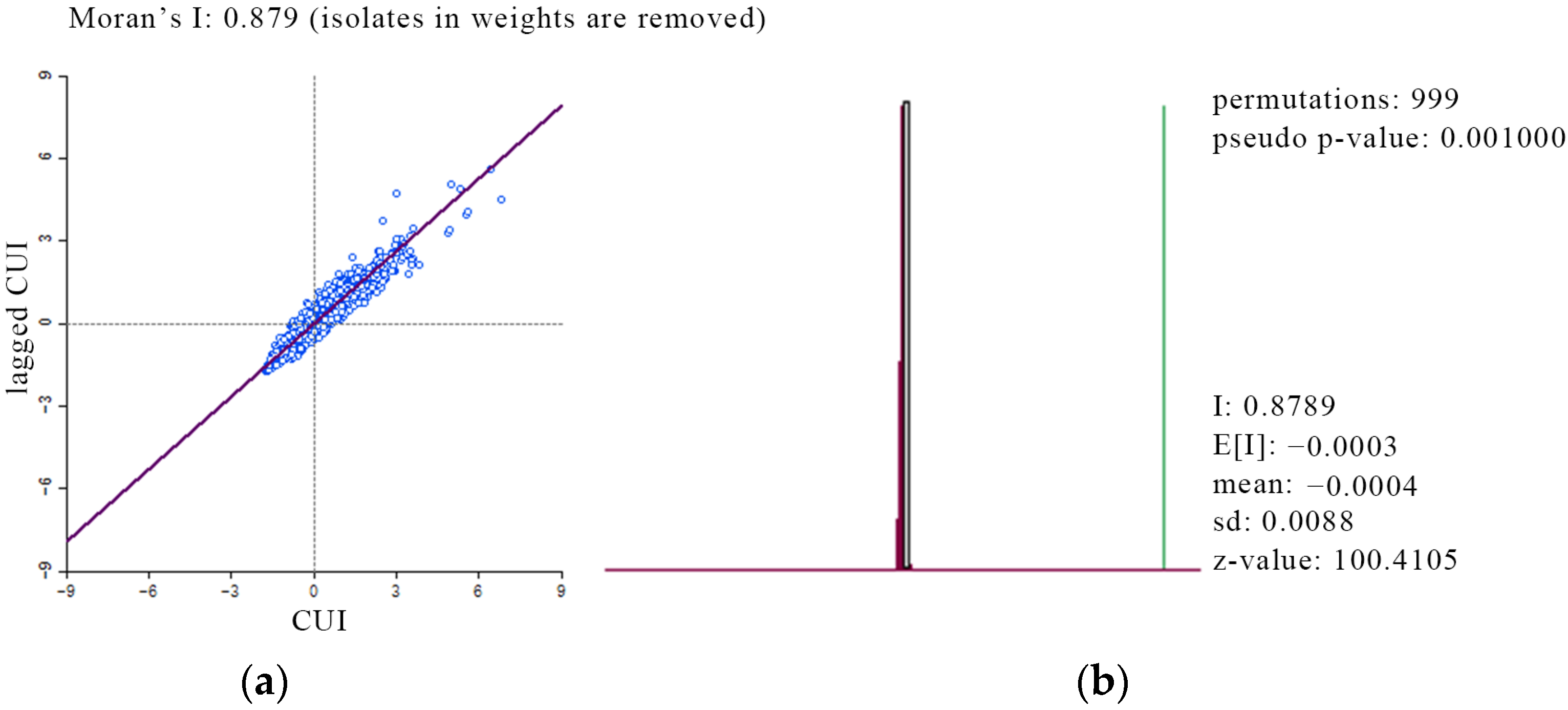
3.1.1. General Spatial Aggregation Characteristics
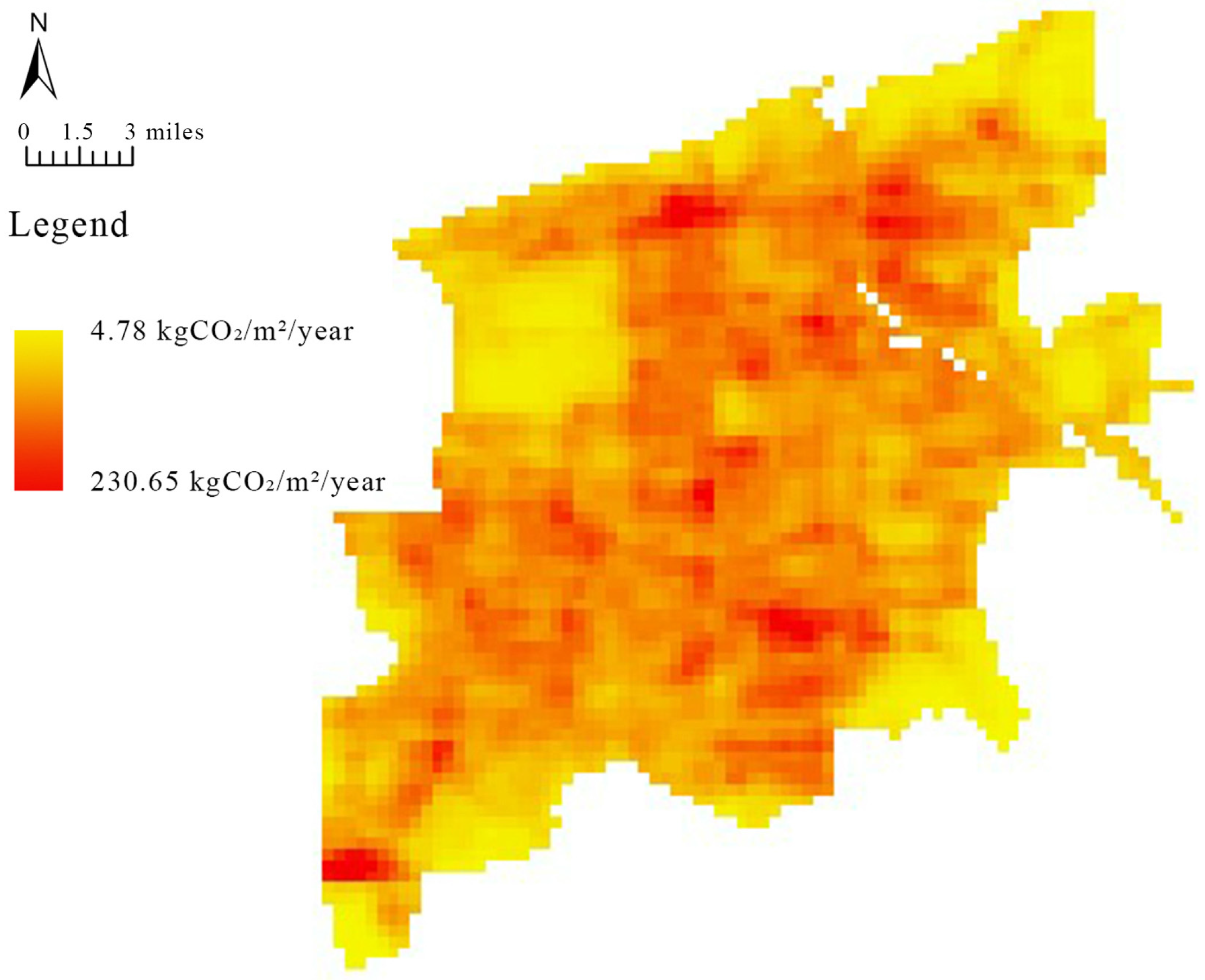
3.1.2. The “Single-Core, Multi-Point” Spatial Distribution Pattern
3.2. Differences in Emission Contributions Between Different Land Use Categories
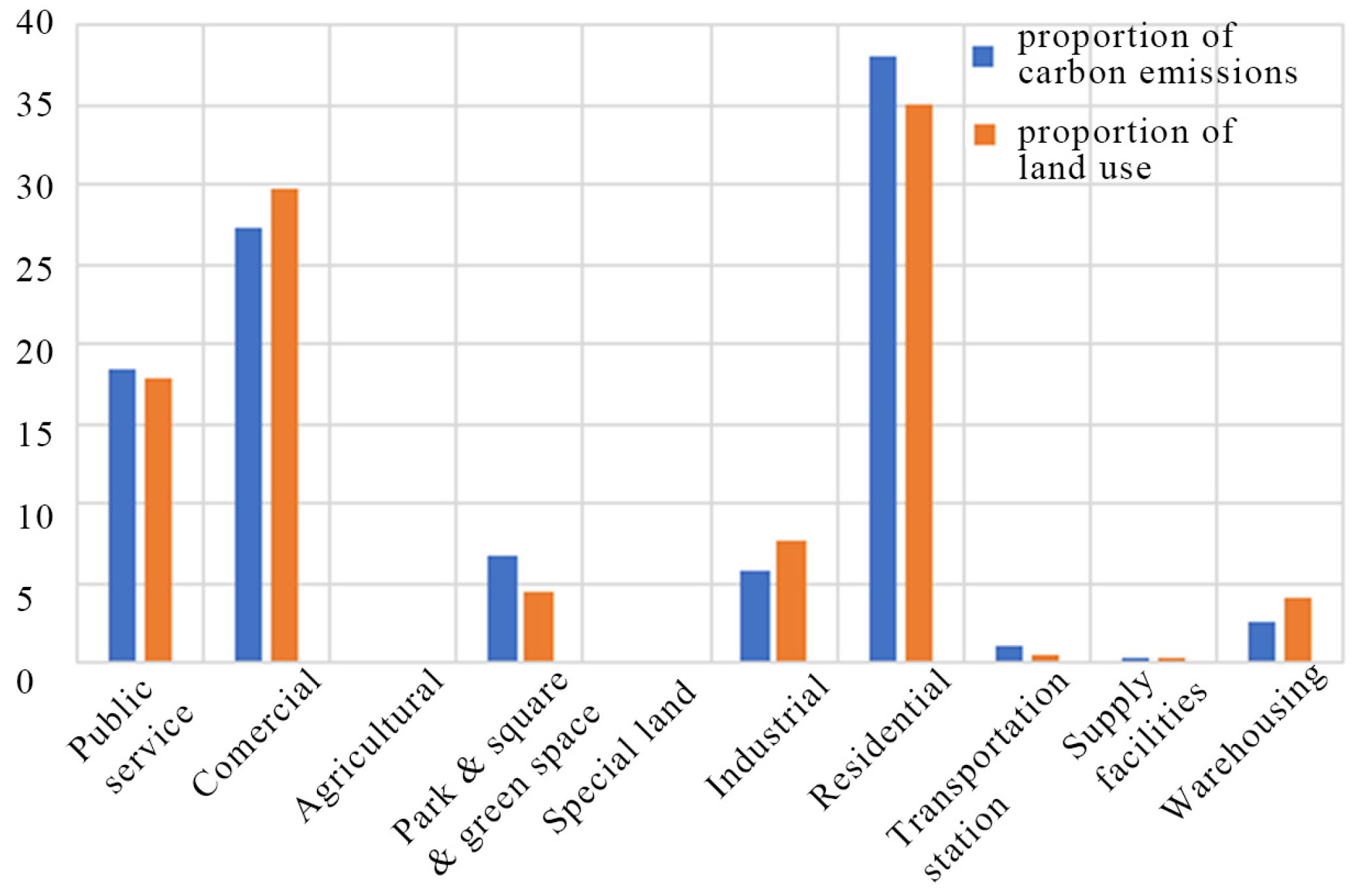
3.2.1. Emission Contributions by Land Use Type
3.2.2. Carbon Use Intensity (CUI) by Functional Category
3.2.3. Spatial Mismatch Between Work and Residential Areas
3.3. Carbon–Heat Coupling and Positive Feedback from “Dry Heat Islands” in the Transition Zone
3.3.1. Spatial Correlation Characteristics of Carbon and Heat
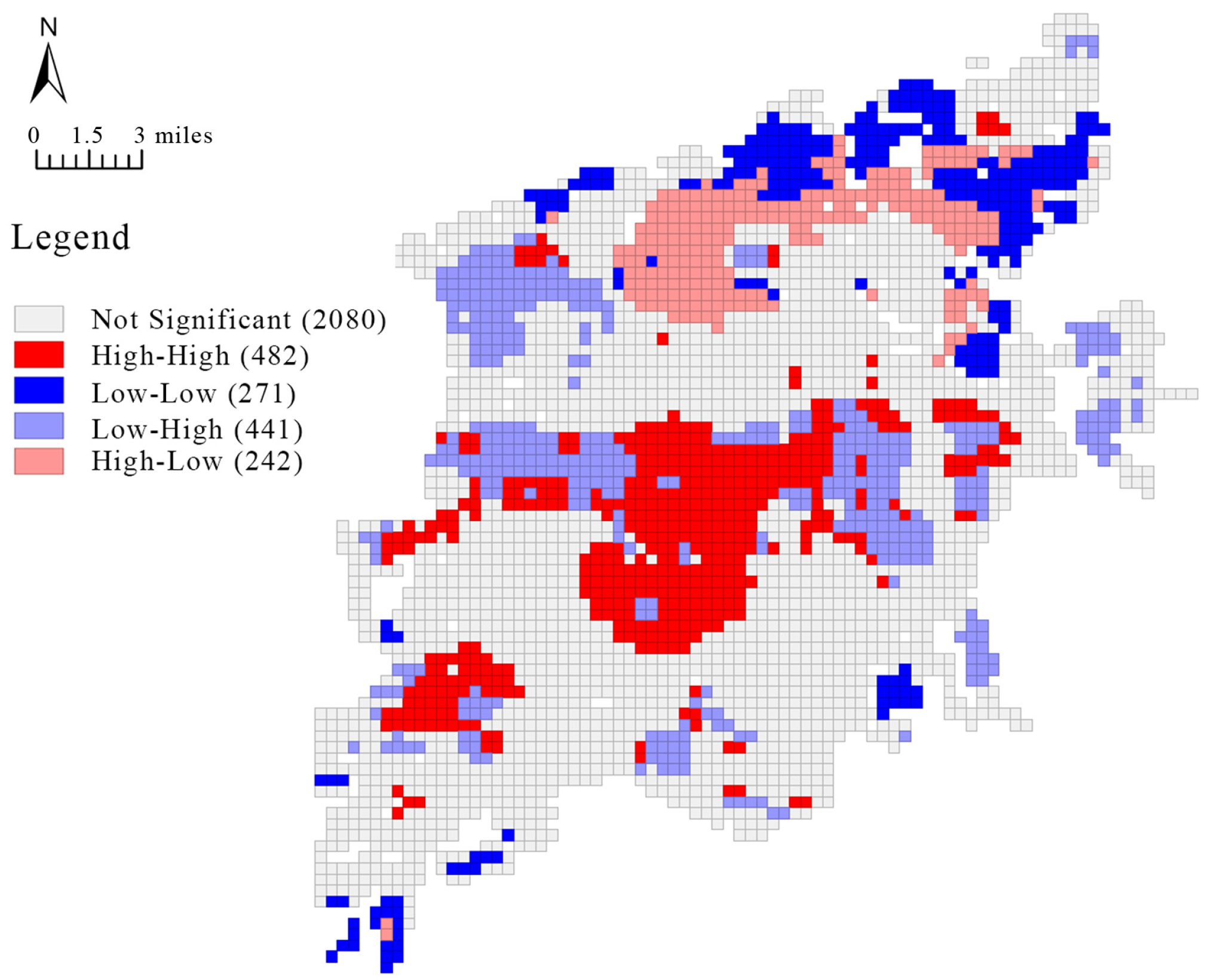
3.3.2. Misalignment and Overlap of Spatial Clusters of CUI and LST
3.3.3. Positive Feedback Mechanisms Specific to Climatic Transition Zones
4. Discussion
4.1. The Impact of Morphological Factors on Carbon Emissions: Spatial Non-Stationarity and Drought Adaptation
4.1.1. Analysis of Spatial Non-Stationarity
4.1.2. Dual Impact of Floor Area Ratio in Climatic Transition Zones
4.1.3. Trade-Off Between Building Density (BD) and Ventilation Efficiency
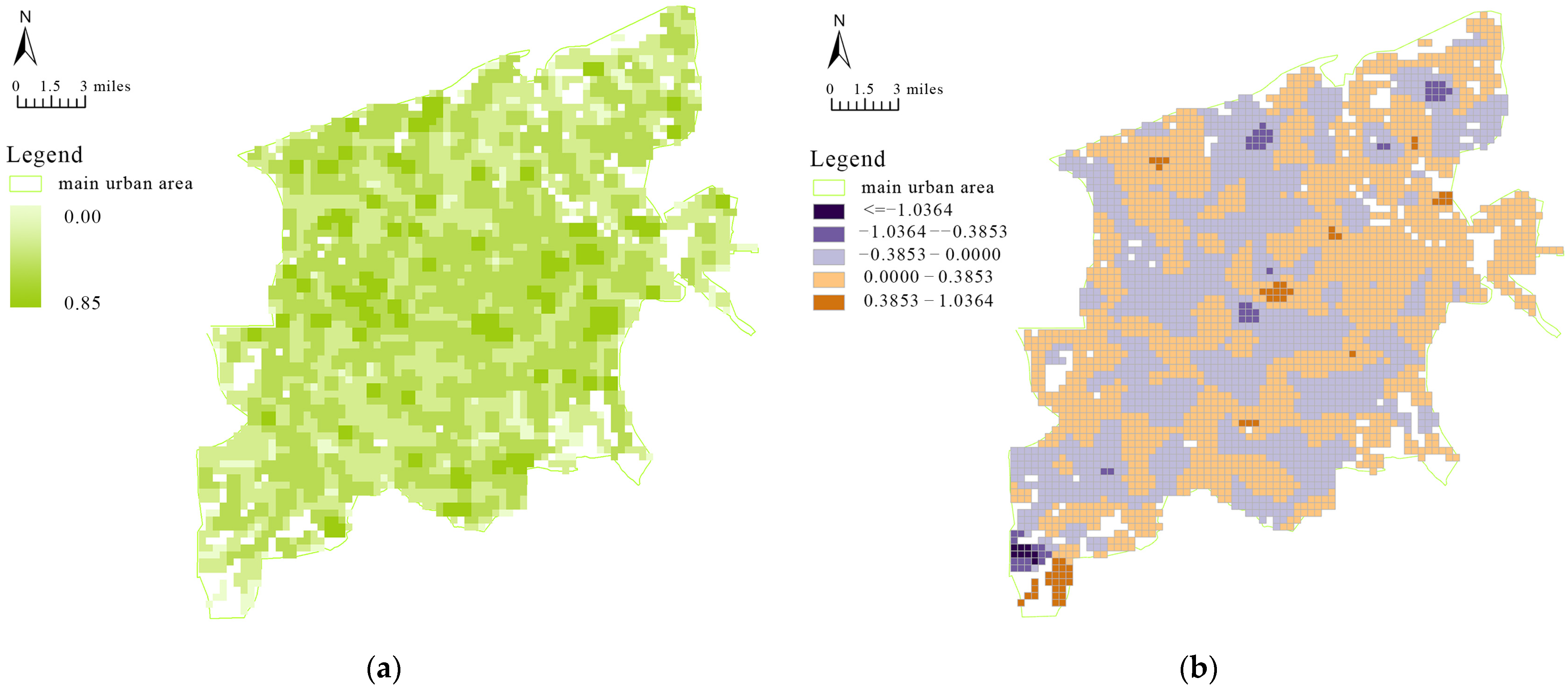
4.2. The Non-Linear Mitigating Effect of Land Use Mix on Carbon Emissions
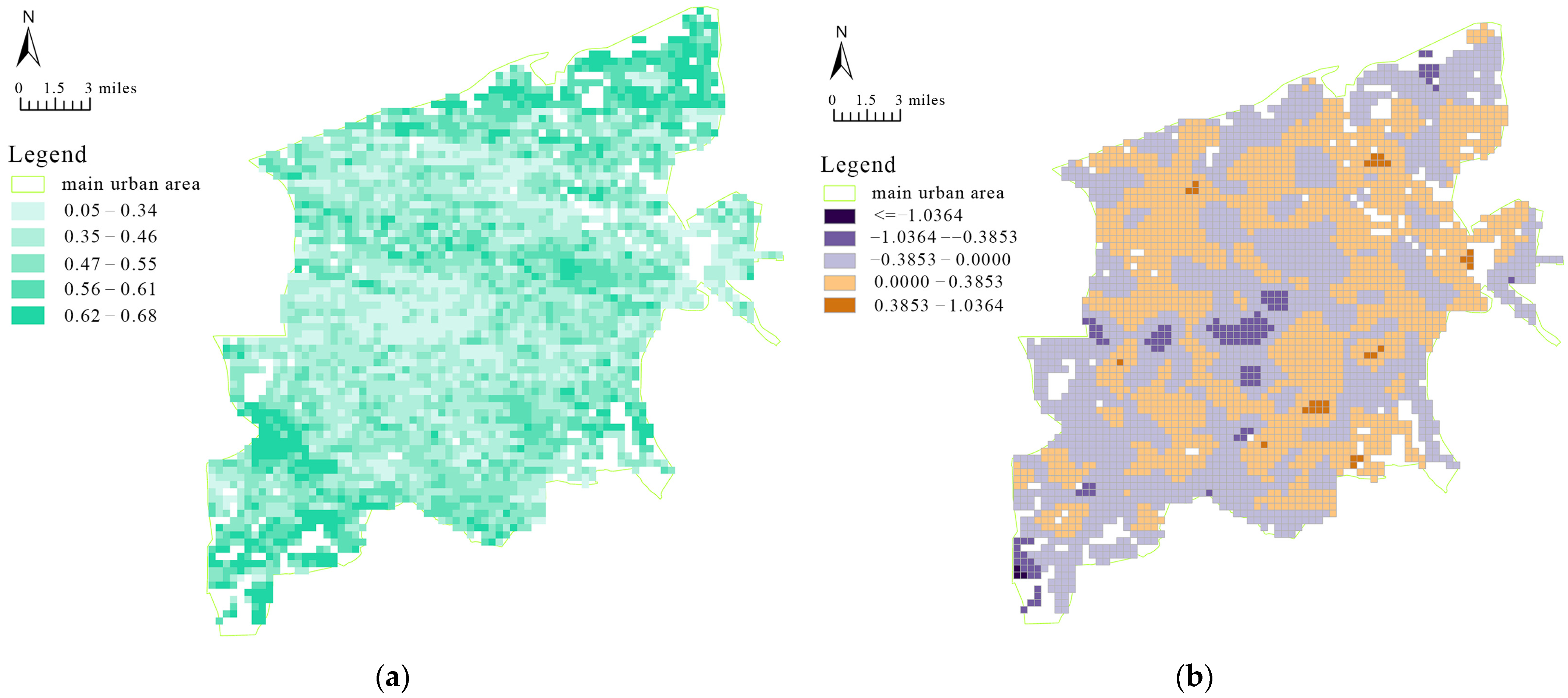
4.3. The Benefits of “Cooling and Carbon Reduction” in Blue–Green Spaces Within Transition Zones
4.3.1. The Evaporative Cooling Effect of NDVI
4.3.2. Contribution of the Water Body’s Thermal Sink Effect
4.4. Comparative Analysis of Mechanisms in Cities in the Climate Transition Zone and Humid Regions
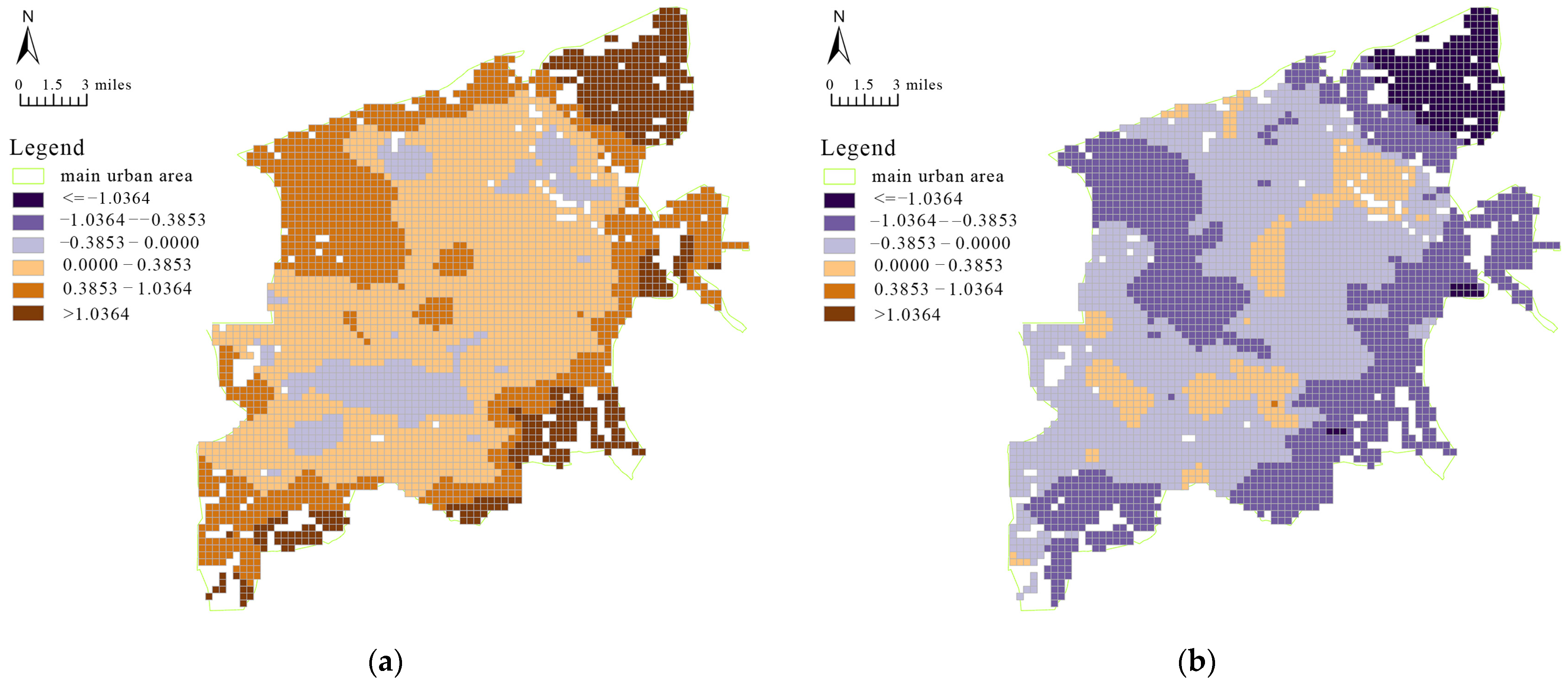
- Differences in the strength of the influence of morphological factors: Studies in humid regions generally show that Floor Area Ratio (FAR) has a stable positive correlation with grid-level carbon emission, and the coefficient exhibits little spatial variation [70,71,72]. However, in this study, the local MGWR coefficient for FAR differs significantly between Xi’an’s old city and the High-Tech Zone. This discrepancy can be attributed to the mutual shading effect between super-high-rise buildings in the high-radiation environment of the transition zone. Under a humid and cloudy climate, this effect is significantly weakened. In other words, the linear perception in humid regions that “high FAR inevitably leads to high emissions” needs to be adjusted in Xi’an according to building height gradients.
- Comparison of the marginal efficacy of blue and green spaces: In dry, high-radiation environments, the marginal benefit of vegetation transpiration cooling is higher. The reduction in carbon emission intensity resulting from lower air temperatures is more pronounced under dry and hot conditions. This result supports the inference that “the drier and hotter the climate, the higher the return on investment for greening-induced cooling and carbon reduction” [73,74].
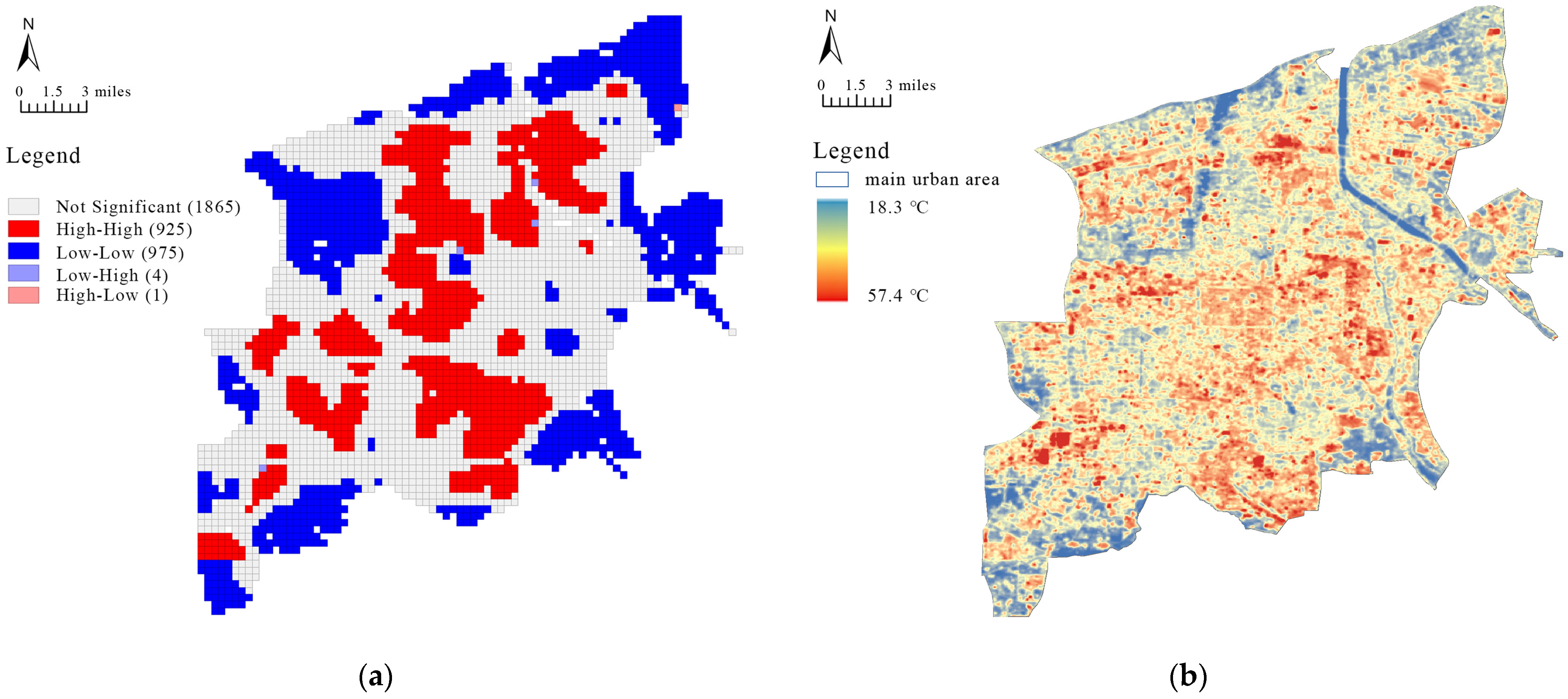
- Comparison of carbon–heat relationships: The bivariate Moran’s I coefficient for Xi’an reached 0.64. This result reflects the intensification of positive feedback in the “dry-hot island” phenomenon within the transition zone: low humidity weakens the capacity to dissipate latent heat, causing anthropogenic heat to become trapped within the urban fabric in the form of sensible heat, thereby creating a reinforced cycle of “emissions–warming–further emissions.” Cities in humid regions can mitigate the urban heat island effect relatively easily by increasing greening and water bodies, whereas cities in transitional zones such as Xi’an must simultaneously prioritise the provision of ventilation corridors to physically “blow” accumulated sensible heat out of the city. Otherwise, the additional energy consumption resulting from greening irrigation may offset the cooling benefits [75,76,77].
4.5. Low-Carbon Planning Strategies Based on Spatial Heterogeneity
- Old Town Renewal and Low-Carbon Guidance Zone (Core Area): The strategic focus is on “quality enhancement and decongestion.” Through micro-renewal measures, illegal structures are demolished, and “cool alleys” are designed to guide the prevailing summer winds through the high-density fabric, thereby alleviating the “heat traps” caused by historical development.
- Business Core Energy Efficiency Control Zone (High-Tech Zone, Economic Development Zone): The strategy focuses on “shade utilisation and façade management.” By controlling building height gradients to utilise mutual shading for cooling and mandating that high-rise office buildings adopt climate-adaptive shading façades, this strategy reduces carbon leakage from large-scale glass curtain walls under intense solar radiation.
- Ecological New District Collaborative Carbon Reduction Zone (Chanba, Qujiang): The strategic focus lies on “water–green–wind synergy.” A ventilation corridor system centred on rivers will be established. By enhancing the spatial permeability of blue and green spaces, an ecological compensation mechanism will be realised whereby “environmental cooling guides building energy reduction.”
5. Conclusions and Limitations
5.1. Conclusions
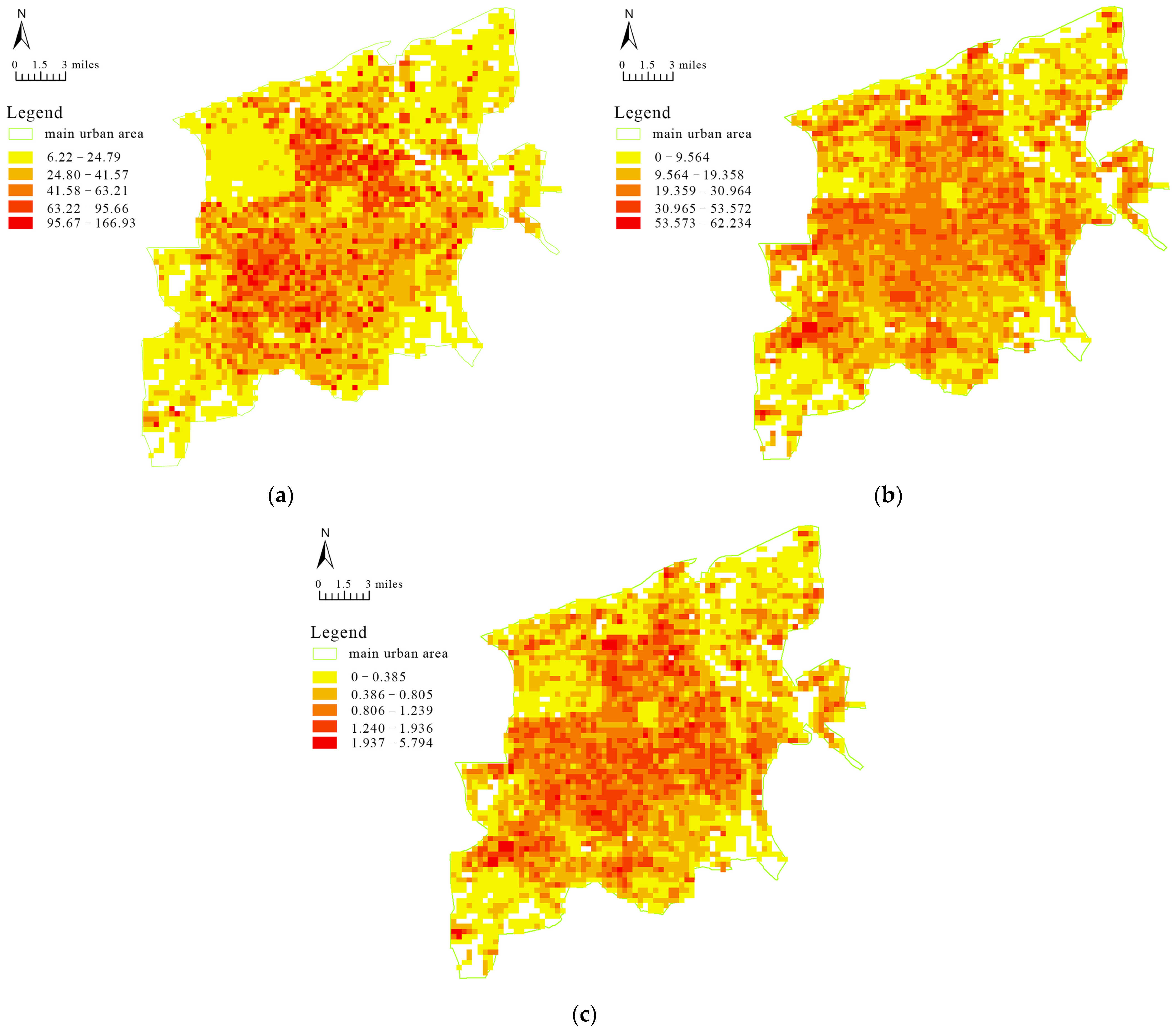
- Carbon emissions in Xi’an show a “double-peak” pattern centred on the old city and High-Tech District, with residential and commercial land accounting for nearly 60% of total emissions (peak CUI: 230.65 kgCO2/m2·year).
- A strong spatial coupling between carbon and LST confirms the “dry heat island” positive feedback: anthropogenic heat accumulates as sensible heat in low-humidity environments, reinforcing emissions-driven warming.
- Morphological factors suggest spatial non-stationarity: FAR exacerbates emissions in the old city but shows weaker effects in super-high-rise clusters due to mutual shading. BD reduces emissions only where ventilation is adequate.
- Land use mix and blue–green spaces show non-linear emission reductions. Mixed use enables complementary energy patterns, and evaporative cooling yields higher marginal benefits in arid–hot environments.
- Unlike humid-region strategies, low-carbon planning in transition zones should prioritise mutual shading, ventilation corridors, and water–green–wind integration.
5.2. Limitations and Further Works
Author Contributions
Funding
Institutional Review Board Statement
Informed Consent Statement
Data Availability Statement
Conflicts of Interest
Abbreviations
| CUI | Carbon Use Intensity |
| MGWR | Multi-scale Geographically Weighted Regression |
| FAR | Floor Area Ratio |
| BD | Building Density |
| LST | Land Surface Temperature |
| NDVI | Normalised Difference Vegetation Index |
References
- Kikstra, J.S.; Nicholls, Z.R.; Smith, C.J.; Lewis, J.; Lamboll, R.D.; Byers, E.; Sandstad, M.; Meinshausen, M.; Gidden, M.J.; Rogelj, J. The IPCC Sixth Assessment Report WGIII climate assessment of mitigation pathways: From emissions to global temperatures. Geosci. Model Dev. 2022, 15, 9075–9109. [Google Scholar] [CrossRef]
- Zheng, S.; Huang, Y.; Sun, Y. Effects of urban form on carbon emissions in China: Implications for low-carbon urban planning. Land 2022, 11, 1343. [Google Scholar] [CrossRef]
- Qin, B.; Han, S.S. Planning parameters and household carbon emission: Evidence from high-and low-carbon neighborhoods in Beijing. Habitat Int. 2013, 37, 52–60. [Google Scholar] [CrossRef]
- Hong, S.; Hui, E.C.-M.; Lin, Y. Relationship between urban spatial structure and carbon emissions: A literature review. Ecol. Indic. 2022, 144, 109456. [Google Scholar] [CrossRef]
- Ye, H.; He, X.; Song, Y.; Li, X.; Zhang, G.; Lin, T.; Xiao, L. A sustainable urban form: The challenges of compactness from the viewpoint of energy consumption and carbon emission. Energy Build. 2015, 93, 90–98. [Google Scholar] [CrossRef]
- Falahatkar, S.; Rezaei, F. Towards low carbon cities: Spatio-temporal dynamics of urban form and carbon dioxide emissions. Remote Sens. Appl. Soc. Environ. 2020, 18, 100317. [Google Scholar] [CrossRef]
- Fan, T.; Chapman, A. Policy driven compact cities: Toward clarifying the effect of compact cities on carbon emissions. Sustainability 2022, 14, 12634. [Google Scholar] [CrossRef]
- Eslamipoor, R. An integrated approach for three-layer location-allocation in a green supply chain. Int. J. Logist. Syst. Manag. 2025, 52, 308–322. [Google Scholar] [CrossRef]
- Eslamipoor, R. A new heuristic approach for a multi-depot three-level location-routing-inventory problem. Int. J. Manag. Concepts Philos. 2024, 17, 322–339. [Google Scholar] [CrossRef]
- Wang, L.; Chen, T.; Yu, Y.; Wang, L.; Zang, H.; Cang, Y.; Zhang, Y.O.; Ma, X. Impacts of vegetation ratio, street orientation, and aspect ratio on thermal comfort and building carbon emissions in cold zones: A case study of Tianjin. Land 2024, 13, 1275. [Google Scholar] [CrossRef]
- Habibi, S. The effect of building orientation on energy efficiency. Clean Technol. Environ. Policy 2024, 26, 1315–1330. [Google Scholar] [CrossRef]
- Rahaman, Z.A.; Kafy, A.-A.; Saha, M.; Rahim, A.A.; Almulhim, A.I.; Rahaman, S.N.; Fattah, M.A.; Rahman, M.T.; Al Rakib, A. Assessing the impacts of vegetation cover loss on surface temperature, urban heat island and carbon emission in Penang city, Malaysia. Build. Environ. 2022, 222, 109335. [Google Scholar] [CrossRef]
- Roxon, J.; Ulm, F.-J.; Pellenq, R.-M. Urban heat island impact on state residential energy cost and CO2 emissions in the United States. Urban Clim. 2020, 31, 100546. [Google Scholar] [CrossRef]
- Du, H.; Yang, S.; Fan, Q.; Cai, A.; Li, Z. Relationship between urban thermal environment and carbon emissions in the Yangtze River Delta: Land use pattern-process perspective. Sustain. Cities Soc. 2025, 130, 106649. [Google Scholar] [CrossRef]
- Liu, J.; Pei, X.; Zhu, W.; Jiao, J. Multi-scenario simulation of carbon budget balance in arid and semi-arid regions. J. Environ. Manag. 2023, 346, 119016. [Google Scholar] [CrossRef]
- Jha, S.; Srivastava, R. Impact of drought on vegetation carbon storage in arid and semi-arid regions. Remote Sens. Appl. Soc. Environ. 2018, 11, 22–29. [Google Scholar] [CrossRef]
- Gu, Q.; Wei, J.; Luo, S.; Ma, M.; Tang, X. Potential and environmental control of carbon sequestration in major ecosystems across arid and semi-arid regions in China. Sci. Total Environ. 2018, 645, 796–805. [Google Scholar] [CrossRef]
- Wang, L.; Chen, W.; Huang, G.; Zeng, G. Changes of the transitional climate zone in East Asia: Past and future. Clim. Dyn. 2017, 49, 1463–1477. [Google Scholar] [CrossRef]
- Liang, S.; Peng, S.; Chen, Y. Carbon cycles of forest ecosystems in a typical climate transition zone under future climate change: A case study of Shaanxi Province, China. Forests 2019, 10, 1150. [Google Scholar] [CrossRef]
- Baek, C.-H.; Choi, D.-H.; Lee, B.-Y.; Lee, I.-G. The Observation and Interpretation of Long and Short Wave Radiation of the External Environment Surrounding a Single Building in the Summer. J. Korean Sol. Energy Soc. 2019, 39, 41–49. [Google Scholar] [CrossRef]
- Song, B.; Bai, L.; Yang, L. Analysis of the long-term effects of solar radiation on the indoor thermal comfort in office buildings. Energy 2022, 247, 123499. [Google Scholar] [CrossRef]
- De La Flor, F.J.S.; Cebolla, R.O.; Félix, J.L.M.; Domínguez, S.Á. Solar radiation calculation methodology for building exterior surfaces. Sol. Energy 2005, 79, 513–522. [Google Scholar] [CrossRef]
- Taleb, S.; Yeretzian, A.; Jabr, R.A.; Hajj, H. Optimization of building form to reduce incident solar radiation. J. Build. Eng. 2020, 28, 101025. [Google Scholar] [CrossRef]
- Schultz, P.; Halpert, M. Global analysis of the relationships among a vegetation index, precipitation and land surface temperature. Remote Sens. 1995, 16, 2755–2777. [Google Scholar] [CrossRef]
- Woodward, F.; McKee, I. Vegetation and climate. Environ. Int. 1991, 17, 535–546. [Google Scholar] [CrossRef]
- Duncan, J.; Boruff, B.; Saunders, A.; Sun, Q.; Hurley, J.; Amati, M. Turning down the heat: An enhanced understanding of the relationship between urban vegetation and surface temperature at the city scale. Sci. Total Environ. 2019, 656, 118–128. [Google Scholar] [CrossRef]
- Wang, G.; Han, Q.; de Vries, B. Assessment of the relation between land use and carbon emission in Eindhoven, the Netherlands. J. Environ. Manag. 2019, 247, 413–424. [Google Scholar] [CrossRef]
- Whitford, V.; Ennos, A.R.; Handley, J.F. “City form and natural process”—Indicators for the ecological performance of urban areas and their application to Merseyside, UK. Landsc. Urban Plan. 2001, 57, 91–103. [Google Scholar] [CrossRef]
- Piao, S.; Nan, H.; Huntingford, C.; Ciais, P.; Friedlingstein, P.; Sitch, S.; Peng, S.; Ahlström, A.; Canadell, J.G.; Cong, N.; et al. Evidence for a weakening relationship between interannual temperature variability and northern vegetation activity. Nat. Commun. 2014, 5, 5018. [Google Scholar] [CrossRef]
- Qiu, K.; Jia, B. Carbon emission reduction from the cooling effect of urban greenspace in the three urban agglomerations in China. Reg. Environ. Change 2023, 23, 134. [Google Scholar] [CrossRef]
- Li, P.; Wang, Z.-H.; Wang, C. The potential of urban irrigation for counteracting carbon-climate feedback. Nat. Commun. 2024, 15, 2437. [Google Scholar] [CrossRef]
- Zhu, Z.; Wu, M.; Ding, Y.; Liu, N.; Wei, J.; Hu, F.; Yao, X.; Li, J. Influence of multidimensional spatial factors on urban park cooling and carbon-saving effects: Insights under contrasting background meteorological conditions. Sustain. Cities Soc. 2025, 135, 106997. [Google Scholar] [CrossRef]
- Manoli, G.; Fatichi, S.; Bou-Zeid, E.; Katul, G.G. Seasonal hysteresis of surface urban heat islands. Proc. Natl. Acad. Sci. USA 2020, 117, 7082–7089. [Google Scholar] [CrossRef]
- Villanueva-Solis, J. Urban heat island: Dynamic simulation, assessment and measuring mitigation in cities of extreme dry weather. J. Civ. Eng. Archit. 2012, 6, 906. [Google Scholar] [CrossRef]
- Milelli, M.; Bassani, F.; Garbero, V.; Poggi, D.; von Hardenberg, J.; Ridolfi, L. Characterization of the Urban Heat and Dry Island effects in the Turin metropolitan area. Urban Clim. 2023, 47, 101397. [Google Scholar] [CrossRef]
- AzariJafari, H.; Xu, X.; Gregory, J.; Kirchain, R. Urban-Scale Evaluation of Cool Pavement Impacts on the Urban Heat Island Effect and Climate Change. Environ. Sci. Technol. 2021, 55, 11501–11510. [Google Scholar] [CrossRef] [PubMed]
- Zhang, X.; Steeneveld, G.-J.; Zhou, D.; Duan, C.; Holtslag, A.A. A diagnostic equation for the maximum urban heat island effect of a typical Chinese city: A case study for Xi’an. Build. Environ. 2019, 158, 39–50. [Google Scholar] [CrossRef]
- Xu, D.; Wang, Y.; Zhou, D.; Wang, Y.; Zhang, Q.; Yang, Y. Influences of urban spatial factors on surface urban heat island effect and its spatial heterogeneity: A case study of Xi’an. Build. Environ. 2024, 248, 111072. [Google Scholar] [CrossRef]
- Huang, R.; Yang, M.; Lin, G.; Ma, X.; Wang, X.; Huang, Q.; Zhang, T. Cooling effect of green space and water on urban heat island and the perception of residents: A case study of Xi’an City. Int. J. Environ. Res. Public Health 2022, 19, 14880. [Google Scholar] [CrossRef]
- Meng, Y.; Luo, Q.; Bai, B.; Li, Y.; Lu, J.; Ren, J. Analysis of spatial heterogeneity in Xi’an’s urban heat island effect using multi-source data fusion. PLoS ONE 2025, 20, e0332885. [Google Scholar] [CrossRef] [PubMed]
- Zhang, J.; Zhao, J.; Pang, B.; Liu, S. Calculation of the Optimal Scale of Urban Green Space for Alleviating Surface Urban Heat Islands: A Case Study of Xi’an, China. Land 2024, 13, 1043. [Google Scholar] [CrossRef]
- Wang, X.; Xiao, F.; Zhang, Y.; Yin, L.; Lesi, M.; Guo, B.; Zhao, Y. Thirty-year expansion of construction land in Xi’an: Spatial pattern and potential driving factors. Geol. J. 2018, 53, 309–321. [Google Scholar] [CrossRef]
- Chen, L.; Yang, H.-N.; Xiao, Y.; Tang, P.-Y.; Liu, S.-Y.; Chang, M.; Huang, H. Exploring spatial pattern optimization path of urban building carbon emission based on low-carbon cities analytical framework: A case study of Xi’an, China. Sustain. Cities Soc. 2024, 111, 105551. [Google Scholar] [CrossRef]
- Liu, Y.-Y.; Wang, Y.-Q.; An, R.; Li, C. The spatial distribution of commuting CO2 emissions and the influential factors: A case study in Xi’an, China. Adv. Clim. Change Res. 2015, 6, 46–55. [Google Scholar] [CrossRef]
- Lin, A.; Sun, X.; Wu, H.; Luo, W.; Wang, D.; Zhong, D.; Wang, Z.; Zhao, L.; Zhu, J. Identifying urban building function by integrating remote sensing imagery and POI data. IEEE J. Sel. Top. Appl. Earth Obs. Remote Sens. 2021, 14, 8864–8875. [Google Scholar] [CrossRef]
- Su, Y.; Xu, Q.; Zhu, X.; Zhang, F.; Liu, Y. Automatic functional classification of buildings supported by a poi semantic characterization knowledge graph. ISPRS Int. J. Geo-Inf. 2024, 13, 285. [Google Scholar] [CrossRef]
- Gafoor, F.A.; Cho, C.S.; Shehhi, M.R.A. Exploring the Relation between NPP-VIIRS Nighttime Lights and Carbon Footprint, Population Growth, and Energy Consumption in the UAE. arXiv 2023, arXiv:2308.06366. [Google Scholar] [CrossRef]
- Xu, W.; Wu, Z.; Lin, W.; Xu, G. Spatial downscaling of NPP/VIIRS DNB nighttime light data based on deep learning. IEEE J. Sel. Top. Appl. Earth Obs. Remote Sens. 2024, 17, 16787–16798. [Google Scholar] [CrossRef]
- Feng, H.; Ning, E.; Yu, L.; Wang, X.; Vladimir, Z. The spatial and temporal disaggregation models of high-accuracy vehicle emission inventory. Environ. Int. 2023, 181, 108287. [Google Scholar] [CrossRef]
- Patil, S.; Pflugradt, N.; Weinand, J.M.; Stolten, D.; Kropp, J. A systematic review of spatial disaggregation methods for climate action planning. Energy AI 2024, 17, 100386. [Google Scholar] [CrossRef]
- Sun, Y.; Zheng, S.; Wu, Y.; Schlink, U.; Singh, R.P. Spatiotemporal variations of city-level carbon emissions in China during 2000–2017 using nighttime light data. Remote Sens. 2020, 12, 2916. [Google Scholar] [CrossRef]
- Song, S.; Leng, H.; Xu, H.; Guo, R.; Zhao, Y. Impact of urban morphology and climate on heating energy consumption of buildings in severe cold regions. Int. J. Environ. Res. Public Health 2020, 17, 8354. [Google Scholar] [CrossRef]
- Li, Q.; Chen, X.; Jiao, S.; Song, W.; Zong, W.; Niu, Y. Can mixed land use reduce CO2 emissions? A case study of 268 Chinese cities. Sustainability 2022, 14, 15117. [Google Scholar] [CrossRef]
- Li, Y.; Guo, W.; Li, P.; Zhao, X.; Liu, J. Exploring the spatiotemporal dynamics of CO2 emissions through a combination of nighttime light and MODIS NDVI data. Sustainability 2023, 15, 13143. [Google Scholar] [CrossRef]
- Wang, X.; Du, L. Carbon emission performance of China’s power industry: Regional disparity and spatial analysis. J. Ind. Ecol. 2017, 21, 1323–1332. [Google Scholar] [CrossRef]
- Wang, G.; Deng, X.; Wang, J.; Zhang, F.; Liang, S. Carbon emission efficiency in China: A spatial panel data analysis. China Econ. Rev. 2019, 56, 101313. [Google Scholar] [CrossRef]
- Zhang, C.-y.; Zhao, L.; Zhang, H.; Chen, M.-n.; Fang, R.-y.; Yao, Y.; Zhang, Q.-P.; Wang, Q. Spatial-temporal characteristics of carbon emissions from land use change in Yellow River Delta region, China. Ecol. Indic. 2022, 136, 108623. [Google Scholar] [CrossRef]
- Yıldız, N.D.; Erdem, F.; Acet, S.B.; Avdan, U. Analyzing the effect of view factors on surface heat flux, surface temperature, and vegetation cover. Environ. Sci. Pollut. Res. 2023, 30, 43843–43859. [Google Scholar] [CrossRef]
- Deardorff, J.W. Efficient prediction of ground surface temperature and moisture, with inclusion of a layer of vegetation. J. Geophys. Res. Ocean. 1978, 83, 1889–1903. [Google Scholar] [CrossRef]
- Baldocchi, D.; Falge, E.; Gu, L.; Olson, R.; Hollinger, D.; Running, S.; Anthoni, P.; Bernhofer, C.; Davis, K.; Evans, R. FLUXNET: A new tool to study the temporal and spatial variability of ecosystem-scale carbon dioxide, water vapor, and energy flux densities. Bull. Am. Meteorol. Soc. 2001, 82, 2415–2434. [Google Scholar] [CrossRef]
- Wang, K.; Dickinson, R.E. A review of global terrestrial evapotranspiration: Observation, modeling, climatology, and climatic variability. Rev. Geophys. 2012, 50, 1–54. [Google Scholar] [CrossRef]
- Arnfield, A.J. Two decades of urban climate research: A review of turbulence, exchanges of energy and water, and the urban heat island. Int. J. Climatol. A J. R. Meteorol. Soc. 2003, 23, 1–26. [Google Scholar] [CrossRef]
- Zhao, L.; Lee, X.; Smith, R.B.; Oleson, K. Strong contributions of local background climate to urban heat islands. Nature 2014, 511, 216–219. [Google Scholar] [CrossRef]
- Wang, J.; Liu, W.; Sha, C.; Zhang, W.; Liu, Z.; Wang, Z.; Wang, R.; Du, X. Evaluation of the impact of urban morphology on commercial building carbon emissions at the block scale—A study of commercial buildings in Beijing. J. Clean. Prod. 2023, 408, 137191. [Google Scholar] [CrossRef]
- Jin, X.; Li, Y.; Sun, D.; Zhang, J.; Zheng, J. Factors controlling urban and rural indirect carbon dioxide emissions in household consumption: A case study in Beijing. Sustainability 2019, 11, 6563. [Google Scholar] [CrossRef]
- Liu, Y.; Wang, P.; Luo, X.; Zhang, M.; Zhao, T.; Yang, Y.; Sun, Y.; Liu, X.; Liu, J. Analysis of flexible energy use behavior of rural residents based on two-stage questionnaire: A case study in Xi’an, China. Energy Build. 2022, 269, 112246. [Google Scholar] [CrossRef]
- Ye, H.; Ren, Q.; Shi, L.; Song, J.; Hu, X.; Li, X.; Zhang, G.; Lin, T.; Xue, X. The role of climate, construction quality, microclimate, and socio-economic conditions on carbon emissions from office buildings in China. J. Clean. Prod. 2018, 171, 911–916. [Google Scholar] [CrossRef]
- Zagow, M. Does mixed-use development in the metropolis lead to less carbon emissions? Urban Clim. 2020, 34, 100682. [Google Scholar] [CrossRef]
- Kumari, P.; Kapur, S.; Garg, V.; Kumar, K. Effect of surface temperature on energy consumption in a calibrated building: A case study of Delhi. Climate 2020, 8, 71. [Google Scholar] [CrossRef]
- Doherty, M.; Nakanishi, H.; Bai, X.; Meyers, J. Relationships Between Form, Morphology, Density and Energy in Urban Environments. GEA Backgr. Pap. 2009, 28, 1–28. [Google Scholar]
- Cai, M.; Shi, Y.; Ren, C.; Yoshida, T.; Yamagata, Y.; Ding, C.; Zhou, N. The need for urban form data in spatial modeling of urban carbon emissions in China: A critical review. J. Clean. Prod. 2021, 319, 128792. [Google Scholar] [CrossRef]
- Zheng, F.; Wang, Y.; Shen, Z.; Wang, Y. Research on the correlations between spatial morphological indices and carbon emission during the operational stage of built environments for old communities in cold regions. Buildings 2023, 13, 2222. [Google Scholar] [CrossRef]
- Molla, M.B. The value of urban green infrastructure and its environmental response in urban ecosystem: A literature review. Int. J. Environ. Sci. 2015, 4, 89–101. [Google Scholar]
- Parker, J.; Zingoni de Baro, M.E. Green infrastructure in the urban environment: A systematic quantitative review. Sustainability 2019, 11, 3182. [Google Scholar] [CrossRef]
- Judanto, M.A.; Sari, D.P. Identifying the Potential of Urban Ventilation Corridors in Tropical Climates. Modelling 2025, 6, 129. [Google Scholar] [CrossRef]
- Zheng, Z.; Ren, G.; Gao, H.; Yang, Y. Urban ventilation planning and its associated benefits based on numerical experiments: A case study in Beijing, China. Build. Environ. 2022, 222, 109383. [Google Scholar] [CrossRef]
- Xu, A.; Shi, J.; Zhao, L.; Ji, T.; Meng, X. Urban ventilation network identification to mitigate heat island effect. Sustain. Cities Soc. 2025, 125, 106364. [Google Scholar] [CrossRef]
- Fournier, E.D.; Federico, F.; Porse, E.; Pincetl, S. Effects of building size growth on residential energy efficiency and conservation in California. Appl. Energy 2019, 240, 446–452. [Google Scholar] [CrossRef]
- Kadian, R.; Dahiya, R.; Garg, H.P. Energy-related emissions and mitigation opportunities from the household sector in Delhi. Energy Policy 2007, 35, 6195–6211. [Google Scholar] [CrossRef]
- Tewathia, N. Determinants of the household electricity consumption: A case study of Delhi. Int. J. Energy Econ. Policy 2014, 4, 337–348. [Google Scholar]
- Tawari, N. Examining the demand-pull factors of household electricity consumption in Delhi. J. Energy Environ. Policy Options 2024, 7, 37–44. [Google Scholar]






| Category | Item | Source | Accuracy/Format | Pre-Processing Operations |
|---|---|---|---|---|
| Basic Geographical Data | Building Outlines and Number of Storeys | OSM, POI, Baidu Maps | Shapefile | Topological cleaning, elevation estimation |
| Energy Emission Data | Energy Balance Sheets, Electricity Factors | Xi’an Statistical Yearbook | Statistical Data | Emissions inventory calculation |
| Remote Sensing Image Data | Night-time Lighting | NPP-VIIRS | 500 m grid | Downscaling and weighting simulation |
| Landsat-8, Sentinel-2 | 30 m grid | LST inversion, NDVI calculation | ||
| Planning Indicator Data | Land Use, etc. | Planning Bureau status map, OSM | Shapefile | Grid overlay |
| Metric | Value |
|---|---|
| Pearson correlation (r) | 0.73 |
| p-value | <0.001 |
| Number of grid cells (n) | 3517 |
| Variable | Minimum | Maximum | Mean | Median | Std. Dev. |
|---|---|---|---|---|---|
| CUI | 4.78 | 230.65 | 53.01 | 53.64 | 25.95 |
| FAR | 0.10 | 5.79 | 1.70 | 1.65 | 0.51 |
| BD (%) | 0.40 | 62.23 | 16.92 | 13.20 | 11.75 |
| Land use mix | 0.00 | 0.85 | 0.42 | 0.38 | 0.22 |
| NDVI | 0.05 | 0.68 | 0.31 | 0.28 | 0.14 |
| LST (°C) | 25.36 | 53.82 | 42.23 | 42.96 | 3.50 |
| Variable | Optimal bw | Coefficient (Original) | Coefficient (−10% bw) | Coefficient (+10% bw) | Change Range | R2 Change | Global VIF |
|---|---|---|---|---|---|---|---|
| FAR | 30 | −0.3961 | −0.3892 | −0.4015 | 0.0123 | +0.0015/−0.0012 | 2.1 |
| BD | 34 | 0.5005 | 0.4956 | 0.5062 | 0.0106 | +0.0009/−0.0009 | 2.5 |
| Land use mix | 42 | −0.1290 | −0.1265 | −0.1318 | 0.0053 | +0.0012/−0.0005 | 1.6 |
| NDVI | 30 | −0.0172 | −0.0168 | −0.0175 | 0.0007 | +0.0016/−0.0011 | 1.4 |
| Item | Number of Grid Cells | Minimum | Maximum | Mean | Standard Deviation |
|---|---|---|---|---|---|
| CUI (kg/(m2·year)) | 3517 | 4.78 | 230.65 | 53.01 | 25.95 |
| Land Use | Number of Grid Cells | Average CUI (kg CO2/(m2·year)) | Intensity Ranking | Coefficient of Variation |
|---|---|---|---|---|
| Public service | 660 | 51.79 | 4 | 0.46 |
| Commercial | 870 | 58.48 | 1 | 0.47 |
| Parks and green spaces | 232 | 53.91 | 3 | 0.45 |
| Industry | 256 | 41.37 | 5 | 0.53 |
| Residential | 1322 | 53.58 | 2 | 0.47 |
| Impact Factor | Mean | Minimum | Maximum | Standard Deviation | Significance Ratio | Scale of Effect |
|---|---|---|---|---|---|---|
| FAR | −0.3961 | −2.1263 | 0.3880 | 0.3867 | 35.4% | Local |
| BD | 0.5005 | −0.3032 | 2.3605 | 0.5304 | 41.2% | Local |
| Impact Factor | Mean | Minimum | Maximum | Standard Deviation | Adjusted R2 | Scale of Effect |
|---|---|---|---|---|---|---|
| Level of land use mix | −0.129 | −1.1820 | 0.7208 | 0.1758 | 0.8928 | Local |
| Impact Factor | Mean | Minimum | Maximum | Standard Deviation | Adjusted R2 | Scale of Effect |
|---|---|---|---|---|---|---|
| NDVI | −0.0172 | −1.2774 | 0.6107 | 0.1771 | 0.8956 | Local |
Disclaimer/Publisher’s Note: The statements, opinions and data contained in all publications are solely those of the individual author(s) and contributor(s) and not of MDPI and/or the editor(s). MDPI and/or the editor(s) disclaim responsibility for any injury to people or property resulting from any ideas, methods, instructions or products referred to in the content. |
© 2026 by the authors. Licensee MDPI, Basel, Switzerland. This article is an open access article distributed under the terms and conditions of the Creative Commons Attribution (CC BY) license.
Share and Cite
Song, S.; Guo, R. Study on the Spatial Heterogeneity of Carbon Emissions and Low-Carbon Planning Strategies in Megacities in the Climate Transition Zone: A Case Study of Xi’an, China. Sustainability 2026, 18, 5820. https://doi.org/10.3390/su18125820
Song S, Guo R. Study on the Spatial Heterogeneity of Carbon Emissions and Low-Carbon Planning Strategies in Megacities in the Climate Transition Zone: A Case Study of Xi’an, China. Sustainability. 2026; 18(12):5820. https://doi.org/10.3390/su18125820
Chicago/Turabian StyleSong, Shiyi, and Ran Guo. 2026. "Study on the Spatial Heterogeneity of Carbon Emissions and Low-Carbon Planning Strategies in Megacities in the Climate Transition Zone: A Case Study of Xi’an, China" Sustainability 18, no. 12: 5820. https://doi.org/10.3390/su18125820
APA StyleSong, S., & Guo, R. (2026). Study on the Spatial Heterogeneity of Carbon Emissions and Low-Carbon Planning Strategies in Megacities in the Climate Transition Zone: A Case Study of Xi’an, China. Sustainability, 18(12), 5820. https://doi.org/10.3390/su18125820