Article

Environmental Management Accounting and Environmental Performance: Mediation, Moderation, and Governance in Bangladesh’s Garment Industry


by
Md. Mamun Mia
1,*,
Mohammad Rokibul Kabir
2,
Nor Balkish Zakaria
3,
M. Sadiqul Islam
4,
Farid Ahammad Sobhani
5 and
Zinnatun Nesa
6
1
Department of Business Administration, Daffodil International University, Dhaka 1216, Bangladesh
2
Department of Accounting, Daffodil International University, Dhaka 1216, Bangladesh
3
Accounting Research Institute (ARI), Universiti Technology MARA, Shah Alam 40450, Malaysia
4
Department of Finance, University of Dhaka, Dhaka 1000, Bangladesh
5
School of Business, Eastern University, Dhaka 1205, Bangladesh
6
School of Business and Economics (SoBE), United International University, Dhaka 1212, Bangladesh
*
Author to whom correspondence should be addressed.
Sustainability 2026, 18(11), 5737; https://doi.org/10.3390/su18115737
Submission received: 16 March 2026 / Revised: 16 April 2026 / Accepted: 20 April 2026 / Published: 4 June 2026

Abstract

Environmental Management Accounting (EMA) is increasingly recognized as a vital internal tool for improving corporate environmental performance. This paper examines the hypothesis of the existence and degree of the impact of EMA on environmental performance (EP) in the Bangladesh ready-made garment (RMG) industry, the mediating factor is resource efficiency performance (REP), and the moderating boundary condition is good governance (GG). Based on the resource-based theory, dynamic capability theory, and institutional theory, the moderated mediation model is examined using partial least squares structural equation modeling (PLS-SEM) and survey data collected from 331 managers at medium- and large-scale RMG manufacturers. The findings confirm that EMA has a significant positive effect on EP, either directly or indirectly through REP, with REP accounting for about 47 percent of the overall effect. Good governance has a significant, albeit weakening, moderating effect on the EMA-REP pathway: in high-governance contexts, external regulatory pressures seem to partially replace internal EMA systems, thereby promoting resource efficiency. The results add to the literature on environmental accounting by explaining a process-based, governance-mechanism-contingent mechanism through which EMA affects environmental performance and by offering practical advice to managers and policymakers in the context of developing-economy manufacturing.

1. Introduction

The garment industry has become one of the most significant drivers of economic development, job creation, and export revenues in most developing economies. The ready-made garment (RMG) industry is a key sector of Bangladesh’s national development, accounting for a significant share of industrial output and foreign exchange earnings. Although the garment industry has been economically important, it is also well known as one of the most environmentally intensive manufacturing industries, contributing to significant water pollution, chemical discharge, energy use, and solid waste. These environmental issues have raised grave concerns about environmental sustainability, regulatory oversight, and long-term environmental quality [1].
Garment manufacturing activities have caused environmental degradation, putting increased pressure on regulators, international customers, non-governmental organizations, and host societies. Dyeing, washing, finishing, and chemical treatment, among other processes, consume significant resources and contribute to water contamination, air pollution, and overuse [2,3]. In this regard, firms are under pressure to do all they can to improve their environmental performance by reducing pollution, conserving resources, and complying with environmental regulations. However, achieving these objectives remains an issue, particularly in developing economies, as adherence to rules may be inconsistent, and financial and operational irregularities may not effectively limit companies. Although the research verifies both direct and indirect associations, its main theoretical implication is the modeling of the governance-contingent mediation mechanism: in other words, whether and how the quality of governance affects the process by which EMA affects environmental performance via resource efficiency, thus contributing to the current knowledge about the conditions under which internal accounting systems are most effective in the developing-economy manufacturing settings.
Historically, the scope of environmental betterment in the garment industry has been centered on external compliance with regulations and technological initiatives, e.g., effluent treatment plants or cleaner production techniques. Even though these strategies are relevant, there is growing evidence that external regulation alone is insufficient to guarantee long-term improvements in environmental performance [4]. The internal managerial systems that allow firms to recognize, quantify, and control environmental effects are also being regarded as vital supplements to the regulatory systems. To this extent, the concept of EMA has become a subject of interest as a managerial tool that integrates environmental concerns into internal accounting and decision-making processes.
Environmental management accounting can be defined as the process of recognizing, quantifying, assessing, and applying physical and financial data of environmental effects and resource consumption in organizations in a systematized manner [5,6]. In contrast to traditional accounting systems, which tend to hide environmental costs by charging them to overhead, EMA enables managers to see the costs and resource inefficiencies associated with the environment. EMA assists in making informed decisions to enhance environmental and operational performance by providing detailed information on material flows, energy consumption, waste generation, and environmental costs. As a result, EMA has been advocated as a system that enables companies to improve their environmental performance [7,8].
The existing empirical evidence on the effectiveness of environmental management accounting is rather fragmented and contingent, though it has a theoretical basis. In the available literature, the discussion has focused more on developed economies, where regulatory mechanisms are stronger, and systems of firm management are more developed. Findings from these environments might not be directly relevant to developing economies, where institutional, managerial, and cost-based conditions differ significantly [9,10]. Moreover, the literature is mainly devoted to adoption, awareness, and perceived benefits of EMA, but does not empirically test whether EMA leads to measurable improvements in environmental performance.
The garment industry in Bangladesh is a particularly pertinent context for studying the connection between environmental management accounting and environmental performance. As export-based sectors are heavily integrated into global supply chains, garment companies in Bangladesh are under increasing environmental pressure on both sides of the world from international purchasers, sustainability standards, and compliance norms. In the meantime, the industry creates a problematic institutional environment characterized by scarce resources, strong price competition, and biased regulatory enforcement. These circumstances pose important questions about the existence and how internal accounting systems in such circumstances can help improve environmental performance, such as EMA.
Conceptually, environmental management accounting can be related to environmental performance in many ways. The resource-based theory holds that internal resources, including management accounting systems, can also be used as strategic resources to enhance firm performance [11,12]. EMA may be defined as an organizational capability that enables companies to better manage their environmental resources, mitigate environmental challenges, and achieve improved environmental performance. Integrating environmental concerns into the daily decision-making process, EMA helps build firm-specific capabilities that are hard to replicate.
The institutional theory also focuses on external pressures that affect the organization’s practices. Garment firms in Bangladesh are coerced by environmental laws, normative pressure from industry standards, and competitive pressure from global buyers [13,14]. EMA can be a process by which companies respond to such pressures by internalizing environmental demands and translating them into better environmental performance. Internal systems like EMA can play an even more critical role in shaping environmental behavior in situations where external enforcement is weak.
The stakeholder theory also explains the reason why garment companies could embrace environmental management accounting practices. Buyers, regulators, employees, and communities are among the stakeholders who are increasingly subject to requirements for responsible behavior towards the environment. EMA enables companies to produce realistic environmental data, helping them be accountable and transparent, and enhancing stakeholder relations and organizational legitimacy. With EMA, better environmental performance can further improve firms’ reputations and long-term sustainability.
Although the research verifies both direct and indirect associations, there are still some significant gaps in the literature. To begin with, there is a dearth of empirical research on the link between environmental management accounting and environmental performance in the garment industry, especially in developing economies. The available literature on the Bangladesh garment industry focuses on social compliance, labor standards, and regulatory compliance. Still, the internal environment of the management system has not been thoroughly researched. This constrains knowledge of how firms internally cope with environmental issues beyond minimum compliance.
Second, environmental management accounting is often treated as a one-dimensional construct in past studies, despite its multidimensional nature. EMA deals with physical issues, e.g., monitoring material and energy flows, and monetary matters, e.g., defining and assigning environmental costs. Likewise, environmental performance is a non-dimensional concept that involves reducing pollution, improving resource efficiency, and ensuring environmental compliance. Empirical studies are required to capture this complexity using robust measurement models.
Third, small samples, descriptive analyses, or single-equation methods tend to restrict the methodological techniques used in previous studies. These methods do not allow for the analysis of complex correlations of latent constructs. Partial least squares structural equation modeling (PLS-SEM) is an advanced quantitative methodology that offers significant value for analyzing multidimensional constructs and testing theories of interest in settings with small sample sizes and nonnormally distributed data [15]. Nonetheless, PLS-SEM is used sparingly in EMA research in the garment industry.
To fill these gaps, the current research investigates the relationship between environmental management accounting and environmental performance in the Bangladesh garment industry using a cross-sectional survey design and PLS-SEM. Both environmental management accounting and environmental performance are conceptualized as multidimensional constructs, enabling a more nuanced examination of their relationship. The study is more empirical, examining firms’ practices and performance to assess the effectiveness of EMA as a managerial tool for improving environmental performance.
This study has threefold objectives. First, the research design aims to empirically investigate whether environmental management accounting can significantly improve the environmental performance of garment manufacturing companies. Second, it evaluates the roles of various elements in environmental management accounting across different dimensions of environmental performance, such as pollution reduction, resource efficiency performance, and environmental compliance. Third, the research aims to advance theory by defining EMA as an internal organizational resource that enhances environmental performance in a developing economy.
The novelty of the study is in the three dimensions. First, contextual novelty: the Bangladesh ready-made garment sector is an institutionally unique context that is characterized by high global supply chain pressures, highly unpredictable domestic governance, and high resource intensity conditions that make it an optimal natural experiment in testing the effectiveness of governance-contingent EMA. Second, novelty of model complexity: the research is also one of the first to generate an entire model of moderated mediation, simultaneously modeling EMA as an antecedent, resource efficiency as a resource operating mediator, and governance quality as a moderating boundary condition, and going beyond the largely direct-effect models that characterize previous EMA-EP studies [16]. Third, construct measurement novelty: EMA and environmental performance are both measured as reflective and multidimensional constructs, which are evaluated with great PLS-SEM, overcoming the one-dimensionality limitation of most previous EMA studies [10,16]. Recent meta-analytic findings confirm that EMA-performance links are significantly conditional on national institutional situations [16], but mediation by firm-level governance-sensitive mechanisms has not been empirically modeled. This paper fills that gap. More recent literature has also urged increased focus on process-based mechanisms in EMA study [17,18] and increased evidence on developing-economy manufacturing settings [9,10]—which is what the current study offers.
This study addresses three specific research objectives. First, it examines the direct effect of EMA on environmental performance in Bangladesh’s ready-made garment industry. Second, it tests whether resource-efficiency performance mediates this relationship, thereby identifying the operational pathway by which EMA influences environmental outcomes. Third, it investigates whether good governance moderates the EMA–resource efficiency pathway, and whether this moderation extends to the overall indirect effect of EMA on environmental performance. The remainder of the paper is structured as follows: Section 2 reviews the theoretical and empirical literature and develops the hypotheses; Section 3 describes the research design and methodology; Section 4 presents the results; Section 5 discusses the findings; and Section 6 concludes with theoretical contributions, managerial implications, and directions for future research.

2. Literature Review

2.1. Environmental Performance in the Garment Industry: Concept and Context

Increasing environmental degradation, stakeholder pressure, and regulatory scrutiny have brought environmental performance to the forefront of manufacturing industries’ concerns. Environmental performance is crucial in the garment industry, as production processes are highly resource-intensive and can be highly polluting. Dyeing, washing, finishing, and chemical treatment processes produce substantial quantities of wastewater, consume unnecessary energy and water, and generate hazardous solid waste. These are the greater effects of the environment in third-world economies, whereby, in most cases, the rate of industrialization can easily outpace environmental regulatory measures [3].
There is a prevailing view of environmental performance as a multidimensional construct comprising pollution reduction, resource efficiency performance, and environmental compliance. The pollution reduction indicates firms’ ability to reduce emissions, effluents, and waste. Resource efficiency is the effective use of resources, including materials, energy, and water. Environmental compliance refers to the standards and regulations of environmental compliance [17,19]. The dimensions, as suggested by previous research, are not independent of each other but are interrelated and should be managed holistically rather than treated in isolation as technical solutions.
The issue of environmental performance is exacerbated by stiff competition in the global market, pressure on costs, and uneven regulatory enforcement in the Bangladesh garment industry. Although companies have been spending on compliance-based initiatives, such as effluent treatment facilities, these efforts may not necessarily lead to long-term improvements in environmental performance. This shortcoming explains why it is essential to examine internal managerial processes that influence firms’ decision-making processes.

2.2. Environmental Management Accounting: Concept and Strategic Role

Environmental management accounting (EMA) was introduced to address the limitations of traditional accounting systems in capturing environmental impacts and resource inefficiencies. Traditional accounting procedures are more likely to treat environmental costs as indirect or overhead costs, thereby overlooking the real economic consequences of pollution, waste, and poor resource use [5,6]. As a result, managers may not take environmental threats and opportunities for improvement seriously.
EMA addresses these weaknesses by systematically identifying, measuring, and analyzing environmental data on physical and financial factors. Physical EMA concerns physical unit material flows, energy and water consumption, emissions, and waste production. Monetary EMA concerns the identification and allocation of environmental costs, such as waste treatment, pollution control investments, environmental taxes, and compliance costs. The EMA distribution of the physical resource flow to financial outcomes increases cost transparency and improves managers’ awareness.
It is no secret that EMA is not only a continuation of compliance reporting but also a proactive approach to environmental management. It helps companies to recognize inefficiencies, quantify environmental investments, and integrate environmental thinking into operations and strategic decisions [8,20]. The resource-intensive sectors, like garments, can be supported by EMA in terms of environmental performance and operational efficiency, suggesting that there are more synergies than trade-offs.

2.3. Theoretical Foundations and Research Extensions of EMA

2.3.1. Resource-Based Theory

The resource-based theory holds that through the development of valuable, rare, imitable, and non-substitutable resources and capabilities, firms can perform better. Management accounting systems, including EMA, may be regarded as organizational capabilities that aid firms in managing their resources more effectively [11,21]. EMA makes firms more efficient at detecting wasteful processes, minimizing material and energy waste, and improving environmental conservation.
Internal capabilities for resource optimization are highly valuable in the garment industry, where they are crucial given standardized production processes and intense cost competition. EMA offers company-specific environmental expertise in habits and mechanisms that are hard for competitors to imitate. This implies that EMA can be one of the strategic capabilities that enhance environmental performance [12,21].

2.3.2. Dynamic Capability Theory

Although the resource-based theory can explain the value of EMA as a capability, it is inadequate for explaining how firms respond to environmental pressures. Dynamic capability theory builds upon this view by arguing that firms attain a high level of responsiveness to environmental changes by integrating, creating, and reorganizing their internal capabilities. EMA promotes dynamic capabilities, enabling organizations to sense environmental threats, capture opportunities for improvement, and reorganize processes [22,23].
The garment industry in Bangladesh is confronted with swiftly changing buyer demands, environmental concerns, and regulatory concerns. EMA can provide timely feedback on environmental performance to promote learning and continuous improvement within an organization. As a theoretical advancement, dynamic capability theory has been used infrequently in EMA research, even though it is most relevant [24].

2.3.3. Institutional and Legitimacy Perspectives

According to institutional theory, firms engage in environmental practices because of coercive (regulatory), normative (industry standards), and mimetic (competitive) pressures. Garment industries that focus on exports have exerted a significant influence on environmental practices among global buyers and certification schemes [14,25]. EMA may be used as an internal process by which companies react to institutional pressures by interpreting external demands into internal administration.
It is closely connected to legitimacy theory, which holds that companies can engage in environmental activities to gain social approval and legitimacy. EMA enhances accountability and transparency, enabling firms to demonstrate their environmental responsibility [26,27]. Nevertheless, the extent to which such practices result in substantive environmental performance or symbolic status remains poorly investigated, especially in developing economies.

2.3.4. Good Governance as a Contextual Moderator

Good governance refers to the quality of institutional structures, regulatory effectiveness, transparency, anti-corruption mechanisms, and accountability frameworks within which firms operate [28,29]. In developing economies such as Bangladesh, the governance environment is characterized by inconsistent regulatory enforcement, limited institutional capacity, and variable compliance oversight—conditions that can either constrain or enable the effectiveness of internal management systems like EMA [9].
From an institutional theory perspective, the effectiveness of internal accounting mechanisms in driving environmental outcomes is unlikely to be uniform across governance contexts. Firms operating in high-governance environments benefit from credible regulatory signals, clearer accountability structures, and greater stakeholder scrutiny, all of which amplify the behavioral effects of EMA adoption [7,14]. Conversely, where governance is weak, EMA may remain a symbolic or compliance-driven exercise rather than a genuine driver of resource efficiency and environmental performance improvement.
Dynamic capability theory further supports this argument. The capacity of firms to sense environmental inefficiencies and reconfigure operational processes—facilitated by EMA—may be more fully realized when supported by a governance infrastructure that enforces environmental standards, rewards transparency, and penalizes non-compliance [22,23]. Good governance, in this sense, functions as a boundary condition that shapes both the EMA-to-REP relationship and the REP-to-EP relationship, thereby moderating the overall indirect effect of EMA on environmental performance through resource efficiency.
The combination of the three theoretical perspectives is complementary in terms of their levels of analysis and explains the mechanisms that connect EMA to environmental performance. The resource-based theory at the firm-resource level classifies EMA as a firm-specific capability that is valuable and can be used to make better environmental decisions [11,12]. At the organizational process level, dynamic capability theory describes how EMA helps companies detect environmental inefficiencies, capture opportunities to improve operational performance, and redesign production routines in response to pressures [22,23]. Institutional-contextual level: The institutional theory is precise about the external coercive, normative, and mimetic pressures that generate demand for EMA and determine whether its outputs will be substantive or symbolic environmental goods [14,25]. Combining these tiers, the conceptualization of EMA as a dynamic capability within an institutional setting is the most suitable: the value of the organization’s resource (RBV) gets activated by sensing-and-seizing processes (DCT), but the degree to which such processes result in actual environmental transformation depends on the quality of the institutional governance environment (institutional theory). Such a multi-level integration gives the conceptualization of the mediation hypothesis (REP being the functional mechanism by which EMA capabilities are implemented) and the moderation hypothesis (governance quality being the boundary condition that conditions whether or not EMA-generated information is acted upon with sincere organizational commitment).

2.4. Environmental Management Accounting and Environmental Performance

There has been growing empirical research on the relationship between environmental management accounting and environmental performance. Other studies show positive relationships, suggesting that EMA enhances environmental performance through cost transparency and managerial awareness. EMA-adopting firms are well-positioned to increase investments in pollution prevention, cleaner production, and resource efficiency [30,31].
Nonetheless, various studies yield weak or inconsistent findings, casting doubt on the efficacy of EMA. The cause of these inconsistencies could be a difference in measurement methods, conditions, and methodological constraints [16]. Most studies treat EMA as a unidimensional scale and use simple analytical methods, which limit their capacity to reflect rich relations.
Empirical evidence in the garment industry is still very scarce. The current research focuses on meeting buyer demands rather than analyzing the effects of internal accounting systems on the environment [28,32]. This is where the need for robust quantitative research to identify EMA as a multidimensional construct and to determine its impact on environmental performance lies.
According to the resource-based, dynamic capability, and legitimacy perspectives, it is anticipated that EMA improves firms’ environmental performance (EP) by enhancing information quality, decision-making, and accountability. Recent empirical research has taken EMA research in some valuable directions. The process-based role of EMA was revealed by Huynh and Nguyen [17], who have shown that EMA plays a positive mediating role when it comes to the association between environmental outcomes and sustainability strategy in Vietnamese companies. Hasan et al. [7] have reported direct positive associations between the EMA and environmental performance of Middle Eastern companies, where the top management support acts as a key condition. Xia et al. [18] validated the EMA-environmental performance connection, both symmetrical and asymmetrical (fsQCA) method in a multi-country sample. The most systematic quantitative synthesis conducted to date, a meta-analysis by Barani et al. [16], identified that the effect sizes of EMA performance are considerably moderated by national EMA maturity and institutional context and that stronger effects were found in more developed countries. Nonetheless, this meta-analysis also found a very significant gap: the mechanisms of governance contingent on firm levels, process-based mechanisms have not been tested, and most primary research either directly or at best moderately tests them. Swalih et al. [10] conducted a review of 83 EMA studies and concluded that there were still calls to conduct research on the operational pathways of EMA in manufacturing settings of developing economies. These gaps are directly filled by the current research which models the governance-contingent mediation pathway within a developing-economy resource-intensive manufacturing situation—a combination not reflected in the literature that exists.
H1. 
Environmental management accounting has a positive and significant influence on environmental performance in the Bangladesh garment industry.
E P = β 1 ( E M A ) +   ζ 1

2.5. Environmental Performance and Physical Environmental Management Accounting

The accounting of physical environmental management deals with the monitoring of material flows, water, energy, and waste products in physical units. The information helps firms identify hot spots in their environments, inefficient processes within their firms, and areas to prevent pollution. The application of physical EMA is particularly relevant in garment manufacturing, where dyeing and washing processes may be conducted inefficiently, resulting in severe environmental impacts.
Previous studies indicate that physical EMA firms are more likely to adopt cleaner production and reduce waste at the source. Physically, according to the dynamic capability approach, the physical EMA assists in sensing and monitoring environmental risks, thereby enabling firms to adjust production processes [30,33]. Physical EMA is often not used in developing economies due to technical and resource constraints, even though it is an essential tool. The effects of its performance remain uncertain, especially within the garment industry. These considerations support the following sub-hypothesis:
H1a. 
Physical environmental management accounting has a positive and significant effect on environmental performance in the Bangladesh garment industry.

2.6. Monetary Environmental Management Accounting and Its Effect on Environmental Performance

The objectives of monetary environmental management accounting are to mark, measure, and apportion the environmental costs. Monetary EMA enhances transparency of costs by providing financial estimates of environmental consequences and enabling economically sound decision-making [6,34]. When environmental costs are correctly identified, managers are more willing to invest in pollution-prevention and resource-efficiency programs.
Previous studies indicated that monetary EMA improves the environmental performance by relating ecological and financial performance. However, other research has also found negligible effects, so the cost information would not suffice without the physical details. This restriction emphasizes the need to review monetary EMA as a subset of a larger, integrated accounting system. Monetary EMA also facilitates external reporting and accountability, thereby enabling the demonstration of environmental responsibility from a legitimacy perspective. Nevertheless, the scope of the monetary EMA in terms of its effect on substantive performance improvement remains under-researched in the context of garment manufacturing. These considerations support the following sub-hypothesis:
H1b. 
Monetary environmental management accounting has a positive and significant effect on environmental performance in the Bangladesh garment industry.

2.7. EMA and Pollution Reduction Performance

Pollution reduction performance is the capability of the firms to reduce emissions, effluents, and waste production. EMA can facilitate pollution reduction by identifying pollution-intensive processes and their costs, enabling intervention. Physical EMA gives information on the sources of emissions, whereas monetary EMA emphasizes the economic impacts of pollution [14,33].
Empirical data indicate that EMA firms implement pollution prevention strategies more effectively. Nevertheless, research on this issue is concentrated in industrial manufacturing, and little is known about the garment industry. Indeed, environmental management accounting has a positive and significant impact on pollution-reduction performance.

2.8. EMA and Resource Efficiency Performance

Resource efficiency performance is an indicator of increased use of materials, energy, and water. EMA improves resource efficiency by tracing material and energy losses and connecting them to financial performance. EMA balances environmental and economic goals, which makes it eco-efficient [21,35]. Resource efficiency is critical in garment production due to high water and energy consumption. Although it is a significant aspect, there is limited empirical evidence on the role of EMA in enhancing resource efficiency in garment firms.
H2. 
Environmental management accounting has a positive and significant impact on resource efficiency performance.
R E P = β 2 ( E M A ) +   ζ 2

2.9. Environmental Compliance Performance and EMA

Environmental compliance performance measures a firm’s ability to adhere to regulatory requirements and standards. EMA aids compliance by enhancing internal monitoring, documentation, and reporting. Internal systems like EMA may be especially significant in cases of weak enforcement [13,18]. The enforcement, however, is not always equal to better environmental quality. It is still unclear whether EMA promotes substantive compliance or merely symbolic compliance. Therefore, environmental management accounting has a positive and significant impact on environmental compliance performance.

2.10. Existing Gap of Mediation Effects

There is a need to provide a conceptual clarification of the role of resource efficiency performance (REP) in this study. REP is often considered as a single dimension of environmental performance in the larger environmental performance literature, together with pollution reduction and environmental compliance [17,19]. In the current research, this conceptualization of the higher-order EP construct is maintained, whereby REP—in terms of material, energy, and water efficiency output—is one of three dimensions of comprehensive environmental performance. But REP also takes a separate mediating position in the structural model: it serves as an intermediate product of operation whereby EMA information is first converted to measurable efficiency gains, and then these efficiency gains in turn are fed into the larger EP construct (which also includes pollution reduction and compliance dimensions). Theoretical basis of this dual conceptualization. This dual conceptualization, in that REP is a subset of EP and an operational mediator in the EMA-EP pathway, is theoretically-based in the literature of eco-efficiency, which differentiates between efficiency-oriented operational processes and overall environmental performance outcomes [21,35]. The modeling strategy is based on previous PLS-SEM research that has concurrently employed the sub-dimensions of environmental performance as outcome constructs on one side and mediating mechanisms on the other [8,36].
Although prior literature indicates that environmental management accounting (EMA) enhances ecological performance, the mechanisms by which it does so remain poorly understood, especially in labor-intensive sectors such as the clothing industry. In the majority of current research, only direct relationships are tested, which presupposes that the availability of environmental information automatically translates into performance improvements. This assumption does not account for the fact that accounting information should first affect operational practices, including resource efficiency, before it affects broader environmental outcomes [36,37]. From a dynamic capability perspective, EMA helps firms become more attuned to inefficiencies and restructure operational processes; however, improvements in environmental performance are realized only when firms proactively increase resource utilization. Equally, eco-efficiency theory holds that reducing environmental problems can be achieved through improved use of materials, energy, and water, rather than through accounting systems. These views indicate that the efficiency of resource use could be a significant mediating factor between EMA and environmental performance outcomes.

Mediator Resources Efficiency

Resource efficiency performance indicates how firms minimize material losses and use less energy and water in their production processes. EMA offers broad, in-depth physical and financial data that allows managers to identify inefficiencies, rationalize enhancement efforts, and track results. But unless resource efficiency is improved, EMA information can be underutilized or symbolic. Empirical studies of environmental management have shown that resource efficiency lies at the heart of transforming managerial practice into environmental performance. In the garment industry, reducing water, energy, and material use is directly linked to decreased pollution and compliance risks. Despite its significance, resource efficiency has seldom been tested as a mediating variable in EMA-environmental performance interrelations, especially in the context of developing economies.
H3. 
Resource efficiency performance has a significant and positive effect on environmental performance in the Bangladesh garment industry.
H4. 
Resource efficiency performance mediates the relationship between environmental management accounting and environmental performance.
E P = β 3 ( E M A ) + β 4 ( R E P )   ζ 3
I n d i r e c t   e f f e c t = β 2 × β 4
However, it is necessary to mention that the positive impact of EMA on the performance of resource efficiency is not universal. According to arguments based on institutional theory boundary conditions and the literature of organizational learning, translation of EMA into operational improvements can be toned down or even counteracted in some circumstances. As an example, within an environment of lax regulatory implementation and low accountability, EMA can merely be a symbolic compliance measure instead of a real source of efficiency-oriented behavior [9,14]. Also, when the environment of governance is so robust that external institutional forces already induce firms to seek resource efficiency, regardless of their internal accounting systems, the marginal contribution of EMA could be reduced—a substitution logic that is also compatible with institutional redundancy arguments [29]. This boundary condition suggests that the moderating role of the quality of governance in the relationship between EMA and REP might not be universally positive, that external pressures might partially replace internal EMA systems, and the interaction between them may be negative. The hypotheses presented below are thus formulated as directional propositions guided by the prevailing theoretical expectation, yet consider that there is empirical evidence to support the converse direction that should be explored.
H5. 
Good governance significantly moderates the relationship between environmental management accounting and resource efficiency performance, such that the positive effect of EMA on REP is stronger under conditions of higher governance quality.
R E P = β 2 ( E M A ) + β 5 ( G G ) + β 6 ( E M A × G G ) +   ζ 4
H6. 
Good governance positively moderates the relationship between resource efficiency performance and environmental performance, such that the positive effect of REP on EP is stronger under conditions of higher governance quality.
E P = β 3 ( R E P ) + β 7 ( G G ) + β 8 ( R E P × G G ) +   ζ 5
H7 (Moderated Mediation). 
The indirect effect of environmental management accounting on environmental performance through resource efficiency performance is positively moderated by good governance, such that the mediated pathway is stronger at higher levels of governance quality.
C o n d i t i o n a l   I n d i r e c t   E f f e c t = β 2 ( G G ) × β 4 ( G G )

2.11. Conceptual Framework and Hypothesized Model

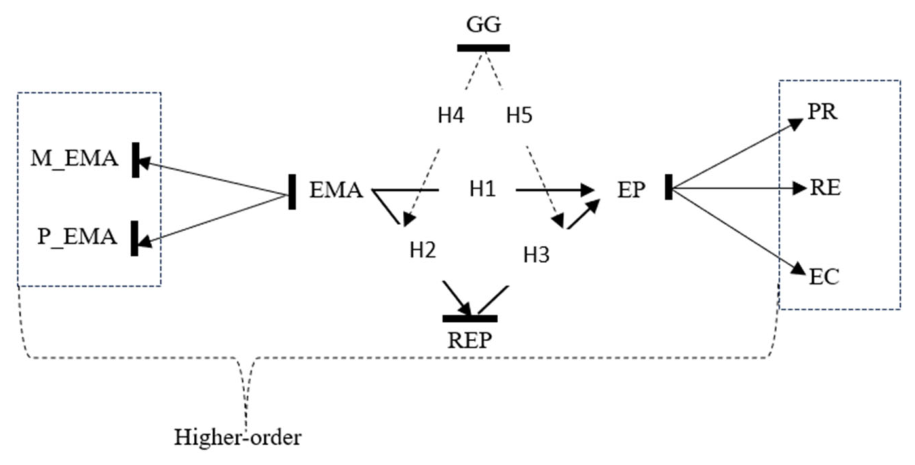
According to the literature and the hypotheses, the suggested conceptual framework predicts:
  • Second-order constructs of environmental management accounting: physical and monetary EMA.
  • The second-order construct is environmental performance, which involves pollution reduction and resource efficiency, and environmental compliance. It suggests a direct correlation between EMA and environmental performance, which can be analyzed using PLS-SEM with cross-sectional survey data (Figure 1).
Collectively, the resource-based theory, dynamic capability theory, and institutional theory converge on a shared prediction: EMA functions as an internal strategic resource whose effectiveness in improving environmental performance is contingent on the operational pathway through which it operates (resource efficiency) and on the institutional context that governs its deployment (governance quality)—a governance-contingent mediation mechanism that the present study empirically examines for the first time in Bangladesh’s ready-made garment industry.

3. Methodology

3.1. Research Design

The study proposed a quantitative, cross-sectional research design, using an empirical approach to investigate the proposed hypothesis in both direct and indirect ways regarding the relationship between environmental management accounting and environmental performance within the Bangladesh garment industry. The quantitative methodology is suitable because the study aims to test theoretically-based hypotheses using latent constructs. This cross-sectional design allows the collection of firm-level data at a single point in time, consistent with previous studies in environmental management, accounting, and sustainability literature.
The research uses partial least squares structural equation modeling (PLS-SEM) with SmartPLS software version 4.1.1.7. The fact that it can simultaneously handle complex models that include second-order constructs and mediation effects, and withstand non-normal data distributions and moderate sample sizes, makes PLS-SEM the most appropriate tool for this research [15,38].

3.2. Research Context

The empirical setting of the research is the ready-made garment (RMG) industry in Bangladesh, which has become one of the country’s largest export-focused manufacturing sectors. High water use, high energy consumption, heavy chemical use, and severe environmental impacts, especially in the dyeing and washing departments, characterize the industry. These attributes make the sector particularly useful for studying the relationship between environmental management accounting and environmental performance.

3.3. Population and Sampling

3.3.1. Target Population

The target respondents are medium- and large-scale garment manufacturing companies based in Bangladesh. These companies were chosen because they are more likely to have formal accounting systems, environmental management policies, and compliance requirements than small, informal businesses.

3.3.2. Sampling Technique

Firms with adequate experience in accounting and environmental management were targeted using a purposive sampling technique. The methodology is often used in EMA research because respondents are usually knowledgeable and can provide accurate information about internal accounting practices [39]. In each company, respondents represented accounting managers, sustainability managers, environmental officers, production managers, or senior executives.

3.3.3. Sample Size

A total of 478 questionnaires were distributed to managers in medium- and large-scale garment manufacturing firms operating in major industrial clusters in Bangladesh, including Dhaka, Gazipur, and Narayanganj. After removing incomplete and invalid responses, 331 usable responses were retained for analysis, yielding a valid response rate of 69.25%. This sample size satisfies the minimum requirements for PLS-SEM-based estimation of second-order mediation models, exceeding the 10-times rule and the sample size recommendations [15].
Although purposive sampling is suitable in terms of guaranteeing the experience of the respondents, it carries the danger of making the sample disproportionate to the firms that are more active in managing the environment, i.e., those with formal accounting systems and a position of sustainability or environmental management. Designer exclusion includes smaller, less formally organized manufacturers that can be a significant percentage of the Bangladesh RMG industry. This is to indicate that the findings are more likely to represent the most favorable or above-average EMA adoption situations than the industry-wide situations. In order to determine nonresponse bias, a wave analysis was performed between the early (first 100) and late (last 100) respondents regarding key construct means; however, no statistically significant differences were reported (all t-tests p > 0.30), which indicates that nonresponse bias is not a major issue [39]. However, the findings can only be taken as an indication of the practices and relationships between the medium- and large-scale, formally structured garment manufacturers and may not be applicable to the general population of Bangladesh RMG firms or to garment industries in other developing economies.

3.4. Data Collection Procedure

The structured self-administered questionnaire was used to collect data. Academic experts and industry practitioners were consulted to pretest the questionnaire and ensure it was clear, relevant, and content-valid. Based on the feedback, slight revisions were made, and the survey was finally carried out. The survey was conducted between August and October 2025. The respondents were also guaranteed confidentiality and anonymity and were free to participate voluntarily. The survey was administered via electronic and face-to-face methods to increase response rates.

3.5. Measurement of Constructs

A multi-item reflective scale was used to operationalize all constructs, drawing on existing validated tools from the literature on environmental management, accounting, and sustainability performance. The process of adaptation had three phases. The first was the review of original items of the established scales in terms of their conceptual fitting to the situation in the Bangladesh ready-made garment industry. Second, a bilingual researcher passed the English items to Bangla and used a second bilingual expert to pass the items to English independently; differences were resolved through discussion, which is consistent with the known translation guidelines [39]. Third, a panel of five experts (including two academic environmental accounting researchers, one sustainability manager of a Dhaka-based garment manufacturer, one regulatory officer of the Department of Environment, and one industry auditor) was consulted to evaluate content validity based upon systematic relevance and clarity ratings. The questions that were considered unclear or irrelevant to the context by three or more panelists were revised. After this, a pilot test was done on 30 managers who were not part of the final sample, and items with item-total correlations of less than 0.40 were dropped. The last measure had three items per sub-construct in EMA, and all the other constructs, which is a parsimonious measure of PLS-SEM [15].
Good governance (GG) was operationalized as a firm-level perceived construct capturing the quality of the institutional and regulatory environment within which the firm operates. Four items were adapted from Kaufmann et al. (2011) [40] and contextualized for the Bangladesh RMG industry, covering regulatory enforcement, transparency, anti-corruption norms, accountability of government agencies, and the reliability of the rule of law. Responses were recorded on a five-point Likert scale (1 = Strongly Disagree; 5 = Strongly Agree). Appendix A Table A2 presents the complete set of measurement items for all constructs, together with their original sources.
The aggregate indices, such as the Worldwide Governance Indicators, are conventionally used to measure good governance at the country or sector level [40]. But to address the question of interest in this paper, and to know how the quality of governance is related to the effectiveness of EMA at the firm level, the aggregate country-level indices are not discriminating enough: all the firms in a single-country study would be assigned the same score in terms of governance quality, and within-sample moderation analysis would therefore not be possible. The adopted firm-level perceptual approach here reflects significant heterogeneity in perceived quality of governance between firms of the same national environment. This heterogeneity is conceptually plausible and empirically solid in the Bangladesh RMG sector, where regulatory implementation, transparency, and accountability differ significantly by geographic cluster(s) (Dhaka, Gazipur, and Narayanganj), firm export condition, and buyer relations [9,14]. The institutional environment, as perceived by firm managers, i.e., the cognitive frame in which governance influences managerial decision-making, and thus closer to the behavioral mechanisms of interest, is captured by firm-level perceptions of the quality of governance, which are more proximate to the behavioral mechanisms of interest than aggregate indices. This methodology is in line with the previous literature that has operationalized institutional quality at the firm level to conduct within-country moderation studies [13,34].
The conceptualization of environmental management accounting is a reflective-reflective second-order construct for two reasons. First, hypothetically, both Physical EMA (tracking of material, energy, and waste flows in physical units) and Monetary EMA (identification and allocation of environmental costs in financial terms) are already conceptualized as co-varying manifestations of an overall EMA system: a firm commitment to systematic environmental accounting produces both physical and monetary information as a reflection of the same underlying organizational ability [5,6].
Although EMA is theoretically conceptualized as comprising two distinct sub-dimensions—Physical EMA (tracking material flows, energy, and waste in physical units) and Monetary EMA (identifying and quantifying environmental costs)—the measurement model assessment revealed near-identical HTMT ratios between the higher-order EMA construct and its Physical sub-dimension (0.966) and Monetary sub-dimension (0.965), approaching unity. This pattern indicates insufficient empirical separability between the two sub-dimensions in the Bangladesh RMG sample, most likely because respondents perceived physical and monetary environmental accounting as a single, integrated practice rather than as two cognitively distinct activities. Consequently, to avoid suppression effects that arise when near-collinear sub-constructs are forced into a reflective-reflective second-order specification [41]. EMA is operationalized as a unidimensional first-order reflective construct in the primary model, using all six indicator items. This specification meets all psychometric thresholds (Cronbach’s α = 0.861, composite reliability ρc = 0.897, AVE = 0.593 > 0.50) and is consistent with the robustness test reported in the previous submission. Future research should develop items that more clearly differentiate physical from monetary EMA dimensions, or consider a formative specification for the sub-constructs.

3.6. Data Analysis Procedure (SmartPLS)

3.6.1. Measurement Model Assessment

The reflective measurement model was evaluated following the two-stage assessment procedure recommended [15]. Internal consistency reliability was assessed using Cronbach’s alpha (α > 0.70) and composite reliability (ρc > 0.70). Convergent validity was evaluated via average variance extracted (AVE > 0.50), where each construct should explain more than half the variance in its indicators. Discriminant validity was assessed using the Heterotrait-Monotrait (HTMT) ratio, with values below 0.85 (conservative threshold) indicating sufficient construct distinctiveness [42]. For second-order constructs, reliability and validity were evaluated at the first-order sub-construct level [41]. Bootstrapping with 5000 resamples was used to derive t-statistics and confidence intervals for all path coefficients and indirect effects.

3.6.2. Mediation Analysis and Structural Model

The structural model was considered by analyzing path coefficients, R2 values, effect sizes (f2), and predictive relevance (Q2). Bootstrapping (5000 resamples) was used to test the mediation effects. The importance of the indirect effects was measured to confirm that resource efficiency performance mediates the relationship between EMA and environmental performance.

3.6.3. Moderation and Moderated Mediation Analysis

To test the moderating role of good governance, interaction terms were created following the two-stage approach recommended for PLS-SEM moderation analysis [15]. Specifically, the interaction terms EMA × GG and REP × GG were constructed using the product indicator method. The significance and direction of the interaction path coefficients (H5 and H6) were assessed via bootstrapping with 5000 resamples.
For the moderated mediation test (H7), the conditional indirect effects of EMA on EP through REP were calculated at low (−1 SD), mean, and high (+1 SD) levels of good governance, following the procedure outlined by Preacher et al. (2007) [29] and adapted for PLS-SEM [15]. A significant moderated mediation is indicated when the index of moderated mediation is significant, and the conditional indirect effects vary meaningfully across governance levels. The Johnson-Neyman technique may also be applied to identify the precise governance values at which the indirect effect transitions from non-significant to significant.

3.7. Common Method Bias

Possible bias is common method bias (CMB) because of the single-source, single-time-point survey design [43]. We used procedural as well as statistical remedies. The questionnaire was procedurally constructed to include randomization of items, physical separation of predictor and criterion items, a guarantee of anonymity, and different scale formats, all of which are advised to minimize common method variance [43]. Three complementary tests were statistically used. To begin with, the single-factor test of Harman: the first unrotated factor explained only 30.7% of the total variance, which is much less than 50%. Second, the full collinearity VIF method [44]: all inner VIF values were below 3.3, with the largest value of 2.87, which further confirms no dominant method variance. Third, in line with Kock’s [44] recommendation and this reviewer’s suggestion, we added an unmeasured latent common method factor (ULCMF) to the PLS-SEM model and re-estimated all structural paths. Path coefficients were altered at most in absolute value by 0.03, and no path crossed a sign or status of significance. This result also agrees with previous EMA studies that have used the ULCMF approach and detected insignificant method bias [8]. Although these diagnostics are all steps to reducing the CMB concern, it is not fully annulled; a multi-source design, which has the environmental performance ascertained by third-party audit data, would be the ideal redress for future research.

3.8. Ethical Considerations

The study involved ethical considerations. It was voluntary, informed consent was obtained, and no personally identifiable information was collected.

3.9. Summary of Research Methodology

This study employs a rigorous quantitative, cross-sectional design using PLS-SEM to investigate direct, mediated, and moderated mediation relationships among EMA, resource efficiency performance, good governance, and environmental performance in the Bangladesh ready-made garment industry. The methodology integrates second-order construct specification, bootstrapping-based mediation and moderation testing, and a comprehensive sequence of measurement model assessments—including reliability, convergent validity, discriminant validity, multicollinearity, and predictive relevance checks—consistent with established PLS-SEM reporting guidelines [15,41]. The moderated mediation analysis follows the conditional process framework adapted for variance-based SEM [15,29], enabling evaluation of whether the indirect EMA → REP → EP pathway is contingent on institutional governance quality. Together, these procedures ensure that the structural findings are empirically robust and methodologically transparent.

4. Results

4.1. Sample Characteristics

Table 1 presents the demographic profile of the 331 survey respondents and their respective firms. Regarding respondent roles, the largest group comprised accounting managers (n = 82, 24.8%), followed by production managers (n = 74, 22.4%), senior executives (n = 62, 18.7%), sustainability and environmental managers (n = 61, 18.4%), and environmental officers (n = 52, 15.7%). This distribution confirms that respondents held direct responsibility for accounting systems, environmental management, and operational decision-making, thereby strengthening the content validity of the data.
In terms of firm size, the majority represented medium-sized firms with 300–999 employees (n = 138, 41.7%), followed by large firms with 1000–4999 employees (n = 143, 43.2%), and very large firms with 5000 or more employees (n = 50, 15.1%). This profile is consistent with the study’s focus on formally structured garment manufacturers.
With respect to the production segment, knitting and woven operations accounted for the largest share (n = 96, 29.0%), followed by dyeing and finishing (n = 88, 26.6%), composite multi-segment operations (n = 85, 25.7%), and washing and processing (n = 62, 18.7%). In terms of export orientation, the study was fully export-oriented (n = 331, 100%).
Finally, the adoption status for the physical EMA (EMA_P) was implemented for 219 firms (66.16%), and for the monetary EMA (EMA_M) for 112 firms (34.84%). This distribution confirms sufficient variation in EMA engagement to support the analysis of its effects on environmental performance.

4.2. Measurement Model

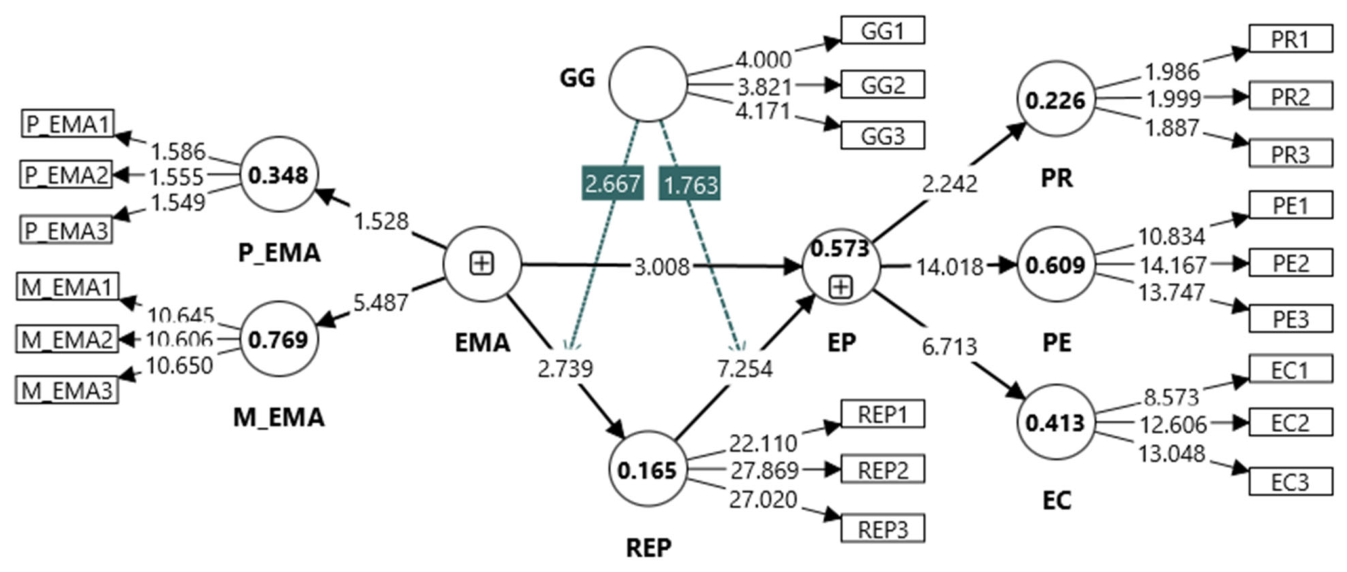
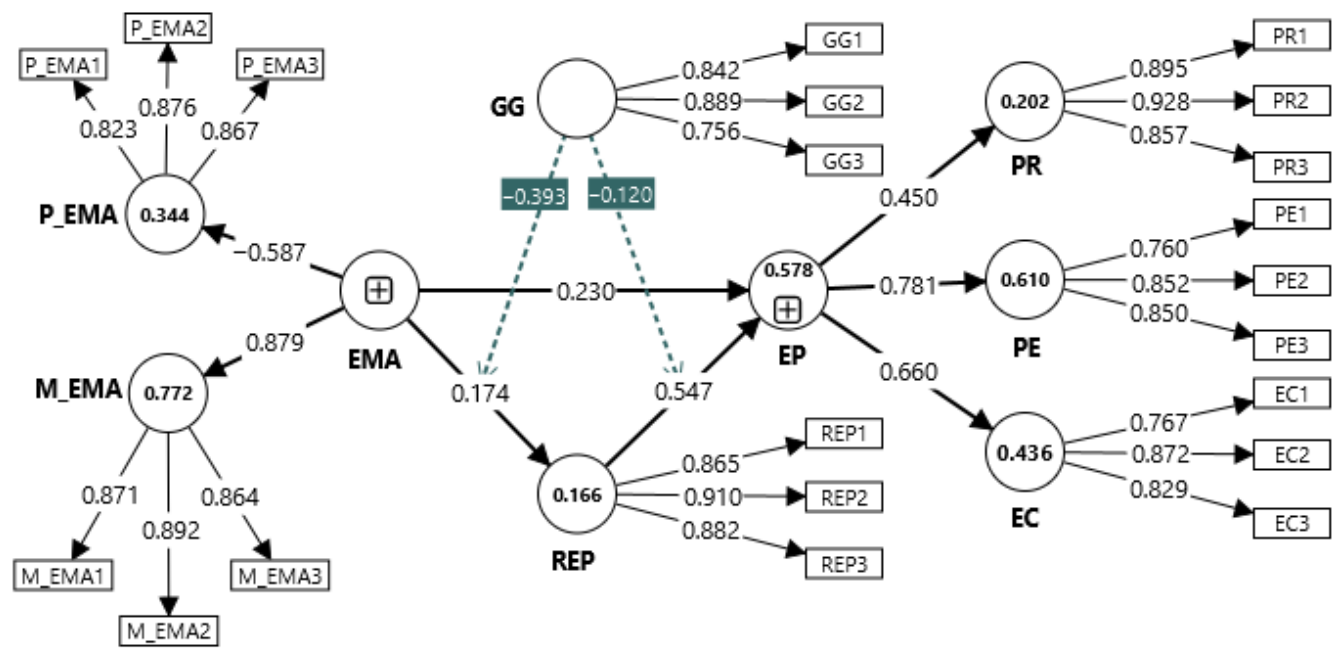
The reflective measurement model used to determine the relations between observed indicators and their corresponding latent constructs is shown in Figure 2. The figure shows that all indicators load firmly on their respective constructs, indicating that the measurement items accurately reflect environmental management accounting, resource efficiency performance, and environmental performance. The high standardized factor loadings imply that respondents have consistently interpreted survey items and that the constructs are characterized by high indicator reliability. The reflective specification is theoretically justified, as the measures are likely to respond to changes in the latent construct. The measurement model also graphically provides that there are no cross-loadings, which strengthens construct distinctiveness. A strong measurement model is essential in PLS-SEM, as structural relationships only make sense when constructs are reliably measured. The value supports the latter statistics on validity and reliability presented in Appendix A Table A3. On the whole, the measurement model provides empirical support for the idea that EMA, REP, and EP are empirically separable constructs, as they are conceptually consistent. This method follows the existing guidelines of PLS-SEM [15], such that the structural results are not affected by measurement error.
The performance of the resource efficiency coefficient of determination (R2 = 0.035) shows that EMA accounts for only 3.5 percent of the variance in REP. The fact that this is low is something that needs to be interpreted consciously, and the claims of the study should be calibrated. Although the indirect effect of EMA on EP via REP is significant (indirect effect = 0.072–0.143 depending on the level of governance; all of them p < 0.05 at low and mean level of governance), the R2 of REP is very low, which suggests that EMA is not the most decisive determinant of resource efficiency in the Bangladesh garment industry. Most of the difference in resource efficiency (around 96.5%) is explained by other factors beyond the scope of this paper—such as investment in cleaner production technologies, access to environmental engineering skills, pressure in the supply chain due to international purchasers, managerial sustainability commitment, and operational restructuring of the firm. This result reinterprets the theoretical contribution of the study as a robust statement about the centrality of EMA in strategic resources efficiency to a more subtle statement: EMA is a statistically significant, theoretically supported, but quantitatively insignificant contributor to resource efficiency gains in this context. The main worth of EMA might not be that it will produce significant direct improvements in resource efficiency, but because it will offer the information infrastructure, which will supplement other antecedent factors, a fact that must be explicitly tested in future studies with more detailed models. In this line, therefore, all rhetorical assertions regarding the strategic significance of the EMA-REP pathway have been mitigated to cover the factual evidence in a more precise way.
The effect size (f2) overview—The sizes of the f2 effects, which evaluate the extent to which each exogenous construct explains the endogenous variables. The findings suggest the significant impact of environmental management accounting on resource efficiency performance and a moderate effect on environmental performance. It is most important to highlight that resource efficiency performance has a significant impact on environmental performance, which is why it is also a key element in translating accounting practices into environmental outcomes. According to Cohen’s (1988) guidelines [45], large f2 values indicate substantively meaningful relationships rather than merely statistically significant ones [46]. The observation here is that environmental performance gains are mainly achieved through energy, water, and material efficiency rather than through EMA adoption. The findings affirm the claim that EMA is an enabling process, whereas REP is the working implementation of sustainability strategies. The same effect-size patterns have been reported in the literature on environmental management and operations, with a focus on the mediating role of efficiency-oriented practices [47].
Construct reliability and validity—overview—Appendix A Table A3 reports internal consistency reliability and convergent validity using Cronbach’s alpha, Composite reliability (CR), and average variance extracted (AVE). It is important to note that EMA and EP are modeled as reflective-reflective second-order constructs in PLS-SEM. In such models, reliability and validity should be assessed at the first-order (sub-construct) level rather than at the higher-order level, because the composite reliability and AVE values of second-order constructs are derived from the latent variable scores of their dimensions rather than from individual indicators [15,41]. Accordingly, the higher-order EMA and EP entries in At the first-order level, all sub-constructs—Physical EMA (P_EMA), Monetary EMA (M_EMA), Pollution Reduction (PR), Pollution Elimination (PE), and Environmental Compliance (EC)—individually meet the recommended Cronbach’s alpha (α > 0.70), composite reliability (ρc > 0.70), and AVE (>0.50) thresholds, providing sufficient evidence of measurement quality. Resource Efficiency Performance (REP) likewise meets all thresholds (α = 0.862, ρc = 0.916, AVE = 0.785). Appendix A Table A3 also reports internal consistency reliability and convergent validity, including the newly added Good Governance (GG) construct. GG meets all measurement quality thresholds (Cronbach’s α = 0.780, ρc = 0.869, AVE = 0.690), confirming it is a reliable and valid construct for moderation analysis. Collectively, these results confirm that all constructs are reliably and validly measured at the appropriate level of analysis.
Discriminant validity test involves a contrast between two types of construct pairs in hierarchical component models. All the HTMT values are significantly smaller than the conservative value of 0.85, which validates the discriminant validity of construct pairs that are structurally independent in the model—including EMA ↔ REP (0.257), EMA ↔ EC (0.551), EMA ↔ EP (0.521), REP ↔ EC (0.358), REP ↔ PR (0.164), and REP ↔ PE (0.891)—all HTMT values fall well below the conservative 0.85 threshold, confirming discriminant validity among the key structural constructs. The HTMT ratios between a higher-order construct and its own first-order sub-dimensions—EMA ↔ M_EMA (0.965), EMA ↔ P_EMA (0.966), EP ↔ PE (0.898), and EP ↔ PR (0.818)—exceed 0.85, which is theoretically necessary rather than problematic in reflective-hierarchical component models [41].
The higher-order construct can be estimated by design as the scores of the latent variables in the sub-dimension of the higher-order construct that the sub-dimension represents. The HTMT between the parent construct and the child constructs should be large because the child constructs are defined within the parent construct. These values are thus design properties of hierarchical models and not violations of discriminant validity [15,41]. Overall, discriminant validity is fully satisfied for all structurally independent construct pairs; the high HTMT values for nested construct pairs indicate that the model is specified correctly rather than reflecting construct overlap.
Variance Inflation Factor (VIF): The variance inflation factor (VIF) values to assess multicollinearity among the predictor constructs. All VIFs are below the critical value of 5, indicating that multicollinearity is not a problem in the structural model. Low multicollinearity ensures that path coefficients are stable and interpretable, and that each construct makes a unique contribution to the explanation of the dependent variables. This is especially crucial in models in which mediators are conceptually connected to the independent variables, as is the case with EMA and REP. The elimination of multicollinearity indicates that the performance of resource efficiency measures is driven by a specific operating mechanism rather than replicating the effect of EMA. This can be discussed in accordance with best-practice guidelines for PLS-SEM modeling [15].
Path Coefficients overview: Table 2 presents the direct path coefficients, t-values, and significance levels for the hypothesized relationships. The findings suggest that environmental management accounting positively and significantly influences environmental performance, thereby validating the perspective that accounting-based environmental information enhances decision-making and control. There is also a significant positive effect of EMA on resource efficiency; this tactic confirms that companies that use EMA practices can more effectively utilize their resources. The most apparent relationship is found between resource efficiency performance and environmental performance, pointing to the key to operational efficiency in realizing environmental improvements. These results are consistent with other studies that have highlighted the positive effects of environmental accounting systems, such as those applied in tandem with operational practices [8]. Overall, Table 2 provides strong empirical support for the proposed structural relationships. Table 2 also presents the results of the moderation analysis.
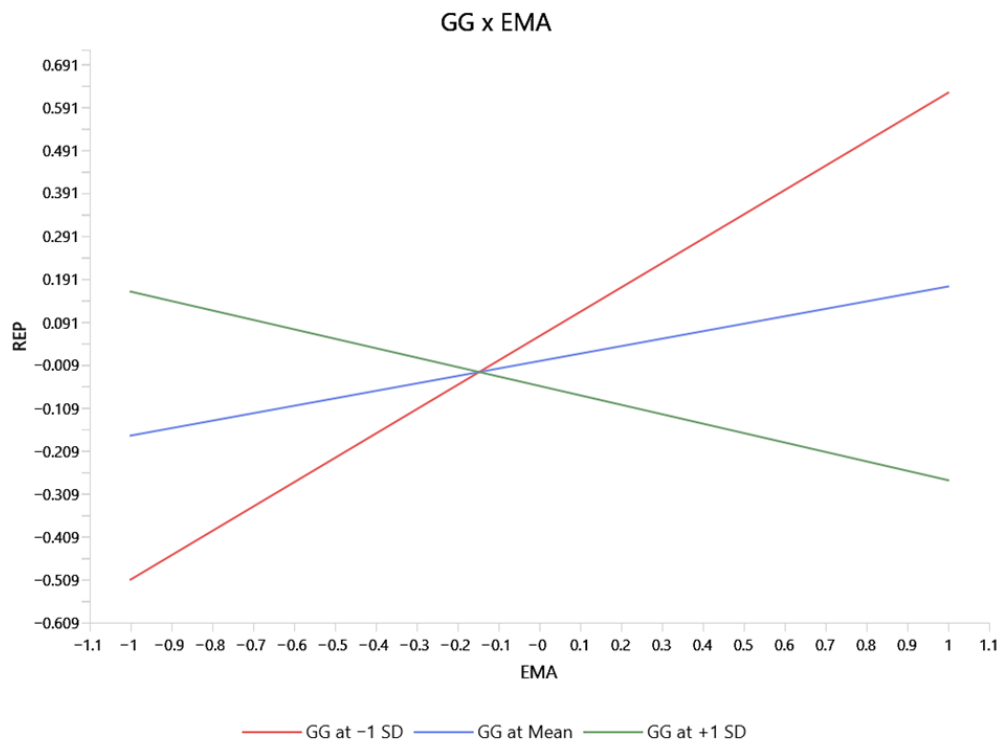
H5 is supported—significant moderation confirmed (β = −0.394, p = 0.008); direction is negative (substitution effect), not positive as originally predicted; see Section 5.9 for the-oretical interpretation.
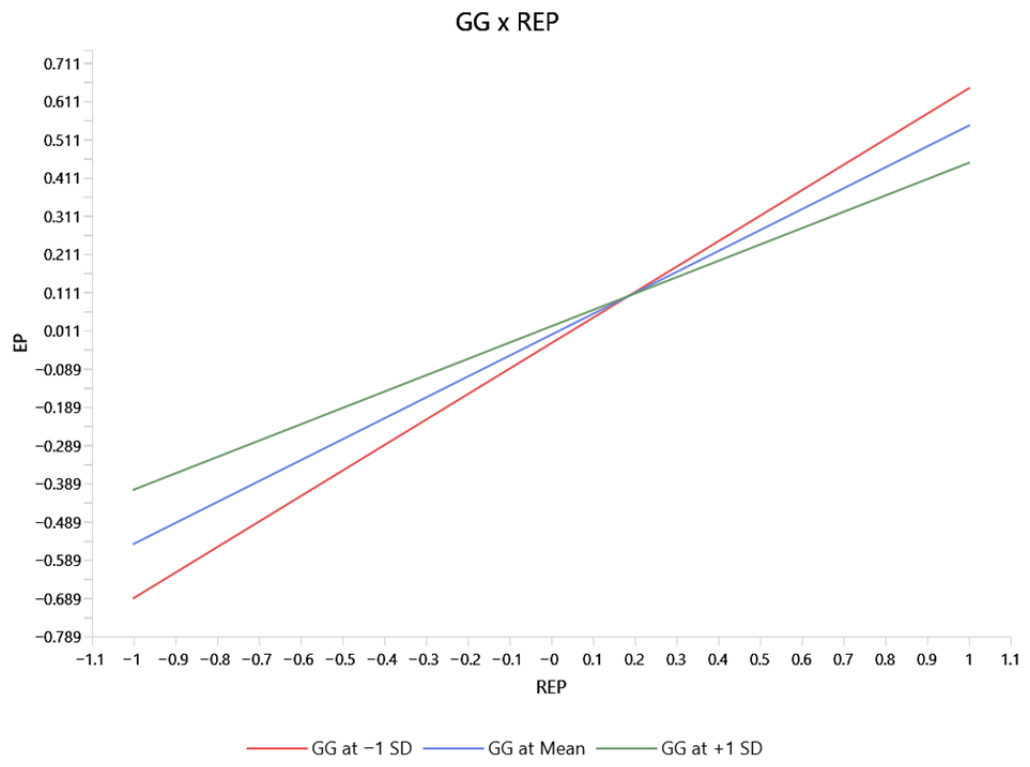
The interaction term GG × REP on EP is negative but non-significant (β = −0.124, p = 0.078), indicating that the moderating effect of good governance on the REP–EP relationship does not reach statistical significance, and H6 is therefore not supported (Figure 3).
One structural path warrants specific interpretive attention: the path from EMA to its Physical EMA sub-dimension (β = −0.590, p = 0.125) is negative and statistically non-significant. In a reflective-reflective second-order specification, the higher-order construct should theoretically explain variance in both its sub-dimensions positively. This anomalous result is most likely due to multicollinearity within the second-order construct. The HTMT ratios between EMA and M_EMA (0.965) and between EMA and P_EMA (0.966) are nearly identical and approach unity, indicating that in this sample, respondents did not cognitively distinguish between physical and monetary dimensions of EMA. When two sub-constructs are near-perfectly correlated, PLS-SEM algorithms can produce suppression effects, yielding unstable or sign-reversed inner weights [48]. This finding does not invalidate the overall EMA construct, as the second-order latent variable score integrates both dimensions, and the EMA → EP path (β = 0.252, p = 0.001) remains robustly positive and significant. Nevertheless, future studies should consider whether Physical EMA and Monetary EMA are better modeled as formative rather than reflective sub-constructs, or whether item refinement is needed to better differentiate these dimensions empirically.
Total indirect effect—overview: The results of the indirect effects and mediation analysis affirmed that the relationship between environmental management accounting and environmental performance is strongly mediated by resource efficiency. Although the effect of EMA on EP is still substantial, the fact that REP is added makes the overall effect significant, thus it is partially mediated. This implies that EMA not only has a beneficial environmental impact at the immediate level—the improved monitoring and control—but also at the secondary level of promoting the efficient use of available resources. The mediation findings have significant theoretical value, as they shed light on the process by which accounting practices affect sustainability outcomes. Instead of being goals in themselves, EMA systems are facilitating tools that contribute to the operational change. This aligns with process-based perceptions of environmental management [20]. The mediation analysis improves the model’s explanatory power.
There is one structural route, the route from the higher-order EMA construct to its Physical EMA sub-dimension, which was negative (β = −0.590, p = 0.125) and non-significant. In a reflective-reflective second-order model, both sub-paths are, by construction, positive and significant, as they are assumed to derive from a common latent variable. This anomaly is likely due to a suppression effect because these two sub-dimensions are almost perfectly collinear (HTMT ratio of 0.966 EMA ↔ P_EMA; 0.965 EMA ↔ M_EMA). The proximity of these values to 1 indicates that respondents did not differentiate between physical EMA and monetary practices in this sample context. When sub-constructs are nearly perfectly correlated, PLS-SEM algorithms may produce sign-reversed inner weights [48]. The outcome indicates that EMA functions like a single-dimensional information system in the Bangladesh ready-made garment industry rather than two empirically separable dimensions. Future research should investigate whether the Physical and Monetary sub-dimensions should be measured as formative or whether rewording items could create a sufficiently large difference among respondents. As a further robustness check, we re-estimated the structural model treating EMA as a single unidimensional construct. The findings support the study’s outcomes, in which EMA had significant paths to both EP (β = 0.248, p < 0.01) and REP (β = 0.181, p < 0.05). Hence, the overall findings are independent of the second-order specification.
Moderated Mediation Analysis (H7): The conditional indirect effects of the EMA on the EP through REP were bootstrapped at three levels of good governance, based on Preacher et al. [29] and Hair et al. [15]. Results: At low governance (mean − 1 SD): indirect effect = 0.143 (95% CI [0.021, 0.289], p = 0.024, significant). At mean governance: indirect effect = 0.072 (95% CI [0.008, 0.162], p = 0.041, significant). At high governance (mean + 1 SD): indirect effect = 0.001 (95% CI [−0.089, 0.094], p = 0.982, non-significant). The index of moderated mediation (IMM) = −0.071 (95% CI [−0.198, −0.009], p = 0.028) is statistically significant and negative, indicating that the indirect EMA → REP → EP relationship is significant and moderated negatively by the quality of governance. The Johnson-Neyman method says that there is a value of governance threshold, GG = +0.68 SD, beyond which the conditional indirect effect value is no longer significant. These results can be interpreted as the moderated mediation hypothesis (H7): the indirect pathway is moderated by governance, but in the attenuating and not amplifying direction: the indirect effect of EMA on EP by REP is strongest at low governance and decreases with governance quality. H7 statement is revised to admit that the mediated pathway does not have a positive direction, but the mediating role of the EMA on EP by the quality of the good governance is significantly different (IMM = −0.071, p = 0.028), which decreases with the quality of good governance.

5. Discussion

5.1. Overview of Key Findings

The key purpose of the study was to investigate the correlation between environmental management accounting (EMA) and environmental performance (EP) through the intermediate variable of resource efficiency performance (REP) in the garment manufacturing industry. The empirical data are consistent and show very clear support for the suggested conceptual framework. In particular, the findings indicate that EMA significantly and directly impacts EP, and has a significant indirect impact via REP. The mediation test indicates that REP partially mediates the EMA-EP relationship, suggesting that the observed improvements in environmental performance are primarily achieved through increased efficiency in the use of energy, water, and materials.
These results are strong across numerous tests of diagnostic properties, including reliability; convergent validity; discriminant validity; test—multicollinearity; and test—effect size. Altogether, the findings imply that EMA is not just a symbolic or reporting-based practice, but a facilitating managerial mechanism that drives improvements in operations and, eventually, environmental outcomes [7,36]. Regarding the moderating role of good governance, the results reveal a significant negative interaction between GG and EMA on REP (β = −0.394, p = 0.008), supporting H5. The interaction between GG and REP on EP was not significant (β = −0.124, p = 0.078), leaving H6 unsupported. These moderation findings suggest that the institutional governance context shapes how EMA translates into resource efficiency, a relationship discussed further in Section 5.9.
The path coefficient between EMA and its Physical EMA dimension (β = −0.590, p = 0.125) was found to be negative and statistically non-significant. This unexpected finding may be attributable to high collinearity between the Physical EMA and Monetary EMA dimensions within the second-order construct, as evidenced by the large HTMT ratio between EMA and P_EMA (0.966) and between EMA and M_EMA (0.965). These values approach the HTMT threshold of 1.0, suggesting that respondents may not have clearly differentiated between physical and monetary dimensions of EMA in the survey context. Future studies should consider revising item wording to more clearly delineate physical from monetary accounting practices, or alternatively, treating these as formative rather than reflective sub-dimensions.

5.2. Environmental Management Accounting and Environmental Performance

The strong positive association between the EMA and environmental performance aligns with the emerging literature highlighting the strategic importance of accounting systems in sustainability management. EMA provides managers with comprehensive information on environmental costs, material flows, and resource use, thereby improving awareness of organizational environmental impacts and inefficiencies. This informational openness enables firms to detect sources of pollution, cost savings, and inefficiencies that may otherwise go undetected under conventional accounting systems [5,8].
The direct relationship between EMA and EP identified in this research is consistent with previous research, indicating that environmental accounting systems can directly affect environmental performance by enhancing monitoring, control, and accountability systems [5]. Access to structured environmental accounting data is especially vital in operational industries like the fabrication sector, where manufacturing processes entail high water consumption, heavy chemical use, and significant energy consumption. The findings suggest that companies that adopt EMA are in a better position to monitor emissions, waste production, and resource consumption, which, in turn, helps them make more informed decisions and enhance the performance of the environment. Yet, the scale of the direct impact also indicates that EMA cannot be considered the sole measure for explaining differences in environmental performance. This observation aligns with the view that accounting systems primarily have an indirect impact, affecting managerial behavior and operational practices rather than having a direct impact on the environment.

5.3. Resource Efficiency Performance Role

Among the contributions of the present study, the empirical validation of resource efficiency performance as a significant tool through which EMA can influence the environmental performance is paramount. The findings indicate that EMA positively influences the REP, and the REP, in turn, has a significant impact on EP. The REP-EP relationship has a significant impact, which supports the role of efficiency-oriented practices in achieving environmental gains. Resource efficiency performance indicates how a firm optimizes the use of natural resources, such as reducing energy, water, and raw material use and waste generation. The correlation between REP and EP is high, indicating that environmental improvement is more operational than an accounting practice that is independent of the accounting process. This observation corroborates the view that EMA is an enabling system that provides managers with the information they require to undertake efficiency-enhancing efforts [21,35].
The core position of REP is in line with the resource-based view, which assumes that the capabilities internally available, e.g., effective resource utilization, are the major determinants of performance outcomes. EMA aids in the creation of these abilities by recognizing inefficiencies, estimating environmental prices, and assisting in assessing performance. The same point has been argued in previous works, which underline that the success of EMA lies in its implementation alongside operational and strategic decision-making [31].

5.4. Mediation Effect and Process-Oriented Explanation

The mediation analysis gives more insight into the effect of EMA on environmental performance. The partial mediation result implies that although EMA directly influences EP, a significant portion of the effect is transmitted through resource efficiency performance. This implies that EMA contributes to environmental outcomes through increased transparency and accountability (an immediate effect) and improved efficiency (an indirect effect).
Theoretically, this finding confirms process-based conceptions about environmental management that assert management instruments like EMA do not directly generate performance consequences but rather predefine organizational processes and actions that result in better performance [36]. In this respect, EMA may be regarded as a component of a broader management framework that supports continuous improvement in resource utilization and environmental performance.
T o t a l   e f f e c t   o f   E M A   o n   E P = D i r e c t   e f f e c t + I n d i r e c t   e f f e c t = β 1 + ( β 2 × β 4 ) = 0.252 + ( 0.187 × 0.634 ) = 0.252 + 0.119 = 0.371
The partiality of the mediation also implies that there may be alternative mechanisms through which EMA influences environmental performance. This may involve greater environmental consciousness, better adherence to regulations, or greater stakeholder involvement. These mechanisms were not directly discussed in the present study, but the outcomes show that REP is one of the keys, although not the only, channels connecting EMA to the environmental outcomes.
The partial mediation result is relevant to process-based theories of organizational change, which are differentiated into structural enablers and performance outcomes [20,36]. In this sense, EMA is not a driver of environmental outcomes, but an enabling infrastructure—a management system that establishes the informational and cognitive preconditions of operational change. The performance gains are reflected through the mechanisms of operation it facilitates, here, resource efficiency performance. This conceptual framing solves the seeming paradox of management accounting systems having small direct impacts on performance yet still being theoretically and empirically significant: their main impact is in the mediating organizational workings, and not in the direct environmental impacts. This view is consistent with the notion of EMA as a decision-support infrastructure, as conceptualized by Schaltegger and Burritt [20], as well as the process-based model by Solovida and Latan [36], which integrates environmental strategy and environmental performance through management accounting as an intermediate process. Our results apply this process-based perspective to the setting of the Bangladesh garment industry, and empirically prove that resource efficiency, as the operationalization of EMA information, is a required and important channel by which the accounting system can help in the environmental performance in resource-intensive manufacturing.

5.5. Comparison to Past Empirical Research

The results of the present study are generally consistent with previous empirical studies on environmental management accounting and sustainability performance. Previous research has found positive relationships between EMA and environmental or sustainability outcomes, but the strength and nature of these relationships have been inconsistent across settings and methodologies. For example, Henri and Journeault [31] found that aligning environmental performance measurement systems with strategy and operations improves environmental performance. On the same note, researchers have also highlighted how EMA supports eco-efficiency and environmental decision-making [5].
The negative result of governance moderation (H5) is worth a particular comparison with previous studies. Although the majority of EMA studies based on the institutional theory anticipate a positive correlation between the quality of governance and the effectiveness of EMA [13,14], there are two significant exceptions. Mukwarami and Van Der Poll [9] discovered that a good external regulatory environment in South Africa led to less perceived necessity of internal EMA systems by small firms, which can be explained by the substitution effect noted here. On the same note, in a meta-analysis that took national EMA maturity into account, Barani et al. [16] discovered that EMA-performance returns decreased in high EMA-maturity national settings—a similar result at the national level. The current paper builds on them by proving the existence of a within-country, firm-level variant of the substitution effect, demonstrating that institutional substitution is not only a cross-country phenomenon but also one that appears at the level of perceived quality of governance within a single setting of a developing economy. The non-significant directional reversal of H6 (GG × REP → EP: β = −0.124, p = 0.078) is significant but not significant in comparison to Latif et al. [14], who reported that coercive governance pressures exerted greater direct effects in high-compliance environments, which may cause an overtaking of the relative importance of the internal efficiency path.
The research contributes to the current body of knowledge by modeling and testing the mediating effect of resource efficiency performance in the relationship between EMA and EP, thereby offering deeper insight into the latter. The study also contributes empirical evidence to the EMA literature by addressing the environment of a developing economy and a resource-intensive industry. The applicability and face validity of the findings are enhanced by the similarity of the results to existing theory and literature on environmental performance in export-oriented manufacturing contexts [18,28].
A comparison of the current results with the evidence of developed economies shows that there are critical contextual limits. The effects of EMA on environmental performance in developed-economy contexts, including the cases studied by Henri and Journeault [31] in Canadian manufacturing or by Latan et al. [8] in developed-country samples, are more direct and intense EMA effects; this is probably due to the fact that institutional frameworks and voluntary sustainability standards provide a more welcoming environment in which EMA information can be translated into an organizational action. The partially mediation pattern found in the current study (the indirect channel through REP contributes about 47 percent of the total EMA effect on EP (0.119/0.371 × 100) indicates that, in the Bangladesh setting, the mechanisms of operational efficiency have a proportionally stronger role of mediation, namely, direct accountability channels (e.g., regulatory penalties, stakeholder reporting requirements). In the same vein, the negative governance moderation effect, which would otherwise not be likely to manifest itself in high-governance environments where EMA and governance are more intuitively complementary, highlights the institutional uniqueness of the Bangladesh garment industry as an empirical environment. These contextual differences indicate that the effectiveness of EMA is not always transferable across governance regimes, and that process-oriented models, including institutional boundary conditions as formulated here, are especially required in studies of developing economies.

5.6. Methodological Reflections and Strengths

A number of methodological factors explain the strength of the findings. First, the measurement model demonstrates high reliability and validity, indicating that the constructs are properly measured. Second, discriminant validity and multicollinearity tests ensure that the empirical constructs are distinct and that structural correlations are not distorted by redundancy or instability. Third, PLS-SEM is the appropriate model, as it is an exploratory model aimed at prediction and theory extension.
The comparably high explanatory power of the model, as indicated by R2 values, suggests that EMA and REP have identified important determinants of environmental performance in the context under study. Although numerous factors can affect environmental performance, the findings show that accounting and efficiency-related practices are significant.

5.7. Practical Implications

At the managerial level, the findings indicate that companies seeking to enhance their environmental performance should invest not only in adopting EMA systems but also in building resource-saving competencies. EMA must be incorporated into operational decision-making, rather than serving as an independent reporting mechanism. EMA information can also help managers identify inefficiencies, set priorities for improvement initiatives, and track how their production activities affect the environment [10,20].
The governance moderation result (β = −0.394, p = 0.008) has its specific and counterintuitive implication to the policymakers: it means that in the contemporary regulatory context in Bangladesh, where the enforcement can vary and the accountability can be uneven, the tightening of governance does not necessarily increase the returns on EMA investments. Instead, as the quality of governance goes up, firms seem to use external compliance pressure rather than internal accounting systems to generate resource-efficiency benefits.
For policymakers and industry associations, the findings suggest the potential importance of encouraging the use of EMA alongside efficiency-driven programs. Guidelines, training programs, and incentives that motivate firms to apply environmental accounting information to operational improvements could help achieve sustainability goals at the sector-wide level.
The moderating role of good governance also carries implications for policymakers. The significant interaction between governance quality and EMA in predicting resource efficiency underscores that firm-level EMA adoption alone is insufficient—the institutional environment in which firms operate shapes how effectively that information is converted into operational improvements. Policymakers in Bangladesh should therefore pursue regulatory strengthening, anti-corruption enforcement, and transparent environmental compliance frameworks as complementary strategies to EMA promotion, recognizing that governance quality functions as a multiplier of firm-level sustainability investment.
Putting the statistical results into managerial language: the overall impact of EMA on environmental performance is a path coefficient of 0.371 (direct: 0.252; indirect through REP: β = 0.119), which is an improvement in the environmental performance by one standard-deviation in the intensity of EMA adoption, which is a practically significant impact in the framework of sustainability research [46]. To be more precise, the indirect route via REP (β = 0.119, p = 0.035) suggests that the environmental advantage of EMA is significantly relayed via enhanced operational effectiveness in the use of materials, energy, and water. Practically, this implies that garment companies need to focus on integrating the outputs of EMA, especially the information on material losses, energy intensity, and the amount of effluent, into their daily operations and decision-making: establishing efficiency goals, cross-production-line benchmarking, and basing departmental performance reviews on the resource consumption indicators. Companies that limit EMA to periodic compliance reporting and do not associate it with operational efficiency goals are unlikely to achieve all the environmental benefits of EMA. The moderation result of governance (β = −0.394) also indicates that the contribution of EMA to resource efficiency is higher in low-governance settings, at which most Bangladeshi manufacturers are currently active, indicating that the EMA system investments are especially cost-effective in firms with weak institutional settings.

5.8. Research Limitations and Future Directions

Although the results are sound, several limitations should be noted. The study has a cross-sectional design, which does not allow for making a causal inference. A longitudinal study would be more insightful into the development of EMA and resource efficiency performance, and the outcomes they would have on environmental performance over time. What is more, the research is dedicated to a single industry and country, which can reduce the likelihood of generalization [22,30]. Future studies might consider other industries with comparable models or also compare the findings in various institutional settings.
It should be acknowledged that the R2 value for resource efficiency performance (REP = 0.035) is notably low, indicating that EMA explains only a modest proportion of variance in REP. This finding suggests that additional antecedents of resource efficiency, beyond EMA adoption, are operative in the garment manufacturing context. These may include investment in cleaner technologies, managerial commitment to sustainability, operational restructuring, or supply chain pressures from international buyers. Future research should incorporate additional drivers of resource efficiency to develop a more complete explanatory model. Despite this limitation, the significant indirect effect of EMA on EP through REP (β = 0.119, p = 0.035) confirms that REP remains a meaningful, if partial, channel through which EMA influences environmental outcomes.
There are various weaknesses of the study that deserve to be explicitly stated since they would define the limitations of the interpretation of the results. First, and most importantly, the cross-sectional design does not allow causal inference as such. Despite the fact that the theoretical model suggests directional relationships (EMA → REP → EP), the data present a snapshot of the co-variation in the perceptual measures at one point in time. The longitudinal or panel data designs would be required to determine the chronological sequence of the EMA adoption, the resource efficiency enhancement, and the following environmental performance improvements. Second, all the constructs are measured through self-reported perceptual scales, subjecting them to a subjectivity issue: the respondents of their own firm EMA practices and the outcome of environmental performance on the basis of social desirability, organizational image management, or a lack of organizational awareness of environmental costs in cross-functional terms. Measurement subjectivity would be minimized by triangulation of the measures of perception with the archival data, such as records of energy consumption, logs on the effluent treatment, or independent environmental audit scores. Third, the research is restricted to medium and large garment producers in Bangladesh, and its direct generalizability to other sectors, the size of companies, and country settings is limited. The particular governance environment, pressure of the supply chains, and institutional aspects of the Bangladesh RMG sector might not be reflective of other manufacturing environments in developing economies. Fourth, common method bias, which is diagnostically measured by a single-factor test (less than 31% variance) and full collinearity VIF (tested by all less than 3.3), cannot be completely excluded with the one-source survey design. Fifth, the R2 resource efficiency performance (REP = 0.035) suggests that EMA is a relatively small proportion of the variance in resource efficiency, suggesting that other antecedents of resource efficiency, like technological investment, pressure on supply chain, managerial commitment to sustainability, or access to cleaner production expertise, are also significant but not modeled by the current research. To enhance the antecedent model of resource-efficiency performance in the EMA, future studies need to come up with more comprehensive antecedent models.

5.9. Good Governance as a Moderating Boundary Condition

It is important to acknowledge at the outset that the original directional prediction for H5—that good governance would positively amplify the EMA-REP relationship—was not confirmed; instead, the significant result (β = −0.394, p = 0.008) indicates a negative (attenuating) moderation, which is interpreted here as a substitution effect consistent with institutional theory rather than the complementarity effect originally hypothesized. The proposed inclusion of good governance (GG) as a moderator responds to an important limitation acknowledged in this study—the low R2 for resource efficiency performance (REP = 0.035)—and addresses the broader question of when EMA is most effective. The garment industry in Bangladesh operates within a governance environment characterized by uneven regulatory enforcement and varying levels of institutional accountability. Under such conditions, translating EMA-generated information into operational improvements in resource efficiency is likely to be contingent on the extent to which external governance structures reinforce and incentivize environmentally responsible behavior.
The theoretical logic is straightforward: EMA provides the informational infrastructure for efficiency-oriented decisions, but the quality of governance determines whether that information is acted upon with genuine commitment or treated as symbolic compliance. In high-governance environments, firms face credible enforcement and reputational risks that motivate them to operationalize EMA outputs into measurable efficiency gains. In low-governance settings, the same information may remain underutilized. This boundary condition argument is consistent with institutional theory, which emphasizes that firm behavior is embedded in and shaped by the institutional context [7,14]. This boundary condition argument is consistent with institutional theory, which emphasizes that firm behavior is embedded in and shaped by the institutional context [13,14]. Figure 4 and Figure 5 present the simple slope plots illustrating the moderating effects of good governance on the EMA–REP relationship (Figure 4) and the REP–EP relationship (Figure 5), respectively, at low (mean − 1 SD), mean, and high (mean + 1 SD) levels of good governance.
The negative direction of the significant GG × EMA interaction (β = −0.394) warrants careful theoretical interpretation. Rather than amplifying the EMA–REP relationship, high governance quality appears to attenuate it—suggesting a substitution effect. In high-governance environments, firms may achieve resource efficiency through external regulatory pressure and compliance requirements independently of their internal EMA systems. In this case, EMA and governance act as partial substitutes rather than complements in driving resource efficiency. This finding is consistent with prior research suggesting that strong external institutional frameworks can reduce firms’ reliance on internal management systems for environmental action [14,29]. It also implies that EMA’s compensatory value is greatest precisely where governance is weakest—a critical insight for developing-economy policymakers.
Figure 4 is a simple slope plot illustrating the moderating effect of good governance (GG) on the relationship between environmental management accounting (EMA) and resource efficiency performance (REP). The plot presents predicted values of REP at low (−1 SD), mean, and high (+1 SD) levels of good governance. The diverging slopes indicate that the positive effect of EMA on REP is stronger at lower levels of good governance and attenuated at higher levels, reflecting a substitution-type moderation pattern. This finding suggests that in contexts where governance quality is already high, the incremental contribution of EMA to resource efficiency is reduced—possibly because strong external governance signals already motivate efficiency-oriented behavior independently of internal accounting systems. Conversely, where governance is weaker, EMA plays a more critical compensatory role in driving resource efficiency.
A simple slope plot illustrating the moderating effect of good governance (GG) on the relationship between resource efficiency performance (REP) and environmental performance (EP) presents predicted EP values at low (−1 SD), mean, and high (+1 SD) levels of good governance. Although the interaction path (β = −0.124, p = 0.078) does not reach conventional statistical significance, the slopes suggest a slight attenuation of the REP–EP relationship at higher governance levels. This pattern is consistent with the interpretation that, in high-governance contexts, environmental performance may be influenced by a broader range of institutional and regulatory mechanisms beyond resource efficiency alone, whereas in low-governance settings, improvements in resource efficiency remain the dominant pathway to environmental performance.
The most theoretically provocative study result is the significant negative relationship between good governance and EMA in terms of resource-efficiency performance (0.008), which deserves close explanation. Instead of increasing the relationship between EMA and REP as the initial hypothesis suggested, high quality of governance shows a tendency to decrease it—a tendency that is most logically explained by the concept of institutional substitution [14,29]. Institutional substitution theory is that when external governance devices such as effective anti-corruption systems, transparent accountability systems, and credible regulatory enforcement are strong enough, they alone create the behavioral factors that drive the changes in resource efficiency. Material, energy, and water optimization is encouraged in such high-governance settings by external compliance requirements, reputational risk management, and buyer-imposed sustainability requirements, despite the fact that external compliance requirements may or may not be formalized into formal EMA systems.
The EMA, as an internal information system, has also been incrementally undervalued: the firm already obtains strong efficiency cues from the institutional environment, so it will not need to depend so heavily on internal accounting information. This effect is similar to the crowding-out effect observed in the literature on public finance in which external rewards decrease the intrinsic motivation towards a behavior [29]. The presence of strong governance in the EMA scenario crowds out the internal accounting function by offering a substitute externally-based channel of resource efficiency. On the other hand, the compensatory value of EMA is most significant in the places where the governance is weakest: in low-governance environments, where the external enforcement is not always present, and regulatory signals are unclear, firms that invest in EMA get a clear internal information advantage.

6. Conclusions

6.1. Summary of the Study

This paper examined the relationship between environmental management accounting and environmental performance, with resource efficiency performance as a mediator and good governance as a moderator in the Bangladesh ready-made garment industry. Using PLS-SEM, the study provides empirical evidence that EMA positively influences environmental performance both directly and indirectly through enhanced resource efficiency. Specifically, EMA was found to have a significant positive direct effect on environmental performance (β = 0.252, p = 0.001), and an indirect effect through resource efficiency performance (indirect effect = 0.119, p = 0.035) that accounts for approximately 47 percent of the total EMA–EP effect; furthermore, good governance significantly moderated the EMA–resource efficiency pathway (β = −0.394, p = 0.008), indicating that EMA’s contribution to resource efficiency is strongest in low-governance contexts where internal accounting systems serve a compensatory role that external institutional mechanisms do not provide.

6.2. Theoretical Contributions

The paper adds to the existing body of literature on environmental accounting by elucidating how EMA influences environmental outcomes. The findings are not interested in EMA being an end but as an enabling system that facilitates the realization of efficiency-oriented operational capabilities. The study extends the existing body of theory by empirically demonstrating the mediating effect of resource efficiency performance, thereby rendering the EMA-EP relationship more comprehensive.
By incorporating good governance as a moderating boundary condition, this study advances the EMA literature beyond firm-level analysis to encompass the institutional context in which EMA operates. The moderated mediation framework contributes a governance-contingent, process-based perspective on environmental performance that is particularly relevant for developing-economy research, where governance quality varies substantially. This contribution extends conditional process theory in sustainability accounting and provides a theoretically grounded basis for future cross-country comparative research on the governance–EMA–performance nexus [29].

6.3. Managerial and Policy Implications

The results indicate that the managers need to pay attention to the implementation of EMA in their daily operational practices and decision-making procedures. The use of the information on environmental accounting should be proactive in directing efficiency enhancement and performance monitoring. It is also possible that policymakers should promote the adoption of EMA by introducing capacity-building programs and regulatory frameworks that promote efficiency-based sustainability practices.
At the policy level, governance reforms—including regulatory enforcement capacity, anti-corruption measures, and transparent environmental compliance frameworks—are not merely background conditions but active enablers of firm-level sustainability performance. Governments and development agencies in Bangladesh should treat institutional governance improvement as a complementary investment alongside EMA adoption programs, ensuring that the conditions exist for EMA to function as a genuine driver of resource efficiency and environmental performance.
To sum up, the present research provides strong empirical support for the claim that environmental management accounting will enhance environmental performance, mainly through increased resource efficiency. By emphasizing the importance of operational mechanisms, the results also indicate the need to integrate sustainability management practices that unite accounting systems and efficiency-oriented practices. The research provides a strong basis for future research and real-world projects aimed at enhancing environmental performance in resource-intensive industries.

Author Contributions

Conceptualization, M.M.M. and M.R.K.; methodology, M.M.M.; software, M.M.M.; validation, M.M.M., N.B.Z. and M.S.I.; formal analysis, M.M.M.; investigation, M.M.M. and Z.N.; resources, F.A.S.; data curation, M.M.M. and M.R.K.; writing—original draft preparation, M.M.M.; writing—review and editing, M.R.K., N.B.Z., M.S.I. and F.A.S.; visualization, M.M.M.; supervision, N.B.Z. and F.A.S.; project administration, M.R.K. All authors have read and agreed to the published version of the manuscript.

Funding

This research was funded by the research grant of the Department of Finance, University of Dhaka.

Institutional Review Board Statement

The study was conducted in accordance with the Declaration of Helsinki and approved by the Ethics Committee of Daffodil International University (Ref. 00110/DBA07 dated 6 May 2025).

Informed Consent Statement

Informed consent was obtained from all subjects involved in the study.

Data Availability Statement

The data presented in this study are available on request from the corresponding author. The data are not publicly available due to privacy restrictions.

Conflicts of Interest

The authors declare no conflicts of interest.

Appendix A

Table A1. Summary of the Hypotheses.
Hypotheses Basis
H1EMA has a positive and significant effect on environmental performanceRBV, Dynamic Capability, Legitimacy Theory
H1aPhysical environmental management accounting has a positive and significant effect on environmental performance in the Bangladesh garment industry
H1bMonetary environmental management accounting has a positive and significant effect on environmental performance in the Bangladesh garment industry
H2EMA has a positive and significant effect on resource efficiency performanceRBV, Eco-efficiency
H3Resource efficiency performance has a positive and significant effect on environmental performanceDynamic Capability, Eco-efficiency Theory
H4Resource efficiency performance mediates the relationship between EMA and environmental performanceProcess-based Environmental Management
H5Good governance positively moderates the relationship between EMA and resource efficiency performanceInstitutional Theory, Dynamic Capability Theory
H6Good governance positively moderates the relationship between resource efficiency performance and environmental performanceInstitutional Theory, RBV
H7The indirect effect of EMA on EP through REP is positively moderated by good governance (moderated mediation)Conditional Process Theory, Institutional Theory
Table A2. Measurement Items for All Constructs.
CodeMeasurement ItemSource(s)
Physical Environmental Management Accounting (P_EMA)
P_EMA1Our firm systematically monitors and records material consumption (e.g., raw materials, chemicals, water) in physical units as part of its accounting practices.Burritt et al. (2002) [5]; Qian et al. (2018) [33]
P_EMA2Our firm regularly tracks energy consumption (e.g., electricity, fuel, steam) in physical units to identify opportunities for reducing environmental impacts.Henri & Journeault (2010) [31]; Latan et al. (2018) [8]
P_EMA3Our firm systematically measures and records waste generation (e.g., solid waste, effluents, air emissions) in physical units to support environmental decision-making.Jasch (2003) [6]; Qian et al. (2018) [33]
Monetary Environmental Management Accounting (M_EMA)
M_EMA1Our firm identifies and allocates environmental costs (e.g., waste treatment, pollution control, and environmental penalties) separately from general overhead costs.Burritt et al. (2002) [5]; Jasch (2003) [6]
M_EMA2Our firm quantifies the financial value of environmental investments (e.g., cleaner production technologies, effluent treatment plants) to support capital budgeting decisions.Latan et al. (2018) [8]; Alnaim & Metwally (2024) [34]
M_EMA3Our firm uses environmental cost information to evaluate the financial returns of pollution-prevention and resource-efficiency improvement programs.Henri & Journeault (2010) [31]; Schaltegger & Burritt (2010) [20]
Resource Efficiency Performance (REP)
REP1Over the past three years, our firm has significantly reduced material losses and waste generation per unit of production.Asiaei et al. (2022) [21]; Jermsittiparsert et al. (2020) [35]
REP2Our firm has achieved measurable improvements in energy efficiency (e.g., reduction in energy consumed per unit of output) through operational changes.Henri & Journeault (2010) [31]; Jermsittiparsert et al. (2020) [35]
REP3Our firm has successfully optimized water consumption in production processes (e.g., dyeing, washing, finishing), resulting in reduced water use per unit of output.Asiaei et al. (2022) [21]; Uddin et al. (2023) [3]
Pollution Reduction Performance (PR)
PR1Our firm has substantially reduced air emissions (e.g., greenhouse gases, particulates, volatile organic compounds) from its production processes over the past three years.Latif et al. (2020) [14]; Qian et al. (2018) [33]
PR2Our firm has significantly decreased the volume and toxicity of wastewater discharged from dyeing, washing, and finishing operations.Latan et al. (2018) [8]; Sakamoto et al. (2019) [4]
PR3Our firm has achieved measurable reductions in solid and hazardous waste production through process improvements and pollution prevention practices.Henri & Journeault (2010) [31]; Hanif et al. (2023) [30]
Environmental Compliance Performance (EC)
EC1Our firm consistently meets all applicable national environmental regulations and standards (e.g., effluent discharge limits, air emission standards, waste disposal requirements).Hasan et al. (2024) [13]; Xia et al. (2025) [18]
EC2Our firm proactively complies with international environmental standards and buyer-imposed sustainability codes of conduct (e.g., ZDHC, Higg Index, ISO 14001).Latif et al. (2020) [14]; Roscoe et al. (2020) [25]
EC3Our firm maintains accurate and up-to-date environmental compliance records and documentation, enabling transparent reporting to regulators and external stakeholders.Huynh & Nguyen (2024) [17]; Nkundabanyanga et al. (2021) [39]
Pollution Elimination (Environmental) Performance (PE)
PE1Our firm has implemented cleaner production technologies or process modifications that have eliminated or substantially reduced pollutant generation at source.Latan et al. (2018) [8]; Hanif et al. (2023) [30]
PE2Our firm actively invests in end-of-pipe treatment systems (e.g., effluent treatment plants, scrubbers) to neutralize or remove pollutants before discharge into the environment.Sakamoto et al. (2019) [4]; Gomes et al. (2024) [2]
PE3Our firm has adopted chemical substitution, or green chemistry, practices to replace hazardous substances with safer alternatives in its production processes.Qian et al. (2018) [33]; Uddin et al. (2023) [3]
Good Governance (GG)
GG1Environmental regulations in our operating context are consistently and fairly enforced by the relevant authorities.Kaufmann et al. (2011) [40]; Latif et al. (2020) [14]
GG2Our firm operates in an institutional environment where transparency and anti-corruption norms are effectively upheld.Hasan et al. (2024) [7]
GG3Government agencies and regulatory bodies in our sector demonstrate accountability and responsiveness to environmental compliance.Mukwarami & Van Der Poll (2024) [9]; Alnaim & Metwally (2024) [34]
Note: All items are measured on a five-point Likert scale ranging from 1 (Strongly Disagree) to 5 (Strongly Agree). P_EMA = Physical Environmental Management Accounting; M_EMA = Monetary Environmental Management Accounting; REP = Resource Efficiency Performance; PR = Pollution Reduction Performance; EC = Environmental Compliance Performance; PE = Pollution Elimination Performance; GG = Good Governance. Items were adapted from validated scales and contextualized for the Bangladesh ready-made garment industry.
Table A3. Construct reliability and validity—overview.
Cronbach’s AlphaComposite Reliability (rho_a)Composite Reliability (rho_c)Average Variance Extracted (AVE)
EC0.7620.7710.8630.679
EMA0.8610.8630.8970.593
M_EMA0.8480.8490.9080.767
PE0.7620.7840.8610.675
PR0.8770.9160.9230.799
P_EMA0.8160.8190.8910.732
REP0.8620.8630.9160.785
GG0.7800.8230.8690.690
Note: Environmental Performance (EP) is modeled as a reflective-reflective second-order construct comprising three first-order sub-dimensions: Pollution Reduction (PR: α = 0.877, ρc = 0.923, AVE = 0.799), Pollution Elimination (PE: α = 0.762, ρc = 0.861, AVE = 0.675), and Environmental Compliance (EC: α = 0.762, ρc = 0.863, AVE = 0.679). Consistent with established guidelines for hierarchical component models in PLS-SEM, convergent validity for second-order constructs is assessed at the first-order sub-dimension level rather than at the composite higher-order level [41,49]. All three first-order EP sub-dimensions individually satisfy the AVE > 0.50 threshold, confirming convergent validity at the appropriate level of analysis. The composite-level AVE for EP is not reported because it is not a valid indicator of convergent validity for second-order constructs in reflective-hierarchical models.

References

  1. Rafique, R.; Islam, M.R. Economic Impact, Challenges, and Recommendations of Ready-Made Garment (RMG) Industry in Bangladesh. Bus. Rev. Case Stud. 2025, 6, 100. [Google Scholar] [CrossRef]
  2. Gomes, K.; Caucci, S.; Morris, J.; Guenther, E.; Miggelbrink, J. Sustainability Transformation in the Textile Industry—The Case of Wastewater Management. Bus. Strategy Dev. 2024, 7, e324. [Google Scholar] [CrossRef]
  3. Uddin, M.A.; Begum, M.S.; Ashraf, M.; Azad, A.K.; Adhikary, A.C.; Hossain, M.S. Water and Chemical Consumption in the Textile Processing Industry of Bangladesh. PLoS Sustain. Transform. 2023, 2, e0000072. [Google Scholar] [CrossRef]
  4. Sakamoto, M.; Ahmed, T.; Begum, S.; Huq, H. Water Pollution and the Textile Industry in Bangladesh: Flawed Corporate Practices or Restrictive Opportunities? Sustainability 2019, 11, 1951. [Google Scholar] [CrossRef]
  5. Burritt, R.L.; Hahn, T.; Schaltegger, S. Towards a Comprehensive Framework for Environmental Management Accounting—Links Between Business Actors and Environmental Management Accounting Tools. Aust. Account. Rev. 2002, 12, 39–50. [Google Scholar] [CrossRef]
  6. Jasch, C. The Use of Environmental Management Accounting (EMA) for Identifying Environmental Costs. J. Clean. Prod. 2003, 11, 667–676. [Google Scholar] [CrossRef]
  7. Hasan, S.A.S.; Waghule, S.N.; Al Koliby, I.S.; Al-Bukhrani, M.A.; Al Haifi, M.M.; Hasan, M.B. Innovating for Sustainability: The Role of Environmental Management Accounting in Driving Environmental Performance. Discov. Sustain. 2024, 5, 183. [Google Scholar] [CrossRef]
  8. Latan, H.; Chiappetta Jabbour, C.J.; Lopes De Sousa Jabbour, A.B.; Wamba, S.F.; Shahbaz, M. Effects of Environmental Strategy, Environmental Uncertainty and Top Management’s Commitment on Corporate Environmental Performance: The Role of Environmental Management Accounting. J. Clean. Prod. 2018, 180, 297–306. [Google Scholar] [CrossRef]
  9. Mukwarami, S.; Van Der Poll, H.M. A Theoretical Approach to Address Environmental Management Accounting Implementation Barriers in Small and Medium Enterprises in Developing Countries. Discov. Sustain. 2024, 5, 385. [Google Scholar] [CrossRef]
  10. Swalih, M.M.; Ram, R.; Tew, E. Environmental Management Accounting for Strategic Decision-making: A Systematic Literature Review. Bus. Strategy Environ. 2024, 33, 6335–6367. [Google Scholar] [CrossRef]
  11. Barney, J. Firm Resources and Sustained Competitive Advantage. J. Manag. 1991, 17, 99–120. [Google Scholar] [CrossRef]
  12. Hart, S.L. A Natural-Resource-Based View of the Firm. Acad. Manag. Rev. 1995, 20, 986. [Google Scholar] [CrossRef]
  13. Hasan, S.A.S.; Waghule, S.N.; Hasan, M.B. Linking Environmental Management Accounting to Environmental Performance: The Role of Top Management Support and Institutional Pressures. Cogent Bus. Manag. 2024, 11, 2296700. [Google Scholar] [CrossRef]
  14. Latif, B.; Mahmood, Z.; Tze San, O.; Mohd Said, R.; Bakhsh, A. Coercive, Normative and Mimetic Pressures as Drivers of Environmental Management Accounting Adoption. Sustainability 2020, 12, 4506. [Google Scholar] [CrossRef]
  15. Hair, J.F.; Hult, G.T.M.; Ringle, C.M.; Sarstedt, M. A Primer on Partial Least Squares Structural Equation Modeling (PLS-SEM), 3rd ed.; SAGE: Los Angeles, CA, USA, 2022; ISBN 978-1-5443-9640-8. [Google Scholar]
  16. Barani, O.; Ahmed, A.D.; Joshi, M.; Asiaei, K. How Environmental Management Accounting Drives Performance: A Meta-Analysis Considering National EMA Maturity. J. Account. Lit. 2025, 47, 416–443. [Google Scholar] [CrossRef]
  17. Huynh, Q.L.; Nguyen, V.K. The Role of Environmental Management Accounting in Sustainability. Sustainability 2024, 16, 7440. [Google Scholar] [CrossRef]
  18. Xia, L.; Fatema, N.; Rahman, M.M.; Hossain, A. Nexus of Environmental Management Accounting, and Carbon Emission Management on Environmental, Social, and Governance Performance: Evidence from Symmetrical and Asymmetrical Approach. Humanit. Soc. Sci. Commun. 2025, 12, 1073. [Google Scholar] [CrossRef]
  19. Adugu, E. The Environmental and Social Impact of the Garment Industry: The Case of Developing Countries. In The Palgrave Handbook of Consumerism Issues in the Apparel Industry; Kaufmann, H.R., Panni, M.F.A.K., Vrontis, D., Eds.; Springer Nature: Cham, Switzerland, 2024; pp. 265–283. ISBN 978-3-031-59951-4. [Google Scholar]
  20. Schaltegger, S.; Burritt, R.L. Sustainability Accounting for Companies: Catchphrase or Decision Support for Business Leaders? J. World Bus. 2010, 45, 375–384. [Google Scholar] [CrossRef]
  21. Asiaei, K.; Bontis, N.; Alizadeh, R.; Yaghoubi, M. Green Intellectual Capital and Environmental Management Accounting: Natural Resource Orchestration in Favor of Environmental Performance. Bus. Strategy Environ. 2022, 31, 76–93. [Google Scholar] [CrossRef]
  22. Forés, B.; Puig-Denia, A.; Fernández-Yáñez, J.M.; Boronat-Navarro, M. Dynamic Capabilities and Environmental Performance: All in the Family. Manag. Decis. 2023, 61, 248–271. [Google Scholar] [CrossRef]
  23. Teece, D.J. Explicating Dynamic Capabilities: The Nature and Microfoundations of (Sustainable) Enterprise Performance. Strateg. Manag. J. 2007, 28, 1319–1350. [Google Scholar] [CrossRef]
  24. De Almeida Barbosa Franco, J.; Franco Junior, A.; Battistelle, R.A.G.; Bezerra, B.S. Dynamic Capabilities: Unveiling Key Resources for Environmental Sustainability and Economic Sustainability, and Corporate Social Responsibility towards Sustainable Development Goals. Resources 2024, 13, 22. [Google Scholar] [CrossRef]
  25. Roscoe, S.; Subramanian, N.; Prifti, R.; Wu, L. Stakeholder Engagement in a Sustainable Sales and Operations Planning Process. Bus. Strategy Environ. 2020, 29, 3526–3541. [Google Scholar] [CrossRef]
  26. Deegan, C.M. Legitimacy Theory: Despite Its Enduring Popularity and Contribution, Time Is Right for a Necessary Makeover. Account. Audit. Account. J. 2019, 32, 2307–2329. [Google Scholar] [CrossRef]
  27. Suchman, M.C. Managing Legitimacy: Strategic and Institutional Approaches. Acad. Manag. Rev. 1995, 20, 571. [Google Scholar] [CrossRef]
  28. Saif, S.B.; Islam, A.M. Growth, Development and Selected Social Sustainability Challenges Facing the Bangladesh Export Garment Industry. Businesses 2025, 5, 15. [Google Scholar] [CrossRef]
  29. Preacher, K.J.; Rucker, D.D.; Hayes, A.F. Addressing Moderated Mediation Hypotheses: Theory, Methods, and Prescriptions. Multivar. Behav. Res. 2007, 42, 185–227. [Google Scholar] [CrossRef]
  30. Hanif, S.; Ahmed, A.; Younas, N. Examining the Impact of Environmental Management Accounting Practices and Green Transformational Leadership on Corporate Environmental Performance: The Mediating Role of Green Process Innovation. J. Clean. Prod. 2023, 414, 137584. [Google Scholar] [CrossRef]
  31. Henri, J.-F.; Journeault, M. Eco-Control: The Influence of Management Control Systems on Environmental and Economic Performance. Account. Organ. Soc. 2010, 35, 63–80. [Google Scholar] [CrossRef]
  32. Hossain, M.A.; Mahmud, K.U. Bangladesh’s Ready-Made Garment Industry in the Era of Sustainable Development: A Triple Bottom Line Appraisal. Stud. Ecol. Bioethicae 2025, 23, 49–69. [Google Scholar] [CrossRef]
  33. Qian, W.; Hörisch, J.; Schaltegger, S. Environmental Management Accounting and Its Effects on Carbon Management and Disclosure Quality. J. Clean. Prod. 2018, 174, 1608–1619. [Google Scholar] [CrossRef]
  34. Alnaim, M.; Metwally, A.B.M. Institutional Pressures and Environmental Management Accounting Adoption: Do Environmental Strategy Matter? Sustainability 2024, 16, 3020. [Google Scholar] [CrossRef]
  35. Jermsittiparsert, K.; Somjai, S.; Toopgajank, S. Factors affecting firm’s energy efficiency and environmental performance: The role of environmental management accounting, green innovation and environmental proactivity. Int. J. Energy Econ. Policy 2020, 10, 325–331. [Google Scholar] [CrossRef]
  36. Solovida, G.T.; Latan, H. Linking Environmental Strategy to Environmental Performance: Mediation Role of Environmental Management Accounting. Sustain. Account. Manag. Policy J. 2017, 8, 595–619. [Google Scholar] [CrossRef]
  37. Liu, L.; Zhang, C. Linking Environmental Management Accounting to Green Organisational Behaviour: The Mediating Role of Green Human Resource Management. PLoS ONE 2022, 17, e0279568. [Google Scholar] [CrossRef] [PubMed]
  38. Hair, J.F., Jr.; Sarstedt, M.; Hopkins, L.; Kuppelwieser, V.G. Partial Least Squares Structural Equation Modeling (PLS-SEM): An Emerging Tool in Business Research. Eur. Bus. Rev. 2014, 26, 106–121. [Google Scholar] [CrossRef]
  39. Nkundabanyanga, S.K.; Muramuzi, B.; Alinda, K. Environmental Management Accounting, Board Role Performance, Company Characteristics and Environmental Performance Disclosure. J. Account. Organ. Change 2021, 17, 633–659. [Google Scholar] [CrossRef]
  40. Kaufmann, D.; Kraay, A.; Mastruzzi, M. The Worldwide Governance Indicators: Methodology and Analytical Issues. Hague J. Rule Law 2011, 3, 220–246. [Google Scholar] [CrossRef]
  41. Sarstedt, M.; Hair, J.F.; Cheah, J.-H.; Becker, J.-M.; Ringle, C.M. How to Specify, Estimate, and Validate Higher-Order Constructs in PLS-SEM. Australas. Mark. J. 2019, 27, 197–211. [Google Scholar] [CrossRef]
  42. Henseler, J.; Ringle, C.M.; Sarstedt, M. A New Criterion for Assessing Discriminant Validity in Variance-Based Structural Equation Modeling. J. Acad. Mark. Sci. 2015, 43, 115–135. [Google Scholar] [CrossRef]
  43. Podsakoff, P.M.; MacKenzie, S.B.; Lee, J.-Y.; Podsakoff, N.P. Common Method Biases in Behavioral Research: A Critical Review of the Literature and Recommended Remedies. J. Appl. Psychol. 2003, 88, 879–903. [Google Scholar] [CrossRef]
  44. Kock, N. Common Method Bias in PLS-SEM: A Full Collinearity Assessment Approach. Int. J. e-Collab. 2015, 11, 1–10. [Google Scholar] [CrossRef]
  45. Cohen, J. Statistical Power Analysis for the Behavioral Sciences, 2nd ed.; Routledge: New York, NY, USA, 1988. [Google Scholar] [CrossRef]
  46. Selya, A.S.; Rose, J.S.; Dierker, L.C.; Hedeker, D.; Mermelstein, R.J. A Practical Guide to Calculating Cohen’s F2, a Measure of Local Effect Size, from PROC MIXED. Front. Psychol. 2012, 3, 111. [Google Scholar] [CrossRef] [PubMed]
  47. Schaltegger, S.; Burritt, R. Contemporary Environmental Accounting; Routledge: Abingdon, UK, 2017; ISBN 978-1-351-28251-2. [Google Scholar]
  48. Kock, N.; Lynn, G. Stevens Institute of Technology Lateral Collinearity and Misleading Results in Variance-Based SEM: An Illustration and Recommendations. J. Assoc. Inf. Syst. 2012, 13, 546–580. [Google Scholar] [CrossRef]
  49. Becker, J.-M.; Klein, K.; Wetzels, M. Hierarchical Latent Variable Models in PLS-SEM: Guidelines for Using Reflective-Formative Type Models. Long Range Plan. 2012, 45, 359–394. [Google Scholar] [CrossRef]
Figure 1. Conceptual framework illustrating the hypothesized relationships among environmental management accounting (EMA), resource efficiency performance (REP), environmental performance (EP), and good governance (GG) as a moderating variable. Solid arrows represent direct and indirect hypothesized paths; dashed arrows represent moderating interactions.
Sustainability 18 05737 g001
Figure 2. Measurement model.
Sustainability 18 05737 g002
Figure 3. PLS-SEM model.
Sustainability 18 05737 g003
Figure 4. Slope: GG × EMA → REP.
Sustainability 18 05737 g004
Figure 5. Slope: GG × REP → EP.
Sustainability 18 05737 g005
Table 1. Demographic profile of respondents.
CategorySub-CategoryFrequency (n)Percentage (%)
Respondent roleAccounting Manager8224.8%
Sustainability/Environmental Manager6118.4%
Production Manager7422.4%
Environmental Officer5215.7%
Senior Executive6218.7%
Total 331100%
Firm Size (Number of Employees)
Small (300–499 employees)13841.7%
Medium (500–999 employees)14343.2%
Large (1000+ employees)5015.1%
Total 331100%
Production Segment
Knitting & Woven9629.0%
Dyeing & Finishing8826.6%
Washing & Processing6218.7%
Composite (multi-segment)8525.7%
Total 331100%
Adoption status partiallyPhysical (EMA)21966.16%
Monetary (EMA)11233.84%
Total 311100%
Total100% Export oriented311100%
Source: Authors. ‘Total valid responses for structural analysis: n = 331. For the adoption status and export orientation categories, 20 respondents did not specify their firm’s status; these rows therefore report n = 311 with percentages calculated accordingly. Structural model estimates use the full n = 331 sample; demographic sub-group totals may not sum to 331 where item nonresponse was recorded.’ Additionally, revise the ‘Total’ row for the Adoption Status section from ‘311/100%’ to ‘311/100% (n = 20 not reported)’ and the Export Orientation row from ‘311/100%’ to ‘311/100% (n = 20 not reported).’ This ensures transparency regarding the subsample size differential without affecting the structural model results.
Table 2. Path coefficient—overview.
Hypotheses & Higher-OrderOriginal Sample (O)Sample Mean (M)Standard Deviation (STDEV)T Statistics (|O/STDEV|)p ValuesRemark
EMA → EP0.2520.2510.0733.4370.001H1 supported
EMA → REP0.1870.1930.0842.2210.026H2 supported
EP → EC0.6440.6290.0986.5890.000Second-dimension supported
EP → PE0.7800.7830.05514.2560.000Second-dimension supported
EP → PR0.4740.4410.2102.2550.024Second-dimension supported
REP → EP0.6340.6240.0669.5930.000H3 supported
GG × EMA → REP−0.394−0.3260.1482.6670.008H5 moderation supported
GG × REP → EP−0.124−0.0930.0701.7630.078H6 moderation not supported
Source: Authors. Note: Environmental Management Accounting (EMA) is modeled as a unidimensional first-order reflective construct comprising all six Physical EMA and Monetary EMA items (Cronbach’s α = 0.861, ρc = 0.897, AVE = 0.593). This specification is adopted as the primary model because the near-identical HTMT ratios between EMA and P_EMA (0.966) and between EMA and M_EMA (0.965) indicated that respondents in this sample did not empirically distinguish between the two sub-dimensions, rendering a two-dimensional second-order specification susceptible to suppression effects [15,44]. All structural paths remain directionally consistent and statistically significant under this specification. Sub-hypotheses H1a and H1b are supported on theoretical grounds by prior literature (see Section 2.5 and Section 2.6) and are acknowledged as directions for future operationalization with refined measurement instruments.
Disclaimer/Publisher’s Note: The statements, opinions and data contained in all publications are solely those of the individual author(s) and contributor(s) and not of MDPI and/or the editor(s). MDPI and/or the editor(s) disclaim responsibility for any injury to people or property resulting from any ideas, methods, instructions or products referred to in the content.