Adaptive Reuse as Configuration Knowledge: Design Intelligence in Seven European Post-Industrial Trajectories

Abstract
1. Introduction
1.1. Post-Industrial Void
1.2. Research Questions
- RQ1: How do architectural decisions interact with governance arrangements, environmental ambitions, social programs, and policy frameworks to shape the trajectories of AR projects across different contexts?
- RQ2: What recurring patterns, tensions, and trade-offs become visible when post-industrial AR projects are examined collectively as trajectories?
- RQ3: What forms of knowledge can be transferred from these projects without reducing AR to prescriptive models, rankings, or best-practice templates?
1.3. Research Aims, Objectives, and Novelty
2. Conceptual Framework
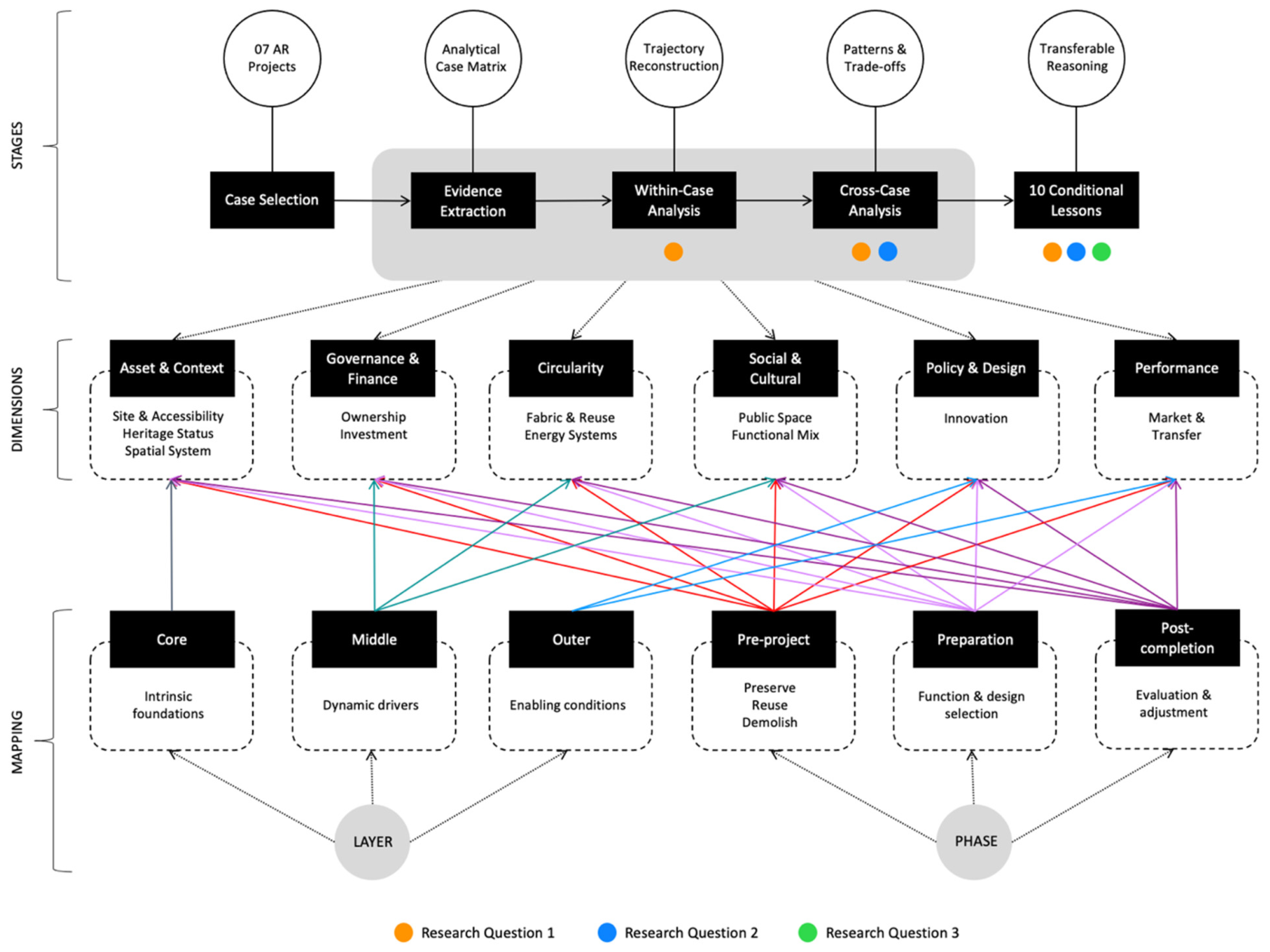
3. Research Methodology
3.1. Research Design and Case Selection
3.2. Analytical Grid and Data Collection
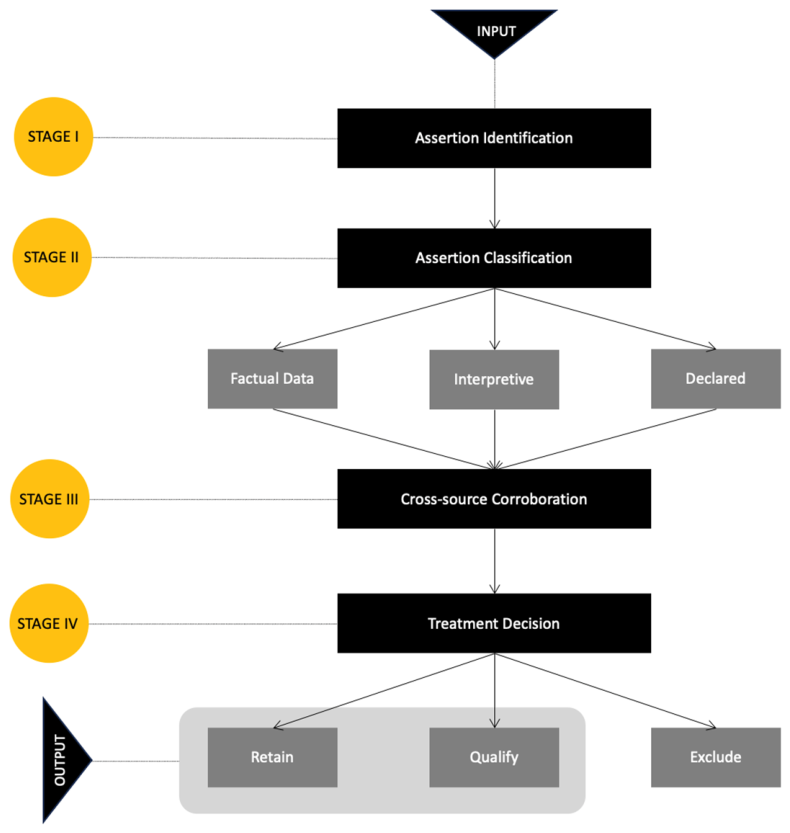
3.3. Analysis Procedure and Limitations
4. Within-Case Trajectory Analysis and Cross-Case Synthesis
4.1. Within-Case Trajectory Analysis
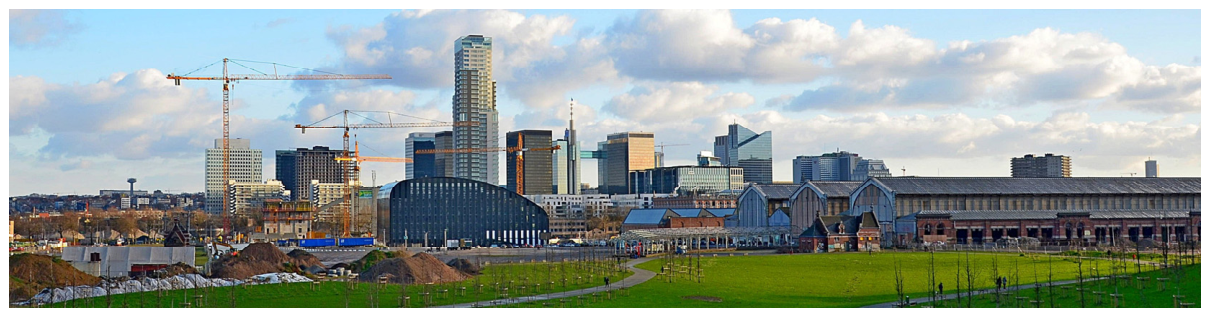
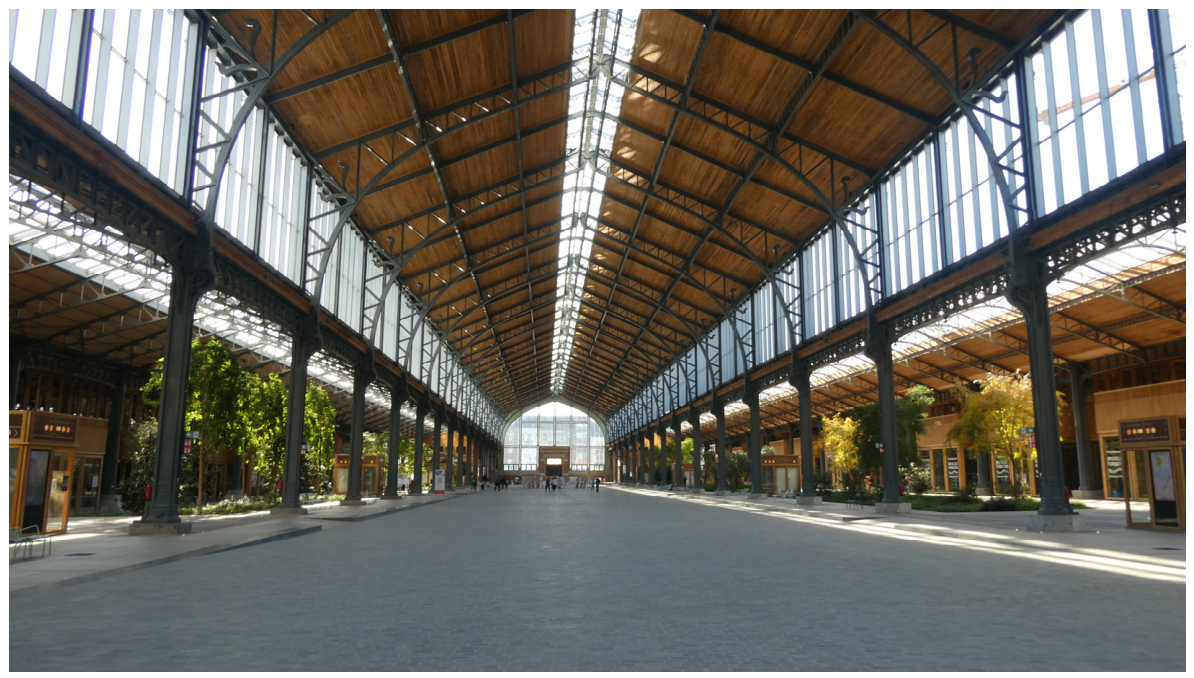
4.1.1. Tour & Taxis (Brussels, Belgium)

| Analytical Dimension | Attribute | Documented Values | Key Findings | References | |
|---|---|---|---|---|---|
| Asset & Context | Site & Accessibility | Inner-city permeable brownfield | 33 ha total site; 9 ha public park; 1 km to N-Station; transit/tram access. | Closed logistics enclave transformed into an accessible, mixed-use urban quarter connecting separated neighborhoods. | [64,65,67,68,69,70] |
| Heritage Status | Monumental industrial anchor | Gare Maritime: 45,000 m2; Entrepôt Royal: 45,000 m2; Sheds: 17,000 m2. | Preservation of early-20th-century Flemish neo-Renaissance customs buildings and steel-and-glass freight sheds. | [66,71,72,73,74,75] | |
| Spatial System | Perimeter density displacement | 140,000 m2 new Gross Floor Area (GFA) in 17 perimeter buildings (Lake Side). | Core heritage halls are preserved as large public/semi-public voids, with new contemporary density concentrated on the site’s perimeter. | [64,65,66,68,69,76,77,78] | |
| Governance & Finance | Ownership | Guided private delivery | Private owner (Nextensa); Detailed Plan Particulier d’Affectation du Sol/local land-use plan (PPAS) approved 2017. | Private ownership closely governed by regional/municipal masterplans requiring public benefits (parks, housing). | [63,64,65,67,79,80] |
| Investment | Patient capital & phasing | Timeline: 2001–early 2030s; €250 M+ total estimated investment. | Multi-decade development strategy relying on long-term private capital, stabilized by major public-sector anchor tenants. | [63,64,65,67,80,81] | |
| Circularity | Fabric & Reuse | Reversible shell-and-infill | 12 CLT timber pavilions “Gare Maritime: the Europe’s largest CLT project” (10,000 m3); original paving reused. | “Light-touch,” demountable contemporary insertions placed inside historic envelopes, ensuring structural independence and reversibility. | [66,75,82,83,84,85,86] |
| Energy Systems | District-scale fossil-free autarky | 17,000 m2 building-integrated photovoltaic (BIPV) panels (3000 MWh/yr); BREEAM Outstanding. | Combining passive design with district-scale renewables to achieve CO2-neutral operations exceeding site consumption. | [66,82,83,84,86,87,88,89,90,91] | |
| Social & Cultural | Public Space | Curated public/semi-public gradient | 9 ha park (community farm, gardens); 17,000 m2 event capacity. | Elimination of physical barriers to create a 9-hectare public park, flowing into semi-public covered “city” spaces. | [64,65,67,68,69,70,75,77,79,83] |
| Functional Mix | 24/7 programmatic activation | 800+ new apartments; several thousand jobs (public & private). | Comprehensive mix of government anchors, residential, retail, and cultural programming ensuring constant site vibrancy. | [64,67,71,78,80,81,82,83,91,92] | |
| Policy & Design | Innovation | Conditional Public–Private Partnership (PPP) regeneration | 7 international architecture firms; Europa Nostra Award (2008: conservation category, 2021: Gare Maritime). | Innovative PPP balancing private economic viability with mandated public infrastructure and heritage conservation. | [64,65,66,68,69,75,76,77,78,79,83,84,85,86,87] |
| Outcomes & Transfer | Market & Transfer | Heritage-driven market premium | >75% residential sales; €3600–4000/m2; requires 30-year horizon. | High commercial success and residential uptake, but transferability is strictly conditional on site scale, patient capital, and public transit. | [63,64,67,76,80,81] |


4.1.2. Zeche Zollverein (Essen, Germany)
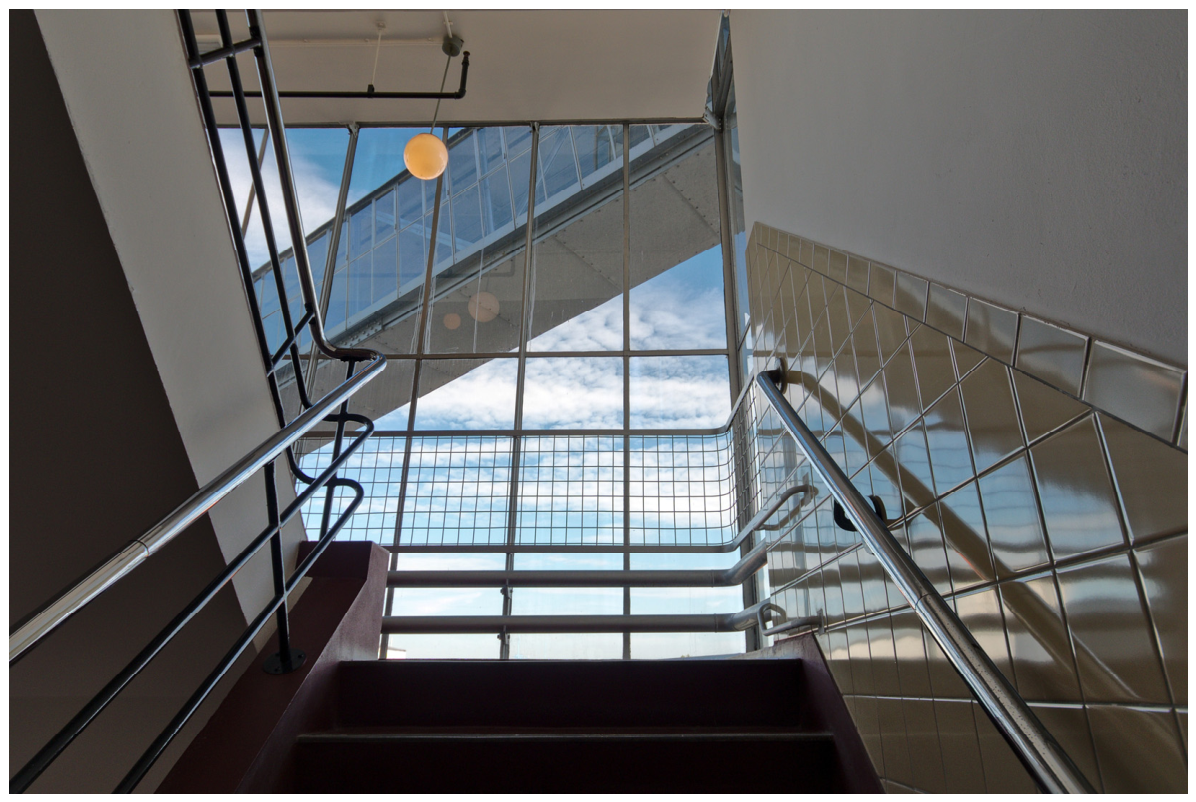
4.1.3. Van Nelle Factory (Rotterdam, The Netherlands)
| Analytical Dimension | Attribute | Documented Values | Key Findings | References | |
|---|---|---|---|---|---|
| Asset & Context | Site & Accessibility | Canal-side industrial zone | 5 ha site; 4 km to city center; 2 km to rail station. | Multimodal historic transport complex (canal, road, rail) integrated into the northwestern Rotterdam urban fabric. | [125,126,127,128,133,134] |
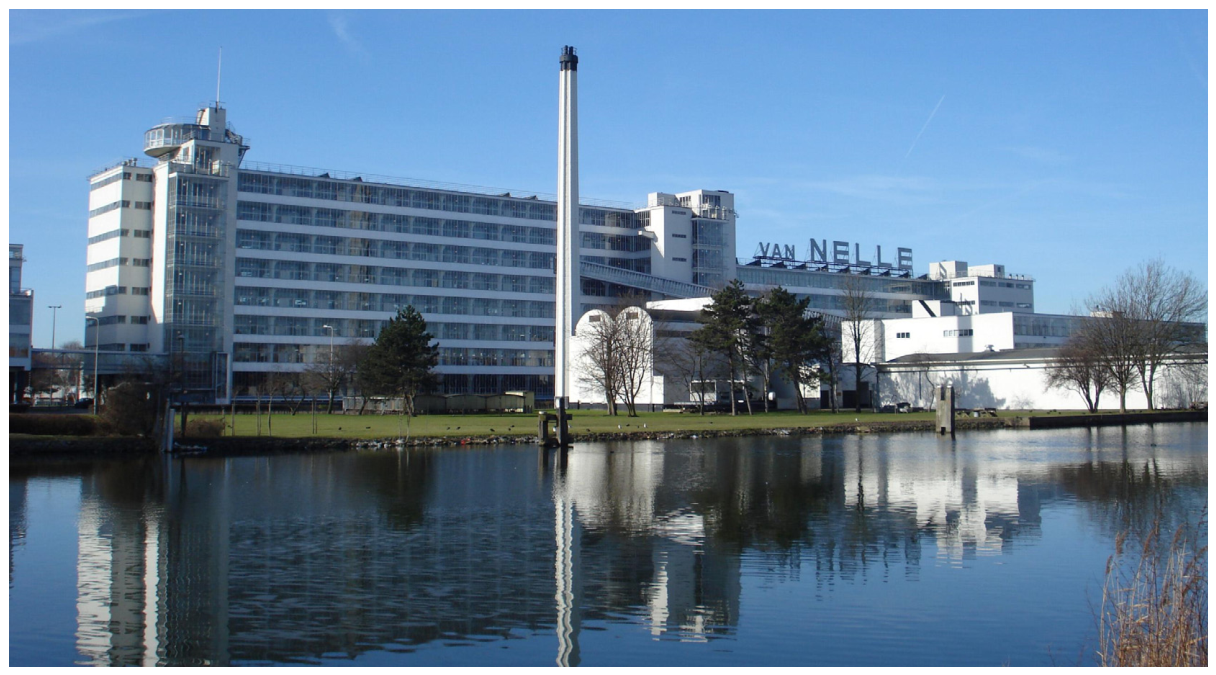
| Heritage Status | Modernist “Daylight Factory” | Built 1925–1931; UNESCO World Heritage (2014); 65-year operational lifespan | Pioneering 1920s functionalist complex renowned for glass-and-steel curtain walls, operating until 1996. | [125,126,127,128,133,134,135,136] | |
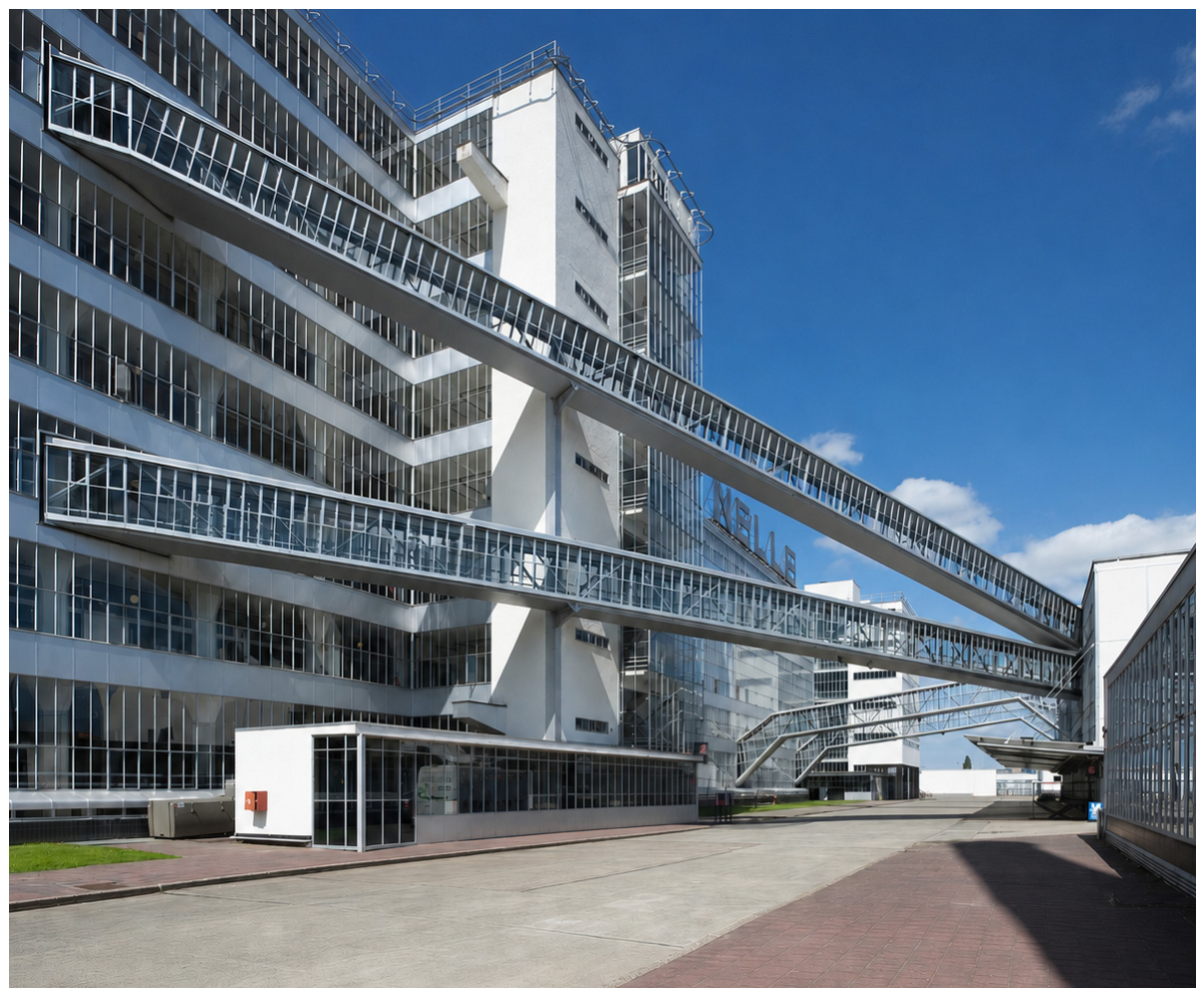
| Spatial System | Flexible plan libre | 55,000 m2 workspace; 8-story main building >300 m length. | Linear gravity-flow production buildings with mushroom columns, allowing flexible, generic open-plan volumes. | [127,128,129,130,133,134,135,136,137] | |
| Governance & Finance | Ownership | Private multi-partner consortium | Sold in 2000; Joint Venture of 780 private partners + Kondor Wessels. | Transferred from production company to a private real estate consortium under strict UNESCO heritage preservation limits. | [125,127,128,131,136] |
| Investment | Phased private capital | >€50 M invested since 2000; €5 M 10-year maintenance budget. | “Grounded renewal” model utilizing gradual, phased private renovation to enable continuous site operation and revenue. | [127,131,136,137] | |
| Circularity | Fabric & Reuse | Box-in-box preservation | 100% curtain wall retained; 100 mm lightweight concrete topping. | Maximum retention of historic skin with reversible “box-in-box” contemporary interior insertions to protect aesthetics. | [127,128,129,130,131,132,134,136,137,138] |
| Energy Systems | Data center waste-heat recovery | 70–80% gas reduction (to 200,000 m3/yr); 1.5 M kg CO2eq saved. | Leveraging original passive daylighting alongside integrated modern systems (data center heat, solar buffering). | [130,139,140] | |
| Social & Cultural | Public Space | Semi-public creative campus | 5000 architectural tour visitors/year; 2000–7000 event capacity. | Shift from closed factory to a curated, semi-public creative workspace heavily reliant on guided architectural tourism. | [125,126,127,128,131,133] |
| Functional Mix | Premium intellectual labor hub | 100+ companies; 55,000 m2 flexible workspace. | High-end mixed-use ecosystem spanning offices, ateliers, coworking, major event venues, and heritage interpretation. | [126,127,128,131,133,139] | |
| Policy & Design | Innovation | Conservation-led adaptation | A-label sustainable management; Golden Green Key certification. | Reversal of “form follows function”; strict design rules ensure new uses adapt to the rigid modernist envelope. | [127,128,129,130,131,132,134,135,136,137,138,139] |
| Outcomes & Transfer | Market & Transfer | Prestige-driven commercial success | 95% occupancy within 5 years; World Monument Fund Prize. | High commercial occupancy driven by heritage prestige; transferability requires architecturally exceptional assets. | [126,127,128,131,139,140] |


4.1.4. Tabakalera (Donostia/San Sebastián, Spain)
| Analytical Dimension | Attribute | Documented Values | Key Findings | References | |
|---|---|---|---|---|---|
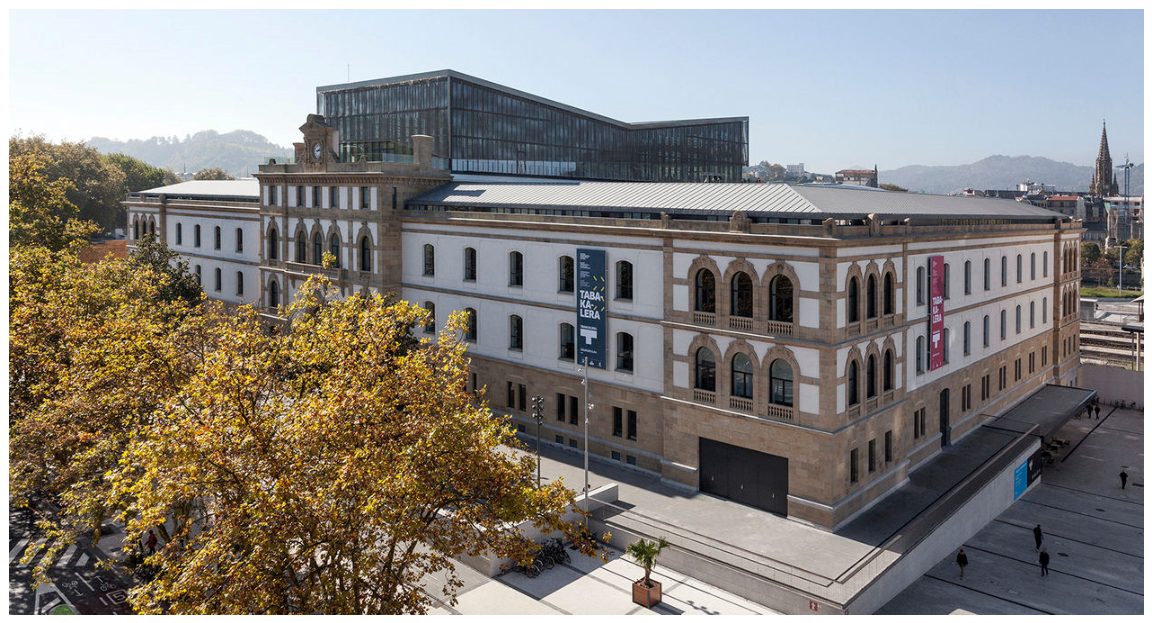
| Asset & Context | Site & Accessibility | Central urban factory | 13,277 m2 plot; adjacent to Estación del Norte and Cristina Enea Park. | State-owned former tobacco factory positioned strategically between the historic city center, transit hubs, and public park. | [144,145,146] |
| Heritage Status | 20th-century manufacture | Built 1886–1913; 26,000 m2 original footprint; >1000 peak workers. | Massive industrial rectangle built in the style of old factory houses, operating for 90 years before privatization closure. | [144,147,149,150] | |
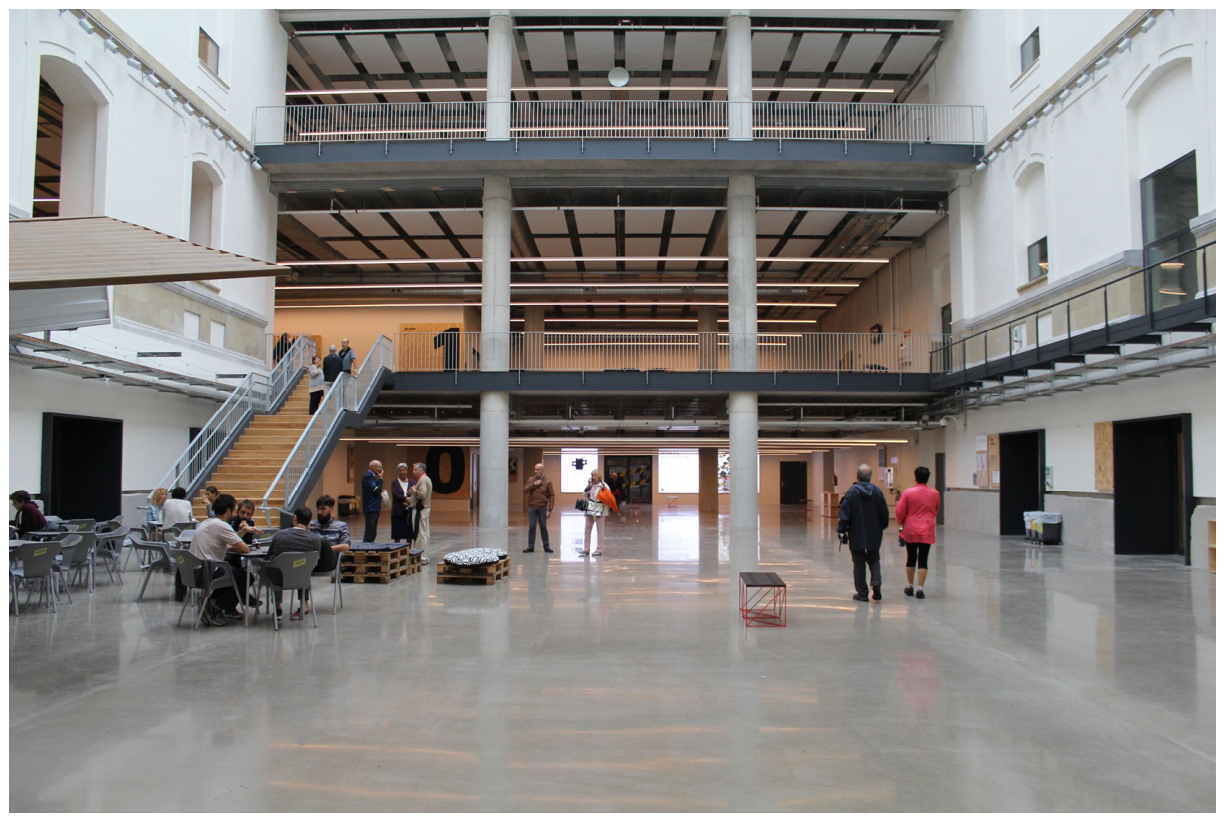
| Spatial System | Courtyard grid & glass prism | 37,000 m2 total GFA post-renovation across 5 floors; 113 × 75 m base. | Traditional quad-patio layout transformed via the insertion of an internal street and a contemporary glass prism landmark. | [144,152,153,154,155] | |
| Governance & Finance | Ownership | Tri-partite public governance | Purchased 2004; 15-member board (5 per public institution). | Joint ownership equally shared by municipal, provincial, and regional governments to drive a unified cultural strategy. | [144,156,157] |
| Investment | Public multi-phase funding | €56 M final construction budget; €1.1 M shared annual operating budget. | Long-term public investment overcoming economic crisis budget-cuts, sharing operational costs equally across 3 entities. | [153,154,158] | |
| Circularity | Fabric & Reuse | Substantial interior transformation | 22 construction lots; perimeter walls eliminated; new glass insertion. | Preservation of the main historic façade and structural essence while executing heavy internal demolition for open adaptability. | [144,152,153,155] |
| Energy Systems | Institutional energy efficiency | ISO 50001:2018 certification (2024) [159]; EREIAROA project integration. | Formalized transition toward energy sustainability via HVAC optimization and municipal environmental integration frameworks. | [160,161] | |
| Social & Cultural | Public Space | Permeable urban connector | 777,000 annual visitors (2023); internal public street circulation axis. | Elimination of industrial perimeter walls transformed the closed enclave into an open, free-circulation public street. | [145,146,162,163] |
| Functional Mix | Consolidated cultural cluster | 229-seat cinema; 4-star hotel; 247,200 Medialab visitors. | Integration of previously dispersed city cultural services (film archive, labs, library) alongside commercial hotel/dining. | [144,145,154,163,164] | |
| Policy & Design | Innovation | Competition-led integration | “3 en Raya” winning design (2008); 3rd ranked cultural center in Basque region. | AR initiated via international design competition, tightly coupled with the 2016 European Capital of Culture plan. | [155,165,166,167,168,169] |
| Outcomes & Transfer | Market & Transfer | Strong cultural economy impact | +11.5% visitor growth (2022–2023); 20,000+ monthly lab users. | Key driver of talent attraction and cultural participation; transferability relies on mid-scale sites and aligned public policy. | [162,163,166,167,168,169] |
4.1.5. Manifattura Tabacchi (Florence, Italy)
| Analytical Dimension | Attribute | Documented Values | Key Findings | References | |
|---|---|---|---|---|---|
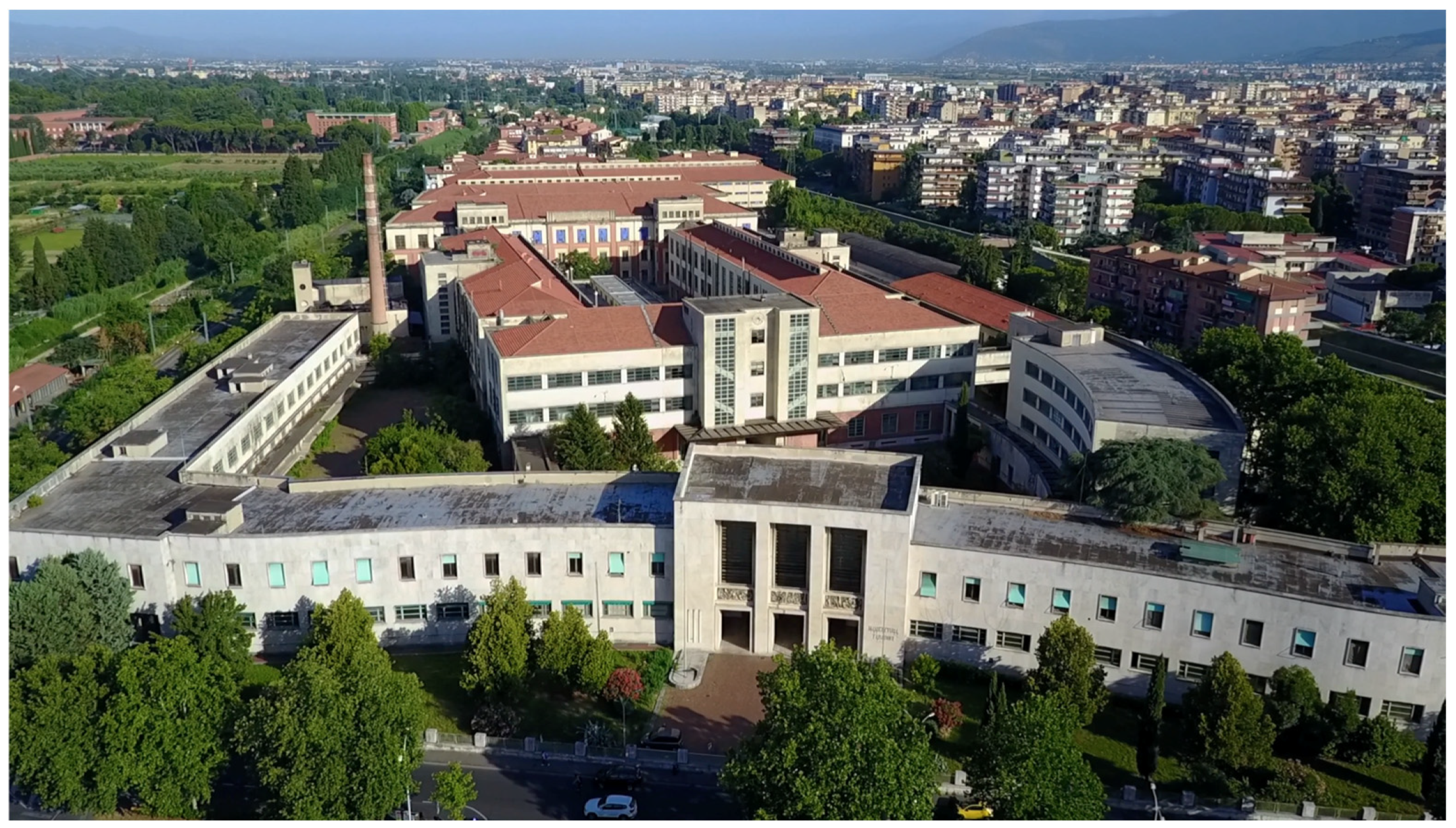
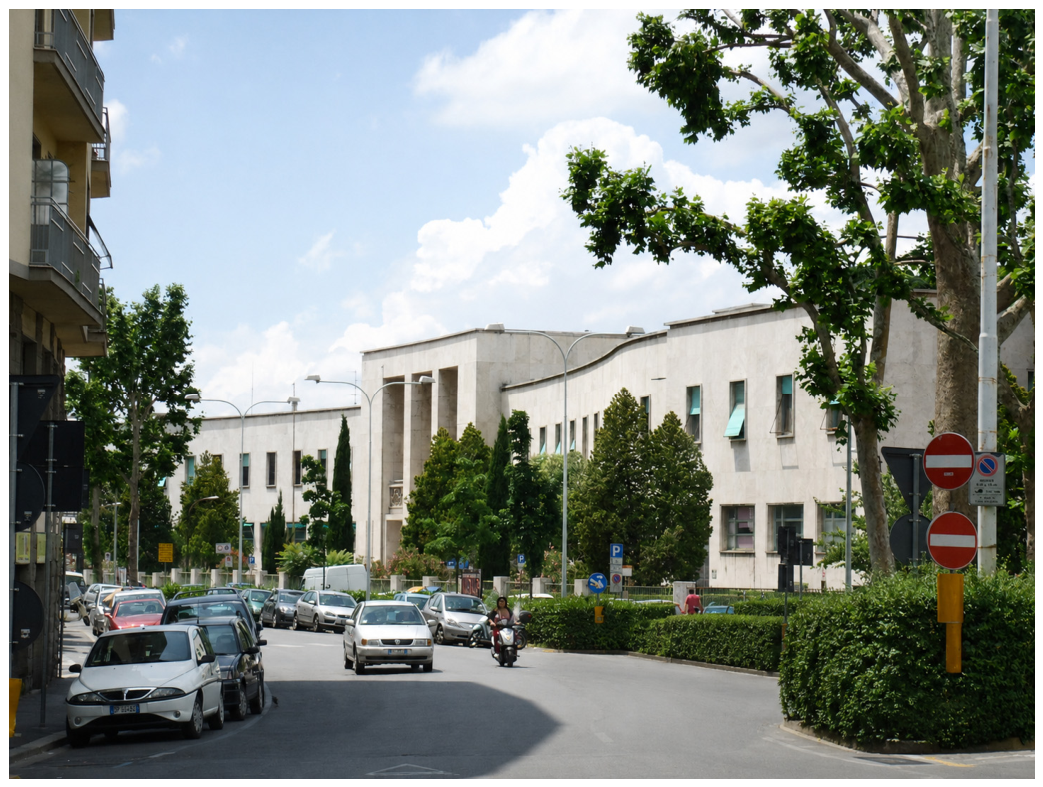
| Asset & Context | Site & Accessibility | Rationalist “city-in-miniature” | 6 ha site; 100,000–110,000 m2 covered area; 2.5 km to station. | Massive former state tobacco complex situated between Florence’s historic center and Cascine Park. | [170,171,173,175,176] |
| Heritage Status | Italian Fascist-era Rationalism | Constructed 1933–1940; 16 existing buildings; 410,000 m3 volume. | Protected Rationalist industrial complex decommissioned in 2001 following tobacco-sector privatization. | [170,173,175,177,178] | |
| Spatial System | Compact concrete grid | Factory: >21,000 m2; residential lots: 25,000 m2; Teatro Puccini tower. | Reinforced-concrete industrial blocks and travertine administrative façades organized around internal streets. | [170,171,179,180,181,182,183,184,185] | |
| Governance & Finance | Ownership | Public–private joint venture | Public–private joint venture formed in 2016: 40% CDP Immobiliare, 60% Aermont Capital. | Structured collaboration between institutional ownership, private capital, and heritage authorities. | [171,179,181,182,183,184,185] |
| Investment | Phased Environmental, Social, and Governance (ESG)-linked capital. | Total investment: €350 M; €92.3 M sustainability-linked loan; €30 M Factory sub-project. | Large-scale phased regeneration financed through sustainability-linked loans and progressive activation before completion. | [179,180,181,182,183,184,185,186,187,188] | |
| Circularity | Fabric & Reuse | Conservation-led retention | 16 existing buildings retained; 4 new buildings added; original materials and openings restored or reused. | Conservation-led retention prioritizing fabric reuse, material recovery, and preservation of industrial character. | [177,178,179,180,182,185] |
| Energy Systems | Nature-based infrastructure | 560 m2 rooftop botanical garden; 5000 m3/h botanical air-filtration capacity. | Environmental strategy integrates geothermal energy, rainwater reuse, rooftop greening, and Fabbrica dell’Aria filtration systems. | [170,182,185,189,190,191,192] | |
| Social & Cultural | Public Space | Open civic quarter | +23,628 m2 public/open space; 1000+ trees planted. | Former closed factory transformed into an open civic quarter with green squares, pedestrian networks, and tram integration. | [170,173,178,179,180,184,185] |
| Functional Mix | Dense creative/educational mix | 37,000 m2 education/offices; 800 students; 39 social-housing units. | Dense creative and educational mix combining fashion education, offices, retail, housing, and social housing. | [170,175,176,180,184,185,186,187,188,193,194,195,196] | |
| Policy & Design | Innovation | Dynamic masterplan evolution | Masterplan evolved from SANAA/Studio Mumbai to q-bic/Piuarch; BREEAM Excellent target (Zenit). | Iterative masterplan development balancing Rationalist preservation, new density, and environmental performance. | [170,177,178,179,180,185,197] |
| Outcomes & Transfer | Market & Transfer | Progressive institutional uptake | About 70% complete by 2025; 1000+ daily users before completion. | Early activation demonstrates transfer potential, but depends on patient capital, phased programming, and strong governance. | [178,179,180,181,182,183,184,185,186,187,188,193,194,195,196,197,198,199,200,201,202] |
4.1.6. Gasometer City (Vienna, Austria)
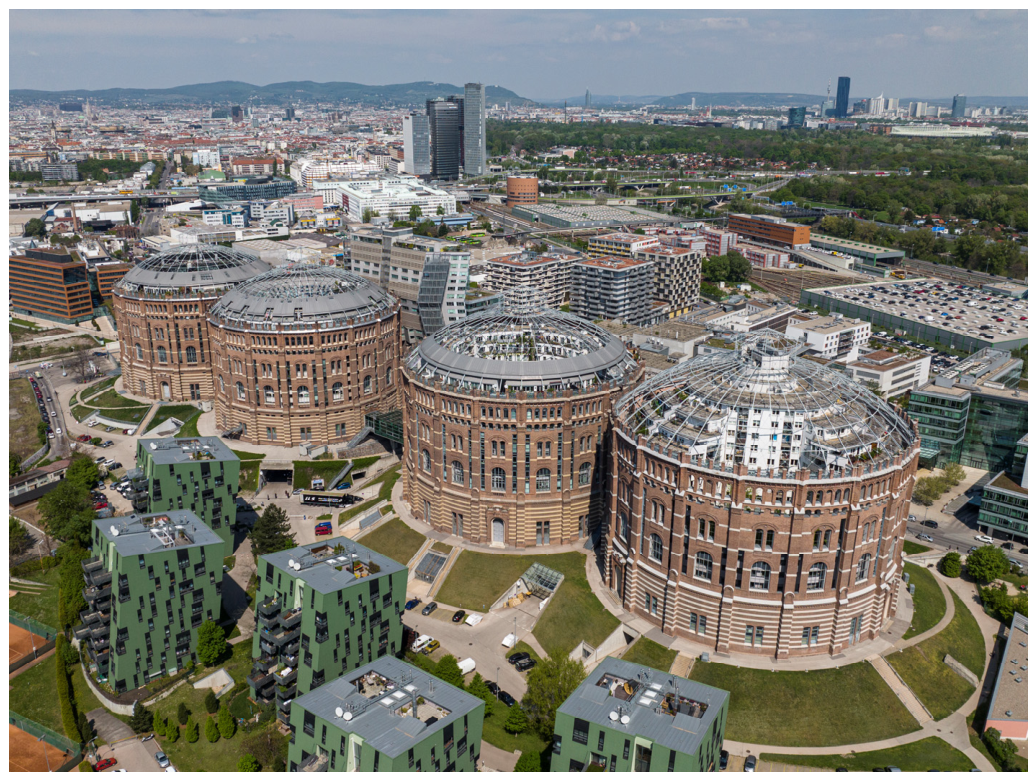

| Analytical Dimension | Attribute | Documented Values | Key Findings | References | |
|---|---|---|---|---|---|
| Asset & Context | Site & Accessibility | Monumental gas infrastructure | Four former municipal gasometers; U3 Gasometer station directly adjacent; approx. 8 min to Stephansplatz. | Four massive decommissioned municipal gas storage tanks integrated into a larger urban district via direct metro connection. | [203,204,206,207] |
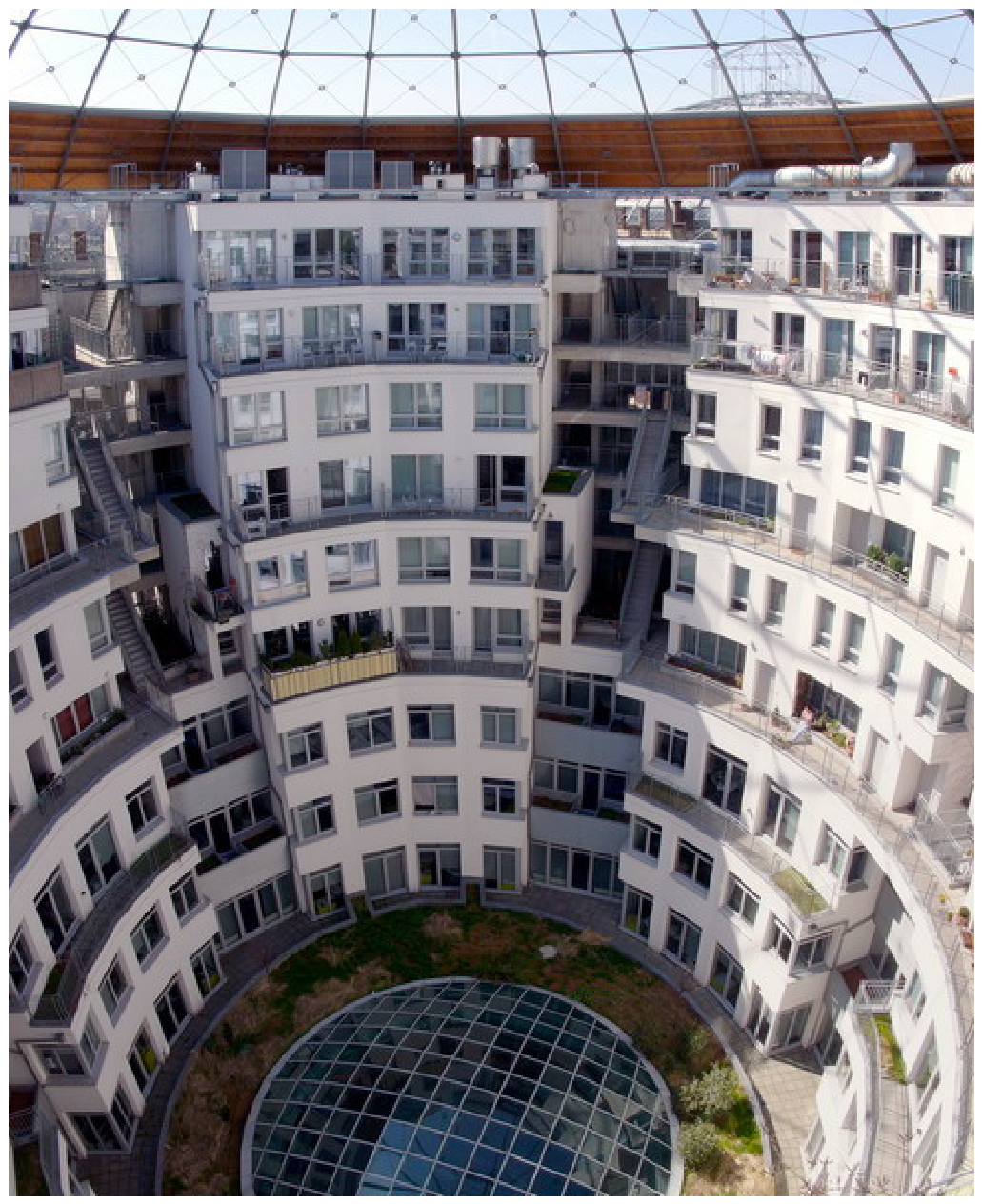
| Heritage Status | 19th-century brick cylinders | Built 1896–1899; protected/listed in 1981; approx. 72–75 m high and 62 m diameter; approx. 90,000 m3 storage capacity per gasometer. | Protected late-19th-century brick infrastructure, once the largest gasworks in Continental Europe, closed following the shift to natural gas. | [203,204,209,210] | |
| Spatial System | Shell retention with new core | Gasometer A: approx. 28,000 m2; Gasometer B: approx. 35,000 m2 and 22 floors; Gasometers C + D: 97,000 m2 GFA and 62,000 m2 usable area. | Major internal replacement occurred: the former gas-holder interiors/tank fittings were removed or dismantled, while new multi-story structures were inserted inside the retained exterior shells. | [209,211,212,213,214,215] | |
| Governance & Finance | Ownership | Fragmented developer delivery | Developers/clients included SEG, WBV-GPA/GPA/WPV, GESIBA, and Gasometer Mall ErrichtungsgesmbH; individual gasometers were assigned to different development actors. | Development split across multiple non-profit housing cooperatives and private developers acting under a city-led framework. | [210,211,212,214,216] |
| Investment | Subsidized housing finance | Total cost approx. ATS 2.4 billion/€174 million; City of Vienna subsidy approx. ATS 310 million/€22.5 million; construction period mainly 1999–2001. | Time-compressed, large-scale simultaneous construction heavily reliant on municipal social housing subsidies to achieve viability. | [210,216] | |
| Circularity | Fabric & Reuse | Significant interior replacement | Exterior brick shells/façades retained; roof/dome structures retained, dismantled, restored, or re-erected; internal tank fittings/interior elements dismantled or removed; façades rehabilitated. | The project followed a shell-retention logic: the monumental exterior image was conserved, while the former industrial interiors were replaced by new residential, commercial, office, archive, parking, and cultural functions. | [209,212,213,214,215,217] |
| Energy Systems | District heating integration | Vienna 2040 plan phases out fossil-gas heating and expands climate-neutral heating/cooling systems, including district-heating transition at city scale. | Transitioned from fossil gas storage to integration into Vienna’s climate-neutral district heating network and passive archive cooling. | [218,219] | |
| Social & Cultural | Public Space | Metro-linked mall spine | Approx. 22,000 m2 mall; around 70 shops; approx. 4200-capacity event hall; direct U3 connection. | The lower levels operate as a commercial, entertainment, and circulation spine, creating an indoor urban passage connected to public transport. | [206,207,210,212] |
| Functional Mix | Vertical mixed-use zoning | 615 apartments; student residence with approx. 253 places; offices; shops; event hall; cinema/entertainment uses; Vienna City and State Archives. | The project uses vertical mixed-use stacking: commercial and entertainment functions at the base, offices and institutional/archive uses in the middle, and housing/student housing above. | [204,206,207,210,220,221,222] | |
| Policy & Design | Innovation | Architectural stylistic contrast | Architects: Jean Nouvel, Coop Himmelb(l)au, Manfred Wehdorn, and Wilhelm Holzbauer. | Use of four different star-architects to create distinct, contemporary interior identities contrasting with the uniform historic shells. | [203,211,212,217,223,224] |
| Outcomes & Transfer | Market & Transfer | Rigid operational lock-in | Consistently full housing; requires strong social-housing finance. | Strong initial residential uptake, but the rigid architectural insertions limit future functional adaptability; context-dependent. | [210,220,221,222,225] |
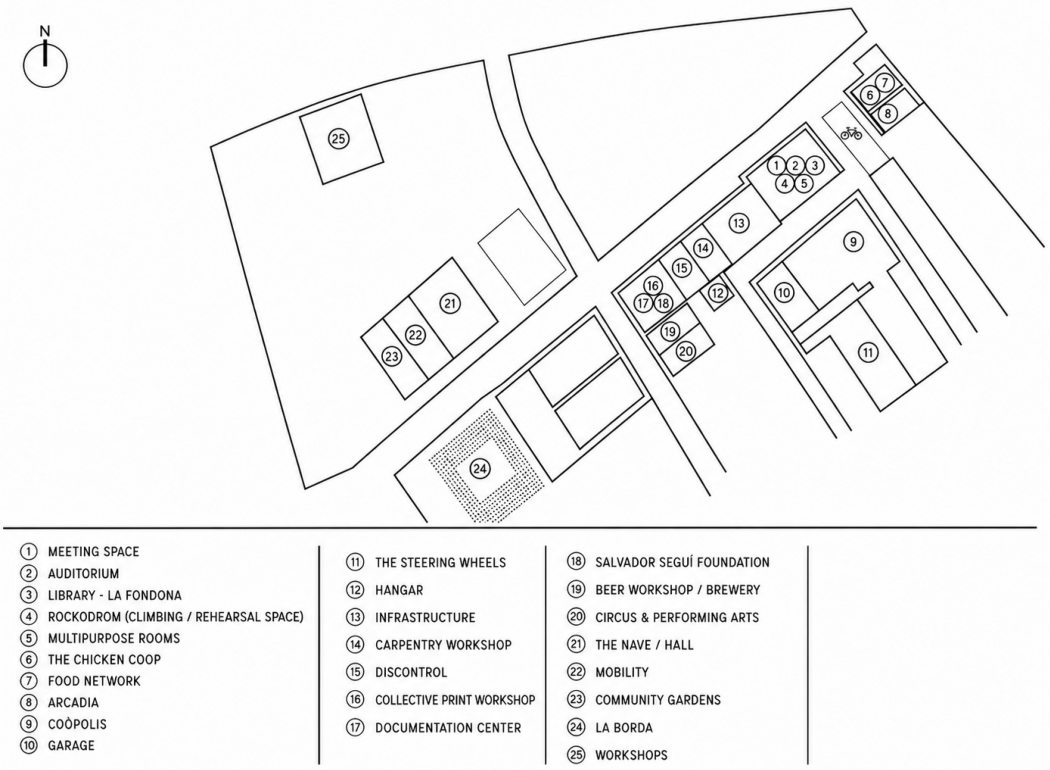
4.1.7. Can Batlló (Barcelona, Spain)


| Analytical Dimension | Attribute | Documented Values | Key Findings | References | |
|---|---|---|---|---|---|
| Asset & Context | Site & Accessibility | Walled inner-block factory | 14 ha complex; 29,437 m2 new park; €10.16 M park cost; 18,700 m2 provisional opening. | Former textile enclosure progressively opened through neighborhood pressure, tactical reuse, and park-led regeneration. | [226,227,230,231] |
| Heritage Status | Catalan industrial textile | From 1878; decline by early 1960s; 1976 public-facility/green designation; 2006 plan: 4.7 ha green area and 300 social-housing units. | Industrial compound saved from demolition by citizen occupation and planning. | [230,231,233] | |
| Spatial System | Horizontal brick-iron naves | Retained low-rise naves; Escola de Mitjans Audiovisuals de Barcelona (EMAV) 5800 m2; La Borda: 28 units, 3071 m2 GFA, six floors, 25.5 m timber structure. | Industrial sheds, timber housing, and park space form a mixed reuse system. | [226,227,233,234,235] | |
| Governance & Finance | Ownership | Public–commons concession | Municipal ownership; community concession; 30 + 10/20 years; €650 social rent; c.14,515 m2; 370 active people, 24 projects. | Public land granted to a self-managed neighborhood platform without asset sale. | [236,237,238,239] |
| Investment | Sweat equity + municipal funds | La Borda: €2.7 M; 800 participatory titles; 82,185 volunteer hours; €5 social return per municipal euro. | Financing combines municipal support, sweat equity, cooperative funding, ethical finance, and social return. | [236,237,239,240] | |
| Circularity | Fabric & Reuse | Participatory modular reuse | BlocOnze > 5000 m2 recovered; EMAV 5800 m2; Coòpolis 900 m2; La Borda: 660 m3 CLT and 40 m3 laminated timber. | Industrial memory remains legible through low-impact, collective, partly dismantlable interventions. | [226,227,233,234,235,241,242,243] |
| Energy Systems | nZEB & passive urban cooling | La Borda: final energy 36.92 kWh/m2/year versus 87.49 baseline; water intake 70 versus 127 L/person/day; >10,000 m2 permeabilized. | Energy, water, CLT, passive design, no underground parking, and drainage operate together. | [226,227,234,240,242,244] | |
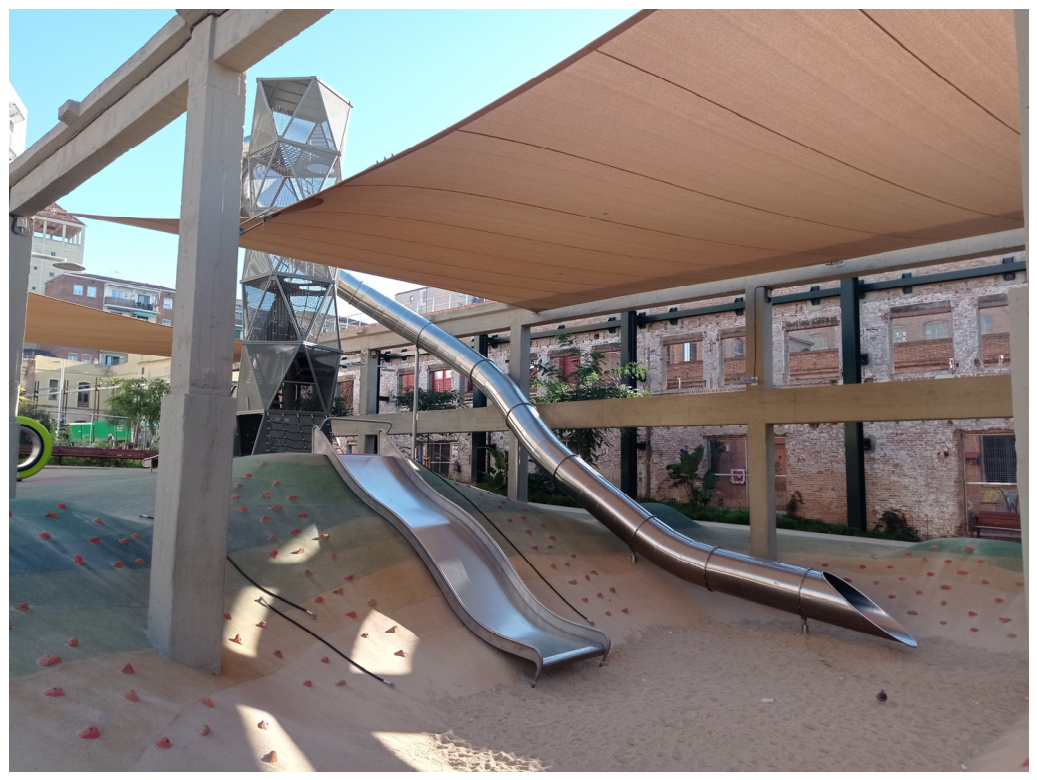
| Social & Cultural | Public Space | Self-managed civic commons | 29,437 m2 park; 18,700 m2 early opening; 370 active people; >48,400 users/year. | Former yards become public park and commons facilities governed through neighborhood assemblies. | [226,227,234,240,242,244] |
| Functional Mix | Social economy ecosystem | 28 cooperative dwellings; EMAV 5800 m2; Coòpolis 900 m2 with training, workstations, and incubation. | Combines housing, public education, cooperative economy, workshops, incubation, and services. | [230,233,234,236,240,242,243] | |
| Policy & Design | Innovation | Horizontal social metrics | Community Balance/Social Return Evaluation; four areas; 2018/2019 versions; EUmies 2022 Emerging Architecture Prize. | Innovation is institutional: commons governance, social-return metrics, and non-speculative production. | [234,236,237,238,239] |
| Outcomes & Transfer | Market & Transfer | Substantive anti-speculation model | Self-managed since 2011; 30+ projects/350+ activists; La Borda 75-year land arrangement; ≤€450/month average 70 m2 unit. | Transfer depends on activism, asset transfer, cooperative finance, affordable land, and commons legal tools. | [231,234,237,238,239,240,241,245] |
4.2. Comparative Cross-Case Analysis
4.2.1. Governance Structures as Temporal Regulators
4.2.2. Temporal Elasticity and Spatial Decision-Making
4.2.3. Early Spatial Decisions and Systemic Effects
4.2.4. Boundary Conditions Across Trajectories
5. Interpretation
5.1. From Theoretical Lens to Configuration Knowledge
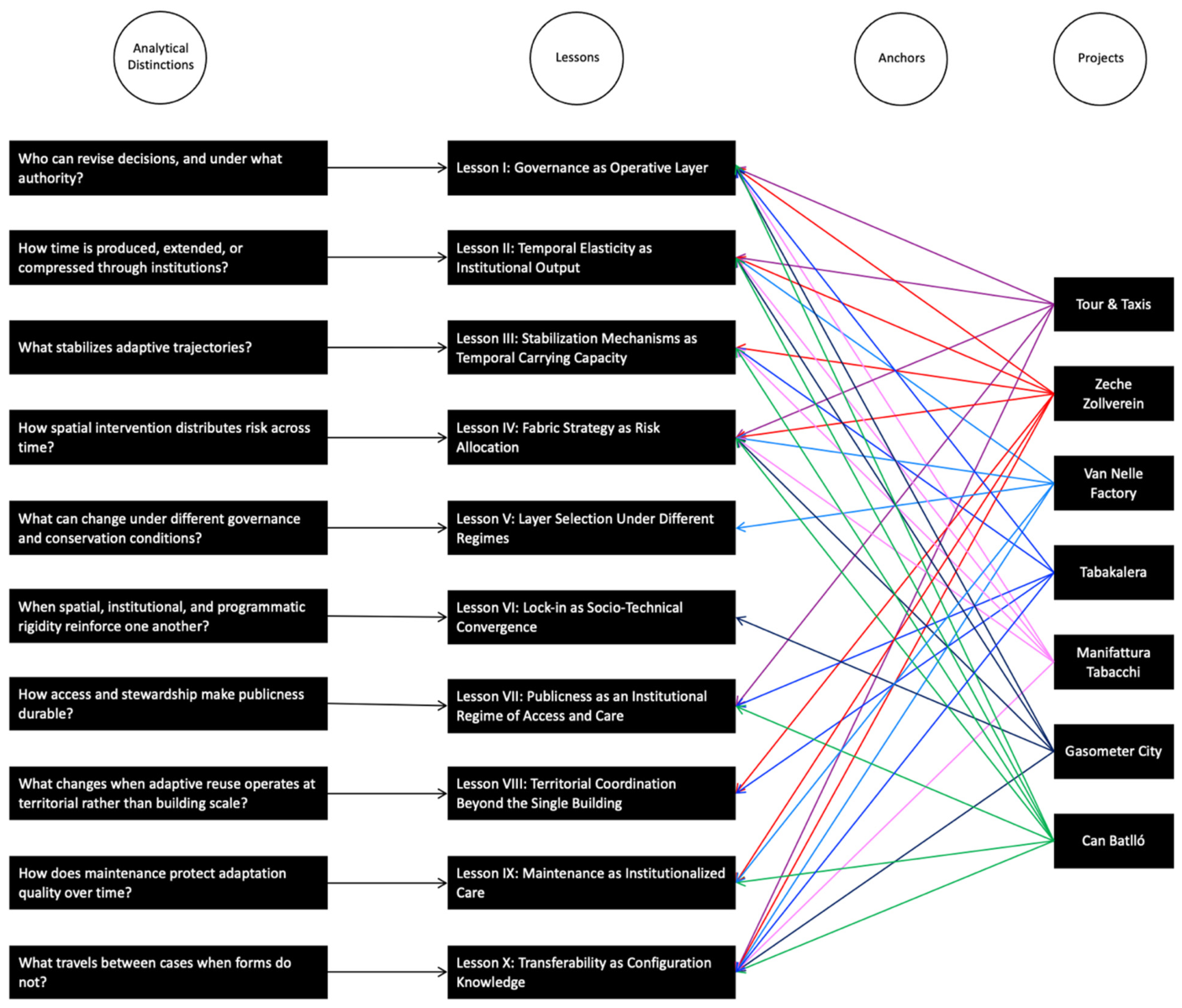
5.2. Ten Lessons
5.2.1. Institutional and Temporal Conditions
Lesson I: Governance as Operative Layer
Lesson II: Temporal Elasticity as Institutional Output
Lesson III: Stabilization Mechanisms as Temporal Carrying Capacity
5.2.2. Fabric Strategy and Path Dependence
Lesson IV: Fabric Strategy as Risk Allocation
Lesson V: Layer Selection Under Different Regimes
Lesson VI: Lock-In as Socio-Technical Convergence
5.2.3. Publicness, Scale, and Stewardship
Lesson VII: Publicness as an Institutional Regime of Access and Care
Lesson VIII: Territorial Coordination Beyond the Single Building
Lesson IX: Maintenance as Economic and Institutionalized Care
5.2.4. Transferability
Lesson X: Transferability as Configuration Knowledge
5.3. Configurational Synthesis
6. Conclusions
- Architectural decisions shape adaptive reuse trajectories through their interaction with governance, finance, policy, environmental objectives, and social programming;
- The recurring tensions across the cases concern temporal elasticity, fabric strategy, publicness, maintenance, and the risk of institutional or spatial lock-in;
- The transferable knowledge generated by these projects is configurational, not prescriptive. What can travel across contexts is not a visible form or fixed model, but a diagnostic understanding of how governance capacity, funding duration, regulatory support, material strategy, public access, and long-term stewardship align under specific conditions.
Author Contributions
Funding
Institutional Review Board Statement
Informed Consent Statement
Data Availability Statement
Acknowledgments
Conflicts of Interest
References
- Plevoets, B.; Van Cleempoel, K. Adaptive Reuse as a Strategy towards Conservation of Cultural Heritage: A Literature Review. WIT Trans. Built Environ. 2011, 118, 155–164. [Google Scholar] [CrossRef]
- Plevoets, B.; Van Cleempoel, K. Adaptive Reuse of the Built Heritage: Concepts and Cases of an Emerging Discipline; Routledge: London, UK, 2019. [Google Scholar] [CrossRef]
- Douglas, J. Building Adaptation, 2nd ed.; Butterworth-Heinemann: Oxford, UK, 2006. [Google Scholar]
- Modica, M. Brownfields as Landscapes. In Alpine Industrial Landscapes. RaumFragen: Stadt–Region–Landschaft; Springer: Wiesbaden, Germany, 2022; pp. 63–89. [Google Scholar] [CrossRef]
- European Environment Agency. Buildings and Construction. 2026. Available online: https://www.eea.europa.eu/en/topics/in-depth/buildings-and-construction?activeTab=07e50b68-8bf2-4641-ba6b-eda1afd544be&activeAccordion=98a3fcf3-da52-4b7d-9e6e-3976612a0613 (accessed on 7 February 2026).
- UNEP; Global Alliance for Buildings and Construction. Global Status Report for Buildings and Construction 2024/2025: Not Just Another Brick in the Wall [Technical Report]; UNEP/GlobalABC: Nairobi, Kenya, 2025. [Google Scholar]
- FIEC. Statistical Report 2022: European Union Chapter; European Construction Industry Federation: Brussels, Belgium, 2022; Available online: https://fiec-statistical-report.eu/european-union (accessed on 7 February 2026).
- Plevoets, B.; Van Cleempoel, K. Adaptive Reuse as an Emerging Discipline: A Historic Survey. In Reinventing Architecture and Interiors: A Socio-Political View on Building Adaptation; Cairns, G., Ed.; Libri Publishing: Faringdon, UK, 2013; pp. 13–32. [Google Scholar]
- Ben Ghida, D. Revitalizing Urban Spaces: Ten Key Lessons from the “Viaduc des Arts” Adaptive Reuse and Placemaking. Front. Archit. Res. 2024, 13, 1095–1109. [Google Scholar] [CrossRef]
- Stone, S. Undoing Buildings: Adaptive Reuse and Cultural Memory; Routledge: London, UK, 2019. [Google Scholar]
- Plevoets, B.; Van Cleempoel, K. Adaptive Reuse within the Retail Design Discipline: Exploring the Concept of Authenticity. In Proceedings of the First International Congress on Architectural Design, Teaching and Research; Politecnico di Bari: Bari, Italy, 2011; pp. 1–10. [Google Scholar]
- Jiang, L.; Lucchi, E.; Del Curto, D. Adaptive Reuse and Energy Transition of Built Heritage and Historic Gardens: The Sustainable Conservation of Casa Jelinek in Trieste (Italy). Sustain. Cities Soc. 2023, 97, 104767. [Google Scholar] [CrossRef]
- Ben Ghida, D. L’excellence dans la revitalisation urbaine: Une mise en valeur architectonique des marchés de plein air à Busan. Int. J. Innov. Appl. Stud. 2014, 7, 239–250. [Google Scholar]
- Garboushian, R.; Sigouin, Y.; Elmalky, A.M.; Araji, M.T. Adaptive Reuse Strategies in Urban Centers: Experimental Validation Using Neural Networks and Real Building Data. Build. Simul. 2025, 18, 2417–2433. [Google Scholar] [CrossRef]
- BenGhida, D.; BenGhida, S.; BenGhida, S. Urban Rejuvenation of Traditional Open-Air Markets. AIP Conf. Proc. 2024, 2987, 020094. [Google Scholar] [CrossRef]
- BenGhida, D.; BenGhida, S. La créativité dans la réhabilitation urbaine: Le Viaduc des Arts à Paris. Assoc. Cult. Fr.-Coréenne 2017, 35, 215–243. [Google Scholar] [CrossRef]
- Ben Ghida, D. The Urban Identity Recovery in Seoul: The Case of the Outdoor Markets. In Proceedings of the 13th Docomomo International Conference, Seoul: Expansion and Conflict; DOCOMOMO Korea: Seoul, Republic of Korea, 2014; pp. 227–231. [Google Scholar]
- Ben Ghida, D. Nanomaterials’ Application in Architectural Façades in Italy. Appl. Sci. Eng. Prog. 2023, 16, 6277. [Google Scholar] [CrossRef]
- Vardopoulos, I. Critical Sustainable Development Factors in the Adaptive Reuse of Urban Industrial Buildings: A Fuzzy DEMATEL Approach. Sustain. Cities Soc. 2019, 48, 101684. [Google Scholar] [CrossRef]
- Vardopoulos, I. Adaptive Reuse for Sustainable Development and Land Use: A Multivariate Linear Regression Analysis Estimating Key Determinants of Public Perceptions. Heritage 2023, 6, 809–828. [Google Scholar] [CrossRef]
- Vardopoulos, I.; Tsilika, E.; Sarantakou, E.; Zorpas, A.A.; Salvati, L.; Tsartas, P. An Integrated SWOT-PESTLE-AHP Model Assessing Sustainability in Adaptive Reuse Projects. Appl. Sci. 2021, 11, 7134. [Google Scholar] [CrossRef]
- Şenol, H.İ.; Büyüköztürk, E.; Sipahi, S. The Use of Multicriteria Decision-Making Techniques in the Adaptive Reuse of Historic Buildings: The Case of the Osmaniye Yediocak Primary School. Sustainability 2026, 18, 595. [Google Scholar] [CrossRef]
- Tavakoli, S.; Yazdanfar, S.A.; Monfared, N.S.S. Adaptive Reuse of Industrial Buildings for Housing Using ARP and AdaptSTAR Models. City Environ. Interact. 2026, 29, 100297. [Google Scholar] [CrossRef]
- Bottero, M.; D’Alpaos, C.; Oppio, A. Ranking of Adaptive Reuse Strategies for Abandoned Industrial Heritage in Vulnerable Contexts: A Multiple Criteria Decision Aiding Approach. Sustainability 2019, 11, 785. [Google Scholar] [CrossRef]
- Preite, M. La régénération urbaine dans les politiques de l’UE et la réutilisation du patrimoine industriel. e-Phaïstos 2025, XIII-2, 1–44. [Google Scholar] [CrossRef]
- Fava, F.; Van Gils, H.; Kip, M.; Van Knippenberg, K.; Kulikov, V.; Mérai, D.; Mosquera, J.; Pangallozzi, M.C.; Piperno, A.; Polyák, L.; et al. OpenHeritage: Deliverable 3.6: Finalized Report on European Adaptive Reuse Management Practices [Technical Report Horizon 2020 Grant Agreement No. 776766]; OpenHeritage Project: Budapest, Hungary, 2021. [Google Scholar]
- Jabłoński, W.; Banachowska, E.; Patyna, K. Post-Industrial Adaptive Reuse in Poland as an Educational Template for Circular Economy in Architecture. Sustainability 2025, 17, 9961. [Google Scholar] [CrossRef]
- Walczak, B.M.; Kepczynska-Walczak, A. Adaptive re-use of industrial heritage in Lodz, Poland. Int. J. Conserv. Sci. 2024, 15, 955–966. [Google Scholar] [CrossRef]
- Till, J. Architecture Depends; MIT Press: Cambridge, MA, USA, 2009. [Google Scholar]
- Vafaie, F.; Remøy, H.; Gruis, V. Adaptive reuse of heritage buildings; a systematic literature review of success factors. Habitat Int. 2023, 142, 102926. [Google Scholar] [CrossRef]
- Zhang, Q.; Ali, Z.M.; Abidin, N.Z. Sustainable Adaptive Reuse of Historic Buildings: Development of a Framework from Systematic Review. npj Herit. Sci. 2025, 13, 619. [Google Scholar] [CrossRef]
- Cucco, P.; Maselli, G.; Nesticò, A.; Ribera, F. An evaluation model for adaptive reuse of cultural heritage in accordance with 2030 SDGs and European Quality Principles. J. Cult. Herit. 2022, 59, 202–216. [Google Scholar] [CrossRef]
- Della Spina, L.; Carbonara, S.; Stefano, D.; Viglianisi, A. Circular Evaluation for Ranking Adaptive Reuse Strategies for Abandoned Industrial Heritage in Vulnerable Contexts. Buildings 2023, 13, 458. [Google Scholar] [CrossRef]
- Gravagnuolo, A.; Angrisano, M.; Bosone, M.; Buglione, F.; De Toro, P.; Girard, L.F. Participatory evaluation of cultural heritage adaptive reuse interventions in the circular economy perspective: A case study of historic buildings in Salerno (Italy). J. Urban Manag. 2024, 13, 107–139. [Google Scholar] [CrossRef]
- Angrisano, M.; Bottero, M.; Cavana, G.; Fabbrocino, F.; Gravagnuolo, A.; Girard, L.F. Adaptive reuse of cultural built heritage: Towards the implementation of the circular city model. Front. Built Environ. 2025, 11, 1561982. [Google Scholar] [CrossRef]
- Brand, S. How Buildings Learn: What Happens After They’re Built; Penguin Books: New York, NY, USA, 1995. [Google Scholar]
- Latour, B.; Yaneva, A. Give Me a Gun and I Will Make All Buildings Move. Ardeth 2017, 1, 102–111. [Google Scholar] [CrossRef]
- Yaneva, A.; Latour, B. Give Me a Gun and I Will Make All Buildings Move: An ANT’s View of Architecture. In Explorations in Architecture: Teaching, Design, Research; Geiser, R., Ed.; Birkhäuser: Basel, Switzerland, 2008; pp. 80–89. [Google Scholar]
- Hertzberger, H. Lessons for Students in Architecture, 7th ed.; nai010 Publishers: Rotterdam, The Netherlands, 2017. [Google Scholar]
- Ben Ghida, D. Complexity in Simplicity: Darel Carey on Op Art and the Responsive Eye. Arte Individuo Soc. 2025, 37, 671–678. [Google Scholar] [CrossRef]
- Gharaati, F.; Saijo, T.; Hirasawa, T.; Sho, K.; Mahdavinejad, M. Imaginary future generations in sustainable adaptive reuse of industrial heritage sites: A participatory futuristic approach in Japan. Habitat Int. 2026, 170, 103742. [Google Scholar] [CrossRef]
- van Laar, B.; Greco, A.; Remøy, H.; Gruis, V. What Matters When? An Integrative Literature Review on Decision Criteria in Different Stages of the Adaptive Reuse Process. Dev. Built Environ. 2024, 18, 100439. [Google Scholar] [CrossRef]
- Flyvbjerg, B. Five Misunderstandings About Case-Study Research. Qual. Inq. 2006, 12, 219–245. [Google Scholar] [CrossRef]
- Groat, L.N.; Wang, D. Architectural Research Methods, 2nd ed.; John Wiley & Sons: Hoboken, NJ, USA, 2013. [Google Scholar]
- Liberotti, R.; Gusella, V. Parametric Modeling and Heritage: A Design Process Sustainable for Restoration. Sustainability 2023, 15, 1371. [Google Scholar] [CrossRef]
- Liberotti, R.; Silvestri, V.; Gusella, V. The Church of San Bevignate: Historical reconstruction and infrared thermographic testing of Temple Order frescoes. Int. J. Archit. Herit. 2025, 1–18. [Google Scholar] [CrossRef]
- Yin, R.K. Case Study Research and Applications: Design and Methods, 6th ed.; SAGE: Thousand Oaks, CA, USA, 2018. [Google Scholar]
- Bowen, G.A. Document Analysis as a Qualitative Research Method. Qual. Res. J. 2009, 9, 27–40. [Google Scholar] [CrossRef]
- White, M.D.; Marsh, E.E. Content analysis: A flexible methodology. Libr. Trends 2006, 55, 22–45. [Google Scholar] [CrossRef]
- Herring, S.C. Web Content Analysis: Expanding the Paradigm. In International Handbook of Internet Research; Hunsinger, J., Klastrup, L., Allen, M., Eds.; Springer: London, UK; New York, NY, USA, 2010. [Google Scholar]
- Kim, I.; Kuljis, J. Applying content analysis to web-based content. J. Comput. Inf. Technol. 2010, 18, 369. [Google Scholar] [CrossRef]
- Chang, J. Conceptualising the value of web content in marketing research. Mark. Intell. Plan. 2011, 29, 687–696. [Google Scholar] [CrossRef]
- Héroux-Vaillancourt, M.; Beaudry, C.; Rietsch, C. Using web content analysis to create innovation indicators—What do we really measure? Quant. Sci. Stud. 2020, 1, 1601–1637. [Google Scholar] [CrossRef]
- Sparacino, A.; Merlino, V.M.; Borra, D.; Massaglia, S.; Blanc, S. Web content analysis of beekeeping website companies: Communication and marketing strategies in the Italian context. J. Mark. Commun. 2023, 30, 717–738. [Google Scholar] [CrossRef]
- Garousi, V.; Felderer, M.; Mäntylä, M.V. Guidelines for including grey literature and conducting multivocal literature reviews in software engineering. Inf. Softw. Technol. 2018, 106, 101–121. [Google Scholar] [CrossRef]
- Cheong, H.; Lyons, A.; Houghton, R.; Majumdar, A. Secondary Qualitative Research Methodology Using Online Data within the Context of Social Sciences. Int. J. Qual. Methods 2023, 22, 16094069231180160. [Google Scholar] [CrossRef]
- Eisenhardt, K.M. Building Theories from Case Study Research. Acad. Manag. Rev. 1989, 14, 532–550. [Google Scholar] [CrossRef]
- Elo, S.; Kyngäs, H. The qualitative content analysis process. J. Adv. Nurs. 2008, 62, 107–115. [Google Scholar] [CrossRef]
- Petersen, K.; Feldt, R.; Mujtaba, S.; Mattsson, M. Systematic mapping studies in software engineering. In 12th International Conference on Evaluation and Assessment in Software Engineering (EASE); BCS Learning & Development: Swindon, UK, 2008. [Google Scholar]
- Miles, M.B.; Huberman, A.M.; Saldaña, J. Qualitative Data Analysis: A Methods Sourcebook, 3rd ed.; SAGE: Thousand Oaks, CA, USA, 2014. [Google Scholar]
- Mkhitaryan, K.; Sanamyan, A.; Hambardzumyan, H.; Ordyan, A.; Harutyunyan, G. Digitalizing Urban Planning Governance: Empirical Evidence from Yerevan and a Multi-Layer Framework for Data-Driven City Management. Urban Sci. 2026, 10, 183. [Google Scholar] [CrossRef]
- Onwuegbuzie, A.J.; Weinbaum, R.K. Mapping Miles and Huberman’s Within-Case and Cross-Case Analysis Methods onto the Literature Review Process. J. Educ. Issues 2016, 2, 265–288. [Google Scholar] [CrossRef]
- Nextensa. Our History. 2025. Available online: https://www.nextensa.eu/en/about-nextensa/history (accessed on 7 February 2026).
- Lakeside Brussels. Lakeside. 2026. Available online: https://www.lakeside.brussels/ (accessed on 7 February 2026).
- MVRDV. Tour & Taxis Lake Side. 2024. Available online: https://www.mvrdv.com/projects/632/tour--taxis-lake-side (accessed on 7 February 2026).
- Neutelings Riedijk Architects. Gare Maritime. 2025. Available online: https://neutelings-riedijk.com/projects/gare-maritime/ (accessed on 7 February 2026).
- Nextensa. Tour & Taxis—Vast Inclusive and Sustainable Multipurpose Site. 2026. Available online: https://www.nextensa.eu/en/places-you-prefer/tour-taxis (accessed on 7 February 2026).
- Bureau Bas Smets. Thurn & Taxis. Divisare 2020. Available online: https://divisare.com/projects/427937-bureau-bas-smets-michiel-de-cleene-thurn-taxis (accessed on 7 February 2026).
- Nextensa. Lake Side: One of Belgium’s Largest Urban Transformations Enters Final Phase [Press Release]; Nextensa: Rue Picard, Bruxelles, 2023. [Google Scholar]
- Visit Brussels. Tour & Taxis. Available online: https://www.visit.brussels/en/visitors/venue-details.Tour-and-Taxis.222762 (accessed on 7 February 2026).
- Nextensa. Royal Depot. 2026. Available online: https://www.nextensa.eu/en/places-you-prefer/entrepot-royal (accessed on 7 February 2026).
- Archi2000. Tour & Taxis. Available online: https://www.archi2000.be/projects/tour-taxis (accessed on 7 February 2026).
- European Heritage Awards/Europa Nostra Awards. Tour & Taxis in Brussels. 2008. Available online: https://www.europeanheritageawards.eu/winners/tour-taxis-brussels/ (accessed on 7 February 2026).
- The European Heritage Awards Archive. Tour & Taxis Site, Brussels [Report Ref. HA-2008/BE/01]; The European Heritage Awards Archive: Krems an der Donau, Austria, 2008. [Google Scholar]
- European Heritage Awards/Europa Nostra Awards. Gare Maritime. 2021. Available online: https://www.europeanheritageawards.eu/winners/gare-maritime/ (accessed on 7 February 2026).
- MVRDV. MVRDV-Designed Masterplan for Brussels’ Tour & Taxis Lake Side Announced. 2023. Available online: https://www.mvrdv.com/news/4373/masterplan-brussels-tour-and-taxis-lakeside-announced (accessed on 7 February 2026).
- Landezine. Gare Maritime by OMGEVING. 2023. Available online: https://landezine.com/gare-maritime-by-omgeving/ (accessed on 7 February 2026).
- Directorate-General for Justice and Consumers. Herman Teirlinck Building Brussels—Belgium. Accessible EU Centre. Available online: https://accessible-eu-centre.ec.europa.eu/herman-teirlinck-building-brussels-herman-teirlinck-gebouw-brussel-belgium_en (accessed on 7 February 2026).
- Europa Nostra. Gare Maritime in Brussels Hosts Event to Celebrate Its European Heritage Award/Europa Nostra Award. 2021. Available online: https://www.europanostra.org/gare-maritime-in-brussels-hosts-event-to-celebrate-its-european-heritage-award-europa-nostra-award-2021/ (accessed on 7 February 2026).
- Mesh Immo. Proximus Moves to Tour & Taxis: A Strategic Milestone for Brussels Real Estate. Available online: https://www.mesh-immo.com/en/post/proximus-moves-to-tour-taxis-a-strategic-milestone-for-brussels-real-estate (accessed on 7 February 2026).
- Park Lane Brussels. Sustainability at the Heart of Park Lane. 2023. Available online: https://www.parklane.brussels/sustainability-at-the-heart-of-park-lane/ (accessed on 7 February 2026).
- Nextensa. Gare Maritime. 2026. Available online: https://www.nextensa.eu/en/places-you-prefer/gare-maritime (accessed on 7 February 2026).
- De Durpel, P. Gare Maritime. The Best in Heritage, 2022. Available online: https://presentations.thebestinheritage.com/2022/gare-maritime (accessed on 7 February 2026).
- Effiom, E. Tour & Taxis’ Sustainable Reimagining in Brussels; Wallpaper: London, UK, 2021. [Google Scholar]
- Regenerativedesign. World. Gare Maritime. 2020. Available online: https://regenerativedesign.world/gare-maritime/ (accessed on 7 February 2026).
- Schneyder, E. Gare Maritime Restored in Timber Splendour. Timber Pioneer, 2021. Available online: https://www.timber-pioneer.de/en/gare-maritime-restored-in-timber-splendour/ (accessed on 7 February 2026).
- World Economic Forum. Net Zero Carbon Cities: Building Value Framework—Case Study [Technical Report]; Extensa Brussels: Brussels, Belgium, 2022. [Google Scholar]
- Brusol. RTBF: “17,000 m2 of Solar Panels on the Roofs of Tour & Taxis”. 2020. Available online: https://www.brusol.be/en/solar-panels/news/rtbf-17000-m2-of-solar-panels-on-the-roofs-of-tour-taxis (accessed on 7 February 2026).
- EnergyVision. Gare Maritime Brussels. 2019. Available online: https://www.energyvision.be/en/gare-maritime-brussels (accessed on 7 February 2026).
- ISSOL. La Gare Maritime. 2025. Available online: https://issol-bipv.com/references/la-gare-maritime/ (accessed on 7 February 2026).
- Jaga. Tour & Taxis—Brussels Environment Building. Available online: https://jaga.com/ex/projects/tour-taxis/ (accessed on 7 February 2026).
- Nextensa. Sheds. 2026. Available online: https://www.nextensa.eu/en/places-you-prefer/sheds (accessed on 7 February 2026).
- Mangiat, L. This Photo of Immovable Heritage Has Been Taken in the Brussels Capital Region. 2016. Available online: https://www.wikidata.org/wiki/Q2320851#/media/File:Brussels_Skyline_(cropped).jpg (accessed on 11 May 2026).
- Delsaut, G. Hall de la Gare Maritime, Ancienne Gare de Bruxelles-Tour et Taxis. 2021. Available online: https://commons.wikimedia.org/wiki/File:Gare_Maritime_-_Brussels_-_2.jpg (accessed on 11 May 2026).
- Regionalverband Ruhr. Millionenförderung für UNESCO-Welterbe Zollverein. 2025. Available online: https://www.rvr.ruhr/news/startseite-news/news/millionenfoerderung-fuer-unesco-welterbe-zollverein/ (accessed on 7 February 2026).
- Zollverein Foundation. The Zollverein UNESCO World Heritage Site [Press Release]; Zollverein Foundation: Essen, Germany, 2018. [Google Scholar]
- Markt1 Verlagsgesellschaft mbH.; Stiftung Zollverein. Zollverein im Wandel; Zollverein® Edition [Exhibition Magazine]; Markt1 Verlagsgesellschaft mbH: Essen, Germany, 2016; Available online: https://media.essen.de/media/histiorisches_portal/historischesportal_dokumente/bergbau/Zollverein_im_Wandel_2016.pdf (accessed on 31 May 2026).
- Bösch, D. UNESCO World Heritage Site Zollverein, Essen: Data, Facts and Figures [Press Release]; Stiftung Zollverein: Essen, Germany, 2017. [Google Scholar]
- UNESCO World Heritage Convention. Zollverein Coal Mine Industrial Complex in Essen. Available online: https://whc.unesco.org/en/list/975/ (accessed on 7 February 2026).
- UNESCO World Heritage Centre. Zollverein (Germany) No. 975 [Technical Report]; UNESCO World Heritage Centre: Paris, France, 2001; pp. 109–113. [Google Scholar]
- Bauhaus Kooperation. Zollverein Coal Mine Industrial Complex. Available online: https://bauhauskooperation.de/reisen/orte/ortsdetailseite/ort-61 (accessed on 7 February 2026).
- UNESCO Deutsche Kommission. Industriekomplex Zeche Zollverein in Essen. Available online: https://www.unesco.de/staette/industriekomplex-zeche-zollverein-in-essen/ (accessed on 7 February 2026).
- Zollverein Official Website. Architektur der Moderne, Neue Sachlichkeit und der Bauhaus-Gedanke auf Zollverein. Available online: https://www.zollverein.de/erleben/bauhaus-auf-zollverein/ (accessed on 7 February 2026).
- Kulturlinie 107. Kokerei Zollverein. Available online: https://www.kulturlinie107.de/en/culture-site/kokerei-zollverein (accessed on 7 February 2026).
- Zollverein Foundation. Die Stiftung Zollverein. Available online: https://www.zollverein.de/ueber-zollverein/stiftung-zollverein/ (accessed on 7 February 2026).
- HUB-IN Atlas. Zollverein, Essen, DE. Atlas of Heritage-Led Regeneration. Available online: https://atlas.hubin-project.eu/case/zollverein/ (accessed on 7 February 2026).
- EFRE/JTF NRW. Zollverein Colliery—A Symbol of Change. Available online: https://www.efre.nrw/en/zollverein-colliery (accessed on 7 February 2026).
- Bösch, D. Zollverein UNESCO World Heritage Site: New Buildings and Maintenance of Existing Buildings Until 2020 [Press Release: Location Development]; Stiftung Zollverein: Essen, Germany, 2018. [Google Scholar]
- OMA. Zollverein Masterplan. Available online: https://www.oma.com/projects/zollverein-masterplan (accessed on 7 February 2026).
- Baunetz. Koolhaas in Essen—OMA Stellt Masterplan für Zeche Zollverein vor. 2002. Available online: https://www.baunetz.de/meldungen/Meldungen_OMA_stellt_Masterplan_fuer_Zeche_Zollverein_vor_10381.html (accessed on 7 February 2026).
- OMA. Zollverein Kohlenwäsche. Available online: https://www.oma.com/projects/zollverein-kohlenwaesche (accessed on 7 February 2026).
- Foster + Partners. Red Dot Design Museum. Available online: https://www.fosterandpartners.com/projects/red-dot-design-museum (accessed on 7 February 2026).
- Zentrum der Industriekultur/Folkwang Universität der Künste. UNESCO Welterbe Zeche Zollverein. Available online: https://id.folkwang-uni.de/de/journal/unesco-welterbe-zeche-zollverein/ (accessed on 7 February 2026).
- Rovang, S. The UNESCO Industrial Complex: Multi-Use Heritage in Germany and Belgium. Society of Architectural Historians. 2019. Available online: https://sah.org/2019/05/07/the-unesco-industrial-complex-multi-use-heritage-in-germany-and-belgium/ (accessed on 7 February 2026).
- Folkwang Universität der Künste. SANAA Building Zollverein. Available online: https://www.folkwang-uni.de/en/home/hochschule/about-folkwang/campuses/zollverein-world-heritage-campus-design-faculty/sanaa-building-zollverein (accessed on 7 February 2026).
- Energiezukunft. Zollverein Soll Klimaneutral Werden. Available online: https://www.energiezukunft.eu/bauen/zollverein-soll-klimaneutral-werden/ (accessed on 7 February 2026).
- Williams, M. Zollverein: Converting a Coal Mine. Royal Institution of Chartered Surveyors, 2024. Available online: https://ww3.rics.org/uk/en/modus/built-environment/resilient-infrastructure/zollverein-converting-coal-mine.html (accessed on 7 February 2026).
- COAC/Landscape Architecture Europe. Zollverein Park. Available online: https://landscape.coac.net/zollverein-park (accessed on 7 February 2026).
- Zollverein Foundation. The Heritage of Mankind/The Cultural Heart of the Ruhr Area. Available online: https://www.zollverein.de/zollverein-unesco-world-heritage-site/the-heritage-of-mankind/ (accessed on 7 February 2026).
- Bösch, D. Design and Creative Industries [Press Release]; Stiftung Zollverein: Essen, Germany, 2018. [Google Scholar]
- Ruhr Museum. The Ruhr Museum at Zollverein in Essen [Flyer]; Ruhr Museum: Essen, Germany, 2023. [Google Scholar]
- Bruno, E.V.; Lerma, B.; Palù, D.D.; De Giorgi, C. Cultural Factories: Conversion of Industrial Areas into Cultural Hubs. Diid Disegno Ind. Ind. Des. 2024, 1, 10. [Google Scholar] [CrossRef]
- Steger, C. Luftbild des Schachts 12 des Industriekomplexes Zeche Zollverein in Essen (Ansicht von Osten). 2024. Available online: https://de.wikipedia.org/wiki/Zeche_Zollverein#/media/Datei:Aerial_image_of_shaft_12_of_the_Zollverein_Coal_Mine_Industrial_Complex_in_Essen_(view_from_the_east).jpg (accessed on 7 May 2026).
- Michael, A.D. Zollverein Schacht 12. 2012. Available online: https://commons.wikimedia.org/wiki/File:Zeche-Zollverein-Schacht-12-2012.jpg (accessed on 7 May 2026).
- UNESCO. State of Conservation of Properties Inscribed on the World Heritage List (WHC-15/39.COM/7B) [Technical Report]; UNESCO World Heritage Centre: Paris, France, 2015; Available online: https://whc.unesco.org/en/documents/135601 (accessed on 7 February 2026).
- Van Nelle Fabriek. Van Nelle Fabriek. 2026. Available online: https://www.vannellefabriekrotterdam.com/en/home/ (accessed on 7 February 2026).
- ICOMOS. Van Nellefabriek (Netherlands) No. 1441 [Advisory Body Evaluation]; UNESCO World Heritage Centre: Paris, France, 2014; Available online: https://whc.unesco.org/document/152688 (accessed on 7 February 2026).
- UNESCO World Heritage Centre. Van Nellefabriek. Available online: https://whc.unesco.org/en/list/1441/ (accessed on 7 February 2026).
- de Jonge, W. Back from Utopia. In Back from Utopia: The Challenge of the Modern Movement; Henket, H.A.J., Heijnen, H., Eds.; Uitgeverij 010: Rotterdam, The Netherlands, 2002; pp. 44, 59. [Google Scholar]
- de Jonge, W. Sustainable Renewal of the Everyday Modern. J. Archit. Conserv. 2017, 23, 62–105. [Google Scholar] [CrossRef]
- Nellefabriek, V. Management Plan Update: Van Nellefabriek 2021–2026 [Management Plan]; UNESCO World Heritage Centre: Paris, France, 2021. [Google Scholar]
- Bilow, M. Wessel de Jonge Talks about the Van Nelle Renovation in Rotterdam [Video]. YouTube. 2021. Available online: https://www.youtube.com/watch?v=BOFjLFQCJ2k (accessed on 7 February 2026).
- ERIH—European Route of Industrial Heritage. Van Nelle Factory World Heritage Site. Available online: https://www.erih.net/i-want-to-go-there/site/van-nelle-factory-world-heritage-site (accessed on 7 February 2026).
- Rappaport, N. L’usine Van Nelle, Rotterdam. L’Architecture D’aujourd’hui 2019, 430, 1–3. [Google Scholar]
- Copans, R.; Neumann, S. Architectures—The Van Nelle Factory at Rotterdam [Film]; ARTE France: Paris, France; Les Films d’Ici: Paris, France; Cité de l’Architecture et du Patrimoine: Paris, France, 2015. [Google Scholar]
- van Hevele, E.; de Jonge, W. Archival Challenges for the Van Nelle Factory: Documenting Twenty Years of a World Heritage Property’s Redevelopment. Docomomo J. 2024, 70, 96–101. [Google Scholar] [CrossRef]
- de Jonge, W. Innovation in Restoration: From New Building to Sustainable Building. Archis Engl. Ed. 2004, 5, 97–103. [Google Scholar]
- Arfa, F.; Zijlstra, H.; Lubelli, B.; Quist, W.J. Adaptive Reuse of Heritage Buildings: From a Literature Review to a Model of Practice. Hist. Environ. Policy Pract. 2022, 13, 148–170. [Google Scholar] [CrossRef]
- Dutch Data Center Association. Interview Richard Boogaard Met ING: Energiebesparing Door Inzet Restwarmte Datacenters. 2023. Available online: https://www.dutchdatacenters.nl/nieuws/interview-richard-boogaard-ing/ (accessed on 7 February 2026).
- Van Nellefabriek Sustainable. Take Part in a Sustainable Future for the Van Nelle Factory. Available online: https://www.vannellefabriekduurzaam.nl/en (accessed on 7 February 2026).
- Eveleens, F. Rear View of the Complex. 2008. Available online: https://en.wikipedia.org/wiki/Van_Nelle_Factory#/media/File:Rotterdam_van_nelle_fabrieksterrein.jpg (accessed on 7 May 2026).
- Oo, R. Van Nelle Factory, Rotterdam, The Netherlands. 2019. Available online: https://www.flickr.com/photos/105105658@N03/48845605901/in/photostream/ (accessed on 7 May 2026).
- Rijksdienst Voor Het Cultureel Erfgoed. Transport Bridges. 2011. Available online: https://en.wikipedia.org/wiki/Van_Nelle_Factory#/media/File:Overzicht_van_de_gevel_van_de_fabriek_met_luchtbruggen_met_transport-inrichtingen_van_de_tabaksfabriek_naar_het_expeditiegebouw_(Schiegebouw)_-_Rotterdam_-_20535959_-_RCE.jpg (accessed on 7 May 2026).
- CIDEU. Tabacalera: Proyecto Donostia/San Sebastián [Technical Report]; CIDEU: Barcelona, Spain, 2007; pp. 27–52. [Google Scholar]
- San Sebastián Turismoa. Tabakalera International Centre for Contemporary Culture. Available online: https://accessibility.sansebastianturismoa.eus/en/to-do/events-and-festivals/tabakalera-international-centre-for-contemporary-culture (accessed on 7 February 2026).
- Council of Europe. Participation and Interaction Through Renovation of Public Spaces: The Example of Tabakalera. Intercultural Cities Programme, 2020. Available online: https://www.coe.int/en/web/interculturalcities/-/participation-and-interaction-through-renovation-of-public-spaces-the-example-of-tabakalera (accessed on 22 May 2026).
- Tabakalera. Tabakalera’s History. Available online: https://www.tabakalera.eus/en/about-us/history (accessed on 7 February 2026).
- Tabakalera. Tabakalera—International Centre for Contemporary Culture. 2018. Available online: https://eu.wikipedia.org/wiki/Tabakalera#/media/Fitxategi:Tabakalera_-_International_Centre_for_Contemporary_Culture.jpg (accessed on 7 May 2026).
- Tabakalera/Makusi. Grupo de Mujeres Que Trabajan Juntas. Available online: https://makusi.tabakalera.eus/es/akzioak/grupo-de-mujeres-que-trabajan-juntas/ (accessed on 22 May 2026).
- Rodopoulou, D.C. Tabakalera—International Centre for Contemporary Culture. 2018. Available online: https://reindustrialheritage.eu/projects/tabakalera-international-centre-for-contemporary-culture (accessed on 7 February 2026).
- Mendizuri. Vista del Espacio de la Plaza de Tabakalera. 2015. Available online: https://commons.wikimedia.org/wiki/Category:Interior_of_the_Tabakalera#/media/File:Plaza_copia.jpg (accessed on 31 May 2026).
- Tabakalera. Tabakalera’s Building. Available online: https://www.tabakalera.eus/en/about-us/the-building (accessed on 7 February 2026).
- Egaña, J.E. Rehabilitación de la antigua fábrica de tabacos, San Sebastián: Una reflexión en tres direcciones. Cercha 2017, 131, 17–25. [Google Scholar]
- Ormazabal, M. Still under Construction, Tabakalera Reaches Out to Public. El País, 20 June 2013.
- Tabakalera. Conoce Tabakalera con Jon Montero—Visita Guiada con el Arquitecto que Renovó el Edificio. 2020. Available online: https://www.tabakalera.eus/es/conoce-tabakalera-con-jon-montero (accessed on 7 February 2026).
- Tabakalera. Management Board. Available online: https://www.tabakalera.eus/en/transparency/organization/management-board/ (accessed on 22 May 2026).
- Tabakalera. Sobre Tabakalera. Available online: https://www.tabakalera.eus/es/portal-transparencia/organizacion/sobre-tabakalera (accessed on 7 February 2026).
- Gara. El Proyecto de Tabakalera Costará 70 Millones. 2010. Available online: https://gara.naiz.eus/paperezkoa/20101216/238264/es/El-proyecto-Tabakalera-costara-70-millones (accessed on 7 February 2026).
- ISO 50001:2018; Energy Management Systems—Requirements with Guidance for Use. International Organization for Standardization: Geneva, Switzerland, 2018.
- Tabakalera. Tabakalera, More Energetically Sustainable. 2024. Available online: https://www.tabakalera.eus/en/tabakalera-more-energetically-sustainable (accessed on 7 February 2026).
- Tabakalera. Ereiaroa: A Cross Between Sustainability and Creativity. 2022. Available online: https://www.tabakalera.eus/en/ereiaroa-cross-between-sustainability-and-creativity (accessed on 7 February 2026).
- Europa Press. Tabakalera Cierra 2023 con 777.000 Visitantes, un 12% más de Público que el año Anterior. 2024. Available online: https://www.europapress.es/euskadi/noticia-tabakalera-cierra-2023-777000-visitantes-12-mas-publico-ano-anterior-20240116175811.html (accessed on 22 May 2026).
- Tabakalera. Tabakalera Consolidated Its Growth and Positioning in 2023. 2024. Available online: https://www.tabakalera.eus/en/tabakalera-consolidated-its-growth-and-positioning-2023 (accessed on 7 February 2026).
- Tabakalera. Film and Audiovisual Programme. Available online: https://www.tabakalera.eus/en/cinema-and-audiovisual-san-sebastian/ (accessed on 22 May 2026).
- Centro Vasco de Arquitectura. Edificio de la Tabakalera. Available online: https://intranet.pogmacva.com/eu/obras/38586 (accessed on 22 May 2026).
- Oficina de Estrategia de Donostia/San Sebastián. La Transformación de la Cultura a Través de Tabakalera. Donostia Futura, 2019. Available online: https://donostiafutura.net/en/blog/la-transformacion-de-la-cultura-a-traves-de-tabakalera (accessed on 7 February 2026).
- Fernández Jubín, S. De la antigua Fábrica de Tabacos de San Sebastián a la nueva Tabakalera: Un estudio integral. ERPH Rev. Electrón. Patrim. Hist. 2024, 34, 86–126. [Google Scholar] [CrossRef]
- Fundación Contemporánea. Observatorio de la Cultura 2023: Lo Mejor de la Cultura 2023; Fundación Contemporánea: Madrid, Spain, 2024. [Google Scholar]
- Valletta 2018 Foundation. A Vibrant Experience: Donostia San Sebastian 2016. 2014. Available online: https://valletta2018.org/a-vibrant-experience-donostia-san-sebastian-2016 (accessed on 7 February 2026).
- Manifattura Tabacchi. Manifattura Tabacchi Firenze: The Project. Available online: https://www.manifatturatabacchi.com/en/progetto/ (accessed on 7 February 2026).
- Manifattura Tabacchi. About Us/Manifattura Placemakers. Available online: https://www.manifatturatabacchi.com/en/about-us/ (accessed on 7 February 2026).
- Viviani, L. Manifattura Tabacchi. 2018. Available online: https://commons.wikimedia.org/wiki/Category:Manifattura_Tabacchi_in_Florence#/media/File:Foto_volo_aereo_Manifattura_Tabacchi.png (accessed on 7 February 2026).
- Italia. It. Manifattura Tabacchi. Available online: https://www.italia.it/en/tuscany/florence/manifattura-tabacchi (accessed on 7 February 2026).
- Sailko. La Manifattura Tabacchi di Firenze. 2007. Available online: https://it.wikipedia.org/wiki/Manifattura_Tabacchi_%28Firenze%29#/media/File:Manifattura_tabacchi_firenze,_view.JPG (accessed on 7 February 2026).
- Hines. Hines Invests in Manifattura Tabacchi Regeneration Project in Florence to Create New Student Housing with Over 500 Beds. 2021. Available online: https://www.hines.com/news/hines-invests-in-manifattura-tabacchi-regeneration-project-in-florence-to-create-new-student-housing-with-over-500-beds (accessed on 7 February 2026).
- Hines/Manifattura Tabacchi. Hines Invests in the Manifattura Tabacchi Regeneration Project in Florence to Create New Student Housing and Hostel Facilities with Over 500 Beds [Press Release]; Hines/Manifattura Tabacchi: Florence, Italy, 2022. [Google Scholar]
- Fabiani, F.; Tiri, F. Trasformare conservando: Il restauro della ex Manifattura Tabacchi a Firenze/Transforming through Preservation: The Restoration of ex Manifattura Tabacchi in Florence. Restauro Archeol. 2025, 33, 136–141. [Google Scholar] [CrossRef]
- DGABAP. Ex Manifattura Tabacchi, Esempio Virtuoso di Rigenerazione Urbana. Direzione Generale Archeologia Belle Arti e Paesaggio, Ministero Della Cultura. Available online: https://beniabbandonati.cultura.gov.it/beni/ex-manifattura-tabacchi-esempio-virtuoso-di-rigenerazione-urbana/ (accessed on 7 February 2026).
- Aermont Capital. Manifattura Tabacchi Masterplan Presentation [Press kit]; Aermont Capital: London, UK, 2019. [Google Scholar]
- Manifattura Tabacchi. Man Tab Factory [Press Kit]; Manifattura Tabacchi: Florence, Italy, 2023. [Google Scholar]
- Vitale. M.T.—Manifattura Tabacchi S.p.A. 2021. Available online: https://www.vitale-co.com/en/transactions/m-t-manifattura-tabacchi-s-p-a.html (accessed on 7 February 2026).
- Manifattura Tabacchi. Manifattura Tabacchi Announces the Signing of a €92.3M Sustainability-Linked Facilities Agreement with Intesa Sanpaolo, Banco BPM and MPS Capital Services [Press Release]; Manifattura Tabacchi: Florence, Italy, 2021. [Google Scholar]
- Intesa Sanpaolo IMI Corporate & Investment Banking. Finanziamento Sustainability-Linked a Manifattura Tabacchi. 2021. Available online: https://imi.intesasanpaolo.com/it/news/2021/20211001_Finanziamento-sustainability-linked-Manifattura-Tabacchi/ (accessed on 7 February 2026).
- Portale Giovani Firenze. Manifattura Tabacchi: La rigenerazione Urbana del Nuovo Quartiere Fiorentino. 2025. Available online: https://portalegiovani.comune.fi.it/urlnews/webzine/52663.html (accessed on 7 February 2026).
- Manifattura Tabacchi. Zenit: Manifattura Tabacchi Launches Its Third Residential Project [Press Release]; Manifattura Tabacchi: Florence, Italy, 2024. [Google Scholar]
- inToscana. Manifattura Tabacchi, Al Via i Lavori per il Nuovo Progetto di Social Housing. 2026. Available online: https://www.intoscana.it/it/social-housing-manifattura-tabacchi/ (accessed on 7 February 2026).
- Cassa Depositi e Prestiti. Manifattura Tabacchi Firenze: Avviati i Lavori del Progetto di Social Housing [Press Release]; Cassa Depositi e Prestiti: Rome, Italy, 2026. [Google Scholar]
- Fondazione CR Firenze. Al via i Lavori per 39 Appartamenti di Social Housing a Manifattura Tabacchi. 2026. Available online: https://fondazionecrfirenze.it/al-via-i-lavori-per-39-appartamenti-di-social-housing-a-manifattura-tabacchi/ (accessed on 7 February 2026).
- Manifattura Tabacchi. Officina Botanica. Available online: https://www.manifatturatabacchi.com/en/eventi/officina-botanica/ (accessed on 7 February 2026).
- Manifattura Tabacchi. Fabbrica dell’Aria: An Idea by Mancuso and PNAT. Available online: https://www.manifatturatabacchi.com/en/la-fabbrica-dellaria/ (accessed on 7 February 2026).
- PNAT. Fabbrica dell’Aria at Manifattura Tabacchi. Available online: https://www.pnat.net/project/fabbrica-dellaria-at-manifattura-tabacchi/ (accessed on 7 February 2026).
- Daku Italia. La Fabbrica dell’Aria: The Greenhouse That Reduces Indoor Pollution. Available online: https://www.daku.it/en/page/la-fabbrica-dellaria-la-serra-che-riduce-linquinamento-indoor-eng (accessed on 7 February 2026).
- Manifattura Tabacchi. Polimoda: First Day of School in Manifattura. Available online: https://www.manifatturatabacchi.com/en/polimoda-il-primo-giorno-di-scuola-in-manifattura/ (accessed on 7 February 2026).
- Portale Giovani Firenze. DogHead Animation Inaugura i Nuovi Spazi Alla Manifattura Tabacchi di Firenze. 2020. Available online: https://portalegiovani.comune.fi.it/urlnews/webzine/36369.html (accessed on 7 February 2026).
- Accademia di Belle Arti di Firenze. Mind the Map, Mostra Degli Studenti in Manifattura Tabacchi. 2022. Available online: https://www.accademia.firenze.it/it/news/32-r-gli-articoli-1/mind-the-map-mostra-degli-studenti-in-manifattura-tabacchi (accessed on 7 February 2026).
- LVMH. With Its SHOW ME Event, LVMH Métiers d’Excellence Celebrates Its Italian Talents in Creation, Craftsmanship and Customer Experience. 2023. Available online: https://www.lvmh.com/en/news-lvmh/with-its-show-me-event-lvmh-metiers-dexcellence-celebrates (accessed on 7 February 2026).
- Ordine Architetti PPC di Firenze. Manifattura Tabacchi: Storia di un Progetto di Riqualificazione. 2025. Available online: https://architettifirenze.it/eventi/manifattura-tabacchi-storia-di-un-progetto-di-riqualificazione (accessed on 7 February 2026).
- Live in Manifattura. Manifattura Tabacchi Firenze—Vivere il Nuovo Quartiere. Available online: https://www.liveinmanifattura.com/ (accessed on 7 February 2026).
- Live in Manifattura. Zenit Manifattura Tabacchi—Residenze Iconiche a Firenze. Available online: https://www.liveinmanifattura.com/zenit.html (accessed on 7 February 2026).
- Live in Manifattura. Anilla Manifattura Tabacchi—Eleganza Contemporanea a Firenze. Available online: https://www.liveinmanifattura.com/anilla.html (accessed on 7 February 2026).
- Live in Manifattura. Puro Manifattura Tabacchi—L’essenzialità Dell’abitare. Available online: https://www.liveinmanifattura.com/puro.html (accessed on 7 February 2026).
- Live in Manifattura. Servizi Manifattura Tabacchi—Vivere la Community. Available online: https://www.liveinmanifattura.com/servizi.html (accessed on 7 February 2026).
- Archiweb. Wiener Gasometer. 2006. Available online: https://www.archiweb.cz/b/wiener-gasometer (accessed on 7 February 2026).
- CLIC Project. Survey on Cultural Heritage Adaptive Reuse Practices: Gasometer City, Austria. Available online: https://www.clicproject.eu/clicapp/home/listProjects/90 (accessed on 7 February 2026).
- Müseler, A. Birdview of Gasometer Vienna. 2022. Available online: https://en.wikipedia.org/wiki/Vienna_Gasometers#/media/File:Gasometer_wien.jpg (accessed on 7 May 2026).
- Vienna Tourist Board. Former Gasometers. Available online: https://www.wien.info/en/art-culture/architecture/shopping-gasometers-358394 (accessed on 7 February 2026).
- WienTourismus. I Gasometri di Vienna. Available online: https://www.wien.info/it/arte-cultura/architettura/i-gasometri-di-vienna-358382 (accessed on 7 February 2026).
- Pöschek, A. Gasometer. 2005. Available online: https://commons.wikimedia.org/wiki/File:Gasometer_c-inside-by_viennaphoto_at.jpg (accessed on 7 May 2026).
- Bundesdenkmalamt. Abteilung Technische Denkmale: Guglgasse, Gasometer Simmering; Bundesdenkmalamt—Zentrale Abteilungen: Wien, Austria, 2002; p. 160. [Google Scholar]
- Nextroom. Gasometer Simmering. Available online: https://www.nextroom.at/building.php?id=2616 (accessed on 7 February 2026).
- Ateliers Jean Nouvel. Gasometer A. Available online: https://www.jeannouvel.com/en/projects/gazometre (accessed on 7 February 2026).
- Coop Himmelb(l)au. Apartment Building Gasometer B. Available online: https://coop-himmelblau.at/projects/apartment-building-gasometer-b/ (accessed on 7 February 2026).
- Lechner Központ. Gasometer. Available online: http://okosvaros.lechnerkozpont.hu/en/node/1129 (accessed on 7 February 2026).
- PORR. Revitalisierung der Gasometer C + D, Wien [Technical Report]; PORR: Vienna, Austria, 2001. [Google Scholar]
- BauNetz. Eine Runde Sache: Gasometer in Wien-Simmering Eingeweiht. 2001. Available online: https://www.baunetz.de/meldungen/Meldungen_Gasometer_in_Wien-Simmering_eingeweiht_9553.html (accessed on 7 February 2026).
- Planum. Cultural Heritage: Vienna, Austria. Available online: https://www.planum.net/cultural-heritage-vienna-austria (accessed on 7 February 2026).
- Architekturzentrum Wien. Gasometer. Available online: https://www.azw.at/en/education/gasometer/ (accessed on 7 February 2026).
- City of Vienna. Phasing out Gas—Heating and Cooling Vienna 2040 [Technical Report]; Vienna City Administration: Vienna, Austria, 2023. [Google Scholar]
- ManagEnergy EU. Vienna Heating Plan 2040: Integrating Space, Energy, and Climate for a Resilient Future. European Commission. 2025. Available online: https://managenergy.ec.europa.eu/managenergy-discover/managenergy-news/vienna-heating-plan-2040-integrating-space-energy-and-climate-resilient-future-2025-12-04_en (accessed on 7 February 2026).
- ÖRAG. Modern Offices in the Office Campus Gasometer, 1110 Vienna. Available online: https://www.oerag.at/en/estates/moderne-bueros-im-office-campus-gasometer-1110-wien (accessed on 7 February 2026).
- City of Vienna. Besuch im Wiener Stadt- und Landesarchiv. Available online: https://www.wien.gv.at/bildung/wiener-stadt-landesarchiv-besuch (accessed on 7 February 2026).
- Studentenwohnen.at. Student Residence “Gasometer”. 2026. Available online: https://www.studentenwohnen.at/en/locations/studentenheim-gasometer/ (accessed on 7 February 2026).
- Area. Gasometer City. 2023. Available online: https://www.area-arch.it/itinerario/gasometer-city-2/ (accessed on 7 February 2026).
- Mechtler, R.; Pichler, D. Revitalisation of Four Gasometers in Vienna, Austria. Struct. Eng. Int. 2000, 10, 87–90. [Google Scholar] [CrossRef]
- Gasometer City. Der Umbau der Wiener Gasometer. Available online: https://www.gasometer-city.eu/umbau.htm (accessed on 7 February 2026).
- European Award for Architectural Heritage Intervention. Can Batlló Park, Industrial Heritage and Nature. Available online: https://eu-architecturalheritage.org/en/archive/b/3r7kLBeb1YKNmZMdLRqJj2nx4X8wQl (accessed on 7 February 2026).
- Batlleiroig. Can Batlló Park in Barcelona. Available online: https://www.batlleiroig.com/en/projects/can-batllo (accessed on 7 February 2026).
- Fava, F. Commoning Adaptive Heritage Reuse as a Driver of Social Innovation: Naples and the Scugnizzo Liberato Case Study. Sustainability 2022, 14, 191. [Google Scholar] [CrossRef]
- Enric. Plànol de Can Batlló Veïnal i Autogestionat, en una Paret del bloc 11, i Placa del Carrer Interior Batejat Amb la Data Fundacional de l’11 de Juny del 2011. 2021. Available online: https://ca.wikipedia.org/wiki/Can_Batlló_(la_Bordeta)#/media/Fitxer:115_Can_Batlló_(Barcelona),_plànol.jpg (accessed on 10 May 2026).
- Parés, M.; Eizaguirre, S. Can Batlló [Technical Report]; SOCRISIS: Barcelona, Spain, 2016. [Google Scholar]
- Asara, V. The Redefinition and Co-Production of Public Services by Urban Movements: The Can Batlló Social Innovation in Barcelona. Partecip. Conflitto 2019, 12, 539–565. [Google Scholar] [CrossRef]
- Canaan. Parque de Can Batlló, Tobogán. 2025. Available online: https://commons.wikimedia.org/wiki/Category:Can_Batlló_(la_Bordeta)#/media/File:Can_Batlló_(2).jpg (accessed on 10 May 2026).
- JAAS. EMAV Can Batlló. Available online: https://www.jaas.cat/can-batllo (accessed on 7 February 2026).
- EUmies Awards. La Borda—Cooperative Housing. Available online: https://eumiesawards.com/heritageobject/la-borda---cooperative-housing (accessed on 7 February 2026).
- Egoin. CLT: 28 Viviendas Para La Borda Cooperativa. Available online: https://egoin.com/actualidad/clt-28-vivivendas-la-borda-cooperativa (accessed on 7 February 2026).
- Barcelona City Council. Agreement for the Private Use of Public Property: Can Batlló Self-Managed Community and Neighbourhood Space [Report Ref. DP-2018-27309]. Barcelona City Council: Barcelona, Spain, 2018.
- Garzillo, C.; Balenciaga, I.; Izulain, A.; Rangil-Escribano, T.; Wildman, A. D3.4 Circular Governance Models for Adaptive Reuse of Cultural Heritage [Technical Report]; CLIC: Naples, Italy, 2019. [Google Scholar]
- Pera, M.; Bussu, S. Towards Democratisation of Public Administration: Public-Commons Partnerships in Barcelona. Int. J. Commons 2024, 18, 361–375. [Google Scholar] [CrossRef]
- Mosquera Suárez, J. The Social Value of Can Batlló: Urban Regeneration through New Administrative Tools in Barcelona. Sens Public 2024, 1–18. [Google Scholar] [CrossRef]
- Housing Europe. La Borda—Barcelona Spain [Project Profile]; Housing Europe: Brussels, Belgium, 2019. [Google Scholar]
- de la Peña, D. Beyond Guerrilla Urbanism: Can Batlló and the Slowness of Knowing, Managing, and Making. Urban Des. Int. 2020, 25, 126–136. [Google Scholar] [CrossRef]
- Lacol. La Borda Housing Cooperative. Available online: https://lacol.coop/en/projectes/la-borda (accessed on 7 February 2026).
- Lacol. Coòpolis. Available online: https://lacol.coop/en/projectes/coopolis (accessed on 7 February 2026).
- Ortiz, J.; Fonseca, J.A.; Salom, J.; Garrido-Soriano, N.; Fonseca, P.; Russo, V. Energy Consumption and Indoor Environmental Quality Evaluation of a Cooperative Housing nZEB in Mediterranean Climate. Build. Environ. 2023, 228, 109795. [Google Scholar] [CrossRef]
- Cabré, E.; Andrés, A. La Borda: A Case Study on the Implementation of Cooperative Housing in Catalonia. Int. J. Hous. Policy 2018, 18, 412–432. [Google Scholar] [CrossRef]
- Conejos, S.; Langston, C.; Chan, E.H.W.; Chew, M.Y.L. Governance of heritage buildings: Australian regulatory barriers to adaptive reuse. Build. Res. Inf. 2016, 44, 507–519. [Google Scholar] [CrossRef]
- Mérai, D.; Veldpaus, L.; Pendlebury, J.; Kip, M. The Governance Context for Adaptive Heritage Reuse: A Review and Typology of Fifteen European Countries. Hist. Environ. Policy Pract. 2022, 13, 526–546. [Google Scholar] [CrossRef]
- Hamida, M.B.; Remøy, H.; Gruis, V.; Jylhä, T. Circular building adaptability in adaptive reuse: Multiple case studies in the Netherlands. J. Eng. Des. Technol. 2023, 23, 161–183. [Google Scholar] [CrossRef]
- Guidetti, E.; Robiglio, M. The Transformative Potential of Ruins: A Tool for a Nonlinear Design Perspective in Adaptive Reuse. Sustainability 2021, 13, 5660. [Google Scholar] [CrossRef]
- Brooker, G.; Stone, S. Re-Readings 2: Interior Architecture and the Design Principles of Remodelling Existing Buildings; RIBA Publishing: London, UK, 2018. [Google Scholar]
- Forty, A. Words and Buildings: A Vocabulary of Modern Architecture; Thames & Hudson: London, UK, 2000. [Google Scholar]
- Jacobs, J. The Death and Life of Great American Cities; Random House: New York, NY, USA, 1961. [Google Scholar]
- Alexander, C.; Ishikawa, S.; Silverstein, M.; Jacobson, M.; Fiksdahl-King, I.; Angel, S. A Pattern Language: Towns, Buildings, Construction; Oxford University Press: New York, NY, USA, 1977. [Google Scholar]
- Ben Ghida, D. Prospects and challenges in the South Korean construction industry: An economic overview. Int. J. Civ. Eng. Technol. 2017, 8, 1338–1346. [Google Scholar]
- Ben Ghida, D. INSA balconies: A parasitic architecture. AIP Conf. Proc. 2024, 2799, 020101. [Google Scholar] [CrossRef]
- Liberotti, R.; Paolocci, M. Perugia, City Walls and Green Areas: Possible Interactions Between Heritage and Public Space Restoration. Sustainability 2025, 17, 6663. [Google Scholar] [CrossRef]
- Ben Ghida, D.; Ben Ghida, S. Investment in Agrophotovoltaics: Efficient Solutions from Switzerland. Int. J. Inn. Technol. Exp. Eng. 2019, 8, 61–64. [Google Scholar] [CrossRef]
- Scott, F. On Altering Architecture; Routledge: London, UK, 2008. [Google Scholar]
- Schön, D.A. The Reflective Practitioner: How Professionals Think in Action; Basic Books: New York, NY, USA, 1983. [Google Scholar]
- Ben Ghida, D.; Ben Ghida, S.; Ben Ghida, S. Rethinking Higher Education Post-COVID-19: Innovative Design Studio Teaching to Architecture Students. AIP Conf. Proc. 2024, 2799, 020107. [Google Scholar] [CrossRef]
- Todella, E. Projecting decisions. Unfolding architectural design practice in decision-making processes. EURO J. Decis. Process. 2026, 14, 100068. [Google Scholar] [CrossRef]
- Piatkowski, M. Constructing research: A theoretical perspective on research and creativity in architecture. HERD 2025, 18, 291–305. [Google Scholar] [CrossRef] [PubMed]
- Diogo, P. Frameworks for doctoral research in architecture: Paradigms, designs and models of analysis. Archnet-IJAR 2026, 1–18. [Google Scholar] [CrossRef]



| Analytical Dimension | Attribute | Documented Values | Key Findings | References | |
|---|---|---|---|---|---|
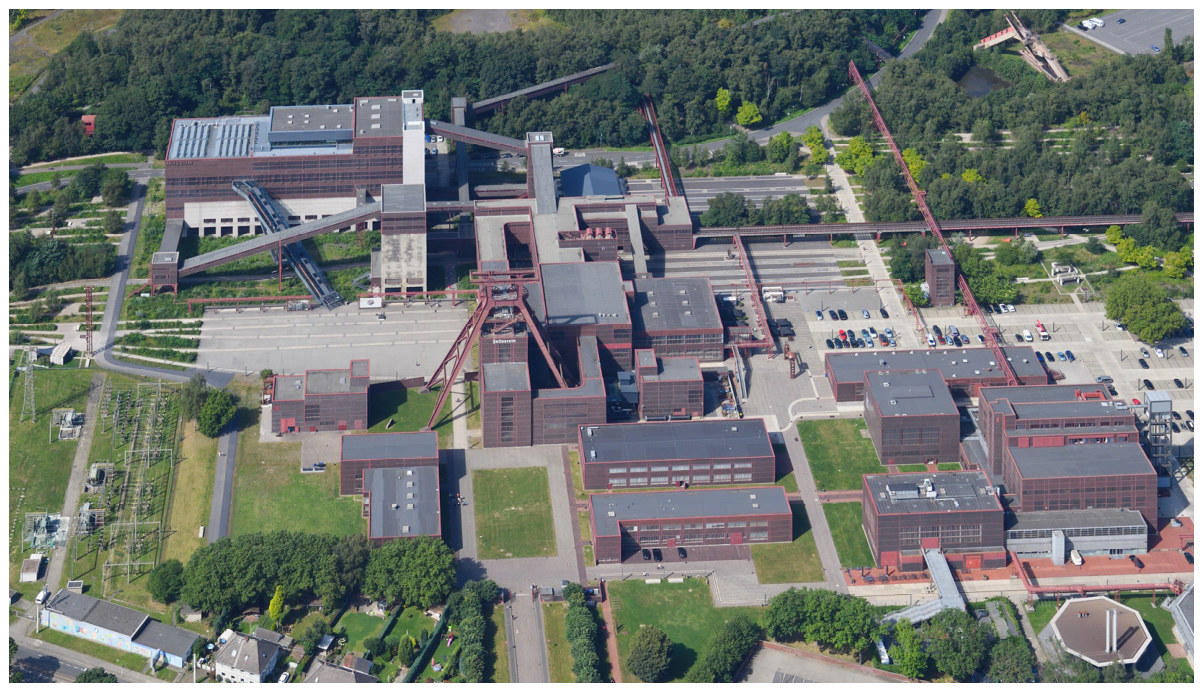
| Asset & Context | Site & Accessibility | Landscape-scale industrial | 100 ha UNESCO site boundaries; 5 km to Essen main station. | Decommissioned coal mine and coking plant in the Ruhr region transformed into an expansive open-landscape campus. | [96,97,98] |
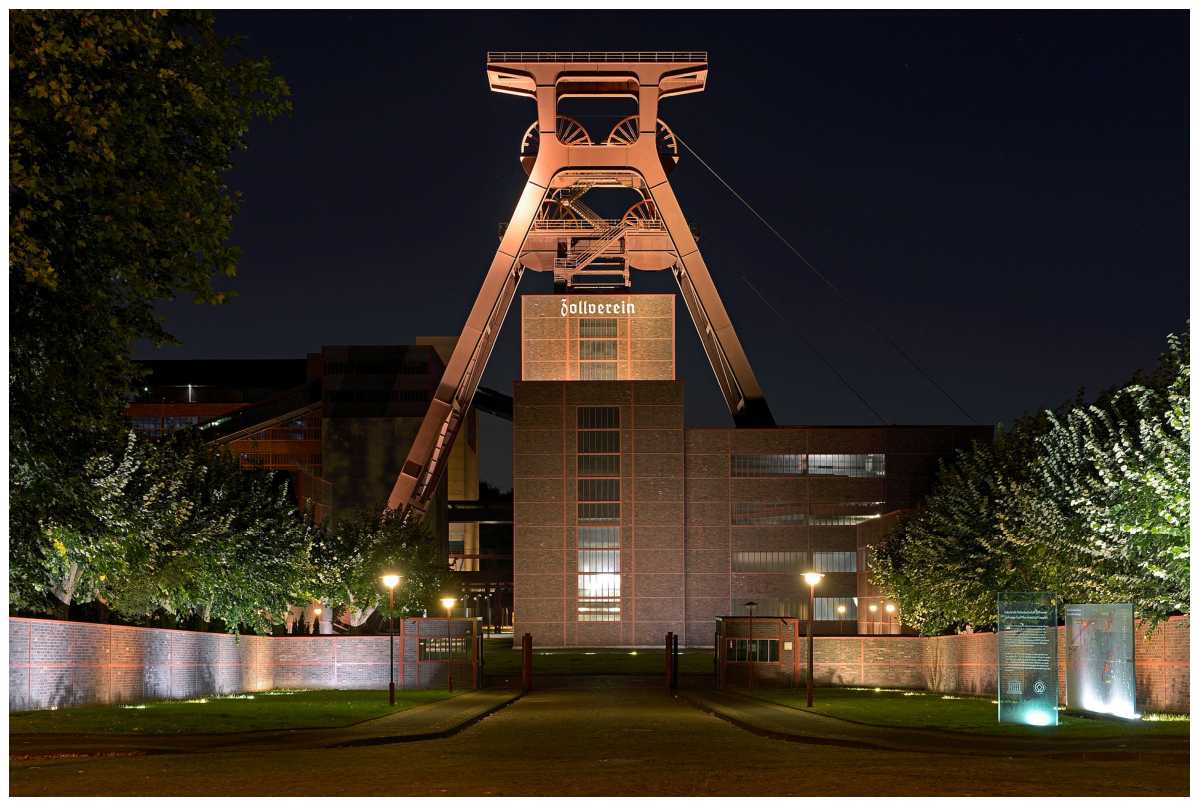
| Heritage Status | Neue Sachlichkeit (New Objectivity architectural style)—Eigenständige Variante des Bauhaus-Gedankens (an independent variant of the Bauhaus concept) | Shaft XII (1928–1932); Coking plant (1957–1961); UNESCO status (2001). | Early-to-mid 20th-century monumental mining infrastructure preserved as an icon of the Modern Movement. | [96,99,100,101,102,103] | |
| Spatial System | Compact vertical + open landscape | Coal washery: 280 m long; complete processing line preserved. | Symmetrical arrangement of vertical machine halls and horizontal battery structures preserved in situ. | [96,97,98,101,103,104] | |
| Governance & Finance | Ownership | Multi-level public stewardship | Stiftung Zollverein (est. 1998); Land State of North Rhine-Westphalia (NRW) acquisition post-1986. | Long-term public foundation management under state, regional, and municipal coordination. | [95,105,106,107,108] |
| Investment | Sustained public funding | €200 M (2001–2009); €84 M cumulative regional funding. | Multi-decade investment program relying on major EU and regional public funding streams to stabilize the site. | [95,98,107,108,109,110] | |
| Circularity | Fabric & Reuse | Preservation-through-conversion | 12,000 m2 Kohlenwäsche conversion (OMA); SANAA School 5000 m2. | “Light-touch” AR retaining original heavy machinery, using reversible contemporary architectural insertions. | [105,108,111,112,113,114,115] |
| Energy Systems | Mine-water heat recovery | Geothermal water (28–35 °C); Climate Neutral 2030 target. | Transitioning from fossil fuel extraction to climate neutrality via geothermal heat pumps using flooded mine shafts. | [116,117] | |
| Social & Cultural | Public Space | Industrial nature park | 1.5 million annual visitors; 100 ha Agence Ter landscape masterplan. | Fenced production site transformed into a permeable, 100-hectare public Park and event landscape. | [96,118,119] |
| Functional Mix | Regional cultural anchor | 1030 on-site jobs; 200,000 annual visitors to Ruhr Museum. | Dense cluster of museums, education, creative industries, and corporate headquarters. | [96,98,113,114,115,119,120,121] | |
| Policy & Design | Innovation | Masterplan-led cultural cluster | 160,000 m2 masterplan area; €23 M SANAA budget. | Strategic use of a flexible masterplan (OMA) and high-profile architectural interventions to guide long-term development. | [108,109,110,111,112,113,114,115,120] |
| Outcomes & Transfer | Market & Transfer | Publicly capitalized model | Average visitor grade visitor satisfaction; 2168 indirect jobs created. | Successful regional anchor, but transferability depends on massive scale and sustained, patient public capital. | [95,96,98,106,114,117,122] |
| Project | Governance & Capital Configuration (Outer Layer) | Temporal Structuring (Phasing Logic) | Spatial & Fabric Strategy (Core Layer) | Systemic Trade-Off & Boundary Condition (Transferability Limit) |
|---|---|---|---|---|
| Tour & Taxis | Single private landowner constrained by regional masterplan; patient capital structured around negotiated public return | Elastic 30-year phasing enabling cross-subsidization between heritage restoration and perimeter densification | Reversible shell-and-infill; historic steel-and-glass halls operate as climatic envelopes hosting independent timber insertions | Adaptability derives from temporal elasticity; collapses without large landholding scale, regulatory leverage, and public anchor tenancy |
| Zeche Zollverein | Dedicated public foundation coordinating multi-level and EU funding streams | Multi-decade conservation trajectory uncoupled from commercial return pressures | Preservation-through-conversion retaining industrial machinery and spatial sequences in situ | Monumental cultural permanence achieved; requires sustained public subsidy and heritage legitimacy at national/international scale |
| Van Nelle Factory | Private consortium operating under rigid UNESCO and national conservation mandates | Continuous occupation model allowing phased technical upgrades without functional interruption | Preservation-through-use via strict box-in-box decoupling of services and space plans from protected envelope | Commercial prestige secured through conservation rigidity; replicable only where exceptional heritage value justifies restricted architectural agency |
| Tabakalera | Tri-level public ownership aligning municipal, provincial, and regional governance | Stabilized phasing protected by institutional co-funding across economic cycles | Preserved exterior identity combined with comprehensive interior reconfiguration and public circulation | Urban cultural consolidation achieved through institutional alignment; vulnerable to political turnover and budgetary contraction |
| Manifattura Tabacchi | State-backed public–private joint venture under heritage supervision; ESG-linked capital instruments | Progressive activation strategy staging temporary uses prior to full build-out | Campus-based “volumes-zero” retention with selective contemporary insertions inside Rationalist grid | Phased activation mitigates early lock-in; dependent on sophisticated financial structuring and heritage negotiation capacity |
| Gasometer City | Multi-actor delivery under city-led subsidy regime; fragmented cooperative ownership | Time-compressed, simultaneous redevelopment enforcing early configurational closure | Retained masonry shells combined with permanent internal concrete structures, fixed vertical zoning, and fragmented ownership | Rapid urban absorption achieved at cost of long-term flexibility; spatial and institutional lock-in emerge when market conditions shift |
| Can Batlló | Public land granted through long-term commons concession; governance embedded in neighborhood assemblies | Open-ended incrementalism; occupation precedes formalization and institutional consolidation | Participatory, low-budget modular reuse; reversible insertions and cooperative timber housing | Civic temporal capacity depends on organized social capacity, municipal tolerance for uncertainty, and long-term commons governance |
| Project | Governance & Ownership | Investment Model | Intervention Strategy | Sustainability & Energy | Functional Mix | Innovation & Market/Transfer |
|---|---|---|---|---|---|---|
| Tour & Taxis | Private ownership under strong public planning control | Patient capital over a long horizon, reinforced by public anchor tenants and cross-subsidization | Reversible shell-and-infill strategy with demountable timber insertions inside preserved historic halls | Large-scale environmental ambition, BIPV integration, passive design, and fossil-free district logic | Offices, government anchors, residential, retail, culture, events, and public parkland | Strong conditional PPP model; transferability requires site scale, planning leverage, and long-duration investment |
| Zeche Zollverein | Public foundation with multi-level regional and state support | Long-duration public and EU-backed investment not primarily tied to short-term return | Minimal intervention and preservation-through-conversion across a landscape-scale industrial complex | Geothermal mine-water reuse and long-term environmental stewardship | Museums, cultural institutions, education/design functions, tourism, events, and selected business uses | Strong model of heritage as public cultural infrastructure; transferability depends on sustained subsidy and regional governance capacity |
| Van Nelle Factory | Private ownership under strict heritage and UNESCO constraints | Private phased investment sustained through continuous occupation and prestige value | “Box-in-box” approach decoupling new services and occupation from the protected envelope | Incremental performance upgrading and operational sustainability synergies | Offices, creative and knowledge-sector uses, museum/tourism functions, and technical infrastructure | Benchmark model of preservation-through-use; transferability depends on exceptional heritage value and market prestige |
| Tabakalera | Shared ownership by city, province, and regional government | Long-term public investment with institutional co-funding | Exterior and structural identity retained, but interior comprehensively reorganized for permeability and cultural integration | Energy-efficiency retrofits, HVAC optimization, and institutional management upgrades | Contemporary art, cinema, Medialab, cultural production, hotel, and public circulation spaces | Innovation lies in institutional coordination and cultural-policy anchoring; transferability depends on stable public governance |
| Manifattura Tabacchi | Public–private joint venture under heritage oversight | Phased ESG-oriented regeneration financed through private-public capital and temporary activation | “Volumes-zero” retention strategy with selective insertions and gradual reactivation of the Rationalist campus | High-performance upgrades and nature-based environmental systems within a heritage-led framework | Creative production, education, ateliers, events, residential/student functions, and commercial uses | Strong model of phased heritage-finance alignment; transferability requires regulatory flexibility and sophisticated capital structuring |
| Gasometer City | City-led redevelopment with cooperative/non-profit and developer ownership across components | Subsidy-intensive model embedded in Vienna’s social-housing system | Historic shells retained but interiors rebuilt through permanent concrete cores, fixed vertical zoning, and tightly coupled residential/service layers | District energy integration, passive climate moderation in selected uses, and later alignment with urban decarbonization goals | Housing, student residence, retail, cinema, event uses, offices, and leisure | Effective large-scale delivery, but relatively high programmatic and spatial lock-in; transferability depends on strong subsidy regimes |
| Can Batlló | Public land under long-term public–commons concession; community-led governance through assemblies and cooperatives | Hybrid civic funding combining municipal support, cooperative finance, ethical banking, sweat equity, and voluntary labor | Participatory, incremental, low-budget reuse with reversible insertions and reclaimed materials | nZEB-oriented cooperative housing, passive measures, biomass heating, and low-carbon ecological infrastructure | Cooperative housing, makerspaces, social-economy activities, educational and common spaces | Strong social innovation and commons-based governance; transferability depends on organized civic capacity and enabling public institutions |
| Lesson | Configuration Logic | Theoretical Basis | Diagnostic Indicators | Configuration Vulnerability | Primary Case Anchors | Analytical Added Value |
|---|---|---|---|---|---|---|
| Lesson I. Governance as Operative Layer | Governance shapes whether decisions remain open, negotiated, delayed, or fixed early. | Contingency and value-layer governance [29,31]; AR and placemaking governance [9]; governance context and regulatory barriers in adaptive heritage reuse [246,247] | Ownership structure; decision rights; planning control; approval flexibility; funding horizon; capacity for phased adjustment. | Fragmented or closure-oriented governance reduces the capacity to revise program, funding, or spatial strategy after completion. | Tour & Taxis: private phasing under public planning control. Zeche Zollverein: public/foundation stewardship. Tabakalera: institutional cultural governance. Manifattura Tabacchi: long-term phased development. Gasometer City: municipal delivery followed by fragmented ownership. Can Batlló: civic and commons-based governance. | Reframes governance as a diagnostic condition of adaptive capacity. |
| Lesson II. Temporal Elasticity as Institutional Output | Project time is institutionally produced through capital structures, approval regimes, ownership continuity, and operational support. | Contingency and building temporality [29,36]; phase-based AR decision frameworks [42] | Duration of capital commitment; temporary use; phased approvals; interim activation; tolerance for incomplete occupation; post-completion feedback capacity. | Limited temporal elasticity produces early programmatic fixation and reduces learning through occupation. | Tour & Taxis: long phased redevelopment. Zeche Zollverein: multi-decade stewardship. Van Nelle Factory: continuous occupation and gradual adaptation. Manifattura Tabacchi: phased activation. Gasometer City: compressed simultaneous delivery. Can Batlló: incremental civic activation. | Shows that project time is not neutral duration but a governance and financing outcome. |
| Lesson III. Stabilization Mechanisms as Temporal Carrying Capacity | Stabilization structures allow reuse trajectories to absorb financial, institutional, or programmatic shocks without exhausting adaptive potential. | Context-dependent case knowledge [43]; contingency under institutional uncertainty [29]; multi-factor AR success conditions [30,247] | Public stewardship; foundation governance; anchor institutions; interim uses; cross-subsidy; civic labor; ESG-linked finance; operational co-funding. | Weak stabilization exposes reuse trajectories to market cycles, interrupted funding, programmatic instability, or decline after delivery. | Zeche Zollverein: foundation stewardship and public/EU funding. Tabakalera: public cultural programming and management. Manifattura Tabacchi: staged development and interim activation. Can Batlló: civic labor and negotiated continuity. | Distinguishes passive duration from active institutional buffering. |
| Lesson IV. Fabric Strategy as Risk Allocation | Fabric strategy transfers present design decisions into future phases and preserves or reduces option value. | Shearing layers and building adaptation [3,36]; AR theory [10]; circular building adaptability and nonlinear layer transformation [248,249] | Structural independence; service separability; demountable components; maintenance access; lease flexibility; phased intervention; capacity for future reprogramming. | Rigid fabric conditions or institutional constraints turn reversibility into a symbolic claim and limit future adaptability. | Tour & Taxis: reversible timber insertions. Zeche Zollverein: conservation with new cultural/infrastructural layers. Van Nelle Factory: box-in-box decoupling. Manifattura Tabacchi: staged intervention. Gasometer City: permanent internal structures and rigid zoning. Can Batlló: incremental selective adaptation. | Shows that reversibility depends on whether fabric conditions, governance arrangements, and financial structures are aligned. |
| Lesson V. Layer Selection Under Different Regimes | What can change is negotiated through heritage mandates, governance, technical feasibility, and economic pressure. | Value-layer ontology and shearing layers [31,36]; nonlinear AR and changing building layers [249]; circular adaptability [248] | Heritage protection level; permitted intervention zones; structure/skin/services/space-plan distinction; conservation authority requirements; technical service strategy. | Poor layer selection creates excessive restriction, inappropriate intervention, or weak long-term usability. | Van Nelle Factory: conserved envelope with inserted internal systems through a box-in-box strategy. Tour & Taxis: heritage shell used as long-life envelope. Gasometer City: retained shell combined with fixed internal concrete structure. | Shows that heritage protection does not dictate one design response; it defines a field of possible layer negotiations. |
| Lesson VI. Lock-in as Socio-Technical Convergence | Lock-in develops when spatial rigidity and institutional rigidity reinforce each other. | Contingency and social-use adaptation [29,39]; building adaptation [3]; regulatory and organizational barriers to reuse [246]; circular adaptability constraints [248] | Irreversible insertions; fragmented ownership; fixed zoning; limited reprogramming rights; weak post-completion coordination; restricted maintenance or alteration capacity. | Spatial fixity combined with institutional fragmentation produces underuse, costly reprogramming, and operational inflexibility. | Gasometer City: retained shells, permanent concrete insertions, fixed vertical zoning, and fragmented ownership. | Links technical fixity and governance fixity as mutually reinforcing conditions. |
| Lesson VII. Publicness as an Institutional Regime of Access and Care | Publicness is produced through access rules, programming, stewardship, maintenance, and care. | Social-use and threshold theory [39]; placemaking through AR [9]; public-life theory [252]; commoning adaptive heritage reuse [26,228] | Access regime; opening hours; programming; security rules; affordability; maintenance responsibility; civic participation; collective governance capacity. | Treating publicness as open space or ownership alone risks controlled, empty, exclusive, or poorly maintained public-looking spaces. | Tour & Taxis: managed public/semi-public gradient. Tabakalera: cultural programming and institutional operation. Can Batlló: commons governance, civic access, and collective care. | Decouples public value from legal ownership and formal openness. |
| Lesson VIII. Territorial Coordination Beyond the Single Building | Large-scale reuse depends on aligning assets, infrastructures, actors, programs, public spaces, and time horizons. | Context-dependent case knowledge [43]; AR and urban placemaking [9]; governance context and multi-factor reuse conditions [30,247] | Site scale; infrastructure integration; coordination body; public-space continuity; multi-building phasing; institutional networks; landscape and mobility integration. | Weak coordination leads to fragmented redevelopment, disconnected public realm, uneven maintenance, and poor program-infrastructure alignment. | Zeche Zollverein: industrial-cultural landscape coordination. Tabakalera: cultural anchor linked to surrounding urban public life. Tour & Taxis: district-scale reintegration through phasing, public space, and transit proximity. | Reframes scale as an institutional and temporal coordination problem, not only a spatial one. |
| Lesson IX. Maintenance as Institutionalized Care | Design intent persists only where governance converts adaptation into routine maintenance, operational care, and long-term stewardship. | Building adaptation and long-term use [3,36]; multi-factor success conditions and circular adaptability [30,248] | Maintenance budget; operational responsibility; monitoring routines; participatory care; co-funding stability; repair capacity; capacity for incremental adaptation. | Deferred care erodes adaptive quality; over-rigid care regimes prevent incremental adjustment and produce institutional stagnation. | Van Nelle Factory: planned maintenance and operational upgrading. Zeche Zollverein: foundation stewardship. Tabakalera: institutional operation. Can Batlló: distributed civic care. | Repositions maintenance as part of design intelligence, not as a post-design technical issue. |
| Lesson X. Transferability as Configuration Knowledge | Transferability depends on whether governance, time, fabric strategy, finance, social capacity, and stewardship can be reassembled under comparable constraints. | Context-dependent case knowledge [43]; situated judgment and configuration knowledge [10,29,39]; AR success factors, governance context, and regulatory constraints [30,246,247] | Similarity of governance capacity; funding horizon; heritage constraints; social organization; reversibility; maintenance capacity; regulatory flexibility; operational continuity. | Copying visible design forms without their enabling conditions produces weak transfer, premature closure, or inappropriate replication. | Tour & Taxis: transferable only with scale, patient capital, and planning leverage. Zollverein: transferable only with sustained public stewardship. Gasometer City: warns against transferring shell-retention without revisability. Can Batlló: transferable only with civic organization and municipal tolerance. | Defines transfer as diagnostic reasoning, not replication of forms, ownership models, or technical solutions. |
Disclaimer/Publisher’s Note: The statements, opinions and data contained in all publications are solely those of the individual author(s) and contributor(s) and not of MDPI and/or the editor(s). MDPI and/or the editor(s) disclaim responsibility for any injury to people or property resulting from any ideas, methods, instructions or products referred to in the content. |
© 2026 by the authors. Licensee MDPI, Basel, Switzerland. This article is an open access article distributed under the terms and conditions of the Creative Commons Attribution (CC BY) license.
Share and Cite
Ben Ghida, D.; Aseguinolaza Braga, I.; Sagarna Aranburu, M. Adaptive Reuse as Configuration Knowledge: Design Intelligence in Seven European Post-Industrial Trajectories. Sustainability 2026, 18, 5719. https://doi.org/10.3390/su18115719
Ben Ghida D, Aseguinolaza Braga I, Sagarna Aranburu M. Adaptive Reuse as Configuration Knowledge: Design Intelligence in Seven European Post-Industrial Trajectories. Sustainability. 2026; 18(11):5719. https://doi.org/10.3390/su18115719
Chicago/Turabian StyleBen Ghida, Djamil, Izaskun Aseguinolaza Braga, and Maialen Sagarna Aranburu. 2026. "Adaptive Reuse as Configuration Knowledge: Design Intelligence in Seven European Post-Industrial Trajectories" Sustainability 18, no. 11: 5719. https://doi.org/10.3390/su18115719
APA StyleBen Ghida, D., Aseguinolaza Braga, I., & Sagarna Aranburu, M. (2026). Adaptive Reuse as Configuration Knowledge: Design Intelligence in Seven European Post-Industrial Trajectories. Sustainability, 18(11), 5719. https://doi.org/10.3390/su18115719