Article

Towards Sustainable and Inclusive Food Systems: Food Poverty and Alternative Food Networks in South Tyrol


by
Alessandra Piccoli
Competence Center for the Management of Cooperatives, Free University of Bolzano, 39100 Bolzano, Italy
Sustainability 2026, 18(11), 5701; https://doi.org/10.3390/su18115701
Submission received: 27 April 2026 / Revised: 22 May 2026 / Accepted: 2 June 2026 / Published: 4 June 2026
(This article belongs to the Special Issue Healthy, Equitable and Environmentally Sustainable Food Environments)

Abstract

This article investigates food poverty in South Tyrol, a generally affluent region, to understand how socio-economic changes—particularly the COVID-19 pandemic—have reshaped patterns of vulnerability within local food systems and challenged social sustainability. Using a qualitative approach, the study draws on interviews with institutional and third-sector actors, adults involved in local food networks, and focus groups to capture diverse perspectives on access to food. The findings reveal a coexistence of overall economic prosperity with hidden forms of food insecurity and unequal access to healthy and sustainable food. Although official statistics report relatively low levels of childhood overweight and obesity, certain groups—including elderly individuals, migrant families, and low-income households—face increasing challenges due to rising living costs and constrained access to nutritious food. The pandemic functioned as a temporary stressor that exposed pre-existing fragilities while also encouraging adaptive responses within local welfare systems. In particular, alternative food networks such as solidarity purchasing groups and emerging food cooperatives play a complementary role by promoting food autonomy, social support, and dignity-based assistance. These initiatives highlight forms of need not always captured by traditional welfare mechanisms. The study concludes that addressing food poverty in high-income contexts requires integrated, place-based strategies that combine social inclusion, nutritional education, intersectoral governance, and community-driven food practices.

1. Introduction

Food poverty is a condition of deprivation of nutrients that encompasses both the lack of food and malnutrition, which includes unhealthy eating, including excessive food intake leading to overweight and obesity [1]. Malnutrition is much more often associated with low educational levels rather than economic ones and, given its social implications, must be considered an issue that concerns not only individuals and families with the lowest income, but the entire population across the board [2]. However, human health, social justice and sustainability cannot be separated, as expressed by the One Health concept, which emphasises the close link between the balance of the ecosystem and human well-being [3]. While food poverty has been extensively investigated in economically deprived contexts, limited attention has been paid to hidden forms of food insecurity and nutritional inequality in affluent regions characterized by strong welfare systems. This study addresses this gap by examining the case of South Tyrol.
This contribution aims to explore the issue of food poverty in South Tyrol in its various components, the major changes that occurred following the COVID-19 epidemic, social policies and counter-strategies, with a particular focus on the potential of local and alternative food networks, developing the conclusions of Stein et al. [4]. The investigation, with an exploratory nature, stemmed from the need expressed by the Autonomous Province of Bolzano to delimit and understand the phenomenon of food poverty and the possible effects of the pandemic on the South Tyrolean population, particularly children. The research questions guiding the work were: [Q1.1] Are there emergencies related to food poverty in South Tyrol? [Q1.2] What has changed with the COVID-19 epidemic? [Q1.3] What are the counter-strategies? [Q2] What are the eating habits of children in South Tyrol? [Q3] How can local and alternative food networks support efforts to counteract food poverty?
The article first offers a theoretical framework on food poverty and its effects on health, as well as on local food networks, followed by a discussion of the evidence collected in the Province of Bolzano and the identification of some guidelines for further investigation and improved intervention strategies.

1.1. Food Poverty and Food Insecurity

Studies on food poverty have multiplied over the past decades, given the emergence of absolute poverty even in developed countries with advanced welfare systems, leading to different interpretations of the term itself. O’Connor et al. [5] propose the following definition: “food poverty is the insufficient economic access to an adequate quantity and quality of food to maintain a nutritionally satisfactory and socially acceptable diet.”
Poverty is by nature multidimensional and therefore cannot be reduced solely to the economic aspect, especially considering the variability of purchasing power at the regional level and the implications that different income levels have on eating behaviors [1]. Alongside internationally adopted poverty indicators—such as the United Nations threshold of USD 1.90 per day—other dimensions must be considered: access to services, social protection measures, opportunities for decent work, as well as the ability to express one’s opinions and make free choices of self-determination in various domains such as health, education, and sexual, political, and religious orientations [6]. Difficulties in accessing food are primarily linked to price volatility caused by the financial crises of 2007–2008 (Great Recession) and 2021–2022 (pandemic crisis), which also produced a reduction in poverty in rural areas that produce food commodities—an unexpected effect resulting from the increased value of foodstuffs [7]. Finally, measures to tackle the problem require long-term political action to ensure that the results are sustainable over time [8].
Even in South Tyrol, despite the region’s overall economic well-being, poverty is a present and complex reality that affects various segments of the population. According to the report by the Federation for Social and Health Services, there exist both visible and hidden forms of poverty, which particularly affect women, single-parent families, migrants, the elderly, and the so-called working poor, meaning individuals whose labor income is not sufficient to meet basic needs. Causes are multiple: insufficient income, inaccessible housing, precarious employment, social exclusion, and educational difficulties. Although the public system offers support measures, it still focuses largely on managing emergencies, often delegating to non-profit organizations the task of intervening flexibly and directly in cases consequently classified as vulnerable.
With the establishment of the Millennium Development Goals in 2000, the United Nations and most countries worldwide committed to promoting policies for inclusion and social convergence, with strong attention to nutrition, ranging from poverty to chronic hunger and food insecurity [9]. Global calorie production amounts to an estimated average of 2900 kcal per capita per day, adequate to comfortably meet the nutritional needs of the entire world population [10]. The problem of malnutrition lies in the inefficient distribution of these calories: more than two billion people are overweight, while over 800 million face insufficient access to food. Between 1961 and 2013, disparities in access to food decreased by 48% between nations but increased by 25% on average within nations, highlighting how malnutrition is deeply tied to inequalities and the widening social gap [10].
The 2030 Agenda places significant emphasis on combating food insecurity—especially in low-income countries—acknowledging that it affects around two billion people globally and is directly linked to absolute poverty, in both its transient and permanent forms [11]. However, this effort often neglects the eligibility parameters imposed by many countries on aid beneficiaries, which exclude broad population groups deemed “not deserving poor,” particularly undocumented people [12]. Five years away from 2030, the goal of eradicating hunger still appears distant, and trend data collected by UNICEF [13] show no significant progress, partly due to the lack of supportive policies. UNICEF offers a set of targeted recommendations, with particular attention to children, emphasizing the need for even the wealthiest countries to address malnutrition—a problem that extends beyond poverty and food insecurity, given the growing incidence of diseases related to childhood obesity.
Food insecurity can be understood as a multidimensional condition in which limited or uncertain access to adequate and nutritious food—driven by structural, economic, and social inequalities—produces significant health and social consequences, reinforcing existing vulnerabilities and undermining human well-being [14]. Childhood poverty has a severe impact on health in adulthood, with harmful social consequences and increased healthcare costs, particularly emergency room visits and the management of chronic diseases [15].
Food insecurity is a major risk factor for health, particularly for vulnerable population groups such as children and the elderly. It affects especially those belonging to unrecognized minorities, who are often not represented at interinstitutional decision-making tables where support policies are designed [16]. For these individuals, it is difficult to develop resilience strategies to ensure secure access to food due to weak social networks and limited integration into the broader community. Elderly individuals also face significant difficulty in asking for help or seeking support services, even as the cost of living increases much faster than pension income, reducing the potential benefits of local food poverty measures and worsening living and health conditions [16].
Food poverty should therefore not be understood solely as a condition of material deprivation, but also as a challenge for food security and social sustainability. According to contemporary approaches, food security implies stable physical, social and economic access to sufficient, safe and nutritious food that meets dietary needs and cultural preferences. In affluent societies, hidden food insecurity increasingly emerges through unequal access to healthy diets, nutritional knowledge and socially acceptable food practices. This highlights the need for sustainable and dignity-oriented interventions capable not only of responding to emergencies but also of strengthening long-term community resilience and public health outcomes.

1.2. Malnutrition and Health

Obesity appears to be a disease of Western civilization, spreading globally through globalization and constantly increasing in numbers. However, the phenomenon in which overweight and obesity disproportionately affect people of lower socioeconomic status is also growing. This paradox seems rooted in the accessibility of highly processed, low-cost foods, combined with factors such as higher unemployment, lower educational levels, irregular meal patterns, and reduced physical activity [17].
The paradox of obesity associated with relative and absolute poverty has been observed in low-income countries as well, such as The Gambia, where globalization has brought social imbalances before development, affecting particularly urban and metropolitan areas, where large numbers of people crowd poor and unhealthy suburbs. Rural areas, too, have been affected due to remittances and the availability of foods rich in hydrogenated vegetable fats [18].
Richer countries show equally concerning scenarios. In the United Kingdom, it is estimated that by 2050, a quarter of the population will be obese, with high prevalence among disadvantaged groups experiencing food insecurity, due to the much higher cost of quality food compared to highly processed food [19]. Gallego et al. [20] confirm that belonging to socioeconomically disadvantaged families significantly increases the incidence of overweight and obesity in children aged 2 to 14. The rise in childhood and youth obesity raises alarm due to its medium- and long-term health impacts, making it a burden on future generations.
Ramesh et al. [21] show that improving access to healthy and nutritionally balanced food for low-income families is strategic for reducing childhood obesity, involving various stakeholders in social marketing campaigns and building social infrastructures for physical activity and health-oriented, sustainable food cultures. In this context, the concept of “healthy food” does not refer only to caloric adequacy, but also to dietary quality and nutritional diversity, given the importance of diets rich in fresh vegetables, fruits, legumes, whole grains and minimally processed foods, due to their role in reducing chronic inflammation, supporting metabolic health and preventing non-communicable diseases. As access to these foods, however, is strongly influenced by socio-economic inequalities, food prices and territorial availability, healthy eating must also be understood as a social and political issue connected to food justice and unequal access to nutritional well-being.
The main social determinants influencing the onset of overweight and obesity are income, education level, employment status and quality, and access to good-quality food. Autret and Bekelman [22] show that worsening socioeconomic conditions precede the onset of overweight and obesity, indicating that these factors act individually as well. The study also presents cases where overweight and obesity lead to worsening socioeconomic conditions.
Key factors connecting food insecurity to obesity include the high cost of healthy food and cultural and psychological factors, with significant influence from environmental and contextual conditions—areas where policies could intervene effectively [23]. This is also relevant for children, as confirmed by Aris et al. [24], whose study of over 28,000 U.S. children shows that being born and raised in low-income neighborhoods with poor access to healthy food significantly increases the risk of severe obesity, with further correlations tied to parental weight. The study suggests adopting targeted policies for overweight prevention in disadvantaged neighborhoods, echoing earlier work by Yee et al. [25] on the importance of family eating styles and educational approaches in preventing overweight and obesity.
Finally, O’Neil et al. [26] conducted a systematic review to determine the association between dietary quality and the mental health of children and adolescents, concluding that a clear correlation exists between good-quality diets and good mental balance. The role of diet in the development of depressive disorders and anxiety has been studied extensively in adults, with solid evidence. The concept of healthy food is variable over time and grounded in shifting and constantly evolving knowledge, shaped by power relations arising from configurations resulting from particular arrangements of practices, sets of knowledge, actors, events, and institutions [27].

1.3. Malnutrition and COVID-19

The COVID-19 epidemic and the associated containment measures highlighted latent economic uncertainty and food insecurity, with major effects on health [28], as well as the impact of obesity and overweight on general health, with a significant increase in severe complications among overweight individuals infected with COVID-19 [29]. According to Darwis et al. [30], household income, educational attainment, and the availability of food reserves are key determinants of food security during the pandemic. Pre-existing socio-economic inequalities significantly shaped households’ capacity to cope with the crisis: lower income levels reduced the ability to access adequate food, while limited educational resources constrained nutritional awareness and adaptive strategies. Economically disadvantaged households and those with fewer food reserves were more exposed to food insecurity during lockdown periods. Conditions of poverty and social vulnerability amplified the effects of the pandemic, reinforcing the need for integrated policies capable of strengthening food access, resilience, and sustainable development in post-pandemic contexts.
Pryor and Dietz [31], in examining the relationship between COVID-19 infection, food insecurity, and obesity, describe a syndemic, understood as “the set of health, environmental, social, and economic problems produced by the interaction of two or more epidemic diseases, which have severe repercussions on the living conditions of affected populations.” Their study confirms that COVID-19 exacerbated marginality, inequality, food insecurity, and obesity risk among vulnerable populations—factors associated with a greater risk of complications in case of infection—suggesting that local and regional food systems may serve as a common solution to the global syndemic combining obesity, food insecurity, undernutrition, and climate change.
The concept of syndemic is also proposed by Moon et al. [32], who highlight that food insecurity (affecting 26.4% of the global population), malnutrition, and obesity are three of the greatest threats to human health and well-being. Their analysis shows that economic and social vulnerability forced people to choose between prioritizing protection from COVID-19 infection and maintaining minimal food security, also due to the suspension of food support programs run by voluntary organizations.
Beyond initiatives to mitigate food insecurity and malnutrition, the COVID-19 epidemic demonstrated the need to address the food syndemic structurally and systemically, acting on the root causes. It also showed that food (in)security has multiple, interconnected causes and characteristics that require place-based approaches [33]. COVID-19 increased inequalities in access to healthy food, promoting highly processed diets and consequently raising obesity rates, especially among vulnerable groups [34]. In the context of the COVID-19 epidemic, Nikiema and Dedewanou [35] have further emphasized that the crisis generated a distinctive and multidimensional form of food insecurity, shaped not only by economic disruptions but also by health, social, and informational factors. These findings underline the importance of developing integrated and place-based strategies capable of mitigating the effects of future shocks, particularly for the most vulnerable population groups, while promoting healthier and more sustainable food practices.
Similar patterns were observed in Europe [36], with studies showing clear correlations between social inequalities, poor diet, obesity, and increased incidence of non-communicable chronic degenerative diseases (responsible for 70% of public healthcare expenditure), as well as greater risk of severe complications in case of infection. Umer and Kahn [37] have shown that the effects of the COVID-19 crisis on food insecurity were not distributed evenly across the population, but were significantly amplified by pre-existing conditions of poverty and socio-economic vulnerability. Households already experiencing economic hardship were more severely affected by income losses and lockdown-related disruptions, resulting in higher levels of food insecurity and reduced access to adequate nutrition. These findings suggest that crises such as the pandemic tend to intensify existing inequalities, disproportionately impacting disadvantaged groups and highlighting the urgent need for targeted and inclusive support measures.
Finally, the effects of COVID-19 on food systems were not homogeneous across food categories and supply chains, considering that internationally traded products, particularly seafood, imported processed foods and long-chain agri-food commodities, were more exposed to disruptions related to transport restrictions, labor shortages and international market instability. By contrast, locally produced fresh foods, such as seasonal vegetables distributed through short supply chains, often demonstrated greater resilience during lockdown periods due to their territorial proximity and reduced dependence on global logistics. Several studies highlighted how the pandemic increased attention toward local food systems and shorter supply chains, also reinforcing consumer interest in food traceability and regional production networks [38,39,40].

1.4. Local Food Networks

Alternative Food Networks (AFN) originate from social movements seeking to counteract the standardization and extractive logic of global agri-food chains. They are based on spatial and relational proximity, trust-based relationships between producers and consumers, and co-production practices sharing risks, benefits, and responsibilities [41]. These networks promote short supply chains, agroecology, and participatory quality, generating local collective goods such as biodiversity, landscape stewardship, and the recovery of traditional knowledge [42]. They are capable of hybridizing with conventional models while maintaining strong transformative potential. In this sense, AFNs act as laboratories of citizenship and arenas for democratic participation, where people learn through shared practice [43].
These networks generate social cohesion through “doing together,” conviviality, and the construction of shared meanings, strengthening territorial belonging and resilience [44]. They also contribute to building local food policies and equitable access to healthy products, moving beyond the individual dimension of critical consumption and promoting social and environmental justice [45]. Walters, Garden and Chamberlain [46] have highlighted the potential of non-commercial food organizations that produce and distribute food on the basis of community-oriented solidarity. Alternative food networks, or values-based territorial food networks [47], are at the forefront of tackling social marginality and food poverty through the direct involvement of consumers in agricultural production, generating relationships of trust and mutual support [48].
Access to local products through internal solidarity mechanisms within AFNs—such as CSA models [49]—integrates cost-offset approaches and emancipatory actions, supporting concrete improvements in dietary variety, food literacy, and food well-being [50]. Strengthening community belonging and individual and collective empowerment is also an essential tool for effective collective action [44]. The contribution by [51] clearly shows the role AFNs can play in mitigating the immediate effects of food poverty and contributing to the structural transformation of food systems towards equity and sustainability. These authors critically examine co-governance practices in managing food security funding during the pandemic crisis, highlighting the need for polycentric and participatory approaches. Their work fits within the broader debate on food justice, emphasizing how decision-making decentralization and community inclusion can generate more equitable and resilient responses.
In this context, food networks emerge as socio-technical infrastructures capable of integrating heterogeneous actors (institutions, grassroots organizations, producers, and consumers) and facilitating processes of solidarity-based redistribution and collaborative governance. According to the conclusions of Stein et al. [4], innovative initiatives developed by grassroots and community-based organizations can play a significant role in improving access to food for vulnerable populations. These initiatives contribute not only to immediate food support, but also to strengthening the resilience and social sustainability of local food systems by enhancing communities’ capacity to respond to future crises and promote healthier eating practices.

2. Materials and Methods

2.1. An Overview of South Tyrol

South Tyrol is considered the richest region in Italy, as confirmed by ISTAT, which reported a per capita GDP of 60,000 euros in 2023—20% higher than Lombardy, the second region in the ranking. Despite this, ASTAT reports that in 2021 the median hourly wage of South Tyrol residents amounted to 12.6 euros, with 6.5% of employed people at risk of poverty. The 2024 Statistical Yearbook (https://assets-eu-01.kc-usercontent.com/b5376750-8076-01cf-17d2-d343e29778a7/22baeb11-d3cb-4655-bd08-5c0162937a35/JB2024.pdf, accessed on 18 May 2026) also notes that the age group with the lowest average income is the over-65 population, while the linguistic group with the lowest average income—excluding foreigners—is the Italian-speaking one.
The Autonomous Province provides support to households in difficulty through a variety of measures. In 2023, 4,570,540 euros were allocated to 1480 families through the minimum income scheme established in 2000 (Decree No. 30), and an additional 32,892,444 euros supported 11,294 beneficiaries through rent assistance. These monetary transfers are complemented by other indirect measures, including the distribution of food items, often through third-sector organizations, which in 2023 reached approximately 9000 people. However, the provision of economic support appears only partially capable of reducing poverty risk, which falls by 5 percentage points—from 22.4% before transfers to 17.1% after.
Turning to nutritional conditions, ASTAT reports that, overall, the regional dietary situation is balanced, with almost the entire population regularly consuming fruit, vegetables, and cereals on a daily basis. The incidence of overweight and obesity among adults is around 27%, significantly lower than the Italian national average (46%) and the European average (53%). A concerning figure is the incidence of overweight and obesity among people over 65, which reaches 46%.

2.2. Data Collection and Analytical Framework

In line with Paletti and Valzania [52], the themes of food insecurity, food poverty, obesity, and malnutrition are deeply interconnected and cannot be fully understood through quantitative data alone. For this reason, the research applies a mixed exploratory design incorporating a qualitative approach to complement the numerical data available from public statistical services (ISTAT and ASTAT).
The results presented here are therefore based on a qualitative study aimed at exploring food poverty in South Tyrol, with particular attention to the effects of the pandemic and the condition of minors, coordinated with quantitative secondary data. To do this, the analysis of official statistical data (ASTAT) and institutional documents was combined with empirical research involving four types of participants. Table 1 summarizes the methods and timeframe adopted:
Interviews with institutional and third-sector representatives were conducted between November 2024 and January 2025, mainly in the offices of the organizations involved or, when preferred by participants, through online meetings. Interviews lasted between 45 and 90 min and followed a semi-structured format aimed at exploring perceptions of food poverty, changes that emerged after COVID-19, institutional responses and local counter-strategies. Interviews with participants involved in solidarity purchasing groups were conducted in informal settings, including participants’ homes and community spaces connected to local food initiatives, in order to facilitate open discussion regarding everyday food practices and social relations connected to food networks.
Focus groups with children and adolescents were conducted in collaboration with after-school and youth centers and lasted approximately one hour each. Visual prompts and food images were used in order to facilitate participation and stimulate discussion among younger participants. All interviews and focus groups were anonymized and coded in order to protect participants’ privacy.

2.3. Data Analysis

Following the example of Marchetti and Secondi [53], this article proposes an analysis aimed at relating food insecurity and difficulties in accessing food to malnutrition and the inability/impossibility of accessing healthy food. Food poverty is therefore analyzed in its dual nature: insufficient access to an adequate quantity of food and insufficient access to adequate quality of food, both nutritionally and socially/culturally [5]. This connection is widely acknowledged in the literature as a reference framework for promoting inclusive social policies that address poverty through a dignity-based approach [54]. The article also proposes a link between access to quality food and social relationships, particularly within local food networks—spaces where quality is socially co-constructed [55].
Interview transcripts and focus group materials were analyzed through thematic coding aimed at identifying recurrent patterns related to food insecurity, vulnerability, nutritional practices and perceptions of local support systems. In order to strengthen the analytical framework, qualitative evidence was complemented by descriptive statistical analysis of available secondary data (ASTAT and OKkio alla Salute datasets) and by frequency-based analysis of recurring themes emerging from interviews and focus groups. This allowed the study to identify the most recurrent categories of vulnerability, perceived effects of COVID-19, and forms of support mentioned by participants. Given the exploratory nature of the study and the limited sample size, statistical analysis was limited to descriptive measures rather than inferential modelling.
Table 2, below, summarizes the main themes emerging from institutional interviews, interviews with participants involved in alternative food networks, and focus groups with children and adolescents.

3. Results

3.1. Food Poverty in South Tyrol, COVID-19, and Countermeasures

3.1.1. Food Poverty and Counteracting Policies

Food poverty appears as a widespread phenomenon even in the Province of Bolzano (I6), where a varied situation emerges. In urban and peri-urban areas, most families in difficulty have a migrant background (I4), while in peripheral areas and lateral valleys such as Val Passiria, those who access assistance services are predominantly autochthonous (I3). In line with existing literature, the presence of minors and large families increases the likelihood of relying on food aid (I6).
A significant finding that emerges consistently across interviews with social service operators is the systematic increase in elderly people among those requiring assistance (I2, I3, I4, I6, and I7): “the main target audience for community shops now includes many local residents, as well as elderly people, because—particularly since the pandemic—the number of elders turning to support services has increased” (I6), combined with difficulties in accessing services due to feelings of shame and inadequacy: “This is a very sensitive group; for those who find themselves in this situation [of need] after years of not actually needing help and not suffering from poverty, there is also an element of shame, so it is difficult for them to take action, to come to the Banco [food distribution organisation], to queue up amongst other people, and to expose themselves a little to the gaze of the neighbourhood” (I3). The association La Strada has activated a home-delivery service precisely to address the need for discretion (I4). The municipality of Bolzano also shows sensitivity to the issue, having activated a home-delivered hot meal service for elderly individuals even if they are self-sufficient (I7). The aim of this initiative is not only to ensure proper nutrition, but also to monitor the general condition of fragile and often isolated individuals. The municipality has also established agreements with local restaurants to offer meals at highly subsidized prices in normalized social environments, aimed at combating social isolation among the elderly.
The increase in the number of people requesting food support is observed by operators (I1, I2, I3, and I4) and confirmed by the social services of the Province of Bolzano, which recorded a rise in requests from households with minors and from elderly people (I6 and I8). Access to food is further reduced by rising prices—particularly following the conflict in Ukraine—which forces families to divide limited income among essential expenses, housing costs included. The housing crisis in the province has a significant impact on the most vulnerable groups, requiring an integrated and coordinated approach to poverty, particularly when individuals must choose between paying rent, paying electricity bills, or buying food (I6).
Current interventions promoted by the Province of Bolzano are strongly oriented toward financial support to cover the high cost of living (I8), as well as attempts to compensate for the nutritional needs of children (I6) and the elderly (I7) through targeted measures providing at least one balanced meal per day. However, cross-cutting, integrated social policies remain fragmented due to the distribution of responsibilities among different offices (I4).
While all institutions declare that they invest resources and time in promoting healthy eating among their users and citizens (I6, I7, and I8), the most significant challenge that emerges is the need for systemic coordination of responses (I1 and I4). Operators highlight, for example, bureaucratic obstacles associated with managing food resources, which slow down and complicate service delivery across the territory (I1). Although collaboration between the third sector and local authorities is strong and fundamental (I2), there is room for improved network action and enabling policies (I1 and I4).
The Province of Bolzano has adopted its own legislation on food waste, aligned with national law, establishing, among other things, a coordination table and a technical committee tasked with defining measures and activities to be implemented (I5). Awareness campaigns have been developed in cooperation with municipalities and third-sector organizations, which also receive financial support from local institutions. Past strategies focused mainly on promoting food collection initiatives—through incentives for companies to donate surplus food and through food drives aimed at individual citizens (I5 and I6).

3.1.2. The Effects of COVID-19

Organizations working to counter food poverty generally agree that the pandemic severely tested collection and distribution procedures during periods of mobility restrictions (I1, I2, and I4). Nevertheless, once emergency measures ended, the situation returned largely to pre-COVID-19 conditions. The epidemic, however, aggravated poverty in many cases and increased the number of people in difficulty, particularly as the pandemic was followed by a geopolitical crisis linked to the war in Ukraine (I1, I2, and I4).
Local institutions also recorded an increase in requests for assistance during the pandemic years, due to the severe crisis in the tourism sector, which plays a central role in the South Tyrolean economy (I6 and I7). The profile of people in difficulty also changed, with a systematic and lasting increase in autochthonous families and elderly individuals in need (I3 and I8). Moreover, institutions observed that the epidemic contributed to a rise in psychological and social problems, increasing vulnerability among already disadvantaged individuals. This made it more difficult for some to accept help due to feelings of shame associated with requesting food support (I3 and I4).
On the other hand, the pandemic—by accentuating existing criticalities—offered local institutions in the Province of Bolzano an opportunity to gain awareness and innovate food poverty management (I1, I6, and I7). COVID-19 acted as a turning point, increasing citizens’ awareness of the role of institutions in supporting people in difficulty (I8). This led to a strengthened appreciation of local aid networks, which became a reference point for many citizens who turned to them during the emergency and continued to rely on them afterwards (I2 and I3).
Another positive aspect was greater attention to inclusion policies and food dignity (I1 and I6). Institutions began to recognize that the population includes not only affluent citizens, but also individuals in difficulty who deserve support and dignity (I4, I7, and I8). This led to a more integrated and humane approach to food aid distribution, attempting to ensure that no one remained without food. Finally, greater awareness emerged regarding the importance of proper nutrition and the need to educate the population about healthier food choices, especially in a context of increasingly scarce and costly resources (I6 and I7).

3.2. Children’s Eating Habits in South Tyrol

3.2.1. The “OKkio Alla Salute” Study

Since 2008, the Province of Bolzano has participated in “OKkio alla salute,” an initiative aimed at monitoring the health status of resident children through surveys and interventions in primary schools. According to the 2024 report based on 2023 data, South Tyrol exhibits the lowest rate of overweight or obese children in Italy, with 81.9% normal weight (CI 95% 79.0–84.5%), 12.0% overweight (CI 95% 9.9–14.3%), 2.9% underweight (CI 95% 1.9–4.4%), 2.7% obese (CI 95% 1.9–3.9%), and 0.5% severely obese (CI 95% 0.2–1.3%), compared to a national average of 28.8% overweight or obese (19% overweight, 9.8% obese, including 2.6% severely obese).
Table 3 shows the proportion of weight categories from 2008 to 2023, alongside national averages. The situation appears substantially stable, with slight improvement over the 15-year period.
Family eating culture seems to play an important role: having at least one overweight or obese parent doubles the likelihood of overweight or obesity in children. Particularly concerning is that just over 50% of children consume fruit daily, and fewer than 40% consume vegetables daily. On the other hand, the study highlights that only 19% of children are not physically active—that is, they do not engage in regular structured physical activity.

3.2.2. Field Observations

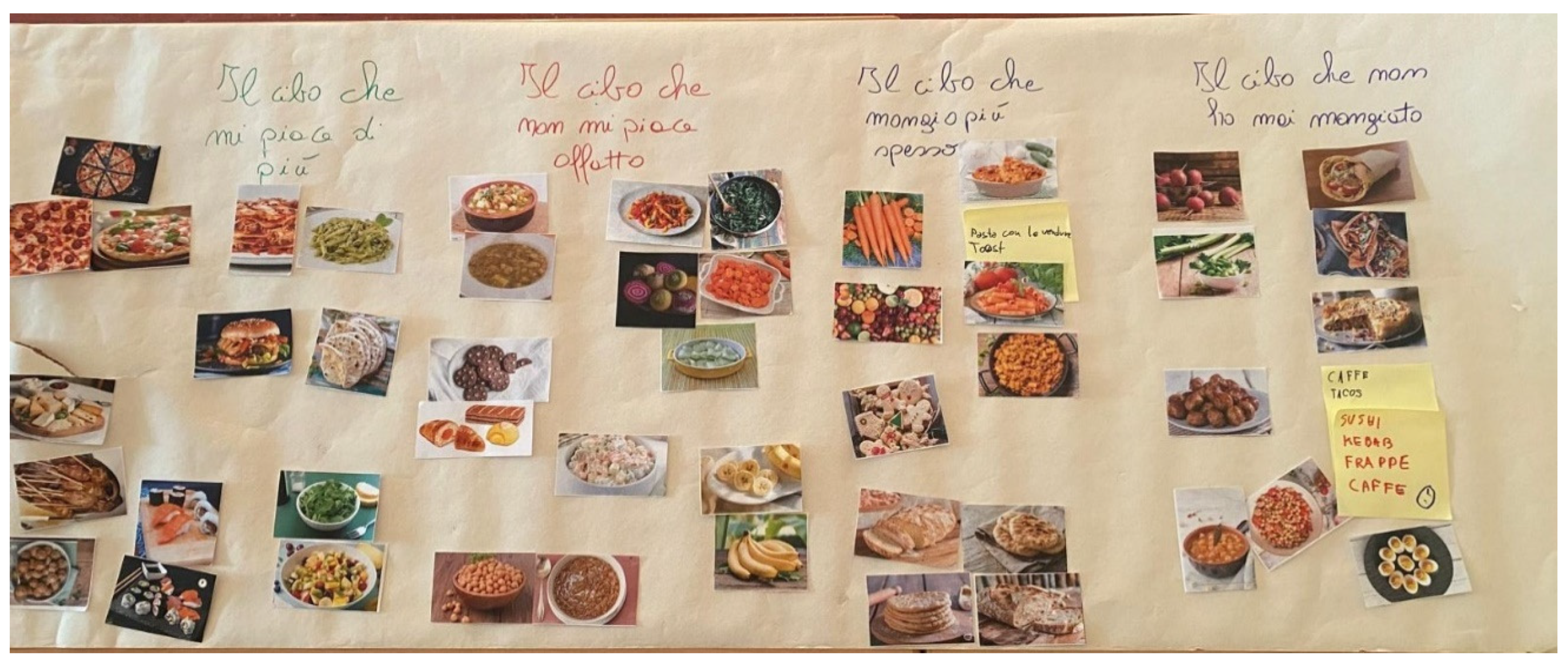
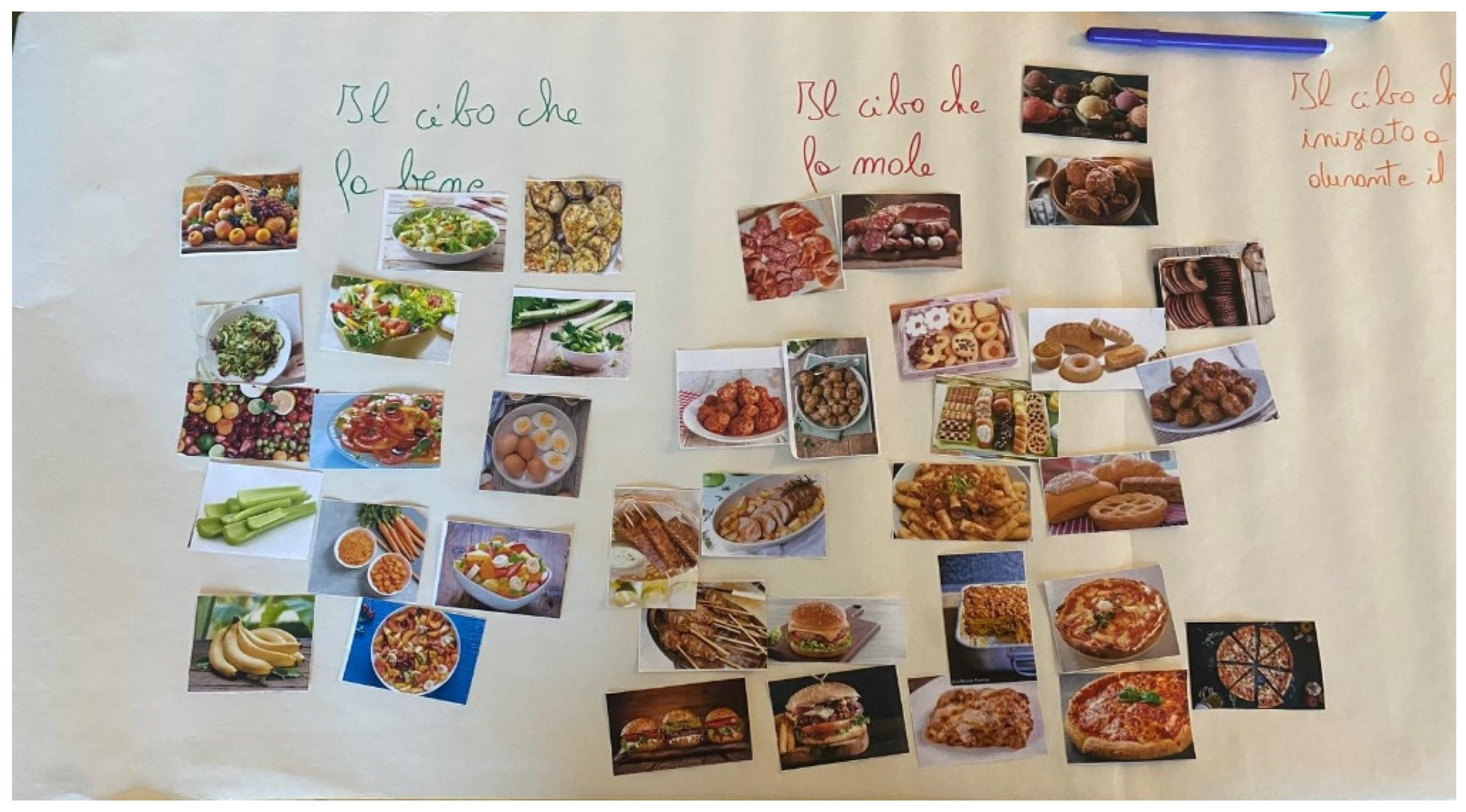
Four focus groups were conducted with approximately 8 children and adolescents each, aged 9 to 14. Participants were asked to reflect on their habits and food preferences by selecting images of foods they liked most, least, consumed most frequently, had never tried, considered healthy, considered unhealthy, and had started consuming during the pandemic. In Table 4, the main themes emerging from focus groups with children and adolescents are explained.
A first observation worth noting is that overweight children were very few: out of 34 participants, only two appeared more corpulent than average, confirming epidemiological data showing that South Tyrol has among the lowest rates of overweight in Europe (FG1–FG4).
Eating habits reported by participants appeared generally balanced, as illustrated in Figure 1 from focus group no. 3, showing frequent consumption of cereals, fruit, and vegetables. A marked preference for trendy foods such as sushi and kebab also emerged, but this was balanced by a good awareness of healthy and unhealthy foods (Figure 2 from focus group no. 2), consistent with WHO recommendations.
Regarding the goal of understanding how the pandemic influenced children’s eating habits, all four groups indicated that COVID-19 did not significantly change family eating patterns. Nonetheless, this finding must be interpreted cautiously, given the difficulty of asking very young participants to recall behaviors from four years earlier.

3.3. Local Food Networks and Healthy Eating

3.3.1. Local Networks and Eating Habits

Following Pryor and Dietz [31], the eating habits of families participating in a local food system, specifically a solidarity purchasing group (GAS), were investigated. As with the broader study, this component is preliminary and exploratory, and the cases examined cannot be considered representative of the South Tyrolean population as a whole. Participants were asked what their family’s eating habits were, where they bought the food they consumed, what aspects mattered most while choosing food, what had changed in their lives after COVID-19 and how their eating habits changed after COVID-19.
Regarding eating habits, families reported strong prevalence of plant-based, seasonal, local foods and meals cooked at home from fresh ingredients (I9–I12). Eating out is not a common practice (I9 and I11), nor are food delivery services (I9, I10, and I12). Purchases are largely made through the solidarity purchasing group (I9–I12), at farmers’ markets or small shops (I10, I11, and I12), while supermarkets are used for products unavailable in alternative supply chains (I9, I11, and I12). Families reported paying great attention to food safety, cultivation methods (preferring organic), locality and seasonality as indicators of environmental sustainability, and ethical aspects such as solidarity and social responsibility toward producers (I9–I12).
Regarding lifestyle changes since COVID-19, all participants stated that their habits had not changed significantly as a result of the pandemic. They recalled personal restrictions during lockdown and temporary adjustments, but these disruptions did not produce lasting changes in social relations or eating habits.

3.3.2. The Potential of Local Food Networks in Counteracting Food Poverty

Interviews with local actors engaged in combating food poverty highlighted the crucial role of local agri-food enterprises. These companies contribute significantly to the redistribution of food resources in a solidarity-based perspective, helping reduce food poverty, understood both as quantitative insufficiency and as limited access to quality food. Within support networks, these enterprises sometimes provide fresh products or at least locally produced items: “We also have farmers, for example, who bring us fruit and vegetables every week; in the summer, of course, there’s a lot more, because they know us by now and when they have a surplus they give us a call and we go and collect it” (I1). Although some small farms donate seasonal produce directly to solidarity markets (I2), most contributions consist of surplus stock (I1–I4), which does not overcome food injustice, failing to guarantee equitable food access or address structural inequalities affecting vulnerable groups.
In this perspective, greater involvement of local companies is desirable, as an expression of territorial social responsibility integrating economic, ethical, and political objectives (I6–I8). Alternative food networks could serve as collaborative governance spaces, where the value of food shifts from a commercial commodity to a commons [45], with important implications for food poverty reduction (I7). The emerging food coop in Merano follows this direction by offering fresh, nutritious products at controlled prices or through mutual-support mechanisms, contributing not only to food security but also to public health and social inclusion (I13).
The decision of the food coop to locate in a social housing neighborhood represents an intentional strategy for inclusion and food justice (I13). This choice reflects a logic of territorial proximity aimed at reducing economic and cultural barriers to accessing healthy and sustainable food, countering the marginalization dynamics typical of urban peripheries. The coop’s presence in this context goes beyond distributing quality food: it fosters community-building processes through participatory practices, such as involving residents in governance and daily operations. In this way, the food coop positions itself as a socio-economic infrastructure capable of promoting empowerment, strengthening solidarity ties, and generating social capital—transforming food consumption into a collective and politically meaningful act.

4. Discussion

Food poverty in affluent regions is often hidden, relational and multidimensional rather than exclusively income-based. Starting from the definition of food poverty that recognizes in it not only the insufficient quantity of food but also the inadequacy of its quality [5], which contributes to the development of overweight and obesity precisely among individuals in more precarious socio-economic conditions [22], the subjects involved in the research (I1–I8) confirm that the issue is not secondary in South Tyrol. This reinforces the finding—now broadly acknowledged—that malnutrition is widespread even in high-income contexts and that the very notion of healthy food remains embedded in specific configurations of knowledge, actors, and power relations [27]. The descriptive statistical integration adopted in this study strengthened the interpretation of recurrent qualitative patterns; however, the limited sample size does not allow for broader inferential generalizations.
Although the risk factors linking poverty and malnutrition [17,19,20] were not directly explored in this study, the interviews show how people with a migrant background represent the main group of beneficiaries of food support in Bolzano (I2, I4 and I7). Across all participants, the pandemic emerges as a phase that brought latent criticalities to the surface, even if its effects were temporary compared to the more structural impact of inflation and rising living costs driven by successive crises [7]. At both local and global levels [9], the real issue is access to resources, which, while abundant in a wealthy province like Bolzano, are not equitably distributed [10].
Awareness of the effects of malnutrition on health appears only partially coherent. Over the last two decades, significant attention has been devoted to children through educational activities, prevention programmes and interventions in school canteens. These efforts help explain the very positive data on overweight and obesity among children in South Tyrol, far below both Italian and European averages, suggesting that targeted policies can mitigate many socio-economic risk factors [21,23,24]. However, this attention does not reach a systemic dimension and often remains limited to recommendations, without enabling individuals to pursue long-term healthy lifestyles, especially in adulthood, due to economic barriers and the persistence of approaches insufficiently contextualised [33].
This becomes evident in interventions aimed at elderly people, where the focus is more on reducing isolation and feelings of shame than on providing nutritional education or re-education as a primary source of health and well-being—a dimension highlighted in recent work on older adults and hidden food insecurity [16]. The study by O’Neil et al. [26], which identified a correlation between dietary quality and mental health in children and adolescents, further reinforces the importance of maintaining continuous attention to food quality throughout the life course.
In this context, the role of AFNs emerges as particularly significant. While often presented as initiatives linked to sustainable agriculture or short supply chains, the findings of this study show how AFNs can act as relational infrastructures capable of supporting households in ways that go beyond the mere provision of food [27]. Solidarity purchasing groups, community-supported agriculture initiatives and the emerging food coop demonstrate how participation in local food systems can strengthen food autonomy, promote dietary literacy and enhance a sense of belonging [51]. These networks also create spaces where individuals are not passive recipients of assistance but active participants in practices of co-production, trust-building and mutual support. This relational dimension is essential for overcoming forms of stigma often associated with traditional assistance, which may still be shaped by the notion of the deserving poor [12].
Moreover, in a wealthy region like South Tyrol, where poverty is not always visible, AFNs help reveal hidden vulnerabilities and offer complementary responses to institutional welfare [49]. Their ability to combine environmental sustainability, social innovation and community inclusion suggests that local food networks could contribute meaningfully to more equitable and resilient local food systems. In this sense, AFNs do not replace public policies but provide a valuable lens for re-thinking food poverty as a phenomenon that is at once material, relational and cultural [48].
From a policy perspective, the results suggest the need to move beyond emergency responses and adopt a more systemic, intersectoral and inclusive approach [12]. First, food dignity should become a guiding principle in local welfare policies, ensuring that support respects individual preferences and cultural identities [1]. Second, improved coordination among social services, health authorities, agricultural departments and municipalities is essential to overcome fragmentation [51]. Third, stable partnerships with local producers and AFNs could guarantee access to fresh, high-quality food for vulnerable groups [46]. Additionally, outreach strategies specifically designed for elderly individuals—who often experience hidden forms of food insecurity—should be strengthened.

5. Conclusions

The findings suggest the usefulness of a relational conceptual model that situates food poverty at the intersection of economic constraints, social networks, public policies, and community-based initiatives. In this framework, access to food is not only determined by income or market availability, but also by relational infrastructures—such as family support, community ties, and participation in local food networks—that mediate individuals’ ability to secure nutritious and culturally meaningful food. Public institutions, in turn, act as boundary-setting actors shaping the structural conditions of access through social benefits, school catering, elderly care services, and waste-reduction policies. Alternative food networks operate in the interstices of these systems, providing spaces of co-production, participation, and food dignity. The model thus conceptualizes food poverty as an emergent property of multi-level interactions between households, communities, markets, and welfare institutions. Adopting such a relational approach can guide the development of policies that address not only material deprivation but also the relational and cultural dimensions of food insecurity.
The results call for a shift toward more integrated and dignity-oriented food policies in South Tyrol. First, policy frameworks should formally incorporate the principle of food dignity, ensuring that support measures respect individuals’ preferences, autonomy, and cultural identities. This may entail revising the distribution of predefined food parcels and expanding access to solidarity emporia where beneficiaries retain agency in selecting products. Second, improving intersectoral coordination—between social services, public health, agricultural departments, and local municipalities—is essential to overcome fragmentation and avoid duplications in service provision. Third, establishing long-term partnerships with local agricultural producers and alternative food networks could secure a stable supply of fresh, high-quality food for vulnerable households. This approach aligns with strategies of territorial social responsibility and could be incentivized through fiscal benefits or public procurement schemes. Fourth, targeted interventions should address the specific vulnerabilities of elderly individuals, promoting outreach mechanisms that minimize stigma and reinforce social connectedness. Finally, the province could pilot innovative tools such as fresh food vouchers, community-supported agriculture (CSA) subsidies for low-income families, or neighborhood-based food hubs co-governed by residents and institutions. Methodologically, the study demonstrates the value of integrating qualitative inquiry with descriptive statistical tools in order to investigate hidden forms of food poverty in affluent regions.
Despite the relevance of the findings, this study presents several limitations that must be acknowledged. First, the qualitative design—based on interviews and focus groups—does not allow for statistical generalization to the entire South Tyrolean population. While the narratives collected offer valuable insights into the lived experiences of food poverty, they are inevitably influenced by the specific contexts and networks in which participants are embedded. Second, the temporal dimension poses constraints: the study was conducted in the aftermath of the COVID-19 crisis and during a period of inflationary pressure, which may have shaped participants’ recollections and perceptions. Recall bias is especially relevant when asking children and families to reflect on pre-pandemic habits. Third, the geographical scope is uneven, with richer evidence from urban and peri-urban areas compared to more remote valleys, reflecting the accessibility of participants and services. Finally, the absence of fully triangulated quantitative data—particularly updated indicators on household food insecurity—limits the possibility of systematically comparing local findings with national and international trends. These limitations, however, also point to fertile avenues for future, more comprehensive research, allowing for the application of more articulated theoretical frameworks such as those proposed by Barnes and Schrager [56]. In particular, several relevant lines of inquiry have emerged:
  • How effective are different approaches to countering food poverty, especially when comparing predefined food parcel distribution with the solidarity emporium model?
  • How can the challenge of decreasing donations from supermarkets be addressed while ensuring dignity and food autonomy for people in need?
  • Whether and how alternative food networks can serve as generative spaces for community-based social innovation in combating food poverty, in light of the multiple crises affecting society.
Although the privileged context of the Province of Bolzano—with strong institutions ensuring substantial support—is undeniable, the open questions suggest room for improvement. Moreover, organizations active in the territory clearly warn of the need to maintain close attention and prepare for a potential notable increase in food assistance needs, given the combination of multiple international crises and critical local factors. This is perhaps the most relevant indication for policymakers and a promising direction for future research. Food poverty in high-income contexts like South Tyrol reveals the limits of welfare systems oriented mainly toward economic support. Findings show that dignity, autonomy, and community-based food networks must become central pillars of future policies.

Funding

This research was conducted thanks to the funding of the Competence Centre for Social Work, Social Pedagogy and Social Policy within its institutional activities.

Institutional Review Board Statement

The study was conducted in accordance with the Declaration of Helsinki and was exempted from review by the Institutional Review Board of Competence Centre for Social Work according to (https://www.unibz.it/en/home/organisation/research-ethics-committee/, accessed on 9 May 2026) and (https://www.unibz.it/assets/Documents/University/unibz-code-of-ethics-2025-it-de.pdf—page 6, Article 1, points 1 & 2; & page 8, Article 3, point 2, accessed on 9 May 2026).

Informed Consent Statement

Informed consent was obtained from all subjects involved in the study.

Data Availability Statement

The anonymized transcripts of the interviews and the observation diaries are securely stored on the cloud infrastructure of the Free University of Bozen-Bolzano. Access is restricted to the research team, in accordance with institutional data protection and research ethics guidelines.

Acknowledgments

I would like to express my sincere gratitude to Ulrike Elfriede Loch and Federica Viganó for entrusting me with this research and for guidance throughout the process. My heartfelt thanks go to all the institutional representatives who generously made themselves available for the interviews, contributing essential insights to this study. I am equally grateful to the volunteers of the organizations committed to combating food poverty, whose dedication and willingness to share their time and experience greatly enriched this work.

Conflicts of Interest

The author declares no conflicts of interest.

References

  1. Chen, W.T. From ‘Junk Food’ to ‘Treats’: How Poverty Shapes Family Food Practices. Food Cult. Soc. 2016, 19, 151–170. [Google Scholar] [CrossRef] [Scilit]
  2. Huizar, M.I.; Arena, R.; Laddu, D.R. The Global Food Syndemic: The Impact of Food Insecurity, Malnutrition and Obesity on the Healthspan amid the COVID-19 Pandemic. Prog. Cardiovasc. Dis. 2021, 64, 105–107. [Google Scholar] [CrossRef] [Scilit]
  3. Haji, M.; Himpel, F. Building resilience in food security: Sustainable strategies post-COVID-19. Sustainability 2024, 16, 995. [Google Scholar] [CrossRef] [Scilit]
  4. Stein, B.; Knapp, M.; Muñoz, E.; Rose, D. The New Orleans Food System and COVID-19: A Case Study in Strengthening Food System Resiliency to Facilitate Healthy Eating. Nutrients 2025, 17, 3689. [Google Scholar] [CrossRef] [Scilit]
  5. O’Connor, N.; Farag, K.; Baines, R. What Is Food Poverty? A Conceptual Framework. Br. Food J. 2016, 118, 429–449. [Google Scholar] [CrossRef] [Scilit]
  6. Odhiambo, V.O. Approaches to Assessing Poverty and Food Security. In Handbook on Public Policy and Food Security; Edward Elgar Publishing: Cheltenham, UK, 2024; pp. 90–100. [Google Scholar]
  7. Headey, D.; Hirvonen, K. Higher Food Prices Can Reduce Poverty and Stimulate Growth in Food Production. Nat. Food 2023, 4, 699–706. [Google Scholar] [CrossRef] [Scilit]
  8. Aliyu, U.S.; Ozdeser, H.; Çavuşoğlu, B.; Usman, M.A. Food security sustainability: A synthesis of the current concepts and empirical approaches for meeting SDGs. Sustainability 2021, 13, 11728. [Google Scholar] [CrossRef] [Scilit]
  9. TTanumihardjo, S.A.; Anderson, C.; Kaufer-Horwitz, M.; Bode, L.; Emenaker, N.J.; Haqq, A.M.; Satia, J.A.; Silver, H.J.; Stadler, D.D. Poverty, Obesity, and Malnutrition: An International Perspective Recognizing the Paradox. J. Am. Diet. Assoc. 2007, 107, 1966–1972. [Google Scholar] [CrossRef] [Scilit]
  10. Martinez, J.D.; Ramankutty, N.; Mehrabi, Z.; Hertel, T.W. A Modelled Estimate of Food Access within Countries Shows That Inequality within Countries Has Increased despite Rising Equality between Countries. Glob. Food Secur. 2024, 41, 100774. [Google Scholar] [CrossRef] [Scilit]
  11. Harttgen, K.; Seiler, J. Food Insecurity and Poverty. In Research Handbook on Measuring Poverty and Deprivation; Edward Elgar Publishing: Cheltenham, UK, 2023; pp. 234–242. [Google Scholar]
  12. Turkkan, C. Who Is ‘Deserving’ of Aid? Subject-Formation in Istanbul’s Food Banks. Food Cult. Soc. 2021, 24, 464–480. [Google Scholar] [CrossRef] [Scilit]
  13. UNICEF. The State of Food Security and Nutrition in the World 2024: Financing to End Hunger, Food Insecurity and Malnutrition in All Its Forms; UNICEF: New York, NY, USA, 2024. [Google Scholar]
  14. Chomać-Pierzecka, E. Economic, Environmental and Social Security in accordance with the Concept of Sustainable Development Bezpieczeństwo ekonomiczne, środowiskowe i społeczne. Stud. Adm. I Bezpieczeństwa 2025, 18, 257–272. [Google Scholar] [CrossRef] [Scilit]
  15. McCabe, R.; Pollack, R.; Broadbent, P.; Thomson, R.M.; Igelström, E.; Pearce, A.; Bambra, C.; Bennett, D.L.; Alexandros, A.; Daras, K.; et al. Implications of Child Poverty Reduction Targets for Public Health and Health Inequalities in England. J. Epidemiol. Community Health 2024, 78, 632–640. [Google Scholar] [CrossRef] [Scilit] [PubMed]
  16. McEachern, M.G.; Ellahi, B.; Muzahid Khan, D.L. Food Insecurity: The Resilient, but ‘Silent Poverty’ Perspectives of Older Ethnic Minority Individuals within UK Communities. Soc. Policy Adm. 2024, 59, 237–251. [Google Scholar] [CrossRef] [Scilit]
  17. Żukiewicz-Sobczak, W.; Wróblewska, P.; Zwoliński, J.; Chmielewska-Badora, J.; Adamczuk, P.; Krasowska, E.; Zagórski, J.; Oniszczuk, A.; Piątek, J.; Silny, W. Obesity and Poverty Paradox in Developed Countries. Ann. Agric. Environ. Med. 2014, 21, 590–594. [Google Scholar] [CrossRef] [Scilit] [PubMed]
  18. Webb, F.; Prentice, A. Obesity Amidst Poverty. Int. J. Epidemiol. 2006, 35, 24–30. [Google Scholar] [CrossRef] [Scilit]
  19. Johnstone, A.M.; Lonnie, M. Tackling Diet Inequalities in the UK Food System: Is Food Insecurity Driving the Obesity Epidemic? (The FIO Food Project). Proc. Nutr. Soc. 2023, 83, 133–141. [Google Scholar] [CrossRef] [Scilit] [PubMed]
  20. Gallego, A.; Olivares-Arancibia, J.; Yáñez-Sepúlveda, R.; Gutiérrez-Espinoza, H.; López-Gil, J.F. Socioeconomic Status and Rate of Poverty in Overweight and Obesity among Spanish Children and Adolescents. Children 2024, 11, 1020. [Google Scholar] [CrossRef] [Scilit]
  21. Ramesh, S.; Vitko, V.S.; Stark, A.E.; Riisager, I.F. Childhood Obesity: Evaluating the Causes and Proposed Solutions of a Global Epidemic; Virginia Tech: Blacksburg, Virginia, 2024. [Google Scholar]
  22. Autret, K.; Bekelman, T.A. Socioeconomic Status and Obesity. J. Endocr. Soc. 2024, 8, bvae176. [Google Scholar] [CrossRef] [Scilit]
  23. Briggs, R.; Rowden, H.; Lagojda, L.; Robbins, T.; Randeva, H.S. The Lived Experience of Food Insecurity among Adults with Obesity: A Quantitative and Qualitative Systematic Review. J. Public Health 2024, 46, 230–249. [Google Scholar] [CrossRef] [Scilit]
  24. Aris, I.M.; Wu, A.J.; Lin, P.-I.D.; Zhang, M.; Farid, H.; Hedderson, M.M.; Zhu, Y.; Ferrara, A.; Chehab, R.F.; Barrett, E.S.; et al. Neighborhood Food Access in Early Life and Trajectories of Child Body Mass Index and Obesity. JAMA Pediatr. 2024, 178, 1172–1182. [Google Scholar] [CrossRef] [Scilit]
  25. Yee, A.Z.H.; Lwin, M.O.; Ho, S.S. The Influence of Parental Practices on Child Promotive and Preventive Food Consumption Behaviors: A Systematic Review and Meta-Analysis. Int. J. Behav. Nutr. Phys. Act. 2017, 14, 47. [Google Scholar] [CrossRef] [Scilit]
  26. O’Neil, A.; Quirk, S.E.; Housden, S.; Brennan, S.L.; Williams, L.J.; Pasco, J.A.; Berk, M.; Jacka, F.N. Relationship between Diet and Mental Health in Children and Adolescents: A Systematic Review. Am. J. Public Health 2014, 104, e31–e42. [Google Scholar] [CrossRef] [Scilit] [PubMed]
  27. Durocher, M.; Knezevic, I. ‘Healthy’ Food Configurations: Critical Analysis of Power Relations in Context. Food Cult. Soc. 2022, 26, 905–926. [Google Scholar] [CrossRef] [Scilit]
  28. Tester, J.M.; Rosas, L.G.; Leung, C.W. Food Insecurity and Pediatric Obesity: A Double Whammy in the Era of COVID-19. Curr. Obes. Rep. 2020, 9, 442–450. [Google Scholar] [CrossRef] [Scilit]
  29. Tan, M.; He, F.J.; MacGregor, G.A. Obesity and COVID-19: The Role of the Food Industry. BMJ 2020, 369, m2237. [Google Scholar] [CrossRef] [Scilit]
  30. Darwis, K.; Salam, M.; Munizu, M.; Diansari, P.; Bulkis, S.; Rahmadanih; Jamil, M.H.; Fudjaja, L.; Akhsan; Wulandary, A.; et al. The Application of Binary Logistic Regression in Modeling the Post-COVID-19 Effects on Food Security: In Search of Policy Recommendations in Promoting Sustainable Livelihoods for Food-Insecure Households. Sustainability 2025, 17, 6375. [Google Scholar] [CrossRef] [Scilit]
  31. Pryor, S.; Dietz, W. The COVID-19, Obesity, and Food Insecurity Syndemic. Curr. Obes. Rep. 2022, 11, 70–79. [Google Scholar] [CrossRef] [Scilit]
  32. Moon, J.R.; Willingham, C.; Gjevukaj, S.; Freudenberg, N. COVID-19, food insecurity, and diet-related diseases: Can syndemic theory inform effective responses? A case study. J. Agric. Food Syst. Community Dev. 2021, 10, 55–71. [Google Scholar] [CrossRef] [Scilit]
  33. Kennedy, K. Food Insecurity during COVID-19: A Place-Based Understanding of Fresno, California. Food Cult. Soc. 2025, 28, 1110–1130. [Google Scholar] [CrossRef] [Scilit]
  34. Ashby, N.J. Impact of the COVID-19 Pandemic on Unhealthy Eating in Populations with Obesity. Obesity 2020, 28, 1802–1805. [Google Scholar] [CrossRef] [Scilit] [PubMed]
  35. Nikiema, P.R.; Dedewanou, F.A. Food Insecurity During the COVID-19 Pandemic in Burkina Faso. Economies 2025, 13, 155. [Google Scholar] [CrossRef] [Scilit]
  36. De Lorenzo, A.; Cenname, G.; Marchetti, M.; Gualtieri, P.; Dri, M.; Carrano, E.; Pivari, F.; Esposito, E.; Picchioni, O.; Moia, A.; et al. Social Inequalities and Nutritional Disparities: The Link between Obesity and COVID-19. Eur. Rev. Med. Pharmacol. Sci. 2022, 26, 320–339. [Google Scholar]
  37. Umer, H.; Khan, M.F. COVID-19 Severity and Food Insecurity: Evidence from Pakistan. COVID 2024, 4, 1731–1747. [Google Scholar] [CrossRef] [Scilit]
  38. Béné, C. Resilience of local food systems and links to food security–A review of some important concepts in the context of COVID-19 and other shocks. Food Secur. 2020, 12, 805–822. [Google Scholar] [CrossRef] [Scilit] [PubMed]
  39. Ghali-Zinoubi, Z. Local food consumption during the COVID-19 pandemic. Ital. J. Food Sci. 2021, 33, 21. [Google Scholar] [CrossRef] [Scilit]
  40. Piccoli, A.; Rossi, A.; Genova, A. A socially-based redesign of sustainable food practices: Community supported agriculture in Italy. Sustainability 2021, 13, 11986. [Google Scholar] [CrossRef] [Scilit]
  41. Vittori, F.; Piccoli, A.; Uleri, F. Reti alternative del cibo come spazi di apprendimento trasformativo. Sc. Democr. 2024, 16, 127–148. [Google Scholar]
  42. Meloni, P. On Food Apparatuses. Orthorexia and Digital Technologies in Central Italy. Food Cult. Soc. 2023, 26, 286–304. [Google Scholar] [CrossRef] [Scilit]
  43. Vittori, F.; De Vita, A. Le utopie del vivere in comune. Pratiche conviviali attorno al cibo. La. Fam. 2022, 56, 142–156. [Google Scholar]
  44. Piccoli, A. Community Supported Agriculture as an Emancipatory Tool: A Participatory Research Study. J. Rural Community Dev. 2025, 20, 45–70. [Google Scholar]
  45. Vivero-Pol, J.L.; Ferrando, T.; De Schutter, O.; Mattei, U. (Eds.) Routledge Handbook of Food as a Commons; Routledge: London, UK, 2018. [Google Scholar]
  46. Walters, V.M.; Garden, E.; Chamberlain, K. Beyond Markets: Food Poverty and the Noncommercial Food System. Food Cult. Soc. 2021, 24, 694–711. [Google Scholar] [CrossRef] [Scilit]
  47. Reckinger, R. Values-based Territorial Food Networks: Qualifying Sustainable and Ethical Transitions of Alternative Food Networks. Reg. Cohes. 2022, 12, 78–109. [Google Scholar] [CrossRef] [Scilit]
  48. Verfuerth, C.; Bellamy, A.S.; Adlerova, B.; Dutton, A. Building Relationships Back into the Food System: Addressing Food Insecurity and Food Well-Being. Front. Sustain. Food Syst. 2023, 7, 1218299. [Google Scholar] [CrossRef] [Scilit]
  49. Parot, J.; Wahlen, S.; Schryro, J.; Weckenbrock, P. Food Justice in Community Supported Agriculture—Differentiating Charitable and Emancipatory Social Support Actions. Agric. Hum. Values 2024, 41, 685–699. [Google Scholar] [CrossRef] [Scilit]
  50. Izumi, B.T.; Martin, A.; Garvin, T.; Tejera, C.H.; Ness, S.; Pranian, K.; Lubowicki, L. CSA Partnerships for Health. Transl. Behav. Med. 2020, 10, 1277–1285. [Google Scholar]
  51. Regnier-Davies, J.; Edge, S. Harnessing Food System Equity from the Ground Up: Shifting Co-Governance Practices in the Funding of Food Security Responses during the Pandemic Crisis in Toronto, Canada. Food Cult. Soc. 2024, 28, 1012–1034. [Google Scholar] [CrossRef] [Scilit]
  52. Paletti, F.; Valzania, A. La povertà alimentare in Toscana: Una ricerca qualitativa sugli utenti dei centri Caritas. Auton. Locali E Serv. Soc. 2023, 46, 279–295. [Google Scholar]
  53. Marchetti, S.; Secondi, L. The Economic Perspective of Food Poverty and (In)Security: An Analytical Approach to Measuring and Estimation in Italy. Soc. Indic. Res. 2022, 162, 995–1020. [Google Scholar] [CrossRef] [Scilit]
  54. Rutten, L.J.F.; Yaroch, A.L.; Colón-Ramos, U.; Johnson-Askew, W.; Story, M. Poverty, Food Insecurity, and Obesity: A Conceptual Framework for Research, Practice, and Policy. J. Hunger Environ. Nutr. 2010, 5, 403–415. [Google Scholar] [CrossRef] [Scilit]
  55. Piccoli, A.; Vittori, F.; Uleri, F. Unmaking capitalism through community empowerment: Findings from Italian agricultural experiences. J. Rural. Stud. 2023, 101, 103064. [Google Scholar] [CrossRef] [Scilit]
  56. Barnes, C.; Schrager, B. Precarious Foodscapes: Life, Caring, Digitization, and Labor in the Face of Deepening Food Crises. Food Cult. Soc. 2024, 27, 1–13. [Google Scholar] [CrossRef] [Scilit]
Figure 1. Children’s food habits—focus group n.3.
Sustainability 18 05701 g001
Figure 2. Nutritional awareness—focus group n.2.
Sustainability 18 05701 g002
Table 1. Data Collection.
MethodPeriodParticipantsOrganizations (Anonymization Code)ID
InterviewNov. 20244 representativesBA-TAA, ES, TV, LSI1–I4
InterviewDec. 2024–Jan. 20254 representativesCD, PAB, SW BZ, SW PABI5–I8
InterviewNov. 20244 adultsBelonging to GAS (solidarity purchasing groups)I9–I13
Focus groupDec. 202434 children aged 9–14After-school and youth centersFG1–FG4
Table 2. Themes.
Table 2. Themes.
Theme IdentifiedInstitutional Interviews (n = 8)AFN Interviews (n = 4)Focus Groups (n = 4)
Increase in elderly vulnerability6/8
Rising living and housing costs as drivers of food poverty7/81/4
Shame in asking for food support5/8
Increased requests for support after COVID-197/8
Importance of coordinated local welfare responses6/8
Positive role of AFNs and solidarity networks3/84/4
Attention to food quality and seasonality4/43/4
Good nutritional awareness among children4/4
No major long-term dietary changes after COVID-192/84/44/4
Table 3. Variables for which a comparison was made between regional surveys; from OKkio alla salute. Results of the 2023 survey p. 17.
Variable2008201020122014201620192023Italy 2023
Prevalence of underweight or normal-weight children81%85%84%83%85%82%85%71%
Prevalence of overweight children15%11%13%13%12%13%12%19%
Prevalence of obese children4%4%3%2%3%3%3%10%
Prevalence of overweight and obese children19%15%16%16%14%16%15%29%
Table 4. Focus groups’ main themes.
ThemeMain Observations Emerging from Focus Groups
Perception of healthy foodChildren generally associated healthy food with vegetables, fruit and home-cooked meals
Perception of unhealthy foodFast food, sugary drinks and snacks were widely identified as unhealthy
Most appreciated foodsSushi, kebab, pasta and sweets were frequently mentioned
Everyday eating habitsFrequent consumption of cereals, fruit and vegetables emerged in most groups
COVID-19 and food habitsParticipants generally reported no major long-term dietary changes after the pandemic
Nutritional awarenessMost participants showed good awareness regarding healthy and unhealthy foods
Disclaimer/Publisher’s Note: The statements, opinions and data contained in all publications are solely those of the individual author(s) and contributor(s) and not of MDPI and/or the editor(s). MDPI and/or the editor(s) disclaim responsibility for any injury to people or property resulting from any ideas, methods, instructions or products referred to in the content.