1. Introduction
Rural territories in Europe are undergoing profound structural and demographic transformations, shaped by agricultural modernization, globalization of food markets, and persistent rural depopulation. Since the mid-twentieth century, these processes have generated uneven territorial development, creating dynamic peri-urban zones while marginalizing remote areas vulnerable to out-migration, infrastructural decline, and ageing populations. According to Eurostat [
1], predominantly rural regions in the EU lost population at an average rate of 0.2% per year between 2015 and 2023, with 161 rural regions experiencing particularly acute demographic decline. The European Commission’s Long-Term Vision for Rural Areas [
2] recognizes depopulation and demographic ageing as central challenges requiring integrated policy responses, while the OECD [
3] identifies digital connectivity gaps, ageing workforces, and limited access to services as the primary structural drivers of rural disadvantage across member states.
In this context, Short Food Supply Chains (SFSCs) have emerged as innovative strategies to strengthen local economies, reduce environmental impacts, and support territorial resilience [
4,
5,
6]. SFSCs are formally defined in EU Regulation 1305/2013 as supply chains involving a limited number of economic operators, committed to cooperation, local economic development, and close geographical and social relations between producers, processors, and consumers [
7,
8]. Within this institutional framework, the concept of Kilometre Zero (Km 0) constitutes a specific, territorially bounded manifestation of SFSCs, distinguished by its emphasis on minimizing physical distance between production and consumption and by its strong symbolic and identity dimension [
9,
10]. While all Km 0 systems can be considered SFSCs, not all SFSCs qualify as Km 0: the latter additionally incorporates cultural and territorial identity claims that go beyond mere logistical proximity. This distinction is theoretically significant and has received limited attention in comparative empirical research.
Sustainability, in the context of Km 0 systems, is necessarily multidimensional and must be understood simultaneously across three dimensions. Economic sustainability refers to the viability of family farms and rural enterprises through fairer value distribution and reduced intermediation [
11,
12]. Social sustainability encompasses community cohesion, generational renewal, quality of life, and the preservation of rural cultural identity [
13,
14]. Environmental sustainability involves the reduction in food miles, the promotion of agroecological practices, and alignment with the objectives of the European Green Deal and the Farm-to-Fork Strategy [
15,
16]. Recognizing these three dimensions simultaneously is essential for interpreting the divergent motivations of the different actors involved in Km 0 systems, and for evaluating their contribution to territorial resilience.
Km 0 is not a homogeneous category, but a multi-actor construct interpreted differently by the stakeholders involved. For farmers, Km 0 represents a strategy for farm survival, enabling direct producer-consumer relationships, fairer income distribution, and the preservation of cultural identity [
17,
18,
19,
20]. Participation in Km 0 also requires specific competencies in communication, marketing, and digital coordination that many small-scale producers currently lack, constituting a significant barrier to engagement [
21,
22].
For restaurant businesses, Km 0 functions as a tool for competitive differentiation, enhancing product freshness, authenticity, and territorial branding [
23,
24,
25]. Restaurateurs value direct relationships with local producers and the social and environmental legitimacy that proximity sourcing confers. However, they also face significant barriers, including inconsistent supply, high product costs, seasonal availability, and logistical constraints [
23,
26,
27]. Research specifically addressing restaurateurs’ perceptions within SFSC frameworks remains limited [
23], making this stakeholder group an underexplored dimension of Km 0 systems.
For public officials and governance actors, Km 0 is embedded in territorial policy frameworks and viewed as an instrument to counter rural depopulation, stimulate local economies, and implement EU sustainability objectives [
28,
29,
30]. The Common Agricultural Policy (CAP) 2023–2027 explicitly promotes SFSCs through eco-schemes and rural development measures under Pillar II, though the translation of these policy objectives into effective local practices faces persistent governance gaps between EU frameworks and territorial realities [
7,
16,
31]. Addressing this gap requires multi-level coordination and the reorientation of extension services toward collaborative governance and digital facilitation [
28,
32].
Despite their recognized potential, Km 0 and SFSC initiatives face persistent structural barriers that constrain their consolidation. Farmers report limited infrastructure, weak digital connectivity, and generational-renewal deficits as primary obstacles [
32,
33,
34]. Restaurants highlight logistical coordination difficulties and supply inconsistency [
23,
26]. Governance actors struggle to integrate bottom-up initiatives within top-down policy frameworks [
9,
28]. These tensions suggest that Km 0 commercialization may require governance innovation, infrastructural investment, and multi-actor cooperation to realize its potential for sustainable rural development, a proposition that this exploratory study begins to examine empirically [
4,
5].
This study contributes to these debates by presenting empirical evidence from Spain, based on comparative survey data collected from farmers, restaurant businesses, and public officials (n = 171). Three objectives guide the analysis: to explore the motivations for staying in rural areas across stakeholders and their linkages with Km 0 commercialization; to identify the structural barriers that constrain rural development and SFSC implementation; and to compare actors’ perceptions of Km 0 as an economic, cultural, and governance tool:
These objectives are operationalized through three explicit research questions:
RQ1: What are the primary motivations for remaining in rural areas among farmers, restaurant businesses, and public officials, and how do these relate to Km 0 commercialization practices?
RQ2: What structural barriers do the three stakeholder groups identify as the main obstacles to Km 0 development in rural Spain?
RQ3: To what extent do the perceptions of Km 0 among farmers, restaurateurs, and public officials reflect distinct economic, cultural, and governance rationalities, and how can these be integrated within a multi-actor framework for sustainable rural development aligned with the CAP 2023–2027?
3. Materials and Methods
This section describes the mixed-methods design, sampling strategy, data collection procedures, and analytical approach adopted to address the study’s research questions.
3.1. Research Design and Epistemological Approach
This study employs a comparative mixed-methods design to explore the complex and multi-scalar nature of rural motivations and Km 0 commercialization. Recognizing that local food systems operate at the intersection of cultural, economic, and governance dimensions, the design integrates quantitative survey data with qualitative content analysis, allowing a deeper understanding of measurable patterns and subjective meanings associated with rural permanence.
The epistemological orientation is constructivist and interpretive, assuming that meanings of proximity, identity, and sustainability are embedded in the experiences and discourses of different actors [
17,
26]. At the same time, quantitative measures enable the identification of structural trends and statistical patterns, consistent with the pragmatic paradigm of mixed-methods research.
The comparative logic responds to the recognition that farmers, restaurants, and public officials embody distinct rationalities—cultural-identity, entrepreneurial-market, and governance-policy, respectively. By juxtaposing these perspectives, the study aligns with multi-actor, territorial approaches in rural development research [
9,
28]. This design also follows the analytical generalization logic of case-oriented studies, seeking theoretical rather than statistical representativeness.
3.2. Questionnaire Structure
The survey instrument was carefully designed to capture both quantitative indicators and qualitative narratives. Following established methodological standards, the questionnaire combined closed and open-ended items to address the “relational” and “material” dimensions of food systems.
Block A: Belonging and life in rural areas. This section explored motivations for staying in rural areas (family tradition, quality of life, economic opportunities), perceptions of well-being, and identification of challenges (infrastructure, generational renewal, and access to services).
Block B: Km 0 commercialization. This section examined definitions of proximity, criteria of quality and freshness, sustainability concerns, commitment to local economies, perceptions of certifications and public support, and acceptable levels of intermediation.
Closed-ended items employed Likert scales and categorical responses to ensure comparability, while open-ended items enabled participants to articulate motivations and barriers in their own words. Prior to full data collection, the instrument underwent cognitive pre-testing with a subset of eight participants (two per stakeholder group, not included in the final sample) to validate item clarity and contextual adequacy. Reliability was subsequently assessed on the full sample (n = 171). Cronbach’s alpha coefficients were calculated separately for each multi-item scale: α = 0.79 for the rural motivations scale (Block A, 7 items); α = 0.81 for the Km 0 perceptions scale (Block B, 8 items); and α = 0.77 for the structural barriers scale (Block B, 5 items). These values were consistent across the three stakeholder groups (farmers, restaurateurs, and public officials), confirming internal consistency and cross-group comparability of the instrument.
3.3. Sampling Strategy and Participants
A purposive sampling strategy was adopted, consistent with exploratory comparative rural research [
9,
17]. The focus was not statistical representativeness but capturing the perspectives of actors directly involved in Km 0 systems.
The inclusion criteria for each group were as follows. Farmers were required to be active agricultural producers engaged in or considering participation in local or proximity commercialization channels (direct sales, farmers’ markets, short supply agreements with restaurants or institutions). Restaurant businesses were selected if they operated in rural or semi-rural municipalities and incorporated, or explicitly considered incorporating, local products into their supply chains. Public officials were included if they held responsibilities related to agricultural policy, rural development, infrastructure, or territorial governance at municipal or regional level.
The final sample included:
- -
Farmers (n = 57): small- and medium-scale producers, both inherited and non-inherited farms, accounting for intergenerational dynamics.
- -
Restaurants (n = 57): owners and managers of rural-based establishments integrating local products into their supply chains and gastronomic identity.
- -
Public officials (n = 57): municipal and regional representatives responsible for infrastructure, agricultural policy, and rural development. The demographic profile of the three groups is summarised in
Table 1.
Specifically, fieldwork covered municipalities in five autonomous communities, Castilla y León, Extremadura, Aragón, Galicia, and Andalucía, selected to capture the diversity of Spanish rural contexts in terms of agricultural structure, depopulation intensity, and proximity to urban markets [
1,
2]. This geographic heterogeneity strengthens the analytical transferability of the findings to other European peripheral rural regions facing comparable structural conditions.
3.4. Data Collection Procedures
Fieldwork took place between March and July 2024, combining several modalities to maximize participation and data quality:
- -
Face-to-face surveys with farmers, mainly conducted in cooperatives, agricultural associations, and local fairs to foster trust and minimize dropout rates.
- -
Online questionnaires distributed to restaurants and public officials through institutional networks and professional mailing lists.
- -
Follow-up telephone calls to ensure completion and clarify ambiguous responses.
Ethical clearance was obtained from the Research Ethics Committee of the St. Teresa of Jesus Catholic University of Ávila (UCAV, Ávila, Spain) under internal approval code UCAV-RRD-2024-03, confirming compliance with the Declaration of Helsinki and applicable Spanish data protection legislation. All participants were informed about the study’s objectives, signed informed consent, and were guaranteed anonymity and confidentiality.
3.5. Data Analysis
The analysis followed a sequential mixed-methods logic:
- -
Quantitative analysis: Descriptive statistics (frequencies, percentages, and cross-tabulations) were computed for closed-ended items. Comparative tables and figures highlighted inter-group differences in motivations and perceptions.
In addition to descriptive statistics, inferential analysis was conducted to assess whether observed differences across stakeholder groups were statistically significant. Chi-square tests of independence (χ2) were applied to categorical response distributions, with Cramér’s V calculated as a measure of effect size. Post hoc pairwise comparisons between groups were performed using Bonferroni correction to control for Type I error. Statistical analyses were conducted using IBM SPSS Statistics v.27.
- -
Qualitative analysis: Open-ended responses were coded thematically using NVivo 14 software, following grounded coding principles. Codes were clustered into categories such as identity and tradition, competitiveness and branding, and governance and revitalization.
The coding process followed three sequential phases: (1) open coding, in which all responses were read independently by two researchers and initial codes were assigned without predetermined categories; (2) axial coding, in which codes were grouped into thematic categories based on conceptual similarity; and (3) selective coding, in which core categories were identified and linked to the study’s research questions. Inter-coder reliability was assessed using Cohen’s kappa on a random 20% subsample of responses, obtaining κ = 0.79, which indicates substantial agreement and confirms the dependability of the qualitative analysis [
9].
- -
Integration: Quantitative and qualitative findings were triangulated to produce a multi-dimensional narrative, strengthening validity through methodological complementarity [
17,
26].
3.6. Comparative Rationale
The multi-actor comparison is justified by the systemic nature of Km 0 commercialization. Farmers, restaurants, and officials are interdependent within territorial food systems, yet their rationalities often diverge [
17,
23].
Studying them together offers insights into both convergences (e.g., sustainability and quality of life) and divergences (identity, market, governance), echoing calls for integrated territorial perspectives in rural sociology and governance studies [
28,
29].
3.7. Limitations and Methodological Rigor
The purposive sampling limits statistical generalizability, and self-reported data may reflect social desirability bias, especially among public officials. The total sample size (n = 171), while appropriate for an exploratory comparative design, constrains the inferential power of the statistical analyses and prevents generalization to the broader population of Spanish rural stakeholders. The theoretical and governance interpretations advanced in this study should therefore be understood as analytically grounded propositions open to future empirical validation, rather than as confirmed causal claims. By integrating multiple actor perspectives and combining quantitative and qualitative methods, the study achieves analytical generalization appropriate to its exploratory scope [
9].
To ensure methodological rigor, four criteria from qualitative research were applied: credibility, transferability, dependability, and confirmability [
21]. Credibility was achieved through triangulation of data sources and methods; dependability through transparent documentation of the research process; confirmability by grounding interpretations in empirical evidence and established literature; and transferability through the inclusion of heterogeneous rural contexts representing both dynamic and peripheral territories.
Although focused on Spanish rural areas, the findings are particularly relevant for regions such as Galicia, where similar structural conditions—fragmented land tenure, aging populations, and gastronomic tourism—create comparable dynamics for Km 0 implementation.
Overall, the study integrates constructivist and comparative logics within a mixed-methods framework, ensuring coherence between epistemology, data collection, and interpretation. This consistency upholds the standards of scientific rigor expected in peer-reviewed research on sustainable rural development.
Two additional limitations warrant explicit acknowledgement. First, the non-probabilistic sampling design introduces selection bias that prevents statistical generalization to the broader population of Spanish rural stakeholders. This limitation is inherent to the exploratory, comparative logic of the study and is mitigated through the purposive heterogeneity of the sample across regions, farm types, and institutional levels. Second, the total sample size (n = 171, 57 per group) was determined by the fieldwork conditions and closure of data collection in July 2024 and cannot be increased retrospectively. While this scale is appropriate for qualitative-dominant mixed-methods research [
17,
26], it limits the statistical power of inferential analyses and calls for caution in interpreting effect sizes. Future research should replicate this multi-actor design with larger probabilistic samples to enable confirmatory statistical testing.
4. Results
The empirical analysis demonstrates how the commercialization of Km 0 products is conceptualized differently by farmers, restaurant businesses, and public officials. Findings suggest that Km 0 is not a homogeneous concept but a contested space where identity, business strategies, and governance objectives converge, a pattern that should be interpreted in the context of the exploratory and purposive nature of the sample.
4.1. Farmers: Territorial Identity and Structural Fragilities
Farmers’ motivations reflect the persistence of rural identity and cultural heritage as central drivers of permanence within this sample. Over half of respondents (54.3%) associated their activity with inherited exploitation or family tradition, suggesting that rural continuity may be closely tied to generational cycles in contexts similar to those examined here.
The survey reveals that motivations for remaining in rural areas differ substantially across groups. Among farmers, family tradition (32.6%) and inherited or non-inherited farm continuity (21.7%) are the most cited factors, followed by closeness to family (26.1%) and search for tranquillity (28.6%). In contrast, restaurant businesses emphasize economic opportunities (40%), contact with nature (35%), and quality of life (25%) as key drivers. Public officials also highlight economic opportunities (38%), contact with nature (33%), and quality of life (29%) (
Table 2).
These findings confirm the persistence of identity-based motivations among farmers, while restaurants reproduce patterns of entrepreneurial authenticity. Chi-square analysis confirmed that the distribution of primary motivations differs significantly across stakeholder groups (χ2(6) = 89.34, p < 0.001; Cramér’s V = 0.51, large effect). Post hoc pairwise comparisons with Bonferroni correction showed significant differences between farmers and restaurateurs (p < 0.001) and between farmers and public officials (p < 0.001), while the difference between restaurateurs and officials was non-significant (p = 0.387), consistent with their shared entrepreneurial-territorial rationality.
The convergence of economic opportunities, contact with nature, and quality of life as shared motivations among restaurateurs and public officials reflects a common entrepreneurial-territorial rationality. Unlike farmers, both groups approach rural permanence primarily through a quality-of-life and economic-opportunity lens, consistent with their roles as market actors and institutional agents respectively, rather than as primary producers.
The overlap with public officials’ motivations suggests that the discourse of quality of life and sustainability is shared across groups, echoing the framework of multifunctional agriculture.
Regarding the perceived importance of Km 0 commercialization, strong divergences appear. Farmers overwhelmingly consider it fundamental (76.8%), while only 49.1% of restaurants and 50.9% of officials share this view. Instead, 25.5% of restaurants and 41.8% of officials regard it as complementary, while 25.4% of restaurants see Km 0 as only marginally relevant (
Table 3).
A chi-square test of independence confirmed that these differences are statistically significant (χ2(4) = 18.73, p = 0.001). The effect size, measured by Cramér’s V, was 0.33, indicating a moderate association between stakeholder group and perceived importance of Km 0. Post hoc pairwise comparisons with Bonferroni correction showed that farmers differ significantly from both restaurateurs (p = 0.008) and public officials (p = 0.012), while no statistically significant difference was found between the latter two groups (p = 0.241).
Nevertheless, farmers also expressed frustration with long-standing structural deficits. Poor infrastructure, weak access to services, and limited generational renewal remain significant barriers.
Table 4 compares perceptions across the three groups.
Inferential analysis of structural barrier distributions revealed statistically significant inter-group differences (χ2(8) = 64.17, p < 0.001; Cramér’s V = 0.43, moderate-to-large effect). Post hoc comparisons showed that farmers differ significantly from restaurateurs in their prioritization of generational renewal (p < 0.001) and from both other groups in their non-citation of digital connectivity as a primary barrier (p = 0.003). No significant difference was found between restaurateurs and officials in their identification of digital connectivity as a key constraint (p = 0.214). Selected illustrative quotations from participants reinforce these patterns. A farmer from Castilla y León stated: “Without being able to sell locally, we cannot survive, the intermediaries take everything and leave us nothing.” A restaurant owner from Galicia noted: “We want to work with local producers, but we cannot depend on a supplier who may not have product next week.” A public official from Extremadura observed: “Km 0 is a useful concept for territorial policy, but without investment in rural roads and digital connectivity, it remains an aspiration.”
Thematic analysis of open-ended responses identified three core categories that structure the qualitative findings across groups. The first, identity and tradition, emerged exclusively from farmer narratives and encompassed references to generational continuity, land attachment, and cultural preservation as non-negotiable dimensions of rural permanence. The second, competitiveness and branding, dominated restaurateur responses and included recurring themes of product differentiation, consumer trust, and the commercial value of territorial authenticity. The third, governance and revitalization, structured public officials’ discourse and centred on institutional mandate, policy alignment, and the gap between EU regulatory frameworks and local implementation capacity. These three categories were theoretically saturated within the available sample and map directly onto the micro, meso, and macro analytical levels introduced in the Literature Review, confirming the analytical coherence of the mixed-methods design.
4.2. Restaurants: Competitive Differentiation and Sustainability Strategies
Restaurant businesses displayed distinct motivations linking rural settlement to business opportunities and quality of life. Over half (54.5%) identified access to local raw materials as key, while 77.4% emphasized sustainability as part of their commercial strategy.
This duality, combining economic utility with lifestyle improvement, is reflected in the high proportion of restaurateurs (49.1%) who consider Km 0 essential, and the 25.5% who value it as complementary. For restaurateurs, proximity sourcing enhances product freshness, authenticity, and brand identity, key elements for customer loyalty and territorial differentiation.
However, restaurants also reported barriers such as weak transport systems, high transaction costs, and limited digital coordination. Without adequate infrastructure, the business potential of Km 0 risks remaining confined to niche markets unable to guarantee the supply consistency that restaurant businesses require.
4.3. Public Officials: Governance, Territorial Development, and Demographic Renewal
Public officials emphasized their institutional responsibility in shaping rural futures. More than half (50.9%) considered Km 0 fundamental, while 41.8% recognized its underdeveloped potential. In their narratives, Km 0 was not primarily a matter of identity or business but a governance instrument to counteract depopulation and stimulate territorial economies.
Public officials engage with Km 0 not through personal attachment to the land or commercial interest, but through their mandate to align local development strategies with EU policy frameworks and to mediate between bottom-up producer initiatives and top-down regulatory requirements. Their emphasis on digital connectivity and youth support reflects a conception of rural development as simultaneously a socio-economic and a demographic challenge.
Extension services were also highlighted as a potential bridge between producers, consumers, and institutions, capable of renewing their traditionally technocratic role toward collaborative governance and community participation.
4.4. Synthesis
Across the three groups, convergences and divergences map directly onto the study’s research questions. In response to RQ1, farmers’ motivations are predominantly identity-based and rooted in generational continuity, while restaurateurs and officials share a quality-of-life and economic-opportunity rationality that reflects their non-producer relationship with the territory. In response to RQ2, infrastructure deficits, digital connectivity gaps, and generational renewal challenges constitute shared structural bottlenecks, though with differential sectoral intensity: generational renewal is cited exclusively by farmers (37%), digital connectivity primarily by restaurants (35%) and officials (28%). In response to RQ3, the statistically significant divergence in perceived importance of Km 0 (χ2(4) = 18.73, p = 0.001; V = 0.33) confirms that distinct economic, cultural, and governance rationalities coexist within the same territorial food system, yet all three groups converge on sustainability and quality of life as shared values, offering preliminary evidence that Km 0 may function as a boundary concept bridging divergent institutional logics, a proposition that future research with larger samples should test more rigorously.
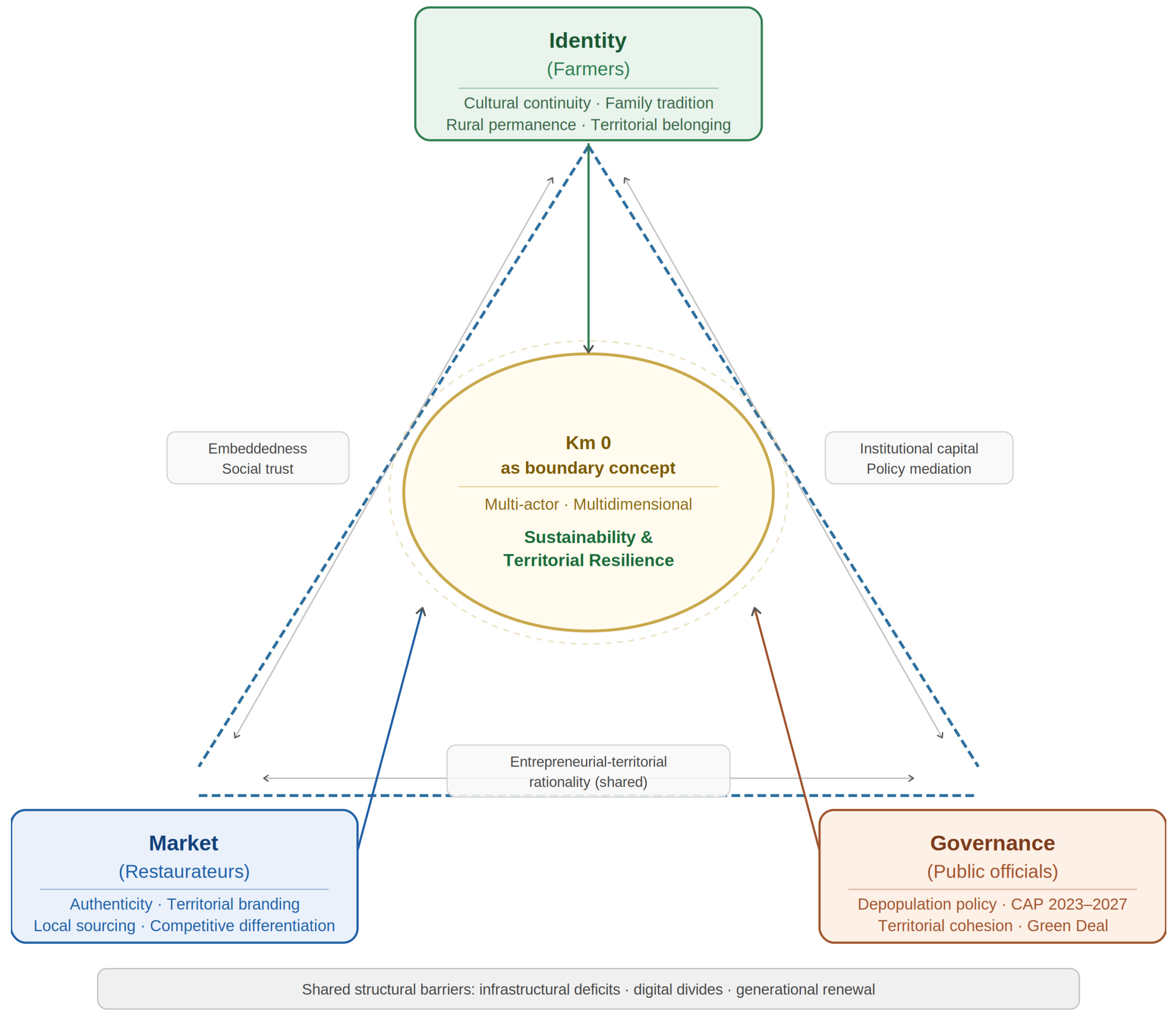
Figure 1 shows this conceptual model, wich integrates three dimensions—Identity (farmers), Market (restaurants), and Governance (officials)—converging on Sustainability and Territorial Resilience, the central axis linking Km 0 commercialization to the European Green Deal and the CAP 2023–2027 framework.
5. Discussion
The results confirm that Km 0 commercialization is a multifaceted process shaped by structural, cultural, and governance dynamics. The comparative analysis reveals how distinct rationalities coexist and interact across farmers, restaurant businesses, and public officials, constructing a shared yet contested vision of sustainable rural development.
Farmers’ motivations are deeply rooted in family continuity and local identity, reflecting what the literature describes as cultural reproduction and social belonging in small-scale agricultural systems [
17,
18,
19]. The Km 0 label functions simultaneously as an economic and symbolic resource that reinforces the territorial embeddedness of food systems [
13,
17], fostering transparency, trust, and proximity, attributes consistently valued in SFSC contexts across Europe [
11,
13]. The theoretical frameworks introduced in
Section 2.1 allow a more precise interpretation of these patterns. Embeddedness accounts for a specific empirical finding: farmers who cite family tradition and inherited farm continuity as primary motivations (54.3% combined) are not acting on purely economic calculations but on socially embedded obligations that proximity markets partially fulfil. Bourdieu’s field theory explains why the χ
2-confirmed divergence in Km 0 importance is not merely a difference in opinion but a structural effect: each group occupies a distinct position within the territorial food system field, with different capitals at stake—cultural and symbolic for farmers, economic and social for restaurateurs, institutional for officials. The boundary object framework explains the one finding that neither of the other two frameworks can account for alone: why all three groups, despite their divergent rationalities, consistently cite sustainability and quality of life as shared values [
13,
29].
For restaurant businesses, Km 0 acts as a hybrid mechanism combining sustainability discourse with competitive differentiation. Their emphasis on product freshness, authenticity, and regional branding is consistent with findings on proximity sourcing strategies in the foodservice sector [
23,
24,
25]. This dynamic is evidenced by the 77.4% of restaurateurs who cite sustainability as part of their commercial strategy—a figure that exceeds their rate of considering Km 0 ‘fundamental’ (49.1%), suggesting that sustainability discourse functions as a market asset independently of full commitment to proximity sourcing [
23,
25].
Despite the positive perceptions surrounding Km 0, the results demonstrate persistent structural constraints across all three groups. For farmers, infrastructural deficits and digital gaps limit market access and increase transaction costs [
32,
33,
34], while demographic ageing reduces the capacity for generational transfer [
1,
2]. Public officials acknowledge these challenges but face difficulties in aligning local initiatives with the CAP 2023–2027 framework, whose eco-schemes and Pillar II measures remain insufficiently accessible to small-scale Km 0 producers [
7,
16,
31]. This mismatch reinforces the governance gap between EU policy frameworks and territorial realities documented in the SFSC literature [
7,
9,
28]. Bridging this gap requires multi-level coordination, infrastructural investment, and the reorientation of extension services from technology transfer toward collaborative governance and digital facilitation [
28,
29,
32].
The social and cultural meanings attached to Km 0 extend beyond market logic. Farmers associate it with cultural survival, restaurateurs with entrepreneurial authenticity, and officials with territorial policy. These distinct interpretations are consistent with Bourdieu’s notion of different fields of practice, where economic, cultural, and symbolic capitals are mobilized according to each actor’s structural position [
17,
19]. At the same time, Km 0 functions as a boundary concept, flexible enough to connect actors with divergent logics, yet coherent enough to sustain shared identities and enable collective action [
13,
29]. Its transformative potential, however, depends on the ability of institutions to combine cultural recognition with redistributive mechanisms addressing generational and digital inequalities [
1,
2,
32].
The empirical evidence supports a specific, non-trivial conclusion: the three actor groups do not merely hold different opinions about Km 0—they occupy structurally different positions that generate functionally complementary contributions. Farmers provide the productive and identity foundation without which Km 0 has no territorial content; restaurateurs provide the market demand and gastronomic legitimacy without which Km 0 remains confined to subsistence channels; and public officials provide the regulatory and infrastructural conditions without which neither farmers nor restaurateurs can scale their Km 0 engagement. This functional interdependence, confirmed by the differential barrier profiles across groups, is the core argument for multi-actor governance frameworks [
4,
5,
13]. Achieving tangible territorial impact requires interventions at three levels: at the micro level, targeted support in digital skills and market organization for farmers and restaurateurs; at the meso level, multi-actor coordination platforms to bridge producer-consumer gaps; and at the macro level, redesigned CAP instruments that reduce administrative barriers for small-scale Km 0 producers [
7,
9,
31,
32]. The empirical evidence from Spain, though context-specific and exploratory, offers preliminary insights potentially transferable to other European rural regions facing fragmented land tenure, digital divides, and population decline. Whether these findings contribute meaningfully to the broader objectives of the European Green Deal and the CAP 2023–2027 remains a question for future comparative and longitudinal research [
2,
7,
16]. These interpretations, however, should be read as exploratory propositions grounded in a purposive sample from five Spanish autonomous communities, and require replication with larger, probabilistic samples before broader policy conclusions can be drawn with confidence.
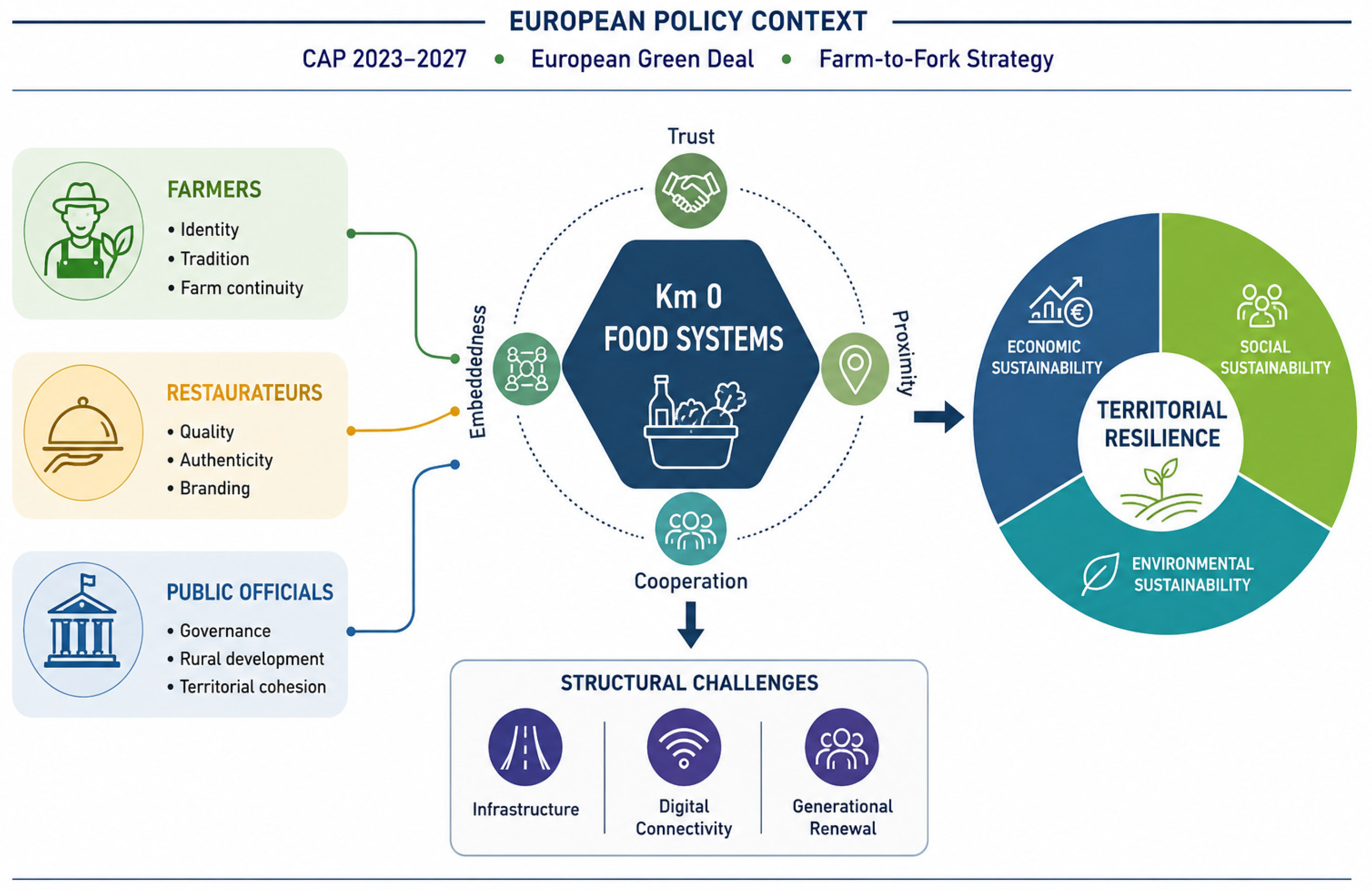
Figure 2 synthesises the empirical, theoretical, and policy contributions of the study. The micro-level elements (farmer motivations, restaurateur strategies) are grounded in the quantitative and qualitative findings of
Section 4; the meso-level elements (multi-actor coordination, governance gaps) reflect the inferential results reported in
Table 3 and
Table 4; and the macro-level elements (CAP instruments, Green Deal alignment) correspond to the policy implications derived from the inter-group divergences confirmed statistically in this study.
6. Conclusions
This study set out to examine the motivations, perceptions, and structural barriers of three key stakeholder groups, farmers, restaurant businesses, and public officials, regarding Km 0 commercialization and rural permanence in Spain. The findings, grounded in comparative empirical evidence from 171 participants across five autonomous communities, allow four principal conclusions to be drawn in response to the three research questions. Before presenting these conclusions, an important epistemic caveat is necessary. The non-probabilistic sampling design and the total sample size (n = 171) limit the statistical generalizability of the findings to the broader population of Spanish rural stakeholders. The conclusions presented below should therefore be understood as analytically grounded propositions derived from a theoretically heterogeneous sample, appropriate for exploratory comparative research, rather than as statistically representative findings applicable to all Spanish or European rural contexts. References to CAP instruments, the European Green Deal, and food sovereignty are made at the level of policy relevance and theoretical framing, not as empirically confirmed causal claims.
First, Km 0 operates as a multifunctional and multi-actor construct in which each group brings a distinct but complementary rationality. This is not merely a theoretical proposition: 76.8% of farmers consider Km 0 fundamental to their farm survival, compared to 49.1% of restaurateurs and 50.9% of officials—a statistically confirmed divergence (χ
2(4) = 18.73,
p = 0.001; Cramér’s V = 0.33) that reflects structurally different positions within the same territorial food system. Yet despite these divergences, all three groups cite sustainability, quality of life, and contact with nature as shared values—a convergence that is empirically documented across
Table 2 and
Table 3 and that provides the evidential basis, within the limits of this exploratory study, for arguing that Km 0 can operate as a boundary concept connecting actors with divergent but functionally complementary rationalities.
Second, three structural barriers consistently limit the consolidation of Km 0 systems across all groups: infrastructural deficits (transport, cold chain, logistics), digital connectivity gaps, and generational renewal deficits. These constraints are differentially distributed; generational renewal is exclusively cited by farmers (37%) and digital connectivity primarily by restaurants (35%) and officials (28%), but collectively they prevent Km 0 from scaling beyond isolated initiatives into territorially embedded and economically viable systems.
Third, the governance gap between CAP design and local implementation remains a central obstacle. The CAP 2023–2027 provides relevant instruments, eco-schemes, Pillar II rural development measures, and quality schemes, but their accessibility for small-scale Km 0 producers is structurally limited by administrative complexity and the absence of dedicated multi-actor coordination bodies at the regional level. Agricultural extension services have a renewed role to play as mediators between bottom-up innovation and top-down policy frameworks, fostering collaborative governance, digital inclusion, and market organization.
Fourth, the social and cultural dimensions of Km 0 are inseparable from its economic and governance functions. Within the contexts examined, Km 0 appears not merely as a market label but as a symbolic space where rural identity, food sovereignty, and territorial resilience intersect. Whether this potential is transformative at scale depends on the capacity of institutions to recognize these meanings and design inclusive policies, a question that this study illuminates preliminarily but cannot resolve empirically.
Regarding limitations and future research, this study should be understood as a preliminary, exploratory contribution that opens analytical pathways rather than closes empirical debates. The non-probabilistic sampling design and the total sample size (n = 171) limit statistical generalizability and inferential power. The broader interpretations advanced—particularly those relating to food sovereignty, territorial resilience, and CAP governance—are offered as theoretically grounded hypotheses for future empirical investigation, not as conclusions firmly established by the evidence presented here. Future research should replicate this multi-actor design with larger probabilistic samples, extend the geographic scope beyond Spain to enable cross-national comparisons within the EU, and incorporate longitudinal dimensions to track the evolution of Km 0 systems in the context of CAP 2023–2027 implementation. In addition, further research should deepen the analysis of stakeholder interactions, participatory governance mechanisms, and the social dynamics shaping engagement in short food supply chains, as recent studies highlight the importance of integrating diverse actor perspectives and strengthening territorial cooperation to enhance the long-term resilience of local food systems [
38].