Drivers and Barriers for Electric Vehicles in the USA and Brazil: A Comparative Analysis

 ,
, 
Abstract
1. Introduction
2. Theoretical Framework
2.1. Diffusion of Innovation
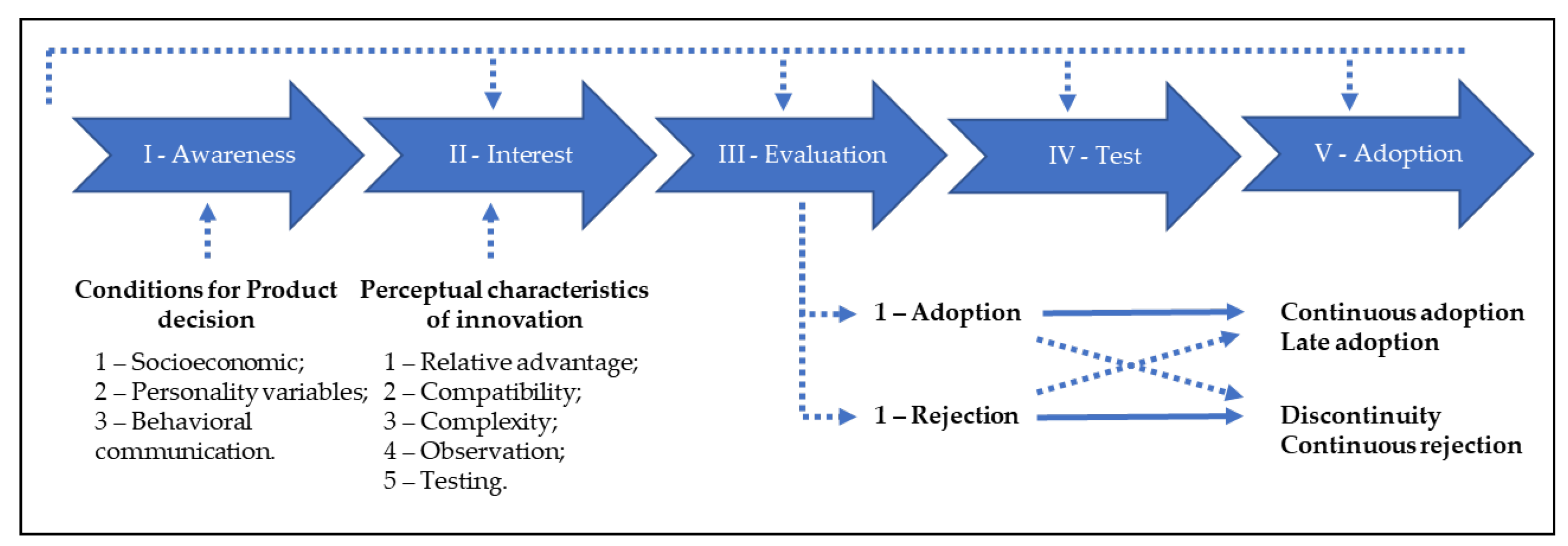
2.2. Roger’s Model of Innovation Diffusion
2.3. Electric Vehicles as a Technological Innovation
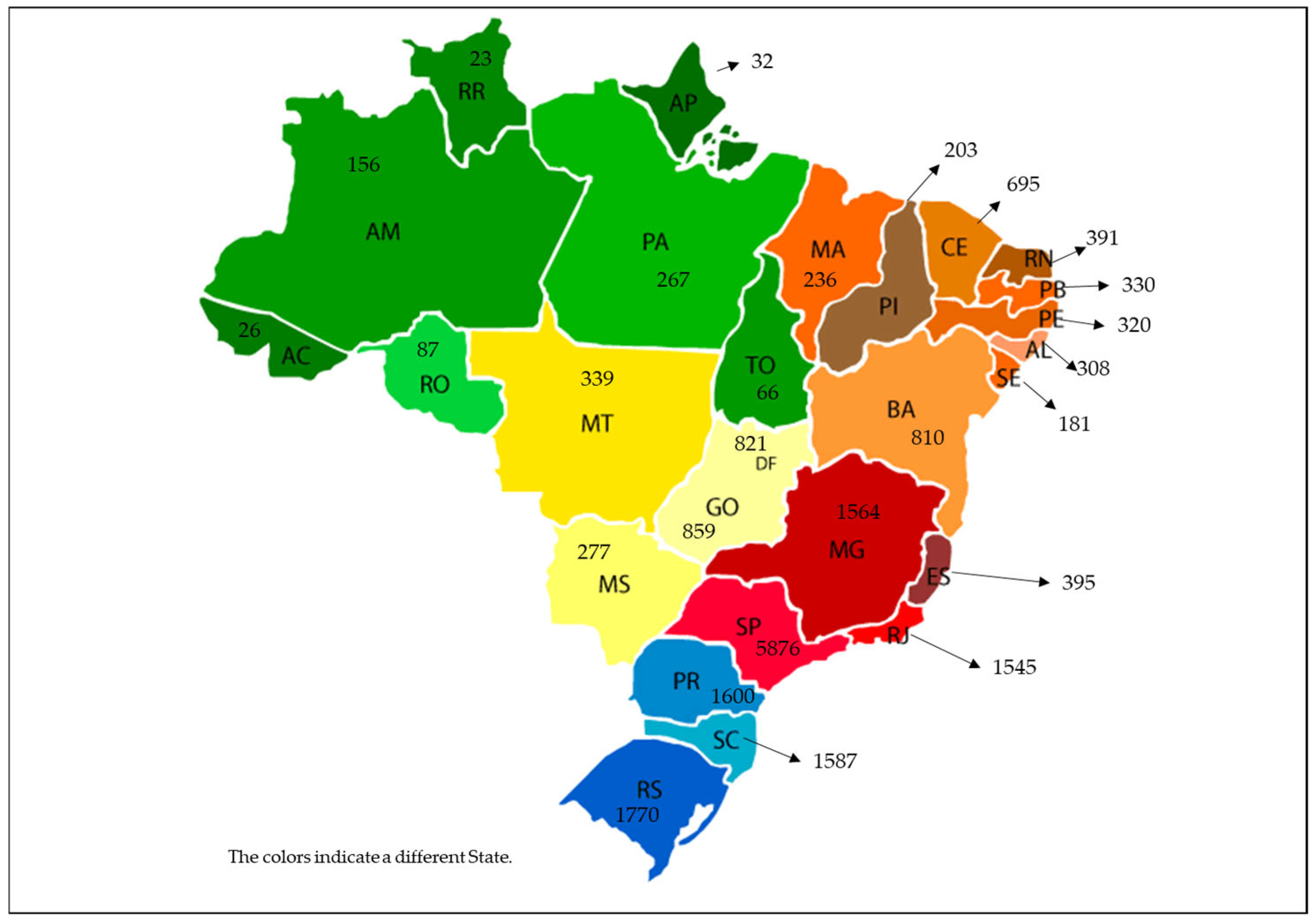
3. State-of-the-Art of the Industry: A Socioeconomic and Structural Comparison of EVs Between Brazil and the USA
3.1. Brazil and USA Comparison for per Capita Income, Recharge Structure, and Government Incentives
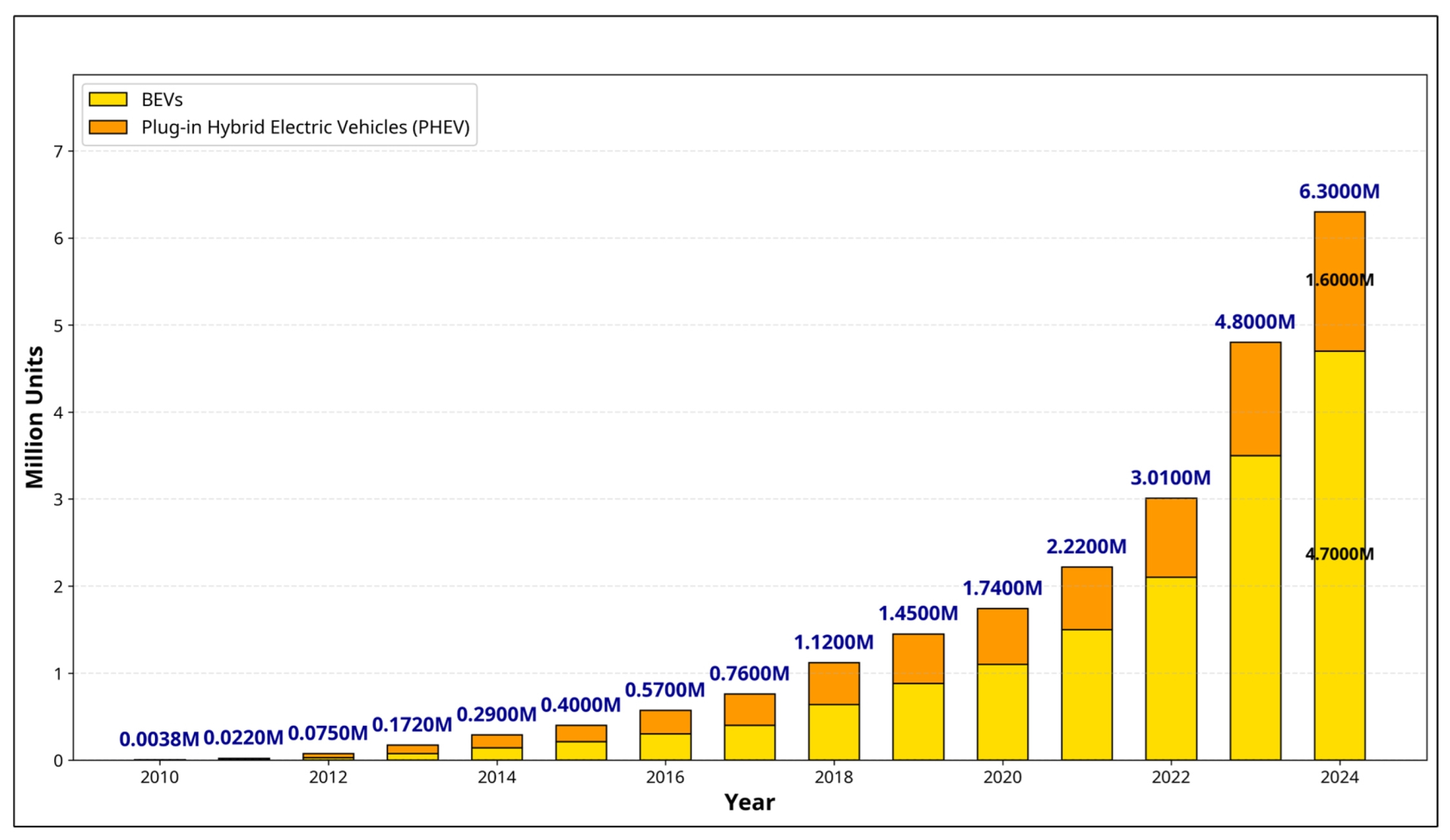
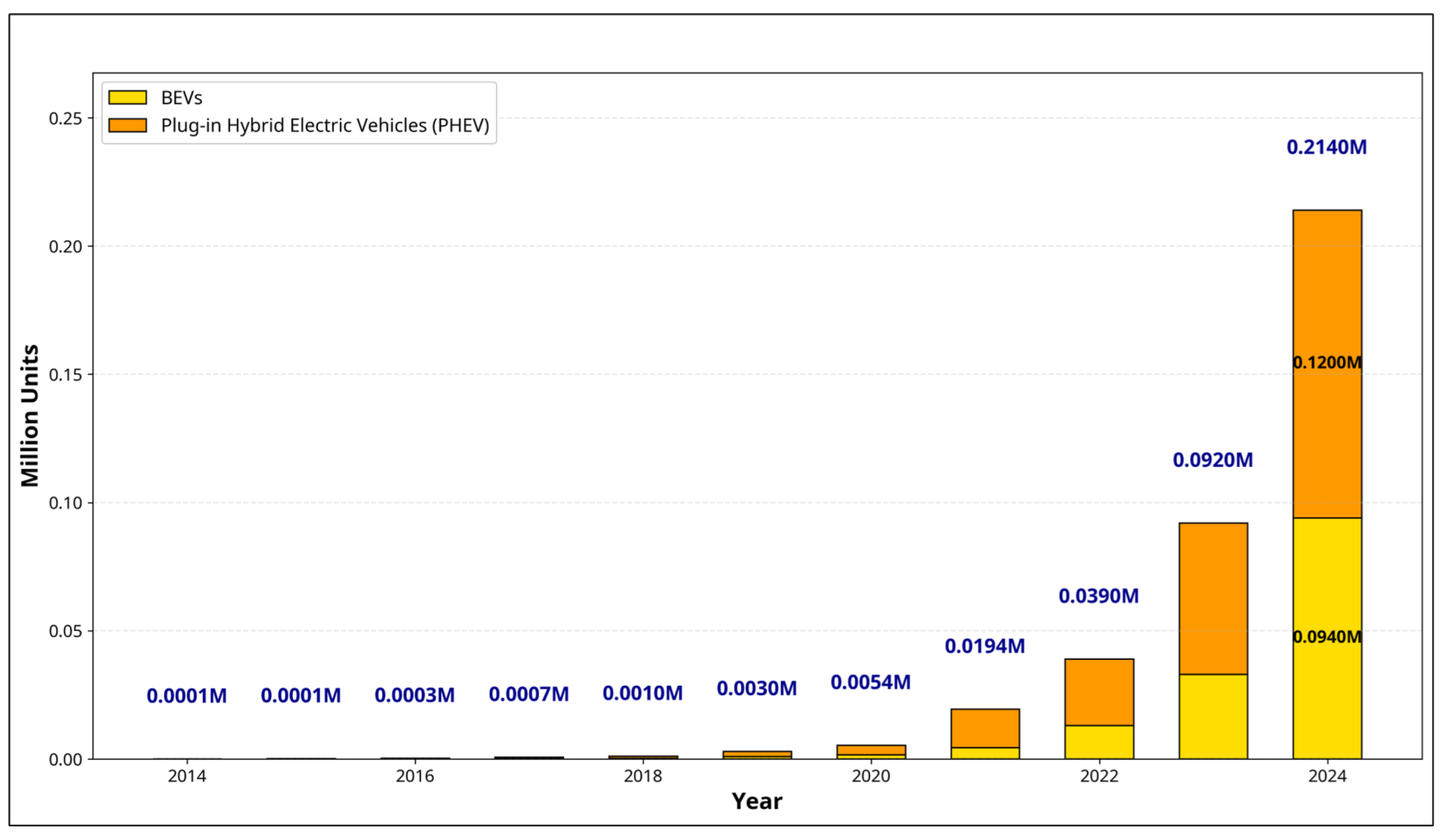
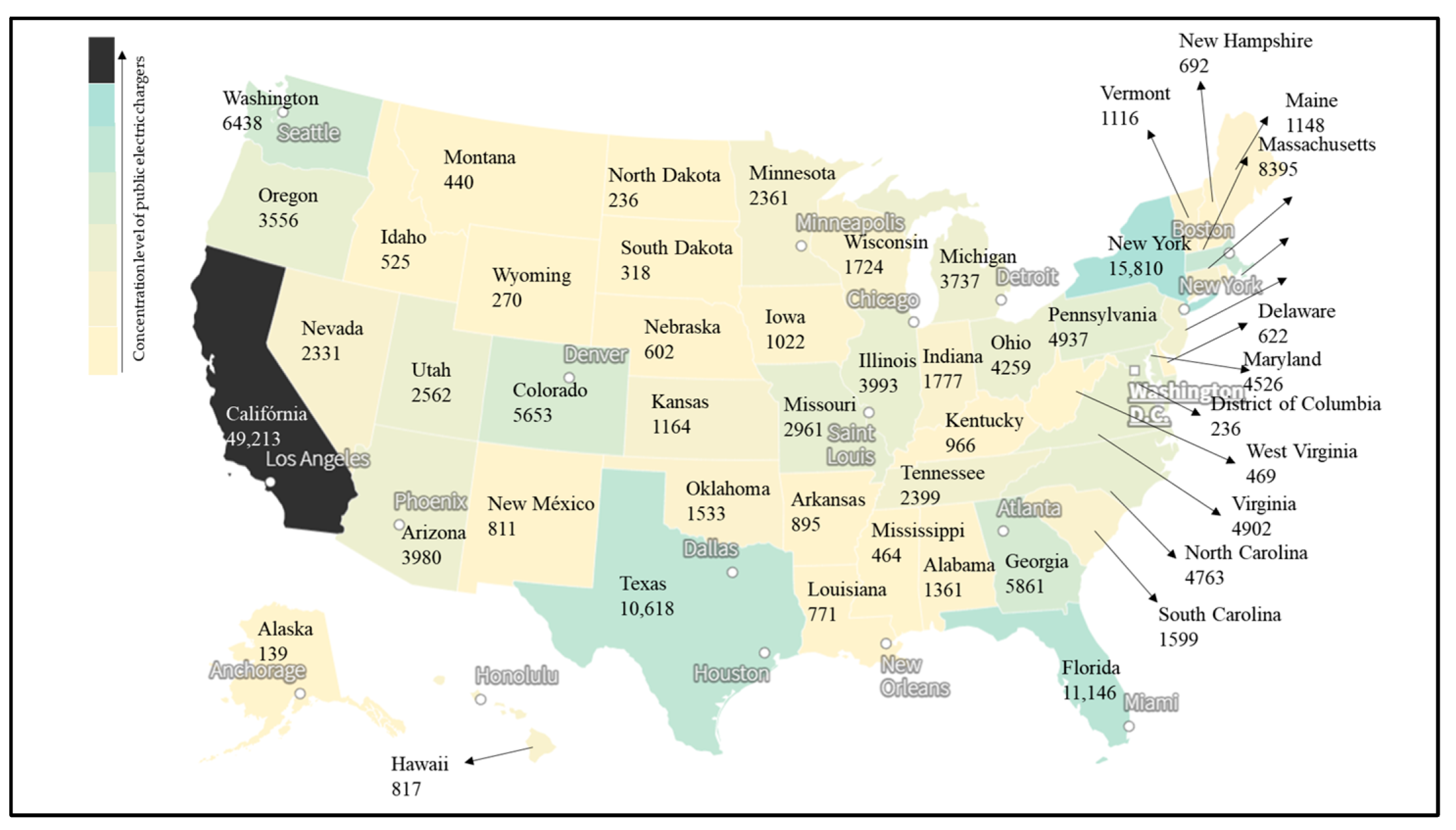
3.2. Charging Infrastructure and Government Incentives
4. Methodology
4.1. Expert Interview Design and Implementation
- Recruitment: Prior contact was made with the invited experts via email, explaining the research objectives and providing a summary of the study’s subject matter.
- Instrument Design: A semi-structured questionnaire was developed based on the theoretical framework and data collected during the research on the two countries. The initial questionnaire contained 24 questions, which was subsequently validated by two PhDs and two automotive managers, resulting in a final version with 16 questions. The questionnaire was designed to elicit expert opinions on socioeconomic factors, infrastructure barriers, technological readiness, government policies, and market dynamics affecting EV adoption.
- Data Collection: The questionnaire link was sent by email and applied via Google Forms. The semi-structured format allowed interviewees to include any other relevant information in their answers, capturing nuanced perspectives beyond predetermined response categories.
- Ethical Considerations: Following confidentiality protocols (TCLE), a closed, mandatory question with answer options “yes” and “no” was added, asking respondents whether they would agree to participate in the questionnaire, provided the researcher kept their identities and the companies they work for confidential. All participants provided informed consent.
- Data Analysis: The responses were synthesized and analyzed using a thematic coding approach to identify key patterns and dimensions. The most cited terms and concepts were grouped into specific analytical dimensions for systematic comparison across respondents and countries.
4.2. Global Analysis of Respondents’ Perceptions
- Economic Dimension: Market maturity, cost structures, price competitiveness, and economic incentives.
- Technological Dimension: Battery technology advancement, charging infrastructure development, and technological readiness.
- EV Industry Planning Dimension: Automaker strategies, government policy frameworks, regulatory structures, production capabilities, and incentive mechanisms.
5. Comparative Analysis Between Brazil, the USA, and the Rogers’ Model
5.1. Final Considerations of the Variables Analyzed
5.2. Comparison Between Brazil and the USA with Stages of Rogers Diffusion
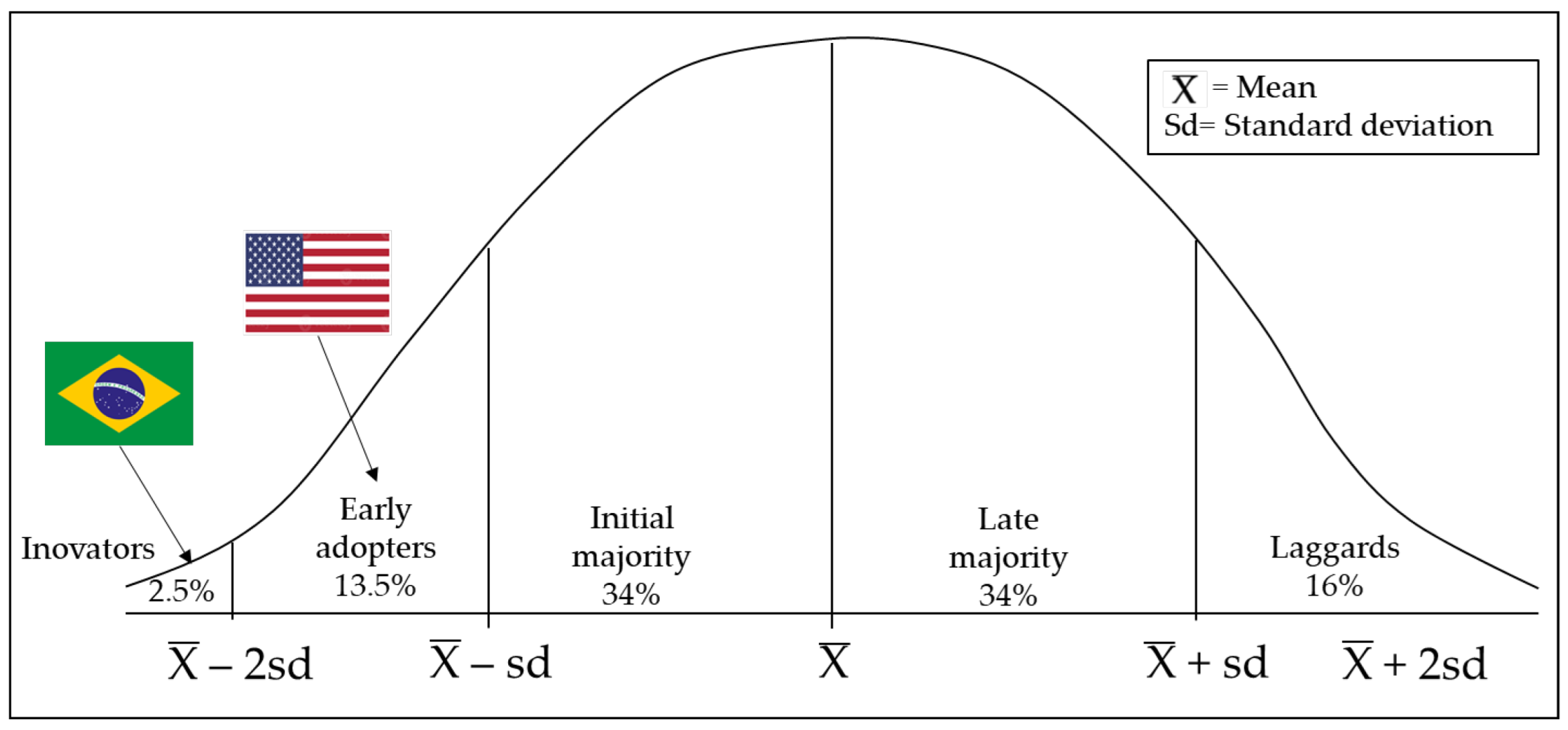
6. Application of the Everett Rogers Diffusion Curve
- We collected market share data for BEVs in both countries for 2025;
- We positioned each country on the diffusion curve based on their BEV market penetration as a percentage of total vehicle sales;
- We cross-referenced this position with qualitative insights from expert interviews regarding market maturity, infrastructure development, and adoption barriers;
- We assessed alignment with Rogers’ five stages of adoption decision-making (Awareness, Interest, Evaluation, Trial, and Adoption) based on empirical evidence from both secondary and primary data sources.
- (a)
- Established charging infrastructure across most states;
- (b)
- Federal and state policy support;
- (c)
- Multiple vehicle options from diverse manufacturers;
- (d)
- Consumer awareness and growing acceptance;
- (e)
- Continued barriers (cost, range anxiety) that prevent broader adoption.
- (a)
- Minimal BEV market share;
- (b)
- Concentrated geographic distribution of sales in high-income urban centers;
- (c)
- Limited charging infrastructure;
- (d)
- Fragmented state-level policies;
- (e)
- High vehicle prices relative to consumer income;
- (f)
- Expert consensus regarding early-stage market development.
7. Conclusions
Limitations and Future Studies
- Testable Hypothesis: Future research could test the hypothesis that the marginal effect of charging station density on BEV adoption is significantly higher in the US than in Brazil, after controlling for per capita income and government incentives. This would require econometric analysis with larger datasets from both countries.
- Phased Roadmap for Brazil: Develop a detailed phased roadmap for EV adoption in Brazil until 2050, specifying targets for infrastructure development, price reduction, and market share by phase, building upon the scenarios developed by Borba.
- Urban vs. Rural Dynamics: Investigate the differences in EV adoption barriers and drivers between urban and rural areas in both countries.
- Consumer Perception Studies: Conduct comprehensive consumer perception studies in Brazil to understand barriers to EV adoption beyond infrastructure and cost, including psychological factors, brand preferences, and technology acceptance.
Author Contributions
Funding
Institutional Review Board Statement
Informed Consent Statement
Data Availability Statement
Conflicts of Interest
Appendix A
- The need for BEVs is the tip of the entire energy cycle, any country that wants to achieve the mission of decarbonizing the fuel, must first focus on the energy matrix. Therefore, the need of the US should be to first deal with its energy matrix, while Brazil could already gain by using BEVs. This, however, can be done in parallel with gains at both energy ends.
- Yes. Because considering only these two parameters, the vehicle and the energy matrix, the US today is in worse conditions regarding the impact on the environment.
- I believe so. The United States, due to its size and passion for automobiles, will continue to be the 2nd or 1st world car markets. New forms of energy seem like an excellent strategic solution in this case.
- Yes, because of the energy matrix and because of the emissions legislation, which, unlike in Brazil, where the legislation is federal, in the USA it is defined by each state. This causes different demands for pollutant emissions in some states, and these changes are usually driven by California. Ethanol is an excellent alternative source of fuel for Brazil and a competitive difference that should be further explored.
- No. The environmental issue should be seen as World and not just leased from one country. Other factors also influence pollution and not only the fleet of each country.
- Yes, because when we compare the final emission of an EV in the US x an ethanol-powered vehicle in Brazil, the emission level of the ethanol vehicle is still lower.
- Yes, due to the options to promote decarbonization. In Brazil, we have the option of electrifying production processes and wide application of ethanol.
- EV is a natural evolution of the industry; the protection of natural resources is a responsibility of everyone in the world.
- Yes. In addition to the greater economic power for viability, the USA also has 100 million more inhabitants compared to Brazil who contribute to polluting more. It also has a smaller M2 of Forests to enable this CO2 exchange.
- Yes, it is a preponderant factor of electrification, despite being a greater appeal in Europe, the US has embarked very strongly on this in the last 5 years. The dissemination of fossil fuel information will run out; the US is going strong on electrification. In addition to the environmental issue, there is a need for change due to the energy matrix and self-dependence on fossil fuels.
- BEVs are more expensive because of the high demand generated by people who see positives such as the weather. While supply cannot be created due to difficulty in changing and expanding production, demand causes prices to be higher and companies to invest faster in these products.
- No. I understand that this aspect is important only for a small portion of consumers. The main aspect is technology, novelty and performance.
- I believe so. To date, there are still many questions about access to new technologies in terms of affordable prices for products such as automobiles. In markets like Europe, the answer is yes. In markets like Brazil, the price factor is still the biggest determinant, but I believe that every couple of years the concern with the environment tends to increase.
- Partially, yes. Another important factor is the incentives for purchase where the government issues a type of “refund” on the buyers’ taxes, which contributes to the increase in sales volume. The legislation of each state is another important factor.
- One of them, but not the only one. Others start to gain strength and influence the decision, such as much better driving of electric cars, cost of fuels, design, etc.
- Yes, because the EV appeal has sustainability as its biggest flag.
- Yes, because it sensitizes the population to the benefits for the environment.
- We all must contribute to having a more sustainable world for the future.
- No. Financial savings in relation to the cost of fuel are also one of the factors. Internal comfort, drivability, connectivity that comes associated with it I see as factors to be considered in the decision.
- It is one of the appeals, but perhaps not the greatest. We all like the sustainable world, but the environmentalist’s appeal is a niche. But a matter of the market, it is more of a technological appeal. There is the question of the government plan, public and political interests of each nation.
- Technically, Brazil could use biofuel technology that has several advantages over the electric car, but the production of sugarcane would need to be a national effort with public investment, because today and in many economic cycles, the producer receives more by exporting sugar than selling it to mills to produce alcohol.
- Yes. Because biofuels are linked to a very influential agribusiness sector, which advocates decarbonization through this solution. Along with agribusiness, there are auto parts manufacturers, who see the transition to BEVs as a risk for their business linked to internal combustion vehicles. However, it is necessary to consider that Brazil, with an energy matrix predominantly from renewable sources, is even more favorable to BEVs.
- It certainly will be, if the government’s incentive programs in alternative fuels allow an affordable price to the high-end consumer. There is a lack of infrastructure in the country for both cases. The one that first presents the most attractive price x availability binomial will come out ahead.
- Yes, since the alternative is developed and validated, electric vehicles, in addition to being expensive, lack a robust charger network for normal use of a vehicle (not restricted to urban use only).
- No. Alcohol and biofuels in Brazil are always linked to the cost of oil and become a commodity whose price rises and increases a lot. Just remember the time of Pro-alcohol. In Brazil, anyone who bought an alcohol vehicle regretted it. Nowadays, although it should be decoupled, ethanol producers earn and do not earn their price together. Gasoline generally maintains the parity of 70%, which makes the appeal for this fuel not great.
- Yes, the level of pollution carrying the entire energy matrix is not so differentiated, but the acquisition cost can be a barrier.
- I believe so, because we already have discussion of what the next step is in Brazil. BEV vs. ethanol hybrid (which is a bet of some brands).
- Biofuels have been a way to reduce emissions; it has been a bridge to get to EVs.
- Yes, more than technology, lobbying in the sector is a factor to be considered.
- I thought it would be more, now I think less, because it is taking time to move forward with these alternative energies. Brazil still does not have policies to move faster with these programs, Brazil is losing time for this advance, and this can reduce the barrier of electric vehicles.
- The information is already widespread, and people will consume it today only if they want to. The biggest opportunity for expanding information is that more people have access to BEVs with financial incentives and that information and the possibility of using an acquaintance or renting cars is commonplace.
- Yes. Information and experience with BeVs are essential to remove the barriers to entry of the technology. Because information clarifies and brings the novelty closer to consumers.
- Super important. Fake news is always a barrier. The correct strategy certainly involves the well-informed public.
- It is very important for users to understand the cost per km driven and charger infrastructure for each specific use. Only urban use is very different from use for travel for example.
- It is very important and will grow as the market becomes more mature. It is also not possible to imagine that the adoption of this type of vehicle in Brazil and South America will take place at the same pace as emerging ones, since incentives here have no space in relation to the basic needs of the populations, and the cost of technology is still high.
- Very important, but in my opinion, the lack of incentives will be the main barrier.
- Huge, not least because BEVs are better vehicles than ICEs. And this needs to be veinculated.
- Undoubtedly, this new technology requires consumer education.
- Communication is totally relevant. I believe that, because BEVs are still new, the safety of sitting on batteries and the structure for battery charging are the main factors in the decision. But price is still the main factor.
- Communication is everything. We can already see automakers doing this work, demystifying the electric vehicle. This education will be fundamental. The market has time to adapt, this education is important, because there is a learning curve.
- The purchasing power of the population is the biggest driver of growth, public policies and investment (mostly private) in charging stations also enable its growth. The main barrier today is the cost and time of building new factories.
- Yes. First the availability of vehicles. Second, the cost of these vehicles, which although high for the average American consumer, is already much more competitive than the costs for the Brazilian consumer. Third comes the availability of public charging infrastructure.
- The lack of infrastructure in Brazil and the lack of a short, medium and long-term strategic plan (2-year, 5-year, 10-year vision). The Brazilian government is setting a pace in technological evolution and in this sense, we are well behind the American market.
- Legislation in California and large centers, the customer’s taste for novelties and a rupture in the concept of content in Tesla cars.
- Incentives and lower prices. The increase in the US is linked to incentives for those who buy and also for automakers linked to the carbon emissions program. In Brazil there is still no room for these incentives but as technology develops and prices go down, we will see this market grow here.
- Incentives and the availability of vehicles.
- First a policy of intensive to owners, such as the tax exemption implemented in China, second a good line of marketing to inform about the benefits.
- They are growth curves measured at different times, technology does not arrive at the same time for all places in the world, each region will have its own curve.
- Tax incentives and subsidies for me were the success factors in the USA.
- The American market has been experimented with for a longer time, I believe since the Obama administration. From the insertion of models by automakers. 10 years ago, they already started with this, and in Brazil they still don’t have this, and in parallel they have already been building the structure for this, such as the electro stations, I even saw the distribution of chargers in stores and other points. There is the issue of incentives which are building this market. The combustion vehicle has been building for 100 years, but the electric one is starting now, and Brazil is far behind in this sense, which influences this result.
- Income is the most determining factor if production does not reach demand because the lack of production of electric cars means that their price can be increased by automakers.
- Yes. In the beginning, the cost of BEVs is still higher than combustion vehicles. When costs are equal, this barrier should fall.
- Worker income is a fundamental part of the economic planning of families. It will determine a decision on which transportation alternatives will be adopted in certain scenarios.
- Yes, income is an important factor, environmental awareness and local legislation influence a lot.
- In the U.S., the largest price of the Bev is in California, due to environmental constraints, existing taxes, and the cost of fossil fuels there (and environmental awareness). Income currently is a factor affecting diffusion in South American markets due to the initial cost of this technology. As the years go by, the price falls and then it becomes more defined.
- Yes, because today with the average Brazilian income, it would take 4 years to buy an EV, while in the US, we talk about less than 6 months.
- Yes, income is a determining factor. The value or cost of production of EVs is high at the moment.
- Economies of scale will regulate market prices in the future, as with any innovation.
- Yes. EVs are currently subsidized! The moment I match the EV to the current ones, the decision I’m sure will be for the EV.
- Yes and no. Two things at this point. Within the USA there are different cultures that influence the type of vehicle. For example, Texas and Michigan, rural appeal and the automobile cradle respectively, have a greater appeal for larger and powerful vehicles, in California than a technological cradle there is already a greater appeal for electric vehicles. So, there is cultural appeal as an option in this matter, talking about price, on the one hand industries wanting to encourage electric cars at a lower price and on the other taking advantage of technology to add more to the car. There is a difference in the value of vehicles in the US with Brazil, even so electric vehicles are not cheap. Income can influence, yes, but more in higher value vehicles, by embedded technology, premium vehicles. If you consider entry-level vehicles, that’s where you have the appeal to reach the value of combustion vehicles and thus massify electric vehicles.
- It should be important and should be done before the mass sale of cars, but the investment only makes sense if there is a prospect of offering electric cars to a large part of the population in a short period of time.
- It is important to reduce consumer anxiety.
- EVs depend directly on this factor. Without the electric stations, the consumer will not have the necessary confidence to purchase a product that limits him to longer distance trips.
- This structure is fundamental! Without available chargers, adherence would be very low, which is what happens in the USA far from the big centers. See the concentration of electric sales on the West (California) and East (NY) coasts. In the center of the U.S. with the highest concentration of agribusiness, the pickup market dominates with a large advantage, and sales of electric vehicles are low.
- Today it is still great. But as batteries evolve and the range of these vehicles, which is already equal to that of fuel and home chargers, falls, this will become a little less important. But it will still be a factor, especially for single-car families who want to use a vehicle for travel.
- Very important, because without the network longer distance trips without this network could not be carried out with an EV.
- The infrastructure is essential for spreading EVS.
- Undoubtedly, infrastructure will be fundamental for growth, as has been the internet.
- Total importance. The feeling of having the battery drain in places without structure is a primordial fact.
- It has full influence, although it has the issue of charging at home, but it limits use. Electro stations is fully related to the growth of the electricity market. The number of electric stations can even influence the search for knowledge by electric vehicles.
- It could be applied as an initial investment, but it does not make sense socially due to other needs of the population.
- Yes. Because it would reduce the cost barrier for the consumer. However, in the country’s Economic Scenario, I think an incentive like the American one in Brazil is impractical.
- Yes, it would apply, but with adaptations. There are a proportion of very different market sizes and economies here. In addition, in Brazil we have a refining problem, which demonstrates once again the need for strategic plans in Brazil for a more solid economy, with much greater capacity in the manufacturing industry than it is today, which we already proved to be possible a matter of 40 years ago. We need incentives to have more EVs, but we need a more balanced economy for this subsidy (we are largely a country of commodities and primary economy).
- It does not fully apply. The energy matrix is very different between countries. Ethanol is still a viable technical solution for reducing emissions, and the investment in infrastructure for chargers and battery factories is very high! Added to this is the fact that raw materials for batteries are mostly imported, and these commodities are quoted in dollars, which increases the risk of long-term investments.
- Partially. There are still other priority public policies in a poor country with great inequalities like Brazil. But denying that incentives can bring technology and employment is also wrong.
- No, because today we do not have all the companies prepared to meet such demand, and despite the cost of exporting oil, we would have to import a large part of the fleet, which would make the business unviable.
- Certainly, because the cost factor has a great impact on the line. Exemption from manufacturing taxes until the market normalizes and taxes on the owner would be interesting options.
- Each country has its own industrial policy; governments are autonomous in defining which is best for the country and the world.
- Potentially yes! The reduction in domestic consumption, in line with the pre-Salt, could have a positive impact on the trade balance.
- Oil is widely used for other products, if the market understands that it is a risk, maybe so, because protecting your market reserve can be interesting.
- Brazilians use cars in their daily commuting, so a charging structure can be done at home. I believe that the financial incentive is what can make a difference in this case.
- Increase in the price of internal combustion vehicles, linked to the reduction in the cost of BEV batteries.
- Reduction of taxes such as IPI. Our tax burden is extremely high, which prevents the private sector from encouraging itself in new technologies. This would facilitate solutions in other elements, such as the charging structure, for example.
- All are government matters of regulation and incentive. Without this, electric vehicles will be niche and low-volume vehicles as luxury and sports vehicles are today. The great mass that buys vehicles today in Brazil cannot sustain the high investment in the purchase and limited network of chargers for urban use or for short trips. Specific legislation for commercial vehicles (small and large fleets) for urban delivery can be a way to help in the dissemination as long as it is advantageous to entrepreneurs as a business. If it is not advantageous for business, it will hardly be for families.
- VEZ mandates that can make vehicles with emissions more expensive. Everything is based on price and income here. But I believe that with the strong entry of emerging countries (US and Europe), there should be a strong global appeal for emerging countries to adopt the technology, which should accelerate, regardless of other factors.
- Increase in fuel prices, as we would continue with the price gap between the two energy models.
- Infrastructure and price are the biggest influences in my opinion.
- The growth of the industry is supported by several factors, Companies and government are working to do their best.
- Reduction of taxes such as IPI. It has a major impact on the entire supply chain that impacts the Cost and Price of the vehicle.
- The regulation on the emission vision is preponderant; the price of the combustion vehicle is not what determines the price of the electric vehicle. Public policy on emissions regulation, tax policy, recharging structure and then vehicle price. It is in this order that I believe that influence.
- Important, large-scale coordination is necessary, but there are no companies of this size willing to do this in Brazil.
- Yes. Without them, diffusion barriers will take longer to fall. Charging infrastructure, acquisition cost, cost of ownership, etc.
- Absolutely. The government must determine strategic plans, and this goes through policies like these. But they must be broad and with a pact between the federative units.
- They are essential. Without this, there will be no significant increase in sales volume in the Brazilian market due to the high cost of investment in the production chain, chargers and purchase by customers.
- Yes. They can help speed up the spread of Bevs, but they are not the only factor.
- Yes, because without a great pricing policy and supply network the business is unviable.
- Infrastructure and tax exemption for EVs.
- Every business has within its bases public and fiscal policies, Industry and Government work to adapt the best within the global legal frameworks.
- Yes. Both will influence the price and reliability for mobility with EV.
- Yes, it’s super important. The market itself has the capacity to encourage itself, but public policy is crucial for growth to exist, an example is the growth of structure, more electric stations, help the market respond to these incentives.
- Importantly, light vehicles should be the cheapest and only with them will Brazil be able to adopt BEVs.
- Great importance as they could reduce vehicle costs and increase confidence in the product.
- We are a country with tradition in the production of these vehicles. Our domestic market and that of neighboring countries continue to have great potential and we have already proven that it is possible with balanced policies to encourage the local production of the industry. Importing is not the best solution for those who want to develop as a nation.
- It is essential that they are produced locally. Any definition of a strategy to increase sales of electric vehicles that considers imports (dollar again) of batteries or vehicles will be subject to international fluctuations that historically cause high disturbances in the local economy.
- Brazil has always been and has a great tradition in the production of automobiles for decades, which generates many direct and indirect jobs, technology, income and many positive factors. Ignoring this global migration that is happening and leaving Brazil out of it, can leave the country out/backward in local production and consequent impacts and jobs, etc.
- Very large, because the import tax makes the business unfeasible.
- Nationalization reduces logistics costs; therefore, the cable matrix linked to the EV.
- The industry must define an entry and growth strategy, which will be the best, this will depend on the strategy of each brand.
- I believe that the import taxes would be higher. With domestic production, with the generation of jobs in the country, I understand that taxes would be lower and with a direct impact on the price of vehicles.
- It does not need to produce up to a certain market size, but when growth occurs, it is important to produce to meet demand, including for logistical reasons. A market larger than 700 thousand cars is important to produce, to reduce costs. In the beginning, it is important to seek massification, but the market itself will respond to this. The Brazilian market is very susceptible to exchange rate variation, which can also influence. The price is not controlled, but the cost.
- Together, public incentive and private investment are needed at the same time.
- Both. Factories to show that technology exists and is good and reliable and governments for defining the importance of zero-emission vehicles within the country’s mobility.
- With both. Without this partnership it will be very difficult.
- With both. Automakers can and should bring the technology developed in the USA, Europe and Asia to the Brazilian market, but this will only occur if there is a clear long-term policy for investments to be sustainable.
- Both. Government must make appropriate policies. Automakers must guide these policies and help involve partners for the entire ecosystem.
- With both, as they need to reduce production costs and taxes.
- With both, automakers need to invest and develop attractive vehicles, the government invest in infrastructure and tax exemption.
- It is a shared strategy.
- Both! The Government with the infrastructure and public policies and the Automakers to delve into the technological improvement of batteries to enable cost reduction.
- With both. Here comes a new player in this scenario. The services market comes in here. The automakers and government will adapt to this. A strong influence on the third player is the service economy. Of the three today, the government is able to accelerate the plan. The automakers influence and are already doing what they have to do. The question of service will help too.
- Brazil should skip phases and adopt BEVs late, as the value of the two cars tends to converge to the same value over time.
- Yes, because the cost is lower.
- I believe so. Hybrid cars today already circulate in greater quantity on our highways. And they are not directly dependent on electric filling stations. They continue to use gas stations as an alternative.
- Both technologies are very expensive, and the priority will depend on the policies defined for the sector. If parts, systems and batteries are only imported, everything will be difficult. Which makes local components viable first will be pulling the priority queue.
- Maybe. There is also a large lobby of automakers that are late in the development of electric vehicles (Toyota, etc.), and BEV is the only short-term solution. But it is a technology (HEV) that is doomed to failure and that will not last long. Investing in it is the wrong way.
- Yes, because we do not have all automakers with projects for this migration.
- Most automakers in Brazil bet on HEVs, and I believe they will succeed before BEVs due to the lack of infrastructure for BEVs.
- It will depend a lot on the strategy of each brand.
- Yes. Most automakers have been looking for hybrid solutions instead of fully electric ones.
- Yes, first by cost, by volume, easier offer, because the structure is easier to adapt to the hybrid than to the electric, I don’t say it’s better, I think it’s the fastest and that it will possibly happen. Automakers that are migrating to hybrids tend to have a higher volume of sales in this vehicle model. In the medium-too long term, there may be shortages of BEVs, which may lag behind the market. Example of Tesla, GM that are migrating directly to BEVs. They may be ahead in the future. There is the issue of absorption and massification of volume. This is already happening in the US.
- Of high importance, in countries with poor populations, there will be no diffusion until the value is consistent with what people can afford.
- Very relevant.
- Certainly. The price of new vehicles is directly related to the purchasing power of the active population. If prices remain unaffordable, this will be a huge barrier.
- This has an essential value. A strong and thriving economy where families have purchasing power is essential! Families with flat incomes, low purchasing power and difficulties in obtaining credit would hardly bear to pay an overprice for an EV compared to a flex-fuel car. The same would be true for fleet owners.
- A lot. Price is still the primary purchase factor in Brazil.
- Total, because without the possibility of purchase, only a small portion of the population will have access to technology.
- Super, in the current market trend, sticking to ICEs is a walk to bankruptcy of the company.
- Socioeconomic factors influence any type of business at any time in time.
- Totally relevant!
- Yes, I eat everything. The issue of the USA comes back, people who are environmentalists or technology-oriented should be the first to consume, there will be those who want the product, but still cannot afford it and at the same time the issue of massification comes in.
- USA innovated by having the first automaker reaching mass production and has many early adopters with purchasing power that can sustain the industry in the beginning. Brazil will probably be a laggard.
- U.S. Level III, Brazil Level I.
- Brazil, laggard. A market with only 0.0004% of vehicles nowadays demonstrates that the country is not prepared. The U.S. has the initial majority, as it already demonstrates a relevant market growth curve, and the government has clear plans for the coming years, in partnership with the major automakers.
- This varies greatly from region to region within the same country, in the annual income of families and also in the age group of buyers. Customers in California pay an overprice to have a Tesla while in Texas, for example, the market predominates for pick-ups with huge V8 gasoline and diesel engines due to specific use in the countryside versus large urban centers. The same would occur in Brazil. In general, I believe that the US would have a greater innovative tendency (ii), in relation to Brazil (iv) mainly due to the purchasing power of families and ease of credit in businesses/fleet owners.
- There is no clear answer to this. There are people from all these stages in both countries, and here even more so than having people who may be in these categories (i) and (ii), the economic condition influences more.
- U.S. adopters and Brazil Late majority.
- In my view, the United States are in the initial majority, and Brazil would be in the innovators.
- Any type of innovation has a curve to enter the market; this is natural and takes different times depending on the type of customer.
- USA, Phase (i) Innovators because their audience is already used to looking for the latest technology in everything. Brazil, I believe that the initial majority, despite this GAP being smaller.
- The United States between early adopters and early majority, may already be. It is not possible to say that the largest number is already in the initial majority, but the curve there is surprising. As a rule, this already indicates that the consumer already wants to go to the BEV. In Brazil, I believe in the phase of innovators.
- I don’t believe so, Brazilians don’t have the purchasing power to buy electric cars if their value doesn’t decrease.
- Yes, because of the clean and renewable energy matrix, the solid base of automakers and first-rate factories installed, the training of local development centers, and the proximity to the large mineral reserves necessary to produce batteries.
- It is certainly a potential market, but it is far from being prepared or thinking about it. Of all the 26 Brazilian states, only two seem to show some more concrete interest (Bahia and Santa Catarina).
- Not yet. Government policies in conjunction with automakers will define this speed of diffusion.
- Absolutely. Not to ignore the size of the fleet and production and consumption of vehicles in the country that was once the 4th World in this category. Much less the potential of. Growth of this country and this economy. Brás was and always will be the country of the future!!!
- Not yet.
- In my view, yes, and to speed up we need to go through tax relief and infrastructure.
- Brazil is one of the largest economies in the world, it will always be attractive to do business.
- Yes. We have a lot of raw material to produce batteries, in addition to Niobium, which should be the future trend for them.
- It is attractive, it is a market among the ten largest economies in the world, it is a continental country with the greatest influence in the region and with almost all the brands present in the country. He is not yet prepared, but he has the conditions to do so. Throughout history, it has shown that changes can occur, according to what the policy points out, there are great adaptations. In my opinion, this issue still needs to be included in the government’s agenda. But there are conditions in the future.
References
- Alonso-Cepeda, A.; Villena-Ruiz, R.; Honrubia-Escribano, A.; Gómez-Lázaro, E. A review on electric vehicles for holistic robust integration in cities: History, legislation, meta-analysis of technology and grid impact. Appl. Sci. 2024, 14, 7147. [Google Scholar] [CrossRef]
- Røstvik, H.N. The mobility revolution as seen through Norwegian eyes. Archit. Sci. Rev. 2018, 61, 362–366. [Google Scholar] [CrossRef]
- Carvalho, E.N.; Brasil Júnior, A.C.P.; Brasil, A.C.M. Impact of electric vehicle emissions in the Brazilian scenario of energy transition and use of bioethanol. Energy Rep. 2023, 10, 2582–2596. [Google Scholar] [CrossRef]
- Noll, B.; Schmidt, T.S.; Egli, F. Managing trade-offs between electric vehicle taxation and adoption. Cell Rep. Sustain. 2024, 1, 100130. [Google Scholar] [CrossRef]
- Gaines, L. The future of automotive lithium-ion battery recycling: Charting a sustainable course. Sustain. Mater. Technol. 2014, 1–2, 2–7. [Google Scholar] [CrossRef]
- Hawkins, T.R.; Singh, B.; Majeau-Bettez, G.; Strømman, A.H. Comparative environmental life cycle assessment of conventional and electric vehicles. J. Ind. Ecol. 2013, 17, 53–64. [Google Scholar] [CrossRef]
- Zaino, R.; Ahmed, V.; Alhammadi, A.M.; Alghoush, M. Electric Vehicle Adoption: A Comprehensive Systematic Review of Technological, Environmental, Organizational and Policy Impacts. World Electr. Veh. J. 2024, 15, 375. [Google Scholar] [CrossRef]
- Schvartz, M.A.; Lange Salvia, A.; Londero Brandli, L.; Leal Filho, W.; Veiga Avila, L. The electric vehicle market in Brazil: A systematic literature review of factors influencing purchase decisions. Sustainability 2024, 16, 4594. [Google Scholar] [CrossRef]
- Pamidimukkala, A.; Kermanshachi, S.; Rosenberger, J.M.; Hladik, G. Barriers and motivators to the adoption of electric vehicles: A global review. Green Energy Intell. Transp. 2024, 3, 100153. [Google Scholar] [CrossRef]
- Illmann, U.; Kluge, J. Public charging infrastructure and the market diffusion of electric vehicles. Transp. Res. D Transp. Environ. 2020, 86, 102413. [Google Scholar] [CrossRef]
- Correia Sinézio Martins, E.; Lépine, J.; Corbett, J. Assessing the effectiveness of financial incentives on electric vehicle adoption in Europe: Multi-period difference-in-difference approach. Transp. Res. Part A Policy Pract. 2024, 189, 104217. [Google Scholar] [CrossRef]
- Dingwerth, K. Multi-layered differentiation in the climate regime: The gradual path from Rio to Paris. Environ. Polit. 2024, 33, 240–258. [Google Scholar] [CrossRef]
- Pauw, W.P.; Klein, R.J.T. Beyond ambition: Increasing the transparency, coherence and implementability of Nationally Determined Contributions. Clim. Policy 2020, 20, 405–414. [Google Scholar] [CrossRef]
- Arora, N.K.; Mishra, I. COP26: More challenges than achievements. Environ. Sustain. 2021, 4, 585–588. [Google Scholar] [CrossRef]
- Rogers, E.M. Diffusion of Innovations, 4th ed.; Free Pass: New York, NY, USA, 1995. [Google Scholar]
- Harper, G.; Sommerville, R.; Kendrick, E.; Driscoll, L.; Slater, P.; Stolkin, R.; Walton, A.; Christensen, P.; Heidrich, O.; Lambert, S.; et al. Recycling lithium-ion batteries from electric vehicles. Nature 2019, 575, 75–86. [Google Scholar] [CrossRef]
- Yamamura, C.L.K.; Takiya, H.; Machado, C.A.S.; Santana, J.C.C.; Quintanilha, J.A.; Berssaneti, F.T. Electric cars in Brazil: An analysis of core green technologies and the transition process. Sustainability 2022, 14, 6064. [Google Scholar] [CrossRef]
- Käss, S.; Brosig, C.; Westner, M.; Strahringer, S. Short and sweet: Multiple mini case studies as a form of rigorous case study research. Inf. Syst. E-Bus. Manag. 2024, 22, 351–384. [Google Scholar] [CrossRef]
- Frei-Landau, R.; Muchnik-Rozanov, Y.; Avidov-Ungar, O. Using Rogers’ diffusion of innovation theory to conceptualize the mobile-learning adoption process in teacher education in the COVID-19 era. Educ. Inf. Technol. 2022, 27, 12811–12838. [Google Scholar] [CrossRef] [PubMed]
- Vargo, S.L.; Akaka, M.A.; Wieland, H. Rethinking the process of diffusion in innovation: A service-ecosystems and institutional perspective. J. Bus. Res. 2020, 116, 526–534. [Google Scholar] [CrossRef]
- Breaugh, J.A.; McBride, K.; Kleinaltenkamp, M.; Hammerschmid, G. Beyond diffusion: A systematic literature review of innovation scaling. Sustainability 2021, 13, 13528. [Google Scholar] [CrossRef]
- Guidolin, M.; Manfredi, P. Innovation diffusion processes: Concepts, models, and predictions. Annu. Rev. Stat. Appl. 2023, 10, 451–473. [Google Scholar] [CrossRef]
- Wurster, F.; Di Gion, P.; Goldberg, N.; Hautsch, V.; Heifler, K.; Herrmann, C.; Langebartels, G.; Pfaff, H.; Karbach, U. Roger’s diffusion of innovations theory and the adoption of a patient portal’s digital anamnesis collection tool: Study protocol for the MAiBest project. Implement. Sci. Commun. 2024, 5, 74. [Google Scholar] [CrossRef]
- Razmjoo, A.; Ghazanfari, A.; Jahangiri, M.; Franklin, E.; Denai, M.; Marzband, M.; Astiaso Garcia, D.; Maheri, A. A comprehensive study on the expansion of electric vehicles in Europe. Appl. Sci. 2022, 12, 11656. [Google Scholar] [CrossRef]
- European Union. Eurostat: Your Key to European Statistics. 2018. Available online: https://ec.europa.eu/eurostat/data/database (accessed on 6 March 2022).
- OFV. I April var Hver Tredje nye Personbil en Nullutslippsbil. 2019. Available online: https://ofv.no/bilsalget/bilsalget-i-2019?utm (accessed on 20 March 2022).
- Cintra, R.S.; Avila, L.V.; Schvartz, M.A.; Leal Filho, W.; Anholon, R.; Moraes, G.H.S.M.; Siluk, J.C.M.; Lisboa, G.d.S.; Khaled, N.N.D. Analysis of the life cycle and circular economy strategies for batteries adopted by the main electric vehicle manufacturers. Sustainability 2025, 17, 3428. [Google Scholar] [CrossRef]
- International Energy Agency (IEA). Global EV Outlook 2025: Executive Summary. Available online: https://www.iea.org/reports/global-ev-outlook-2025/executive-summary (accessed on 22 February 2026).
- International Energy Agency (IEA). Global EV Outlook 2025: Trends in Electric Car Markets. Available online: https://www.iea.org/reports/global-ev-outlook-2025/trends-in-electric-car-markets-2 (accessed on 22 February 2026).
- Visual Capitalist. Ranked: EV Share of New Car Sales by Country in 2025. 13 February 2026. Available online: https://www.visualcapitalist.com/ev-share-new-car-sales-by-country-2019-vs-2025/ (accessed on 20 February 2026).
- Bhering, D. Regional income inequality in Brazil: State-level distributional national accounts. Economia 2024, 25, 32–52. [Google Scholar] [CrossRef]
- Rahman, M.M.; Thill, J.C. A comprehensive survey of the key determinants of electric vehicle adoption: Challenges and opportunities in the smart city context. World Electr. Veh. J. 2024, 15, 588. [Google Scholar] [CrossRef]
- Pelegov, D.V.; Chanaron, J.J. Electric car market analysis using open data: Sales, volatility assessment, and forecasting. Sustainability 2023, 15, 399. [Google Scholar] [CrossRef]
- Lee, D.Y.; McDermott, M.H.; Sovacool, B.K.; Isaac, R. Toward just and equitable mobility: Socioeconomic and perceptual barriers for electric vehicles and charging infrastructure in the United States. Energy Clim. Change 2024, 5, 100146. [Google Scholar] [CrossRef]
- Vargas, J.E.V.; Seabra, J.E.A.; Cavaliero, C.K.N.; Walter, A.C.S.; Souza, S.P.; Falco, D.G. The new neighbor across the street: An outlook for battery electric vehicles adoption in Brazil. World Electr. Veh. J. 2020, 11, 60. [Google Scholar] [CrossRef]
- Jenn, A.; Lee, J.H.; Hardman, S.; Tal, G. An in-depth examination of electric vehicle incentives: Consumer heterogeneity and changing response over time. Transp. Res. Part A Policy Pract. 2020, 132, 97–109. [Google Scholar] [CrossRef]
- Shah, A.; Bhowmik, J.; Kabir, S. Bridging the reality gap: Quantifying the impact of charging station infrastructure on U.S. EV adoption and market stability. J. Manag. World 2026, 2026, 1–6. [Google Scholar] [CrossRef]
- Graham, J.D.; Brungard, E. Affordable electric vehicles: Their role in meeting the U.S. contribution to the Paris Climate Goals. Front. Environ. Sci. 2022, 10, 962942. [Google Scholar] [CrossRef]
- U.S. Department of Energy. Alternative Fuels Data Center. Infrastructure Investment and Jobs Act of 2021. Available online: https://afdc.energy.gov/laws/infrastructure-investment-jobs-act (accessed on 20 February 2026).
- International Energy Agency (IEA). Infrastructure and Jobs Act: Nationwide Network of EV Chargers. Policy Database. Available online: https://www.iea.org/policies/14978-infrastructure-and-jobs-act-nationwide-network-of-ev-chargers (accessed on 20 February 2026).
- Soares, L.O.; Sodré, J.R.; Hernández-Callejo, L.; Boloy, R.A.M. Electric Vehicle Adoption in Brazil: Economical Analysis and Roadmap. Tranp. Res. Part D. Transp. Envirom. 2024, 137, 104483. [Google Scholar] [CrossRef]
- Grangeia, C.; Santos, L.; Lazaro, L.L.B. The Brazilian biofuel policy (RenovaBio) and its uncertainties: An assessment of technical, socioeconomic and institutional aspects. Energy Convers. Manag. X 2022, 13, 100156. [Google Scholar] [CrossRef]
- Pereira Neto, A.A. Tax Exemption Policies to Encourage the Purchase of Electric Vehicles in Brazil. In Proceedings of the IX National Meeting of Industrial Economics (ENEI), Fortaleza, Brazil, 20–23 May 2025. [Google Scholar] [CrossRef]
- Borba, B. Big Push for Sustainable Mobility: Scenarios to Accelerate Light Electric Vehicle Penetration in Brazil; Economic Commission for Latin America and the Caribbean (ECLAC): Santiago, Chile, 2020; Available online: http://hdl.handle.net/11362/46007 (accessed on 22 February 2026).
- Bitencourt, L.; Abud, T.; Santos, R.; Borba, B. Bass diffusion model adaptation considering public policies to improve electric vehicle sales. A Brazilian case study. Energies 2021, 14, 5435. [Google Scholar] [CrossRef]
- Consumer Reports. Battery Electric Vehicles and Low Carbon Fuel: A Nationally Representative Multi-Mode Survey. Consumer Reports. 2022. Available online: https://article.images.consumerreports.org/prod/content/dam/surveys/Consumer_Reports_BEV%20AND%20LCF%20SURVEY_18_FEBRUARY_2022 (accessed on 12 November 2022).
- Snyder, H. Literature review as a research methodology: An overview and guidelines. J. Bus. Res. 2019, 104, 333–339. [Google Scholar] [CrossRef]
- Krehl, A.; Weck, S. Doing comparative case study research in urban and regional studies: What can be learnt from practice? Eur. Plan. Stud. 2020, 28, 1858–1876. [Google Scholar] [CrossRef]
- Heath, J.; Moran, M.; Dowrick, A. Examining qualitative cross-country comparative analysis in health: Reflective insights and methodological considerations. SSM Qual. Res. Health 2024, 5, 100416. [Google Scholar] [CrossRef]
- Cox Automotive Inc. Despite Q4 Collapse, 2025 EV Sales Decline Only 2% Versus 2024; Policy Shifts, New Product Set Stage for Next Chapter. Available online: https://www.coxautoinc.com/insights-hub/q4-2025-ev-sales-report-commentary/ (accessed on 20 February 2026).
- American Petroleum Institute (API). U.S. Battery Electric Vehicle (BEV) Sales Fell to a 39-Month Low in November 2025. Available online: https://www.api.org/energy-insights/charts-analysis/bev-sales-fall-in-nov (accessed on 20 February 2026).
- Counterpoint Research. Global Electric Vehicle Market Share: Quarterly. Available online: https://counterpointresearch.com/en/insights/global-electric-vehicle-market-share-quarterly (accessed on 20 February 2026).
- Recharged. EV Sales Statistics 2025: Global, US & Used Market Trends. 2026. Available online: https://recharged.com/articles/ev-sales-statistics-2026 (accessed on 13 April 2026).
- Clean Energy Canada. Canada Broke Its Electric Vehicle Market in 2025 and It Did So Alone. Available online: https://cleanenergycanada.org/canada-broke-its-electric-vehicle-market-in-2025-and-it-did-so-alone/ (accessed on 20 February 2026).
- Brazilian Association of Electric Vehicles (ABVE); Tupi Mobilidade. Public Fast Charging Grows 167% in One Year and Reaches 31% of 21 Thousand Charging Stations in the Network. Available online: https://abve.org.br/recarga-publica-rapida-cresce-167-em-12-meses-e-ja-atinge-31-dos-21-mil-eletropostos-da-rede/ (accessed on 20 February 2026).
- Goecks, L.S.; Habekost, A.F.; Coruzzolo, A.M.; Sellitto, M.A. Industry 4.0 and smart systems in manufacturing: Guidelines for the implementation of a smart statistical process control. Appl. Syst. Innov. 2024, 7, 24. [Google Scholar] [CrossRef]
- Neri, A.; Butturi, M.A.; Tomasin da Silva, L.; Lolli, F.; Gamberini, R.; Sellitto, M.A. Fostering lithium-ion battery remanufacturing through Industry 5.0. Int. J. Interact. Des. Manuf. (IJIDeM) 2025, 19, 6301–6318. [Google Scholar] [CrossRef]


Disclaimer/Publisher’s Note: The statements, opinions and data contained in all publications are solely those of the individual author(s) and contributor(s) and not of MDPI and/or the editor(s). MDPI and/or the editor(s) disclaim responsibility for any injury to people or property resulting from any ideas, methods, instructions or products referred to in the content. |
© 2026 by the authors. Licensee MDPI, Basel, Switzerland. This article is an open access article distributed under the terms and conditions of the Creative Commons Attribution (CC BY) license.
Share and Cite
Santos, R.F.d.; Sellitto, M.A.; Antunes, J.A.d.V., Júnior; Silva, D.O.d. Drivers and Barriers for Electric Vehicles in the USA and Brazil: A Comparative Analysis. Sustainability 2026, 18, 5538. https://doi.org/10.3390/su18115538
Santos RFd, Sellitto MA, Antunes JAdV Júnior, Silva DOd. Drivers and Barriers for Electric Vehicles in the USA and Brazil: A Comparative Analysis. Sustainability. 2026; 18(11):5538. https://doi.org/10.3390/su18115538
Chicago/Turabian StyleSantos, Rodinaldo Ferreira dos, Miguel Afonso Sellitto, José Antônio do Valle Antunes, Júnior, and Débora Oliveira da Silva. 2026. "Drivers and Barriers for Electric Vehicles in the USA and Brazil: A Comparative Analysis" Sustainability 18, no. 11: 5538. https://doi.org/10.3390/su18115538
APA StyleSantos, R. F. d., Sellitto, M. A., Antunes, J. A. d. V., Júnior, & Silva, D. O. d. (2026). Drivers and Barriers for Electric Vehicles in the USA and Brazil: A Comparative Analysis. Sustainability, 18(11), 5538. https://doi.org/10.3390/su18115538