Article

Insights into the Cold-Start Performance and Emission Characteristics of Ethanol–Diesel Blended Fuels Under Various Environmental Conditions

1
School of Mechanical Engineering, Nantong Institute of Technology, Nantong 226002, China
2
School of Mechanical Engineering, Nantong University, Nantong 226019, China
3
Yunnan Yunnei Power Machinery Manufacturing Co., Ltd., Kunming 651701, China
4
State Key Laboratory of Engines, Tianjin University, Tianjin 300072, China
*
Authors to whom correspondence should be addressed.
Sustainability 2026, 18(11), 5513; https://doi.org/10.3390/su18115513 (registering DOI)
Submission received: 20 April 2026 / Revised: 25 May 2026 / Accepted: 28 May 2026 / Published: 1 June 2026

Abstract

In light of the indispensable role of diesel engines in critical sectors such as heavy transportation, agricultural machinery, and shipping and the gradual depletion of fossil fuels, the strategic value of blended fuels has become increasingly prominent. However, the cold-start performance of diesel engines operating on blended fuels remains unclear. This study conducts a comprehensive simulation of the impact of various blended fuel ratios on the cold-start characteristics of diesel engines, focusing on low-temperature fluidity, combustion characteristics, and emissions. The research findings indicate that E30 and E50, as preferred blended fuels, exhibit excellent economic performance and environmental adaptability. Specifically, E30 demonstrates superior combustion performance and higher cylinder peak pressure under low-temperature conditions. In contrast, E50 shows a significant advantage in emissions performance, achieving 17.34% reductions in NOx and 9.7% in HC emissions compared to E30. In addition, a decrease in ambient temperature could help mitigate both NOx and HC emissions. Under simulated high-altitude conditions, E50 exhibits superior hypoxic adaptability compared to E30, achieving significant reductions in NOx (16.3%) and HC (9.7%). This study helps advance the development of clean alternative fuels for diesel engines by providing a theoretical foundation and practical guidelines for biodiesel selection across diverse environmental conditions.

1. Introduction

In recent years, the international energy market has undergone significant changes, driven by shifts in global society, economy, politics, environment, and technology, presenting both unprecedented challenges and opportunities for energy supply and demand [1,2,3]. Although some new energy sources are experiencing rapid growth, fossil fuels still hold a dominant position across transportation, industrial, agricultural, and energy generation [4,5]. Diesel engines, owing to significant advantages in fuel efficiency, durability, and power output, have been widely utilised, particularly in ships, trucks, agricultural machinery, and large-scale industrial equipment [6,7]. However, with growing awareness of energy demand, environmental protection, and stringent emission regulations, the fossil fuels used by traditional diesel engines are facing increasing pressure from sustainable development [8,9].
In this context, the research on and use of clean, renewable diesel have become a key focus in the field of internal combustion engines (ICEs) [10,11,12]. Ethanol–diesel blended fuel has been considered a renewable energy source for addressing existing energy and environmental problems due to its wide availability of raw materials [13,14,15], low carbon emissions [16], and potential to replace fossil fuels partially [17,18].
Many studies have been conducted on the combustion and emission performance of diesel engines using blended fuels of ethanol and diesel. Can et al. [19] reported that using ethanol–diesel blended fuel usually decreases particulate matter (PM) and sulphur dioxide (SO2) emissions, but nitrogen oxide (NOx) emissions may rise as the ethanol content increases. Ajav et al. [20] found through experiments that the braking power and thermal efficiency of an ethanol–diesel blend are lower than those of pure diesel, and that NOx emissions increase significantly. This is attributed to ethanol’s low calorific value and cetane number, which lead to a prolonged ignition delay. Nevertheless, compensatory technologies such as steam injection can effectively mitigate these adverse effects [21,22,23]. Gonca et al. [24] conducted a comparative study of the performance and nitric oxide (NO) emissions of ethanol–diesel blended fuel engines and steam-injection ethanol–diesel blended fuel engines. The results indicated that after introducing 20% steam injection, NO emissions were reduced by 34%, while the effective efficiency and effective power increased to 12.5% and 4.1%, respectively. Therefore, steam injection technology can effectively optimise the use of ethanol–diesel blended fuel and enhance the environmental performance and efficiency of diesel engines. Sathiyamoorthi et al. [25] mixed ethanol with a lemon grass oil–diesel mixture and observed that the combustion pressure and Heat Release Rate (HRR) increase while smoke and hydrocarbon (HC) emissions are reduced. By comparing the addition of ethanol and butanol, Rakopoulos et al. [26] emphasised that the addition of alcohols could reduce nitrogen oxides and soot but increase HC emissions and exhibit slight cyclic irregularities. Wang et al. [27] optimised the pre-injection strategy, achieving remarkable improvements in the combustion and emission performance of diesel, polyoxymethylene dimethyl ethers, and ethanol blended fuels without affecting engine performance, providing a new approach to greening heavy-duty diesel engines.
Environmental parameters, such as temperature and altitude, significantly affect combustion and emission characteristics. High-temperature conditions may enhance ethanol evaporation and improve atomisation but can also cause a sudden increase in pressure in the combustion chamber [28]. Under low-temperature conditions, the reduced volatility of ethanol may lead to incomplete combustion and increase emissions of carbon monoxide (CO) and unburned HC [29]. Morgenstern et al. [30] developed a catalyst comprising a copper-plated nickel sponge to improve ethanol’s cold-start performance. Ethanol can be reformed into mixtures of H2, CO, and CH4 at approximately 300 °C. Not only is the combustion efficiency of the reformed gas much higher than that of gasoline, but hydrocarbon emissions are significantly lower at cold start compared to liquid ethanol. Sales et al. [31], by removing the traditional gasoline-assisted cold-start system and using electric heaters to heat the intake air and ethanol fuel, showed that heating the intake air and fuel can not only meet the cold-start demand but also significantly reduce the emission of HC and CO. Lei et al. [32] studied the influence of the impact behaviour of ethanol fuel droplets on the ultracold surface on engine performance under cold-start conditions and proposed a prediction method for predicting the maximum diffusion factor of droplets at different temperatures, providing a theoretical and experimental basis for optimising ethanol cold-start performance. Additionally, the decrease in oxygen concentration and intake pressure resulting from elevation may further impact the combustion efficiency of the blended fuel [33,34]. Wang et al. [35] verified the sensitivity of exhaust emissions to altitude changes in turbocharged diesel engines. Zhu et al. [36] conducted a study on the influence of different environmental pressures resulting from altitude differences on the combustion characteristics of fuels with varying ethanol contents. It was found that the flame height increased significantly as pressure decreased. Zhao et al. [37] evaluated the combustion and emission characteristics of mixtures of propanol and butanol with diesel fuel under simulated hypoxic conditions with low intake pressure, mimicking the situation of high-altitude environments.
Regarding the influence of ethanol–gasoline mixtures, methanol and other fuels on engine emissions during start-up in high-altitude and low-temperature environments, Jiao et al. [38] compared the combustion emissions of diesel and methanol–steam-reforming biodiesel blends at different altitudes and proposed that the air–fuel ratio of the blends should be optimised at high altitudes. Randazzo et al. [39] investigated the influence of diesel oil–biodiesel from a soybean–ethanol mixture on the cold-start performance and fuel consumption of diesel engines. Zhou et al. [40] conducted a study on the combustion characteristics of acetone–butanol–ethanol (ABE) and diesel blended fuels under the condition of low-temperature combustion mode. Iodice et al. [41] conducted a study on the effects of ethanol–gasoline blends with varying ethanol content on motorcycle engine fuel consumption and emissions during cold starts. It was indicated that, without altering the engine design, ethanol as an additive could effectively reduce pollutant emissions of Spark-Ignition (SI) engines during the cold-start stage. Gong et al. [42] conducted numerical simulation studies on the mixture preparation, combustion, and emission characteristics of a medium-compression-ratio, direct-injection, dual-spark-plug, synchronised-ignition methanol engine under cold-start conditions. The paper primarily focused on analysing the influence of methanol injection timing, ignition timing, and the stoichiometric ratio on cold-start performance.
In conclusion, although previous studies have revealed the potential of ethanol–diesel blends and the technical optimisation directions (such as additional additives and steam injection), the mechanisms underlying the combined effects under environmental conditions (temperature and altitude) remain unclear. Especially when the engine is started under low-temperature conditions, the combustion kinetics, emission characteristics, and performance stability of the ethanol–diesel blended fuel need to be further quantitatively analysed. In this study, a combined experimental and simulation approach was adopted to systematically evaluate the multi-parameter response patterns of ethanol–diesel blended fuel under different temperatures and altitudes. The aim is to provide theoretical support for optimising the adaptability of blended fuels and the low-carbon design of diesel engines and to expand the application boundaries of alternative fuels in complex environments.

2. Experimental Methodology

To measure a diesel engine’s cold-start performance, a test bench was established based on the engine’s basic specifications. Furthermore, the cold-start testing index was established, and the method and basic principles of the cold-start test were analysed.

2.1. Test Equipment

The experimental subject is an air-cooled two-cylinder supercharged diesel engine, and its specific parameters are shown in Table 1. To analyse the cold-start condition of a diesel engine, a test system is established, as shown in Figure 1. The test device comprises a dynamometer, a fuel consumption meter, a combustion analyser, and a gas analyser. The dynamometer controls the engine’s operating condition and records the engine’s output power via the load motor, which is connected to the diesel engine’s output end via a conical sleeve. The test data is transmitted to the mobile terminal for storage.
The gas analyser model is the NHA-6000 (Foshan Nanhua Instrument Co., Ltd., Foshan, China), which features a bleed-air probe. According to GB 20891-2014 [43], the diesel emission measurement method, it is necessary to install a sufficiently long exhaust pipe behind the muffler, and the probe should be fixed 0.5 m from the muffler within the exhaust pipe.
The cylinder pressure sensor model is Kistler-6050A (Kistler Group, Winterthur, Switzerland), with an accuracy of ±1.5%. To ensure a good seal during the test, threaded holes are machined in the first cylinder head for mounting the cylinder pressure sensor bushing. The combustion analyser model CA3004A21 (Qice Power Testing Equipment Co., Ltd., Shanghai, China) can read and analyse electrical signals from the cylinder pressure sensor and electromagnetic signals from the speed sensor.

2.2. Test Method

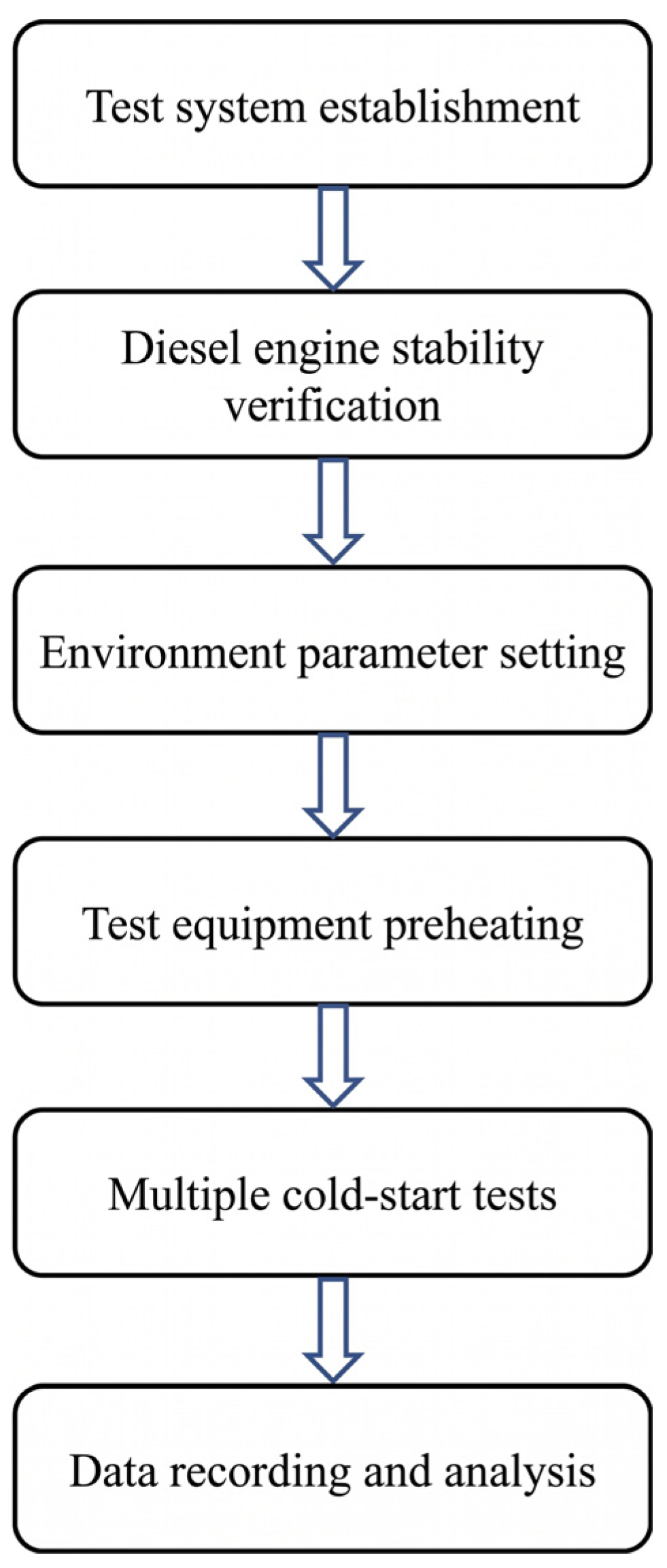
The cold-start test method of the diesel engine is shown in Figure 2. To ensure stable, consistent performance during each test, the operating status of the engine was checked and verified to ensure normal operation before the cold-start study. Then, the diesel engine was started at an ambient temperature of 273 K. The cold start was considered successful if the diesel engine reached idle speed quickly, and the test data were recorded within 5 min of start. To further ensure test accuracy, the test equipment needed to be preheated before each test, and the cold-start test conditions were repeated at least 3 times.

3. Model Establishment and Verification

Although ethanol–diesel blended fuels have been used in practice in diesel engines, high-ethanol-content mixed fuels still pose compatibility issues with the engines and are costly. Moreover, the cold-start performance tests of alcohol–diesel mixed fuels in extreme environments are extremely challenging. Therefore, to study the combustion performance and emission characteristics of different ethanol–diesel blended fuels under low-temperature and high-altitude conditions, a diesel engine simulation model was established. The Navier–Stokes equations incorporate the energy conservation equation, mass conservation equation, and momentum conservation equation from fluid mechanics, enabling a comprehensive and precise simulation of fluid flow within the engine, including airflow, combustion processes, and heat transfer. Under ideal conditions, the fundamental equations can be seen as follows.
The energy conservation equation is
d I = d W + d Q I + j h j   d m j
where I is the total internal energy of the system in the cylinder, J; W is the mechanical work acting on the piston, J; Q is the heat energy exchanged between the system in the cylinder and the outside world, J; h is the energy contained in a unit of working medium, J; and mj is the total mass of the work, kg.
The mass conservation equation is
d m a d φ = d m j d φ + d m l d φ + d m f d φ
where ma is the total mass of the working quality in the cylinder, kg; mj is the air quality entering the cylinder; ml is the exhaust gas quality leaving the cylinder, kg; and mf represents the mass of the fuel injected into the cylinder, kg. However, the actual calculation and numerical simulation often cannot directly obtain the mass value. If the diesel engine cycle injection fuel amount is gf, then the fuel percentage X in the cylinder.
Therefore, Equation (2) can be rewritten as
d m a d φ = d m j d φ + d m l d φ + g f dX d φ
The ideal gas equation of state is
P V = n R T
where P is the pressure of working medium in the cylinder, Pa; V is the volume of working medium in the cylinder, m3; n is the amount of substance, moles; T is the temperature of working medium in the cylinder, K; and R is the gas constant. By solving the above three equations simultaneously, the pressure, volume and temperature of the working medium in the cylinder can be obtained.
The energy flow analysis of the diesel engine intake and exhaust system is usually based on the first law of thermodynamics (conservation of energy) and the gas flow equation, combined with one-dimensional or quasi-steady-state assumptions. Here are the core equations and their physical implications.
The diesel engine pipeline area does not change with time, so the simplified mass conservation equation is
ρ t + ρ v S x + S v ρ x + S ρ v x =   0
where ρ is the gas density, kg/m3; v is the flow rate, m/s; and S is the cross-sectional area of the pipeline, m2.
The momentum equation is
v t + v v x + 1 ρ P x + f v 2 2 4 v | v | R = 0
where p is the fluid pressure, Pa; f is the friction resistance coefficient; and R is the equivalent diameter, mm.
The energy equation is
( 1 γ 2 ) ρ t + ( v γ 2 ) P x ( k 1 ) ( q + f v 3 2 4 v | v | R ) ρ = 0
where γ is the thermal conductivity of the fluid, k is the adiabatic index of the fluid, the adiabatic index of the air is 1.4, and q is the heat transfer of the unit fluid, J.
Brake thermal efficiency (BTE) is the fraction of the chemical energy released by combustion that is converted into useful work, and it is an important index for evaluating the performance of blended fuels in internal combustion engines. The Equivalent Brake Specific Fuel Consumption (BSFCE) rate represents the fuel consumption per unit of effective work and serves as an economic indicator. The BTE and BSFCE are calculated as follows.
ω e = ϕ e × ρ e ϕ e × ρ e + ϕ d × ρ d
ω d = 1 ω e
where ωe is the mass concentration of ethanol, ωd is the mass concentration of diesel, ϕ e is the volume concentration of ethanol, ϕ d is the volume concentration of diesel, ρ e is the density of ethanol, kg/m3, and ρ d is the density of diesel, kg/m3.
B T E = 3600 P b ( ω e L H V e + ω d L H V d ) m f
B S F C E = m f ( ω e L H V e + ω d L H V d ) L H V d P b 1 0 3
where Pb is the brake power, kW; mf is the total mass of the fuel mix, kg; LHVe is the low calorific value of ethanol, J/kg; and LHVd is the low calorific value of diesel, J/kg.
In addition, PM and TM each represent the maximum cylinder pressure and temperature. PE and TE each represent the intake pressure and ambient temperatures.
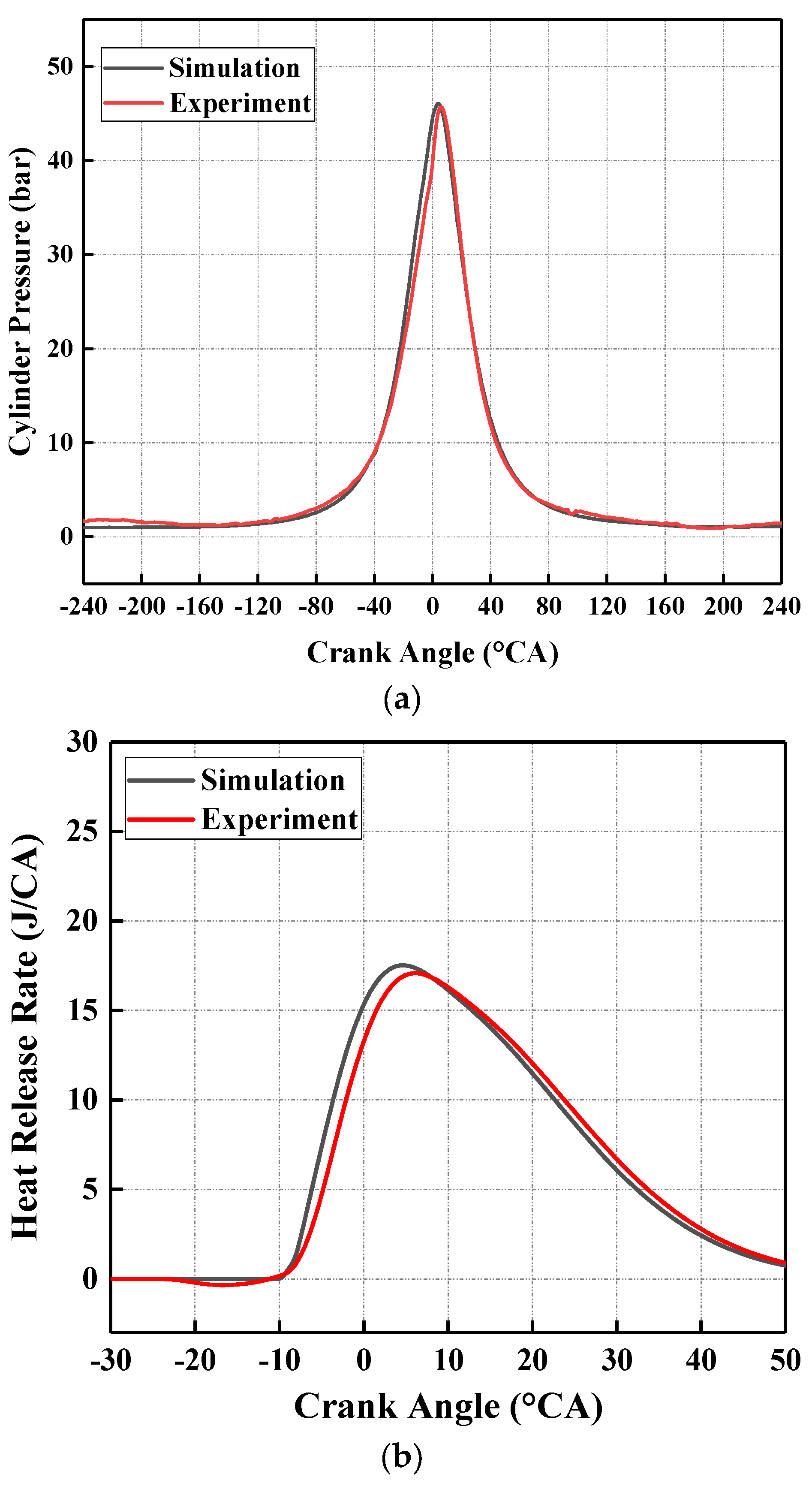
The model’s accuracy is verified by comparing simulation and test results for the cylinder pressure and HRR at the rated speed during the cold start of the diesel engine. As shown in Figure 3, both the simulation’s cylinder pressure and HRR curves essentially match the test curves, with a peak error of less than 3%. Therefore, it is demonstrated that the simulation model accurately reproduces the actual operation of the diesel engine.

4. Results and Discussion

4.1. Research on Cold Start with Various Blended Fuel

This study investigates the effects of ethanol–diesel blended fuels on the cold-start performance of diesel engines. The test fuels consisted of ethanol–diesel blends with varying volume concentrations. The blended fuels are named as follows: E10 (10% ethanol, 90% diesel), E20 (20% ethanol, 80% diesel), and continuing in 10% increments up to E90 (90% ethanol, 10% diesel).
To analyse the performance of ethanol–diesel blended fuels at different volume concentrations, the ambient temperature and pressure during the test were set to 288 K and 1 bar, respectively. Additionally, a low-temperature control group was established at 273 K.
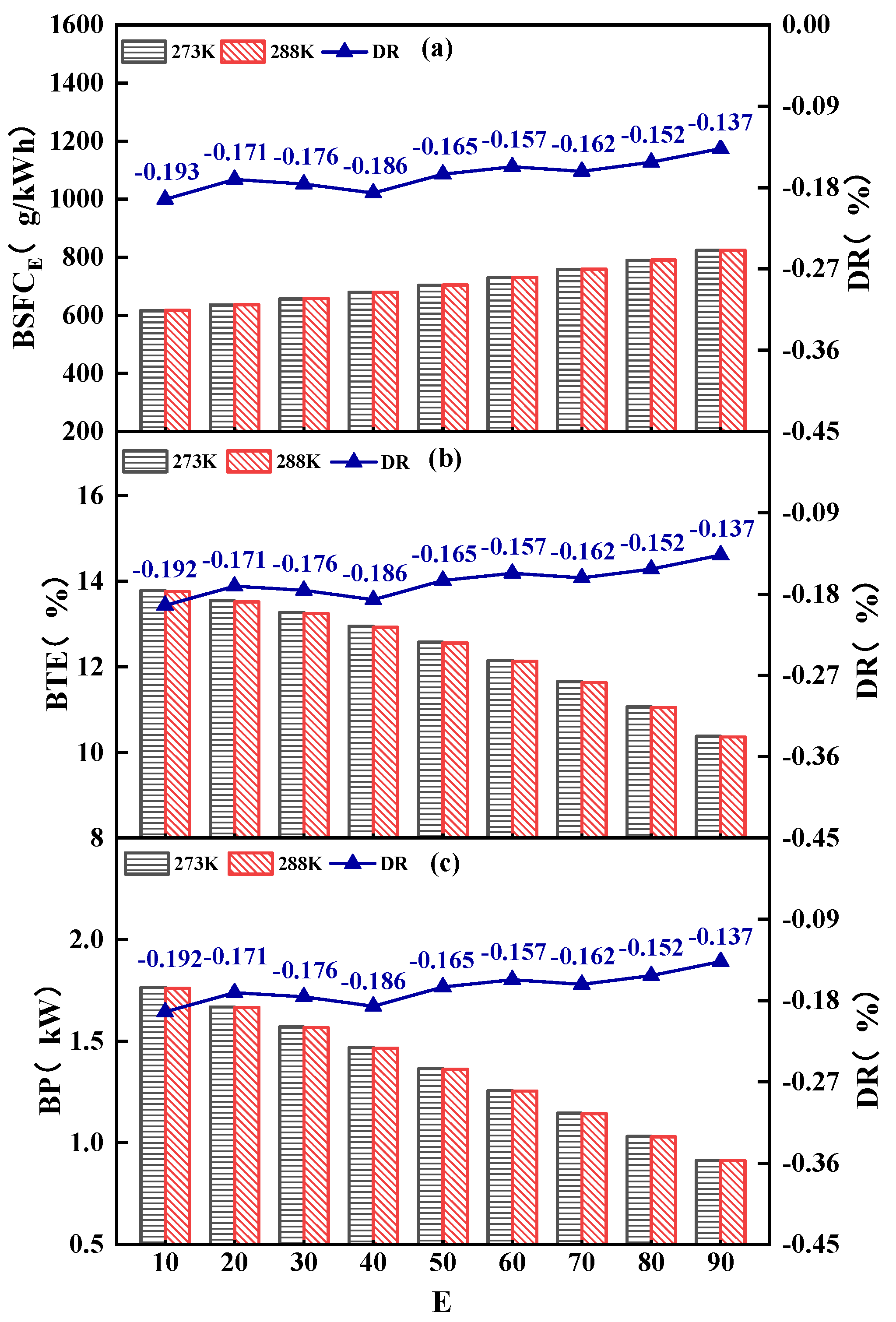
Figure 4 shows the simulation results for the performance of blended fuels at varying ambient temperatures as the ethanol volume concentration increases. The bar charts represent the BSFCE, BTE, and brake power (BP) values of the blended fuels at 288 K and 273 K ambient temperatures. The red segments represent the differential rate (DR) in the BSFCE, BTE and BP values from 273 K to 288 K.
The equation of the DR is
D R = X C C %
where X is the values corresponding to the BSFCE, BTE, and BP of E10–E90 at 273 K and c is the values corresponding to the BSFCE, BTE, and BP of E10–E90 at 288 K.
From an engineering perspective, the DR could quantify the relative performance deviation between the low-temperature (273 K) and reference (288 K) conditions, normalised by the reference value. Using a relative (percentage) metric rather than absolute values enables direct comparison of temperature sensitivity across different blend ratios with vastly different absolute performance levels. A small DR value indicates that the fuel blend maintains more consistent performance across temperature variations, which is important for cold-start reliability.
As illustrated in Figure 4a, the BSFCE increases with higher ethanol proportions, with a progressively steeper slope. Despite ethanol’s higher oxygen content improving combustion efficiency, its substantially lower heating value and higher latent heat of vaporisation (compared to diesel) dominate the increase in BSFCE. When the ambient temperature decreased from 288 K to 273 K, the BSFCE values of the blended fuels all showed a downward trend. Among them, E10 decreased the most by 0.192%, and E40 decreased by 0.186%.
Figure 4b,c reveal that the BTE and BP values decline with increasing ethanol concentration. This reduction is primarily because of ethanol’s low heating value, which diminishes fuel energy density, compounded by reductions in cetane number and alterations to the combustion process. The BTE curve displays a negative slope, while the BP curve exhibits near-constant declivity.
However, the BP and BTE values are the core guarantees for an effective cold start. At low temperatures, a high BP indicates that the output torque is sufficient to drive the engine. High-thermal-efficiency fuel can reach a stable combustion temperature more quickly, counteract heat loss from cylinder components, and reduce start failures and white smoke. Too high an ethanol content leads to a lower BP value, usually resulting in an extremely low cetane number, significant viscosity reduction, and lubricity problems, causing difficulties during cold starts, unstable blended fuel supply, and potential wear risks. Additionally, the fuel’s adaptability to ambient temperatures must be considered.
Based on the above analysis, E30 and E50 were initially selected. These two models have excellent cold-start performance while meeting certain economic requirements. Moreover, they are less sensitive to changes in ambient temperature.

4.2. The Influence of Ambient Temperature

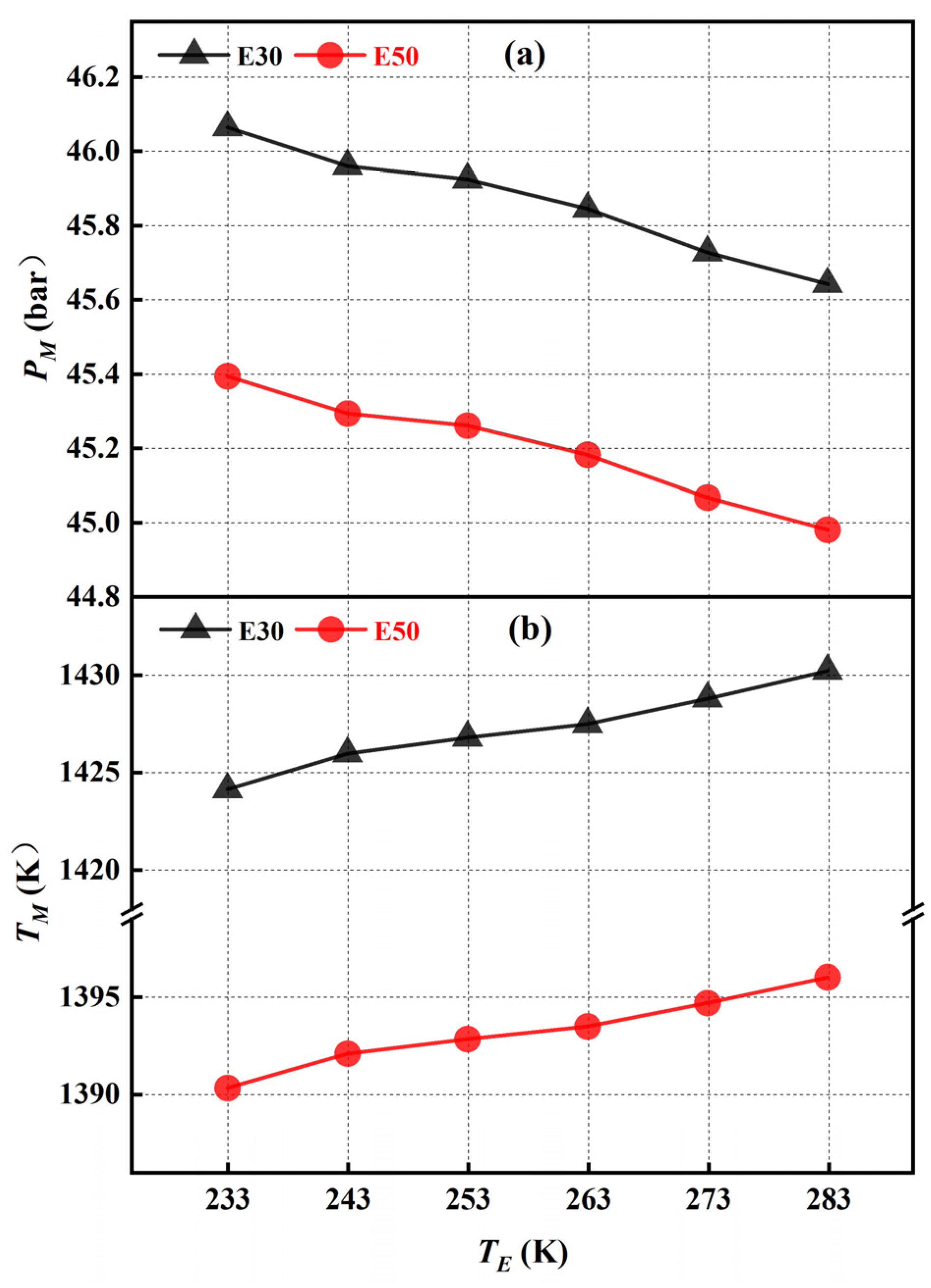
Figure 5 illustrates the simulation results of the cold-start characteristics of E30 and E50 under different ambient temperatures. Figure 5a shows the change in PM, with the peak value of E30 being 45.73 bar at 233 K. Figure 5b displays the change in TM, with the peak value of E30 reaching 1413.14 K at 283 K.
Analysis reveals that E50 consistently exhibits lower in-cylinder temperatures and pressures than E30 due to ethanol’s combined effects of high evaporative cooling and lower heating value, which suppresses initial combustion gas temperature and total energy release, further deteriorating combustion optimisation and reducing peak pressure and temperature with increasing ethanol content. This is due to the strong, nonlinear sensitivity of the ethanol–diesel mixture to ambient temperature, which manifests in fuel evaporation, mixing, and chemical reactions. The presence of ethanol further exacerbates this sensitivity. The extreme sensitivity of the evaporation rate, ignition delay, and wall heat loss near the critical 233–243 K threshold drives a sharp transition from severely restricted to marginally controllable combustion, explaining the most significant trend shift in this range as ethanol droplet impingement on ultracold surfaces showing a critical transition in droplet behaviour at approximately 240 K [32].
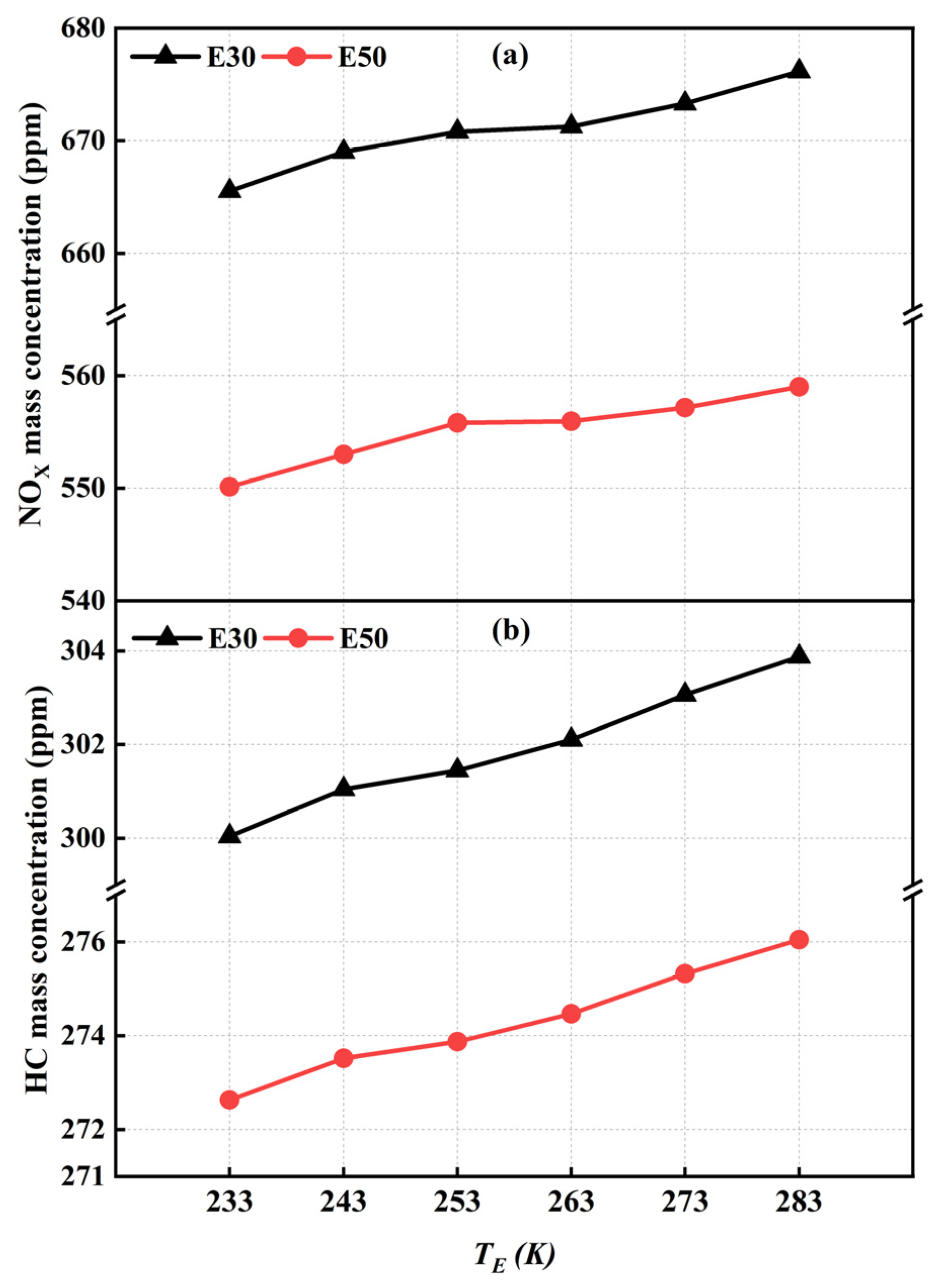
NOx and HC are the primary focus of research on the cold-start emission characteristics of diesel engines, which have significant environmental and human health impacts. Figure 6a illustrates the influence of the temperature of the ethanol–diesel mixture on the NOx emission characteristics. For E30 and E50, the NOx concentration shows a similar trend in low-temperature environments (233–283 K). Within the range of 233–243 K, the change in NOx concentration is the most significant (the slope of E50: 0.35 ppm/K, E30: 0.29 ppm/K), while the change within the range of 253–263 K is relatively weak. The NOx emissions from E50 were consistently lower than those from E30, with an average reduction of 115.84 ppm, a relative decrease of 17.34%. This is closely related to ethanol’s enhancement of oxygen diffusion and its thermal quenching effects. With higher ethanol content, the combined influence of enhanced evaporative cooling and lower energy density produces a more pronounced depression of peak temperature per unit decrease in intake temperature, thereby amplifying the exponential suppression of the Zeldovich reaction rate.
In addition, the underlying mechanism for the observed NOx reduction with decreasing ambient temperature can also be fundamentally attributed to the temperature-sensitive nature of the extended Zeldovich mechanism governing thermal NOx formation. As the ambient temperature drops from 283 K to 233 K, the cylinder’s overall thermal state at the start of compression is significantly depressed. Hence, the entire cylinder thermal state during compression can be depressed, proportionally lowering the peak combustion temperature and thus dramatically suppressing thermal NOx formation.
Figure 6b demonstrates the temperature-dependent HC emission profiles of E30 and E50 ethanol–diesel blends under cold-start conditions (233–283 K). The HC emissions from both fuels showed a nonlinear trend, decreasing as temperature decreased. The average HC concentration of E30 was 27.62 ppm higher than that of E50, with an average increase rate of 10.06%. Within the temperature range of 253–283 K, the variation in HC emissions is the most significant. When the temperature is below 253 K, HC emissions tend to stabilise. This trend is consistent with the phenomenon of restricted oxidation pathways observed in Figure 5b, where a higher ethanol content leads to a decrease in cylinder temperature, thereby directly hindering HC oxidation after the flame. Additionally, the slight reduction in HC emissions at lower ambient temperatures can be primarily attributed to the thermodynamic relationship between ambient temperature and charge-air density. First, lower intake temperatures increase the charge-air density according to the ideal gas law, thereby enhancing the oxygen mass available per unit cylinder volume. This increased oxygen availability promotes late-cycle oxidation of unburned hydrocarbons that would otherwise escape combustion. Second, the increased oxygen concentration accelerates the oxidation kinetics of intermediate hydrocarbon radicals, where higher oxygen partial pressures shift the equilibrium toward complete oxidation, ultimately yielding a slight but consistent downward trend in engine HC emissions.

4.3. The Influence of Altitude (Intake Pressure)

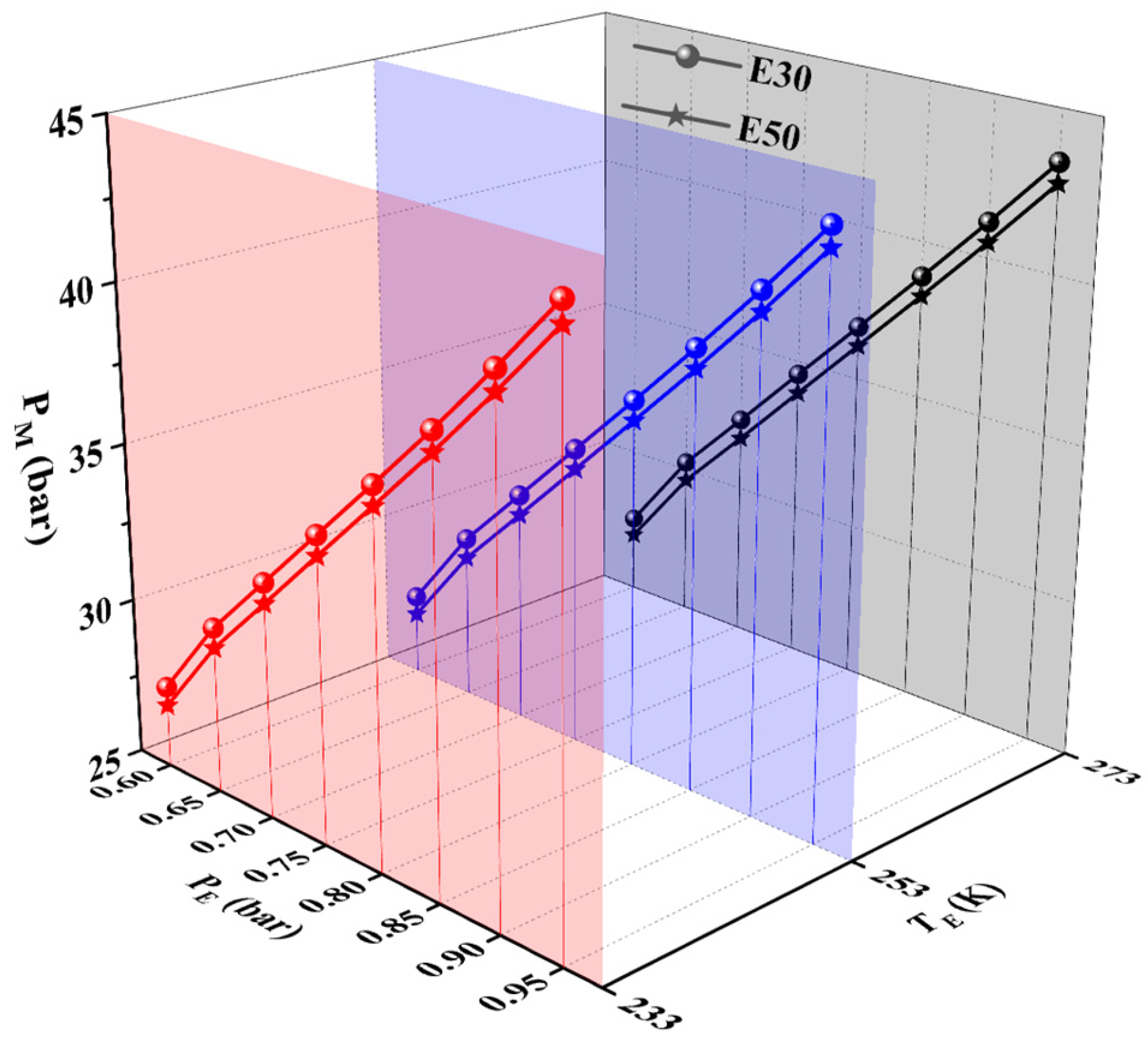
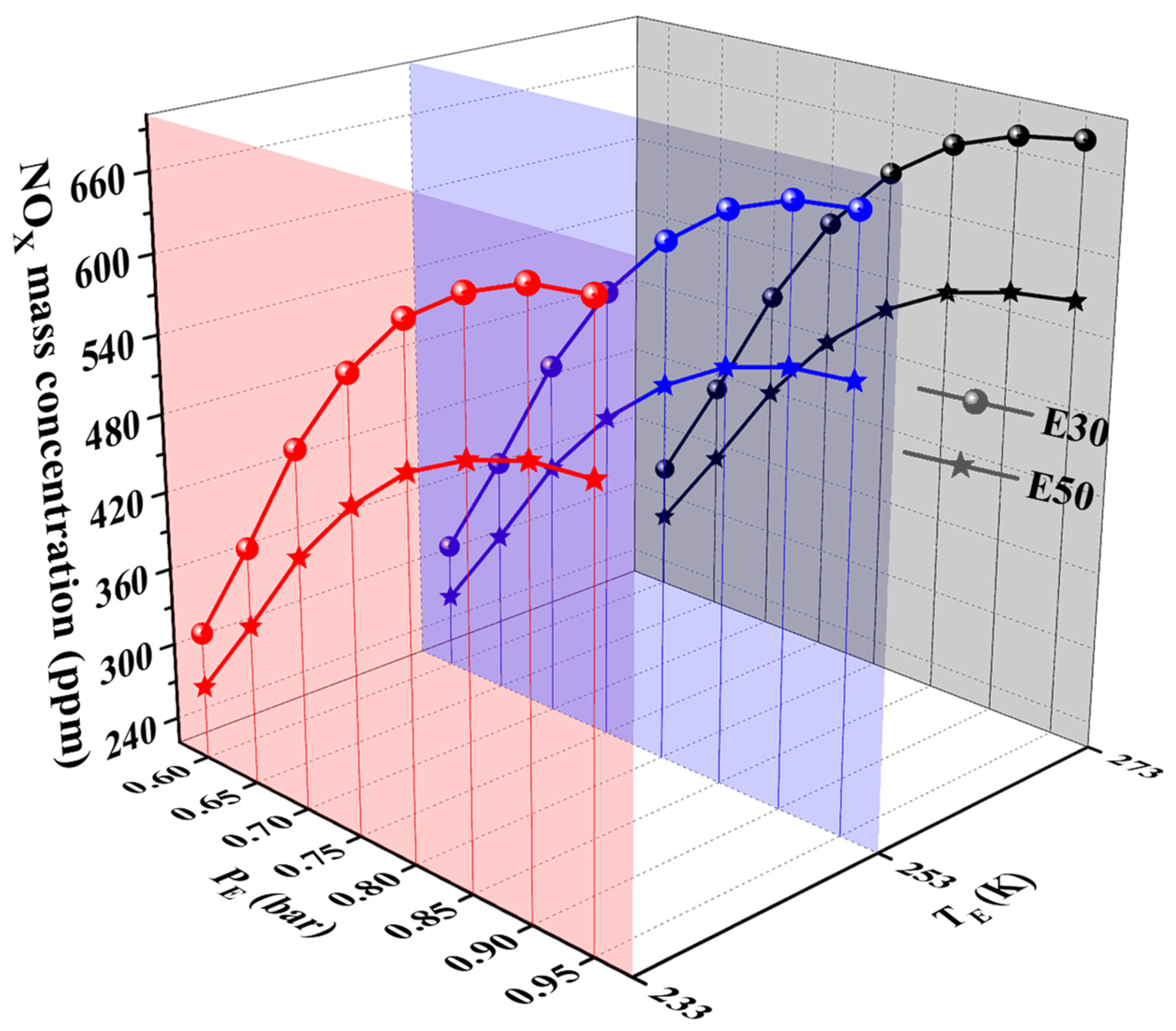
Figure 7 demonstrates the simulation results showing the influence of different intake pressures PE (0.6–0.95 bar) on the maximum cylinder pressure PM generated by E30 and E50, two types of blended fuels in a diesel engine, under three ambient temperatures TE (233 K, 253 K and 273 K). At all temperatures, for both fuels, the PM increases monotonically with intake pressure, and the overall trend is highly consistent, indicating that intake pressure is the main factor affecting peak cylinder pressure within the studied range. At 233 K and 0.95 bar, the PM for E30 and E50 is the highest, at 43.59 bar and 42.93 bar, respectively. In contrast, at 273 K and 0.6 bar, the corresponding values are the lowest, at 27.55 bar and 26.95 bar, respectively. Under the same pressure conditions, increasing the ambient temperature from 233 K to 273 K will cause a slight decrease in the PM for both fuels. Still, the effect of temperature is much weaker than that of pressure, and it becomes more pronounced at higher intake pressures (especially when approaching 0.9–0.95 bar).
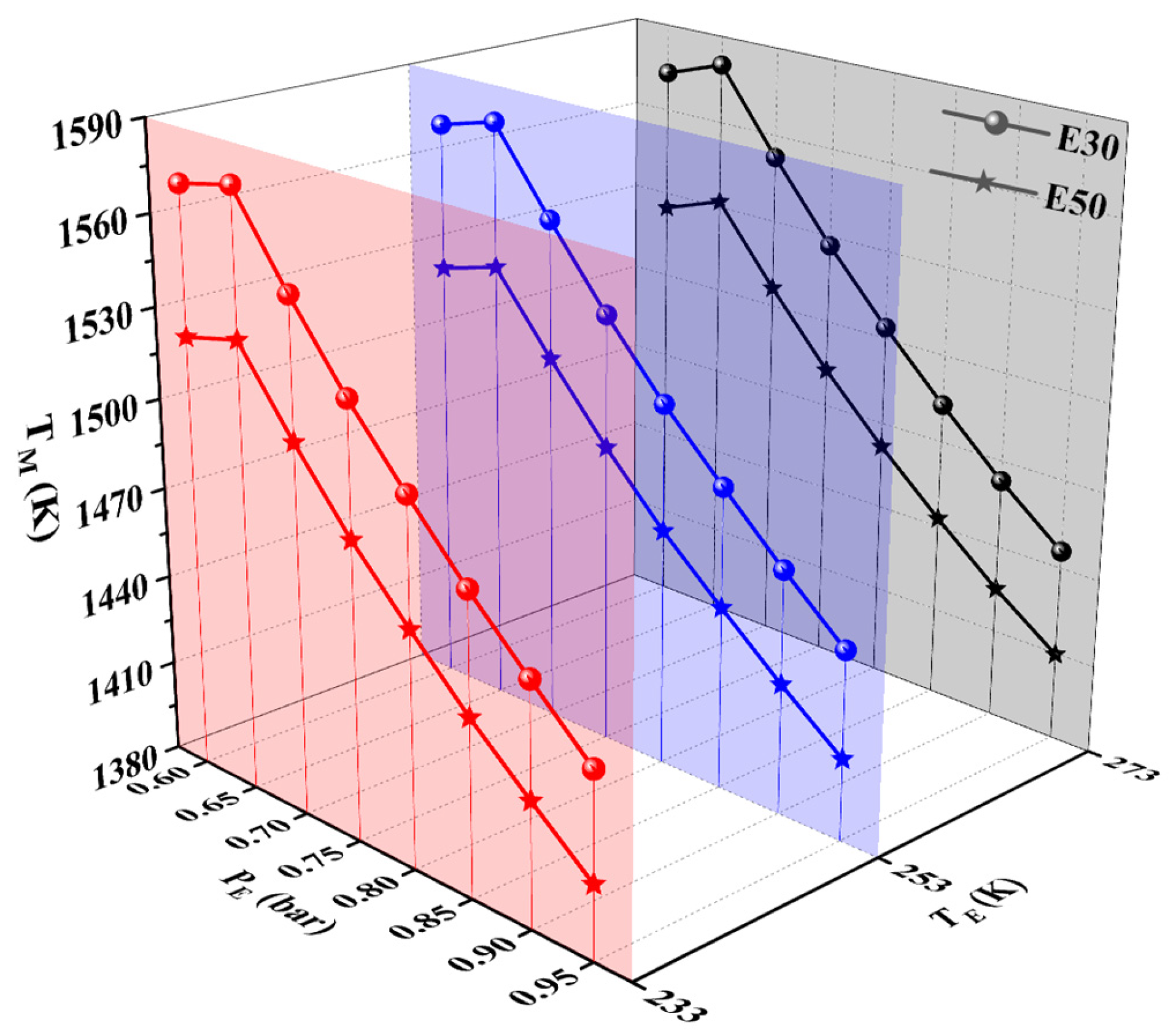
Figure 8 demonstrates the simulation results of the TM. At all temperature conditions, both fuels exhibited similar change patterns: as intake pressure increased, the TM first rose slightly to 0.65 bar then decreased as intake pressure increased further to 0.95 bar. This indicates that intake pressure has a significant effect on the peak combustion temperature. The TM occurred at an ambient temperature of 273 K and an intake pressure of 0.65 bar, with E30 reaching 1580 K and E50 reaching 1531.99 K. This is mainly because as intake pressure increases above 0.65 bar, the denser charge contains more fuel mass per cycle, requiring greater latent heat of vaporization for ethanol, which directly suppresses the peak combustion temperature through enhanced evaporative cooling. Moreover, an increase in in-cylinder gas density enhances the convective heat transfer to cylinder walls, accelerating heat loss during the combustion phase and further decreasing the TM.
Under the same pressure conditions, an increase in the ambient temperature from 233 K to 273 K would cause a slight increase in the TM of both fuels. However, this temperature effect is much weaker than the influence of intake pressure and becomes more significant at higher intake pressures (especially when approaching 0.9–0.95 bar). Moreover, under the same environmental conditions, the TM of E30 was always higher than that of E50, and the temperature gap gradually narrowed as the intake pressure increased.
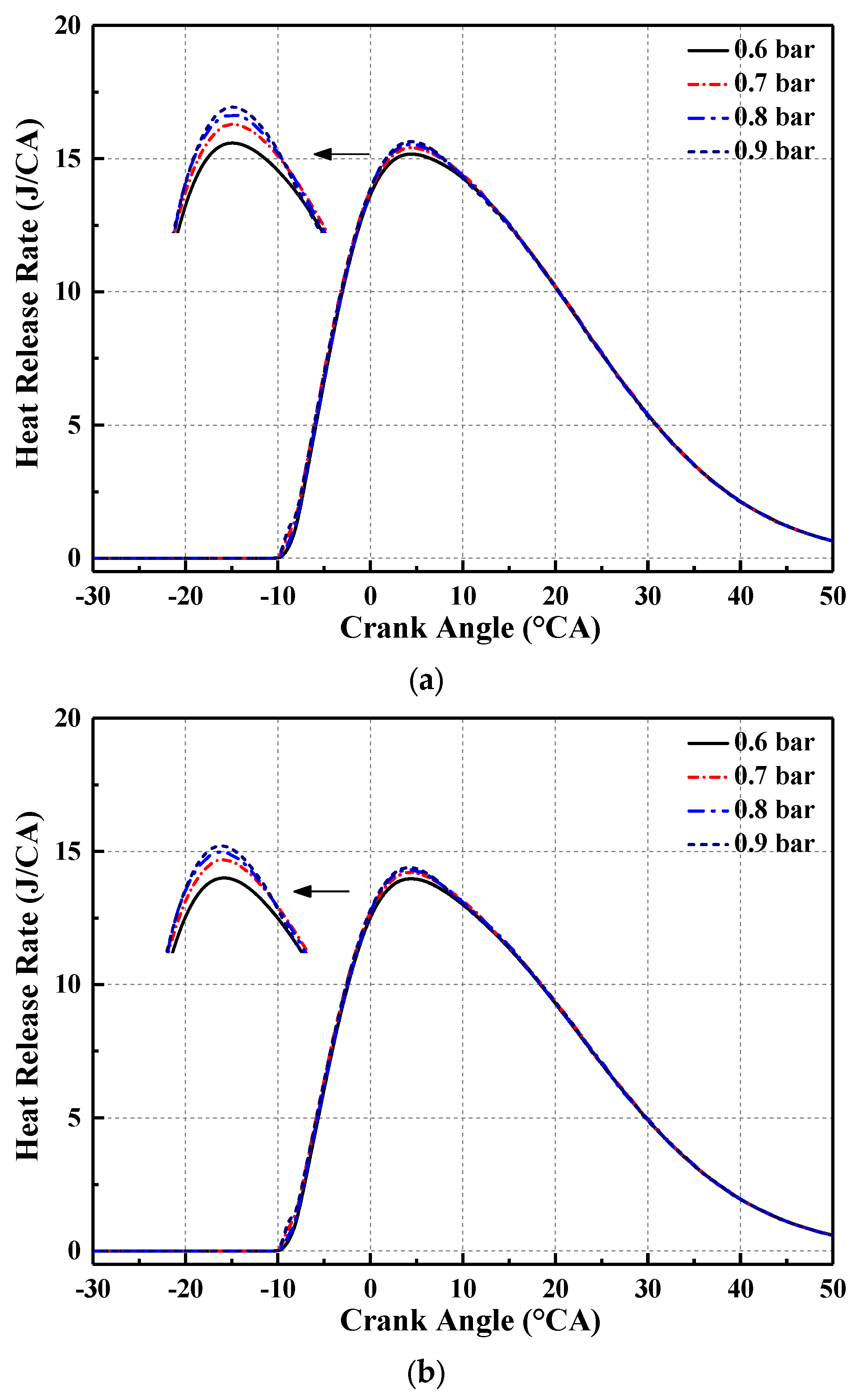
To further demonstrate the adaptability of E50 from the perspective of combustion completion quality, Figure 9a,b show the variations in the HRR under different intake pressures. As shown in both figures, an increase in intake pressure results in a moderate increase in the peak HRR for both E30 and E50. This upward trend is primarily attributed to higher intake pressure, which increases in-cylinder charge density and oxygen concentration, thereby enhancing combustion intensity and accelerating energy release.
Furthermore, a comparison of Figure 9a,b reveals that the peak HRR of E50 is lower than that of E30 under the same intake pressure conditions. For instance, at 0.9 bar, the peak HRR for E30 is 15.65 J/CA, whereas the maximum value for E50 drops to approximately 14.4 J/CA. This reduction in peak HRR can be attributed to variations in the fuel’s physicochemical properties resulting from the higher ethanol blending ratio. As ethanol has a higher latent heat of vaporisation, the E50 fuel absorbs more in-cylinder heat during evaporation, leading to a lower in-cylinder temperature at the end of the compression stroke, which slightly retards the initial combustion reaction rate.
Figure 10 shows the simulation results for NOx emission concentration. For both mixtures across all temperature conditions, NOx emissions decrease monotonically with decreasing intake pressure, and the trend is essentially the same for both. At an ambient temperature of 273 K and an intake pressure of 0.95 bar, the NOx emission concentrations for the two fuels are the highest, at 679.29 ppm and 557.14 ppm, respectively. At an ambient temperature of 233 K and an intake pressure of 0.6 bar, the emission concentrations are lowest, at 319.6 ppm and 76.85 ppm, respectively. When the intake pressure drops below 0.8 bar, NOx emissions decrease significantly. Under the same pressure and temperature conditions, the NOx emission of E50 is always lower than that of E30. The emission gap between E30 and E50 is largest at an intake pressure of 0.95 bar, and it gradually narrows as the pressure decreases.
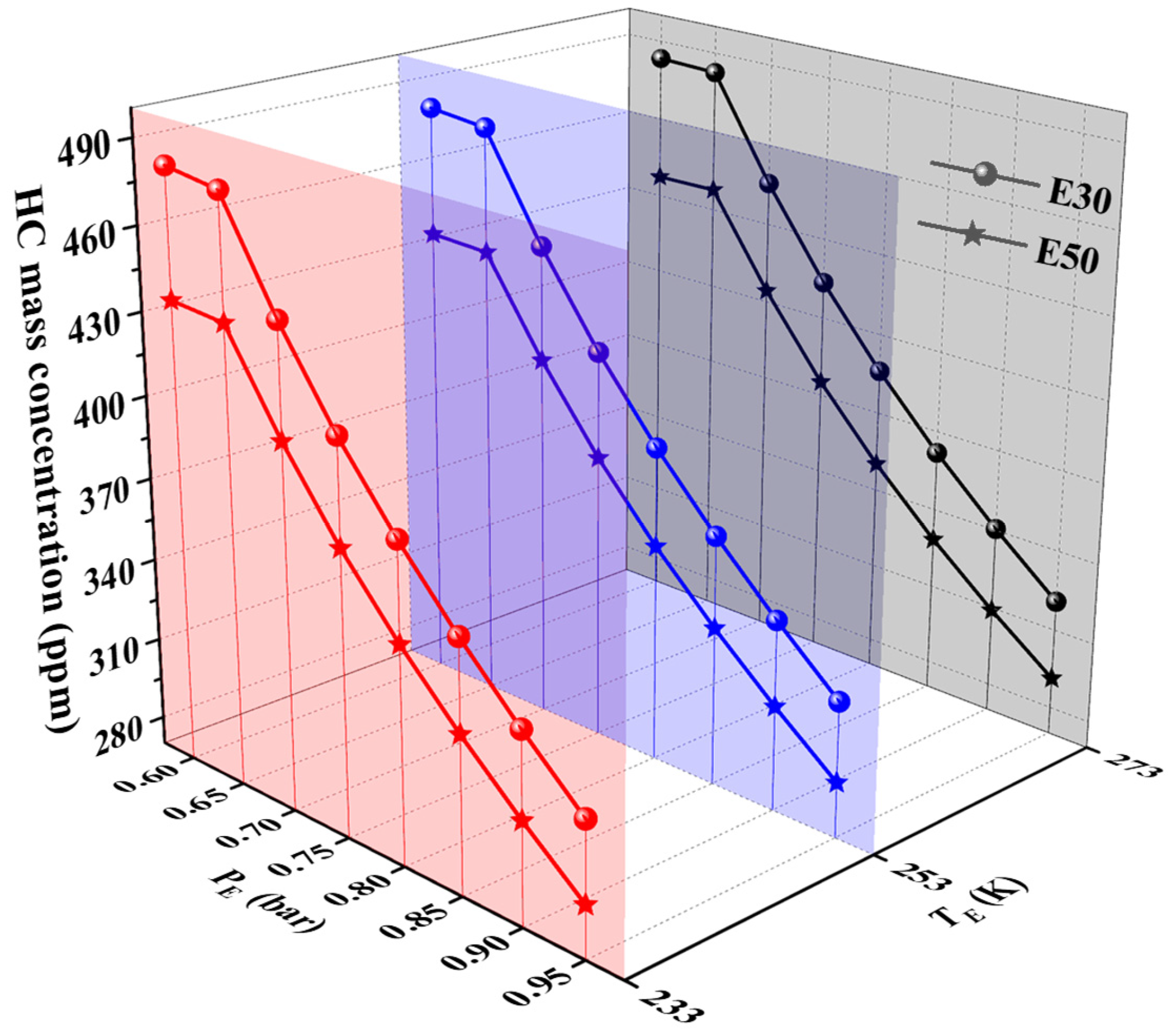
Figure 11 shows the simulation results for the HC emission concentration. As intake pressure decreases, the HC emissions from E30 and E50 increase consistently. When the intake pressure is between 0.65 bar and 0.8 bar, HC emissions increase exponentially. Above 0.85 bar, the HC emission difference narrows, indicating adequate evaporation recovery. The HC emission value for E50 is always lower than that for E30. Under different ambient temperatures, the emission variation trends of E30 and E50 are similar to the average emission differences, with the average differences at ambient temperatures (233 K, 253 K, and 273 K) being 37.5 ppm, 37.58 ppm, and 37.65 ppm, respectively.

5. Conclusions

This study, through a combination of experiments and simulations, systematically investigated the cold-start combustion performance and emission characteristics of ethanol–diesel blended fuel under different ambient temperatures (233–288 K) and intake pressures (0.6–0.95 bar). The main conclusions are as follows:
(1)
When ethanol content exceeds 50%, the BSFCE increases significantly. This is because its lower calorific value could reduce the BP, thereby affecting cold-start reliability. The E30 and E50 blended fuels offer balanced combustion performance and fuel economy and are less sensitive to temperature changes.
(2)
Within the ambient temperature range from 233 K to 283 K, due to the dual effects of ethanol’s high evaporation cooling and its lower calorific value, the cylinder temperature and pressure of E50 are always lower than those of E30. Compared with E30, owing to its higher ethanol content, E50 can reduce NOx emissions by 17.34% (averaging 115.84 ppm), attributed to enhanced oxygen diffusion and thermal quenching effects. In addition, a reduction in ambient temperature consistently decreases NOx and HC emissions for both the E30 and E50 fuel blends.
(3)
A decrease in intake pressure (simulating an altitude environment) will exacerbate incomplete combustion. Therefore, HC emissions of both fuels increase significantly at 0.6 bar compared to 0.8 bar, while NOx emissions decrease. Compared to E30, the E50 fuel can reduce NOx by 16.3% and HC emissions by 9.7% under hypoxic conditions, demonstrating better adaptability.
(4)
Based on the combined temperature and altitude findings, E30 and E50, as preferred blended fuels, exhibit excellent economic performance and environmental adaptability. Specifically, E30 demonstrates superior combustion performance and higher peak cylinder pressure at low temperatures. In contrast, E50 shows a significant advantage in emissions performance.

Author Contributions

X.Z.: conceptualization, methodology, formal analysis, investigation. Z.Z.: formal analysis, investigation, visualization, writing—original draft. M.Y.: conceptualization, methodology, formal analysis. S.Z.: methodology, formal analysis. T.W.: methodology, formal analysis. H.Z.: conceptualization, methodology. X.L.: formal analysis, writing—reviewing and editing. P.N.: conceptualization, methodology. H.J.: methodology, investigation. All authors have read and agreed to the published version of the manuscript.

Funding

This research received no external funding.

Institutional Review Board Statement

Not applicable.

Informed Consent Statement

Not applicable.

Data Availability Statement

The data presented in this study are available on request from the corresponding authors due to privacy.

Conflicts of Interest

Mengli Yang and Size Zhang were employed by the Yunnan Yunnei Power Machinery Manufacturing Co., Ltd. The remaining authors declare that the research was conducted in the absence of any commercial or financial relationships that could be construed as a potential conflict of interest.

References

  1. Holechek, J.L.; Geli, H.M.E.; Sawalhah, M.N.; Valdez, R. A global assessment: Can renewable energy replace fossil fuels by 2050? Sustainability 2022, 14, 4792. [Google Scholar] [CrossRef]
  2. Armaroli, N.; Balzani, V. The future of energy supply: Challenges and opportunities. Angew. Chem. Int. Ed. 2007, 46, 52–66. [Google Scholar] [CrossRef]
  3. Arutyunov, V.S.; Lisichkin, G.V. Energy resources of the 21st century: Problems and forecasts. Can renewable energy sources replace fossil fuels? Russ. Chem. Rev. 2017, 86, 777–793. [Google Scholar] [CrossRef]
  4. Johnsson, F.; Kjaerstad, J.; Rootzen, J. The threat to climate change mitigation posed by the abundance of fossil fuels. Clim. Policy 2019, 19, 258–274. [Google Scholar] [CrossRef]
  5. Lin, B.; Xu, B. How does fossil energy abundance affect China’s economic growth and CO2 emissions? Sci. Total Environ. 2020, 719, 137503. [Google Scholar] [CrossRef]
  6. Wang, H.; Ou, X.; Zhang, X. Mode, technology, energy consumption, and resulting CO2 emissions in China’s transport sector up to 2050. Energy Policy 2017, 109, 719–733. [Google Scholar] [CrossRef]
  7. Zhang, Z.; Ye, J.; Tan, D.; Meng, Y.; Tian, J.; Zhang, C.; Yang, G.; Cui, S.; Hu, J.; Zhao, Z. The effects of Fe2O3 based DOC and SCR catalyst on the combustion and emission characteristics of a diesel engine fueled with biodiesel. Fuel 2021, 290, 120039. [Google Scholar] [CrossRef]
  8. Mwangi, J.K.; Lee, W.J.; Chang, Y.C.; Chen, C.Y.; Lin, N.H. An overview: Energy saving and pollution reduction by using green fuel blends in diesel engines. Appl. Energy 2015, 159, 214–236. [Google Scholar] [CrossRef]
  9. Fayyazbakhsh, A.; Bell, M.L.; Zhu, X.; Mei, X.; Koutný, M.; Hajinajaf, N.; Zhang, Y. Engine emissions with air pollutants and greenhouse gases and their control technologies. J. Clean. Prod. 2022, 376, 134260. [Google Scholar] [CrossRef]
  10. Ghasemian, A.; Faridzad, A.; Abbaszadeh, P.; Taklif, A.; Ghasemi, A.; Hafezi, R. An overview of global energy scenarios by 2040: Identifying the driving forces using cross-impact analysis method. Int. J. Environ. Sci. Technol. 2020, 21, 7749–7772. [Google Scholar] [CrossRef]
  11. Chauhan, B.S.; Singh, R.K.; Cho, H.M.; Lim, H.C.; Choi, J.H. Practice of diesel fuel blends using alternative fuels: A review. Renew. Sustain. Energy Rev. 2016, 59, 1358–1368. [Google Scholar] [CrossRef]
  12. Jiao, J.; Li, J.; Bai, Y. Ethanol as a vehicle fuel in China: A review from the perspectives of raw material resource, vehicle, and infrastructure. J. Clean. Prod. 2018, 180, 832–845. [Google Scholar] [CrossRef]
  13. Das, A.K.; Sahu, S.K.; Panda, A.K. Current status and prospects of alternate liquid transportation fuels in compression ignition engines: A critical review. Renew. Sustain. Energy Rev. 2022, 161, 112358. [Google Scholar] [CrossRef]
  14. No, S.Y. Inedible vegetable oils and their derivatives for alternative diesel fuels in CI engines: A review. Renew. Sustain. Energy Rev. 2011, 15, 131–149. [Google Scholar] [CrossRef]
  15. Manochio, C.; Andrade, B.R.; Rodriguez, R.P.; Moraes, B.S. Ethanol from biomass: A comparative overview. Renew. Sustain. Energy Rev. 2017, 80, 743–755. [Google Scholar] [CrossRef]
  16. Gupta, A.; Verma, J.P. Sustainable bio-ethanol production from agro-residues: A review. Renew. Sustain. Energy Rev. 2015, 41, 550–567. [Google Scholar] [CrossRef]
  17. Khoobbakht, G.; Akram, A.; Karimi, M.; Najafi, G. Exergy and energy analysis of combustion of blended levels of biodiesel, ethanol and diesel fuel in a DI diesel engine. Appl. Therm. Eng. 2016, 99, 720–729. [Google Scholar] [CrossRef]
  18. Silveira, J.L.; Braga, L.B.; de Souza, A.C.C.; Antunes, J.S.; Zanzi, R. The benefits of ethanol use for hydrogen production in urban transportation. Renew. Sustain. Energy Rev. 2009, 13, 2525–2534. [Google Scholar] [CrossRef]
  19. Can, Ö.; Celikten, I.; Usta, N. Effects of ethanol addition on performance and emissions of a turbocharged indirect injection diesel engine running at different injection pressures. Energy Convers. Manag. 2004, 45, 2429–2440. [Google Scholar] [CrossRef]
  20. Ajav, E.A.; Singh, B.; Bhattacharya, T.K. Experimental study of some performance parameters of a constant speed stationary diesel engine using ethanol-diesel blends as fuel. Biomass Bioenergy 1999, 17, 357–365. [Google Scholar] [CrossRef]
  21. Parlak, A.; Ayhan, V.; Ust, Y.; Sahin, B.; Cesur, I.; Boru, B.; Kokkulunk, G. New method to reduce NOx emissions of diesel engines: Electronically controlled steam injection system. J. Energy Inst. 2012, 85, 135–139. [Google Scholar] [CrossRef]
  22. Cesur, I.; Parlak, A.; Ayhan, V.; Boru, B.; Gonca, G. The effects of electronic controlled steam injection on spark ignition engine. Appl. Therm. Eng. 2013, 55, 61–68. [Google Scholar] [CrossRef]
  23. Kokkulunk, G.; Gonca, G.; Ayhan, V.; Cesur, I.; Parlak, A. Theoretical and experimental investigation of diesel engine with steam injection system on performance and emission parameters. Appl. Therm. Eng. 2013, 54, 161–170. [Google Scholar] [CrossRef]
  24. Gonca, G. Investigation of the effects of steam injection on performance and NO emissions of a diesel engine running with ethanol-diesel blend. Energy Convers. Manag. 2014, 77, 450–457. [Google Scholar] [CrossRef]
  25. Sathiyamoorthi, R.; Sankaranarayanan, G. The effects of using ethanol as additive on the combustion and emissions of a direct injection diesel engine fuelled with neat lemongrass oil-diesel fuel blend. Renew. Energy 2017, 101, 747–756. [Google Scholar] [CrossRef]
  26. Rakopoulos, C.D.; Rakopoulos, D.C.; Kosmadakis, G.M.; Papagiannakis, R.G. Experimental comparative assessment of butanol or ethanol diesel-fuel extenders impact on combustion features, cyclic irregularity, and regulated emissions balance in heavy-duty diesel engine. Energy 2019, 174, 1145–1157. [Google Scholar] [CrossRef]
  27. Wang, X.; Geng, C.; Dong, J.; Li, X.; Xu, T.; Jin, C.; Liu, H.; Mao, B. Effect of diesel/PODE/ethanol blends coupled pilot injection strategy on combustion and emissions of a heavy duty diesel engine. Fuel 2023, 335, 127024. [Google Scholar] [CrossRef]
  28. Chang, M.; Park, S. Evaporation characteristics of ethanol as alternative fuel in direct injection injector under high-temperature conditions. Fuel 2019, 252, 427–438. [Google Scholar] [CrossRef]
  29. Wang, Z.; Wu, S.; Huang, Y.; Huang, S.; Shi, S.; Cheng, X.; Huang, R. Experimental investigation on spray, evaporation and combustion characteristics of ethanol-diesel, water-emulsified diesel and neat diesel fuels. Fuel 2018, 231, 438–448. [Google Scholar] [CrossRef]
  30. Morgenstern, D.A.; Wheeler, J.C.; Stein, R.A. High efficiency, low feedgas NOx, and improved cold-start enabled by low-temperature ethanol reforming. SAE Int. J. Engines 2010, 3, 529–545. [Google Scholar] [CrossRef]
  31. Sales, L.C.M.; Sodre, J.R. Cold-start emissions of an ethanol-fuelled engine with heated intake air and fuel. Fuel 2012, 95, 122–125. [Google Scholar] [CrossRef]
  32. Lei, J.; Li, J.; Liu, Y. Ethanol drop impingement on ultracold surfaces under low-temperature cold-start conditions of engines. Fuel 2022, 311, 122573. [Google Scholar] [CrossRef]
  33. Zou, R.; Liu, J.; Wang, N.; Jiao, H. Combined effects of intake oxygen enrichment, intake pressure and temperature on combustion behavior and emission characteristics of a small-scaled rotary engine. Appl. Therm. Eng. 2022, 207, 118096. [Google Scholar] [CrossRef]
  34. Jia, G.; Tian, G.; Zhang, D. Effects of plateau environment on combustion and emission characteristics of a plateau high-pressure common-rail diesel engine with different blending ratios of biodiesel. Energies 2022, 15, 550. [Google Scholar] [CrossRef]
  35. Wang, J.; Shen, L.; Bi, Y.; Lei, J. Influences of a variable nozzle turbocharger on the combustion and emissions of a light-duty diesel engine at different altitudes. Fuel 2023, 349, 128626. [Google Scholar] [CrossRef]
  36. Zhu, P.; Huang, S.P.; Liu, Q.Y.; Zhu, X.L.; Shao, Q. Effects of low ambient pressure on the flame characteristics of ethanol-gasoline blended pool fire. Fuel 2024, 362, 130809. [Google Scholar] [CrossRef]
  37. Zhao, W.; Yan, J.; Gao, S.; Lee, T.H.; Li, X. The combustion and emission characteristics of a common-rail diesel engine fueled with diesel, propanol, and pentanol blends under low intake pressures. Fuel 2022, 307, 121692. [Google Scholar] [CrossRef]
  38. Jiao, Y.; Liu, R.; Zhang, Z.; Yang, C.; Zhou, G.; Dong, S.; Liu, W. Comparison of combustion and emission characteristics of a diesel engine fueled with diesel and methanol-Fischer-Tropsch diesel-biodiesel-diesel blends at various altitudes. Fuel 2019, 243, 52–59. [Google Scholar] [CrossRef]
  39. Randazzo, M.L.; Sodre, J.R. Cold-start and fuel consumption of a vehicle fuelled with blends of diesel oil-soybean biodiesel-ethanol. Fuel 2011, 90, 3291–3294. [Google Scholar] [CrossRef]
  40. Zhou, N.; Huo, M.; Wu, H.; Nithyanandan, K.; Lee, C.F.; Wang, Q. Low temperature spray combustion of acetone-butanol-ethanol (ABE) and diesel blends. Appl. Energy 2014, 117, 104–115. [Google Scholar] [CrossRef]
  41. Iodice, P.; Langella, G.; Amoresano, A. Ethanol in gasoline fuel blends: Effect on fuel consumption and engine out emissions of SI engines in cold operating conditions. Appl. Therm. Eng. 2018, 130, 1081–1089. [Google Scholar] [CrossRef]
  42. Gong, C.; Sun, J.; Chen, Y.; Liu, F. Numerical study of cold-start performances of a medium compression ratio direct-injection twin-spark plug synchronous ignition engine fueled with methanol. Fuel 2021, 285, 119235. [Google Scholar] [CrossRef]
  43. GB 20891-2014; Limits and Measurement Methods for Exhaust Pollutants from Diesel Engines of Non-Road Mobile Machinery (China III, IV). China Environmental Science Press: Beijing, China, 2014.
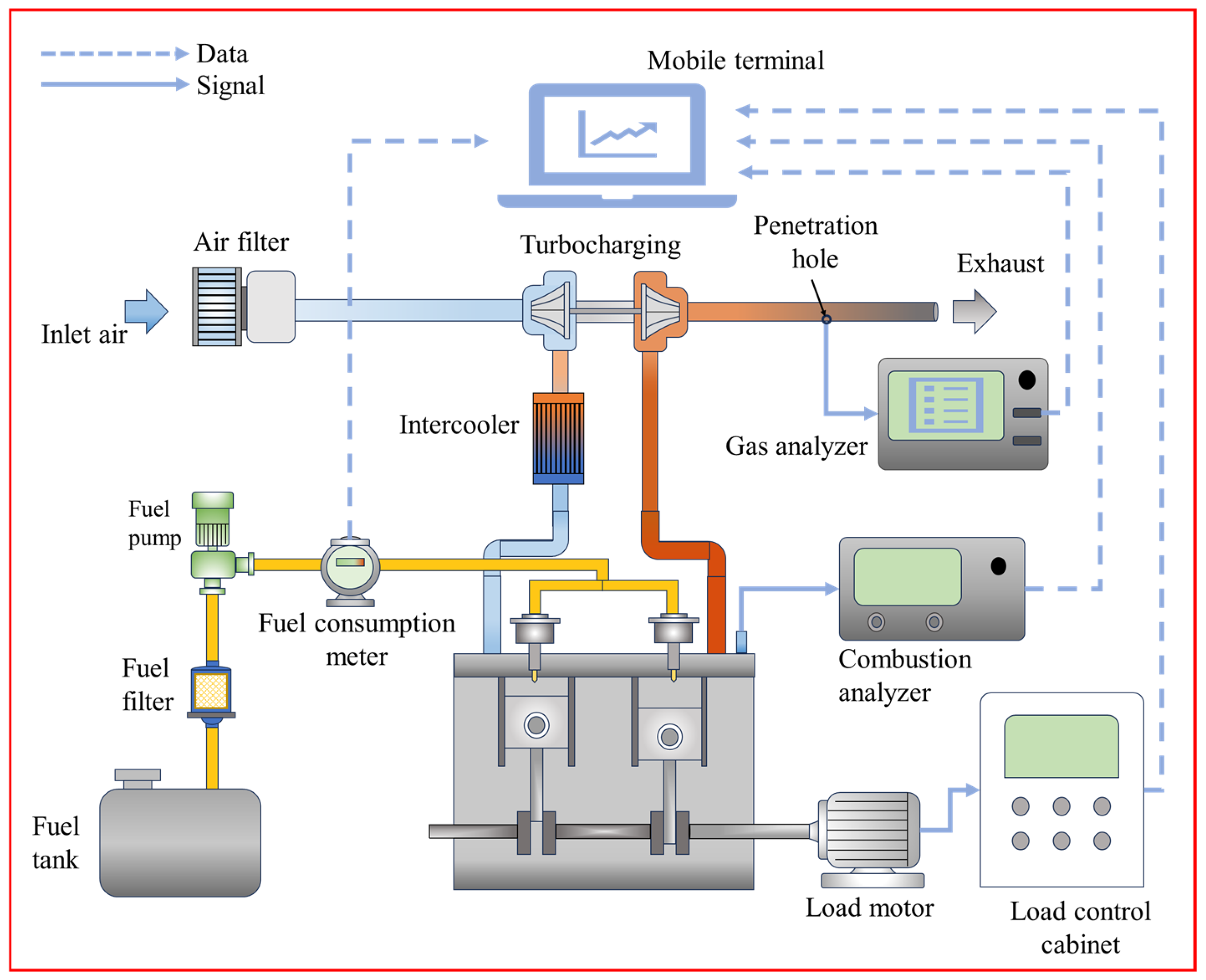
Figure 1. Test system.
Sustainability 18 05513 g001
Figure 2. Test method.
Sustainability 18 05513 g002
Figure 3. Model verification. (a) Cylinder pressure. (b) HRR.
Sustainability 18 05513 g003
Figure 4. Performance parameters of blended fuel with different volume concentrations. (a) BSFCE. (b) BTE. (c) BP.
Sustainability 18 05513 g004
Figure 5. The pressure and combustion temperature in the E30 and E50 cylinders. (a) PM. (b) TM.
Sustainability 18 05513 g005
Figure 6. E30 and E50’s emission characteristics under different ambient temperatures. (a) NOX mass concentration. (b) HC mass concentration.
Sustainability 18 05513 g006
Figure 7. Maximum cylinder pressure of E30 and E50 under different intake pressures.
Sustainability 18 05513 g007
Figure 8. Maximum cylinder temperatures of E30 and E50 under different intake pressures.
Sustainability 18 05513 g008
Figure 9. HRR of E30 and E50 under different intake pressures. (a) E30. (b) E50.
Sustainability 18 05513 g009
Figure 10. E30 and E50’s NOx emission characteristics under different intake pressures.
Sustainability 18 05513 g010
Figure 11. E30 and E50’s HC emission characteristics under different intake pressures.
Sustainability 18 05513 g011
Table 1. Engine parameter.
ParameterValue
TypeFour-stroke, direct injection
Bore diameter (mm) × stroke (mm)94 × 77
Rated speed (r/min)3000
Idle (r/min)1500
Rated power (kW)19
Displacement (L)1.069
Compression ratio18.5:1
Disclaimer/Publisher’s Note: The statements, opinions and data contained in all publications are solely those of the individual author(s) and contributor(s) and not of MDPI and/or the editor(s). MDPI and/or the editor(s) disclaim responsibility for any injury to people or property resulting from any ideas, methods, instructions or products referred to in the content.