Article

Environmental Awareness as a Factor Shaping the Relationship Between Information Sources and Public Perception of Sustainable Forest Ecosystem Services


by
Hamideh Abdali
1,*,
Emilia Wysocka-Fijorek
2 and
Marcin Pietrzykowski
1
1
Department of Ecological Engineering and Forest Hydrology, Faculty of Forestry, University of Agriculture in Kraków, Al. 29 Listopada 46, 31-425 Kraków, Poland
2
Forest Research Institute, Department of Geomatics, Braci Leśnej 3, Sękocin Stary, 05-090 Raszyn, Poland
*
Author to whom correspondence should be addressed.
Sustainability 2026, 18(11), 5510; https://doi.org/10.3390/su18115510 (registering DOI)
Submission received: 29 April 2026 / Revised: 27 May 2026 / Accepted: 28 May 2026 / Published: 1 June 2026

Abstract

It would be a critical omission to disregard the role of information dissemination in shaping public perception of sustainable forest management during Silesian Voivodeship’s transformation. Media exposure is often assumed to enhance environmental awareness, but complex internal mechanisms link information sources, public awareness, and ecosystem service valuation, especially in highly industrialized regions. This study investigates how discrete information sources (Media) are associated with public perceptions of forest ecosystem services (ES Perception) and investigates the mediating role enacted by Environmental Awareness (Awareness). Data were collected using a computer-assisted web interviewing (CAWI) survey conducted with a representative sample of 509 residents of Silesian Voivodeship in Poland. Path analysis (a form of structural equation modeling) was performed with 5000 bootstrap iterations to test the direct and indirect relationships within the Value–Awareness–Perception framework. The findings revealed a significant positive direct relationship between Media and ES Perception (β = 0.288, p < 0.001). However, a notable discrepancy emerged: media exposure showed a significant negative association with Awareness (β = −0.245, p < 0.001). Awareness was significantly and negatively linked to ES Perception (β = −0.229, p < 0.001), partially mediating the total effect. These results indicate a complex decoupling: while media consumption is associated with higher general service perception, it appears to be inversely related to functional Environmental Awareness regarding ecosystem threat.

1. Introduction

The diverse societal contributions of forest ecosystem services (ESs) significantly benefit human well-being [1] and encompass provisioning (e.g., timber production), nonmaterial (e.g., climate regulation), and sociocultural services [2,3]. Poland shifted from a communist system to rank among the 20 leading economies in the world. As a transition economy, Poland must understand that the social valuation of ESs is crucial for forestry development [4,5]. Such a realization is essential to ensure that proforestry organizations receive a Social License to Operate (SLO), which remains a key factor for institutional trust in the European forest sector [6].
The landscape of highly industrialized regions such as Silesian Voivodeship is undergoing significant ecological and economic transformation. Residents of such locales perceive exceptionally multifaceted benefits from forests [5,7]. Such complexities emerge because local socioeconomic realities and dependence on resources influence perceptions of environmental values. Simultaneously, individual beliefs and awareness serve as key cognitive factors for the discernment of such environmental advantages [8,9]. The dynamics of perception are also often intensified by communication-related deficiencies.
Riedl [10], referenced Janoušková et al. [11], noted that limited public exposure to professional forestry has resulted in widespread misunderstanding about forest management. Mass media often underrepresents sustainable development, focusing on sensational narratives rather than holistic contexts, and generating the urgent need for evidence-based communication to support society [10,11]. Huang et al. [12] declared that addressing these challenges necessitates specialized information channels and targeted education, highlighting the fact that general media exposure does not automatically translate into functional environmental awareness. This gap is particularly pronounced in post-industrial regions exhibiting significant socioeconomic dependencies, where public perceptions are deeply intertwined with local resource use and misinformation susceptibility [7,13]. A significant research gap remains, notwithstanding the abundance of information on pro-environmental activities. We must better understand how media-disseminated information can effectively be linked to actual environmental awareness and, consequently, be associated with public perceptions of the value of forests.
Our study addressed this gap in the literature by applying path analysis (a form of structural equation modeling) to evaluate the Media–Awareness–Perception relationship vis-à-vis residents of Silesian Voivodeship. We examined the mediating role enacted by environmental awareness to assess whether media channels are currently associated with genuine environmental Awareness or whether they merely create a superficial discrepancy. In this state, increased information exposure remains disconnected from deeper ecological understanding and can hinder the accurate valuation of vital ES.
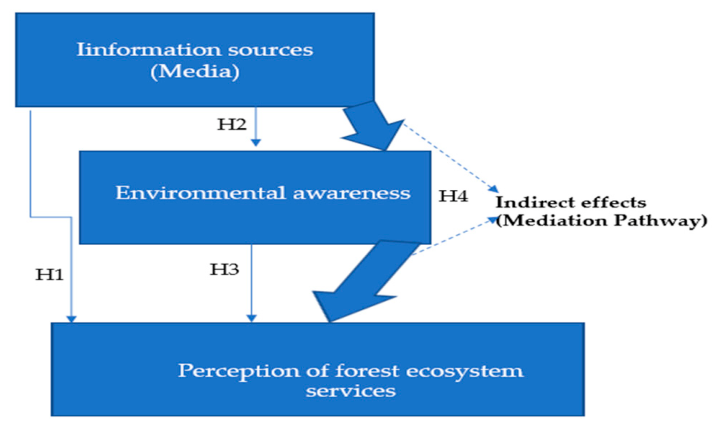
We aimed to determine whether media channels foster genuine environmental awareness or contribute to a discrepancy between media exposure and the perception of essential ecosystem services (ES). Based on this conceptual framework (Figure 1), we first hypothesized that media channels, particularly diverse media and expert institutions, are meaningfully associated with forest ecosystem services’ perception (H1). Similarly, Huang et al. [12] have demonstrated that specific information channels correlate with individuals’ ability to recognize regulatory and intangible ecosystem services, suggesting that greater exposure to such sources would be associated with a more comprehensive and enhanced ES perception.
Furthermore, we assumed that media channels are significantly associated with environmental awareness and concern (H2). Supporting this assumption, Gai et al. [14] elucidated that communication channels are crucial in raising public awareness of forest-related risks, while sociodemographic factors uncover how such information is processed into conservation attitudes [13]. Accordingly, we examined whether information flows are associated with functional awareness in the post-industrial landscape of Silesia, or whether they primarily relate to passive awareness that remains disconnected from deeper ES perception.
In addition, we hypothesized that environmental awareness is considerably associated with forest ecosystem services’ perception (H3). Previous findings [9] indicate that stronger environmental awareness is connected to more reasonable environmental beliefs as well as a more realistic valuation of ecosystem services. Therefore, we expected that respondents with higher environmental awareness would represent more comprehensive perceptions of regulatory and cultural ecosystem services compared to those with only passive awareness.
Eventually, we presumed a mediating role of environmental awareness in the relationship between media exposure and ES perception (H4). Empirical evidence [15] has revealed strong correlations between awareness and environmental attitudes, suggesting that awareness acts as a key mechanism associated with ES perception. In our structural model, it was expected that environmental awareness would mediate the relationship between media channels and the perception of forest ecosystem services. While sociodemographic variables are acknowledged as important issues, this model specifically focuses on psychological and communicative pathways in order to examine whether the Silesian population follows a Media–Awareness–Perception trajectory or whether a discrepancy persists among this population.

2. Materials and Methods

2.1. Study Area: Silesian Voivodeship

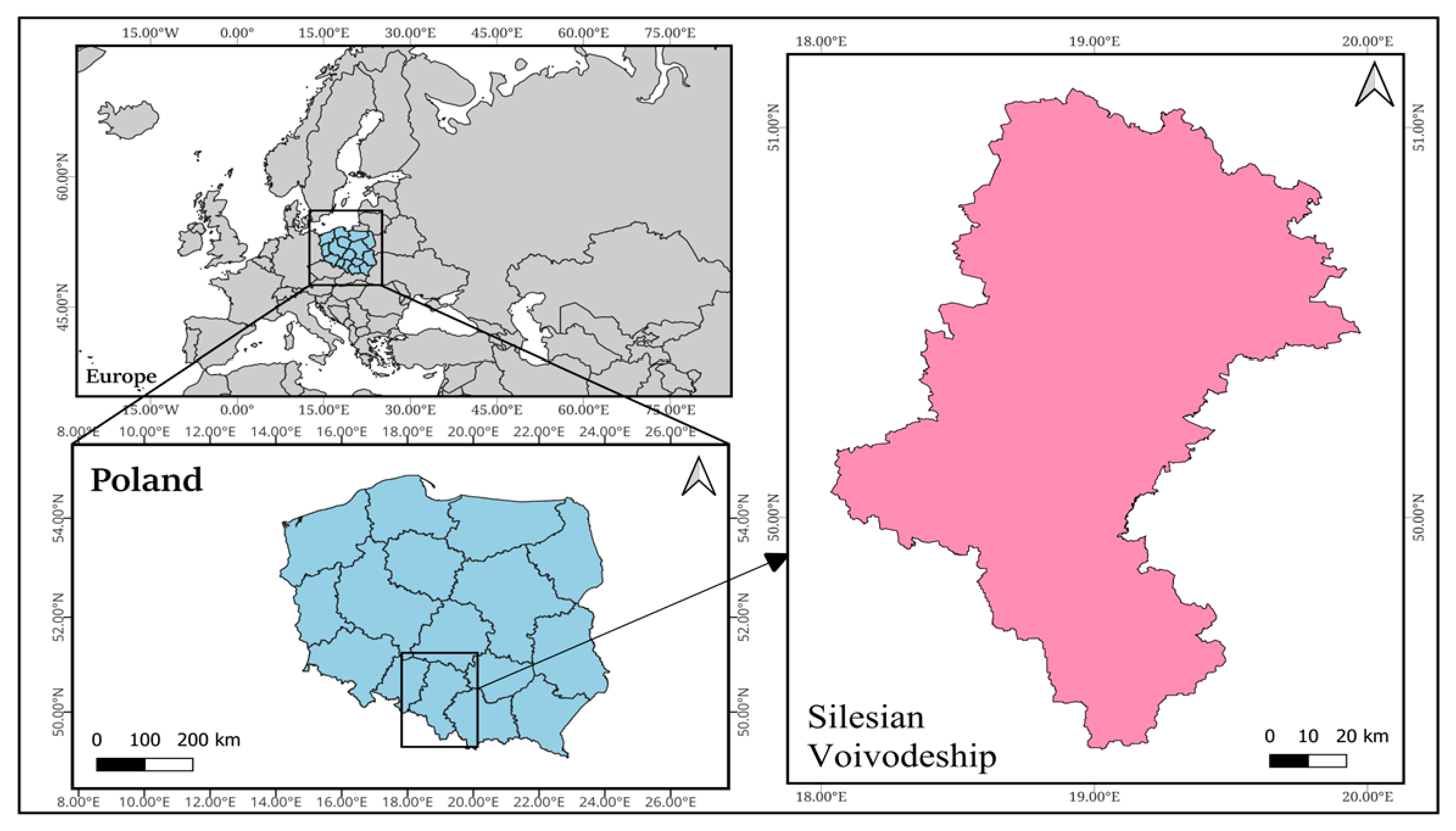
The study was conducted in Silesian Voivodeship, a southern Poland region exemplifying the complexities of highly industrialized social–ecological systems [4]. The study area is presented in Figure 2. Historically characterized by intensive coal mining and heavy industry, the region is transitioning significantly into a knowledge-based economy in its energy and landscape contexts [16]. The voivodeship retains substantial forest cover (approximately 32%) [17] despite its industrial heritage, operating as a crucial “green lung” for one of Europe’s most densely populated areas. The public communication landscape is also shifting during this transition. Innumerable information channels focus intensively on “just transition,” but research conducted in Poland indicates that this abundance of environmental information does not necessarily increase functional awareness. Kronenberg and Hubacek [8] noted that the imposition of standardized ecosystem values through external channels may not align with local socioeconomic realities and can result in resistance, or a discrepancy.” This observation is especially relevant in Silesia because the region’s historical industrial identity and socioeconomic dependencies can create cognitive factors that influence how its residents process information from diverse media sources [13,16]. Therefore, Silesia was deemed ideal for our investigation of how exposure to information is associated with environmental awareness and ES Perception in a society.

2.2. Study Sample

To achieve our study objectives, the SW Research Agency (Warsaw, Poland) utilized the computer-assisted web interviewing (CAWI) method to conduct an online survey of 509 Silesian Voivodeship residents aged 18 years and older. Data were collected between July and August 2025 from SW Online panel members, and we applied a random quota sampling procedure to ensure representativeness related to gender, age, place of residence, and educational attainment.
Several procedural remedies were applied during the survey design in order to mitigate potential common method bias. All respondents were guaranteed anonymity, and different scale formats (e.g., six-point scales for information assessment and four-point to five-point Likert scales for ES perception and concerns) were employed to reduce cognitive anchoring and pattern-matching phenomena in their responses. Additionally, Harman’s single-factor test was performed to statistically assess the presence of bias. Results indicated that the first factor explained only 27.38% of the variance, which is considerably below the 50% threshold, confirming that common method bias does not pose a significant concern in this study.

2.3. Survey Design and Instrumentation

The questionnaire validation followed a multi-stage process. First, the instrument was developed by adapting validated scales from the established environmental psychology and the forest economics literature. Second, a pilot study was conducted to refine the 25 core items, ensuring face validity and clarity within the specific post industrialcontext of Silesia. Finally, the internal consistency of the foundational scales was statistically verified using Cronbach’s alpha, with the constructs exceeding the 0.70 threshold (yielding alpha = 0.88 for non-market valuation items and alpha = 0.86 for baseline conservation attitudes), confirming the reliability of the measurements prior to structural estimation.
The questionnaire was structured into four core thematic units to capture the Media–Awareness–Perception nexus. First, the Media module assessed the importance of six distinct communication channels, including mass media (TV, press), digital platforms (Internet, social media), educational institutions, and local/governmental organizations. Second, the Environmental Awareness (Awareness) block was operationalized as a composite index reflecting respondents’ functional awareness and threat concern. A detailed “Concerns” scale was included, where respondents rated their concern level through indicating approximately 18 local and global forest threats (e.g., climate change, fragmentation, illegal use) on a five-point Likert scale. This composite approach was chosen to provide a broad proxy for the respondents’ environmental mindset regarding ecosystem pressures, effectively integrating their perceived information baseline with active concern for forest vulnerabilities.
Third, the ES Perception unit provided a comprehensive list of 26 forest ecosystem services (benefits) encompassing provisioning (e.g., wood production), regulating (e.g., air purification, flood protection), and cultural/nonmaterial services (e.g., mental relaxation, intrinsic value), and respondents rated the importance of each service on a five-point Likert scale. Finally, a sociodemographic segment collected standard variables such as age, education, and residence to ensure quota fulfillment.
For the statistical analysis, we employed Path Analysis (a form of structural equation modeling) using observed composite variables (aggregated scores). This approach was selected to evaluate the structural relationships between the core constructs. Since the model was specified as a just-identified (saturated) model with zero degrees of freedom, the fit indices such as CFI and TLI yielded values of 1.000, while RMSEA yielded 0.000, representing a perfect mathematical fit to the data rather than a statistical estimation.

2.4. Data Analysis and Variable Construction

We used the R programming environment (Version 4.5.1) for data analysis. Sociodemographic variables (age, gender, and education) were gathered during sampling to ensure quota representativeness but were not included as structural paths in the final structural equation model. To justify this approach, these variables were priorly tested in bivariate analyses, which confirmed they had no confounding effects, thereby allowing for their safe exclusion from the structural model without losing key information and successfully maintaining model parsimony. While we acknowledge that education and age are commonly associated with environmental awareness and ecosystem valuation in the wider literature, prioritizing a parsimonious model structure allowed us to isolate the specific sociocognitive mechanisms linking Media to ES Perception and obtain a theoretically focused model within the designated boundaries of this study. To operationalize the conceptual framework, we developed composite variables based on aggregated scores. The Media variable was calculated as the mean score of six items evaluating the importance of varied communication channels (e.g., mass media, social media, and expert institutions). To operationalize the mediator, Environmental Awareness (Awareness), we evaluated respondents’ functional awareness regarding 18 forest-related threats. We followed established psychometric procedures to evaluate environmental awareness through threat-based indicators [13], ensuring that higher values consistently represented greater functional awareness. These components used different scales (four-point and five-point Likert scales); therefore, we applied min–max normalization to align them within a 0–1 range before aggregation. The dependent variable, ES Perception, was calculated as the mean of 26 items encompassing provisioning, regulating, and cultural services (M = 3.92, SD = 0.52). Prior to structural analysis, we assessed scale reliability using Cronbach’s alpha, with all constructs exceeding the 0.70 threshold. We also conducted a bivariate correlation analysis to examine preliminary associations. The Shapiro–Wilk test confirmed significant deviation from normality (p < 0.001). Consequently, we employed Path Analysis (a form of structural equation modeling) using the Maximum Likelihood estimator with bootstrapping (5000 iterations), which provides bias-corrected confidence intervals and robust parameter estimates under non-normal conditions. Given that the structural model was specified as a just-identified (saturated) model where the number of estimated parameters equals the number of available variances and covariances, the degrees of freedom were zero (df = 0). This just-identified specification was theoretically motivated, as all hypothesized direct paths were included based on the prior literature. In such cases, fit indices such as the Comparative Fit Index (CFI) and Tucker–Lewis Index (TLI) naturally yield values of 1.000, and the Root Mean Square Error of Approximation (RMSEA) yields 0.000, representing a perfect mathematical reproduction of the empirical data matrix.

3. Results

3.1. Descriptive Statistics and Reliability

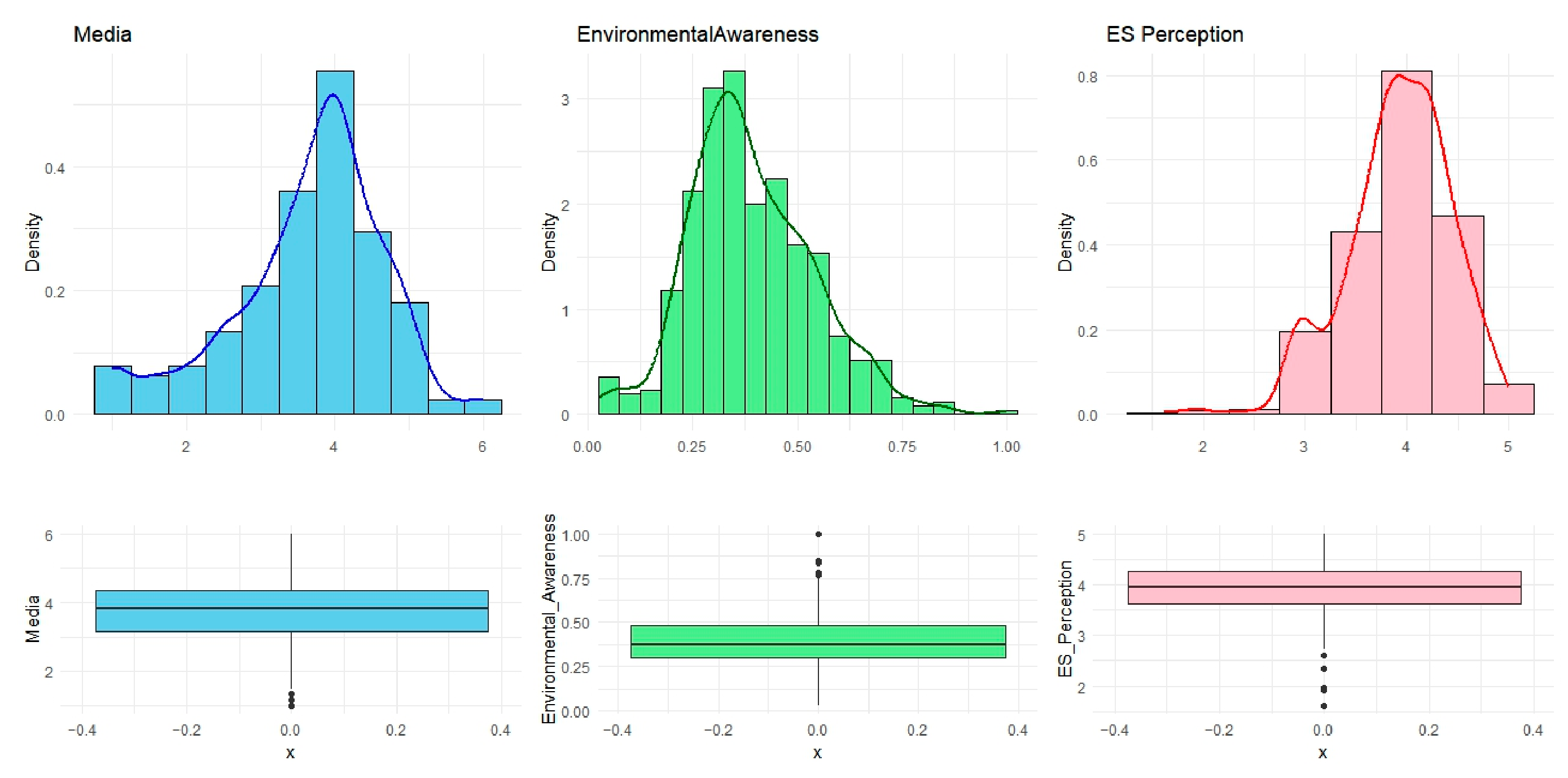
Figure 3 and Table 1 illustrate that the results indicated high internal consistency for all constructs: Media (α = 0.84), Environmental Awareness (α = 0.93), and ES Perception (α = 0.92).
Table 1 summarizes the descriptive statistics, which confirm high ES Perception; the normalized Environmental Awareness index exhibited a mean score of 0.39 (SD = 0.15) within its designated 0–1 range.

3.2. Correlation Analysis

The Pearson correlation analysis (Table 2) revealed significant relationships between constructs. Media exposure was positively associated with ES Perception, in congruence with the Information–Perception nexus described in environmental psychology [15]. Environmental awareness showed a statistically significant, moderate negative correlation with ES Perception. In addition, media exposure was negatively associated with Environmental Awareness.

3.3. Path Analysis and Hypotheses Testing

Table 3 encapsulates the standardized and unstandardized estimates obtained via path analysis. The model showed a perfect fit (CFI = 1.000, TLI = 1.000, RMSEA = 0.000) due to its just-identified specification (df = 0).
These values are consistent with social science survey research. While a major portion of public perception is associated with unmeasured external factors such as formal educational attainment, socio-political backgrounds, and direct nature interactions, the communicative pathways specified in the model remain statistically significant mechanisms.

3.4. Hypothesis Testing Results

The path analysis results yielded the following findings:
H1 (Direct Relationship).
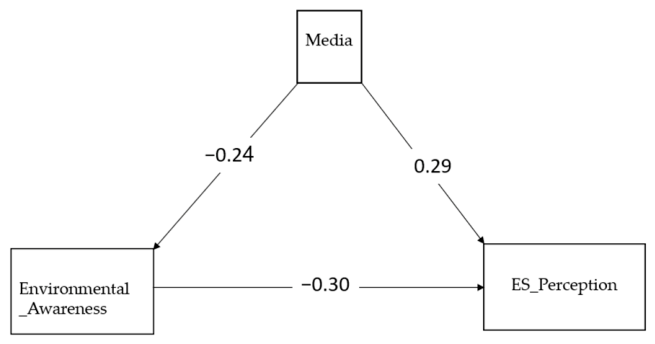
Media exposure showed a strong, positive, and direct association with ES Perception (β = 0.288, p < 0.001).
H2 (Media and Awareness).
Media negatively associated with Environmental Awareness (β = −0.245, p < 0.001); thus, current media consumption correlates with a lower level of functional awareness in the study area.
H3 (Awareness and Perception).
Environmental Awareness was significantly and negatively linked to ES Perception (β = −0.229, p < 0.001).
H4 (Mediation).
Media exerted a statistically significant indirect relationship with ES Perception through Environmental Awareness (β_indirect = 0.073, p = 0.001). The total effect remains positive (β = 0.361), with Awareness acting as a partial mediator in a nuanced pathway that warrants further discussion (Figure 4).
Apart from validating each hypothesis, the integrated model holistically overviewed the communication–perception interface. The structural analysis confirmed that the multifaceted construct of public ES Perception is related to both directly by information sources and indirectly by the level of Environmental Awareness. All hypotheses (H1–H4) were statistically supported.

4. Discussion

4.1. The Role of Media and Awareness in Public ES Perception

The findings suggest that media exposure exhibits a strong and direct positive association with the perception of ecosystem services (ES Perception). This finding affirms the assumption that communication channels play a vital role in relating to public value systems, and it aligns with recent research suggesting that mass media function pivotally in disseminating the “unknown” to the general public [10].
Consistent with the role of environmental awareness described by Huang et al. [12], our results suggest that Environmental Awareness is an important prerequisite for comprehensive ES valuation. In this section, we transition from the broader operational concept of Environmental Awareness used in our empirical models to Environmental Literacy, in order to more accurately describe the respondents’ functional processing of environmental information and threat perceptions. We found a negative link between this literacy and ES perception. This relationship is particularly important in identifying “invisible” or regulatory services such as climate regulation and water purification, whose discernment often mandates theoretical education and necessitates the adoption of a scientific approach [6,18]. Studies conducted in Slovenia have also demonstrated that students with greater ecological awareness assign significantly higher value to the sustainable use of forest ecosystems. However, unlike aforementioned studies, our findings in the Silesian context reveal that individuals with higher environmental literacy regarding forest vulnerabilities tend to exhibit more cautious assessments of current ES performance. This trend potentially reflects a heightened sensitivity to forest vulnerabilities. In this way, forestry organizations could facilitate the acquisition of an SLO and address public trust deficits through frequent contact with miscellaneous information channels and expert bodies [6].
Notably, our study found a discrepancy between information exposure and awareness: Media exposure showed a positive association with ES Perception but was negatively linked to actual Environmental Awareness. Hence, current media consumption patterns might foster a primarily aesthetic appreciation for forests without necessarily prompting a deeper understanding of the complexities of this ecosystem. Many citizens almost exclusively attain their knowledge about forest management from mass media sources because the direct application of scientific knowledge is negligible [10,19]. Often, mass media may prioritize simplified or emotionally resonant narratives over complex scientific facts [10,11]. Riedl [10] emphasized that the absence of a unified, long-term communication strategy can result in public misunderstanding and loss of trust, particularly during environmental crises.
Communication should represent a strategic function of forest management [10]. Our research indicates that frequent exposure to coordinated messages from expert institutions can counter fragmented sectoral narratives [10]. Decision-makers can deploy advanced communication tools to tailor aspects of ES management to the needs of discrete audience segments such as the youth or urban inhabitants [20].
Our findings suggest that the holistic grasp of ES mandates increasing available information along with a shift toward evidence-based narratives that highlight the long-term ecological and social benefits of sustainable forestry [11]. Expert institutions must leverage social media and partner networks to undertake proactive measures aimed at engaging the public, rebuilding institutional trust, and ensuring that citizens understand the complex links between forest management, climate resilience, and human well-being [7].

4.2. The Awareness Gap and Barriers to Forestry Communication

Diverse information sources exist, but a significant discrepancy limits their efficacy to advance functional environmental awareness in the highly industrializedlandscape of Upper Silesia. Our analysis revealed that Media exposure is negatively associated with actual environmental awareness. Thus, the prevailing information flow could foster a passive awareness that is detached from a deeper apprehension of ecosystem mechanisms.
Forests in Upper Silesia play a pivotal role in mitigating the region’s long history of industrial environmental damage [7]. However, our data indicate a discrepancy between the information frequency and actual awareness. Słupińska et al. [19] and Abdali et al. [7], the identified perception gap may be influenced by broader regional communication challenges, such as susceptibility to misinformation documented in similar post-industrialcontexts [10]. Consequently, such channels may inadvertently expose communities to unverified narratives and heightened emotional rhetoric [7], which warrants further empirical investigation. Residents of a postmining context such as Silesia could harbor robust preexisting attitudes based on their industrial identity. As a tentative hypothesis, individuals might selectively process environmental narratives that diverge from their socioeconomic beliefs, a phenomenon conceptually aligned with socio-psychological mechanisms like cognitive dissonance, although these dynamics were not directly measured in our survey design. The fragmented nature of environmental education in Poland could also exacerbate this disconnect. According to [21], the necessary interdisciplinary links to effectively integrate sustainable development principles into social and economic practice remain unsystematic and deficient. The standardized awareness index in our study indicates significant potential for improvement apropos translating awareness into the functional awareness required to obtain an SLO [6].
Moreover, institutional mistrust hinders the transition from information to active environmental protection. Many respondents (30.5%) in the studied area strongly disagreed with the statement that ES payment systems are transparent, and trust in government agencies remains exceptionally low (3.6%) [7]. Pepłowska et al. [5] noted that the region experiences significant sociopsychological strains because of its historical reliance on coal mining. Inconsistencies in national energy policies also probably add to this prevailing distrust. Stakeholders may tend to assign lower value to resources managed by institutions they consider untrustworthy, which is associated with a decrease in the perceived value of ecosystem services [7]. Our findings indicate that information must adopt evidence-based narratives to address this challenge and employ linguistic cues that align with the core values of audiences [20]. The promotion of functional awareness in Silesian residents mandates more than the transmission of facts: it requires the systematic coordination of messaging that rebuilds institutional trust and highlights the region’s long-term environmental resilience [10,16].

4.3. Environmental Awareness as a Determinant of ES Perception

Our findings reveal a significant and negative path between the two constructs. This indicates that higher values on our threat-based awareness index are associated with more cautious and critical evaluations of service delivery. This pattern suggests that the negative relationship may be partially influenced by the specific composition of the composite index, which focuses on ecosystem pressures, rather than exclusively representing a broader ecological understanding. However, service delivery is more readily recognized through direct personal experience than through theoretical learning [4]. This perceptual disparity can be attributed to the distinctions between “visible” and “invisible” ecosystem services. Lewan and Söderqvist [22] observed that recreational benefits are easily apprehended through sensory experiences; conversely, regulatory services often mandate the development of conceptual frameworks through theoretical education. The citizenry can often overlook or underestimate services such as pollination or air purification without such specialized knowledge.
Our research indicates that a higher environmental literacy index enabled respondents to bridge this conceptual gap and allowed them to perceive the forest as both a source of raw materials and a complex, life-sustaining system [4]. Moreover, the type of acquired knowledge compellingly influenced the sophistication of ES Perception. Mazur-Wierzbicka and Świątkiewicz [20] highlighted the existence of a “knowledge bias” that causes an individual to focus on either economics or ecology. This predisposition can result in markedly divergent assessments of sustainable practices. These findings deliver considerable practical implications for forest policy. Abdali et al. [7] found that a one-unit increase in environmental awareness increased the likelihood of public engagement in forest conservation by a factor of 1.8. This supports our finding that while highly aware individuals may assign lower scores to current ES performance within this specific framework, they are simultaneously more likely to recognize the intrinsic necessity of these services.
Our study endorses the view that environmental awareness forms the cognitive foundation that bases sustainable ES valuation.

4.4. Media Exposure and ES Perception

Our study found that Environmental Awareness statistically significantly mediates the relationship between media exposure and ES Perception. Rozainah and Halim [15] also reported a robust positive correlation between knowledge and attitude (r = 0.66). While media exposure exerts a strong and direct positive association with ES Perception, it simultaneously produces a positive indirect effect through the mediator of Awareness. This suggests that while information channels build general appreciation, they may not effectively foster deep functional awareness. This divergence indicates that the flow of information does not effectively translate into the functional awareness required for advanced forest valuation. Janoušková et al. [11] observed that often, mass media become powerful agenda-setters but do not expansively present the contexts of sustainable development; rather, they focus on dramatic or sensational narratives. Thus, public awareness remains superficial despite substantial ES-related media visibility.
This nuanced mediation pathway (H4) proposes a critical discrepancy in the way environmental information is processed in the studied region. As respondents’ environmental literacy regarding forest vulnerabilities increases, their optimistic attitude about the current state of ecosystem services decreases. This may not represent a lack of appreciation, but rather a more critical and cautious reflection of concern. In more detail, aware individuals appear more inclined to recognize the vulnerability of intangible services, such as climate regulation, leading them to assign lower scores to their current performance compared to less-informed respondents who may show a superficial, overly positive view.
In sum, our findings reinforce the premise that enhanced environmental awareness facilitates a more critical and cautious valuation of natural services (H3), supporting the view that heightened awareness decisively stimulates a deeper environmental concern. Torkar and Krašovec [18] also affirmed this view, demonstrating that students commanding superior environmental knowledge attach significantly greater importance to the regulation and support of ES. Similarly, our results indicate that increasing environmental awareness serves as a critical bridge in this process.
Media Communication must be integrated as a strategic function of forest management to bridge the discrepancy in Silesia and to build the requisite institutional trust and functional awareness to ensure long-term ecological resilience.

5. Limitations of the Study and Prospective Research Avenues

Although the path analysis brought about strong results, this study has its own limitations,
  • first, the CAWI method may have restricted the participation of older demographics with lower digital literacy,
  • second, a notable parameter is the operationalization of the ‘Environmental Awareness’ variable, which was structured as a threat-based index to capture functional awareness regarding ecosystem pressures. Future designs could appropriately benefit from decomposing these indicator sets into independent objective knowledge and affective concern constructs to capture distinct socio-psychological sub-dimensions,
  • third, the relatively low R^2 values (6% for Awareness and 21.4% for Perception) indicate that while media exposure could be regarded as a significant factor, other unmeasured variables—such as formal education, direct nature experiences, and socio-political context- also play substantial roles,
  • fourth, the exclusion of sociodemographic variables (e.g., age, gender) from the structural paths is a constraint as well. We acknowledge that sociodemographic factors, particularly age and education, are established in the literature as critical predictors of environmental literacy and ecosystem-service valuation [4].
While the primary focus was on psychological and communicative pathways, and preliminary analyses justified their safe exclusion without a loss of key information, it is widely acknowledged in the literature that factors such as education and age are structural determinants of environmental awareness and ecosystem valuation. Future studies should integrate these factors as moderators to capture multi-layered interaction effects and provide a more expanded sociological context.
Lastly, given the cross-sectional nature of the data, the identified relationships are associative rather than strictly causal.
Furthermore, this study concentrated solely on the Silesian Voivodeship. Consequently, the implementation of comparative studies across various regions would be advantageous to evaluate the universality of this awareness–perception discrepancy.

6. Conclusions

This study investigated the structural associations within the post industrialecosystem of the Silesian Voivodeship, providing a clear contextual evaluation of the communication–perception interface based on our original objectives and hypotheses (H1–H4).
The integrated framework successfully validated these path interconnections, demonstrating that while Media exposure directly associates with a general appreciation for forest ecosystem services, current information consumption patterns concurrently link to a lower level of functional environmental awareness. Ultimately, the study confirms that Environmental Literacy serves as a vital cognitive pathway, where a deeper understanding of localized environmental threats shifts public perception toward a more critical and cautious valuation of natural services rather than a superficial aesthetic view.
These findings carry concrete implications for environmental governance in regions undergoing intensive industrial and energy transitions. In the case of Silesia, overcoming the identified communication discrepancies mandates a strategic shift toward locally relevant, evidence-based, and coordinated approaches from expert bodies to strengthen the public understanding of sustainable forest management and ensure long-term forest sustainability.

Author Contributions

Conceptualization, H.A., M.P. and E.W.-F.; methodology, H.A. and E.W.-F.; software, H.A.; validation, H.A. and E.W.-F.; formal analysis, H.A.; investigation, H.A. and E.W.-F.; resources, E.W.-F.; data curation, H.A. and E.W.-F.; writing original draft preparation, H.A.; writing, review and editing, E.W.-F., M.P. and H.A.; supervision, M.P.; project administration, H.A. and E.W.-F.; funding acquisition, E.W.-F. and M.P. All authors have read and agreed to the published version of the manuscript.

Funding

This research was funded by the State Forest NFH project No. 500496 and also was supported by the Rector’s Fund for PhD students, University of Agriculture in Krakow.

Institutional Review Board Statement

Ethical review and approval were obtained for this study by the Commission on the Ethics of Research involving Human Subjects of the Forest Research Institute in Sekocin Stary (Opinion No. 2/2025, issued on 1 July 2025) in accordance with the Regulations of the Commission (§ 6) established pursuant to Order No. 3 of the Director of the Forest Research Institute of 19 February 2024.

Informed Consent Statement

Informed consent was obtained from all participants prior to their participation in the survey.

Data Availability Statement

The data are not publicly available due to privacy and ethical restrictions. Data may be available from the corresponding author upon reasonable request.

Acknowledgments

The authors would like to thank SW Research Agency for their assistance in data collection.

Conflicts of Interest

The authors have no relevant financial or non-financial interests to disclose.

References

  1. Mori, A.S.; Lertzman, K.P.; Gustafsson, L. Biodiversity and ecosystem services in forest ecosystems: A research agenda for applied forest ecology. J. Appl. Ecol. 2017, 54, 12–27. [Google Scholar] [CrossRef]
  2. Millennium Ecosystem Assessment. Ecosystems and Human Well-Being: Synthesis; Island Press: Washington, DC, USA, 2005.
  3. Costanza, R.; de Groot, R.; Sutton, P.; van der Ploeg, S.; Anderson, S.J.; Kubiszewski, I.; Farber, S.; Turner, R.K. Changes in the global value of ecosystem services. Glob. Environ. Change 2014, 26, 152–158. [Google Scholar] [CrossRef]
  4. Janeczko, E.; Banaś, J.; Woźnicka, M.; Zięba, S.; Utnik-Banaś, K.; Janeczko, K.; Fialova, J. Sociocultural profile as a predictor of perceived importance of forest ecosystem services: A case study from Poland. Sustainability 2023, 15, 14154. [Google Scholar] [CrossRef]
  5. Pepłowska, M.; Kowalik, W.; Gawlik, L.; Hubert, W.; Kryzia, D. Energy transformation of the Silesia coal region–Challenges and coping strategies. Gospod. Surowcami Miner. Miner. Resour. Manag. 2024, 40, 169–183. [Google Scholar] [CrossRef]
  6. Ranacher, L.; Lähtinen, K.; Järvinen, E.; Toppinen, A. Perceptions of the general public on forest sector responsibility: A survey related to ecosystem services and forest sector business impacts in four European countries. For. Policy Econ. 2017, 78, 180–189. [Google Scholar] [CrossRef]
  7. Abdali, H.; Wysocka-Fijorek, E.; Pietrzykowski, M. How socioeconomic factors influence public perceptions of forests: A case study from the Katowice Metropolitan Area, Poland. Sylwan 2025, 169, 735–751. [Google Scholar] [CrossRef]
  8. Kronenberg, J.; Hubacek, K. Could payments for ecosystem services create an “ecosystem service curse”? Ecol. Soc. 2013, 18, 10. [Google Scholar] [CrossRef]
  9. Tonin, S.; Benedetto, D. Exploring sustainability concerns and ecosystem services: The role of the new ecological paradigm scale in understanding public opinion. Sustainability 2024, 16, 1902. [Google Scholar] [CrossRef]
  10. Riedl, M. Forestry communication and public perception: Insights from the Czech Republic. Forests 2025, 16, 818. [Google Scholar] [CrossRef]
  11. Janoušková, S.; Hák, T.; Nečas, V.; Moldan, B. Sustainable development—A poorly communicated concept by mass media. Another Challenge for SDGs? Sustainability 2019, 11, 3181. [Google Scholar] [CrossRef]
  12. Huang, C.W.; Hsieh, C.H.; Chen, C.I. To see what we need: Recognizing ecosystem services in a campus landscape through environmental education. Land Ecol. Eng. 2023, 19, 111–122. [Google Scholar] [CrossRef]
  13. Dawood, U.; Bhat, B.A.; Wani, N.A.; Rashid, L.; Teli, Z.A. Evaluation of resource dependency and conservation attitude among the local populations in select forest regions and protected areas. Hum. Ecol. 2025, 53, 1–14. [Google Scholar] [CrossRef]
  14. Gai, M.Y.; Hassan, M.L.; Anak Empidi, A.V.; Juraimi, U.F.; Mohd Noorazman, N.; Emang, D. Public perceptions on the importance of ecosystem services from vulnerable forest: A case study of Ampang forest reserve, Selangor, Malaysia. J. Manaj. Hutan Trop. 2024, 30, 61. [Google Scholar] [CrossRef]
  15. Rozainah, M.Z.; Halim, A. Public’s perception on knowledge, attitude, and practice towards mangrove forest conservation: A case study in Penang, Malaysia. J. Coast. Res. 2024, 113, 164–168. [Google Scholar] [CrossRef]
  16. Marszowski, R.; Iwaszenko, S. Mining in Poland in light of energy transition: Case study of changes based on the knowledge economy. Sustainability 2021, 13, 13649. [Google Scholar] [CrossRef]
  17. Statistics Poland (GUS). Forestry in 2023; Statistics Poland: Warsaw, Poland, 2023.
  18. Torkar, G.; Krašovec, U. Students’ attitudes toward forest ecosystem services, knowledge about ecology, and direct experience with forests. Ecosyst. Serv. 2019, 37, 100916. [Google Scholar] [CrossRef]
  19. Słupińska, K.; Wieruszewski, M.; Szczypa, P.; Kożuch, A.; Adamowicz, K. Social media as support channels in communication with society on sustainable forest management. Forests 2022, 13, 1696. [Google Scholar] [CrossRef]
  20. Isoaho, K.; Burgas, D.; Janasik, N.; Mönkkönen, M.; Peura, M.; Hukkinen, J.I. Changing forest stakeholders’ perception of ecosystem services with linguistic nudging. Ecosyst. Serv. 2019, 40, 101028. [Google Scholar] [CrossRef]
  21. Mazur-Wierzbicka, E.; Świątkiewicz, O. Sustainable development and corporate social responsibility. In Organizing Sustainable Development; Routledge: London, UK, 2023; pp. 104–115. [Google Scholar] [CrossRef]
  22. Lewan, L.; Söderqvist, T. Knowledge and recognition of ecosystem services among the general public in a drainage basin in Scania, Southern Sweden. Ecol. Econ. 2002, 42, 459–467. [Google Scholar] [CrossRef]
Figure 1. The proposed conceptual framework illustrates the direct and indirect relationship between information sources (Media), environmental awareness (Awareness), and ES Perception. Thin arrows indicate direct structural paths; thick arrows highlight the primary mediation flow; and dashed blue arrows represent the indirect pathways.
Sustainability 18 05510 g001
Figure 2. The study area.
Sustainability 18 05510 g002
Figure 3. Standardized distribution and reliability scores of the study constructs (Media, Environmental Awareness, and ES Perception).
Sustainability 18 05510 g003
Figure 4. Final path analysis results showing standardized path coefficients (β) and their significance levels; solid lines represent significant paths (p < 0.001).
Sustainability 18 05510 g004
Table 1. Descriptive statistics and internal consistency (Cronbach’s alpha) for the study variables. (n = 509).
VariableNo. of ItemsMeanSDMinMaxCronbach’s α
Media63.641.031.006.000.84
Environmental Awareness180.390.150.160.930.93
ES Perception263.920.521.625.000.92
Note. n = 509. Media and ES Perception were measured on six-point and five-point Likert scales, respectively; the Awareness variable is a composite index (0–1 range) derived using min–max normalization to align different measurement scales; α = Cronbach’s alpha; M = Mean; SD = Standard Deviation.
Table 2. Pearson correlation matrix among study constructs.
VariableMediaEnvironmental AwarenessES Perception
Media1.00
Environmental Awareness−0.2451.00
ES Perception0.36−0.3691.00
Table 3. Standardized and unstandardized estimates obtained via path analysis.
PathUnstd. EstimateSEzpStd. Estimate (β)
Media → Awareness (a)−0.0300.008−4.74<0.001−0.245
Awareness → ES Perception (b)−1.0330.165−6.28<0.001−0.229
Media → ES Perception (c′)0.1490.0256.03<0.0010.288
Indirect effect (a × b)0.0380.0113.320.0010.073
Total effect0.1810.0237.917<0.0010.361
Note: R2 Awareness = 0.060; R2 ES Perception = 0.214.
Disclaimer/Publisher’s Note: The statements, opinions and data contained in all publications are solely those of the individual author(s) and contributor(s) and not of MDPI and/or the editor(s). MDPI and/or the editor(s) disclaim responsibility for any injury to people or property resulting from any ideas, methods, instructions or products referred to in the content.