Article

Research on Characteristics and Influencing Factors of Rural Domestic Sewage Generation and Discharge in the Yellow River Basin at County Level
1
State Key Laboratory of Environmental Criteria and Risk Assessment, Chinese Research Academy of Environmental Sciences, Beijing 100012, China
2
Key Laboratory of Eco-Industry, Ministry of Ecology and Environment, Chinese Research Academy of Environmental Sciences, Beijing 100012, China
3
Environmental Development Center of the Ministry of Ecology and Environment, Sino–Japan Friendship Centre for Environmental Protection, Beijing 100029, China
*
Author to whom correspondence should be addressed.
These authors contributed equally to this work.
Sustainability 2026, 18(11), 5500; https://doi.org/10.3390/su18115500 (registering DOI)
Submission received: 22 March 2026 / Revised: 25 April 2026 / Accepted: 12 May 2026 / Published: 1 June 2026

Abstract

This study integrates geostatistical analysis, correlation analysis and pollution load assessment to investigate the spatial distribution characteristics and environmental impacts of rural domestic pollution emissions in the Yellow River Basin, laying a foundation for the sustainable development of rural areas and zoned and classified management of rural domestic sewage in the basin. Results show that: ① The average rural domestic sewage discharge coefficient in the basin is 25.67 L/(person·day), and the average pollutant generation coefficients are as follows: chemical oxygen demand (COD) 23.08 g/(person·day), ammonia nitrogen (NH3-N) 0.71 g/(person·day), total nitrogen (TN) 1.29 g/(person·day) and total phosphorus (TP) 0.11 g/(person·day); ② Rural sewage discharge coefficients near urban areas are higher than other rural areas in the same jurisdiction, with downstream areas significantly exceeding upstream non-urban areas; ③ Youth population, illiterate population, average education years and annual precipitation are key influencing factors, showing significant negative correlations with the former two and positive correlations with the latter two; ④ The maximum equivalent load contribution of rural domestic pollution to the water quality objectives of the Yellow River’s main streams and tributaries is merely 2.01%. Overall, rural per capita domestic sewage discharge in the basin is at a low level with obvious regional differences, mainly correlated with demographic, educational and climatic factors, and its impact on the basin’s water quality objectives is negligible.

1. Introduction

Changes in rural consumption patterns [1] and water-use practices have led to significant shifts in emission intensity and the total proportion of pollutants originating from domestic sources [2,3,4]. The Second National Pollutant Source Census indicates that rural domestic sewage and agricultural pollution from farming and animal husbandry contribute half of the nitrogen and phosphorus entering water bodies [5,6]. China’s Ecological and Environmental Statistics Annual Report (2024) further reveals that rural domestic sources account for 31.4%, 71.3%, and 25.8% of chemical oxygen demand (COD), ammonia nitrogen (NH3-N), and total phosphorus (TP) emissions, respectively, within the statistical scope of wastewater discharges [7]. However, deficiencies in environmental infrastructure and management policies in rural areas have severely impacted the rural aquatic environment [8], public health, and living conditions [9,10,11,12].
The Yellow River Basin, as China’s second-largest river system, spans approximately 752,000 square kilometers across nine provinces and autonomous regions [13]. Issues related to rural domestic sewage directly affect the drinking water safety of 309 million residents (approximately 21.9% of the total national population) [14,15], while also impacting ecological sustainability, agricultural water requirements, and long-term development in northwestern and central China. Consequently, since 2014, the Chinese government has implemented the “Improving Rural Living Environments” [16] initiative, undertaking systematic, large-scale management of rural environmental issues, including domestic sewage. By the end of 2024, China’s rural domestic sewage treatment rate is projected to reach 45% [17]. However, bottlenecks such as mismatched treatment technologies, unstable treatment outcomes, and imprecise management measures have gradually become apparent [18,19,20], severely constraining the development and implementation of rural domestic sewage treatment and management policies in the Yellow River Basin.
In recent years, extensive research has been conducted to investigate the characteristics, impacts, and treatment technologies associated with rural domestic wastewater discharge. At the national level, Chen et al. analyzed spatial variations in both the volume and quality of rural domestic wastewater in China based on literature data [21]. Ma et al. identified rural domestic sources as the primary contributors to pollution discharge in most river basins, highlighting anthropogenic pressures such as population size and Gross Domestic Product (GDP) as key drivers of its impact on river water quality [22]. Similarly, Cao et al. demonstrated that factors such as treatment technology, temperature, precipitation, and economic growth significantly influence the direct discharge of rural domestic wastewater [23]. At the regional level, Tian et al. identified water consumption and living standards as determinants of spatial variations in COD, TN, and TP pollutants from rural sewage [24]. Rong et al. reported operational load rates of sewage treatment stations in towns and villages within the Wei River Basin ranging from 22% to 33%, posing substantial challenges to facility stability [25]. While some studies have explored the spatial distribution characteristics and constraints of rural domestic wastewater, research with micro-level depth, spatial precision, and systemic comprehensiveness remains limited. Investigations into the spatial distribution characteristics, constraints, and aquatic ecological impacts of rural domestic wastewater are scarce, with studies addressing its effects on maintaining river water quality objectives being particularly rare.
To systematically and comprehensively present the spatial distribution characteristics and influencing factors of rural domestic sewage generation and discharge intensity in the Yellow River Basin, and to provide decision-making support for zoned management and treatment strategies, this study used an integrated method of geostatistics, correlation and pollution load analysis to investigate the impacts of rural domestic wastewater and pollutants on major Yellow River Basin rivers under complete external discharge (most unfavorable). Geostatistical analysis is employed to investigate spatial distribution patterns of rural domestic wastewater discharge [21,26]. Based on regionalized variable theory, spatial variation is quantified through variogram analysis, while spatial interpolation techniques estimate variable values in unsampled areas using known sampling point data, offering precise support for spatial correlation studies. Correlation analysis explores the degree and direction of relationships between social and natural factors and wastewater discharge [27,28,29]. Correlation coefficients, such as Pearson’s, quantify the strength of associations, while statistical tests reveal the significance and trends—linear or non-linear—between variables. Pollution load assessment quantifies pollutant generation and discharge volumes, analyzes their spatio-temporal distribution characteristics, and applies evaluation standards to calculate pollution loads [30,31]. This approach enables comparative analysis of pollution severity, exceedance conditions, and influencing factors while assessing environmental carrying capacity. The study incorporates 13 indicators, including generation and discharge coefficient, population statistics, and climatic conditions, across 64 counties and districts within the Yellow River Basin. By employing counties and districts as analytical units, this multi-faceted methodology overcomes the limitations of singular approaches and data gaps, providing a systematic and comprehensive analysis of rural domestic wastewater discharge patterns, constraints, and pollution impacts. These methods ensure the scientific rigor and reliability of the study’s findings.

2. Research Area and Methods

2.1. Research Area

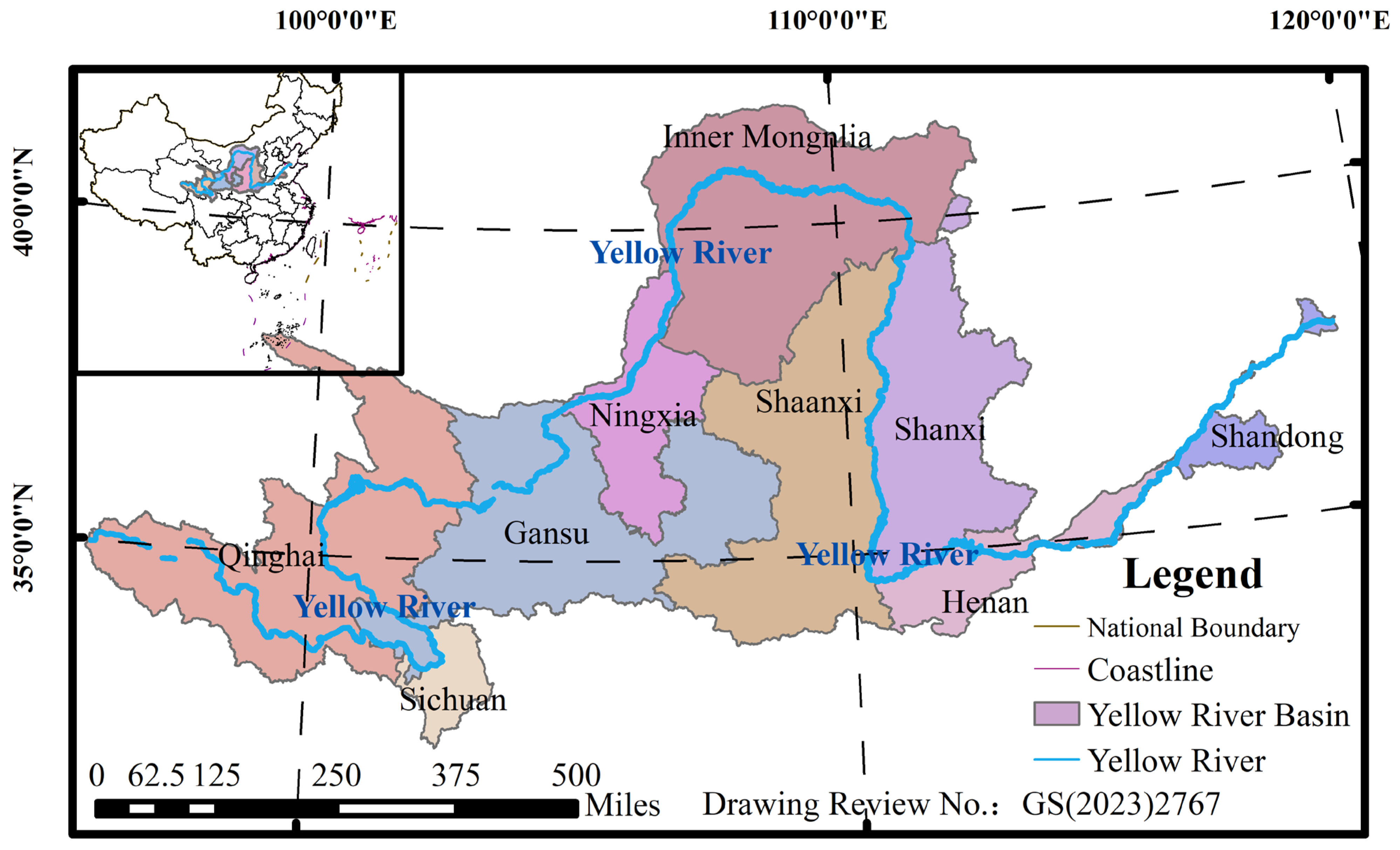
The study area comprises the Yellow River basin, one of the seven major river basins in China. As illustrated in Figure 1, the basin spans nine provinces and autonomous regions: Qinghai, Gansu, Henan, Shaanxi, the Ningxia Hui Autonomous Region, Sichuan, the Inner Mongolia Autonomous Region, Shanxi and Shandong. The region has an urbanization rate of approximately 60% and includes two significant primary tributaries: the Wei River and the Fen River. Originating from the ‘Roof of the World’—the Qinghai–Tibet Plateau—the basin features a diverse array of topographies, including plateaus, mountains, deserts, and plains.

2.2. Data Collection

The data utilized in this study include the pollutant generation intensity of rural domestic sewage in 2021, which encompass sewage discharge coefficients and the generation intensity of pollutants (COD, NH3-N, TN, TP), as well as constraint factor data from 2022, consisting of nine social factors: working-age population, elderly population, illiterate population, population with secondary education or below, population with tertiary education or above, average years of schooling, rural permanent residents, per capita disposable income, and per capita consumption expenditure. Additionally, three natural factors from 1981 to 2023 are included: river water environmental functional quality objectives and multi-year surface runoff coefficients for each watershed.
The generation intensity of pollutants for rural domestic wastewater are sourced from the 2021 Manual of Domestic Source Pollutant Generation and Emission Calculation Coefficients, developed by the Ministry of Ecology and Environment of the People’s Republic of China. These coefficients represent average values across all districts and counties. For data sources, refer to: https://www.mee.gov.cn/xxgk2018/xxgk/xxgk01/202106/t20210618_839512.html (accessed on 19 November 2025). Data on the working-age population, elderly population, illiterate population, population with secondary education or below, population with tertiary education or above, average years of schooling, and rural permanent residents are obtained from the National Bureau of Statistics’ China Statistical Yearbook (2023) and the 2023 Statistical Bulletins on National Economic and Social Development from various provinces and municipalities. Data website: https://www.stats.gov.cn/sj/ndsj/ (accessed on 19 November 2025). Per capita disposable income and per capita consumption expenditure are sourced from the 2023 China Regional Statistical Yearbook, provincial/municipal statistical yearbooks for 2023, and the Statistical Bulletin on National Economic and Social Development. Data websites: https://www.quyushuju.com/portal.php?mod=list&catid=116; https://www.stats.gov.cn/sj/ndsj/ (accessed on 19 November 2025). Annual average temperature, annual average precipitation, and annual average humidity data are sourced from the National Glacier, Frozen Soil and Desert Scientific Data Centre. These values are calculated as multi-year averages for districts and counties based on the 2023 municipal and county administrative divisions (map review number GS(2023)2767) published via the National Geographic Information Public Service Platform (Tianditu), alongside raw daily precipitation data, average temperature, and relative humidity raster data spanning 1981 to 2023. Website: https://www.ncdc.ac.cn/portal/metadata/21691d03-bef2-4800-924e-5614e7268b87 (accessed on 19 November 2025). Water environment functional quality targets are derived from the National Manual for Water Functional Zoning of Major Rivers and Lakes [32]. The water environment functional quality target for the Fen River is classified as Class II–V; for the Wei River, Class III–IV; for the Lower Mainstream of the Yellow River, Class III; and for the Upper Mainstream of the Yellow River, Class II–III. Specific classifications are detailed in Table 1. Surface runoff coefficients are derived from published research findings: the multi-year surface runoff coefficient for the Fen River basin is 0.11 [33]; for the Wei River basin, it is 0.21 [34]; for the upper mainstem reaches of the Yellow River, it ranges from 0.12 to 0.32 [35,36,37]; and for the lower mainstem reaches of the Yellow River, it is 0.12 [38].

2.3. Analytical Methods

This study utilizes the ArcGIS Geostatistical Analyst (version 10.8, Esri, Redlands, CA, USA)) for geostatistical analysis [21,39,40]. It employs 64 county-level administrative units as foundational data, which have been verified to exhibit normal distribution and meet the requirements for Kriging analysis. Spatial autocorrelation is employed to predict values at finer spatial resolutions, visually illustrating the spatial distribution patterns of rural domestic sewage discharge coefficients and pollutant generation intensity across the Yellow River Basin.
For correlation analysis, the Spearman correlation functionality in SPSS (version 27.0, IBM Corporation, Armonk, NY, USA) was used to calculate correlation coefficients, including Pearson’s correlation, and to quantify the strength of associations [27,28,29]. This was combined with statistical testing to determine the significance of correlations, reflecting both linear and non-linear associative trends between variables.
Methods for pollutant load assessment and evaluation were applied. Emissions of various pollutants were standardized according to their respective environmental quality standards, resulting in equivalent load values with consistent dimensions [30,31]. This facilitated a comparative analysis of relative pollution contributions across different pollutants and sources on a uniform scale. Higher equivalent load values indicate a greater potential for relative environmental harm, while higher equivalent load ratios signify the primary pollutants or sources.
Specific equations:
Q ι = ρ ι × N ι H ι × λ ι × S ι × 3.65
P ι = Q ι C ο ι
K ι = P ι P ι × 100 %
In Equation (1): ρ ι represents pollutant generation intensity of rural domestic sewage for ι , mg/(person·day); N ι denotes the resident rural population of ι , ten thousand; H ι indicates the multi-year average rainfall for ι , mm/m2; λ ι is the runoff coefficient for ι ; S ι signifies the area of the rural administrative division of ι , km2. In Equation (2): P ι stands for the standard pollution load of pollutant ι ; Q ι represents the annual average concentration of pollutant ι , mg/L; C ο ι denotes the water quality control standard value for pollutant ι based on water environment functional zoning, mg/L. In Equation (3): K ι indicates the ratio of the standard pollution load for pollutant ι .

3. Results and Discussion

3.1. Analysis of the Influencing Factors of Rural Domestic Sewage Discharge in Watersheds

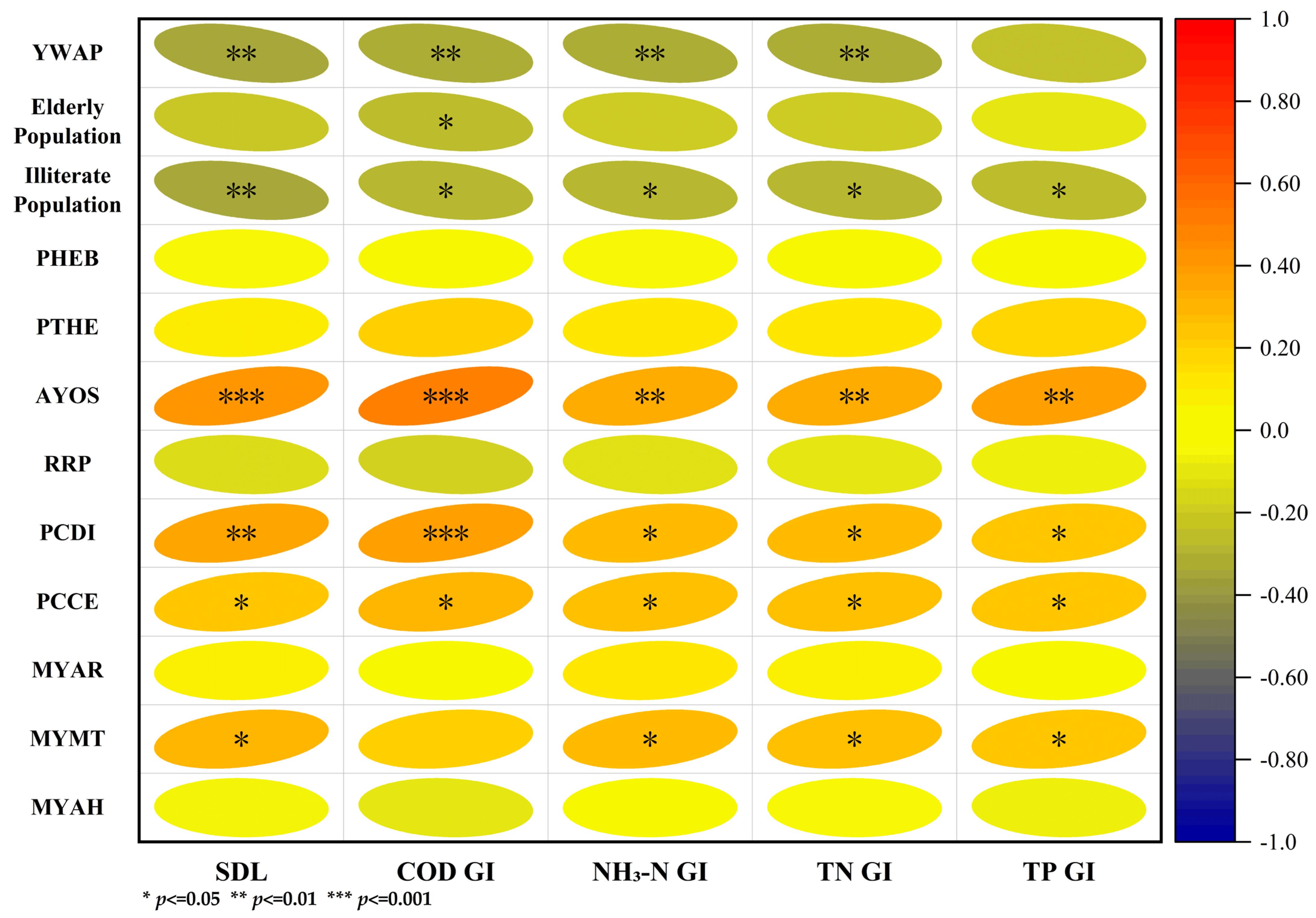
Spearman correlation analysis, as illustrated in Figure 2 and Table 2, examines various factors in relation to rural domestic sewage discharge. These factors include youth population size, elderly population size, resident population size, illiterate population size, population with education below senior secondary level, population with university education or higher, average years of education, per capita disposable income, per capita consumption expenditure, annual average precipitation, annual average temperature, and annual average humidity. Among these, youth population size, illiterate population size, average years of education, and annual average temperature demonstrated highly significant or significant correlations, while the remaining factors exhibited weakly significant or insignificant correlations. Specifically, the youth population size showed a weakly significant correlation with the pollutant generation intensity of TP (p: 0.051). In contrast, the illiterate population size significantly correlated with the generation intensity of rural domestic pollutants, including COD (p: 0.018), NH3-N (p: 0.023), TN (p: 0.020), and TP (p: 0.026). The annual average temperature was weakly significantly correlated with the COD generation intensity of rural domestic pollutants as well as the emission coefficient of rural domestic sewage pollutants (p = 0.064). All other factors exhibited highly significant correlations. The youth and illiterate population sizes displayed negative correlations with the per capita daily discharge coefficient of rural domestic sewage in the Yellow River Basin, collectively indicating a significant negative relationship. Conversely, average years of schooling and annual mean temperature showed a positive correlation with the per capita daily discharge coefficient of rural domestic sewage in the Yellow River Basin, collectively revealing a significant positive correlation [41].
Analysis suggests that the domestic wastewater discharge coefficient in rural areas of the Yellow River Basin is influenced by the proportions of young people and illiterate individuals, average years of education, and annual mean temperature. Cominola’s research indicates that under similar conditions, household youth population size is a determinant of household water consumption, with per capita usage decreasing as household size increases [42]. This trend may be attributed to young, educated individuals pursuing higher living standards in their dietary habits and personal care product usage. In contrast, elderly and illiterate residents in the Yellow River Basin have historically developed water conservation habits due to natural and economic constraints, resulting in high rates of water and fertilizer recycling with minimal fluctuations in sewage discharge volumes [43]. These findings align with Li et al.’s research on the influencing factors for rural domestic sewage discharge in the Yangtze River Basin [26].
Keshavarzi et al. identified cognitive levels as the primary determinant of disparities in water consumption and drainage [44], whereas Syme et al. established a strong correlation between domestic water use and educational attainment [45]. In the Yellow River Basin, per capita disposable income is positively correlated with average years of schooling: longer educational attainment is associated with relatively higher disposable income, a greater number of supporting facilities such as washing machines and bathrooms, and higher frequencies of bathing and laundering compared with traditional practices, thus leading to a positive correlation between average years of schooling and domestic sewage discharge levels [46,47]. Lv and Wang et al. found that temperature fluctuations are significantly correlated with domestic water consumption [48,49]. The upper reaches of the Yellow River Basin are characterized by high-altitude cold regions, while the lower reaches consist of warm temperate zones. Dietary habits dominated by carbohydrates are less influenced by climate, resulting in COD being weakly correlated with annual mean temperature. However, higher climatic temperatures significantly increase bathing and washing discharge volumes. Therefore, from a long-term perspective, when formulating regional rural domestic wastewater treatment decisions and management policies, it is essential to pay greater attention to factors such as changes in the youth population, illiterate population, and average years of education, alongside regional annual mean temperature considerations. This will enhance the precision and effectiveness of governance decisions and policy formulation.

3.2. Analysis of Characteristics of Rural Domestic Sewage Discharge in Watersheds

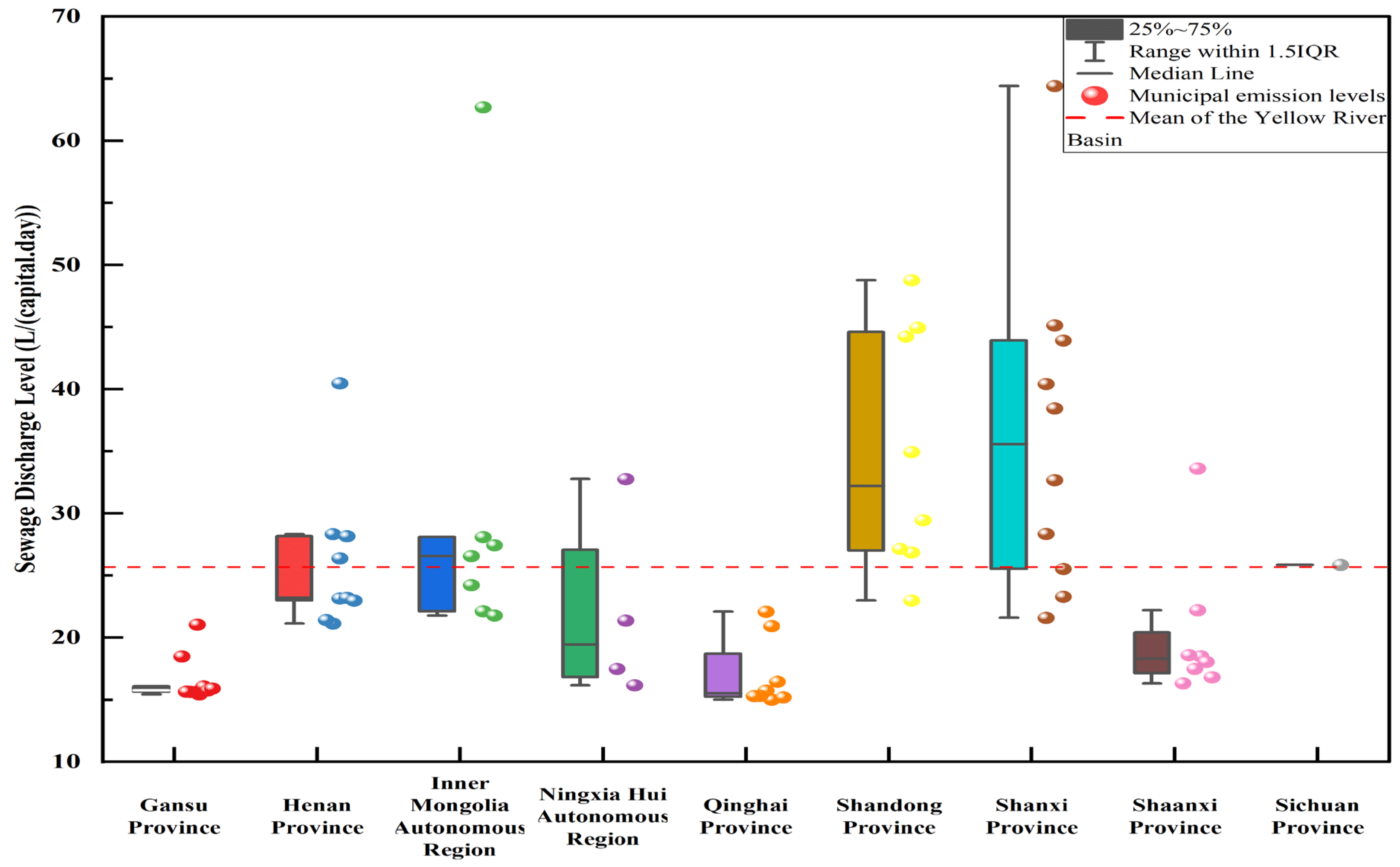
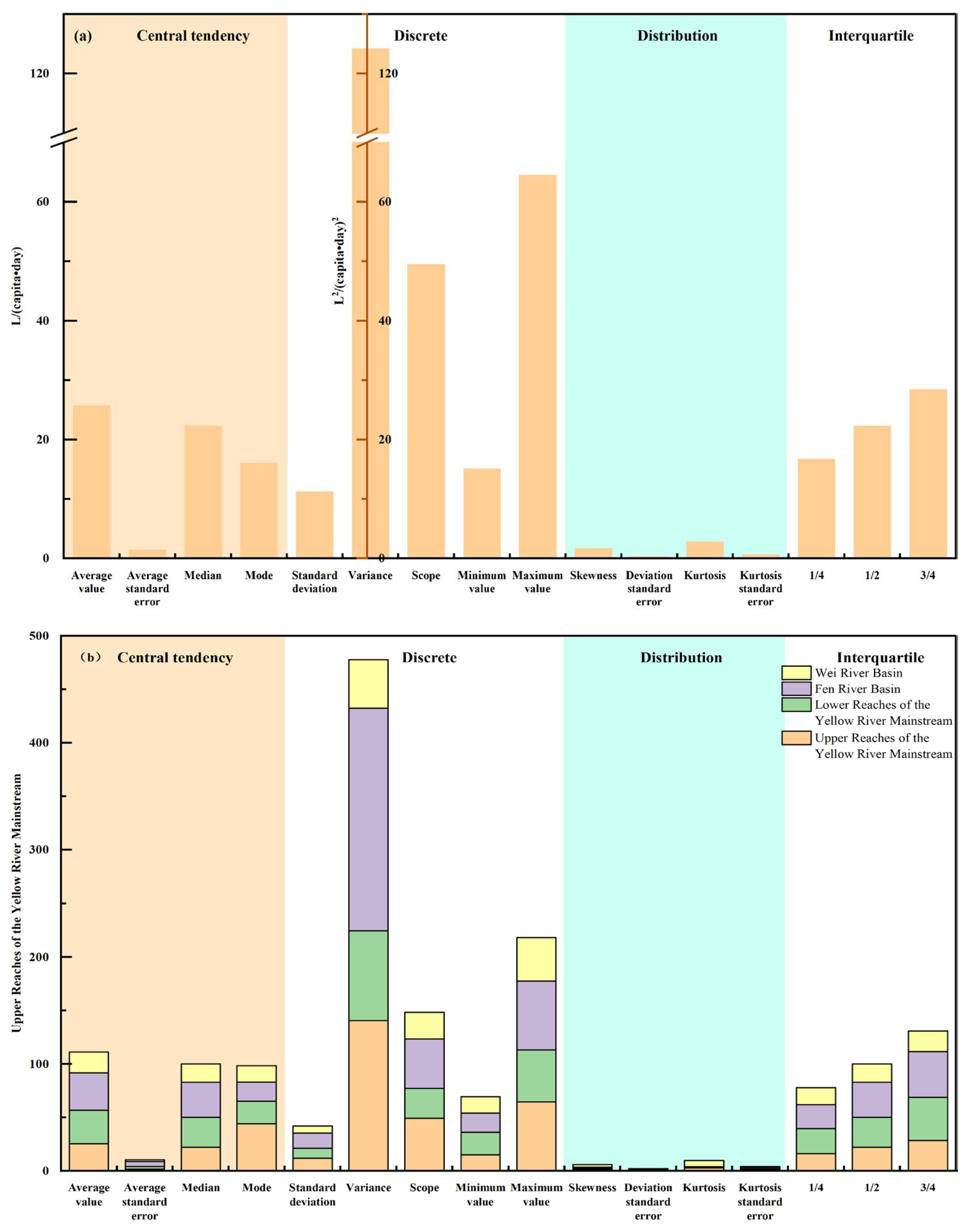
SPSS statistical analysis, as illustrated in Figure 3, reveals that the rural domestic sewage discharge coefficient in the Yellow River Basin is 25.67 L/(person·day), which is notably low compared with the discharge coefficients of urban domestic sewage in China (120–180 L/(person·day)) [50] and rural domestic sewage in the Yangtze River Basin (39.24 L/(person·day)) [26,51]. An analysis of the central tendency, dispersion, and distribution of per capita daily discharge intensity for rural domestic wastewater, as shown in Figure 4, the standard error of skewness of the sewage discharge coefficient is 0.297 and the standard error of kurtosis is 0.586. Combined with the analysis of central tendency indicators and percentile values, including a median of 22.21 L/(person·day), a mode of 16.00 L/(person·day), and a lower quartile of 28.35 L/(person·day), this indicates a relatively concentrated distribution trend of rural domestic sewage discharge coefficients across different counties and districts in the Yellow River Basin. Judging from the dispersion indicators, including a standard deviation of 11.41 L/(person·day), a variance of 124.13 L/(person·day), a range of 49.40 L/(person·day), and a standard error of the mean of 1.38 L/(person·day), the degree of dispersion in the study area is lower compared with the Yangtze River Basin, where the standard deviation is 13.80 L/(person·day). This demonstrates that the per capita daily discharge intensity of rural domestic wastewater in the Yellow River Basin exhibits low dispersion [52] and relative concentration [53].
The rural domestic sewage discharge coefficient in the Yellow River Basin ranges from 15.01 to 64.41 L/(person·day), indicating significant spatial heterogeneity in rural domestic sewage discharge coefficients across the basin. Shandong Province and Shanxi Province in the lower reaches of the Yellow River Basin exhibit the highest discharge coefficients, reaching 34.92 L/(person·day) and 36.38 L/(person·day) respectively, which are 41.72% higher than the basin average of 25.67 L/(person·day). In contrast, upstream provinces of the Yellow River maintain concentrated and relatively low emission levels, with Gansu Province and Qinghai Province recording 16.63 L/(person·day) and 17.00 L/(person·day) respectively, representing a 35.22% reduction below the basin average. Existing research indicates that economic development and climatic conditions constrain per capita domestic sewage discharge intensity in rural areas [54,55]. Upstream regions such as Gansu and Qinghai provinces have long lagged behind the national and basin-wide economic development. Economic and geological conditions restrict the extraction and utilization of regional groundwater. Meanwhile, harsh climatic conditions characterized by drought and low rainfall lead to extreme scarcity of surface water resources in rivers and lakes. With limited available water resources, local residents have developed water-saving and water-conserving habits. Constrained by multiple factors including economic development, geology and climate, rural domestic sewage discharge coefficients in the upper Yellow River Basin are not only low but also relatively concentrated in distribution. Shandong and Shanxi provinces are recognized as traditional economic powerhouses and major energy-producing regions in China, with significantly higher economic development levels than other areas of the Yellow River Basin and relatively complete domestic supporting infrastructure for residents, resulting in higher domestic sewage discharge levels. This results in pronounced spatial differentiation in rural domestic sewage discharge patterns between the upper and lower reaches of the Yellow River Basin. The rural per capita daily domestic sewage discharge coefficient is merely 15.01 L/(person·day) in the Guoluo Tibetan Autonomous Prefecture of Qinghai Province, whereas it reaches 64.41 L/(person·day) in Xinzhou City of Shanxi Province. The spatial heterogeneity between these two regions further validates this conclusion.
According to IBM SPSS Statistics 27, the assumptions of the model were tested: the tolerance of each independent variable was greater than 0.2, and the variance inflation factor (VIF) was less than 5, indicating that there was no significant multicollinearity among the variables, and the model parameter estimates were stable. The residual analysis results showed that the histogram of standardized residuals approximated a bell-shaped distribution, with a mean close to 0 (1.65 × 10⁻¹⁵) and a standard deviation of 0.968, with only a slight right tail. In the normal P-P plot, the data points generally followed the theoretical diagonal line, with minimal deviation. Considering the sample size of the study (n = 65) and based on the central limit theorem, the slight non-normality of the residuals had no significant impact on the parameter estimates and significance tests of the regression model. In summary, the model meets the basic assumptions of multiple linear regression and can be used for subsequent analysis and interpretation of results.
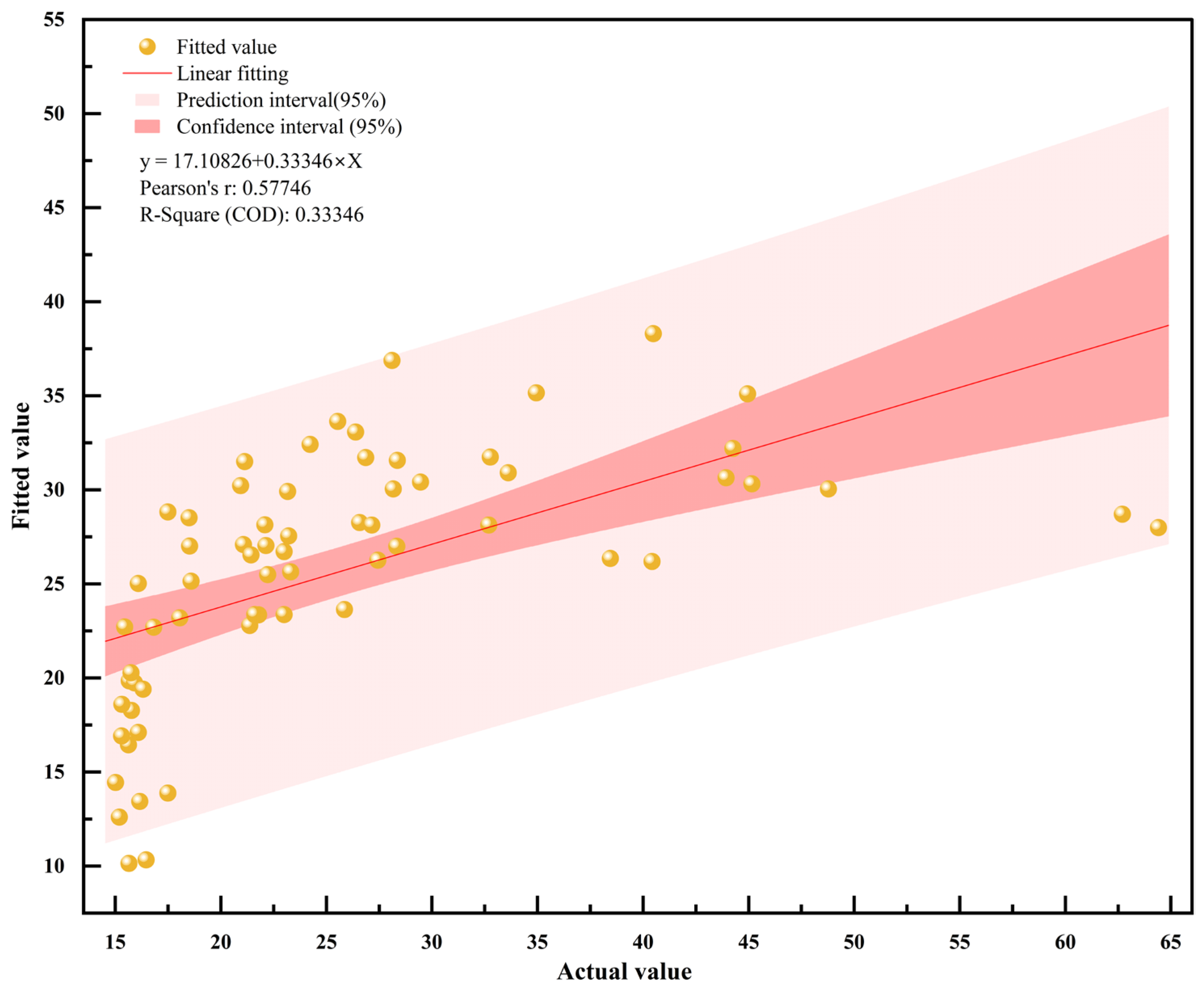
Based on a comprehensive analysis of the influencing factors and discharge characteristics of rural domestic sewage in the Yellow River Basin, multiple linear fitting was conducted to predict the evolution trend of rural domestic sewage discharge coefficients under the influence of the young adult population, illiterate population, and average years of schooling. According to the factor analysis, the sewage discharge coefficient is significantly correlated with the young adult population, illiterate population, average years of schooling, and annual average temperature. As shown in Figure 5, the coefficient of determination R2 of the multiple linear regression model is 0.334, and the standard errors corresponding to the young adult population, illiterate population, average years of schooling, and annual average temperature are 0.05416, 0.25157, 1.26396, and 0.36025, respectively.

3.3. Analysis of the Characteristics of Rural Domestic Sewage Quality Discharge in Watersheds

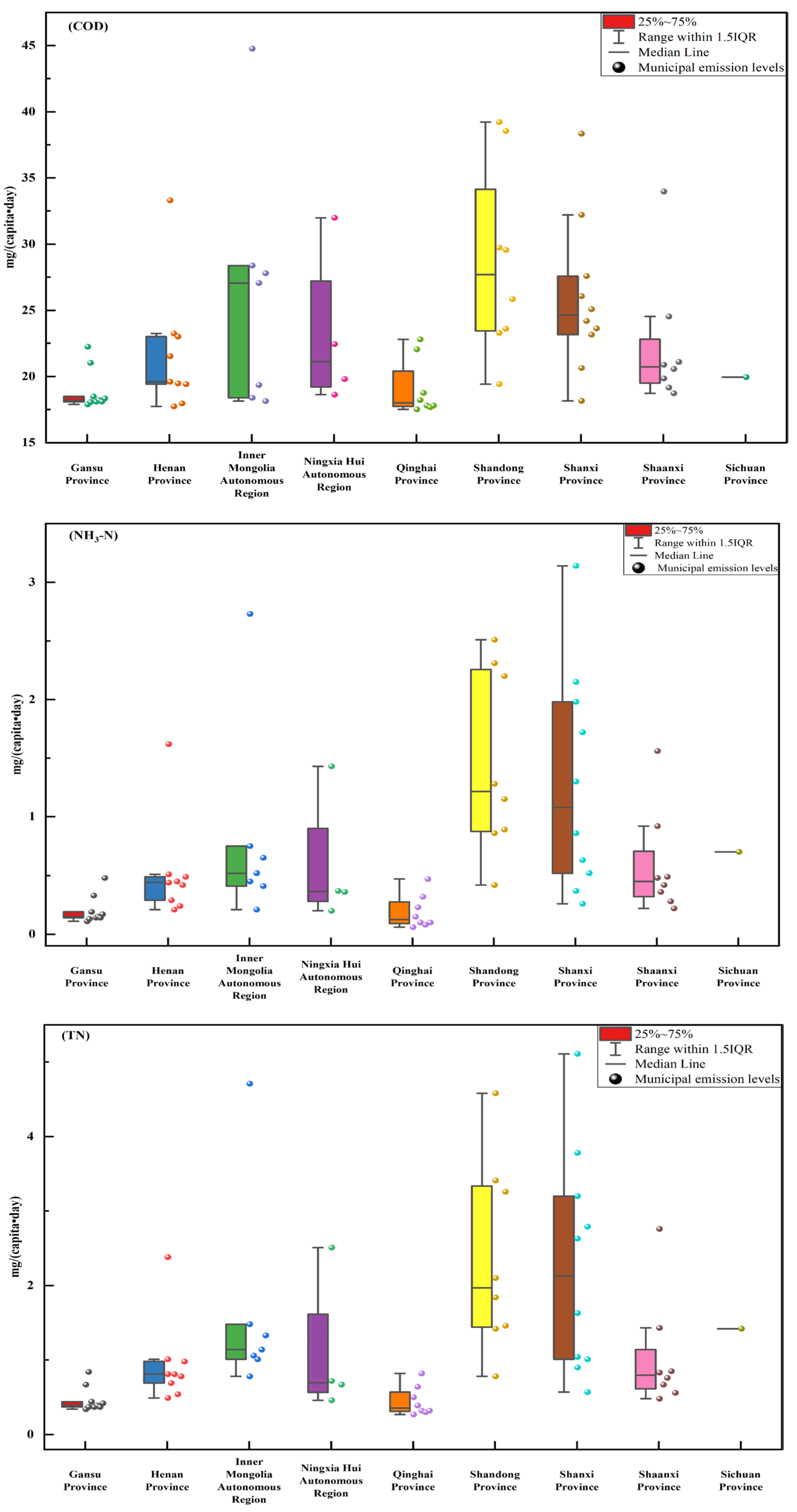
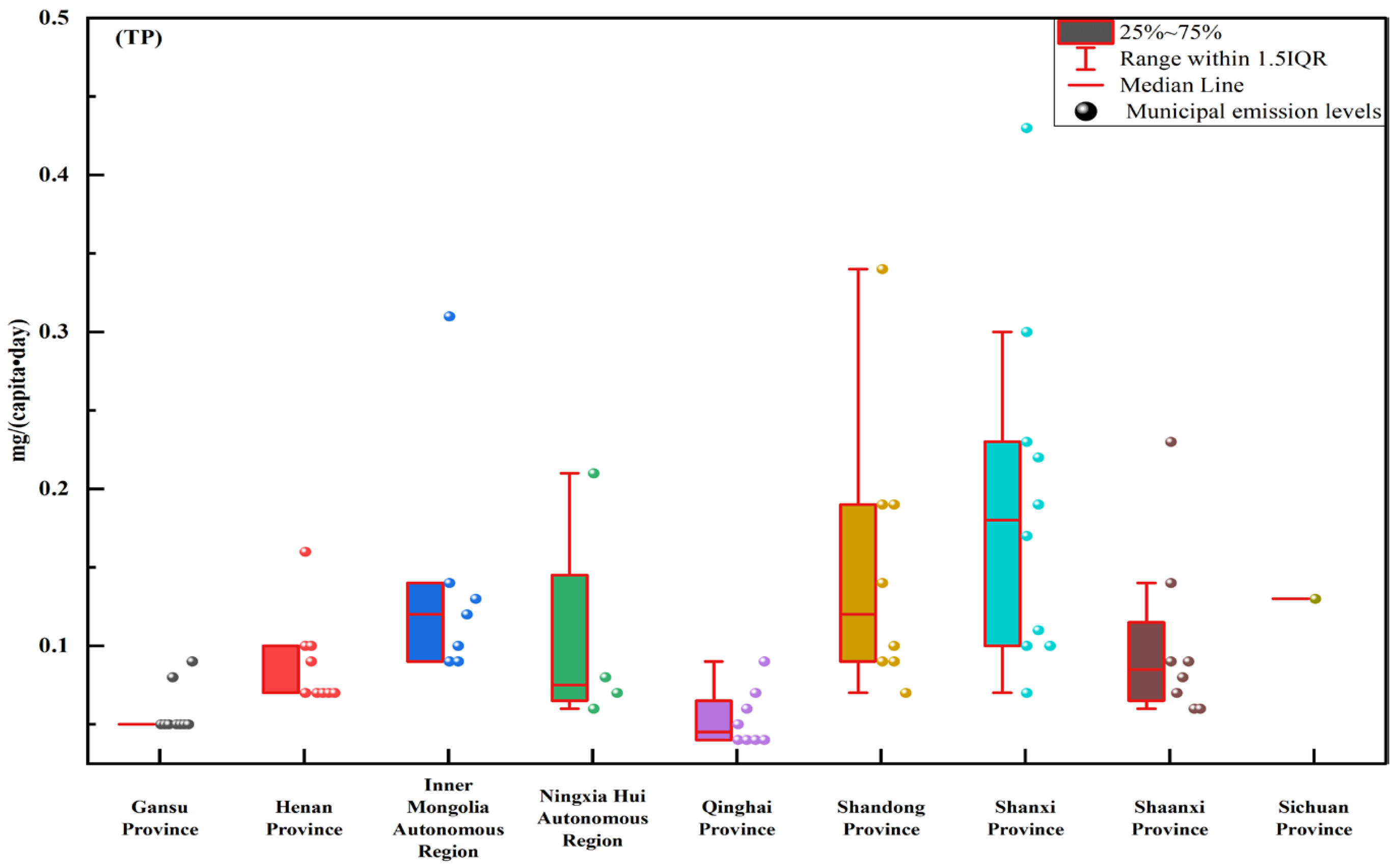
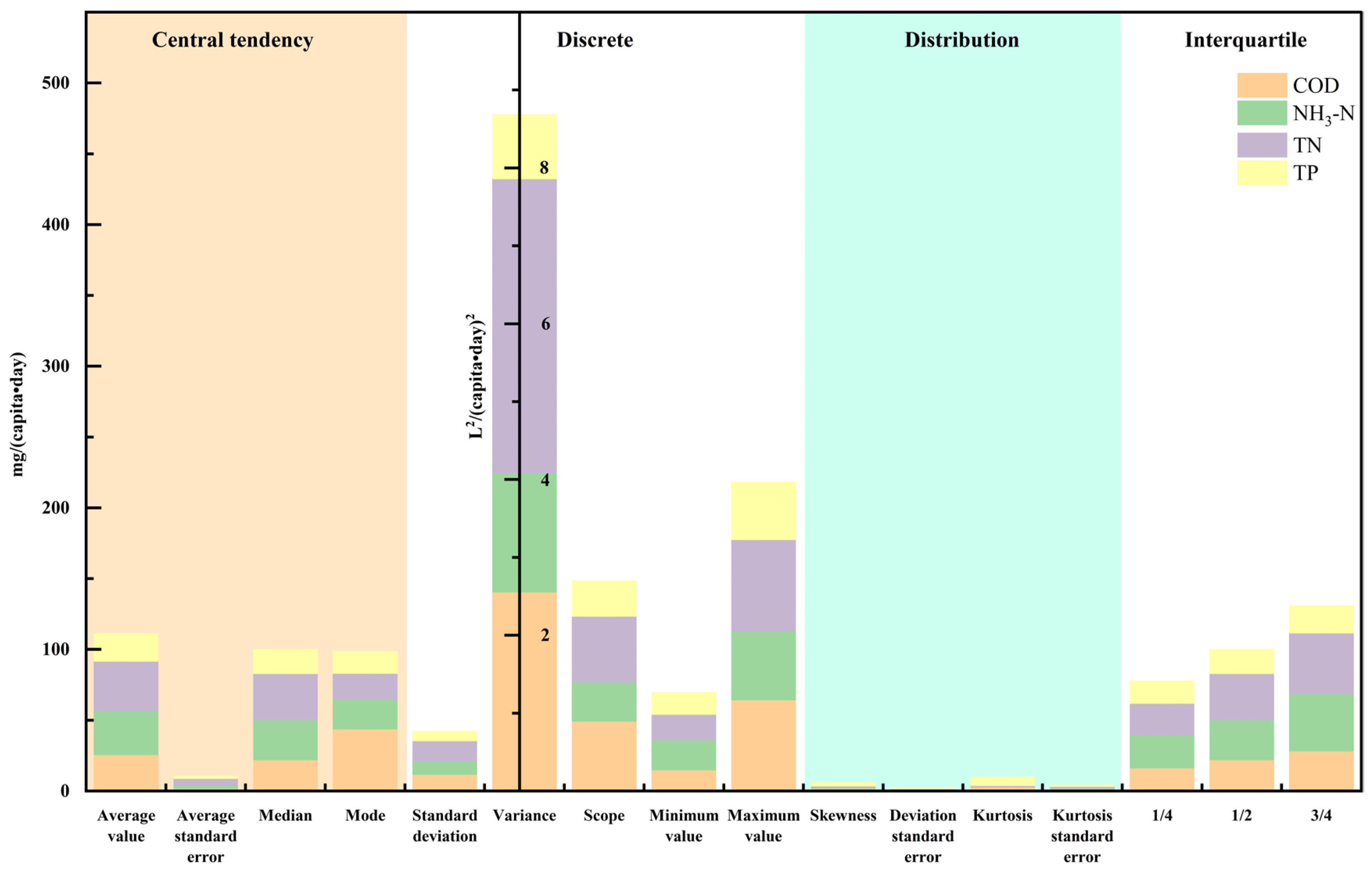
Statistical analysis, as illustrated in Figure 6, reveals that the average per capita pollutant generation intensity of rural domestic sewage in the Yellow River Basin are as follows: COD at 23.08 g/(person·day), NH3-N at 0.71 g/(person·day), TN at 1.29 g/(person·day), and TP at 0.11 g/(person·day). The corresponding median values are COD at 20.88 g/(person·day), NH3-N at 0.44 g/(person·day), TN at 0.82 g/(person·day), and TP at 0.09 g/(person·day). The lower quartile generation intensities are clustered at COD 25.46 g/(person·day), NH3-N 0.88 g/(person·day), TN 1.47 g/(person·day), and TP 0.14 g/(person·day). At the mean level, these values account for merely 0.08% to 0.29% of the average pollutant generation intensity of urban domestic sewage in China [56,57], and 46% to 83% of the average intensity for rural domestic sewage in the Yangtze River Basin [26]. This finding highlights that pollutant generation intensity from rural domestic sewage in the Yellow River Basin remain relatively low. Furthermore, the ratio of generation intensity to the mean value provides insight into concentration levels, as shown in Figure 7. For example, the COD generation intensity is 27.25 g/(person·day) is 1.18 times the basin mean, while the NH3-N generation intensity is 3.08 g/(person·day) is 4.33 times the basin mean; and the range of TP generation intensity is 0.39 g/(person·day), 3.48 times the basin mean. This indicates that the distribution of COD pollutant generation intensity is relatively concentrated, whereas the generation intensities of NH3-N, TN, and TP show greater spatial heterogeneity and dispersion. Further analysis of the standard deviations of generation intensities reveals that COD has a standard deviation of 6.17 g/(person·day), NH3-N 0.73 g/(person·day), TN 1.16 g/(person·day), and TP 0.08 g/(person·day). The corresponding coefficients of variation relative to the mean are 0.26, 1.02, 0.89, and 0.72, respectively. These results indicate a high degree of concentration in COD generation intensity, while NH3-N, TN, and TP demonstrate substantial variability. This variability can primarily be attributed to dietary differences among rural residents in the basin [58]. While staple diets, predominantly wheat and similar grains, exhibit minimal variation between upstream and downstream regions, the consumption of supplementary foods differs significantly. Upstream regions tend to consume more dairy and meat products, whereas vegetable consumption is notably higher in downstream areas [59].
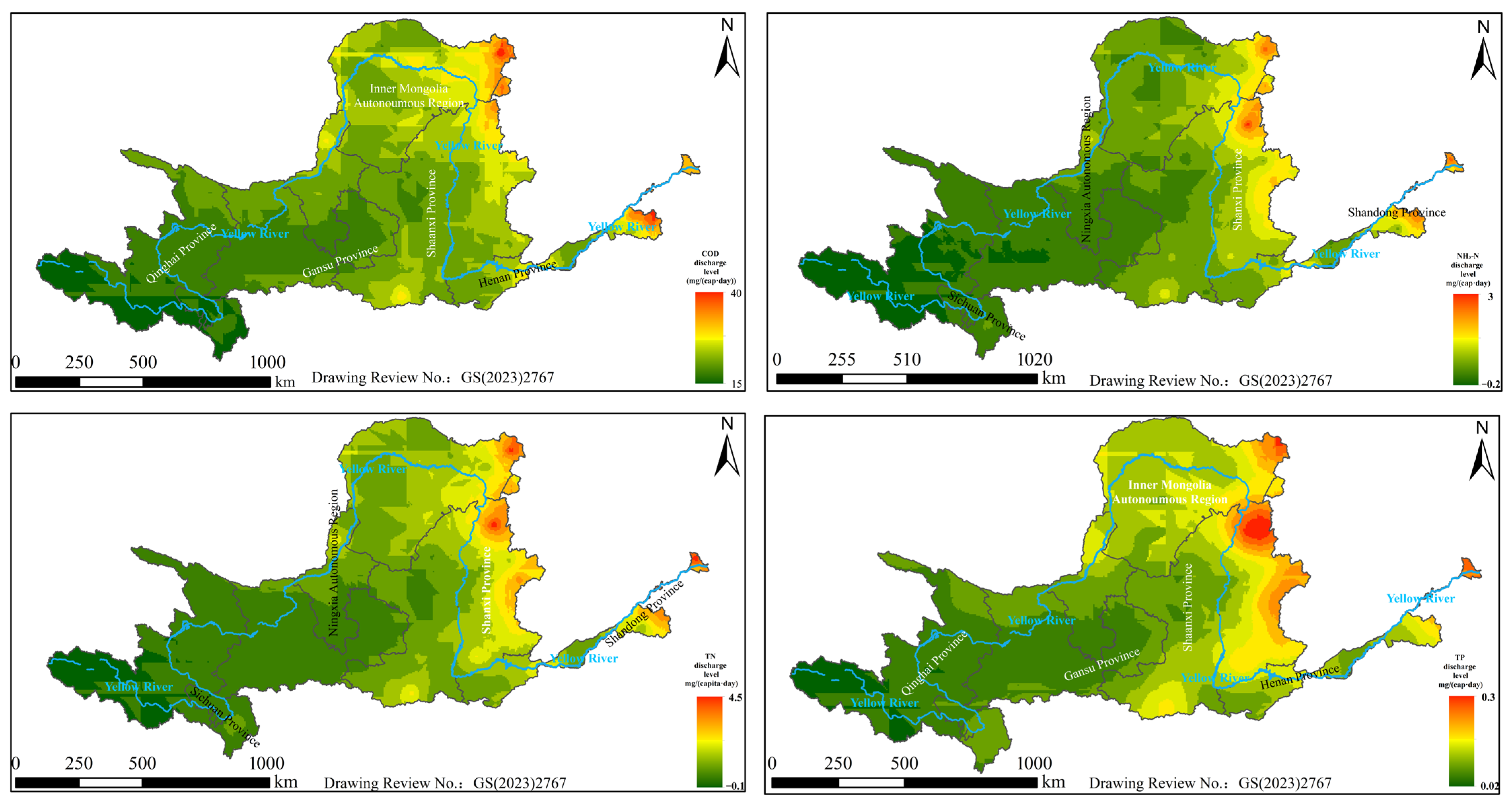
As depicted in Figure 8, geostatistical analysis reveals significant spatial variations in per capita daily pollutant generation intensity from rural domestic wastewater across the Yellow River Basin. The upstream regions, including Qinghai Province, Gansu Province, and Guyuan City in Ningxia, exhibit the lowest pollutant generation intensities in the basin. Specifically, Gansu Province recorded a COD generation intensity only 18.89 g/(person·day), while Qinghai Province reported NH3-N, TN, and TP generation intensity of 0.19, 0.45, and 0.05 g/(person·day), respectively. In contrast, higher pollutant generation intensities were observed in the upper reaches (e.g., Hohhot, Inner Mongolia), middle reaches (e.g., Fen River Basin), and lower reaches (e.g., Shandong Province). In Shandong Province, the rural domestic wastewater pollutant generation intensities for COD, NH3-N, TN, and TP exceeded the basin average by 0.24, 1.04, 0.83, and 0.35 times, respectively. Economic conditions represent the primary factor influencing the spatial variation in rural domestic wastewater pollutant distribution within the Yellow River Basin, with economically prosperous regions exhibiting greater pollutant generation intensities. Additionally, distinct geographical characteristics and dietary habits contribute to these variations. For instance, Dongying City is the only coastal area in the downstream region of the Yellow River Basin and hosts industries specializing in nitrogen- and phosphorus-rich seafood (e.g., shrimp, crab, and sea cucumber) [60,61]. The production and consumption of these marine products in Dongying far exceed those in other regions, leading to elevated nitrogen and phosphorus emission coefficients in its domestic wastewater. Similarly, rural domestic wastewater in Inner Mongolia demonstrates significantly higher total nitrogen and phosphorus generation intensities, largely due to the region’s nomadic dietary traditions. The entire region of Inner Mongolia has fully implemented a ban on the sale of phosphorus-containing detergents (washing powder, laundry detergent, dish soap, etc.) since 2009. According to data from the National Bureau of Statistics, rural residents in this region consume 4.2 to 4.8 times more beef and mutton than the average rural population along the Yellow River Basin [59]. Therefore, when designing targeted policies for rural domestic wastewater treatment and management, it is essential to incorporate the unique geographical conditions and lifestyle patterns of each region to achieve more effective treatment outcomes and management strategies.
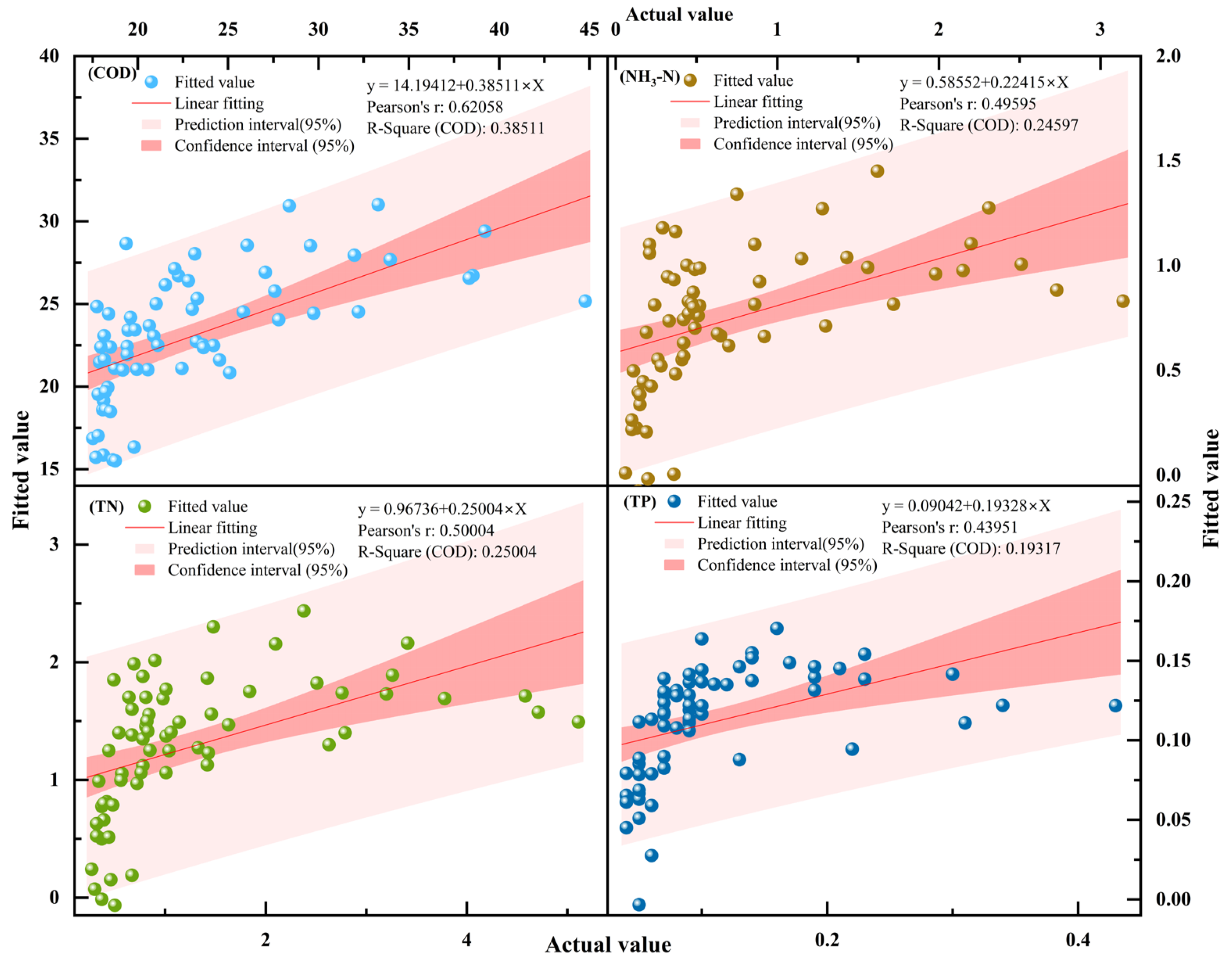
This study constructs a multiple linear regression model to examine multicollinearity, heteroscedasticity, and the normality of residuals, as detailed in the Supplementary Materials. The results show: tolerance of independent variables > 0.5, VIF < 10, indicating no significant multicollinearity; the histogram of residuals and the P-P plot approximate normality, and the residual scatter plot shows no trend, indicating no heteroscedasticity. With a sample size of n = 65, the model meets the assumptions of multiple linear regression, and the results are reliable. Based on a comprehensive analysis of the influencing factors and spatial distribution characteristics of rural domestic pollutant generation intensity in the Yellow River Basin, multiple linear fitting was performed to predict the evolutionary trends of pollutant generation intensity under the effects of the young adult population, elderly population, illiterate population, average years of schooling, and annual average temperature. According to the influencing factor analysis, the generation intensity of COD is significantly correlated with the young adult population, elderly population, illiterate population, average years of schooling, and annual average temperature. As shown in Figure 9, the coefficient of determination R2 of the multiple linear regression fitting is 0.385, and the standard errors corresponding to the young adult population, elderly population, illiterate population, average years of schooling, and annual average temperature are 0.06167, −0.10497, 0.23845, 0.13792, 0.68097, and 0.2141, respectively. The generation intensity of NH3-N is significantly influenced by the young adult population, illiterate population, average years of schooling, and annual average temperature, with an R2 of 0.260 for the multiple linear regression fitting. The standard errors are 0.00373, 0.01731, 0.08695, and 0.02478, respectively. The generation intensity of TN is significantly correlated with the young adult population, illiterate population, average years of schooling, and annual average temperature, with an R2 of 0.250. The corresponding standard errors are 0.00598, 0.02777, 0.13952, and 0.03977, respectively. The generation intensity of TP is significantly influenced by the illiterate population, average years of schooling, and annual average temperature, with an R2 of 0.193. The standard errors are 0.00153, 0.00938, and 0.00274, respectively. The low R2 value is caused by the threshold effects and interactions between farmers’ pollution behaviors and related factors, rather than a simple linear increase or decrease. Multiple linear regression can only capture linear and additive relationships between variables, and cannot characterize the synergistic/antagonistic effects of multiple factors, non-linear responses, and staged characteristics. This is also the fundamental reason why similar studies in the watershed using linear models generally show R2 values concentrated between 0.2 and 0.4 [62,63].

3.4. Impact of Rural Domestic Sewage in the River Basin on the Pollution Load of the Yellow River’s Main and Tributary Water Environments

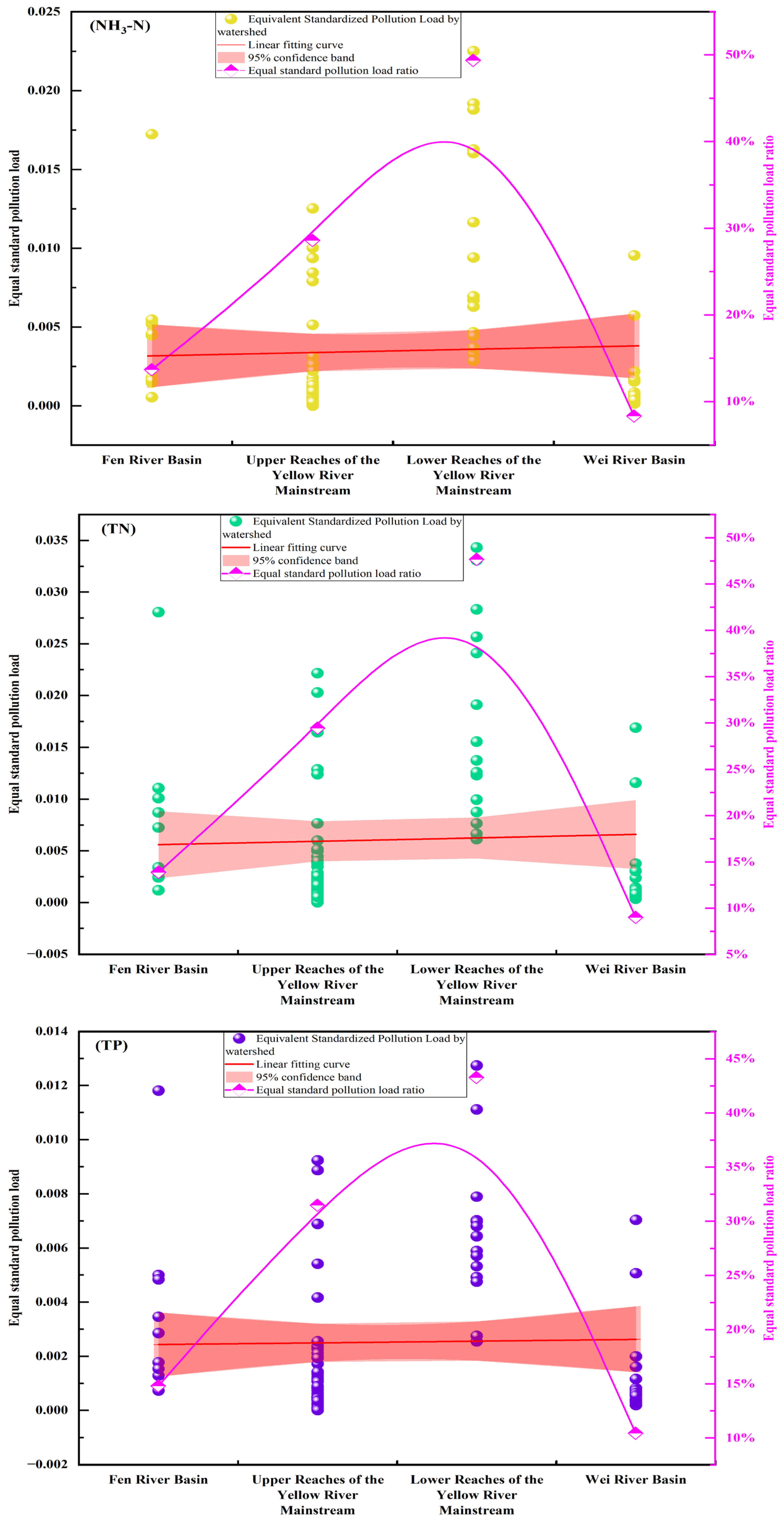
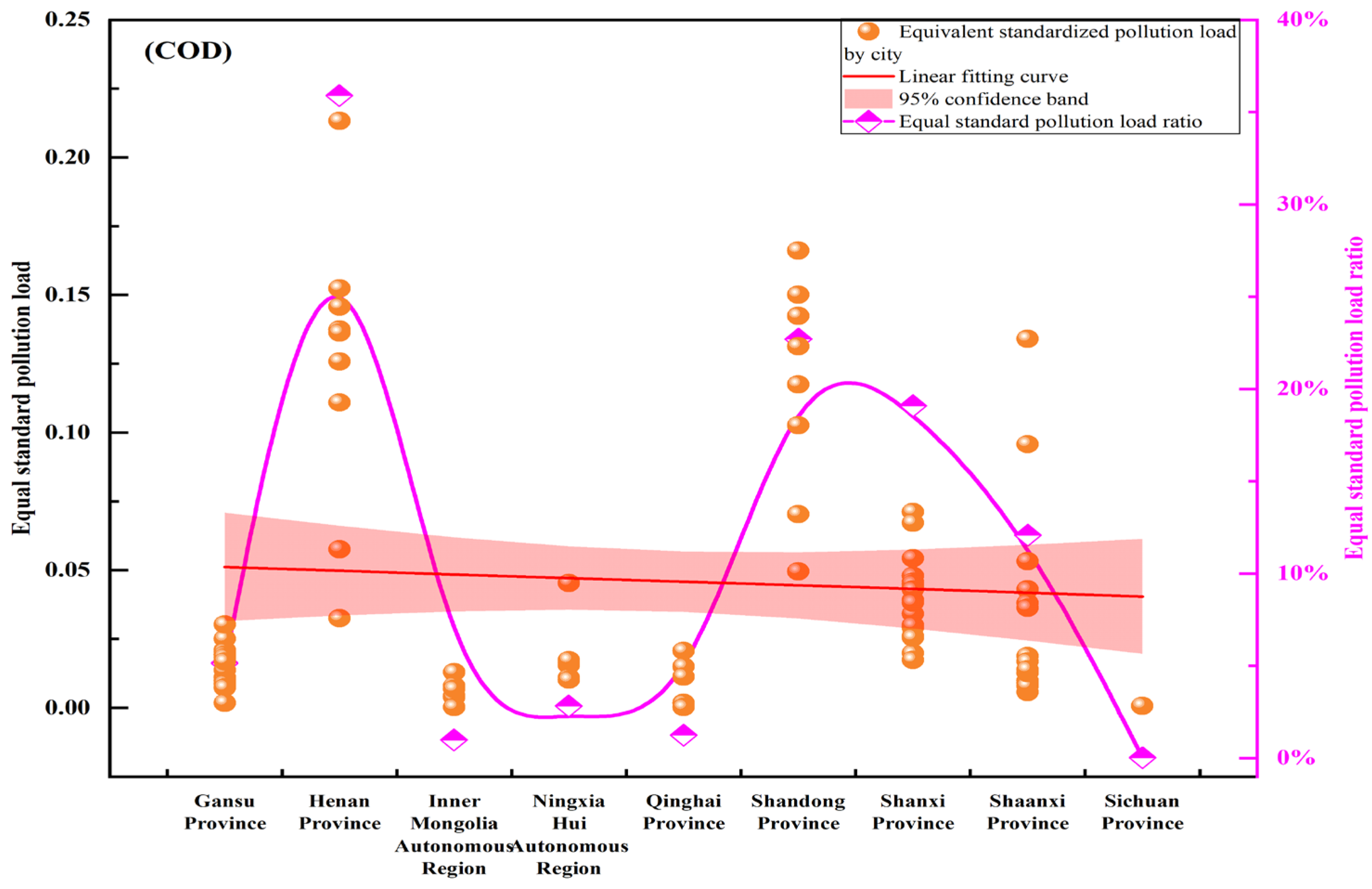
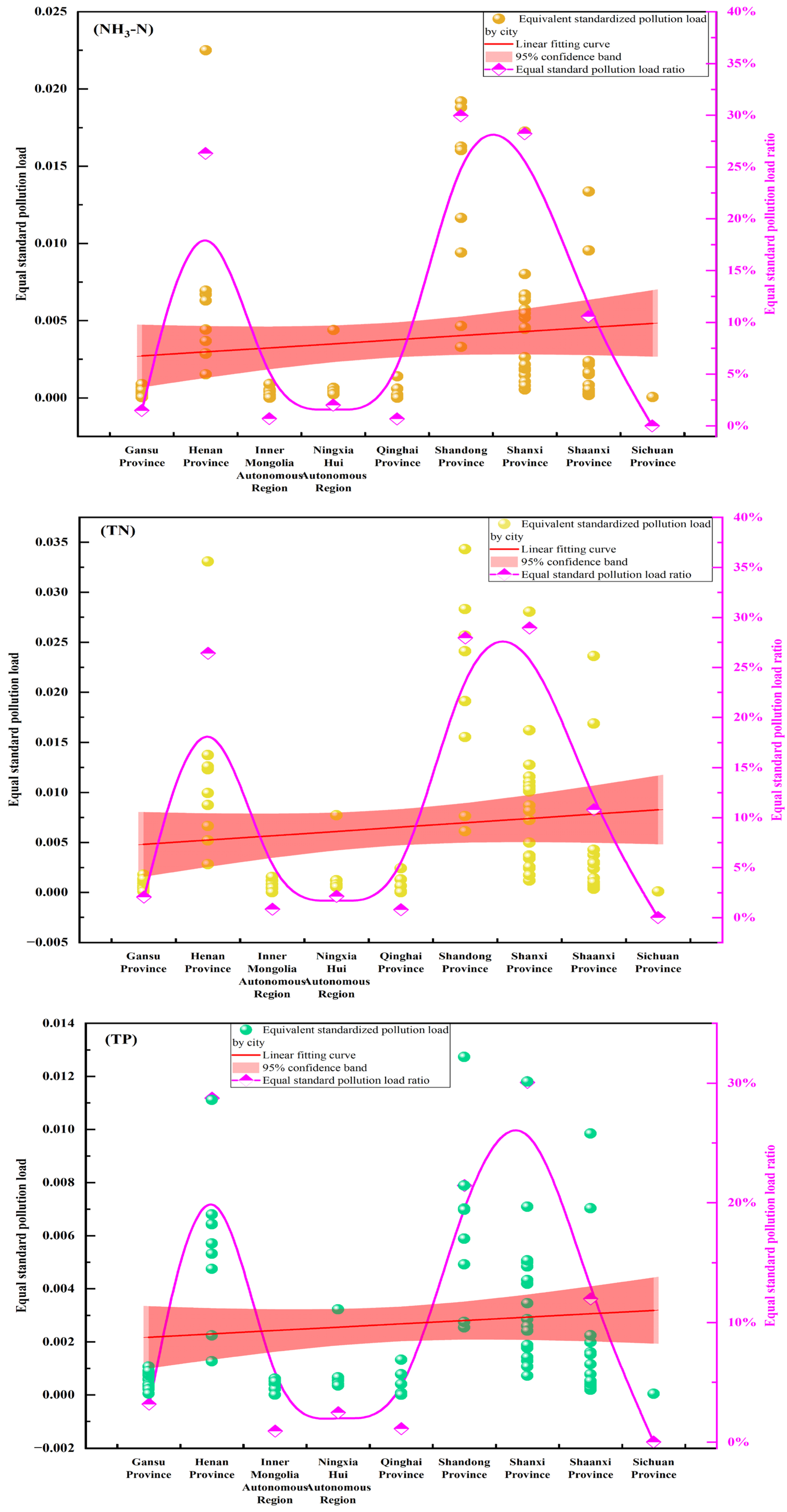
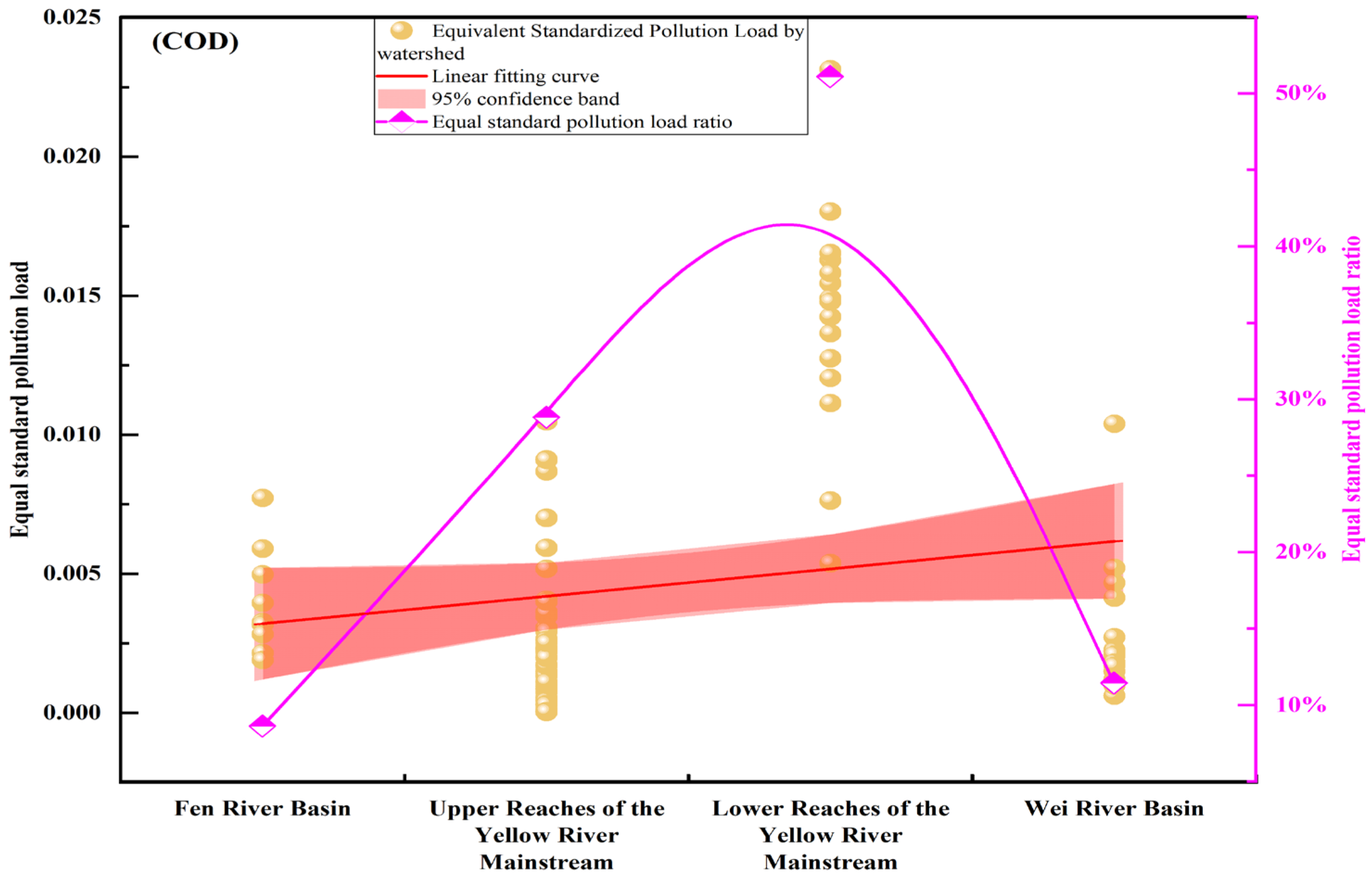
The quality of water environments along the main and tributary rivers of the Yellow River significantly influences both production activities and daily life on its banks. To address these concerns, the Chinese government has implemented functional zoning for the Yellow River and its tributaries [32]. Among the primary contributors to the degradation of river water quality are rural domestic pollution sources. As shown in Figure 10, pollution modeling analysis reveals that the impact pressure of rural domestic sources on achieving target functional water quality in the Yellow River basin’s main and tributary rivers is relatively low. For example, the equivalent pollutant load from rural domestic sources in the Wei and Fen River basins accounts for only 0.03% to 2.01% of the load required to maintain their target functional water quality. Specifically, for COD pollutants, the equivalent load needed to meet target functional water quality in the tributaries of the Wei and Fen Rivers ranges from 0.09% to 1.08%. For NH3-N pollutants, the range is 0.00% to 0.12%. TN pollutants exhibit load ratios of 0.01% to 0.21%, while TP pollutants range from 0.00% to 0.08% to meet the target functional water quality in the tributaries of these rivers. The annual rainfall in the Wei and Fen River basins is comparable. However, the mountainous terrain and river valley topography of the Fen River basin result in relatively greater stormwater runoff entering the river. Despite the higher level of domestic pollutant discharge from rural areas in the Fen River basin, the basin’s smaller population (7.28%) mitigates its overall impact [64]. Consequently, the average concentration of domestic pollutants entering the river remains relatively low, exerting a minor influence on maintaining target functional water quality. The obtained estimate applies to the annual scale and to the basin as a whole; at the level of small rivers and streams directly receiving sewage discharges, local exceedances of standards are possible, which requires further research.
As illustrated in Figure 11, the analysis of the isopleth pollution load ratio indicates that the mainstem of the Yellow River experiences the greatest pressure from rural domestic sources in the Yellow River basin regarding the maintenance of target water quality. This pressure is particularly pronounced in the lower reaches of the mainstem, where the isopleth pollution load ratio ranges from 43.28% to 51.09%. Although Henan and Shandong provinces occupy a relatively small area within the Yellow River basin, they exhibit high population densities and elevated baseline pollution levels, with a density of 270 people per square kilometer—4.7 times the basin average. Consequently, these provinces account for the highest annual total rural domestic pollutant generation in the entire Yellow River basin. Specifically, Henan’s annual total generation of COD, NH3-N, TN, and TP pollutants constitutes 35.91%, 26.32%, 26.41%, and 28.75% of the basin’s total, respectively. In contrast, Shandong Province’s annual total generation of COD, NH3-N, TN, and TP constitutes 22.70%, 29.96%, 27.95%, and 21.45% of the basin total, respectively. As a result, these regions exert significant pressure on maintaining the Yellow River’s target functional water quality. However, Henan and Shandong provinces receive the highest annual precipitation in the basin, ranging from 689 to 952 mm, which is 1.5 to 2.1 times the average annual rainfall across the entire Yellow River basin. Consequently, despite the substantial discharge of domestic pollutants from rural areas in the lower reaches, the dilution effect from extensive rainfall runoff leads to relatively low annual-average concentrations of pollutants ultimately entering the river. This effect alleviates the pressure on maintaining the target functional water quality of the Yellow River’s mainstem. Overall, the current impact of rural domestic sewage on the target functional water quality in the main and tributary streams of the Yellow River is relatively low. On an annual basis, pollution from rural domestic sources is no longer a significant factor affecting the water quality in the basin’s main and tributary streams.

4. Conclusions and Recommendations

The average daily per capita discharge of domestic sewage in rural areas of the Yellow River Basin remains low, with notable regional variations. The basin-wide average daily per capita sewage discharge is 25.67 L/(person·day), while the average pollutant discharge coefficients for COD, NH3-H, TN, and TP stand at 23.08, 0.71, 1.29, and 0.11 g/(person·day), respectively. These values are lower than those observed in rural domestic wastewater from the Yangtze River Basin and urban domestic wastewater in China. Spatially, rural domestic wastewater emissions in the basin tend to concentrate downstream and near urban areas, with higher levels downstream compared to upstream. Overall, the distribution exhibits relative concentration and limited dispersion.
The generation and discharge levels of rural domestic sewage in the Yellow River Basin are primarily associated with socio-economic factors (youth population, illiterate population, years of education) and natural factors (annual mean temperature). Significant negative correlations (p < 0.05) were observed between rural domestic sewage discharge levels and the youth population and illiterate population, with Pearson correlation coefficients below zero, indicating substantial or significant suppression effects. In contrast, years of schooling and annual mean temperature showed significant positive correlations (p < 0.05) with rural domestic wastewater discharge levels, as indicated by Pearson correlation coefficients greater than zero. These findings suggest that these factors substantially or significantly increase rural domestic wastewater discharge levels.
Considering the current aquatic environmental conditions, a comprehensive evaluation of rural domestic wastewater discharge levels, population size, and rainfall within the Yellow River Basin reveals that the equivalent pollution load from rural domestic sources required to maintain the target functional water quality of the main and tributary rivers is below 0.025. Consequently, the pollution pressure from rural domestic wastewater discharge in each basin required to maintain the target functional water quality of the rivers is minimal. On an annual scale, rural domestic pollution sources no longer represent a significant threat to the water quality of the main and tributary rivers.
This study, based on one year of data from the Yellow River Basin, highlights the importance of extending investigations over longer time scales to better inform the development and implementation of effective rural domestic wastewater treatment and management policies. Moreover, while this analysis focuses on maintaining target functional water quality at the basin level and on an annual scale, future research should explore the impacts of rural domestic wastewater on river water quality at finer spatial and temporal resolutions. Such efforts could provide more precise insights and support for ensuring the sustained stability and safety of water environmental quality.

Supplementary Materials

The following supporting information can be downloaded at https://www.mdpi.com/article/10.3390/su18115500/s1: Figure S1: Multiple Linear Analysis of Pollutants: Standardized Residual, Observed Cumulative Probability and Standardized Predicted Value; Table S1: Multiple Linear Analysis of Pollutants: ANOVA, Coefficients, Collinearity Diagnostics and Residual Statistics.

Author Contributions

The manuscript was jointly designed and initially completed by X.L., J.L. and L.W. The manuscript was overall supervised and managed by X.L., while J.L. and L.W. participated in the design of the research ideas and the construction of the models. J.L., L.W., Z.L., T.C., H.L., Y.Z. and others collectively completed the data collection, analysis, chart preparation, and the writing of the research discussion section. All authors have read and agreed to the published version of the manuscript.

Funding

The authors would like to thank the National Key Research and Development Program of China (Grant No. 52302092) for providing financial support for this manuscript. The National Key R&D Program is funded by the Ministry of Finance of the People’s Republic of China, and jointly organized, implemented and administered by the Ministry of Science and Technology together with the Ministry of Finance.

Institutional Review Board Statement

Not applicable.

Informed Consent Statement

Not applicable.

Data Availability Statement

All original data sources in this study are also included in the “Data Sources and Processing” section of previously published articles. The datasets generated during and/or analyzed during the current study are available from the corresponding author on reasonable request.

Conflicts of Interest

The authors declare that they have no known competing financial interests or personal relationships that could have appeared to influence the work reported in this paper.

References

  1. Sun, H.; Tian, Y.; Zhang, H.; Meng, Y.; Wang, S.; Li, L.; Zhan, W.; Zhou, X.; Zuo, W. Decoding China’s anthropogenic typical pollutant discharge patterns: Long-term dynamics and hotspot transitions driven by population, diet, and sanitation. Water Res. 2024, 250, 121049. [Google Scholar] [CrossRef] [PubMed]
  2. Nie, J.; Guan, D.; Fan, X.; Wang, Y.; Zhou, L.; He, X. Analysis of the impact of urban sprawl in the Yangtze River Basin on the loss of ecosystem services. China Environ. Sci. 2025, 45, 2147–2158. [Google Scholar]
  3. Xie, H.; Qiu, J.; Dong, J.; Gao, T.; Lai, X. Research of the HSPF model on nonpoint source pollution modeling and management: Progresses and perspectives. Acta Ecol. Sin. 2022, 42, 6076–6091. [Google Scholar] [CrossRef]
  4. Wang, Y.; Wang, J.; Xie, Z.; Li, C.; Ye, C.; Miao, K.; Wei, W.; Zheng, Y. Non-Point Source Pollutions in Typical River Basins in Hilly and Mountainous Areas and Plain River Network Area in China. Environ. Eng. 2024, 42, 33–40. [Google Scholar]
  5. MEE. Record of Questions and Answers from the July Regular Press Conference; Ministry of Ecology and Environment of the People’s Republic of China: Beijing, China, 2024.
  6. MEE. The Second National Pollution Source Census Bulletin; Ministry of Ecology and Environment of the People’s Republic of China: Beijing, China, 2020.
  7. National Bureau of Statistics of China. 2024 China Ecological Environment Statistical Yearbook; National Bureau of Statistics of China: Beijing, China, 2025.
  8. Bo, Y.; Wen, W. Treatment and technology of domestic sewage for improvement of rural environment in China. J. King Saud Univ. Sci. 2022, 34, 102181. [Google Scholar] [CrossRef]
  9. Kou, Y.; Liu, F.; Li, T.; Yan, C.; Wang, J.; Wang, C.; Yuan, D. The Sustainable Development Path of Ecological Treatment Technology for Rural Sewage: A Bibliometric Perspective. Water 2025, 17, 1299. [Google Scholar] [CrossRef]
  10. Wang, T.; Zhu, B.; Zhou, M. Ecological ditch system for nutrient removal of rural domestic sewage in the hilly area of the central Sichuan Basin, China. J. Hydrol. 2019, 570, 839–849. [Google Scholar] [CrossRef]
  11. Zhang, Z.; Liu, P.; Liu, H.; Zhou, T.; Sun, L. Environmental Impact and Mitigation Potential of Anthropogenic Active Nitrogen Loss in Agricultural Production and Consumption System in the Yangtze River Delta Region. Res. Environ. Sci. 2025, 38, 688–701. [Google Scholar]
  12. Gao, Y.; Wei, L.; Ge, Y.; Xiong, X.; Liu, M.; Jiang, X.; Pan, K.; Guo, X.; Lei, Y.; Yang, N. Systematic Assessment of Practical Challenges in Rural Domestic Sewage Treatment in China: Examining Treatment Models, Ecological Risks, and Management Dilemmas. Separations 2024, 11, 287. [Google Scholar] [CrossRef]
  13. Niu, W.; Shi, J.; Xu, Z.; Wang, T.; Zhang, H.; Su, X. Evaluating the Sustainable Land Use in Ecologically Fragile Regions: A Case Study of the Yellow River Basin in China. Int. J. Environ. Res. Public Health 2022, 19, 3222. [Google Scholar] [CrossRef] [PubMed]
  14. Zhang, Z.; Li, H.; Cao, Y. Research on the Coordinated Development of Economic Development and Ecological Environment of Nine Provinces (Regions) in the Yellow River Basin. Sustainability 2022, 14, 13102. [Google Scholar] [CrossRef]
  15. Xi, F.; Wang, R.; Shi, J.; Zhang, J.; Yu, Y.; Wang, N.; Wang, Z. Spatio-Temporal Pattern and Conflict Identification of Production–Living–Ecological Space in the Yellow River Basin. Land 2022, 11, 744. [Google Scholar] [CrossRef]
  16. Wang, Z.; Li, P.; Cai, W.; Shi, Z.; Liu, J.; Cao, Y.; Li, W.; Wu, W.; Li, L.; Liu, J.; et al. Identifying Administrative Villages with an Urgent Demand for Rural Domestic Sewage Treatment at the County Level: Decision Making from China Wisdom. Sustainability 2025, 17, 800. [Google Scholar] [CrossRef]
  17. Ministry of Ecology and Environment of the People’s Republic of China. 2024 China Ecological Environment Status Bulletin; Ministry of Ecology and Environment of the People’s Republic of China: Beijing, China, 2025.
  18. Zhang, H. Research on the Current Situation and Treatment Strategies of Rural Domestic Sewage Treatment. Mod. Chem. Res. 2024, 21, 98–100. [Google Scholar] [CrossRef]
  19. Li, H. Systematic Identification and Prospect of Eco-Environmental Problems in the Yellow River Basin. Res. Environ. Sci. 2024, 37, 1–10. [Google Scholar]
  20. Lokhande, S.; Kalbar, P.P. Economic and environmental benefits of natural treatment systems for sewage treatment: A life cycle perspective. Water Res. 2024, 257, 121710. [Google Scholar] [CrossRef]
  21. Wang, C.; Feng, B.; Wang, P.; Guo, W.; Li, X.; Gao, H.; Zhang, B.; Chen, J. Revealing factors influencing spatial variation in the quantity and quality of rural domestic sewage discharge across China. Process Saf. Environ. Prot. 2022, 162, 200–210. [Google Scholar] [CrossRef]
  22. Ma, T.; Zhao, N.; Ni, Y.; Yi, J.; Wilson, J.P.; He, L.; Du, Y.; Pei, T.; Zhou, C.; Song, C.; et al. China’s improving inland surface water quality since 2003. Sci. Adv. 2020, 6, eaau3798. [Google Scholar] [CrossRef]
  23. Cao, X.; Chen, S.; Liu, Y.; Long, G.; Xu, Y.J. Domestic wastewater is an overlooked source and quantity in global river dissolved carbon. Nat. Commun. 2025, 16, 7522. [Google Scholar] [CrossRef] [PubMed]
  24. Sun, H.; Zhao, R.; Zhang, H.; Zhou, X.; Zou, Y.; Chen, X.; Ma, J.; Tian, Y. Residential pollutant discharge and spatial transfer of hotspot pollutants induced by population migration in China. Commun. Earth Environ. 2025, 6, 920. [Google Scholar] [CrossRef]
  25. Rong, Y.; Tang, H.; Zhang, Y.; Sun, Y.; Liu, Z. Study on sewage characteristics in rural China and pollutants removal performance of biologically enhanced internal circulation treatment system. Sci. Rep. 2023, 13, 18058. [Google Scholar] [CrossRef]
  26. Li, J.; Wang, L.; Liu, Z.; Cao, T.; Lü, H.; Zhu, Y.; Li, X. Research on rural domestic sewage discharge, influencing factors and pollution loads in the Yangtze river basin. Sci. Rep. 2025, 15, 40970. [Google Scholar] [CrossRef]
  27. Yin, X.; Feng, Q.; Zheng, X.; Zhu, M.; Wu, X.; Guo, Y.; Wu, M.; Li, Y. Spatio-temporal dynamics and eco-hydrological controls of water and salt migration within and among different land uses in an oasis-desert system. Sci. Total Environ. 2021, 772, 145572. [Google Scholar] [CrossRef] [PubMed]
  28. Han, Z.; Ye, C.; Zhang, Y.; Dan, Z.; Zou, Z.; Liu, D.; Shi, G. Characteristics and management modes of domestic waste in rural areas of developing countries: A case study of China. Environ. Sci. Pollut. Res. 2019, 26, 8485–8501. [Google Scholar] [CrossRef]
  29. Dikbaş, F. A New Two-Dimensional Rank Correlation Coefficient. Water Resour. Manag. 2018, 32, 1539–1553. [Google Scholar] [CrossRef]
  30. Wang, L.; Huang, Y.; Ding, Y.; Xiao, L.; Yang, F. Characteristics of surface water quality and agricultural area source pollution load of a small watershed in northern Qinling Mountains. J. Northwest A F Univ. (Nat. Sci. Ed.) 2015, 43, 159–168. [Google Scholar]
  31. Yan, T.; Wang, H.; Sun, Z.; Wu, D.; Ning, X. Research on Confficients of Producing and Discharging Pollutions of Domestic Wastewater in Rural Areas in Dianchi Lake. Environ. Sci. Surv. 2010, 29, 46–48. [Google Scholar]
  32. Ministry of Water Resources Water Resources Department. National Manual for the Functional Zoning of Major Rivers and Lakes in the Country, 1st ed.; China Water & Power Press: Beijing, China, 2013; p. 415. [Google Scholar]
  33. Jiang, Z.; Lu, B.; Zhou, Z.; Zhao, Y. Comparison of Process-Driven SWAT Model and Data-Driven Machine Learning Techniques in Simulating Streamflow: A Case Study in the Fenhe River Basin. Sustainability 2024, 16, 6074. [Google Scholar] [CrossRef]
  34. Fan, J.; Wang, D.; Zhao, Y.; Zhou, X.; Cheng, Y.; Xu, F.; Wei, S.; Liu, H. Spatiotemporal geographically weighted regression analysis for runoff variations in the Weihe River Basin. J. Environ. Manag. 2024, 366, 121908. [Google Scholar] [CrossRef] [PubMed]
  35. Xie, M.; Ren, Z.; Li, Z.; Zhang, X.; Ma, X.; Li, P.; Shen, Z. Evolution of the precipitation–stream runoff relationship in different precipitation scenarios in the Yellow River Basin. Urban Clim. 2023, 51, 101609. [Google Scholar] [CrossRef]
  36. Zhang, L.; Hu, C.; Jian, S.; Wu, Q.; Ran, G.; Xu, Y. Identifying dominant component of runoff yield processes: A case study in a sub-basin of the middle Yellow River. Hydrol. Res. 2021, 52, 1033–1047. [Google Scholar] [CrossRef]
  37. Huang, X.; Qiu, L. Analysis of runoff variation and driving mechanism in Huangfuchuan River Basin in the middle reaches of the Yellow River, China. Appl. Water Sci. 2022, 12, 234. [Google Scholar] [CrossRef]
  38. Zhang, Y.; Zhang, P.; Liu, Z.; Xing, G.; Chen, Z.; Chang, Y.; Wang, Q. Dynamic analysis of soil erosion in the affected area of the lower Yellow River based on RUSLE model. Heliyon 2024, 10, e23819. [Google Scholar] [CrossRef]
  39. Chen, D.; Liu, X.; Bian, R.; Cheng, K.; Zhang, X.; Zheng, J.; Joseph, S.; Crowley, D.; Pan, G.; Li, L. Effects of biochar on availability and plant uptake of heavy metals—A meta-analysis. J. Environ. Manag. 2018, 222, 76–85. [Google Scholar] [CrossRef] [PubMed]
  40. Kapanski, A.A.; Klyuev, R.V.; Boltrushevich, A.E.; Sorokova, S.N.; Efremenkov, E.A.; Demin, A.Y.; Martyushev, N.V. Geospatial clustering in smart city resource management: An initial step in the optimisation of complex technical supply systems. Smart Cities 2025, 8, 14. [Google Scholar] [CrossRef]
  41. Liu, J.; Zhou, Z.; Li, P.; Wang, Z.; Yan, Y.; Yu, X.; Li, W.; Zheng, T.; Cao, Y.; Wu, W.; et al. Characteristics of rural domestic sewage discharge and their driving mechanisms: Evidence from the Northern Region, China. Front. Environ. Sci. Eng. 2024, 18, 83. [Google Scholar] [CrossRef]
  42. Cominola, A.; Preiss, L.; Thyer, M.; Maier, H.R.; Prevos, P.; Stewart, R.A.; Castelletti, A. The determinants of household water consumption: A review and assessment framework for research and practice. npj Clean Water 2023, 6, 11. [Google Scholar] [CrossRef]
  43. Harmel, R.; Karthikeyan, R.; Gentry, T.; Srinivasan, R. Effects of agricultural management, land use, and watershed scale on E. coli concentrations in runoff and streamflow. Trans. ASABE 2010, 53, 1833–1841. [Google Scholar] [CrossRef]
  44. Fan, L.; Liu, G.; Wang, F.; Geissen, V.; Ritsema, C.J. Factors affecting domestic water consumption in rural households upon access to improved water supply: Insights from the Wei River Basin, China. PLoS ONE 2013, 8, e71977. [Google Scholar] [CrossRef]
  45. Syme, G.J.; Shao, Q.; Po, M.; Campbell, E. Predicting and understanding home garden water use. Landsc. Urban Plan. 2004, 68, 121–128. [Google Scholar] [CrossRef]
  46. Liu, S.; Zhang, Y.; Liu, Y.; Wang, N. The impact of higher education investment on the urban-rural income gap: An analysis of mediating and threshold effects based on data from China’s eight major comprehensive economic zones. PLoS ONE 2025, 20, e0326059. [Google Scholar] [CrossRef]
  47. Yang, X.; Long, Y.; Mola-Yudego, B.; Paavo, P.; Xv, Y.; Qu, M. Multidimensional income quality: A new lens on energy poverty in rural China. Energy Policy 2026, 215, 115299. [Google Scholar] [CrossRef]
  48. Lü, M.; Ma, Z.; Li, M. A review on the changing water cycle of the Yellow River basin under changes in climate, vegetation, and human water use. Trans. Atmos. Sci. 2023, 46, 801–812. [Google Scholar]
  49. Li, J.; Qin, F.; Wang, Y.; Zhao, X.; Yu, M.; Chen, S.; Jiang, J.; Wang, L.; Yan, J. Spatiotemporal Variation of Water Use Efficiency and Its Responses to Climate Change in the Yellow River Basin from 1982 to 2018. Remote Sens. 2025, 17, 316. [Google Scholar] [CrossRef]
  50. GB 50014-2006; Code for Design of Outdoor Wastewater Engineering (2016 Edition). China Planning Press: Beijing, China, 2006.
  51. Yao, T.; Wei, Y.; Zhang, J.; Wang, Y.; Yu, Y.; Huang, W. What influences the urban sewage discharge in China? The effect of diversified factors on the urban sewage discharge in different regions of China. Environ. Dev. Sustain. 2022, 24, 6099–6135. [Google Scholar] [CrossRef]
  52. Wang, Z.; Shao, D.; Westerhoff, P. Wastewater discharge impact on drinking water sources along the Yangtze River (China). Sci. Total Environ. 2017, 599–600, 1399–1407. [Google Scholar] [CrossRef]
  53. Li, Z.; Jing, L.; Hong, Y.; Wang, S.; Xu, Y. Research on Urban Scale Spatial Control Measures in the Yellow River Basin Based on Improving Water Environment Quality. Res. Environ. Sci. 2024, 37, 51–62. [Google Scholar]
  54. Ju, H.; Chen, J.; Xu, J.; Zhang, H. How Do Non-Agricultural Employment and Regional Selection Affect Farmers’ Domestic Sewage Discharge Behavior? Empirical Evidence from Rural China. Int. J. Environ. Res. Public Health 2022, 19, 10694. [Google Scholar] [CrossRef]
  55. Zhang, J.; Huang, J.; Jiang, S.; Li, J. Discharge characteristic of rural domestic sewage in typical northern suburban village. Chin. J. Environ. Eng. 2024, 18, 13–21. [Google Scholar]
  56. Liu, Z. Measurement and Analysis of Domestic Wastewater Pollutant Production Per Capita in Urban Residential Quarters. Water Purif. Technol. 2021, 40, 90–95+138. [Google Scholar]
  57. Sun, Y.; Zhang, W.; Zheng, X.; Gao, C.; Zhu, L.; Wang, Y.; Yang, C.; Liu, J. Emission Regularity of Daily Domestic Sewage Pollutant Production of Urban Residents Per Capita. China Water Wastewater 2020, 36, 1–6. [Google Scholar]
  58. Feng, J.; Li, M.; Gao, S. Analysis of Dietary Cultural Differences and Their Causes in the Yellow River Basin Across Different Regions. China Food 2024, 87–89. [Google Scholar]
  59. National Bureau of Statistics of China. China Statistical Yearbook 2023; National Bureau of Statistics of China: Beijing, China, 2023.
  60. Zhou, X.; Xu, X.G. Comprehensive Benefit Assessment of Efficient Ecological Fishery in the Yellow River Delta (Dongying City). Acta Sci. Nat. Univ. Pekin. 2015, 51, 518–524. [Google Scholar]
  61. Chen, Y. Factor Decomposition and Decoupling Analysis of Carbon Neutrality Capacity of Marine Fishery in Shandong Province. Master’s Thesis, Shandong University of Finance and Economics, Jinan, China, 2023. [Google Scholar]
  62. Tao, Y.; Xu, J.; Ren, H.J.; Guan, X.Y.; You, L.J.; Wang, S.L. Spatiotemporal evolution of agricultural non-point source pollution and its influencing factors in the Yellow River Basin. Trans. Chin. Soc. Agric. Eng. (Trans. CSAE) 2021, 37, 257–264. [Google Scholar]
  63. Li, G.Q.; Niu, W.Q.; Wang, J.J. Characteristics evolution and regional differences of agricultural non-point source pollution in the Yellow River Basin. J. Desert Res. 2024, 44, 146–154. [Google Scholar]
  64. Lyu, X.; Jia, Y.; Qiu, Y.; Du, J.; Hao, C.; Dong, H.; Chang, J. Influence of human-induced land use change on hydrological processes in semi-humid and semi-arid region: A case in the Fenhe River Basin. J. Hydrol. Reg. Stud. 2024, 51, 101605. [Google Scholar] [CrossRef]
Figure 1. Location Map of the Study Area.
Sustainability 18 05500 g001
Figure 2. Correlation analysis heatmap of factors influencing rural domestic sewage discharge levels in the Yellow River Basin.
Sustainability 18 05500 g002
Figure 3. Discharge levels of rural domestic sewage in the Yellow River Basin.
Sustainability 18 05500 g003
Figure 4. Concentration, dispersion, and spatial distribution of sewage discharge levels across the basin ((a): Yellow River Basin; (b): Sub-basins).
Sustainability 18 05500 g004
Figure 5. Prediction of the Fitting Trend of Rural Domestic Sewage in the Yellow River Basin (Performing multiple linear regression analysis using Origin 2024).
Sustainability 18 05500 g005
Figure 6. Water quality discharge levels of rural domestic sewage in the Yellow River Basin.
Sustainability 18 05500 g006aSustainability 18 05500 g006b
Figure 7. Concentration, dispersion, and spatial distribution of water quality discharge levels across the basin.
Sustainability 18 05500 g007
Figure 8. Spatial distribution of water quality emissions from domestic sewage in the Yellow River Basin.
Sustainability 18 05500 g008
Figure 9. Prediction of the Fitting Trend of Rural Domestic Pollutant Generation Intensity in the Yellow River Basin (Performing multiple linear regression analysis using Origin 2024).
Sustainability 18 05500 g009
Figure 10. Equivalent standard pollution load and load ratio by province within the Yellow River Basin.
Sustainability 18 05500 g010aSustainability 18 05500 g010b
Figure 11. Isoscale pollution loads and load ratios for tributary basins in the Yellow River Basin.
Sustainability 18 05500 g011aSustainability 18 05500 g011b
Table 1. Water Quality Standard Limits for Functional Water Areas.
Serial No.IndicatorsCategory ICategory IICategory IIICategory IVCategory V
1Chemical Oxygen Demand (COD) ≤1515203040
2Ammonia Nitrogen(NH3-N) ≤0.150.51.01.52.0
3Total Phosphorus (as P) ≤0.020.10.20.320.4
4Total Nitrogen (as N) ≤0.20.51.01.52.0
Unit: mg/L.
Table 2. Correlation and Statistical Analysis of Factors Affecting Rural Domestic Sewage Discharge Levels in the Yellow River Basin.
FactorsSDLCOD GINH3-N GITN GITP GIPCDIMin.Avg.Max.SD
YWAPCorrelation Coefficient−0.357 **−0.324 **−0.335 **−0.323 **−0.2430.0150.05239.656102.87327.669
Sig. (2-tailed)0.0030.0080.0060.0090.0510.906
Elderly PopulationCorrelation Coefficient−0.235−0.261 *−0.214−0.207−0.1180.0000.01010.70723.1157.337
Sig. (2-tailed)0.0600.0360.0880.0990.3490.998
RRPCorrelation Coefficient−0.144−0.184−0.130−0.120−0.0700.0680.03771.528259.32467.529
Sig. (2-tailed)0.2540.1410.3030.3420.5800.588
Illiterate PopulationCorrelation Coefficient−0.346 **−0.294 *−0.282 *−0.289 *−0.276 *0.343 **0.0075.49128.3276.036
Sig. (2-tailed)0.0050.0180.0230.0200.0260.005
PHEBCorrelation Coefficient−0.026−0.008−0.025−0.0190.0310.0520.042139.757740.032140.870
Sig. (2-tailed)0.8350.9470.8440.8780.8080.684
PTHECorrelation Coefficient0.1160.2180.1340.1400.1800.0280.00832.986376.72352.675
Sig. (2-tailed)0.3570.0810.2890.2660.1500.827
AYOSCorrelation Coefficient0.439 **0.490 **0.368 **0.368 **0.396 **0.0066.019.16711.381.131
Sig. (2-tailed)0.0000.0000.0030.0030.0010.960
PCDICorrelation Coefficient0.0470.0690.0270.0270.00619672.317,656.63828,2374631.636
Sig. (2-tailed)0.7070.5820.8320.8320.961
PCCECorrelation Coefficient0.1900.1020.1690.1750.1860.141011,628.42523,5045293.695
Sig. (2-tailed)0.1300.4200.1790.1630.1370.264
MYARCorrelation Coefficient0.0920.0090.1330.0860.016−0.072156.907588.247952.888175.490
Sig. (2-tailed)0.4680.9450.2920.4960.9010.567
MYMTCorrelation Coefficient0.315 *0.2310.296 *0.276 *0.258 *0.0341.1229.89315.2813.800
Sig. (2-tailed)0.0110.0640.0170.0260.0380.790
MYAHCorrelation Coefficient−0.047−0.1050.009−0.024−0.066−0.02340.93358.51269.3956.673
Sig. (2-tailed)0.7110.4050.9440.8480.6030.855
** Correlation is significant at the 0.01 level (2-tailed). * Correlation is significant at the 0.05 level (2-tailed). Sewage Discharge Level, SDL; Chemical oxygen demand generation intensity, COD GI; Ammonia nitrogen generation intensity, NH3-N GI; Total nitrogen generation intensity, TN GI; Total phosphorus generation intensity, TP GI; Minimum values, Min.; Average, Avg.; Maximum values, Max.; Standard deviations, SD; Youth and working-age population, YWAP; Rural resident population, RRP; Population with high school education or less, PHEB; Population with tertiary or higher education, PTHE; Average years of schooling, AYOS; Multi-year average rainfall, MYAR; Multi-year mean temperature, MYMT; Multi-year average humidity, MYAH; Per Capita Disposable Income, PCDI; Per capita consumption expenditure, PCCE.
Disclaimer/Publisher’s Note: The statements, opinions and data contained in all publications are solely those of the individual author(s) and contributor(s) and not of MDPI and/or the editor(s). MDPI and/or the editor(s) disclaim responsibility for any injury to people or property resulting from any ideas, methods, instructions or products referred to in the content.