1. Introduction
Sustainable revenue mobilization is widely recognized as a fundamental pillar of fiscal sustainability and long-term economic resilience, particularly amid rising public expenditure and global economic uncertainty [
1]. In response, governments worldwide have increasingly adopted digital technologies to modernize tax administration systems, aiming to improve compliance, enhance transparency, and strengthen administrative efficiency [
2,
3]. Digital tax transformation has therefore emerged as a strategic instrument for improving governance quality and supporting sustainable public finance, particularly in developing and emerging economies [
4].
A growing body of literature has documented several key benefits of digital tax transformation. First, digital technologies such as big data analytics and artificial intelligence enhance compliance monitoring and enable real-time reporting, thereby improving administrative efficiency [
5,
6]. Second, digital platforms reduce information asymmetry and increase transparency, which can strengthen taxpayer trust and voluntary compliance [
2,
7]. Third, data-driven systems support more effective enforcement strategies and improve the accuracy of tax assessment processes [
6,
8]. Fourth, digital reforms contribute to broader improvements in fiscal governance and institutional performance [
9,
10]. Empirical evidence from various country contexts, including China and other emerging economies, highlights that digital tax systems improve compliance and administrative efficiency [
6,
11,
12,
13]. Several recent systematic literature reviews have examined digital transformation in public administration and taxation contexts [
2,
14].
However, these studies primarily focus on technological adoption and system performance, providing limited integration of organizational and institutional dimensions. These insights remain fragmented and do not provide an integrated explanation of digital tax transformation outcomes. In addition, existing reviews rarely incorporate a temporal perspective, such as path dependence, to explain how digital transformation evolves. As a result, there remains a need for a more integrated, theory-driven synthesis that captures the interaction between technological, organizational, and institutional factors in shaping sustainable digital tax transformation.
Despite these contributions, a critical gap remains. Existing studies do not sufficiently explain how technological, organizational, and institutional dimensions interact simultaneously to shape digital transformation outcomes [
14,
15]. Technological approaches often overlook the role of organizational capabilities in translating digital investments into performance outcomes, while institutional perspectives tend to analyze governance and regulatory structures in isolation [
16,
17]. Furthermore, limited attention has been given to temporal dynamics, particularly the role of sequencing and path dependence in shaping long-term reform outcomes [
9,
18]. However, existing studies do not clearly explain how these interactions translate into fiscal sustainability outcomes.
Addressing this gap is important for both theory and practice. From a theoretical perspective, it advances the understanding of digital transformation by integrating technological, organizational, and institutional perspectives within a unified framework. From a policy perspective, it provides guidance for governments and tax authorities in designing more effective and sustainable digital tax reforms, particularly in contexts where institutional capacity and digital readiness vary significantly [
19,
20]. Moreover, strengthening digital tax administration directly contributes to achieving the Sustainable Development Goals (SDGs), particularly SDG 16 (strong institutions) and SDG 17 (domestic resource mobilization).
This study specifically examines how the interaction between technological, organizational, and institutional factors influences fiscal sustainability through digital tax transformation.
RQ: How do technological, organizational, and institutional factors interact to shape digital tax transformation and fiscal sustainability?
To provide a more structured analysis, this study is further guided by the following sub-research questions:
SRQ1: What technological factors influence digital tax transformation?
SRQ2: What organizational capabilities mediate digital transformation outcomes?
SRQ3: How do institutional environments shape digital transformation processes?
SRQ4: How do temporal dynamics, particularly path dependence, influence reform sustainability?
To answer these questions, this study develops an integrated conceptual framework using a systematic literature review (SLR) approach. The framework combines institutional theory [
21], the dynamic capabilities perspective [
22], and path dependence [
18] to explain the interaction between structural conditions and organizational adaptation. Institutional theory explains regulatory and governance constraints, dynamic capabilities explain how organizations adapt and reconfigure resources, and path dependence explains how historical decisions shape long-term transformation trajectories. Their integration provides a multi-level explanation of digital tax transformation outcomes.
This study focuses on peer-reviewed journal articles on digital tax administration published between 2015 and 2025. The review includes studies that address the technological, organizational, and institutional dimensions of digital transformation in tax systems. Only English-language publications indexed in major academic databases (Scopus, Web of Science, and Dimensions) are included to ensure the quality and relevance of the analysis.
This study contributes in three ways. First, it develops an integrated framework that bridges technological, organizational, and institutional perspectives. Second, it extends the dynamic capabilities perspective to the public sector by emphasizing its role in supporting institutional resilience and fiscal sustainability. Third, it introduces a temporal dimension through path dependence to explain heterogeneous reform outcomes across contexts.
The remainder of this article is structured as follows.
Section 2 presents the literature review and theoretical foundations.
Section 3 describes the research methodology.
Section 4 presents the results.
Section 5 discusses the findings and conceptual framework.
Section 6 concludes the study and outlines limitations and future research directions.
2. Literature Review
Recent systematic literature reviews have examined digital transformation in public administration and taxation contexts, highlighting the role of digital technologies in improving efficiency, transparency, and compliance. However, these reviews remain largely technology-centric and provide limited integration of organizational and institutional dimensions, resulting in fragmented analytical perspectives across different levels of analysis [
23]. In addition, existing reviews rarely incorporate temporal perspectives, such as path dependence, to explain how digital transformation evolves. As a result, the current body of literature lacks an integrated and dynamic understanding of digital tax transformation. In particular, there is limited explanation of how technological capabilities interact with organizational capacities and institutional environments to produce sustainable outcomes. Addressing this limitation requires a more comprehensive and theory-driven synthesis that bridges these perspectives. To address this gap, this study develops an integrated conceptual framework by combining institutional theory, dynamic capabilities, and path dependence. This approach enables a multi-level explanation of digital tax transformation, capturing structural constraints, organizational adaptation, and temporal dynamics within a unified analytical framework.
2.1. Digital Tax Administration
Digital tax transformation has primarily been examined from a technological perspective, focusing on system adoption and digital infrastructure. Digital tax administration (DTA) refers to the integration of digital technologies into tax systems to enhance efficiency, transparency, and taxpayer compliance [
14]. Recent advances in digital technologies, including big data analytics, artificial intelligence, and integrated digital platforms, have significantly transformed tax administration processes. These technologies enable real-time data processing, automated compliance monitoring, and more efficient service delivery.
Driven by technological advancements in tax administration, DTA has become an important mechanism for strengthening fiscal governance and improving revenue mobilization performance. According to the OECD [
24], the adoption of modern digital technologies can enhance tax compliance, reduce compliance costs, increase trust in tax administration, improve business efficiency, and ultimately strengthen revenue mobilization. As Nazarov et al. [
25] further highlight, DTA technologies include artificial intelligence, robotics, cloud computing, mobile applications, automated payment systems, and online cash registers. Advanced analytics is also increasingly used to manage large-scale taxpayer data and improve compliance assessment processes. Similarly, Prihandoko and Rahmanda [
26] emphasize the implementation of digital tools such as e-filing and e-payment systems, as well as advanced technologies such as big data, artificial intelligence, and blockchain.
Despite these developments, the implementation of DTA continues to face significant challenges across different tax administrations. In Ethiopia, for example, inadequate digital infrastructure and poor internet connectivity limit taxpayers’ access to electronic revenue systems [
27]. Similar infrastructure-related challenges have also been identified in Ghanaian revenue authorities [
28]. Regulatory complexity further creates difficulties for taxpayers due to unclear procedures and limited understanding of electronic tax platforms, underscoring the importance of taxpayer education and assistance programs [
7]. Concerns regarding data security and privacy also affect public trust in digital tax systems [
29]. Furthermore, perceived risks, including data breaches and complications in digital tax claims, reduce taxpayers’ willingness to adopt digital tax services [
30].
Nevertheless, despite challenges related to infrastructure limitations, regulatory complexity, and taxpayer trust, digital transformation initiatives remain essential for developing sustainable, modern revenue systems. The expansion of the digital economy increasingly requires tax administrations to transform traditional administrative mechanisms, which are often insufficient to address the growing complexity of digital economic activities and associated revenue mobilization risks [
31].
However, the effectiveness of digital tax systems varies considerably across countries. Empirical evidence suggests that technological adoption alone does not automatically lead to improved revenue outcomes, particularly in developing countries where digital infrastructure, institutional capacity, and governance quality remain uneven [
6,
11,
32]. This indicates that the success of digital tax transformation depends not only on technological innovation but also on organizational and institutional conditions that support effective implementation and long-term sustainability.
2.2. Digital Transformation
According to Verhoef et al. [
33], the terms digitization, digitalization, and digital transformation represent the phases of digital transformation. Digitization is the creation of information and data in digital rather than physical or analog form, while digitalization is the utilization and implementation of digital technology to bring about changes in products, services, processes, user experience and social structures in the form of interactions, relationships and norms, together with technical structures in the form of technology, tasks and routines [
34]. Digitalization enables new ways of communication and collaboration in the workplace by leveraging digital technology and data to generate revenue, improve business operations, and replace outdated business processes [
35]. Digital transformation emphasizes changes in culture, organization, and relationships that result in improved services, processes, relationships, policies, and the digital environment [
36]. This study primarily discusses the third phase, namely, digital transformation in tax administration, which involves institutional and organizational changes for successful transformation.
2.3. Organizational Capabilities
The phenomena of technology development and demand in an ever-changing society have become the driving force for public organizations to innovate in their service provision. However, technological adoption alone is insufficient to explain transformation outcomes, highlighting the importance of organizational capabilities. The Resource-Based View (RBV) and Dynamic Capabilities View (DCV) provide a theoretical foundation for understanding how organizations leverage internal resources to achieve performance outcomes. In the context of digital transformation, organizational capabilities—such as leadership, human capital, governance, and strategic alignment—play a critical role in translating technological investments into operational performance [
37].
The Resource-Based View (RBV) theory focuses on the management of internal organizational resources to generate competitive advantage and create value for stakeholders [
38]. One type of organizational resource that generates competitive advantage is dynamic capabilities. These are an extension of RBV theory; they emphasize capabilities and resources that enable organizations to survive in a dynamic external environment [
39]. Capabilities cannot be easily obtained or purchased; they must be developed over time. Dynamic capabilities emphasize the ability of organizations to adapt, integrate, and reconfigure resources in response to changing environments. In public sector organizations, these capabilities are particularly important for managing digital transformation processes and ensuring long-term institutional resilience.
Madhani [
40] argues that organizational resources and capabilities are crucial to achieving optimal performance, and that these resources can be tangible or intangible assets that enable efficient and effective organizational activities. In addition, Kero and Bogale [
41] explain that according to RBV theory, the key aspects of organizational resources and capabilities include knowledge, human, technological, physical, and organizational resources, as well as operational, innovative, marketing, and integration/alliance capabilities. The potential application of RBV in public organizations and government bodies is increasingly recognized as a valuable approach for enhancing organizational management and strategy [
42].
Building on the resource-based view, technological capabilities in digital tax administration can be understood as strategic organizational resources that enable public institutions to improve administrative performance and service delivery. The resource-based view argues that organizational resources that are valuable, rare, difficult to imitate, and supported by organizational processes can generate sustained performance advantages [
38]. In the context of tax administration, digital technologies such as big data analytics, digital infrastructure, and interoperable information systems represent important technological resources that enhance the capacity of tax authorities to process information, monitor compliance, and improve operational efficiency [
41]. However, RBV also emphasizes that resources alone do not automatically generate performance outcomes; their value depends on how they are mobilized and integrated within organizational processes and capabilities [
40]. From this perspective, technological capabilities function as foundational resources that enable digital transformation, while their effectiveness depends on complementary organizational capabilities and institutional conditions.
Proposition 1. Organizational capabilities mediate the relationship between digital technologies and sustainable tax administration outcomes.
2.4. Institutional Theory
Beyond organizational factors, institutional environments play a critical role in shaping the effectiveness and sustainability of digital transformation. Institutional theory explains how organizational behavior is shaped by regulatory, normative, and cultural-cognitive structures [
17]. In the context of digital tax administration, institutional environments determine the legitimacy, effectiveness, and sustainability of digital reforms.
Institutions are enduring social structures that consist of regulative, normative, and cultural-cognitive components which, together with associated activities and resources, contribute to stability and meaning within social systems [
43,
44]. Institutional theory provides a theoretical framework for analyzing institutional behavior and performance as shaped by the broader institutional environment [
45].
Organizations respond to institutional pressure for change because such conformity is rewarded with increased legitimacy, access to resources, and enhanced survival capabilities [
46]. Recent work has shifted focus from explaining organizational homogeneity to understanding institutional change and the processes through which institutions are created, transformed, and contested [
47]. This emphasis on institutional change highlights that institutional theory focuses not only on stability but also on processes of transformation and contestation within institutional systems.
Institutional theory is adopted in this study because it helps explain the challenges arising from the institutional environments in which organizations adopt technological innovations [
17]. Furthermore, Scott [
21] conceptualizes the institutional environment as consisting of regulative, normative, and cultural–cognitive pillars that shape social action and interaction within institutions. These pillars influence how organizations interpret institutional expectations, allocate resources, and adapt to regulatory and societal pressures when implementing digital reforms [
48].
The interaction between technological innovation and organizational change can be understood as a dual process involving the institutionalization of technology and the deinstitutionalization of established organizational structures and practices [
49]. In the contexts of organizational uncertainty and flexibility that do not provide adequate direction, technology innovation is often the most visible aspect of change [
50]. Changes at the institutional level can stimulate organizational transformation; however, excessive institutional upheaval may hinder transformation by constraining organizational learning, suggesting an inverted U-shaped relationship between institutional change and organizational transformation [
47]. Institutional theory also highlights the path-dependent nature of institutional change, where existing institutional arrangements shape the trajectory and outcomes of subsequent reforms [
50,
51].
Empirical research provides further insight into how institutional conditions shape digital reform outcomes. Research by Robbins et al. [
52] examines digital reform initiatives in the Irish Revenue administration. It reveals that the implementation of electronic systems can improve operational efficiency, voluntary compliance, customer-oriented service delivery, and revenue mobilization. However, limited institutional capacity, low levels of digital literacy, and fragmented regulatory frameworks remain major obstacles to the effective implementation of digital systems, particularly in low- and middle-income countries [
27]. To address this gap, this study examines how institutional capacity shapes the success of digital transformation in tax administration.
Proposition 2. Institutional environments moderate the effectiveness of organizational capabilities in digital tax transformation.
2.5. Conceptual Distinction Between Institutional Environment, Institutional Capacity, and Organizational Capabilities
Although institutional environment, institutional capacity, and organizational capabilities are closely related concepts, they represent distinct analytical dimensions within digital transformation research. Clarifying these distinctions is important to avoid conceptual overlap and improve theoretical coherence. To improve conceptual clarity and enhance theoretical coherence, the key distinctions and analytical roles of institutional environment, institutional capacity, and organizational capabilities are summarized in
Table 1.
Institutional environment refers to the external structures that shape organizational behavior, including regulatory frameworks, normative expectations, governance systems, and legitimacy mechanisms. Drawing from institutional theory, the institutional environment defines the broader formal and informal rules within which organizations operate [
21]. In the context of digital tax transformation, institutional environments encompass legal frameworks, public trust, political support, and regulatory stability that influence the adoption and effectiveness of digital reforms.
Institutional capacity, by contrast, refers to the ability of public institutions to formulate, implement, coordinate, and enforce policies effectively. Institutional capacity emphasizes administrative competence, governance quality, enforcement capability, and policy implementation effectiveness. While the institutional environment reflects external conditions, the institutional capacity reflects the operational strength of institutions in managing reform processes.
Organizational capabilities refer to the internal competencies, resources, routines, and adaptive mechanisms that enable organizations to respond to environmental change. Rooted in the dynamic capabilities perspective, organizational capabilities include leadership, human capital, technological skills, learning processes, and strategic adaptability [
22]. These capabilities determine how effectively organizations translate technological investments into sustainable performance outcomes.
In this study, the institutional environment is conceptualized as an external conditioning factor, institutional capacity as the implementation capability of public institutions, and organizational capabilities as the internal adaptive mechanism linking digital technologies to transformation outcomes. Together, these concepts provide a multi-level explanation of digital tax transformation and fiscal sustainability.
2.6. Sequencing and Path Dependence
In addition, temporal dynamics, particularly path dependence, influence how digital transformation evolves. Path dependency determines the boundaries or scope of actions available for improvement or change by limiting the outcome based on current conditions [
18]. Digital tax transformation naturally depends on the chosen path, as the direction of reform is influenced by prior institutional and organizational choices. Path dependence refers to the situation and process in which initial decisions create mutually reinforcing institutional paths that limit future options [
53]. Therefore, the initial reform choices led to increasing returns and structural lock-in, making subsequent changes costly and difficult to implement.
Initial sequencing decisions on priority order are required to shape the next stages of reform [
54]. In the context of digital tax administration, early sequencing decisions that align the legal framework, governance capacity, and technology investment establish the structural conditions that shape subsequent reform stages. Past reform without addressing structural changes suggests a lack of alignment between the legal framework and governance capacity [
55]. Prioritization and sequencing are necessary to ensure the success of reform [
56]. Without accompanying investment in institutional and organizational capacity, digital initiatives that prioritize technology acquisition may yield short-term efficiency gains, but fail to achieve sustainable fiscal sustainability. On the other hand, reforms that combine capability building with technological adoption are more likely to yield resilient and adaptive tax administration systems.
Proposition 3. The alignment and sequencing of institutional capacity development and technological adoption determine the long-term fiscal sustainability of digital tax administration reforms.
Although the concept of dynamic capabilities emphasizes the adaptation and renewal of organizations, it is important to recognize that such adaptation does not occur in a completely isolated institutional context. Path dependency in institutional structures determines the boundaries within which capabilities can be developed and applied [
18,
57]. In this regard, the ability to operate dynamically within historical institutional constraints was more important than operating independently of them. This integration allows the framework to account for both structural constraints and adaptive capabilities in the context of digital tax transformation.
2.7. Theoretical Integration and Coupling Logic
Although institutional theory, dynamic capabilities, and path dependence originate from different theoretical traditions, they provide complementary perspectives for understanding digital tax transformation. Integrating these perspectives enables a more comprehensive explanation of how technological, organizational, institutional, and temporal factors interact to shape fiscal sustainability outcomes.
Institutional theory explains the external structures that influence organizational behavior, including regulatory frameworks, governance systems, legitimacy mechanisms, and normative expectations [
17]. In the context of digital tax transformation, institutional environments shape the conditions under which digital reforms are adopted, implemented, and sustained.
Dynamic capabilities complement this perspective by explaining how organizations internally adapt to environmental change. Rooted in the resource-based view, dynamic capabilities refer to the ability of organizations to integrate, build, and reconfigure internal and external resources in response to changing conditions [
22]. In digital tax administration, organizational capabilities such as leadership, human capital, strategic alignment, and technological competence determine how effectively digital technologies are translated into administrative and fiscal performance.
Path dependence adds a temporal dimension to this relationship by explaining how historical institutional arrangements and prior policy decisions shape current trajectories of transformation [
18]. Digital transformation is therefore understood as an evolutionary and cumulative process in which earlier investments, institutional choices, and reform sequencing influence future outcomes. Existing institutional structures may either facilitate or constrain subsequent transformation efforts through self-reinforcing mechanisms and institutional inertia.
The integration of these three perspectives provides a multi-level analytical framework. Institutional theory explains the external structural environment, dynamic capabilities explain internal organizational adaptation, and path dependence explains temporal continuity and the sequencing of reforms. Together, these perspectives clarify that successful digital tax transformation depends not only on technological adoption but also on the development of organizational capabilities, institutional alignment, and long-term reform trajectories.
3. Research Methodology
This study adopts a systematic literature review (SLR) approach to develop a conceptual framework of digital tax transformation. The SLR enables the systematic identification, evaluation, and synthesis of existing research, ensuring transparency and methodological rigor. The review followed the Preferred Reporting Items for Systematic Reviews and Meta-Analyses (PRISMA) protocol developed by Moher et al. [
58]. This protocol aims to enhance the transparency and quality of reporting in systematic reviews [
59] and has been widely adopted across various academic disciplines [
60]. The SLR process emphasized systematic keyword identification, structured database searching, and the application of explicit inclusion and exclusion criteria to ensure methodological rigor. High-quality and reputable databases were selected to ensure the reliability of the retrieved studies.
This study was conducted in accordance with a predefined research protocol. Although the protocol was not formally pre-registered in an external database, all procedures, including search strategy, inclusion criteria, and analytical approach, were defined a priori to ensure methodological transparency and reproducibility. The PRISMA 2020 checklist is provided in
Supplementary Material (Table S1).
The SLR procedure in this study consisted of the following stages:
Identification and application of keywords, inclusion criteria, and search limitations.
Screening of articles based on relevance to the research topic.
Application of inclusion and exclusion criteria to determine eligible studies.
Review of titles, abstracts, and keywords for relevance assessment.
Thematic analysis, classification of themes, network mapping, and visualization of findings.
3.1. Searching Strategy
The search strategy was conducted in three stages: keyword and database identification, article screening, and eligibility assessment. The identification process began with a systematic search using predefined keywords. Based on the formulated research question, four main keywords were identified: “digital tax administration”, “digital transformation”, “revenue authority”, and “e-government taxation”. These keywords were selected because they are commonly used in the academic literature to capture research on digital transformation in tax administration.
The search strategy employed Boolean operators, truncation, phrase searching, and field code functions. The search string applied was: ((“digital transform*” OR “digitali*” OR “digiti*” OR “e-government” OR “digital government” OR “digital reform*” OR “technology adoption” OR “digital innovation*” OR “digital public service*”) AND (“tax administration” OR “tax authorit*” OR “revenue authorit*” OR “revenue agency” OR “fiscal administration” OR “tax collection system*” OR “tax moderniz*” OR “digital tax*” OR “digital taxation” OR “digital tax service*” OR “blockchain tax*” OR “AI in tax*” OR “tax analytic*”)).
Scopus was selected as the primary database due to its reputation as one of the largest and most comprehensive abstract and citation databases of peer-reviewed literature, offering extensive coverage across multidisciplinary research fields [
61]. Web of Science (WoS) was also included for its rigorous indexing standards and recognized role as a high-quality source for bibliometric and systematic literature review studies. To further enhance the comprehensiveness of the literature retrieval process, the Dimensions database was also incorporated.
Dimensions is recognized as an integrated scholarly database that includes publications, citations, grants, patents, clinical trials, and policy documents, thereby providing broader contextual coverage for bibliometric and systematic literature review studies [
62]. Recent bibliometric and SLR studies have increasingly incorporated Dimensions alongside Scopus to enhance database coverage and bibliometric mapping [
63,
64]. The combination of Scopus, WoS, and Dimensions was intended to reduce database selection bias and ensure broader coverage of relevant literature across interdisciplinary domains. The literature search was conducted between July 2025 and October 2025. All databases were accessed within this period to ensure consistency in the retrieved records.
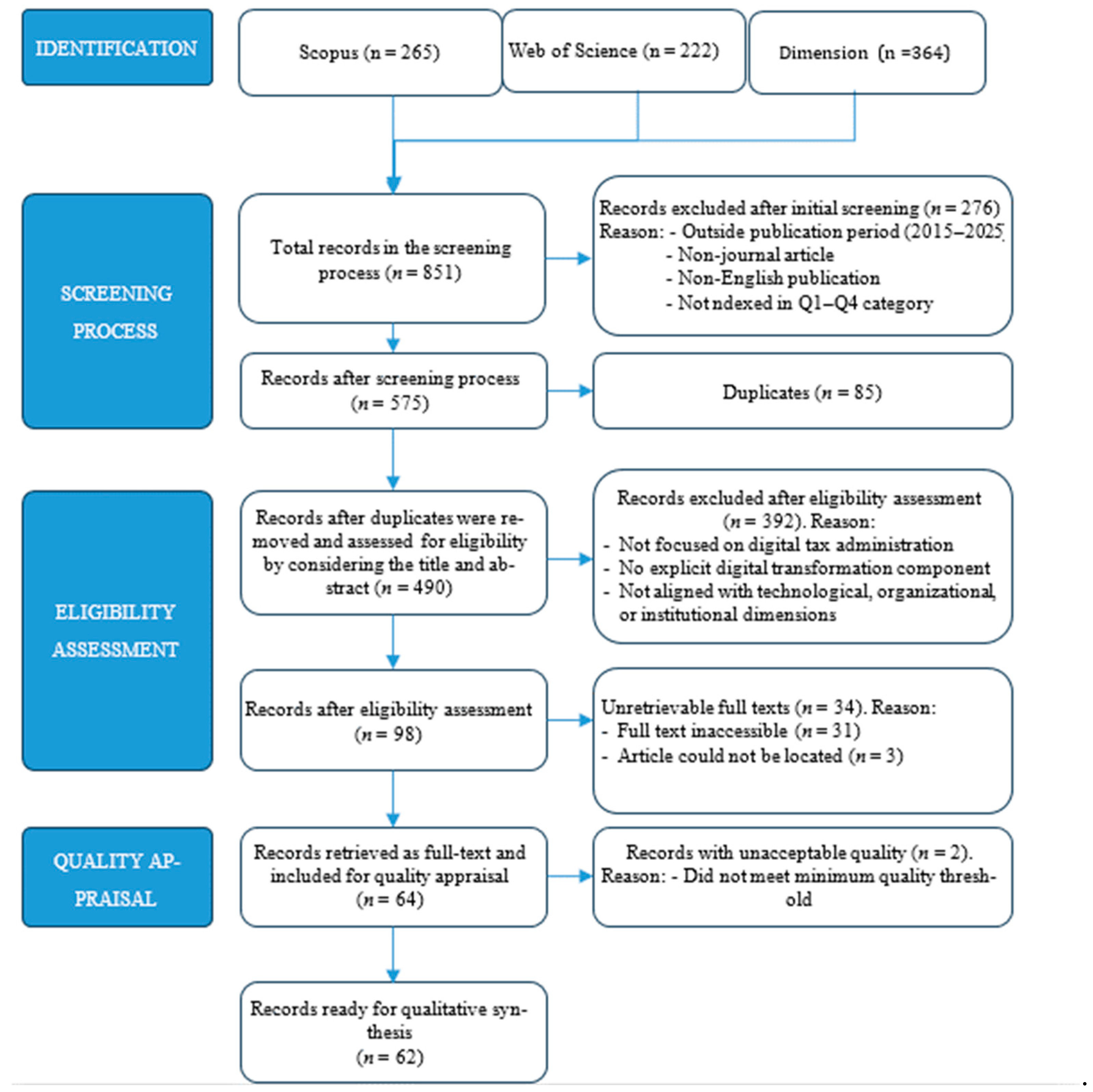
The initial search yielded 265 articles from Scopus, 222 from WoS, and 364 from Dimensions. This screening process applied predefined inclusion criteria: articles had to be written in English, peer-reviewed, published between 2015 and 2025, and indexed within the Q1–Q4 journal categories. Based on these criteria, 276 articles were excluded. After removing 85 duplicate records, 490 articles remained for eligibility assessment.
Eligibility assessment was conducted by reviewing titles and abstracts to ensure relevance to digital transformation in tax administration, the presence of clear digital transformation component, and sufficient conceptual or empirical alignment with the study objectives. To enhance the reliability of the selection process, the screening and eligibility assessment were conducted systematically and reviewed through iterative discussions and expert validation. As a result, 392 articles were excluded. Of the remaining 98 records, 34 were further excluded due to full-text inaccessibility (n = 31) or inability to locate the article (n = 3). Ultimately, 64 full-text articles were retained for quality appraisal.
3.2. Quality Appraisal
The 64 selected articles were assessed for methodological quality and relevance using a tool adapted from Abouzahra et al. [
65]. The appraisal evaluated both methodological rigor and conceptual clarity. The assessment consisted of six criteria: (1) clarity of the study purpose, (2) relevance and contribution of the study, (3) transparency of the research methodology, (4) clarity of the conceptual framework or approach, (5) comparability of concepts and measures with existing studies, and (6) explicit discussion of study limitations.
Each criterion was scored using a three-point scale: Yes = criterion fully satisfied (1), Partly = criterion partly satisfied (0.5), and No = criterion not satisfied (0). Operational indicators were also defined to ensure consistent evaluation across studies (
Table 2). A score of 1 was assigned when a study fully addressed the criterion with clear and explicit evidence. A score of 0.5 was assigned when the criterion was partially addressed or discussed only indirectly. A score of 0 was assigned when the criterion was absent or insufficiently addressed.
The total score for each study was calculated by summing all criterion scores and normalizing them relative to the maximum possible score. The total score ranged from 2 to 6 points. Studies scoring above 50% of the maximum possible score were included in the review, indicating acceptable methodological quality. Two reviewers independently assessed the studies, and disagreements were resolved through discussion. The approach ensured a systematic and transparent appraisal of the selected studies before synthesis. As a result, 62 articles met the quality threshold and were included for primary analysis. The selection process is illustrated in the PRISMA diagram (
Figure 1), and the detailed QA scores are presented in
Appendix A (
Table A1).
This structured quality appraisal approach also helped minimize potential selection bias and ensured that only methodologically robust studies were included in the final synthesis.
3.3. Data Extraction and Analysis
The next step after QA was to determine the type of data to be extracted, following the method proposed by Kitchenham and Charters [
66]. The objective of this stage was to develop data extraction forms and systematically record accurate information obtained from relevant studies. The data extraction criteria focused on study findings that addressed the research question. This process has resulted in two categories of data: (1) General study information, including bibliographic details, and (2) main findings, encompassing key themes and sub-themes. To improve transparency and reproducibility, the detailed data extraction framework, including bibliographic information, coding categories, thematic dimensions, sub-themes, and analytical indicators, is presented in
Appendix A (
Table A2).
At this stage, the themes were classified using thematic analysis. This method was selected because it is considered appropriate for synthesizing patterns and themes within a mixed research design [
67]. A deductive analytical approach was employed to classify the main themes in line with the research question, specifically technological, institutional, and organizational dimensions. The deductive analysis involved assigning codes to each theme using relevant keywords, categorizing articles by these codes, and integrating the results into a structured report.
To ensure analytical consistency and validity, the coding process followed a structured and iterative approach, allowing refinement of themes while maintaining alignment with the research objectives. Final validation was conducted through expert review by a panel of three experts, who assessed the clarity, coherence, and relevance of the identified themes and sub-themes. This process yielded three main themes and 18 sub-themes, providing the analytical foundation for the proposed conceptual framework.
4. Results
The systematic literature review provides a comprehensive synthesis of existing evidence on digital tax transformation. The analysis integrates the technological, organizational, and institutional dimensions and examines their influence on successful digital tax transformation and sustainable revenue mobilization. This section presents the research state of the art in the existing literature, including trends in publication year, geographical distribution of studies, leading journals, theoretical foundations, and key determinants of digital tax transformation.
4.1. Research Trend
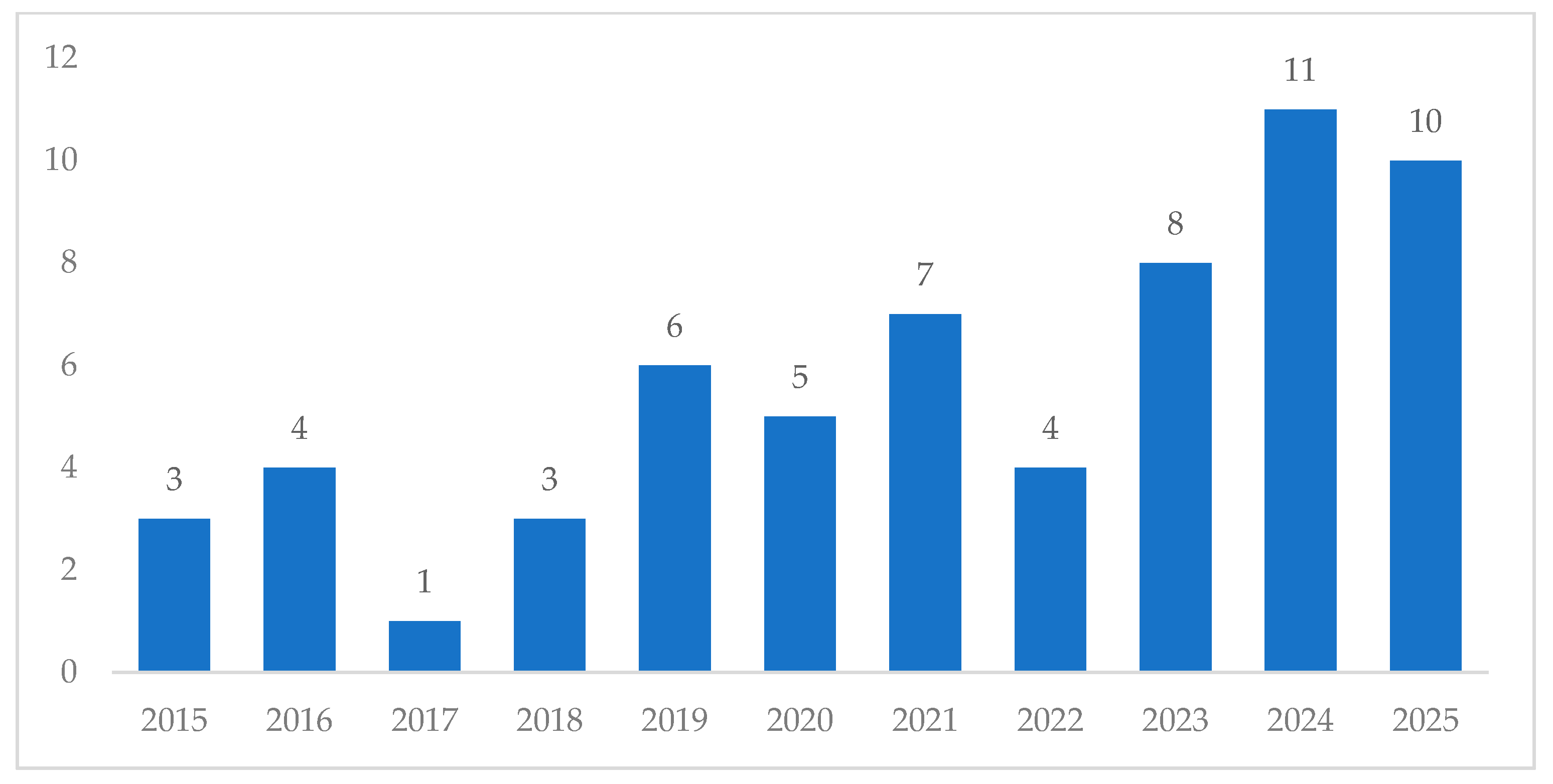
Research on digital tax administration has demonstrated fluctuations in publication volume over time, but with a clear upward trend overall, indicating increasing scholarly attention to this topic in recent years (
Figure 2). The growing number of publications reflects the expanding recognition of digital transformation as a strategic component of tax administration reform and fiscal modernization.
In terms of the geographic coverage,
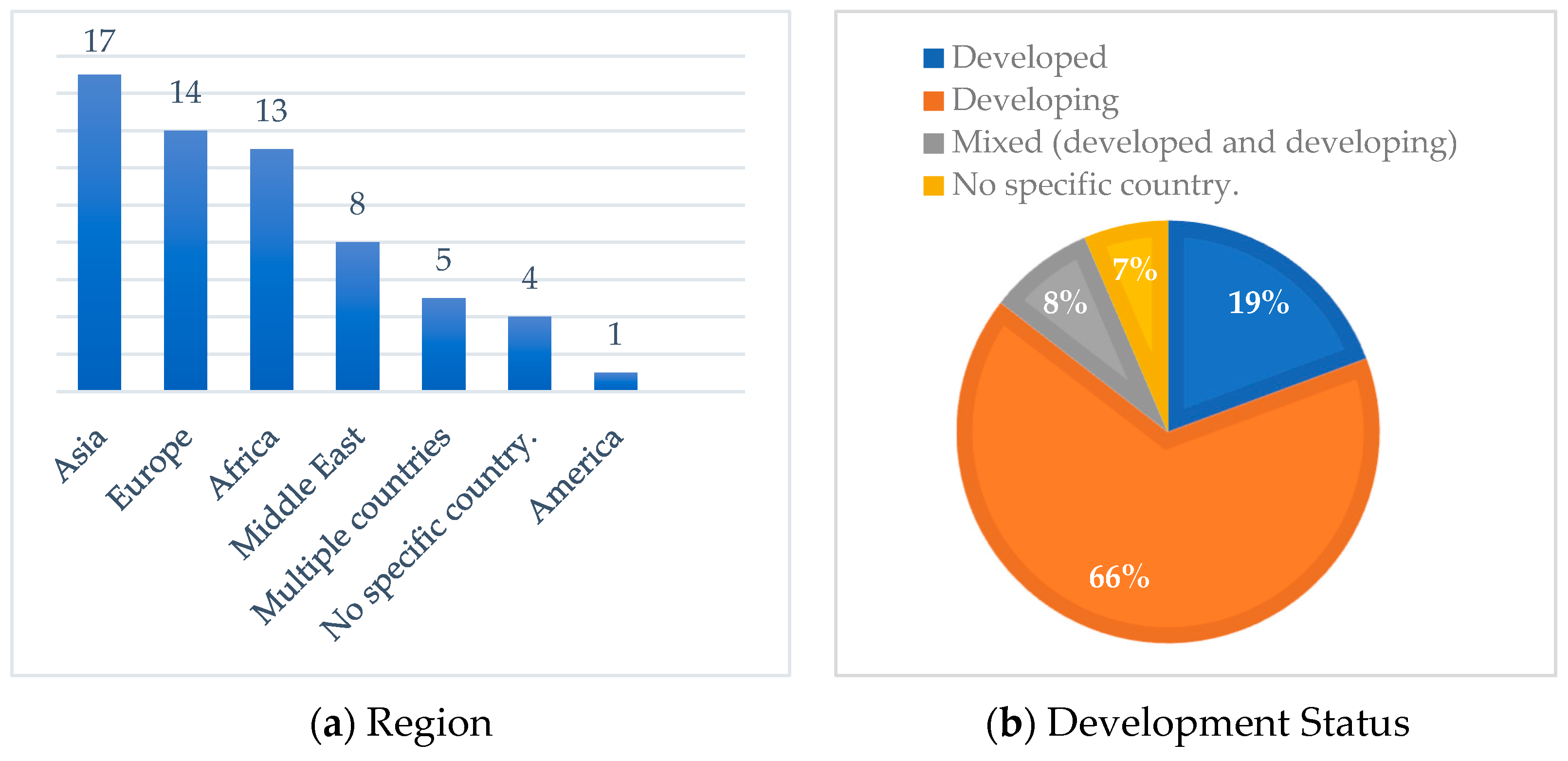
Figure 3 indicates that the majority of studies were conducted in Asia, Europe, and Africa (
n = 44, 71%). Developing countries accounted for 66% of the total publications, compared to 19% from developed countries. This distribution suggests that developing economies continue to face significant challenges in digital tax administration and are actively exploring reform initiatives to improve outcomes.
As shown in
Table 3, most articles on digital tax administration were published in reputable and high-quality journals. In terms of publication productivity, journals contributed between one and four articles on average. Sustainability recorded the highest number of publications, followed by Government Information Quarterly and Cogent Social Sciences, each with three articles, indicating their strong engagement with this research area. Regarding citation impact, Computers in Human Behaviour ranked highest, with 373 citations, reflecting its substantial influence in shaping the scholarly discourse on digital tax administration and related themes.
4.2. Theoretical Framework for Analyzing Digital Transformation
This section examines the dominant theoretical perspectives applied to research on digital tax transformation, summarized in
Table 4. To enhance analytical depth and rigor, this review also evaluates the limitations and weaknesses of the six most frequently used theories identified over the past decade. The findings indicate that a substantial number of articles (22 studies) did not explicitly employ a specific theoretical foundation. This suggests that much of the existing literature emphasizes practical implementation and descriptive analysis rather than theory testing or theoretical development. Among the studies grounded in theory, the Technology Acceptance Model (TAM) was the most frequently applied framework (seven studies), followed by New Public Management (NPM) (six studies).
TAM provides a framework for analyzing technology adoption by emphasizing the roles of perceived usefulness and ease of use in shaping individuals’ intentions to adopt technological innovations [
68]. The model and its extensions have been widely applied in the studies of technology diffusion and digital service adoption. However, TAM has been criticized for its limited consideration of broader social, institutional, and contextual factors that may influence technology adoption in public sector environments [
16].
NPM emphasizes the adoption of private-sector management practices within public-sector organizations to enhance performance and operational efficiency [
69]. It has served as a foundation for studies evaluating reform initiatives, including e-government implementation within revenue authorities, such as the Irish Revenue Authority [
52]. Despite its focus on efficiency and professionalism, NPM has been criticized for underemphasizing democratic values, equity, and social justice considerations [
70]. Moreover, because NPM originated primarily in developed economies, its application in developing countries with distinct institutional, political, and social contexts may produce unintended or inconsistent outcomes [
52].
Table 4.
Major Theories.
| Theory | Source of Theory | Article Count | Example Article |
|---|
| Unidentified | N/A | 22 | Aayale and Seffar [71] |
| Technology Acceptance Model (TAM) | Davis [68] | 7 | Saruji et al. [72] |
| New Public Management (NPM) | Hood [69] | 6 | Jeppesen [10] |
| DeLone & McLean Information Systems (IS) Success Model | DeLone and McLean [73] | 5 | Akrong [74] |
| Institutional theory | DiMaggio and Powell [75] | 4 | Acquah [28] |
| Dynamic capabilities view (DCV) | Teece et al. [22] | 2 | Brunner et al. [76] |
| Street-Level Bureaucracy (SLB) Theory | Lipsky [77] | 2 | Wang [8] |
| Resource-Based View (RBV) | Barney [38] | 2 | Firmansyah [78] (in combination with UTAUT) |
| Social Capital Theory (SCT) | Coleman [79] | 2 | Abu-silake et al. [80] (in combination with TAM and the Theory of Reasoned Action) |
| Unified Theory of Acceptance and Use of Technology (UTAUT) | Venkatesh et al. [81] | 2 | Al-Okaily [16] (in combination with TAM) |
Among widely applied conceptual models, the DeLone and McLean IS Success Model has frequently been used to evaluate the effectiveness of information system implementation. The model highlights the significant roles of system quality, information quality, and user satisfaction in determining system success. However, it has limitations in addressing broader contextual influences, such as organizational culture and external institutional environment [
82]. Another frequently applied framework in the context of digital tax administration is Institutional Theory [
75]. This perspective explains how formal and informal arrangements, such as organizational structures and regulatory designs, influence the performance of public sector organizations. Institutional theory is particularly useful for understanding path dependence and transaction costs in the organizational reform processes. Nevertheless, its main weakness lies in the difficulty of generalizing findings across different institutional contexts [
9].
The Dynamic Capabilities View (DCV) posits that organizations must develop specific capabilities to adapt to rapidly changing environments, particularly those driven by technological innovation [
22]. In this regard, strong digital leadership plays a crucial role in developing capabilities, enabling tax administrations to implement effective digital strategies and innovations [
76]. In addition, Street-Level Bureaucracy (SLB) theory has been applied to examine how frontline public officials adapt to digitalization in tax administration [
8,
83]. Street-Level Bureaucrats are public service workers who directly interact with citizens and exercise discretion in policy implementation and decision-making processes. Overall, applying these classical theories provides a structured foundation for understanding digital tax transformation. However, several challenges remain, including limited theoretical generalizability, insufficient integration of contextual factors, and the need for theory adaptation in the evolving dynamics of modern digital technology.
Although these theories have been widely used in previous research, the approaches mostly analyse tax administration from fragmented perspectives. The technology-focused model provides a theoretical framework for evaluating system adoption and performance, whereas institutional theory centres on organizational structures and governance arrangements. Similarly, capability-based theory (DCV) offers a framework for organizational adaptation that often fails to consider broader institutional constraints or long-term fiscal outcomes.
The fragmented approaches indicate a significant theoretical gap. Existing studies rarely provide an integrated framework that simultaneously explains: the technological dimension of digital transformation, the mediating role of organizational capabilities, the moderating role of the institutional environment, and the temporal dynamics influenced by path dependence. Moreover, little attention has been given to how these elements collectively contribute to sustainable revenue mobilization and long-term fiscal sustainability.
As a result, the existing literature does not yet provide a comprehensive explanation of why similar digital tax reforms may produce different fiscal outcomes across different institutional contexts. To address this gap, a multidimensional framework that incorporates the temporal dimension is needed to bridge technological innovation, organizational adaptation, and institutional alignment.
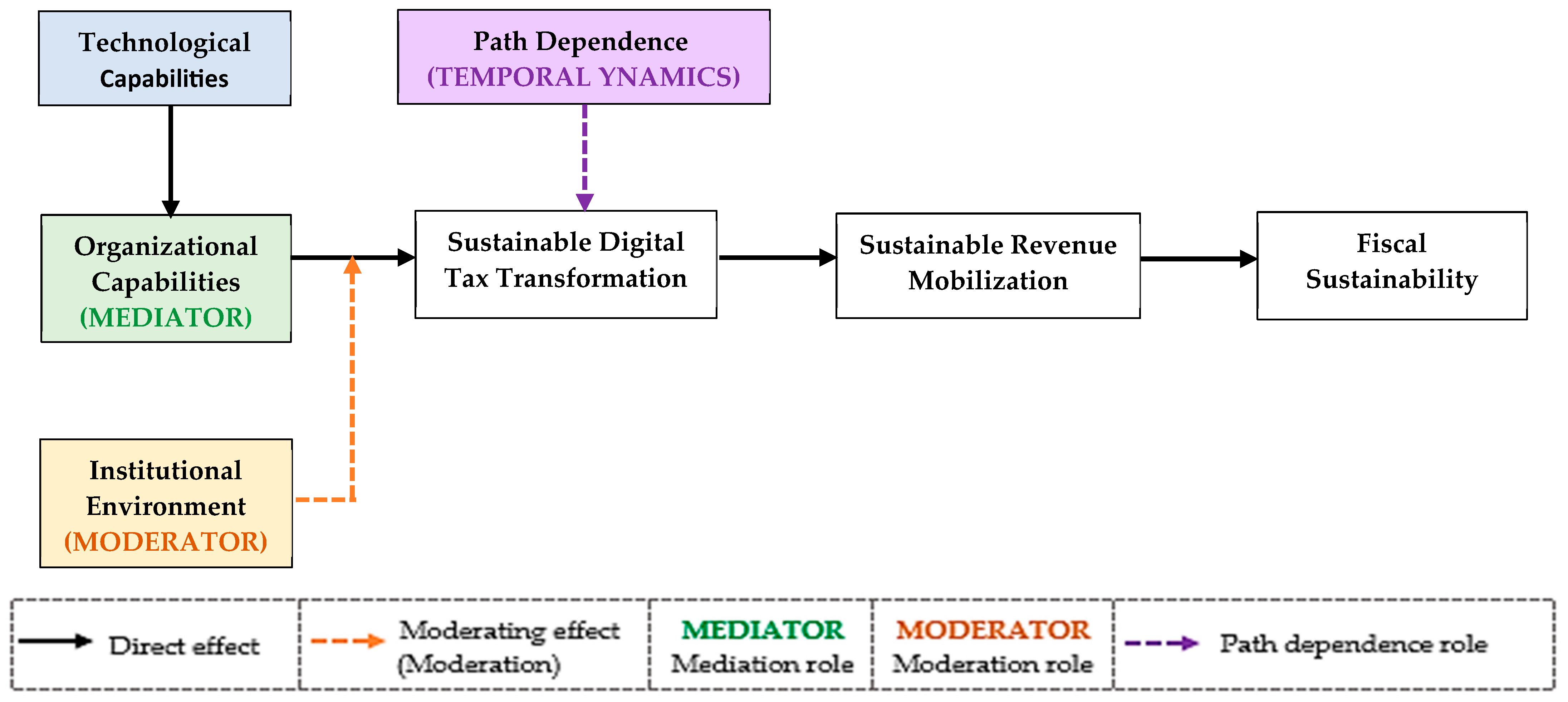
To overcome these limitations, this study develops an integrated conceptual framework that combines technological transformation, organizational capabilities, and the institutional environment within a path dependence perspective. In this framework, organizational capabilities serve as a mediating mechanism that explains how digital technology affects administrative performance, while the institutional environment functions as a moderating structure.
4.3. Conceptual Synthesis of Digital Tax Transformation Determinants
This section presents a conceptual synthesis of the literature on digital tax administration to identify the determinants shaping digital transformation outcomes in tax administration. The findings are organized according to the sub-research questions (SRQs), covering technological, organizational, institutional, and temporal dimensions of digital tax transformation. These findings address the research question by illustrating how these dimensions interact to shape digital tax transformation outcomes. The synthesis highlights how these dimensions interact to influence the sustainability of digital tax reforms.
Table 5 provides an overview of the key dimensions and components associated with digital tax transformation outcomes.
4.3.1. Technological Factors Enabling Digital Tax Transformation (SRQ1)
Technological capabilities constitute the foundational infrastructure that enables the implementation and operation of digital tax administration, supporting automated tax processing, digital service delivery, and integrated tax information systems [
84,
85]. However, the effectiveness of these technologies depends on how they are integrated within organizational processes and institutional environments.
The technological dimensions encompass digital tools, system infrastructure, and data capabilities supporting tax administration reform [
86]. The literature analysis revealed six recurrent technological sub-themes of digital transformation: big data analytics, technology infrastructure, interoperability and integration, automation, user centricity, and cybersecurity and privacy. The top three article counts of the most frequently discussed technological components are outlined below:
Technology Infrastructure
Technology infrastructure is the most frequently identified technological sub-theme, reported in 32 of the reviewed articles. The technology infrastructure functions as the operational backbone of digital tax transformation initiatives. The implementation of e-filing and online payment systems requires a robust, modern technology infrastructure [
84,
87]. As Acquah [
28] emphasizes, the lack of adequate technology infrastructure and poor internet connectivity, particularly in rural areas, are sources of inequality, as businesses there lack information on growth and access to digital services. This situation can result in unequal treatment of businesses in urban and rural areas, undermining the sustainability of digital tax transformation initiatives.
Furthermore, a resilient digital system infrastructure enables tax administration to automate processes, reduce compliance costs, and manage large volumes of data [
88]. Such advances lead to better taxpayer services and improved system responsiveness and efficiency [
89]. Nevertheless, infrastructure alone does not guarantee performance gains without complementary organizational and institutional alignment [
84].
Big Data Analytics
Big data analytics emerges as the second most prominent technological sub-theme, mentioned in 28 articles, undercoring its centrality in the technological architecture of digital tax reform. Its implementation in data management enhances the analytical capacity of tax administrations to assess tax compliance and make data-driven decisions to target audit planning [
86]. This involves the ability to analyze data and integrate third-party big data to optimize analysis results, as an increasingly significant amount of data is generated by businesses, governments, systems, and institutions [
90]. For instance, tax administration can leverage big data analytics to determine compliance risk through data matching; enhance operational efficiency; and reduce conflicts in interactions between taxpayers and tax administrations [
8]. Big data and digital technology reduce compliance costs while providing new space for the discretion and moral judgments of bureaucrats, especially in interpreting data results and addressing discrepancies [
11,
76]. However, an organization’s ability to interpret data and act on it is a critical factor in determining the effectiveness of big data analytics, which is further supported by the institutional framework.
Interoperability and Integration
Interoperability and integration were referred to in 12 articles, supporting their contribution and ranking third among technological sub-themes. Interoperability and integration concern the capability of different applications and systems to interact and communicate by exchanging data effectively, with data flowing seamlessly through multiple systems, aiming to improve service and tax compliance [
28,
84]. According to Valsamidis et al. [
91], the performance of information systems influences tax administration employees’ positive or negative opinions of the digital systems. Compatibility among systems facilitates coordinated digital service delivery across institutional units by enabling the integration of functionalities, such as compliance monitoring, online payments, and reporting. As highlighted by Frățilă et al. [
92], digital tax administration services have become highly valuable to citizens when systems are aligned across different government units, thereby providing taxpayers with comprehensive services without encountering different levels of bureaucracy.
These findings address SRQ1 by identifying key technological factors influencing digital tax transformation. The literature highlights the role of digital infrastructure, big data analytics, and artificial intelligence in improving tax administration processes. Several studies show that digital tax systems enhance real-time reporting, reduce administrative costs, and improve monitoring capabilities [
32,
93]. In addition, technologies such as e-filing, e-invoicing, and automated compliance systems contribute to increased transparency and reduced information asymmetry between taxpayers and authorities [
6]. Overall, technological capabilities provide the foundational layer for digital tax transformation, enabling efficiency gains and enhanced enforcement.
4.3.2. Organizational Capabilities Supporting Digital Tax Reform (SRQ2)
The literature suggests that technological innovations alone are insufficient to ensure successful digital transformation [
84]. Organizational capabilities, such as leadership commitment, governance structures, and human capital development, play a critical role in enabling tax administrations to effectively deploy digital technologies [
94]. The three central capability domains are discussed below.
Governance and Accountability
Effective governance structures enable the integration and strategic deployment of digital technologies in public service delivery to promote transparency and accountability [
95]. Ensuring that performance measurement adheres to accountability standards can enhance public trust and confidence in the systems [
96]. Alaroud et al. [
87] highlight the significant role of accountability in digital system governance, as it enables tax administrations to better respond to taxpayer needs. Furthermore, effective governance frameworks help constrain corruption risks by enhancing monitoring and oversight capabilities [
97]. Accountability assures that all revenue authorities’ actions are traceable and monitored, thus limiting the risk of corruption. These governance mechanisms mediate the translation of technological inputs into credible and sustainable performance outcomes.
Human Capital Skills
Digital tax reform requires digitally skilled human capital. Human capital development is essential, since operating and managing digital systems needs skilled personnel and synergy between human capital and leadership to achieve sustained institutional performance [
82]. Jeppesen [
10] highlights that skilled human resources can perform more effective data analysis to provide an accurate assessment of compliance and evasion, thereby improving decision-making. Furthermore, developing a digitally skilled workforce fosters an organizational culture of innovation and continuous learning [
98]. Therefore, human capital functions as a mediating capability that links digital tools to revenue outcomes.
Leadership
Leadership constitutes a strategic capability for embracing digital tax transformation, as it serves as a mobilizing force for technology adoption among employees and for organizational change initiatives [
71]. It fosters a conducive work climate for digital transformation. Strong leadership commitment includes visions for technology adoption within fiscal institutions and strategic approaches to aligning resources and achieving organizational goals [
99]. Firmansyah et al. [
78] explored the synergy between intellectual capital and digital leadership to illustrate how leaders influence human, social, and structural capital, thereby improving tax administration performance. Leadership capability shapes how digital technologies are institutionalized within organizational routines.
These findings address SRQ2 by highlighting the mediating role of organizational capabilities in digital tax transformation. The literature emphasizes that technological adoption alone is insufficient to generate sustainable outcomes without corresponding organizational readiness. Key organizational factors include leadership, human capital, governance structures, and strategic alignment. Studies indicate that organizations with strong managerial capacity and digital leadership are more effective in implementing digital reforms [
78,
82]. These findings suggest that organizational capabilities act as a critical mechanism through which technological investments are translated into performance outcomes.
4.3.3. Institutional Environment Shaping Digital Tax Transformation (SRQ3)
Beyond technological and organizational factors, the broader institutional environment shapes how digital tax reforms are implemented and sustained [
17,
28,
100]. Regulatory frameworks, public trust, and external pressures influence the legitimacy and long-term sustainability of digital transformation initiatives [
16,
99]. Environmental factors are formal and informal institutional conditions that shape the implementation of digital tax reform [
94]. Four main sub-themes were categorized as external environment components: legal frameworks, transparency and trust, external pressure, and perceived risk, as listed in
Table 3. The three main institutional sub-themes are described below.
Legal Framework
An effective legal framework provides regulatory clarity in establishing tax administration and legitimizes revenue collection through digital means, which in turn conditions the implementation of digital systems [
76,
101]. Digital system ensures that data collection and processing are balanced with the protection of taxpayer rights, particularly in terms of data privacy and property rights [
102]. Jeppesen [
10] stresses that ambiguous regulations hamper the assessment of tax performance accountability. Therefore, the responsibilities of all stakeholders are clearly defined in a clear legal framework that facilitates smooth operational processes and ensures compliance with regulations. Furthermore, Straus et al. [
101] emphasize the need to align digital systems with existing regulations that explicitly cover digital services to provide a clear picture of taxpayer behavior while ensuring compliance. An effective legal framework that supports accountability provides process transparency, strengthening enforcement credibility, and ensuring that taxpayers receive fair treatment [
85,
103]. This leads to enhanced trust in tax administration and greater voluntary compliance by taxpayers [
32]. Regulatory clarity moderates the effectiveness of organizational capabilities deployment.
Transparency & Trust
Transparency and trust are critical institutional conditions in fostering communication, user engagement, and accountability, and significantly influence the effectiveness and acceptance of digital services [
7,
104]. These elements shape the legitimacy of digital transformation initiatives. A transparent process fosters taxpayers’ understanding of their rights, obligations, and revenue mobilization governance, thereby mitigating distrust and allowing for greater public monitoring and accountability [
90]. Public trust in administrative bodies stems from citizens’ perceptions of positive organizational performance, thereby improving taxpayer voluntary compliance [
10]. Digital reform in tax administration must be characterized by clear guidelines and accessible information that foster a conducive environment and public trust in the adoption of digital systems [
20]. Trust amplifies or constrains the impact of technological innovation on organizational reforms.
External Pressure
The influence of external pressure on organizations operates through the implementation of coercive legal mandates on digital systems in the daily business activities of taxpayers and donors; the influence of neighboring countries; and the political environment [
105]; and increased citizen expectations [
106]. These all shape digital reforms to the extent that perceived value and capacity match. As Mascagni et al. [
11] explain, coercive regulatory power is evident in the launch of sales-registered machines (SRM) in Ethiopia, which made their use mandatory for taxpayers and imposed penalties on non-users. Canares [
105] argues that pressure from donors and policy networks, such as AusAID funding, can accelerate the expansion of electronic systems to all provinces in the Philippines, to increase transparency and revenue mobilization. Therefore, external pressure often triggers digital reform initiatives. However, external pressure alone does not ensure sustainable reform without administrative capacity and institutional alignment [
107].
These findings address SRQ3 by explaining how institutional environments shape and condition digital transformation processes. The literature highlights the importance of regulatory frameworks, governance quality, and public trust in determining the success of digital tax reforms. Studies show that strong institutional environments support effective implementation of digital systems, while weak regulatory frameworks can hinder reform outcomes [
16,
17]. In addition, external pressures and policy environments influence the adoption and sustainability of digital tax systems. Overall, institutional factors act as enabling or constraining conditions that shape the effectiveness of digital transformation.
4.4. Temporal Dynamics and Path Dependence (SRQ4)
The findings also highlight the importance of temporal dynamics in digital tax transformation. These findings address SRQ4 by demonstrating how path dependence influences the sustainability of digital tax reforms. Several studies indicate that historical institutional arrangements and prior policy decisions shape digital transformation. Early investments in digital infrastructure, regulatory frameworks, and organizational capacity create trajectories that influence subsequent reform outcomes. In this context, path dependence suggests that digital transformation follows an evolutionary process rather than a linear progression [
18,
108].
Moreover, existing institutional structures and legacy systems can either enable or constrain reform efforts. Countries with strong institutional capacity and early digital adoption tend to experience more sustainable transformation outcomes, while those with fragmented systems face greater implementation challenges. These findings highlight that reform sustainability depends not only on technological innovation but also on the sequencing and alignment of institutional and organizational changes over time [
57].
Overall, the evidence suggests that temporal dynamics play a critical role in shaping digital tax transformation. Sustainable outcomes emerge from cumulative processes in which past decisions influence present capabilities and future reform trajectories.
4.5. Integrated Conceptual Synthesis of Digital Tax Transformation Determinants
The synthesis of the reviewed literature indicates that digital tax transformation cannot be explained solely by technological capabilities. Instead, the evidence suggests that the outcomes of digital tax reform emerge from the interaction between technological capabilities, organizational capacities, and institutional environments. These three dimensions collectively shape how digital systems are implemented, adopted, and sustained within tax administrations.
Technological capabilities, such as big data analytics, digital infrastructure, and interoperability, provide the operational foundation for modern tax administration systems [
28,
72,
103,
108]. These technologies enable automated processes, real-time data exchange, and improved compliance monitoring. However, the literature consistently emphasizes that the effectiveness of these technologies depends on the presence of complementary organizational capabilities, including leadership commitment, governance structures, human capital skills, and organizational learning processes [
9,
10]. Without adequate organizational capacity, technological investments may fail to translate into improvements in tax administration performance [
84].
At the same time, the institutional environment shapes how technological and organizational capabilities are mobilized and sustained. Regulatory clarity, governance accountability, public trust, and external policy pressures influence the legitimacy and effectiveness of digital tax reforms [
107,
109]. Institutional arrangements provide the regulatory and normative framework within which digital systems operate, ensuring that technological innovation aligns with legal standards and public accountability requirements [
21].
Taken together, the literature suggests that digital tax transformation outcomes are the result of an interdependent system of technological, organizational, and institutional determinants. This synthesis provides the conceptual foundation for the framework developed in the next section, which explains how these dimensions interact to support sustainable digital transformation outcomes in tax administration.
In addition, the literature suggests that digital tax transformation often follows path-dependent processes [
9,
17]. Early institutional arrangements, technological investments, and administrative reforms shape the trajectory of subsequent digital initiatives. This indicates that the sequencing of capability development and technological adoption plays a critical role in determining the long-term sustainability of digital tax reforms.
5. Discussion
This study aims to explain how digital transformation initiatives in tax administration, institutional environments, and organizational capabilities interact over time to influence sustainable revenue mobilization and long-term fiscal sustainability. The proposed framework clarifies that digital technology alone does not generate sustainable outcomes (
Figure 4). Instead, its impact is maximized when technological adoption is accompanied by strong organizational capabilities and supported by a conducive institutional environment.
5.1. Technological Capabilities as the Operational Foundation of Digital Tax Transformation (SRQ1)
Building on the conceptual synthesis presented in
Section 4.4, the literature indicates that technological capabilities underpin digital tax administration. Digital technologies such as big data analytics, digital infrastructure, and interoperable information systems enable tax authorities to automate administrative processes, improve compliance monitoring, and enhance service delivery to taxpayers [
101,
109,
110]. However, the reviewed studies consistently suggest that technological capabilities alone do not guarantee successful digital transformation outcomes [
84]. Instead, the effectiveness of digital technologies depends on the ability of tax administrations to mobilize complementary organizational capabilities and operate within supportive institutional environments [
94]. From the perspective of the dynamic capabilities view, technological resources represent strategic assets that must be integrated, reconfigured, and deployed through organizational processes in order to generate sustained performance improvements [
76,
111]. At the same time, institutional theory suggests that technological adoption and deployment occur within regulatory, normative, and cognitive structures that shape the legitimacy and sustainability of digital reforms [
17,
48]. In this context, technological capabilities serve as the enabling infrastructure that initiates digital transformation. At the same time, their long-term effectiveness depends on the organizational and institutional conditions under which they are embedded.
5.2. Mediation: Organizational Capabilities as the Central Mechanism (SRQ2)
The first key insight proposed by the framework is that organizational capabilities mediate the relationship between digital tax transformation initiatives and sustainable revenue mobilization. Digital tax systems, such as electronic filing platforms, analytical tools, and integrated databases, enhance the ability of tax administrations to monitor, detect, and manage compliance [
16,
112,
113]. However, the mere existence of these systems does not guarantee improved performance [
84]. Organizational capabilities related to governance coordination, human resource development, data management, and process reconfiguration determine whether technological inputs can be translated into effective service delivery, compliance management, and law enforcement outcomes [
94].
This finding enriches dynamic capabilities theory by demonstrating its applicability to the public sector, particularly in highly regulated institutions such as tax administrations. In this context, capabilities are not confined to generating competitive advantage, as in private companies; rather, they support adaptation and institutional resilience. Accordingly, the framework extends the theory into the domain of fiscal sustainability by emphasizing that adaptation, continuous learning, and organizational reconfiguration are essential for maintaining public revenue systems in a rapidly evolving digital environment. These findings are consistent with the study of Kebede et al. [
22], highlighting that organizational capacity and readiness mediate the impact of the digital tax administration on compliance and revenue outcomes.
5.3. Moderation: Institutional Environment as Conditioning Factors (SRQ3)
The second insight explores the moderating role of institutional environment. Effective regulation helps mitigate tax avoidance by establishing a structured environment that incentivizes and facilitates compliance [
109,
114]. Legal frameworks, regulatory clarity, and normative legitimacy shape the effectiveness of organizational capabilities [
9,
86,
110]. Even highly capable tax administrations may struggle to mobilize sustainable revenue if institutional environments hinder data sharing, limit enforcement powers, or undermine public trust.
The institutional environment draws on institutional theory as a theoretical foundation, which emphasizes how formal and informal rules influence organizational behavior [
17,
21,
45,
48]. According to institutional theory, legal and regulatory mandates function as coercive institutional pressure that shape organizational behaviour and processes of change [
75]. In the context of digital tax transformation, these mandates define the boundaries within which digital tools can be implemented and enforced. Therefore, institutional conditions do not merely provide a context for reform; rather, they actively influence the effectiveness and sustainability of its outcomes.
By positioning institutional environment as a moderator rather than a direct determinant, the framework explains why similar digital technologies produce different outcomes across jurisdictions. As emphasized by Mayburov [
115], digital technology alters taxpayer behavior and tax administration processes, implying that successful digital reform must integrate technological factors with institutional adjustment, rather than relying solely on technological innovation. Sustainable revenue mobilization occurs only when digital technologies operate within supportive institutional conditions.
5.4. Temporal Dynamics and Path Dependence (SRQ4)
The third contribution of the framework lies in its incorporation of timing and reform sequencing. Early decisions regarding institutional arrangements and technological choices shape future possibilities by either constraining or enabling further progress [
18,
53,
54,
56]. Reforms that focus solely on adopting new technologies, without also strengthening institutional and organizational capabilities, may deliver short-term improvements but often fail to achieve sustainable fiscal performance [
84].
Drawing on historical institutionalism, the framework highlights that early reform decisions tend to create structures that are difficult and costly to change [
9]. At the same time, dynamic capabilities enable organizations to adapt within these structural constraints. This integration suggests that institutional constraints and organizational adaptation are not contradictory; rather, they operate at different analytical levels. Path dependence defines the structural boundaries or scope of action, while capabilities determine how effectively organizations respond and advance within those boundaries [
57].
From a sustainability perspective, this temporal viewpoint explains why digital tax systems may appear sophisticated and modern yet remain fiscally fragile. Long-term fiscal sustainability depends not only on the advancement of current technology but also on the extent to which institutional capabilities and technological advancement have been aligned from the beginning.
5.5. Study Implications
The incorporation of path dependence introduces important theoretical and practical implications for digital tax transformation. It suggests that reform outcomes are determined not only by technological development but also by historically embedded institutional pathways established over time. For tax authority leaders, this highlights the importance of strategic planning, appropriate reform sequencing, and alignment among legal frameworks, governance arrangements, and capability development.
From the perspective of fiscal policymakers, the findings offer significant implications for sustainable public finance. Early institutional design choices can constrain or enable future reform and improvement options. Therefore, careful institutional alignment and well-sequenced reform strategies are essential for achieving long-term fiscal sustainability. More broadly, for international development agencies supporting tax modernization, the findings caution against standardized digital reform templates and emphasize the importance of context-sensitive sequencing strategies.
Furthermore, the framework contributes to ongoing discussions on sustainable governance and the role of digital government in supporting the Sustainable Development Goals (SDGs). Strengthening digital tax administration can support SDG 16 (Peace, Justice, and Strong Institutions) by improving transparency, accountability, and institutional effectiveness in revenue administration. At the same time, improved domestic resource mobilization supports SDG 8 (Decent Work and Economic Growth) and SDG 17 (Partnerships for the Goals), particularly by strengthening national capacity for domestic revenue generation. By explaining how technological, organizational, and institutional factors interact over time, this study provides a framework for understanding how digital tax reforms can contribute to sustainable fiscal capacity and institutional resilience.
While this study provides a comprehensive conceptual synthesis of digital tax transformation, it is important to consider the nature and strength of the underlying evidence. The findings are derived from peer-reviewed studies with diverse methodological approaches and institutional contexts. Although the systematic selection and quality appraisal enhance the robustness and credibility of the synthesis, the heterogeneity of study designs may limit direct comparability across contexts. Therefore, the conclusions of this study should be interpreted as analytically generalizable rather than universally applicable.
6. Conclusions
This study develops an integrated framework to explain how digital tax transformation contributes to fiscal sustainability by integrating technological, organizational, institutional, and temporal dimensions. Using a systematic literature review (SLR) approach, the study synthesizes prior research on digital tax administration and identifies the key mechanisms shaping sustainable digital transformation outcomes.
The findings demonstrate that digital technologies improve tax compliance, administrative efficiency, transparency, and the capacity to mobilize revenue. However, the study also shows that technological adoption alone is insufficient to ensure sustainable reform outcomes. Instead, organizational capabilities play a critical role in translating technological investments into administrative and fiscal performance, while institutional environments shape the effectiveness and legitimacy of reform implementation. In addition, the findings highlight the importance of temporal dynamics and path dependence, suggesting that early policy choices, institutional arrangements, and reform sequencing significantly influence long-term transformation trajectories.
By integrating institutional theory, dynamic capabilities, and path dependence, this study contributes to the literature in several ways. First, it provides a more comprehensive and theory-driven explanation of digital tax transformation by bridging technological, organizational, institutional, and temporal perspectives that are often examined separately in prior studies. Second, the study clarifies the conceptual distinctions among institutional environment, institutional capacity, and organizational capabilities, thereby improving theoretical coherence within digital government and tax administration research. Third, the study introduces a temporal perspective through path dependence, emphasizing that digital transformation is an evolutionary and cumulative process rather than a one-time technological intervention.
From a practical perspective, the findings suggest that successful digital tax reform requires more than technological modernization. Policymakers and tax authorities should prioritize integrated reform strategies that combine technological investment with organizational capability development, institutional strengthening, and regulatory alignment. Strengthening human capital, governance quality, inter-agency coordination, and adaptive institutional capacity is essential to achieving sustainable revenue mobilization and long-term fiscal sustainability.
This study has several limitations that should be acknowledged. First, although the study develops an integrated conceptual framework, the proposed relationships among technological, organizational, institutional, and temporal dimensions were not empirically tested. Consequently, the framework should be interpreted as a conceptual synthesis requiring further empirical validation across different institutional settings. Second, the review was limited to English-language journal articles indexed in Scopus, Web of Science, and Dimensions databases published between 2015 and 2025. As a result, relevant studies published in other languages, grey literature, or alternative databases may not have been captured. Third, although thematic analysis and expert validation procedures were employed to improve analytical consistency, interpretive subjectivity may persist in the coding and synthesis processes.
Future research should therefore focus on empirically validating the proposed framework using quantitative, longitudinal, and mixed-method approaches. In particular, future studies could examine the mediating role of organizational capabilities and the moderating effect of institutional environments using structural equation modeling or panel-data techniques. Comparative cross-country studies are also needed to investigate how governance quality, institutional capacity, and reform sequencing influence digital transformation outcomes across different administrative contexts. In addition, future research may explore the role of emerging technologies, such as artificial intelligence, blockchain, and advanced analytics, in strengthening tax compliance, transparency, and sustainable revenue mobilization. Finally, future studies should examine regional and institutional heterogeneity within developing countries to understand better how variations in digital infrastructure, administrative capacity, and governance systems shape fiscal sustainability outcomes.