1. Introduction
The construction sector, long considered one of the most conservative branches of the economy, is currently undergoing a fundamental transformation known as Construction 4.0 [
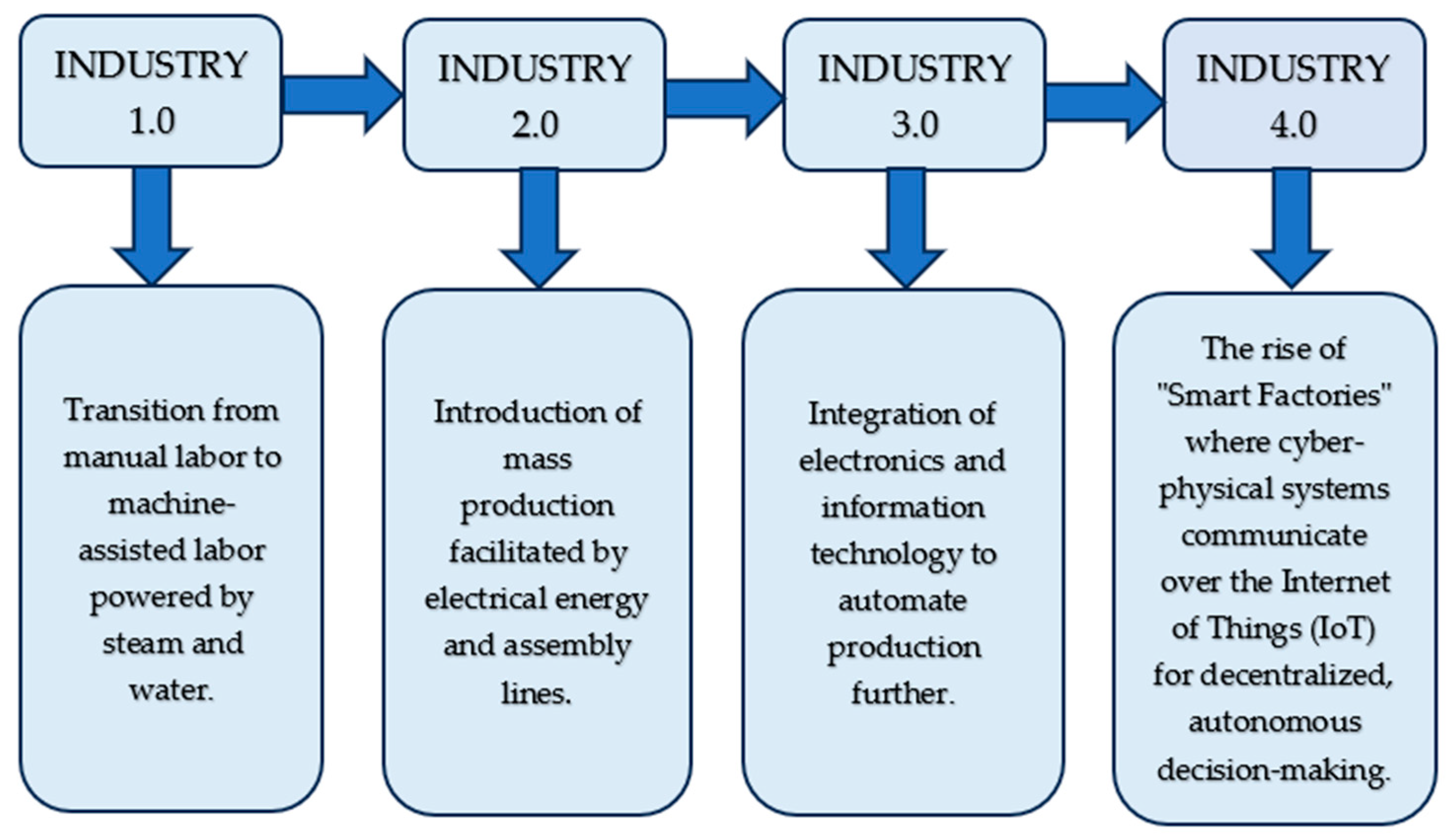
1]. It is the equivalent of the Industrial Revolution 4.0, which is shifting the focus of the construction process from manual craftsmanship to integrated digital systems, passing through the transitional periods of Industry 1.0, 2.0, and 3.0 [
2]. As shown in
Figure 1, Industry 1.0 initiated mechanization with steam engines, while Industry 2.0 introduced electricity and mass production, significantly increasing the scale of manufacturing. Industry 3.0 is the era of automation based on electronics, computers, and industrial robots, which enabled precise process control. Industry 4.0, on the other hand, aims to integrate digital technologies, artificial intelligence, and the Internet of Things (IoT) to create intelligent, autonomous, and networked production systems. Traditional design methods, based on static 2D and later 3D models, are giving way to dynamic data ecosystems, in which the role of the engineer is evolving from “shape author” to “algorithm moderator” [
3].
Digitization in modern construction is not limited to changing drafting tools. It is primarily a change in the way we think about construction as a living information organism. The key factor driving these changes is the need to meet three contemporary challenges: the growing geometric complexity of architectural objects, the drastic requirements for carbon footprint reduction, and the need for material optimization in the face of dwindling natural resources [
4,
5]. Over the past three decades, computer-aided design (CAD) and building information modeling (BIM) have revolutionized documentation and interdisciplinary coordination. However, it was only the implementation of Artificial Intelligence (AI) and Machine Learning (ML) that broke through the barriers that could not be overcome by classical deterministic methods [
6,
7]. In the traditional model, an engineer designs a structure and then checks its load-bearing capacity. In the age of digitalization, this process is reversed: the engineer defines the objectives and constraints, and AI algorithms—using neural networks and fuzzy logic—generate the optimal structure [
8]. Artificial intelligence thus becomes a “digital co-designer” that can analyze millions of variables simultaneously, finding relationships invisible to the human eye [
9]. The most innovative aspect of contemporary structural design is the integration of high-level digital algorithms with materials science at the nano-scale. Today, digitalization allows us to ‘program’ matter. Through advanced computer simulations and AI, it is possible to precisely design cementitious composites enhanced with graphene, carbon nanotubes, or nano-silica [
10,
11]. Including nanotechnology in the discourse on the digitalization of construction is essential. A modern structure is no longer just a collection of beams and columns—it is a system whose mechanical properties are optimized at the molecular level [
12]. AI allows for predicting how the addition of nanoparticles will influence the rheology of concrete mixes in 3D printing, creating a bridge between the world of bits and atoms [
13,
14].
Algorithmically generated structures should not be interpreted solely as computationally optimized geometries. Architectural form remains an intentional and culturally mediated design act, where AI functions as a decision-support system rather than an autonomous author.
Currently, AI is ceasing to be merely a computational support tool and is becoming a new design ‘medium,’ allowing for the exploration of solutions unattainable through traditional methods. A key driver of these changes is the growing need to implement sustainable development strategies. The construction sector is responsible for a significant portion of global greenhouse gas emissions and natural resource consumption. Consequently, modern digital mechanisms must be considered not only through the lens of economic efficiency but, above all, for their contribution to the achievement of the UN Sustainable Development Goals (SDGs), adopted by all 193 UN member states in the 2015 General Assembly Resolution [
15].
The question, therefore, arises: To what extent does the shaping of building structures through the use of advanced digital tools contribute to the attainment of the Sustainable Development Goals, and which specific goals are most directly affected? Furthermore, what is the role and significance of modern digital mechanisms in reaching these targets? In this study, “Structural Shaping” is defined as the algorithmic generation of form where structural performance is the primary driver, distinguishing it from traditional “Structural Design,” which often involves checking a pre-defined form.
A preliminary review of the scientific literature indicates that existing research describes and demonstrates the potential of using modern digital tools to streamline the design process, increase efficiency, and achieve sustainable development goals. However, there is still a lack of comprehensive studies providing a systematic literature review of this dynamically evolving field. For this reason, the aim of this article is to conduct a systematic analysis of the current state of knowledge presented in the literature regarding the application of modern digital mechanisms in shaping sustainable buildings. Subsequently, the study seeks to identify both existing research gaps and a coherent research framework that delineates the contribution of these mechanisms to specific SDGs and their associated targets. The research findings may serve to support scientists and designers in the process of shaping buildings, structural systems, and urban spaces in alignment with the SDGs.
2. Methodology of Literature Selection
The systematic review was registered in PROSPERO with the number 1368965. The review was conducted by two authors. To ensure a comprehensive review and to reach the most relevant scientific publications, the data collection process was based on searching three recognized international bibliographic databases. The primary data source was the Scopus database, valued for its extensive indexing of technical and engineering journals, alongside Web of Science (WoS), which facilitated the selection of papers with high citation rates and rigorous peer-review processes. Google Scholar was utilized as a supplementary tool, enabling the identification of the latest scientific developments and conference proceedings (so-called ‘grey literature’) that may not yet be fully indexed in commercial systems.
The literature search and selection strategy was designed to capture the interdisciplinary nature of modern construction by bridging the gap between applied computer science and sustainable architectural engineering. The search process utilized a multi-layered keyword strategy that moved beyond simple phrase matching to a sophisticated parameter combination method. Keywords were strategically categorized into three distinct domains: the technological domain, focusing on digital tools like Generative Design and Machine Learning; the structural domain, targeting engineering processes such as Structural Shaping and Topology Optimization; and the environmental domain, centering on sustainability outcomes like resource efficiency and the UN Sustainable Development Goals. To ensure a robust synthesis, the inclusion criteria required that each qualifying article address at least one term from each of these three domains, thereby filtering out studies that were either too generic or lacked the necessary integration of digital workflows and structural performance.
The screening process adhered to strict inclusion and exclusion criteria to maintain high academic rigor. Only peer-reviewed articles from internationally indexed journals were considered, while grey literature such as technical reports or promotional materials was excluded to ensure the reliability of the data. A critical factor in the selection was the “innovation of workflow,” meaning that articles providing only a descriptive overview of a finished building without explaining the underlying digital mechanisms or algorithms used for form optimization were disqualified. Furthermore, a clear thematic boundary was established to exclude studies focusing solely on the chemical properties of construction materials unless those properties were directly integrated into a digital structural optimization framework.
Following the PRISMA protocol allowed for a systematic and transparent filtering of the results. This process began with a broad identification phase across multiple databases, followed by a rigorous de-duplication stage to account for the overlapping indices between Scopus and Web of Science. The subsequent screening phase involved a two-step evaluation. First, an abstract analysis was performed to eliminate papers from unrelated fields, such as theoretical computer science or pure ecology, lacking a construction context. Second, a comprehensive full-text analysis was conducted to examine the consistency of the authors’ arguments and to verify whether the findings were supported by quantitative metrics or clear optimization schemas. This methodical approach ensured that the final selection of literature provides a cohesive and technically sound foundation for the review, directly addressing the specific mechanisms of digital shaping in sustainable design while maintaining methodological transparency throughout the synthesis. The search strategy was formulated to precisely isolate works at the intersection of civil engineering, computer science, and ecology. Advanced Boolean operators (AND, OR) were applied to link concepts across these distinct thematic areas. The search was limited to publications from 2003 to 2026, reflecting the period of the most intensive development of digital tools—from the early phases of parametric modeling to the contemporary era of generative artificial intelligence.
The searches were structured around three main thematic pillars, ensuring high precision in the results. The set of keywords, provided in both English (due to the international nature of the databases) and Polish, included the following concepts:
Pillar 1: Digital Technologies and AI—Generative Design, Artificial Intelligence (AI), Machine Learning (ML), Generative AI (GenAI), Deep Learning, Algorithmic Design, Digital Mechanisms.
Pillar 2: Structural Shaping and Engineering—Structural Shaping, Structural Engineering, Building Structures, Construction 4.0, Parametric Design, Optimization.
Pillar 3: Sustainable Development and Ecology—Sustainability, Sustainable Development Goals (SDG), Life Cycle Assessment (LCA), Carbon Footprint, Circular Economy, Resource Efficiency.
The selection of the identified literature was conducted in accordance with the PRISMA (Preferred Reporting Items for Systematic Reviews and Meta-Analyses) 2020 guidelines, ensuring the transparency and reproducibility of the systematic review process. Compliance with the PRISMA 2020 checklist was used to enhance reporting quality (see
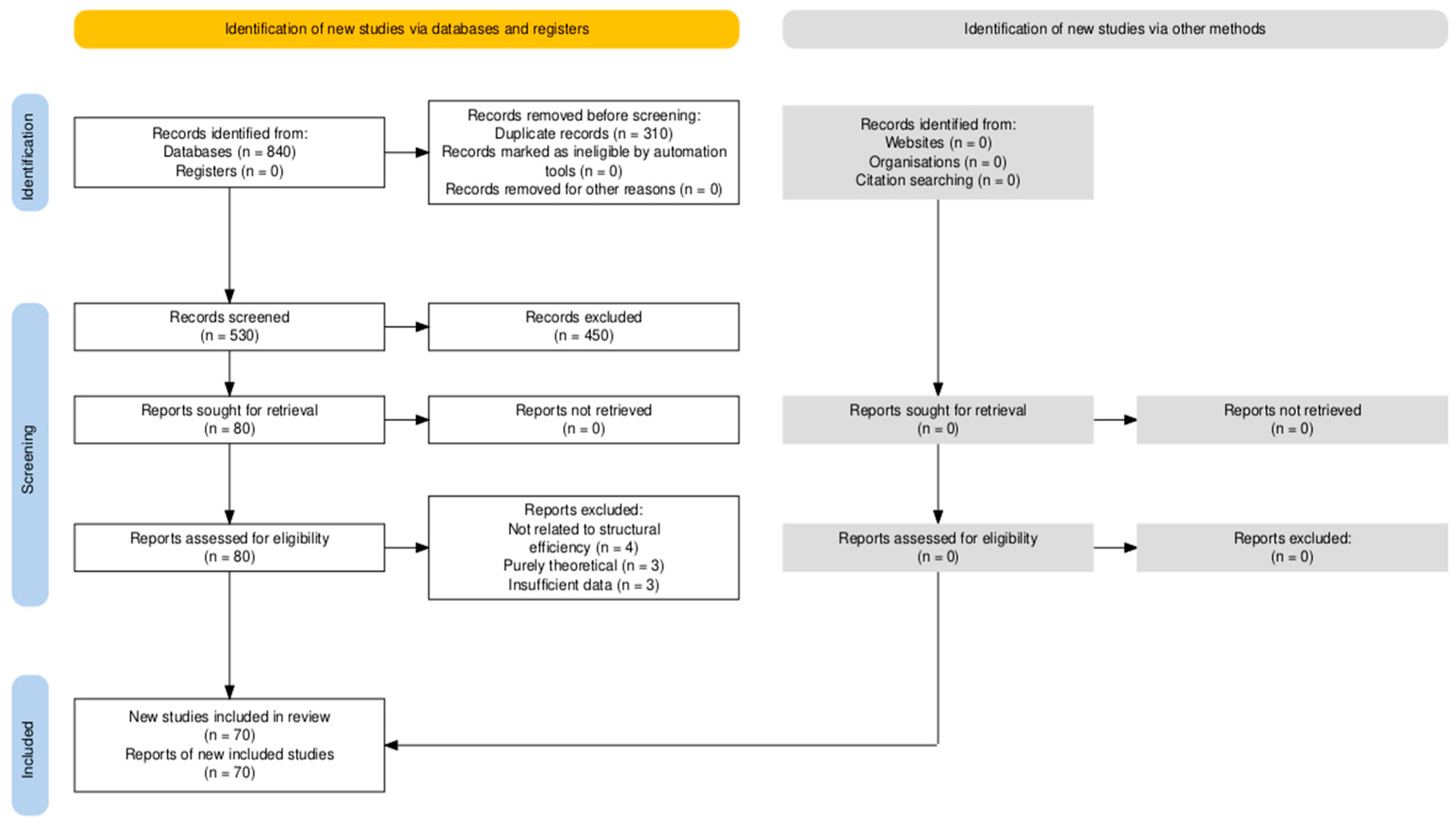
Supplementary Material). The study focused on identifying publications that integrate modern digital mechanisms (AI, GD, BIM) with aspects of sustainable development and the shaping of building structures. Articles published between 2003 and 2026, written in English and Polish, and subjected to a peer-review process, were eligible for analysis. The primary inclusion criterion was the presence of specific use cases where algorithms were employed to optimize sustainability parameters (e.g., mass reduction, carbon footprint, or energy consumption). The detailed process of identification, screening, and inclusion of the studies is visually summarized in the PRISMA flow diagram in
Figure 2.
The source material selection process was organized in a rigorous, multi-stage manner, maintaining full research transparency. In the first phase—identification—extensive queries were performed across the Scopus, Web of Science, and Google Scholar databases, resulting in an initial collection of 840 publications. Immediately following this stage, a technical verification was conducted, involving the automatic and manual removal of 310 duplicates, yielding a set of 530 unique records for further qualitative assessment.
The subsequent stage, defined as screening, involved a detailed analysis of the titles and abstracts of all gathered works regarding their substantive relevance to structural shaping and civil engineering within the context of sustainable development. At this level, 450 articles were excluded, as they were deemed not directly related to the research subject or discussed digital technologies in overly general terms without scientific justification of their ecological impact on structures. The papers that successfully passed this verification were qualified for full-text substantive analysis in the eligibility phase.
3. Analysis of Selected Literature
During the thorough reading and analysis of the 80 full-text articles, the innovativeness and the actual impact of the described digital mechanisms on the optimization of structural parameters were evaluated. Particular attention was paid to those publications that directly linked AI algorithms with the reduction of carbon footprint or material consumption, allowing for the elimination of works that were purely theoretical or focused solely on computer science.
Out of the 80 full-text articles assessed, 10 were excluded primarily due to a lack of focus on the structural integration of digital tools, focusing instead solely on material science without architectural application. After excluding 10 publications that did not provide sufficient data regarding structural efficiency, a final group of 70 scientific publications [
1,
2,
3,
4,
5,
6,
7,
8,
9,
10,
11,
12,
13,
14,
15,
16,
17,
18,
19,
20,
21,
22,
23,
24,
25,
26,
27,
28,
29,
30,
31,
32,
33,
34,
35,
36,
37,
38,
39,
40,
41,
42,
43,
44,
45,
46,
47,
48,
49,
50,
51,
52,
53,
54,
55,
56,
57,
58,
59,
60,
61,
62,
63,
64,
65,
66,
67,
68,
69,
70] was included in the systematic review. These works constitute the bibliographic core of this study and serve as the foundation for identifying research gaps within the Construction 4.0 domain. The detailed characteristics of the selected 70 studies are summarized in
Table 1.
Analyzing the results of the preliminary literature review presented in
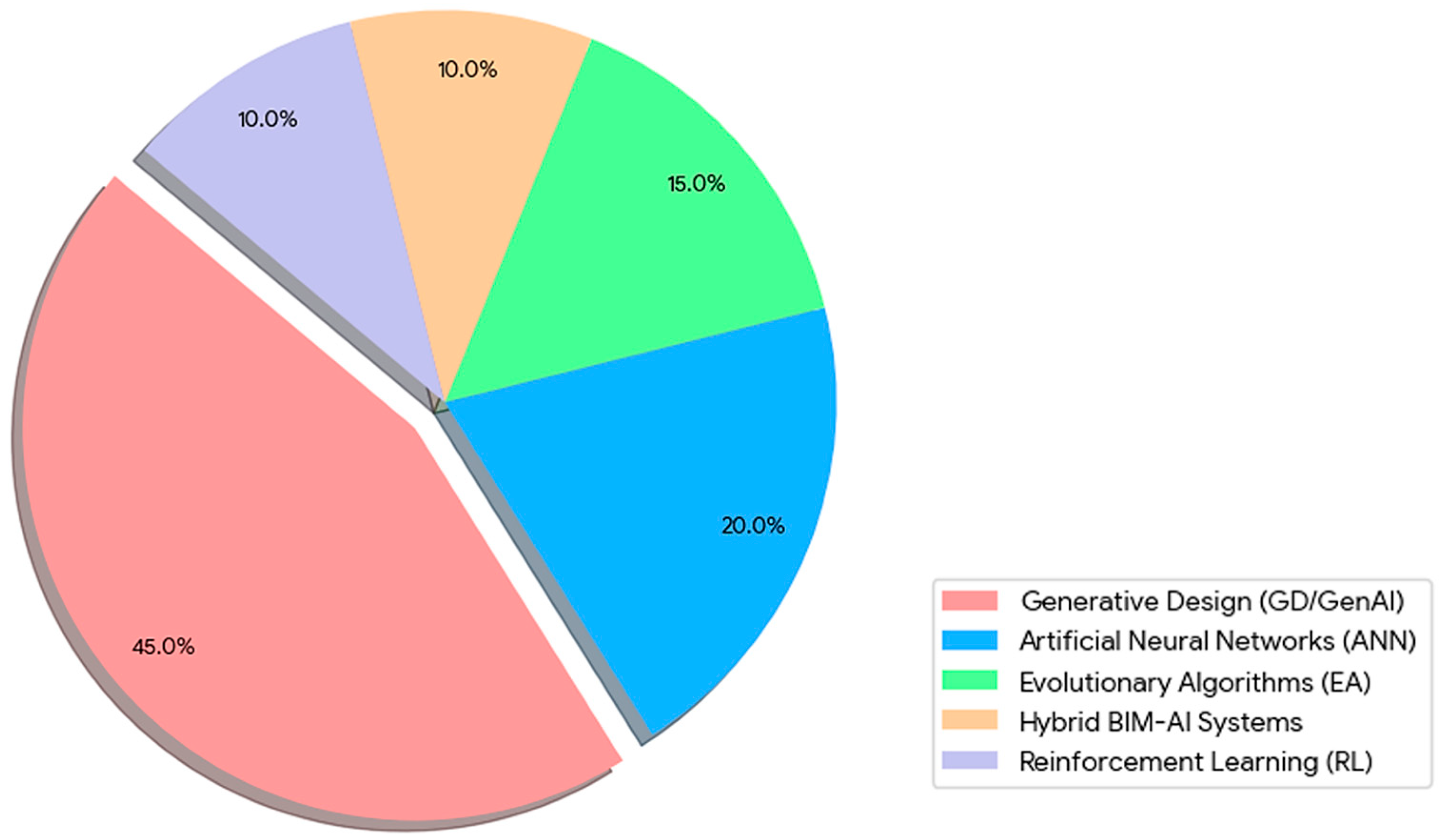
Table 1, it can be concluded that the largest share of current research is focused on publications regarding the improvement of design accuracy and quality with fewer resources, waste reduction, extreme material efficiency, carbon footprint minimization, shortening of construction time, and the creation of structures with high durability and low life-cycle costs. The precise percentage share of specific AI algorithms that directly contribute to the aforementioned benefits is presented in
Figure 3.
Building on the distribution of algorithms shown in
Figure 3,
Table 2 provides a comprehensive overview of the 70 included studies, highlighting their digital mechanisms and alignment with SDGs.
The subsequent sections present a more detailed analysis of the issues addressed in the reviewed publications and the associated research findings related to the Sustainable Development Goals.
4. Artificial Intelligence in Structural Design
4.1. Surrogate Predictive Models (Surrogate Models)
The use of neural networks as surrogates for the Finite Element Method (FEM) represents one of the most effective directions for optimizing computational time in civil engineering. While the traditional numerical approach is precise, it is burdened by an immense computational cost, particularly in the case of non-linear analyses [
16]. As demonstrated, the non-linear analysis of a large bridge structure subjected to dynamic loads—accounting for material fatigue and soil-structure interaction—can take anywhere from several to over a dozen hours. The solution to this problem lies in the implementation of a neural network trained on a dataset comprising, for instance, 10,000 previously performed numerical simulations covering various geometries and loading variants. Once the training process is complete, the surrogate model can predict displacements, internal forces, and stresses in a new, previously unknown structural configuration in less than a second. The primary benefit of utilizing surrogates is the ability to conduct advanced multi-objective optimization (e.g., simultaneous minimization of cost and mass while maximizing seismic resistance) in real-time, which has a significant impact on sustainable design. Before the era of surrogate models, this process was impossible to implement due to hardware barriers and the time required for each individual FEM computational iteration.
4.2. Physics-Informed Neural Networks (PINNs)
PINNs represent a revolutionary field of research (intensively developed between 2024 and 2025) that directly addresses the lack of interpretability and the risk of physical errors in classical AI, known as the “black box” problem [
18]. Classical neural networks, trained exclusively on data, may generate results that are mathematically probable but physically impossible (e.g., violating the laws of energy conservation or mass continuity). PINNs integrate the governing differential equations of a system’s physics—Partial Differential Equations (PDEs)—directly into the neural network’s loss function [
7]. In the context of civil engineering, these are most commonly the Navier–Stokes equations for the aerodynamic analysis of high-rise buildings or the Cauchy stress equilibrium equations for structural elements.
4.3. The Role of Artificial Neural Networks (ANN) in Geotechnical Engineering and Foundation Optimization
While much of the digital transformation in the AEC sector focuses on the visible superstructure, the integration of Artificial Neural Networks (ANN) has significantly advanced geotechnical engineering, a field traditionally reliant on empirical correlations and high safety factors. ANN models are particularly effective in processing the inherent non-linearity and heterogeneity of soil data.
Current research demonstrates that ANN can be trained on vast datasets of Cone Penetration Tests (CPT) and Standard Penetration Tests (SPT) to predict soil parameters—such as shear strength, compression index, and permeability—with precision far exceeding classical analytical methods. In the context of sustainability, the application of ANN in foundation design allows for the optimization of pile lengths and raft thicknesses. By reducing the uncertainty in soil-structure interaction, engineers can minimize the over-design of sub-grade elements, leading to a substantial reduction in the consumption of high-carbon materials like reinforced concrete and grout. Furthermore, ANN-driven predictive modeling of land subsidence and slope stability contributes to safer, more resilient urban planning, aligning geotechnical practices with the broader goals of sustainable digital construction.
4.4. Implementation of Reinforcement Learning in Construction Execution and Logistics
Modern structural design does not end at the geometry generation stage in a virtual environment; it also encompasses the complex process of physical realization. A key role is played here by Reinforcement Learning (RL) algorithms, which are redefining the approach to material logistics and the assembly of structural components [
2]. Unlike classical scheduling methods, an RL agent learns optimal strategies through interaction with a Digital Twin environment of the construction site. These algorithms are capable of managing hundreds of variables in real-time, optimizing the performance of construction machinery such as tower cranes or autonomous assembly robots [
19]. These systems analyze not only the sequence of precast component delivery but also environmental variables, such as wind speed or dynamic changes in work front availability, aiming to minimize the carbon footprint associated with heavy equipment operation. A particularly significant aspect is the use of ML models to predict the rheological parameters of concrete mixes at the nano and micro scales. AI analyzes the chemical composition of cement and the activity of pozzolanic additives, allowing engineers to control the material setting process with almost surgical precision [
20]. This enables the construction of structures with extremely thin cross-sections, where the margin of error for early-age concrete strength is nearly zero [
21]. In the context of sustainable construction, these algorithms allow for the precise dosing of admixtures that reduce clinker content, directly translating into lower carbon dioxide emissions while maintaining rigorous load-bearing parameters. Digital supervision of the material life cycle, from the batching plant to the final hardening in the formwork, is becoming an integral part of contemporary civil engineering [
22].
4.5. Technological, Normative, and Ethical Barriers in the Era of Design Autonomization
Despite the rapid development of digital methods, their widespread implementation in professional engineering practice faces several significant barriers that require urgent systemic solutions. The most serious challenge is the lack of a cohesive normative framework to regulate the use of results generated by probabilistic algorithms. Current structural codes, such as the Eurocodes, are based on a deterministic approach and explicit analytical formulas, whereas AI often functions as a so-called “black box.” The inability for a human to fully interpret the decision-making path of a neural network raises legitimate concerns regarding structural safety in extreme or unconventional scenarios. Engineers face a dilemma of trusting an algorithm that optimizes a structure beyond the limits of current technical experience, which necessitates the development of explainable AI (XAI) methods [
18]. Equally important is the issue of civil and professional liability for design errors occurring with the involvement of autonomous systems [
23]. In a traditional process, liability rests with the licensed designer; however, in generative design, the boundary blurs between the algorithm author, the training data provider, and the engineer who accepts the result [
24]. Furthermore, there is the issue of computational complexity and the availability of high-performance GPU clusters, which may widen the technological gap between global corporations and smaller design firms. Additionally, the growing reliance on digital tools carries the risk of the atrophy of classical engineering knowledge and structural intuition, which, in the long term, could threaten industry innovation. Resolving these issues requires not only technological progress but, above all, the development of new ethical and legal standards that keep pace with the digital revolution in construction.
5. Generative Design and Its Application
5.1. Definition and Genesis of Generative Design
Generative Design (GD) represents an advanced design paradigm based on computational algorithms used to systematically explore a vast space of possible solutions. In this approach, the designer specifies a set of requirements, constraints, and optimization goals; the computer system then autonomously generates numerous design variants, allowing for the selection of the most efficient one [
25]. GD enables engineers and designers to explore innovative forms and complex geometric structures that would be exceptionally difficult to develop manually. This method not only broadens the spectrum of possible design solutions but also enables their optimization in terms of efficiency, implementation costs, and material consumption.
This approach has been applied to the optimization of structural steel elements, primarily girders and trusses [
25,
26,
27]. Similarly, the optimization of steel canopy structures using genetic algorithms to reduce structural mass was demonstrated in [
28,
29], while genetic optimization to find appropriate supports for curvilinear roofs—thereby increasing their efficiency—was presented in [
30]. Genetic algorithms are also helpful in designing efficient solar facilities to optimize the amount of solar radiation reaching the roof surface, thus increasing energy yields [
31].
Generative design is an advanced approach to the design process in which the computer, utilizing optimization algorithms, artificial intelligence, and parametric models, automatically generates multiple solution variants based on criteria and constraints defined by the designer. This method belongs to the broader trend of design automation and Computer-Aided Design (CAD), where the designer defines goals and constraints while the computational system explores the solution space [
32]. The origins of generative design trace back to research on evolutionary algorithms and algorithmic design, serving as a paradigm for contemporary design research [
33]. The development of this field follows a trajectory from simple algorithms toward the integration of deep generative models and the advanced optimization of building structures [
34].
Generative design relies on a combination of mathematical and heuristic methods aimed at the automated search for optimal solutions. Machine Learning (ML) plays a key role, offering new possibilities while posing challenges regarding the implementation of advanced algorithms in architecture [
35]. Modern research focuses on data evaluation and verification methods for AI-generated designs [
36,
37].
A key developmental direction is the integration of generative and parametric design with Building Information Modeling (BIM) technology. This allows for filling research gaps in structural design and improving data coordination [
38]. GD also serves as a platform for effective communication in multidisciplinary design teams, facilitating the understanding of complex variants by various stakeholders [
39]. In residential construction, parametric algorithms allow for the performance optimization of entire housing estates [
40]. Systematic reviews confirm that performance-driven design is becoming a standard in modern construction [
41].
One of the most innovative areas is the use of Large Language Models (LLMs) in systems such as EnergAI, which enable the energy optimization of buildings as early as the conceptual stage [
42]. GD allows for the design of efficient concrete structures [
43] and the optimization of processes in prefabricated construction using AI [
44]. These tools also find application in the design of MEP (Mechanical, Electrical, and Plumbing) systems, significantly reducing errors in the early phases of (AEC) (Architecture, Engineering, and Construction) projects [
45]. Furthermore, generative algorithms are used for spatial optimization during the adaptation and modernization of existing buildings [
46].
GD plays a fundamental role in the transformation of the construction sector, supporting the transition from passive, post-factum traditional Life Cycle Assessment (LCA) toward active circular design. The use of algorithms allows for the simulation of thousands of material and structural variants, leading to the minimization of the carbon footprint in the built environment by optimizing resource consumption and facilitating the future disassembly of components [
47]. Thanks to GD methods, it is possible to make much more informed, data-driven design decisions as early as the preliminary design stage. The early conceptual phase, which has traditionally been burdened with the greatest uncertainty, thus becomes a precise process where environmental and economic parameters are verified in parallel with the architectural form [
48].
In parallel with ecological aspects, a breakthrough is occurring in the creative sphere. Modern techniques based on diffusion models and transformers allow for the generation of advanced concepts for skyscrapers and complex urban forms directly from text prompts. These solutions do not replace the architect but act as a “creativity enhancer,” allowing for the instant visualization of abstract concepts while strictly maintaining technical and urban parameters [
49]. This process is complemented by the deep automation of design tasks by AI, which fundamentally changes the approach to repetitive engineering processes. Instead of manually drafting routine elements, engineers define logical rules and constraints, allowing algorithms to independently generate optimal reinforcement schemes, installation routing, or structural joint optimization, reducing the risk of human error and shortening documentation delivery time [
50].
5.2. Future and Challenges of the Technology
Contemporary analysis of research trends clearly indicates the growing role of Generative Artificial Intelligence (GenAI) as a key factor transforming architectural research. Progress in this field is no longer limited to simple scripts but is evolving toward complex systems capable of interpreting intricate spatial data [
51]. Systematic reviews of AI techniques reveal numerous opportunities, such as shortening the conceptual phase and generating non-obvious forms, yet they also identify significant technical barriers. The most critical include high hardware requirements, the “black box” problem (lack of transparency in the algorithm’s decision-making process), and difficulties in standardizing input data [
52].
The AECO (Architecture, Engineering, Construction, and Operations) sector exhibits specific characteristics in the context of AI applications, where it becomes crucial not only to generate form but to integrate it strictly with engineering requirements and execution processes. Research emphasizes that AI in this sector must handle the immense multidimensionality of constraints, ranging from building codes to building physics [
53]. In light of these changes, the education of future personnel becomes a fundamental aspect. Revising current teaching methods and introducing GD tools at early stages of academic education is considered essential so that future generations of designers can treat AI as a partner in the creative process rather than just a final tool [
54].
The response to the complexity of current systems lies in the development of simplified GD methods. Their goal is to democratize the technology by combining diverse evaluation techniques—from aesthetic analysis to environmental simulations—within a single, automated workflow. This allows for rapid and effective conceptual design, where automation does not replace the architect but provides them with a set of optimal data for making the final design decision [
55]. The next step in the development of these technologies is an increasing emphasis on integrating GD with performance-driven design, which directly translates into energy efficiency and the sustainable development of the built environment.
5.3. Specialized Applications and Trend Analysis
Broad research on GD in the built environment indicates its extraordinary versatility, covering the optimization of both the micro-scale of detail and the macro-scale of urban planning [
56]. The use of GenAI currently allows for the automation of complex tasks, such as functional layout optimization or technical documentation generation, significantly relieving designers during routine phases [
57]. AI finds particular application in the design of highly complex building structures, where traditional computational methods prove insufficient for finding forms with minimum mass and maximum stiffness [
58].
One of the most important research fronts is the integration of AI with predictive modeling. This enables the achievement of maximum energy performance by simulating real-time building behavior as early as the sketching stage [
59]. Global trend analysis confirms that GenAI is not merely a passing fad but is becoming the foundation of modern research fronts in architecture, redefining the definition of “authorship” in design [
60]. Finally, the integrated approach to generative design reaches its culmination in multi-family housing. It allows for the multi-objective energy optimization of residential buildings, where GD systems balance solar gain maximization with heat loss minimization while maintaining high utility and aesthetic standards—crucial in the era of the climate crisis [
61].
6. Digital Twins and AI Integration
The integration of the Digital Twin concept with advanced Artificial Intelligence algorithms currently represents the highest level of digitalization in the construction industry [
22]. A Digital Twin is not merely a static 3D model (as seen in traditional BIM) but a dynamic digital reflection of a physical object that lives and evolves alongside it through a continuous flow of data.
The foundation of an intelligent Digital Twin is the Structural Health Monitoring (SHM) system, based on Internet of Things (IoT) sensor networks [
62]. In modern structures, these sensors are integrated as early as the construction phase, often utilizing nanosensors embedded directly within the concrete matrix [
63]. Here, AI acts as a filter and interpreter: it processes terabytes of raw data regarding vibrations, strain, temperature, and humidity, eliminating informational noise. Consequently, the digital model updates its stiffness and load-bearing parameters in real-time, reflecting the actual state of material wear rather than just design assumptions. This allows for the detection of micro-cracks or structural anomalies that remain invisible during standard technical inspections.
The greatest added value of AI-Digital Twin integration manifests in its predictive capabilities. By utilizing machine learning algorithms, such as Long Short-Term Memory (LSTM) networks, the system can forecast how a structure will behave in 10, 20, or 50 years under specific climatic or operational scenarios. Engineers can perform virtual “What-if” tests: How will a 30% increase in traffic volume affect the fatigue life of a bridge? AI simulates these events on the Digital Twin, allowing for Just-in-Time maintenance planning. This drastically reduces infrastructure maintenance costs and prevents structural disasters [
21].
The third pillar is the system’s ability for self-learning and automatic re-calibration. Traditional design models often become obsolete immediately after construction due to execution errors or as-built changes. A Digital Twin integrated with AI and LiDAR (laser scanning) can autonomously compare the As-Built state with the As-Designed model. Computer vision algorithms analyze point clouds and automatically update geometric parameters in the digital model [
62]. This symbiosis creates an “optimization loop”: data on how a building actually consumes energy or how wind-induced stresses are distributed is fed back into generative design algorithms, which leverage this knowledge to design subsequent, even more perfected structures.
7. Nanomaterials and Nanotechnology in Structural Shaping
Contemporary civil engineering is moving away from perceiving building materials as passive blocks of matter. Thanks to nanotechnology, materials are becoming “programmable” and interactive. Digital structural shaping at the nano-scale allows for the modification of a material’s crystalline structure, which translates into its macroscopic strength and functional parameters.
The most significant breakthrough in concrete technology in recent years is the introduction of nanomaterials such as Carbon Nanotubes (CNTs), graphene, and nano-silica (SiO
2) [
10]. A primary research challenge has been the tendency of nanoparticles to agglomerate (clump together), which degrades the composite’s properties. Currently, through the application of Machine Learning (ML) algorithms, it is possible to precisely determine the optimal admixture composition. AI analyzes billions of combinations of water-to-cement ratios, dispersant types, and nano-additive quantities to achieve a material with extreme compressive strength (exceeding 200 MPa) and enhanced fracture toughness. Predictive models allow for “designing” concrete for specific structural challenges, such as offshore wind farm foundations exposed to aggressive chemical environments [
11].
The integration of nanotechnology with digital structural shaping allows for the creation of “self-sensing materials.” By adding carbon nanotubes to the cementitious matrix, concrete gains piezoresistive properties—changes in internal structural stress cause a measurable change in its electrical resistance [
63]. Artificial intelligence algorithms, integrated with the object’s Digital Twin, interpret these signal changes in real-time [
22]. As a result, the entire structure of a bridge or skyscraper becomes one large sensor. AI can distinguish between natural wind-induced vibrations and structural micro-cracks caused by material fatigue, enabling an immediate response from the Structural Health Monitoring (SHM) system without the need to install thousands of external sensors [
62].
The third pillar of nanotechnology in modern construction is the surface modification of structures using titanium dioxide (TiO
2) nanoparticles [
12]. The shaping of digital structures also encompasses their durability and environmental interaction. Photocatalytic nano-coatings, designed using molecular simulations, allow for the creation of self-cleaning surfaces that actively reduce air pollutants (nitrogen oxides) in the building’s vicinity. Artificial intelligence assists in optimizing surface texture at the nano-scale to maximize the active surface area in contact with UV rays [
64]. In combination with 3D printing, AI allows for the application of these intelligent layers only in areas most susceptible to corrosion or fouling, drastically lowering the life-cycle maintenance costs (LCA) of infrastructure projects.
8. Review of Recent Research and Trends (2023–2026)
Considering the research period of 2003–2026, it can be observed that the last two years have brought a rapid transition from theoretical deliberations on AI to its practical, deep integration with material physics and robotic processes. The following trends define the current State-of-the-Art.
The most significant research trend of 2024–2026 is the shift from “pure” neural networks toward Physics-Informed Machine Learning (PIML) models. Research published in journals such as Nature Communications and the Journal of Building Engineering indicates that classical AI often failed in engineering due to a lack of adherence to the laws of conservation of energy or mass [
7]. This new approach involves embedding structural mechanics equations (e.g., Euler-Bernoulli beam equations) directly into the network architecture. Consequently, these algorithms require 80% less training data to predict deflections and critical states of complex thin-walled structures with high precision [
14]. This is a breakthrough that allows for the safe design of structures with “nano-tolerance,” where any model inaccuracy could lead to structural failure.
Furthermore, publications from 2023 to 2024 focus on utilizing Genetic Algorithms and Bayesian Networks to solve the problem of nanomaterial dispersion [
11]. The primary trend is the design of “materials on demand.” Instead of using universal formulas, AI analyzes local climatic conditions and specific project requirements (e.g., ice pressure resistance in Arctic structures) to select the ideal proportions of graphene and nano-silica [
10,
20]. Research shows that such digital shaping of the material structure allows for a 30% reduction in the thickness of structural elements while maintaining identical load-bearing capacity—a key argument in the drive for construction decarbonization.
A third crucial trend is the combination of Generative Adversarial Networks (GANs) with 3D Concrete Printing (3DCP) [
65]. The latest research (2024–2026) describes algorithms that design element geometry while simultaneously optimizing the printing nozzle toolpath. This is a holistic approach: the AI “knows” that a specific shape optimized for stress must also be printable without supports [
19]. This trend leads to the creation of “biomimetic structures” that mimic the anatomy of tree trunks or bone-like trabecular structures, achieving unprecedented vibration damping and thermal insulation parameters with minimal raw material consumption.
Strengths, Weaknesses, Opportunities, and Threats—(SWOT) Analysis
A SWOT Analysis is a strategic planning tool used to identify and analyze the internal and external factors that can impact the success of a project, business, or even an individual. Based on the actual topic, the SWOT analysis identifies the internal and external factors determining the pace of adaptation of modern digital methods in design and execution processes.
STRENGTHS (Internal, Positive):
Extreme material optimization: Generative design and topology optimization allow for structures 30–40% lighter, directly saving raw materials [
4,
9].
High computational precision of surrogates: Using neural networks as FEM substitutes allows for near-instant analysis of complex non-linear systems [
14].
Self-diagnostic properties: Integration of nanotechnology (CNTs, graphene) enables self-sensing materials, eliminating external monitoring systems [
10].
Increased structural durability: Nano-silica and TiO
2 coatings significantly improve the corrosion and chemical resistance of concrete [
12,
20].
WEAKNESSES (Internal, Negative):
“Black Box” Problem: The lack of full interpretability in deep neural network decision-making hinders verification by checking engineers [
18].
High Initial Costs- Capital Expenditure (CAPEX): refers to the high initial investment costs required to implement modern digital technologies. In the construction sector, this primarily includes the purchase of specialized AI software licenses, high-performance computing power, and advanced nanomaterial admixtures such as graphene or carbon nanotubes, which remain significantly more expensive than traditional solutions. While these expenditures are high at the start of a project, they are often balanced by long-term savings in material consumption and maintenance costs identified through Life Cycle Assessment (LCA). Nanomaterials and specialized AI software remain significantly more expensive than traditional solutions [
63].
Implementation Complexity: The requirement for interdisciplinary knowledge (mechanics + data science) creates a barrier for smaller firms [
3].
Training Data Sensitivity: The risk of model overfitting on synthetic data may lead to the generation of structures unsafe in real-world conditions [
7].
OPPORTUNITIES (External, Positive):
Construction Decarbonization: Global CO
2 reduction requirements promote AI technologies that minimize cement and steel consumption [
4,
21].
Expansion of 3DCP: Progress in large-scale robotic construction creates natural demand for digital biomimetic shaping methods [
13,
19].
Smart City Integration: AI-based Digital Twins could manage entire infrastructure networks, optimizing energy and traffic flows [
22,
63].
Standardization of AI Methods: Upcoming updates to Eurocodes, incorporating probabilistic and digital methods, will facilitate generative projects [
23].
THREATS (External, Negative):
Legislative and Liability Gaps: Lack of clear regulations regarding liability for algorithmic errors may lead to long-term legal disputes [
23].
Engineering Knowledge Atrophy: Over-reliance on AI tools may weaken classical education and structural intuition in future personnel [
3].
Cybersecurity: Digital Twins and IoT-based SHM systems are vulnerable to hacking, posing a threat to national security for strategic sites [
1].
Historical Data Inconsistency: Difficulty in accessing high-quality data from real-world failures limits the ability of algorithms to learn from mistakes [
14].
9. Engineering Case Studies of Digital Tool Applications
9.1. The MX3D Smart Bridge in Amsterdam—Synergy of 3D Printing and AI
The practical implementation of advanced AI algorithms and digital structural shaping methods is most fully reflected in the realization of the MX3D Bridge in Amsterdam, a breakthrough in bridge engineering in recent years [
65]. As the world’s first steel bridge fabricated using 3D printing technology with multi-axis robotic arms, this project proved that the synergy of robotics and AI allows for a complete departure from traditional, orthogonal structural forms.
The bridge’s geometry was not designed through classical means but was generated by topology optimization algorithms that adapted the density and path of the steel strands to the actual stress isostatics. By utilizing Physics-Informed Neural Networks (PINNs), engineers were able to predict the non-linear behavior of the printed material, whose crystalline structure differs from rolled steel due to the thermal cycles occurring during the deposition process. A key aspect of this project is the integration of the structure with a Digital Twin, powered by data from a dense network of IoT sensors and strain nanosensors embedded directly within the metal structure [
62]. The MX3D Bridge project directly supports SDG 9 by demonstrating how robotic large-scale 3D printing can revolutionize infrastructure construction, while also addressing SDG 12 through significant material savings and the elimination of traditional construction waste.
9.2. Museum of the Future
Another monumental example of utilizing the potential of digital structural shaping is the Museum of the Future in Dubai. The geometric complexity of the facade and its load-bearing skeleton necessitated the use of advanced genetic algorithms to optimize thousands of unique connections. In this case, AI was employed as a tool to manage collisions within a multi-dimensional BIM data space, allowing for the precise fitting of composite panels onto a steel frame with variable curvature [
22].
The use of modern nanomaterials with enhanced durability in this project required prior modeling of their behavior under extreme temperatures using surrogate models. This allowed for a reduction in facade mass while simultaneously increasing its stiffness [
66]. This process demonstrates that AI is becoming an indispensable link connecting bold architectural visions with the rigorous requirements of structural engineering. The Museum of the Future exemplifies SDG 11 by utilizing complex BIM-driven diagrid structures to optimize solar gain and natural ventilation, thereby contributing to SDG 7 through reduced operational energy demand in a harsh desert climate.
9.3. Biomimetic Pavilions
Parallel to large-scale projects, research conducted at the ICD/ITKE Institute at the University of Stuttgart on biomimetic pavilions sets new standards in nature-inspired material optimization [
23]. The design of these structures relies on Reinforcement Learning (RL) algorithms that optimize the fiber-laying process of carbon and glass fibers performed by autonomous robots [
19]. Here, AI analyzes the microstructure of the fibrous reinforcement, mimicking processes found in insect exoskeletons (carapaces), achieving extreme structural lightness while maintaining large spans.
The utilization of Physics-Informed Machine Learning (PIML) models in these projects enables the accurate mapping of interactions between individual fiber bundles and the resin matrix enriched with nanoparticles, which is crucial for ensuring the stability of thin-walled shells [
67,
68]. This holistic approach—where the design process, the selection of material nano-components, and robotic production are overseen by a unified AI system—represents the target model for structural shaping in the era of Construction 4.0. By mimicking biological resource efficiency, the Bionic Pavilion aligns with SDG 12, as its carbon-fiber-reinforced structure achieves high load-bearing capacity with minimal mass, effectively reducing the embodied carbon footprint in line with SDG 13.
10. Ethical, Technical, and Economic Challenges
The implementation of advanced digital methods and nanotechnology in construction brings not only benefits but also a series of barriers. Understanding them is crucial for a safe and sustainable transformation of the industry [
69,
70].
10.1. Technical Challenges: From the “Black Box” to Data Reliability
The primary technical challenge remains the interpretability of AI models, often referred to as the “Black Box” problem [
18]. In classical engineering, every calculation must be verifiable and based on known formulas (e.g., from Eurocodes). In the case of Deep Neural Networks (DNN), the algorithm’s decision-making process is hidden within thousands of weights and neurons, making a traditional peer review of the calculations by another engineer impossible. To address the “Black Box” issue in AI-driven design, future research should focus on ‘Explainable AI’ (XAI). Implementing blockchain for liability attribution in BIM environments could provide a clear audit trail for algorithmically generated decisions.
An additional issue is the quality of training data (Big Data). In civil engineering, data from actual structural failures are fortunately rare, which means algorithms primarily learn from synthetic models [
14]. This can lead to overfitting, where the AI performs exceptionally well in simulations but fails when faced with unforeseen real-world weather conditions or material nano-defects [
16].
10.2. Ethical and Legal Challenges: Liability in the Era of Algorithms
The introduction of AI into structural design raises fundamental questions regarding professional liability. Current legal systems worldwide (including Polish Building Law) assign liability to a specific individual holding professional engineering licenses [
21]. When a design is generated by an algorithm that has optimized element cross-sections to the very limits of material strength, a dilemma arises: who is liable for a potential failure? Is it the engineer who approved the result, the software developer, or perhaps the provider of the training data? [
23].
Engineering ethics also faces the challenge of “digital exclusion.” Small and medium-sized design firms may lack the resources for expensive AI licenses and high-end computing power, potentially leading to market monopolization by giant tech corporations. Furthermore, there is a risk of engineering knowledge atrophy—young designers, by relying entirely on AI suggestions, may lose the “engineering intuition” essential for critically evaluating computer-generated results.
10.3. Economic Challenges: Innovation Cost vs. Life Cycle Assessment (LCA)
From an economic perspective, the primary barrier is the high initial cost (CAPEX). The implementation of Digital Twins and the purchase of nanomaterial admixtures (such as graphene or CNTs) significantly increase the price per cubic meter of concrete or ton of steel [
63]. Construction companies, often operating on low margins, are reluctant to invest in technologies where the Return on Investment (ROI) is spread over decades.
However, it should be noted that a Life Cycle Assessment (LCA) cost analysis presents a completely different picture. Structural optimization via AI allows for a 20–40% reduction in material consumption. Given rising raw material prices and CO
2 emission fees, this becomes a key asset. The economic challenge, therefore, lies in shifting the investor mindset: moving from an orientation toward the lowest construction price to an orientation toward the lowest maintenance and decommissioning costs over a 50–100 year perspective [
21]. While digital tools such as Generative Design and Digital Twins significantly reduce material waste and optimize building operations, their implementation introduces a paradoxical environmental challenge: the increased consumption of resources by data centers. The intensive use of Artificial Intelligence (AI) and high-performance computing (HPC) requires vast amounts of electrical energy for processing and substantial quantities of water for cooling systems.
Current estimates suggest that data centers account for nearly 1–1.5% of global electricity use, a figure expected to rise with the proliferation of Large Language Models (LLMs) and real-time BIM synchronization. Furthermore, the high water footprint of these facilities, used to dissipate heat generated by servers, often strains local water resources in arid regions. Therefore, for a digital tool to be truly ‘sustainable’ within the AEC sector, its operational carbon and water footprint must be balanced against the lifecycle savings it provides to the physical structure. Future research should prioritize ‘Green AI’ initiatives and the use of carbon-neutral data centers to ensure that digital optimization does not result in a net increase in environmental degradation.
10.4. From Digital Blueprint to Physical Reality: Challenges in Execution and Specialized Labor
The seamless transition from an advanced digital design to its physical manifestation remains one of the most critical bottlenecks in the Construction 4.0 paradigm. While generative algorithms and AI-driven optimizations can produce highly efficient structural forms, the realization of these “calculated geometries” often demands a level of construction rigor that exceeds traditional site practices. Traditional construction relies on standardized tolerances and established craftsmanship, yet structures optimized through topology optimization or shaped at the nano-scale require surgical precision during execution to ensure structural safety.
This shift necessitates a highly specialized workforce capable of bridging the gap between traditional civil engineering and data science. The industry currently faces a significant barrier in the form of a labor shortage, specifically for personnel skilled in operating robotic assembly systems or managing advanced cementitious composites enhanced with carbon nanotubes. Furthermore, the implementation of such complex designs—exemplified by the diagrid skeletons of the Museum of the Future—introduces immense logistical hurdles that require the integration of modern digital mechanisms like Reinforcement Learning (RL) to manage material delivery and autonomous machinery in real-time.
The difficulty of rigorous construction is further complicated by the sensitivity of modern materials; AI-optimized concrete mixes with clinker-reducing admixtures have a near-zero margin for error regarding early-age strength. To mitigate these risks, contractors must employ a continuous “optimization loop” where Digital Twins and LiDAR scanning are used to compare the as-built state with the design model, allowing for the detection of micro-deviations that could compromise thin-walled or biomimetic structures. Ultimately, the successful transition from design to execution depends on resolving the paradoxical economic challenge where high initial capital expenditures for specialized labor and AI software must be weighed against the long-term material savings and decarbonization targets of the project.
11. Summary and Conclusions
Contemporary civil engineering, analyzed through implementations spanning 2003–2026, is currently undergoing a profound redefinition of its foundations. The sector’s transformation toward the Construction 4.0 model has ceased to be merely a pursuit of operational efficiency, becoming a critical pillar for the realization of global ecological strategies. The process of structural shaping has evolved from a domain of purely deterministic analytical calculations into an interdisciplinary field where structural mechanics, computer science, and materials engineering collaborate. This holistic approach allows a structure to be treated not as a static mass, but as a dynamic data set capable of continuous optimization in the spirit of the sustainable development paradigm.
Artificial Intelligence (AI) has moved beyond its role as a supplementary tool to become an autonomous co-creator of structural form. Through generative design algorithms and Physics-Informed Neural Networks (PINNs), engineers gain the ability to precisely manage natural resources in accordance with SDG 9 and SDG 12 guidelines. The transition from passive dimensioning to active topology optimization enables the design of structures with radically lower mass while simultaneously increasing their dynamic and seismic resilience. This is a direct response to the climate crisis (SDG 13); the fight against an excessive carbon footprint shifts from the operational stage to the early material concept level, reducing emissions in the cement and steel industries by precisely placing matter only where it is essential for stress transfer. In parallel, the integration of intelligent algorithms with nano-scale engineering opens a new chapter regarding infrastructure durability and circularity. Programming matter at the molecular level—for instance, through the digital control of cementitious nanocomposite microstructures—grants structures self-regulating features, such as the ability for self-diagnosis or the self-healing of micro-cracks. Consequently, a building ceases to be a passive consumer of raw materials and becomes an active link in the Circular Economy (CE), where every component is designed with its future recovery, adaptation, and significant life-cycle extension in mind.
The synergy of these technologies, implemented within Digital Twin frameworks, shifts the facility management model from reactive to predictive. The ability to forecast limit states years in advance, based on data from nanosensors, drastically lowers operational costs and minimizes the risk of structural disasters. This forms the foundation for creating safe and Smart Cities of the future (SDG 11), where the skillful combination of virtual models with real-world environmental parameters determines the sector’s capacity for decarbonization. However, it must be emphasized that the technical dominance of algorithms raises new ethical and legislative challenges. The lack of full interpretability in “black box” models and unclear liability frameworks for design decisions remain barriers to widespread implementation. A new definition of engineering responsibility requires human intuition to be supported by eXplainable AI (XAI), guaranteeing public safety while pushing the boundaries of material savings.
The projected effectiveness of the construction sector’s transformation relies on the varied involvement of specific technologies in achieving tasks defined by the UN. The greatest potential within SDG 9 (Industry, Innovation, and Infrastructure) is shown by generative design and systems based on artificial neural networks, which together account for approximately 65% of the innovative optimization implementations described in the literature. Within this goal, these algorithms allow for a shorter conceptual phase and the introduction of high-complexity structures that were previously technically unattainable. The realization of SDG 11 (Sustainable Cities and Communities) largely rests on hybrid BIM-AI systems and Digital Twin technologies, which represent 10% of the analyzed solutions, though their impact on the safety and durability of the urban fabric is crucial. These mechanisms, supported by Reinforcement Learning (10% share), allow for predictive infrastructure management, drastically reducing the risk of failure and optimizing urban logistics.
The most measurable impact on SDG 12 (Responsible Consumption and Production) and SDG 13 (Climate Action) comes from evolutionary algorithms and generative design, which dominate the literature (totaling 60%). Their ability to reduce structural mass by 30–40% translates directly into a drop in steel and concrete consumption, representing the most important mechanism for sector decarbonization. Additionally, the use of AI in materials engineering (nano-design) allows for the precise limitation of clinker in concrete, supporting emission targets through the intelligent control of material chemical compositions.
These findings suggest that while generative design is currently the most exploited mechanism (45% share in research), the full realization of the sustainability paradigm requires an integrated approach where currently niche technologies, such as Reinforcement Learning, will play an increasing role in optimizing execution and operational processes.
In conclusion, the future of structural shaping will be inseparably linked to technology that merges digital precision with ecological efficiency. The success of this transformation depends on developing new standards for educating engineers, who will become the bridge between traditional technical knowledge and advanced data analytics. The construction of the future will not be defined solely by the quantity of steel and concrete used, but by the intelligent flow of information and the ability of matter to adapt within a fully circular and low-emission ecosystem. Future research should focus on standardized sustainability indicators, explainable AI frameworks, and comparative validation methodologies enabling reproducible assessment of AI-driven structural optimization.