1. Introduction
In the context of rapid digital transformation, ongoing technological advancement, and the growing automation of economic processes, the sources of labor productivity are increasingly shifting from traditional production factors, such as physical capital, toward intangible assets, particularly knowledge, skills, and competencies. This transformation is widely associated with the development of the knowledge-based economy, in which the ability to generate, process, and apply knowledge becomes a key determinant of economic performance and organizational effectiveness [
1] (pp. 45–47). This shift is closely linked to the concept of sustainable productivity, which emphasizes long-term efficiency, resilience, and the inclusive use of human capital. Despite the growing body of literature on human capital and productivity, there is still limited understanding of how future-oriented competencies translate into measurable productivity outcomes, particularly in a cross-country context.
At the same time, the growing importance of digital technologies, artificial intelligence, and platform-based business models is reshaping the nature of work and redefining skill requirements across sectors [
2] (p. 54). Today’s employees are expected not only to possess professional expertise, but also to demonstrate adaptability, critical thinking, teamwork, and advanced digital and interpersonal skills. As a result, growing attention is being given to future competencies, understood as a range of abilities that support effective participation in the labor market over the medium and long term [
3].
Despite the growing body of literature on skills and human capital, there is no full consensus regarding the extent to which specific competencies translate into measurable productivity outcomes. Some studies emphasize the dominant role of technological skills and formal education, while others highlight the importance of transversal competencies, such as creativity, communication, and problem-solving, which are more difficult to quantify but increasingly relevant in knowledge-intensive environments [
4]. This divergence points to the need for a more integrated and interdisciplinary approach to the analysis of labor productivity.
At the same time, there is an increasing need to reconsider the concept of labor productivity by taking into account qualitative factors such as innovativeness, flexibility, and problem-solving capabilities. Conventional approaches based mainly on measurable outputs, including the number of tasks completed or units produced within a specific period, no longer fully reflect the characteristics of knowledge-based work. This creates an important research challenge concerning the extent to which future competencies affect labor productivity in contemporary organizations.
The aim of this article is to examine the relationship between selected indicators of digitalization and human capital and labor productivity, with particular reference to future-oriented competencies in the context of ongoing labor market transformation. The study draws on a review of the existing literature and an analysis of secondary data, providing a basis for developing conclusions and practical implications for organizations, education systems, and labor market policies. The article also contributes to the existing body of research by combining the issue of labor productivity with the development of future competencies in the broader context of digital transformation and sustainable development.
The findings indicate that the development of future-oriented competencies, especially digital, cognitive, and social skills, can significantly improve productivity while simultaneously supporting broader socio-economic goals, including inclusion, adaptability, and sustainable development. By integrating economic, managerial, and social perspectives, this article contributes to the ongoing discussion on the evolving determinants of productivity in the digital economy.
This study contributes to the existing literature in several ways. First, it applies a macro-level approach by operationalizing future-oriented competencies using proxy indicators derived from internationally comparable datasets. Second, it provides a cross-country comparative analysis across European Union member states, which allows for the identification of structural differences in the relationship between competencies and productivity. Third, the study integrates the analysis of labor productivity with the broader context of digital transformation and sustainability, including aspects such as inclusion, adaptability, and long-term resilience.
In order to provide a more structured empirical framework, the study also tests the following hypothesis:
H1. Differences in digital competencies across European Union countries significantly explain variations in labor productivity, even after accounting for differences in human capital investment. This hypothesis reflects the assumption that the digital skills gap constitutes an important determinant of productivity disparities in the context of digital transformation.
2. Materials and Methods
This study is based on a secondary data analysis approach, drawing on existing datasets and reports provided by international organizations, scientific institutions, and research centers. This approach makes it possible to comprehensively analyze global trends related to labor productivity and the development of future competencies without conducting primary data collection. It is particularly suitable given the broad scope of the research problem and the availability of high-quality international data sources. The analysis covers the period 2015–2023 and includes data from selected European Union countries, with particular emphasis on Poland. The study draws on datasets obtained from Eurostat (education and productivity indicators), OECD databases (human capital and skills data), the World Economic Forum (Future of Jobs reports), and the International Labour Organization (labor market indicators). The selection of countries and time range was determined by data availability and comparability across sources. To ensure consistency across datasets obtained from different sources (Eurostat, OECD, WEF, ILO), only indicators with harmonized definitions and comparable measurement frameworks were selected. Where necessary, variables were expressed in relative terms (e.g., percentages or indices) and standardized to ensure cross-country comparability over the period 2015–2023. This methodological approach is particularly suitable for addressing the research problem, as it enables the identification of relationships between competencies and productivity across countries, where primary data collection would be difficult and limited in scope.
The analytical procedure consisted of four main stages.
First, the study involved a content analysis of reports issued by the World Economic Forum (WEF) and the International Labour Organization (ILO). This involved the systematic identification, coding, and classification of key future competencies, such as critical thinking, digital skills, and cognitive flexibility. The analysis was supported by NVivo 14 software, which facilitates the organization and processing of large textual datasets [
5] (p. 34). It should be noted that the results of the qualitative content analysis were not directly transformed into quantitative variables used in the regression models. Instead, the qualitative analysis served an exploratory and interpretative function, supporting the identification and classification of key competency categories and informing the selection of quantitative proxy indicators used in the empirical analysis.
Second, a comparative analysis was carried out based on statistical and qualitative data obtained from reports prepared by the OECD, WEF, and ILO. This stage aimed to identify consistencies and discrepancies in the assessment of the relationship between competencies and labor productivity. The analysis and visualization of comparative data were carried out using Excel and Tableau.
Third, statistical analyses were conducted to identify relationships between selected variables. Pearson correlation coefficients were used to examine the links between indicators related to human capital investment, such as spending on education and training, and total factor productivity (TFP). Linear regression models were also applied to assess the influence of education and digital skills on labor productivity. Additionally, Student’s
t-tests were used to compare mean values across selected countries. All analyses were carried out using SPSS v30 software, which offers a wide range of tools for statistical analysis and data modeling [
6] (pp. 45–46). The dependent variable in the analysis was labor productivity, measured using indicators such as GDP per employed person and total factor productivity (TFP), depending on data availability. Independent variables included selected indicators of digitalization (e.g., internet use, e-government usage) and human capital (e.g., education expenditure, tertiary education attainment). The empirical analysis was based on data for European Union countries over the period 2015–2023. Linear regression models (OLS) were applied to examine the relationships between variables. Where applicable, variables were standardized to ensure comparability across countries. These statistical methods were applied to investigate the relationships between human capital, digital competencies, and labor productivity, as well as to provide empirical verification of the research hypothesis presented in
Section 1. No explicit weighting scheme was applied to different competency-related variables in the regression models. Each variable was included independently, and its relative importance was assessed based on estimated coefficients and levels of statistical significance.
To ensure analytical consistency at the macro level, selected categories of future competencies were operationalized using proxy indicators derived from available statistical data. Digital competencies were approximated by variables such as the share of individuals using e-government services and internet access, reflecting the level of digital engagement and basic digital skills. Cognitive competencies were indirectly captured through education-related indicators, including average years of schooling and the share of the population with tertiary education.
While these variables do not fully capture the multidimensional nature of competencies, the use of proxy indicators is consistent with existing macro-level studies and enables cross-country comparability based on harmonized datasets.
Fourth, data triangulation was applied to enhance the reliability and validity of the findings. This involved integrating qualitative insights from content analysis with quantitative results obtained from statistical analyses in order to assess the consistency of findings across different analytical approaches. In this study, triangulation is understood as the use of multiple data sources and analytical approaches to examine the same research problem and to assess the consistency of results across methods [
7] (p. 22).
The selection of secondary data sources was guided by several criteria. Priority was given to data published within the last decade to ensure relevance to current socio-economic and technological trends. Additionally, only sources with established scientific credibility and international recognition were included. Further criteria included thematic relevance (covering labor productivity, future competencies, human capital, and digital transformation) and data completeness, ensuring the possibility of conducting consistent comparative analyses.
Despite its advantages, the use of secondary data entails certain limitations. These include the lack of control over primary data collection processes, potential inconsistencies in definitions and measurement approaches across datasets, and issues related to data timeliness. Therefore, the findings should be interpreted with caution and should not be generalized without considering contextual differences. At the same time, the use of publicly available data eliminates the need for ethical approval related to human subjects and personal data protection, which is consistent with standard practices in secondary data research. An additional limitation of the study relates to the use of aggregated macroeconomic data, which may obscure sector-specific dynamics. Productivity growth may differ significantly across sectors, particularly between technology-intensive industries and more traditional sectors. Therefore, future research should incorporate sector-level analyses to better capture the heterogeneous impact of competencies on productivity across different parts of the economy.
3. Literature Review
3.1. From Traditional to Modern Approaches to Labor Productivity
The concept of labor productivity has traditionally played an important role in both economics and management research. In early theoretical approaches [
8] (pp. 34–37), [
9] (p. 89), productivity was mainly defined as the relationship between output and labor input. With the development of economic and organizational theories, this understanding gradually evolved to include qualitative aspects, such as technological progress, process performance, and the quality of human capita [
10] (pp. 102–105), [
11]. In macroeconomic models [
12] (pp. 72–73), productivity has commonly been linked to total factor productivity (TFP). More recent studies, however, increasingly focus on productivity at the individual and organizational levels, especially within knowledge-based and technology-intensive sectors.
Current literature also differentiates labor productivity from the concepts of efficiency and effectiveness. In this context, labor productivity is treated as both a quantitative and qualitative indicator reflecting the relationship between achieved outputs and labor inputs [
13] (p. 13). Kozioł [
14] (p. 31) emphasizes its role as a determinant of competitiveness, linking productivity to the effective use of resources. At the micro level, employee productivity encompasses both efficiency (resource input) and effectiveness (goal achievement) [
15] (p. 472), [
16] (p. 188). Similarly, recent studies define productivity as a relationship between inputs and outputs, highlighting its multidimensional and context-dependent nature [
17].
Historically, the foundations for productivity analysis were established in the early 20th century. The work of F.W. Taylor introduced a systematic approach to improving productivity through task analysis and process optimization [
18] (pp. 76–81). While Taylor’s contribution was primarily focused on manual labor, it marked a shift toward the use of structured knowledge in organizing work processes. However, contemporary research suggests that such mechanistic approaches are insufficient for understanding productivity in knowledge-based environments.
A significant conceptual shift emerged with the development of the notion of knowledge worker productivity. Davenport [
19] (pp. 56–59) argues that in modern organizations, productivity cannot be measured solely in terms of output volume. Instead, it depends on cognitive processes, communication, and decision-making capabilities. Earlier, Drucker [
20,
21] emphasized that knowledge workers represent a critical resource in the modern economy and that their productivity constitutes a key challenge for management in the 21st century.
Current research highlights that productivity in knowledge-based work is increasingly determined by factors such as autonomy, continuous learning, innovation, and the ability to manage complex tasks [
22] (p. 16). Unlike industrial-era work, where efficiency was largely associated with standardization and repetition, knowledge-based work requires flexibility, creativity, and problem-solving capabilities. As a result, productivity is no longer viewed solely as an outcome but as a dynamic process shaped by both individual competencies and organizational context.
This evolution of the concept of labor productivity indicates a shift from purely quantitative measurement toward a more integrated perspective, incorporating cognitive, social, and technological dimensions. Such an approach provides a foundation for analyzing productivity in the context of digital transformation and the knowledge-based economy.
3.2. Intellectual Capital as a Foundation of the Knowledge-Based Economy
The growing importance of knowledge as a key economic resource has led to the emergence of the concept of the knowledge-based economy (KBE). As noted by Drucker [
23] (pp. 43–56), knowledge has become a dominant factor of competitive advantage in contemporary economies. This perspective is further developed by the OECD [
24], which defines the KBE as an economy in which knowledge, information, and skills are central to growth and development.
Although the concept itself is relatively recent, the role of knowledge in economic development has deep historical roots. Bell [
25] identified major stages of societal development-pre-industrial, industrial, and post-industrial-each characterized by different dominant resources. In the post-industrial phase, knowledge emerges as the primary driver of economic activity.
In modern economies, the KBE is closely associated with globalization, technological advancement, and the expansion of the service sector. It is characterized by the increasing importance of intangible assets and the integration of knowledge into economic processes.
Ref. [
26] (pp. 77–78), [
27] (p. 175), as a result, organizations are increasingly evaluated not only in terms of physical assets but also in relation to their intellectual capital.
The concept of intellectual capital, developed by Edvinsson and Malone [
28] and Stewart [
29], encompasses human, structural, and relational components. Despite the lack of a single, universally accepted definition, intellectual capital is generally understood as a set of intangible resources that contribute to value creation and competitive advantage. These include employees’ knowledge and skills, organizational processes, and relationships with stakeholders.
Empirical studies indicate that effective management of intellectual capital positively influences organizational performance and productivity. In particular, human capital-comprising competencies, experience, and creativity-plays a central role in shaping productivity outcomes in knowledge-based environments. At the same time, the increasing significance of intangible resources indicates that labor productivity should be examined in relation to an organization’s capacity to create, manage, and effectively use intellectual capital.
This perspective highlights the need to integrate productivity analysis with broader considerations of knowledge management, innovation, and long-term development, especially in the context of ongoing digital transformation.
3.3. Future-Oriented Competencies: Concepts, Classifications, and Key Sources
Amid rapid technological advancement and ongoing socio-economic transformation, the issue of future competencies has become increasingly important in both academic literature and policy debates. These competencies are generally described as a combination of knowledge, skills, attitudes, and values that allow individuals to operate effectively in changing and uncertain environments [
30] (p. 65), [
31] (p. 1977).
Future competencies are commonly associated with the challenges of digitalization, automation, and globalization. According to the World Economic Forum [
3], they include not only technical skills but also cognitive and social capabilities, such as critical thinking, creativity, and collaboration. Similarly, OECD frameworks emphasize the importance of combining cognitive, social–emotional, and digital competencies to address contemporary labor market demands.
The relationship between competencies and productivity has been extensively analyzed within the framework of human capital theory. Empirical evidence suggests that investments in education and skills development contribute to improved productivity at both individual and organizational levels [
32]. In particular, studies indicate that the integration of digital technologies with appropriate competencies significantly enhances organizational performance [
2].
At the same time, the literature reveals ongoing challenges related to the development and measurement of competencies. These include the lack of standardized frameworks for assessing soft skills, disparities in access to education and training, and the persistence of skill gaps in the labor market [
33]. Such challenges highlight the need for more systematic approaches to competency development and evaluation.
While the traditional human capital framework [
34] provides a useful foundation for understanding the role of education and skills, contemporary labor economics increasingly adopts a task-based approach to analyze the relationship between technology, skills, and productivity. In this perspective, technological change does not affect workers uniformly but rather transforms the structure of tasks performed within occupations.
Recent studies emphasize that digital transformation and artificial intelligence simultaneously displace routine tasks and complement non-routine cognitive activities. Acemoglu and Restrepo [
35] demonstrate that technological progress leads to both task displacement and task creation, reshaping labor demand and influencing productivity dynamics. Importantly, the net effect on productivity depends on the balance between automation and the emergence of new, more complex tasks [
36].
This perspective is closely related to the concept of skill-biased technological change (SBTC), which suggests that technological development increases the relative demand for higher-level skills. However, recent contributions extend this view by highlighting that technology not only favors high-skilled workers but also changes the composition of tasks, increasing the importance of analytical, problem-solving, and adaptive competencies.
Empirical evidence also indicates that digital technologies are strongly complementary to cognitive and social skills. According to the OECD [
37], the effective use of digital tools requires not only technical abilities but also critical thinking, communication, and adaptability, which together enhance worker productivity. Similarly, global analyses [
38,
39,
40] show that the demand for skills is increasingly shaped by the ability to perform non-routine tasks, collaborate in complex environments, and adapt to continuous technological change.
In this context, the growing importance of future competencies can be explained not only by the accumulation of human capital but also by structural changes in the nature of work. The shift from routine to non-routine, knowledge-intensive tasks provides a theoretical explanation for why cognitive and social competencies are becoming key determinants of productivity in the digital economy (
Table 1).
The comparison of existing typologies indicates a high degree of convergence in identifying key competencies. Across different models, competencies such as analytical thinking, adaptability, communication, and digital literacy consistently emerge as critical. This convergence suggests that these competencies form a core set of capabilities essential for productivity in contemporary work environments.
At the same time, the development of future competencies increasingly relies on diverse learning sources, including formal education, professional experience, and digital technologies.
As shown in
Table 2, the development of competencies is a multidimensional process involving both formal and informal learning mechanisms. This reflects a broader shift toward lifelong learning as a key condition for maintaining productivity in a rapidly changing environment.
In this perspective, productivity should be viewed not as a fixed result, but rather as an evolving process shaped by ongoing competency development and the ability to adapt to changing conditions. This perspective is particularly relevant in the context of digital transformation, where the ability to acquire and apply new competencies becomes a critical determinant of long-term performance and resilience.
4. Results and Discussion
The following analysis aims to address the research question by examining the relationship between future competencies and labor productivity across selected EU countries.
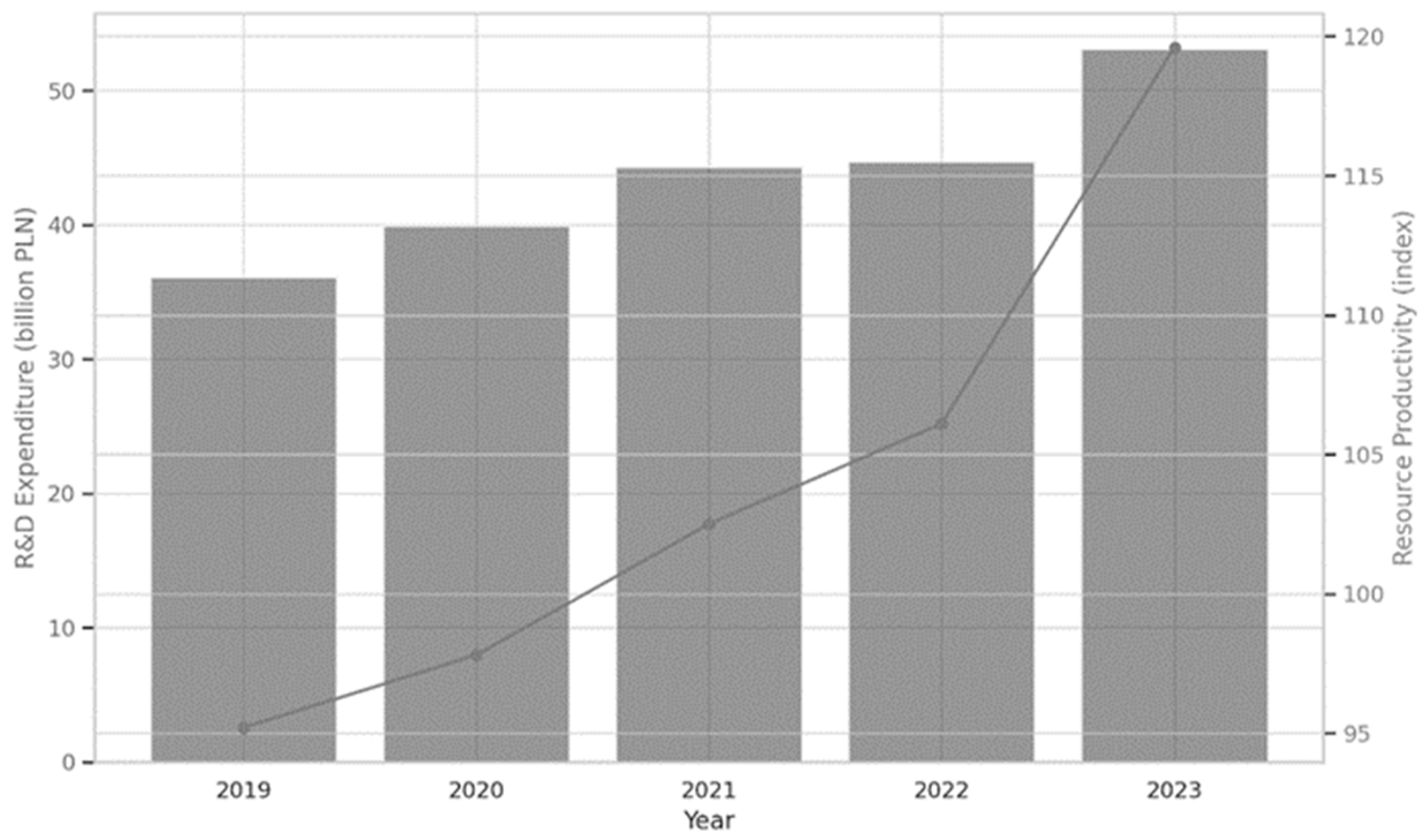
In 2023, expenditure on research and development (R&D) in Poland reached PLN 53.1 billion, accounting for 1.56% of GDP and marking an 18.8% increase compared to the previous year (Statistics Poland). During the same period, the resource productivity index rose by 12.7% (
Figure 1).
The simultaneous increase in R&D expenditure and resource productivity may indicate a positive link between investments in knowledge development and the overall efficiency of the economy. This finding is consistent with recent studies indicating that investment in innovation and human capital is a key driver of sustainable productivity growth, particularly in economies undergoing digital transformation [
42]. This finding is consistent with recent studies emphasizing the role of innovation and knowledge investment as key drivers of sustainable productivity growth.
From a broader perspective, these results also align with the concept of sustainable development, where productivity growth is not solely based on resource intensification but increasingly on knowledge, innovation, and efficiency improvements. This shift reduces pressure on physical resources while supporting long-term economic resilience. In this sense, investments in knowledge and innovation contribute not only to productivity growth but also to inclusive and sustainable economic development.
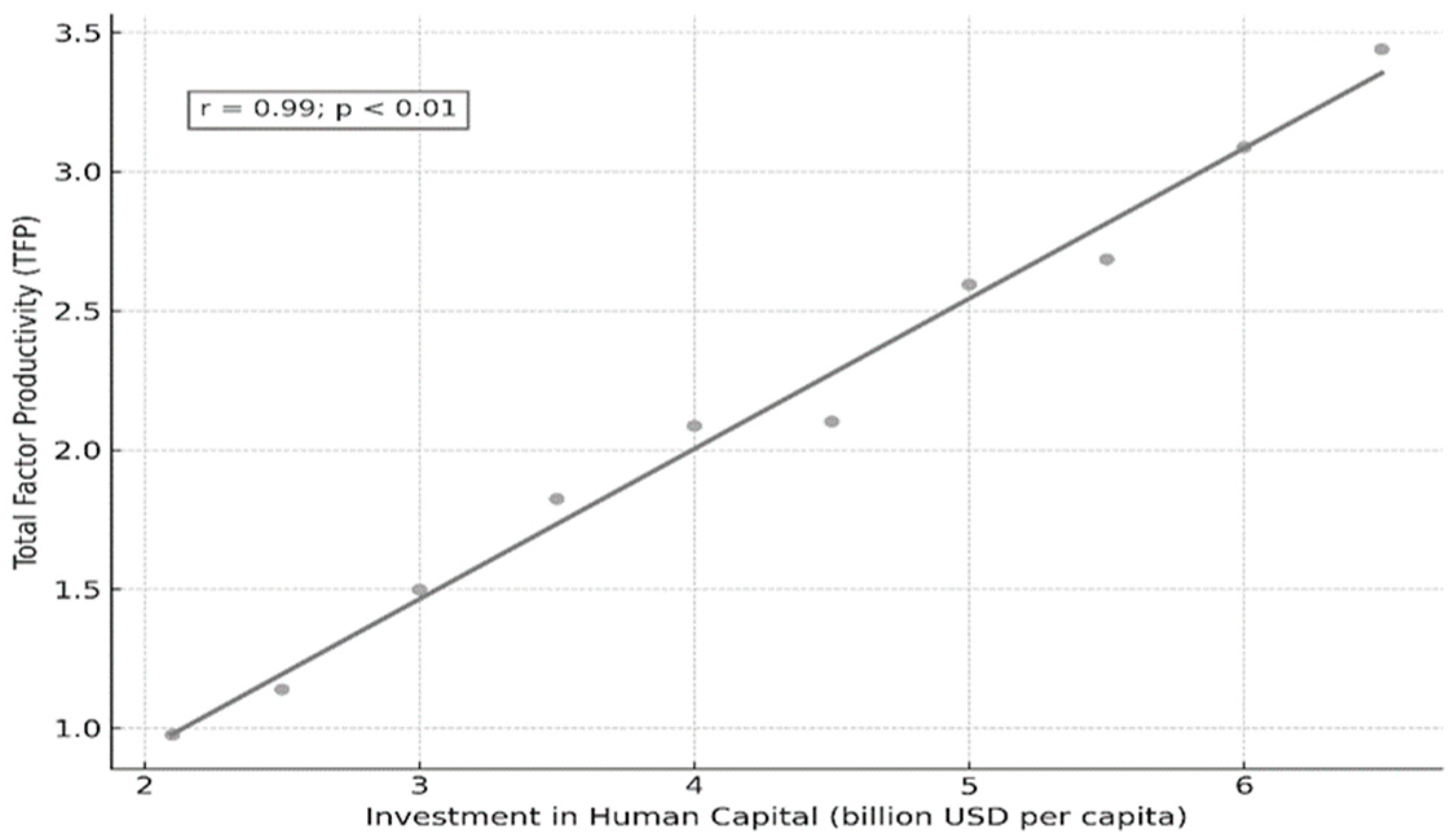
To further examine the relationship between human capital and productivity, a Pearson correlation analysis was conducted. The results indicate a statistically significant positive relationship between education expenditure and total factor productivity (TFP) (r = 0.68;
p < 0.01) (
Figure 2).
The positive correlation suggests that higher levels of investment in education are associated with increased productivity. This result is consistent with the assumptions of human capital theory and confirms findings from recent OECD analyses on the role of education in productivity growth. This supports the theoretical assumptions of human capital theory and is consistent with recent empirical findings emphasizing the importance of education systems in shaping long-term economic performance [
43].
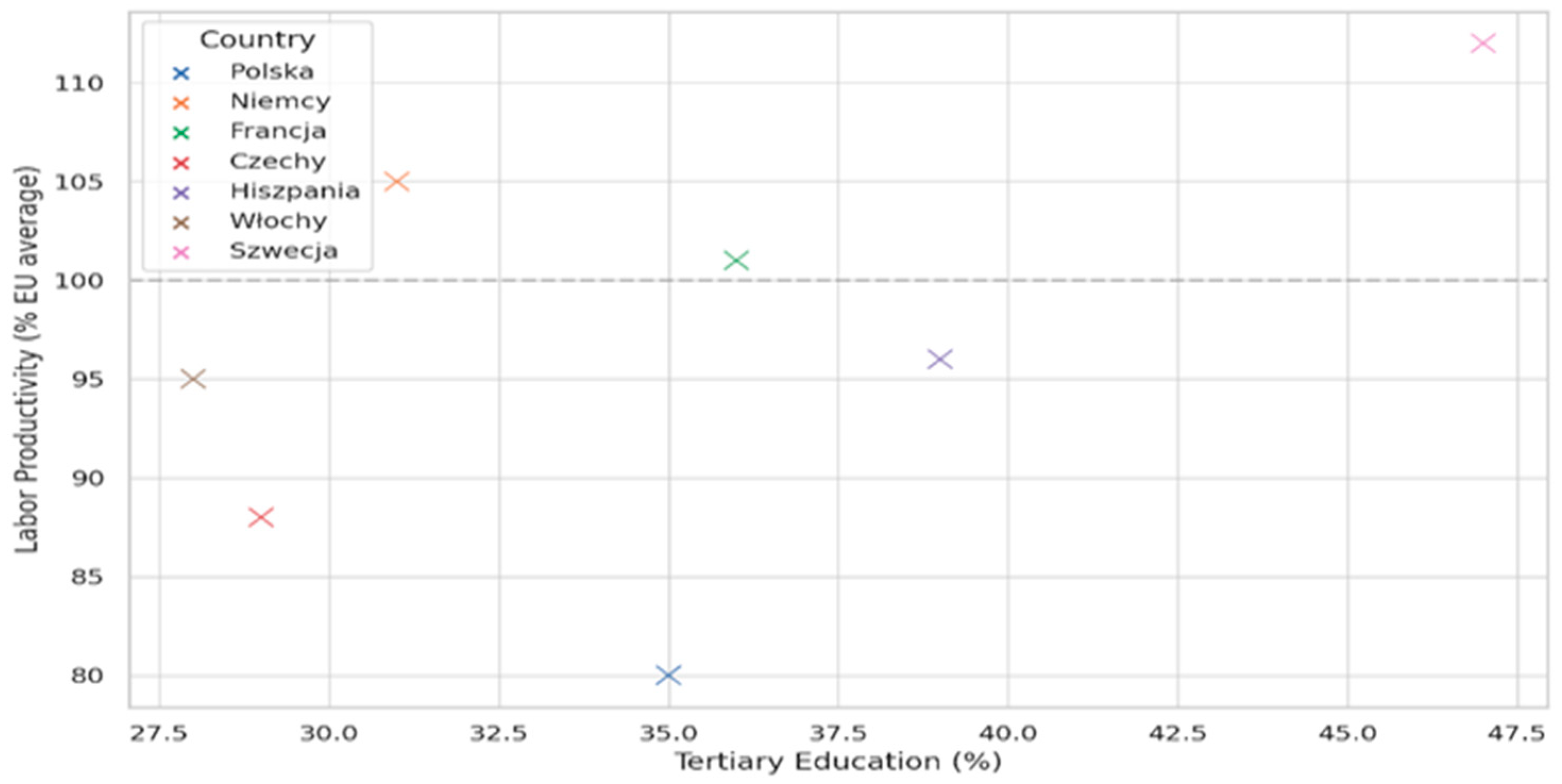
Additional evidence is provided by Eurostat data. In 2023, around 35% of people aged 25–64 in Poland had attained higher education, while labor productivity, measured as GDP per employee, reached nearly 80% of the European Union average (
Figure 3).
The observed relationship indicates that countries with higher levels of educational attainment tend to achieve higher productivity levels. However, the gap between Poland and the EU average suggests that increasing access to higher education alone may not be sufficient. The quality of education, alignment with labor market needs, and the development of practical competencies also play a critical role. Although part of the analysis focuses on Poland, the observed relationships are consistent with broader EU-level trends.
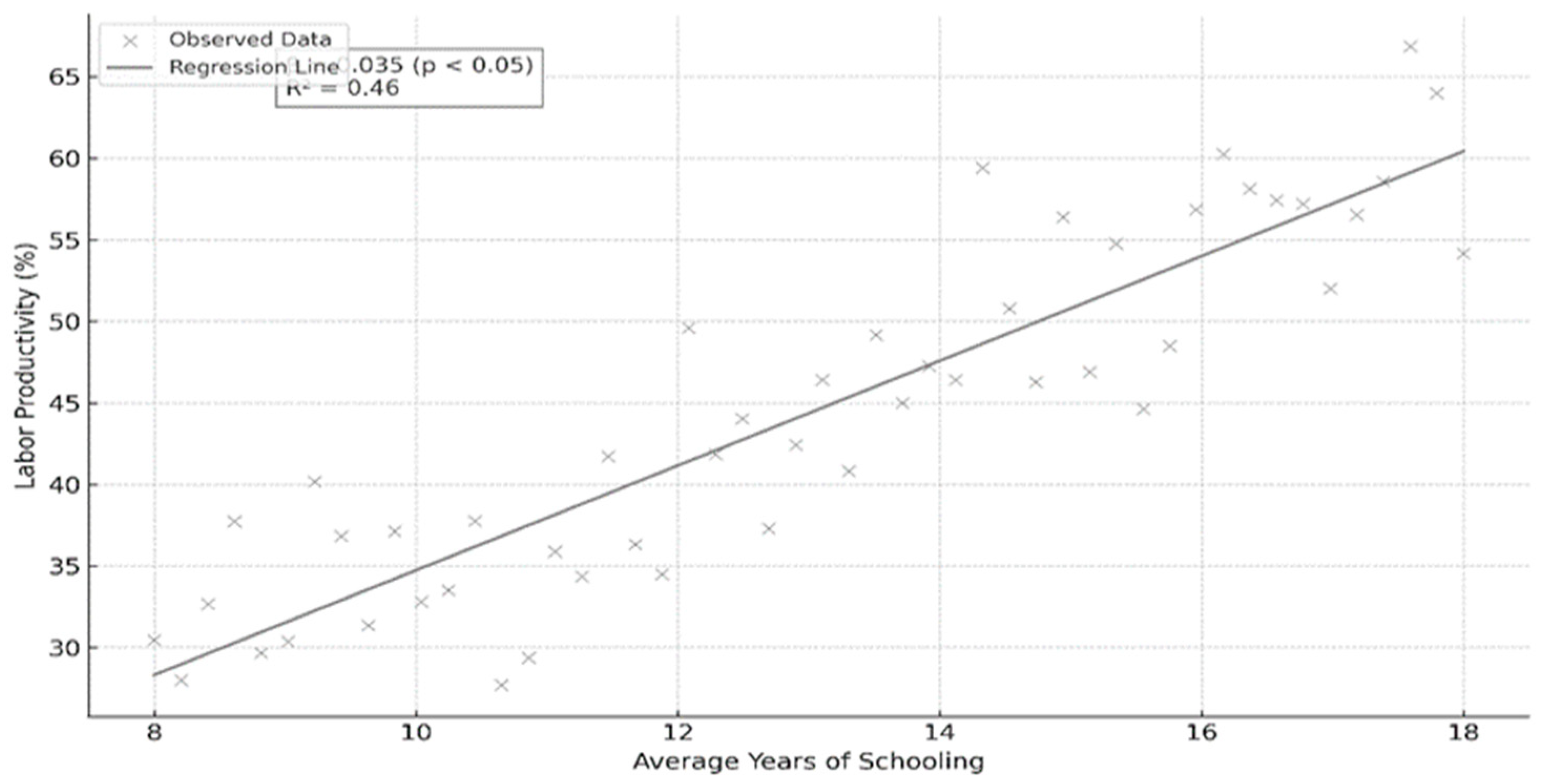
The results of the linear regression analysis further support this interpretation. The model indicates that the level of education has a statistically significant effect on labor productivity (β = 0.035;
p < 0.05). According to the estimates, each additional year of education is associated with an increase of approximately 3.5 percentage points in labor productivity. Furthermore, the coefficient of determination (R
2 = 0.46) suggests that education explains a substantial share of the variation in productivity observed in the sample. However, the findings should be interpreted with caution. The results indicate statistical associations rather than causal relationships, and the direction of causality cannot be determined unambiguously. Higher productivity levels may also encourage greater investment in education. In addition, the regression model does not include a full set of control variables, which may lead to an overestimation of the observed effect. Therefore, the findings should be treated as indicative rather than conclusive (
Figure 4).
These findings reinforce the view that education is not only a social good but also a critical economic investment. At the same time, from a sustainability perspective, improving access to education contributes to reducing inequalities and supporting inclusive growth, which are key objectives of contemporary development policies (
Figure 5).
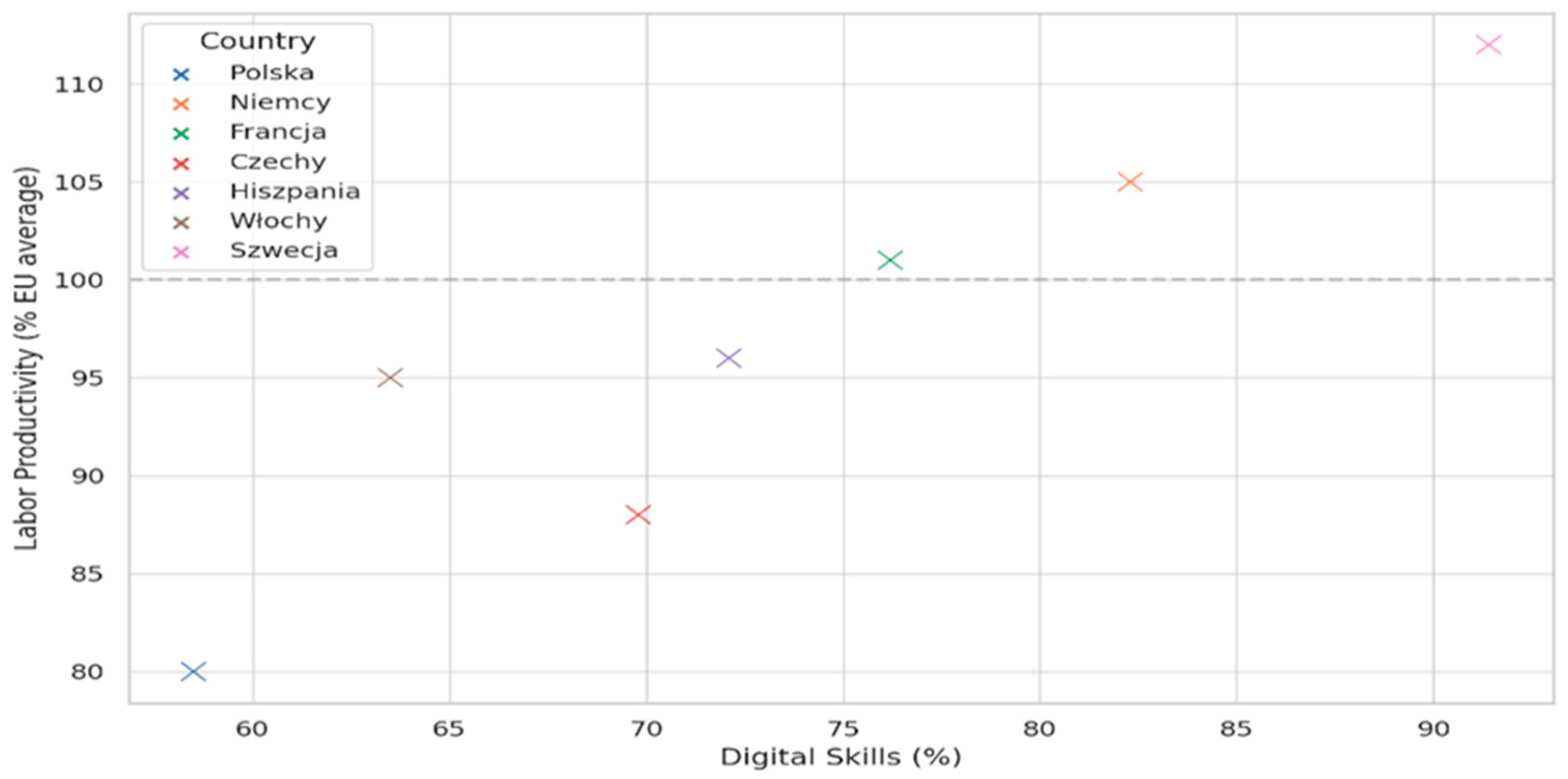
The results indicate that Poland remains below the EU average in terms of digital engagement, which may partially explain differences in productivity levels. The positive relationship between digital skills and productivity reflects the growing importance of digital inclusion in modern economies.
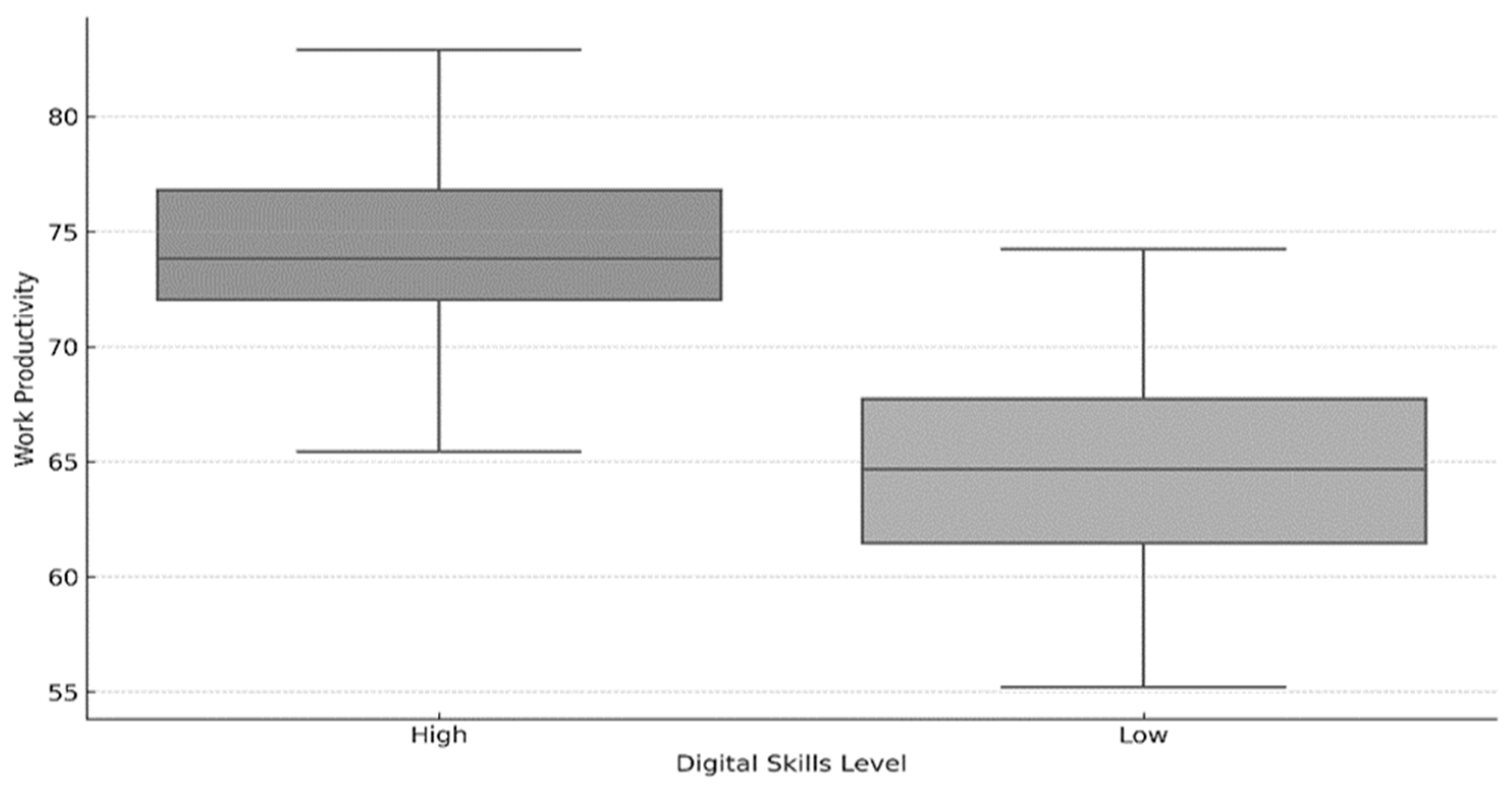
This conclusion is consistent with the results of the Student’s
t-test, which demonstrated statistically significant differences in productivity levels between countries characterized by higher and lower levels of digital competence (
p < 0.05) (
Figure 6).
These findings provide empirical support for H1, indicating that differences in digital competencies contribute to cross-country variation in labor productivity. Countries with more advanced levels of digital competence tend to achieve significantly higher productivity levels. This result extends previous research by highlighting the growing importance of digital competencies as a structural determinant of productivity in the digital economy. This confirms that digital skills are not only a complementary factor but a central component of productivity in the digital economy.
Recent studies emphasize that digital competencies are closely linked to broader sustainability outcomes, including social inclusion, access to public services, and the ability to participate in the digital economy [
47]. In this context, addressing the digital divide becomes a key policy challenge, particularly in less-developed regions.
The results presented above highlight that investments in human capital-particularly in education and digital competencies-play a critical role in shaping labor productivity. However, their significance extends beyond purely economic outcomes.
From the perspective of sustainable development, productivity growth based on knowledge and competencies contributes to the following:
More efficient use of resources;
Increased resilience to technological and economic shocks;
Greater social inclusion through improved access to education and digital tools.
In particular, the development of future competencies supports the transition toward a more sustainable and knowledge-based economy, where growth is driven by innovation rather than resource consumption [
48].
At the same time, the findings indicate that disparities in access to education and digital skills may reinforce existing inequalities. Therefore, policies aimed at enhancing productivity should also focus on inclusiveness and equal opportunities, ensuring that the benefits of digital transformation are broadly distributed across society.
Overall, the results provide empirical support for the research hypothesis and confirm the importance of competencies as a key determinant of labor productivity.
5. Police Implications
The results of the study indicate that the development of future competencies plays a critical role in shaping labor productivity in the context of digital transformation. These findings have important implications for public policy, education systems, and organizational practices, particularly in the context of sustainable and inclusive development.
At the policy level, there is a clear need to strengthen lifelong learning systems and support continuous upskilling and reskilling, especially in the areas of digital, cognitive, and social competencies. Rapid technological change, including the diffusion of artificial intelligence, requires the creation of flexible education and training frameworks that enable individuals to adapt to evolving labor market demands. Public institutions should also promote equal access to education and digital infrastructure in order to reduce disparities in competency development and prevent the deepening of social inequalities [
49].
An important dimension that should be considered in the design of education and training policies is the return on investment (ROI) in different types of competencies. Not all competencies generate the same marginal increase in productivity relative to the resources invested. Existing studies suggest that digital competencies, particularly those related to data analysis, programming, and the effective use of digital tools, tend to offer relatively high returns due to their direct applicability across sectors and their complementarity with technological capital.
In contrast, while social and cognitive competencies (such as communication, adaptability, and critical thinking) are essential for long-term organizational performance, their impact is often more indirect and context-dependent, which makes their measurement and short-term ROI assessment more complex. Therefore, from a policy perspective, a balanced investment strategy is required-one that combines high-return technical skills with foundational competencies that enhance long-term adaptability and resilience of the workforce.
Another important implication concerns the need to improve the alignment between education systems and labor market requirements. Strengthening cooperation between universities, businesses, and public administration can support the development of more responsive and practice-oriented educational programs. In addition, there is a growing need to develop tools and indicators that allow for the measurement of productivity in qualitative terms, taking into account factors such as innovation, adaptability, and collaboration.
From an organizational perspective, companies should invest in knowledge management systems and competence development programs, taking into account not only their strategic relevance but also their expected return on investment in terms of productivity gains. Particular attention should be paid to integrating digital competencies with social and cognitive skills, reflecting the increasing importance of hybrid competency profiles. Furthermore, organizations should adapt their performance measurement systems to include not only quantitative outputs but also qualitative dimensions related to innovation and value creation.
Finally, from a broader sustainability perspective, policies supporting the development of future competencies contribute not only to productivity growth but also to building more resilient, inclusive, and adaptable economies. In this context, competency development should be treated as a long-term investment in sustainable development rather than a short-term response to labor market fluctuations [
3].
In the case of Poland, the results suggest a particular need to strengthen digital competencies and increase investment in education and training systems, as the country still lags behind the EU average in both digital skills and labor productivity indicators.
6. Conclusions
The empirical results of this study indicate a statistically significant relationship between selected indicators of human capital and digital competencies and labor productivity across European Union countries. The conducted correlation analysis revealed a strong positive association between education expenditure and total factor productivity (r = 0.68; p < 0.01), confirming the importance of investment in human capital. This relationship was further supported by regression analysis, which showed that an additional year of education is associated with an approximate 3.5% increase in productivity (β = 0.035; p < 0.05).
At the same time, the findings indicate that digital competencies, reflected in indicators such as internet usage and engagement with e-government services, are closely associated with productivity differences across countries. The results of the Student’s t-test also confirmed statistically significant disparities in productivity levels between countries with relatively high and low levels of digital competence (p < 0.05). These findings provide empirical support for the hypothesis that disparities in digital competencies constitute an important factor explaining cross-country variation in labor productivity.
The functioning of modern organizations increasingly depends on their ability to operate in a complex and rapidly changing environment shaped by technological progress, globalization, and institutional transformations. In such conditions, the sources of competitive advantage are shifting from tangible assets toward knowledge, competencies, and the ability to learn and adapt.
Contemporary organizations are exposed to a growing number of external factors influencing their strategic and operational decisions, including technological change, global diffusion of innovation, regulatory dynamics, and geopolitical risks [
50]. As a result, organizational effectiveness is no longer determined solely by resource availability, but by the capacity to recognize emerging opportunities and respond to them in a flexible and timely manner. This highlights the importance of learning-oriented organizations, in which continuous adaptation and knowledge integration are embedded in decision-making processes.
The findings of this study indicate that selected indicators of digital competencies and human capital constitute important determinants of labor productivity in the context of digital transformation.
At the same time, these competencies should be understood as dynamic and evolving, shaped by interactions between technological, social, and institutional factors. Their development requires a holistic approach that integrates formal education, non-formal learning, and professional experience.
From the perspective of sustainable development, the role of competencies extends beyond productivity growth. The development of future-oriented skills supports inclusive labor markets, enhances adaptability to technological change, and contributes to reducing structural inequalities. In particular, digital competencies are increasingly recognized as a prerequisite for effective participation in economic and social life, making them a critical component of long-term development strategies [
49].
Based on the conducted analyses, several implications can be identified.
First, at the organizational level, there is a need to strengthen knowledge management and organizational learning systems that support continuous competence development. Productivity measurement systems should be expanded to include qualitative dimensions, such as innovation capacity, collaboration, and adaptability. Furthermore, development programs should integrate digital and social competencies, reflecting the growing importance of hybrid skill profiles in modern workplaces.
Second, from the perspective of public policy and educational systems, greater emphasis should be placed on lifelong learning as well as on reskilling and upskilling initiatives, especially in the field of digital and cognitive competencies. Closer cooperation between universities, businesses, and public institutions is equally important for improving the alignment between educational outcomes and labor market expectations. Furthermore, the development of methods for assessing productivity in qualitative terms continues to represent a significant challenge.
Third, in the field of scientific research, further studies should focus on the empirical validation of the relationship between competencies and productivity, as well as on the development of measurement frameworks that capture intangible factors. There is also a need for comparative and longitudinal research examining how competencies evolve across different sectors and institutional contexts [
3].
Despite the insights provided, this study has several limitations. The analysis is based on secondary data, which limits control over data quality, comparability, and methodological consistency across sources. In addition, the use of aggregated indicators may not fully capture micro-level dynamics related to individual productivity and competency development. Therefore, the results should be interpreted with caution.
Future research should focus on empirical analyses conducted at the organizational level, particularly in knowledge-intensive sectors. Special attention should be given to the measurement of digital and cognitive competencies and their direct impact on productivity. Moreover, longitudinal studies could provide deeper insight into how competencies evolve over time in response to technological change, including the growing role of artificial intelligence in the workplace [
51].
In conclusion, future competencies represent a fundamental component of productivity in modern economies. However, their complexity requires an interdisciplinary approach that integrates economic, managerial, and social perspectives. Understanding and effectively developing these competencies will be essential not only for improving organizational performance, but also for supporting sustainable and inclusive economic development. In this context, strengthening future competencies should be treated as a strategic priority for achieving sustainable productivity, enhancing resilience, and supporting digital inclusion.
The findings of this study highlight that investing in future competencies is not only an economic necessity but also a key condition for achieving sustainable, inclusive, and resilient development.