Systematic Review

The Role of Industry 4.0 Technologies for Circular Economy Ecosystem in European Perspective: A Systematic Review and Future Research Directions

Department of Creative Communication, Faculty of Creative Industries, Vilnius Gediminas Technical University, 01141 Vilnius, Lithuania
*
Author to whom correspondence should be addressed.
Sustainability 2026, 18(11), 5350; https://doi.org/10.3390/su18115350
Submission received: 12 March 2026 / Revised: 27 April 2026 / Accepted: 5 May 2026 / Published: 26 May 2026
(This article belongs to the Special Issue Digital Technology-Enabled Sustainable Supply Chain Management)

Abstract

This research synthesizes a more than a decade of empirical and conceptual research on Industry 4.0 technologies with circular economy ecosystem in the European context. The shifting from linear to circular economy requires adoption of I4.0 technologies in particular Artificial Intelligence (AI), Internet of Things (IoT), and Virtual Reality (VR). Yet current scholarship on circular economy ecosystems (CEE) remains theoretically fragmented. To address this gap, we conducted a systematic literature review (SLR) of 94 peer-reviewed journal articles (2010–2025) using the Web of Science (WoS) database following the PRISMA protocol by deploying theories, contexts, methods (TCM) framework and thematic analysis. We developed a comprehensive framework based on addressing key barriers e.g., diverse expectations of stakeholders, resistance to change, sustainable leadership challenges, lack of digitally enabled-capabilities and institutional pressure with the help of important enablers such as AI capabilities, collaboration with stakeholders, frugal innovation and supportive government policies. Our findings contribute to the emerging discourse on how combining digital technologies with circular economy practices can support the development of low emission manufacturing systems, in line with current zero-emission policy goals in the European Union. This review contributes fragmented literature by highlighting theoretical, contextual and methodological gaps as previously disparate perspectives to help align and move research forward. This research contributes to SDG 9- “Industry, innovation and infrastructure” and SDG 12 “Responsible Consumption and Production”.

1. Introduction

Industry 4.0 and the circular economy are emerging as key enablers of not only for sustainable business practices and net-zero goals [1], but also of solutions to business challenges such as supply chain disruptions, rising labor and operational costs in offshore locations, growing consumer demand for ethical and sustainable products, and increasing geopolitical uncertainties that drive the need for more localized and resilient production systems. Industry 4.0 is transforming how we live and work by integrating physical, digital, and biological technologies to support the transition towards circularity [2]. The adoption of these technologies, along with the implementation of the Circular Economy Action Plan (CEAP), has become a political priority for the European Commission to realize the European Green Deal and build a modern, resource-efficient, and competitive economy [3,4].
Three main I4.0 technologies have been identified by scholars as being key value-adding: artificial intelligence (AI), Internet of things (IoT), and virtual reality (VR). AI enables quality control, supply chain optimization, and autonomous decision-making in smart factories, an increasing number of industrial enterprises are utilizing AI to enhance operations and implement novel business models for competitive advantage [5].
Such prior work has generated important insights into the role of Industry 4.0 technologies such as IoT, big data analytics, cybersecurity, blockchain, AI, additive manufacturing, cloud computing, AR, autonomous robots, and cyber-physical systems with circular economy and its drivers such as technological, organizational, governmental, environmental, economic, and social [1,6,7,8,9]. Another stream of reviews explored the needs of stakeholders and their expectations regarding the integration of circularity into businesses and governments, as well as the development of a holistic public policy for awareness of circular business models [10,11]. Some reviews have discussed circular products [12], VR, and augmented reality with CE [13]. ethical value in co-creation [14]. We reviewed the existing literature and found that one of the reviews discussed a business model with circular ecosystems [15]. Similarly, scholars have recently worked on sustainable strategies in relation to CEE [16]. Similarly, a previous review analyzed stakeholder and customer engagement with CEE [17].
However, most of these reviews lack a deeper reflection on the integration of I4.0, specifically AI, IoT, and VR, with circular economic ecosystems. Notably, I4.0 and CE research have recently been criticized for their slow transition to addressing grand challenges for a sustainable future [1,18]. Despite this progress, a primary obstacle to shifting to a circular economy ecosystem is fostering collaboration and disseminating information among a diverse array of stakeholders [19]. Owing to technological advancements and the difficulties associated with transparency, businesses are facing waves of digital transformation [20].
This raises a pressing question regarding the integration of AI, IoT, and VR technologies to achieve CEE [21,22,23]. Few studies have explored the importance of ecosystems for companies to achieve value propositions and disruptive innovation with thorough resilience [24,25,26]. In this review, we address these lacunae through a synthesis and systematic approach to three technologies of I4.0: AI, IoT, and VR, for transformation towards CEE in the manufacturing industry. We focus on theories, contexts, methods (TCM) framework [27]. Also, we applied thematic analysis by exploring key enablers and barriers. Further, some reviews have incorporated aspects of these frameworks [7,10,22]. Prior bibliometric review discussed fourth industrial revolution technologies for the supply chain [28].
A detailed systematic review integrating them within the manufacturing setting has yet to be conducted. Concurrently, the TCM framework facilitates the elucidation of the theories, contexts, and methodologies employed in I4.0-CEE research, thereby enhancing the understanding of knowledge generation and application in this domain. A recent review recommended conducting a literature review of ‘theory-generative’ approaches that yield novel insights through innovative knowledge processes in a specific domain, such as I4.0 within the manufacturing sector [29]. We followed a systematic literature review approach [30] for data collection and used content and thematic analysis to analyze 94 high-quality peer-reviewed journal articles. This review synthesizes fragmented research on two parallel but relevant research streams, indicating a significant research gap: Industry 4.0 technologies and the CEE have been under-explored in the manufacturing context. Consequently, the following research questions arise:
RQ1. What are the theories, contexts and methods for CE ecosystem in the manufacturing industry?
RQ2. What are the key enablers and barriers for a CE ecosystem in the manufacturing industry?
RQ3. What are the future research directions on industry 4.0 and CE ecosystem?
To addressing the main research questions; this review employed TCM and thematic analysis by using systematic literature review (SLR) of 94 peer-reviewed journal articles (2010–2025) using the Web of Science (WoS) database following the PRISMA protocol.
This review contributes in several ways. First, we strengthen the understanding of three key technologies such as AI, IoT, and VR using CEE. Secondly, we recognized theories, contexts, and methods in the manufacturing context. Finally, we developed several new research questions based on our insights to nourish the academic debate and open future directions. This review provides fresh perspectives on the nexus between I4.0 and CEE in European context.

2. Background of the Study

2.1. Industry 4.0 and Circular Economy Ecosystems

The integration of I4.0 and CE is increasingly seen as a way of increasing industrial competitiveness, fostering innovation, and improving operational efficiency [31,32]. Technologies such as AI, IoT, and VR play an important role in accelerating the circularity of manufacturing processes. They enable more intelligent decisions, improved resource efficiency, and more sustainable product lifecycles [33,34]. These technologies are becoming essential components of manufacturing companies’ strategies, and are directly linked to environmental goals and circular practices [35]. Previous research has found that digital platform ecosystems improve sustainable business models [36]. Ecosystem refers to “communities of hierarchically autonomous, yet interdependent diverse actors who collaboratively produce a sustainable ecosystem outcome.” [37]. We took an inspiration by using circular economy ecosystems from [38], “ecosystems that are part of the circular economy aim to extend, cycle, expand, and eliminate resource loops by describing systems of stakeholders (producers, suppliers, etc.), their various roles (orchestrators, brokers, etc.), and the financial, material, and intellectual flows that exist among each of them.”. The conceptualizations details are provided in the Table S5 in the Supplementary Materials [39]. The CE reduces pollution and resource extraction and helps companies comply with strict environmental regulations at the national and international levels [40]. In the European Union (EU), CE plays a crucial role in enabling countries to achieve carbon neutrality by 2050 [3]. However, despite the importance of the movement, recent data shows that the proportion of resources reintegrated into the global economic system has fallen from 9.1% in 2018 to 8.6% in 2020 and 7.2% in 2023 [41].
In the same manner, another review highlighted the important role of CEE in a sustainable future [17]. Previous Reviews on Industry 4.0 and CE in the Table S4 in the Supplementary Materials [39].

2.2. Manufacturing Industry as a Context

Our review focuses on the manufacturing industry as a crucial context. Sustainable manufacturing and digital technology are emerging as essential enablers of innovative business models [42,43]. Simultaneously, I4.0, driven by technologies such as IoT, big data analytics, blockchain, and AI, is expediting the digitalisation of the manufacturing industry and its corresponding supply chains [44,45]. Similarly, I4.0 has profoundly influenced worldwide manufacturing by employing the aforementioned technologies to enhance real-time production and enable vertical, horizontal, and end to end integration [46,47]. Notably, the circular approach requires manufacturers to consider the end of life phase of their goods, enabling more seamless reintegration of materials into the supply chain, thereby preserving value and mitigating environmental effects [48]. However, the convergence of I4.0 technologies with the CEE in the manufacturing setting has not been adequately explored [49,50].

2.3. Role of AI, IoT and VR

The primary rationale for selecting three key technologies of I4.0, such as AI, IoT, and VR, can be achieved in the CE ecosystem [1]. Likewise, with the help of these key technologies, businesses can quickly grow their data-intensive circular business models, which enable new ways to create value for their consumers [51]. In contrast to general-purpose or conventional technology, three pivotal technologies such as AI, IoT, and VR offer distinctive and disruptive solutions for addressing strategic, operational, and organisational challenges in transformative circular business models [52]. These studies stress the use of AI, IoT, and VR specifically in manufacturing for circularity. The comparative overview of AI, IoT and VR for CEE for manufacturing solutions, level of maturity, interoperability challenges and cross-functional deployment (Table 1).
The manufacturing business is being revolutionized by AI, according to a recent report by Deloitte. An impressive 93% of manufacturers believe that AI is an essential technology for driving growth and innovation [53]. According to earlier study, when organisations implement AI seems to be a crucial driver for firms for a transformative circular business model.
The IoT is the second well-known technology; some scholars consider it the most important technology that will help the industry 4.0 paradigm to be applied to circularity [54,55]. However, considering an expected 34 billion sensors deployed across several sectors (e.g., city infrastructure, smart grid, home automation, transportation, industrial systems, healthcare, military, etc.), the IoT might add over $14 trillion to the global economy.
The third crucial technology is Virtual Reality, which allows individuals to completely engage in a hypothetical digital environment [56]. This can be an effective tool for preparing for a circular future. VR encompasses product design, modelling, shop floor management, process simulation, manufacturing planning, training, testing, and verification. Virtual reality offers significant advantages in industrial uses for tackling challenges in manufacturing [57]. VR can serve as an effective instrument for testing and assessing new products and concepts, hence expediting time to market and reducing product costs [58]. The role of I4.0 technologies e.g., AI, IoT and VR and their digital functionality for circular strategies as reported in (Table 2).
This research also discusses the applicability of I4.0 technologies for circular practices among automotive, textile and electronics sectors as reported in (Table 3). This provides cross-sectorial differentiation.

3. Methodology

To provide a comprehensive and structured overview of the existing knowledge, we use a systematic literature review in this study. A systematic review is suitable for summarizing current progress in a given research area and outlining future research directions [30]. Systematic reviews are appropriate when the objectives and parameters of the study are clearly defined, allowing for comprehensive, replicable, and objective analysis [64]. This approach is often used to structure knowledge in broad areas such as sustainability and digital transformation [65]. Systematic reviews are increasingly being applied in a wide range of interdisciplinary areas, including sustainable manufacturing and I4.0 [6], I4.0 technologies with CE [8,10,34], CE [18], organizational change towards the CE [66], digital-sustainable business models [67], and sustainable entrepreneurial ecosystems [68].

3.1. Scope of This Review

We thoroughly reviewed 16 review articles on Industry 4.0 and CE (Table S4 in the Supplementary Materials [40]). However, most of these reviews lack a deeper understanding of AI, IoT, and VR in relation to CEE in the existing literature. The majority of the literature indicates that twin transitions arise from the deployment of AI, IoT, VR, big data, additive manufacturing, cloud computing, and robotics to attain sustainable and circular economic objectives [69]. A recent review suggested exploring the potential benefits of “twin transitions”, such as adopting I4.0 technologies for sustainable competitiveness of the firms and circularity goals [22]. Similarly, a previous review encouraged a comprehensive review to identify barriers and enablers for manufacturing companies in transition to CEE [18]. In the same manner, recent reviews found little knowledge about the practical implications of three key technologies, AI, IoT, and VR, for companies that are changing their linear business models into circular [1,15,16,17]. However, an important shortcoming persists in this area despite the pivotal role of I4.0 technologies in advancing the transition to a Circular Economy. Our literature review examines the potential transition of AI, IoT, and VR technologies into the CEE. We aim to explore various theories, contexts, and methodologies that warrant consideration in the literature on the CEE related to I4.0.
  • Identifying keywords for the search string;
  • Assessing relevant publications, including peer-reviewed journal articles, based on specified inclusion and exclusion criteria;
  • Reviewing articles; and
  • Conducting in-depth analyses and reporting results.
This structured approach allowed a critical examination of how Industry 4.0, AI, IoT, and VR technologies are conceptualized in the CEE.
The Web of Science (WoS) database was used to conduct a systematic search of peer-reviewed journal articles. This database contains all journals that are included on the SCCI and the emerging sources journal list. The WoS is regarded for its rigorous journal selection processes, ensuring high-quality, peer-reviewed content [70]. It provides as a reliable resource for systematic literature reviews, especially for research focused on high-impact and influential studies, with numerous studies on reviews relying only on WoS as the data source [71,72]. While other databases encompass supplementary, we restricted our search to journals indexed in Web of Science to guarantee quality, as all journals in Web of Science undergo an audit to confirm they participate in a double-blind peer review procedure. We took an inspiration from these high-quality review papers by using Wos database [16,59]. We opted for WoS due to its standardized metadata, extensive indexing history dating back to 1900, and reliable indexing of high-quality academic sources, which are essential for generating strong and replicable conclusions.

3.2. Article Selection

We constructed a search string employing Boolean operators and the wildcard “*” operator to accommodate variances in terminology. Keywords for both the industry 4.0 and Circular Economy ecosystems were strategically integrated. This method enhances search inclusiveness and guarantees coverage of all pertinent permutations of key phrases. Table 4 presents our search strings.
At the screening stage, we applied several filters to refine the dataset:
  • Language: English
  • Document type: Journal Article. We limited the review to peer-reviewed journal articles as they offer rigorous and consistent academic evidence suitable for qualitative systematic synthesis [73,74], thereby supporting the aim of the study.
  • Removal of duplicates. Duplicates were removed before screening. This is an essential PRISMA step, as database overlap can inflate the number of records and affect the accuracy of the screening and inclusion process [75,76]. This procedure therefore improves the transparency and reliability of study selection. The detailed screening process is shown in Figure 1.
  • The inclusion criteria were follows:
    a.
    Studies explicitly discussing the intersection of Industry 4.0 technologies and the circular economy;
    b.
    Studies discussed AI, IoT and VR technologies;
    c.
    Articles focusing on the concept of the CE and CEE; and
    d.
    Research situated primarily within the context of the manufacturing industry.
A final sample of 94 publications during period 2010 to 2025 respectively. The summary table of 94 included studies can be found in the Table S1 in the Supplementary Materials [40]. These studies are marked by asterisks (*) in the reference list. This replicable approach aligns with best practices in systematic literature review research [16,17], and supports future studies of a similar nature. To reduce subjectivity and improve assessment reliability, the quality evaluation of the included papers was performed separately by four reviewers, with conflicts resolved through discussion and consensus. We evaluated the full texts of the selected articles and used content analysis. Content analysis enabled the extraction of key elements from each study, including the following:
  • Theoretical foundations (e.g., main theories, concepts, models, or frameworks used);
  • Contextual foundations (barriers and enablers to the integration of I4.0 technologies in CE and CEE); and
  • Methodological choices, including study design (qualitative, quantitative, mixed methods), and type (conceptual or empirical, including review studies).
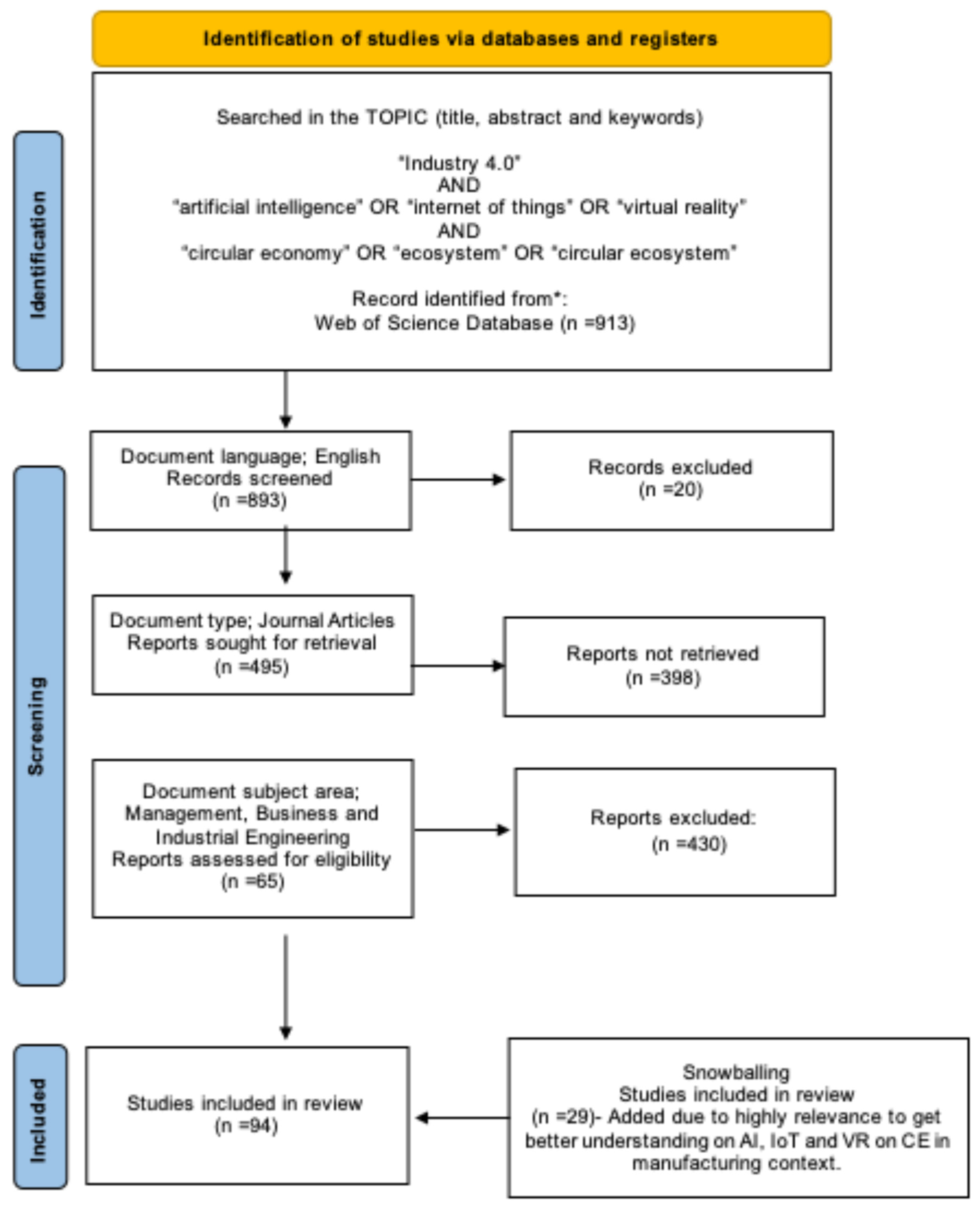
This analytical process allowed us to develop a theory, context, method (TCM) framework, guided by prior studies on structured literature review methodology, and to synthesize the current knowledge landscape surrounding the role of AI, IoT, and VR in supporting CEE within the manufacturing sector [27,77].
Figure 1. PRISMA, adapted from [75,76].
Sustainability 18 05350 g001

4. Results

The results revealed that AI, IoT, and VR technologies catalyze a CEE in manufacturing, highlighting barriers and drivers for I4.0 in CEE. Researchers adopted TCM framework e.g., theories, contexts, and methods to explore I4.0 and CEE. A summary of the articles, including key results, can be found in the Table S1 in the Supplementary Materials [40].

4.1. Descriptive Results

We analysed 94 articles on I4.0 technologies and CEE. The predominant sources of journal articles are as follows: Business Strategy and the Environment (n = 23), Technological Forecasting and Social Change (n = 9), Production Planning & Control (n = 5), Organisation & Environment (n = 3), and Journal of Cleaner Production (n = 4). This significance can be traced to their congruence with the major principles and focus of the CEE and I4.0. However, diversity within the publication landscape is noteworthy, as demonstrated by the variety of journals included in Table 5. Journals including California Management Review, Journal of Business Research, Computers & Industrial Engineering, International Journal of Operations & Production Management, and Ecological Economics. The top 25% of journals in a given subject field are represented by the Q1. The maximum degree of impact and prestige in the subject is shown by publication in a Q1 journal, which is regarded as a significant accomplishment. Journals in the 25.1% to 50% range are included in Q2. These publications are still respected in the academic community and are of a high quality. Lastly, the journals in the top 10% for that discipline according to the Journal Citation Reports (JCR) are known as D1 journals.

4.2. Thematic Analysis

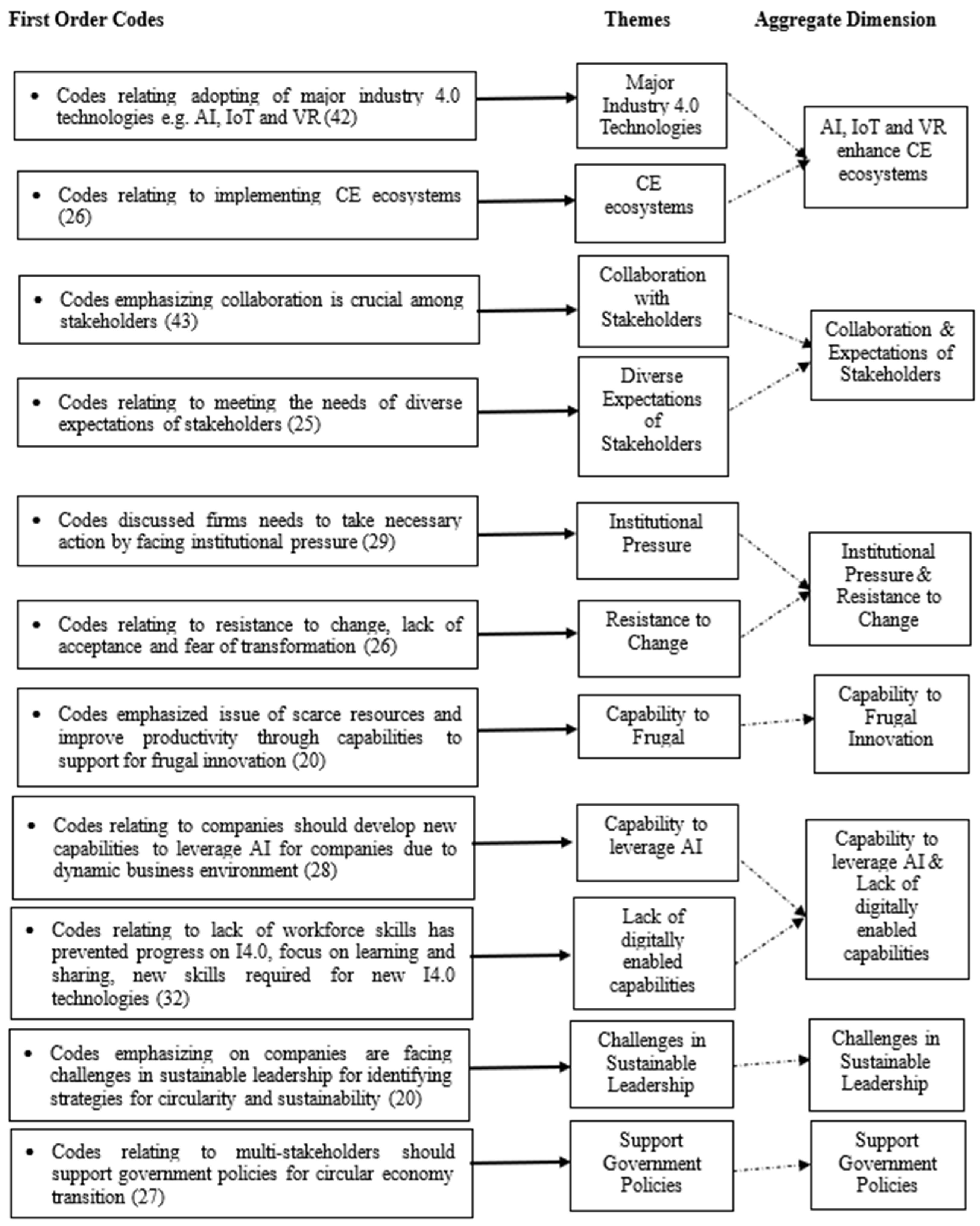
We also applied thematic analysis [78,79] to identify key enablers and barriers in the form of themes and aggregate dimensions related to Industry 4.0 technologies that contribute to the transition towards CE ecosystems. We followed six stages of thematic analysis as delineated by leading researchers in the field [78,79]. After running the open coding procedure, the relationship among the open codes was classified using the axial coding approach, which combines deductive and inductive reasoning. The literature review began with the extraction of 318 first-order codes. We further classified these ideas into eleven second-order themes. Last step, a detailed seven aggregate dimensions (Figure 2). Both authors validated the entire process to make sure there was agreement and that the raters were consistent with each other, the final coding see in the Tables S2 and S3 in the Supplementary Materials [40].
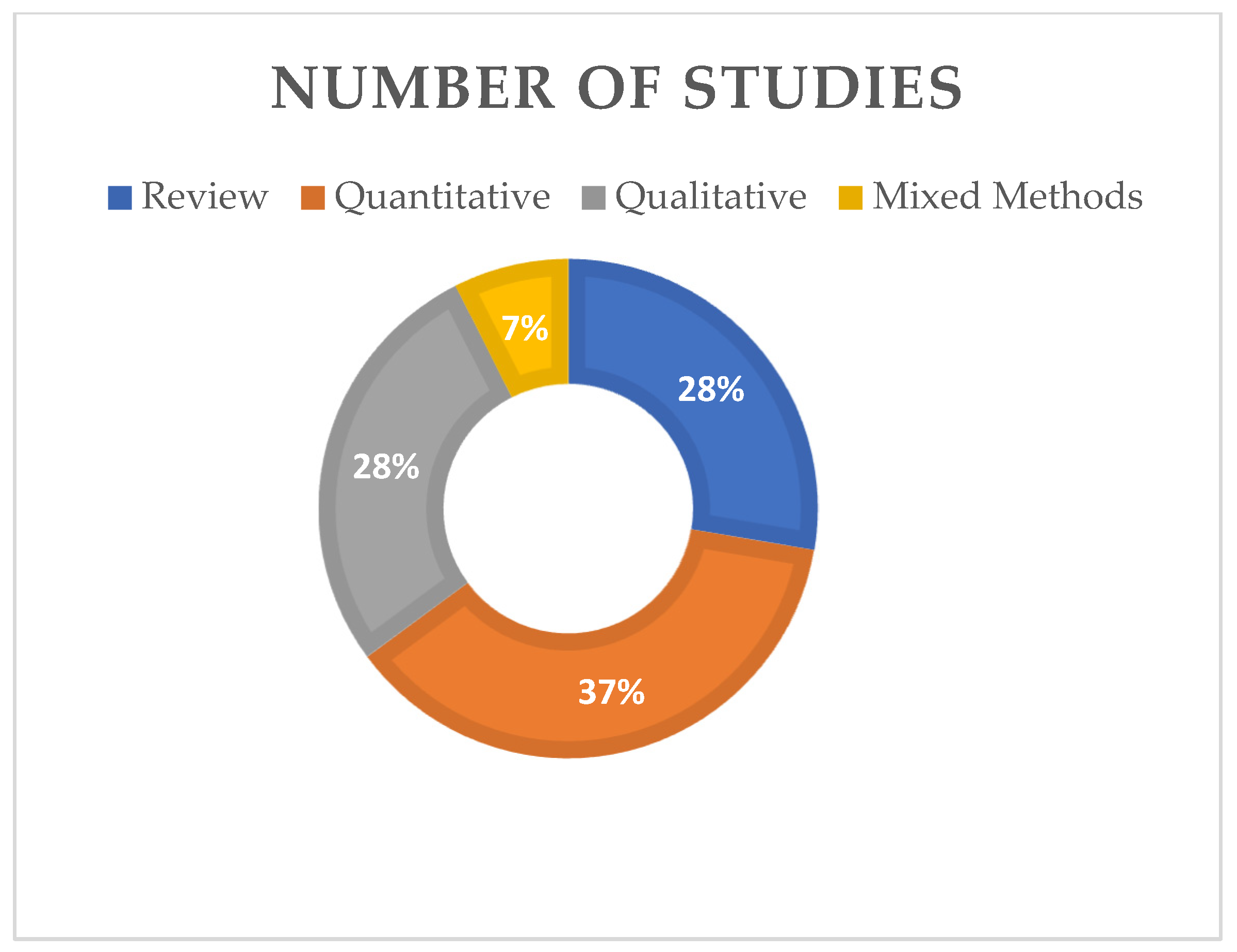
Our review showed that most scholars used quantitative method with 37% on industry 4.0 and circular economy (Figure 3). Similarly, previous scholars have used qualitative methods by using a case study with 28% and the same 28% by using a review method. On the other hand, we found that 7% of the scholars focused very limited interest on mixed method.

4.3. Theoretical Perspectives on the Role of Industry 4.0 Technologies in the Transition to a Circular Economy

Our review shows the application of a variety of theoretical perspectives to examine the role of I4.0, such as AI, IoT, and VR, in supporting the transition to CEE. The ten key theories were identified as outlined in Table 6. As theory helps to frame the research scope, it determines the analytical lens through which technological, organizational, and systemic transformations are understood and explained. The theories identified in the papers are grouped into four categories based on how they are applied in the field analyzed.
The first category included theories on organizational adaptation and strategic management. One of the theories in this category is the dynamic capabilities theory, which focuses on how firms respond to environmental opportunities and risks, build resilience, and configure resources to maintain focal points [80]. In the context of a CE, this theory is particularly relevant for explaining how firms adapt, reconfigure, and realign their assets to remain competitive and sustainable [81]. However, current research has paid little attention to how dynamic capabilities operate at the ecosystem level [82,83]. The second theory, Paradox theory, allows us to explore the tensions that arise when organizations simultaneously pursue both circularity and profitability. This simultaneous need to achieve environmental objectives while maintaining performance indicators often creates paradoxical challenges [84]. The third theory, issue life cycle theory, is used to study how organizations respond to changing societal pressures related to sustainability. This theory helps to understand how change takes shape in organizations in response to the challenges of the CE [85].
The second category of theories focuses on institutional and system-level pressures. Institutional theory explains how firms respond to external pressures by imitating or combining the demands of external actors. This theory explains that a shift towards a circular business model is a rational response to the challenges of social legitimacy [31,86]. To explore the CE at different levels of analysis, scholars have also applied a multi-level perspective. This allows us to understand circular economy changes at the micro (firm/individual), meso (regional/industrial networks), and macro (policy/national) levels [87], making it particularly relevant for studying complex changes in an ecosystem.
The third category of theories focuses on collaboration and networking. The First is the theoretical ecosystem perspective, which emphasizes the collective role of workers, customers, suppliers, government actors and civil society in promoting circular economy practices using digital technologies [15,17,23]. This approach reflects the growing importance of collaborative, cross-sector networks for building CE ecosystems. The next theory in this category is the support network configuration theory. In this context, it is used to address issues related to the pooling of resources such as materials, information, and finance in digital CEE. This perspective highlights the value of digital technologies in optimizing flows and interactions between ecosystem actors [23]. Finally, stakeholder theory is used to understand how a successful transition to a circular economy depends on understanding the expectations and interests of multiple stakeholders and how they influence system-wide collaboration [17,88].
The fourth category comprised of only one theory. Systems thinking theory is an important theoretical approach that allows researchers to explore how changes in one part of a CEE affect other components, including stakeholder behaviour and feedback loops, either positively or negatively [89].
These theories can be broadly grouped into four categories: those that focus on organizational adaptation and strategic responses, those that examine institutional and system-level pressures, network-based approaches, and systems thinking. The application of these theories reveals a growing shift in the literature from firm-centered analyses to a more holistic, multi-actor, and systems-oriented understanding of the CE.
Table 6. Theories used in the literature.
CategoriesTheoryContributionReferences
First Category: Organizational Adaptation and Strategic ManagementDynamic Capability Theory (DCT)CE principles achieve organizational resilience by using DCT as theoretical perspective
DCT has used as theoretical lens to examine role of AI, IoT, BDA and blockchain technologies for implementation CE.
[80,83]
Paradox TheoryTo explore how paradoxical tensions of circular business model towards CE
Paradox theory has been employed to examine IoT and BDA on environmental sustainability and operational performance via mediating role of CE implementation
[84,90]
Issue Life Cycle TheoryTo explore organizational drivers and challenges for CE implementation through issue life cycle theory[85]
Second Category: Institutional and System-level Pressures Institutional TheoryTo explore the role of digital technologies fostering business circularity through institutional theoretical lens
To investigated digital transformation with CE performance by using institutional perspective
[31,91]
Multi-level PerspectiveTo explore circularity of product-service systems by using multi-level perspective[87]
Third Category: Collaboration and Networking Ecosystem PerspectiveTo explore institutional voids on entrepreneurial ecosystems by using ecosystem theory.
To explore digital technologies on circular ecosystems with an ecosystem perspective
Utilizing ecosystem perspective, stakeholder and customer engagement plays a crucial role in transformation to CE ecosystems
[17,23,92]
Support Network Configuration TheoryTo explore digital technologies on circular ecosystems by using support network configuration perspective[23]
Stakeholder TheoryTo explore role of multiple stakeholders in circular ecosystem by using stakeholder theory[88]
Fourth Category: Systems ThinkingSystems Thinking TheorySystems thinking theory has been employed to explore circular economy transition[89]

4.4. Contexts: Barriers and Enablers Transition Towards CE Ecosystem

Following the TCM framework [40], the analysis of context reveals key barriers and enablers in the transition toward CEE. Our review identified several barriers that hinder the practical implementation of I4.0 technologies and the shift to circularity. These include diverse stakeholder expectations, resistance to change, challenges in sustainable leadership, lack of digitally enabled capabilities, and institutional pressures. A major obstacle to advancing toward a circular economy lies in fostering collaboration and information sharing among a wide range of stakeholders with differing needs and expectations [19]. Research highlights that companies must navigate conflicting interests among multiple stakeholders, including customers, employees, suppliers, top management, government bodies, and society, making the transition to circular models highly complex [93]. Similarly, previous reviews have shown that stakeholder expectations can pose barriers to CE adoption in specific industries such as fashion [94]. Although the emphasis is frequently on enhancing value, managerial actions may diminish value for specific stakeholders while generating value for others [95]. Therefore, we suggest that companies must actively consider and balance the interests of all stakeholders involved in the transition. As previous studies have shown [96], firms that align their circularity and sustainability goals with stakeholder collaboration are more likely to achieve long-term success, as shared goals foster greater commitment across the ecosystem.
So far, challenges have arisen for companies and the ecosystem as a whole when CE is implemented [15]. Companies operating on circular logic would adopt principles such as reduction, reuse, recycling, and recovery [97]. For instance, the extent to which an organization adopts these concepts and modifies its existing business model determines its position on a continuum between linear and circular logics [98]. Resistance to change is a hurdle for companies to shift from a linear to circular business model [66,99]. The disparity between an organization’s present position on that continuum (primarily linear logic) and its aspired future state (predominantly circular logic) signifies the extent of transformation required [100]. More importantly, the culture of resistance to the CE manifests at three levels: managerial opposition, isolated CE efforts, and minimal engagement in management strategies [101].
The CEE is challenging to implement due to a lack of sustainable leadership for stakeholder engagement, disruptive innovation, and long-term activation. Sustainable leaders are CEOs, board members, and other leaders who have the mindset and skills to transform their companies into a sustainable future by addressing grand challenges (Associates). In addition, a new technique for analyzing how leaders make sound strategic judgments in a complex environment is sustainable leadership, which incorporates Industry 4.0 in the field of CE [102]. The convergence of digital transformation and social change creates a multifaceted environment for business leaders [103].
Achieving CEE success requires transformative changes within each company’s business element [50] and the adoption of digital technologies for transition [22]. Furthermore, the lack of digital-enabled capabilities presents a considerable challenge for companies and slows their speed towards circularity [36]. Indeed, it is widely acknowledged that companies need digitally-enabled capabilities such as business analytics, ICT proficiency, digital learning, big data, and AI cognitive intelligence to facilitate the industrial transition to a circular economy and digital products [1]. Notably, digitalization capabilities enable organizations to pervasively connect digital assets and business resources, use digital networks, and create goods, services, and processes for organizational learning and consumer value generation [104]. Another barrier is institutional pressure. The shift from a linear to circular economy is influenced by institutional stimuli and pressures, including governmental actions, legislation, requests from consumers and industry associations, and the successful adoption of methods or technologies by other enterprises [105]. Institutional pressure pushes companies to adopt circular behaviors, environmental standards, policies, and technologies [106].
Our review suggests some of the potential enablers for the CE ecosystem through Industry 4.0, such as companies’ capabilities to leverage AI, collaboration with stakeholder, capability to support frugal innovation, and supporting government policies.
The first enabler is a company’s capability to leverage AI, which has significant potential to facilitate innovation in circular business models [107]. AI capability is defined as a firm’s ability to select, coordinate, and grow AI-specific resources [108]. However, AI capabilities are crucial for establishing competencies, routines, and procedures to actualize circularity principles [109]. The integration of AI capabilities also influences competitive capabilities and performance [110]. We shed light on the second enabler’s collaboration with stakeholders. Organizations often collaborate with stakeholders, such as customers, communities, and other companies, to achieve collective goals, which can affect their legitimacy and access to information [111]. Nonetheless, it seems that CE studies have not thoroughly investigated how stakeholder collaboration guided by governance could enhance the systemic nature of a CEE [81,112]. The implementation of Industry 4.0 may necessitate collaboration among stakeholders, including governments, policymakers, industries, and end-users [113,114].
This review indicates the capability of the third enabler to support frugal innovation. Frugal innovation can accelerate CE by minimizing the use of material and enhancing performance [115]. Prior research indicates that frugal innovation serves as a potential factor in the relationship between innovation generation or adoption and the implementation of circular economy concepts [116]. Another study indicated that frugal innovation enhances performance during technological turbulence in organizations that employ bricolage, which involves obtaining, storing, combining, and utilizing readily available resources for CE implementation [117].
The fourth enabler is supporting government policies for circular economic implementation. Companies cannot address grand challenges independently; governments must play a leadership role in collective and collaborative initiatives [118]. The European Commission initiated the Circular Economy Action Plan to regulate product design, promote circular economy practices, stimulate sustainable consumption, and ensure waste prevention while maximizing the retention of resources within the EU economy [3]. The literature highlights the crucial significance of policies in shaping the industrial strategy of the European Union [119]. More importantly, institutions, governments, and cities are essential to the growth of a circular economy. They direct and drive innovation and investment [120]. In addition, governments can choose from a broad variety of policy interventions and financial strategies to facilitate the transition of energy and industrial systems, enhance energy efficiency, address environmental degradation, and conserve and restore natural capital [121]. It should be noted that government policies to encourage direct and indirect investments in a circular economy are heavily dependent on infrastructure [122].

4.5. Methods in Industry 4.0 and CE Ecosystem

As noted earlier, our review revealed that quantitative methods dominate the research landscape, accounting for 37% of studies exploring the intersection of Industry 4.0 technologies and the circular economy (Figure 3). In contrast, only 7% of studies employed mixed methods, indicating a limited focus on methodological integration within this domain.
The underrepresentation of mixed-methods studies is a notable gap. Such approaches are essential for increasing the validity, reliability, and richness of evidence, as they allow researchers to triangulate findings and reduce confirmation and personal biases. Mixed-method designs provide a more holistic view of complex transitions, such as the integration of I4.0 technologies into CEE.
Another methodological limitation is the lack of studies that use non-linear analysis methods, which are appropriate for examining the dynamic and nonlinear nature of CEE.
Furthermore, a significant part of the existing research focuses on large companies, with limited attention paid to small and medium-sized enterprises (SMEs). Given that SMEs represent a critical segment of most economies, future research should include survey-based studies targeting SMEs, ideally using multi-source, multi-level, and time-lagged data to improve generalizability and causal inference.

5. Theoretical Explanations of Barriers and Enablers in Circular Economy Transition Enabled by Industry 4.0

5.1. Theoretical Explanations of Barriers

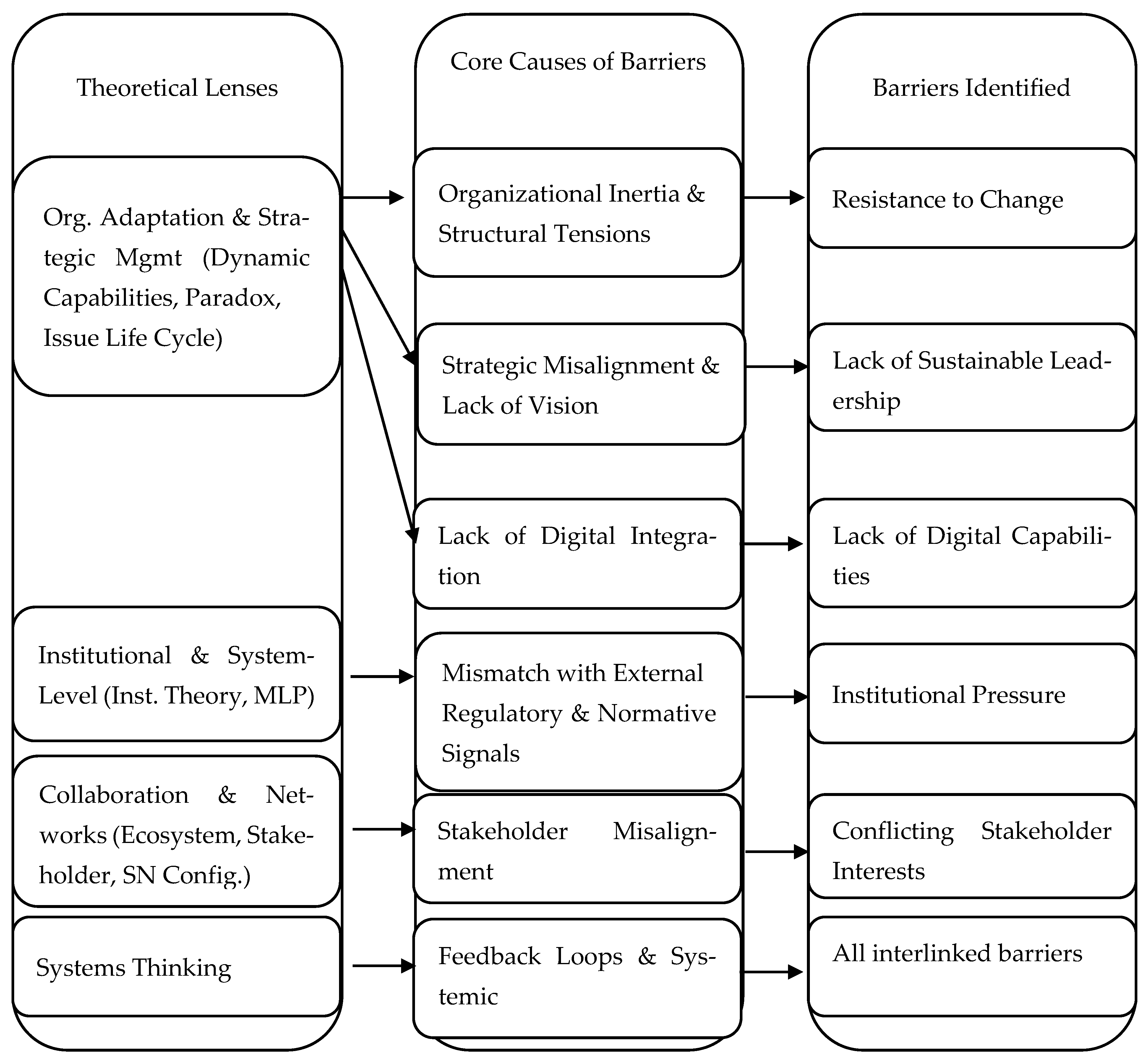
Our review highlights the use of a wide range of theoretical lenses to examine how Industry 4.0 technologies specifically AI, IoT, and VR support the transition to CEE (Figure 4). The ten key theories were identified and grouped into four categories based on their application focus: organizational adaptation and strategic management, institutional and system-level pressures, collaboration and networks, and systems thinking.
Collaboration and network-oriented theories (e.g., ecosystem perspective, stakeholder theory, and supply network configuration) collectively explain why conflicting interests among multiple stakeholders persist. These theories shed light on how value creation is perceived and distributed differently across stakeholders, leading to misalignment, and emphasizing the importance of multi-actor coordination and shared goals. These theories suggest that technologies, such as IoT and AI, can improve stakeholder engagement and reduce tensions across ecosystems when used to enhance transparency and data sharing.
Similarly, theories from the organizational adaptation and strategic management group, such as dynamic capabilities theory, issue life cycle theory, and paradox theory, help us to understand resistance to change not just as a behavioral issue, but as a function of organizational inertia, structural tensions between sustainability and profitability, and insufficient internal learning mechanisms. From this perspective, AI-driven analytics and VR simulations can serve as strategic tools to foster organizational learning and reduce uncertainty, thereby supporting more effective change management.
Theories focused on organizational adaptation and strategic management (e.g., dynamic capabilities, paradox theory, and issue life-cycle theory) explain the barrier of the lack of sustainable leadership, as it is closely linked to the inability of top management to realign the company’s vision and strategy with the goals of the circular economy under conditions of complexity and disruption. These theories explain how strategic judgement and learning can be enhanced by using digital tools. These theories best explain the lack of digitally enabled capabilities and show that firms struggle to integrate digital technologies when they lack the sensing, seizing, and reconfiguring capabilities required for digital circular economy transformation.
Institutional and system level theories (e.g., institutional theory, multi-level perspective) show how institutional pressures from regulation to normative expectations—shape organisational responses to the circular economy. These theories also show that a successful transition requires the alignment of internal transformations (e.g., digital skills and circular models) with external signals such as government policies and industry standards.
Finally, systems thinking offer a holistic explanation of how these barriers interact dynamically, generating reinforcing feedback loops (e.g., low collaboration undermines capability development, which further fuels resistance). In theory, Industry 4.0 technologies such as AI, IoT, and VR, when viewed through these lenses, can serve as enablers of transformation: AI supports intelligent decision-making to align sustainability and business performance; IoT enables data sharing and real-time coordination across networks; and VR promotes experiential learning and stakeholder engagement. Together, the integration of these theoretical perspectives helps illuminate not only the surface barriers, but also the underlying structural, behavioural and institutional causes and how digitally enabled capabilities can be used strategically and collaboratively to overcome them.

5.2. Theoretical Explanations of Enablers

In this section, we show how the theoretical perspectives reviewed provide explanations for the enablers that can significantly increase the impact of Industry 4.0 technologies especially AI, IoT, and VR on CEE. Within the group of organizational adaptation and strategic capabilities, dynamic capabilities theory explains what new opportunities organizations can exploit through AI [107]. Digital technologies enable inter-organizational collaborative practices in line with the circularity principles [109]. In addition, paradox theory helps to understand how firms overcome the tensions created by the use of AI to increase their productivity and maintain resource efficiency, all of which increase the value of lean innovation [117]. Collaboration and network theories, such as the ecosystem perspective and stakeholder theory, provide insights into how groups collaborate. These theories explain how organizations collaborate with customers, communities, policymakers, and supply chain partners to co-create circularity and improve legitimacy [111,112].

6. Future Research Agenda and Implications

6.1. Theories to Explore Industry 4.0 and CE Ecosystem

The transition to CEE through I4.0 technologies is seen as both a challenge and an opportunity for businesses, scholars, political leaders, and societal actors [123], making it more difficult for companies to adopt. By addressing these hurdles, support network configuration theory, institutional theory, and multi-level perspectives can be applied, as the CEE is a dynamic process that necessitates a configuration approach. At the same time, companies are facing diverse conflicts and tensions in the shift from linear to circular. They are mainly focusing on profits and ignoring environmental and social sustainability, so they need to apply paradox theory to mitigate conflicts and tensions [84,124], managing responsibly businesses for CE processes and products to create an ecosystem for addressing grand challenges [124]. There is a lack of dynamic capabilities and competencies in companies, so they should utilize dynamic capability theory by using its elements of seizing, sensing, and transforming [81]. These gaps have been used to generate potential research questions, which are provided in Table 7.

6.2. Contexts for Investigating Industry 4.0 and CE Ecosystem

Contexts are vital for understanding Industry 4.0 and the Central and Eastern European sectors, regions, and countries. The majority of research has been performed in the industrial sector, with 45 studies (e.g., [83]). The textile sector ranks as the second most significant, comprising 8 research (e.g., [125]). The third sector of the automotive industry is deemed essential for the circular economy ecosystem, as evidenced by seven studies, including [126]. The fourth sector is transport, comprising four studies (e.g., [92]). The food sector transitions from linear to circular, as evidenced by three studies, including [127].
This review suggested that future scholars may explore the adoption of Industry 4.0 technologies and the Circular Economy in the Global South Context because companies in these economies are at an early stage due to lack of investment, regulatory challenges, resistance to change, infrastructure hurdles, connectivity issues. Several studies discussed industry 4.0 and circular economy in Global South perspective [61,128], CE practices and sustainable performance at micro-level [129]. The shift towards Industry 4.0 and the circular economy (CE) is becoming increasingly vital for the manufacturing sector within the framework of growing for these economies [130,131]. Another interesting context could be cross-country (developing and developed) and cross-sectoral (e.g., manufacturing and service). This review found that previous studies have mainly explored CE in large companies in developed countries. Also, our review suggested environmental dynamism as a contextual force, so companies need to sense the degree of change and unpredictability in an external environment. Hence, our review suggests examining the role of I4.0 and CE in SMEs (Table 7).

6.3. Methodologies to Examine Industry 4.0 and CE Ecosystem

Regarding methodological directions and shortcomings, our review found that most scholars focused on linear regression-based techniques, such as PLS-SEM on CE transition [63,83,131]. The few extant studies have used fsQCA because the CE is a non-linear system and its configurational [132,133,134]. Therefore, this review suggests that scholars should apply fuzzy-set comparative analysis (fsQCA) because CE ecosystem is multi-causal system needs comprehensive technique as conventional quantitative methods fail to deliver. Another rationale for using fsQCA is that CE is a dynamic process that requires configurational thinking and theorizing to implement a new circular business model [135]. The fsQCA method identify the ways in which specific causal factors influence CE ecosystem by defining the interconnections between a set of related elements. In order to better forecast and explain real-world business events, fsQCA provides the chance to gain a deeper grasp of the link between factors. The fsQCA is causal models for predicting both high and low circular economy scores. Similarly, economic systems are non-linear and exhibit feedback effects from acts, demonstrating ordered complexity and unpredictable outcomes [136]. This review suggests that scholars should employ mixed methods by using a data triangulation technique. In future research directions, scholars can deploy a time-lagged design using multi-sourced data and multi-levels, such as firm, industry, and societal levels, for CE transition. ISM, DEMATEL, and SEM were used to obtain robust results. Finally, a prior bibliometric review suggested exploring how technological capabilities improve supply chains for sustainable production [28].
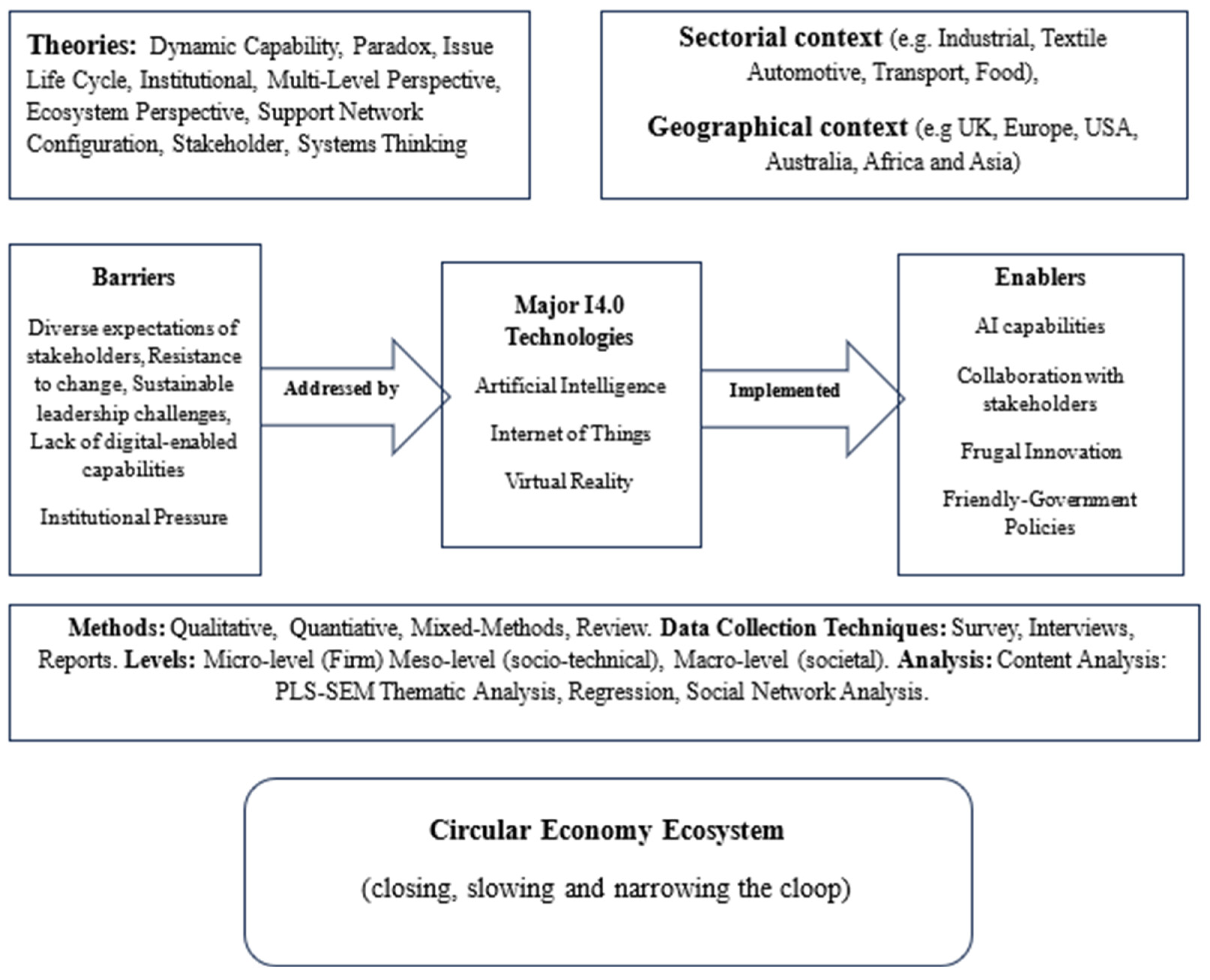
Our review identified ten key theories grouped into four categories based on their application focus: organizational adaptation and strategic management, institutional and system-level pressures, collaboration and networks, and systems thinking (Figure 5). The grouped theories identified in our review lead to a better understanding of the deeper causes of the barriers hindering the effective implementation of Industry 4.0 technologies in the transition to a circular economy. Our systematic review identified four potential enablers for the circular economy at the industry 4.0 level: companies’ ability to leverage AI, collaboration with stakeholders, support for frugal innovation, and friendly government policies.
Our analysis highlights five main barriers: conflicting interests among stakeholders, resistance to change, lack of sustainable leadership, lack of digital capabilities, and institutional pressure.

7. Conclusions and Implications

7.1. Theoretical Contributions

The main theoretical and methodological contribution of this research lies in in combining the Technology–Context–Mechanism (TCM) lens with thematic analysis to develop an integrative framework for examining how manufacturing companies adopt AI, IoT, and VR technologies within circular economy (CE) ecosystems. The framework synthesizes patterns identified in the reviewed literature and clarifies the main factors that shape adoption in the manufacturing context. In this respect, the study responds to calls by for further investigation of the intersection between Industry 4.0 and CE ecosystems, particularly in manufacturing settings.
Second, the review identifies a set of barriers that influence adoption process including diverse expectations of stakeholders, resistance to change, sustainable leadership challenges, lack of digital-enabled capabilities and institutional pressure. These barriers should not be interpreted as universally present across all firms; rather, they represent the most frequently observed constraints in the literature reviewed.
Third, this study identifies several key enablers e.g., AI capabilities, collaboration with stakeholders, frugal Innovation, friendly-government policies. By consolidating these enablers, the review extends prior research on the conditions under which digital technologies may support CE implementation.
Fourth, the findings contribute to the ongoing discussion on the potential benefits of key three I4.0 technologies AI, IoT and VR in supporting CE-related practices in manufacturing. The review results suggest that these technologies may facilitate activities such as resource monitoring, predictive maintenance, process optimization, product traceability, simulation, and decision support. However, the strength and scope of these benefits vary across contexts, and the current evidence base remains uneven. Accordingly, the contribution of this study maps these potentials rather than claims definitive effectiveness across manufacturing sectors.
Finally, this research highlights the role of CE ecosystem. Previous studies have argued that CEE are important for shifting from linear to circular systems by improving resource efficiency and material flows through feedback loops and interdependencies among multiple technologies and stakeholders [137,138]. The present review builds on this discussion by showing that technology adoption is embedded in broader networks of actors and institutions operating at the micro, meso, and macro levels.

7.2. Practical Implications

This review offers several practical implications for companies, policymakers, and practitioners involved in circular transition initiatives. First, the findings indicate that policymakers can support the transition to a circular economy by creating enabling regulatory and institutional conditions for Industry 4.0 adoption. This is particularly relevant in relation to barriers identified in the review, such as regulatory uncertainty, institutional pressure, and the limited availability of sustainability-oriented leadership and digital capabilities.
Second, the review suggests that companies should strengthen collaboration across suppliers, customers, employees, and other stakeholders, as circular implementation depends not only on technological investment but also on coordination across the wider value network. Such collaboration can support knowledge sharing, improve acceptance of change, and enhance the practical application of CE principles.
Third, from a practitioner’s perspective, AI, IoT, and VR should be approached as potentially valuable tools for digital and circular transformation, rather than as universally applicable solutions. as an opportunity not just as a challenge [139]. Examples such as BMW’s AI-powered dismantling system and chemical recycling initiatives, Audi’s SteelLoop initiative, and Renault’s Refectory illustrate how digital technologies may support circular practices in specific organizational settings. At the same time, these examples should be interpreted as indicative cases rather than generalizable proof of success across the sector.
Fourth, companies seeking to advance CE implementation may benefit from investing in the organizational and relational enablers identified in the review, including digital capabilities, stakeholder collaboration, frugal innovation capacity, and engagement with supportive public policies. These conditions appear to influence whether technology adoption can be translated into meaningful circular practices [139,140].
Finally, this review suggests practitioners should adopt AI, IoT and VR technologies for smooth CE transition as to reduces natural resource consumption, yielding beneficial outcomes for future generations by creating innovative methods for production, generation, distribution, transportation, and consumption that engage all stakeholders [141]. Moreover, companies should investment in I4.0 technologies as to achieve their economic, environmental and social goals.

7.3. Limitations

This systematic review had some limitations that require further opportunities for future work. We restrict ourselves to peer-reviewed journal articles, omitting books, book chapters, and other non-refereed publications [142,143]. We analyzed the barriers and enablers of I4.0 and the CE ecosystem by focusing on three I4.0 technologies only—AI, IoT, and VR. While these technologies were selected because of their strong relevance and recurring presence in the reviewed literature, this choice inevitably narrows the analytical scope of the study. As a result, the review may not fully capture the role of other important Industry 4.0 technologies, or the possible interactions among a broader set of digital technologies within circular economy ecosystems. In doing so, we may have overlooked other relevant, emerging manufacturing technologies that have not yet been extensively analyzed by scholars. We employed the TCM framework. Future scholars may employ TCM and ADO frameworks together to get a better understanding. Our review found that most reviews were systematic literature reviews or bibliometric analyses. Future scholars should use meta-analysis on CEE or I4.0 technologies.

7.4. Research Protocol

The protocol for this systematic review was not registered in a publicly accessible registry. The review was conducted following PRISMA 2020 [76] guidelines, and the review procedures, including the search strategy, eligibility criteria, screening process, data extraction, and synthesis approach, are described in the Methodology section.

Supplementary Materials

The following supporting information can be downloaded at https://www.mdpi.com/article/10.3390/su18115350/s1. Table S1 (Summary of Articles included in this Review), Table S2 (Raw Data Extracted from the Reviewed Articles), Table S3 (Data Evidence Linking First-Order Codes, Second-Order Themes and Aggregate Dimensions), Table S4 (Previous Reviews on Industry 4.0 and CE), Table S5 (Definitions of CE towards CE ecosystem).

Author Contributions

Conceptualization, Z.A.; methodology, Z.A.; software, Z.A.; validation, R.S.; formal analysis, R.S.; investigation, R.S.; resources, R.S.; data curation, Z.A.; writing—original draft preparation, Z.A.; writing—review and editing, R.S.; visualization, R.S.; supervision, R.S.; project administration, R.S.; funding acquisition, R.S. All authors have read and agreed to the published version of the manuscript.

Funding

This research was funded by the Research Council of Lithuania (LMTLT-Lietuvos Mokslo Taryba), under the project “Linking Industry 4.0 to Circular Economy Ecosystem in Central and Eastern Europe” (no. P-PD-24-075/ S-PD-24-157). The funders did not contribute to the design of the study or to the compilation, analysis or clarification of data, or to writing a manuscript or making a decision to publish the results.

Institutional Review Board Statement

Not applicable.

Informed Consent Statement

Not applicable.

Data Availability Statement

No new data were created or analyzed in this study. The Supporting Review Dataset can be downloaded at https://zenodo.org/records/18984906 (accessed on 15 March 2026).

Conflicts of Interest

The authors declare no conflicts of interest.

References

  1. Neri, A.; Cagno, E.; Susur, E.; Urueña, A.; Nuur, C.; Kumar, V.; Franchi, S.; Sorrentino, C. The Relationship between Digital Technologies and the Circular Economy: A Systematic Literature Review and a Research Agenda. RD Manag. 2024, 55, 617–713. [Google Scholar] [CrossRef]
  2. Cattani, L.; Montresor, S.; Vezzani, A. Firms’ Eco-Innovation and Industry 4.0 Technologies in Urban and Rural Areas. Reg. Stud. 2023, 59, 2243984. [Google Scholar] [CrossRef]
  3. European Commission. Circular Economy Action Plan; European Commission: Brussels, Belgium, 2020. [Google Scholar]
  4. Davies, R. Industry 4.0: Digitalisation for Productivity and Growth; EPRS: Brussels, Belgium, 2015. [Google Scholar]
  5. Ghosh, S. Developing Artificial Intelligence (AI) Capabilities for Data-Driven Business Model Innovation: Roles of Organizational Adaptability and Leadership. J. Eng. Technol. Manag. 2025, 75, 101851. [Google Scholar] [CrossRef]
  6. Harikannan, N.; Vinodh, S. State of Art Review on Sustainable Manufacturing and Industry 4.0. Bus. Strategy Environ. 2025, 34, 872–913. [Google Scholar] [CrossRef]
  7. Toth-Peter, A.; de Oliveira, R.T.; Mathews, S.; Barner, L.; Figueira, S. Industry 4.0 as an Enabler in Transitioning to Circular Business Models: A Systematic Literature Review. J. Clean. Prod. 2023, 393, 136284. [Google Scholar] [CrossRef]
  8. Agrawal, R.; Wankhede, V.A.; Kumar, A.; Luthra, S.; Huisingh, D. Progress and Trends in Integrating Industry 4.0 within Circular Economy: A Comprehensive Literature Review and Future Research Propositions. Bus. Strategy Environ. 2022, 31, 559–579. [Google Scholar] [CrossRef]
  9. Yildizbasi, A.; Celik, S.E.; Arioz, Y.; Chen, Z.; Sun, L.; Ozturk, C. Exploring the Synergy between Circular Economy and Emerging Technologies for Transportation Infrastructure: A Systematic Literature Review. J. Clean. Prod. 2025, 486, 144553. [Google Scholar] [CrossRef]
  10. Awan, U.; Gölgeci, I.; Makhmadshoev, D.; Mishra, N. Industry 4.0 and Circular Economy in an Era of Global Value Chains: What Have We Learned and What Is Still to Be Explored? J. Clean. Prod. 2022, 371, 133621. [Google Scholar] [CrossRef]
  11. Hallioui, A.; Herrou, B.; Santos, R.S.; Katina, P.F.; Egbue, O. Systems-Based Approach to Contemporary Business Management: An Enabler of Business Sustainability in a Context of Industry 4.0, Circular Economy, Competitiveness and Diverse Stakeholders. J. Clean. Prod. 2022, 373, 133819. [Google Scholar] [CrossRef]
  12. Ertz, M.; Sun, S.; Boily, E.; Kubiat, P.; Quenum, G.G.Y. How Transitioning to Industry 4.0 Promotes Circular Product Lifetimes. Ind. Mark. Manag. 2022, 101, 125–140. [Google Scholar] [CrossRef]
  13. Kerin, M.; Pham, D.T. Smart Remanufacturing: A Review and Research Framework. J. Manuf. Technol. Manag. 2020, 31, 1205–1235. [Google Scholar] [CrossRef]
  14. Dziubaniuk, O.; Aarikka-Stenroos, L. Ethical Value Co-Creation in Circular Economy Ecosystems: A Case Study of the Textile Industry. J. Bus. Ind. Mark. 2025, 40, 1423–1438. [Google Scholar] [CrossRef]
  15. Asgari, A.; Asgari, R. How Circular Economy Transforms Business Models in a Transition towards Circular Ecosystem: The Barriers and Incentives. Sustain. Prod. Consum. 2021, 28, 566–579. [Google Scholar] [CrossRef]
  16. Peçanha, L.M.; Ferreira, J.J. Sustainable Strategies and Circular Economy Ecosystems: A Literature Review and Future Research Agenda. Bus. Strategy Environ. 2025, 34, 1440–1459. [Google Scholar] [CrossRef]
  17. Tabas, A.M.; Rehman, M.A.; Khitous, F.; Urbinati, A. Stakeholder and Customer Engagement in Circular Economy Ecosystems: A Systematic Literature Review and Research Agenda. Bus. Strategy Environ. 2024, 34, 402–416. [Google Scholar] [CrossRef]
  18. Dzhengiz, T.; Miller, E.M.; Ovaska, J.P.; Patala, S. Unpacking the Circular Economy: A Problematizing Review. Int. J. Manag. Rev. 2023, 25, 270–296. [Google Scholar] [CrossRef]
  19. Hansen, E.G.; Schmitt, J.C. Orchestrating Cradle-to-cradle Innovation across the Value Chain: Overcoming Barriers through Innovation Communities, Collaboration Mechanisms, and Intermediation. J. Ind. Ecol. 2021, 25, 627–647. [Google Scholar] [CrossRef]
  20. Liu, Q.; Chen, J.; Li, Z. Digital Technology Implementation: The Mediating Role of the Duality of Digital Technology Affordance in Open Innovation Practices. J. Eng. Technol. Manag. 2024, 73, 101832. [Google Scholar] [CrossRef]
  21. Islam, A.; Islam, M.A.; Dal Mas, F.; Fijałkowska, J.; Rahman, M.; Massaro, M. Configuring AI-Guided Sustainable Competitive Advantage for SMEs through Business Model Innovation: A Systematic Literature Review Approach. J. Eng. Technol. Manag. 2025, 78, 101921. [Google Scholar] [CrossRef]
  22. Tabares, S.; Parida, V.; Chirumalla, K. Twin Transition in Industrial Organizations: Conceptualization, Implementation Framework, and Research Agenda. Technol. Forecast. Soc. Change 2025, 213, 123995. [Google Scholar] [CrossRef]
  23. Rossi, L.A.; Srai, J.S. The Role of Digital Technologies in Configuring Circular Ecosystems. Int. J. Oper. Prod. Manag. 2025, 45, 863–894. [Google Scholar] [CrossRef]
  24. de Oliveira, W.D.P.; Guimarães, M.R.N.; da Silva, J.E.A.R. Ecosystems, Strategy, and Resilience: Four Empirical Cases in the COVID-19 Crisis. J. Eng. Technol. Manag. 2023, 67, 101734. [Google Scholar] [CrossRef]
  25. Lingens, B.; Seeholzer, V.; Gassmann, O. Journey to the Big Bang: How Firms Define New Value Propositions in Emerging Ecosystems. J. Eng. Technol. Manag. 2023, 69, 101762. [Google Scholar] [CrossRef]
  26. Tan, J.; Wang, L.; Zhang, H.; Li, W. Disruptive Innovation and Technology Ecosystem: The Evolution of the Intercohesive Public–Private Collaboration Network in Chinese Telecommunication Industry. J. Eng. Technol. Manag. 2020, 57, 101573. [Google Scholar] [CrossRef]
  27. Paul, J.; Khatri, P.; Kaur Duggal, H. Frameworks for Developing Impactful Systematic Literature Reviews and Theory Building: What, Why and How? J. Decis. Syst. 2024, 33, 537–550. [Google Scholar] [CrossRef]
  28. Barata, J. The Fourth Industrial Revolution of Supply Chains: A Tertiary Study. J. Eng. Technol. Manag. 2021, 60, 101624. [Google Scholar] [CrossRef]
  29. Gruner, R.L.; Minunno, R. Theorizing across Boundaries: How to Conduct a ‘Breakout’ Literature Review. Int. J. Manag. Rev. 2024, 26, 331–343. [Google Scholar] [CrossRef]
  30. Kunisch, S.; Denyer, D.; Bartunek, J.M.; Menz, M.; Cardinal, L.B. Review Research as Scientific Inquiry. Organ. Res. Methods 2023, 26, 3–45. [Google Scholar] [CrossRef]
  31. Perotti, F.A.; Dhir, A.; Ferraris, A.; Kliestik, T. Investigating Digital Technologies’ Implementation in Circular Businesses: Evidence from the Going Circular Path. J. Manag. Organ. 2024, 30, 421–451. [Google Scholar] [CrossRef]
  32. Stentoft, J.; Rajkumar, C. The Relevance of Industry 4.0 and Its Relationship with Moving Manufacturing out, Back and Staying at Home. Int. J. Prod. Res. 2020, 58, 2953–2973. [Google Scholar] [CrossRef]
  33. Costa, F.; Frecassetti, S.; Rossini, M.; Portioli-Staudacher, A. Industry 4.0 Digital Technologies Enhancing Sustainability: Applications and Barriers from the Agricultural Industry in an Emerging Economy. J. Clean. Prod. 2023, 408, 137208. [Google Scholar] [CrossRef]
  34. Liu, Q.; Trevisan, A.H.; Yang, M.; Mascarenhas, J. A Framework of Digital Technologies for the Circular Economy: Digital Functions and Mechanisms. Bus. Strategy Environ. 2022, 31, 2171–2192. [Google Scholar] [CrossRef]
  35. Bjørnbet, M.M.; Skaar, C.; Fet, A.M.; Schulte, K.Ø. Circular Economy in Manufacturing Companies: A Review of Case Study Literature. J. Clean. Prod. 2021, 294, 126268. [Google Scholar] [CrossRef]
  36. Liu, L.; Song, W.; Liu, Y. Leveraging Digital Capabilities toward a Circular Economy: Reinforcing Sustainable Supply Chain Management with Industry 4.0 Technologies. Comput. Ind. Eng. 2023, 178, 109113. [Google Scholar] [CrossRef]
  37. Aarikka-Stenroos, L.; Ritala, P. Network Management in the Era of Ecosystems: Systematic Review and Management Framework. Ind. Mark. Manag. 2017, 67, 23–36. [Google Scholar] [CrossRef]
  38. Geissdoerfer, M.; Kanda, W.; Kirchherr, J. Conceptualizing Circular Ecosystems: An Analysis of 45 Definitions. Bus. Strategy Environ. 2025, 35, 2368–2394. [Google Scholar] [CrossRef]
  39. Abbas, Z.; Rasa, S. Data for Systematic Review on the Role of Industry 4.0 Technologies for Circular Economy Eco-System in European Perspective [Data Set]. Zenodo. Available online: https://zenodo.org/records/18984906 (accessed on 15 March 2026).
  40. D’Angelo, V.; Cappa, F.; Peruffo, E. Walking the Tightrope: Circular Economy Breadth and Firm Economic Performance. Corp. Soc. Responsib. Environ. Manag. 2023, 30, 1869–1882. [Google Scholar] [CrossRef]
  41. Blockchain Can Facilitate the Transition to a Circular Economy—But Scaling Its Use Is a Work in Progress|Ellen MacArthur Foundation. Available online: https://www.ellenmacarthurfoundation.org/tech-enablers-series/part-2 (accessed on 12 March 2026).
  42. dos Reis, F.B.; Júnior, A.S.C. Industry 4.0: An Investigation of Benefits and Barriers with Managers of Brazilian Manufacturers Adopters. J. Eng. Technol. Manag. 2024, 71, 101786. [Google Scholar] [CrossRef]
  43. Chaudhuri, R.; Vrontis, D.; Vicentini, F. Effects of Human Capital on Entrepreneurial Ecosystems in the Emerging Economy: The Mediating Role of Digital Knowledge and Innovative Capability from India Perspective. J. Intellect. Cap. 2022, 24, 283–305. [Google Scholar] [CrossRef]
  44. Neligan, A.; Baumgartner, R.J.; Geissdoerfer, M.; Schöggl, J. Circular Disruption: Digitalisation as a Driver of Circular Economy Business Models. Bus. Strategy Environ. 2023, 32, 1175–1188. [Google Scholar] [CrossRef]
  45. Yu, Z.; Khan, S.A.R.; Umar, M. Circular Economy Practices and Industry 4.0 Technologies: A Strategic Move of Automobile Industry. Bus. Strategy Environ. 2022, 31, 796–809. [Google Scholar] [CrossRef]
  46. Fatorachian, H.; Kazemi, H. Impact of Industry 4.0 on Supply Chain Performance. Prod. Plan. Control 2021, 32, 63–81. [Google Scholar] [CrossRef]
  47. Xu, L.D.; Xu, E.L.; Li, L. Industry 4.0: State of the Art and Future Trends. Int. J. Prod. Res. 2018, 56, 2941–2962. [Google Scholar] [CrossRef]
  48. Obradović, T.; Vlačić, B.; Dabić, M. Open Innovation in the Manufacturing Industry: A Review and Research Agenda. Technovation 2021, 102, 102221. [Google Scholar] [CrossRef]
  49. Bag, S.; Gupta, S.; Kumar, S. Industry 4.0 Adoption and 10R Advance Manufacturing Capabilities for Sustainable Development. Int. J. Prod. Econ. 2021, 231, 107844. [Google Scholar] [CrossRef]
  50. Parida, V.; Sjödin, D.; Reim, W. Reviewing Literature on Digitalization, Business Model Innovation, and Sustainable Industry: Past Achievements and Future Promises. Sustainability 2019, 11, 391. [Google Scholar] [CrossRef]
  51. Chauhan, C.; Parida, V.; Dhir, A. Linking Circular Economy and Digitalisation Technologies: A Systematic Literature Review of Past Achievements and Future Promises. Technol. Forecast. Soc. Change 2022, 177, 121508. [Google Scholar] [CrossRef]
  52. Truant, E.; Giordino, D.; Borlatto, E.; Bhatia, M. Drivers and Barriers of Smart Technologies for Circular Economy: Leveraging Smart Circular Economy Implementation to Nurture Companies’ Performance. Technol. Forecast. Soc. Change 2024, 198, 122954. [Google Scholar] [CrossRef]
  53. Deloitte Deloitte Survey on AI Adoption in Manufacturing. Available online: https://www2.deloitte.com/cn/en/pages/consumer-industrial-products/articles/ai-manufacturing-application-survey.html (accessed on 15 March 2026).
  54. Islam, N.; Marinakis, Y.; Majadillas, M.A.; Fink, M.; Walsh, S.T. Here There Be Dragons, a Pre-Roadmap Construct for IoT Service Infrastructure. Technol. Forecast. Soc. Change 2020, 155, 119073. [Google Scholar] [CrossRef]
  55. Kiel, D.; Arnold, C.; Voigt, K.-I. The Influence of the Industrial Internet of Things on Business Models of Established Manufacturing Companies—A Business Level Perspective. Technovation 2017, 68, 4–19. [Google Scholar] [CrossRef]
  56. Ellen Macarthur Foundation More than Just a Big Idea—How Extended Reality Tech Can Enable a Circular Economy. Available online: https://www.ellenmacarthurfoundation.org/tech-enablers-series/part-1 (accessed on 15 March 2026).
  57. Hamid, N.S.S.; Aziz, F.A.; Azizi, A. Virtual Reality Applications in Manufacturing System. In Proceedings of the 2014 Science and Information Conference; IEEE: New York, NY, USA, 2014; pp. 1034–1037. [Google Scholar]
  58. Mujber, T.S.; Szecsi, T.; Hashmi, M.S.J. Virtual Reality Applications in Manufacturing Process Simulation. J. Mater. Process. Technol. 2004, 155–156, 1834–1838. [Google Scholar] [CrossRef]
  59. Hossain, M.; Park, S.; Suchek, N.; Pansera, M. Circular Economy: A Review of Review Articles. Bus. Strategy Environ. 2024, 33, 7077–7099. [Google Scholar] [CrossRef]
  60. IBM Looking Past the Industrial Future with AI, IoT and Blockchain. Available online: https://www.ibm.com/think/insights/looking-past-the-industrial-future-with-ai-iot-and-blockchain (accessed on 15 March 2026).
  61. Kusi-Sarpong, S.; Mubarik, M.S.; Khan, S.A.; Brown, S.; Mubarak, M.F. Intellectual Capital, Blockchain-Driven Supply Chain and Sustainable Production: Role of Supply Chain Mapping. Technol. Forecast. Soc. Change 2022, 175, 121331. [Google Scholar] [CrossRef]
  62. DiVito, L.; Leitheiser, E.; Piller, C. Circular Moonshot: Understanding Shifts in Organizational Field Logics and Business Model Innovation. Organ. Environ. 2023, 36, 349–377. [Google Scholar] [CrossRef]
  63. Di Maria, E.; De Marchi, V.; Galeazzo, A. Industry 4.0 Technologies and Circular Economy: The Mediating Role of Supply Chain Integration. Bus. Strategy Environ. 2022, 31, 619–632. [Google Scholar] [CrossRef]
  64. Tranfield, D.; Denyer, D.; Smart, P. Towards a Methodology for Developing Evidence-Informed Management Knowledge by Means of Systematic Review. Br. J. Manag. 2003, 14, 207–222. [Google Scholar] [CrossRef]
  65. Kunisch, S.; Zu Knyphausen-Aufsess, D.; Bapuji, H.; Aguinis, H.; Bansal, T.; Tsui, A.S.; Pinto, J. Using Review Articles to Address Societal Grand Challenges. Int. J. Manag. Rev. 2023, 25, 240–250. [Google Scholar] [CrossRef]
  66. Graessler, S.; Guenter, H.; de Jong, S.B.; Henning, K. Organizational Change towards the Circular Economy: A Systematic Review of the Literature. Int. J. Manag. Rev. 2024, 26, 556–579. [Google Scholar] [CrossRef]
  67. Palmié, M.; Aebersold, A.; Oghazi, P.; Pashkevich, N.; Gassmann, O. Digital-sustainable Business Models: Definition, Systematic Literature Review, Integrative Framework and Research Agenda from a Strategic Management Perspective. Int. J. Manag. Rev. 2024, 27, 346–374. [Google Scholar] [CrossRef]
  68. Theodoraki, C.; Messeghem, K. Exploring the Entrepreneurial Ecosystem in the Field of Entrepreneurial Support: A Multi-Level Approach. Int. J. Entrep. Small Bus. 2017, 31, 47. [Google Scholar] [CrossRef]
  69. Bianchini, S.; Damioli, G.; Ghisetti, C. The Environmental Effects of the “Twin” Green and Digital Transition in European Regions. Environ. Resour. Econ. 2023, 84, 877–918. [Google Scholar] [CrossRef]
  70. Martín-Martín, A.; Thelwall, M.; Orduna-Malea, E.; Delgado López-Cózar, E. Google Scholar, Microsoft Academic, Scopus, Dimensions, Web of Science, and OpenCitations’ COCI: A Multidisciplinary Comparison of Coverage via Citations. Scientometrics 2021, 126, 871–906. [Google Scholar] [CrossRef] [PubMed]
  71. Falagas, M.E.; Pitsouni, E.I.; Malietzis, G.A.; Pappas, G. Comparison of PubMed, Scopus, Web of Science, and Google Scholar: Strengths and Weaknesses. FASEB J. 2008, 22, 338–342. [Google Scholar] [CrossRef] [PubMed]
  72. Visser, M.; Van Eck, N.J.; Waltman, L. Large-Scale Comparison of Bibliographic Data Sources: Scopus, Web of Science, Dimensions, Crossref, and Microsoft Academic. Quant. Sci. Stud. 2021, 2, 20–41. [Google Scholar] [CrossRef]
  73. Guercini, S.; Milanesi, M. Heuristics in International Business: A Systematic Literature Review and Directions for Future Research. J. Int. Manag. 2020, 26, 100782. [Google Scholar] [CrossRef]
  74. Palmaccio, M.; Dicuonzo, G.; Belyaeva, Z.S. The Internet of Things and Corporate Business Models: A Systematic Literature Review. J. Bus. Res. 2021, 131, 610–618. [Google Scholar] [CrossRef]
  75. Page, M.J.; Moher, D.; Bossuyt, P.M.; Boutron, I.; Hoffmann, T.C.; Mulrow, C.D.; Shamseer, L.; Tetzlaff, J.M.; Akl, E.A.; Brennan, S.E. PRISMA 2020 Explanation and Elaboration: Updated Guidance and Exemplars for Reporting Systematic Reviews. BMJ 2021, 372, n160. [Google Scholar] [CrossRef]
  76. PRISMA-P Group; Moher, D.; Shamseer, L.; Clarke, M.; Ghersi, D.; Liberati, A.; Petticrew, M.; Shekelle, P.; Stewart, L.A. Preferred Reporting Items for Systematic Review and Meta-Analysis Protocols (PRISMA-P) 2015 Statement. Syst. Rev. 2015, 4, 1. [Google Scholar] [CrossRef]
  77. Paul, J.; Criado, A.R. The Art of Writing Literature Review: What Do We Know and What Do We Need to Know? Int. Bus. Rev. 2020, 29, 101717. [Google Scholar] [CrossRef]
  78. Braun, V.; Clarke, V. One Size Fits All? What Counts as Quality Practice in (Reflexive) Thematic Analysis? Qual. Res. Psychol. 2021, 18, 328–352. [Google Scholar] [CrossRef]
  79. Braun, V.; Clarke, V. Using Thematic Analysis in Psychology. Qual. Res. Psychol. 2006, 3, 77–101. [Google Scholar] [CrossRef]
  80. de Sousa Jabbour, A.B.L.; Latan, H.; Jabbour, C.J.C.; Seles, B.M.R.P. Does Applying a Circular Business Model Lead to Organizational Resilience? Mediating Effects of Industry 4.0 and Customers Integration. Technol. Forecast. Soc. Change 2023, 194, 122672. [Google Scholar] [CrossRef]
  81. Köhler, J.; Sönnichsen, S.D.; Beske-Jansen, P. Towards a Collaboration Framework for Circular Economy: The Role of Dynamic Capabilities and Open Innovation. Bus. Strategy Environ. 2022, 31, 2700–2713. [Google Scholar] [CrossRef]
  82. Khan, O.; Daddi, T.; Iraldo, F. The Role of Dynamic Capabilities in Circular Economy Implementation and Performance of Companies. Corp. Soc. Responsib. Environ. Manag. 2020, 27, 3018–3033. [Google Scholar] [CrossRef]
  83. Schöggl, J.; Stumpf, L.; Baumgartner, R.J. The Role of Interorganizational Collaboration and Digital Technologies in the Implementation of Circular Economy Practices—Empirical Evidence from Manufacturing Firms. Bus. Strategy Environ. 2024, 33, 2225–2249. [Google Scholar] [CrossRef]
  84. Dagilienė, L.; Varaniūtė, V. Transitioning to a Circular Economy: Paradoxical Tensions of the Circular Business Model. Organ. Environ. 2023, 36, 559–589. [Google Scholar] [CrossRef]
  85. Piila, N.; Sarja, M.; Onkila, T.; Mäkelä, M. Organisational Drivers and Challenges in Circular Economy Implementation: An Issue Life Cycle Approach. Organ. Environ. 2022, 35, 523–550. [Google Scholar] [CrossRef]
  86. Do, Q.; Mishra, N.; Colicchia, C.; Creazza, A.; Ramudhin, A. An Extended Institutional Theory Perspective on the Adoption of Circular Economy Practices: Insights from the Seafood Industry. Int. J. Prod. Econ. 2022, 247, 108400. [Google Scholar] [CrossRef]
  87. Kühl, C.; Skipworth, H.D.; Bourlakis, M.; Aktas, E. The Circularity of Product-Service Systems: The Role of Macro-, Meso-and Micro-Level Contextual Factors. Int. J. Oper. Prod. Manag. 2023, 43, 619–650. [Google Scholar] [CrossRef]
  88. Moggi, S.; Dameri, R.P. Circular Business Model Evolution: Stakeholder Matters for a Self-sufficient Ecosystem. Bus. Strategy Environ. 2021, 30, 2830–2842. [Google Scholar] [CrossRef]
  89. Gajanayake, A.; Iyer-Raniga, U. If There Is Waste, There Is a System: Understanding Victoria’s Circular Economy Transition from a Systems Thinking Perspective. Ecol. Econ. 2025, 227, 108395. [Google Scholar] [CrossRef]
  90. Prashar, A.; Chaudhuri, A. Digitalization for Circular Economy and Operational Excellence Practices: A Paradox Theory Perspective on Performance Improvement in Manufacturing Firms. Bus. Strategy Environ. 2025, 34, 1154–1170. [Google Scholar] [CrossRef]
  91. Yin, S.; Jiang, M.; Chen, L.; Jia, F. Digital Transformation and the Circular Economy: An Institutional Theory Perspective. Ind. Manag. Data Syst. 2024, 124, 1627–1655. [Google Scholar] [CrossRef]
  92. Derks, M.; Bidmon, C.; Ciulli, F. Circular E-waste Ecosystems in Necessity-driven Contexts: The Impact of Formal Institutional Voids. Bus. Strategy Environ. 2024, 33, 3733–3747. [Google Scholar] [CrossRef]
  93. Souza Piao, R.; Vincenzi, T.B.D.; Vazquez-Brust, D.A.; Yakovleva, N.; Bonsu, S.; Carvalho, M.M.D. Barriers toward Circular Economy Transition: Exploring Different Stakeholders’ Perspectives. Corp. Soc. Responsib. Environ. Manag. 2024, 31, 153–168. [Google Scholar] [CrossRef]
  94. Ki, C.-W.; Chong, S.M.; Ha-Brookshire, J.E. How Fashion Can Achieve Sustainable Development through a Circular Economy and Stakeholder Engagement: A Systematic Literature Review. Corp. Soc. Responsib. Environ. Manag. 2020, 27, 2401–2424. [Google Scholar] [CrossRef]
  95. Haksever, C.; Chaganti, R.; Cook, R.G. A Model of Value Creation: Strategic View. J. Bus. Ethics 2004, 49, 295–307. [Google Scholar] [CrossRef]
  96. Fobbe, L.; Hilletofth, P. Moving toward a Circular Economy in Manufacturing Organizations: The Role of Circular Stakeholder Engagement Practices. Int. J. Logist. Manag. 2023, 34, 674–698. [Google Scholar] [CrossRef]
  97. Kirchherr, J.; Reike, D.; Hekkert, M. Conceptualizing the Circular Economy: An Analysis of 114 Definitions. Resour. Conserv. Recycl. 2017, 127, 221–232. [Google Scholar] [CrossRef]
  98. Frishammar, J.; Parida, V. Circular Business Model Transformation: A Roadmap for Incumbent Firms. Calif. Manag. Rev. 2019, 61, 5–29. [Google Scholar] [CrossRef]
  99. Ho, H.W.L.; Haaker, T.; Yishake, M. Barriers and Opportunities When Transitioning from Linear to Circular Business Models: Evidence from the Construction and Manufacturing Sectors in The Netherlands. Circ. Econ. Sustain. 2025, 5, 1865–1886. [Google Scholar] [CrossRef]
  100. Hofmann, F.; Jaeger-Erben, M. Organizational Transition Management of Circular Business Model Innovations. Bus. Strategy Environ. 2020, 29, 2770–2788. [Google Scholar] [CrossRef]
  101. Hossain, M.S.; Khatun, M. A Qualitative-Based Study on Barriers to Change from Linear Business Model to Circular Economy Model in Built Environment—Evidence from Bangladesh. Circ. Econ. Sustain. 2021, 1, 799–813. [Google Scholar] [CrossRef]
  102. Tuazon, G.F.; Wolfgramm, R.; Whyte, K.P. Can You Drink Money? Integrating Organizational Perspective-Taking and Organizational Resilience in a Multi-Level Systems Framework for Sustainability Leadership. J. Bus. Ethics 2021, 168, 469–490. [Google Scholar] [CrossRef]
  103. Buonocore, F.; Annosi, M.C.; de Gennaro, D.; Riemma, F. Digital Transformation and Social Change: Leadership Strategies for Responsible Innovation. J. Eng. Technol. Manag. 2024, 74, 101843. [Google Scholar] [CrossRef]
  104. Mancuso, I.; Petruzzelli, A.M.; Urbinati, A.; Matzler, K. Leadership in the Metaverse: Building and Integrating Digital Capabilities. Bus. Horiz. 2024, 67, 331–343. [Google Scholar] [CrossRef]
  105. Jain, N.K.; Panda, A.; Choudhary, P. Institutional Pressures and Circular Economy Performance: The Role of Environmental Management System and Organizational Flexibility in Oil and Gas Sector. Bus. Strategy Environ. 2020, 29, 3509–3525. [Google Scholar] [CrossRef]
  106. Bag, S.; Pretorius, J.H.C.; Gupta, S.; Dwivedi, Y.K. Role of Institutional Pressures and Resources in the Adoption of Big Data Analytics Powered Artificial Intelligence, Sustainable Manufacturing Practices and Circular Economy Capabilities. Technol. Forecast. Soc. Change 2021, 163, 120420. [Google Scholar] [CrossRef]
  107. Madanaguli, A.; Sjödin, D.; Parida, V.; Mikalef, P. Artificial Intelligence Capabilities for Circular Business Models: Research Synthesis and Future Agenda. Technol. Forecast. Soc. Change 2024, 200, 123189. [Google Scholar] [CrossRef]
  108. Mikalef, P.; Gupta, M. Artificial Intelligence Capability: Conceptualization, Measurement Calibration, and Empirical Study on Its Impact on Organizational Creativity and Firm Performance. Inf. Manag. 2021, 58, 103434. [Google Scholar] [CrossRef]
  109. Sjödin, D.; Parida, V.; Kohtamäki, M. Artificial Intelligence Enabling Circular Business Model Innovation in Digital Servitization. Technol. Forecast. Soc. Change 2023, 197, 122903. [Google Scholar] [CrossRef]
  110. Krakowski, S.; Luger, J.; Raisch, S. Artificial Intelligence and the Changing Sources of Competitive Advantage. Strateg. Manag. J. 2023, 44, 1425–1452. [Google Scholar] [CrossRef]
  111. Desai, V.M. Collaborative Stakeholder Engagement: An Integration between Theories of Organizational Legitimacy and Learning. Acad. Manag. J. 2018, 61, 220–244. [Google Scholar] [CrossRef]
  112. Blomsma, F.; Bauwens, T.; Weissbrod, I.; Kirchherr, J. The ‘Need for Speed’: Towards Circular Disruption—What It Is, How to Make It Happen and How to Know It’s Happening. Bus. Strategy Environ. 2023, 32, 1010–1031. [Google Scholar] [CrossRef]
  113. Blomberg, A.; Kujala, J.; Heikkinen, A. Stakeholder Engagement Accelerating Transition towards a Sustainable Circular Economy. Acad. Manag. Proc. 2021, 2021, 14297. [Google Scholar] [CrossRef]
  114. Despeisse, M.; Baumers, M.; Brown, P.; Charnley, F.; Ford, S.J.; Garmulewicz, A.; Knowles, S.; Minshall, T.; Mortara, L.; Reed-Tsochas, F. Unlocking Value for a Circular Economy through 3D Printing: A Research Agenda. Technol. Forecast. Soc. Change 2017, 115, 75–84. [Google Scholar] [CrossRef]
  115. Weyrauch, T.; Herstatt, C. What Is Frugal Innovation? Three Defining Criteria. J. Frugal Innov. 2016, 2, 1. [Google Scholar] [CrossRef]
  116. Perera, R.L.; Badir, Y.F. Bridging the Gap Between the Source of Innovation and the Implementation of Circular Economy Principles in SMEs Within Emerging Economies: The Mediating Role of Frugal Innovation. Bus. Strategy Environ. 2025, 34, 1847–1863. [Google Scholar] [CrossRef]
  117. Dost, M.; Lee, M.; Umrani, W.A. Implementing Circular Economy through Bricolage, Frugal Innovation and Technological Turbulence. Sustain. Dev. 2024, 33, 1610–1622. [Google Scholar] [CrossRef]
  118. Ferraro, F.; Etzion, D.; Gehman, J. Tackling Grand Challenges Pragmatically: Robust Action Revisited. Organ. Stud. 2015, 36, 363–390. [Google Scholar] [CrossRef]
  119. Hodson, D. Policy-Making Under Economic and Monetary Union: Crisis, Change and Continuity; Oxford University Press (OUP): Oxford, UK, 2015; pp. 166–195. [Google Scholar]
  120. Activating Policy for a Circular Economy. Available online: https://www.ellenmacarthurfoundation.org/resources/government-and-policy/overview (accessed on 12 March 2026).
  121. Friday, C.; Mills, M.; McQueen, J. Six Ways That Governments Can Drive the Green Transition. EY. Available online: https://www.ey.com/en_uk/insights/government-public-sector/six-ways-that-governments-can-drive-the-green-transition (accessed on 12 March 2026).
  122. Taghipour, A.; Akkalatham, W.; Eaknarajindawat, N.; Stefanakis, A.I. The Impact of Government Policies and Steel Recycling Companies’ Performance on Sustainable Management in a Circular Economy. Resour. Policy 2022, 77, 102663. [Google Scholar] [CrossRef]
  123. Domenech, T.; Bahn-Walkowiak, B. Transition towards a Resource Efficient Circular Economy in Europe: Policy Lessons from the EU and the Member States. Ecol. Econ. 2019, 155, 7–19. [Google Scholar] [CrossRef]
  124. Van der Byl, C.; Slawinski, N.; Hahn, T. Responsible Management of Sustainability Tensions: A Paradoxical Approach to Grand Challenges. In Research Handbook of Responsible Management; Edward Elgar Publishing: Cheltenham, UK, 2020; pp. 438–452. [Google Scholar]
  125. Parte, L.; Alberca, P. Circular Economy and Business Models: Managing Efficiency in Waste Recycling Firms. Bus. Soc. 2024, 63, 1426–1461. [Google Scholar] [CrossRef]
  126. Sabale, D.B.; Kaswan, M.S.; Rathi, R.; Yadav, V. Investigating and Modeling the Circular Economy Enablers in Product Development Process: Net Zero as a Moderator. Benchmarking Int. J. 2025, 32, 241–260. [Google Scholar] [CrossRef]
  127. Sharma, M.; Joshi, S.; Govindan, K. Overcoming Barriers to Implement Digital Technologies to Achieve Sustainable Production and Consumption in the Food Sector: A Circular Economy Perspective. Sustain. Prod. Consum. 2023, 39, 203–215. [Google Scholar] [CrossRef]
  128. Nayal, K.; Raut, R.D.; Mangla, S.K.; Kumar, M.; Tuček, D.; Gavurova, B. Achieving Market Performance via Industry 4.0 Enabled Dynamic Marketing Capability, Sustainable Human Resource Management, and Circular Product Design. Ind. Mark. Manag. 2023, 115, 86–98. [Google Scholar] [CrossRef]
  129. Kamble, S.S.; Gunasekaran, A. Analysing the Role of Industry 4.0 Technologies and Circular Economy Practices in Improving Sustainable Performance in Indian Manufacturing Organisations. Prod. Plan. Control 2023, 34, 887–901. [Google Scholar] [CrossRef]
  130. Piyathanavong, V.; Olapiriyakul, S.; Garza-Reyes, J.A.; Kumar, V.; Huynh, V.N.; Karnjana, J. Implementing Industry 4.0 and Circular Economy through the Developmental Culture Perspective—Driving a Competitive Advantage in the Manufacturing Industry. Bus. Strategy Environ. 2024, 33, 9059–9074. [Google Scholar] [CrossRef]
  131. Akhtar, P.; Ghouri, A.M.; Ashraf, A.; Lim, J.J.; Khan, N.R.; Ma, S. Smart Product Platforming Powered by AI and Generative AI: Personalization for the Circular Economy. Int. J. Prod. Econ. 2024, 273, 109283. [Google Scholar] [CrossRef]
  132. Kumar, S.; Raut, R.D.; Nayal, K.; Kraus, S.; Yadav, V.S.; Narkhede, B.E. To Identify Industry 4.0 and Circular Economy Adoption Barriers in the Agriculture Supply Chain by Using ISM-ANP. J. Clean. Prod. 2021, 293, 126023. [Google Scholar] [CrossRef]
  133. Cui, Y.; Liu, W.; Rani, P.; Alrasheedi, M. Internet of Things (IoT) Adoption Barriers for the Circular Economy Using Pythagorean Fuzzy SWARA-CoCoSo Decision-Making Approach in the Manufacturing Sector. Technol. Forecast. Soc. Change 2021, 171, 120951. [Google Scholar] [CrossRef]
  134. Xu, N.; Shahzad, F.; Hu, R. Unveiling Environmental Excellence: The Confluence of Green Industrial Internet of Things, Circular Economy Practices and Dynamic Capabilities in Manufacturing Firms. J. Manuf. Technol. Manag. 2025, 36, 479–503. [Google Scholar] [CrossRef]
  135. Acquah, I.S.K.; Quaicoe, J.; Gatsi, J.G. Modelling Circular Economy Capabilities and Sustainable Manufacturing Practices for Environmental Performance: Assessing Linear (PLS-SEM) and Non-Linear (fsQCA) Effects. Technol. Forecast. Soc. Change 2024, 205, 123501. [Google Scholar] [CrossRef]
  136. Ramos-Martin, J. Empiricism in Ecological Economics: A Perspective from Complex Systems Theory. Ecol. Econ. 2003, 46, 387–398. [Google Scholar] [CrossRef]
  137. Sahu, A.; Agrawal, S.; Kumar, G. Integrating Industry 4.0 and Circular Economy: A Review. J. Enterp. Inf. Manag. 2022, 35, 885–917. [Google Scholar] [CrossRef]
  138. Lei, Z.; Cai, S.; Cui, L.; Wu, L.; Liu, Y. How Do Different Industry 4.0 Technologies Support Certain Circular Economy Practices? Ind. Manag. Data Syst. 2023, 123, 1220–1251. [Google Scholar] [CrossRef]
  139. Geels, F.W. The Multi-Level Perspective on Sustainability Transitions: Responses to Seven Criticisms. Environ. Innov. Soc. Transit. 2011, 1, 24–40. [Google Scholar] [CrossRef]
  140. Ahmed, A.A.; Nazzal, M.A.; Darras, B.M.; Deiab, I.M. A Comprehensive Multi-Level Circular Economy Assessment Framework. Sustain. Prod. Consum. 2022, 32, 700–717. [Google Scholar] [CrossRef]
  141. Murray, A.; Skene, K.; Haynes, K. The Circular Economy: An Interdisciplinary Exploration of the Concept and Application in a Global Context. J. Bus. Ethics 2017, 140, 369–380. [Google Scholar] [CrossRef]
  142. Kerr, J.; Coviello, N. Formation and Constitution of Effectual Networks: A Systematic Review and Synthesis. Int. J. Manag. Rev. 2019, 21, 370–397. [Google Scholar] [CrossRef]
  143. Rojon, C.; Okupe, A.; McDowall, A. Utilization and Development of Systematic Reviews in Management Research: What Do We Know and Where Do We Go from Here? Int. J. Manag. Rev. 2021, 23, 191–223. [Google Scholar] [CrossRef]
Figure 2. Thematic Analysis Framework on Industry 4.0 and CE ecosystem.
Sustainability 18 05350 g002
Figure 3. Research Methods and Number of Studies (n = 94) (Source: Created by Authors).
Sustainability 18 05350 g003
Figure 4. Interconnection between theoretical lenses, the root causes and barriers in circular economy transitions enabled by industry 4.0 technologies.
Sustainability 18 05350 g004
Figure 5. Combined TCM-Thematic Framework on Industry 4.0 and CE ecosystem.
Sustainability 18 05350 g005
Table 1. Comparative Overview of AI, IoT and VR for CEE.
Manufacturing SolutionsTechnologiesLevel of MaturityInteroperability ChallengesCross-Functional Deployment
Collaborative Design PlatformsIoT + AI + VRFully operationalLack of Standardized Protocol, Data Privacy & Security, Resistance to ChangeProduct designers + Customer-centric products
Predictive MaintenanceAI + IoTFully operationalLack of Standardized ProtocolProduction + Maintenance
Training & SafetyVRFully operationalCompetence Shortage, Lack of SpecialistsProduction + Maintenance + Supply Chain + Health & Safety
Supply chain optimizationAI + IoTPartially deployedScalability and MaintenanceProduction + Inventory + Supply Chain
Agile manufacturingAIFully operationalComplexity in Monitoring, Ethical & GovernanceR&D + Marketing
Matching, Assembly & InspectionVRFully operationalHuman-machine interactionProduction + Design + Maintenance
Quality Control and Defect DetectionIoT + VRFully operationalCompatibility Problem, Human-machine interactionProduction + Design + Maintenance
AutomationAIFully operationalRegulatory, Data Privacy & SecurityMaintenance + Production
Smart-Task SharingVRFully operationalHuman-machine interactionMaintenance + Production
Real-Time MonitoringVR + IoTFully operationalLack of Specialists, Require high Reliability & Resilience, Limited Device Resources,Supply Chain Management + Production
Interconnectivity and IntelligenceAI + IoTFully operationalLack of Infrastructure, Data Privacy & SecurityProduction + Supply Chain + Inventory Management
Waste managementIoTPartially deployedTesting & CertificationProduction + Health & Safety
Design & DevelopmentVRPartially deployedHigh Costs, Customer PreparednessProduct designers + Customer-centric products
Off-site Monitoring & ControllingVRPartially deployedComplexity in Monitoring, Ethical & GovernanceProduction + Maintenance + Supply Chain+
[Source: [19,52,53]].
Table 2. Role of I4.0 technologies, digital functionality and circular strategies.
TechnologiesDigital FunctionalityCircular Strategies
Artificial Intelligence (AI)Data-driven capabilitiesImproving efficiency in manufacturing processes
Identify hidden patternsPredict maintenance needs
Analyze real-time data and enhance responsivenessReduce, recycle, and improve waste management
Smart maintenance activitiesIncrease innovation and production capacity
Process and analyze large data setsLower carbon intensity
Capture chemical, physical, and mechanical propertiesAccelerate material design processes
Product classificationExtend product life cycles
Visual recognition technologiesDesign and innovate circular materials
Intelligent waste-sorting robotsReal-time analysis of waste streams
Automated process controlOptimize recycling operations
Dynamic pricing and demand predictionEnable remanufacturing activities
Algorithms detecting, analyzing, and sorting productsRedesign circular packaging
Generate decision-making informationMinimize waste in retail channels
Convert data into actionable insightsImprove e-waste recycling
Real-time data sharingSupport sharing-economy platforms
Adaptive decision makingEnable product refurbishment
Improve material efficiency
Support product-as-a-service models
Enable responsive and personalized workflows
Internet of Things (IoT)Collect industrial big dataMonitor harmful substances
Real-time remote monitoringControl inventory levels
Track product activitiesImprove resource efficiency
Preventive maintenanceEnhance product usage
Material traceabilityPreserve product value
Resource optimization capabilitiesEnable reuse, repair, and recycling
Support end-of-life and renovation processesImprove value-creation processes
Extract value from massive dataExtend product value
Connect and control devicesReduce waste
Identification, communication, and interactionEnable product-as-a-service models
Transparent information flowSupport regenerative applications
Decentralized productionOptimize resource allocation
Real-time detection of faulty partsTrack product lifetime
Control machines and factory processesPredictive maintenance
Cost savings
Enhance customer experience
Data-driven decision making
Virtual Reality (VR)Modeling, visualization, and simulationImprove product life cycles
Create virtual representationsEnhance manufacturing processes to reduce environmental impacts
Simulate diverse operational scenariosMinimize waste generation
[Source: [6,59,60]].
Table 3. Differentiating among sectors and their applicability of I4.0 technologies for circular practices.
SectorApplicability of Industry 4.0 TechnologiesCircular Practices
Automotive-AI enhances decision-making in resource utilization, distribution, and waste stream classification.-Remanufacturing
-AI assists designers in identifying sustainable alternatives such as eco-friendly materials and production methods.-Repurposing
-AI-driven analytics support recycling processes and environmental impact prediction.-Recycling and composting
-Waste management and recovery
-AI enables informed decision-making to minimize waste and environmental impacts.-Reuse, refurbishment, and repair
-Mono-material interior design facilitates easier recycling and processing.-Circular purchasing
-AI recognition technologies enable precise disassembly and sorting, extracting high-quality recyclable materials at lower cost. -Circular design
-IoT provides connectivity across operations and supply chains for real-time operational monitoring.
-VR supports the design of “car-to-car” circular systems that recycle components of end-of-life vehicles into new ones.
Textile-AI optimizes resource usage and supports emission reduction by helping designers create products that require fewer materials and energy.-Remanufacturing
-AI predicts demand, monitors production conditions, and extends product life cycles.-Repurposing
-AI facilitates remanufacturing by optimizing product value and minimizing waste.-Recycling and composting
-AI-based pattern manufacturing enables zero-waste design and cutting processes. -IoT improves waste management by enabling smart garbage bins that transform waste into energy or reusable resources. -IoT enhances production and logistics through real-time monitoring and personalized product manufacturing.-Waste management and recovery
-Reuse, refurbishment, and repair
-VR enables development of plant-based materials and recycled leather alternatives.-Circular purchasing
-AI, IoT, and VR collectively improve garment longevity, optimize resource efficiency, reduce raw material consumption, and enable reverse logistics for textile recycling.-Circular design
-Virtual fashion technologies allow digital garments and avatar-based clothing for online environments.-Recyclable clothing
-VR-based virtual fitting rooms provide immersive shopping experiences while reducing physical product waste.-Slowing loops
-Narrowing loops
-Closing loops
Electronics-AI supports reverse logistics decision-making in electronic product manufacturing and recycling.-User-repairable electronics
-AI enables smart waste bins and sensor-based monitoring systems.-Remanufacturing
-VR simulations allow stakeholders to assess environmental impacts of design decisions such as energy consumption, recyclability, and material selection.-Repurposing
-VR helps designers improve product designs during manufacturing to reduce waste throughout the product life cycle.-Recycling and composting
-VR training simulations promote awareness of environmental practices and regulatory compliance among employees.-Waste management and recovery
-Reuse, refurbishment, and repair
-IoT sensors collect real-time environmental data to reduce ecological footprints throughout product life cycles.-Circular purchasing
-Circular design
[Source: [61,62,63]].
Table 4. Search String for Web of Science.
Keyword GroupKeywords and Operators
Industry 4.0(“artificial intelligence” OR “internet of things” OR “virtual reality”)
AND
Circular Economy Ecosystem(“circular economy” OR “ecosystem” OR “circular ecosystem”)
Table 5. Journals and Ranking.
Name of JournalNumber of ArticlesCABCWoS
British Journal of Management24Q2
Business Strategy and the Environment233Q1
Business & Society13Q1
Benchmarking: An International Journal11Q2
California Management Review33D1
Computers & Industrial Engineering22Q1
Corporate Social Responsibility and Environmental Management11Q2
Ecological Economics23Q1
International Journal of Operations & Production Management34Q1
International Journal of Production Research23Q2
International Journal of Management Reviews13D1
Industrial Marketing Management23Q2
International Journal of Production Economics43Q1
Industrial Management & Data Systems22Q2
International Journal of Productivity and Performance Management11Q2
Journal of Business Research33Q1
Journal of Business Ethics13Q1
Journal of Enterprise Information Management22Q2
Journal of Cleaner Production41Q1
Journal of Management & Organization12Q3
Journal of Manufacturing Technology Management41Q2
Management Decision12Q2
Organization & Environment33Q1
Operations Management Research41Q2
Production Planning & Control53Q2
R&D Management23Q2
Sustainable Production and Consumption51Q1
Technological Forecasting and Social Change93Q1
Abbreviation: Sample = 94 articles, AJG = Academic Journal Guide Ranking 2024 by Chartered Association of Business Schools, WoS = Web of Science.
Table 7. Future research directions.
ElementResearch Questions (RQ)
TheoriesRQ1: How could networks of networks contribute to a digitally enabled sustainable and circular economy using support network configuration theory?
RQ2: How does the Circular Economy Ecosystem (CEE) differ in configuration–governance modalities (e.g., resource recovery, remanufacturing, resource optimization)?
RQ3: How can SMEs mitigate conflicts and tensions during CE transformation when adopting Industry 4.0 technologies using paradox theory?
RQ4: What is the role of multi-stakeholders such as government, businesses, universities, research centers, and political leaders in creating public awareness about the benefits of the circular economy using the multi-level perspective?
RQ5: How do companies develop dynamic capability transformation from linear to circular business models using dynamic capability theory?
RQ6: How do technology management capabilities enhance supply chains for sustainable production?
RQ7: How does collaboration influence complex and radical innovation in CE transition using institutional theory?
ContextsRQ1: How do digital technologies contribute to circular economy ecosystems across different business ecosystems and geographical regions?
RQ2: What is the impact of SMEs’ adoption of Industry 4.0 technologies on circular economy ecosystems?
RQ3: What is the effect of circular business models in the manufacturing and service sectors?
RQ4: What is the role of the public sector in supporting Industry 4.0 technologies in the circular economy?
MethodsRQ1: How can fuzzy-set Qualitative Comparative Analysis (fsQCA) be applied to examine the multi-causal structure of circular economy ecosystems when conventional quantitative methods fail to capture complexity?
RQ2: How can mixed-methods using data triangulation help explain Industry 4.0 and circular economy ecosystems in cross-sectorial and cross-country contexts?
RQ3: How can time-lagged design, multi-source data, and multi-level analysis contribute to a better understanding of circular economy transformation?
Disclaimer/Publisher’s Note: The statements, opinions and data contained in all publications are solely those of the individual author(s) and contributor(s) and not of MDPI and/or the editor(s). MDPI and/or the editor(s) disclaim responsibility for any injury to people or property resulting from any ideas, methods, instructions or products referred to in the content.