Article

Pleasure or Principle? The Normative Mechanisms Linking Hedonic and Eudaimonic Orientations to Green Purchase Intention


by
Tutku Eker İşcioğlu
Department of International Trade and Business, Faculty of Economics and Administrative Sciences, Piri Reis University, Istanbul 34940, Türkiye
Sustainability 2026, 18(11), 5343; https://doi.org/10.3390/su18115343
Submission received: 16 April 2026 / Revised: 11 May 2026 / Accepted: 21 May 2026 / Published: 26 May 2026
(This article belongs to the Section Health, Well-Being and Sustainability)

Abstract

Despite increased interest in sustainable consumption, the fundamental psychological factors affecting individuals’ intentions to purchase green products have not yet been fully elucidated within an integrated framework. This study addresses this gap and examines the impact of hedonic and eudaimonic orientations on green purchase intention within the framework of Norm Activation Theory (NAT). Analysis of data from 346 participants revealed that personal norms are the strongest predictor of green purchase intention, with awareness of consequences and ascription of responsibility also having significant positive effects. The results also indicate that eudaimonic orientation enhances awareness of consequences, ascription of responsibility, and personal norms, while the indirect effect of eudaimonic orientation on green purchase intention via personal norms is not significant. On the other hand, while hedonic orientation increases environmental awareness, it weakens personal norms, leading to a negative indirect effect on green purchase intention. Overall, the results suggest that hedonic and eudaimonic orientations influence green purchase intention mainly through cognitive considerations and moral obligations, rather than directly. This study contributes to the green consumption literature theoretically by integrating hedonic and eudaimonic orientations into the NAT model and provides strategic implications for sustainability communication and consumer segmentation.

1. Introduction

The global climate crisis, rising environmental pollution, and the depletion of natural resources are among the most urgent problems of our time. One of the underlying factors in these environmental crises is consumption habits that deviate from sustainability principles [1]. Individuals’ daily purchasing decisions, directly or indirectly, lead to environmental impacts; therefore, a transformation of consumption behavior towards sustainability is vital [2].
In this context, green consumption has become an increasingly important concept in both academic literature and practice. Green consumption is the selection of products and services manufactured through recyclable, energy-saving, organic, or sustainable methods [1,2]. As environmental issues have increased in society, consumers have become more aware of the environmental impact of their purchasing decisions [2], and businesses have adopted green marketing strategies and sustainable product development practices to a greater extent [3]. However, environmental awareness alone does not account for environmentally friendly purchasing behaviors. People’s value systems, life orientations, moral norms, and motivations are also important in the formation of green consumption decisions [4,5,6]. A recent systematic review [7] further underlines that sustainable consumption research is increasingly linking green purchase behavior to broader life orientations and consumer well-being, calling for integrated frameworks that move beyond attitude-based models to incorporate values, meaning, and purpose. Thus, it is important to investigate psychological, cognitive, and normative mechanisms behind green purchase intention to better understand sustainable consumer behavior.
Consumers’ environmentally friendly purchasing decisions are driven by complex psychological mechanisms [1]. Academics have used various theoretical frameworks to explain this behavior: the Theory of Reasoned Action, the Theory of Planned Behavior, the Value–Attitude–Behavior Model, the Value-Norm-Belief Theory, and the Norm Activation Theory (NAT) are among the most prominent [1]. NAT, in particular, offers a powerful framework for the explanation of individuals’ environmental behaviors, suggesting that morally based behaviors stem from personal norms (PN), which are triggered by mechanisms of awareness of consequences (AC) and ascription of responsibility (AR) [8]. Compared to other behavioral theories that focus on decision-making processes, NAT offers a more suitable theoretical framework for explaining how individuals’ awareness and perceptions of responsibility regarding environmental consequences activate personal norms, thereby leading to green purchase intention [5,9,10].
NAT has been studied as a source of numerous environmentally friendly behaviors, such as electricity conservation, recycling, ecological support, and green purchasing [9,11,12]. However, regarding the antecedents influencing NAT components, the number of studies remains limited. Current research focuses more on variables such as environmental concern, social norms, guilt, pride, materialism, and green self-identity [5,9,13,14]. These studies have contributed considerably to the understanding of sustainable consumption behaviors, but the role of individuals’ life orientations and intrinsic motivational structures in environmentally friendly purchasing behaviors has not been explored sufficiently. In particular, how individuals’ life orientations—whether they are hedonic or eudaimonic—shape personal norms and environmental behaviors have not been integrated into the NAT framework. Hedonic and eudaimonic orientations may provide further understanding of the psychological mechanisms underlying environmentally friendly consumption behavior as they include broader, more stable, and value-based motivational inclinations shaping individuals’ perceptions of consumption, responsibility, and well-being.
Within this context, hedonic and eudaimonic orientations may structure individuals’ consumption decisions and values differently. This is because hedonic orientation (HO) focuses on the pursuit of sensory satisfaction, pleasure, and emotional experience [15]. On the other hand, eudaimonic orientation (EO) refers to the pursuit of a life aligned with personal growth, authenticity, and ethical values [16]. As the two orientations result in different perspectives on life, they may have contradicting influences on morally based behaviors, such as green purchasing. Therefore, the study of HO and EO becomes even more important to understand how they shape norm activation, which in turn shapes individuals’ environmental decision-making.
Considering that there is a significant gap regarding how individuals’ life orientations shape the cognitive, moral, and normative mechanisms underlying green purchase intention, this study aims to enrich the literature by integrating hedonic and eudaimonic orientations into the NAT model and offering a more holistic explanation of sustainable consumption behavior. To develop a deeper understanding of the psychological origins of sustainable consumption behavior, the study employed a quantitative research design, collecting data from 346 individuals via online questionnaires. PLS-SEM analysis conducted with SmartPLS4 has shown that AC, AR, and PN positively influence green purchase intention, supporting previous research. Providing a novel finding, the study has also revealed that EO positively influences the components of NAT. However, PN does not mediate the relationship between EO and green purchase intention. In contrast, the results related to the influence of HO are quite mixed. More specifically, while HO has no significant effect on AR, it has a positive effect on AC and a negative effect on PN. In addition, PN negatively mediates the relationship between HO and green purchase intention.
This study contributes significantly to the sustainable consumption literature at both theoretical and practical levels. First, it extends the scope of the Norm Activation Theory by incorporating the hedonic and eudaimonic orientations of individuals in the model, thereby offering a more holistic approach to explain green purchase intention. Second, the results contribute to the existing empirical research by demonstrating how individuals’ intrinsic values and life goals affect their personal norms and environmentally friendly purchase intentions. The findings of the study can guide managers in developing strategies for different consumer segments with respect to their life orientations. From a practical perspective, the study reveals that policymakers and marketing professionals should focus not only on normative messages but also on meaning and well-being-based communication strategies to encourage consumers’ environmentally friendly purchase intentions.

2. Literature Review and Hypothesis Development

2.1. Norm-Activation Theory and Green Purchase Behavior

Global climate change and environmental degradation necessitate a sustainability-oriented shift in individuals’ shopping habits [1]. As defined, green purchase intention is consumers’ tendency to gravitate toward goods and services that minimize their ecological footprint and forms the cornerstone of sustainable consumption efforts [2].
The psychological mechanisms that drive consumers towards environmentally friendly products are highly complex and multifaceted [1]. In a systematic review, the reasons behind green purchasing decisions were investigated, and various psychological factors playing a role in this process were identified, such as “attitude toward environment or green products, awareness of green products or environment, confidence, eco-literacy, emotions, environmental concern, consciousness, ethics, responsibility, perceived behavior control, perceived consumer effectiveness, subjective/moral norm, willingness to pay premium, expectation, health consciousness, self-identity, and self-image” [1]. Academics have also utilized various theoretical frameworks to explain green buying behavior. The main models employed in this process include the Theory of Planned Behavior [17,18,19], the Cognition–Affect–Behavior [20], the Choice–Behavior Model [21], the Value-Belief-Norm Theory [4], and last but not least, the Norm Activation Theory [9,11,12,22,23,24].
Norm Activation Theory (NAT) aims to explain individuals’ altruistic behavior [8]. The theory suggests that morally based actions stem from personal norms (PN) that guide an individual towards a specific behavior. According to this theory, the ability of norms to translate into behavior depends on how the individual perceives their situation. Therefore, two basic prerequisites must be met for moral norms to guide behaviors: the individual’s awareness of the possible consequences of their own behavior (Awareness of Consequences—AC) and the desire or ability to take responsibility for these consequences (Ascription of Responsibility—AR) [8]. Without a certain level of AC and AR development, the individual cannot grasp the moral dimension of an action and may not act in accordance with personal moral norms [25].
NAT is generally interpreted in two different ways in the literature [26]. According to the first approach, individuals’ awareness of a problem activates personal norms via the responsibility attribution mechanism before directly affecting those norms, which in turn determine prosocial intention or behavior. Therefore, this approach considers NAT as a sequential process model, where the sequence is as follows: problem awareness → responsibility attribution → personal norm → prosocial intention/behavior [27,28]. On the other hand, the second approach suggests that problem awareness and responsibility attribution directly affect personal norms, and these norms directly determine prosocial intention or behavior. In other words, problem awareness and responsibility attribution → personal norm → prosocial intention/behavior [28]. The current study adopts the second approach as its theoretical basis and additionally assumes that AC causes AR, given that individuals’ awareness of the negative consequences of their behavior often precedes their sense of responsibility for these consequences [29].
NAT has been used as a theoretical basis for developing a better understanding of pro-environmental behavior, as individuals’ awareness of environmental consequences and their sense of responsibility for these problems activate personal norms, thereby leading to environmentally friendly behaviors [11]. Within the context of pro-environmental behavior, NAT is used to explain electricity-saving behavior [11], recycling behavior [12,23], energy usage [30], ecological support [22], pest management practices [31], organic food purchase intention [14], food waste reduction behavior [32], water conservation behavior [33], and green purchase behavior [5,9,10,14,24,34].
Personal characteristics and contextual factors can affect AC, AR, and PN [25]. Therefore, various studies have examined several antecedents: anticipated feelings of guilt and pride [13], environmental concern and perceived consumer effectiveness [9], green self-identity [35], social norms [14], and materialism [5], to name a few. However, to the author’s knowledge, hedonic and eudaimonic orientations towards life have not yet been studied as antecedents of green purchase intentions using NAT as a theoretical framework.

2.1.1. Personal Norms

Personal norm (PN) is the key variable within the NAT and was defined as “having a moral obligation to do and not do something” [36]. Similarly, PN refers to “individuals’ sense of moral obligation to conduct a particular action” [26]. It can also be described as “internalized rules of conduct that are socially learned, which vary among individuals within the same society and direct behavior in particular situations” [37]. Considering green purchase intention, PN would mean that consumers hold the personal belief that purchasing environmentally friendly products is the right thing to do. Indeed, the assumption that PN directs pro-environmental behavior and leads to green purchase intention has been validated by various past studies. For instance, it was found that PN affects consumers’ pro-environmental and prosocial intentions and behavior [13]. Regarding more specific product categories, various academic studies have shown that personal norms positively influence recycling intention and behavior [38], electricity-saving behavior [39], intention to stay at green hotels [9], organic food purchase intention [14], and green purchase behavior [5]. Therefore, it is hypothesized that:
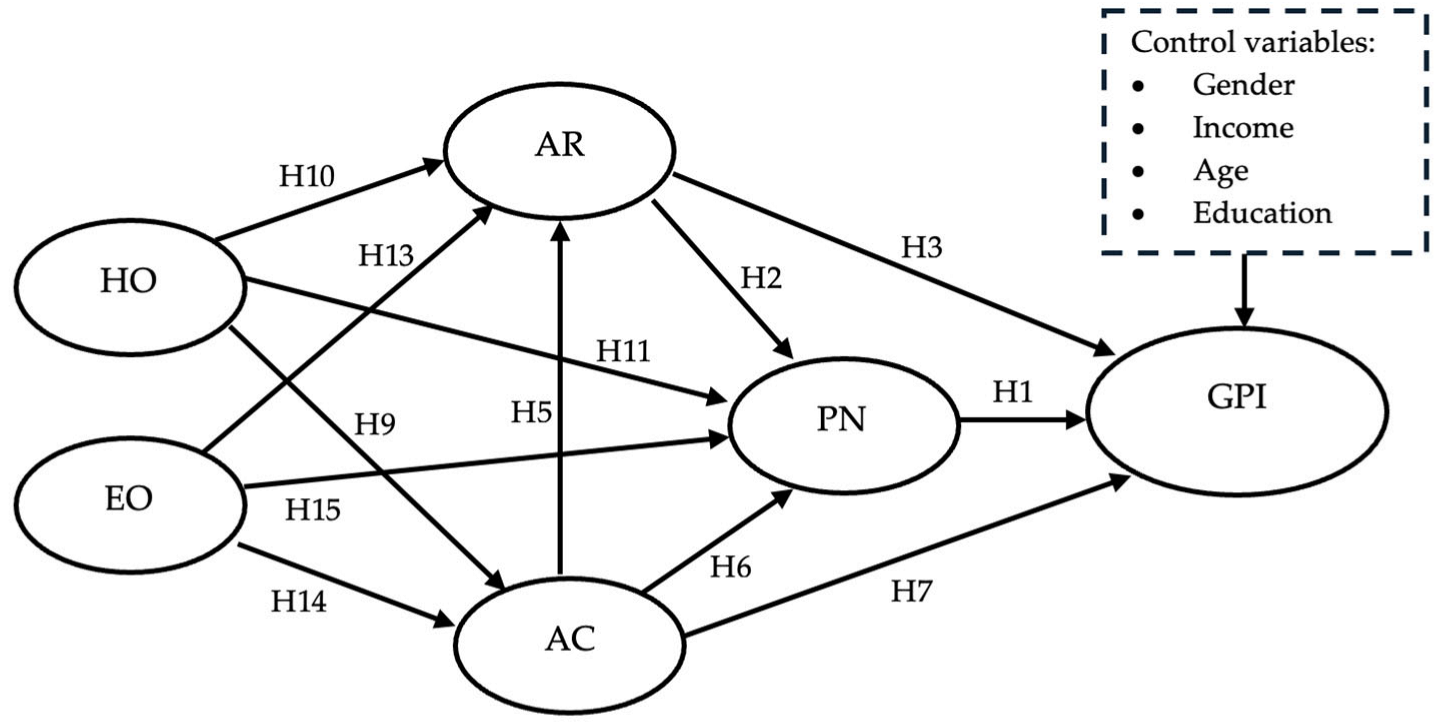
H1. 
Personal norms positively affect green purchase intention.

2.1.2. Ascription of Responsibility

As evidenced by being one of the activators of PN, ascription of responsibility (AR) is feeling responsible for not exhibiting prosocial behavior [8]. Similarly, it refers to the “feelings of responsibility for the negative consequences of not acting prosocially” [28]. Within the context of green purchasing, AR would mean that consumers believe their consumption choices play a role in preventing or solving environmental problems. For example, if a consumer believes that s/he can contribute to environmental problems by stopping purchasing products that harm the environment, s/he is attributing a high level of responsibility.
When individuals feel responsible for environmental problems, it strengthens their PN and predicts intentions to engage in environmentally responsible practices [26]. Indeed, “consumers tend to make responsible purchases when they realize the negative consequences of their buying behaviors on the environment” [5]. Examining the factors affecting environmentally responsible behavior, previous research evidenced that attributing responsibility affects PN [23,32]. In the context of eco-friendly tourism consumption, AR positively predicted PN and green purchase behavior, while also exerting a significant indirect effect through the mediation of PN [5]. Therefore, it is hypothesized that:
H2. 
Ascription of responsibility positively affects personal norms.
H3. 
Ascription of responsibility positively affects green purchase intention.
H4. 
Personal norms positively mediate the relationship between ascription of responsibility and green purchase intention.

2.1.3. Awareness of Consequences

Awareness of consequences (AC) is defined as the consumers’ awareness of the adverse effects that they may have on others as a result of their actions that are contrary to the interests of society [8]. In a simpler way, it is the extent to which an individual recognizes the consequences of a particular action or inaction. Taking green purchasing behavior into account, AC would refer to consumers’ recognition of products’ ecological impacts, such as pollution and resource depletion. For example, a consumer who is aware of the environmental damage caused by plastic packaging indicates a high awareness of the consequences.
When individuals become aware of environmental problems and think that these problems are related to their own behavior, such awareness leads them to feel responsible [40]. This relationship was confirmed in a study on the use of green shopping bags, in which individuals’ awareness of environmental consequences encouraged them to feel responsible for these consequences [41]. On the other hand, individuals’ awareness of environmental issues can directly affect their PN. In other words, individuals who develop awareness of environmental consequences may see engaging in environmentally friendly behaviors as a moral obligation. This relationship was evidenced in various academic studies, in which individuals’ awareness of environmental consequences strengthened their PN [5,9,23,32]. Additionally, it was found that AC both has a positive direct influence on green purchase behavior and an indirect influence through PN [5]. Taking previous evidence in the literature, the following hypotheses are proposed:
H5. 
Awareness of consequences positively affects ascription of responsibility.
H6. 
Awareness of consequences positively affects personal norms.
H7. 
Awareness of consequences positively affects green purchase intention.
H8. 
Personal norms positively mediate the relationship between awareness of consequences and green purchase intention.

2.2. Hedonic and Eudaimonic Orientation, NAT and Green Purchase Intention

2.2.1. Hedonic Orientation

Hedonic orientation (HO) is defined as a drive stemming from the desire for pleasure resulting from consumption, sensory satisfaction, and emotional experience [42,43]. A pioneering work emphasized that consumption encompasses not only utilitarian aspects but also experiential and emotional dimensions [15]. Hedonic consumption is associated with intrinsic pleasure, aesthetic experience, and emotional arousal stemming from the consumption of a product or service.
Studies have shown that the effect of HO on green purchasing is complex. Green behavior—such as driving less, saving energy, and purchasing organic food—requires refraining from egocentric behavior to protect the environment [44]. Therefore, it is possible to state that hedonic focus can conflict with environmental concerns and negatively affect green purchase intention. Indeed, hedonic shopping value was found to be a negative predictor of green purchase intentions [45]. On the other hand, “people are likely to engage in green behavior when they achieve pleasure and satisfaction from pro-environmental actions” [46]. Accordingly, some studies have shown that hedonic values can support sustainable consumption. For example, it was found that hedonic motivations act as moderators for concepts such as “price perception, informational influence, value experiential influence, and green concern”, which are argued to influence green purchase intention [42]. Environmental involvement was found to positively mediate the relationship between hedonic shopping value and green consumption [4]. Additionally, hedonic motivation (enjoyment and pleasure) plays an important role in the adoption of green innovations [43]. Therefore, when green products are designed to be innovative, aesthetically appealing, and enjoyable to use, HO can attract consumers. For example, the quiet and smooth driving experience of electric vehicles, the taste of organic foods, or the aesthetic appeal of sustainable fashion products can be cited as examples of HO.
The above-mentioned conflicting findings necessitate a more in-depth examination of the interaction between HO and NAT. Nevertheless, the literature portrays the relationship between the two as complex and occasionally contradictory. Theoretically, HO, because it focuses on short-term pleasure and personal satisfaction [15], can conflict with long-term environmental concerns and feelings of moral obligation. Therefore, the direct relationship of HO with norm activation is limited, and it may not directly activate AC, AR, and PN. For instance, hedonic shopping value exhibited a positive correlation with corporate social responsibility expectations, while demonstrating a negative correlation with sustainable purchase intention [45]. This finding suggests that a hedonic focus can conflict with feelings of moral obligation and weaken intentions to make green purchases. To the knowledge of the author, there is only one study using hedonic motivations and NAT to explain pro-environmental behavior. According to the study, PN based on AC and AR was found to be significant but scored lower than hedonic considerations for socially responsible investment [47]. As it is claimed, “hedonism is a new dimension in the context of responsible investment.”
Existing studies provide insufficient evidence regarding whether HO strengthens or weakens AC, AR, and PN. Therefore, due to the limited and contradictory theoretical evidence in the literature, non-directional hypotheses were formulated regarding the effects of HO on NAT components:
H9. 
Hedonic orientation has an influence on ascription of responsibility.
H10. 
Hedonic orientation has an influence on awareness of consequences.
H11. 
Hedonic orientation has an influence on personal norms.
H12. 
Personal norms mediate the relationship between hedonic orientation and green purchase intention.

2.2.2. Eudaimonic Orientation

Eudaimonic orientation (EO), derived from Aristotle’s concept of eudaimonia, expresses the desire to find meaning, achieve personal growth, be authentic, and live in accordance with ethical values [16]. Eudaimonia arises when people participate in activities that reveal their primary goals and values, or when they live in keeping with their true selves [48]. By transcending the pursuit of immediate gratification and focusing on individual growth [49], EO, unlike HO, prioritizes long-term well-being, alignment with personal values, and social contribution over short-term pleasure [50].
In the context of green consumption, EO is closely related to environmental ethics, social responsibility, and feelings of moral obligation towards future generations and reflects far more consistent findings than hedonic orientation. Previous research has shown that eudaimonic motivation influences pro-environmental concerns in a positive way. For instance, eudaimonic motivation was found to mediate the relationship between green brand knowledge and environmental consciousness in green brand purchase intention [6]. Consuming natural and healthy organic foods also has an impact on the eudaimonic aspects of well-being, which further enhances the behavior towards them [51]. In another study, eudaimonic orientation directly and positively influenced environmentally friendly consumption behavior [52]. A more recent study also confirmed that consumers become more inclined to engage in environmentally friendly purchasing behavior when they associate sustainable products with long-term happiness, personal growth, and life goals, in short, eudaimonic well-being [53].
Although EO has not been previously addressed within the framework of NAT, it can be considered to have a strong theoretical connection as it encourages individuals to become aware of environmental problems, feel responsible for these problems, and develop a sense of moral obligation. In other words, eudaimonic orientation is naturally aligned with the core components of NAT because it focuses on finding meaning, living in accordance with ethical values, and contributing to society. These cognitive processes directly correspond to the components of NAT: AC, AR, and PN. Consumers with EO may activate their PN during this process by aligning their purchase decisions with their personal values and moral principles. Therefore, the following hypotheses have been developed:
H13. 
Eudaimonic orientation positively affects ascription of responsibility.
H14. 
Eudaimonic orientation positively affects awareness of consequences.
H15. 
Eudaimonic orientation positively affects personal norms.
H16. 
Personal norms mediate the relationship between eudaimonic orientation and green purchase intention.
Although not hypothesized, income, education, age, and gender were used as control variables because their effects on GPI have been documented in various studies [54,55,56]. Including all the constructs and variables, the research model is displayed in Figure 1 below:

3. Methodology

The main purpose of this study is to understand the effects of hedonic and eudaimonic orientations on green purchase intention through the components of NAT, namely awareness of consequences (AC), ascription of responsibility (AR), and personal norms (PN). In this regard, the mediating role of NAT components on the relationship between hedonic orientation (HO), eudaimonic orientation (EO) and green purchase intention (GPI) is analyzed, with an aim to reveal the psychological and moral mechanisms underlying individuals’ environmentally friendly consumption behaviors.

3.1. Construct Measurement

Multi-item scales were selected to measure the relevant constructs. All constructs are operationalized as reflective multi-item scales [57] and measured using a 7-point Likert scale.
The scales of hedonic and eudaimonic orientation towards life had five items each and were adopted from Huta [58]. The NAT components, AC, AR, and PN, were adopted from Jhawar et al. [59], including nine, five, and six items, respectively. Finally, GPI was adapted from Wee et al. [60] and comprises six items.

3.2. Data Collection

A pilot test was conducted with 39 participants to assess whether the items were clearly understood and whether there were any ambiguous or leading questions. Then the questionnaire was finalized with the feedback provided by the participants and was prepared using Google Forms.
The data used in this study were collected from individuals residing in Türkiye. Since the participants were from different regions of the country, the sample mainly reflects the Turkish consumer context. The sample selection was based on the ability of participants to understand the evaluations of sustainable consumption and environmentally friendly purchasing behaviors and to interpret the survey statements soundly. In addition, previous studies have shown that education level is highly related to environmental awareness and sustainable consumption behaviors [61]. Accordingly, individuals with at least an associate degree level of education were included in the research. In line with the purpose of this research, it was also aimed to reach individuals of different ages, incomes, occupations, and demographic characteristics. Therefore, the snowball sampling method was preferred in the data collection process. As a result, the relevant participant profile was considered appropriate for evaluating the robustness of the research model.
Following ethical approval, the questionnaire was distributed online through social media platforms and personal communication channels in line with the snowball sampling approach. The survey link was shared via WhatsApp, LinkedIn, and Instagram, and participants were encouraged to forward the questionnaire to other eligible respondents within their social networks. Although 403 participants filled out the questionnaire, after data screening procedures, 346 valid questionnaires were retained for the final analysis.

3.3. Sample

When the demographic characteristics of the study sample were examined, as shown in Table 1, 49.7% of participants were male (n = 172) and 50.3% were female (n = 171). The average age is 39. When categorized, those aged less than 30 comprise the majority of the sample with 33.5% (n = 116), followed by 40–49 (21.4%; n = 74), 30–39 (17.6%; n = 61), 50–59 (16.2%; n = 56), and ≥ 60 years of age (11.3%; n = 39). Considering education level, most of the participants had a bachelor’s degree (69.7%; n = 241), followed by an associate degree (20.8%; n = 72), a master’s degree (6.9%; n = 24), and a Ph.D. degree (2.6%; n = 9). Regarding income, the majority of participants had incomes in the 50,000–100,000 TL range (approximately €1000–2000) (42.5%; n = 147), followed by under 50,000 TL (approximately <€1000) (25.7%; n = 89), 100,001–200,000 TL (approximately €2000–4000) (20.8%; n = 72), and over 200,000 TL (approximately >€4000) (10.9%; n = 38). In terms of marital status, 54.9% of participants were single (n = 190), and 45.1% were married (n = 156). By occupational status, 51.7% of participants were employed (n = 179), 23.1% were students (n = 80), 16.2% were retired (n = 56), and 9.0% were unemployed (n = 31).

4. Analysis and Findings

4.1. Measurement Model

4.1.1. Common Method Bias

To assess common method bias (CMB), Harman’s single-factor procedure was first applied [62]. Accordingly, all items from all constructs in the study were included in an exploratory factor analysis to determine whether most of the variance could be accounted for by a single general factor. As the results indicate, 42% of the variance was explained by a single factor. Since the result is below 50%, a common cutoff point, CMB does not appear to be a major issue.
Additionally, a confirmatory factor analysis based on a single-factor model was performed, in which all measurement items were loaded onto a single latent factor. The model showed poor fit (e.g., CFI = 0.500, GFI = 0.698, SRMR = 0.136, RMSEA = 0.173, χ2/df = 11.397), which indicates that a single latent factor failed to explain the observed covariance among the measures. When the Harman test results and the poor single-factor model fit are considered together, it is concluded that common method bias does not jeopardize the validity of this study’s findings.

4.1.2. Reliability and Validity

The reliability and validity of the measurement model used in the study were evaluated through Confirmatory Factor Analysis with SmartPLS 4. An initial evaluation of each item pointed to a multicollinearity problem, as one item each from AC and PN, and two items from GPI, were above the threshold of 5. As suggested, in a formative measurement model, if an indicator’s VIF is ≥5, it should be considered for removal, provided the remaining indicators still capture the construct’s content validity [63]. Therefore, AC3, PN5, GPI3, and GPI5 were removed from the measurement, assuring that the remaining items continue representing their respective construct’s conceptual domain comprehensively [64].
The resulting item loadings, Cronbach Alpha (CA), Composite Reliability (CR), and Average Variance Extracted (AVE) results are displayed in Table 2. Accordingly, the loadings range from 0.707 to 0.927, with all of them being greater than 0.70 [65]. The CA values for all constructs are above 0.70 [66], and range from 0.884 to 0.934, ensuring internal consistency. CR values are all above 0.80, and all AVE values are above the lower limit of 0.50 [63], indicating that items are reliable, share common variance with their construct, and thus, convergent validity is achieved.
To confirm discriminant validity, the Fornell–Larcker criterion and the Heterotrait–Monotrait Ratio (HTMT) were utilized. Table 3 displays the results of the Fornell–Larcker criterion. Accordingly, the AVE root values of each construct were found to be higher than their correlations with other constructs [65]. In addition, as revealed in Table 4, HTMT values below the threshold of 0.85 indicate that the constructs are sufficiently separated from each other [67].
Taken together, these findings reveal that the measurement model provides reliability, convergent and discriminant validity, confirming that the measurement instruments used in the research are statistically adequate and consistent.

4.2. Structural Model

The structural model was also tested via SmartPLS 4. To assess the model fit first, SRMR was examined. Accordingly, the SRMR value is saturated at 0.059 and estimated to be 0.066, indicating a good fit of the model, as both values are less than the threshold of 0.08 [63].
The model’s predictive power is assessed with R2 values, which are displayed in Table 5. The R2 of GPI is 0.663, meaning all components of NAT explain the variation in GPI by 66.3%, indicating a strong relationship. On the other hand, the R2 of PN is 0.464, AR is 0.343, and AC is 0.237, which are all considered to be high levels within the context of consumer behavior [63]. f2 values of 0.02, 0.15, and 0.35 signal that a predictor latent variable has a small, medium, or large effect size, respectively [68]. The effect size of PN on GPI indicates a large effect size (f2 = 0.492), whereas AC and AR have small effect sizes, as they are 0.096 and 0.031, respectively. The Q2 scores for GPI, PN, AR, and AC are all above zero, suggesting that the model’s predictive relevance, accounting for the endogenous latent variables, is evident. Q2 values ranging from 0.224 to 0.107 indicate a moderate degree of predictive relevance [63].

4.3. Hypotheses Testing

To test the hypotheses and calculate the significance of path coefficients, a bootstrapping technique was used. A resampling bootstrapping (10,000 resamples) of 346 observations was employed to obtain t-statistics, as shown in Table 6.
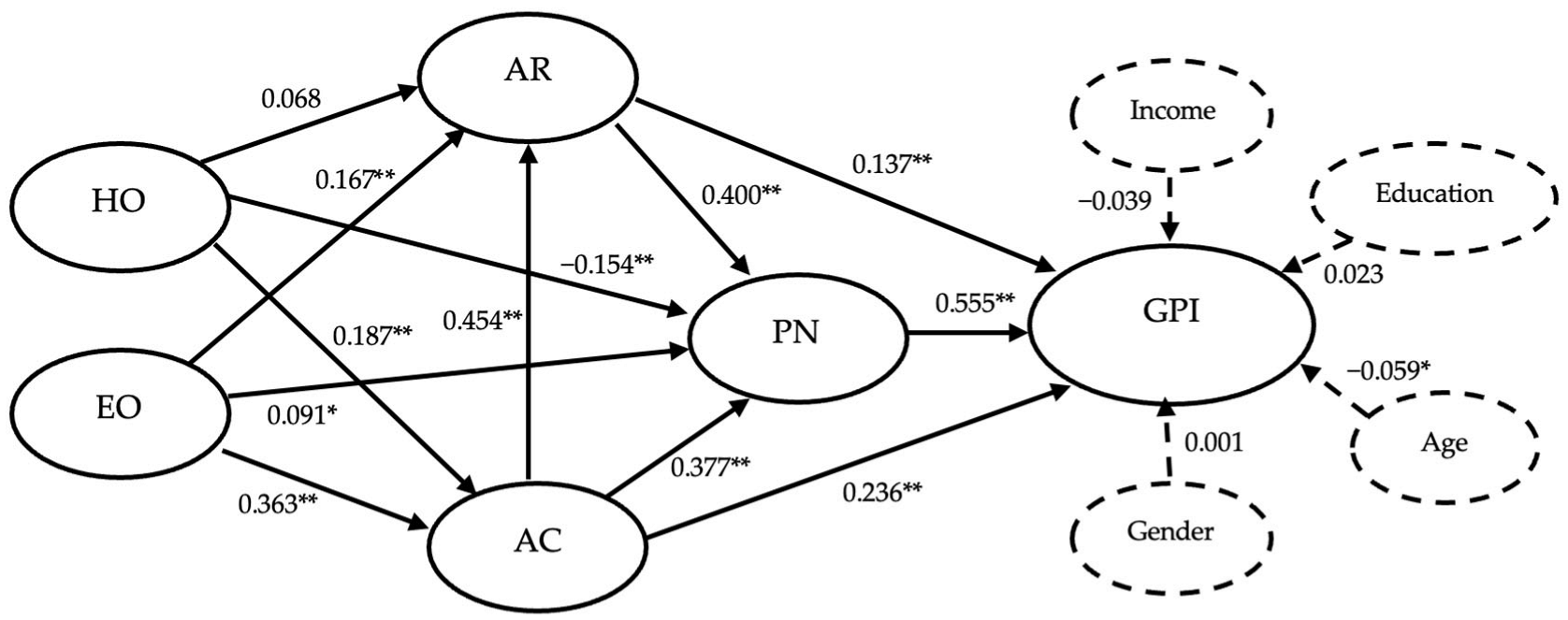
The path coefficient from PN to GPI is 0.555, which is significant at p < 0.01. Thus, H1 is accepted. The path coefficients from AR to PN and from AR to GPI are 0.400 and 0.137, respectively. As these coefficients are significant at the p < 0.01 level, H2 and H3 are also supported. To test the mediating effect of PN on the relationship between AR and GPI, H4 was formulated and supported, as the path coefficient (β = 0.222) was significant at p < 0.01. H5, on the other hand, is supported as well, because the path coefficient from AC to AR is β = 0.454 and significant at p < 0.01. The path coefficient from AC to PN is β = 0.377, which is significant at p < 0.01, supporting H6. H7 is also accepted as the path coefficient from AC to GPI is β = 0.236 and significant at p < 0.01. The mediating effect of PN on the relationship between AC and GPI was tested with H8 and supported as it is significant at p < 0.01 (β = 0.209). Among the two hypotheses that were rejected, one of them is H9, which posits that HO influences AR. Given that the t-statistics are insignificant, the influence of HO on AR cannot be verified. On the other hand, the influence of HO on AC and PN is found to be significant as the path coefficients are β = 0.187 and β = −0.154, respectively. Hence, H10 and H11 are accepted, indicating that HO has a significant positive effect on AC, whereas it has a significant negative effect on PN. Providing support for H12, PN negatively mediates the relationship between HO and GPI, and this mediation is significant at p < 0.01 (β = −0.085). Finally, considering the path coefficients related to EO, H13—testing the positive effect of EO on AR, and H14—testing the positive effect of EO on AC, are accepted, as the coefficients are significant at p < 0.01. EO’s positive influence on PN was tested with H15, which is significant at p < 0.05 (β = 0.091). Finally, H16, which proposed that PN mediates the relationship between EO and GPI, is rejected because the t-statistic did not reach statistical significance.
Although not hypothesized, controlling for the effects of gender, age, education, and income revealed a result that only age has a significant but negative impact on GPI. The results of the hypothesis testing are also displayed in Figure 2.
Since H9 and H16 are not supported, specific indirect effects are examined as displayed in Table 7. The results show that the effects of both HO and EO variables on GPI occur significantly through mediating effects. When examining the indirect effects of HO on GPI, the mediation effect is generated through AC but not AR. Specifically, the mediation effect solely by AC (β = 0.044, p < 0.01) is statistically significant. Furthermore, HO significantly affects GPI through AC → PN (β = 0.039, p < 0.01) and AC → AR (β = 0.012, p < 0.05). Additionally, through the multiple series mediation pathway AC → AR → PN (β = 0.019, p < 0.01) HO indirectly influences GPI. These findings indicate that HO enhances green purchase intention through cognitive and normative mechanisms.
The results for EO reveal even stronger indirect effects. The indirect effect of EO on GPI through AC (β = 0.085, p < 0.01) is noteworthy. On the other hand, the indirect effect through AR (β = 0.023, p < 0.05) is also significant, but the effect is smaller. Furthermore, it was found that EO significantly influenced GPI via AC → PN (β = 0.076, p < 0.01), AC → AR (β = 0.023, p < 0.05), AR → PN (β = 0.037, p < 0.05), and through a multiple serial mediation pathway, AC → AR → PN (β = 0.037, p < 0.01).
Overall, all specific indirect effects displayed in Table 7 were found to be positive and significant; AC and PN, in particular, played a strong mediating role. These results suggest that the effects of HO and EO on GPI are shaped not directly, but through cognitive, rational, and normative processes.

5. Discussion

This study examines the influence of hedonic and eudaimonic orientations on green purchase intention through Norm Activation Theory (NAT), revealing significant findings regarding the psychological and moral foundations of sustainable consumption behavior. The results demonstrate that NAT has a high explanatory power of green purchase intention, as evidenced by previous research [5,9,10,14,24].
These findings regarding the core components of NAT largely coincide with the existing literature covering different consumption contexts. Consistent with the findings of Jhawar et al. [5], who identified personal norms (PN) as the most decisive predictor of green buying behavior in the context of tourism, this study also reveals PN as the strongest predictor of green buying intention. Thus, the central role of the sense of moral obligation in sustainable consumption is once again confirmed. The positive effects of ascription of responsibility (AR) on both PN and green purchase intention (GPI) coincide with the findings of Dursun et al. [23] in the context of recycling behavior and Çetin [32] in the context of reducing food waste, demonstrating that the responsibility attribution mechanism operates consistently in different areas of environmentally friendly behavior. The significant effect of awareness of consequences (AC) on AR, PN, and GPI parallels the studies conducted by Yan and Chai [9] in the context of green hotels and Le and Nguyen [14] on organic food buying intention. This confirms that environmental awareness functions as a key cognitive trigger for both moral norm activation and purchase intention.
The findings regarding hedonic orientation (HO) have conflicting results. The study found that HO increased AC but weakened PN. This indicates that pleasure-oriented individuals, while aware of environmental problems, may struggle to transform this awareness into a moral obligation. Furthermore, PN, being a negative mediator between HO and GPI, suggests that a pleasure-oriented consumption mindset can indirectly weaken green purchase behaviors. This finding is consistent with the study by Raut et al. [47], who found that PN based on AC and AR lagged behind hedonic evaluations in the context of socially responsible investment. At this point, however, it is necessary to underline an important conceptual distinction: the pursuit of pleasure and sustainable consumption may not necessarily be mutually exclusive. The findings do not show that HO is fundamentally incompatible with GPI. On the contrary, the fact that HO weakens PN while increasing AC suggests that pleasure can be reframed to achieve green consumption. Indeed, all the indirect pathways of hedonic orientation to GPI via AC were found to be statistically significant.
Results related to eudaimonic orientation (EO) offer a more coherent and positive picture. The positive effects of EO on AC, AR, and PN indicate that the search for meaning, ethical values, and social contribution are strong supporters of environmentally friendly behaviors. In other words, people who construct their lives on the basis of meaning, self-actualization, and ethical values are more sensitive to environmental problems and consider their solution a moral duty. The positive effects of EO on all three components of NAT are consistent with previous studies linking eudaimonic motivation to eco-friendly behavior. Polisetty et al. [52] showed that eudaimonic motivation has a direct and positive effect on eco-friendly consumption behavior, corroborating the finding that EO strengthens AC, AR, and PN. In a brand-focused context, Zhou et al. [6] contributed to the view that moral environmental commitment is rooted in value-based and meaning-based motivations by showing that eudaimonic well-being mediates the relationship between green brand knowledge and environmental awareness. However, the lack of support for the mediating role of PN between EO and green purchase intention suggests that these individuals may carry out their environmentally friendly behaviors not only through moral norms but also through different psychological mechanisms, such as intrinsic satisfaction and life purposes. Alternatively, it might suggest that other environmental or structural factors may be necessary for this motivation to lead to purchase intention. This interpretation is consistent with the findings of Acosta Aguinaga and Barcellos De Paula [18], who found that eudaimonic motivations affect green purchase intention through paths that are not solely dependent on normative mediation.
Among the control variables, only age had a negative effect on green purchase intention, suggesting that younger consumers may be more sensitive to sustainable consumption. This finding aligns with studies documenting stronger environmental awareness and green attitudes among the younger consumer group [18,54], but differs from the findings of Sesar and Martinčević [56], who found that older people showed stronger sustainability behavior, significantly predicting green purchase intention. The findings of the current study suggest that generational differences should be considered in understanding sustainable consumption behavior.
Overall, the study contributes to explaining the multidimensional nature of green purchase intention by revealing the interaction between orientations toward life and moral motivations.

5.1. Theoretical Implications

This study makes significant theoretical contributions to the literature on green consumption in several ways. First, the NAT framework’s integration of hedonic and eudaimonic orientations provides a comprehensive explanation of sustainable consumption behaviors. The literature mostly focuses on the cognitive and moral aspects of NAT, but this study expands the theoretical framework by adding orientations towards life as antecedents of NAT into the model.
The fact that HO weakens PN despite increasing AC reveals the limiting role of pleasure-oriented motivations in the NAT mechanism. This finding contributes to explaining the contradictory results in the literature and emphasizes the importance of the indirect effects of hedonic orientation.
The strong effects of EO on NAT components indicate that a value-based understanding of life is compatible with environmental ethics. However, the lack of support for the mediating role of PN suggests that EO may also operate through distinct psychological mechanisms beyond NAT, opening new avenues for future research.
Finally, the findings also highlight the importance of multiple series mediation mechanisms in the literature on green consumption. In particular, the central mediating role of AC and PN in the indirect effects of both hedonic and eudaimonic orientations indicates that green purchase intention should be explained not only by individual orientations but also by cognitive evaluation and normative processes. This once again points to the need for a holistic approach to the relevant theoretical frameworks and enhances the explanatory power of the Norm Activation Theory.

5.2. Managerial Implications

This study provides important managerial implications for businesses, marketing executives, and policymakers. The findings indicate that campaigns for sustainable consumption should be designed on the basis of different psychological mechanisms, rather than a one-dimensional approach. First, PN, the most influential determinant of green purchase intention, points out the importance of normative and morally based campaigns. Therefore, sustainable consumption behaviors can be presented within the framework of ethical responsibility, social contribution, and individual obligation. In particular, messages such as “do the right thing,” “responsibility towards future generations,” and “the importance of individual contribution” can be particularly effective in normative campaigns.
The influence of AC and AR on green purchase intention also offers important clues. Considering the positive effect of AC on PN and GPI, it is important that cognitive campaigns, especially those developed by public institutions and NGOs, focus on increasing consumers’ awareness of the consequences of environmental problems. In this regard, informative and educational content that makes visible the tangible impacts of issues such as environmental pollution, climate change, and resource depletion can be effective. The positive impact of AR on PN and GPI suggests that consumers are more likely to participate in sustainable consumption behavior when they feel that their individual contributions to solving environmental problems are significant. Therefore, companies and policymakers should develop communication strategies to make consumers feel that environmental problems are not only related to governments or companies but also to individual daily consumption choices. Messages such as “Your choice makes a difference,” “Small choices create big impacts,” or “Environmental change begins with individual responsibility” can strengthen individuals’ perception of environmental responsibility. Also, companies can strengthen consumers’ sense of responsibility by visualizing the concrete effects of their sustainable behavior. Sharing indicators of carbon footprint reduction, the amount of recycled materials or environmental contribution can make people feel that their own actions have an impact on the environmental results. Such practices may contribute not only to the development of environmental awareness but also to consumers’ internalizing environmentally friendly purchasing behaviors as a personal responsibility.
In addition, it is very important for marketers to advertise green products not only with an “environmental protection” message but also with themes directed to eudaimonic and hedonic consumers. The findings suggest the importance of emphasis on meaning, ethical values, and social contribution for consumers with eudaimonic orientation. Marketing communications should employ identity and purpose-oriented storytelling strategies, grounded in the positive influence of eudaimonic orientation on awareness, attribution of responsibility, and personal norms. In this context, sustainable consumption can be associated with an individual living in accordance with their values, making a positive contribution to the future, and producing social benefit. Eudaimonic consumers may be more aligned with messages such as “consume in line with your values”, “contribute to future generations”, or “meaningful consumption.” Policymakers should develop public service announcements and environmental education programs that activate individuals’ self-happiness orientations, demonstrating how environmentally friendly behaviors contribute to an individual’s self-esteem and life purpose.
For hedonic consumers, the findings suggest that presenting environmentally friendly products with messages based on “sacrifice,” “responsibility,” or “guilt” may not always be effective. Especially considering the weakening effect of HO on PN, excessive moralistic rhetoric should be avoided in sustainability communication. Instead, green products should be positioned as enjoyable, aesthetically appealing, comfortable, pleasure-enhancing, and experience-oriented products. In other words, sustainable consumption should be presented not as a “compromise” but as an experience that enhances quality of life. For example, emphasizing style and design in sustainable fashion products and taste, quality, and a premium experience in organic food products can be more effective on hedonic consumers.
Given the negative impact of the age variable on green purchase intention, it is important to strengthen sustainability-focused education and awareness programs, especially for young consumers. Digital and social media campaigns can be effective in encouraging environmentally friendly behaviors among younger generations.
In conclusion, this study suggests that strategies to promote sustainable consumption need to be developed not with a one-dimensional approach but with a multi-dimensional approach that considers individuals’ values, orientations towards life, and moral motivations. Particularly, norm-based campaigns, calls for social responsibility, and an emphasis on collective impact can be effective in strengthening intentions toward green products. Integrated marketing communications developed in this direction will help promote sustainable consumption behaviors.

5.3. Limitations and Future Suggestions

Despite its various contributions, this study has certain limitations that open new frontiers for future research. First, the use of the snowball sampling method among a highly educated demographic may limit the generalizability of the results. Future research should use random sampling techniques from a wide range of educational levels to explore if lower educational attainment changes the strength of the relationship between life orientations, NAT, and green purchase intention. In addition, data were collected in a specific cultural context, and cross-cultural differences were not controlled for. Therefore, the findings should be interpreted within the Turkish cultural and consumer context.
Furthermore, future research could more strongly test causal relationships using longitudinal or experimental designs. Cross-cultural comparisons can shed light on whether the effect of lifestyle orientations on NAT components varies by the cultural context. Additionally, the lack of support for the mediating role of personal norms in the effect of eudaimonic orientation on green purchase intention necessitates the inclusion of alternative psychological mechanisms, such as self-efficacy, involvement, etc. Finally, field studies that measure actual purchasing behaviors will help to understand the intention-behavior gap.

6. Conclusions

This research explains the influence of hedonic and eudaimonic orientations on green purchase intention using a holistic model within the framework of Norm Activation Theory. The findings strongly confirm that personal norms are a fundamental determinant of sustainable consumption intention. Awareness of consequences and ascription of responsibility activate personal norms, thereby increasing green purchase intention, thus supporting the explanatory power of Norm Activation Theory in the context of environmentally friendly consumption.
When evaluated in terms of life orientations, the eudaimonic orientation exhibits a structure compatible with environmental awareness and ethical responsibility, whereas the hedonic orientation can indirectly limit green purchase intention, particularly by weakening personal norms. However, the fact that the effects of both orientations occur largely through indirect mechanisms reveals that sustainable consumption behaviors are shaped by complex psychological processes. These results suggest that green purchase intention should be evaluated not only in terms of environmental attitudes but also in terms of the individual’s life philosophy, value system, and perception of moral obligation. Therefore, this study provides both theoretical integration and psychological depth to the literature on sustainable consumption.

Funding

This research received no external funding.

Institutional Review Board Statement

The study was conducted in accordance with the Declaration of Helsinki and approved by the Ethics Committee of Social and Human Sciences of PİRİ REİS UNIVERSITY (protocol code 62 and date of approval: 24 March 2026).

Informed Consent Statement

Informed consent was obtained from all subjects involved in the study.

Data Availability Statement

The data presented in this study are available on request from the author due to privacy and ethical restrictions.

Acknowledgments

During the literature search, the author used ChatGPT-5.5 and SciSpace (v1.5.4) to assist in identifying relevant academic literature. All sources were independently reviewed and verified by the author. The author takes full responsibility for the accuracy, integrity, and originality of the manuscript.

Conflicts of Interest

The author declares no conflicts of interest.

References

  1. Zhang, X.; Dong, F. Why Do Consumers Make Green Purchase Decisions? Insights from a Systematic Review. Int. J. Environ. Res. Public. Health 2020, 17, 6607. [Google Scholar] [CrossRef]
  2. Chen, C.; Li, D.; Qian, J.; Li, Z. The Impact of Green Purchase Intention on Compensatory Consumption: The Regulatory Role of Pro-Environmental Behavior. Sustainability 2024, 16, 8183. [Google Scholar] [CrossRef]
  3. Yıldırım, Z.; Yıldırım, T.; Urul, A.A. The Role of Green Marketing in Achieving Sustainable Competitive Advantage: A Theoretical Study. Van Yüzüncü Yıl Üniversitesi İktisadi ve İdari Bilim. Fakültesi Derg. 2024, 9, 242–259. [Google Scholar] [CrossRef]
  4. Cheng, Z.-H.; Chang, C.-T.; Lee, Y.-K. Linking hedonic and utilitarian shopping values to consumer skepticism and green consumption: The roles of environmental involvement and locus of control. Rev. Manag. Sci. 2020, 14, 61–85. [Google Scholar] [CrossRef]
  5. Jhawar, A.; Israel, D.; Kumar, P. Subduing effects of personal norms on materialism fostering green purchase behavior: Modified norm activation model perspective. J. Glob. Sch. Mark. Sci. 2023, 33, 602–625. [Google Scholar] [CrossRef]
  6. Zhou, Z.; Zheng, F.; Lin, J.; Zhou, N. The interplay among green brand knowledge, expected eudaimonic well-being and environmental consciousness on green brand purchase intention. Corp. Soc. Responsib. Environ. Manag. 2021, 28, 630–639. [Google Scholar] [CrossRef]
  7. García-Rodríguez, N.; Cachero-Martínez, S.; González-Fidalgo, E. Sustainable Consumption for a Better Life: Consumer Well-Being—A Review and Research Agenda. Int. J. Consum. Stud. 2025, 49, e70109. [Google Scholar] [CrossRef]
  8. Schwartz, S.H. Normative Influences on Altruism. In Advances in Experimental Social Psychology; Elsevier: New York, NY, USA, 1977; Volume 10, pp. 221–279. [Google Scholar]
  9. Yan, H.; Chai, H. Consumers’ Intentions towards Green Hotels in China: An Empirical Study Based on Extended Norm Activation Model. Sustainability 2021, 13, 2165. [Google Scholar] [CrossRef]
  10. Ahmed, R.R.; Štreimikienė, D.; Sulaiman, Y.; Asim, J.; Štreimikis, J. Enhancing competitiveness of green environmental practices and green purchase intentions in Asian markets: Evidence from the extended norm activation model. J. Compet. 2024, 16, 204–220. [Google Scholar] [CrossRef]
  11. Zhang, Y.; Wang, Z.; Zhou, G. Antecedents of employee electricity saving behavior in organizations: An empirical study based on norm activation model. Energy Policy 2013, 62, 1120–1127. [Google Scholar] [CrossRef]
  12. Park, J.; Ha, S. Understanding Consumer Recycling Behavior: Combining the Theory of Planned Behavior and the Norm Activation Model. Fam. Consum. Sci. Res. J. 2014, 42, 278–291. [Google Scholar] [CrossRef]
  13. Han, H.; Hwang, J.; Lee, M.J.; Kim, J. Word-of-mouth, buying, and sacrifice intentions for eco-cruises: Exploring the function of norm activation and value-attitude-behavior. Tour. Manag. 2019, 70, 430–443. [Google Scholar] [CrossRef]
  14. Le, M.H.; Nguyen, P.M. Integrating the Theory of Planned Behavior and the Norm Activation Model to Investigate Organic Food Purchase Intention: Evidence from Vietnam. Sustainability 2022, 14, 816. [Google Scholar] [CrossRef]
  15. Hirschman, E.C.; Holbrook, M.B. Hedonic Consumption: Emerging Concepts, Methods and Propositions. J. Mark. 1982, 46, 92–101. [Google Scholar] [CrossRef]
  16. Huta, V.; Ryan, R.M. Pursuing Pleasure or Virtue: The Differential and Overlapping Well-Being Benefits of Hedonic and Eudaimonic Motives. J. Happiness Stud. 2010, 11, 735–762. [Google Scholar] [CrossRef]
  17. Chen, Y.; Lee, B.-F.; Lu, Y.-C. Fitnesser’s Intrinsic Motivations of Green Eating: An Integration of Theory of Planned Behavior and Hedonic-Motivation System Adoption Model. Front. Psychol. 2021, 12, 670243. [Google Scholar] [CrossRef]
  18. Acosta Aguinaga, A.; Barcellos De Paula, L. Health consciousness, hedonic and eudaimonic motivations in green purchase intention among Generation Z. Cogent Bus. Manag. 2025, 12, 2528160. [Google Scholar] [CrossRef]
  19. Kennedy, R.F.; Susainathan, S.; George, H.J.; Parayitam, S. Green Consumption and Sustainable Lifestyle: Evidence from India. Adm. Sci. 2024, 14, 262. [Google Scholar] [CrossRef]
  20. Nguyen, T.T.H.; Yang, Z.; Nguyen, N.; Johnson, L.W.; Cao, T.K. Greenwash and Green Purchase Intention: The Mediating Role of Green Skepticism. Sustainability 2019, 11, 2653. [Google Scholar] [CrossRef]
  21. Chen, C.-C.; Chen, C.-W.; Tung, Y.-C. Exploring the Consumer Behavior of Intention to Purchase Green Products in Belt and Road Countries: An Empirical Analysis. Sustainability 2018, 10, 854. [Google Scholar] [CrossRef]
  22. Liu, Y.; Xing, P.; Liu, J. Environmental performance evaluation of different municipal solid waste management scenarios in China. Resour. Conserv. Recycl. 2017, 125, 98–106. [Google Scholar] [CrossRef]
  23. Dursun, İ.; Yürüyen Kılıç, H.; Tümer Kabadayı, E.; Dönmez, D. Roles of Cognitive, Affective, Social, And Situational Factors in Norm Activation Theory: Evidence for Recycling Behavior. Int. J. Manag. Econ. Bus. 2024, 20, 44–60. [Google Scholar] [CrossRef]
  24. Martey, E.M. Norm Activation Model and Tourist Intention to Stay at Green Hotel: The Role of Value-Belief-Norm Theory Constructs. Int. J. Knowl. Manag. Tour. Hosp. 2025, 4, 37–62. [Google Scholar] [CrossRef]
  25. Nilsson, A. On the future development of theories in environmental psychology: The role of the environmental psychologist as a researcher and as a practitioner. In Environmental Psychology: New Developments; Nova Science Publishers, Inc.: New York, NY, USA, 2010; pp. 227–234. [Google Scholar]
  26. Han, H. The norm activation model and theory-broadening: Individuals’ decision-making on environmentally-responsible convention attendance. J. Environ. Psychol. 2014, 40, 462–471. [Google Scholar] [CrossRef]
  27. Onwezen, M.C.; Antonides, G.; Bartels, J. The Norm Activation Model: An exploration of the functions of anticipated pride and guilt in pro-environmental behaviour. J. Econ. Psychol. 2013, 39, 141–153. [Google Scholar] [CrossRef]
  28. Steg, L.; De Groot, J. Explaining prosocial intentions: Testing causal relationships in the norm activation model. Br. J. Soc. Psychol. 2010, 49, 725–743. [Google Scholar] [CrossRef] [PubMed]
  29. De Groot, J.I.M.; Steg, L. Morality and Prosocial Behavior: The Role of Awareness, Responsibility, and Norms in the Norm Activation Model. J. Soc. Psychol. 2009, 149, 425–449. [Google Scholar] [CrossRef] [PubMed]
  30. Van Der Werff, E.; Steg, L. One model to predict them all: Predicting energy behaviours with the norm activation model. Energy Res. Soc. Sci. 2015, 6, 8–14. [Google Scholar] [CrossRef]
  31. Rezaei, R.; Safa, L.; Damalas, C.A.; Ganjkhanloo, M.M. Drivers of farmers’ intention to use integrated pest management: Integrating theory of planned behavior and norm activation model. J. Environ. Manag. 2019, 236, 328–339. [Google Scholar] [CrossRef]
  32. Çetin, K. Genişletilmiş norm aktivasyon teorisi ve dini değerler bağlamında dışarıda yemek yiyen müşterilerin gıda israfını azaltma davranışını anlamak. Tur. Akad. Derg. 2023, 10, 213–230. [Google Scholar]
  33. Torabi, Z.-A.; Hall, C.M.; Azarniou, N.; Borzu, G. Environmental Concerns and Water Conservation Behavior in Desert Tourism: Applying the Extended Norm Activation Theory for Gen Z Tourists. Sustainability 2025, 17, 2474. [Google Scholar] [CrossRef]
  34. Naaman, D.; Yeşilada, F.; Aghaei, I. A Moderated Mediation Analysis of Lebanon’s Food Consumers’ Green Purchasing Intentions: A Path Towards Sustainability. Sustainability 2025, 17, 1714. [Google Scholar] [CrossRef]
  35. Zhao, H.; Bai, R.; Liu, R.; Wang, H. Exploring purchase intentions of new energy vehicles: Do “mianzi” and green peer influence matter? Front. Psychol. 2022, 13, 951132. [Google Scholar] [CrossRef]
  36. Schwartz, S.H.; Howard, J.A. Explanations of the Moderating Effect of Responsibility Denial on the Personal Norm-Behavior Relationship. Soc. Psychol. Q. 1980, 43, 441. [Google Scholar] [CrossRef]
  37. Berenguer, J. The Effect of Empathy in Environmental Moral Reasoning. Environ. Behav. 2010, 42, 110–134. [Google Scholar] [CrossRef]
  38. Tang, Y.; Hinsch, C. Going green to be morally clean: An examination of environmental behavior among materialistic consumers. Psychol. Mark. 2018, 35, 845–862. [Google Scholar] [CrossRef]
  39. Zhang, J.; Cherian, J.; Abbas Sandhu, Y.; Abbas, J.; Cismas, L.M.; Negrut, C.V.; Negrut, L. Presumption of Green Electronic Appliances Purchase Intention: The Mediating Role of Personal Moral Norms. Sustainability 2022, 14, 4572. [Google Scholar] [CrossRef]
  40. Stern, P.C.; Dietz, T.; Abel, T.; Guagnano, G.A.; Kalof, L.A. A value-belief-norm theory of support for social movements: The case of environmentalism. Hum. Ecol. Rev. 1999, 6, 81–97. [Google Scholar]
  41. Muposhi, A.; Mpinganjira, M.; Wait, M. Factors influencing the use of non-plastic reusable shopping bags: A cognitive-normative-habitual approach. Aust. J. Environ. Educ. 2021, 37, 306–325. [Google Scholar] [CrossRef]
  42. Shanmugavel, N.; Solayan, S. Impact of hedonic motivation and perceived moral obligation on green products purchase intention among centennials. Acad. Mark. Stud. J. 2021, 25, 1–20. [Google Scholar]
  43. Flores, P.J.; Jansson, J. Being innovative, fun, and green? Hedonic and environmental motivations in the use of green innovations. J. Mark. Manag. 2022, 38, 1907–1936. [Google Scholar] [CrossRef]
  44. Samuelson, C.D. Energy conservation: A social dilemma approach. Soc. Behav. 1990, 5, 207–230. [Google Scholar]
  45. Lin, C.A.; Wang, X.; Yang, Y. Sustainable Apparel Consumption: Personal Norms, CSR Expectations, and Hedonic vs. Utilitarian Shopping Value. Sustainability 2023, 15, 9116. [Google Scholar] [CrossRef]
  46. Pelletier, L.G.; Tuson, K.M.; Green-Demers, I.; Noels, K.; Beaton, A.M. Why Are You Doing Things for the Environment? The Motivation Toward the Environment Scale (MTES)1. J. Appl. Soc. Psychol. 1998, 28, 437–468. [Google Scholar] [CrossRef]
  47. Raut, R.K.; Kumar, R.; Das, N. Millennial behavioral intentions toward socially responsible investment: An application of norm activation model in a developing country. J. Glob. Responsib. 2025, 16, 753–776. [Google Scholar] [CrossRef]
  48. Waterman, A.S. Two conceptions of happiness: Contrasts of personal expressiveness (eudaimonia) and hedonic enjoyment. J. Pers. Soc. Psychol. 1993, 64, 678–691. [Google Scholar] [CrossRef]
  49. Sthapit, E.; Prentice, C.; Ji, C.; Yang, P.; Garrod, B.; Björk, P. Experience-driven well-being and purchase: An alternative model of memorable wine tourism experiences. Int. J. Tour. Res. 2024, 26, e2645. [Google Scholar] [CrossRef]
  50. Ryan, R.M.; Deci, E.L. On Happiness and Human Potentials: A Review of Research on Hedonic and Eudaimonic Well-Being. Annu. Rev. Psychol. 2001, 52, 141–166. [Google Scholar] [CrossRef] [PubMed]
  51. Forlani, F.; Dini, M.; Pencarelli, T. The importance of food and beverages in wellness experiences: A cross-continental analysis of tourists’ perceptions. Br. Food J. 2022, 124, 520–540. [Google Scholar] [CrossRef]
  52. Polisetty, A.; Chakraborty, D.; Singu, H.B.; Behl, A. Examining the relationship between pro-environmental consumption behaviour and hedonic and eudaimonic motivation. J. Environ. Manag. 2024, 359, 121095. [Google Scholar] [CrossRef] [PubMed]
  53. Mitariani, N.W.E.; Gama, A.W.S.; Muna, N. Green Choices: The Role of Green Skepticism and Eudaimonic Well-Being in Evoking Green Purchase Intention. Int. J. Soc. Sci. Bus. 2025, 9, 418–431. [Google Scholar] [CrossRef]
  54. Diamantopoulos, A.; Schlegelmilch, B.B.; Sinkovics, R.R.; Bohlen, G.M. Can socio-demographics still play a role in profiling green consumers? A review of the evidence and an empirical investigation. J. Bus. Res. 2003, 56, 465–480. [Google Scholar] [CrossRef]
  55. Xiao, C.; Hong, D. Gender differences in environmental behaviors in China. Popul. Environ. 2010, 32, 88–104. [Google Scholar] [CrossRef]
  56. Sesar, V.; Martinčević, I. Age and the Green Intention: A Serial Mediation Model of Sustainability Knowledge, Attitude, and Behavior. Systems 2025, 13, 1087. [Google Scholar] [CrossRef]
  57. Henseler, J.; Ringle, C.M.; Sinkovics, R.R. The use of partial least squares path modeling in international marketing. In Advances in International Marketing; Sinkovics, R.R., Ghauri, P.N., Eds.; Emerald Group Publishing Limited: Bingley, UK, 2009; Volume 20, pp. 277–319. [Google Scholar]
  58. Huta, V. Eudaimonic and Hedonic Orientations: Theoretical Considerations and Research Findings. In Handbook of Eudaimonic Well-Being; Vittersø, J., Ed.; International Handbooks of Quality-of-Life; Springer International Publishing: Cham, Switzerland, 2016; pp. 215–231. [Google Scholar]
  59. Jhawar, A.; Kumar, P.; Israel, D. Impact of materialism on tourists’ green purchase behavior: Extended norm activation model perspective. J. Vacat. Mark. 2024, 30, 841–855. [Google Scholar] [CrossRef]
  60. Wee, C.S.; Ariff, M.S.B.M.; Zakuan, N.; Tajudin, M.N.M.; Ismail, K.; Ishak, N. Consumers’ perception, purchase intention and actual purchase behavior of organic food products. Rev. Integr. Bus. Econ. Res. 2014, 3, 378. [Google Scholar]
  61. Wang, L.; Wong, P.P.; Narayanan, E.A. The demographic impact of consumer green purchase intention toward Green Hotel Selection in China. Tour. Hosp. Res. 2020, 20, 210–222. [Google Scholar] [CrossRef]
  62. Podsakoff, P.M.; MacKenzie, S.B.; Lee, J.-Y.; Podsakoff, N.P. Common method biases in behavioral research: A critical review of the literature and recommended remedies. J. Appl. Psychol. 2003, 88, 879–903. [Google Scholar] [CrossRef]
  63. Hair, J.F.; Hult, G.T.M.; Ringle, C.M.; Sarstedt, M.; Danks, N.P.; Ray, S. Partial Least Squares Structural Equation Modeling (PLS-SEM) Using R: A Workbook; Classroom Companion: Business; Springer International Publishing: Cham, Switzerland, 2021. [Google Scholar]
  64. Haynes, S.N.; Richard, D.C.S.; Kubany, E.S. Content validity in psychological assessment: A functional approach to concepts and methods. Psychol. Assess. 1995, 7, 238–247. [Google Scholar] [CrossRef]
  65. Fornell, C.; Larcker, D.F. Evaluating Structural Equation Models with Unobservable Variables and Measurement Error. J. Mark. Res. 1981, 18, 39–50. [Google Scholar] [CrossRef]
  66. Nunnally, J.C. Psychometric Theory, 3rd ed.; Tata McGraw-Hill Education: New Delhi, India, 1994. [Google Scholar]
  67. Henseler, J.; Ringle, C.M.; Sarstedt, M. A new criterion for assessing discriminant validity in variance-based structural equation modeling. J. Acad. Mark. Sci. 2015, 43, 115–135. [Google Scholar] [CrossRef]
  68. Cohen, J. Statistical Power Analysis for the Behavioral Sciences, 2nd ed.; Lawrence Erlbaum Associates: Hillsdale, NJ, USA, 1988. [Google Scholar]
Figure 1. Research model.
Sustainability 18 05343 g001
Figure 2. Structural Model. * p < 0.05; ** p < 0.01.
Sustainability 18 05343 g002
Table 1. Sample Demographics.
Categoryn% Categoryn%
GenderMale17249.7%Marital StatusSingle19054.9%
Female17150.3%Married15645.1%
EducationAssociate’s 7220.8%OccupationEmployed 17951.7%
Bachelor’s 24169.7%Unemployed319.0%
Master’s246.9%Retired5616.2%
Ph.D.92.6%Student8023.1%
Age<3011633.5%Income<50,000 TL (approx. <€1000)8925.7%
30–396117.6%50,000–100,000 TL (approx. €1000–2000)14742.5%
40–497421.4%100,001–200,000 TL (approx. €2000–4000)7220.8%
50–595616.2%200,001–300,000 TL (approx. €4000–6000)236.6%
≥603911.3%>300,000 TL (approx. >€6000)154.3%
Table 2. Internal Reliability and Convergent Validity Assessment.
ConstructItem CodeItemFactor LoadingsCACR AVE
Hedonic
Orientation
towards life
HO1Seeking pleasure.0.8730.9030.9210.721
HO2Seeking enjoyment.0.901
HO3Seeking fun.0.869
HO4Seeking to take it easy.0.775
HO5Seeking relaxation.0.822
Eudaimonic
Orientation
towards life
EO1Seeking to develop a skill, learn, or gain insight into something.0.8260.9090.9150.733
EO2Seeking to do what you believe in.0.886
EO3Seeking to pursue excellence or a personal ideal.0.826
EO4Seeking to use the best in yourself.0.892
EO5Seeking to contribute to others or the surrounding world.0.849
Ascription of
Responsibility
AR1I feel partly responsible for the environmental problems on our planet.0.8230.8840.8840.688
AR2I feel partly responsible for the contribution to global warming due to my purchases of products that are not eco-friendly.0.887
AR3I feel partly responsible for the ecological damage because of my purchase of products that are not environmentally friendly.0.895
AR4I feel jointly responsible for the negative consequences of my behavior, which are not pro-environmental.0.822
AR5Every citizen must take responsibility for environmental protection.0.707
Awareness
of Consequences
AC1Consumption or use of non-green products causes ecological damage.0.8300.9340.9360.685
AC2Non-green products contribute to global warming.0.828
AC4Non-green products’ consumption damages the ozone layer.0.841
AC5Non-green products will cause the extinction of thousands of species in the next several decades.0.884
AC6Consumption of green products instead of regular products would help minimize environmental degradation.0.840
AC7The effects of pollution on public health are worse than we realize.0.834
AC8Over the next several decades, thousands of species will become extinct. 0.766
AC9Environmental protection will provide a better world for me and my children.0.792
Personal NormsPN1I have a moral obligation to buy green products.0.9010.9320.9380.787
PN2Not buying green products would go against my principles.0.859
PN3I would feel guilty if I bought a product damaging the environment, even though there are other feasible “green” alternatives available.0.901
PN4I feel obliged to buy green products instead of regular products.0.900
PN6To buy a product that damages the environment would be morally wrong for me.0.872
Green Purchase IntentionGPI1I will buy green products in the near future.0.9200.9260.9270.819
GPI2I plan to buy green products on regular basis.0.907
GPI4I plan to buy green products because those are more concerned about safety.0.927
GPI6I plan to buy green products because I am concerned about animal welfare.0.865
Table 3. Discriminant Validity—Fornell–Larcker Criterion.
HOEOACARPNGPI
HO0.849
EO0.5230.856
AC0.3760.4600.827
AR0.3250.4110.5560.829
PN0.1650.3480.5830.5960.887
GPI0.2600.4040.6340.6010.7700.905
Table 4. Discriminant Validity—HTMT Matrix.
HOEOACARPNGPI
HO
EO0.573
AC0.4020.496
AR0.3560.4520.609
PN0.1690.3690.6170.617
GPI0.2820.4370.6800.6630.824
Table 5. Explanatory Power.
PredictorsOutcomeR2f2Q2
ACGPI0.6630.0960.141
AR0.031
PN0.492
ACPN0.4640.1630.107
AR0.196
HO0.031
EO0.010
ACAR0.3430.2390.173
HO0.005
EO0.027
HOAC0.2370.0330.224
EO0.126
Table 6. Hypotheses Testing Results.
HypothesesStd. Coefficients95% BC Confidence Intervalt-StatisticsTest Results
H1: PN ⟶ GPI0.555[0.462, 0.641]10.162 **Accept
H2: AR ⟶ PN0.400[0.303, 0.497]6.743 **Accept
H3: AR ⟶ GPI0.137[0.052, 0.224]2.638 **Accept
H4: AR ⟶ PN ⟶ GPI0.222[0.157, 0.290]5.509 **Accept
H5: AC ⟶ AR0.454[0.355, 0.554]7.557 **Accept
H6: AC ⟶ PN0.377[0.274, 0.475]6.178 **Accept
H7: AC ⟶ GPI0.236[0.150, 0.326]4.390 **Accept
H8: AC ⟶ PN ⟶ GPI0.209[0.149, 0.270]5.756 **Accept
H9: HO ⟶ AR0.068[−0.032, 0.174]0.899Reject
H10: HO ⟶ AC0.187[0.077, 0.299]2.788 **Accept
H11: HO ⟶ PN−0.154[−0.241, −0.069]2.953 **Accept
H12: HO ⟶ PN ⟶ GPI−0.085[−0.138, −0.037]2.760 **Accept
H13: EO ⟶ AR0.167[0.063, 0.269]2.661 **Accept
H14: EO ⟶ AC0.363[0.257, 0.468]5.627 **Accept
H15: EO ⟶ PN0.091[0.004, 0.181]1.692 *Accept
H16: EO ⟶ PN ⟶ GPI0.050[−0.002, 0.106]1.592Reject
* p < 0.05; ** p < 0.01.
Table 7. Specific Indirect Effects.
Other Indirect EffectsStd. Coefficients95% BC Confidence Intervalt-Statistics
HO ⟶ AC ⟶ GPI0.044[0.017, 0.078]2.320 *
HO ⟶ AC ⟶ AR ⟶ GPI0.012[0.003, 0.023]1.872 *
HO ⟶ AC ⟶ PN ⟶ GPI0.039[0.015, 0.068]2.378 **
HO ⟶ AC ⟶ AR ⟶ PN ⟶ GPI0.019[0.007, 0.035]2.187 *
EO ⟶ AC ⟶ GPI0.085[0.047, 0.113]3.266 **
EO ⟶ AR ⟶ GPI0.023[0.005, 0.047]1.735 *
EO ⟶ AR ⟶ PN ⟶ GPI0.037[0.013, 0.066]2.229 *
EO ⟶ AC ⟶ AR ⟶ GPI0.023[0.008, 0.041]2.215 *
EO ⟶ AC ⟶ PN ⟶ GPI0.076[0.048, 0.107]4.187 **
EO ⟶ AC ⟶ AR ⟶ PN ⟶ GPI0.037[0.022, 0.055]3.560 **
* p < 0.05; ** p < 0.01.
Disclaimer/Publisher’s Note: The statements, opinions and data contained in all publications are solely those of the individual author(s) and contributor(s) and not of MDPI and/or the editor(s). MDPI and/or the editor(s) disclaim responsibility for any injury to people or property resulting from any ideas, methods, instructions or products referred to in the content.