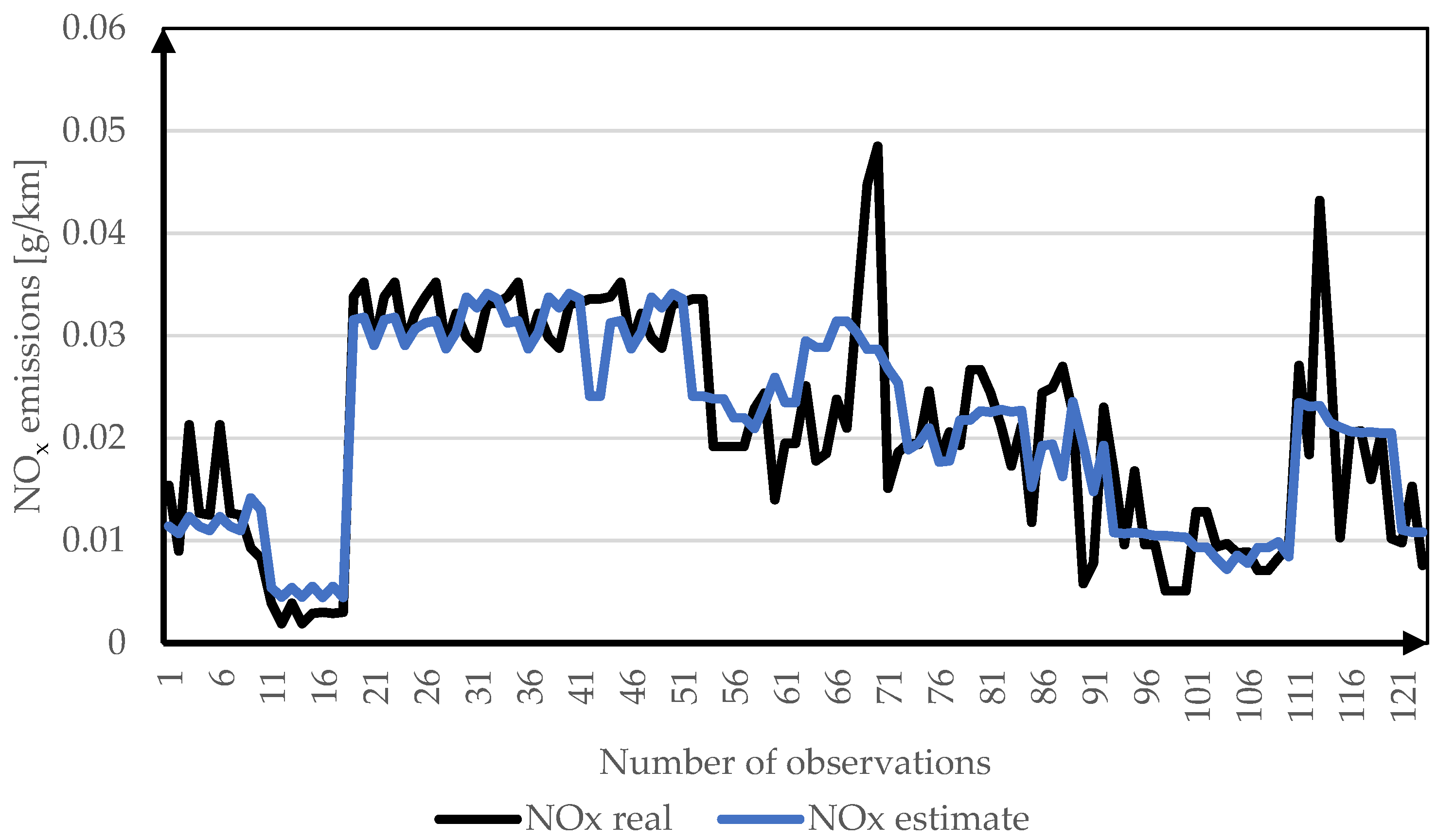
An Empirical Assessment of Greenhouse Gas Emissions and Environmental Performance of Hybrid Vehicles in the European Union


Abstract
1. Introduction
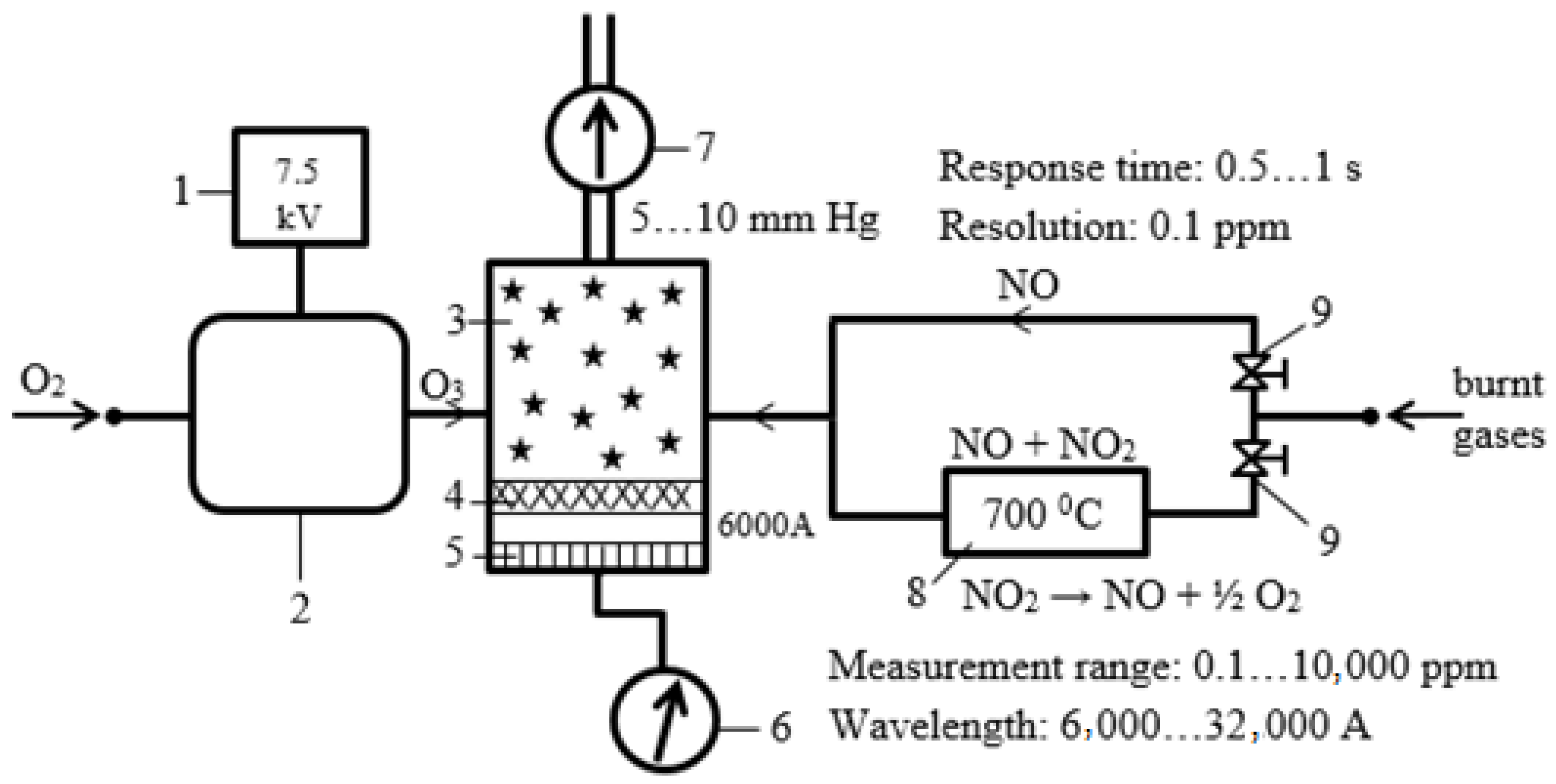
- to ensure the shortest possible response time;
- to involve the easiest possible way of working;
- to be cheap, and to allow daily measurements with high reliability and precision.
2. Materials and Methods
2.1. Measurement of Nitrogen Oxides Concentration
2.2. Bibliometric Analysis of NOx Emission
2.3. Econometric Modelling of CO2 Emissions
2.3.1. Presentation of Descriptive Statistics and Discussion of Normality of Distribution
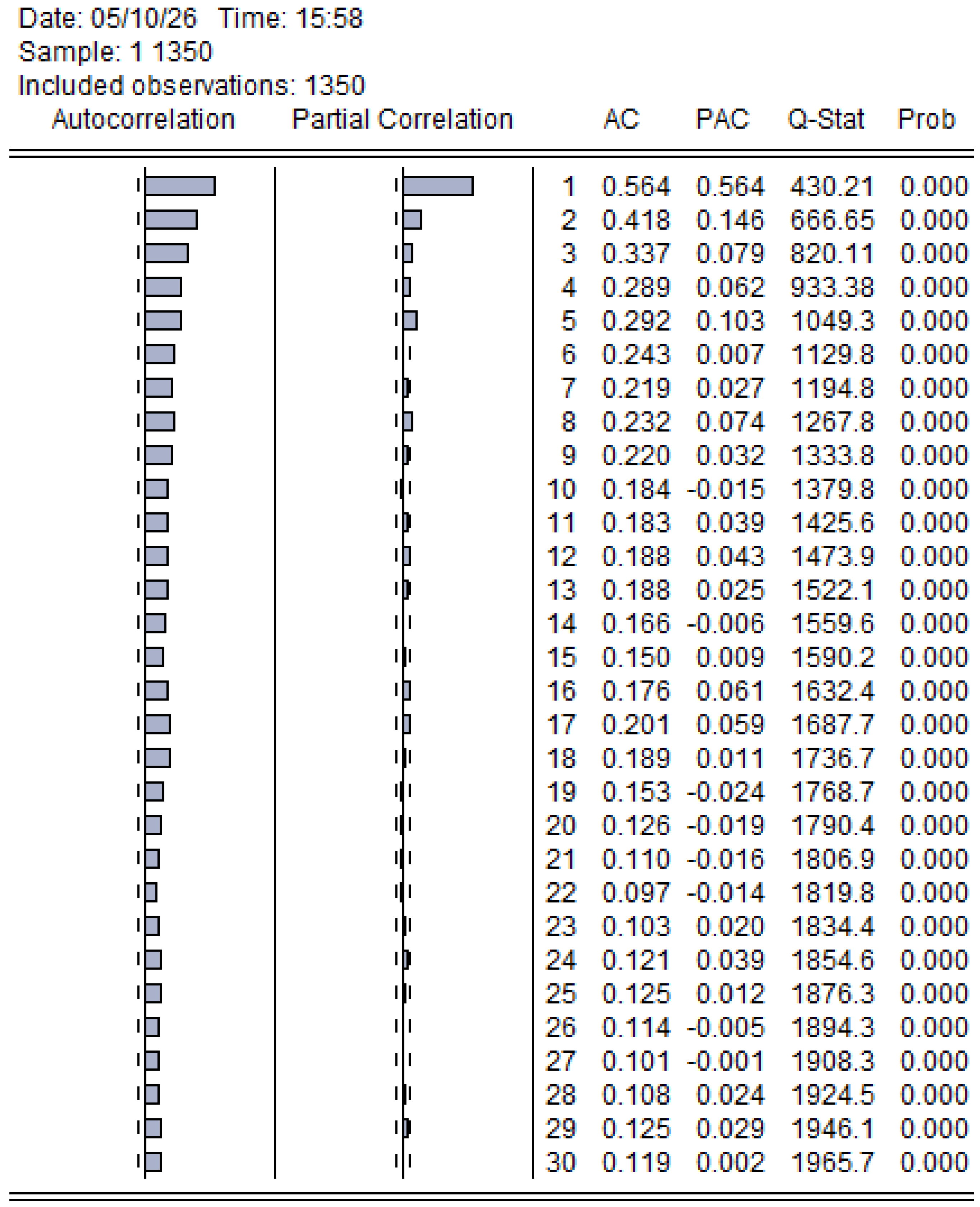
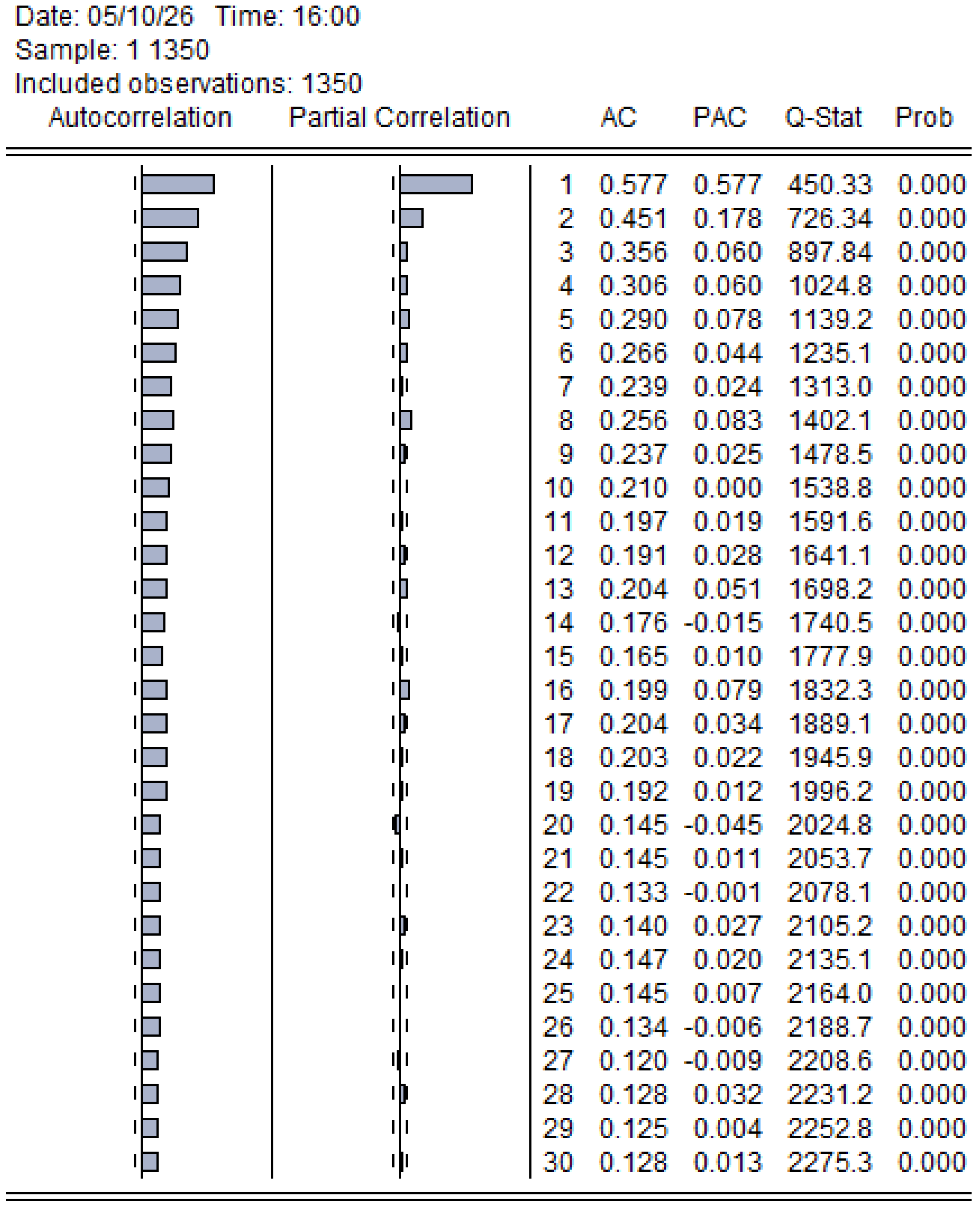
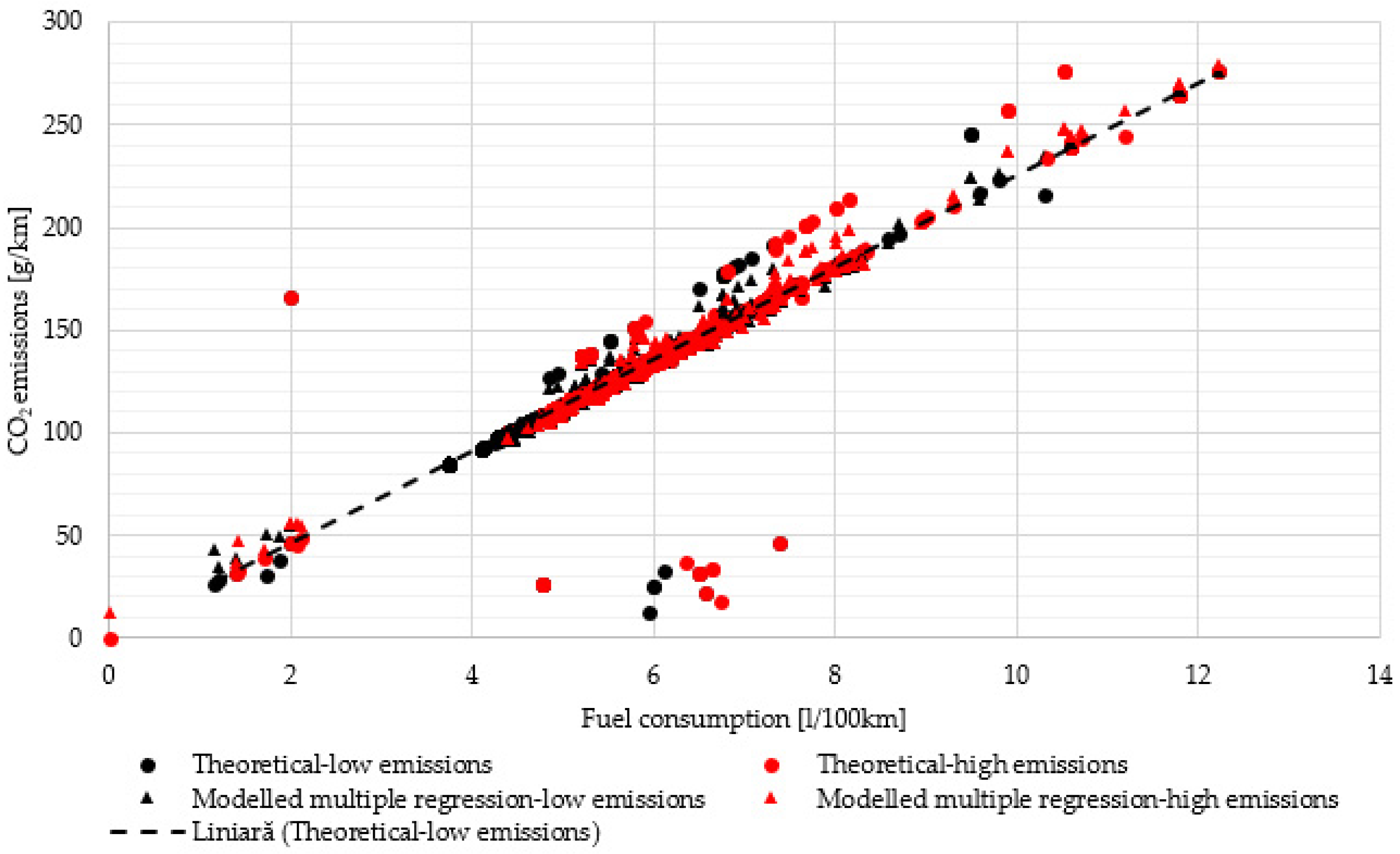
2.3.2. Development of CO2 Emission and Fuel Consumption Charts
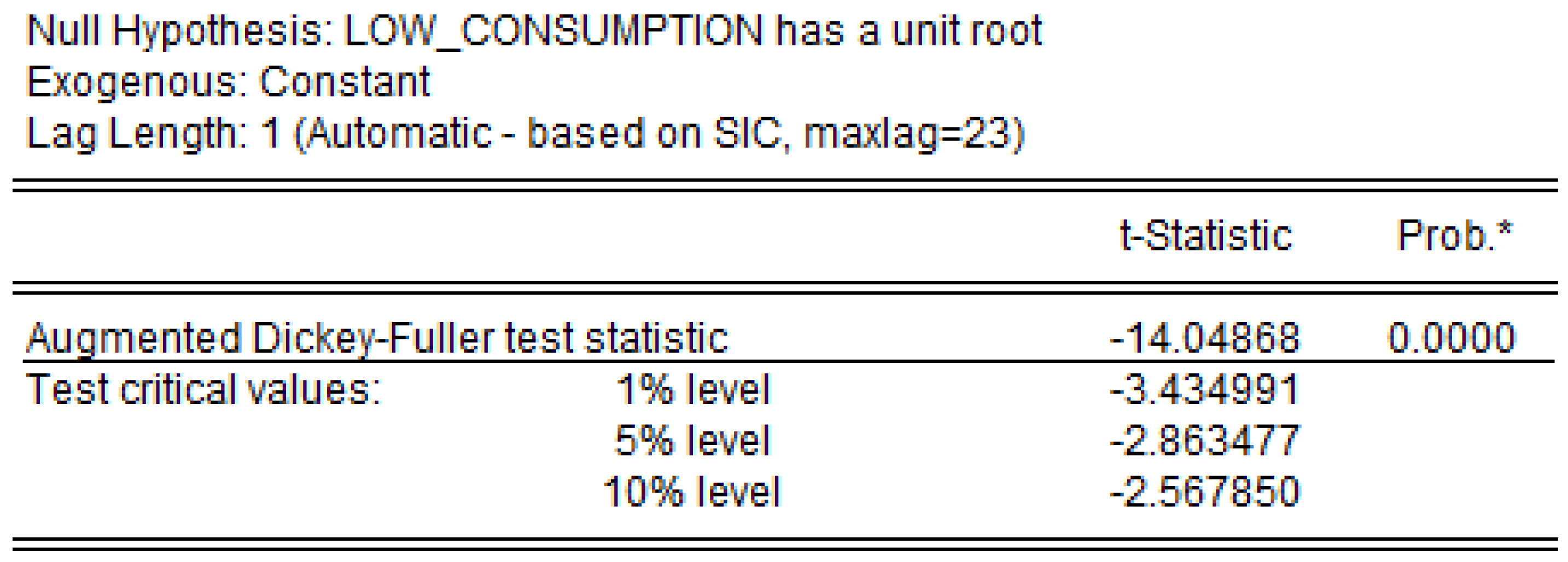
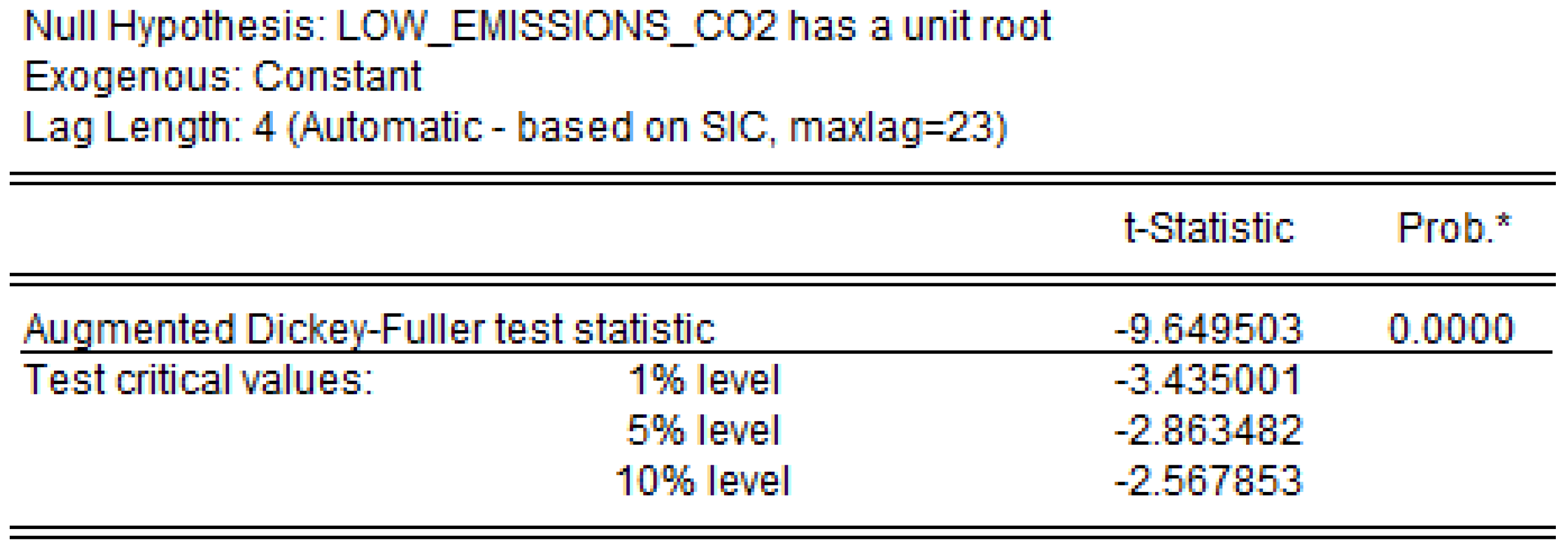
2.3.3. Testing the Stationarity of Model Variables
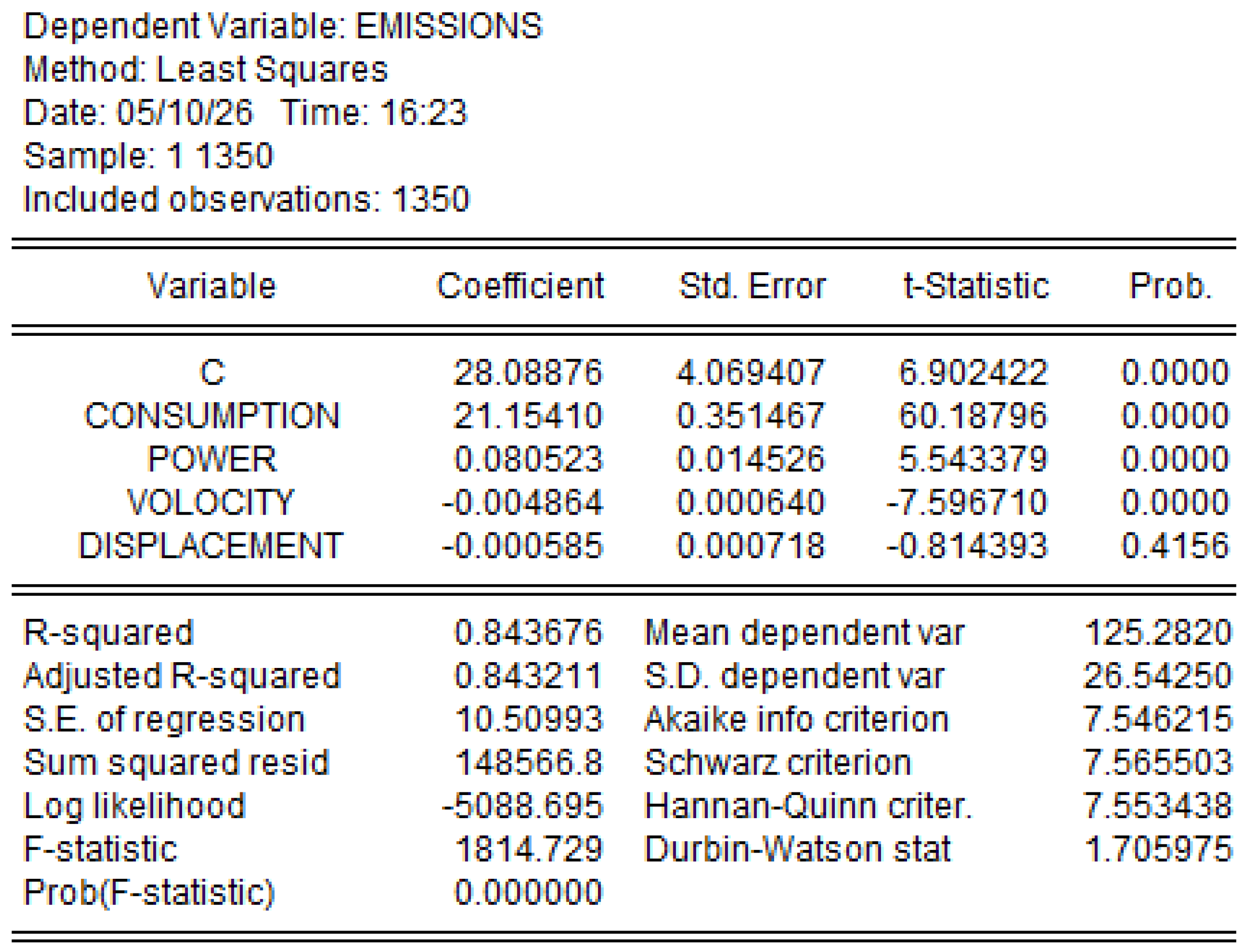
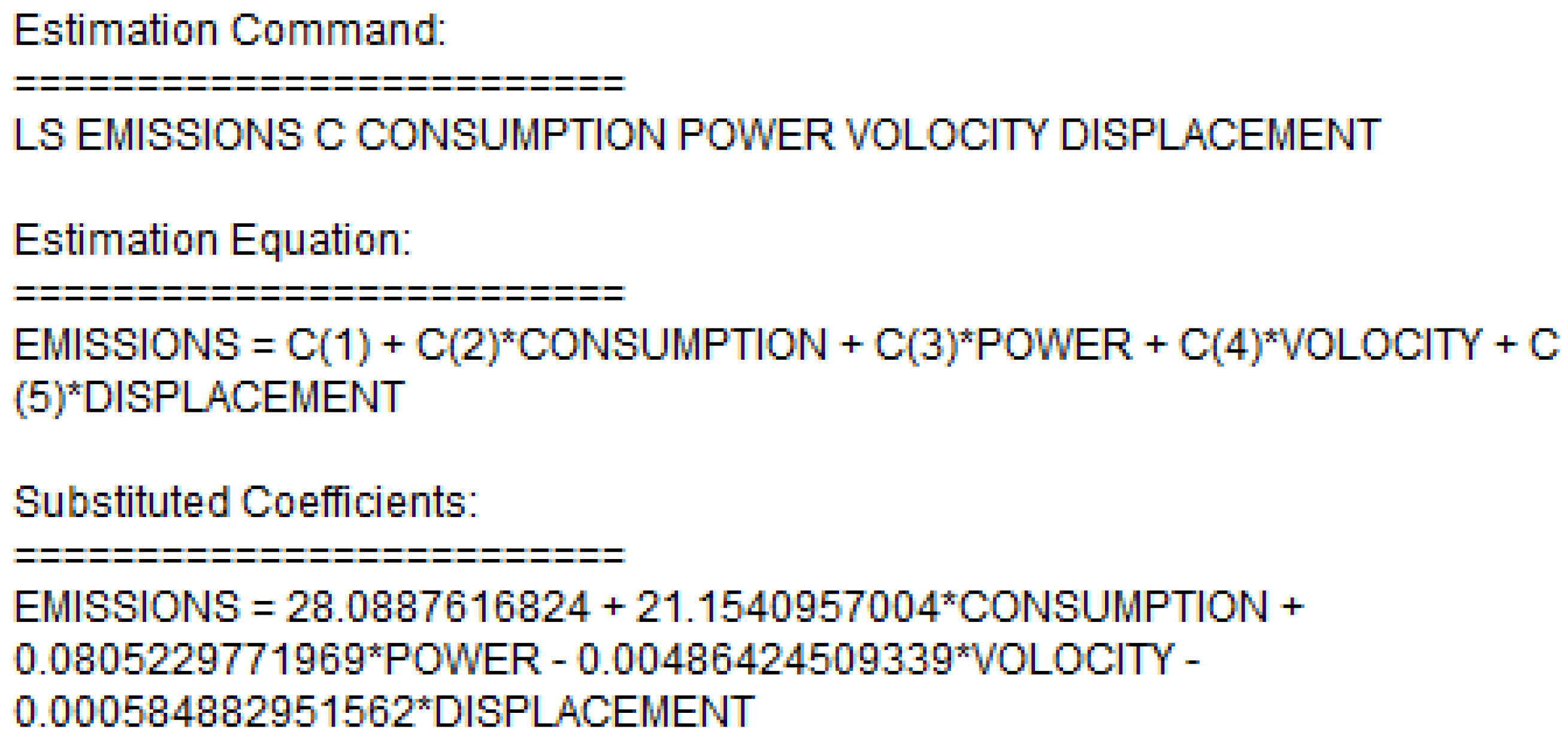
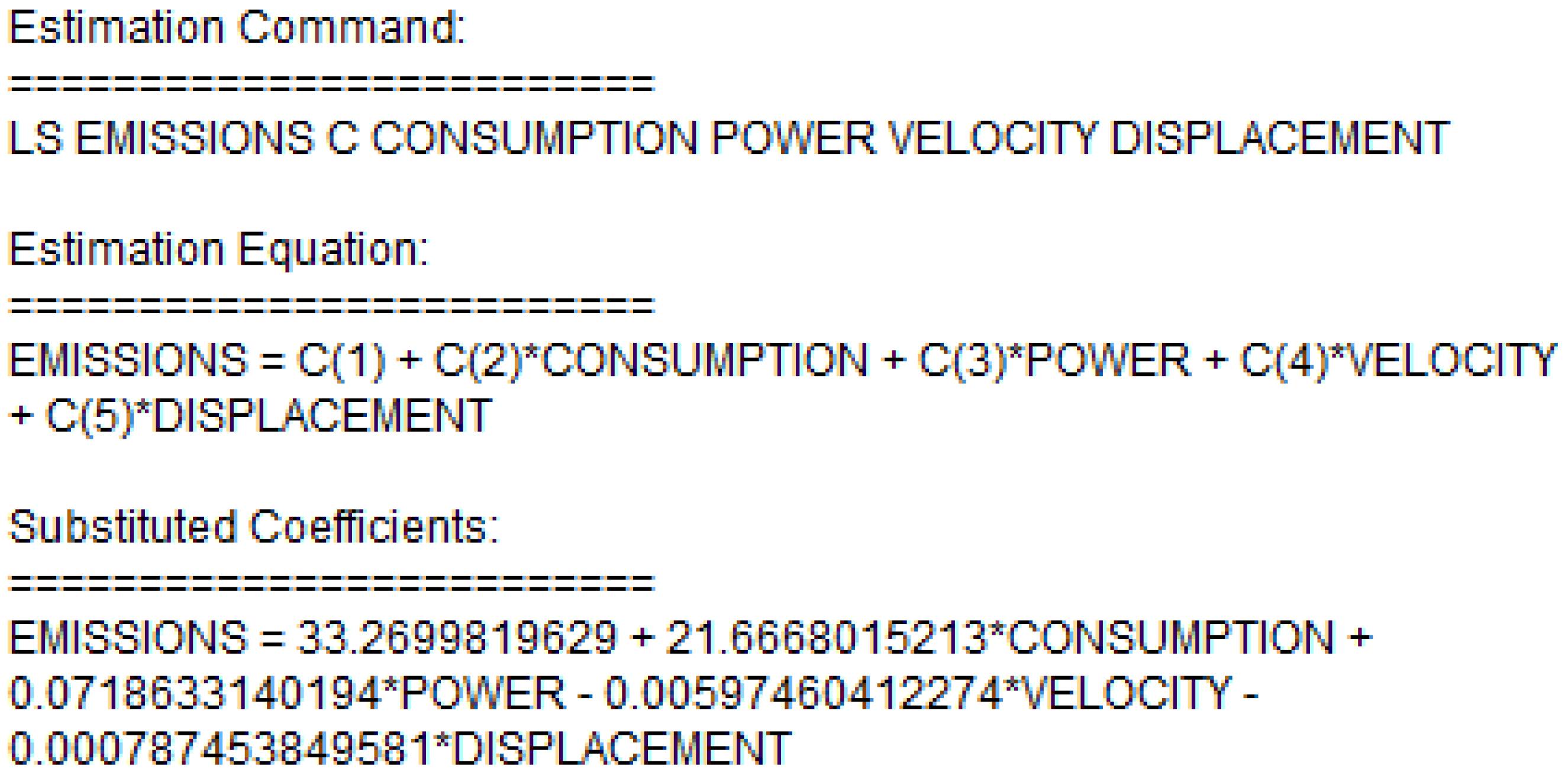
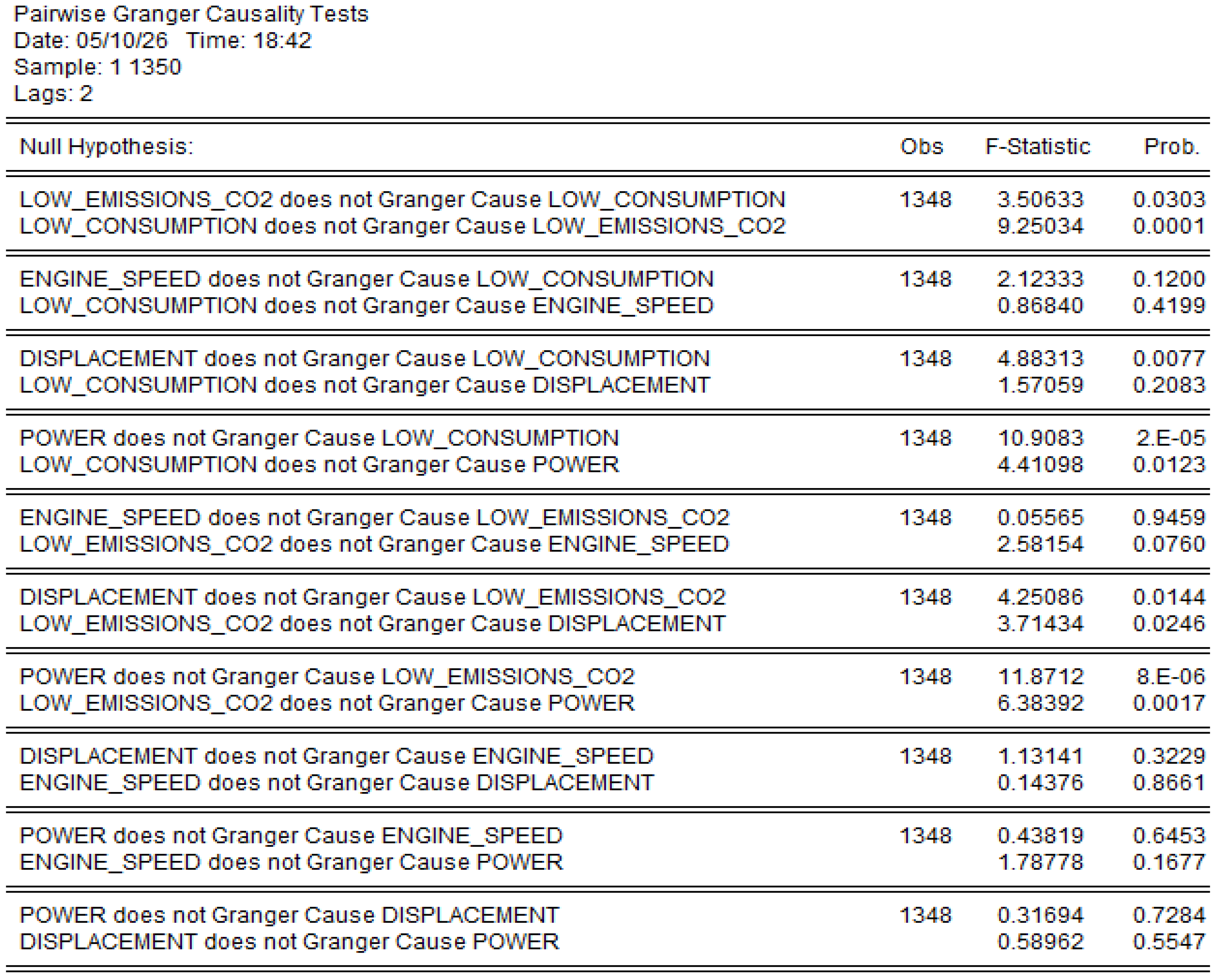
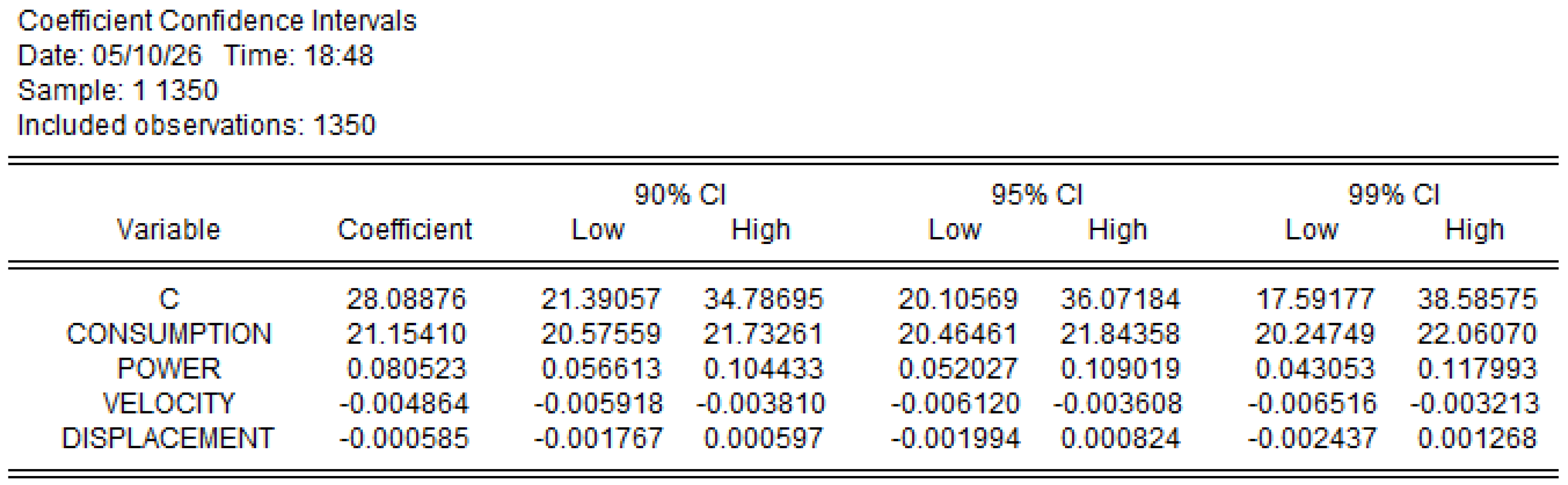
2.3.4. Applying the Linear Multiple Regression Model and Interpreting the Results
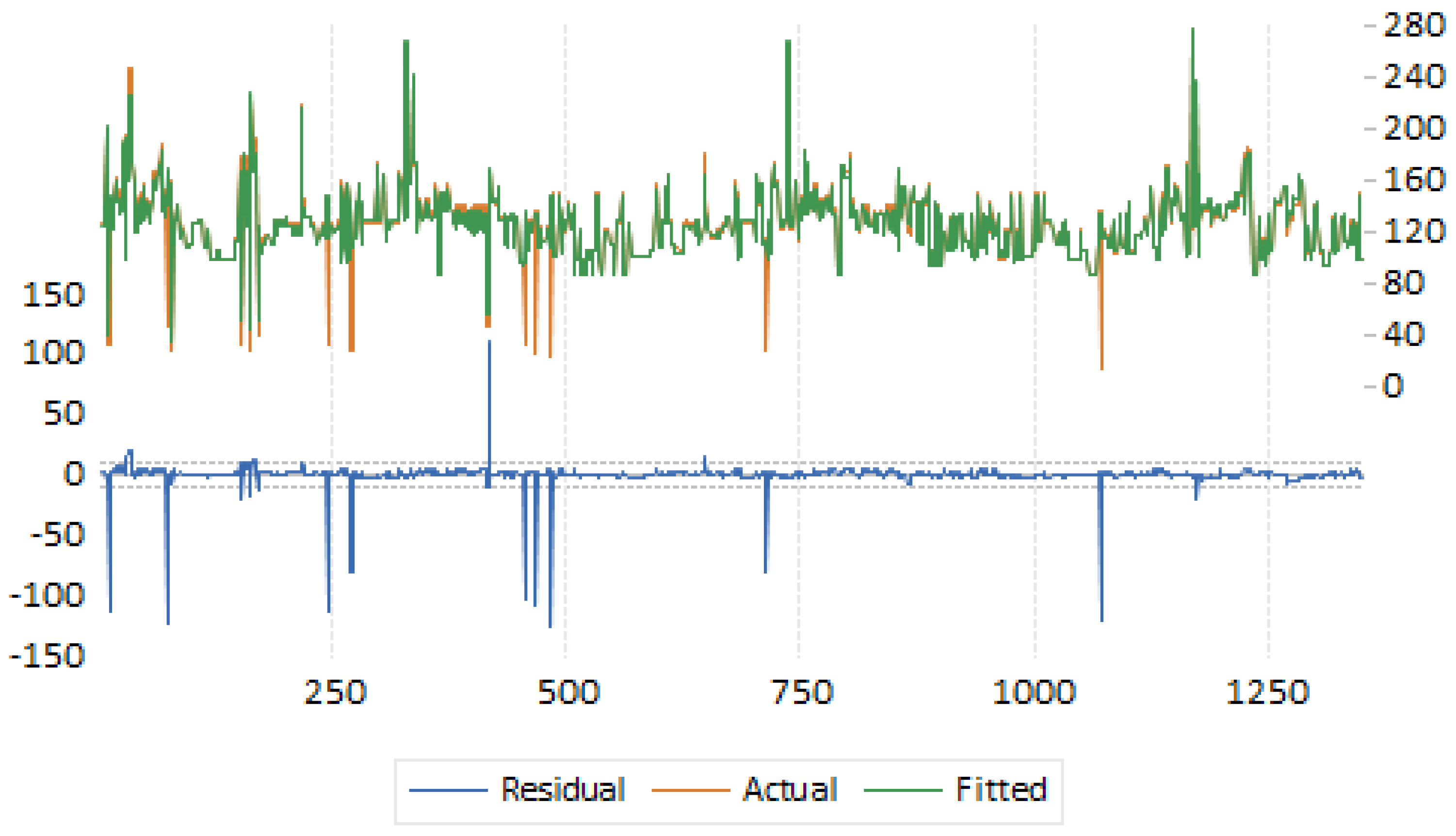
2.3.5. Residue Analysis
3. Discussion
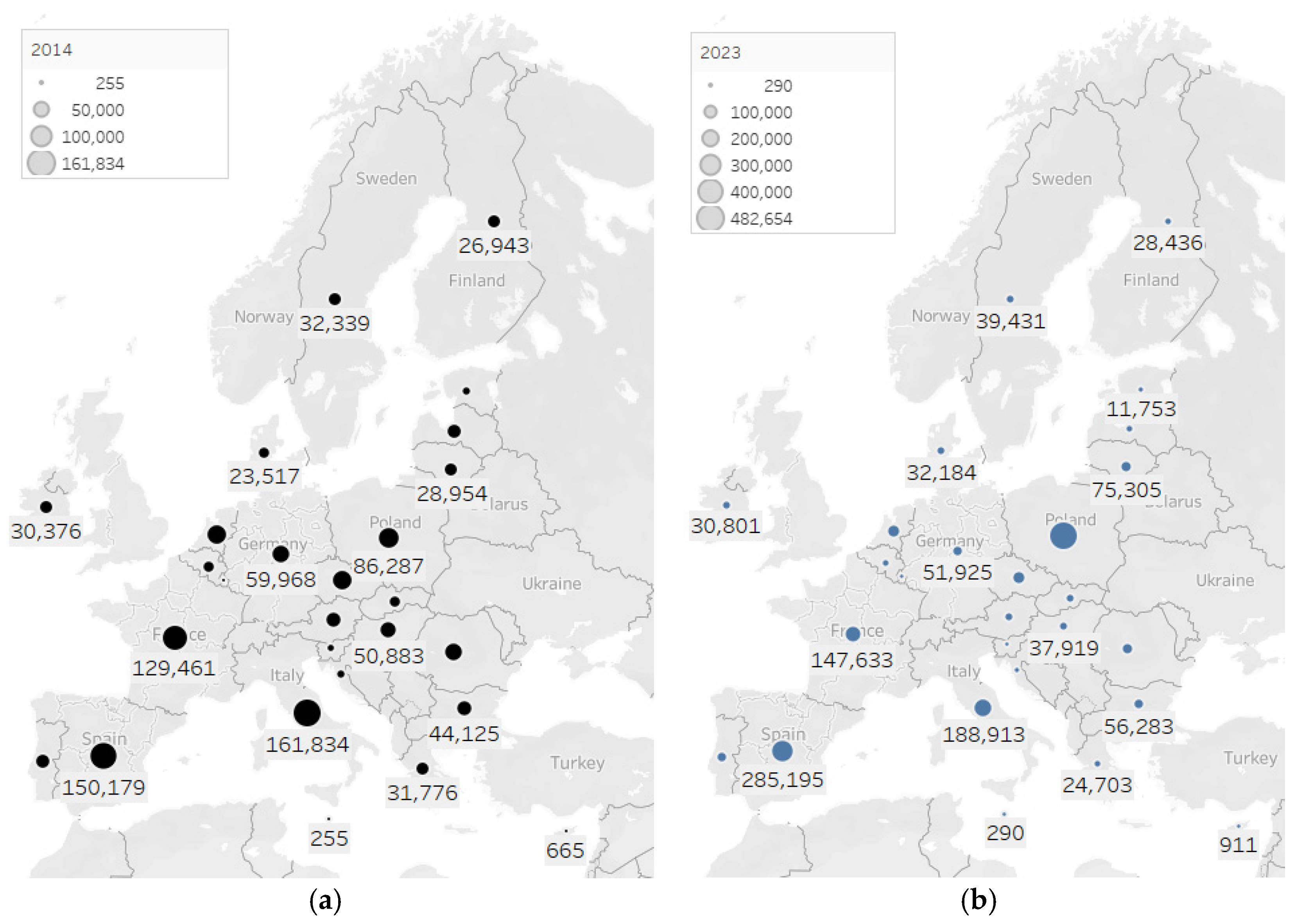
- Differentiated measures according to national emissions profile: for countries with low emissions (e.g., Finland, Estonia), focus on maintaining performance and investing in emerging technologies. For high-emission countries, implement urgent and strict measures to limit major N2O sources.
- Reducing interstate disparities: EU should introduce financial and technological support for countries with weak infrastructure, facilitating access to electrified transport and emission reduction technologies.
- Targeted policies for large emitters: Interventions in countries with extreme emissions (e.g., progressive emission tax schemes, subsidies for zero-emission vehicles, modernisation of pipeline networks) could produce significant reductions.
- Increasing the accuracy of monitoring: Harmonise emission measurement and reporting methodologies to ensure comparability and statistical reliability.
- Integrating pipeline transport into decarbonisation strategies: Upgrade pipeline infrastructure and use low-carbon energy sources.
- Closely monitoring policy effects: Distinguish between cyclical declines and sustainable structural changes.
- Cooperation and exchange of good practices: Support tech transfer, expertise, and regulatory models from low-emission countries to others.
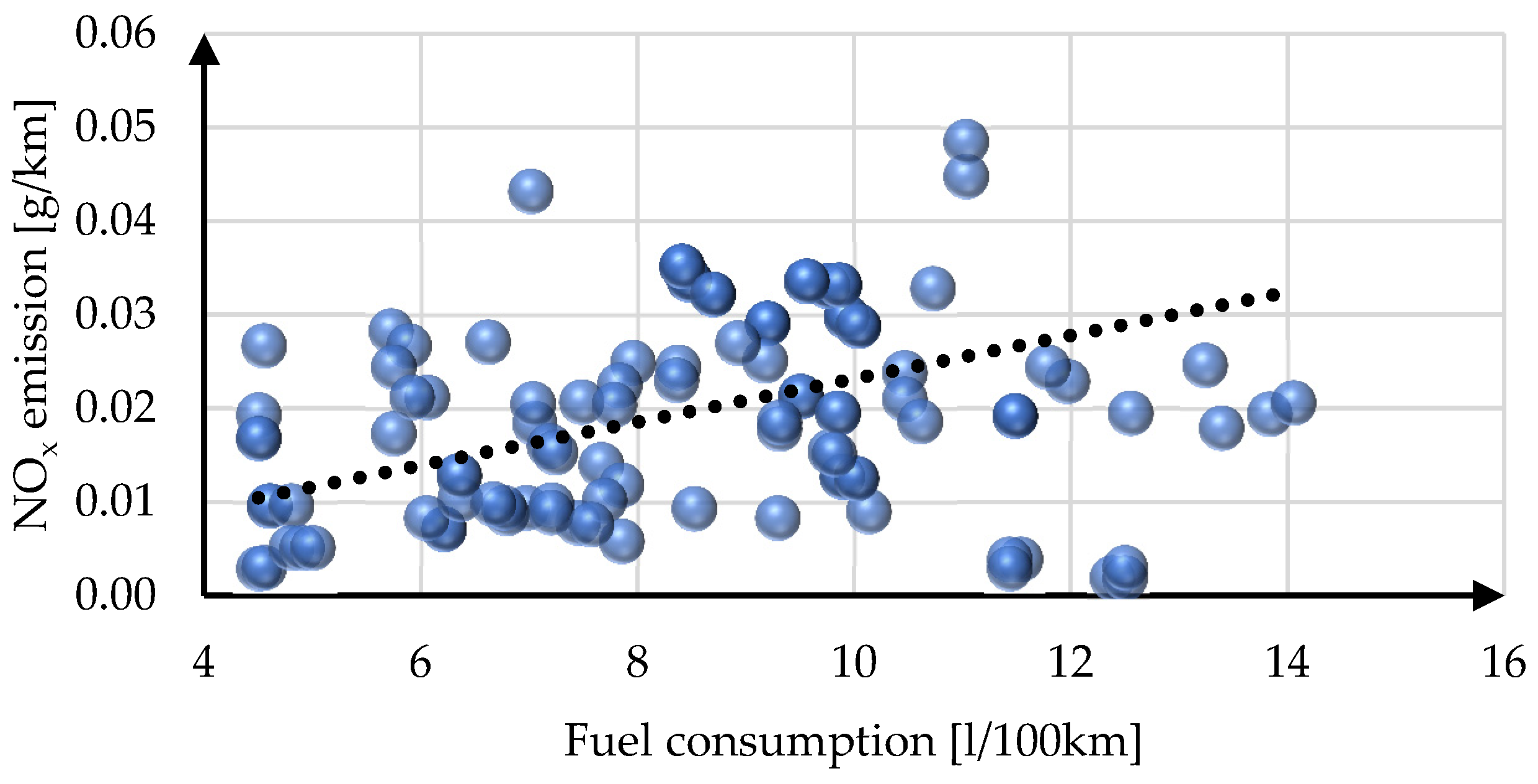
- Influence of other factors: Emission control technologies, driving conditions, engine condition, and other parameters can mask the direct relationship between fuel consumption and NOx emissions.
- High dispersion of the data: If the data is very dispersed or if there are many outliers, this can weaken the apparent correlation.
- Lack of a linear relationship: The actual relationship between the variables may not be linear, which causes the linear correlation coefficient to not correctly capture the relationship between them.
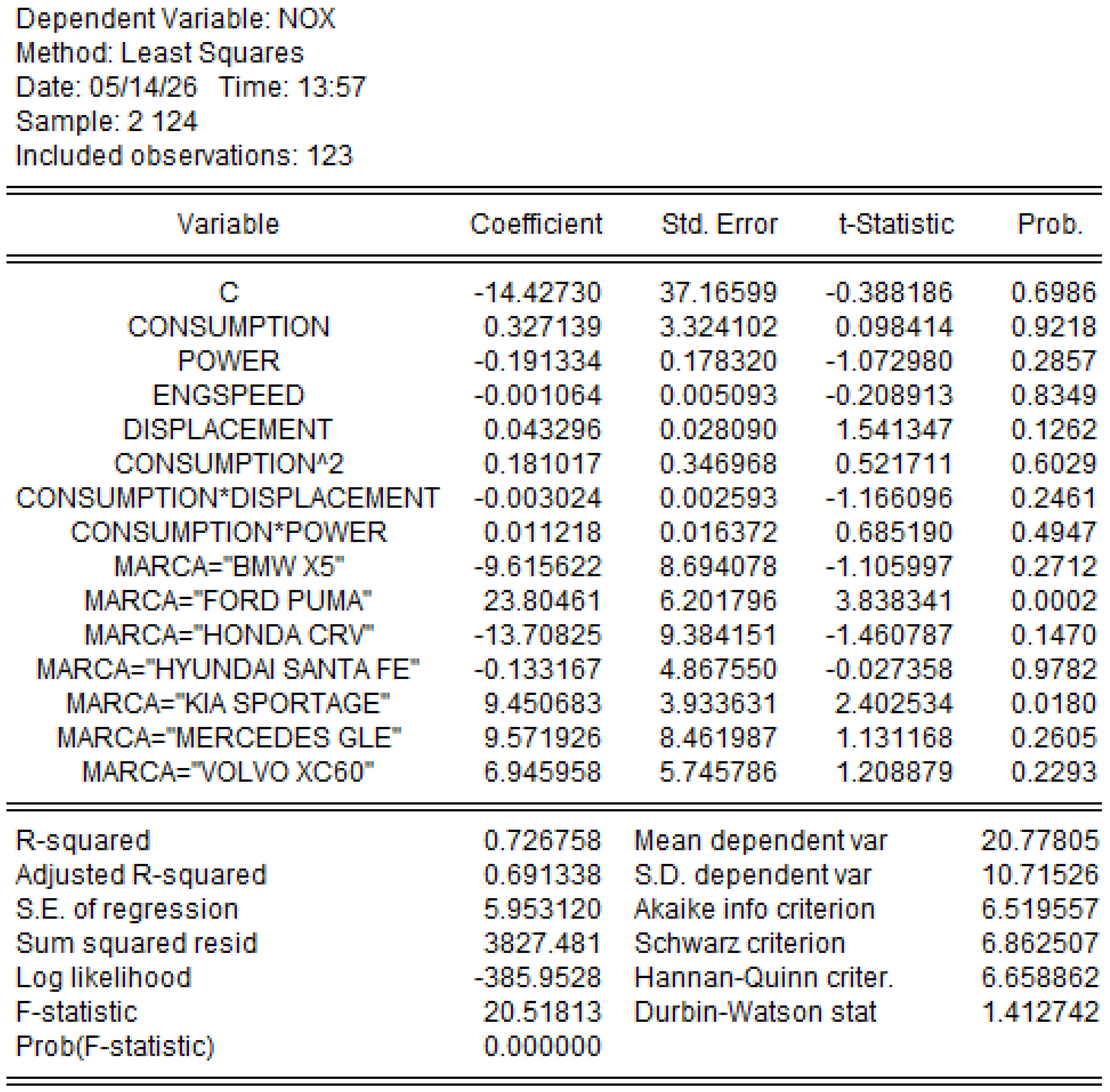
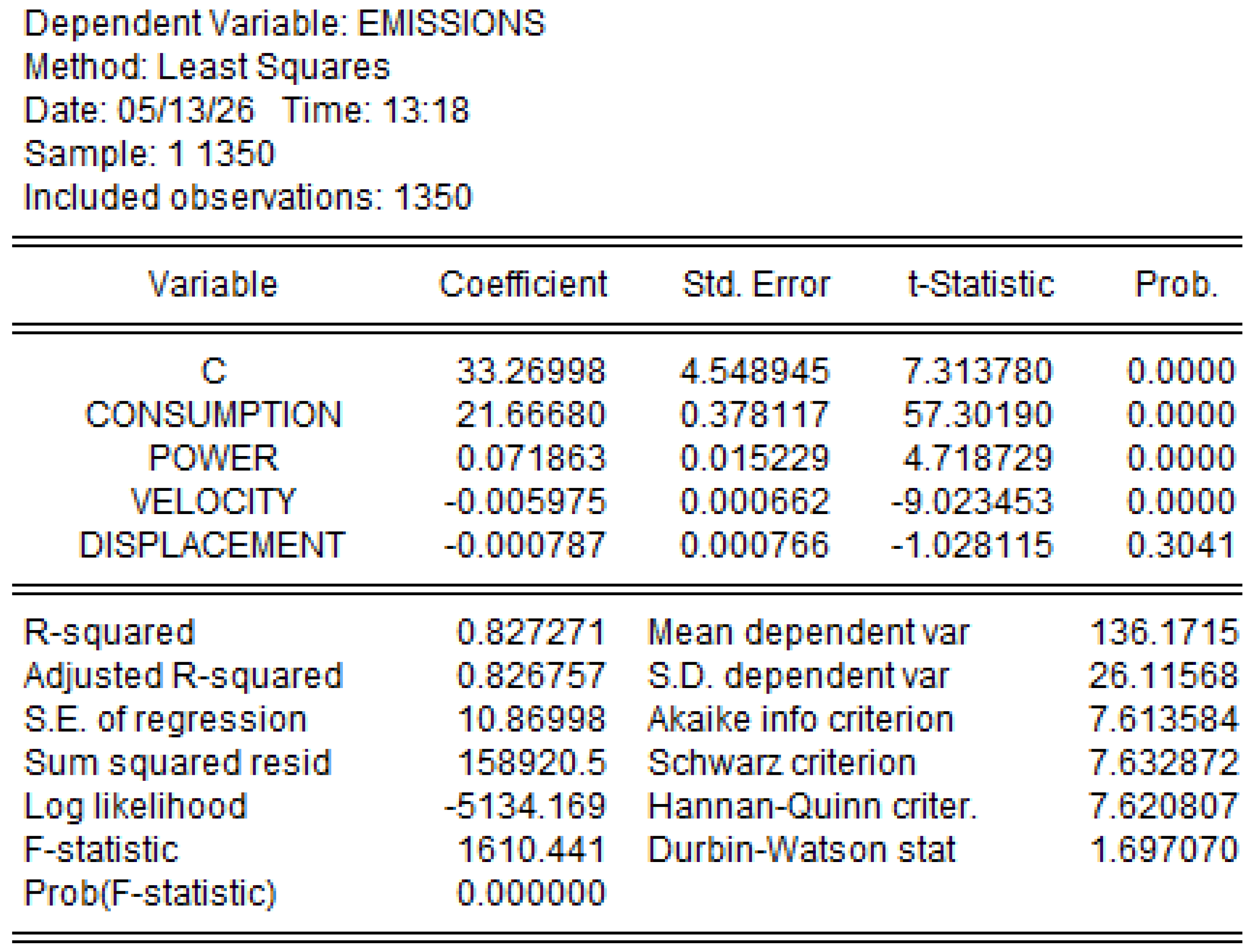
- Even after removing outliers, the R-squared value remains very small, still indicating a weak correlation between nitrogen oxide emissions and fuel consumption. It is possible that the relationship between these variables is more complex and requires further analysis or the inclusion of other factors to be better understood.
Limitations and Future Research
4. Conclusions
Author Contributions
Funding
Institutional Review Board Statement
Informed Consent Statement
Data Availability Statement
Conflicts of Interest
References
- Anenberg, S.C.; Miller, J.; Minjares, R.; Du, L.; Henze, D.K.; Lacey, F.; Malley, C.S.; Emberson, L.; Franco, V.; Klimont, Z.; et al. Impacts and mitigation of excess diesel-related NOx emissions in 11 major vehicle markets. Nature 2017, 545, 467–471. [Google Scholar] [CrossRef] [Scilit] [PubMed]
- Haugen, M.J.; Bishop, G.A. Long-term fuel-specific NOx and particle emission trends for in-use heavy-duty vehicles in California. Environ. Sci. Technol. 2018, 52, 6070–6076. [Google Scholar] [CrossRef] [Scilit] [PubMed]
- McCaffery, C.; Zhu, H.; Tang, T.; Li, C.; Karavalakis, G.; Cao, S.; Oshinuga, A.; Burnette, A.; Johnson, K.C.; Durbin, T.D. Real-world NOx emissions from heavy-duty diesel, natural gas, and diesel-hybrid electric vehicles. Sci. Total Environ. 2021, 784, 147224. [Google Scholar] [CrossRef] [Scilit]
- Stohl, A.; Aamaas, B.; Amann, M.; Baker, L.H.; Bellouin, N.; Berntsen, T.K.; Boucher, O.; Cherian, R.; Collins, W.; Daskalakis, N.; et al. Evaluating the climate and air quality impacts of short-lived pollutants. Atmos. Chem. Phys. 2015, 15, 10529–10556. [Google Scholar] [CrossRef] [Scilit]
- Monks, P.S.; Archibald, A.T.; Colette, A.; Cooper, O.; Coyle, M.; Derwent, R.; Fowler, D.; Granier, C.; Law, K.S.; Mills, G.E.; et al. Tropospheric ozone and its precursors from the urban to the global scale from air quality to short-lived climate forcer. Atmos. Chem. Phys. 2015, 15, 8889–8973. [Google Scholar] [CrossRef] [Scilit]
- Simon, H.; Reff, A.; Wells, B.; Xing, J.; Frank, N. Ozone Trends Across the United States over a Period of Decreasing NOx and VOC Emissions. Environ. Sci. Technol. 2015, 49, 186–195. [Google Scholar] [CrossRef] [Scilit]
- Bishop, G.A.; Stedman, D.H. Reactive Nitrogen Species Emission Trends in Three Light-/Medium-Duty United States Fleets. Environ. Sci. Technol. 2015, 49, 5270–5277. [Google Scholar] [CrossRef] [Scilit]
- Stewart, G.B.; Dajnak, D.; Davison, J.; Carslaw, D.C.; Beddows, A.V.; Phantawesak, N.; Stettler, M.E.; Hollaway, M.J.; Beevers, S.D. New NOx and NO2 vehicle emission curves, and their implications for emissions inventories and air pollution modelling. Urban Clim. 2024, 57, 102103. [Google Scholar] [CrossRef] [Scilit]
- Perdikopoulos, P.; Varella, A.; Katsaounou, P.; Ntziachristos, L.; Samaras, Z. Developing emission factors from real-world emissions of Euro VI urban Diesel, Diesel-hybrid, and compressed natural gas buses. Atmosphere 2025, 16, 293. [Google Scholar] [CrossRef] [Scilit]
- Feinauer, M.; Ehrenberger, S.; Epple, F.; Schripp, T.; Grein, T. Investigating particulate and nitrogen oxides emissions of a plug-in hybrid electric vehicle for a real-world driving scenario. Appl. Sci. 2022, 12, 1404. [Google Scholar] [CrossRef] [Scilit]
- Zhao, H.; Shi, L.; Xu, X.; Qiu, J.; Li, L.; Wang, J.; Yu, W.; Ge, Y. Impact of Shortening Real Driving Emission (RDE) Test Trips on CO, NOX, and PN10 Emissions from Different Vehicles. Sustainability 2024, 16, 9453. [Google Scholar] [CrossRef] [Scilit]
- Clairotte, M.; Valverde, V.; Giechaskiel, B. Real Driving Emissions (RDE): 2020 Assessment of Portable Emissions Measurement Systems (PEMS) Measurement Uncertainty; JRC Technical Report; European Commission: Luxembourg, 2021; Available online: https://publications.jrc.ec.europa.eu/repository/bitstream/JRC124017/pems_uncertainty_2020_v10.pdf (accessed on 2 October 2025).
- García, A.; Monsalve-Serrano, J.; Villalta, D.; Guzmán-Mendoza, M. Impact of low carbon fuels (LCF) on the fuel efficiency and NOx emissions of a light-duty series hybrid commercial delivery vehicle. Fuel 2022, 321, 124035. [Google Scholar] [CrossRef] [Scilit]
- IEA—International Energy Agency. Global EV Outlook 2022. 2022. Available online: https://www.iea.org/reports/global-ev-outlook-2022 (accessed on 2 October 2025).
- Cai, H.; Xie, S. Estimation of vehicular emission inventories in China from 1980 to 2005. Atmos. Environ. 2007, 41, 8735–8747. [Google Scholar] [CrossRef] [Scilit]
- Luján, J.M.; Garcia, A.; Monsalve-Serrano, J.; Martínez-Boggio, S. Effectiveness of hybrid powertrains to reduce fuel consumption and NOx emissions of a Euro 6d-temp diesel engine under real-life driving conditions. Energy Convers. Manag. 2019, 199, 111987. [Google Scholar] [CrossRef] [Scilit]
- Kumar, A.; Singh, R.; Sharma, A. Performance evaluation of hybrid electric vehicles for sustainable transport system. Int. J. Innov. Technol. Explor. Eng. 2019, 8, 195–201. [Google Scholar] [CrossRef] [Scilit]
- Sher, F.; Chen, S.; Raza, A.; Rasheed, T.; Razmkhah, O.; Rashid, T.; Rafi-Ul-Shan, P.M.; Erten, B. Novel strategies to reduce engine emissions and improve energy efficiency in hybrid vehicles. Clean. Eng. Technol. 2021, 2, 100074. [Google Scholar] [CrossRef] [Scilit]
- Nüesch, T.; Cerofolini, A.; Mancini, G.; Cavina, N.; Onder, C.; Guzzella, L. Equivalent consumption minimization strategy for the control of real-driving NOx emissions of a diesel hybrid electric vehicle. Energies 2014, 7, 3148–3178. [Google Scholar] [CrossRef] [Scilit]
- Weiss, M.; Bonnel, P.; Hummel, R.; Provenza, A.; Manfredi, U. On-road emissions of light-duty vehicles in Europe. Environ. Sci. Technol. 2011, 45, 8575–8581. [Google Scholar] [CrossRef] [Scilit] [PubMed]
- Holmer, O.; Eriksson, L. Simultaneous reduction of fuel consumption and NOx emissions through hybridization of a long haulage truck. IFAC-PapersOnLine 2017, 50, 8927–8932. [Google Scholar] [CrossRef] [Scilit]
- Li, C.; Swanson, J.; Pham, L.; Hu, S.; Hu, S.; Mikailian, G.; Jung, H.S. Real-world particle and NOx emissions from hybrid electric vehicles under cold weather conditions. Environ. Pollut. 2021, 286, 117320. [Google Scholar] [CrossRef] [Scilit]
- Borken-Kleefeld, J.; Chen, Y. New emission deterioration rates for gasoline cars—Results from long-term measurements. Atmos. Environ. 2015, 101, 58–64. [Google Scholar] [CrossRef] [Scilit]
- Carslaw, D.C.; Beevers, S.D.; Tate, J.E.; Westmoreland, E.J.; Williams, M.L. Recent evidence concerning higher NOx emissions from passenger cars and light-duty vehicles. Atmos. Environ. 2011, 45, 7053–7063. [Google Scholar] [CrossRef] [Scilit]
- Wu, Y.; Zhang, S.; Li, M. The challenge to NOx emission control for heavy-duty diesel vehicles in China. Atmos. Chem. Phys. 2012, 12, 9365–9379. [Google Scholar] [CrossRef] [Scilit]
- Yang, L.; Franco, V.; Mock, P.; Kolke, R.; Zhang, S.; Wu, Y.; German, J. Experimental assessment of NOx emissions from 73 Euro 6 diesel passenger cars. Environ. Sci. Technol. 2015, 49, 14409–14415. [Google Scholar] [CrossRef] [Scilit] [PubMed]
- Yang, L.; Zhang, S.; Wu, Y.; Chen, Q.; Niu, T.; Huang, X.; Zhang, S.; Zhang, L.; Zhou, Y.; Hao, J. Evaluating real-world CO2 and NOx emissions for public transit buses using a remote wireless OBD approach. Environ. Pollut. 2016, 218, 453–462. [Google Scholar] [CrossRef] [Scilit] [PubMed]
- Kossioris, T.; Maurer, R.; Sterlepper, S.; Günther, M.; Pischinger, S. Challenges and Solutions to Meet the Euro 7 NOx Emission Requirements for Diesel Light-Duty Commercial Vehicles. Emiss. Control Sci. Technol. 2024, 10, 123–139. [Google Scholar] [CrossRef] [Scilit]
- Peng, F.; Zhang, Y.; Song, G.; Huang, J.; Zhai, Z.; Yu, L. Evaluation of Real-World Fuel Consumption of Hybrid-Electric Passenger Car Based on Speed-Specific Vehicle Power Distributions. Adv. Mech. Eng. 2023, 15, 9016510. [Google Scholar] [CrossRef] [Scilit]
- Brinklow, G.; Herreros, J.M.; Zeraati Rezaei, S.; Doustdar, O.; Tsolakis, A.; Kolpin, A.; Millington, P. Non-carbon greenhouse gas emissions for hybrid electric vehicles: Three-way catalyst nitrous oxide and ammonia trade-off. Int. J. Environ. Sci. Technol. 2023, 20, 12521–12532. [Google Scholar] [CrossRef] [Scilit]
- Farren, N.J.; Davison, J.; Rose, R.A.; Wagner, R.L.; Carslaw, D.C. Underestimated ammonia emissions from road vehicles. Environ. Sci. Technol. 2020, 54, 15689–15697. [Google Scholar] [CrossRef] [Scilit] [PubMed]
- Borsari, V.; de Assunção, J.V. Ammonia emissions from a light-duty vehicle. Transp. Res. Part D Transp. Environ. 2017, 51, 53–61. [Google Scholar] [CrossRef] [Scilit]
- Heeb, N.V.; Forss, A.-M.; Brühlmann, S.; Lüscher, R.; Saxer, C.J.; Hug, P. Three-way catalyst-induced formation of ammonia—Velocity- and acceleration-dependent emission factors. Atmos. Environ. 2006, 40, 5986–5997. [Google Scholar] [CrossRef] [Scilit]
- EEA—European Environment Agency. Greenhouse Gas Emissions from Transport in Europe. 2023. Available online: https://www.eea.europa.eu (accessed on 2 October 2025).
- Hassouna, F.M.A.; Al-Sahili, K. Environmental impact assessment of the transportation sector and hybrid vehicle implications in Palestine. Sustainability 2020, 12, 7878. [Google Scholar] [CrossRef] [Scilit]
- Kapustin, A.; Rakov, V. Methodology to evaluate the impact of hybrid cars engine type on their economic efficiency and environmental safety. Transp. Res. Procedia 2017, 20, 247–253. [Google Scholar] [CrossRef] [Scilit]
- Gao, L.; Winfield, Z.C. Life Cycle Assessment of Environmental and Economic Impacts of Advanced Vehicles. Energies 2012, 5, 605–620. [Google Scholar] [CrossRef] [Scilit]
- Squalli, J. Greening the roads: Assessing the role of electric and hybrid vehicles in curbing CO2 emissions. J. Clean. Prod. 2024, 434, 139908. [Google Scholar] [CrossRef] [Scilit]
- Lang, J.; Cheng, S.; Zhou, Y.; Zhao, B.; Wang, H.; Zhang, S. Energy and environmental implications of hybrid and electric vehicles in China. Energies 2013, 6, 2663–2685. [Google Scholar] [CrossRef] [Scilit]
- Rivera-González, L.; Bolonio, D.; Mazadiego, L.F.; Naranjo-Silva, S.; Escobar-Segovia, K. Long-term forecast of energy and fuels demand towards a sustainable road transport sector in Ecuador (2016–2035). Sustainability 2020, 12, 472. [Google Scholar] [CrossRef] [Scilit]
- Tran, V.; Zhao, S.; Diop, E.B.; Song, W. Travelers’ Acceptance of Electric Carsharing Systems in Developing Countries: The Case of China. Sustainability 2019, 11, 5348. [Google Scholar] [CrossRef] [Scilit]
- Bozzi, A.D.; Aguilera, A. Shared E-Scooters: A Review of Uses, Health and Environmental Impacts, and Policy Implications of a New Micro-Mobility Service. Sustainability 2021, 13, 8676. [Google Scholar] [CrossRef] [Scilit]
- Moreau, H.; de Jamblinne de Meux, L.; Zeller, V.; D’Ans, P.; Ruwet, C.; Achten, W.M.J. Dockless e-scooter: A green solution for mobility? Comparative case study between dockless e-scooters, displaced transport, and personal e-scooters. Sustainability 2020, 12, 1803. [Google Scholar] [CrossRef] [Scilit]
- Felipe-Falgas, P.; Madrid-Lopez, C.; Marquet, O. Assessing environmental performance of micromobility using LCA and self-reported modal change: The case of shared e-bikes, e-scooters, and e-mopeds in Barcelona. Sustainability 2022, 14, 4139. [Google Scholar] [CrossRef] [Scilit]
- Badyelgajy, Y.; Doszhanov, Y.; Kapsalyamov, B.; Onerkhan, G.; Sabitov, A.; Zhumazhanov, A.; Doszhanov, O. Calculation of Greenhouse Gas Emissions from Tourist Vehicles Using Mathematical Methods: A Case Study in Altai Tavan Bogd National Park. Sustainability 2025, 17, 6702. [Google Scholar] [CrossRef] [Scilit]
- Pielecha, J.; Gis, W. Testing Exhaust Emissions of Plug-In Hybrid Vehicles in Poland. Energies 2024, 17, 6288. [Google Scholar] [CrossRef] [Scilit]
- Castillo, J.C.; Uribe, A.F.; Tibaquirá, J.E.; Giraldo, M.; Idárraga, M. Hybrid Electric Vehicles as a Strategy for Reducing Fuel Consumption and Emissions in Latin America. World Electr. Veh. J. 2025, 16, 101. [Google Scholar] [CrossRef] [Scilit]
- Rojas-Reinoso, E.V.; Anacleto-Fernández, M.; Utreras-Alomoto, J.; Carranco-Quiñonez, C.; Mata, C. Comparative Study of Fuel and Greenhouse Gas Consumption of a Hybrid Vehicle Compared to Spark Ignition Vehicles. World Electr. Veh. J. 2025, 16, 4. [Google Scholar] [CrossRef] [Scilit]
- Konečný, V.; Zuzaniak, M.; Jonasíková, D. Greenhouse Gas Emissions from Road Transport and Their Economic Value in the Assessment of Transport Projects Using a Cost–Benefit Analysis: Approaches Implemented in the Slovak Republic and Selected Central European Countries. Appl. Sci. 2025, 15, 1283. [Google Scholar] [CrossRef] [Scilit]
- Solaymani, S.; Botero, J. Reducing Carbon Emissions from Transport Sector: Experience and Policy Design Considerations. Sustainability 2025, 17, 3762. [Google Scholar] [CrossRef] [Scilit]
- Kwilinski, A.; Lyulyov, O.; Pimonenko, T. Reducing transport sector CO2 emissions patterns: Environmental technologies and renewable energy. Open Innov. Technol. Mark. Complex. 2024, 10, 100217. [Google Scholar] [CrossRef] [Scilit]
- Ebrahim, E.E.M.; Abonazel, M.R.; Shalaby, O.A.; Albeltagy, W.A.A. Studying the impact of socioeconomic and environmental factors on nitrogen oxide emissions: Spatial econometric modeling. Int. J. Energy Econ. Policy 2025, 15, 248–259. [Google Scholar] [CrossRef] [Scilit]
- Qin, X.; Xie, P.; Liao, C. Study on the synergistic effect of NOx and CO2 emission reduction in the industrial sector of Guangzhou. Front. Environ. Sci. 2025, 13, 1497121. [Google Scholar] [CrossRef] [Scilit]
- Song, Y.; Yue, Z.; Wang, X.; Sun, L.; Zang, M.; Guo, C. Effects of green total factor energy efficiency on industrial NOx emission abatement: Based on SBM-ML and spatial Durbin model for 257 prefecture-level cities in China. Environ. Dev. Sustain. 2026, 15, 1–31. [Google Scholar] [CrossRef] [Scilit]
- Zhu, G.; Shi, H.; Zhong, L.; He, G.; Wang, B.; Shan, J.; Han, P.; Liu, T.; Wang, S.; Liu, C.; et al. Nitrous oxide sources, mechanisms and mitigation. Nat. Rev. Earth Environ. 2025, 6, 574–592. [Google Scholar] [CrossRef] [Scilit]
- Deng, J.; Gong, C.; Engel, J.; Nabel, J.; Slominska-Durdasiak, K.; Nerobelov, G.; Ninomiya, H.; Zhang, L.; Zaehle, S. Impact of Past and Future Nitrogen Deposition Pathways on the Terrestrial Carbon Sink and N2O Emissions; No. EGU26-18329; Copernicus Publications: Göttingen, Germany, 2026. [Google Scholar] [CrossRef] [Scilit]
- Zhu, H.; Li, C.; McCaffery, C.; Cao, S.; Johnson, K.C.; Karavalakis, G.; Durbin, T. Emissions from heavy-duty diesel, natural gas, and diesel-hybrid electric vehicles—Part 1. NOx, N2O and NH3 emissions. Fuel 2024, 371, 132175. [Google Scholar] [CrossRef] [Scilit]
- Kanberger, E.D.; Ziegler, A. On the relevance of life-cycle CO2 emissions for vehicle purchase decisions. Transp. Res. Part D Transp. Environ. 2024, 126, 104031. [Google Scholar] [CrossRef] [Scilit]
- Catenazzo, A. Competition and the Green Deal: A study of consumers’ WTP for CO2 emissions reduction in the Italian car market. J. Eur. Compet. Law Pract. 2024, 15, 209–220. [Google Scholar] [CrossRef] [Scilit]
- Eurostat Database. Eurostat Online Database. 2025. Available online: https://ec.europa.eu/eurostat/web/main/data/database (accessed on 2 October 2025).










| Descriptive Statistics | 2014 | 2015 | 2016 | 2017 | 2018 | 2019 | 2020 | 2021 | 2022 | 2023 |
|---|---|---|---|---|---|---|---|---|---|---|
| Mean | 175.78 | 180.59 | 195.82 | 199.07 | 203.13 | 250.03 | 242.37 | 276.38 | 285.34 | 266.40 |
| Standard Error | 31.13 | 31.75 | 36.00 | 35.70 | 36.34 | 60.55 | 61.42 | 78.66 | 81.94 | 75.14 |
| Median | 122.03 | 125.30 | 131.02 | 145.04 | 142.51 | 137.08 | 143.91 | 136.47 | 140.35 | 143.09 |
| Standard Deviation | 161.78 | 164.97 | 187.04 | 185.48 | 188.83 | 314.63 | 319.17 | 408.74 | 425.79 | 390.46 |
| Sample Variance | 26,172.1 | 27,214.0 | 34,985.4 | 34,404.4 | 35,658.1 | 98,993.6 | 101,868.6 | 167,071.5 | 181,298.9 | 152,460.9 |
| Kurtosis | 1.81 | 1.82 | 1.38 | 3.33 | 3.73 | 8.74 | 9.15 | 11.51 | 11.87 | 9.86 |
| Skewness | 1.49 | 1.47 | 1.45 | 1.73 | 1.79 | 2.76 | 2.82 | 3.18 | 3.24 | 2.99 |
| Range | 609.74 | 638.20 | 699.15 | 794.54 | 820.70 | 1472.38 | 1496.15 | 1967.06 | 2055.44 | 1820.25 |
| Minimum | 0.96 | 0.72 | 1.38 | 1.57 | 1.36 | 1.40 | 1.05 | 1.04 | 1.45 | 1.09 |
| Maximum | 610.7 | 638.92 | 700.53 | 796.11 | 822.06 | 1473.78 | 1497.2 | 1968.1 | 2056.89 | 1821.34 |
| Sum | 4746.12 | 4876.02 | 5287.23 | 5374.9 | 5484.59 | 6750.77 | 6543.86 | 7462.18 | 7704.25 | 7192.79 |
| Count | 27 | 27 | 27 | 27 | 27 | 27 | 27 | 27 | 27 | 27 |
Disclaimer/Publisher’s Note: The statements, opinions and data contained in all publications are solely those of the individual author(s) and contributor(s) and not of MDPI and/or the editor(s). MDPI and/or the editor(s) disclaim responsibility for any injury to people or property resulting from any ideas, methods, instructions or products referred to in the content. |
© 2026 by the authors. Licensee MDPI, Basel, Switzerland. This article is an open access article distributed under the terms and conditions of the Creative Commons Attribution (CC BY) license.
Share and Cite
Dobre, A.; Preda, E. An Empirical Assessment of Greenhouse Gas Emissions and Environmental Performance of Hybrid Vehicles in the European Union. Sustainability 2026, 18, 5341. https://doi.org/10.3390/su18115341
Dobre A, Preda E. An Empirical Assessment of Greenhouse Gas Emissions and Environmental Performance of Hybrid Vehicles in the European Union. Sustainability. 2026; 18(11):5341. https://doi.org/10.3390/su18115341
Chicago/Turabian StyleDobre, Alexandru, and Elena Preda. 2026. "An Empirical Assessment of Greenhouse Gas Emissions and Environmental Performance of Hybrid Vehicles in the European Union" Sustainability 18, no. 11: 5341. https://doi.org/10.3390/su18115341
APA StyleDobre, A., & Preda, E. (2026). An Empirical Assessment of Greenhouse Gas Emissions and Environmental Performance of Hybrid Vehicles in the European Union. Sustainability, 18(11), 5341. https://doi.org/10.3390/su18115341