1. Introduction
In recent years, the increasing complexity of urban systems has made processes of spatial transformation and governance more challenging to manage, requiring integrative and adaptive approaches. Cities today function as dynamic socio-technical systems in which structural, managerial, social, economic, and environmental dimensions interact in non-linear and often unpredictable ways [
1]. This interdependence generates multi-scalar and cross-sectoral effects (spatial, ecological, cultural, and institutional) that challenge traditional planning frameworks, which tend to approach urban transformation through rigid, sectoral, and sequential procedures. Within such complexity, urban regeneration is not merely a technical process of spatial renewal but a collective endeavor of sense-making and learning, where diverse actors negotiate meanings, priorities, and trade-offs [
2].
As planning theorists have long argued, effective urban governance depends on the connection between knowledge and action, and on the capacity of institutions to foster social learning and shared reasoning [
3,
4,
5,
6]. Participatory approaches, when conceived in this light, move beyond procedural consultation to become arenas for the co-production of situated knowledge, aligning civic aspirations with technical feasibility and long-term sustainability.
International agendas—such as the 2030 Agenda for Sustainable Development and the New Urban Agenda—further reinforce this perspective, calling for inclusive and participatory urban governance as a foundation for sustainable, resilient, and equitable cities [
7,
8]. However, despite significant normative progress, participatory planning practices often remain confined to tokenistic consultation, with limited capacity to influence decisions or anticipate the systemic consequences of urban interventions [
5,
9]. This gap between public engagement and impact has raised growing skepticism among scholars and practitioners regarding the authenticity and transformative potential of participation. Questions persist as to whether these processes are truly empowering or merely procedural, and to what extent they can meaningfully address the interdependencies and trade-offs inherent in complex urban systems.
Against this backdrop, the restoration of Piazza Umberto I in Bari (Southern Italy) was conceived as a laboratory for rethinking the function and potential of participation in urban regeneration. Far from being a mere consultation exercise, the process was designed as a structured sequence of collaborative workshops involving residents, technical experts, non-governmental organizations (NGOs), students, local institutions, and businesses. The goal was not only to elicit concerns and desires but also to collaboratively and collectively build a shared understanding of problems, explore opportunities, envision alternative futures, and identify potential and feasible solutions.
Crucially, the process introduced a novel analytical framework capable of mapping cross-impacts and anticipating unintended consequences of proposed actions. By integrating qualitative insights with cognitive mapping tools, the initiative sought to transform participation into a strategic and reflexive decision-support mechanism, expanding its role from preference expression to collective reasoning and systemic awareness.
This study is guided by the following research question: how can participation move beyond consultation to become forms of cognitive co-production and decision support in urban regeneration, capable of anticipating trade-offs, cross-impacts, and unintended effects of proposed solutions, thereby supporting more informed, reflexive, and systemic decision-making? From this perspective, the real value of the process lies not merely in gathering ideas, but in enabling participants to reason in systemic, relational, and anticipatory ways.
This article presents the methodological structure and findings of the participatory process, highlighting its implications for participatory governance and urban design. Methodologically, the study follows a five-step funnel—problems → opportunities → visions → solutions → evaluation—that couples qualitative co-production of knowledge with a semi-quantitative layer, i.e., fuzzy cognitive maps (FCMs) and cross-impact simulation. This dual level links deliberation to a system-aware reading of consequences and interdependencies, improving the traceability and replicability of decisions.
This contribution is situated within urban planning debates on adaptive and systemic governance of public spaces, bridging collaborative planning, systems thinking, and decision-support for regeneration. It advances the disciplinary conversation by showing how participatory knowledge co-production can be coupled with semi-quantitative modelling to anticipate trade-offs and leverage points in heritage public squares and mixed-use urban cores. Beyond consultation, we frame participation as design cognition for the city, operational within planning and pre-design phases. This paper consolidates an ongoing line of work on participatory modelling for urban governance, extending prior applications of FCM to safety perception and standards-aligned participation, and systematizing them into a replicable, design-oriented funnel for regeneration.
The main contribution of this study is not the FCM in isolation, but the way in which it was built from a progressive participatory sequence. Problems, opportunities, visions, and solutions were not treated as separate outputs; they were reorganized into a relational structure that made trade-offs and indirect implications discussable before the design phase was closed. In this study, a clear distinction is made between intended impacts and unintended effects of proposed regeneration solutions. Intended impacts refer to the direct and explicit outcomes that a given solution is designed to achieve, as articulated by participants during the co-design process (e.g., improving accessibility, enhancing environmental quality, or increasing social use of space). Unintended effects, instead, emerge from the systemic nature of urban systems, where interventions in one domain may propagate across multiple interconnected dimensions, generating indirect or unforeseen consequences. Rather than being elicited directly from participants, unintended effects are identified analytically through cross-impact reasoning based on the Fuzzy Cognitive Mapping (FCM) model. By simulating the activation of specific solutions or visions and tracing their effects across the cognitive network, the method reveals trade-offs, leverage points, and potential risks that would remain implicit in conventional participatory approaches. In this sense, the approach moves the participatory process beyond preference aggregation by explicitly addressing the risk of Type III errors, understood here as solving well-defined solutions to poorly framed problems by neglecting indirect or cross-sectoral impacts [
10,
11].
After outlining the theoretical background, this paper details the workshop methodology, presents the results of the collaborative analysis, and reflects critically on the insights gained. The concluding sections offer recommendations for replicating the approach in other urban contexts characterized by similarly layered spatial, social, and symbolic challenges.
3. Method
Building on this conceptual and methodological framework, the participatory process for the regeneration of Piazza Umberto I in Bari was structured to operationalize systems-based reasoning and collaborative decision-making. The process was conceived as an opportunity to test an adaptive methodological approach integrating civic engagement, cognitive mapping, and cross-impact analysis within a real planning context.
3.1. Participatory Process and Workshop Structure
The participatory process for the regeneration of Piazza Umberto I in Bari was organized as a sequenced and iterative set of seven online thematic workshops conducted between March and May 2021. These workshops formed the analytical core of the broader participatory framework and served as the main setting for structured deliberation, thematic mapping, and the progressive consolidation of knowledge relevant to the restoration project.
Each session corresponded to a specific step within a shared methodological funnel—problems, opportunities, visions, solutions, methodological principles, validation, and proposal—designed to progressively build, refine, and test collective knowledge. Participants were invited to prepare structured inputs in advance, including up to ten problems and ten opportunities, in order to deepen deliberation and reduce the influence of spontaneous bias during synchronous discussion.
Rather than treating participation as a one-off event, the process was conceived as a cumulative learning pathway in which the outputs of each session informed the next. Its methodological foundation combined qualitative inquiry with systems thinking, with the aim of constructing a shared knowledge base among heterogeneous participants, identifying issues and potentials, and anticipating the systemic implications of alternative intervention scenarios. In this sense, the process was designed not only to elicit preferences, but also to support cognitive framing, value negotiation, and strategic foresight.
The workshop cycle was therefore articulated into seven thematic sessions, each dedicated to a distinct analytical phase.
Table 1 summarizes the structure of the participatory process, outlining the sequence of sessions, their position within the methodological funnel, and their corresponding objectives and outputs.
On average, about 30 participants attended each session, bringing together a diverse range of disciplinary, institutional, and civic perspectives that reflected the social and functional complexity of the square. Participation was open and voluntary, resulting in a heterogeneous group of stakeholders. The participant composition included 34.2% associations, 26.3% citizens/residents, 13.2% students, 10.5% economic actors, 10.5% technical professionals, and 5.3% municipal representatives (
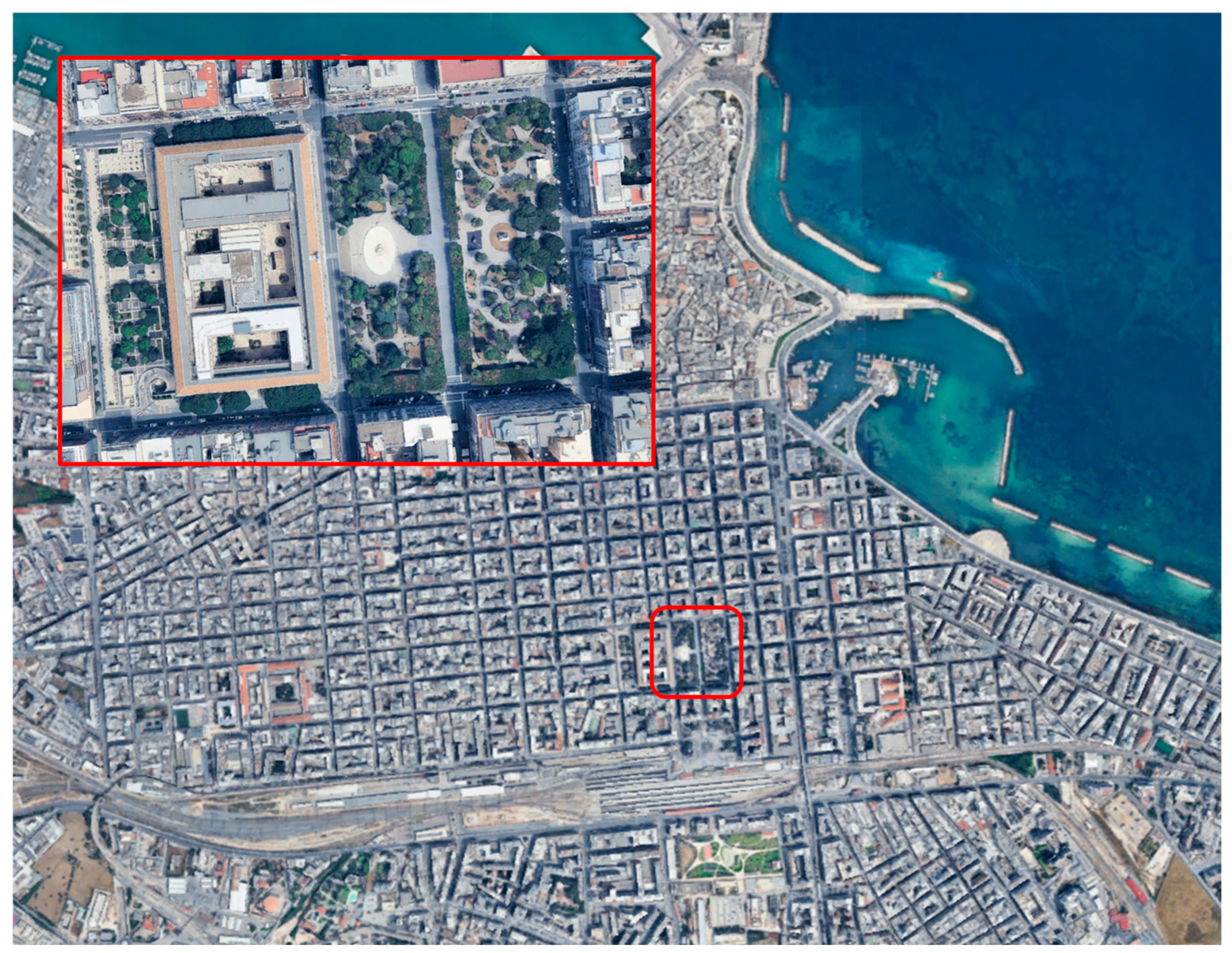
Figure 3). Gender distribution was balanced (approximately 50% women and 50% men), supporting plural representation across both institutional and civic dimensions. A total of 45 individuals registered for the process, ensuring broad plural representation while maintaining a manageable deliberative scale. Attendance varied across meetings, allowing both continuity of discussion and the gradual inclusion of new perspectives over time. To anchor the analysis in the physical context, a spatial overview of Piazza Umberto I was provided, delineating the areas concerned and identifying critical nodes and connections. This supported discussions around place-based design, accessibility, and the spatial articulation of proposed uses.
The process did not confer formal decision-making authority to participants; rather, it was conceived as a consultative and co-productive contribution to the preliminary design phase. This distinction was explicitly communicated during the workshops, clarifying that the outcomes would inform, but not directly determine, the final restoration project.
As the meetings were conducted online, potential biases related to digital access and self-selection cannot be excluded. To mitigate these limitations, invitations were disseminated through multiple local channels, including civic associations and institutional networks, and facilitation strategies were adopted to ensure balanced speaking time and thematic coverage. While the sample cannot be considered statistically representative of the entire urban population, the diversity of participants contributed to a plural articulation of needs, expectations, and concerns. The limited number of participants and the online format were considered appropriate for an exploratory and deliberative process of this type, but they also imply that the results should be interpreted as analytically rich and context-specific rather than statistically representative.
Beyond its sequential structure, the participatory process was facilitated as a collective interpretative exercise rather than a mere aggregation of individual preferences. Contributions emerging during the sessions were discussed, reframed, and progressively consolidated through guided dialogue, allowing participants to clarify priorities, reformulate problem statements, and identify shared patterns across thematic domains.
Facilitation played a central role in this process, supporting balanced participation and encouraging reflection on the interconnections among issues raised. The outputs of each session were not treated as isolated statements, but as intermediate constructs subject to collective validation and refinement in subsequent meetings. In this sense, the process functioned as a cumulative co-production of knowledge, in which meanings were negotiated and progressively structured before being translated into analytical inputs for the subsequent modelling phase.
After each session, the materials produced on the specific theme of the day were synthesized and mapped offline by the research team. At the beginning of the subsequent meeting, these maps were presented to participants for collective validation, discussion, and possible revision before moving to the new thematic stage. Disagreements were documented verbatim and incorporated into subsequent mapping and validation cycles. The same iterative procedure was applied across all sessions: each new theme was discussed during the workshop, structured and mapped offline, and then re-submitted to participants for validation in the following meeting. In this way, all thematic domains and their corresponding representations were progressively refined through a cumulative validation cycle.
3.2. Analytical Framework and Classification Logic
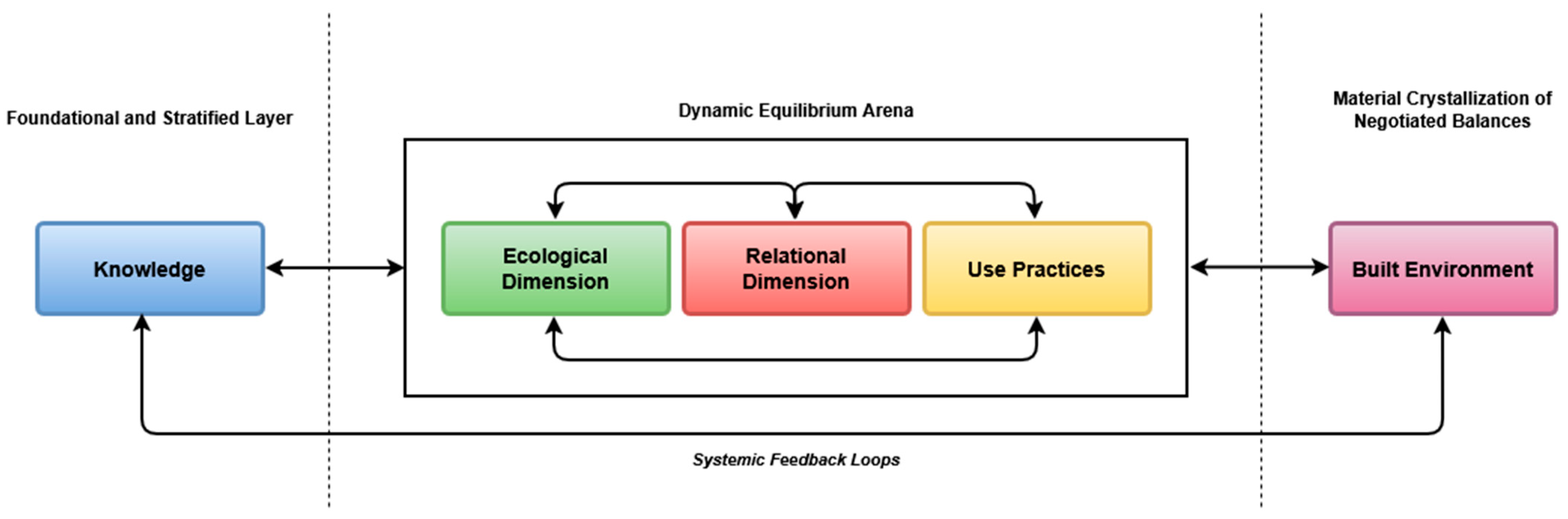
The process adopted a layered analytical structure articulated across five domains that served as interpretative lenses throughout the workshops (
Figure 4). These categories helped participants progressively move from diagnostic exploration to design formulation while maintaining thematic coherence and systemic awareness. The five domains were defined as follows:
Knowledge—historical, regulatory, symbolic, heritage and socio-cultural;
Ecological Dimension—ecological and botanical systems;
Built Environment—material, morphological and architectural;
Use Practices—functions, accessibility, daily practices;
Relational Dimension—internal connections and links to the wider urban context.
Problems and opportunities were identified and mapped according to these categories, enabling a multi-scalar and cross-domain interpretation of the square’s conditions. This classification provided a flexible cognitive framework through which participants could associate issues and potentials with specific layers of meaning, while also visualizing their interdependencies.
The analytical framework represented in
Figure 4 conceptualizes the five domains not as equivalent or simultaneous categories, but as a dynamic and processual system. Knowledge constitutes a foundational and stratified layer, encompassing historical memory, regulatory frameworks, and cultural meanings that precede and inform regenerative action. At an intermediate level, the Ecological Dimension, Relational Dimension, and Use Practices interact within a dynamic equilibrium arena, where tensions, trade-offs, and adjustments are continuously negotiated. The Built Environment represents the temporary material crystallization of these negotiated balances, translating systemic interactions into spatial form and function. However, this crystallization is never final: feedback loops operate across all domains, as changes in use patterns, relational structures, or ecological conditions can reshape knowledge and, consequently, inform future spatial transformations. The framework therefore portrays urban space as a living adaptive system, characterized by layered temporality, non-linear causality, and continuous reciprocal adjustment.
Importantly, this framework was not imposed a priori as an external interpretative grid. Rather, it emerged inductively from the mapping of problems and discussions developed during the workshops. Through iterative dialogue and validation cycles, participants progressively articulated recurring patterns and interdependencies across domains, allowing the underlying relational structure of the square to become visible. In this sense, the framework can be understood both as a co-constructed interpretative logic and as a latent systemic order that was collectively recognized and made explicit through the participatory process.
In the processual framework illustrated in
Figure 4, the five domains operate as analytical dimensions through which the square is interpreted as a living and adaptive system. However, when the focus moves from diagnosis to the formulation of proposals, these dimensions do not remain functionally equivalent. In particular, Built Environment and Use Practices are reconfigured as prevailing modalities of intervention: the former corresponding mainly to Built Environment Interventions, the latter to managerial or governance-oriented interventions. At the same time, Ecological Dimension, Knowledge, and Relational Dimension continue to function as primary domains of relevance, that is, as the main fields affected or mobilized by each proposal. A third category—temporary physical interventions—was introduced to capture reversible and experimental spatial devices that materially affect the square without stabilizing into permanent transformations.
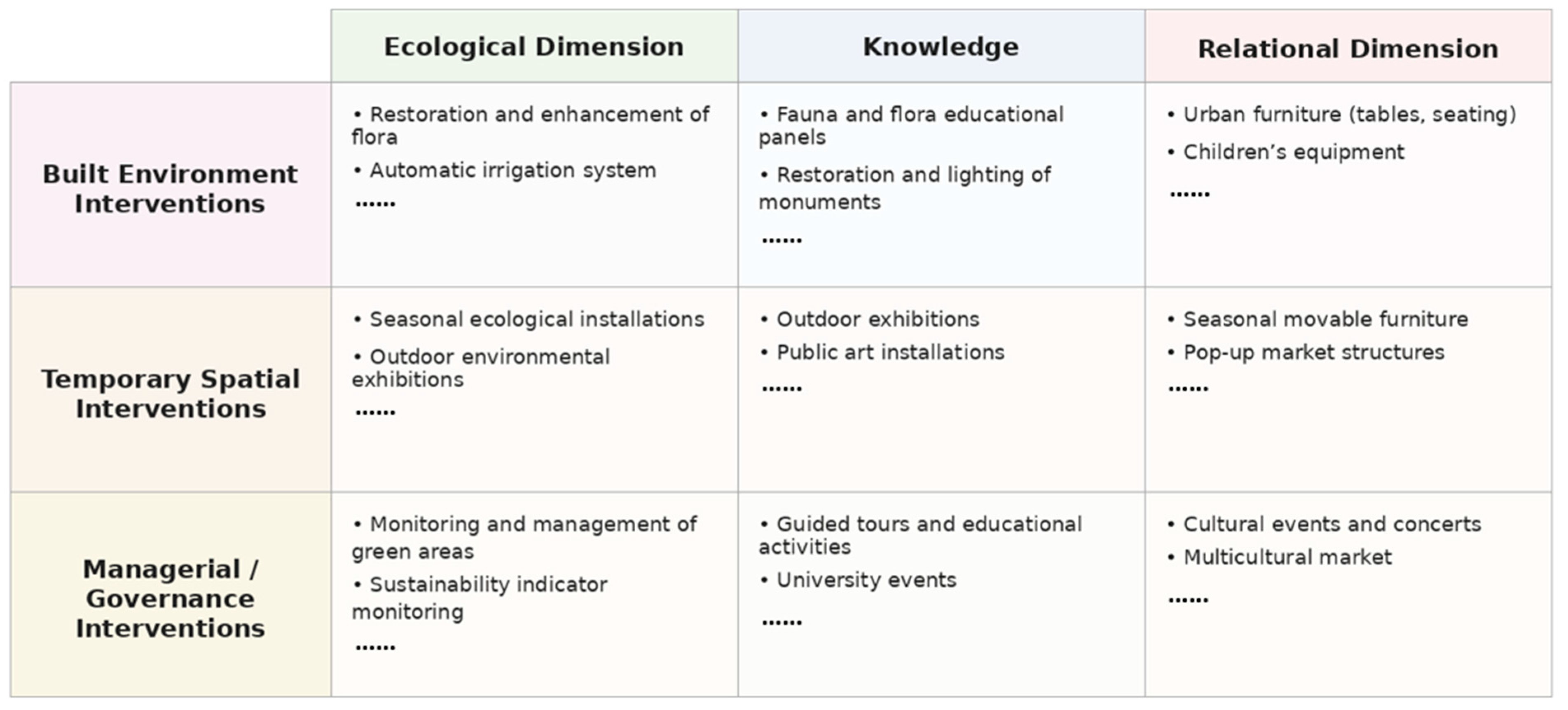
On this basis, the proposed solutions were reorganized into a matrix that combines intervention typologies and primary domains of relevance (
Figure 5). Each proposal was associated with one prevailing mode of intervention—Built Environment Interventions, Temporary Spatial Interventions, Managerial/Governance Interventions—and with one primary analytical domain—Ecological Dimension, Knowledge, or Relational Dimension—thus allowing a structured yet non-reductive mapping of the emerging intervention landscape. This reorganization clarified the different operational nature of the proposed actions, distinguishing between material transformations, experimental and reversible spatial devices, and organizational or programmatic measures.
Figure 4 therefore does not simply classify proposals; it operationalizes the analytical framework by making explicit how the original domains are functionally recombined when translated into actionable solutions. Methodologically, this step marked the transition from qualitative diagnostic mapping to a more structured analytical phase, preparing the ground for the semi-quantitative cognitive modelling and cross-impact exploration developed through fuzzy cognitive mapping in the following section.
3.3. Fuzzy Cognitive Mapping and Cross-Impact Analysis
Building on the five-domain analytical structure presented in the previous section, the validated participatory outputs were translated into a relational model and operationalized through fuzzy cognitive mapping coupled with cross-impact analysis. The cross-impact component is consistent with Cross-Impact Balance approaches, which are specifically designed to examine how assumptions, conditions, or interventions may reinforce or constrain one another within a shared scenario structure [
33]. The purpose of this step was not to produce a statistically predictive model, but to make explicit the systemic structure emerging from the workshops and to explore how proposed solutions could generate intended impacts and unintended effects across multiple domains.
The construction of the FCM followed a four-step procedure: node extraction, node aggregation, link assignment, and weight attribution. First, potential nodes were identified from the materials produced during the workshops, including problem lists, opportunity maps, vision statements, solution proposals, and validation notes. Only concepts that were recurrent, explicitly discussed, or clearly connected to the analytical domains of the process were retained. Second, closely related concepts were aggregated into broader conceptual units in order to avoid excessive fragmentation while preserving their original meaning. For instance, multiple references to the deterioration of green areas, lack of irrigation, and poor ecological maintenance were grouped under a broader ecological-care node, whereas distinct themes such as heritage interpretation, public events, accessibility, or associative use were retained as separate nodes when they implied different causal pathways.
The final node set was organized into three main layers: diagnosed problems, proposed solutions, and long-term vision categories. The eight vision categories—History, Nature, Education, Culture, Economy, Society, Experience, and Democracy—were used as interpretive outcome nodes, representing the main value orientations expressed by participants for the future of Piazza Umberto I. Proposed solutions were treated as intervention nodes, while problems were treated as diagnostic nodes that the interventions could address, mitigate, or indirectly affect.
Directed links were assigned to represent plausible relations of influence between nodes. Three criteria guided link inclusion: first, the presence of explicit causal or relational statements during the workshops; second, thematic consistency with the five analytical domains; and third, recurrence or reinforcement across different phases of the process. Links were not added merely because two concepts belonged to the same domain; they were included only when a plausible influence relation could be reconstructed from the workshop materials or from the validated interpretive maps. For example, botanical restoration was linked positively to Nature and Experience because participants repeatedly associated ecological care with environmental quality, sensory perception, and the identity of the square as a historic garden. Conversely, proposals involving stronger regulation or functional specialization were linked ambivalently when they appeared capable of improving order while potentially reducing openness, spontaneity, or inclusiveness.
Link weights were assigned using a semi-quantitative ordinal scale representing both direction and relative strength of influence. Positive values indicated reinforcing or enabling relationships, while negative values indicated inhibiting, conflicting, or potentially adverse relationships. The following scale was adopted:
+1.0 = strong positive influence;
+0.5 = weak or moderate positive influence;
0 = no relevant influence;
−0.5 = weak or moderate negative influence;
−1.0 = strong negative influence.
Weight attribution was not intended as a precise measurement of causal magnitude. Rather, it provided a transparent and reproducible semi-quantitative coding rule to compare the relative systemic implications of different solutions. Strong links were assigned when the relation was recurrent, explicitly emphasized, or central to the interpretation of the proposal; weaker links were assigned when the relation was plausible but more indirect, limited, or context-dependent. Negative links were used to represent trade-offs, possible conflicts, or unintended effects.
Intended impacts and unintended effects were distinguished analytically. Intended impacts refer to the direct and explicitly desired outcomes associated with each proposed solution, as articulated by participants during the co-design phase. Unintended effects, by contrast, were not treated as empirically observed post-implementation outcomes, since the project was still in a preliminary design stage. They were instead identified as analytically inferred effects emerging from cross-impact propagation within the FCM. In this sense, the model does not validate unintended effects empirically; it makes them visible as plausible systemic implications that should be considered during subsequent design, feasibility assessment, and implementation.
The FCM was implemented in Mental Modeler using signed and directed edges. The software’s standard additive update logic with normalization was used to simulate the propagation of activation across the network. Scenario exploration was carried out by activating selected solution nodes and observing their cumulative effects on the eight vision categories. The resulting outputs were interpreted comparatively, focusing on relative influence patterns, convergence across visions, and the emergence of synergies or tensions, rather than on absolute predictive values.
To improve transparency and replicability, the node list, edge list, weights, and scenario outputs were exported as CSV files and checked through spreadsheet-based comparison. A ±20% weight-perturbation sensitivity check was also conducted to assess whether the relative ranking of proposed solutions was robust to moderate uncertainty in weight attribution. The aim of this test was not statistical validation, but robustness assessment: if the main leverage patterns remain stable under plausible variation in weights, the interpretation can be considered less dependent on a single subjective parameterization.
The FCM should therefore be understood as an exploratory, interpretive, and semi-quantitative model. This use of FCM is consistent with recent participatory applications that emphasize its capacity to elicit, structure, and compare stakeholder understandings of causal relations in complex decision-making contexts [
34]. Its validity does not derive from statistical representativeness or predictive accuracy, but from procedural transparency, iterative validation of workshop outputs, explicit coding rules, and the capacity to reveal relational patterns that support more reflexive planning decisions. Research-team subjectivity cannot be eliminated entirely, especially in the translation from deliberative outputs to model structure; however, it was mitigated through repeated participant validation of interim maps, documentation of disagreements, explicit aggregation criteria, and transparent weighting rules. The full operational sequence used to construct and analyze the FCM is summarized in
Table 2.
4. Results
The participatory process produced a multilayered understanding of Piazza Umberto I, emerging from a collaborative structure that moved from diagnosis to design. Four key stages shaped the knowledge generated: the identification of problems, the recognition of opportunities, the articulation of future visions, and the co-design of solutions.
4.1. Diagnosed Problems Across the Five Analytical Domains
The first phase of the participatory process brought to light a broad and interrelated set of problems affecting Piazza Umberto I. Rather than being perceived as isolated deficiencies, these issues were described by participants as parts of a more complex condition of urban decline involving material decay, ecological fragility, weak social activation, limited accessibility, and a progressive loss of symbolic and relational value. The square emerged not simply as a deteriorated public space, but as a site in which multiple forms of degradation overlapped and reinforced one another.
To make this complexity analytically manageable, the problems identified during the workshops were organized across the five analytical domains introduced in
Section 3.2: Knowledge, Ecological Dimension, Built Environment, Use Practices, and Relational Dimension. This structure made it possible to distinguish the main areas of concern while preserving the systemic character of the discussion.
Within the Knowledge domain, participants highlighted a widespread weakening of public awareness regarding the square’s historical significance, cultural meaning, and ecological value. The limited visibility of documentary sources, the absence of adequate interpretative devices, and the marginalization of historical and botanical knowledge contributed to a broader perception of disconnection between the square and its civic memory.
In the Ecological Dimension, the most recurrent concerns are related to the deteriorating condition of vegetation, insufficient care of the green system, and the lack of effective ecological maintenance. Participants frequently referred to the loss of environmental quality not only in terms of physical neglect, but also as a symptom of reduced attention to the square as a living system.
Problems associated with the Built Environment concerned the material and spatial conditions of the square. These included the poor quality or deterioration of physical elements, inadequate pavements, obstacles and barriers, and a more general perception of spatial disorder and decay. Such issues were often discussed as directly affecting both comfort and accessibility, while also undermining the overall recognizability and dignity of the place.
In the domain of Use Practices, participants pointed to the limited diversity and quality of activities taking place in the square, as well as to the insufficient presence of services and functions capable of supporting everyday urban life. Particular attention was given to the lack of infrastructure responding to different age groups and social needs, with several remarks concerning children, older adults, and vulnerable users. The square was often perceived as underused, or used in ways that did not fully reflect its potential civic role.
Finally, in the Relational Dimension, participants emphasized the weakness of both internal and external connections. Internally, the square was seen as lacking continuity among its parts and as offering an incomplete or fragmented experience of movement and encounter. Externally, its links with surrounding urban spaces appeared weak or insufficiently legible, reducing its integration within the wider public-space system of the city. This relational fragility was discussed not only in spatial terms, but also as a limitation on the square’s capacity to function as a connector between social groups, urban rhythms, and symbolic centralities.
Taken together, these issues outlined a condition of multidimensional degradation in which ecological, material, cultural, functional, and relational problems could not be addressed independently. The diagnostic phase therefore revealed not only what was missing or deteriorated, but also how different forms of weakness interacted across domains. This initial recognition of interdependence proved essential for the following stages of the process, in which participants moved from problem identification to the exploration of opportunities, future visions, and possible solutions.
4.2. Mapped Opportunities
As a counterpart to the diagnostic phase, participants were invited to identify the existing values, latent potentials, and meaningful qualities that still characterize Piazza Umberto I. Rather than being treated as isolated assets, these opportunities were interpreted through their intersections across the analytical domains of Knowledge, Ecological Dimension, Relational Dimension, and Use Practices. This step made it possible to move beyond a simple inventory of positive features and toward a more synthetic understanding of the square as a multidimensional urban resource.
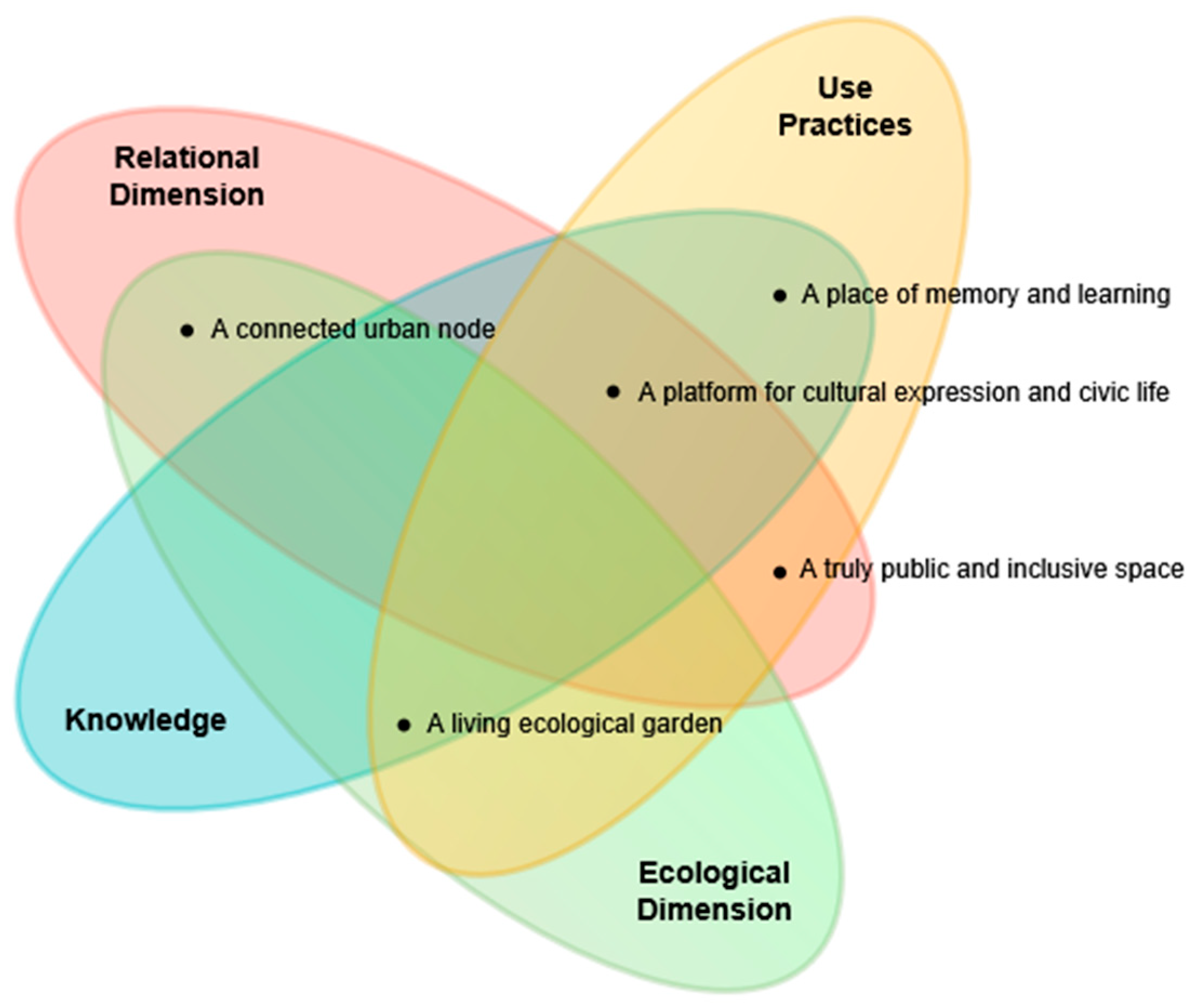
Importantly, the overlap among domains did not produce an exhaustive taxonomy of all possible combinations, but rather a smaller set of recurrent place interpretations through which participants articulated the square’s present significance and future potential. Each interpretative frame emerged from specific combinations of analytical domains, rather than from all domains simultaneously, allowing a more differentiated reading of the square’s latent potentials.
Five interpretative frames proved especially recurrent. The first framed the square as a place of memory and learning, linked to its university context, layered history, and potential for informal education; this interpretation primarily emerged at the intersection between Knowledge and Use Practices. The second understood the square as a living ecological garden, emphasizing biodiversity, sensory experience, environmental awareness, and the active perception of the space as a historic green infrastructure; this frame emerged from the overlap between Knowledge, Ecological Dimension, and Use Practices. The third described the square as a truly public and inclusive space, open to different generations, social groups, and everyday practices, and grounded in the interaction between the Relational Dimension and Use Practices. The fourth interpreted the square as a connected urban node, positioned within wider relational and environmental systems linking the station, the university, surrounding streets, and broader urban ecologies; this perspective emerged from the overlap between Relational Dimension and Ecological Dimension. Finally, the fifth represented the square as a platform for cultural expression and civic life, capable of hosting events, rituals, public encounters, and forms of shared urban meaning; this frame arose from the combined interaction of Knowledge, Relational Dimension, and Use Practices.
These interpretative frames were not mutually exclusive. On the contrary, they partially overlapped and reinforced one another, revealing how the same urban space can simultaneously function as heritage, ecology, infrastructure, social setting, and civic stage. While some interpretative frames were more strongly associated with active use and civic interaction, others highlighted the ecological and connective role of the square within broader urban and territorial systems. This helped avoid a purely socio-functional reading of opportunities and preserve the relevance of the square’s ecological identity.
Their graphic representation was therefore conceived not as a rigid classificatory device, but as a synthetic visualization of overlapping opportunity structures within the square; see
Figure 6. This representation supported the subsequent shift from concept to vision.
4.3. Vision Scenarios for 2050
In the third stage of the process, participants were asked to project themselves into the future, imagining how Piazza Umberto I could evolve by the year 2050. This speculative exercise was grounded in the previous diagnostic and interpretative phases, but encouraged creativity, affective engagement, and collective ambition. Rather than focusing only on immediate needs or feasible interventions, participants were invited to articulate broader orientations capable of expressing what the square might become in the long term.
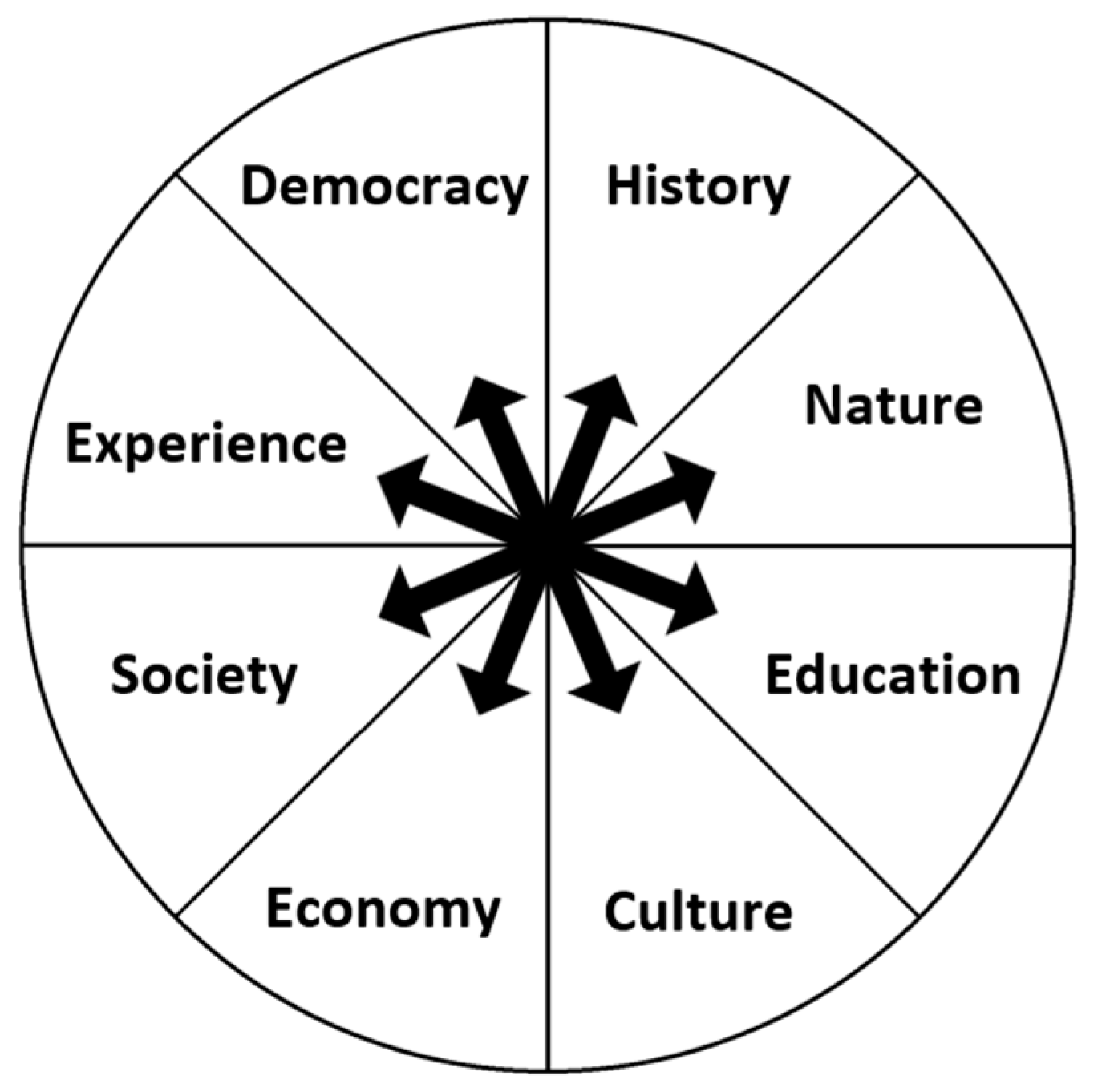
Eight vision categories emerged, reflecting thematic directions around which expectations, values, and aspirations coalesced: History, Nature, Education, Culture, Economy, Society, Experience, and Democracy. Each category expressed a distinct yet interconnected way of imagining the future of the square. History framed Piazza Umberto I as a monument and palimpsest of layered memories; Nature emphasized its role as ecological infrastructure and biodiversity reserve; Education highlighted its potential as a space for intergenerational learning and informal pedagogy; Culture imagined it as a stage for civic art, storytelling, and symbolic performance; Economy referred to its capacity to support local commerce and sustainable entrepreneurship; Society stressed its role as a space for interaction, integration, and plural citizenship; Experience pointed to a multisensory and emotionally resonant environment; and Democracy described the square as a terrain for rights, voice, and shared governance.
These visions were represented through a radial schema that did not imply a hierarchy among categories, but rather visualized a set of thematic polarities to be negotiated in the future transformation of the square (
Figure 7). The oppositional arrangement of some categories suggested not rigid dichotomies, but possible lines of tension, complementarity, or strategic balancing. In this sense, the History–Economy radial polarity highlighted the need to reconcile heritage preservation with local activation and economic vitality; Nature–Society expressed the challenge of balancing ecological care with social accessibility and collective use; Education–Experience pointed to the relationship between cognitive interpretation and affective, sensory engagement; and Culture–Democracy foregrounded the interplay between symbolic expression, civic identity, and inclusive public life.
The radial representation therefore served as a synthetic device for organizing future-oriented imaginaries and making visible the plurality of values associated with the square. It also provided a conceptual basis for the subsequent translation of visions into proposed solutions and for the systemic modelling developed in the following sections.
4.4. Proposed Solutions
The final stage of the participatory process focused on the co-design of concrete actions aimed at addressing critical issues, activating existing potentials, and moving the square toward the collective visions outlined in the previous phase. The resulting proposals were organized according to the intervention matrix introduced above (
Figure 5), which combines three main intervention typologies—Built Environment Interventions, Temporary Spatial Interventions, and Managerial/Governance Interventions—with three primary domains of relevance: Ecological Dimension, Knowledge, and Relational Dimension.
Within the area of Built Environment Interventions, participants identified a set of relatively stable and material actions concerning the physical configuration and everyday usability of the square. In the Ecological Dimension, these included the restoration and enhancement of vegetation and the introduction of an automatic irrigation system. In the domain of Knowledge, proposals focused on educational panels on fauna and flora, as well as the restoration and lighting of monuments, with the aim of strengthening public awareness of the square’s environmental and historical value. In the Relational Dimension, participants proposed urban furniture such as tables and seating, together with children’s equipment, to support social interaction and more inclusive forms of use.
A second group of proposals concerned Temporary Spatial Interventions, conceived as seasonal, reversible, or experimental devices capable of activating the square without permanently altering its structure. In the Ecological Dimension, these included seasonal ecological installations and outdoor environmental exhibitions. In the Knowledge domain, participants proposed outdoor exhibitions and public art installations as ways of making the square a more visible space of interpretation, memory, and cultural production. In the Relational Dimension, proposals included seasonal movable furniture and pop-up market structures, intended to increase flexibility, temporary appropriation, and the intensity of civic life.
The third cluster involved Managerial/Governance Interventions, which participants considered essential to ensure continuity over time and to support the square’s social and ecological vitality beyond one-off physical improvements. In the Ecological Dimension, proposals focused on the monitoring and management of green areas and on sustainability indicator monitoring. In the Knowledge domain, they included guided tours, educational activities, and university events, reinforcing the square’s role as a place of learning and public interpretation. In the Relational Dimension, participants proposed cultural events and concerts, as well as a multicultural market, to strengthen the square’s capacity to host interaction, diversity, and shared urban experiences.
Particular attention was devoted to the possible reuse of the Goccia del Latte building, which emerged as a symbolic and strategic site within the square. Discussions around its future revealed how this specific element condensed broader questions concerning public value, collective identity, and governance arrangements. The presence of earlier civic initiatives further confirmed its role as a meaningful and contested urban node.
Two main alternatives emerged from the discussion. One framed the building as a non-profit civic space for associations, community groups, and solidarity networks. The other proposed a hybrid model, such as a cultural café combined with civic programming, to be managed by a private actor under explicit public-use commitments. In both cases, the building was regarded not only as a functional asset, but as a potential catalyst for wider regeneration processes within the square.
Taken together, these proposals show that participants did not simply respond to isolated problems, but articulated a set of interconnected actions spanning ecological repair, cultural interpretation, and social activation. As illustrated in
Figure 5, the proposals can be read according to both their operational character and their primary thematic orientation, while
Figure 6 helps contextualize these interpretations within the spatial structure of Piazza Umberto I.
4.5. Integrated Cognitive Map of Problems, Solutions, and Visions
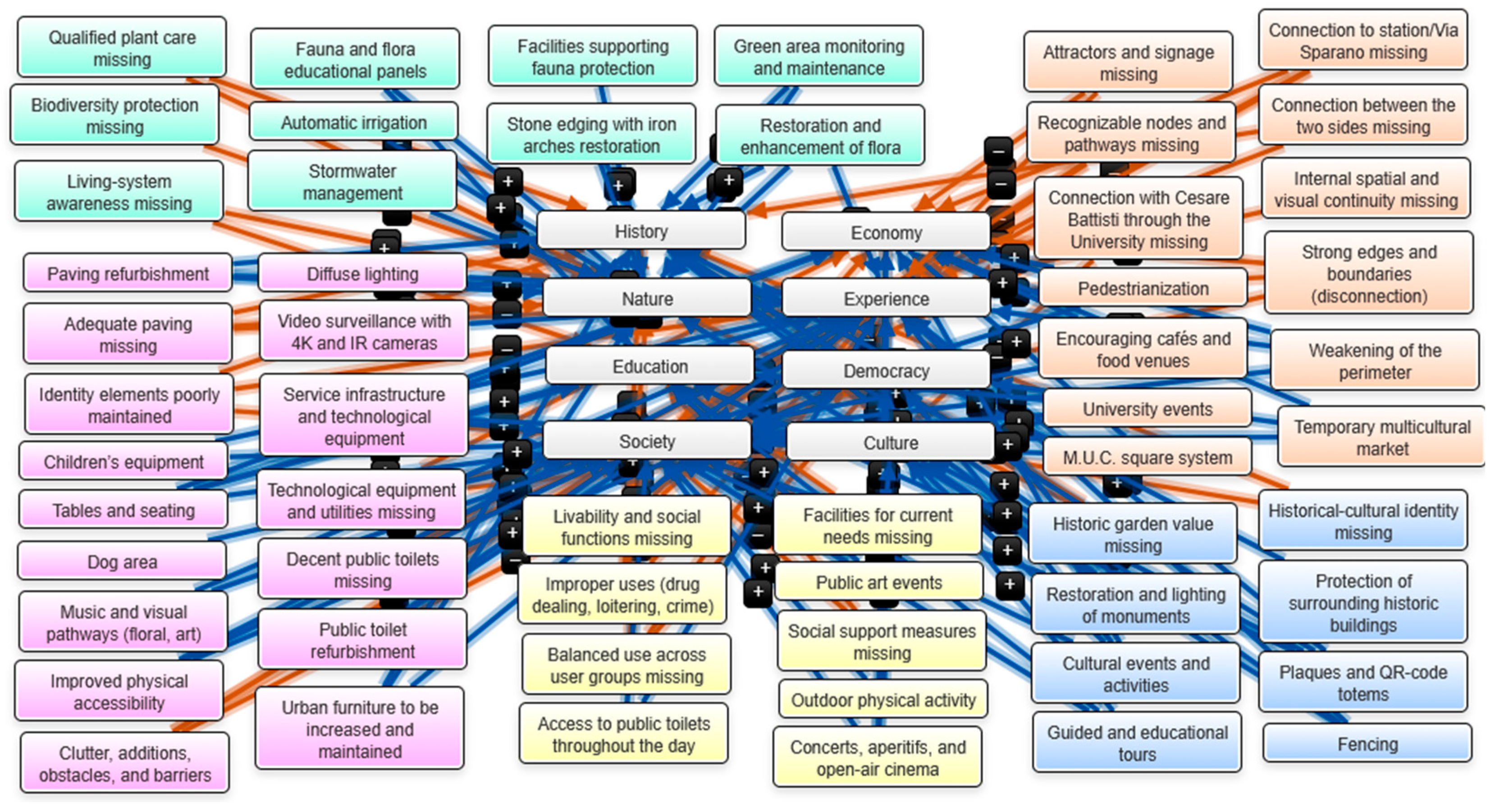
The final analytical output of the participatory process consisted of the construction of an integrated cognitive map connecting the three main layers that had progressively emerged throughout the workshops: diagnosed problems, proposed solutions, and long-term visions. This map brought together the results of the previous stages into a single relational structure, making visible how critical issues, intervention options, and future aspirations were interconnected within the evolving interpretation of Piazza Umberto I.
Rather than simply juxtaposing the outputs of the different workshop phases, the integrated map translated them into a network of directional relationships. In this way, the process moved from thematic classification to relational synthesis. Problems identified during the diagnostic phase, solutions generated during the co-design phase, and the eight vision categories associated with the 2050 horizon were all positioned within the same cognitive structure, allowing the emerging regeneration strategy to be read as a system of interdependencies rather than as a sequence of isolated ideas.
The map thus represents the point at which the participatory process shifted from qualitative articulation to a more structured analytical modelling phase. Each element included in the figure derives from materials discussed, reformulated, and validated during the workshop cycle; however, their final relational organization was developed through a subsequent analytical translation aimed at making explicit possible paths of influence across domains and stages of reasoning. In this sense, the figure does not merely summarize the process: it operationalizes it by revealing how specific problems may be addressed by particular solutions, how single actions may contribute to multiple visions, and how some interventions may activate broader chains of consequences across the whole system.
Figure 8 therefore visualizes the square not as a collection of separate issues and proposals, but as a cognitively integrated field in which ecological concerns, knowledge-related values, use patterns, relational configurations, and spatial transformations interact dynamically. This synthetic representation makes visible both the internal coherence of the participatory outputs and the complexity of the trade-offs embedded in future design choices.
At the same time, the map should not be interpreted as a deterministic model or as a final decision-making device. Rather, it constitutes a relational and exploratory framework through which the participatory outputs can be observed in their mutual implications. Its main value lies in making explicit the systemic structure underlying the process, thereby preparing the ground for the cross-impact reasoning and interpretative discussion developed in the following section.
5. Discussion
The participatory process for the regeneration of Piazza Umberto I did not aim to produce a final design, but rather to generate a shared interpretive framework for understanding the square’s complexity and identifying paths of transformation. What distinguishes this experience from conventional participatory practices is the deliberate effort to identify not only problems and desires, but also cross-impacts, leverage points, and unintended consequences of proposed interventions. In this section, we critically reflect on the methodological contributions and practical implications of the approach, supported by the system-wide simulation tools introduced during the final stages of the process.
5.1. Participation as a Tool for Systemic Awareness
A central contribution of the Piazza Umberto I process lies in the way participation was used not merely to collect preferences, but to foster systemic awareness. In many participatory settings, stakeholders are asked to express needs, endorse proposals, or react to predefined options. While such practices may provide useful information, they often remain limited to the level of stated preferences and do not help participants reason about interdependencies, indirect effects, or possible tensions among alternative interventions. In this case, by contrast, the process progressively encouraged participants to move from opinion expression to relational reasoning.
This shift was not immediate, nor was it based on technical modelling alone. It emerged through the cumulative structure of the workshop process itself, which led participants from the identification of problems to the recognition of opportunities, the articulation of long-term visions, the formulation of solutions, and finally the exploration of their possible interactions. What became important was not only what participants wanted for the square, but how different aspirations, actions, and constraints related to one another. In this sense, participation functioned as a cognitive and interpretative practice, enabling participants to frame the square as a dynamic system rather than as a simple container of isolated deficiencies or desired interventions.
The integrated cognitive map presented in
Section 4 made this systemic dimension explicit. Its relevance, however, lies less in the graphic representation itself than in the epistemic shift it enabled. By connecting problems, solutions, and visions within a shared relational structure, the process made it possible to reason in terms of propagation effects, reinforcing dynamics, and potential trade-offs. Participants and facilitators were thus able to explore not only direct intended impacts, but also how single actions might activate wider chains of consequences across ecological, cultural, relational, and use-related domains.
This aspect is particularly relevant in urban regeneration contexts, where interventions are rarely neutral and often produce secondary effects beyond their immediate target. Measures introduced to improve accessibility, activation, or symbolic visibility may also alter ecological balances, patterns of appropriation, or the inclusiveness of public use. From this perspective, the participatory process helped shift the focus from selecting desirable actions in the abstract to understanding the conditions under which those actions might produce coherent or conflicting outcomes. Participation therefore became a space for anticipating consequences, not merely for expressing support.
Importantly, this systemic awareness did not depend on consensus. The process did not seek to dissolve disagreement into a homogenized collective position. On the contrary, competing interpretations, divergent priorities, and unresolved tensions remained visible throughout the workshops and became part of the knowledge base, later translated into the analytical model. This is methodologically significant because it suggests that the value of participation lies not only in convergence, but also in its ability to reveal where urban complexity is concentrated—namely, where different values, uses, and imaginaries come into friction.
Seen in this light, participation can be understood as a tool for structured reflexivity. It enables actors to confront the implications of their own proposals, to recognize the legitimacy of alternative concerns, and to situate individual preferences within a broader field of interdependence. The Piazza Umberto I process therefore supports a broader conception of participatory planning: not as a mechanism for simply aggregating demands, but as a device for cultivating systemic literacy, shared reasoning, and more conscious urban decision-making.
This interpretation also provides the basis for the following discussion on leverage points, hidden risks, and the comparative influence of different solutions. Once participation is understood as a way of making interdependencies visible, the next analytical step is to examine which proposed actions appear most capable of activating wider positive effects, and which instead may generate tensions, exclusions, or unintended consequences across the system.
5.2. Identifying Leverage Points and Hidden Risks
Building on the systemic awareness discussed in the previous section, the cross-impact analysis made it possible to explore which proposed solutions exerted the broadest influence across the eight vision categories, and which instead revealed more selective effects, tensions, or possible unintended consequences. Rather than treating all proposals as equivalent, the simulation helped distinguish between actions capable of activating wider regenerative dynamics and actions whose effects remained more limited, targeted, or potentially ambivalent. In this respect, the analysis is consistent with the use of fuzzy cognitive mapping as a bridge between qualitative stakeholder knowledge and more structured relational reasoning in urban and environmental decision-making [
21,
22,
25].
To clarify how impacts and effects are interpreted in this study, it is important to distinguish between the outcomes explicitly pursued by participants and the indirect implications inferred through the FCM-based cross-impact analysis. Since the regeneration project was still in a preliminary design stage, impacts were not measured as ex-post observable changes against a benchmark scenario. Rather, they were operationalized as relational effects within the cognitive map. Intended impacts correspond to the direct outcomes associated with participants’ proposed solutions, whereas unintended effects refer to plausible indirect, ambivalent, or adverse consequences emerging from the propagation of influence across the network. This distinction is summarized in
Table 3.
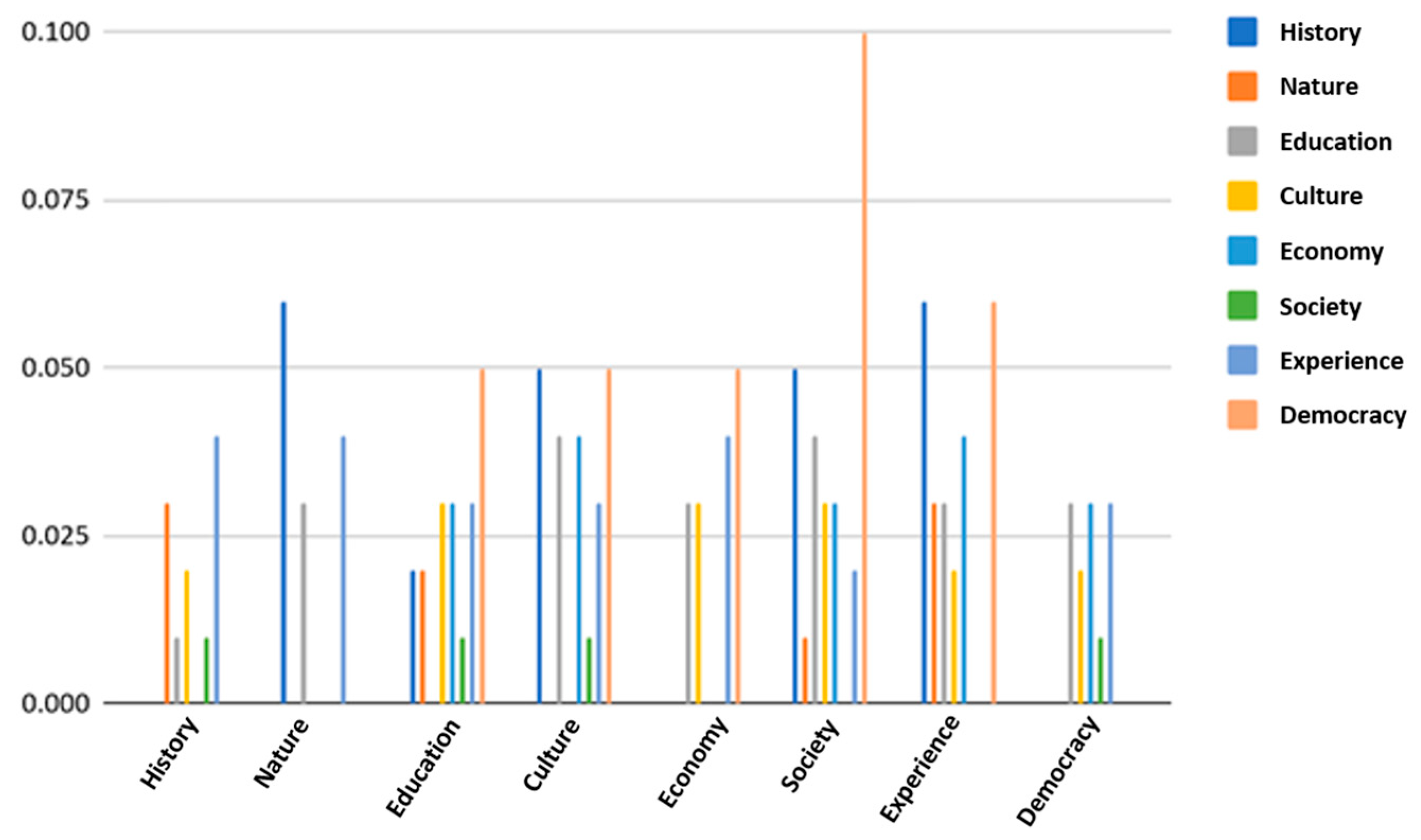
On this basis, the simulation outputs should be read as comparative indicators of relational influence rather than as measured impacts in a statistical sense. As shown in the histogram of scenario simulation results (
Figure 9), the influence of each proposed solution was assessed by considering its cumulative positive or negative implications across the eight future visions associated with Piazza Umberto I. The histogram therefore provides a comparative ranking of solution nodes based on their aggregated activation effects across the vision categories, rather than a statistical distribution inferred from a representative sample.
This allowed the proposals to be compared not only according to their immediate purpose, but also according to their systemic capacity to support multiple aspirations simultaneously. Similar recent applications of FCM in urban and disaster-recovery contexts confirm the usefulness of network-based participatory modelling for identifying functions, interdependencies, and overlooked leverage elements that may not emerge through conventional linear assessment [
35].
In this sense, the analysis resonates with Meadows’ notion of leverage points, understood as interventions that, despite sometimes appearing limited or localized, can produce wider consequences across interconnected parts of a system [
36]. From a broader modelling perspective, this also recalls the need to connect structure and dynamics across scales in order to avoid policy misperceptions in complex socio-ecological systems [
37].
The results suggest that some proposals displayed a broad-spectrum capacity to contribute to the future of the square. Actions such as public art programming, botanical restoration, and certain forms of cultural or educational activation appeared able to reinforce several vision categories at once, generating effects that extended beyond their immediate field of intervention. Their relevance lies precisely in this capacity to connect ecological care, symbolic interpretation, social use, and experiential quality within a more integrated regenerative dynamic.
Other actions, by contrast, showed a more sectoral profile. These proposals were not necessarily less important, but their influence appeared more concentrated on specific domains or visions. Interventions related to lighting, accessibility, or particular infrastructural improvements, for instance, may produce clear benefits in terms of safety, comfort, or usability while contributing less directly to educational, cultural, or democratic dimensions. This distinction is analytically useful because it shows that not all effective interventions operate in the same way: some act as systemic multipliers, while others perform more focused but still necessary functions within the overall transformation process.
The analysis also helped make visible the presence of hidden risks and latent trade-offs. Some solutions, especially when considered in isolation or implemented without adequate coordination, appeared capable of generating tensions with other desired outcomes. Measures aimed at increasing control, regulation, or functional specialization, for example, may improve order or manageability while simultaneously reducing spontaneity, permeability, or inclusiveness. Similarly, initiatives designed to strengthen economic activation or event programming may come into friction with ecological preservation, historical legibility, or forms of everyday public use that depend on openness and low-threshold accessibility. In this sense, the method supports a more reflexive understanding of unintended effects, understood not as accidental anomalies but as structurally plausible consequences of purposive action in complex systems [
10].
These tensions were not artificially produced by the model alone. On the contrary, they reflected dilemmas that had already emerged during the workshops, including contrasting positions on fencing versus permeability, event intensification versus ecological and historical protection, and commercialization versus civic or associative uses. The analytical contribution of the simulation was therefore not to invent conflicts, but to render their systemic implications more explicit, showing how local disagreements corresponded to wider patterns of interaction among visions, solutions, and problem framings. In this respect, the cross-impact reasoning adopted here remains consistent with broader Cross-Impact Balance approaches, which are specifically designed to clarify how different assumptions or interventions may reinforce or undermine one another within a shared scenario structure [
33].
A robustness check was also conducted by varying edge weights by ±20% in order to test the sensitivity of the ranking of proposed solutions. The results remained substantially stable: the most influential actions retained their relative priority, while only minor shifts occurred among intermediate solutions. Importantly, the same critical tensions among vision categories—such as those involving History and Economy, or Nature and Society—continued to emerge across the perturbed simulations. This suggests that the main leverage patterns and trade-offs identified by the model are not merely artefacts of a specific parameterization, but reflect more structurally embedded relations within the cognitive map. This aspect is particularly relevant in light of recent applications of participatory cognitive modelling tools, including Mental Modeler, which highlight the importance of transparency, comparability, and robustness in the interpretation of stakeholder-based system representations [
38].
From a planning perspective, this phase of analysis shifted the discussion from the simple desirability of individual proposals to their relational performance within a broader urban system. The added value of the method lies precisely here: it supports decision-making not by selecting a single optimal solution, but by clarifying which actions are more likely to generate synergies, which require balancing measures, and which should be treated cautiously because of their possible unintended effects. In this way, the cross-impact analysis complements the participatory process by transforming qualitatively generated proposals into a more reflexive basis for prioritization, phasing, and adaptive urban governance.
5.3. Methodological Contributions and Replicability
The participatory framework developed in this case study offers several methodological contributions to contemporary urban planning practice. First, the process functioned not only as a device for collecting opinions, but also as a mechanism of collective correction: throughout the workshops, participants repeatedly revised factual details, historical reconstructions, and interpretative assumptions, thereby improving the consistency and credibility of the emerging knowledge base. From the outset, the process was framed less as a decision-making arena than as a structured question-generating space, in which diffuse, situated, and often non-codified forms of knowledge could be progressively articulated without being prematurely reduced to technical prescriptions.
A first contribution lies in the clarity of the sequence adopted throughout the process: problems → opportunities → visions → solutions → evaluation. This funnel-like structure is simple enough to be transferable to other urban contexts, yet sufficiently articulated to preserve the complexity of local values, conflicting priorities, and layered interpretations. Rather than forcing premature convergence, it enables participants to move gradually from diagnosis to proposition, while maintaining continuity between analytical reflection and design-oriented reasoning.
A second contribution concerns the integration of qualitative interpretation with a semi-quantitative modelling layer. By combining deliberative elicitation with fuzzy cognitive mapping and cross-impact reasoning, the method makes it possible to explore systemic interdependencies without flattening them into purely technical abstractions. This hybrid structure preserves the richness of stakeholder perspectives while also providing a more explicit basis for comparing proposals, anticipating indirect effects, and discussing future-oriented implications [
21,
22,
25,
39]. A further methodological insight concerns the epistemic role of disagreement. The process did not merely aggregate convergent views, but brought to the surface normative tensions regarding heritage protection, accessibility, ecological care, public use, and the role of commercial or associative activities. Rather than treating divergence as a problem to be neutralized, the process treated it as a valuable indicator of urban complexity. In this sense, disagreement became a resource for revealing hidden assumptions, making conflicts more explicit, and identifying where design choices were most likely to produce unintended effects across multiple domains.
Third, the framework supports a learning-oriented model of governance in which participation becomes a form of collective reasoning rather than mere consultation. This is particularly important in urban contexts shaped by uncertainty, overlapping institutional constraints, and multiple legitimate values. By encouraging participants and facilitators to reason in terms of interdependencies and consequences, the process contributes to more adaptive and reflexive forms of planning practice.
The method is replicable, but not in a purely mechanical sense. Its application requires a minimum set of enabling conditions, including skilled facilitation, interdisciplinary expertise, and an institutional context open to iterative and non-linear forms of inquiry. These requirements should not be seen as exceptional burdens, but as part of the conditions necessary to support meaningful co-production of knowledge. Precisely for this reason, the framework appears especially relevant for urban areas characterized by layered cultural identities, conflicting interests, or heritage constraints—contexts in which linear and sectoral approaches often fail to grasp the interplay of values, uses, and unintended consequences.
5.4. Policy Implications and Normative Alignment
The approach developed in this study is consistent with several institutional and normative frameworks operating at different scales. At the global level, it contributes to the operationalization of core principles embedded in SDG 11 and the New Urban Agenda, particularly with regard to inclusion, accessibility, cultural value, and the capacity of public spaces to support socially and environmentally sustainable urban life. In addition, the framework reflects the systemic and participatory logic promoted by the ISO 37101 [
17] family of standards, especially in its emphasis on linking concrete interventions with long-term visions, shared objectives, and context-sensitive governance pathways [
18].
At the regional and local scale, the method offers a concrete contribution to the possible revision or enrichment of participation laws and guidelines, including frameworks such as Puglia’s Regional Law 28/2017. More specifically, it suggests a shift from hearing-based or merely consultative practices toward more structured forms of collaborative cognitive modelling, in which stakeholders are not only asked to express preferences but are also enabled to reason about interactions, trade-offs, and implications. In this respect, the framework can strengthen the methodological quality of participation by making its outputs more legible, comparable, and operationally relevant.
For planning instruments and project procedures, the funnel may be embedded in at least three complementary ways: first, as a requirements matrix during preliminary design and feasibility stages; second, as a set of criteria in tender specifications and design briefs, capable of testing the alignment between desirability and feasibility; and third, as a monitoring and review checklist during implementation, thus linking participatory reasoning to adaptive follow-up. This makes it possible to connect the logic of ISO 37101 [
17] with SDG-oriented indicators at project, neighborhood, or district scale, while preserving sensitivity to local context.
More broadly, the approach helps clarify what kind of knowledge participatory processes can produce, and how such knowledge may be integrated into negotiation, prioritization, and co-decision. This is particularly relevant in light of calls to understand co-production not merely as a way of improving service delivery, but as a pathway for re-appropriating public space, strengthening urban rights, and avoiding tokenistic or purely managerial uses of participation [
2]. At the same time, by framing public space as a shared resource requiring collective responsibility, stewardship, and adaptive rules, the approach also resonates with commons-oriented perspectives on collective governance [
40]. In line with previous applications of fuzzy cognitive mapping in urban policymaking, the approach also confirms the capacity of FCM-based tools to integrate heterogeneous knowledge and support multi-actor decision processes in spatial planning [
25]. More generally, this alignment is coherent with process-oriented models of evolutionary urban resilience, which emphasize learning, reflexivity, and the navigation of constraints as conditions for transformative governance [
41].
5.5. Limits and Challenges
Despite its strengths, the proposed approach also presents several limitations and operational challenges that should be acknowledged explicitly.
A first limitation concerns the online format of the workshops. While the digital setting made participation possible and ensured continuity across sessions, it may also have affected the quality of interaction, reduced spontaneous exchange, and limited the involvement of actors less familiar with digital tools or less comfortable with online deliberation. As a result, some forms of embodied, place-based discussion that might have emerged more naturally in face-to-face settings may have remained underdeveloped.
A second limitation concerns the size of the participant group. Although the process involved a heterogeneous set of actors and ensured plural contributions, the number of participants remained relatively limited. This was appropriate for maintaining a manageable deliberative scale and enabling in-depth discussion, but it also means that the resulting knowledge base reflects a context-specific participatory engagement rather than a broad statistical representation of the urban population.
A third challenge relates to representation bias. As in many participatory settings, the sample cannot be considered representative of the population as a whole. Participation was open and voluntary, which likely favored actors who were already motivated, informed, or directly concerned with the future of the square. In this case, this risk was mitigated through differentiated outreach strategies—including direct invitations, civic associations, municipal channels, and local businesses—through the scheduling of multiple sessions, and through the validation of interim results in a final plenary setting. Nevertheless, the issue remains inherent to participatory design and should be acknowledged explicitly.
A further limitation concerns the integration of such methods into formal planning systems, especially in administrative contexts that are still organized around linear procedures, sectoral competences, and low tolerance for iterative or adaptive governance. Even when participatory outputs are rich and analytically robust, their translation into official decision-making may remain difficult if institutions are not prepared to work with exploratory, non-linear, or reflexive forms of knowledge.
These limitations should not be interpreted simply as flaws of the methodology itself. Rather, they indicate the need for broader institutional ecosystems capable of supporting learning-based planning. As Wildavsky argued, planning is always also political: governing future consequences requires durable authority, coordination among actors, and alignment between decision arenas, not merely better techniques [
13]. In this sense, the challenge is not only methodological, but institutional and cultural.
At the same time, the framework could be further strengthened through integration with complementary modelling approaches. In particular, coupling fuzzy cognitive mapping with Multi-Agent Systems/Agent-Based Modelling (MAS/ABM) could make it possible to explore emergent, network-dependent, and behaviorally differentiated dynamics in greater detail, thus extending the method toward more operational forms of scenario testing and governance experimentation [
42]. This would be especially useful where the interaction between spatial structure, user behavior, and evolving governance arrangements becomes central to implementation.
5.6. Decision-Making Support and Selection Criteria
The final stage of the participatory process concerned not only the generation of proposals, but also the question of how these actions could be selected, prioritized, and progressively implemented in ways that remained both legitimate and feasible. To structure this reflection, a decision-support framework was introduced based on three key dimensions: desirability, technical–organizational feasibility, and economic feasibility.
Desirability refers to the values, needs, and priorities collectively articulated throughout the participatory process. It identifies what participants consider meaningful, appropriate, and worth pursuing in relation to the square’s future. However, desirability alone is not sufficient to support action. It must be confronted with at least two additional filters.
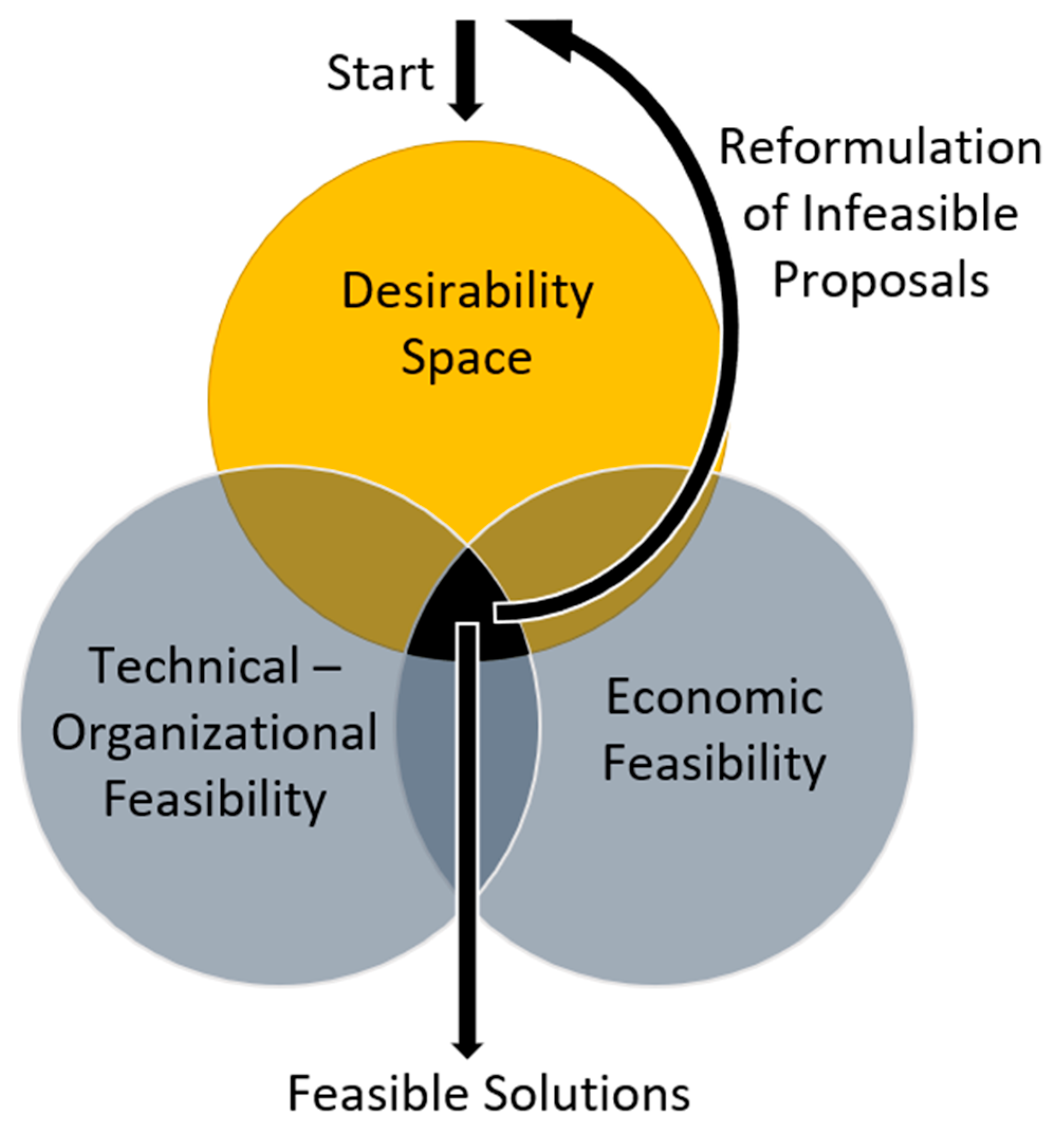
The first is technical and organizational feasibility, which includes the availability of resources and competences, legal and administrative constraints, governance capacity, stewardship and maintenance arrangements, and realistic implementation timeframes. The second is economic feasibility, which concerns costs and benefits, potential funding sources, phasing strategies, and long-term financial sustainability. Only the intersection of these three dimensions defines feasible solutions, as illustrated in
Figure 10.
The figure shows how proposed actions move from an initial space of desirability through technical–organizational and economic feasibility filters, thereby defining a narrower set of implementable solutions. Desirable but infeasible proposals are not necessarily discarded, but may instead be reformulated and re-evaluated through subsequent iterative cycles.
This triadic structure is important because it avoids a recurrent weakness in participatory planning, namely the assumption that socially desirable ideas are automatically implementable. On the contrary, some proposals may prove difficult to realize because they exceed current institutional capacities, conflict with legal constraints, or lack a plausible financial basis. Yet this does not imply that such ideas should simply be discarded. As
Figure 10 suggests, desirable but infeasible proposals can be reformulated, phased differently, or re-evaluated under changed conditions, thereby opening a recursive process of learning and adaptation rather than a binary logic of acceptance or rejection.
Before this filtering phase, a further stakeholder assessment is advisable. Mapping power, interest, and attitude helps identify likely supporters, blockers, and neutral actors, and can therefore inform more risk-sensitive phasing, coalition-building, and governance design. Such a step increases the social executability of the portfolio of actions and helps reduce the likelihood of late-stage resistance, implementation failure, or costly rework [
43].
In practical terms, the funnel operates not only as an ordering device for proposals, but also as a problem-structuring tool. It helps avoid a classic pitfall of policy analysis: doing an excellent job in solving the wrong problem, that is, optimizing a solution for a question that has been inadequately framed [
11]. By requiring early checks on purpose (desirability), implementability (technical–organizational feasibility), and resources (economic feasibility), the framework reduces the risk of misalignment and supports iterative learning across stages.
For example, a proposal initially framed as “improving safety” through stronger lighting may, after passing through these filters, be reformulated into a more integrated strategy combining moderated lighting, social programming, and co-stewardship arrangements, if the underlying issue is not simply illumination but the broader relationship between social presence, usability, and perceived safety. In this way, feasibility assessment does not merely constrain participation; it can also enrich it by forcing a more precise and realistic articulation of goals, means, and implementation pathways.
Overall, this approach encourages a dynamic and iterative understanding of decision-making. Participation is not treated as a one-off event that ends with the expression of preferences, but as an evolving process in which feasibility assessment becomes an opportunity for co-learning, negotiation, and adaptive planning. The result is a more flexible model of urban governance, in which proposed solutions are not fixed prescriptions but evolving configurations that can be revised in response to constraints, opportunities, and changing alliances.
6. Conclusions
This article has contributed to urban planning and design research by operationalizing participation as a form of collective design cognition, linking qualitative co-production of knowledge with semi-quantitative modelling to identify trade-offs, leverage points, and feasible pathways for urban regeneration. Through the case of Piazza Umberto I in Bari, the paper has shown how a structured and iterative participatory process can move beyond conventional consultation and become a tool for systemic understanding, strategic orientation, and more conscious decision-making.
By engaging a diverse group of stakeholders, the process enabled the co-production of a multidimensional diagnosis of the square, the articulation of long-term visions, and the formulation of concrete proposals. The integration of fuzzy cognitive mapping and cross-impact reasoning made it possible to explore how problems, solutions, and future aspirations interacted across domains, revealing not only synergies but also tensions, latent conflicts, and possible unintended effects. In this respect, the paper demonstrates that participatory processes can generate more than lists of preferences: they can build shared interpretative structures through which complex urban situations become more legible and governable.
Theoretically, this study advances a conception of public participation as a reflective, generative, and relational practice. Rather than aiming at an optimal or definitive solution, the process sought to identify satisfactory and revisable equilibria among competing priorities, acknowledging the intrinsic complexity of public space governance. One of its most relevant outcomes was therefore not only the production of proposals, but the creation of a shared cognitive arena in which different actors could confront, revise, and reframe their understandings of the square. This immaterial outcome is particularly important in contexts where public space is shaped by layered memories, unequal uses, heritage constraints, and competing normative expectations.
Methodologically, this paper offers a replicable framework for linking distributed knowledge, values, and decisions within a cumulative sequence of inquiry and design. The funnel structure—from problems to opportunities, visions, solutions, and feasibility assessment—proved effective in supporting both deliberation and analytical translation. The addition of a decision-support model based on desirability, technical–organizational feasibility, and economic feasibility further strengthened the operational value of the process, helping to connect civic aspirations with realistic implementation pathways.
From a practical perspective, the experience of Piazza Umberto I shows how place-based regeneration processes can function as laboratories for learning-oriented governance. The framework developed here can support preliminary design stages, technical briefs, and tender criteria, and may also be adapted to other historic gardens, squares, and culturally stratified public spaces. Reapplying the same set-up in other contexts, while recalibrating the cognitive map and cross-impact structure to local conditions, could help municipalities tailor priorities, phasing strategies, and stewardship arrangements more transparently and reflexively.
At the same time, this paper also confirms that the effectiveness of such approaches depends on enabling institutional conditions. Structured participation requires facilitation, time, interdisciplinary capacity, and organizational openness to iterative and non-linear forms of reasoning. Without mechanisms for institutional memory, accountability, and follow-up, the knowledge generated through participatory processes risks remaining peripheral to formal planning and implementation. In this sense, the challenge is not only methodological, but also institutional and political.
Several avenues for future research emerge from this study. The framework could be further developed to monitor the long-term evolution of public spaces, support co-governance arrangements and tactical interventions, inform revisions to participatory legislation, and contribute to standardization efforts that seek to align sustainable development with inclusive and context-sensitive decision-making. It could also be extended through integration with complementary modelling approaches able to capture behaviorally differentiated and emergent dynamics in greater detail.
Ultimately, the experience of Piazza Umberto I suggests that even relatively modest participatory processes, when methodologically rigorous and systemically oriented, can open new ways of thinking about urban transformation. In this sense, well-structured participation is not only a technical resource, but also a political stance: it helps defend public space as a commons, supports the re-appropriation of collective urban value, and broadens the right to the city through more conscious governance choices. Effective design, therefore, is not only a matter of shaping space, but also of negotiating meanings, anticipating consequences, and building shared futures.