Review

Integrated Assessment of the Central Rift Valley of Ethiopia: A Review of Hydrological, Ecological, Human Activities Challenges and Opportunities for Habitability


1
Computational Data Science Program, College of Natural and Computational Sciences, Addis Ababa University, Addis Ababa P.O. Box 1176, Ethiopia
2
Environmental Humanities South, Faculty of Humanities, University of Cape Town, Cape Town 7700, South Africa
3
Department of Social Anthropology, College of Social Sciences, Addis Ababa University, Addis Ababa P.O. Box 1176, Ethiopia
4
Center for Environmental Science, College of Natural and Computational Sciences, Addis Ababa University, Addis Ababa P.O. Box 1176, Ethiopia
*
Author to whom correspondence should be addressed.
Sustainability 2026, 18(11), 5334; https://doi.org/10.3390/su18115334
Submission received: 2 September 2025 / Revised: 24 September 2025 / Accepted: 28 September 2025 / Published: 26 May 2026
(This article belongs to the Section Social Ecology and Sustainability)

Abstract

The Central Rift Valley (CRV) of Ethiopia is an ecologically and socioeconomically important region increasingly threatened by environmental degradation driven by unsustainable land and water use, population growth, and climate variability. This review synthesizes existing literature to provide an integrated assessment of hydrological, ecological, and social dimensions in the CRV. The study draws on published data and reports to evaluate water resource depletion, pollution, biodiversity loss, wetland degradation, land use change, and their impacts on livelihoods and habitability. Results indicate that lakes and groundwater resources are under severe stress from agricultural intensification, industrial expansion, and urbanization, leading to declining water availability and deteriorating quality. Land cover change, wetland loss, and deforestation have reduced ecosystem resilience and accelerated biodiversity decline. Governance frameworks remain fragmented and often fail to address the complex interactions between hydrology, ecology, and human activities. The review concludes that adopting a Critical Zone Science (CZS) perspective offers a comprehensive framework for linking land, water, ecological, and social processes, and that integrated land and water management, ecosystem restoration, and climate-resilient strategies are essential to improve sustainability and community well-being.

1. Introduction

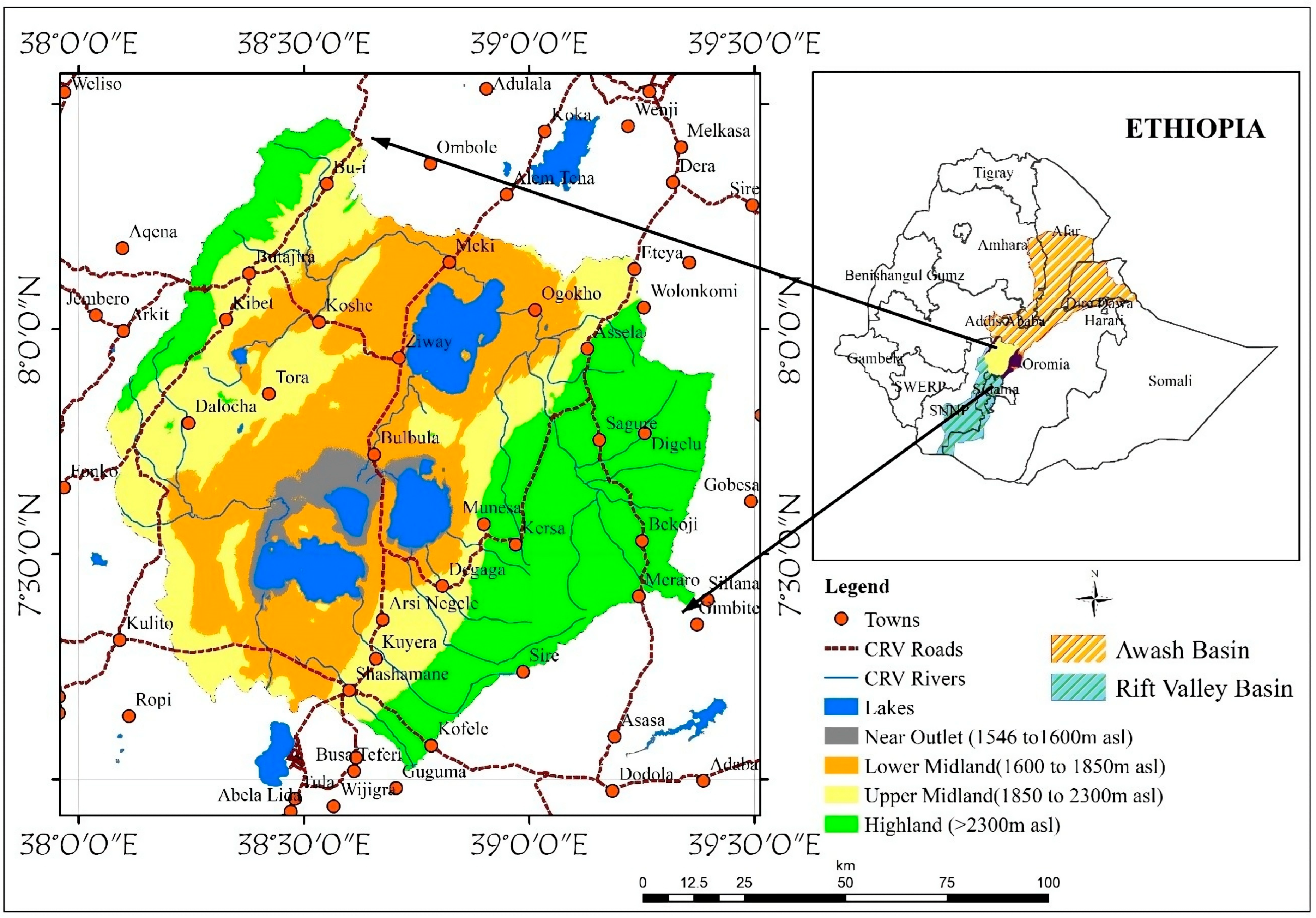
Water is a critical resource for sustaining life, driving economic development, and maintaining ecological balance. In arid and semi-arid regions such as the Central Rift Valley (CRV) of Ethiopia, the delicate interplay between hydrological systems, ecological health, and human livelihoods is becoming increasingly strained. This is largely due to rapid population growth, climate variability, and unsustainable land and water use practices. The CRV contains four major lakes; Lake Dembel (Ziway), Lake Abijatta, Lake Langano, and Lake Shalla, which provide crucial resources to the surrounding communities. These lakes support agriculture, provide drinking water, and are integral to local industries. It is an essential water catchment area, supporting agriculture, fisheries, and biodiversity [1]. It is home to a rich variety of flora and fauna [2]. The wetlands surrounding the lakes play a key role in supporting biodiversity, particularly as breeding grounds for migratory birds and other wildlife [3]. However, increasing water abstraction, deforestation in upstream areas, and uncontrolled groundwater use are driving the depletion of water resources in the area (Figure 1) [2]. As a result, water availability is becoming an increasing challenge, and the risk of ecological collapse is growing.
This ecological degradation further diminishes the region’s resilience, reducing its capacity to provide critical ecosystem services and increasing the vulnerability of local communities to environmental shocks. In addition to the ecological challenges, the habitability of the CRV is heavily influenced by water availability, agricultural productivity, and economic opportunities [4]. The population of the region is growing rapidly, which places additional pressure on already limited resources. Agriculture and livestock rearing are the primary livelihoods in the CRV, but unsustainable farming practices, combined with the unpredictable effects of climate variability, have led to widespread food insecurity and increased competition for resources [5,6]. Furthermore, access to clean water, energy, sanitation, and adequate infrastructure remains a significant challenge, undermining public health and hindering economic development. While individual studies have explored various aspects of the region, such as hydrology, agriculture, or ecology, a comprehensive, integrated assessment that links water availability, ecosystem health, and human well-being is missing. This review seeks to bridge that gap by providing a holistic understanding of the CRV’s current conditions, synthesizing existing literature, and offering insights into potential solutions for sustainable resource management.
Integral to this holistic approach is the application of Critical Zone Science (CZS), an interdisciplinary framework focused on understanding Earth’s near-surface environment, termed the ‘critical zone’. This zone encompasses the dynamic interactions of rock, soil, water, air, and living organisms from the vegetation canopy down to groundwater and bedrock, regulating processes such as water fluxes, nutrient cycling, soil formation, and ecosystem function. By integrating geology, hydrology, ecology, soil science, and social sciences, CZS offers a comprehensive lens to examine the complex interplay of natural and human systems. For the CRV, applying CZS principles allows a linked understanding of hydrological patterns, land use changes, biodiversity dynamics, and community livelihoods, facilitating sustainable and integrated resource management.
Accordingly, this review assesses the hydrological status of the CRV, including surface water availability, groundwater depletion, water quality, and climate variability impacts, while examining ecological conditions such as biodiversity, wetland conservation, land use change, and anthropogenic pressures. Furthermore, it evaluates habitability factors including population dynamics, water access, livelihood sustainability, and socio-economic vulnerabilities. Key environmental and resource management challenges, water scarcity, land degradation, and pollution, are identified alongside governance gaps hindering effective management. In exploring pathways for sustainable management, the review proposes solutions encompassing climate-resilient water management, ecosystem restoration, and community-based conservation. By linking hydrology, ecology, and human activities through the CZS-integrated framework, this review aims to provide actionable insights guiding policymakers, researchers, and local communities toward sustainable habitability in the CRV.

2. Methodology

2.1. Description of the Study Area

Ethiopia has 12 river basins, critical to its hydrology, supporting hydroelectric power, agriculture, and biodiversity (Figure 2) [7]. Trans boundary basins, like the Abay (Blue Nile), Tekeze, Baro-Akobo, and Omo-Gibe, contribute significantly to international rivers [8], while inland basins like the Rift Valley Lakes and Awash are vital for local hydrology and ecology [9]. These basins vary in hydrology, with some flowing year-round and others depending on seasonal rainfall and aquifer recharge. The Ethiopian Rift Valley, part of the East African Rift System, includes internal drainage basins dominated by lakes and rivers [1], characterized by geological activity and fault-controlled hydrology. Closed drainage systems in the Rift Valley, preventing direct water flow into lakes, create hydrological patterns where evaporation plays a major role in water depletion. Both natural and human factors have altered the environment, affecting lake levels, biodiversity, and water quality, with key basins including Abaya-Chamo, Chew Bahir, Dembel-Shalla, and Hawassa.
The Ethiopian Rift Valley is known as the cradle of mankind [10]. It has been pivotal in human evolution, with fossil finds like Australopithecus afarensis and Ardipithecus ramidus giving evidence of early hominids. Lucy, a 3.2 million-year-old fossil, provided important insights about bipedalism. Homo habilis and Homo erectus, early human relatives directly related to modern humans, were found in the Rift Valley [11]. Evidence from both fossils and genetics suggests that anatomically modern humans first appeared in Africa approximately 200,000 years ago, with the Ethiopian Rift Valley being a key site in the evolutionary enlightening of humans [10].
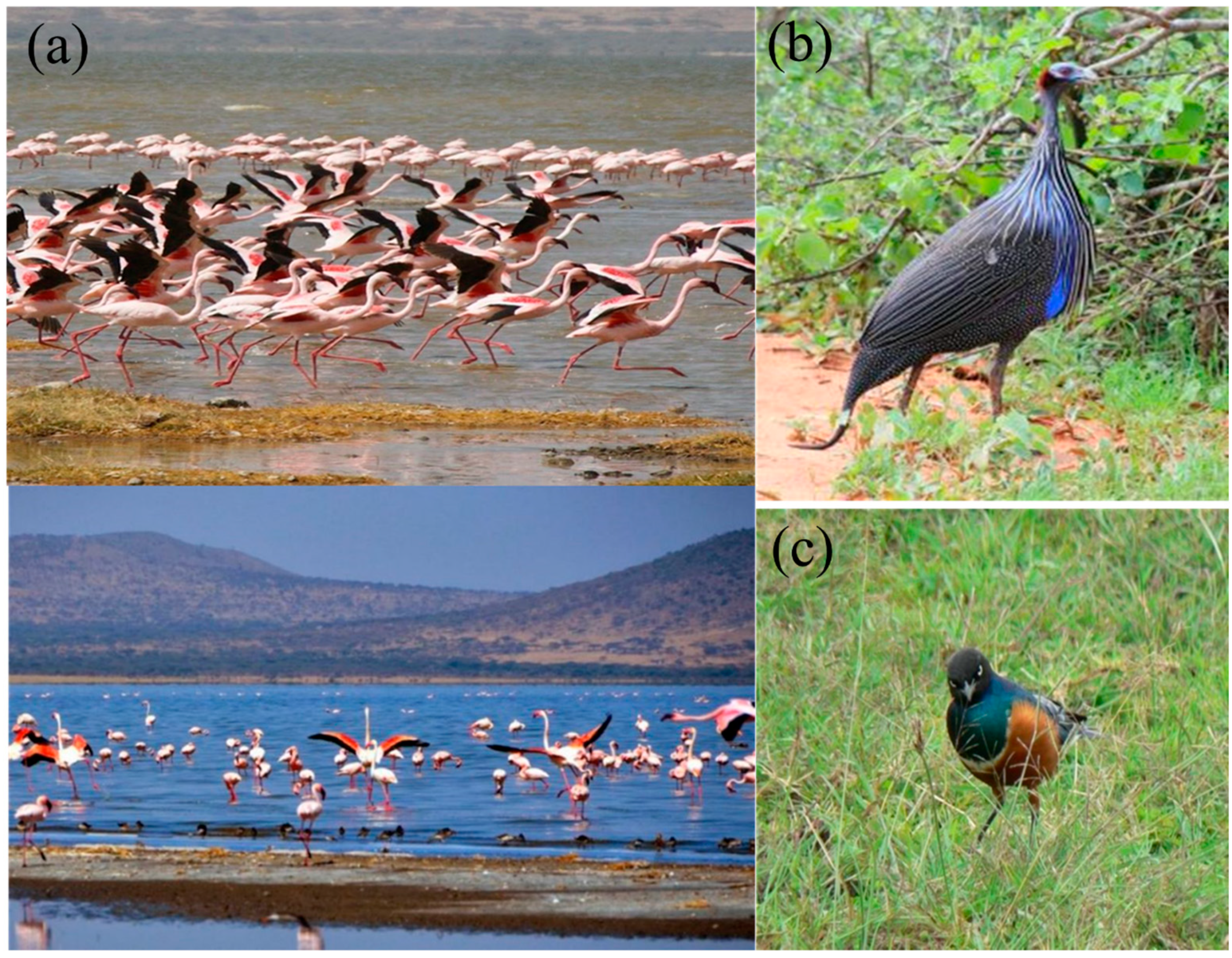
The CRV is a key hydrological unit with four lakes: Dembel, Langano, Abijatta, and Shalla [12,13]. It features a closed drainage system with crucial surface and groundwater interactions that maintain water balance [1]. Lake Dembel, the basin’s primary freshwater source, is fed by the Meki and Katar rivers and is used for irrigation and domestic consumption. Lake Shalla, a deep, highly saline terminal lake within a volcanic caldera, completes the system [13]. These interconnected catchments form a delicate hydrological balance. Lake Dembel flows downstream into Lake Abijatta, located in the Abijatta-Shalla National Park, a critical wetland habitat for migrating water birds, underscoring the importance of maintaining the basin’s hydrological flows (Figure 3) [12].

2.2. Geographic and Climatic Characteristics

2.2.1. Climate

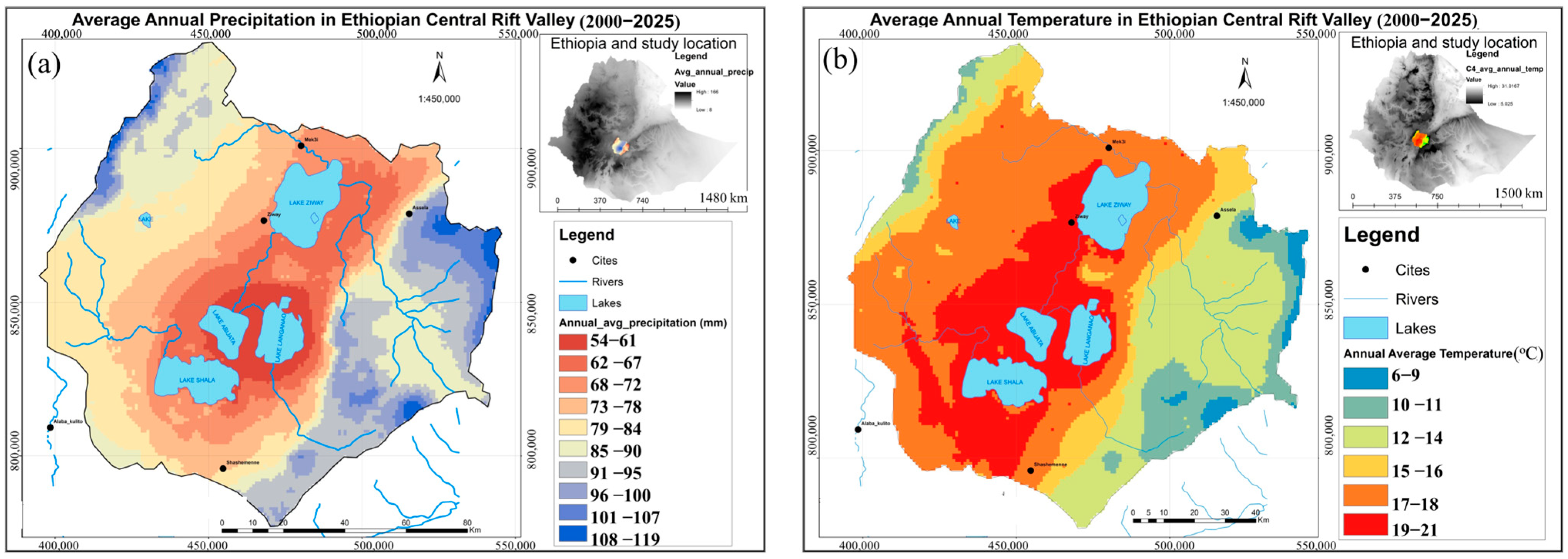
The CRV spans about 15,000 km2, with elevations ranging from 1500 m in the valley to 4000 m in the highlands, creating varied ecological zones and microclimates that influence precipitation, temperature, vegetation, and human settlement [6,14,15]. The semi-arid climate exhibits moderate temperatures and highly variable rainfall [16], with annual precipitation ranging from 600 mm in the central lowlands (including lakes like Abijatta, Shalla, and Langano) to 1350 mm in the highlands, where topographic effects increase moisture interception [17]. The main rainy season (June–September) causes runoff and groundwater recharge, while the extended dry period intensifies water scarcity, leading to competition among agricultural, domestic, and industrial users [17]. The basin experiences frequent meteorological droughts, with recurrence intervals of 1.68 years during Belg and 1.76 years during Kiremt [18]. Agricultural land use affects water balance, with cereals increasing groundwater recharge and legumes boosting runoff [19].
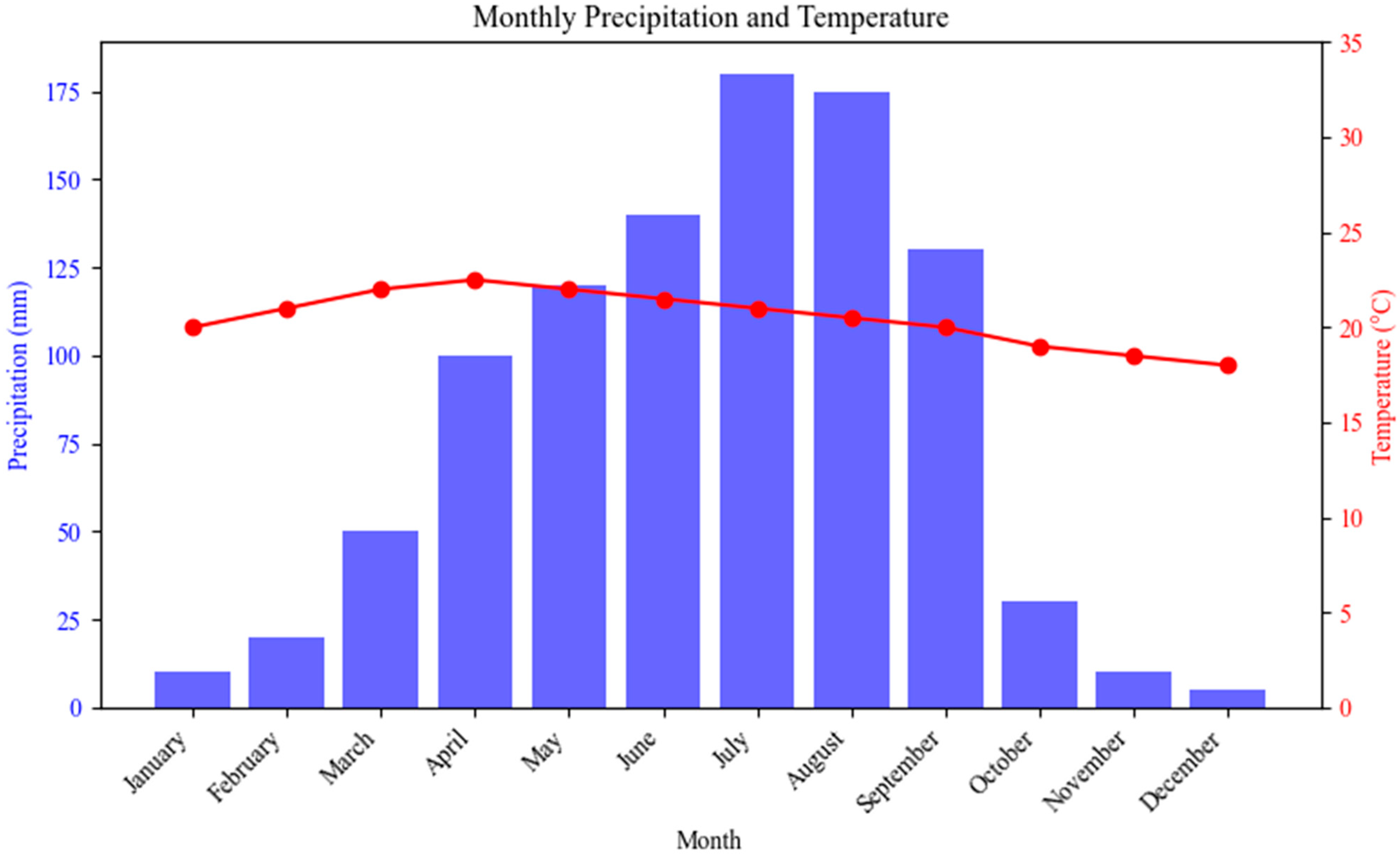
Temperatures range from 15 °C to 21 °C, with cooler conditions in the highlands and warmer temperatures in the lowlands (Figure 4b) [20]. In the southeast, temperatures reach 19–25 °C, resulting in high evaporation rates and arid conditions. Lakes moderate temperatures, but climate change may disrupt this balance, affecting agriculture and ecosystem resilience. The average annual temperature varies from 18 °C to 25.5 °C, favorable for agriculture and habitation, though interannual variability creates uncertainty about water supplies and harvests [20]. Figure 5 presents the average monthly temperature and precipitation (2000–2025) for the CRV, reflecting long-term climatic trends shown in Figure 4, with clear temporal variability observed, particularly during the rainy seasons. Understanding the interplay between precipitation and temperature is crucial for climate-resilient strategies in water management, biodiversity conservation, and agriculture [21].

2.2.2. Land Use and Land Cover (LULC)

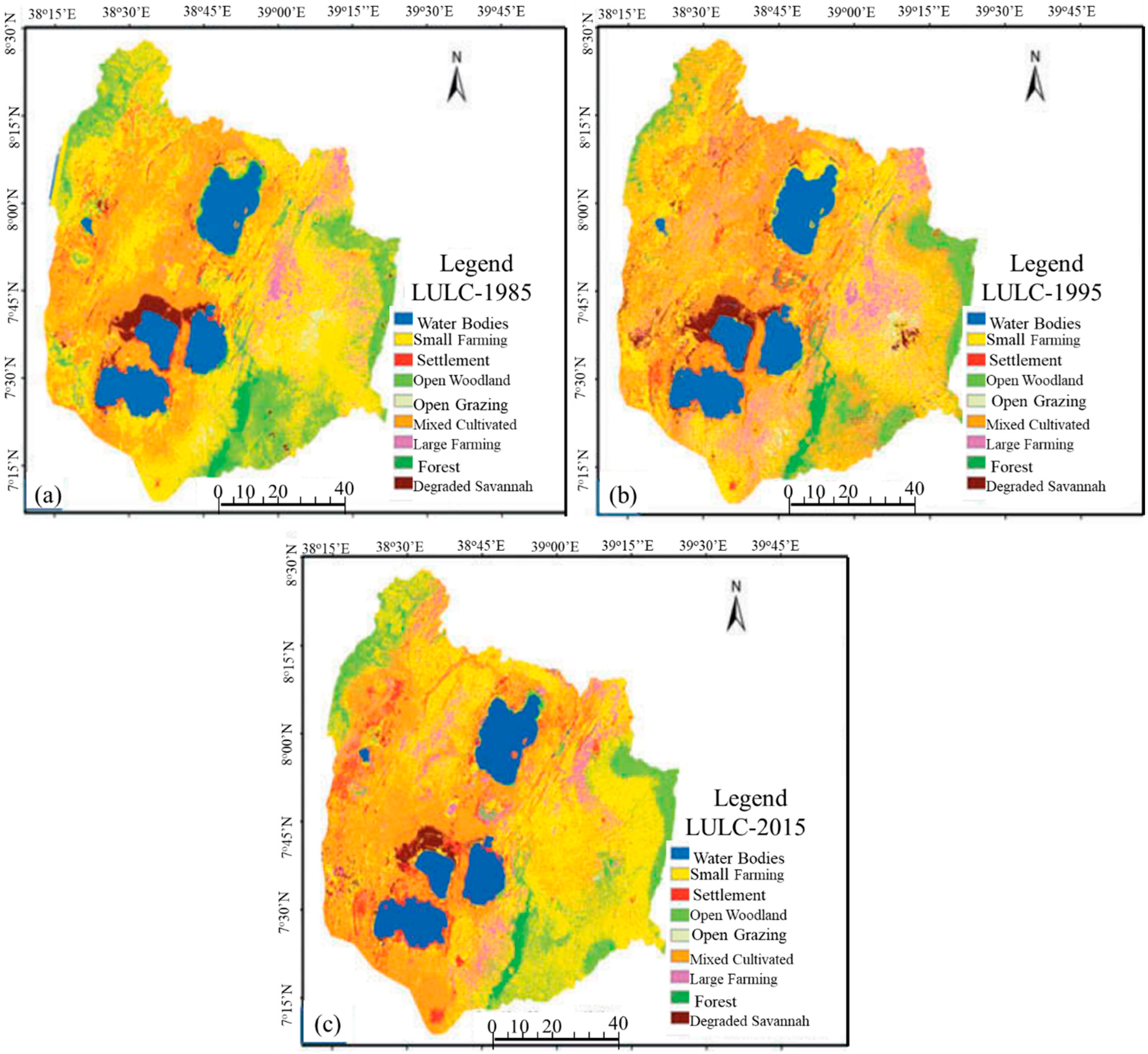
The CRV has undergone significant LULC changes in recent decades [5]. LULC maps for 1985, 1995, and 2015 show the expansion of cultivated land, degradation of natural vegetation, and growing pressure on wetland ecosystems (Figure 6) [22]. In 1985, the landscape was dominated by extensive forests and open woodlands, with small patches of farming and settlements (Figure 6a) [23]. By 1995, agricultural expansion increased, while forest cover decreased (Figure 6b). Open grazing land and degraded savannah also expanded, signaling land degradation. Settlement growth reflected population increase and urbanization, altering landscape dynamics [5,22]. By 2015, much of the area was converted to small-scale farming and settlements, replacing nearly all forest and open woodland (Figure 6c). Savannah degradation accelerated, likely due to overgrazing and deforestation. Large-scale farming intensified at the expense of natural ecosystems, leading to habitat loss and environmental degradation [24,25]. The decrease in water bodies likely reflects increased water extraction for irrigation and the effects of climate variability. Overall, the 30-year LULC changes highlight the environmental impact of population growth, deforestation, and agricultural expansion, though they do not fully overlap with the climate data period (2000–2025) shown in Figure 4 and Figure 5.

2.3. Social Context and Human Interaction with the Landscape

The CRV is home to diverse communities whose livelihoods, cultural values, and social structures are deeply tied to the land and water resources [26]. Agriculture, particularly maize, teff, and wheat, remains the backbone of the local economy, complemented by livestock rearing (notably cattle and sheep) and fisheries [27]. In urban centers such as Batu, economic diversification through trade, services, and infrastructure has spurred growth but also intensified competition for land, water, and services [28,29]. Beyond economic reliance, communities in the CRV share a strong cultural and spiritual attachment to the landscape. Lakes, rivers, soils, and agricultural fields are central to local identity, with resources often linked to ancestry, heritage, and intergenerational continuity. Sacred and ancestral lands, fruit trees, and soils symbolize both cultural continuity and future aspirations. Such attachments promote conservation ethics and encourage restoration of degraded environments, reinforcing a vision of sustainability for future generations [30,31,32,33,34]. Cultural practices also play a pivotal role in landscape management. Traditional systems such as agroforestry, intercropping, rainwater harvesting, and communal irrigation not only sustain productivity but also conserve biodiversity, water, and soil fertility [35]. Sacred natural sites are protected by cultural taboos that function as informal environmental regulations [36,37]. However, these systems face growing pressures from population growth, industrialization, and climate change [38]. Sustainable governance will require integrating traditional knowledge with modern scientific approaches, while strengthening community participation in decision-making to ensure resource management that respects both ecological and cultural dimensions [39].

2.4. Methods

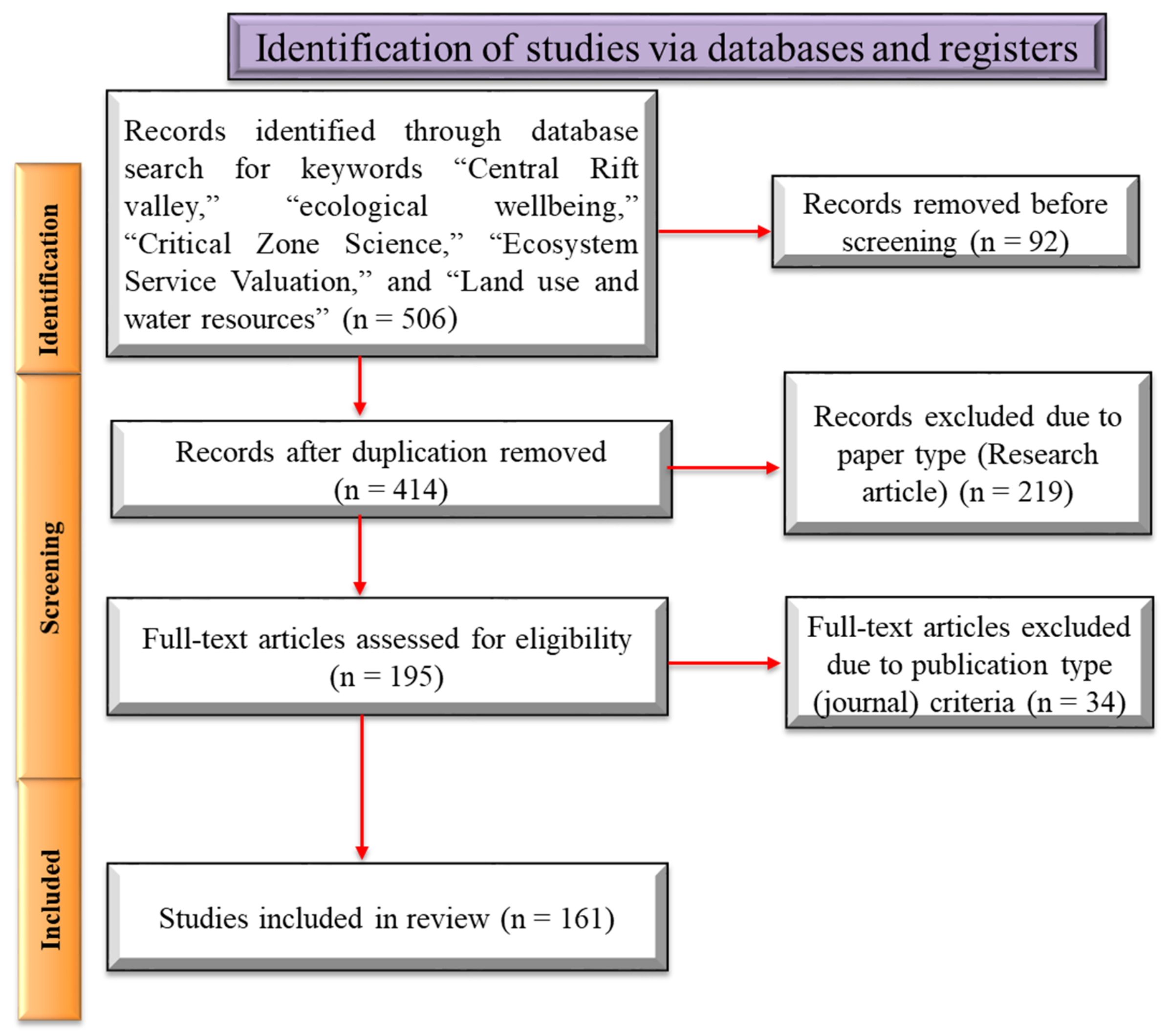
The review adopted the PRISMA framework, a widely recognized methodology that ensures scientific rigor, transparency, and reproducibility in the literature identification, screening, and selection. A comprehensive and systematic search was conducted across multiple databases including Scopus, Web of Science, Google Scholar, and relevant institutional repositories to capture recent and pertinent studies on the CRV of Ethiopia. Keywords combining geographic focus with thematic areas such as hydrology, ecology, and socio-economic factors were used. Initial screening involved title and abstract review to exclude irrelevant and duplicate records, followed by retrieval of full texts for eligible studies. Inclusion criteria required studies to address at least one of the following dimensions: hydrological processes and water resource status, ecological assessments including biodiversity and habitat conditions, or socio-economic aspects such as community livelihoods, resource governance, and cultural practices within the CRV. Studies focusing on other geographic areas or unrelated topics were excluded. A rigorous second-level full-text screening confirmed that only studies meeting all predefined criteria were included in the final synthesis. This approach yielded 161 studies, ensuring a robust, multidisciplinary evidence base for the integrated assessment (Figure 7).

3. Hydrological Assessment

3.1. Hydrological Context

The CRV is a tectonically formed internal drainage basin shaped by past volcano-tectonic activities and lacustrine sediment deposition [13]. It features four primary lakes, along with fault scarps, fault-controlled depressions, volcanic domes, calderas, and ridges [40]. The Wonji Fault Belt exhibits an intense fault system that has resulted in minor grabens, horsts, and volcanic formations [40]. The lakes vary in shape, depth, and size, reflecting their distinct geomorphological settings. Lake Dembel, Langano, and Abijatta are tectonically controlled extended lakes, whereas Lake Shalla occupies a volcanic caldera, making it one of the deepest in the Eastern African Rift [41].
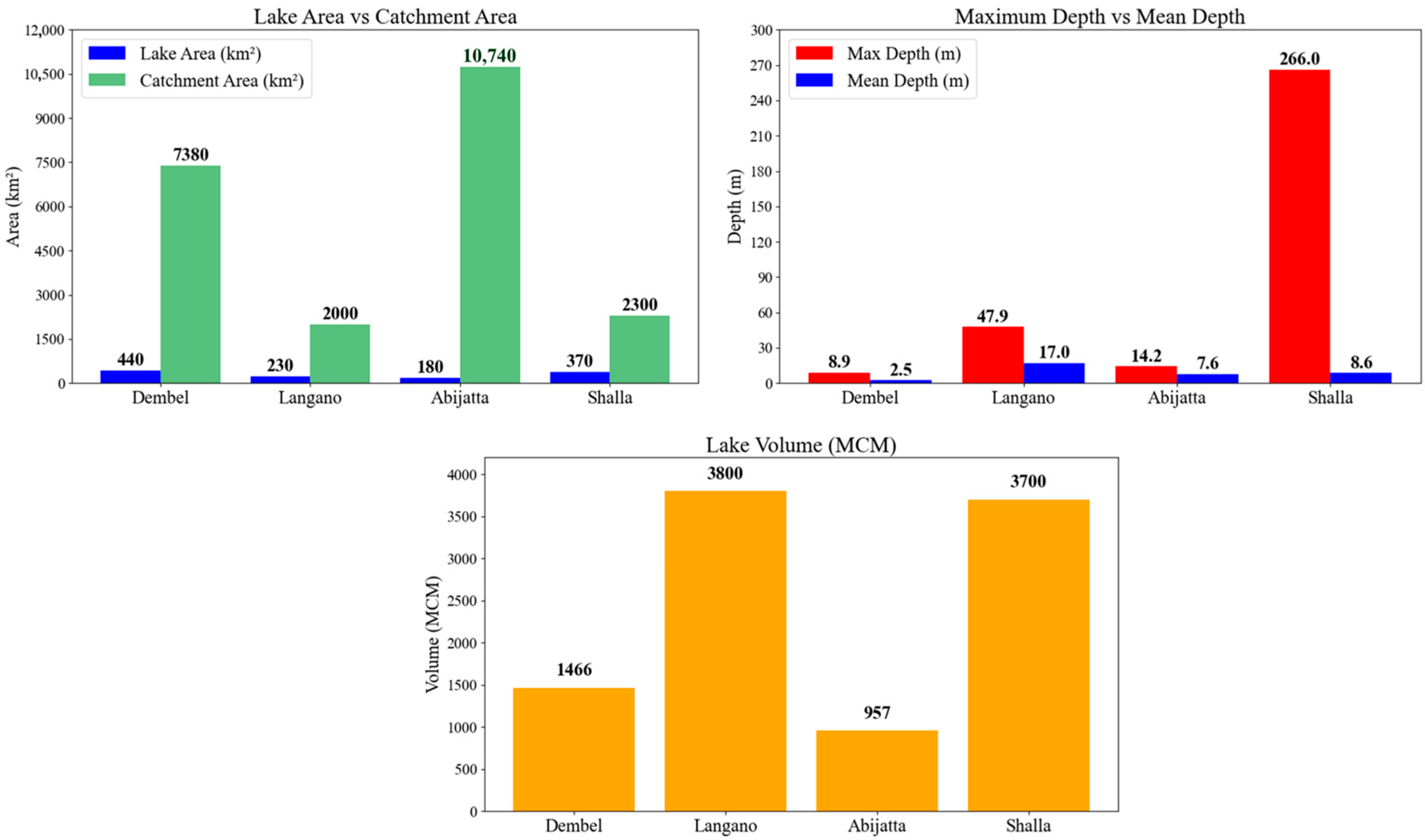
Figure 8 presents key hydrological characteristics of the CRV lakes, such as lake area relative to their catchment area, maximum and mean depths, and total volume in million cubic meters (MCM). Lake Dembel, the largest by area (440 km2) but shallowest, has a catchment area of 7380 km2, with a maximum depth of 8.9 m, mean depth of 2.5 m, and a volume of 1466 MCM. Lake Langano, smaller in area (230 km2) and catchment (2000 km2), is significantly deeper, with a maximum depth of 47.9 m, mean depth of 17.0 m, and a volume of 3800 MCM. Lake Abijatta, the smallest by surface area (180 km2), has a larger catchment area (10,740 km2) but is relatively shallow with a maximum depth of 14.2 m, mean depth of 7.6 m, and a volume of 957 MCM. In contrast, Lake Shalla, covering 370 km2 with a catchment of 2300 km2, is the deepest, with a maximum depth of 266 m, mean depth of 8.6 m, and a volume of 3700 MCM. These disparities in hydrological and geological settings influence the lakes’ water balance, ecological characteristics, and their vulnerability to environmental changes. Fault-bounded depressions and volcanic ridges separate the lakes, shaping their hydrological dynamics and contributing to fluctuations in lake levels.
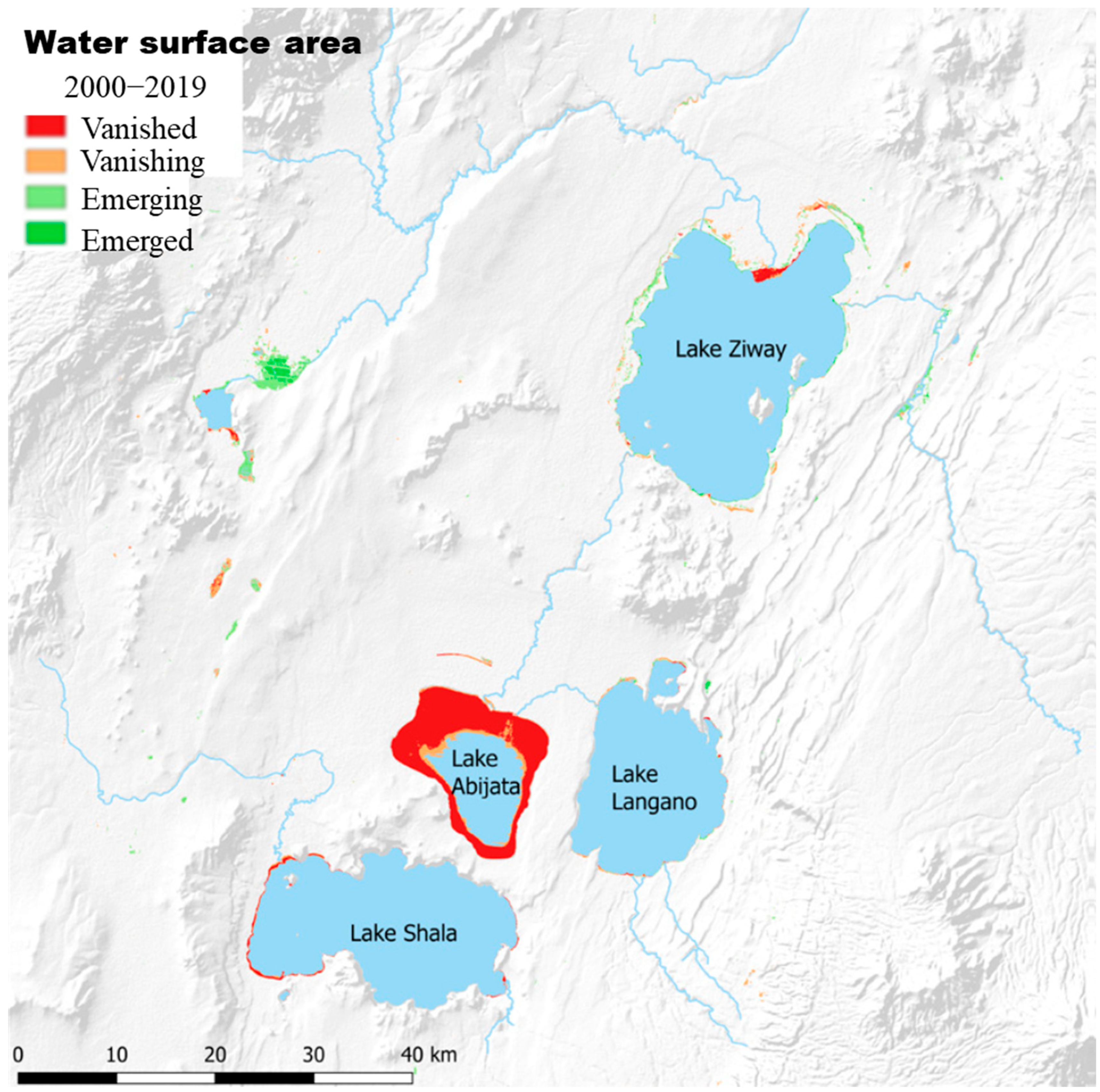
The basin is a vital wetland, supporting ecosystems, local communities, and migratory birds. It is replenished by rainfall and groundwater from the highlands, with flow variations influenced by the northward-sloping basement and sediment-volcanic interfaces that facilitate underground water movement [42]. While the lakes are vital for local livelihoods and industries, they are increasingly threatened by water abstraction and land use changes. Some lakes have contracted due to overuse, while others have expanded due to increased runoff and irrigation percolation (Figure 9) [43]. These shifts have significant environmental impacts on the fragile rift ecosystem, highlighting the urgent need for integrated, basin-scale water management strategies. The hydrological interconnections within the basin create a delicate balance, where alterations in one component can have far-reaching effects on others. For instance, Lake Dembel serves as the primary freshwater source for irrigation, drinking water, and fisheries [44], while Lake Shalla, with its deep and alkaline waters, is unsuitable for irrigation [45,46].
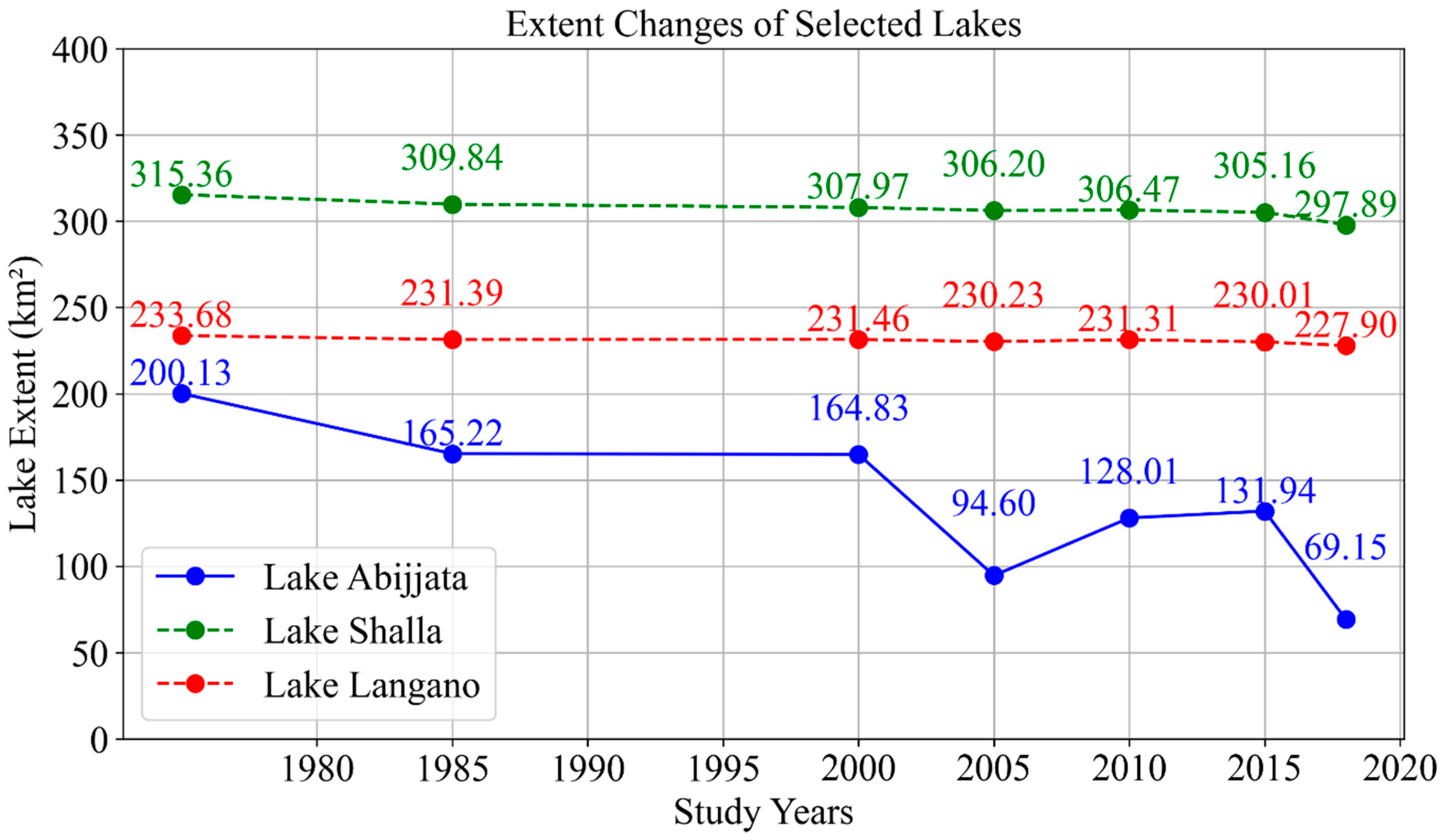
Figure 9 further illustrates the temporal changes in lake surface area, revealing varying levels of hydrological stress across the CRV. Lake Abijatta, for example, has experienced substantial contraction due to intensive water extraction for irrigation and industrial activities, such as soda ash production, which have exacerbated salinity and threatened aquatic ecosystems. In contrast, Lakes Shalla and Langano have maintained relative stability, likely due to their distinct hydrological inputs, Lake Shalla being primarily fed by groundwater and rainfall, while Lake Langano faces lower anthropogenic pressures. These differences underscore the need for lake-specific management strategies that address both hydrological dynamics and human impacts.

3.2. Surface Water Resources and Their Current Status

Lake Dembel is facing severe hydrological changes due to rising water abstraction and climate variability. Irrigation withdrawals of approximately 37 × 106 m3 per year have caused a 0.36 m decline in lake level and an 18 km2 reduction in surface area [47]. Projections suggest that under full development scenarios, irrigation withdrawals might reach 95.3 MCM, potentially resulting in a 0.94 m decline in lake level [47]. Climate change models predict increased temperatures and changing runoff patterns may worsen these changes, with worst-case scenarios projecting a 25 cm annual decline in lake level, equating to a 10 km2 reduction in surface area [44].
Lakes Abijatta, Shalla, and Langano have also experienced varying degrees of alteration from 1973 to 2018 (Figure 10) [41,48]. Lake Abijatta saw the most significant loss, with its surface area dropping by 47.59%, from 200.13 km2 in 1973 to 69.15 km2 in 2018 [41]. This decline is mainly due to unsustainable water withdrawals for irrigation, floriculture, and soda ash production, compounded by climate variability [49]. The reduction has led to habitat loss, increased salinity, and reduced freshwater availability. In contrast, Lake Shalla experienced only a 2.38% loss, from 315.36 km2 in 1973 to 297.89 km2 in 2018, as it is mainly fed by direct rainfall and groundwater, making it less sensitive to human activities [50]. Lake Langano showed exceptional stability, with just a 0.92% decline, from 233.68 km2 in 1973 to 227.90 km2 in 2018, due to minimal industrial and agricultural use [41]. These variations underscore the differing impacts of human activities and climate on the CRV’s surface water bodies. The depletion of Lake Abijatta highlights the need for regulated water abstraction and restoration measures, while the stability of Lakes Shalla and Langano emphasizes the importance of natural hydrological resilience and minimal human intervention [51].

3.3. Groundwater Resources

Groundwater is a vital resource in the CRV, particularly during dry periods when surface water is limited. The basin holds significant groundwater reserves, estimated at 953 MCM annually available for exploitation [52]. However, excessive extraction for agriculture and domestic use is depleting these resources, leading to declining water tables in some areas [53]. Combined with low recharge during dry seasons, over-extraction threatens the long-term sustainability of groundwater. Without proper management, through controlled abstraction, improved irrigation efficiency, and enhanced recharge efforts, these resources could face severe depletion, compromising water security, agricultural productivity, and ecosystem health. Groundwater distribution and quality are influenced by geological and tectonic factors. Sedimentary strata, covering about a quarter of the basin, serve as the primary groundwater storage, while the dominant crystalline layers retain less water, with storage concentrated along deep fault systems that cross aquifers [54]. Recharge occurs mainly through rainfall infiltration, runoff from streams and lakes, and interflows between aquifers. These interactions make groundwater flow closely linked to surface water systems, complicating resource assessment and management. The area’s hydrogeological complexity, with varying permeability and natural formations, further complicates effective groundwater management.

3.4. Water Quality in the CRV

Water quality in the CRV is increasingly threatened by agricultural intensification, industrial expansion, and urbanization [55]. Agricultural runoff, rich in nitrogen and phosphorus from fertilizers and pesticides, leads to eutrophication, algal blooms, and oxygen depletion, disrupting aquatic biodiversity [56,57]. Pollution from heavy metals, primarily from the floriculture industry, mining operations, and other industrial discharges, further degrades water quality. These industries release pollutants such as lead (Pb), cadmium (Cd), and chromium (Cr), which contaminate water sources and pose significant ecological and health risks [58]. Mitigation practices include implementing stricter industrial waste regulations, establishing wastewater treatment facilities, and promoting eco-friendly farming practices that reduce the use of harmful pesticides and fertilizers [53]. Urbanization exacerbates pollution due to inadequate wastewater treatment, contributing to organic pollutants, pathogens, and emerging contaminants in water bodies [59,60,61]. Additionally, deforestation and wetland degradation increase sedimentation and turbidity, further degrading water quality [62,63,64].
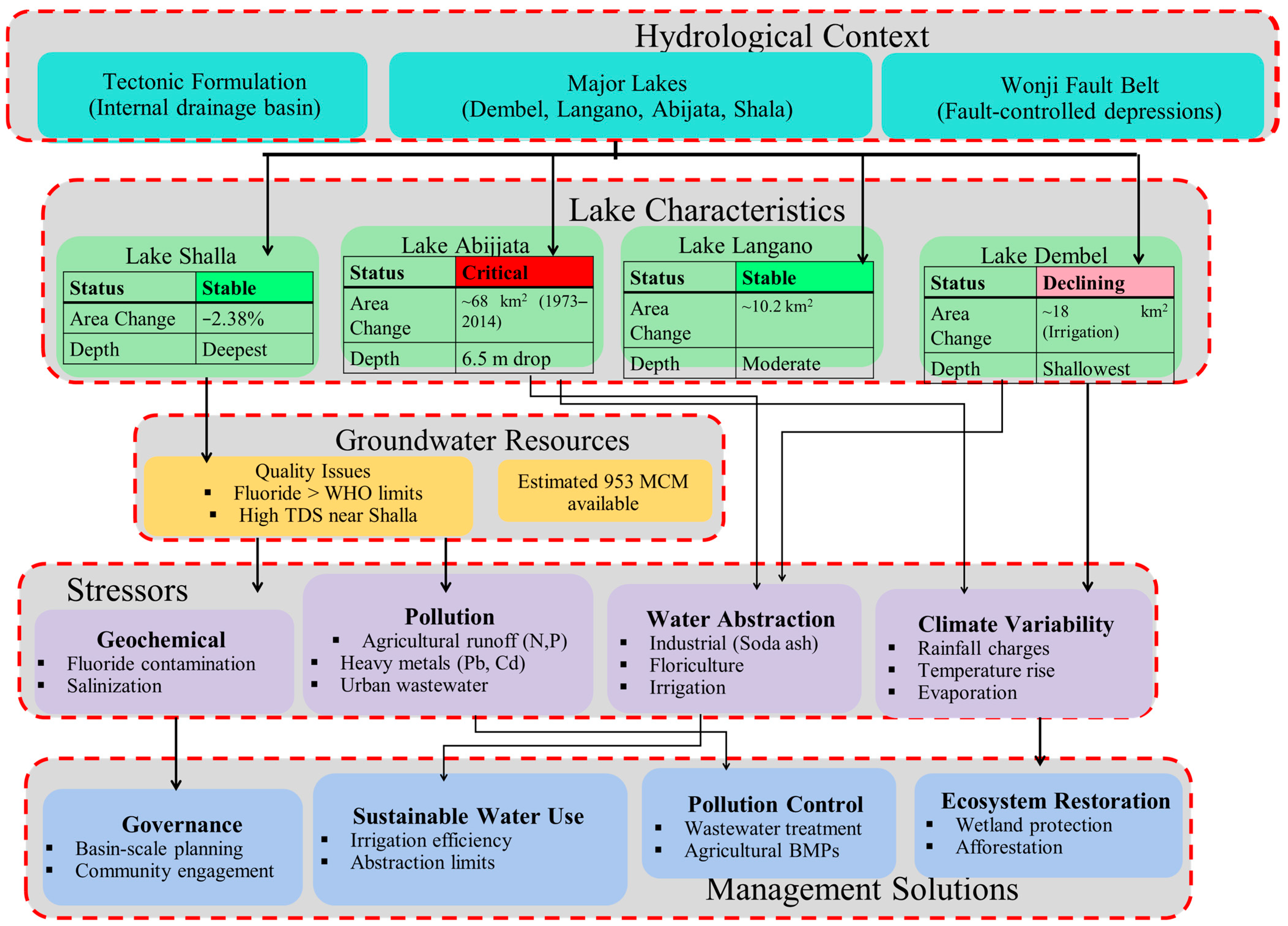
Pollution levels vary seasonally, peaking in the dry season due to reduced dilution, intensified agricultural activity, and limited river inflows [65]. This leads to concentrated pollutants, with peak agricultural periods amplifying runoff. Industrial and domestic wastewater accumulation, coupled with reduced river flows, leads to stagnation, eutrophication, and lower oxygen levels [66]. Evaporation increases salinity and dissolved solids, negatively impacting aquatic life. Without effective management, water quality in Lake Dembel may degrade further [55,67]. High fluoride concentrations in groundwater near Lake Shalla exceed WHO standards, posing health risks [68,69,70]. Elevated total dissolved solids (TDSs) also complicate water management [71,72,73,74,75]. Figure 11 highlights the interactions between hydrological dynamics, pollution sources, and environmental stressors impacting the lakes. Agricultural runoff and industrial effluents, compounded by climate-induced hydrological variability, exacerbate water scarcity and ecosystem degradation. This underscores the need for integrated mitigation strategies that reduce pollution and enhance water resource sustainability.

3.5. Material Flows in the CRV: Water, Nutrients, and Contaminants

3.5.1. Human Practices and Policies Affecting Landscape Sustainability

Human activities, including agricultural intensification, urbanization, industrialization, and land use changes, disrupt natural material flows, affecting ecosystems and communities [76]. Over-extraction of water for agricultural, industrial, and domestic use depletes lakes like Dembel and Abijatta, as well as groundwater reserves, disrupting the hydrological cycle and drying wetlands [17]. Industrial sectors, including floriculture, power plants, and large-scale manufacturing, consume substantial water resources, often creating competition with agriculture and communities and degrading water quality, especially in the dry season [77]. Nutrient management policies also influence material flows. The overuse of synthetic fertilizers leads to nutrient runoff, causing eutrophication and ecosystem degradation, while poor urban waste management exacerbates nutrient pollution through untreated sewage and industrial wastewater [1].

3.5.2. Diagnosing the Disruption of Material Flows

Material flow disruptions in the CRV are evident in declining water quality and quantity, increased nutrient pollution, and industrial contamination. Over-extraction of surface and groundwater has reduced lake and river inflows, worsening water scarcity. Nutrient overload has caused algal blooms and species death, particularly in Lake Abijatta, where excessive nutrients and evaporation degrade the ecosystem [55]. Industrial activities, especially floriculture, introduce pesticides, herbicides, and fertilizers, further polluting water systems and harming aquatic life. Untreated wastewater from urban areas increases salinity and chemical contamination, challenging clean water maintenance. Soil degradation from monocropping and overgrazing accelerates erosion and nutrient loss, reducing agricultural productivity and increasing fertilizer use, which exacerbates nutrient runoff [78]. Addressing these issues requires a multi-disciplinary approach combining hydrology, ecology, and social sciences [79]. Tools like water quality monitoring, soil testing, and nutrient flow mapping, along with local community engagement and indigenous knowledge, can help identify and mitigate these disruptions [80].

4. Ecological Assessment of the CRV

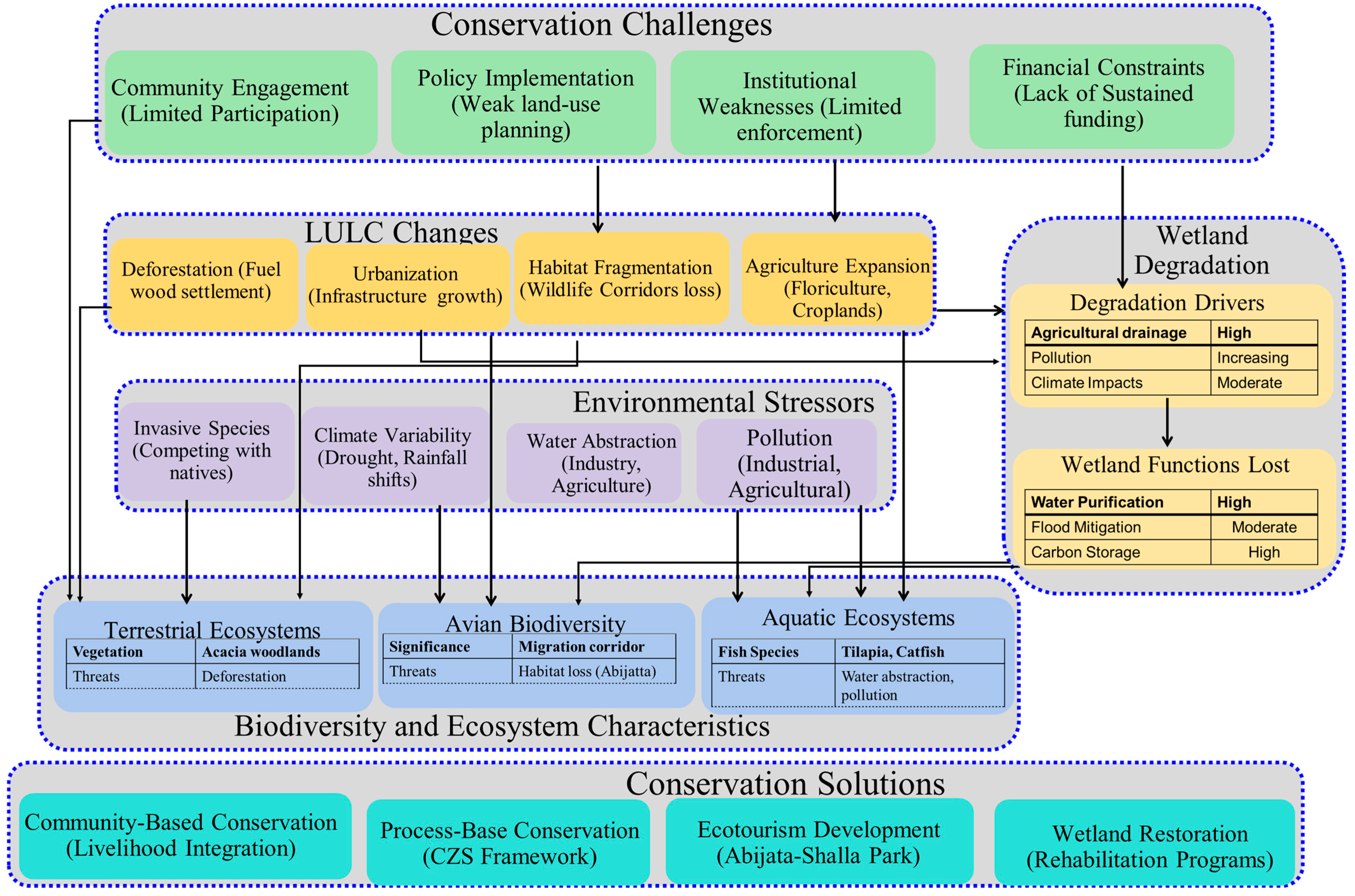
The CRV is ecologically significant, hosting diverse ecosystems that support a rich array of flora and fauna, including the Abijatta-Shalla National Park, which provides vital ecosystem services [81]. However, the area faces significant challenges due to land use and land cover changes. Water bodies have decreased, while cultivated and grazing lands have expanded, resulting in habitat loss for many species [82]. Human activities, such as settlements and agriculture, have negatively impacted bird diversity, leading to reduced species richness and altered community compositions in disturbed areas [83]. Figure 12 illustrates the interconnections between ecological degradation, conservation challenges, and environmental stressors affecting biodiversity within the CRV. Land use changes, deforestation, and wetland loss have fragmented habitats, reducing species richness and altering community structures. Pollution and water scarcity further exacerbate these pressures, while fragmented governance structures impede effective conservation efforts. The diagram reinforces the importance of adopting holistic conservation approaches that address both ecological integrity and socio-political dimensions.

4.1. Biodiversity and Ecosystem Characteristics

The CRV is an ecologically diverse region, encompassing habitats such as freshwater and saline lakes, woodlands, wetlands, and grasslands, supporting a high level of biodiversity and forming a crucial part of Ethiopia’s natural heritage [84]. However, anthropogenic pressures are increasingly disrupting ecological processes, underscoring the need for a conservation approach based on CZS principles. Lake Dembel, home to economically important species like tilapia and catfish [85,86], relies on stable water quality, nutrient cycles, and wetland filtration, all of which are threatened by water extraction, land use changes, and pollution [87]. Wetlands regulate hydrology, filter sediments, and absorb excess nutrients, supporting biodiversity and local livelihoods [88]. The CRV also serves as a critical stopover along the African–Eurasian bird migration corridor, with Lake Dembel’s shoreline providing vital resources for migratory birds and ecotourism [89]. However, degradation, particularly at Lake Abijatta, has led to a decline in bird populations, including flamingo colonies. The shrinking of Lake Abijatta due to unsustainable water use highlights the connection between water resource management and species conservation [90]. Terrestrial ecosystems, once dominated by Acacia woodlands, provided critical services such as carbon sequestration, soil stabilization, and water regulation [91]. However, deforestation for agriculture and fuelwood harvesting has fragmented these habitats, weakening biodiversity and ecosystem resilience [92,93]. Despite this, remaining woodlands continue to serve as important refuges for wildlife [94]. These ongoing transformations emphasize the need for a process-based, integrated approach to biodiversity conservation. Traditional ecosystem service valuation often neglects the biophysical mechanisms sustaining ecosystem functions. By incorporating CZS principles, conservation efforts can focus on the interactions between hydrology, soil, vegetation, and human activities, offering a holistic strategy to balance ecological integrity with development needs and ensure long-term sustainability in the CRV.

4.2. Land Use and Land Cover Transformation

The CRV has experienced significant land cover changes due to population growth, evolving land policies, and economic expansion [24]. Over recent decades, agricultural expansion, urbanization, and increased demand for fuelwood and irrigation have disrupted the region’s ecological balance. The conversion of natural habitats, especially woodlands, into agricultural land and settlements has highlighted the need for a conservation approach based on CZS principles. Historical changes show a notable decline in woodland cover in the Lake Dembel watershed, with agriculture and settlements expanding, impacting biodiversity, soil stability, and hydrology [23,92]. The rapid land cover transformation has largely occurred without adequate environmental planning, accelerating ecosystem degradation [95]. Deforestation and soil erosion have reduced land productivity, creating a feedback loop that undermines habitat quality and agricultural sustainability [96]. Habitat fragmentation has isolated wildlife populations, while the loss of woodland cover has weakened ecosystem services such as soil stabilization, water filtration, and carbon sequestration [97]. These disruptions highlight the urgent need for an integrated land management approach that balances development with ecological resilience.
Conventional land use policies often prioritize short-term economic gains over long-term ecological health. Integrating CZS principles into land management offers a comprehensive understanding of interactions between geology, hydrology, climate, and human activities, ensuring that development supports ecosystem stability. Prioritizing process-based conservation will allow policymakers to mitigate land degradation, conserve biodiversity, and preserve the ecological functions crucial for sustainable resource management in the CRV.

4.3. Wetland Degradation and Habitat Loss

Wetlands in the CRV are crucial for biodiversity conservation, hydrological regulation, and ecosystem services such as water purification, flood mitigation, and carbon sequestration. However, these ecosystems face increasing threats from land use changes, pollution, and climate variability, resulting in significant degradation and habitat loss [98]. Traditional conservation efforts, often centered on economic valuation, fail to address the underlying processes sustaining wetland functions [99]. The integration of CZS principles into wetland management offers a more comprehensive framework for understanding these complex dynamics and developing effective conservation strategies [100].
Agricultural expansion is a primary driver of wetland degradation, with fertile areas being drained for crop cultivation and livestock grazing [101]. This conversion reduces wetland extent, disrupts water storage, impairs groundwater recharge, and fragments habitat connectivity. The loss of breeding and feeding grounds for aquatic species has led to declining fish populations, further affecting local livelihoods. Agricultural runoff, containing fertilizers, pesticides, and herbicides, exacerbates wetland degradation, contributing to eutrophication, sedimentation, and declining water quality [102]. These processes diminish wetlands’ capacity to filter water and maintain ecological integrity. Industrial activities, particularly floriculture, also worsen degradation by discharging untreated effluents, including nutrients, pesticides, and heavy metals, into wetland ecosystems, accelerating habitat loss and disrupting aquatic biodiversity [103]. Urban expansion and infrastructure development further encroach on wetland areas, severing hydrological connections and reducing wetlands’ capacity to regulate floods and droughts [104].
Climate change has intensified these pressures by altering rainfall patterns, increasing drought frequency, and raising temperatures, which reduce groundwater recharge and disrupt wetland vegetation [105,106]. The spread of invasive species, facilitated by warming temperatures, also weakens wetland resilience [107]. The ongoing degradation of wetlands threatens biodiversity and undermines the ecosystem services essential for human well-being, such as flood control, water availability, and agricultural productivity.

4.4. Conservation Efforts and Institutional Challenges

The CRV faces significant conservation challenges, largely driven by institutional and governance weaknesses. Fragmented governance, where multiple ministries and local authorities manage conservation efforts without clear coordination, has led to policy overlaps and inconsistent enforcement of environmental regulations [5]. As a result, illegal activities such as logging, unsustainable agriculture, and wetland degradation persist. Furthermore, the lack of a unified policy framework often prioritizes short-term economic development over long-term ecological sustainability, exacerbating habitat loss and resource depletion [22]. Financial constraints and institutional limitations hinder the implementation of effective conservation programs. Many initiatives suffer from erratic funding, with donor-driven projects lacking sustainability and clear institutional support. This weakens regulatory enforcement and complicates habitat protection efforts, particularly in protected areas. Additionally, inconsistent land use planning, which fails to integrate conservation and development needs, contributes to fragmentation and water scarcity [22].
Local communities, despite their dependence on ecosystem services, are often excluded from decision-making processes, leading to a lack of awareness and participation in conservation efforts. This exclusion fosters resistance to externally imposed conservation strategies, as they fail to address local socio-economic realities [108]. Incorporating local knowledge and ensuring community involvement in governance is crucial for the success of conservation programs.
To overcome these challenges, integrating community-based conservation models and providing incentives for sustainable resource use are essential. Successful initiatives, such as eco-tourism in the Abijatta-Shalla Lakes National Park, offer potential funding sources while raising awareness about conservation. Strengthening institutional capacity, harmonizing land use policies, and fostering cross-sector partnerships will be key to aligning conservation efforts with sustainable development goals, enabling the CRV to transition to a more resilient landscape that supports both ecological integrity and human well-being.

4.5. Social Attachment to Ecological Features in the CRV

Communities in the CRV maintain deep cultural, social, and economic ties to wetlands, fields, and lakes, which are central to both livelihoods and cultural identity [81]. Wetlands provide water filtration, fertile soils, and breeding grounds for migratory birds, while lakes such as Dembel and Abijatta supply water for fishing, irrigation, and domestic use, and serve as sacred spaces for rituals [12]. Agricultural fields are not only economic assets but also extensions of family and community identity, with knowledge of soil management, crop rotation, and sustainable farming practices passed down through generations [109,110]. Indigenous knowledge, such as communal irrigation schemes and cultural taboos in sacred wetlands, demonstrate adaptive resource management that maintains watershed health and conserves biodiversity. Ecological degradation, including wetland loss, lake decline, soil erosion, and declining crop yields, disrupts these livelihoods, threatens food security, erodes cultural ties, and weakens traditional social structures [5,111]. Integrating Indigenous knowledge systems into scientific management frameworks can improve both model accuracy and practical conservation outcomes, emphasizing the need for strategies that simultaneously preserve ecological integrity, sustain livelihoods, and uphold cultural identity.

5. Habitability Assessment of the CRV

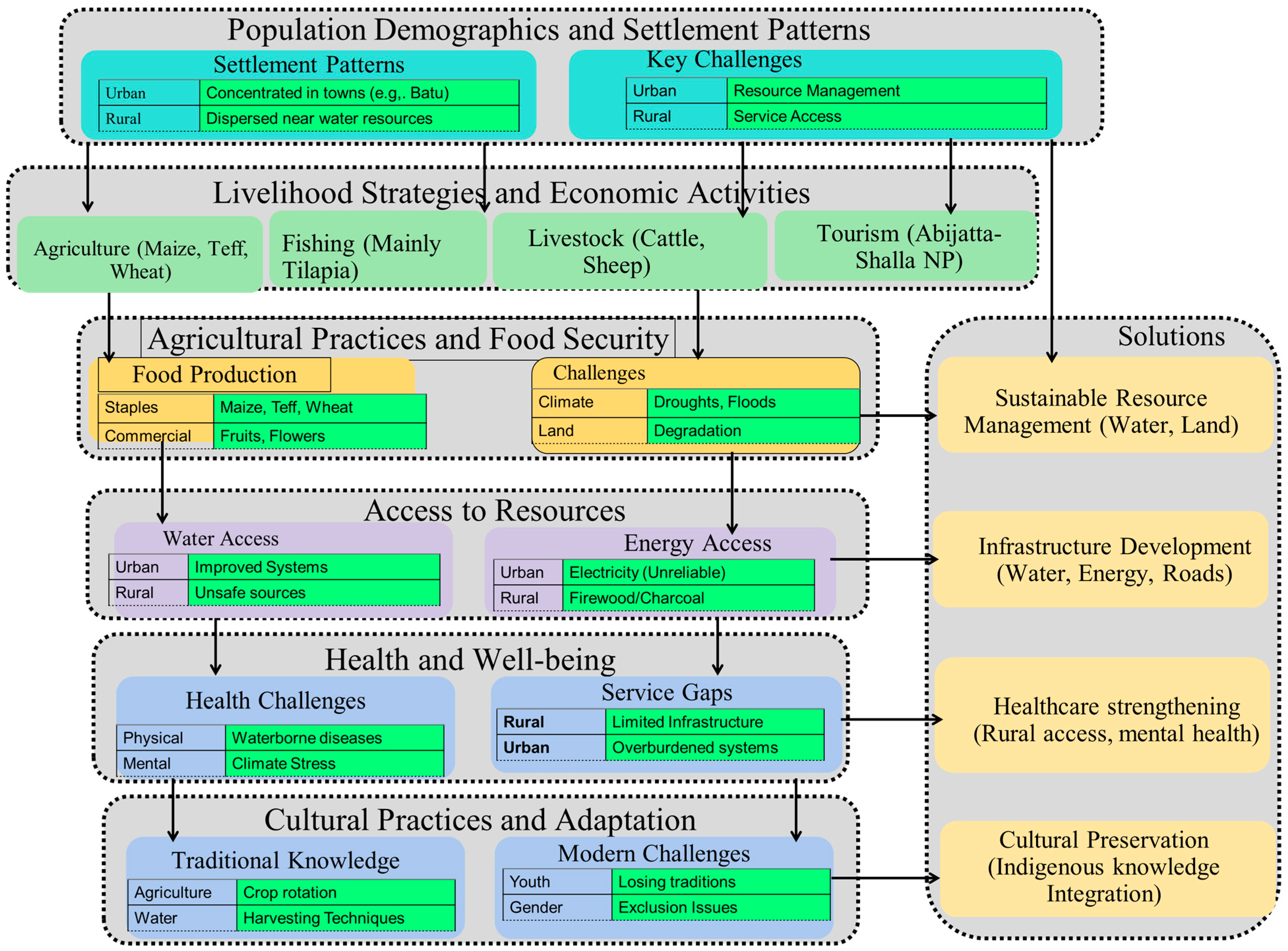
The CRV is one of the most important ecological and demographic regions, supporting a large population but facing increasing sustainability challenges [2]. As the human population grows in this ecologically sensitive zone, complex interactions between demographic trends, economic activity, natural resource extraction, and environmental limits are significantly impacting the basin’s habitability [5,22,112]. This section examines the current state of human settlements within the CRV, illustrating the connections between habitability factors, socioeconomic conditions, and environmental influences (Figure 13).

5.1. Population Demographics and Settlement Patterns

In the CRV, human settlements and population distribution are shaped by factors such as geographic location, water availability, and economic opportunities. The region, rich in natural resources and fertile soils, particularly around water bodies like Lake Dembel, has seen significant population growth. Settlements are concentrated near lakes, rivers, and wetlands, which provide essential resources for agriculture, fishing, and other livelihoods [2,113]. These areas are densely populated due to their agricultural potential and irrigation availability, with many communities relying heavily on ecosystem services from these water resources [32]. As the population grows, pressure on land and water resources intensifies [22]. Urban areas, such as Batu, have expanded alongside agricultural and industrial activities, resulting in higher population density. This growth increases demand for land, housing, and clean water, but also leads to encroachment into fragile ecosystems, contributing to wetland degradation and water pollution [23].
Urbanization brings economic benefits but also poses challenges related to resource management, infrastructure, and social services. Rural communities, on the other hand, often face limited access to essential services, which hinders economic development and quality of life. Therefore, settlement patterns are influenced not only by access to natural resources but also by socioeconomic factors like livelihood options, agricultural production, and market proximity [32].

5.2. Livelihood Strategies and Economic Activities

In the CRV, economic activities and livelihoods are closely tied to natural resources such as water bodies, fertile soils, and a favorable climate. Agriculture dominates the regional economy, with crops like maize, teff, and wheat grown in the fertile lands around Lake Dembel. Fruit and flower cultivation near urban centers is also growing due to market demand. Fishing, especially of tilapia, is another key livelihood for lakeside communities, supporting sectors like processing and shipping. However, overfishing and environmental degradation are emerging challenges [114].
Livestock farming, particularly cattle and sheep, is important for both food and income, though drought, disease, and land degradation threaten its sustainability. Urbanization has spurred growth in the service sector, particularly in Batu, where tourism related to Lake Dembel and Abijatta-Shalla National Park is generating economic opportunities. Additionally, small to medium-sized enterprises in trade, manufacturing, and construction contribute to livelihood diversification [115]. Despite these economic opportunities, many rural populations remain reliant on traditional, climate-sensitive practices, making them vulnerable to droughts and floods. Increasingly, households are diversifying income through off-farm work, small businesses, and remittances. While the economy of the CRV is diversified, challenges such as climate variability, resource depletion, and unsustainable practices pose significant risks [114].

5.3. Agricultural Practices and Food Security

Agriculture is central to livelihoods in the CRV, providing food, income, and economic stability. Farming practices range from irrigated systems near lakes to rain-fed crops in upland areas [6]. However, food security is increasingly threatened by climate variability, including irregular rains, droughts, and floods, which disrupt crop yields and farming cycles, especially where irrigation is inadequate [116,117]. While expanding irrigation has boosted production, it has also introduced challenges such as water scarcity, salinization, and groundwater depletion. Land degradation, including soil erosion and nutrient depletion, further impacts productivity, leading to reliance on chemical inputs that threaten long-term sustainability. Smallholder farmers face limited market access due to inadequate infrastructure, and insecure land tenure hinders investment in sustainable practices. Addressing these challenges requires climate-resilient agriculture, improved irrigation, sustainable land management, better market access, and secure land tenure [118]. Diversifying livelihoods beyond agriculture can also enhance resilience. Strengthening food security in the CRV will depend on coordinated efforts from governments, communities, NGOs, and the private sector to create a more sustainable and adaptable agricultural system.

5.4. Access to Resources: Water, Energy, and Infrastructure

Access to water, energy, and infrastructure is essential for improving habitability and economic development in the CRV. While the region has abundant water resources, reliable access remains inconsistent. Urban areas like Batu benefit from improved water supply systems, while rural communities rely on unsafe sources, leading to health risks. Limited irrigation infrastructure also hampers agricultural productivity, and the over-exploitation of lakes for irrigation raises sustainability concerns [119]. Energy access is a major issue in rural areas, where many depend on firewood and charcoal, contributing to deforestation and health problems [120,121,122]. Urban areas have more consistent electricity access, but face frequent interruptions and high costs. Expanding renewable energy sources, such as solar and wind, could improve energy reliability and sustainability. Infrastructure gaps, particularly in rural areas, hinder access to markets, healthcare, and education. Poor roads and sanitation further restrict development, while urban areas struggle with waste management. Addressing these challenges requires investments in water management, clean energy, and infrastructure, alongside community participation and sustainable resource management to create a more resilient and equitable region [2].

5.5. Health, Well-Being, and Social Services

Health and well-being in the CRV are influenced by environmental, economic, and social factors. Access to clean water, sanitation, and healthcare is crucial, but rural areas face significant challenges, including limited healthcare infrastructure, shortages of medical supplies, and poor sanitation, which contribute to waterborne diseases and malnutrition [123]. While urban areas like Batu have better facilities, rural communities continue to struggle with preventable diseases. Additionally, non-communicable diseases such as diabetes and hypertension are on the rise, and mental health issues linked to economic hardship and climate stress are emerging concerns [124]. Poverty, gender inequality, and low education levels further deepen health disparities, especially among women and vulnerable groups. Social services remain underdeveloped, limiting access to essential health education, family planning, and mental healthcare [125]. Addressing these issues requires improvements in healthcare infrastructure, water and sanitation services, mental healthcare, and social services, with an emphasis on health education and stronger government-community collaboration to foster a healthier and more resilient population.

5.6. Social Attachment and Community Resilience

5.6.1. The Role of Land, Social Networks, and Habitability

In the CRV, Ethiopia the concept of “home” for farmers extends beyond physical proximity to resources. It is deeply rooted in emotional, cultural, and historical connections to the land. For farmers, the land is more than just a space for economic activity, it holds memories, traditions, and the promise of future sustenance [126]. The attachment to the land is passed down through generations, fostering a strong sense of identity and continuity. Sacred sites and ancestral lands play crucial roles in shaping community identity, and loss of access to these spaces, whether due to environmental changes or degradation, challenges both the economic and cultural fabric of these communities [127].

5.6.2. Social Networks and Community Resilience

Social networks, such as churches, schools, workplaces, and community organizations, play a vital role in enhancing resilience amidst environmental and economic pressures [128]. Religious institutions provide emotional support and promote collective action, reinforcing community norms and unity. Schools contribute by educating younger generations on sustainability, environmental stewardship, and climate adaptation, preparing them for future challenges [129]. In workplaces, especially in agriculture, cooperative efforts like labor exchanges and agricultural cooperatives strengthen social ties, supporting resource management and resilience. These networks foster solidarity and collaboration, helping communities cope with challenges like land degradation and water scarcity.

5.7. Economic Pressures and Social Well-Being in the CRV

Economic pressures in the CRV, including population growth, fluctuating commodity prices, and environmental stress, force individuals to balance economic needs with their attachment to the land [127]. For farmers, ecological degradation such as soil erosion or water scarcity often threatens agricultural productivity. While some farmers invest in sustainable practices like agroforestry to restore soil fertility, economic pressures can lead to unsustainable practices, such as overgrazing and excessive water extraction. This tension between economic needs and long-term sustainability affects both the environment and social well-being. Social attachment also influences environmental politics [130]. Communities with strong ties to their land are more likely to advocate for resource protection and sustainability. However, when policies or interventions clash with local values, they may lead to resistance. To foster effective governance, it is crucial to integrate local values and community connections into environmental policies, ensuring that policies align with the community’s vision for sustainable landscape management.

6. Challenges and Resource Management in the CRV

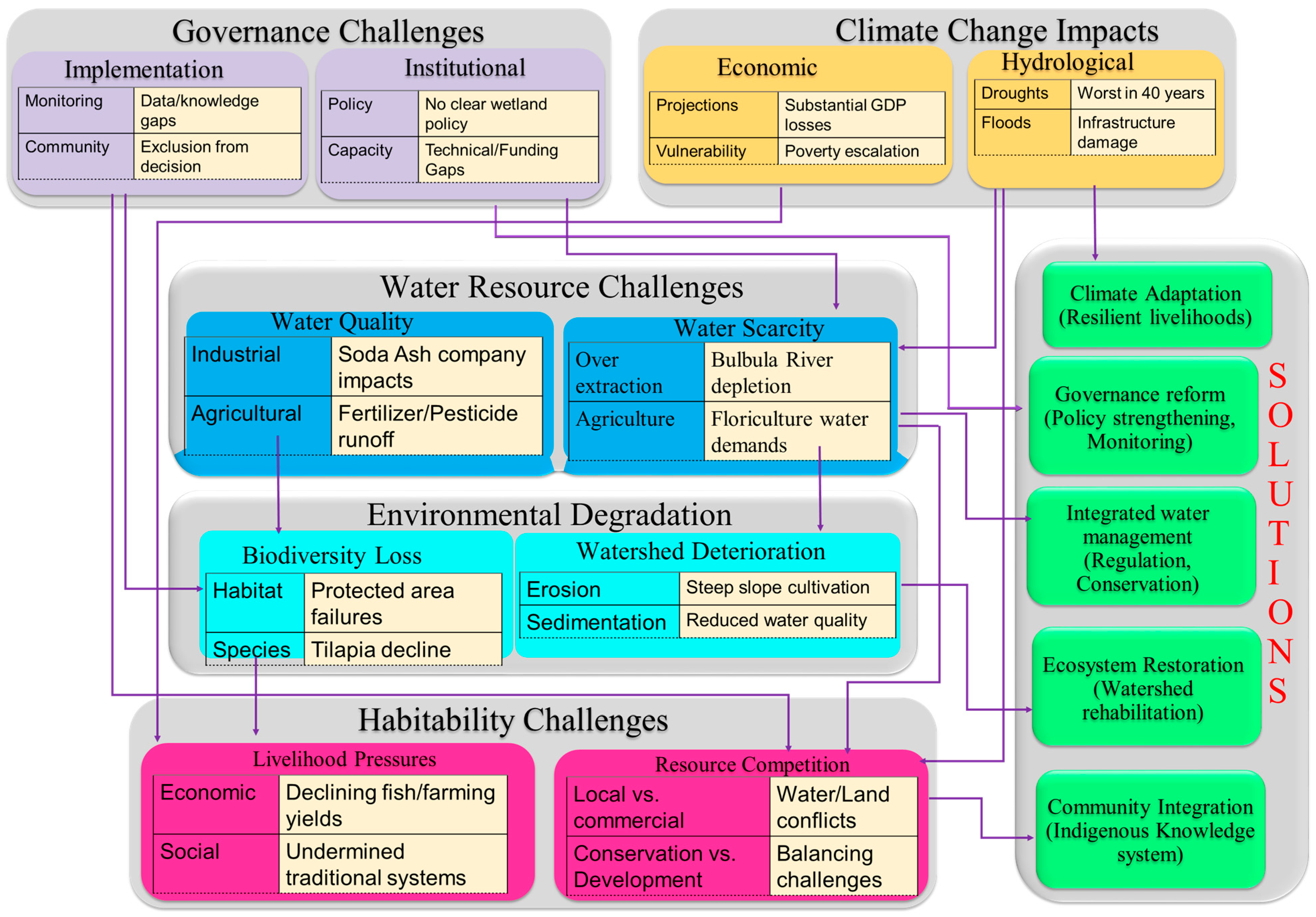
The CRV faces a complex set of interconnected challenges that threaten both its ecological integrity and socioeconomic stability. These challenges, including water resource depletion and governance failures, are further exacerbated by the ongoing impacts of climate change. The situation in the CRV mirrors broader natural resource management challenges in Ethiopia, where water scarcity, land degradation, and competing resource demands jeopardize both environmental and human systems. Figure 14 depicts the interconnections between various environmental, governance, and socio-economic challenges impacting resource management in the CRV, emphasizing key drivers such as climate variability, weak governance, and urban expansion. These factors contribute to issues like habitat destruction, water scarcity, and pollution.

6.1. Water Resource Challenges and Environmental Impacts

The CRV faces severe water scarcity and environmental degradation due to the combined pressures of agricultural intensification, industrial expansion, and urbanization. Over-extraction of water for irrigation, domestic use, and industrial operations, such as large-scale floriculture and the Abijatta Soda Ash Company, has significantly lowered water levels in lakes like Abijatta. The Bulbula River, the main feeder of the lake, is heavily tapped, particularly during dry seasons, further depleting resources [81]. Climate change exacerbates these challenges by altering precipitation patterns and increasing the frequency of extreme events, including droughts and floods, which disrupt water availability and quality [131]. Water quality is further compromised by industrial discharges, agricultural runoff, and nutrient pollution from fertilizers and pesticides, threatening aquatic biodiversity and public health [81]. Land degradation, driven by deforestation, unsustainable agriculture, and soil erosion, especially on steep slopes, leads to watershed deterioration, increased sediment transport, and reduced water retention capacity [132,133]. These processes diminish water quality and the capacity of wetlands and rivers to sustain ecological functions.
Habitat destruction and biodiversity loss are particularly evident in areas such as the Abijatta-Shalla National Park. Wetland degradation has reduced breeding grounds for fish species like tilapia (Oreochromis niloticus) and altered plant communities, including papyrus, while increased salinity and agricultural pollutants have further stressed aquatic ecosystems [81]. Capital-intensive agricultural expansion, including greenhouse flower and fruit production, not only intensifies water demand but also contributes to chemical runoff, exacerbating water pollution and threatening both ecosystems and local livelihoods. This integrated view underscores the interconnectedness of water use, land degradation, pollution, and biodiversity loss in the CRV. A conceptual diagram (Figure 14) has been included to illustrate these linkages, highlighting the feedback loops between human activities, water resource challenges, and ecological impacts.

6.2. The Political Economy of Resource Management

In the CRV, the political economy plays a pivotal role in shaping the management of natural resources such as water, land, and biodiversity. Local and national policies often prioritize industrial and agricultural needs over ecosystem sustainability and the requirements of small-scale farmers. Land use policies emphasize agricultural intensification and urban expansion, frequently neglecting long-term environmental costs like soil erosion and biodiversity loss, leading to resource over-extraction and land degradation. These tensions between economic growth and environmental sustainability are exacerbated by global pressures in the Anthropocene, where economic development frequently conflicts with ecological preservation [134]. Local governance, though closer to community needs, is often undermined by top-down policies that fail to balance ecological health with human development. Effective governance must integrate ecological restoration, community empowerment, and inclusive policies to ensure sustainable resource management and equitable distribution of resources like water, thereby preventing over-extraction and ecosystem degradation [135].

6.3. Understanding Community Engagement and Decision-Making

Communities play a central role in resource management, balancing the competing needs of government, the private sector, and local stakeholders. Indigenous knowledge and practices are crucial for ensuring sustainability, with collective action, shared water management, and land use agreements serving as key tools for resource protection [136]. However, community efforts in the CRV are often undermined by external pressures, such as national policies and commercial interests. Effective resource management requires strong social networks, local leadership, and participatory platforms that enable communities to actively engage in decision-making. Landscape governance must account for not only ecological and economic factors but also the social connections that communities have with their environment. These emotional and cultural attachments to places like fields, wetlands, and lakes are vital for both resource sustainability and community resilience. Governance systems that ignore local knowledge and cultural significance risk encountering resistance and further environmental degradation [137]. By integrating these social attachments into decision-making processes, governance becomes more inclusive and responsive, ultimately fostering sustainable and equitable resource management.

6.4. Climate Change Impacts and Vulnerabilities

Climate change is altering rainfall patterns, leading to extended droughts and severe floods. The most recent drought, the worst in 40 years, severely impacted Ethiopia’s arid regions, while flooding damaged infrastructure and livelihoods. These changes worsen existing water management issues and pose significant threats to resource stability [131,138]. Climate change threatens the economic stability of the CRV. Vulnerable communities face reduced labor productivity, lower livestock yields, and disrupted ecosystems. Proactive adaptation strategies, including sustainable water management and climate-resilient economic planning, are essential to mitigate these impacts [138].

7. Opportunities for Improved Habitability and Resilience

The CRV offers opportunities for improved habitability by applying CZS principles to resource management and conservation. A holistic approach that balances land, water, climate, and socio-economic factors can curb degradation while supporting economic growth and community well-being. Lake Abijatta illustrates this potential: over recent decades, it has shrunk drastically due to groundwater abstraction, upstream land use changes, and climate variability. Traditional Ecosystem Service Valuation (ESV) captures economic outputs but overlooks the intertwined geophysical, hydrological, and socio-ecological processes driving such changes [139]. The CZS framework addresses these dynamics, linking groundwater flows, soil conditions, ecosystems, and human activity to provide deeper causal insights. Operationalizing CZS requires multidisciplinary monitoring that integrates geological, hydrological, ecological, and social data, alongside participatory governance where communities, scientists, industries, and policymakers co-design strategies. Stepwise system modeling and scenario evaluation can test interventions such as reforestation, irrigation expansion, or industrial abstraction under different climate and economic futures. Lake Abijatta demonstrates the practical value of this approach. A CZS-informed program could combine groundwater modeling, land use mapping, biodiversity surveys, and community assessments to evaluate how reduced pumping, restoration buffers, or upstream land use changes affect lake volume, water quality, and livelihoods. Coupled modeling, reinforced by participatory governance, can guide equitable policies, such as regulating water abstraction, promoting efficient irrigation, and restoring wetlands, shifting management from reactive fixes to systemic strategies that balance ecological health with economic and social well-being.
Building on these insights, similar CZS-informed approaches can be applied across the CRV to enhance habitability through integrated strategies.
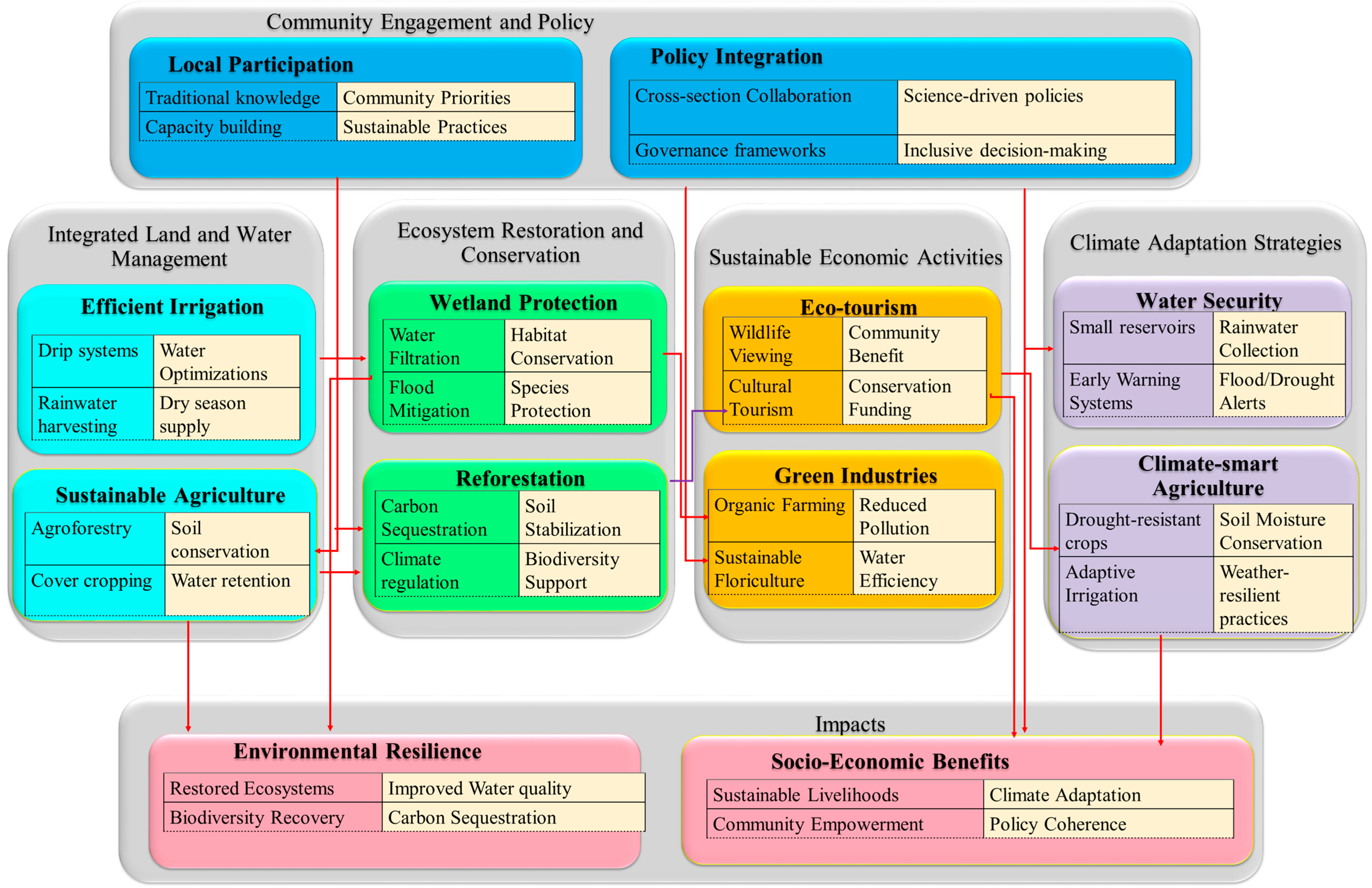
Integrated Land and Water Management: A key opportunity for enhancing habitability in the CRV lies in improving land and water management practices. Sustainable agricultural techniques such as agroforestry, terracing, and cover cropping can significantly reduce soil erosion and enhance water retention capacity, while promoting groundwater recharge essential for maintaining water supply during dry periods [140,141,142]. Additionally, the adoption of efficient irrigation systems, such as drip irrigation and rainwater harvesting, can optimize water usage and reduce the over-extraction of local water sources [143,144]. In a region grappling with water scarcity and ecosystem degradation, aggravated by climate change and growing agricultural demands, this integrated approach is crucial [145]. Equally important is the integration of social science approaches in resource management. Engaging local communities in co-designing management practices ensures solutions are contextually appropriate and rooted in local knowledge [146]. Participatory processes foster a sense of ownership and commitment, addressing the aspirations of community members for a sustainable future [147]. A comprehensive, inclusive land and water management framework, blending scientific and social insights, can simultaneously boost agricultural productivity and enhance environmental resilience. Such a system would not only improve the region’s adaptive capacity to climate change but also ensure equitable benefits for all communities [148].
Ecosystem Restoration and Conservation: Restoring degraded ecosystems and conserving existing natural resources is another critical opportunity for enhancing resilience. Reforestation initiatives can play a vital role in reducing carbon emissions, improving local climate regulation, and stabilizing soil structure to prevent landslides and erosion [149,150]. Similarly, wetland conservation efforts can help maintain natural water filtration systems, which are essential for improving water quality and supporting biodiversity [151]. Strengthening the management of buffer areas, particularly around lakes, rivers, and forests, can help prevent further biodiversity loss and habitat destruction [152]. These measures will ensure that the CRV maintains its ecological integrity while also providing essential services such as water purification, carbon sequestration, and habitat protection for aquatic and terrestrial species [153].
Sustainable Economic Activities: Promoting environmentally friendly economic activities is an essential component of sustainable development. One of the most promising sectors in this regard is eco-tourism, which can generate economic benefits while ensuring the protection of natural resources [153]. The region’s lakes, wildlife, and unique landscapes provide opportunities for developing sustainable tourism initiatives that emphasize conservation and community involvement [154]. Additionally, supporting sustainable agricultural and industrial practices, such as organic farming and responsible floriculture, can reduce environmental pollution while maintaining economic viability for local farmers and businesses. By fostering green economic activities, the CRV can achieve a balance between economic growth and environmental protection, ensuring long-term habitability of the space [155].
Climate Adaptation Strategies: Given the increasing threat of climate change, implementing climate adaptation strategies is crucial for building resilience. The adoption of climate-smart agricultural practices, including the use of drought-resistant crop varieties, soil moisture conservation techniques, and adaptive irrigation methods, can help farmers cope with changing weather patterns [156,157]. In addition, improved water harvesting systems, such as the construction of small reservoirs and rainwater collection infrastructure, can enhance water security for both agricultural and domestic use. Strengthening disaster risk management systems, including the development of early warning systems for floods and droughts, can further protect communities from climate-related hazards [158]. Moreover, sustainable urban planning that accounts for climate risks can ensure that infrastructure and settlements are better prepared for future environmental challenges.
Strengthening the Social Dimensions of Resilience: In the CRV, social attachment, emotional, cultural, and historical connections to the land, is vital for community resilience. These deep ties influence how communities adapt to environmental, economic, and social challenges [159]. Strong connections to the land encourage sustainable practices, as farmers with a deep attachment are more likely to adopt conservation methods. Social capital, built on these connections, strengthens community cohesion and facilitates collaborative efforts to tackle issues such as land degradation and water scarcity [128]. Resilience policies must integrate both social and ecological sustainability. While focusing solely on ecological preservation can alienate communities, policies that address land tenure, resource access, and community development foster collaboration. Incorporating traditional knowledge and supporting local governance ensures policies are aligned with community needs [160]. Furthermore, policies that promote climate adaptation and social equity strengthen social fabric and resilience. For example, integrated water management policies link ecological health with equitable access, while sustainable land use policies recognize the cultural significance of the land. A balanced approach fosters communities that are adaptable and sustainable in the face of changing conditions [161]. Figure 15 summarizes a framework for achieving sustainable development and resilience in the CRV through integrated strategies, including policy engagement, climate adaptation, economic activities, ecosystem restoration, and land-water management. Key interventions, such as disaster risk management, sustainable agriculture, reforestation, and efficient irrigation, are critical to enhancing resilience.

8. Conclusions

The CRV faces escalating ecological and habitability challenges driven by deforestation, unsustainable water use, agricultural intensification, and climate change. These pressures have led to habitat degradation, declining water levels, biodiversity loss, and increased competition for resources. Hydrological analyses indicate growing stress on both surface and groundwater resources: for example, Lake Abijatta’s surface area declined by 47.6% from 200.1 km2 in 1973 to 69.2 km2 in 2018, while groundwater extraction for irrigation has increased by over 35% in the past two decades. Declining water quality, with rising salinity and nutrient loads, further threatens livelihoods and ecosystem health. Concurrently, land use changes and climate variability accelerate ecosystem degradation, with large forest cover loss in key highland catchments, undermining soil stability and essential ecosystem services. Current conservation frameworks, particularly traditional ESV, inadequately capture these dynamics, focusing heavily on monetary outputs while neglecting the underlying ecological processes. This underscores the need for a shift to a CZS approach, which integrates geological, hydrological, ecological, and social systems via attention to the metabolism and flows of nutrients and energy. By emphasizing process-based interactions, CZS provides a more comprehensive framework for sustainable resource management and long-term ecological stability. Incorporating social dimensions, such as local communities’ attachment to landscapes and indigenous knowledge, enhances conservation effectiveness, fostering both environmental and social resilience and ultimately improving habitability in the CRV. This review is novel in applying CZS as a holistic conceptual lens to synthesize the multidimensional social, ecological, and hydrological challenges of the CRV, consolidating fragmented disciplinary knowledge into an integrated framework that highlights critical issues, governance gaps, and co-management needs.
Nevertheless, limitations remain, including the absence of quantitative synthesis and predictive modeling, which currently constrain direct operationalization of recommendations. Future research should focus on integrating empirical hydrological, ecological, and socio-economic data, and developing coupled models to simulate scenarios such as reduced water abstraction, reforestation, and sustainable irrigation, for instance, predicting potential recovery of lake volumes under managed groundwater withdrawal or estimating ecosystem service gains from targeted land restoration. Equally important is translating high-level strategies into concrete pathways that prioritize feasibility within Ethiopia’s governance and socio-economic context. Practical directions include capacity-building to empower local water user associations, formalizing indigenous management practices through legal frameworks, piloting integrated watershed management platforms that combine community participation with scientific monitoring, and fostering multi-level coordination among governmental bodies, NGOs, and local stakeholders. Sequenced approaches, ranging from short-term pilot projects to medium-term institutional reforms and long-term sustainability goals, are essential to render recommendations practical, actionable, and adaptable to the region’s realities. Overall, this synthesis underscores the significance of the CZS framework in advancing both scientific understanding and practical resource management in the CRV, offering a foundation for evidence-based policy, adaptive governance, and the long-term sustainability of one of Ethiopia’s most critical landscapes.

Author Contributions

Conceptualization, N.E.B., S.D. and L.G.; review and analysis, N.E.B., S.D., L.G., A.M., S.B., K.T., K.G. and L.E.K.; writing—original draft preparation, N.E.B. and S.D.; writing—review and editing, N.E.B., S.D., L.G., A.M., S.B., K.T., K.G. and L.E.K. All authors have read and agreed to the published version of the manuscript.

Funding

This research was funded in part by The Andrew W Mellon Foundation, the National Research Foundation (NRF), the National Institute for Humanities and Social Sciences (NIHSS) and Science for Africa Foundation (SFA) to the Developing Excellence in Leadership, Training and Science in Africa (DELTAS Africa) programme [Grant Number: Del: 22-010] with support from Wellcome Trust and the UK Foreign, Commonwealth & Development Office which is part of the EDCPT2 programme supported by the European Union.

Institutional Review Board Statement

Not applicable.

Informed Consent Statement

Not applicable.

Data Availability Statement

No new data were created or analyzed in this study. Data sharing is not applicable to this article.

Conflicts of Interest

The authors declare no conflicts of interest.

References

  1. Lemma, B.; Desta, H. Review of the natural conditions and anthropogenic threats to the Ethiopian Rift Valley rivers and lakes. Lakes Reserv. 2016, 21, 133–151. [Google Scholar] [CrossRef]
  2. Pascual-Ferrer, J.; Pérez-Foguet, A.; Codony, J.; Raventós, E.; Candela, L. Assessment of water resources management in the Ethiopian Central Rift Valley: Environmental conservation and poverty reduction. Int. J. Water Resour. Dev. 2014, 30, 572–587. [Google Scholar] [CrossRef]
  3. Gebreegziabher, G.A.; Degefa, S.; Furi, W.; Abebe, G. Exploring the nexus between land use and land cover change and environmental parameters using Google Earth Engine. Environ. Earth Sci. 2025, 84, 432. [Google Scholar] [CrossRef]
  4. Sterly, H.; Borderon, M.; Sakdapolrak, P.; Adger, N.; Ayanlade, A.; Bah, A.; Blocher, J.; Blondin, S.; Boly, S.; Brochier, T.; et al. Zickgraf, Habitability for a connected, unequal and changing world. Glob. Environ. Change 2025, 90, 102953. [Google Scholar] [CrossRef]
  5. Meshesha, D.T.; Tsunekawa, A.; Tsubo, M. Continuing land degradation: Cause–effect in Ethiopia’s Central Rift Valley. Land Degrad. Dev. 2012, 23, 130–143. [Google Scholar] [CrossRef]
  6. Scholten, W. Agricultural Development and Water Use in the Central Rift Valley of Ethiopia: A Rapid Appraisal. Master’s Thesis, University of Twente, Enschede, The Netherlands, 2007. [Google Scholar]
  7. Woldegebriel, T.; Garg, V.; Gupta, P.K.; Srivastav, S.K.; Ranjan, R. Ethiopia’s Water Resources: An Assessment Based on Geospatial Data-Driven Distributed Hydrological Modeling Approach. J. Indian Soc. Remote Sens. 2022, 50, 1031–1049. [Google Scholar] [CrossRef]
  8. Wood, A.; Sutcliffe, J.P.; Dixon, A. Baro-Akobo River Basin Wetlands: Livelihoods and Sustainable Regional Land Management (Ethiopia). In The Wetland Book; Finlayson, C.M., Milton, G.R., Prentice, R.C., Davidson, N.C., Eds.; Springer: Dordrecht, The Netherlands, 2016; pp. 1–8. [Google Scholar] [CrossRef]
  9. Balcha, S.K.; Hulluka, T.A.; Awass, A.A.; Bantider, A.; Ayele, G.T.; Walsh, C.L. Numerical groundwater flow modeling under future climate change in the Central Rift Valley Lakes Basin; Ethiopia. J. Hydrol. Reg. Stud. 2024, 52, 101733. [Google Scholar] [CrossRef]
  10. Sahle, Y.; Beyene, Y.; Defleur, A.; Asfaw, B.; WoldeGabriel, G.; Hart, W.K.; Renne, P.R.; Carlson, J.P.; White, T.D. Human emergence: Perspectives from Herto, Afar Rift, Ethiopia. In Modern Human Origins and Dispersal; Kerns Verlag: Tübingen, Germany, 2019; pp. 105–136. [Google Scholar]
  11. Wood, B. The Lucy Fossil’s Extraordinary Journey to Becoming an Icon of Human Evolution, Scientific American. Available online: https://www.scientificamerican.com/article/the-lucy-fossils-extraordinary-journey-to-becoming-an-icon-of-human-evolution/ (accessed on 14 March 2025).
  12. Hengsdijk, H.; Jansen, H. Ecosystems for Water, Food and Economic Development in the Ethiopian Central Rift Valley (B0-10-006-22); Plant Research International B.V.: Wageningen, The Netherlands, 2006. [Google Scholar]
  13. Ayenew, T.; GebreEgziabher, M. Morphometric Characteristics and Hydrology of Selected Ethiopian Rift Lakes. In Landscapes and Landforms of Ethiopia; Billi, P., Ed.; Springer: Dordrecht, The Netherlands, 2015; pp. 275–287. [Google Scholar] [CrossRef]
  14. Kebede, H.; Alemu, A. Magnetic anomaly patterns and volcano-tectonic features associated with geothermal prospect areas in the Ziway-Shala Lakes basin, Central Main Ethiopian Rift. Geothermics 2022, 105, 102484. [Google Scholar] [CrossRef]
  15. Kassie, B.T.; Rötter, R.P.; Hengsdijk, H.; Asseng, S.; Van Ittersum, M.K.; Kahiluoto, H.; Van Keulen, H. Climate variability and change in the Central Rift Valley of Ethiopia: Challenges for rainfed crop production. J. Agric. Sci. 2014, 152, 58–74. [Google Scholar] [CrossRef]
  16. Ademe, F.; Eshetu, M. Spatial Analysis of Climate variability and Change in the Great Ethiopian Rift Valley Basins. J. Environ. Earth Sci. 2021, 11, 1–12. [Google Scholar] [CrossRef]
  17. Seyoum, W.M.; Milewski, A.M.; Durham, M.C. Understanding the relative impacts of natural processes and human activities on the hydrology of the Central Rift Valley lakes, East Africa: Assessment of Natural and Human Impacts on the Hydrology of Lakes. Hydrol. Process. 2015, 29, 4312–4324. [Google Scholar] [CrossRef]
  18. Tesfamariam, B.G.; Gessesse, B.; Melgani, F. Characterizing the spatiotemporal distribution of meteorological drought as a response to climate variability: The case of rift valley lakes basin of Ethiopia. Weather Clim. Extrem. 2019, 26, 100237. [Google Scholar] [CrossRef]
  19. Tigabu, T.B.; Wagner, P.D.; Hörmann, G.; Fohrer, N. Modeling the impact of agricultural crops on the spatial and seasonal variability of water balance components in the Lake Tana basin, Ethiopia. Hydrol. Res. 2019, 50, 1376–1396. [Google Scholar] [CrossRef]
  20. Kassie, B.T. Climate Variability and Change in Ethiopia: Exploring Impacts and Adaptation Options for Cereal Production. Ph.D. Thesis, Wageningen University, Wageningen, The Netherlands, 2014. [Google Scholar] [CrossRef]
  21. Nannawo, A.S.; Lohani, T.K.; Eshete, A.A. Envisaging the actual evapotranspiration and elucidating its effects under climate change scenarios on agrarian lands of bilate river basin in Ethiopia. Heliyon 2022, 8, e10368. [Google Scholar] [CrossRef] [PubMed]
  22. Elias, E.; Seifu, W.; Tesfaye, B.; Girmay, W. Impact of land use/cover changes on lake ecosystem of Ethiopia central rift valley. Cogent Food Agric. 2019, 5, 1595876. [Google Scholar] [CrossRef]
  23. Desta, H.; Fetene, A. Land-use and land-cover change in Lake Ziway watershed of the Ethiopian Central Rift Valley Region and its environmental impacts. Land Use Policy 2020, 96, 104682. [Google Scholar] [CrossRef]
  24. Abera, D.; Kibret, K.; Beyene, S. Tempo-spatial land use/cover change in Zeway, Ketar and Bulbula sub-basins, Central Rift Valley of Ethiopia. Lakes Reserv. 2019, 24, 76–92. [Google Scholar] [CrossRef]
  25. Mekuria, W.; Diyasa, M.; Tengberg, A.; Haileslassie, A. Effects of Long-Term Land Use and Land Cover Changes on Ecosystem Service Values: An Example from the Central Rift Valley. Ethiopia. Land 2021, 10, 1373. [Google Scholar] [CrossRef]
  26. Garedew, E.; Sandewall, M.; Soderberg, U. A Dynamic Simulation Model of Land-Use, Population, and Rural Livelihoods in the Central Rift Valley of Ethiopia. Environ. Manag. 2012, 49, 151–162. [Google Scholar] [CrossRef]
  27. Mersha, A.N.; Bantider, A.; Alamirew, T.; Alemayehu, T.; Zeleke, G. Water Resources Management and Use in the Central Rift Valley Basin, Ethiopia; Addis Ababa University: Addis Ababa, Ethiopia, 2023. [Google Scholar]
  28. Abraha, T.; Tibebu, A.; Ephrem, G. Rapid Urbanization and the Growing Water Risk Challenges in Ethiopia: The Need for Water Sensitive Thinking. Front. Water 2022, 4, 890229. [Google Scholar] [CrossRef]
  29. Assefa, E.; Bork, H.-R. Dynamics and driving forces of agricultural landscapes in Southern Ethiopia—A case study of the Chencha and Arbaminch areas. J. Land Use Sci. 2014, 11, 278–293. [Google Scholar] [CrossRef]
  30. Rathoure, A.K. Cultural practices to protecting biodiversity through cultural heritage: Preserving nature, preserving culture. Biodivers. Int. J. 2024, 7, 71–75. [Google Scholar] [CrossRef]
  31. Tatay, J.; Merino, A. What is sacred in sacred natural sites? A literature review from a conservation lens. Ecol. Soc. 2023, 28, art12. [Google Scholar] [CrossRef]
  32. Wassie, S.B. Natural resource degradation tendencies in Ethiopia: A review. Environ. Syst. Res. 2020, 9, 33. [Google Scholar] [CrossRef]
  33. Gashu, K.; Muchie, Y. Rethink the interlink between land degradation and livelihood of rural communities in Chilga district, Northwest Ethiopia. J. Ecol. Environ. 2018, 42, 17. [Google Scholar] [CrossRef]
  34. Dragan, A.; Creţan, R.; Jucu, I.S.; Oancea, O.A. Rural Landscapes as Cultural Heritage and Identity along a Romanian River. Heritage 2024, 7, 4354–4373. [Google Scholar] [CrossRef]
  35. Jiao, W.; Yang, X.; Li, Y. Traditional knowledge’s impact on soil and water conservation in mountain agricultural systems: A case study of Shexian Dryland stone terraced System, China. Ecol. Indic. 2024, 159, 111742. [Google Scholar] [CrossRef]
  36. Sharma, A.; Dhote, M. Assessment of cultural resources and their associated practices focusing on agricultural water sustainability in present environmental conditions. Int. J. Sci. Res. Arch. 2024, 13, 240–251. [Google Scholar] [CrossRef]
  37. Mersha, E.; Degefa, S.; Argaw, M.; Mengist, W. Impact of Land Use Land Cover Changes on Ecosystem Service Values: Implication for Landscape Management. J. Landsc. Ecol. 2025, 18, 61–85. [Google Scholar] [CrossRef]
  38. Jibat, E.; Senbeta, F.; Zeleke, T.; Hagos, F. The role and interplay of institutions in water governance in the Central Rift Valley of Ethiopia. F1000Research 2024, 12, 1434. [Google Scholar] [CrossRef]
  39. Jirata, M.G. Oromo Indigenous Knowledge and Practices in Natural Resources Management: Land, Forest, and Water in Focus. J. Ecosyst. Ecogr. 2016, 6, 2. [Google Scholar] [CrossRef]
  40. Benvenuti, M.; Carnicelli, S. The Geomorphology of the Lake Region (Main Ethiopian Rift): The Record of Paleohydrological and Paleoclimatic Events in an Active Volcano-Tectonic Setting. In Landscapes and Landforms of Ethiopia; Billi, P., Ed.; Springer: Dordrecht, The Netherlands, 2015; pp. 289–305. [Google Scholar] [CrossRef]
  41. Kedirkan, N. Water surface Changes of Lakes in the Central Rift Valley of Ethiopia. Int. J. Environ. Geoinform. 2019, 6, 264–267. [Google Scholar] [CrossRef]
  42. Kebede, H.; Alemu, A.; Nedaw, D.; Fisseha, S. Depth estimates of anomalous subsurface sources using 2D/3D modeling of potential field data: Implications for groundwater dynamics in the Ziway-Shala Lakes Basin, Central Main Ethiopian Rift. Heliyon 2021, 7, e06843. [Google Scholar] [CrossRef]
  43. Ayenew, T.; Legesse, D. The changing face of the Ethiopian rift lakes and their environs: Call of the time. Lakes Reserv. 2007, 12, 149–165. [Google Scholar] [CrossRef]
  44. Musie, M.; Momblanch, A.; Sen, S. Exploring future global change-induced water imbalances in the Central Rift Valley Basin, Ethiopia. Clim. Change 2021, 164, 47. [Google Scholar] [CrossRef]
  45. Ogato, T.; Kifle, D. Phytoplankton composition and biomass in tropical soda Lake Shala: Seasonal changes in response to environmental drivers. Lakes Reserv. 2017, 22, 168–178. [Google Scholar] [CrossRef]
  46. Belete, M.; Diekkrüger, B.; Roehrig, J. Characterization of Water Level Variability of the Main Ethiopian Rift Valley Lakes. Hydrology 2015, 3, 1. [Google Scholar] [CrossRef]
  47. Goshime, D.W.; Absi, R.; Ledésert, B.; Dufour, F.; Haile, A.T. Impact of Water Abstraction on the Water Level of Lake Ziway, Ethiopia. WIT Trans. Ecol. Environ. 2019, 239, 67–78. [Google Scholar] [CrossRef]
  48. Hassen, N. Report on the Water Surface Extent of Lakes in the Central Rift Valley of Ethiopia. Int. J. Environ. Sci. Nat. Res. 2019, 21, 556071. [Google Scholar] [CrossRef]
  49. Ashagre, H.M.; Hatiye, S.D.; Goshime, D.W. A pragmatic approach to the combined effect of climate change and water abstraction on Lake Ziway water balance, Ethiopia. J. Water Clim. Change 2023, 14, 83–103. [Google Scholar] [CrossRef]
  50. Sisay, A. Remote Sensing Based Water Surface Extraction and Change Detection in the Central Rift Valley Region of Ethiopia. Am. J. Geogr. Inf. Syst. 2016, 5, 33–39. [Google Scholar]
  51. Getaneh, Y.; Abera, W.; Abegaz, A.; Tamene, L. Surface water area dynamics of the major lakes of Ethiopia (1985–2023): A spatio-temporal analysis. Int. J. Appl. Earth Obs. Geoinf. 2024, 132, 104007. [Google Scholar] [CrossRef]
  52. Goshime, D.W.; Haile, A.T.; Rientjes, T.; Absi, R.; Ledésert, B.; Siegfried, T. Implications of water abstraction on the interconnected Central Rift Valley Lakes sub-basin of Ethiopia using WEAP. J. Hydrol. Reg. Stud. 2021, 38, 100969. [Google Scholar] [CrossRef]
  53. Biedunkova, O.; Kuznietsov, P. Integration of water management in the assessment of the impact of heavy metals discharge from the power plant with mitigation strategies. Ecol. Indic. 2025, 175, 113618. [Google Scholar] [CrossRef]
  54. Hulluka, T.A.; Balcha, S.K.; Yohannes, B.; Bantider, A.; Negatu, A. Review: Groundwater research in the Ethiopian Rift Valley Lakes region. Front. Water 2023, 5, 819568. [Google Scholar] [CrossRef]
  55. Merga, L.; Mengistie, A.; Faber, J.; Van Den Brink, P. Trends in chemical pollution and ecological status of Lake Ziway, Ethiopia: A review focussing on nutrients, metals and pesticides. Afr. J. Aquat. Sci. 2020, 45, 386–400. [Google Scholar] [CrossRef]
  56. Glibert, P.M. Eutrophication, harmful algae and biodiversity—Challenging paradigms in a world of complex nutrient changes. Mar. Pollut. Bull. 2017, 124, 591–606. [Google Scholar] [CrossRef]
  57. Jwaideh, M.A.A.; Sutanudjaja, E.H.; Dalin, C. Global impacts of nitrogen and phosphorus fertiliser use for major crops on aquatic biodiversity. Int. J. Life Cycle Assess. 2022, 27, 1058–1080. [Google Scholar] [CrossRef]
  58. Yimer, G. Level of Heavy Metals and Potential Ecological Risks in Irrigated Horticultural Farms in the Vicinity of Lake Ziway, Central Ethiopian Rift Valley Region. J. Toxicol. 2024, 2024, 4724097. [Google Scholar] [CrossRef]
  59. Pal, A.; He, Y.; Jekel, M.; Reinhard, M.; Gin, K.Y.-H. Emerging contaminants of public health significance as water quality indicator compounds in the urban water cycle. Environ. Int. 2014, 71, 46–62. [Google Scholar] [CrossRef]
  60. Morin-Crini, N.; Lichtfouse, E.; Liu, G.; Balaram, V.; Ribeiro, A.R.L.; Lu, Z.; Stock, F.; Carmona, E.; Teixeira, M.R.; Picos-Corrales, L.A.; et al. Worldwide cases of water pollution by emerging contaminants: A review. Environ. Chem. Lett. 2022, 20, 2311–2338. [Google Scholar] [CrossRef]
  61. Green, L.; Ojemaye, C.; Petrik, L.; Barnes, J.; Solomon, N.; Beukes, A.; Farr, V.; Zackon, M. Contaminant Denialism in Water Governance. Water Resour. Res. 2025, 61, e2024WR037875. [Google Scholar] [CrossRef]
  62. Kemarau, R.A.; Eboy, O.V.; Sakawi, Z. The Effect of Land Use Change on Water Turbidity Using Remote Sensing and GIS Technique. J. Sustain. Sci. Manag. 2024, 19, 1–15. [Google Scholar] [CrossRef]
  63. Engdaw, F.; Fetahi, T.; Kifle, D. Land use/land cover dynamics in the northern watershed of lake Tana: Implications for water quality. Front. Environ. Sci. 2024, 12, 1426789. [Google Scholar] [CrossRef]
  64. Goshu, G.; Aynalem, S. Problem Overview of the Lake Tana Basin. In Social and Ecological System Dynamics; Stave, K., Goshu, G., Aynalem, S., Eds.; Springer International Publishing: Cham, Switzerland, 2017; pp. 9–23. [Google Scholar] [CrossRef]
  65. Tibebe, D.; Zewge, F.; Lemma, B.; Kassa, Y. Assessment of spatio-temporal variations of selected water quality parameters of Lake Ziway, Ethiopia using multivariate techniques. BMC Chem. 2022, 16, 11. [Google Scholar] [CrossRef]
  66. Ojemaye, C.Y.; Abegunde, A.; Green, L.; Petrik, L. The efficacy of wastewater treatment plant on removal of perfluoroalkyl substances and their impacts on the coastal environment of False Bay, South Africa. Environ. Sci. Pollut. Res. 2024, 31, 64772–64795. [Google Scholar] [CrossRef] [PubMed]
  67. Teklu, B.M.; Hailu, A.; Wiegant, D.A.; Scholten, B.S.; Van Den Brink, P.J. Impacts of nutrients and pesticides from small- and large-scale agriculture on the water quality of Lake Ziway, Ethiopia. Environ. Sci. Pollut. Res. 2018, 25, 13207–13216. [Google Scholar] [CrossRef]
  68. Rango, T.; Kravchenko, J.; Atlaw, B.; McCornick, P.G.; Jeuland, M.; Merola, B.; Vengosh, A. Groundwater quality and its health impact: An assessment of dental fluorosis in rural inhabitants of the Main Ethiopian Rift. Environ. Int. 2012, 43, 37–47. [Google Scholar] [CrossRef]
  69. Ghiglieri, G.; Pistis, M.; Abebe, B.; Azagegn, T.; Engidasew, T.A.; Pittalis, D.; Soler, A.; Barbieri, M.; Navarro-Ciurana, D.; Carrey, R.; et al. Three-dimensional hydrostratigraphical modelling supporting the evaluation of fluoride enrichment in groundwater: Lakes basin (Central Ethiopia). J. Hydrol. Reg. Stud. 2020, 32, 100756. [Google Scholar] [CrossRef]
  70. Bonetto, S.M.R.; Caselle, C.; De Luca, D.A.; Lasagna, M. Groundwater Resources in the Main Ethiopian Rift Valley: An Overview for a Sustainable Development. Sustainability 2021, 13, 1347. [Google Scholar] [CrossRef]
  71. Desta, H.; Lemma, B.; Albert, G.; Stellmacher, T. Degradation of Lake Ziway, Ethiopia: A study of the environmental perceptions of school students. Lakes Reserv. 2015, 20, 243–255. [Google Scholar] [CrossRef]
  72. Getachew, M.; Mulat, W.L.; Mereta, S.T.; Gebrie, G.S.; Kelly-Quinn, M. Challenges for water quality protection in the greater metropolitan area of Addis Ababa and the upper Awash basin, Ethiopia—Time to take stock. Environ. Rev. 2021, 29, 87–99. [Google Scholar] [CrossRef]
  73. Getenet, B.; Tefera, B. Institutional Analysis of Environmental Resource Management in Lake Tana Sub-basin. In Social and Ecological System Dynamics; Stave, K., Goshu, G., Aynalem, S., Eds.; Springer International Publishing: Cham, Switzerland, 2017; pp. 453–477. [Google Scholar] [CrossRef]
  74. Jahanishakib, F.; Salmanmahiny, A.; Mirkarimi, S.H.; Poodat, F. Hydrological connectivity assessment of landscape ecological network to mitigate development impacts. J. Environ. Manag. 2021, 296, 113169. [Google Scholar] [CrossRef]
  75. Mechal, A.; Shube, H.; Godebo, T.R.; Walraevens, K.; Birk, S. Application of multi-hydrochemical indices for spatial groundwater quality assessment: Ziway Lake Basin of the Ethiopian Rift Valley. Environ. Earth Sci. 2022, 81, 25. [Google Scholar] [CrossRef]
  76. Green, L. Material flows as Earth politics: Concepts, methods, and approaches for transdisciplinary diagnostics and repair at Muizenberg East, Cape Town. Environ. Plan. E Nat. Space 2024, 7, 1279–1298. [Google Scholar] [CrossRef]
  77. Mengistie, B.T. Ethiopia: The Environmental Aspects of Policy and Practice in the Ethiopian Floriculture Industry. Environ. Policy Law 2021, 50, 373–390. [Google Scholar] [CrossRef]
  78. Akhtar, N.; Ishak, M.I.S.; Bhawani, S.A.; Umar, K. Various Natural and Anthropogenic Factors Responsible for Water Quality Degradation: A Review. Water 2021, 13, 2660. [Google Scholar] [CrossRef]
  79. Chen, H.; Huang, S.; Qiu, H.; Xu, Y.-P.; Teegavarapu, R.S.V.; Guo, Y.; Nie, H.; Xie, H.; Xie, J.; Shao, Y.; et al. Assessment of ecological flow in river basins at a global scale: Insights on baseflow dynamics and hydrological health. Ecol. Indic. 2025, 178, 113868. [Google Scholar] [CrossRef]
  80. Amare, Z.Y. Indigenous knowledge of rural communities for combating climate change impacts in west central Ethiopia. J. Agric. Ext. 2018, 22, 181. [Google Scholar] [CrossRef]
  81. Bedo, D.; Mekuriaw, A.; Bantider, A. Perception-based Assessment of Ecosystem Services of Wetlands in Abijata-Shalla National Park in the Central Rift Valley of Ethiopia. J. Ecosyst. Ecography 2022, 12, 334. [Google Scholar]
  82. Yohannes, H.; Mohammed, A.; Elias, E. Land Use/Land Cover Dynamics and Its Impact on Biodiversity Resources in the Abijata Shalla National Park, Central Rift Valley Lakes Region, Ethiopia. Environ. Sci. Ind. J. 2017, 13, 152. [Google Scholar]
  83. Asefa, A.; Mengesha, G.; Sori, T.; Mamo, Y. Local- and landscape-level effects of land use change on bird diversity in Abiata-Shalla Lakes National Park, Ethiopia. Afr. J. Ecol. 2019, 57, 51–58. [Google Scholar] [CrossRef]
  84. Desta, H. Local perceptions of ecosystem services and human-induced degradation of lake Ziway in the Rift Valley region of Ethiopia. Ecol. Indic. 2021, 127, 107786. [Google Scholar] [CrossRef]
  85. Endebu, M.; Abelti, A.L.; Genet, T.; Mitike, A.; Regassa, B.; Dejen, E.; Abegaz, H. Fisheries Baseline Survey Describing Status of Fisheries in Lake Zeway, Ethiopia. J. Fish. Livest. Prod. 2015, 3, 2. [Google Scholar] [CrossRef]
  86. Abera, L.; Getahun, A.; Lemma, B. Changes in Fish Diversity and Fisheries in Ziway-Shala Basin: The Case of Lake Ziway, Ethiopia. J. Fish. Livest. Prod. 2018, 6, 165–177. [Google Scholar] [CrossRef]
  87. Aschale, K.H.; Esmael, S. The psycho-social context of Lake Ziway/Dembel: Oromia Regional state, Ethiopia. Int. J. Sociol. Anthropol. 2020, 12, 18–28. [Google Scholar] [CrossRef]
  88. Desta, H.; Lemma, B.; Stellmacher, T.; Gebremariam, E. Water use and management of Lake Ziway and its watershed, Ethiopia: The perception of experts vis-à-vis the latest state of research. Environ. Dev. Sustain. 2020, 22, 3621–3640. [Google Scholar] [CrossRef]
  89. Ferrer, J.P.; Candela, L.; Pérez-Foguet, A.; Kebede, S. Water resources management in the Central Rift Valley: Modelling for the water poor. In Proceedings of the International Congress Smallwat11, Seville, Spain, 25–28 April 2011. [Google Scholar]
  90. Legesse, D.; Gasse, F.; Radakovitch, O.; Vallet-Coulomb, C.; Bonnefille, R.; Verschuren, D.; Gibert, E.; Barker, P. Environmental changes in a tropical lake (Lake Abiyata, Ethiopia) during recent centuries, Palaeogeography, Palaeoclimatology. Palaeoecology 2002, 187, 233–258. [Google Scholar] [CrossRef]
  91. Tekle, M.; Dalle, G. Impacts of Ecosystem Degradation on Lake Abijata, Vegetation and Herbaceous Biomass in and Surrounding Abijata Shalla National Park, Ethiop. J. Biol. Sci. 2020, 19, 1–29. [Google Scholar]
  92. Mesfin, D.; Simane, B.; Belay, A.; Recha, J.W.; Taddese, H. Woodland Cover Change in the Central Rift Valley of Ethiopia. Forests 2020, 11, 916. [Google Scholar] [CrossRef]
  93. Tigabu, M.; Lemenih, M.; Negash, M.; Teketay, D.; Negash, M. Rehabilitation of degraded forest and woodland ecosystems in Ethiopia for sustenance of livelihoods and ecosystem services. In Forests Under Pressure—Local Responses to Global Issues; IUFRO: Vienna, Austria, 2014; pp. 299–313. Available online: http://rgdoi.net/10.13140/2.1.4948.3847 (accessed on 14 March 2025).
  94. Dilla, A.M.; Smethurst, P.J.; Barry, K.; Parsons, D. Preliminary estimate of carbon sequestration potential of Faidherbia albida (Delile) A.Chev in an agroforestry parkland in the Central Rift Valley of Ethiopia. For. Trees Livelihoods 2019, 28, 79–89. [Google Scholar] [CrossRef]
  95. Zou, Y. Land Cover Change and Habitat Fragmentation in Protected Landscape Areas: Analyzing the Impact of Ecological Management on Environmental Sustainability and Species Diversity. Adv. Soc. Behav. Res. 2024, 13, 59–63. [Google Scholar] [CrossRef]
  96. Reyers, B.; O’Farrell, P.J.; Cowling, R.M.; Egoh, B.N.; Le Maitre, D.C.; Vlok, J.H.J. Ecosystem Services, Land-Cover Change, and Stakeholders: Finding a Sustainable Foothold for a Semiarid Biodiversity Hotspot. Ecol. Soc. 2009, 14, art38. [Google Scholar] [CrossRef]
  97. Liang, D.; Reed, J.; Fakheran, S.; Moombe, K.; Siangulube, F.; Sunderland, T. Monitoring spatiotemporal changes in land use/land cover and its impacts on ecosystem services in southern Zambia. Environ. Res. Commun. 2024, 6, 045004. [Google Scholar] [CrossRef]
  98. Kingsford, R.T.; Basset, A.; Jackson, L. Wetlands: Conservation’s poor cousins. Aquat. Conserv. 2016, 26, 892–916. [Google Scholar] [CrossRef]
  99. Euliss, N.H.; Smith, L.M.; Wilcox, D.A.; Browne, B.A. Linking ecosystem processes with wetland management goals: Charting a course for a sustainable future. Wetlands 2008, 28, 553–562. [Google Scholar] [CrossRef]
  100. Liu, M.; Hou, L.; Yang, Y.; Zhou, L.; Meadows, M.E. The Case for a Critical Zone Science Approach to Research on Estuarine and Coastal Wetlands in the Anthropocene. Estuaries Coasts 2021, 44, 911–920. [Google Scholar] [CrossRef]
  101. Soboka, D.M.; Gemechu, L.H. Identifying Cause and Drivers of Wetland Degradation in Ethiopia: A Review. J. Environ. Earth Sci. 2021, 11, 2224–3216. [Google Scholar] [CrossRef]
  102. Giweta, M. “Reversing the Degradation of Ethiopian Wetlands”: Is it Unachievable Phrase or A Call to Effective Action? Int. J. Environ. Sci. Nat. Res. 2018, 14, 555898. [Google Scholar] [CrossRef]
  103. Nyandwi, O.; Ndikubwimana, I. The Effects of Wetland Degradation on Ecological Species. Int. J. Innov. Sci. Res. Technol. 2024, 9, 2160–2169. [Google Scholar] [CrossRef]
  104. Newton, A.; Icely, J.; Cristina, S.; Perillo, G.M.E.; Turner, R.E.; Ashan, D.; Cragg, S.; Luo, Y.; Tu, C.; Li, Y.; et al. Anthropogenic, Direct Pressures on Coastal Wetlands. Front. Ecol. Evol. 2020, 8, 144. [Google Scholar] [CrossRef]
  105. Úbeda, B.; Di Giacomo, A.S.; Neiff, J.J.; Loiselle, S.A.; Poi, A.S.G.; Gálvez, J.Á.; Casco, S.; Cózar, A. Potential Effects of Climate Change on the Water Level, Flora and Macro-fauna of a Large Neotropical Wetland. PLoS ONE 2013, 8, e67787. [Google Scholar] [CrossRef]
  106. Sandi, S.G.; Rodriguez, J.F.; Saintilan, N.; Wen, L.; Kuczera, G.; Riccardi, G.; Saco, P.M. Resilience to drought of dryland wetlands threatened by climate change. Sci. Rep. 2020, 10, 13232. [Google Scholar] [CrossRef]
  107. Salimi, S.; Almuktar, S.A.A.A.N.; Scholz, M. Impact of climate change on wetland ecosystems: A critical review of experimental wetlands. J. Environ. Manag. 2021, 286, 112160. [Google Scholar] [CrossRef]
  108. Assefa, B.; Meseret, F. Ecotourism Development as A Tool for Sustainable Environmental Conservation and Its Implication to Community Livelihood: The Case of the Sheka Biosphere Reserve, South West Ethiopia. Int. J. Tour. Hosp. Rev. 2020, 7, 20–30. [Google Scholar] [CrossRef]
  109. Fleming, J.R.; Love, E. Healthy Lakes and Vibrant Economies: Linking History, Sense of Place, and Watershed Protection in the Belgrade Lakes Region. Maine Policy Rev. 2012, 21, 90–94. [Google Scholar] [CrossRef]
  110. Ogieriakhi, M.O.; Woodward, R.T. Understanding why farmers adopt soil conservation tillage: A systematic review. Soil. Secur. 2022, 9, 100077. [Google Scholar] [CrossRef]
  111. Mwakaje, A.G. Wetlands, livelihoods and sustainability in Tanzania. Afr. J. Ecol. 2009, 47, 179–184. [Google Scholar] [CrossRef]
  112. Green, L. Rock|Water|Life: Ecology and Humanities for a Decolonial South Africa; Duke University Press: Durham, NC, USA, 2020. [Google Scholar] [CrossRef]
  113. Pech, S.; Sunada, K. Population Growth and Natural-Resources Pressures in the Mekong River Basin. AMBIO A J. Hum. Environ. 2008, 37, 219–224. [Google Scholar] [CrossRef]
  114. Bedo, D.; Mekuriaw, A.; Bantider, A. Vulnerability of household livelihoods to climate variability and change in the central rift valley sub-basin of Ethiopia. Heliyon 2024, 10, e25108. [Google Scholar] [CrossRef]
  115. Aseres, S.A.; Sira, R.K. Ecotourism development in Ethiopia: Costs and benefits for protected area conservation. J. Ecotourism 2021, 20, 224–249. [Google Scholar] [CrossRef]
  116. Abafita, J.; Kim, K.-R. Determinants of Household Food Security in Rural Ethiopia: An Empirical Analysis. J. Rural. Dev./Nongchon-Gyeongje 2014, 37, 129–157. [Google Scholar] [CrossRef]
  117. Zerssa, G.; Feyssa, D.; Kim, D.-G.; Eichler-Löbermann, B. Challenges of Smallholder Farming in Ethiopia and Opportunities by Adopting Climate-Smart Agriculture. Agriculture 2021, 11, 192. [Google Scholar] [CrossRef]
  118. Mengist, W.; Yohannes, H.; Aneseyee, A.B.; Abebe, G.; Degefa, S.; Tekalign, M.; Argaw, M.; Leta, S.; Hussen, A.; Elias, E.; et al. The role of sustainable land management practices on enhancing ecosystem services in the highlands of Ethiopia. Ecol. Indic. 2025, 176, 113638. [Google Scholar] [CrossRef]
  119. Nguea, S.M. Uncovering the linkage between sustainable development goals for access to electricity and access to safely managed drinking water and sanitation services. Soc. Sci. Med. 2024, 345, 116687. [Google Scholar] [CrossRef]
  120. Tiruye, G.A.; Besha, A.T.; Mekonnen, Y.S.; Benti, N.E.; Gebreslase, G.A.; Tufa, R.A. Opportunities and Challenges of Renewable Energy Production in Ethiopia. Sustainability 2021, 13, 10381. [Google Scholar] [CrossRef]
  121. Benti, N.E.; Gurmesa, G.S.; Argaw, T.; Aneseyee, A.B.; Gunta, S.; Kassahun, G.B.; Aga, G.S.; Asfaw, A.A. The current status, challenges and prospects of using biomass energy in Ethiopia. Biotechnol. Biofuels 2021, 14, 209. [Google Scholar] [CrossRef] [PubMed]
  122. Benti, N.E.; Mekonnen, Y.S.; Asfaw, A.A.; Lerra, M.D.; Woldegiyorgis, T.A.; Gaffe, C.A.; Aneseyee, A.B. Techno-economic analysis of solar energy system for electrification of rural school in Southern Ethiopia. Cogent Eng. 2022, 9, 2021838. [Google Scholar] [CrossRef]
  123. Aragaw, F.M.; Merid, M.W.; Tebeje, T.M.; Erkihun, M.G.; Tesfaye, A.H. Unimproved source of drinking water and its associated factors: A spatial and multilevel analysis of Ethiopian demographic and health survey. BMC Public Health 2023, 23, 1455. [Google Scholar] [CrossRef]
  124. Sathiyasusuman, A. Mental health services in Ethiopia: Emerging public health issue. Public Health 2011, 125, 714–716. [Google Scholar] [CrossRef] [PubMed]
  125. Assefa, M.A. Environmental Factors and Health-Related Outcomes: A Study of Residents in Small Towns of Ethiopia. J. Soc. Humanit. Stud. 2023, 2, 22–27. [Google Scholar] [CrossRef]
  126. Mekonnen, Z.; Kidemu, M.; Abebe, H.; Semere, M.; Gebreyesus, M.; Worku, A.; Tesfaye, M.; Chernet, A. Traditional knowledge and institutions for sustainable climate change adaptation in Ethiopia. Curr. Res. Environ. Sustain. 2021, 3, 100080. [Google Scholar] [CrossRef]
  127. Adimassu, Z.; Kessler, A.; Yirga, C.; Stroosnijder, L. Farmers’ Perceptions of Land Degradation and Their Investments in Land Management: A Case Study in the Central Rift Valley of Ethiopia. Environ. Manag. 2013, 51, 989–998. [Google Scholar] [CrossRef]
  128. Aldrich, D.P.; Meyer, M.A. Social Capital and Community Resilience. Am. Behav. Sci. 2015, 59, 254–269. [Google Scholar] [CrossRef]
  129. Norris, F.H.; Stevens, S.P.; Pfefferbaum, B.; Wyche, K.F.; Pfefferbaum, R.L. Community Resilience as a Metaphor, Theory, Set of Capacities, and Strategy for Disaster Readiness. Am. J. Comm. Psychol. 2008, 41, 127–150. [Google Scholar] [CrossRef] [PubMed]
  130. Adimassu, Z.; Kessler, A.; Hengsdijk, H. Exploring determinants of farmers’ investments in land management in the Central Rift Valley of Ethiopia. Appl. Geogr. 2012, 35, 191–198. [Google Scholar] [CrossRef]
  131. Ingrao, C.; Strippoli, R.; Lagioia, G.; Huisingh, D. Water scarcity in agriculture: An overview of causes, impacts and approaches for reducing the risks. Heliyon 2023, 9, e18507. [Google Scholar] [CrossRef]
  132. Mekuria, W.; Wondie, M.; Amare, T.; Wubet, A.; Feyisa, T.; Yitaferu, B. Restoration of degraded landscapes for ecosystem services in North-Western Ethiopia. Heliyon 2018, 4, e00764. [Google Scholar] [CrossRef]
  133. Mersha, E.; Degefa, S.; Argaw, M.; Mengist, W. Spatiotemporal modeling of soil loss and sediment yield due to land use and land cover changes: Implications for watershed management. J. Water Clim. Change 2025, 16, 1310–1335. [Google Scholar] [CrossRef]
  134. Judijanto, L.; Ronaldo, R.; Setiawan, E. The Political Economy of Natural Resources: Exploitation and Sustainability. Nomico 2024, 1, 72–79. [Google Scholar] [CrossRef]
  135. Baker, D.M.; Murray, G.; Agyare, A.K. Governance and the making and breaking of social-ecological traps. Ecol. Soc. 2018, 23, art38. [Google Scholar] [CrossRef]
  136. Torregroza-Espinosa, A.C.; Guzmán, N.; Restrepo, J.C.; De La Parra-Guerra, A.C.; Rodríguez, M.A.; Álvarez, D.A.B.; Stumpf, R. Ancestral Knowledge and River Systems: Pathways to Sustainability, Peace, and Community Resilience. Water 2025, 17, 1966. [Google Scholar] [CrossRef]
  137. Pretty, J. Social Capital and the Collective Management of Resources. Science 2003, 302, 1912–1914. [Google Scholar] [CrossRef]
  138. World Bank Group. Ethiopia: Country Climate and Development Report; World Bank Group: Washington, DC, USA, 2024; Available online: https://reliefweb.int/report/ethiopia/ethiopia-country-climate-and-development-report-february-2024 (accessed on 14 March 2025).
  139. Brantley, S.L.; McDowell, W.H.; Dietrich, W.E.; White, T.S.; Kumar, P.; Anderson, S.P.; Chorover, J.; Lohse, K.A.; Bales, R.C.; Richter, D.D.; et al. Designing a network of critical zone observatories to explore the living skin of the terrestrial Earth. Earth Surf. Dynam. 2017, 5, 841–860. [Google Scholar] [CrossRef]
  140. Muchane, M.N.; Sileshi, G.W.; Gripenberg, S.; Jonsson, M.; Pumariño, L.; Barrios, E. Agroforestry boosts soil health in the humid and sub-humid tropics: A meta-analysis. Agric. Ecosyst. Environ. 2020, 295, 106899. [Google Scholar] [CrossRef]
  141. Desta, G.; Tamene, L.; Abera, W.; Amede, T.; Whitbread, A. Effects of land management practices and land cover types on soil loss and crop productivity in Ethiopia: A review. Int. Soil Water Conserv. Res. 2021, 9, 544–554. [Google Scholar] [CrossRef]
  142. Woldearegay, K.; Grum, B.; Hessel, R.; Van Steenbergen, F.; Fleskens, L.; Yazew, E.; Tamene, L.; Mekonnen, K.; Reda, T.; Haftu, M. Watershed management, groundwater recharge and drought resilience: An integrated approach to adapt to rainfall variability in northern Ethiopia. Int. Soil Water Conserv. Res. 2024, 12, 663–683. [Google Scholar] [CrossRef]
  143. Chiturike, P.; Nyamadzawo, G.; Gotosa, J.; Mandumbu, R.; Nyakudya, I.W.; Kubiku, F.N.M.; Kugedera, A.T. Evaluation of different rainwater harvesting techniques for improved maize productivity in semi-arid regions of Zimbabwe with sandy soils. J. Sust. Agri Environ. 2023, 2, 26–39. [Google Scholar] [CrossRef]
  144. M’Barek, S.A.; Bouslihim, Y.; Rochdi, A.; Miftah, A.; Beroho, M. The combined impact of climate change scenarios and land use changes on water resources in a semi-arid watershed. Sci. Afr. 2024, 25, e02319. [Google Scholar] [CrossRef]
  145. Bartlett, J.A.; Dedekorkut-Howes, A. Adaptation strategies for climate change impacts on water quality: A systematic review of the literature. J. Water Clim. Change 2023, 14, 651–675. [Google Scholar] [CrossRef]
  146. O’Donnell, M.; Collier, M.; Pineda-Pinto, M.; Cooper, C.; Nulty, F.; Castañeda, N.R. Redefining co-design for social-ecological research and practice: A systematic literature review. Environ. Sci. Policy 2025, 164, 103998. [Google Scholar] [CrossRef]
  147. Berkes, F. Community-based conservation in a globalized world. Proc. Natl. Acad. Sci. USA 2007, 104, 15188–15193. [Google Scholar] [CrossRef]
  148. Shumi, G.; Loos, J.; Fischer, J. Applying social-ecological system resilience principles to the context of woody vegetation management in smallholder farming landscapes of the Global South. Ecosyst. People 2024, 20, 2339222. [Google Scholar] [CrossRef]
  149. Zhu, X.; Si, J.; He, X.; Jia, B.; Zhou, D.; Wang, C.; Qin, J.; Liu, Z. Effects of long-term afforestation on soil water and carbon in the Alxa Plateau. Front. Plant Sci. 2024, 14, 1273108. [Google Scholar] [CrossRef]
  150. Korkanç, S.Y. Effects of afforestation on soil organic carbon and other soil properties. CATENA 2014, 123, 62–69. [Google Scholar] [CrossRef]
  151. Ferreira, C.S.S.; Kašanin-Grubin, M.; Solomun, M.K.; Sushkova, S.; Minkina, T.; Zhao, W.; Kalantari, Z. Wetlands as nature-based solutions for water management in different environments. Curr. Opin. Environ. Sci. Health 2023, 33, 100476. [Google Scholar] [CrossRef]
  152. Zieritz, A.; Gibbins, C.; Cai, Y.; Diba, F.; Gan, L.X.; Lopes-Lima, M.; Mendoza, J.C.E.; Morse, J.; Ng, T.H.; Toh, E.X.P.; et al. Prioritising challenges and actions for freshwater conservation in a tropical biodiversity hotspot. Biol. Conserv. 2024, 299, 110839. [Google Scholar] [CrossRef]
  153. Cheng, C.; Li, F. Ecosystem restoration and management based on nature-based solutions in China: Research progress and representative practices. Nat.-Based Solut. 2024, 6, 100176. [Google Scholar] [CrossRef]
  154. Samal, R.; Dash, M. Ecotourism, biodiversity conservation and livelihoods: Understanding the convergence and divergence. Int. J. Geoheritage Parks 2023, 11, 1–20. [Google Scholar] [CrossRef]
  155. Mdoda, L.; Loki, O.; Sikwela, M.M. Evaluating the economic effect of sustainable agricultural practices on small-scale farmers in the Eastern Cape Province: A propensity score matching analysis. Int. J. Agric. Sustain. 2025, 23, 2478733. [Google Scholar] [CrossRef]
  156. Ngaba, M.J.Y.; Mgelwa, A.S.; Gurmesa, G.A.; Uwiragiye, Y.; Zhu, F.; Qiu, Q.; Fang, Y.; Hu, B.; Rennenberg, H. Meta-analysis unveils differential effects of agroforestry on soil properties in different zonobiomes. Plant Soil 2024, 496, 589–607. [Google Scholar] [CrossRef]
  157. Oyetunde-Usman, Z.; Shee, A. Adoption of drought-tolerant maize varieties and interrelated climate smart agricultural practices in Nigeria. Agric. Food Secur. 2023, 12, 43. [Google Scholar] [CrossRef]
  158. Islam, M.M.; Hasan, M.; Mia, M.S.; Al Masud, A.; Islam, A.R.M.T. Early warning systems in climate risk management: Roles and implementations in eradicating barriers and overcoming challenges. Nat. Hazards Res. 2025, 5, 523–538. [Google Scholar] [CrossRef]
  159. Farny, S.; Dentoni, D. Social identity and place-based dynamics in community resilience building for natural disasters: An integrative framework. Ecol. Soc. 2025, 30, art12. [Google Scholar] [CrossRef]
  160. Cote, M.; Nightingale, A.J. Resilience thinking meets social theory: Situating social change in socio-ecological systems (SES) research. Prog. Hum. Geogr. 2012, 36, 475–489. [Google Scholar] [CrossRef]
  161. Sun, J. Balancing Economic, Social, and Environmental Considerations in Public Policy Formulation. Strat. Manag. Insights 2024, 1, 100–105. [Google Scholar] [CrossRef]
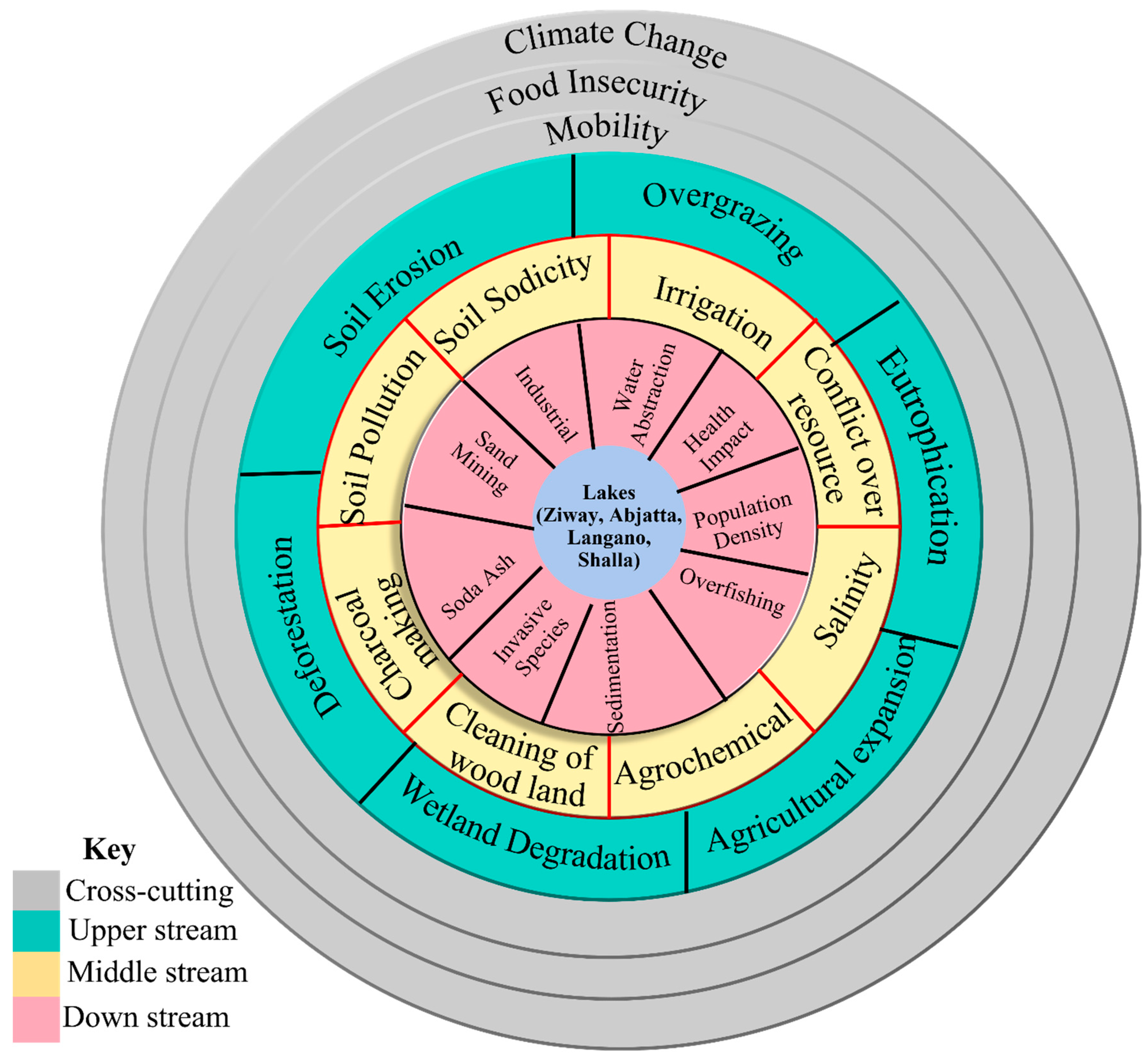
Figure 1. Polycrisis framework showing interconnected ecological, social, and hydrological stressors affecting CRV lakes and their combined impacts on ecosystems and livelihoods.
Sustainability 18 05334 g001
Figure 2. Geographical Location and Overview of the Study.
Sustainability 18 05334 g002
Figure 3. Bird species in the CRV, including (a) lesser flamingos (Phoenicopterus minor), (b) vulturine guineafowl (Acryllium vulturinum), and (c) superb starling (Lamprotornis superbus).
Sustainability 18 05334 g003
Figure 4. Spatial distribution of key hydroclimatic parameters: (a) Annual precipitation (mm), and (b) mean annual temperature (°C).
Sustainability 18 05334 g004
Figure 5. Average monthly temperature and precipitation (2000–2025) for the CRV.
Sustainability 18 05334 g005
Figure 6. LULC map of (a) 1985, (b) 1995, and (c) 2015.
Sustainability 18 05334 g006
Figure 7. PRISMA flow diagram showing the systematic review process and study selection.
Sustainability 18 05334 g007
Figure 8. Basic hydrological data of the lakes.
Sustainability 18 05334 g008
Figure 9. Water surface areas of the lakes showing a drastic decrease in the area of Lake Abijatta.
Sustainability 18 05334 g009
Figure 10. Extent of selected lakes.
Sustainability 18 05334 g010
Figure 11. Conceptual diagram illustrating the relationships between hydrological factors, pollution sources, and environmental stressors influencing lake level changes and water resources.
Sustainability 18 05334 g011
Figure 12. Conceptual diagram illustrating the interconnections among ecological factors, conservation challenges, and environmental stressors affecting biodiversity and ecosystems.
Sustainability 18 05334 g012
Figure 13. Conceptual diagram showing the linkages between habitability factors, socioeconomic conditions, and environmental influences in the habitability assessment of the CRV.
Sustainability 18 05334 g013
Figure 14. Conceptual diagram of interlinked challenges in resource management in the CRV.
Sustainability 18 05334 g014
Figure 15. Conceptual diagram of potential pathways toward improved habitability in the CRV.
Sustainability 18 05334 g015
Disclaimer/Publisher’s Note: The statements, opinions and data contained in all publications are solely those of the individual author(s) and contributor(s) and not of MDPI and/or the editor(s). MDPI and/or the editor(s) disclaim responsibility for any injury to people or property resulting from any ideas, methods, instructions or products referred to in the content.