1. Introduction
Corporate governance remains a foundational mechanism for safeguarding accountability, transparency, and the alignment of interests between shareholders and managers in contexts characterized by the separation of ownership and control [
1,
2]. Despite the global diffusion of governance frameworks—particularly those promoted by the Organisation for Economic Co-operation and Development (OECD)—empirical evidence regarding governance effectiveness remains inconsistent across emerging markets characterized by varying institutional quality, enforcement capacity, and organizational structures [
3,
4,
5]. Recent governance research increasingly suggests that governance effectiveness in emerging economies depends not only on formal compliance with governance codes, but also on organizational adaptability, structural complexity, disclosure maturity, and institutional resilience under conditions of regulatory uncertainty [
6,
7,
8,
9,
10,
11].
In the context of sustainability, corporate governance plays a central role in supporting responsible decision-making, long-term value creation, transparency, and organizational resilience [
12]. Sustainable corporate governance extends beyond formal compliance by emphasizing how firms design governance structures that enable accountability, stakeholder responsiveness, ethical oversight, and sustainable management practices. This issue is particularly important in emerging markets, where institutional weaknesses, uneven enforcement, and disclosure gaps may constrain firms’ ability to translate governance mechanisms into sustainable organizational outcomes.
Existing governance research has predominantly examined governance either as a direct determinant of financial performance or as a formal compliance mechanism, while giving limited attention to how internal organizational structures shape governance effectiveness within institutionally differentiated emerging-market contexts [
13,
14]. This limitation is particularly relevant in the Palestinian and Jordanian markets, where governance systems are influenced by differing levels of institutional maturity, regulatory enforcement, and organizational adaptation despite regional proximity and similar governance reform trajectories [
2,
3]. Two organizational dimensions are especially salient in this regard: business complexity and decentralization. As firms expand, diversify, and increase operational dispersion, coordination and oversight demands intensify [
15,
16,
17,
18]. Simultaneously, firms frequently adopt decentralized structures to improve flexibility and responsiveness under increasingly complex operating conditions [
19,
20]. However, the governance implications of these organizational structures remain theoretically and empirically contested, particularly in emerging-market environments characterized by institutional fragility and evolving governance infrastructures [
21,
22].
Recent comparative governance research further suggests that firms operating in institutionally heterogeneous emerging markets may respond differently to organizational complexity and decentralization depending on governance enforcement quality, disclosure maturity, and institutional adaptation capacity. These differences may produce substantial variation in governance effectiveness even among firms operating under formally similar governance frameworks [
23,
24,
25].
Despite their conceptual interdependence, business complexity and decentralization have rarely been examined jointly as structural conditions shaping corporate governance effectiveness. Contingency theory suggests that governance effectiveness depends on the alignment between organizational structures and contextual conditions such as institutional maturity, information systems, and environmental uncertainty [
26,
27,
28]. Accordingly, governance mechanisms may operate differently across emerging-market environments depending on firms’ adaptive governance responses and institutional capacities. Against this backdrop, this study examines how business complexity and decentralization jointly shape corporate governance effectiveness in non-financial firms listed on the Palestine Exchange (PEX) and the Amman Stock Exchange (ASE). The study addresses the following research questions: (1) How do decentralization and business complexity influence corporate governance effectiveness in the Palestinian and Jordanian markets? and (2) Does business complexity moderate the relationship between decentralization and governance effectiveness across institutionally differentiated emerging-market environments? Accordingly, the study aims to: (1) examine the direct effects of decentralization and business complexity on governance effectiveness; (2) assess the moderating role of business complexity; and (3) provide a comparative institutional interpretation of governance dynamics across the Palestinian and Jordanian capital markets.
This study contributes theoretically by challenging universal governance assumptions and strengthening contingency-based governance perspectives within institutionally heterogeneous emerging-market environments. Methodologically, the study employs multidimensional documentary-based composite indices to capture governance effectiveness, decentralization, and business complexity in comparative emerging-market settings. Practically, the findings provide context-sensitive governance implications for firms, regulators, and policymakers in Palestine and Jordan regarding governance adaptation under varying institutional conditions.
Accordingly, this study positions corporate governance effectiveness as a sustainability-related governance capability rather than merely a formal compliance outcome. By examining how business complexity and decentralization shape governance effectiveness across two emerging capital markets, the study contributes to the sustainable management literature by showing how internal organizational structures may either constrain or support firms’ capacity to achieve transparency, accountability, resilience, and responsible governance under institutionally heterogeneous conditions.
The remainder of this paper is structured as follows.
Section 2 presents the theoretical framework and develops the study hypotheses.
Section 3 describes the research methodology, including the sample, data sources, variable measurement, and analytical procedures.
Section 4 reports the empirical results for the Palestinian and Jordanian markets.
Section 5 discusses the findings in relation to prior literature and explains the theoretical and contextual implications of the results. Finally,
Section 6 concludes the paper by highlighting the main contributions, limitations, and directions for future research.
2. Theoretical Framework and Hypothesis Development
This section develops a theoretically integrated explanation of how organizational structure shapes corporate governance effectiveness in emerging markets. Rather than presenting agency theory, transaction cost theory, and contingency theory as parallel lenses, this section integrates them into a unified explanatory framework, More specifically, agency theory explains how decentralization and organizational complexity may intensify information asymmetry and monitoring challenges; transaction cost theory clarifies how increasing structural dispersion may elevate coordination and control costs; and contingency theory integrates these mechanisms by proposing that governance effectiveness depends on the alignment between organizational structures and institutional conditions. Accordingly, the study does not treat these theories as isolated explanations, but rather as complementary analytical mechanisms within a context-sensitive governance framework. The framework synthesizes them into a structured argument: governance effectiveness is not merely a function of formal mechanisms, but of their alignment with organizational complexity and authority distribution, which may produce varying governance outcomes across firms and contexts.
The theoretical tension underlying this study arises from a core governance paradox. Governance mechanisms are designed to mitigate agency conflicts and enhance accountability [
2,
29,
30]. However, the organizational environments within which these mechanisms operate are increasingly characterized by structural complexity and dispersed decision authority. In emerging markets—where institutional enforcement remains uneven—this structural transformation may either intensify governance failures or generate adaptive governance responses. The direction of this relationship is therefore theoretically ambiguous and context-dependent.
In addition to these constraints, alternative theoretical perspectives suggest that increasing organizational complexity and decentralization may also induce stronger governance practices by heightening transparency requirements, intensifying external scrutiny, and increasing the need for coordination and formalization.
To address this theoretical ambiguity in a structured manner, the framework proceeds in four steps. First, it conceptualizes governance effectiveness beyond formal compliance. Second, it examines decentralization as a structural reallocation of authority with agency and transaction cost implications. Third, it theorizes business complexity as an institutional constraint on monitoring capacity. Fourth, it integrates both dimensions within a contingency perspective to derive conditional predictions.
2.1. Corporate Governance Effectiveness in Emerging Markets
Corporate governance research has evolved from focusing on the presence of formal mechanisms—boards, committees, disclosure requirements—toward assessing whether such mechanisms function substantively in constraining managerial opportunism and aligning interests [
2,
31] Governance effectiveness therefore refers not to formal compliance alone, but to the actual capacity of governance structures to enhance oversight, transparency, and accountability.
This distinction is particularly salient in emerging markets. Many firms formally adopt governance codes inspired by OECD principles, yet enforcement intensity, institutional maturity, and internalization of governance norms vary significantly [
3,
4,
32]. As a result, governance mechanisms may operate symbolically rather than substantively, producing heterogeneous outcomes even under formally similar regulatory frameworks.
Recent empirical studies conducted in emerging and frontier markets increasingly highlight that governance effectiveness is highly context-sensitive and institutionally contingent [
33,
34]. Contemporary governance literature argues that firms operating under institutional uncertainty often exhibit substantial variation in governance quality despite formal similarities in governance codes. Moreover, recent studies emphasize that governance effectiveness is shaped not only by board structures and disclosure practices, but also by firms’ internal organizational arrangements, operational complexity, and adaptive monitoring capabilities [
35,
36,
37,
38].
Agency theory provides the foundational logic: governance mechanisms reduce agency costs arising from the separation of ownership and control [
18,
21]. However, agency solutions implicitly assume a relatively stable organizational structure. When firms become structurally complex or redistribute decision authority, monitoring costs and information asymmetry increase, potentially limiting the effectiveness of traditional governance tools. At the same time, increasing organizational complexity may also prompt firms to strengthen governance practices through enhanced disclosure, formalization, and monitoring mechanisms.
Empirical evidence from emerging economies confirms this heterogeneity, revealing mixed associations between governance mechanisms and firm outcomes [
5,
6,
22,
39]. This suggests that governance effectiveness cannot be understood in isolation from internal organizational architecture. Governance operates within organizational structures and those structures critically condition its effectiveness.
2.2. Decentralization and Corporate Governance
Decentralization represents a structural redistribution of decision-making authority across hierarchical levels or organizational units. It is often adopted in response to growth and environmental complexity to enhance responsiveness and efficiency [
11,
12]. Yet its governance implications are theoretically contested.
From an agency perspective, decentralization expands managerial discretion. While delegation may improve operational efficiency, it also increases information asymmetry and reduces the direct observability of managerial actions [
18,
40]. As authority disperses across units, monitoring becomes more complex and accountability may fragment—especially in institutional environments characterized by concentrated ownership and weak enforcement.
Transaction cost theory reinforces this concern. Fragmented authority structures increase coordination and control costs [
23]. Where internal controls and audit mechanisms are insufficiently robust, decentralization may elevate transaction costs beyond efficiency gains, thereby weakening governance oversight [
13].
Empirical findings remain mixed [
12], reflecting this theoretical ambiguity. In emerging markets, decentralization often arises as an adaptive managerial response rather than as part of coordinated governance reform. If governance infrastructures do not evolve simultaneously, decentralization may create governance gaps.
At the same time, decentralization may enhance governance by improving information flow, increasing managerial accountability at lower organizational levels, and enabling more effective alignment between decision-making and operational realities.
Accordingly, under conditions of limited enforcement capacity and evolving governance frameworks, decentralization may either weaken governance effectiveness or, alternatively, induce stronger governance responses depending on how firms adapt their internal control and monitoring systems.
However, given the institutional characteristics of emerging markets—particularly weak enforcement mechanisms and limited monitoring capacity—the negative governance implications of decentralization are expected to dominate.
H1. Decentralization has a negative and statistically significant effect on corporate governance effectiveness in firms operating in emerging economies.
2.3. Business Complexity as an Institutional Constraint
Business complexity captures the multidimensional structural intricacy of firms, encompassing organizational layering, diversification, operational scope, and reporting breadth [
7,
8,
9]. Unlike size alone, complexity reflects both qualitative and quantitative dimensions [
10].
From a governance perspective, complexity transforms the firm’s information environment. As organizational layers increase and activities diversify, information asymmetry intensifies and monitoring costs rise. Agency theory predicts that such increases elevate residual loss and monitoring difficulties [
18]. Boards and shareholders face greater challenges in evaluating managerial performance across diverse and interdependent units.
Transaction cost theory further suggests that complexity raises coordination and control costs [
23]. In emerging markets—where governance infrastructures may not scale proportionally with organizational growth—complexity can outpace monitoring capacity, weakening governance effectiveness.
At the same time, increasing business complexity may also prompt firms to strengthen governance practices by enhancing disclosure systems, formalizing reporting structures, and increasing reliance on internal control and audit mechanisms.
Although complexity can be strategically advantageous in mature governance systems, its rapid escalation in institutionally constrained environments may either constrain or reinforce effective oversight depending on the adaptability of governance mechanisms. Therefore, in market settings where governance frameworks lag behind organizational transformation—including, potentially, the Palestinian and Jordanian markets examined here—complexity may either undermine governance effectiveness or induce stronger governance responses.
However, in emerging market contexts characterized by limited monitoring capacity and evolving governance infrastructures, the constraining effects of complexity are expected to dominate.
H2. Business complexity has a negative and statistically significant effect on corporate governance effectiveness in firms operating in emerging economies.
2.4. When Decentralization Meets Complexity: A Contingency Perspective
While decentralization and complexity each affect governance independently, their joint effect may not be additive. Contingency theory posits that organizational effectiveness depends on the alignment between structure and contextual conditions [
16,
24]. Governance effectiveness, therefore, may hinge on whether decentralization aligns with the firm’s level of complexity.
As firms become more complex, decentralization often emerges as a structural response to informational overload. However, this adaptation may generate divergent governance outcomes. In firms with strong oversight infrastructures, decentralization may distribute monitoring responsibilities effectively. In contrast, where governance capacity is weak, the combination of high complexity and dispersed authority may multiply agency problems and monitoring burdens. Recent organizational governance literature further suggests that decentralized structures may generate divergent governance outcomes depending on firms’ institutional maturity and monitoring sophistication [
35,
41]. In highly complex organizations, decentralization may either enhance governance flexibility and responsiveness or intensify coordination costs and agency risks when governance systems fail to evolve alongside organizational expansion [
42,
43]. These recent insights reinforce the relevance of contingency-based explanations in understanding governance effectiveness across emerging market environments. Conversely, in contexts where governance systems are sufficiently developed, the interaction between complexity and decentralization may enhance coordination efficiency and strengthen governance mechanisms through better allocation of monitoring responsibilities.
Agency theory predicts that high complexity increases monitoring costs; when decentralization simultaneously disperses decision rights, these costs escalate nonlinearly [
18]. Transaction cost theory similarly anticipates amplified coordination costs under simultaneous complexity and decentralization [
23].
Thus, the governance impact of decentralization is unlikely to be uniform. In some cases, the interaction between these structural dimensions may not produce a statistically significant effect if their influences operate through parallel rather than interdependent mechanisms. Instead, it is expected to depend on the level of organizational complexity faced by the firm.
H3. Business complexity moderates the relationship between decentralization and corporate governance effectiveness, such that the governance impact of decentralization varies with the level of organizational complexity across the sampled firms in the Palestinian and Jordanian markets.
2.5. Conceptual Framework and Hypothesis Summary
Building on the preceding theoretical discussion, this study develops an integrated conceptual framework that explains corporate governance effectiveness in the Palestinian and Jordanian markets as a function of organizational structures and institutional constraints. Rather than viewing governance outcomes as the result of isolated mechanisms, the framework emphasizes the interplay between decentralization and organizational complexity, grounded in agency theory, transaction cost theory, and contingency theory.
The framework conceptualizes corporate governance effectiveness as the dependent outcome, reflecting the extent to which governance mechanisms—such as board oversight, disclosure practices, and internal committees—function substantively to enhance accountability and transparency. Within emerging market contexts, governance effectiveness is shaped not only by formal compliance with governance codes, but also by internal organizational conditions that influence information flows, monitoring capacity, and managerial discretion.
Decentralization is positioned as a key organizational structure that redistributes decision-making authority across hierarchical levels. While decentralization may offer efficiency and responsiveness benefits, the theoretical analysis suggests that, in the Palestinian and Jordanian markets characterized by weaker enforcement and evolving governance infrastructures, decentralization may either intensify agency problems and monitoring challenges or, alternatively, induce stronger governance responses depending on the robustness of internal control and oversight mechanisms.
Business complexity is conceptualized as an institutional constraint that conditions governance outcomes. As firms become more complex—through diversified activities, layered organizational structures, and expanded operational scope—information asymmetry and coordination costs increase, potentially weakening the effectiveness of traditional governance mechanisms. In emerging markets, where governance frameworks often lag behind organizational transformation, rising complexity may either undermine governance effectiveness or enhance it depending on the extent to which governance mechanisms adapt to increasing organizational demands.
Crucially, the framework advances a contingency-based perspective by integrating decentralization and business complexity into a single explanatory model. It posits that the governance implications of decentralization are not uniform, but rather depend on the level of organizational complexity. In highly complex firms, decentralization may amplify governance weaknesses by dispersing decision rights beyond the effective reach of monitoring and control systems. In less complex firms, the governance impact of decentralization may be less pronounced. In some cases, the interaction between these structural dimensions may not produce a statistically significant effect if their influences operate in parallel rather than through strong interdependence. This interaction-based logic provides a coherent explanation for the mixed empirical findings reported in prior governance research and aligns with the central propositions of contingency theory.
The conceptual framework underpinning the study, illustrating the direct effects of decentralization and business complexity on corporate governance effectiveness, as well as the moderating role of business complexity in shaping the decentralization–governance relationship. This framework serves as the foundation for the empirical analysis conducted in the subsequent section.
Given these competing theoretical perspectives, this study adopts a theoretically conservative expectation grounded in agency theory and transaction cost theory, whereby the negative governance implications of decentralization and business complexity are expected to dominate in emerging market contexts characterized by limited monitoring capacity and evolving governance infrastructures.
Although the hypotheses are formulated in a theoretically conservative direction, the study recognizes that alternative outcomes are plausible. Specifically, decentralization and business complexity may not necessarily weaken governance effectiveness if firms respond to structural dispersion and operational intricacy by strengthening disclosure practices, formalizing internal controls, and expanding board-level monitoring mechanisms. Therefore, unsupported hypotheses would not necessarily indicate theoretical failure; rather, they may suggest that the examined firms have developed adaptive governance responses to organizational complexity and dispersed authority. This possibility is particularly relevant in emerging markets where firms may use governance mechanisms to signal legitimacy, reduce information asymmetry, and respond to stakeholder and regulatory expectations.
Summary of Hypotheses
Based on the theoretical arguments developed above, the study advances the following hypotheses:
H1. Decentralization has a negative and statistically significant effect on corporate governance effectiveness in firms operating in emerging economies.
H2. Business complexity has a negative and statistically significant effect on corporate governance effectiveness in firms operating in emerging economies.
H3. Business complexity moderates the relationship between decentralization and corporate governance effectiveness, such that the governance impact of decentralization varies with the level of organizational complexity across the sampled firms in the Palestinian and Jordanian markets.
Together, these hypotheses articulate a theoretically grounded and context-sensitive explanation of corporate governance effectiveness under organizational complexity and decentralized structures. The next section details the research methodology employed to empirically test these relationships.
3. Methodology
3.1. Research Design and Unit of Analysis
This study adopts a comparative cross-sectional design with an analytical empirical approach to test the proposed hypotheses using firm-level indicators. The analysis focuses on disclosures for the fiscal year 2023 and compares non-financial firms listed on the Palestine Exchange (PEX) and the Amman Stock Exchange (ASE).
The focus on the 2023 fiscal year was methodologically intentional and aligned with the comparative cross-sectional design of the study. Using a single and recent fiscal year ensured consistency and comparability across firms and between the Palestinian and Jordanian markets while minimizing the potential influence of temporal variations in governance regulations, disclosure requirements, and macroeconomic conditions. In addition, 2023 represents the most recent fiscal period for which complete and publicly accessible governance-related disclosures were consistently available for the sampled firms across both exchanges at the time of data collection. Given that the study examines organizational structures and governance effectiveness through documentary disclosures rather than longitudinal performance dynamics, a cross-sectional design based on a single reporting period was considered appropriate for capturing institutional and organizational variations across firms and markets.
The unit of analysis is the listed firm, where each firm is treated as an independent observation, consistent with standard cross-sectional assumptions and appropriate given the nature of the dataset. This approach allows for the construction of corporate governance, decentralization, and business complexity measures and facilitates comparisons across sectors and between the two markets.
3.2. Research Population, Sample, and Sectoral Distribution
The research population comprises all non-financial companies listed on the Amman Stock Exchange (ASE) and the Palestine Exchange (PEX) [
3,
25]. The final sample includes 157 non-financial firms, of which 118 firms are listed on the ASE and 39 firms on the PEX. Financial institutions were excluded due to their distinct regulatory frameworks and operational characteristics, which differ substantially from non-financial firms and may bias the measurement and interpretation of corporate governance, decentralization, and business complexity indicators. Firm-level data were obtained from official exchange records, annual reports, and verified documentary sources to ensure a consistent basis for comparison across both markets. The sample covers firms operating in the services, insurance, industrial, and real estate/investment sectors, thereby providing broad sectoral representation and supporting cross-market comparability [
26].
Table 1 presents the sectoral distribution of the sample across the Jordanian and Palestinian markets. While sector classifications differ slightly between the two exchanges, both markets exhibit a substantial representation of services and industrial firms, alongside notable shares in investment and real estate-related sectors, ensuring adequate sectoral coverage for subsequent empirical analysis.
3.3. Data Sources and Documentary Checklist
This study relies on documentary-based secondary data obtained from publicly available and verifiable corporate disclosures. Data were collected from official disclosures of non-financial firms listed on the Palestine Exchange (PEX) and the Amman Stock Exchange (ASE), including company websites, annual reports, and governance-related documents for the fiscal year 2023.
The primary data collection instrument is a closed-ended documentary checklist designed to systematically capture indicators of corporate governance, decentralization, and business complexity. The checklist was developed based on prior corporate governance measurement frameworks and adapted to reflect the institutional characteristics of the Palestinian and Jordanian markets. All items were coded using a binary system (1 = disclosed; 0 = not disclosed or not observable in the available disclosures).
Corporate governance indicators capture key governance structures and practices, including board composition, shareholder rights, disclosure practices, and the presence of permanent committees. Decentralization indicators reflect structural and operational attributes, while business complexity indicators capture organizational and operational dimensions.
To ensure data integrity, all sources were logged and archived, and any discrepancies across disclosures were documented for verification. In addition, selected qualitative documents (e.g., committee reports and codes of ethics) were reviewed to support data triangulation and enhance the robustness of the coding process.
The relevant data collection instruments and documentary sources are summarized in
Table 2.
3.4. Data Collection Procedures (Condensed Version)
Data collection followed a structured and systematic protocol designed to ensure consistency, transparency, and data quality. The process began with careful planning and preparation, including the development of standardized checklists, data-entry templates, and source-validation logs to guide the documentary review process and minimize recording errors.
Coordination was established with the Palestine Exchange (PEX) and the Amman Stock Exchange (ASE) to obtain up-to-date lists of non-financial listed firms and their sectoral classifications. Documentary data were then collected from official company websites, stock-exchange platforms, and published annual and governance reports for the fiscal year 2023. All reviewed documents were archived, and the exact source of each data point was logged to ensure traceability and auditability.
In cases where governance-related information was missing, unclear, or inconsistent across sources, formal requests, endorsed by the University’s Scientific Research Committee, were sent to the concerned companies to obtain the required disclosures. Any discrepancies identified between company websites and official reports were documented and flagged for further verification during analysis, thereby ensuring that coding decisions were based on the most reliable available information.
Data collection was conducted within a single, clearly defined timeframe focusing exclusively on disclosures issued for the 2023 fiscal year. This approach ensured comparability across firms and markets and reduced the influence of temporal variations. Prior to statistical analysis, an initial audit of the compiled dataset was performed to verify internal consistency and completeness, thereby enhancing the overall reliability and internal consistency of the dataset used in hypothesis testing.
3.5. Variable Construction and Measurement
This study operationalizes its key variables through firm-level composite indices constructed from documentary evidence disclosed by listed firms. Given the institutional and organizational nature of corporate governance, decentralization, and business complexity, the use of composite measures allows for a more comprehensive and multidimensional representation of each construct beyond single-indicator measures. All variables were measured using binary-coded indicators extracted from publicly available corporate documents for the fiscal year 2023, which is appropriate for capturing the presence or absence of governance-related disclosures in documentary data, consistent with the documentary checklist approach adopted in this study.
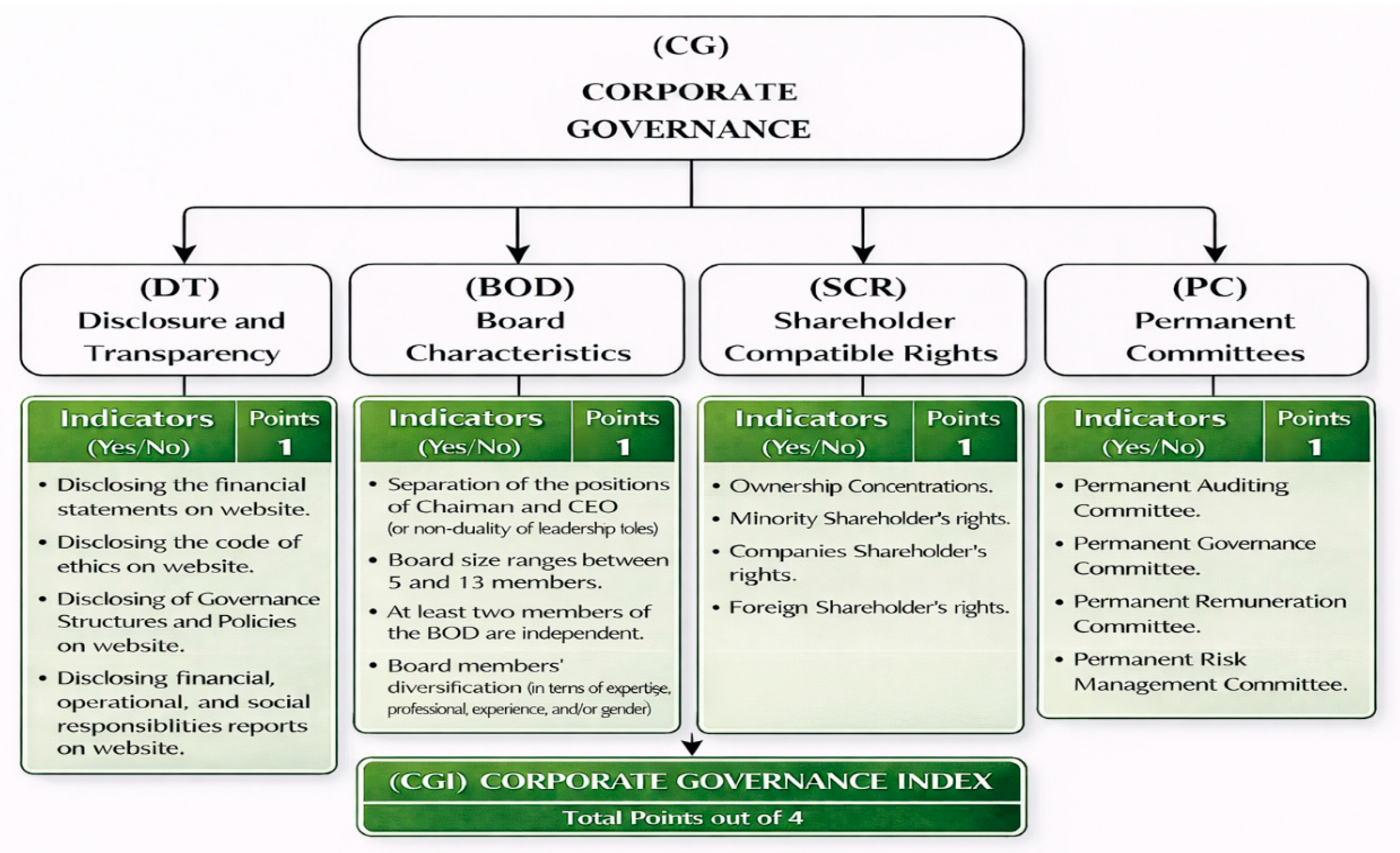
Figure 1 illustrates the four governance dimensions—transparency and disclosure, board characteristics, shareholder rights, and permanent committees—used to construct the composite corporate governance index (CGI) based on binary-coded documentary disclosures.
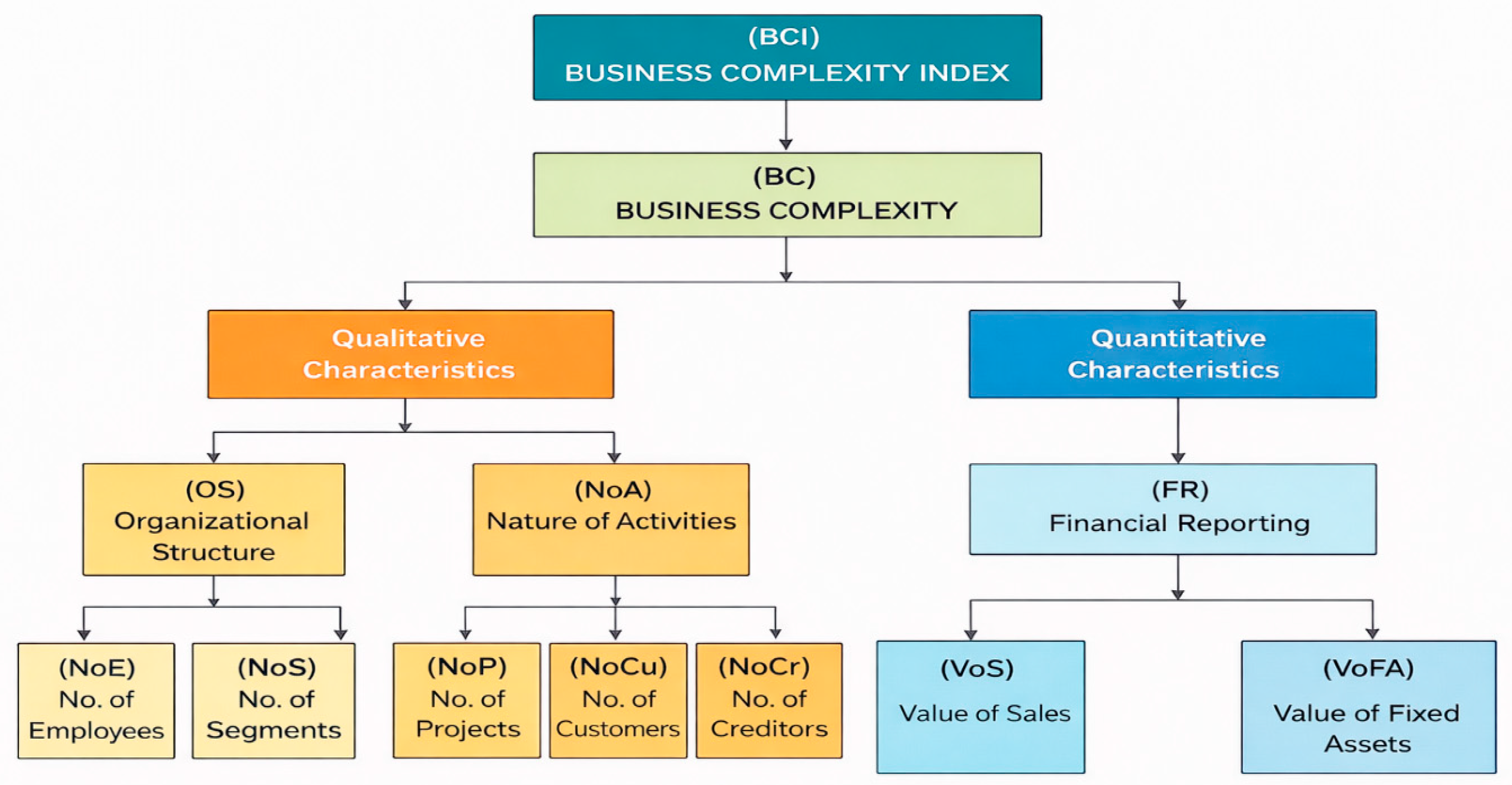
Figure 2 presents the multidimensional structure of the business complexity index, combining qualitative organizational characteristics and quantitative operational indicators derived from firm-level disclosures.
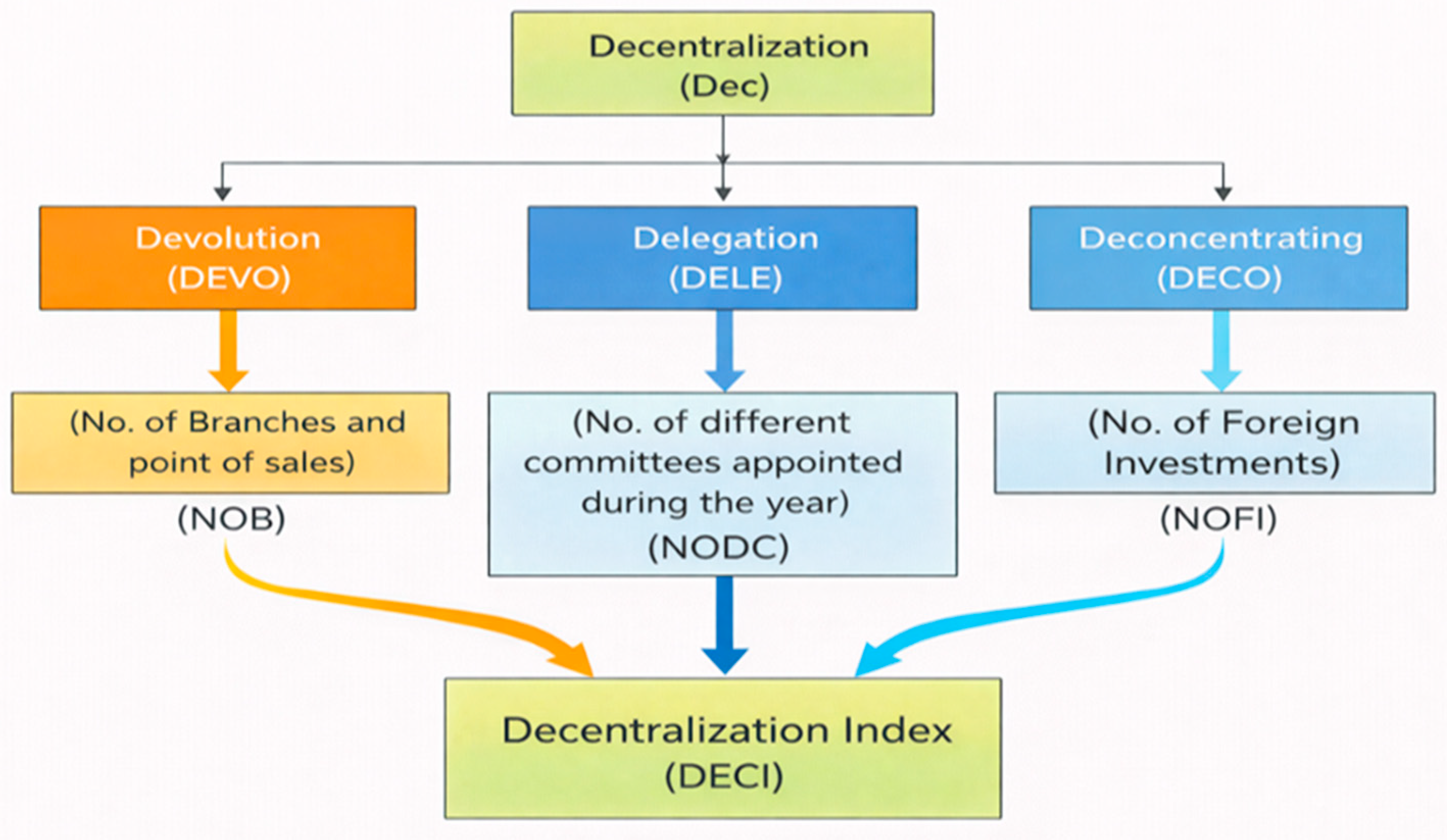
Figure 3 depicts the three dimensions of decentralization—devolution, delegation, and deconcentration—used to operationalize the decentralization index in the study.
The dependent variable, corporate governance effectiveness, is conceptualized as the extent to which governance mechanisms function substantively rather than symbolically, as reflected in the presence of observable governance structures and practices disclosed in corporate reports. It is measured through a composite index capturing multiple governance dimensions related to transparency, board characteristics, shareholder rights, and permanent committees. This multidimensional approach reflects the complexity of governance systems in emerging markets, where formal compliance alone may not fully represent governance effectiveness.
The first independent variable, decentralization, captures the degree to which decision-making authority and organizational activities are structurally dispersed within the firm. Decentralization is operationalized through indicators reflecting organizational dispersion and delegated authority, including indicators related to organizational dispersion, delegated authority, and operational decentralization, such as the presence of multiple branches, internal committees, and foreign operational involvement.
The second independent variable, business complexity, is measured as a multidimensional construct reflecting both organizational and operational intricacy. Rather than relying on firm size alone, business complexity captures the breadth and scope of organizational activities, internal structures, and operational scale, including measurable indicators such as human resources, asset base, and project intensity. As detailed in
Table 3 and
Table 4, the study variables are operationalized and aggregated to form composite indices.
All indicators were coded using a binary scheme (1 = disclosed; 0 = not disclosed or not observable in the available disclosures) and aggregated at the firm level to construct additive composite indices. The use of an additive index with equal weighting assumes that each indicator contributes equally to the construct. This approach is consistent with prior governance measurement practices and is widely used in governance index studies, particularly in the absence of strong theoretical or empirical justification for differential weighting. It ensures consistency in measurement, reduces subjectivity in coding decisions, and facilitates comparability across firms, sectors, and markets within a standardized measurement framework.
Although binary coding and equal-weight additive indices may reduce measurement granularity compared with weighted or continuous governance measures, this approach remains widely adopted in corporate governance disclosure research, particularly in emerging-market settings characterized by limited disclosure standardization and heterogeneous reporting quality. The use of binary-coded documentary indicators enhances coding transparency, minimizes subjective scoring bias, and improves cross-firm comparability when governance disclosures differ substantially in format and detail. Moreover, the study focuses on observable governance structures and disclosed organizational characteristics rather than perceptual or latent governance quality assessments, making documentary binary operationalization methodologically appropriate for the study context.
Based on the operationalization of the study variables,
Figure 4 presents the conceptual model illustrating the proposed relationships among organizational decentralization, business complexity, and corporate governance effectiveness, including the hypothesized direct effects of decentralization and business complexity as well as the proposed moderating relationship.
3.6. Data Analysis Techniques
3.6.1. Quantitative Data Analysis
The quantitative data analysis strategy was designed to align directly with the study’s hypotheses and the nature of the constructed variables. Given that all key variables were operationalized as firm-level composite indices derived from binary-coded indicators, the analysis followed a sequential and structured approach.
First, descriptive statistics were used to summarize disclosure frequencies and the basic characteristics of the constructed indices, providing an overview of patterns across firms, sectors, and markets without engaging in hypothesis testing. Second, inferential statistical tests were employed to examine differences in corporate governance indicators across markets and sectors. Independent-samples t-tests were applied to compare firms listed on the Palestine Exchange (PEX) and the Amman Stock Exchange (ASE), while one-way ANOVA was used to explore sectoral variations.
Third, bivariate Pearson correlation analysis was conducted to examine associations among decentralization, business complexity, and corporate governance effectiveness prior to multivariate estimation. To test the direct hypotheses, multiple linear regression models were estimated using IBM SPSS Statistics 28, with corporate governance effectiveness as the dependent variable and decentralization and business complexity as the independent variables.
To test the moderation hypothesis, an interaction-term regression model was specified as follows:
Although the original indicators were binary-coded at the item level, the dependent and independent variables used in the regression models are additive composite indices aggregating multiple indicators. Accordingly, the resulting indices exhibit sufficient variation and approximate continuous measurement properties, which supports the use of OLS estimation in governance index research. Similar additive-index approaches have been widely employed in empirical corporate governance studies using documentary disclosure data.
The statistical significance of β3 indicates the presence of a moderating effect.
All quantitative analyses were conducted using SPSS, and standard diagnostic procedures were applied to assess model validity. In particular, variance inflation factors (VIF) and tolerance values were examined to detect potential multicollinearity and ensure the stability and robustness of the estimated regression coefficients prior to interpretation.
3.6.2. Qualitative Data Analysis
To complement the quantitative analysis, selected qualitative documentary data were examined using a directed content analysis approach [
27]. Relevant governance-related documents, including internal governance regulations, audit and risk committee reports, codes of ethics, and corporate governance disclosures, were reviewed to support the interpretation of the findings.
A structured coding framework, informed by international corporate governance standards, was applied to ensure consistency in identifying key governance themes. The coding process was guided by established qualitative analysis procedures [
27,
28] and supported by qualitative data management software [
24].
To enhance rigor and credibility, methodological triangulation was applied by comparing qualitative evidence across multiple documentary sources, alongside peer debriefing to reduce potential researcher bias and strengthen analytical reliability [
44].
3.7. Validity and Reliability
To ensure the methodological rigor of the study, multiple procedures were employed to establish the validity and reliability of the measurement instruments and constructed indices.
Content validity was addressed through the careful development of the documentary checklist based on internationally recognized corporate governance principles and prior methodological practices in governance research, supported by expert review. The checklist items were reviewed by a panel of subject-matter experts to assess their relevance, clarity, and alignment with the study’s constructs, to ensure that the instrument adequately captures the intended dimensions of corporate governance, decentralization, and business complexity.
To further support construct validity, the structure of the composite indices was examined through assessing the conceptual coherence of the grouped indicators prior to hypothesis testing. This step ensured that the indicators collectively reflect their underlying constructs rather than unrelated attributes.
Reliability was assessed by evaluating the internal consistency of the composite indices. Internal consistency was assessed to ensure that the indices exhibited acceptable levels of reliability based on established methodological standards in governance research.
In addition, the use of standardized data collection procedures, source documentation, and cross-verification of disclosures across multiple official sources contributed to the overall reliability of the dataset. These measures reduced the risk of measurement error and enhanced the reliability and replicability of the study.
5. Discussion
From a sustainability perspective, the findings indicate that corporate governance effectiveness should be understood as an essential component of sustainable corporate management in emerging markets. The results suggest that organizational complexity and decentralization influence not only internal monitoring and control, but also firms’ capacity to sustain transparency, accountability, stakeholder confidence, and long-term institutional legitimacy. Therefore, the discussion of the empirical findings is framed around the role of governance structures in supporting sustainable organizational resilience under different institutional conditions.
5.1. Discussion of Results in the Palestinian Market (PEX)
The results for the Palestinian market (PEX) indicate that decentralization is positively associated with corporate governance effectiveness, with a statistically significant effect observed in the bivariate analysis. However, this effect becomes positive but statistically insignificant in the multiple regression model once business complexity is taken into account, suggesting that the explanatory power of decentralization diminishes when broader organizational characteristics are considered. This finding indicates that H1 is not supported in the Palestinian context, as the observed relationship does not align with the hypothesized negative effect.
Similarly, business complexity demonstrates a positive and statistically significant association with governance effectiveness in the bivariate analysis, although this effect does not remain statistically significant in the multivariate model. This pattern suggests that while each structural dimension appears influential in isolation, their effects overlap when jointly examined, reducing their individual statistical significance. Accordingly, H2 is not supported, as the observed relationship is positive and contrary to the hypothesized negative effect.
The rejection of several hypotheses should be interpreted in light of the theoretically competing mechanisms underlying the study. While the hypotheses were initially formulated based on agency theory and transaction cost theory, which predict that decentralization and business complexity may increase monitoring costs, information asymmetry, and coordination burdens, the empirical results suggest that these organizational characteristics may operate differently in the Palestinian and Jordanian markets. Rather than weakening governance effectiveness, higher decentralization and greater complexity appear, in some cases, to be associated with stronger governance practices. This indicates that firms facing more complex and dispersed organizational structures may adopt more formalized governance mechanisms, enhanced disclosure practices, and stronger monitoring arrangements to manage increased organizational demands.
From a theoretical perspective, the positive association between business complexity and governance effectiveness is contrary to the hypothesized negative relationship and contrasts with traditional transaction cost expectations, but aligns with stakeholder and signaling perspectives. In the Palestinian context, increased organizational complexity may intensify external scrutiny and information demands, thereby encouraging firms to adopt more formalized governance practices to enhance transparency and legitimacy [
31,
32]. This interpretation is consistent with prior empirical findings in emerging markets, where firms respond to institutional uncertainty by strengthening governance structures as a signaling mechanism.
These findings partially align with prior governance studies conducted in emerging markets, which suggest that organizational complexity may increase firms’ reliance on formal governance structures and disclosure mechanisms to reduce information asymmetry and enhance legitimacy [
8,
10,
17,
37]. However, the present findings differ from studies grounded in traditional agency-theory and transaction-cost expectations that associate decentralization and complexity primarily with weaker monitoring efficiency, higher coordination costs, and greater information asymmetry [
11,
18,
23]. This divergence may reflect the distinctive institutional characteristics of the Palestinian market, where firms may respond to governance uncertainty by strengthening formal governance practices rather than weakening them [
3,
20,
22,
34].
The absence of a statistically significant moderating effect between decentralization and business complexity indicates that H3 is not supported and further supports the view that these structural dimensions operate largely independently in governance-constrained environments. Rather than generating synergistic effects, decentralization and complexity appear to exert parallel influences on governance effectiveness. This finding is consistent with contingency-based interpretations suggesting that, under weak institutional conditions, organizational structures may not interact in a sufficiently integrated manner to produce measurable moderation effects.
5.2. Discussion of Results in the Jordanian Market (ASE)
In the Jordanian market, the absence of a statistically significant effect of decentralization contrasts with the findings reported for the Palestinian market and may reflect the relatively mature regulatory and governance environment in Jordan. The consistently high levels of corporate governance effectiveness observed among ASE-listed firms suggest limited variability in governance outcomes, which may reduce the observable impact of internal organizational structures such as decentralization. This pattern is consistent with comparative governance research indicating that, in institutionally developed settings, the incremental explanatory power of internal structural choices tends to be limited [
33]. This finding indicates that H1 is not supported in the Jordanian market, as decentralization does not exhibit a statistically significant effect on corporate governance effectiveness.
In contrast, business complexity emerges as the only statistically significant predictor of corporate governance effectiveness in the multivariate analysis. This finding suggests that firms with more complex organizational and operational structures tend to adopt stronger governance mechanisms, likely due to increased coordination requirements, risk exposure, and stakeholder pressures. In more mature governance environments, governance effectiveness appears to be shaped more by structural demands than by discretionary organizational design choices, which is consistent with prior empirical findings in the corporate governance literature. Accordingly, H2 is not supported in the Jordanian context, as the observed positive relationship is contrary to the hypothesized negative effect.
The findings are also consistent with studies in the comparative governance literature suggesting that firms operating under stronger institutional enforcement and regulatory standardization tend to exhibit lower variability in governance outcomes [
33,
34]. At the same time, the positive association between business complexity and governance effectiveness contrasts with earlier theoretical arguments suggesting that increasing complexity may weaken governance oversight by increasing monitoring costs, information asymmetry, and coordination burdens [
18,
23]. Instead, the present findings support more recent governance perspectives emphasizing organizational adaptation, enhanced disclosure demands, and stronger monitoring responses in complex firms [
8,
37,
39,
45].
Consistent with the Palestinian case, the interaction between decentralization and business complexity is not statistically significant. This result indicates that the combined effect of these structural dimensions does not produce additional explanatory power beyond their independent contributions. From an institutional perspective, the high level of regulatory standardization and compliance across Jordanian firms may limit the extent to which structural interactions translate into differentiated governance outcomes. Consistent with this result, H3 is not supported, as the interaction between decentralization and business complexity does not exhibit a statistically significant moderating effect.
The relatively limited explanatory contribution of the interaction models further suggests that decentralization and business complexity may primarily influence governance effectiveness through additive rather than multiplicative organizational mechanisms. In institutionally structured governance environments, interaction dynamics between structural characteristics may become less observable due to regulatory standardization and relatively homogeneous governance compliance patterns across firms.
The reduction in statistical significance observed in some multivariate estimations may further reflect covariance among organizational characteristics rather than the complete absence of governance relevance. This suggests that governance mechanisms in emerging-market firms may operate through partially overlapping structural channels whose explanatory influence becomes more conditional when analyzed jointly.
5.3. Comparative Discussion: PEX Versus ASE
The comparative analysis reinforces the argument that emerging markets constitute heterogeneous governance environments rather than uniform institutional systems. The differing effects of decentralization across the Palestinian and Jordanian markets support contingency-based governance perspectives, which emphasize that the effectiveness of governance mechanisms depends heavily on institutional context, enforcement quality, and regulatory maturity [
33,
34]. In the Palestinian market (PEX), decentralization appears to operate within a governance environment characterized by evolving institutional structures and comparatively weaker enforcement mechanisms, where firms may rely more heavily on internal governance adaptation to manage organizational demands. In contrast, the Jordanian market (ASE) exhibits a more mature and standardized governance environment, where consistently high governance compliance may reduce the observable influence of internal structural arrangements on governance outcomes.
The role of business complexity also appears to differ across the two institutional settings. In the Jordanian market, business complexity demonstrates a stronger association with governance effectiveness, suggesting that firms operating under more developed governance infrastructures may respond to increasing organizational complexity through stronger monitoring, disclosure, and coordination mechanisms. In the Palestinian context, however, the explanatory role of complexity appears less stable once broader organizational characteristics are considered jointly, reflecting the possibility that governance adaptation processes remain more institutionally constrained and structurally intertwined.
Overall, the findings highlight that the relationship between organizational structure and governance effectiveness cannot be interpreted independently of institutional conditions. The comparative evidence suggests that governance mechanisms operate differently across emerging markets depending on regulatory development, monitoring capacity, and the institutional ability to accommodate increasing organizational complexity. Furthermore, the absence of statistically significant interaction effects across both markets suggests that decentralization and business complexity primarily exert parallel rather than highly integrated governance influences within the examined institutional environments.
These comparative findings are also relevant to sustainable corporate governance because they show that sustainability-oriented governance mechanisms do not operate uniformly across emerging markets. In the Palestinian market, firms appear to rely more strongly on internal governance adaptation to manage institutional uncertainty and organizational dispersion. In the Jordanian market, stronger regulatory standardization may support more consistent governance practices, while business complexity increases the need for structured monitoring and disclosure. Thus, sustainability in governance depends not only on the existence of formal governance rules, but also on the institutional capacity of firms and markets to translate those rules into effective, transparent, and resilient governance practices.
Collectively, the findings both support and extend prior governance literature by demonstrating that the governance implications of organizational structures are not universally fixed, but vary according to institutional maturity, enforcement capacity, and firms’ adaptive governance responses across emerging-market settings [
15,
16,
33,
35].
The weak explanatory contribution of the moderation models may therefore indicate not necessarily model misspecification, but rather the limited institutional salience of interaction effects within the examined emerging-market governance contexts.
5.4. Theoretical Contribution
By integrating the empirical findings with prior literature, this study contributes to corporate governance theory by providing comparative evidence from two emerging-market contexts characterized by differing levels of institutional maturity and governance enforcement. The findings challenge universalistic governance assumptions by demonstrating that the effectiveness of governance mechanisms is highly context-dependent and shaped by institutional conditions rather than formal governance structures alone.
More specifically, the study reinforces contingency-based and institutional governance perspectives by showing that organizational structures such as decentralization and business complexity do not produce uniform governance outcomes across emerging markets. Instead, their governance implications appear to depend on the interaction between organizational demands and institutional capacity, including regulatory maturity, monitoring effectiveness, and governance adaptation mechanisms.
The study further contributes to the governance literature by repositioning business complexity as a substantive organizational condition influencing governance dynamics rather than merely a peripheral control variable. In addition, the findings suggest that firms operating in institutionally constrained environments may respond to increasing organizational complexity and structural dispersion through adaptive governance mechanisms aimed at enhancing transparency, coordination, and legitimacy.
Collectively, these findings extend existing governance research by highlighting the heterogeneous nature of emerging-market governance systems and by demonstrating that governance mechanisms may operate through parallel rather than highly integrated structural channels across different institutional environments.
Rather than confirming universally negative governance implications of decentralization and business complexity, the findings suggest that traditional agency-theory and transaction-cost assumptions may become institutionally contingent in emerging-market settings. The results therefore support a more context-sensitive interpretation of governance dynamics, where firms may respond to increasing organizational complexity and structural dispersion through adaptive governance mechanisms aimed at enhancing transparency, coordination, and institutional legitimacy.
6. Implications
6.1. Theoretical Implications
This study advances corporate governance scholarship by reinforcing contingency-based and institutional perspectives in emerging markets. The divergent effects observed across PEX and ASE demonstrate that governance mechanisms are context-dependent rather than universal, thereby challenging one-size-fits-all governance prescriptions. Specifically, the findings indicate that the role of decentralization varies across institutional contexts, exhibiting a positive and statistically significant effect in the Palestinian market at the bivariate level, while remaining statistically insignificant in the more institutionally developed Jordanian setting. This pattern suggests that conventional theoretical expectations regarding decentralization may not fully capture its role in emerging-market governance environments.
With regard to business complexity, the results suggest that its influence on governance effectiveness is also context-sensitive. While business complexity demonstrates a statistically significant positive effect in the Jordanian market, its effect in the Palestinian market is significant only in the bivariate analysis and becomes statistically insignificant in the multivariate model. This pattern highlights that the governance implications of organizational complexity may overlap with other structural factors, particularly in less mature institutional environments, where governance adaptation mechanisms remain institutionally constrained.
Collectively, these findings extend governance theory by providing empirical evidence that governance mechanisms tend to operate through parallel (additive) rather than interactive channels across heterogeneous emerging markets, with limited empirical support for strong structural interaction effects between decentralization and business complexity.
6.2. Practical and Policy Implications
For policymakers and regulators, the findings suggest that governance reforms should be tailored to the level of institutional maturity. In governance-constrained environments, strengthening internal organizational mechanisms—such as improving internal oversight structures and formalizing governance processes—may help mitigate enforcement limitations. However, the role of decentralization should be considered cautiously, as its observed positive effect—contrary to conventional expectations—appears context-dependent and not consistently robust across different model specifications. In more mature markets, regulatory efforts should focus on enhancing risk oversight and aligning governance capacity with firm-level complexity, rather than relying on uniform structural prescriptions.
For firms, particularly those experiencing growth and increasing organizational complexity, the results highlight the importance of investing in governance infrastructure, including board effectiveness, internal committees, and disclosure systems, to manage coordination challenges and stakeholder expectations. The findings further suggest that as firms become more complex, the demand for more structured and transparent governance mechanisms increases. For investors and analysts, complexity-related indicators may serve as useful signals of governance demand, especially when evaluating firms across heterogeneous institutional environments, particularly given that the observed relationships differ from traditional theoretical expectations.
From a sustainable management perspective, the findings suggest that regulators should treat corporate governance reform as part of a broader sustainability agenda. Strengthening governance effectiveness can enhance firms’ ability to manage stakeholder expectations, improve disclosure quality, support ethical decision-making, and build institutional resilience. For firms, investing in governance infrastructure is therefore not only a compliance requirement, but also a strategic sustainability mechanism that supports long-term organizational stability and responsible market participation.
7. Limitations and Future Research
7.1. Limitations
This study is subject to several limitations that should be considered when interpreting the findings. First, the analysis relies on documentary disclosures and binary-coded indicators, which capture the presence of governance mechanisms but may not fully reflect their qualitative effectiveness or practical implementation. Although the aggregation of multiple indicators generated sufficient variation to support comparative analysis, the documentary-based composite indices employed in the study were designed as formative governance indicators rather than reflective latent constructs. Accordingly, the analysis did not employ PCA or factor-analytic techniques, which are more commonly associated with reflective measurement frameworks. Future research may therefore benefit from weighted governance measures, alternative index specifications, and latent-variable validation approaches to further refine construct measurement and examine the dimensional structure of governance indicators across emerging-market settings.
Second, the study adopts a comparative cross-sectional design based on a single fiscal year. Accordingly, the findings should be interpreted primarily as organizational–governance associations rather than strict causal effects. Although the additional diagnostic analyses strengthen the statistical interpretation of the reported relationships, the adopted design does not fully eliminate the possibility of endogeneity or reverse causality between organizational structure and governance effectiveness. Future research may therefore extend the analysis using longitudinal or dynamic modeling approaches across emerging-market environments.
Third, although the study provides comparative institutional evidence across the Palestinian and Jordanian capital markets, the analysis does not employ formal structural coefficient equality tests such as Chow tests. Therefore, the comparative findings should be interpreted as institutionally grounded and context-sensitive comparative evidence rather than definitive econometric confirmation of cross-market parameter equivalence. Future research may further validate these institutional differences using pooled multi-market estimations or formal cross-sample comparison techniques.
Finally, the study focuses exclusively on non-financial listed firms operating in two emerging-market environments. Consequently, the findings are most directly generalizable to comparable emerging or frontier market settings characterized by evolving governance frameworks, varying enforcement capacity, and reliance on publicly disclosed governance information. The study therefore offers analytical rather than universal statistical generalization regarding the context-sensitive nature of governance mechanisms across institutionally differentiated markets.
7.2. Directions for Future Research
Future research could extend this study in several directions. First, adopting longitudinal designs would allow examination of how changes in decentralization and business complexity influence governance effectiveness over time, thereby enabling stronger causal inference and capturing temporal dynamics.
Second, incorporating qualitative assessments or mixed-method approaches could provide deeper insights into the quality and implementation of governance practices beyond formal disclosures. Third, expanding the empirical scope to include additional emerging markets and conducting pooled cross-country analyses would help validate the context-dependent (contingency) effects identified in this study.
Finally, given the absence of statistically significant moderation effects in the current analysis, future research may explore alternative moderating variables—such as ownership structure, board independence, regulatory intensity, or institutional shocks—to better understand potential interaction mechanisms influencing governance effectiveness.
8. Conclusions
This study examined how business complexity and decentralization influence corporate governance effectiveness across the Palestinian and Jordanian capital markets within institutionally differentiated emerging-market environments. The findings demonstrate that governance effectiveness is shaped not only by formal governance mechanisms, but also by the interaction between internal organizational structures and broader institutional conditions. While decentralization and business complexity exhibit different governance effects across the two markets, the results consistently highlight the context-sensitive nature of governance effectiveness in emerging economies.
The study contributes to the sustainable corporate governance literature by showing that governance effectiveness should not be viewed merely as a compliance-oriented outcome, but rather as a sustainability-related organizational capability that supports transparency, accountability, institutional resilience, and responsible long-term decision-making. The findings further suggest that sustainable governance practices in emerging markets depend on firms’ ability to adapt governance structures to varying levels of organizational complexity and institutional maturity.
Overall, the study reinforces the importance of adopting context-sensitive and institutionally adaptive governance systems capable of supporting sustainable management and long-term organizational stability within emerging-market environments.