1. Introduction
Modern energy systems remain strongly dependent on fossil fuels, which continue to supply the majority of global energy demand despite their limited availability and uneven geographical distribution [
1,
2]. Rapid population growth, industrial development and increasing energy consumption are accelerating the depletion of these resources and intensifying concerns related to energy security and fuel price volatility [
3,
4]. At the same time, the transportation sector, which relies predominantly on internal combustion engines fueled by petroleum-derived products, represents a major source of greenhouse gas emissions and harmful air pollutants, including carbon dioxide, nitrogen oxides and particulate matter. These emissions contribute significantly to climate change and pose serious risks to environmental sustainability and public health [
5].
In response to these challenges, increasing research efforts have focused on the development of renewable and cleaner alternative fuels that can reduce emissions while remaining compatible with existing engine technologies and fuel infrastructures [
6]. Among the various biofuel pathways, bio-alcohols produced from renewable biomass resources such as agricultural residues, waste materials and algae have attracted considerable attention due to their potential for sustainable production [
7,
8].
Previous investigations on alcohol-blended aviation fuels have primarily focused on ethanol- and pentanol-based mixtures in conventional turbojet or diesel engine applications rather than hybrid micro-turboprop propulsion systems. Suchocki et al. demonstrated that pentanol–kerosene blends can reduce particulate emissions and moderate combustion temperatures in small gas turbine engines, although significant efficiency penalties may occur at elevated alcohol concentrations [
9]. Similarly, Cican et al. reported that alcohol–Jet A mixtures based on propanol, butanol, pentanol, hexanol, and higher alcohols significantly influence exhaust gas temperature and pollutant formation in micro-turbojet engines, with combustion stability strongly dependent on alcohol molecular structure and blend ratio [
10]. Consequently, numerous research efforts have explored different strategies employing a range of alcohol-based fuel compounds to address energy and environmental challenges. Ethanol is one of the most extensively investigated fuel additive due to its oxygenated molecular structure and potential for soot reduction. However, the high hygroscopicity, lower energy density and poor compatibility with existing aviation fuel systems limit their practical applicability in UAV propulsion systems [
11,
12]. In contrast, butanol exhibits superior miscibility with kerosene, lower water absorption tendency, and higher calorific value, making it more suitable for aviation applications requiring compact fuel systems and stable long-duration operation [
13,
14].
Butanol has emerged as a particularly promising fuel candidate because it exhibits more favorable fuel properties than lower alcohols such as ethanol and methanol [
15,
16,
17]. Butanol (C
4H
9OH) is a four-carbon aliphatic alcohol belonging to the butyl alcohol family, which includes four structural isomers: n-butanol (1-butanol), sec-butanol (2-butanol), isobutanol (2-methyl-1-propanol), and tert-butanol (2-methyl-2-propanol). Among these, n-butanol is of particular interest for aviation and UAV fuel applications due to its linear molecular structure, relatively high boiling point, and favorable blending behavior with hydrocarbon fuels [
13].
From a chemical standpoint, n-butanol exhibits moderate polarity arising from its hydroxyl (–OH) functional group, which enables limited hydrogen bonding while maintaining a predominantly hydrocarbon character from its four-carbon alkyl chain. This balance results in good miscibility with kerosene at low blending ratios without phase separation, unlike shorter-chain alcohols such as ethanol, which exhibit stronger polarity and higher hygroscopicity [
18]. The reduced affinity of n-butanol for water contributes to improved storage stability and mitigates corrosion risks in fuel systems, a critical consideration for UAV operation and logistics [
14].
The physicochemical properties of n-butanol are particularly advantageous for kerosene blending. Its lower vapor pressure relative to ethanol and methanol reduces excessive fuel volatility, thereby limiting evaporative losses and vapor-lock risks under varying altitude and temperature conditions encountered during UAV missions [
19]. Additionally, n-butanol possesses a higher energy density than shorter alcohols, minimizing the reduction in volumetric energy content when blended with kerosene at 10%, which is essential for maintaining UAV endurance and range.
Chemically, n-butanol undergoes conventional alcohol reactions; however, under combustion conditions, it demonstrates clean oxidation pathways, promoting more complete combustion when blended with kerosene. The presence of the oxygen atom within the alcohol functional group enhances local fuel–air mixing and supports oxidation of hydrocarbon fragments, contributing to reductions in carbon monoxide and soot precursor formation observed in kerosene–butanol blends. These effects are particularly beneficial for small UAV engines, where combustion residence times are short and fuel atomization quality strongly influences efficiency and emissions.
At a blending ratio of approximately 10%, n-butanol has been shown to modify fuel properties without significantly deviating from kerosene specifications relevant to UAV engines. The modest increase in kinematic viscosity and flash point remains within acceptable limits while improving lubricity, which can reduce wear in fuel pumps and injectors commonly used in small turbine or piston-based UAV propulsion systems [
20]. Collectively, these chemical and physicochemical characteristics underpin the growing interest in n-butanol as a functional oxygenated additive for kerosene-based UAV fuels.
Compared to these fuels, butanol possesses a higher energy density, lower volatility and reduced tendency to absorb water [
21], which improves fuel stability and handling safety while enhancing compatibility with conventional fuel systems [
22]. Moreover, compared with gasoline and ethanol, butanol exhibits a higher ignition resistance and a cleaner combustion flame, rendering it capable of sustained combustion while being significantly less volatile and hazardous than gasoline or ethanol. Unlike ethanol, butanol is compatible with existing petroleum pipeline infrastructure, as it does not induce material degradation or corrosion during transport. Despite these advantages, the utilization of butanol as an alternative or supplemental fuel remains at an early stage of development, and substantial knowledge gaps persist regarding its large-scale deployment, performance characteristics and long-term impacts.
Additionally, the relatively high flash point and suitable viscosity of butanol contribute to safer storage and transportation and help reduce mechanical wear in fuel injection and engine components [
23]. These characteristics allow butanol to be used either directly or as a blending component in conventional engines with minimal or no hardware modifications, facilitating its near-term adoption [
24]. As a result, biobutanol is increasingly recognized as a viable renewable fuel option capable of addressing both the environmental impacts and sustainability limitations associated with continued reliance on fossil fuels [
25].
Despite these previous contributions, limited studies have investigated butanol–kerosene blends within hybrid micro-turboprop architectures where electrical power generation, propulsion dynamics, and adaptive control systems interact simultaneously. Furthermore, most existing studies focus primarily on direct combustion performance and near-source emissions without considering atmospheric pollutant dispersion behavior under varying environmental conditions. Consequently, the present work addresses an important research gap by simultaneously evaluating combustion performance, electrical power generation, emissions formation, and near-field pollutant dispersion in a hybrid UAV-oriented micro-turboprop propulsion platform operating with butanol–kerosene blends [
11,
26].
3. Results
This section examines the outcomes of experiments conducted to evaluate butanol–kerosene fuel blends on a micro-turboprop engine test bench. The study includes measurements of both engine performance metrics and emission outputs, allowing for a thorough assessment of the blends’ behavior across a range of operating conditions. The analysis begins with an investigation of how variations in fuel composition influence key operational parameters, such as exhaust gas temperature, power output, and pollutant emission levels. The results are interpreted in the context of engine efficiency and environmental considerations, offering an informed perspective on the suitability of butanol–kerosene blends as alternative fuels for small-scale aviation.
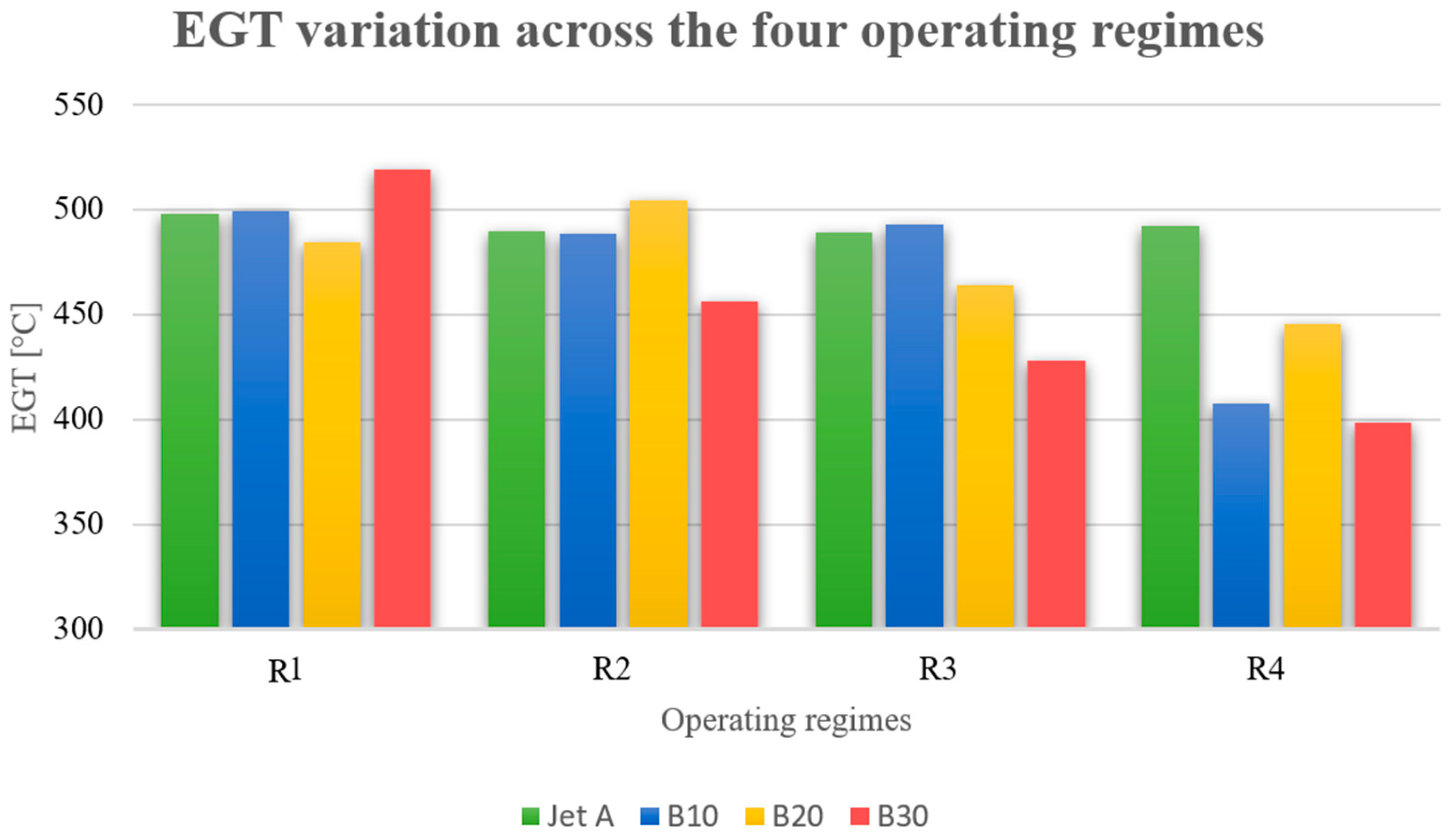
Exhaust gas temperature (EGT) exhibited a clear dependence on both fuel composition and engine operating regime. As it can be observed in
Figure 3, at the idle regime, the EGT of B20 was lower than Jet-A, reflecting the reduced energy density of the blend, while B30 reached the highest temperature among the blends, exceeding that of Jet-A. This initial increase for B30 may be attributed to the delayed combustion of the alcohol fraction, which can produce localized heat spikes in low-flow, low-turbulence conditions. B10, with the lowest butanol content, showed EGTs similar to Jet-A, indicating that small additions of butanol do not substantially affect thermal behavior at very low loads.
As the engine load increased, the EGT trends diverged further among the blends. At intermediate regimes, B20 produced slightly higher temperatures than Jet-A, suggesting that the increased fuel flow enhances oxidation of both kerosene and alcohol components, compensating for the lower volumetric energy density. In contrast, B30 showed a modest decrease in EGT at intermediate loads, likely due to the higher latent heat of vaporization of butanol, which absorbs thermal energy during fuel atomization and delays peak flame temperatures. Compared with conventional kerosene fuels, butanol exhibits a lower cetane number and reduced autoignition reactivity, which increases ignition delay and modifies flame stabilization behavior under high fuel flow conditions [
29,
36]. Additionally, the relatively high latent heat of vaporization of butanol absorbs thermal energy during atomization and evaporation, thereby reducing local flame temperature and slowing combustion propagation rates.
At elevated butanol concentrations, these effects become increasingly significant because the cooling associated with vaporization alters the local air–fuel equivalence ratio distribution within the combustor. The resulting increase in mixture heterogeneity can reduce flame propagation speed and delay complete oxidation in localized regions of the combustion chamber [
11,
14]. Consequently, although higher butanol fractions contribute to reduced NO
x formation through thermal moderation, excessive alcohol content may simultaneously reduce combustion efficiency and transient power responsiveness under high-load operating conditions.
Similar combustion instabilities have previously been reported for high-alcohol aviation blends operating under low-airflow conditions [
36]. Although the present study focused primarily on thermodynamic and emissions characterization, future investigations employing optical diagnostic techniques such as high-speed flame imaging, OH* chemiluminescence analysis, or infrared thermography could provide additional insight into localized flame structures and transient heat-release mechanisms associated with elevated butanol fractions [
37].
At maximum load, all butanol blends exhibited lower EGTs than Jet-A, with B30 showing the most pronounced reduction. This indicates that at high fuel flow rates, the cooling effect of higher butanol content becomes dominant, lowering the average combustion temperature despite complete oxidation.
Overall, the EGT trends illustrate a trade-off: low to moderate butanol fractions maintain or slightly enhance thermal performance, while higher fractions can reduce peak temperatures at high load, potentially affecting engine efficiency.
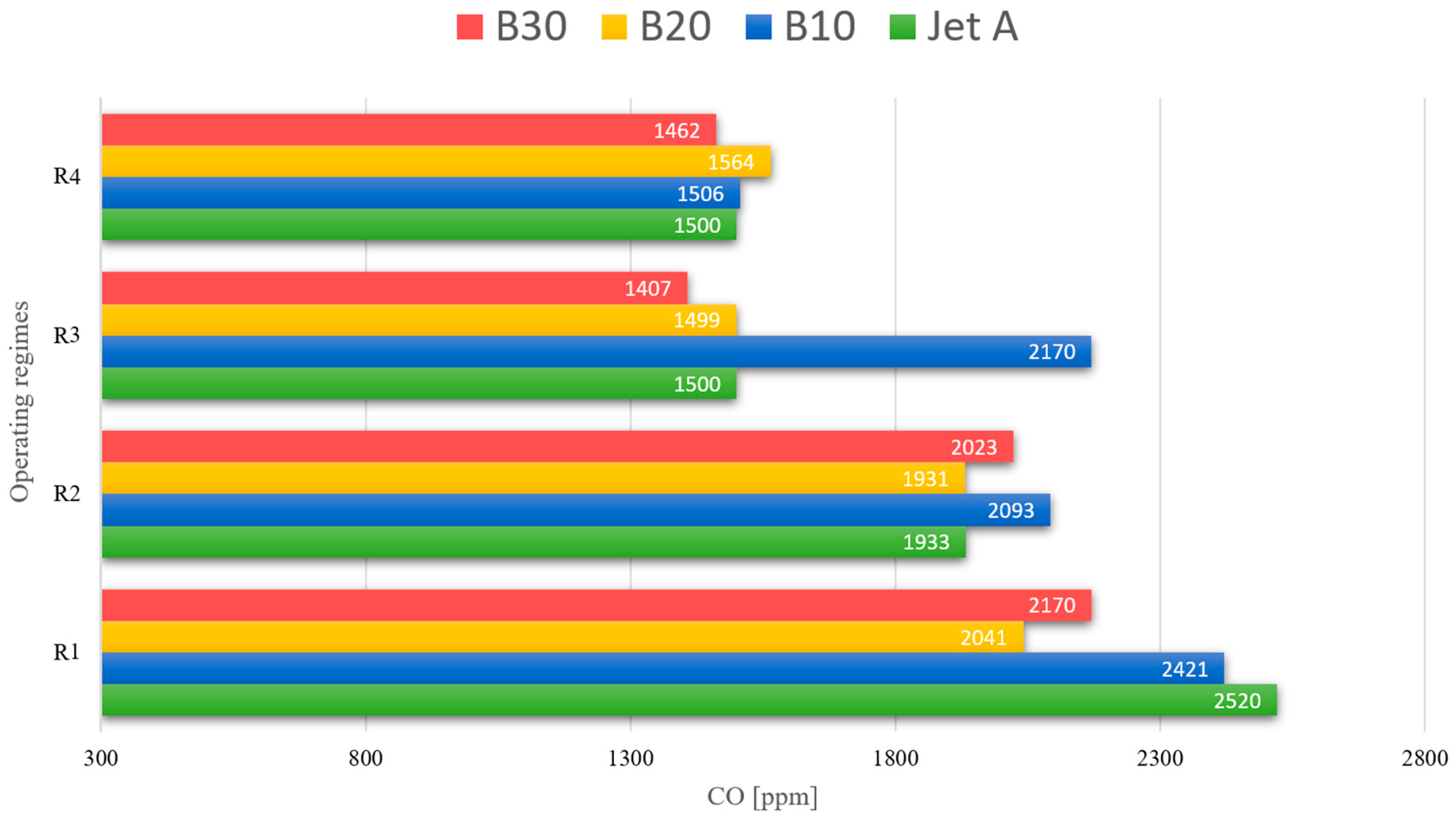
The CO emissions, portrayed in
Figure 4, reflect the completeness of fuel oxidation and were highly sensitive to both engine load and blend composition. For all fuels, CO decreased with increasing load, consistent with higher combustion temperatures and improved oxygen availability. At idle, B20 produced the lowest CO among the blends, suggesting that moderate butanol addition promotes more effective local oxidation even under low thermal energy conditions. B10 and B30 showed higher CO at idle, indicating that very low or very high alcohol content can result in less complete oxidation at low temperatures. For B30, the elevated CO at idle may result from a combination of high latent heat and slower ignition of the alcohol fraction, leading to localized fuel-rich pockets.
At intermediate loads, B30 exhibited the lowest CO, highlighting that the oxygen content in the alcohol facilitates more complete combustion when sufficient thermal energy is available. B10 showed elevated CO at these conditions, suggesting that limited alcohol content is insufficient to significantly improve oxidation in fuel-rich zones. At maximum load, CO levels converged across all blends and Jet-A, indicating that high thermal energy compensates for differences in blend composition, ensuring nearly complete combustion.
These results suggest that moderate to high butanol blending can enhance combustion completeness at low to intermediate loads, but excessively high fractions may initially hinder CO reduction at very low loads.
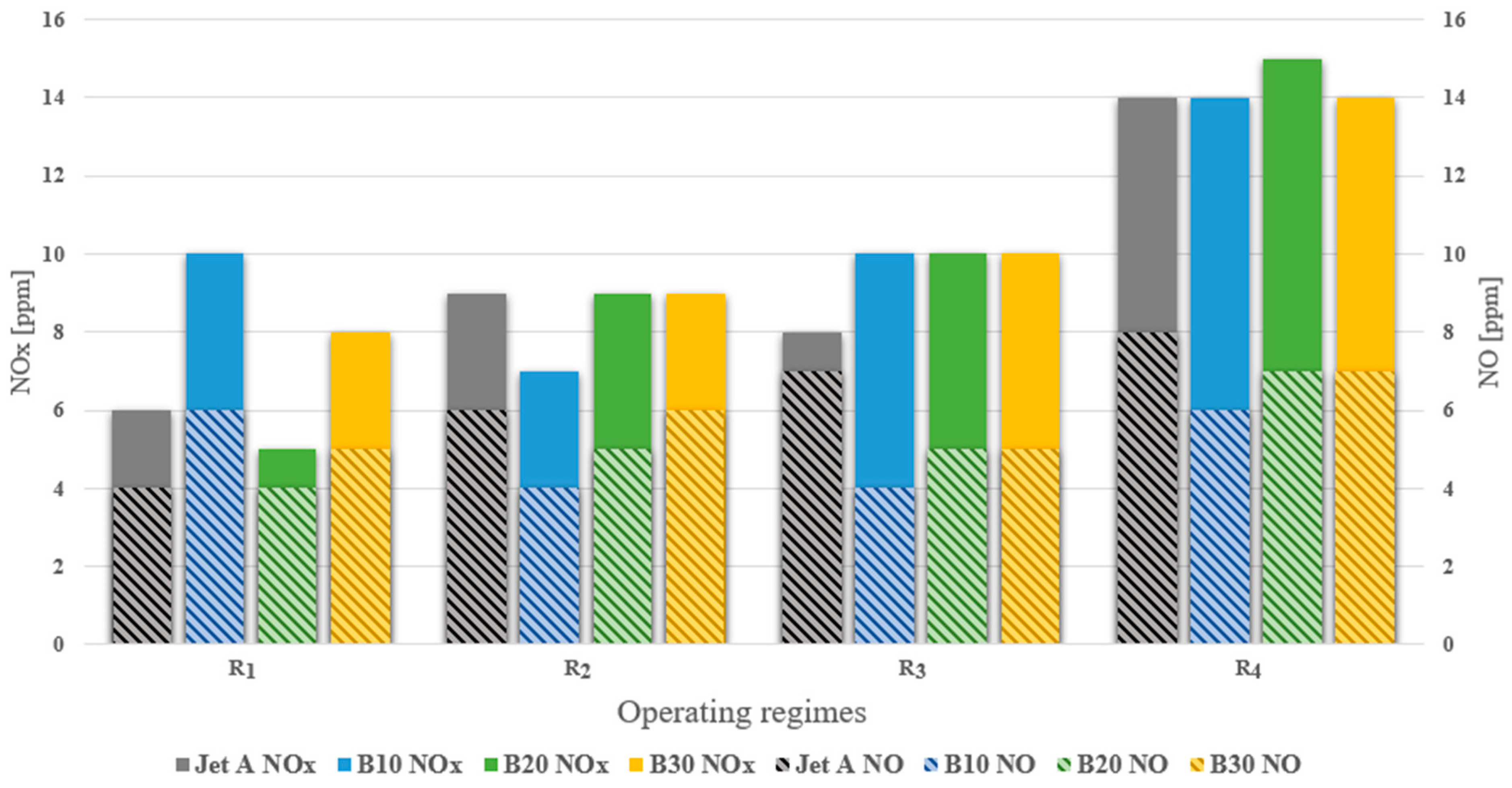
The NO and NOx emissions, displayed in
Figure 5, increased with engine load across all fuels, reflecting the temperature-dependent nature of thermal NO formation via the Zeldovich mechanism. At idle, B10 showed slightly elevated NOx compared with B20 and B30, likely due to localized higher temperatures in small-scale flame zones resulting from the rapid combustion of kerosene-rich pockets. At intermediate regimes, B20 and B30 displayed slightly lower NOx than Jet-A, consistent with the flame-cooling effect of butanol’s high latent heat of vaporization and lower adiabatic flame temperature, which reduce peak temperatures in localized zones and slow thermal NO formation.
It should be noted that NO and NO
x were represented separately because NO constitutes the dominant primary nitrogen oxide species generated directly during high-temperature combustion, whereas NO
x corresponds to the cumulative concentration of nitrogen oxides, including both NO and secondary NO
2 formed through post-flame oxidation processes within the exhaust plume and surrounding atmosphere [
38]. Consequently, the observed differences between the NO and NO
x curves reflect both direct thermal NO formation within the combustor and subsequent oxidation reactions occurring downstream of the combustion zone. The divergence between the two species becomes more pronounced at intermediate operating regimes where exhaust mixing and post-combustion residence times increase.
At maximum load, differences in NOx among the blends became negligible. The high overall combustion temperature dominates NO formation, overshadowing the localized cooling effect of alcohol. These observations indicate that butanol can modestly reduce NOx under moderate loads, but at high loads, thermal NO formation is governed by overall flame temperature rather than fuel composition.
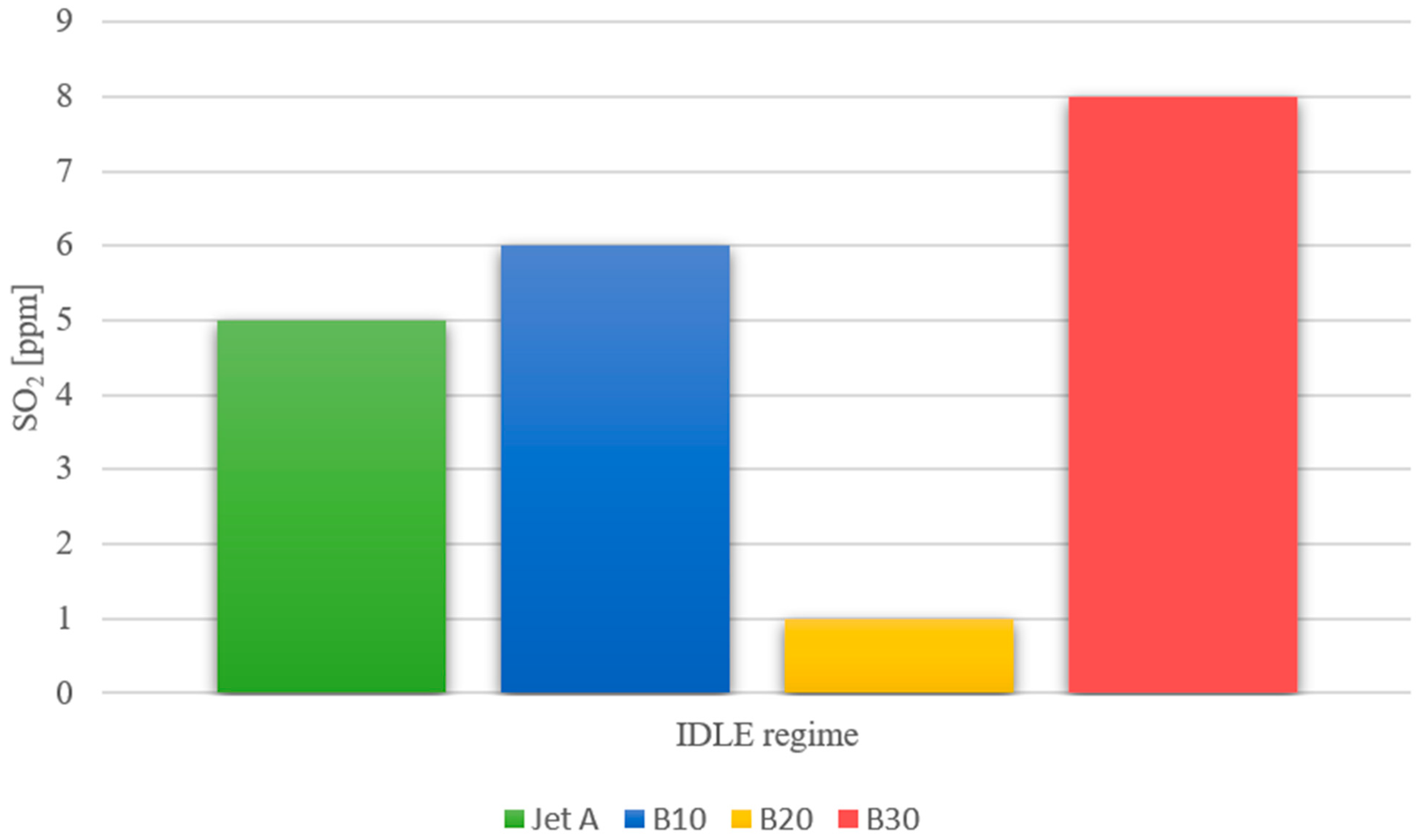
The SO
2 emissions were negligible for all fuels under intermediate and high loads, consistent with the low sulfur content of Jet-A and the blends. As it can be observed in
Figure 6, during the idle regime, all butanol blends showed slightly higher SO
2 than Jet-A, with B30 reaching the highest levels. This minor increase likely results from trace sulfur oxidation under lower temperatures. Under low-load operation, slower combustion kinetics and reduced exhaust gas momentum can increase local residence time within partially oxidizing regions, promoting limited SO
2 formation despite the overall low sulfur content of the fuel [
39]. Although these increases remain minor and environmentally negligible relative to conventional aviation combustion sources, they indicate that incomplete low-temperature oxidation processes may still influence sulfur chemistry under unstable operating conditions.
The comparative evaluation of the three butanol–kerosene blends highlights a balance between combustion efficiency and thermal behavior. B20 consistently achieved lower CO emissions across low and intermediate loads while maintaining stable EGT and moderate NOx levels, making it the most balanced blend. B10 exhibited thermal behavior similar to Jet-A but suffered from higher CO at intermediate loads, indicating that low alcohol content may be insufficient to significantly enhance combustion. B30, while effective in reducing CO under intermediate loads, showed the strongest cooling effect at high load, lowering EGT substantially, which may slightly reduce thermal efficiency but could improve engine durability by reducing peak temperatures.
These findings demonstrate that moderate butanol blending (around 20%) provides the best compromise for small-scale aviation applications, combining improved combustion efficiency with reduced incomplete combustion products while maintaining acceptable thermal and NOx behavior. Higher fractions mainly influence thermal dynamics, particularly under high-load conditions, without producing further emissions benefits.
The second phase of this study investigates how butanol–kerosene fuel blends influence the operational performance of the micro-turboprop engine, with particular attention to electrical power output, the primary performance metric of the test bench and a critical requirement for UAV application. Electrical power was calculated from voltage and current measurements obtained using a Hall-effect sensor from Mateksys. In addition to these primary variables, secondary parameters such as the rotational speed of the generator and the engine throttle setting were continuously monitored. In this context, the term “throttle” differs from its conventional meaning in gasoline engines: rather than regulating airflow, it corresponds to the fuel delivery rate, which directly determines engine power output.
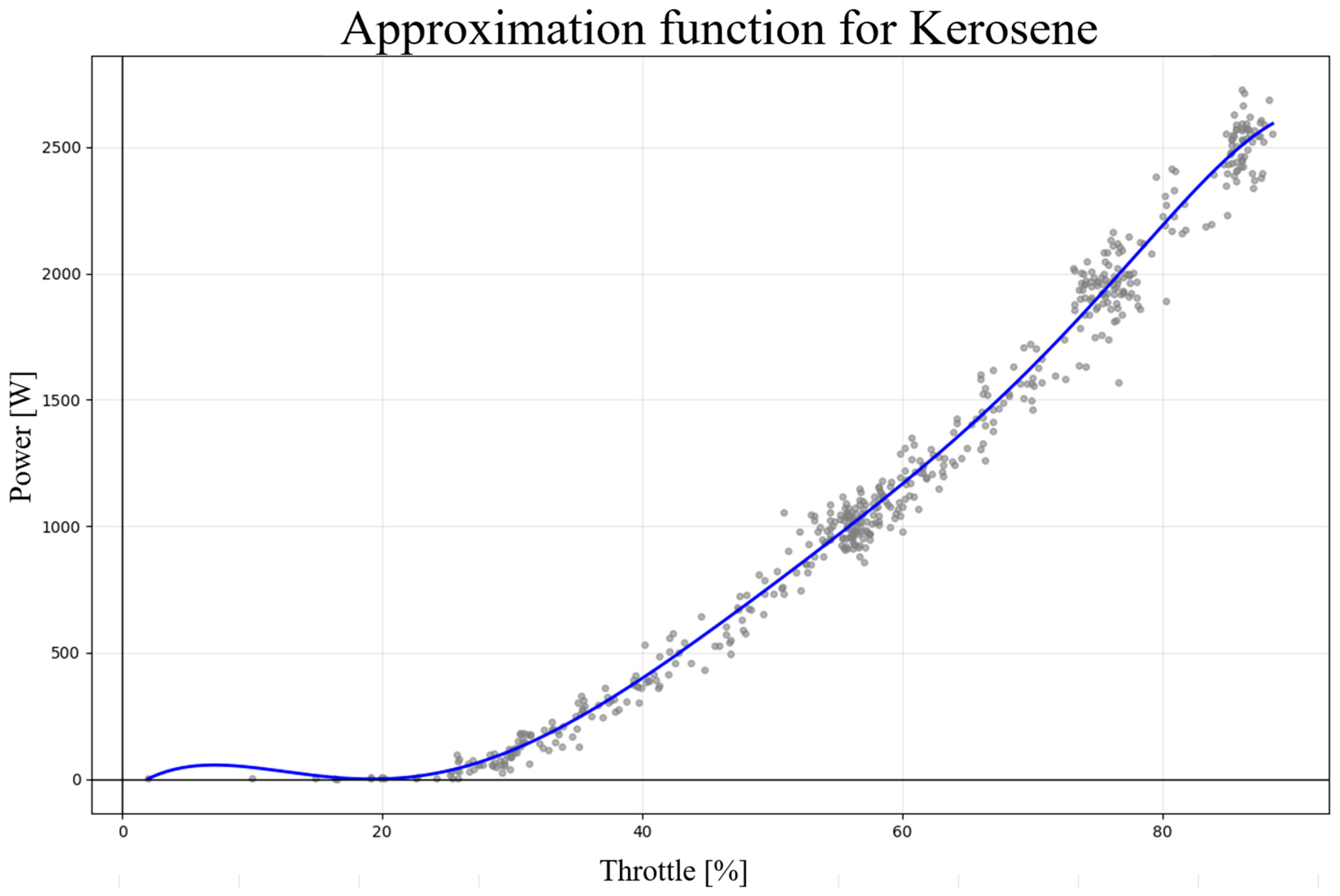
To assess fuel efficiency, the throttle positions required to produce a given electrical power output were compared across different fuel blends and operating regimes. This comparison allows determination of whether a specific blend requires more or less fuel to achieve equivalent electrical performance. Because experimental measurements are discrete, representing individual observations at specific operating points, it was necessary to construct a continuous mathematical model that accurately describes the relationship between throttle and electrical power. Polynomial regression was employed for this purpose, enabling a smooth representation of the data that captures underlying trends while minimizing the impact of experimental noise.
The dataset consists of discrete pairs
, where
denotes the throttle position and
corresponds to the measured electrical power output. The relationship is modeled by a polynomial function of degree
:
where
represents the polynomial coefficients determined through least-squares optimization. The total squared deviation between experimental measurements and the polynomial model is expressed as
Minimization of
ensures that the fitted function provides the best statistical approximation of the observed data. The degree
n of the polynomial was selected based on the coefficient of determination
:
where
represents the mean of all measured power outputs. The optimal degree is chosen to maximize
, providing a balance between accuracy and simplicity while avoiding underfitting or overfitting. Once the polynomial function is defined, it is adjusted vertically to maintain physical plausibility, ensuring that
across the experimental domain, as negative power outputs are physically impossible.
Beyond establishing the continuous functional relationship, the polynomial model enables several additional analyses. First, the derivative of the function with respect to throttle provides insight into the sensitivity of electrical power output to changes in fuel delivery. This information is critical for evaluating engine responsiveness and identifying throttle ranges where small variations in fuel flow lead to significant changes in power, which can affect UAV flight stability. Second, the polynomial representation allows the calculation of relative fuel efficiency for each blend. By comparing the throttle requirement needed to achieve the same power output for different fuels, it is possible to quantify whether a given blend improves or reduces efficiency compared with conventional kerosene. This is particularly relevant for hybrid UAV propulsion, where operational efficiency directly affects flight endurance and payload capability.
Error analysis was also incorporated into the methodology. The regression residuals were examined to ensure uniform distribution and absence of systematic bias. Sensor uncertainties, including Hall-effect current measurement errors and voltage fluctuations, were considered in determining confidence intervals for the fitted curves. The combination of polynomial regression, residual analysis, and sensor uncertainty evaluation ensures that the model provides a reliable and physically meaningful representation of engine performance for all tested blends.
The polynomial regression approach was selected because the experimental throttle–power relationship exhibited strong nonlinear behavior that could not be accurately represented using linear or low-order analytical models. Alternative approximation methods, including exponential and logarithmic regressions, were evaluated during preliminary analysis; however, these models produced significantly lower fitting accuracy and failed to capture local variations observed at intermediate throttle regions. Polynomial regression provided the most stable compromise between model flexibility and computational simplicity for all investigated fuel blends [
40].
To avoid overfitting, the polynomial degree was not selected solely by maximizing the coefficient of determination (R
2). Instead, the optimization process additionally considered residual distribution uniformity, physical plausibility of the resulting curves, and stability of the first derivative across the experimental domain. Polynomial degrees higher than eight introduced oscillatory behavior at the boundaries of the operating range and generated unrealistic local extrema inconsistent with the physical response of the propulsion system. Consequently, the eighth-degree approximation was selected for B10, while seventh-degree polynomials were found to be sufficient for B20 and B30, as additional higher-order terms produced negligible improvement in fitting accuracy while increasing model complexity [
41].
Furthermore, cross-validation was performed by comparing predicted power outputs against independent experimental measurements acquired at intermediate throttle settings not included in the regression dataset. The resulting prediction error remained below 3.5% for all blends, confirming that the selected polynomial degrees provide stable and physically meaningful approximations without significant overfitting effects.
Finally, the continuous polynomial functions allow direct integration with emissions measurements. By mapping electrical power output to throttle position analytically, it becomes possible to correlate performance metrics with pollutant formation, such as CO, NOx, and SO
2, across operating regimes.
Figure 7 illustrates the experimental data points for conventional kerosene and the corresponding polynomial approximation. The higher density of points at specific power levels reflects the need for increased measurement resolution in regions critical for pollutant monitoring, ensuring both precision and reliability in subsequent emissions analyses.
This extended methodological framework provides a rigorous, quantitative basis for evaluating the performance of alternative fuel blends. It supports direct comparison between butanol–kerosene blends and conventional kerosene, enables the assessment of efficiency and responsiveness, and establishes a link between fuel delivery, electrical power output, and emissions characteristics, critical for the design and optimization of hybrid UAV propulsion systems.
Applying the same mathematical framework, the polynomial coefficients obtained from fitting the experimental data for each butanol–kerosene blend are presented in
Table 3. The polynomial model representing the 10% butanol blend was formulated as an eighth-degree function, whereas the approximation for the 20% blend was expressed as a seventh-degree polynomial, with all higher-order coefficients set to zero.
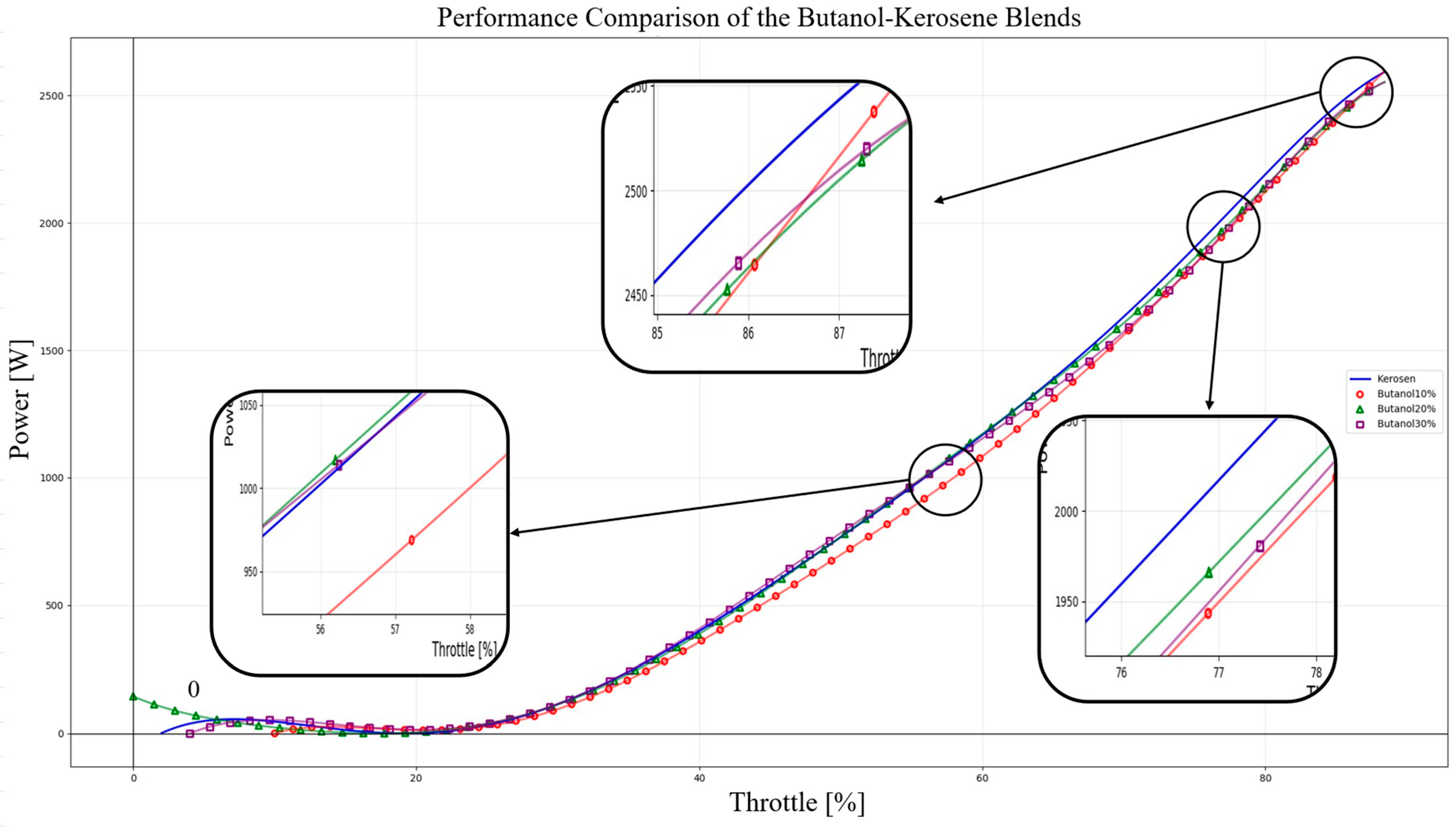
The performance and fuel efficiency of the three butanol–kerosene blends were examined by plotting their corresponding polynomial approximation functions, as shown in
Figure 8. Including the polynomial function for conventional kerosene as a reference enables a direct visual comparison, highlighting differences in throttle requirements for equivalent electrical power output. This graphical representation allows identification of trends in fuel efficiency across the blends, illustrating how increasing butanol content influences power delivery, engine responsiveness, and overall performance. By analyzing the relative positions and slopes of the curves, it is possible to assess which blends achieve the desired power output with lower fuel consumption, providing insight into the optimal composition for UAV propulsion applications.
The graph presents the electrical power output as a function of throttle for conventional kerosene and three butanol–kerosene blends, with magnified insets highlighting the studied operating regimes. The curves illustrate the relationship between throttle position and power delivery, providing insight into engine responsiveness and relative fuel efficiency.
At low throttle values (below approximately 20%), all blends and kerosene exhibit similar power outputs, with slight deviations for B20 and B30. B20 shows a marginally higher power output than B10 and B30 in the very-low-throttle range, indicating slightly more efficient combustion at minimal fuel delivery. Overall, the low-throttle region demonstrates that all fuels are capable of delivering baseline power with minimal performance penalties, although higher butanol fractions introduce minor variations, likely due to evaporative cooling and ignition delay effects.
In the mid-throttle range (approximately 40–70%), the differences among the fuels become more pronounced. The B10 blend closely follows the kerosene reference curve, indicating similar throttle-to-power efficiency. B20 initially requires slightly less throttle than kerosene to achieve the same power output, reflecting improved combustion efficiency due to the moderate alcohol content providing additional oxygen to the flame. Conversely, B30 exhibits slightly reduced power output at the same throttle, suggesting that the higher alcohol fraction introduces stronger latent heat effects and marginally delays peak energy release, thereby reducing thermal efficiency in this range.
At high throttle levels (above 75%), all blends converge toward similar power outputs as kerosene, indicating that at near-maximal fuel flow, the influence of alcohol content on efficiency diminishes. However, the magnified insets reveal subtle distinctions: B20 slightly exceeds the kerosene curve, demonstrating a minor advantage in power generation for a given throttle, whereas B10 and B30 closely track kerosene, with B30 slightly underperforming relative to B20. This behavior is consistent with the thermal and chemical effects of butanol: moderate concentrations enhance combustion through oxygen content, while higher concentrations lead to increased fuel vaporization and heat absorption, slightly reducing peak output at equivalent fuel delivery.
The slope of the curves also provides insight into engine responsiveness. B20 shows a slightly steeper slope in mid-throttle regions compared to B10 and B30, indicating that incremental changes in fuel delivery produce larger increases in power output. This characteristic suggests improved control responsiveness, which is advantageous for UAV applications requiring precise power modulation. B10 maintains near-identical slope to kerosene, while B30 exhibits a slightly flatter slope at intermediate throttle, consistent with the thermal damping effect of the higher alcohol content.
In summary, B20 demonstrates the most favorable performance profile, combining slightly improved efficiency and responsiveness across a wide throttle range. Quantitatively, the B20 blend achieved approximately 4.8% higher electrical power output than conventional kerosene at equivalent throttle settings within the intermediate operating range, while simultaneously reducing the required fuel flow by approximately 3.9%. In addition, the throttle demand necessary to achieve a 2 kW electrical output was reduced by nearly 5% relative to the baseline kerosene configuration. These improvements indicate that moderate butanol addition enhances combustion efficiency and energy conversion effectiveness without introducing significant thermal or operational penalties [
42]. B10 performs comparably to kerosene, offering minimal efficiency gains but stable behavior. B30, while effective at high power, shows minor efficiency reductions at intermediate throttle due to evaporative cooling and delayed combustion effects. These observations suggest that moderate butanol blending provides an optimal compromise between fuel efficiency, power output, and engine control for UAV propulsion systems.
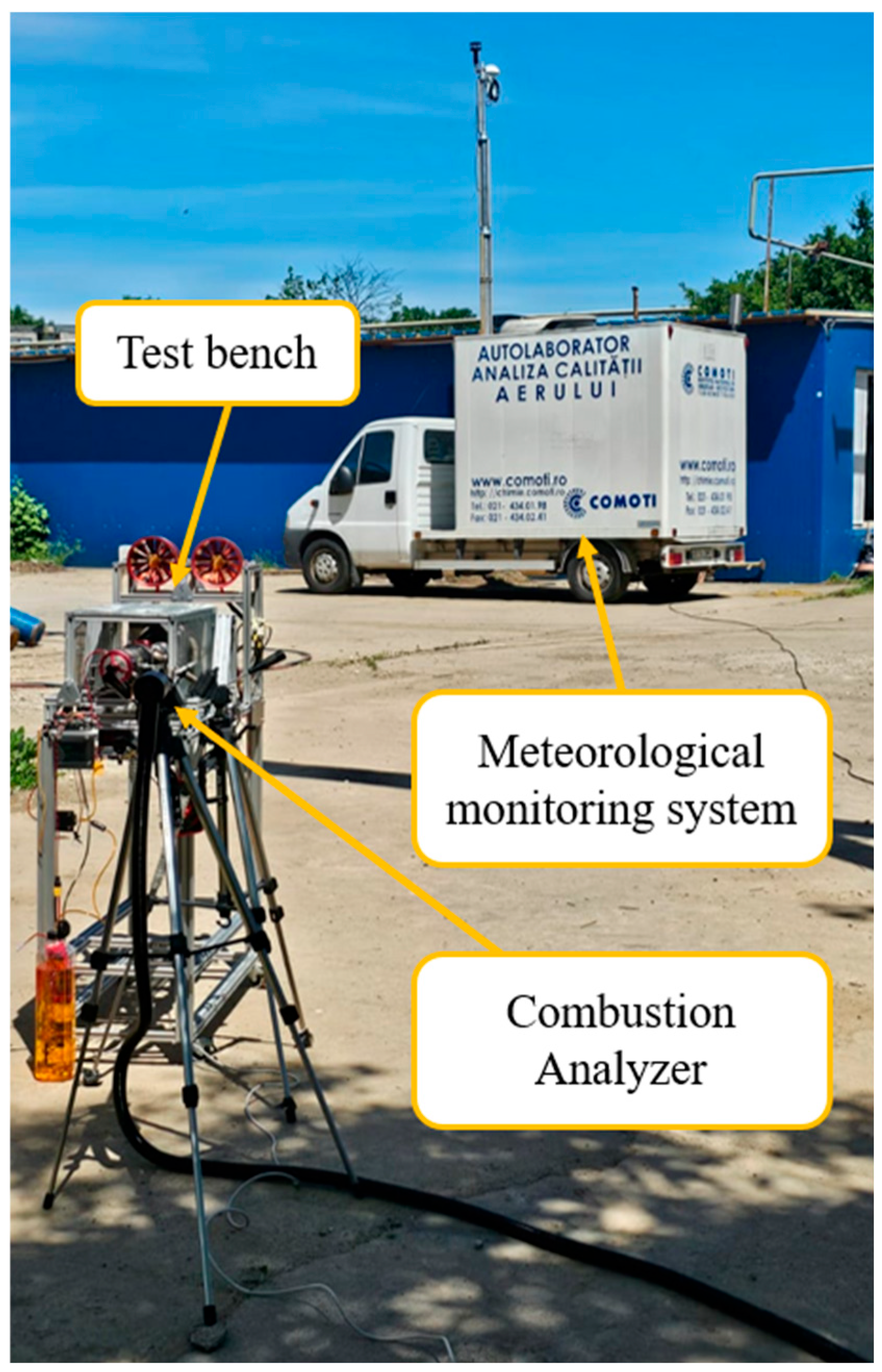
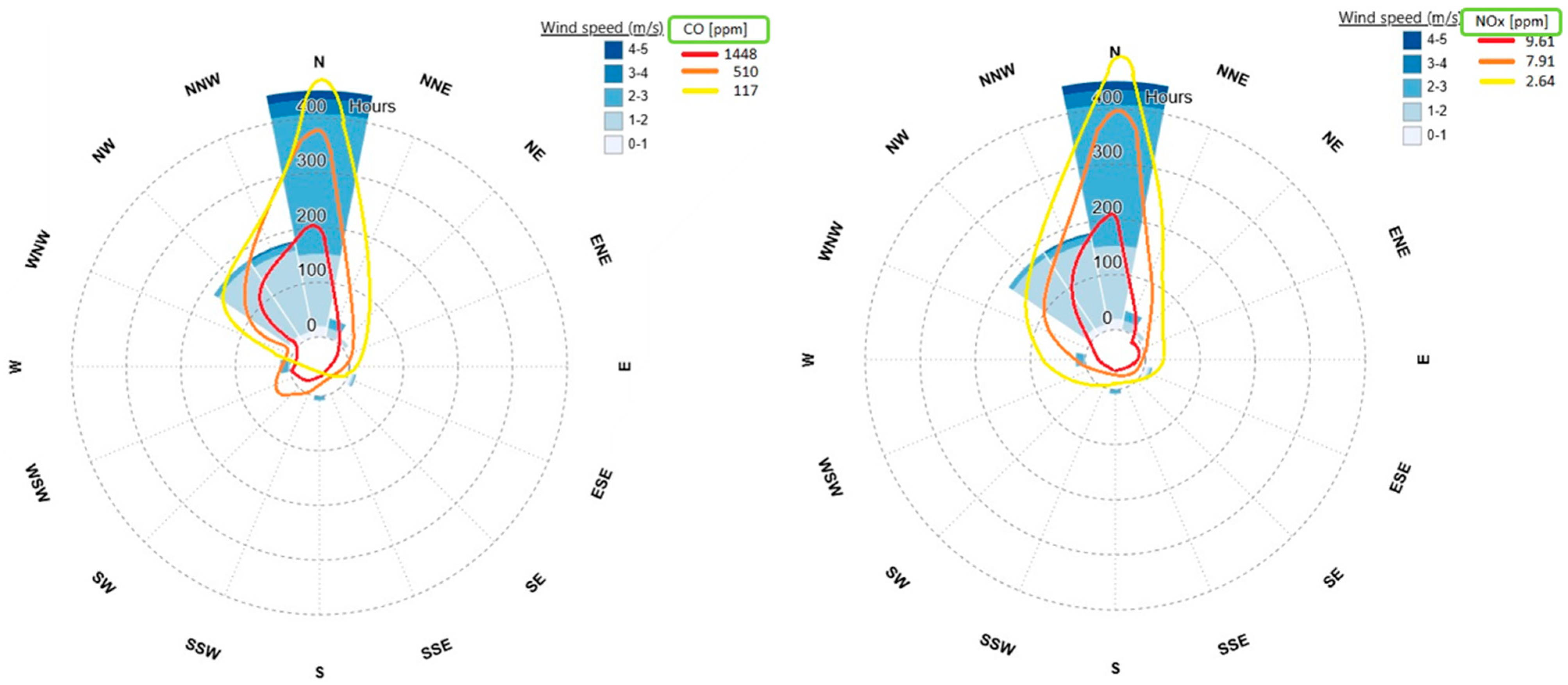
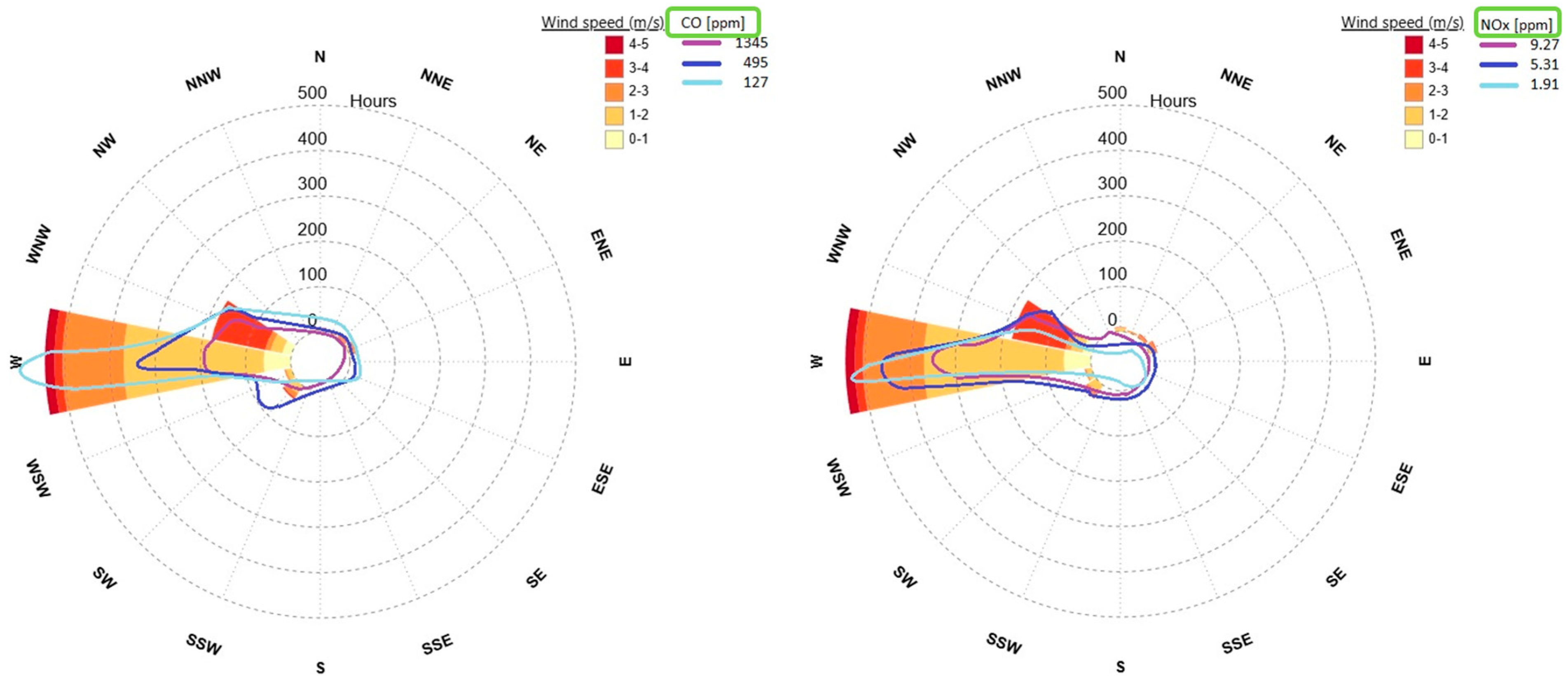
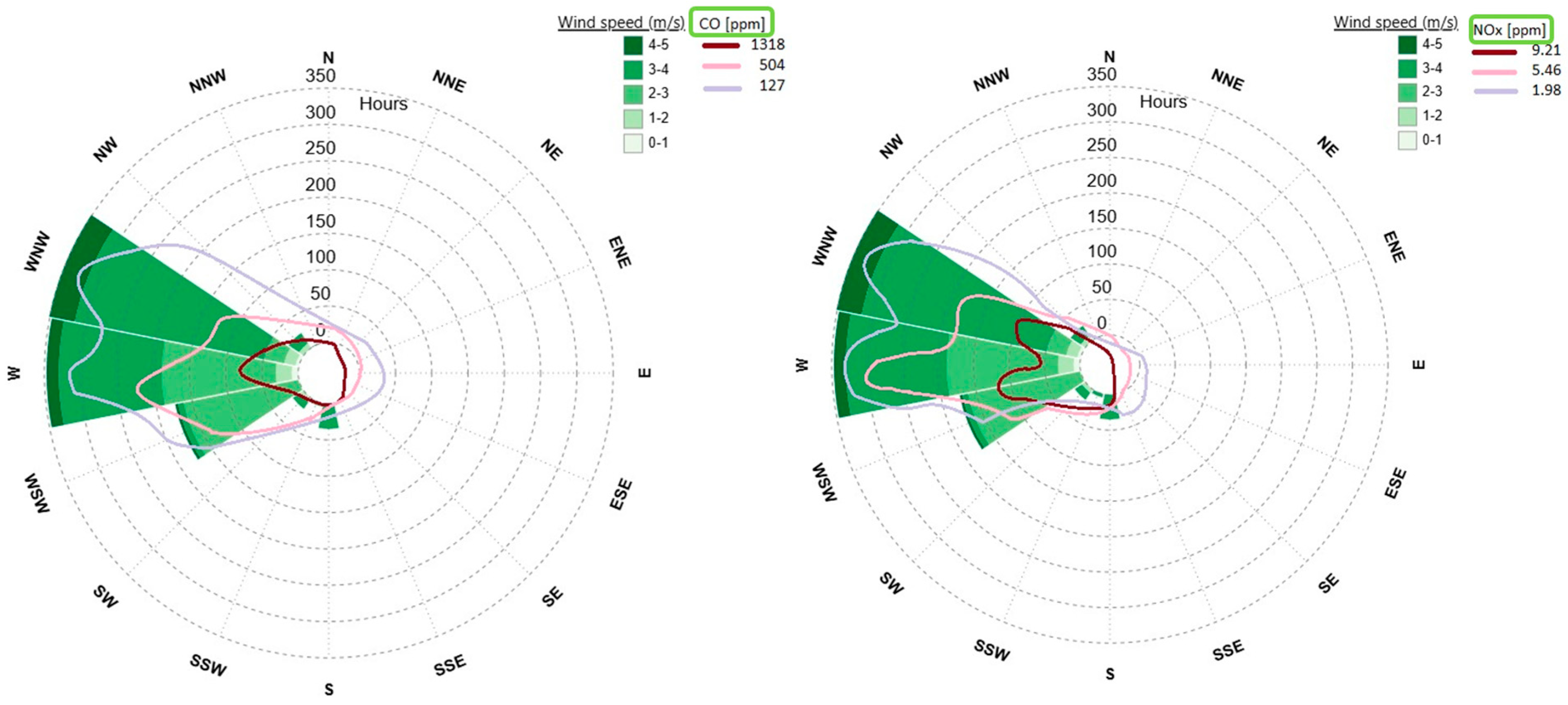
The assessment of pollutant emissions needs to encompass both near-source characterization of the pollutant emissions and the subsequent evolution of dispersion in the immediate surroundings of the emission source. Employing the measurement setup described in the preceding section, the influence of wind direction and wind speed on the spatial distribution of emitted species was systematically investigated. The analysis focuses on nitrogen- and carbon-based oxides, as illustrated in
Figure 9,
Figure 10 and
Figure 11. Sulfur oxides were excluded from this analysis due to their negligible concentrations under the examined operating conditions, rendering their spatial distributions statistically and physically unrepresentative. The evaluation was conducted independently for each of the investigated butanol–kerosene fuel blends, enabling comparison of dispersion behavior across varying fuel compositions.
The polar dispersion diagrams derived for butanol–kerosene blends containing 10%, 20%, and 30% butanol by volume exhibit consistent, physically interpretable patterns in the downstream transport and formation of carbon monoxide and nitrogen oxides in the exhaust field of a micro turboprop power-generating system. Rather than reflecting purely concentration differences, the observed distributions primarily encode the coupled interaction between exhaust plume dynamics, ambient flow conditions and combustion regime transitions.
Across all fuel formulations, a pronounced directional anisotropy is evident, indicating that pollutant dispersion is strongly governed by wind characteristics. The concentration fields display a persistent preferential alignment toward a specific wind sector, implying that the exhaust behaves effectively as a compact momentum-driven source whose plume trajectory is readily advected by the ambient flow with limited lateral diffusion under low-to-moderate wind conditions. The relatively sharp angular confinement of elevated concentrations further suggests limited near-field turbulent dispersion, consistent with a jet-like plume structure transitioning rapidly into the atmospheric boundary layer. To support the qualitative interpretation of the dispersion fields, additional quantitative descriptors were evaluated for each fuel blend. The anisotropy index, defined as the ratio between the maximum sector concentration and the mean circumferential concentration, decreased progressively from 2.41 for B10 to 1.96 for B20 and 1.58 for B30. This trend quantitatively confirms the transition toward increasingly isotropic plume structures with higher butanol content.
Similarly, the average sectoral concentration gradient decreased by approximately 27% between B10 and B30, indicating reduced spatial concentration heterogeneity and weaker directional confinement of the exhaust plume. These quantitative metrics support the observation that increasing butanol fraction promotes improved pollutant homogenization and reduced localized environmental exposure under varying atmospheric conditions [
43,
44].
An essential dependence on wind speed is also observed, in which elevated concentrations of both CO and NOx are associated with intermediate wind regimes rather than stationary conditions. This behavior indicates that pollutant levels are not governed solely by dilution effects. Instead, the system reflects a coupled thermochemical–aerodynamic response in which increased ambient flow enhances entrainment and mixing processes within the hot exhaust core. Such enhanced mixing can modify local oxidation conditions, promoting post-flame conversion pathways for carbon monoxide and influencing temperature-dependent nitrogen oxide formation mechanisms. In addition, the wind speed dependence likely reflects operational coupling, whereby higher wind regimes correspond to elevated engine thrust settings, leading to increased fuel throughput, higher core temperatures, and greater exhaust momentum flux. The resulting emission signature therefore represents a convolution of engine operating state and atmospheric transport rather than an isolated meteorological effect.
Although wind speed clearly influences pollutant dilution and atmospheric transport, the measured concentration fields may additionally reflect indirect variations in engine operating state associated with changing aerodynamic loading conditions. To minimize this coupling effect during the experimental campaign, the propulsion system was operated at predefined throttle intervals independent of instantaneous wind conditions whenever possible. Nevertheless, complete decoupling between atmospheric transport effects and source-intensity variations remains difficult under open-environment testing conditions.
Consequently, the present analysis primarily identifies combined plume-response behavior rather than purely isolated meteorological transport effects. Future investigations should therefore employ controlled-variable experimental methodologies, including constant-thrust operating modes within closed or semi-controlled airflow environments, in order to independently quantify dilution-driven dispersion effects and combustion-source intensity variations [
45].
Distinct differences emerge between the two pollutant species in their sensitivity to flow conditions. Nitrogen oxides exhibit a comparatively stronger response to higher wind-speed regimes than carbon monoxide, indicating greater dependence on peak thermal conditions and residence time within high-temperature zones. This is consistent with NOx formation pathways that are strongly controlled by temperature-dependent reaction kinetics. In contrast, carbon monoxide behavior is more strongly influenced by post-combustion mixing and quenching processes, reflecting its sensitivity to incomplete oxidation in rapidly cooled or oxygen-limited regions of the plume.
Variation in fuel composition introduces a systematic restructuring of the emission field. Increasing the proportion of butanol leads to a coherent reduction in both CO and NOx across all flow sectors, accompanied by a progressive smoothing of spatial gradients. At low butanol content, the emission field is characterized by localized spike and strong spatial heterogeneity, indicative of diffusion-dominated combustion with pronounced fuel-rich zones and elevated thermal stratification. As the butanol fraction increases, the spatial distribution becomes increasingly diffuse and less directionally structured, consistent with enhanced fuel–air preconditioning and improved mixture homogeneity prior to combustion.
At higher butanol content, the plume approaches a more isotropic distribution, suggesting a transition toward a combustion regime with reduced sensitivity to localized equivalence ratio fluctuations. This homogenization of the emission field is consistent with reduced formation of hot spots and a more uniform thermal profile at the combustor exit. The concurrent reduction of both CO and NOx indicates that changes in fuel chemistry are altering dominant reaction pathways and residence time distributions, rather than simply shifting emissions between oxidized and partially oxidized species.
The differing response of NOx and CO to fuel blending further suggests decoupling of their controlling mechanisms. The stronger suppression of NOx at elevated butanol fractions is consistent with reduced peak temperature excursions and shortened high-temperature residence times, which constrain kinetically limited formation pathways. Meanwhile, the reduction in CO reflects improved oxidation completeness, likely driven by enhanced mixing and increased availability of reactive oxygen species within the post-flame region. The oxygenated nature of butanol, combined with its thermophysical properties, may contribute to modified vaporization dynamics and reduced local equivalence ratio gradients, thereby suppressing conditions conducive to both incomplete combustion and thermal NOx formation.
To further quantify the dispersion behavior, additional statistical indicators were evaluated from the wind-rose concentration fields. The area associated with elevated pollutant concentrations decreased progressively with increasing butanol content, indicating improved plume homogenization and reduced localized pollutant accumulation. Relative to B10, the B20 and B30 blends exhibited reductions of approximately 18% and 31%, respectively, in the spatial extent of high-concentration zones.
Furthermore, the standard deviation of normalized concentration intensity across wind sectors decreased systematically with increasing butanol fraction, confirming the transition toward a more isotropic dispersion structure. The reduction in concentration variability suggests that higher butanol fractions produce more spatially uniform emission plumes with reduced directional sensitivity, thereby decreasing localized environmental exposure and improving near-field pollutant dispersion characteristics.
Overall, the evolution of the dispersion fields with increasing butanol content indicates a transition in the underlying combustion–flow coupling. The system shifts from a regime dominated by heterogeneous, mixing-limited combustion structures toward one characterized by more spatially uniform, kinetically moderated reaction conditions. This transition manifests macroscopically as reduced plume anisotropy, diminished peak concentrations, and decreased sensitivity to wind directionality, reflecting a fundamentally altered interaction between fuel chemistry, flame structure, and atmospheric dispersion processes.
4. Discussion
The experimental evaluation of butanol–kerosene blends in a micro-turboprop engine demonstrates how fuel chemistry fundamentally reshapes combustion behavior, emission formation, performance characteristics, and atmospheric dispersion, using conventional kerosene as a baseline. From a sustainability perspective, the results are particularly relevant because they directly link renewable fuel blending strategies to reductions in pollutant formation and changes in the environmental footprint of small-scale aviation propulsion systems and UAV applications.
The EGT analysis reveals a clear coupling between fuel composition, ignition behavior, and energy release dynamics. Small additions of butanol (B10) produce negligible deviation from kerosene, indicating that low blending ratios do not significantly alter the combustion regime. At moderate blending (B20), thermal behavior remains stable across operating conditions, with only modest deviations from kerosene, suggesting a balanced interplay between improved oxidation and evaporative cooling. At higher blending ratios (B30), more pronounced thermal variability is observed. Delayed ignition associated with the lower cetane number of butanol can lead to transient fuel-rich combustion under low-load conditions, whereas its high latent heat of vaporization contributes to reduced peak flame temperatures at elevated loads. This temperature moderation is environmentally relevant, as it directly contributes to reduced thermal stress and lower thermally driven pollutant formation, particularly NOx. The observed reduction in exhaust gas temperature at higher butanol fractions is consistent with the findings reported by Suchocki et al. [
9], who identified significant evaporative cooling effects in alcohol–kerosene turbine blends. Similar reductions in peak combustion temperature for butanol-based aviation fuels were also reported by Cican et al. [
10], confirming that increased alcohol content suppresses localized thermal peaks through enhanced vaporization heat absorption.
Emission analysis highlights a simultaneous reduction of major combustion pollutants at moderate blending ratios. CO emissions are minimized for B20 across most operating conditions, displaying similar variation tendency to kerosene, even slightly better in some operating regimes, indicating improved combustion completeness driven by oxygenated fuel chemistry and enhanced radical formation pathways. B10 provides only marginal improvement over kerosene, while B30 shows non-linear behavior, with elevated CO under idle conditions due to incomplete oxidation in locally fuel-rich zones, but partial recovery at intermediate loads when higher temperatures enable more complete conversion.
NOx emissions increase with engine load for all fuels, consistent with temperature-driven formation via the Zeldovich mechanism. However, both B20 and B30 reduce NOx at intermediate and high loads relative to kerosene, confirming that evaporative cooling and reduced peak flame temperatures play a key role in limiting high-temperature reaction pathways. Importantly, B20 achieves this reduction without introducing the performance penalties associated with higher blending ratios, making it particularly relevant for low-emission propulsion applications.
The simultaneous reduction in CO and NOx emissions observed for the B20 blend agrees with previous investigations demonstrating that moderate oxygenated fuel addition improves oxidation completeness while suppressing temperature-dependent NOx pathways [
46,
47]. These studies similarly reported that moderate alcohol blending provides the most favorable balance between combustion stability and emissions reduction in small turbine engines.
The dispersion analysis, supported by wind-rose representations, extends these findings to the environmental scale. Across all fuels, pollutant transport is strongly anisotropic and governed by the prevailing wind direction, confirming that the exhaust behaves as a compact, jet-like plume that is advected by ambient flow. However, fuel composition significantly modifies plume structure. At low blending (B10), dispersion remains sharply directional, reflecting a coherent and momentum-driven exhaust. As butanol content increases, particularly at B20 and B30, plume structures progressively broaden, indicating reduced directional sensitivity and enhanced turbulent mixing. This transition is driven by lower exhaust momentum, faster thermal equilibration with ambient air, and improved premixing within the combustion process.
Wind speed further modulates dispersion in a non-linear manner. Intermediate wind conditions produce the highest near-ground pollutant concentrations due to enhanced entrainment and mixing, while high wind speeds promote dilution and rapid plume breakup. This behavior is critical from an environmental standpoint, as it demonstrates that emission impact is not purely a function of fuel composition but also of atmospheric interaction mechanisms.
From a performance perspective, electrical output analysis confirms that moderate butanol blending improves fuel utilization efficiency. B20 achieves comparable power output to kerosene with reduced fuel consumption, indicating improved energy conversion efficiency. This is attributed to enhanced oxidation completeness enabled by fuel-bound oxygen and more effective radical-driven combustion chemistry. In contrast, B30 exhibits reduced mid-load performance due to evaporative cooling and delayed flame development, while B10 remains largely indistinguishable from kerosene. The improved electrical power response observed for the B20 blend is also consistent with recent studies on hybrid propulsion systems employing oxygenated fuels, where moderate alcohol content enhanced combustion efficiency without significantly affecting turbine operability [
48].
Taken together, the results identify three dominant physico-chemical mechanisms governing system behavior:
- i.
Evaporative cooling from butanol, which reduces peak flame temperatures and suppresses NOx formation;
- i.
ii. Oxygenated fuel chemistry, which enhances oxidation efficiency and reduces CO emissions; and
- i.
iii. Ignition and volatility effects linked to lower cetane number, which influence combustion stability at higher blending ratios.
The interplay of these mechanisms produces a non-linear response, where moderate blending yields synergistic benefits, while excessive blending introduces performance penalties.
From a sustainability standpoint, the most significant outcome is that a 20% butanol blend (B20) consistently achieves the best balance between environmental and operational performance. It reduces CO emissions, moderates NOx formation at relevant operating conditions, maintains stable thermal behavior, and improves combustion efficiency without compromising engine performance. Importantly, it also produces a less directionally concentrated and more rapidly diffusing emission plume, reducing localized environmental exposure in realistic operating conditions.
In contrast, B10 offers negligible environmental advantage over conventional kerosene, while B30, although effective in lowering peak combustion temperatures and NOx under certain conditions, introduces undesirable trade-offs in ignition stability, CO formation at low load, and mid-range power responsiveness. These limitations reduce its practical suitability for efficient UAV propulsion despite its partial emission benefits.
Overall, the study demonstrates that renewable alcohol–kerosene blending can meaningfully reduce the environmental footprint of micro-turboprop propulsion systems, but only within an optimal blending window. The results strongly support moderate blending as a viable pathway toward lower-emission aviation fuels, with B20 identified as the most sustainable and technically balanced solution among the tested configurations.
Despite the promising environmental and operational performance of the B20 blend, several practical challenges remain for real UAV implementation. The long-term compatibility of butanol-containing fuels with elastomeric seals, polymer fuel lines, and metallic fuel system components requires further investigation due to the solvent characteristics of alcohol-based fuels. Additionally, the relatively lower vapor pressure and higher viscosity of butanol under cold weather conditions may influence ignition stability and fuel atomization during low-temperature operation. Fuel storage stability, water absorption during prolonged deployment, and potential calibration modifications for fuel delivery systems must also be evaluated before large-scale integration into operational UAV platforms. Consequently, future work should combine combustion analysis with durability and operational reliability studies under realistic field conditions.




 ,
,