Article

Digital Finance and Corporate ESG Disclosure–Practice Consistency: The Roles of Corporate Digitalization and Executives’ Digital Background

School of Management, University of Science and Technology of China, Hefei 230026, China
*
Author to whom correspondence should be addressed.
Sustainability 2026, 18(11), 5263; https://doi.org/10.3390/su18115263
Submission received: 14 April 2026 / Revised: 13 May 2026 / Accepted: 21 May 2026 / Published: 23 May 2026

Abstract

In the digital era, sustainable finance is increasingly expected not only to expand financial access, but also to strengthen ESG transparency, accountability, and the alignment between corporate disclosure and actual practice. Against this backdrop, this study examines whether digital finance enhances corporate ESG disclosure–practice consistency by mitigating corporate ESG decoupling. Using Chinese A-share listed firms from 2011 to 2024 as the sample, we further investigate the moderating roles of corporate digitalization and executives’ digital background. The results show that digital finance significantly reduces corporate ESG decoupling, and this finding remains robust after alternative variable specifications, sample adjustments, stricter fixed-effects settings, and instrumental-variable estimation. Across the environmental, social, and governance dimensions, digital finance exhibits a stronger mitigating effect on social and governance decoupling. Corporate digitalization and executives’ digital background, acting as key micro-level enabling mechanisms through which regional digital finance translates into firm-level governance improvement, both significantly strengthen the mitigating effect of digital finance on corporate ESG decoupling. Further analysis shows that this effect mainly operates through easing financing constraints and reducing information asymmetry. This study contributes to the literature on sustainable finance, digital governance, and corporate sustainability by providing new evidence on how digital finance can narrow the ESG disclosure–practice gap and improve the consistency between corporate ESG disclosure and actual performance. It also offers practical implications for advancing the high-quality development of digital finance, strengthening firms’ digital capabilities, and enhancing the digital literacy of corporate executives.

1. Introduction

Over the past few years, digital finance has become an important driving force for ESG governance and sustainable development. As regulatory and market demands for responsible business conduct continue to intensify, the focus of corporate ESG governance has also shifted. Earlier studies largely examined whether firms disclose ESG information and how such disclosure affects capital-market or governance outcomes [1,2,3]. More recent debates, however, have shifted toward whether disclosed ESG information is consistent with firms’ actual responsibility practices. The central issue in ESG governance is therefore no longer the availability of ESG disclosure alone, but the credibility and disclosure–practice consistency of corporate ESG governance. This shift makes corporate ESG decoupling a theoretically and practically important object of inquiry [4,5,6].
Reflecting these shifts, corporate ESG decoupling has become an important topic in both academic and practical debates [7]. Defined as a systematic divergence between ESG disclosure, responsibility commitments, or narratives and actual ESG performance, decoupling represents a fundamental misalignment within corporate sustainability. Such deviations reduce the usefulness of ESG data for decision-making and make it more difficult for investors to assess firms’ actual responsibility performance. More critically, when firms project a responsible image through high-level disclosures without commensurate performance gains, ESG efforts remain trapped at a symbolic level, failing to catalyze substantive governance reform [8]. Identifying the drivers and governance pathways of ESG decoupling is therefore both theoretically and practically important.
Against this backdrop, digital finance provides a theoretically meaningful lens for explaining corporate ESG decoupling. In this study, digital finance refers to the external regional digital financial environment in which firms operate and the digitally enabled forms of financial services available in that environment, including digital payments, online credit, platform-based financing, and digital financial inclusion services. Through these digitally enabled financial services, digital finance reshapes both the resource conditions and the information environment surrounding firms. From a resource perspective, digital finance expands financial accessibility, improves credit identification, and enhances resource allocation efficiency, thereby making substantive ESG investment more feasible [9,10]. From an information perspective, digital finance strengthens data traceability, platform connectivity, and external information transmission, which increases the observability of firms’ actual conduct and reduces the room for maintaining high disclosure with weak performance [11,12]. The theoretical relevance of linking digital finance with ESG governance therefore lies in the fact that digital finance changes the conditions under which firms respond to sustainability pressures. It can reduce the resource gap between symbolic disclosure and substantive ESG investment, while also narrowing the information gap that allows firms to maintain a responsible image without equivalent performance. Therefore, digital finance may affect not only firms’ general ESG performance, but also the credibility and disclosure–practice consistency of corporate sustainability governance.
However, the link between regional digital finance and corporate ESG decoupling should not be assumed to be automatic. Existing studies have primarily examined whether digital finance improves ESG performance, green innovation, green transformation, or other broad ESG-related outcomes [5,13]. Much less is known about whether digital finance can reduce the divergence between ESG disclosure and actual ESG performance. More importantly, regional digital finance is an external institutional condition, whereas ESG decoupling is a firm-level behavioral outcome. This cross-level relationship raises a key theoretical question: through what firm-level enabling mechanisms can an external digital financial environment be internalized into substantive ESG governance improvement?
To address this theoretical gap, this study identifies corporate digitalization and executives’ digital background as key micro-level enabling mechanisms. Corporate digitalization captures the organization-level digital absorption and execution capacity. Firms with stronger digital infrastructures are better able to embed the financing convenience, data resources, and external disciplinary pressure generated by digital finance into internal processes, performance feedback, and ESG management systems. Executives’ digital background captures managerial digital cognition and resource allocation capacity. Digitally experienced executives are more likely to recognize the governance value of digital finance and allocate digital resources toward substantive ESG improvement rather than disclosure optimization alone. In this sense, these two factors explain when and how regional digital finance can be translated into firm-level disclosure–practice convergence.
Beyond these key micro-level enabling mechanisms, digital finance may also affect corporate ESG decoupling through two basic channels: financing constraints and information asymmetry. On the one hand, digital finance broadens financing boundaries, improves financial accessibility, and sharpens resource allocation, thereby easing the financing constraints firms face when they undertake substantive ESG improvements [14]. On the other hand, digital finance strengthens information identification and transmission, makes corporate behavior more observable, reduces information asymmetry, and, in turn, narrows the room for firms to maintain a state of high disclosure and low performance [15].
Motivated by this theoretical gap, this study constructs a sample of Chinese A-share listed companies spanning 2011 to 2024 to systematically evaluate the effect of regional digital finance on firm ESG decoupling. Empirical results confirm that digital finance significantly suppresses corporate ESG decoupling—a conclusion that persists across multiple robustness tests and instrumental variable (IV) estimations. Furthermore, corporate digitalization and executives’ digital background substantially amplify this suppressive effect. Mechanistically, the alleviation of financing constraints and the reduction in information asymmetry operate as the fundamental transmission channels.
This study makes three main contributions. First, it extends the digital finance–ESG literature by shifting the analytical focus from general ESG performance to ESG disclosure–practice consistency. Rather than asking only whether digital finance improves firms’ ESG ratings, this study examines whether digital finance narrows the gap between ESG disclosure and actual ESG performance. Second, it contributes to the literature on ESG decoupling by developing a cross-level explanation of how an external regional digital financial environment can be translated into firm-level governance outcomes. By identifying corporate digitalization and executives’ digital background as key micro-level enabling mechanisms, this study shows that the governance effect of digital finance depends on firms’ organizational digital absorption capacity and managers’ digital cognition. Third, this study clarifies the resource and information channels through which digital finance reduces corporate ESG decoupling. The evidence on financing constraints and information asymmetry shows that digital finance constrains symbolic ESG behavior by both supporting substantive ESG investment and increasing the external observability of firms’ actual conduct.
The remainder of this paper proceeds as follows. Section 2 develops the literature review and theoretical analysis. Section 3 outlines the research design. Section 4 presents the empirical results and analysis. Section 5 presents the discussion, and Section 6 concludes the study and provides relevant implications.

2. Literature Review and Hypotheses Development

2.1. Research Progress on Digital Finance and Corporate ESG-Related Behavior

With the deep integration of digital technologies and financial services, digital finance has gradually emerged as an important external force shaping corporate sustainability-related behavior. Existing studies show that digital finance improves resource allocation, financing opportunities, and information communication through big data, platform integration, intelligent risk management, and digital credit reporting systems [16,17,18,19]. Accordingly, digital finance has been found to promote corporate green innovation, green investment, green transformation, and ESG performance. This positive impact mainly comes from relieving financing constraints, reducing information asymmetry, reinforcing external monitoring, and optimizing resource allocation [20,21]. Therefore, the development of digital finance has not only been seen as an extension of the traditional finance system using modern technology, but rather as an important external environment shaping corporate green governance and behavior concerning ESG issues.
However, most existing studies have focused on the relationship between digital finance and firms’ overall ESG performance or other broad ESG-related outcomes [22,23]. To be precise, little empirical evidence has investigated the possibility of using digital finance to mitigate the gap between corporate ESG disclosure and actual performance, namely, mitigating corporate ESG decoupling. Although some studies suggest that digital finance may affect symbolic ESG behavior or ESG decoupling, they mainly examine direct effects and immediate mechanisms. Less attention has been paid to how external institutions, including regional digital finance, are absorbed into firms’ internal governance systems [24,25,26]. Shifting the focus from ESG performance to ESG decoupling therefore helps clarify whether digital finance can narrow the tension between symbolic ESG disclosure and substantive ESG practice.

2.2. The Conceptual Definition, Measurement Approaches, and Determinants of ESG Decoupling

ESG decoupling refers to the divergence between a firm’s ESG communication, responsibility statements, or external narratives and its actual behavior or performance [27,28,29]. This concept is related to, but not identical with, greenwashing. Greenwashing usually emphasizes deliberate or misleading claims, whereas decoupling captures the objective divergence between disclosure, commitments, and realized performance [30]. It refers to a gap that exists between the practice of corporate disclosure and organizational capability—a byproduct that arises from the intersection of legitimacy demands and internal limitations or capabilities [31]. This makes ESG decoupling useful for diagnosing structural inconsistencies in corporate sustainability.
Existing studies generally measure ESG decoupling in two ways. The first approach uses textual or semantic analysis to identify symbolic responsibility expressions in annual reports, CSR reports, and other ESG-related documents [32,33,34]. The second approach constructs a difference index between disclosure and performance dimensions, thereby capturing the structural divergence between external responsibility discourse and internal implementation [35]. The second approach is particularly useful for identifying decoupling characterized by high disclosure and weak performance. Moreover, it allows comparable indices to be constructed across the environmental, social, and governance dimensions.
From an analytical perspective, ESG decoupling within corporations is rarely triggered by any one factor alone. Rather, it occurs at the complex interface between issues of legitimacy, resource limitations, and information asymmetries [36]. Driven by the growing pressure of regulatory requirements, shifts in investor attitudes, and rising standards of social responsibility, firms face growing pressure to project an image of social responsibility [37]. Authentic ESG enhancements, however, necessitate sustained capital infusion, deep organizational coordination, and long-term governance overhauls. These substantive actions usually entail higher financial and operational costs than disclosure optimization or narrative adjustment [5,38,39].
Therefore, when firms face financial pressure, weak external monitoring, information asymmetry, or limited implementation capacity, managers may be more likely to adopt surface-level responses. In this context, firms may prefer visible external communication over less visible and resource-intensive operational improvements, allowing disclosure to outpace substantive action [40]. Although prior studies have examined organizational attributes, governance systems, policy shocks, and information environments, less is known about how digital finance, as an external institution that reshapes resources and information, affects corporate ESG decoupling.

2.3. The Basic Logic Through Which Digital Finance Affects Corporate ESG Decoupling

As a localized digital financial environment, regional digital finance can mitigate corporate ESG decoupling by reshaping firms’ resource conditions [5,22]. Digital finance relies on data, technological integration, and platform-based financial services. It can expand financial service coverage and improve the efficiency of resource allocation. It can help alleviate financing difficulties arising from information asymmetry, insufficient collateral, and regional financial disparities [41,42]. Meaningful ESG progress requires substantial investment in environmental governance, employee welfare, responsible supply-chain management, and governance restructuring. However, the cost involved is far greater than what is spent on improving disclosure for external responsibilities only. When financing constraints are severe, managers may rely on low-cost disclosure strategies to respond to external responsibility pressures. Such choices may intensify ESG decoupling. With the further development of digital finance, financial resources become available for ESG investment. By reducing the need to substitute substantive ESG practices with low-cost symbolic disclosure, digital finance provides an operational basis for mitigating corporate ESG decoupling. Consistent with this logic, prior studies show that digital finance improves financial accessibility and resource allocation. It also promotes green transformation, enhances ESG performance, and constrains symbolic ESG-related behavior [43].
From the information perspective, one key condition that allows corporate ESG decoupling to persist is that external investors, regulators, and other stakeholders often cannot identify firms’ actual behavior in a timely and low-cost manner. When information asymmetry is high, firms are more likely to craft an image of responsibility through selective disclosure, vague wording, and responsibility narratives, while weak actual performance is less likely to be detected at the same time [44,45]. The development of digital finance strengthens data traceability, credit identification, platform connectivity, and information transmission. It thus makes corporate behavior more observable and verifiable, lowers the cost for external actors to detect the disclosure–performance gap, and raises the risk and cost of maintaining a state of high disclosure and low performance [11,15].
Accordingly, regional digital finance not only improves the external conditions for substantive ESG actions, but also strengthens the disciplinary environment surrounding symbolic disclosure. This dual mechanism helps align external pledges with internal practices. Crucially, regional digital finance operates strictly as a localized external institutional environment, whereas corporate ESG decoupling emerges as a firm-level organizational outcome. The translation from regional digital finance to firm-level ESG behavior is therefore not automatic. It depends on whether firms possess appropriate micro-level enabling mechanisms.

2.4. Key Micro-Level Enabling Mechanisms: The Strengthening Roles of Corporate Digitalization and Executives’ Digital Background

The structural conversion from regional digital finance to firm-level disclosure-practice consistency depends on the firm’s own internal enabling context. Its effect must be absorbed and implemented through firms’ organizational capabilities and managerial cognition. On this basis, corporate digitalization and executives’ digital background function as key micro-level enabling mechanisms connecting regional digital finance to corporate ESG decoupling. Corporate digitalization represents the organizational digital absorption and execution capability [46,47], while executives’ digital background serves as a proxy for managers’ digital cognition and resource allocation capacity [48,49]. In sum, the effect of digital finance on corporate sustainability does not operate uniformly across firms. The governance effectiveness of this connection depends on whether the firm has capabilities that match the digital context. Although this point has been implicitly recognized in studies on digital finance and general ESG performance, it remains largely overlooked in the decoupling context.
Corporate digitalization influences the firm’s ability to incorporate the financing benefits, informational resources, and disciplinary pressure generated by the external digital financial environment into its internal governance system. Firms with more advanced digital infrastructure are generally better able to integrate information, coordinate processes, and support digital governance [46,50,51]. Thus, they are adept at incorporating the external digital financial environment into their core governance structures, performance feedback, and accountability systems.
In highly digitalized firms, the effect of digital finance is more likely to extend from external resource access and disclosure improvement to internal ESG implementation. Digital finance can be embedded in environmental governance, human resource management, responsible supply-chain management, and internal governance reform, making ESG responsibilities more measurable, assessable, and actionable within the organization. In contrast, weak digital infrastructure may prevent firms from converting the external advantages of digital finance into internal ESG implementation capacity. In such firms, digital finance may mainly improve resource access or disclosure convenience, without substantially narrowing the gap between ESG disclosure and actual practice. Therefore, higher corporate digitalization enables regional digital finance to function as an internal governance tool for mitigating corporate ESG decoupling.
Executives’ digital background determines whether firms can strategically use the external digital financial environment. The financing, disciplining, and data governance features of the regional digital financial environment may go unnoticed when executives show deficiencies in their digital skills and governance knowledge [52]. As such, these institutional assets will be underutilized and remain outside the corporation’s strategic decision-making processes and governance system. On the other hand, executives with stronger digital experience are better able to recognize the operational value of digital tools in information processing, resource optimization, and risk control. They strategically guide digital resource application to enhance efficiency, improve internal control, and verify ESG initiatives—without resorting to rhetoric or creating new narratives about accountability.
Overall, corporate digitalization and executives’ digital background form a dual micro-level foundation: the former reflects organizational absorption and execution capacity, whereas the latter reflects managerial cognition and resource allocation capacity. Together, they strengthen the ability of regional digital finance to reduce corporate ESG decoupling.

2.5. The Pathways of Financing Constraints and Information Asymmetry

Financing constraints represent the resource-based pathway through which digital finance may reduce corporate ESG decoupling [41,42]. Substantive ESG improvement requires sustained investment in environmental governance, employee welfare, green production, and governance reform. When financing constraints are severe, firms may rely more on low-cost disclosure optimization than on costly ESG implementation, thereby widening the disclosure–performance gap.
Digital finance can weaken this constraint by expanding financing boundaries, improving financial accessibility, reducing transaction costs, and facilitating credit screening. As financing constraints are alleviated, firms have greater capacity to allocate resources to substantive ESG practices and less incentive to rely on symbolic disclosure, which helps reduce ESG decoupling.
Besides the resource pathway, information asymmetry serves as another important channel through which digital finance affects corporate ESG decoupling. The formation and persistence of ESG decoupling largely depend on the difficulty external stakeholders face in identifying firms’ actual behavior in a timely, comprehensive, and cost-effective manner [44,45]. Under high information asymmetry, firms can more easily use selective disclosure and ambiguous language to maintain a responsible image while weak actual performance remains less visible. Such informational gaps obscure the underlying performance deficits, thereby widening and sustaining the divergence between ESG disclosure and actual performance.
Digital finance improves information transmission, credit identification, and behavioral observability. This reduces the cost of detecting disclosure–performance misalignment and increases the external pressure on firms to translate ESG claims into substantive practices. The heightened risks and costs associated with symbolic responsibility expression, in turn, incentivize firms to translate external pledges into substantive performance improvements. Consistent with this logic, prior studies find that digital finance suppresses symbolic ESG-related behavior by enhancing information transparency and driving a reduction in information asymmetry. Collectively, the alleviation of financing constraints and the reduction in information asymmetry constitute two key pathways through which regional digital finance reduces corporate ESG decoupling.

2.6. Hypotheses

Corporate ESG decoupling reflects a structural divergence between ESG disclosure and substantive ESG practice under legitimacy pressures. By improving resource availability and information transparency, regional digital finance can reduce firms’ incentives and opportunities to maintain the disclosure–performance gap. Accordingly, this paper proposes the following hypothesis:
H1. 
Digital finance can significantly mitigate corporate ESG decoupling.
The governance efficacy of regional digital finance does not automatically trigger firm-level behavioral convergence; instead, it hinges on a robust internal enabling foundation. Corporate digitalization provides one such foundation at the organizational level. As firms become more adept at digitalization, their ability to internalize the financing advantages, data resources, and governance constraints generated by the external digital financial environment becomes stronger. This enables firms to transform external digital finance resources into organizational capabilities for digital absorption and execution, thereby strengthening the capacity of digital finance to suppress corporate ESG decoupling. Based on this logic, this paper proposes the following hypothesis:
H2a. 
The higher the level of corporate digitalization, the stronger the dampening effect of digital finance on corporate ESG decoupling.
Executives’ digital background provides another internal enabling foundation at the managerial level. Executives with stronger digital experience are more capable of recognizing the governance value of digital finance and allocating digital resources toward substantive ESG improvement rather than mere reporting. In this sense, executives’ digital background helps transform the external digital financial environment into managerial cognition and resource allocation decisions that support disclosure–practice convergence. Based on this logic, this paper proposes the following hypothesis:
H2b. 
The stronger executives’ digital background, the stronger the dampening effect of digital finance on corporate ESG decoupling.
Beyond these key micro-level enabling mechanisms, regional digital finance may further affect corporate ESG decoupling through financing constraints. By expanding financing boundaries, improving financial accessibility, and optimizing resource allocation, digital finance provides firms with additional financial support for substantive ESG activities. This helps ease the financing constraints that restrict investments in environmental governance, employee welfare, responsible supply-chain management, and governance restructuring. As financing constraints are alleviated, firms become less dependent on low-cost disclosure optimization as a substitute for substantive ESG practice. Accordingly, this paper proposes the following hypothesis:
H3a. 
Digital finance mitigates corporate ESG decoupling by easing financing constraints.
Regional digital finance may also affect corporate ESG decoupling through information asymmetry. By strengthening information transmission, credit identification, and behavioral observability, digital finance reduces the information gap between firms and external stakeholders. This makes disclosure–performance misalignment easier to detect and increases the cost of maintaining a state of high disclosure and low performance. Therefore, the reduction in information asymmetry constitutes another pathway through which digital finance can suppress corporate ESG decoupling. Accordingly, this paper proposes the following hypothesis:
H3b. 
Digital finance mitigates corporate ESG decoupling by reducing information asymmetry.
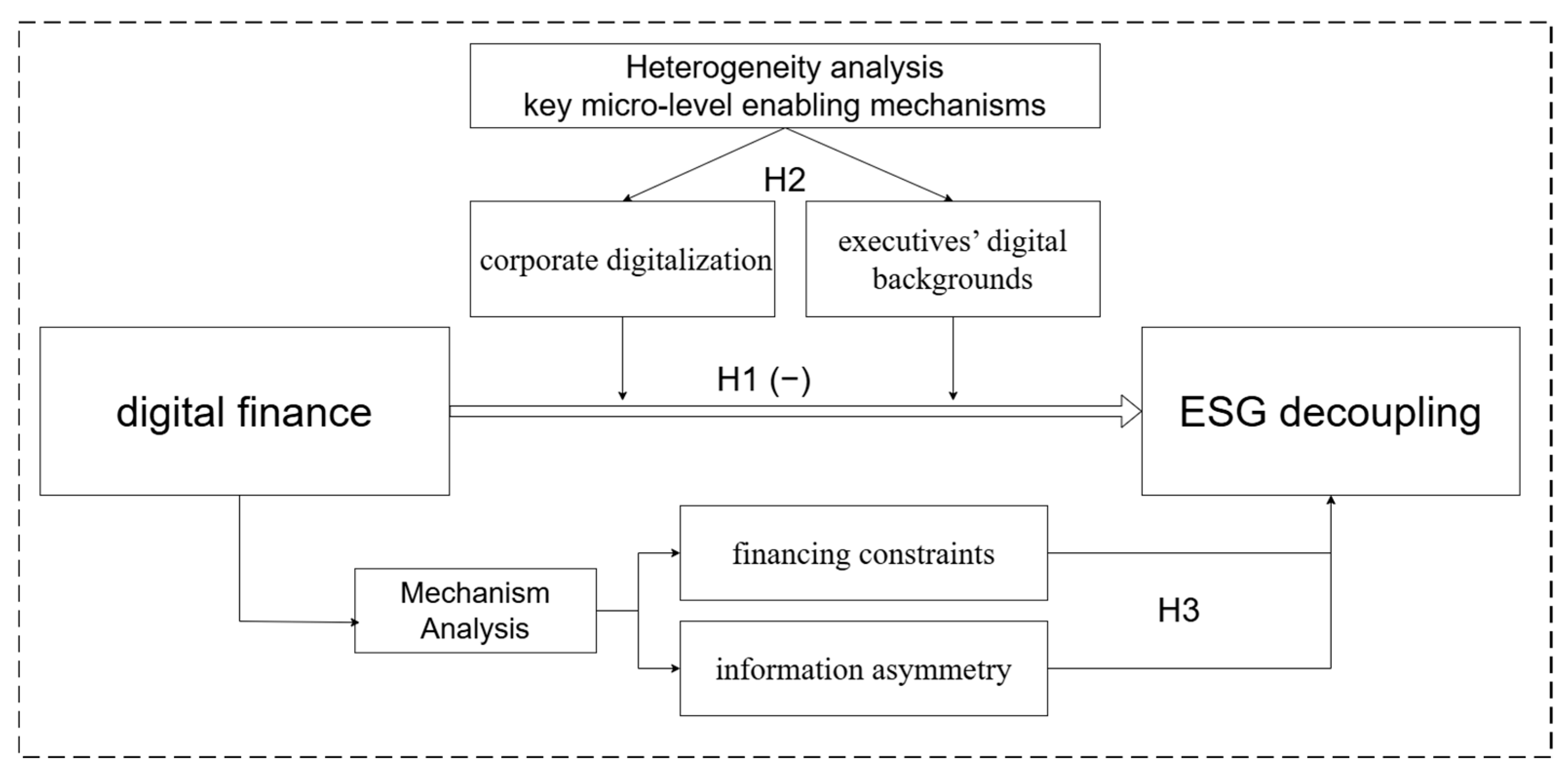
Figure 1 presents the research framework for the entire study.

3. Research Design

3.1. Sample Selection and Data Sources

This study uses Chinese A-share listed firms from 2011 to 2024 as the sample. To ensure sample comparability and data quality, firms in the financial sector, ST and *ST firms, and observations with missing values in key variables are removed, and all continuous variables are winsorized at the 1st and 99th percentiles. These screening steps leave 12,702 firm-year observations. Data on digital finance come from The Peking University Digital Financial Inclusion Index of China published by the Institute of Digital Finance at Peking University. ESG disclosure data are taken from Bloomberg, whereas ESG performance data come from the Huazheng ESG rating system. Financial indicators, corporate governance variables, MD&A texts in annual reports, and executives’ résumé information are all drawn from the CSMAR database.

3.2. Variable Definitions

3.2.1. Dependent Variables: Corporate ESG Decoupling

Following the peer-relative disclosure–performance gap approach used in prior studies, this study constructs corporate ESG decoupling by comparing the divergence between firms’ ESG disclosure scores and their actual ESG performance scores. To eliminate scale differences across rating systems and to control for industry-specific ESG norms and time-varying rating environments, both disclosure scores and performance scores are standardized using z-score standardization at the industry-year level before taking their difference [5,28,53,54]. The aggregate corporate ESG decoupling index is defined as:
E S G _ d c i , t = D i s c l o s u r e i , t D i s c l o s u r e ¯ j , t σ D i s c l o s u r e j , t P e r f o r m a n c e i , t P e r f o r m a n c e ¯ j , t σ P e r f o r m a n c e j , t
where j denotes the firm’s industry; D i s c l o s u r e ¯ j , t and P e r f o r m a n c e ¯ j , t represent the mean disclosure and performance scores, respectively, for industry j in year t, while σ D i s c l o s u r e j , t and σ P e r f o r m a n c e j , t represent the corresponding standard deviations. A higher value for this indicator signifies a higher level of disclosure relative to actual performance, reflecting a more pronounced degree of ESG decoupling.
Specifically, this study uses Bloomberg ESG disclosure scores to measure the disclosure dimension of corporate ESG activities and uses Huazheng ESG scores to measure the performance dimension. A large body of prior research has used Bloomberg ESG disclosure scores to measure firms’ ESG disclosure levels [28,55,56]. This is because Bloomberg ESG disclosure scores mainly reflect the amount of ESG information disclosed by firms through public channels, rather than directly assessing the quality of firms’ substantive ESG performance. All ESG information disclosed by firms is incorporated into the scoring process, regardless of whether the disclosed content is positive or negative. The input data mainly come from corporate documents and public ESG reporting channels, including annual reports, integrated reports, corporate social responsibility reports, ESG framework disclosures, corporate governance documents, and other ESG releases. Bloomberg scores and aggregates key disclosure indicators across 25 themes and more than 90 sub-issues under the three ESG dimensions to form each firm’s Bloomberg ESG disclosure score. A higher Bloomberg ESG disclosure score indicates that the firm discloses richer ESG-related information.
When measuring the ESG performance of Chinese firms, scholars commonly use Huazheng ESG scores [14,54,57]. This ESG rating integrates international ESG standards with China-specific institutional features, such as poverty alleviation and rural revitalization, and evaluates firms’ actual performance across 16 themes and 44 specific indicators under the three ESG dimensions. The rating is aggregated from three aspects: firms’ efforts and outcomes in reducing the negative environmental impacts of business operations, their fulfillment of social responsibilities toward employees, customers, communities, rural revitalization, and other stakeholders, and the actual influence of corporate decision-making and check-and-balance mechanisms on sustainable operations. A higher Huazheng ESG score indicates relatively better actual ESG performance. Appendix Table A1 provides a comparison matrix of the Bloomberg ESG disclosure scoring framework and the Huazheng ESG rating framework. To examine the differences in rating orientation between the two systems, this study further conducts correlation tests between Bloomberg ESG disclosure scores and Huazheng ESG scores. As shown in Appendix Table A2, the statistically significant but overall weak-to-moderate correlations, ranging from 0.128 to 0.375, indicate that the two rating systems measure related but non-identical ESG constructs. Combined with the differences in rating architecture, data sources, and evaluation emphasis, this result further supports the use of the standardized difference between the two scores to capture the disclosure–practice gap.
To further examine the impact of digital finance on decoupling across distinct responsibility dimensions, this study also constructs three sub-dimensional decoupling indices—Environmental, Social, and Governance—denoted as E _ d c , S _ d c and G _ d c . Their specific forms are as follows:
E _ d c i , t = D i s c l o s u r e _ E i , t D i s c l o s u r e _ E ¯ j , t σ D i s c l o s u r e _ E j , t P e r f o r m a n c e _ E i , t P e r f o r m a n c e _ E ¯ j , t σ P e r f o r m a n c e _ E j , t
S _ d c i , t = D i s c l o s u r e _ S i , t D i s c l o s u r e _ S ¯ j , t σ D i s c l o s u r e _ S j , t P e r f o r m a n c e _ S i , t P e r f o r m a n c e _ S ¯ j , t σ P e r f o r m a n c e _ S j , t
G _ d c i , t = D i s c l o s u r e _ G i , t D i s c l o s u r e _ G ¯ j , t σ D i s c l o s u r e _ G j , t P e r f o r m a n c e _ G i , t P e r f o r m a n c e _ G ¯ j , t σ P e r f o r m a n c e _ G j , t
As shown in Appendix Table A1, the Bloomberg ESG disclosure scoring framework and the Huazheng ESG rating framework are not identical in terms of lower-level indicator composition or weighting schemes across the E, S, and G pillars. This difference arises from their distinct rating orientations: Bloomberg is relatively more disclosure-oriented, whereas Huazheng is relatively more performance- and risk-oriented. Nevertheless, both rating systems contain clearly defined environmental, social, and governance pillars, which provides a pillar-level basis for constructing the sub-dimensional decoupling indicators. Therefore, this study does not assume that the two rating systems are fully equivalent at the lower-indicator level, nor does it require one-to-one correspondence across all indicators. Instead, it compares firms’ relative disclosure positions and relative performance positions within the same broad ESG pillar and the same industry-year group. Accordingly, E_dc, S_dc, and G_dc capture disclosure–practice gaps in the environmental, social, and governance dimensions, respectively, rather than mechanical differences between the raw sub-indicators of the two rating systems.

3.2.2. Key Independent Variable: Digital Finance

The core explanatory variable in this study is the level of regional digital finance. To measure regional digital finance, we rely on the PKU-DFIIC index [5,14]. This index is the Peking University Digital Financial Inclusion Index of China, jointly compiled by the Institute of Digital Finance at Peking University and the Ant Group Research Institute. It is constructed across three dimensions—coverage breadth, usage depth, and the degree of digitalization of inclusive finance—and is further refined into 33 specific indicators spanning provincial, municipal, and county levels. It has emerged as a representative benchmark for measuring regional digital financial development in China. In the baseline regression, Digital Finance is measured using the aggregate digital financial inclusion index of the city where the firm is registered, expressed as:
D I F i , t = P K U _ D F I I C c , t
where c represents the city of corporate registration. To account for the potential sensitivity of empirical results to digital finance indicators across different tiers and dimensions, this study incorporates the provincial-level aggregate digital finance index as an alternative to the city-level metric in robustness tests. The robustness tests further replace the aggregate index with the coverage breadth, usage depth, and digitalization dimensions of digital finance.

3.2.3. Key Micro-Level Enabling Variables: Corporate Digitalization and Executives’ Digital Background

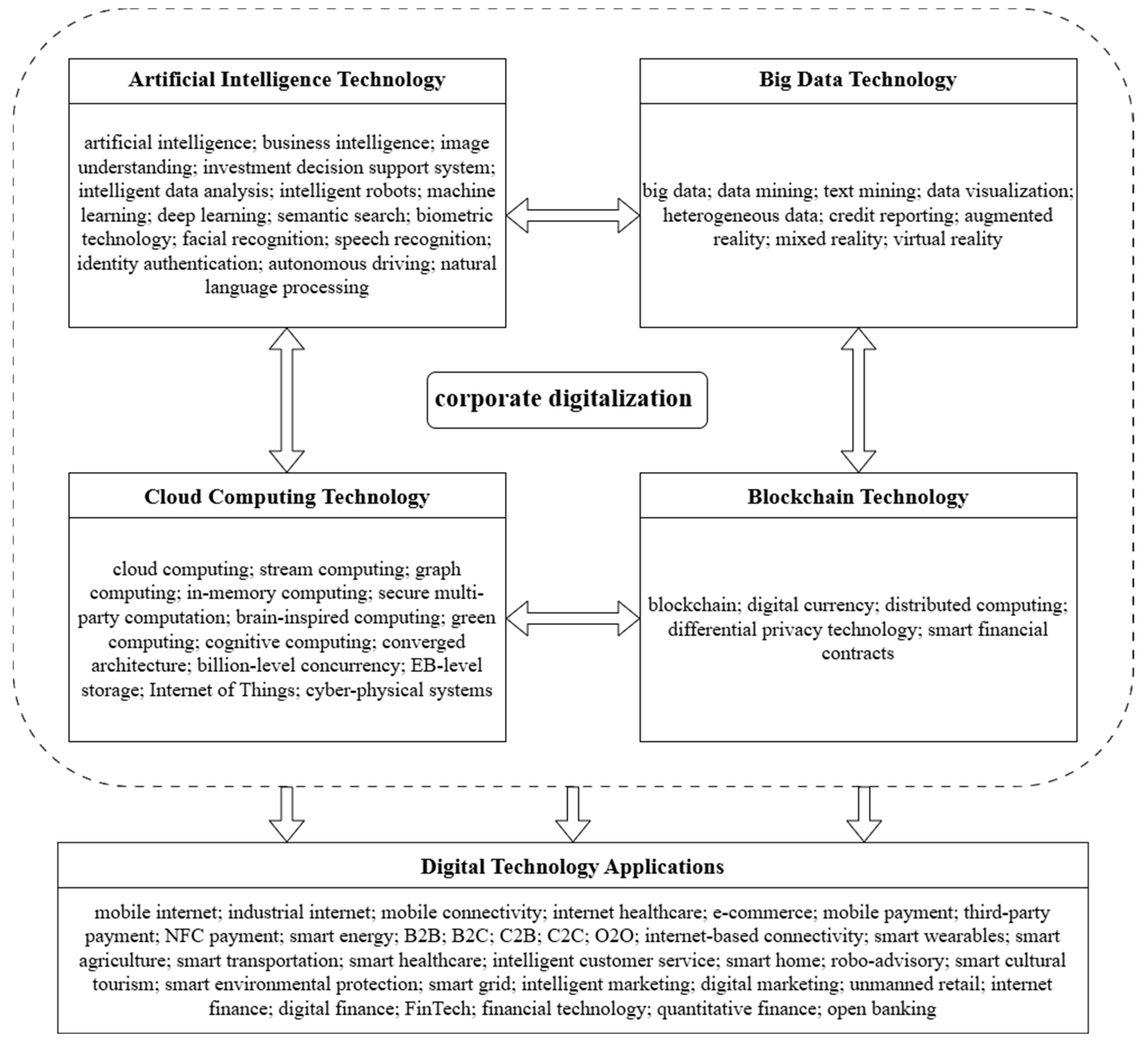
This study uses corporate digitalization (Firm Digital) to capture organization-level digital absorption and execution capacity [58,59]. More specifically, the MD&A texts of listed firms’ annual reports from 2011 to 2024 are first collected and arranged into a firm-year panel dataset. The total length of each annual report, together with the lengths of its Chinese and English texts, is then calculated. Drawing on the existing literature, a digital terminology dictionary is constructed, and the relevant terms are added to Python’s (version 3.12) Jieba segmentation library. After stop words are removed, the frequency of 314 digital-related terms is counted across five dimensions, namely artificial intelligence technology, big data technology, cloud computing technology, blockchain technology, and the application of digital technologies. Appendix Figure A1 presents a feature-term map for these five dimensions, showing representative terms for the main technological and application-based components of corporate digitalization. Firm Digital is ultimately defined as the logarithmic transformation of the proportion of digital transformation-related word frequency to the total text length of the annual report:
F i r m D i g i t a l i , t = l n 1 + 100 × D i g i t a l W o r d s i , t T e x t L e n g t h i , t
where D i g i t a l W o r d s i , t denotes the total frequency of digital-related terms appearing in the MD&A section of firm i ’s annual report in year t , and T e x t L e n g t h i , t denotes the total length of the corresponding annual report text. A larger value of this indicator implies a stronger representation of digital transformation in the firm’s annual report.
This study uses executives’ digital background (Exec Digital) to capture managerial digital cognition and resource allocation capacity [60]. Identification is carried out through text analysis. Specifically, keywords are matched against executives’ educational background and career resumes, and an executive is classified as having a digital background if his or her educational background or career résumé contains digital technology-related feature terms. Appendix Table A3 reports the main identification dimensions and representative feature terms. On this basis, executives’ digital background is measured as follows:
E x e c D i g i t a l i , t = N u m D i g i t E x e c i , t N u m E x e c i , t
where N u m D i g i t E x e c i , t denotes the number of executives with digital background in firm i in year t , and N u m E x e c i , t denotes the total number of executives in the same year. A larger value of this indicator means that a higher proportion of the firm’s management team has digital background.

3.2.4. Mediating Variables: Financing Constraints and Information Asymmetry

This study uses financing constraints (WW) and information asymmetry (ASY) as proxy variables for the two basic transmission paths [61,62]. Financing constraints are measured by the WW index proposed by Whited and Wu, which is calculated as follows:
W W i , t = 0.091 C F i , t 0.062 D i v P o s i , t + 0.021 T L T D i , t 0.044 L N T A i , t + 0.102 I S G i , t 0.035 S G i , t
where C F denotes the ratio of cash flow to total assets; D i v P o s is a dummy variable for cash dividend payment, which equals 1 if the firm pays cash dividends in the current period and 0 otherwise; T L T D denotes the ratio of long-term debt to total assets; L N T A denotes the natural logarithm of total assets; I S G denotes industry sales growth; and S G denotes the firm’s sales growth. A larger value of W W indicates that the firm faces tighter financing constraints.
Information asymmetry is measured by a composite indicator, A S Y , constructed from stock liquidity characteristics. Following the standard approach in the literature, the liquidity ratio ( L R ), illiquidity ratio ( I L L ), and return reversal measure ( G A M ) are first calculated, after which principal component analysis is used to extract the first principal component of the three variables as the firm-level measure of information asymmetry. It is specified as follows:
A S Y i , t = P C A 1 L R i , t , I L L i , t , G A M i , t

3.2.5. Control Variables

To control, as far as possible, for other factors that may affect corporate ESG decoupling, this study includes control variables from several dimensions [5], including firm size, capital structure, profitability, cash flow conditions, growth capacity, and governance characteristics. Specifically, these variables include firm size ( S i z e ), measured by the natural logarithm of total assets; leverage ( L e v ), measured by total liabilities divided by total assets; return on assets ( R O A ); cash flow from operating activities ( C F O ); sales growth ( S a l e s G ); growth opportunity ( T o b i n Q ); the shareholding ratio of the largest shareholder ( T o p 1 ); a dummy variable for CEO-chair duality ( D u a l ); and board independence ( I n d e p ), measured by the proportion of independent directors. Including these variables helps constrain omitted-variable bias and improves the reliability of the estimated effect of digital finance. The definitions of all variables are reported in Table 1.

3.3. Model Specification

To estimate the overall effect of digital finance on corporate ESG decoupling, this study first specifies the following two-way fixed-effects model:
E S G _ d c i , t = β 0 + β 1 D I F i , t + β k C o n t r o l i , t + μ i + λ t + ε i , t
where E S G _ d c i , t denotes the degree of corporate ESG decoupling for firm i in year t , D I F i , t denotes the level of digital finance in the region where the firm is registered, and C o n t r o l i , t denotes the set of control variables. μ i captures firm fixed effects, λ t captures year fixed effects, and ε i , t is the random disturbance term. To make statistical inference more reliable, the estimation uses standard errors clustered at the firm and city levels.
Building on the baseline specification, this study further develops models for testing the key micro-level enabling mechanisms, in order to examine whether corporate digitalization and executives’ digital background strengthen the dampening effect of digital finance on corporate ESG decoupling. The model is specified as follows:
E S G _ d c i , t = β 0 + β 1 D I F i , t + β 2 M o d e r a t o r i , t + β 3 D I F i , t × M o d e r a t o r i , t + β k C o n t r o l i , t + μ i + λ t + ε i , t
where M o d e r a t o r i , t refers to F i r m D i g i t a l i , t and E x e c D i g i t a l i , t , respectively.
Finally, this study adopts a two-step approach to test the mediating roles of financing constraints and information asymmetry. In the first step, it examines whether digital finance significantly affects the mediating variables:
M e d i a t o r i , t = α 0 + α 1 D I F i , t + α k C o n t r o l i , t + μ i + λ t + ε i , t
In the second step, the mediating variable is added to the baseline model to test whether it further affects corporate ESG decoupling:
E S G _ d c i , t = γ 0 + γ 1 D I F i , t + γ 2 M e d i a t o r i , t + γ k C o n t r o l i , t + μ i + λ t + ε i , t
Here, M e d i a t o r i , t refers to W W i , t and A S Y i , t , respectively.

4. Empirical Results

4.1. Descriptive Statistics

Table 2 presents the descriptive statistics for the main variables. The mean of the overall corporate ESG decoupling measure, E S G _ d c , is 0.0008, with a median of −0.0910 and a standard deviation of 1.0745. These statistics indicate substantial variation in the gap between ESG disclosure and actual ESG performance. This variation suggests that the degree of ESG decoupling differs considerably across firms. The mean of digital finance, D I F , is 2.5141, with a standard deviation of 0.8231, a minimum of 0.5982, and a maximum of 3.9227. Regional variation in digital finance is therefore far from trivial during the sample period, which gives the analysis the cross-sectional variation needed to identify how digital finance affects corporate ESG decoupling. The remaining control variables, including firm size, leverage, profitability, cash flow, growth capacity, and governance characteristics, also fall within reasonable ranges, suggesting that the sample is broadly representative. A multicollinearity test is further conducted for the regression model. The variance inflation factors for all variables stay within acceptable bounds, and the maximum VIF is only 1.9905. No serious multicollinearity issue is detected.
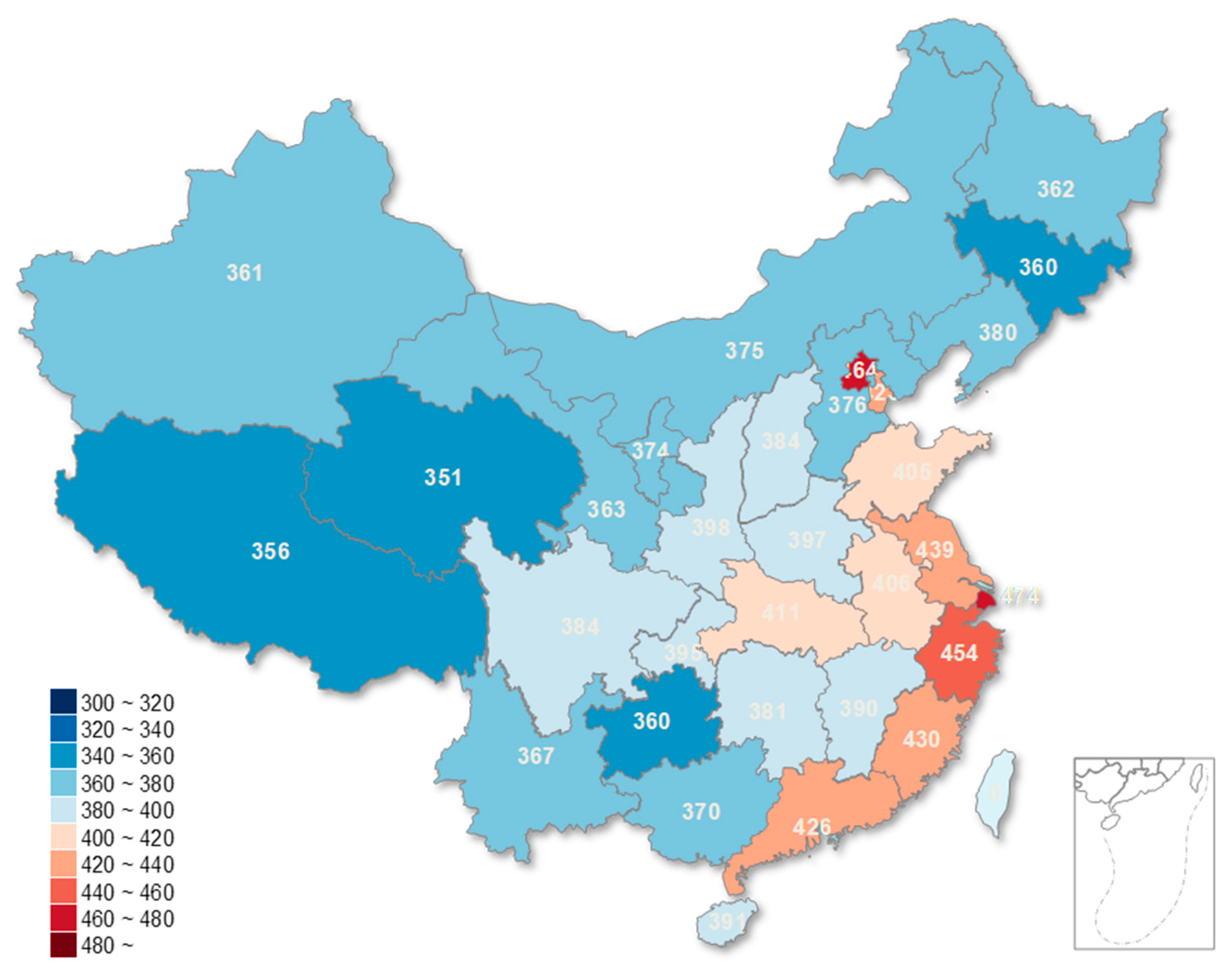
Figure 2 presents a provincial heat map of digital finance in China in 2024, which clearly shows substantial regional variation in the level of digital finance development.

4.2. Baseline Results

Table 3 reports the baseline regression results concerning the impact of digital finance on corporate ESG decoupling. After including the full set of control variables, Column (2) reports a DIF coefficient of −0.1353, with a t-value of −2.946. The coefficient is statistically significant at the 1% level. This result indicates that digital finance continues to reduce corporate ESG decoupling after accounting for firm characteristics and fixed effects. The evidence suggests that stronger regional digital finance helps narrow the ESG disclosure–practice gap. This finding provides empirical support for Hypothesis H1.
Columns (3) to (5) in Table 3 reveal the effect of digital finance in relation to decoupling in the environmental, social, and governance spheres. According to the results presented in Table 3, the DIF coefficients on environmental decoupling, social decoupling, and governance decoupling are −0.0853 (t = −1.864), −0.1462 (t = −2.102), and −0.1736 (t = −2.671). On the basis of the absolute value of these coefficients and the significance levels associated with each, the mitigating effect of digital finance appears strongest for governance decoupling, followed by social decoupling, while the effect on environmental decoupling is weaker but remains negative. Hence, the effect of digital finance is not confined to a single ESG pillar. Instead, it helps narrow disclosure–performance gaps across all three ESG dimensions, although the magnitude differs across dimensions.

4.3. Robustness and Identification Checks

4.3.1. Robustness Checks

To examine whether the baseline relationship is sensitive to alternative variable measurements, sample composition, or fixed-effects specifications, this study conducts several robustness tests, as reported in Table 4. These tests are intended to rule out several plausible alternative explanations, including the geographic scale of the digital finance measure, special regional samples, and unobserved province-year shocks. In Column (1), the key independent variable is replaced with the provincial-level digital finance indicator. Column (2) uses one-period lagged DIF, Column (3) excludes firms in centrally administered municipalities, and Column (4) includes province-year fixed effects along with firm fixed effects. Across these specifications, the coefficients of the digital finance indicators remain negative and statistically significant. This consistency suggests that the negative relationship between digital finance and corporate ESG decoupling is not driven by a specific geographic measurement of digital finance, the inclusion of centrally administered municipalities, or omitted province-year shocks.
Columns (5)–(7) further examine the three sub-dimensions of digital finance. The findings indicate that all three dimensions of the index—breadth, depth, and level—significantly and negatively affect ESG decoupling. Overall, these results suggest that digital finance promotes disclosure–practice consistency not only through its aggregate development, but also through broader coverage, deeper usage, and a higher level of digitalization.

4.3.2. Instrumental Variable Approach

Although the robustness checks reduce concerns about variable measurement, sample composition, and fixed-effects specifications, omitted variables and reverse causality may still affect the estimated relationship between digital finance and corporate ESG decoupling. For example, unobserved regional factors, such as local institutional quality, environmental regulation, or financial development, may simultaneously shape both digital finance and firms’ ESG disclosure–practice consistency. Reverse causality may also exist if regions with better ESG governance environments are more likely to attract digital financial resources. To address this issue, Table 5 reports the instrumental variable (IV) estimation results. The IV is calculated using the first difference of the country’s digital finance index multiplied by the spherical distance of the firm’s city from Hangzhou. The first difference of the country-level index represents exogenous growth of digital finance at the country level, while the city distance to Hangzhou represents exogenous variation of the effect of technology on the region due to geographical differences. Hangzhou is chosen because it is a leader in China’s digital finance industry and thus causes observable geographical externalities.
The results in Table 5 support the relevance of the instrument. The first stage shows a strong correlation between the IV and digital finance levels, and the Kleibergen–Paap rk Wald F-statistic reaches 18.96, dismissing concerns over weak instruments. In the second stage, the coefficient for digital finance remains significantly negative. This indicates that, after mitigating potential endogeneity concerns, digital finance continues to reduce corporate ESG decoupling. The IV evidence therefore provides further support for the interpretation that digital finance helps narrow the ESG disclosure–practice gap, rather than merely reflecting a contemporaneous correlation.

4.4. Tests of the Key Micro-Level Enabling Mechanisms

Table 6 details the testing of the key micro-level enabling mechanisms. In Column (1), the interaction term between DIF and FirmDigital yields a coefficient of −0.2622, significant at the 5% level. This indicates that as a firm’s digitalization level increases, the suppressive effect of digital finance on corporate ESG decoupling becomes more pronounced. These findings suggest that corporate digitalization strengthens the ability of regional digital finance to reduce ESG disclosure–practice divergence. Firms with stronger digital capabilities are better able to embed financing convenience, data resources, and external disciplinary pressure into internal processes, performance feedback, and ESG management systems. Hence, Hypothesis H2a is supported.
Column (2) examines the role of the executive team’s digital background. The coefficient of the interaction term DIF × ExecDigital is −0.1026 and significant at the 1% significance level. This result indicates that executives’ digital background strengthens the translation of regional digital finance into lower ESG decoupling. Digitally experienced executives are more likely to recognize the governance value of digital finance and allocate digital resources toward substantive ESG improvement rather than disclosure optimization alone. Executives with digital experience are better able to understand how digital finance can support resource allocation, information management, and risk control. Such executives are more likely to direct available resources toward substantive ESG improvements, such as better internal control and more efficient decision-making. They are therefore less likely to focus only on disclosure adjustment. This gives empirical support to Hypothesis H2b.
Overall, Table 6 shows that the effect of regional digital finance on ESG decoupling is strengthened when firms possess stronger organizational digital capabilities and when executives have stronger digital backgrounds. These results provide empirical support for the view that corporate digitalization and executives’ digital background serve as key micro-level enabling mechanisms. The former reflects organization-level digital absorption and execution capacity, whereas the latter reflects managerial digital cognition and resource allocation capacity.

4.5. Tests of the Basic Transmission Paths

Table 7 presents the mediation results for financing constraints and information asymmetry. For the resource channel, Column (1) shows that the coefficient of DIF on WW is −0.0420 and significant at the 5% level, indicating that digital finance helps ease firms’ financing constraints. Column (2) adds financing constraints to the baseline specification. The coefficient of WW is 0.0411 and significant at the 5% level, indicating that stronger financing constraints are associated with higher ESG decoupling. The 95% Bootstrap confidence interval of [−0.0032, −0.0004] does not include zero, further confirming the mediating role of financing constraints. This evidence suggests that digital finance reduces ESG decoupling partly by easing the financial constraints that limit substantive ESG investment, thereby weakening firms’ reliance on low-cost disclosure optimization as a substitute for actual ESG practice. Hence, H3a is supported.
For the information channel, Column (3) shows that DIF is negatively associated with ASY with a coefficient of −0.1032 (significant at 5%), indicating that digital finance helps reduce information asymmetry. Moreover, the positive coefficient in Column (4) of 0.0370 (significant at 5%) reveals the positive link between ASY and ESG decoupling. This pattern indicates that lower information asymmetry reduces the space for firms to maintain high disclosure while actual ESG performance remains weak. The 95% Bootstrap confidence interval of [−0.0069, −0.0012] does not include zero, confirming the mediating role of information asymmetry. This evidence suggests that digital finance reduces ESG decoupling partly by improving the external information environment and increasing the observability of corporate conduct. Thus, H3b is supported.
Overall, Table 7 indicates that financing constraints and information asymmetry constitute two basic transmission paths through which digital finance reduces corporate ESG decoupling. Financing constraints reflect the resource channel: digital finance improves firms’ capacity to undertake substantive ESG practices. Information asymmetry reflects the information channel: digital finance improves the observability of corporate conduct and increases the cost of maintaining high disclosure with weak performance. These results provide the empirical basis for the discussion of the resource and information channels in Section 5.

5. Discussion

Compared with studies that mainly examine the effect of digital finance on general ESG performance, this study shifts the focus to corporate ESG decoupling. The results show that digital finance reduces the divergence between ESG disclosure and actual ESG performance, rather than merely improving observable ESG outcomes. This suggests that digital finance plays a governance role in enhancing ESG disclosure–practice consistency. ESG decoupling therefore provides a more targeted perspective for identifying the gap between symbolic responsibility expression and substantive corporate action.
The results further explain how a regional digital financial environment can be translated into firm-level improvements in ESG decoupling. Prior studies have shown that digital finance may affect ESG performance or green behavior, but they have paid less attention to the cross-level process through which regional digital finance enters firm-level ESG governance. This study shows that corporate digitalization and executives’ digital background significantly strengthen the mitigating effect of digital finance on ESG decoupling. This means that regional digital finance does not automatically lead to disclosure–practice convergence. Its effect depends on whether firms have the organizational digital capacity and managerial digital cognition needed to absorb, interpret, and implement the resources, data, and monitoring pressure generated by the external digital financial environment. In this sense, corporate digitalization and executives’ digital background serve as key micro-level enabling mechanisms linking regional digital finance to firm-level ESG decoupling reduction.
On the basis of these micro-level enabling mechanisms, this study identifies two important channels: the alleviation of financing constraints and the reduction in information asymmetry. The former reflects the resource channel, through which digital finance strengthens firms’ capacity to undertake substantive ESG practices. The latter reflects the information channel, through which digital finance improves the observability of corporate behavior and increases the cost of maintaining high disclosure with weak performance.
Overall, this study discusses digital finance and corporate ESG governance through the logical chain of “external institutional environment–micro-level enabling mechanisms–behavioral outcomes.” The findings extend the digital finance–ESG literature from a performance-centered perspective to a disclosure–practice consistency perspective, and highlight the importance of firm-level enabling conditions in transforming regional digital finance into substantive ESG governance improvement.

6. Conclusions and Implications

6.1. Main Conclusions

Based on the sample of Chinese listed firms in the A-share market during 2011 to 2024, this study systematically explores the influence of regional digital finance on corporate ESG decoupling. Moreover, this study further discusses the specific roles of corporate digitalization and executives’ digital background as crucial micro-enabling factors, and identifies financing constraints and information asymmetry as two critical pathways through which digital finance affects corporate ESG decoupling.
There are three significant findings in this study. Firstly, digital finance plays a significant role in restraining corporate ESG decoupling. The results show that this effect appears not only in the aggregate ESG decoupling index, but also across the three ESG dimensions, with stronger effects on governance and social decoupling. Moreover, this finding remains robust when alternative measures of digital finance are used, the core explanatory variable is lagged, special samples are excluded, stricter fixed-effects specifications are adopted, and instrumental variable approaches are used to address potential endogeneity concerns. Secondly, both corporate digitalization and executives’ digital background significantly enhance the inhibiting effect of digital finance on corporate ESG decoupling. These results indicate that digital finance functions as an external institutional environment for improving firms’ responsibility practices. However, its governance effect depends on firms’ organizational digital capacity and managers’ digital knowledge and resource allocation capability. Thirdly, the relief of financing constraints and the alleviation of information asymmetry are two crucial pathways through which digital finance influences corporate ESG decoupling.

6.2. Practical Implications

The findings of this study provide several practical implications for improving corporate ESG disclosure–practice consistency.
For policymakers: This study finds that regional digital finance significantly reduces corporate ESG decoupling, and this effect remains robust across alternative measurements, sample adjustments, stricter fixed-effects settings, and instrumental-variable estimation. This suggests that digital finance should not be viewed only as a tool for expanding financial inclusion or improving financing efficiency, but also as part of the external governance infrastructure for corporate sustainability. Therefore, policymakers should continue to improve regional digital financial infrastructure, expand the coverage and accessibility of digital financial services, and promote the integration of digital finance with ESG governance.
For listed firms: The key micro-level enabling mechanism tests show that corporate digitalization significantly strengthens the mitigating effect of digital finance on ESG decoupling. This indicates that the governance effect of regional digital finance cannot be translated into firm-level ESG improvement automatically; it depends on whether firms possess sufficient internal digital absorption and execution capacity. Therefore, when promoting ESG governance, firms should not focus only on report preparation and external communication. They should also strengthen internal digital governance capabilities by embedding digital technologies into internal control, information processing, risk management, supply-chain management, and ESG implementation processes. Stronger corporate digitalization can help firms transform external digital financial resources and monitoring pressure into substantive ESG practice improvements.
For executives and boards: The key micro-level enabling mechanism tests also show that executives’ digital background significantly enhances the effect of digital finance in reducing ESG decoupling. This suggests that managerial digital cognition and resource allocation capacity are important conditions for transforming regional digital finance into ESG disclosure–practice consistency. Therefore, boards and top management teams should pay greater attention to executives’ digital literacy, digital experience, and capacity to use digital tools for governance improvement. Firms may benefit from introducing, cultivating, or empowering digitally experienced executives, because such executives are more likely to allocate digital resources toward substantive ESG improvement rather than merely optimizing disclosure.
For financial institutions and ESG data users: The basic transmission path tests show that digital finance reduces ESG decoupling partly by easing financing constraints and reducing information asymmetry. This implies that financial institutions and ESG data users can use digital financial information and firm-level digital indicators as supplementary signals when evaluating firms’ ESG credibility. Financial institutions can use digital credit assessment, platform data, and information-screening technologies to identify firms with substantive ESG investment needs and allocate financial resources more efficiently. Meanwhile, investors, regulators, and ESG rating users should pay closer attention to the gap between ESG disclosure and actual performance, rather than relying solely on the amount of ESG information disclosed by firms.

6.3. Limitations and Future Research

Although this study investigates the effect of digital finance on corporate ESG decoupling from both theoretical and empirical perspectives, some limitations remain. First, this study uses Bloomberg ESG disclosure scores and Huazheng ESG ratings to capture the disclosure- and performance-oriented dimensions of corporate ESG activities. Although this approach has been widely adopted in recent studies on ESG decoupling and greenwashing, ESG_dc remains a proxy constructed from third-party composite ratings. Therefore, future research could further enhance the construct validity of this measure by introducing external behavioral indicators. For example, future studies may use environmental or social regulatory penalties, litigation records, supply-chain responsibility violations, negative ESG-related news sentiment, or text-based measures of inconsistencies between firms’ ESG claims and actual actions to externally validate corporate ESG disclosure–practice divergence. Such evidence would help assess whether ESG_dc effectively captures corporate ESG decoupling. It would also allow future studies to examine related greenwashing tendencies from the perspective of actual behavior and external monitoring outcomes.
Second, despite the efforts made in designing variables such as corporate digitalization and executives’ digital background to approximate their theoretical meanings, both measures rely on textual information rather than other types of data. This limits our ability to capture the full spectrum of firms’ digital capabilities and managers’ digital cognition. Future studies could combine textual analysis with patent data, digital investment data, information system adoption, or executive career-history data to construct more multidimensional measures of firm-level digital capability and managerial digital expertise.
Third, the sample in this study only includes Chinese A-share listed firms. Whether the results can be generalized to other capital markets or institutional settings remains to be further examined. Future cross-market studies could compare whether digital finance affects ESG disclosure–practice consistency differently across economies with different ESG disclosure regimes, financial infrastructures, and external governance systems.

Author Contributions

Conceptualization, S.S.; methodology, S.S.; software, S.S.; validation, S.S.; formal analysis, S.S.; investigation, S.S.; resources, S.S.; data curation, S.S.; writing—original draft preparation, S.S.; writing—review and editing, Y.L.; visualization, S.S.; supervision, Y.L.; project administration, Y.L. All authors have read and agreed to the published version of the manuscript.

Funding

This research received no external funding.

Institutional Review Board Statement

Not applicable.

Informed Consent Statement

Not applicable.

Data Availability Statement

The raw data used in this study were obtained from commercial and third-party databases and are subject to licensing restrictions; therefore, they are not publicly available. Processed data and related coding information supporting the findings of this study are available on reasonable request from the corresponding author, where such sharing is permitted by the original data providers.

Conflicts of Interest

The authors declare no conflicts of interest.

Appendix A

Table A1. Comparison of Bloomberg and Huazheng ESG Rating Frameworks across E, S, and G Pillars.
Bloomberg ESG Disclosure Rating MatrixHuazheng ESG Rating Matrix
Environmental (E): 10 ThemesEnvironmental (E): 5 Themes
Air Quality; Biodiversity & Natural Capital; Climate Exposure; Energy Management; Environmental Supply Chain Management; GHG Emissions Management; Sustainable Finance; Sustainable Product; Waste Management; Water Management.Climate Change; Resource Use; Environmental Pollution; Environmental Friendliness; Environmental Management.
Social (S): 11 ThemesSocial (S): 5 Themes
Access & Affordability; Community Rights & Relations; Customer Welfare; Data Security & Customer Privacy; Ethics & Compliance; Labor & Employment Practices; Marketing & Labeling; Occupational Health & Safety Management; Operational Risk Management; Product Quality Management; Social Supply Chain Management.Human Capital; Product Responsibility; Supply Chain; Social Contribution; Data Security and Privacy.
Governance (G): 4 ThemesGovernance (G): 6 Themes
Board Composition; Executive Compensation; Shareholder Rights; Audit.Shareholder Rights; Governance Structure; Disclosure Quality; Governance Risk; External Sanctions; Business Ethics.
Note: This table summarizes the main issue/theme structures of the Bloomberg and Huazheng ESG rating frameworks across the E, S, and G pillars based on their official methodology documents.
Table A2. Correlations between Bloomberg ESG Disclosure Scores and Huazheng ESG Scores.
(1)(2)
DimensionPearson CorrelationSpearman Correlation
ESG score
(Bloomberg_ESG & Huazheng_ESG)
0.352 ***0.375 ***
Environmental score
(Bloomberg_E & Huazheng_E)
0.305 ***0.328 ***
Social score
(Bloomberg_S & Huazheng_S)
0.290 ***0.324 ***
Governance score
(Bloomberg_G & Huazheng_G)
0.128 ***0.128 ***
Note: This table reports Pearson and Spearman correlations between industry-year standardized Bloomberg ESG disclosure scores and Huazheng ESG scores. *** indicates significance at the 1% level.
Figure A1. Feature-Term Map for Corporate Digitalization. Note: This figure summarizes the five-dimensional classification of feature terms used to measure corporate digitalization and presents selected representative feature terms.
Sustainability 18 05263 g0a1
Table A3. Identification Matrix for Executives’ Digital Background.
Identification Basis and RuleRepresentative Feature Terms
Educational background identification. Executives are identified as having digital background if their educational background or major field contains digital technology-related disciplines.computer science; information science; internet; big data; computer science and technology; software engineering; network engineering; information security; Internet of Things engineering; digital media technology; intelligent science and technology; electronic and computer engineering; cyberspace security; virtual reality technology; blockchain engineering; digital technology; cryptography science and technology; electronic information engineering; communication engineering; microelectronics science and engineering; artificial intelligence; e-commerce; data science and big data technology; big data management and application; data computing and application
Career resume identification. Executives are identified as having digital background if their career résumés indicate prior work experience in digital technology-related departments, functions, or business fields.information technology; system development; cloud computing; informatization department; network service department; application software department; software department; data center; information center; digital center; cybersecurity and informatization department; technology and informatization department; technology intelligence department; digital and informatization management department; digitalization department; digitalization center; cloud-network operation department; information technology center; big data center; digital development center; information management department; technology digitalization department; communication department
Note: This table summarizes the main identification bases and selected representative feature terms used to identify executives’ digital background.

References

  1. Christensen, H.B.; Hail, L.; Leuz, C. Mandatory CSR and Sustainability Reporting: Economic Analysis and Literature Review. Rev. Account. Stud. 2021, 26, 1176–1248. [Google Scholar] [CrossRef]
  2. Arkoh, P.; Costantini, A.; Scarpa, F. Determinants of Sustainability Reporting: A Systematic Literature Review. Corp. Soc. Responsib. Environ. Manag. 2024, 31, 1578–1597. [Google Scholar] [CrossRef]
  3. Albert, T.; Li, O.Z.; Yang, Y.G.; Dhaliwal, D.S. Voluntary Nonfinancial Disclosure and the Cost of Equity Capital: The Initiation of Corporate Social Responsibility Reporting. Account. Rev. 2011, 86, 59–100. [Google Scholar] [CrossRef]
  4. Loko, A.G.S.; Schiehll, E. ESG Policy–Practice Decoupling: A Measurement Framework and Empirical Validation. Sustainability 2025, 17, 1203. [Google Scholar] [CrossRef]
  5. Liu, H.; Wang, J.; Liu, M. Can Digital Finance Curb Corporate ESG Decoupling? Evidence from Shanghai and Shenzhen A-Shares Listed Companies. Humanit. Soc. Sci. Commun. 2024, 11, 1613. [Google Scholar] [CrossRef]
  6. Olga, H.; Ioannis, I. Mind the Gap: The Interplay between External and Internal Actions in the Case of Corporate Social Responsibility. Strateg. Manag. J. 2016, 37, 2569–2588. [Google Scholar] [CrossRef]
  7. Laeeq, M.; Akhtar, F.; Shang, H.L. ESG Decoupling Phenomenon: A Systematic and Bibliometric Analysis. Bus. Strategy Environ. 2026. [Google Scholar] [CrossRef]
  8. Wan, P.; Xu, M.; Yang, Y.; Chen, X. CSR Decoupling and Stock Price Crash Risk: Evidence from China. Humanit. Soc. Sci. Commun. 2024, 11, 1008. [Google Scholar] [CrossRef]
  9. Mo, Y.; Che, Y.; Ning, W. Digital Finance Promotes Corporate ESG Performance: Evidence from China. Sustainability 2023, 15, 11323. [Google Scholar] [CrossRef]
  10. Lin, B.; Xu, C. Digital Inclusive Finance and Corporate Environmental Performance: Insights from Chinese Micro, Small- and Medium-Sized Manufacturing Enterprises. Borsa Istanb. Rev. 2024, 24, 460–473. [Google Scholar] [CrossRef]
  11. Yin, L.; Yang, Y. How Does Digital Finance Influence Corporate Greenwashing Behavior? Int. Rev. Econ. Financ. 2024, 93, 359–373. [Google Scholar] [CrossRef]
  12. Gao, Y.; Gui, W. Digital Finance, Internal and External Governance, and Corporate Environmental Information Disclosure. Sustainability 2026, 18, 2810. [Google Scholar] [CrossRef]
  13. Liu, J.; Song, R.; Fu, Y. Digital Finance Empowering Corporate ESG Performance: The Dual-Engine Role of Digital Transformation and Green Technological Innovation. Sustainability 2025, 17, 10743. [Google Scholar] [CrossRef]
  14. Mu, W.; Liu, K.; Tao, Y.; Ye, Y. Digital Finance and Corporate ESG. Financ. Res. Lett. 2023, 51, 103426. [Google Scholar] [CrossRef]
  15. Li, W.; Shi, C.; Xiao, Z.; Zhang, X. Bridging the Green Gap: How Digital Financial Inclusion Affects Corporate ESG Greenwashing. Financ. Res. Lett. 2024, 69, 106018. [Google Scholar] [CrossRef]
  16. Kou, G.; Lu, Y. FinTech: A Literature Review of Emerging Financial Technologies and Applications. Financ. Innov. 2025, 11, 1. [Google Scholar] [CrossRef]
  17. Jafri, J.A.; Mohd Amin, S.I.; Abdul Rahman, A. Financial Technology (Fintech) Research Trend: A Bibliometric Analysis. Discov. Sustain. 2025, 6, 513. [Google Scholar] [CrossRef]
  18. Hu, Y. Customer Market Analysis Based on Interval Value Data Dynamic Clustering Algorithm. In Proceedings of the 2023 International Conference on Integrated Intelligence and Communication Systems (ICIICS), Kalaburagi, India, 24–25 November 2023; pp. 1–6. [Google Scholar]
  19. Hu, Y.; Huang, Y. Seasonality in the U.S. Housing Market: Post-Pandemic Shifts and Regional Dynamics. Real Estate 2025, 2, 22. [Google Scholar] [CrossRef]
  20. Ren, X.; Zeng, G.; Zhao, Y. Digital Finance and Corporate ESG Performance: Empirical Evidence from Listed Companies in China. Pac.-Basin Financ. J. 2023, 79, 102019. [Google Scholar] [CrossRef]
  21. Chen, M.; Liu, S.; Gao, L. Digital Finance, Financial Flexibility and Corporate Green Innovation. Financ. Res. Lett. 2024, 70, 106313. [Google Scholar] [CrossRef]
  22. Wu, K.; Zhang, Y.; Chen, Y.; Li, M. Impact of Digital Finance on Corporate ESG. Int. Rev. Financ. Anal. 2025, 104, 104259. [Google Scholar] [CrossRef]
  23. Lu, H.; Cheng, Z. Digital Inclusive Finance and Corporate ESG Performance: The Moderating Role of Executives with Financial Background. Financ. Res. Lett. 2024, 60, 104858. [Google Scholar] [CrossRef]
  24. Wanyan, R.; Zhao, T. The Dual Path of Fintech in Alleviating ESG Decoupling: A Dynamic Balance between Short-Term and Long-Term Effects. Financ. Res. Lett. 2025, 86, 108443. [Google Scholar] [CrossRef]
  25. Liu, Z.; Li, X. The Impact of Bank Fintech on ESG Greenwashing. Financ. Res. Lett. 2024, 62, 105199. [Google Scholar] [CrossRef]
  26. Sneideriene, A.; Legenzova, R. Greenwashing Prevention in Environmental, Social, and Governance (ESG) Disclosures: A Bibliometric Analysis. Res. Int. Bus. Financ. 2025, 74, 102720. [Google Scholar] [CrossRef]
  27. Tashman, P.; Marano, V.; Kostova, T. Walking the Walk or Talking the Talk? Corporate Social Responsibility Decoupling in Emerging Market Multinationals. J. Int. Bus. Stud. 2019, 50, 153–171. [Google Scholar] [CrossRef]
  28. Eliwa, Y.; Aboud, A.; Saleh, A. Board Gender Diversity and ESG Decoupling: Does Religiosity Matter? Bus. Strat. Environ. 2023, 32, 4046–4067. [Google Scholar] [CrossRef]
  29. Aboud, A.; Saleh, A.; Eliwa, Y. Does Mandating ESG Reporting Reduce ESG Decoupling? Evidence from the European Union’s Directive 2014/95. Bus. Strat. Environ. 2024, 33, 1305–1320. [Google Scholar] [CrossRef]
  30. Spaniol, M.J.; Danilova-Jensen, E.; Nielsen, M.; Rosdahl, C.G.; Schmidt, C.J. Defining Greenwashing: A Concept Analysis. Sustainability 2024, 16, 9055. [Google Scholar] [CrossRef]
  31. Talpur, S.; Nadeem, M.; Roberts, H. Corporate Social Responsibility Decoupling: A Systematic Literature Review and Future Research Agenda. J. Appl. Account. Res. 2023, 25, 878–909. [Google Scholar] [CrossRef]
  32. Lagasio, V. ESG-Washing Detection in Corporate Sustainability Reports. Int. Rev. Financ. Anal. 2024, 96, 103742. [Google Scholar] [CrossRef]
  33. Clarkson, P.M.; Ponn, J.; Richardson, G.D.; Rudzicz, F.; Tsang, A.; Wang, J. A Textual Analysis of US Corporate Social Responsibility Reports. Abacus 2020, 56, 3–34. [Google Scholar] [CrossRef]
  34. Baier, P.; Berninger, M.; Kiesel, F. Environmental, Social and Governance Reporting in Annual Reports: A Textual Analysis. Financ. Mark. Inst. Instrum. 2020, 29, 93–118. [Google Scholar] [CrossRef]
  35. García-Sánchez, I.-M.; Hussain, N.; Khan, S.-A.; Martínez-Ferrero, J. Do Markets Punish or Reward Corporate Social Responsibility Decoupling? Bus. Soc. 2021, 60, 1431–1467. [Google Scholar] [CrossRef]
  36. Graafland, J.; Smid, H. Decoupling Among CSR Policies, Programs, and Impacts: An Empirical Study. Bus. Soc. 2019, 58, 231–267. [Google Scholar] [CrossRef]
  37. Ernst, C.A.; Kunz, J.; Fischer, T.M.; Ludwig, L.M. Investors’ Reactions to CSR Reputation and Disclosure Assurance: An Experimental Analysis. J. Manag. Gov. 2025. [Google Scholar] [CrossRef] [PubMed]
  38. Hummel, K.; Schlick, C. The Relationship between Sustainability Performance and Sustainability Disclosure—Reconciling Voluntary Disclosure Theory and Legitimacy Theory. J. Account. Public Policy 2016, 35, 455–476. [Google Scholar] [CrossRef]
  39. García Lara, J.M.; García Osma, B.; Gazizova, I.; Khalilov, A. Demand-Driven Corporate Social Responsibility: Symbolic versus Substantive Change after Environmental Disasters. J. Corp. Financ. 2025, 94, 102816. [Google Scholar] [CrossRef]
  40. Siano, A.; Vollero, A.; Conte, F.; Amabile, S. “More than Words”: Expanding the Taxonomy of Greenwashing after the Volkswagen Scandal. J. Bus. Res. 2017, 71, 27–37. [Google Scholar] [CrossRef]
  41. Bu, Y.; Du, X.; Wang, Y.; Liu, S.; Tang, M.; Li, H. Digital Inclusive Finance: A Lever for SME Financing? Int. Rev. Financ. Anal. 2024, 93, 103115. [Google Scholar] [CrossRef]
  42. Lu, Z.; Wu, J.; Li, H.; Nguyen, D.K. Local Bank, Digital Financial Inclusion and SME Financing Constraints: Empirical Evidence from China. Emerg. Mark. Financ. Trade 2022, 58, 1712–1725. [Google Scholar] [CrossRef]
  43. Yang, J.; Hui, N. How Digital Finance Affects the Sustainability of Corporate Green Innovation. Financ. Res. Lett. 2024, 63, 105314. [Google Scholar] [CrossRef]
  44. Bingler, J.A.; Kraus, M.; Leippold, M.; Webersinke, N. How Cheap Talk in Climate Disclosures Relates to Climate Initiatives, Corporate Emissions, and Reputation Risk. J. Bank. Financ. 2024, 164, 107191. [Google Scholar] [CrossRef]
  45. Li, S.; Liu, C. Corporate Strategic Greenwashing under ESG Disclosure Uncertainty: Financing Incentives and Nonlinear Effects. J. Environ. Manag. 2025, 394, 127473. [Google Scholar] [CrossRef]
  46. Konopik, J.; Jahn, C.; Schuster, T.; Hoßbach, N.; Pflaum, A. Mastering the Digital Transformation through Organizational Capabilities: A Conceptual Framework. Digit. Bus. 2022, 2, 100019. [Google Scholar] [CrossRef]
  47. Kastelli, I.; Dimas, P.; Stamopoulos, D.; Tsakanikas, A. Linking Digital Capacity to Innovation Performance: The Mediating Role of Absorptive Capacity. J. Knowl. Econ. 2024, 15, 238–272. [Google Scholar] [CrossRef] [PubMed]
  48. Wei, W.; Zhang, L.; Zhang, J. Executive Team’s Digital Background, Financial Flexibility and Corporate Innovation: Evidence from China. Financ. Res. Lett. 2024, 68, 106007. [Google Scholar] [CrossRef]
  49. Zhuang, H.; Gao, L.; Li, J. CEO Digital Background and Corporate Digitalization: The Role of Regional Policy. Financ. Res. Lett. 2026, 88, 109135. [Google Scholar] [CrossRef]
  50. He, Q.; Qu, C.; Zuo, W. Planning Waste-to-Energy-Coupled AI Data Centers Through Grade-Matched Cooling and Corridor Screening. Thermo 2026, 6, 28. [Google Scholar] [CrossRef]
  51. He, Q.; Shan, R.; Qu, C.; Tang, Y.; Zou, Y. The Material Blind Spot of the AI Revolution: Rare-Earth Dependencies Undermine Sustainable Digital Future. 2026. Available online: https://ssrn.com/abstract=6232318 (accessed on 1 May 2026).
  52. Yu, D.; Zhu, Y. Executives with Digital Background and Corporate ESG Performance: Evidence from China. Res. Int. Bus. Financ. 2025, 75, 102765. [Google Scholar] [CrossRef]
  53. Yu, E.P.; Luu, B.V.; Chen, C.H. Greenwashing in Environmental, Social and Governance Disclosures. Res. Int. Bus. Financ. 2020, 52, 101192. [Google Scholar] [CrossRef]
  54. Deng, B.; Peng, Z.; Albitar, K.; Ji, L. Top Management Team Stability and ESG Greenwashing: Evidence from China. Bus. Strat. Environ. 2025, 34, 450–467. [Google Scholar] [CrossRef]
  55. Tamimi, N.; Sebastianelli, R. Transparency among S&P 500 Companies: An Analysis of ESG Disclosure Scores. Manag. Decis. 2017, 55, 1660–1680. [Google Scholar] [CrossRef]
  56. Eliwa, Y.; Aboud, A.; Saleh, A. ESG Practices and the Cost of Debt: Evidence from EU Countries. Crit. Perspect. Account. 2021, 79, 102097. [Google Scholar] [CrossRef]
  57. Wang, H.; Jiao, S.; Bu, K.; Wang, Y.; Wang, Y. Digital Transformation and Manufacturing Companies’ ESG Responsibility Performance. Financ. Res. Lett. 2023, 58, 104370. [Google Scholar] [CrossRef]
  58. Han, F.; Zhang, X.; Chan, K.C.; Li, Y. Firms’ Digital Transformation and Management Earnings Forecasts: Evidence from China. Borsa Istanb. Rev. 2023, 23, 1356–1366. [Google Scholar] [CrossRef]
  59. Zeng, H.; Ran, H.; Zhou, Q.; Jin, Y.; Cheng, X. The Financial Effect of Firm Digitalization: Evidence from China. Technol. Forecast. Soc. Change 2022, 183, 121951. [Google Scholar] [CrossRef]
  60. Yu, R.; Wu, L.; Li, G.; Wang, Z. Can Executives’ Digital Background Develop the Level of AI Utilization in Enterprises. PeerJ Comput. Sci. 2025, 11, e2848. [Google Scholar] [CrossRef]
  61. Tong, Y.; Lau, Y.W.; Binti Ngalim, S.M. Do Pilot Zones for Green Finance Reform and Innovation Avoid ESG Greenwashing? Evidence from China. Heliyon 2024, 10, e33710. [Google Scholar] [CrossRef]
  62. Chen, S.; Alexiou, C. Digital Transformation as a Catalyst for Resilience in Stock Price Crisis: Evidence from A ‘New Quality Productivity’ Perspective. Asia-Pac. Financ. Mark. 2025, 33, 701–736. [Google Scholar] [CrossRef]
Figure 1. Research Framework.
Sustainability 18 05263 g001
Figure 2. Provincial Heat Map of Digital Finance in China, 2024. Source: Drafted by the authors based on PKU_DFIIC data.
Sustainability 18 05263 g002
Table 1. Definitions of Main Variables.
CategoryVariable NameSymbolDefinition
Dependent
Variables
Corporate ESG DecouplingESG_dcConstructed as the difference between the disclosure score and the performance score after z-score standardization within each industry-year group.
Independent VariablesDigital FinanceDIFMeasured by the Peking University Digital Financial Inclusion Index using the city-level overall index of the firm’s registered location.
Control
Variables
Firm SizeSizeMeasured by the natural logarithm of total assets.
LeverageLevMeasured by total liabilities divided by total assets.
Return on AssetsROAMeasured by net income divided by average total assets.
Cash Flow from Operating ActivitiesCFOMeasured by operating cash flow divided by total assets.
Sales GrowthSalesGMeasured by the annual growth rate of operating revenue.
Growth OpportunityTobinQMeasured by Tobin’s Q.
Ownership Concentration of the Largest ShareholderTop1Measured by the shareholding ratio of the largest shareholder.
CEO-Chair DualityDualEquals 1 if the chairman and general manager are held by the same person, and 0 otherwise.
Board IndependenceIndepMeasured by the proportion of independent directors on the board.
Key micro-level enabling variableCorporate DigitalizationFirmDigitalConstructed from the MD&A section of annual reports by counting digital-related keywords and taking the logarithm of their proportion in the total text.
Executives’ Digital BackgroundExecDigitalMeasured as the proportion of executives with digital-related background in the total number of executives.
Mechanism
Variables
Financing ConstraintsWWMeasured by the Whited-Wu index.
Information AsymmetryASYMeasured as the first principal component extracted from the liquidity ratio, illiquidity ratio, and return reversal indicator.
Table 2. Descriptive statistics.
VariableNMeanSDP25MedianP75MinMax
DIF12,7022.51410.82311.90682.65133.14550.59823.9227
ESG_dc12,7020.00081.0745−0.7432−0.09100.6352−2.22903.1931
Size12,70223.29841.304622.380523.198624.096020.535927.0010
Lev12,7020.47660.19810.32510.48690.62780.07150.8929
ROA12,7020.04690.06260.01460.03950.0764−0.16880.2427
CFO12,7020.05990.06740.01860.05590.0983−0.12360.2589
SalesG12,7020.14340.3431−0.02510.09270.2384−0.51971.9986
TobinQ12,7021.94881.38681.10401.46752.20360.79548.7580
Top112,7020.37060.16080.24320.35490.48780.08900.7723
Dual12,7020.21190.40860.00000.00000.00000.00001.0000
Indep12,7020.37550.05450.33330.36360.42860.33330.5714
Table 3. Baseline regression.
(1)(2)(3)(4)(5)
VariableESG_dcESG_dcE_dcS_dcG_dc
DIF−0.1785 **−0.1353 ***−0.0853 *−0.1462 **−0.1736 ***
(−2.184)(−2.946)(−1.864)(−2.102)(−2.671)
Size −0.1292 ***−0.0671 *0.0410−0.2433 ***
(−3.614)(−1.703)(1.128)(−5.375)
Lev 0.5600 ***−0.08710.05340.9176 ***
(3.843)(−0.521)(0.361)(4.833)
ROA 0.09850.9501 ***0.0119−0.4212
(0.332)(2.902)(0.041)(−1.116)
CFO 0.2505−0.28420.14340.4259 *
(1.177)(−1.340)(0.723)(1.726)
SalesG 0.1044 ***0.0895 ***0.0366 *0.0987 ***
(3.361)(2.744)(1.776)(2.777)
TobinQ 0.00720.00130.0172−0.0167
(0.599)(0.099)(1.372)(−1.136)
Top1 0.24530.39650.1587−0.1167
(1.075)(1.583)(0.694)(−0.381)
Dual 0.03700.0323−0.04790.0608
(0.827)(0.673)(−1.079)(1.158)
Indep −1.2888 ***−0.0968−0.3282−1.7472 ***
(−3.911)(−1.273)(−0.986)(−4.273)
Constant0.42863.4005 ***0.7092−1.08996.3392 ***
(0.805)(3.512)(0.648)(−1.113)(5.189)
Firm FEYesYesYesYesYes
Year FEYesYesYesYesYes
Observations12,70212,70212,70212,70212,702
R-squared0.1160.1290.1050.1180.124
Notes: Parentheses report t-values. *** p < 0.01, ** p < 0.05, * p < 0.1.
Table 4. The robustness tests.
(1)(2)(3)(4)(5)(6)(7)
Provincial DIFLagged DIFNo MunicipalitiesStronger Fixed EffectsBreadthDepthDigit
VariableESG_dcESG_dcESG_dcESG_dcESG_dcESG_dcESG_dc
DIF−0.1918 **−0.1269 **−0.1387 ***−0.1187 **
(−1.997)(−2.019)(−2.676)(−2.411)
DIF_Breadth −0.0945 *
(−1.829)
DIF_Depth −0.2467 *
(−1.750)
DIF_Digit −0.0689 ***
(−2.758)
ControlsYESYESYESYESYESYESYES
Firm FEYESYESYESYESYESYESYES
Year FEYESYESYESNoYESYESYES
Province × Year FENoNoNoYESNoNoNo
Observations12,70210,029961312,70212,70212,70212,702
R-squared0.1170.1210.1270.1580.1040.1160.125
Notes: Parentheses report t-values. *** p < 0.01, ** p < 0.05, * p < 0.1.
Table 5. Instrumental Variable Results.
(1)(2)
First StageSecond Stage
VariableDIFESG_dc
IV−0.0001 ***
(−4.094)
DIF(Instrumented) −0.2594 ***
(−3.101)
ControlsYESYES
Firm FEYESYES
Year FEYESYES
Observations12,15412,154
R-squared0.0160.132
Notes: Parentheses report t-values. *** p < 0.01.
Table 6. Moderating effect results.
(1)(2)
FirmDigitalExecDigital
VariableESG_dcESG_dc
DIF−0.1303 **−0.1335 *
(−2.041)(−1.895)
FirmDigital0.4031
(0.917)
DIF × FirmDigital−0.2622 **
(−2.015)
ExecDigital −0.2815 **
(−2.038)
DIF × ExecDigital −0.1026 ***
(−2.990)
ControlsYESYES
Firm FEYESYES
Year FEYESYES
Observations12,61412,511
R-squared0.1310.134
Notes: Parentheses report t-values. *** p < 0.01, ** p < 0.05, * p < 0.1.
Table 7. Mediation effect results.
(1)(2)(3)(4)
First StepSecond StepFirst StepSecond Step
VariablesWWESG_dcASYESG_dc
DIF−0.0420 **−0.1336 **−0.1032 **−0.1315 **
(−2.010)(−1.986)(−2.061)(−2.143)
WW 0.0411 **
(2.363)
ASY 0.0370 **
(2.089)
Control VariablesYESYESYESYES
Firm FEYESYESYESYES
Year FEYESYESYESYES
Observations12,70212,70212,70112,701
R-squared0.2690.1300.3880.133
Bootstrap 95% CI [−0.0032, −0.0004] [−0.0069, −0.0012]
Notes: Parentheses report t-values. ** p < 0.05.
Disclaimer/Publisher’s Note: The statements, opinions and data contained in all publications are solely those of the individual author(s) and contributor(s) and not of MDPI and/or the editor(s). MDPI and/or the editor(s) disclaim responsibility for any injury to people or property resulting from any ideas, methods, instructions or products referred to in the content.