1. Introduction
Sustainable and competitive manufacturing increasingly depends on firms’ ability to access and combine advanced technological resources across organisational boundaries. Open innovation has become a central paradigm in this regard, shifting attention from closed, firm-centric R&D to purposive inflows and outflows of knowledge and resources [
1]. Over the last two decades, open innovation has moved from a niche idea to a mainstream management approach embedded in corporate strategies and innovation portfolios [
2]. In parallel, manufacturing systems are undergoing deep digital transformation. Digital platforms, data analytics, the Internet of Things (IoT) and Artificial Intelligence (AI) provide the technical infrastructure for distributed innovation but they also require new capabilities and governance models [
3]. Innovation platforms act as virtual environments coordinating knowledge and resource flows among various actors [
4], and their effectiveness depends on alignment between ecosystem governance and firms’ digital capabilities [
5]. In the context of sustainability-oriented business transformation, these developments raise questions about how organisations can use digital collaboration not only to improve efficiency but also to create longer-term environmental, economic, and stakeholder value.
The sharing economy adds a complementary perspective by focusing on access rather than ownership. Sharing economy research conceptualises platform-mediated, temporary access to underutilised assets as a way to increase utilisation and reduce transaction costs [
6,
7]. Systematic reviews highlight diverse business models including peer-to-peer, Business-to-Consumer (B2C), and Business-to-Business (B2B) models and link them to economic and environmental objectives [
8,
9]. Circular-economy (CE) perspectives extend this logic by aiming to narrow, slow and close resource loops. Evidence from manufacturing shows that circular-economy implementation often involves collaborative arrangements and the shared use of capital-intensive assets to avoid redundant investment and stranded infrastructure [
5]. Platform-based CE models provide digital marketplaces and coordination mechanisms that improve visibility of available resources and support new circular business models [
10]. At the same time, empirical research warns that sharing and circular models can generate rebound effects that partially offset expected environmental gains [
11,
12]. For this reason, the idea of a sustainable sharing economy requires not only access-based business models but also responsible governance, transparency, and integration of sustainability objectives into platform design and corporate decision making.
Despite rapid progress in open innovation, sharing economy and CE research, a critical gap persists: the coordinated sharing of physical research and manufacturing infrastructure. Existing open innovation platforms widely support idea contests, crowdsourcing, crowdfunding, and microworking, but systematic analyses of platform functionalities show that infrastructure sharing—making free capacity in machines, laboratories, and specialised equipment accessible to external users—is rarely implemented as a dedicated service [
13]. Earlier conceptual work proposed an infrastructure sharing model as support for sustainable manufacturing and illustrated its potential to increase utilisation and reduce redundant investment [
14,
15], yet empirical evidence from real platform implementations remains very limited.
This gap is particularly relevant for small and medium-sized enterprises (SMEs), start-ups, and research teams in advanced manufacturing domains such as additive manufacturing, robotics, micro- and nanotechnologies, and Industry 4.0. These actors are central to innovation-led growth but often lack the capital to invest in state-of-the-art infrastructure. In such domains, sophisticated equipment, specialized testbeds, and dedicated laboratories are required to validate concepts, perform experiments, and build demonstrators. Recent reviews on knowledge management and SME digital transformation highlight the importance of innovation ecosystems and digital platforms in providing access to technologies and capabilities that SMEs cannot develop alone [
16]. Studies of SME digital-platform capabilities show that well-designed platforms can enhance innovation and transformation performance when they are oriented towards value co-creation and ecosystem integration [
17]. For these actors, the practical challenge is therefore not access to information alone, but access to the physical infrastructures required for experimentation and prototyping. This makes infrastructure sharing relevant not only for innovation performance but also for sustainable entrepreneurship, inclusive access to advanced technologies, and more balanced participation in regional innovation ecosystems.
The SYNERGY project (SYnergic Networking for innovativeness Enhancement of central european actoRs focused on hiGh-tech industrY)—case study 1—addresses this strategic gap by developing a multi-service open innovation environment for advanced manufacturing in Central Europe. Within the project, the Synergic Crowd Innovation Platform (SCIP) integrates several open innovation services and incorporates a dedicated infrastructure-sharing module (SYNPRO), which enables organisations to register their research and manufacturing infrastructures, specify access conditions and explore sharing arrangements with external users [
18].
Also, IDEATION, an EIT Higher Education Initiative project—case study 2, strengthens universities’ innovation capacity by improving how partners share and access innovation infrastructure by implementing SCIP. It promotes joint use of labs, makerspaces, testbeds, and prototyping equipment across institutions and with regional stakeholders, supported by practical operating models (access rules, booking, safety/compliance, and cost-sharing). By sharing not only facilities but also technical expertise and support services, IDEATION reduces duplication, lowers barriers for students, researchers, and startups, and accelerates co-development and validation of new solutions within the regional innovation ecosystem [
19].
In this article, SMEs, start-ups, and research institutions are not treated as mutually exclusive analytical categories, but as representative examples of resource-constrained innovation actors operating in advanced manufacturing ecosystems. Although these groups differ in formal classification—SMEs by firm size, start-ups by organizational stage, and research institutions by organizational type—they are brought together here because they share a common practical challenge: limited direct access to advanced research and manufacturing infrastructure required for experimentation, prototyping, testing, and technology validation. The infrastructure-sharing model analyzed in this study is therefore directed not at one narrowly defined organizational class, but at a broader set of actors for whom access, rather than ownership, is the critical condition of participation in innovation processes.
The analysed sharing model extends open innovation from knowledge flows to physical resource coordination, aligning with sharing-economy principles of temporary access optimisation [
6] and circular-economy strategies aimed at narrowing, slowing, and closing resource loops [
20,
21]. At the same time, it speaks directly to the broader idea of a sustainable sharing economy, in which digital intermediation, collaborative value creation, and responsible resource use are combined to deliver environmental, economic, and social benefits for multiple stake-holder groups.
In this context, the overall objective of this article is to investigate the effectiveness, feasibility, and sustainability implications of infrastructure sharing as a complementary open innovation service for advanced manufacturing, focusing on its implementation through the SCIP. More specifically, the study examines how a digital platform can coordinate cross-organizational access to physical infrastructures, under which conditions such a model delivers utilization efficiency, economic viability, and sustainability benefits, and how infrastructure sharing can be interpreted as a sustainable sharing-economy arrangement. The analysis focuses on actors that are active in manufacturing innovation but often face financial, organizational, or institutional barriers to direct ownership of advanced infrastructure, including SMEs, start-ups, and research organizations.
The study is organised around one overarching research objective and three operational objectives. The overarching objective is to explain whether platform-mediated infrastructure sharing can function as a sustainable open innovation mechanism in advanced manufacturing. The operational objectives are: (1) to verify whether the Provider–Taker model enables observable resource-sharing interactions; (2) to identify which infrastructure characteristics make sharing more or less feasible; and (3) to determine which access, pricing, and governance arrangements are preferred in practice. Governance is treated as a cross-cutting element linking the research objective, theoretical background, and empirical analysis. It is examined theoretically as the set of rules and coordination mechanisms enabling platform-mediated access, and empirically through access schedules, economic terms, user responsibilities, contractual arrangements, operator support, and risk-related conditions. In line with the available empirical evidence, the first operational objective is understood as testing whether the model supports observable access-enabling interactions, rather than measuring the full scale of access to resources across the wider population of potential users.
To operationalize this objective, the article addresses three research questions:
RQ1 does not measure population-wide access to resources. Rather, it examines whether SCIP/SYNPRO enables observable access-facilitation steps, including infrastructure publication, access requests, provider–taker communication, negotiation of conditions, and documented use or pilot activity where evidence is available. In this model, the Infrastructure Provider offers access to equipment or facilities, while the Infrastructure Taker seeks to use them for research, testing, or innovation.
RQ2 examines the composition of the infrastructure registry and request patterns to identify infrastructure categories that attract more or fewer requests, and to infer characteristics such as modularity, safety profile, ownership type and documentation that appear to facilitate sharing.
RQ3 uses registry and request data to analyze the prevalence of different access models, the dominance of negotiation-based versus standard pricing, and the types of general conditions that emerge.
This structure is used throughout the article to improve coherence. RQ1 is linked to the platform-coordination layer, RQ2 to the infrastructure-shareability layer, and RQ3 to the governance layer. The Results and Conclusions follow the same sequence, so that each empirical finding is interpreted in relation to the theoretical construct and operational objective that motivated it. The remainder of the paper is structured as follows.
Section 2 reviews the relevant literature on open innovation platforms, the sharing economy, the circular economy, and SME support, and synthesises design principles for infrastructure-sharing services.
Section 3 presents the conceptual framework.
Section 4 describes the methodology, data sources, and analytical procedures used to examine the SYNERGY infrastructure registry and request dataset.
Section 5 presents the empirical results on infrastructure characteristics, access and pricing models, utilisation patterns, and pilot outcomes.
Section 6 discusses these findings in light of the theoretical framework, highlighting implications for platform design, policy, and future research.
Section 7 concludes with the main contributions, limitations, and directions for further development of infrastructure-sharing models for sustainable manufacturing.
3. Research Conceptual Framework
The research is grounded in three complementary theoretical perspectives:
The research conceptualizes infrastructure sharing as an emergent service within the broader Open Innovation ecosystem. Open Innovation platforms are understood as digital intermediaries that reduce transaction costs and enable knowledge flows across organizational boundaries. Infrastructure sharing extends this paradigm from knowledge exchange to resource coordination, requiring specialized platform capabilities for asset discovery, capacity management, scheduling and contractual facilitation.
The research applies sharing economy concepts to understand infrastructure sharing as a business model enabling temporary access to capital-intensive assets without full ownership transfer. This perspective emphasizes how digital platforms reduce transaction costs, enable efficient matching between supply and demand, and create value through asset utilization optimization.
The research positions infrastructure sharing within circular economy strategies aimed at resource efficiency, extended product lifecycles and closed-loop value chains. This perspective emphasizes the sustainability imperative: infrastructure sharing can narrow resource loops (reducing need for new equipment), slow resource loops (extending equipment lifetime through shared use) and close loops (enabling remanufacturing and recovery services).
Together, these perspectives provide a conceptual framework that allows infrastructure sharing to be analyzed simultaneously as a coordination mechanism, a business model, and a sustainability instrument. The framework is operationalized through four linked theoretical constructs. First, value creation refers to access to otherwise unavailable capabilities, avoided or postponed investment, and capability development. Second, value delivery refers to platform-supported search, matching, scheduling, brokerage, and operator-assisted use. Third, value capture refers to negotiated pricing, voucher-supported access, project-based agreements, or other economic arrangements. Fourth, governance and operations refer to risk allocation, liability and IP safeguards, service-quality control, monitoring, and support mechanisms. These constructs translate the sharing-economy business-model lens into observable features of the registry, request records, and pilot documentation [
34,
35,
36,
38,
39].
The research model follows an input–process–output logic. The input layer consists of available infrastructures, infrastructure providers, potential takers, and access conditions registered in SCIP/SYNPRO. The process layer covers platform-mediated search, matching, brokerage, negotiation, contractual clarification, and supported use. The output layer captures documented infrastructure use, improved access opportunities for resource-constrained actors, utilization efficiency, capability development, and sustainability-oriented effects. This model links the theoretical perspectives to the empirical research questions: RQ1 concerns the platform-mediated process of access facilitation, RQ2 concerns the fit between infrastructure characteristics and shareability, and RQ3 concerns the governance arrangements that make outputs achievable in practice.
Governance functions as the linking mechanism between the process and output layers of the model. Without governance rules, the platform may create visibility but not necessarily usable access. With appropriate governance rules, matching can be converted into negotiated, safe, and accountable infrastructure use. Governance is therefore assessed in RQ3 as a direct object of analysis, in RQ1 as an enabling condition for access facilitation, and in RQ2 as a factor influencing infrastructure suitability.
4. Methodology
4.1. Research Design and Approach
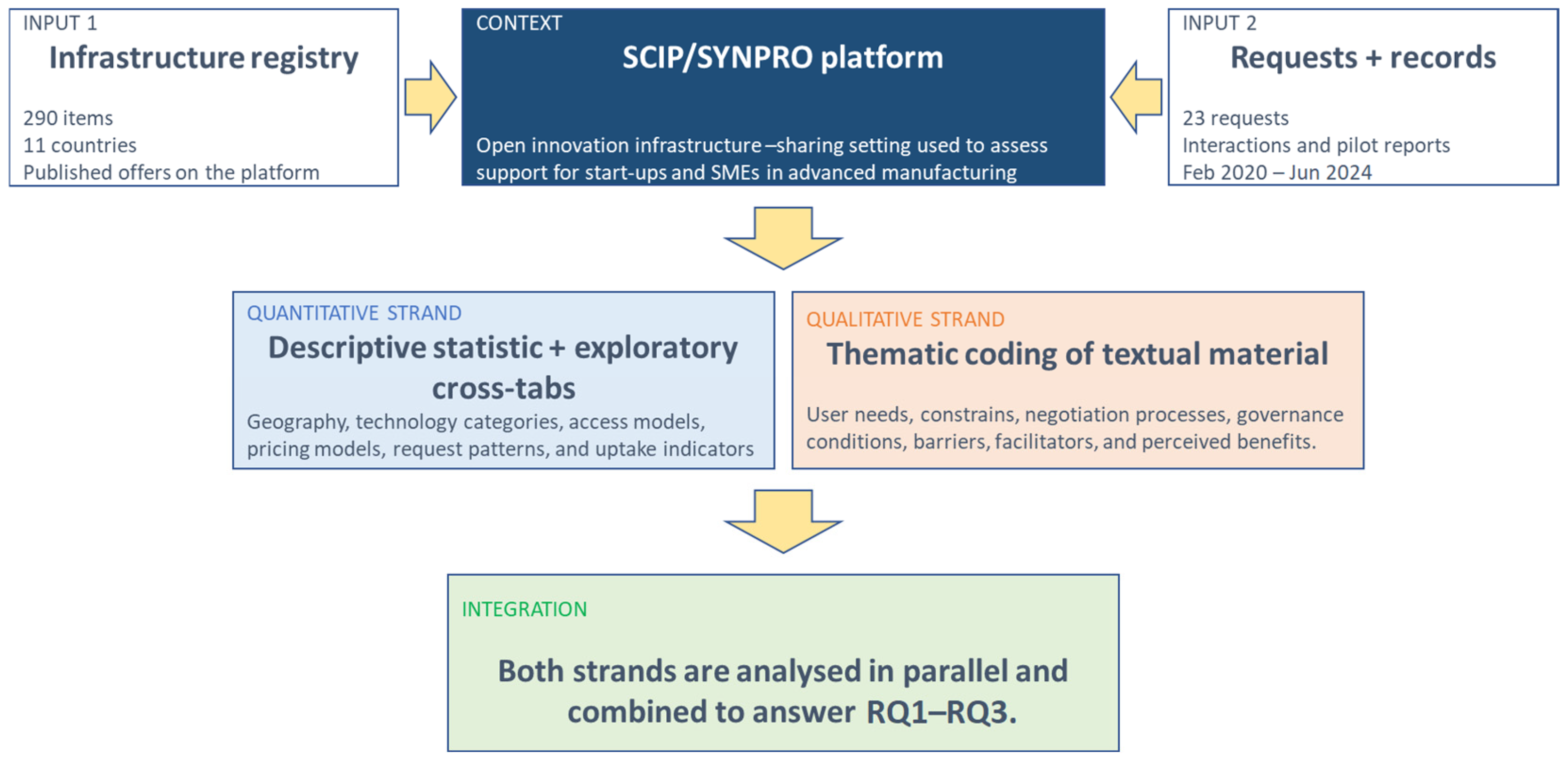
This study adopts an exploratory case study approach, combining quantitative analysis of platform data with qualitative analysis of request descriptions, interaction records, and pilot reports (
Figure 1). The overall objective, stated in the Introduction, is to assess how an infrastructure-sharing service embedded in an open innovation platform can support SMEs, start-ups, and research teams in advanced manufacturing. Accordingly, the empirical research model was applied as a guiding structure for data collection and analysis. Registry data represented the supply/input side of the model; request and interaction records represented the platform process; and documented access, negotiation outcomes, and pilot evidence represented the output side. This approach clarified how the research objective was translated into measurable and interpretable empirical observations.
The study intentionally focused on capital-intensive production and research infrastructure. These assets were selected because ownership barriers, underutilisation risks, and access restrictions are particularly acute in advanced manufacturing. Equipment such as pilot lines, laboratories, robotic cells, test facilities, additive manufacturing systems, and VR/AR environments requires high upfront capital expenditure, specialised operators, safety procedures, and coordinated access to machine time. Therefore, the decision to study these infrastructures follows directly from the theoretical assumptions of the paper: if infrastructure sharing is expected to lower capital barriers and improve asset utilisation, the most relevant empirical setting is a group of assets for which capital intensity, limited availability, and technical complexity hinder ownership-based access by SMEs, start-ups, and research teams [
9,
10,
16,
17,
20,
21,
27,
29,
40].
For methodological clarity, the unit of analysis was defined as an externally accessible physical or hybrid production-research resource that can support experimentation, prototyping, testing, validation, training, or technology demonstration. The study did not consider general office space, purely administrative services, or intangible knowledge-sharing mechanisms as infrastructure unless they were directly related to production or research capabilities. This boundary condition aligned the dataset with RQ2 and RQ3, ensuring that infrastructure suitability, access models, pricing, and contractual arrangements were assessed in relation to resources whose sharing involves genuine operational, security, scheduling, and cost considerations.
The empirical work focuses on the SCIP and its infrastructure module (SYNPRO). The analysis addresses the three research questions introduced in the Introduction by examining two main sources of evidence:
a registry of infrastructure offers published on the platform, and
a set of documented infrastructure requests, interactions and reports submitted through the platform and associated project processes.
Quantitative analysis was used to identify descriptive and structural patterns, such as geographic distribution, access models, and request trends. Qualitative analysis was used to interpret user needs, perceived constraints, negotiation processes, and implementation conditions. Both strands were analysed in parallel and integrated in
Section 5 and
Section 6.
In analytical terms, the pilot actions were treated as embedded moments of the platform’s operation rather than as separate demonstrators. They made it possible to observe how supply was activated through infrastructure registration, how demand was articulated through requests, how brokerage and negotiation unfolded around concrete use cases, and how the outcomes of completed arrangements returned to the platform as documented evidence, lessons learned, and visibility signals.
4.2. Pilot Action Implementation
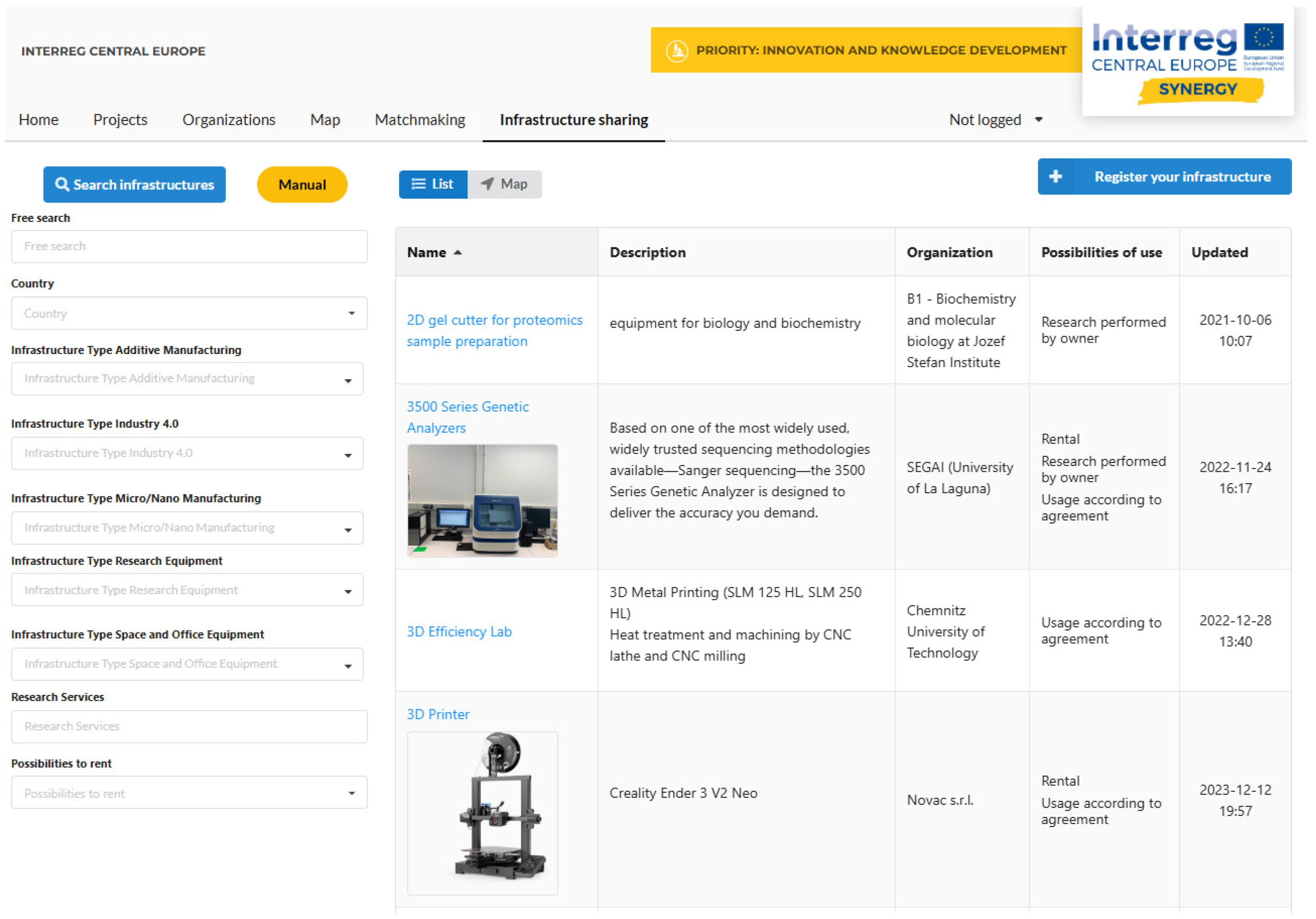
The registry and request data were generated within a broader pilot action that implemented infrastructure sharing as a service within the SYNERGY platform (
Figure 2). The pilot was based on an Infrastructure Provider–Infrastructure Taker model, in which providers register available assets, takers search the registry or submit specific needs, and the platform and project team facilitate matching and support.
The pilot action involved four main stages. First, providers uploaded infrastructure offers using a shared template containing technical, operational, and access information. Second, takers searched the registry or submitted requests describing the required capabilities and intended use. Third, matching and negotiation were carried out on the basis of technical suitability and location, with providers and takers communicating directly and using the General Conditions Framework as a reference. Fourth, implementation was supported where relevant through vouchers or facilitation, for example to cover operator time or equipment rental. After use, participants were encouraged to document outcomes through success stories and lessons-learned templates, which formed part of the qualitative dataset.
This sequence was integrated into the platform in a cumulative way. Infrastructure offers increased the visibility of available resources within the registry; requests activated the matching process; facilitation and vouchers lowered the threshold for first transactions; and the resulting success stories and lessons-learned notes fed back into the platform environment as examples that could support later sharing arrangements. The pilot actions therefore functioned not only as tests of the model but also as mechanisms that progressively populated, activated, and refined the service.
The study covers infrastructures and organisations registered in SCIP/SYNPRO within the SYNERGY and IDEATION projects across 11 Central European countries. The empirical material includes the infrastructure registry, platform-generated and manually collected request data, and qualitative pilot documentation, including the “Rent-a-Robot” pilot and other cases involving VR/AR and testing facilities. The time frame spans from the platform launch in 2020 to mid-2024.
The primary empirical investigation was conducted through structured pilot actions designed to test infrastructure-sharing service delivery. The “Rent-a-Robot” pilot was the main implementation case, complemented by pilots involving testing laboratories, additive manufacturing facilities, and VR/AR environments. Together, these pilots provided a testbed for assessing how the provider–taker model operates across different infrastructure categories.
The pilots were also linked to different phases of the platform dynamic. Some primarily generated supply-side visibility by showing how infrastructures should be described and offered. Others activated demand by revealing the kinds of external needs users were willing to formulate. More advanced cases showed how negotiation, support, and post-use documentation contributed to trust-building and follow-on collaboration. In this sense, the pilot actions formed a bridge between platform architecture and observed user behaviour.
4.3. Data Source and Collection
4.3.1. Infrastructure Registry Analysis
The first dataset is a registry of manufacturing and research infrastructure compiled within the SYNERGY project and published on the SCIP/SYNPRO platform. It contains 290 infrastructure items offered by organisations in 11 countries. Each record describes a distinct physical asset or facility, such as a laboratory, pilot line, test bed, industrial robot, or VR/AR equipment, that can be made available to external users.
The registry was populated through case studies in which infrastructure providers registered their assets using a structured online form. The form captured information including organisation name, type, and location; infrastructure name, description, and application area; alignment with SYNERGY Key Project Areas; technical parameters and equipment categories; access modalities; indicative pricing and access conditions; external links; and acquisition year where known.
Submissions were checked by platform moderators for completeness and consistency before publication. Providers could later update their entries to reflect changes in availability or technical characteristics.
For this study, all infrastructure entries visible on the platform in mid-2024 as a result of the SYNERGY and IDEATION projects were exported to a structured spreadsheet dataset. Variable names and categories were standardised to enable systematic analysis across countries, organisation types, and technology domains.
This methodological approach also shaped the design of the registry. Entries were retained for analysis when they described tangible equipment, laboratories, pilot lines, testbeds, software-hardware environments, or specialized facilities relevant to manufacturing-oriented research and innovation. The inclusion of both manufacturing and research infrastructures reflects the empirical reality of advanced manufacturing ecosystems, where universities, research centers and companies jointly provide the assets needed for early-stage experimentation before commercial-scale production. The focus was therefore not limited to factory-floor machines, but covered the broader set of infrastructures that enable innovation in manufacturing.
4.3.2. Infrastructure Request Analysis
The second dataset consists of 23 documented infrastructure access requests submitted between February 2020 and June 2024. These requests represent concrete attempts by organisations to identify and access infrastructure through the platform and related project mechanisms.
Request data were compiled from several internal sources: online request forms, automatically recorded metadata such as submission time and planned usage period, project documentation of follow-up interactions between providers and takers, and success stories and lessons-learned templates prepared by project partners.
Each request record includes information on the requesting organisation, desired infrastructure characteristics, intended use case and outcomes, requested duration and timing, preferred access and pricing model where indicated, and evidence of follow-up communication, negotiation, and utilisation where available.
Only requests with sufficiently complete metadata and documented follow-up to assess at least basic matching outcomes were included in the analysis.
4.4. Research Variables and Measurement Approach
The research questions (RQ1–RQ3) were operationalised through variables derived from the two datasets: the infrastructure registry and the infrastructure request records.
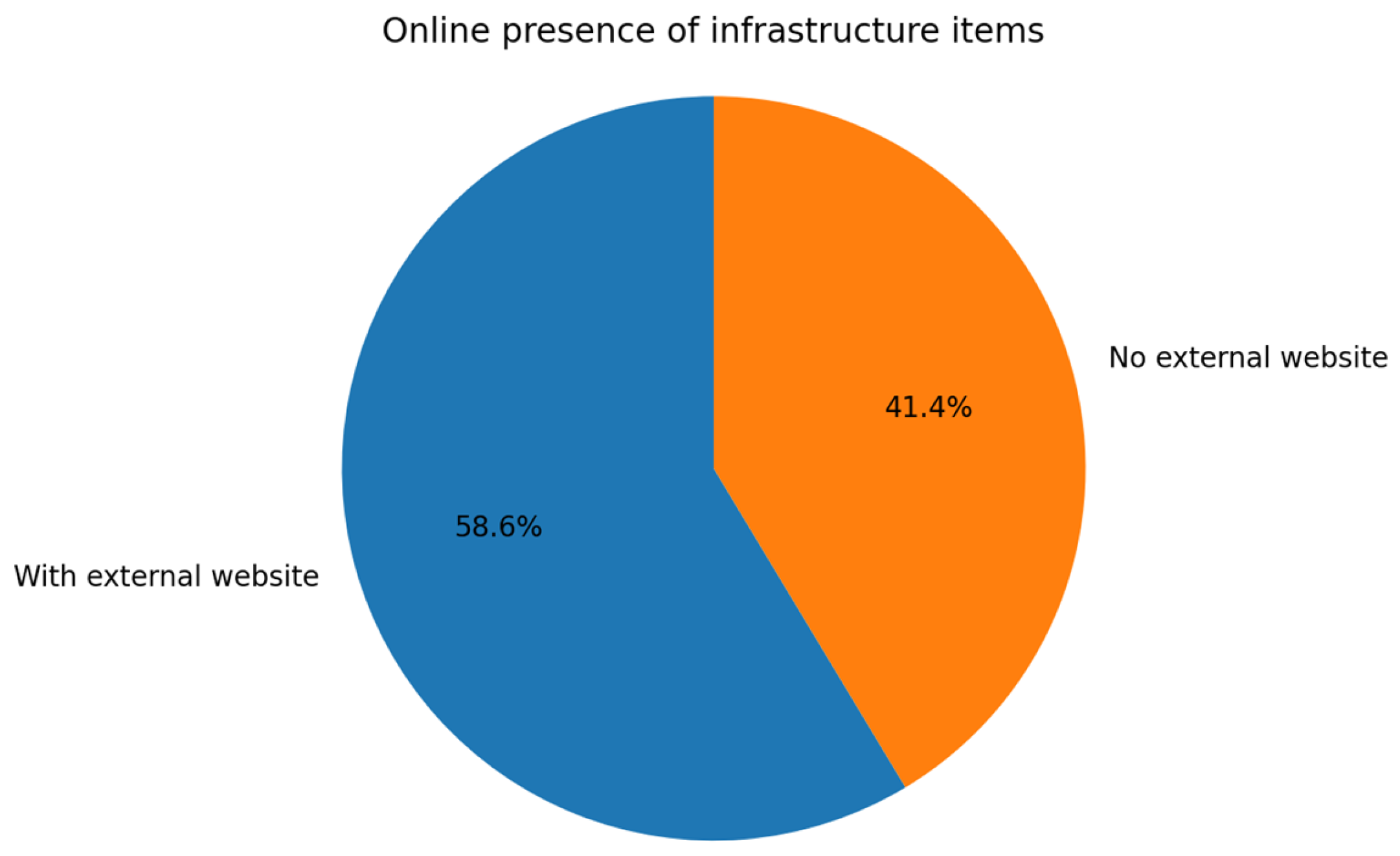
Registry- and platform-level variables, mainly used for RQ1 and RQ2, include location, owner organisation type, technology area, infrastructure category, access model, pricing information, online presence, and acquisition year as a proxy for technological currency.
Request-level variables, mainly used for RQ1 and RQ3, include requested infrastructure type and category, geographic relation between requester and provider, requested duration and timing, preferred access and pricing model, and matching outcome, ranging from no documented follow-up to communication established or infrastructure use.
Process and governance variables, mainly used for RQ3, include the presence and clarity of general conditions, evidence of negotiation, involvement of platform moderators or support mechanisms such as vouchers, and reported barriers and facilitators drawn from success stories and lessons-learned documents.
Categorical variables were coded using a predefined coding scheme. Where original descriptions were ambiguous, coding decisions were discussed between two researchers until agreement was reached. Missing values were recorded explicitly and considered in the analysis. The theoretical perspectives also guided the operationalization of empirical variables. The sharing-model typology informed the classification of market structure, resource type, access model, and platform role. The business-model perspective informed indicators of value creation, value delivery, and value capture. Transaction-cost and operations-management perspectives informed the coding of negotiation, matching outcome, contractual terms, operator support, scheduling, liability, and governance conditions.
In the coding procedure, infrastructures were interpreted as capital-intensive and manufacturing-relevant when their descriptions indicated at least one of the following attributes: substantial acquisition or maintenance cost, need for specialized technical operation, relevance to production, prototyping, testing or validation, limited substitutability for smaller actors, or dependence on formal access conditions such as safety rules, operator support, scheduling or liability arrangements. These criteria explain why the analysis concentrates on infrastructures for which sharing is theoretically meaningful and practically consequential, rather than on all resources that could be listed on a digital platform.
To make the mixed-methods design fully traceable, variables were operationalized separately for the quantitative and qualitative strands before the findings were integrated. A variable was treated as any registry field, request attribute, process indicator, or coded theme that could be linked directly to RQ1, RQ2, or RQ3. Raw platform fields were first cleaned and standardized, and then recoded into analytical categories. Missing information was not imputed; instead, it was retained as missing and excluded from category-specific denominators where necessary.
Two operationalization matrix for quantitative and qualitative variables are presented in
Appendix A. The matrices served as the bridge between the research questions and the empirical evidence: quantitative indicators described distribution, intensity, and outcomes, while qualitative variables explained mechanisms, constraints, and governance conditions underlying the observed patterns.
4.5. Data Analysis Methods
4.5.1. Quantitative Analysis
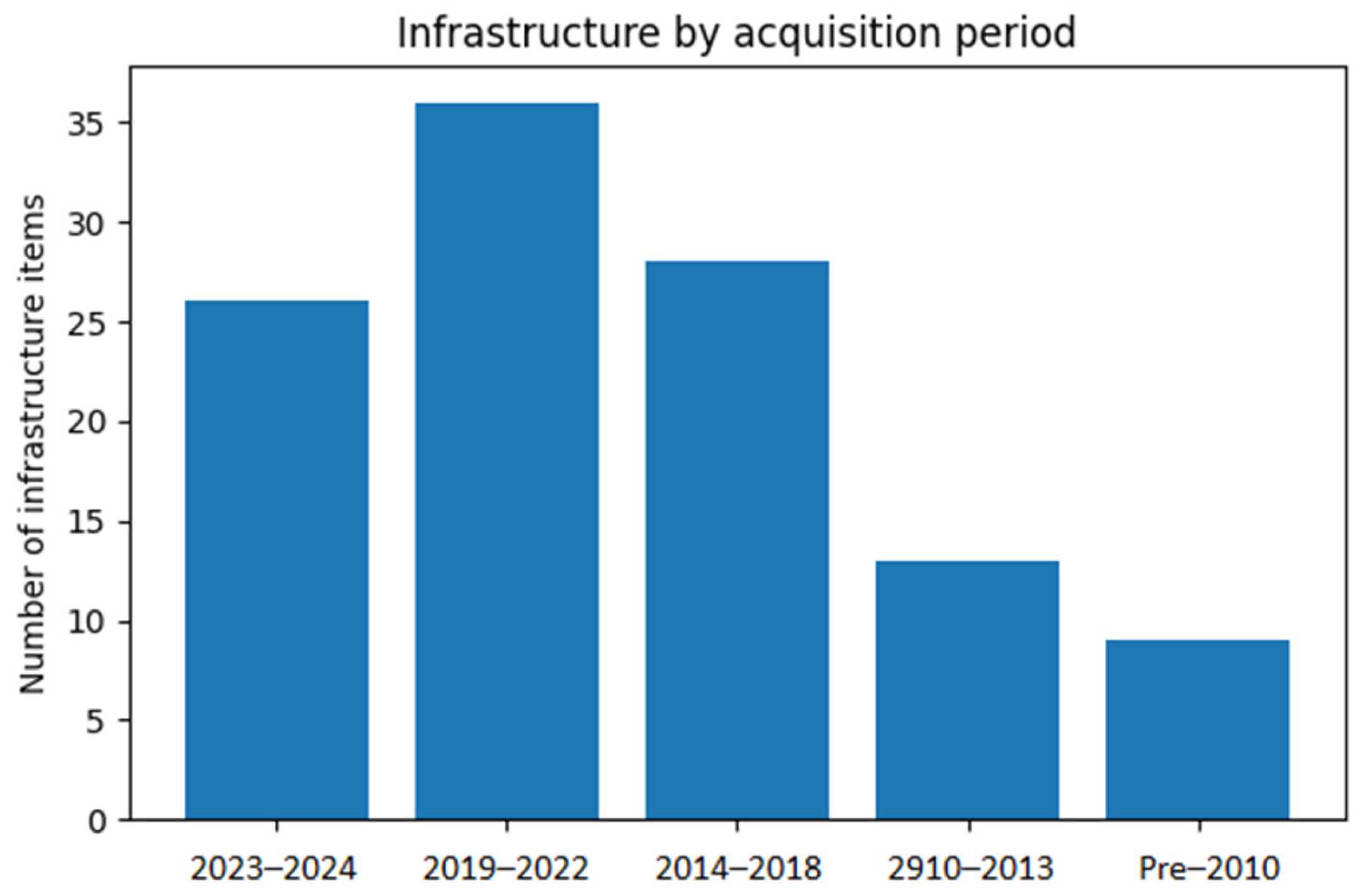
Quantitative analysis focused on descriptive statistics and exploratory cross-tabulations. For the infrastructure registry, the analysis examined the distribution of infrastructure items by country and city, Key Project Area, technology category, access model, pricing model where specified, and acquisition year as a proxy for technological currency.
For the request dataset, the analysis examined the distribution of requests across infrastructure categories and technology areas, the share of infrastructure items receiving at least one request, the geographic relation between requesters and providers, planned access duration, submission year, and basic indicators of matchmaking effectiveness, such as whether communication, negotiation, or utilisation was documented.
Because the data are exploratory and pilot-based, inferential statistical tests were not used. Instead, quantitative results were used descriptively to characterise patterns and identify areas of relatively high or low demand and access facilitation.
For transparency, quantitative measures were calculated as simple frequencies, percentages, and cross-tabulations using the operationalized variables. Request intensity was calculated as the number of infrastructure items in a category that received at least one documented request divided by the total number of registered items in that category. Model effectiveness was assessed through an ordinal outcome variable distinguishing registration-only visibility, communication or negotiation, and documented infrastructure use. Because several registry fields were incomplete, percentages were interpreted descriptively, and denominators were kept category-specific rather than normalized across the full dataset.
For RQ1, this outcome variable should be interpreted as an access-facilitation indicator rather than as a direct measure of improved resource access. It captures the observed progression from visibility and request initiation to communication, negotiation, and selected documented use, while perceived benefits are analyzed separately in the qualitative strand.
4.5.2. Qualitative Analysis
Qualitative analysis was applied to three types of textual material: request descriptions, interaction documentation such as email summaries and meeting notes, and success stories and lessons-learned documents produced after completed sharing arrangements.
A thematic coding approach was used. Initial codes were derived deductively from the research questions and conceptual framework, including motives for sharing, perceived barriers, trust mechanisms, preferred contractual terms, and perceived benefits. Additional inductive codes were introduced when new patterns emerged, such as concerns about data security or operator availability. Coding was performed manually by two researchers. They first coded a subset of the material jointly and then divided the remaining material, discussing ambiguous cases to maintain consistency.
To enhance analytical transparency, the qualitative analysis retained traceable evidence from the collected material, including recurring phrases in request descriptions, documented implementation notes, and post-pilot success stories. These materials were used not only for illustration but also to verify whether the same mechanism appeared in more than one source of evidence.
The qualitative analysis was used to reconstruct the organisational value-creation mechanisms associated with platform participation, particularly improved resource access, deferred investment needs, capability development, and network expansion in documented pilot cases. It had three main aims: to explain quantitative patterns, identify implementation conditions and governance mechanisms in actual sharing arrangements, and illustrate sustainability and economic impacts through empirical examples.
Qualitative variables were therefore not treated as statistical variables, but as thematic constructs used to interpret the quantitative findings. Each theme was coded as present when it appeared in request wording, follow-up documentation, or pilot reports. Where possible, themes were compared across more than one evidence source to support triangulation. This procedure made it possible to connect observable platform indicators, such as requests and access models, with explanatory mechanisms such as trust, operator support, capability development, and perceived risk.
4.6. General Conditions Framework Application
The analysis of governance and contractual aspects (RQ3) is guided by the General Conditions Framework developed in the SYNERGY and IDEATION projects for infrastructure sharing. The framework identifies four key dimensions that should be defined in a sharing arrangement: access schedule requirements, economic conditions, user responsibilities, and contractual framework.
These dimensions were used as an analytical lens for reviewing infrastructure proposals, request descriptions, and documented agreements. Where sufficient information was available, each case was assessed in terms of how these dimensions were addressed and whether they met the framework requirements or required case-specific adaptation.
5. Results
This section presents the empirical findings in direct relation to RQ1–RQ3. To strengthen analytical coherence, the results are organised around three corresponding themes: the access-facilitation capacity of the infrastructure-sharing model, the differentiated suitability of infrastructure categories, and the access, pricing, and governance conditions preferred by providers and takers. The interpretation combines quantitative patterns with selected qualitative evidence to explain how value is generated for participating organisations and why some platform-based arrangements progress more effectively than others. Additional descriptive statistics, detailed category breakdowns, and supplementary evidence supporting the results are provided in
Appendix A.
5.1. RQ1: How Does the Provider-Taker Model Support Resource-Sharing Interactions and Documented Access-Related Outcomes?
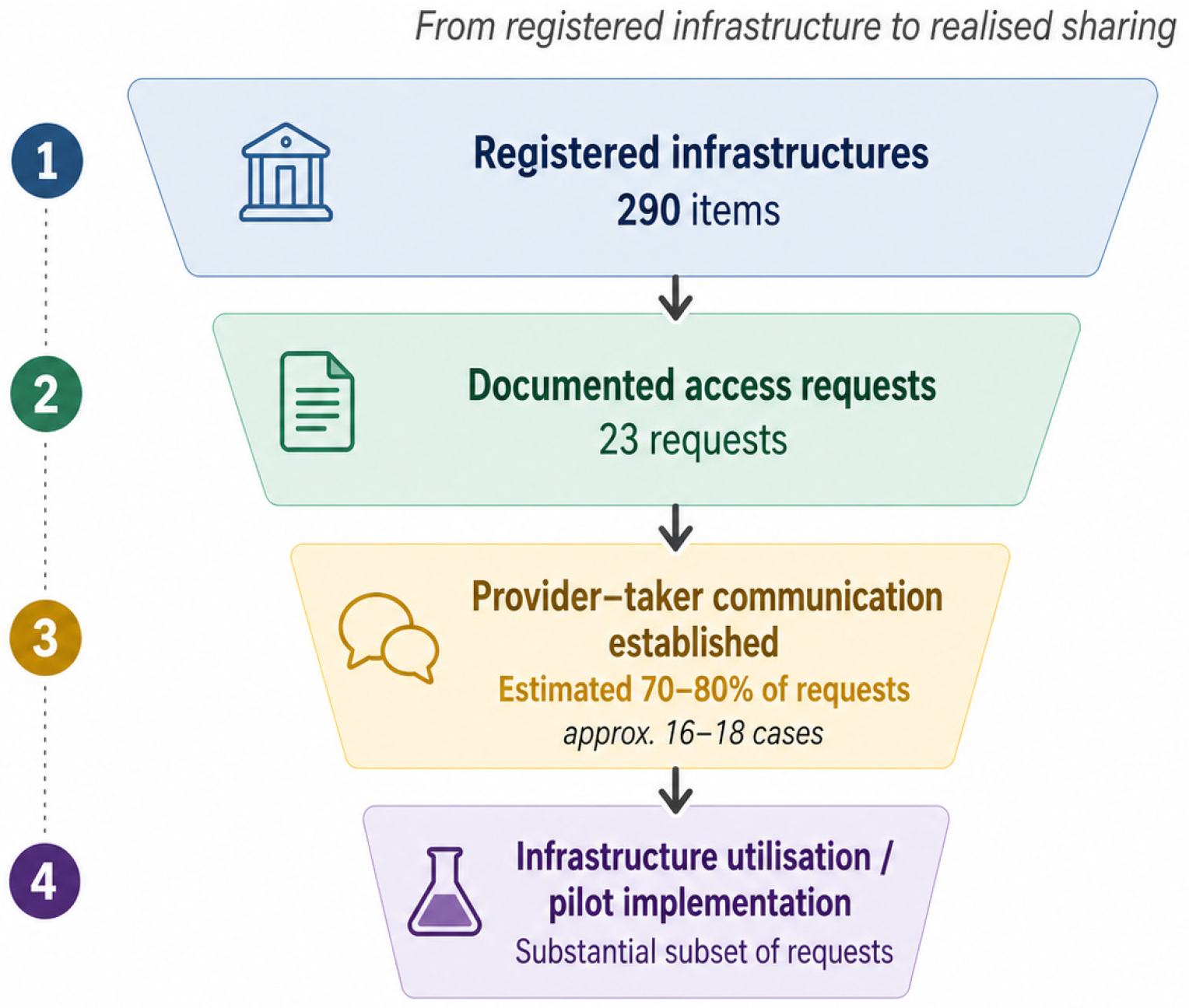
The empirical material does not allow a comprehensive assessment of resource access across the full population of potential users. It does, however, allow an assessment of whether the Infrastructure Provider–Infrastructure Taker model supports access-enabling interactions through the SCIP/SYNPRO platform. The platform aggregated a registry of 290 infrastructure items across 11 countries, while the request dataset comprises 23 documented access requests (
Figure 3). The available records show that most requests progressed to direct provider–taker communication and that a subset resulted in documented use or implementation-oriented pilot activity. Therefore, the RQ1 findings should be interpreted as evidence of access facilitation and coordination, rather than as proof of a general increase in resource access.
The key observation is not the absolute number of requests, but the progression of requests once they were initiated. In most documented cases, the platform-supported process enabled partner contact, negotiation of conditions, and, in several cases, actual use. In this sense, the model functions less as a high-volume transactional marketplace and more as a structured coordination mechanism for advanced manufacturing infrastructure.
The qualitative material clarifies what this operational feasibility means at the organizational level. In the documented pilot cases, the platform created value by enabling access to equipment that users did not possess internally, allowing experimentation without immediate capital expenditure, and supporting coordination around the practical conditions of use. The recorded cases also indicate benefits beyond a single transaction, including technology familiarization, student training, and the emergence of new research and collaboration links. These observations suggest that platform effectiveness should be interpreted not only as successful matching but also as the creation of organizational options for testing, learning, and collaboration.
A more detailed inspection of the cases reveals a recurring process. An initial need for external infrastructure access was typically followed by clarification of technical scope, timing, and user responsibilities. Only then did the arrangement move toward short-term use for evaluation or training, or toward a broader collaborative activity. In the documented VR/AR and other pilot cases, access was therefore not limited to one-off use; follow-up records indicate technology familiarization, student training, and the creation of new collaboration links between institutions and users.
A second recurring pattern concerns the economic logic of participation. The collected evidence indicates that actors used the platform to test ideas and capabilities before committing to capital expenditure. In practical terms, access to external infrastructure functioned as a way to postpone or avoid immediate investment in expensive equipment during the experimentation stage, thereby lowering the threshold for early prototyping and validation.
From a platform-dynamics perspective, these pilot cases show that implemented sharing did not emerge solely from a static directory. Each pilot combined several stages of the platform process: registry visibility, request formulation, provider–taker interaction, negotiated terms, and post-use documentation. The completed cases therefore served a dual purpose: they addressed a specific user access problem while also generating trust, operational knowledge, and examples that could support future platform interactions.
5.2. RQ2: Which Infrastructures Are Most Suitable for Sharing, and What Characteristics Explain Their Sharing Potential?
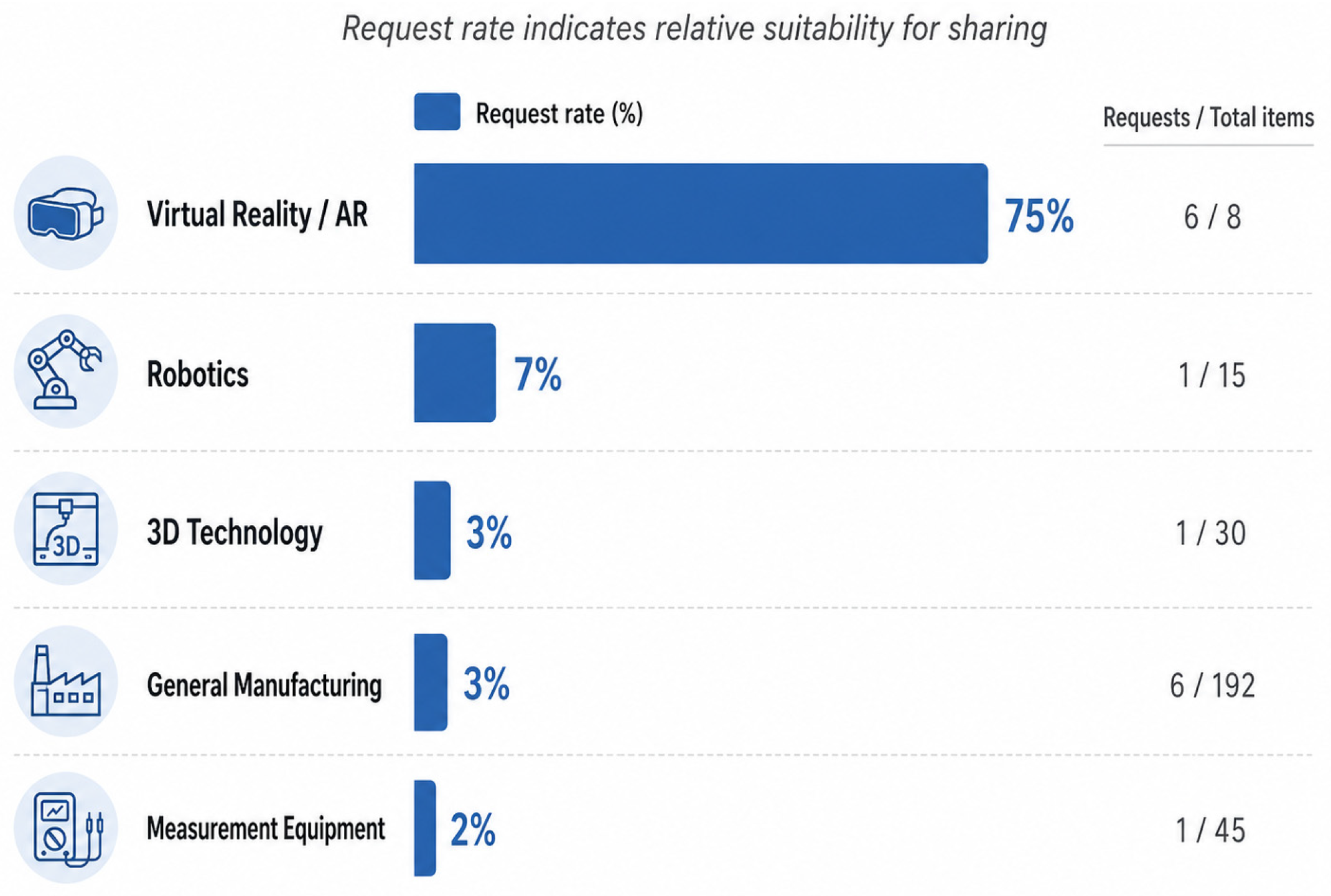
The results show substantial heterogeneity in the sharing potential of registered infrastructures. Demand is concentrated in selected categories rather than distributed evenly across the registry. In particular, VR/AR-related infrastructures attract the highest request intensity, while many traditional, production-integrated assets receive little or no external demand despite their numerical presence in the inventory (
Figure 4). This indicates that early-stage infrastructure sharing is driven less by generic capacity optimization and more by a combination of novelty, accessibility, and suitability for experimentation.
The observed pattern suggests that infrastructures are particularly suitable for sharing when they are modular, self-contained, relatively safe to use, clearly documented, and supported by operator assistance or training where needed. By contrast, assets embedded in proprietary production processes, or those requiring extensive calibration, high safety assurance, or continuous expert supervision, appear less likely to be shared successfully (
Table 1).
Qualitative evidence helps explain this asymmetry. VR/AR and other modular infrastructures appear attractive because they are visible, relatively secure, and well suited to short-term exploratory projects, demonstrations, training, and capacity building. Production-integrated resources, on the other hand, typically involve downtime costs, calibration requirements, confidentiality concerns, and dependence on limited operator time. The potential for infrastructure sharing is therefore shaped not only by the existence of unused resources but also by the practical ease with which external users can access and meaningfully use them (
Table 2).
This interpretation is supported by the collected evidence in three ways. First, the most frequently requested VR/AR cases were related to exploratory applications, such as demonstrations, short-term evaluations, training, and research preparation, rather than routine production. Second, documented secondary effects include architecture-oriented research networking, student training, and increased familiarity with new VR technologies, suggesting that demand was linked to learning and capacity building as much as to hardware access itself. Third, low-demand categories tended to be those involving stronger dependence on calibration, operator time, process integration, or confidentiality.
These qualitative findings support the conclusion that practical usability, interpretability, and support requirements shape sharing potential more strongly than the mere existence of unused resources. The difference between high- and low-demand categories is therefore not simply a matter of technological type but also reflects the organizational conditions under which external users can safely and meaningfully use the infrastructure.
5.3. RQ3: What Access Models, Pricing Arrangements, and Contractual Conditions Are Preferred in Practice?
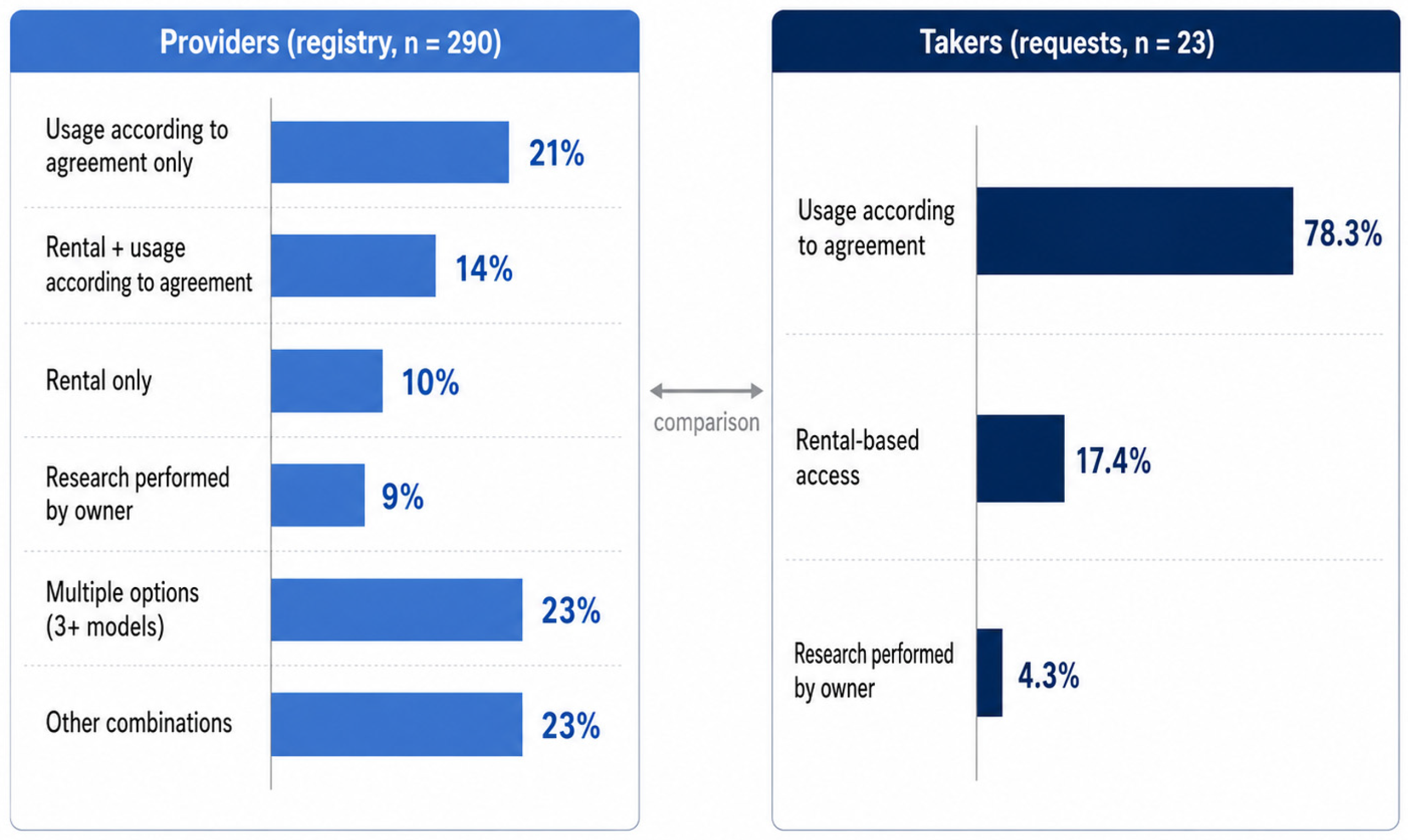
The results indicate a clear preference for flexible, negotiated access arrangements rather than fully standardized rental models. On the provider side, “usage according to agreement”, mixed access options, and “price for negotiation” are common. On the taker side, requests also concentrate on negotiated access rather than predefined booking terms (
Figure 5). This suggests that infrastructure sharing in advanced manufacturing should not be interpreted as a simple rental service. Instead, it operates as a collaborative arrangement in which equipment access is often combined with technical support, scheduling flexibility, and case-specific agreement on responsibilities and economic terms.
Successful cases also show that governance conditions are central enablers of sharing rather than peripheral details. Access schedules, user responsibilities, and at least a basic contractual framework are usually made explicit, even when final economic terms remain flexible. In this sense, the platform supports not only search and matching but also the structured negotiation of conditions under which sharing becomes organisationally and technically acceptable (
Table 3).
The qualitative material suggests that negotiated arrangements are preferred because users typically seek a broader service package rather than isolated machine time. In the documented cases, access to equipment was combined with scheduling flexibility, technical guidance, clarification of user responsibilities, and, where necessary, operator support. Negotiated access therefore appears to reduce organizational uncertainty for both providers and takers, making the transition from platform interest to realized collaboration more feasible.
The collected evidence also reveals a characteristic negotiation pattern. Requests that progressed further usually specified the intended period of use and project purpose at an early stage, while provider-side follow-up focused on cost conditions, operator availability, and clarification of user responsibilities. In several documented cases, access to infrastructure was effectively bundled with supervision, training, or problem-specific technical assistance. This helps explain why fully standardised rental logic was less attractive than negotiated arrangements.
Overall, users were often seeking a temporary capability package rather than machine time in isolation. The organizational value of the platform therefore lies not only in exposing a catalogue of available assets but also in creating a framework within which technical, economic, and responsibility-related conditions can be configured around a concrete use case.
5.4. Cross-Cutting Observations and Implications for Platform Design
Across RQ1–RQ3, three recurring patterns can be observed. First, the platform-based sharing model is feasible, but it remains at an early stage of adoption and depends on active brokerage and network effects. Second, sharing potential is not evenly distributed across infrastructure categories; it is strongest where assets are technologically novel, modular, relatively safe, clearly documented, and supported by operator assistance where needed. Third, infrastructure sharing in advanced manufacturing functions less as a standard rental market and more as a governed collaborative arrangement in which access, scheduling, pricing, responsibilities, and support are negotiated around specific use cases. These observations suggest that future platform development should prioritize the discoverability of suitable assets, interaction support for negotiation, and clear governance rules for access, responsibilities, and contractual framing.
This cross-cutting interpretation links the empirical results back to the research model. RQ1 is supported by evidence on registry visibility, access requests, provider–taker communication, negotiation, and selected documented use; it is therefore interpreted as platform-enabled access facilitation rather than as a population-wide measure of improved resource access. RQ2 is supported by differences in request intensity and shareability characteristics across infrastructure categories, showing how theoretical arguments on asset utilization and circularity appear in practice. RQ3 is supported by the observed preference for negotiated access, pricing flexibility, scheduling arrangements, user responsibilities, contractual framing, and operator support, showing how governance converts potential access into usable sharing arrangements.
7. Conclusions
This study assessed whether and how infrastructure sharing can function as a complementary open innovation service in advanced manufacturing, using empirical data from the SCIP. Based on a registry of almost 300 infrastructures across 11 countries and 23 documented access requests, the research shows that platform-mediated infrastructure sharing is feasible in practice and can generate innovation and sustainability benefits. However, its adoption remains at an early and still fragile stage. The findings should therefore be understood as evidence of access facilitation within the observed platform records, rather than as a comprehensive assessment of resource-access outcomes for all potential users.
This conclusion mirrors the logic of the research model. First, the study establishes the role of the platform in enabling access-related interactions. Second, it identifies the technical and organisational conditions that make infrastructures more or less shareable. Third, it shows that governance arrangements are required to translate platform visibility into responsible and usable sharing. This alignment strengthens the coherence between the objectives, literature review, results, and final contribution of the article.
First, the results confirm that the Infrastructure Provider–Infrastructure Taker model is operationally feasible. Once a request is made, 70–80% progress to concrete arrangements, with near-universal implementation of access schedules and user-responsibility definitions and high implementation rates for economic terms and contractual elements. This shows that the combination of a dedicated platform and a structured general conditions framework can support matchmaking, negotiation, and execution of infrastructure-sharing agreements. In this way, the study addresses a gap in existing open innovation platforms, which rarely handle physical infrastructures in a systematic way.
Second, the study shows that sharing potential is strongly category-dependent. Emerging, modular, and relatively safe technologies, especially VR/AR, reach request rates around 75%, whereas traditional production-integrated equipment categories attract only 1–3% of requests despite much larger installed bases. This indicates that infrastructure sharing is currently driven more by exploration, learning, and access to novel capabilities than by pure capacity utilisation. Infrastructures that are easy to explain, decoupled from critical production lines, and accompanied by support services are much more likely to be shared successfully.
Third, the evidence highlights a clear preference for flexible access arrangements. Both providers and users tend to favour negotiation-based pricing and “usage according to agreement” over standardised rental schemes. In research and innovation contexts, infrastructure sharing therefore functions less as a conventional rental market and more as a relationship-based collaboration mechanism in which access, knowledge exchange, and future partnership potential are bundled. Platforms and policies that assume purely transactional behaviour are therefore likely to underperform.
Fourth, even with a relatively small number of cases, the analysis points to meaningful economic and sustainability benefits. Shared use can help avoid redundant investment, particularly in high-cost emerging technologies, improve the utilisation of existing assets, extend equipment lifetimes, and support circular-economy objectives by intensifying and prolonging use. Secondary effects, such as new research collaborations, technology familiarisation, and capacity building, create additional value that is not easily captured by traditional cost–benefit analyses but is highly relevant for regional innovation ecosystems.
The qualitative evidence makes these benefits more tangible. In the documented cases, shared access was accompanied by examples of technology familiarization, student training, architecture-oriented research networking, and new collaborative pathways between institutions and firms. These materials indicate that the observed patterns were not only inferred from distributions but were also visible in request content, follow-up interactions, and post-pilot documentation.
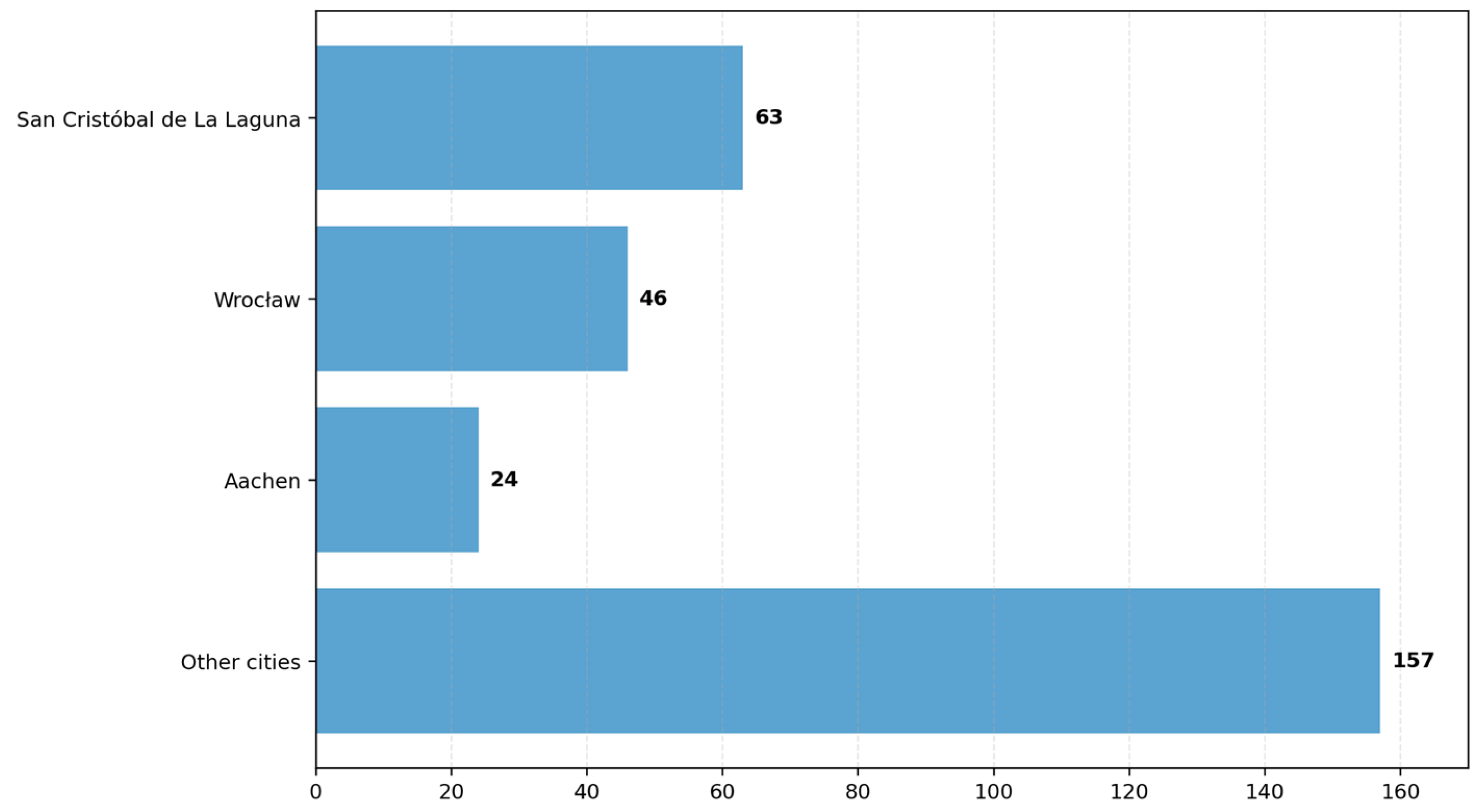
At the same time, the study reveals significant barriers that currently constrain scale-up: limited discoverability of suitable infrastructures, strong geographic concentration of requests, operator-expertise requirements, data and IP sensitivities, low awareness beyond the core network, and the early developmental stage of cross-regional sharing networks. Addressing these barriers will require coordinated efforts in platform design, such as improved search and recommendation functions and richer interaction support, as well as public-policy instruments, including incentives, vouchers, and integration with regional innovation and sustainability programmes.
The study has several limitations that should frame interpretation of the findings. The request dataset includes only 23 documented requests, which restricts generalizability, and the registry reflects infrastructures of organizations participating in the SYNERGY and IDEATION projects rather than the full population of infrastructures available in the covered countries. The analysis also captures a specific implementation window, from February 2020 to June 2024, and is strongly concentrated in selected partner regions, while data completeness varies across registry fields and interaction records. In addition, self-selection and reporting bias may be present, as participating providers and takers may be more innovation-oriented and collaborative than the wider population. For these reasons, the findings are best interpreted as evidence from an early-stage implementation of infrastructure sharing within an open innovation platform rather than as a definitive statistical assessment. Future research should therefore combine larger datasets, broader cross-regional samples, and longitudinal pre–post designs that track organizational outcomes such as equipment access, avoided investment, capability development, and collaboration intensity over time.
Taken together, the findings suggest that infrastructure sharing should be understood and supported as a strategic complement to other open innovation instruments rather than as a universal solution to underutilised assets. Its greatest current impact lies in enabling experimentation with emerging technologies, fostering collaboration between research institutions and companies, and contributing to more resource-efficient use of specialised equipment. With targeted improvements to discoverability and ecosystem support, the model documented here has the potential to scale beyond pilot settings, deepen its role in advanced manufacturing innovation systems, and contribute not only to competitiveness and the circular economy but also to the broader development of a sustainable sharing economy based on responsible governance, stakeholder integration, and innovation.